
The flower you choose for a cake decides more than its look. It decides whether I can place it fresh, whether it has to be made in sugar, what season it’s available in and even which sponge flavor will suit it. Roses read classic, orchids modern, pressed petals garden-grown, and sugar flowers free you from weather and season altogether. Couples are also asking me for edible blooms, piped buttercream flowers, painted petals and meadow-style displays around the cake stand. For anything real, the stems must be protected and the flower itself safe near food, which rules out more varieties than people expect. Here are 25 blooms I work with, and how each one behaves on a tier.
Sorting These Blooms by What Can Touch Icing
Before you fall for a particular flower, know which group it belongs to. This is roughly how I sort the varieties below, and it changes the price and the plan more than the color does.
Edible, if grown for eating
Pansies, violas, cornflowers, calendula, culinary lavender, chamomile, hibiscus, dahlia petals, sunflower petals, roses and tulip petals. These can sit directly on icing, but only when bought from a grower who sells them for food. Florist stock is usually sprayed.
Real stems only with a barrier
Orchids, peonies, gardenias and magnolias are not known to be harmful but aren’t culinary either. Stems get wrapped in floral tape and set in food-safe picks, and I remove them before cutting.
Sugar or piped only
Hydrangea, baby’s breath, ranunculus, anemone, calla lily, lily of the valley and sweet pea. These are toxic or not considered food-safe, so I never put real ones in the cake. Sugar copies look convincing in photos and hold their shape far longer.
If your favorite flower lands in that last group, don’t drop it. Just budget for sugar work, and ask to see a finished sample of that exact bloom from your baker before you book.
1. Rose Wedding Cake
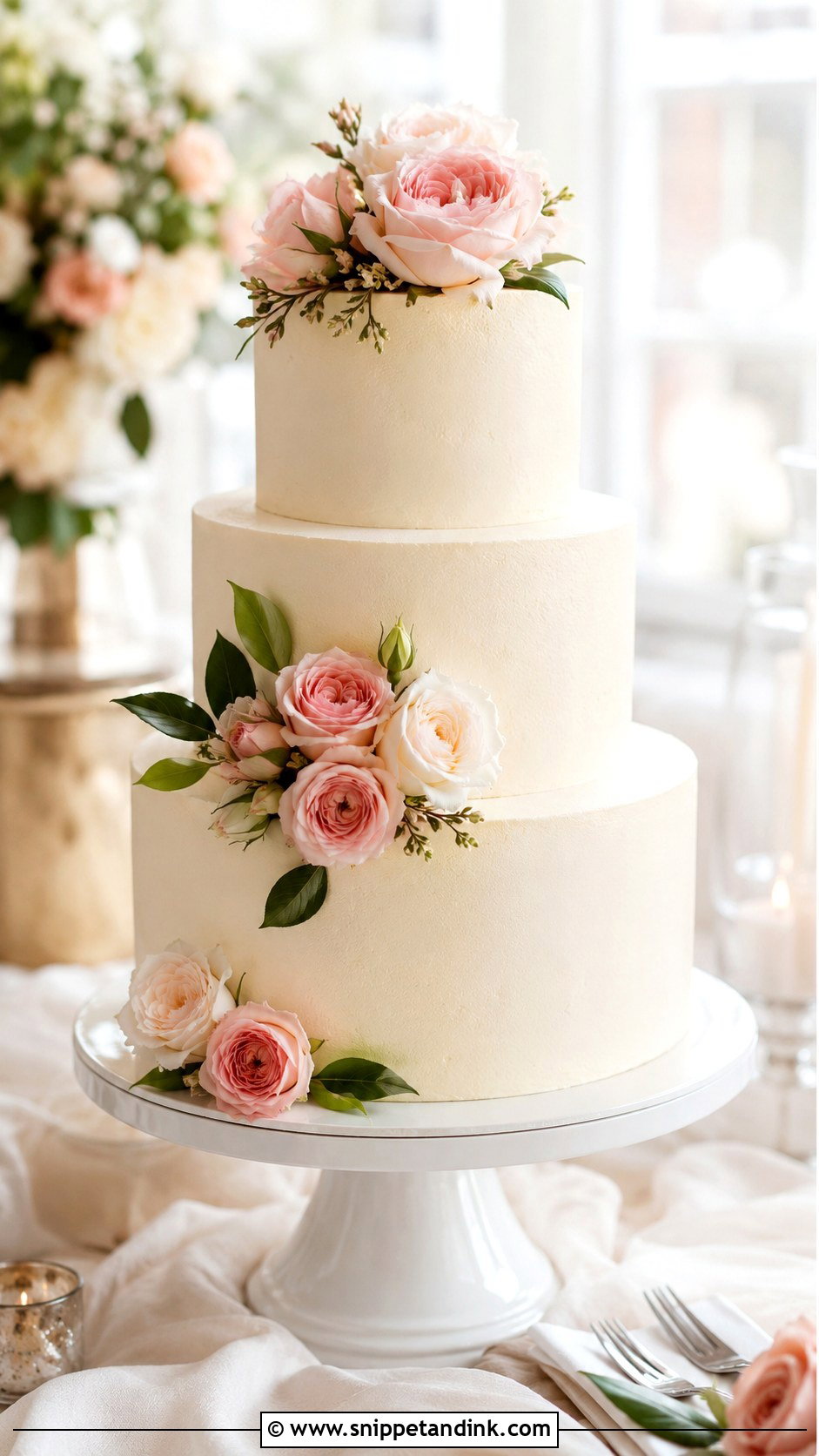
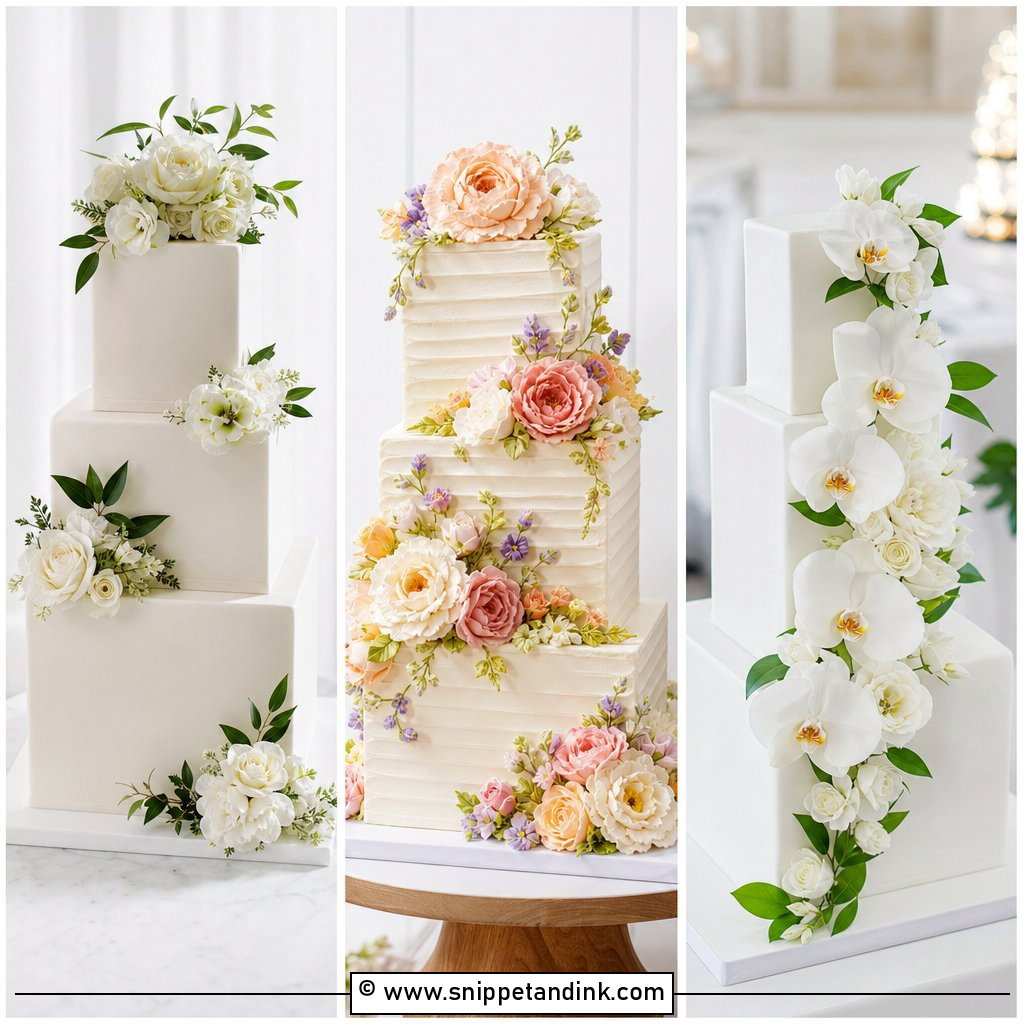
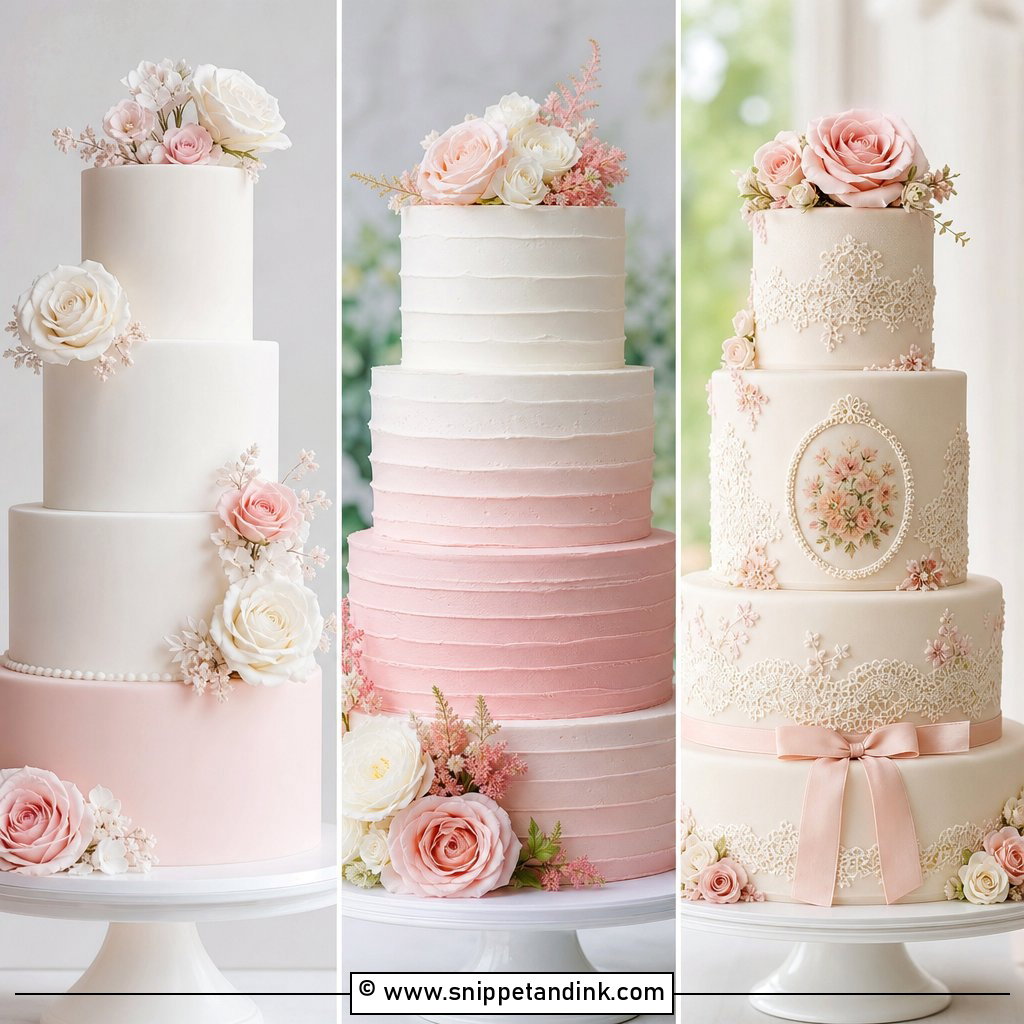
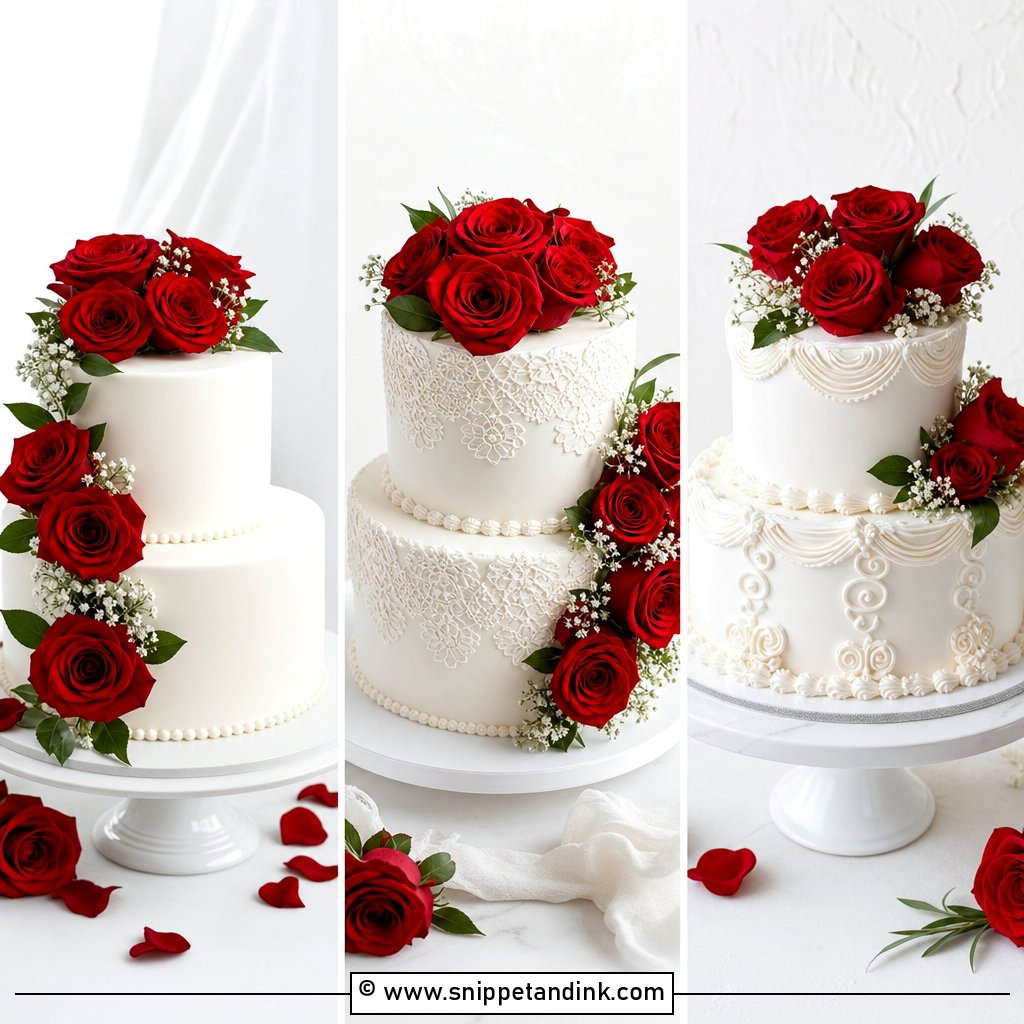
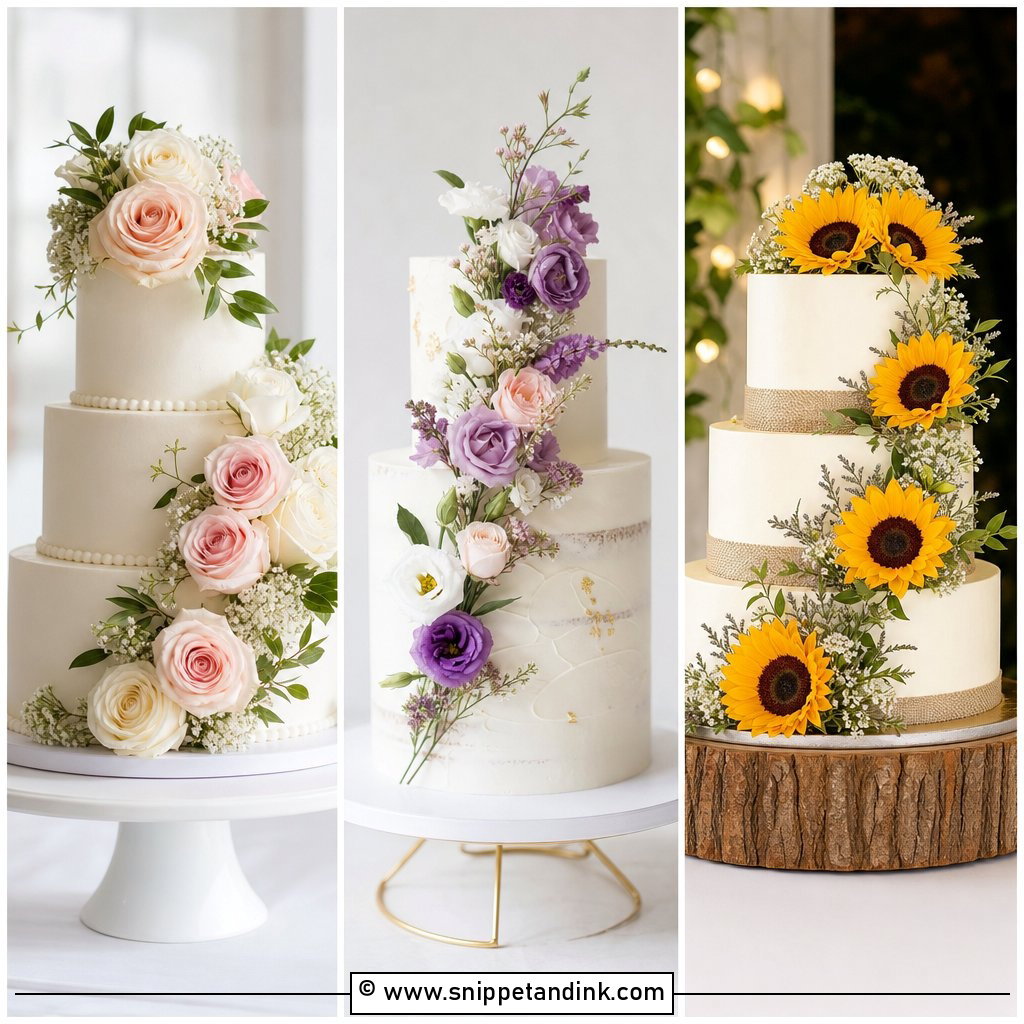
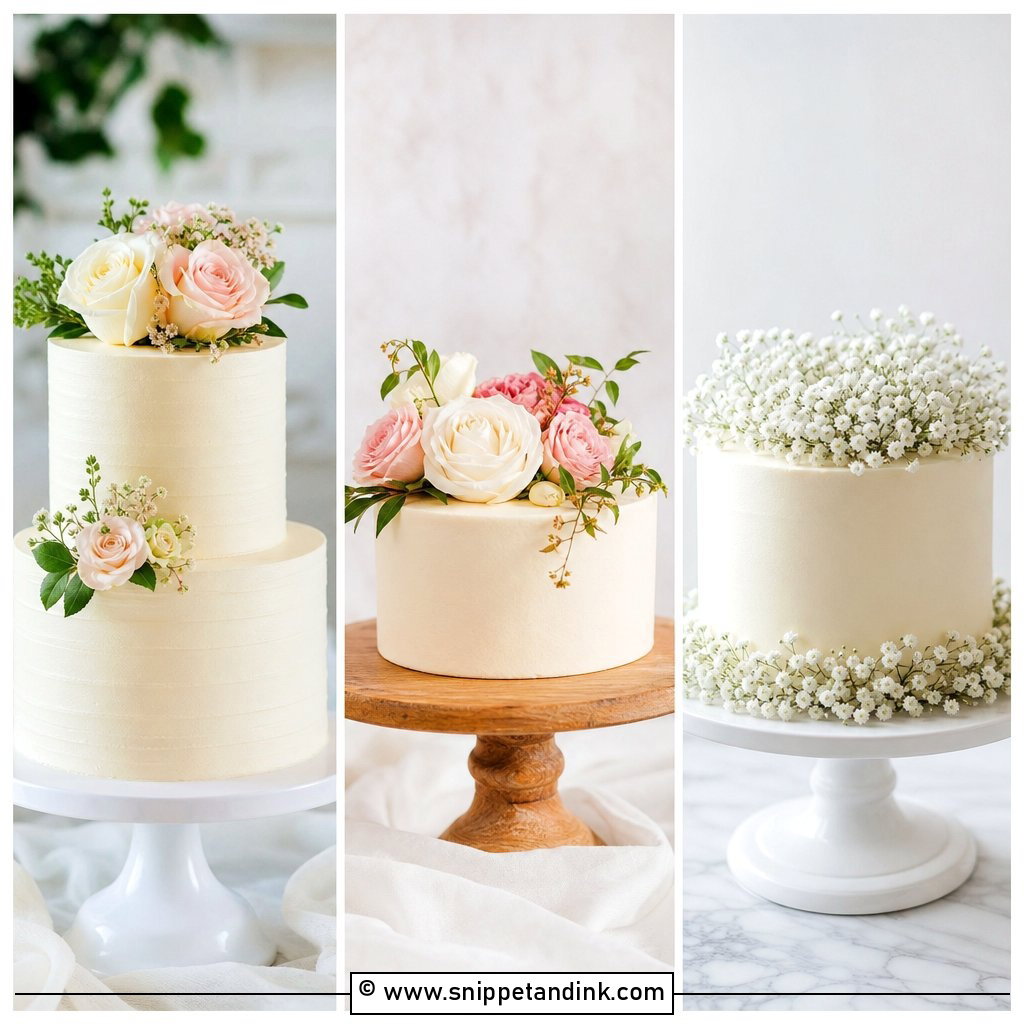
Roses are where most couples start, and they rarely disappoint. Blush roses on smooth ivory buttercream suit a ballroom as easily as a back garden. A three-tier vanilla cake with rose clusters at the base of each tier and a small topper is the classic layout I’m asked for. Garden roses open fuller and softer; standard florist roses stay neat and upright. Either way, fresh roses should be grown without pesticides if they sit on the cake. Keep greenery light, and finish with pearls, fine piping or a satin ribbon.
2. Peony Wedding Cake
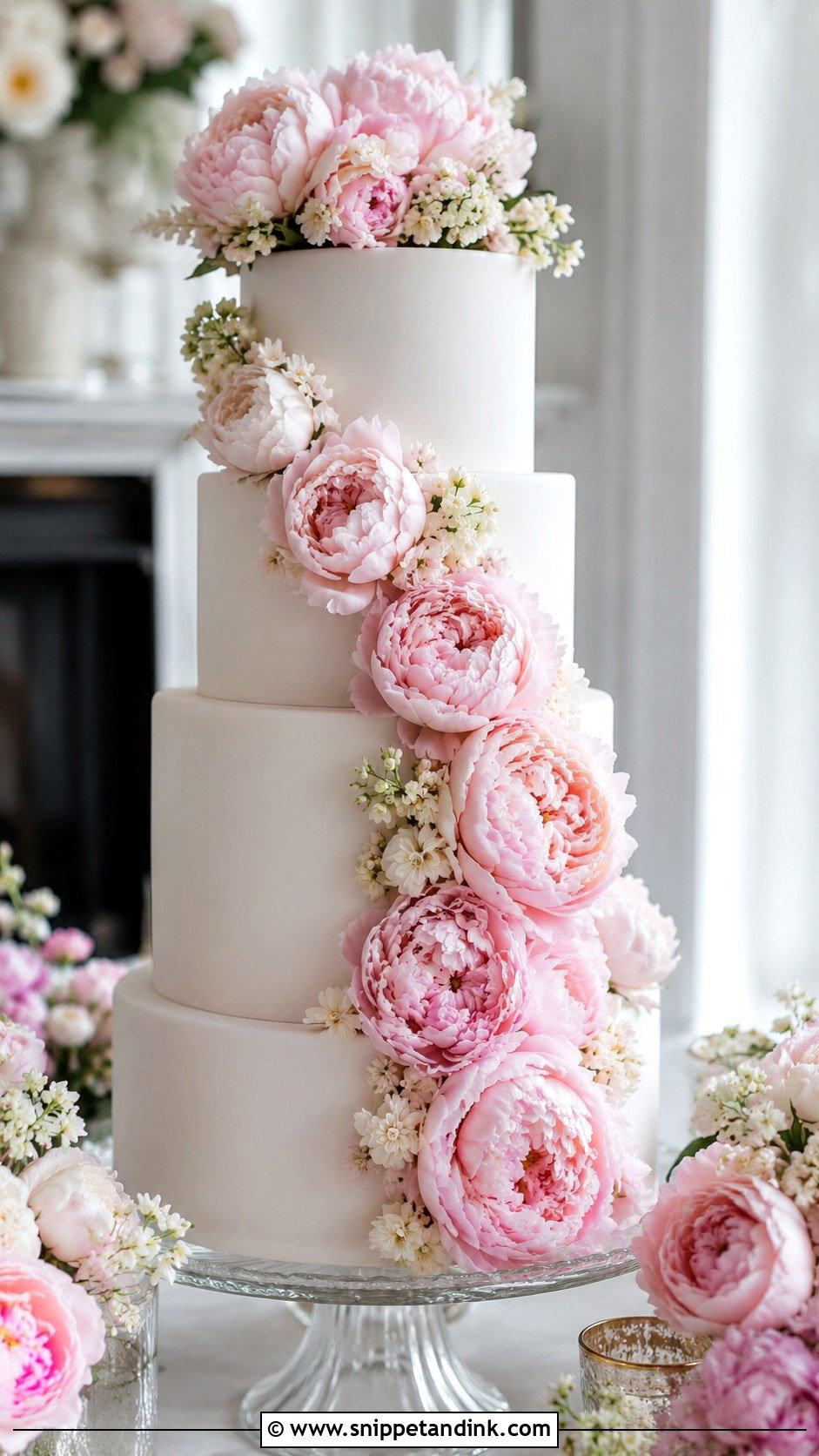
A peony wedding cake needs very few blooms, because each one is so large. Three or four arranged in a diagonal from the top tier down is plenty, on smooth white fondant or lightly textured buttercream. Blush, ivory, coral and pale pink are the usual shades. Fresh peonies keep opening in a warm room, and a bloom that was a neat ball at noon can be flat and dropping petals by dinner. That’s the main reason I often make them in sugar. Vanilla, almond or lemon sponge suits them.
3. Orchid Wedding Cake
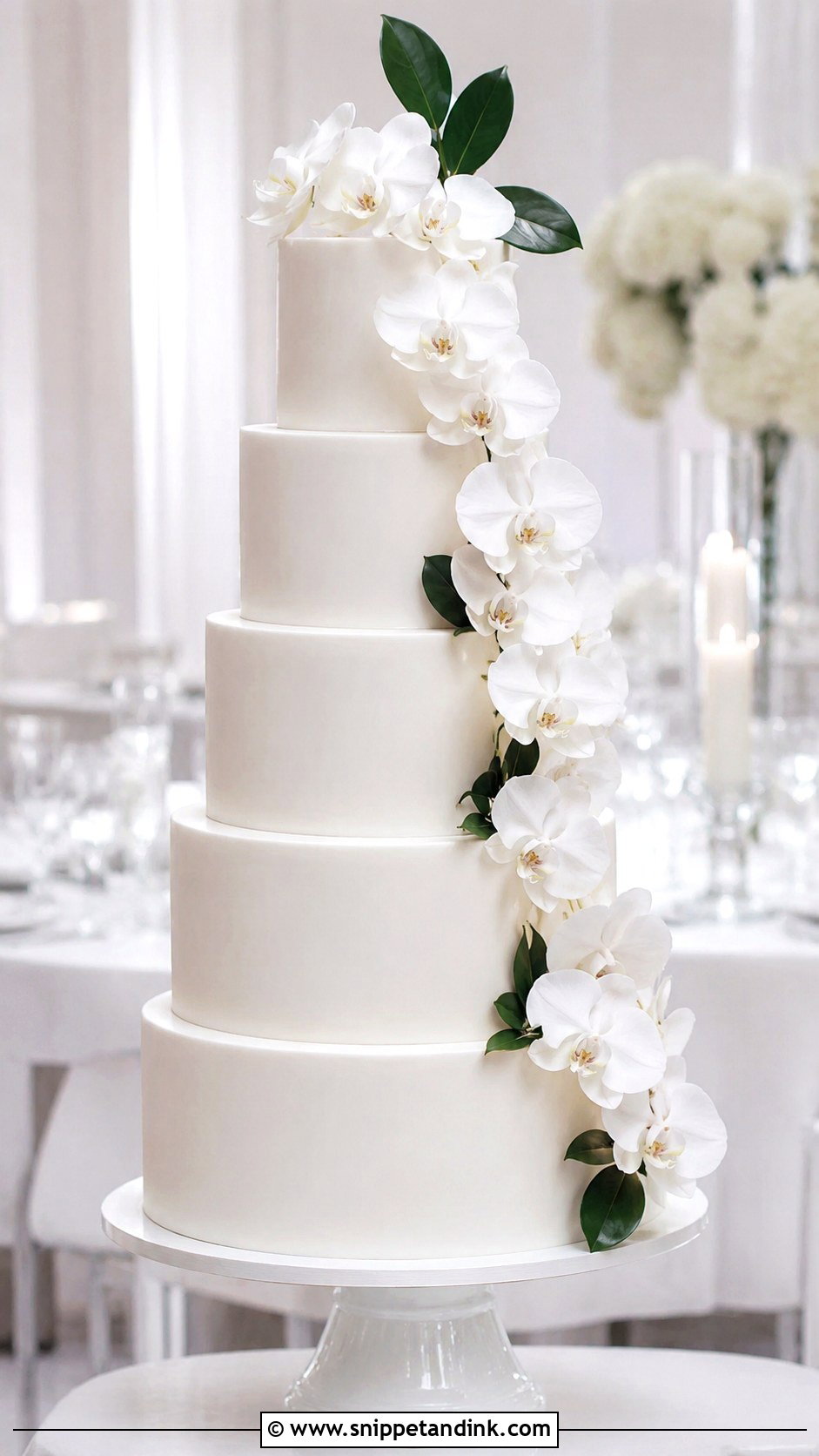
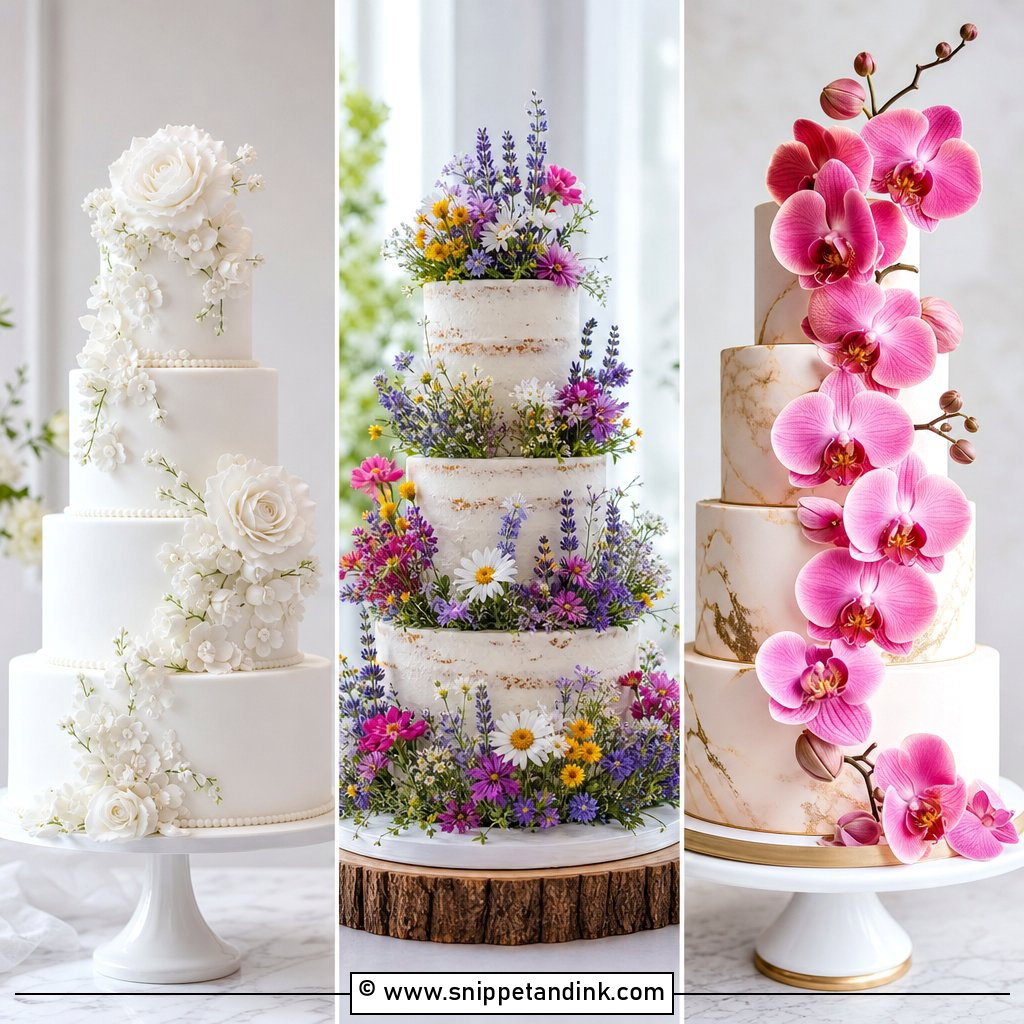
An orchid wedding cake has a clean, modern line. White phalaenopsis drape over tall tiers without crowding, and purple, burgundy or fuchsia orchids against white fondant look dramatic. Their shape is already sculptural, so I keep the icing smooth rather than piped. Phalaenopsis are not usually sold as culinary flowers, so I wrap and pick the stems or make them in sugar. One orchid color, one cake color and very little greenery keeps it sharp for a hotel or tropical reception.
4. Hydrangea Wedding Cake
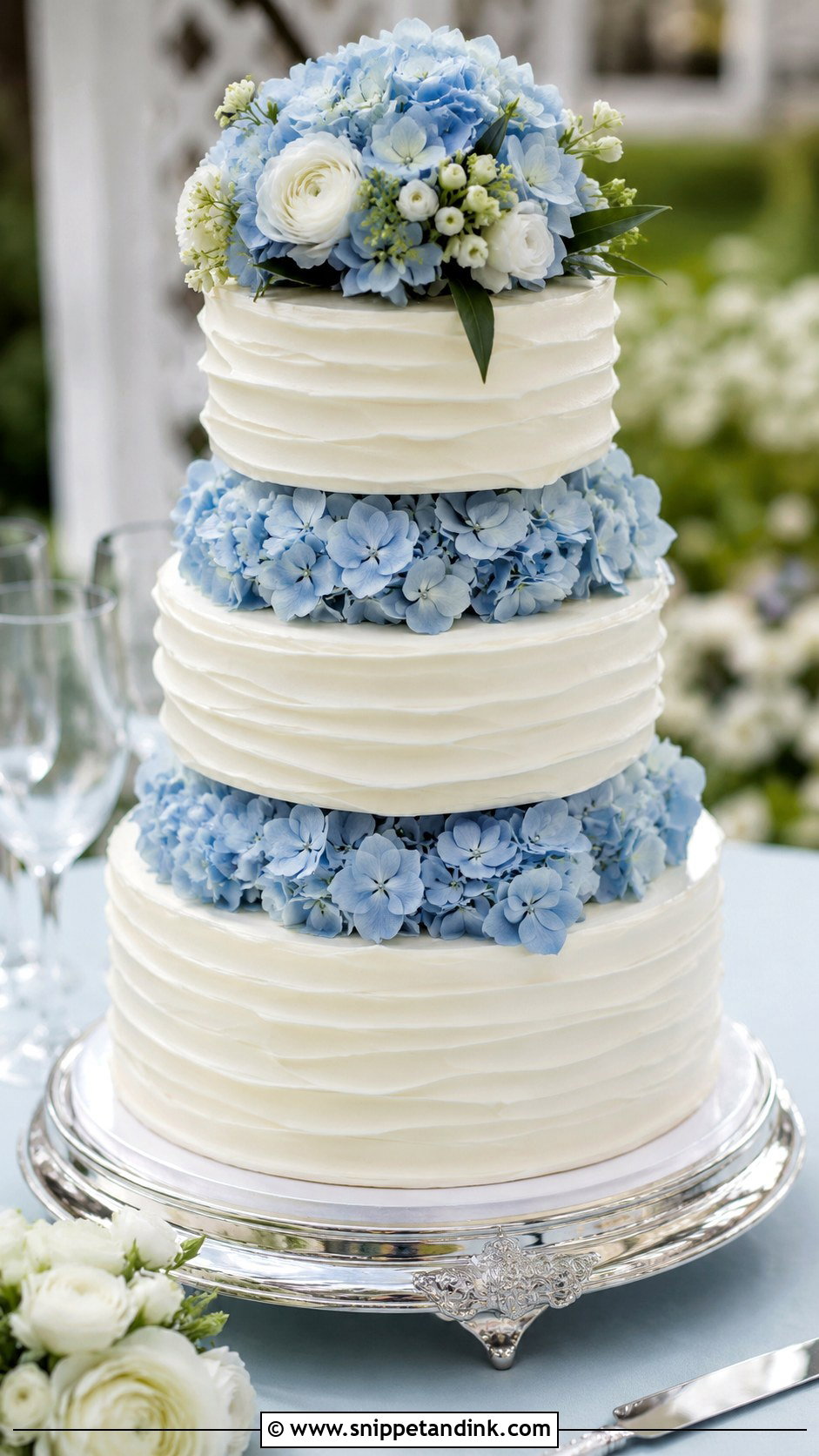
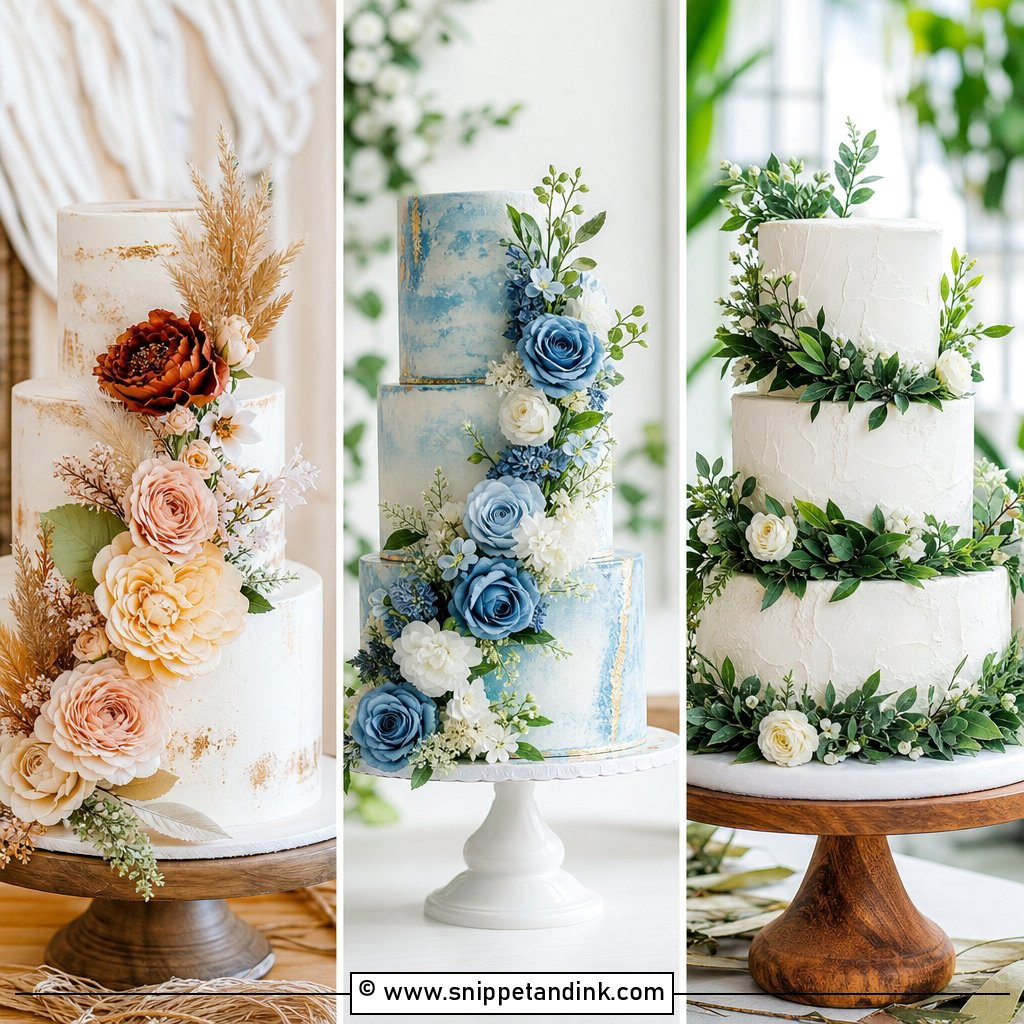
Hydrangea fills space beautifully, but not fresh. Hydrangea is not food-safe, so on my cakes it is piped buttercream or sugar every time. Done that way, it gives cloud-like coverage between tiers or a rounded topper, and the many small petals add texture without extra piping. Pale blue on white buttercream looks fresh; white is traditional; soft pink and lavender mixed together look romantic. Vanilla bean, lemon elderflower or almond sponges match. Pack the clusters tightly or the effect looks patchy.
5. Ranunculus Wedding Cake
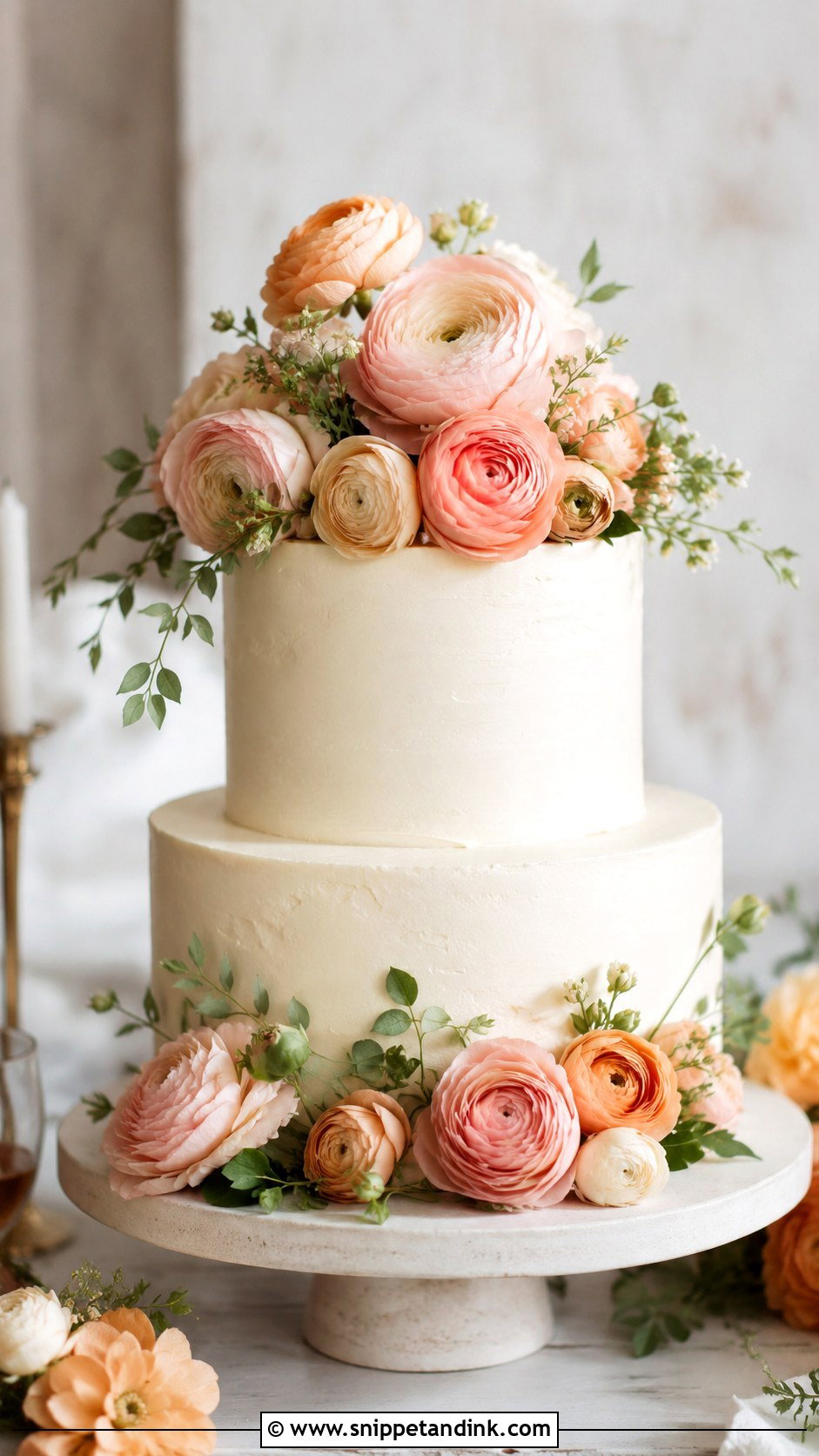
Ranunculus is my answer for couples who like roses but want something finer. The layered petals and round shape look neat on a two- or three-tier buttercream cake with light ridges or smooth sides. Peach, cream, blush and butter yellow feel warm. Fresh ranunculus is toxic, so I use sugar versions, or keep real stems on the stand rather than in the icing. A small cluster of one color looks more current than a mixed bunch, and the blooms stay in proportion on smaller cakes.
6. Daisy Wedding Cake
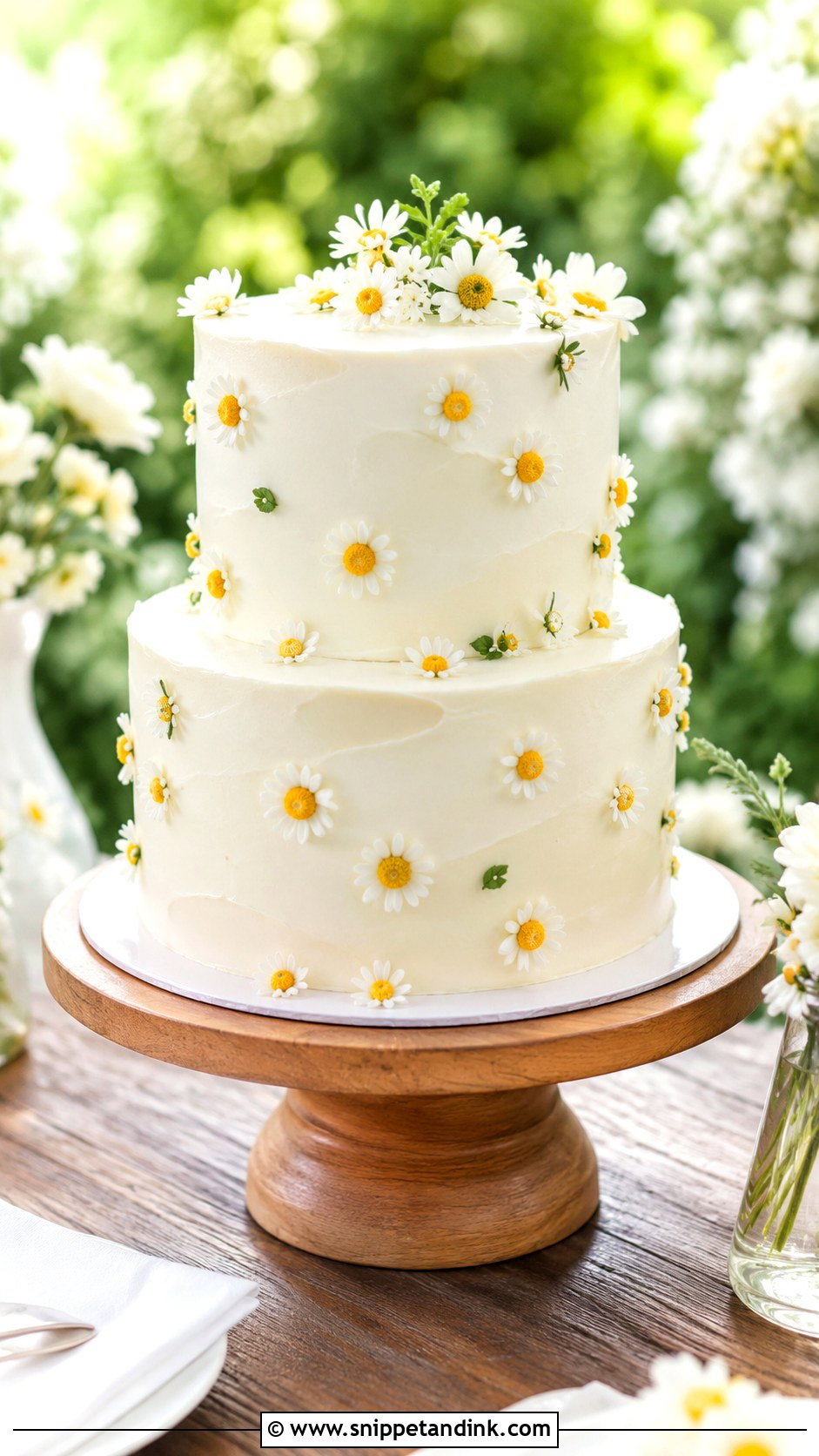
Daisies keep a cake cheerful and informal. White petals with yellow centers sit well on pale buttercream with a vanilla or lemon sponge. I scatter small daisies around each tier or make a border near the base; on smooth fondant, sugar daisies look cleaner. Most daisies sold in bunches aren’t grown for eating, so I use sugar or piped ones. A few petals, light greenery and a bright stand are enough for a picnic-style reception.
7. Baby Breath Wedding Cake
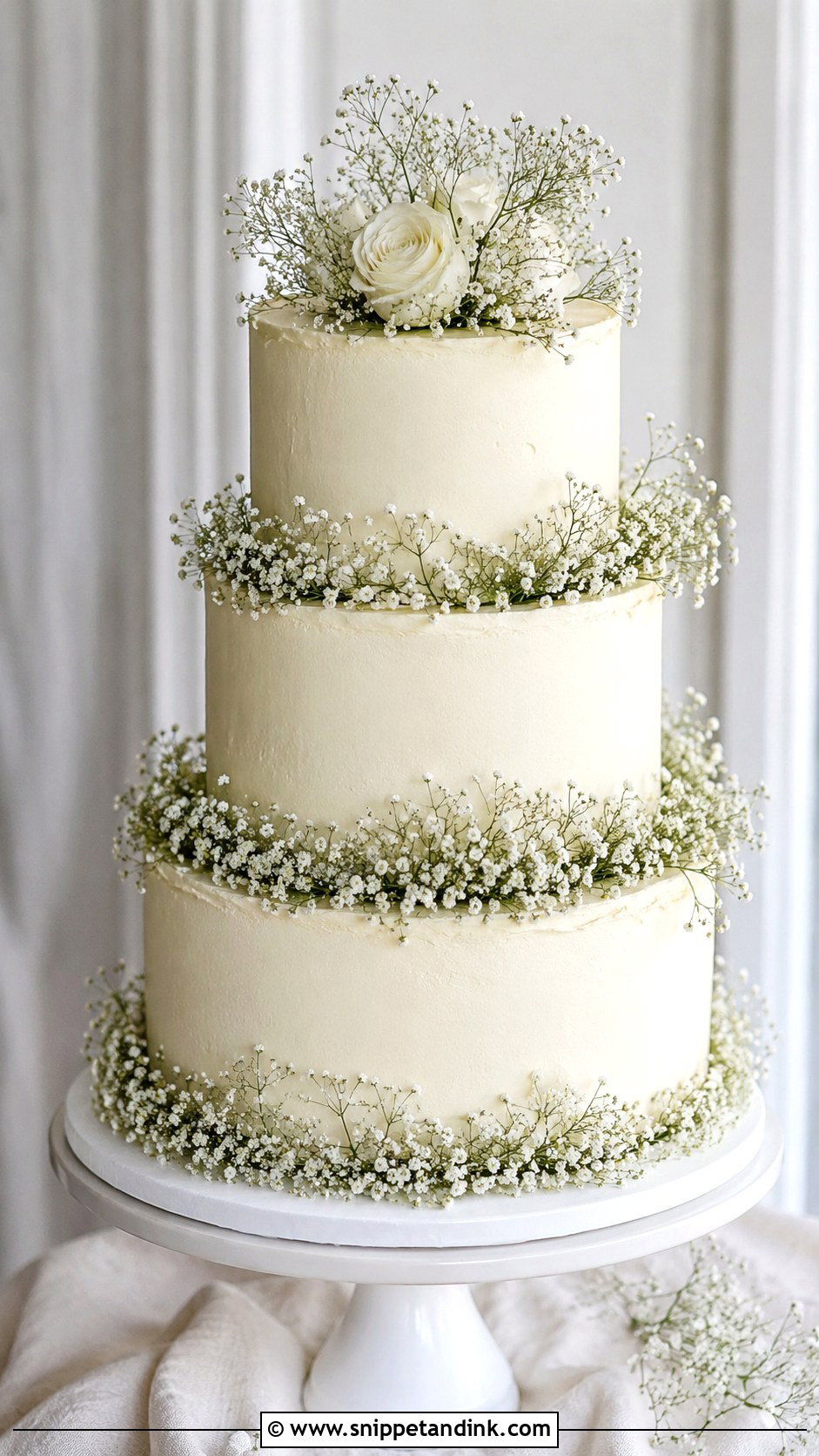
Baby’s breath is cheap and airy, and it’s one of the flowers I keep off the icing. Gypsophila is not considered food-safe, so if you love the cloud effect, I either pipe tiny white dots and clusters in buttercream or keep real sprigs on the stand around the cake. Neutral white suits almost any palette. On semi-naked or smooth fondant cakes, small bunches beside ivory roses look refined; alone, it reads minimal.
8. Lavender Wedding Cake
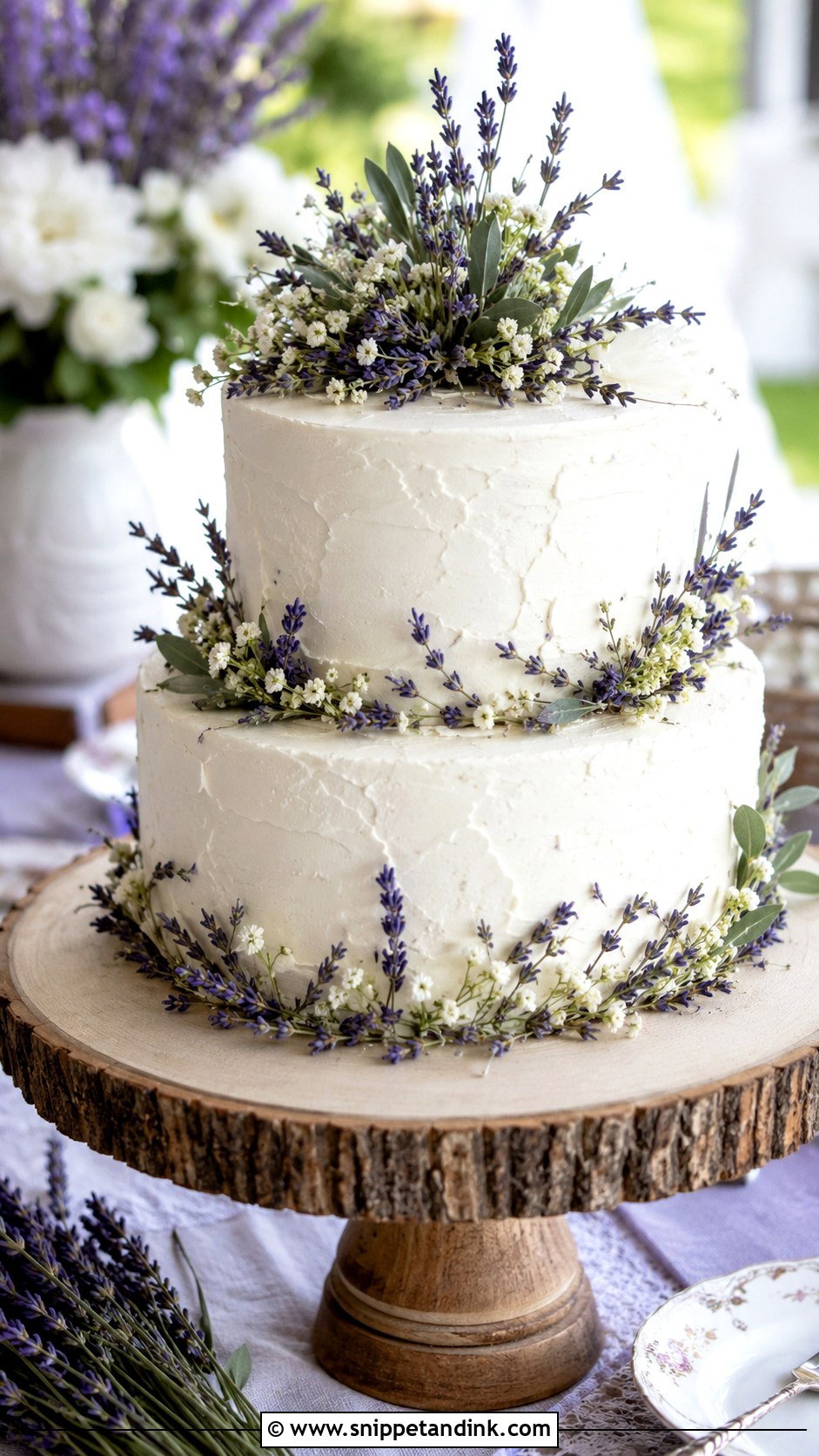
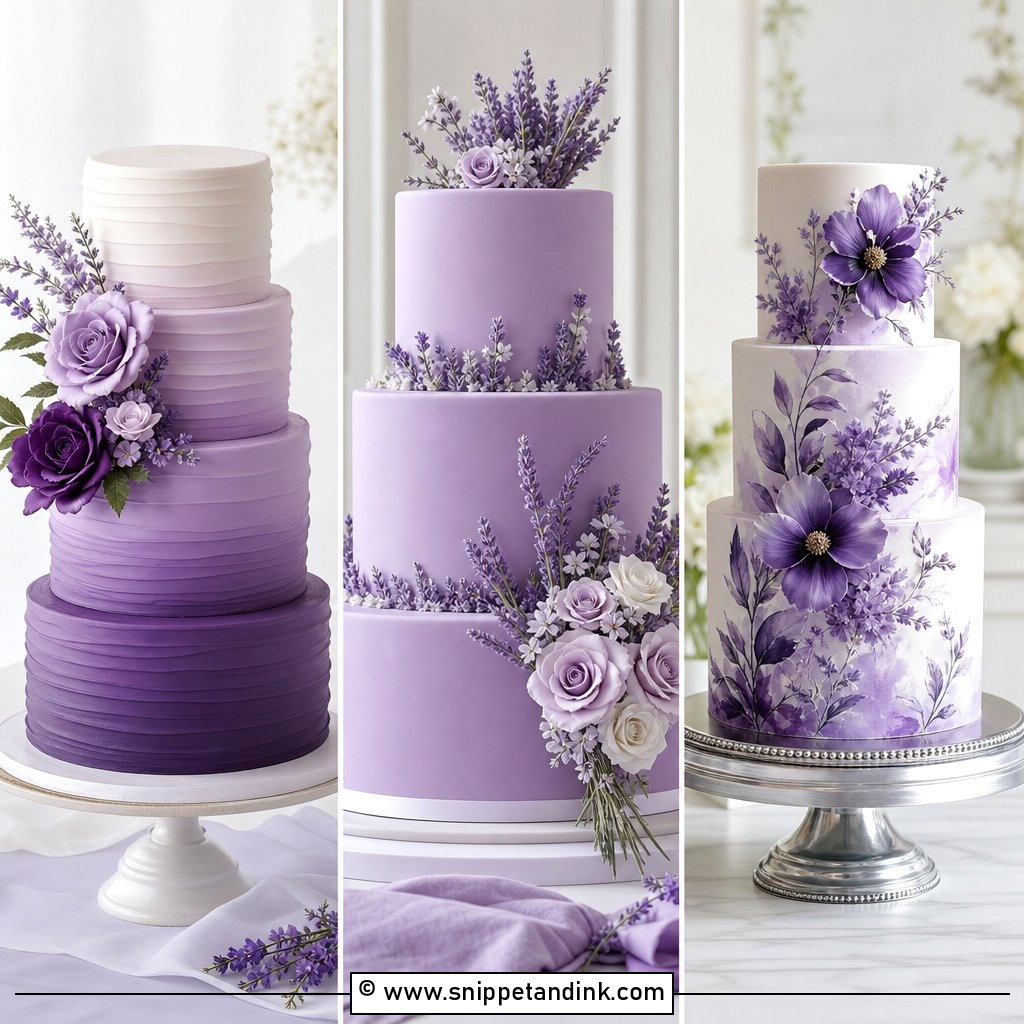
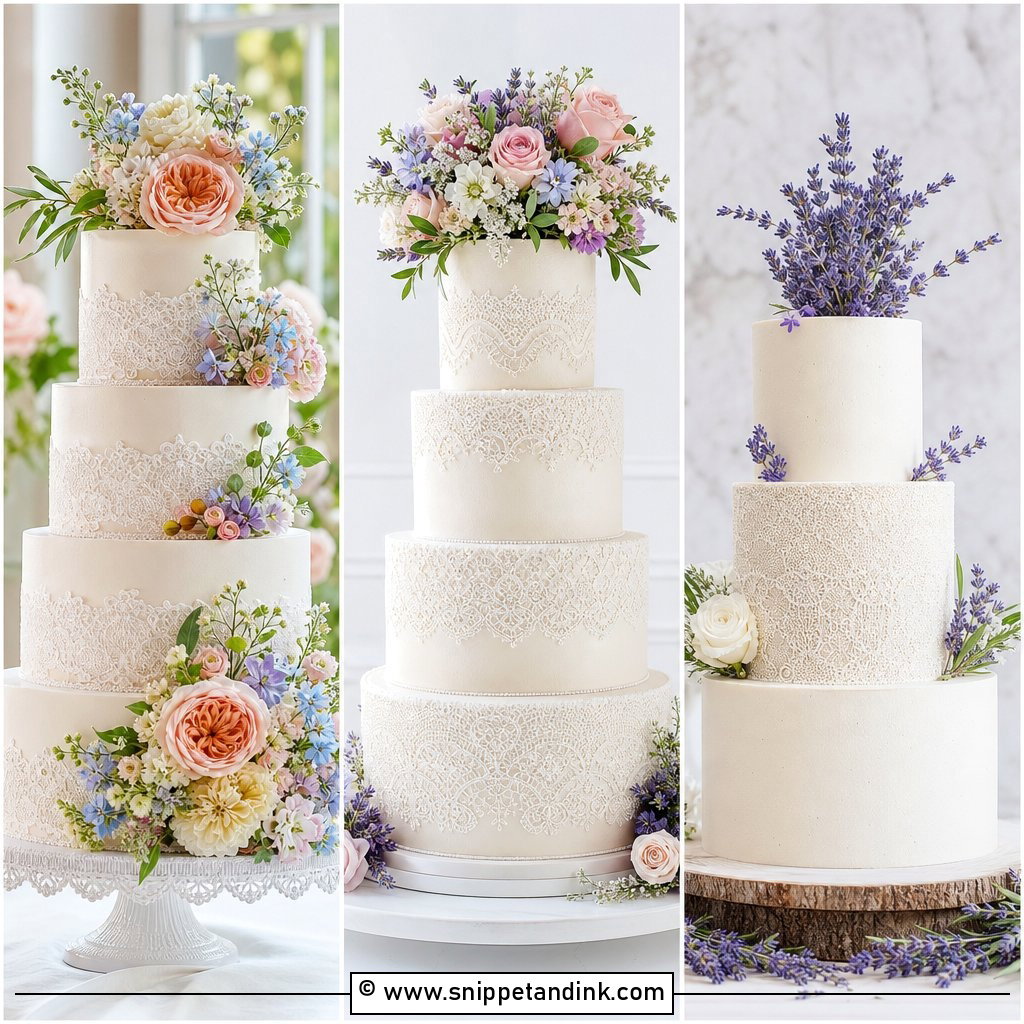
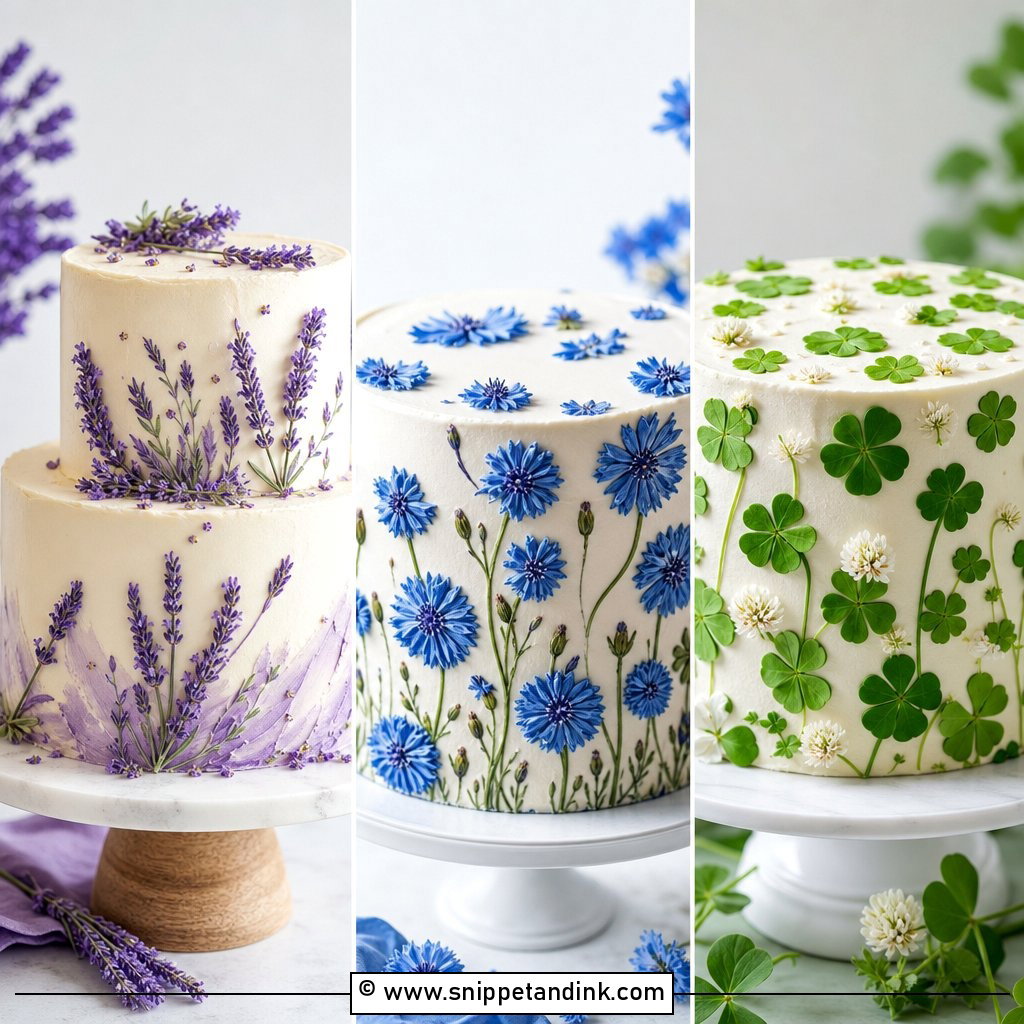
Lavender is easy to overdo. Dried culinary lavender looks charming on white buttercream, but the scent and taste are strong, and a heavy hand makes the frosting taste like soap. I use a few sprigs only, or switch to lavender-colored buttercream flowers or sugar sprigs for a more polished finish. Lemon, honey, vanilla or almond sponges pair well. Pale greenery and a fresh herb or two suit a rustic spring or outdoor reception.
9. Pressed Flower Wedding Cake
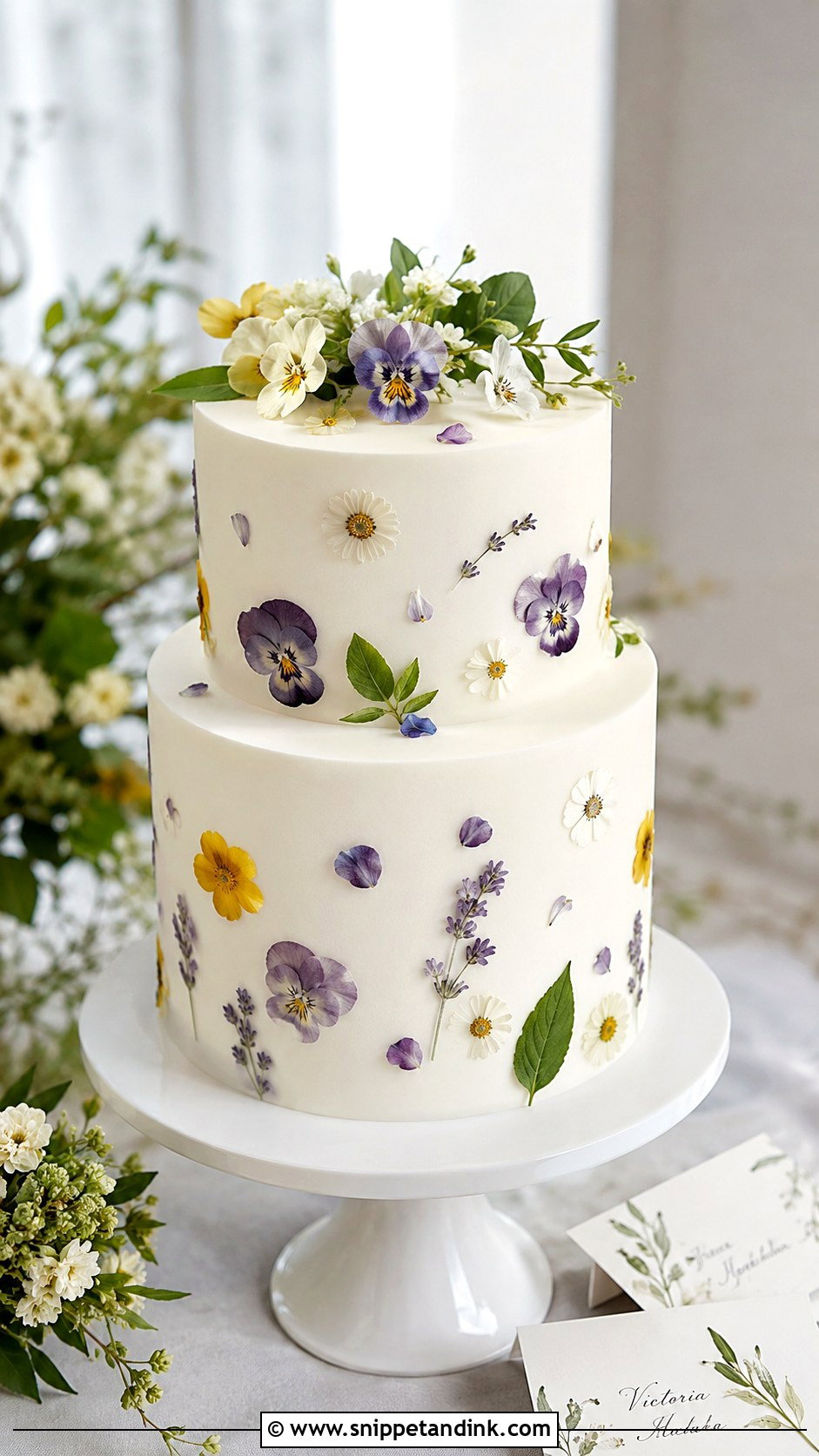
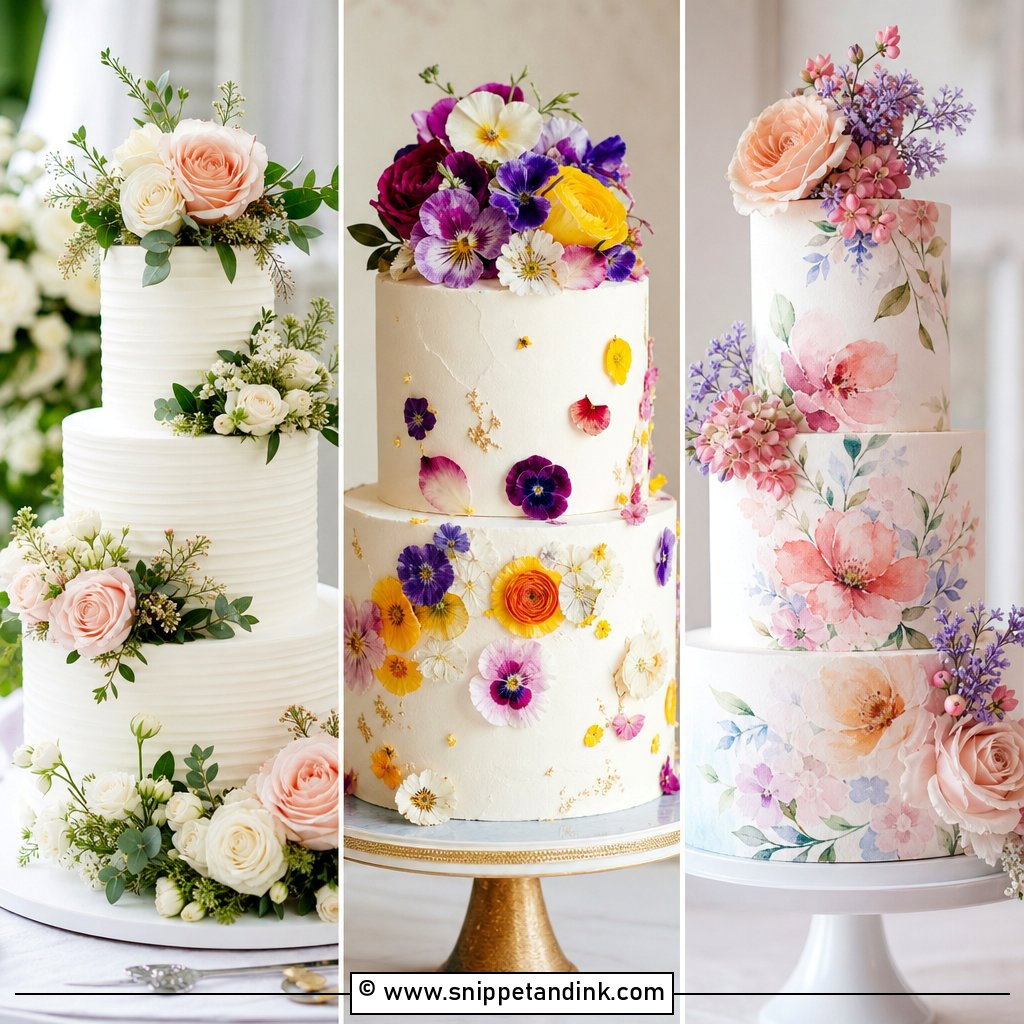
Pressed flower cakes are all about spacing. Violets, pansies, chamomile, cornflowers and small edible petals are pressed flat and laid against smooth buttercream or fondant, with plenty of white left between them so each one reads. I place them close to delivery, since petals can soak up moisture from buttercream and darken overnight. Two tiers looks handmade; taller looks like botanical art. Vanilla, lemon or elderflower sponge keeps the flavor light.
10. Wildflower Wedding Cake
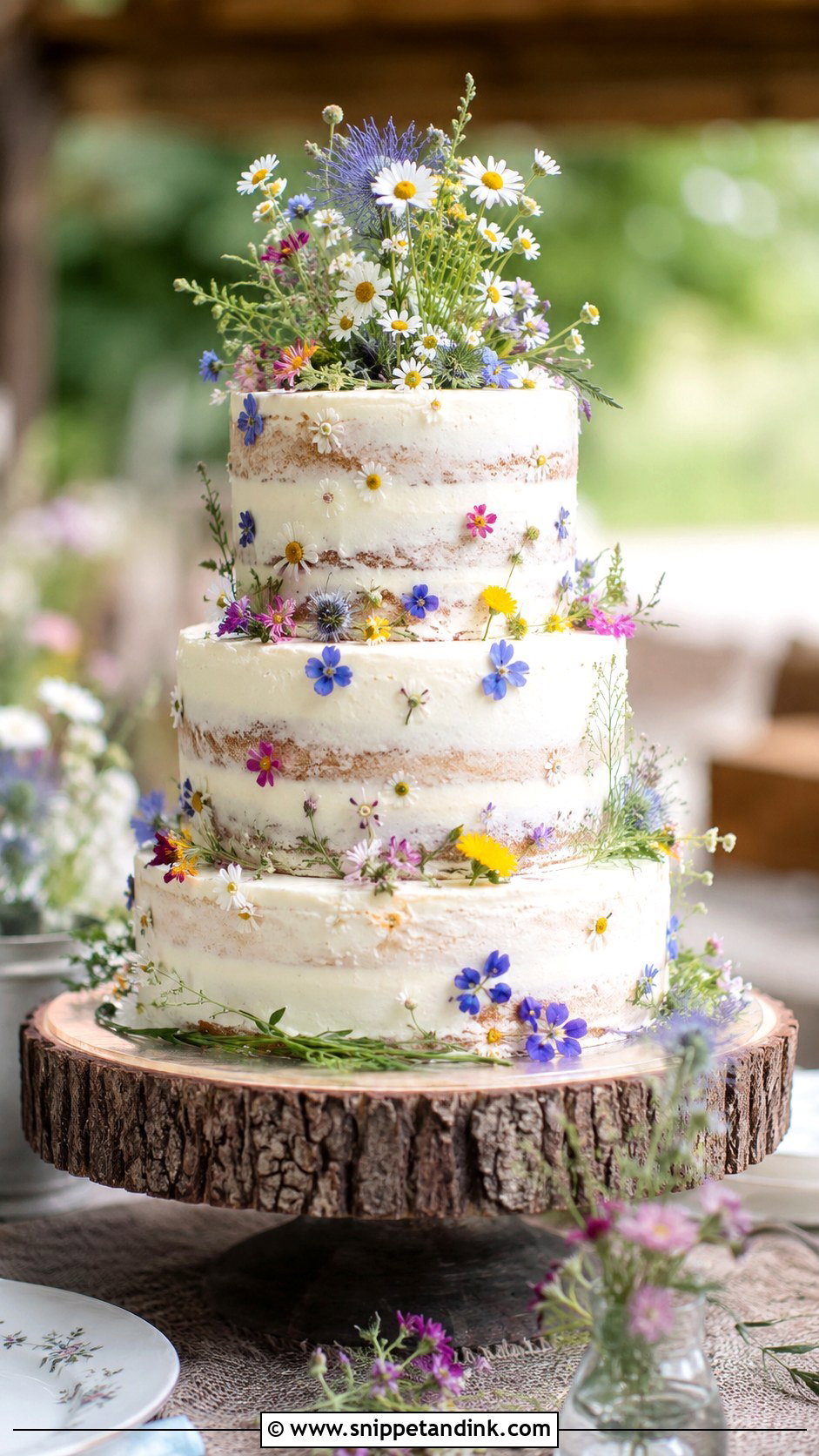
A wildflower wedding cake mixes small blooms of different shapes and shades: tiny daisies, cornflowers, chamomile, lavender and edible petals around textured buttercream. It should look natural but planned, so I spread the colors evenly around the tiers rather than bunching them. A semi-naked finish suits barns and meadows, but it dries faster than a fully iced cake, so I keep it wrapped until it goes out. Vanilla berry or lemon sponge works.
11. Sunflower Wedding Cake
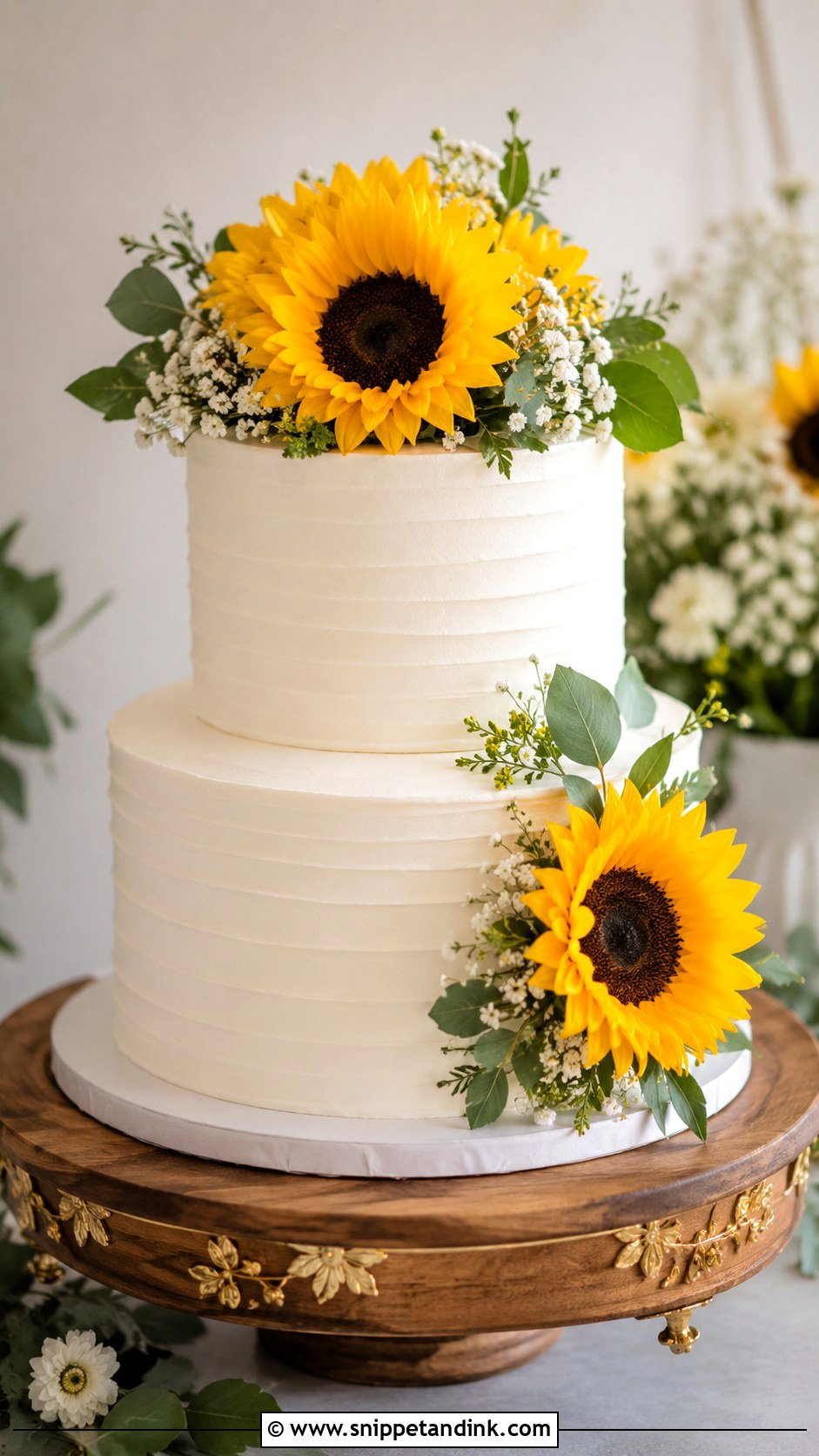
Sunflowers are loud, so give them space. I put one large head on the top tier and a few smaller ones near the base, softened with small white flowers and greenery. A white, ivory or semi-naked cake underneath keeps it balanced. Sunflower petals are edible, but the heads are heavy, so I wire or pick them securely. Honey, spice, caramel or vanilla sponge suits late-summer and early-fall weddings.
12. Cherry Blossom Wedding Cake
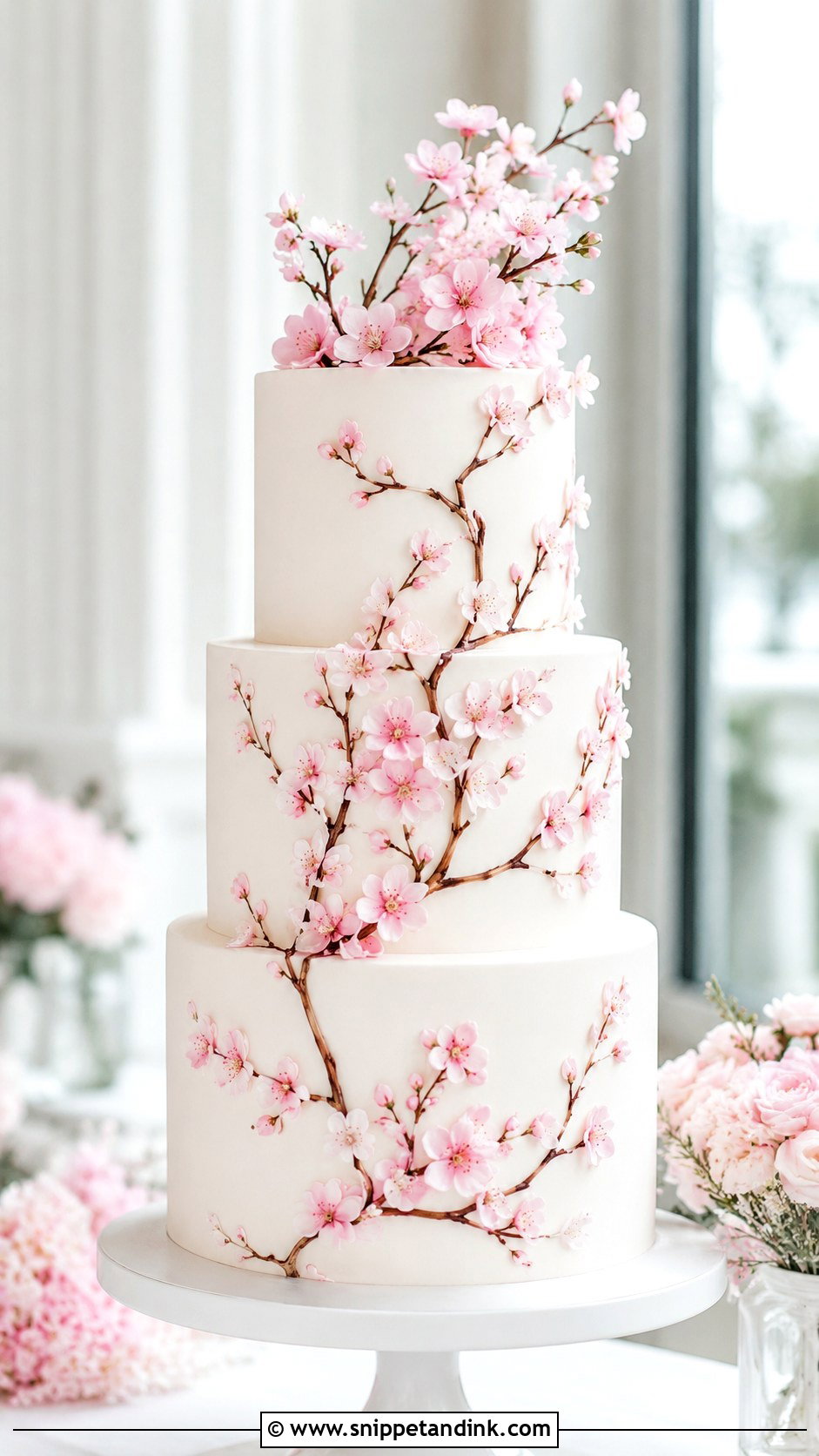
A cherry blossom wedding cake works best on tall tiers, where the branches have room to climb. I paint or pipe thin brown branches across white fondant and add pale pink blossoms in buttercream, sugar or paint. Too many blossoms and it stops looking like a branch. Vanilla, almond or strawberry sponge suits the soft pink palette, and nothing else needs adding.
13. Calla Lily Wedding Cake
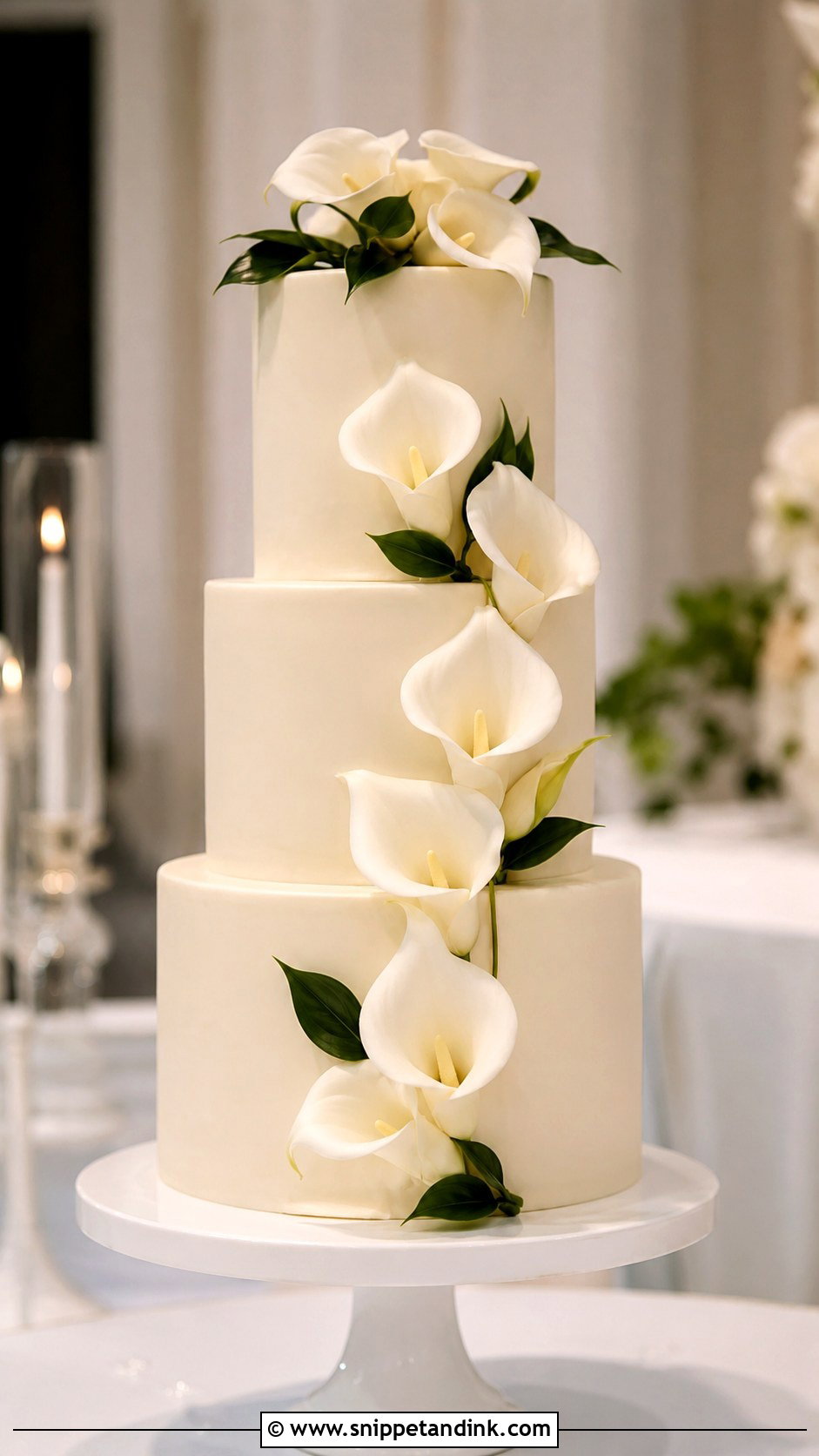
Calla lilies have a long curved shape that looks sculptural on a modern tiered cake. White on ivory fondant feels formal; plum or burgundy adds contrast. I arrange them in a diagonal line or as a sleek topper, with minimal piping. Calla lilies are toxic, though, so on my cakes they are always sugar. That also lets me curve each stem exactly where the design needs it. Vanilla, almond or dark chocolate sponge, depending on the palette.
14. Lily Of The Valley Wedding Cake
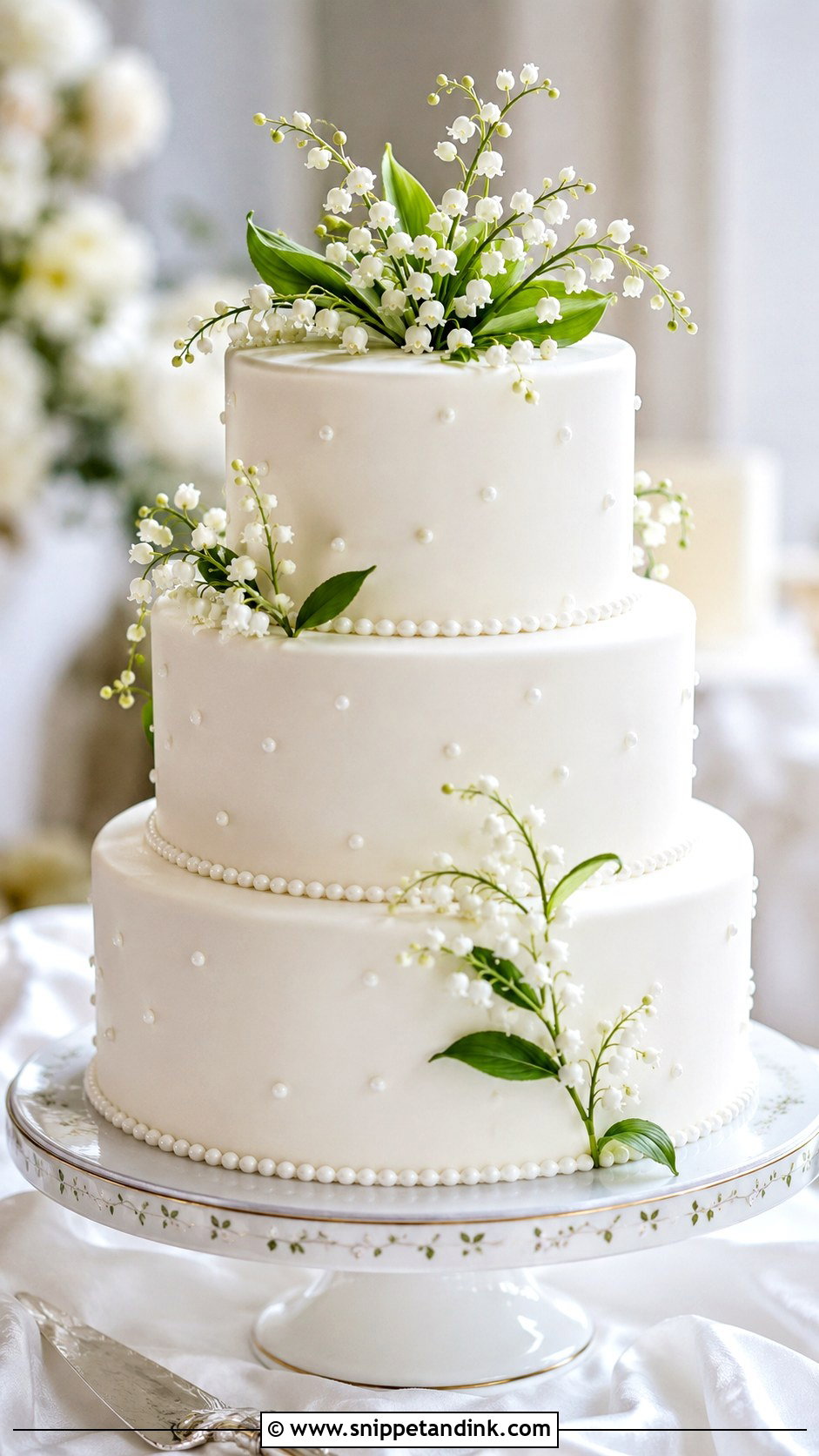
Lily of the valley gives a quiet, classic detail: tiny bells along a smooth fondant tier, pearl piping or a narrow floral border. It is also one of the most poisonous garden flowers, so real stems should never go near the cake. Sugar lily of the valley is the only version I make, and it holds its shape far better anyway. Vanilla bean, almond or lemon sponge suits a chapel ceremony or a traditional reception.

15. Magnolia Wedding Cake
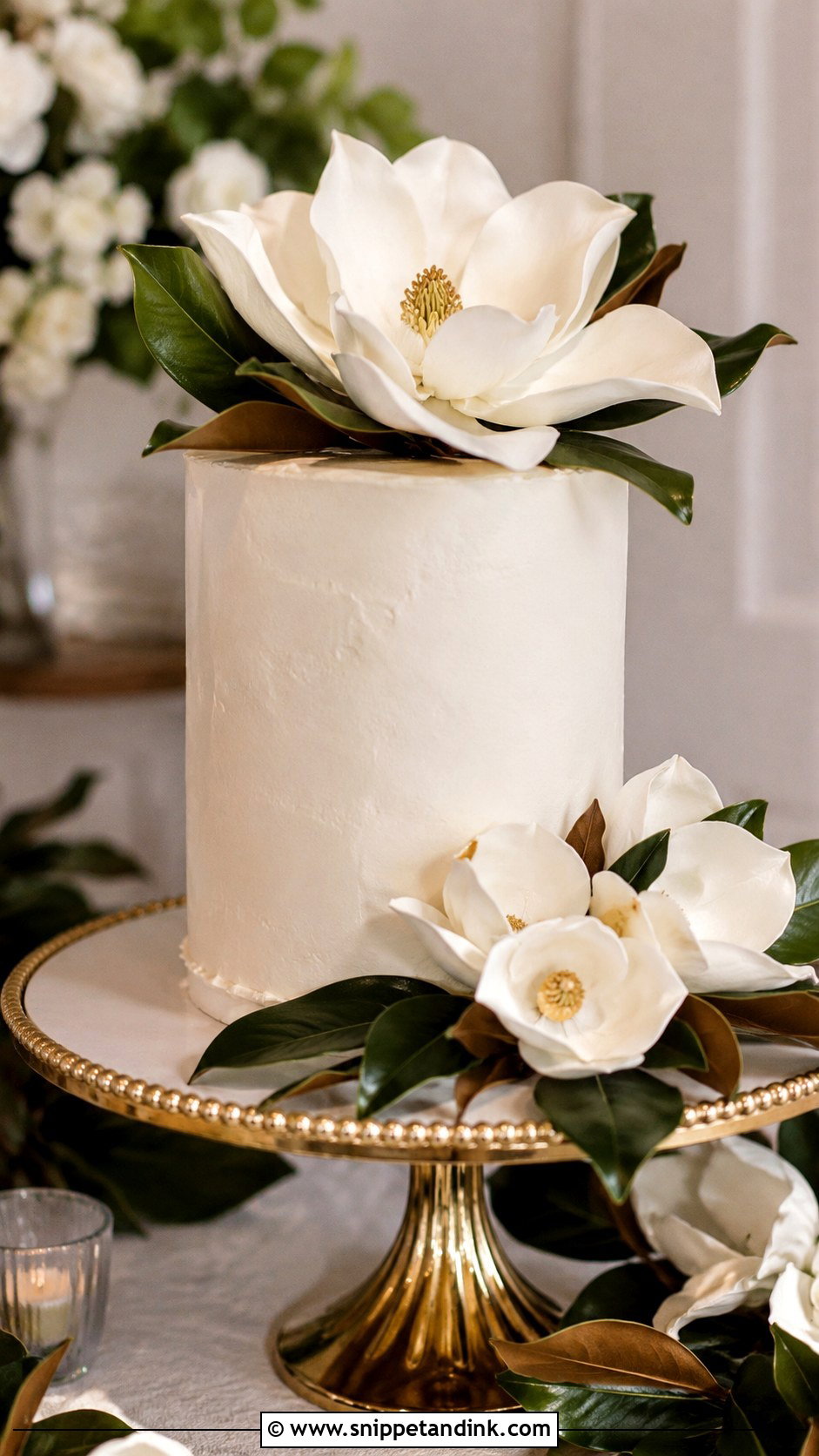
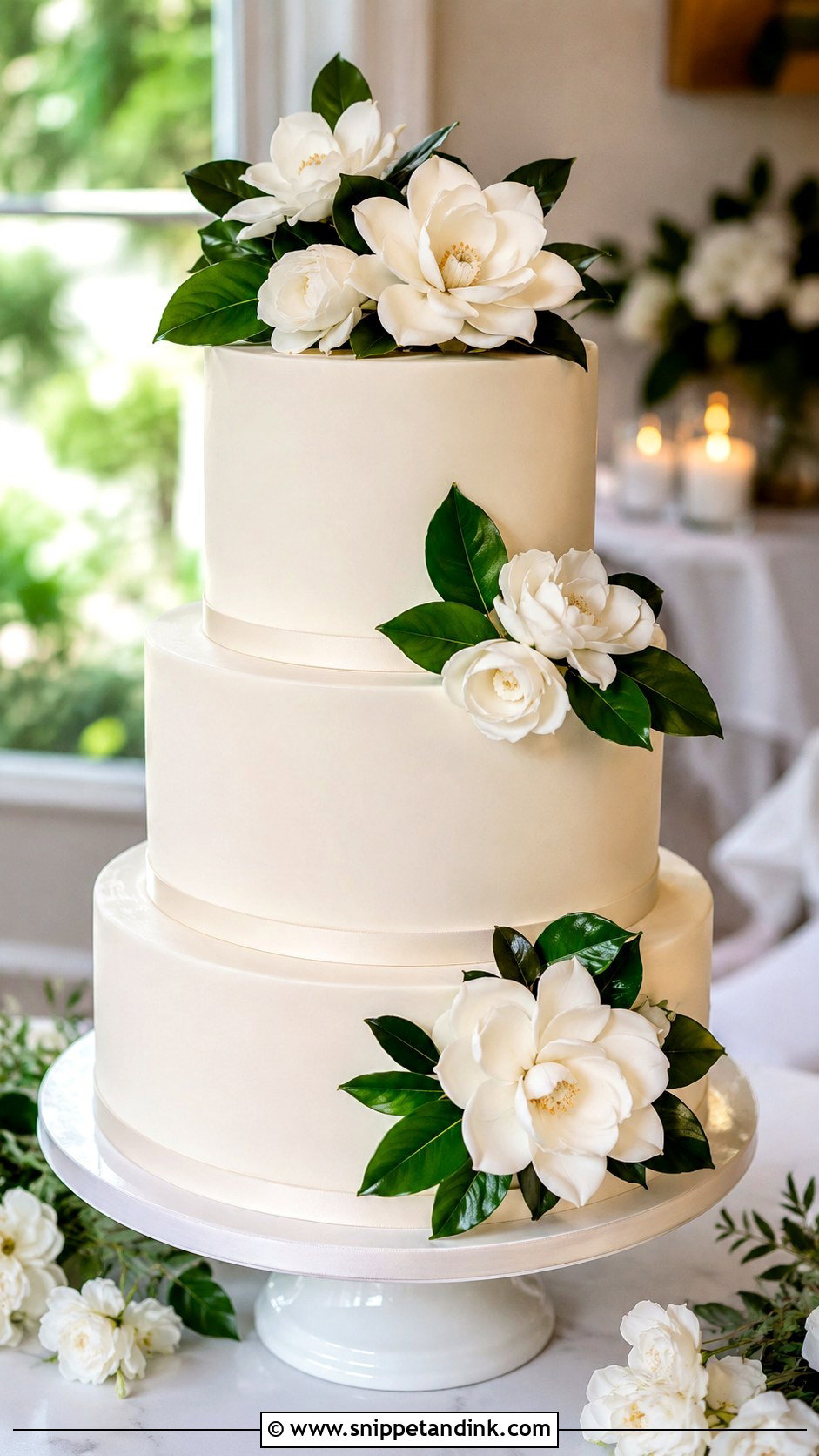
One magnolia can carry a whole cake. I usually make a single oversized sugar magnolia as the topper on a tall three-tier fondant or smooth buttercream cake, with smaller blooms and glossy leaves near the lower tier for balance. Fresh magnolia petals bruise brown at the slightest touch, which is a big reason I make them in sugar. Ivory, white and soft gold accents suit it, and vanilla, butter, almond or caramel sponge keeps the flavor classic.
16. Gardenia Wedding Cake
Gardenias have rounded white petals that look polished without being stiff. On ivory buttercream with glossy green leaves, they make a neat topper, side cluster or tier border. Fresh gardenias turn yellow-brown quickly once handled, so for a long reception I make them in sugar. White, cream and green keep it refined for black-tie or summer weddings. Vanilla, coconut or almond sponge suits the clean look.
17. Anemone Wedding Cake
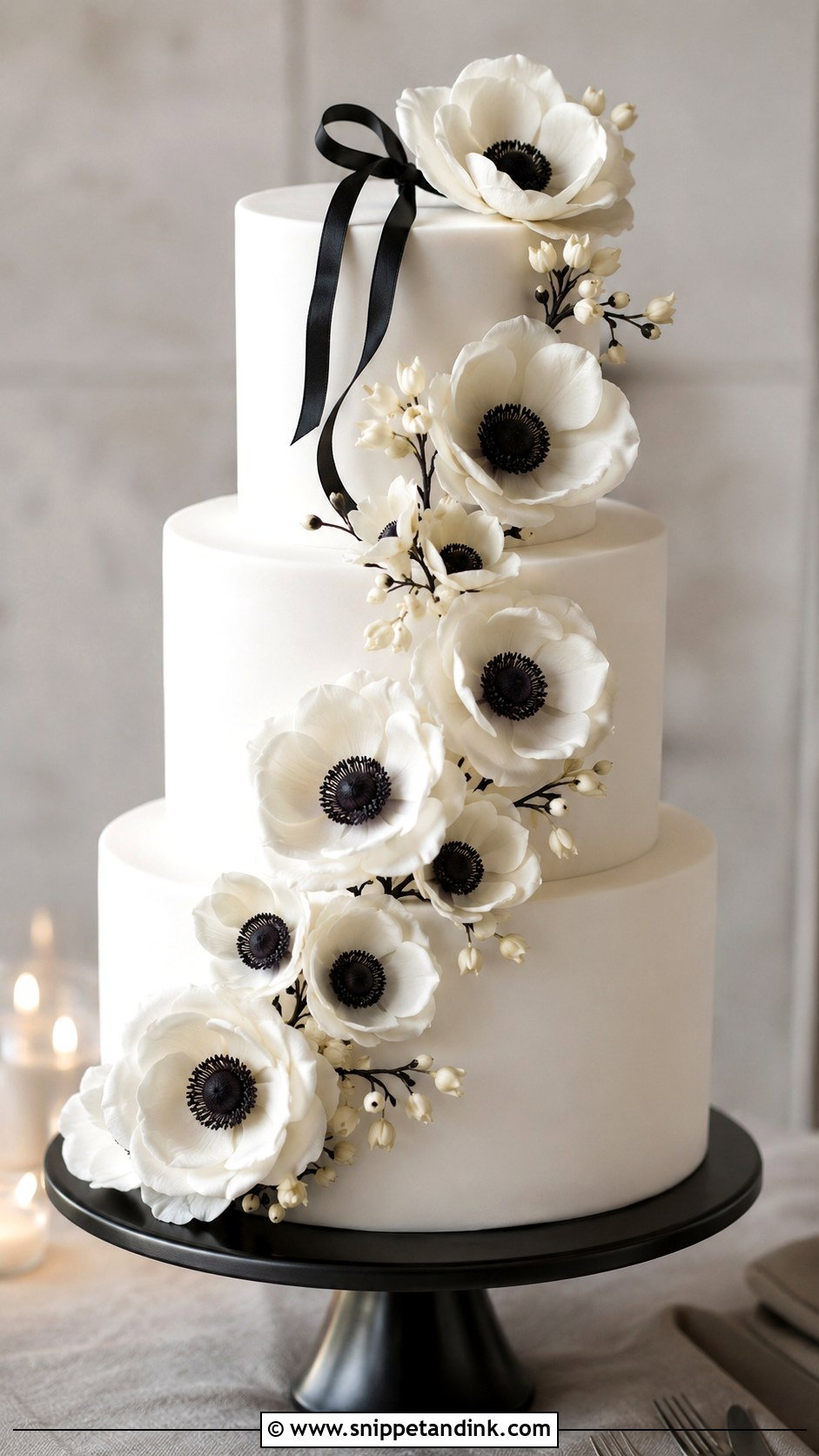
White anemones with dark centers are the most graphic flower on this list. Against smooth white buttercream or fondant, they look modern and still romantic. A few in a loose cascade give a three-tier cake enough movement; blush or lavender anemones are softer. Anemones are toxic, so mine are sugar. Black ribbon, pearls or very fine piping finish it, but I stop there; too much and it loses the contrast.
18. Dahlia Wedding Cake
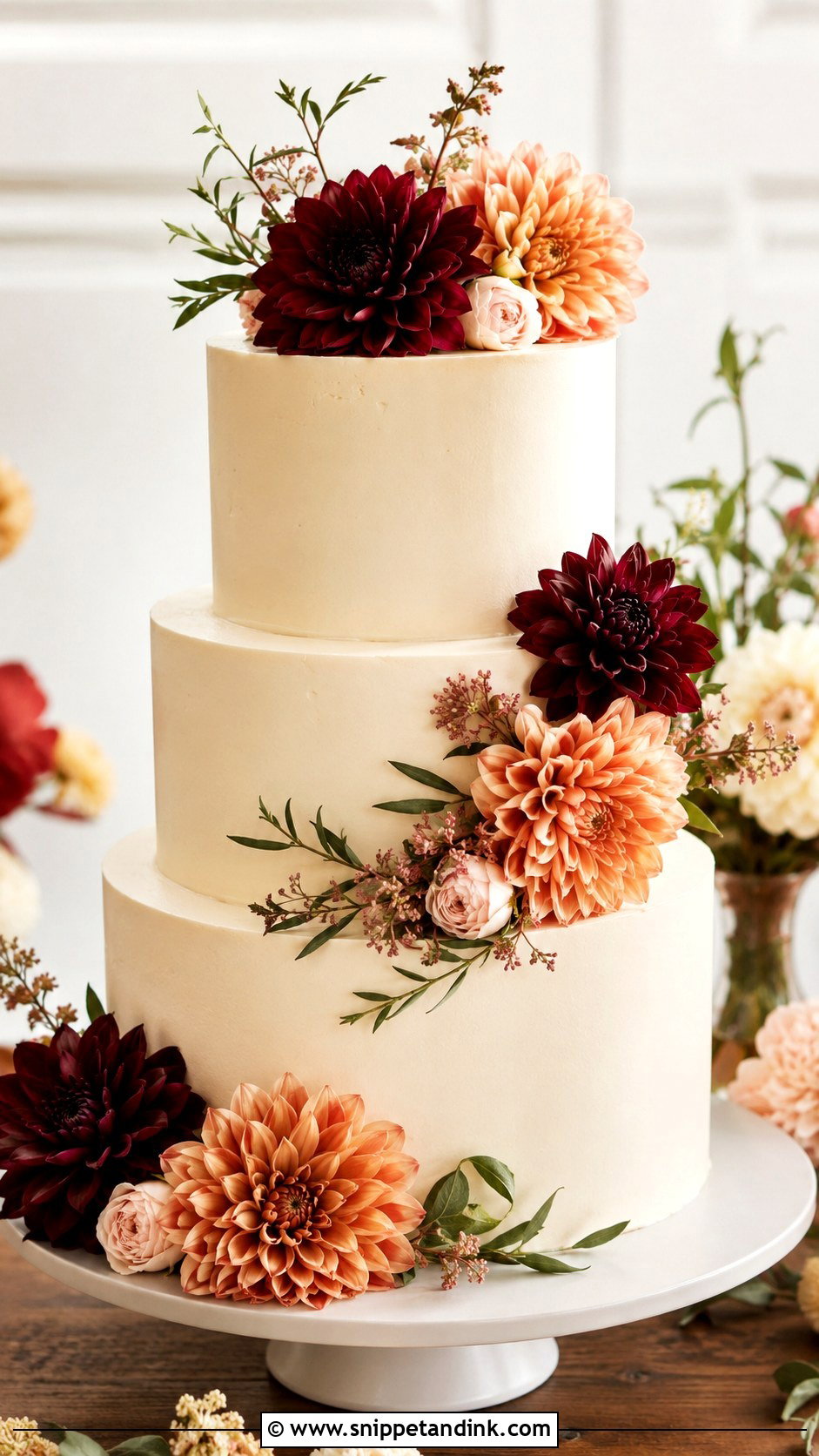
Dahlias are made for sugar work. Every layered petal adds depth, so a single large dahlia can be the focal point, or smaller blooms can build a cascade. Burgundy, peach, cream, coral or dusty pink each change the mood. Making one takes time, because of the number of petals, so I’d order these early. Vanilla spice, chocolate or caramel sponge suits late-summer and fall weddings.
19. Sweet Pea Wedding Cake
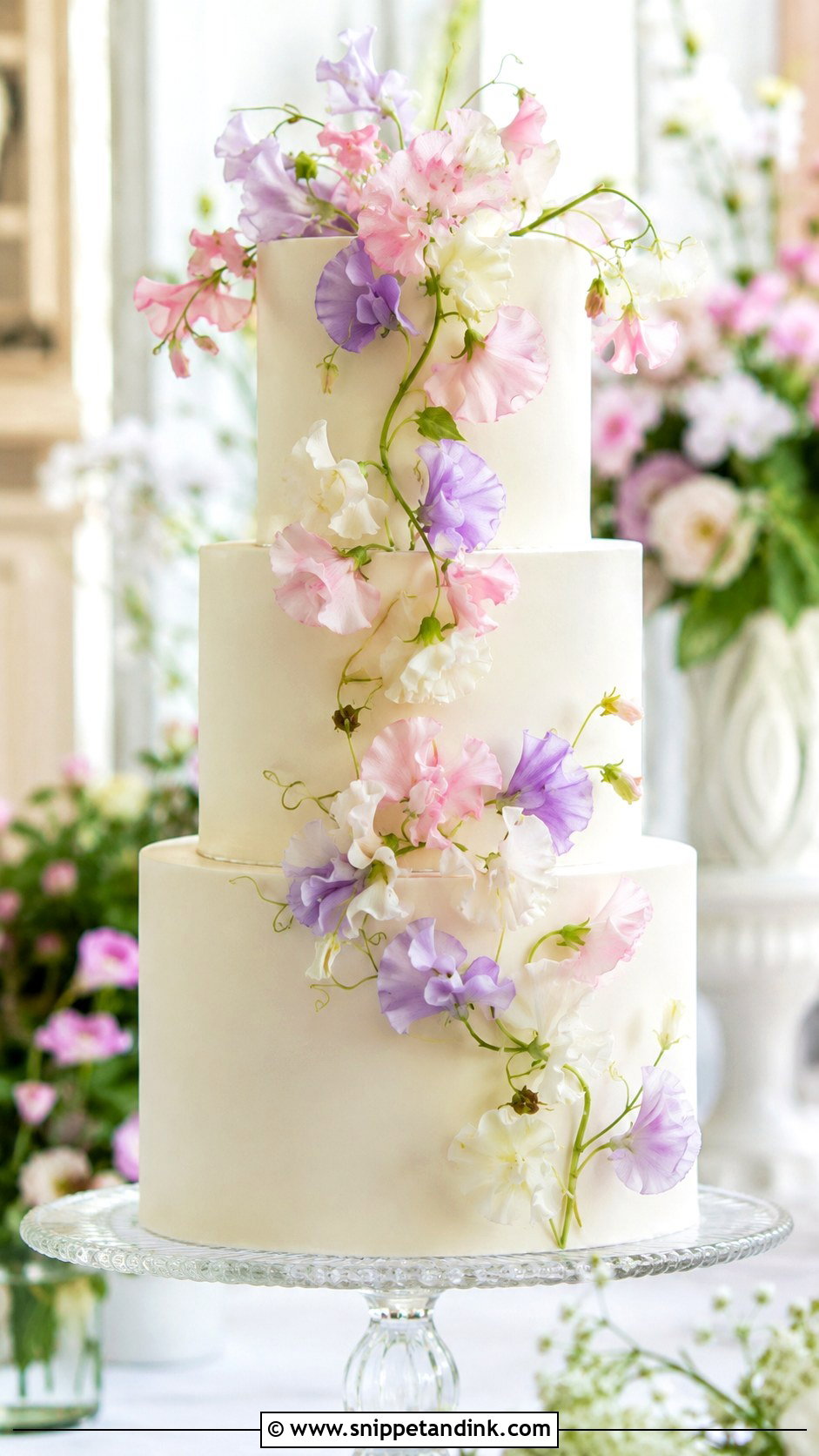
Sweet peas have soft ruffled petals that suit light textures and pastels. I shape sugar sweet peas to trail gently from tier to tier, or climb the side of a tall white cake. Fresh sweet peas are toxic, so I never place real ones on icing. Soft pink, lavender, cream and pale peach look like a cottage garden. Lemon, vanilla or elderflower sponge suits a spring reception.
20. Pansy Wedding Cake
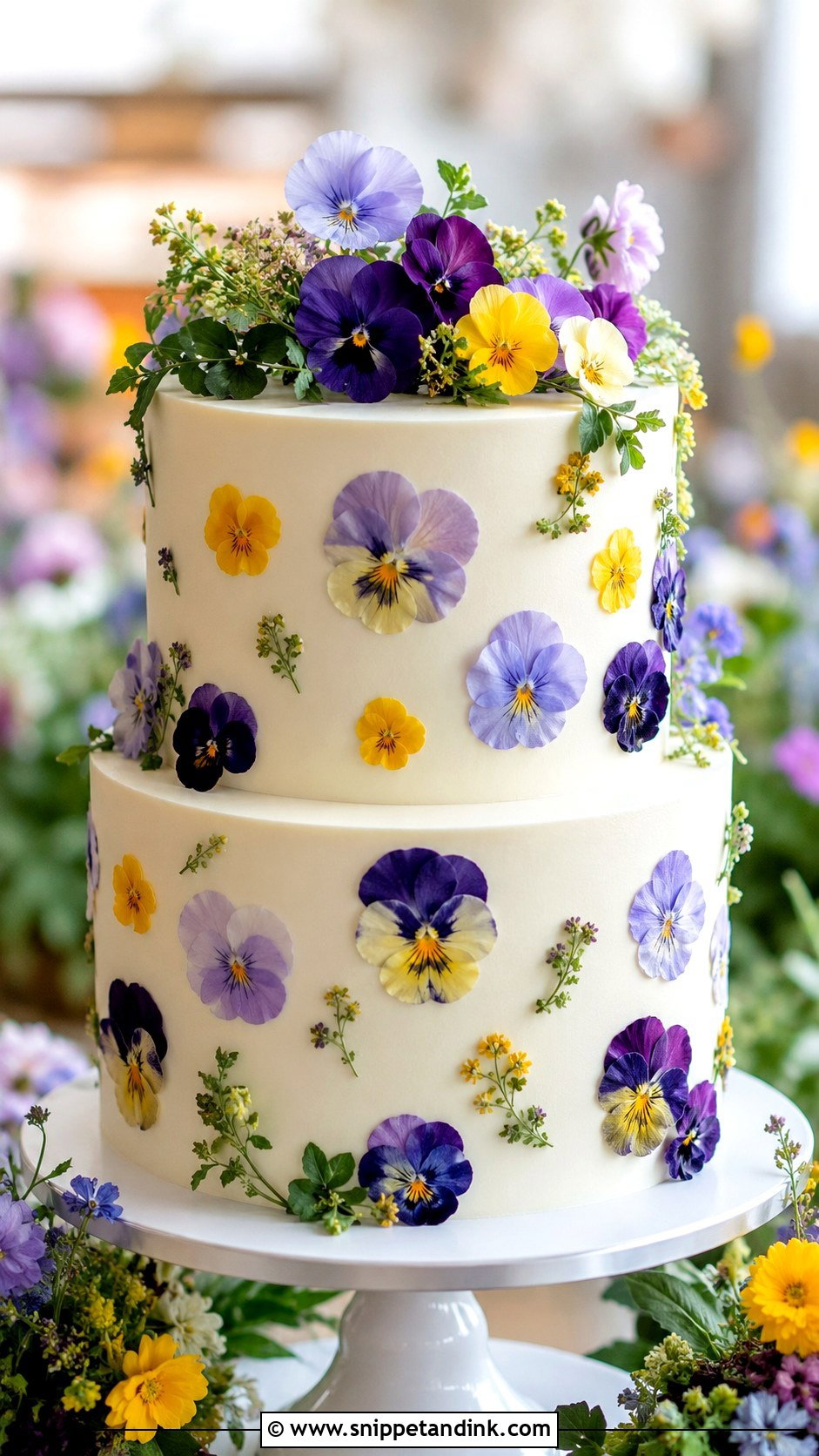
A pansy wedding cake is one where every flower can be eaten. Pansies come in nearly every shade, from pale pastels to deep purple and yellow, so they match almost any palette. Pressed pansies lie flat on smooth white buttercream; fresh ones can be scattered around the top and base. Clean spacing keeps it from looking busy. Lemon, vanilla or berry sponge, with plain tiers so the petals stay the focus.
21. Marigold Wedding Cake
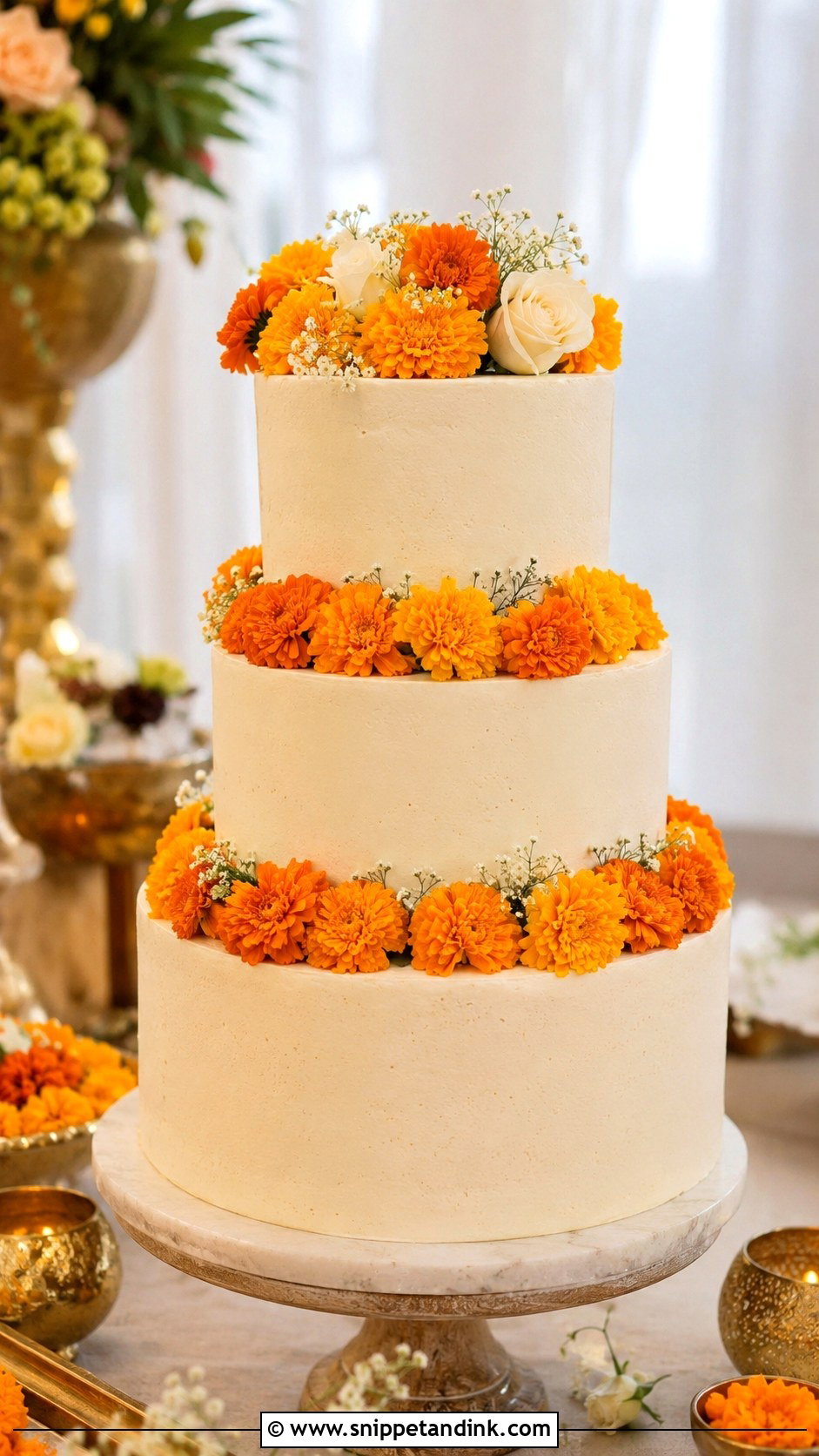
Marigolds bring strong orange, gold and yellow, and they look best in neat clusters or a bold ring around the base of each tier on white or cream icing. Mixed with ivory roses or small white blossoms, they soften. Calendula, often called pot marigold, is a culinary flower, and it’s the one I use fresh. Honey, citrus, vanilla or spice sponge matches the warm color. Keep the frosting smooth so the color reads clearly.
22. Tulip Wedding Cake
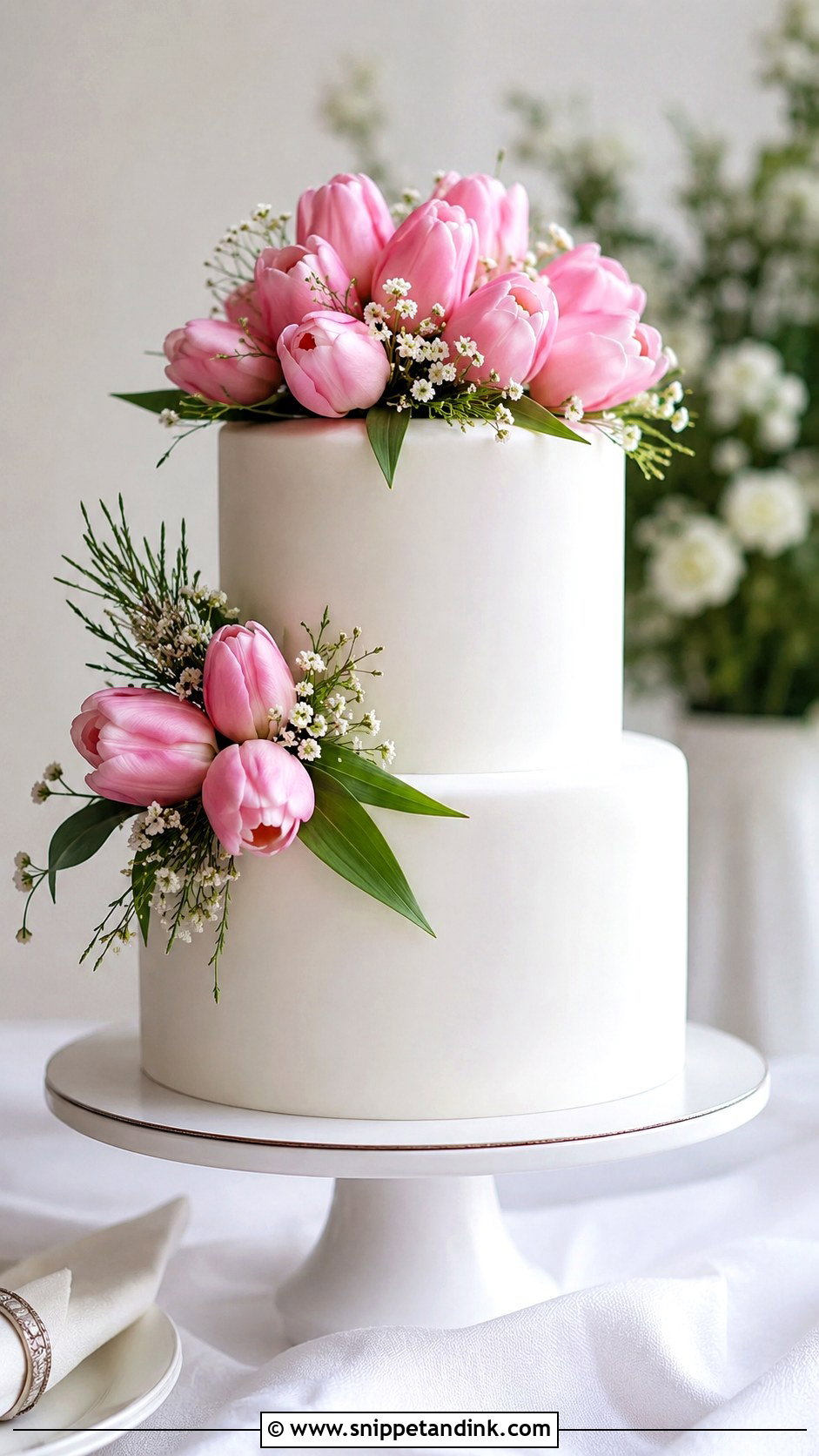
Tulips have a simple shape that suits smooth buttercream, sharp fondant edges or very little decoration. White tulips look classic; pink, peach or yellow look like spring. I arrange them as a top bouquet, a side cluster or a loose ring at the base. Fresh tulips keep bending toward light after cutting, which pulls an arrangement out of shape in a few hours, so I often make them in sugar. Vanilla, lemon, almond or strawberry sponge suits it.
23. Hibiscus Wedding Cake
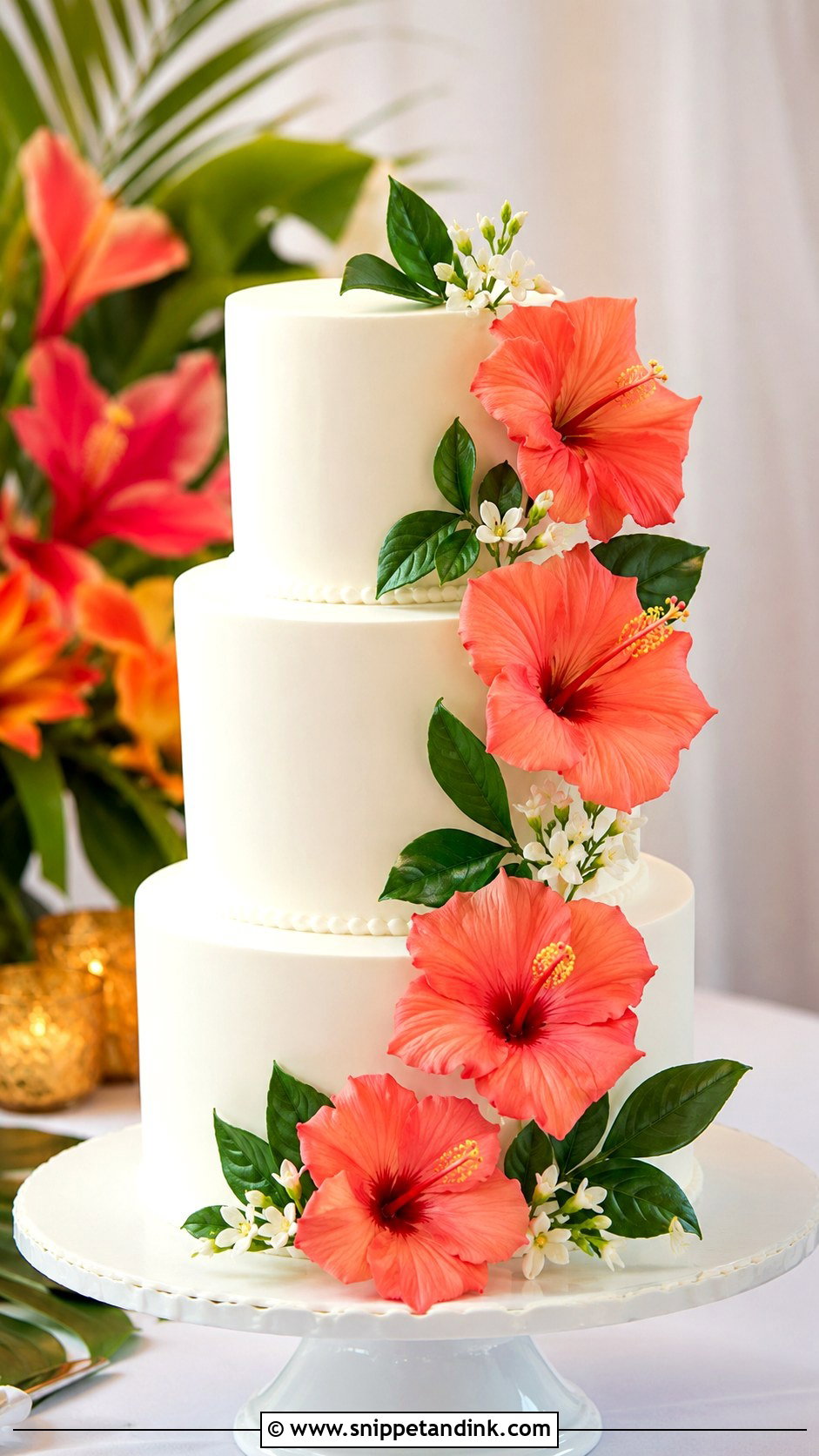
Hibiscus gives big, glossy color. Coral, pink, red or yellow blooms placed along each tier with dark green leaves look right at a destination wedding. Hibiscus is edible, but a fresh flower wilts within a day, so for a long evening I’d choose pale sugar hibiscus. Coconut, pineapple, vanilla or passion fruit sponge matches the tropical style. A clean, bright base keeps it elegant rather than themed.
24. Blue Cornflower Wedding Cake
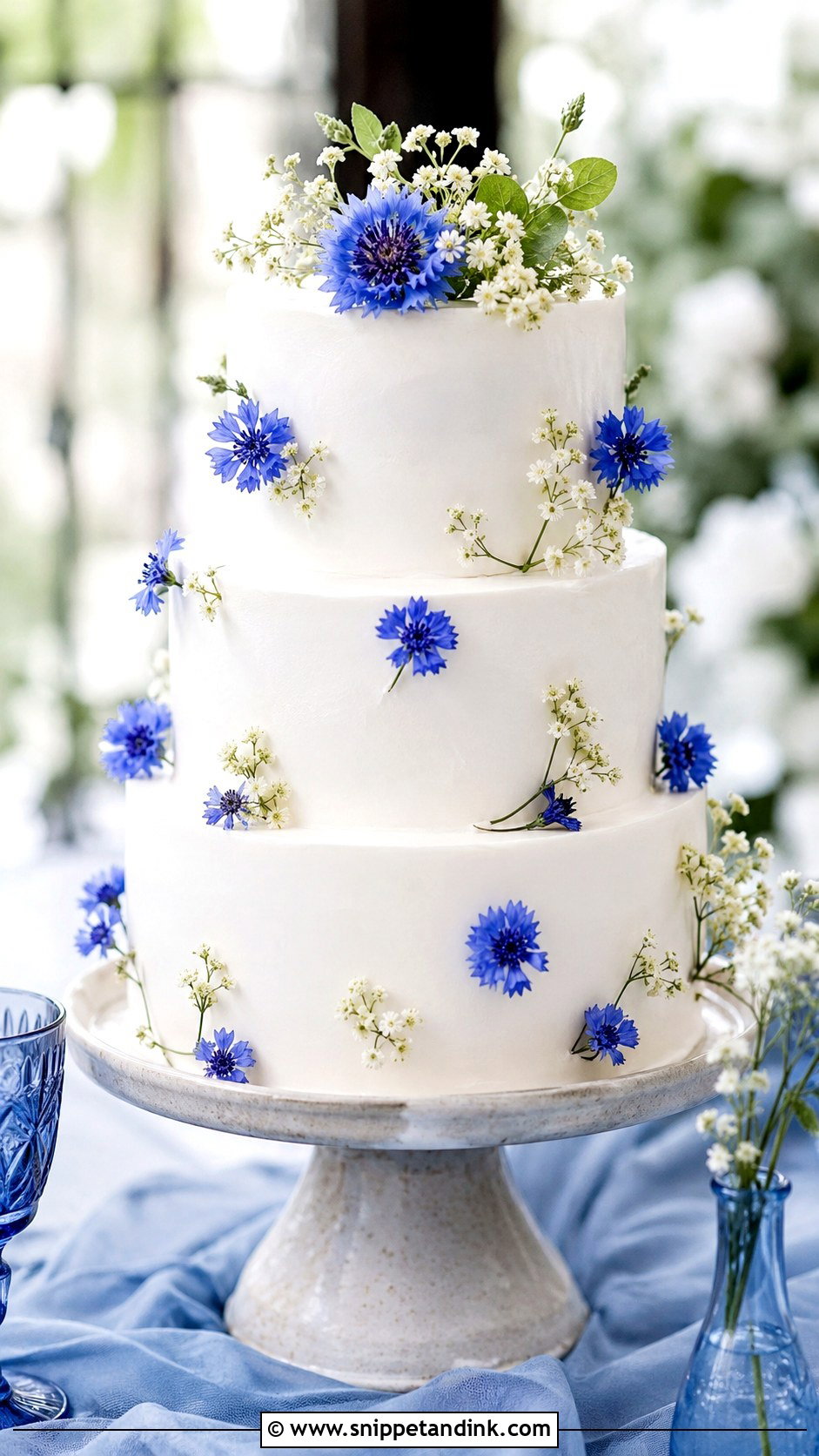
Cornflowers are a rare true blue, and they’re edible, which makes them a favorite of mine. Scattered over a two-tier cake, they look intimate; as a diagonal trail on a taller cake, more formal. They suit pressed flower designs and wildflower cakes, alongside tiny white flowers and soft greenery. Lemon, vanilla or blueberry sponge matches the cool palette. Keep other colors soft so the blue stays the main detail.


25. Floral Meadow Wedding Cake
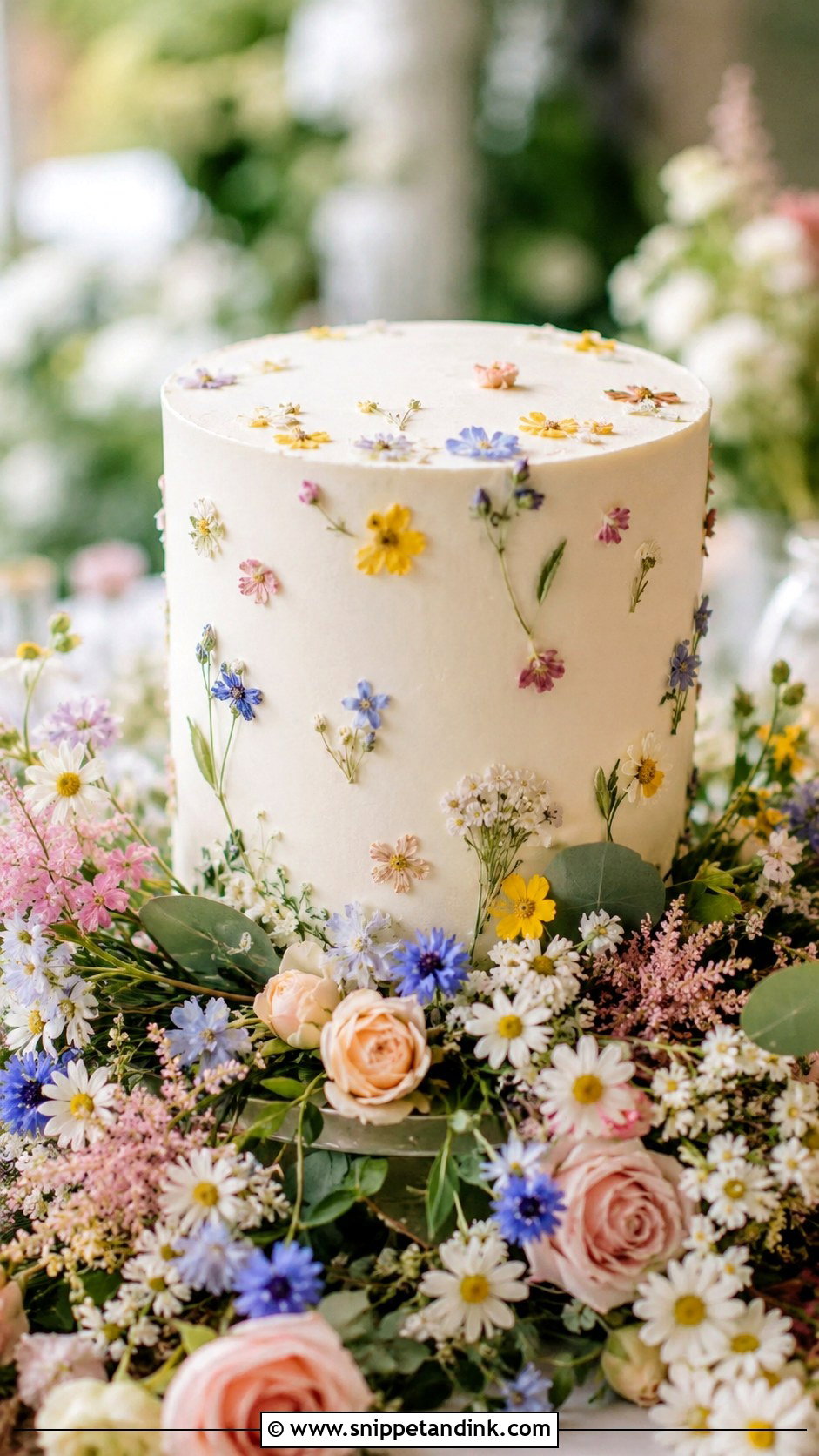
A meadow display puts most of the flowers around the cake rather than on it, so it seems to rise out of a flower bed. The cake can stay smooth white buttercream with a few small edible flowers, while your florist fills the base of the stand. It is the easiest way to have lots of real flowers without any safety worries, since most never touch the cake. Keep the cake itself modest in height. Vanilla, lemon or berry sponge suits garden receptions.
Which Months Each Flower Is Easiest to Get
Fresh flowers follow the calendar, and a bloom out of season is either imported at a premium, poor quality, or simply unavailable. These are rough windows for a temperate northern climate; your florist will know your local market.
- Early to late spring: tulips, ranunculus, anemones, cherry blossom, magnolia, sweet peas and lily of the valley.
- Late spring into early summer: peonies, with a short window that varies by region.
- Summer: garden roses, hydrangea, lavender, cornflowers, daisies and gardenia.
- Late summer into fall: dahlias, sunflowers and marigolds.
- Year-round from growers: standard roses, orchids and baby’s breath.
When a couple wants peonies in October or dahlias in April, I suggest sugar. It costs labor rather than flowers, it matches exactly the shade on your mood board, and it won’t be affected by a heatwave or a late frost on the farm. Fresh blooms in season, on the other hand, are usually the more affordable and better-looking choice, so I’d let your wedding date guide at least part of the design.
Let the Season Pick Half Your Flowers
Floral cakes can lean classic, modern, rustic or colorful, and the choice comes down to your venue, season, palette and how much flower you want on the cake itself. Fresh blooms bring life, sugar flowers give control, buttercream flowers are fully edible and pressed petals look garden-grown. If you’re using real flowers, check each variety with your baker and florist and ask about clean stems and barriers. A good floral cake looks right in photos, matches the mood of the day and is still easy to serve when it’s time to cut.
You'll Like These Ideas:




Leave a Reply