
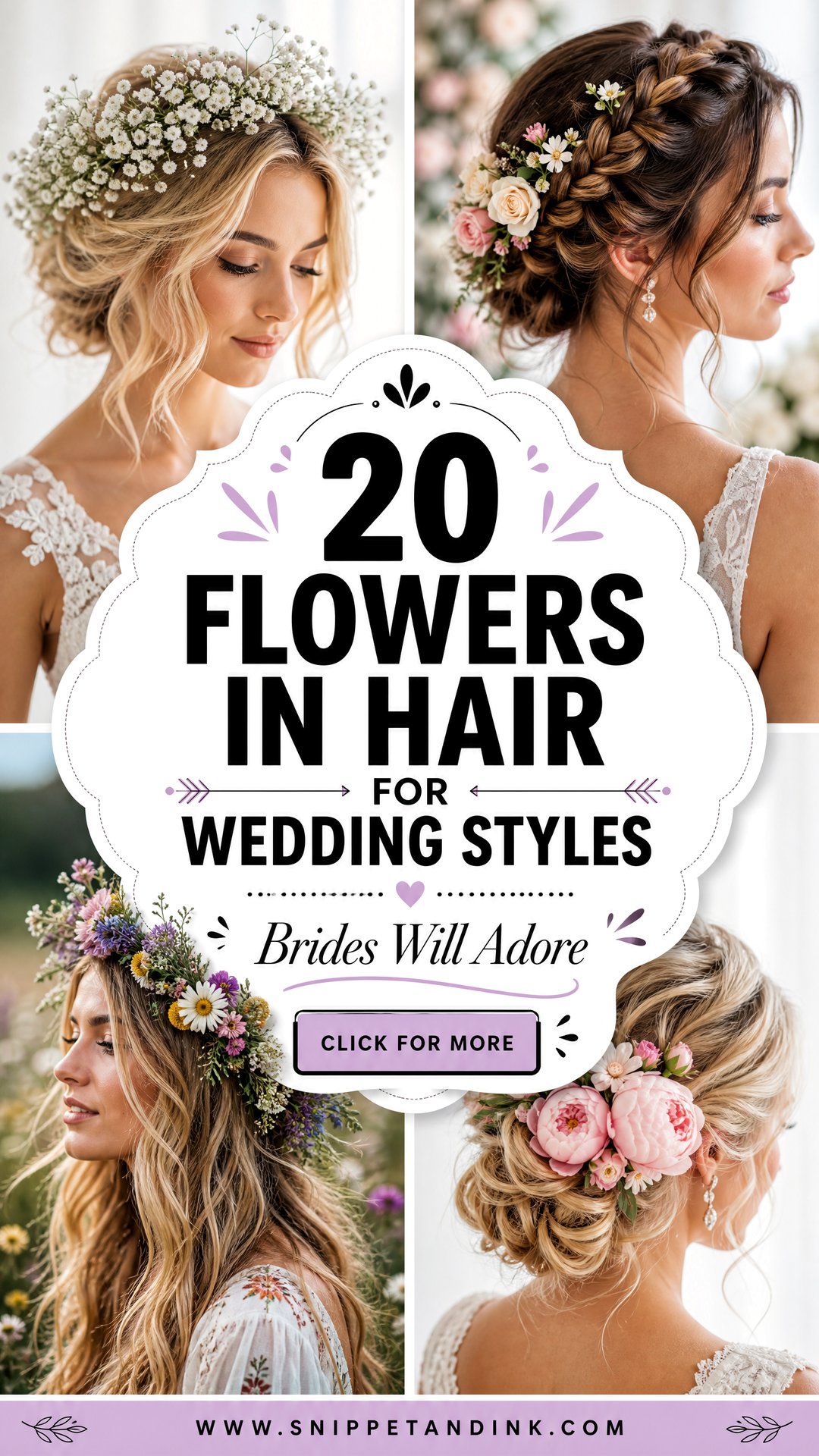
Fresh flowers are the one hair accessory that changes over the course of a wedding day, and that is both their charm and their challenge. A few spray roses in a low bun can look exactly right at the ceremony and tired by the speeches if they weren’t chosen and prepped well. I pin flowers into fine, thick, curly and freshly highlighted hair, and the style underneath matters as much as the bloom. Below are twenty ways to wear flowers in your hair, with notes on what holds, what droops and what each look needs to stay put.
Flowers That Survive Hours Without Water
A flower in your hair has no water, sits against a warm scalp and gets brushed by hugs and veil fabric all day. Some blooms shrug that off. Others start wilting before the first dance. Before you pick a style, sort your wish list into these two groups with your florist.
Reliable in hair
- Orchids, especially dendrobium and cymbidium, which hold up in heat.
- Spray roses, small and sturdy, with several heads per stem.
- Baby’s breath and wax flower, both light and slow to wilt.
- Stephanotis, once the florist has wired each little bloom.
- Ruscus and similar firm greenery for filler.
Risky in hair
- Hydrangea, which flops quickly once it’s away from water.
- Gardenias, which turn brown wherever fingers touch the petals.
- Peonies, because of their weight and the way they keep opening.
- Fresh lavender, which drops buds down your neck and onto the gown.
Ask the florist to condition the stems overnight and deliver the hair pieces wired, taped and boxed on damp tissue. Keep that box out of the sun and away from anything freezing until I’m ready to pin, since cold-damaged petals go translucent and limp.
1. Baby’s Breath Flower Crown
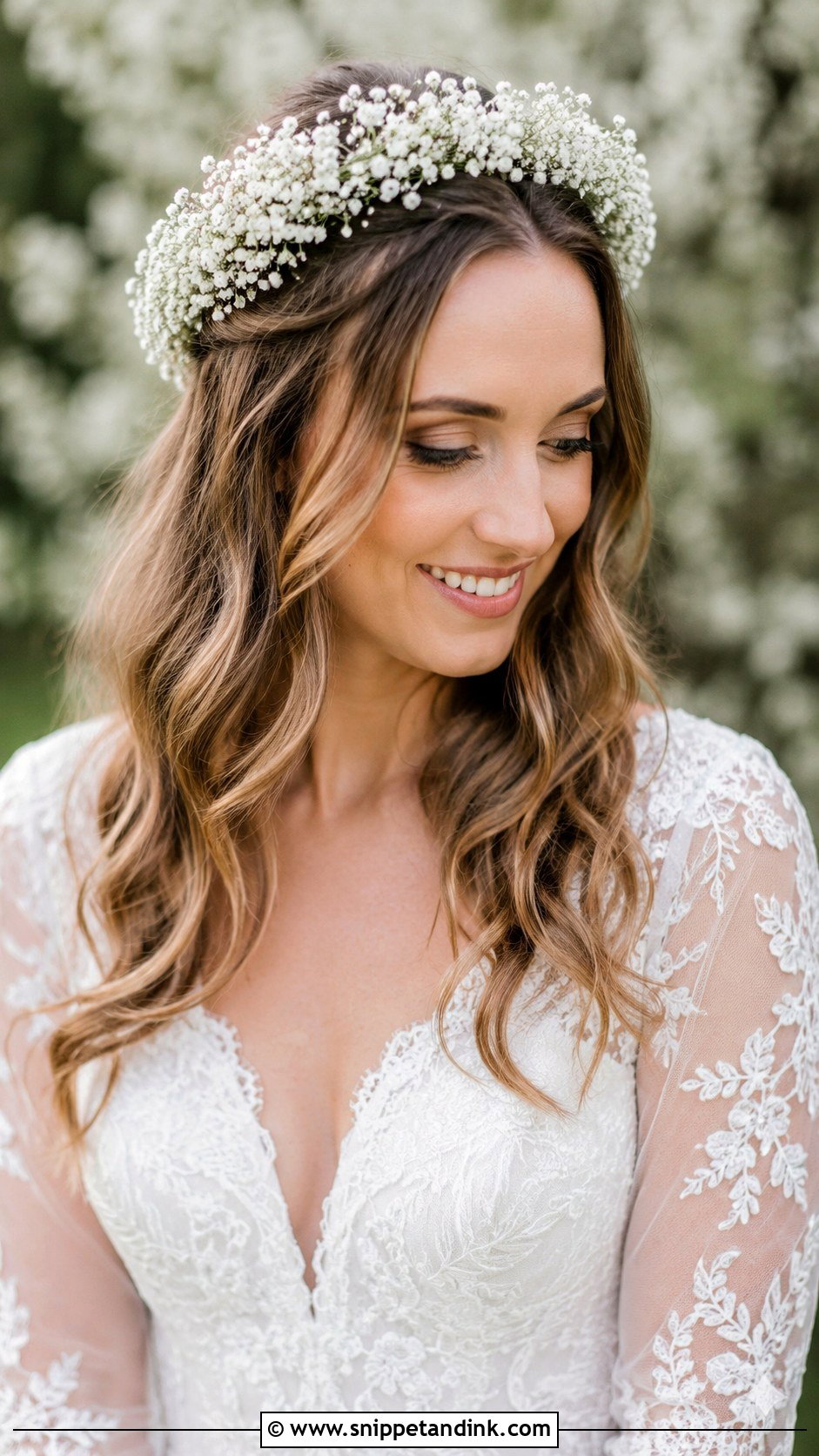
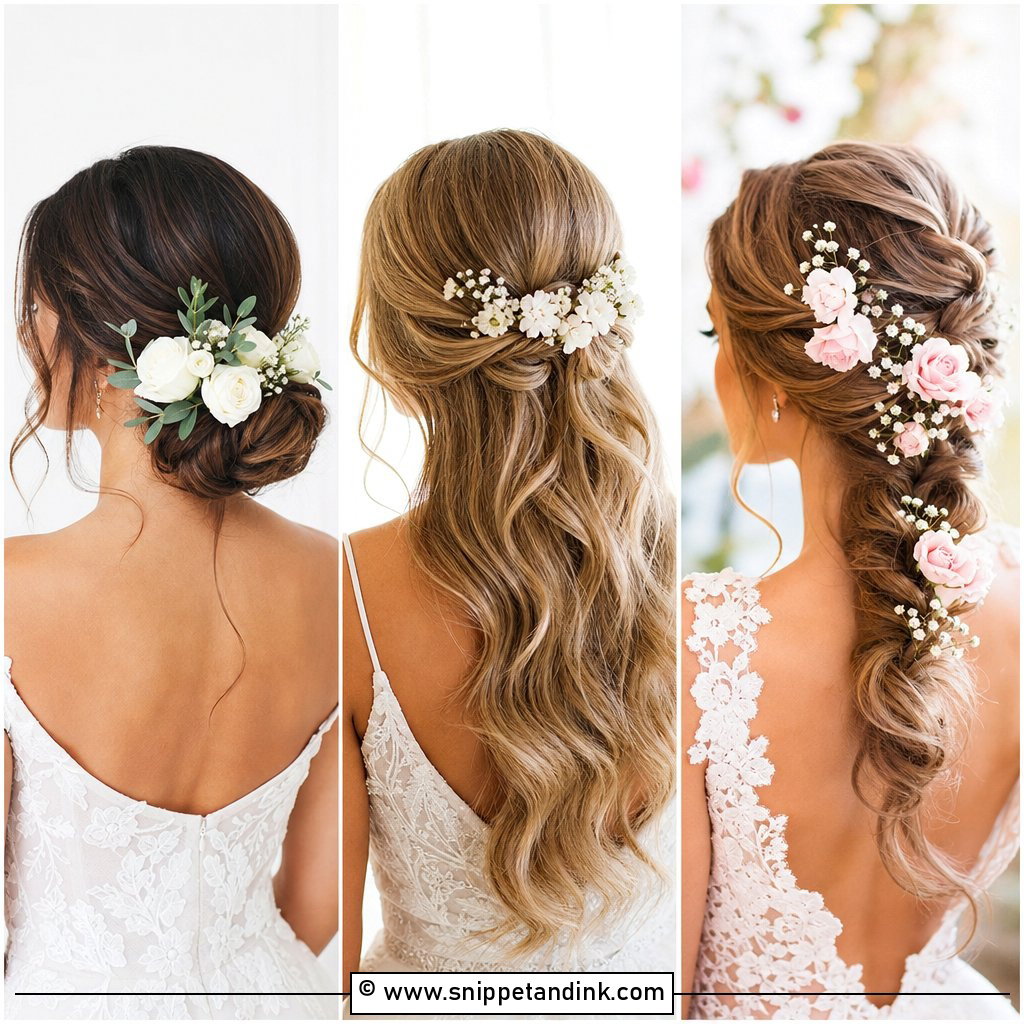
A full baby’s breath crown is the lightest crown you can wear, which matters more than people expect by hour six. It keeps its shape out of water for most of the day, though up close it has a faint musty smell that some brides notice when it sits right by the ears. I have the florist build it on thin wire and size it to where it will actually sit, usually just behind the hairline, then pin through the wire on both sides behind the ears. Loose waves or a relaxed half-up suit it best, because flat, smooth hair gives the pins nothing to grip.
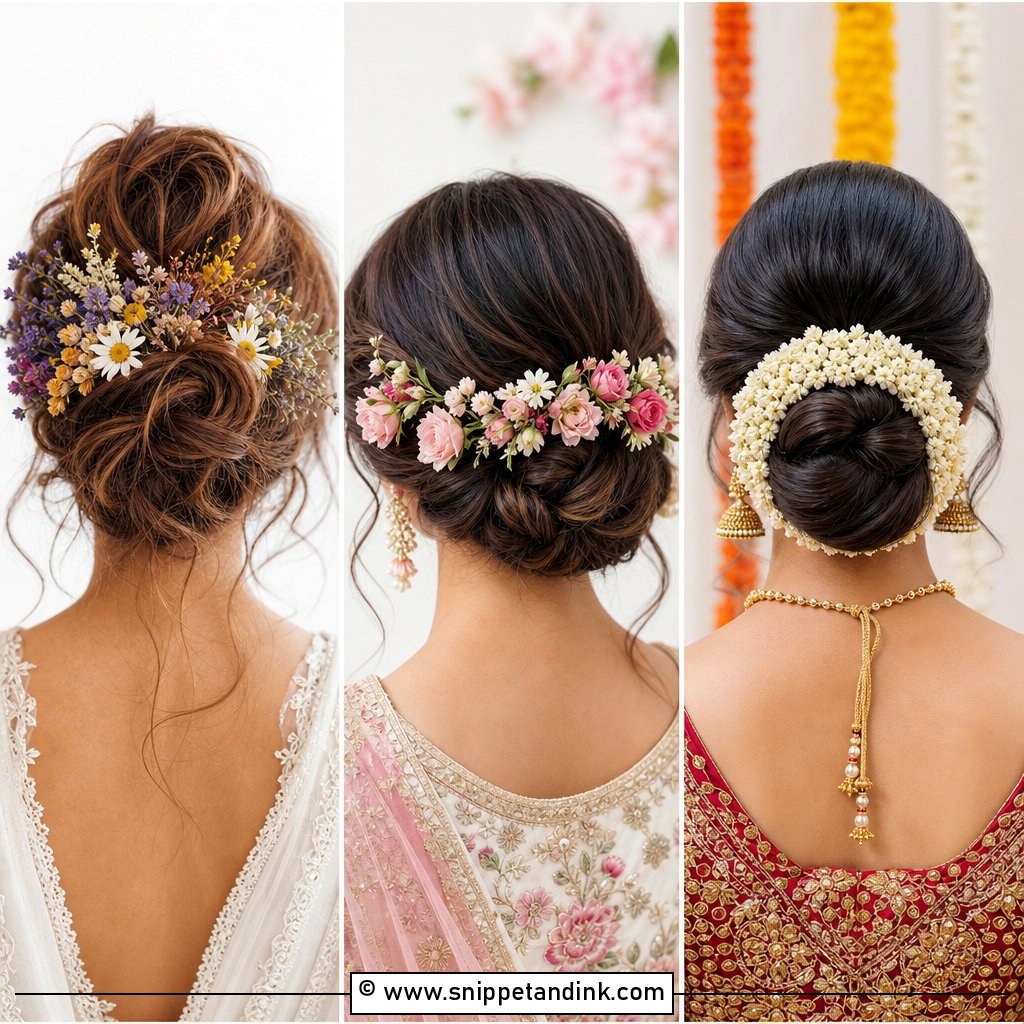
2. Rose Updo With Fresh Blooms
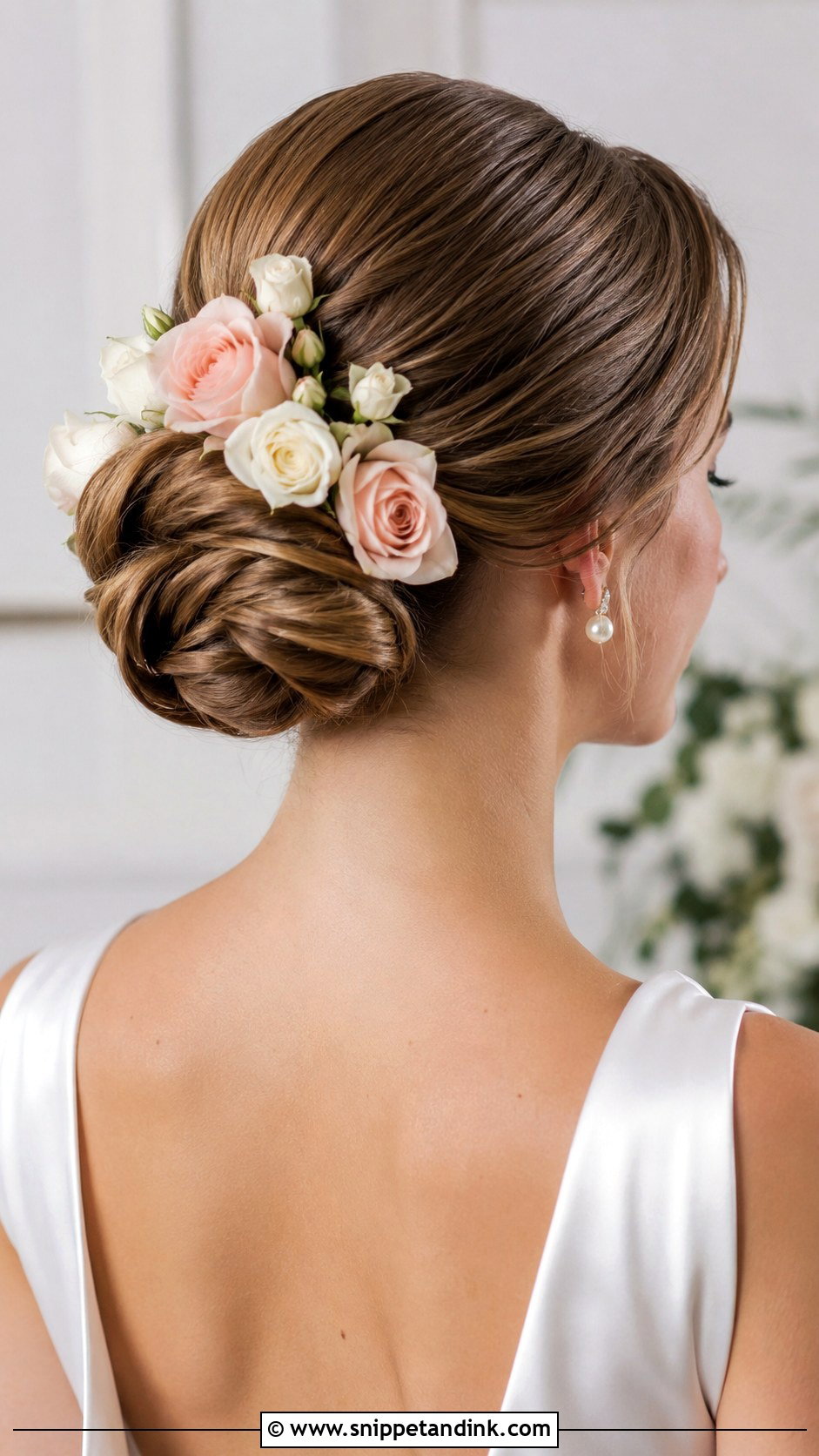
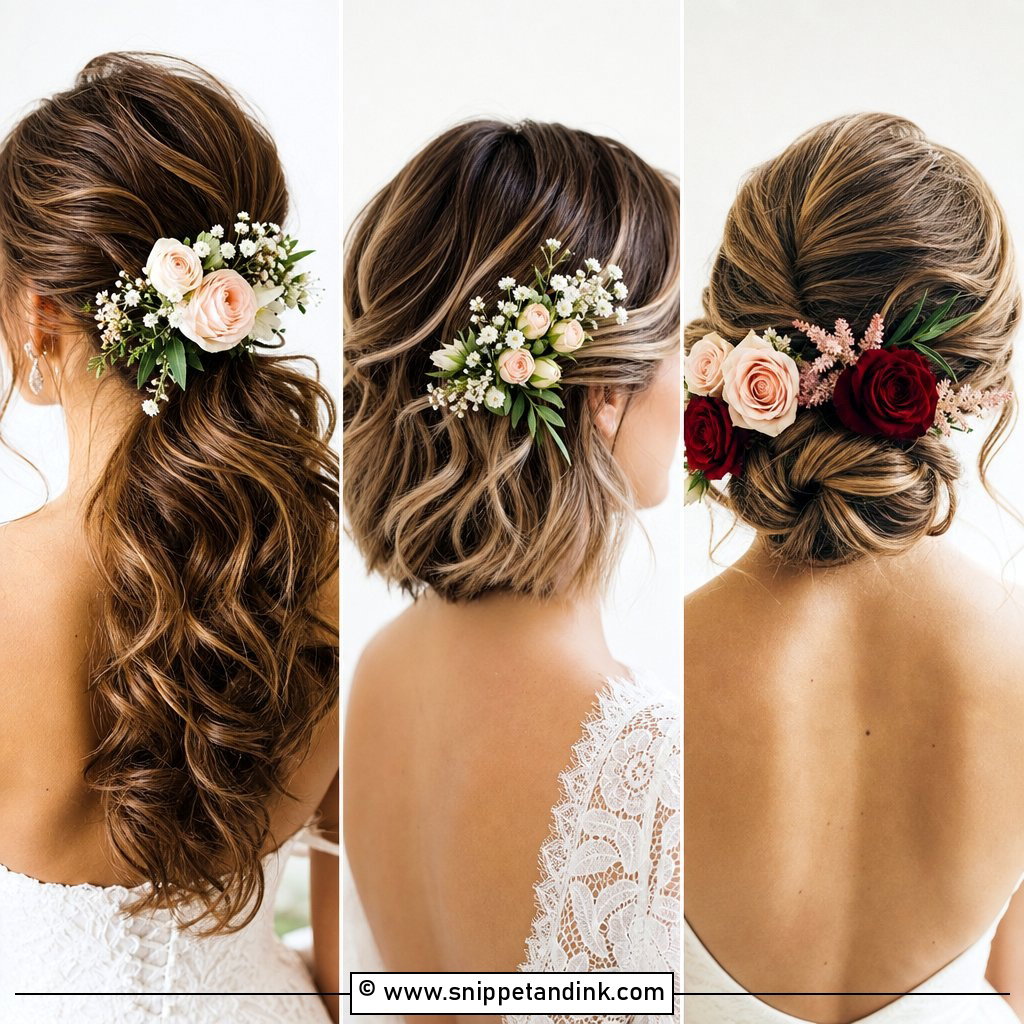
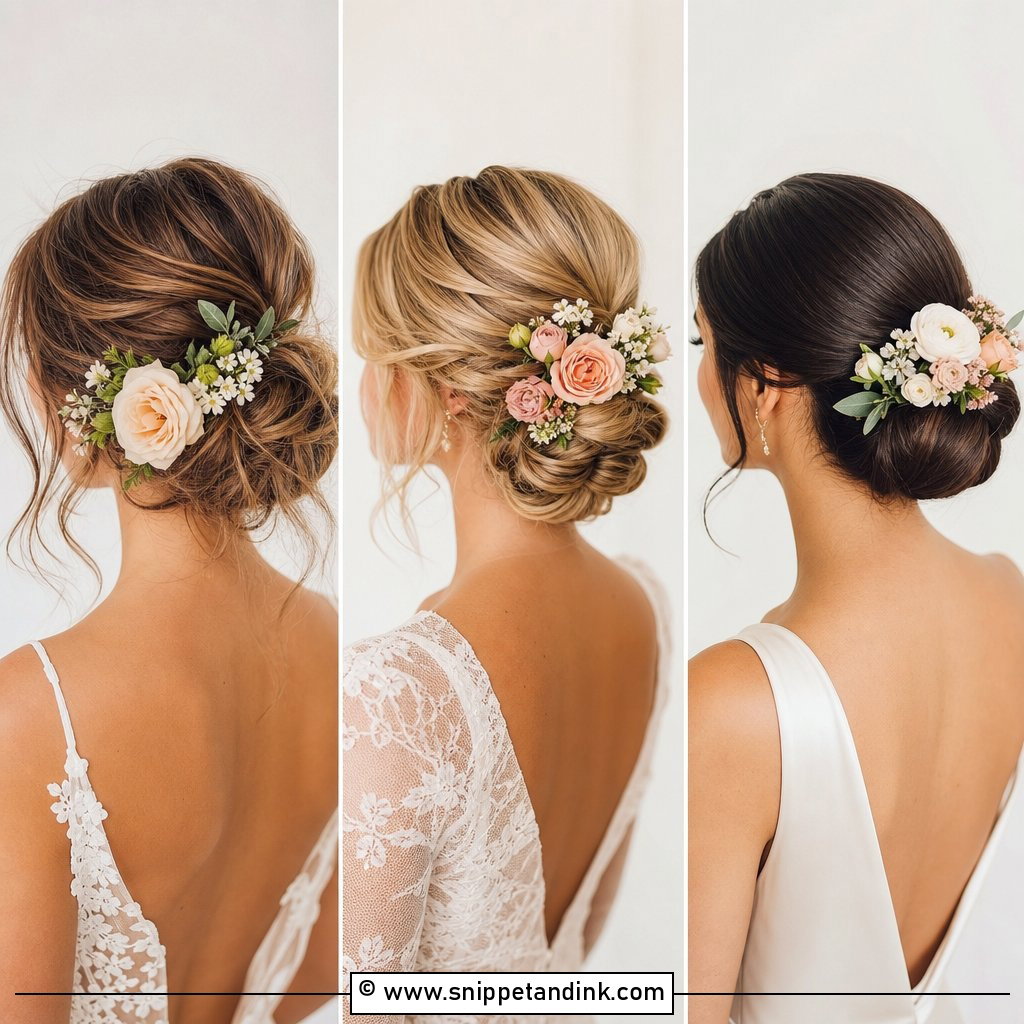
Spray roses are the flower I reach for most in an updo. They’re small enough to tuck into the folds of a chignon, and each stem gives you several heads at slightly different stages of opening, which looks more natural than identical buds. I ask the florist to wire and tape each one onto a short pick, then slide them in at an angle along one side, following the curve of the bun. Matching the shade to the bouquet is the easy part. The harder part is restraint: three to five heads look polished, while ten start to look like a hat.
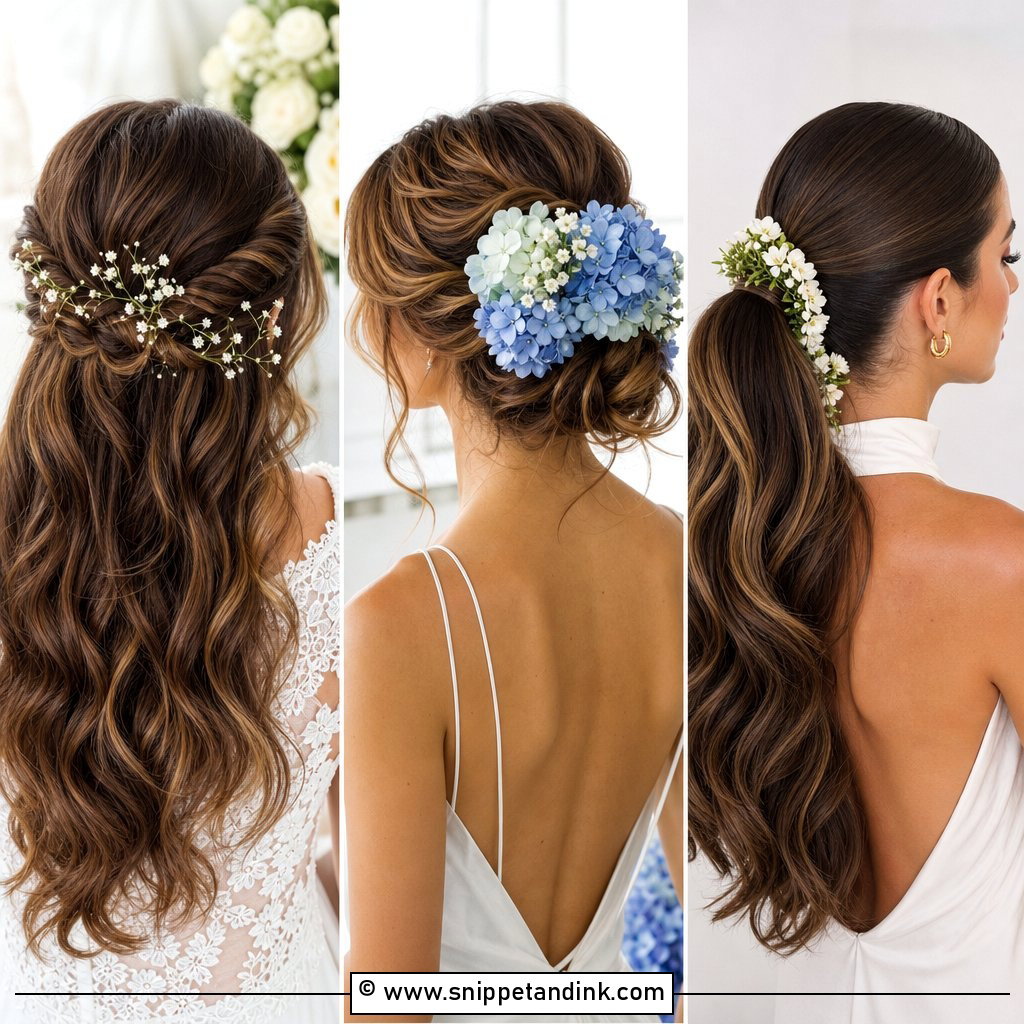
3. Half-Up Half-Down With Flowers
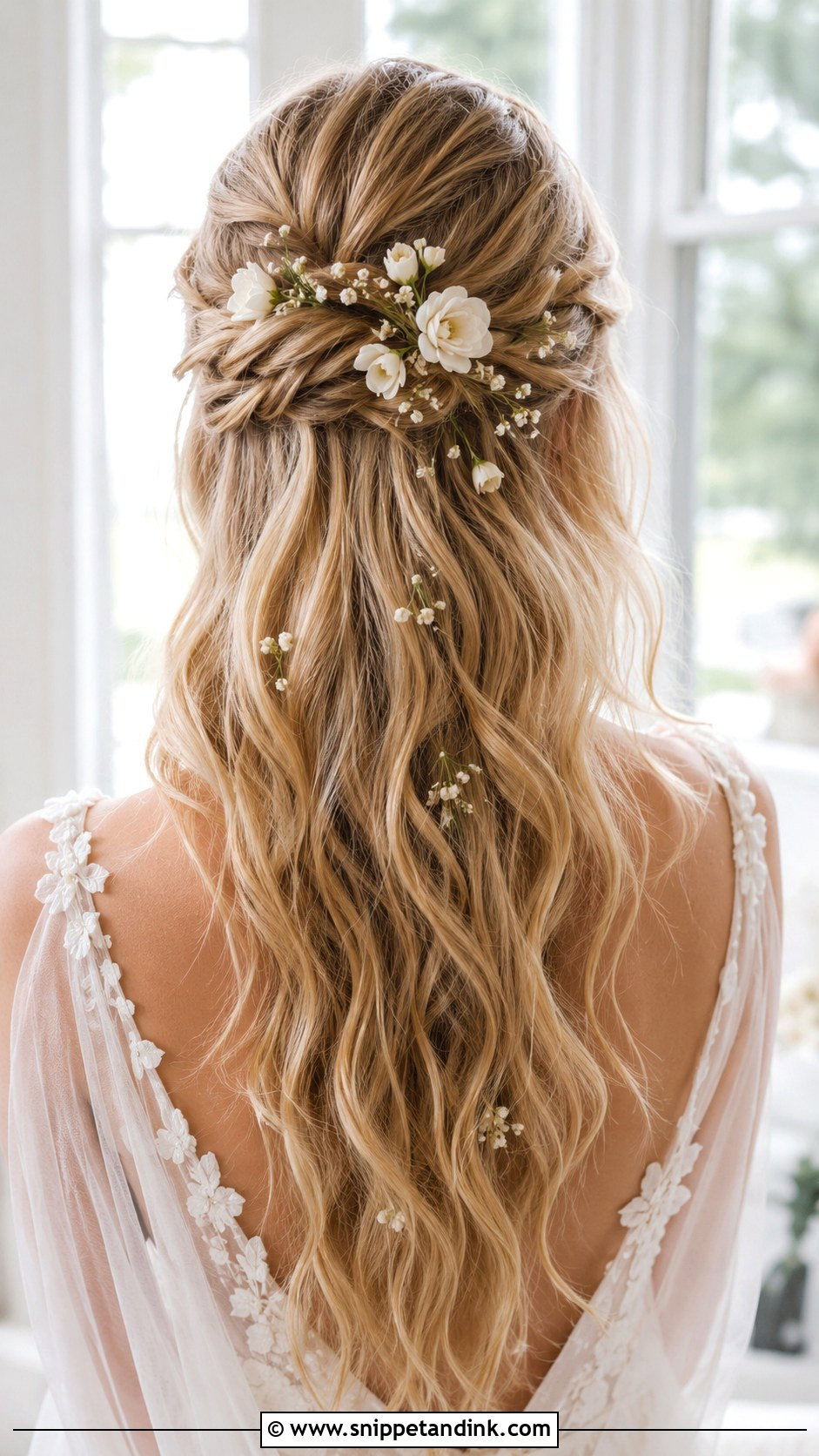
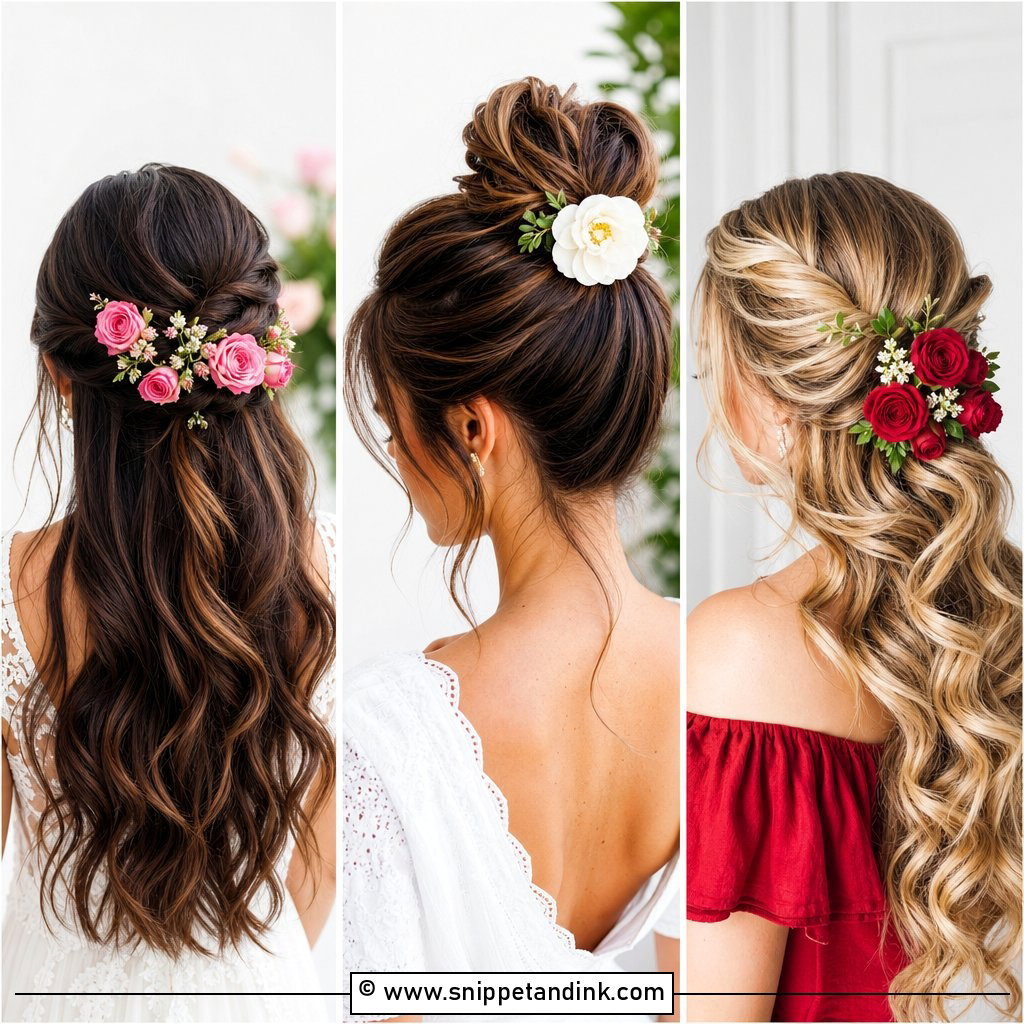
A half-up style is the most forgiving base for flowers, because the spot where the two twisted sections meet at the back is a natural anchor already full of pins. I put the main cluster there and scatter a few tiny buds along the crown if the bride wants more. The risk is a long, hot day. The loose lower half drops its curl, and if the flowers are heavy, the pinned section starts to sag. Light blooms and a firm set on the curls fix most of that.
4. Braided Crown With Flowers
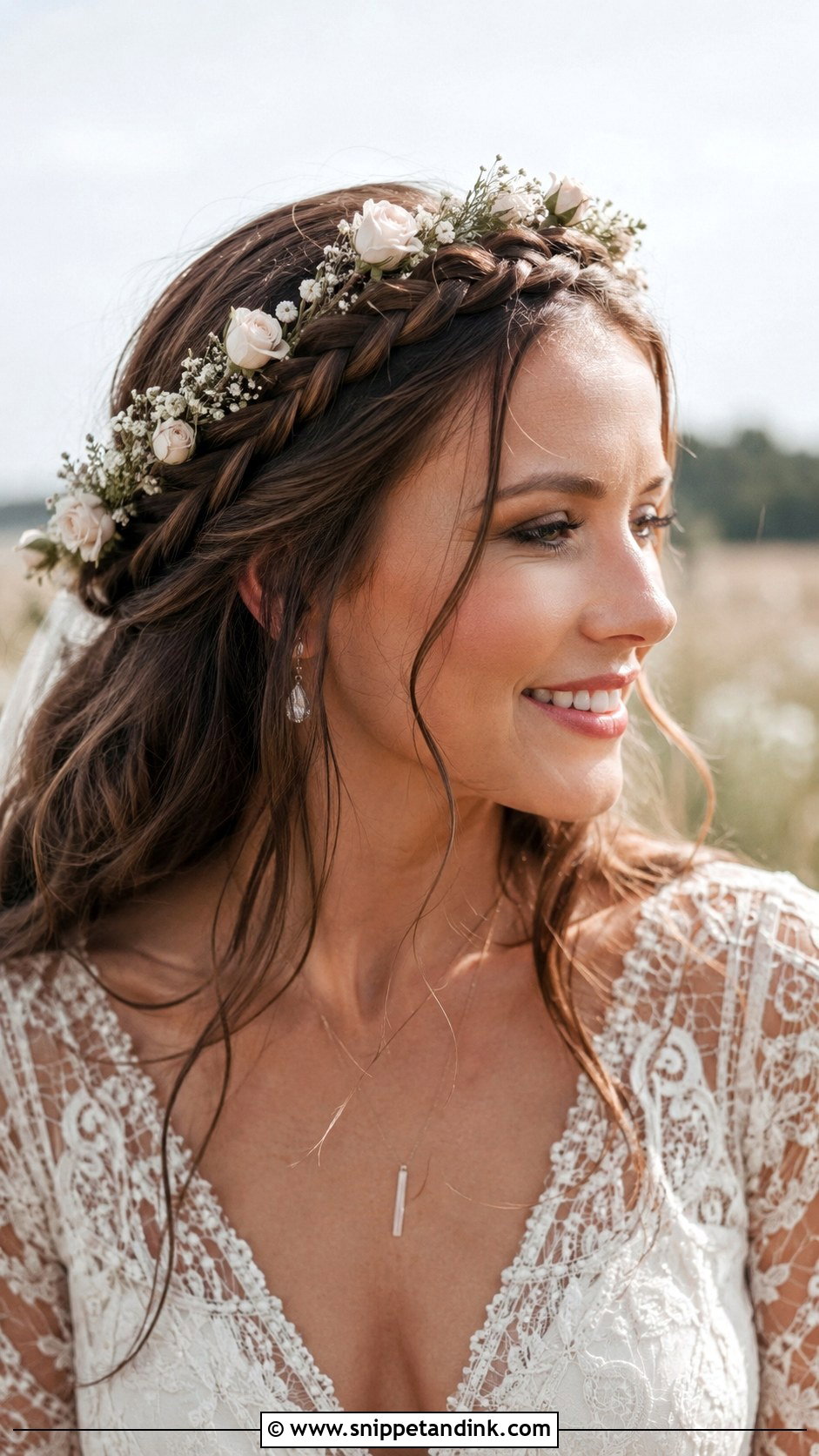
A crown braid is one of the most secure ways to wear flowers at all. The braid itself becomes the anchor: each stem slides between sections and is held by the weave, with a pin behind it for insurance. I braid it slightly loose and then gently pull the edges out so there are gaps for the stems. It needs medium to long hair, and on shoulder-length cuts I add a hidden clip-in to get enough length around the head. With the hair lifted off the neck, it’s a sensible pick for hot outdoor ceremonies.
5. Loose Waves With Floral Crown
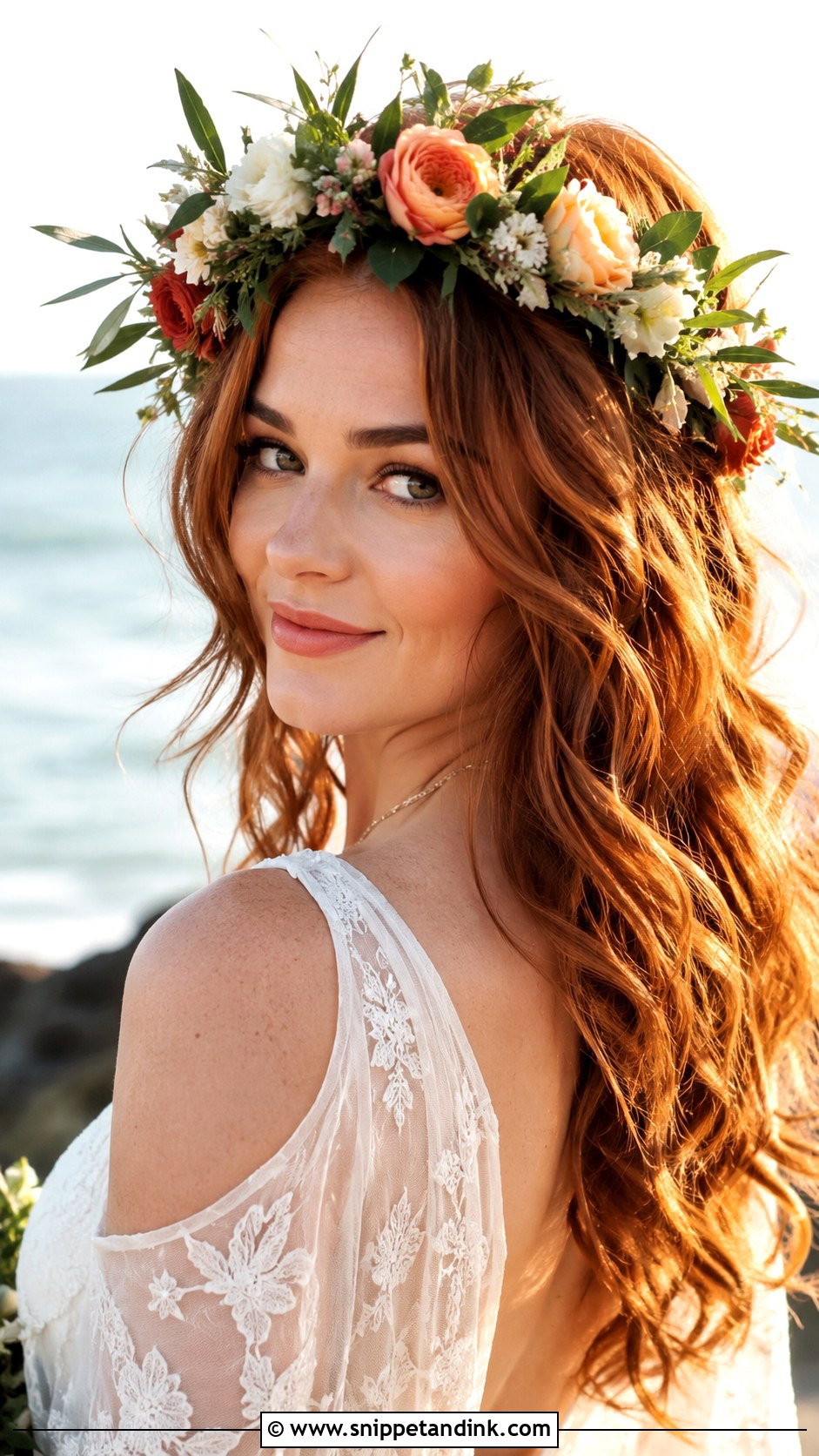
Waves under a full crown look relaxed in photos, but the crown is doing a lot of mechanical work on hair that’s mostly down. A heavy crown slides backward through the day. I prevent that by backcombing a small section at the crown, spraying it, and pinning the crown’s wire into that teased base. Mixing in greenery with a few colored blooms keeps the weight down. Wind is the real enemy here, so for an exposed clifftop or windy beach I’d steer you toward a braid instead.
6. Messy Bun With Roses
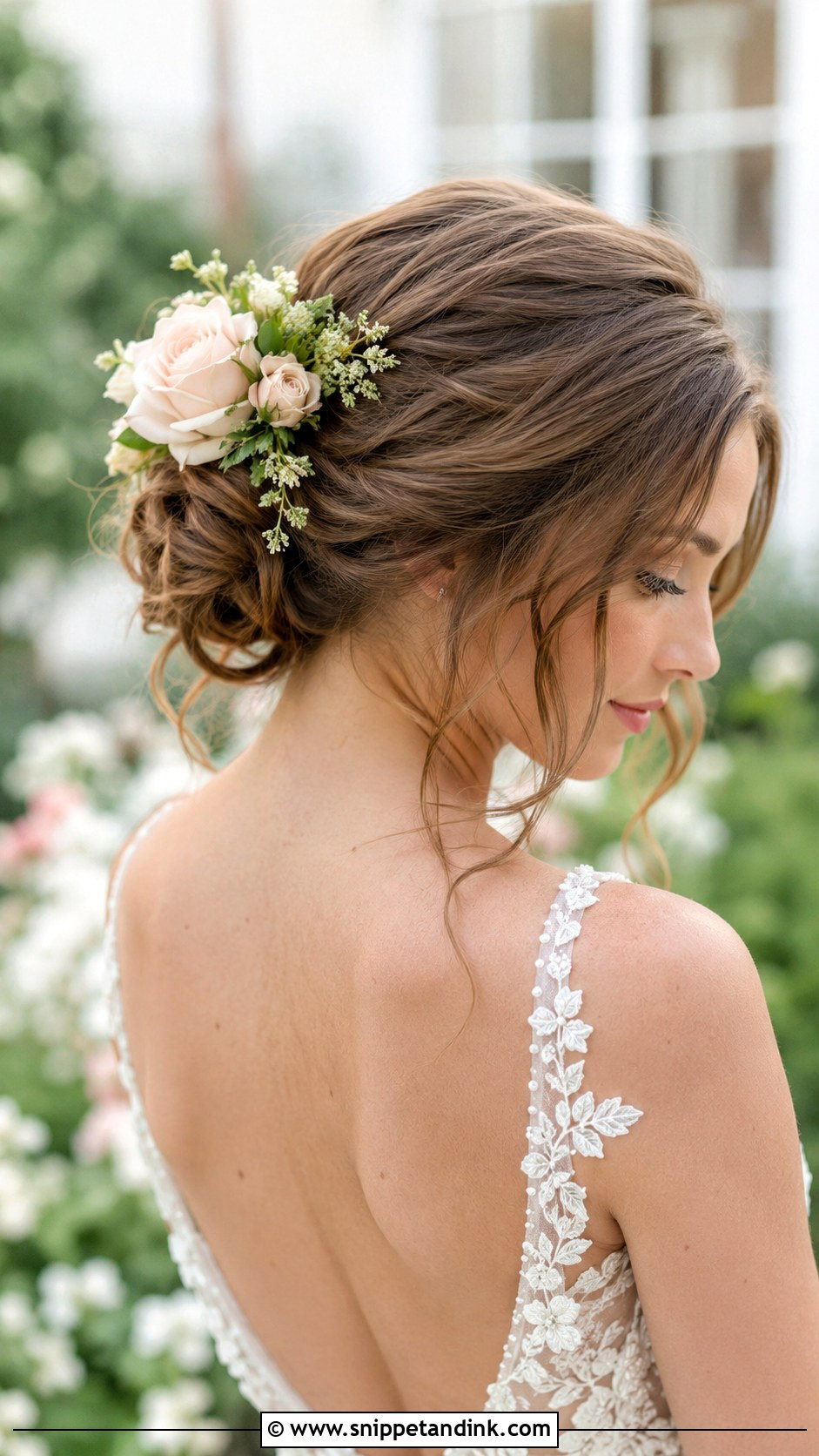
A low messy bun is easier to dress with flowers than a sleek one, because the loose loops hide the wire picks. I tuck roses around the base of the bun rather than on top, so they stay visible when you face the camera, and blush or peach suits the softness of it. Leave a few face-framing pieces out, but not too many. In humid weather those pieces frizz first, and a bun surrounded by limp strands looks less intentional than one with two clean tendrils.
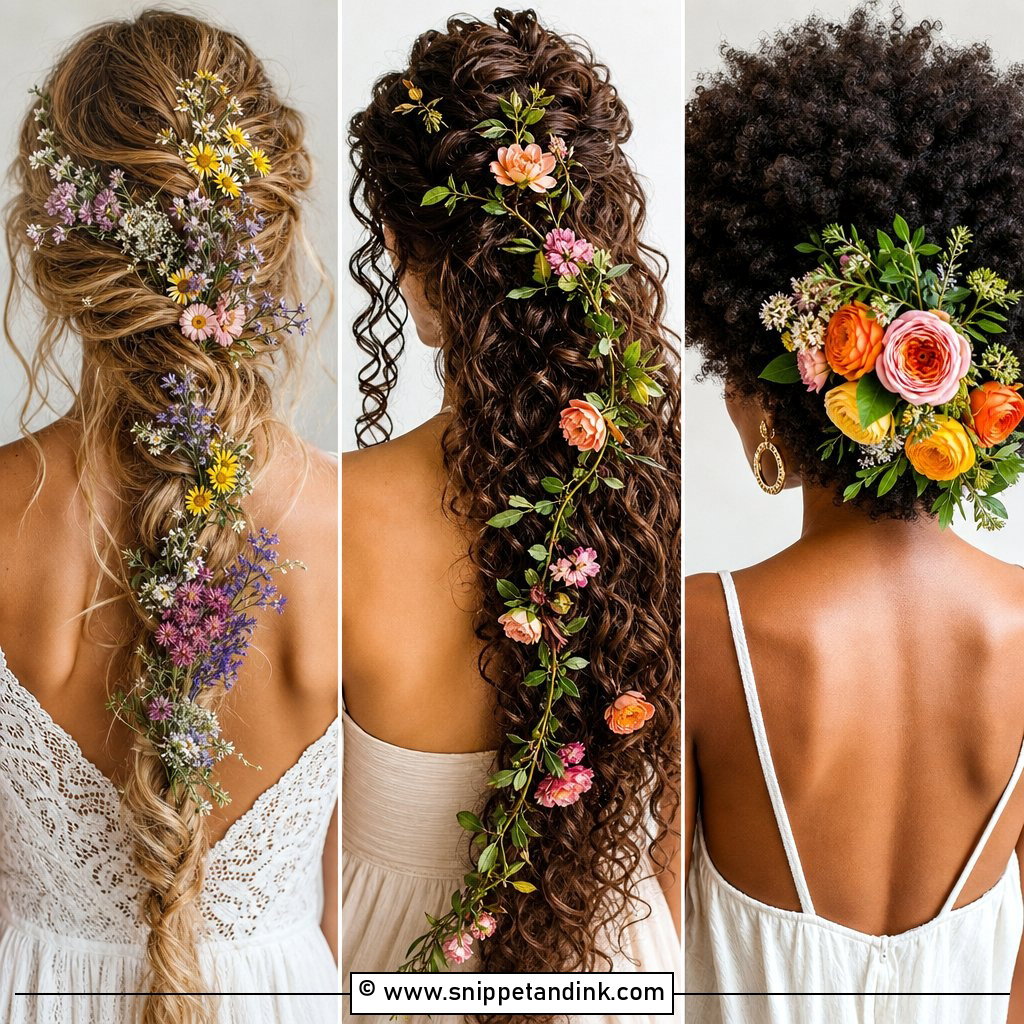
7. Boho Flower Crown With Wildflowers
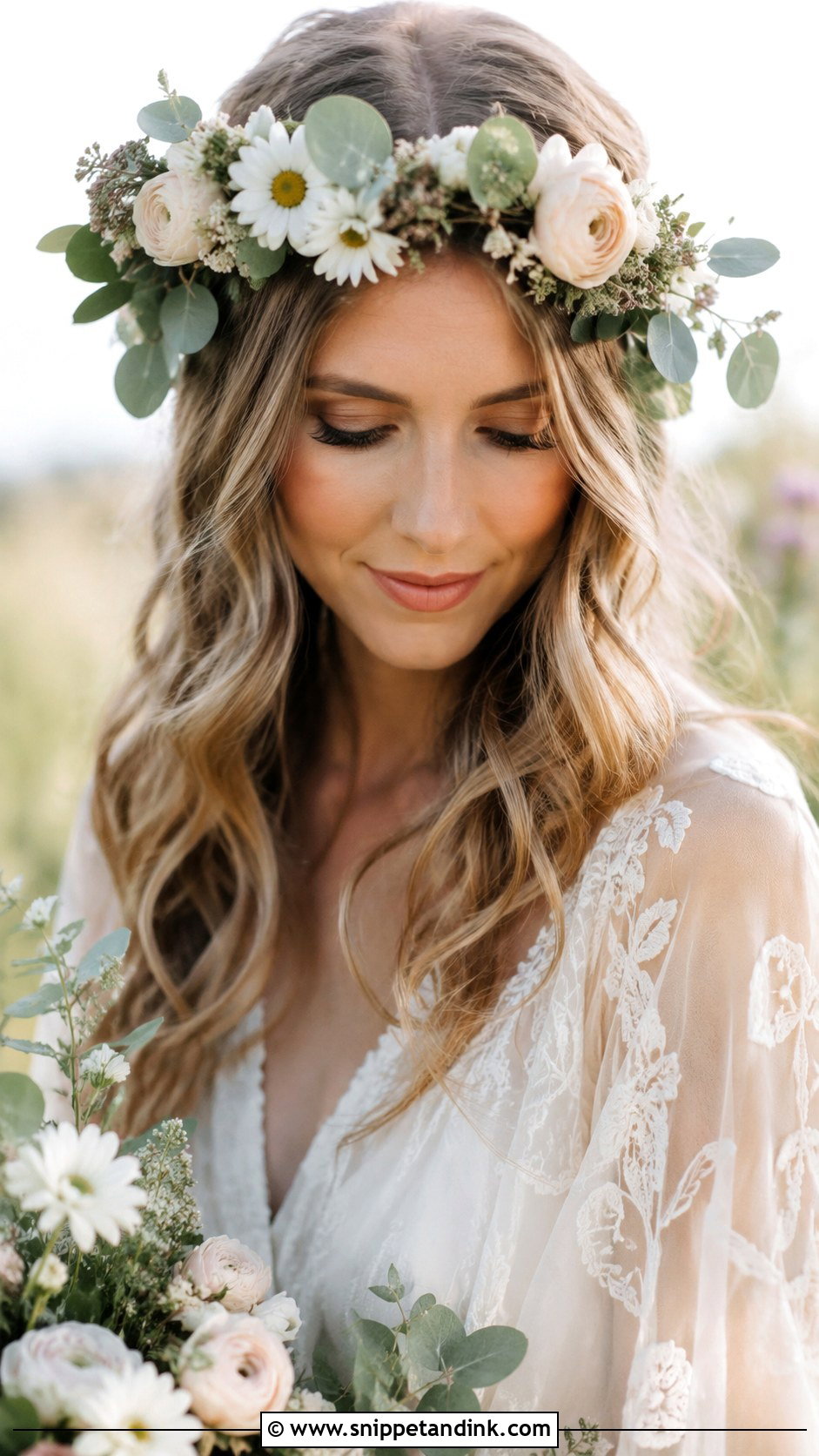
A wildflower crown mixes stems of different sizes and textures, which is exactly what makes it tricky to wear. Think daisies, ranunculus, eucalyptus and small buds, all woven onto one wire. Some of those flowers last far longer out of water than others, so I ask the florist to lean on the sturdier ones and keep fragile stems to a minimum. It sits well over loose waves or a fishtail. No two come out the same, which is half the appeal for forest and festival weddings.
8. Cascading Orchid Updo
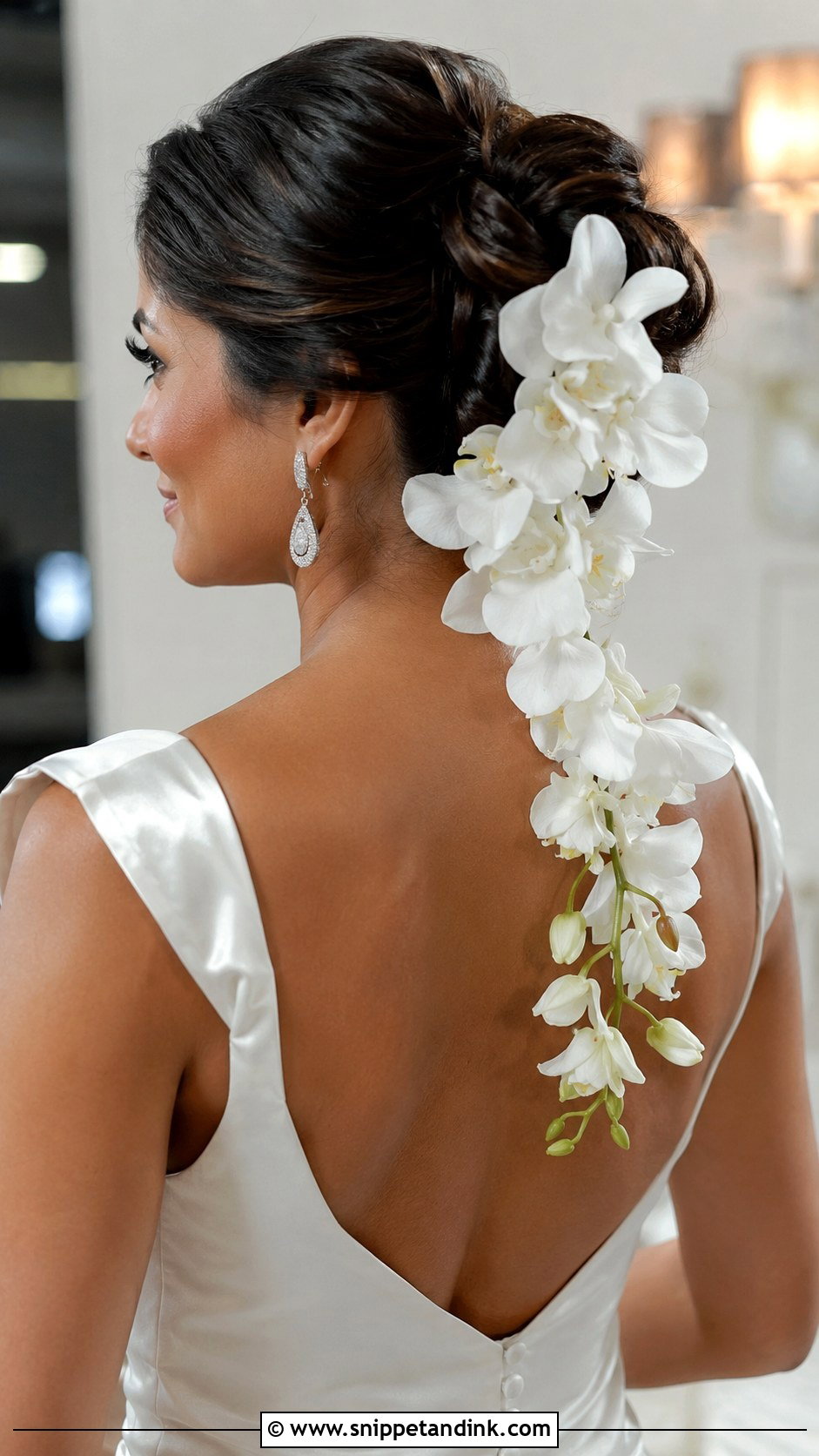
Orchids are the toughest flower on this list, which is why a cascading orchid updo survives a long reception so well. Dendrobium sprays bend nicely along the side of a twisted bun, while a single cymbidium or phalaenopsis head gives a cleaner accent. The stems are long and stiff, so the florist should trim and tape them short before I pin them; otherwise they poke out of the updo or into the scalp. One orchid reads modern. Several trailing down feel more tropical.
9. Low Bun With Baby’s Breath
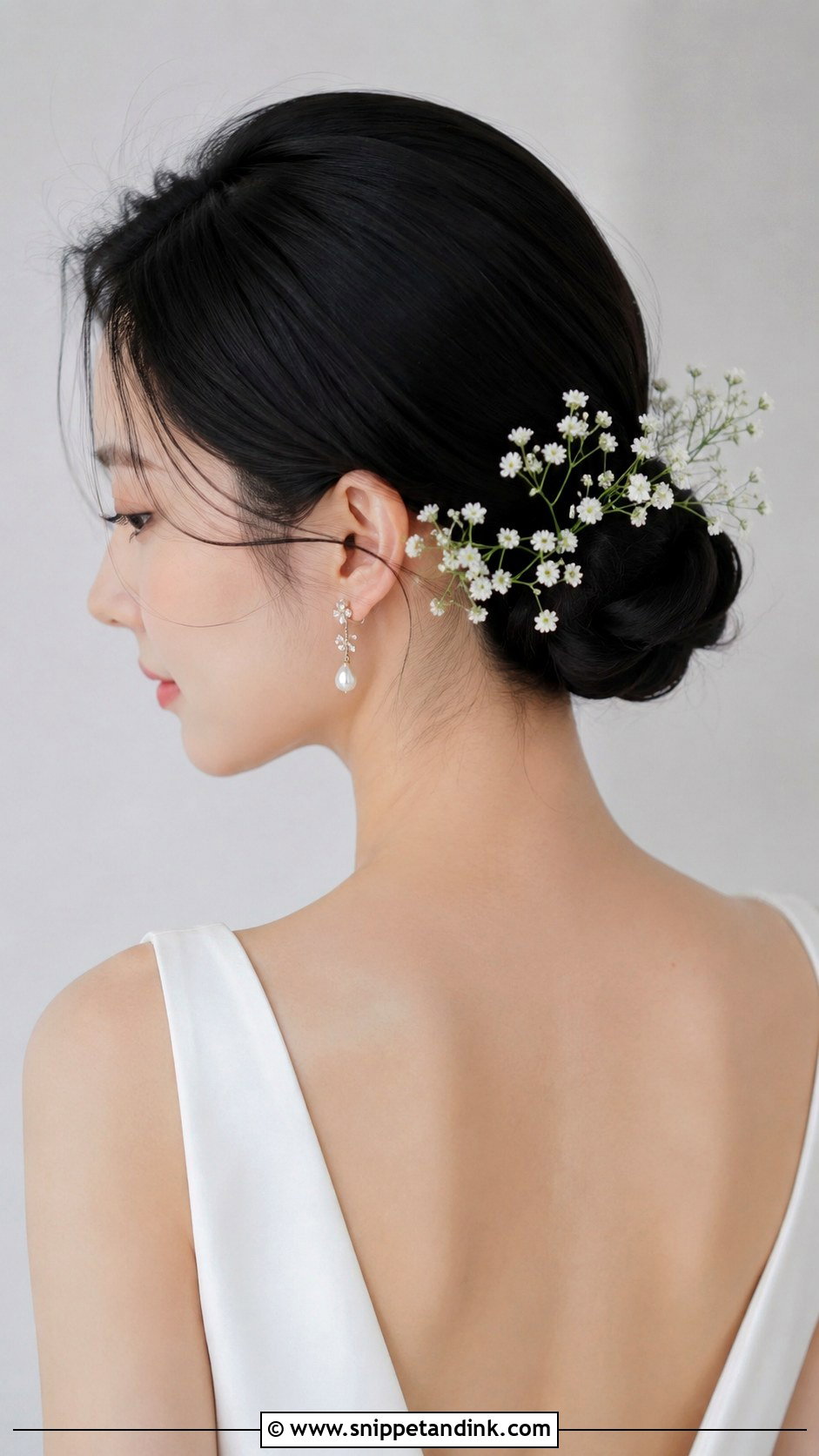
A sleek low bun is the base I’d suggest for anyone with fine, slippery hair who still wants flowers. Smooth tension holds pins far better than loose hair, and baby’s breath weighs almost nothing. I tuck small sprigs around one side for asymmetry, or ring the bun fully if the veil sits above it. The finish depends on prep: wash the night before rather than the morning of, because squeaky-clean hair lets a bun loosen within hours.
10. Waterfall Braid With Flowers
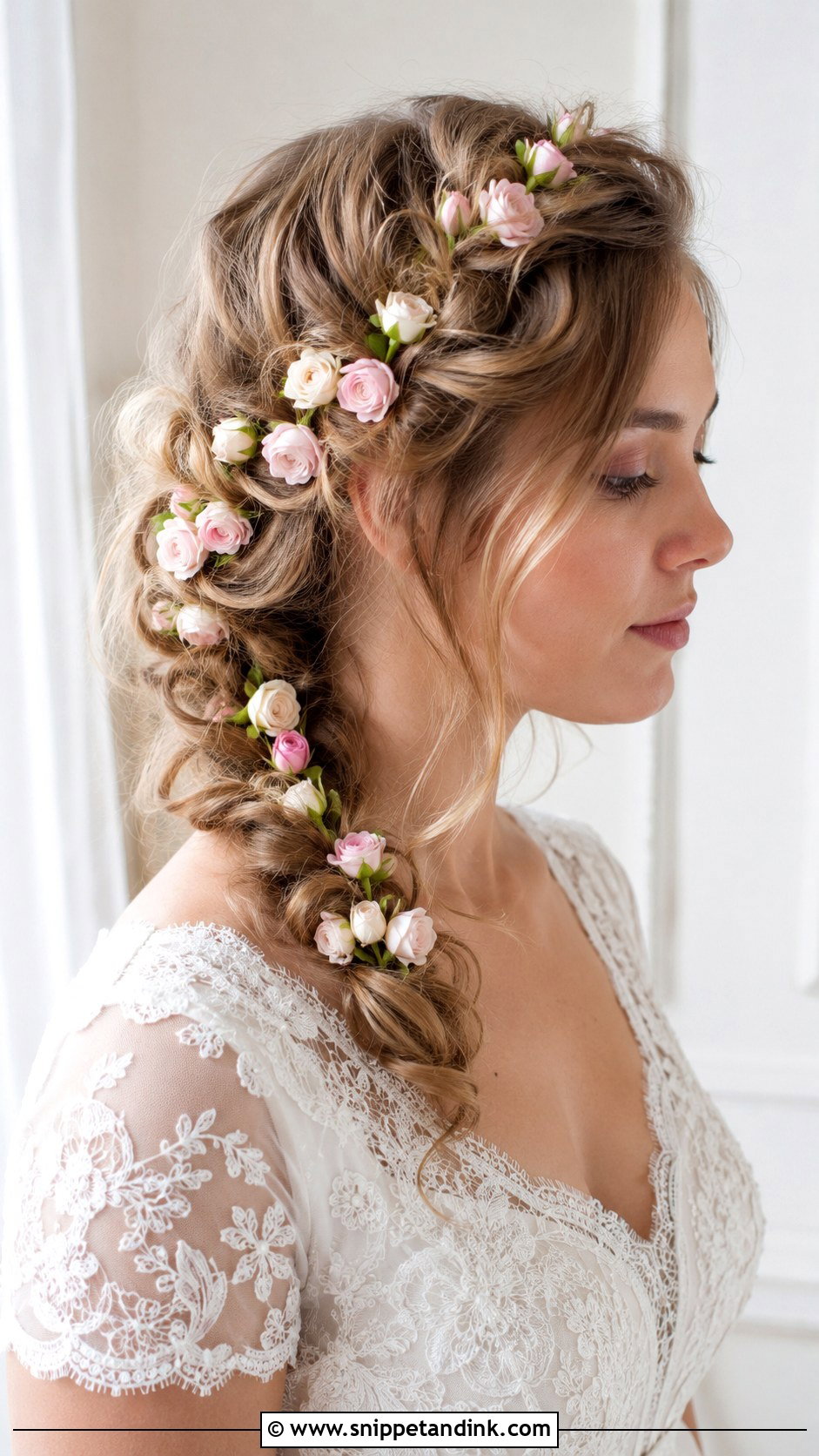
A waterfall braid drops strands through as it travels around the head, so it reads as a crown with the rest of the hair left free. Tiny flowers sit in the twists, where they look tucked rather than stuck on. Only small blooms work, because anything bigger hides the pattern that took twenty minutes to braid. Layered cuts can make the dropped strands look uneven, and that’s something I check at the trial before we commit to it.
11. Side Swept Braid With Flowers
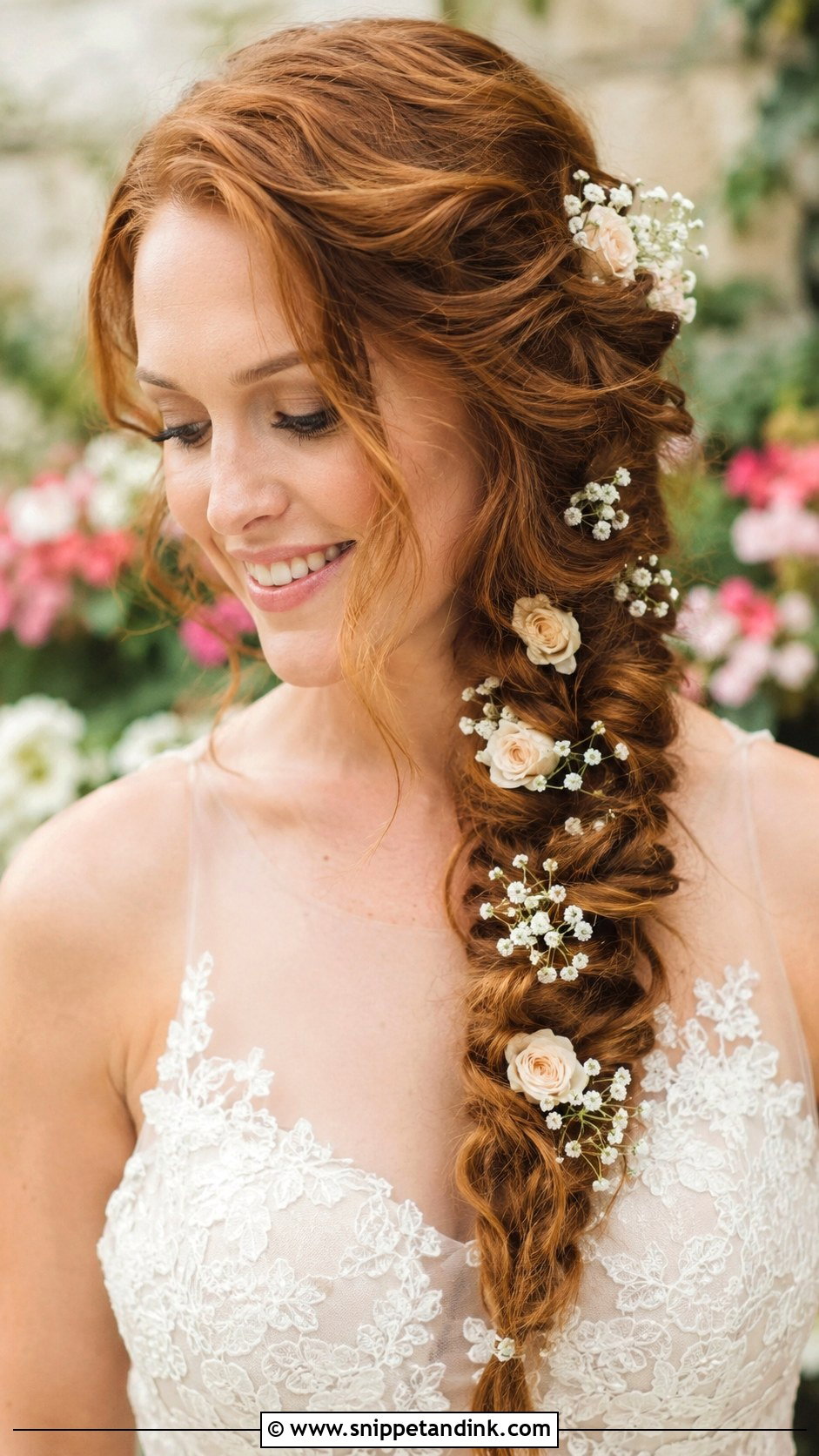
A side-swept braid draped over one shoulder leaves the neckline open on one side, so it pairs well with a one-shoulder or asymmetric gown. I loosen the braid once it’s tied, then tuck flowers from the crown down to roughly shoulder level. Below that point, flowers get crushed by arms during hugs and dancing, so I stop there. It needs long hair, and thick hair helps the braid still look full after it’s pulled apart.
12. Chignon With Greenery and Flowers
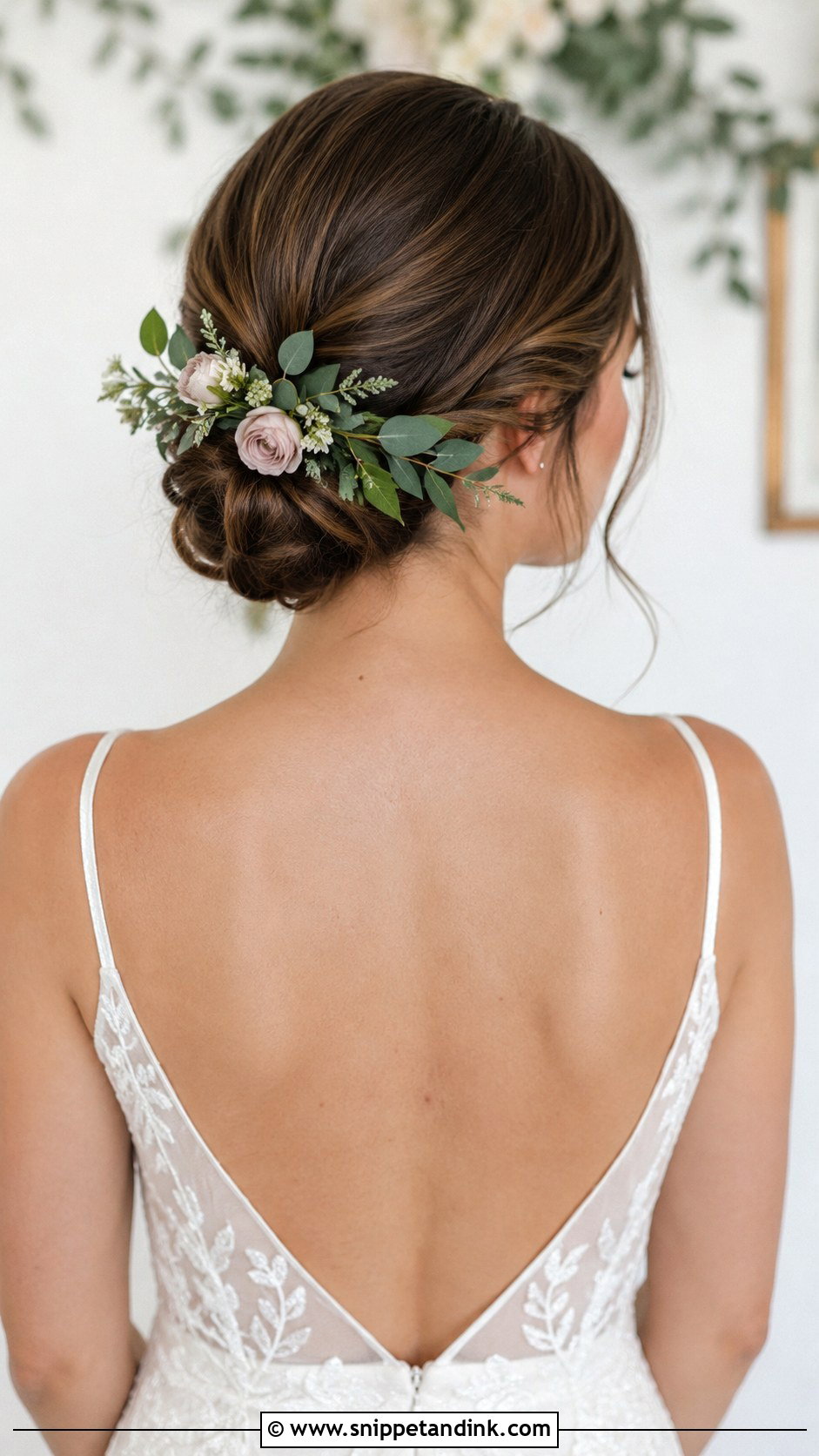
Greenery behaves differently from flowers in hair. Eucalyptus and ruscus barely wilt, but they’re stiffer and can poke, so I trim the sprigs short and lay them to follow the chignon’s curve, then add a couple of blooms at one side. A low chignon sits neatly under a veil comb, which makes this a good option if the veil comes off after the ceremony. Keep the greenery a shade darker than the bouquet’s foliage so it adds depth without clashing.
13. Fishtail Braid With Flowers
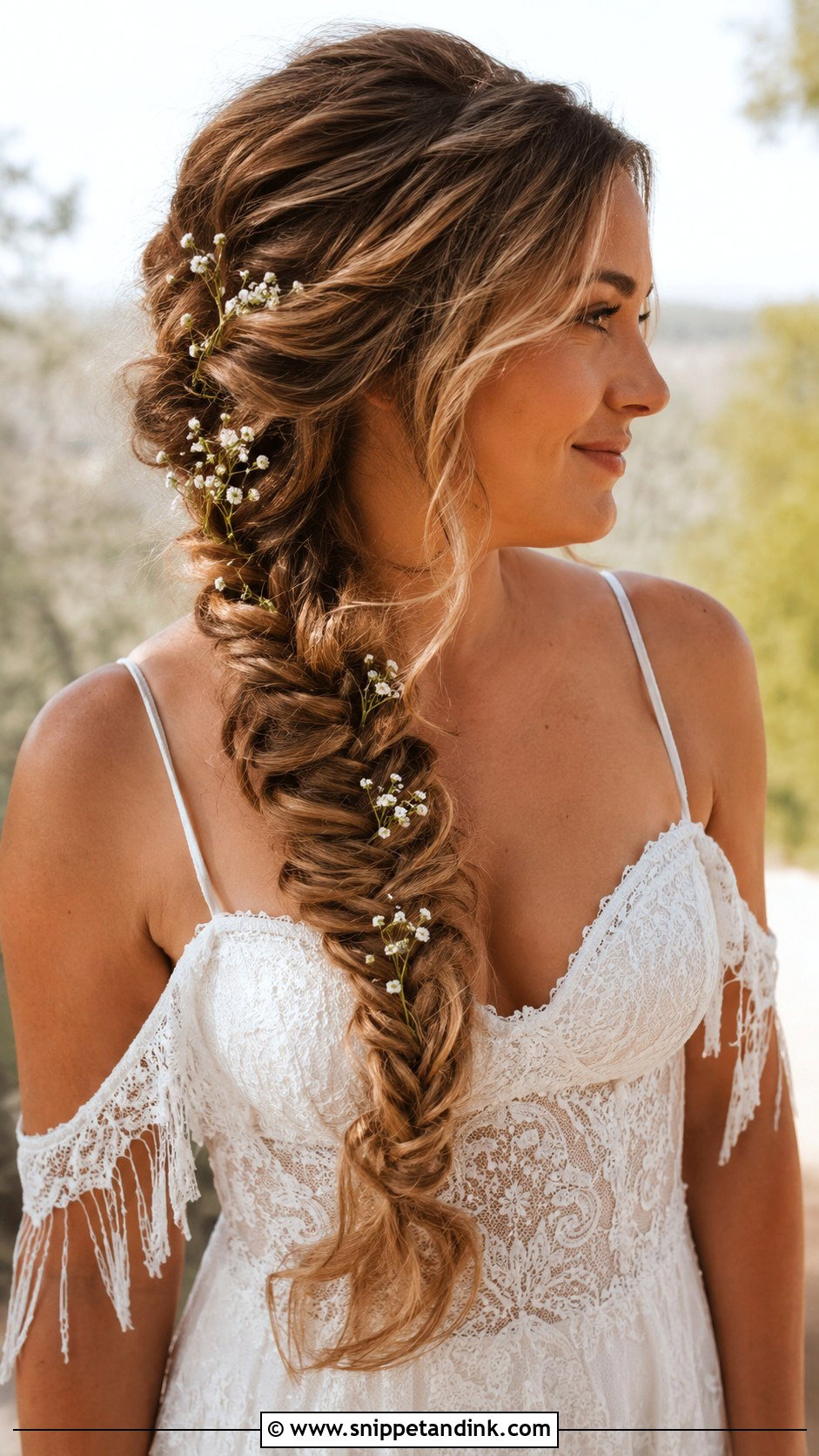
A fishtail braid has dozens of small gaps once it’s pulled apart, and each one is a ready-made pocket for a stem. Small flowers like baby’s breath or tiny roses settle into those gaps securely, so you need fewer pins than with a smooth style. The honest drawback: a fishtail loosened too much in the morning can look fuzzy by evening. I keep the pulling-out moderate and set it with a flexible spray rather than a stiff one.
14. Curly Updo With Flowers
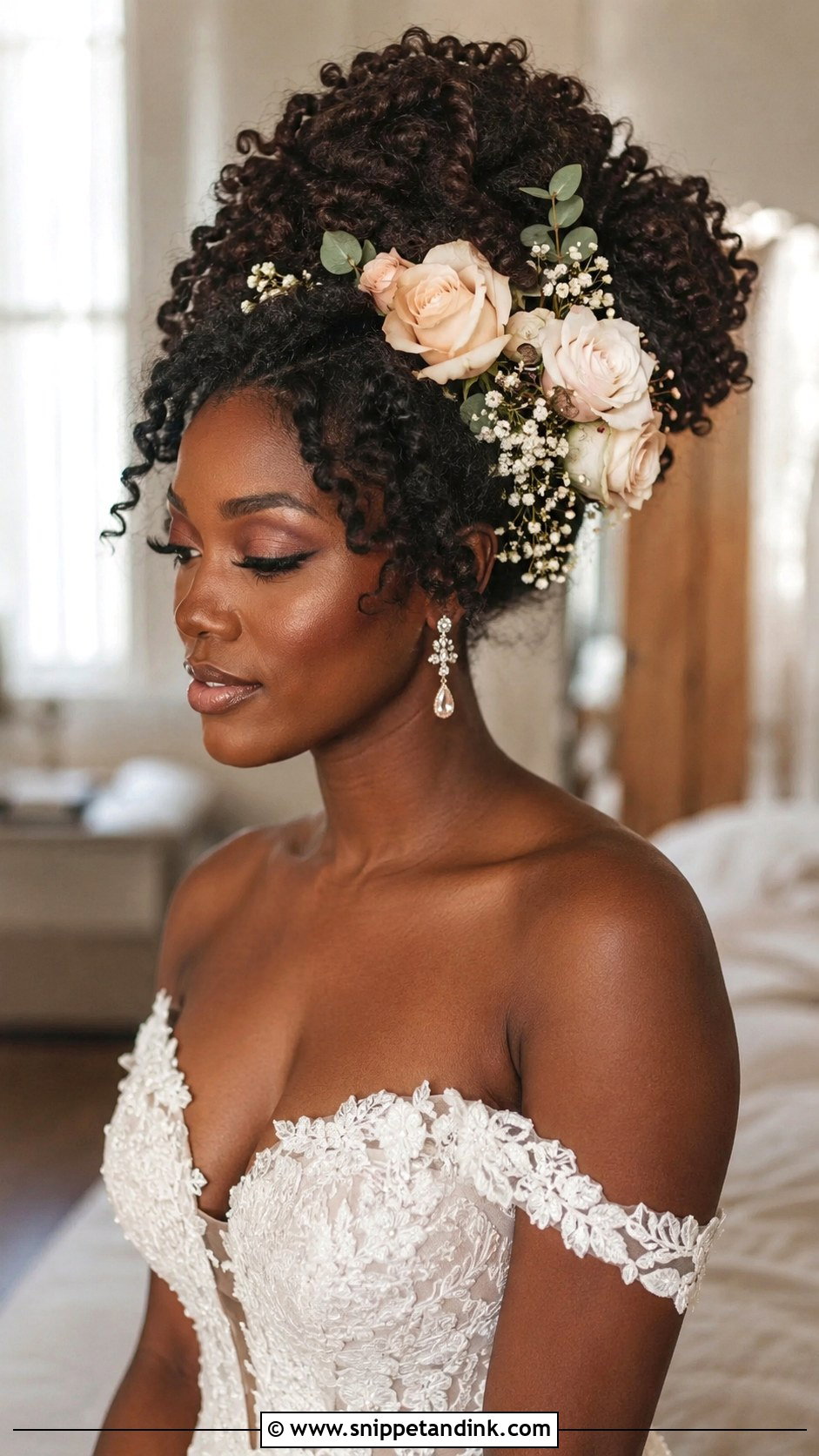
Curly hair is often the best base for flowers, because the texture grips pins without any backcombing. I gather the curls loosely at the back and keep the curl pattern intact rather than brushing it out, then tuck flowers into the volume. Roses or orchids sit well here, since tiny sprigs tend to vanish into the curls. Moisture matters more than hold: well-hydrated curls clump nicely and frizz less around the petals. Leave a few curls free at the temples.
15. Floral Bridal Ponytail
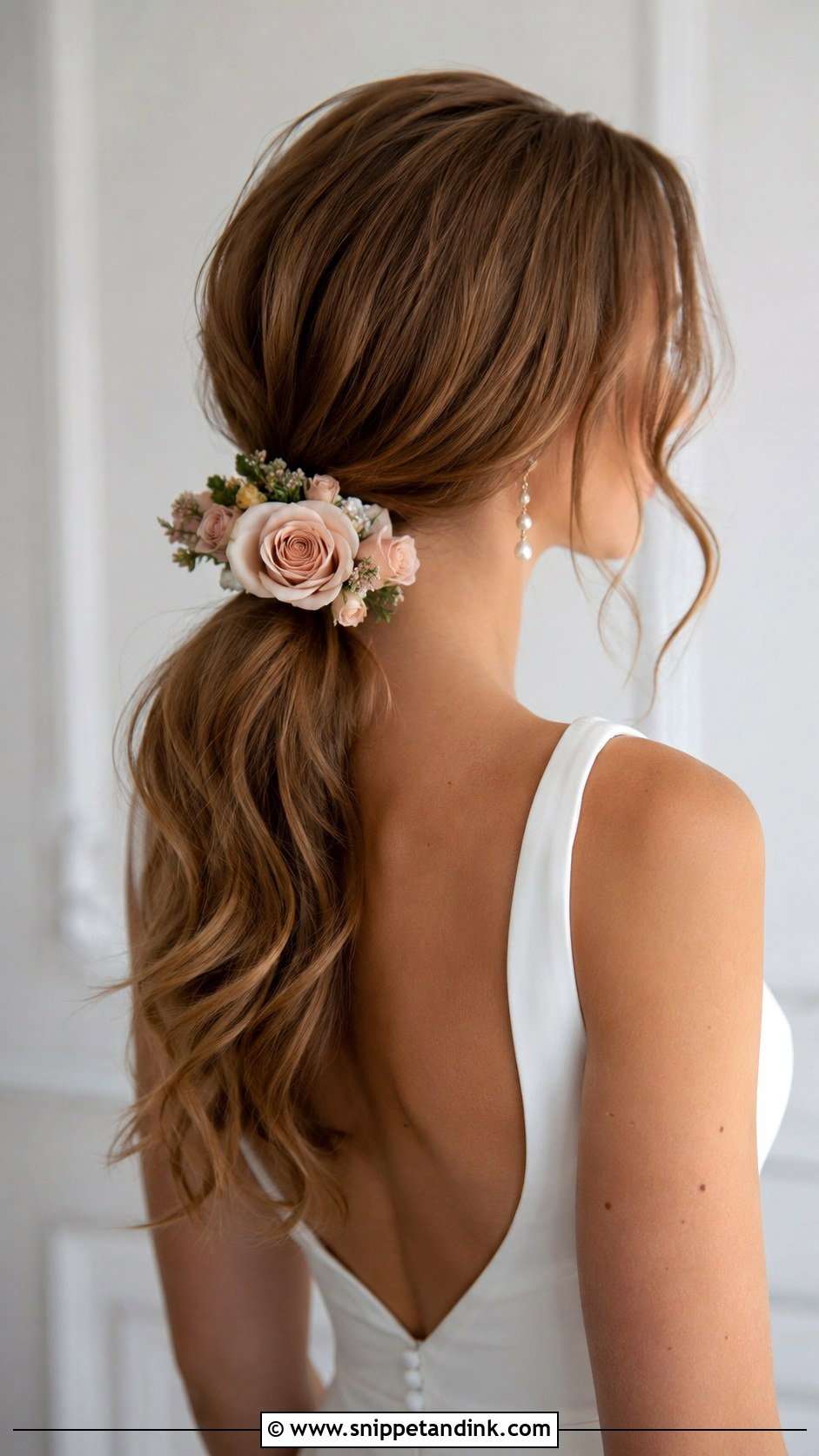
A low ponytail is a clean modern base, and flowers solve its one weakness, the elastic. I wrap a small section of hair around the band to hide it and pin a few blooms over the join. Weight is the thing to watch. Flowers attached only at the base can drag the ponytail down, so I build a small cluster rather than a full ring. Waves along the length soften it, while a straight, glossy finish looks sharper and suits a minimalist wedding.
16. Dutch Braid With Flowers
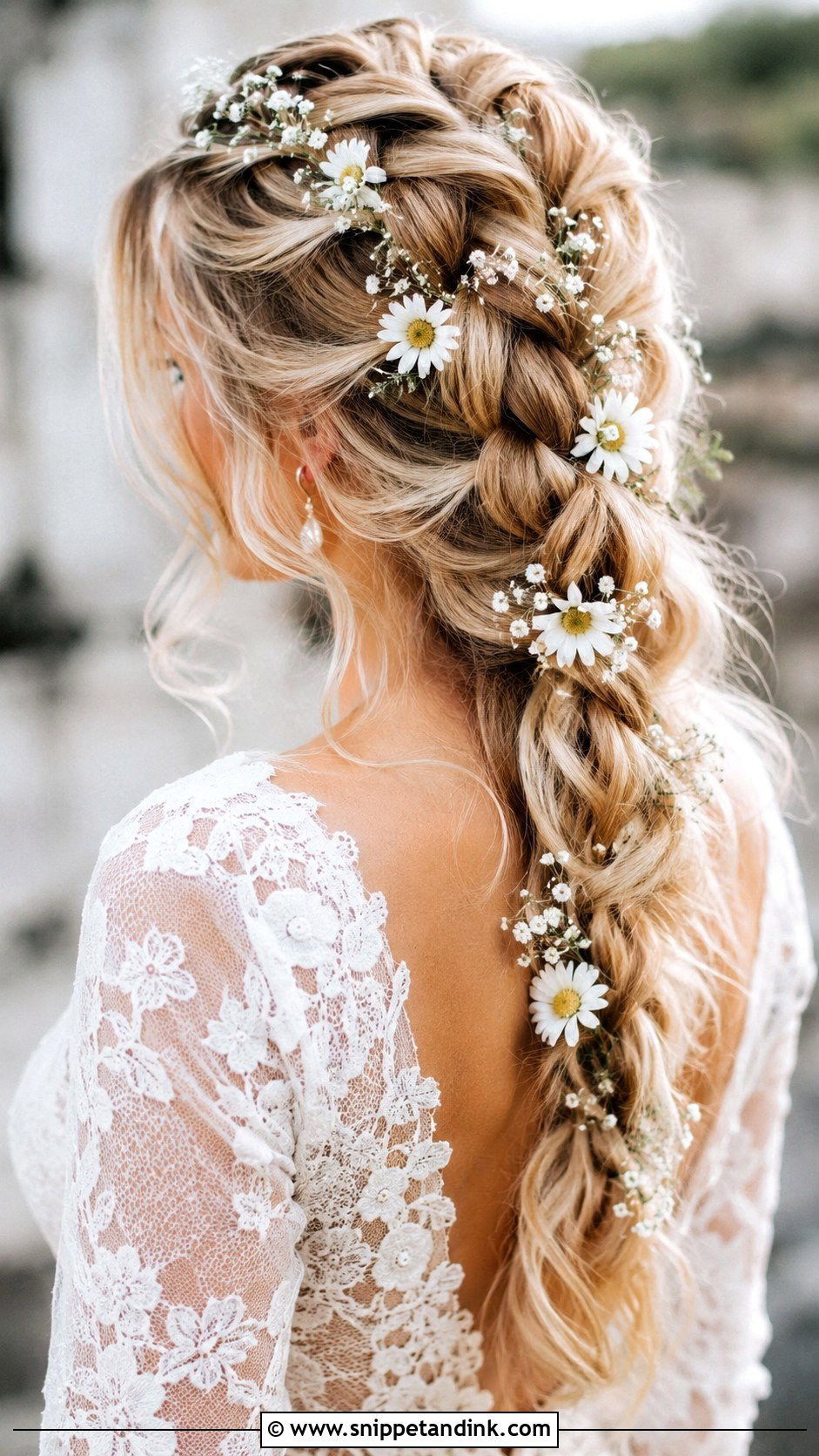
The Dutch braid sits raised because it’s braided under rather than over, so flowers tucked along it stand proud instead of sinking in. You can wear one, two, or wrap it into a crown. I like it for active outdoor weddings because it survives dancing and wind better than almost any down style. Fine hair benefits from texture spray before braiding, which gives the sections grip and makes the braid look fuller.
17. Fresh Flowers With a Veil
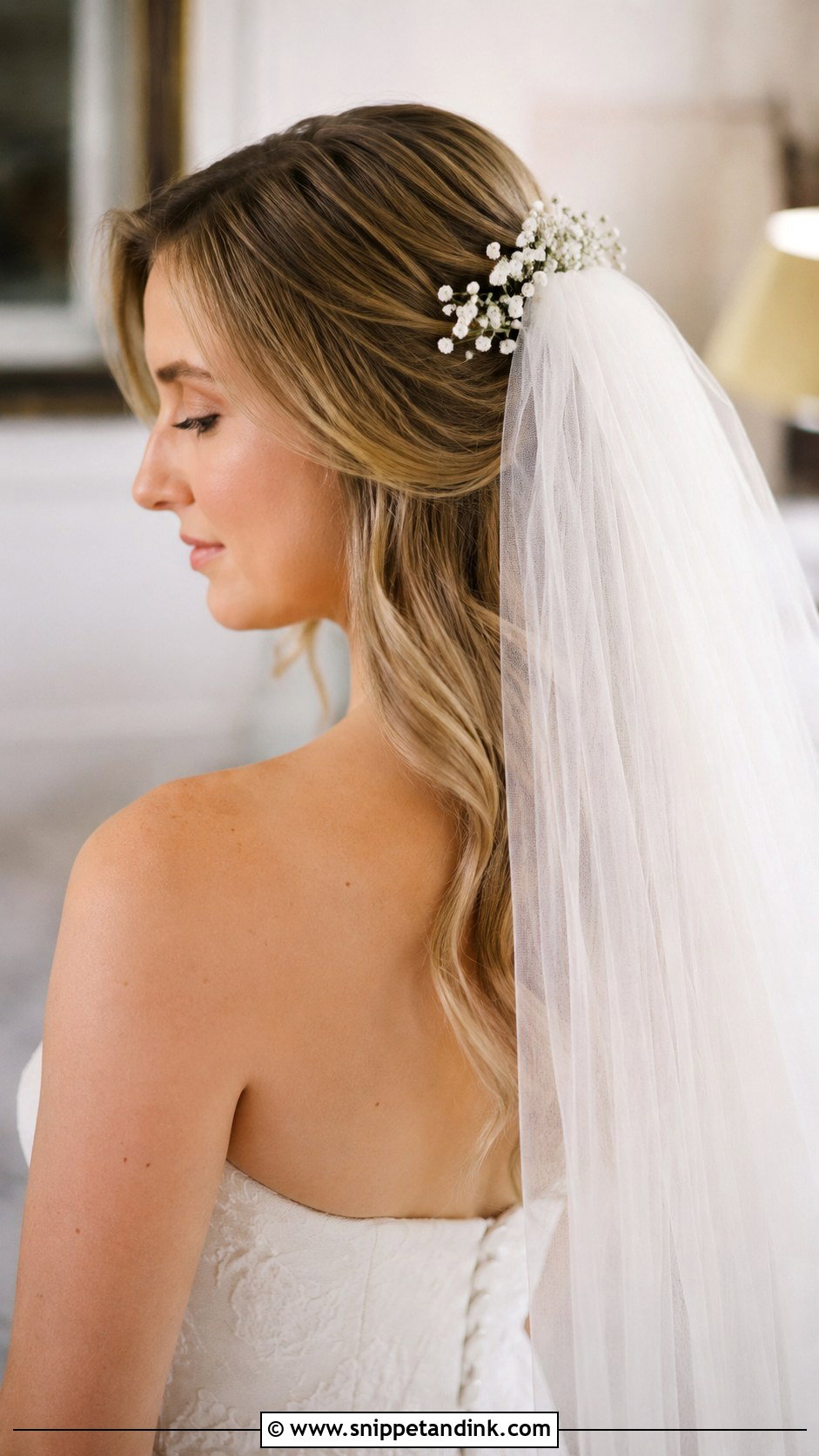
Flowers and a veil compete for the same spot, so I plan where each one sits. The veil comb goes in first, slightly below or behind where the flowers will be, and then blooms go in around it to hide the comb. When the veil comes off for the reception, the flowers stay and nothing looks missing. Keep the blooms small and flat near the comb, because tulle catches on stems and raised petals. Baby’s breath and spray roses are the easiest partners.
18. Twisted Updo With Peonies
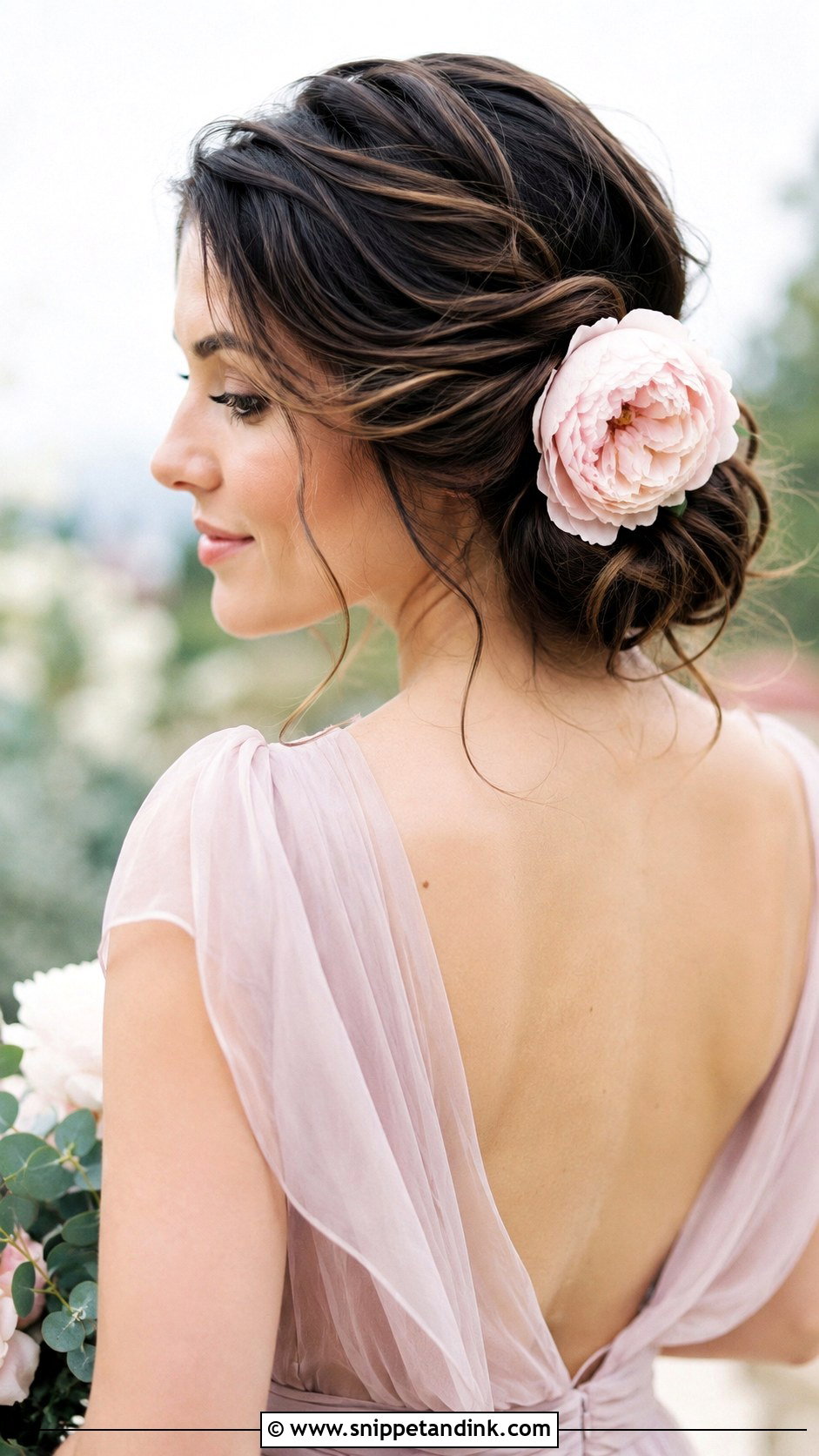
A peony is heavy. One open head weighs noticeably more than a cluster of spray roses, and that weight hangs on a few pins. I’d use one or two at most, placed at the side of a low twisted updo where there’s enough hair underneath to anchor them, and the florist should reinforce each stem with wire so it doesn’t snap. Peonies also keep opening in a warm room, so choose heads that are only just open in the morning. Their season runs from late spring to early summer, which narrows when this look is realistic.
19. Crown Braid With Daisies
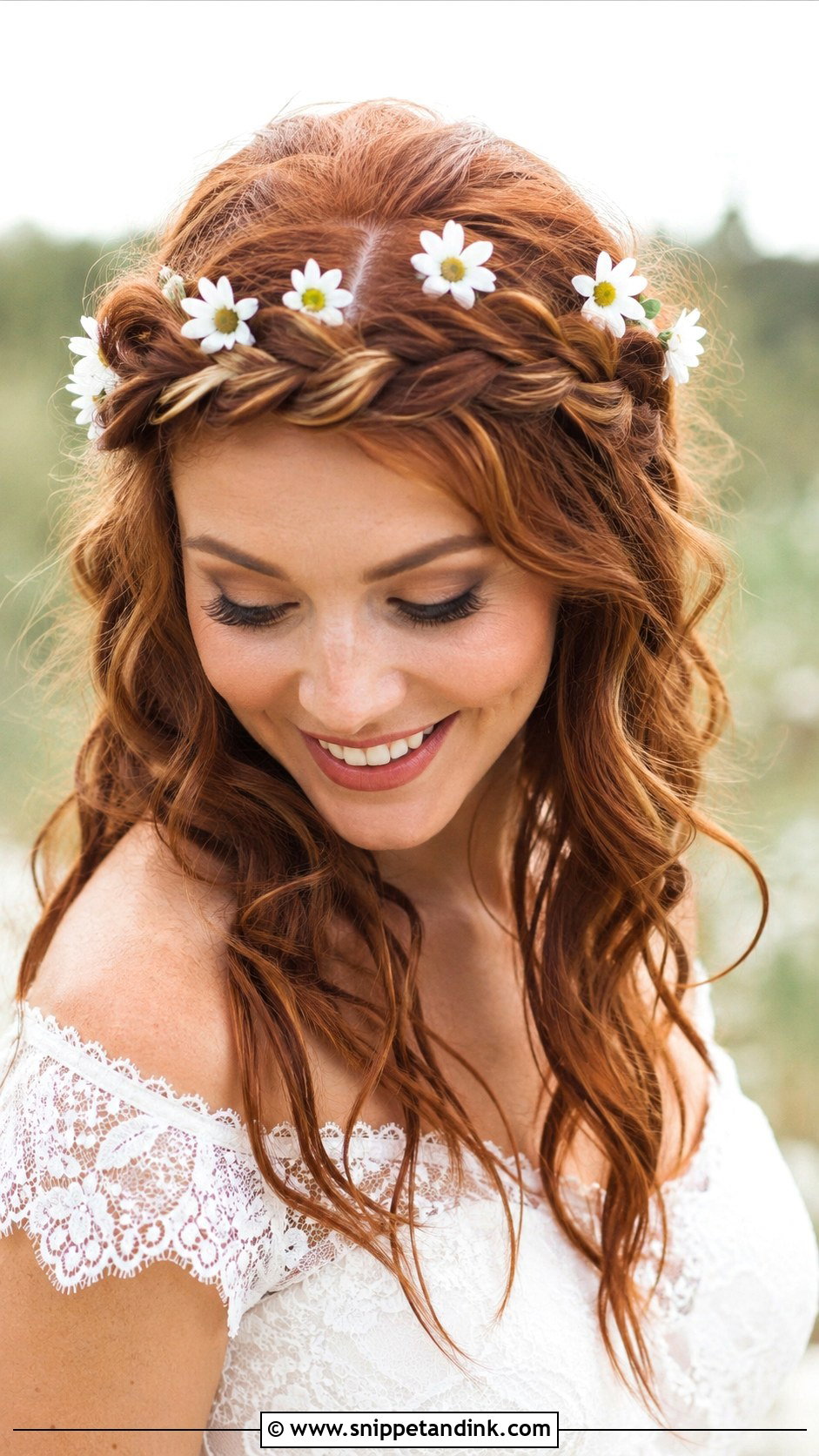
Daisies are small, flat and light, so they tuck into a crown braid in neat rows with hardly any pins. The braid wraps around the head and holds each stem, and with the hair off the face it stays comfortable on a warm afternoon outdoors. Daisies do bruise when handled a lot. I keep the florist’s box closed and cool until the last minute, then place them quickly so the petals stay crisp in photos.
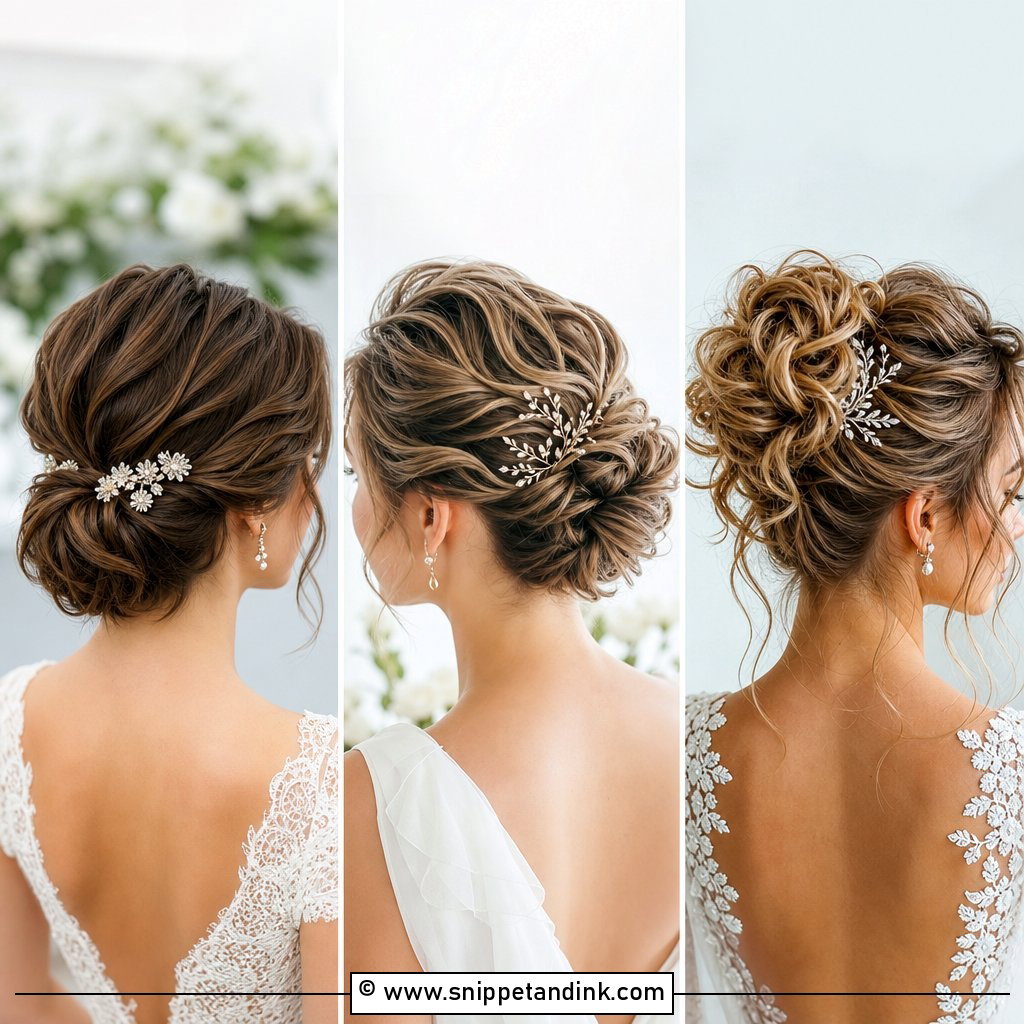
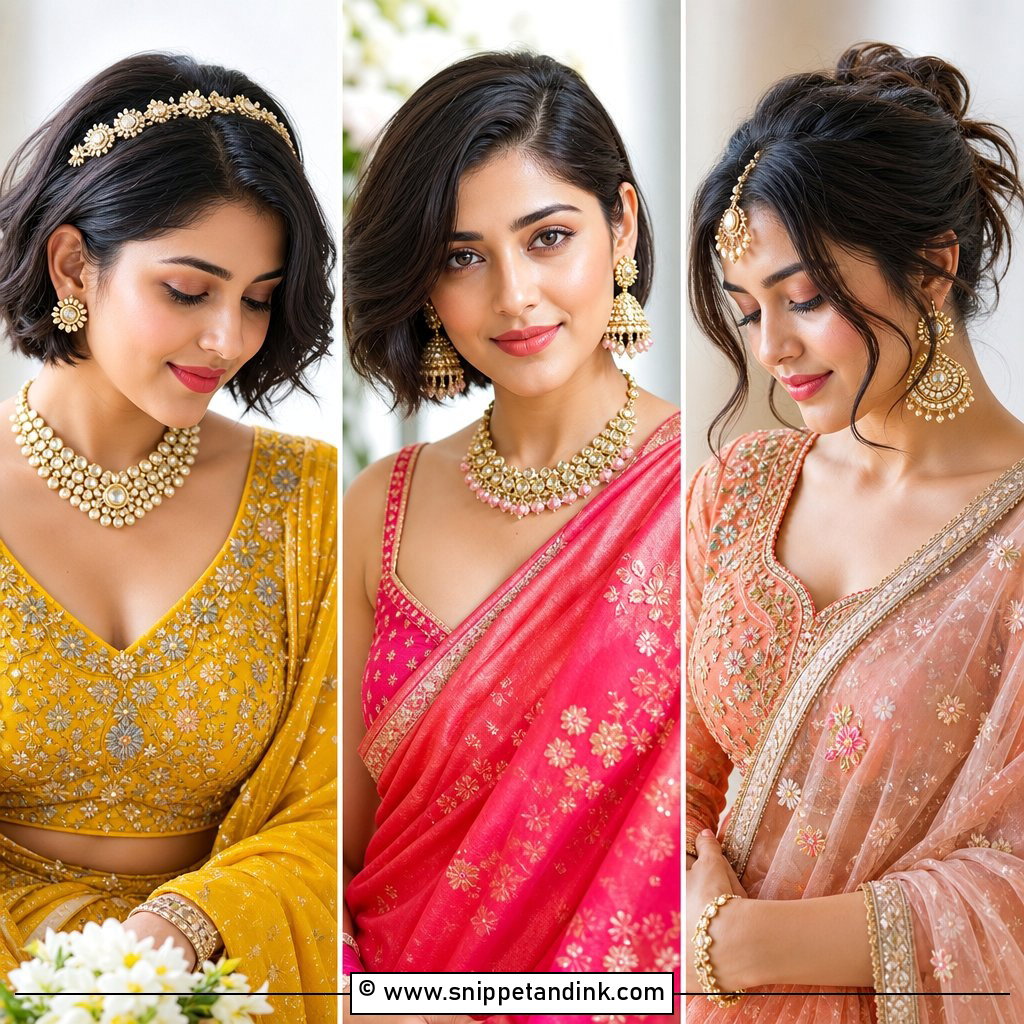
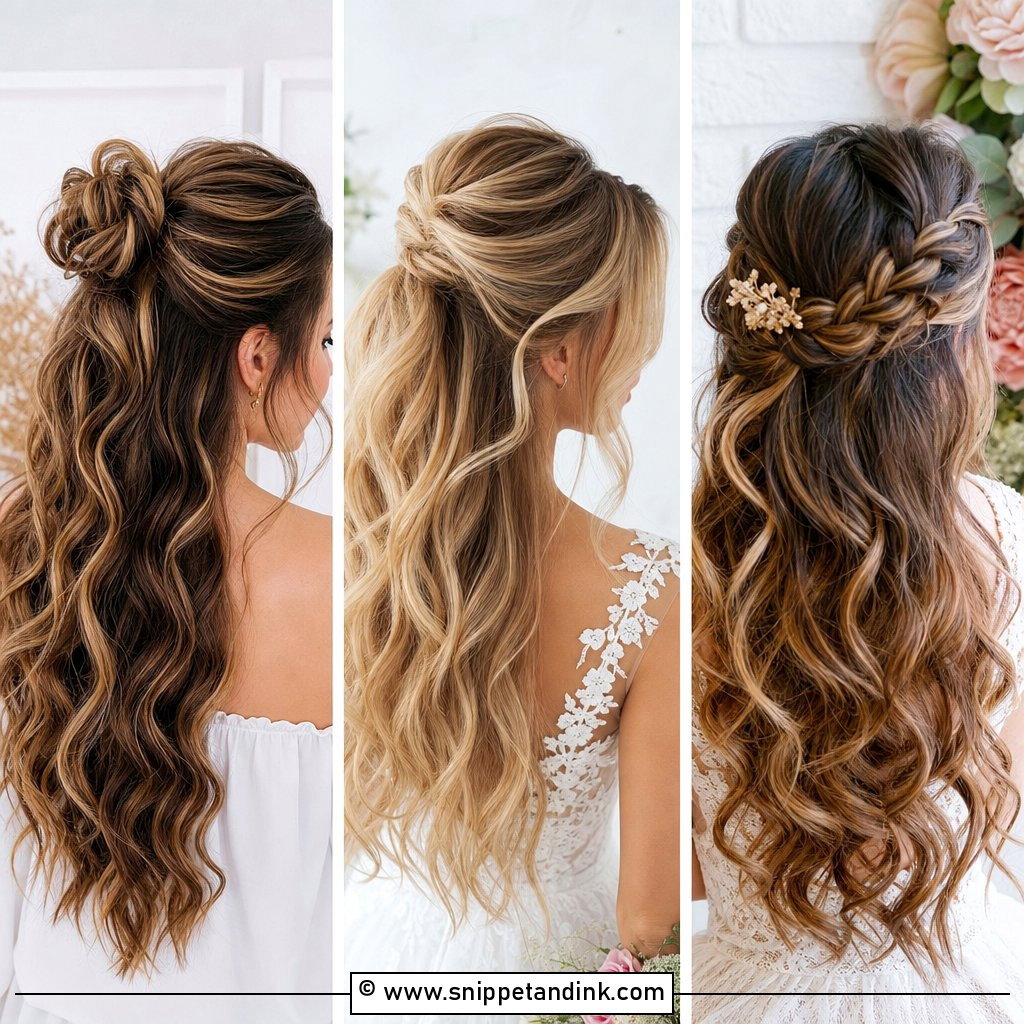
20. Scattered Blooms in Flowing Hair
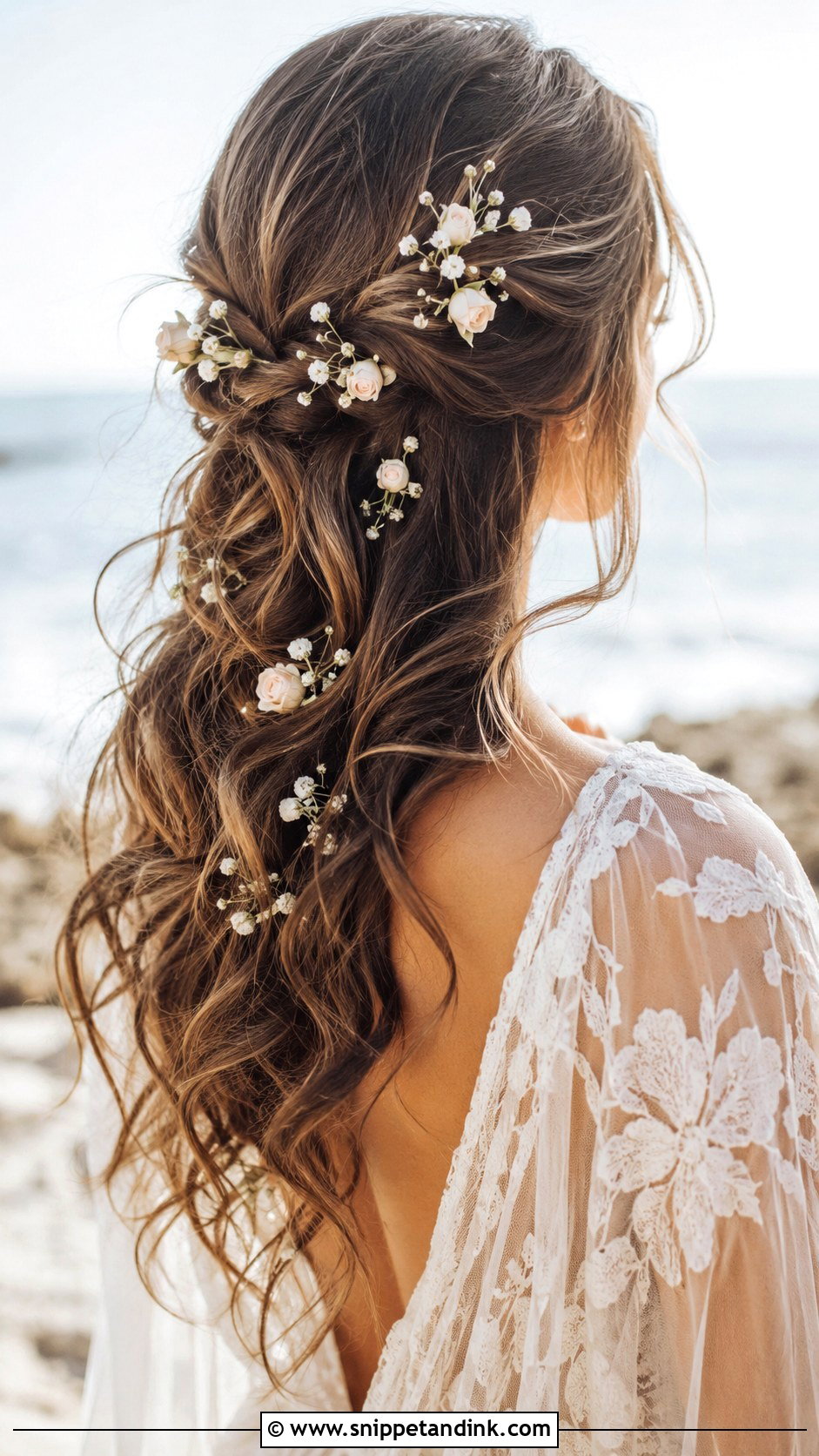
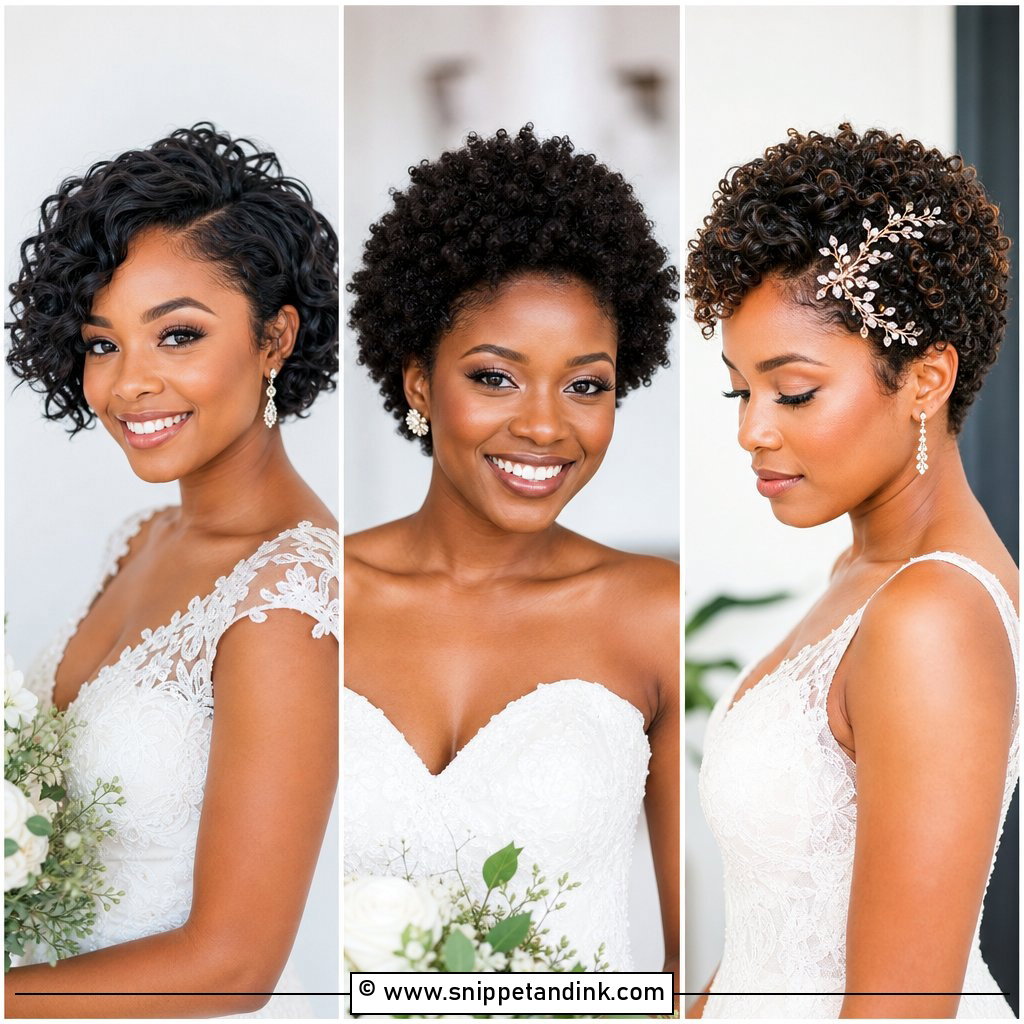
Scattering flowers through loose hair looks simple, but it’s the least secure style here. Each bloom is pinned on its own, and down hair moves constantly, so I pin into small hidden twists rather than loose strands. Tiny blooms like baby’s breath or rosebuds are the only ones I’d use; big flowers in loose hair look like they’re about to fall out, and often do. Expect to lose a few by evening and give a bridesmaid some spares and pins.
Pinning Blooms So They Hold on Your Hair Type
A flower is only as secure as what’s underneath it. I never push a stem straight into loose hair; it needs a twist, a braid or a teased base to bite into.
Fine or slippery hair
Wash the night before, then I add texture spray and backcomb a small hidden base where the flowers will sit. Two bobby pins crossed in an X over each wired stem hold far better than one pin pushed straight in.
Thick or heavy hair
Thick hair grips pins well but swallows small flowers. Slightly larger blooms or tight clusters show up better, and longer pins are needed to reach through the bulk to the base.
Curly and coily hair
Natural texture gives grip, so fewer pins are needed. Flowers sit on top of the volume rather than inside it, so I place them where the curls are densest and keep the hair well moisturized so it doesn’t frizz around the petals.
On every hair type I finish with a shake test: a gentle turn of the head from side to side. If anything moves, it gets another pin right then, rather than falling at your feet during the vows.
Flowers Go In Last, After the Hairspray
Flowers work with almost any hair length or texture once the base underneath is right. A full crown, a single orchid or a scatter of small buds can all last the day if you choose sturdy blooms like spray roses, baby’s breath and orchids. I always add them as the very last step, after the final mist of hairspray, because spray can spot petals. If you can, bring a stem or two from your florist to the trial so you see exactly how your hair holds them.
You'll Like These Ideas:


Leave a Reply