
Wedding hair gets a test most everyday hair never faces: it has to look right at two in the afternoon by the window in the getting-ready room and still be holding at eleven when someone hands you a sparkler. That’s why every style here leans polished rather than stiff. Low buns, sculpted waves, glossy ponytails, braided updos and half-up shapes all leave room for a veil or a single comb without fighting the dress. When I look through a bride’s saved photos, I read three things before anything else: her neckline, her real hair texture and where the veil has to sit. Keep those in mind as you scroll, and take the ones that make you stop to your trial.
Your Neckline Narrows the Shortlist Faster Than Your Face Shape
Most advice starts with face shape, but in wedding photos the neckline decides more. Hair and dress meet at the shoulders, and that’s where a mismatch shows: curls bunching against a high collar, or a bare strapless bodice looking a little empty next to a tight bun. When a bride sits down for a trial, the first thing I ask to see is a photo of the dress, not her face.
- Strapless and sweetheart: almost anything works, but hair down or half-up keeps the shoulders from looking stark. Soft waves and side swept curls are the easy wins.
- High neck, halter and illusion collars: go up. A chignon, French twist or high bun stops hair catching on the neckline and lets the detail show.
- Low or button back: the back is the main event, so I’d pick a low bun, chignon or crown braid that sits clear of it.
- One-shoulder: sweep the hair to the bare side so the shapes balance instead of piling up on one half.
- Off-the-shoulder and bateau: a low updo or a sleek ponytail keeps that wide line clean.
Once you’ve crossed off what fights the dress, face shape becomes fine-tuning: a bit more height at the crown, a softer front piece, a side part instead of a center one. Those are five-minute adjustments at a trial.
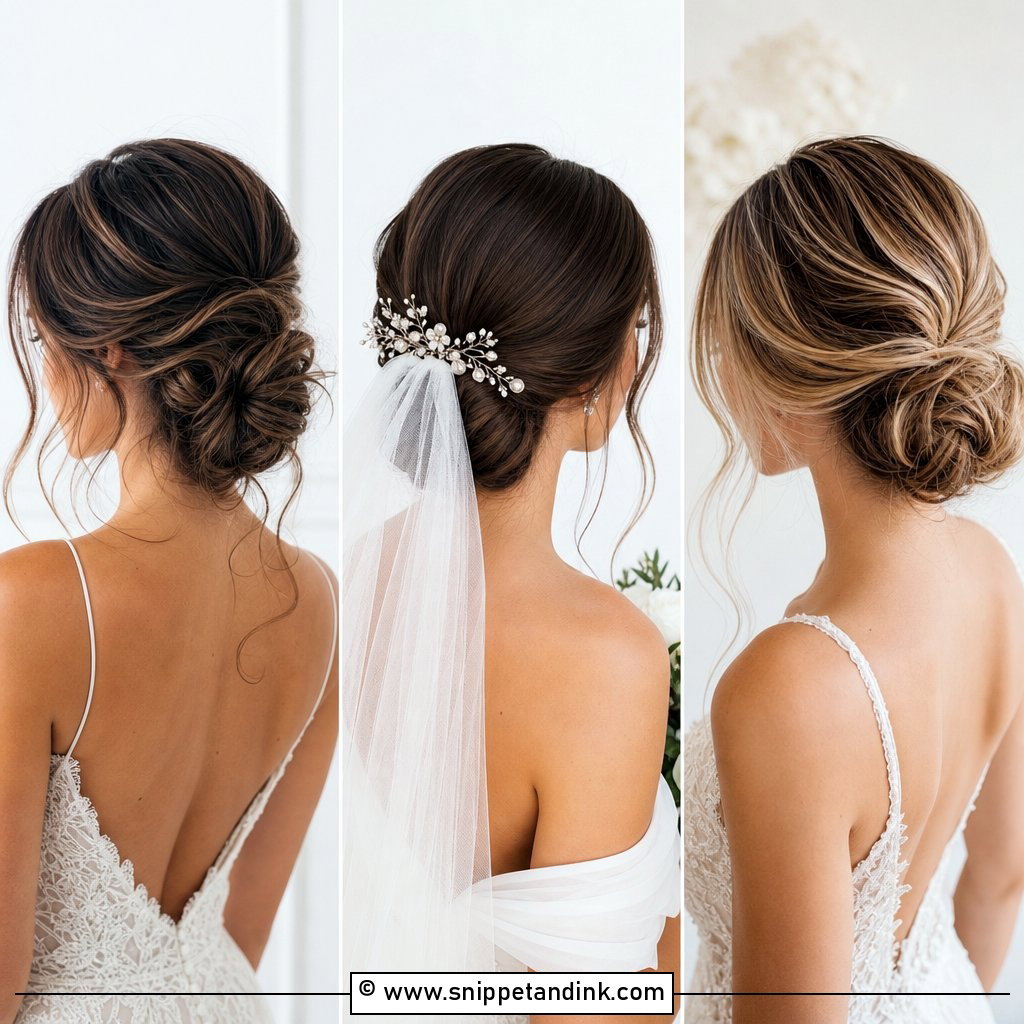
1. Bridal Low Bun
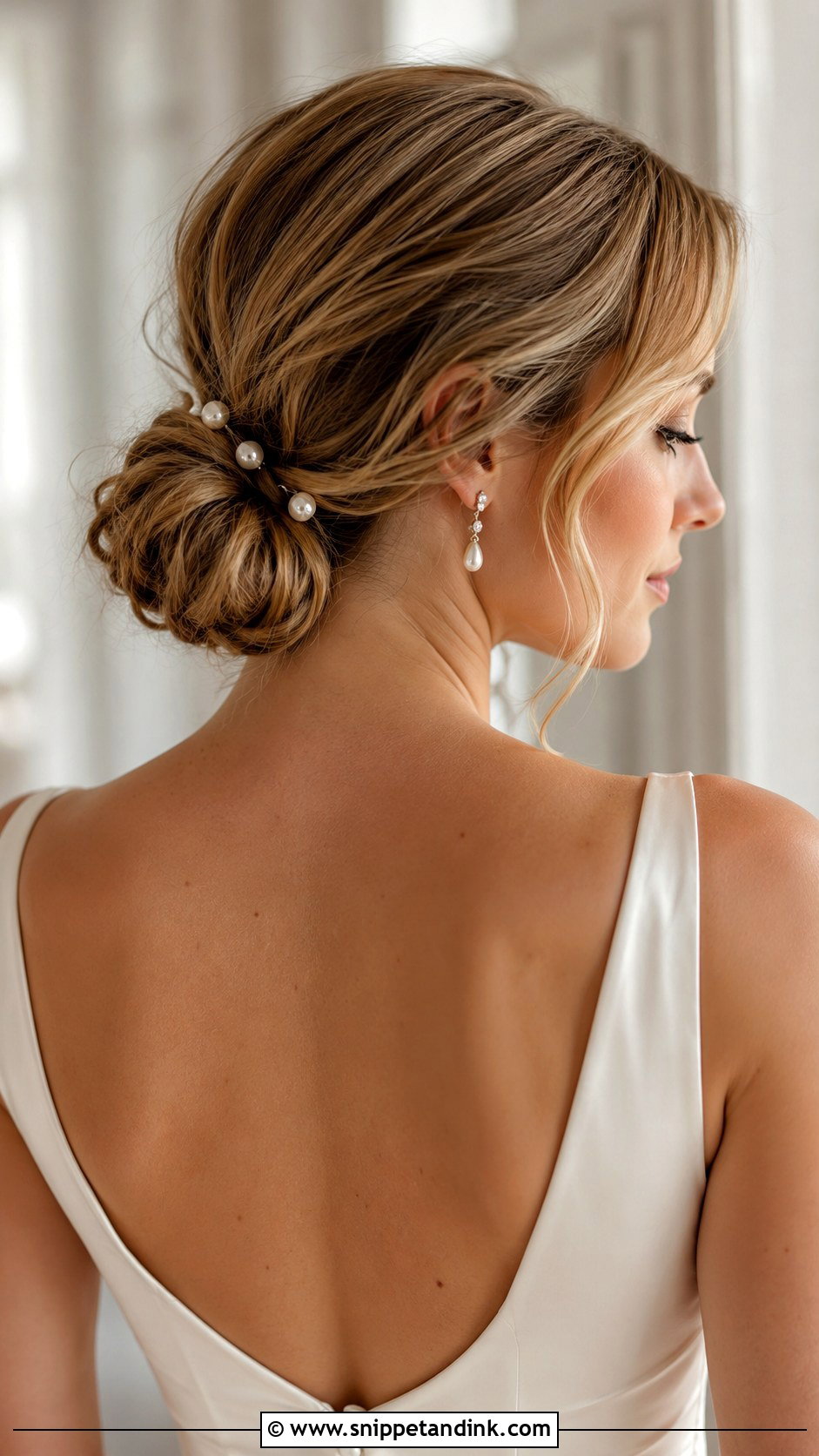
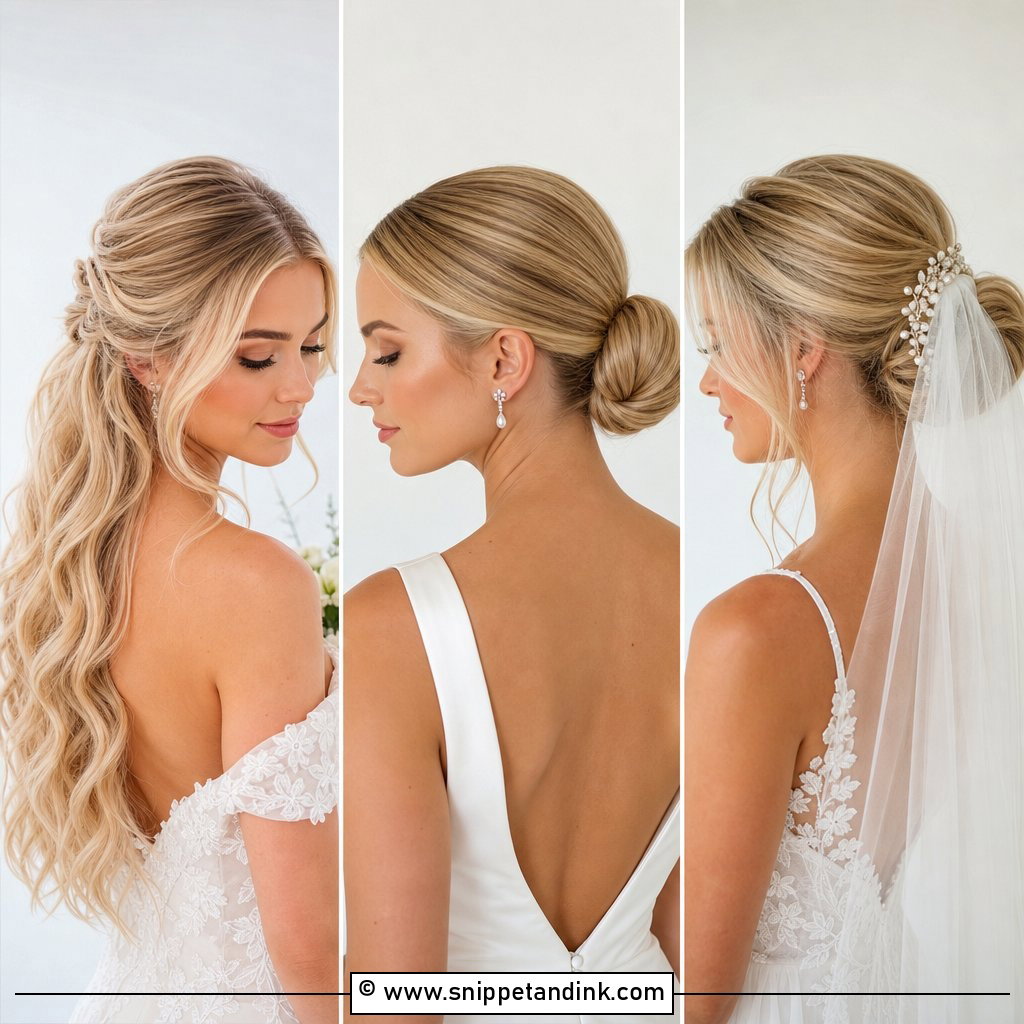
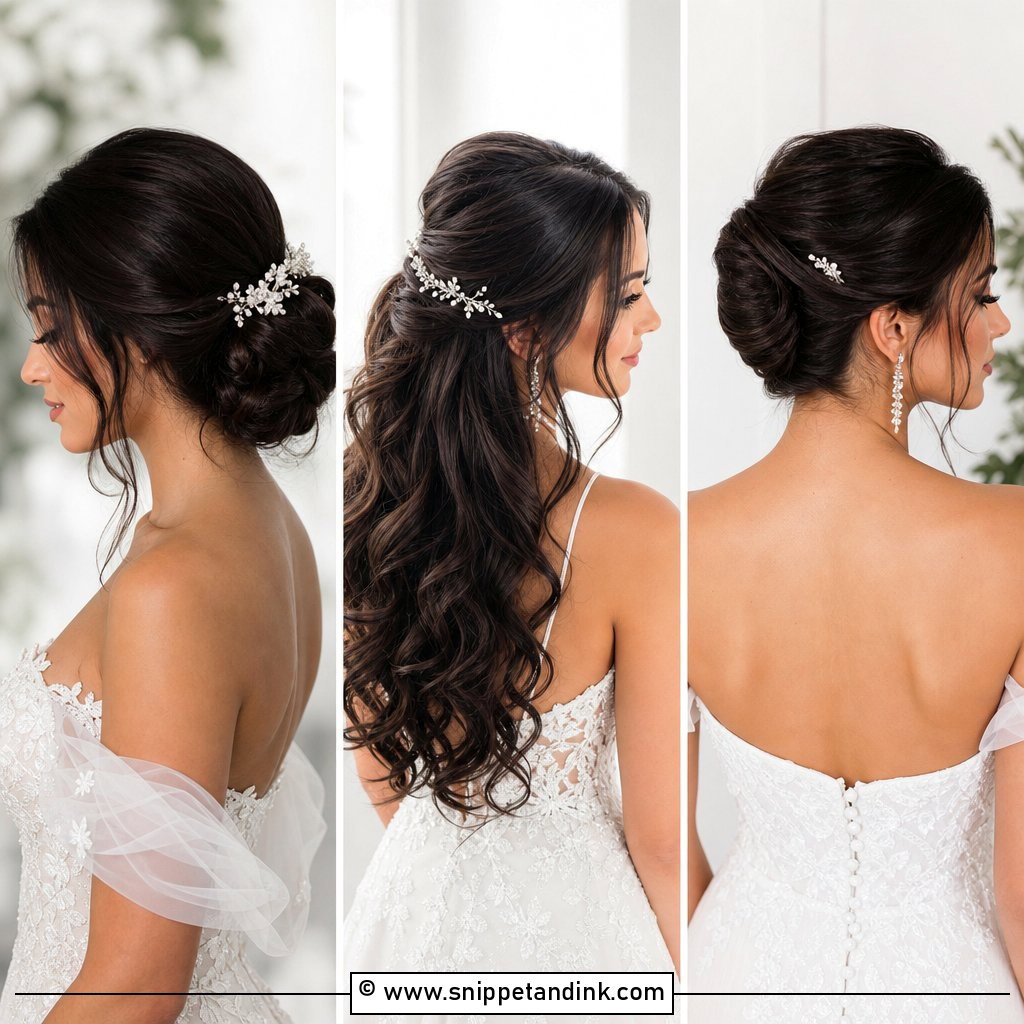
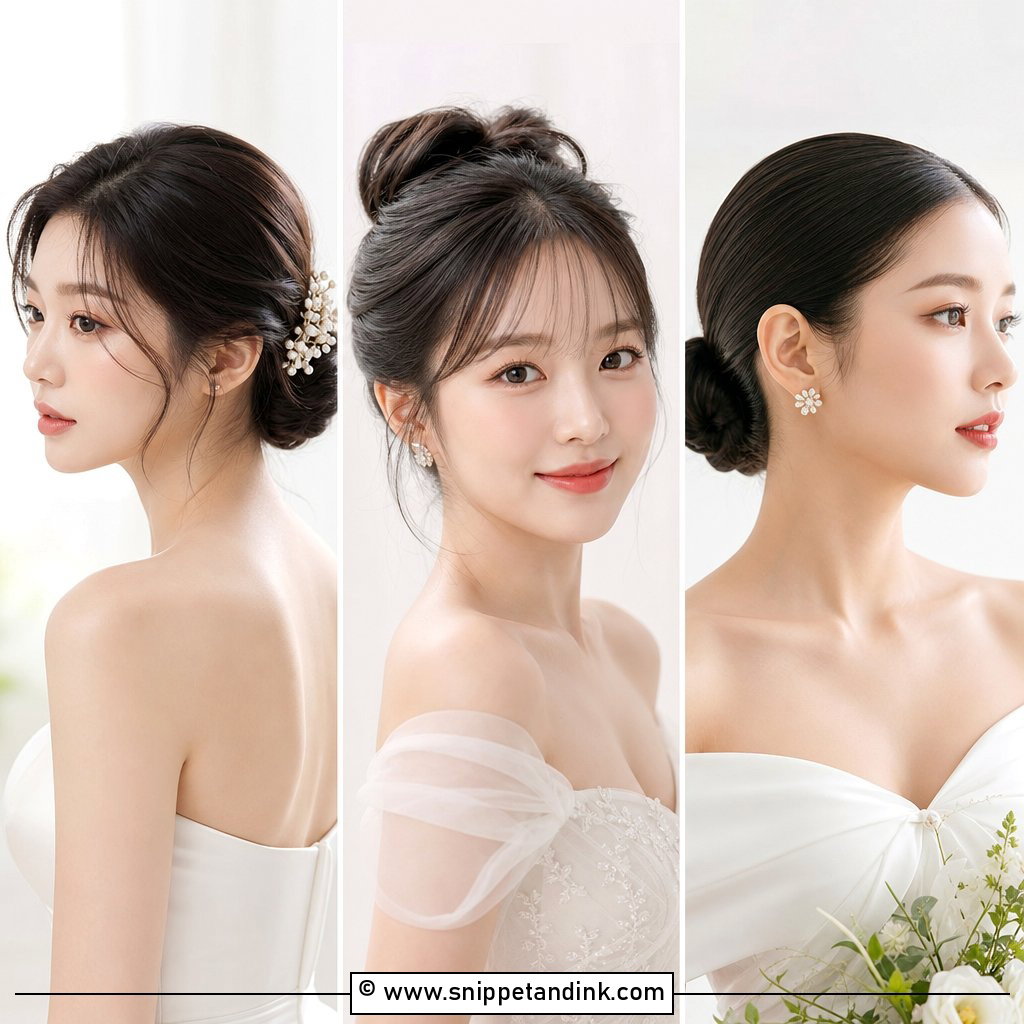
Of all the shapes I pin, the low bun is the one I trust most on a long day. It sits right at the nape, so its weight rests on the base of the skull instead of dragging on the crown, and a veil comb can slide in just above it with something solid to grip. Smooth it for a modern gown or leave it loosely textured for a garden ceremony. I always leave a little lift at the crown, because a bun pulled flat on top reads severe in profile shots, and a couple of face-framing pieces take the edge off from the front.
2. Bridal Chignon
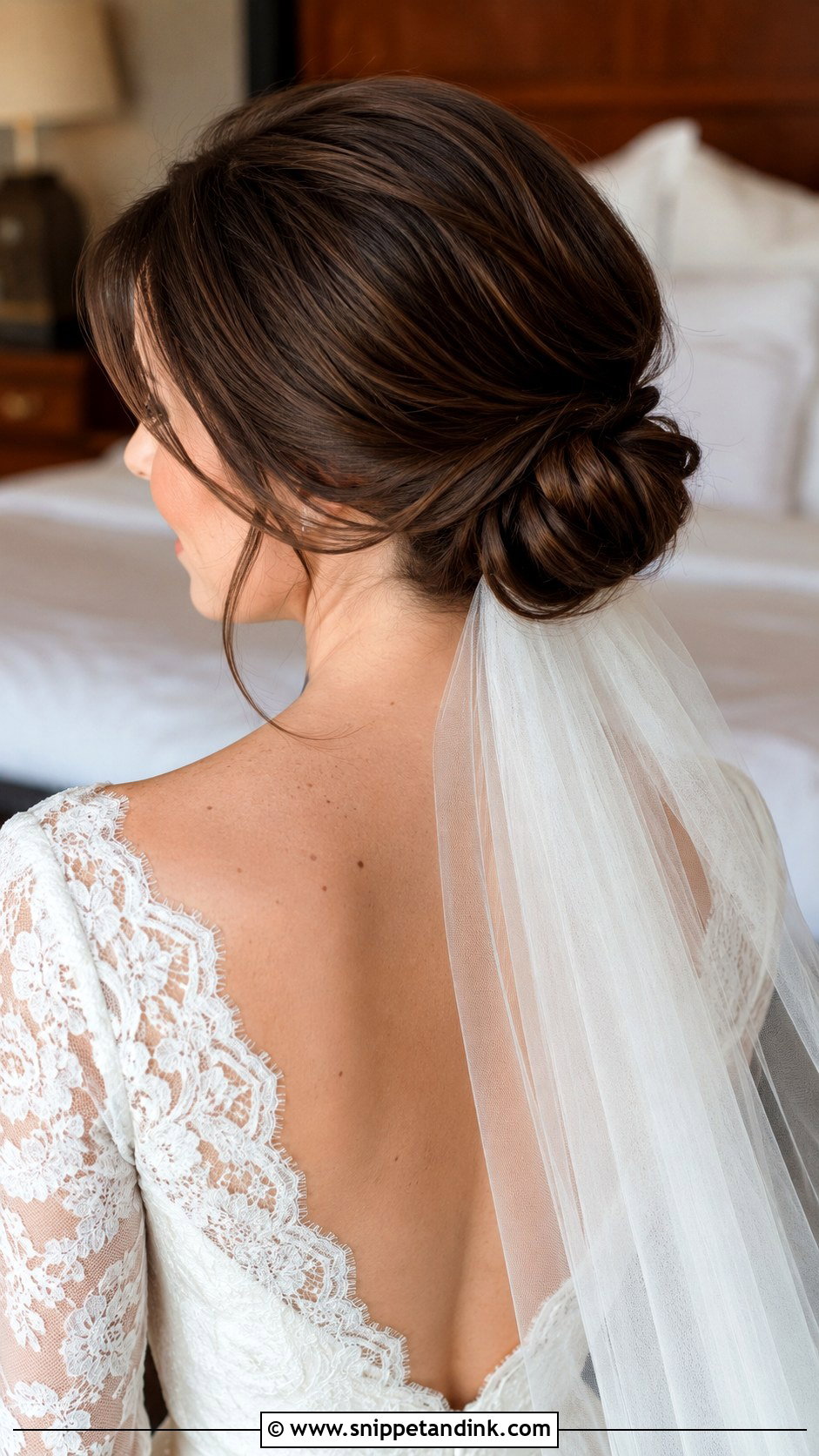
A chignon is rolled and tucked rather than wound, so it sits closer to the head and reads more refined than a plain bun. It’s my first suggestion for strapless, off-the-shoulder, bateau and high-neck gowns, since it keeps the whole neckline clear. If the back of your dress carries lace, beading or a row of buttons, a chignon stays out of their way. Medium-length hair can manage one with a small padding form hidden inside; I match the padding to the hair color so it never peeks through when the bride turns. Put a comb above it or the veil underneath, but don’t crowd both into the same spot.
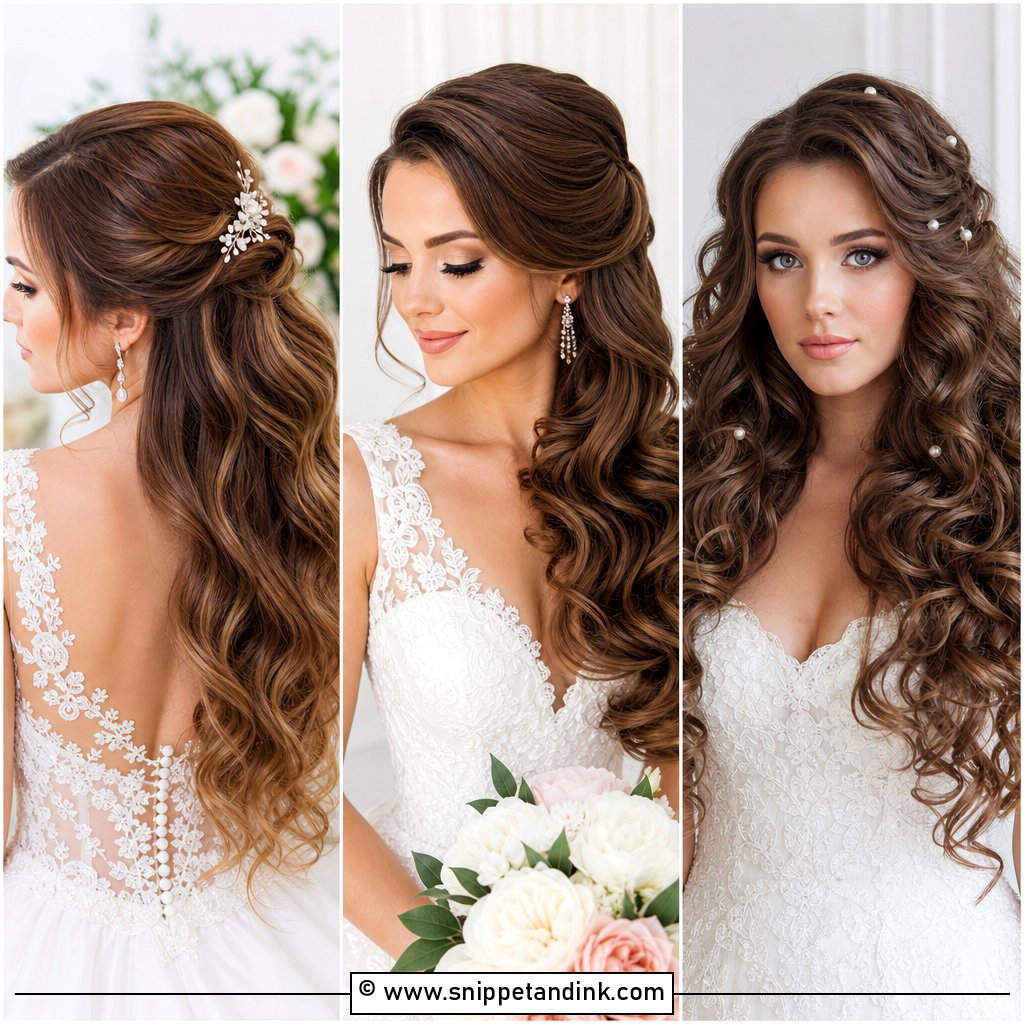
3. Bridal Hollywood Waves
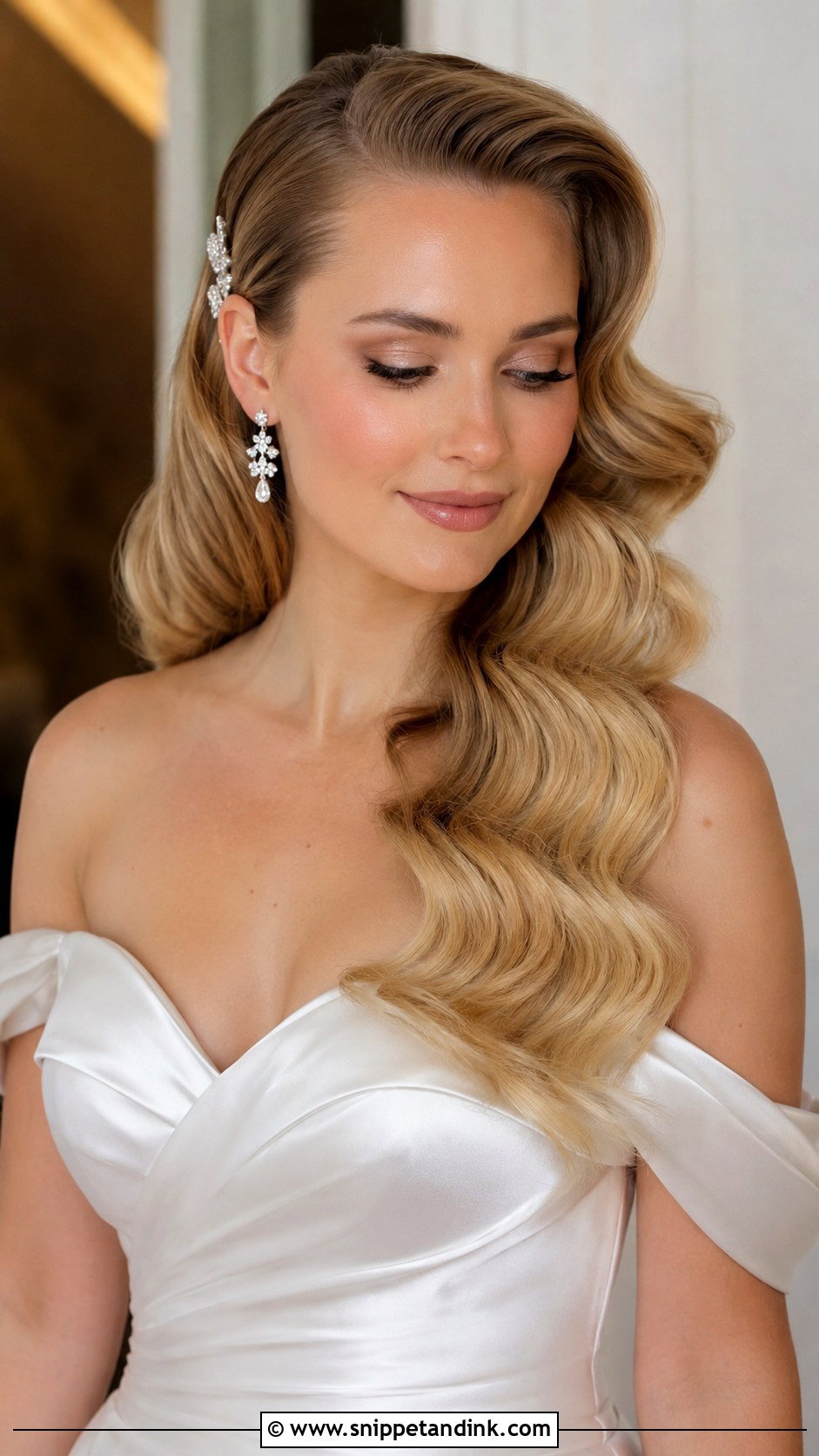
Hollywood waves are hair down with a formal shape. Every curl is set in the same direction, then brushed out so the waves link into one continuous S down the lengths. That brush-out is the step that frightens people, and it’s the step that makes the look. The pattern needs length and density to show; on thin hair the waves split apart into separate strands. Extensions can help there, adding enough weight for the ridges to stay defined in photos. A deep side part and a satin or fitted gown suit it best. Ask for a flexible hold so the waves still move when someone touches them.
4. Bridal Half Up Half Down Hair
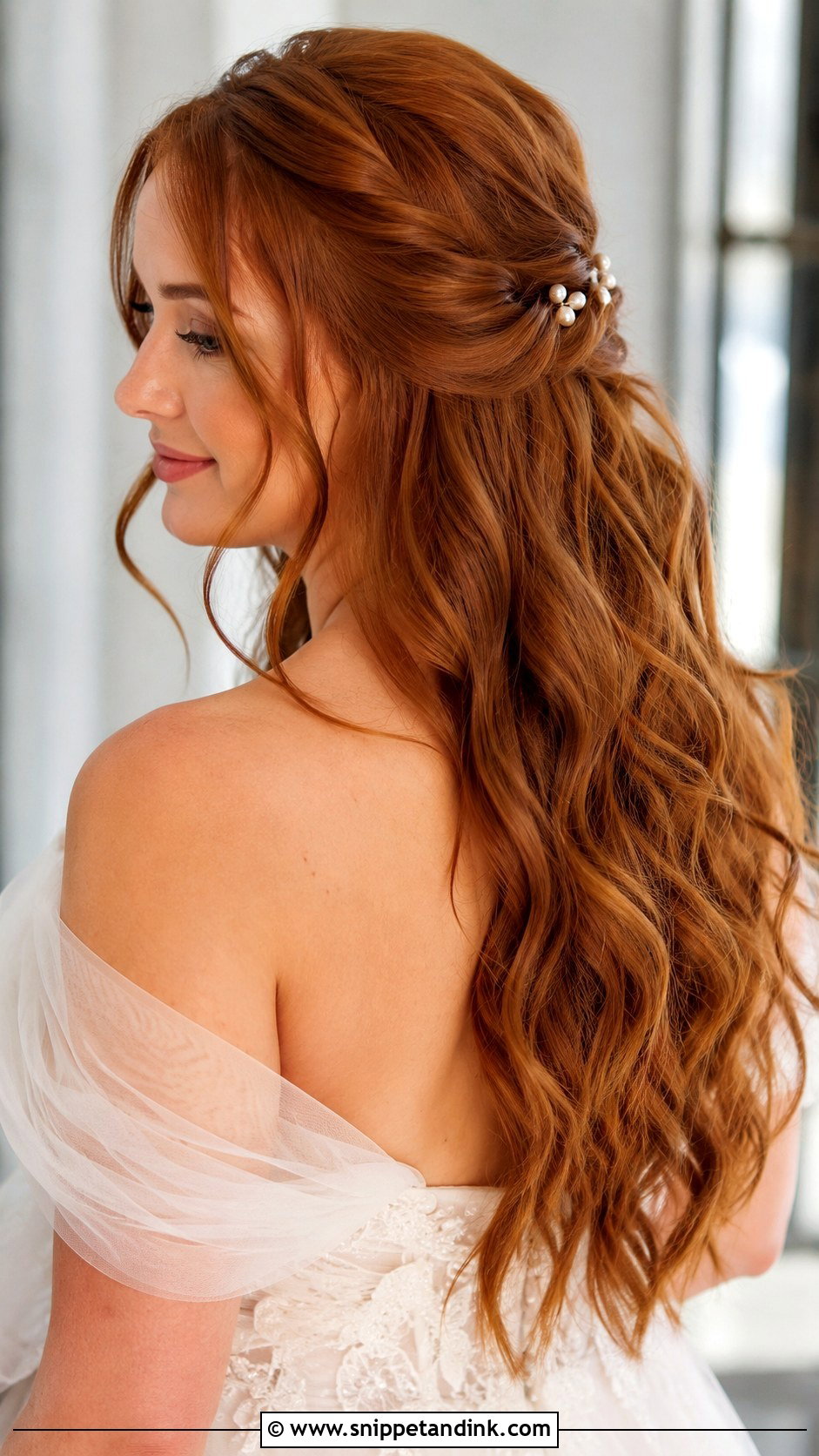
Half-up hair keeps your face clear for the vows and the camera while the lengths stay loose. The part I care about most is the anchor. Where the top section meets, I build a small hidden base of crossed pins or a tiny braid, because that’s what a veil comb actually grips; without it, the veil slowly drags the whole top section backward. Keep the crown soft rather than scraped. On very fine or silky straight hair I add texture spray first, otherwise the top section slides loose within a couple of hours.
5. Bridal Sleek Bun
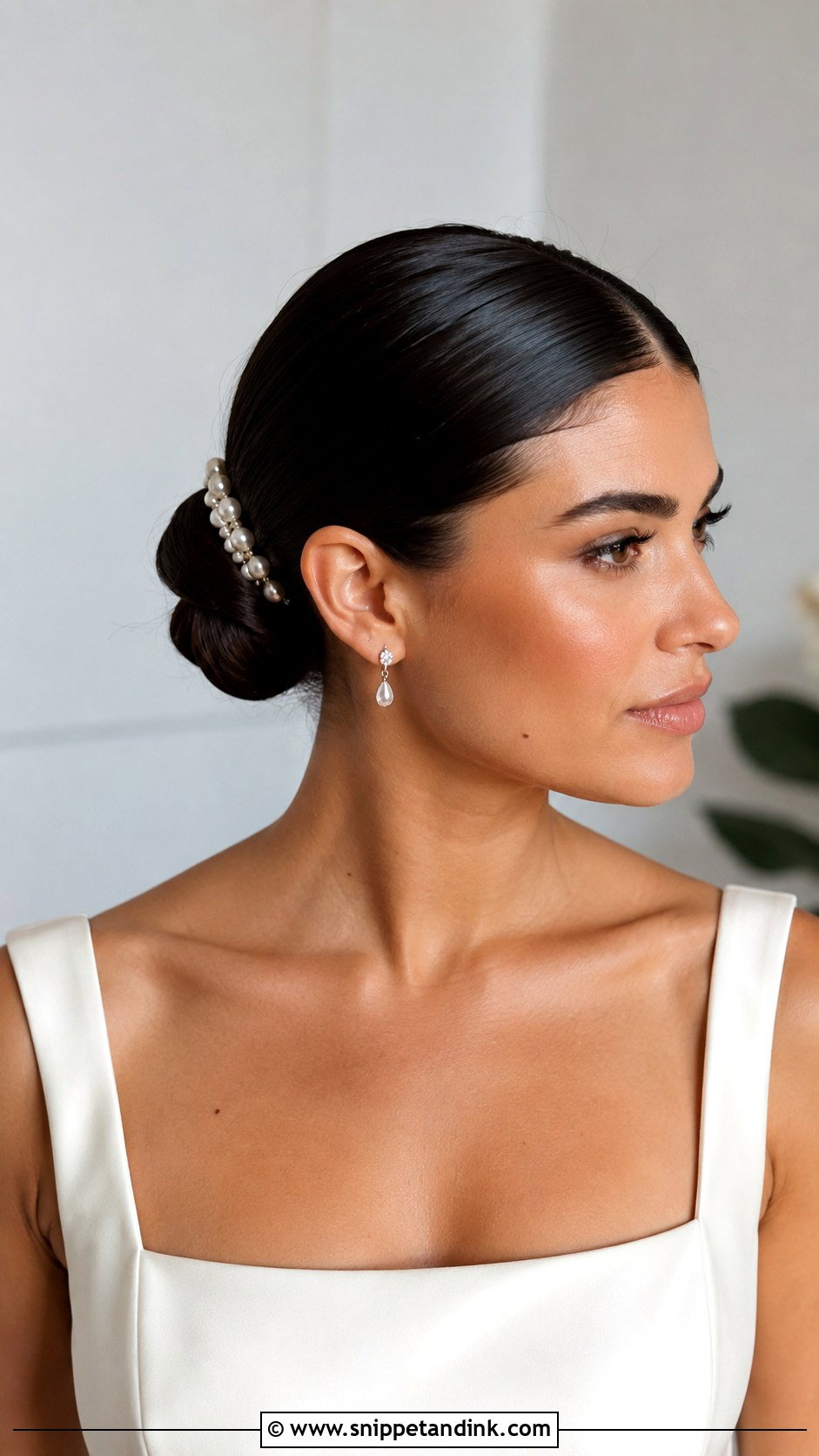
A sleek bun lives or dies on its surface. I smooth the hair with a dense brush and a light gel or cream, then set it into a neat bun at the nape or slightly higher, so the dress, earrings and makeup carry the look. A center part, a side part or sculpted edges all suit it, depending on your texture. In heat it’s the most reliable thing I can offer, because nothing on it can drop. The catch is that every lump and flyaway shows, so this one rewards an unhurried trial. Pearl pins or a sheer veil soften it if pure minimalism feels too strict for you.
6. Bridal Textured Updo
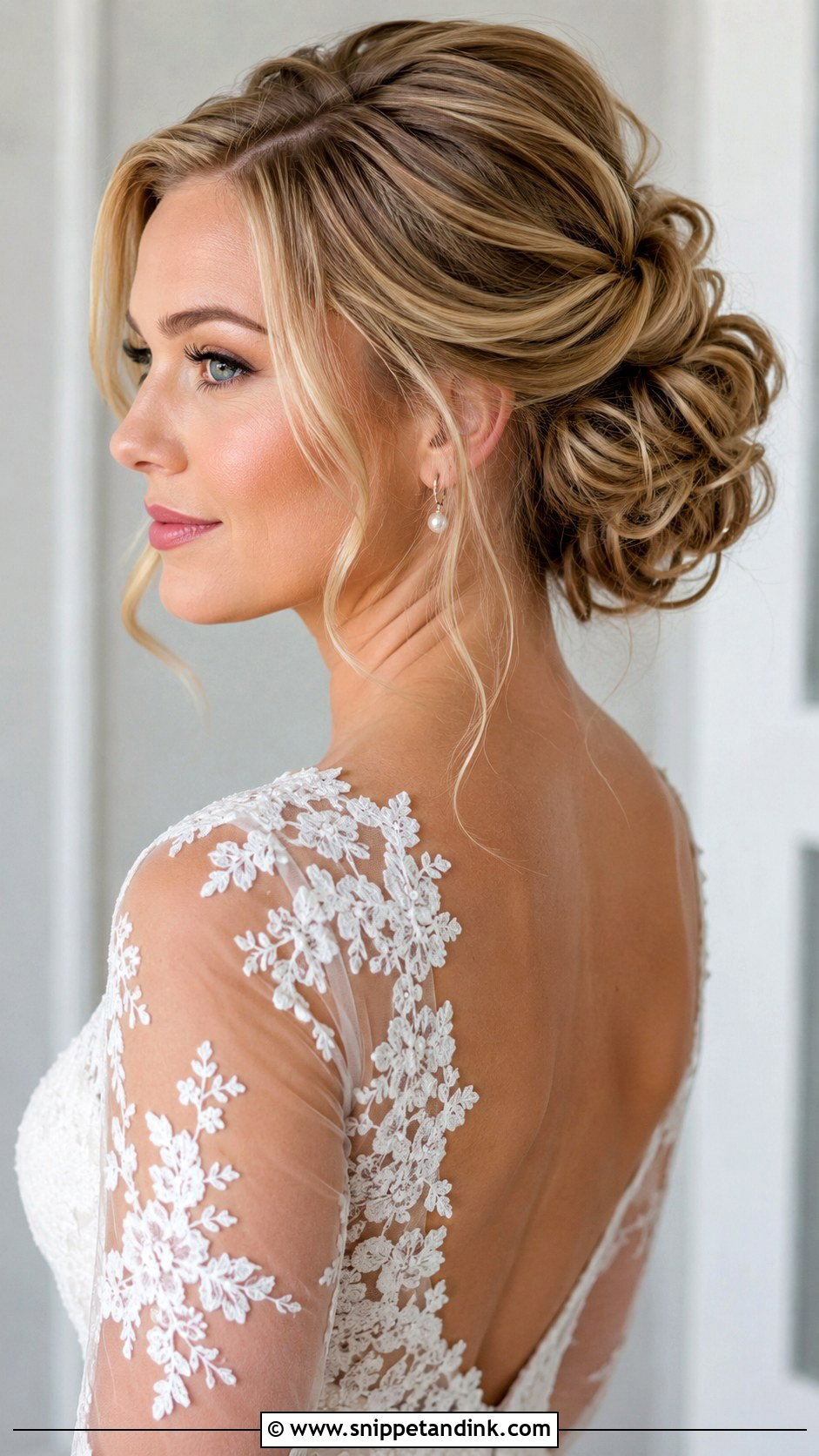
A textured updo is built from twists, bent sections and pinned loops instead of one smooth shape. It looks airy, but it’s held by a lot of hidden pins. Highlighted hair shows off here, since every twist turns a different tone toward the light. Second-day hair, or hair prepped with texture spray, grips far better than freshly washed silky hair, so I ask brides with slippery hair to skip washing that morning. Leave a few strands out around the cheeks and jaw. It moves easily between a garden ceremony and a ballroom reception.
7. Bridal Braided Updo
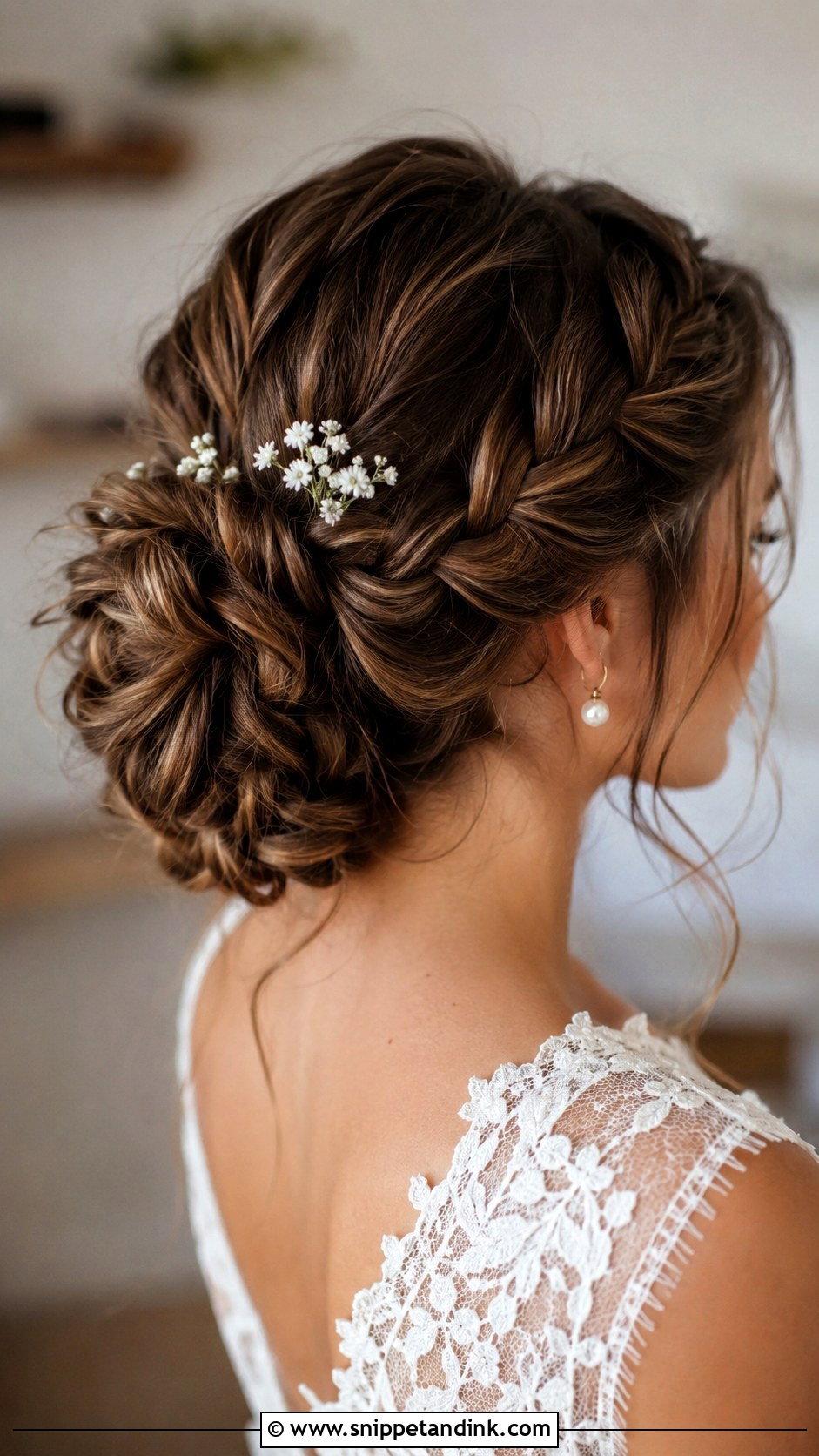
Braids do two jobs in an updo: decoration and scaffolding. A plait wrapped into a low bun or laid across the crown locks those sections down, so wind and humidity have much less to work with. After braiding, I gently pull out the edges of each loop to make the braid look fuller, then set it with spray so the loosened bits don’t frizz by the reception. Tiny flowers, pearl pins or a veil tucked under the bun all sit well against the braid’s grip.
8. Bridal French Twist
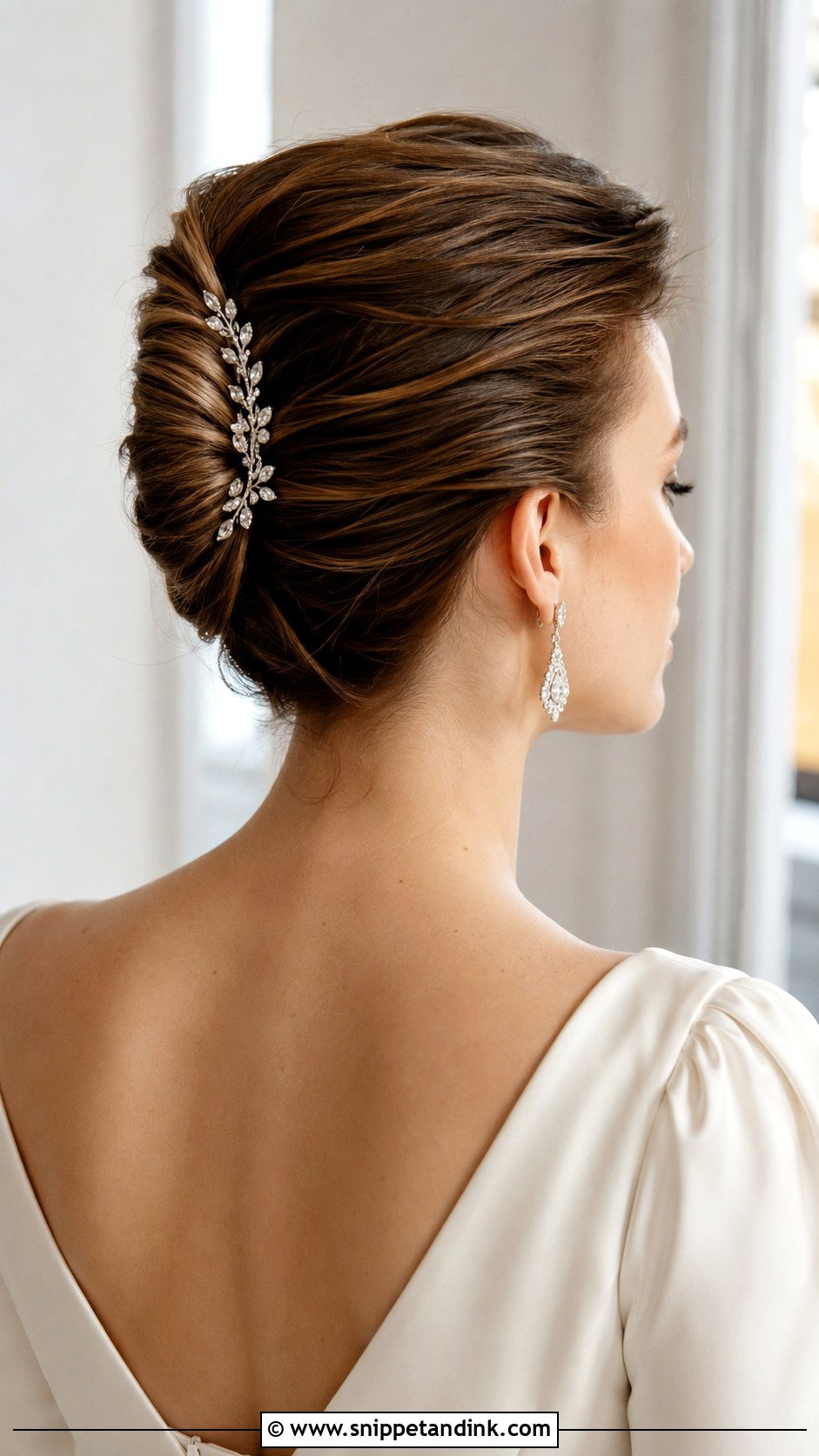
The French twist is a vertical roll up the back of the head, held by pins hidden inside the fold. From the side it gives quiet height and a long, clean line, which is why it suits classic gowns and statement earrings so well. I tease the base before rolling so the twist has something to hold; pinned straight onto smooth, silky hair, it can loosen over a few hours. You’ll need medium to long length. A slim comb along the seam adds sparkle without crowding it.
9. Bridal Ponytail
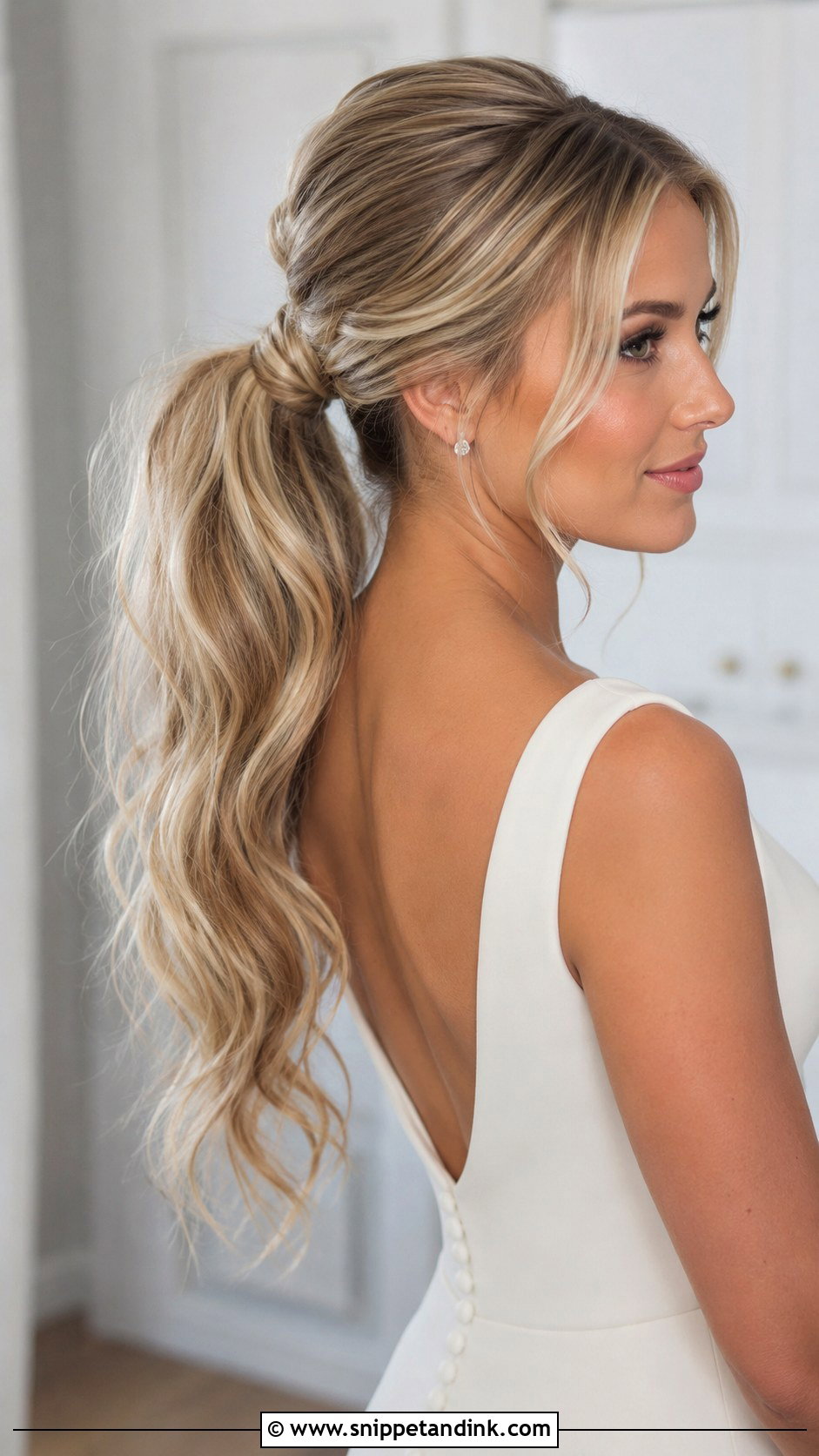
A wedding ponytail needs far more structure than the gym version. I set the base with two elastics, or a hidden band plus a bungee, then wrap a piece of hair around to cover them. Height changes the mood completely: high reads dramatic, mid lifts the face, low feels soft and modern. Waves through the length keep it from hanging flat. One practical note from trials: the veil has to sit above the ponytail, not under it, so we plan the comb placement together. Clip-in extensions add length and swing if your own hair stops at the shoulders.
10. Bridal Soft Waves
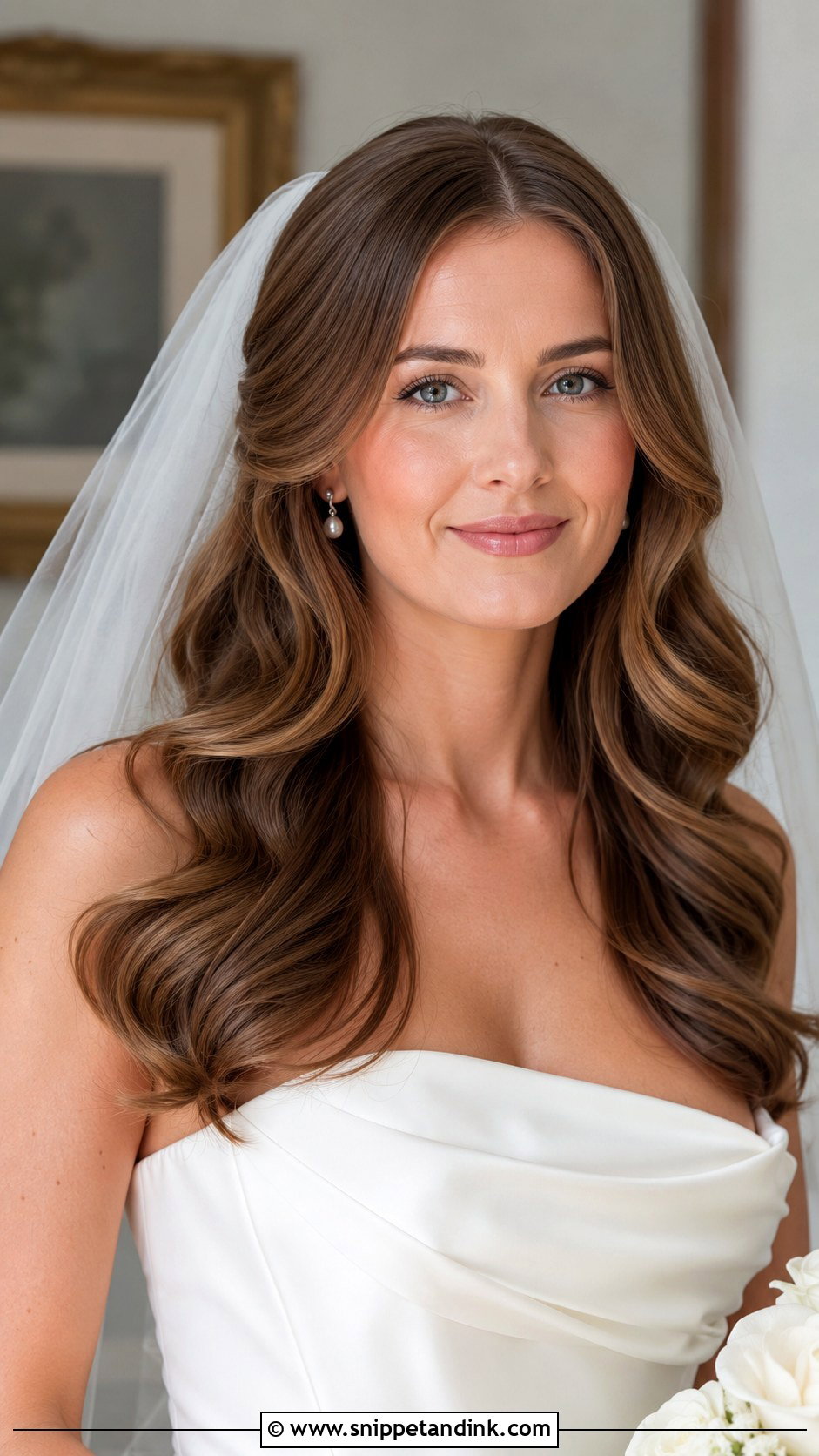
Soft waves are smoother than beach waves, with movement through the mid-lengths and ends rather than at the root. They sit well with strapless, sweetheart and off-the-shoulder dresses, framing the neckline without covering it. A center part looks modern; a side part gives more lift. Now the honest part. If your hair drops a curl by lunchtime on an ordinary day, it will do the same at your wedding. I curl in smaller sections, pin each curl while it cools so it sets, and brush out only at the very end. If your hair is fine, raise extensions and setting spray at the trial.
11. Bridal Curly Updo
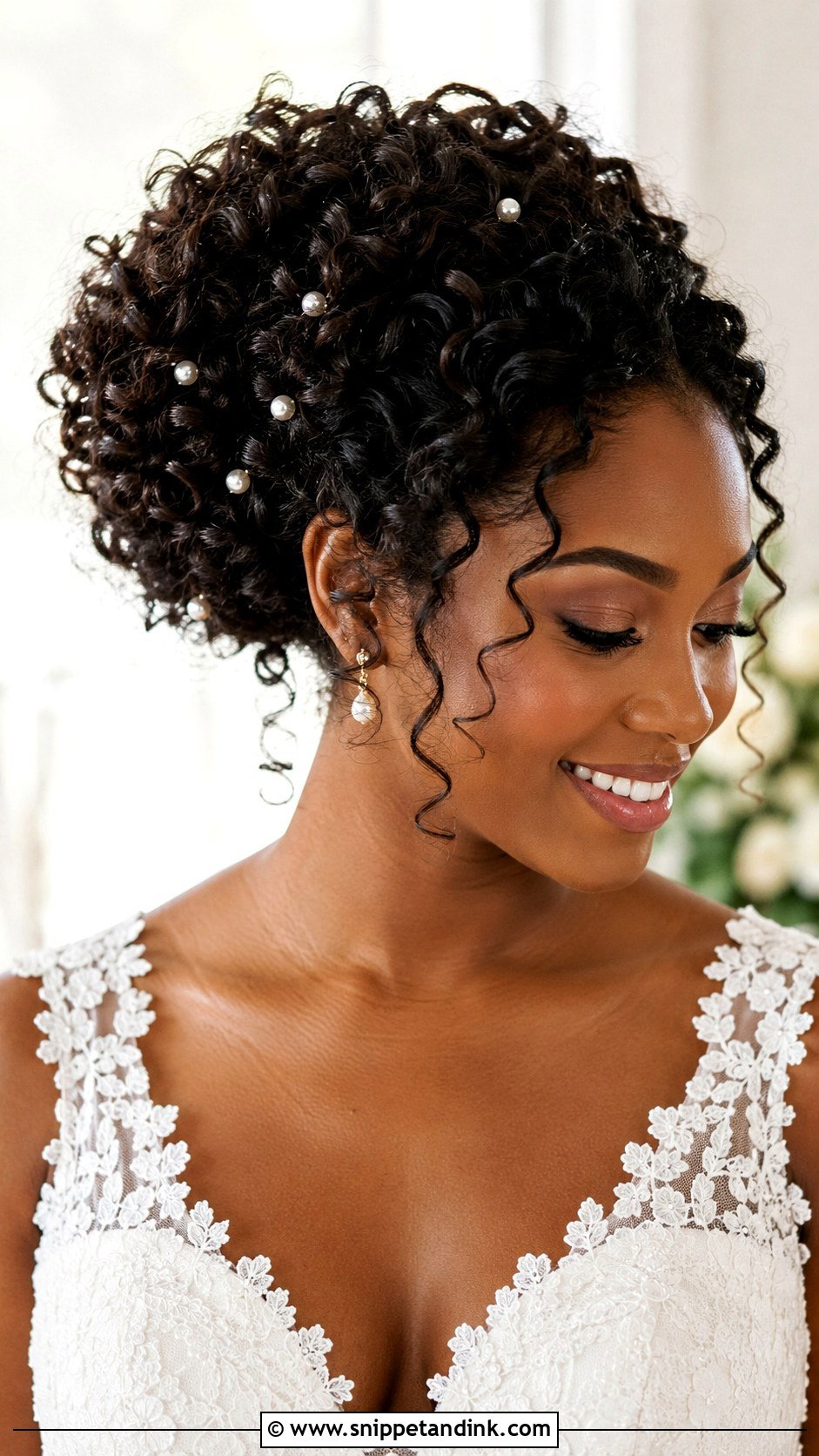
A curly updo uses your natural curl pattern as the decoration rather than brushing it into a smooth form. Prep starts days earlier: I ask brides to keep their usual wash routine and not to try a new product that week, because curls react to any change. On the day, I gather and pin the curls into a low bun, a high cluster or a soft crown while touching the curl clumps as little as I can, since handling breaks them into frizz. Small pins and flowers sit nicely in the gaps. If a veil goes in, I place it low so the comb doesn’t flatten the top curls.
12. Bridal Crown Braid
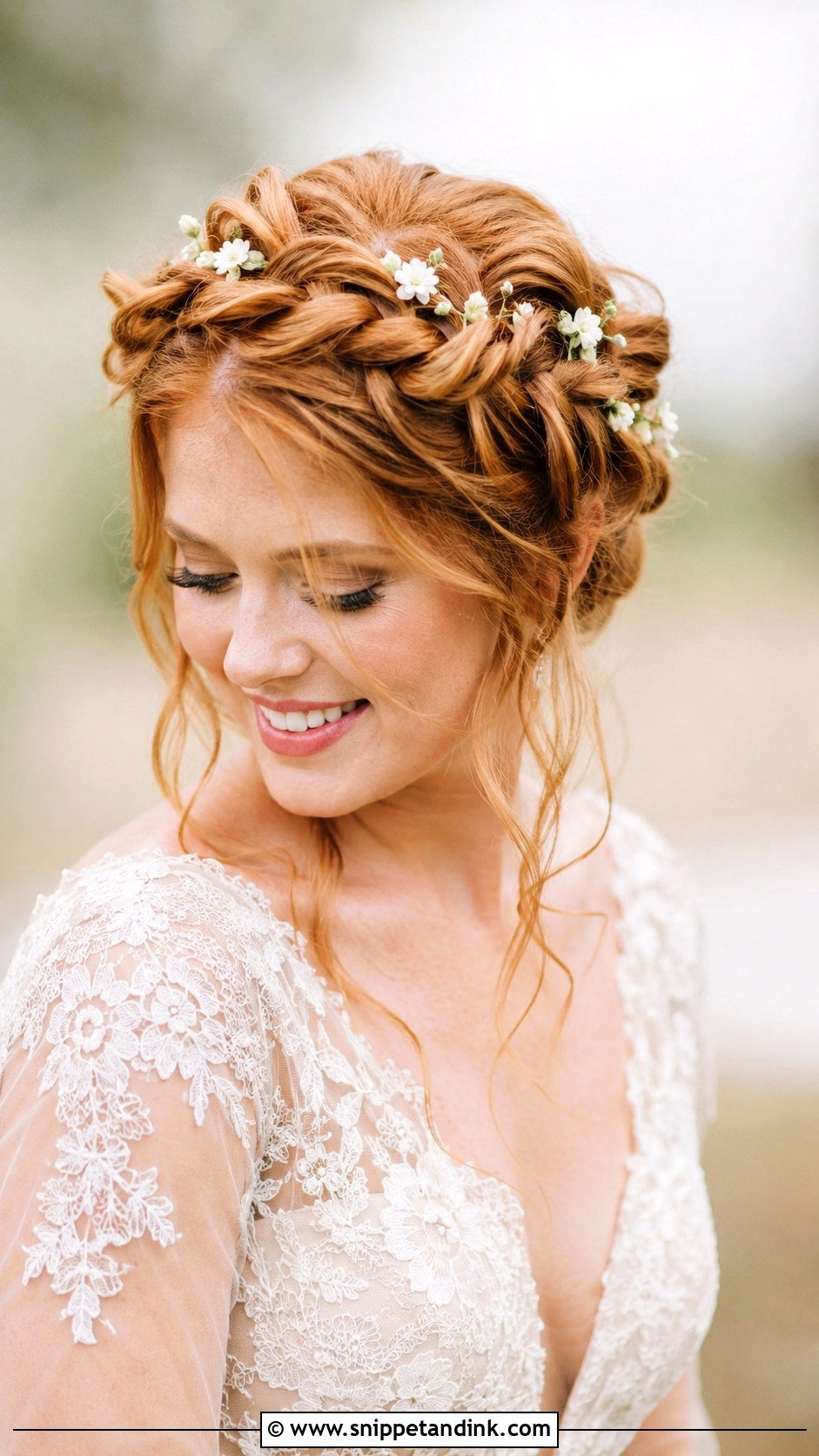
A crown braid wraps around the head like a halo, keeping hair off the face and the neckline fully on show. It’s a strong option for outdoor weddings, garden ceremonies and boho dresses, and wind barely troubles it. Keep it neat, or pull it apart for fullness. The real limit is length: the braid has to travel the full circle, so shoulder-length hair usually needs a clip-in piece braided in. Tiny blooms or a simple veil fixed at the back finish it off. I avoid heavy combs here because they can tilt the braid off center.
13. Bridal Side Swept Curls
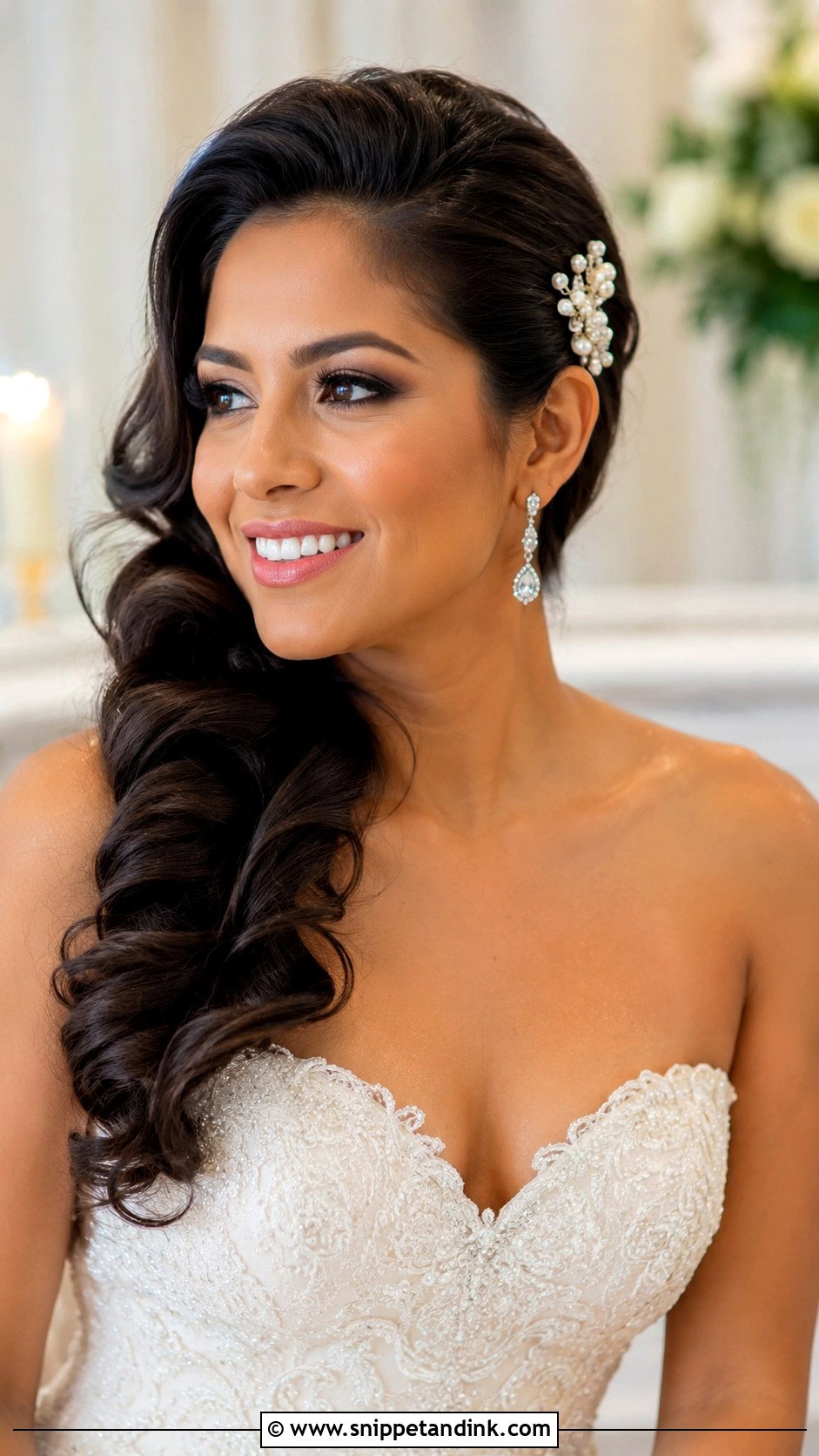
Side swept curls give you the glamour of hair down, with one side pinned back so the curls fall over a single shoulder. In portraits that diagonal pulls the eye to the face and to the earring on the bare side. One-shoulder gowns, strapless dresses and vintage looks suit it most. The weak point is the pinned side. I cross pins in an X behind the ear and hide them under a comb or a few pearls, because one straight pin gives way after a round of hugs. Ask for enough hold underneath so the curls don’t drift toward your back as the night goes on.
14. Bridal High Bun
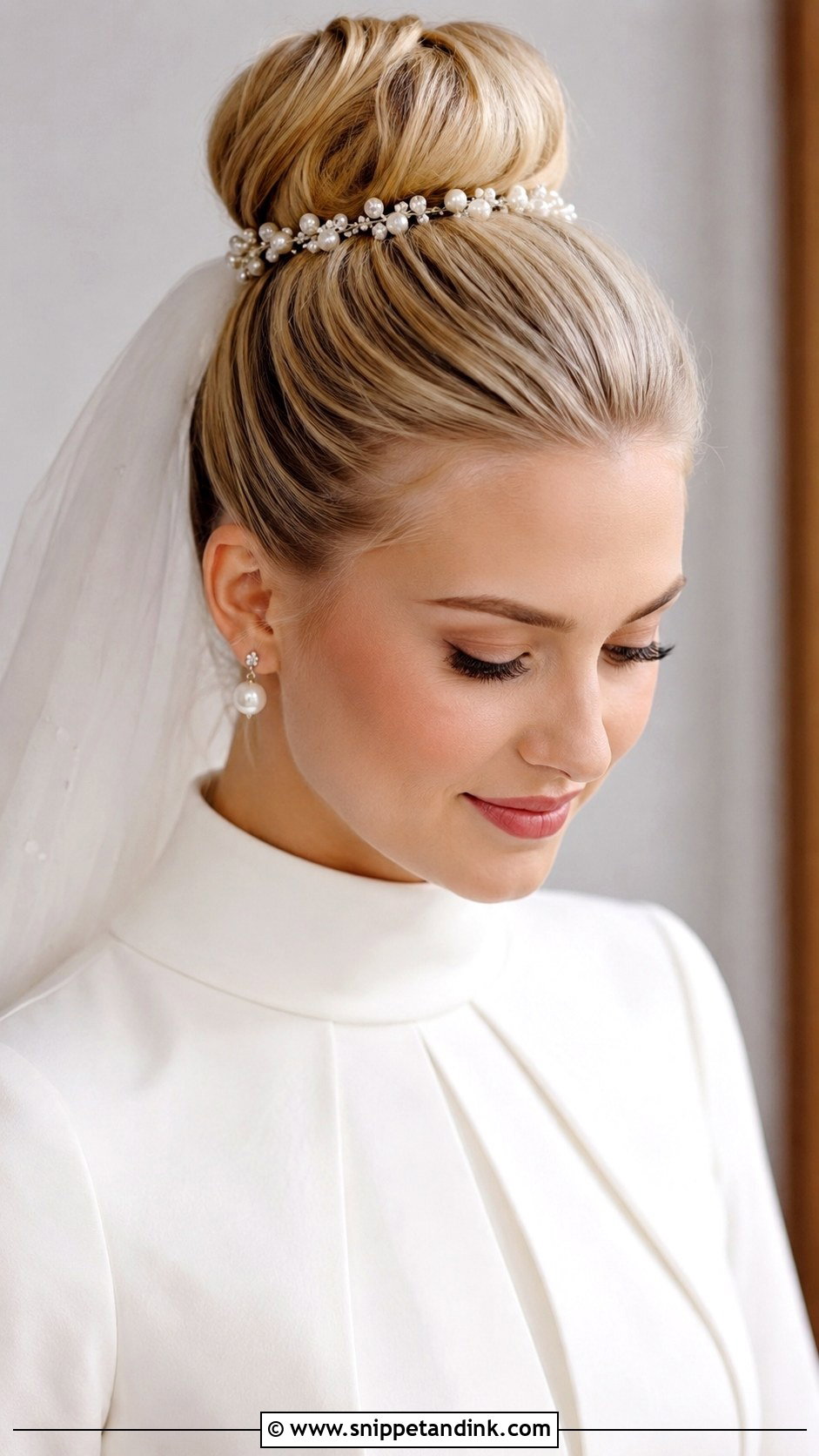
A high bun lifts everything: the face, the neckline and the whole silhouette. That ballerina-inspired shape keeps every strand controlled, which makes it a sensible pick for formal weddings and hot days. It balances cathedral veils, high necklines and big skirts, because the height gives the eye somewhere to land above all that fabric. On fine hair I build it over a doughnut or padding; otherwise the bun ends up small for the head. Keep the finish smooth but not hard and shiny, since a helmet look can age a face in photos.
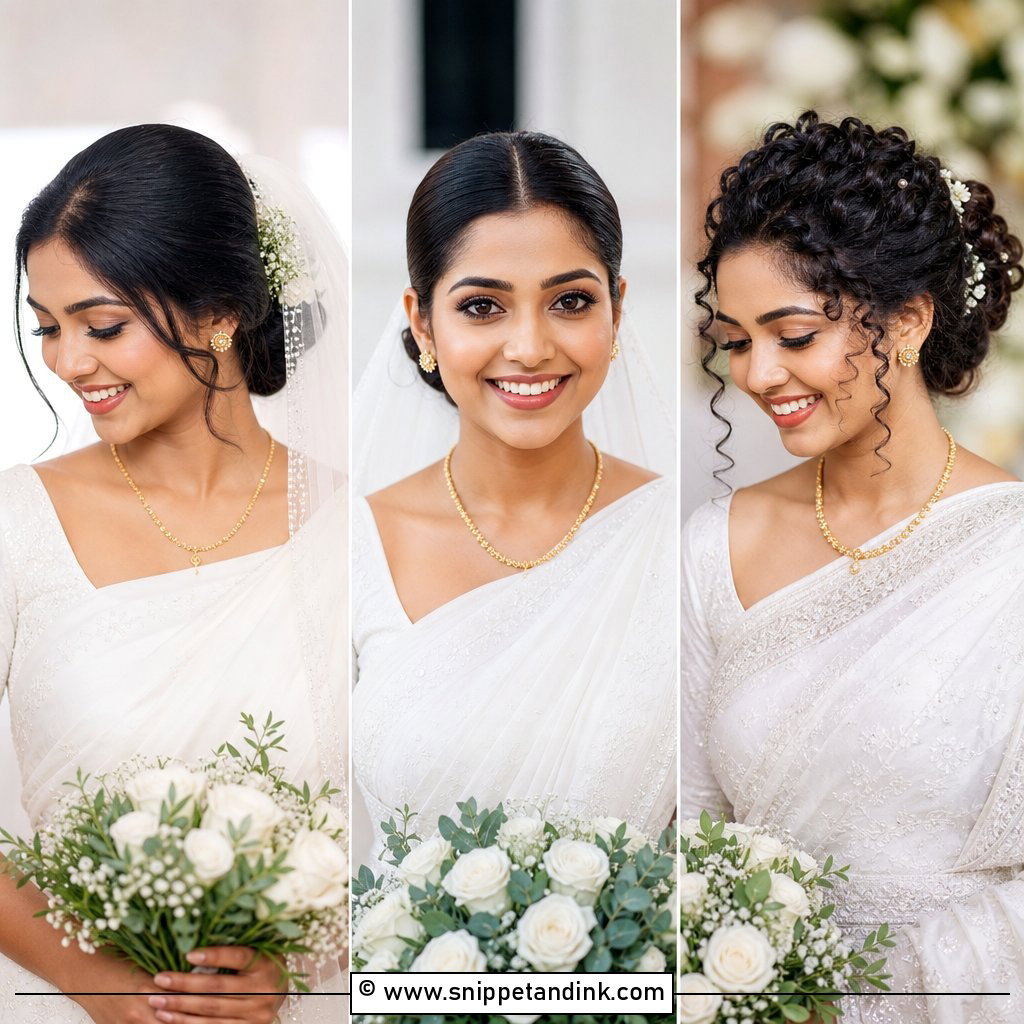

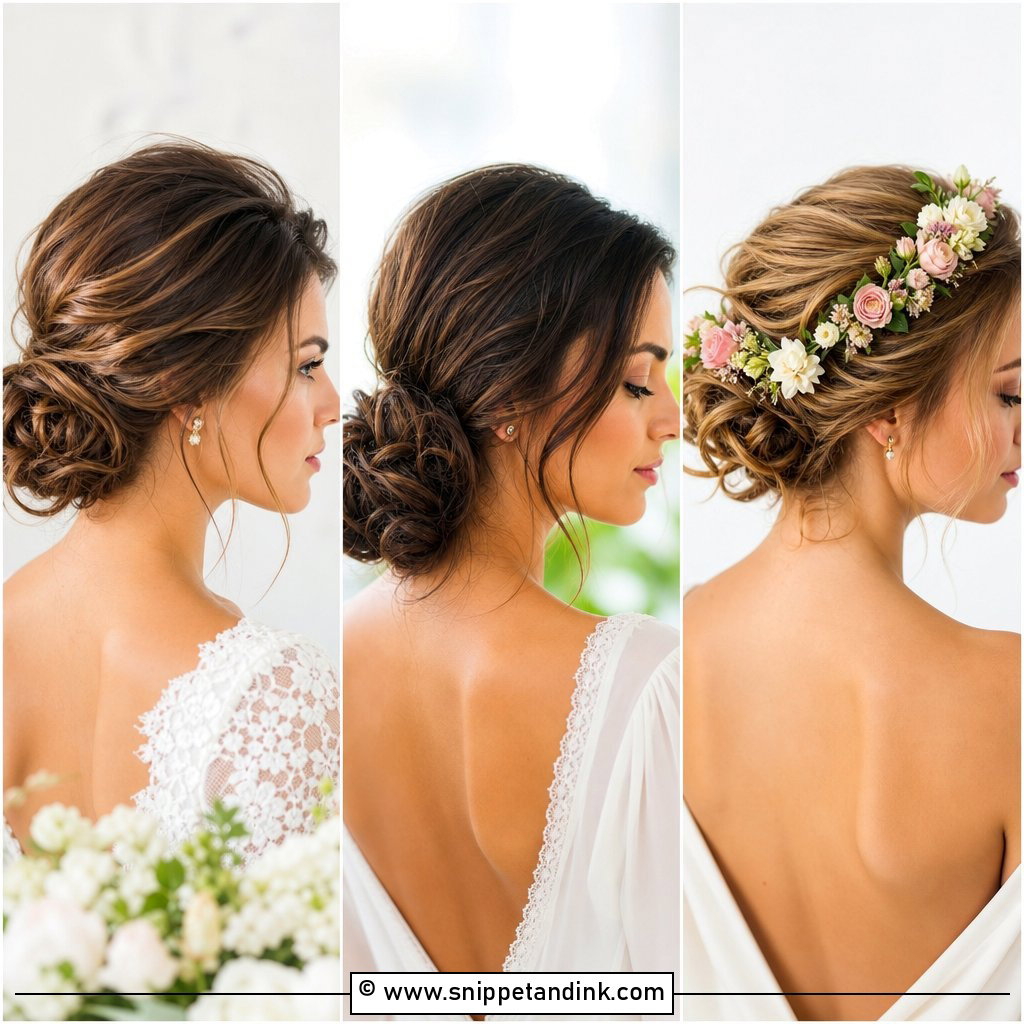
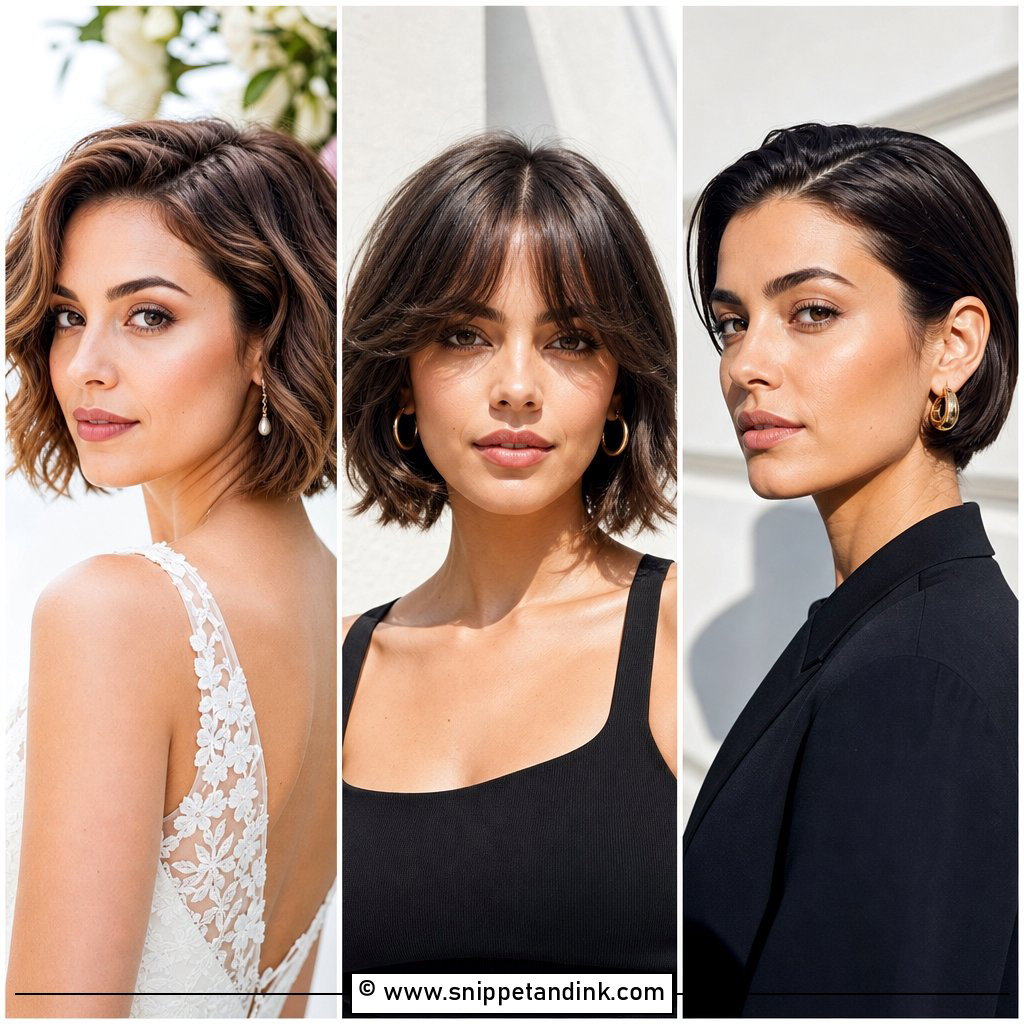
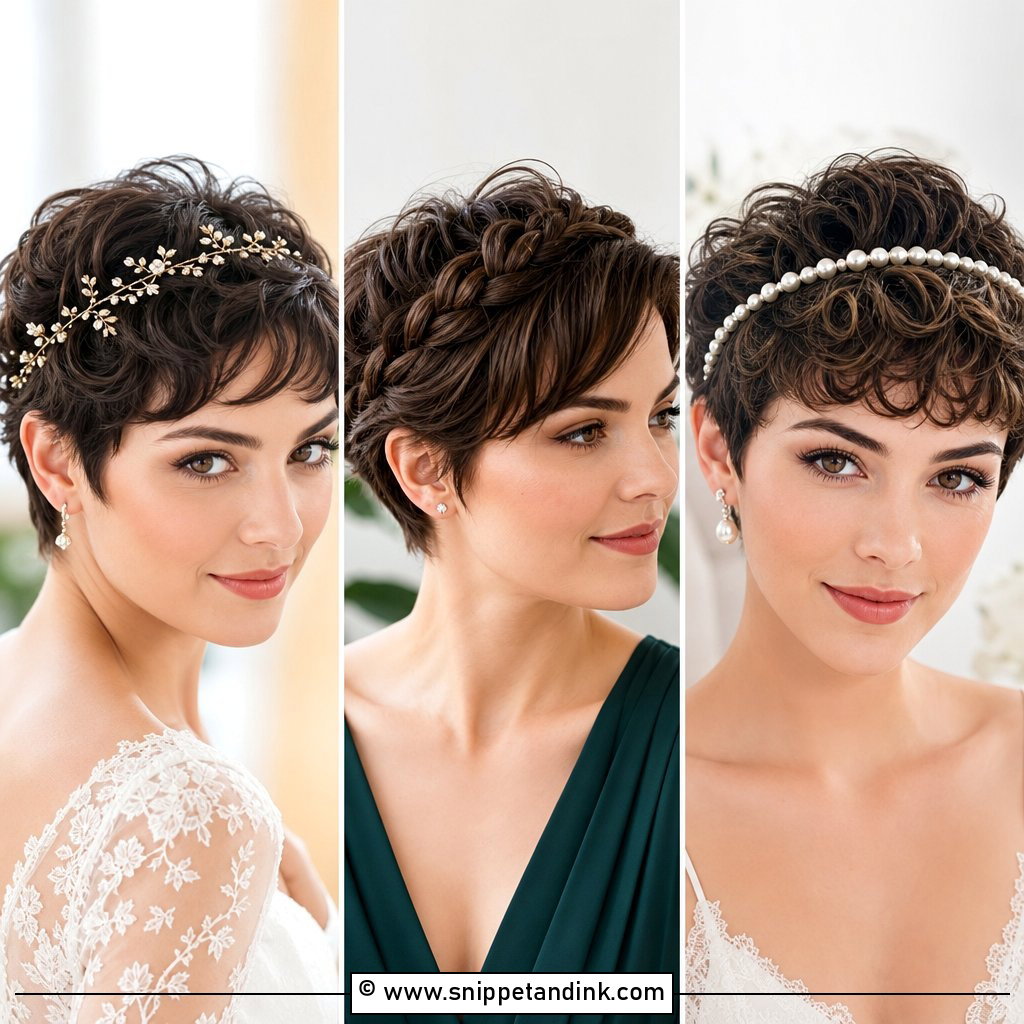
15. Bridal Short Hair Waves
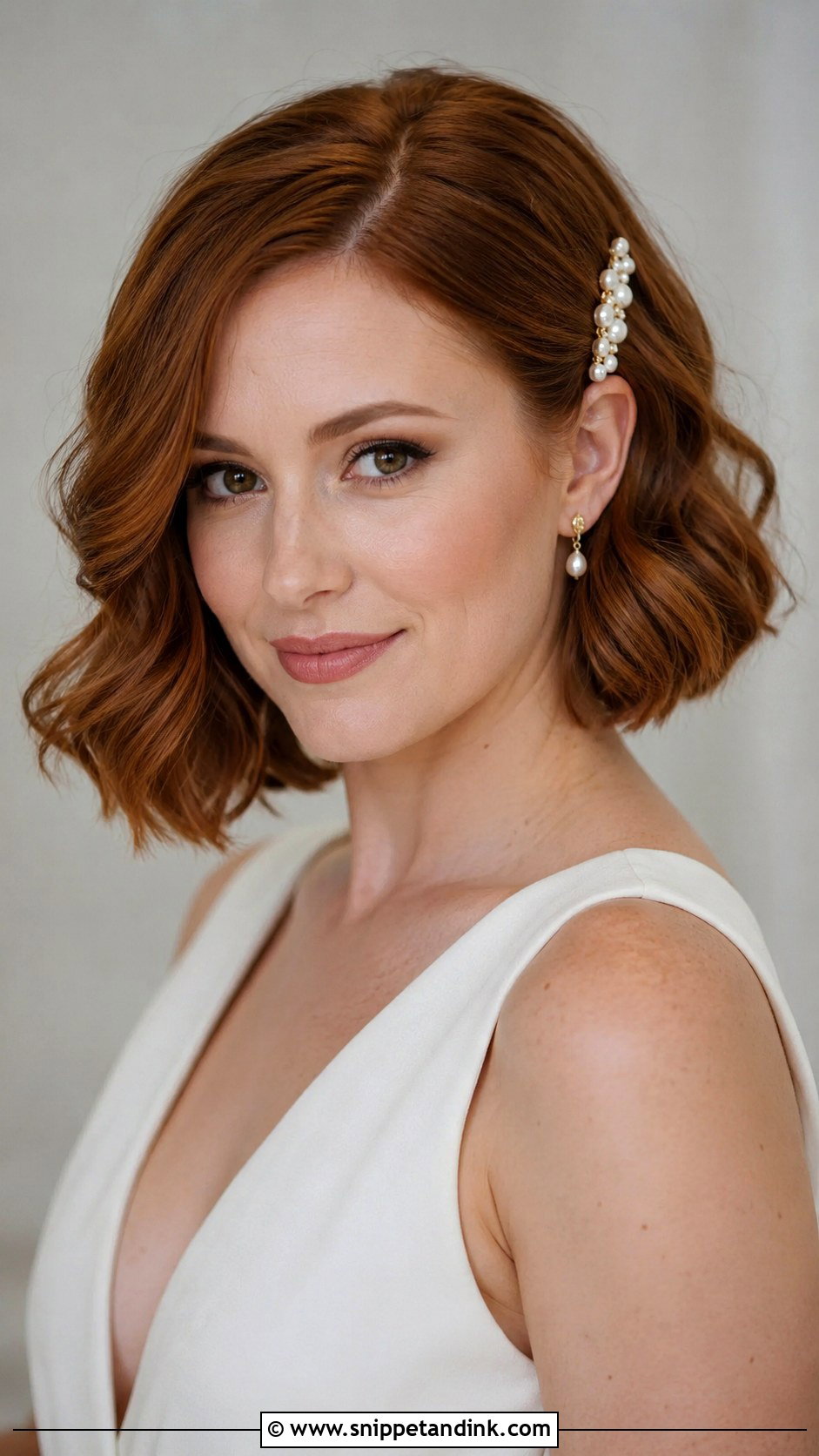
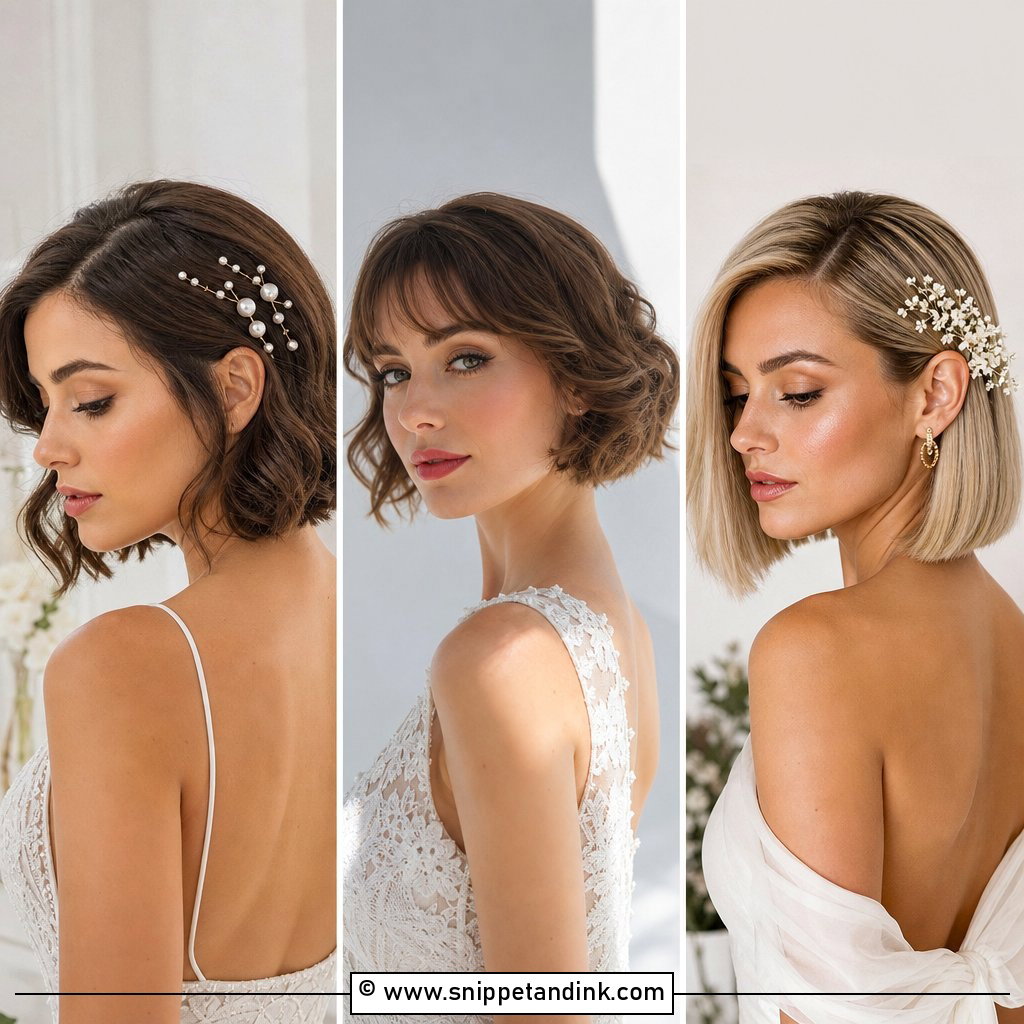
Short hair is often harder to style for a wedding than long hair, simply because there’s less to pin. With a bob, lob or crop, the goal is texture that looks deliberate: polished bends, a glossy finish and shaping around the face. I use a smaller curling iron than I would on long hair, since a big barrel just flips short ends outward. A side part adds glamour; a center part feels cleaner. Accessories carry a lot here, from pearl clips or a slim headband to a small comb or a birdcage veil. Book your last trim two to three weeks out, not the day before, so the cut has time to settle.
How Each of These Holds Up by Hour Nine
Every style above looks right as it leaves my chair. The difference shows after the ceremony, the photo walk, the hugging line and a few songs. Here’s how they tend to age over a long day.
Barely moves
Sleek buns, high buns, French twists and braided updos are the sturdiest. Braids lock hair in place, so wind and humidity do very little to them. What usually fades is the shine on smooth sections, and a drop of serum rubbed between your fingertips brings it back.
Softens, often for the better
Textured updos, chignons, half-up styles and the crown braid relax as the day goes on, which tends to suit the evening photos. Watch the veil comb, though. It pulls on whatever section it’s anchored to, and once the veil comes off I’d re-set a pin or two.
Needs a plan B
Hair worn down drops fastest, especially Hollywood waves, soft waves and side swept curls. Straight or fine hair can lose half its bend by the reception, and humid or coastal venues speed that up. If curls fall at your trial, they’ll fall on the day. I’d pin-set the curls, consider clip-ins for weight, and agree on a quick switch to half-up or a ponytail before the dancing starts.
The bathroom kit
Hand a bridesmaid bobby pins in your shade, a travel hairspray, a tail comb and two clear elastics. Wash your hair the day before rather than that morning unless your stylist says otherwise, and skip deep conditioners and new color in the final week. Most hair emergencies I see come from slippery, freshly treated hair, and most can be fixed in two minutes with that little kit.
Your Trial Works Better With a Dealbreaker
The right style is the one your dress, your venue, your hair and your patience can all live with. Low buns and chignons give structure that won’t budge. Waves suit you if hair down feels most like you. Half-up buys movement with a safety net, while ponytails, braids, French twists and curly updos bring personality. Bring two or three saved photos to your trial, plus one thing you know you can’t stand, like tight pins or hair on your neck. That single dislike tells me more than any photo, and it lets me adjust the picture to your actual hair instead of copying an image styled on someone else’s head.
You'll Like These Ideas:



Leave a Reply