
A French twist is hard to get wrong at a wedding. It suits a black-tie ballroom, a garden ceremony and a ten-minute courthouse signing equally well, because the basic shape, a vertical roll tucked along the back of the head, can be built sleek and high or loose and low. Curls, braids, pearls and flowers all sit along that seam without fighting it, and a veil comb has a firm place to grip. Below are fifteen versions with notes on how each is built and who each one suits, plus what I do underneath so the roll is still closed at the last dance.
The Row of Crossed Pins Hidden Under Every Twist
Every version in this list stands or falls on the same thing you never see: the anchor. Before I roll anything, I brush all the hair to one side and set a vertical line of bobby pins crossed in pairs up the centre of the back of the head, from the nape to roughly the crown. That line is a spine. When the hair is folded over it, the roll has something to grip all the way down, instead of hanging off a few pins at the top.
- Prep with texture. Day-old hair or a light texture spray gives grip; freshly washed, silky hair lets the roll unwind.
- Build the spine slightly off centre, toward the side the roll will close on, so the seam ends up in the middle.
- Gather, twist and fold the hair over the spine, tucking the ends inside the roll rather than leaving them on the surface.
- Pin the seam with long pins pushed in along the fold and angled into the spine, then a short row of small pins to close any gaps.
- Mist with spray last. If I spray before pinning, the hair gets tacky and the roll won’t slide into shape.
Once you know this, it’s easier to talk to your stylist. If a trial twist starts opening at the bottom within an hour, ask about the base, not about more spray.
1. Classic Bridal French Twist
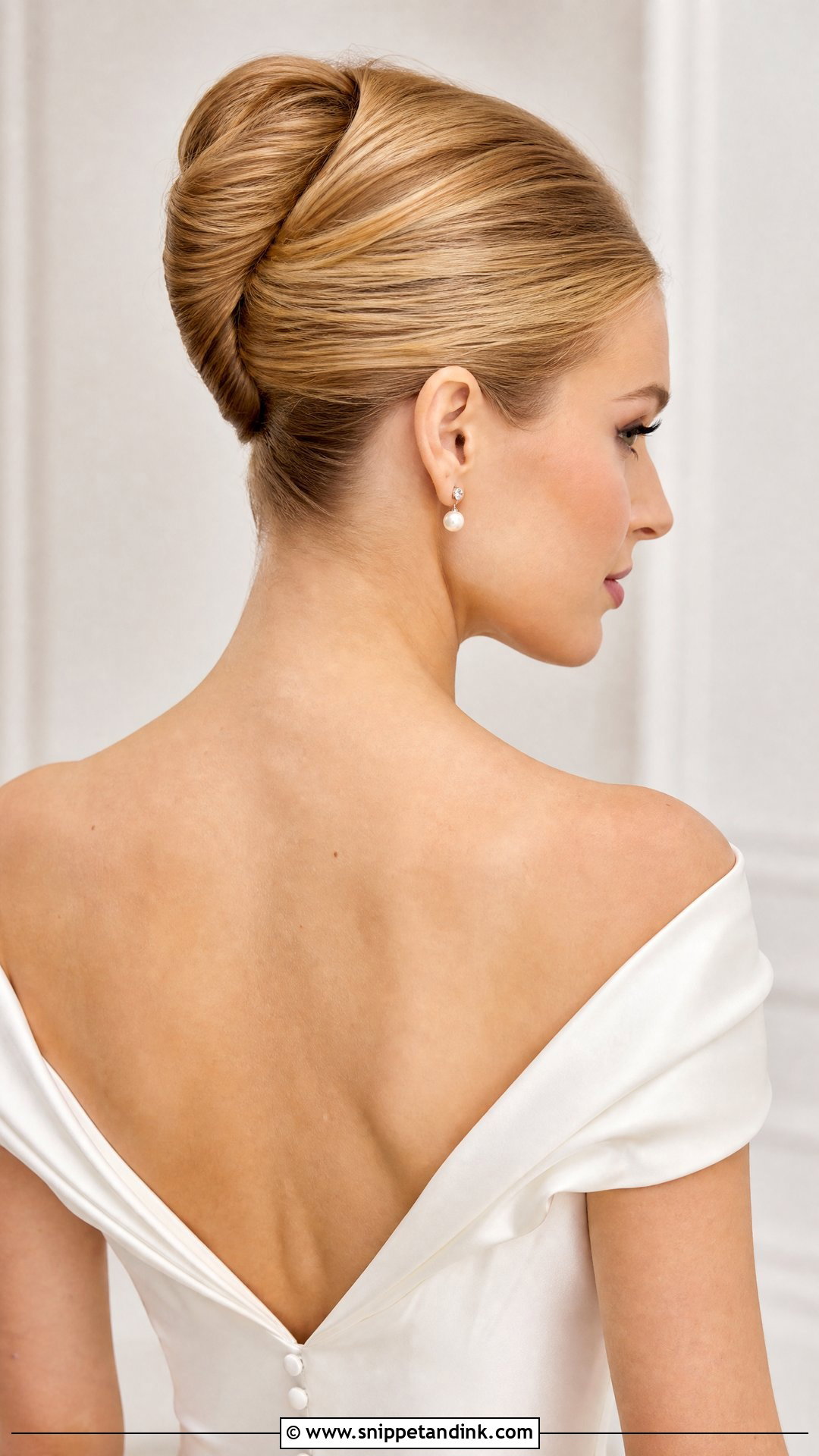
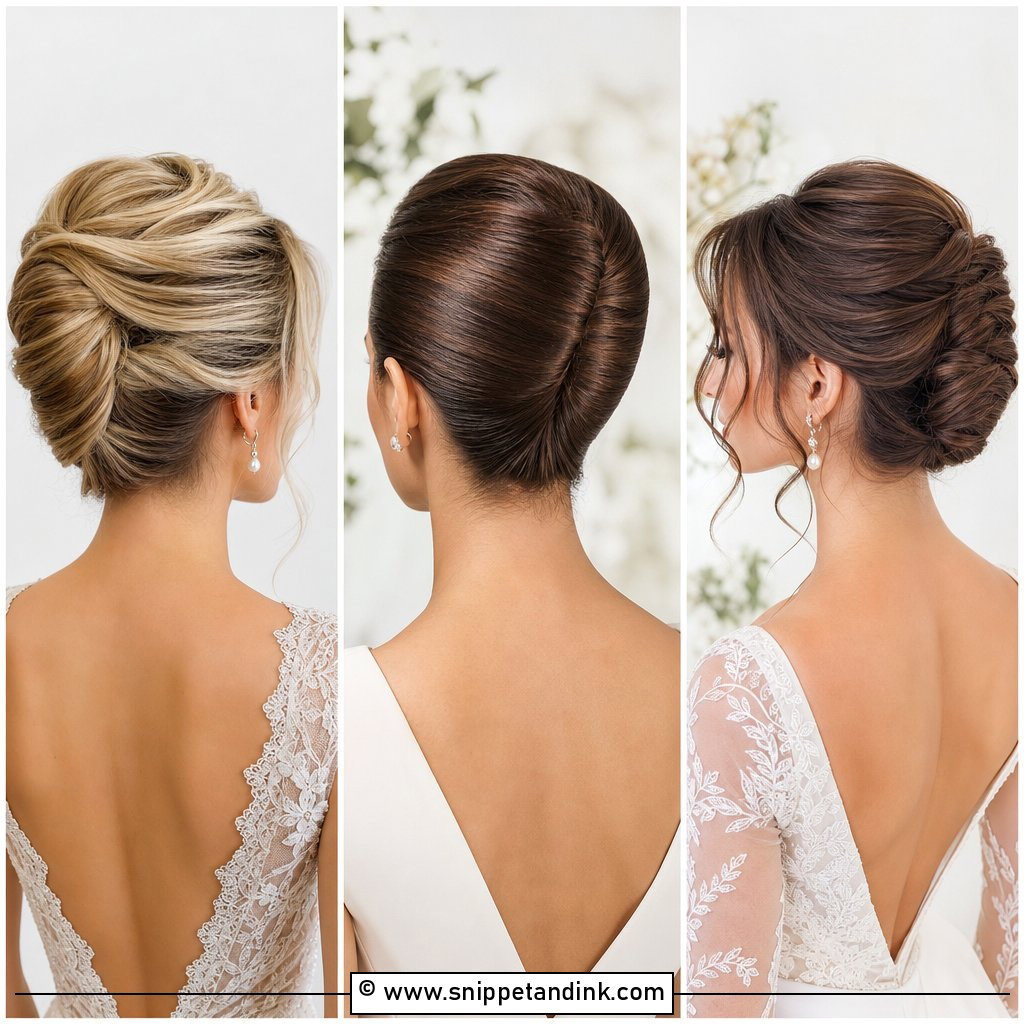
The classic version is the one everything else is measured against. I sweep the hair to one side, set a row of crossed pins up the centre of the back, then roll the hair over them vertically and pin it close to the head. Done properly it shows off the neck, shoulders and neckline, and it pairs naturally with satin, pearl earrings and cathedral veils. The pins should vanish inside the roll. A light shine spray at the end gives polish; heavy spray makes it look stiff, so I keep it to a mist.
2. Soft Bridal French Twist
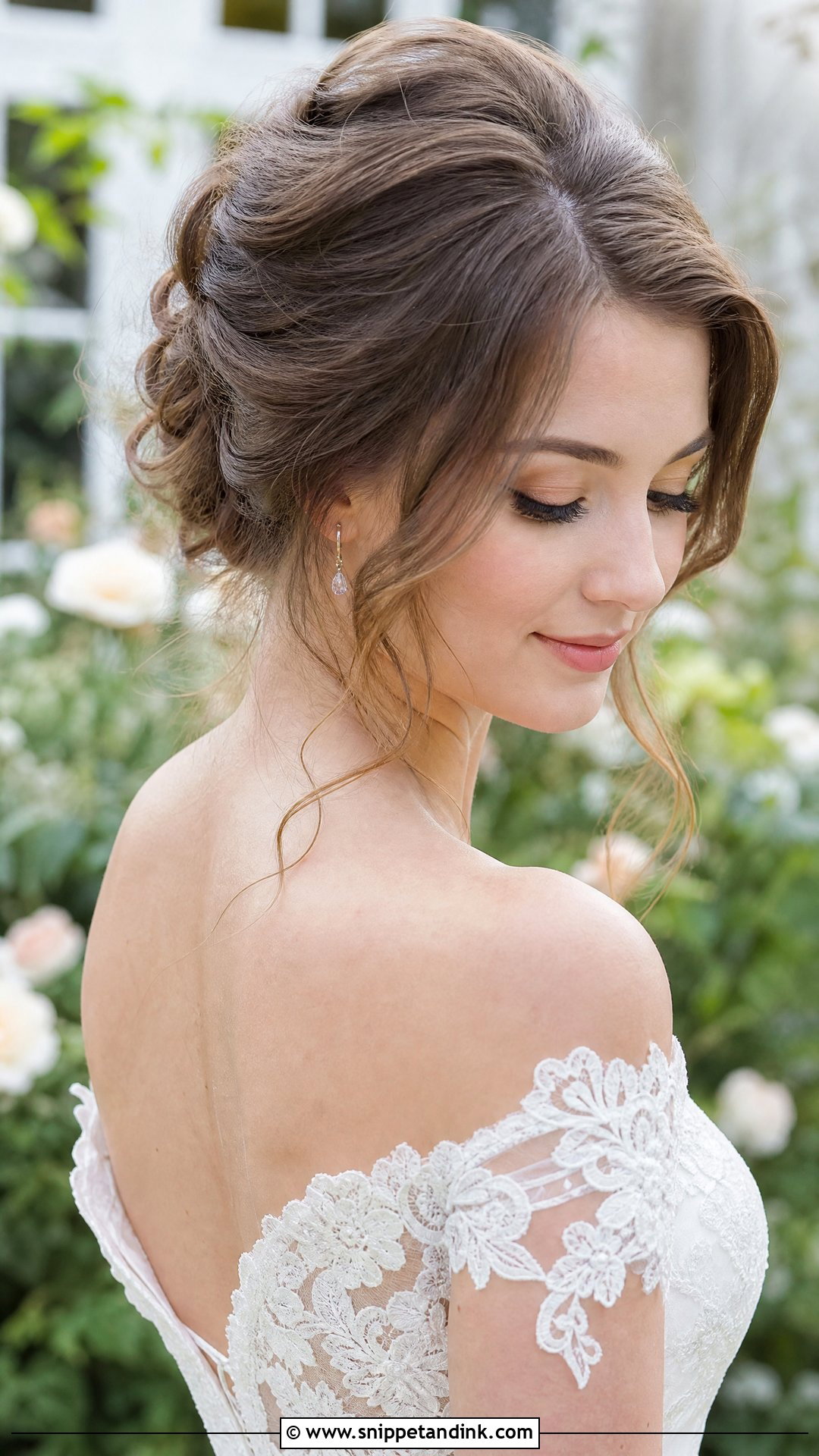
Tight twists can look severe on a soft face, and that’s usually why I suggest this version. Instead of pulling every strand flat, I leave air and a little lift through the crown before rolling, so the shape looks gathered rather than clamped. From the front it reads gentle, which suits strapless, off-the-shoulder and lace gowns. The risk is that softness turns into sagging, so I still pin the base firmly and use small pins high in the roll that hold without crushing the volume. A couple of face-framing pieces finish it.
3. Messy Bridal French Twist
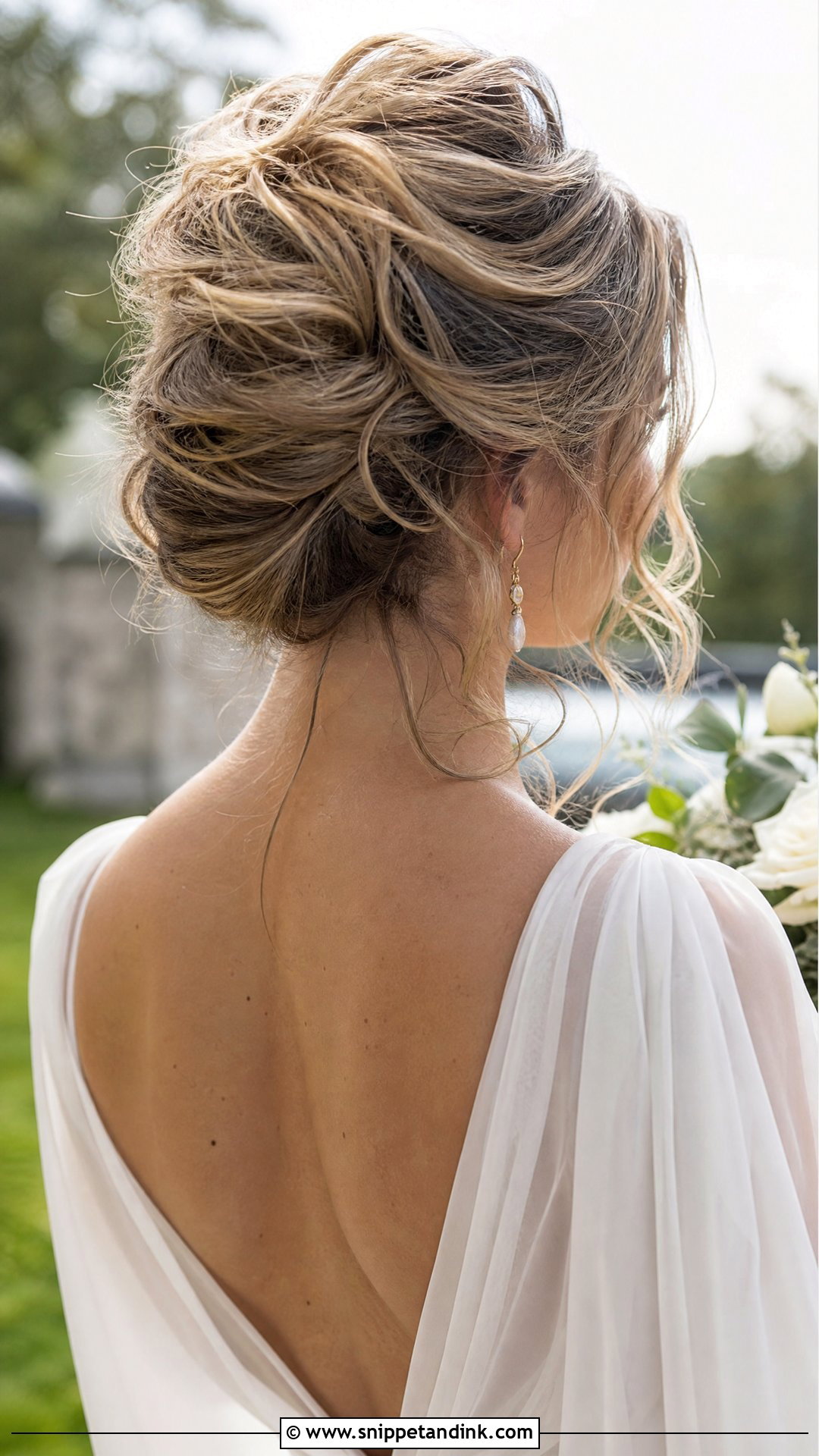
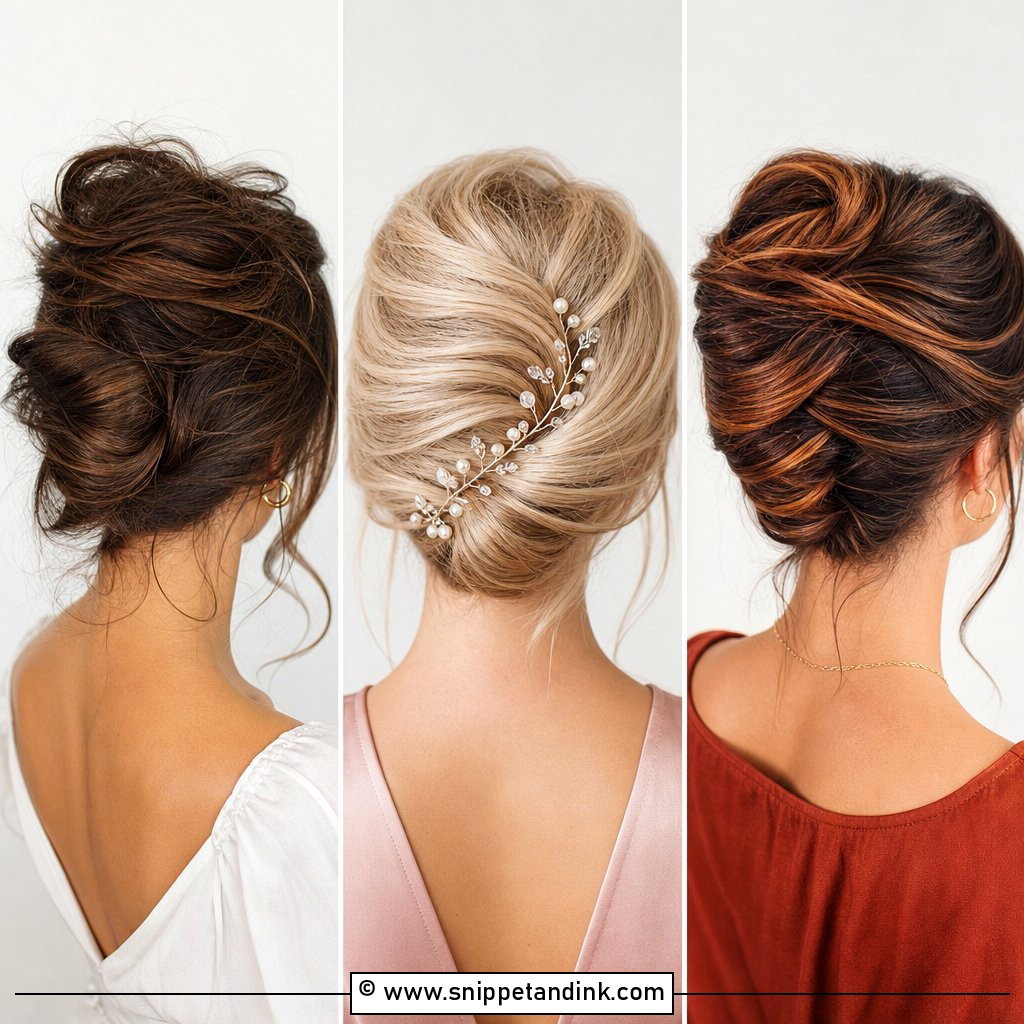
Messy has to be planned. I wave the hair first, pull small sections loose once it’s pinned and leave the roll slightly undone, but the back keeps its structure so nothing actually falls. Outdoor weddings, rustic barns and beach ceremonies are where it makes the most sense, and anywhere a salon-perfect finish would feel out of place. A few curled tendrils around the face soften it further. Keep the earrings and veil simple; the texture is doing the decorating.
4. Low Bridal French Twist
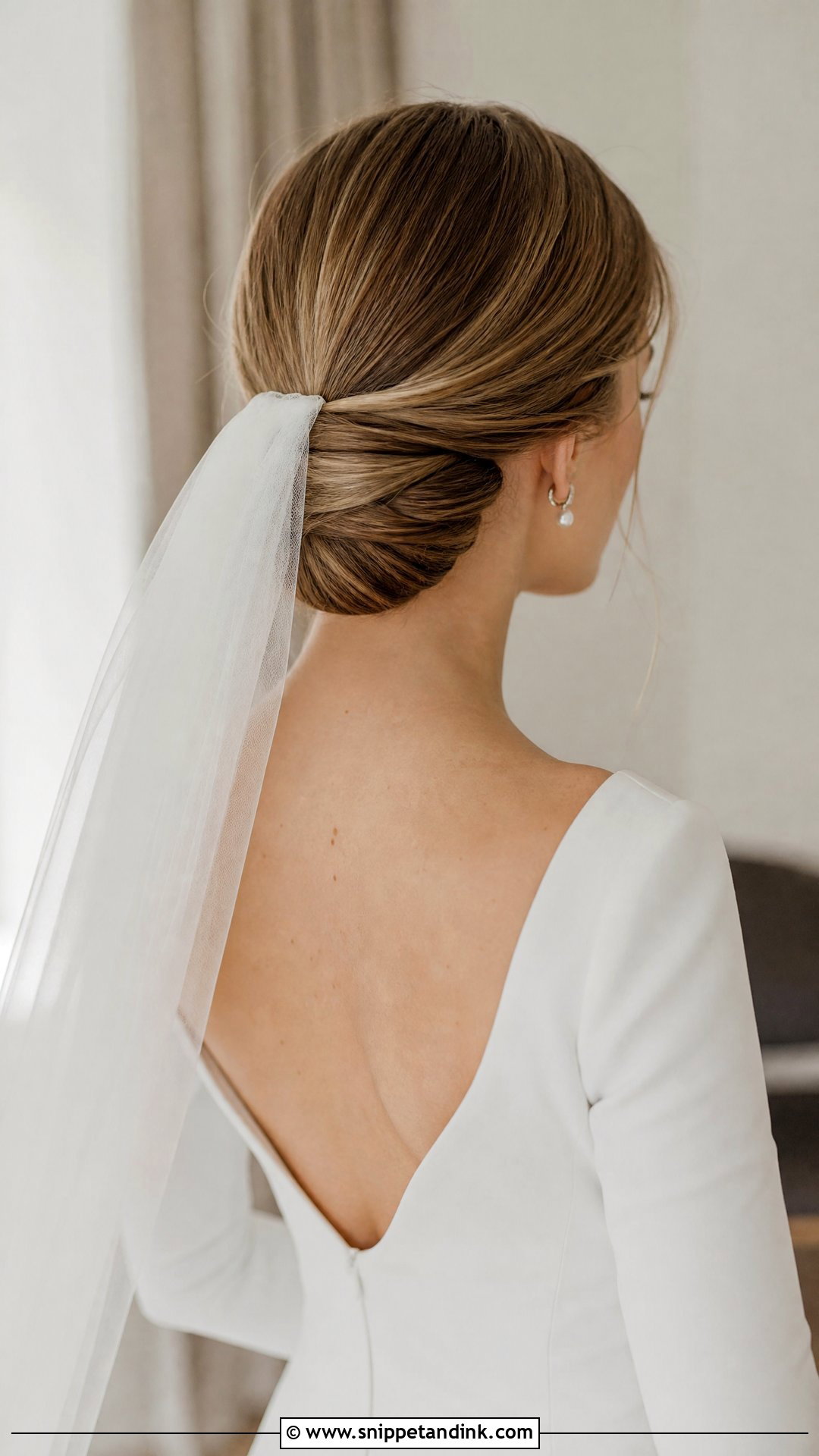
A low twist is the calmest of the lot. Sitting near the nape, it gives a soft profile instead of height and leaves room above it for a veil comb or a decorative pin slid into the roll. I’d suggest this one for long sleeves, minimalist gowns and clean necklines, and for anyone who finds a high style tiring by the evening, because the weight rests low. I add gentle volume at the roots so it doesn’t look flat, then keep the sides smooth. It’s the easiest version to wear from vows to dancing.
5. High Bridal French Twist
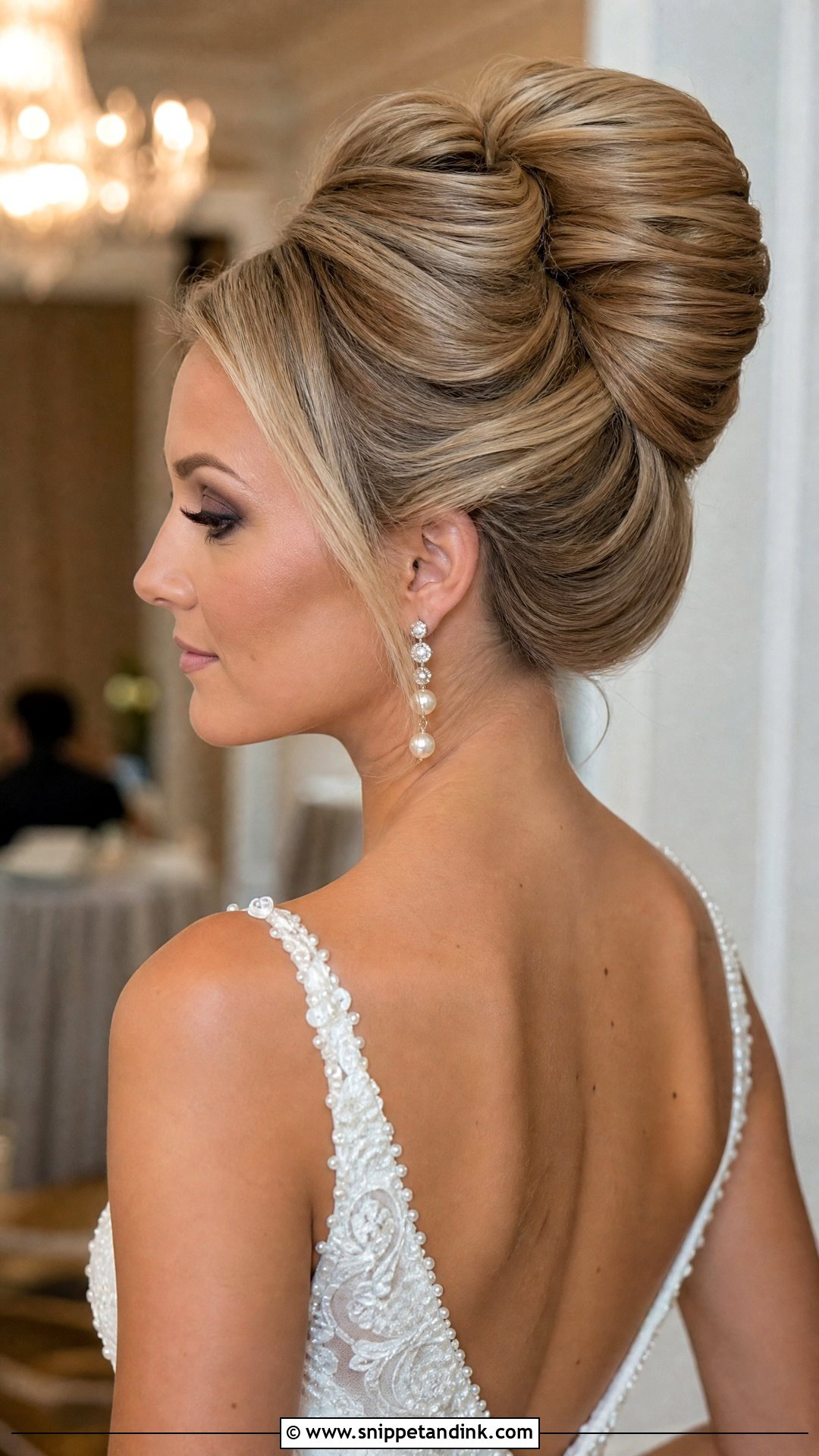
Height changes the mood completely. A high twist sits further up the back of the head, lengthens the neck and looks properly formal, so it suits ballrooms, structured dresses and big earrings. The front can be sleek, softly waved or lifted at the crown, and I decide that by face shape at the trial. Balance is the thing I watch: with the extra height, the sides have to stay neat or the head starts to look top-heavy. A slim crystal comb, pearl pins, or a veil anchored underneath the roll keep it in proportion.
6. Bridal French Twist With Veil
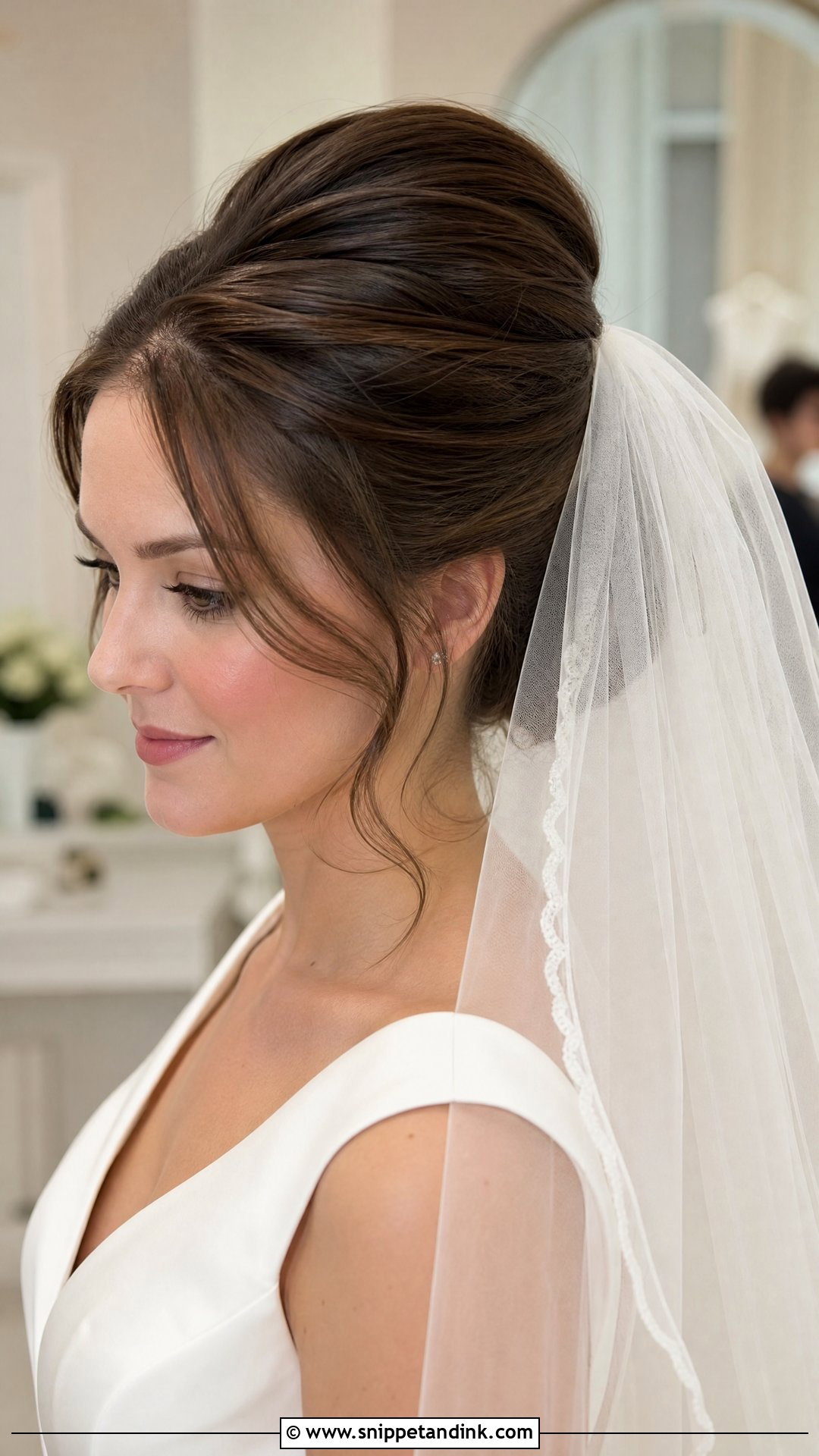
French twists and veils were made for each other, because the roll gives the comb a long, firm seam to slide into. You can place the veil above the twist for a traditional look, tuck it underneath for a cleaner back view, or anchor it at the crown for drama. Fingertip, chapel and cathedral lengths all work if I put a few pins across the comb’s teeth. Please bring the veil to your trial. I want to see how it falls, how much it drags on the roll, and how the twist looks after it comes off.
7. Bridal French Twist With Pearls
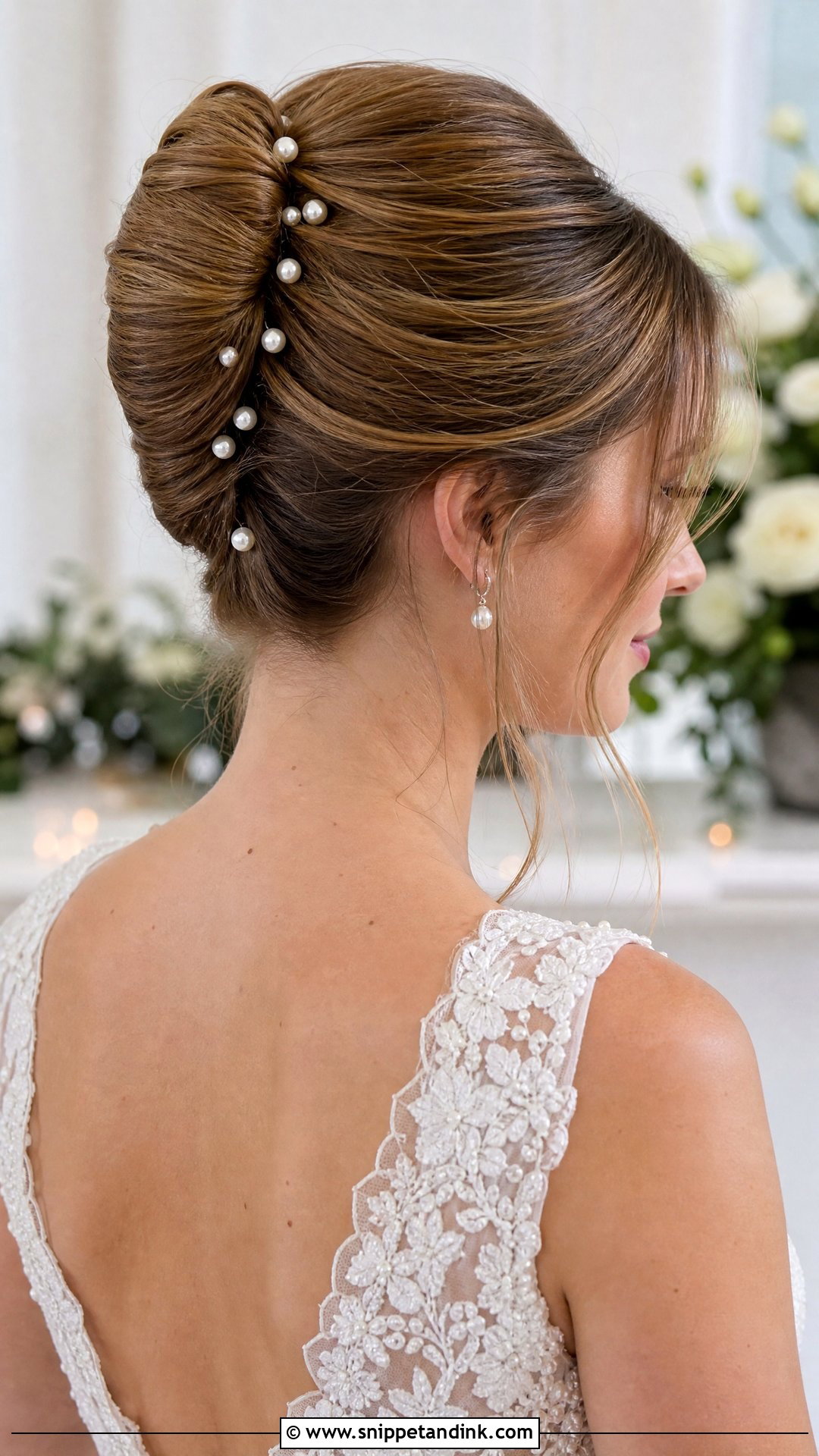
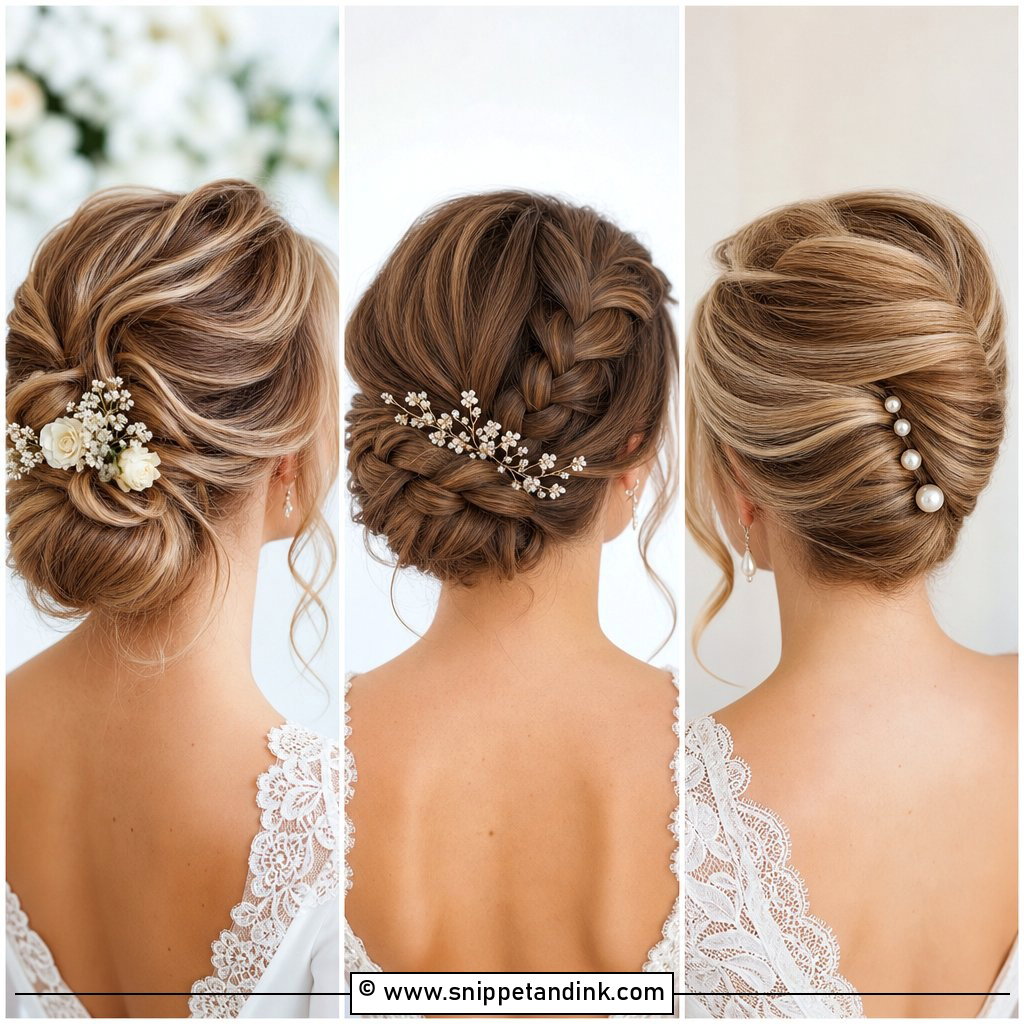
Pearls on a twist work best when they follow the line of the seam rather than being scattered at random. I place small pearl pins along the fold, or a pearl comb just above or beside the roll. Pearl jewellery, lace and ivory details all tie in. The common mistake is too many: past a certain point the updo looks busy and the shape disappears, so I space them and stop early. Keep the hair smooth enough for the pearls to read, and leave a little softness at the front.
8. Bridal French Twist With Flowers
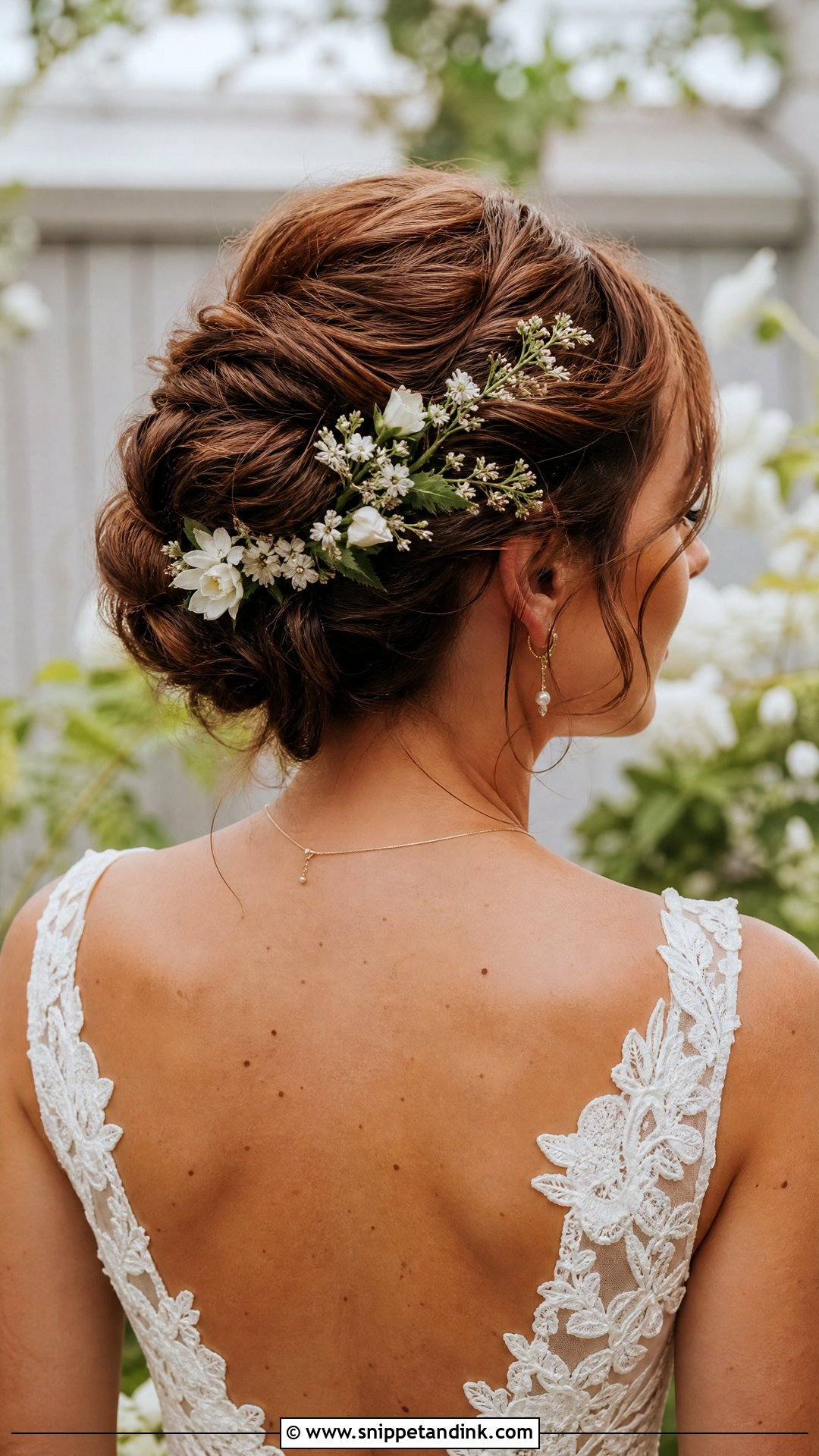
Flowers suit a twist at garden weddings and spring ceremonies, tucked into the side of the roll, at the nape, or set with a little greenery along the seam. They should echo the bouquet without weighing the hair down. Baby’s breath, small roses, orchids and small white blooms are popular because they add detail without hiding the shape. I ask the florist for wired or prepared stems so I can pin them firmly, and for hardy blooms, since delicate ones wilt fast against warm hair. The twist should still be the main shape.
9. Sleek Bridal French Twist
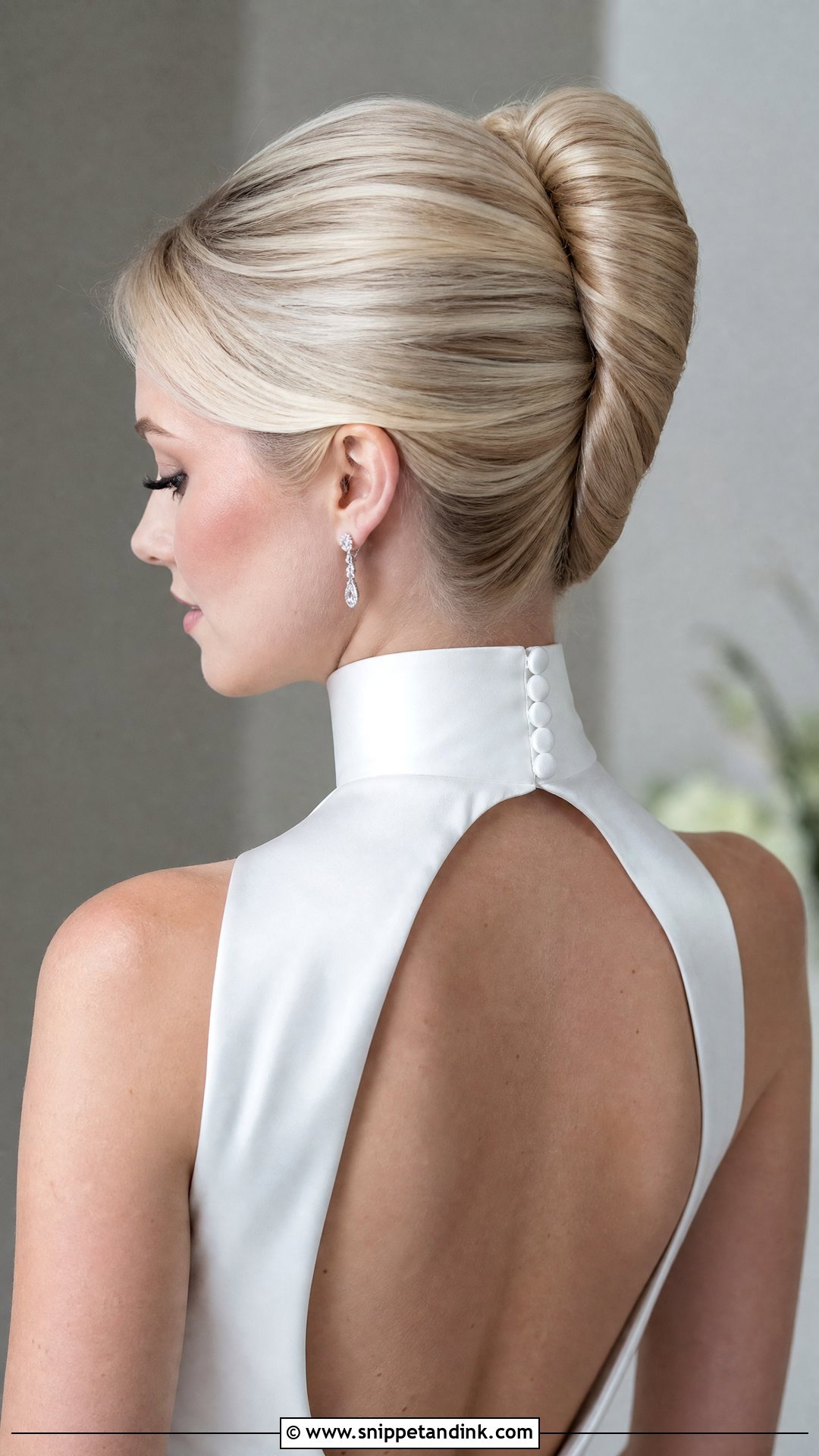
Sleek needs the cleanest prep of any style here. I smooth the hair back with anti-frizz cream and a fine brush, removing flyaways before the roll, then fold it into a sharp, tight twist. It’s my pick for high-neck gowns, minimal dresses, dramatic earrings and strong makeup, and from the side the outline is crystal clear. If completely flat feels harsh, I lift the crown slightly. Strong but flexible pins and a glossy finishing spray hold it; humidity is the enemy, so I’d keep you indoors until the ceremony if the day is muggy.
10. Textured Bridal French Twist
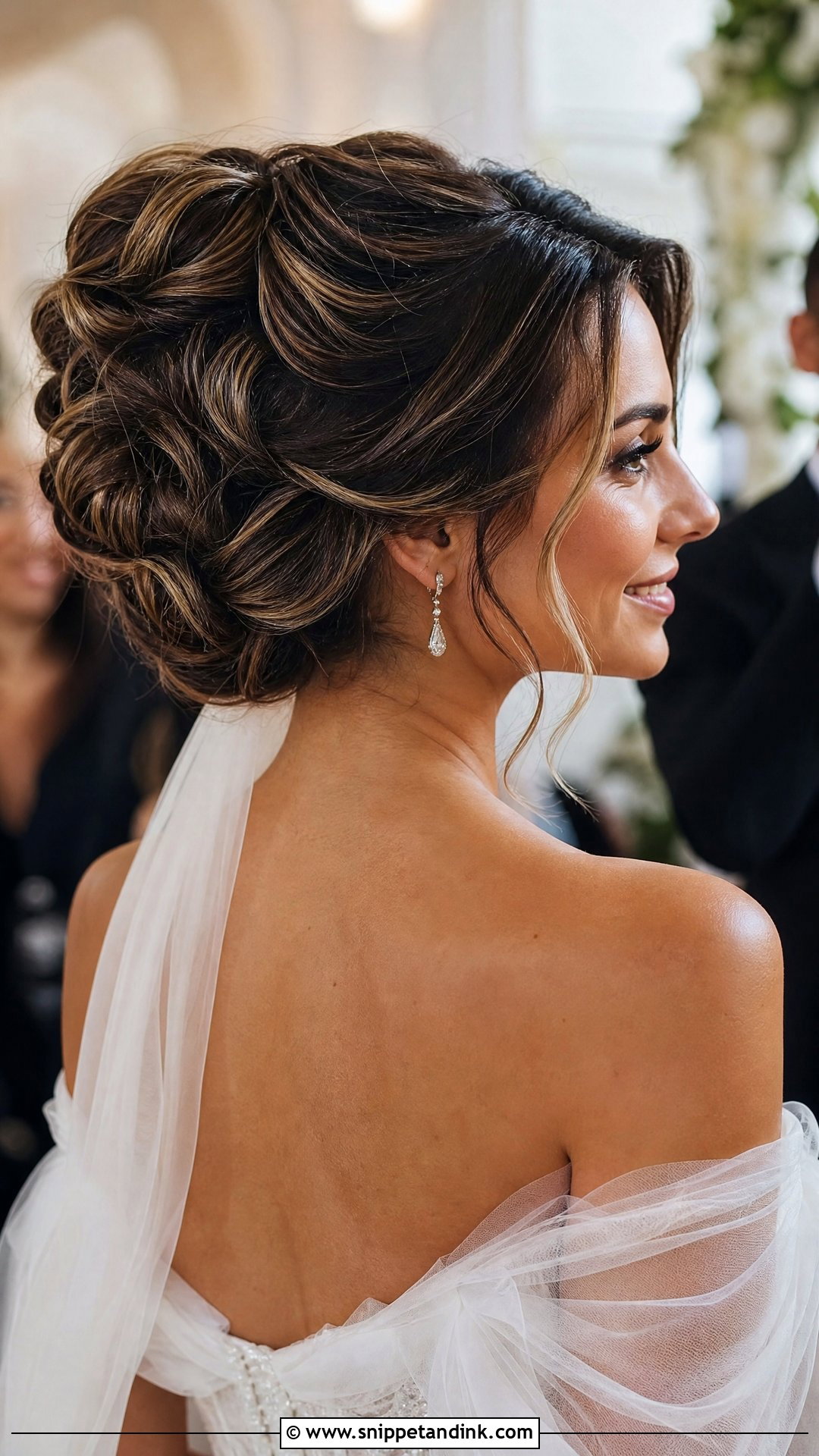
Texture gives a twist depth. I wave or loosely curl the hair first, then pin it into the roll so the movement stays visible all the way down. Highlights and balayage show up well here because the bends catch different tones. It also suits medium to thick hair that needs structure without looking bulky, since the texture hides the extra mass. The front can be parted, swept back or framed with loose pieces. It sits neatly between sleek and messy, which is where a lot of brides land.
11. Curly Bridal French Twist
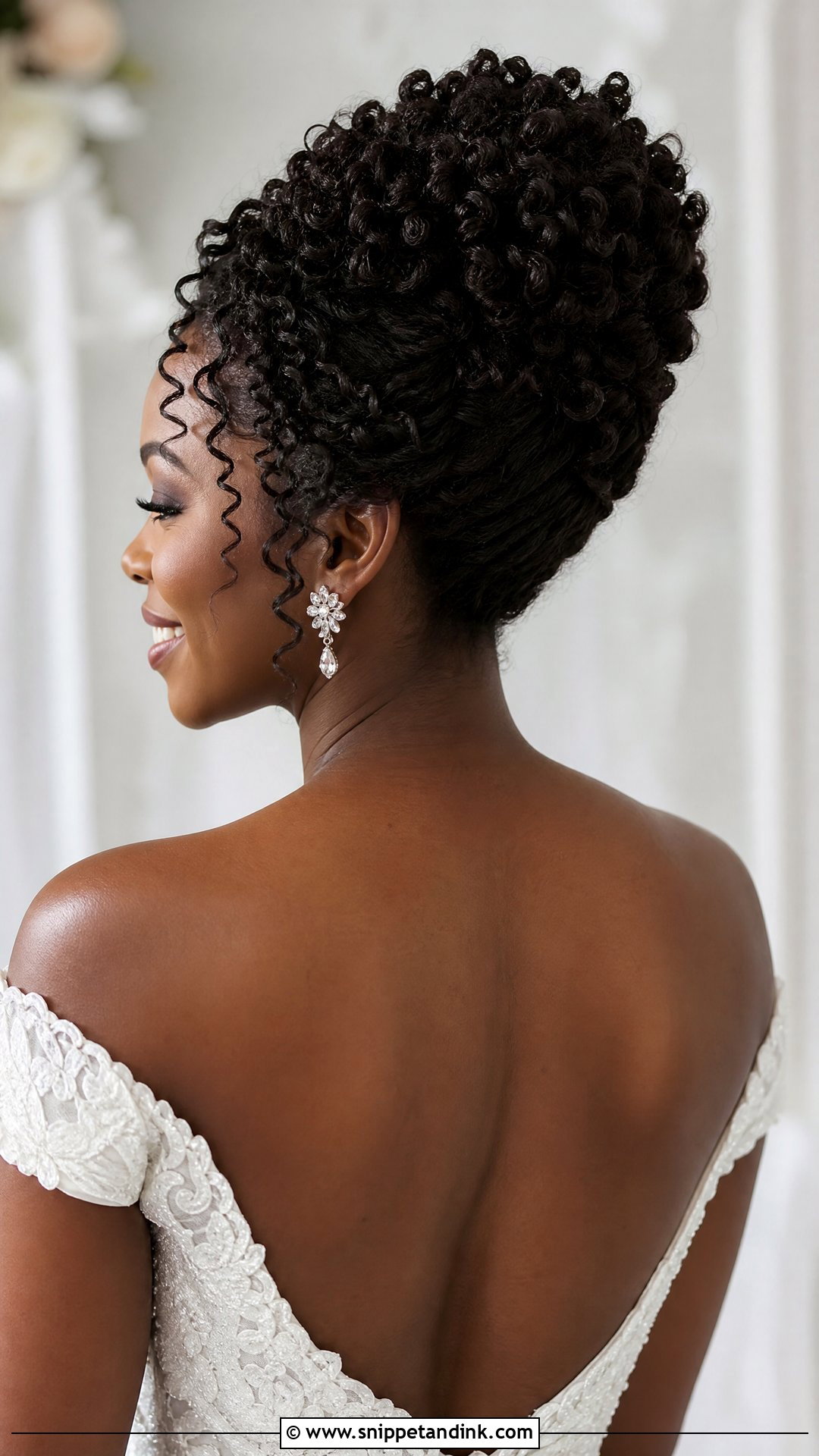
Curly and coily hair can carry a French twist without being straightened first, and I’d always try that route before reaching for heat. The curls are gathered into a vertical roll with their definition left showing along the seam and crown. Prep is everything: hydrate the hair in the days before, and wear your usual curl routine to the trial so I see your real pattern. I pin at the base of each section rather than through the curls, so the shape doesn’t frizz. A few curls left near the face finish it.
12. Short Hair Bridal French Twist
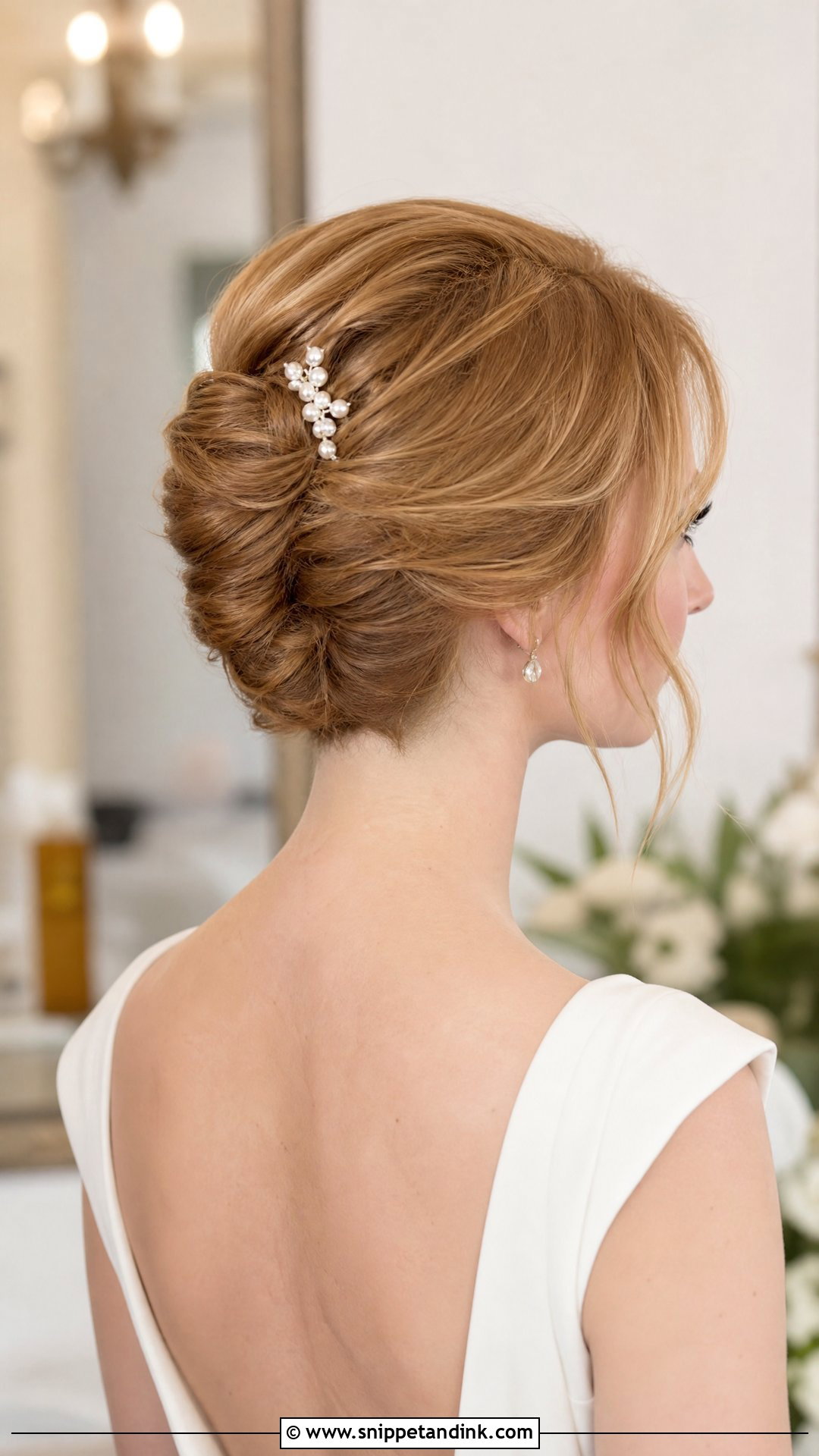
Short hair can take a twist if there’s enough length at the back to gather and pin. It will be more compact than a long-hair roll, and that’s fine. I use light backcombing for grip and sometimes a small hidden pad so the roll looks fuller, then pin strategically along the fold. Bob and shoulder length are about the minimum. If the nape layers are much shorter than the rest, a pearl pin or small comb covers where the ends finish. Keep the front polished or softly waved to match your dress.
13. Side Part Bridal French Twist
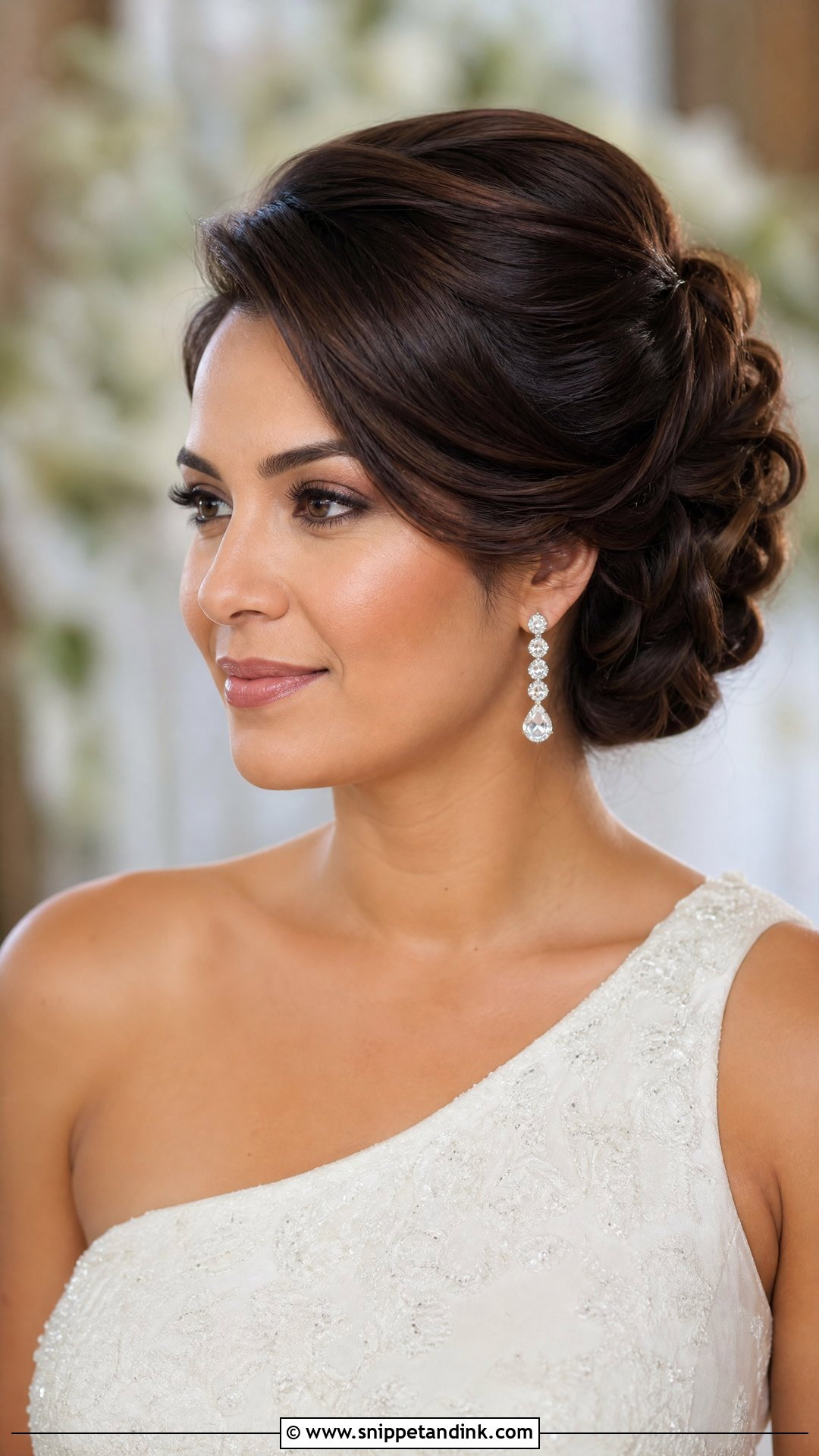
A side part makes a twist look less traditional. The asymmetry, deep or soft, frames the face while the back stays secure, and it goes well with side-swept bangs, soft waves, or a smooth front section tucked behind one ear. One-shoulder gowns and statement earrings suit it. Before I set the part, I ask which side you’ll stand on, since the swept side usually looks best facing guests. Keep the crown controlled so the part does the framing.
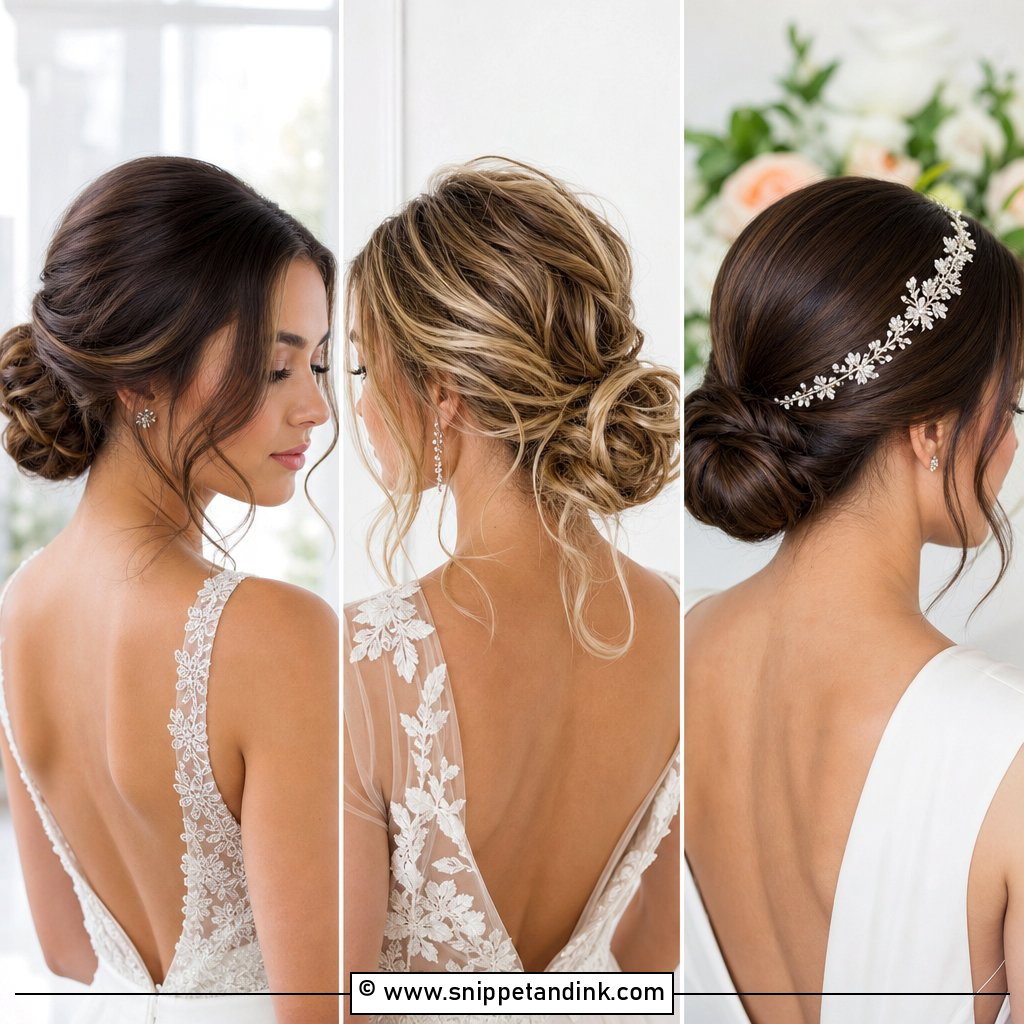
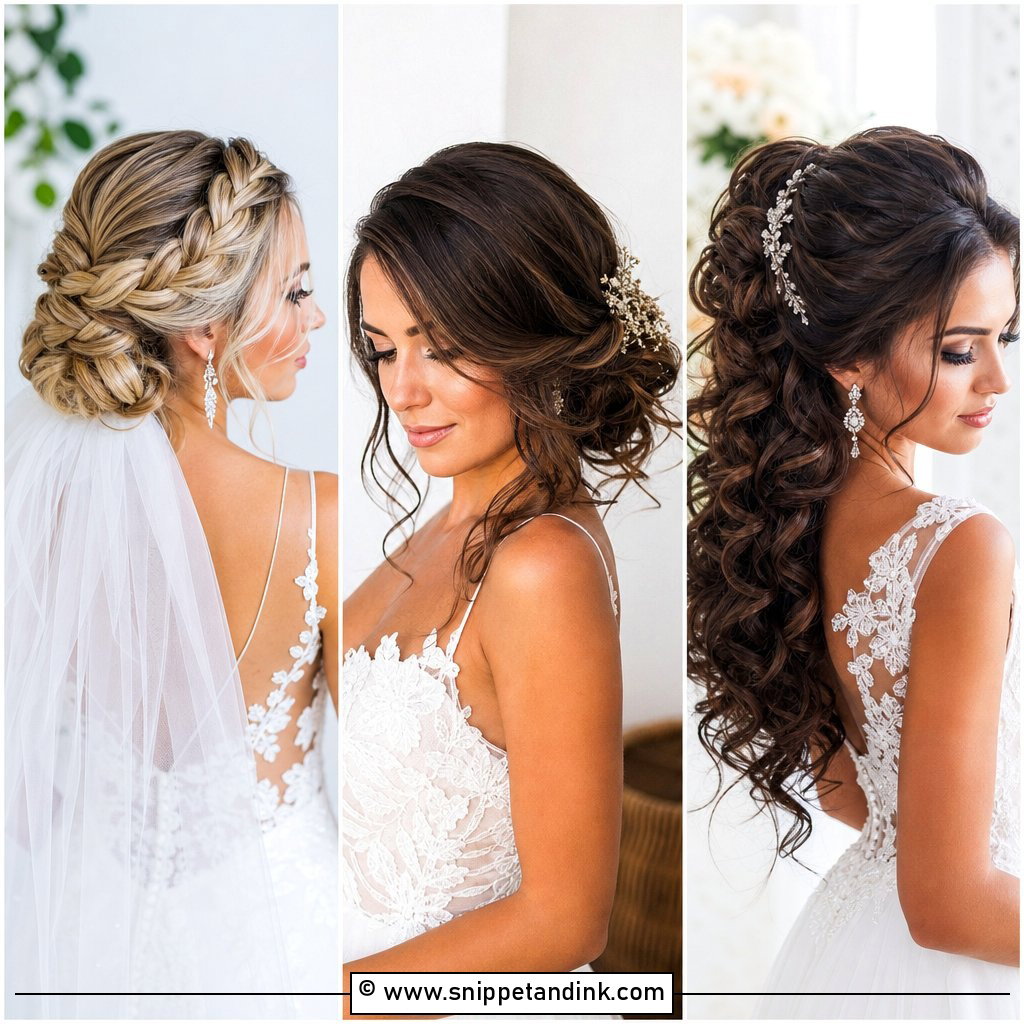
14. Braided Bridal French Twist
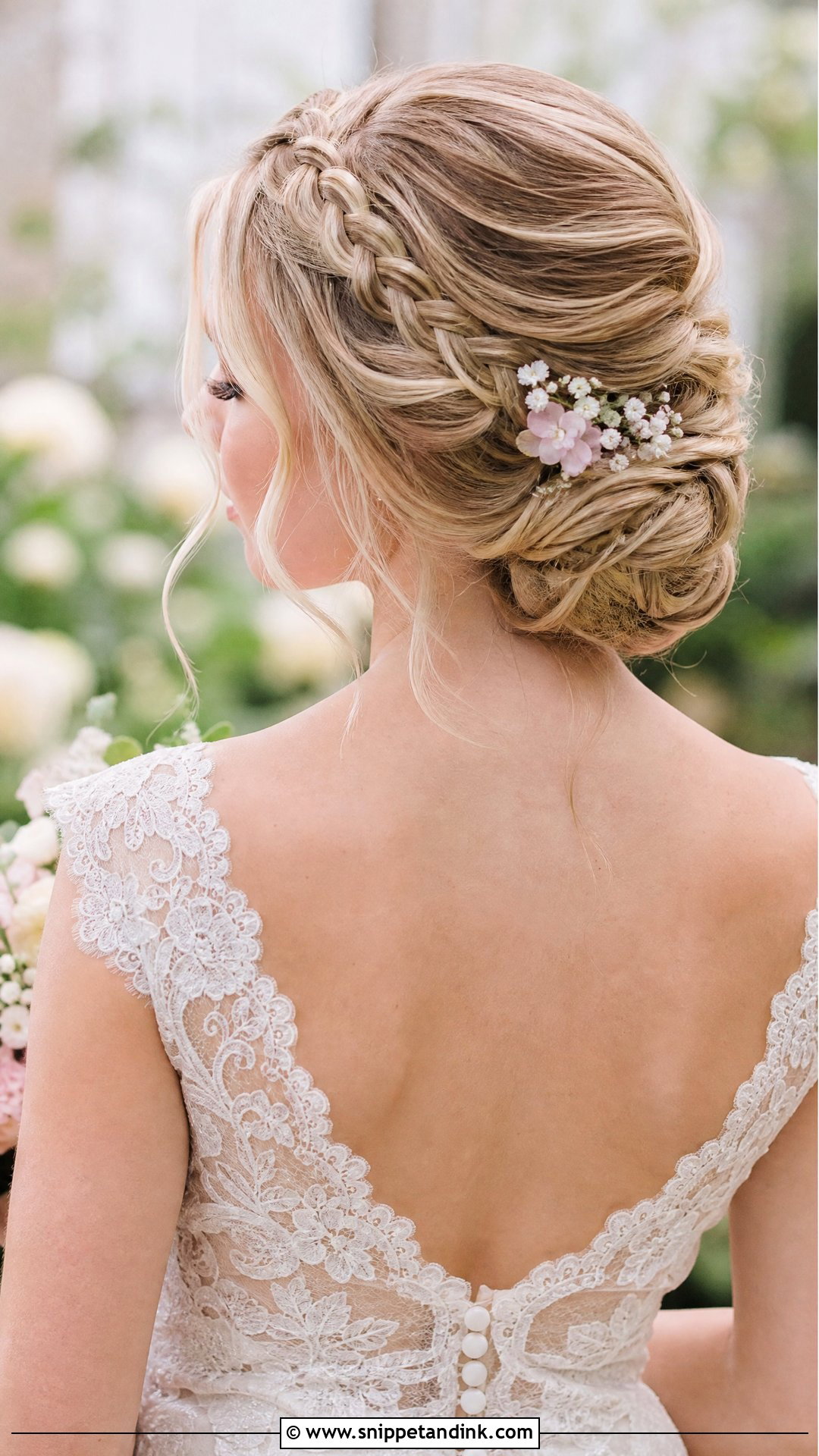
Adding a braid gives the twist detail without turning it into a full braided updo. I work a loose braid into one side, wrapped toward the twist, or blend it into the roll. Highlighted hair suits this, because the braid shows the colour changes. I braid it first, pin it, then widen it gently with my fingers so it looks bridal rather than tight. Small pins or floral accents can finish it, as long as the twist stays the main shape.
15. Vintage Bridal French Twist
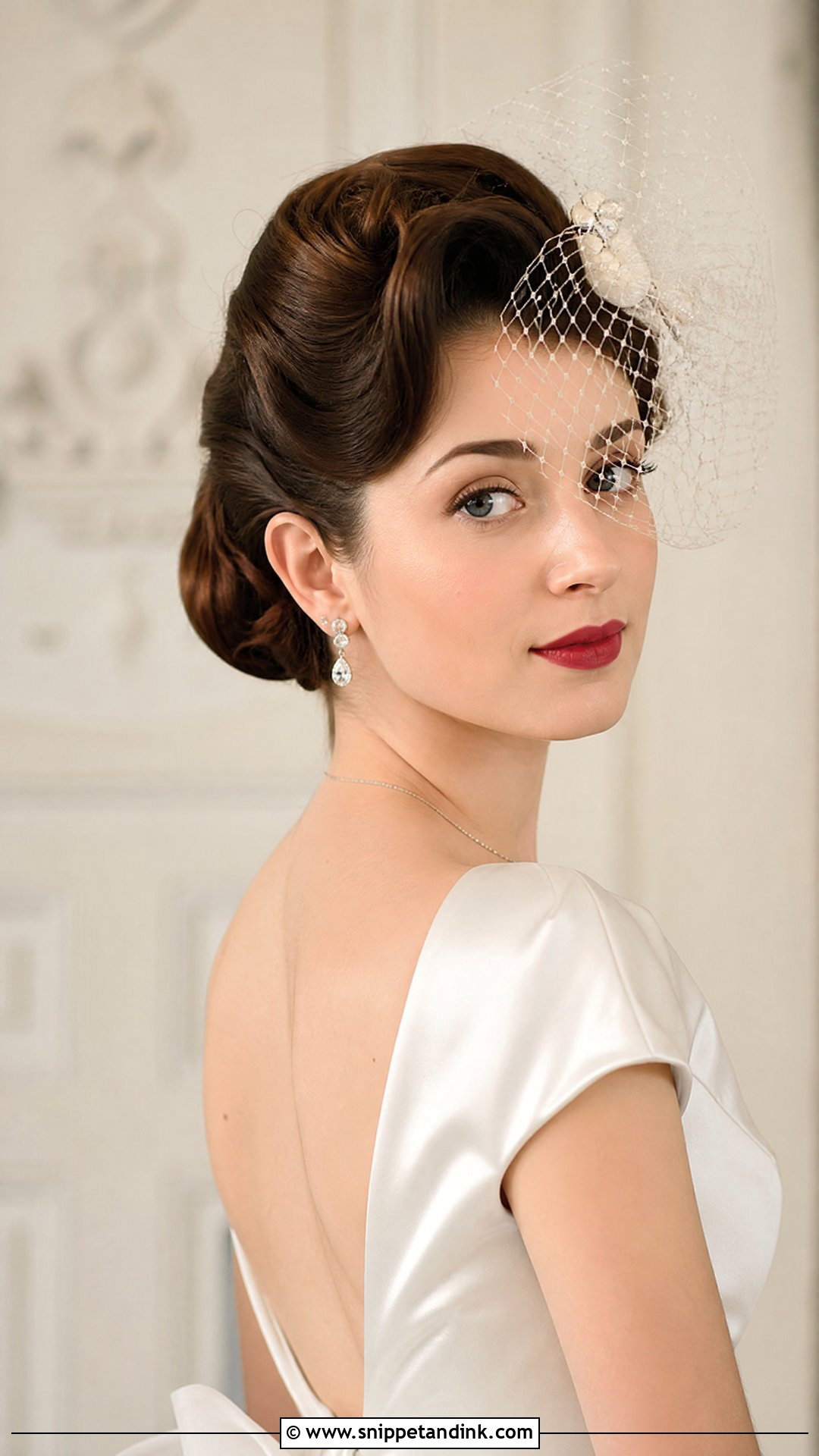
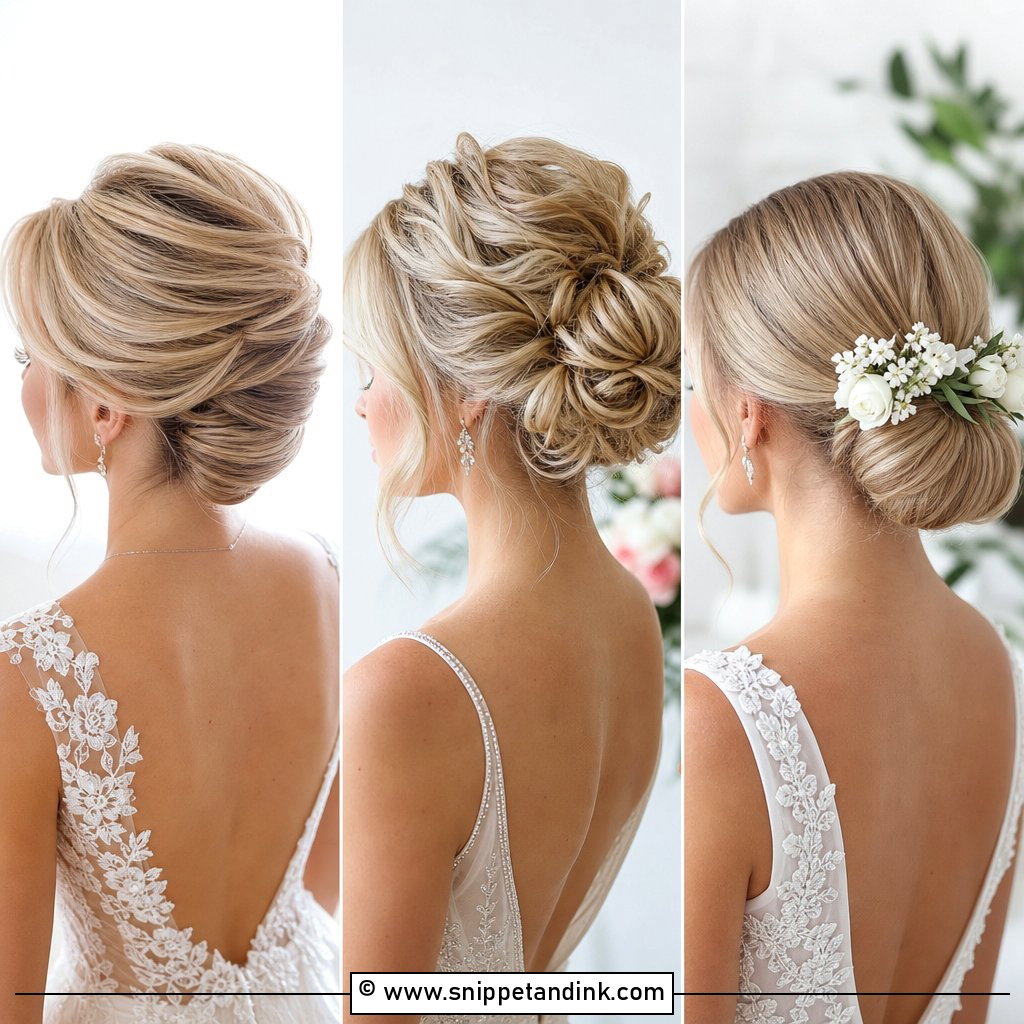
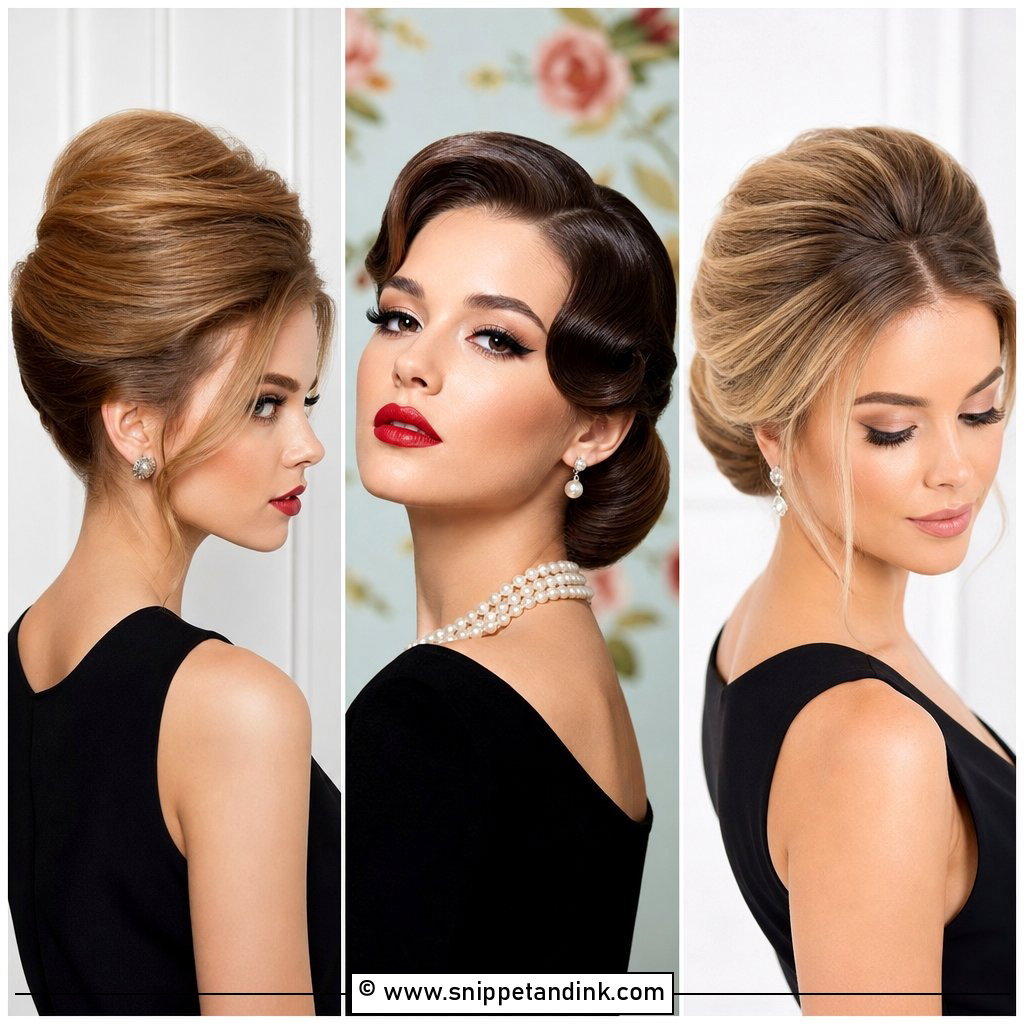
Old-Hollywood is the most structured version: smooth volume, a sculpted roll and a refined front, usually soft waves or a lifted side sweep. It suits satin gowns, birdcage veils, red lips, pearl jewellery and retro-inspired silhouettes. I set the front in pin curls and let them cool fully before brushing out, because waves brushed while warm drop within the hour. Every section should look placed, but not like a helmet. A secure base and a smooth surface are the two things to ask for.
Fine, Silky or Layered Hair Can Still Hold a Roll
The French twist is less forgiving than a bun, and some hair types fight it. None of them rule it out, but each needs its own adjustments, and I’d make them at the trial rather than hope on the day.
Fine or very silky hair
This is the hair most likely to unroll. I add texture spray or dry shampoo all through the lengths, backcomb lightly at the base of the spine, and sometimes use a slim padded insert so the roll keeps its width. Small elastics on the ends before tucking help too.
Long, choppy layers
Short layers pop out along the seam. I curl the whole head first so the layers bend inward, then pin them into the roll as I fold, and I choose the textured or messy versions over the sleek ones, where loose ends look deliberate.
Very thick hair
One roll of very dense hair gets bulky and lumpy. I split it into two stacked twists that read as one from a distance, which keeps the shape slim and spreads the weight across more pins.
Look at the Seam, Because That’s What Guests See
A French twist changes character with very small adjustments: sleek for formality, textured for a softer finish, braided or flowered for detail, vintage for drama. It handles veils, pearls, combs and almost any neckline. Book a trial and bring photos from the front, side and back, then talk through your hair texture, veil placement, the forecast and your accessories. Built on a proper pinned base, it will look the same in the last photo as it did in the first.
You'll Like These Ideas:


Leave a Reply