
A simple dress hides nothing, which is exactly why I enjoy fitting one. With no beading to distract the eye, everything comes down to the cut, the weight of the fabric and how the seams sit on your body. That is also what keeps a gown from dating: a clean line in good cloth looks as right in twenty-year-old photos as it does on the day. Simple doesn’t mean plain, though. Below are thirty gowns I’d happily put a bride in, from satin A-lines to slip dresses and structured ball gowns, with notes on what each one asks of the fit and who it suits.
Testing a Plain Gown Before You Say Yes
A simple dress gets judged differently in the fitting room from an embellished one. With nothing to catch the eye, small faults show: a seam that twists, a neckline that gapes when you bend, satin that creases after five minutes on a chair. Before I let a bride fall for a plain gown, I put it through a few quick tests.
- Sit for two minutes, then stand and look at the lap and the back of the skirt. Light satins crease quickly; crepe and mikado recover better.
- Raise your arms and hug someone. If the bodice rides up or the sleeves pull, it will happen in every photo.
- Walk briskly and step up onto something. Mermaid and column cuts are where stride problems show.
- Look at the fabric next to a window in daylight, not only under shop lighting. White, ivory and champagne shift a lot between the two.
- Turn it inside out. Clean seams, a full lining and boning that doesn’t poke tell you more about quality than the label does.
Colour is the other decision brides rush. Bright white suits some very fair and some deep skin tones, but most people look warmer in ivory or soft white. Hold the fabric under your chin in natural light before you commit.
1. Satin A Line Wedding Dress
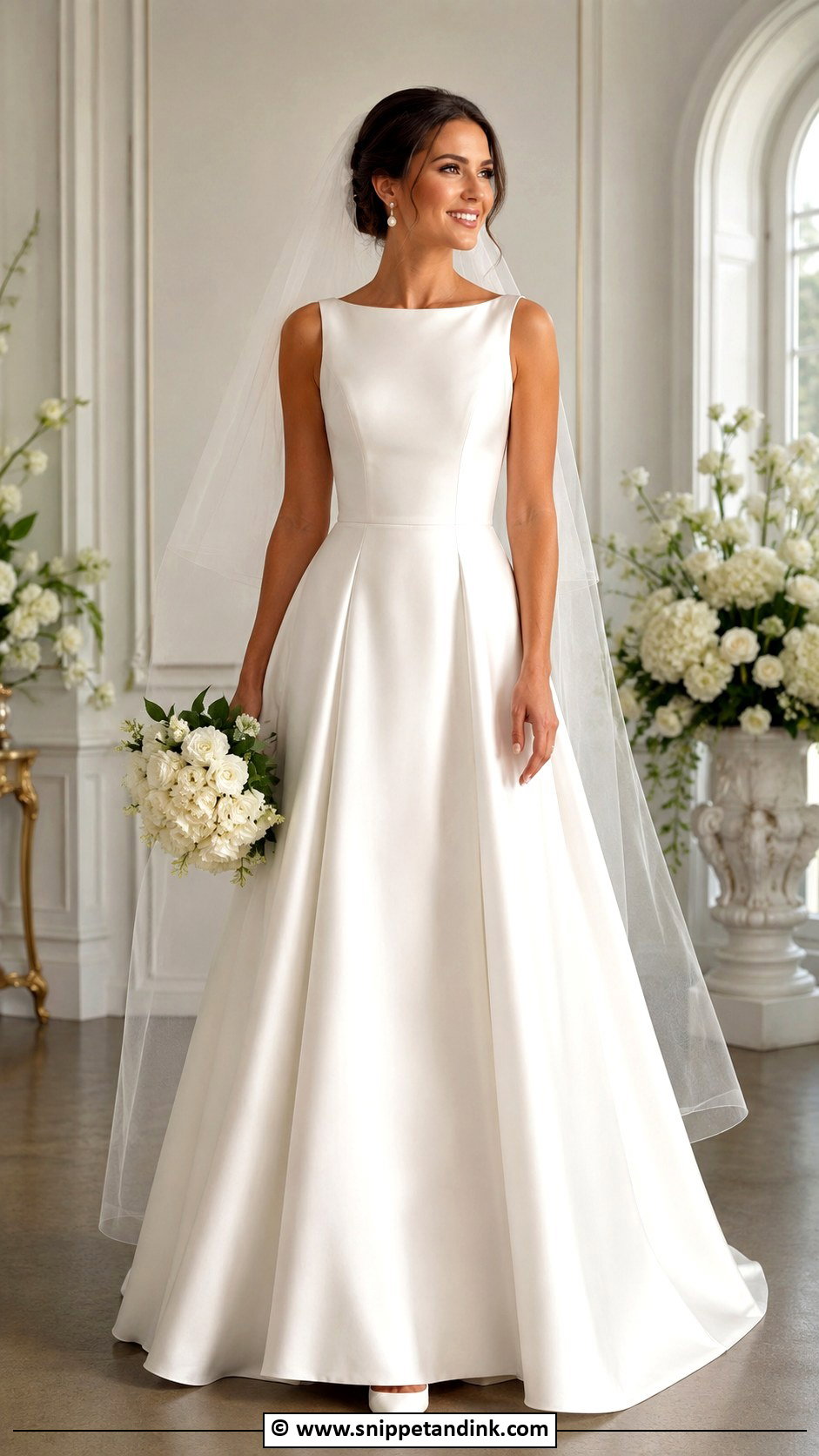
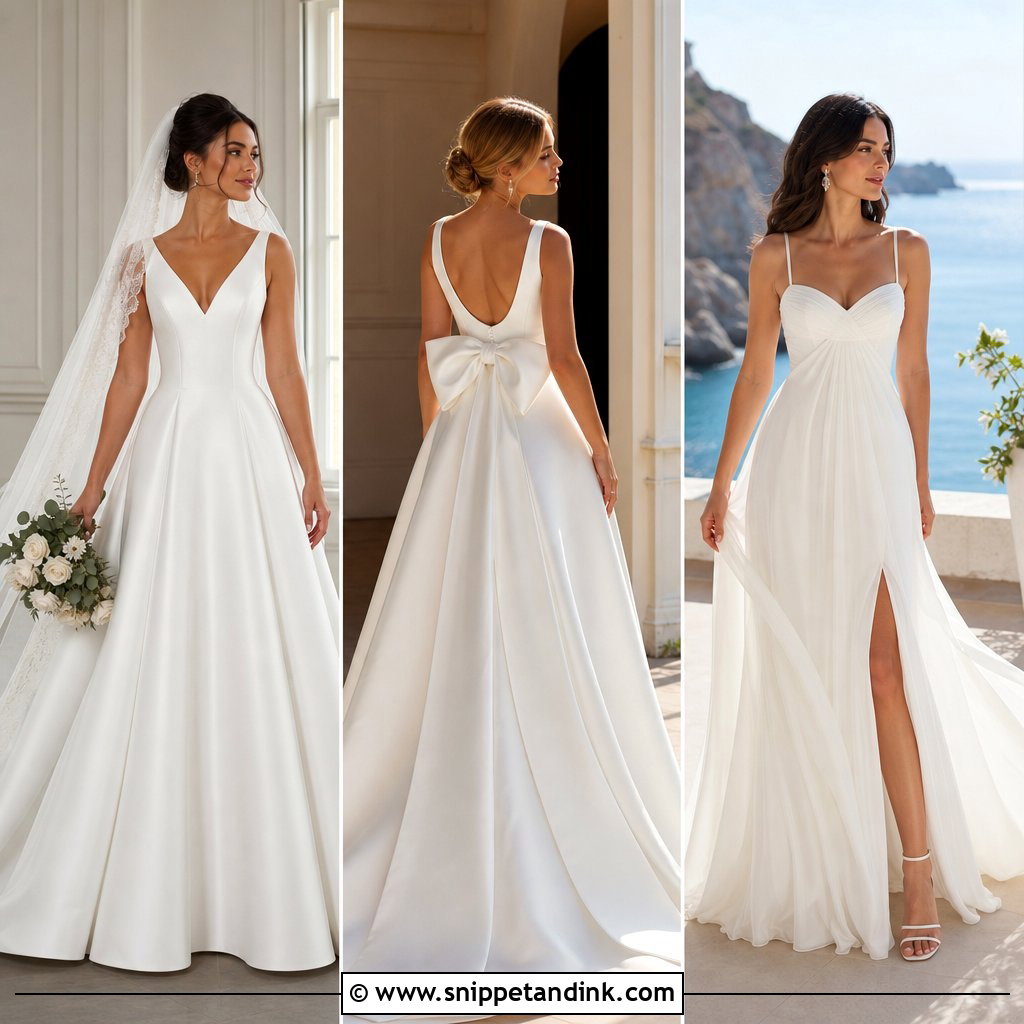
Of every shape I fit, the satin A-line forgives the most. The bodice holds you, and the skirt releases from the natural waist, so it skims the hips instead of gripping them. The thing I watch with satin is creasing: a lightweight satin wrinkles across the lap after a seated ceremony, while a heavier duchess satin recovers much better. Ivory flatters more skin tones than bright white in daylight. Keep the rest quiet with pearl studs, a smooth low bun, pointed heels and a single-tier veil.
2. Long Sleeve Lace Wedding Dress
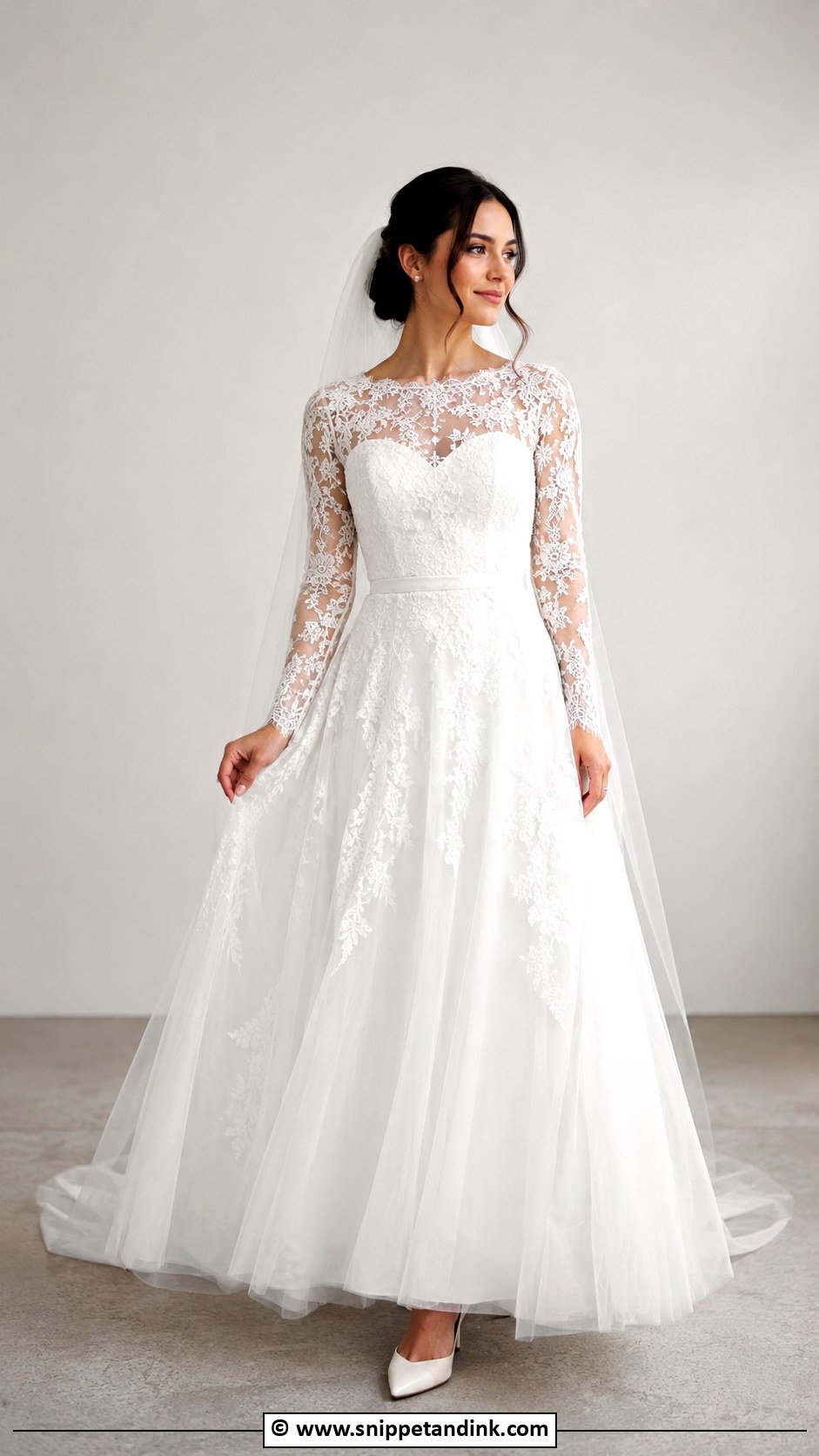
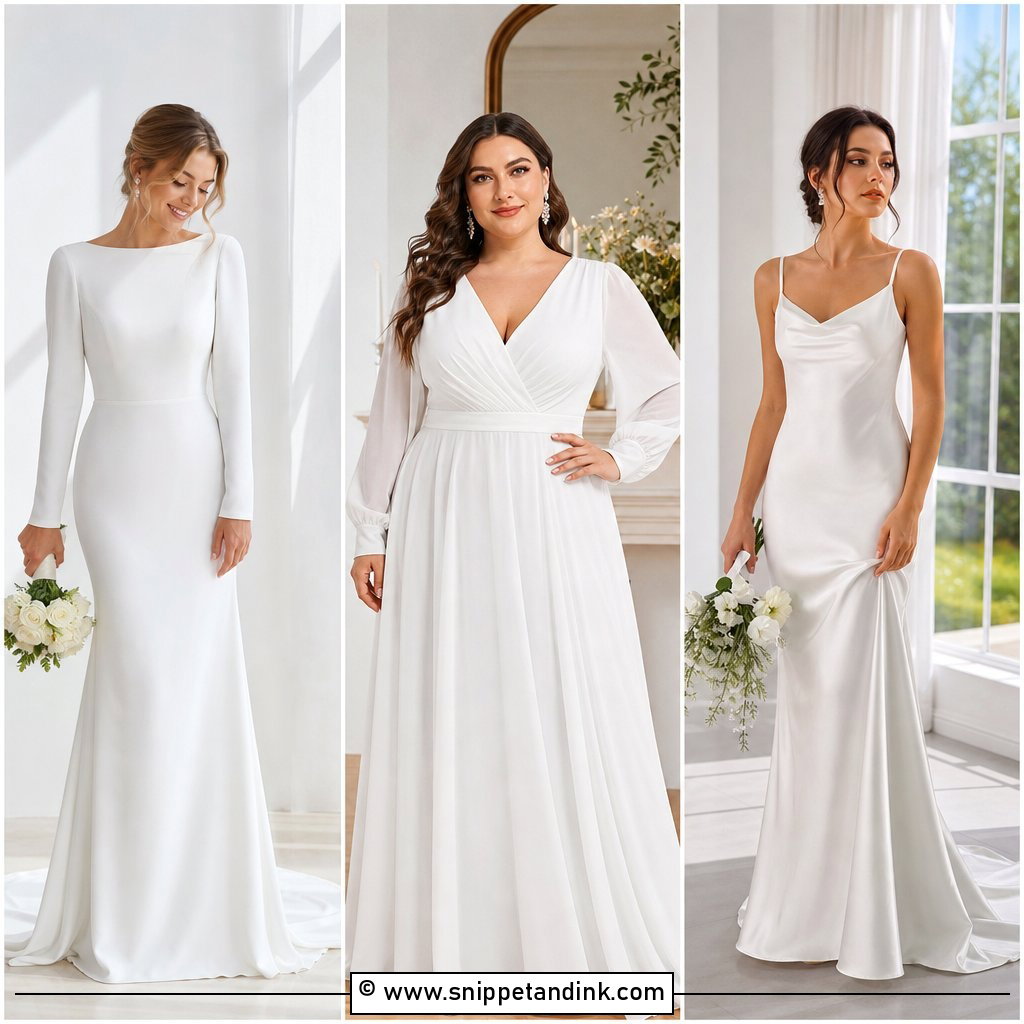
Lace sleeves are where I spend the most time in a fitting, because a sleeve that’s a touch too tight stops you lifting your arms to hug anyone. I ask brides to reach forward and raise both arms before we pin a thing. Fine lace over a clean lining reads far quieter than heavy corded lace, and it suits cooler months and formal rooms. With texture already on the arms, jewelry can stop at small studs and a thin bracelet, plus a soft veil and plain pumps.
3. Strapless Ball Gown Wedding Dress
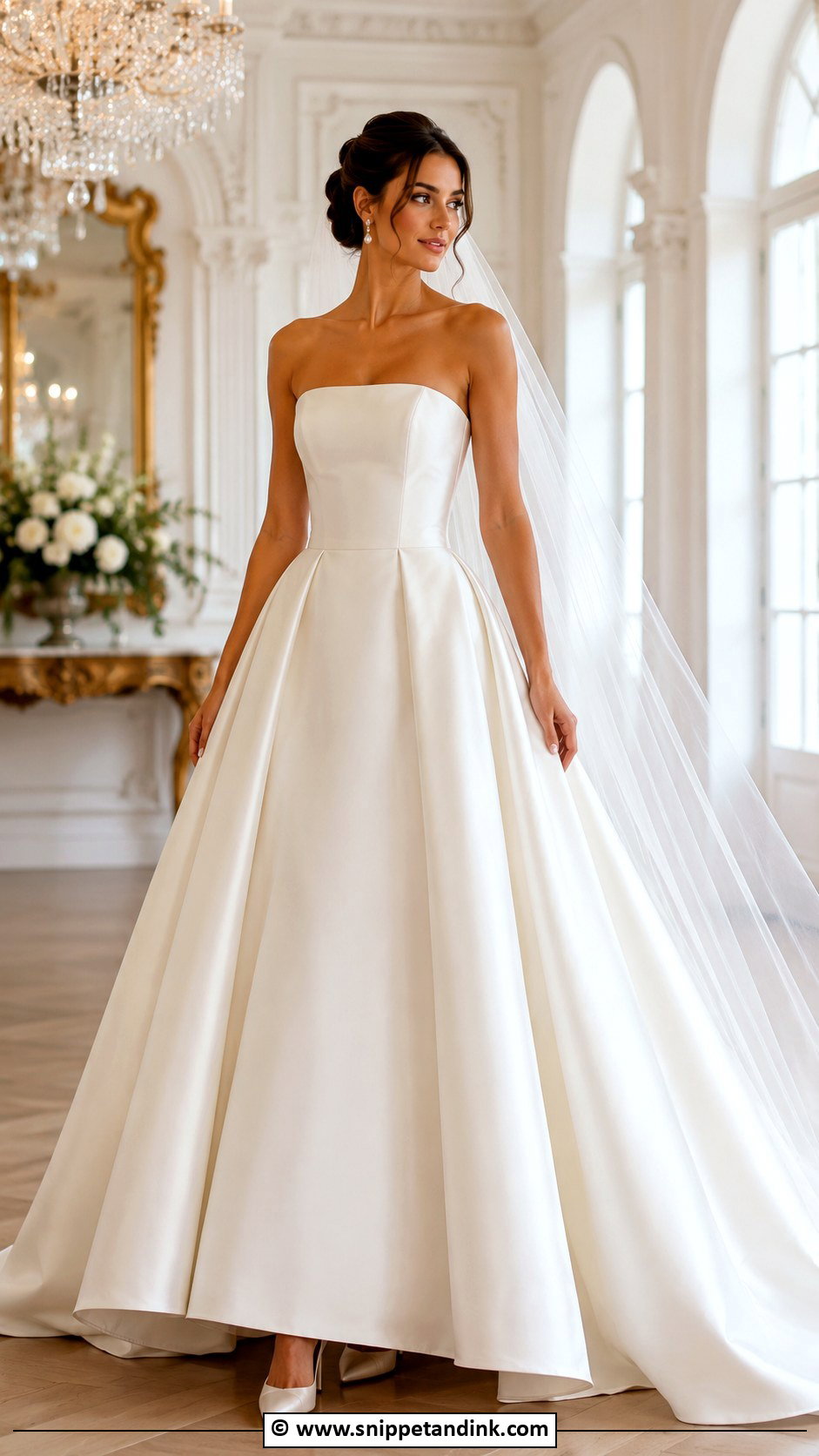
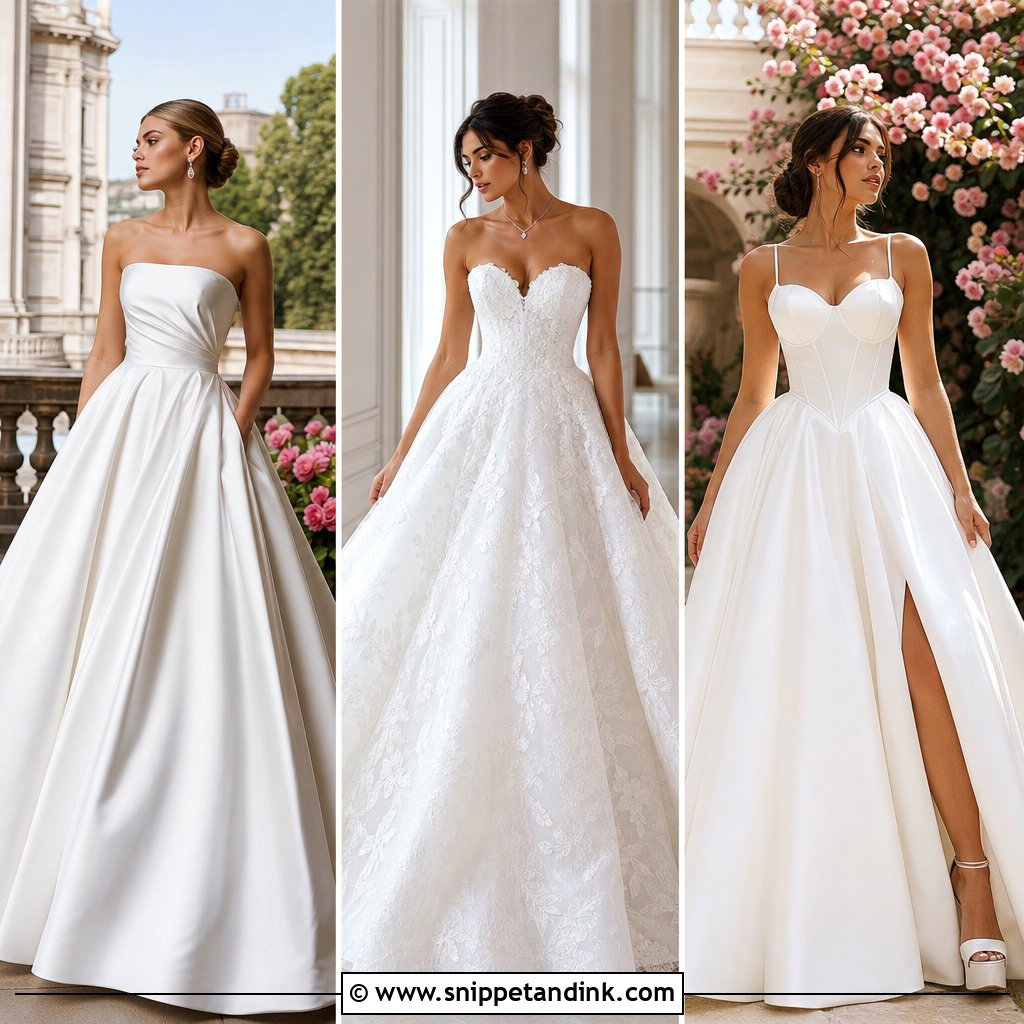
A strapless ball gown wedding dress relies entirely on its bodice, so that’s what I check first. If it isn’t boned and fitted closely at the ribs, you’ll spend the night tugging it up, and no amount of tape fixes that. In smooth satin, mikado or organza with few seams, the full skirt does the talking. A cathedral veil and pearl drops balance the volume, and a neat updo keeps the collarbone clear. I’d skip it for a tight venue with a narrow aisle; the skirt needs room.
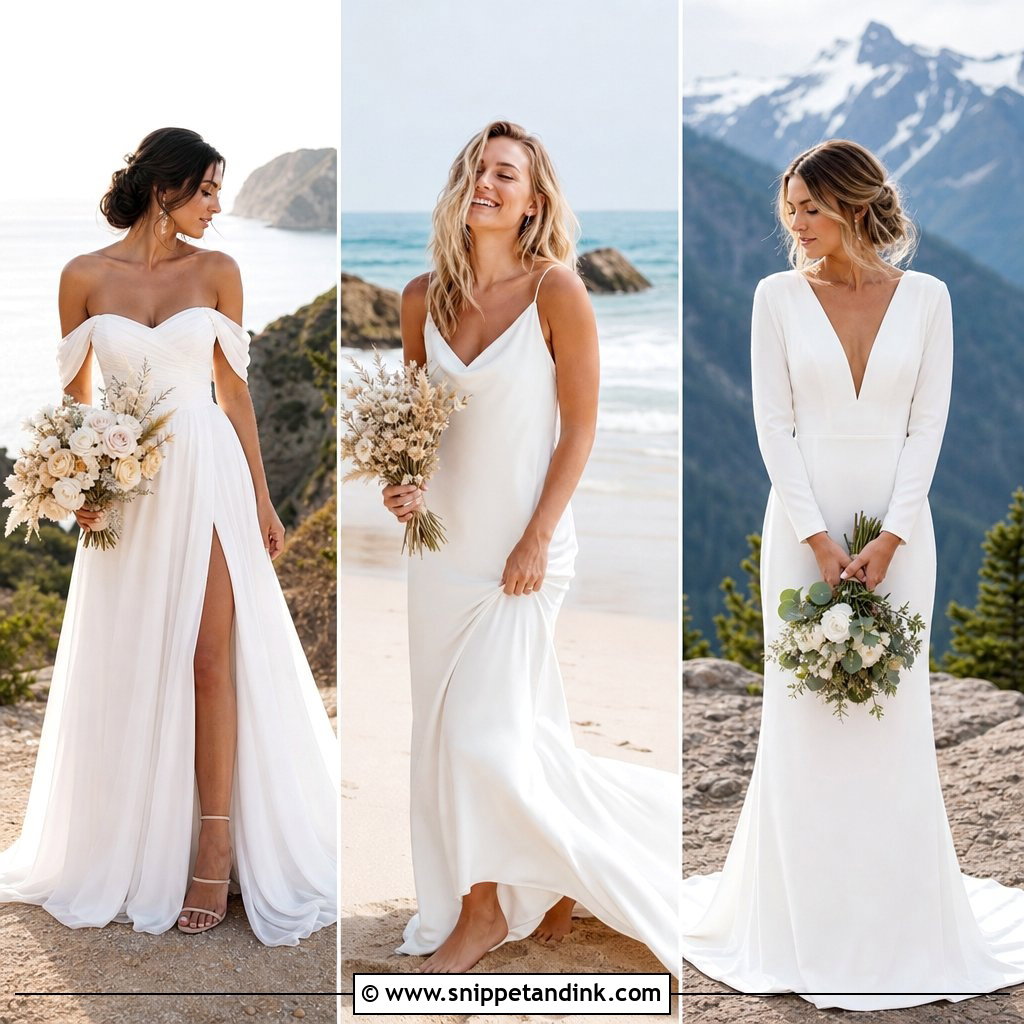
4. Silk Slip Wedding Dress
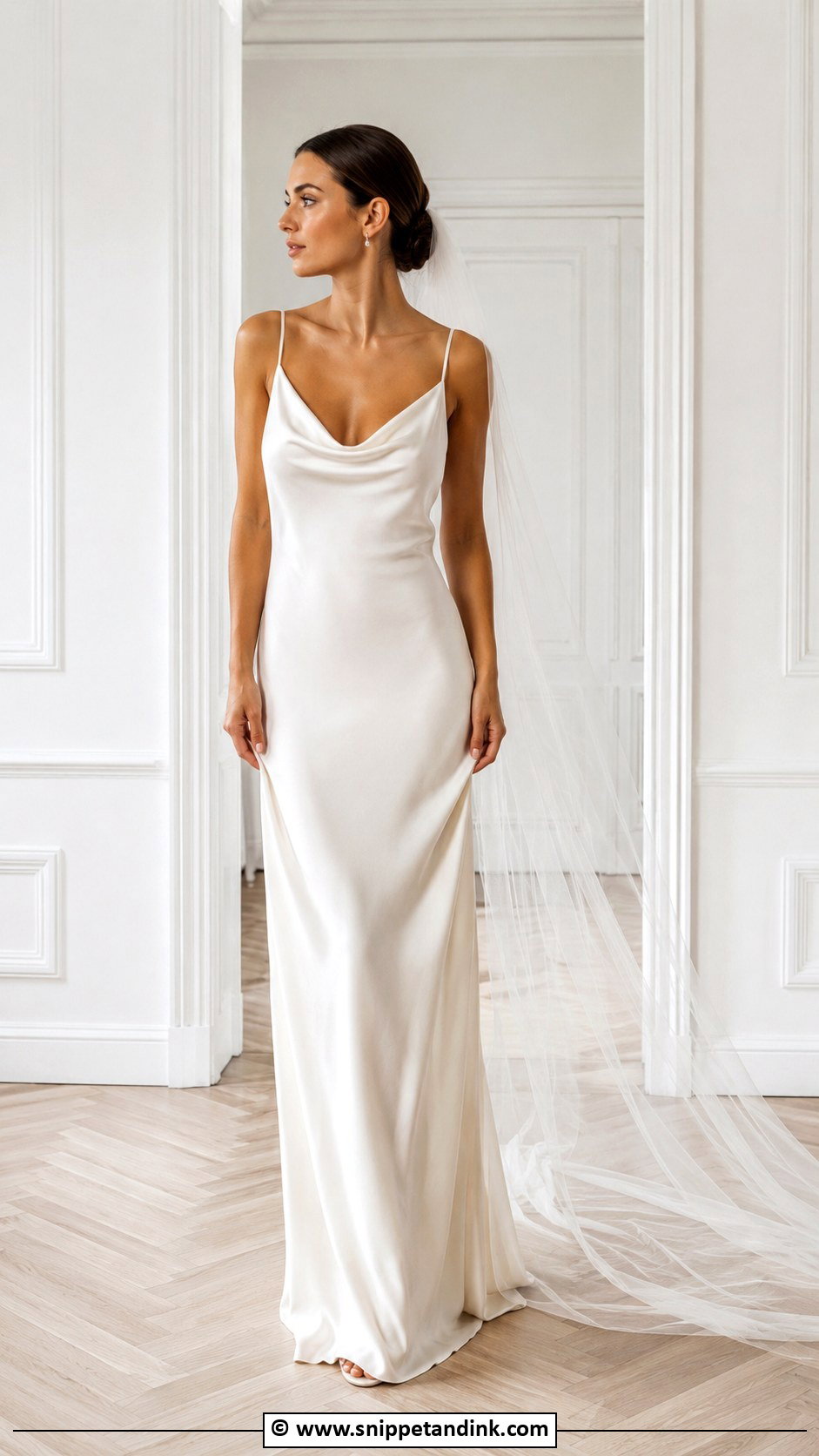
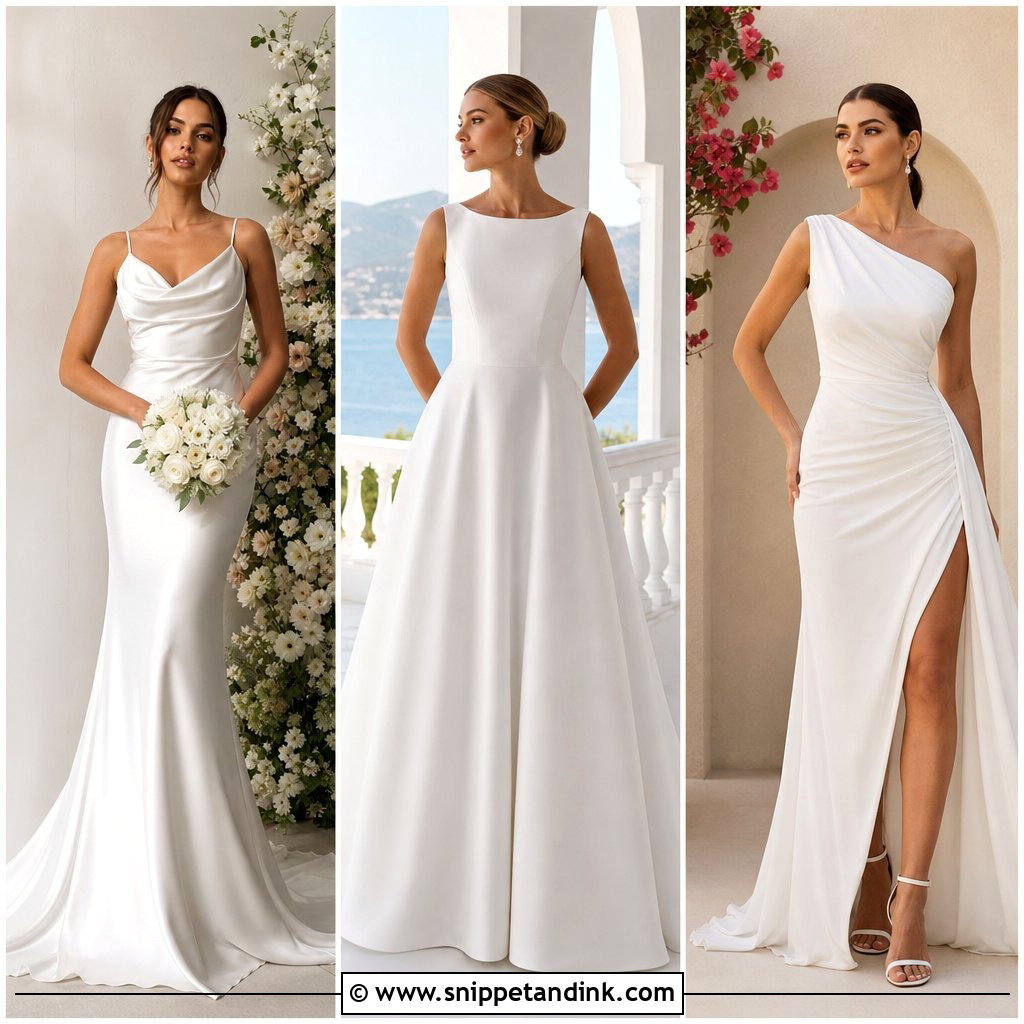
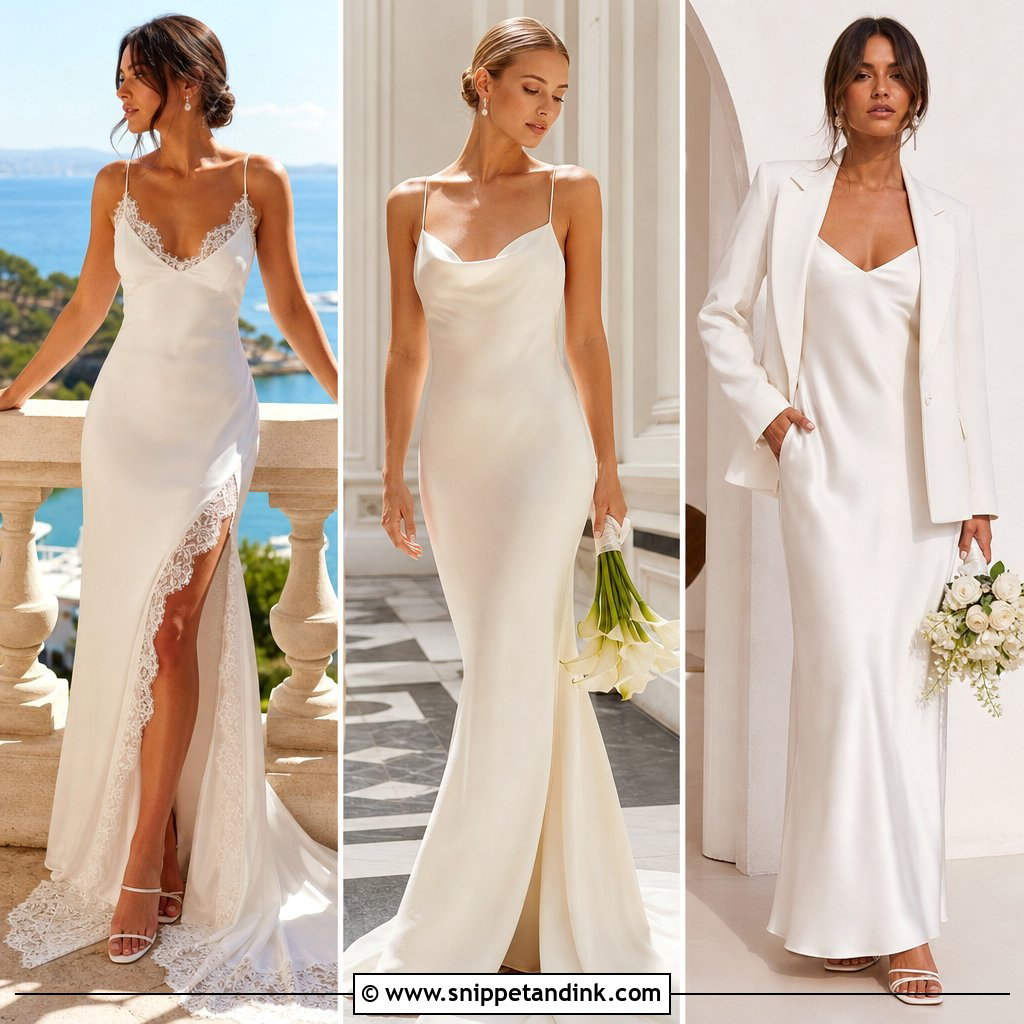
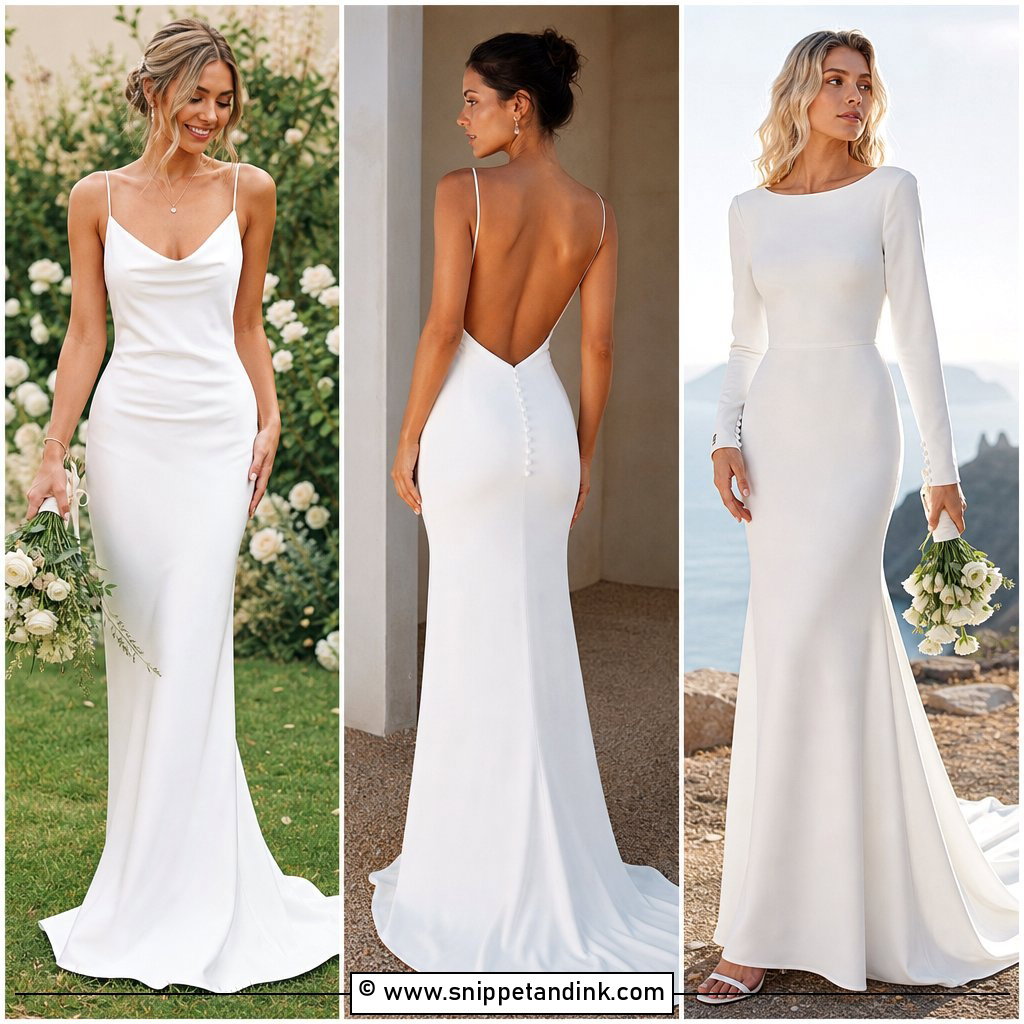
A slip dress is the least forgiving gown on this list, and I say that as someone who loves them. Bias-cut silk shows every line underneath, so we sort out smooth, invisible underwear before the first fitting, not after. The cut should skim rather than cling. If it pulls across the hips, it needs a larger size taken in elsewhere. Thin straps and a soft cowl both work, and with barely-there heels, sleek hair and a long veil, the silk sheen carries the whole look.
5. Square Neck Wedding Dress
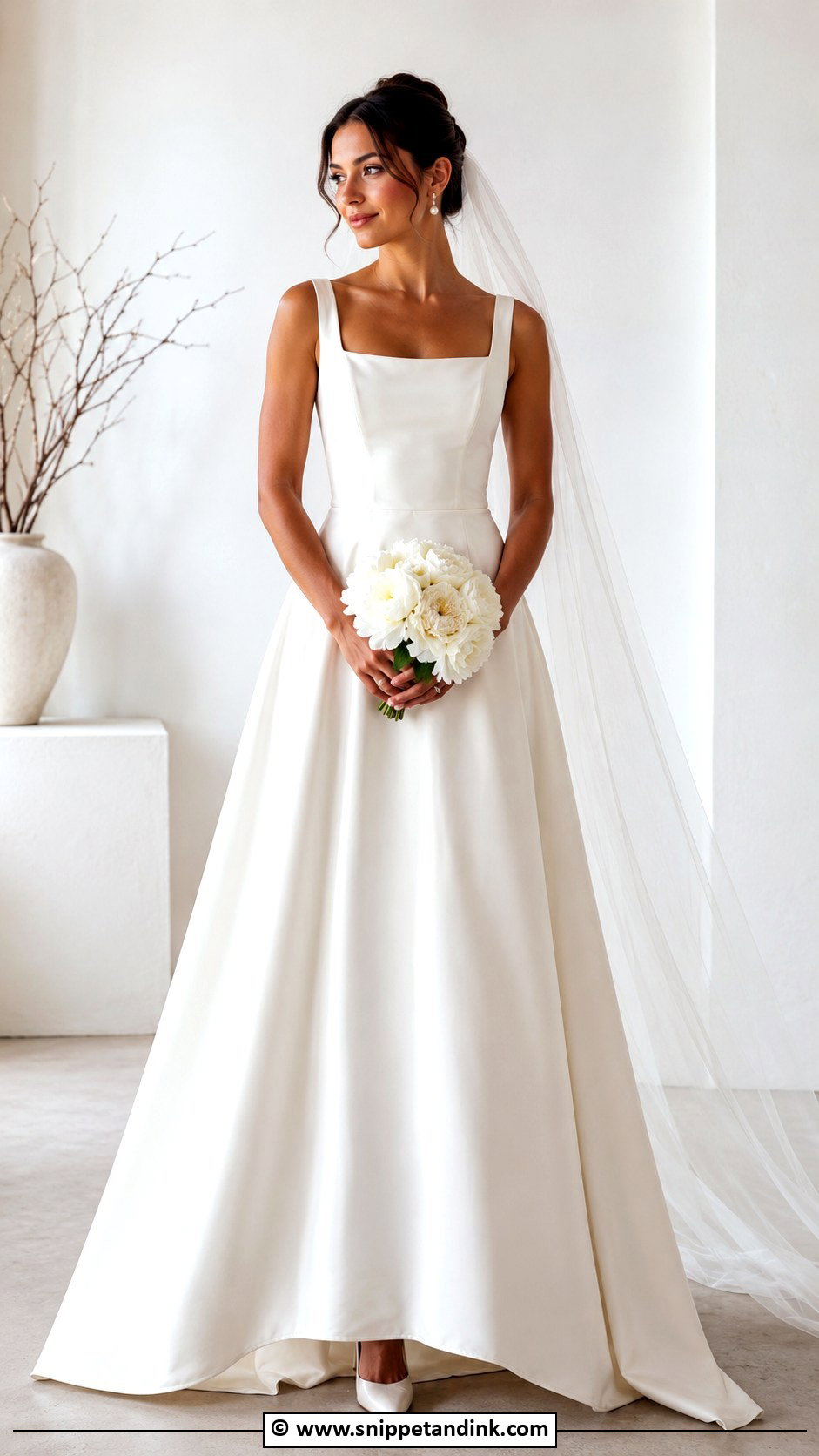
The square neckline frames the collarbone with a straight, architectural edge. Wide straps make it one of the easiest necklines to wear real support under; narrow straps look lighter but hold less, which matters if you’re fuller in the bust. I like it in crepe, satin or mikado with almost no decoration. At the fitting I check that the corners of the neckline sit flat and don’t gape when you lean forward. Pearl studs and a smooth veil are plenty.
6. Off Shoulder Wedding Dress
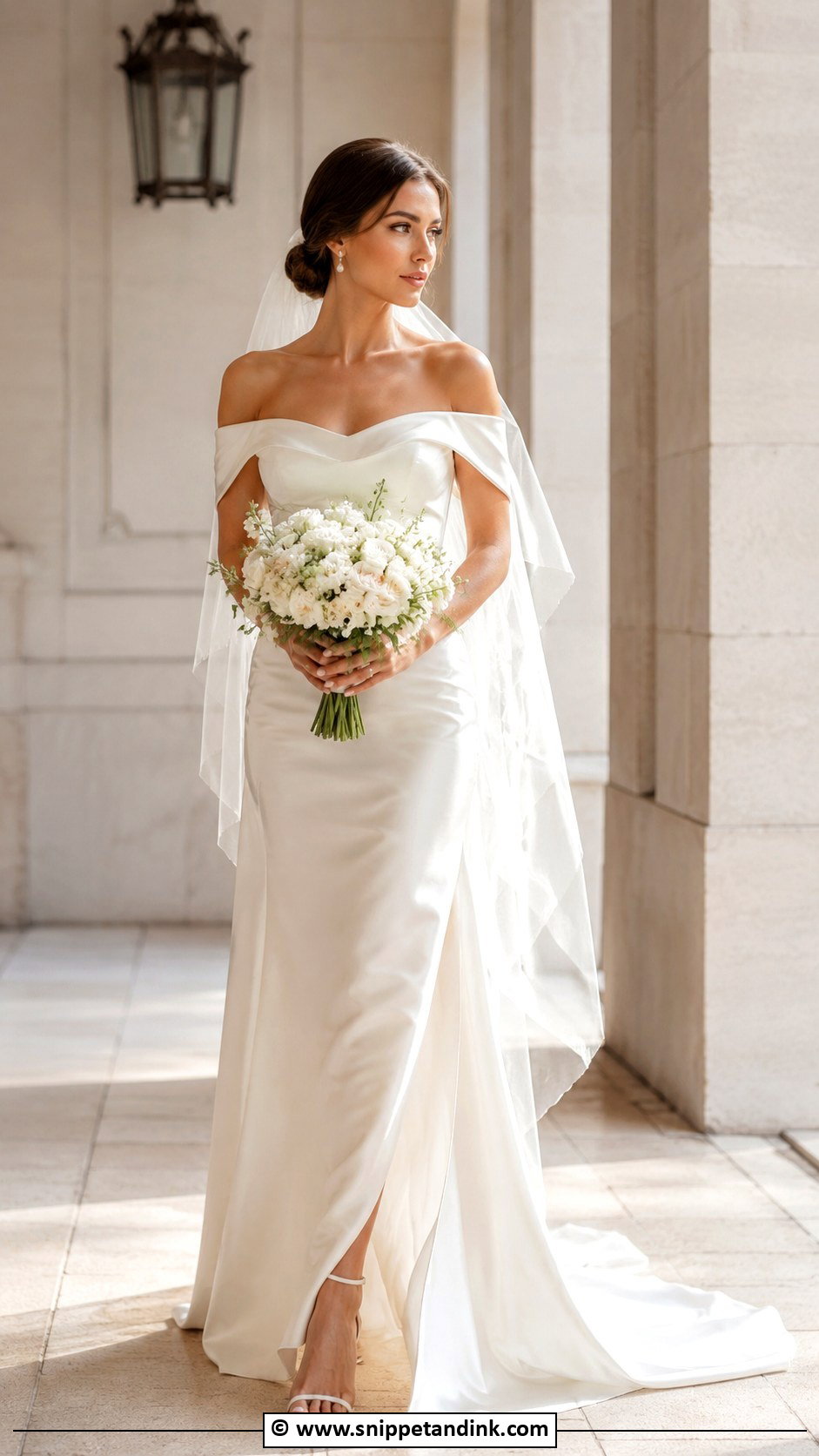
Off-shoulder sleeves look romantic until you try to raise your arms, so this is a gown I make brides dance in at the fitting. The band has to be snug enough to stay down without digging into the upper arm. Get that right and it opens the neck and frames the face. A smooth bodice in satin, crepe or mikado keeps the line clean, and a low chignon with a sheer veil leaves the shoulders visible.
7. Crepe Sheath Wedding Dress
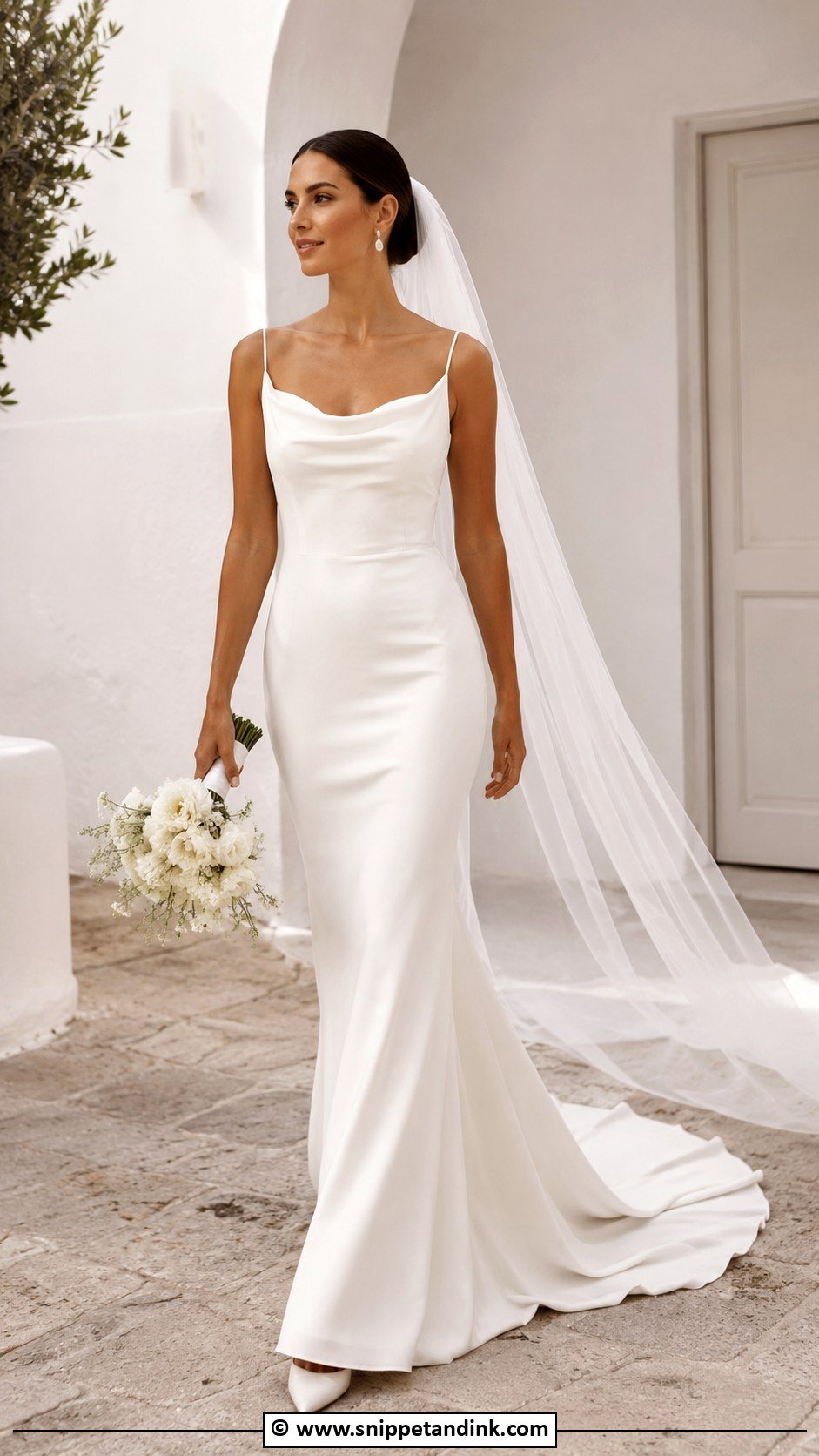
Matte crepe is my favourite fabric for a minimalist bride. It doesn’t bounce the flash back, and it falls in a smooth, heavy line. A sheath follows your shape without a big skirt, so walking, sitting and dancing are easy. The trade-off is that crepe shows every panty line and uneven seam, so the tailoring has to be precise. A bateau, V or high neckline all suit it, a short train adds formality, and pointed heels with a long veil keep the proportions long.
8. Bateau Neck Wedding Dress
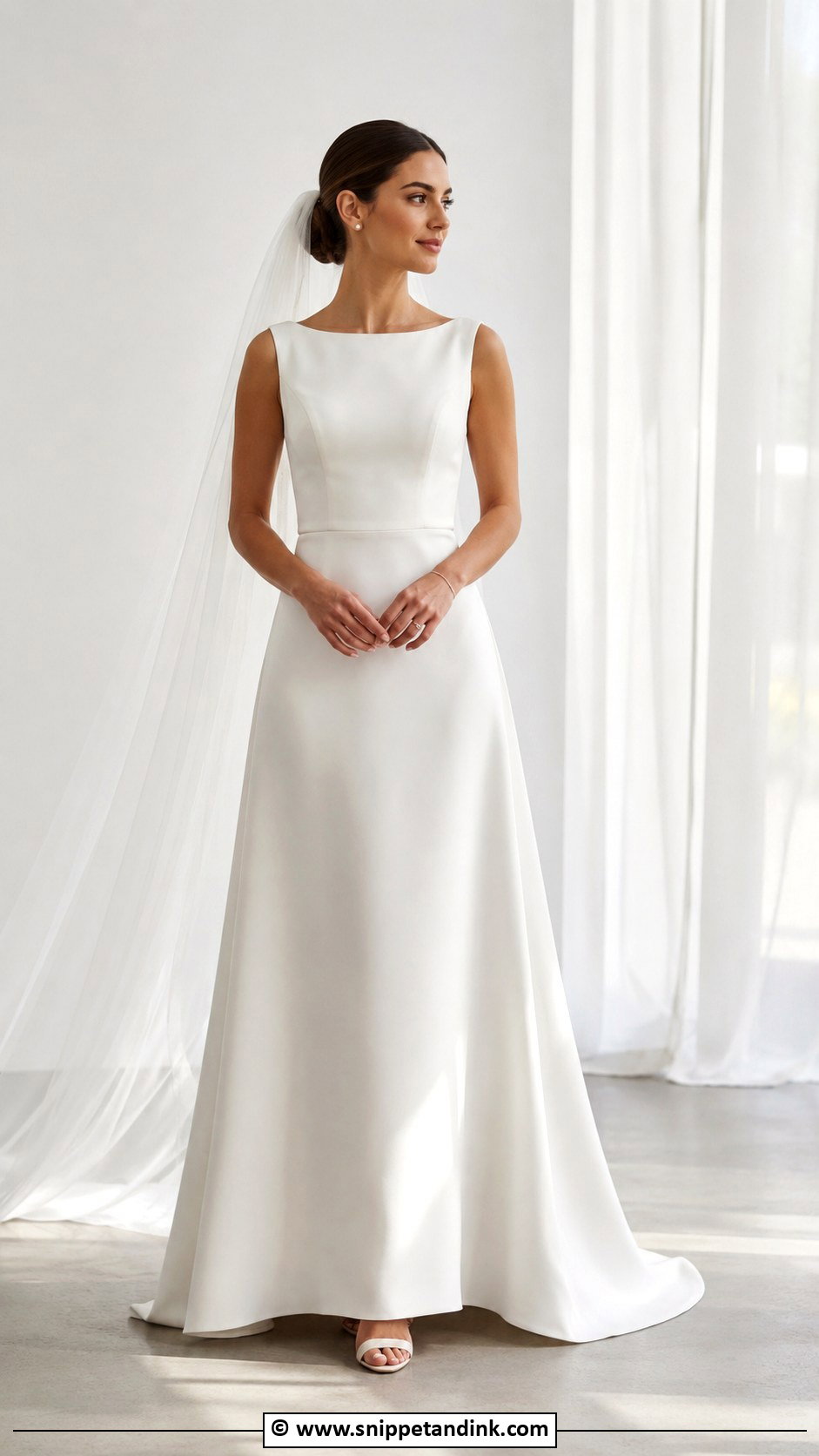
The bateau line runs almost straight from shoulder to shoulder, just below the collarbone. It covers without feeling buttoned up, which is why I often suggest it for a religious ceremony when the bride still wants a modern shape. It suits most shoulders, though on a very petite frame a neckline cut too wide can swamp you. Skip big necklaces, since the neckline is already framing your face. A low bun, pearl earrings and a plain veil finish it.
9. High Neck Wedding Dress
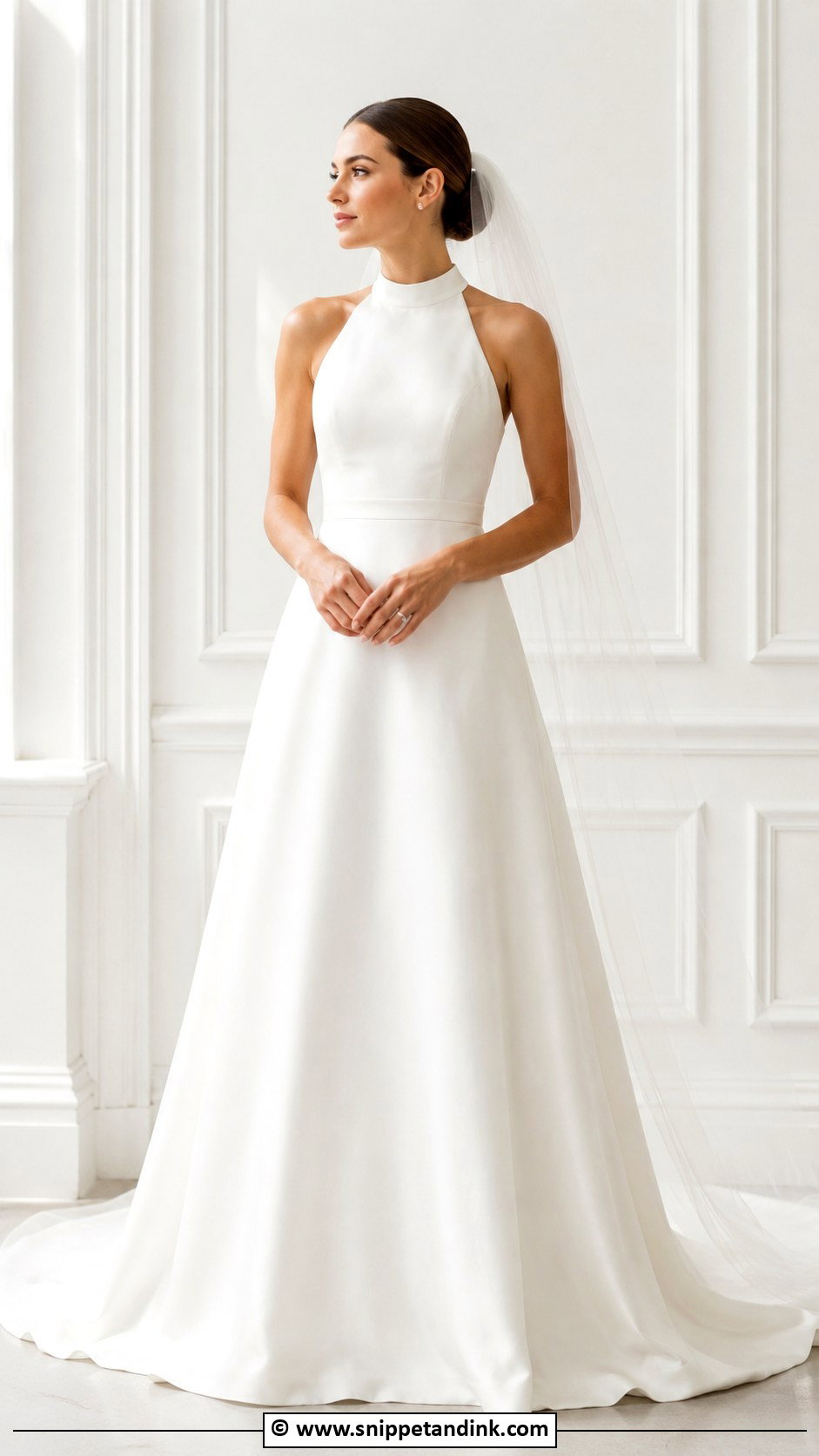
A high neck pulls all the attention up to the face and draws a long, upright line through the torso. The risk is looking top-heavy, so I balance it with a defined waist or a slim skirt. Sleeveless reads modern; long sleeves read traditional. With the neck covered, earrings are the only jewelry I’d add, and a veil set low at the back of a sleek updo keeps the collar uncluttered. It’s a warm style, so think twice for a summer garden.
10. V Neck Wedding Dress
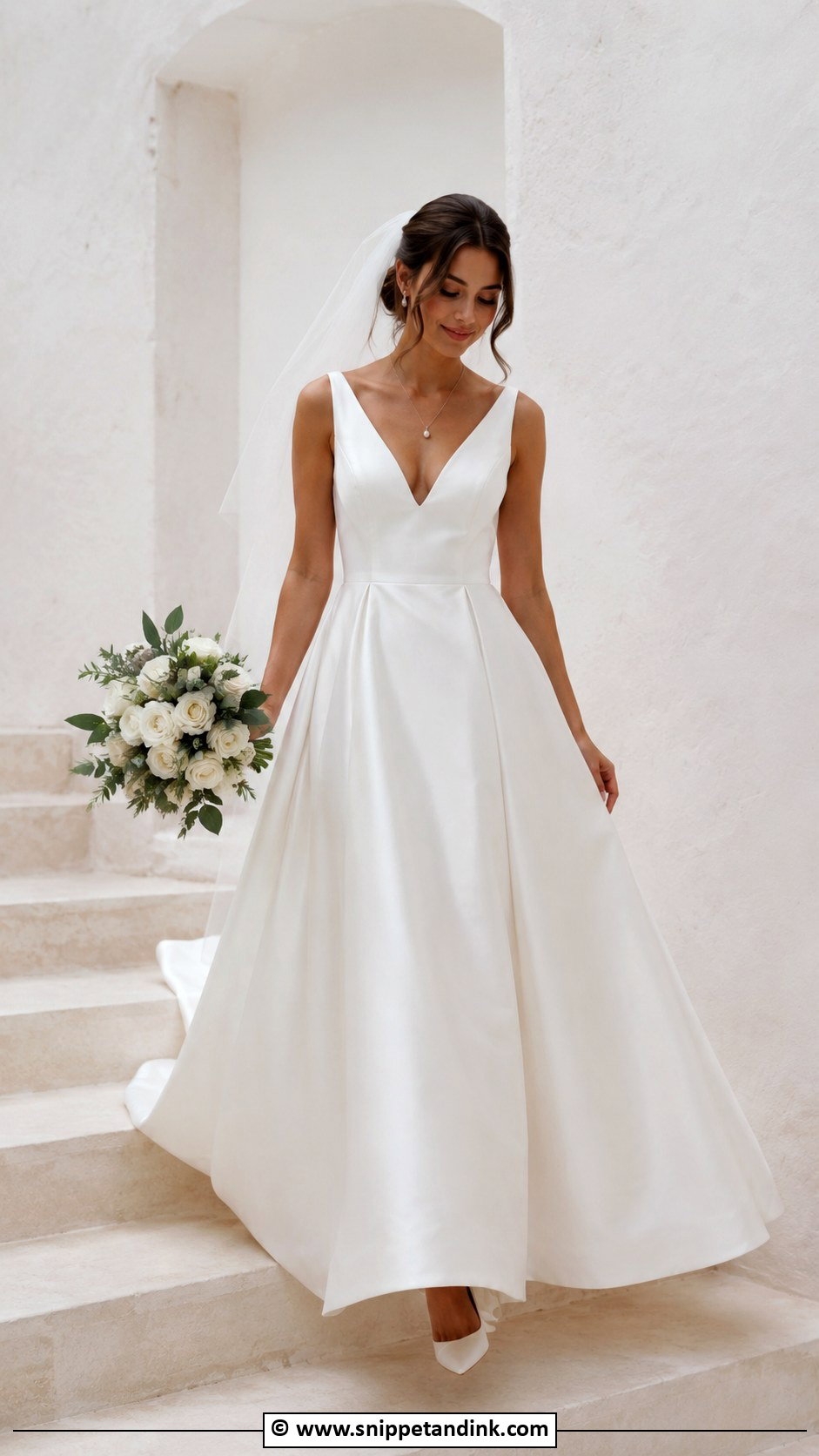
A V draws the eye downward and lengthens the torso, which is why it flatters so many builds. Depth is the real decision. A modest V in satin, crepe or lace sits comfortably in a church, while a deeper plunge needs mesh or careful bra planning, and I settle that before ordering rather than at the final fitting. It works on A-line, sheath, fit-and-flare and ball gown shapes alike. A fine pendant that lands in the point of the V is the one piece of jewelry I’d consider.
11. Sweetheart Neck Wedding Dress
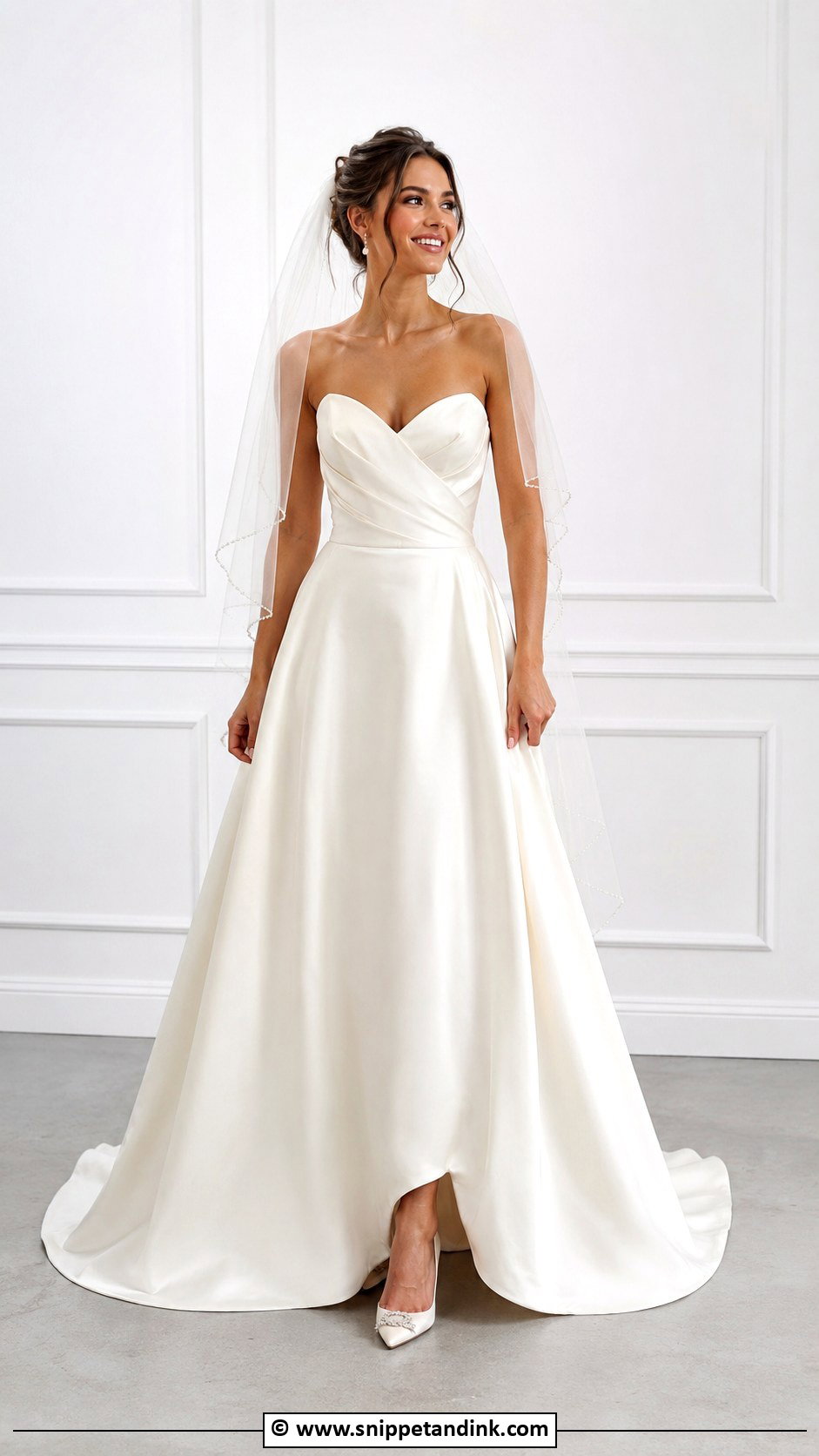
The curve of a sweetheart neck wedding dress shapes the bust and softens the neckline without any decoration, and it has stayed a bridal staple for decades because of that. In smooth satin or mikado over a structured bodice it stays crisp. I check that the dip sits centred and doesn’t fold inward when you sit. Add straps if you want security, leave them off if you don’t, and finish with a fingertip veil and small drop earrings.
12. Tea Length Wedding Dress
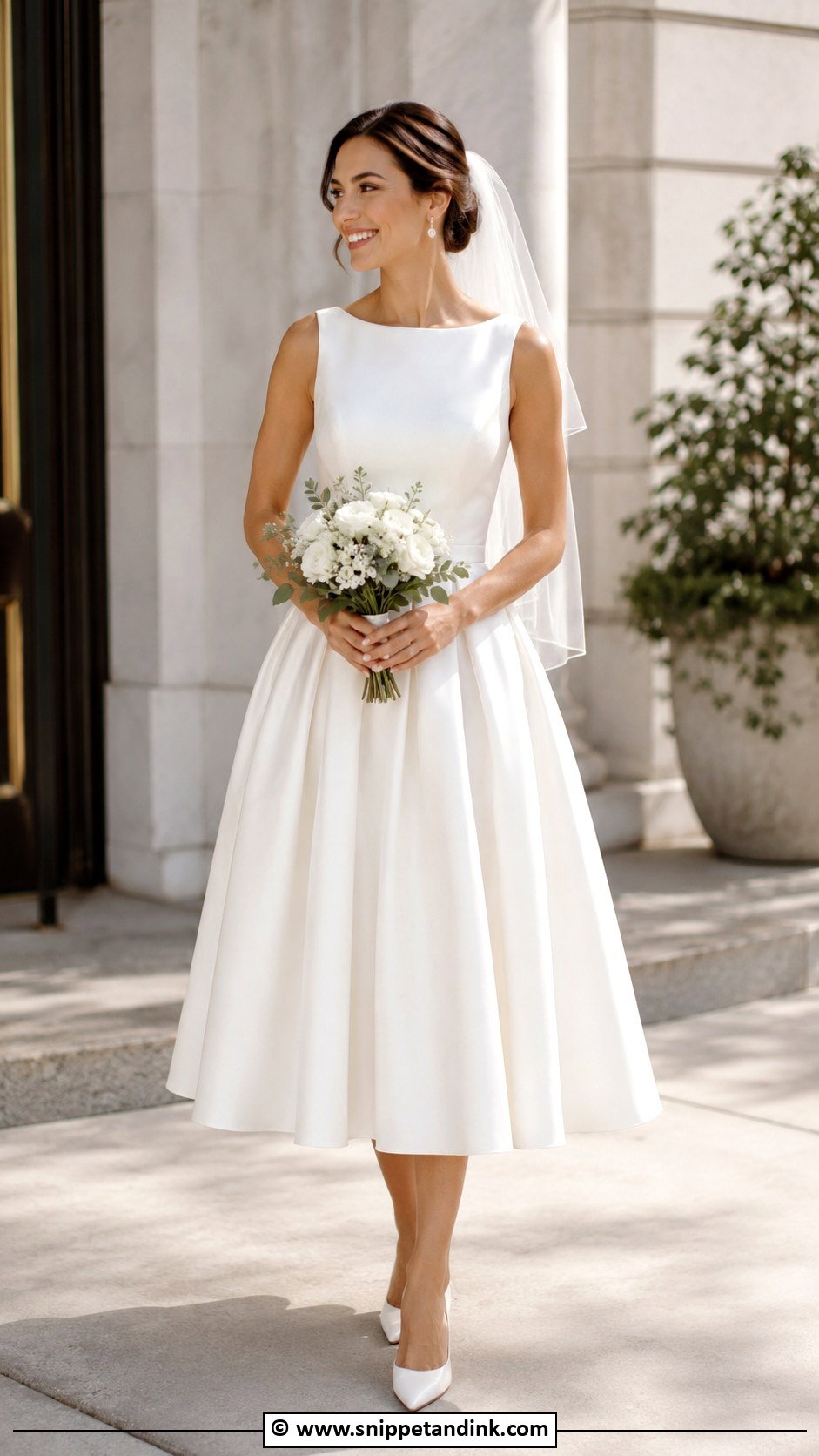
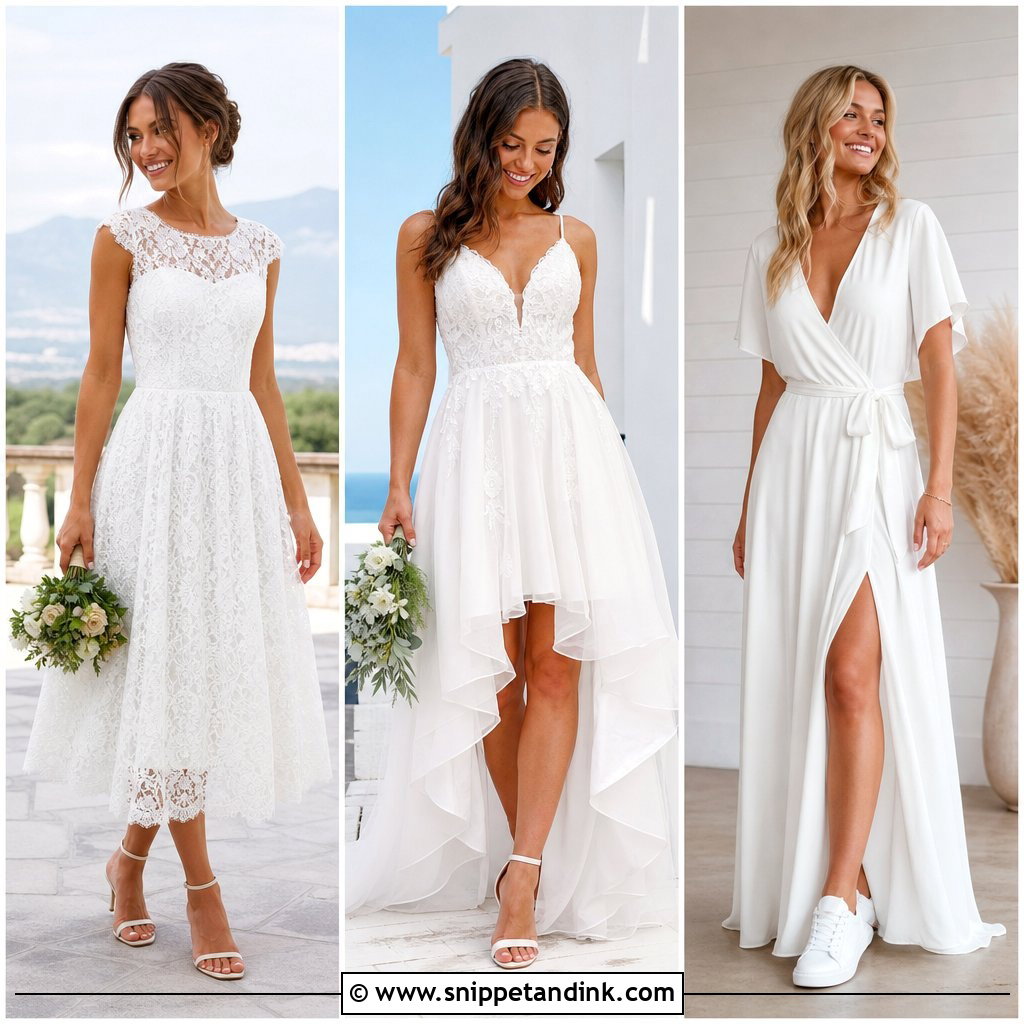
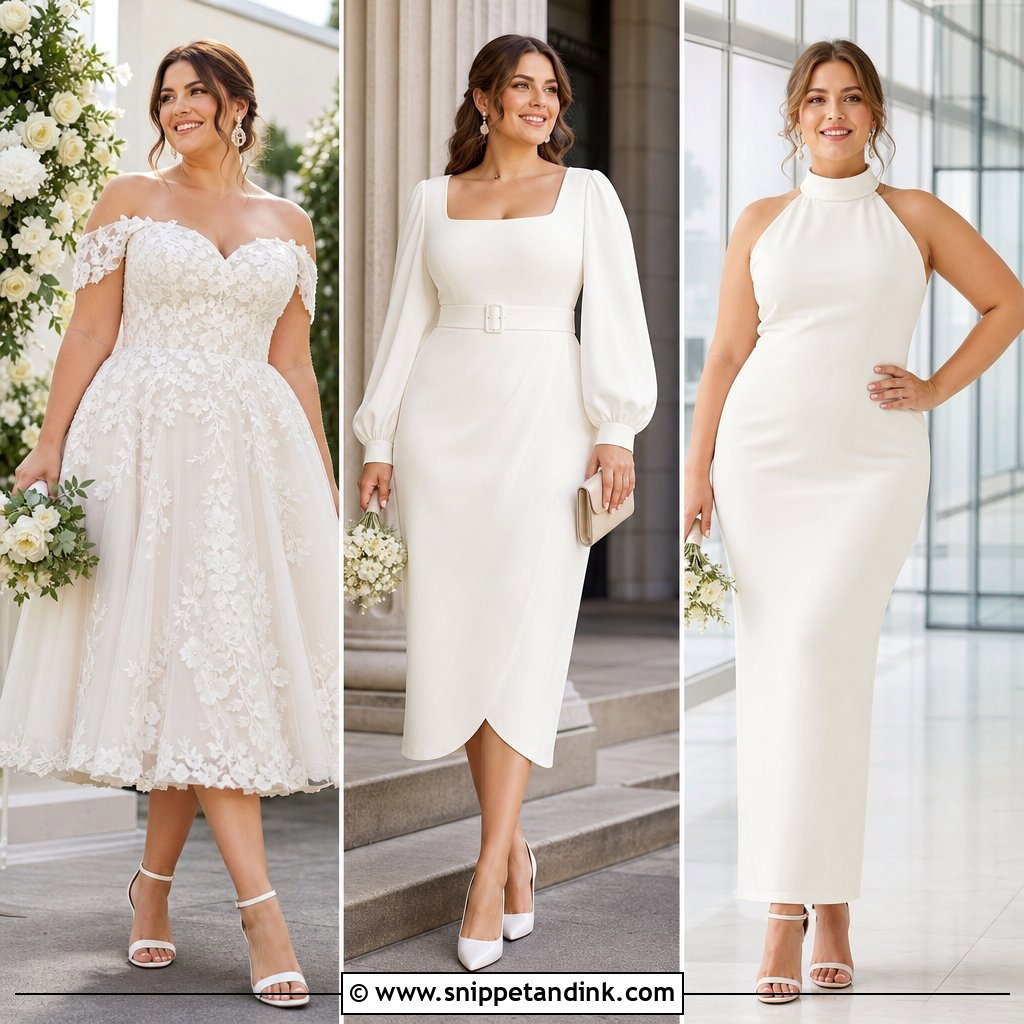
Tea length lands somewhere between the knee and the ankle, and it’s the most practical gown here: no hem to trip on, no bustle, and your shoes become part of the outfit. Hem height is what I fuss over, because an inch too long looks like a mistake instead of a choice. A clean bodice in satin, tulle or lace keeps it classic rather than costume-vintage. Pointed pumps and a short veil or bow suit a courthouse or a small reception especially well.
13. Column Wedding Dress
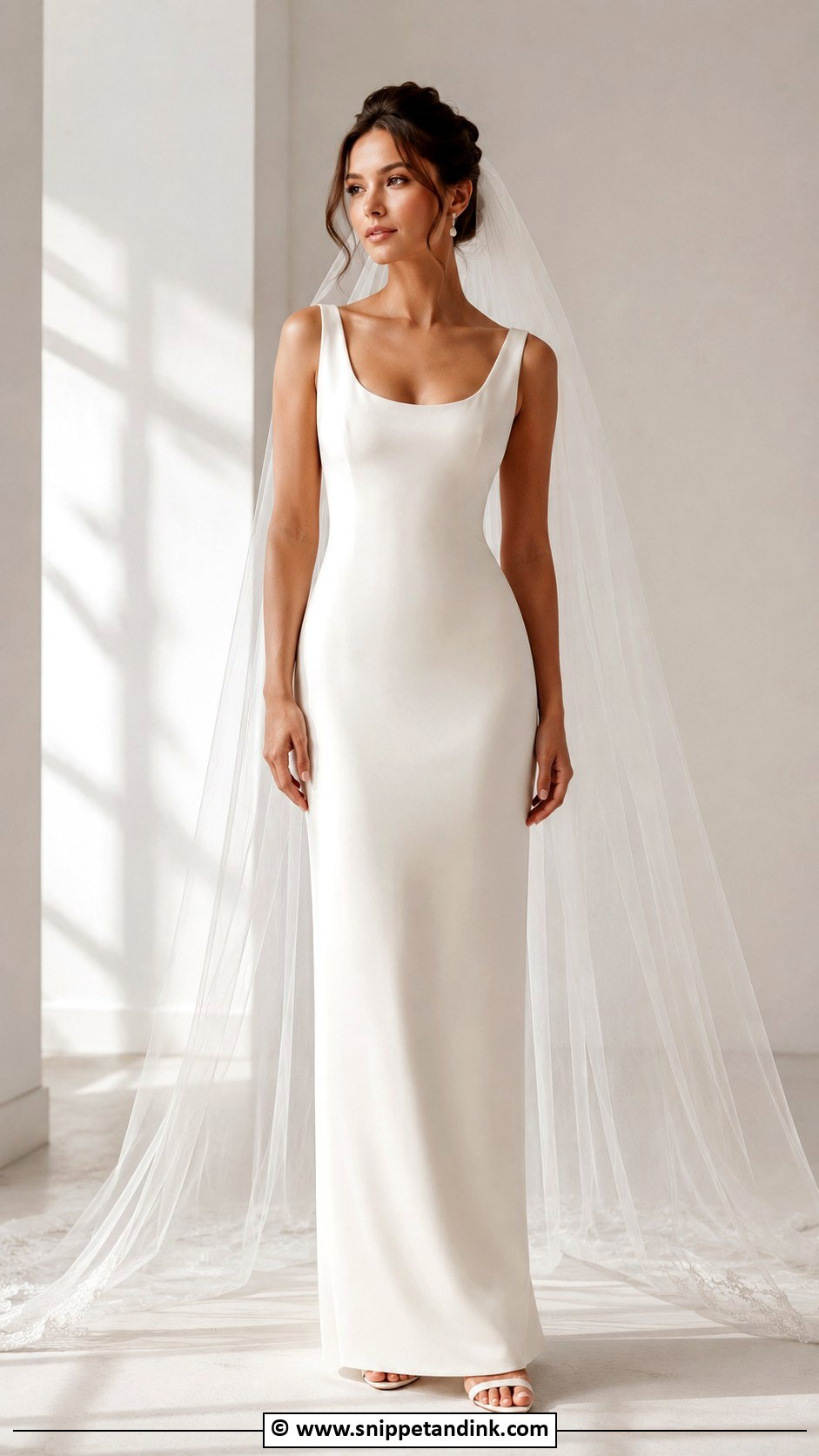
Too tight and it pulls across the hips; too loose and it looks borrowed. A column drops straight from neckline to hem, looser than a sheath, so it lives or dies on tailoring. My goal at the fitting is a dress that skims you standing still and still lets you take a full stride. Crepe, satin, silk or a lightweight mikado all hold the line. A scoop or bateau neckline, a long veil and smooth hair keep it long and clean.
14. Mikado Wedding Dress
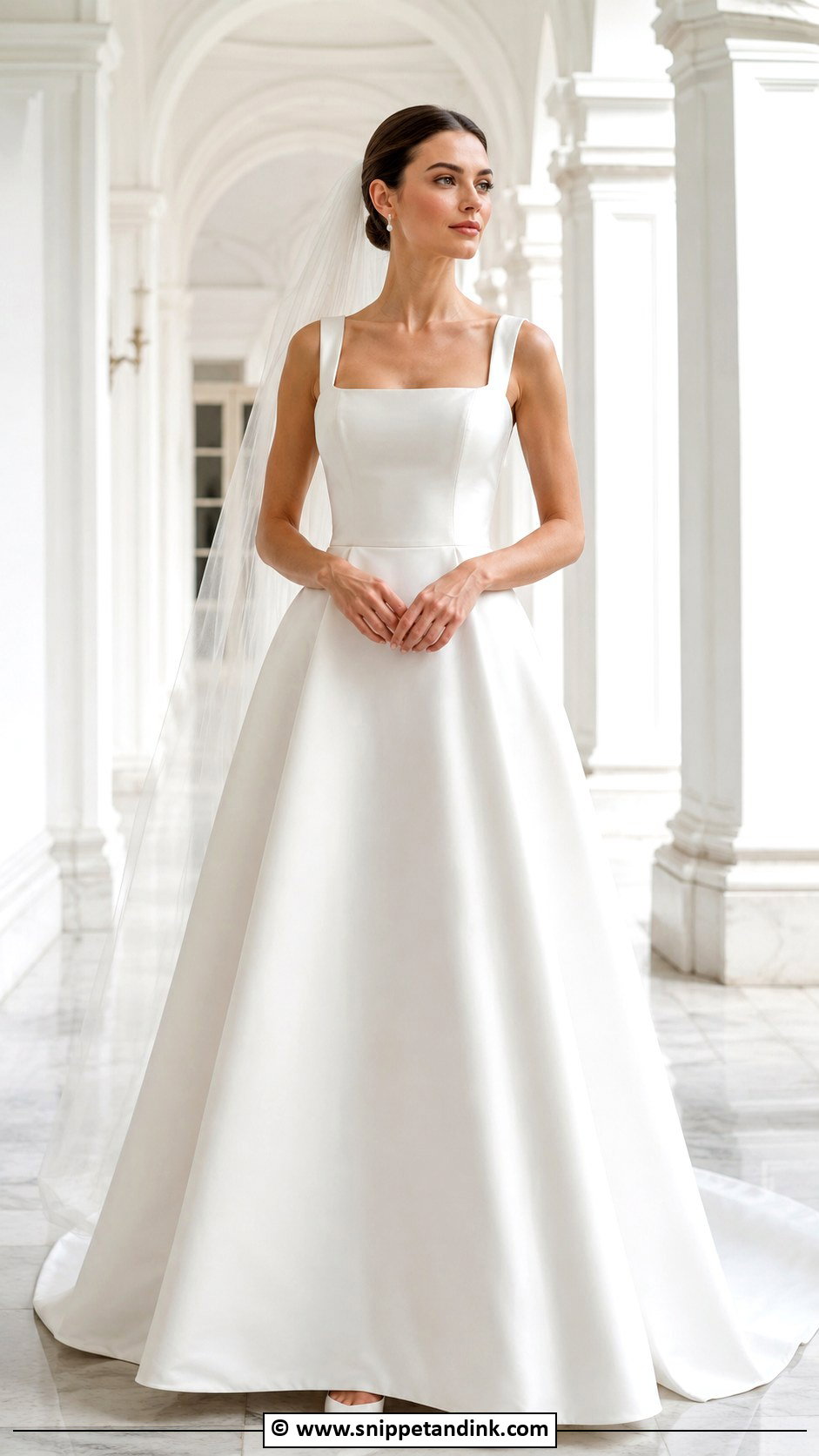
Mikado is a heavy, slightly crisp silk blend that holds its own shape, so I suggest it when a bride wants structure without beading. Seams stay sharp, folds stay architectural, and it resists the limp look thinner satins get by evening. It is warm, though, and I’d hesitate for an outdoor ceremony in high summer. A-lines, ball gowns and strapless cuts all suit it. Covered buttons, a small bow or a plain train are enough detail, with classic pumps and pearls.



15. Simple Lace A Line Wedding Dress
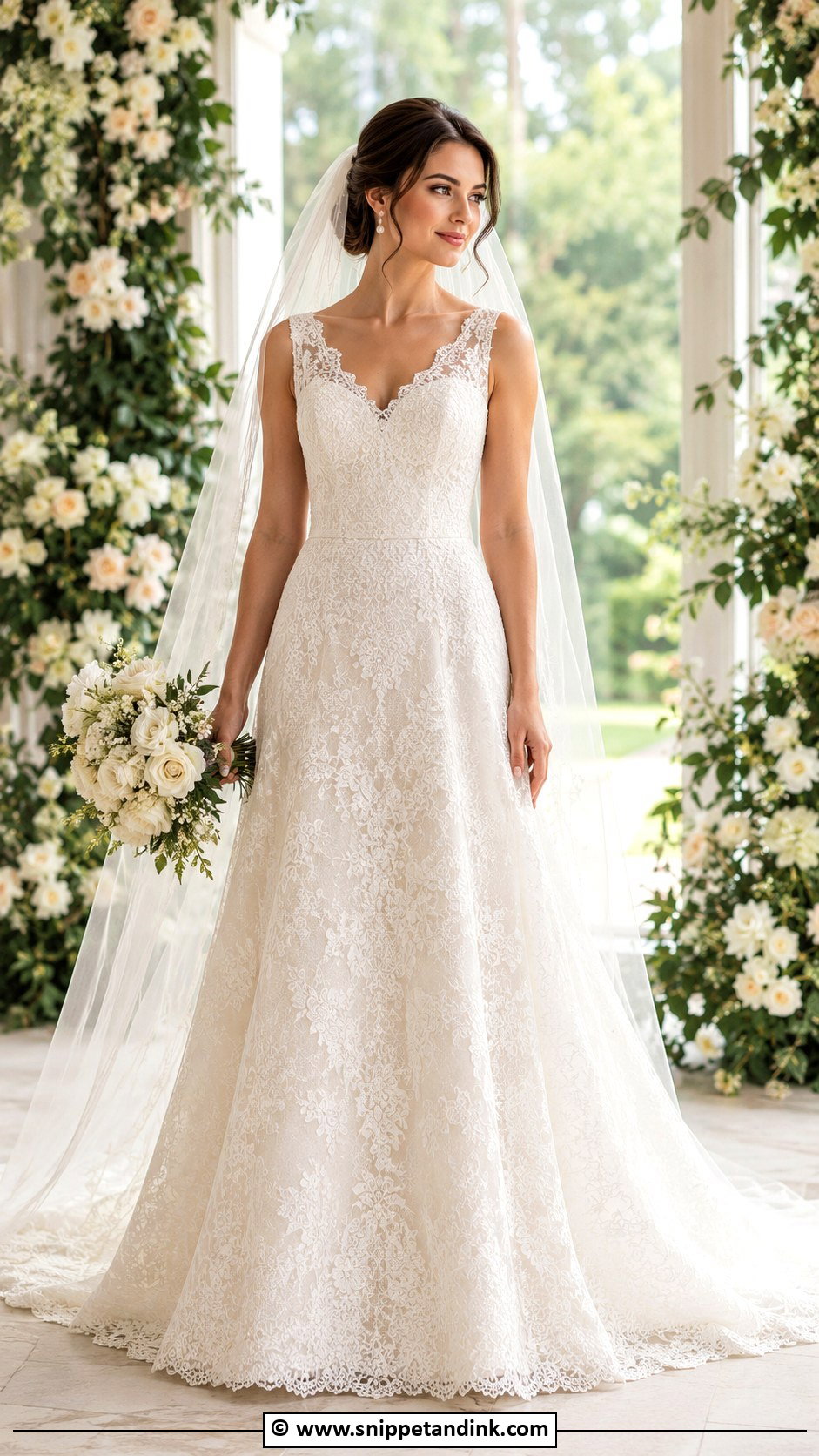
With lace on an A-line, restraint matters more than the lace itself. I look for a delicate pattern over a full lining and steer away from lace layered on lace, which reads busy in photos. The A-line skirt gives the lace room to move. A lined bodice matters too, because scratchy lace at the underarm is a complaint I hear after long receptions. It suits a garden ceremony as easily as a ballroom, and needs only pearl earrings, a simple veil and classic heels.
16. Minimalist Strap Wedding Dress
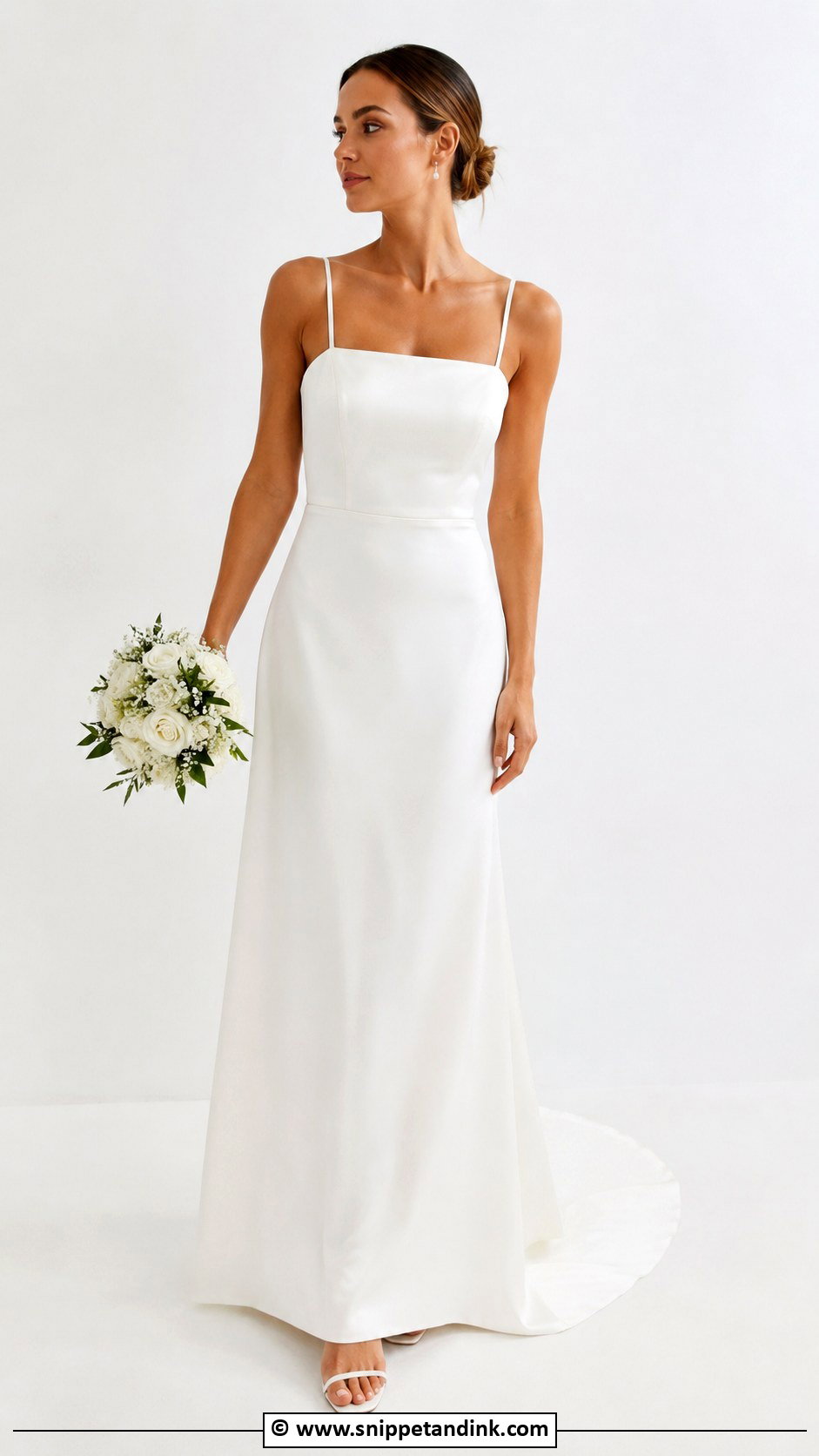
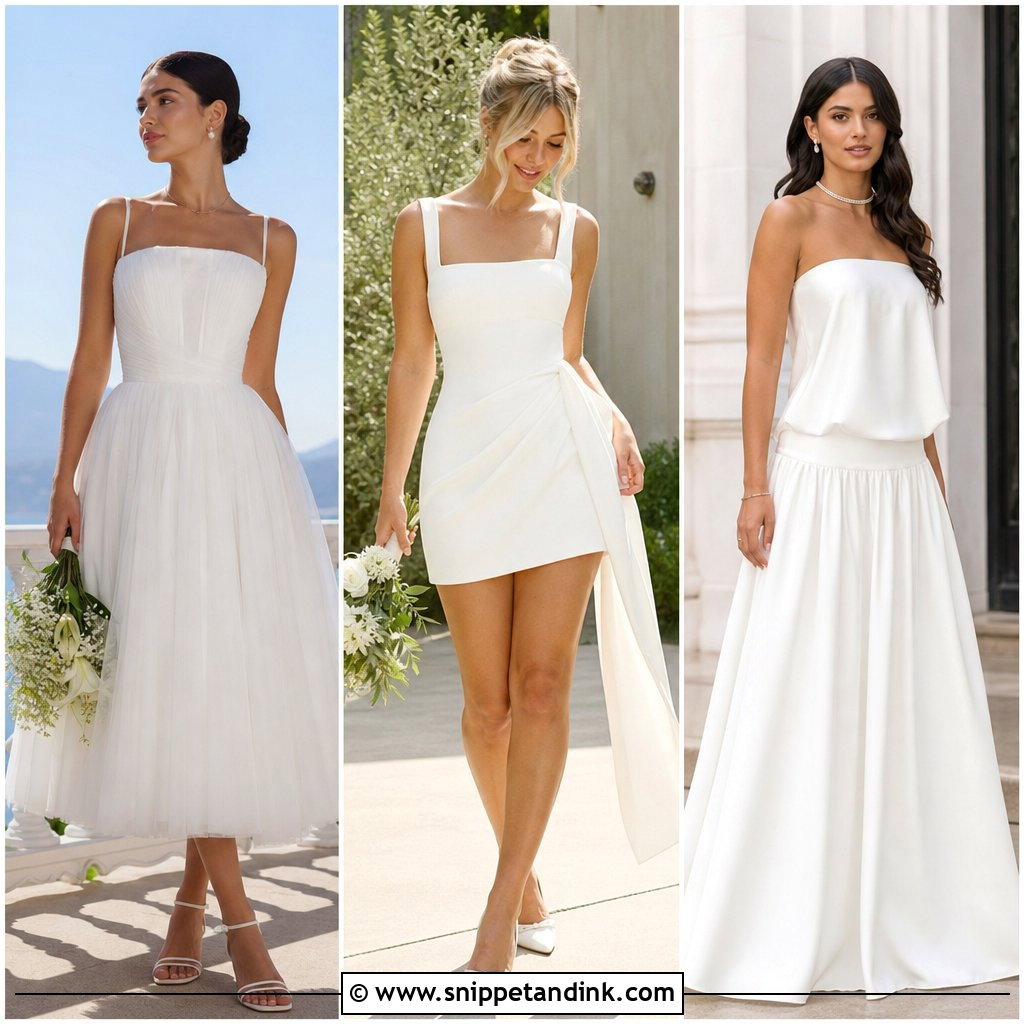
Everything here rests on two straps and a bodice, so the fit has to be close. Thin straps look delicate but make it obvious if a bodice is slipping; wider straps give more support for a fuller bust. A straight, scoop or soft V neckline all work. Satin, silk and crepe keep the surface smooth, while anything textured fights the simplicity. With a slim or A-line skirt, sleek sandals, a low bun and small earrings, there’s nothing left to add.
17. Simple Mermaid Wedding Dress
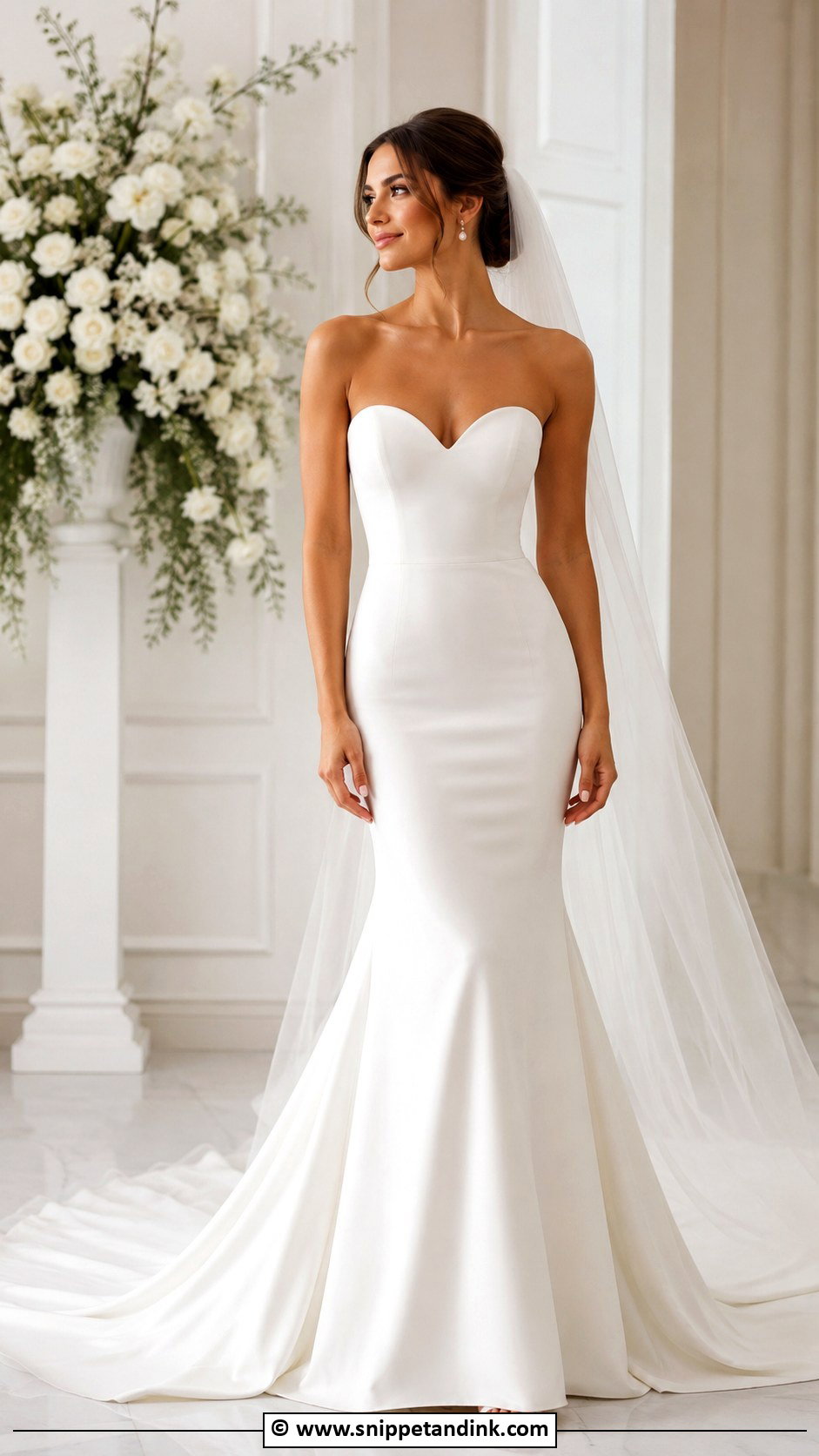
A mermaid is fitted to the knee and then flares, giving more shape than any other gown here. I always have a bride sit, climb a step and walk fast at the fitting, because the knee flare can restrict your stride and a tight hip makes dinner a chore. Crepe, satin or plain lace keeps the drama in the silhouette rather than the decoration. Sweetheart, off-shoulder and square necklines suit it, and a long veil with classic heels is enough.
18. Cap Sleeve Wedding Dress
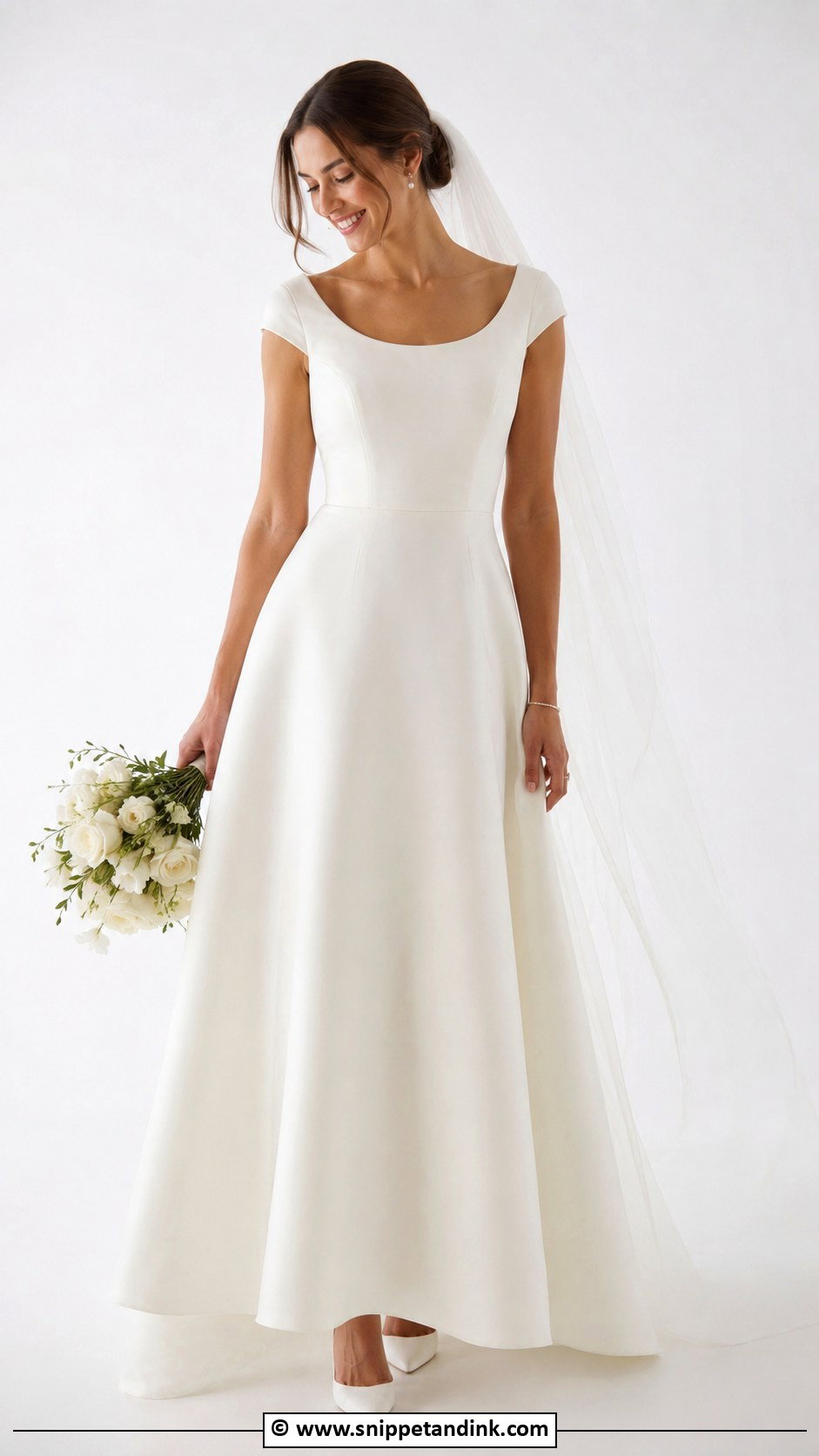
A cap sleeve wedding dress covers just the top of the shoulder, so you get a little coverage with nothing restricting the arm. I check where the cap ends. It should finish on the shoulder bone, not partway down, or it can make the shoulders look wider than they are. Lace, satin, crepe or tulle all work, over an A-line or sheath skirt. Pearl studs, a fine bracelet and a simple veil are plenty for a gown that won’t fight you all day.
19. Clean Ball Gown Wedding Dress
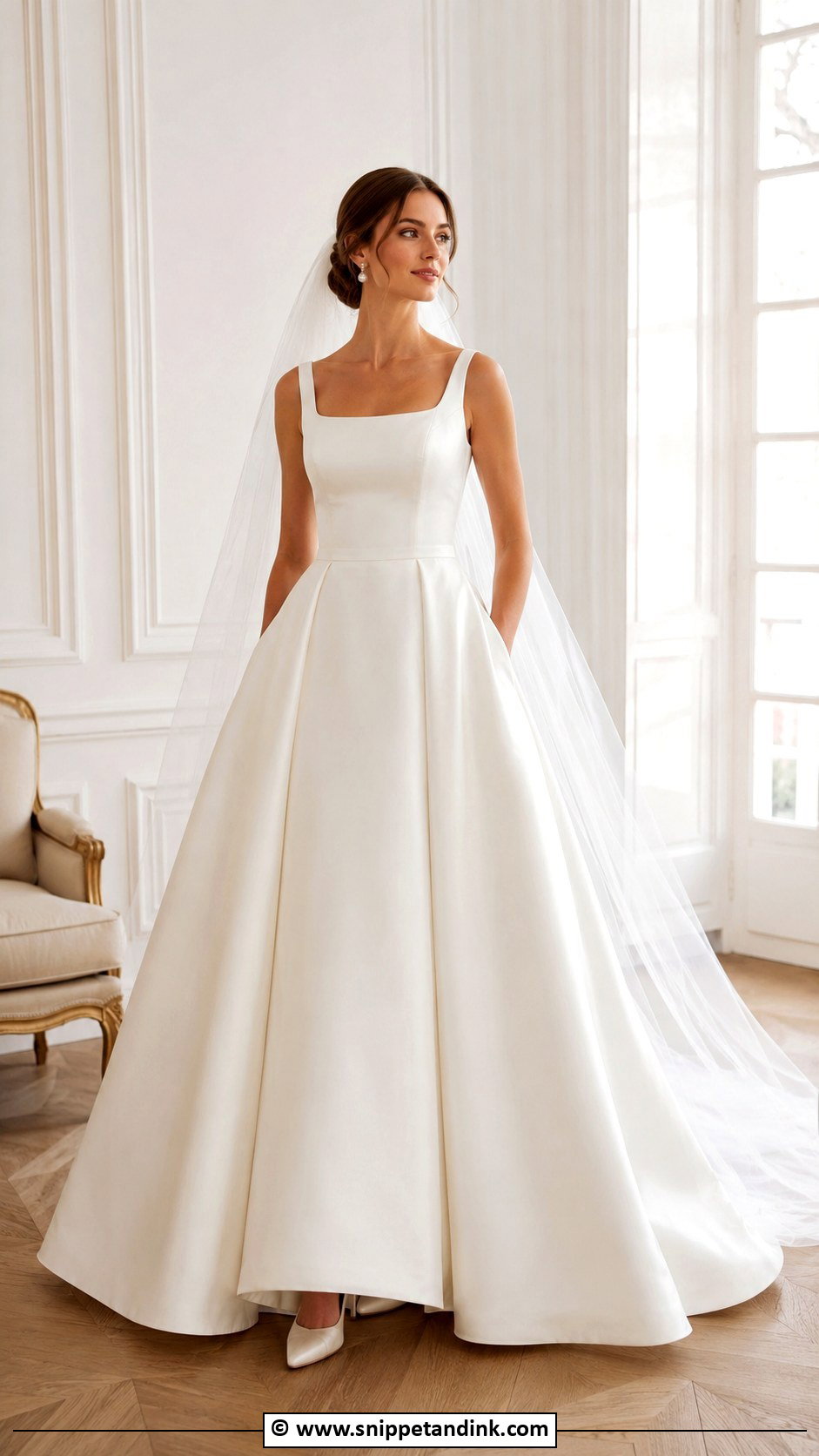
Volume without decoration is the grown-up version of the ball gown. The full skirt does the work, so I look for smooth satin, mikado or organza and a waistline that sits at your natural waist, not below it. Strapless, square or bateau necklines all suit the shape. That volume brings practical questions: you’ll want a bustle for dancing, help in the bathroom and a plan for the car. A long veil for the ceremony and minimal jewelry keep it classic.



20. Simple Tulle Wedding Dress
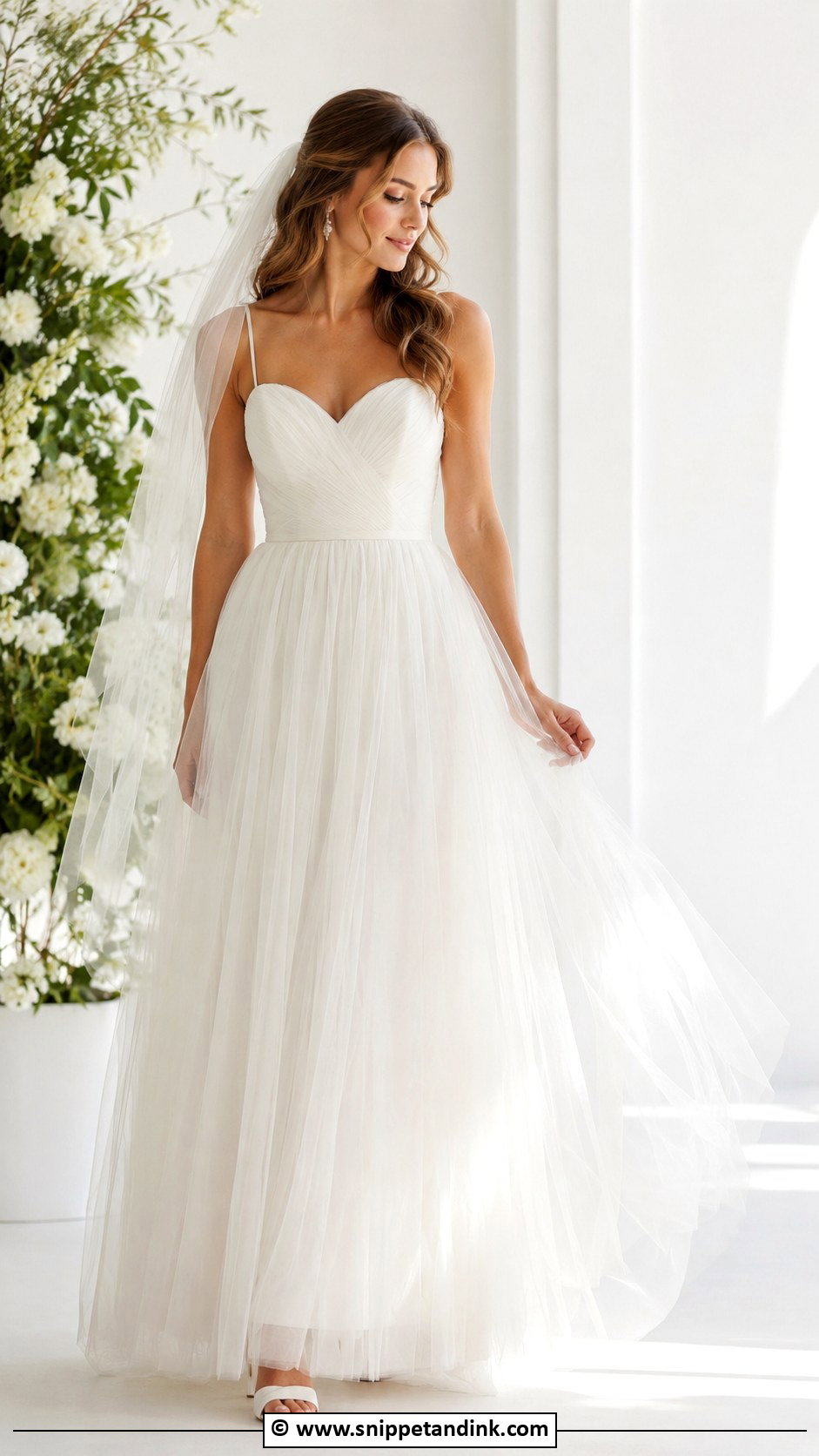
Tulle is airy, but it snags on rough bark, stone walls and bracelets, which I mention to every bride planning an outdoor ceremony. A fitted bodice over a smooth lining, with a skirt of a few soft layers, keeps it light rather than puffy. The A-line shape suits it best, and any neckline works. Choose jewelry with smooth settings so nothing catches the netting, and pair it with soft waves and a veil as light as the skirt.
21. Simple Wedding Dress With Buttons
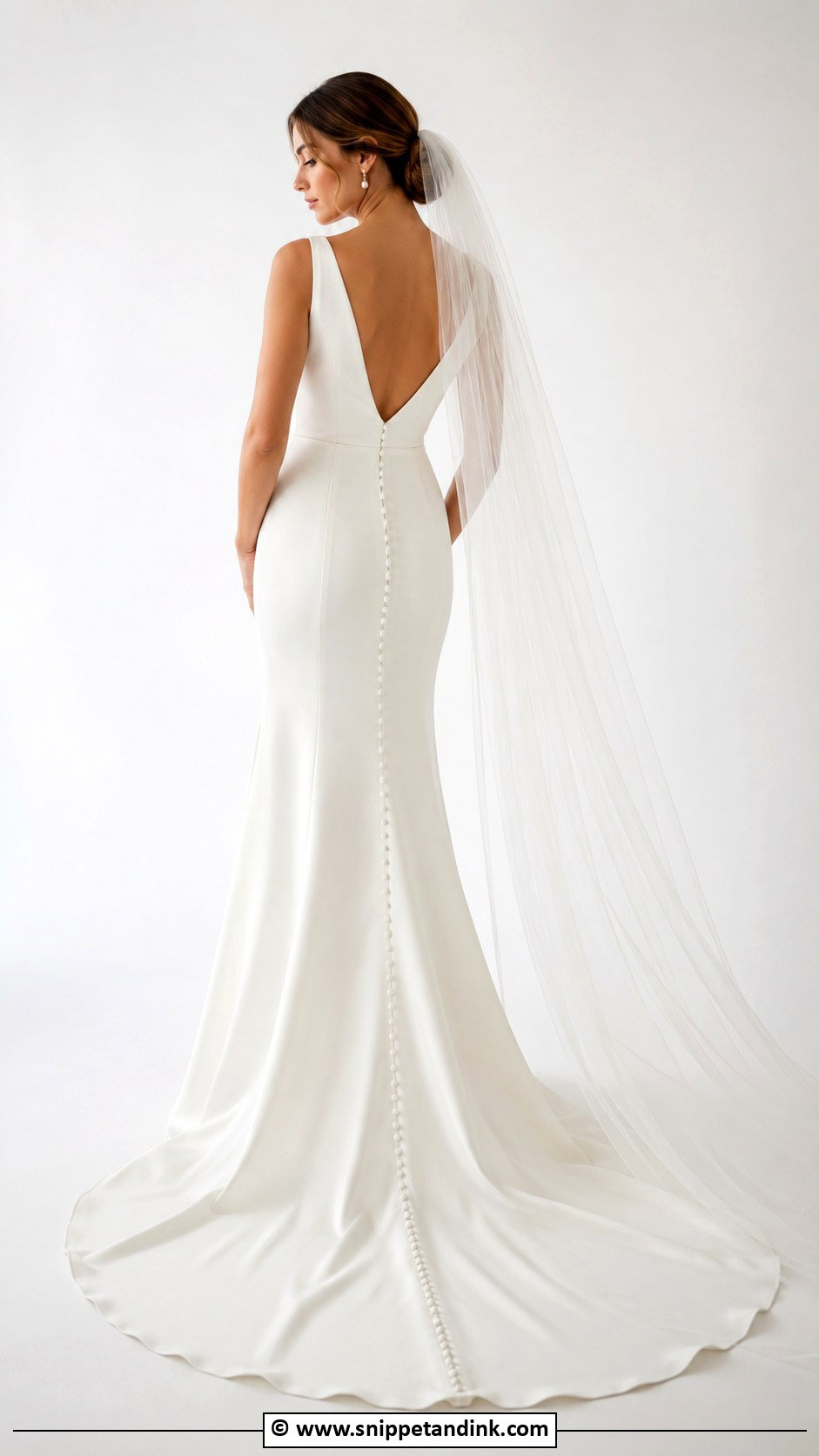
Buttons add detail without clutter, which is why I like them on an otherwise plain gown. Covered buttons down the back are one of the oldest bridal details there is, and they sit well on satin, crepe, lace and mikado. Most are decorative over a hidden zip, and I’d recommend that; a full row of working loops takes ages to close on the morning. Wear your hair up or swept to one side so they show during the ceremony.
22. Simple Wedding Dress With Train
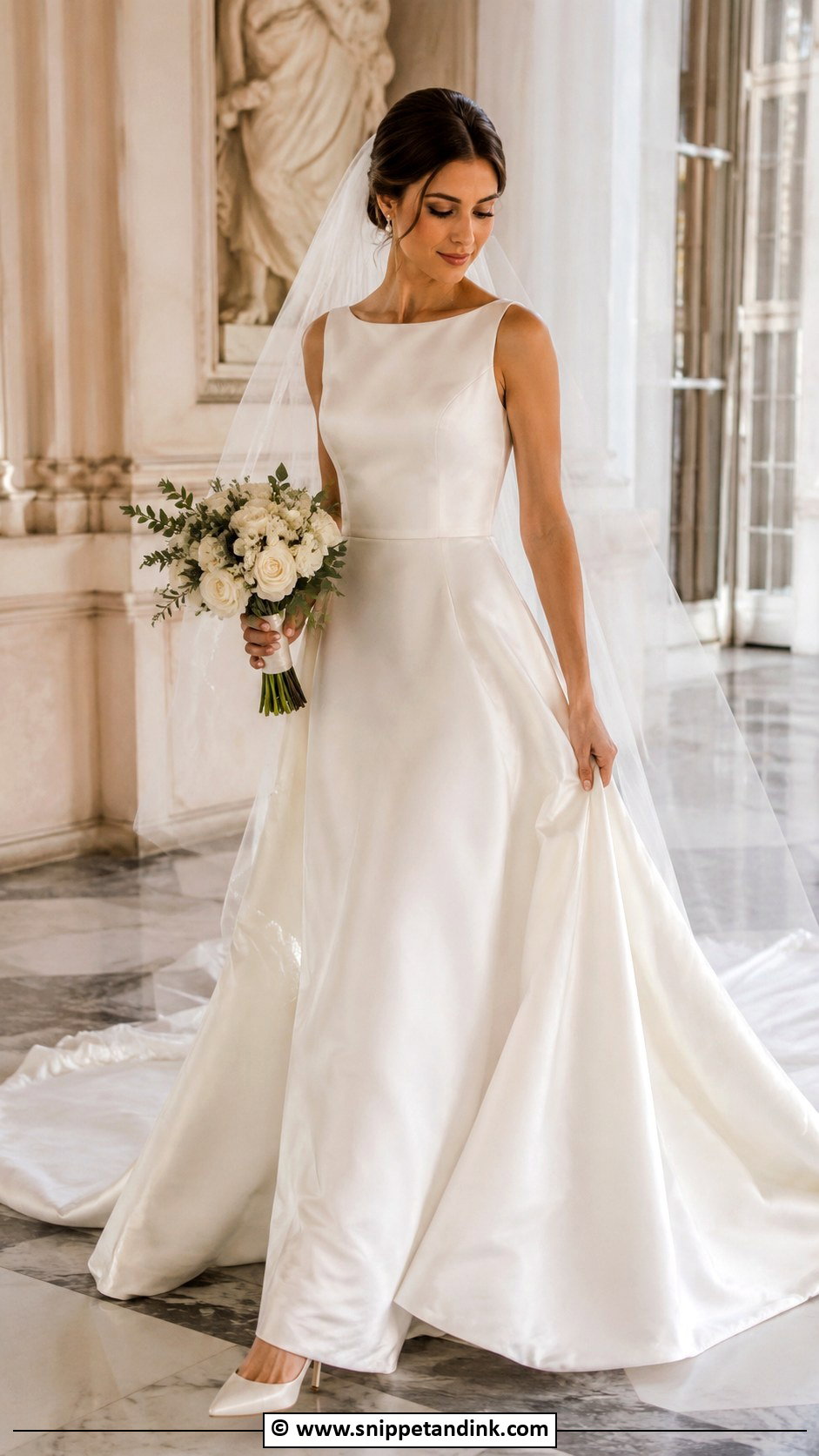
A train gives a simple gown its ceremony moment, and the venue should decide the length. A sweep train suits a garden or registry office, while chapel length and longer need a long aisle to read properly. Whatever the length, you’ll need a bustle for the reception, and I have the bride practise it with whoever will fasten it on the day. A crepe sheath with a train feels modern, a satin A-line classic. Keep the veil either shorter than the train or following its line, so the two don’t compete.
23. Simple Wedding Dress With Bow
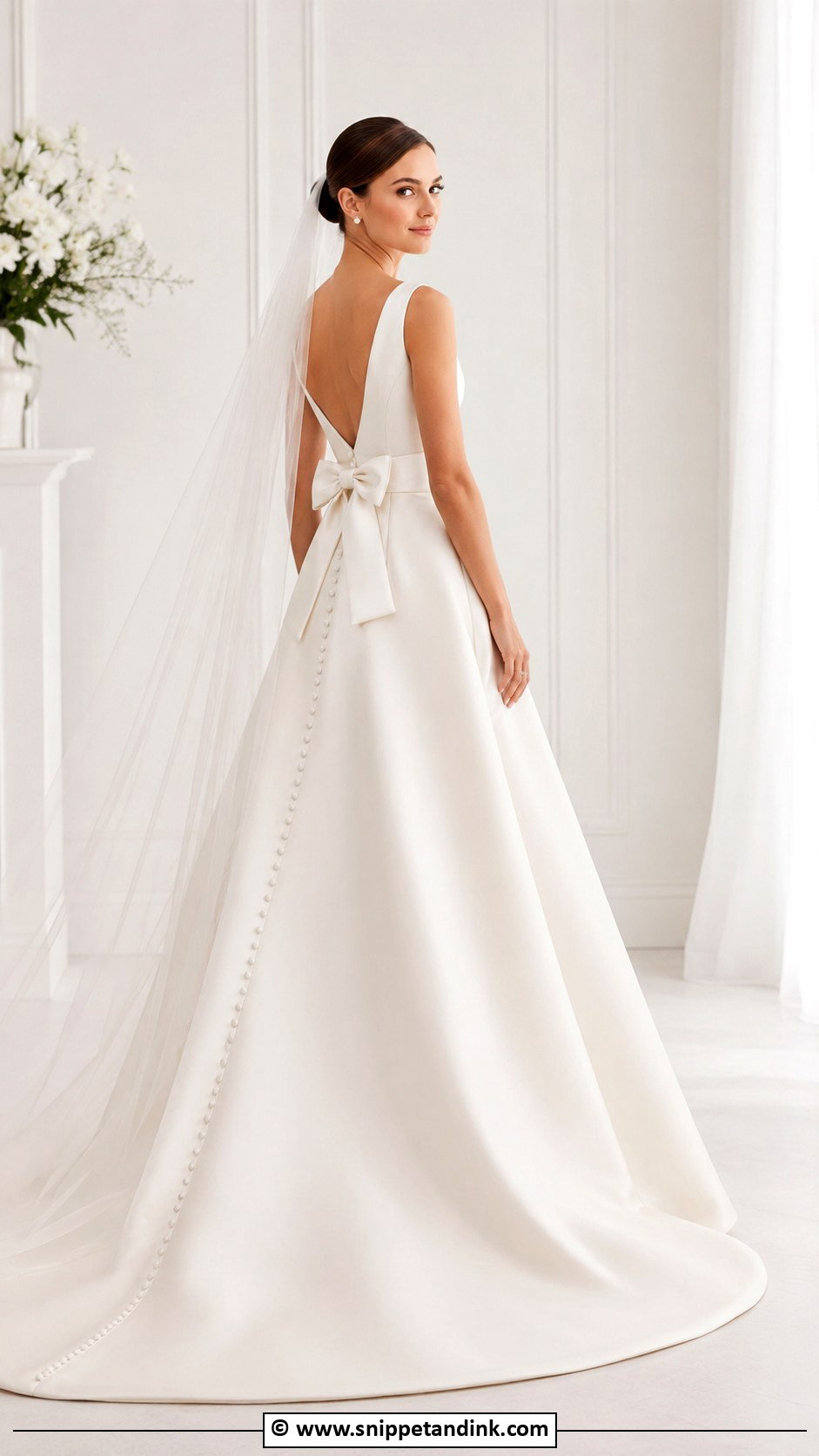
A bow is the easiest detail to get wrong. Too large and it dates the dress; too soft and it droops by the speeches. I prefer a small, structured satin or mikado bow at the back waist, where guests see it through the ceremony. If it sits exactly where you lean back in a chair, it will crush, so we check that at the fitting. Keep jewelry minimal and let the bow be the one accent.
24. Simple Wedding Dress With Veil
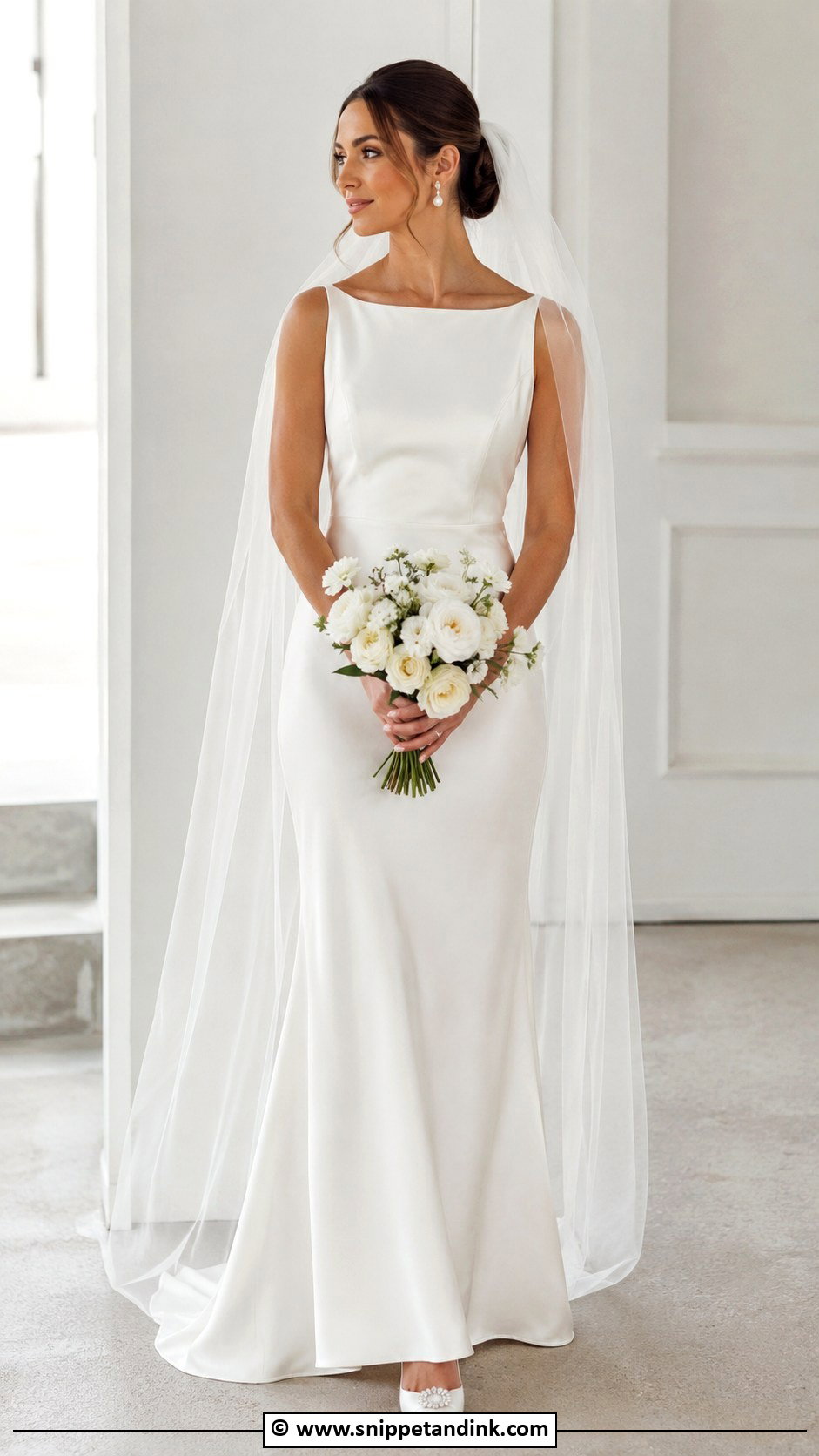
On a simple gown, the veil matters more than it would on a beaded one, because it’s often the only thing that says bride. A fingertip veil is easy to wear all evening, and a chapel veil feels more formal. Over plain satin or crepe, I like a sheer veil with a raw cut edge. If the dress has lace, keep the veil plain so the patterns don’t fight. Ask how it attaches: a comb set into an updo stays put, while one pinned into loose waves can slide out by the first dance.
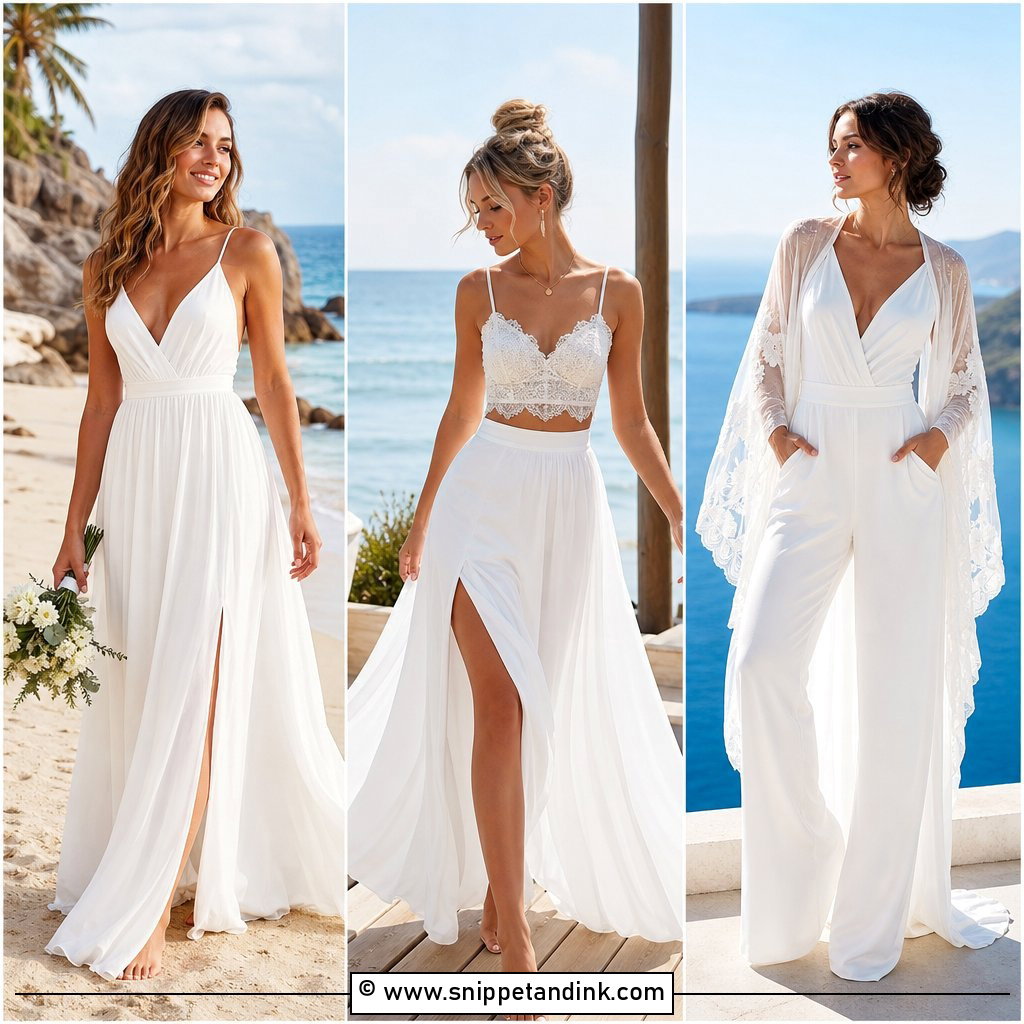

25. Simple Wedding Dress With Sleeves
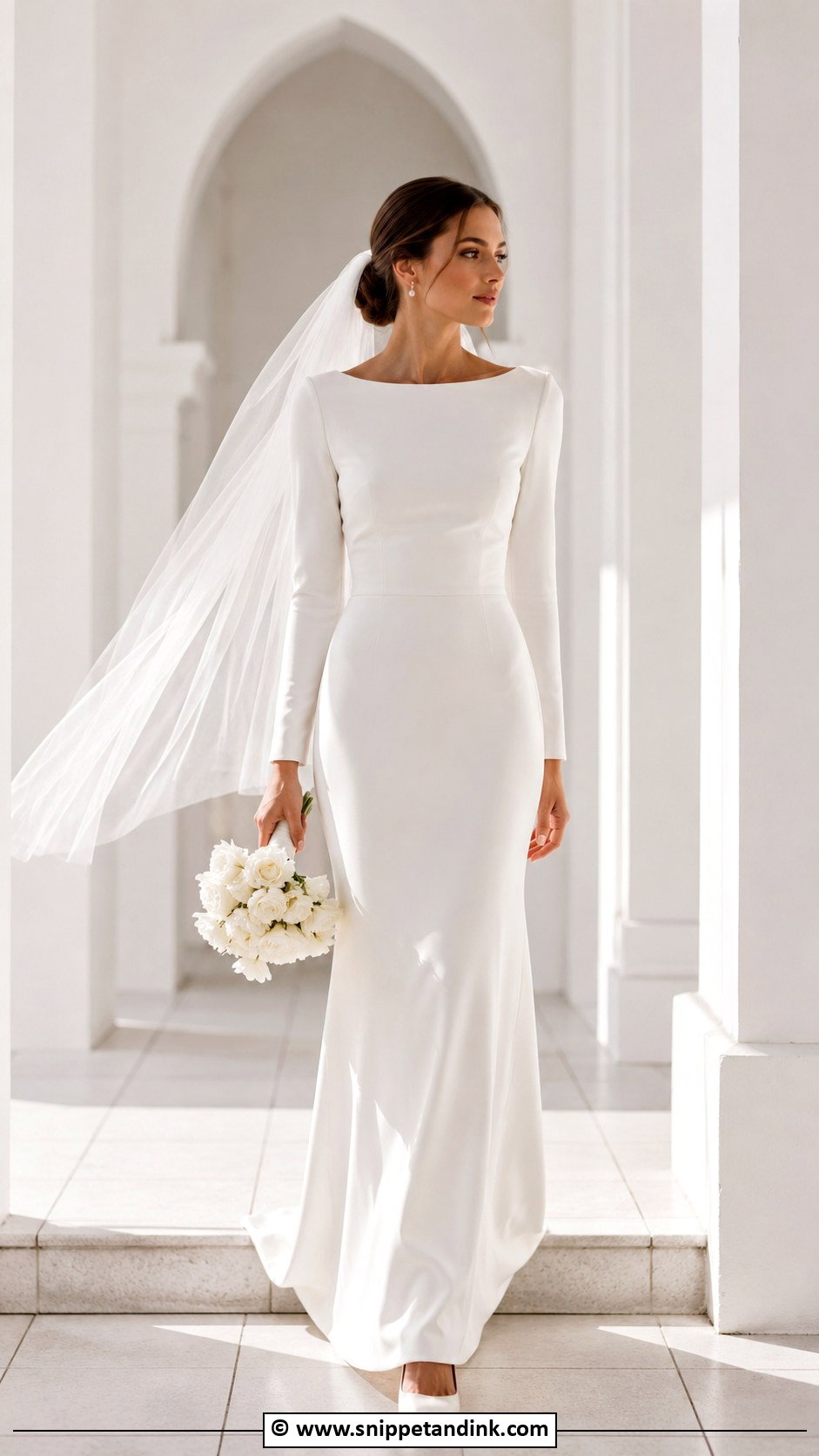
Sleeves change how a gown feels to wear more than any other detail. I aim for sleeves that follow the natural line of the arm, in sheer mesh, satin, lace or crepe, and avoid big puffed shapes, which date fastest. A long crepe sleeve on a sheath reads modern; lace sleeves on an A-line read romantic. Check that you can reach forward and lift a glass without strain. A clean neckline, a fitted waist, a low bun and simple earrings keep the coverage feeling light.
26. Simple Wedding Dress With Pearls
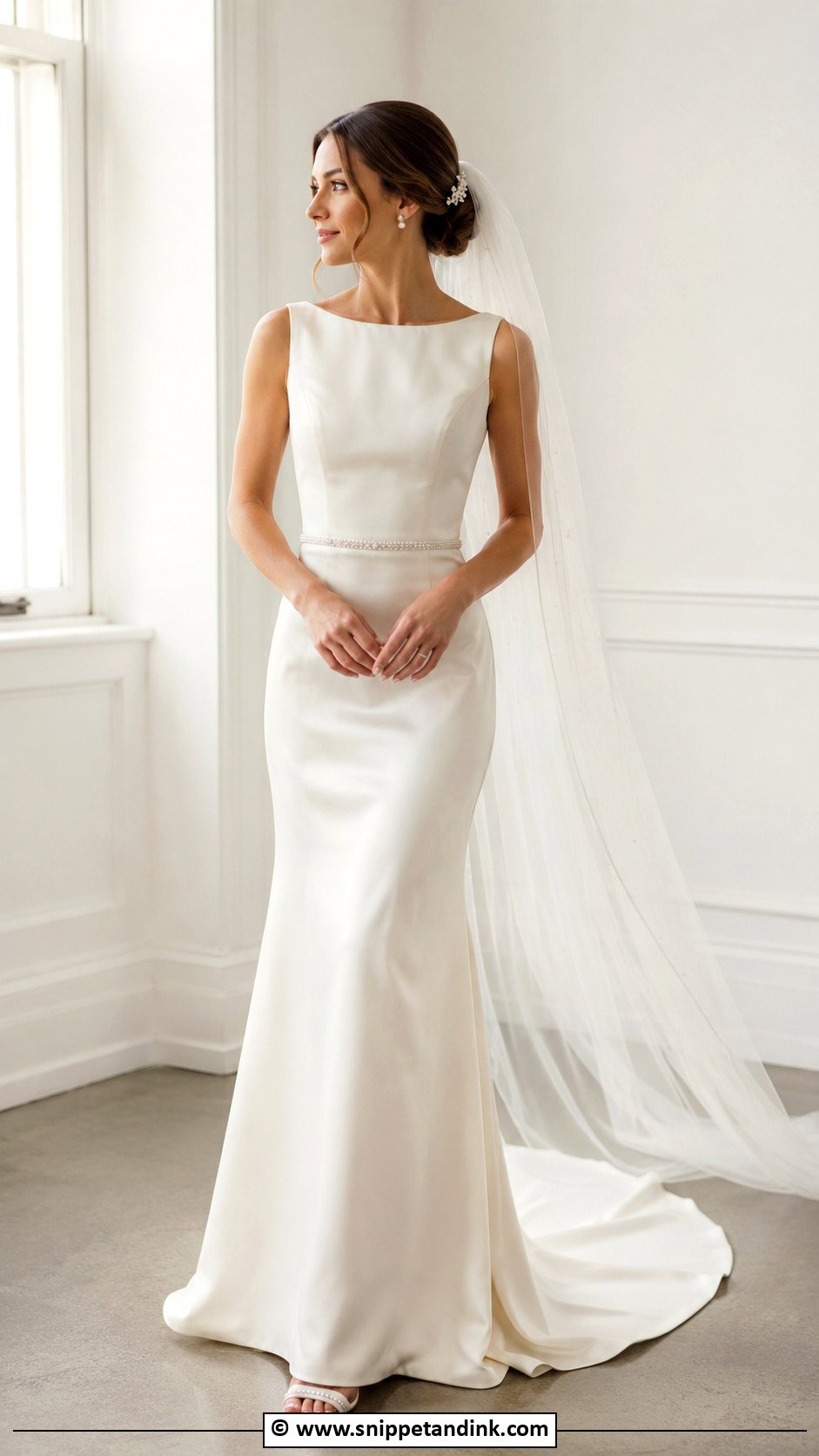
Pearls work best on a simple gown in small doses: on the straps, the buttons, a cuff or scattered across the veil. Cover a whole bodice and it becomes a different dress. A clean satin or crepe gown with pearl buttons is my favourite version. If the dress is completely plain, pearl earrings, a pearl hair pin or a delicate strand do the same job. Pearls reflect soft light rather than sparkle, so they don’t flare in flash photos the way crystals can.
27. Simple Wedding Dress With Scoop Neck
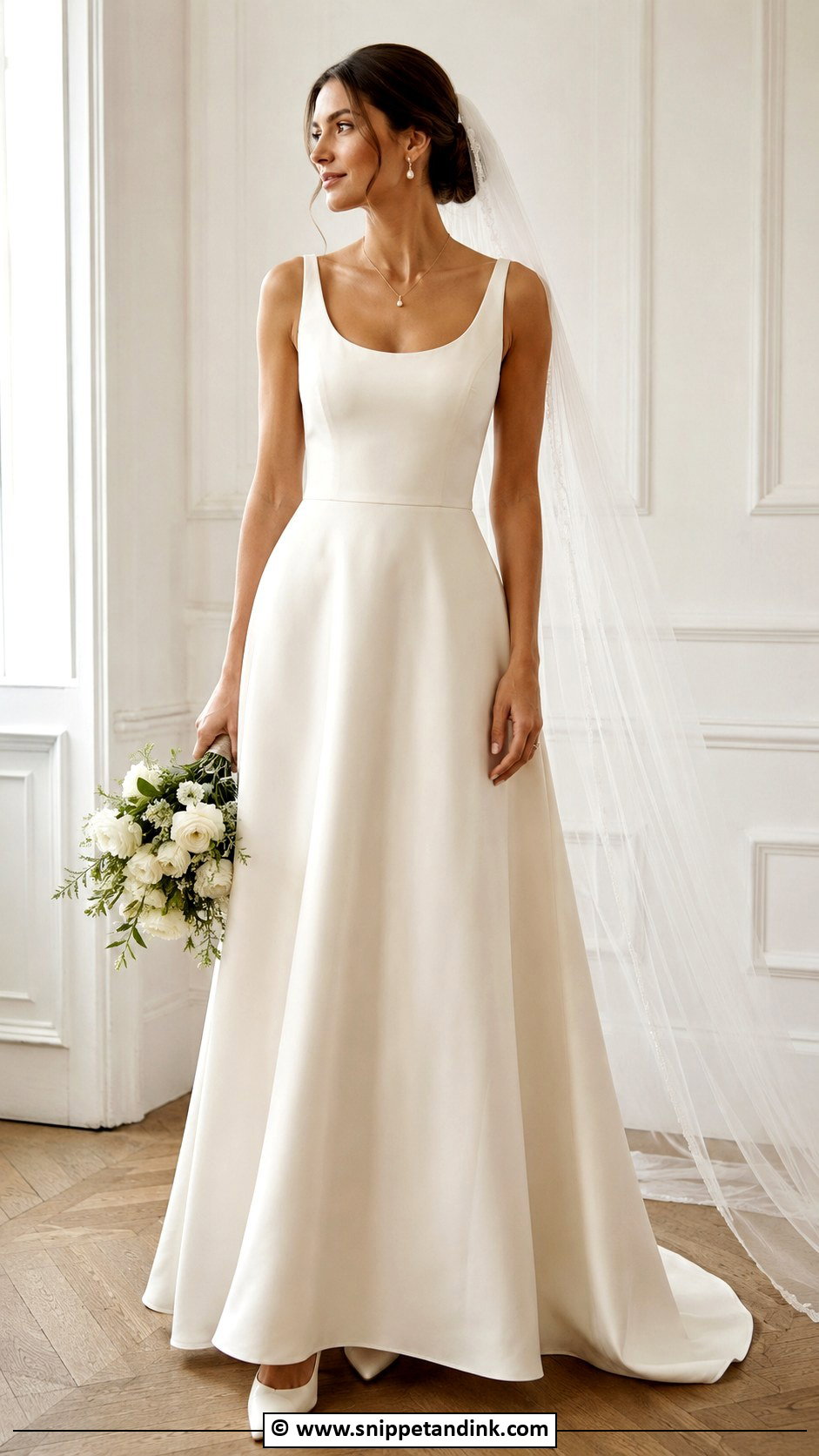
The scoop is the most relaxed neckline here, a rounded opening that sits comfortably and never needs adjusting. It pairs with straps, long sleeves, cap sleeves or a sleeveless bodice. In satin, silk or crepe it stays simple. On an A-line it feels romantic, on a sheath more modern. A fine necklace works if the scoop leaves room; otherwise leave the neck bare. I recommend it to brides who want to forget what they’re wearing and enjoy the day.
28. Simple Wedding Dress With Low Back
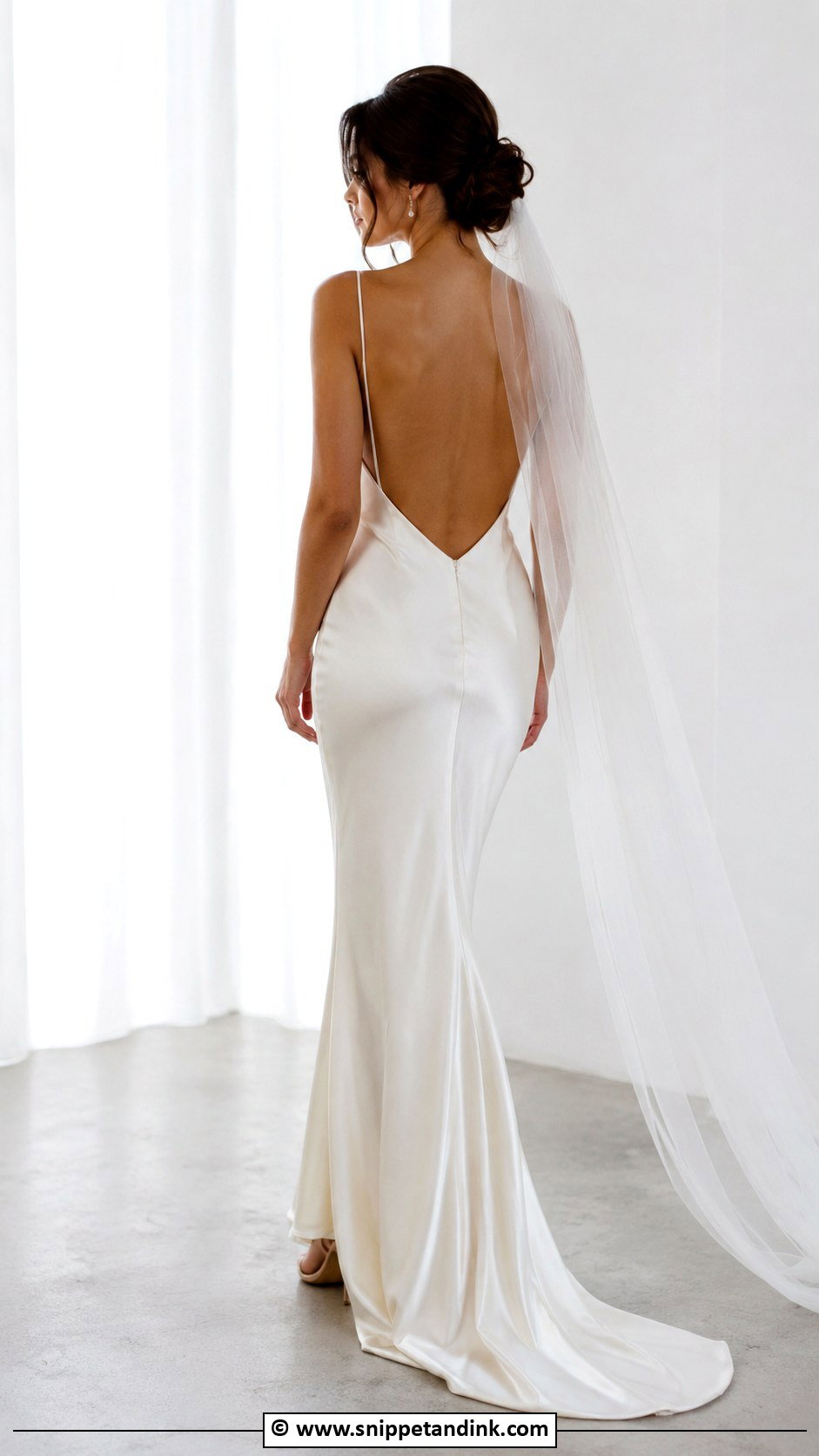
With a low back, the front can stay modest while the back carries the interest. It works on satin slip dresses, crepe sheaths and minimal A-lines. Support is the practical question: most brides can’t wear a regular bra, so we build cups into the bodice or use a low-back adhesive option, and I test that before ordering. Fine straps, covered buttons or a soft cowl add interest. An updo keeps the back on show.
29. Simple Wedding Dress With Jacket
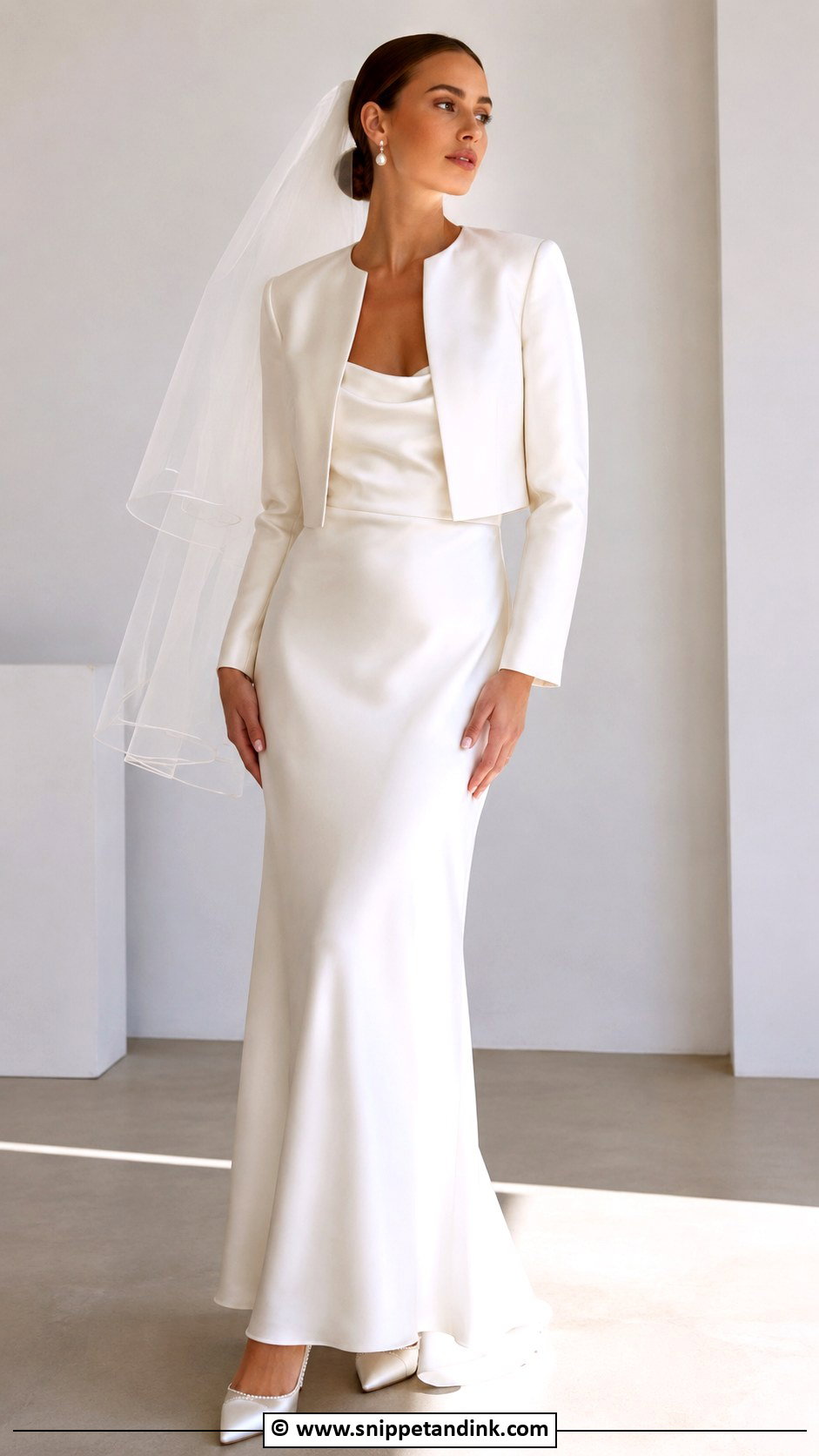
A jacket gives you two outfits from one dress. A bolero, cropped jacket, capelet or tailored bridal jacket covers the shoulders for a ceremony that asks for it or a cold morning, then comes off for the reception. Matching satin over a slip dress feels modern; a lace topper over an A-line feels classic. I always check that the jacket doesn’t bunch over the bodice seams when you sit. Keep the jewelry quiet so the layers stay clean.
30. Simple Courthouse Wedding Dress
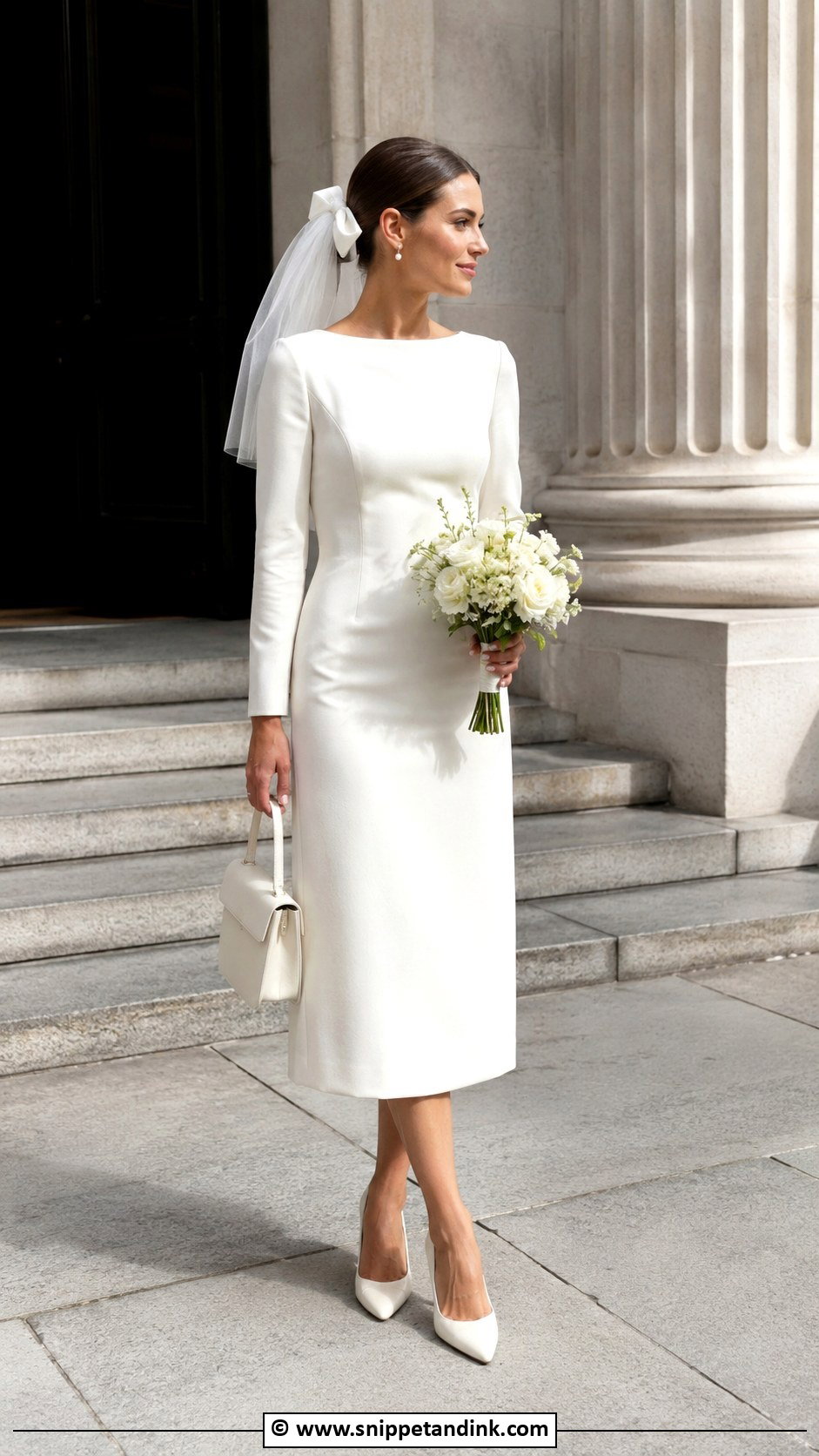
For a courthouse, I think about how much walking, standing and waiting you’ll do in a busy building, and that changes what I’d suggest. A midi dress, a sleek column, a tea-length dress or a tailored mini all work. Crepe, satin, silk or a structured cotton blend look polished without needing a train. Pointed heels, pearl earrings, a small bouquet and a short veil or hair bow make it clearly bridal. The best version is one you could wear to dinner afterwards and still feel like the bride.
Why Minimal Gowns Need More Tailoring, Not Less
There’s nothing on a plain gown to hide a hem that dips at one side or a waist that sits a centimetre too low, so these dresses usually need more careful alterations than beaded ones. Made-to-order gowns can take several months to arrive, so I tell brides to order earlier than feels necessary. Alterations normally begin around two to three months before the wedding and run over two or three fittings.
Bring the shoes and underwear you’ll actually wear to every appointment. The hem is set against your heel height, and swapping a bra or shapewear late can change how the bodice sits. The final fitting is where the bustle gets set, and whoever is helping you on the day should come along to learn it.
After the Wedding: Cleaning and Storing It for Keeps
A dress chosen to last is often one someone hopes to keep or pass on, and the first few weeks decide how well it ages. Champagne, sweat and sugary drinks can dry invisibly and then turn yellow or brown over the following months, which is why I push brides to get it to a specialist cleaner soon rather than leaving it in the bag.
- Have it professionally cleaned within a few weeks, and point out every spill, even ones you can’t see.
- Store it folded with acid-free tissue in an acid-free box, not in the plastic garment bag it arrived in, which traps moisture.
- Avoid hanging a heavy gown for years; the weight slowly stretches straps and shoulders out of shape.
- Keep it somewhere cool, dark and dry, away from lofts and basements, and refold it along new lines every year or so to prevent permanent creases.
A Plain Dress Is Only as Good as Its Fit
Shape, fabric and fit carry a simple dress, and none of them needs decoration to look special. Satin, crepe, lace, mikado, silk and tulle all look classic when the design is balanced. When you try a gown, notice how it moves, how it behaves when you sit, and whether you’d still be happy with the photos in twenty years. A slip dress, a ball gown, lace sleeves or a courthouse midi can each be the right one, as long as it feels like you rather than a costume.
You'll Like These Ideas:






Leave a Reply