
A bun is still the hairstyle I build most for Indian ceremonies, and the reason is mechanical before it is pretty. It gives the dupatta something solid to pin into, keeps hair off heavy earrings and necklaces, and holds its shape through hours of sitting at the mandap. Within that, the range is wide: jasmine for a traditional feel, temple jewelry for a South Indian look, roses for colour, pearls for a lighter finish. Lately I’m asked for lower, smoother buns with less floral weight and one heirloom piece at the back. Here are fifteen versions, with what each one needs from your hair and your outfit.
Hip-Length, Shoulder-Length or Layered Hair Needs a Different Bun
The photos below mostly show long, thick hair, and that shapes what you see. Length decides how big and how secure a bun can be, so here is how I adjust for each.
Very long, heavy hair
Long hair gives you a full bun easily but adds weight at the nape. I split it into two sections and pin each separately, so the bun is held by two anchors instead of one. Otherwise it tends to sag by evening.
Shoulder length
You can still have a proper bridal bun, but it will be smaller. I use a hair donut or a padded bun cover in your shade, wrap your own hair over it and add flowers to finish the size. It looks real because the visible surface is still your hair.
Layers and short pieces
Shorter layers pop out of a bun as the day goes on. I curl them, pin them into the bun with small U-pins and accept a few soft pieces at the face rather than fighting them with heavy gel. If you are growing your hair for the wedding, skip a layered cut in the months before.
1. Indian Bridal Gajra Bun
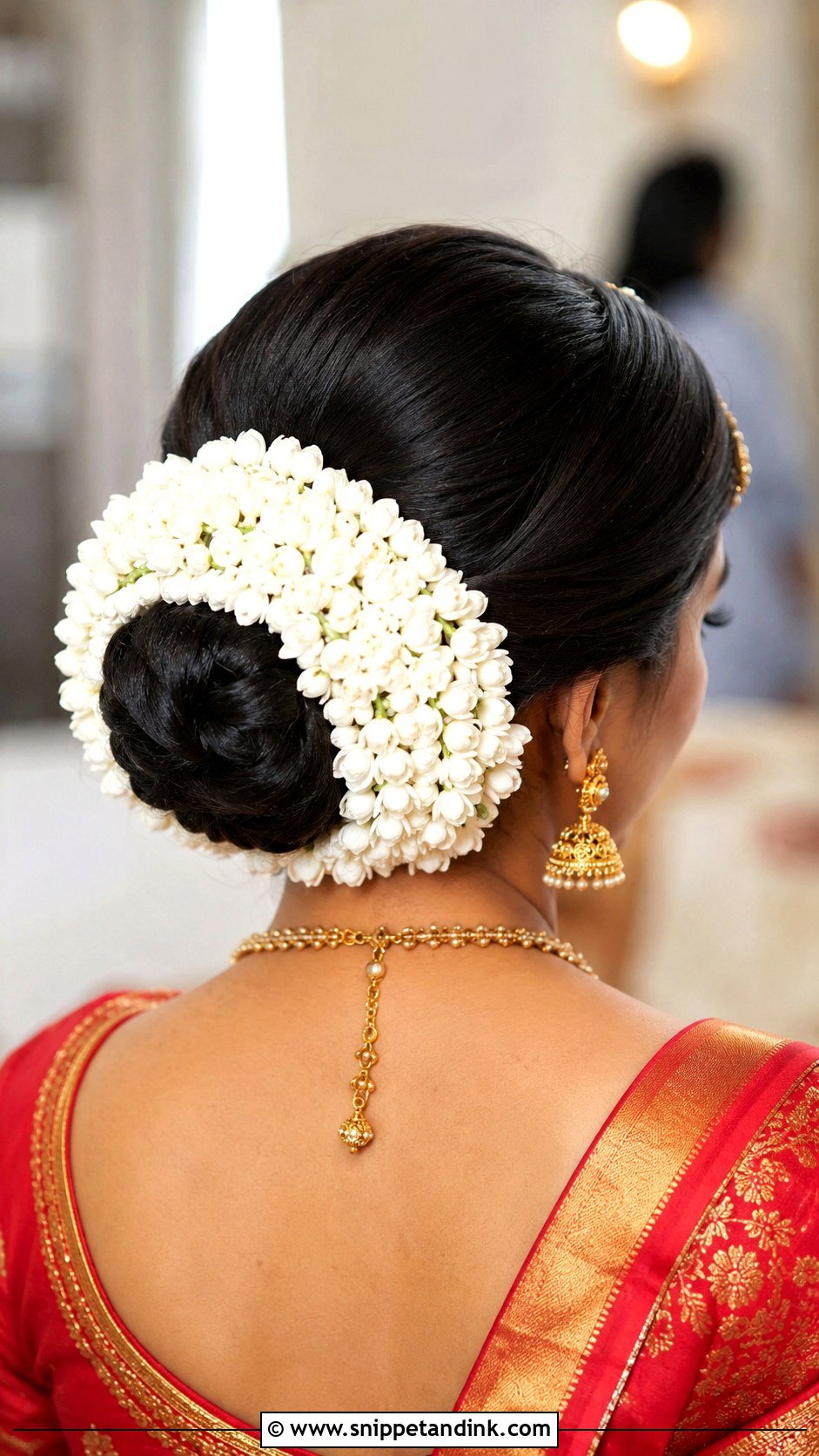
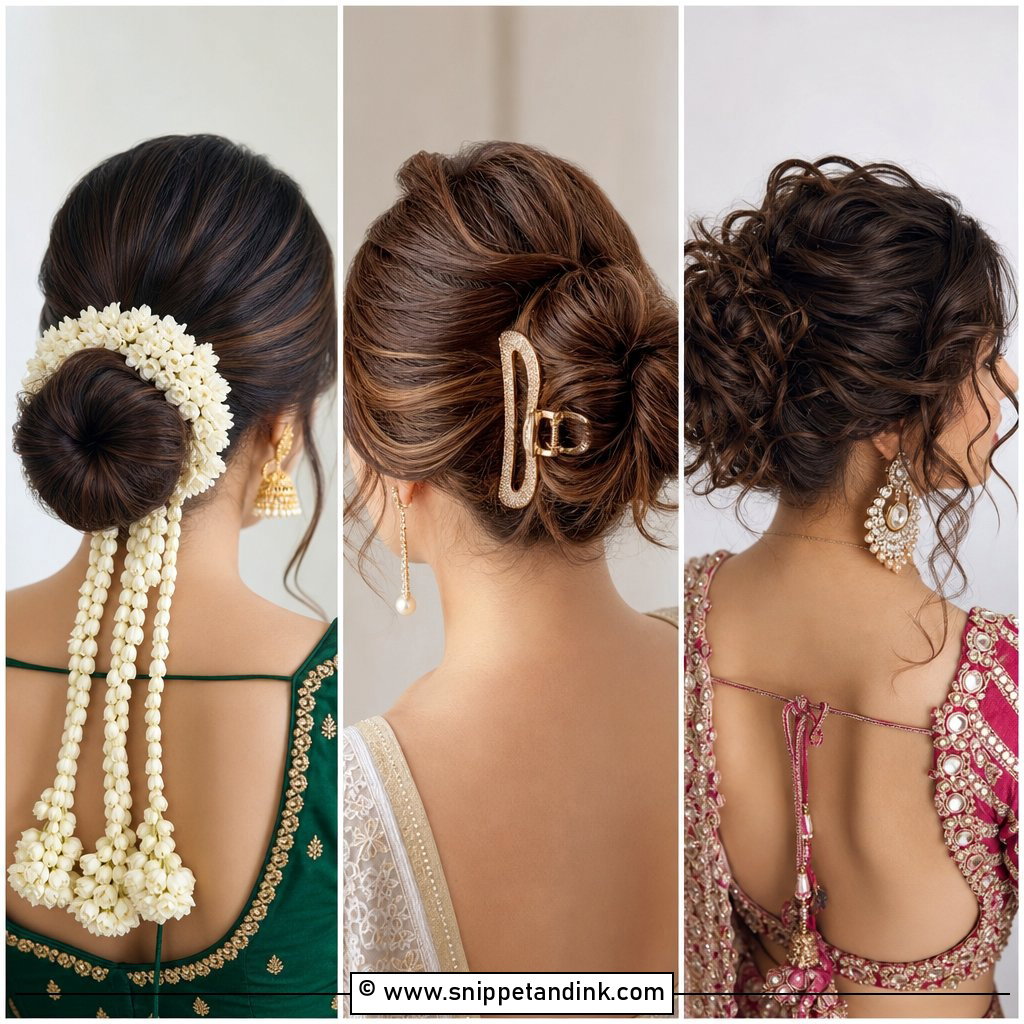
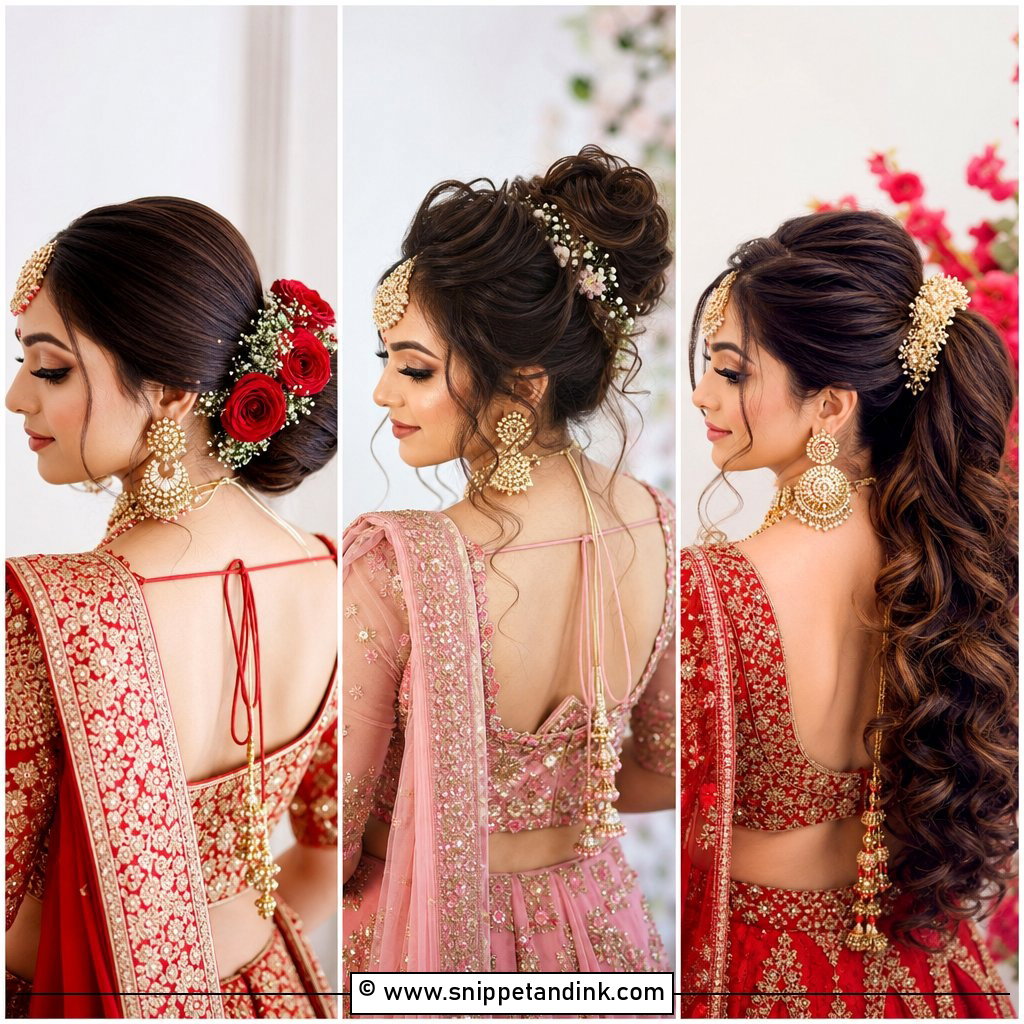
The gajra bun is the one most families picture first, and it earns that place. I part the hair cleanly, smooth it into a low or mid bun and wrap fresh jasmine strands around it in rings. With a silk or Kanjeevaram saree, a red lehenga and gold jewelry, it looks right from the back during the pheras, which is where most of your ceremony photos are taken. I build the bun firm but never tight enough to pull at the temples. A little lift at the crown helps a heavy dupatta sit evenly, and two soft pieces at the face stop it from looking severe.
2. Indian Bridal Low Bun
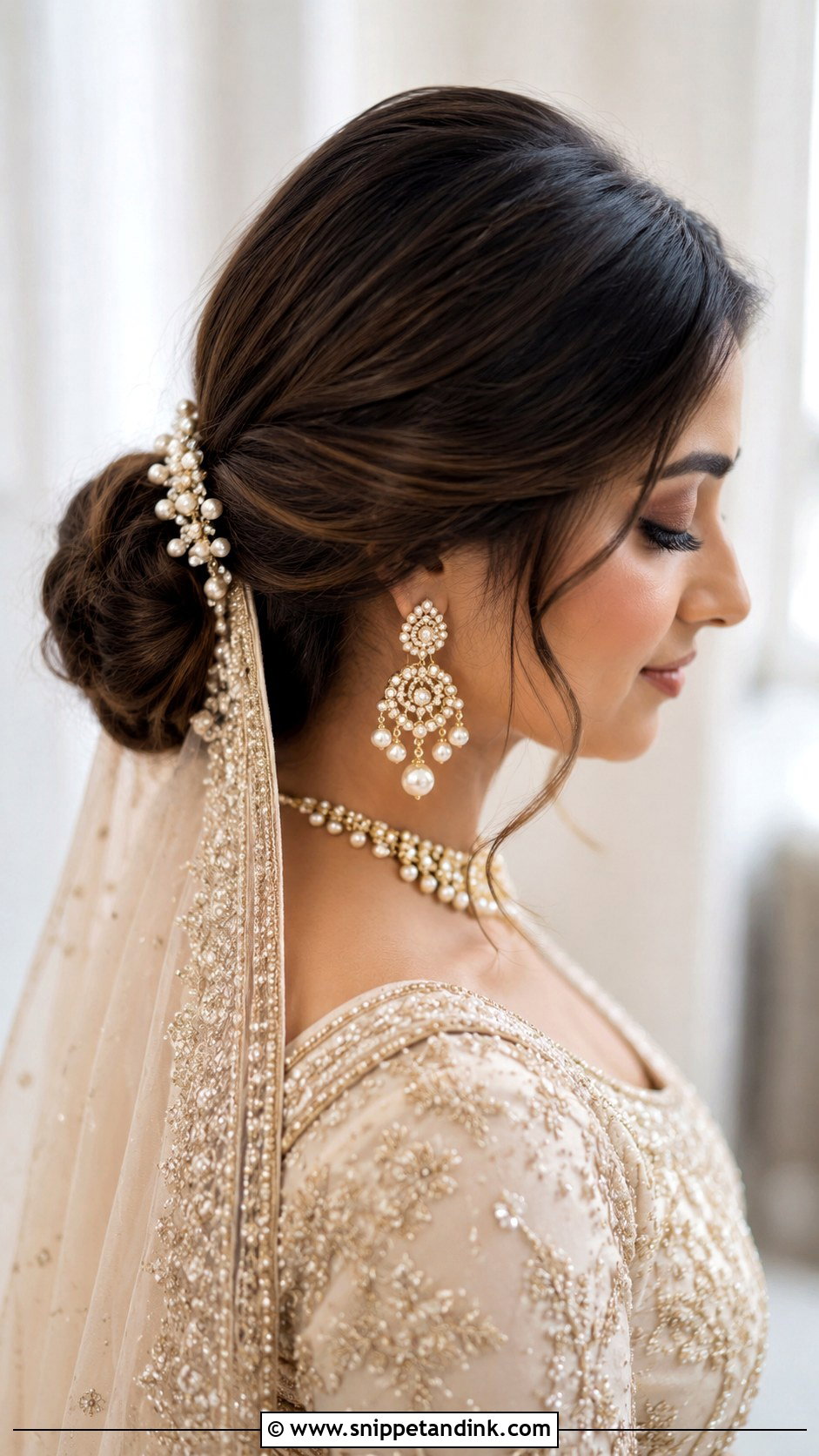
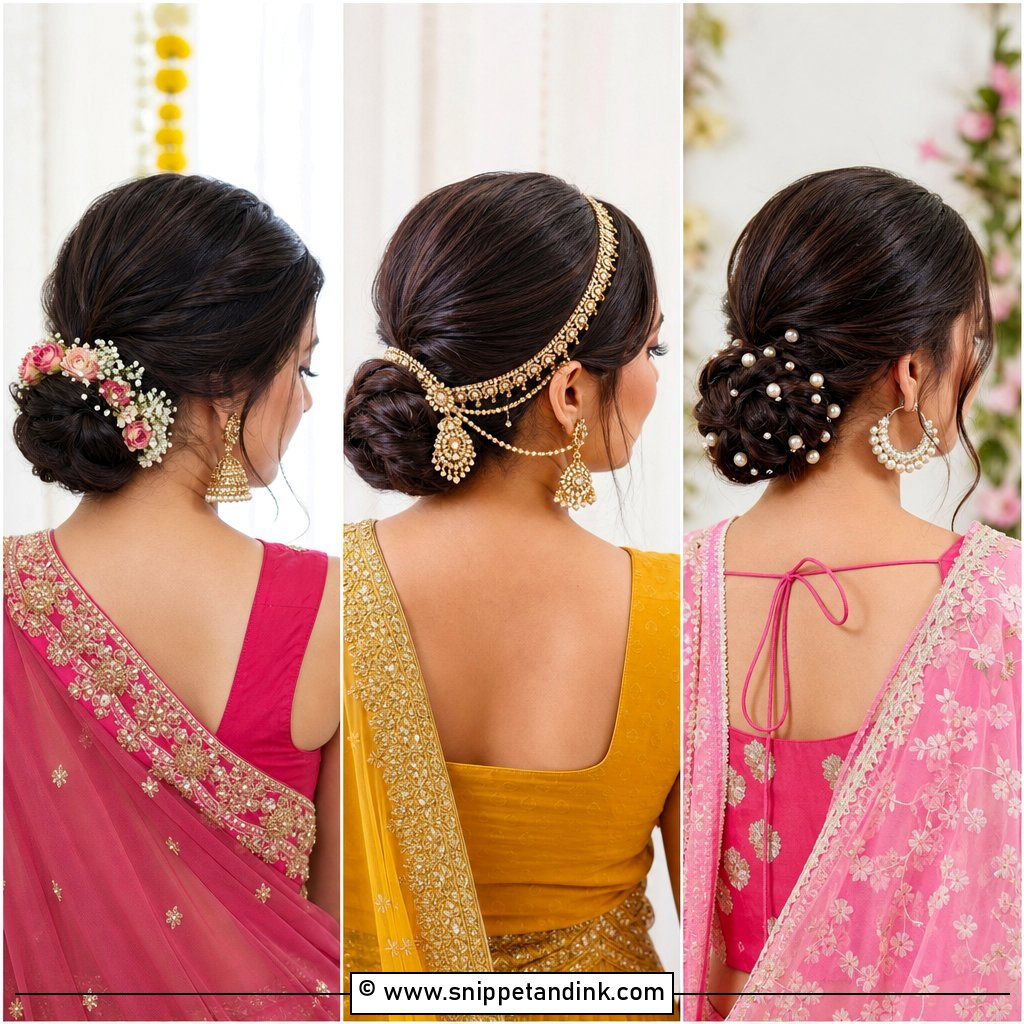
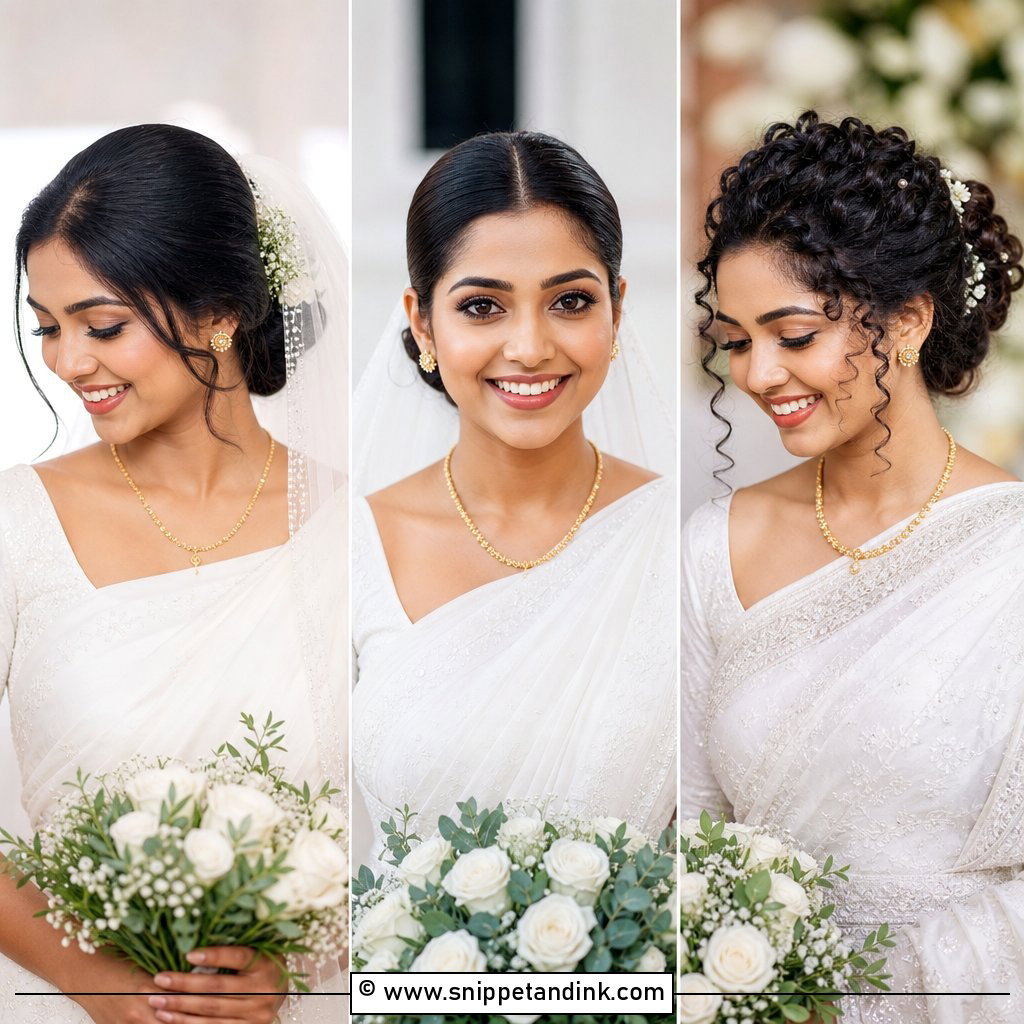
Short version: a low bun is the most comfortable bun you can wear under fabric. It sits close to the nape, so a dupatta or head covering drapes over it without a bump, and your neckline jewelry stays in view. I finish it sleek, lightly textured or with a few flowers depending on the outfit. Face shape changes the crown. On a round face I add a small puff on top to lengthen the line; on a long or oval face I keep the top smoother and put the volume at the sides instead.
3. Indian Bridal Messy Bun
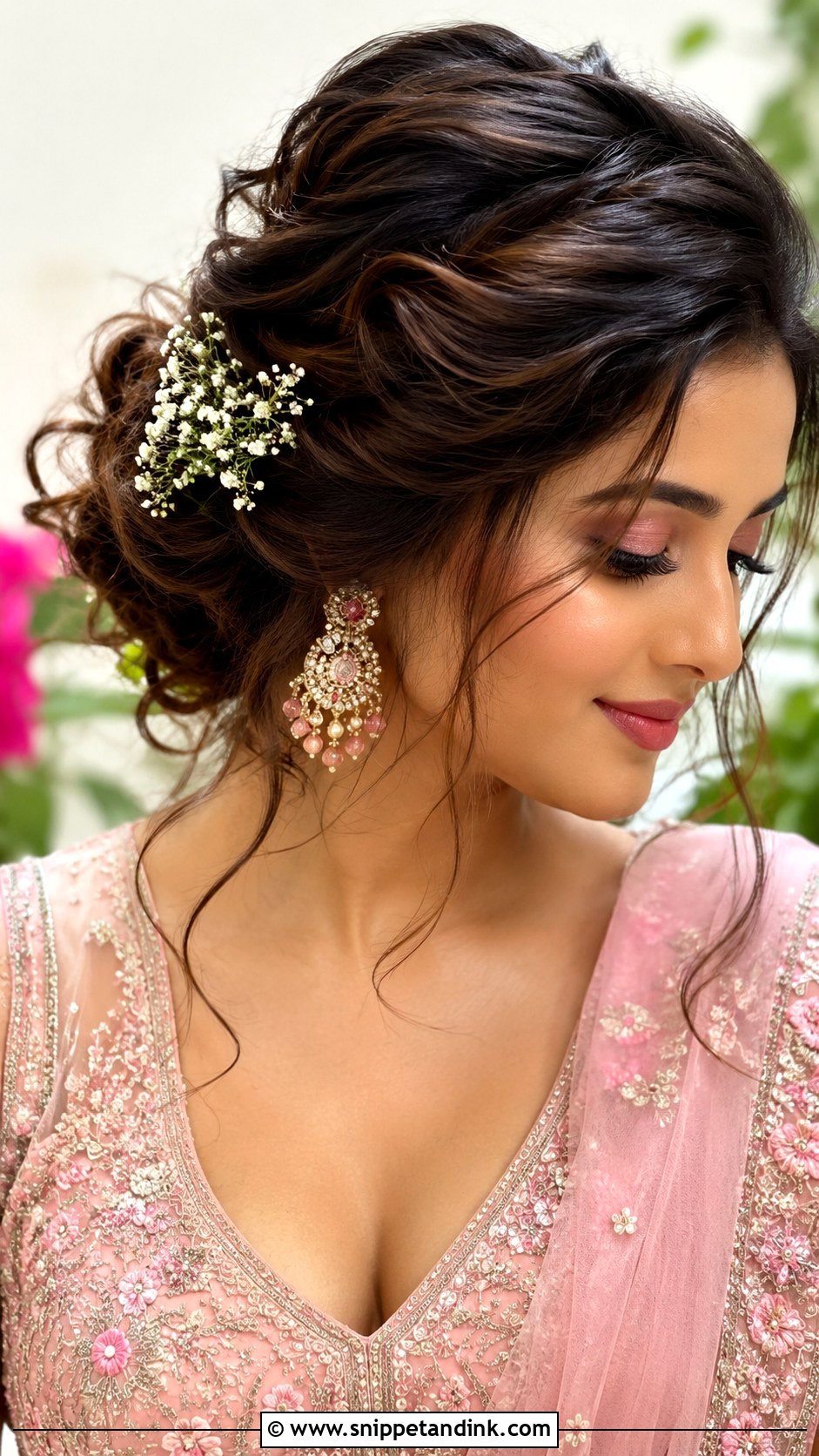
A messy bun at a wedding is never actually messy. I curl the hair first, twist each section and pin it with deliberate gaps, then pull out a few strands at the face. Without that structure it collapses by lunch. It suits mehendi, sangeet, haldi or a modern daytime ceremony, especially with pastel lehengas and floral jewelry. The hardest part is judging how much texture to leave, so I’d ask to see it from the side and back at your trial. Tucked-in baby’s breath, mini roses or pearl pins sit well in the gaps.
4. Indian Bridal Flower Bun
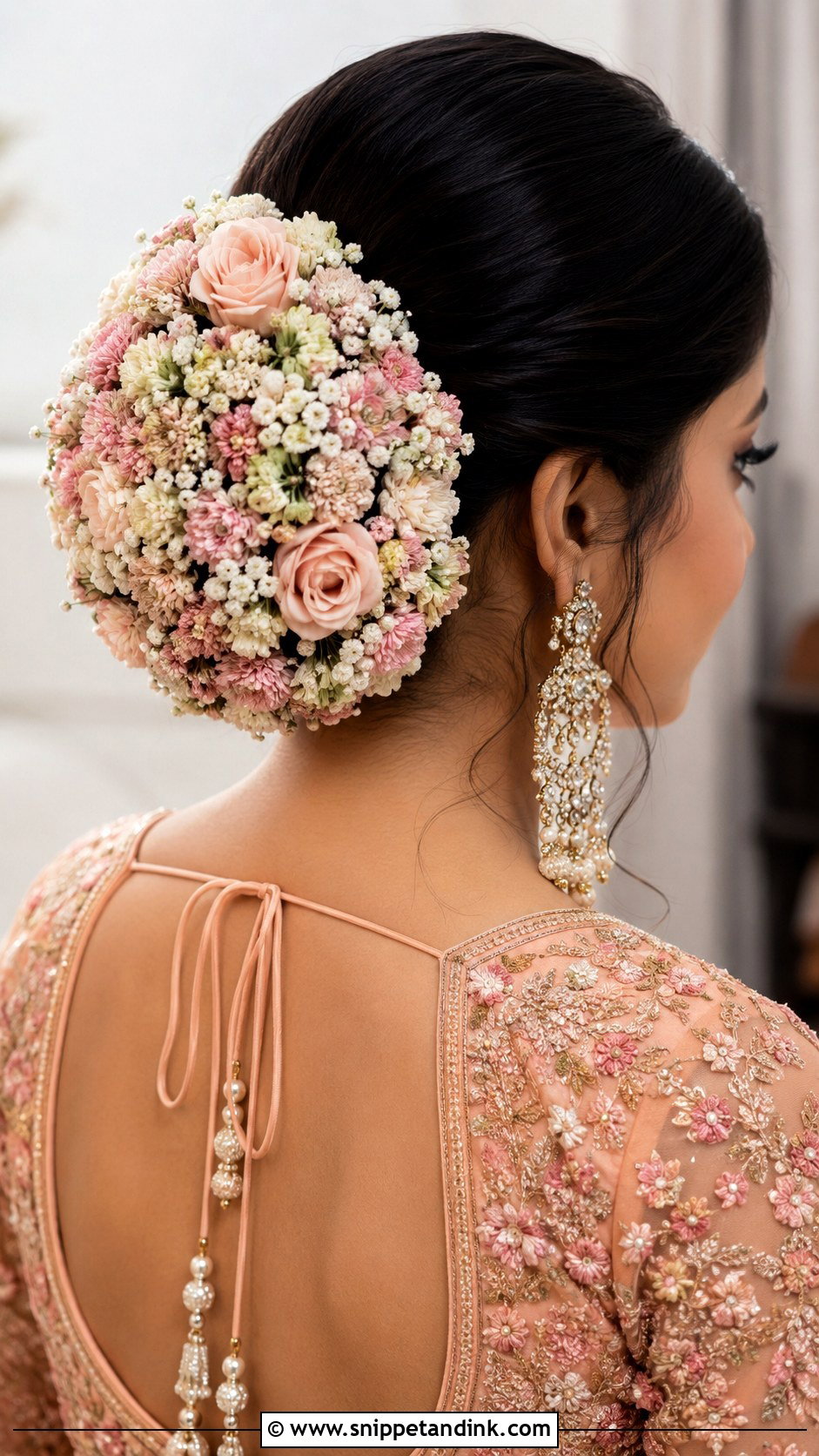
Here the flowers become part of the outfit rather than a trim. Instead of one jasmine ring, I cover or frame the bun with roses, mogra, orchids, carnations or a mix, built on a firm base so the stems have something to grip. In back-view portraits and outdoor ceremonies, it is the detail guests notice first. Red roses feel royal, white jasmine traditional, pastels lighter and more modern. What I watch is crowding: if the hair around it is not neat, the flowers look stuck on. Weight matters too, so for long days I wire smaller heads instead of full blooms.
5. Indian Bridal Rose Bun
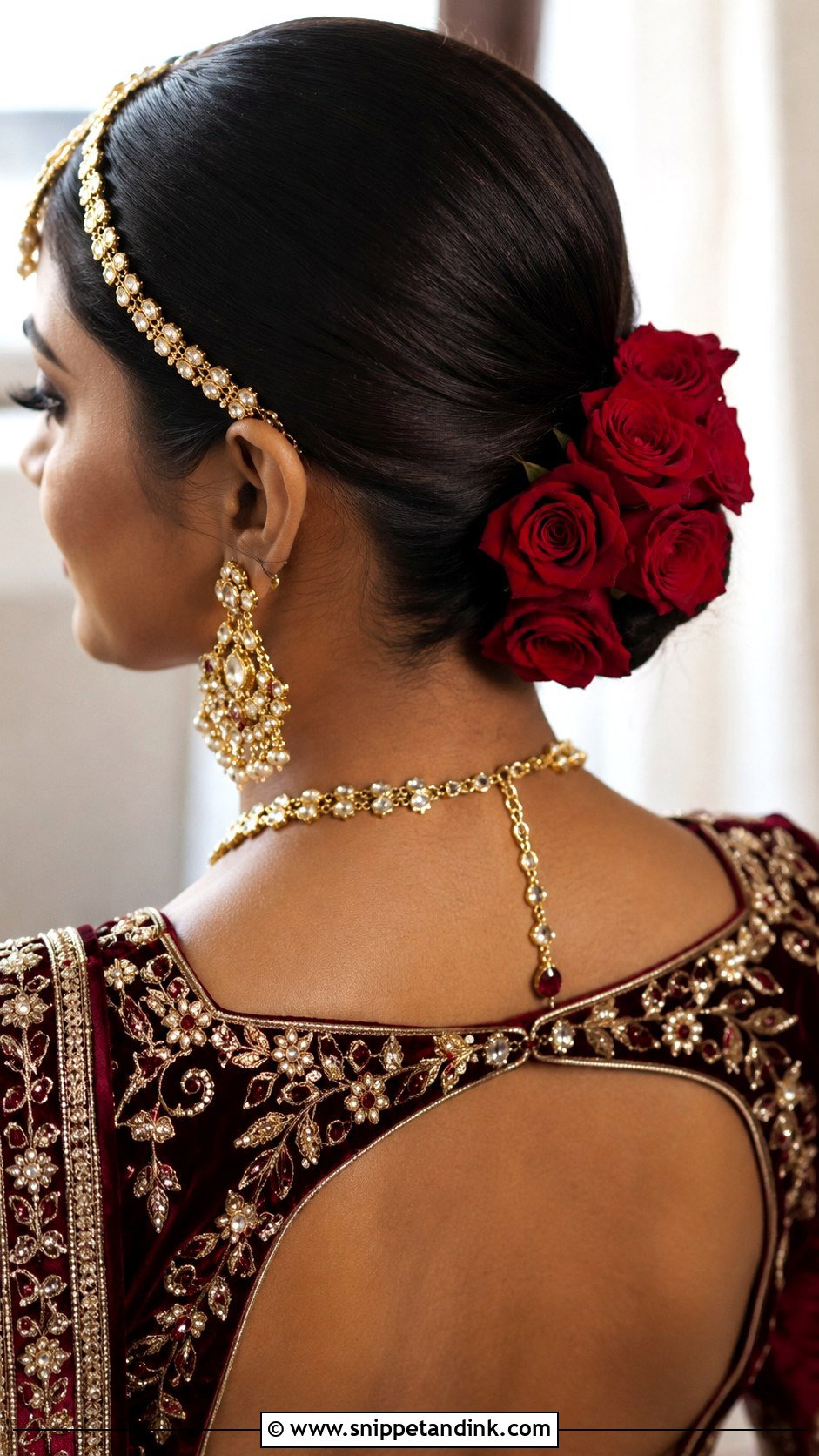
Roses are forgiving to work with because they hold their shape longer than jasmine in warm rooms. I place them around the bun, tucked to one side or across the full bun, always on a smooth base with crossed pins underneath so they do not twist as you turn your head. Deep red suits maroon, gold and ivory outfits; blush or peach roses suit pastel lehengas and day weddings. With heavy earrings or a matha patti, I set the roses slightly lower so the jewelry and flowers are not fighting for the same space around the face.
6. Indian Bridal Bun With Maang Tikka
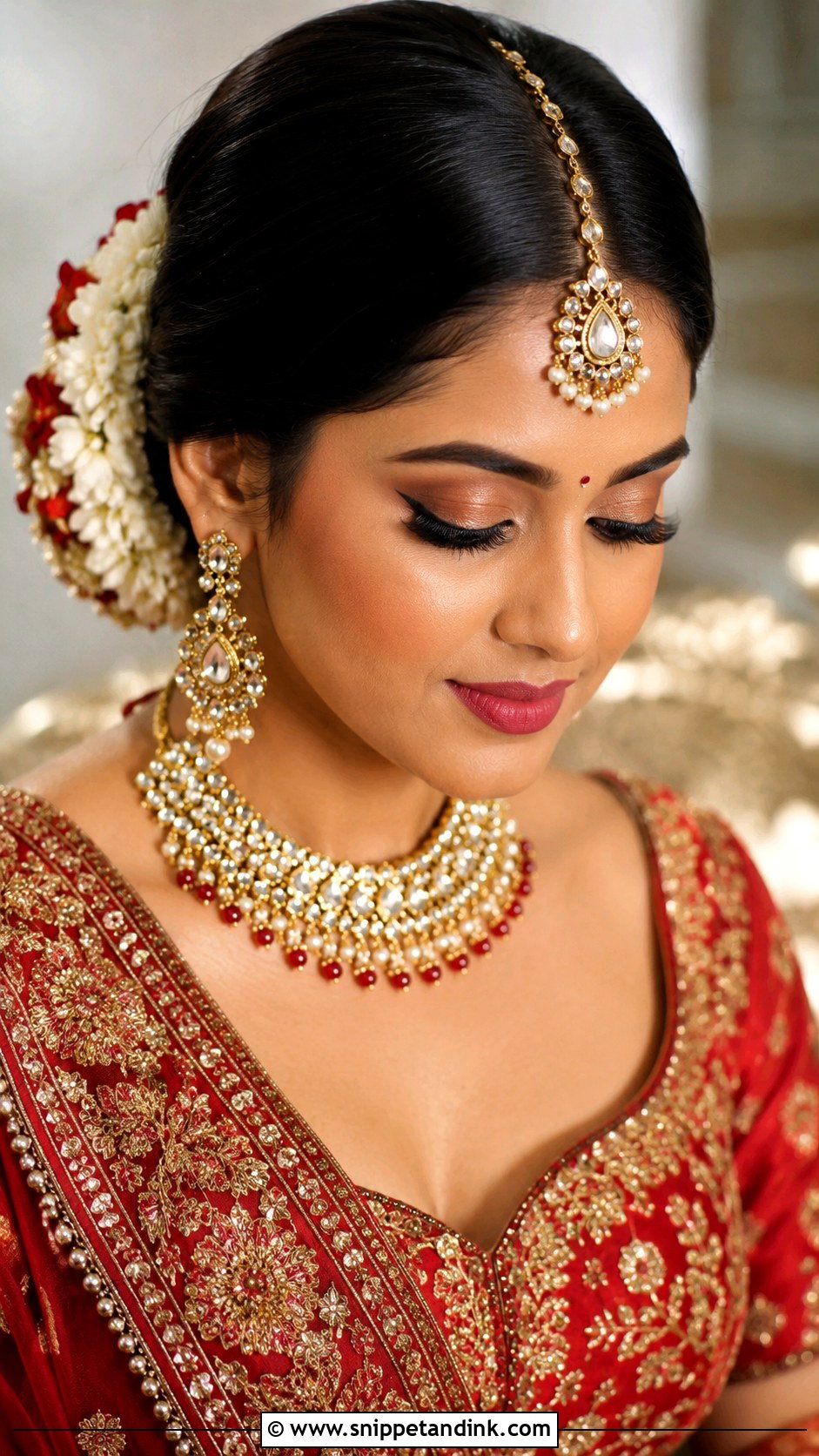
Close-up photos see the front, so a bridal bun with maang tikka has to look as finished from the face as from the back. I keep the centre part clean and slide a pea-sized amount of smoothing cream along it to hold baby hairs. The bun can be low, round, twisted or floral. Under a dupatta pinned over the head, it gives the fabric structure. If your tikka is heavy, I anchor its chain to a hidden pin at the crown and sometimes tie it with a few turns of hair thread, so it stays centred when you bow your head during rituals.
7. Indian Bridal Bun With Matha Patti
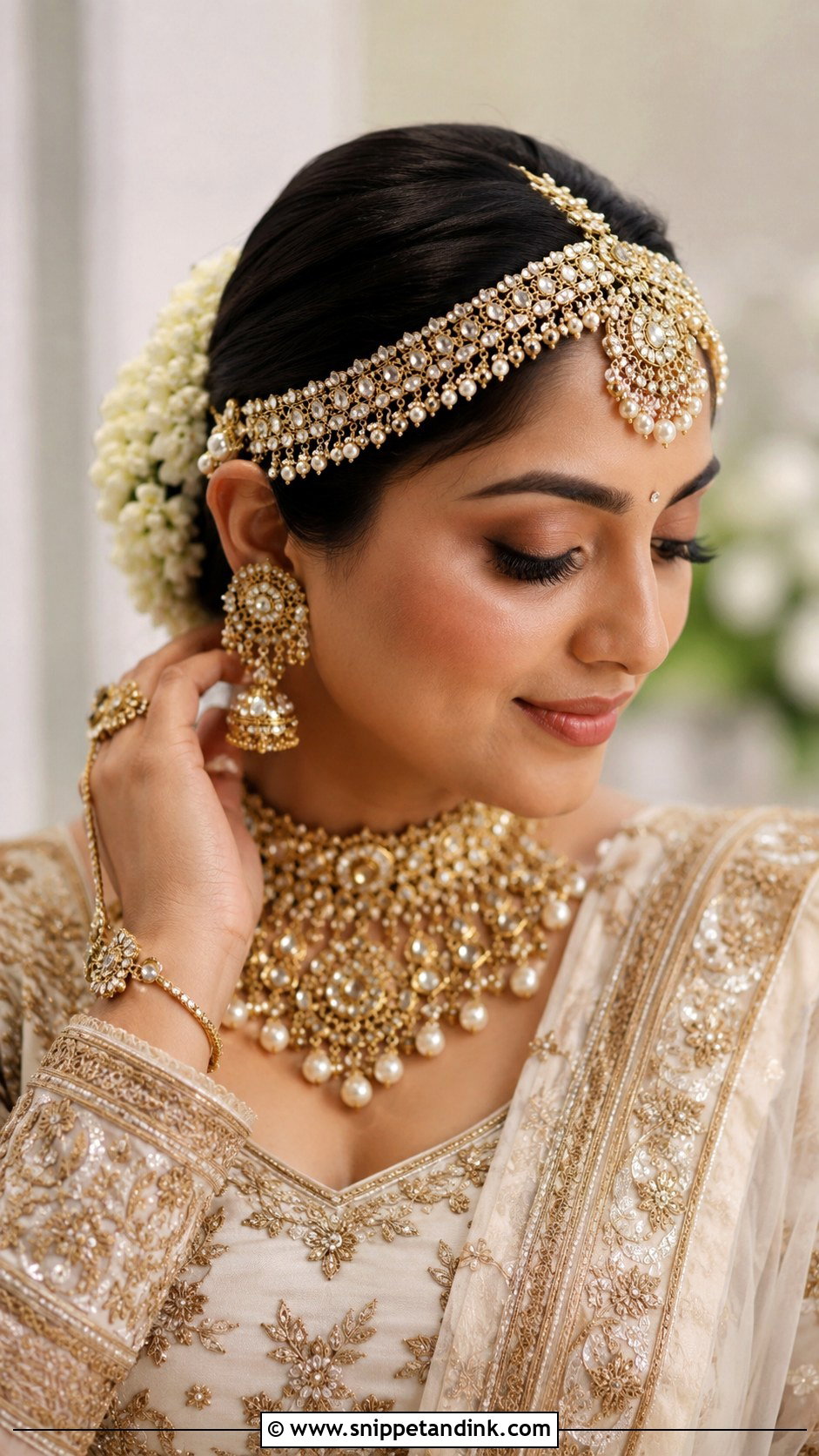
A matha patti runs along the hairline, so every flyaway near it shows. I smooth the front sections completely before it goes on and keep loose strands well back from the jewelry. Behind it, either a sleek low bun or a softer, fuller one works; the choice depends on face shape and how ornate the patti is. For traditional North Indian bridal looks in red, wine, ivory or gold, it reads as regal. One honest note: a matha patti presses on the forehead for hours, so wear it for an afternoon before the wedding to know how it feels.
8. Indian Bridal Bun With Juda Pin
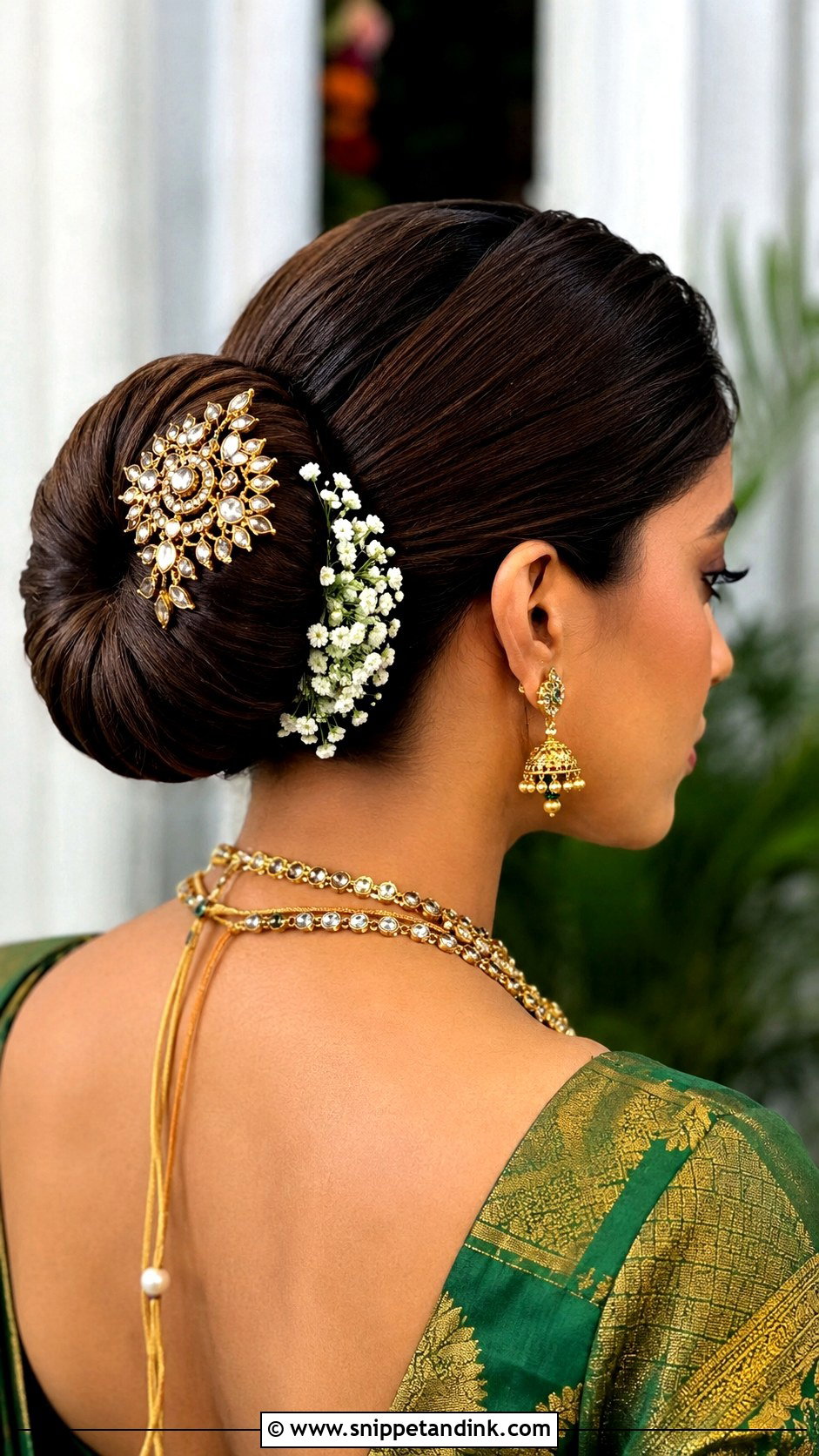
A single juda pin can do the job of a whole floral setup. I build a round, very secure bun, then slide a gold, kundan, pearl or temple-style pin through the centre so it catches several layers of hair. That is the part people get wrong: a pin pushed only into the surface tips sideways within an hour. Match the metal to your jewelry tone. Gold sits naturally with Kanjeevaram sarees, kundan with lehengas, pearls with pastels. It is a good answer for reception looks, temple weddings and brides who dislike the weight of flowers.
9. Indian Bridal Braided Bun
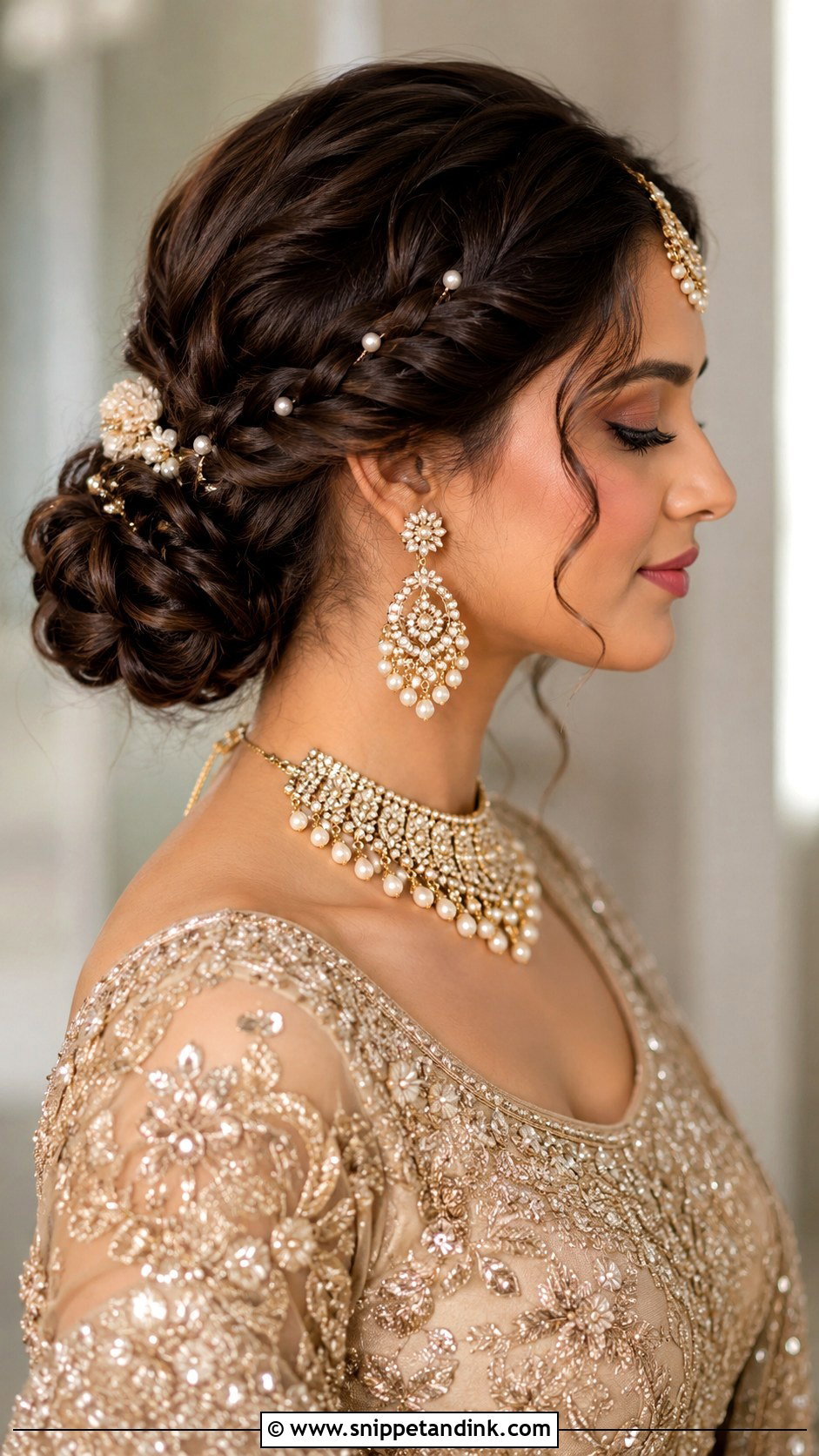
Braids give a bun detail without adding anything heavy to it. I start the braid at one side, wrap it into the bun or weave it through, depending on length. On long, thick hair, it controls bulk; on finer hair, a braided extension piece gives the same look. Tiny flowers, pearls or gold pins along the braid catch the light. The finish I aim for is slightly loosened, never tight and shiny, because a stiff braid can look severe in daylight portraits. It carries through sangeet, ceremony and reception without needing redoing.
10. Indian Bridal Side Bun
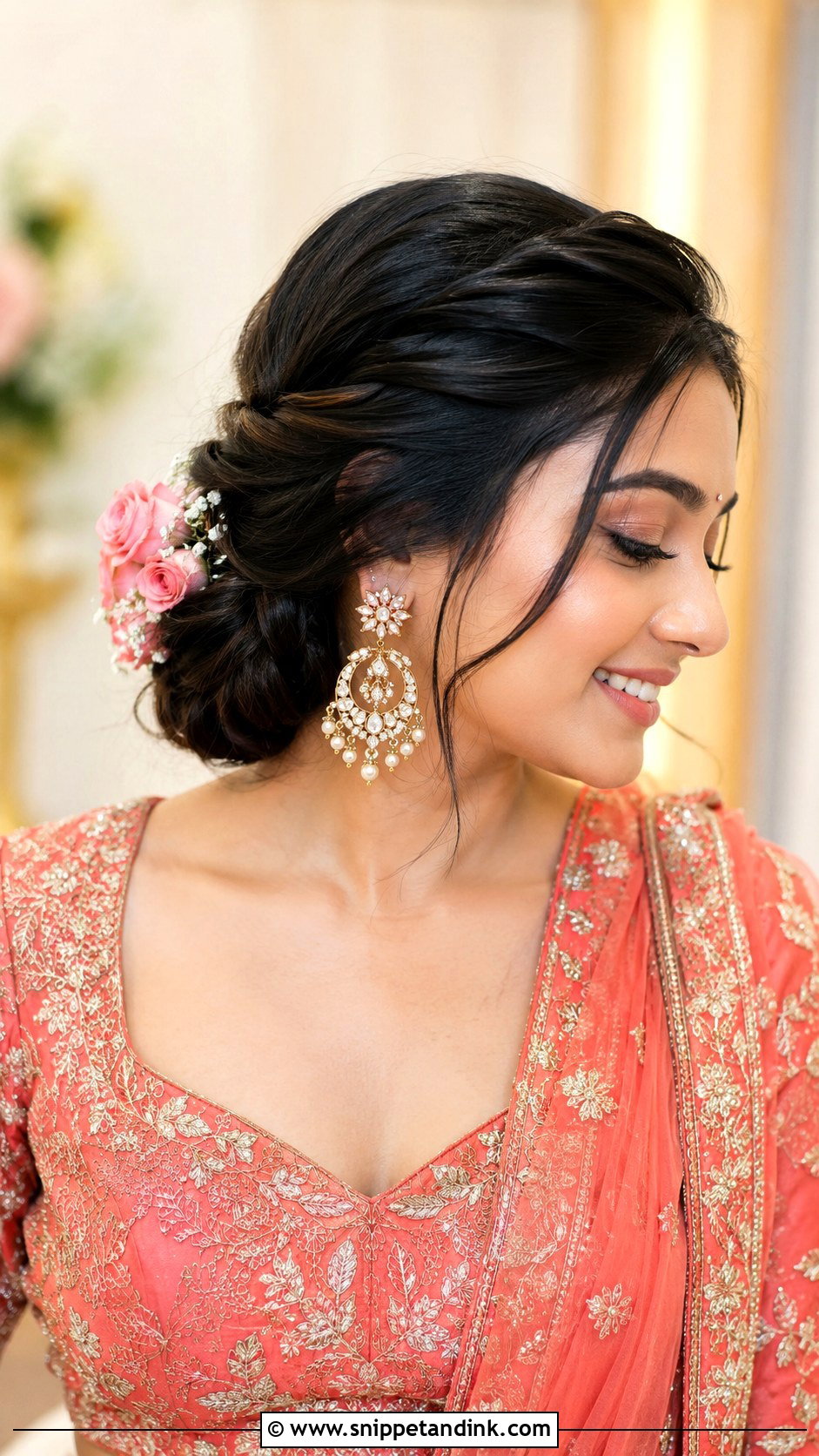
Moving the bun off-centre changes how you photograph in profile. I set it near one side of the nape so the flowers or comb face the camera when you turn. It works best with a one-sided dupatta drape that falls from the other shoulder, statement earrings and blouses with detailed backs. If the dupatta covers the head fully, I’d skip this one: the fabric sits unevenly over an off-centre bun. A rose cluster, pearl comb or jasmine crescent finishes it, and a sleek or softly waved front decides how formal it feels.
11. Indian Bridal Sleek Bun
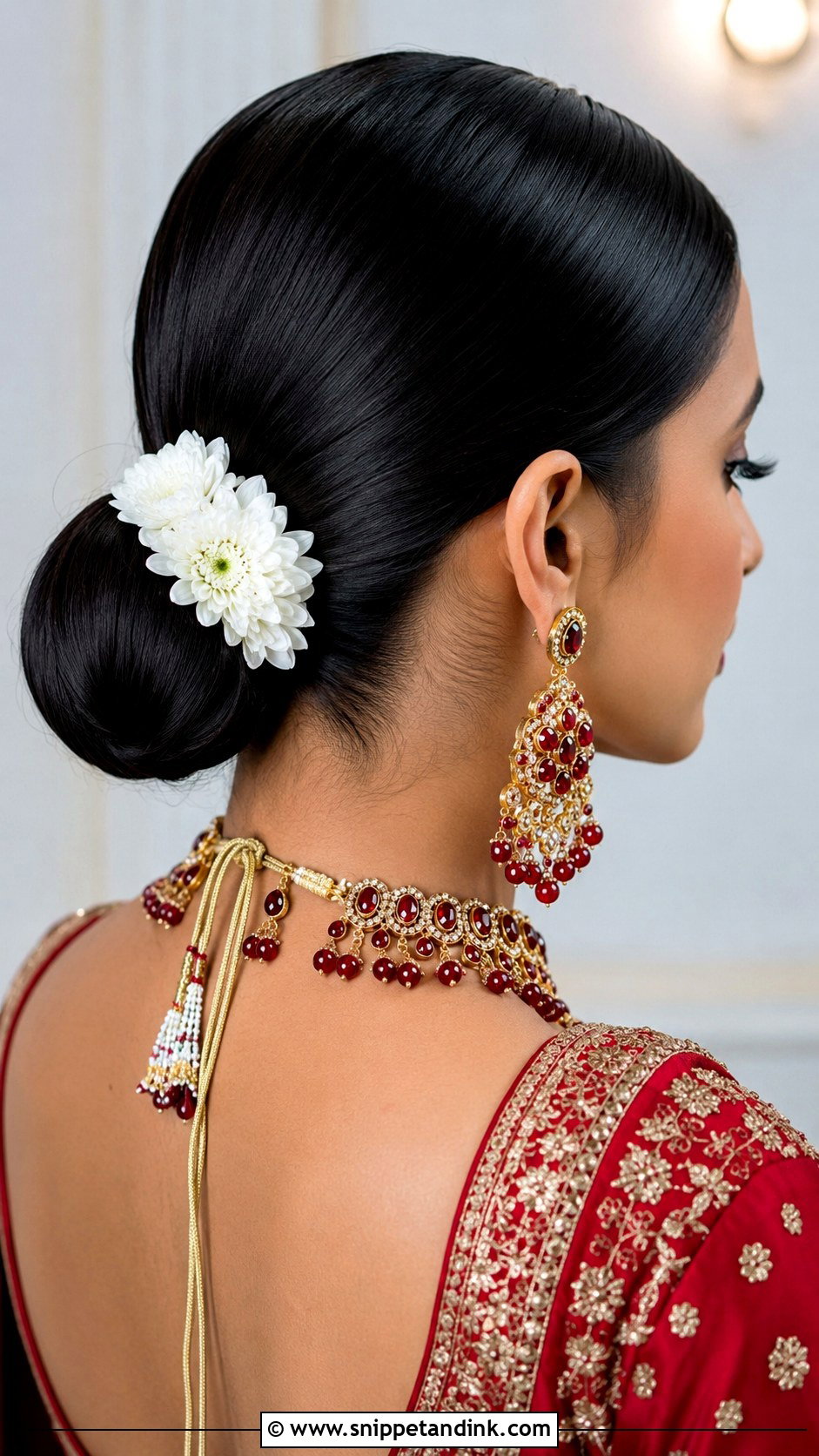
Sleek buns are unforgiving. Every lump and every flyaway shows, so I blow-dry the hair smooth first, part it in the centre or brush it straight back, and only then shape it into a firm low bun. It sits well beside bold eye makeup, heavy necklaces and structured lehengas, and it holds through long ceremonies and dancing. Go lightly with shine spray: too much looks greasy under flash. If it feels plain, one flower, a pearl pin or a gold bun cuff at the back is all it needs.
12. Indian Bridal Textured Bun
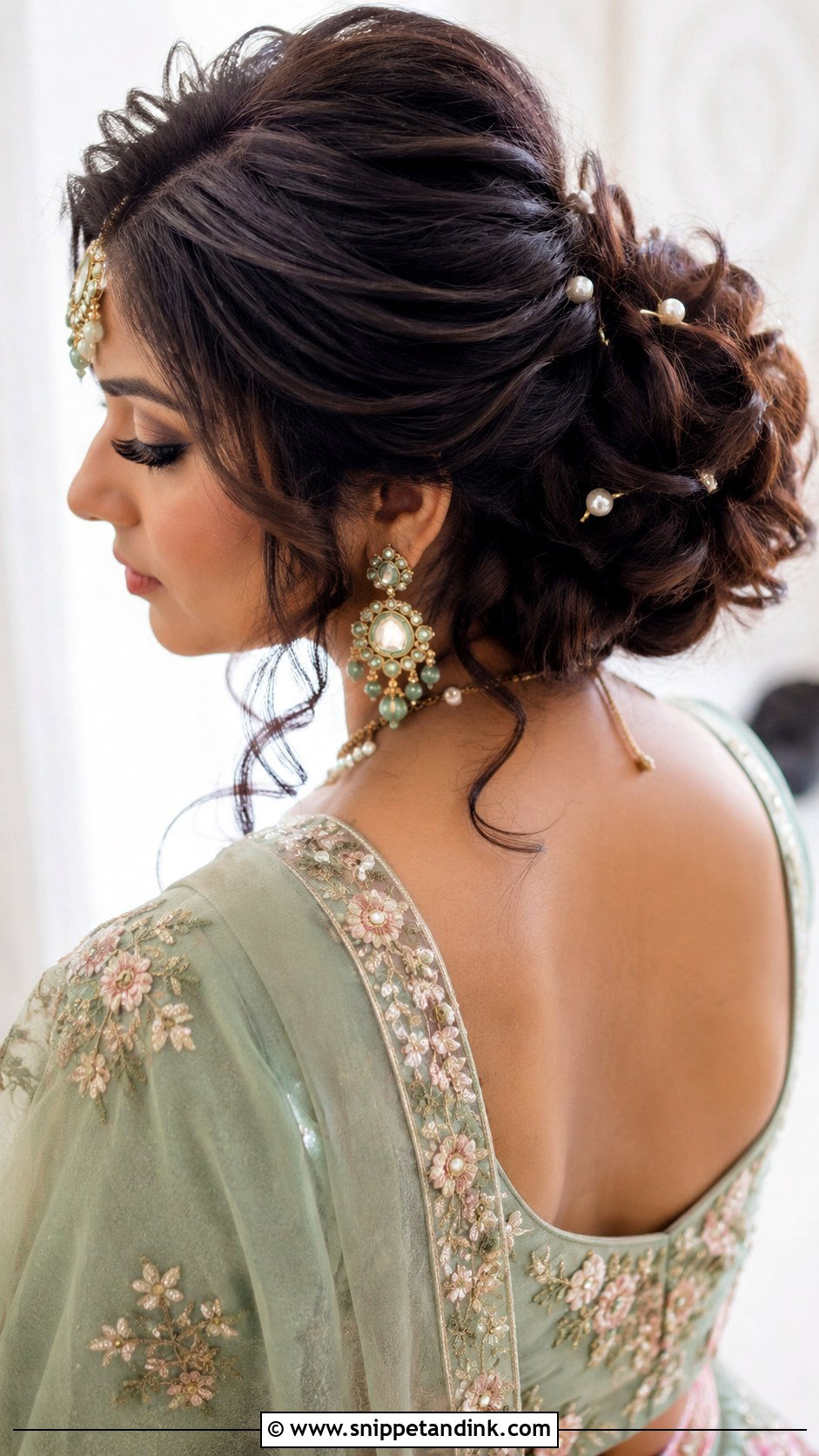
Fine or layered hair is where a textured bun earns its place. Curling or waving first gives each section grip, and the pinned bun looks twice as full as the same hair pulled sleek. I keep the top smooth enough to hold accessories and leave the bun itself airy, with visible movement that reads as depth under bright lights. Pastel lehengas, organza sarees and floral dupattas suit it. Small pearl pins or tiny blooms set into the folds show the texture off rather than hiding it.
13. South Indian Bridal Bun
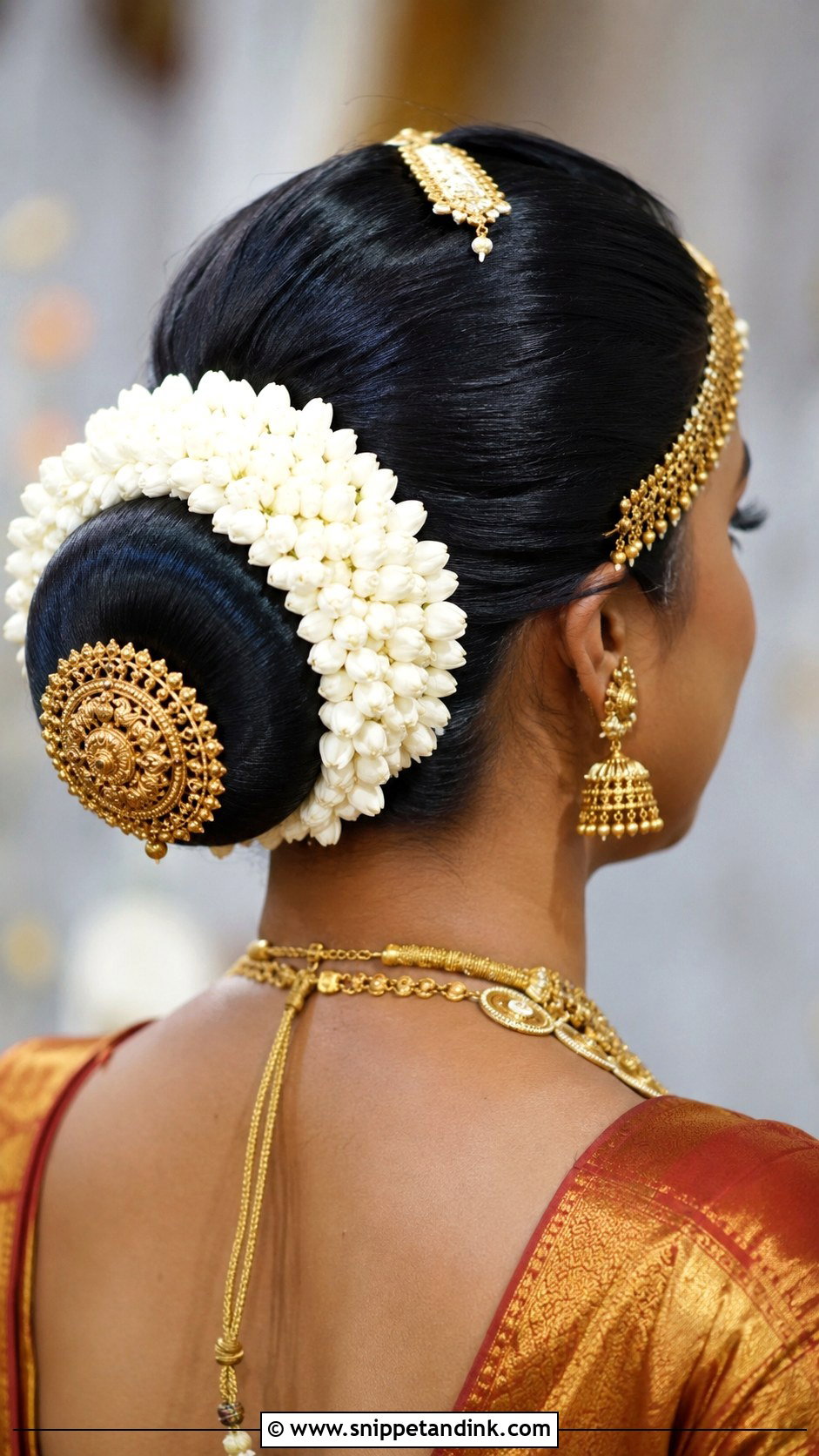
A South Indian bridal bun usually combines a neat bun with jasmine, temple jewelry and traditional ornaments such as billai-style pieces or a central ornament at the back of the head. With a Kanjeevaram saree, antique gold and classic bridal makeup, it looks deeply ceremonial. These ornaments are heavy, so I build the bun around a padded base or a donut of matching hair and sew larger pieces in with thread rather than relying on pins. Add crown volume if the saree and jewelry are grand, and keep the flowers symmetrical.
14. Indian Bridal Pearl Bun
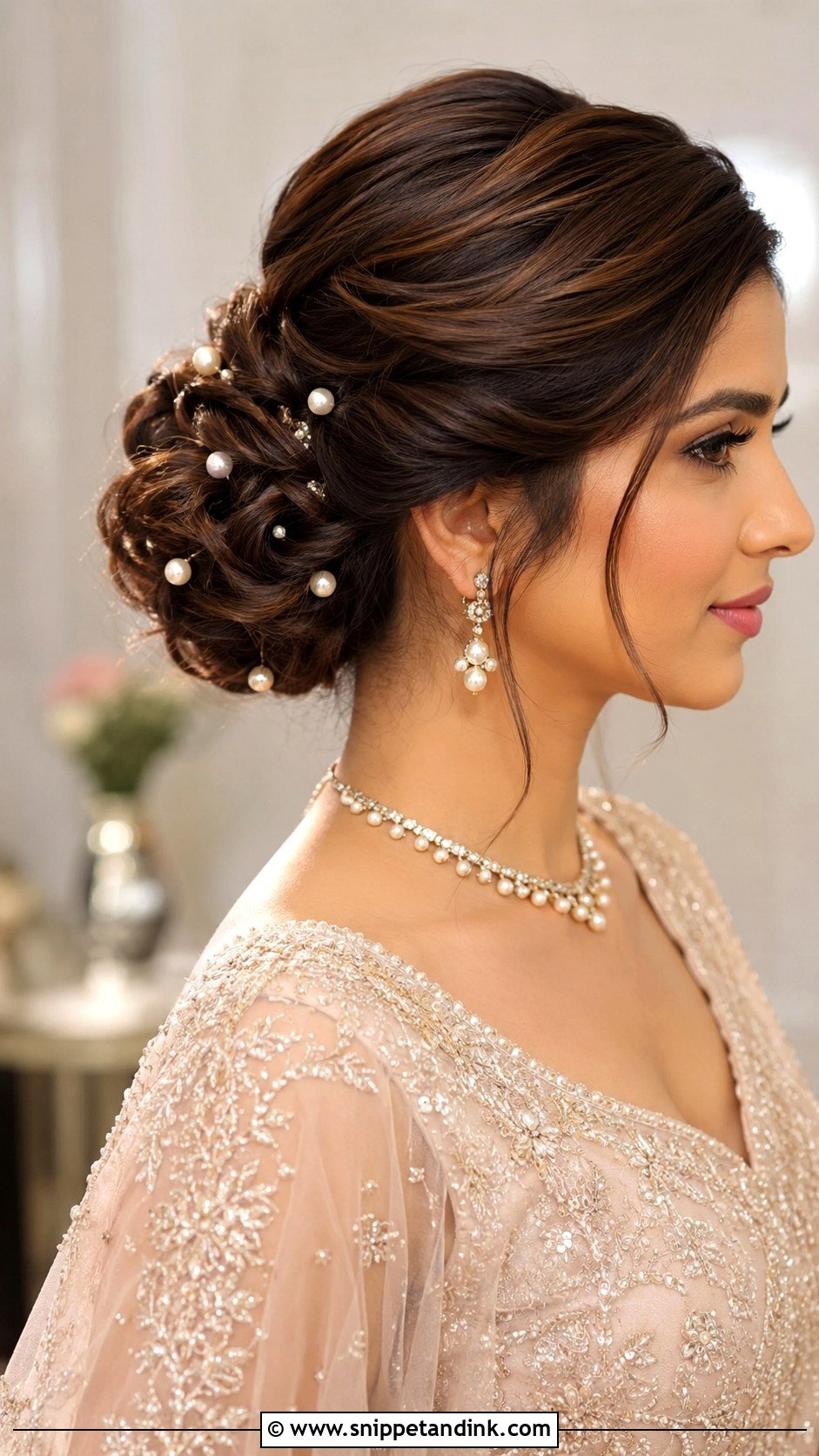
Pearls suit brides who want detail without the scent or weight of flowers. I scatter them through a textured bun, ring them around a smooth one or use a single pearl comb to one side. They look right with ivory, blush, champagne, pastel green and powder blue, and they feel less traditional, which makes them popular for receptions and engagements. If you wear pearl jewelry, match the hair pearls in size and shade; a slightly yellower pearl next to a bright white necklace shows clearly in photos.
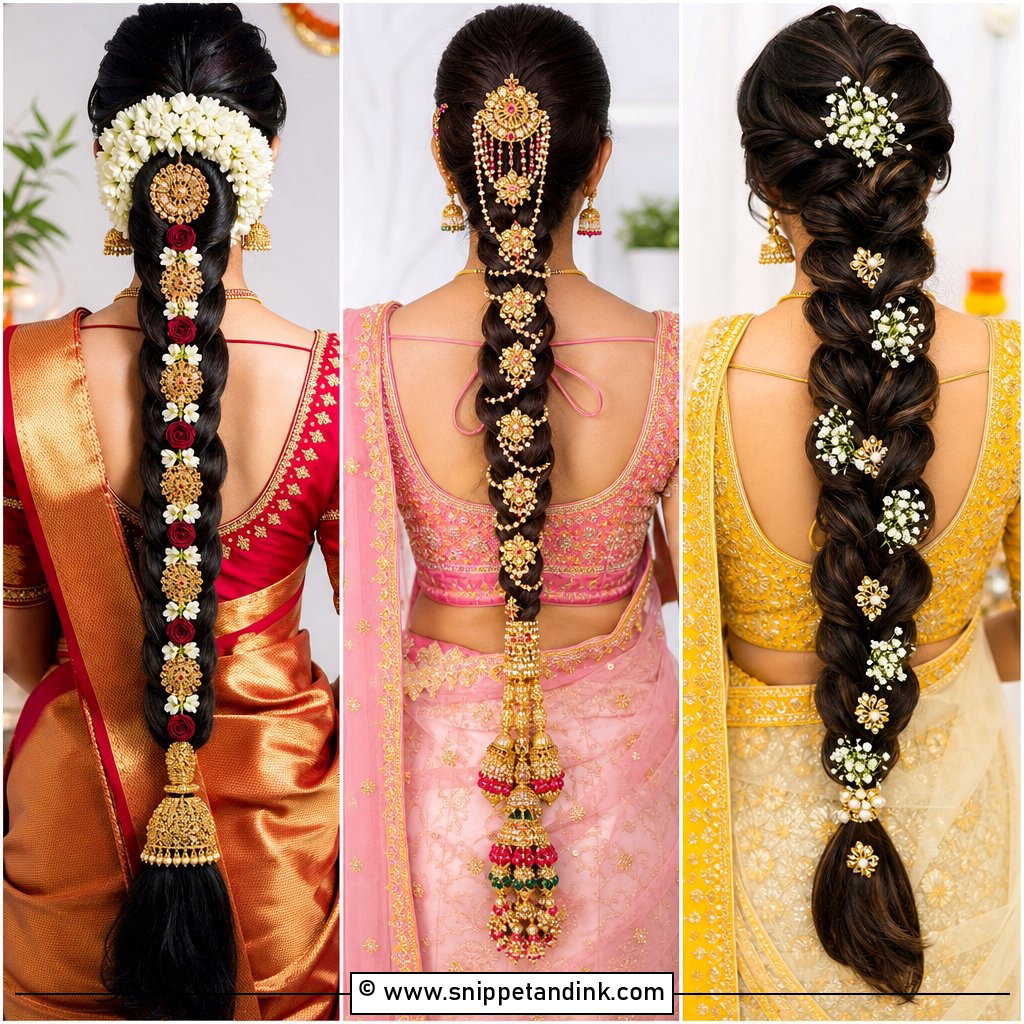
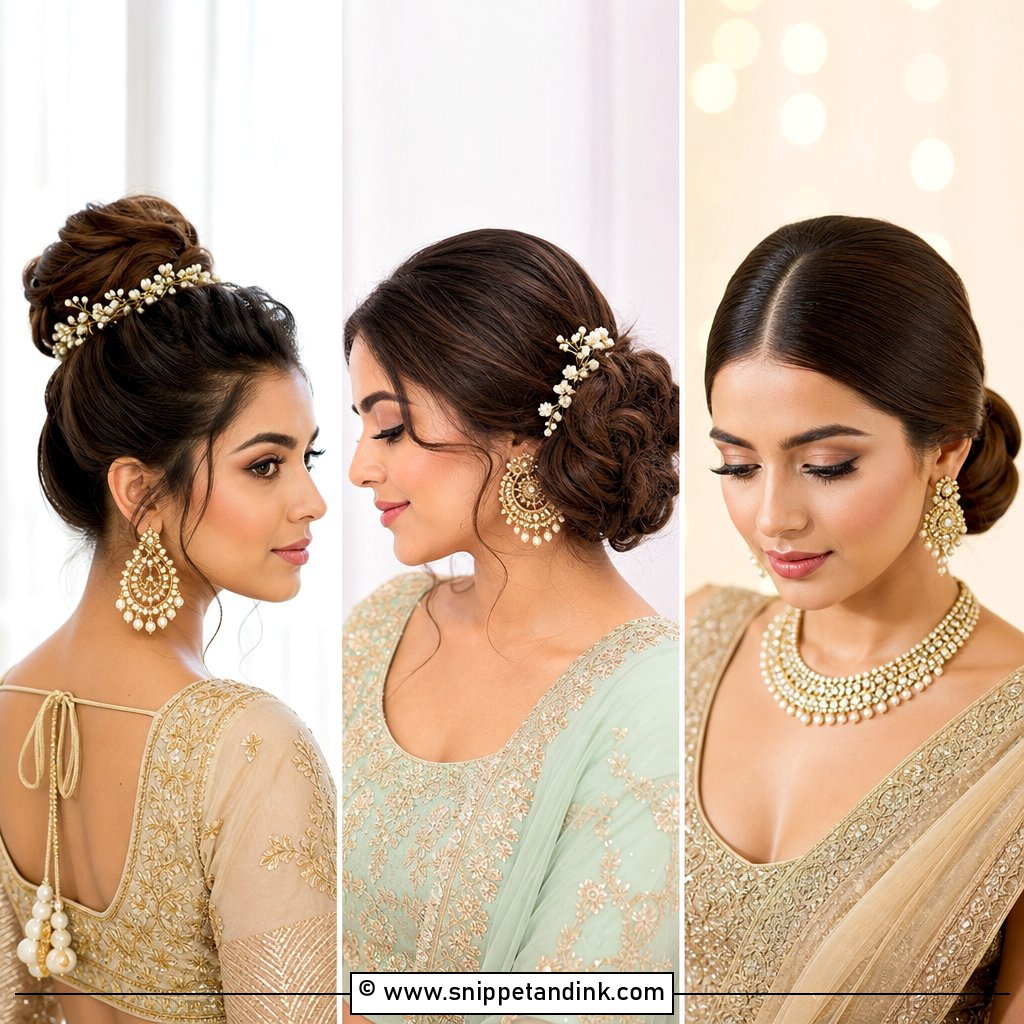
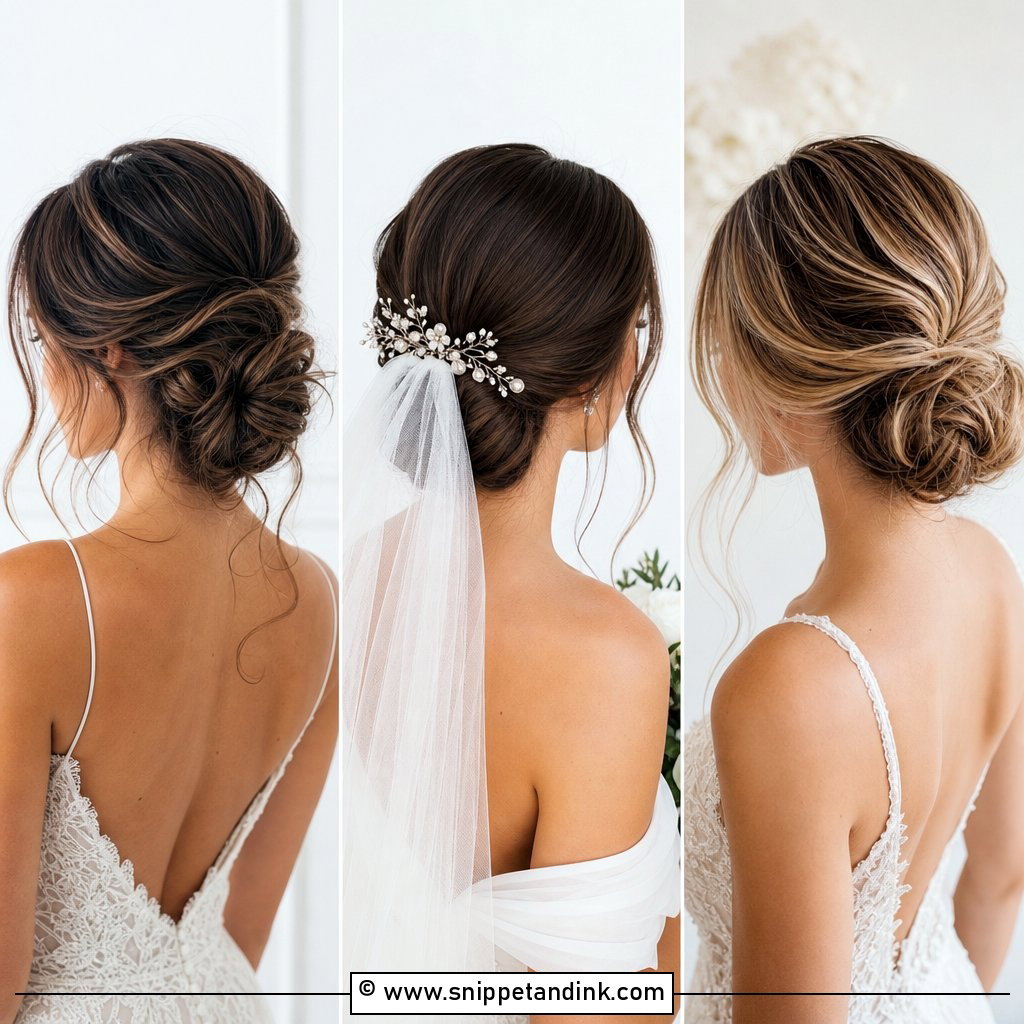
15. Indian Bridal Bun With Dupatta
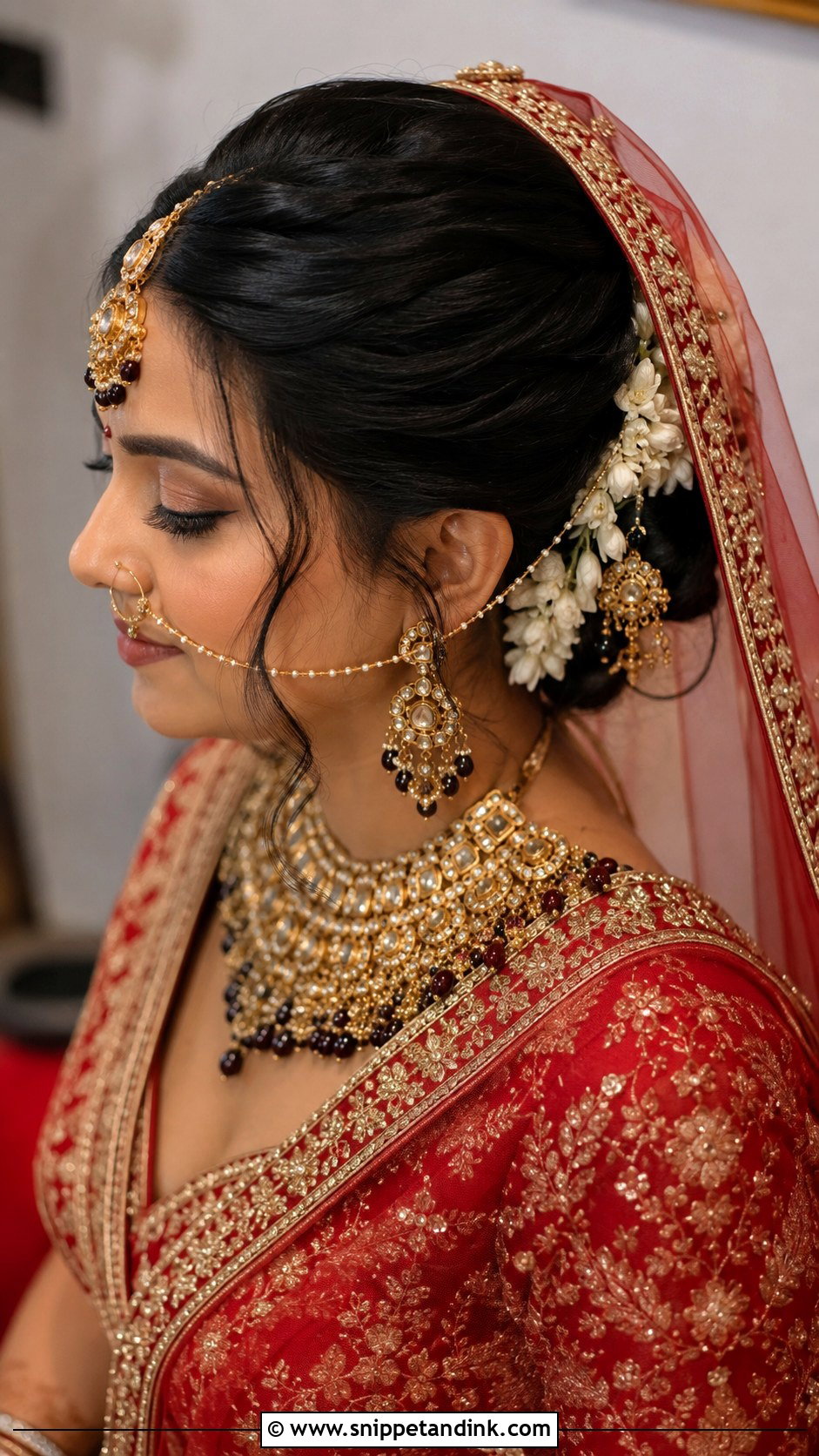
A bridal bun with dupatta carries the most load of any style on this list. The bun has to hold pins, fabric weight and a lot of turning and bowing. A low or mid bun gives the most stable base. I decorate it with gajra, roses, pearls or jewelry before the dupatta goes on, then test where the dupatta pins land so they catch the bun, not just the surface hair. Keep the front framing your face and the back neat under the fabric. Pinning too tightly is the most common cause of a headache by the reception.
Gajra Strings Brown Fast in a Hot Mandap
Fresh jasmine opens and browns within hours in heat, and a mandap under lights or a daytime outdoor ceremony speeds that up. I order strings with tight buds so they open during the ceremony rather than before it. Until they go on, keep them wrapped in a damp muslin cloth in the fridge, never loose in a plastic bag where they sweat.
Also think about the scent. A full gajra bun is strong at close range, and some brides get a headache from it by the end of the day. If that is you, I’d use jasmine only around the base of the bun and add silk or pearl pieces for the rest.
Unpinning After the Vidaai
A bridal bun can hold dozens of pins. Pulling it apart quickly snaps hair, so take it down slowly: remove the flowers and jewelry first, then feel for each pin and slide it out in the direction it went in. Brush only after the pins are out, starting from the ends. A light oil or conditioner through the lengths before washing makes the backcombing far easier to work loose.
A Trial With the Dupatta On Settles Most Bun Questions
Each bun on this list has a job. The gajra bun is classic, the rose bun romantic, the sleek bun modern and the textured bun soft. Heavy accessories need a stronger base, and lighter outfits can carry pearls, small flowers or a loose texture. If you can only do one thing, book a trial and bring the dupatta, tikka and any hair jewelry with you. Wear the bun for a few hours afterwards. If it still feels comfortable at the end of that, it will last the wedding.
You'll Like These Ideas:




Leave a Reply