
Good wedding hair has two jobs. It needs to look right when you walk in, and it needs to still be there, more or less in one piece, when the last song plays. What brides are asking me for right now sits between those: a clear, polished shape with enough softness that nothing looks lacquered. Low buns, half-up waves, sleek ponytails, loose braids and clean updos all fit, for brides, bridesmaids, mothers of the bride and guests. Your neckline, the weather, your length and texture, and how much hair you can bear near your face will narrow the field quickly. Save the styles below that catch your eye and treat them as a starting point for your trial.
Padding, Extensions and Pins Hidden Inside a Full Updo
A lot of the fuller buns, ponytails and braids you see in wedding photos aren’t made from the bride’s hair alone. Stylists quietly add support, and knowing what’s possible helps if your hair is fine, short or recently thinned. It also explains why a style can look so different on you than in the picture.
- Bun padding. A small mesh shape, matched roughly to your hair color, sits under a low or high bun to give it size without backcombing everything. I go a size smaller than most people expect, because large pads show through fine hair.
- Clip-in extensions. Even one or two wefts tucked under the lengths make a ponytail or boho braid look much fuller. Color-match them in daylight, not just under salon lights, and bring them to the trial so they can be blended.
- The right pins. Open U-shaped hairpins shape a bun without dragging, while bobby pins lock sections in place. A mix holds better than a mass of one kind, and fewer well-placed pins are lighter on your head.
- Grip at the base. Fine, silky hair often needs a dry texture spray or light backcombing at the roots so pins have something to hold. That’s normal, not a sign your hair is wrong for the style.
None of this has to be secret. If your inspiration photo has three times your volume, ask your stylist straight out what it would take to get there, and whether a smaller version might suit you better. I’d always rather have that conversation at the trial than on the morning.
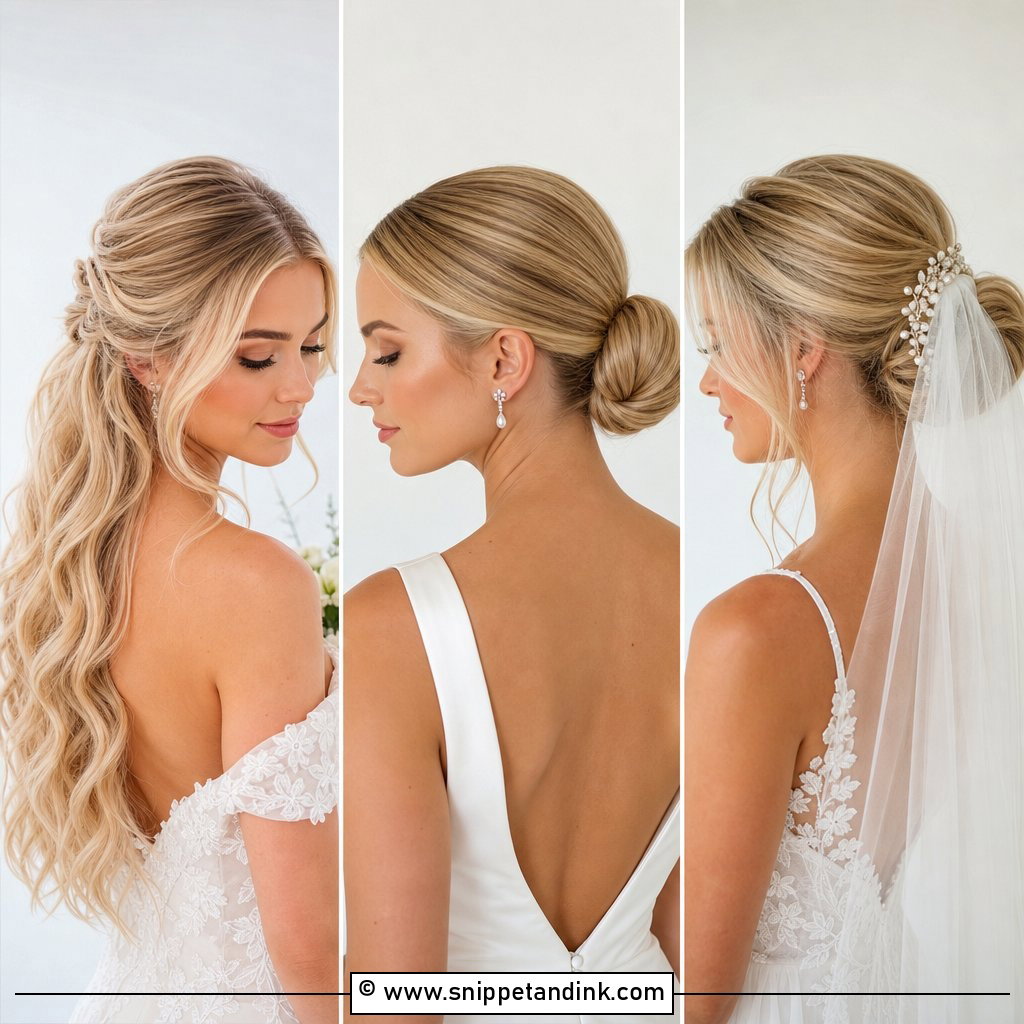
1. Low Bun Wedding Hairstyle
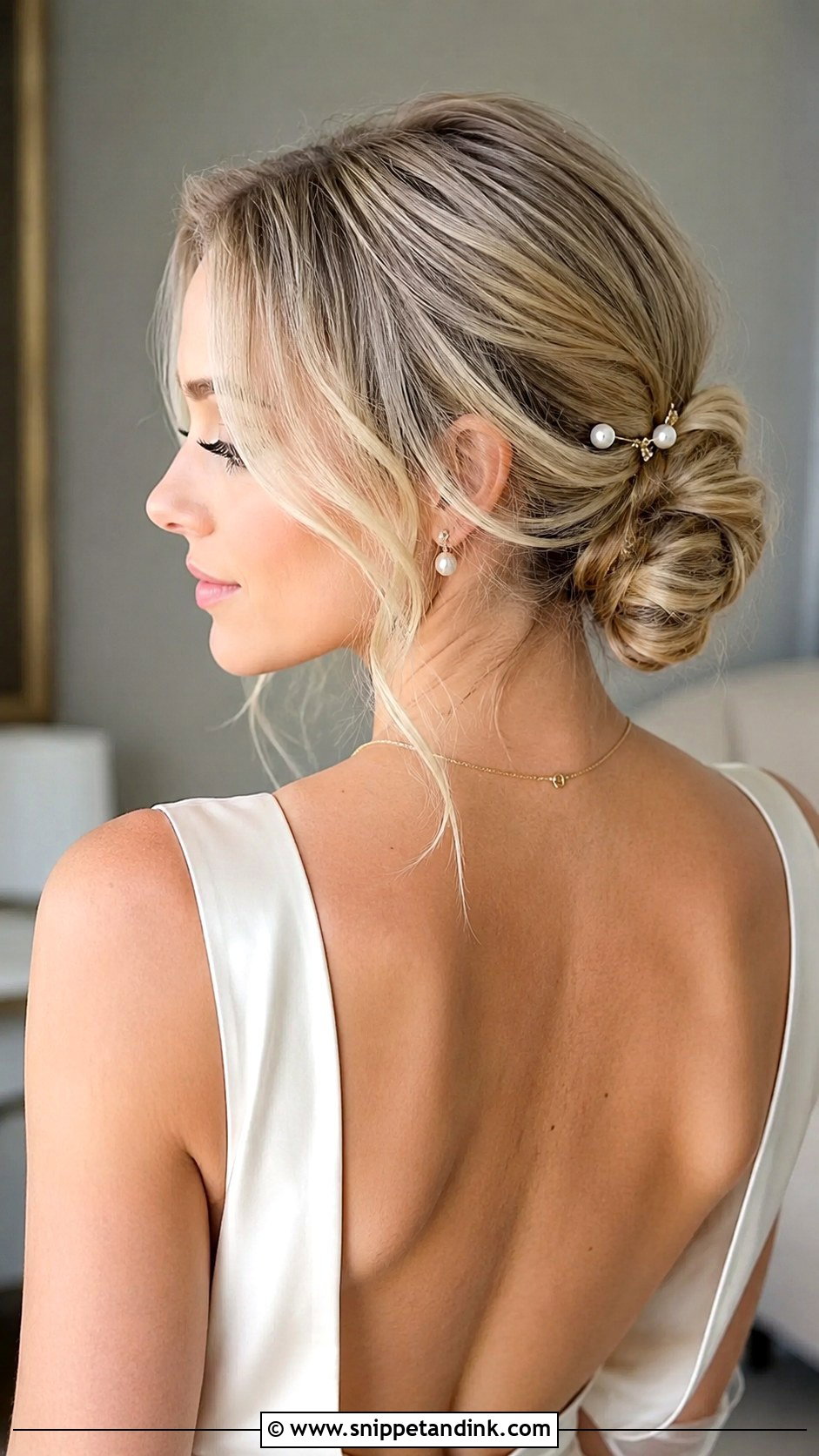
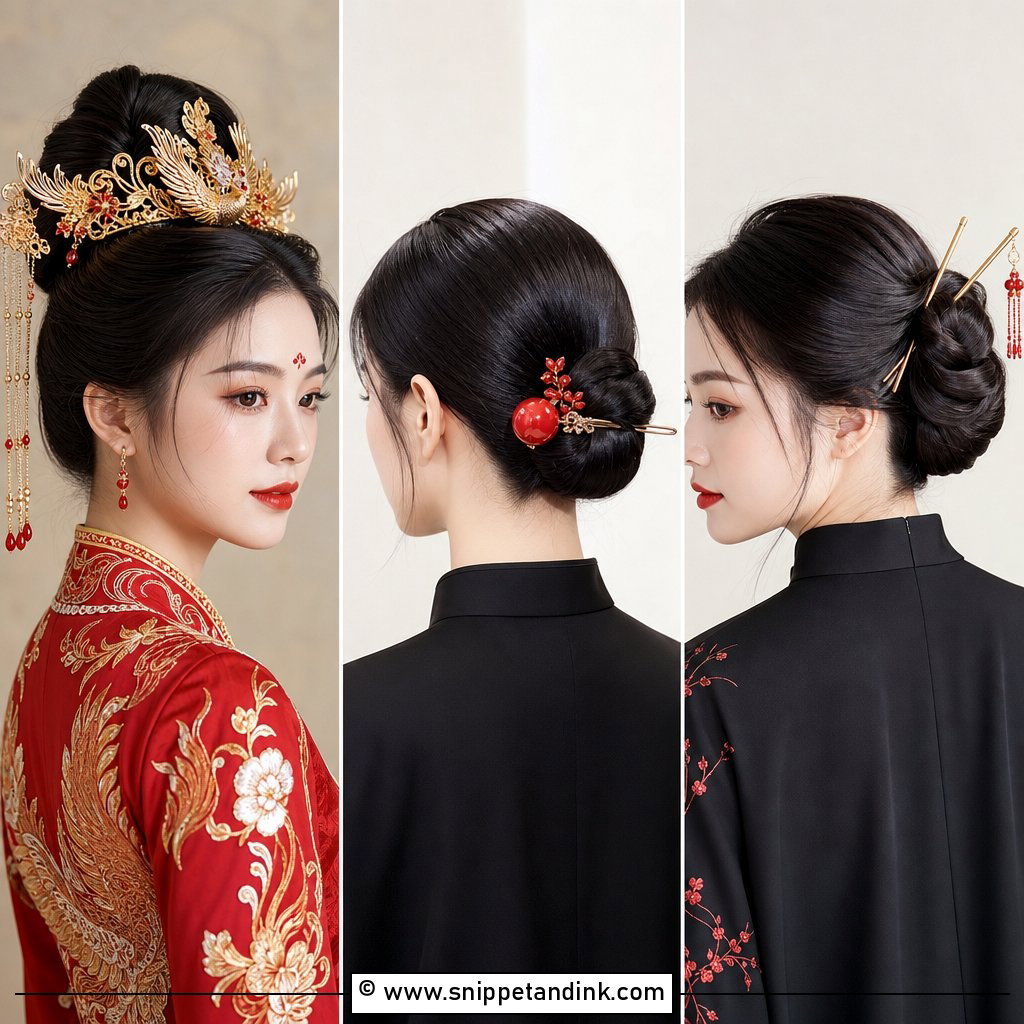
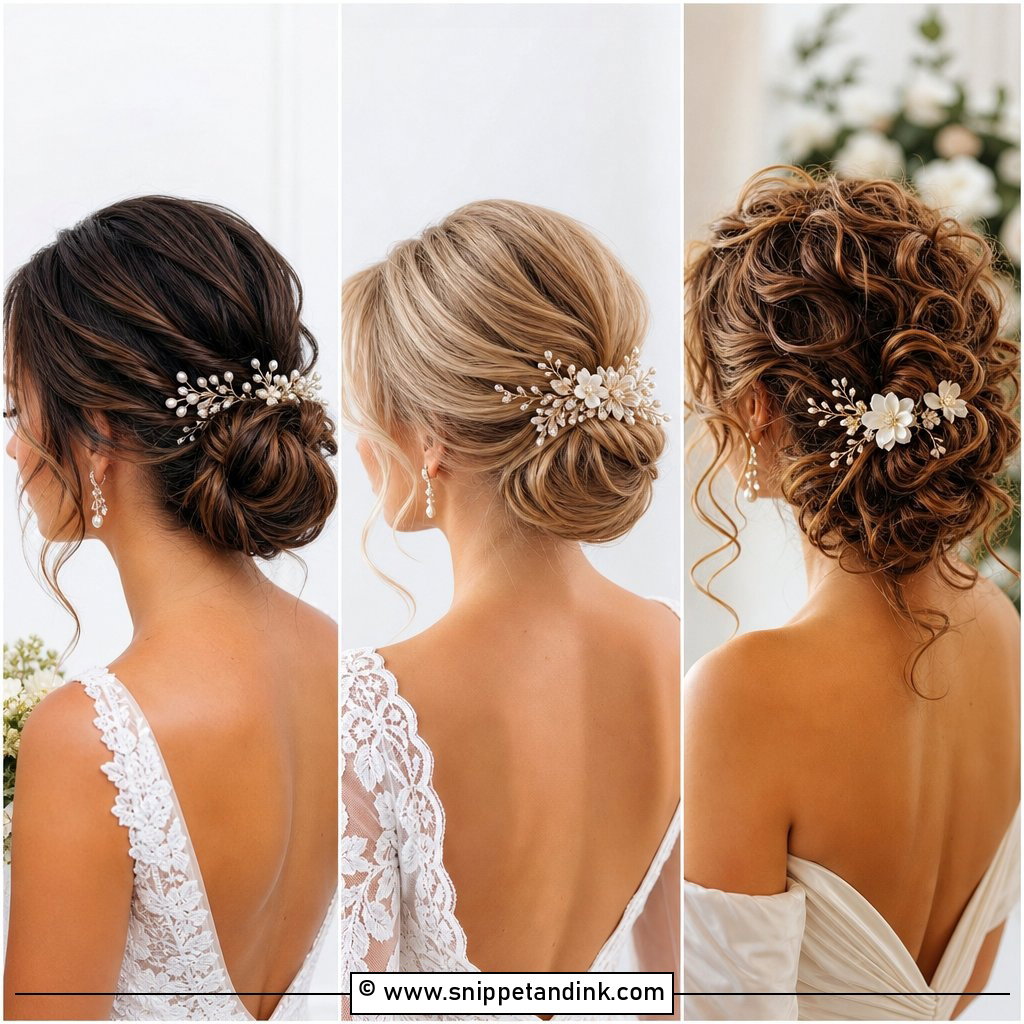
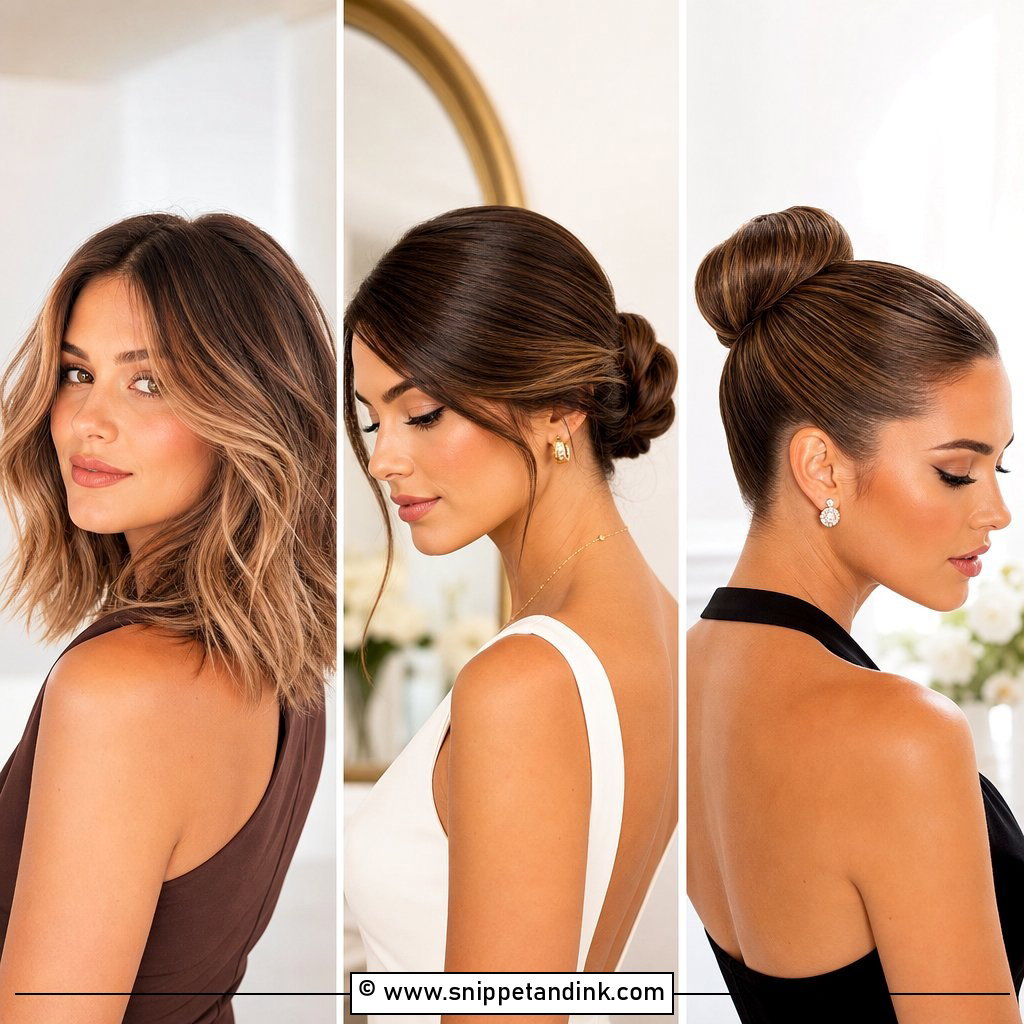
A low bun is the style I’d call hardest to get wrong. Sitting close to the nape, it leaves room above for a veil comb, pearl pins or flowers and keeps an open-back dress clear. On medium to long hair I can build fullness by pinning the bun in sections rather than twisting it into one knot, which stops it looking bulky. Smooth the front for a formal ceremony or pull out a few face-framing pieces if you like softness. Weight close to the neck also means it barely moves while you dance.
2. Half Up Half Down Wedding Hairstyle
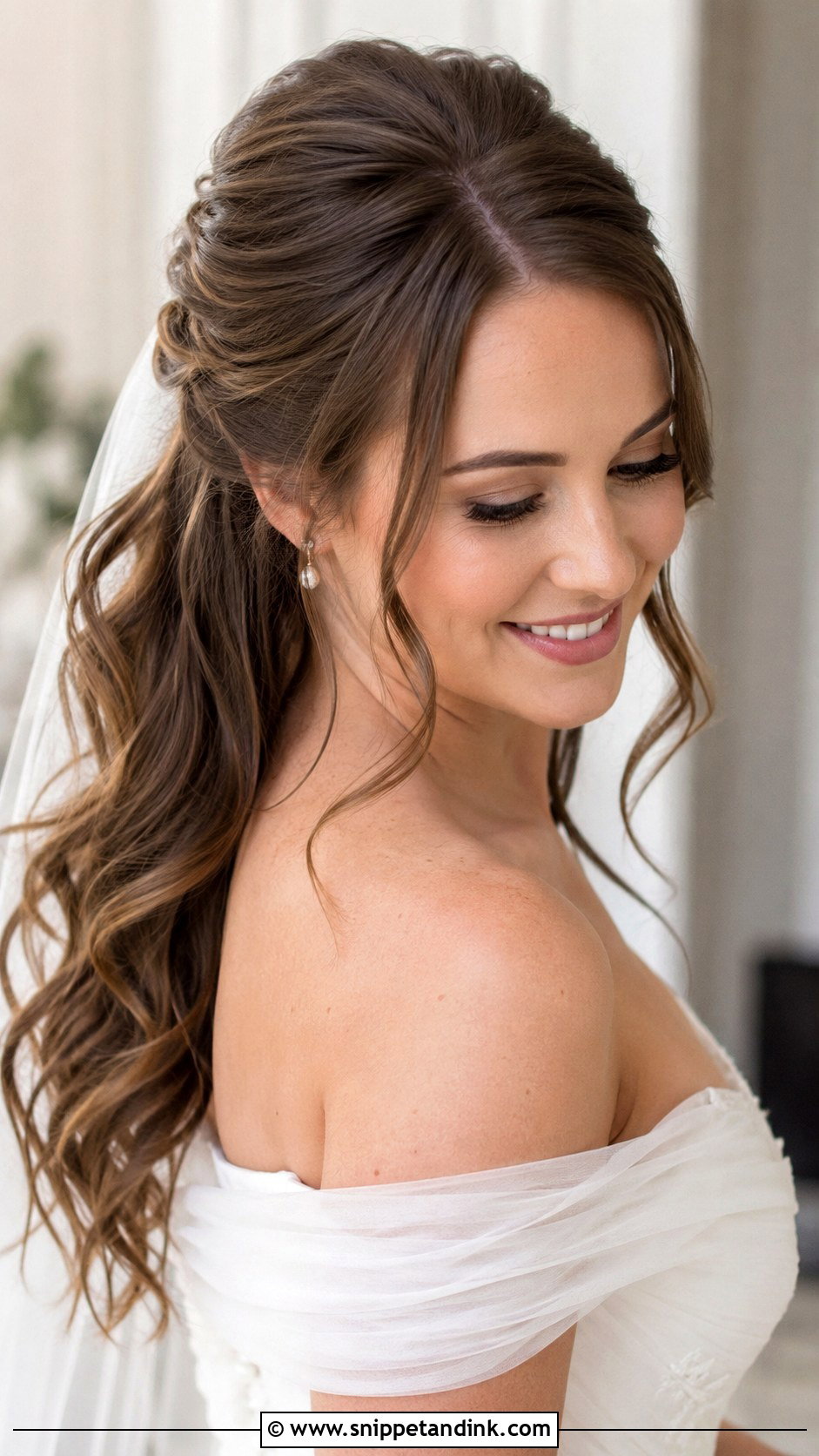
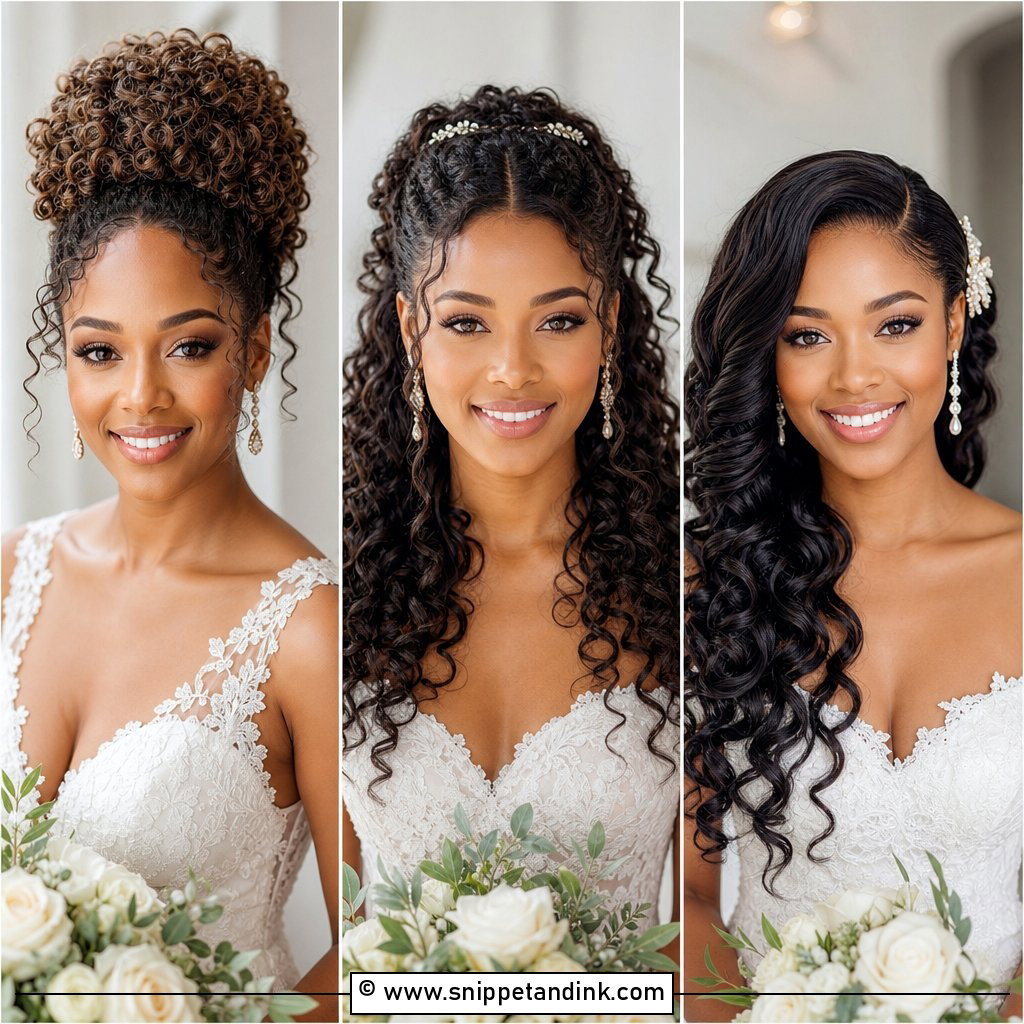
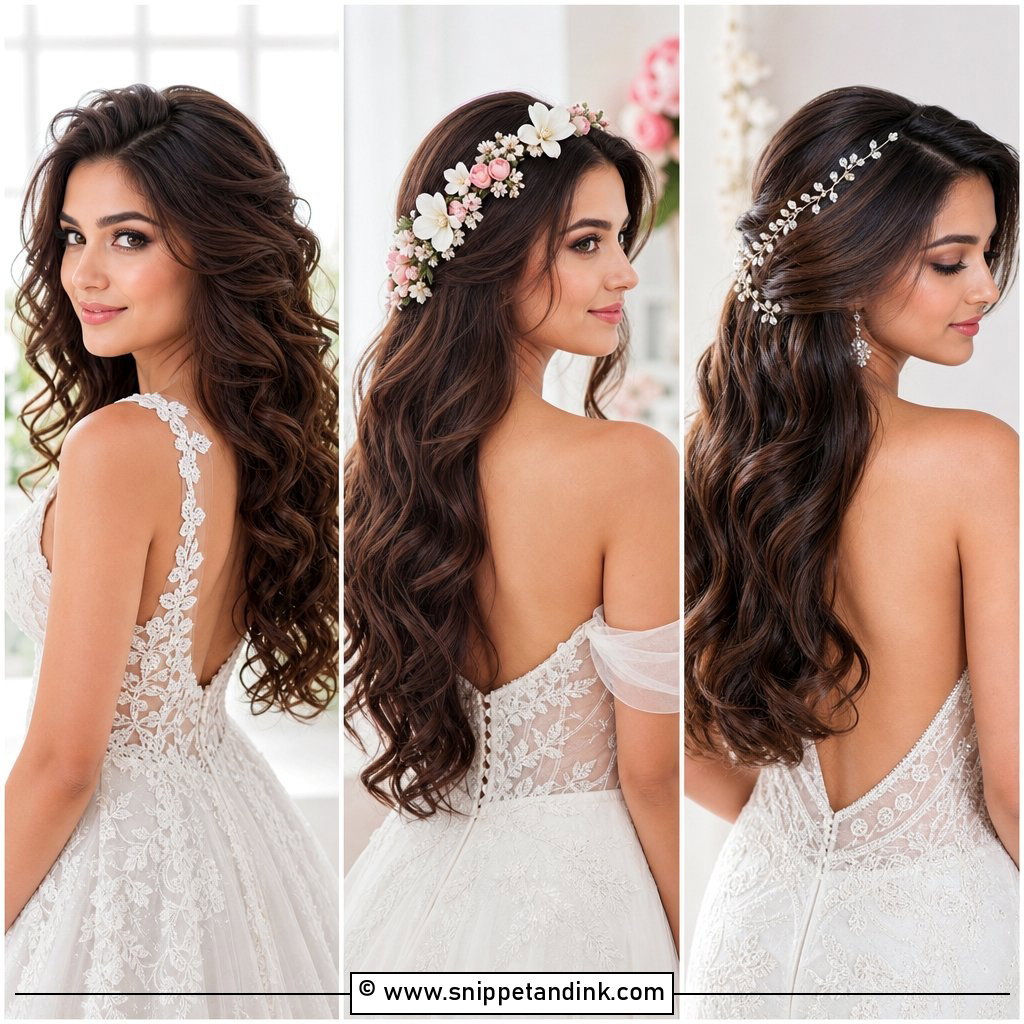
Half up, half down keeps your face open for photos while the length stays loose, and that’s exactly why it’s requested so often. The top section is lifted and pinned; the rest falls in waves. A twisted or braided crown on the top adds detail without crowding the look. The order of work matters here. I curl and set the waves first, then pin the crown section over a small hidden base of crossed pins, because pinning before curling lets the heat loosen everything I’ve just secured. Strapless and sweetheart necklines suit it.
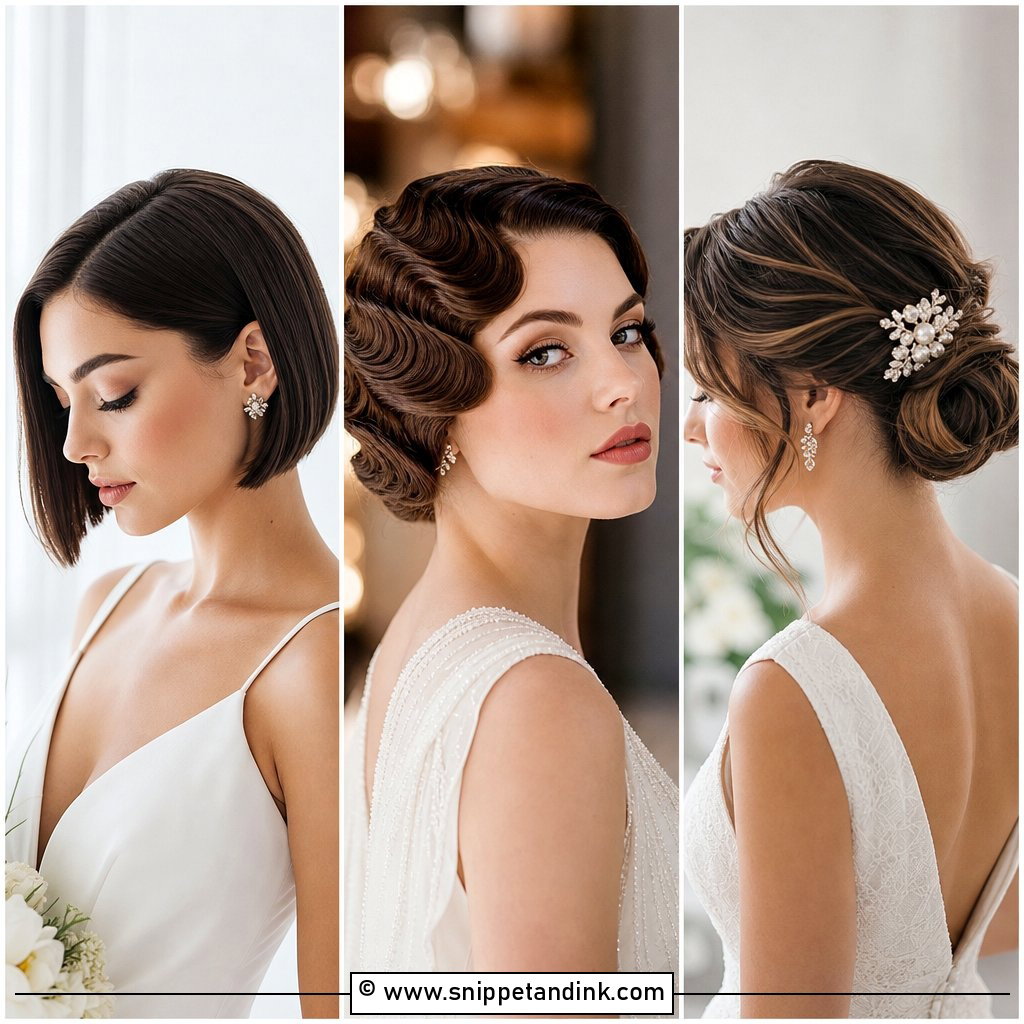
3. Hollywood Waves Wedding Hairstyle
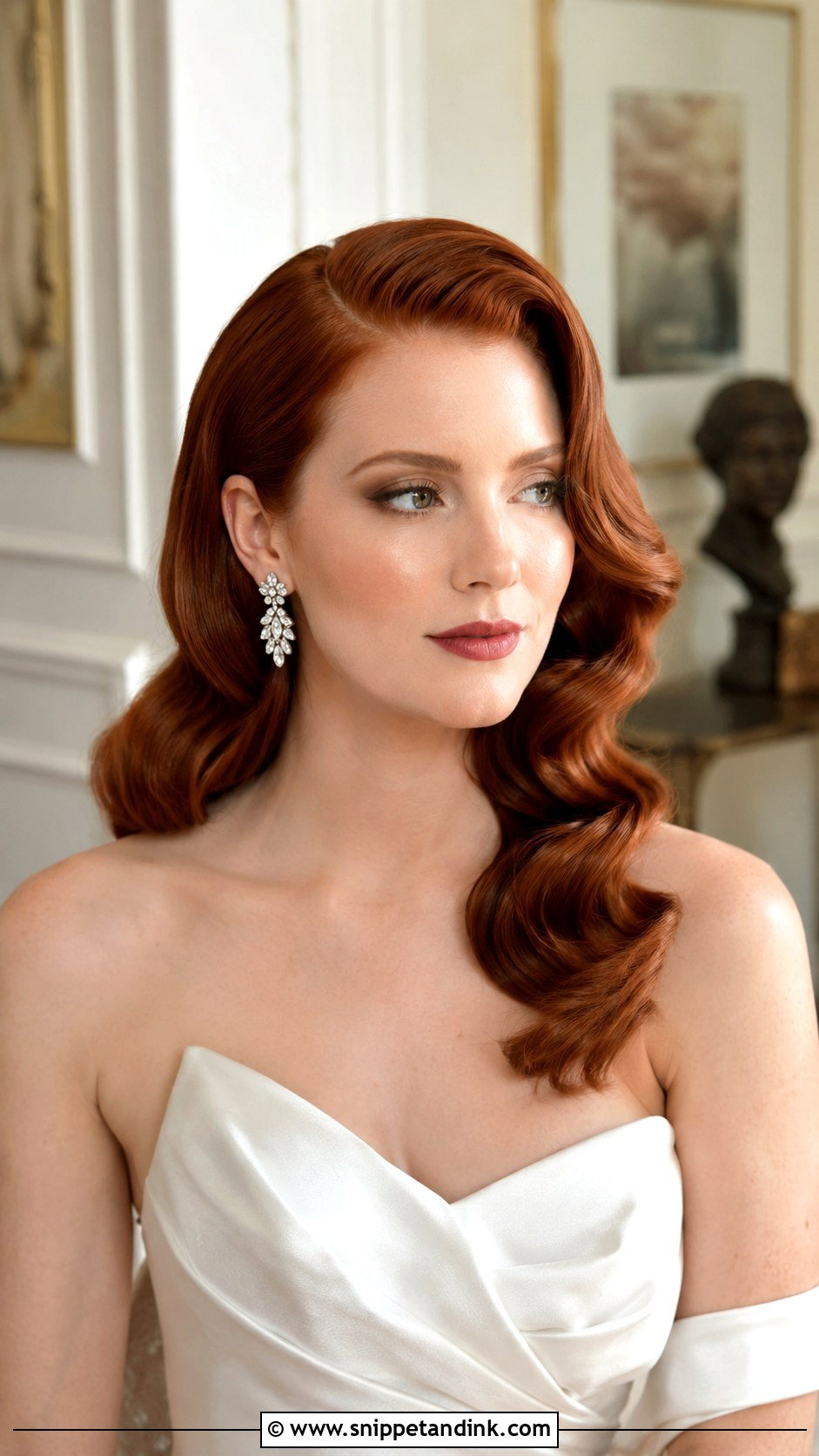
Hollywood waves are the polished choice for close-up portraits. I part to one side, set deep glossy waves and brush them into one sculpted pattern. They behave best on medium to long hair that’s fairly even in length, because short layers break the wave and poke out. Satin, vintage-style gowns and statement earrings sit naturally with them. Each curl needs time to cool before brushing, so budget for it. Indoors or in mild weather they stay sleek and camera-ready for hours; in humidity, expect them to relax.
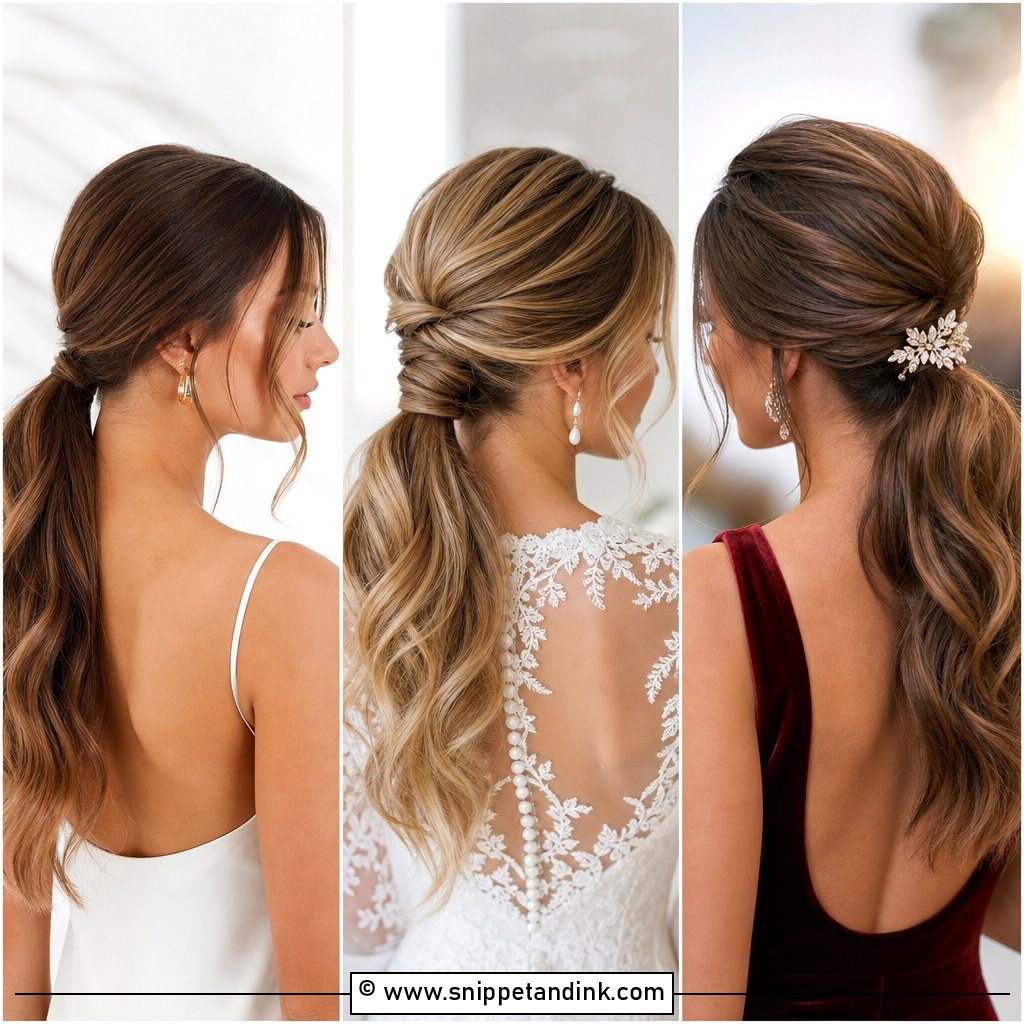
4. Sleek Low Ponytail Wedding Hairstyle
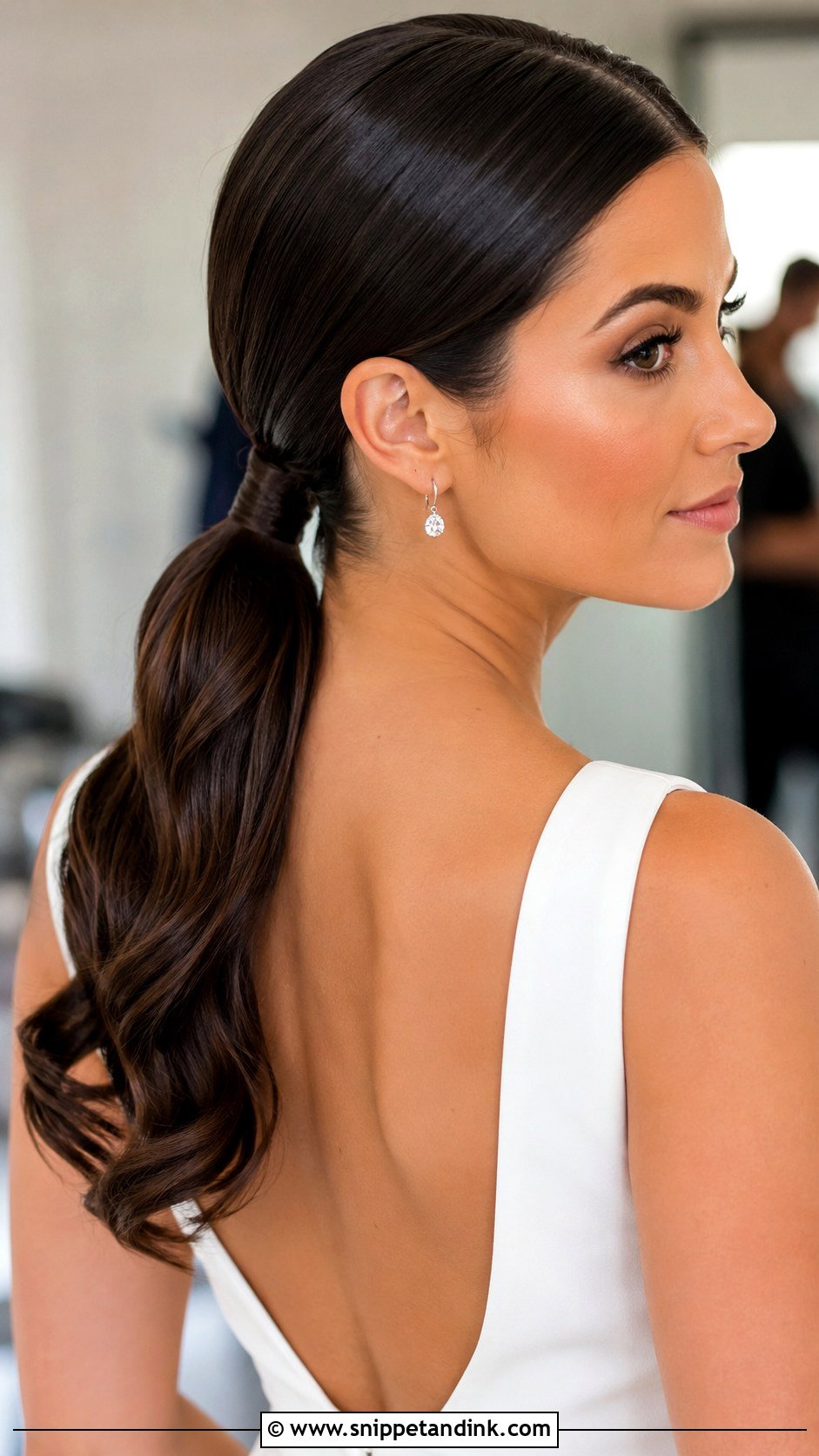
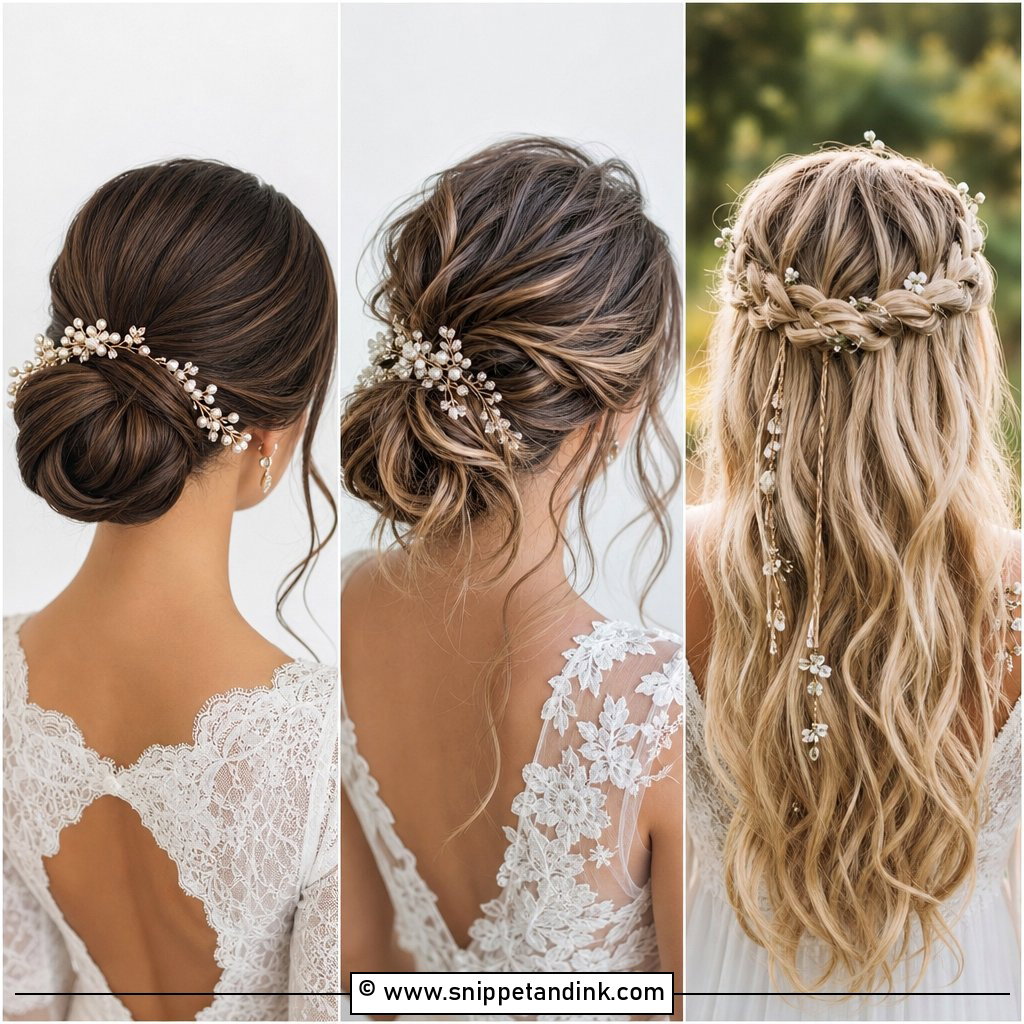
Sleek low ponytails look simple, and that simplicity is precisely what makes them hard to fake. The crown has to be glossy and flat, which means a careful blow-dry with a paddle brush before any iron touches it. I wrap a strand of hair around the base to hide the elastic, which is what lifts it from everyday to formal. High necks, minimalist gowns and sharp earrings suit it. Fine hair can look thin once it’s all gathered into one tail, and a couple of clip-in wefts under the ponytail fixes that without changing the sleek top.
5. Textured Updo Wedding Hairstyle
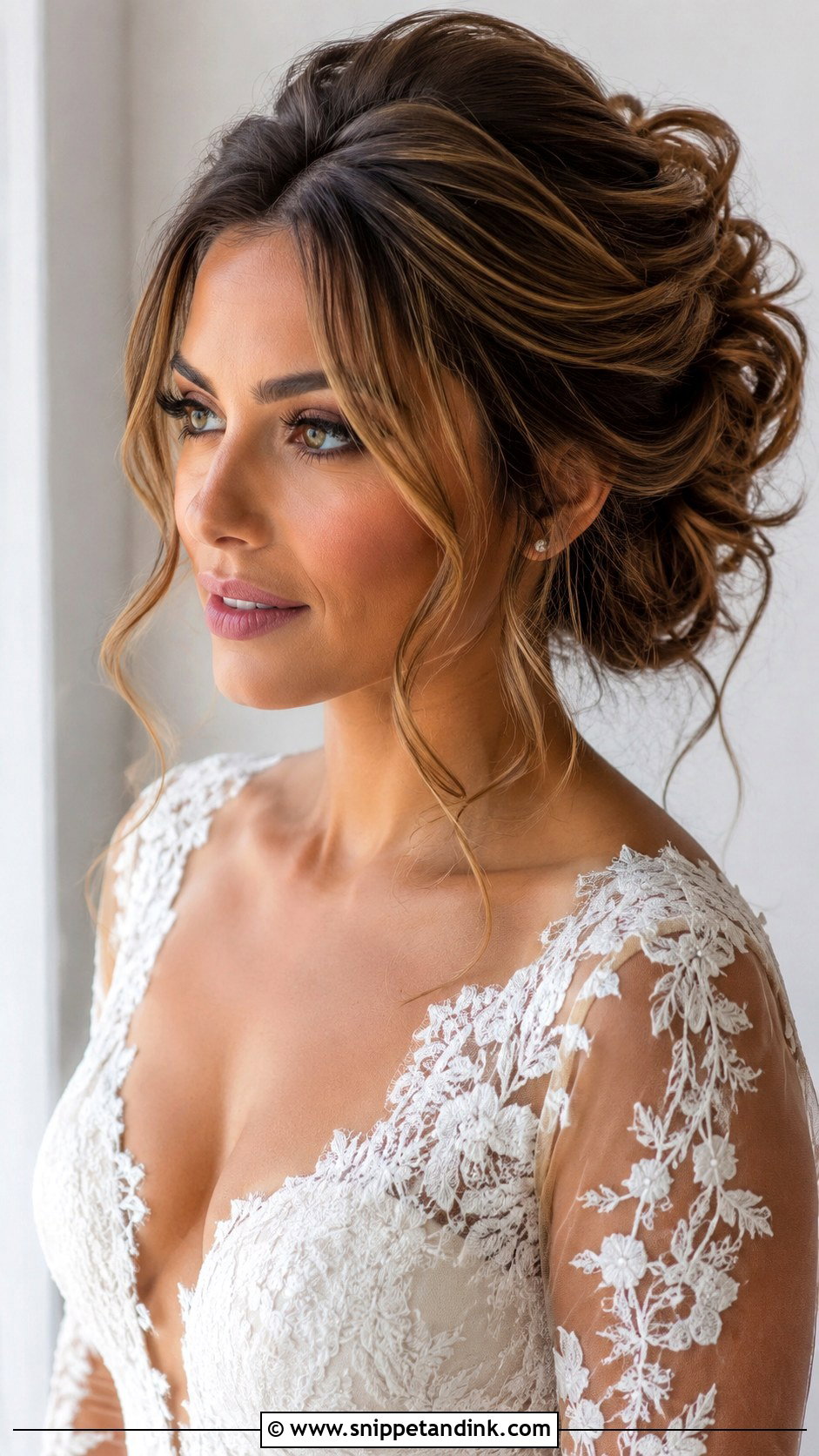
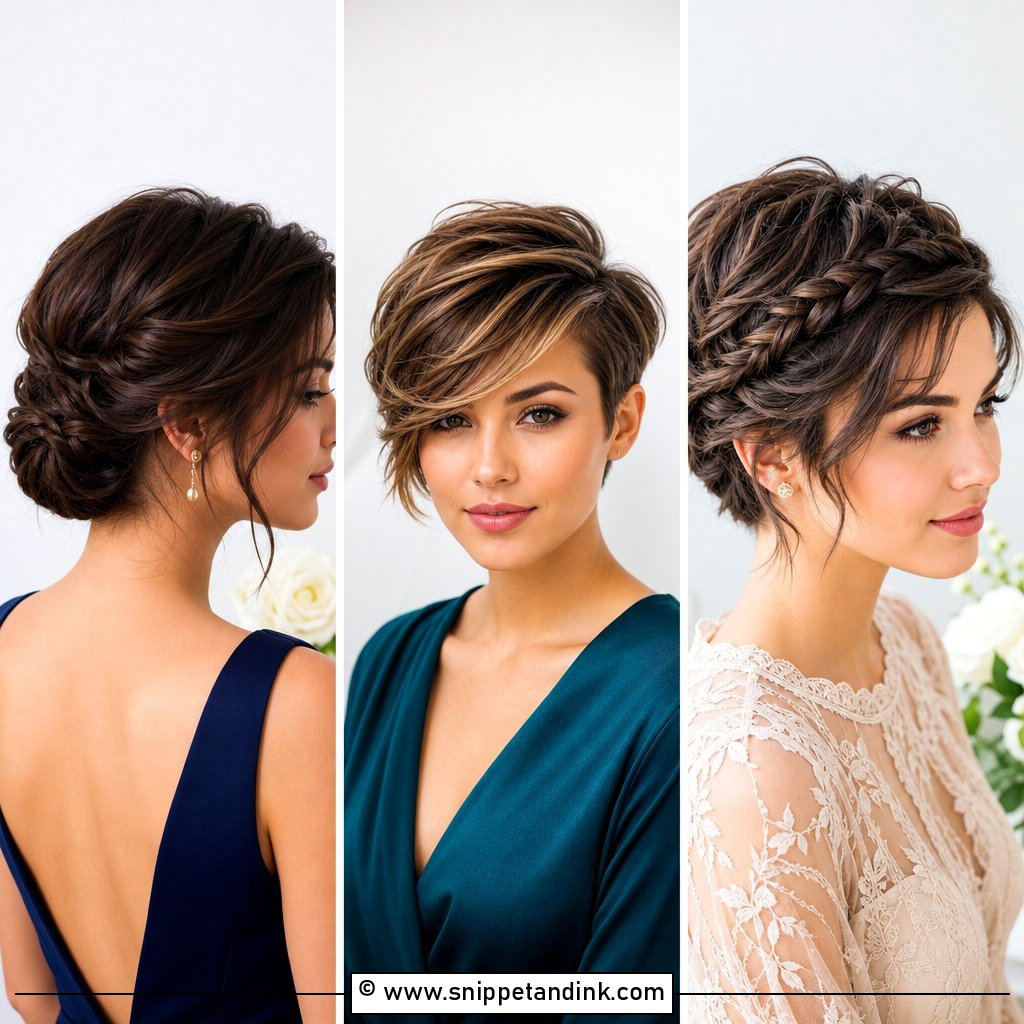
A textured updo is twisted, pinned and then deliberately loosened. That last step is where it goes right or wrong. I only pull pieces free after every section is anchored, and I loosen the twists by pinching them, never by tugging the hair at the root, which leaves bumps. Highlighted hair shows the twists better than a solid color. It suits outdoor ceremonies and gardens. A delicate hair vine or a few loose strands at the cheekbones finish it without stiffening anything.
6. Bridal Chignon Wedding Hairstyle
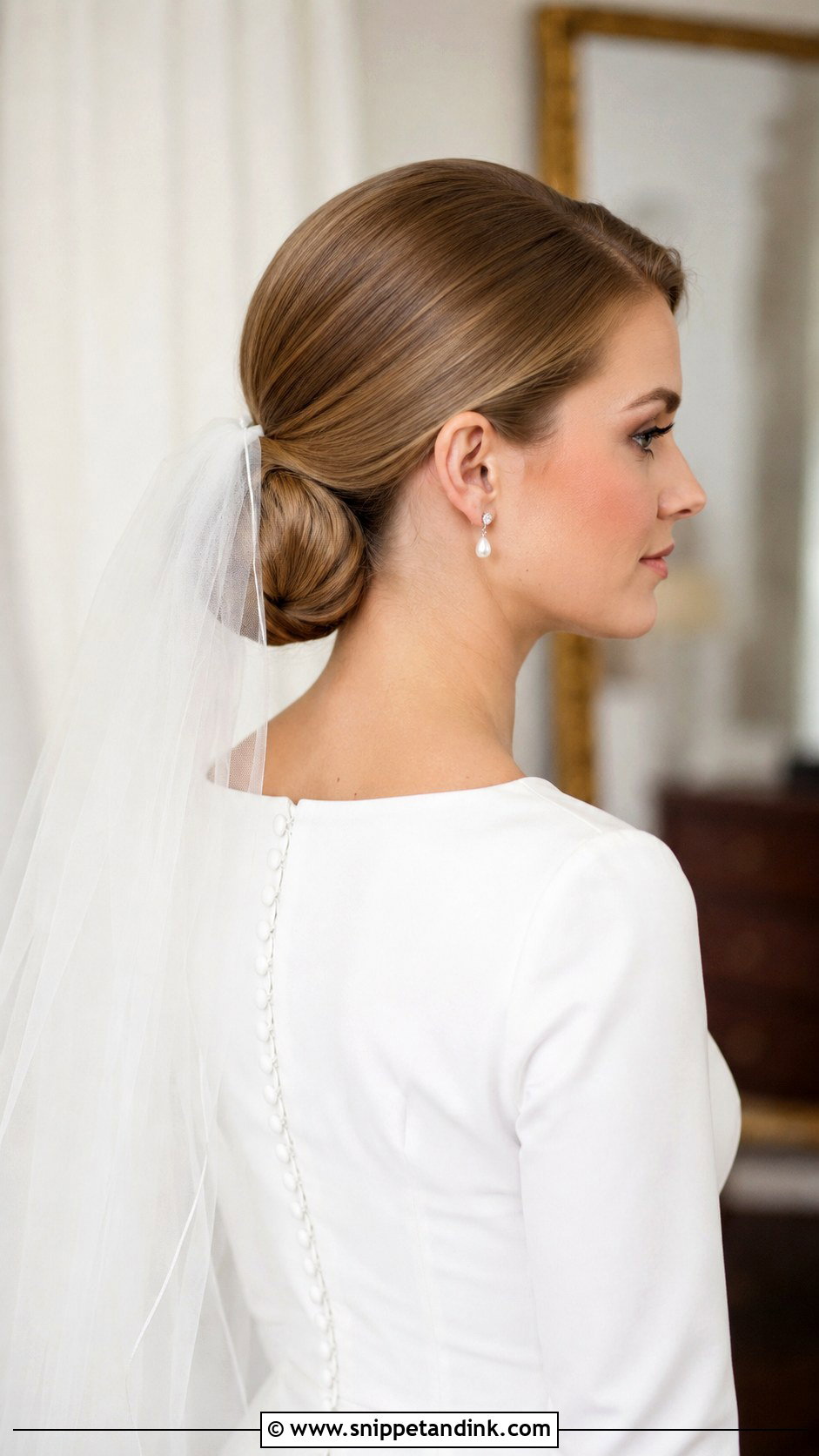
Formal ceremony, classic gown, long veil: that’s the setting where I’d suggest a chignon first. It sits low at the back of the head as a smooth roll, knot or tucked bun. Because it’s compact and firm, it’s the best base I know for cathedral veils, which pull with real weight once the train is on the floor. The comb goes just above the chignon so the bun supports it. Keep it sleek for a structured look, or soften it with airy pieces around the face. It’s also the style least likely to look dated when you open the album years later.
7. Braided Crown Wedding Hairstyle
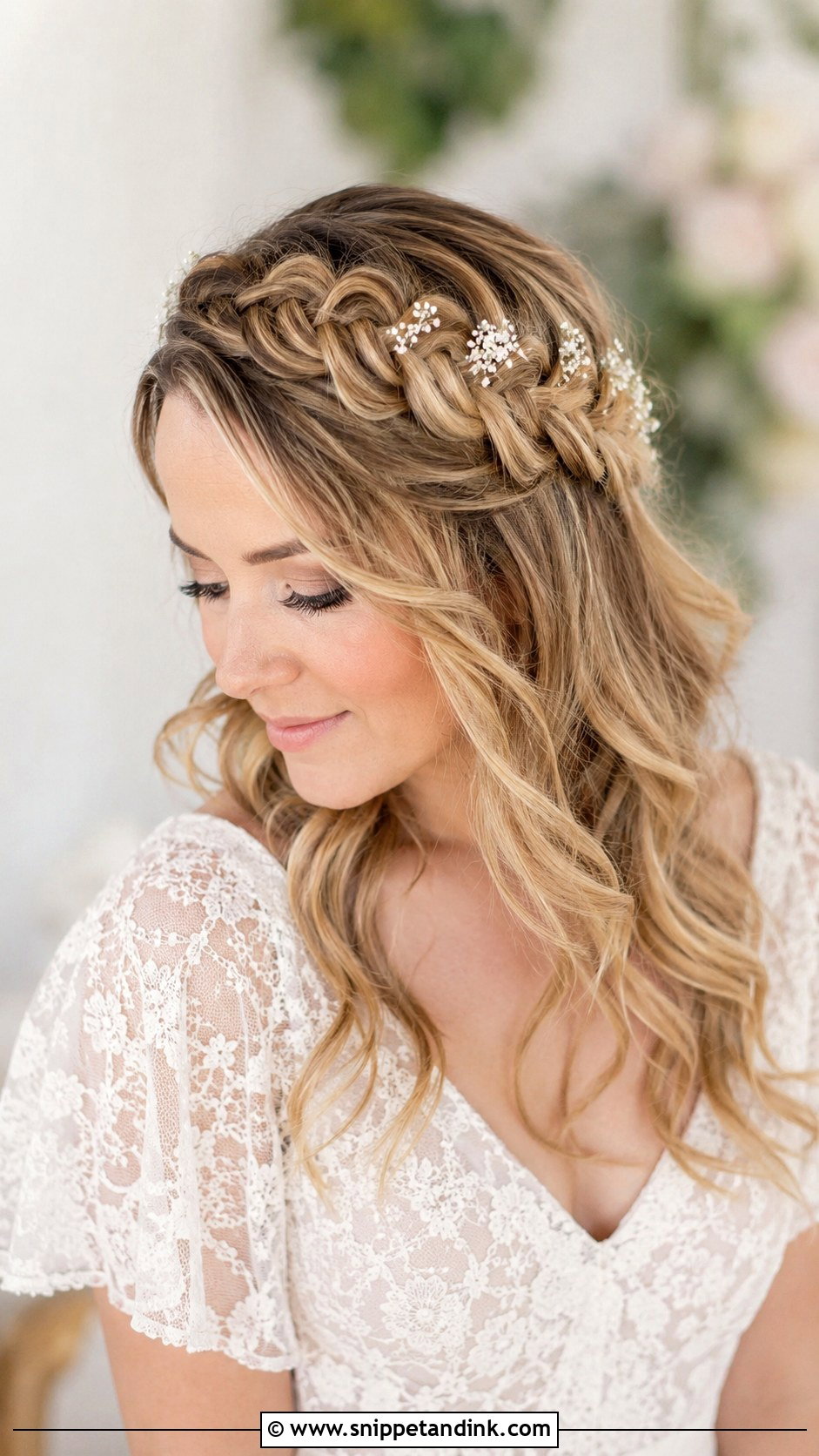
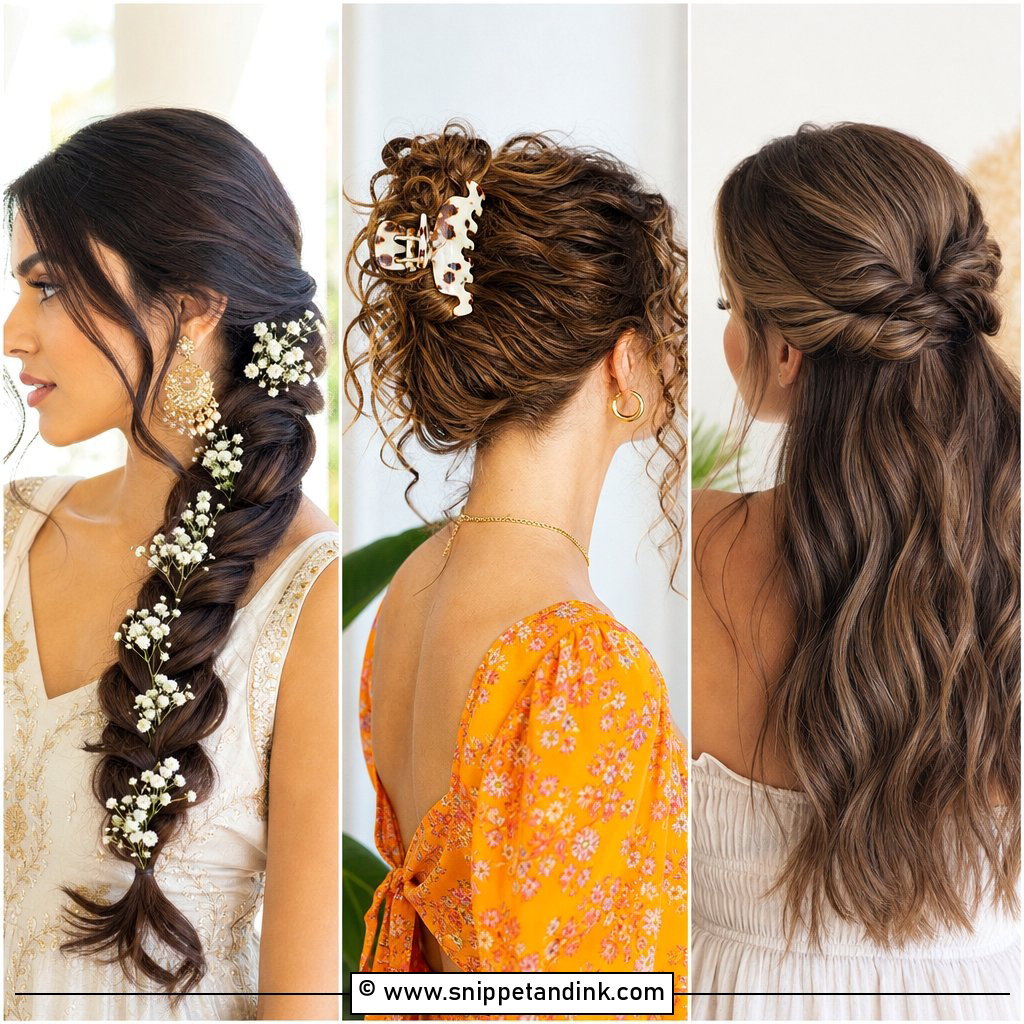
Braided crowns can tip into looking childish if they’re tight and neat. I keep the braid loose, pancake it slightly after pinning and blend its ends into the hair underneath so you can’t see where it starts. The braid can wrap across the top, merge into a low bun or sit just behind the hairline above loose waves. It’s a practical choice for rustic, garden and beach venues, and it controls short front layers that would otherwise fall forward. A few pins or fresh flowers make it bridal.
8. Loose Waves Wedding Hairstyle
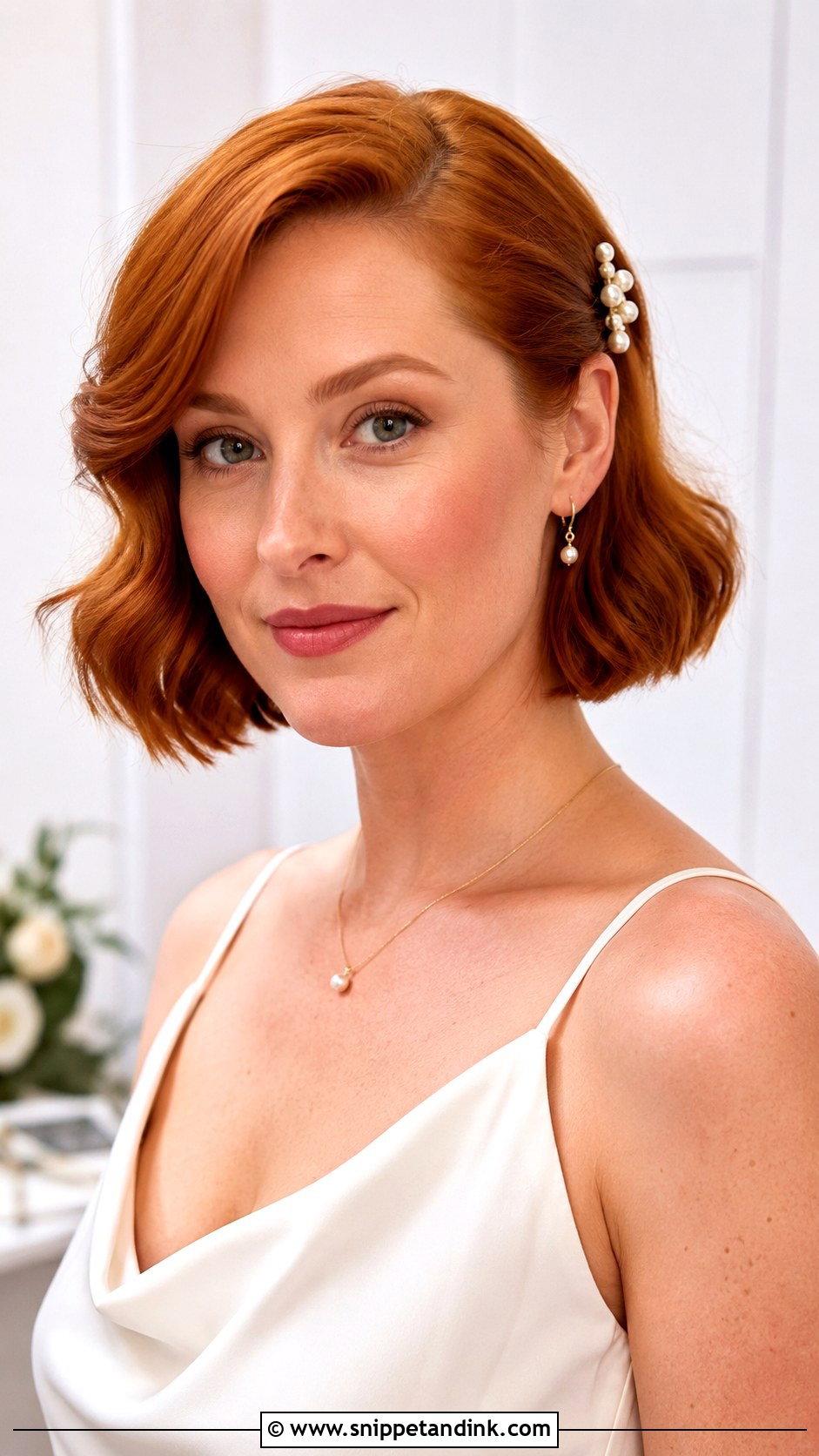
Loose waves read natural, but natural on a wedding day takes more prep than it looks. Without a good base they fall within a couple of hours. I use a heat protectant with some hold before curling, curl in alternating directions so the waves don’t clump together, and brush them out gently once cold. For a bridal finish, there’s volume at the crown and a smooth face frame. For a relaxed outdoor ceremony, I leave them softer. A flexible spray, not a firm one, keeps them moving through photos and dancing.
9. High Bun Wedding Hairstyle
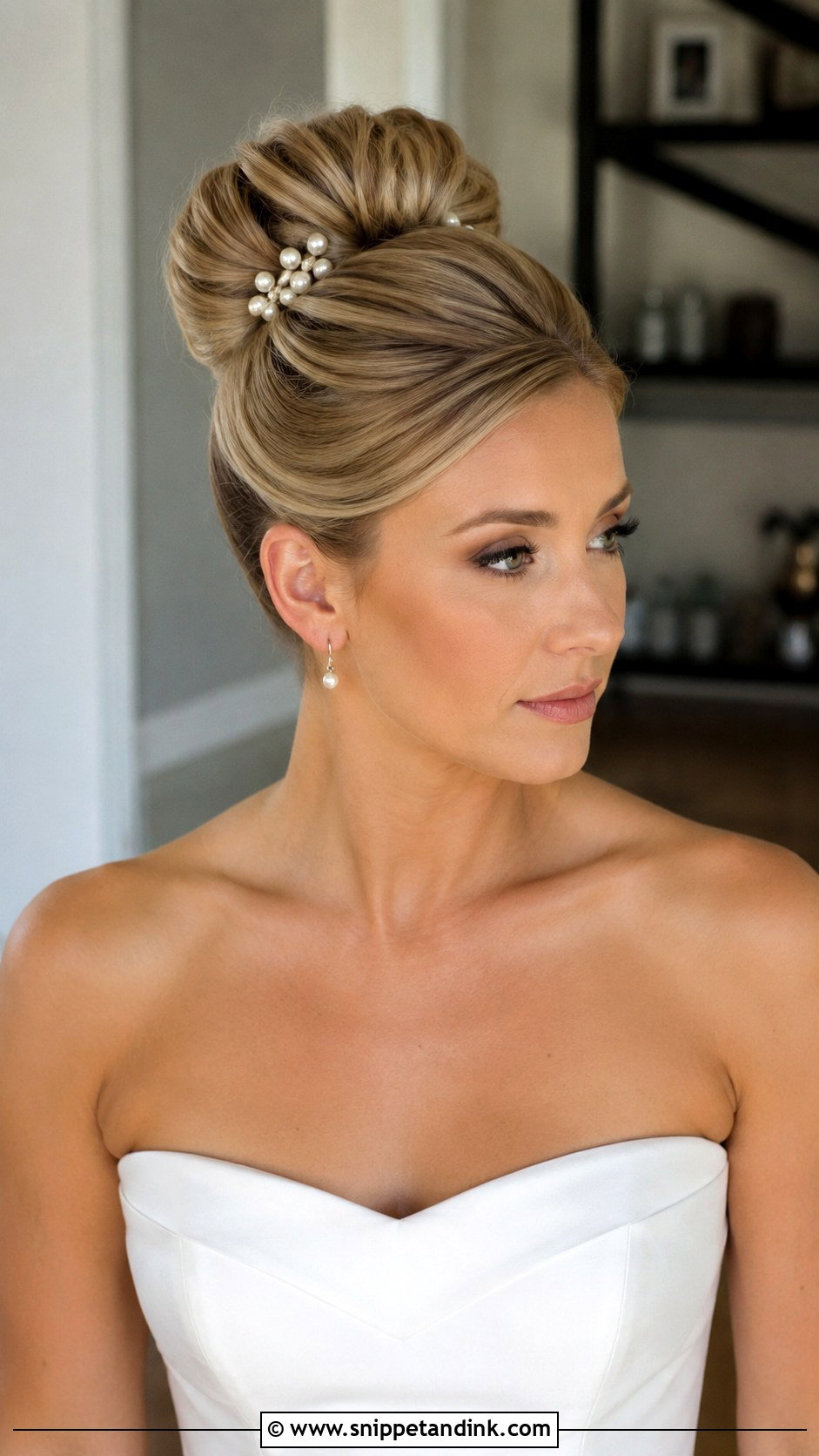
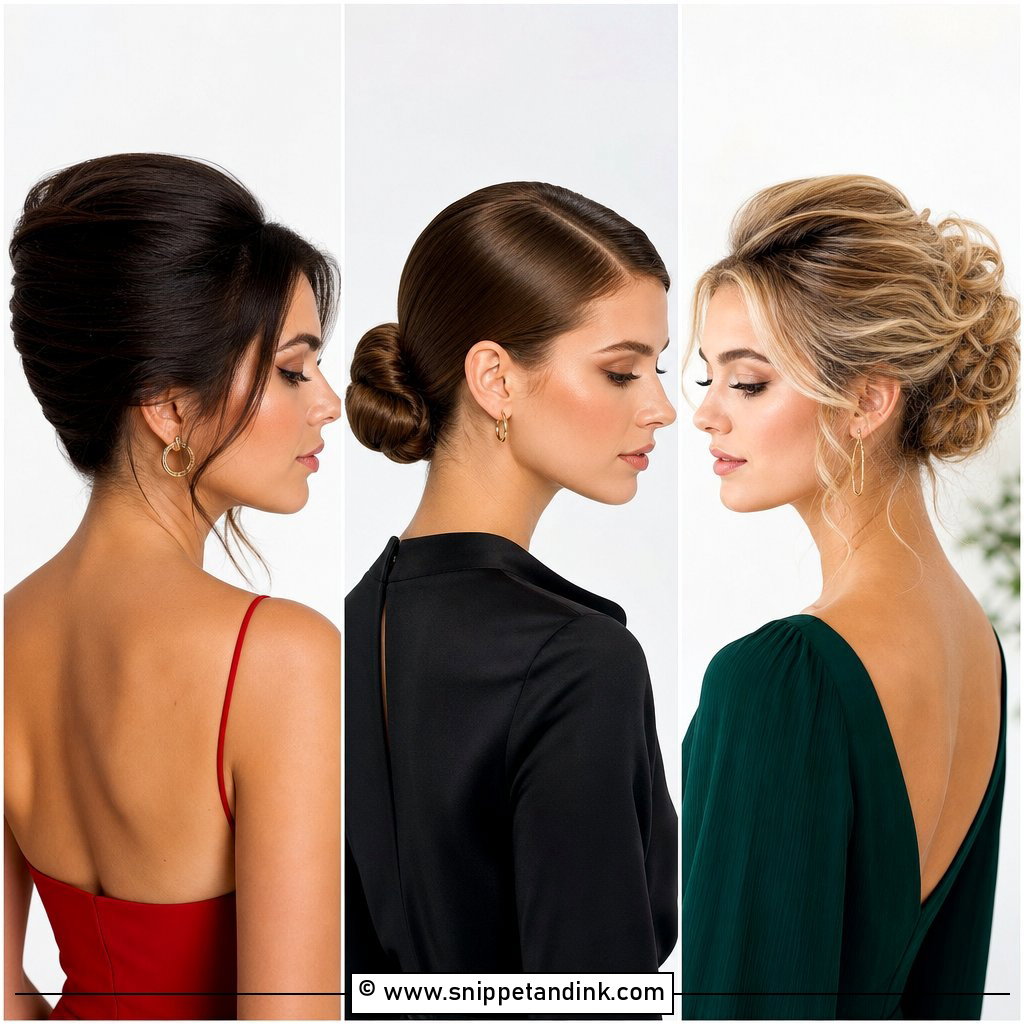
High buns lift everything. The eye goes upward, the neck looks longer, and detailed collars, sleeves or open shoulders get full attention. It can be sleek like a ballet bun or softer with volume. Warm weather suits it because nothing touches your neck. The trade-off is veils: a high bun pushes the comb low and can make a long veil hang awkwardly, so I’d test that combination before committing. Fine or shorter hair may need a padded base or extensions for a full shape.
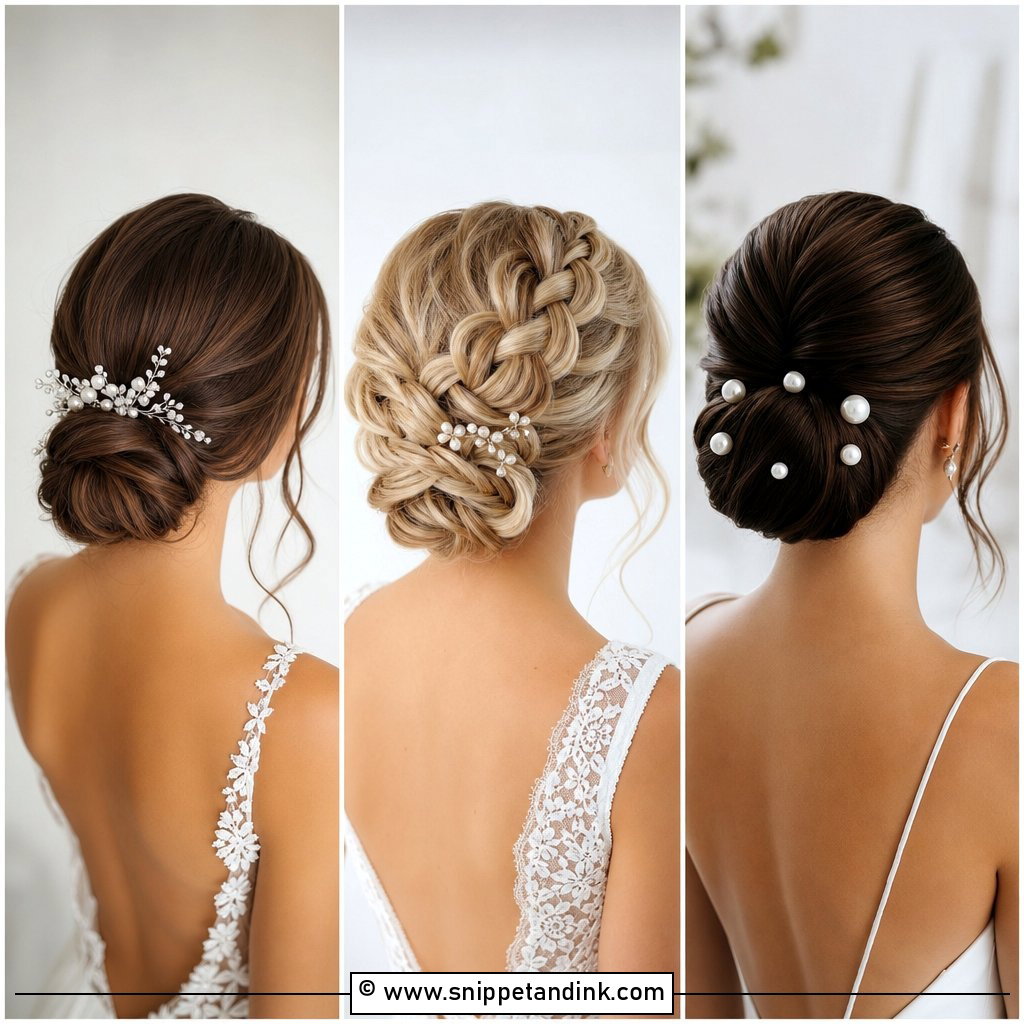
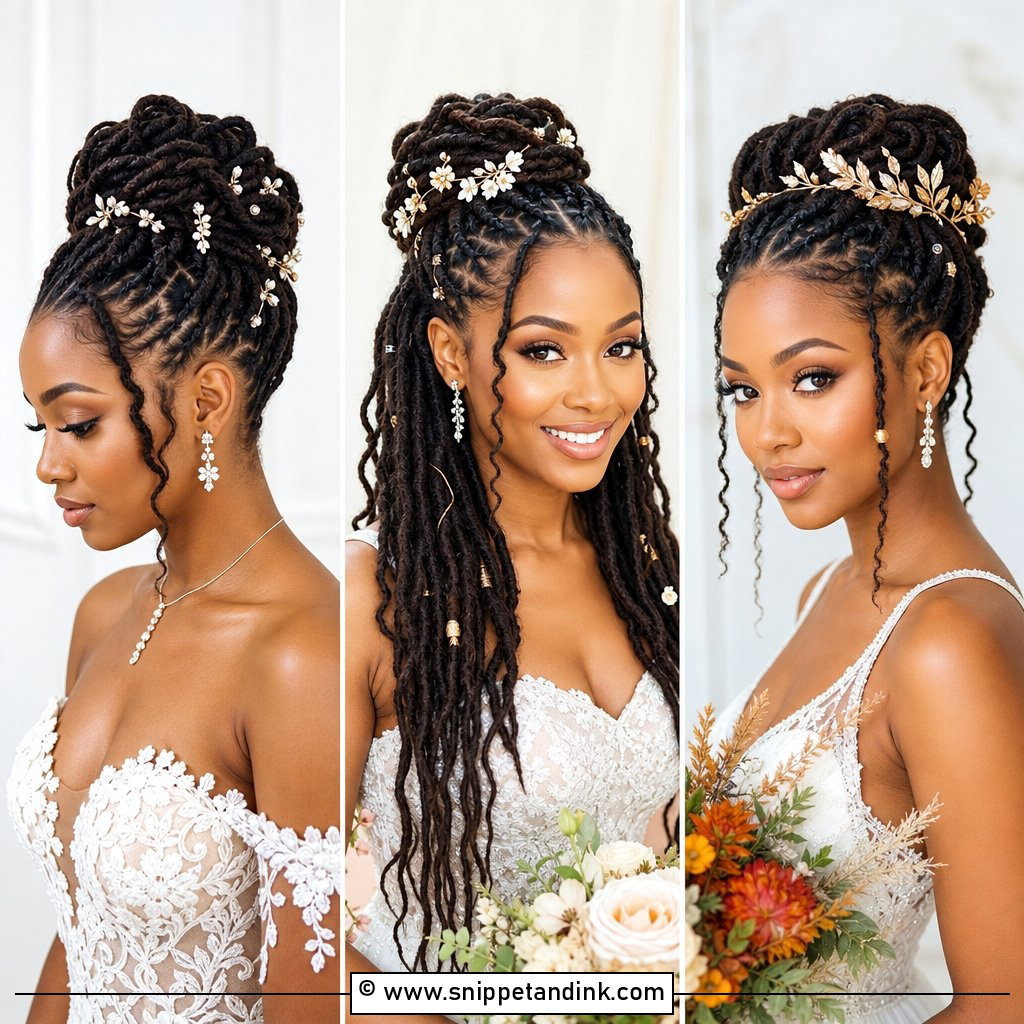
10. Curly Updo Wedding Hairstyle
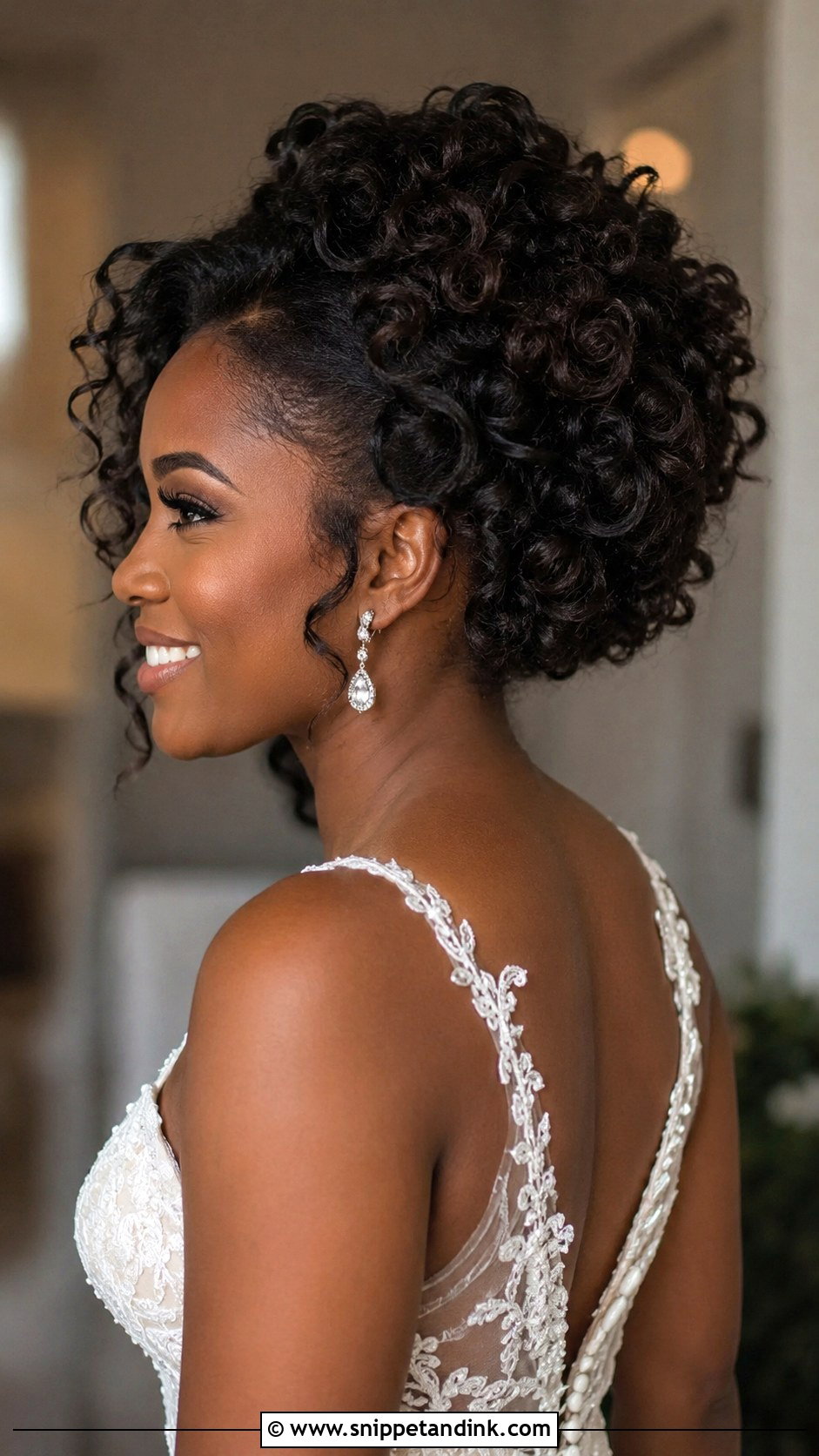
Curly updos keep the texture and lose the weight on your neck. I pin curls into a soft shape at the crown, nape or back of the head, using open U-shaped hairpins, which slip into curls without crushing them the way bobby pins can. Naturally curly, coily and textured hair all suit it, because nothing has to be forced smooth. Moisture prep the day before and on the morning keeps curls defined through the evening. Leave a few around the face, or polish the edges for a cleaner finish.
11. Side Swept Curls Wedding Hairstyle
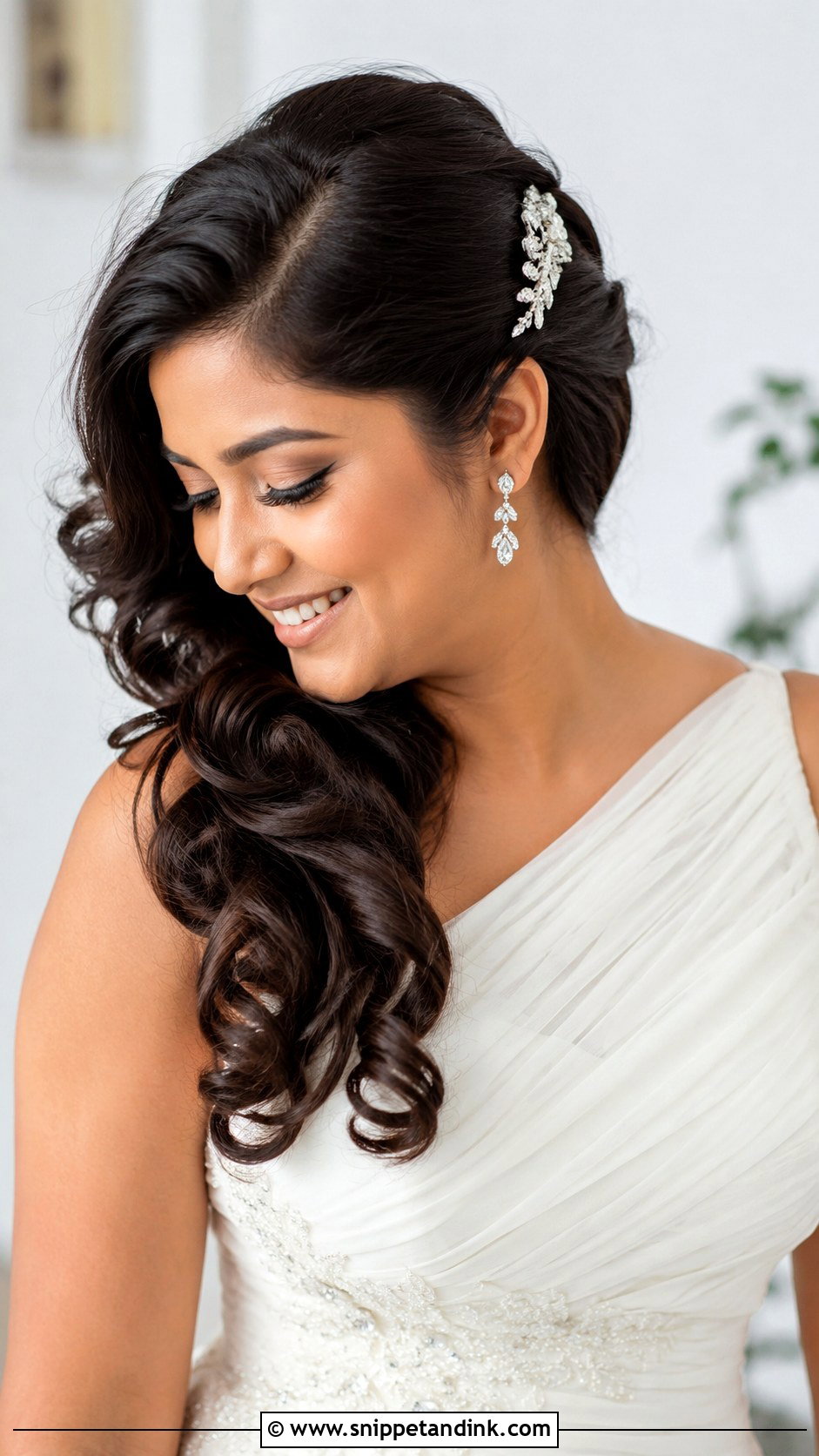
Side swept curls give long hair some drama while keeping it off your face. I curl everything, brush it softly, then pin it over one shoulder so the neckline and the other side of the face stay open. One-shoulder dresses and statement earrings balance it well. The hidden work is at the back. All that hair pulls toward one side, so I anchor it with a vertical row of crossed bobby pins behind the ear, and on thick hair I add a second row. Cover the pins with smooth styling or a jeweled clip.
12. French Twist Wedding Hairstyle
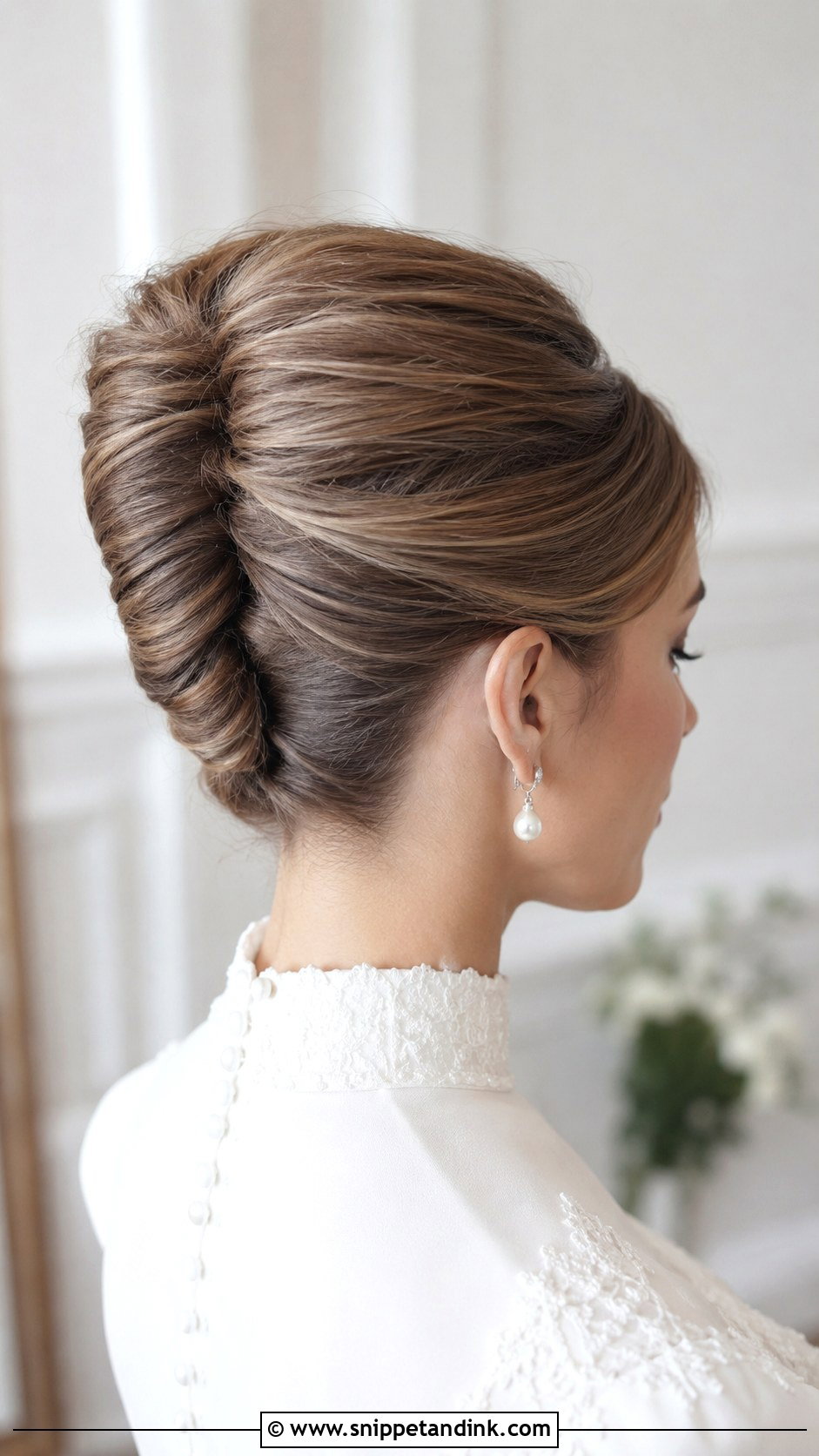
The French twist is swept upward and tucked into a vertical roll, and that clean line looks graceful from the side and back. Formal ceremonies, city weddings and simple gowns all suit it. Keep it sleek for a sophisticated finish or add volume at the crown for softness. Medium to long hair is easiest. Shorter hair can sometimes be shaped into a twist with pins and texture spray, though I’d want to see the length at a trial before promising it, because ends that won’t tuck tend to poke out of the seam.
13. Boho Braid Wedding Hairstyle
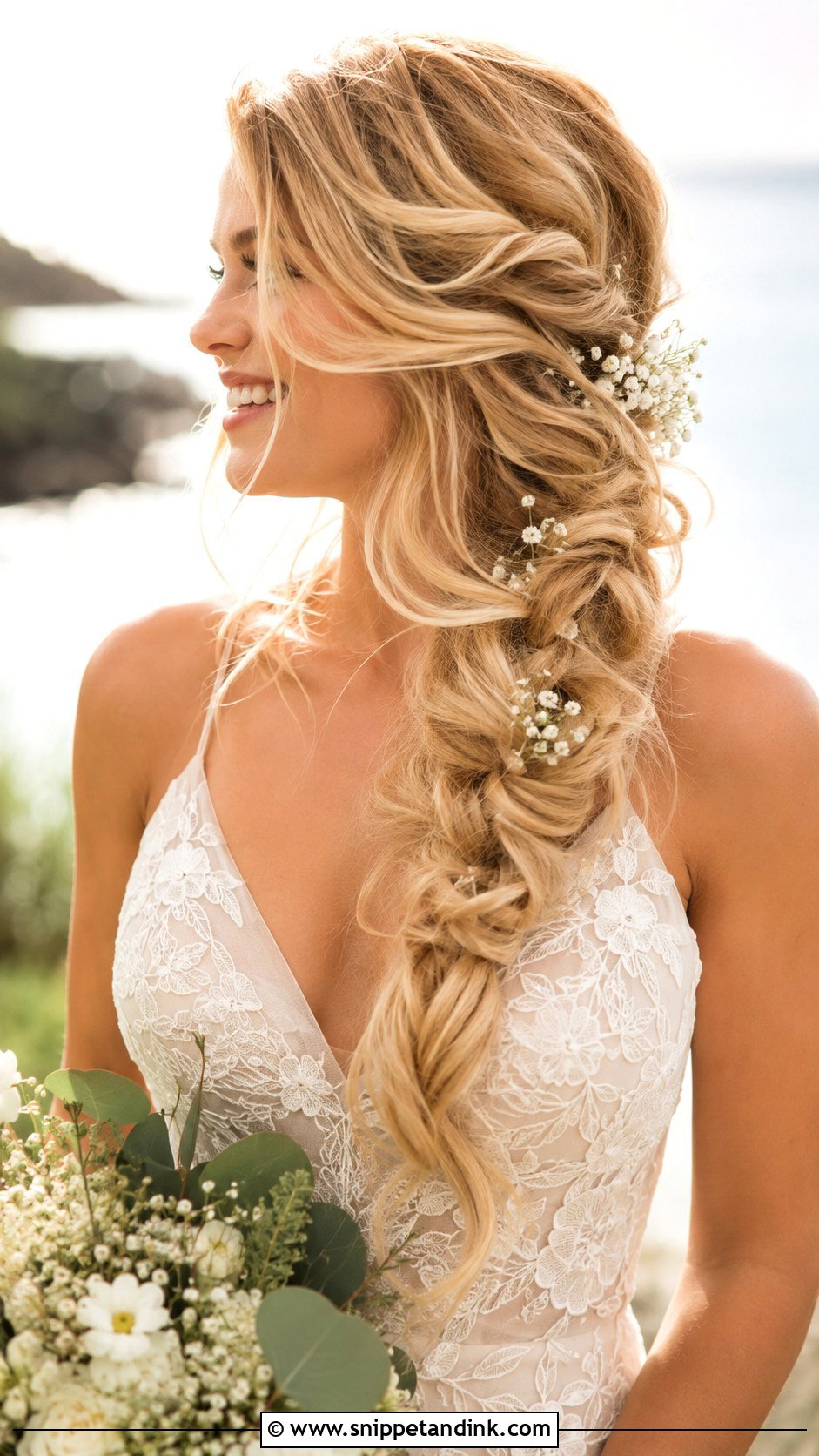
Boho braids work best when they’re bigger than your hair really is. Whether it’s a loose side braid, a pull-through braid or braids mixed with waves, I pull each section apart after securing it so the braid looks full and airy, never tight. Fine hair gets an extra weft or two for thickness. Outdoor ceremonies suit it, and flowers or small pins tuck easily into the loops. Leave soft face-framing pieces so the braid doesn’t feel scraped back.
14. Short Hair Wedding Hairstyle
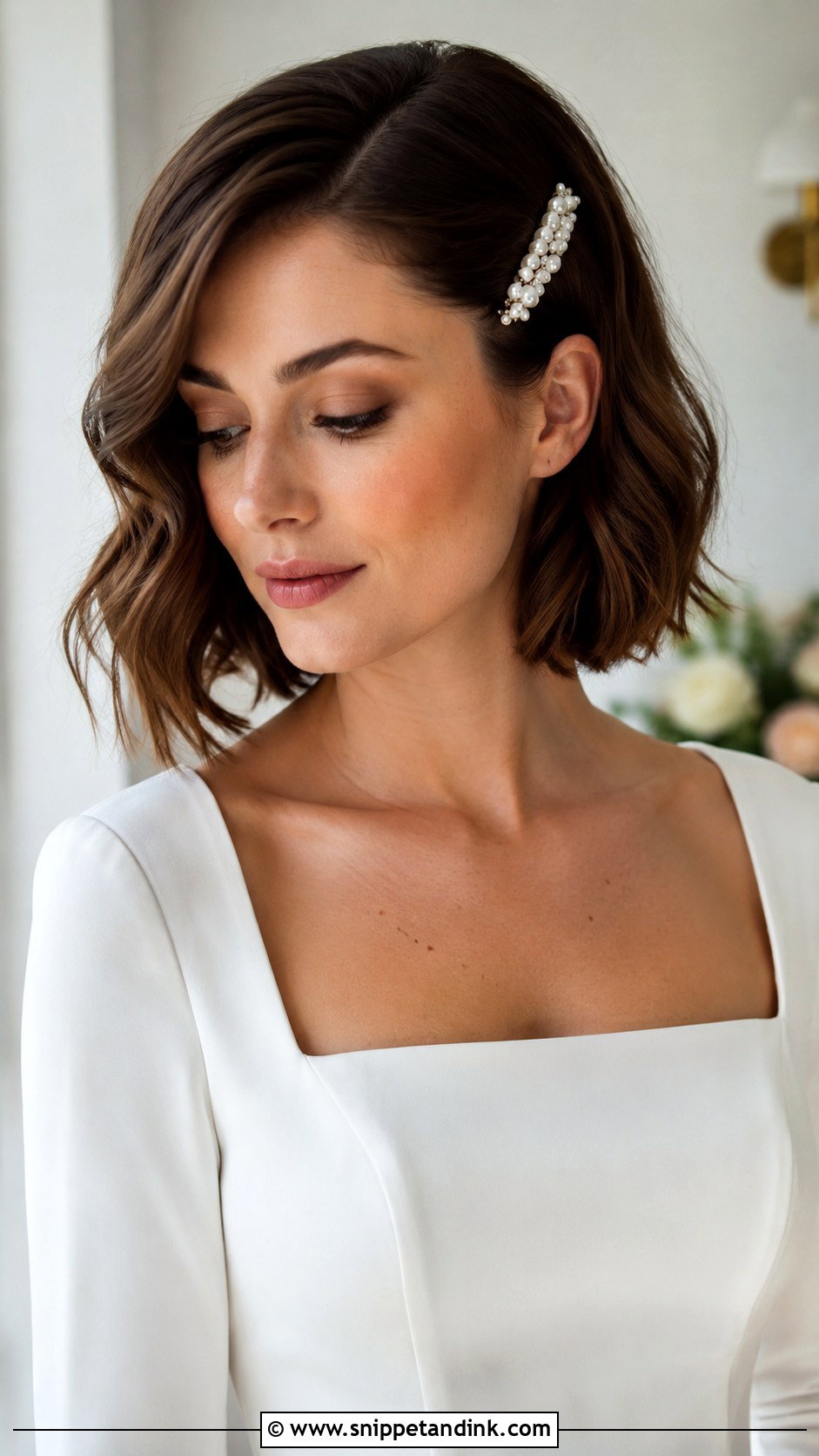
Short hair can look every bit as polished as long bridal hair if the cut is in good shape. For a bob or lob, I like soft waves off a deep side part. For a pixie, smooth styling, finger waves or one small accessory makes it wedding-ready. Book the trim a week or two ahead instead of the day before, so the edges have softened and the cut sits naturally. Short hair leaves earrings and the neckline in full view, and it needs almost no maintenance once the day starts.
15. Natural Hair Wedding Hairstyle
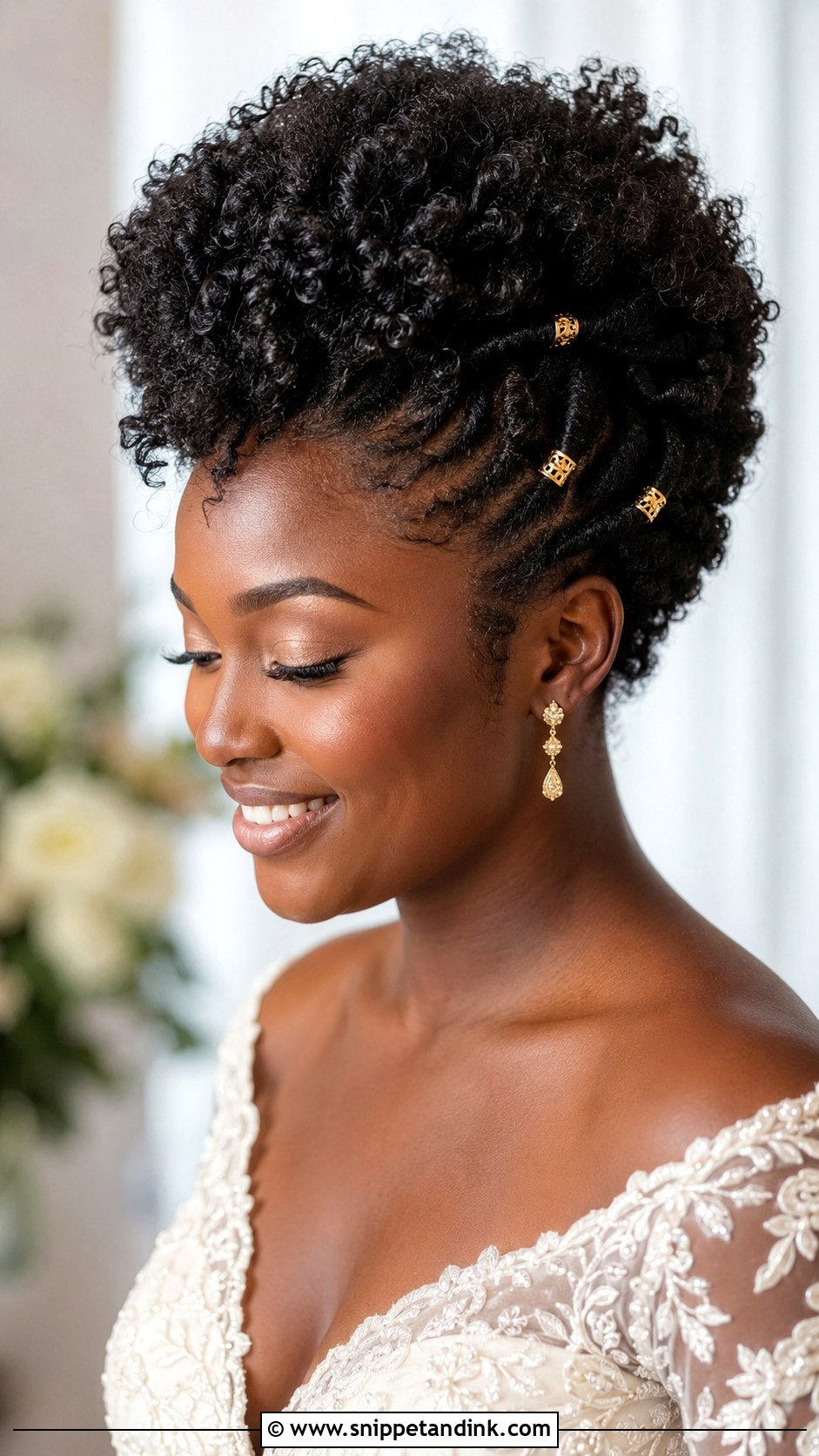
Natural hair offers more shapes than any other texture on this list: defined curls, a curly puff, a twisted updo, a braided bun or a halo shape. The work is in making that shape last. I’d do the stretching or setting the night before when a style needs it, and secure the shape with pins anchored into a small braided base rather than straight into loose hair. Moisture keeps the definition through an outdoor ceremony. Gold cuffs, pearl pins or a simple veil add to it without covering the texture.
Chair Time for Each Style, and How It Shapes the Morning
The style you choose decides how early everyone needs to be up. Exact times vary by stylist, hair length and thickness, but rough expectations help when you’re planning around a photographer who arrives at a fixed hour.
- Quicker looks: a sleek low ponytail, loose waves or a simple half up usually take somewhere around 45 minutes to an hour on long hair.
- Middle ground: braided crowns, side swept curls and textured updos often need an hour or a little more, since the hair is curled first and then pinned.
- Slower looks: Hollywood waves, a structured chignon or a French twist on thick hair can run longer, because each section needs setting and cooling time.
- Natural hair updos: the styling itself may be quick, but stretching or setting often happens the night before. Ask whether that’s part of the booking.
If several bridesmaids are booked with one stylist, add the times together and then add a buffer. I don’t like the bride going last, since a delay at the end leaves no room to fix anything, but going first gives her hair hours to droop before the ceremony. Somewhere in the second half of the queue tends to work best.
Ballroom Bun or Garden Braid?
If you’re still undecided, think about how you want to feel rather than only how you want to look. A sleek bun feels right in a formal ballroom, while loose waves or a braided crown sit more naturally in a garden or on a beach. Consider the dress, the weather and the veil, and what your hair normally does after a few hours. Take your saved photos to the stylist, but listen if they suggest a small change for your face shape or texture. With good prep and a sensible finish, any style on this list will hold up in person, in pictures and on the dance floor.
You'll Like These Ideas:


Leave a Reply