
An Indian wedding asks a lot of your hair. There are long ceremonies, a dupatta pinned on top, heavy earrings pulling at the sides, hours of dancing and at least one outfit change, often across several days. The styles I trust for that are the simple ones: a low bun that can carry weight, a braid that ignores humidity, soft curls that still look right once they’ve relaxed a little. Each of the fifteen below is easy enough to recreate at home or with a cousin’s help. They suit a lehenga, saree, sharara, anarkali or Indo-western outfit, and work for brides, bridesmaids, sisters, and guests from the mehendi right through to the reception.
Haldi to Reception Without Starting From Scratch Each Day
Over three or four days of functions, the real problem is not any single hairstyle. It’s heat. Curling and straightening fresh every morning leaves hair dry and frizzy by the main ceremony, exactly when you want it at its best. When I plan a bride’s week, I treat it as a rotation where each style sets up the next.
- Haldi: turmeric paste ends up in your hair whatever you do. Wear a simple braid or a bun with a light coat of oil on the lengths, which makes the yellow easier to wash out. Skip the blowout entirely.
- Mehendi: you’ll sit for hours with wet henna on your hands and won’t be able to touch your hair. Choose something that needs no fixing, like a side braid or a pinned half up style.
- Sangeet: this is the dancing night. A bubble ponytail, a secure high bun or a braid will survive it far better than open curls.
- Wedding ceremony: the dupatta and jewelry come first. A low bun or chignon gives them something solid to pin into.
- Reception: if you want open curls or a sleek straight look, save the heat styling for here, when your hair has had a rest day.
Day-old curls from the sangeet often make a better base for the wedding bun than freshly washed hair, which can be too slippery to hold heavy pins. Ask your stylist whether to wash in between or just refresh the roots with dry shampoo.
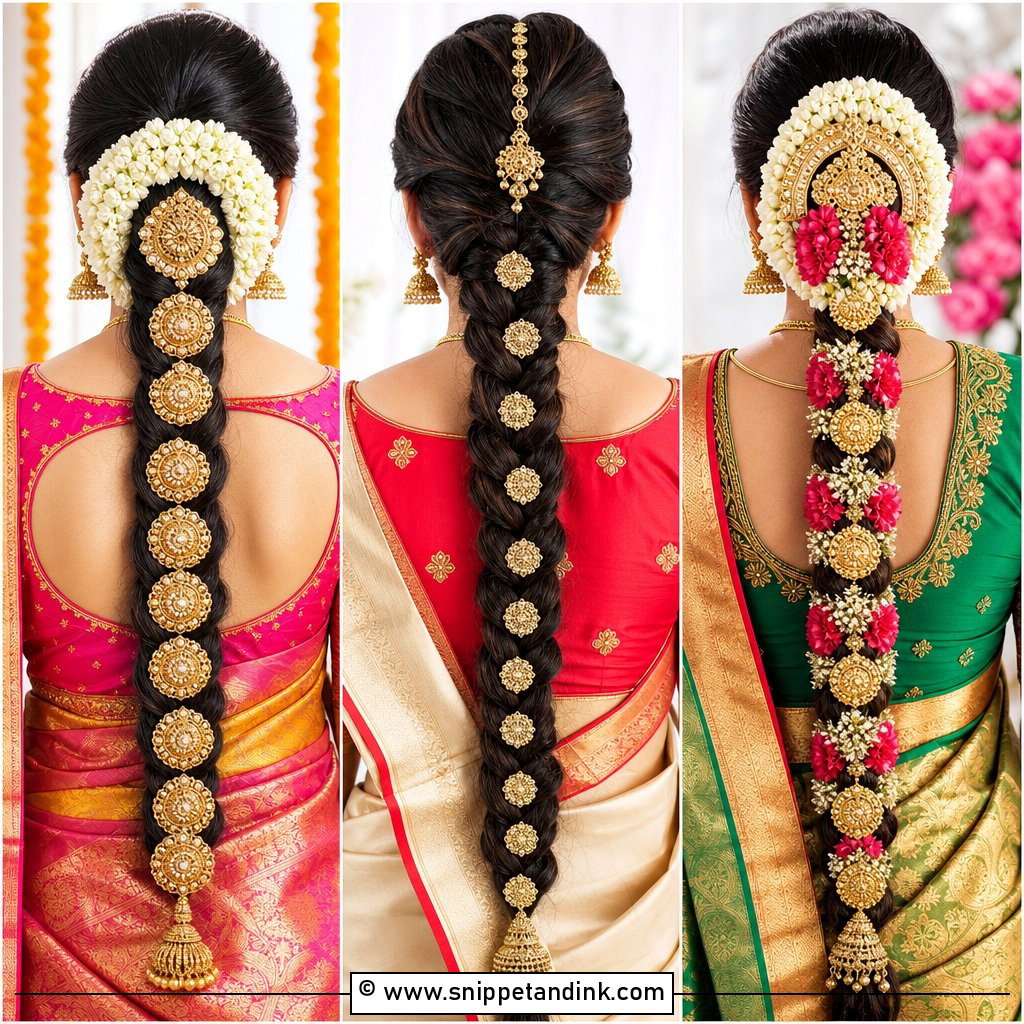
1. Low Bun With Gajra
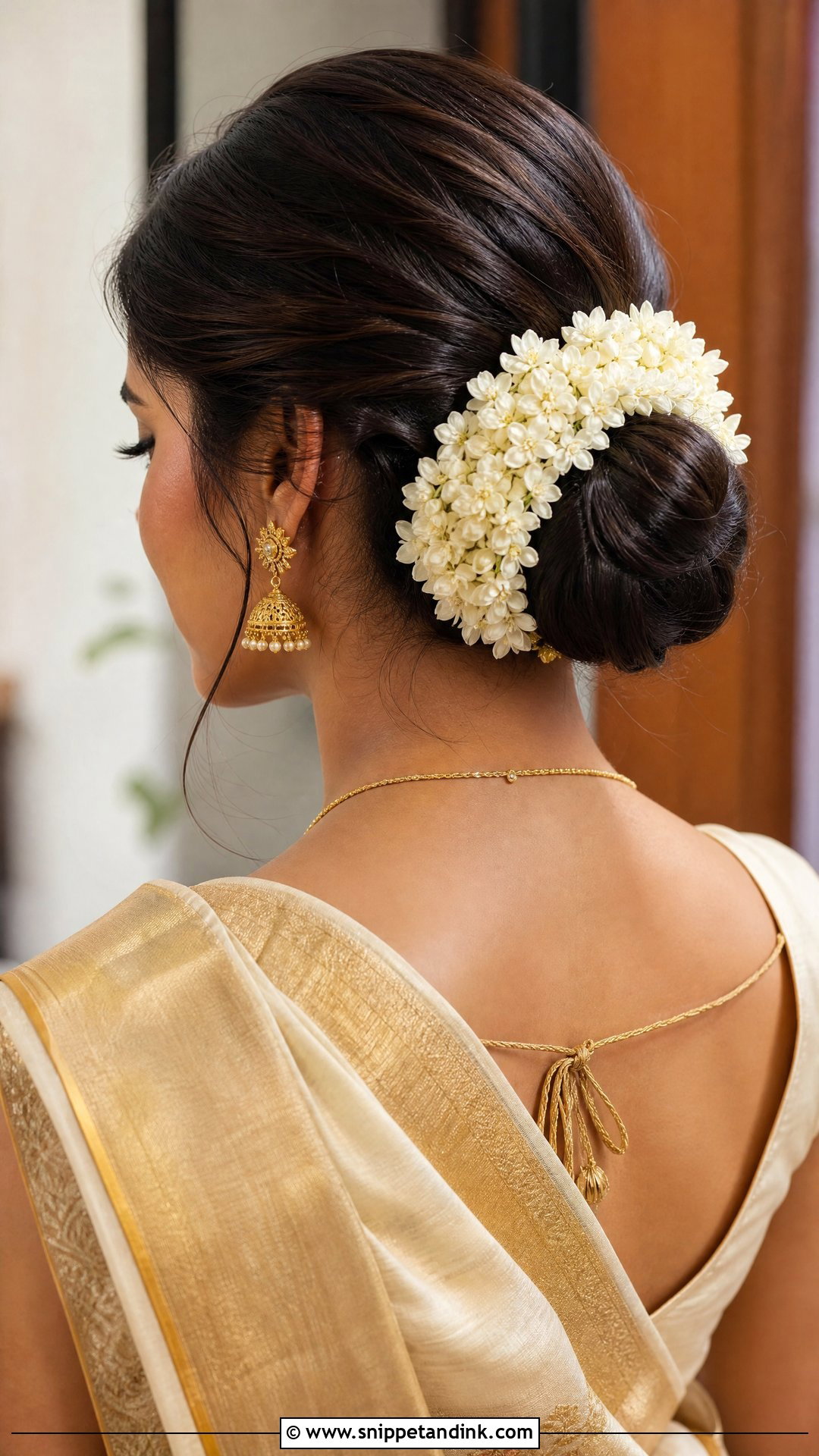
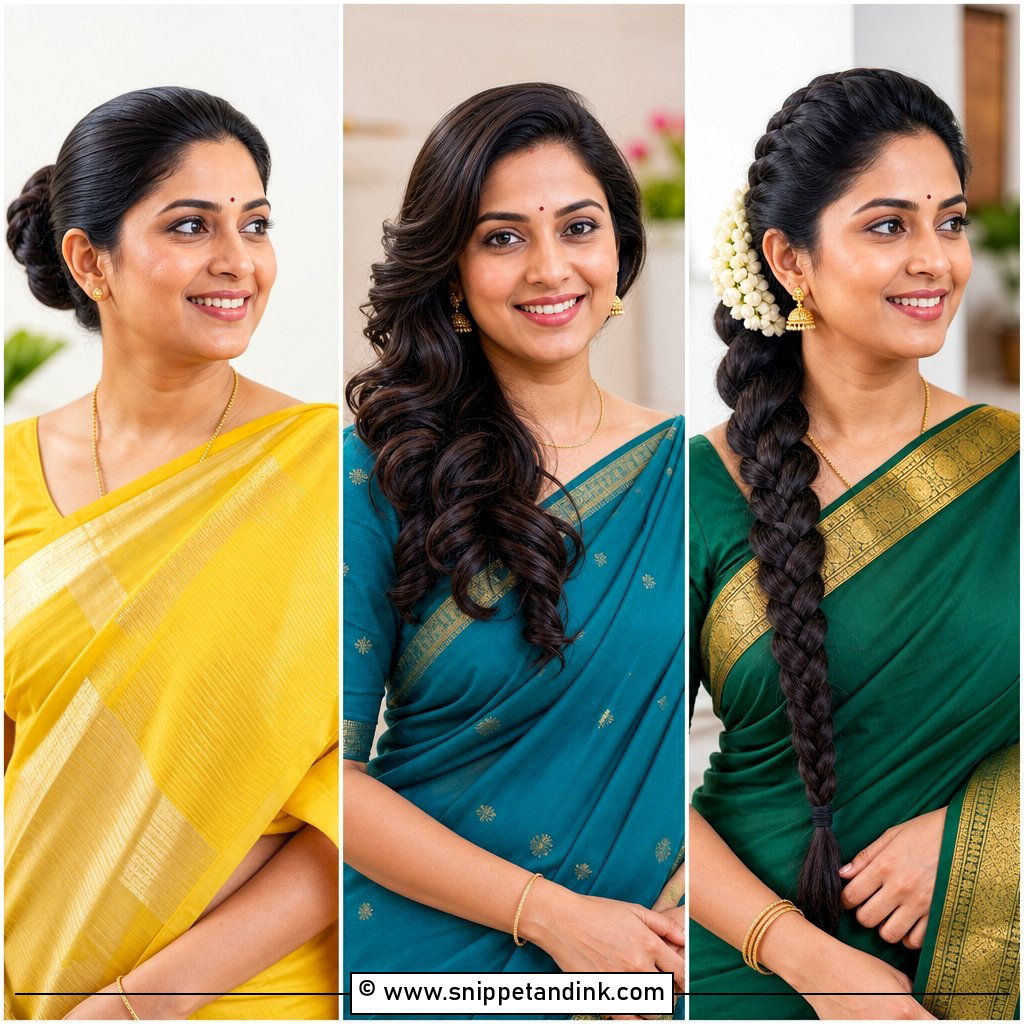
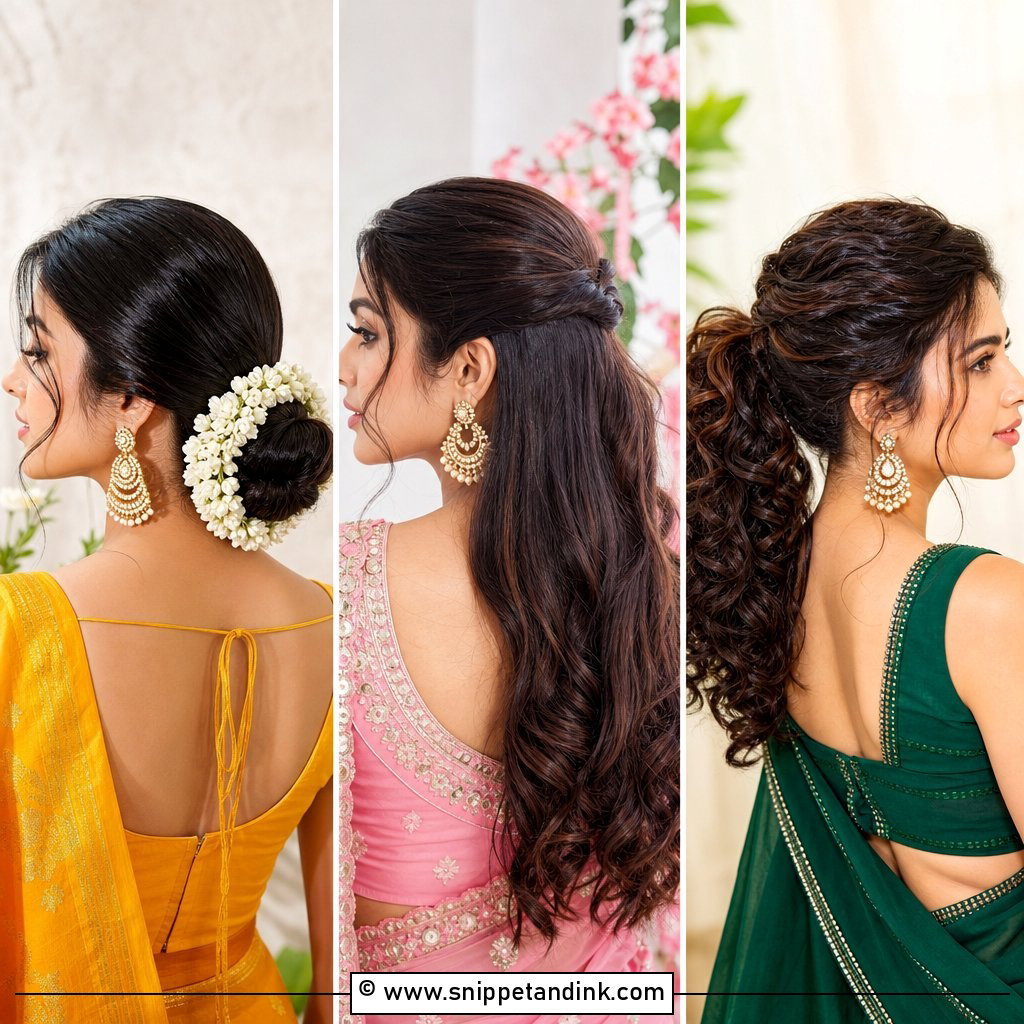
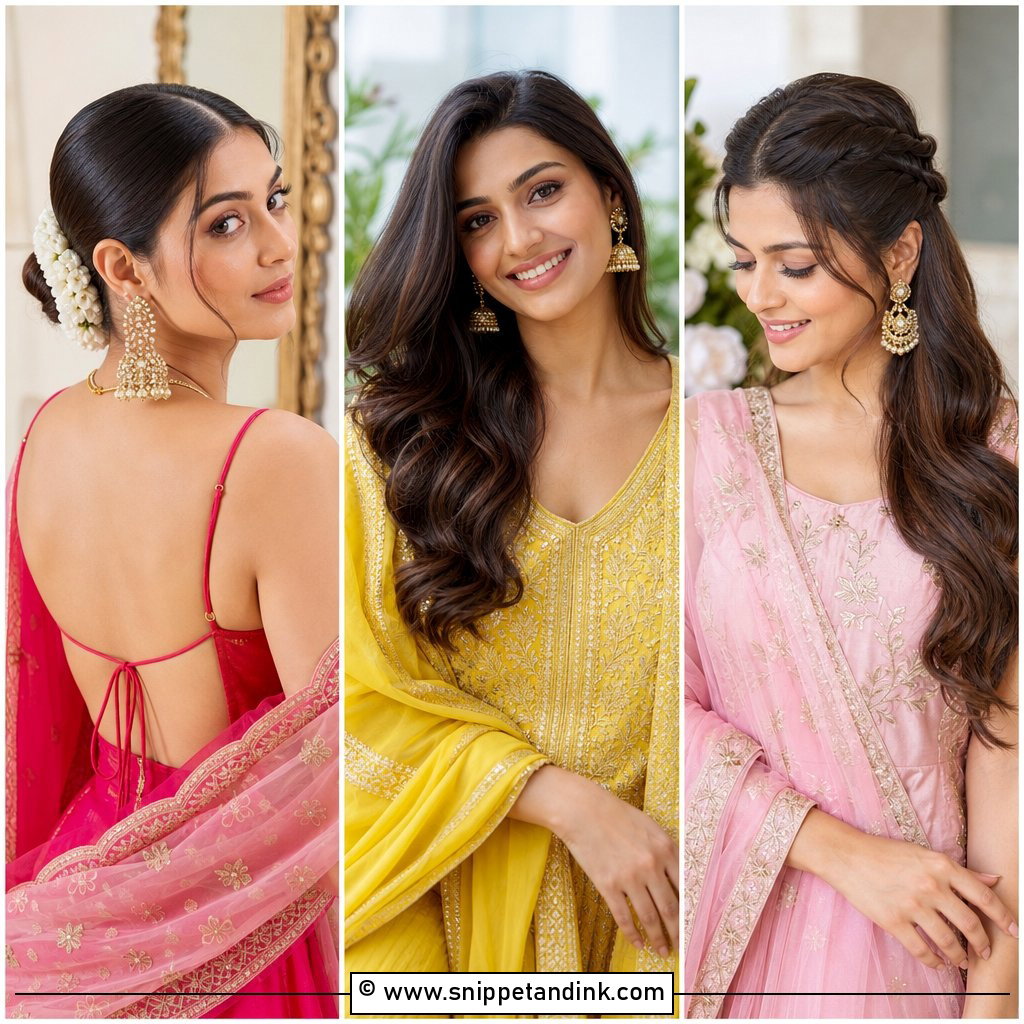
Gajra wants a low bun. The nape position keeps the flowers clear of a heavy dupatta or saree pallu and leaves room for statement earrings. I smooth the hair with a little serum, tie a low ponytail, twist it into a bun and pin it fully before the flowers go anywhere near it. Then the gajra is fixed with a U-pin at each end of the string rather than wound tightly, because a tight wrap crushes the buds and they brown sooner. Center-part the front for a classic bridal look, or leave soft pieces out for a guest version. Fresh jasmine smells wonderful but fades over a long function, so faux gajra is the practical choice for an all-day event.
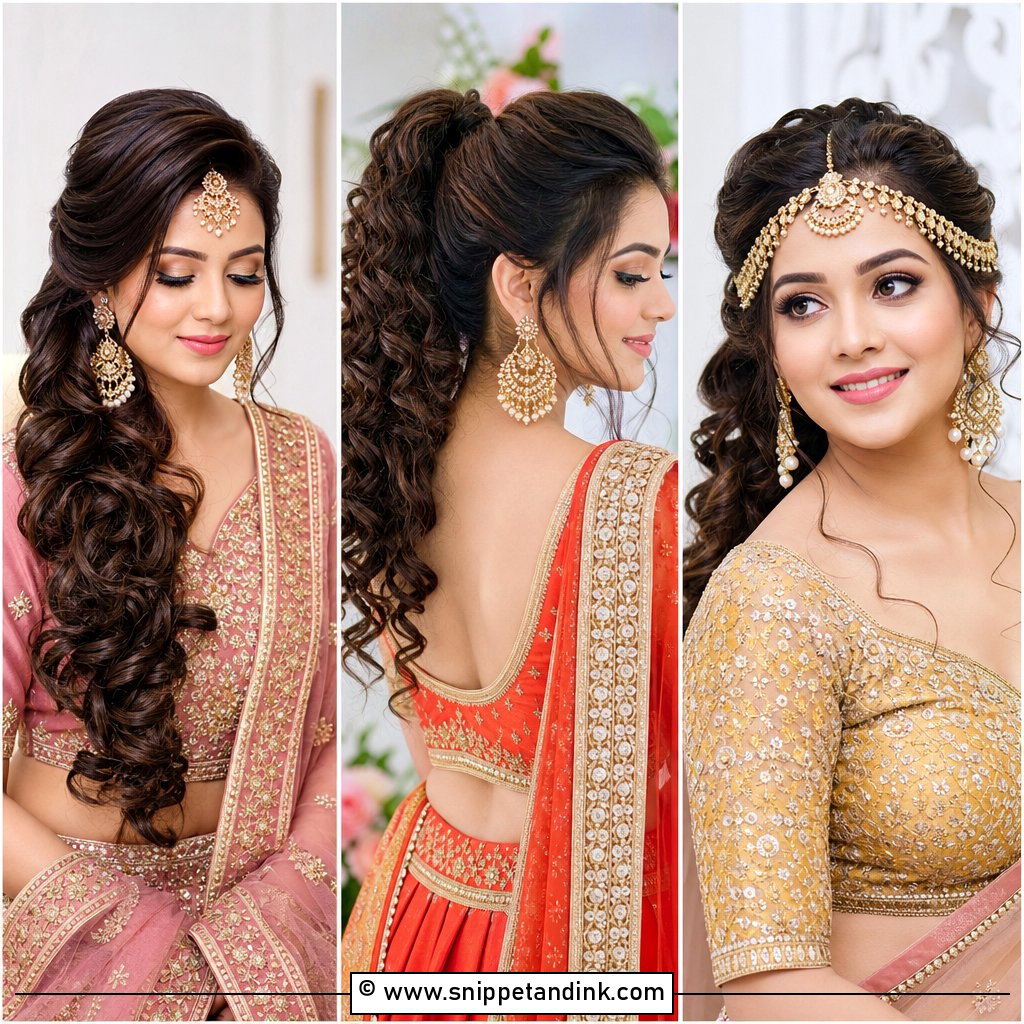
2. Half Up Curls With Maang Tikka
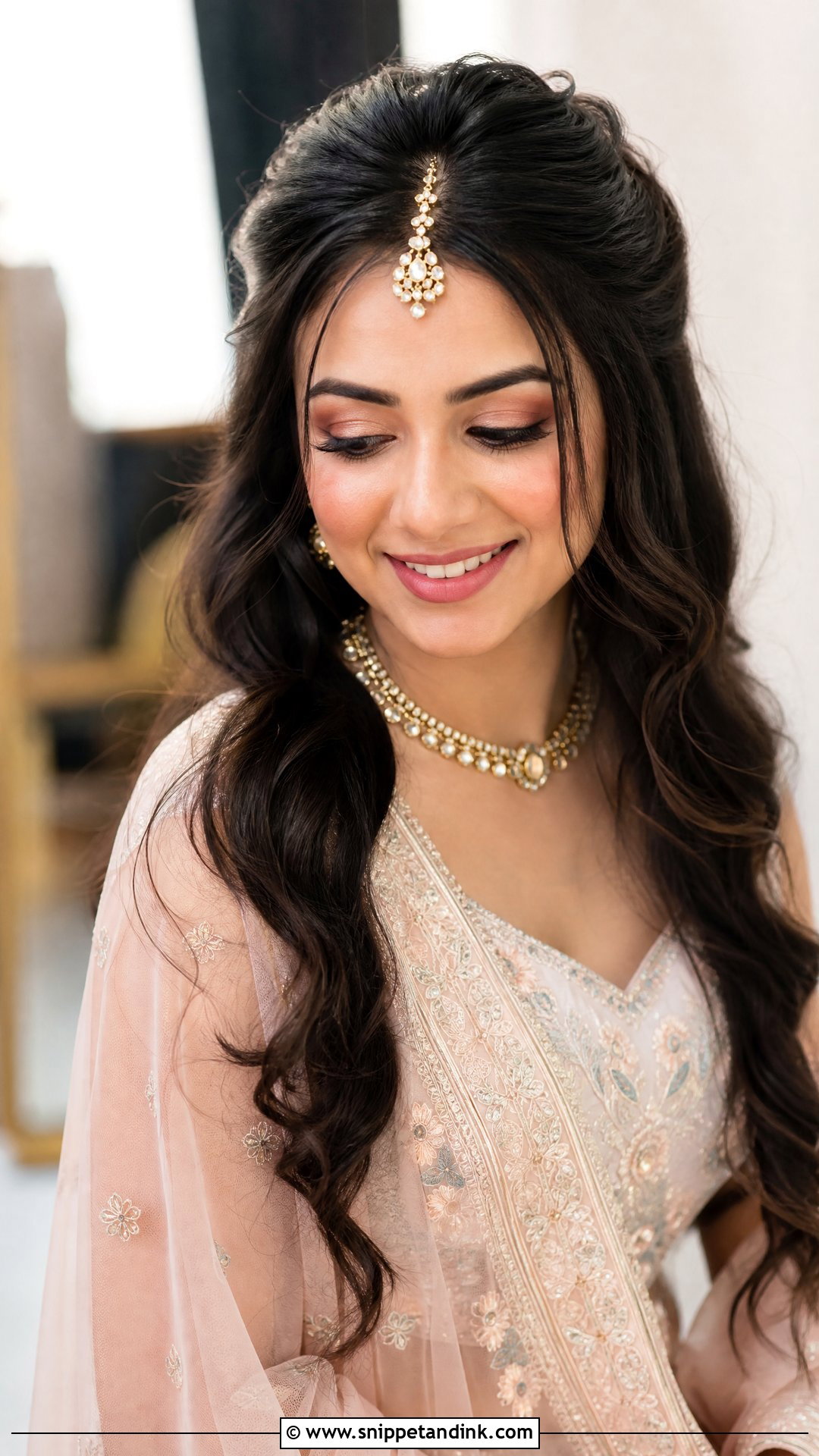
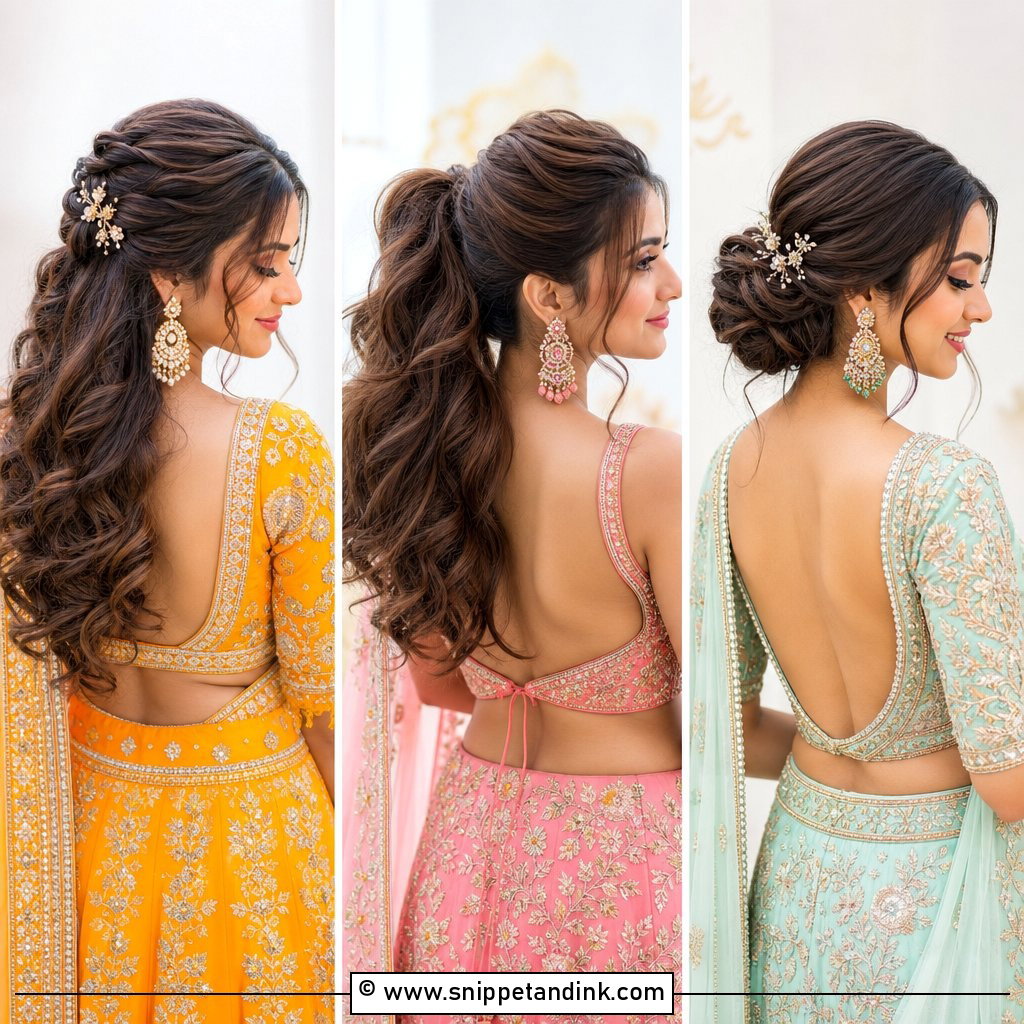
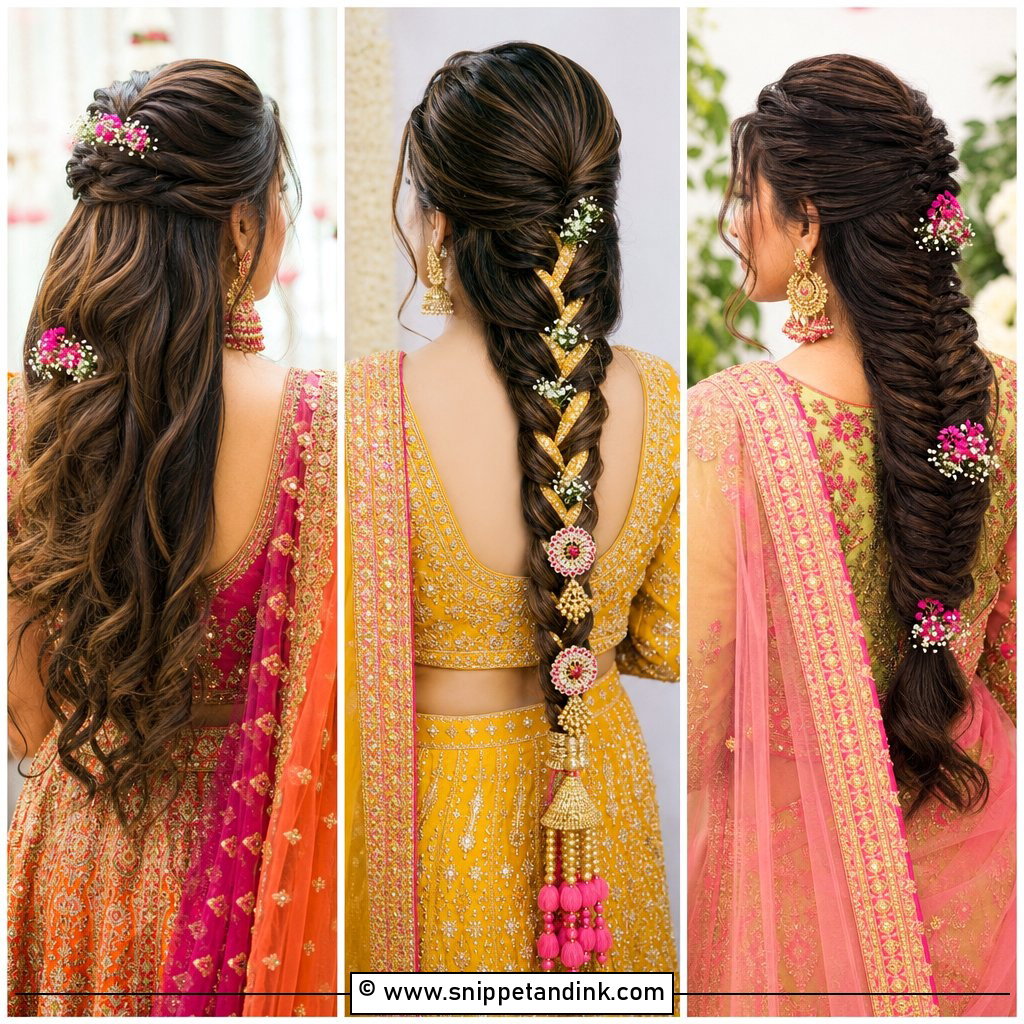
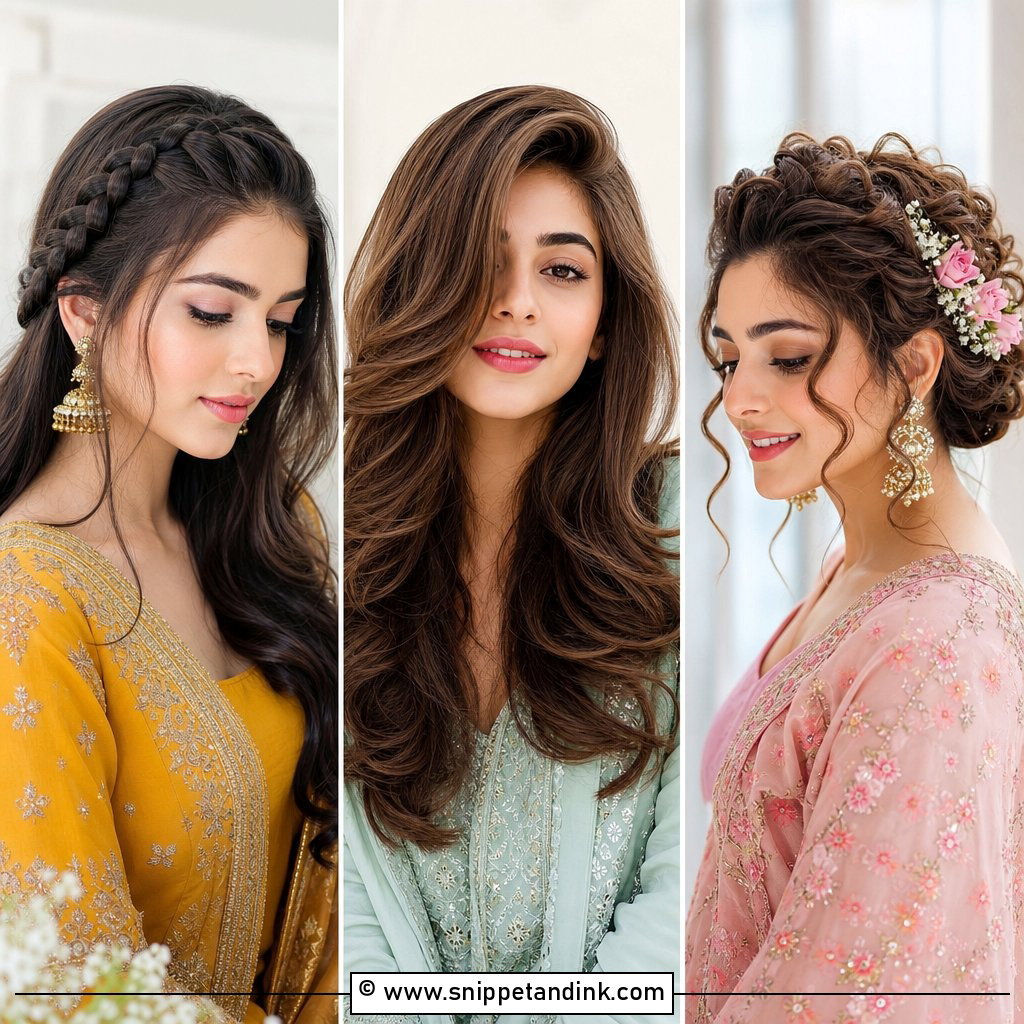
When someone wants open hair but has a long day ahead, this is usually where I land. The pinned top section keeps the crown neat and gives the maang tikka a firm base, while curls soften the shoulders, which suits sangeet, engagement, or reception looks where you’ll be moving for photos. Curl everything first and let it set. Then pin the top half back with some lift at the crown and lay the tikka along the center part with hidden pins. Medium and long hair both work; very short layers tend to escape the half-up section by evening.
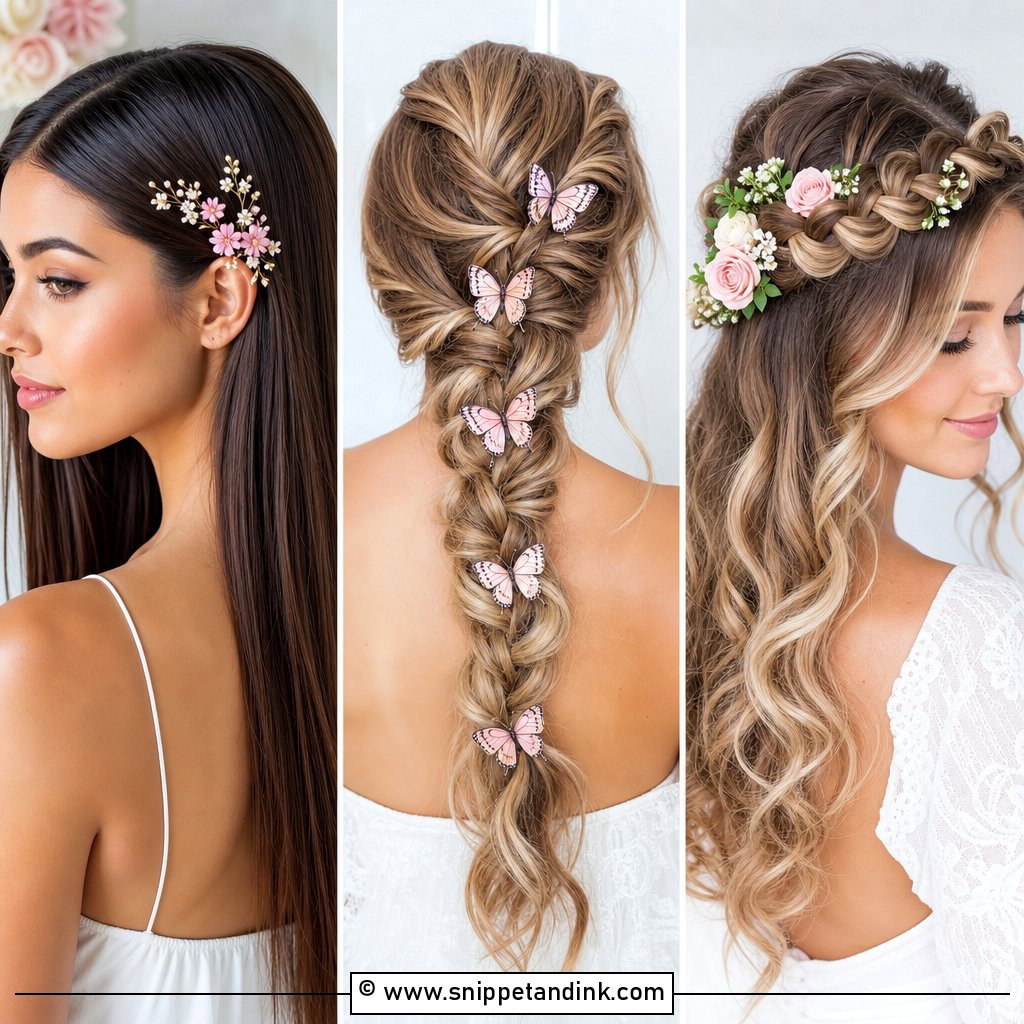
3. Side Braid With Flowers
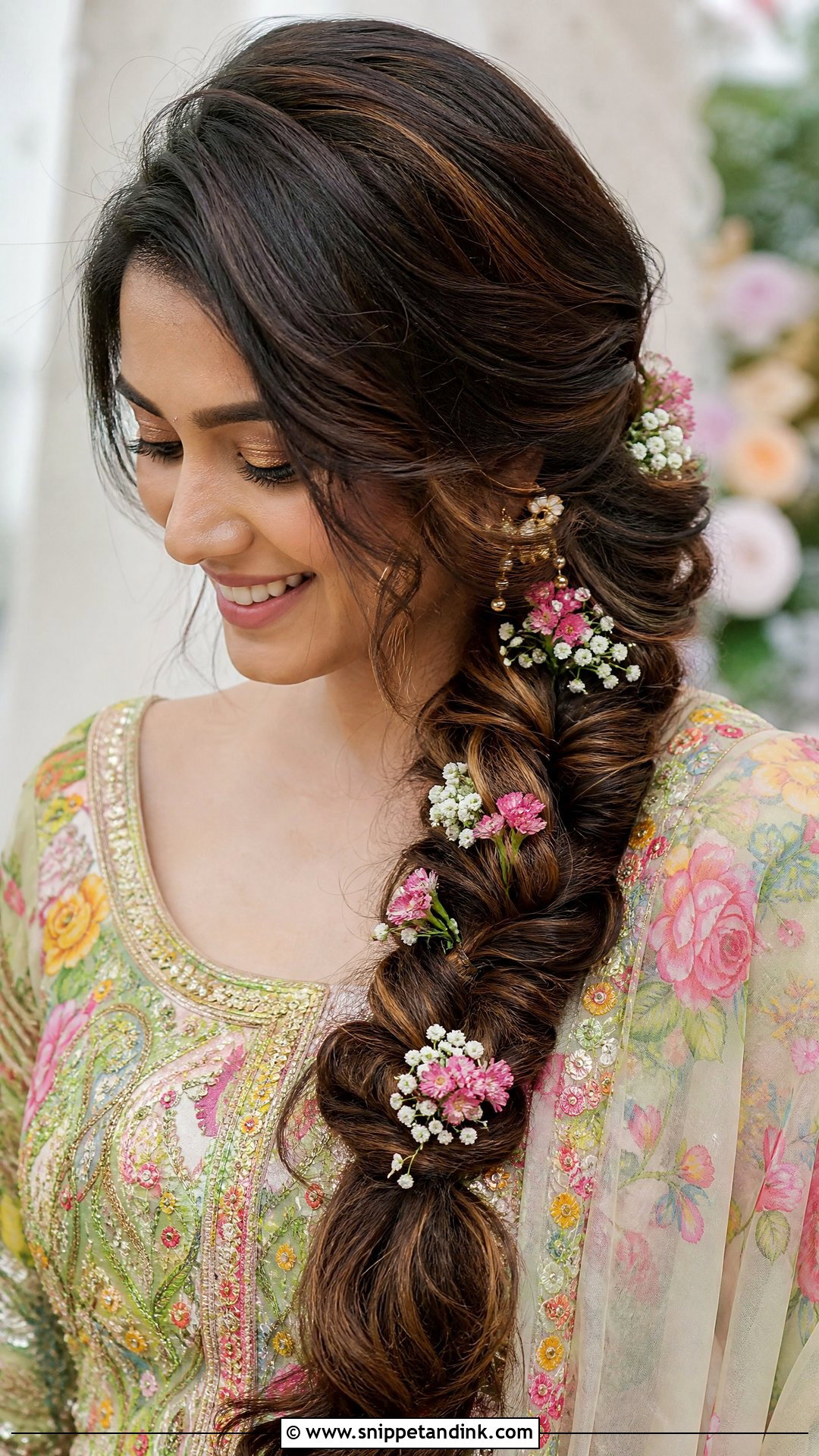
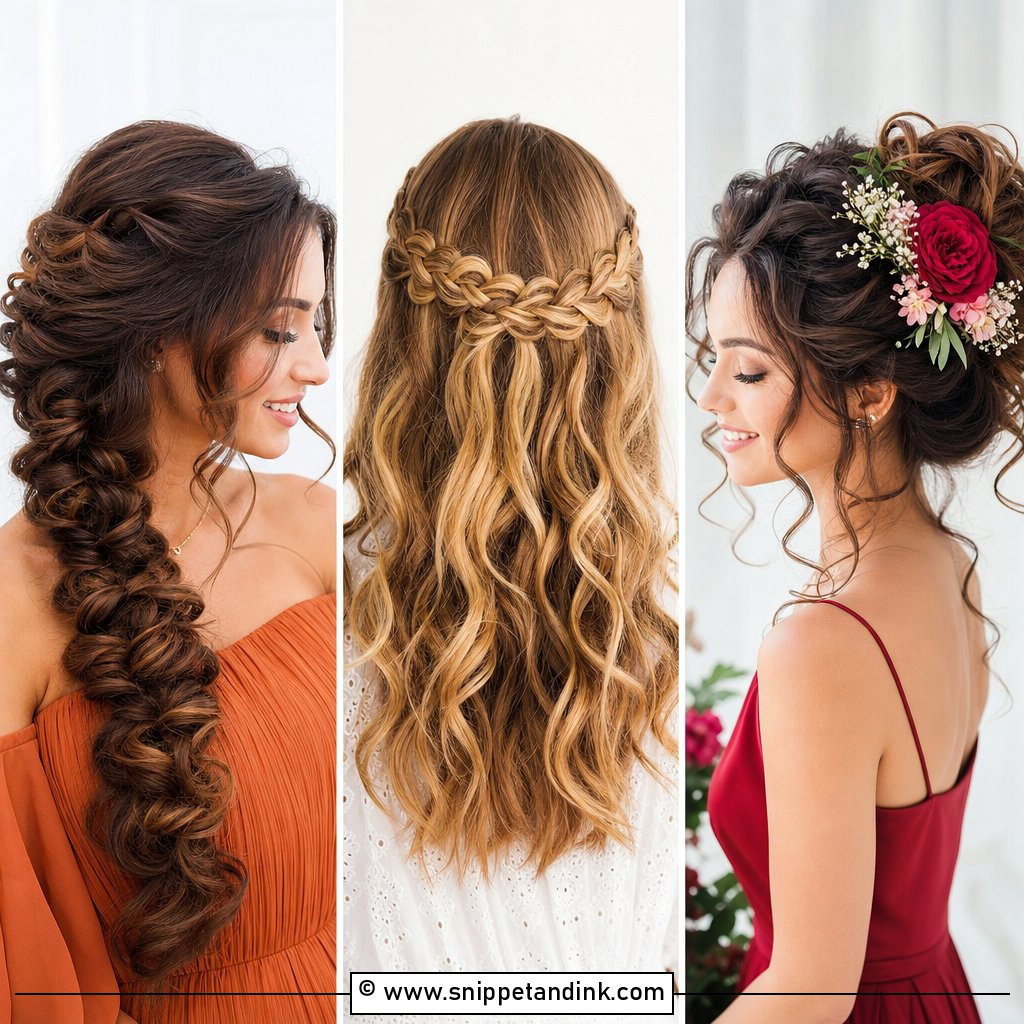
For mehendi or haldi, I like a side braid for one simple reason: you can’t fix your hair with henna-covered hands, and a braid doesn’t need fixing. Take a deep side part, add soft waves if your hair is very straight, and plait a loose three-strand or fishtail braid over one shoulder, then pull the loops gently wider. A few small flowers tucked in at intervals look better than a braid packed solid with blooms, which gets heavy and starts to droop. Floral jewelry and pastel daytime outfits sit nicely with it.
4. Sleek High Bun
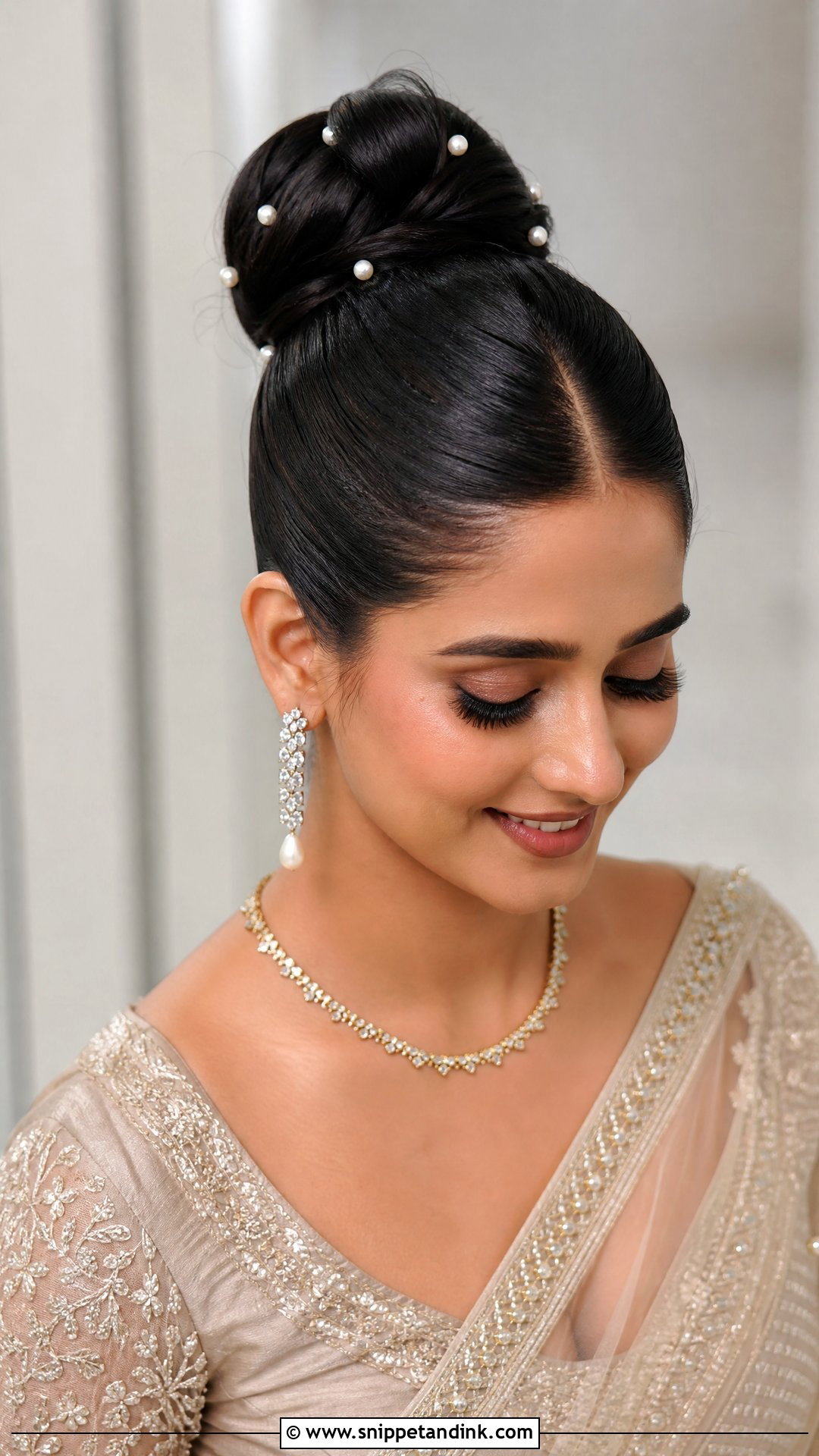
A sleek high bun clears the way for a detailed blouse, neckline, dupatta or a heavy necklace, and the height lifts the face. Brush everything up into a high ponytail, smooth flyaways with gel or styling cream, and wrap the length into a firm bun. The trade-off I always mention: it’s the hardest style here to pin a bridal dupatta onto, because the bun sits above where the dupatta naturally falls. For a bride I’d drop it a little lower. For a reception with a saree or gown it works exactly as it is. Pearl pins, a bun cuff or a small floral ring finish it.
5. Open Hair With Soft Curls
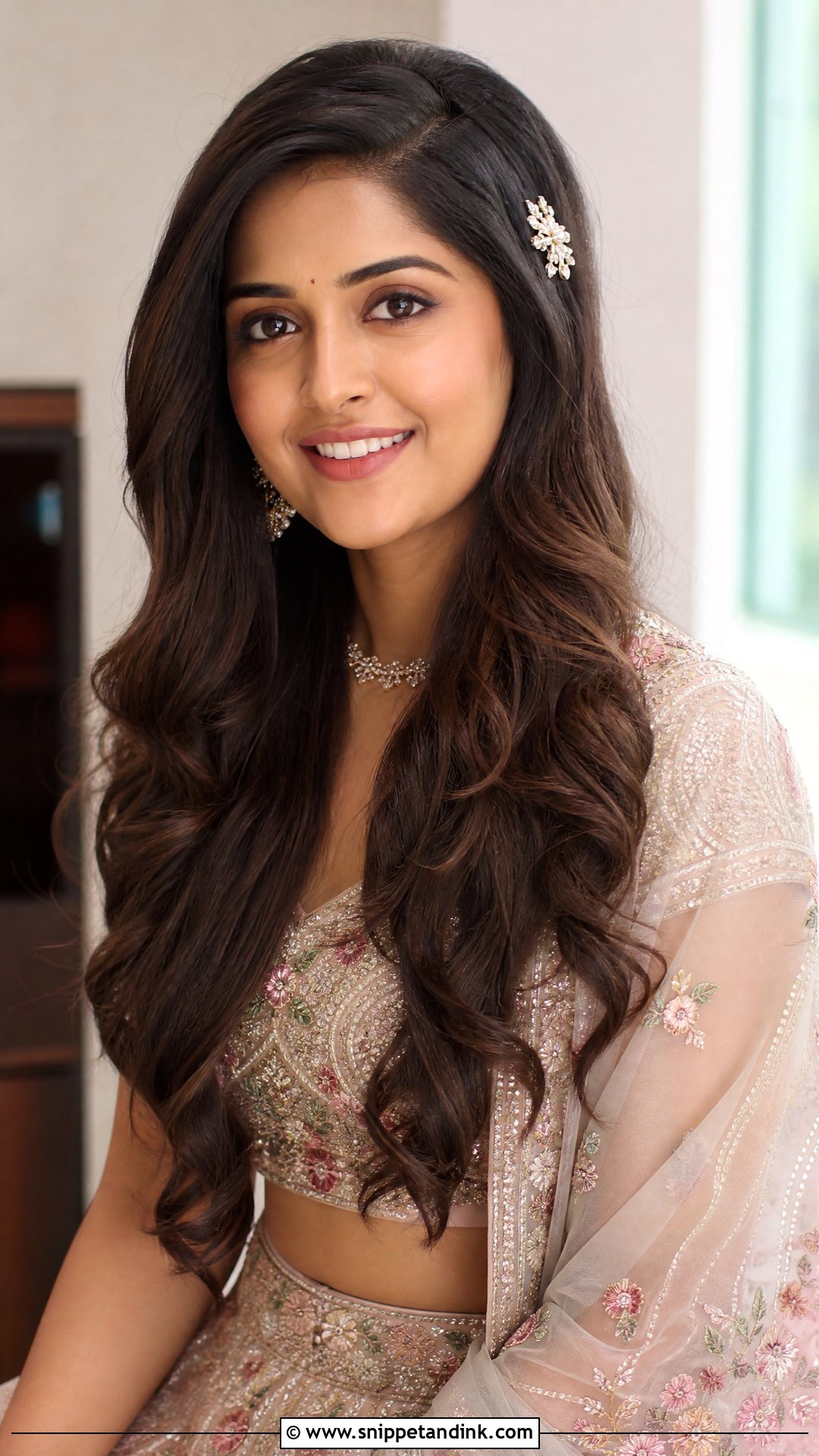
Open curls look natural and unfussy, but they’re also the style most likely to change shape over an Indian wedding day, since dupattas rub against them and warm rooms relax them. So I keep them soft rather than tight; a loose curl that drops still reads as a wave, while a tight one that drops just looks tired. A large curling iron or heatless rollers, then a light brush-through, gives a smooth wave. A center part feels traditional, a side part gives volume. Add a maang tikka, passa or delicate clip. Thick hair holds this well; very fine hair is better off in one of the pinned styles.
6. Braided Bun With Pearls
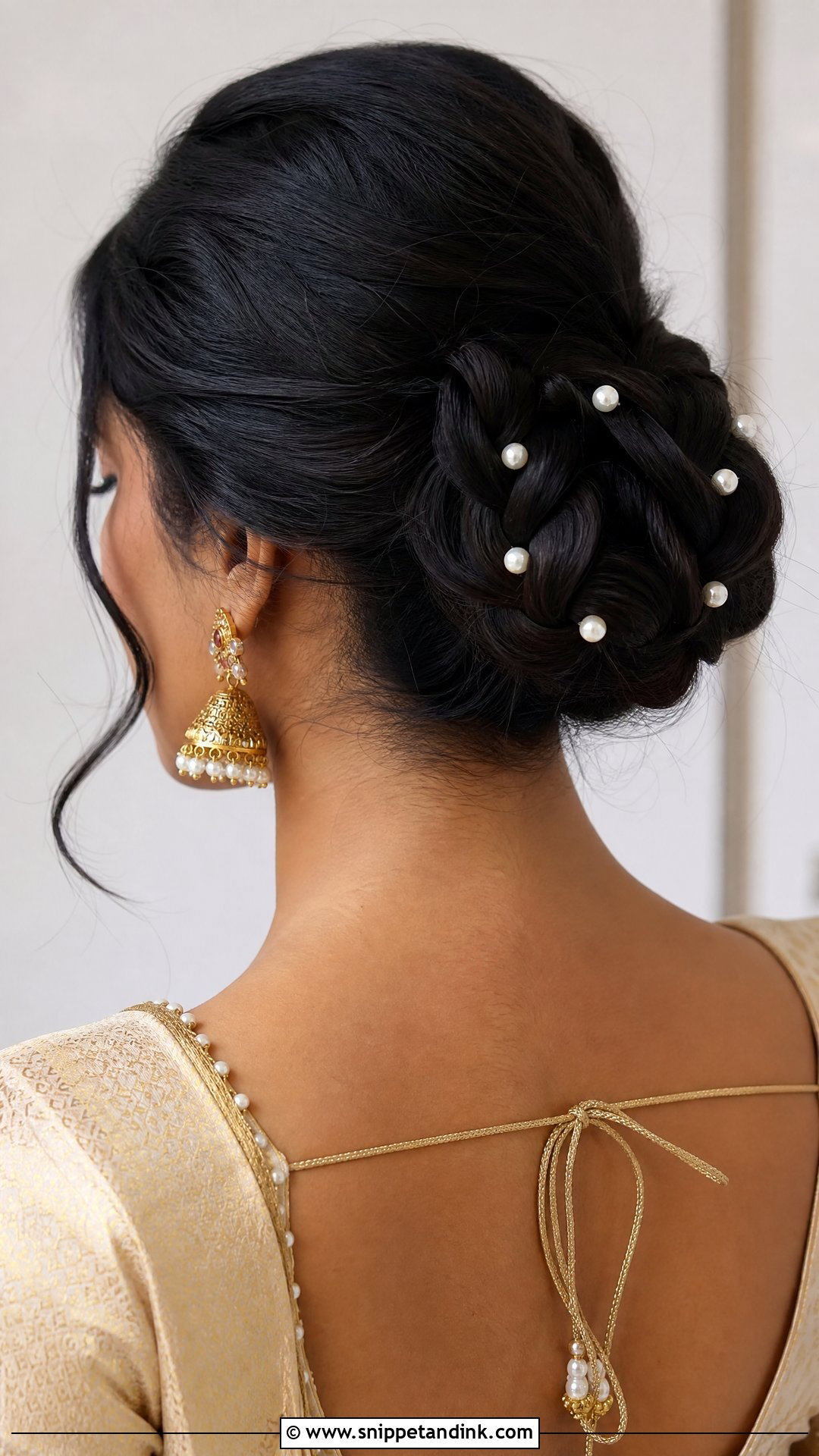
Wrapping a braid into a bun gives it texture a plain bun lacks, and the plait grips pins better, so it carries heavier ornaments. It’s a good match for thick or long hair and for clip-in extensions, which I hide inside the braid where the wefts can’t show. Make a low ponytail, braid it, loosen the braid a little and wrap it round the base. Brides can pin a veil or dupatta into it securely, while guests can keep it light with a few pearl pins. Silk sarees and embroidered lehengas both suit it.
7. Messy Low Bun
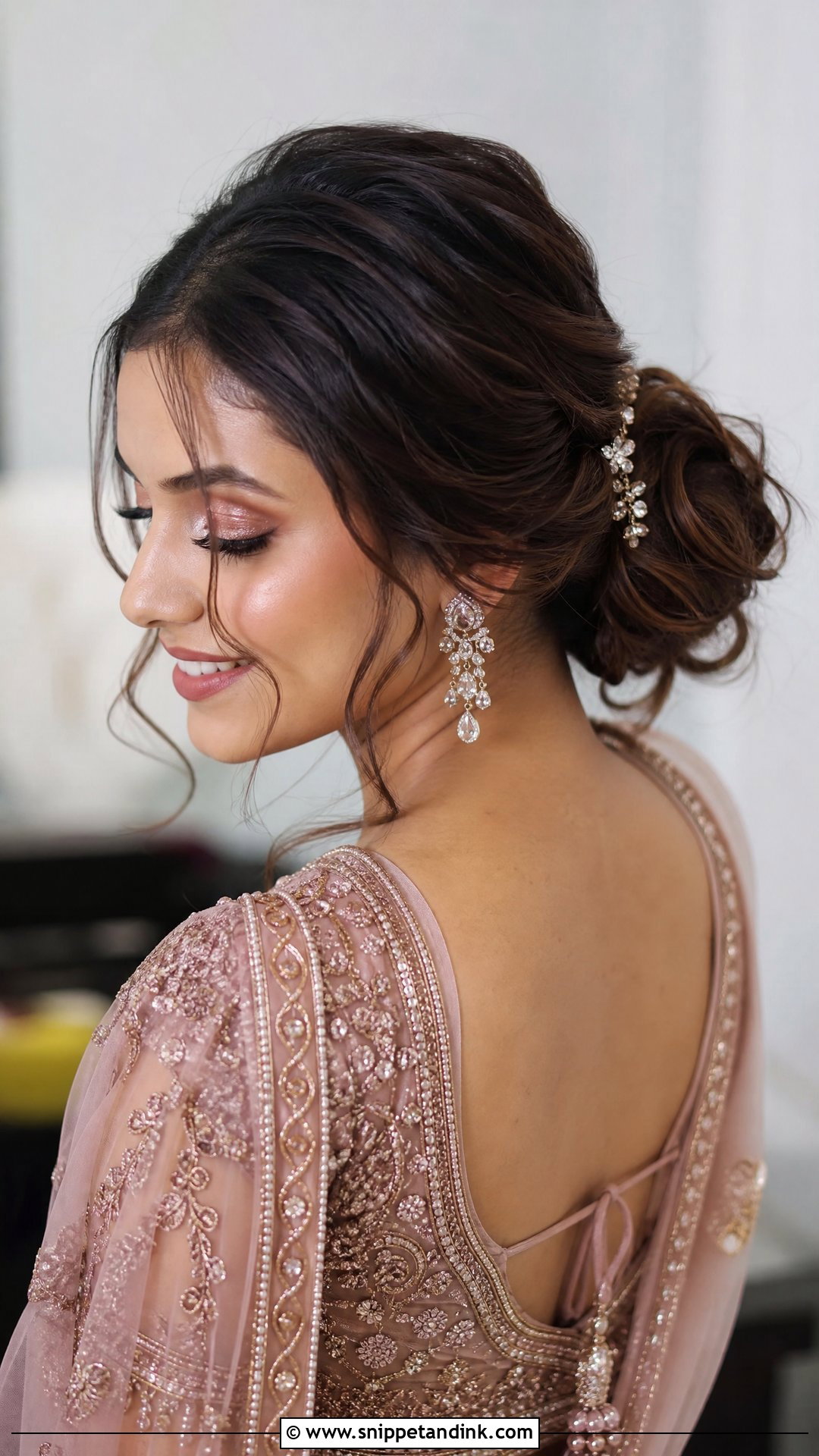
Loose texture, gentle volume and a few strands near the cheeks make this bun feel modern, and it’s the one I suggest for cocktail, sangeet and reception outfits. Curl first so the hair has grip, then gather it low without chasing perfection. The pieces you leave out should be chosen, not accidental: I pull them at cheekbone and jaw level so they frame the face rather than fall into your eyes. Crystal pins, baby’s breath or small flowers add a festive touch. After a night of dancing it still looks right, which a sleek bun can’t promise.
8. Bubble Ponytail With Accessories
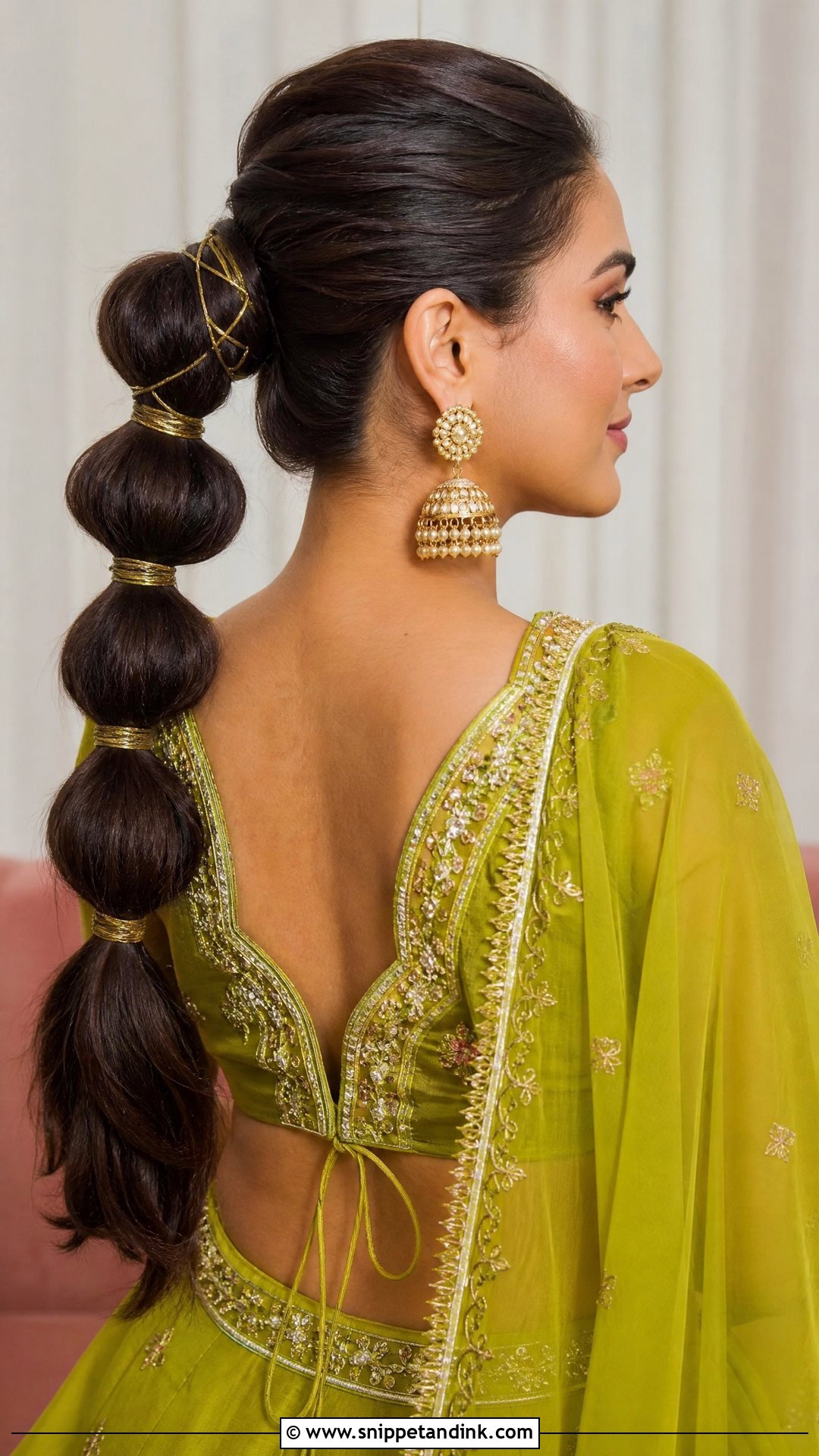
A bubble ponytail with accessories gives the drama of a long braid without any braiding skill, which is why it turns up at so many mehendi and sangeet nights. Start with a smooth high or mid ponytail, add small elastics every few inches down the length, and ease each section outward into a rounded bubble. Wrap the elastics in hair, ribbon, pearls or gold thread. It does need length. On shoulder-length hair you’ll only get two bubbles, so I’d clip in a ponytail extension first. Secure and comfortable for dancing, it’s a favorite with younger guests.
9. Fishtail Braid With Dupatta
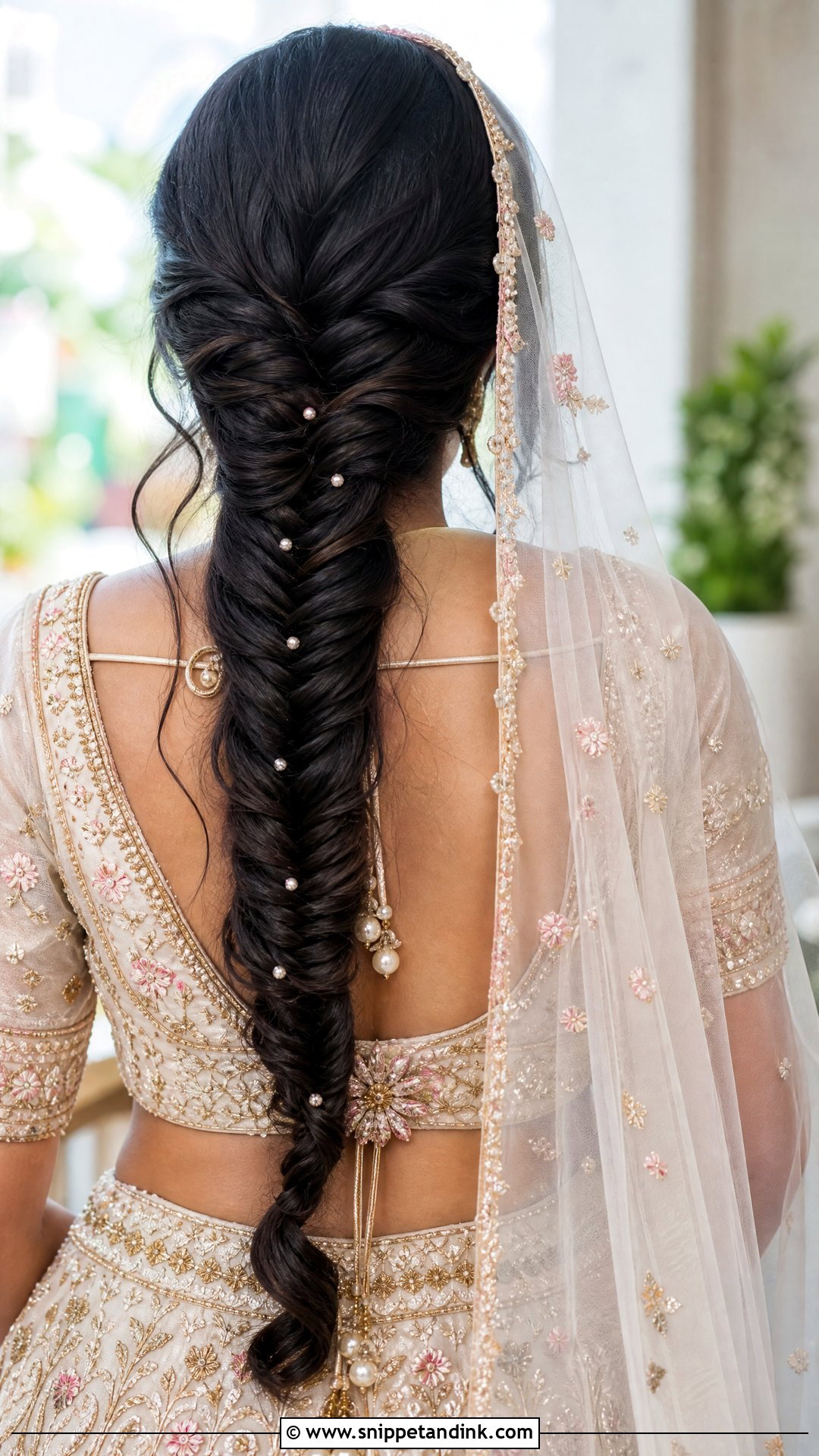
Fishtail looks intricate but it’s just two sections crossed over and over; after one practice run most people can manage it. Under a dupatta it’s practical because the braid lies flat at the back of the head and doesn’t push the fabric out of place. Add light waves for body, plait loosely down the back or over a shoulder, then pull it gently wider. One thing I watch for: if the dupatta is pinned at the crown, start the braid below that point so the pins have smooth hair to grip. Small flowers, pearl pins or gold accessories along the length finish it, and it copes well with wind at outdoor ceremonies.
10. Claw Clip Bun With Curls
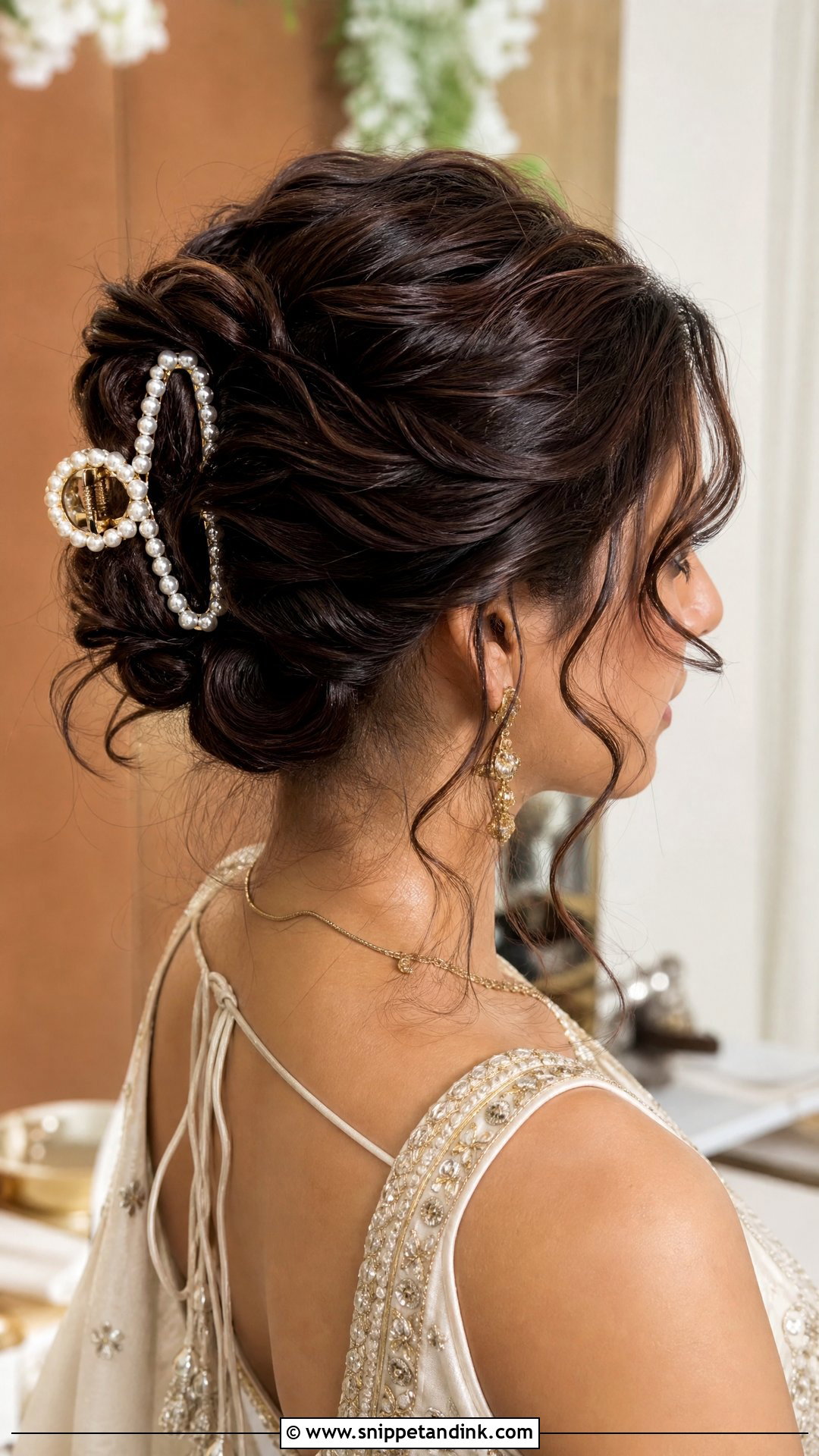
This is the quick-change style. Between a lunch ceremony and an evening function, or straight off a flight, a decorative claw clip with pearls, stones or gold detail does the job in minutes. Curl the front pieces and ends, twist the back into a loose bun and clip it, letting a few curls frame the face. I wouldn’t wear it for the main ceremony, though. A clip can’t carry the weight of a dupatta or a heavy tikka. For pre-wedding events and smaller gatherings, it’s plenty.
11. Straight Hair With Center Part
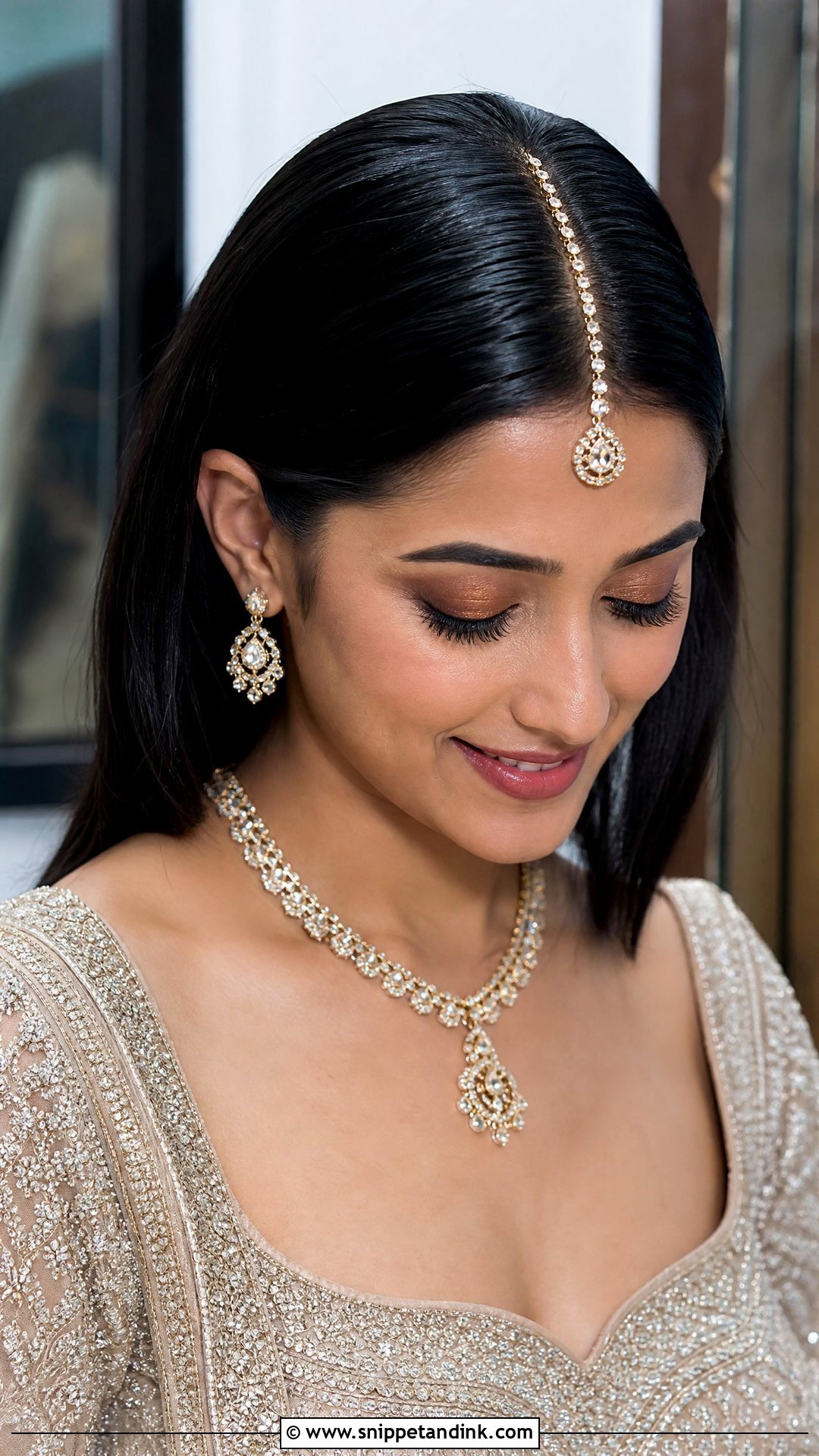
Straight hair with a center part is simple and sleek, and it hands the attention to your jewelry, makeup or an embroidered neckline. That center part is also the natural line for a maang tikka, matha patti or a fine hair chain. Use a heat protectant and straighten in small sections. I finish with a little shine serum on the lengths only, since serum near the roots goes flat and greasy under hot lights. Tuck one side behind the ear to show earrings, or let both sides fall evenly. Sarees, lehengas and minimal reception looks all suit it.
12. Twisted Half Up Hairstyle
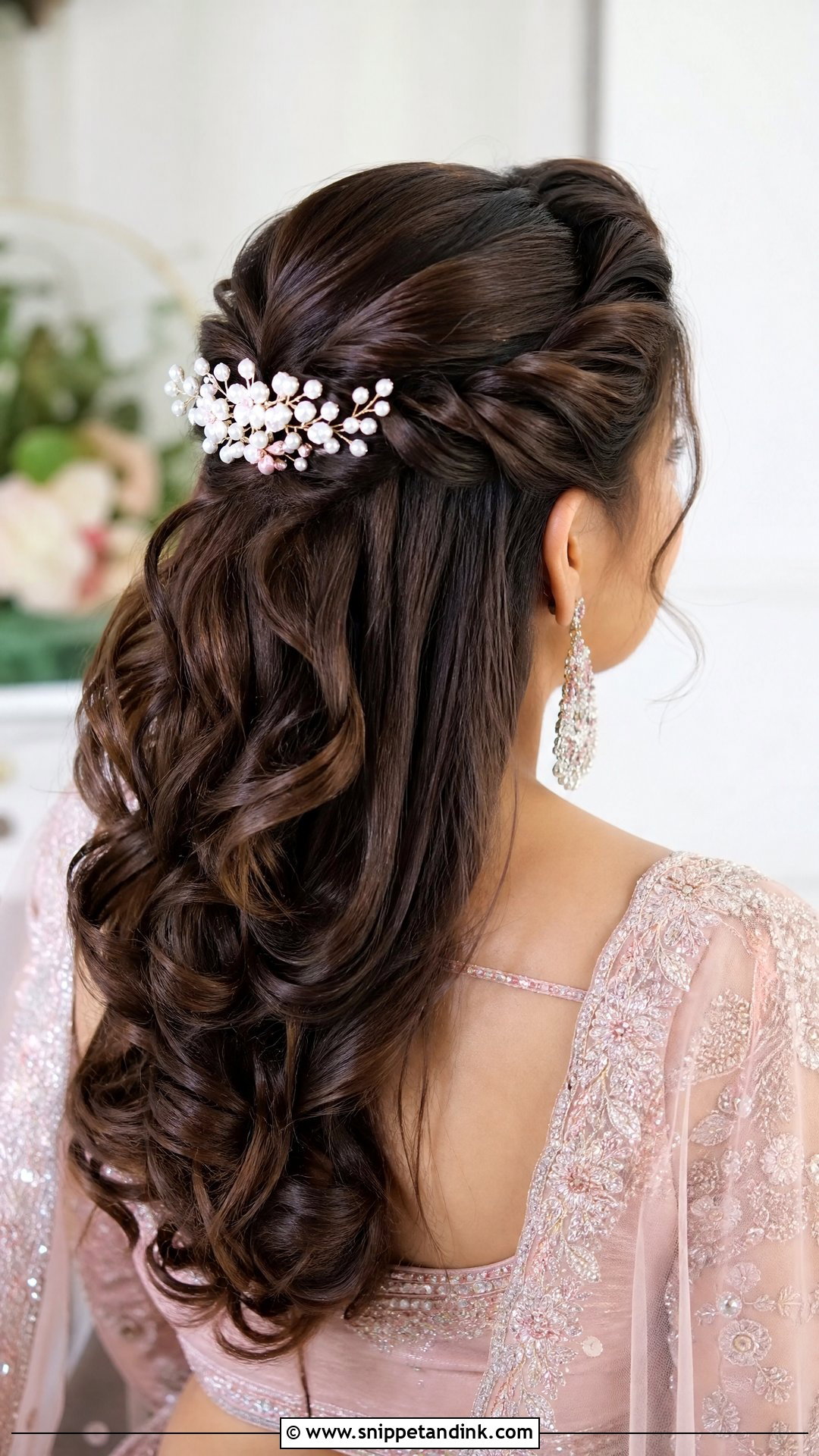
Two small twists from each side, pinned together at the crown: that’s the whole technique, and it’s the style I’d teach family members to do for each other. Curl the hair first, take the twists back, and pin them where they meet, hiding the pins under flowers, pearls or a small decorative clip. You get volume without the weight of a bun, so it stays comfortable on medium and long hair through daytime functions, engagement parties and family ceremonies. On very silky hair, a tiny clear elastic where the twists join holds better than pins.
13. Long Braid With Paranda
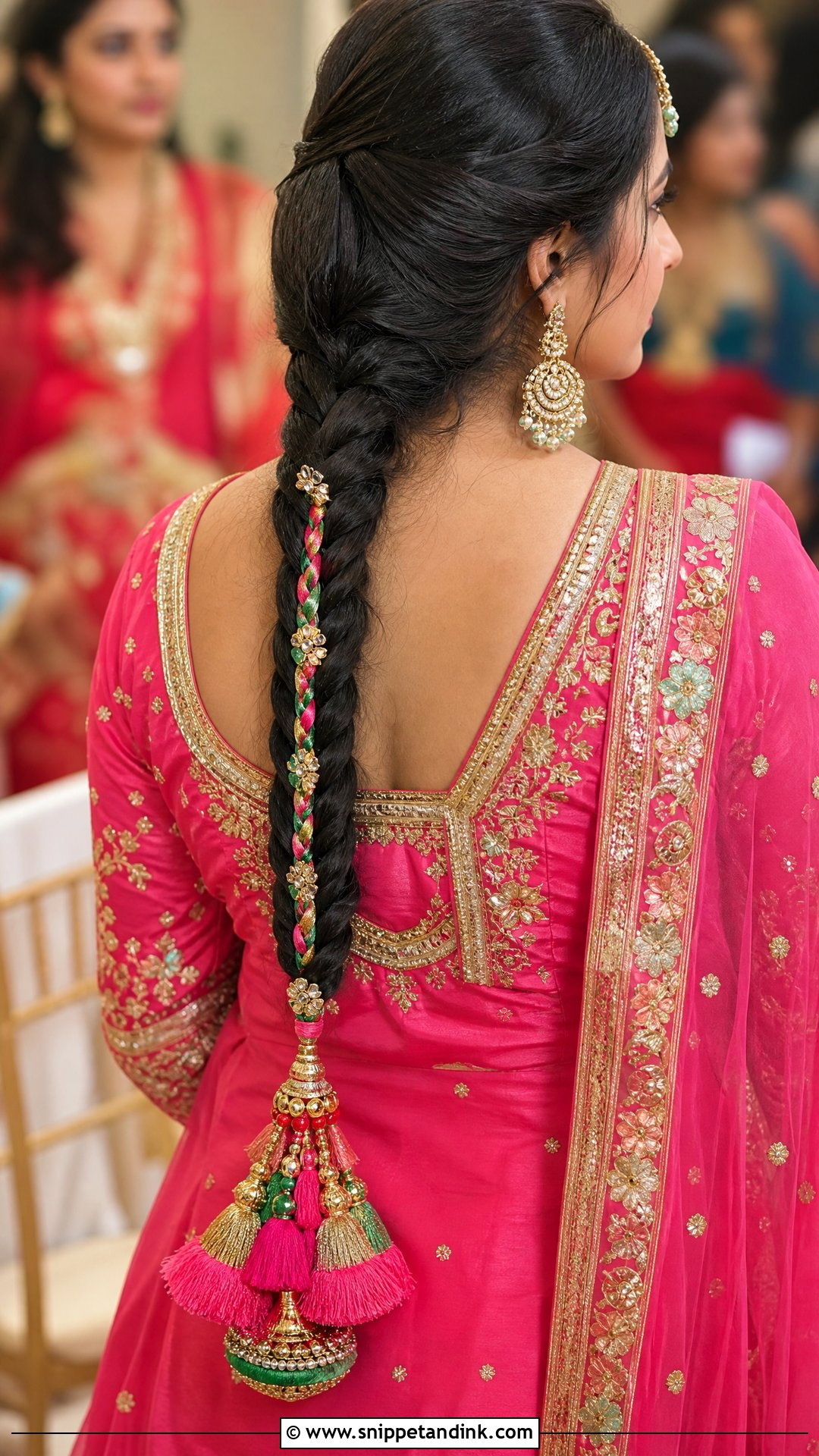
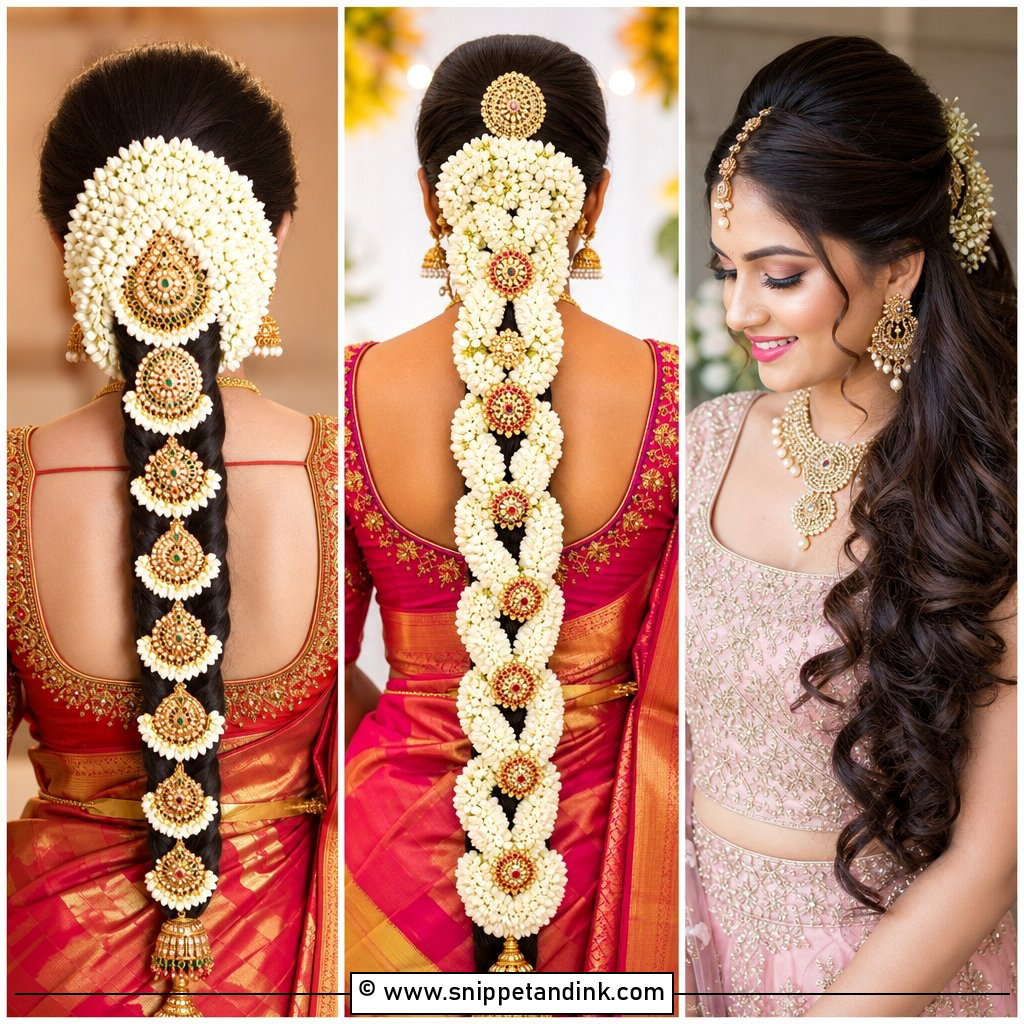
A paranda adds length, color and swing, so even a plain braid looks festive, which is why it’s such a fixture at Punjabi wedding functions, mehendi, haldi and sangeet. Start with smooth hair and a center or side part, then braid the paranda in from the nape, treating its threads as part of one strand. Tight reads traditional; slightly loosened reads softer. I finish the end with the paranda’s own tassels rather than an elastic, because their weight is what keeps the braid hanging straight. Match its colors to your outfit, bangles or dupatta.
14. Side Swept Curls
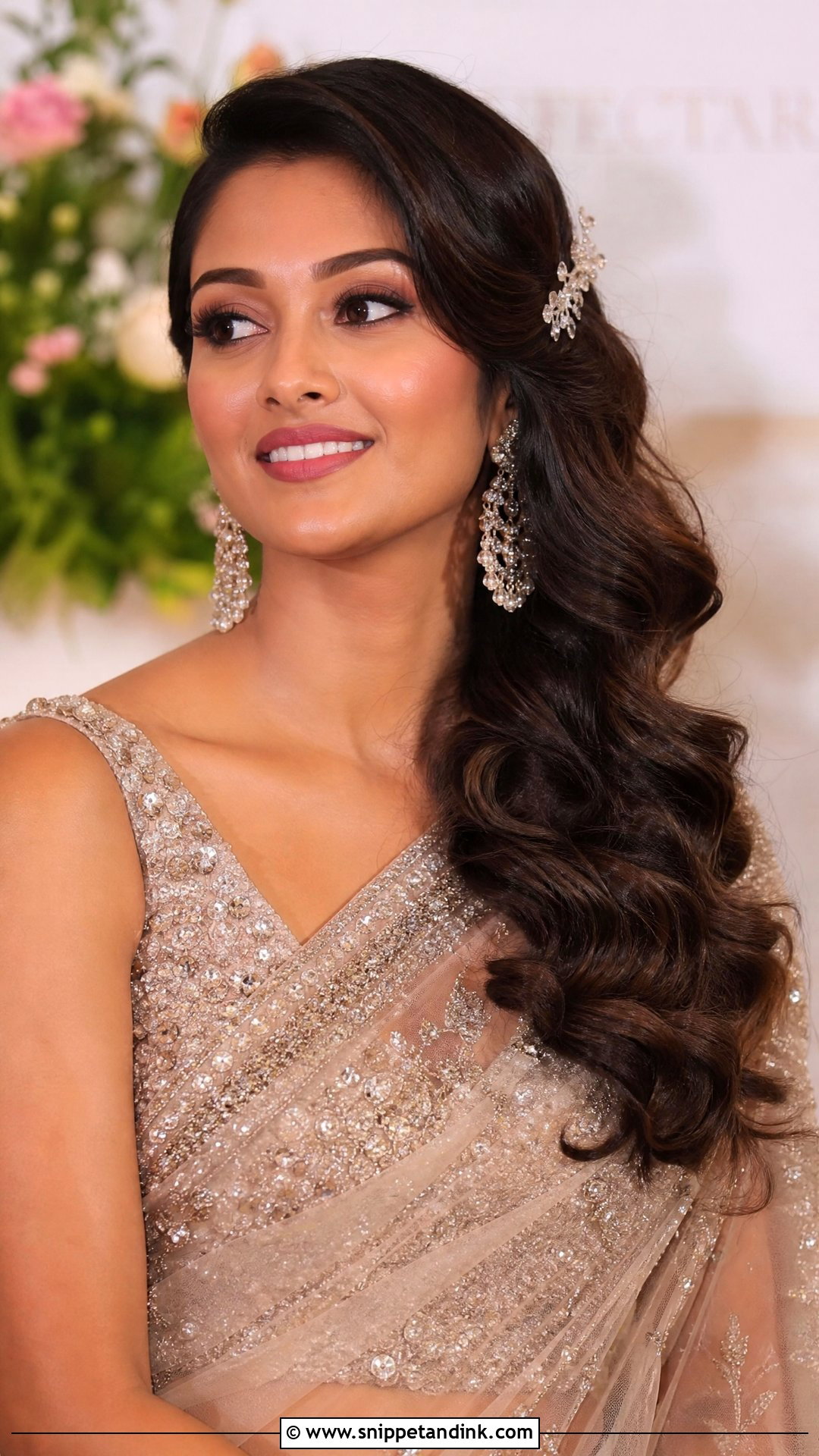
Sweeping curls to one side puts an earring, a neckline detail or shoulder embroidery in full view, so it suits reception gowns, sarees and lehengas. Deep side part, curls all in one direction, then a light brush into smooth waves. The pinning decides whether it holds. I anchor the swept side behind the ear with bobby pins crossed in an X under the top layer, and only then add a jeweled clip on top for decoration; a clip alone lets the whole side fall forward within the hour. Finish with hairspray.
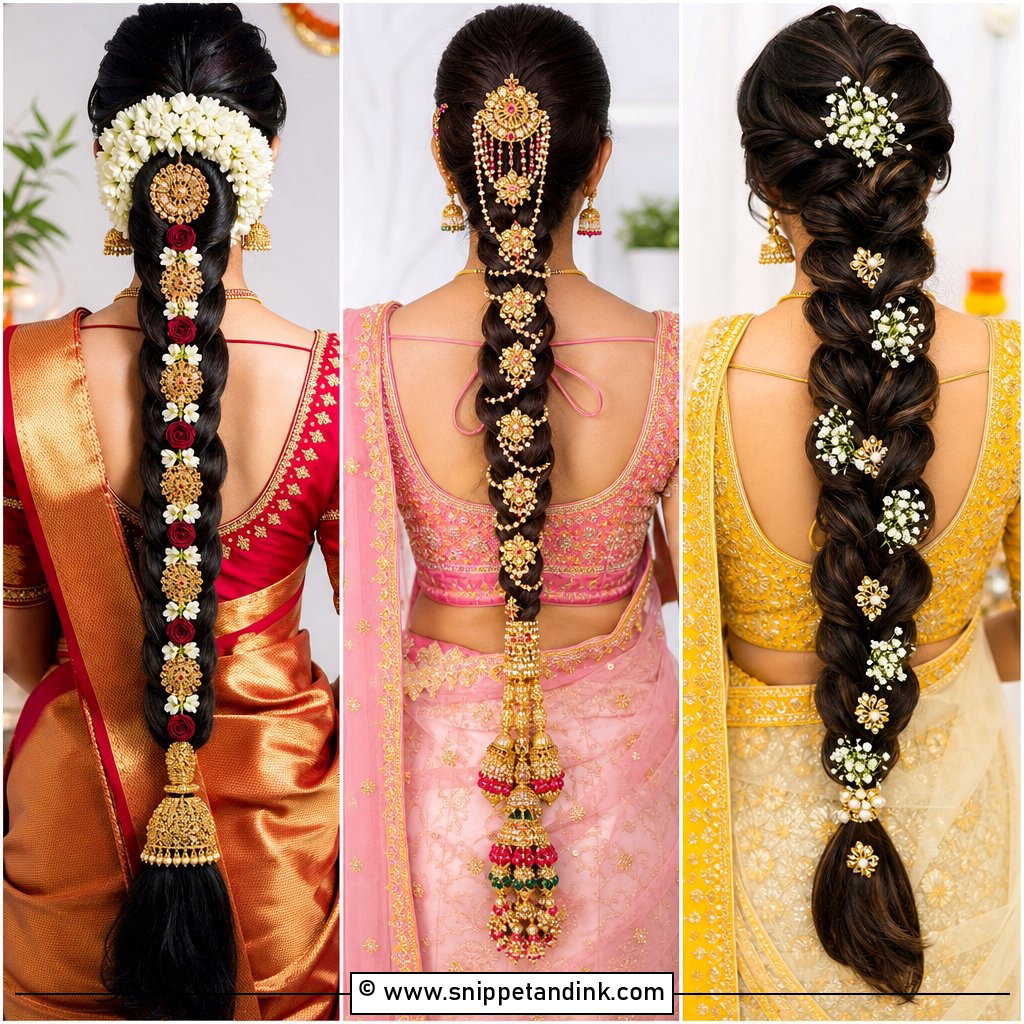
15. Simple Chignon With Hair Jewelry
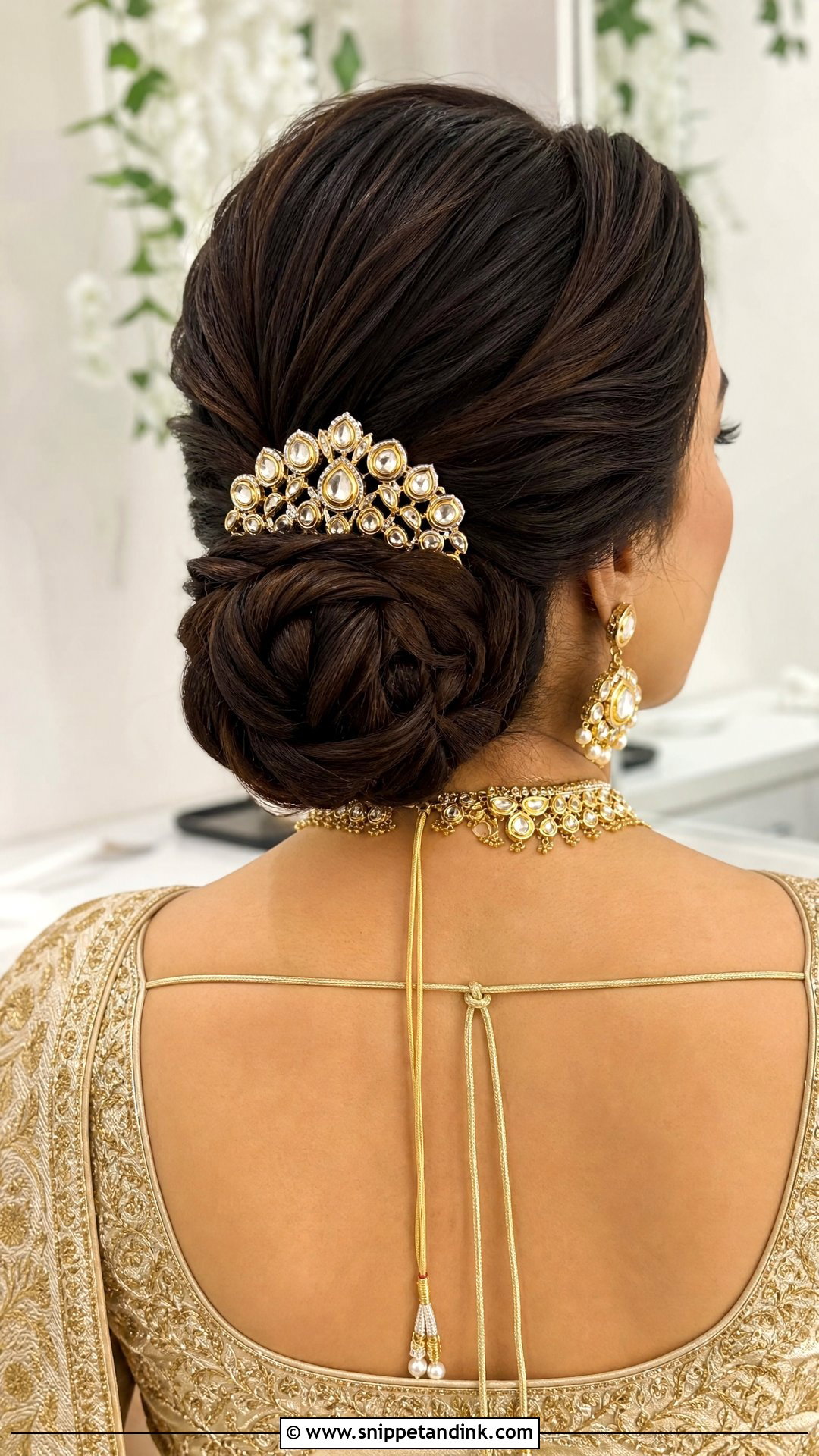
If you’re unsure what to choose, a low chignon is the one I’d hand to almost anyone, from a teenager to a grandmother. It sits neat at the nape, so a dupatta pins over it without strain, and it stays comfortable through long ceremonies. Sleek suits a formal saree; a little texture suits a softer lehenga. Make a low ponytail, twist inward and pin into a rounded shape. A gold comb, pearl vine or small kundan piece ties it to your jewelry, and if it loosens later, two pins put it right.
Where the Pins Go Under a Heavy Dupatta and Maang Tikka
An embroidered bridal dupatta can be surprisingly heavy, and if it’s pinned only to the top layer of hair it drags backwards for the whole ceremony. That constant tug is what gives brides headaches by the pheras, and it’s the first thing I check at a trial.
Give the dupatta a proper anchor
The bun or the base of the braid is the anchor. Push U-pins through the dupatta and into the bun itself, not the loose hair above it, and add two more at the crown, angled toward the back. For a half up style, the pinned crown section is your anchor, so build it a little tighter than you would for an open look.
Stop the tikka from sliding
Hook the tikka chain into the part, then cross two bobby pins over it in an X a few centimetres back so the weight sits on the hair rather than the hook. A passa on one side needs its own small braid or twist to hold it; clipping it onto loose curls lets it slip forward onto your face.
Fresh gajra wilts faster than you’d expect
Jasmine starts to brown and soften within a few hours in a warm room. Keep strings wrapped in a damp cloth in the fridge and add them last, just before you leave. For a long ceremony followed by a reception, a fresh gajra for photos and a faux one for the evening is a sensible swap.
Pin the Dupatta at Your Trial, Not on the Morning
Simple hair is not the same as plain hair. A good parting, some texture, secure pins and the right flowers or jewelry turn a bun, braid or half up look into something properly festive. The real decision is about weight and hours: buns for heavy dupattas and long formal ceremonies, curls, braids and ponytails for the mehendi, haldi, sangeet and reception. Whatever you pick, I’d try it once wearing the actual dupatta and tikka before the wedding week. Then pack extra pins, a mini hairspray and a small comb in your clutch, because someone will need them by the second function.
You'll Like These Ideas:





Leave a Reply