
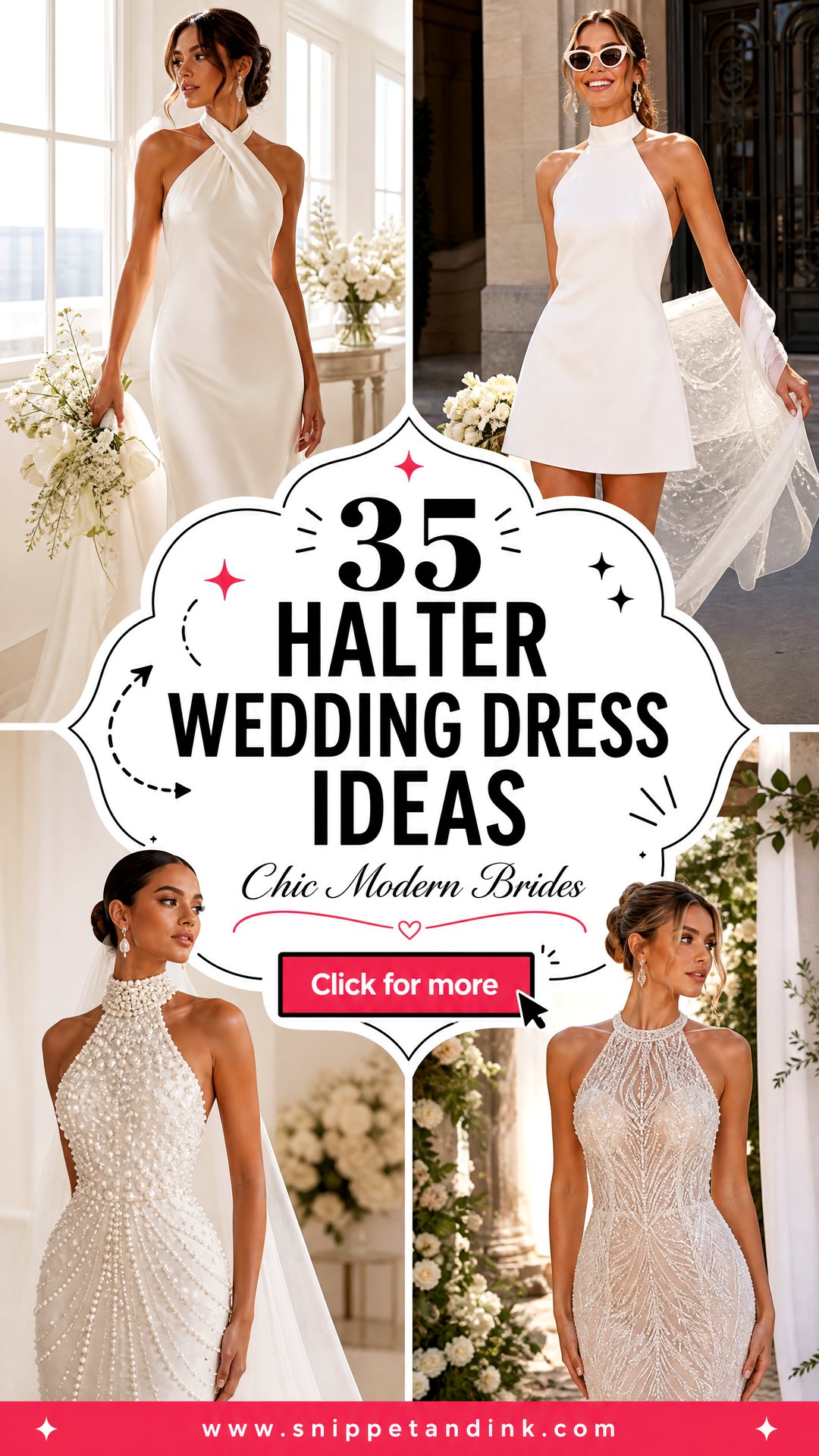
A halter neckline does two things at once: it bares the shoulders and back, and it hangs the bodice from the neck instead of the shoulders. That second part is why I like it when a bride wants a sleek, supported top without straps sliding off, and it’s also why fit matters more with a halter than with almost any other neckline. It suits a beach ceremony as easily as a ballroom, provided the fabric, skirt shape and back detail are chosen with the venue in mind. Below are 35 halter gowns, from clean satin to lace fit-and-flare, with the styling and fitting notes I’d give you at the appointment.
Where a Halter Hangs Its Weight, and Why You Feel It by Evening
With most wedding dresses, the shoulders and the waist share the load. A halter moves a good part of it onto the back of the neck. On a light crepe or chiffon gown, you’ll barely notice. On a beaded bodice with a heavy skirt, the strap can start to dig in after a few hours, and some brides end the night with a stiff neck or a headache. I don’t say that to put anyone off; I say it so the fitting checks the right things.
What I look at during a halter fitting
First, where the strap sits. It should rest on the flat part of the neck, not pressing on the top of the spine. Then I watch what happens when the bride lifts her arms, sits down and leans forward, because a halter that fits standing still can gape at the sides or lift at the bust once she moves. Shortening or lengthening the neck strap also moves the bust point, so that alteration is done first and everything else is fitted after it.
Support underneath
A regular bra doesn’t work with most halters, and a strapless one only works with a closed back. For open or low backs, the dependable answers are cups sewn into the gown, internal boning at the side seams and a firm waist stay that holds the bodice in place. Adhesive cups and tape are fine backups, but heat and dancing loosen them. Bring the undergarments you plan to wear to every fitting, since a change in support changes how the whole bodice sits.
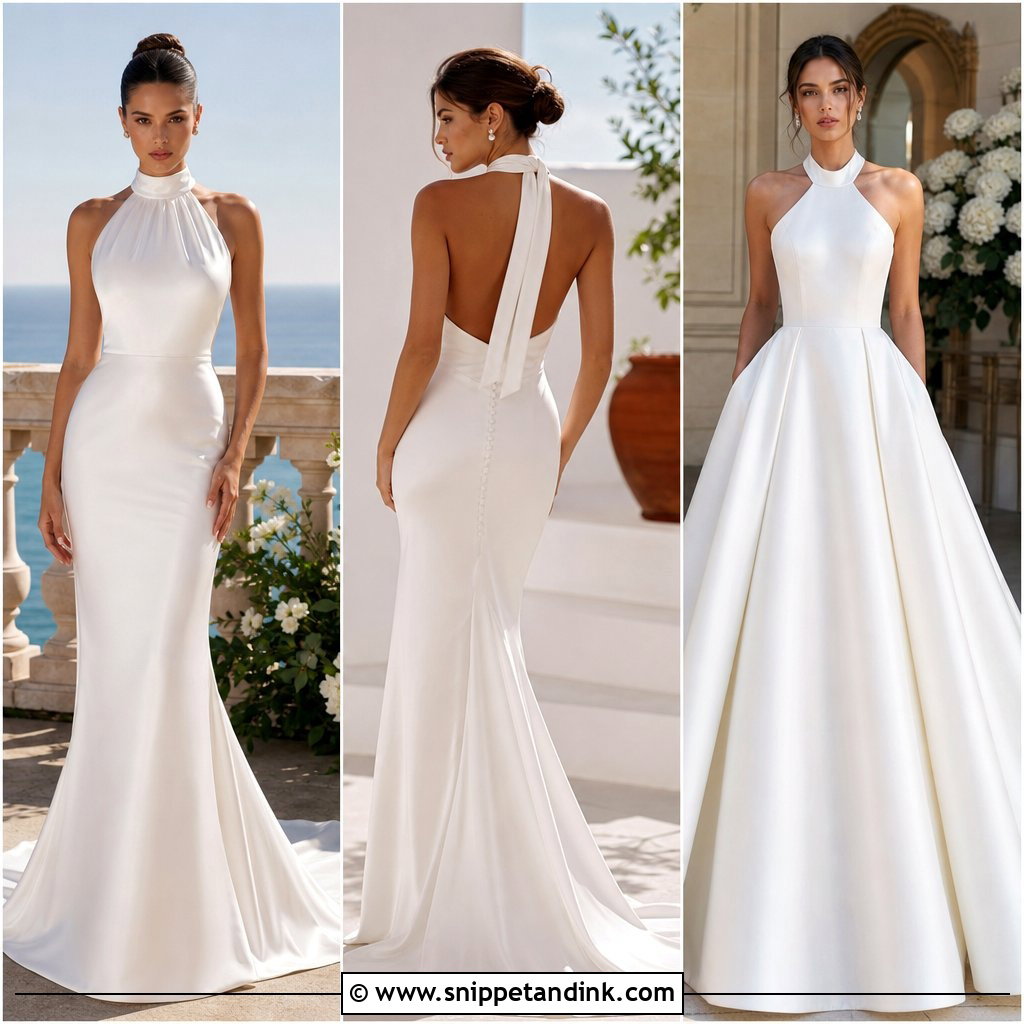
1. Satin Halter Wedding Dress
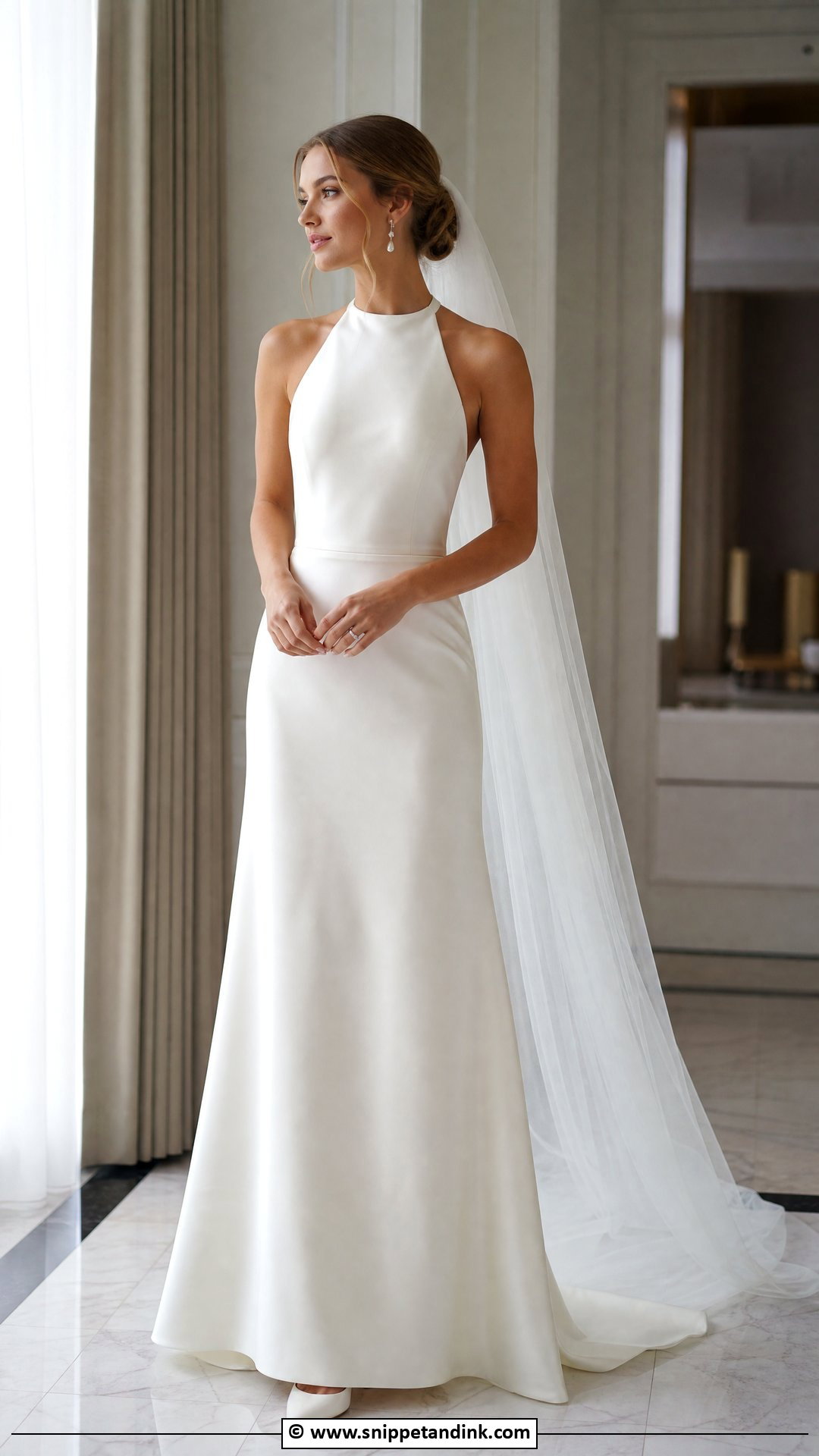
Satin is the fabric that shows a halter’s lines most clearly, which works in your favor only if the fit is precise. Every pull across the bust or ripple at the side seam shows on a smooth surface, so I always check satin halters with the bride seated and with her arms raised. A slim A-line or sheath keeps the skirt from competing with the neckline. With a bare neck, pearl drops, a low sleek bun and a long plain veil are all you need. In evening light at a hotel or city venue, satin picks up the room’s glow without any added sparkle.
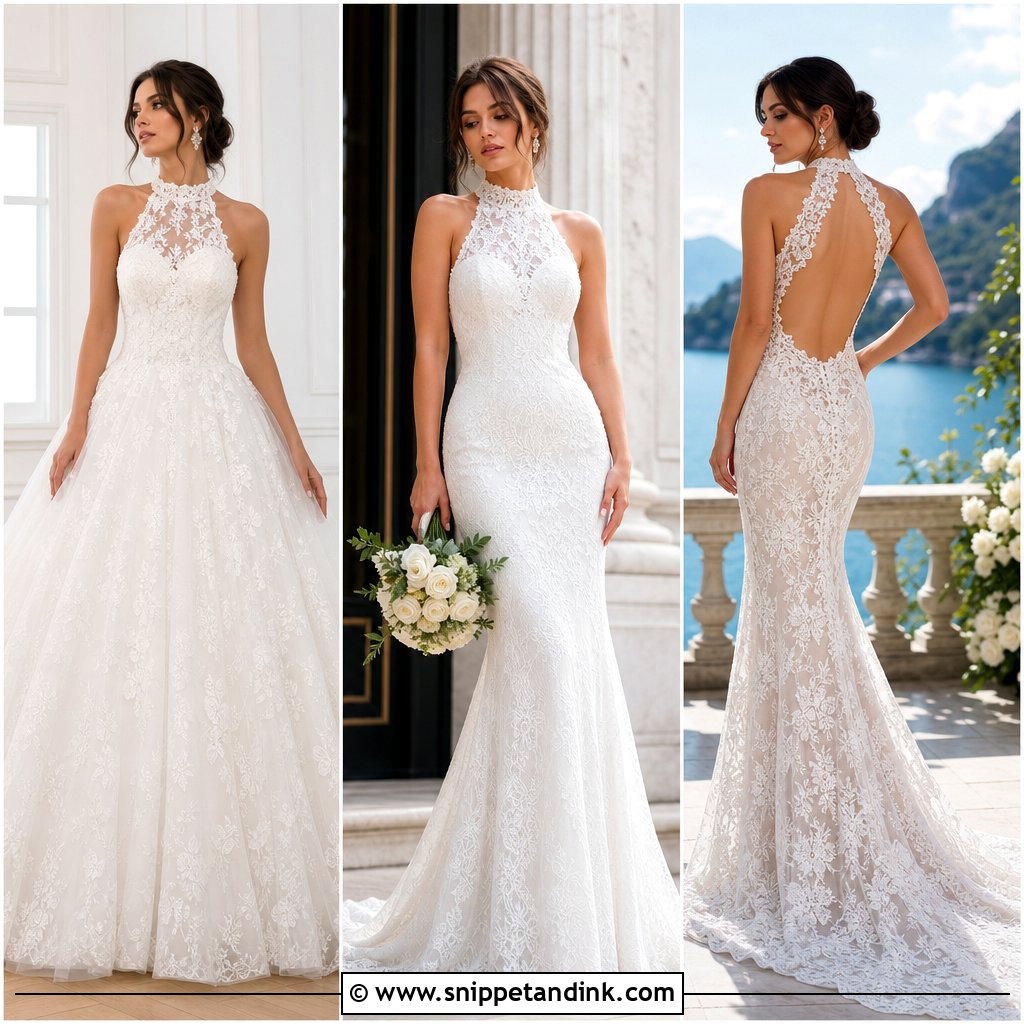
2. Lace Halter Wedding Dress
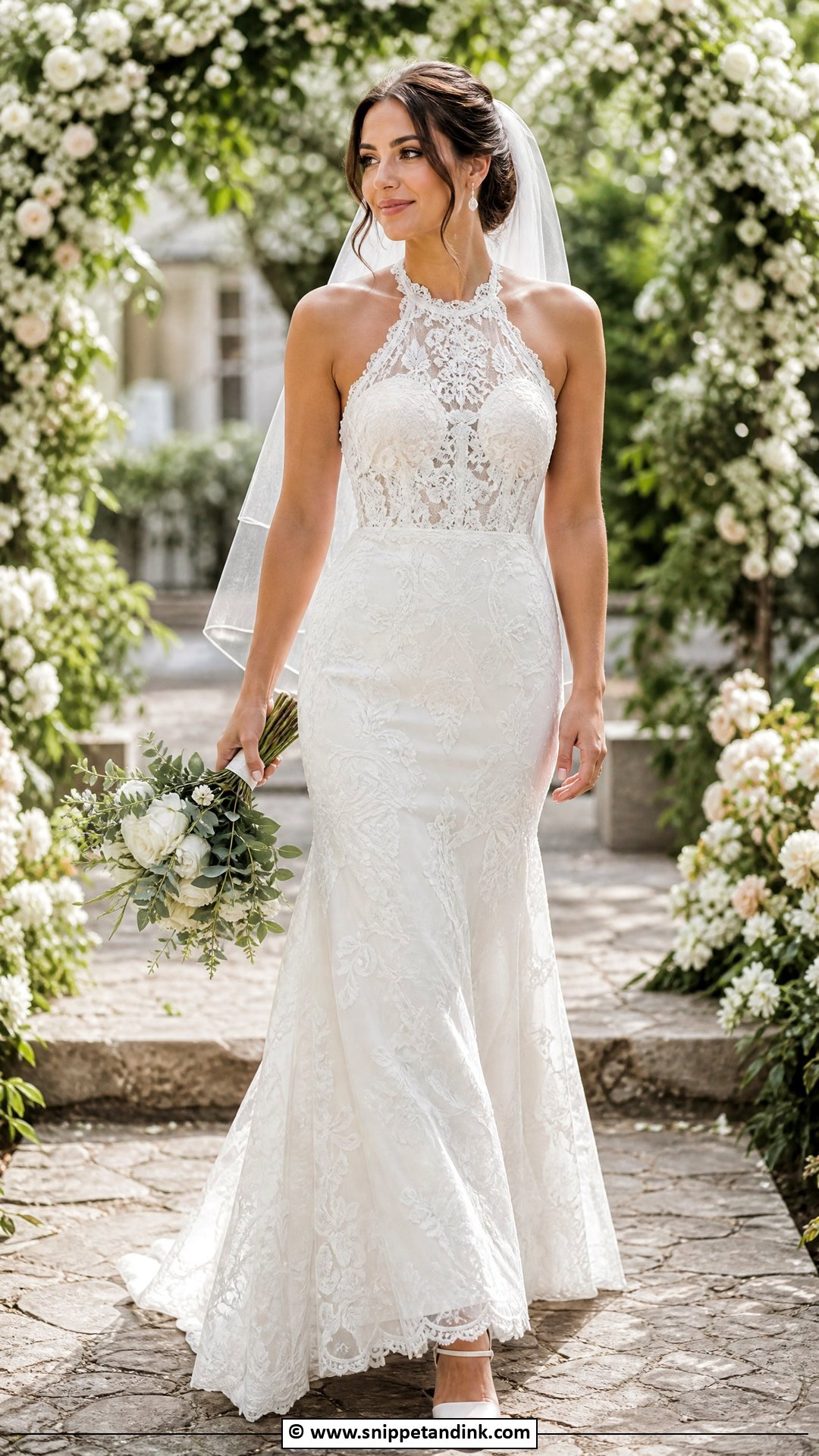
Lace softens the strong lines of a halter, and on a fit-and-flare it follows the body before opening near the knee. The thing I check first is how the lace is finished at the neck. A scalloped edge that sits directly against the skin can scratch over a long day, and a soft tulle backing behind it fixes that. If the lace pattern is busy, the bouquet and jewelry should be quiet. Ivory block heels make sense for a garden or estate lawn, where a stiletto sinks.
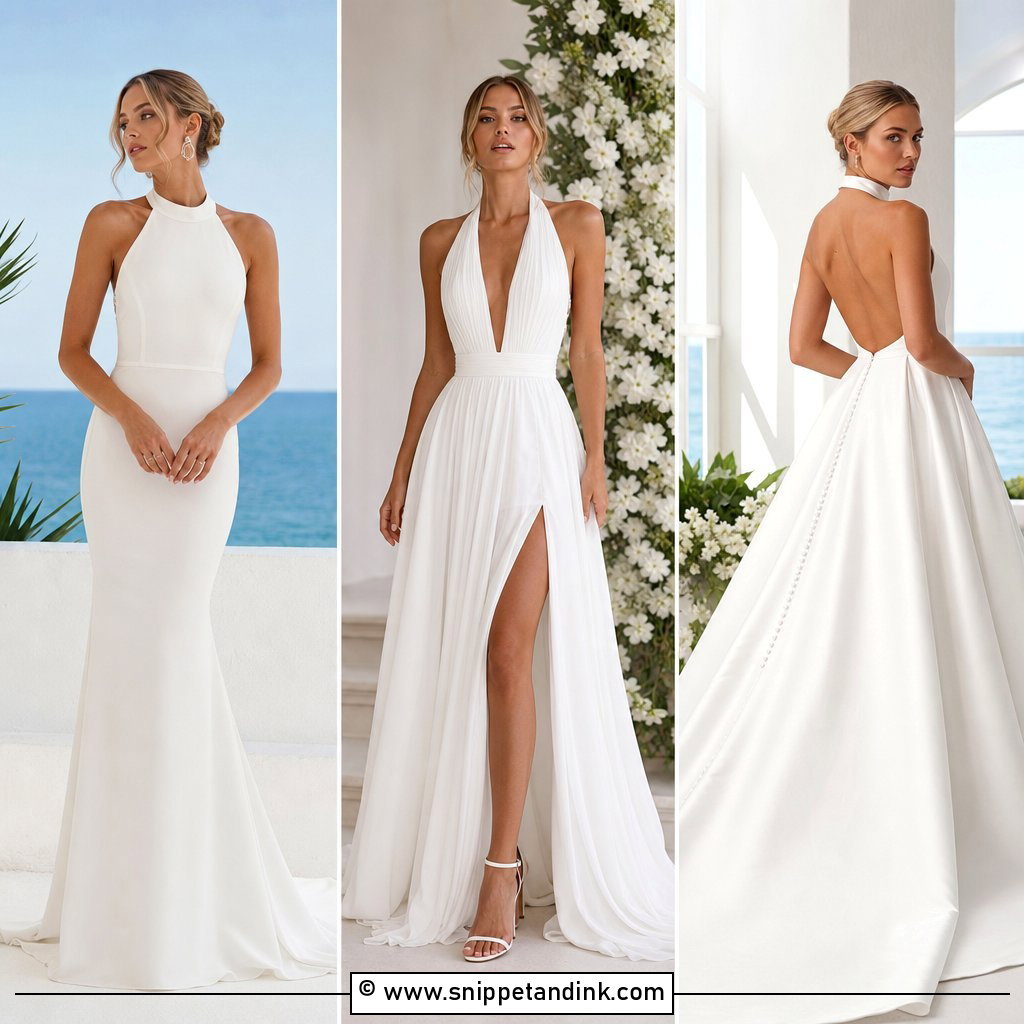
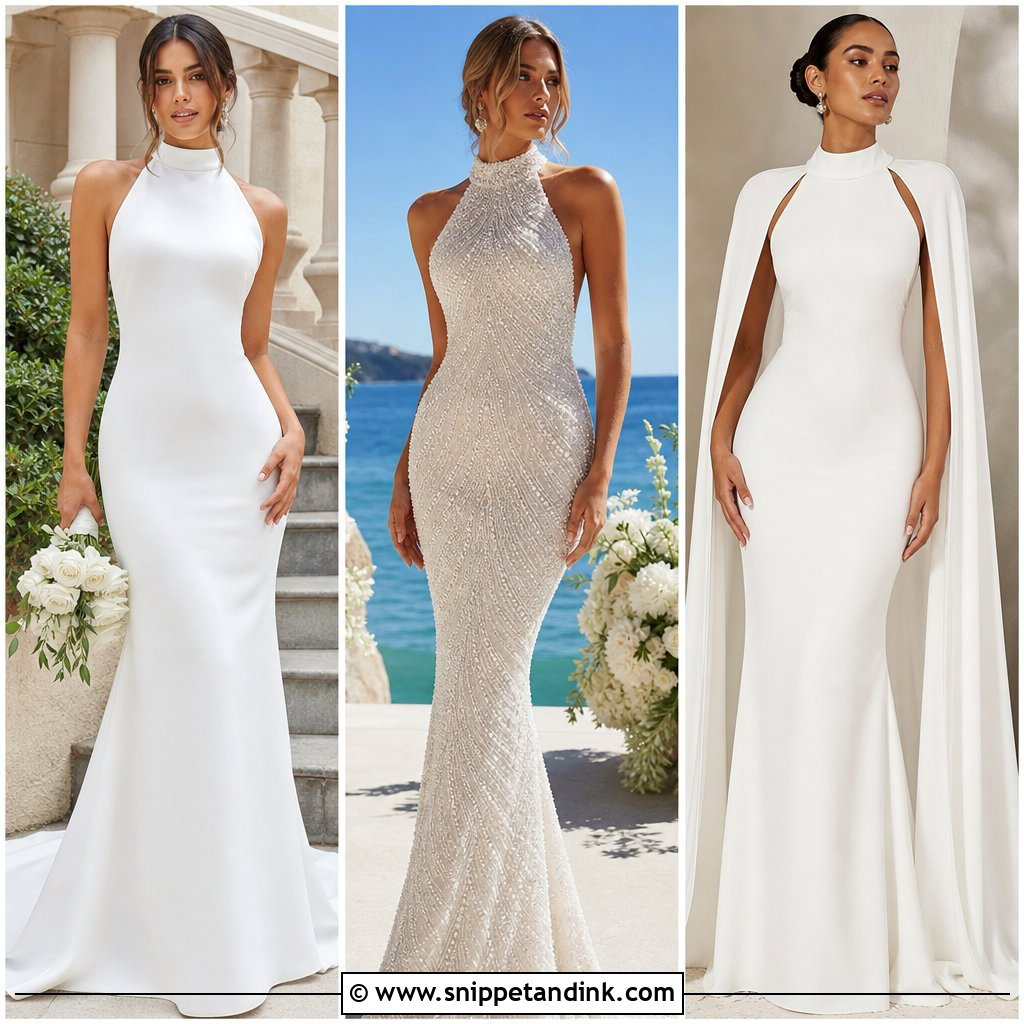
3. High Neck Halter Wedding Dress
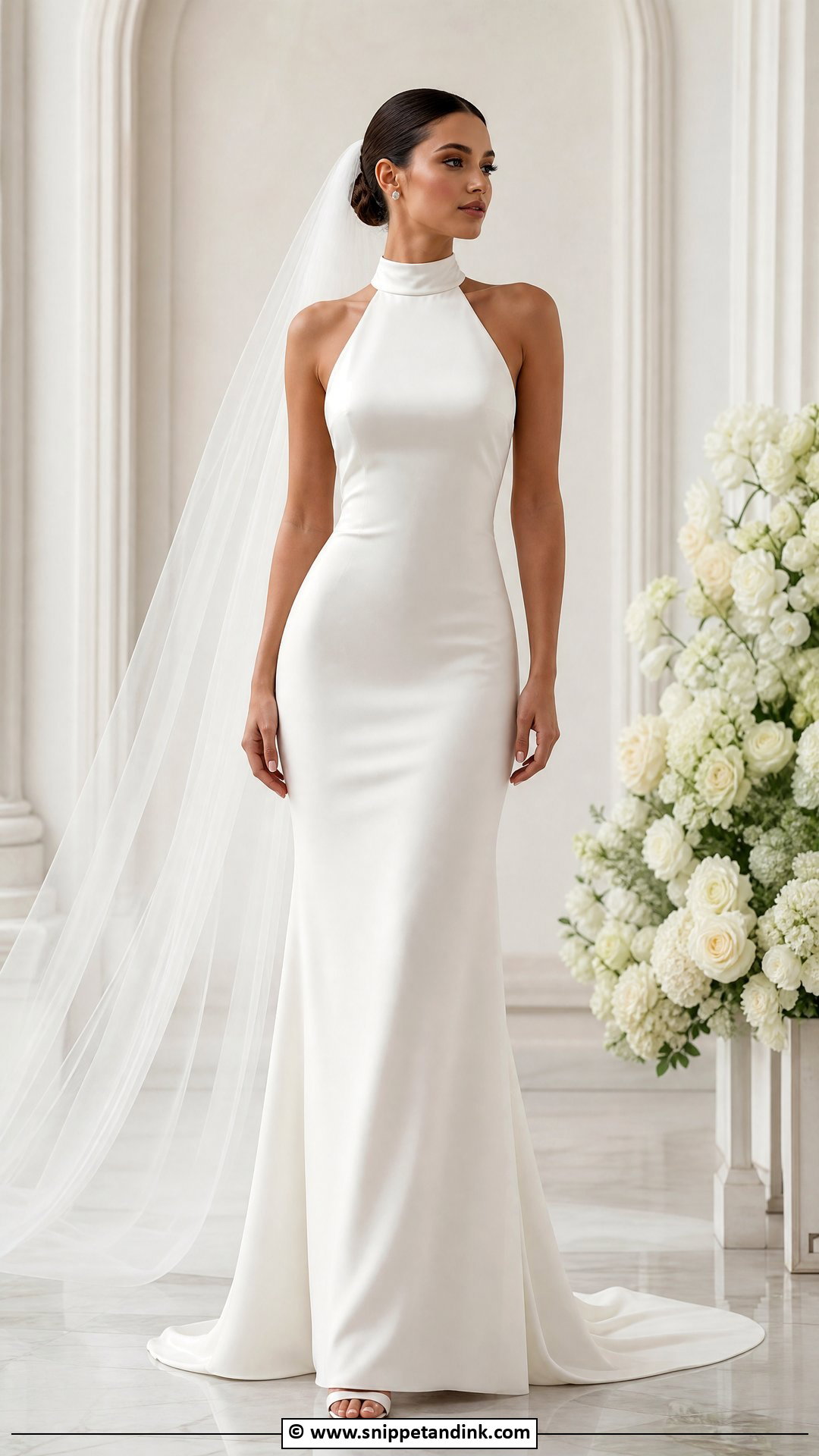
A high neck halter covers the chest completely and leaves the shoulders defined, so it reads modest from the front and sharp from the side. It needs a fabric with body, such as crepe, mikado or a bonded satin, or the high collar folds over itself by the end of the ceremony. Hair goes up. I’d steer a bride away from this cut if she has a short neck and wants to wear her hair down, because the collar and hair crowd each other. Studs and a long smooth veil let the line speak for itself in a museum or formal indoor space.
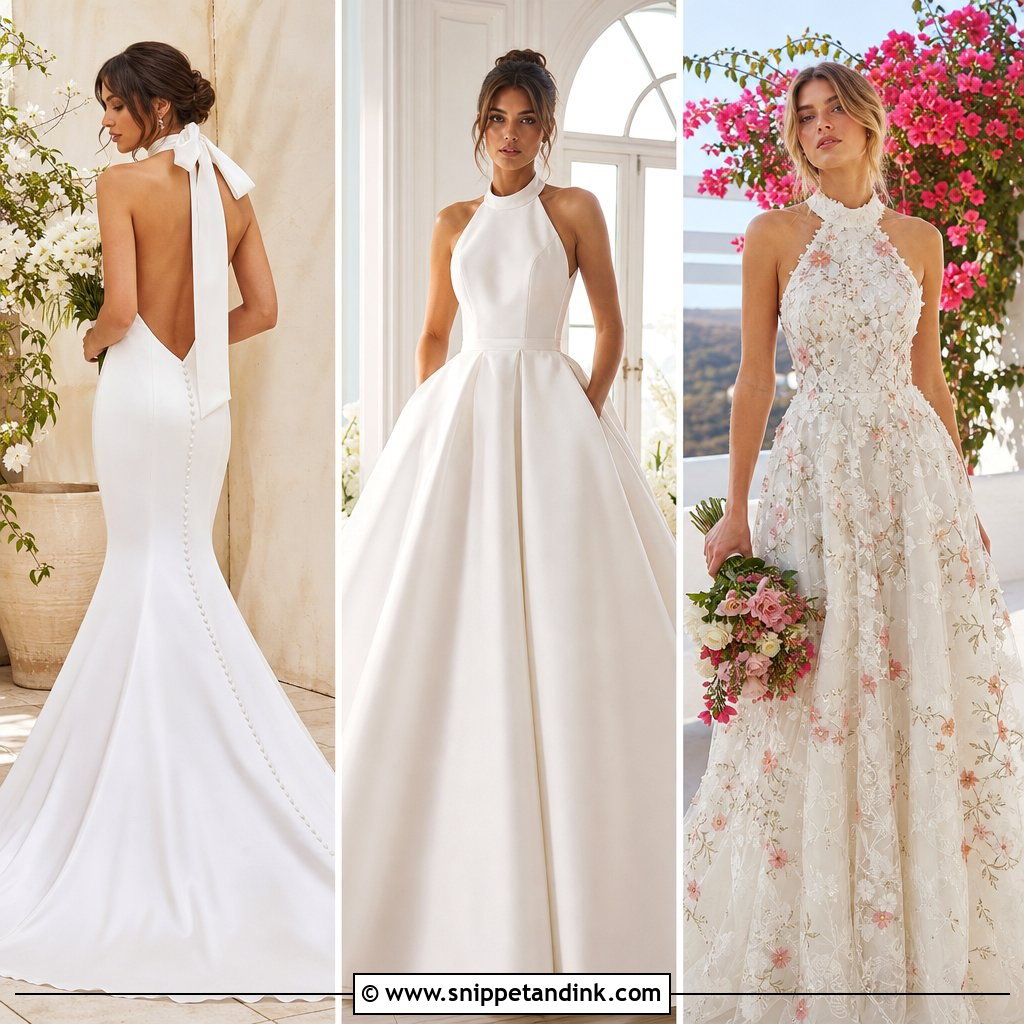
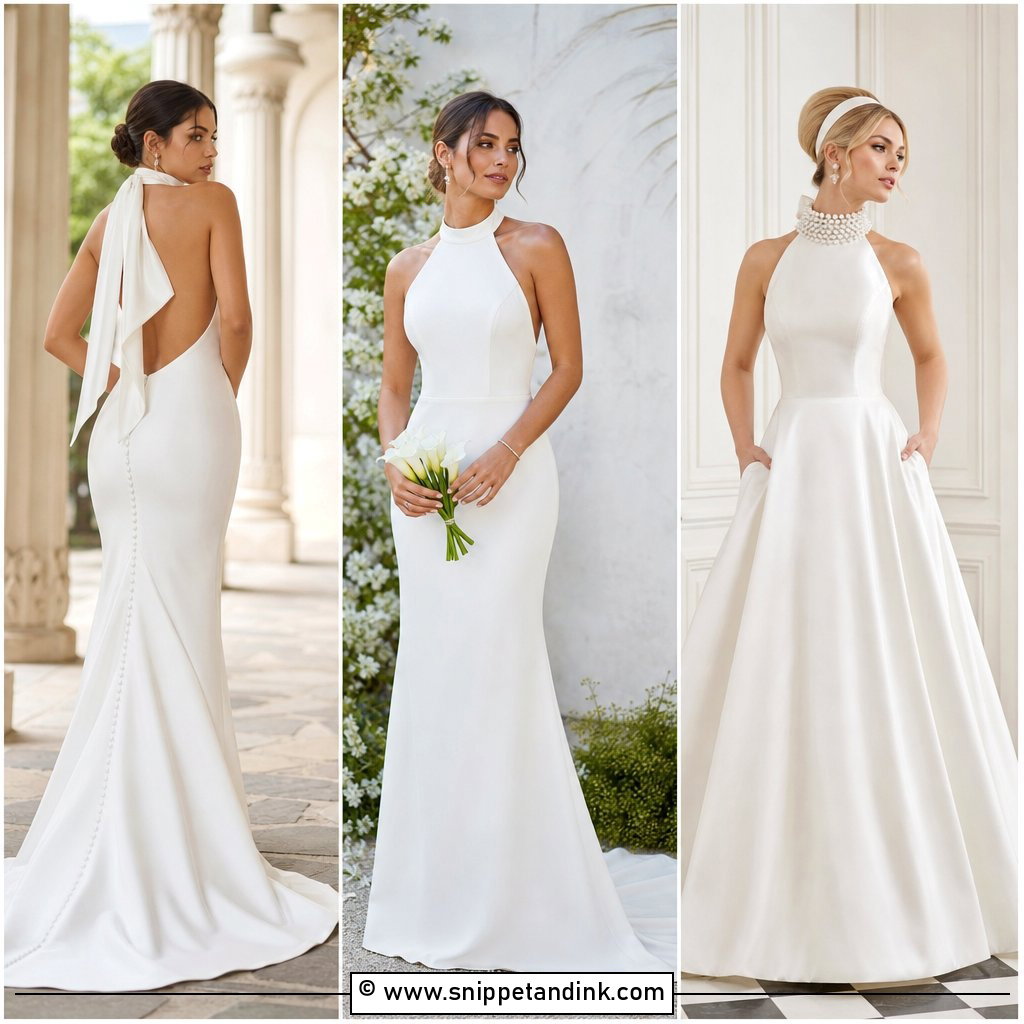
4. Backless Halter Wedding Dress
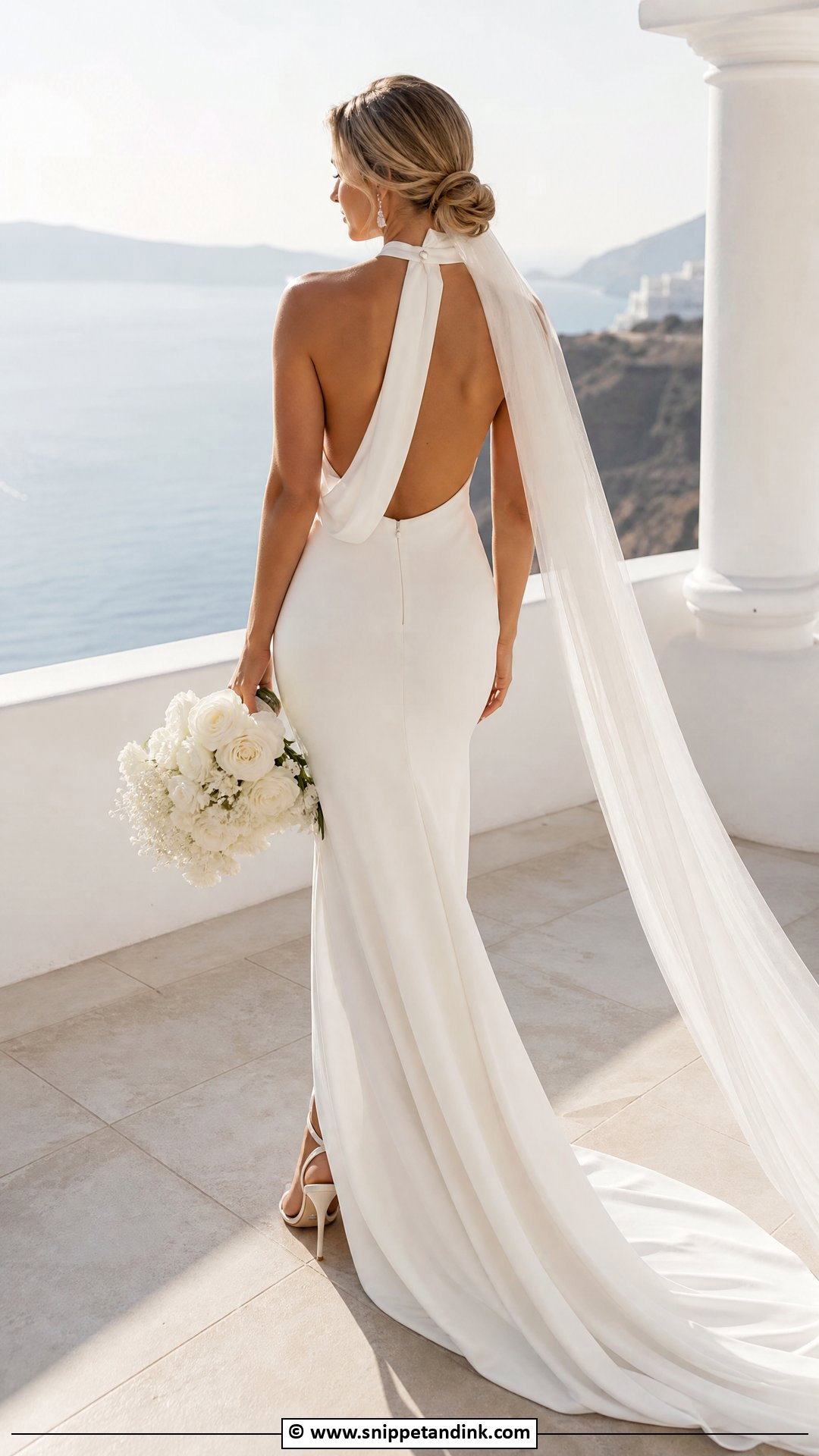
With a backless halter, the entire bodice is held by the neck strap and the side seams, so the construction inside has to be good: boning at the sides, firm cups and a waistband that grips. Ask to see the inside of the gown, not just the outside. A sheer veil keeps the back visible, and hair should go into a bun, a twist or a side-swept wave pinned well away from the spine. Warm-weather and destination weddings suit it, though I’d check whether the ceremony space is air-conditioned and cold.
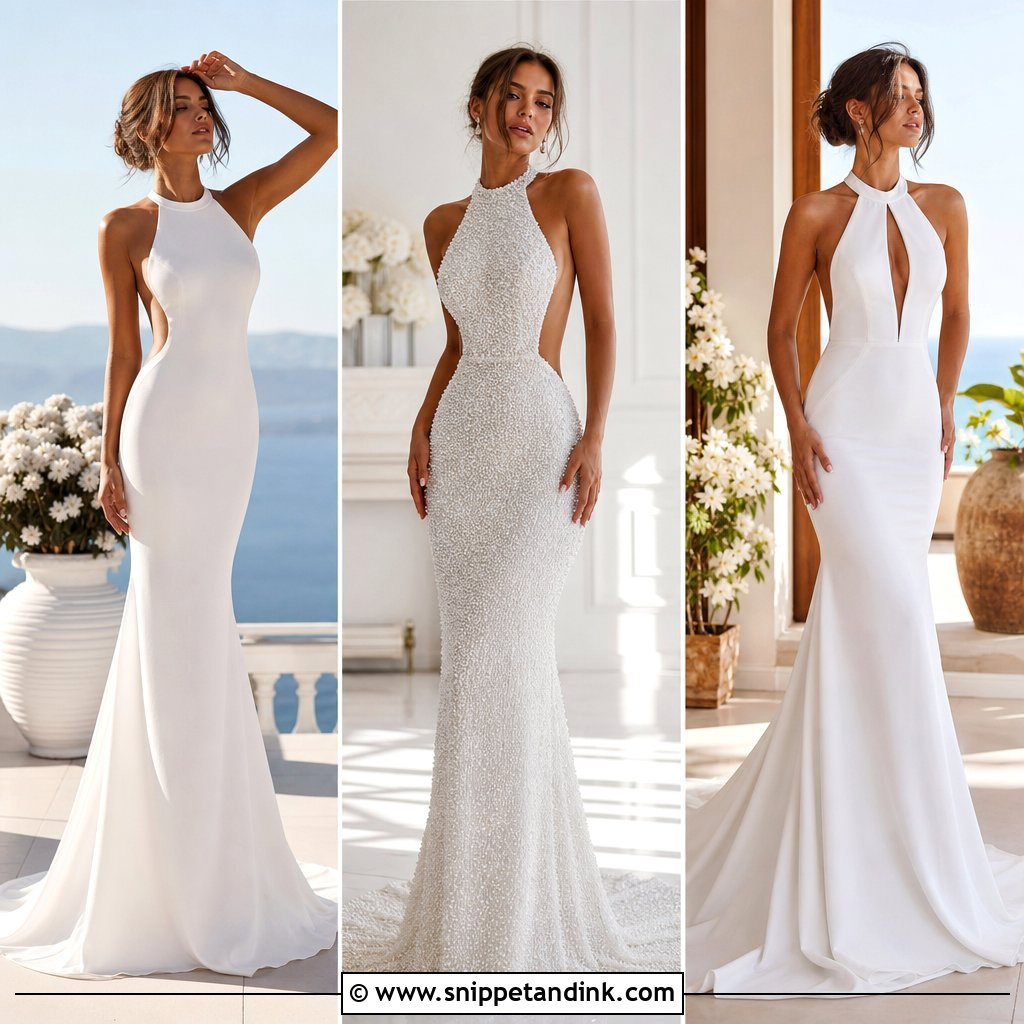
5. Halter Mermaid Wedding Dress
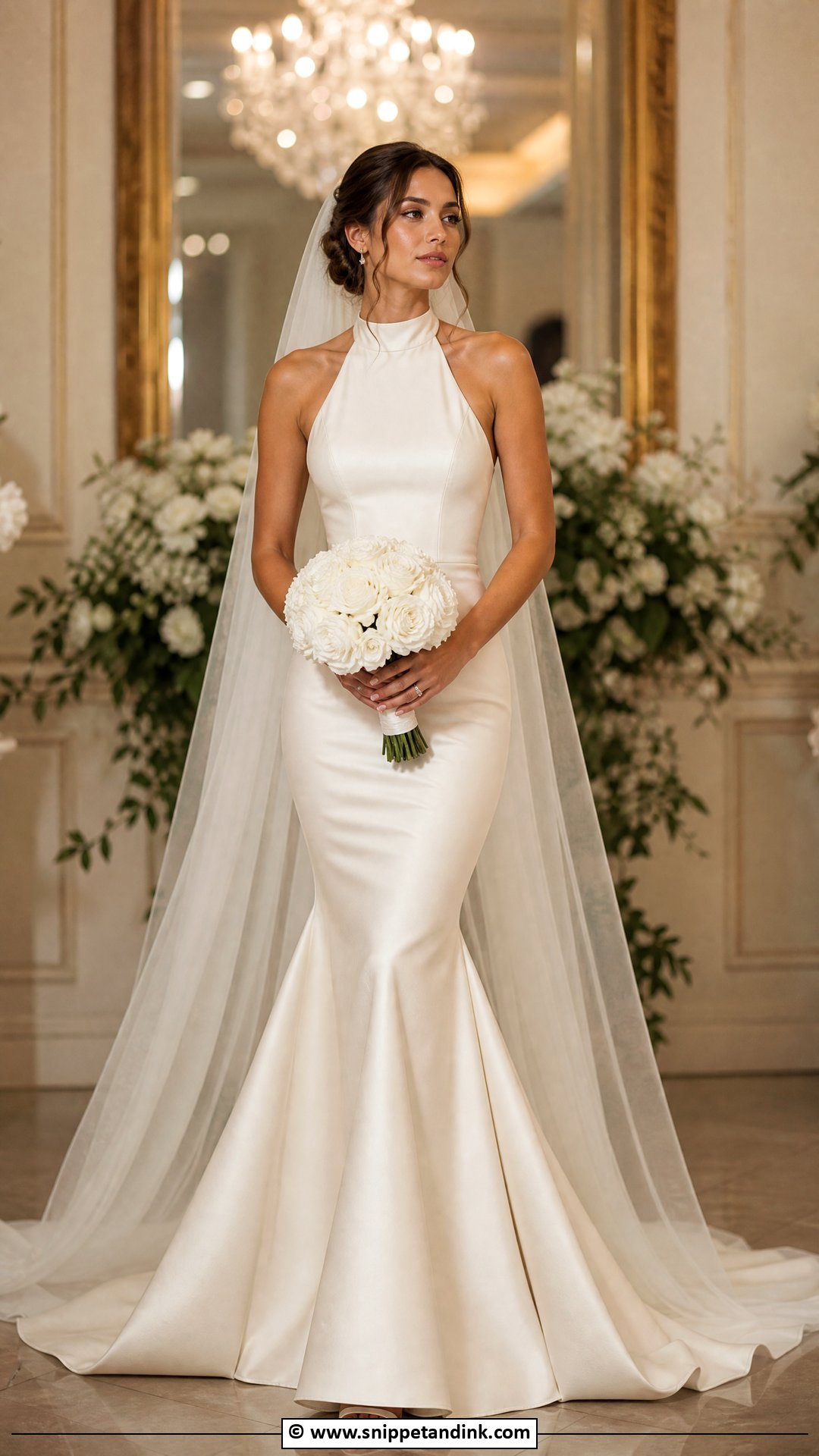
Mermaid is the least forgiving silhouette for walking and sitting, and pairing it with a halter doesn’t change that. The fitted skirt sits tight to below the knee before it flares, so stairs and low chairs take practice. What the halter adds is a strong upward line that balances the volume at the hem. Crepe holds the shape most cleanly; lace is softer. Hem the gown to the exact heel height you’ll wear, because a mermaid flare that drags or floats an inch too high looks wrong straight away.
6. Halter A Line Wedding Dress
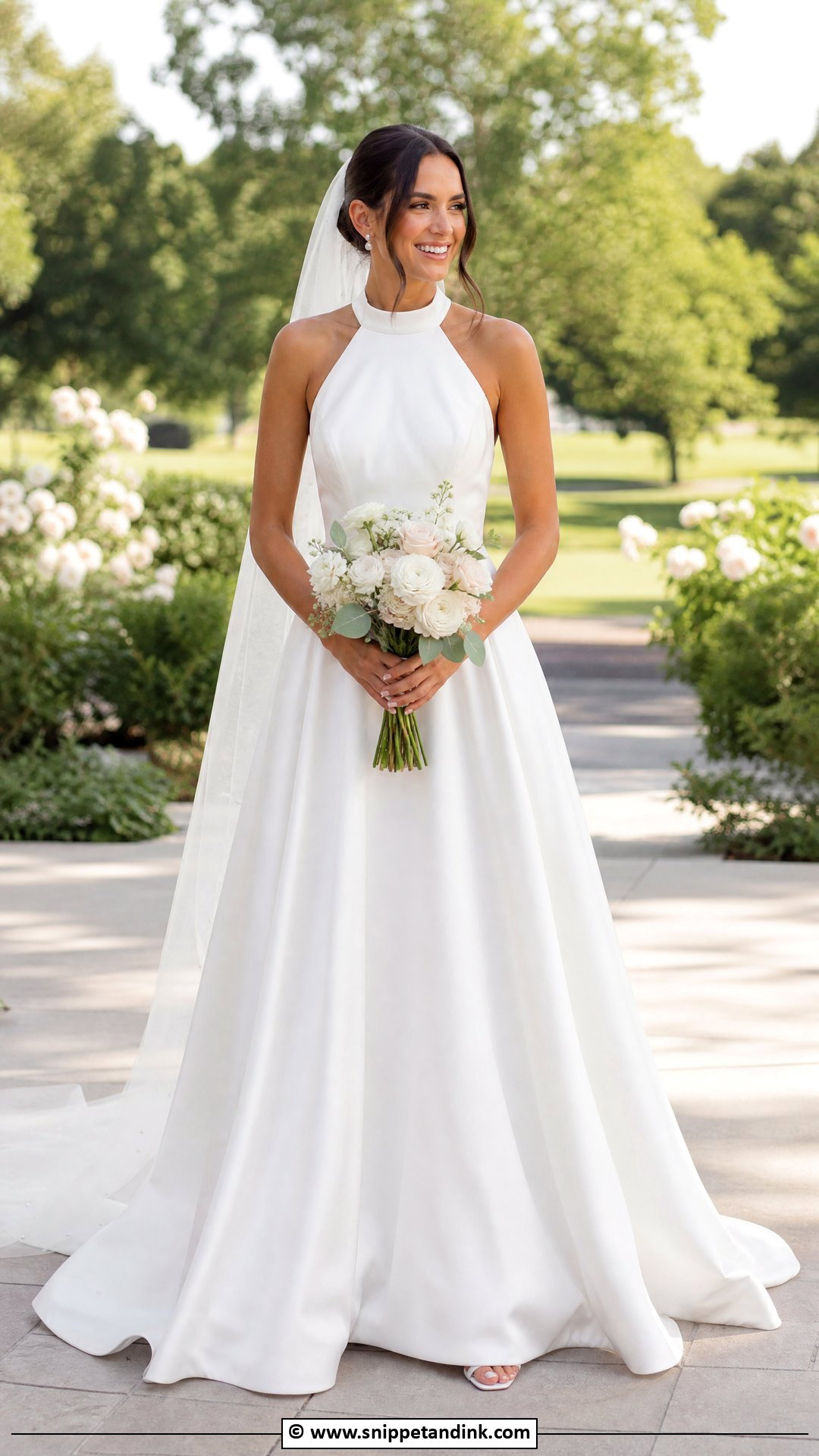
If a bride tells me she wants a halter but isn’t sure about clingy shapes, the A-line is where we start. The skirt skims the waist and flows away from the hips, so the halter top carries the interest without the dress feeling tight. Chiffon makes it airy, satin makes it polished, lace adds texture. A soft updo or half-up style suits it, as long as nothing covers the neck strap. It’s the easiest version here for an outdoor ceremony and a long reception.
7. Halter Ball Gown Wedding Dress
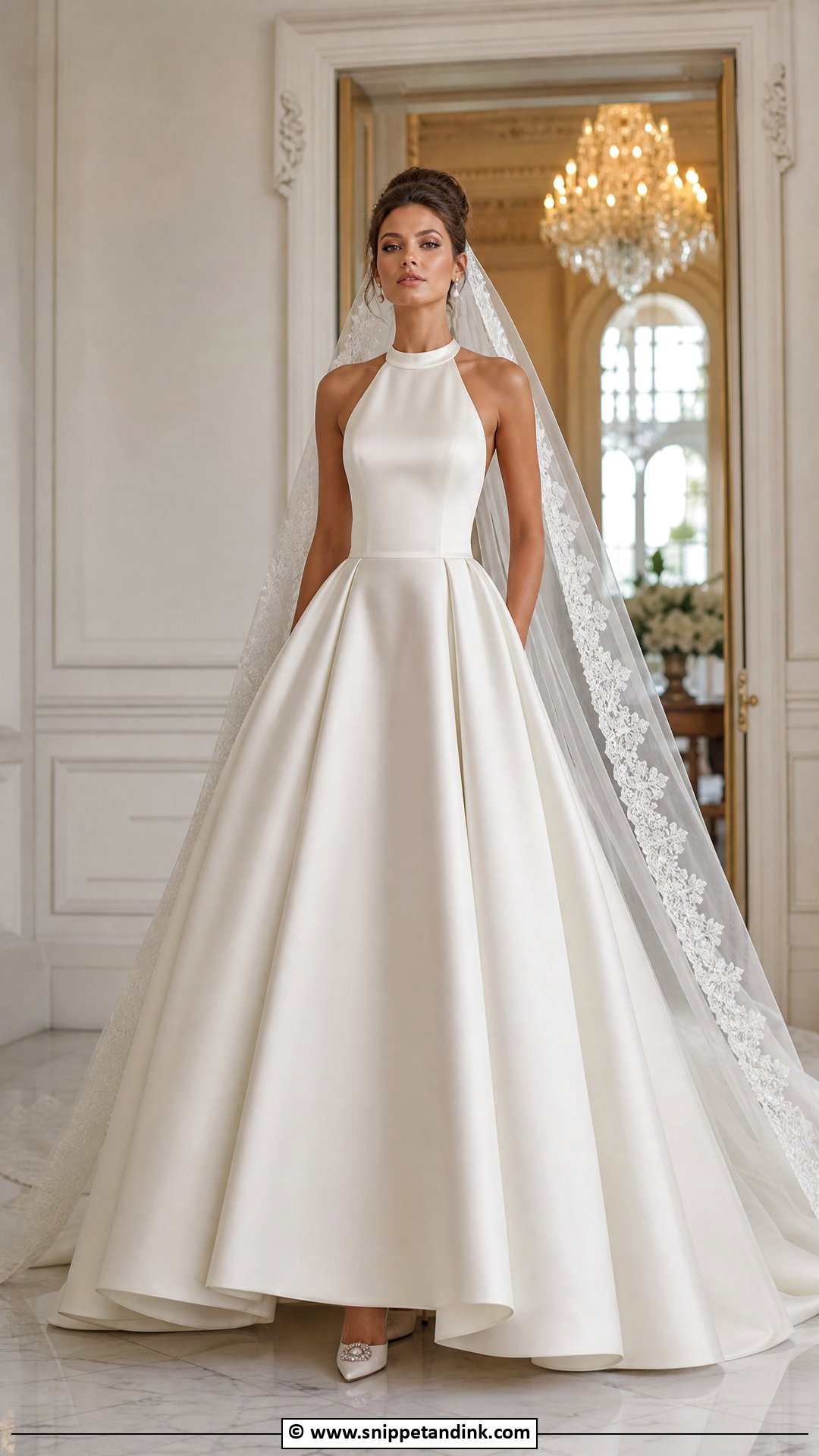
A ball gown skirt is heavy, and that weight hangs from the waist rather than the neck, which is good news for a halter. The bodice stays light and lifted while the skirt brings the volume. Mikado and organza hold the shape best; tulle is softer and lighter to carry. Keep the necklace area completely bare. One honest caution: the overall gown can be warm, so for a summer ceremony outdoors I’d lean toward tulle over mikado.
8. Halter Sheath Wedding Dress
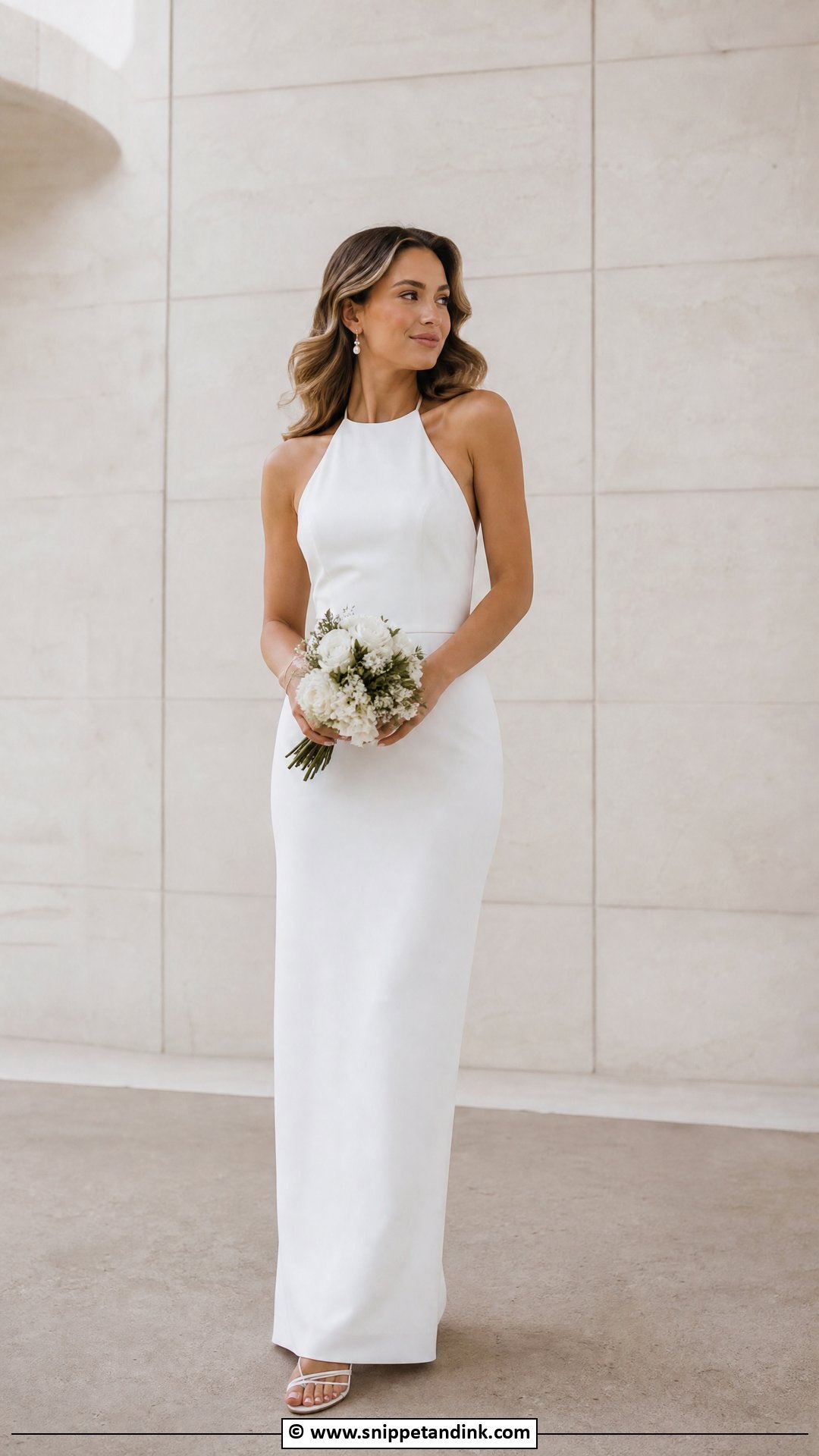
A sheath follows the body closely without the volume of a ball gown or A-line, so it moves easily and travels well. That makes it a natural fit for courthouse, beach and small venues. Crepe or satin gives a clean finish, and soft lace adds a little romance. The fit check I care about is the hip: a sheath that’s tight there will ride up every time you sit. Delicate earrings, strappy heels and a low bun or smooth waves are enough.
9. Halter Slip Wedding Dress
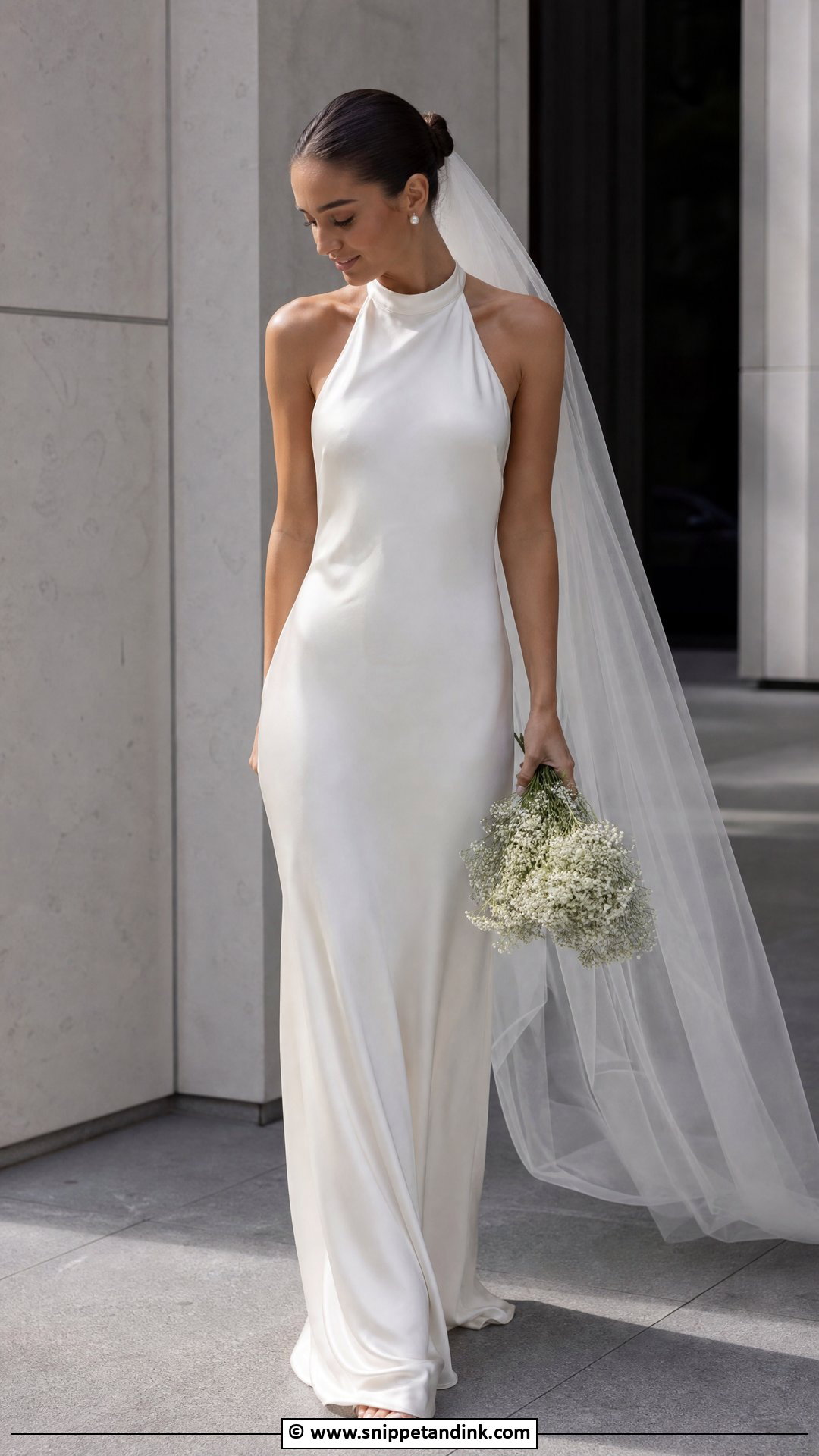
Slip dresses look simple, and that’s exactly the problem. There’s no structure to hide anything, so the fit has to be precise and the fabric has to be good. A bias-cut satin or silk drapes well but shows underwear lines and creases at the hip after a car ride. I tell brides who choose one to plan line-free undergarments at the first fitting, not the last, and to bring them along. Barely-there sandals, pearl studs and a long sheer veil finish it with old-Hollywood ease.
10. Halter Beach Wedding Dress
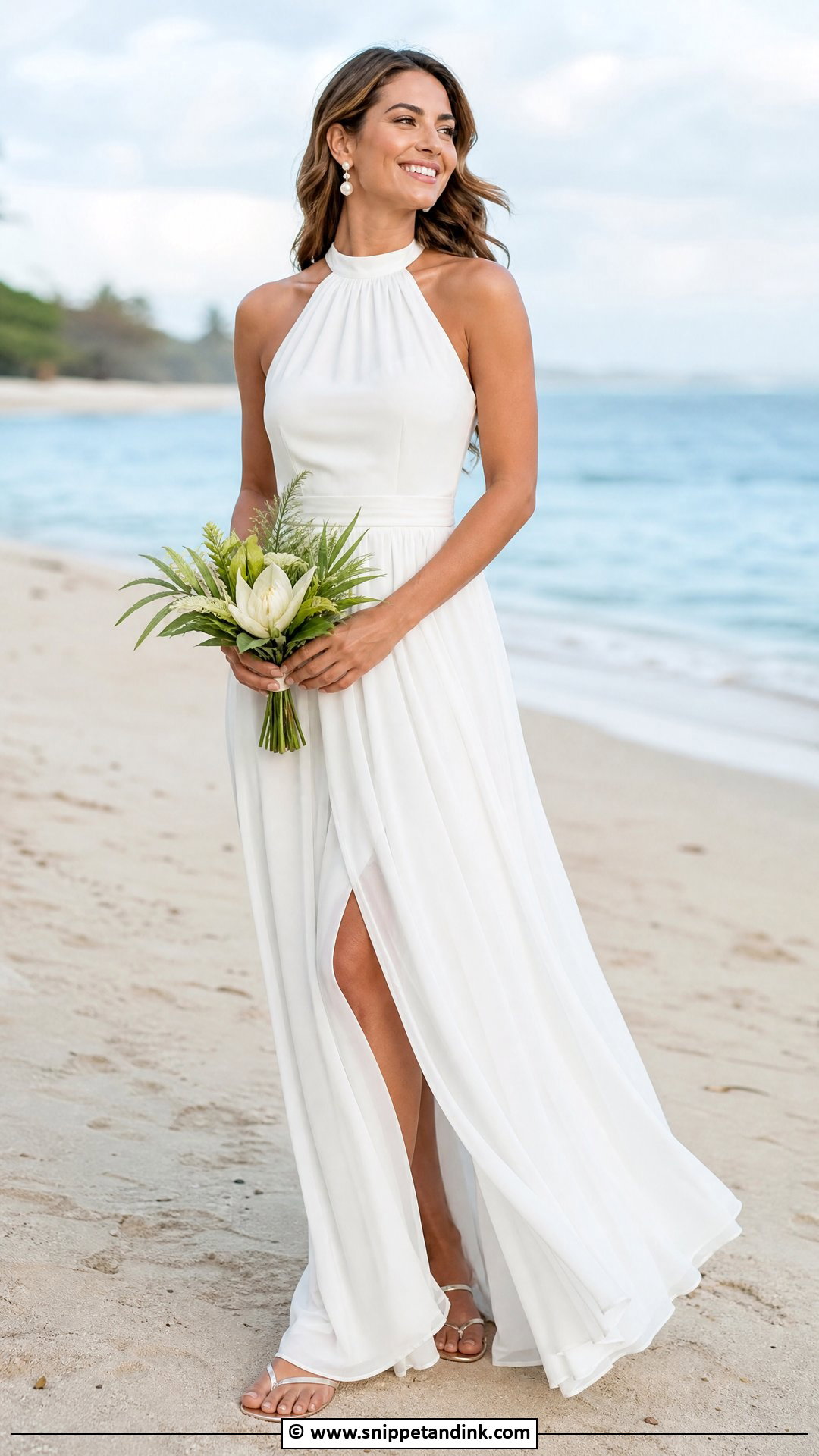
Sea wind is the test for a beach dress. A halter helps because the bodice is anchored at the neck and won’t slide, but chiffon skirts lift in a breeze, so I add a little weight at the hem or suggest a crepe skirt instead. Flat sandals are the practical choice on sand. Skip a long veil, which wraps around you in the wind; a short one, a few hair pins or a small floral piece works far better. Loose waves or a low bun both suit an oceanfront ceremony.
11. Halter Courthouse Wedding Dress
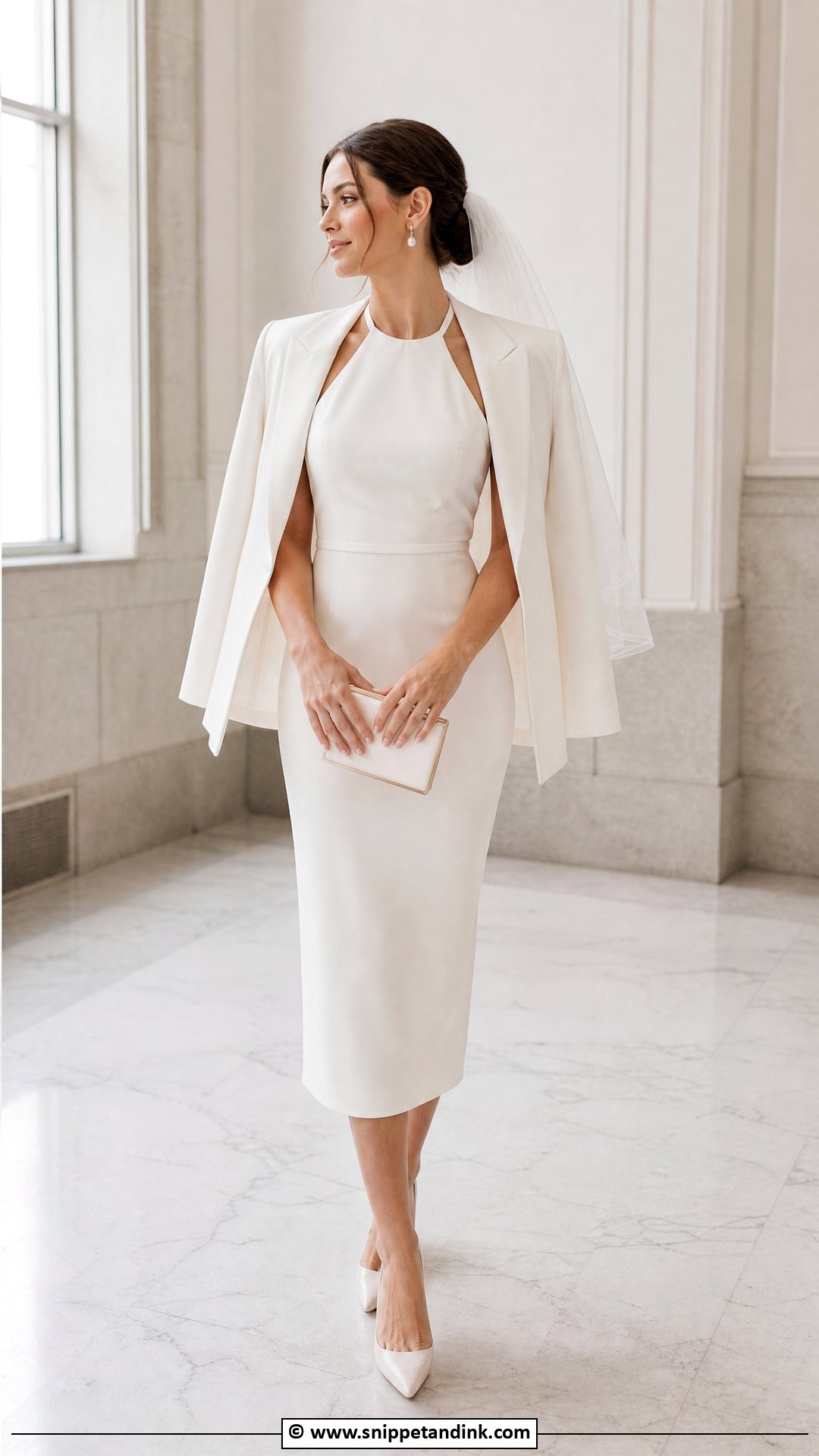
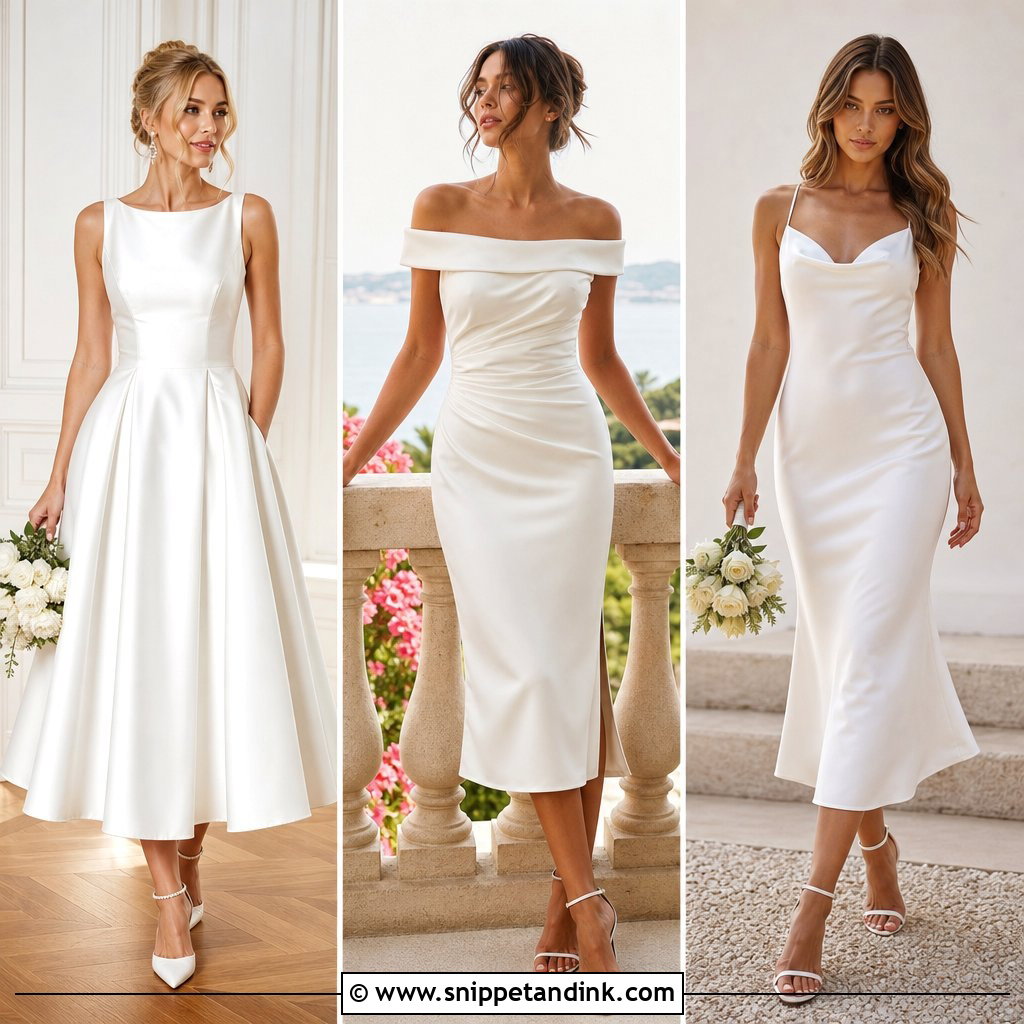
For a simple civil ceremony, a halter in midi or column length looks bridal without looking out of place in a registry office or city hall. Crepe or satin with pointed pumps and small pearl earrings keeps it sharp. A short veil or a bow clip adds the bridal touch in the photos outside, and a white blazer is worth carrying if the building is chilly. The appeal I hear most often is that it can go straight from the ceremony to lunch without a change.
12. Halter Mini Wedding Dress
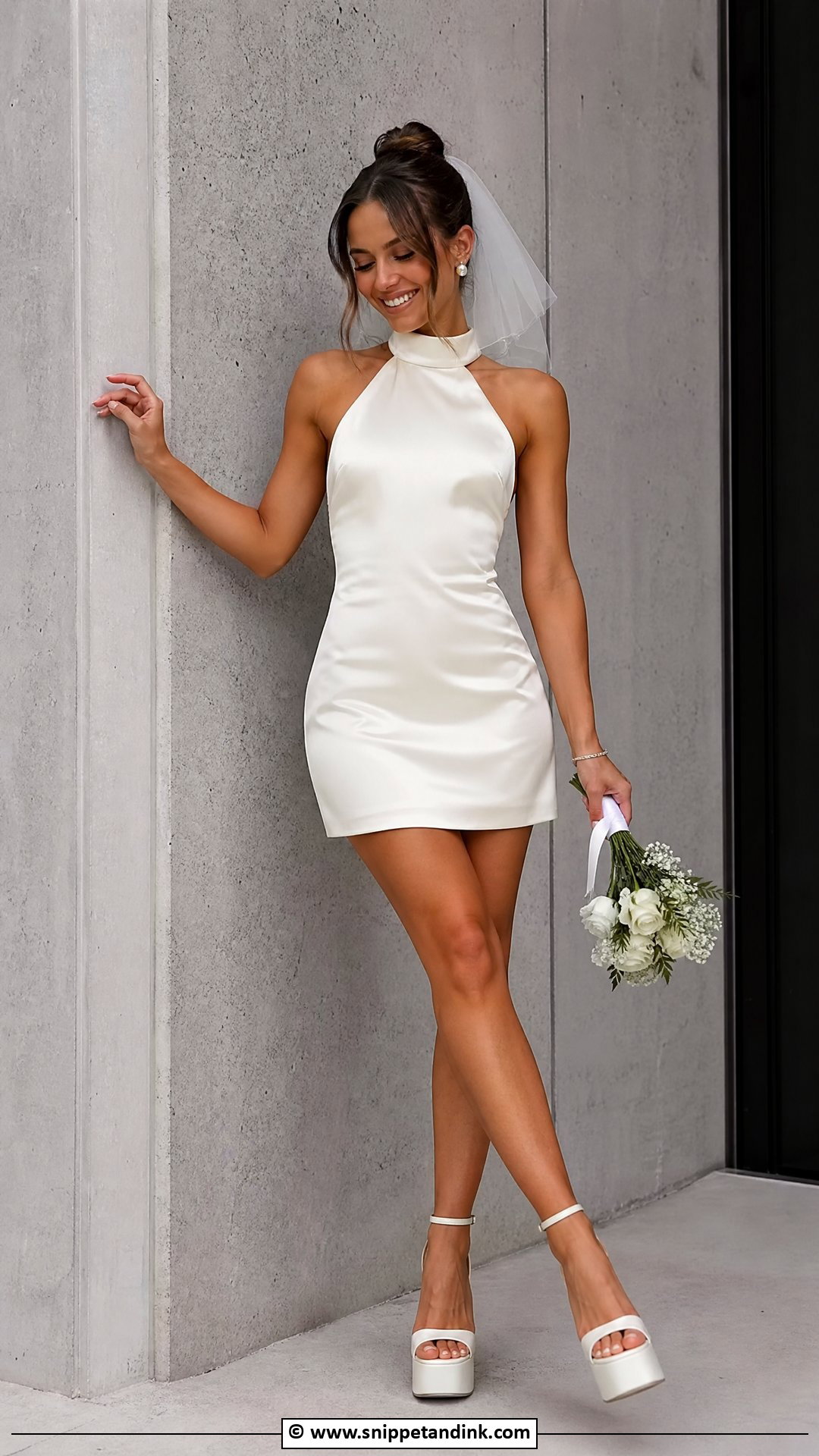
A halter mini is the most fun second look I style, and it suits a casual ceremony or a welcome party just as well. The short hem makes the outfit feel fresh while the halter gives it shape. Satin keeps it sleek, lace makes it softer, and a bow-back adds charm from behind. Shoes matter more with a mini because they’re fully on show, so choose pumps or platforms you can dance in. A short veil and a small bouquet keep it reading as bridal rather than party wear.
13. Halter Tea Length Wedding Dress
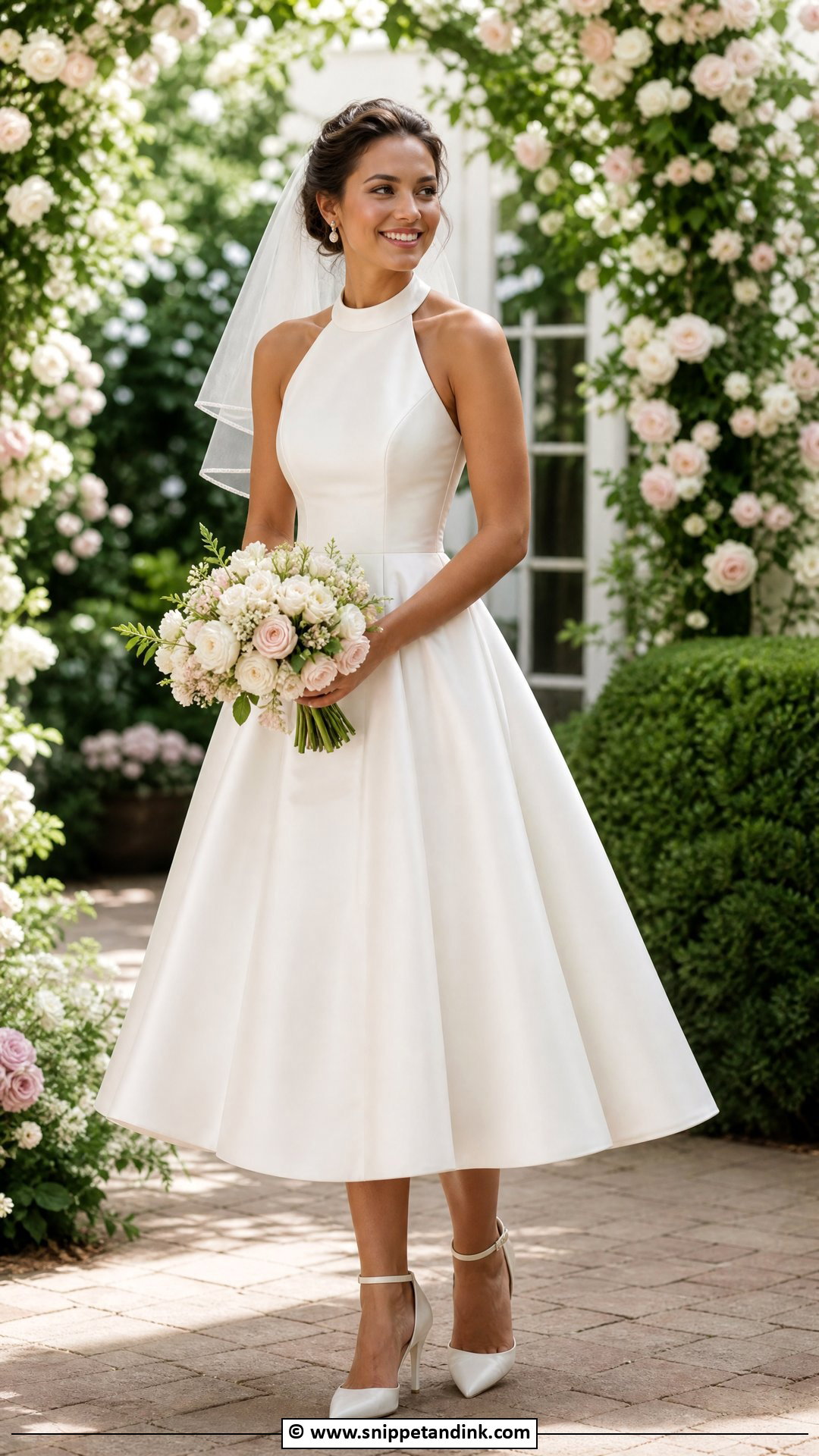
Tea length hems usually fall somewhere between the knee and the ankle, which puts the shoes on full display. I treat them as part of the dress: satin pumps, block heels or ankle-strap sandals all suit, but they need to be chosen before the hem is set. A fitted halter bodice with a full skirt is easy to dance in and photographs with a pleasant swing. Pearl earrings and a short veil keep it light, and the shape feels a little nostalgic without tipping into costume.
14. Halter Chiffon Wedding Dress
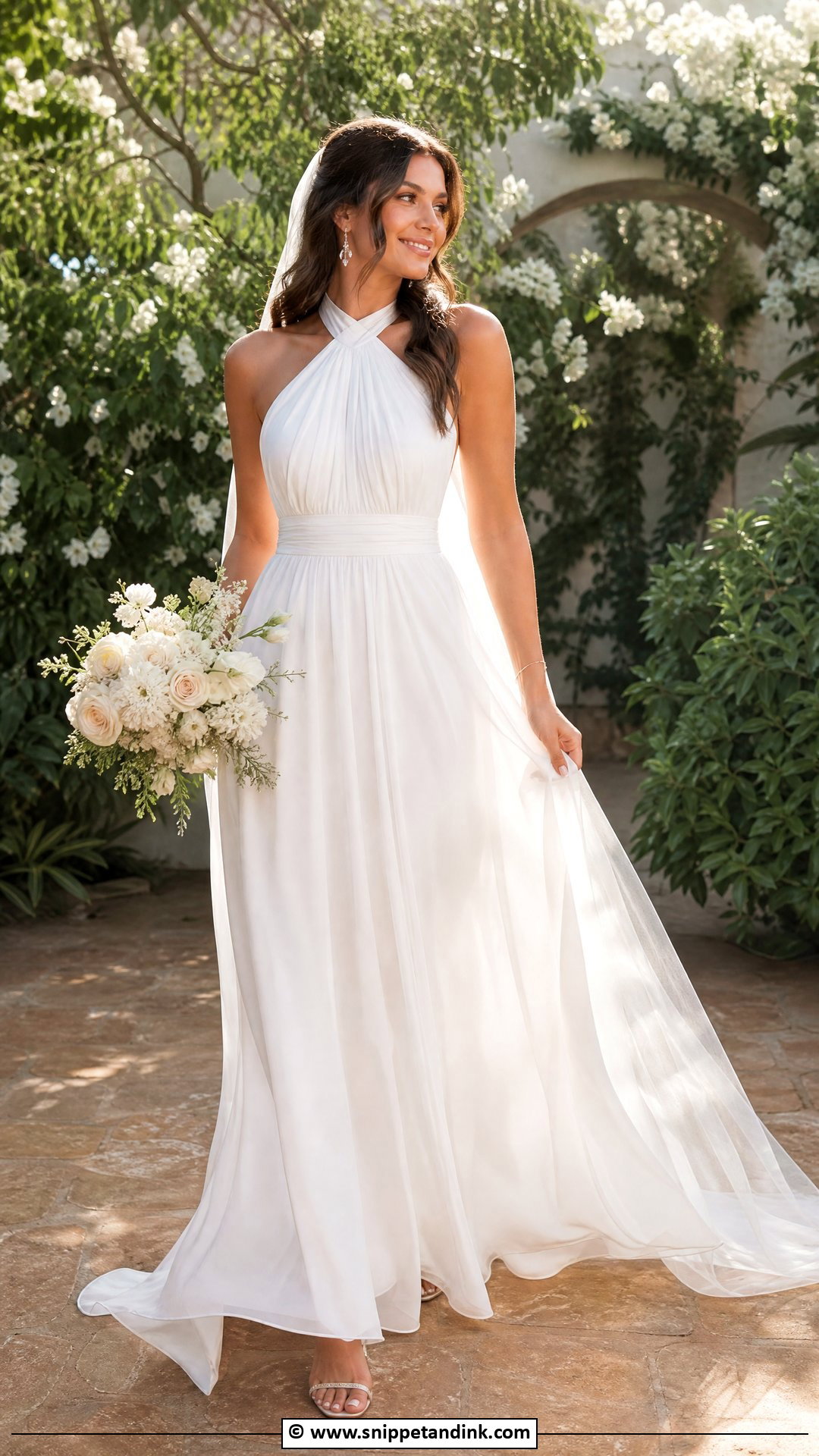
Chiffon moves with every step and weighs very little, which is why it shows up at so many beach, garden and destination weddings. It also wrinkles and snags, so I’d keep jewelry away from the skirt and pack a steamer. A gathered halter bodice looks soft; a clean high halter looks more modern. A flowing skirt is easiest for walking on grass and dancing. Delicate sandals, soft waves and a simple comb or short veil keep the look gentle.



15. Halter Crepe Wedding Dress
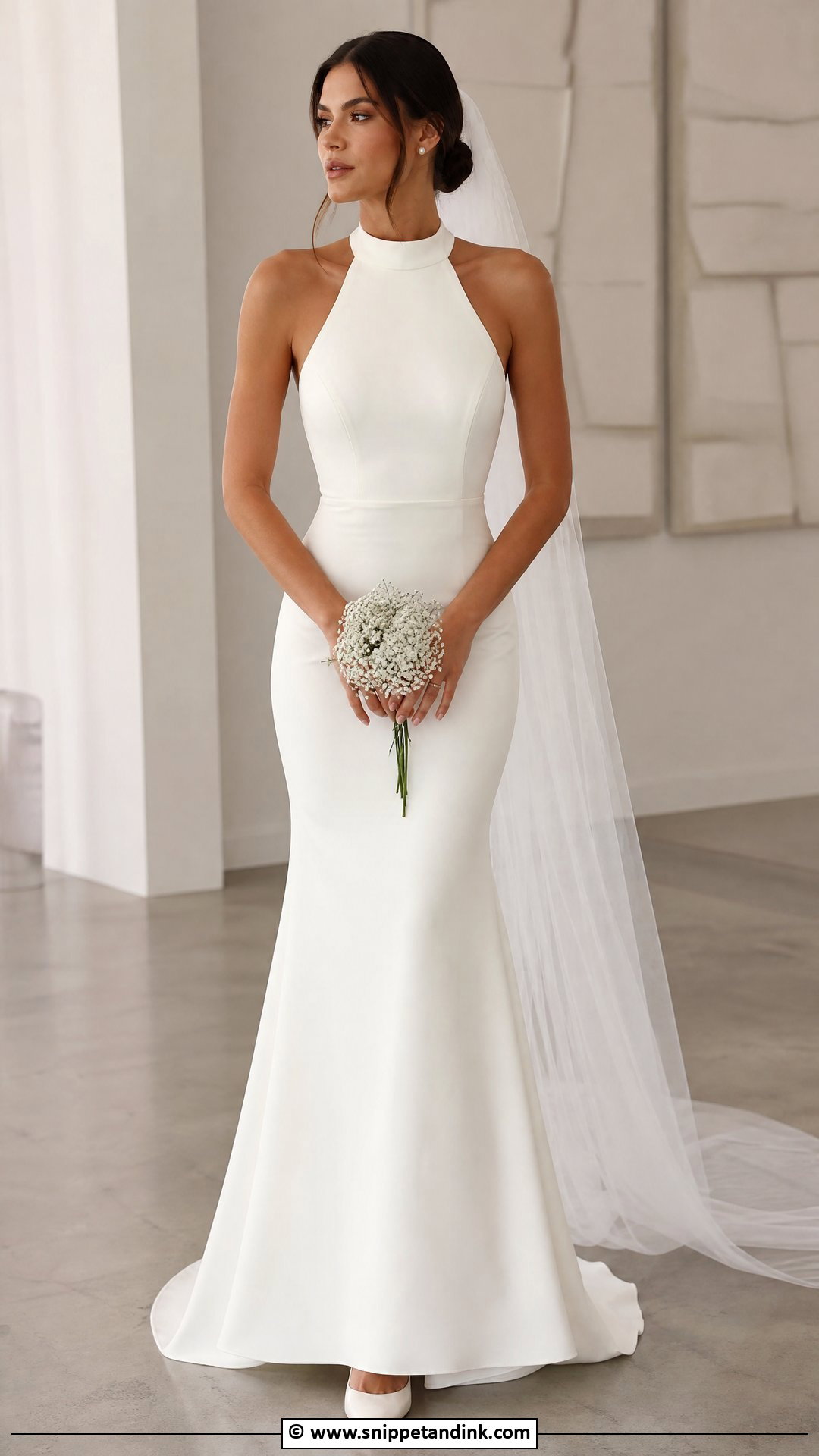
Crepe has enough weight to smooth the body and enough stretch to stay comfortable, and it’s the fabric I recommend most for a minimal halter. It doesn’t shine, so it relies on cut: the seams and darts are the design. That makes it a strong choice for a sheath or a minimalist A-line. Pair it with a low bun, studs and pointed heels. A long plain veil adds the ceremony drama without covering the neckline, which suits a gallery, rooftop or other modern indoor space.
16. Halter Tulle Wedding Dress
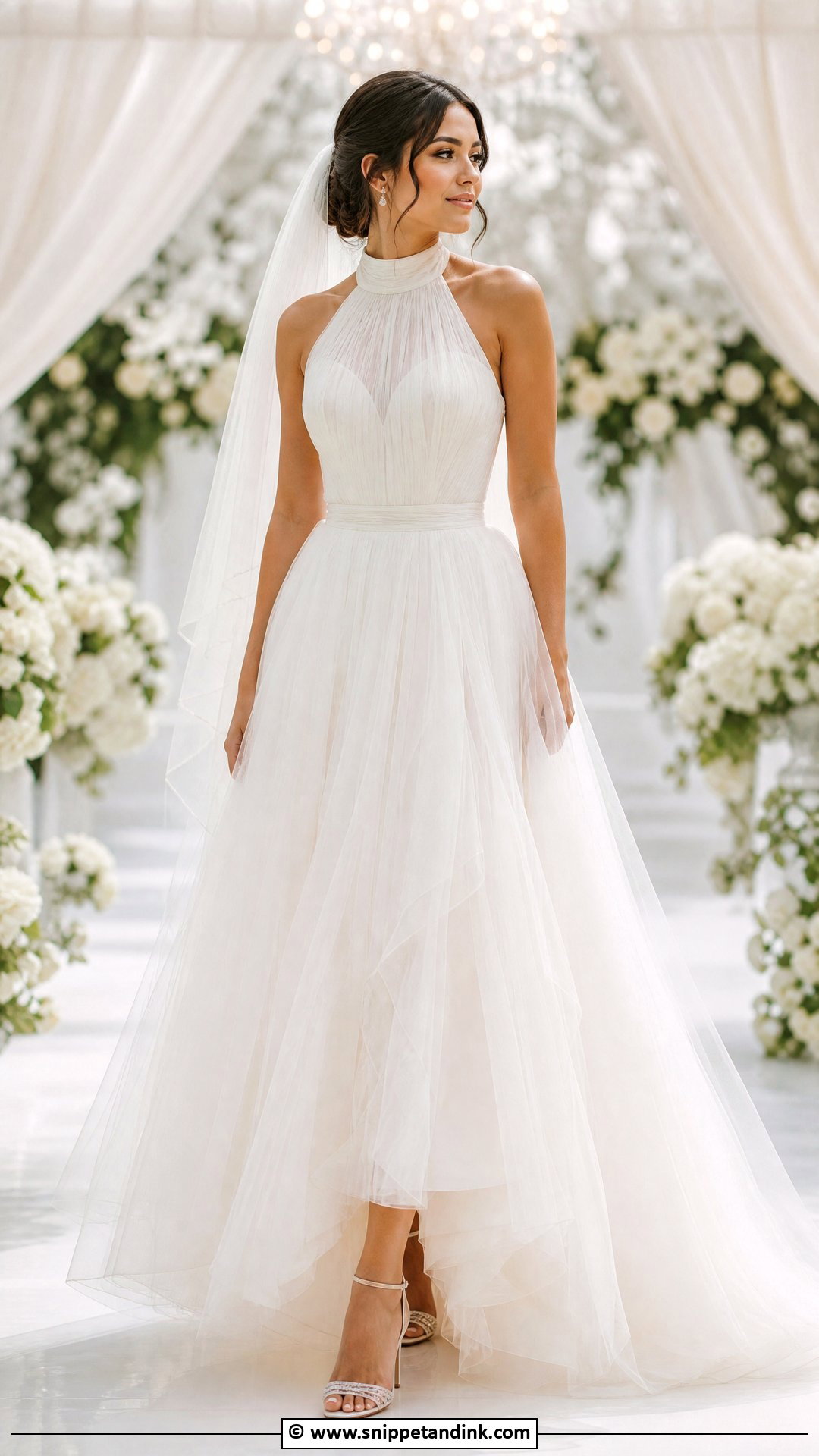
Tulle under a halter top gives you softness and volume with a secure bodice. The halter frames the shoulders while the layered skirt moves around you. Fewer layers look gentle; more layers look dramatic but get warm. Keep the hair lifted so the neckline shows, and pair it with delicate heels and a sheer veil. I’d mention one practical point: tulle catches on rough garden benches and bouquet stems, so a quick check of the venue seating saves a snag.
17. Halter Organza Wedding Dress
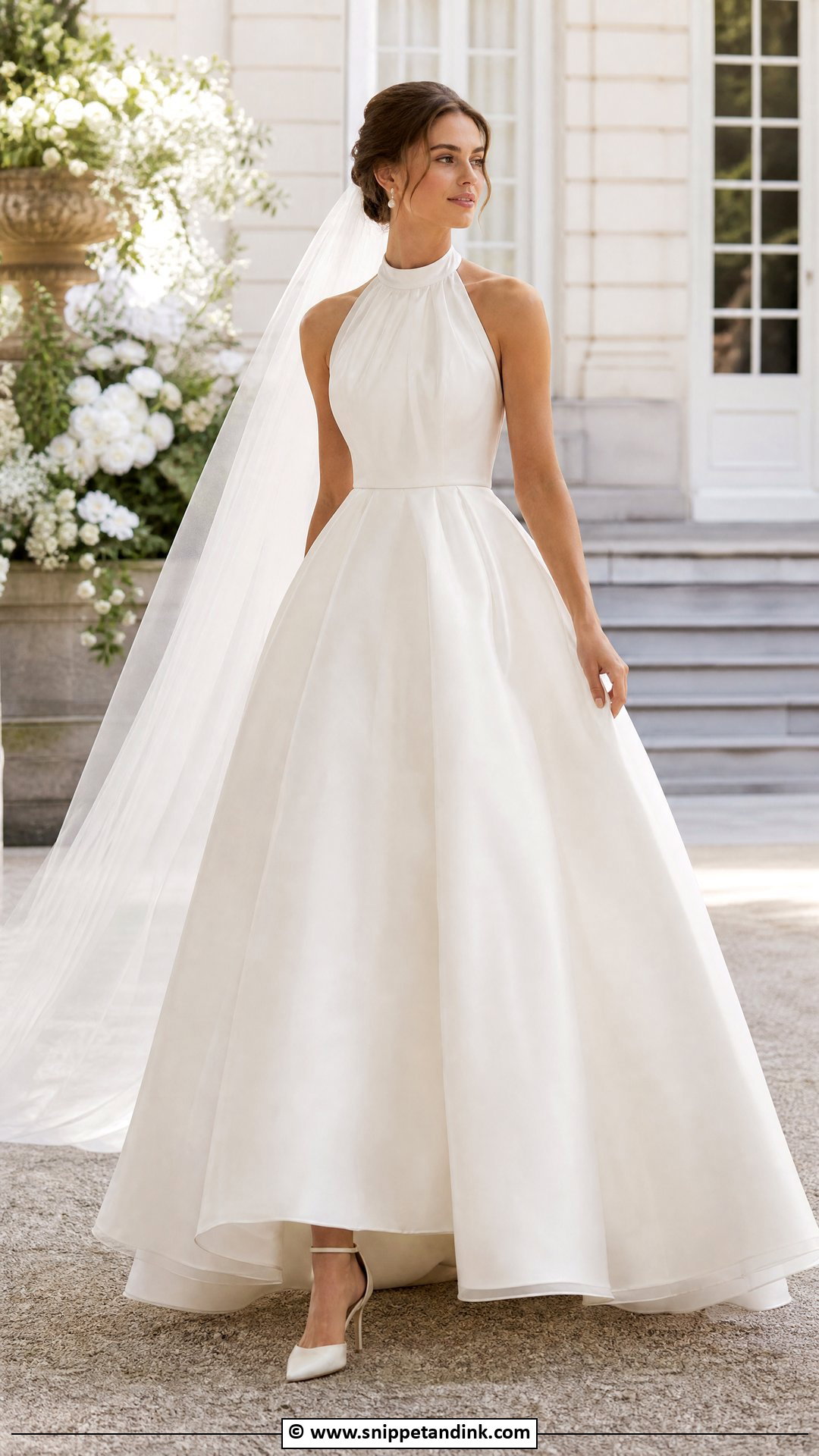
Organza is chiffon’s crisp cousin. It holds shape, so it suits fuller skirts, soft pleats and sculptural trains, and it adds volume without much weight. Under strong daylight it can look slightly stiff in photos if the skirt is very full, so I’d see it outdoors before deciding. A polished bun or sleek ponytail keeps the line clean above a smooth bodice. Satin heels and simple earrings are enough.
18. Halter Mikado Wedding Dress
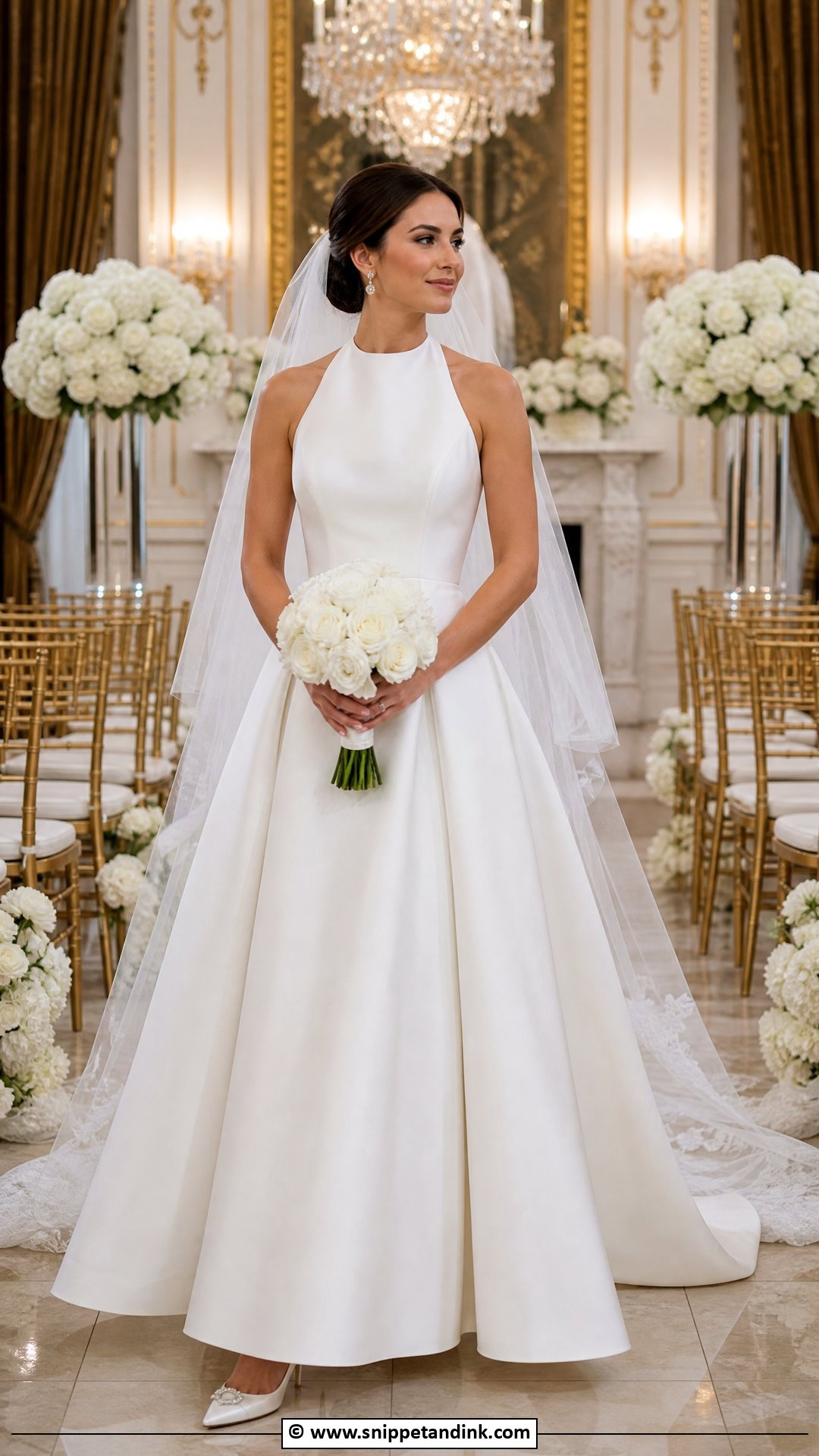
Mikado is a heavy, structured silk or silk blend with a soft sheen, and it holds a shape almost like it’s been molded. That makes it a natural fit for A-lines, ball gowns and architectural skirts. A high halter on top looks modern; a low open back adds contrast. Because the fabric is weighty, I check how the skirt sits at the waist after an hour of wear. Pearl earrings, a cathedral veil and a simple bouquet let the structure take the lead in a formal ballroom.
19. Halter Wedding Dress With Train
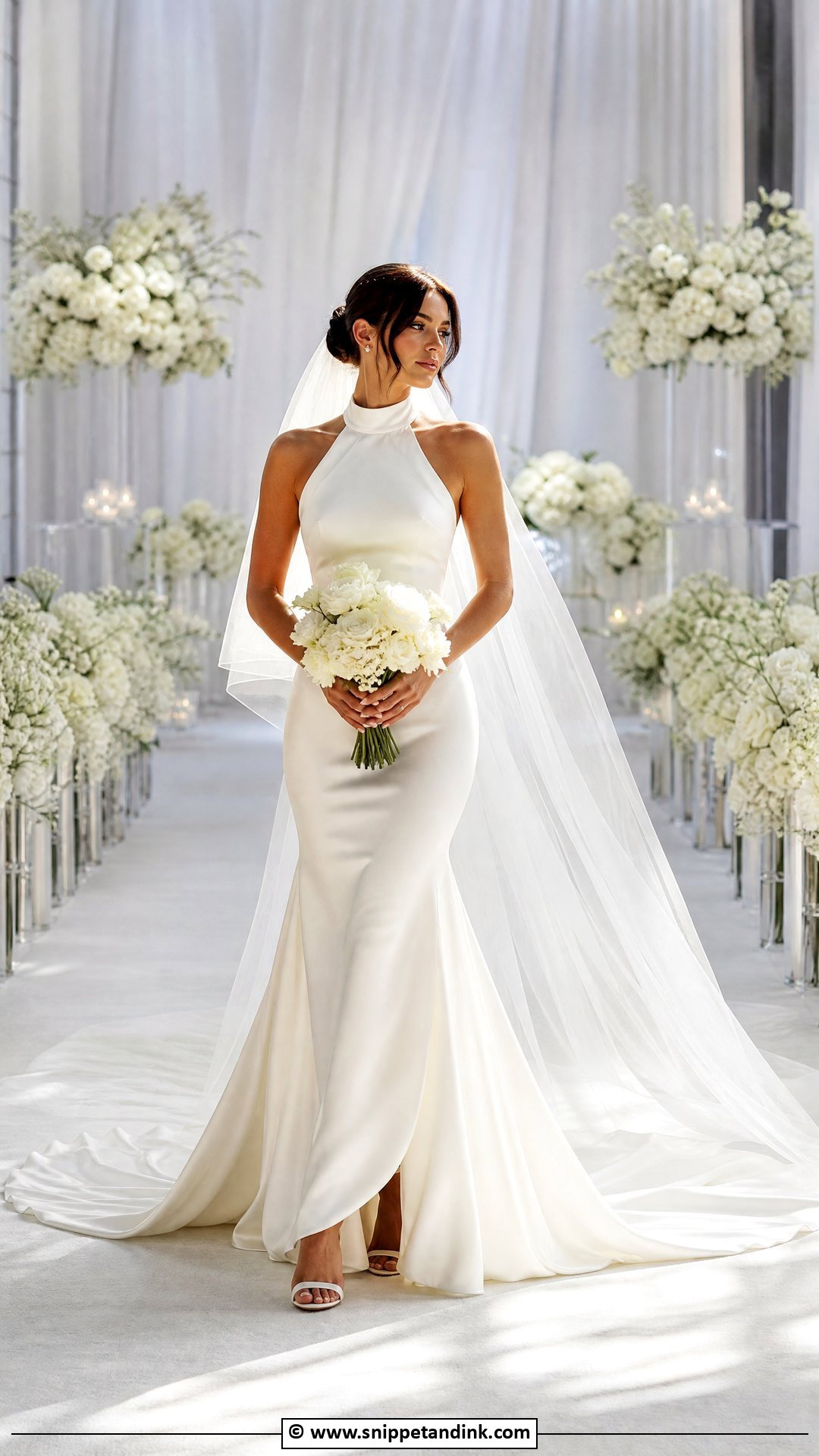
A train balances a strong neckline with drama at the hem, and with a halter you rarely need heavy jewelry. The length depends on the venue: a short sweep for an outdoor ceremony, cathedral length for a formal church or ballroom. My first question at the fitting is always how the bustle works, and who will do it. Someone other than you needs to practice it before the day. A long veil, classic heels and a low updo complete it.
20. Halter Wedding Dress With Slit
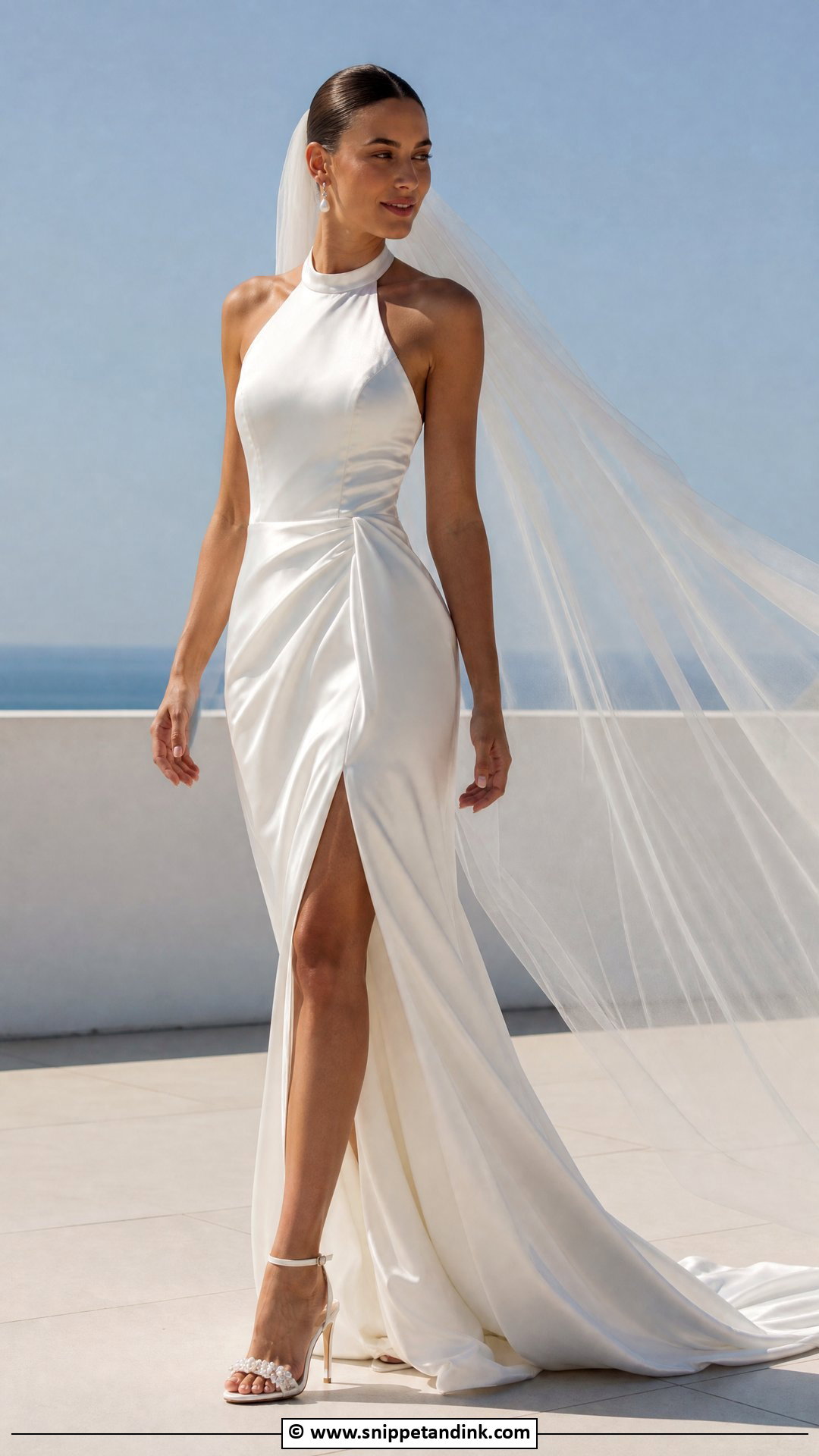
A halter wedding dress with slit walks more easily than almost any other gown here. The trick is height. A slit that looks right standing can open far higher when you sit or climb steps, so I check it in a chair and on a stair at the fitting. Satin, crepe and chiffon all drape well around the leg. Statement heels earn their place with this dress, since they’ll be seen.
21. Halter Wedding Dress With Keyhole Neckline
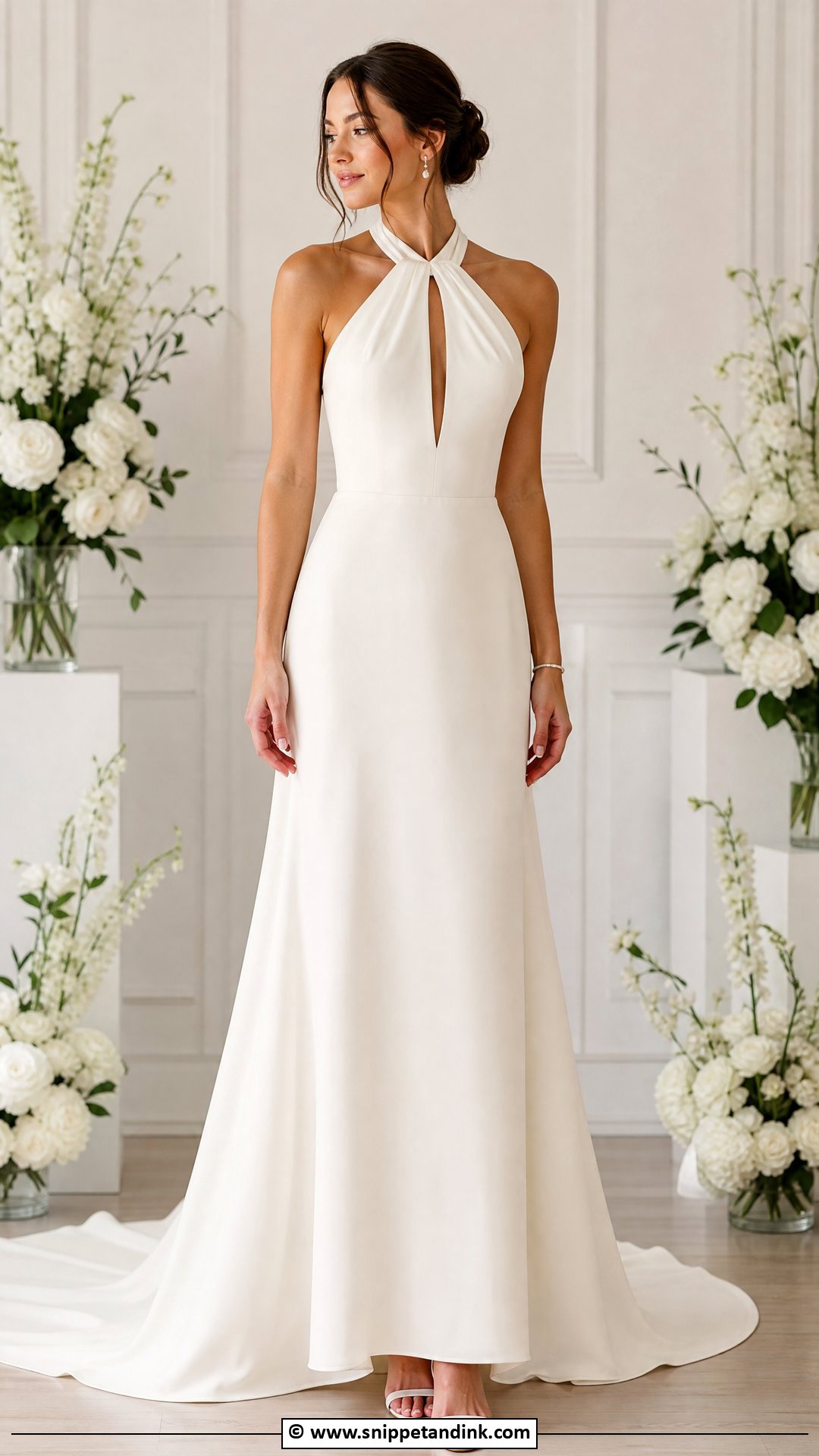
A keyhole gives the bodice a single focal point without beading or lace. It can be small and rounded or quite dramatic. Watch where it sits on your chest, because a keyhole that lands slightly too low gapes when you lean forward, and a stitch at the fitting fixes that. Avoid necklaces; the opening already does the work. A smooth updo and simple earrings let it read cleanly in portraits.
22. Halter Wedding Dress With Open Back
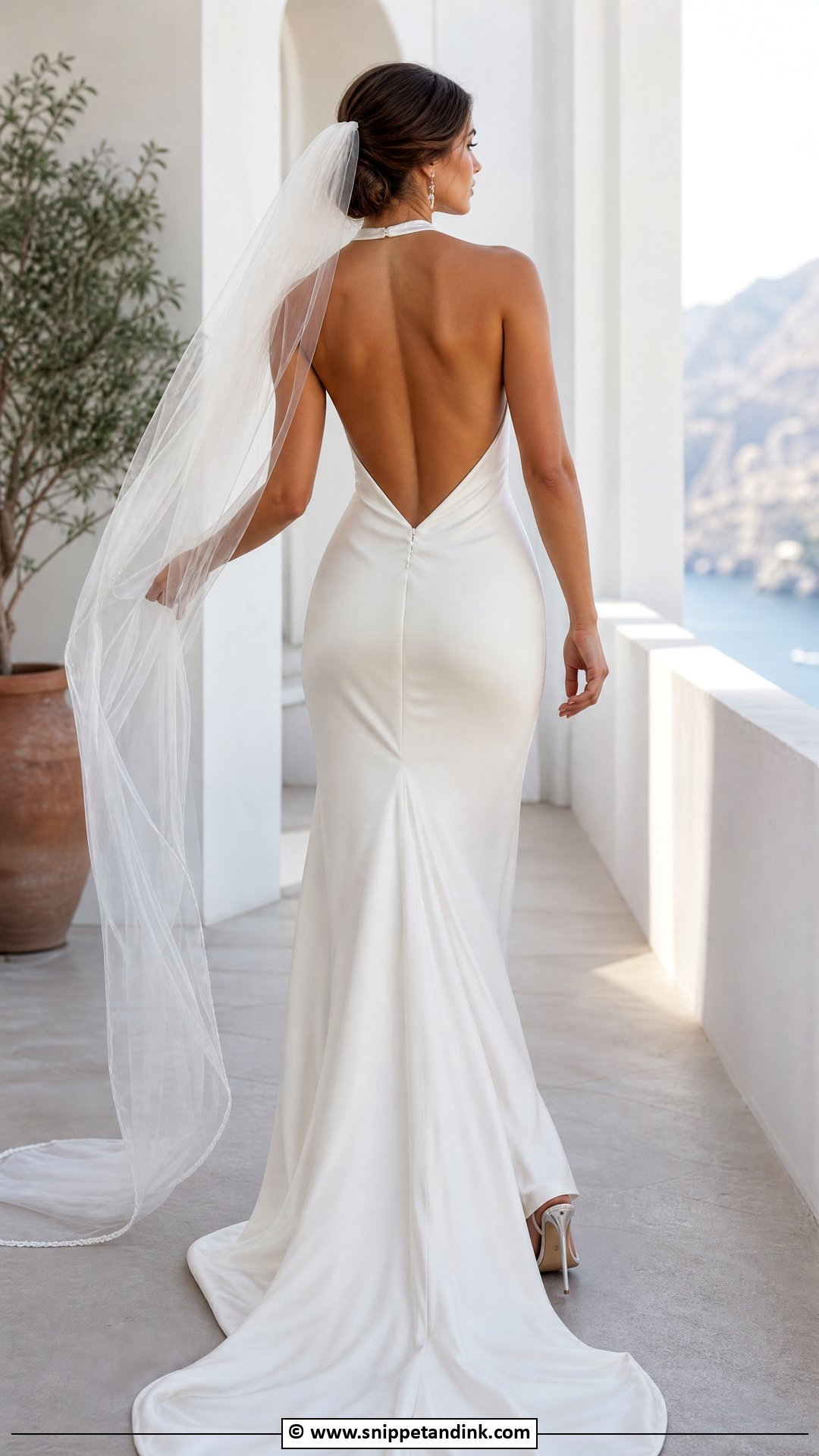
The open back is the most dramatic version of a halter, plain from the front and striking from behind. A fitted crepe or satin silhouette shows the back best. Support is the practical question, since there’s nowhere to hide a bra band, so I talk through built-in cups or sewn-in support right at the start. A low bun and a sheer veil keep the back on show, and a fine back necklace can add a little shine if you like one.
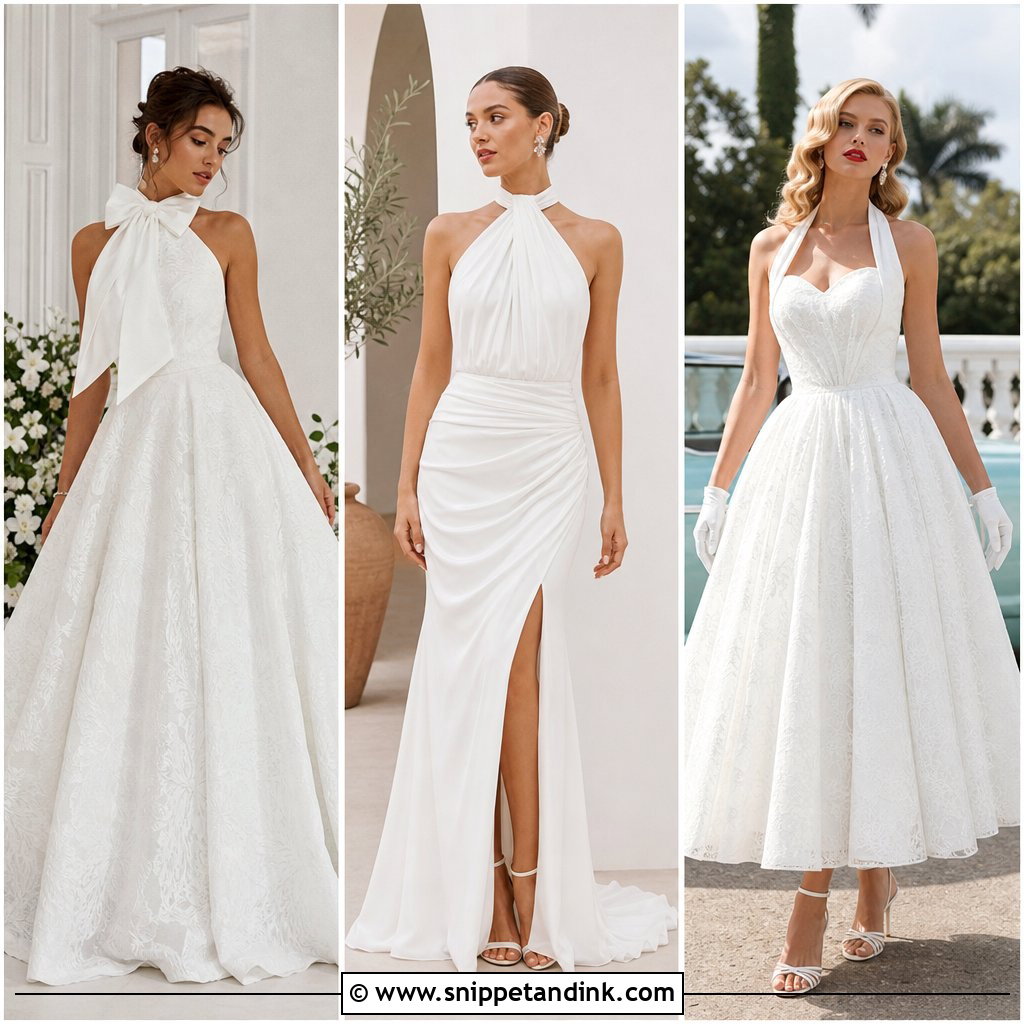
23. Halter Wedding Dress With Bow Back
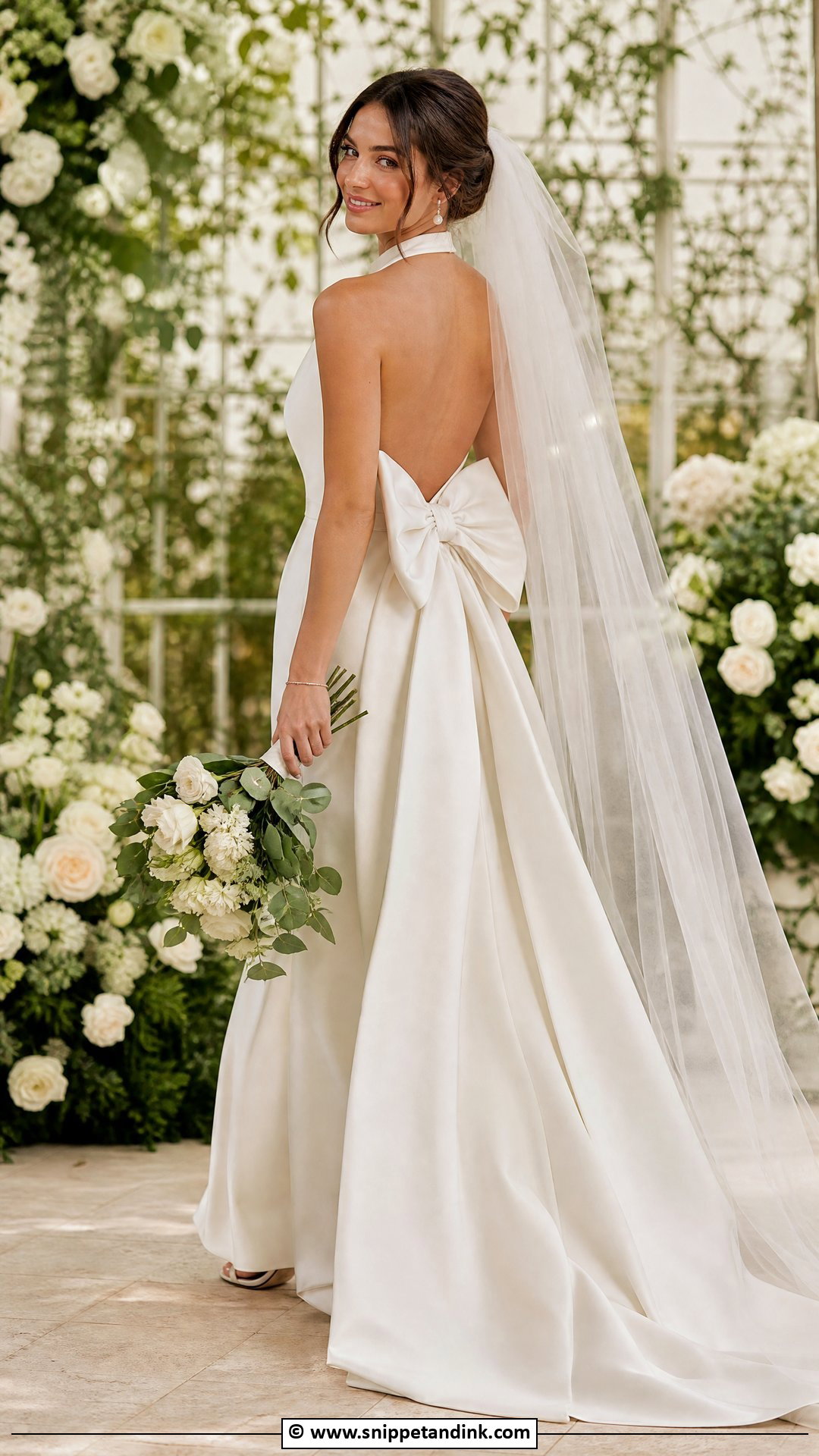
A bow can sit at the neck, between the shoulder blades or at the waist, and its position changes everything. A neck bow frames the face; a waist bow draws the eye to the train. Satin and mikado make a crisp bow that holds its loops, while a chiffon bow droops after a few hours. Keep the veil short or attach it below the bow so the two don’t compete. A smooth bun or soft ponytail keeps the detail visible.
24. Halter Wedding Dress With Pearl Details
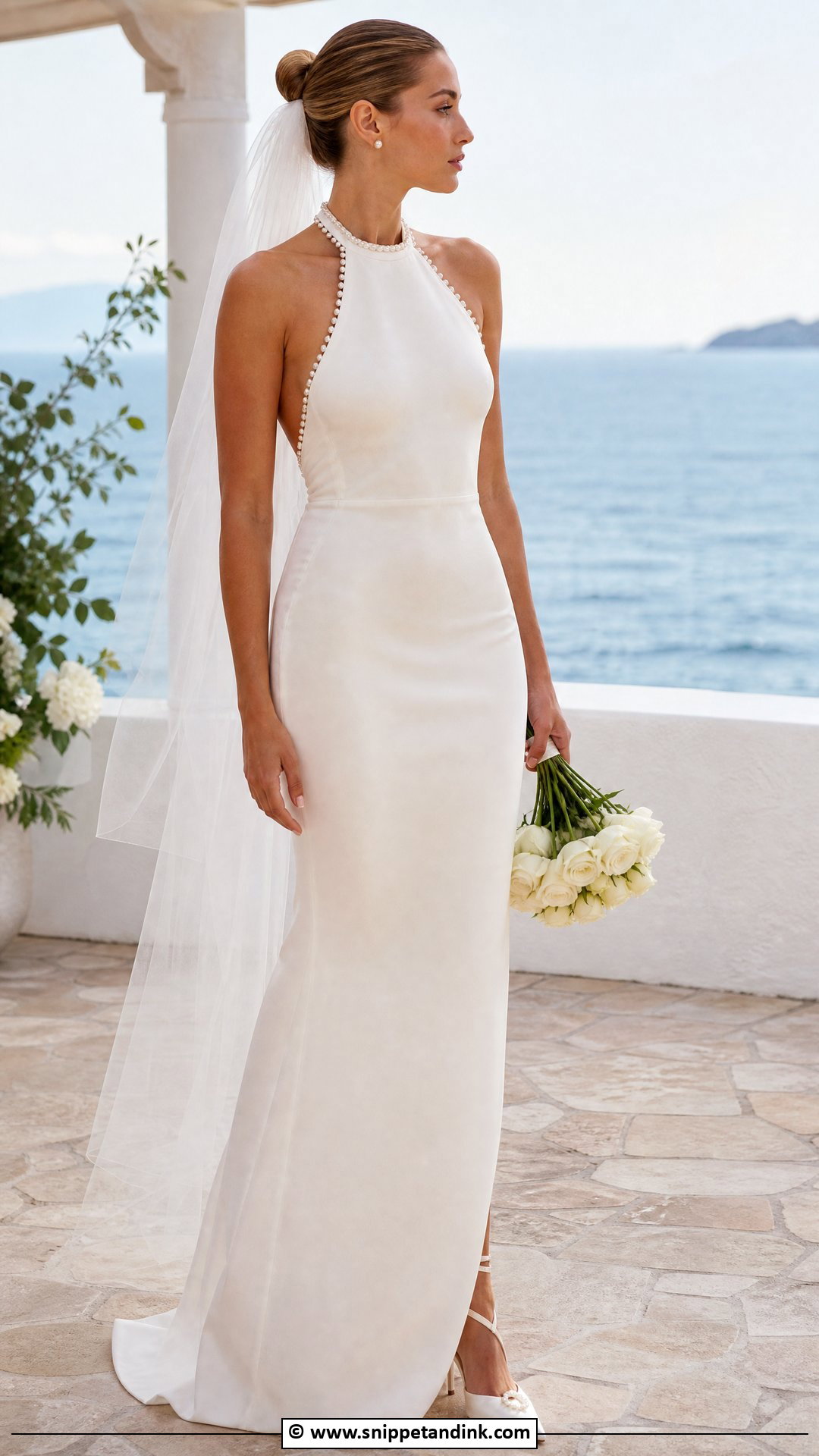
Pearl details give a soft shine that’s gentler than crystals. They can line the neckline, follow the straps or trace the open back. I look closely at how they’re attached, since pearls sewn individually hold up far better than strung ones that can catch and pull. Pearl studs, satin heels and a sheer veil keep the outfit from feeling crowded. A sleek updo keeps the pearl line on show.
25. Halter Wedding Dress With Beading
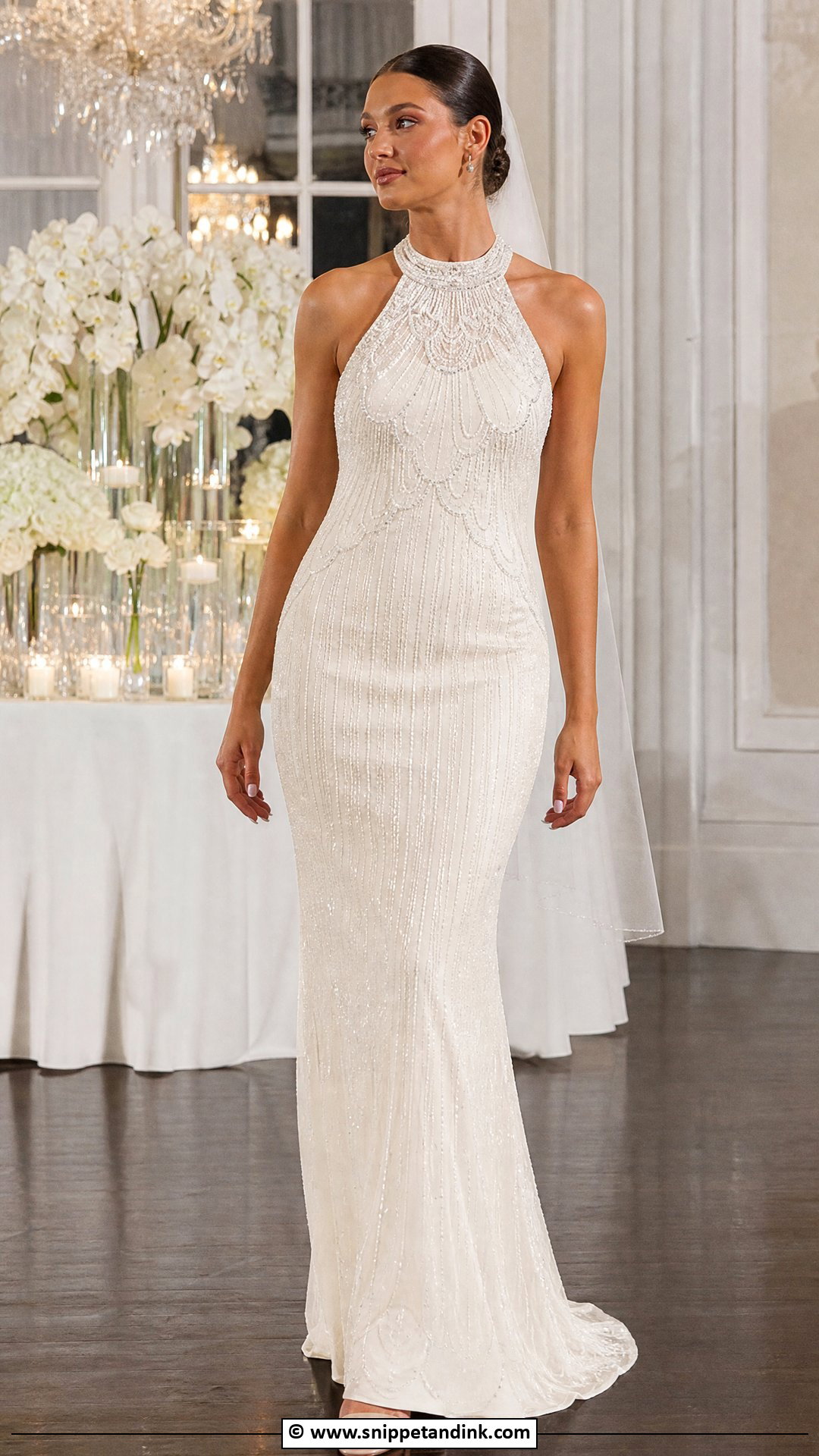
Beading adds sparkle and weight in equal measure. On a halter that weight hangs from the neck strap, and a heavily beaded bodice can leave the back of your neck sore by the reception. I’d always ask the bridal shop how heavy the gown is and wear it for a full hour at a fitting. Keep the hair sleek and the earrings small if the beading is dense. Bright evening lighting is where beadwork comes alive.
26. Halter Wedding Dress With Floral Applique
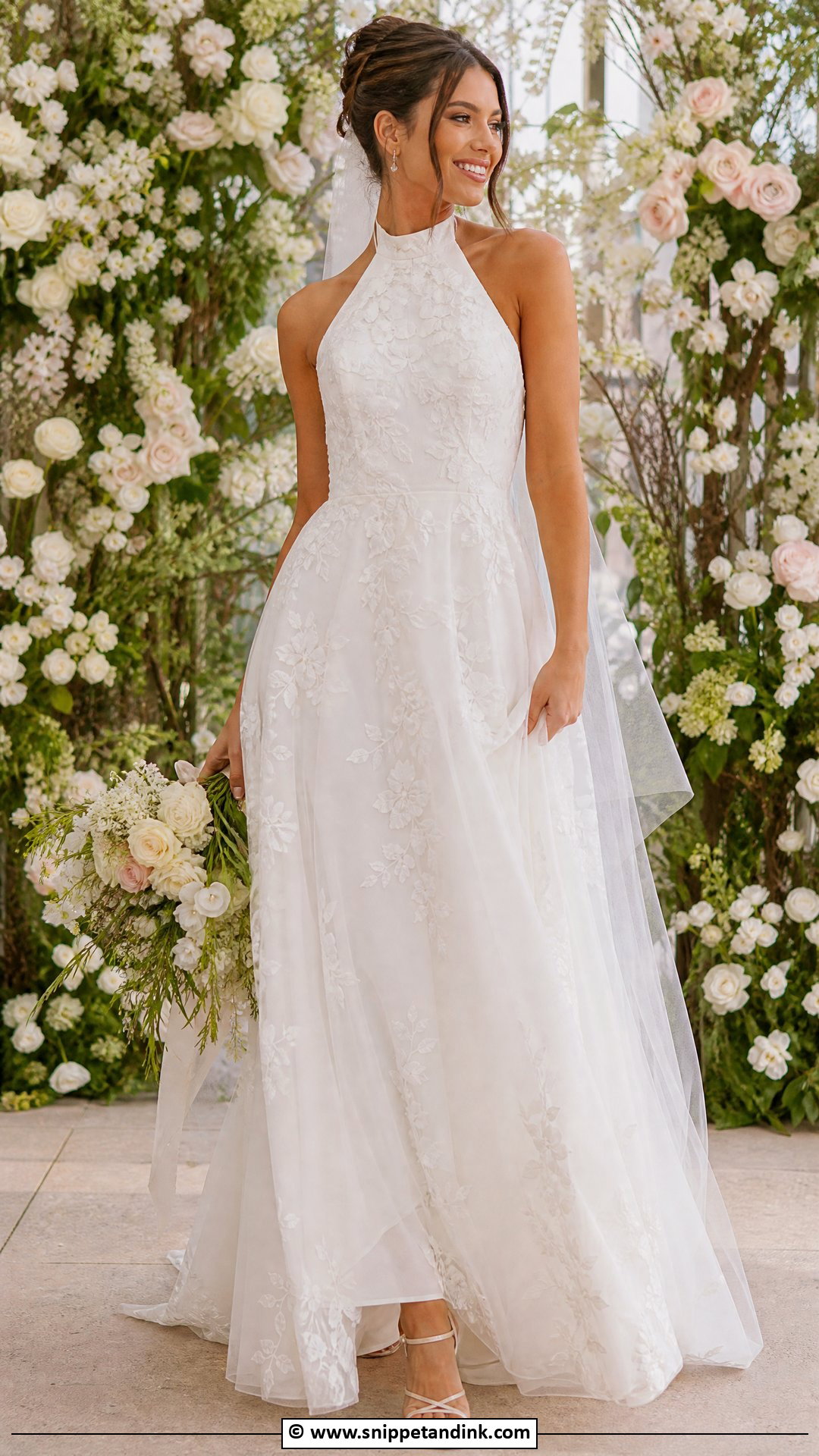
Floral appliques can sit on the bodice, scatter across the skirt or layer over sheer fabric, and the halter stops the effect from tipping into sweetness by giving the top a firm line. Raised 3D flowers crush when you sit or hug, so on a long day I prefer flatter appliques on the front of the skirt. A veil with matching flowers works only if it’s sparse. Soft curls and neutral heels finish it for a spring vineyard or garden.
27. Halter Wedding Dress With Ruching
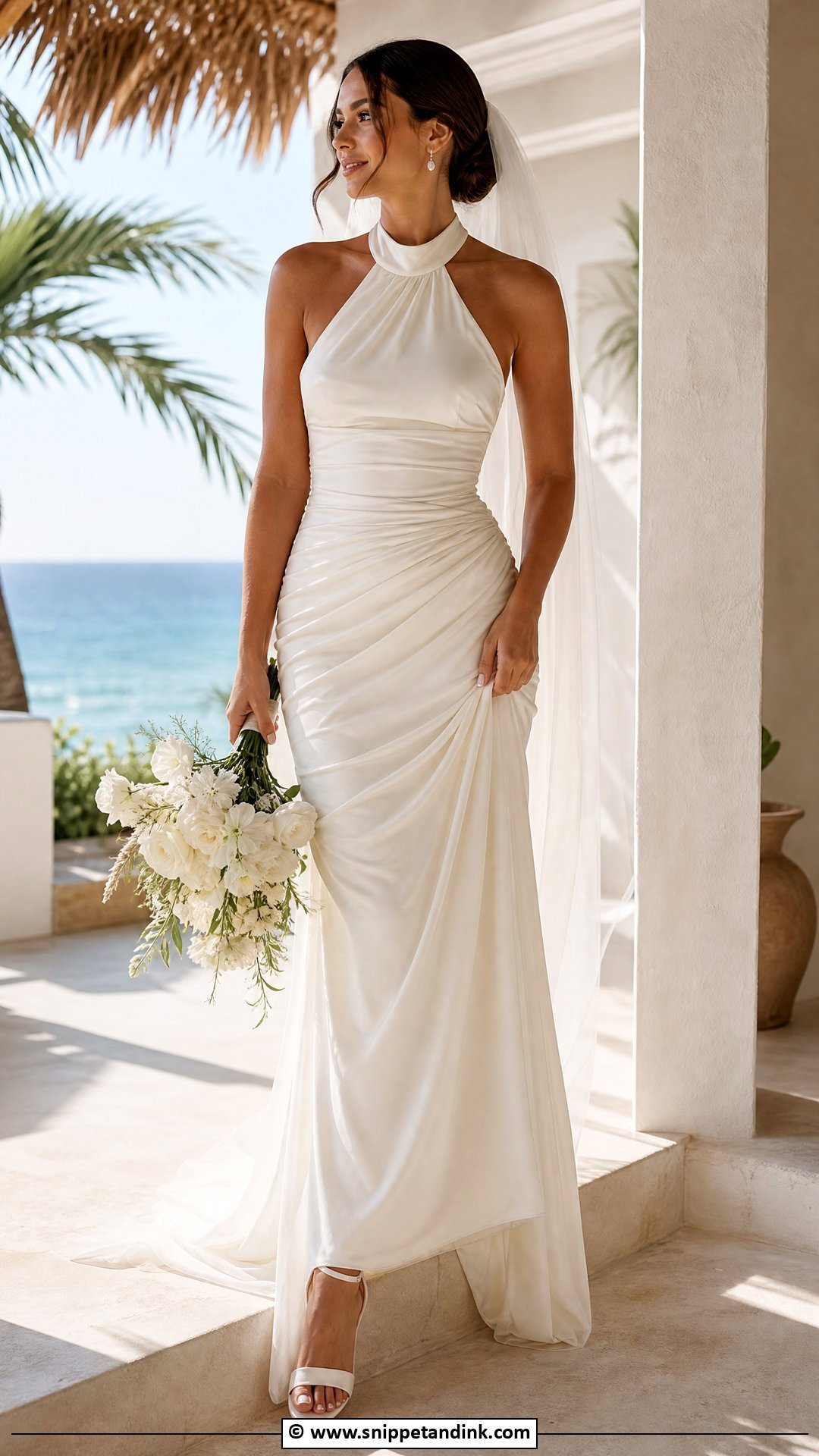
Ruching gathers fabric into soft folds, defining the waist and smoothing the bodice without embellishment. I suggest it often to brides who want something forgiving, since the folds disguise small changes in fit between the last fitting and the wedding. Satin, jersey, chiffon and crepe all ruche well. Heeled sandals and a soft veil keep it relaxed. It packs and travels better than structured gowns, too.
28. Halter Wedding Dress With Draped Neckline
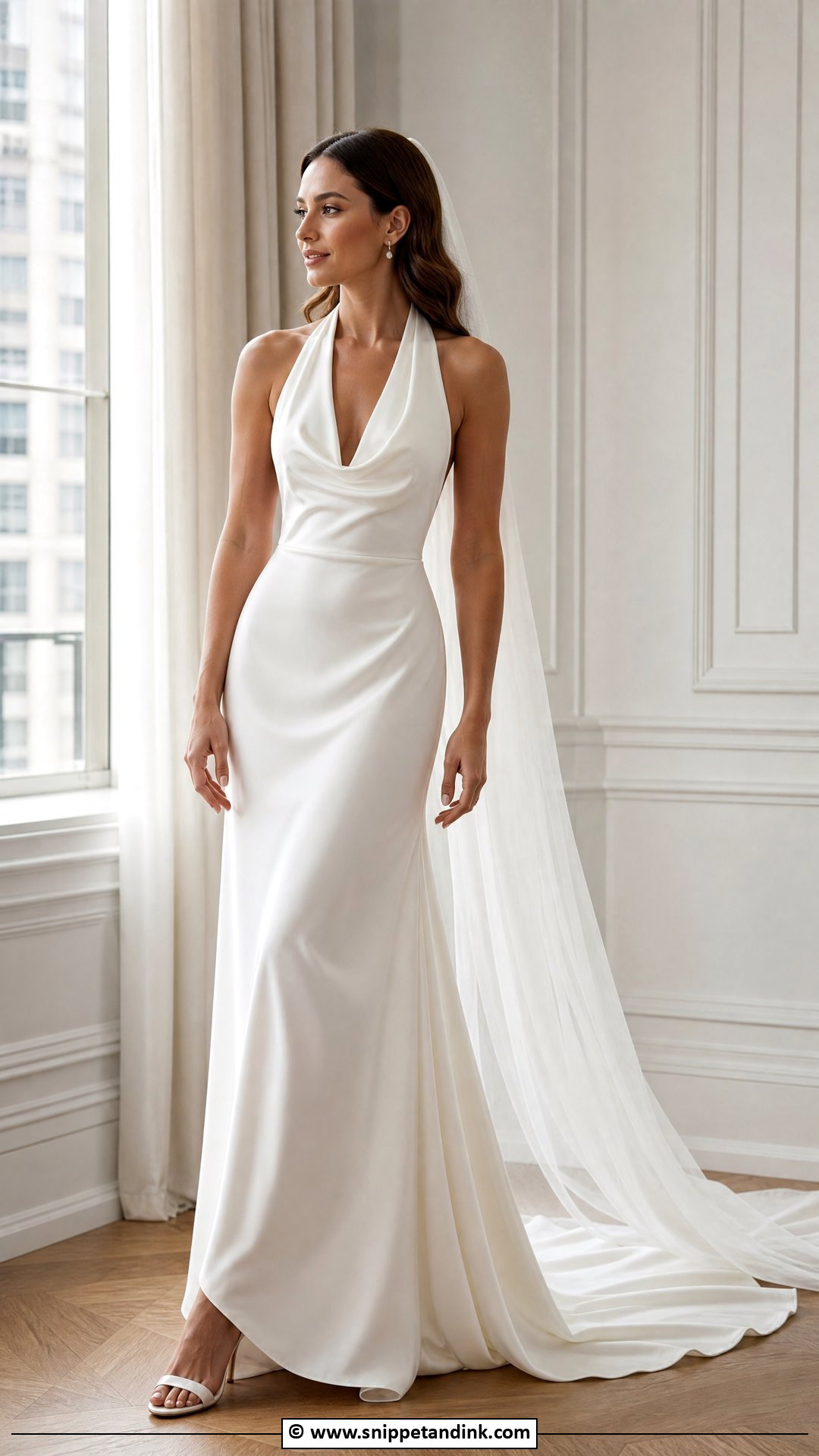
Draping turns the halter into a cowl, a gathered high neck or a wrap across the bodice. It only works in fabric that falls naturally, such as silk-style satin, charmeuse, or soft crepe. Stiff fabric fights the drape. I keep jewelry minimal so the folds remain the detail, and a sleek bun or tucked waves complete it. Intimate weddings and city venues suit its quiet, luxurious feel.
29. Halter Wedding Dress With Plunging Neckline
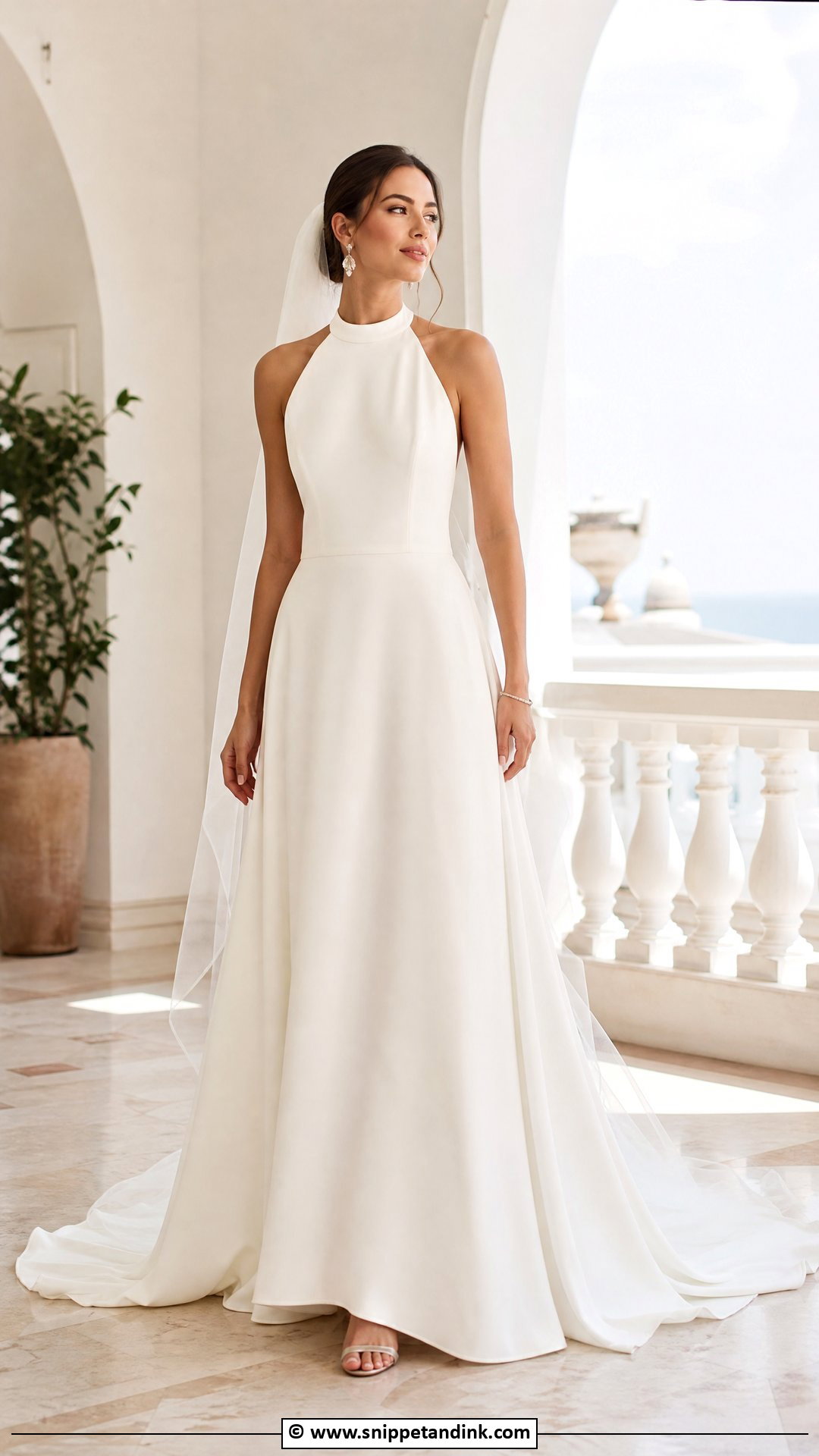
A halter with a plunging neckline is bold, but the straps frame the shoulders and keep it balanced. What makes it wearable is construction: illusion mesh between the panels, boning, or fashion tape at the edges. I’d have the bride hug someone and bend to pick up a dropped bouquet at the fitting, because both reveal any gaping. Delicate earrings and hair pulled away from the face keep the line clean.
30. Halter Wedding Dress With Illusion Detail
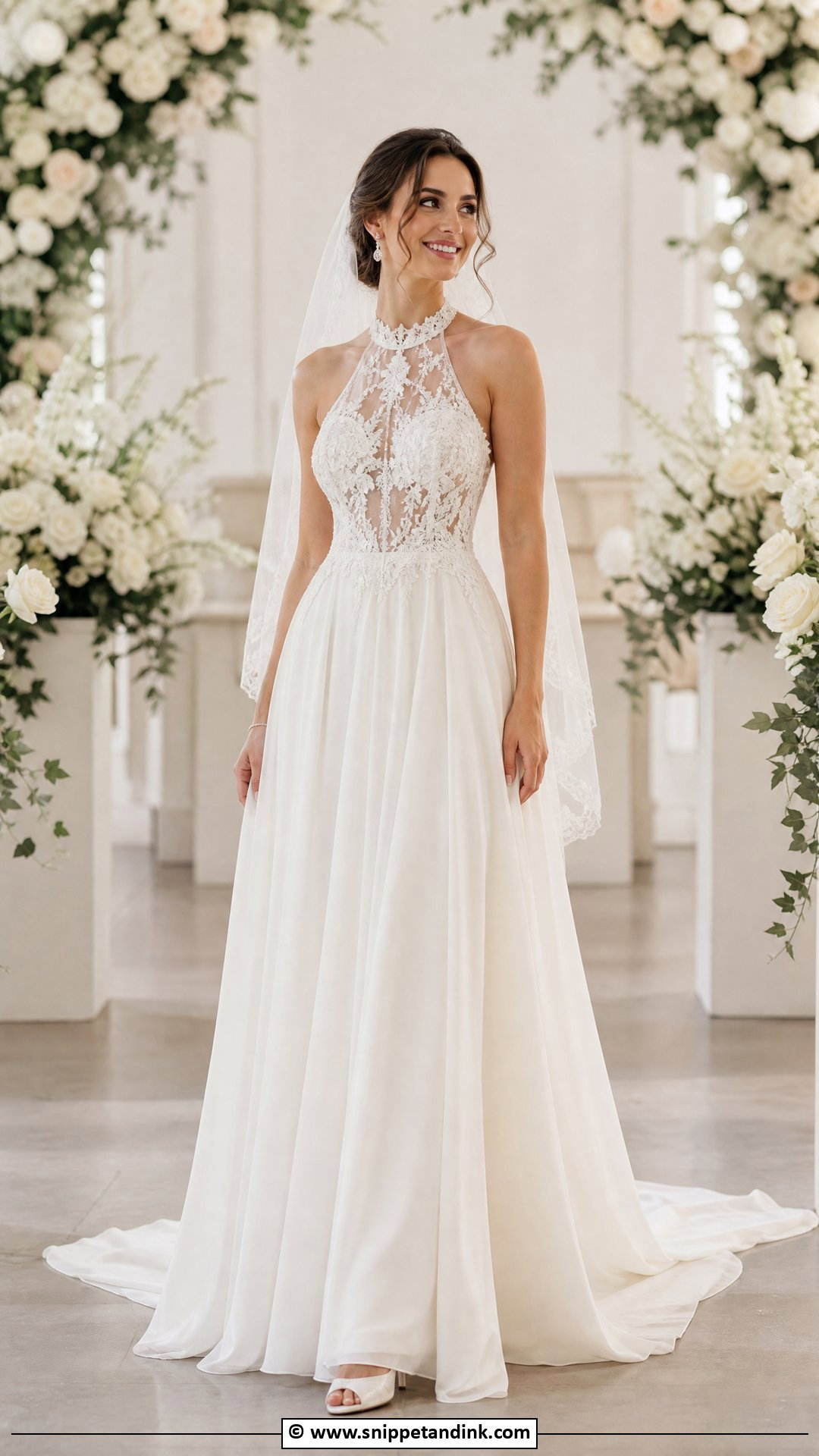
Illusion mesh gives coverage while keeping the design light, at the neckline, sides, back or bodice. The color of the mesh is what I check first in daylight. A mesh that’s even slightly off your skin tone shows as a band in photos, especially under flash. Ask to see swatches against your skin. Simple earrings, soft heels and a veil matched to the gown’s detail level complete it.
31. Halter Wedding Dress With Detachable Skirt
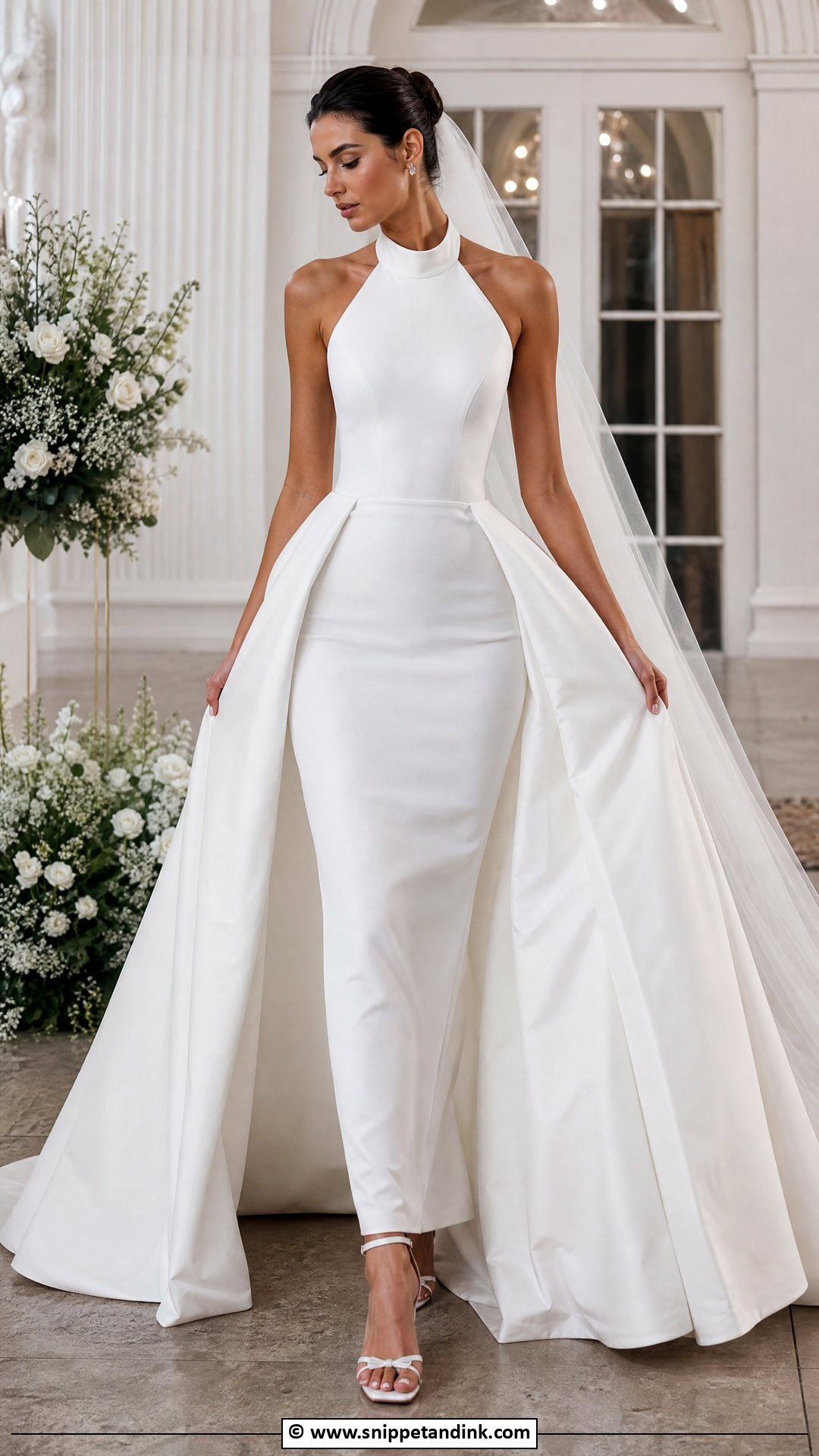
A detachable skirt gives you two looks without a second dress. Wear the fuller overskirt for the ceremony, then unclip it for a sleek reception gown. I always rehearse the removal at a fitting, because hooks and snaps under a heavy skirt are hard to find in a hurry, and someone needs to help. Statement heels suit the second look. Keep the earrings modest so they work with both versions.
32. Halter Wedding Dress With Cape
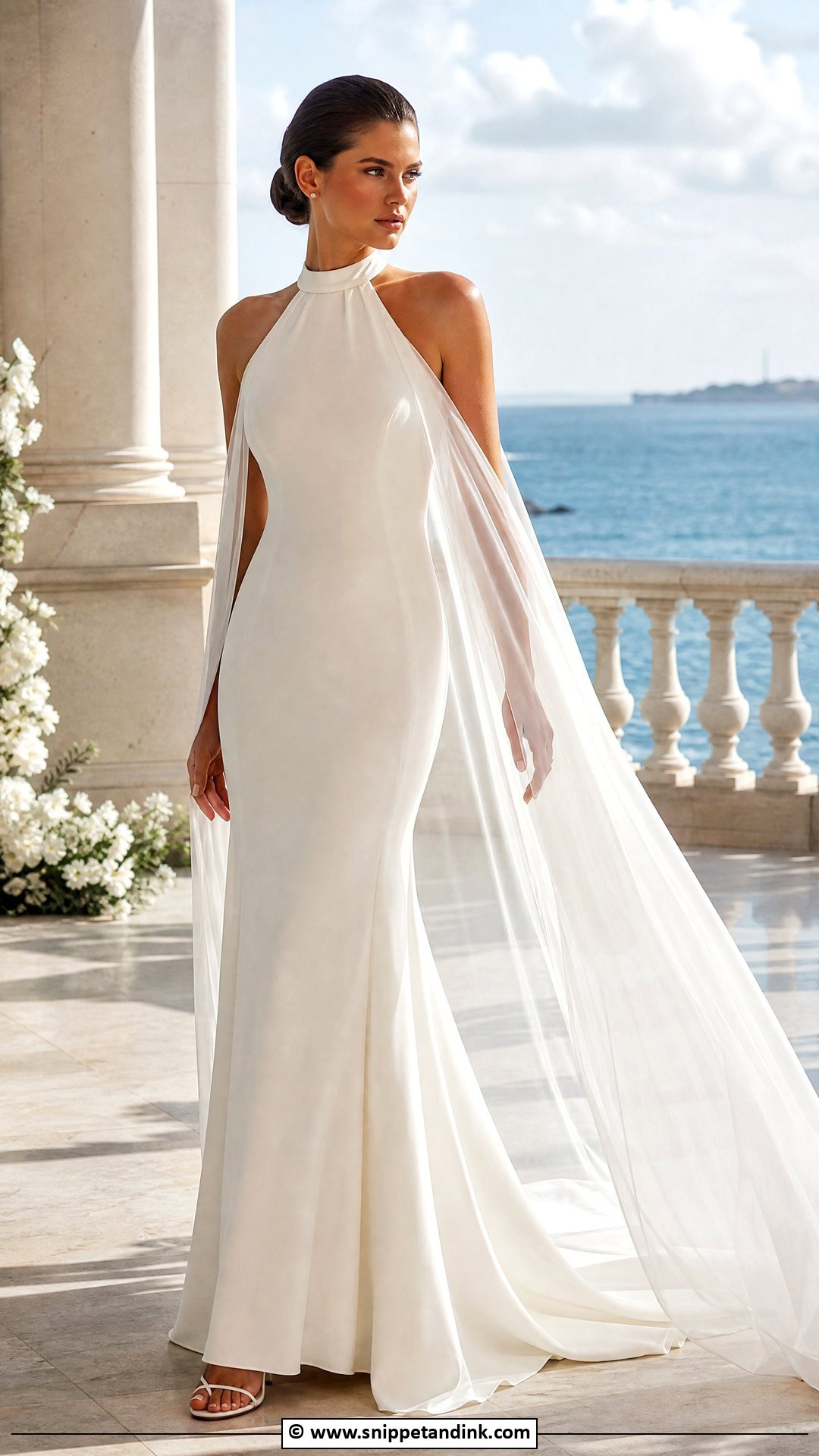
A cape gives coverage without sleeves and moves like a veil, while keeping your hairstyle visible. It can attach at the shoulders or the neckline. Sheer and tulle capes float; crepe capes fall straight. Be aware that a cape attached at the neck adds weight to the halter strap, so test it during a fitting for comfort. Simple earrings, sleek heels and a smooth bun let the cape do the work.
33. Halter Wedding Dress With Gloves
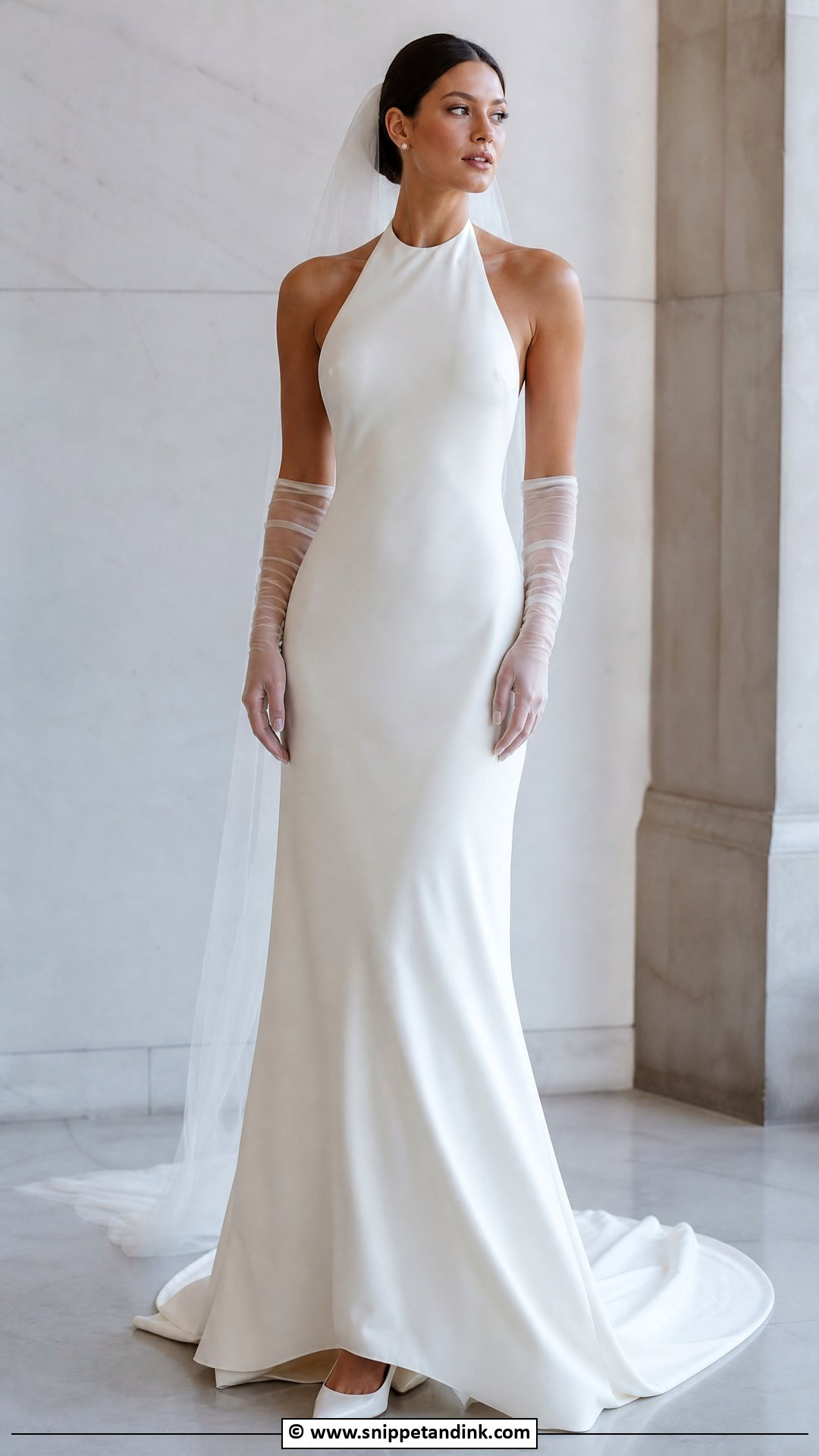
Gloves with a halter create a polished, editorial look, since the bare shoulders and high neckline already frame the upper body. Sheer gloves are soft, satin gloves are glamorous, and short gloves are lighter. Plan when they come off: the ring exchange and eating at the reception are both hard in gloves. They pair best with satin, crepe or mikado gowns. Keep the jewelry to studs.
34. Halter Wedding Dress With Veil
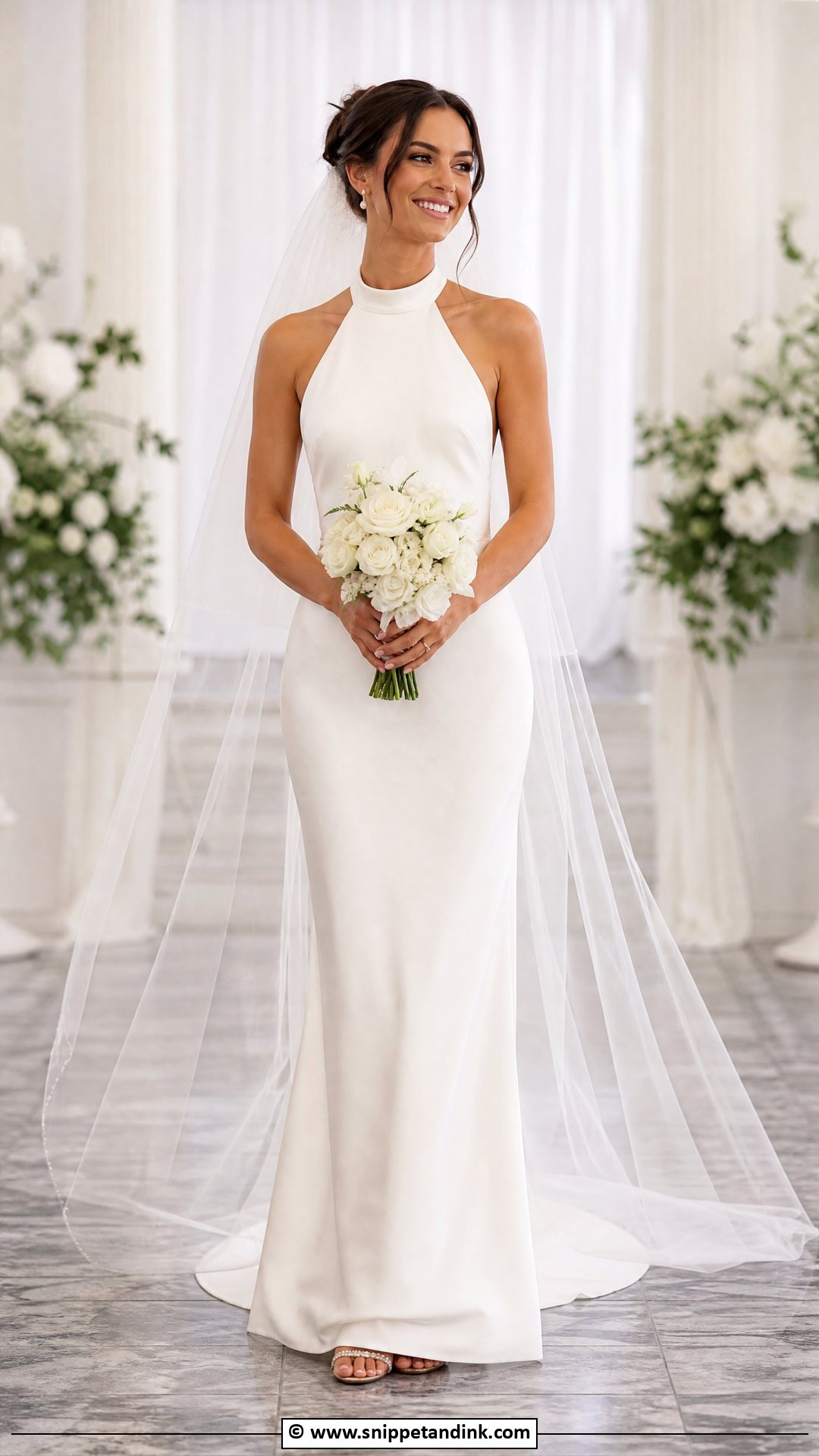
The veil should complement the halter rather than hide it. A plain cathedral veil suits minimal satin or crepe; a fingertip veil sits well with lace. With an open-back halter, a sheer veil lets the back show through. Where the comb goes matters, too: placed below the crown, it lets the veil fall behind the neck strap rather than across it. Hair pulled away from the neckline keeps everything clear.
35. Halter Reception Wedding Dress
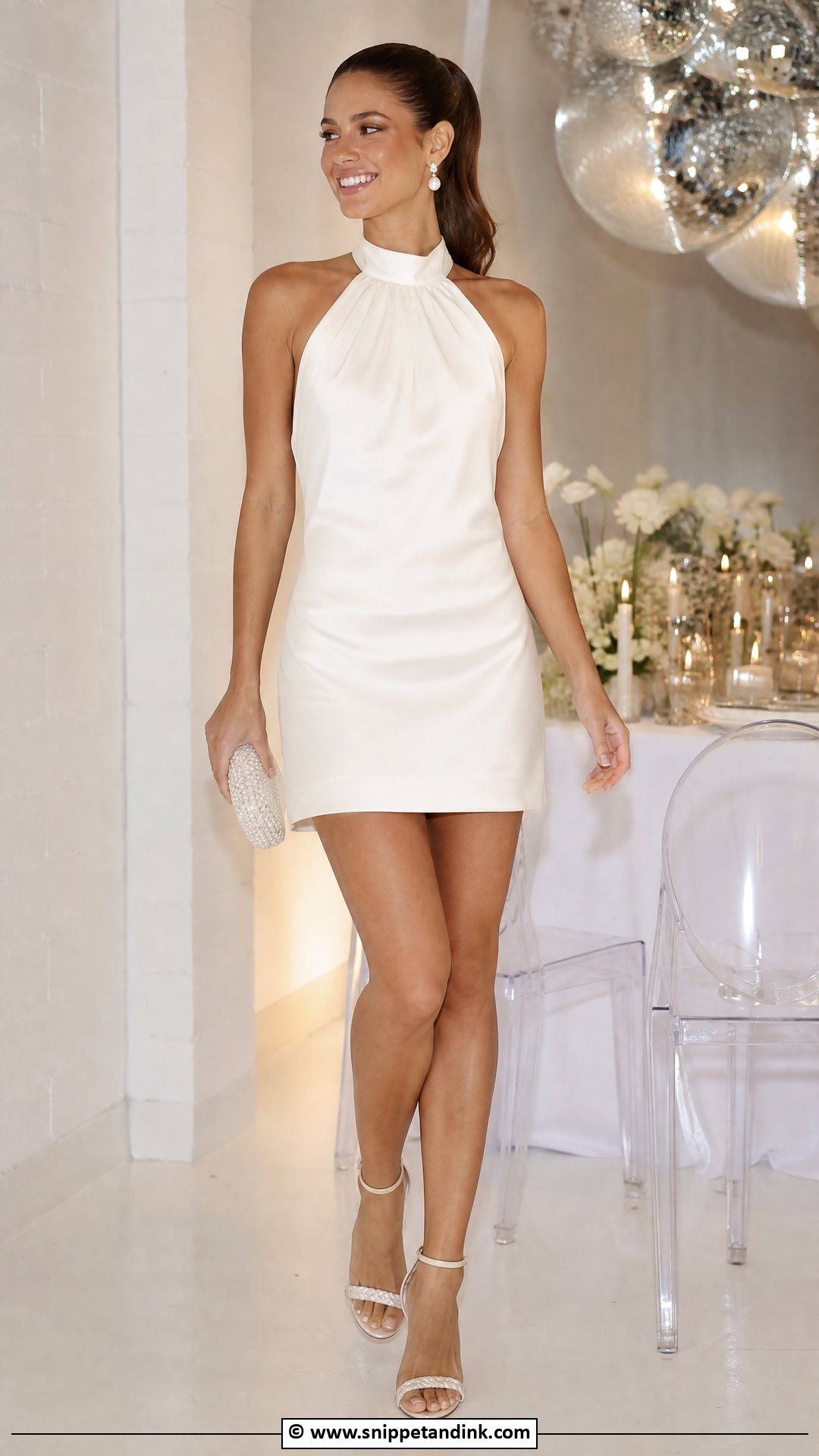
A reception halter is built for dancing. It can be a mini, a slip, a fitted midi or a simple column gown, and it feels much lighter than a heavy ceremony dress. Choose satin, crepe or something embellished to match the reception mood. A hair change, like a high ponytail, signals the switch. Comfortable heels and a small clutch finish it. I’d make sure the change is timed into the schedule, because it usually takes longer than brides expect.
Can You Wear Your Hair Down With a Halter?
You can, but think about what it hides. Loose hair covers the neck strap and most of an open back, which are the two things a halter is designed to show. If you love your hair down, I suggest a half-up style or tucking it over one shoulder for the ceremony, so the back is visible as you walk away down the aisle. Very long hair can also tangle in a tie-back halter knot.
Watch the tan lines
This is the surprise I see most often. A halter shows the whole shoulder line, so a summer of sun in a regular T-shirt or a racerback top leaves marks the dress makes obvious. In the weeks before, wear sunscreen and keep shoulders covered, or wear necklines that match the halter. If you plan a spray tan, book it a couple of days before the wedding so the color settles, and never the morning of, since it can transfer onto ivory fabric.
Necklaces and jewelry
Skip the necklace in almost every case. The halter already creates a frame at the neck, and a chain fights it. Put that budget into earrings, a hair piece or a back necklace if your gown has an open back.
Let the Neckline Breathe and the Fit Do the Rest
A halter frames the shoulders, supports the bodice and gives many gowns a memorable back, from satin slips to lace mermaids. What decides whether it’s the right one for you is fabric, silhouette and how you want to move through the day. Keep the accessories simple, keep the neck clear, and build the rest of the outfit from veil to shoes around that one strong line. Then wear it for a full hour at a fitting before you say yes.
You'll Like These Ideas:





Leave a Reply