
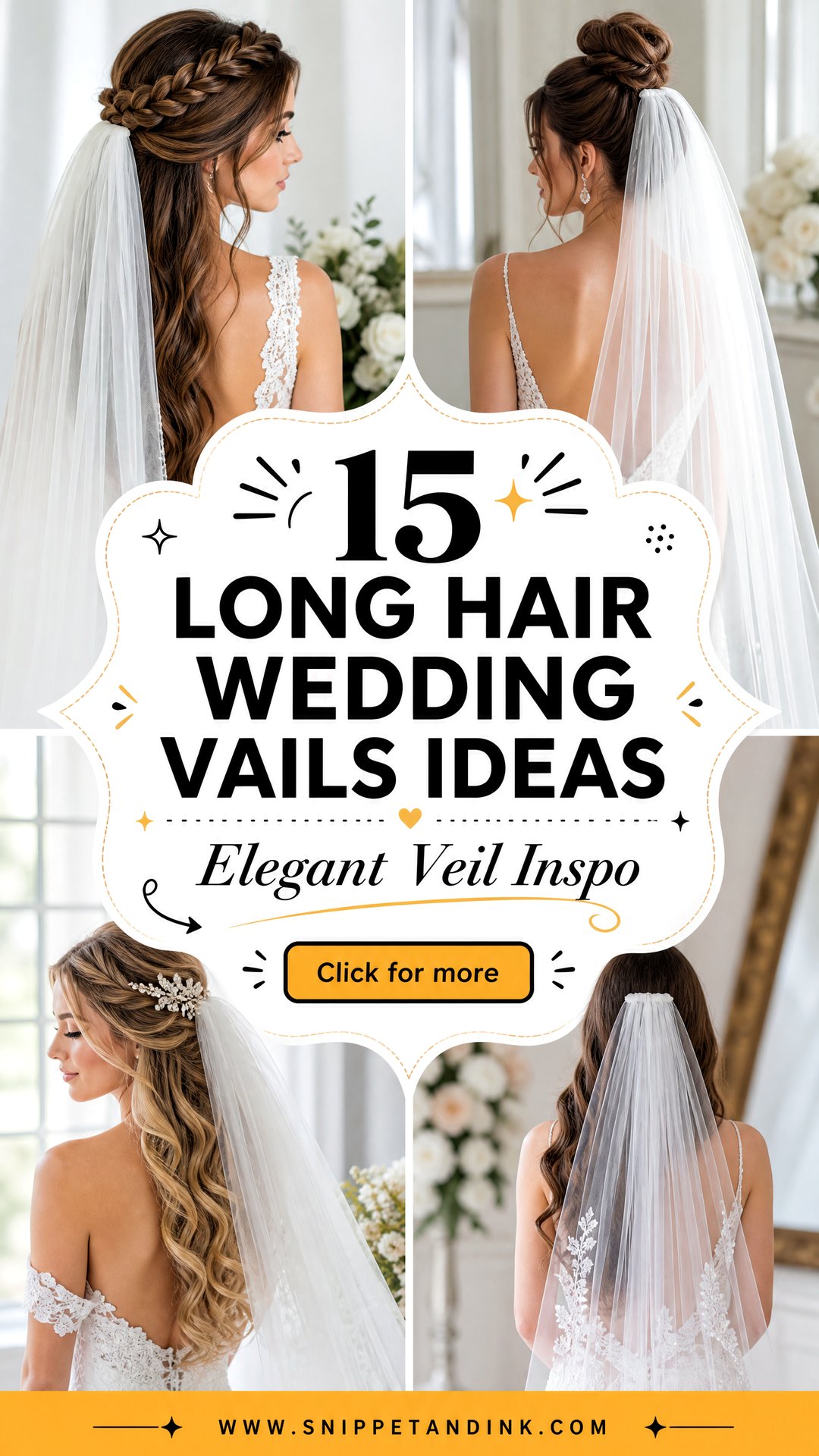
A veil is a weight hanging off a single comb, and long hair is slippery and heavy too. Put them together without a plan and the veil drags the style backward by the end of the ceremony. When I style a bride with long hair, the veil decides where the strongest part of the hairstyle has to be, and I build from that point outward. The fifteen looks below cover hair worn down, half up and fully up. Each note says where the comb goes and what it’s anchored to, whether your veil is cathedral length, fingertip, pearl-edged, lace or simple tulle. Each should still look finished once the veil comes off.
Heavier Veils Need a Hidden Foundation
Not all veils weigh the same. A single layer of plain tulle is light; a cathedral length with lace edging, beading or a second blusher layer can weigh a surprising amount, and all of it hangs off a comb a few centimetres wide. Hair down can’t hold that on its own. So before I curl anything, I decide where the comb goes and build a base there.
- Two bobby pins crossed in an X, creating a small ladder the comb can lock into.
- A tiny pinned twist or knot under the top layer of hair, hidden once the hair is brushed over.
- For updos, the bun itself, with the comb pushed in against the direction of the hair and then flipped back.
Bring the veil itself to the trial, not a photo of it. Weight and comb size change everything about placement, and the right spot is easy to mark with a photo once we’ve found it.
1. Long Hair Wedding Veil With Hollywood Waves
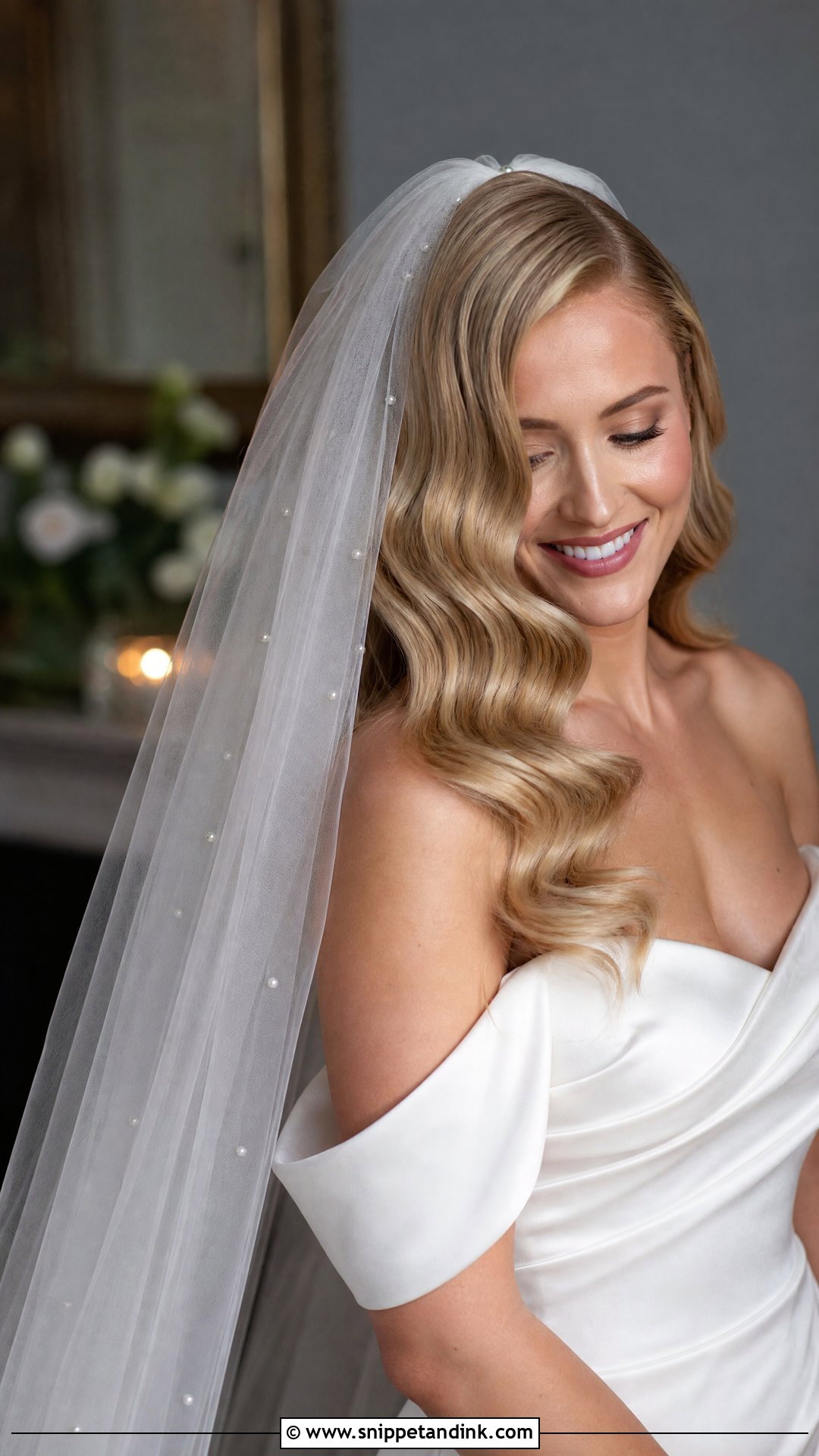
Hollywood waves with a veil look classic, but the comb has nothing to hold except smooth, glossy hair, which is the hardest surface there is. I set a small hidden base under the crown first: two bobby pins crossed in an X, or a tiny pinned twist, and the comb slides into that. The waves are curled in one direction, cooled, brushed into an S and set lightly so they still move. A cathedral, fingertip or plain tulle veil at the crown works best. Deep side parts can push the comb off-centre, so we decide placement at the trial. Pair it with strapless, off-shoulder, and satin gowns, where nothing on the shoulders competes with the waves.
2. Long Hair Wedding Veil With Low Bun
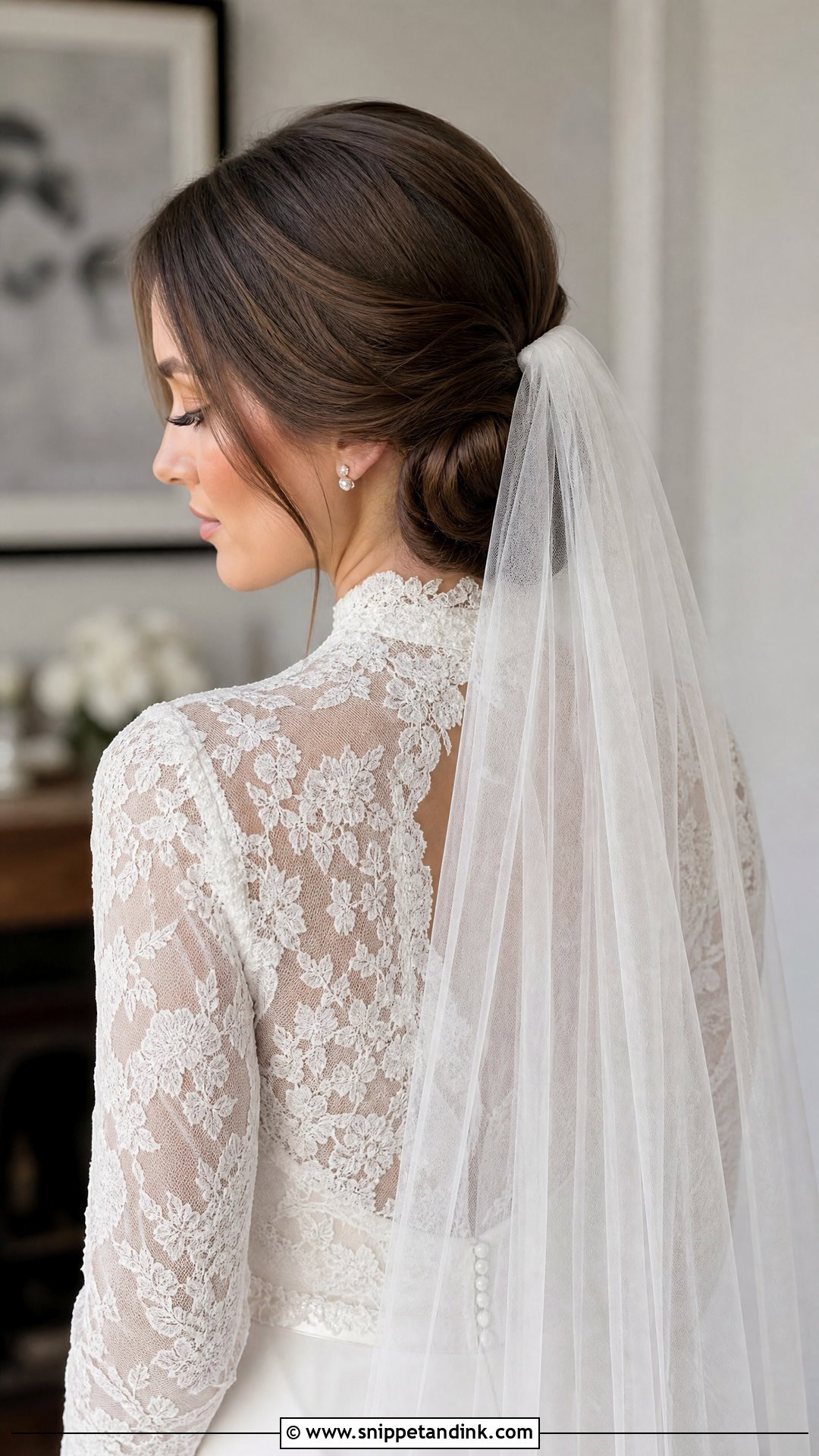
The most secure base of all. A low bun gives the comb a solid mass to grip, so even a heavy veil stays put through hugs. Above the bun reads traditional; tucked underneath reads modern and lets the bun show in the back view. Long hair fills a bun naturally, so there’s no padding to make it heavy. Two soft pieces at the face keep it from looking severe, and a sleek centre part pushes it more formal. It sits well with lace and high necklines.
3. Long Hair Wedding Veil With Half Up Waves
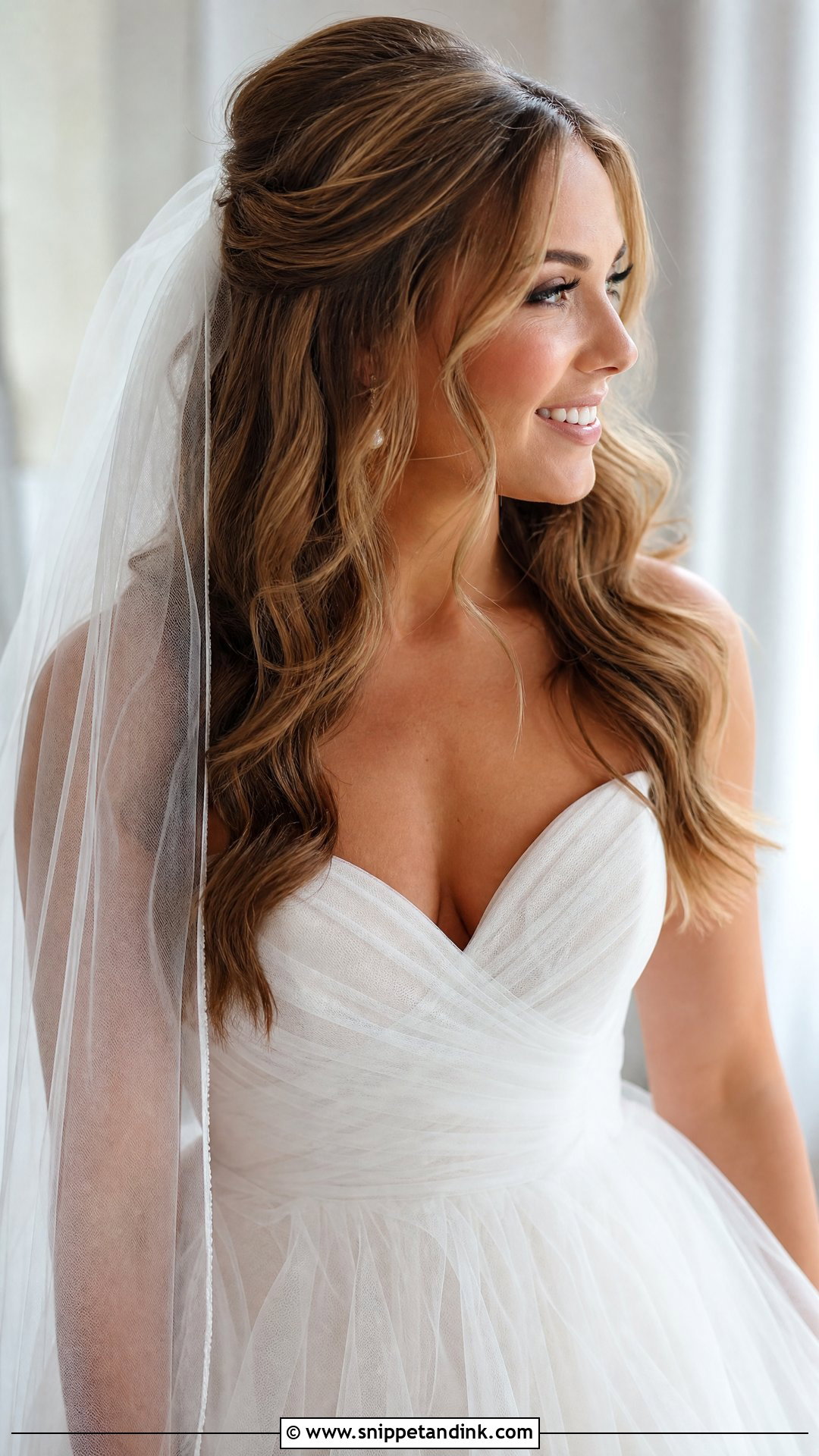
Half up is the classic compromise: the pinned top section is where the veil lives, and the length below stays loose. I tease lightly at the crown before closing the twist so there’s real structure under it, because a smooth half up section is too thin to hold a comb on its own. Fingertip, chapel and pearl veils slide straight under the twist. The back gets volume that shows from every angle. Ask for soft curls on the loose lengths and smooth face-framing layers.
4. Long Hair Wedding Veil With Braided Crown
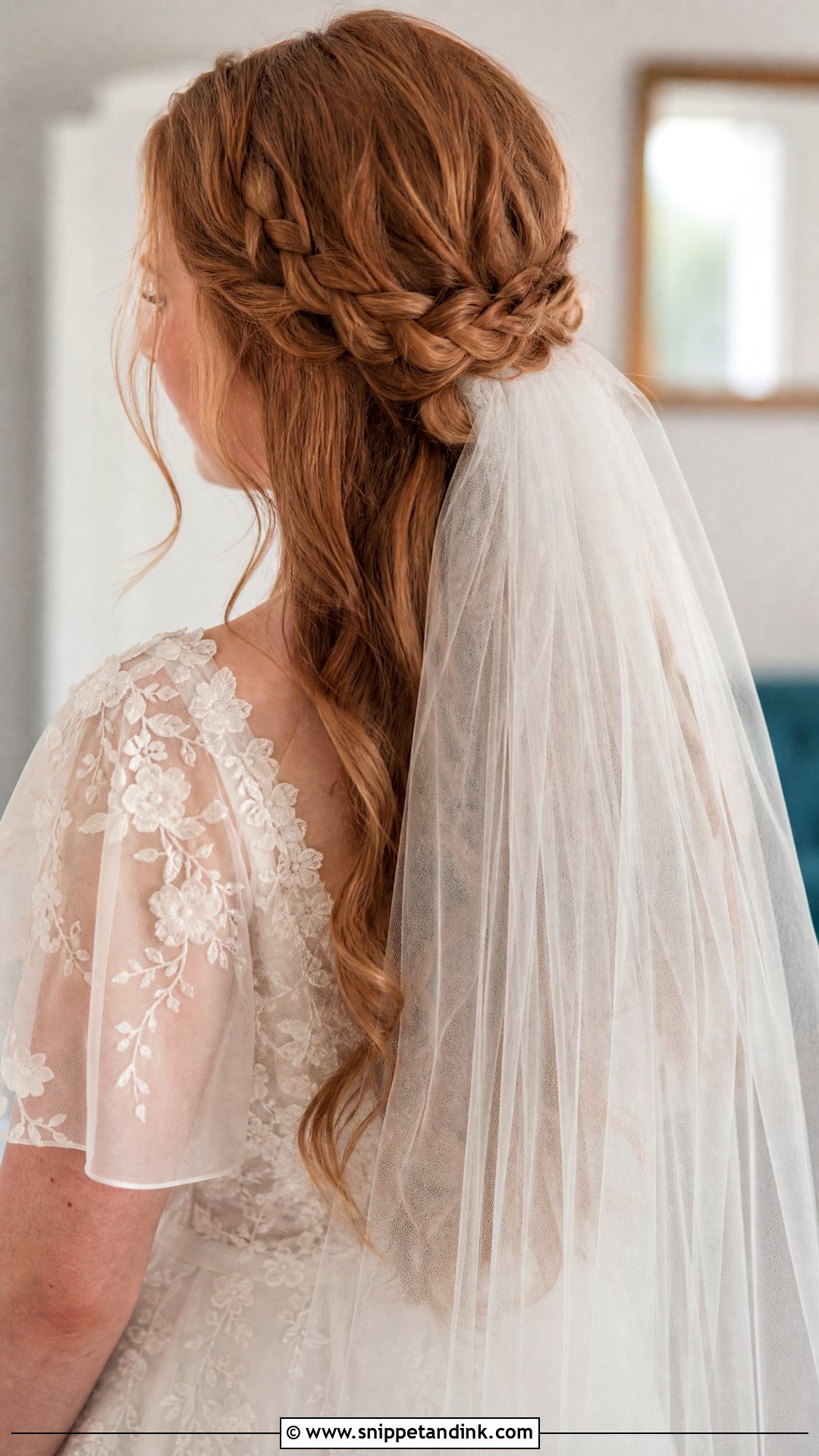
A braided crown is a ready-made anchor. Slide the comb under the braid at the back and the veil looks like it grows out of the style. Wrap it across the top, curve it round the back or leave it as a halo above loose waves. Long hair makes the braid thick. I braid it fairly tight, pin it, then loosen the edges by hand once the veil is tested, because loosening first leaves nothing for the comb to catch. It suits garden ceremonies and floral lace.
5. Long Hair Wedding Veil With Sleek Low Ponytail
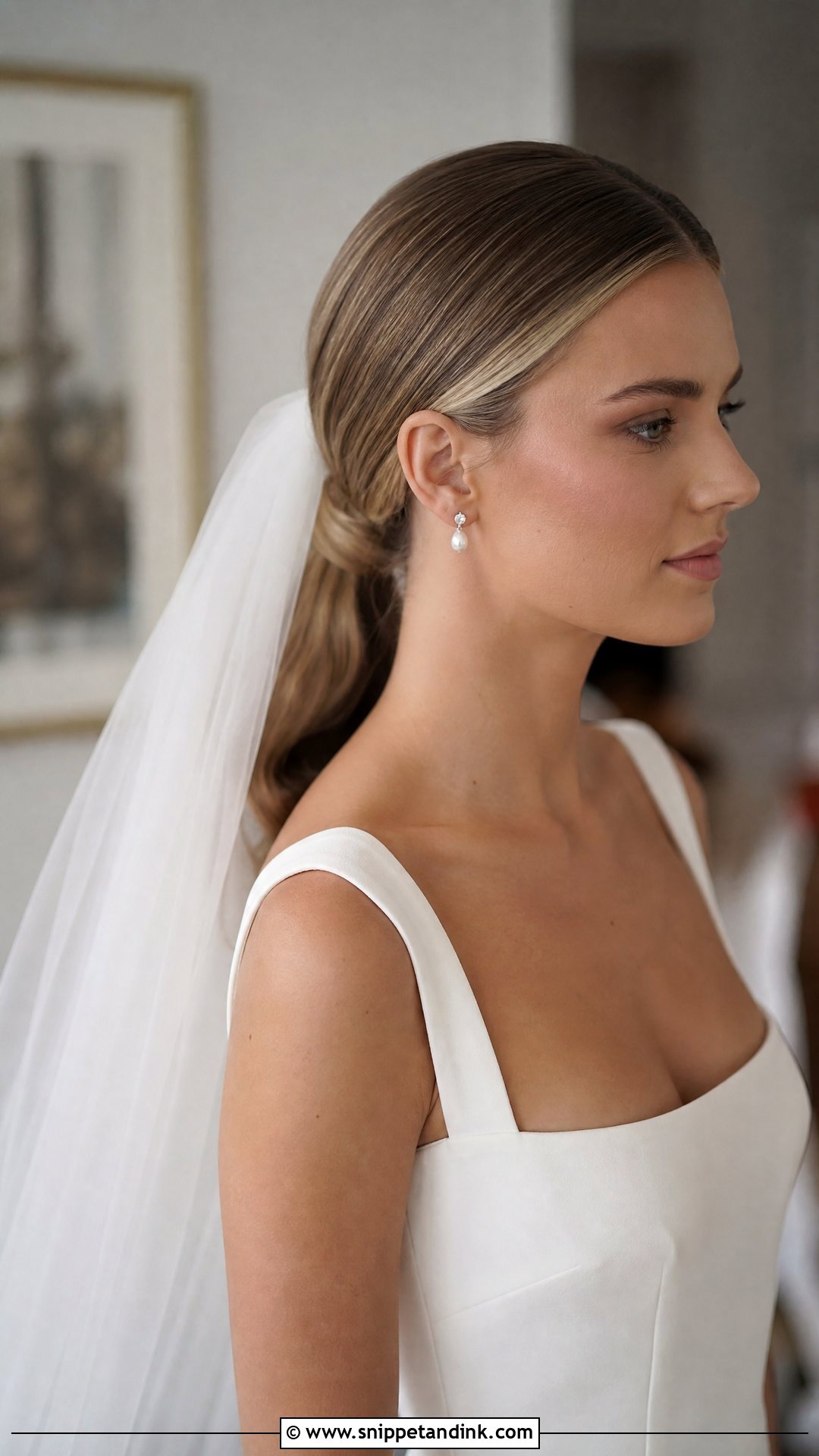
A sleek low ponytail with a veil has a structural weakness: the smoothest possible crown, and the comb going right into it. So I set the veil at the crown into a small hidden base, or just above the ponytail elastic, where all the hair is gathered tight. Wrap the base with a strand, polish with shine spray and curl the ends. It suits minimalist gowns, square necklines and big earrings. Once the veil comes off, the ponytail is still complete, so there’s no restyle for the reception.
6. Long Hair Wedding Veil With Loose Curls
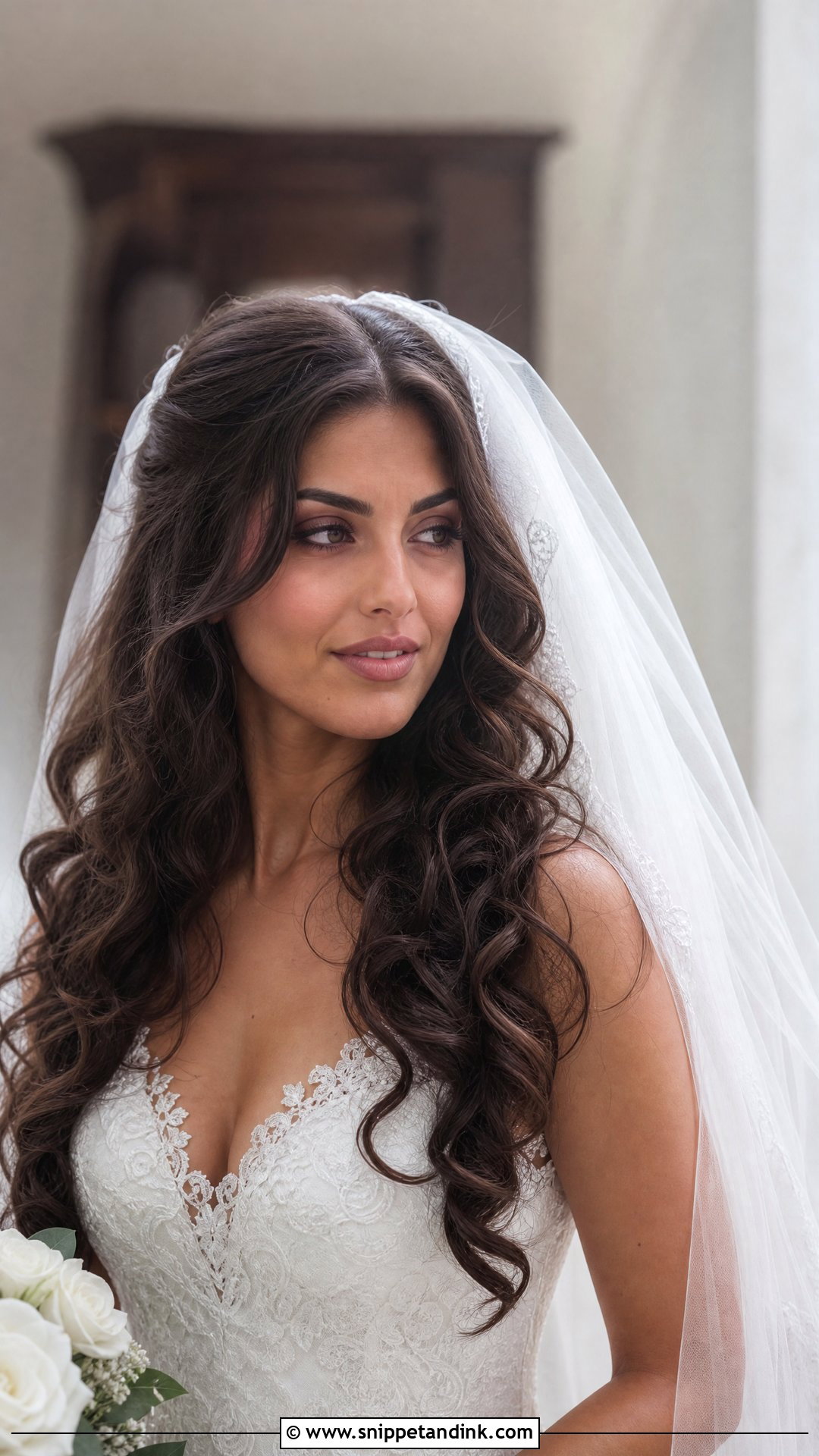
Curled and brushed-out hair is easier for a comb to grip than straight hair, which is one reason loose curls are so common under a veil. The texture catches the teeth. Still, I don’t rely on texture alone for a long veil; a pinned base under the crown or a small half up section takes the weight. A centre part looks modern, a side part classic. Layered long hair shows the most movement here.
7. Long Hair Wedding Veil With High Bun
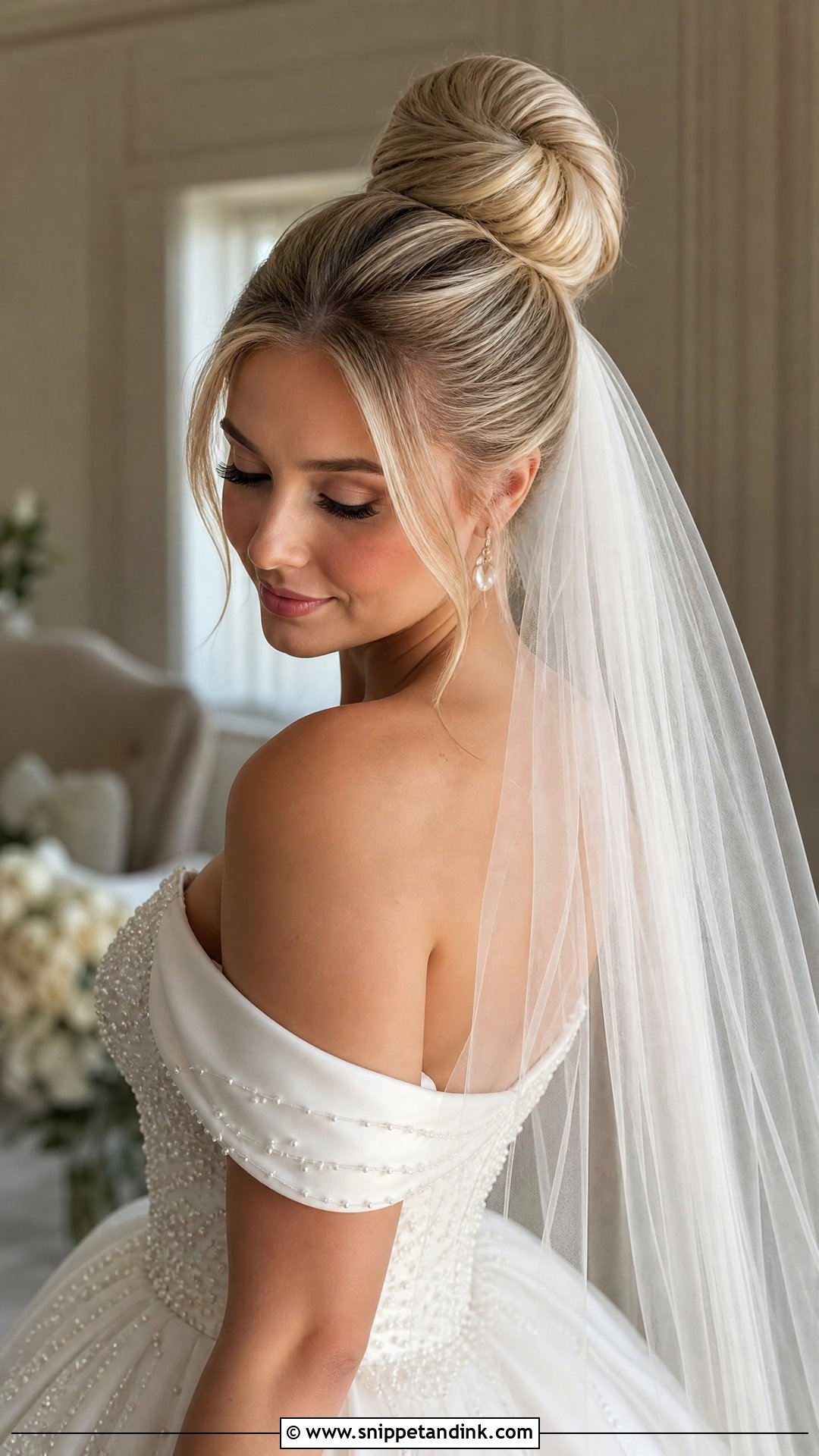
A high bun is the right call with a ball gown or dramatic train, where a big skirt needs height at the top to balance it. Under the bun, the veil falls like a waterfall; above it, the look is traditional and pairs with a tiara. Long hair builds a bun of the right size without padding. The catch is weight: a high bun plus a long veil can pull on the crown for hours. I pin it from all sides so the load is spread, and check comfort at the trial before committing.
8. Long Hair Wedding Veil With Side Swept Waves
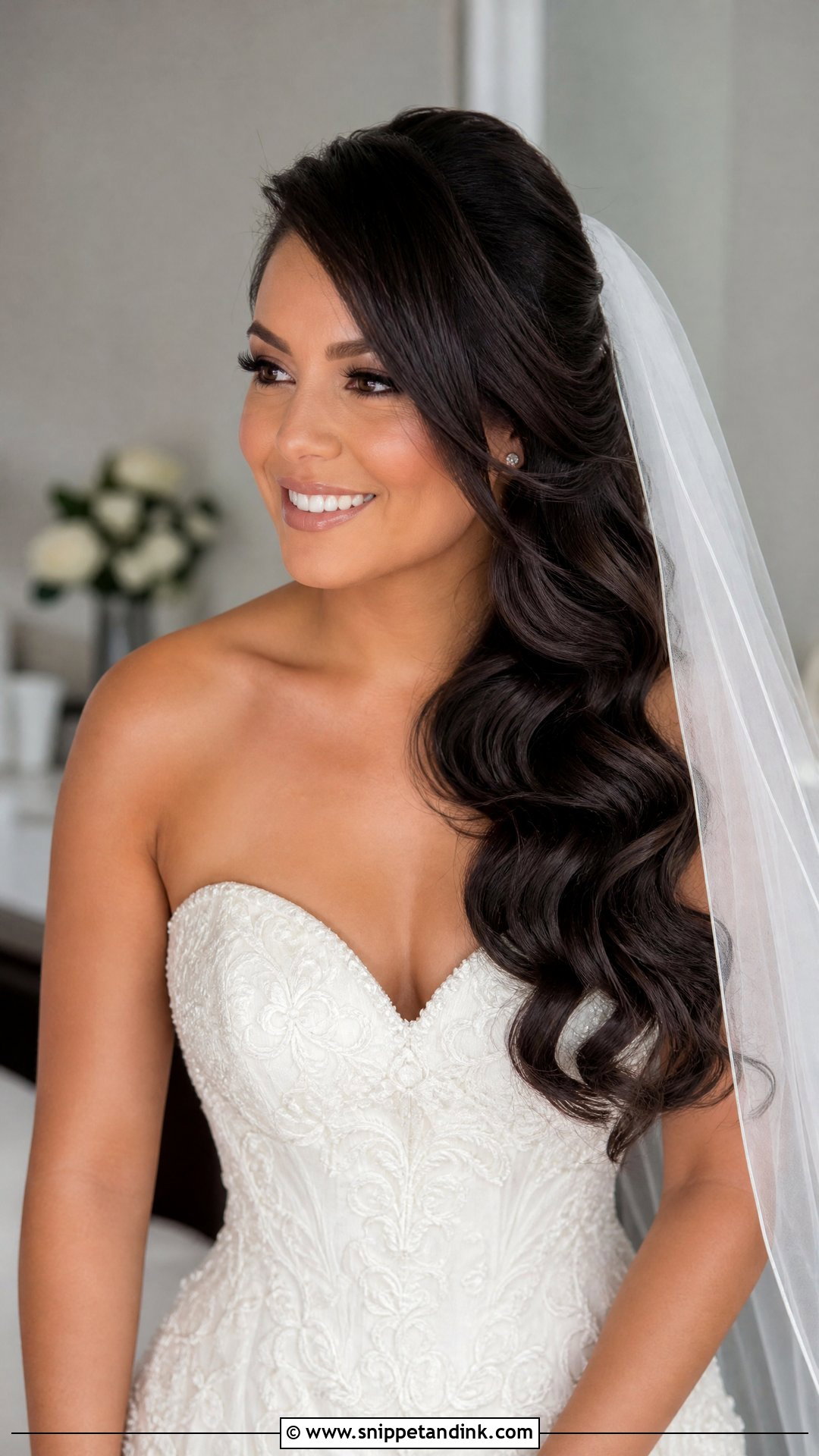
All the length goes over one shoulder, so the veil has to follow it. I place the comb at the crown or slightly off-centre toward the side the hair falls, so the veil and the waves run the same direction. Pin the back discreetly with crossed bobby pins behind the ear. Without them the hair drifts back toward the centre during the ceremony. It shows off one-shoulder gowns, sweetheart necklines and detailed backs.
9. Long Hair Wedding Veil With Messy Low Chignon
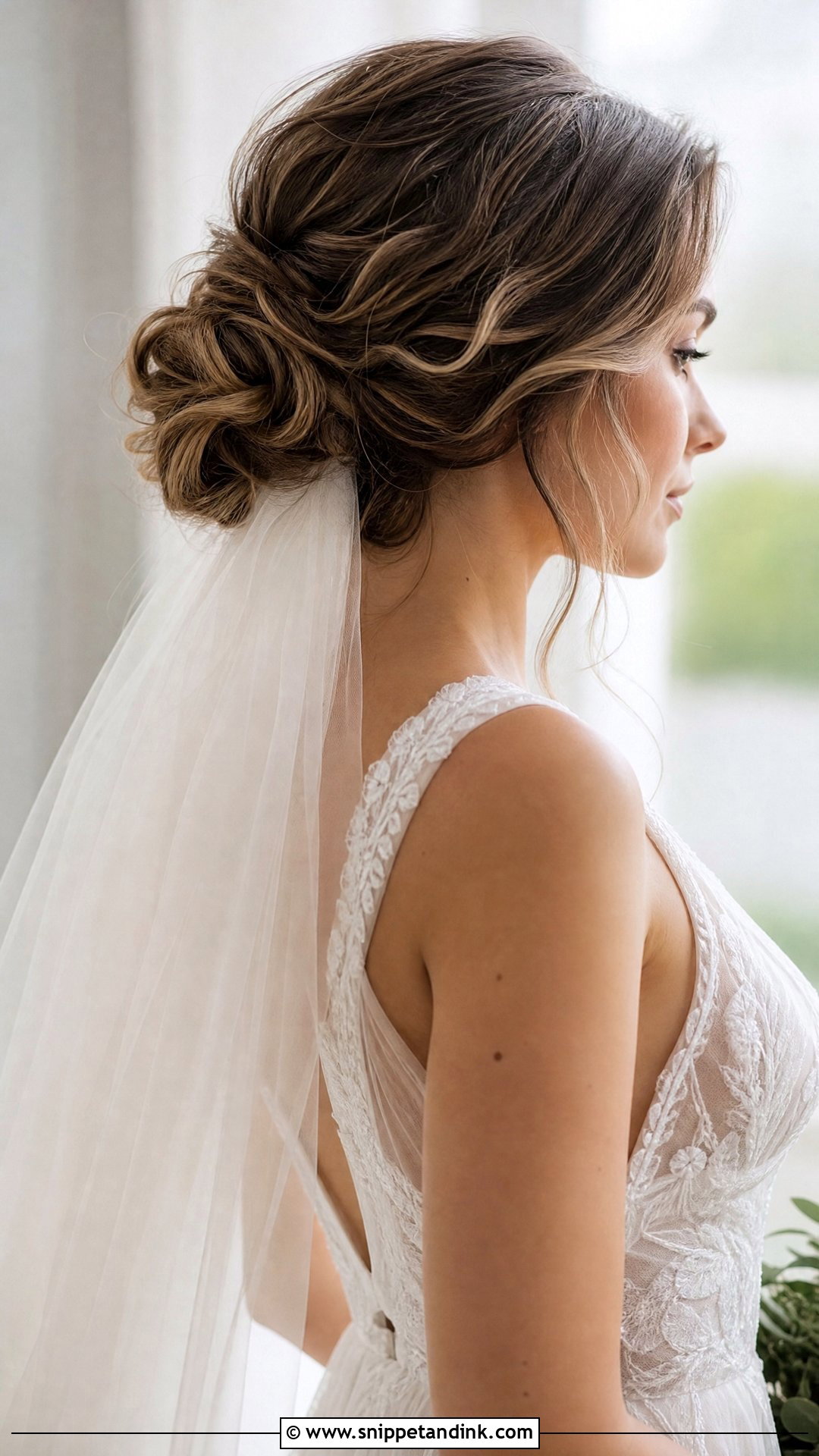
Relaxed shape, firm core. That’s how a messy low chignon works with a veil. The loose texture is on the surface; underneath, the bun is pinned solid so the comb has an anchor at the nape. Place the veil above for volume, beneath for a lighter look. Warm and windy outdoor ceremonies suit it because a few loose pieces moving around look natural. Ask for controlled texture, and say so plainly, or you may get messier than you meant.
10. Long Hair Wedding Veil With Pearl Hair Pins
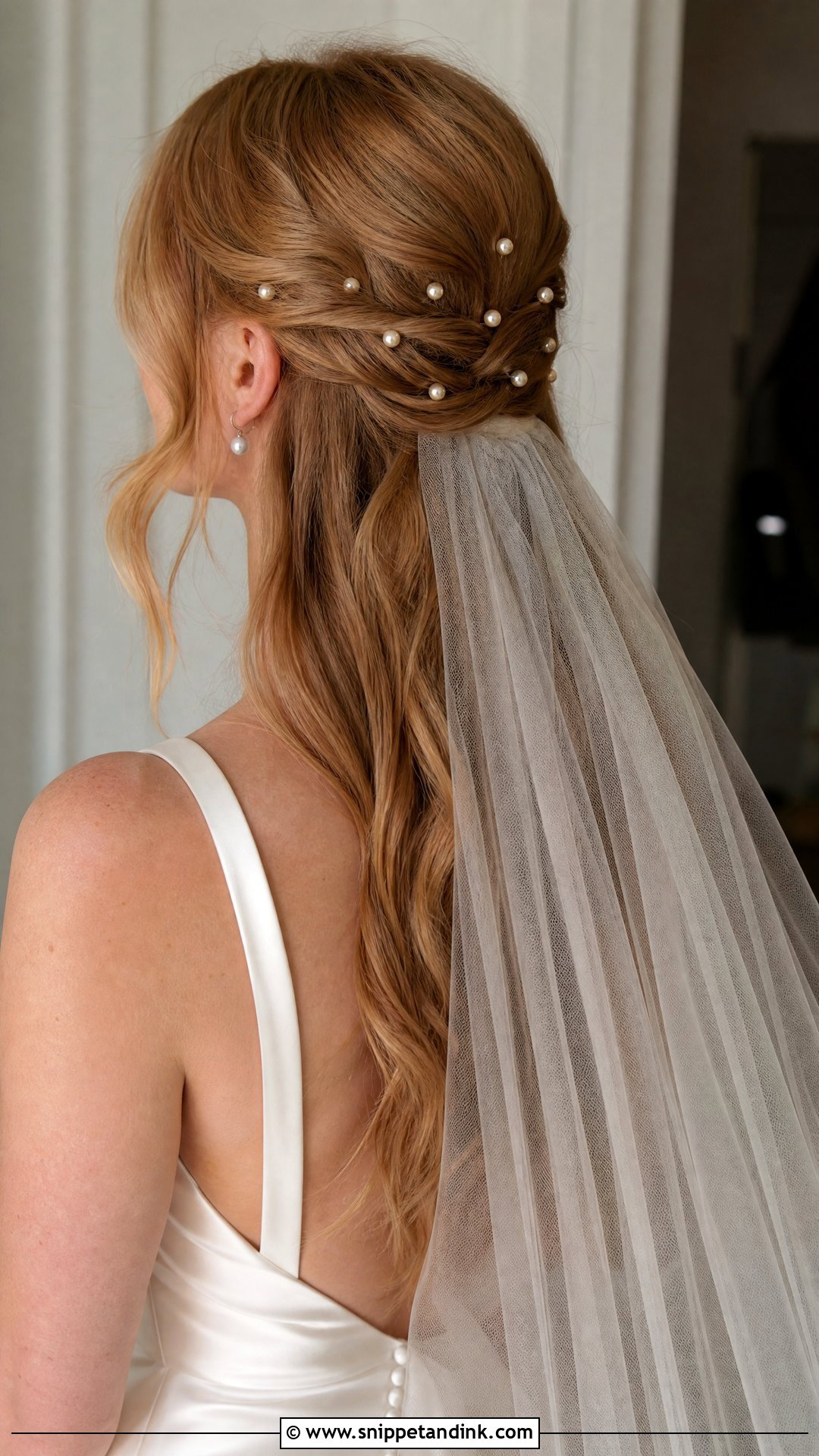
Pearl pins should frame the veil, not fight it. I place them along the edge of a half up twist, around a low bun or just beside where the comb sits, so they read as one composition. Three to seven pins is usually enough on long hair. More starts to look crowded next to tulle. They sit well against satin and soft lace and add detail without weight, which matters when the veil is already pulling.
11. Long Hair Wedding Veil With Curtain Bangs
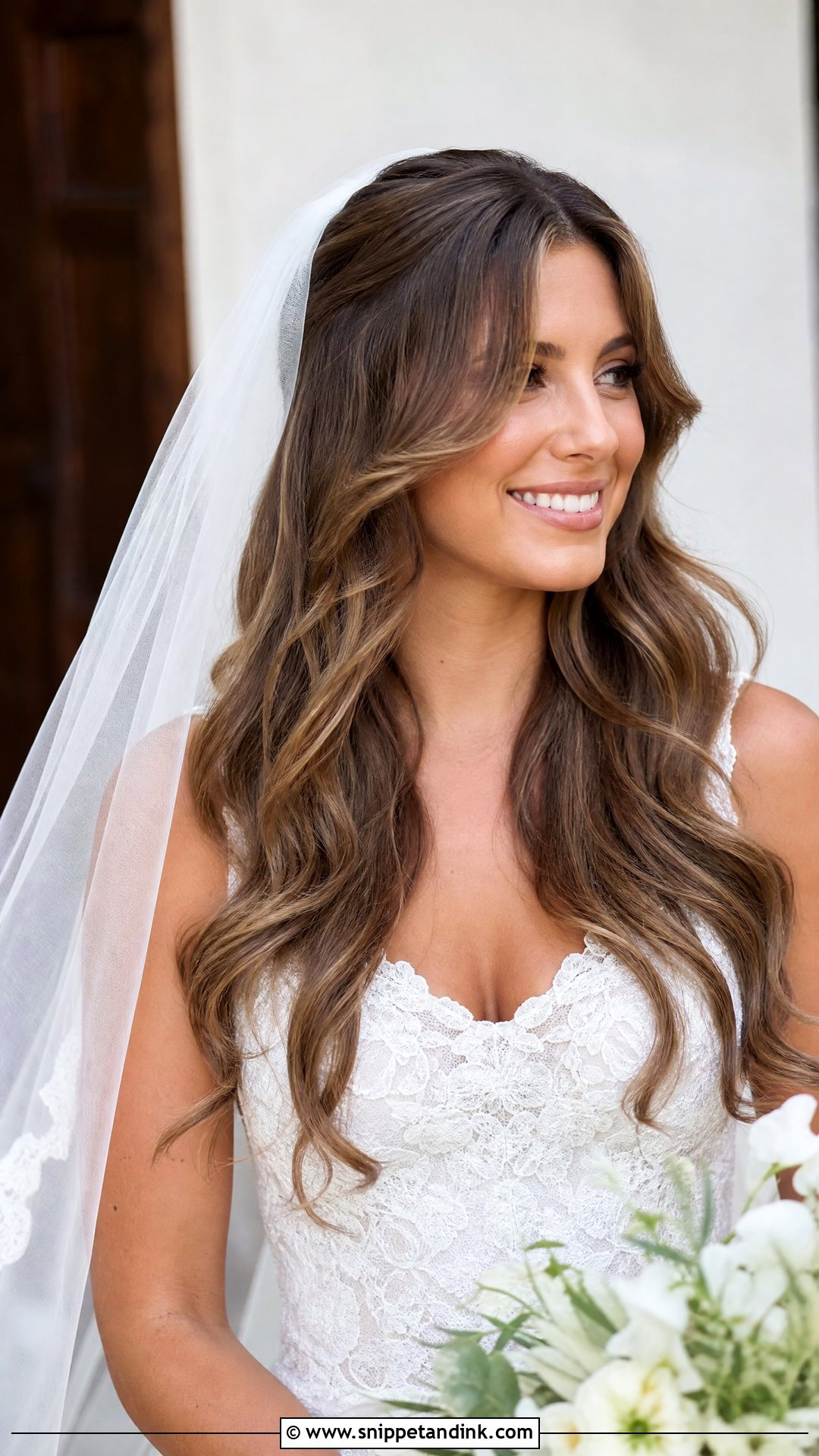
Curtain bangs soften the cheekbones and jaw in close portraits, and they work under a veil if the veil sits behind them, at the crown or under a pinned section. I blow-dry the bangs away from the face with a round brush and blend them into the front layers so they don’t split under the veil’s weight. Fringes cut the week before the wedding often sit too short and straight; a trim about two weeks before gives them time to relax.
12. Long Hair Wedding Veil With Floral Hair Comb
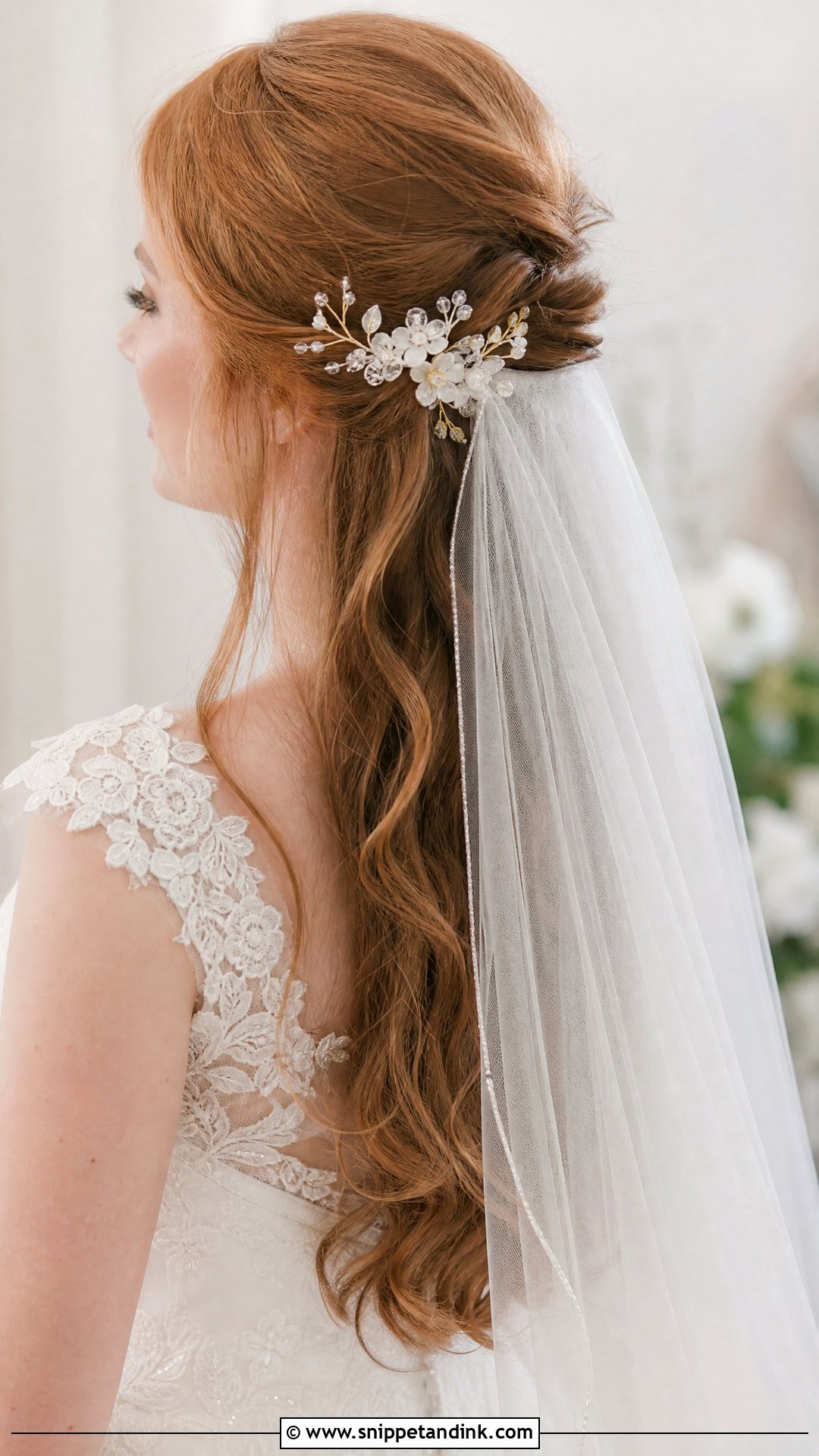
A floral comb and a veil can share a spot: the veil attaches beneath or just behind the comb, and you decide how much of the flowers shows. Place it above a low bun, next to a half up twist or among the waves. Match the flowers to the bouquet or the dress so they look connected. Fresh flowers wilt against warm hair after a few hours, so silk or preserved stems last better if the comb will be on all day.
13. Long Hair Wedding Veil With Center Part Waves
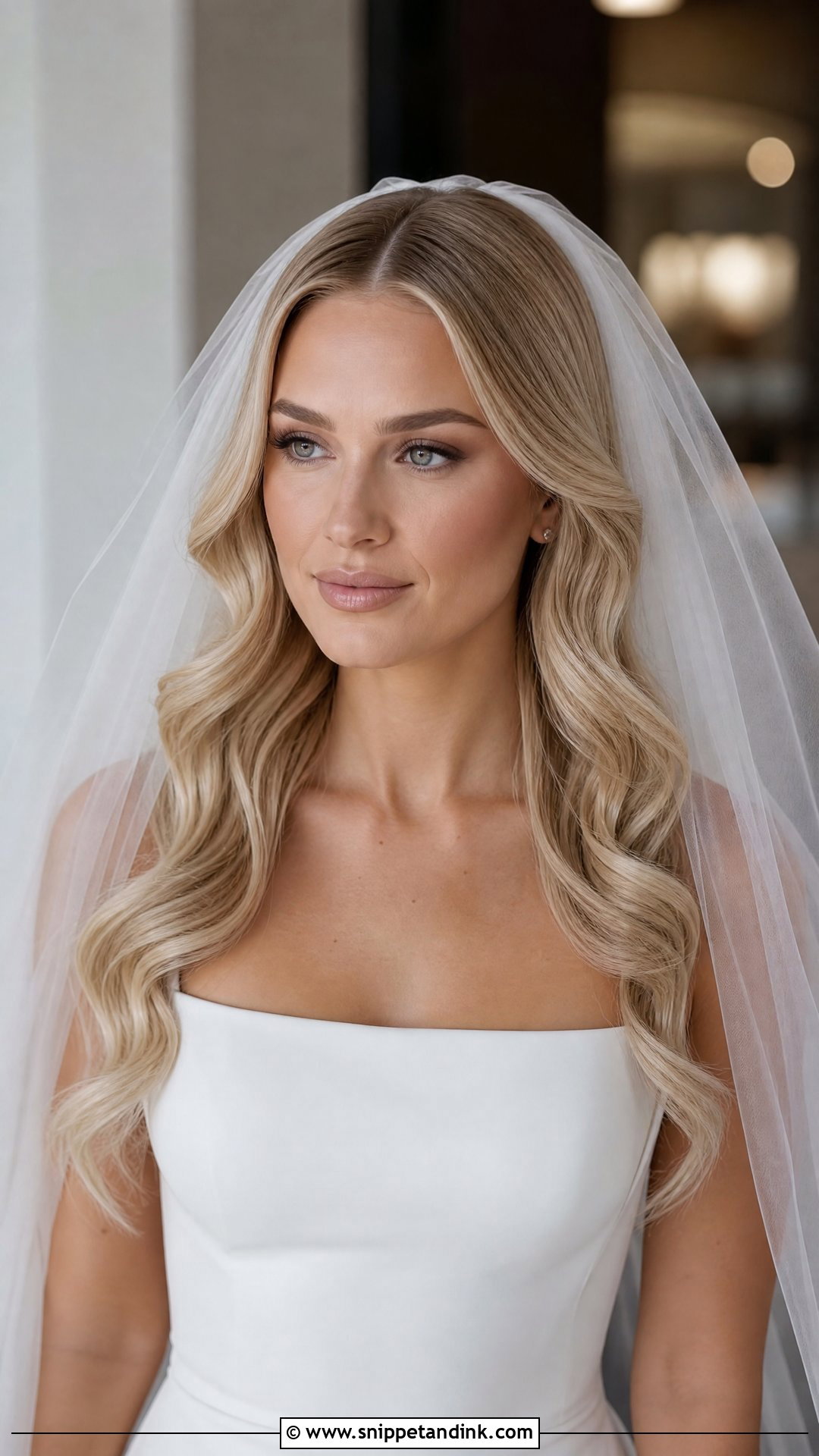
A centre part is the cleanest frame under a veil, and also the least forgiving. Any uneven tension at the comb shows as the part bending. I put a small hidden backcomb or crossed pins under the crown so the veil pulls straight back. Smooth roots, softly curled ends, front pieces tucked slightly back. Modern gowns, square necklines and minimal jewellery are where it sits most naturally.
14. Long Hair Wedding Veil With Twisted Half Updo
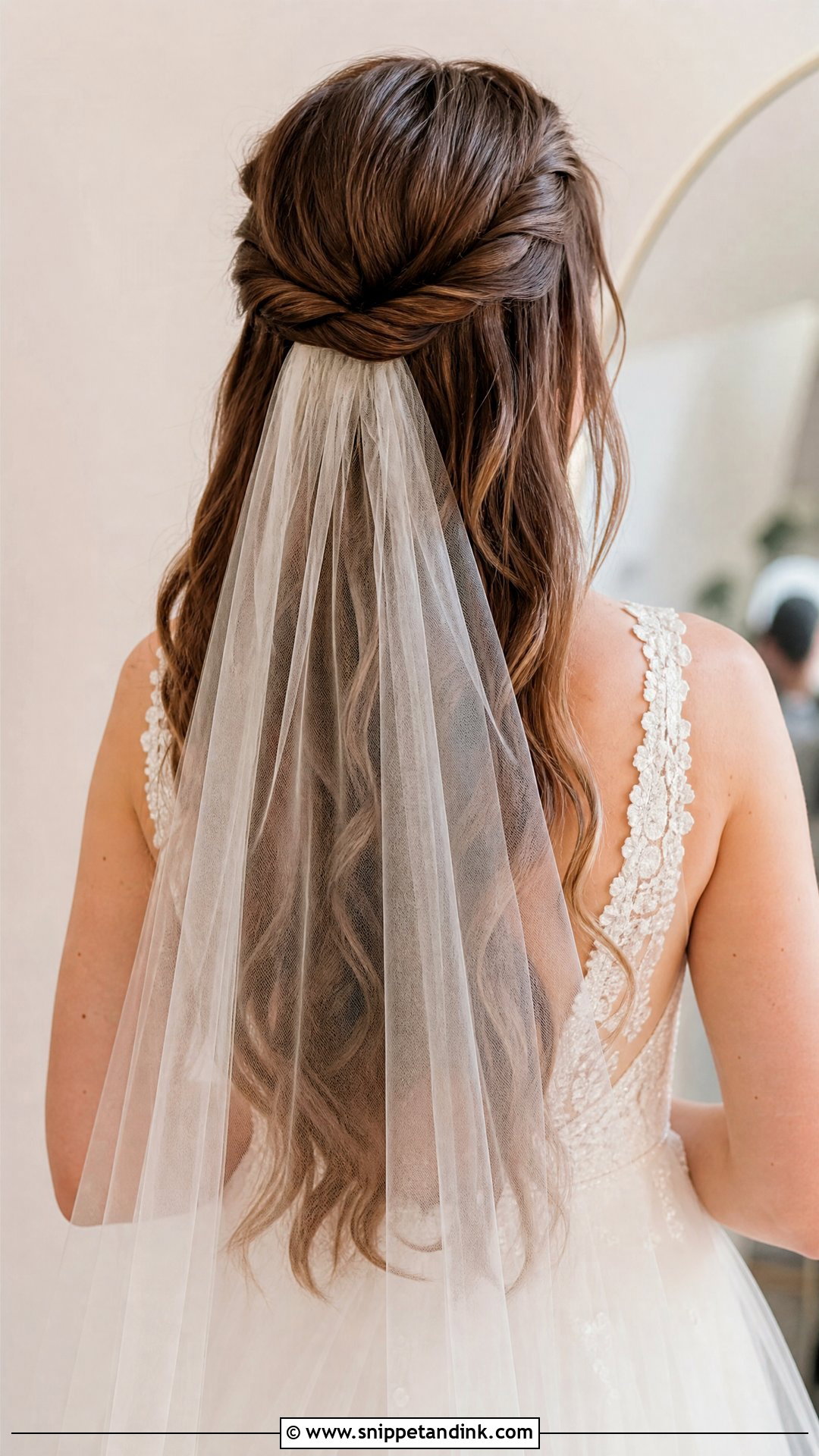
With a twisted half updo, the veil goes right under the twists, where the pins are already concentrated. The top sections are twisted back and pinned at the crown; curls or waves fall below. It’s easy to decorate with pearls or crystal pins along the twists. Lace, tulle and draped gowns all suit it. I’d steer very fine hair away from this one with a heavy cathedral veil, since the twisted section can’t carry the weight; a low bun is safer there.
15. Long Hair Wedding Veil With Long Braided Ponytail
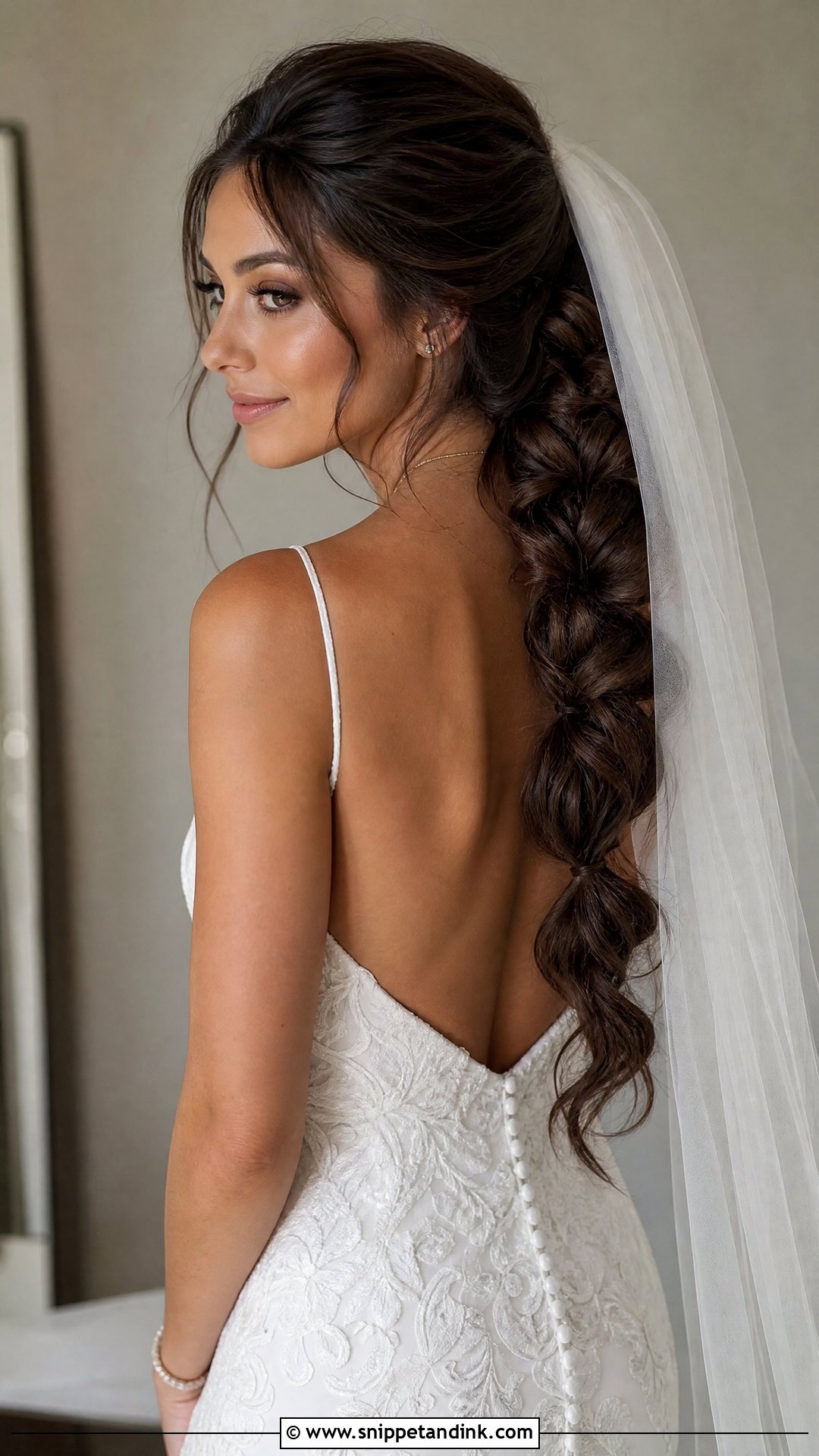
A braided ponytail is secure, a little unexpected, and holds through a lot of movement. Polish it sleek or pull it apart for volume. The veil goes at the crown or just above the ponytail base so the braid stays visible down the back, the part guests watch during the vows. Add tiny pearl pins or a ribbon wrap for bridal detail. It’s practical for outdoor and destination weddings where the veil has to cope with wind.
Static, Snags and Tulle Over Loose Waves
Tulle rubbing over loose hair builds static, especially in dry or air-conditioned rooms, and the veil then clings to the waves and lifts them as it moves. A light mist of hairspray on the inside of the veil, sprayed from a distance, calms it. Beaded or crystal edging is worse for snagging: it catches curls and pulls strands loose when the veil shifts. With a heavily embellished veil, I’d keep the hair under it smoother, or move toward a low bun.
The Veil Comes Off After Dinner. Then What?
Most brides take the veil off before the reception, and the comb leaves a dent and a cluster of exposed pins. Plan the moment at the trial. Show your maid of honour how the comb comes out: lift it slightly, slide it backward along the teeth, and never yank it straight up, which pulls the style with it. Then remove the crossed base pins and run fingers through that spot.
If you have a reception accessory, such as a pearl clip or a small comb, it can sit over the same spot and cover the dent. Keep it in your bag with a few spare pins so the switch takes a minute rather than a trip back to the bridal suite.
Your Hair Has Two Jobs on the Day
Long hair gives you plenty of ways to wear a veil, from waves to a secure bun, a braid or a polished ponytail. Whatever you choose has two jobs: holding the veil through the ceremony and looking complete after it comes off. Book your trial with the real veil, or at least a comb of the same weight, so your stylist can test placement and see how the hair looks once it’s removed. The style should feel secure and comfortable at the end of the night, not only in the first photograph.
You'll Like These Ideas:


Leave a Reply