
Japanese wedding hairstyles are built around the outfit first, and that is the part most inspiration boards skip. A shiromuku with a wataboshi or tsunokakushi almost always means a formal wig styled as bunkin takashimada, while a colored kimono, a hikifurisode or a Western gown leaves room for your own hair in a low bun, loose waves or a short cut with a single kanzashi. When I plan one of these looks, I start with three questions: what are you wearing for the ceremony, will you change outfits later, and how long can your scalp handle a wig? The ideas below run from strictly traditional to fusion, and I’ve noted where each one tends to cause trouble.
Wearing a Katsura Wig Through a Shrine Ceremony
For the traditional styles in this list, the katsura usually comes with the kimono rental or dressing package, and the fitting is where the day is won or lost. The wig is built on a fitted base, and the dresser checks it against the shape of your head, especially around the temples and behind the ears. Speak up if it presses anywhere. Pressure that feels mild for ten minutes builds over a ceremony, formal portraits and the walk in between.
Preparing your own hair to go underneath
Your hair is flattened and wrapped close to the scalp so the wig sits low and even. Long hair is usually wound into flat pin curls or a tight wrap. Very thick hair takes longer and can lift the wig slightly, so tell the dresser at the fitting if you have a lot of it. Arrive with clean, dry hair and nothing oily at the roots, because slippery hair won’t hold the wrap.
- Wash the night before rather than the morning, so the hair has a little grip.
- Leave earrings off. Traditional dressing doesn’t use them, and they catch on the edge of a hood.
- Wear a front-opening top to the dressing room so nothing has to go over your head afterwards.
- Pack a soft headband and a wide-tooth comb for the moment the wig comes off.
If you get tension headaches or have a sensitive scalp, take it seriously. Many dressers can now style your own hair, if it has enough length, into a shape that takes a wataboshi or tsunokakushi. You keep the ceremony feel without hours under a wig.
1. Japanese Wedding Bunkin Takashimada
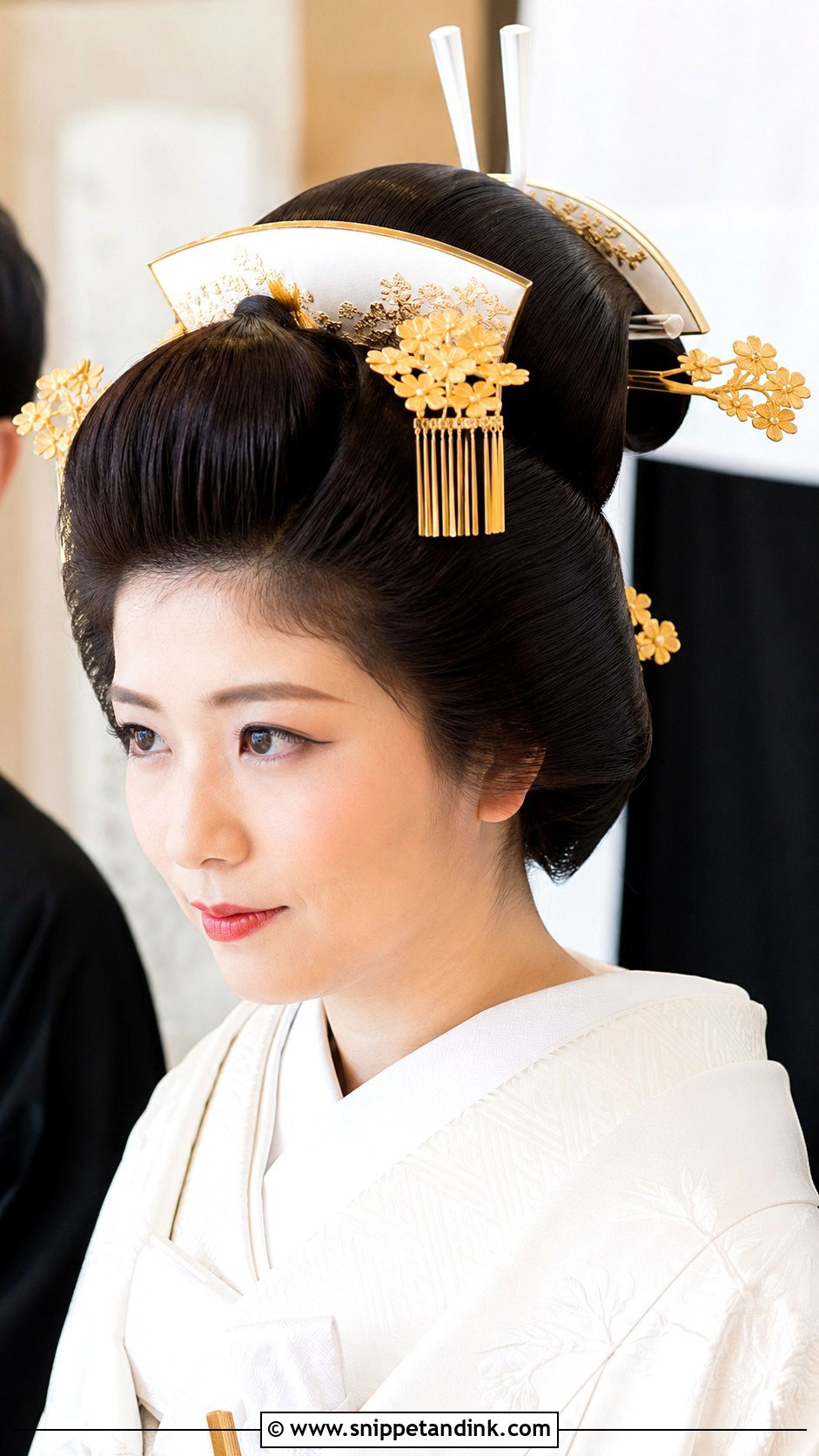
Bunkin takashimada is the classic shape for a formal kimono ceremony: smooth side wings, a lifted front and a rounded knot at the back. Very few brides have the length and density to build it from their own hair, so most wear a katsura wig fitted to their head ahead of the day. That fitting matters more than anything else. A wig that sits even slightly tight presses on the temples, and by the end of a long shrine ceremony that pressure becomes a real headache. Your own hair is flattened and wrapped underneath, and the kanzashi and combs are set into the wig itself, so the silhouette stays exactly where the dresser placed it.
2. Japanese Wedding Wataboshi Hairstyle
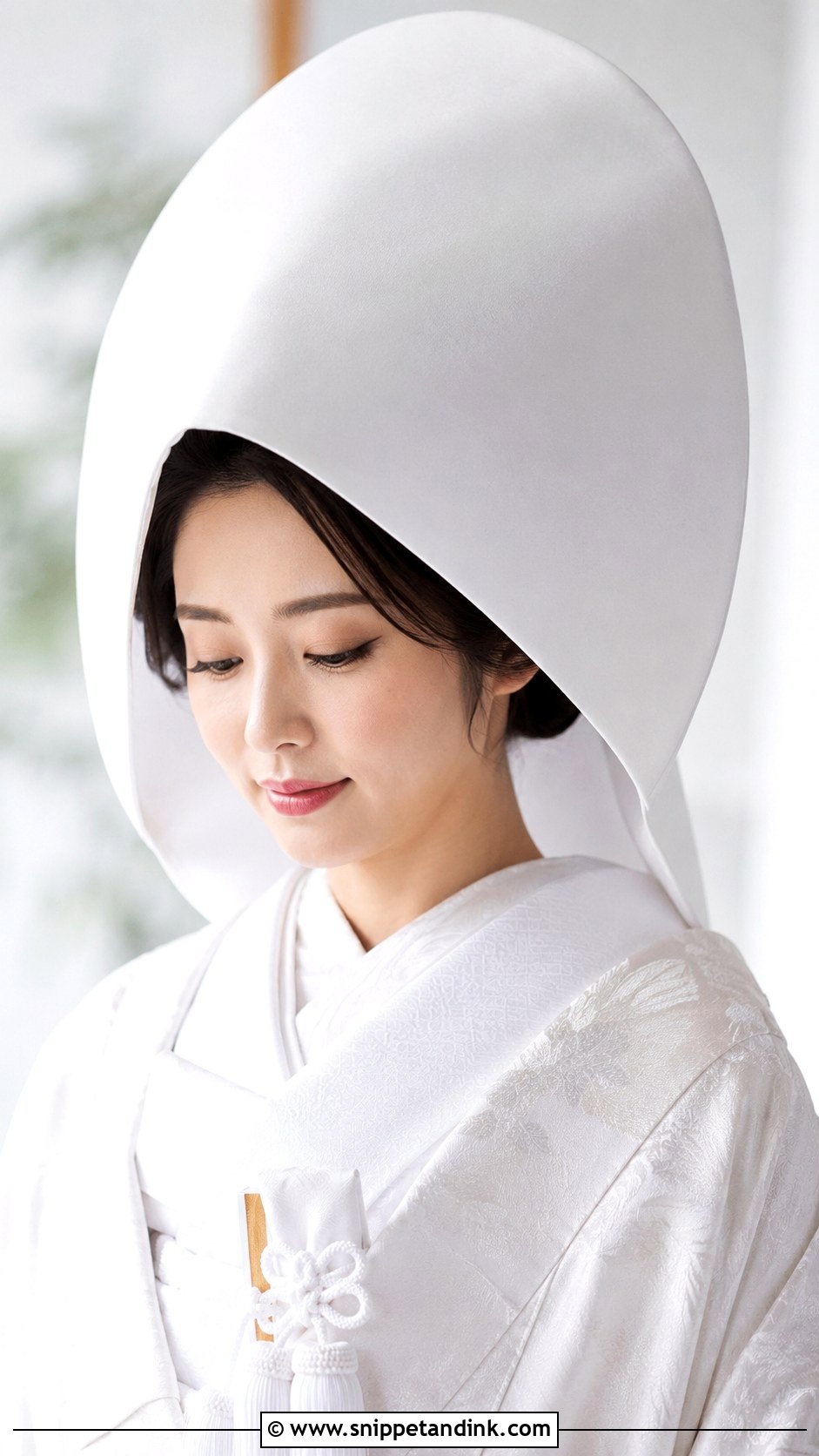
The wataboshi is a deep white hood worn with shiromuku, usually over a takashimada wig or, if you have the length, a smooth traditional updo on your own hair. It hides almost everything I’d normally fuss over, and that changes the priorities. What shows is your face, the edge of the hood and the back of the neck. I put the effort into clean brows, a smooth nape and makeup that reads soft in profile, because the hood frames you from the side in most ceremony photos. Don’t let anyone loosen the base for comfort before the ceremony ends; the hood only keeps its rounded shape when the hair underneath is firm.
3. Japanese Wedding Tsunokakushi Hairstyle
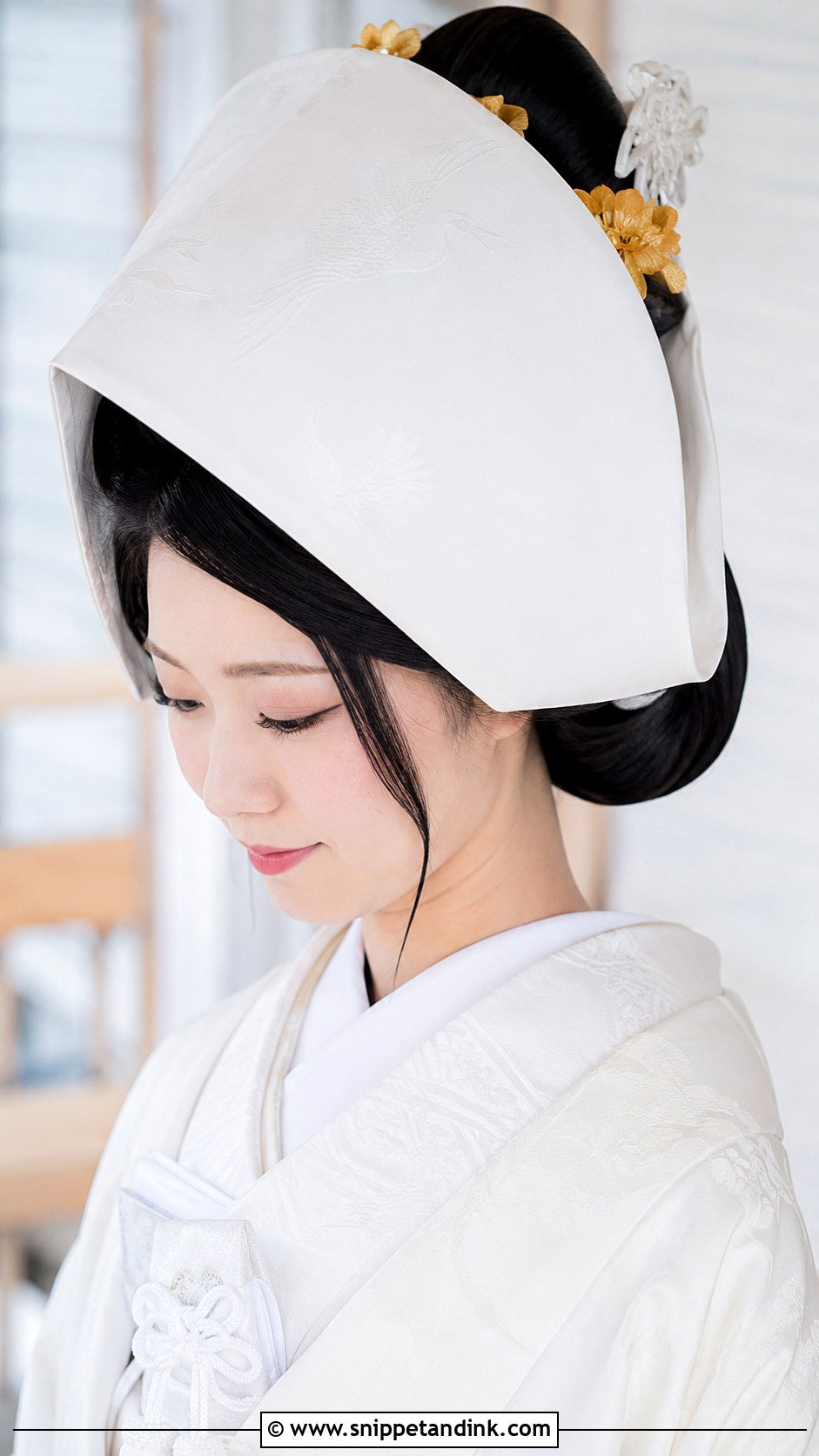
Tsunokakushi is a band of white fabric wrapped across the front and top of the head, so more of the face and more of the hairstyle show than with a wataboshi. It’s usually worn over bunkin takashimada or a formal bridal wig. Because the band sits right at the hairline, the wig front has to be perfectly level; any tilt shows straight away in front-facing portraits. I like it when a bride wants ceremony formality without hiding the whole shape. Worn with shiromuku it gives an all-white image, and a few subtle kanzashi can peek out behind the band.
4. Japanese Wedding Nihongami Hairstyle
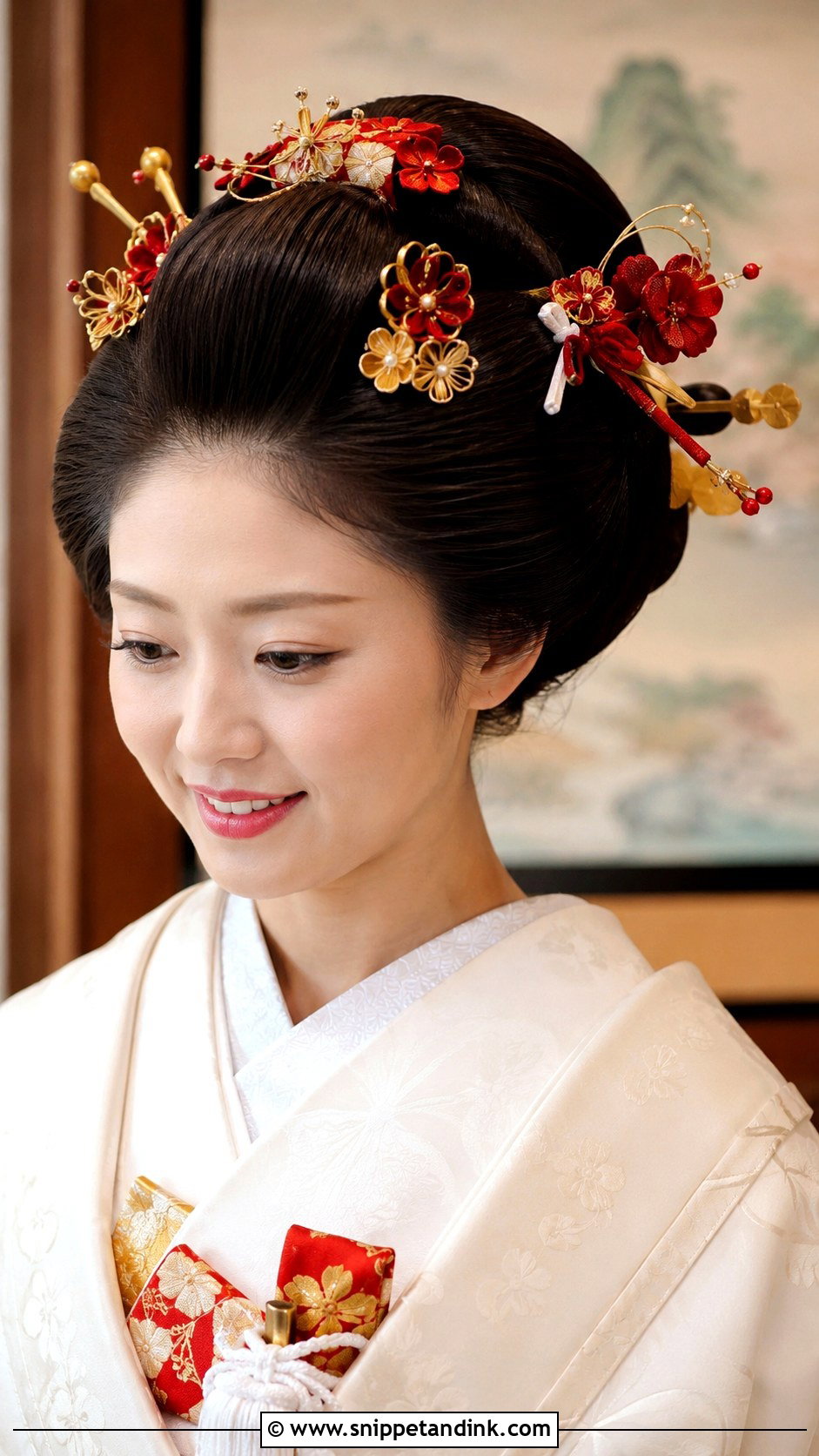
Nihongami is the umbrella name for traditional Japanese hair shaping, and takashimada is only one of its forms. For a wedding it’s built in smooth sections with rounded volume and ornaments placed at fixed points, so it reads as formal without tipping into costume. The lifted shape balances a wide kimono collar and layered fabric better than any modern bun. Building it on your own hair takes real length, a lot of pinning and usually some padding, and fine hair struggles to hold the side wings. If that’s you, a pre-styled wig is the kinder choice. Pick kanzashi in the kimono’s own colors.
5. Japanese Wedding Low Chignon
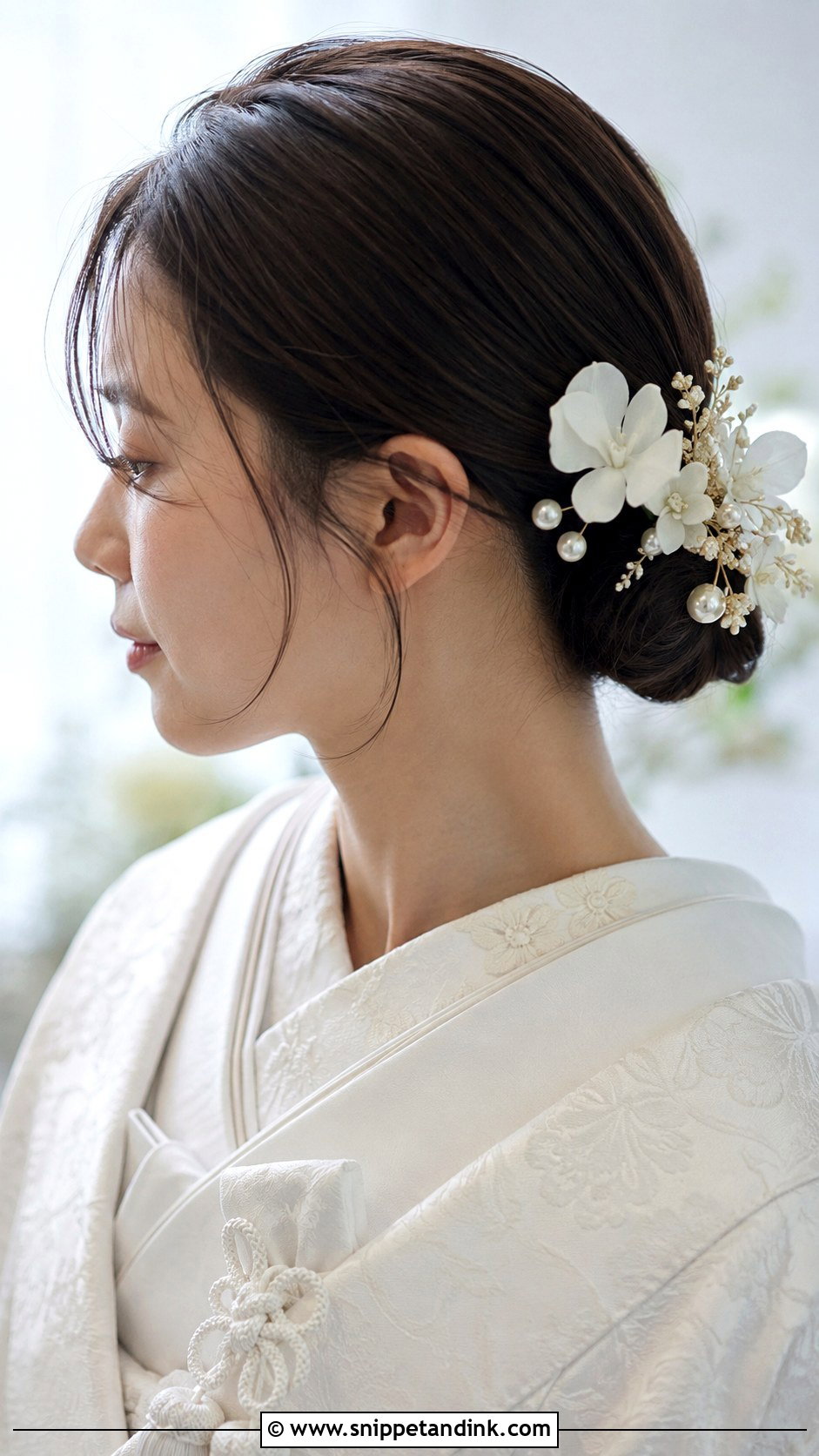
A low chignon is the style I reach for most when a bride wears kimono for the ceremony and a Western dress later, because it suits both. Sitting at the nape, it keeps the back of the neck long and leaves the kimono collar room to stand away from the skin, which is the line traditional dressing is built around. It also lies flat enough to sit under a wataboshi. Make it sleek for the ceremony and loosen a few pieces for the reception. Medium hair usually needs padding or a small clip-in piece to get a full shape, and pearl pins or fresh flowers finish it.
6. Japanese Wedding Kanzashi Bun
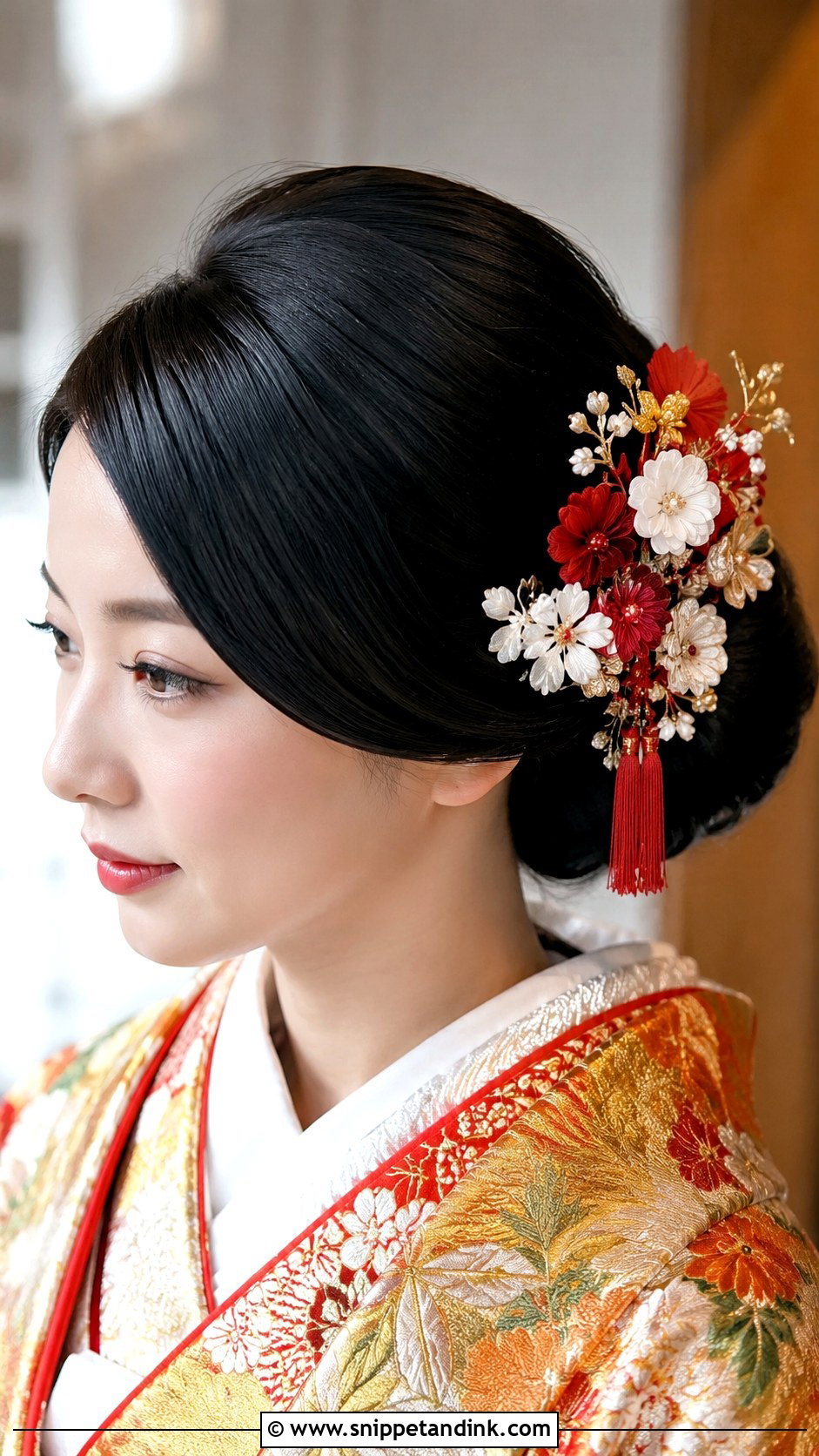
With this bun the ornament leads, so I choose the kanzashi before I decide where the bun goes. A heavy comb or a dangling bira-bira piece needs a dense, firmly pinned base, otherwise it drags the bun down within an hour. Placement then follows face shape and the kimono neckline: low and centered for a formal collar, a little to one side if you want the ornament visible in profile. The colors work best when they echo the shades in an iro uchikake. Keep the bun smooth if the kimono is busy, and add texture only when the outfit is plain.
7. Japanese Wedding Sleek Bun
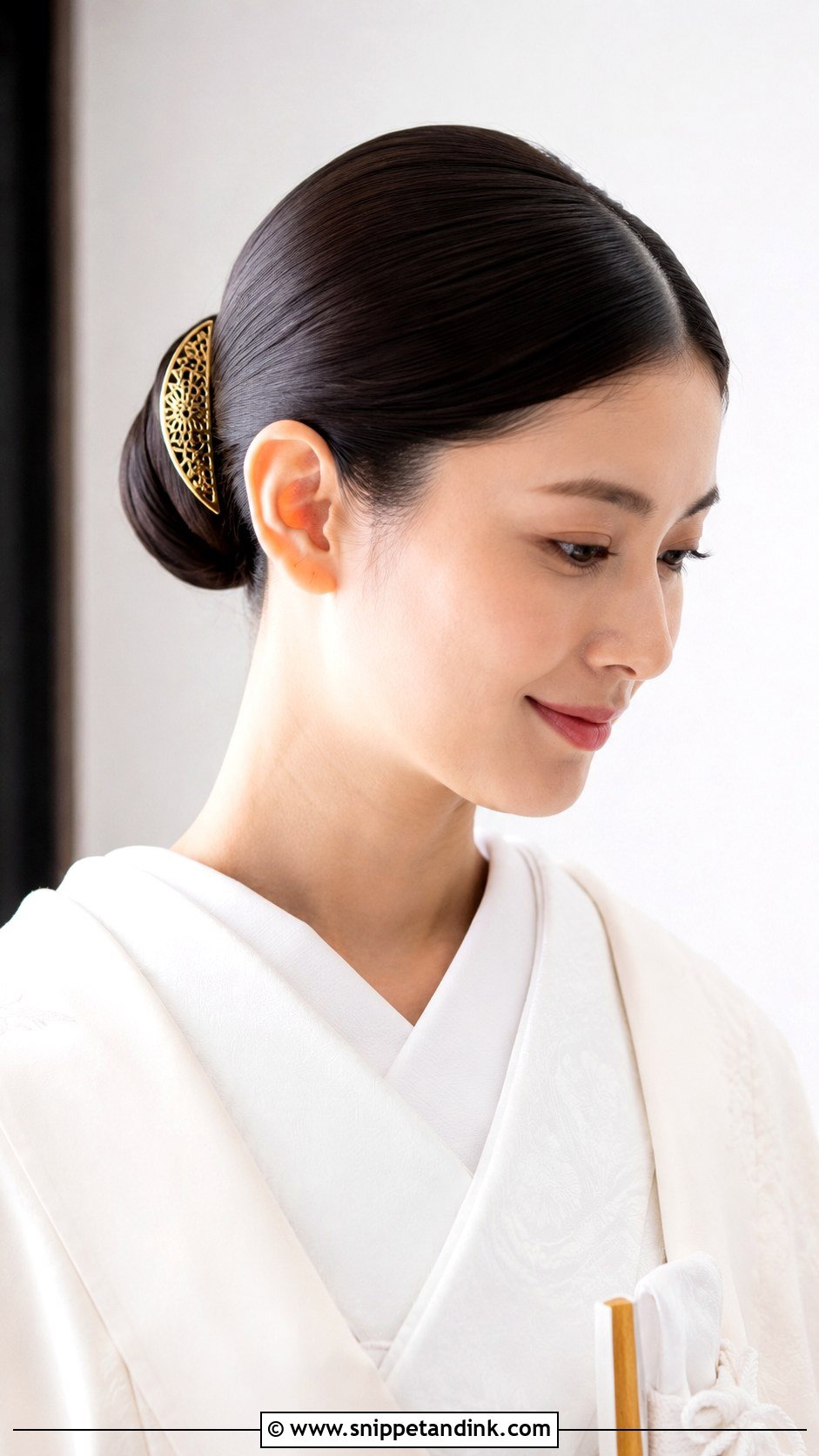
If your kimono has a bold pattern, this is the one I’d suggest, because a sleek bun simply gets out of its way. The hair is smoothed back and wound tight at the back or the nape. The catch is that sleek styles show everything: flyaways, a wobbly part, a bump at the crown. I work in a light cream or gel rather than piling on hairspray, and I set the part first, center or side, before anything gets pulled back. It suits minimalist Western gowns too. One statement comb or a small kanzashi is enough.
8. Japanese Wedding Soft Updo
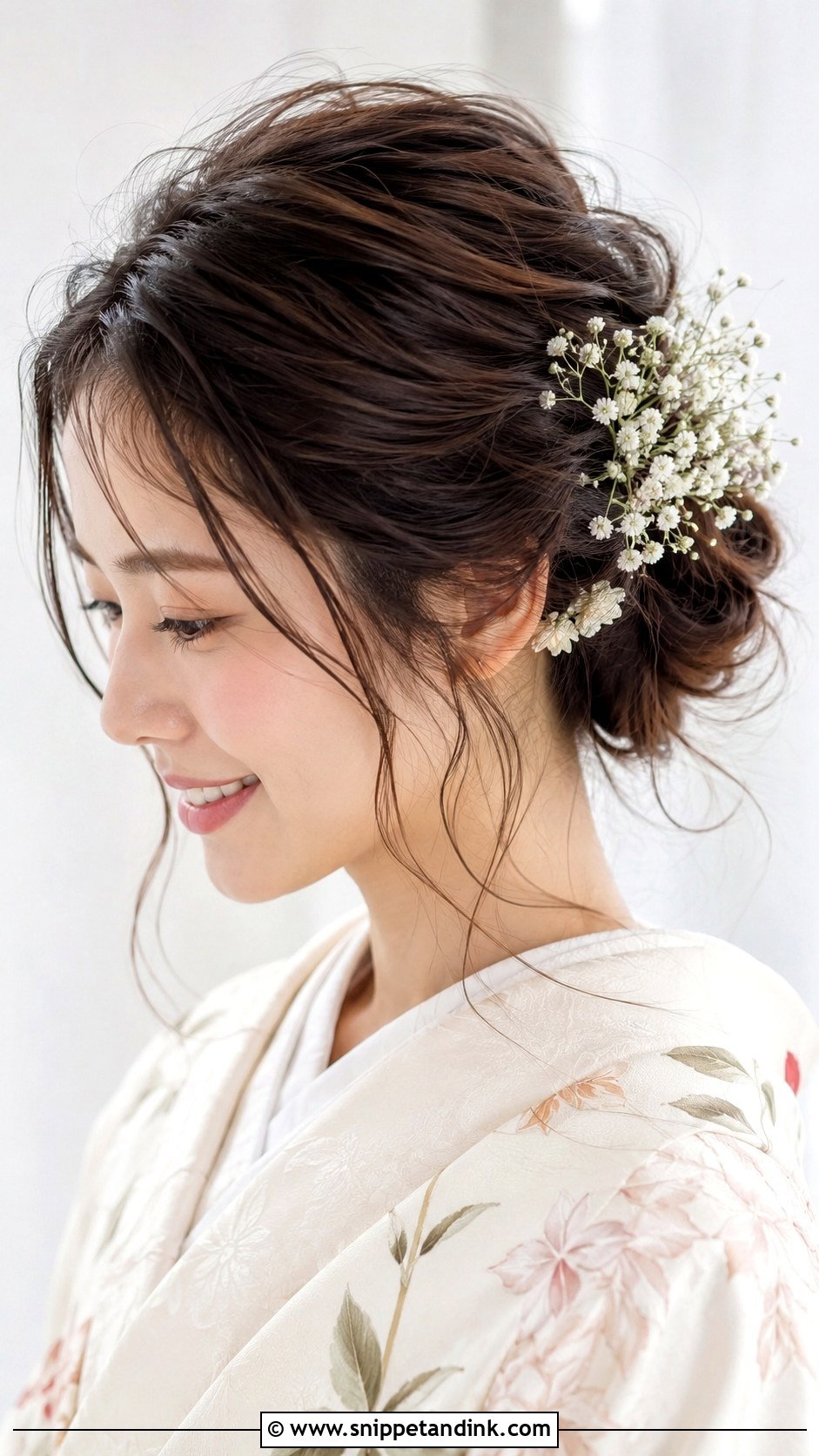
A soft updo gives you a Japanese-inspired look without a wig or a head covering, which is why it’s popular with a colored kimono, a white gown or a reception dress. The hair is pinned loosely with some volume at the crown and a few pieces left near the face. Soft and secure pull against each other, though. I anchor the base firmly with crossed bobby pins and only loosen the outer layer, so it looks airy while the structure underneath stays put through hugs and photos. Small flowers or fine gold pins tuck into the back easily.
9. Japanese Wedding Braided Updo
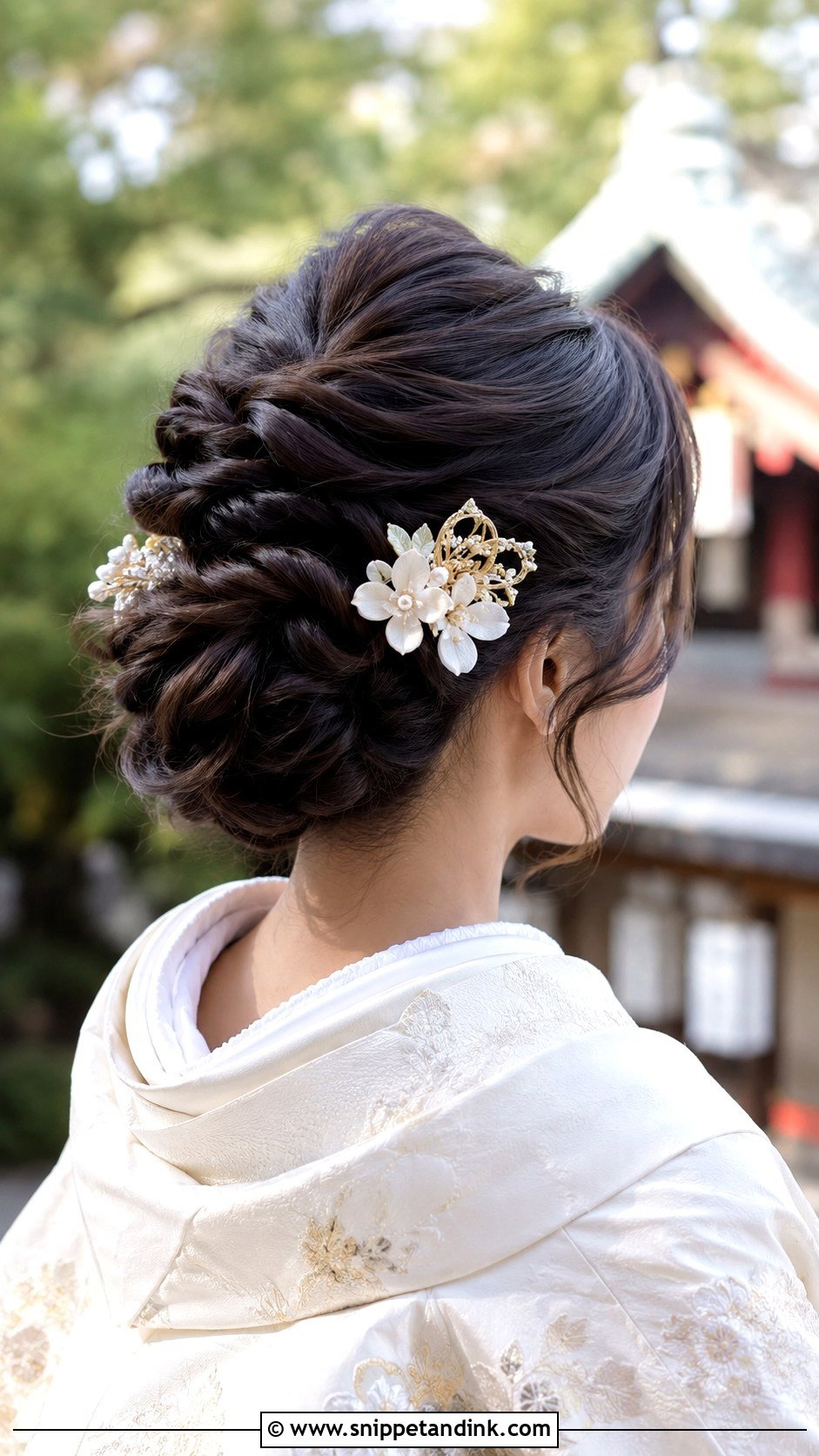
Braids add texture while keeping the hair lifted, and they can wrap into a low bun, cross the crown or frame the back of the head. Long hair suits this best. With shoulder-length hair the braid is too short to wrap and the ends start poking out, so I’d choose a different style. Braids hold up well outdoors, which matters for garden ceremonies and destination weddings in Japan, where you may be walking through shrine grounds between shots. Place slim kanzashi or a few pearl pins along the braid rather than clustering them in one spot.
10. Japanese Wedding Half Up Hairstyle
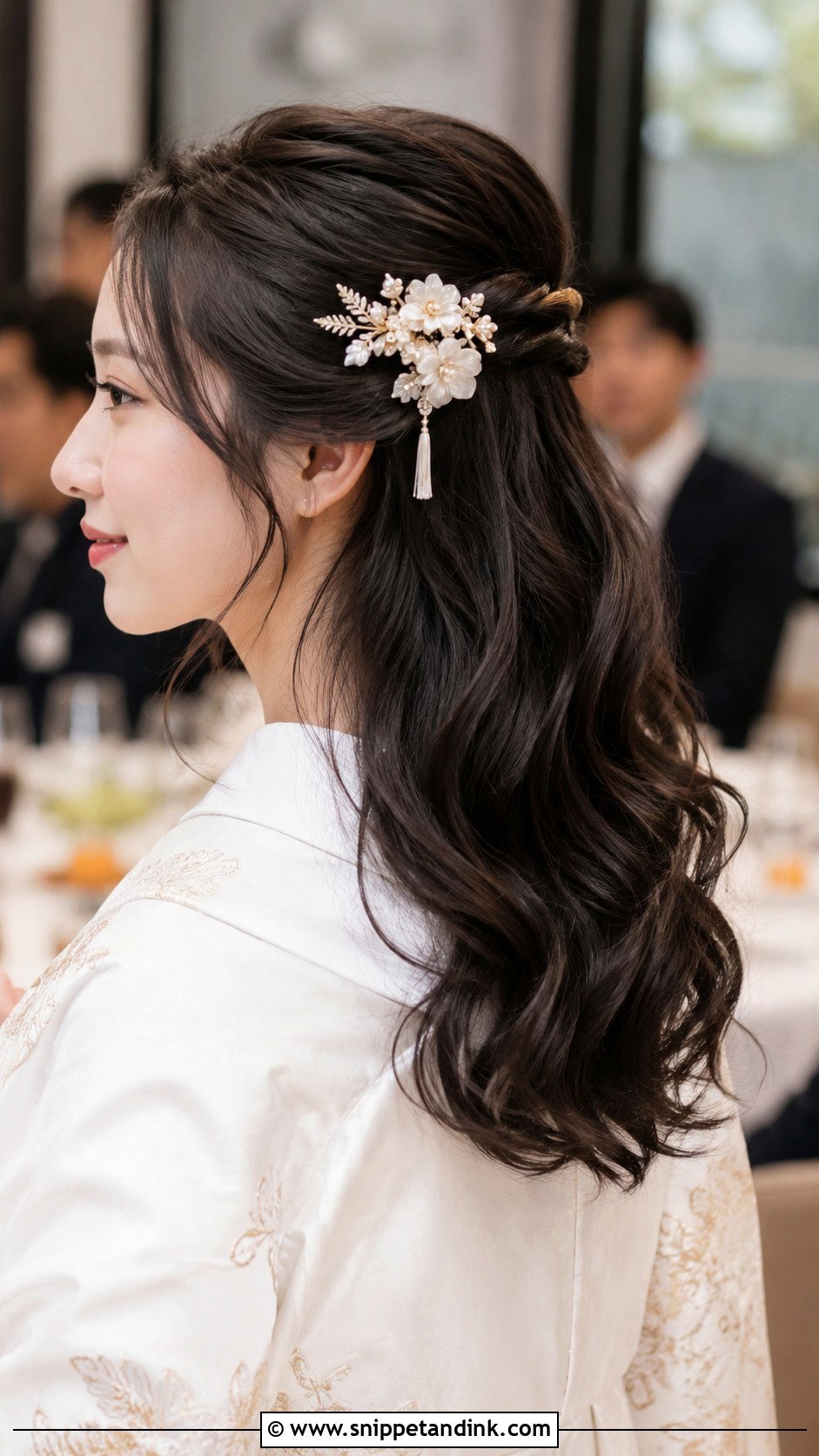
Here the top section is pinned back and the rest falls in smooth waves or gentle curls. I usually suggest a half up for the reception, an engagement shoot or a second outfit such as a lighter kimono, a hikifurisode or a Western dress. It needs care, though. Loose lengths rub against a kimono collar and lose their curl faster than an updo, so I set the curls well and pin them to cool before brushing out. Put a small comb or kanzashi right where the pinned section meets, and keep the crown controlled so it still reads bridal from behind.
11. Japanese Wedding Low Ponytail
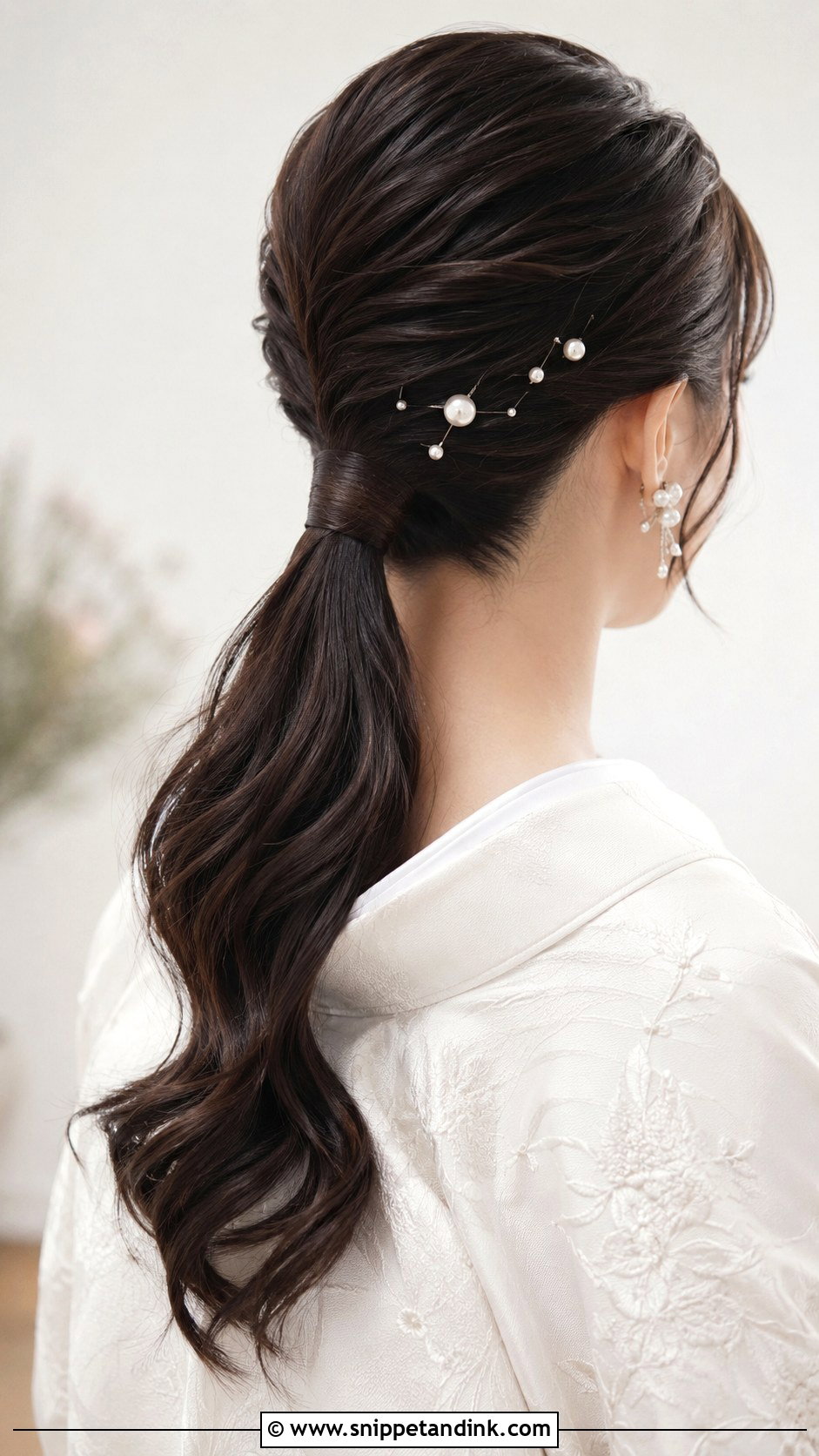
Gathered low at the nape, then smoothed, waved or wrapped with a strand of its own hair, a low ponytail is simple and comfortable for hours. It needs little pinning, and the length runs down the back without hiding the face. My honest caution is with kimono: a long ponytail lies right over the open nape that kimono dressing is designed to show, so I think it sits better with a Western dress or a reception outfit. A silk ribbon or a small kanzashi comb at the tie gives it the Japanese touch.
12. Japanese Wedding Bob Hairstyle
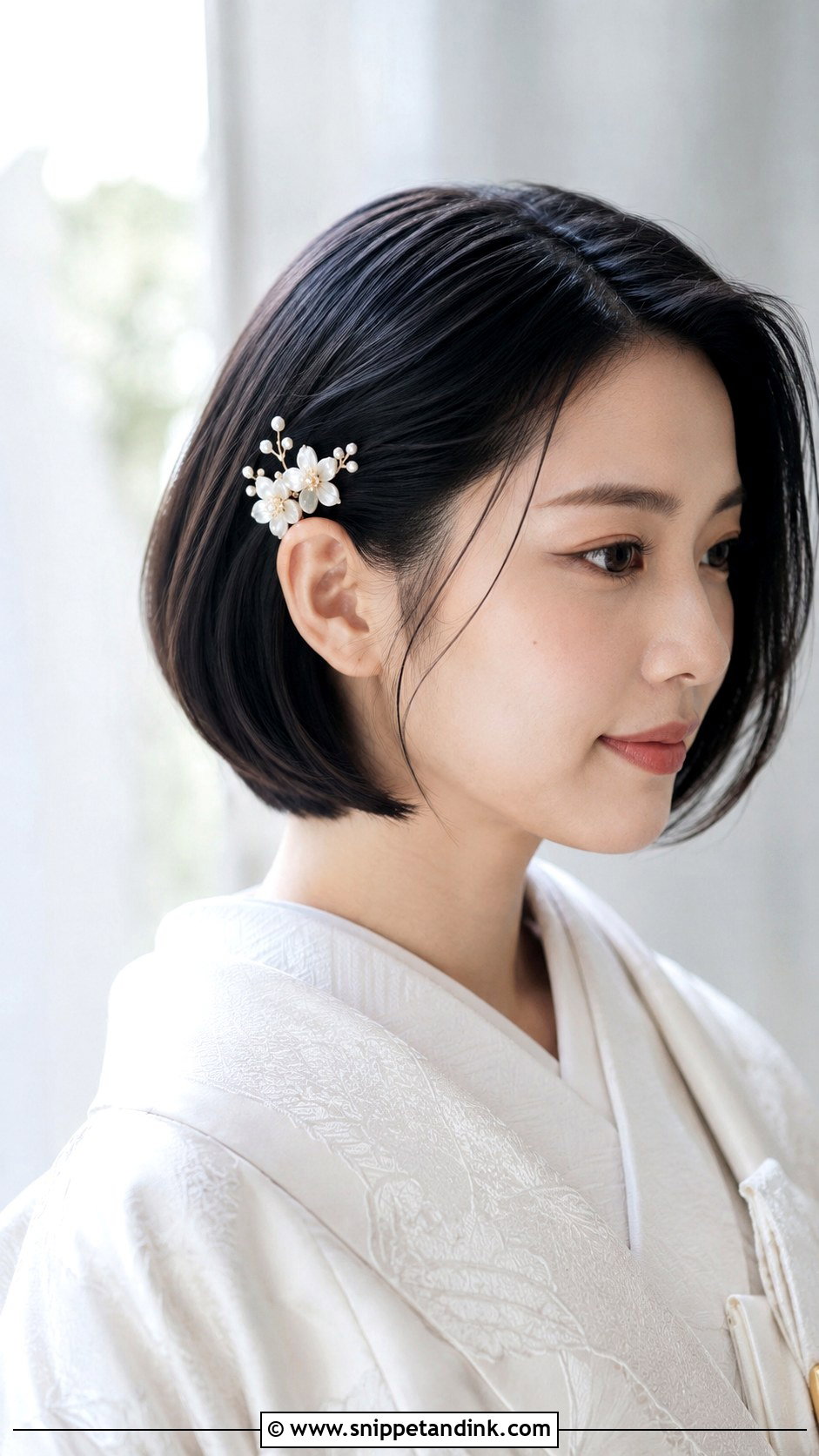
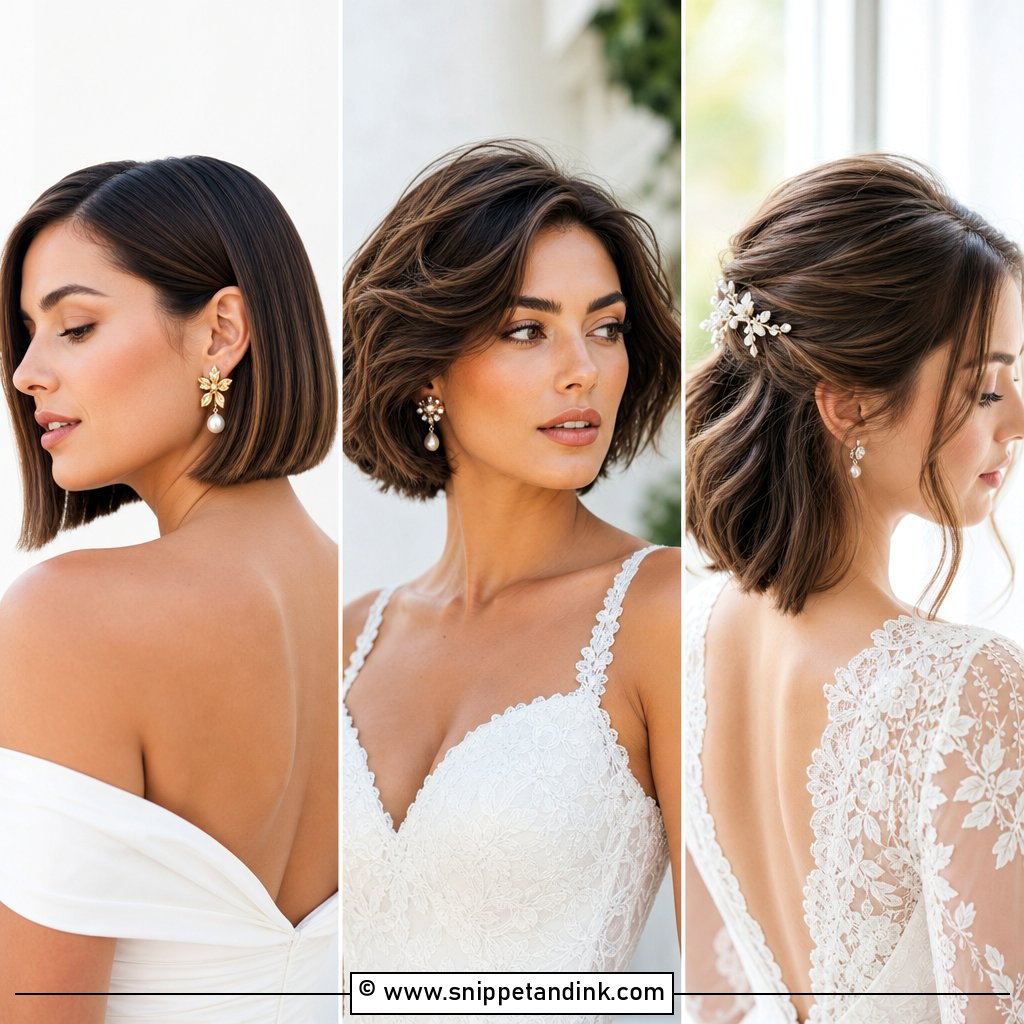
A bob can be worn smooth, softly curled under or tucked behind one ear with a decorative pin, and it pairs well with modern kimono styling without any extensions. The detail I watch is the ends. Against a high collar, a bob catches on the fabric and flicks outward, so I bevel the ends under with a round brush or flat iron and set them with a little spray. If the outfit is detailed, keep the bob glossy and plain. If it’s minimal, add a floral kanzashi or a pearl clip, and shape the bob so it frames the jawline.
13. Japanese Wedding Short Hair
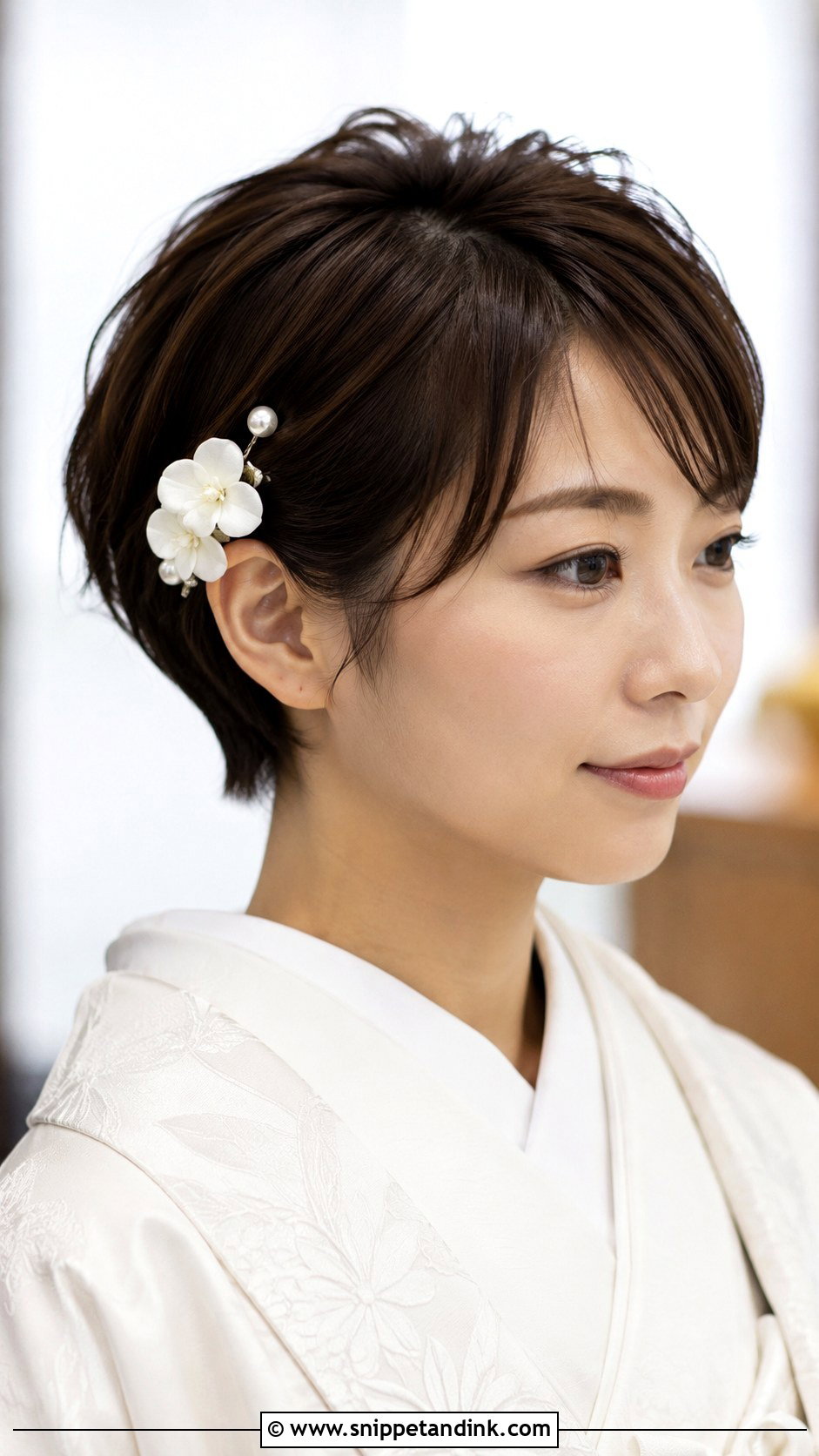
Short hair looks bridal when the shape is clearly deliberate. A pixie, cropped bob or short layered cut can be worn smooth, softly waved or tucked with tiny accessories. The real problem with short hair is grip: ornaments need something to hold, so I set a hidden bobby pin crosswise first and slide the kanzashi or pearl clip into it. One small piece or a fresh flower near one side is plenty. Get the cut refreshed a week or two before, and keep the finish glossy so it holds its own next to heavy kimono fabric.
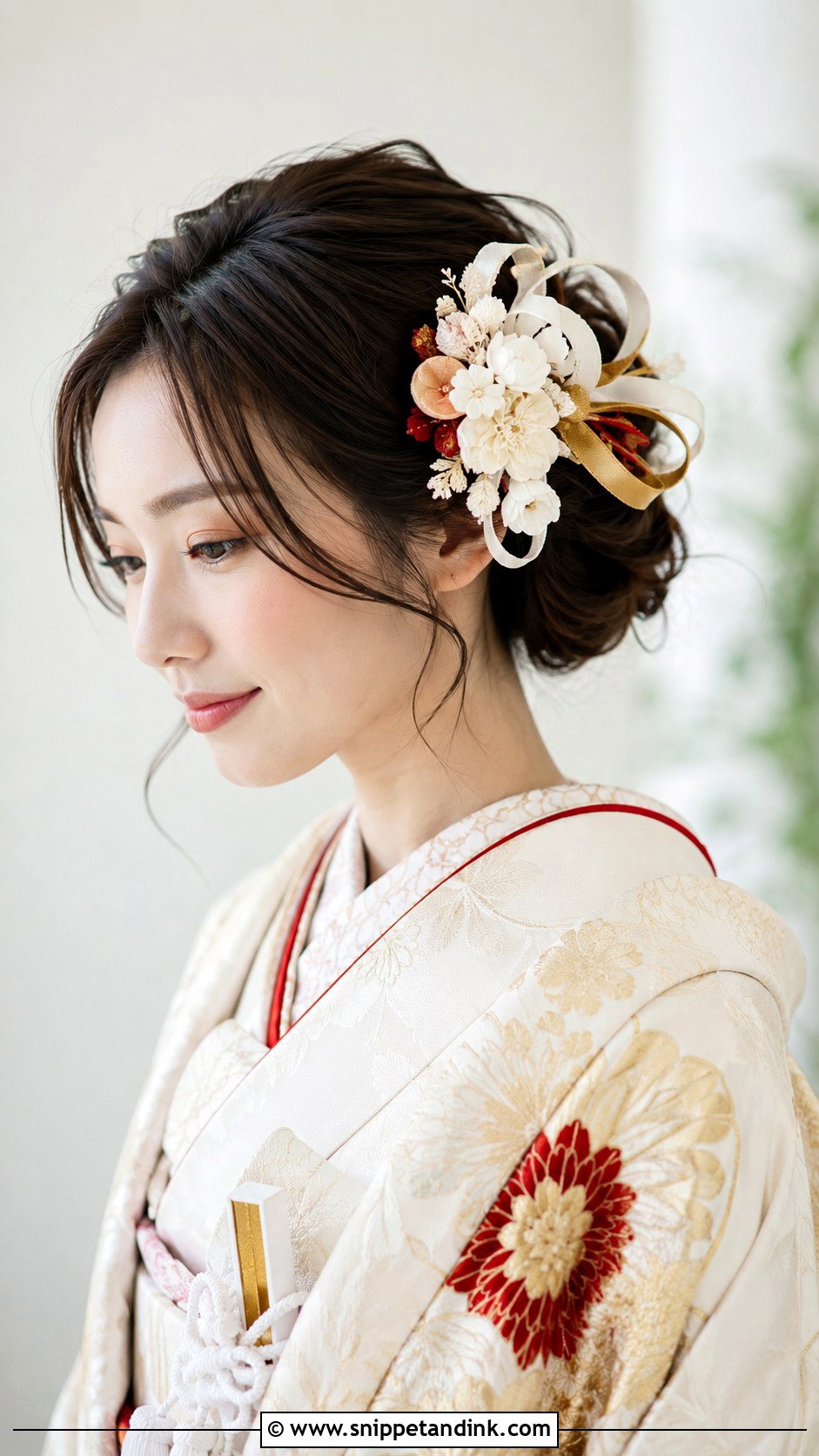
14. Japanese Wedding Iro Uchikake Hairstyle
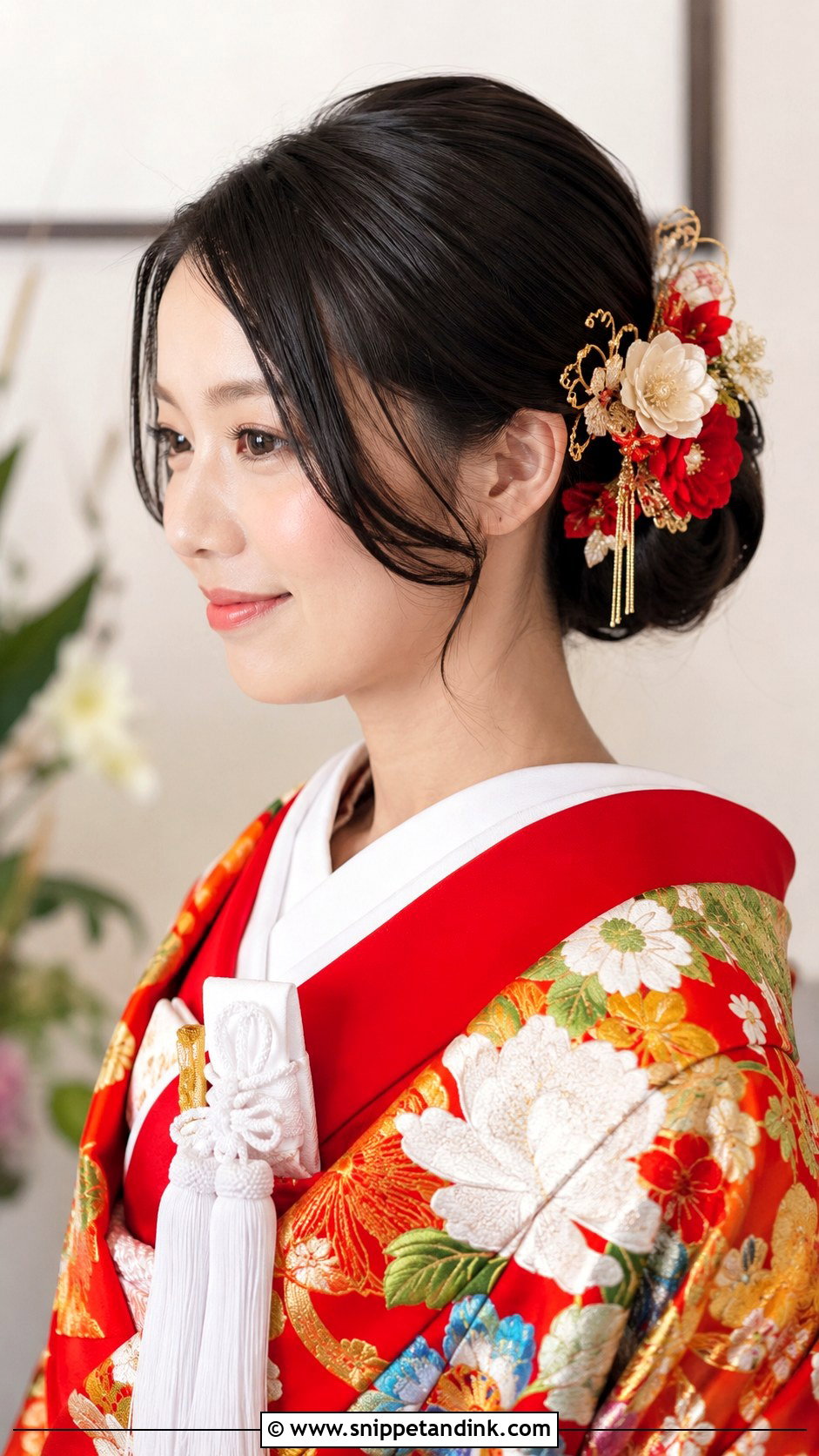
Iro uchikake carries the color, often red or gold with cranes, flowers or seasonal motifs in heavy embroidery, so the hair should calm things down. A low chignon, a smooth bun or a traditional updo all work, as long as the kanzashi repeats one or two colors from the bridal kimono instead of introducing new ones. Many brides change into it after a shiromuku ceremony, so these tend to be the joyful portraits of the day. Keep face-framing pieces soft and controlled; the kimono already has plenty of movement.
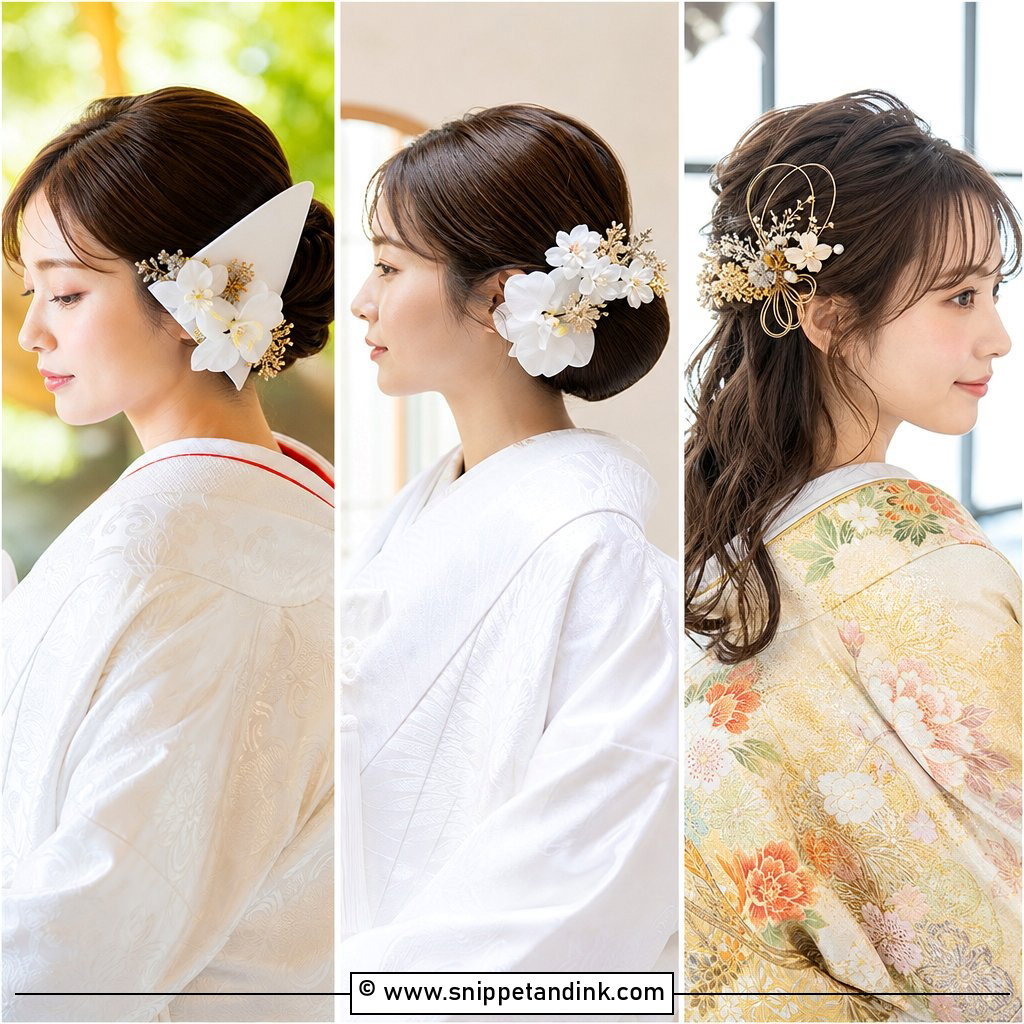
15. Japanese Wedding Hikifurisode Hairstyle
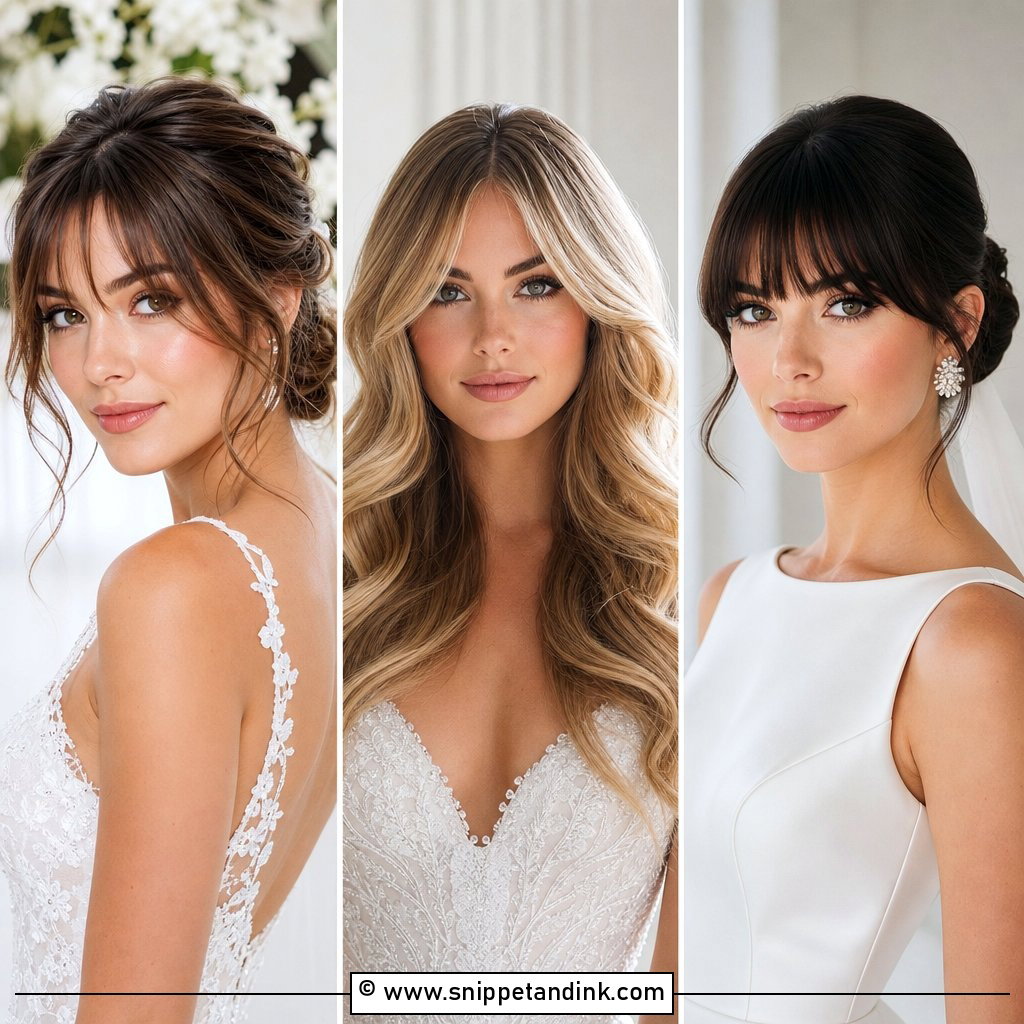
Hikifurisode, the long-sleeved bridal kimono with a trailing hem, is a little lighter and more fashion-led than shiromuku, so the hair can loosen up too. A side bun, a soft updo, a half up or polished waves all suit it. The sleeves are what I watch. They swing wide every time you lift your arms, and long loose hair tangles in them, so if you’re wearing it down I’d keep it over one shoulder. Floral kanzashi or ribbon that matches the kimono pattern finishes it, and a tidy neckline stops sleeves and hair from competing.
Swapping the Wig for Your Own Hair at the Outfit Change
Many Japanese weddings include an outfit change, often from shiromuku to iro uchikake, or from kimono to a Western dress for the reception. If the ceremony look was a wig, your own hair has spent hours pressed flat and wrapped. It comes out creased and a little damp at the roots, and it won’t bounce back on its own.
So I prep for the second look before the wig ever goes on. Pin curls set while you’re under the wig, and when they’re released there’s already some wave to work with. After that, a few minutes with a dryer at the roots and a light texture spray is usually all a low chignon or a half up needs. A sleek bun is the easiest style to rescue. Loose waves on fine hair are the hardest, so I’d avoid them for a quick change.
How much time to leave
Allow more time than the dressing alone suggests: kimono off, wig off, hair reworked, makeup adjusted for a new outfit and different lighting. Ask your planner or venue how long they normally schedule. If the gap is tight, pick a second hairstyle that starts from wrapped, flattened hair instead of fighting it.
Kanzashi move well between looks. If the ornaments you chose echo your iro uchikake, they can go straight into the reception bun and tie the two halves of the day together.
Your Ceremony Kimono Decides Half of This
Start with the ceremony outfit and most of the decision makes itself. Shiromuku usually means a formal bunkin takashimada wig under a wataboshi or tsunokakushi, while a colored kimono or a gown opens the door to a chignon with kanzashi, braids, a ponytail or a short cut worn sleek. Whatever you pick has to suit the kimono or gown and stay secure for hours. Book a trial with the actual ornaments and, if you can, the collar or garment on, because a style that feels light in the mirror can feel very different once the kimono is tied.
You'll Like These Ideas:


Leave a Reply