
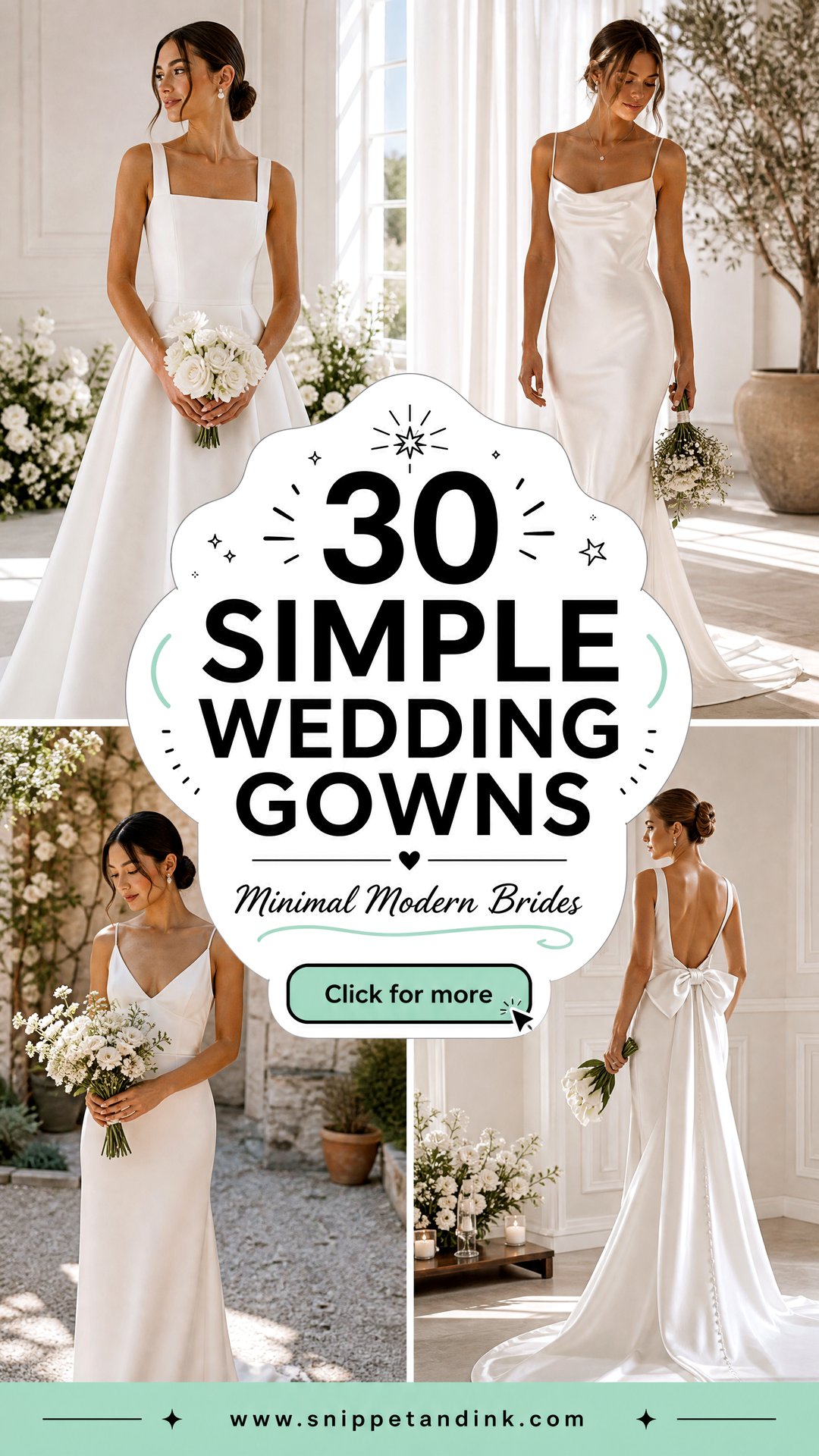
A minimal gown leaves nowhere to hide, and that’s its strength. Without sparkle, oversized volume or layers of lace, what you see is the fabric, the fit and the neckline, so those three have to be right. A plain dress can still read formal, romantic, modern or soft depending on the silhouette and what you wear with it. Satin, crepe, mikado, chiffon, organza and silk each set a different mood. In my fittings, the goal is a gown that looks like you on its own, then shoes, jewelry, a veil and flowers that back it up rather than talk over it. These thirty gowns are the ones I find myself recommending most to brides who want understatement.
Telling Good Crepe and Satin From Cheap Versions
On a beaded dress, embellishment can cover a so-so fabric. On a minimal gown, the fabric is the whole show, so it pays to know what you’re touching. I run through the same checks with every bride, whatever the label says.
- Gather a handful of skirt and let it drop. Good crepe and satin fall heavily and straight; thin fabric floats and wrinkles.
- Look at the sheen from a slight angle. Quality satin has a soft, deep glow. A hard, glassy shine usually looks harsher in flash photos.
- Check the seams. Puckering or rippling along a side seam won’t disappear with alterations on a plain fabric.
- Feel the lining. A full lining in a breathable fabric matters more in a long day than the outer fabric’s name.
- Ask what it’s made of. Silk breathes but marks with water; polyester is tougher and cheaper but warmer and more prone to static.
Polyester isn’t a dirty word. Many well-made modern gowns use it, and it survives a long, hot day better than silk in some ways. What matters is weight and finish, so judge the cloth in your hand, not the price tag.
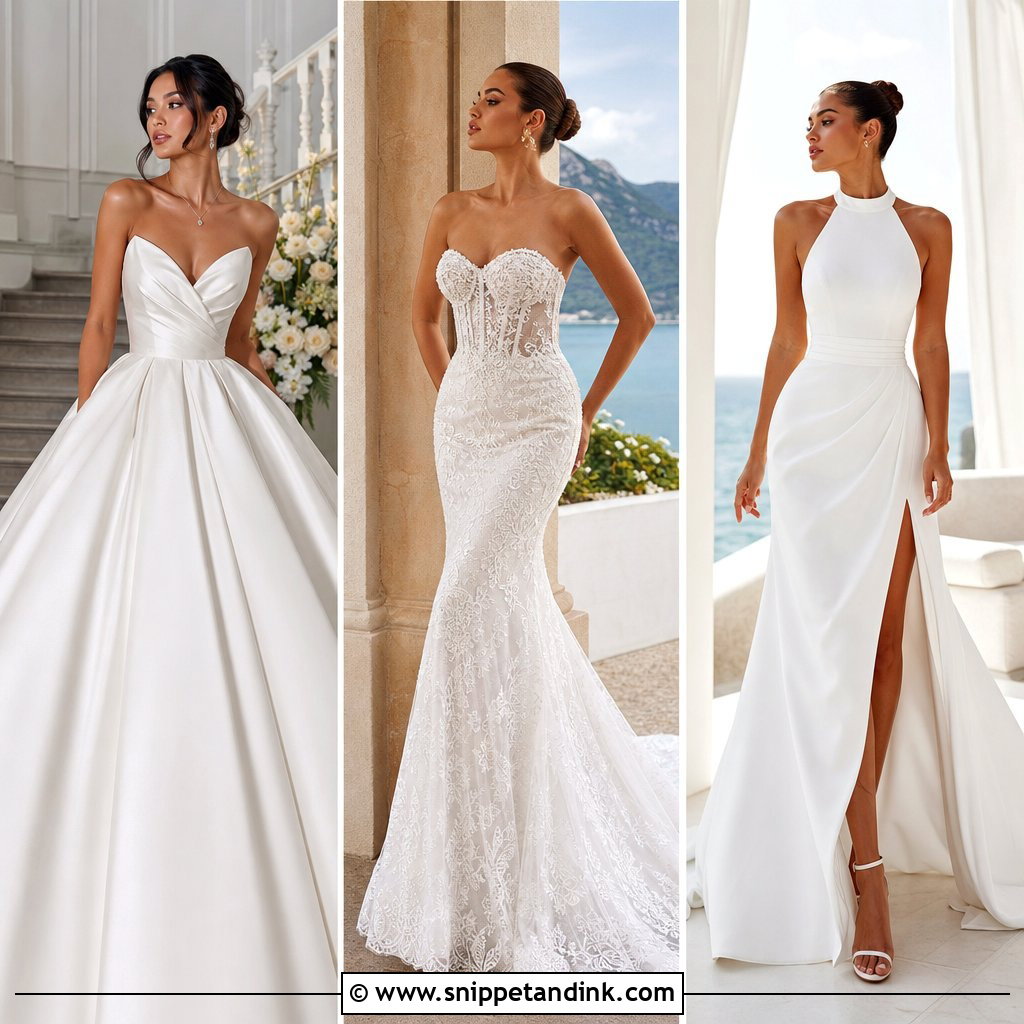
1. Simple Satin A Line Wedding Gown
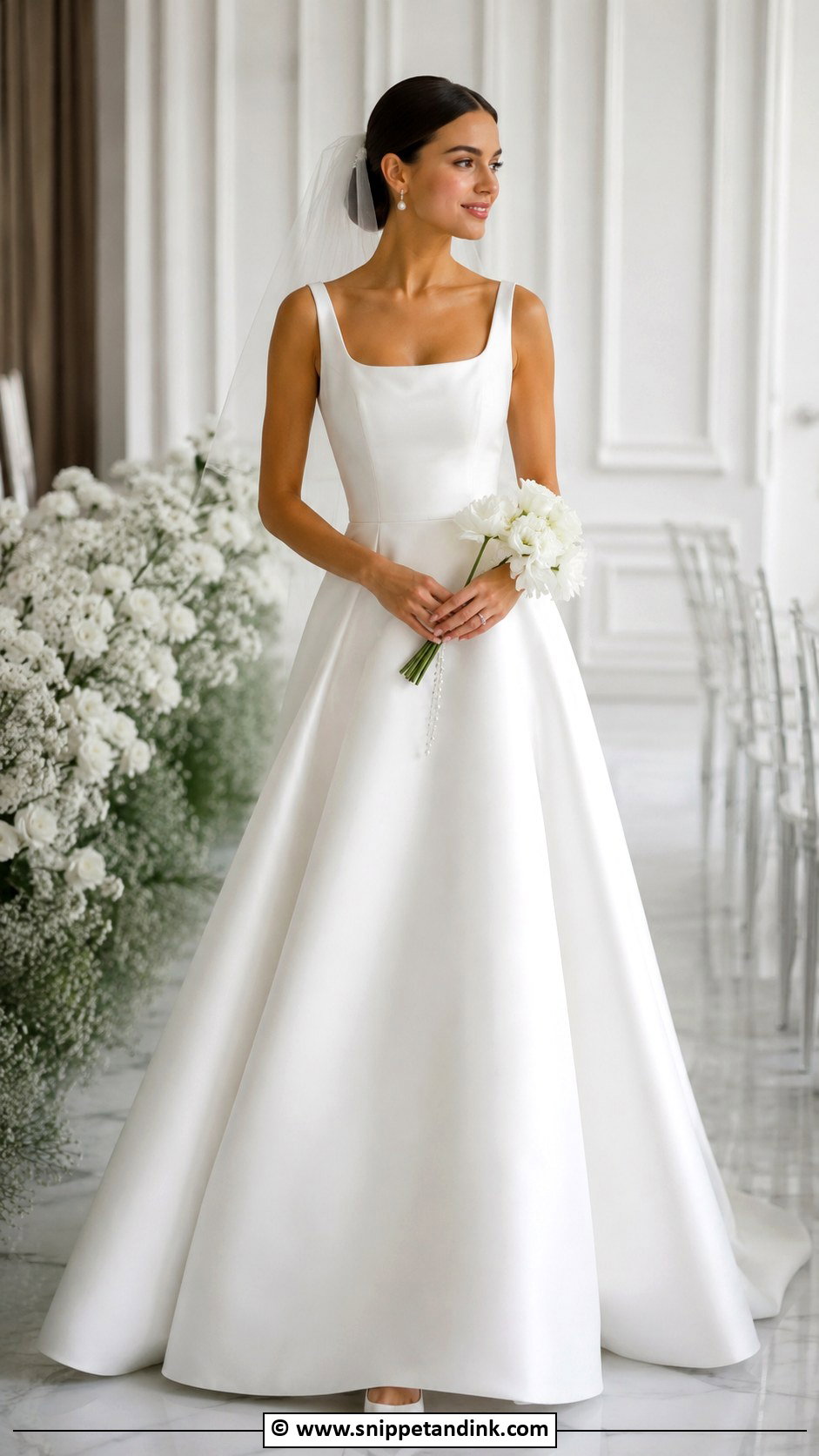
Most brides who try a satin A-line on stop looking at the rack. The fitted bodice holds you, the skirt moves away from the waist without much drama, and it suits a wide range of figures. A scoop, square or strapless neckline keeps it modern. I’d pair it with pearl studs, a short veil and pointed satin heels. It sits as comfortably in a ballroom as in a garden, and it’s the shape I’d point to if you want one dress that never feels like a risk.
2. Simple Crepe Sheath Wedding Gown
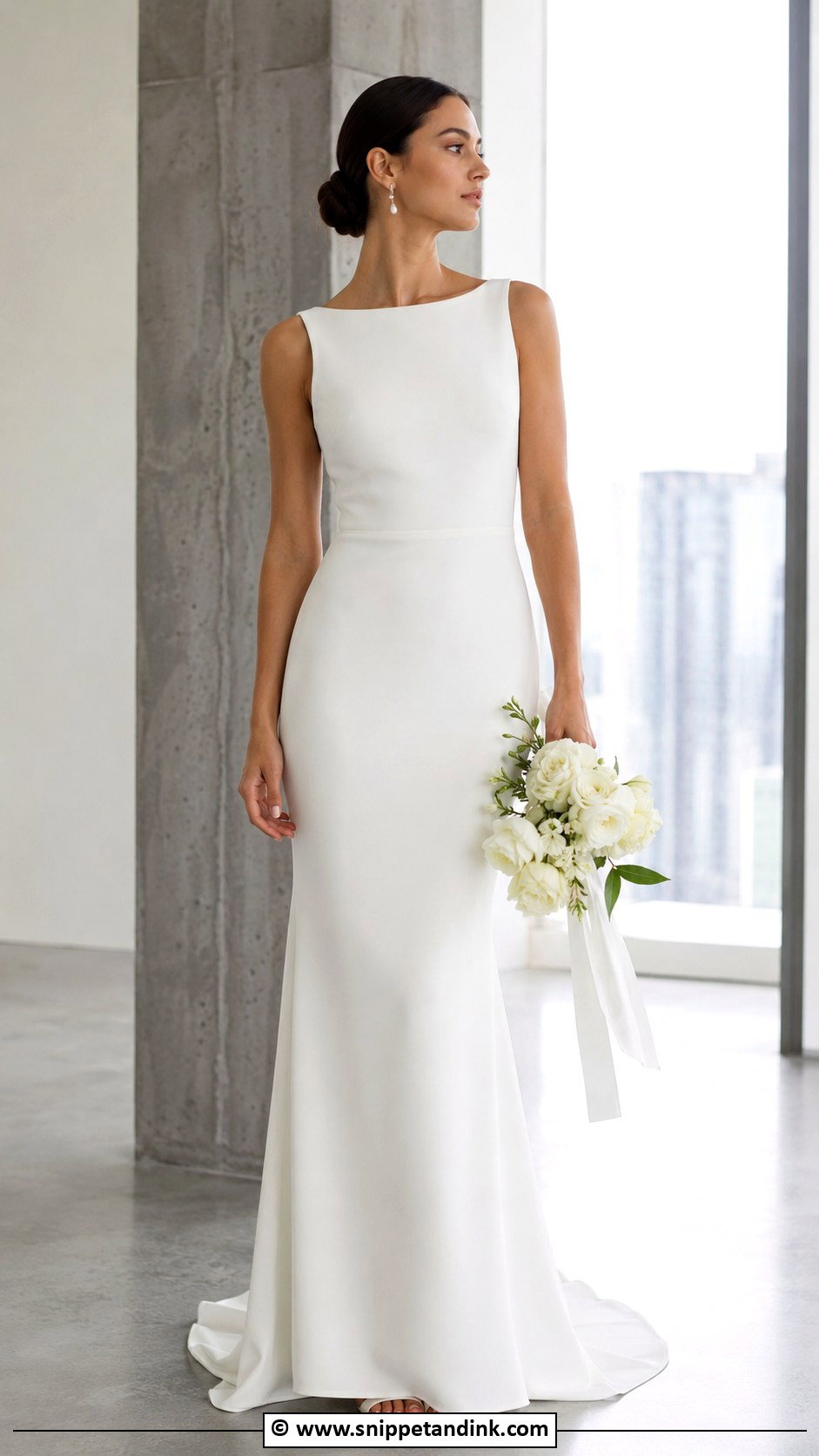
Crepe skims rather than clings, which is why a sheath in it looks sleek instead of tight. The narrow shape means fit carries everything, so I book an extra fitting for crepe sheaths and ask the bride to bring her actual underwear, since crepe shows the edge of anything underneath. Bateau, high and clean V necklines all suit it. A low bun, delicate drop earrings and slim heels finish it, and it feels very at home at a city ceremony.
3. Simple Square Neck Wedding Gown
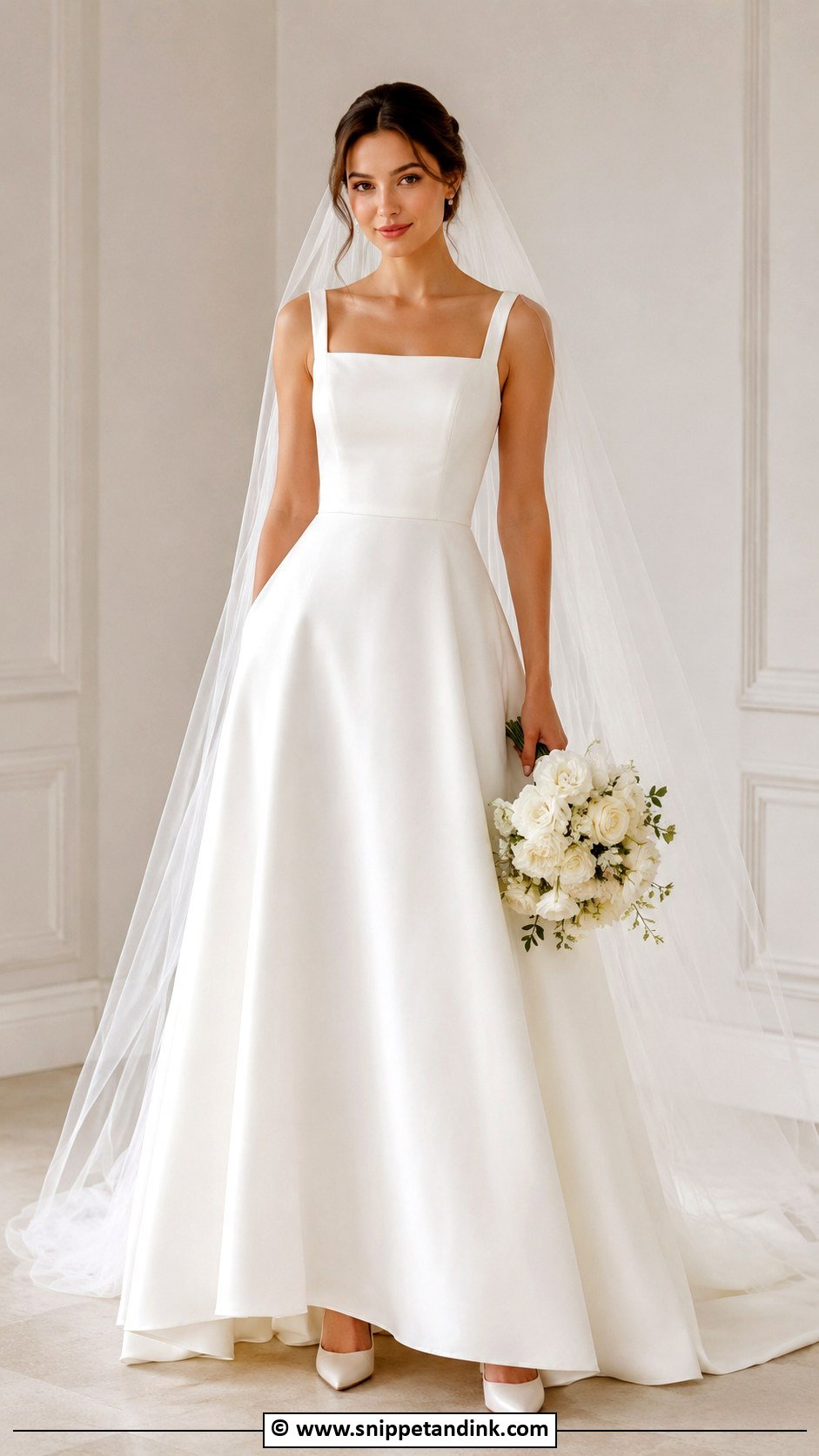
Square necklines put a straight, tailored edge right under the collarbone, which gives a plain bodice some architecture. It hints at vintage without looking costume. On a fitted gown, an A-line or a column, it stays clean. Thin straps read delicate; wider straps support a fuller bust and look more tailored. I’d keep the hair in soft waves and the jewelry minimal so the neckline holds the attention.
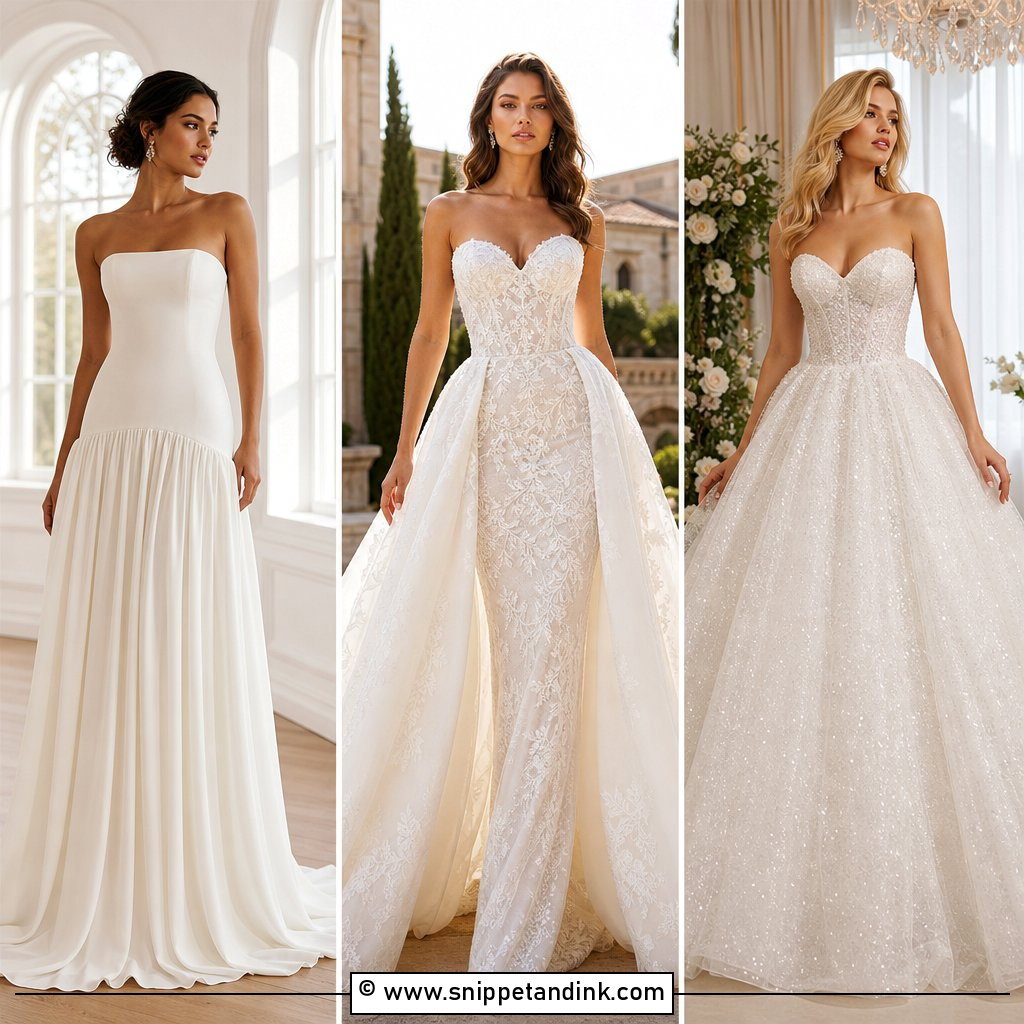
4. Simple Strapless Wedding Gown
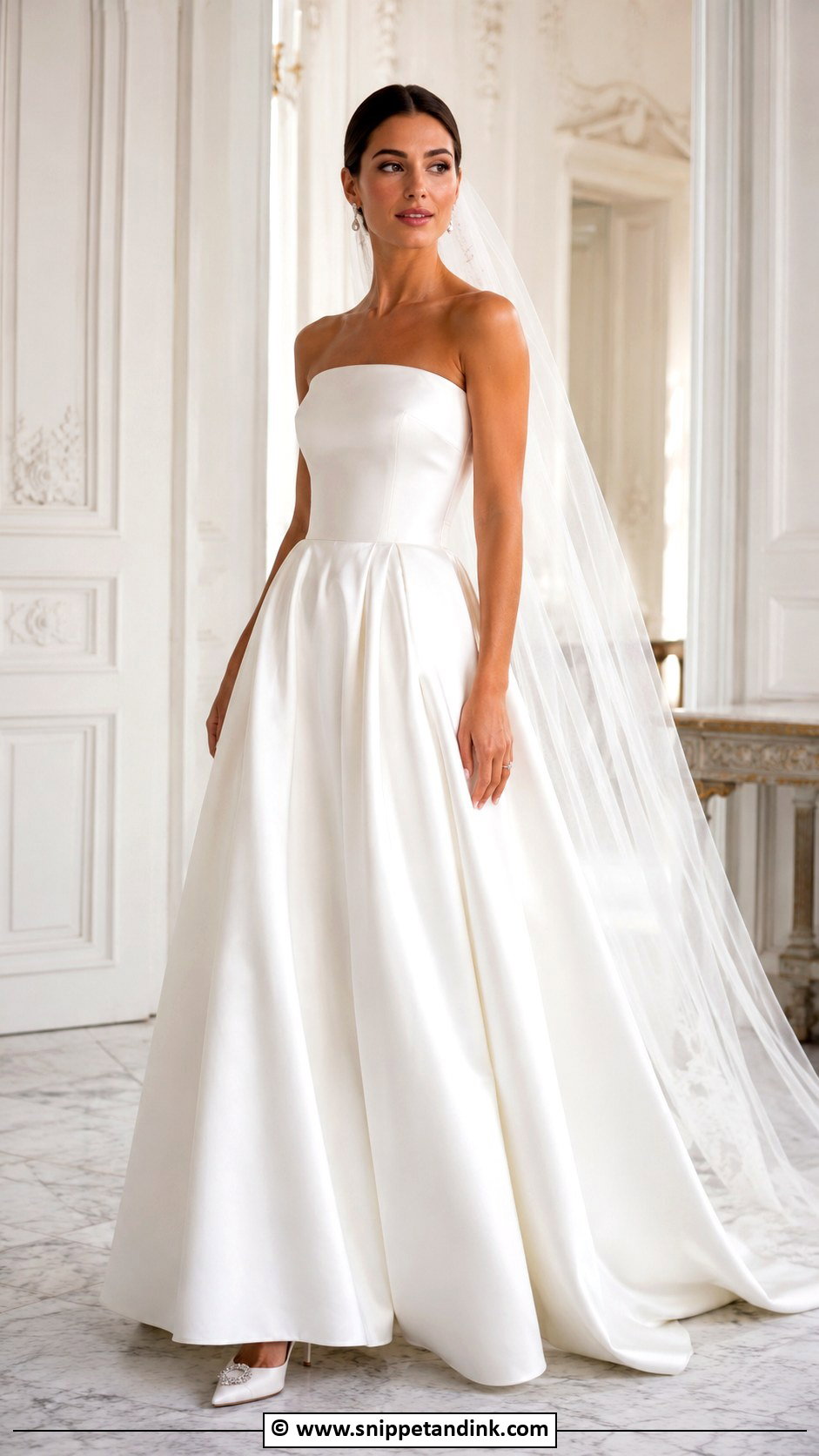
The success of a strapless gown is hidden inside it. Good boning, a waist stay and a bodice fitted snugly at the ribs keep it up while you walk, sit and dance; without them, you’ll hitch it all night. A straight-across neckline reads modern, while a soft sweetheart adds curve. I give strapless brides one styling rule: a sleek necklace or statement earrings, not both. A long veil brings back some ceremony weight.
5. Simple Long Sleeve Wedding Gown
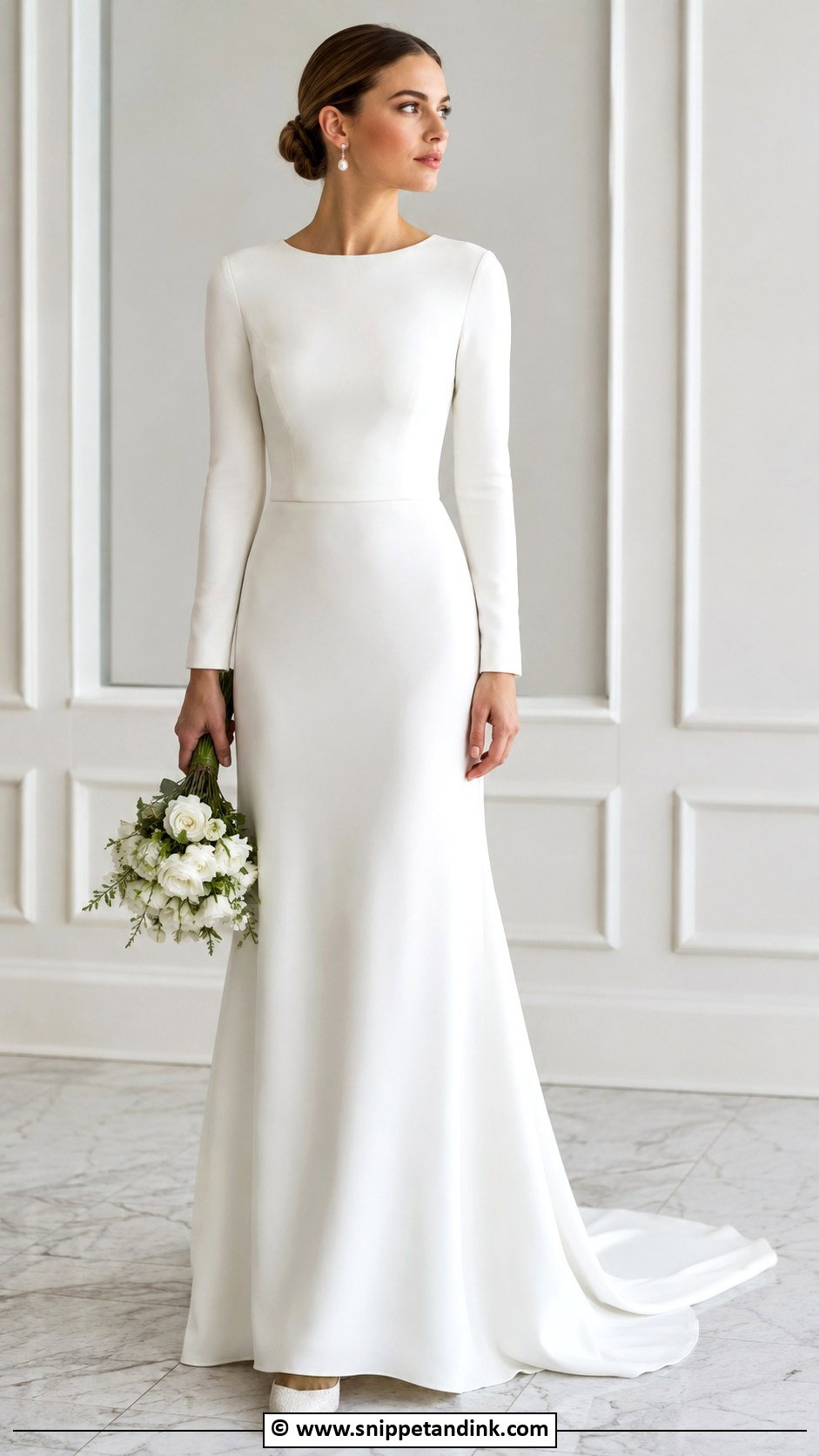
Sleeves in smooth crepe, satin or stretch mikado give coverage without any lace or beading, and they look very modern. Sheer sleeves soften the effect; fitted opaque ones feel more tailored. I check the armhole first, because a high, well-cut armhole lets you lift your arms while a low one drags the whole bodice up. Balance the top with a sheath, A-line or soft column skirt, and finish with a centre part, a low bun and pearl earrings.
6. Simple Off Shoulder Wedding Gown
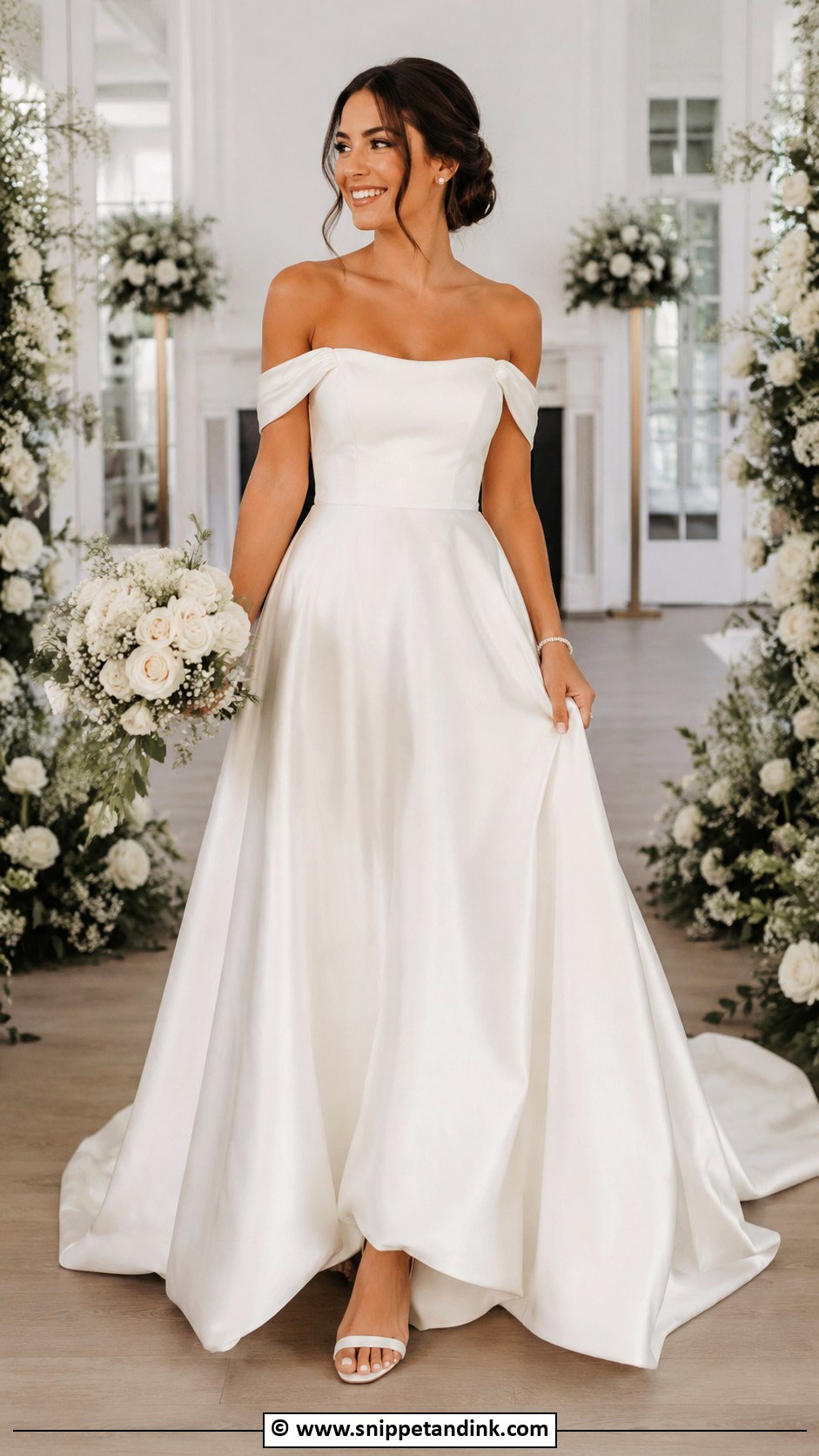
Off-shoulder necklines need a fabric with enough body to hold the band in place, which is why satin, crepe and mikado do it better than chiffon. The band frames the shoulders and collarbone without adding any decoration. On an A-line it reads classic; on a column, more modern. Before you commit, sit, hug and raise a glass in it, because a band that’s too tight cuts into the upper arm. Pearl studs, a slim bracelet and a simple veil are enough.
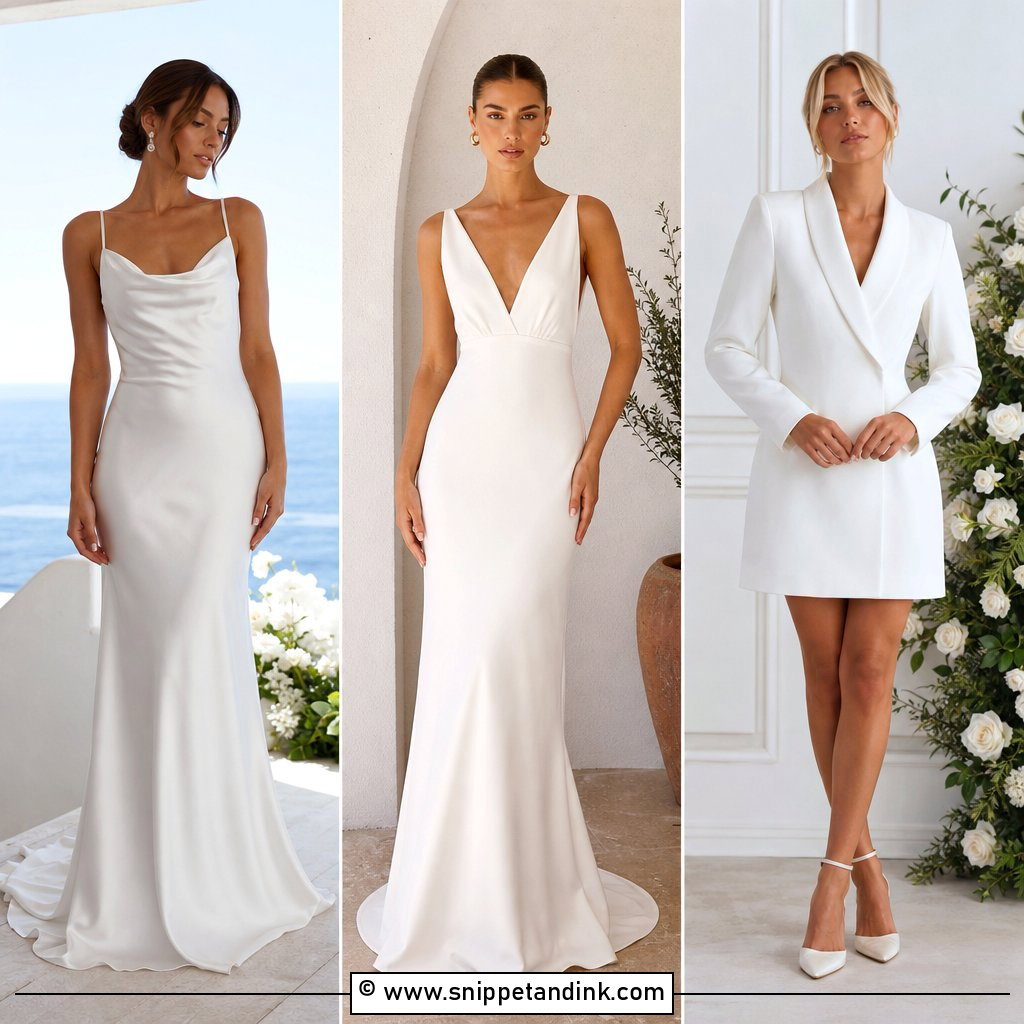
7. Simple Slip Wedding Gown
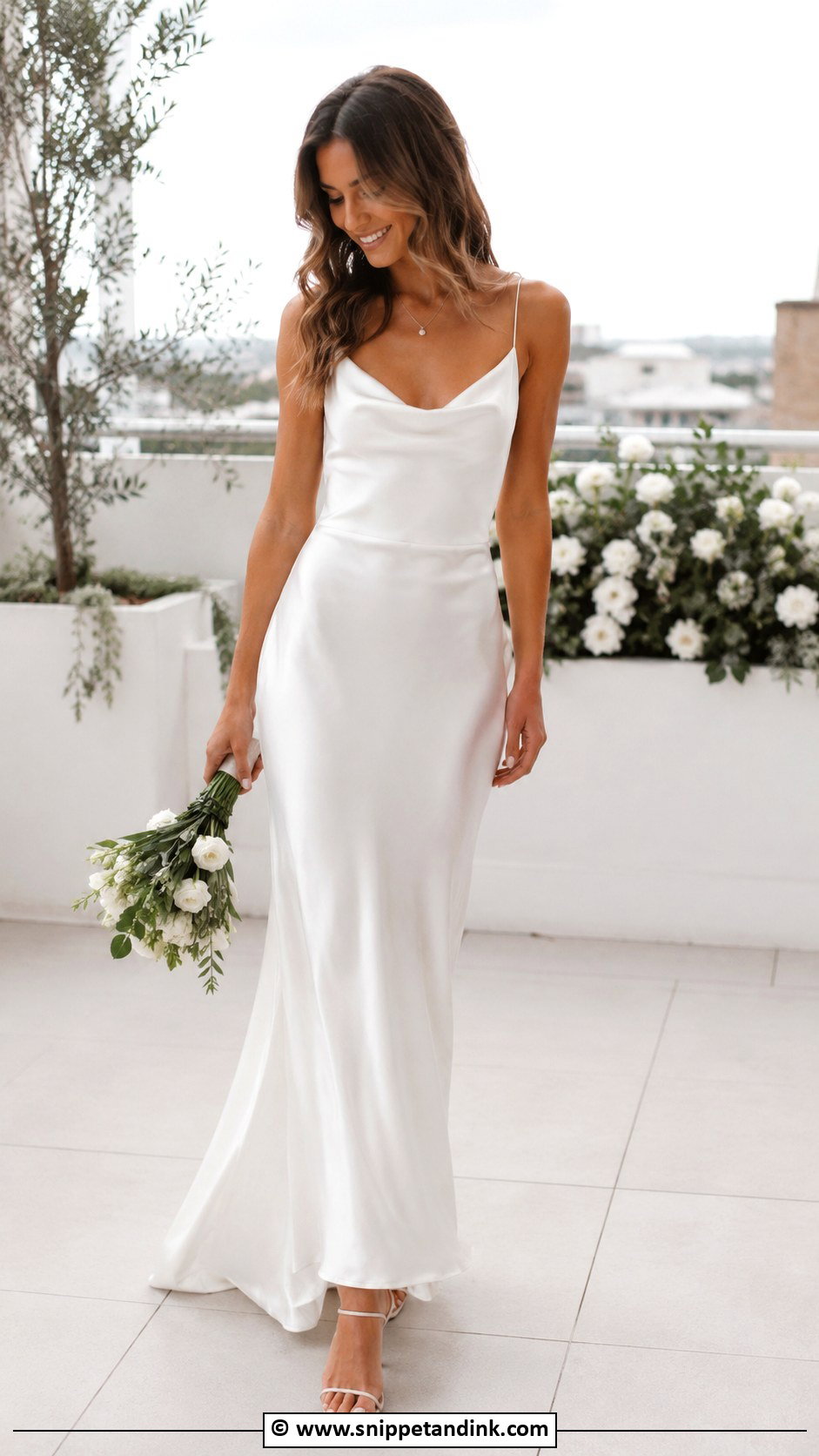
The slip gown owes a lot to 1990s minimalism: thin straps, a soft neckline and a cut that follows the body. Silk or a good satin gives it movement and a low sheen, but the plainness means poor fabric shows instantly. If a slip looks shiny in an artificial way under shop lights, it will look worse in flash photos. I’d wear it with strappy heels, a fine pendant and soft waves, at an intimate wedding, on a rooftop or near the sea.
8. Simple High Neck Wedding Gown
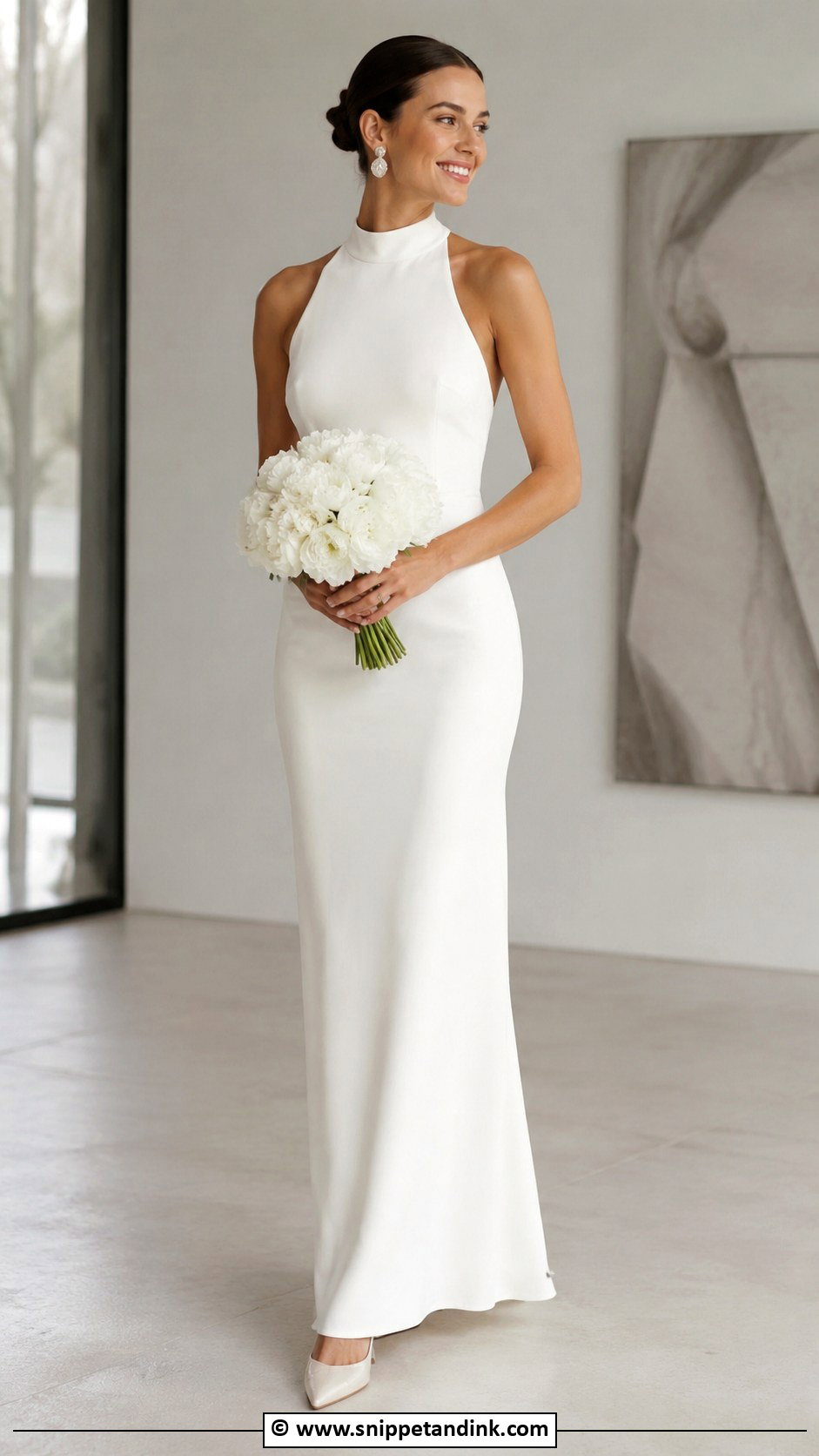
A high neck reads polished and slightly editorial, and it draws a long, unbroken line through the upper body. It works on a column, a sheath or a flowing A-line, in crepe, satin or another matte fabric. With the neck covered, I skip necklaces and let earrings do the work. A sleek bun keeps everything clean. It’s the gown I’d suggest to a bride who wants coverage but still wants to look current.
9. Simple V Neck Wedding Gown
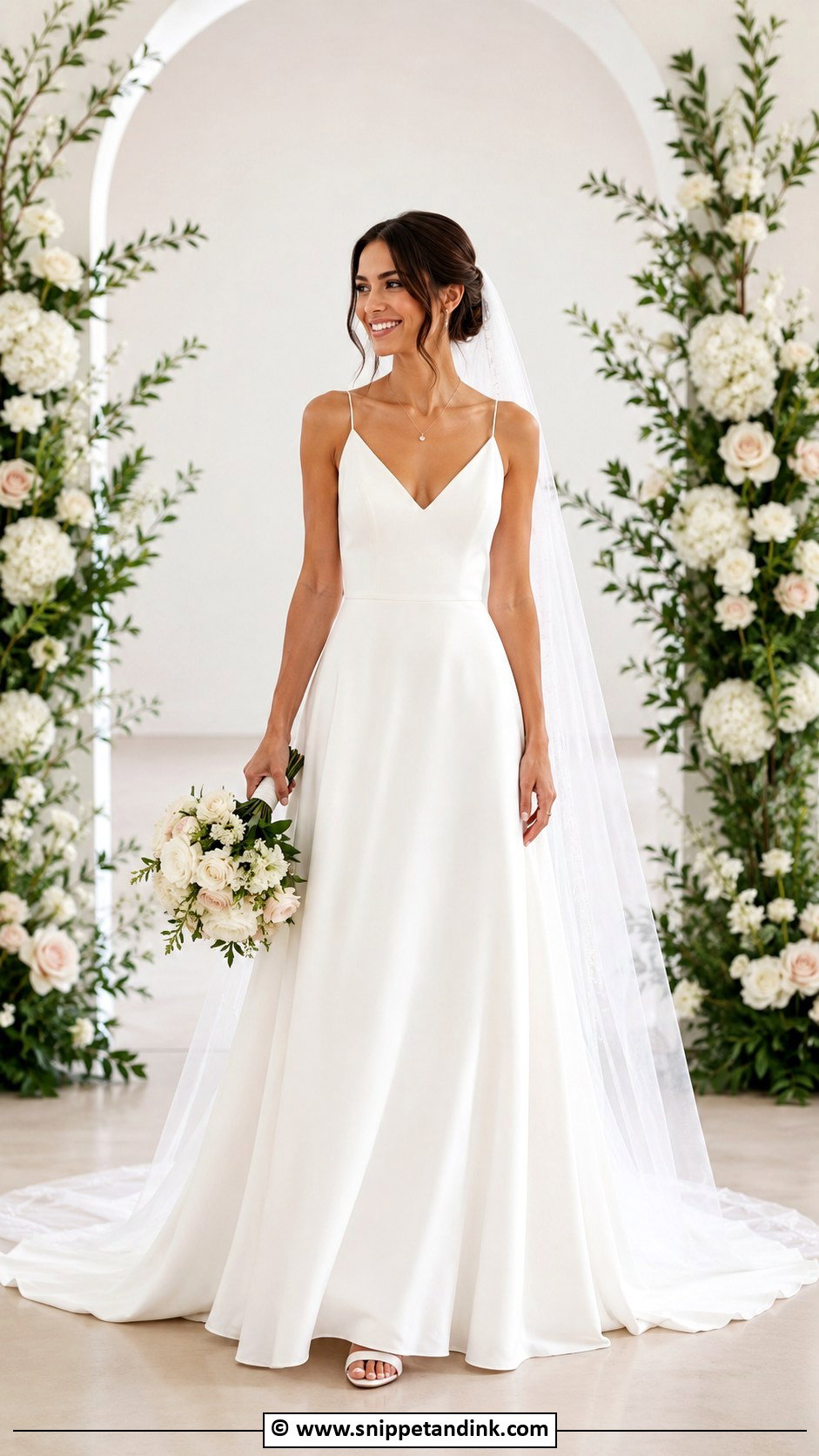
How deep should a V go? That’s the only real question with this neckline. A soft V on wide straps feels classic, and a plunge with clean edges feels modern but needs built-in support or mesh, which I sort out before ordering. The V lengthens the upper body and suits A-line, sheath and fitted shapes. An open V can take a fine necklace; a higher one looks better with drop earrings.
10. Simple Ball Gown Wedding Gown
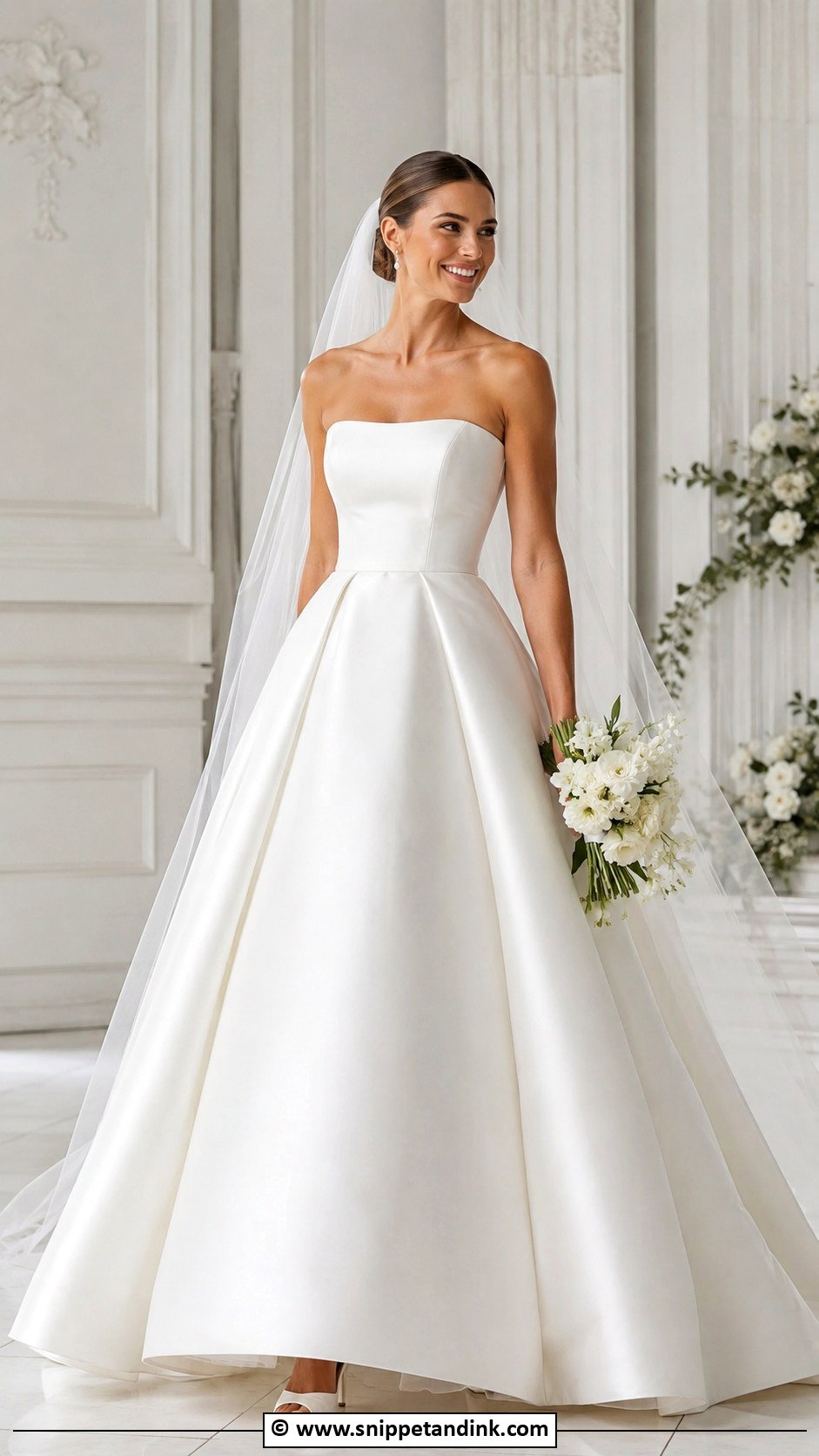
Minimal doesn’t have to mean small. A plain ball gown keeps all the bridal volume and drops the sequins and lace, so the shape itself becomes the decoration. Mikado and satin hold that structure well. A plain strapless or square-neck bodice keeps it from looking busy. The practical side: a skirt this full needs a bustle, a large car and someone to help you in the bathroom. A long veil and neat hair suit a formal ceremony in a big room.
11. Simple Column Wedding Gown
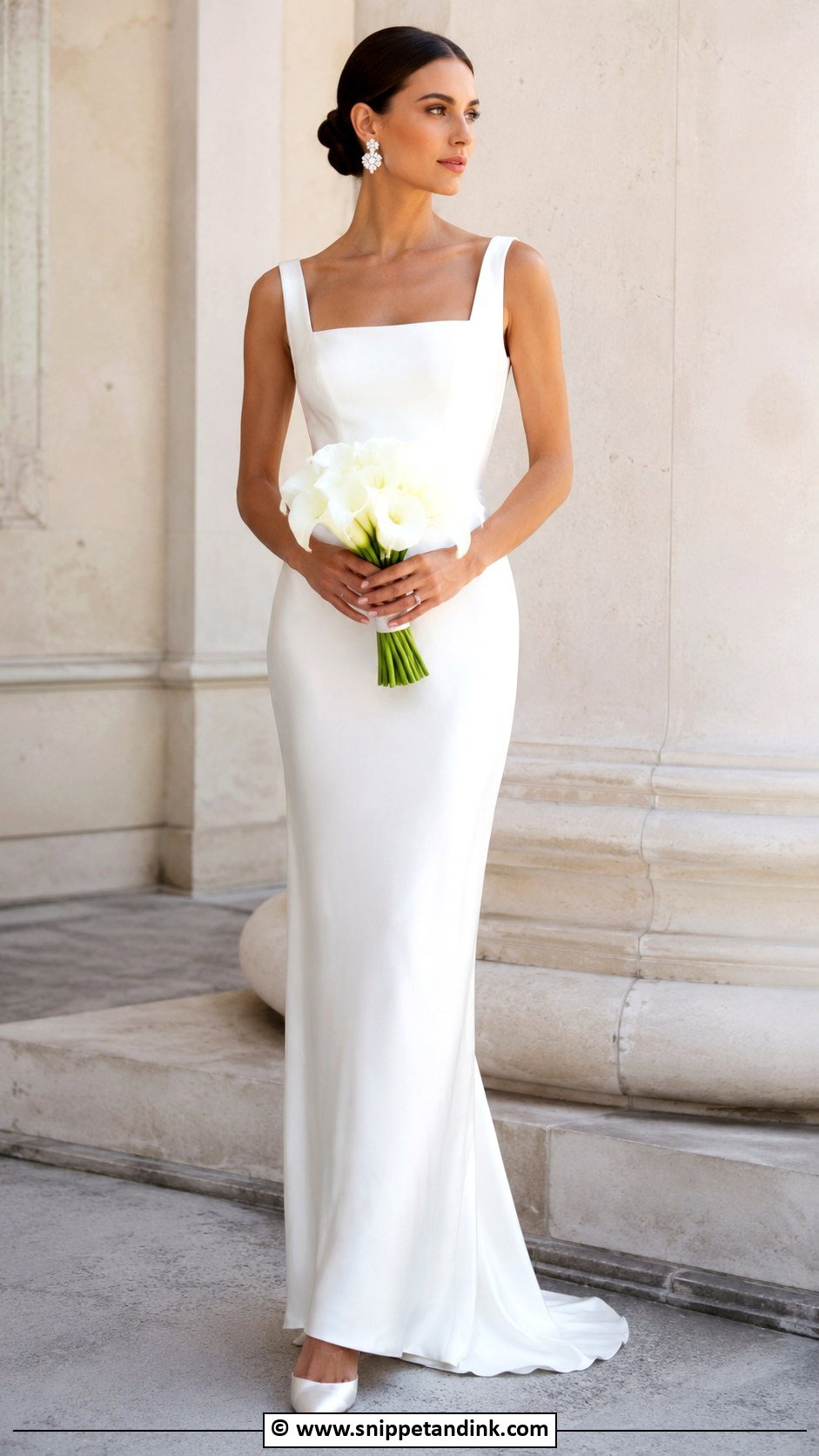
The column falls in a straight line from shoulder to hem. Unlike a mermaid, it doesn’t grip every curve, so it feels relaxed and still looks tailored. Crepe, satin and silk all suit it. A square neck, one-shoulder or clean strapless bodice works, with sculptural earrings, sleek heels and a tight bouquet. I’d check the stride: if the hem is narrow, you’ll need a back slit or a kick pleat to walk the aisle comfortably.
12. Simple Tea Length Wedding Gown
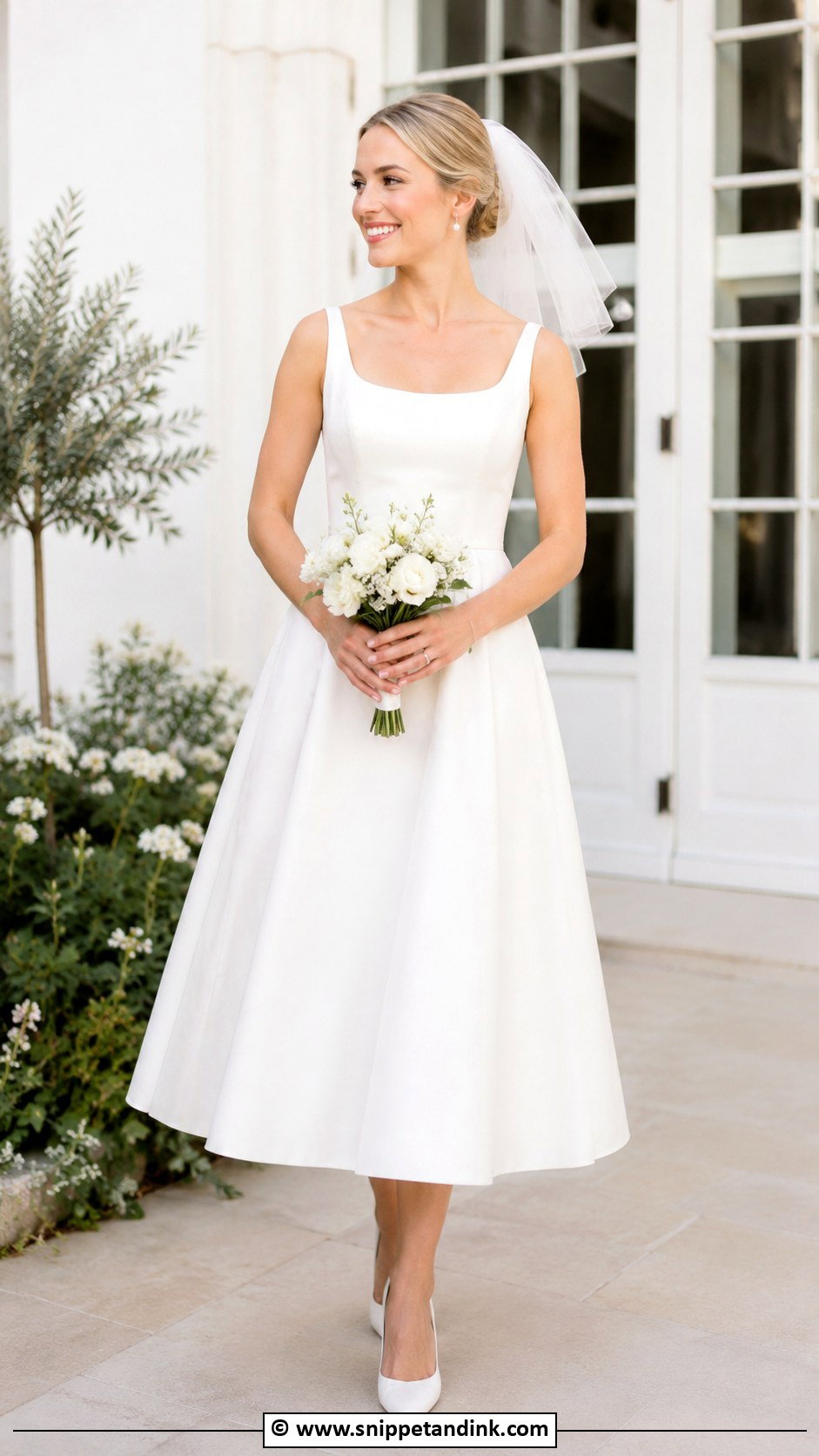
A simple tea length wedding gown ends somewhere between the knee and the ankle, which makes it light to wear and puts your shoes on show. A fitted bodice over a soft A-line skirt feels classic; plain satin or crepe feels more modern. The hem has to look deliberate, so I measure it with the exact shoes on. Block heels, slingbacks or pointed pumps suit it, and a short veil or a hair bow finishes it for a courthouse or a daytime party.
13. Simple Courthouse Wedding Gown
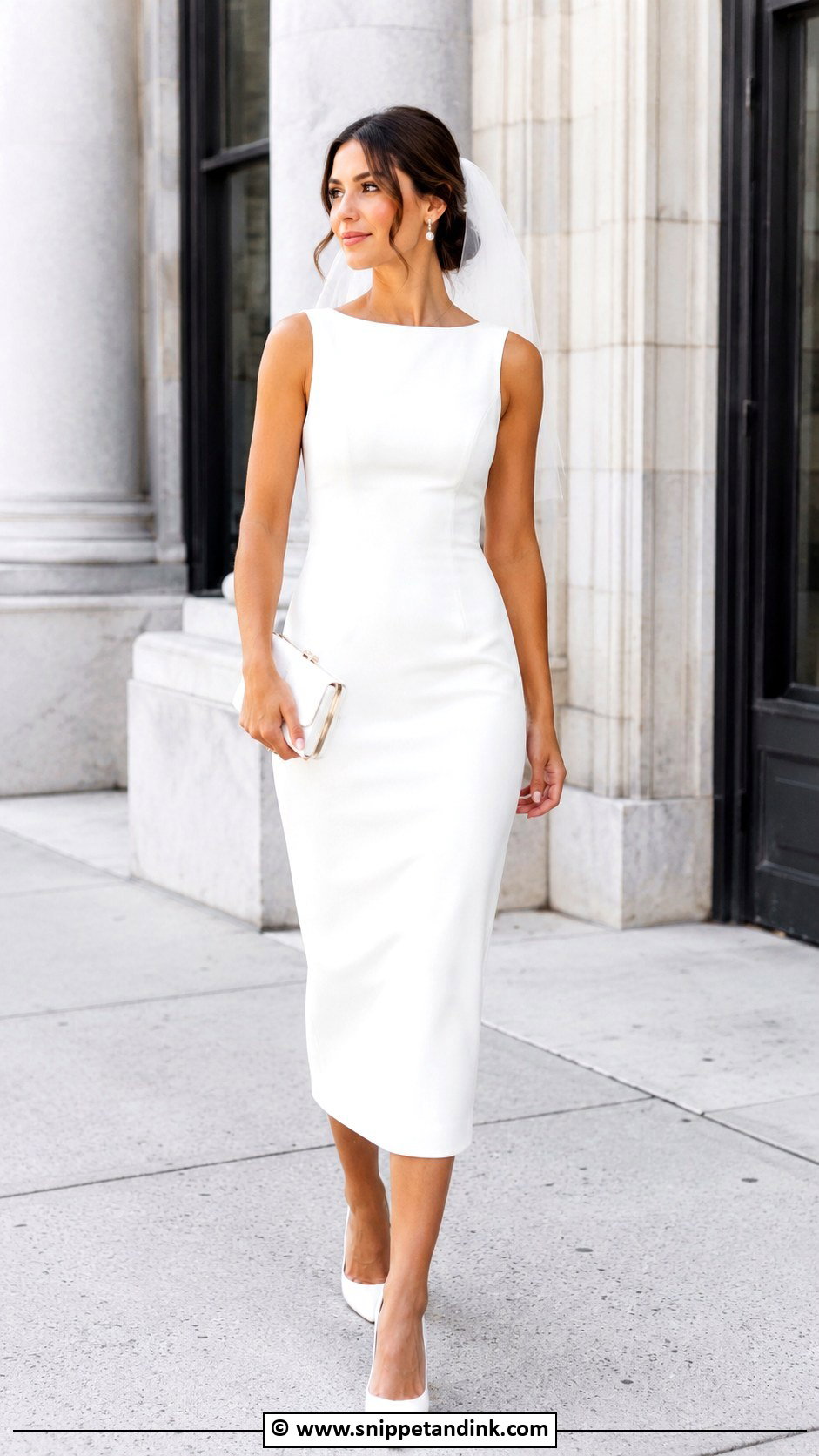
At a courthouse, you’ll stand in line, sign papers and probably walk outside for photos, so the gown needs to cope with all of that. A midi, a sheath, a satin slip or a tailored mini can each work; the right one depends on how dressed up you want to feel in a public building. Pointed heels, a structured clutch and neat jewelry pull it together. A short veil, pearl headband or small bouquet is what tells everyone you’re the bride.
14. Simple Beach Wedding Gown
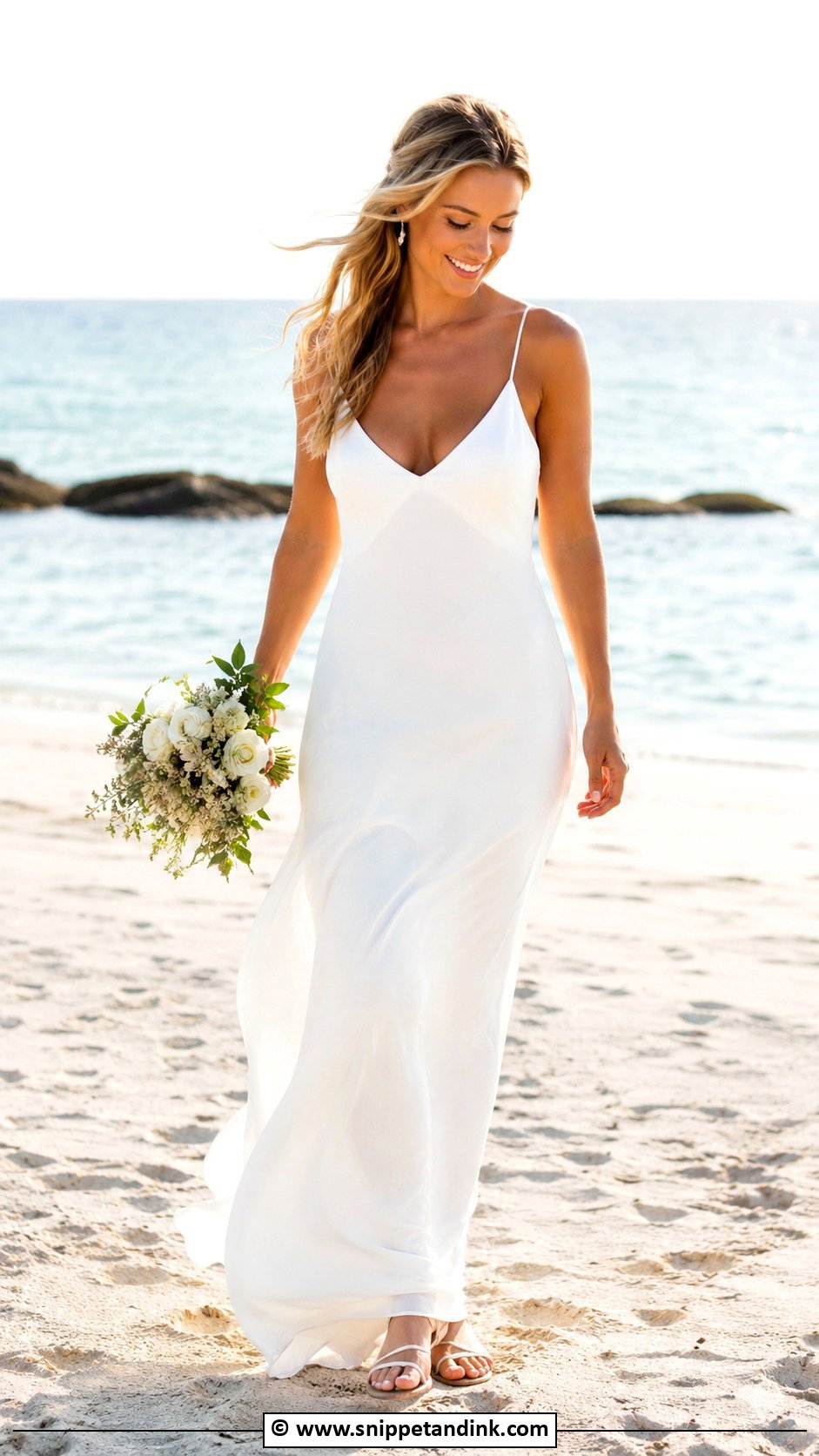
A simple beach wedding gown has to deal with sand, wind and salt air. Chiffon, georgette, light crepe or a satin with movement cope far better than heavy fabric. I’d go for no train, or a very short one, because a long train collects sand and drags. A slip, an A-line or a simple sheath with thin straps works. Flat or barefoot-style sandals and hair that can handle a breeze matter more than jewelry here.



15. Simple Garden Wedding Gown
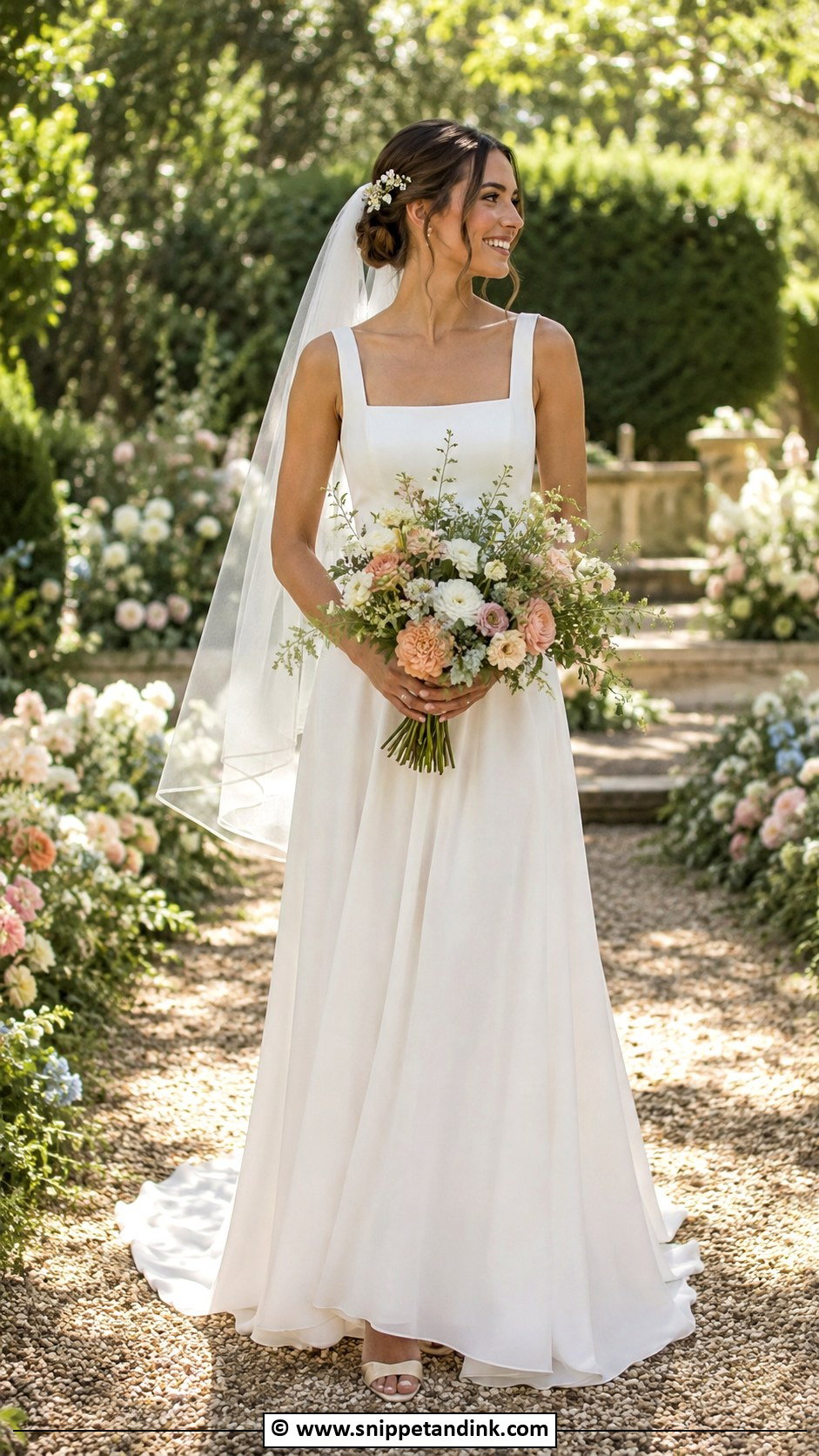
Grass and gravel decide a lot about a simple garden wedding gown. A flowing A-line in plain chiffon, satin or organza moves well outdoors, while a long organza hem can pick up damp and grass stains, so I’d keep the train short. Square, V or off-shoulder necklines add shape. Block heels or dressy flats won’t sink into the lawn. Add a delicate veil, small floral hair pins and a seasonal bouquet.
16. Simple Plus Size Wedding Gown
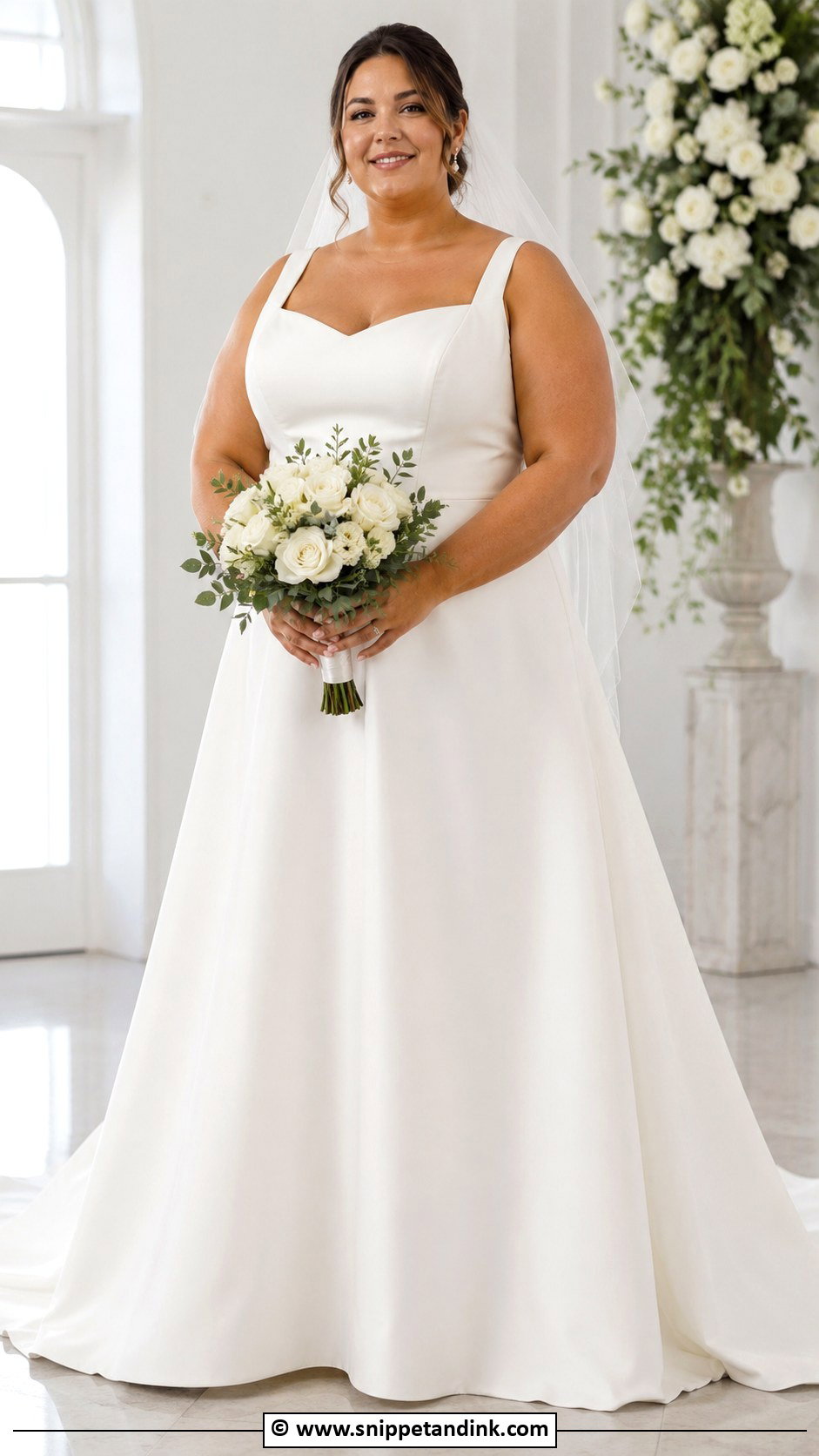
Plain doesn’t mean hiding the body. For a plus size bride, the clean gown that works is the one built with real support: a strong inner bodice, corsetry or wide straps that do their job without showing. A-lines, structured ball gowns, wrap-style bodices and crepe sheaths can all look fantastic. Smooth fabrics, well-placed seams and careful alterations make the biggest difference, and I spend most of a fitting on the bodice. Choose shoes that feel secure and a veil in proportion to the dress.
17. Simple Petite Wedding Gown
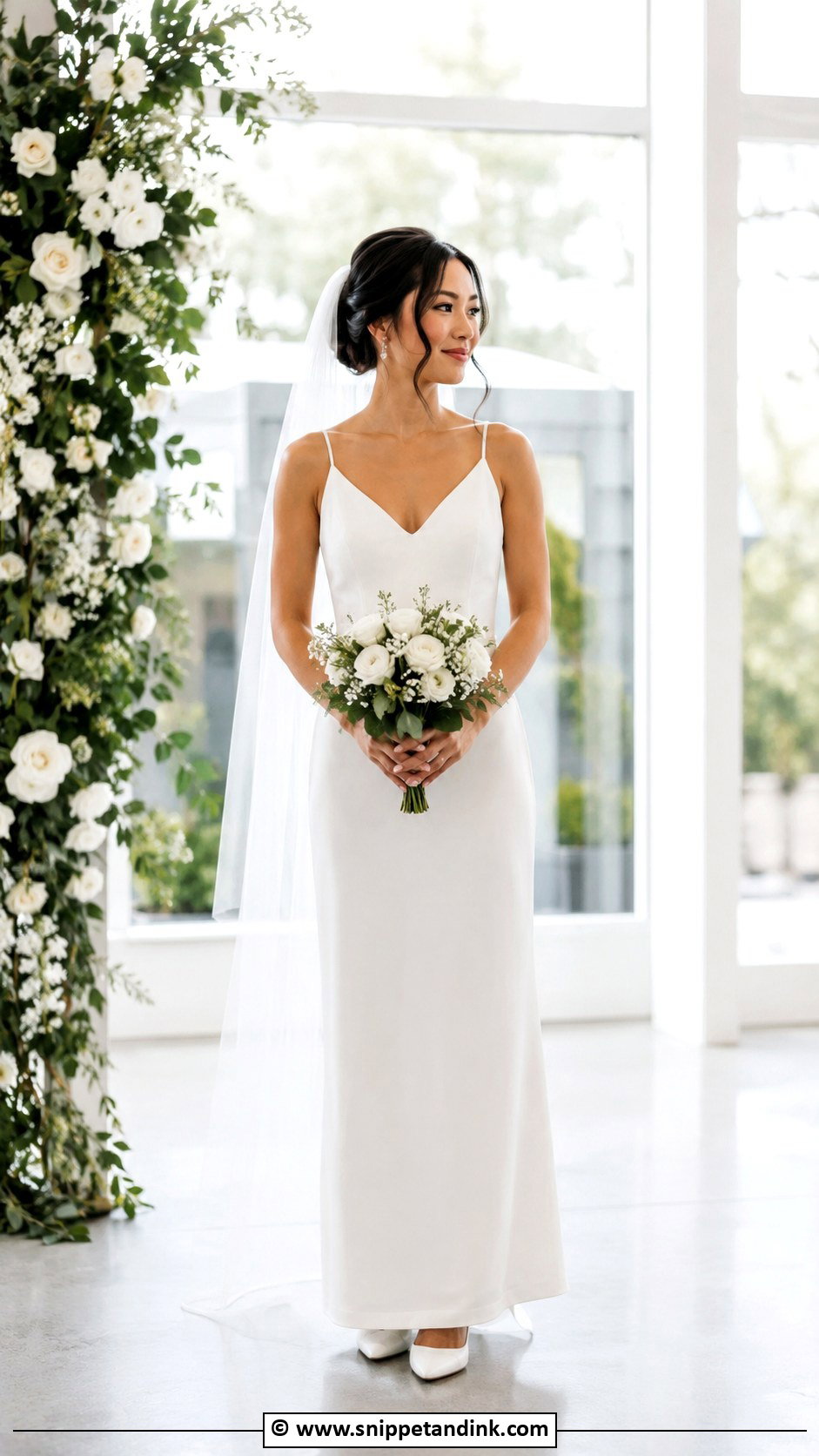
On a petite frame, the risk is the gown wearing you. Clean vertical lines, lighter fabrics and balanced proportions help, and a sheath, column, soft A-line or tea-length gown all work. Structure is fine as long as it fits closely; it’s excess volume that overwhelms. A slightly higher waist or a subtle V lengthens the body, as do pointed shoes in a soft bridal shade. I’d scale the veil and the train down to match.
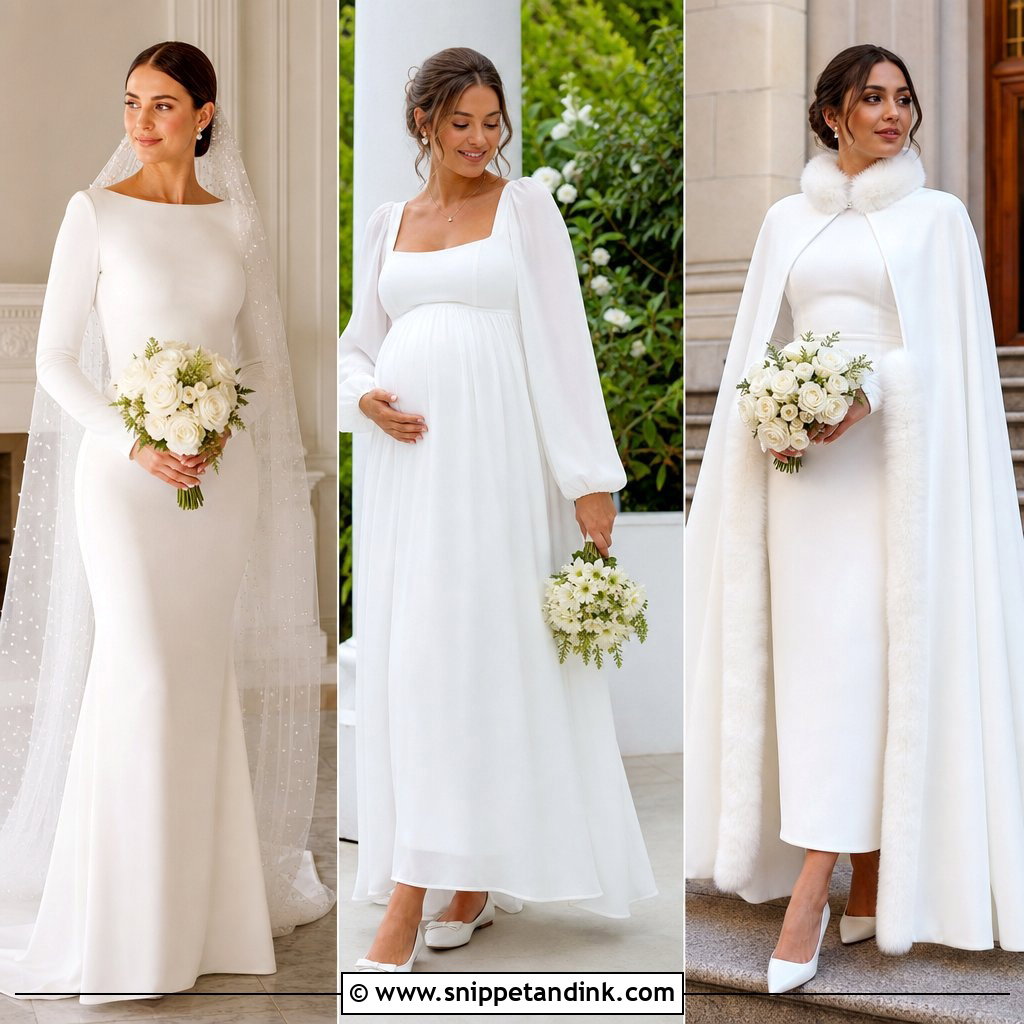
18. Simple Maternity Wedding Gown
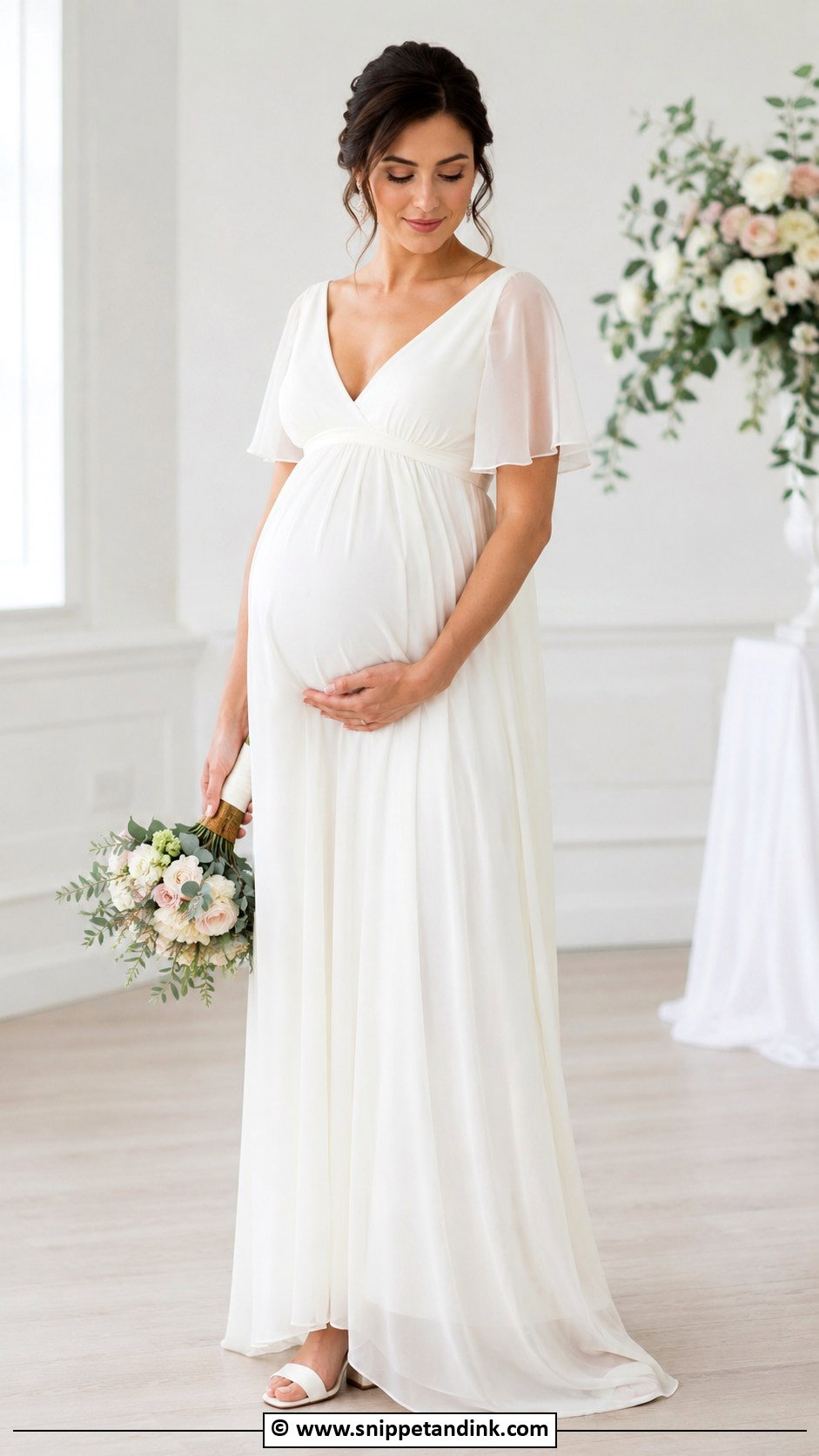
With a maternity gown, I plan for the day of the wedding, not the day of the fitting, because the bump can change a lot in a few weeks. Soft A-lines, empire waists and flowing chiffon or crepe give room, and gentle stretch with a breathable lining keeps it comfortable from morning to night. A V, wrap bodice or square neckline gives shape without pressure. Low block heels or dressy flats are kinder on swollen feet, and light accessories keep it easy.
19. Simple Modest Wedding Gown
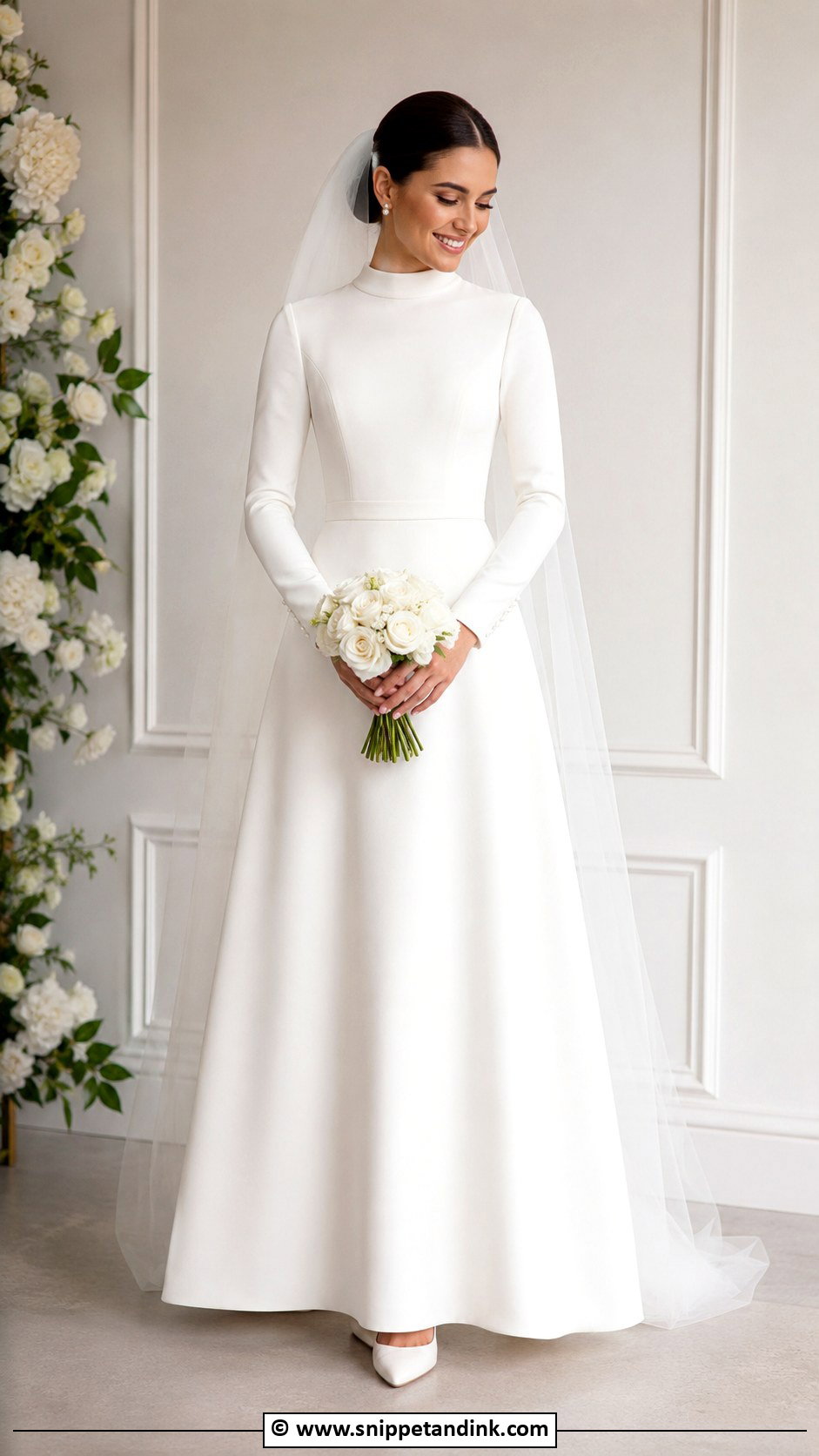
A simple modest wedding gown covers you without looking heavy, and that depends on fabric and tailoring. Long sleeves, high or bateau necklines and full-length skirts all give coverage. In crepe, satin or chiffon, a fitted waist, subtle pleating or a soft A-line adds shape without decoration. If your ceremony has specific requirements for shoulders or arms, I’d confirm them before you shop, not after. Pearl earrings, closed-toe heels and a smooth veil complete it.

20. Simple Backless Wedding Gown
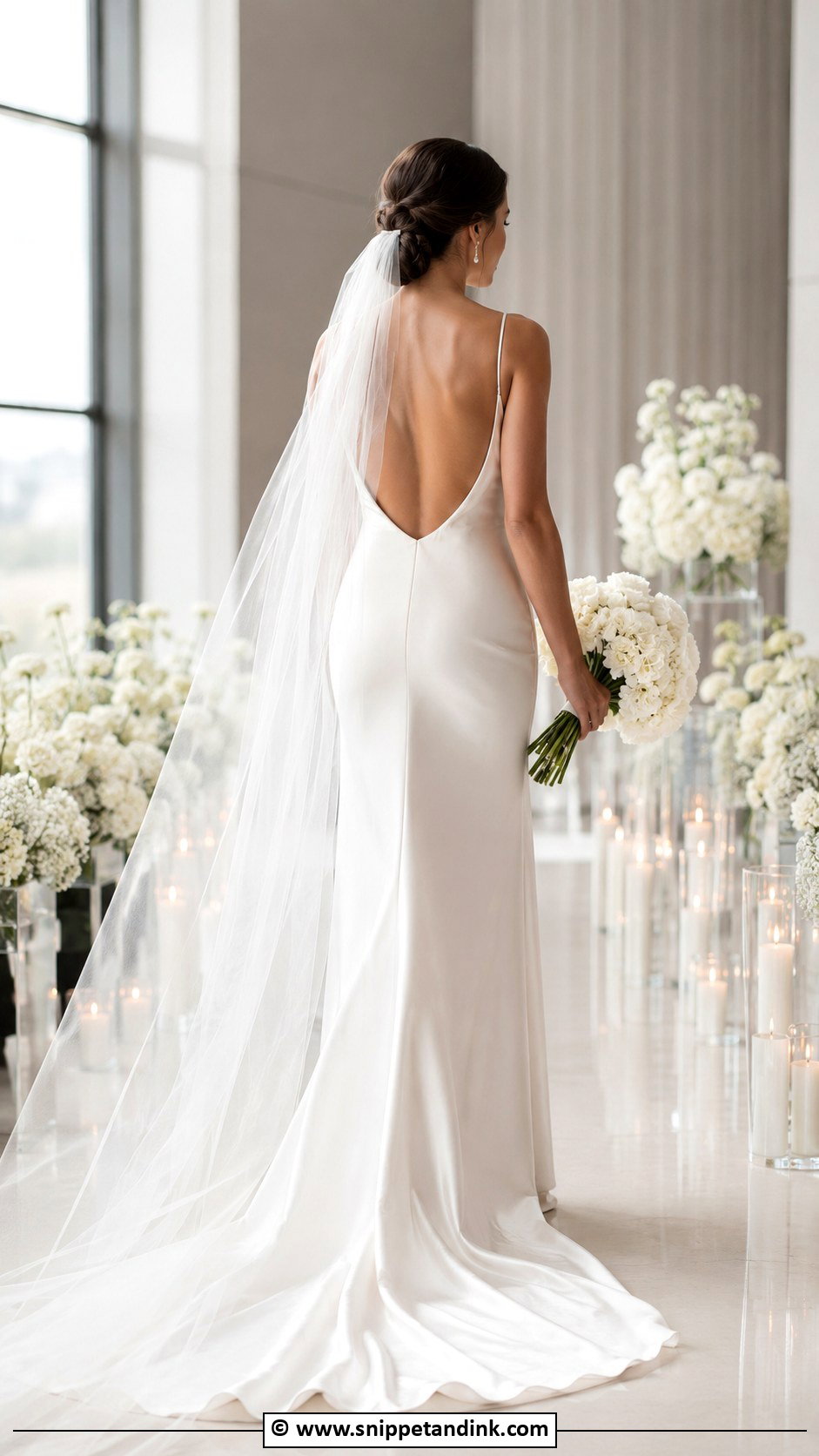
From the front, a backless gown can look entirely classic; the surprise comes when you turn. It works well on slip gowns, crepe sheaths and satin columns. Since the back is the feature, everything else stays plain. Sort out support at the first fitting, whether that’s cups sewn in or a backless adhesive option, because it affects how the bodice is cut. A low bun, delicate earrings and a long veil that falls over the open back make a quiet ceremony moment.
21. Simple One Shoulder Wedding Gown
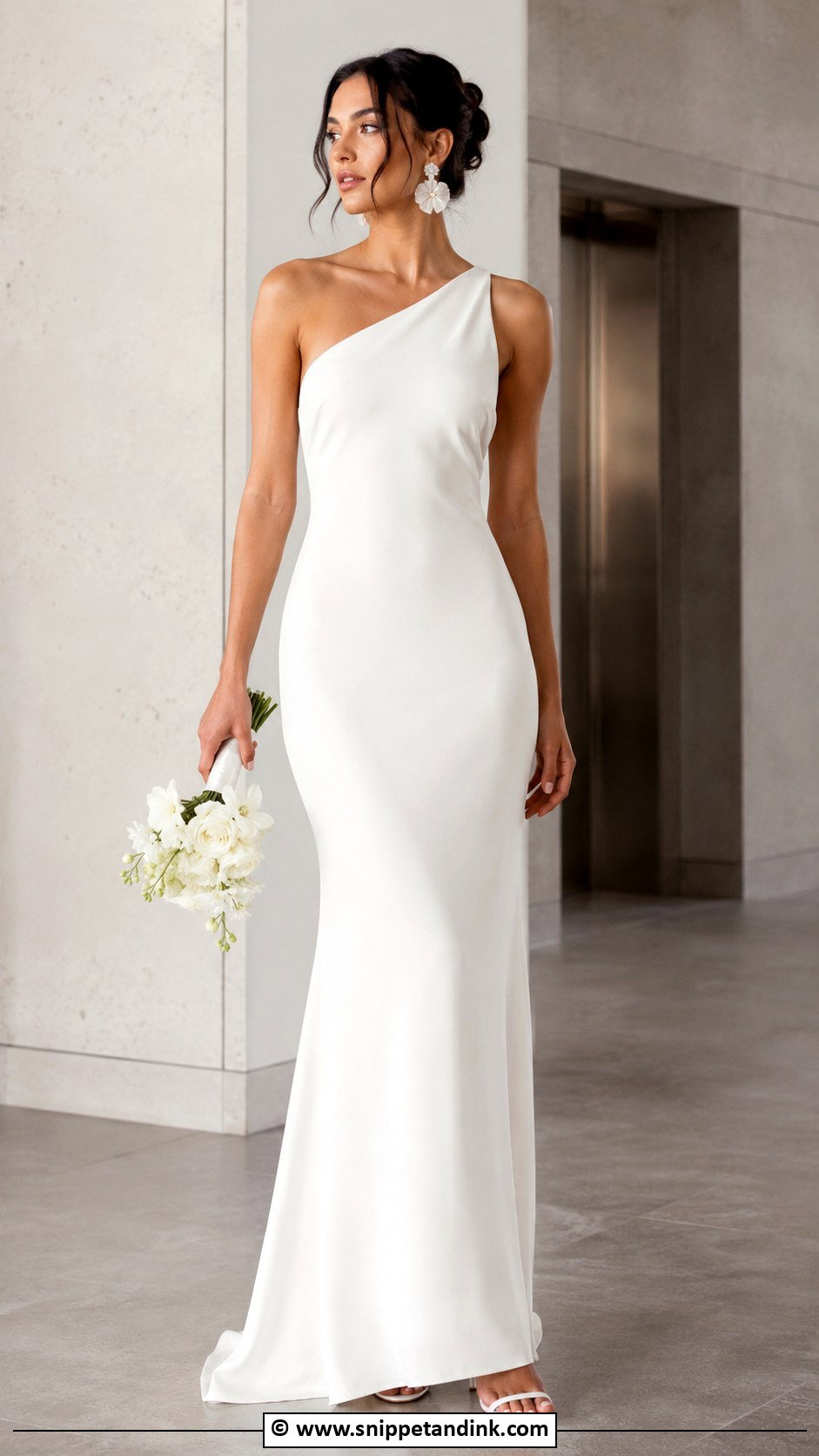
A simple one shoulder wedding gown gets its interest from the diagonal line alone, so there’s no need for beading or bold accessories. Crepe, satin and mikado hold that line cleanly. A fitted column looks sleek, while an A-line skirt softens it. Skip necklaces, choose an earring on the open side to balance the neckline, and keep the hair smooth or in a low bun. I’d check the single strap carefully; it carries the whole bodice and must not slide.
22. Simple Halter Wedding Gown
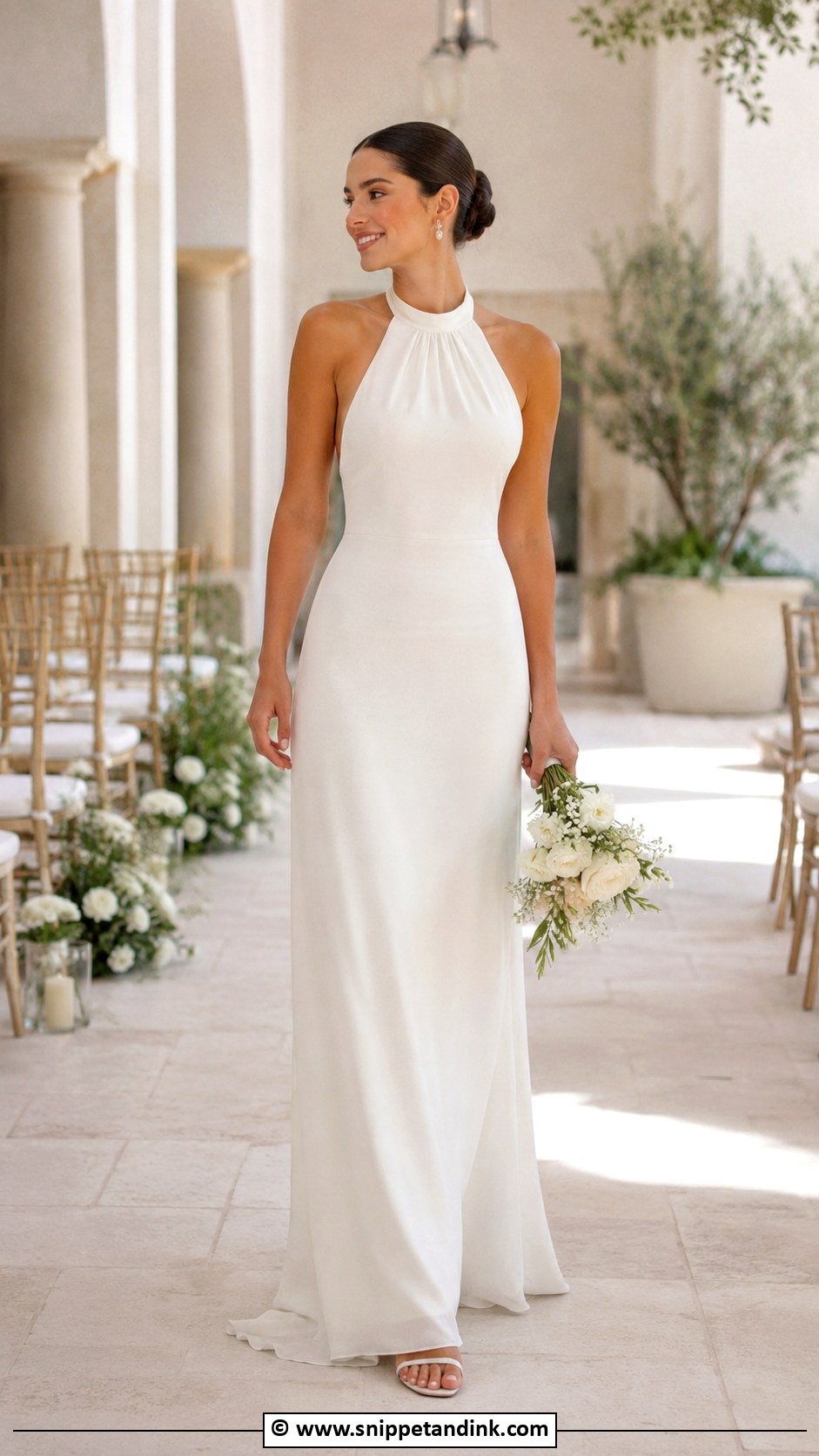
Halters pull the eye upward and show off the shoulders, so they suit brides with strong arms and a straight back. The cut pairs naturally with open backs, column skirts and soft A-lines, in satin, crepe or a light silk-feel fabric. One practical note: the neck strap carries weight, and a heavy skirt can make it dig in by evening, so I check how it feels after twenty minutes. Sleek hair, small earrings and simple heels suit warm-weather and destination weddings.
23. Simple Wedding Gown With Pockets
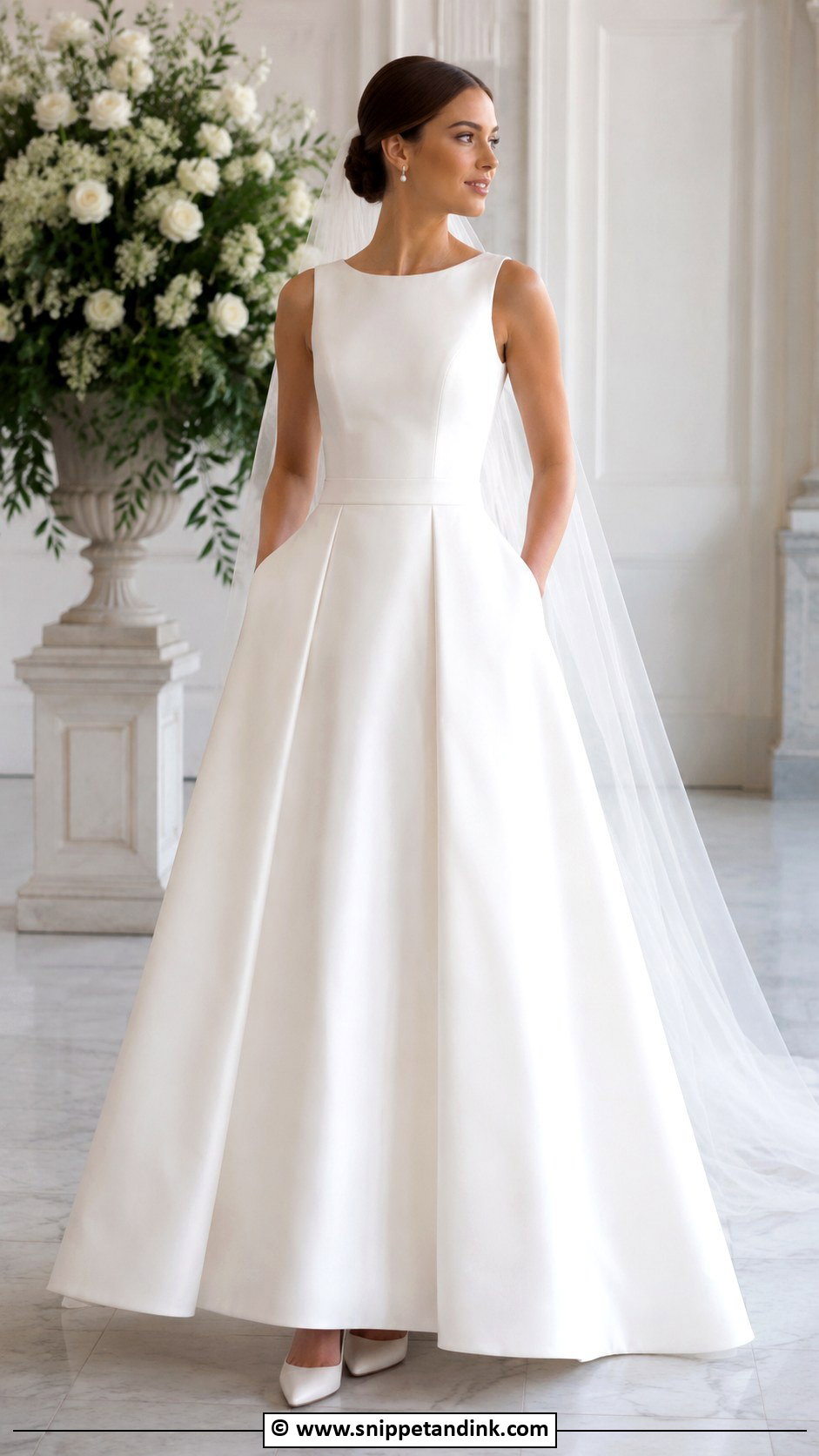
Pockets are the detail brides thank me for afterwards. They sit best in A-line, ball gown or structured mikado skirts, where there’s enough shape to hide them without bulging at the hips. They give you somewhere to keep a tissue or lipstick and somewhere to put your hands in photos. Don’t load them up, though; anything heavy pulls the side seam out of line. Keep the bodice plain and finish with classic heels, pearl earrings and a veil matched to the length.
24. Simple Wedding Gown With Slit
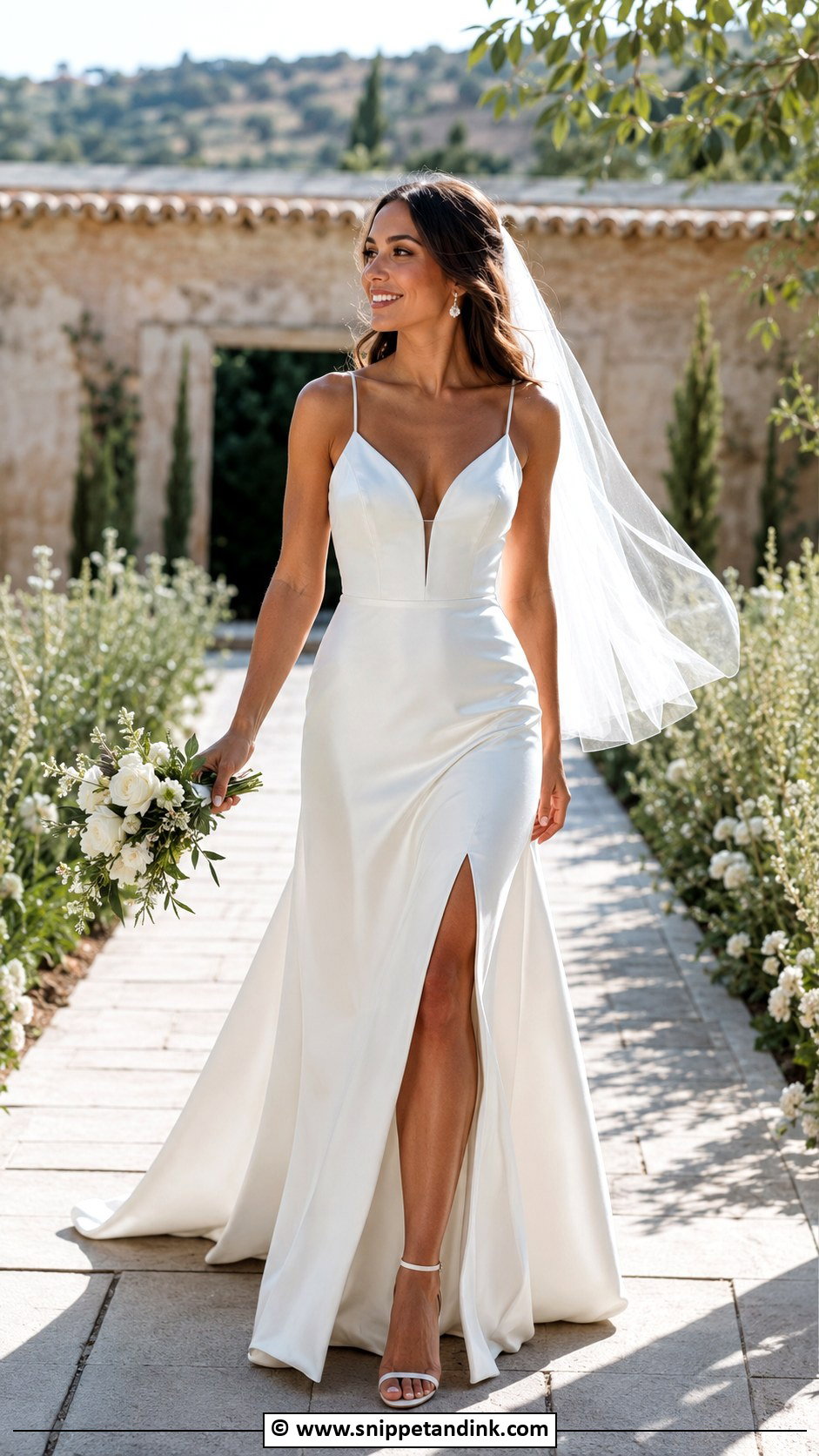
A slit adds motion and shows a little shoe with every step. It works on satin A-lines, crepe columns and soft sheaths. I set the slit height while the bride sits, stands and climbs a step, because a slit that looks modest standing can open much higher when you sit. Your shoes will be visible, so choose them with care. Keep the jewelry clean and let the movement of the skirt do the talking.


25. Simple Wedding Gown With Train
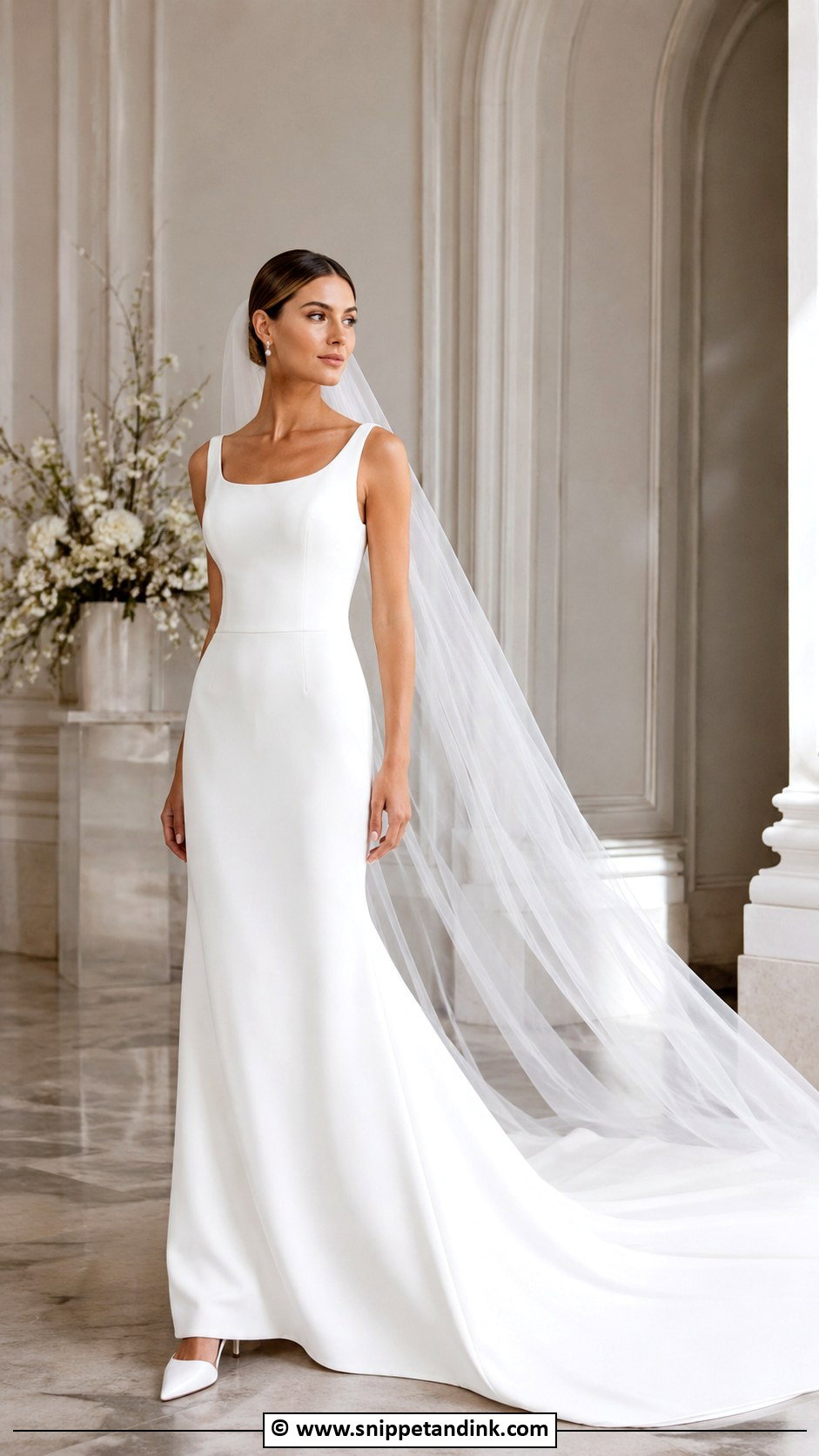
A train gives a plain gown its ceremony presence. It can be a short sweep or something longer for a formal entrance, and on an undecorated dress the fabric becomes the focus. Satin, mikado and crepe all give a crisp line in photos. Ask about the bustle early: a French bustle tucks under, an American bustle lifts over, and they suit different fabrics. Choose a veil that works with the train rather than competing with it.
26. Simple Wedding Gown With Bow
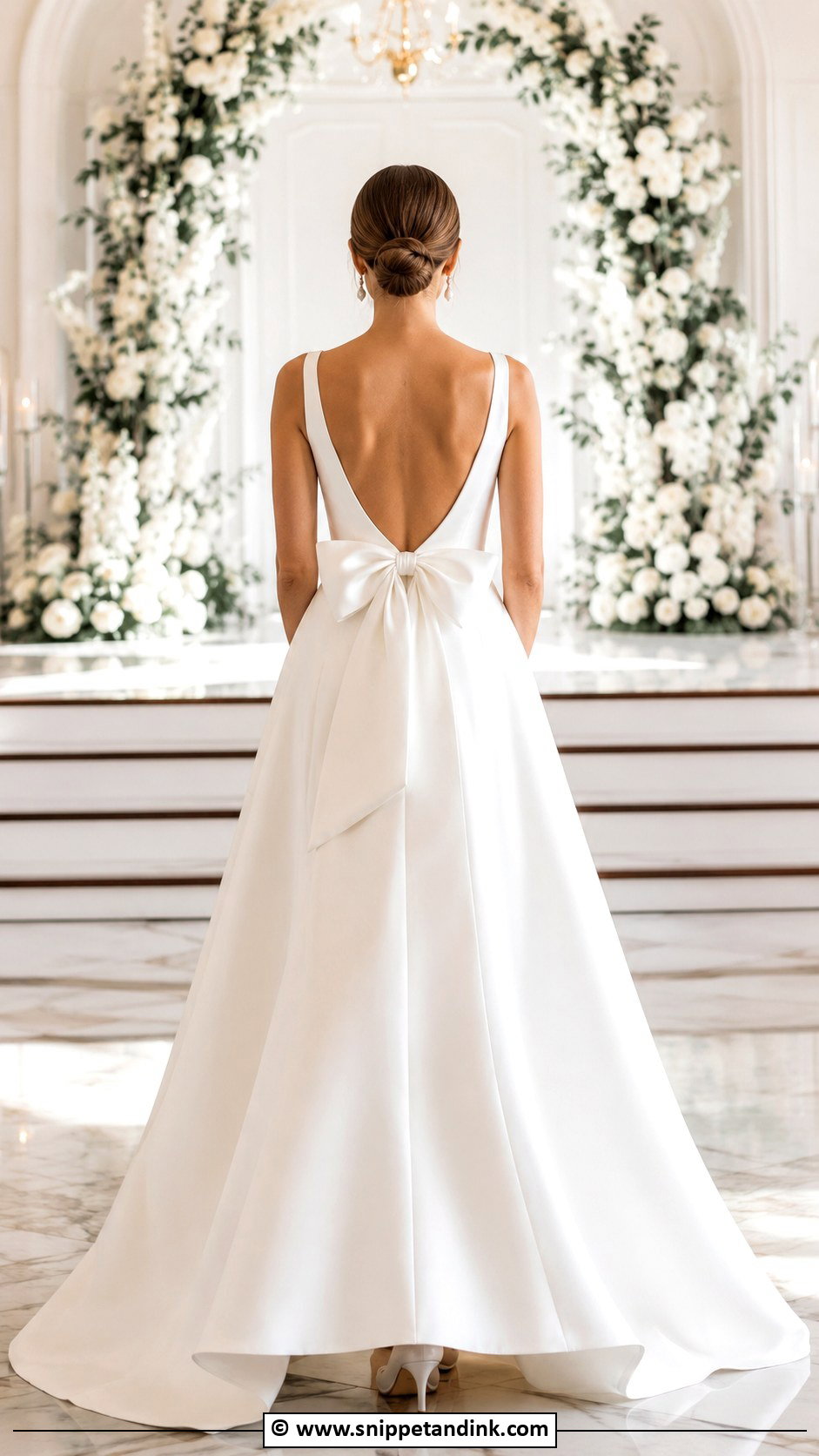
A bow can sit at the back waist, the shoulder, the neckline or the lower back, and where you put it changes the whole feel. A small bow reads delicate; a large structured one reads modern and graphic. Keep the rest of the gown plain so the bow looks intentional. Satin, mikado and crepe hold the shape best, while softer fabrics droop by evening. Simple earrings, elegant heels and a smooth hairstyle let it be the one accent.
27. Simple Satin Midi Wedding Gown
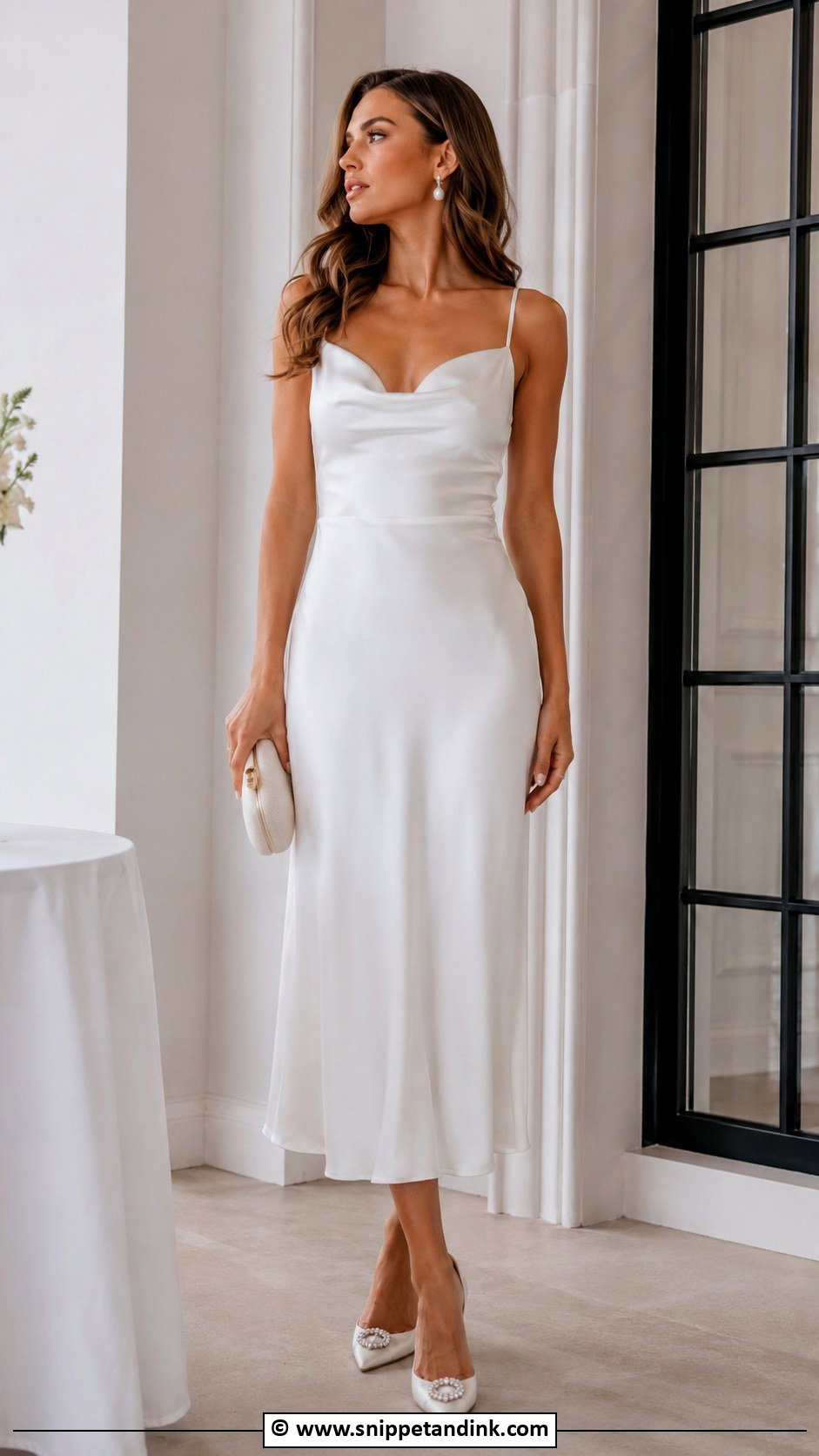
A satin midi is the gown I suggest most for small celebrations: a courthouse, a restaurant reception or an intimate venue. It’s polished, easy to walk in and lets you show your shoes. A cowl, square or strapless bodice suits the soft shine of satin. Satin wrinkles across the lap when you sit, so I’d steam it right before you leave and choose a heavier satin if you can. Pearl earrings, a small clutch and pointed heels are enough.
28. Simple Chiffon Wedding Gown
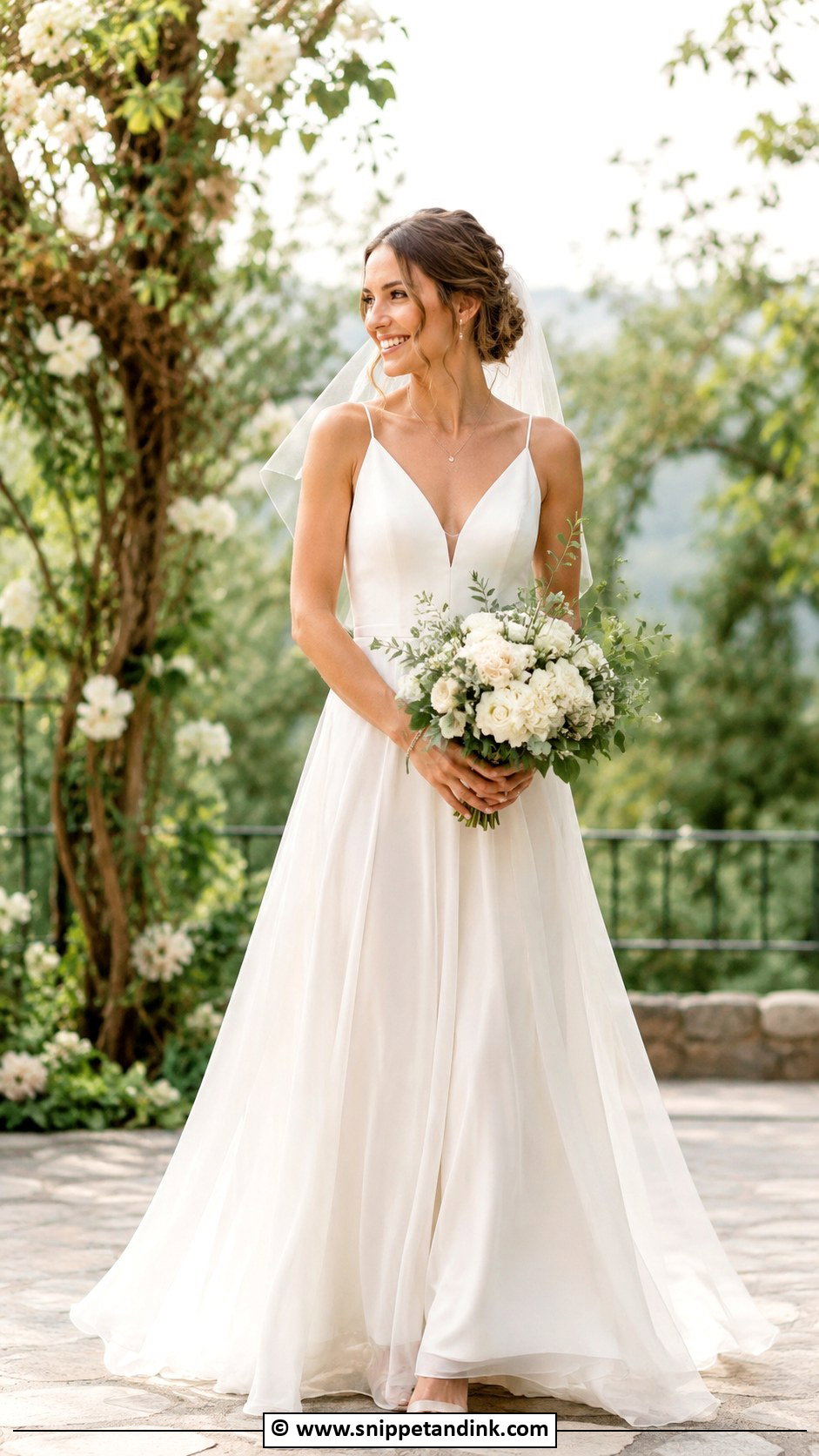
Chiffon is sheer and light, so a chiffon gown is built in layers and moves with every breeze. It’s my first suggestion for warm-weather and outdoor weddings. A flowing A-line skirt over a clean bodice flatters most figures, and the fabric brings texture through movement rather than decoration. It snags easily on rough surfaces and bracelets, so pick smooth jewelry. A V, square or simple strap neckline works, with soft curls and sandals or block heels.
29. Simple Mikado Wedding Gown
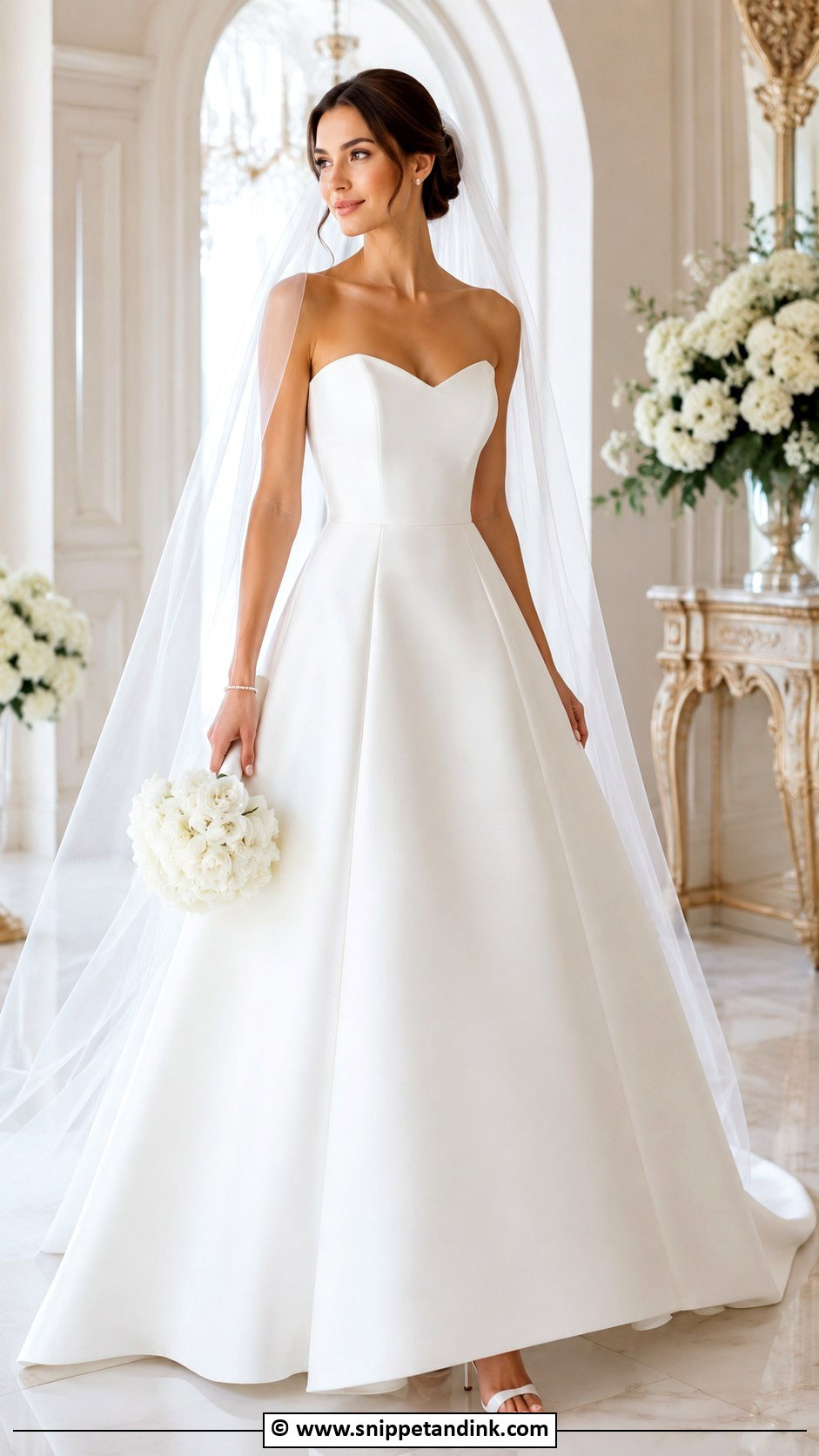
Mikado has the weight to hold a strong silhouette, so it’s my choice for ball gowns, structured A-lines and sculpted bodices. It has a soft sheen that reads formal without any sparkle. On a plain mikado gown, the shape and tailoring do all the work, which is why it looks so expensive. It’s also warm and fairly heavy, so I’d think twice for a summer garden. A classic veil, satin heels and minimal jewelry finish it.
30. Simple Reception Wedding Gown
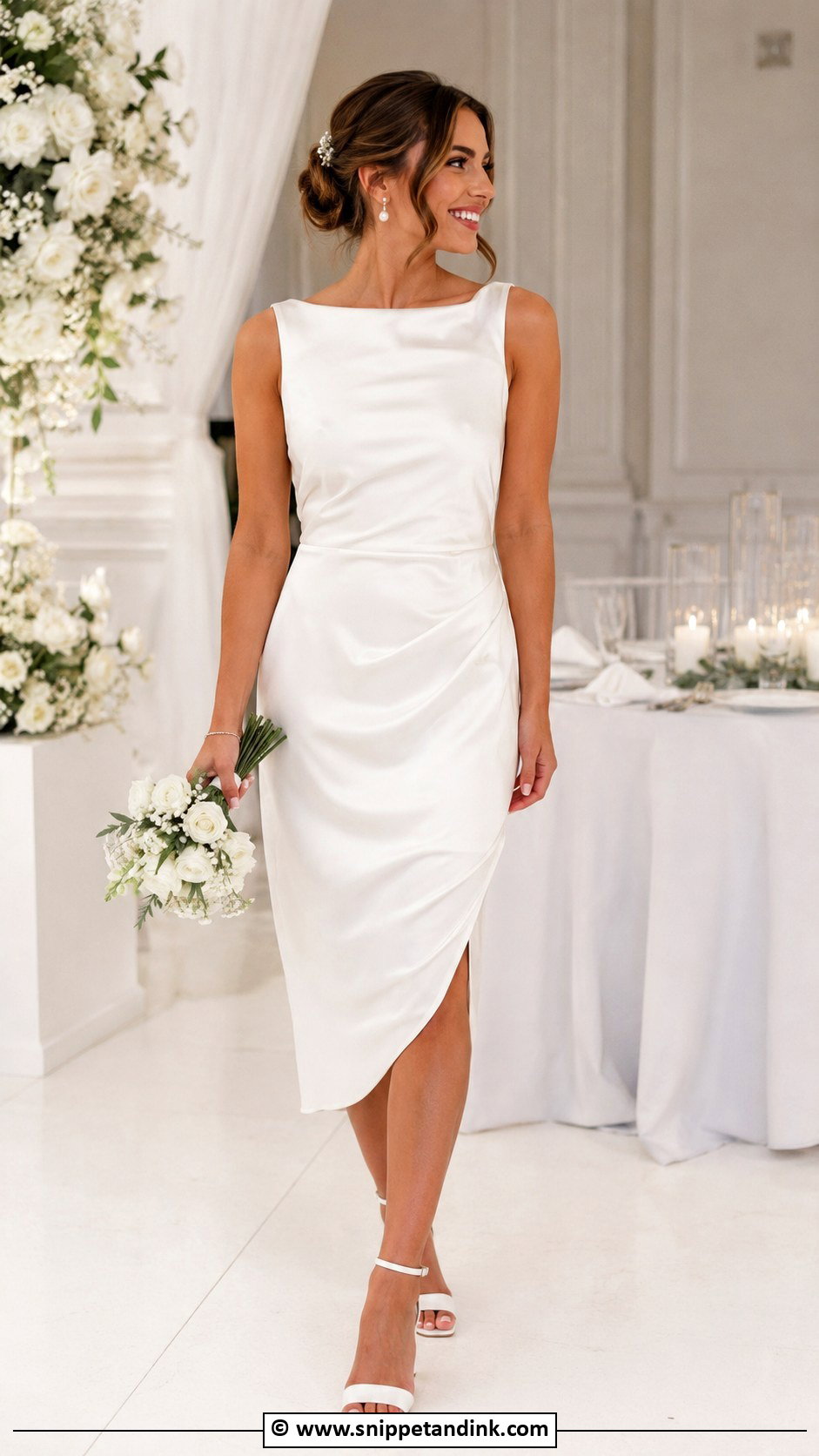
A reception change makes sense if your ceremony gown is heavy, long or hard to dance in. A shorter dress, satin midi, sleek slip or light column lets you walk, greet guests and dance freely while still looking bridal. Pick a soft fabric and shoes you can stand in for hours. Plan the changeover too: who helps, where you change and how long it takes, so it doesn’t eat into the evening. A small hair accessory, pearl earrings and a mini bouquet complete it.
One Focal Point, Then Stop
The most common mistake I see with a minimal gown is trying to make up for the plainness with accessories. The dress was chosen because it’s quiet, so I ask each bride to pick one focus and keep everything else supporting it.
If the neckline is the feature
High, halter and one-shoulder necklines already frame the face. Wear earrings only, keep hair off the neck and choose a plain veil.
If the back is the feature
Low backs, bows and button rows need an updo or a sleek low bun and a sheer veil that lets the detail show through during the ceremony.
If the shoes or the veil are the feature
With a tea-length or midi gown, the shoes can be the one bold choice. With a long gown, a cathedral veil or an embroidered edge can carry the whole look. Either way, keep jewelry small.
How a Plain Gown Behaves on Camera
A plain gown photographs very honestly. Bright white can lose its folds and detail in hard midday sun, while ivory holds more texture. Wrinkles from a car ride show clearly on satin, and static can make a light skirt cling to your legs. I pack a small kit for these dresses: a handheld steamer used from the inside on low heat, fashion tape for straps and necklines, and an anti-static spray tested on a hidden seam first. Ask whoever is helping you to check the back of the skirt before every portrait.
Fit, Fabric and a Neckline That Suits You
Simple Wedding Gowns hold up because they don’t rely on decoration to feel memorable. The same clean gown can read romantic, formal, modern or modest depending on the fabric, neckline, silhouette and accessories. What I’d weigh most is fit, comfort, fabric quality and how the dress feels when you move. A satin A-line, a crepe sheath, a slip or a structured mikado gown can each be the right one. Choose for your venue, your body and your personality, and let every other detail support that.
You'll Like These Ideas:








Leave a Reply