
Indian bridal hair has a harder job than most wedding hair. It has to hold a maang tikka on the parting, take a dupatta pinned on top, survive hours of rituals in heat, and still look soft when the photographer moves behind you. Some brides walk in wanting a jasmine bun, others a long braid, glossy waves or a reception ponytail. I always start from the outfit, the weight of the jewellery and how long the ceremony runs, then work back to the hair. These fifteen looks cover the traditional and the modern, from South Indian braids to floral buns and open curls, with notes on what each one asks of your hair.
Planning Four Functions as One Hair Sequence
Most Indian weddings mean three or four looks over several days, and I plan them as a sequence rather than one hairstyle at a time. The ceremony look carries the heaviest dupatta and jewellery, so it gets the most secure structure: a bun, juda or built braid. Mehendi and haldi are long, messy and often outdoors, which suits braids and loose buns that don’t mind a little turmeric or henna paste. The reception is where open curls, waves and ponytails make sense, because there’s less fabric pinned to the head.
Sequencing also protects your hair. If the haldi and the wedding are on consecutive days, I avoid tight styles on the first day so the scalp isn’t tender when we pin the dupatta. Heavy curling two days running dries out the ends, so I’ll often suggest a braid on one day and heat on the next.
- Ceremony: firm base, pins anchored into the bun or braid, crown smoothed for the tikka.
- Mehendi or haldi: protective styles that tolerate paste, sweat and sitting for hours.
- Sangeet and reception: movement and volume, with the dupatta pinned lightly or not at all.
1. Indian Bridal Bun With Gajra
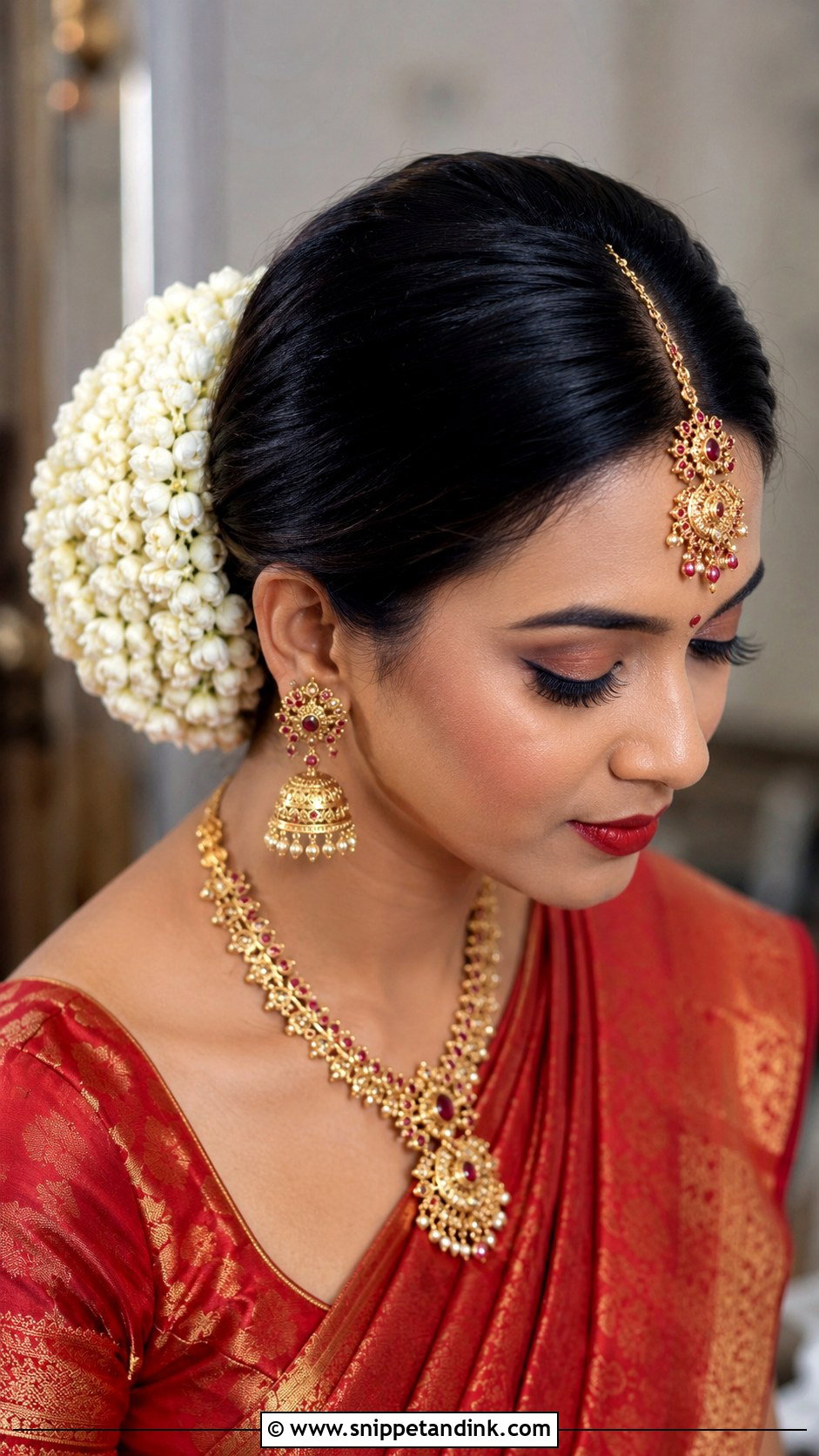
An Indian bridal bun with gajra stays popular for a practical reason: a firm bun is the best anchor a dupatta can have. I place it low or at the middle of the back of the head so the tikka chain and matha patti have a clean path from the parting. Jasmine strands get wrapped and pinned last, after the bun is locked, because the gajra adds real weight once it’s on. Ask for a smooth crown with a little lift, and tell your stylist if the bun starts to ache in the trial. A bun that’s too tight at 9am becomes a headache by the pheras.
2. South Indian Bridal Braid
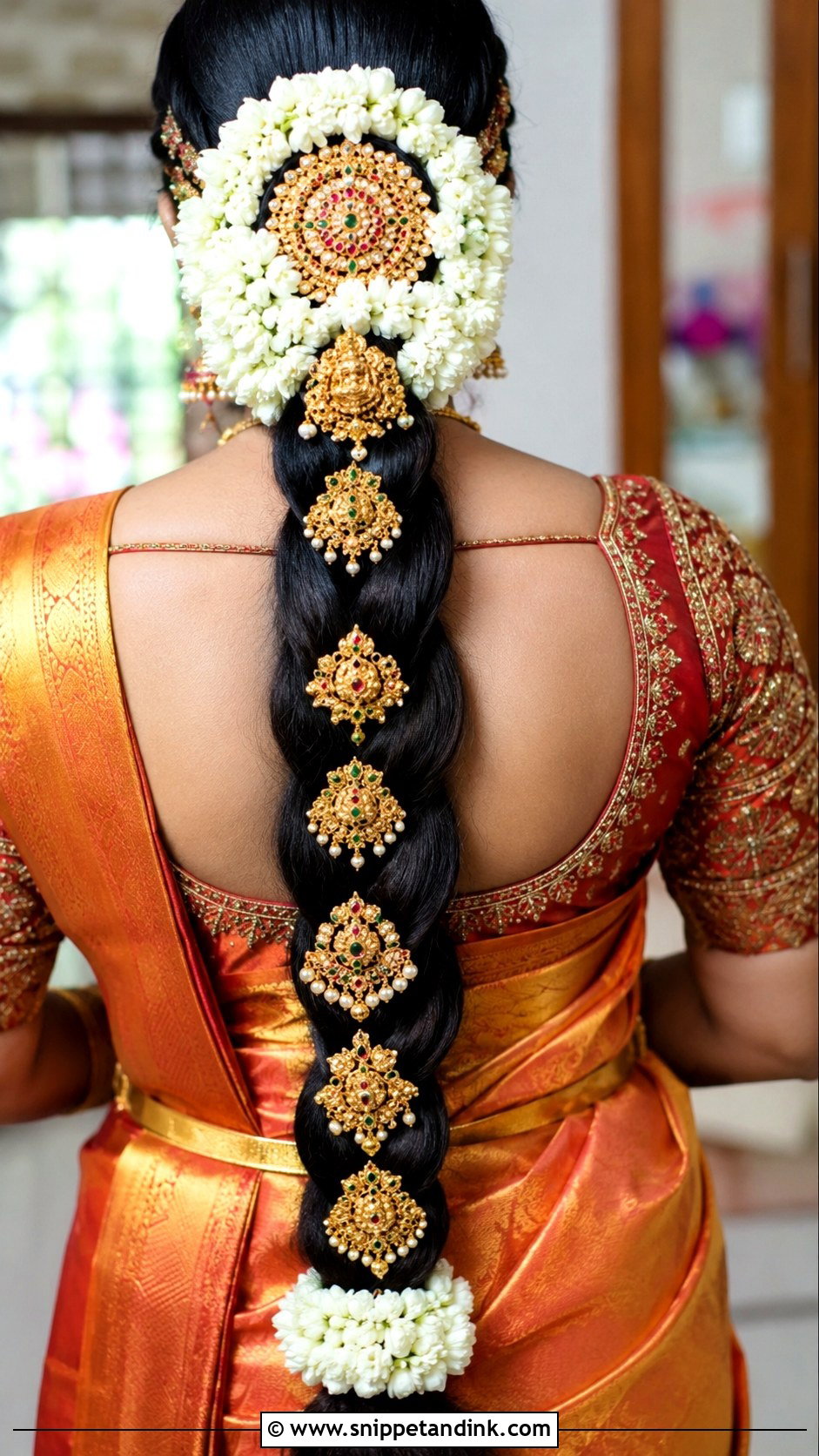
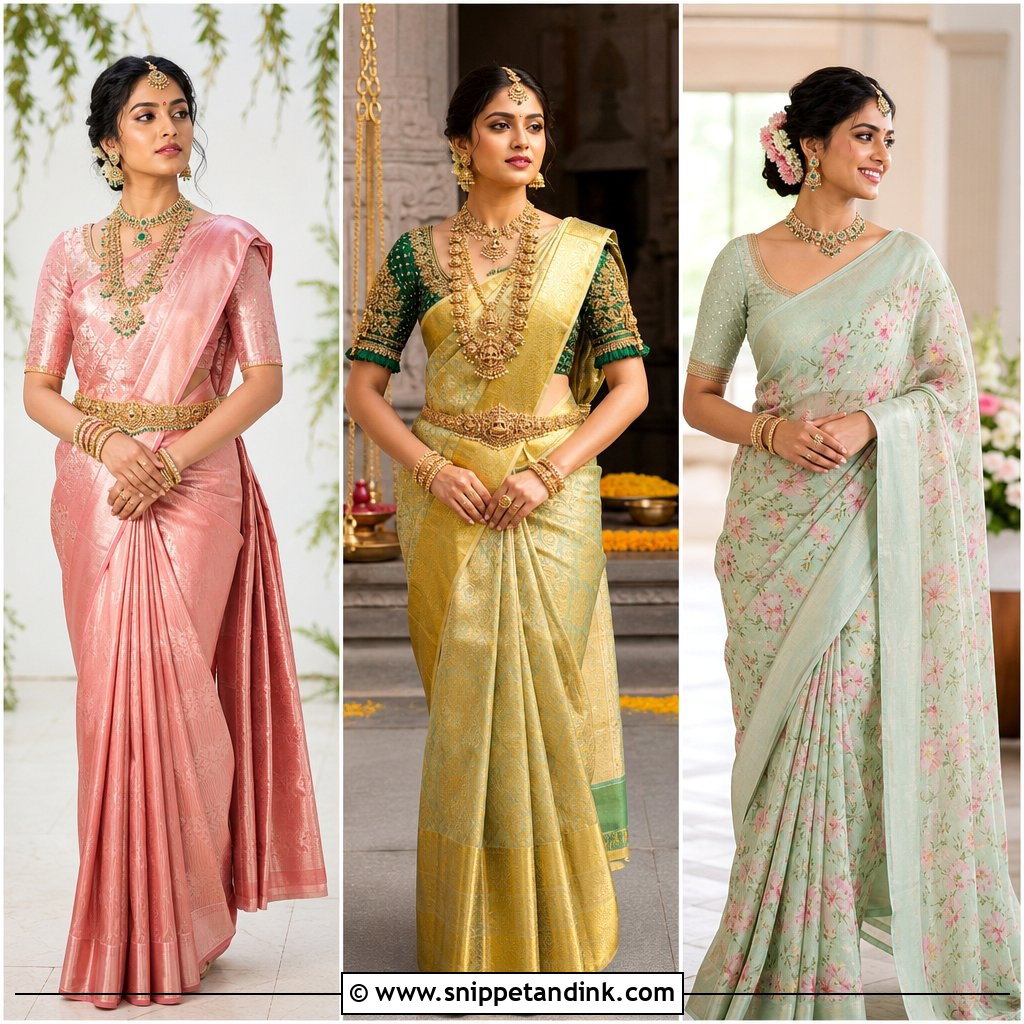
The South Indian braid is built, not just plaited. Most brides need extensions to get the length and the rounded thickness, and then the jada, gold ornaments or temple-style pieces go on in sections from the nape down. I braid fairly firmly so the ornaments don’t twist the plait sideways as you sit and stand through long rituals. It pairs naturally with a Kanjeevaram saree, traditional jewellery and a centre parting, and it reads clearly from behind during mandap moments. Keep the top smooth and the braid full; a flat, thin braid under heavy gold looks underbuilt.
3. Indian Bridal Low Bun
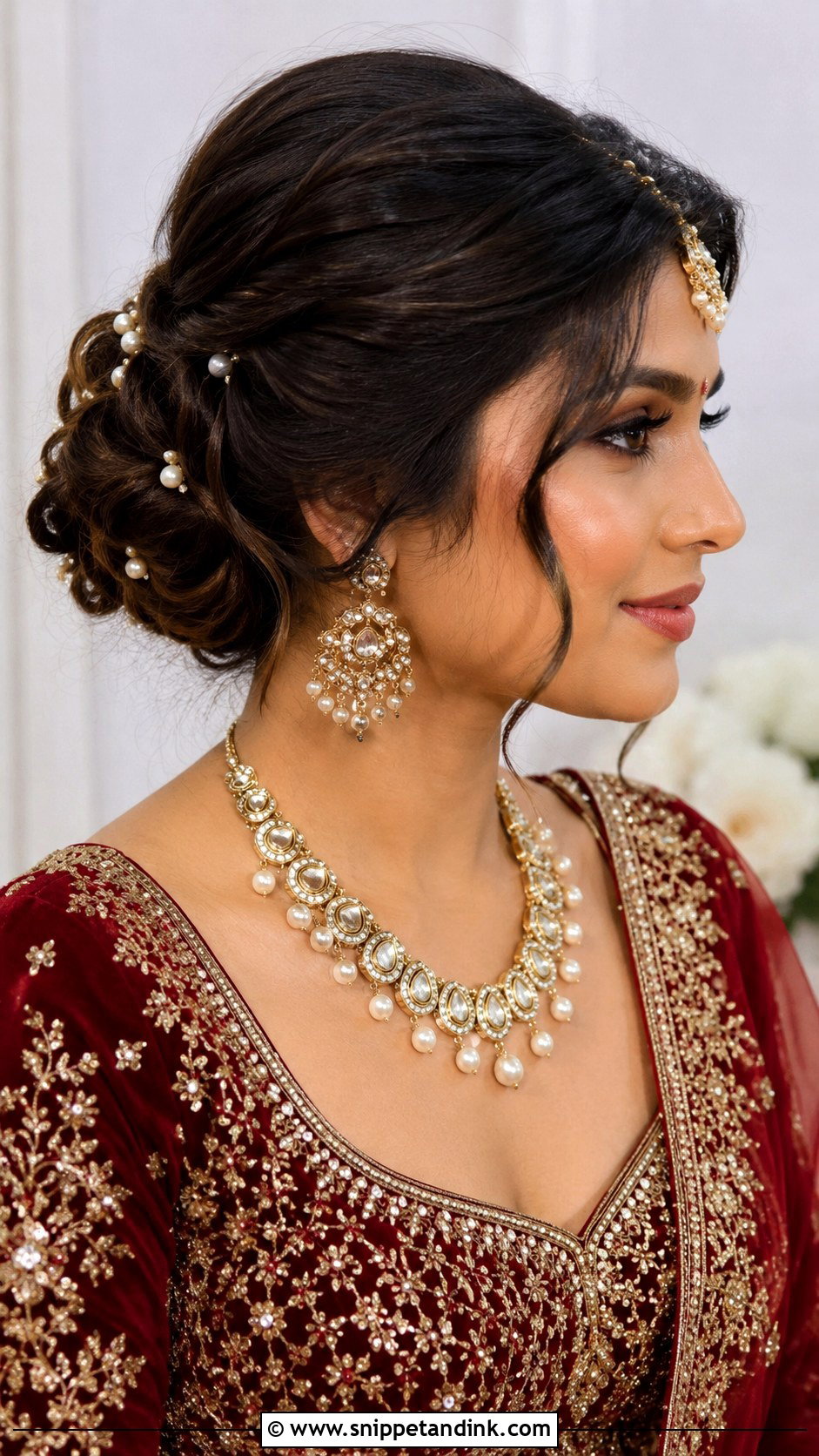
A low bun sitting right at the nape is the most comfortable option I can offer a bride wearing a heavy dupatta and layered necklaces. The weight rests against the neck instead of pulling from the crown. It can be sleek, twisted or loosely textured, and roses, mogra, pearl pins or gold accessories all sit well along its edge. One caution: with very high-collared blouses, a nape bun can rub the fabric, so I check the blouse at the trial. A couple of soft face-framing pieces stop it from looking severe.
4. Indian Bridal Flower Bun
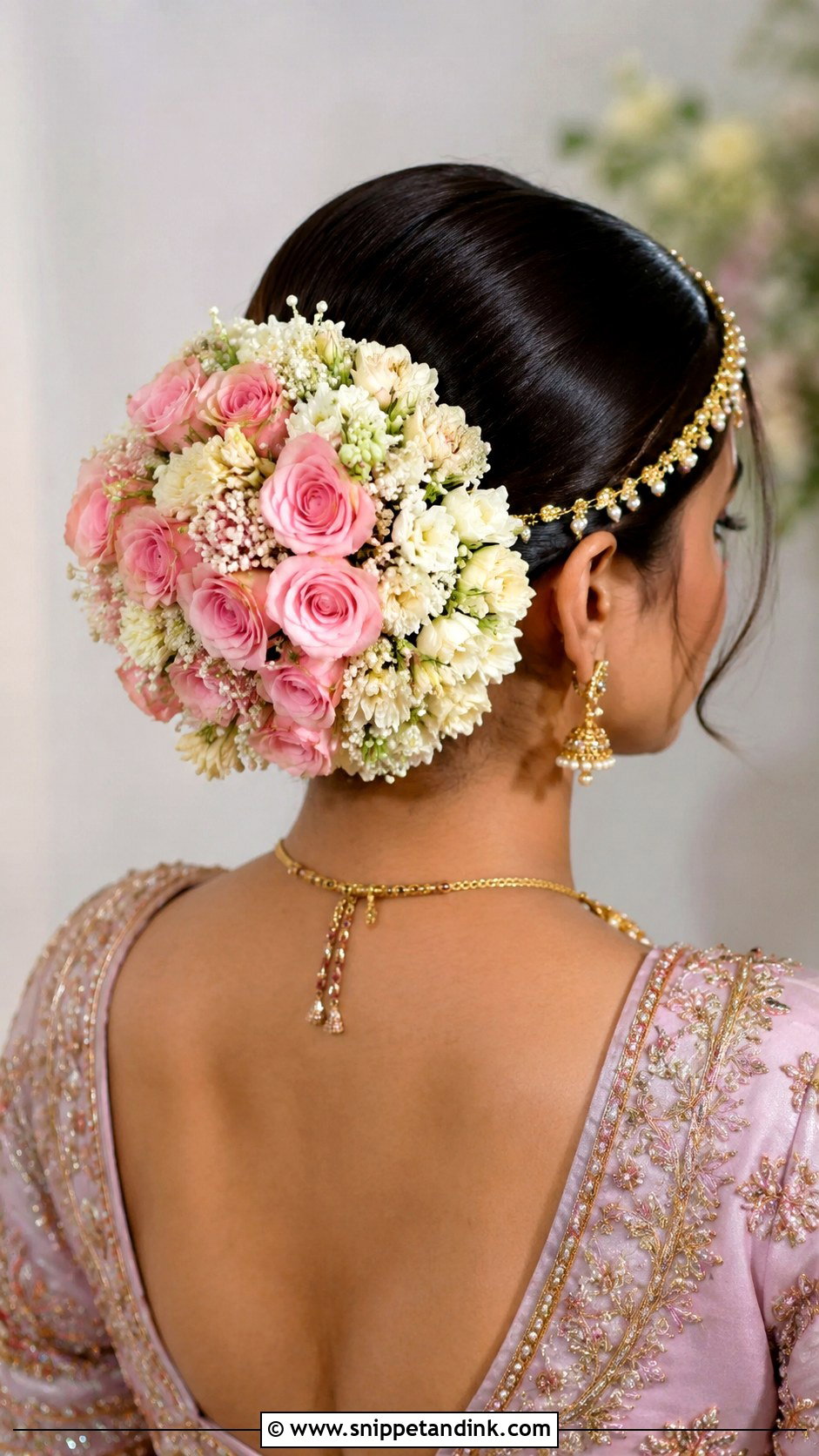
Flower buns are where I ask the most questions about the outfit. Jasmine, roses, baby’s breath, orchids or a mix of small seasonal blooms can cover the bun completely, and it works with pastel lehengas, red bridal wear and ivory reception looks. The real decision is scale. If the lehenga is heavily worked, I keep the bun clean with a slim floral border. If the outfit is plain, a fuller flower bun can carry the look. Fresh flowers wilt under hot lights, so I pin them on as close to the ceremony as the schedule allows.
5. Indian Bridal Messy Bun
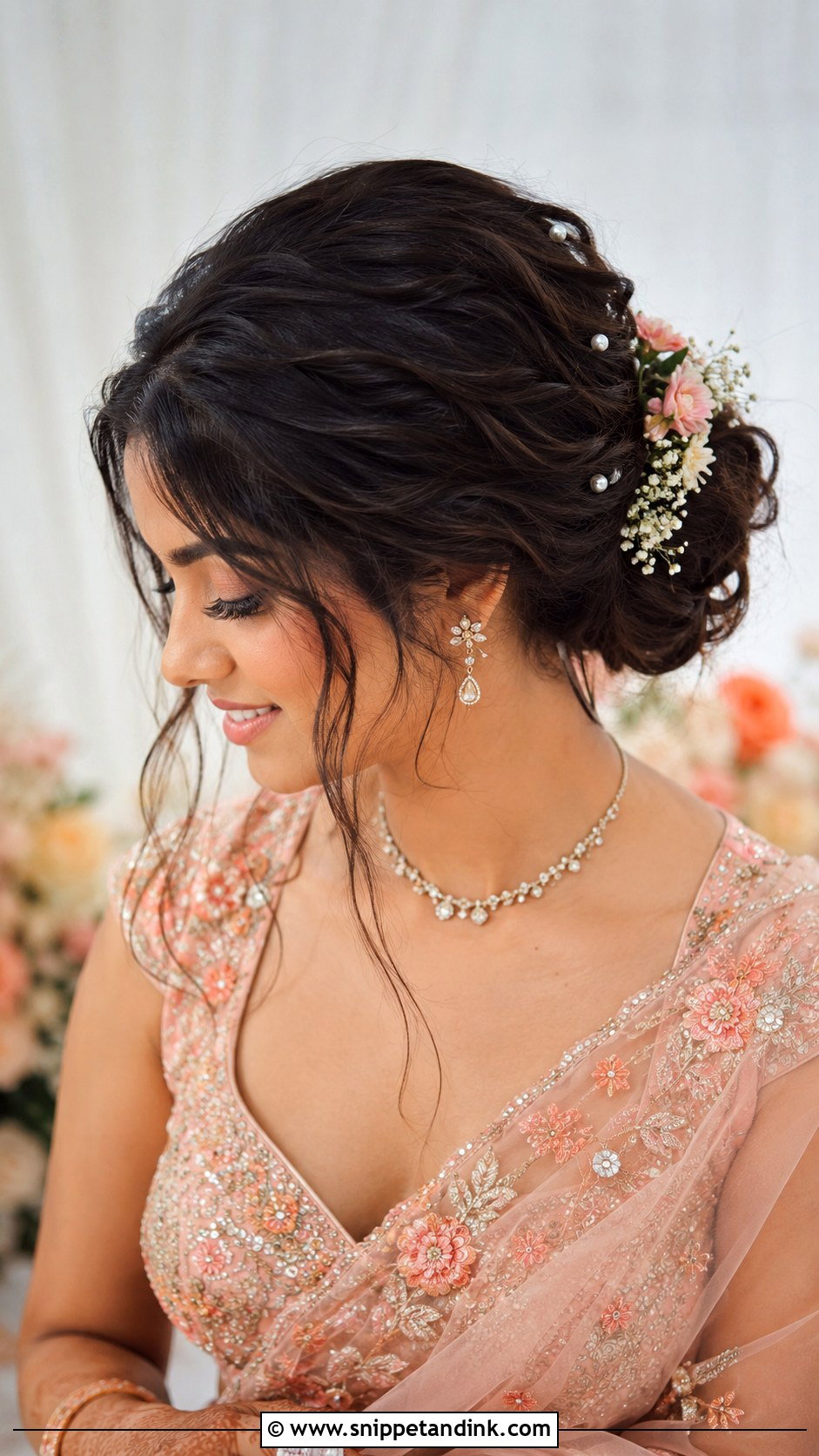
Nothing about a bridal messy bun is actually messy. I set the hair, twist it loosely, pin each section so it looks undone, and fix the shape with spray so it doesn’t drift. It suits mehendi, sangeet, a reception or a daytime wedding, and layered hair helps because the shorter lengths fall around the face on their own. Small flowers, pearl pins or a fine hair vine turn it bridal. The front pieces are the weak spot. If they aren’t controlled, they look tired after a few hours instead of romantic.
6. Indian Bridal Juda Hairstyle
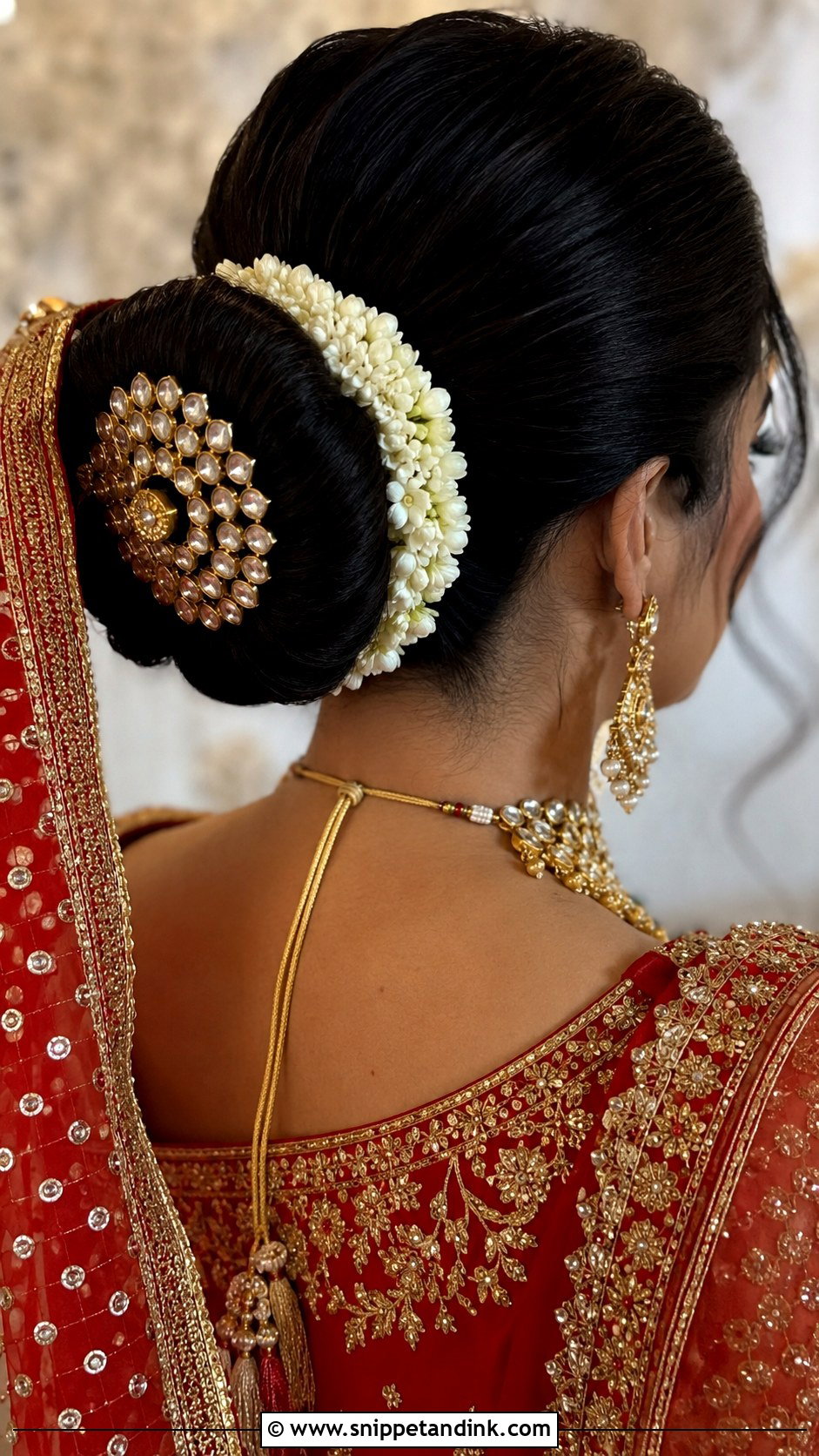
A juda gives a dupatta the strongest base of any style here. It can be round, twisted, braided or slightly puffed, and its density means pins grip hair instead of sliding. That’s why so many brides wear one for the main ceremony: the neckline stays clear for earrings, necklaces and blouse detail. Gajra, roses, gold pins or kundan pieces all work on it. I build the juda over a firm base and smooth the crown carefully, because every flyaway at the crown shows once the dupatta frames it.
7. Indian Bridal Open Hair Curls
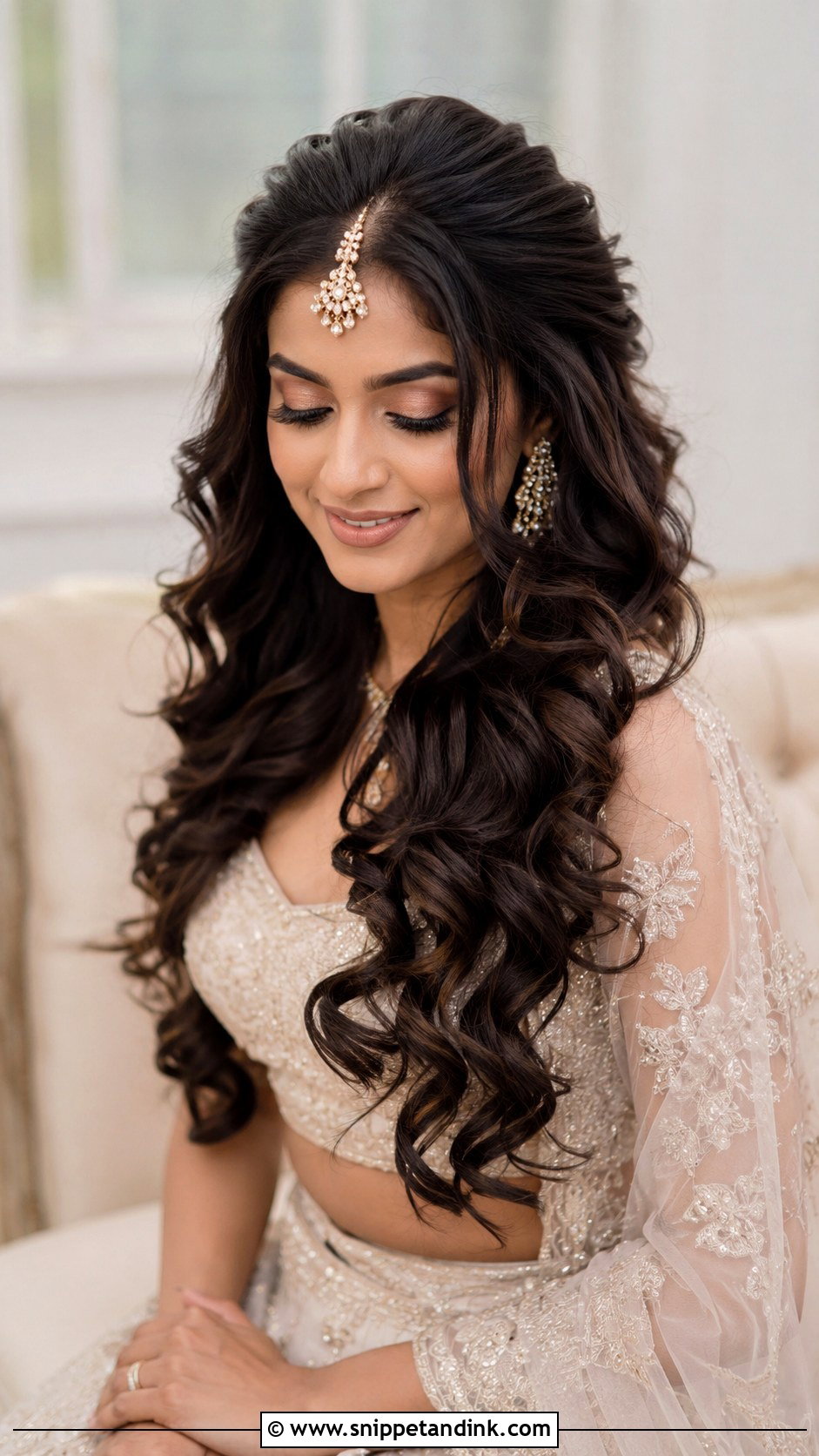
Indian bridal open hair curls belong to events where the dupatta stays light: receptions, cocktail nights, engagements. Under a heavily pinned dupatta, curls get crushed and pulled flat, so I rarely recommend them for the main ceremony. Volume at the crown, defined ends and a centre part with a maang tikka make open hair read as bridal. A side pin or fresh flower near one ear adds detail. If your hair drops curl within an hour, tell your stylist early; extensions and a proper set before brushing out make the difference.
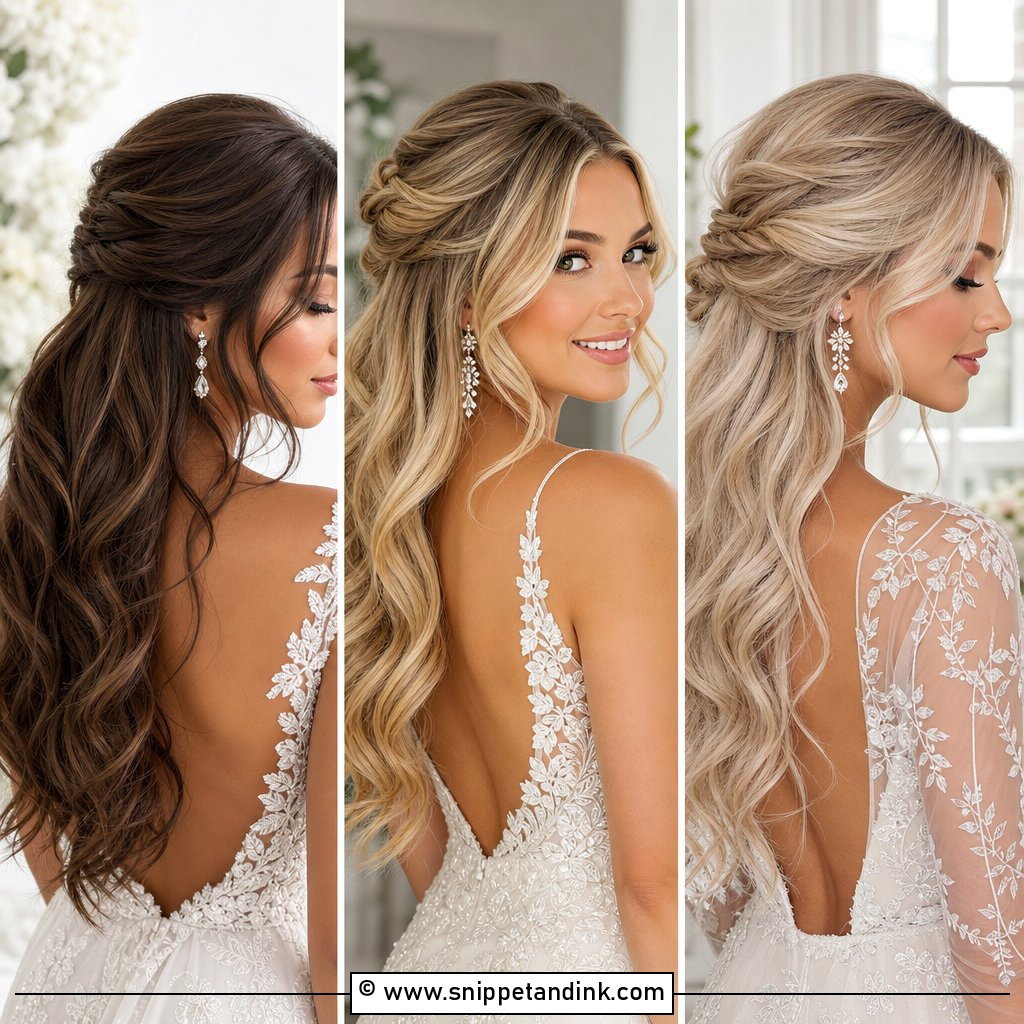
8. Indian Bridal Half Up Half Down Hair
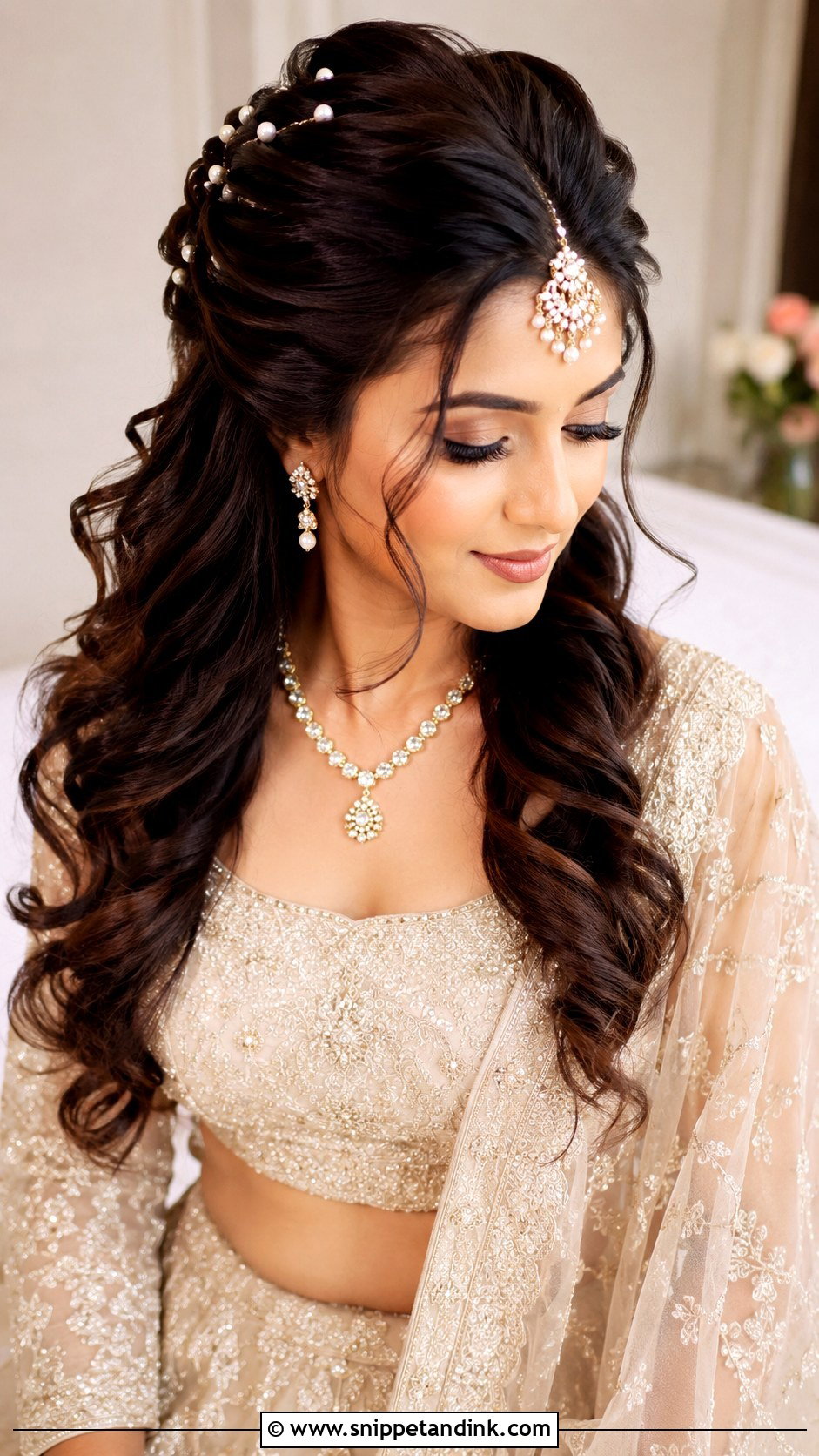
Half up, half down suits the bride who wants hair on her shoulders but also something to pin a tikka and a light dupatta to. The pinned top section is the structural part, so I secure it with crossed pins rather than a single clip. The lower lengths can be curled, waved or left textured. It goes well with modern blouses, engagement gowns and reception wear. If your hair is fine, I’d add a small amount of backcombing under the pinned section so the crown keeps its lift.
9. Indian Bridal Side Braid
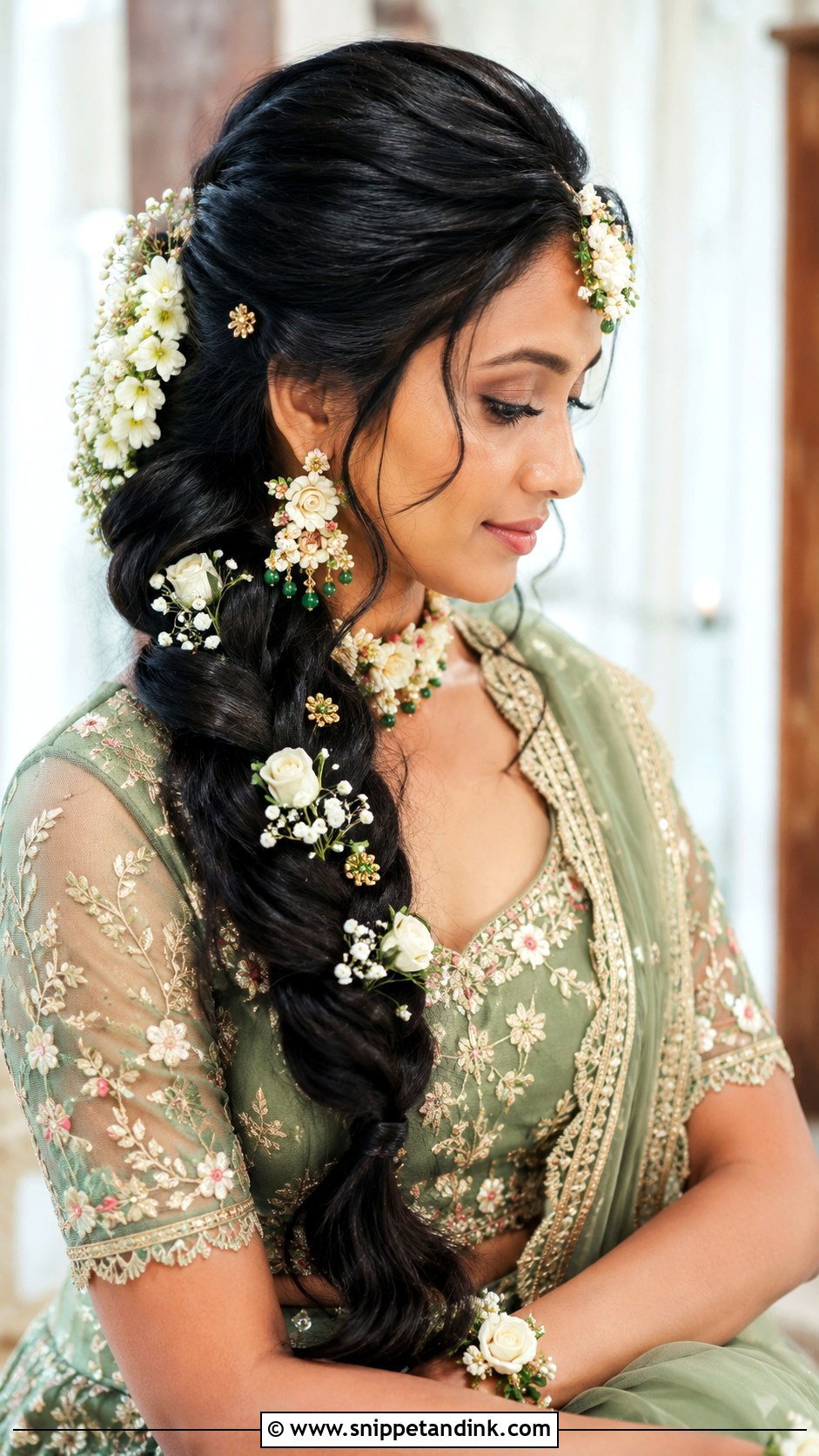
Bringing the braid over one shoulder keeps its detail in front-facing photos instead of hiding it down your back. A loose plait, fishtail, rope braid or textured braid with flowers all work here, and it sits well for mehendi, haldi, sangeet or a lighter ceremony. I’d steer you away from it if your dupatta is draped on that side; the two fight for the same space. Extensions add fullness to shorter hair, and a lifted crown with soft front pieces keeps it from looking casual.
10. Indian Bridal Fishtail Braid
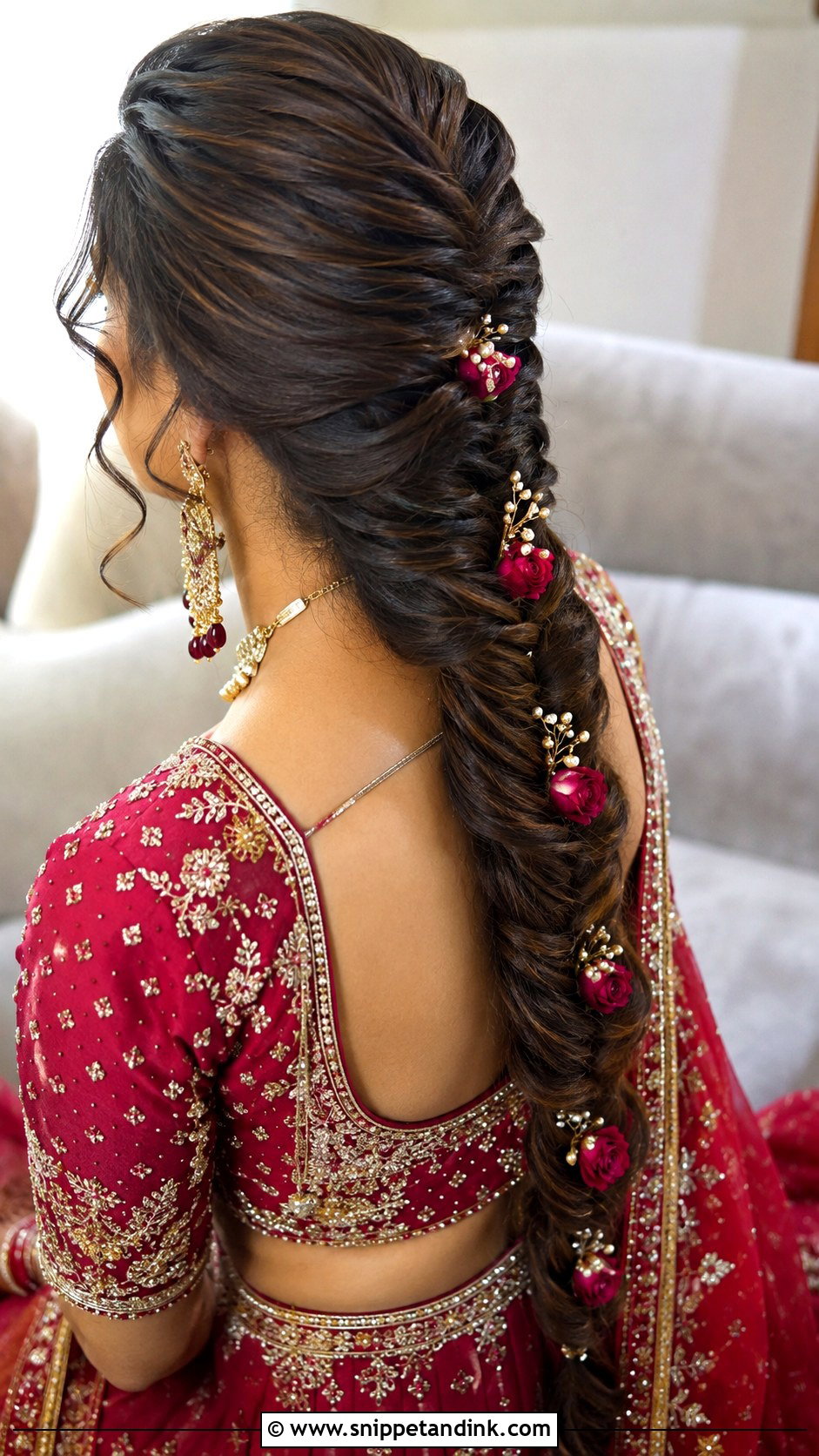
Fishtail braids need length. The pattern is made of many thin crossings, and on short or thin hair it disappears into a narrow rope, so extensions are usually part of the plan. Pearl pins, flowers or gold accessories catch the light along the weave. It can run down the back or over one shoulder depending on where the dupatta sits. After weaving, I pull each edge gently to widen the braid, which makes it look thicker and shows the pattern in photos.
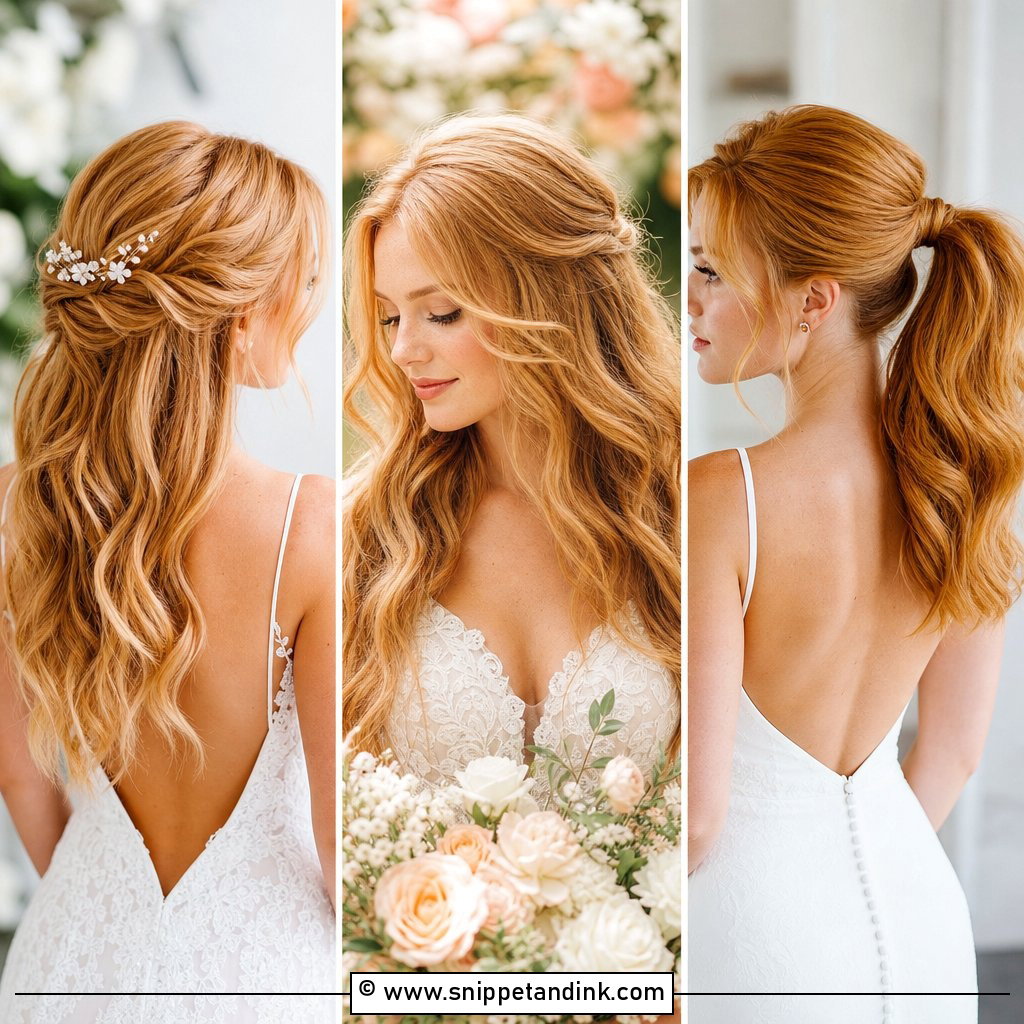
11. Indian Bridal Ponytail
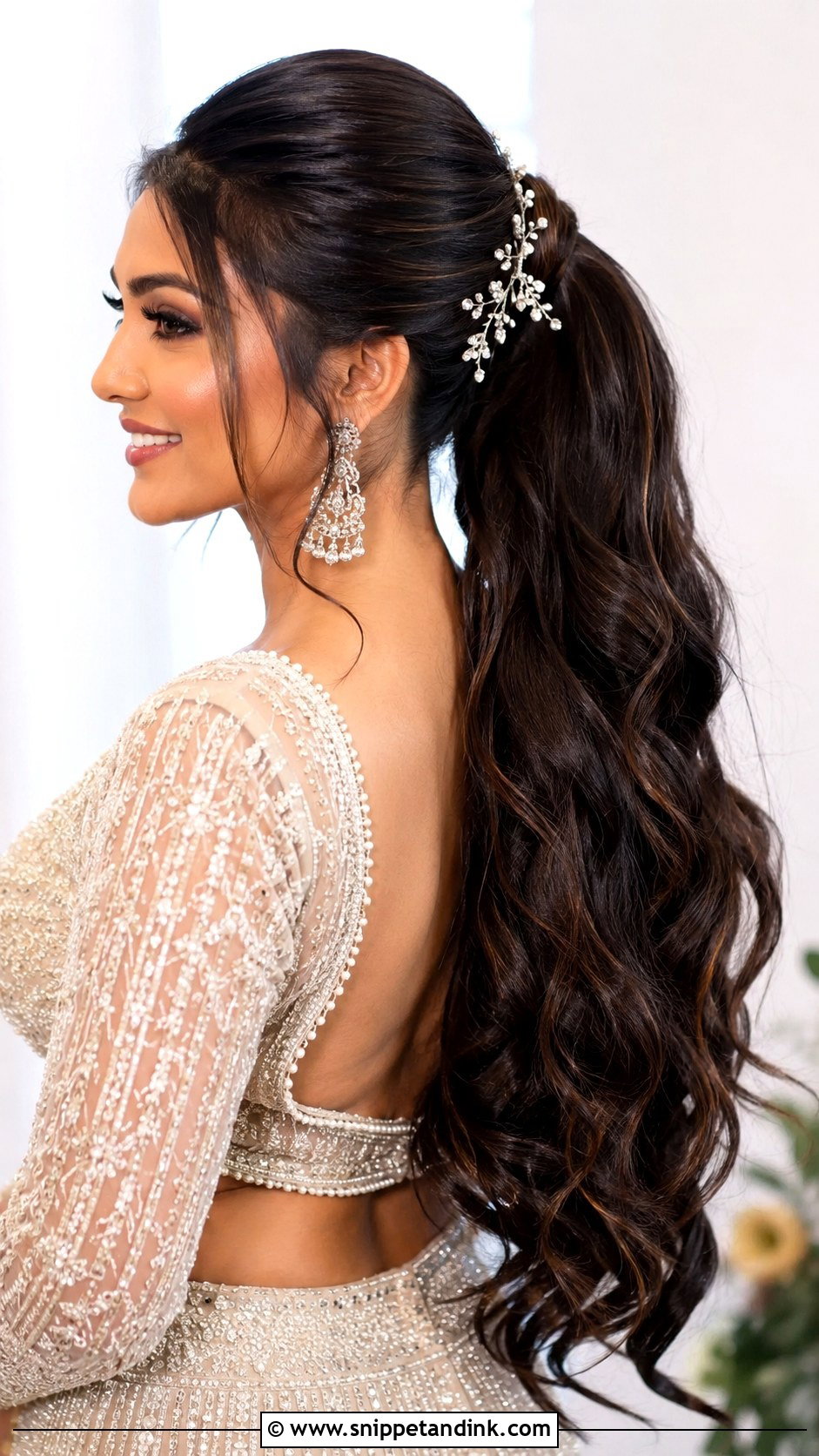
A ponytail is the style I suggest most often for brides who plan to dance. It works for sangeet, reception, cocktail or destination wedding events, and it can sit high, mid-height or low with waves through the length. A sleek crown and a strand wrapped around the elastic make it look finished. Pearl pins, crystal clips or a single accessory add the bridal touch. High ponytails get heavy with extensions, so I secure the base with two bands and a few hidden pins.
12. Indian Bridal Hollywood Waves
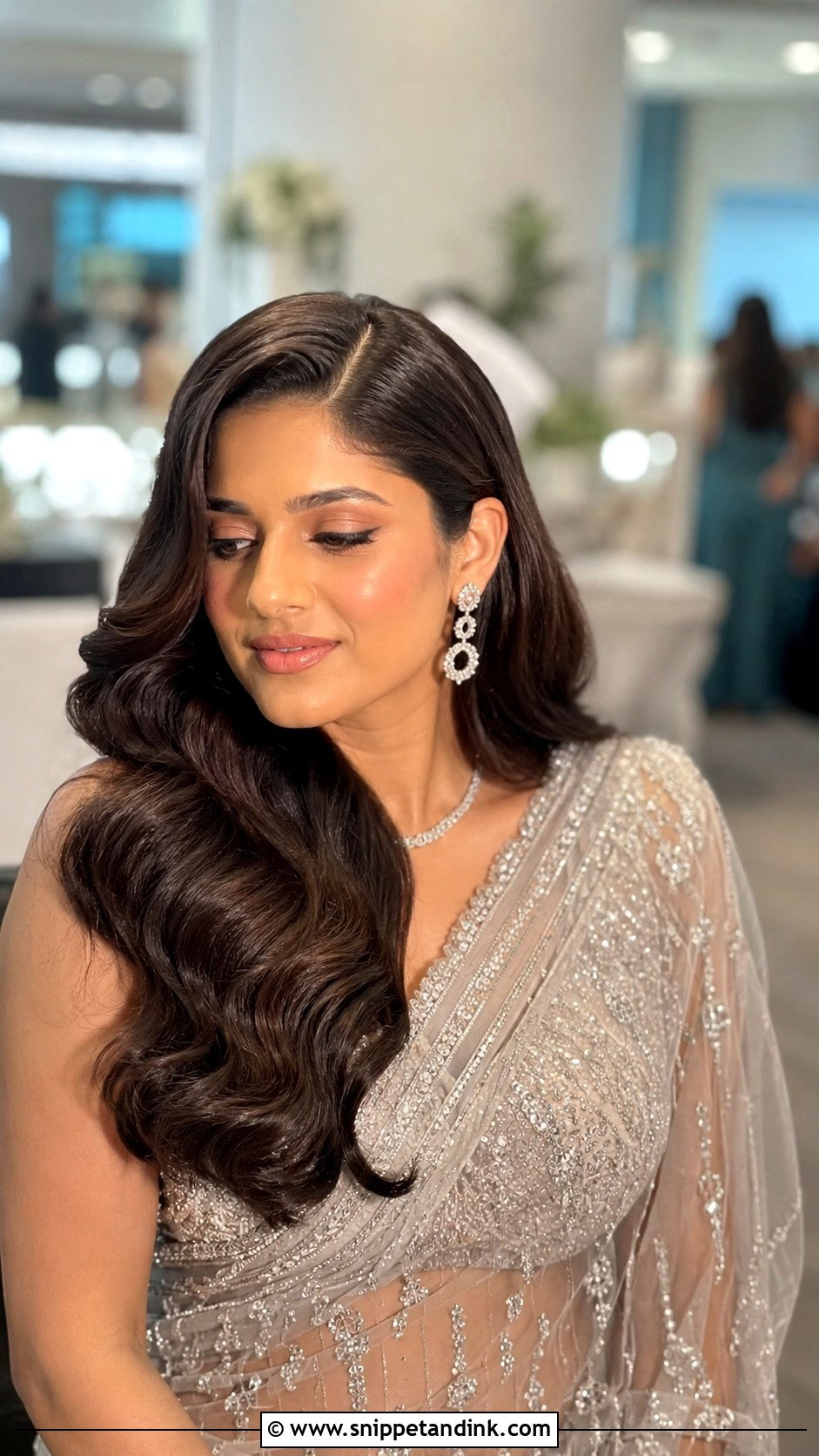
Hollywood waves are a reception look with a lot of polish. The waves are set in one direction, brushed into a smooth ribbon and pinned while they cool, which is what gives that glossy, uninterrupted shape. They pair with lehengas, gowns, sarees and statement earrings, but they need hair that stays open; a pinned dupatta flattens them in minutes. A deep side part is more dramatic, a centre part with a maang tikka more traditional. Extensions help if you want density through the lengths.
13. Indian Bridal Braided Bun
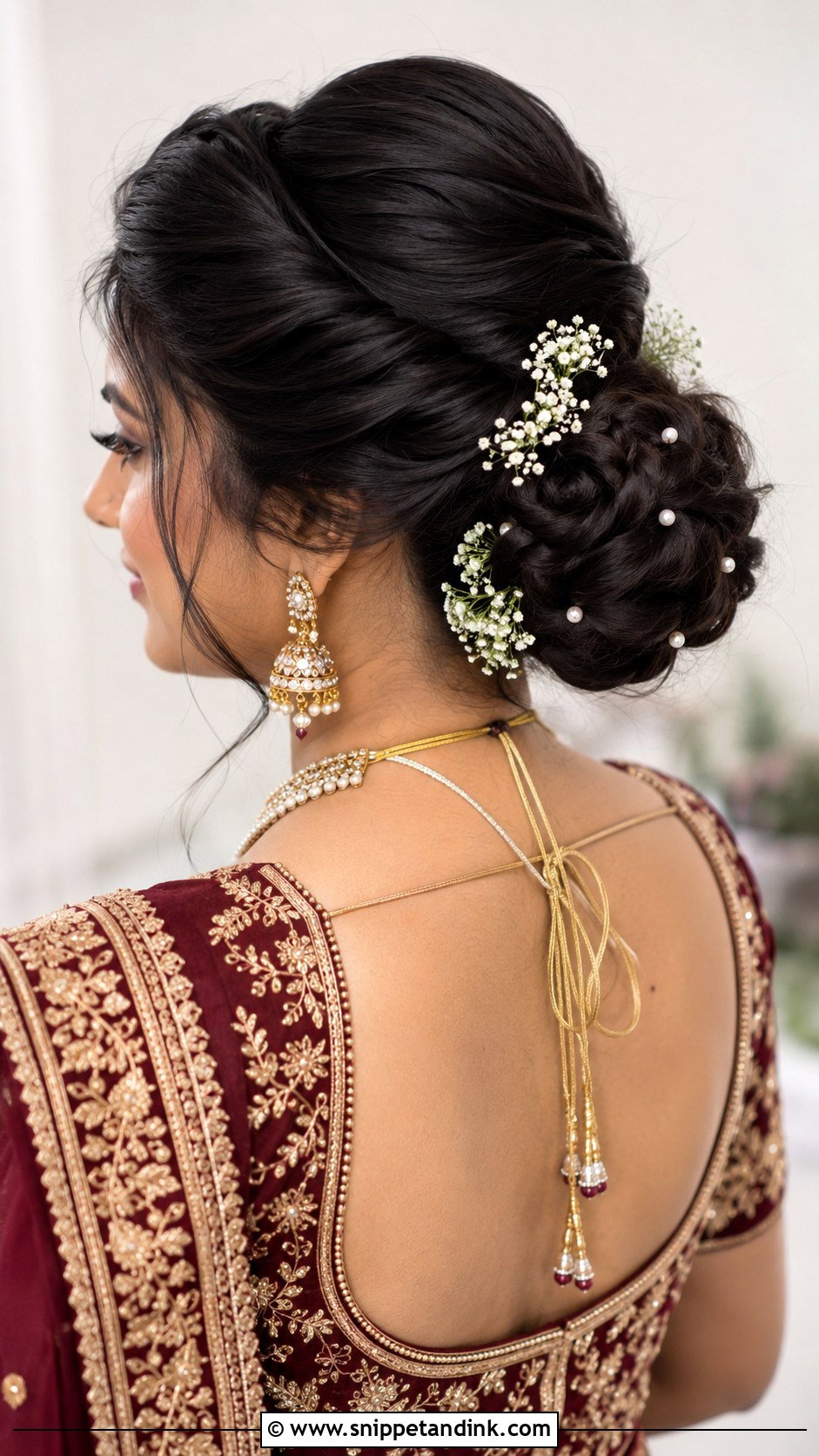
A braided bun gives you texture without leaving any hair loose. The braid can wrap the bun, run into the crown or form the base of the updo, and that woven base holds a dupatta better than most open styles. Floral accents, pearl pins, kundan pieces and traditional jewellery all sit comfortably in the braid’s grooves. I adjust crown height and side softness to the face: a little more height for round faces, softer sides for heart-shaped ones. On very short layers, braids can poke out, so I sometimes braid only the longer back section.
14. Indian Bridal Sleek Bun
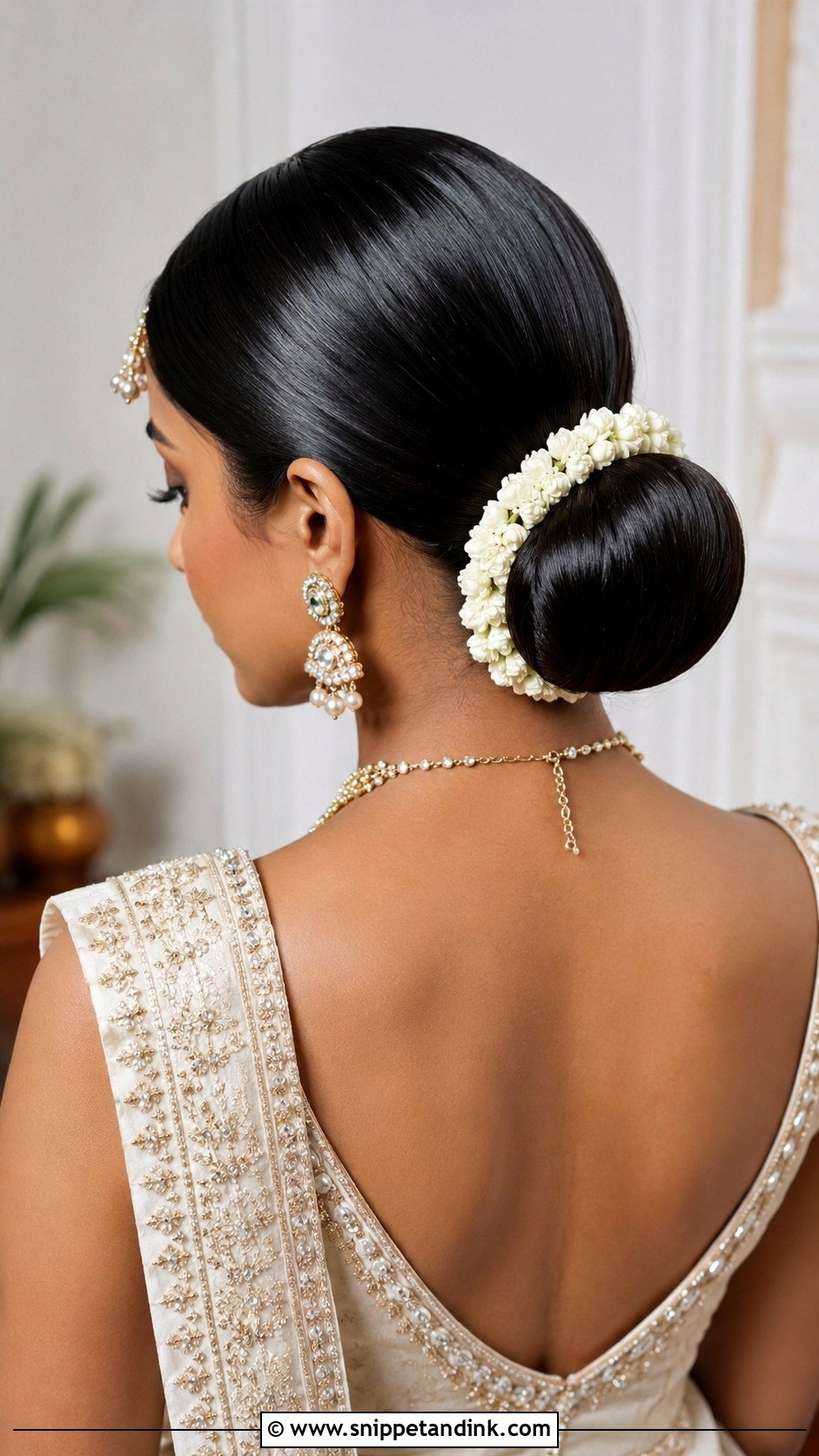
The sleek bun is unforgiving, which is exactly its appeal. The hair is parted precisely, smoothed close to the head and shaped into a firm bun, so jewellery, makeup and blouse detail carry the look. It suits modern lehengas, silk sarees and minimalist outfits, and a single gajra strand or gold accessory adds the traditional note. I don’t recommend it for brides who dislike their hairline or ears being fully on show. Shine spray and flyaway control matter more here than in any other style, because there’s nowhere for a frizzy strand to hide.
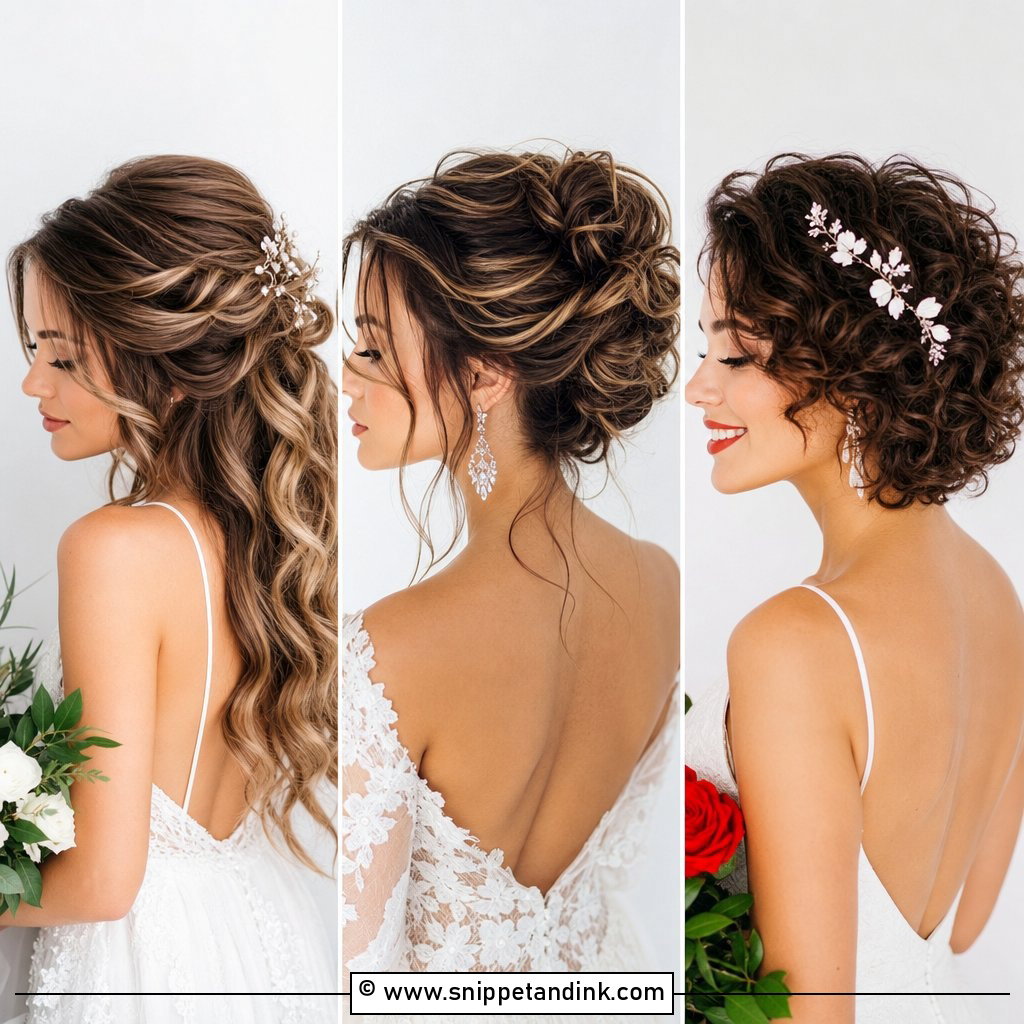
15. Indian Bridal Puff Hairstyle
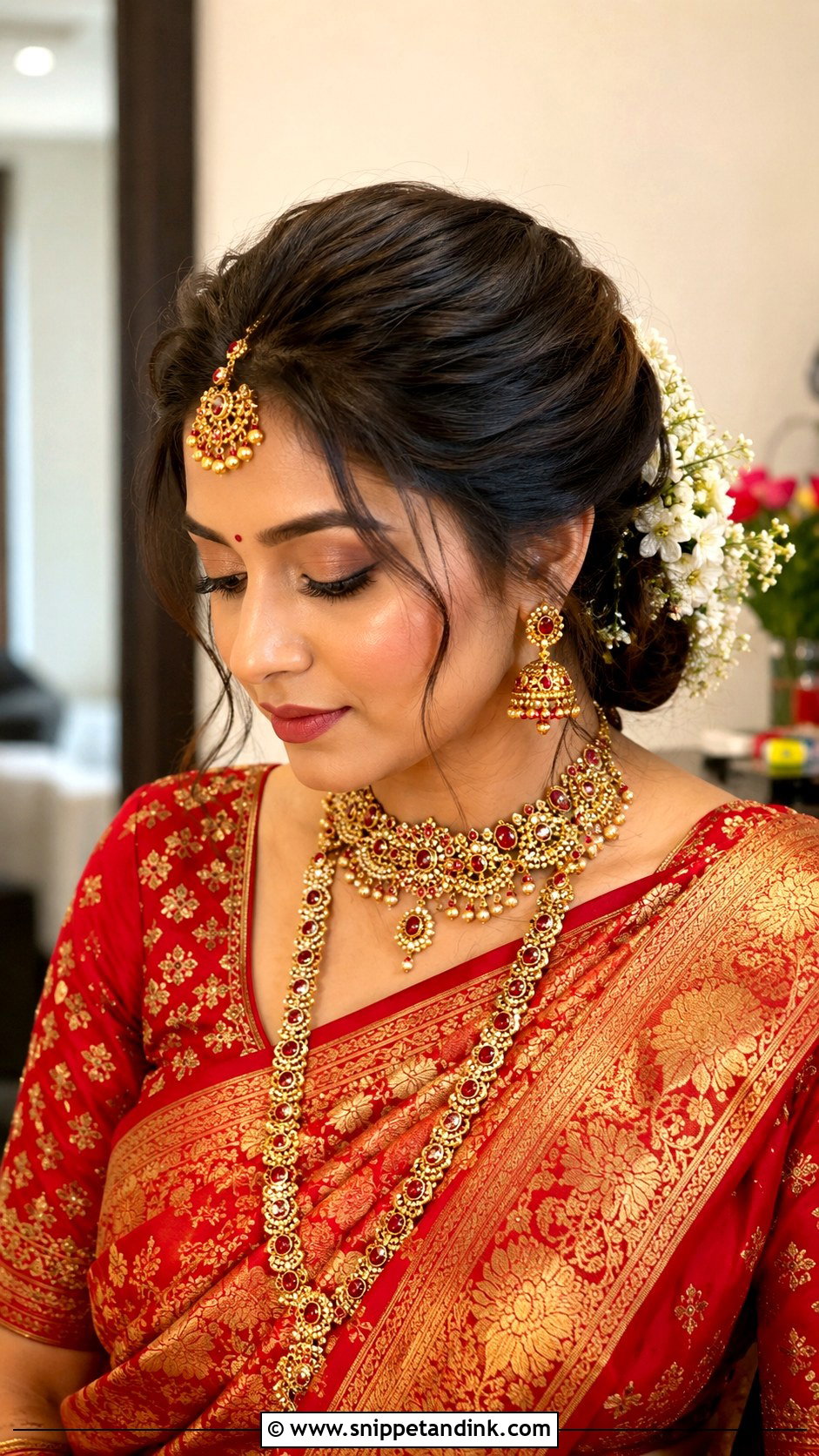
A puff adds height at the crown and changes the whole silhouette. It can sit above a bun, a braid, a half-up style or open curls. Under a dupatta it does structural work too, keeping the fabric from flattening the head completely. It also balances heavy jewellery and rounder faces by adding vertical lift. I keep the puff modest; too much height starts to look dated and lifts the dupatta awkwardly. Soft side pieces, flowers or a maang tikka round it off.
Extensions, Jasmine and the Weight on Your Scalp
Weight is the thing brides underestimate. A full gajra, a jada, gold ornaments, clip-in extensions and a heavy embroidered dupatta all hang from the same few square inches of scalp. I spread that load: the dupatta pins go into the bun or braid, never into loose hair, and long jasmine strands are pinned at several points instead of hung from one.
Getting extensions to blend
Extensions should match your hair’s colour at the mid-lengths, not the roots, and they should be close to your texture. Very silky extensions look obvious next to thick, wavy hair. Wash them and try them in the trial; new extensions often shed or tangle the first time they’re styled.
Fresh flowers on a hot day
Jasmine buds open and brown as they warm. I ask the family to keep gajra cool and damp in a sealed bag until the last moment, and I pin them on after the dupatta is set. Some brides keep a spare strand for the reception so the hair looks fresh in evening photos.
If your scalp is sensitive or you get tension headaches, say so at the trial. I can lower the bun, lighten the ornaments or switch to a braid long before the day, but there’s little I can change once the dupatta is pinned.
A Hairstyle That Can Carry Gold, Jasmine and a Dupatta
The right bridal hair is the one you stop thinking about once it’s done. Buns and judas give the dupatta its anchor for the ceremony. Braids suit traditional outfits and long rituals, and open curls, half-up hair, waves and ponytails belong to the events where you move more. Weigh your jewellery, outfit, the weather and how long you’ll be seated before you decide. Then test it all at the trial, with the real dupatta and the real extensions, so nothing on the day is a surprise.
You'll Like These Ideas:


Leave a Reply