
At the mandap, the back of your head is in front of the guests for most of the ceremony. People see it during the pheras, while you sit for the rituals and every time the priest asks you to turn. So the hairstyle has to look finished from behind, hold a dupatta and heavy jewellery, and stay comfortable for hours near the fire. The twenty styles below run from gajra-wrapped buns and jada braids to open curls. For each one, I’ve added what I look at when I build it on a bride, including what it carries well and who it doesn’t suit.
Plan the Bun Around the Dupatta, Not the Other Way Round
The first question I ask a bride isn’t which style she likes. It’s how she will wear her dupatta at the mandap. A dupatta pinned over the head needs a solid base to hold onto, and the hairstyle decides where that base is.
- Pinned over the head: a low or mid bun works best, because the pins go into the bun and the dupatta sits smoothly at the back.
- Draped from the shoulders only: open hair, side-swept curls and long braids all show properly.
- A heavy, embellished dupatta: choose a firm, structured style. Soft curls and loose buns flatten under the weight.
- A sheer net dupatta: you’ll see the hairstyle through it, so the back needs to look neat and finished.
Bring the actual dupatta to your trial, or at least a fabric of similar weight. Pinning it into place with your jewellery on shows straight away whether the style will survive the pheras.
1. Floral Bun With Gajra
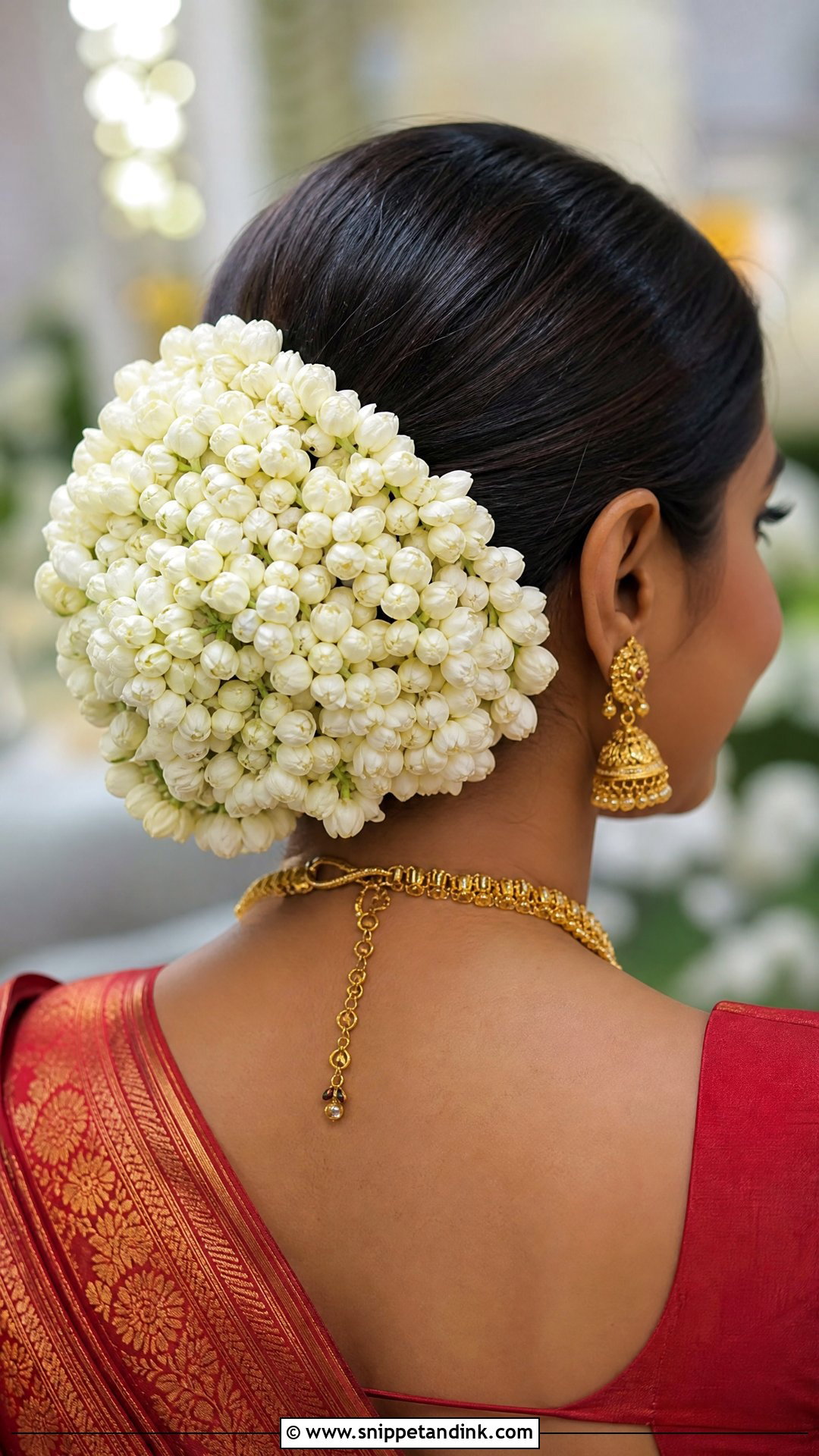
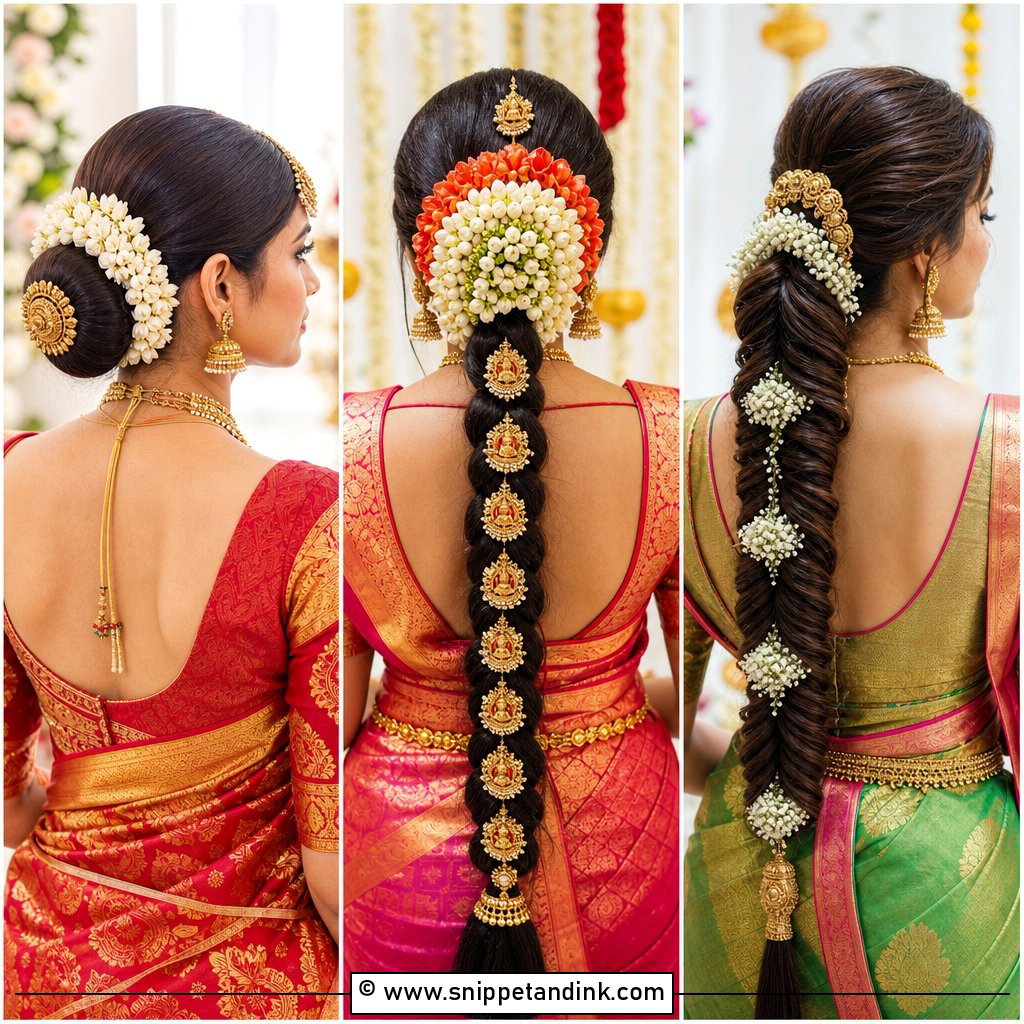
A low bun wrapped in a fresh jasmine gajra is the classic mandap hairstyle for good reason: it sits under almost any dupatta and suits nearly every face shape. I build the bun on a small padded base first so the gajra has a firm surface to wrap around; on a soft bun, the strings sag to one side within an hour. Keep it sleek for a silk saree and temple jewellery, or give the crown a little lift for drama. A maang tikka along the parting finishes it, and the jasmine smells wonderful through a long ceremony.
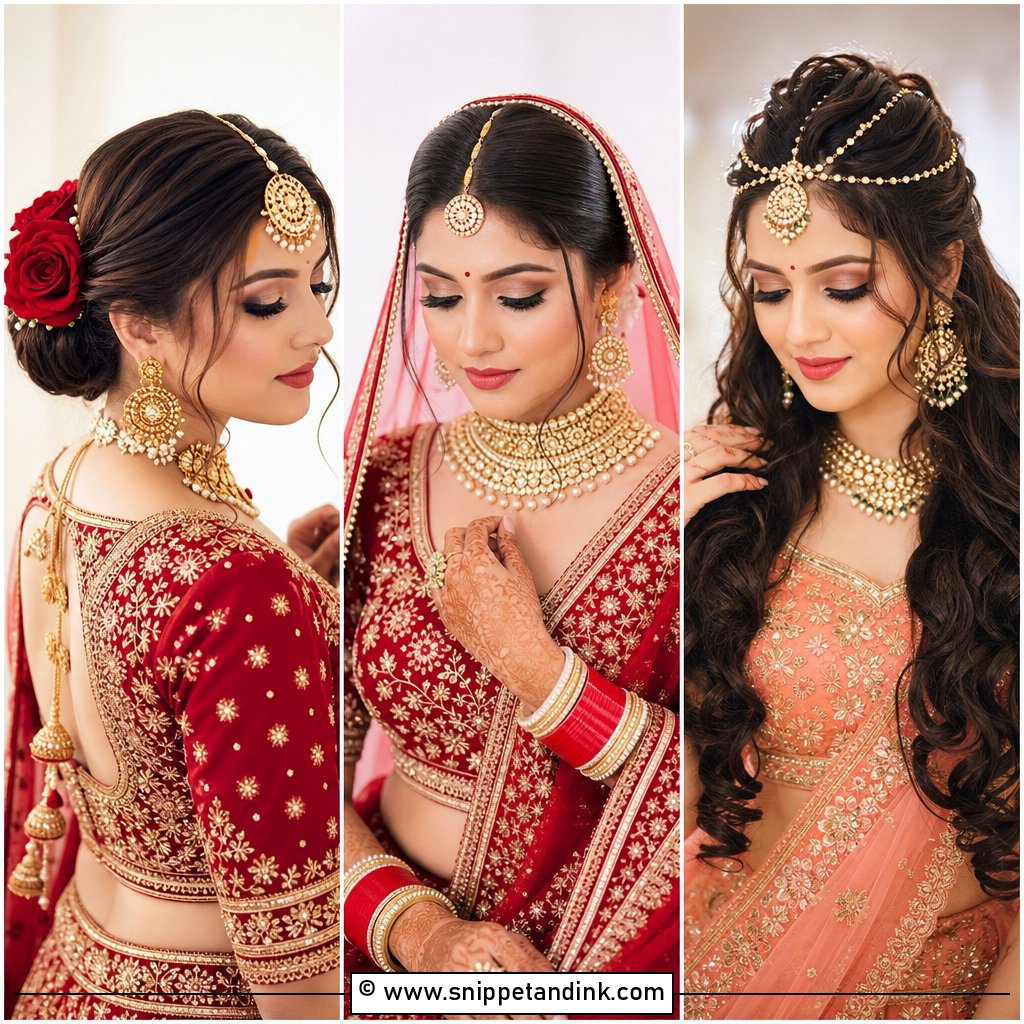
2. Low Bun With Maang Tikka
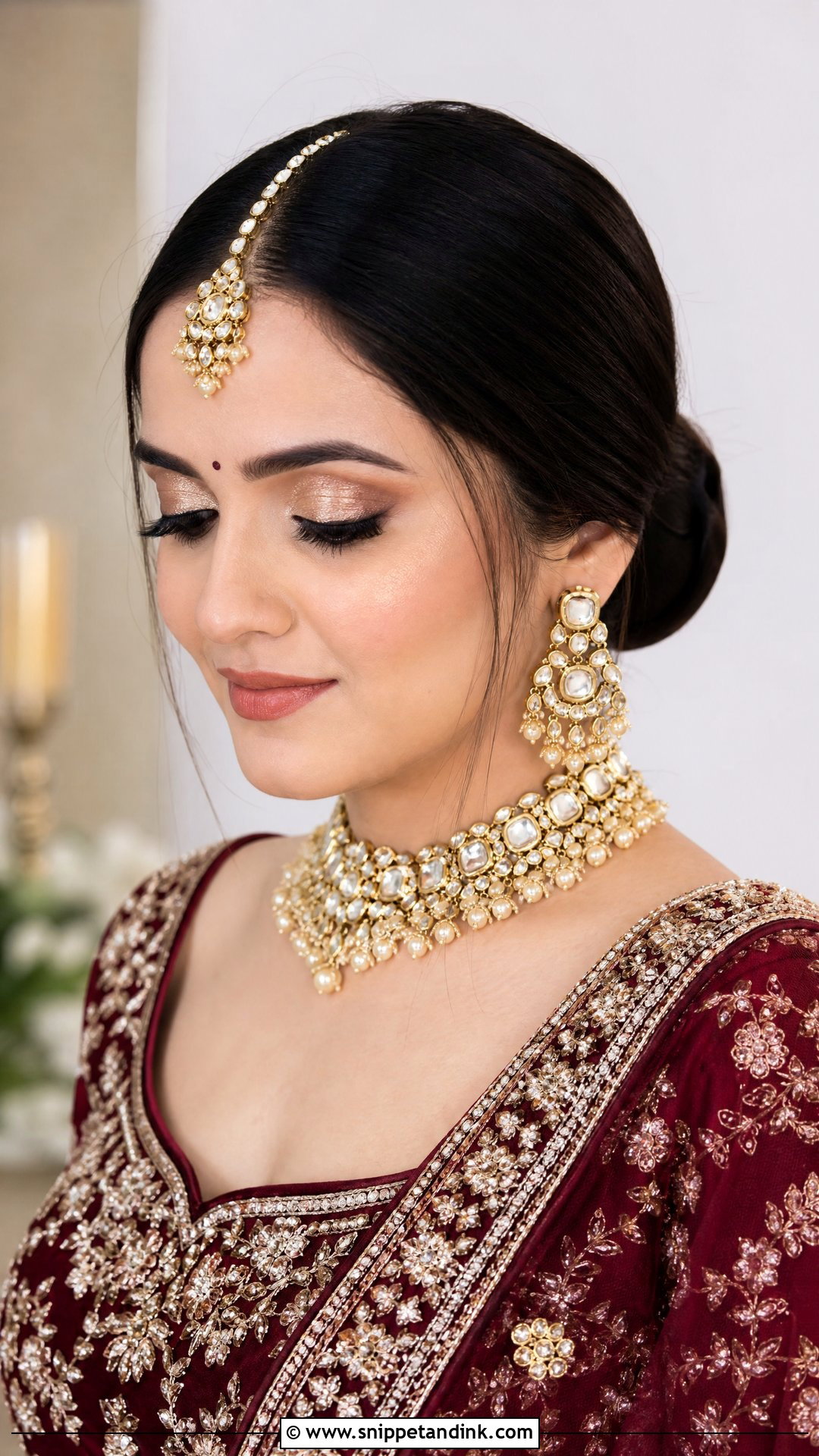
A sleek low bun at the nape lets the maang tikka do the talking. I give the crown a little lift so the face doesn’t look flat, then set a clean centre parting with gel or a smoothing cream, because a tikka laid along a crooked or fuzzy part looks off in every front-facing photo. Choose a tikka that echoes the work on your lehenga or jewellery set. The bun keeps everything in place through the rituals, and it’s what I suggest first when a bride asks for something minimal.
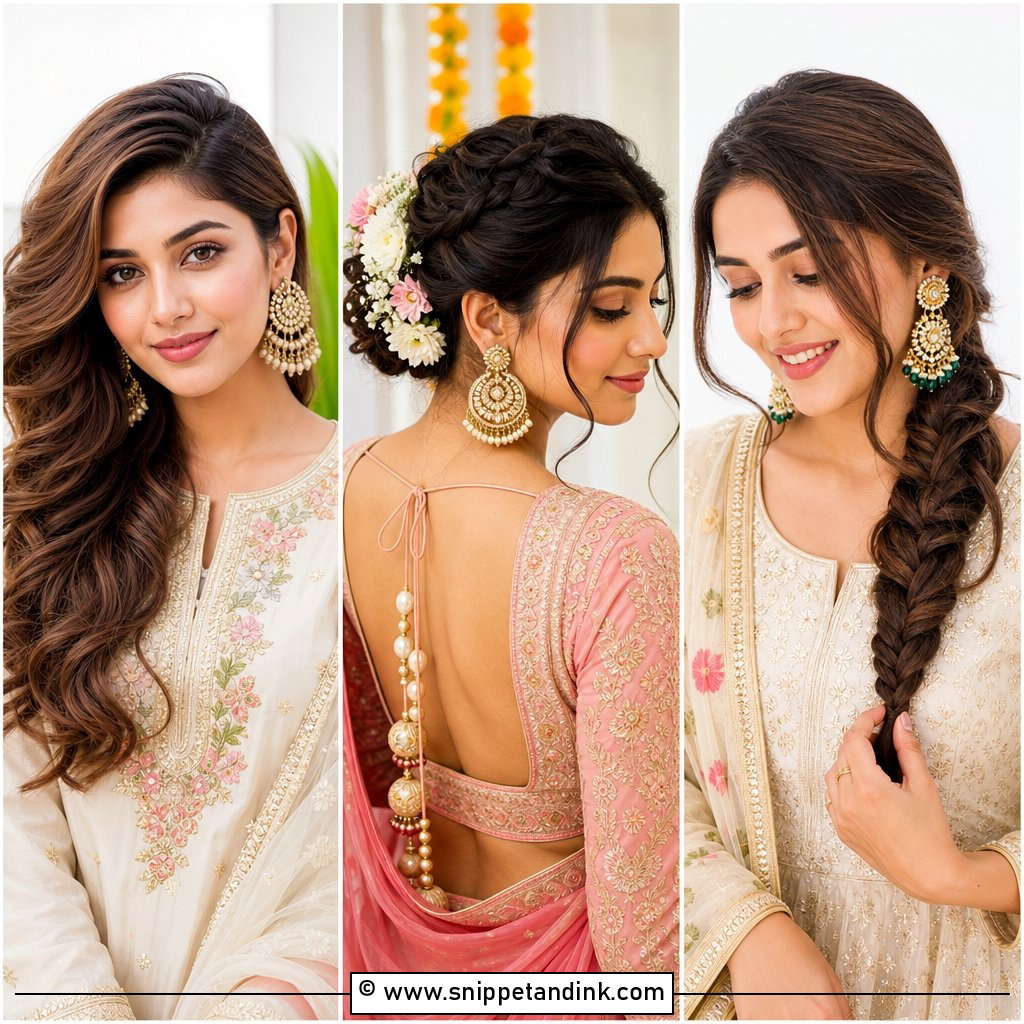
3. Fishtail Braid With Flowers
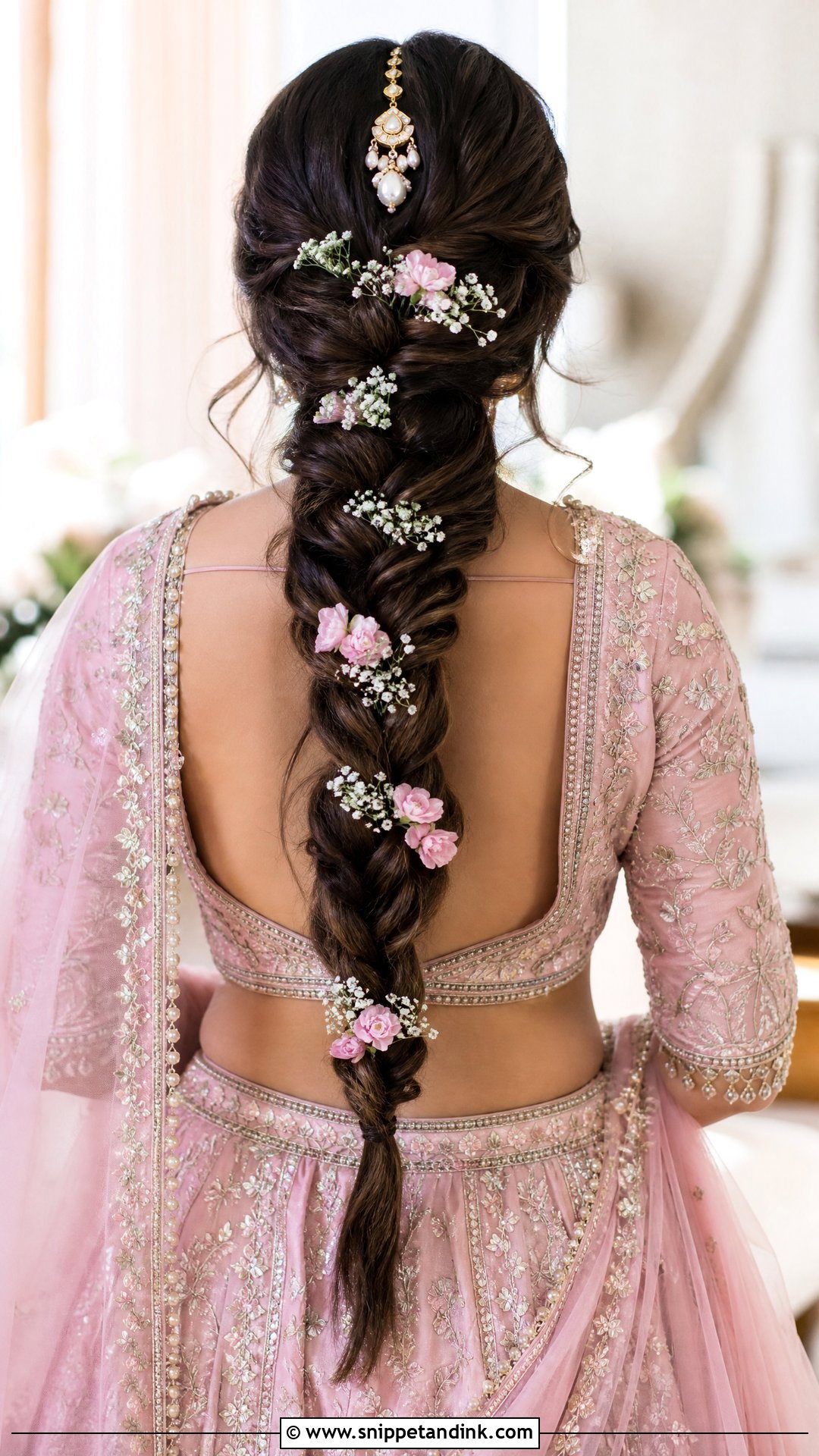
For a softer, more relaxed mandap look, a fishtail braid ripples down the back with a woven pattern that shows beautifully when you’re seated. I pin it into the hair at the crown so the dupatta doesn’t drag it sideways. Tuck fresh flowers or baby’s breath along the braid. A pearl maang tikka suits it. It works best on long hair; shorter hair needs extensions to give the braid enough length to show. It’s well suited to intimate and daytime ceremonies.
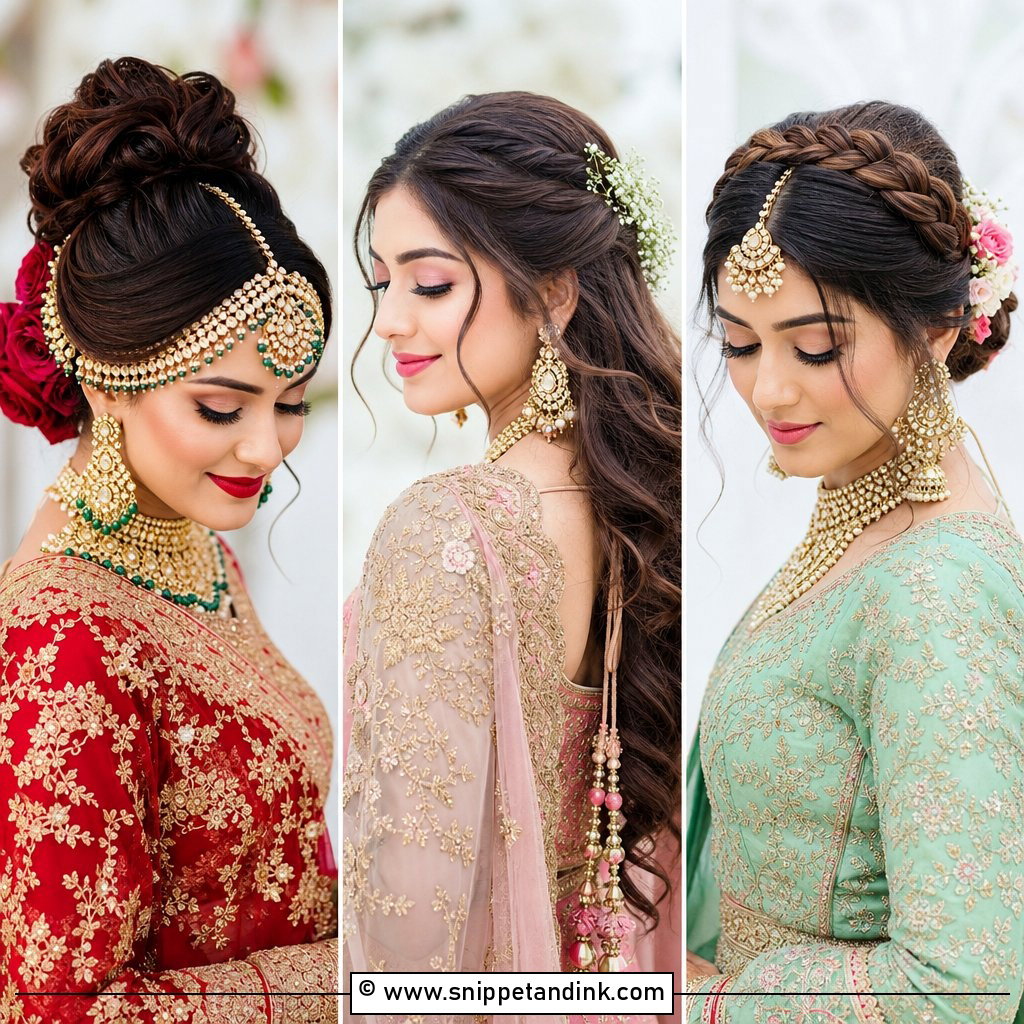
4. Half Up Half Down With Curls
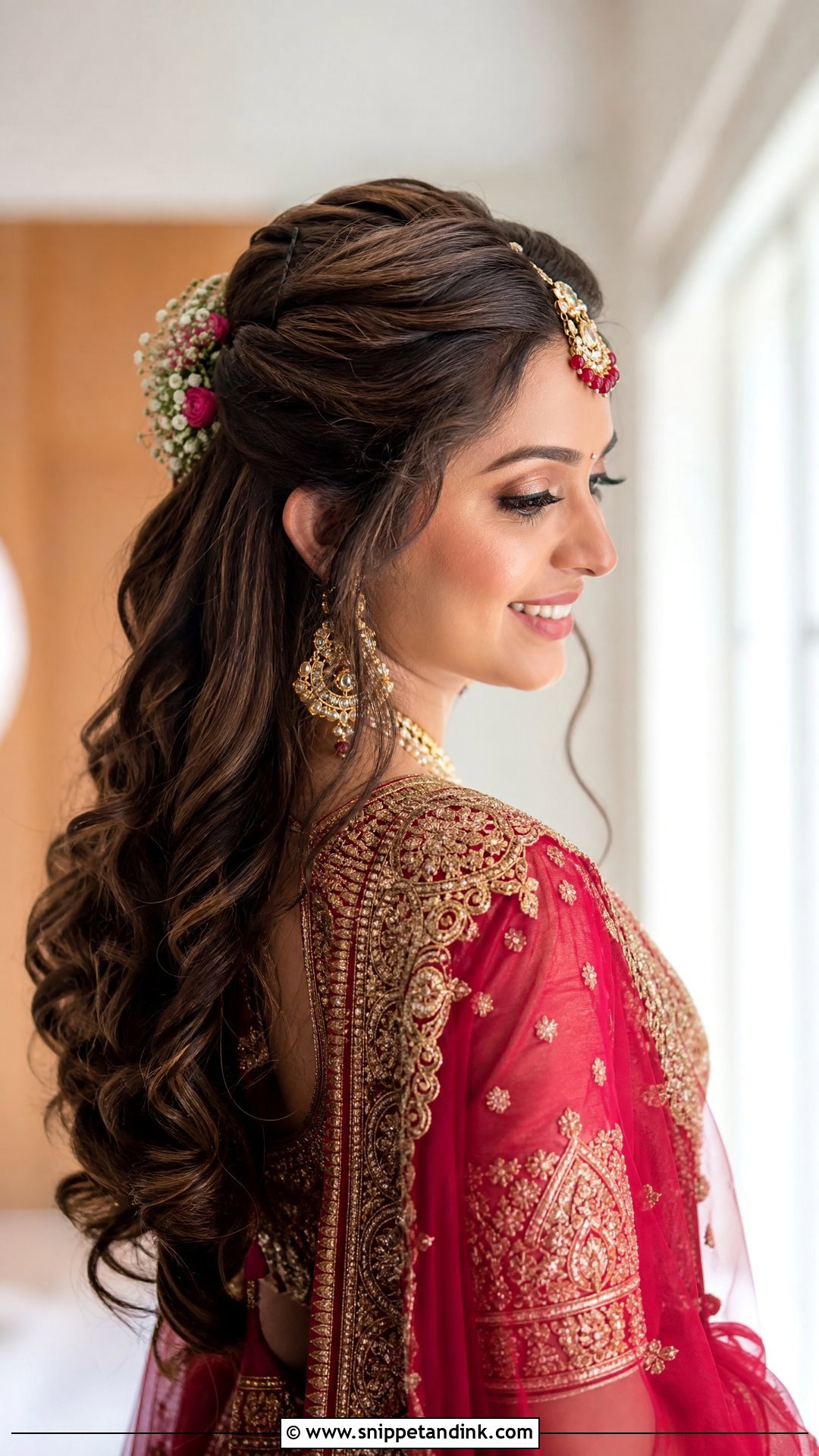
Half up keeps hair out of your face during the rituals while still showing length. I lift and pin the top section, then curl the lengths so they fall softly over the shoulders. Small flowers, a clip or sparkly pins on the pinned section and a maang tikka along the parting finish it. Round and oval faces suit the height at the crown. One caution: when a heavy dupatta is pinned over open curls, the curls flatten underneath. I’d plan where the dupatta sits before curling and keep the curls mostly below it.
5. Side Swept Curls
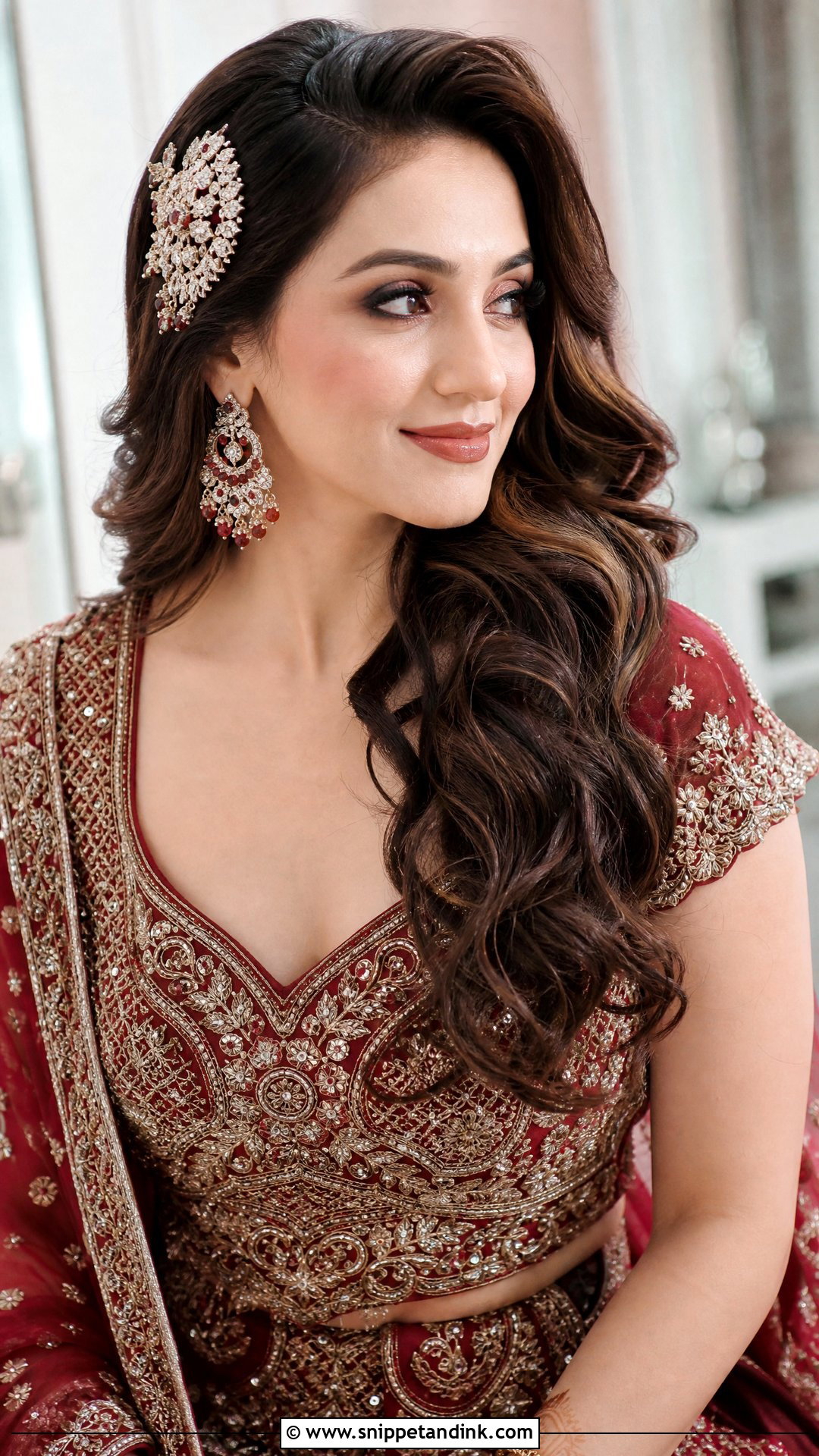
Curls swept over one shoulder frame the face and show off a statement earring on the other side. I pin the hair at the back of the head before sweeping it, so it doesn’t drift back to the middle when you turn. A passa or side ornament near the temple adds sparkle on the open side. Curl with an iron and loosen by hand for natural texture. It pairs with heavy lehengas and bold jewellery, but with a large necklace, all that hair on one shoulder can catch on the setting, so check during your trial.
6. Dutch Braided Bun
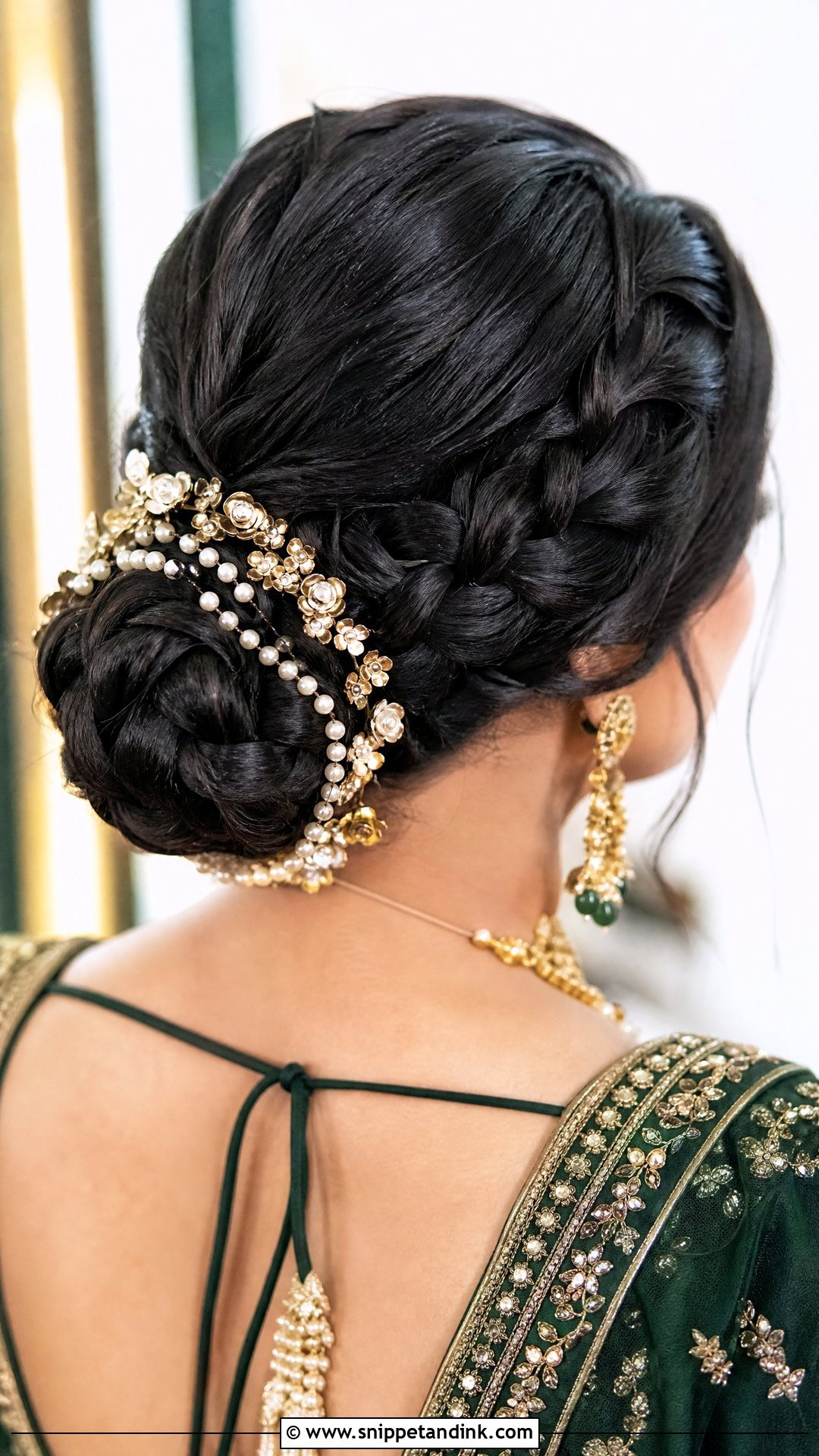
A Dutch braid feeding into a low coiled bun gives texture and structure, and it barely moves during hours of rituals. The braid sits raised, which shows off small floral rings or pearl strands. Thick or long hair suits it best; fine hair needs a little teasing or extensions to stop the braid looking thin. I braid tightly and then pull the edges wider for dimension. Pair it with a delicate tikka.
7. Veni Style Bun
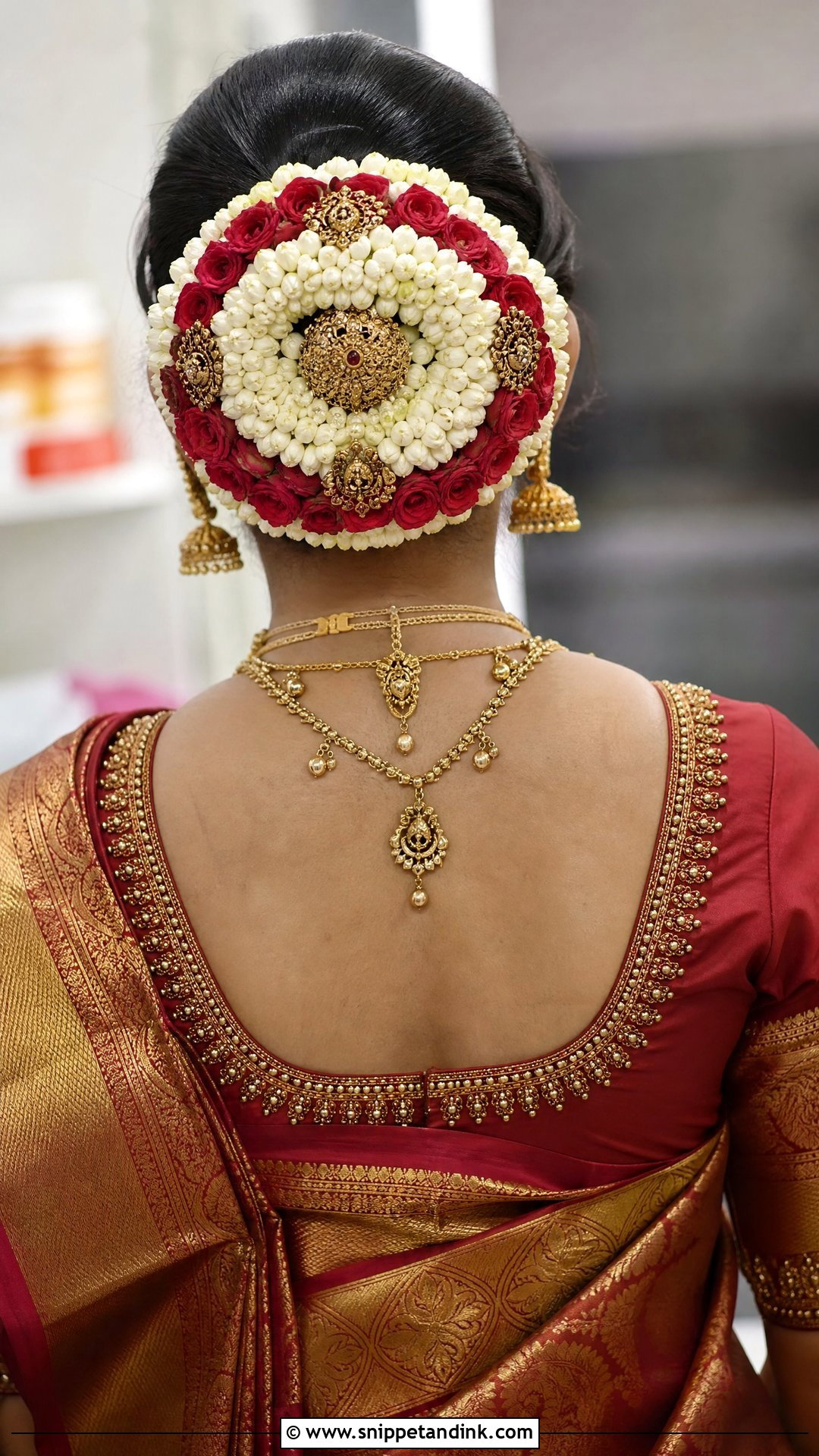
The veni-style bun is a South Indian classic: a low circular bun covered completely with jasmine and rose veni. The dense covering is fragrant and rich, and it sits beside Kanjeevaram sarees and temple jewellery naturally. Fully covered buns are heavy, so I anchor the veni with plenty of U-pins into a firm bun base, and I check that the bride can turn her head comfortably before we finish. Gold hair ornaments around the bun add even more. It’s secure through long ceremonies.
8. Open Hair With Soft Curls
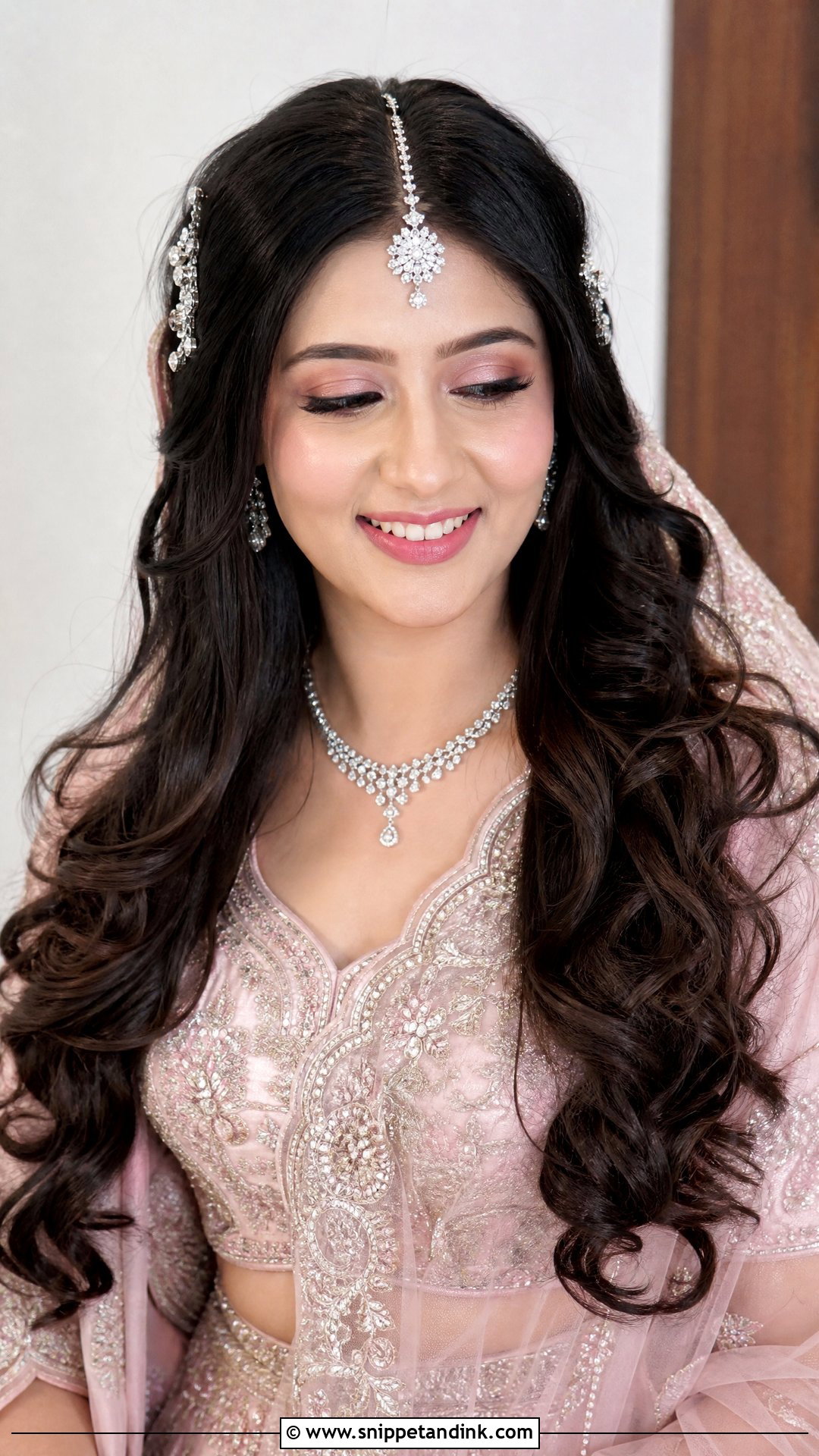
Open hair with soft curls feels contemporary and shows off length and shine. A mid-parting keeps it balanced, with a maang tikka and a few hairpins. I use heated rollers here because they hold longer than irons. The honest trade-off: open hair sits against the neck by the fire, can be warm, and often gets caught in necklaces and the dupatta. Brides who want this look sometimes keep it for the reception and choose a bun for the mandap. It does suit lighter sarees and lehengas.
9. Messy Bun With Baby’s Breath
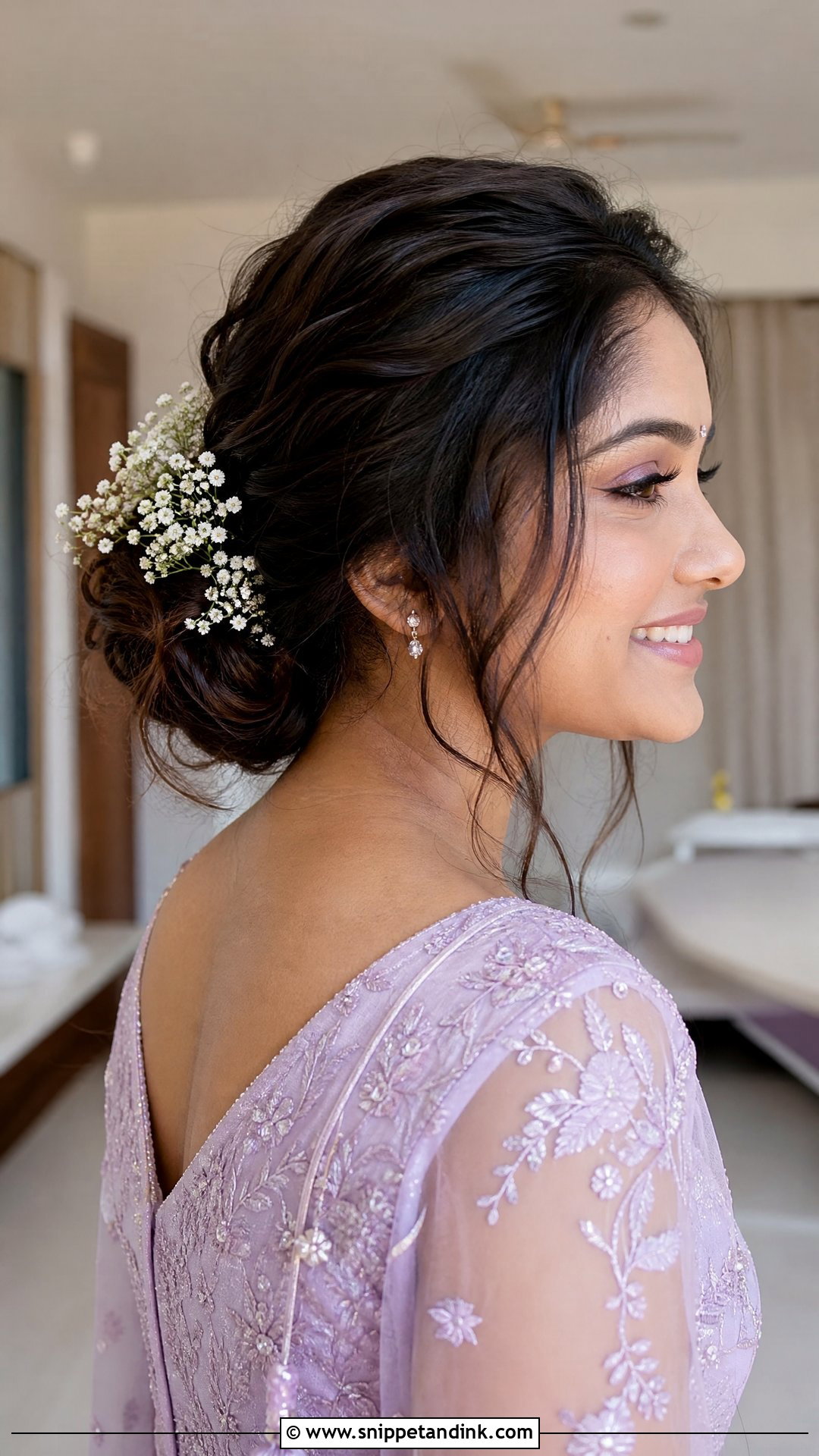
A slightly undone bun with baby’s breath tucked throughout looks soft and airy. It suits pastel lehengas and minimal jewellery, and garden or daytime ceremonies. I build texture first with a light backcomb, then pin loosely; messy buns on silky hair fall apart unless there’s a bit of grip. A few loose tendrils at the face keep it soft. Baby’s breath is sturdy in heat, which makes it a practical choice for a long outdoor ceremony.
10. Naga Jada Braid
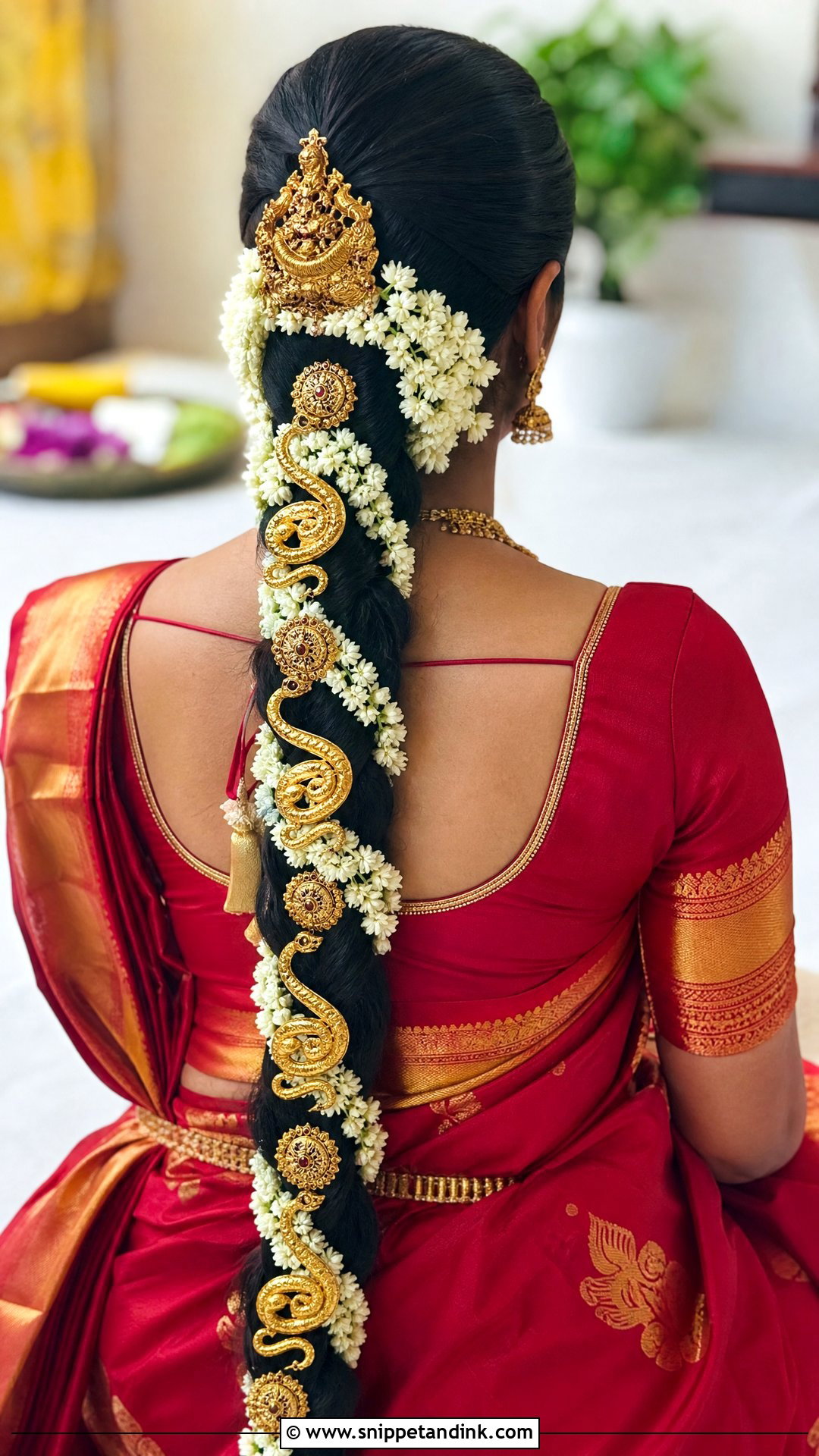
The Naga Jada is one long braid down the back with snake-shaped gold or silver ornaments along its length, traditionally associated with protection in married life. It belongs at grand temple weddings with heavy gold and silk sarees, where the ornaments form a gold cascade down the back. Many South Indian brides wear it as family tradition. The ornaments are weighty, so I attach them to a braid built with an extension and anchored firmly at the crown, never just to the bride’s own hair. Jasmine between the pieces adds softness.
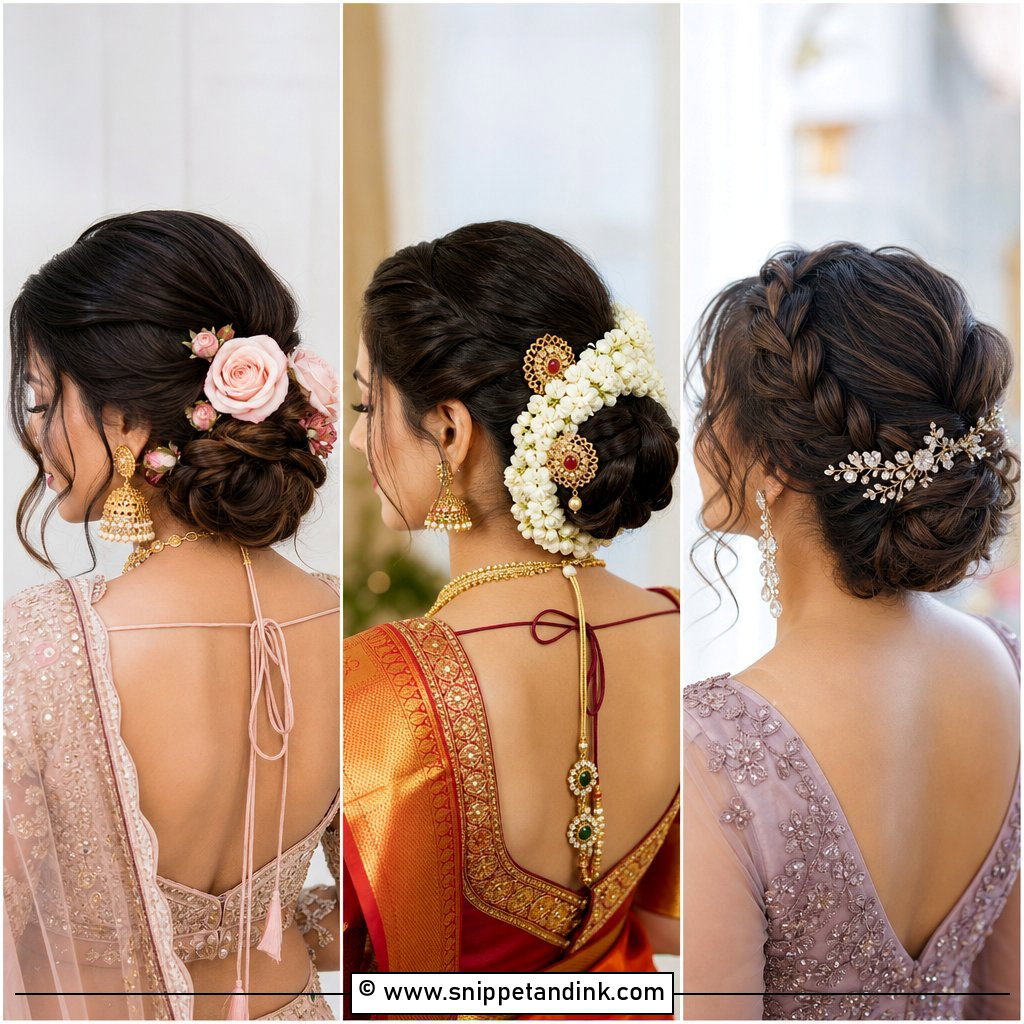
11. Rose Twist Updo
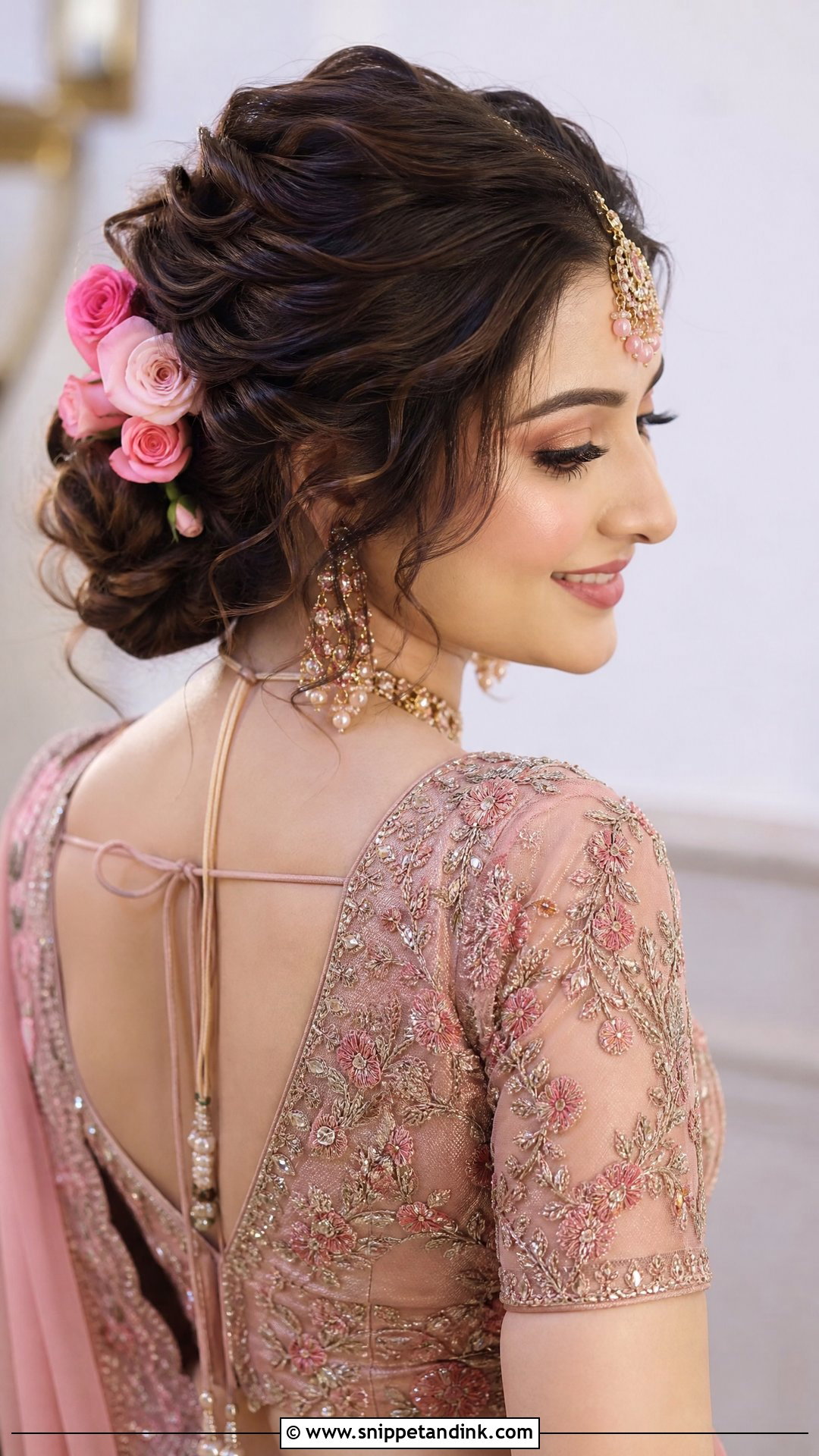
Sections of hair twisted and pinned into a soft shape, with fresh roses tucked through, make a romantic updo with plenty of floral detail. The twists add dimension without being stiff. I use small spray roses rather than full-size blooms; large roses are heavy and wilt quicker in heat. It pairs with pastel and blush lehengas, and a maang tikka along the parting completes it. Most face shapes and hair lengths suit it.
12. Pearl Lined Braid
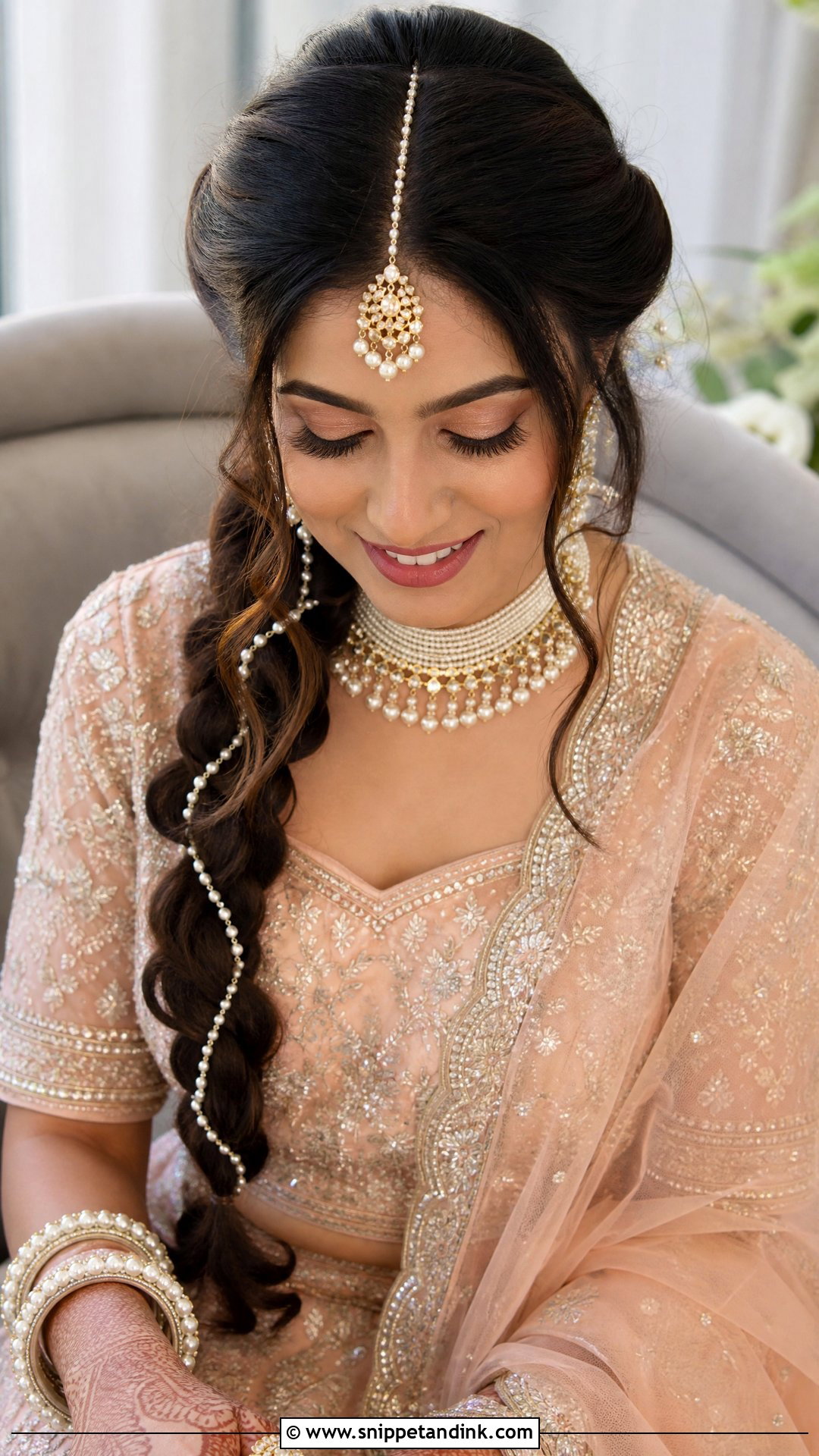
A pearl-lined braid weaves strings of pearls through the plait, which catch the light during every ritual. It’s a good choice for brides who prefer subtle shine to heavy florals, and it works for daytime and evening. Keep the braid full or sleek. I weave pearls in while braiding rather than wrapping them afterwards; wrapped strands slide down by the end of the night. A matching pearl tikka and dainty jewellery tie it together.
13. Crescent Floral Bun
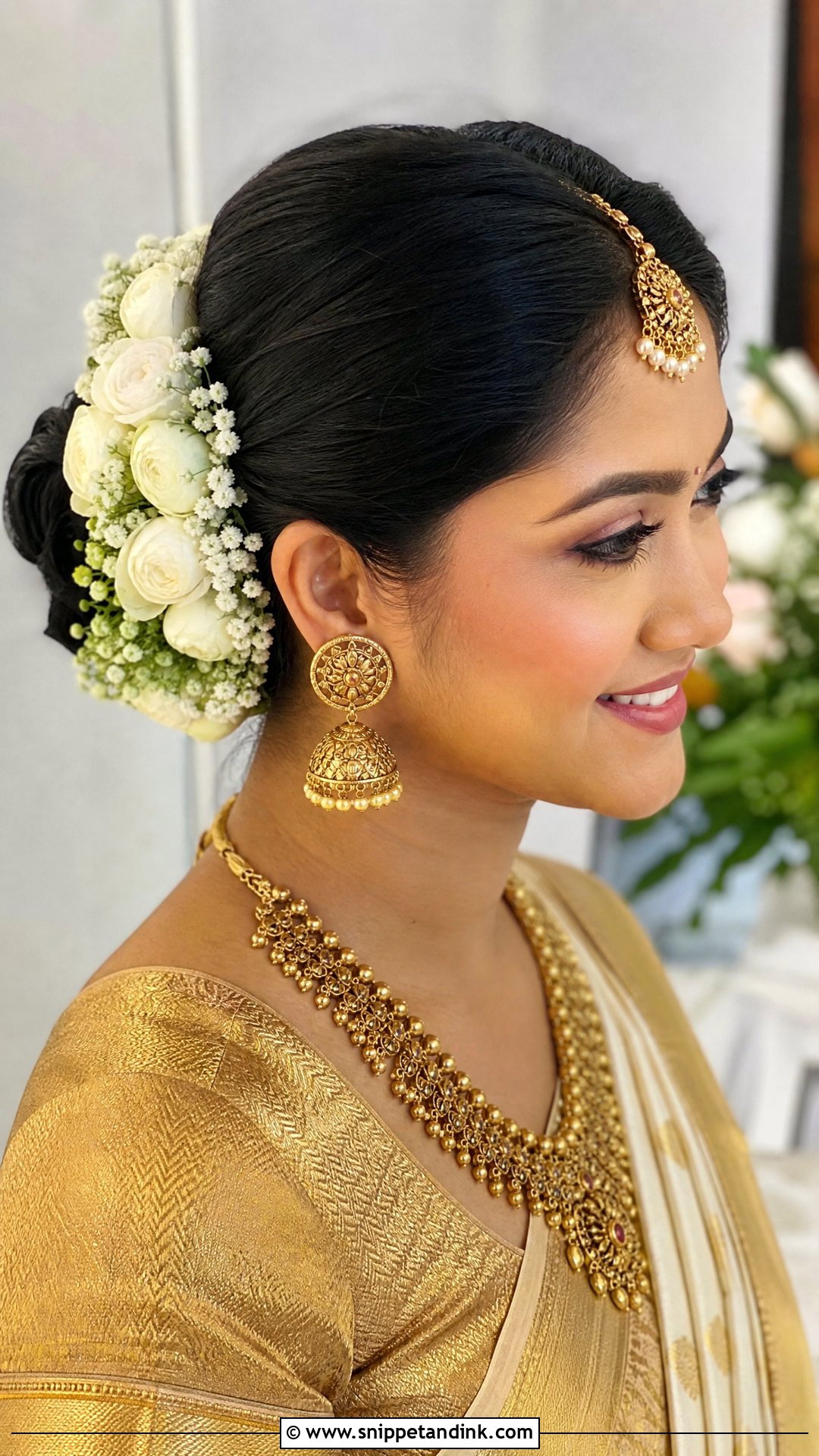
Flowers arranged in a soft crescent around one side of the bun give structure and colour, and leave the other side clean for the dupatta to sit against. Jasmine, roses or coloured blooms can match your outfit. I wire the flowers onto a small base and pin it as one piece, which keeps the curve neat. It pairs with traditional sarees and statement jewellery and suits daytime mandap ceremonies especially. Finish with a maang tikka and matching earrings.
14. Temple Inspired Jada
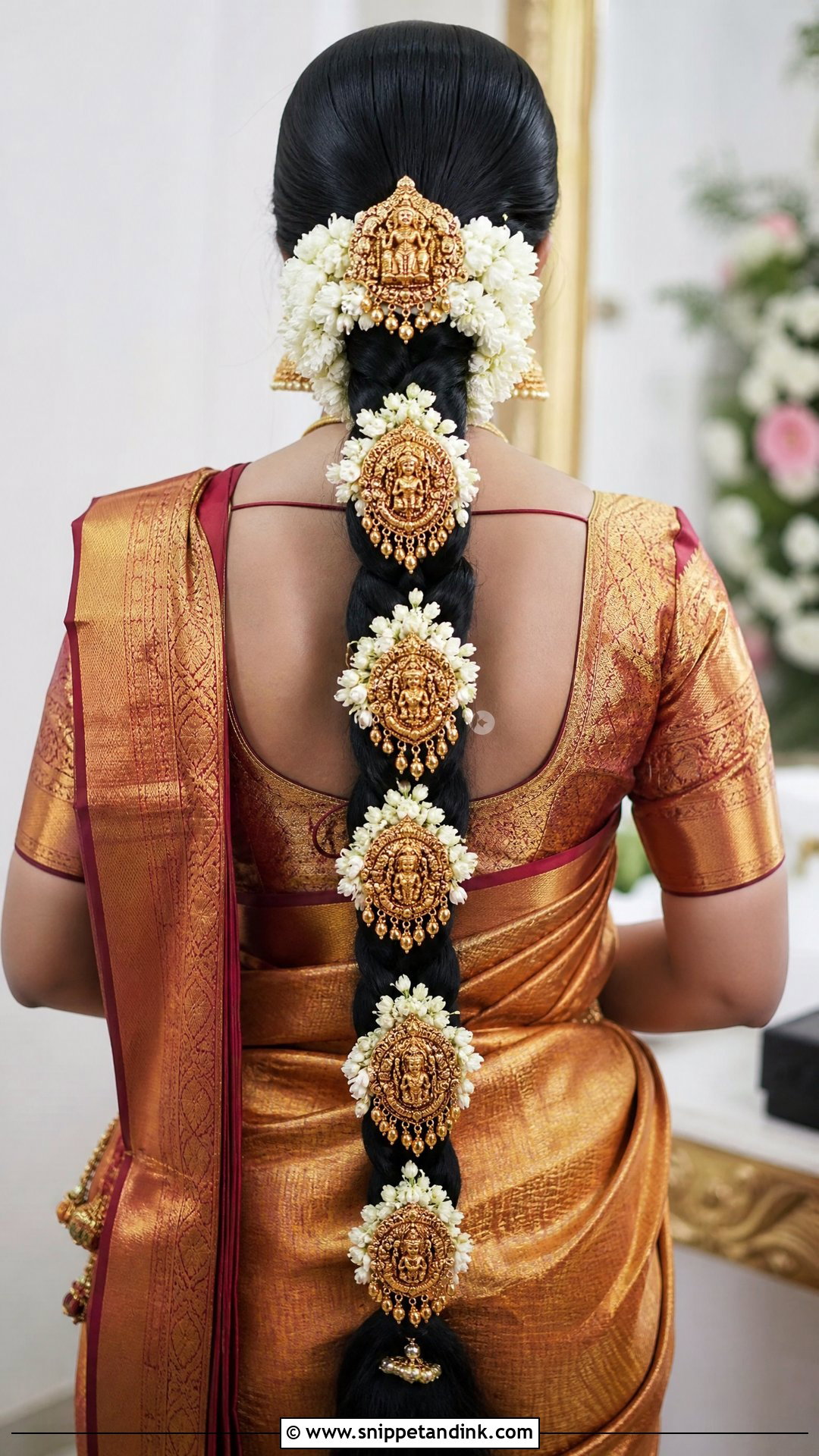
A temple-inspired jada braid is a long braid wrapped in gold or gold-plated ornaments designed to echo temple carvings, set evenly down the length. It suits grand, traditional South Indian weddings alongside Kanjeevaram silk and temple jewellery. Spacing is the detail I watch most: uneven gaps between ornaments are obvious in photos taken from behind during the rituals. Jasmine between the pieces adds softness. Expect it to feel heavy; a firm anchor at the crown and a test wear before the day help a lot.
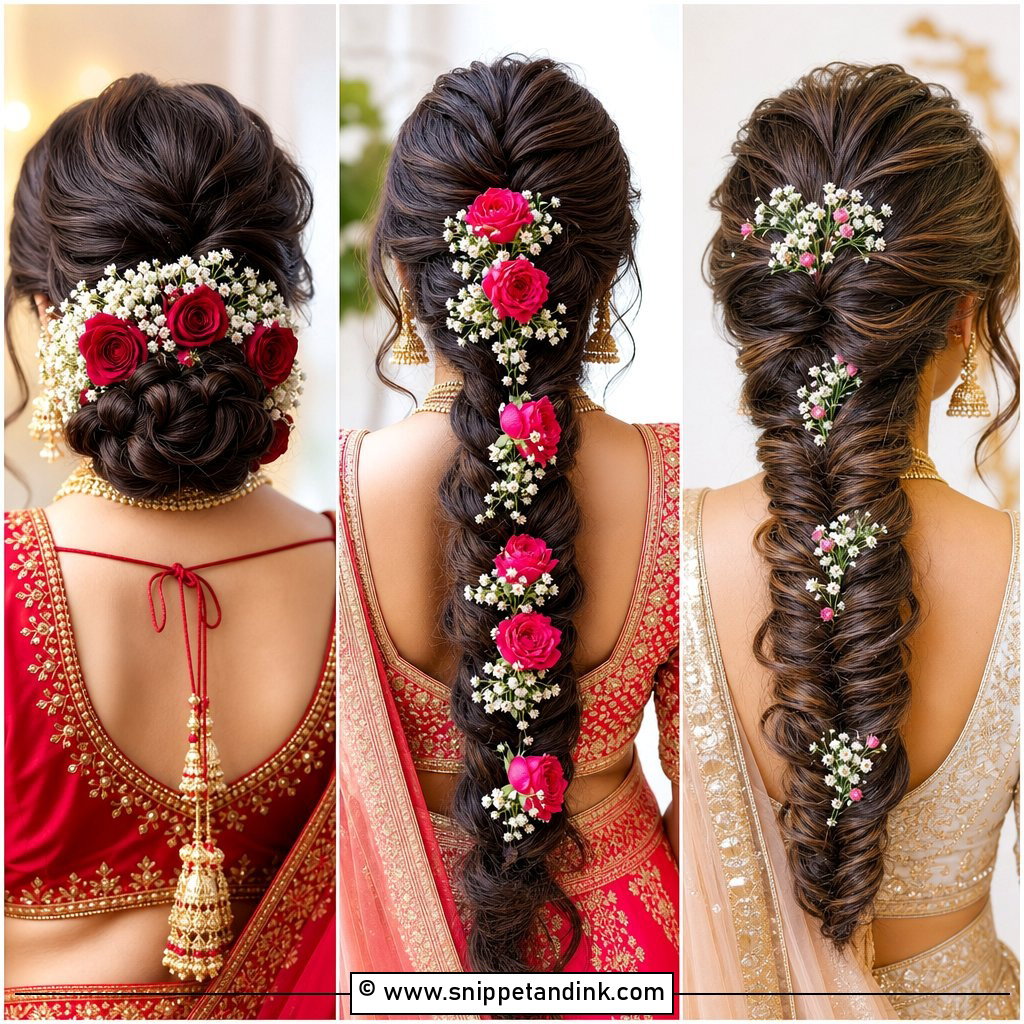
15. Boho Bun With Roses
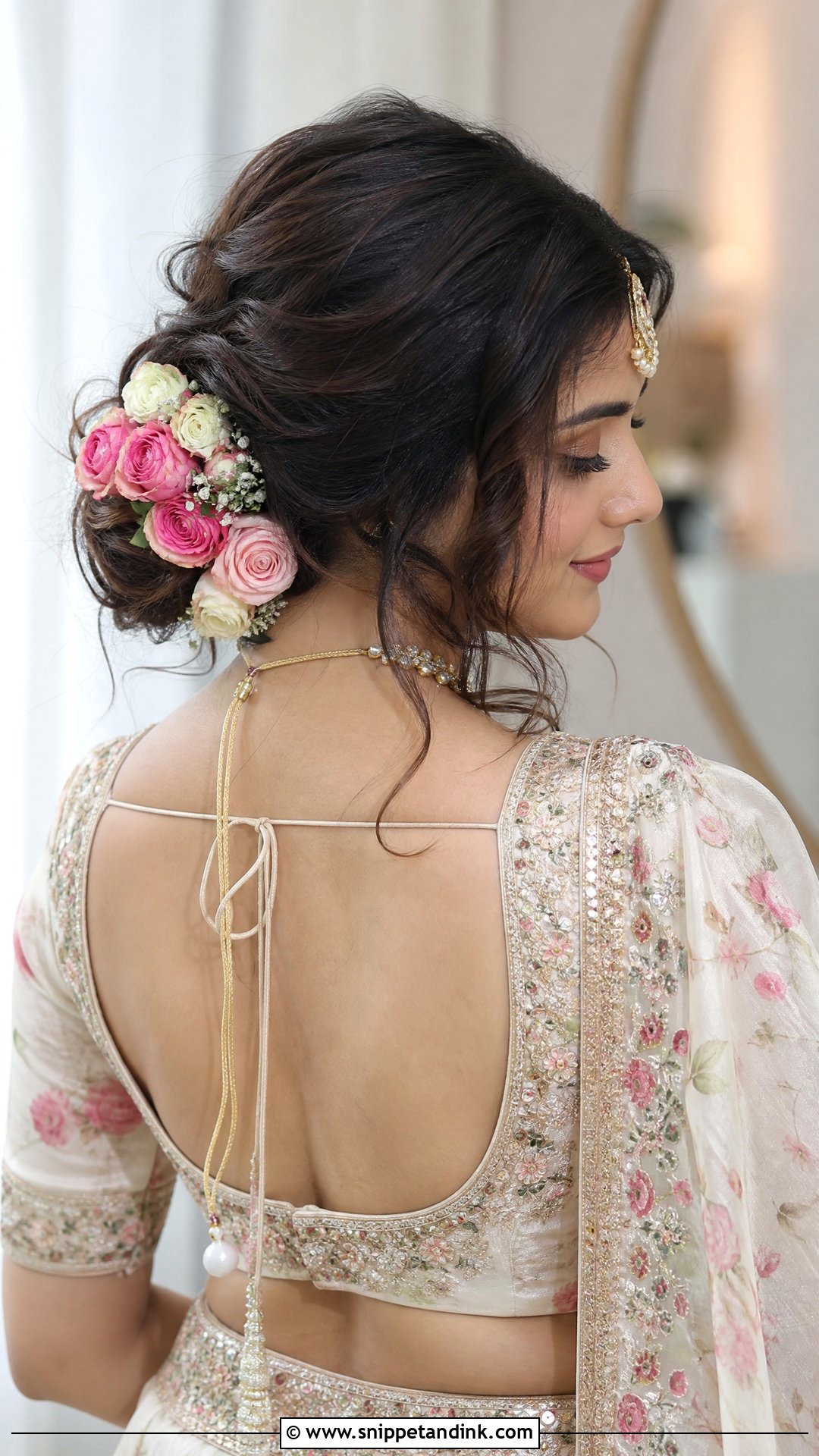
A loose, textured bun with fresh roses has a relaxed bohemian feel, made for intimate and outdoor weddings. It pairs with lighter lehengas and floral jewellery, and loose strands around the face soften it. I’d steer a bride away from this one if she’s wearing a heavy, embellished dupatta pinned to the head, because the weight crushes the texture. A delicate tikka makes it bridal. It’s comfortable for long ceremonies.
16. Classic Traditional Jada Braid
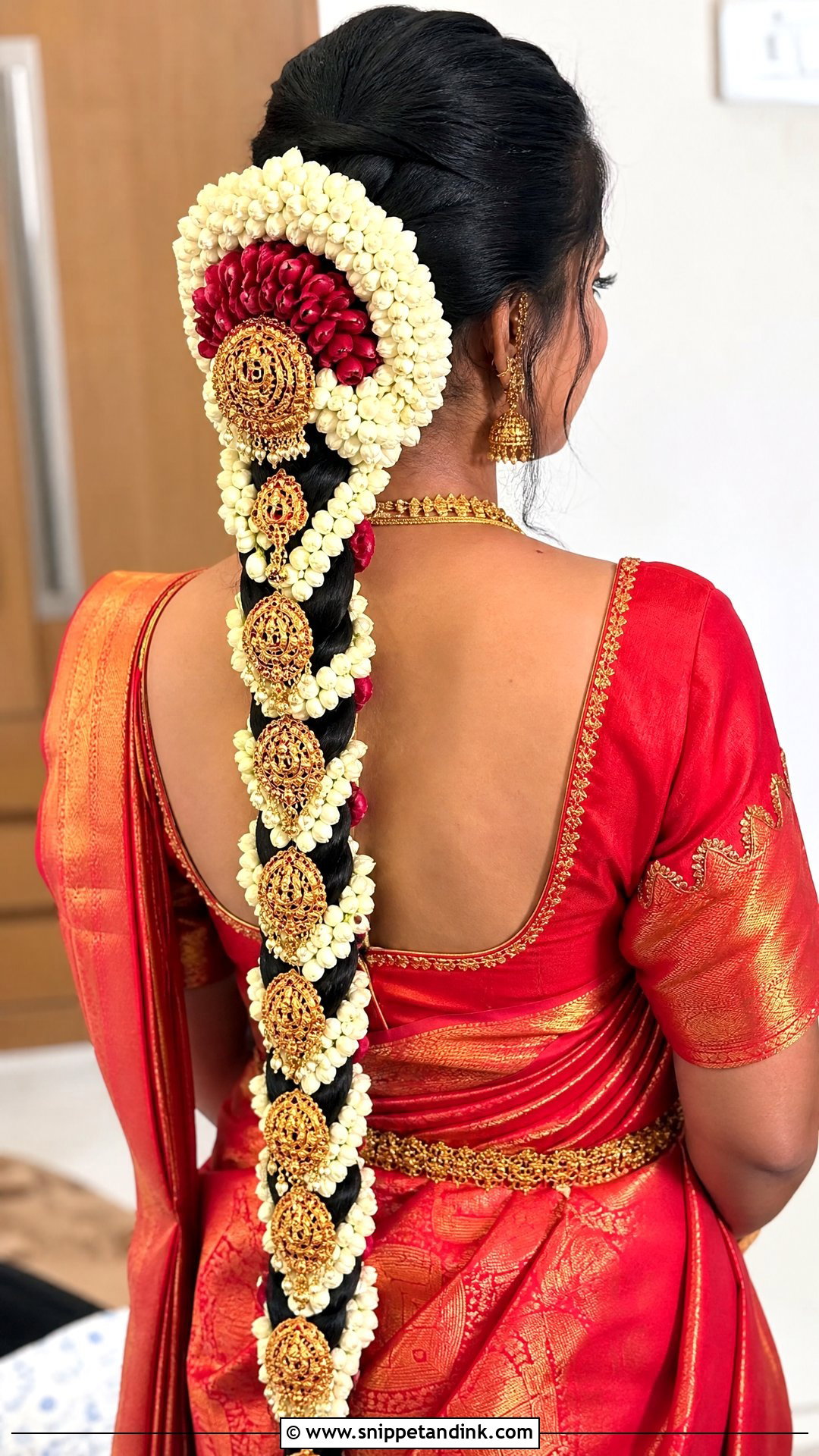
The classic jada is a signature Indian bridal braid, usually lengthened with extensions and tied with floral strings and ornaments. Jasmine is the traditional flower here. It’s rooted in heritage and pairs with silk sarees and traditional gold jewellery, creating a long, decorated line down the back. Matching the extension to your hair colour and texture matters; I always blend a few strands of the bride’s own hair over the join. It stays secure through every ritual.
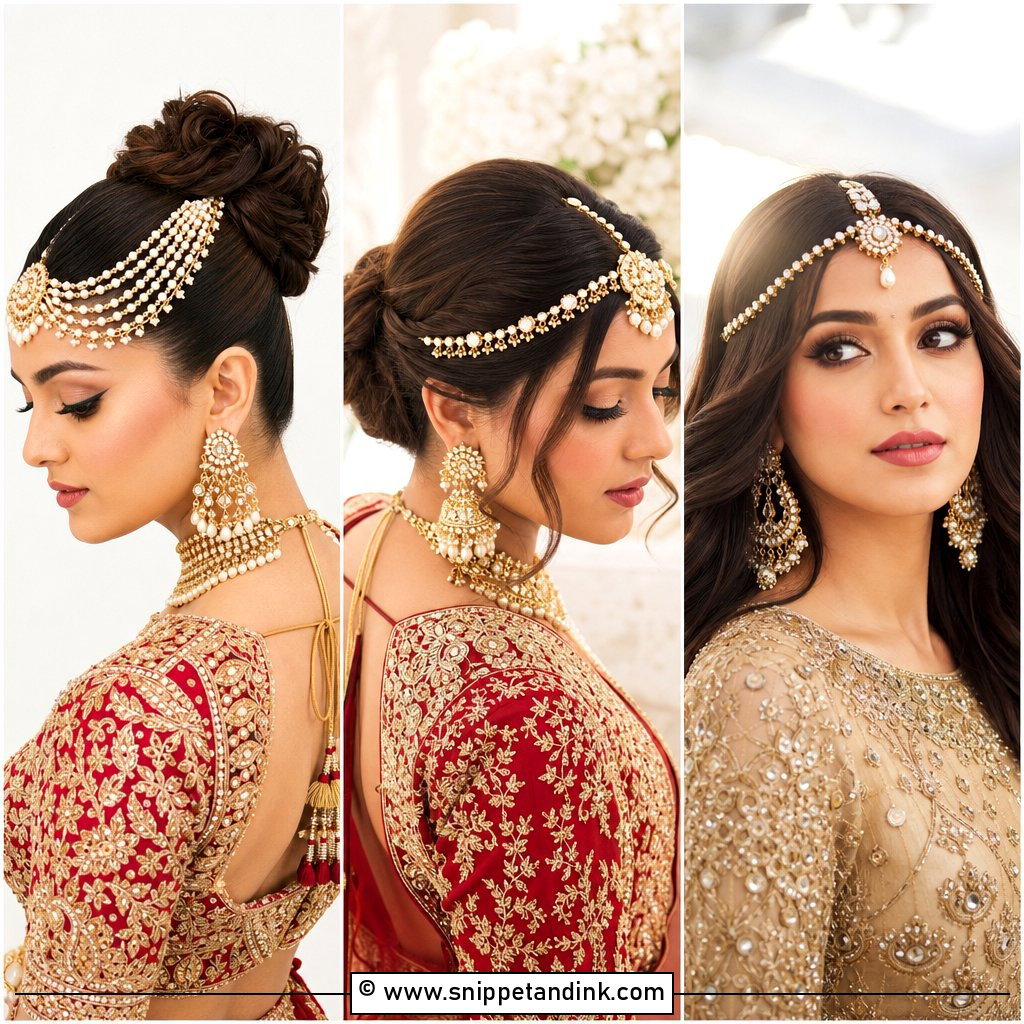
17. Voluminous High Bun
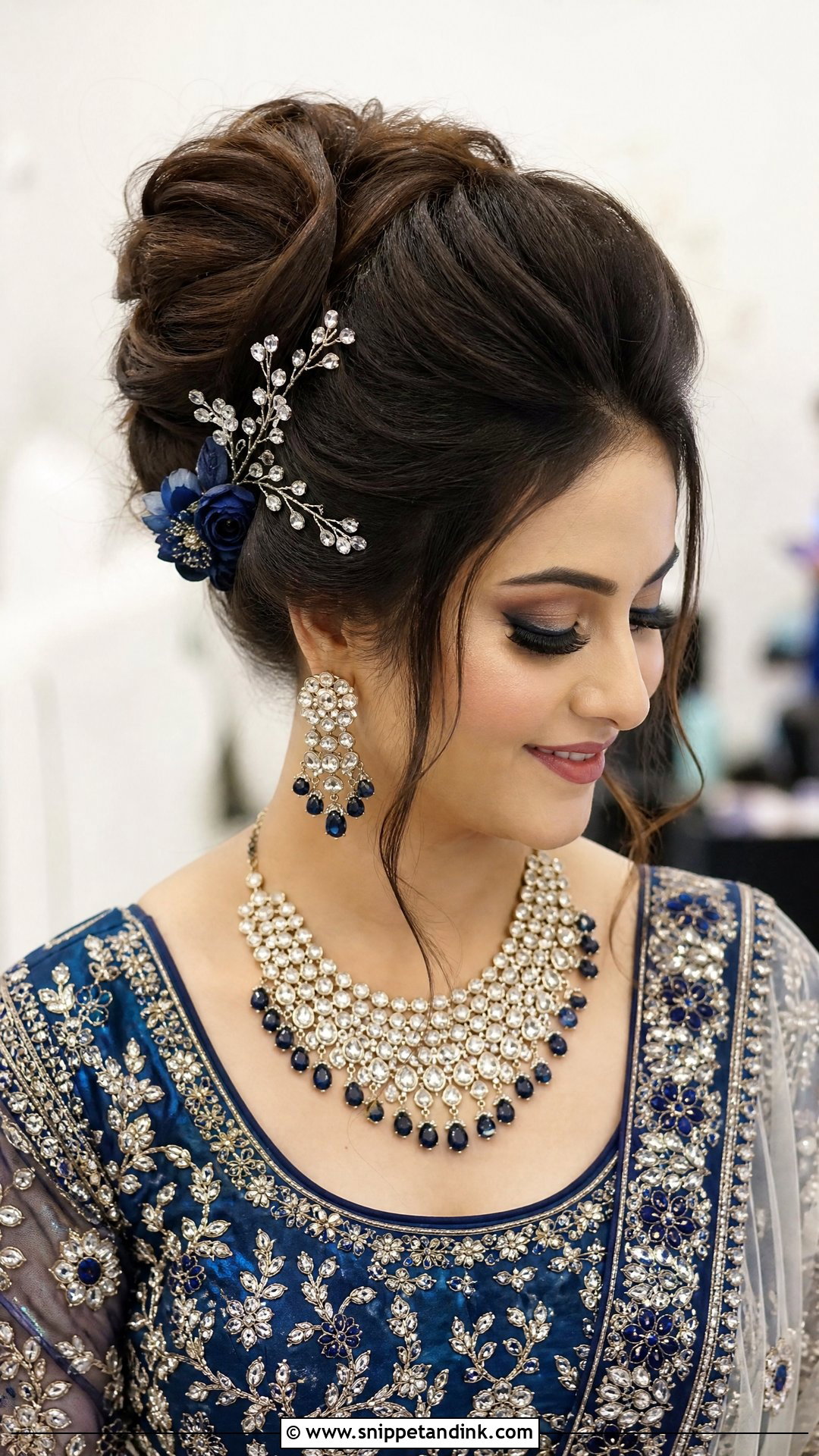
A voluminous high bun lifts the profile and lengthens the neck, which suits heavy earrings and bold necklaces. Decorate with flowers, pearls or sparkling pins and set a tikka along the parting. It’s modern and works for grand evening ceremonies. The catch is the dupatta: a high bun pushes the dupatta up and back, so it often slides. If you want a pinned dupatta over your head, I’d move the bun lower or plan the draping carefully.
18. Twisted Low Bun With Pearls
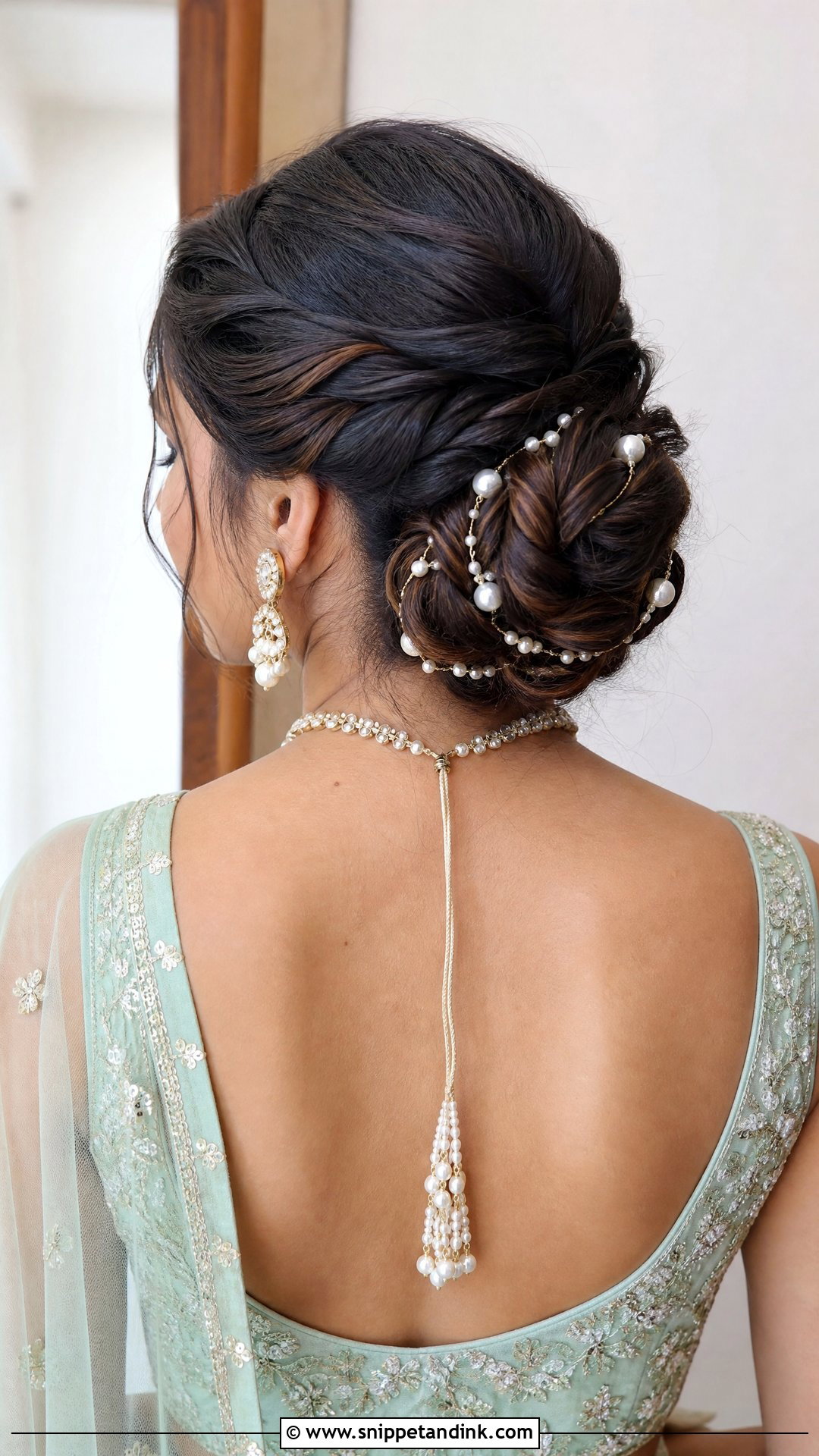
Twisted sections gathered into a low bun with pearls woven through look refined and gentle. It pairs with pastel lehengas and dainty pearl jewellery. Pearly tassels hanging from the bun add movement when you walk. I keep the tassels short enough that they don’t tangle in the dupatta or catch on the back of a chair. A matching tikka finishes it. It stays secure for the whole ceremony.
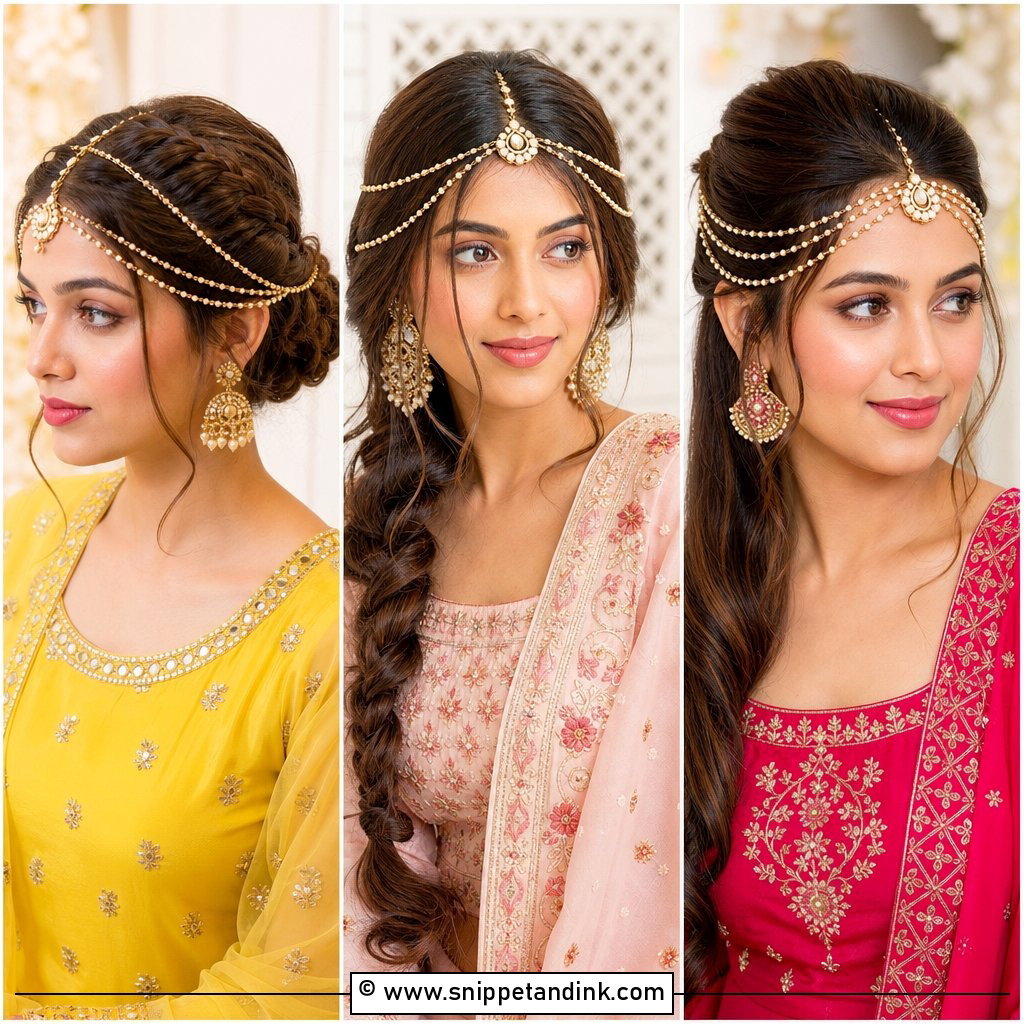
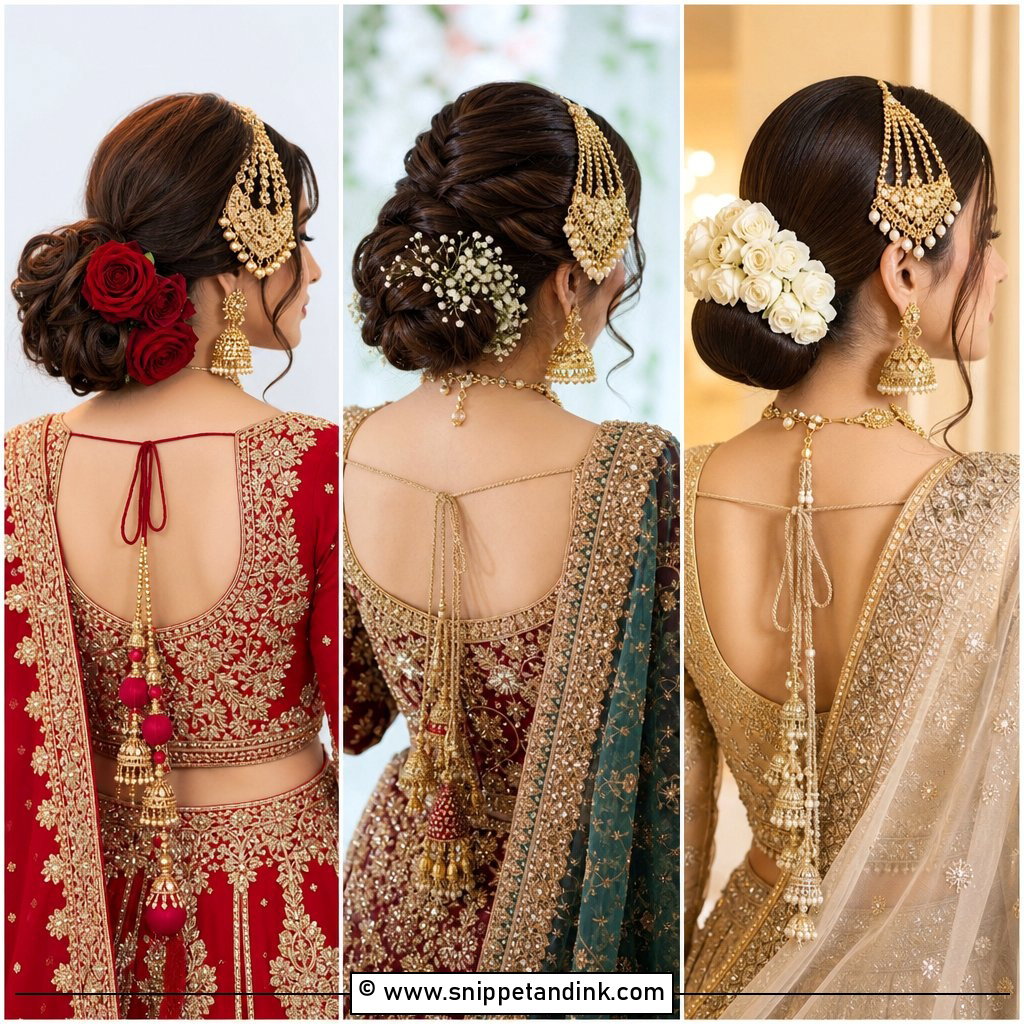
19. Wavy Open Hair With Passa
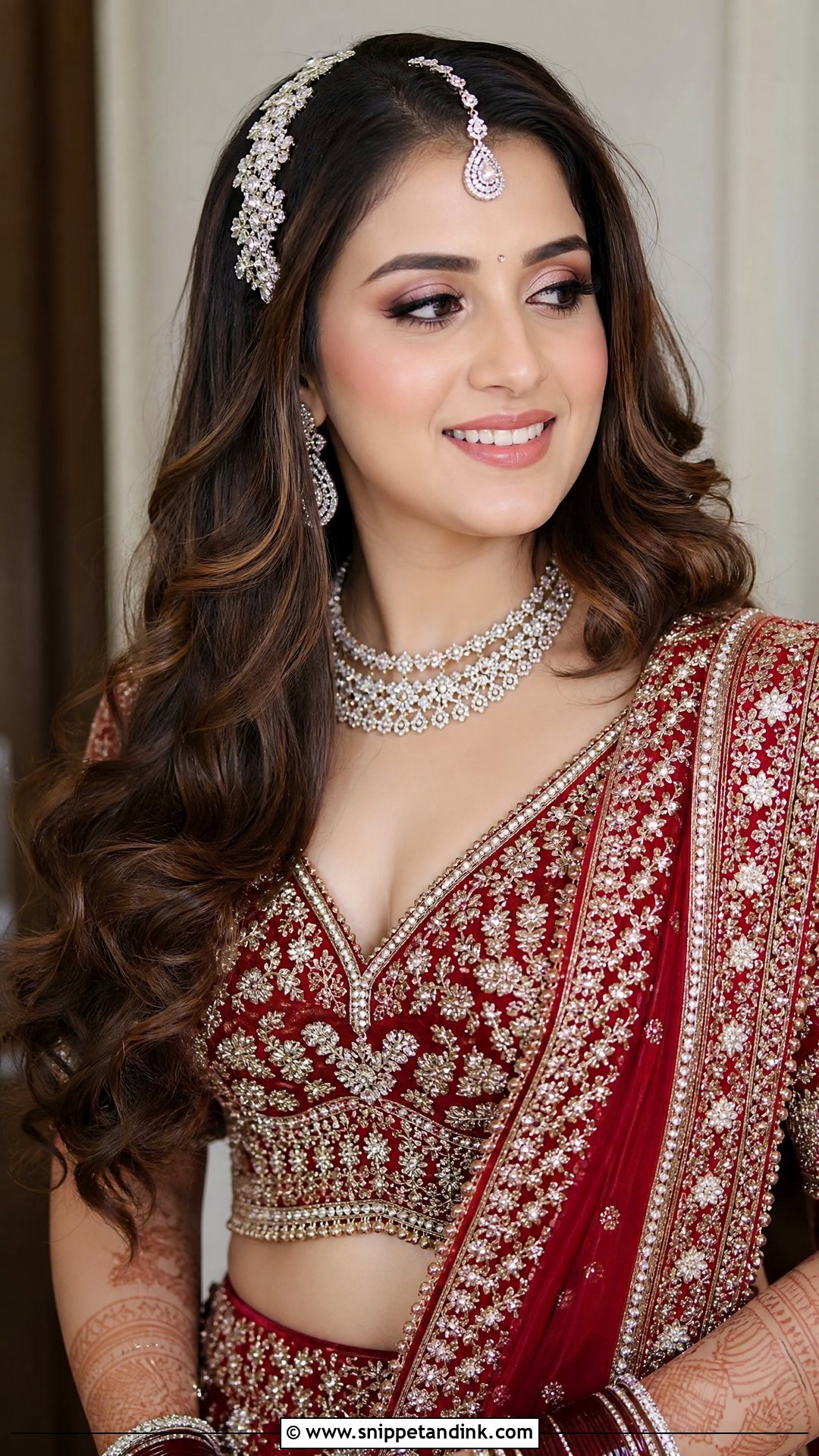
Loose, wavy hair with a passa, or side hair ornament, near the temple gives sparkle without a full updo. The waves frame the face and show length. A passa is heavy on one side, so I pin it into a small hidden braid or anchor section; pinned only to loose hair, it slides down by the end of the pheras. Add a delicate tikka. It suits brides who want hair down, and it pairs with lehengas and contemporary sarees.
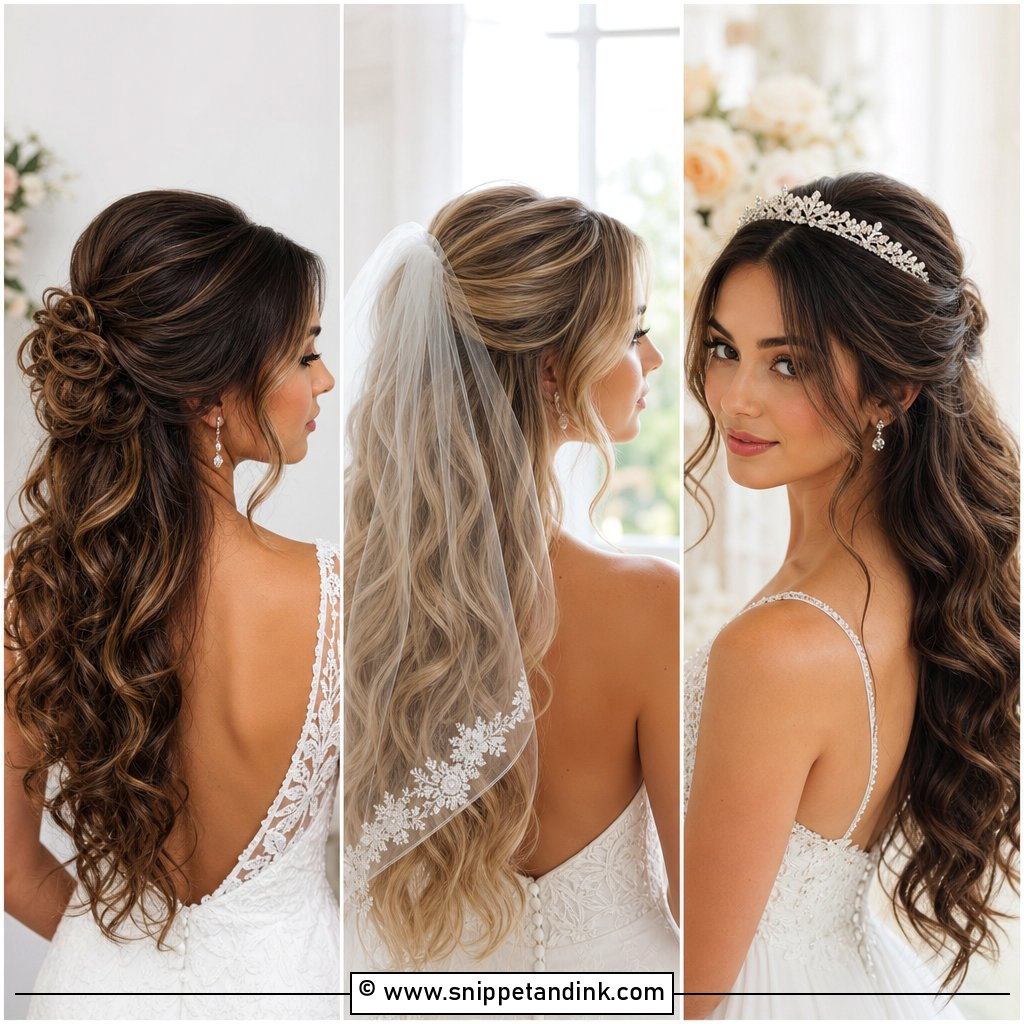
20. Braided Crown With Flowers
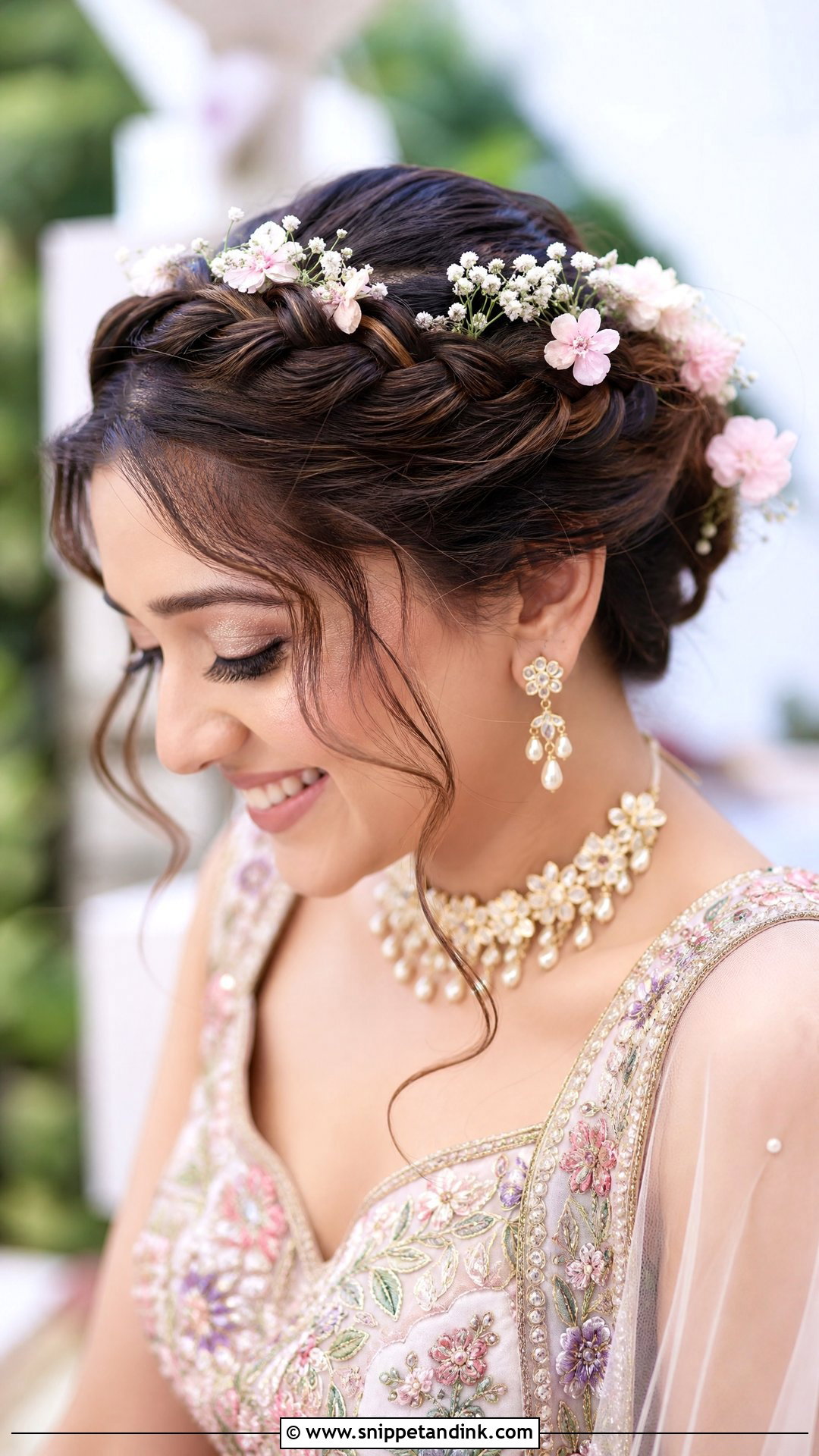
A braid wrapped around the head like a halo keeps hair off your face during every ritual, with fresh flowers or baby’s breath tucked in. It pairs with floral and pastel lehengas and suits a garden-inspired look. Because the braid sits on top of the head, a pinned dupatta rests on it nicely. On very thick hair, I build it from two smaller braids so it doesn’t sit too high. It looks good from every angle the photographer might take.
Jasmine Strings, Jada Weight and a Four-Hour Ceremony
Traditional mandap styles look effortless but involve real logistics. Most of the problems on the day come from flowers arriving too late or ornaments being heavier than expected.
Ordering the flowers
Order gajra and veni strings from your florist with the buds still mostly closed. Jasmine opens through the day, so closed buds look fresh for longer and smell strongest in the evening. Keep them wrapped in a damp cloth in a cool room, not a freezer, and have them delivered about an hour before styling. Ask for a few spare strings to replace any that bruise when the dupatta is pinned.
Carrying the weight
A full jada with ornaments, extensions and flowers can be surprisingly heavy, and you’ll be sitting with it for hours. I spread the weight with several anchor points rather than one, and I keep a few pins ready to loosen if a bride gets a headache. Wear the ornaments for at least an hour at your trial. If anything pulls at the scalp then, it will hurt far more by the end of the ceremony.
Near the havan, keep hairspray away from the fire and let it dry fully before you sit down. Most sprays are flammable while wet, and loose tendrils or open hair need extra care close to the flame.
Your Jewellery Set Will Narrow This List Fast
Gajra buns, jada braids, fishtails and open curls each say something different, so start with what’s fixed: your outfit, your jewellery and how you’ll wear the dupatta. A heavy temple set and a Kanjeevaram saree point toward a jada or veni bun; a pastel lehenga with pearls opens up softer twists and braids. Then think about your face shape, hair length and how long you’ll be seated. Fresh flowers, pearls and a well-placed maang tikka finish any of them. Do a trial with your real dupatta and jewellery, and pick the one you forget you’re wearing.
You'll Like These Ideas:


Leave a Reply