
A bridal braid often carries more than hair. It may hold a mother’s jada billalu, a paranda chosen by a grandmother, or the jasmine that every bride in the family has worn. That’s a lot to ask of a plait, and the styling has to respect both the meaning and the physics. In this collection you’ll find classic South Indian braids, Punjabi parandas, and lighter modern versions with roses, pearls or baby’s breath. For each, I’ve explained how I’d build it and what it needs from your hair to last a full wedding day.
Real Jasmine, Roses or Silk Flowers in the Plait
Fresh flowers are the soul of most Indian bridal braids, and they’re also the part most likely to go wrong. Jasmine buds open and brown as they warm, roses bruise when a dupatta presses on them, and a gajra that arrives late holds up the whole getting-ready schedule.
- Order flowers for the morning itself, not the night before, and ask for jasmine in bud so it opens during the ceremony rather than before it.
- Keep them wrapped in damp cloth or paper in a cool spot until I’m ready to attach them. Don’t seal them in plastic; they sweat and spot.
- Have a second, smaller gajra ready for later functions. The morning one rarely looks fresh by evening.
- If you or your partner react to pollen or strong scents, try the flowers near your face for an hour first. Jasmine is intense up close.
Good silk or fabric flowers are a sensible option for a long reception or a very hot venue. They weigh less, they can be placed the day before, and they don’t wilt. I’d still keep real jasmine for the ceremony itself, where the scent carries meaning for so many families.
1. South Indian Bridal Braid With Jasmine
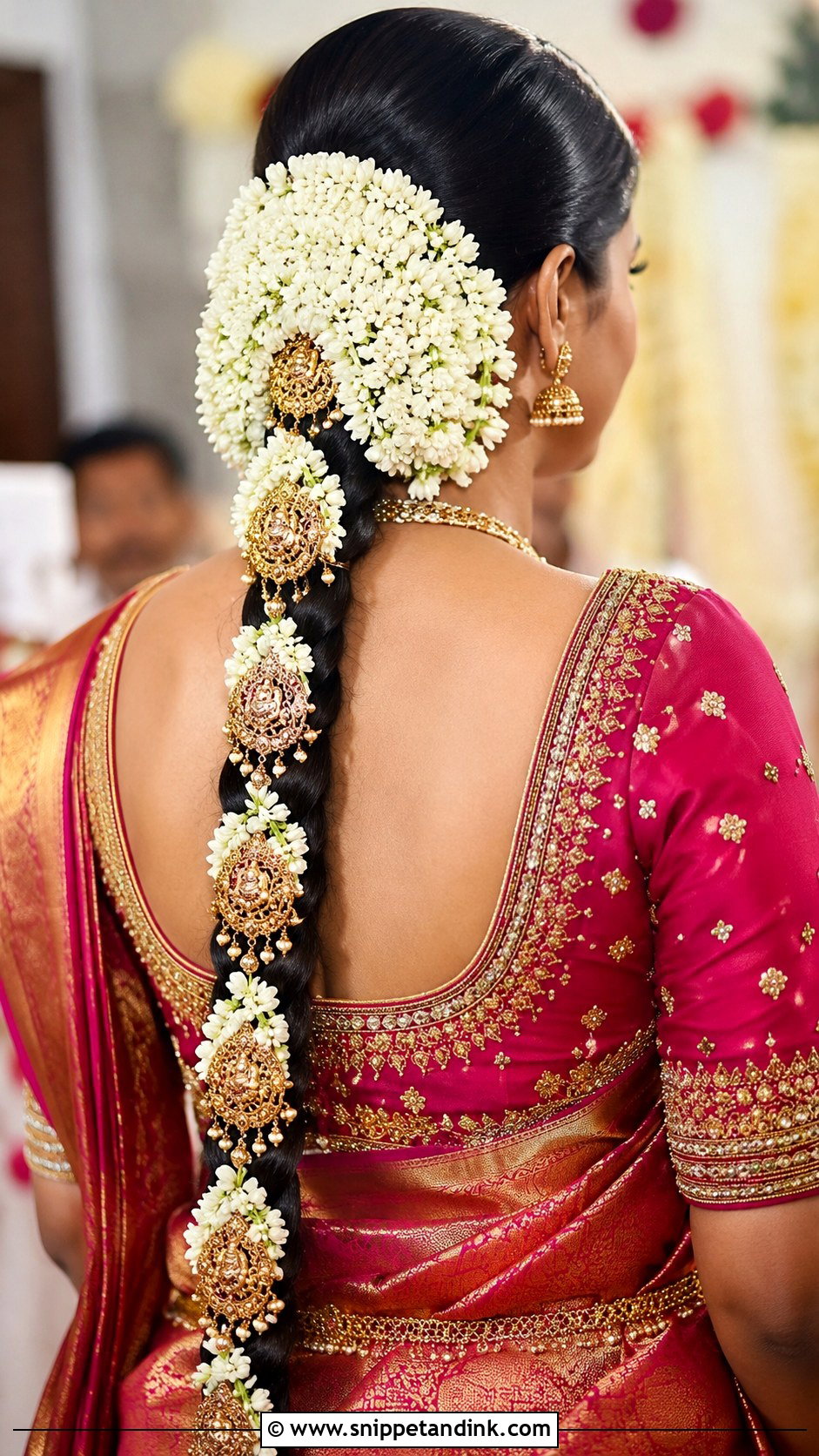
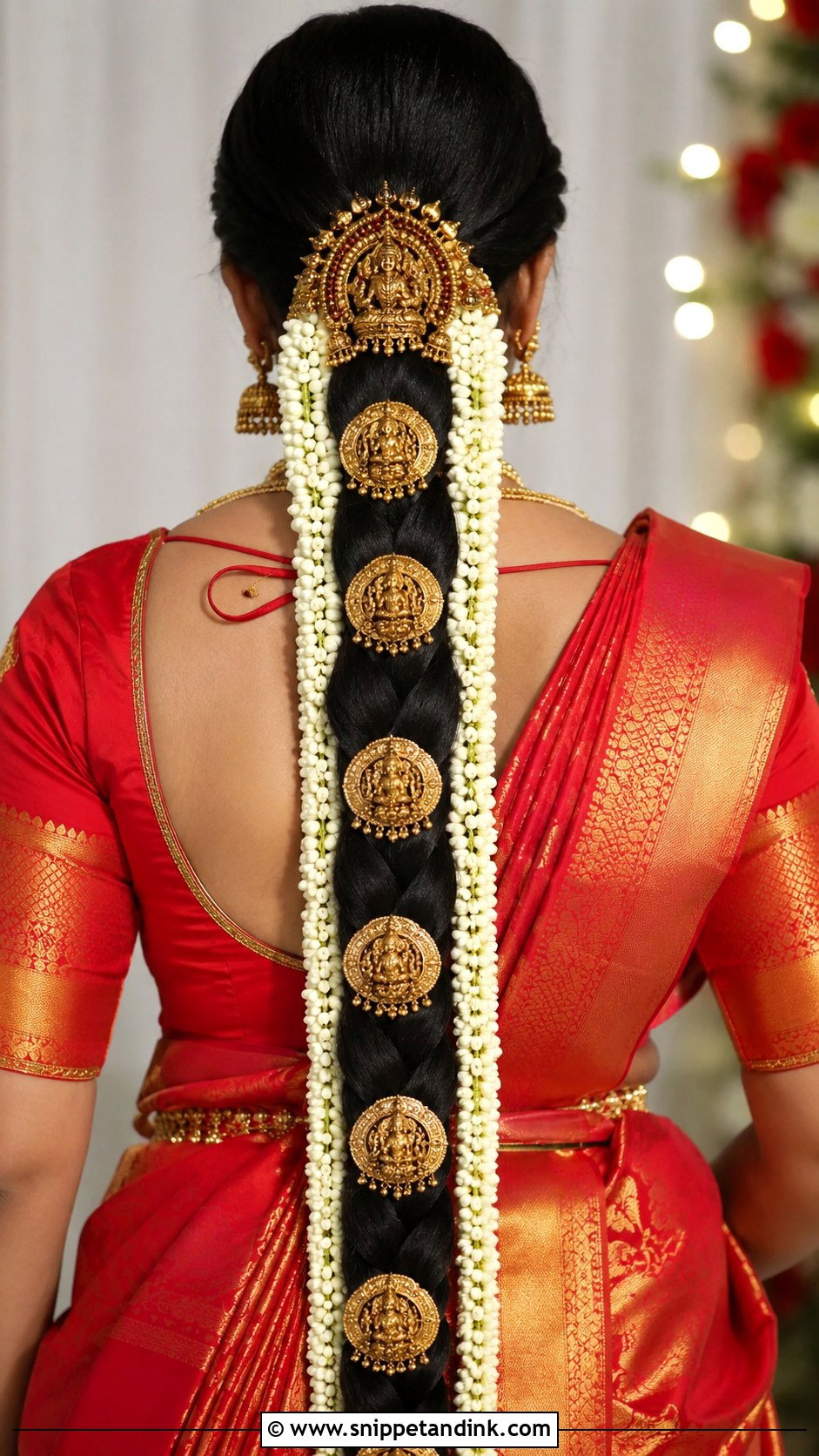
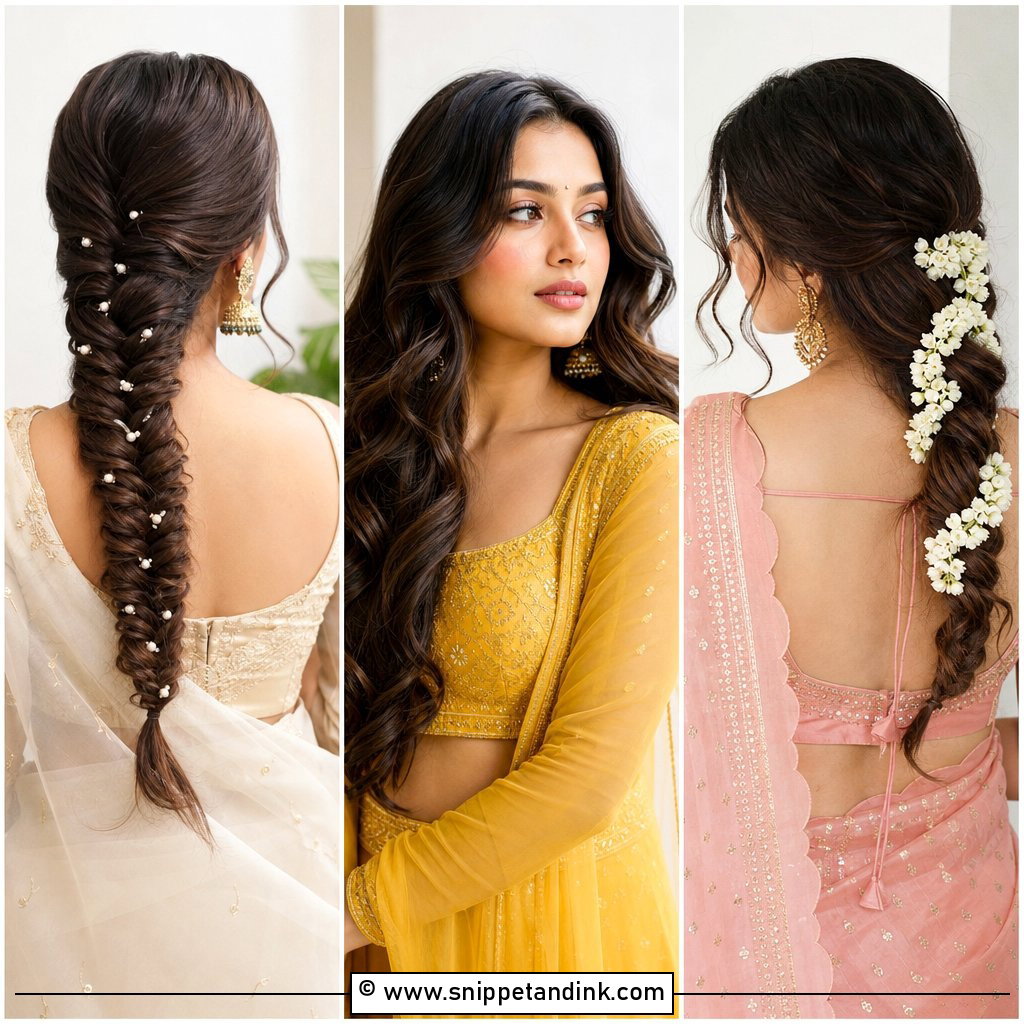
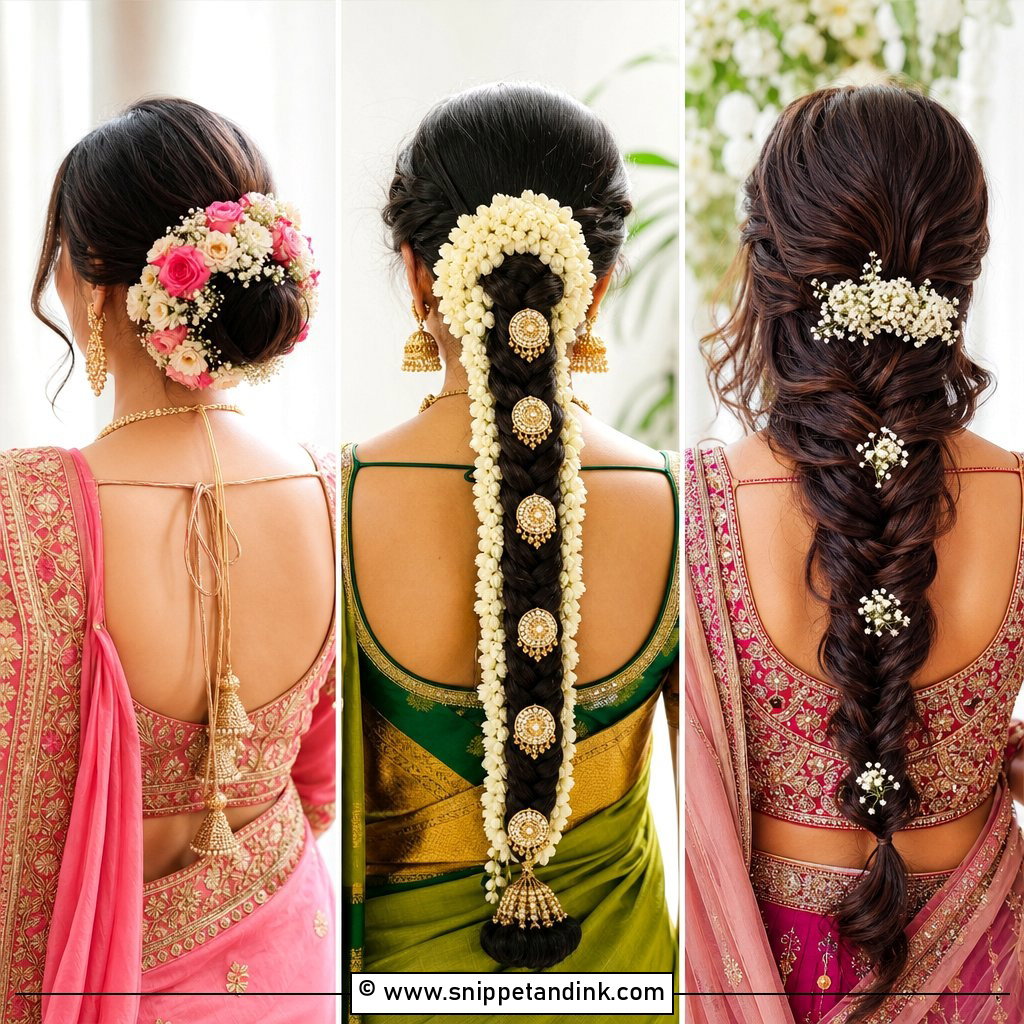
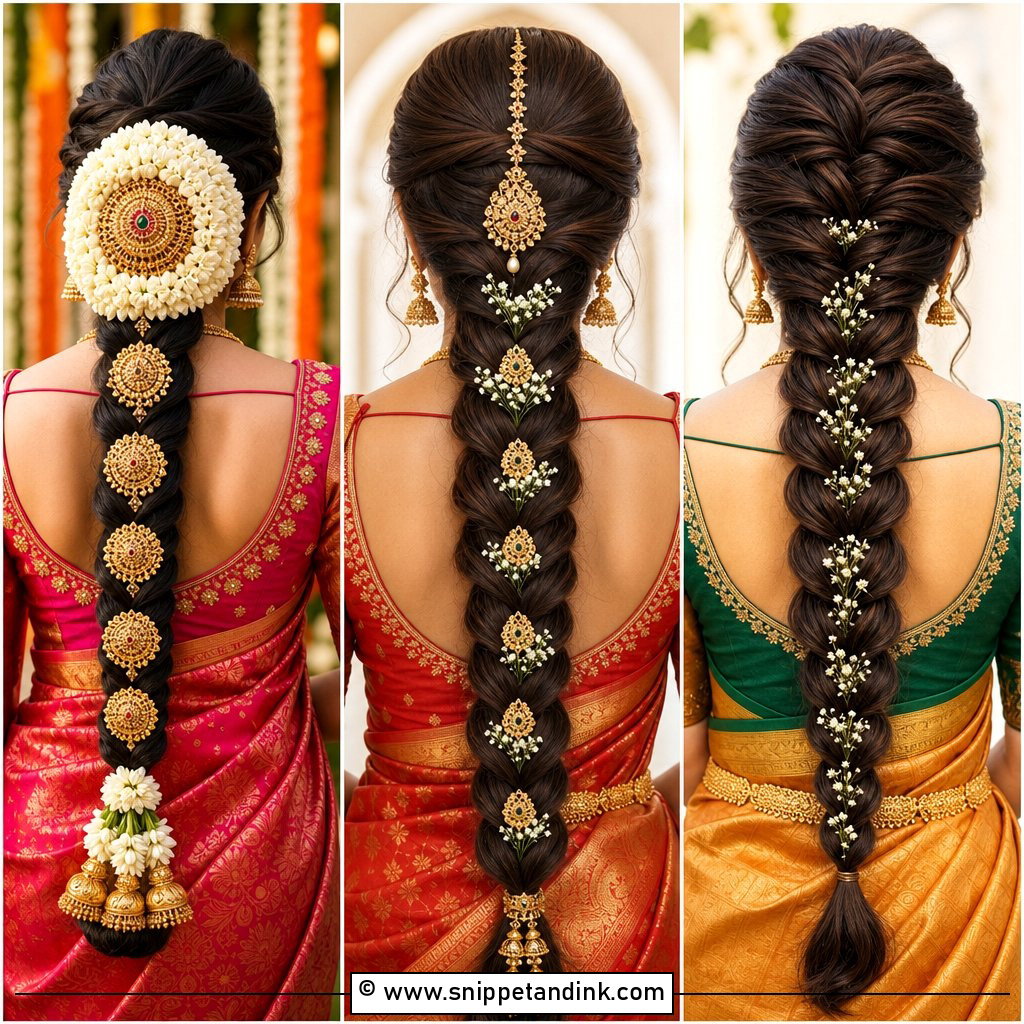
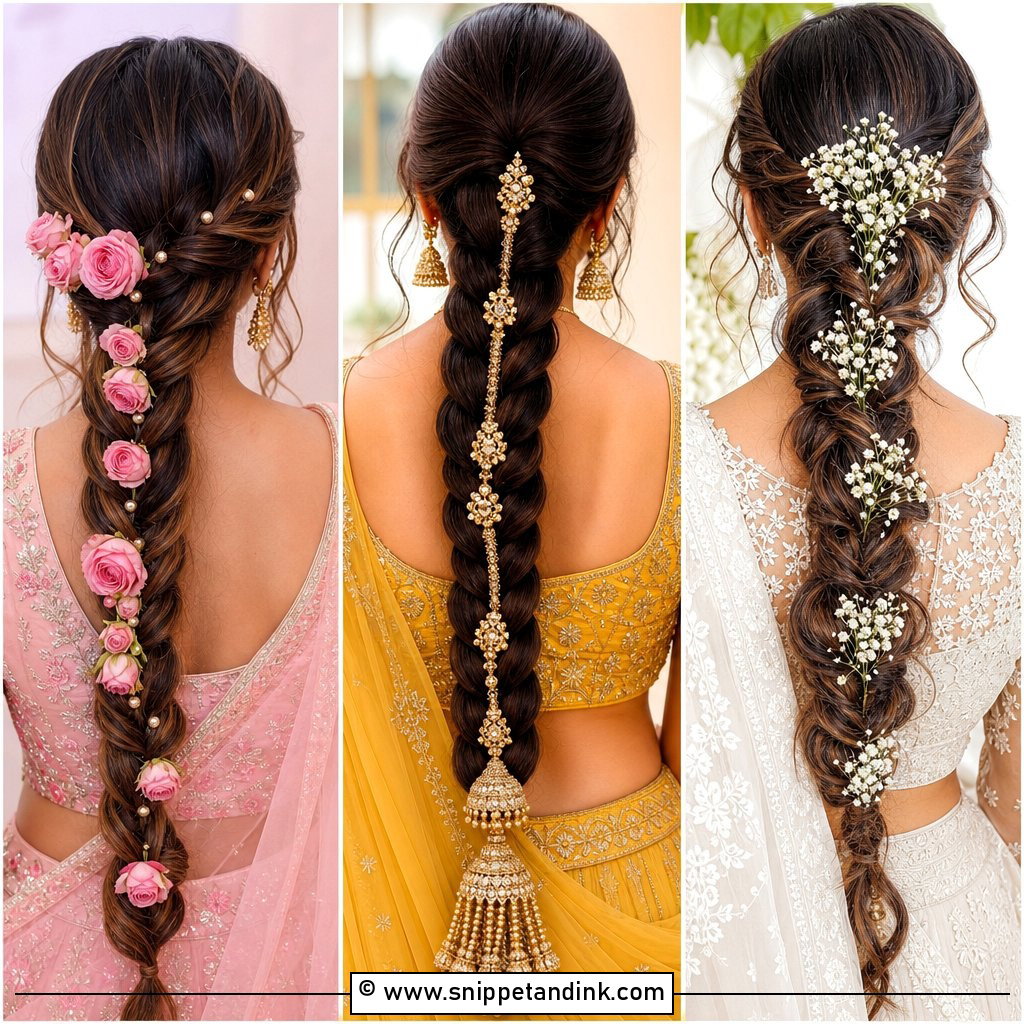
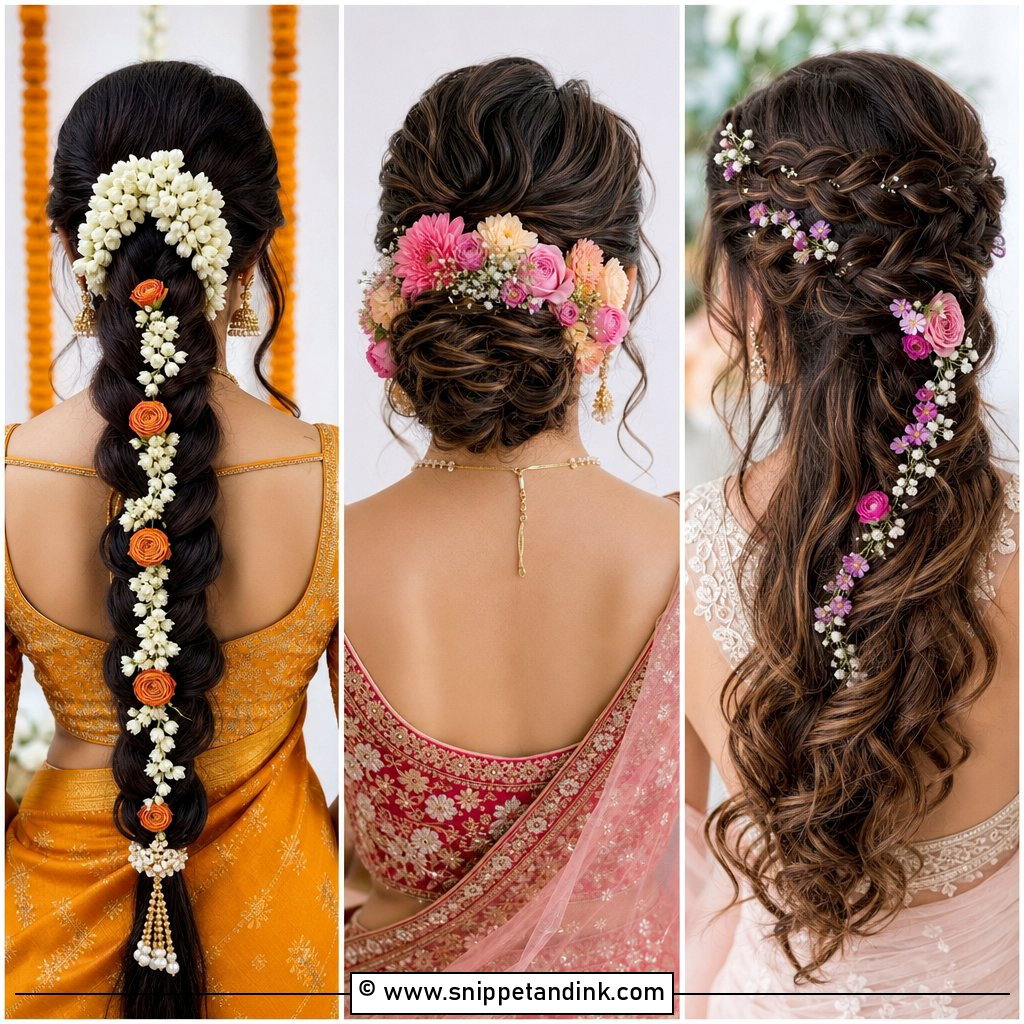
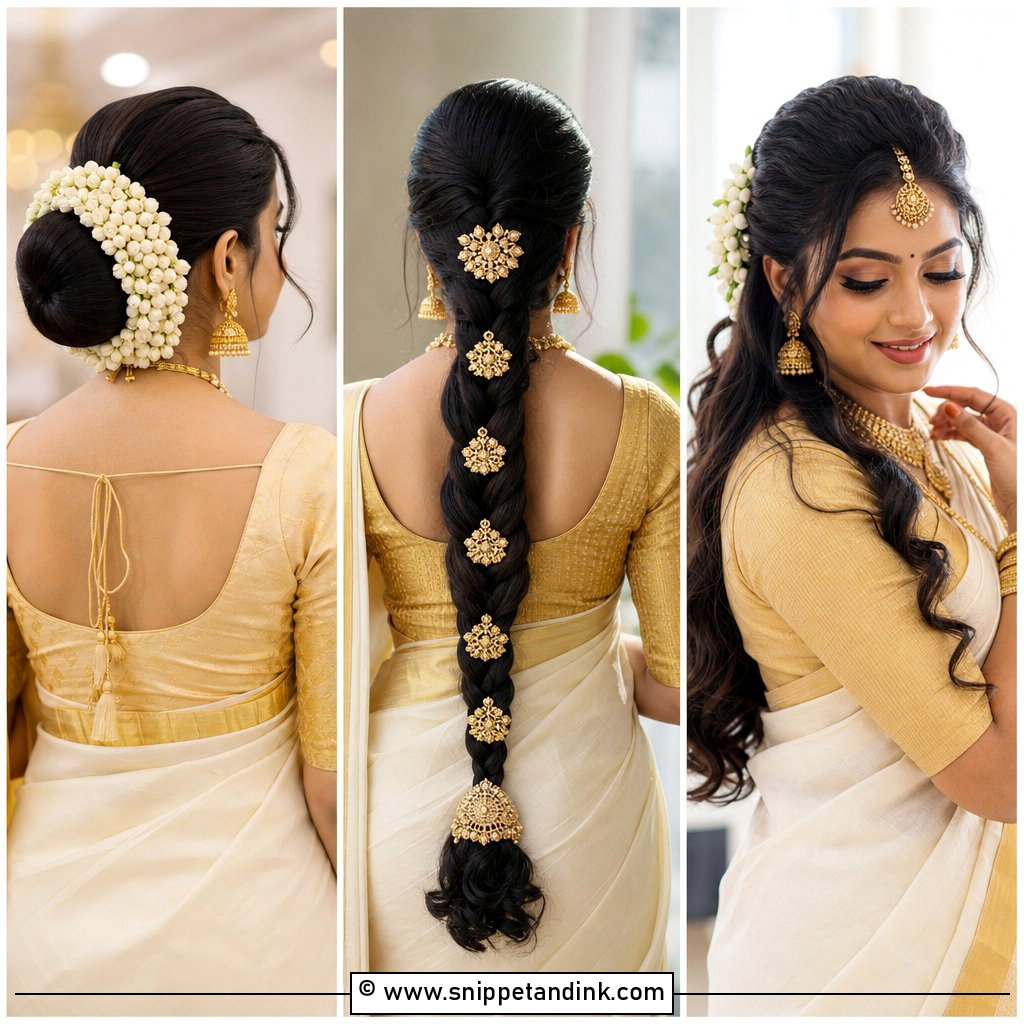
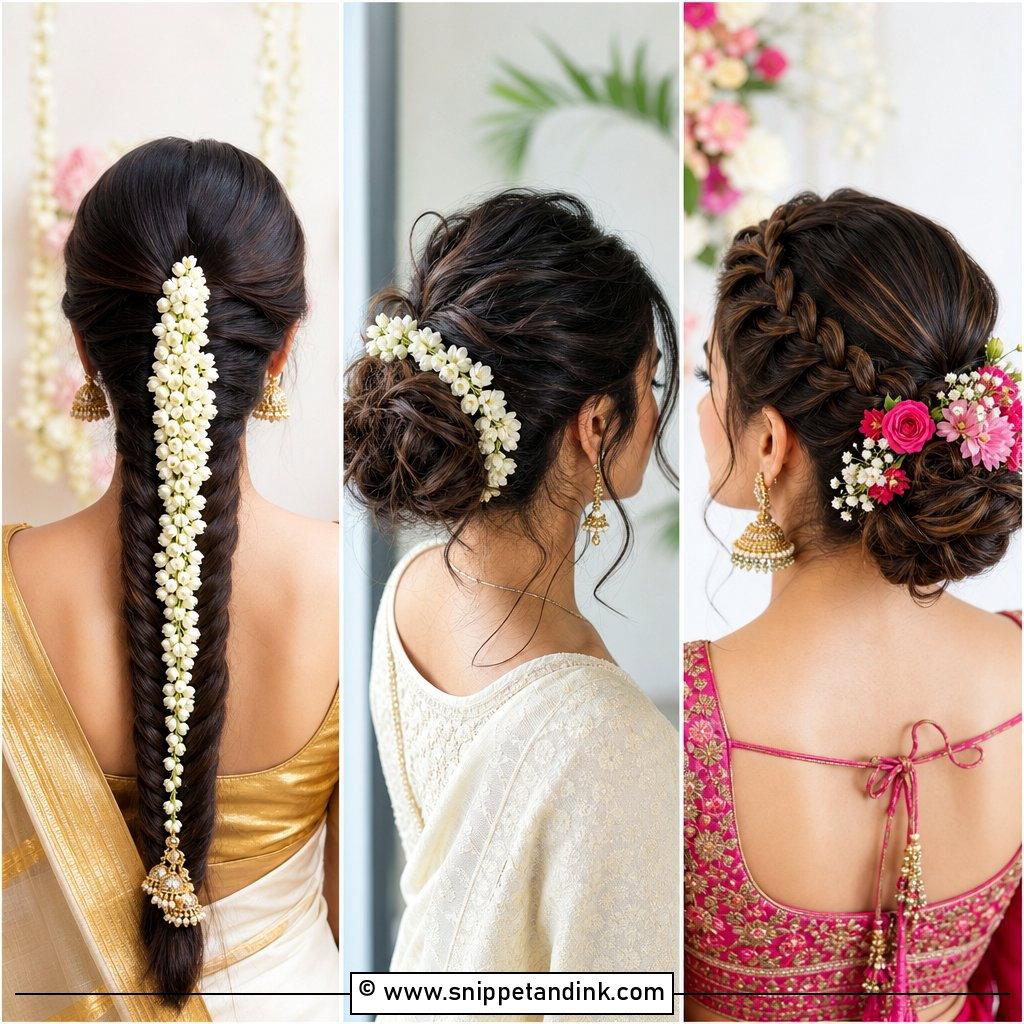
Jasmine on a long South Indian braid is the look many families picture first, and I understand why: the scent alone sets the mood of the morning. I part cleanly at the center, smooth the crown and braid firmly all the way down, then wrap the jasmine in a spiral or in stacked sections. With a silk saree, temple jewelry and a matha patti it needs nothing more. If your braid is thinner than you’d like, a hidden extension inside the plait fills it out. Keep the front sleek so the flowers stay the focus.
2. Indian Bridal Braid With Poola Jada
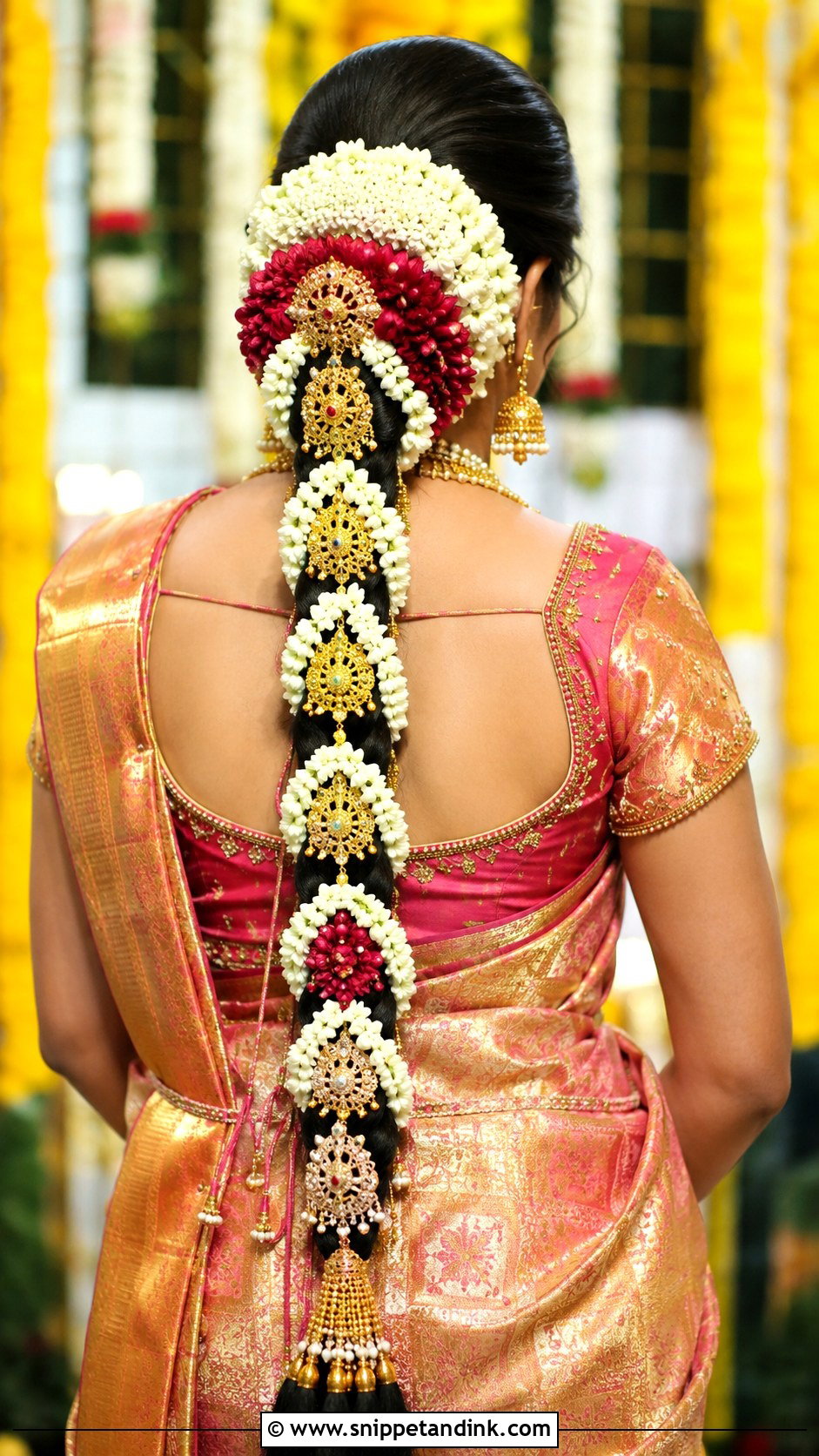
The poola jada is the most decorated braid in South Indian weddings: flowers from top to tip, gold accents and often an ornament at the end. An Indian bridal braid with poola jada suits Telugu, Tamil, Kannada and Malayali brides in Kanjeevaram silk. When the jada is very detailed, I keep the crown completely polished so the eye goes straight to the back. A trick I like is choosing flower colors from the saree border or the wedding garland, so the back view ties into the rest of the photographs.
3. Indian Bridal Braid With Gold Jada Billalu
Discs of gold jada billalu run down the braid in a line, usually stepping down in size, and they echo the gold necklaces and vaddanam at the waist. Each piece adds weight, so the braid underneath has to be thick and tight. I almost always add a braid extension for length, then attach the billalu with thread or a backing rather than loose pins. A border of fresh flowers along the sides softens all that gold. Sit down at your trial in the full set; that’s when a loose disc shows itself.
4. Indian Bridal Braid With Maang Tikka
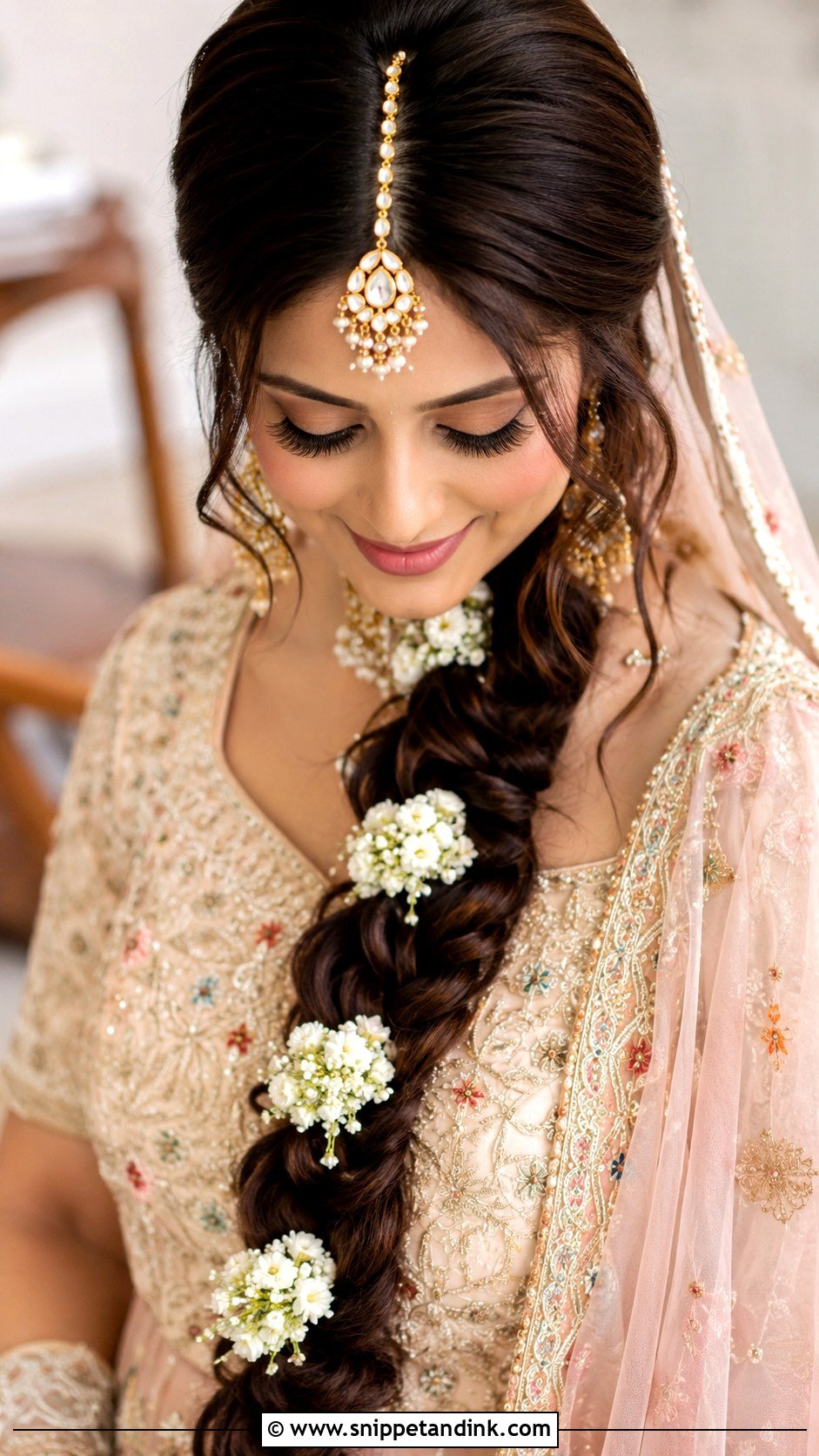
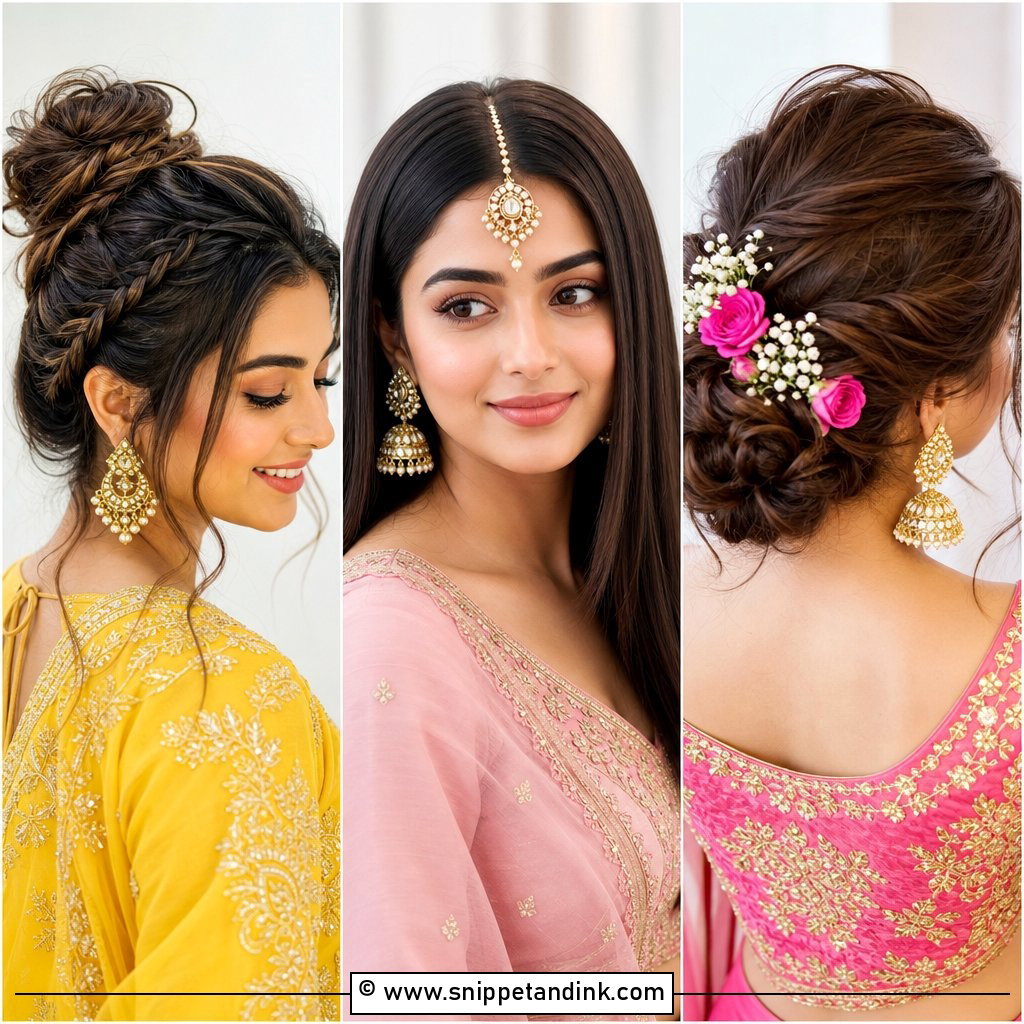
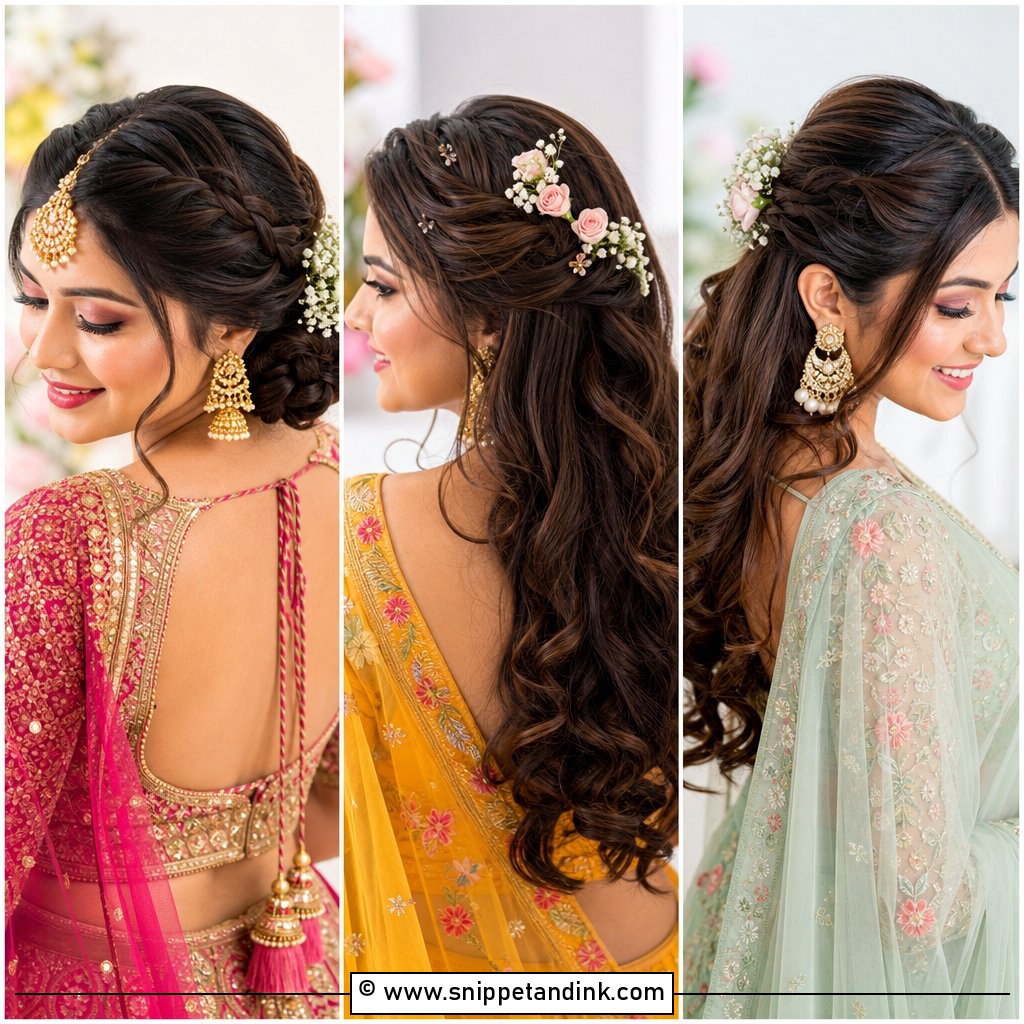
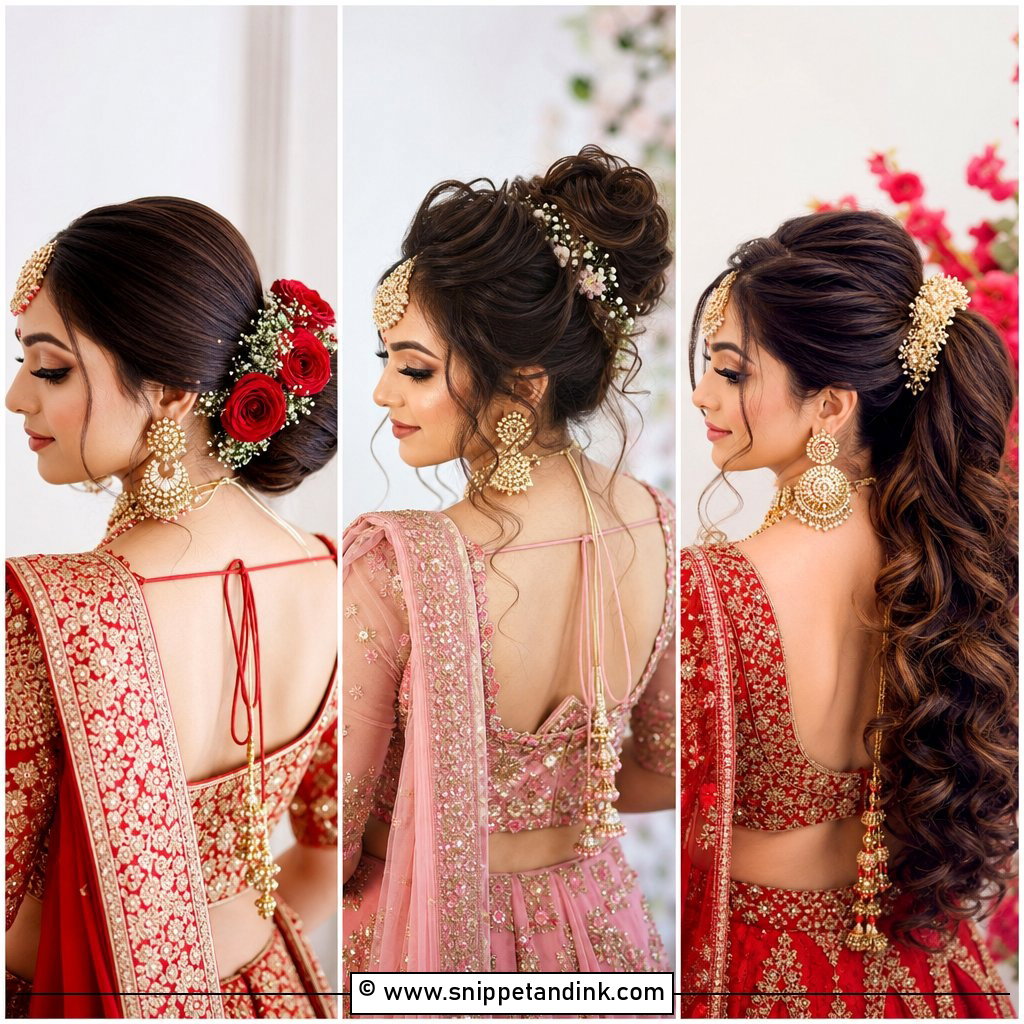
Pairing a braid with a maang tikka is mostly about balance between the front and the back. The center part must be clean and straight so the tikka hangs true. I smooth the crown with a light setting cream to keep flyaways away from the jewelry. My rule of thumb: a large tikka wants a quieter braid, and a grand braid wants a smaller tikka. Both at full volume compete in every photo. This combination works with lehengas, sarees and shararas.
5. Indian Bridal Braid With Matha Patti
A matha patti sits across the hairline, so the braid behind it shouldn’t add much height at the crown, or the headpiece tilts back. An Indian bridal braid with matha patti stays close to the head at the top and lets the length carry the decoration. Keep the part sharp. The side chains are the fiddly part: I pin each one under a small section of hair near the temple, so the pin is covered and the chain lies flat. Pearls or gold pins down the braid finish it.
6. Indian Bridal Braid With Paranda
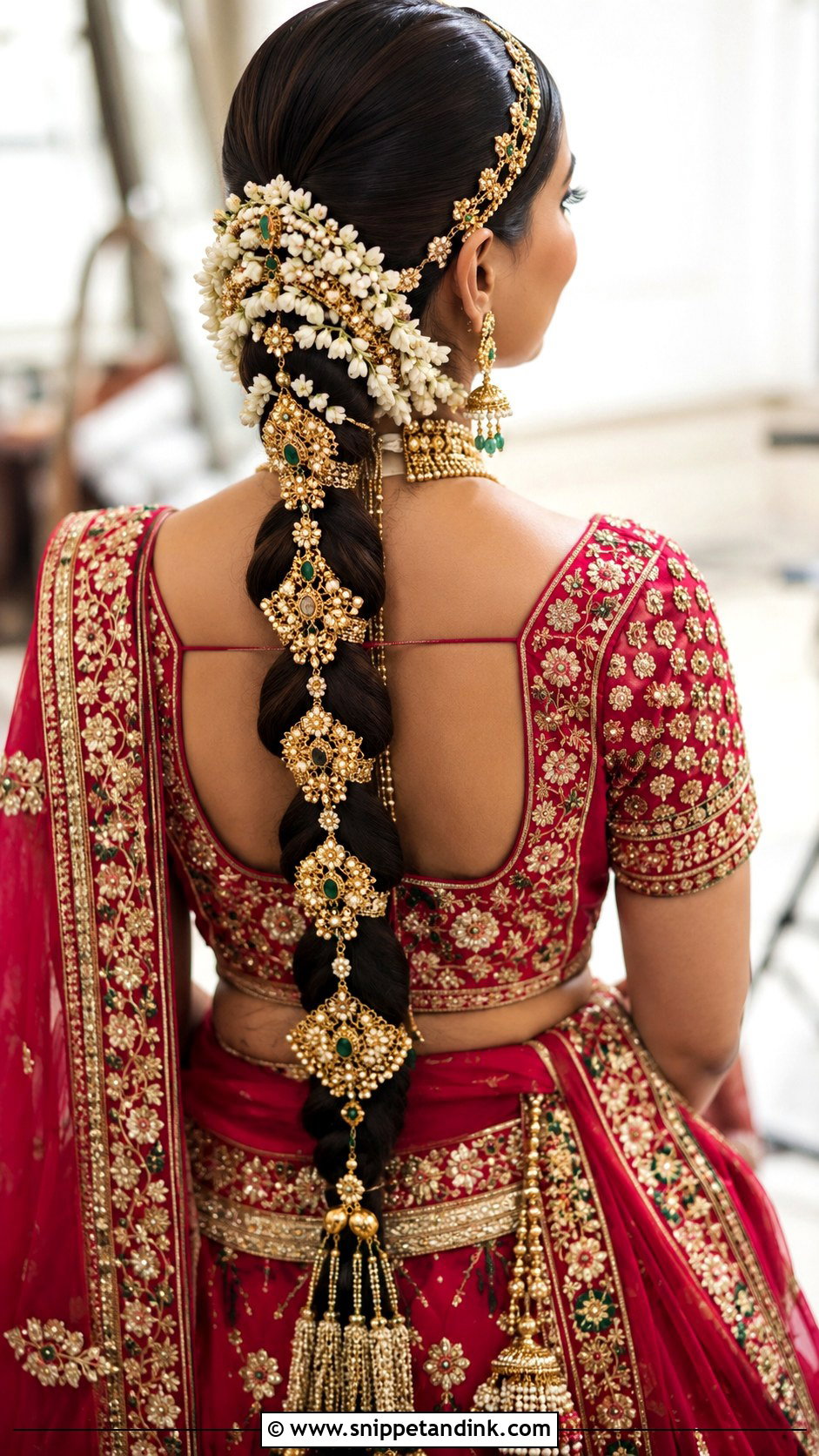
The paranda adds color, length and swing to a Punjabi bridal braid. An Indian bridal braid with paranda can be simple silk thread or grand with tassels, beads and mirror work. I weave it in from partway down, braiding it together with the hair so it can’t slip out when you dance at the sangeet. A thick, clean braid shows the paranda best. Match it to the embroidery or bangles rather than trying to match the dupatta exactly; dyed threads rarely hit the same shade as fabric.
7. Indian Bridal Fishtail Braid
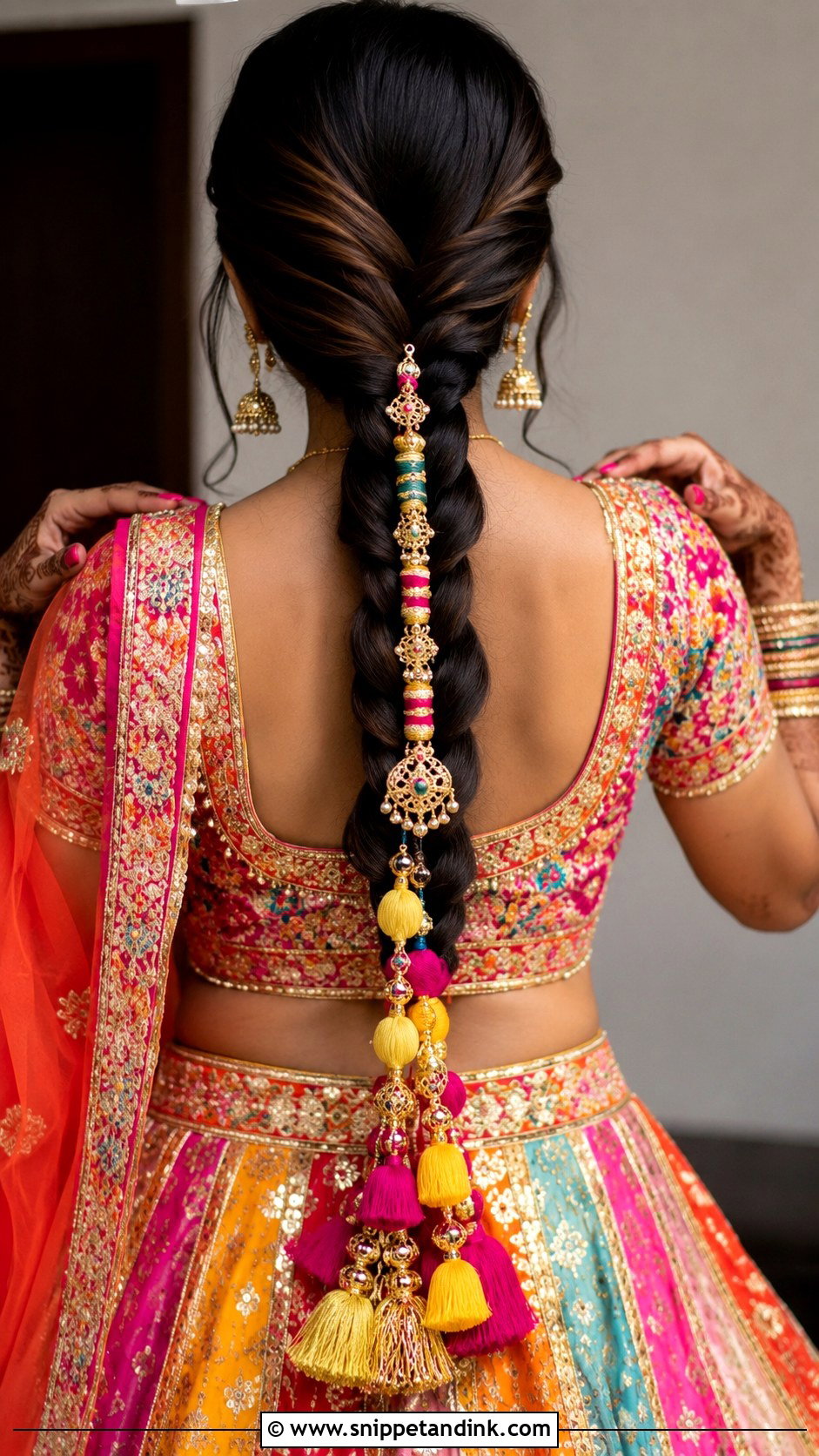
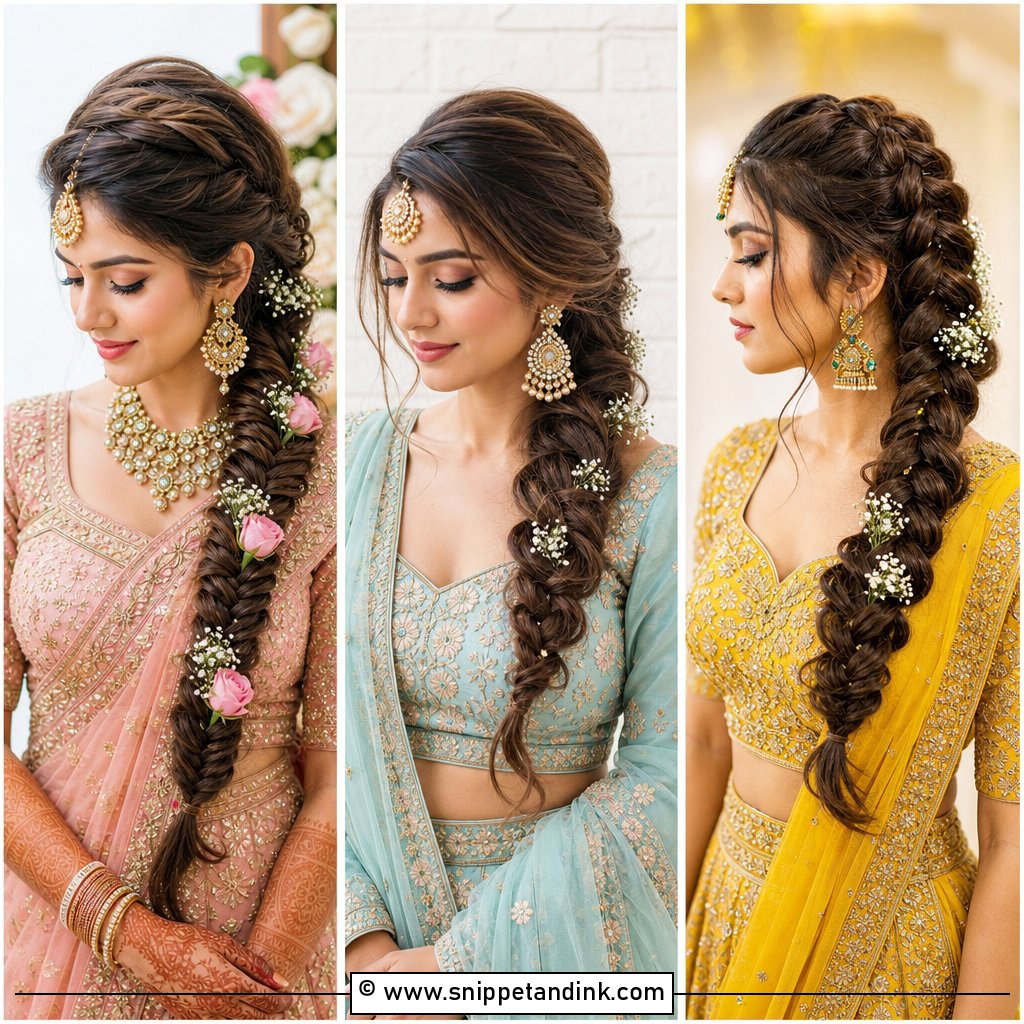
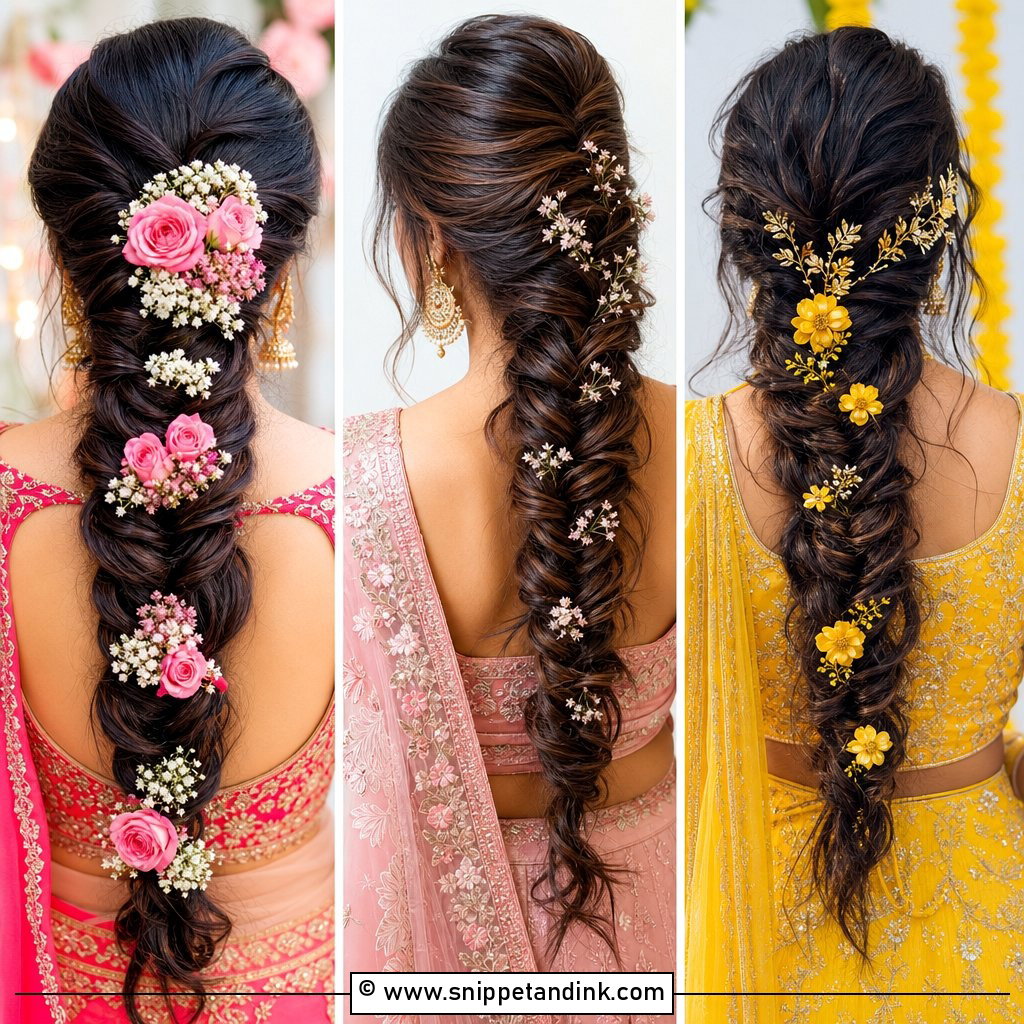
Fishtail is the modern option on this list, and on long hair with highlights the weave shows every tone. I braid it tight, secure it, then pull the edges gently for fullness, stopping well before it looks messy. Baby’s breath, small roses or kundan pins slot into the pattern without much effort. With a reception gown or pastel lehenga it suits well. On very fine hair, a fishtail can look thin once pulled apart, so I’d add a weft before braiding.
8. Indian Bridal Side Braid
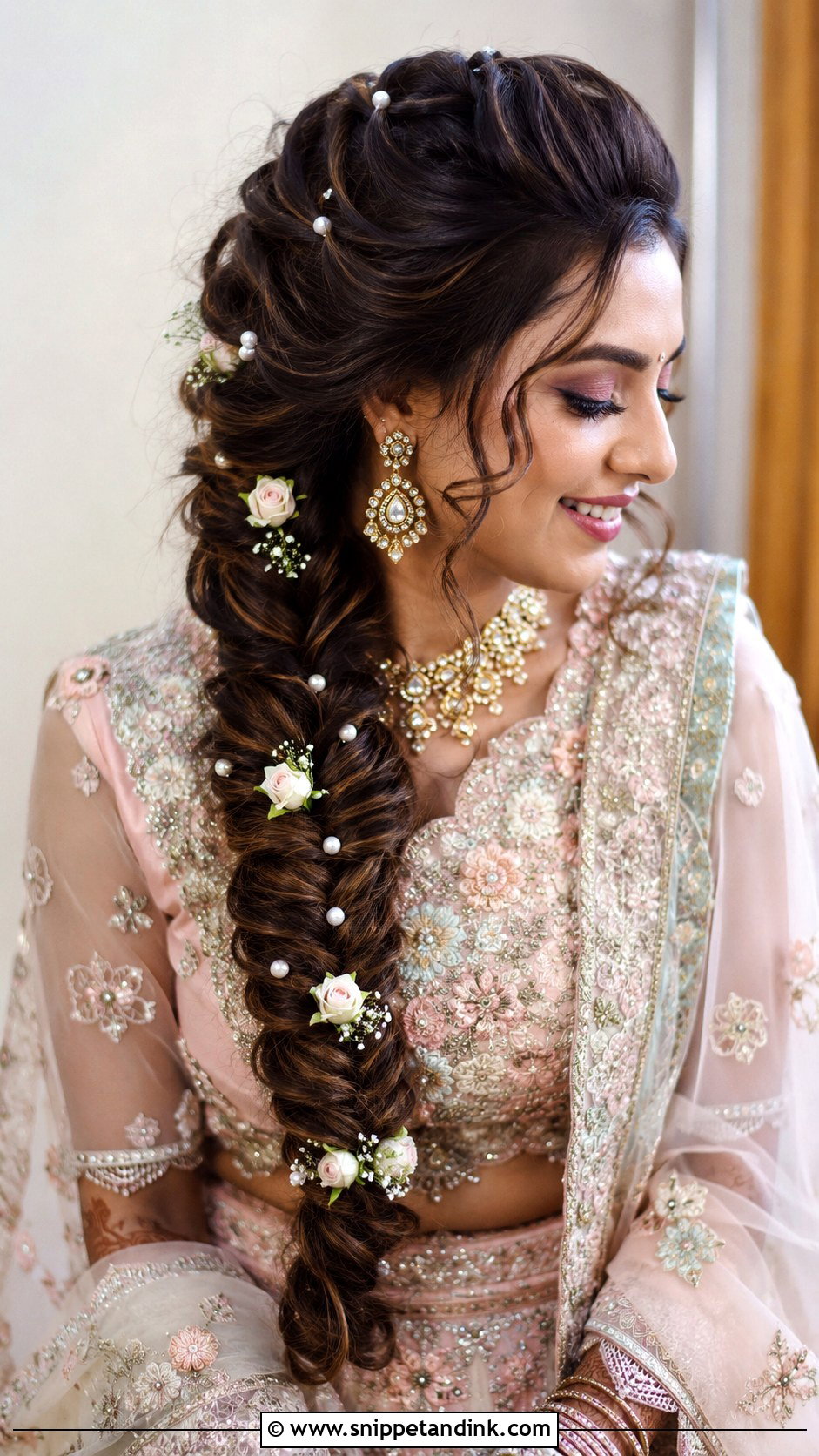
Bringing the braid forward over one shoulder makes it visible in front-facing portraits, which is the main reason to choose it. It’s also practical when the dupatta is pinned at the back, since the braid isn’t trapped underneath. I decorate only the outward-facing side; flowers on the side against your neck get crushed. It can start from loose curls, a twisted crown or a smooth center part. Make it secure but not tight, so a hug doesn’t pull it apart.
9. Indian Bridal Loose Braid
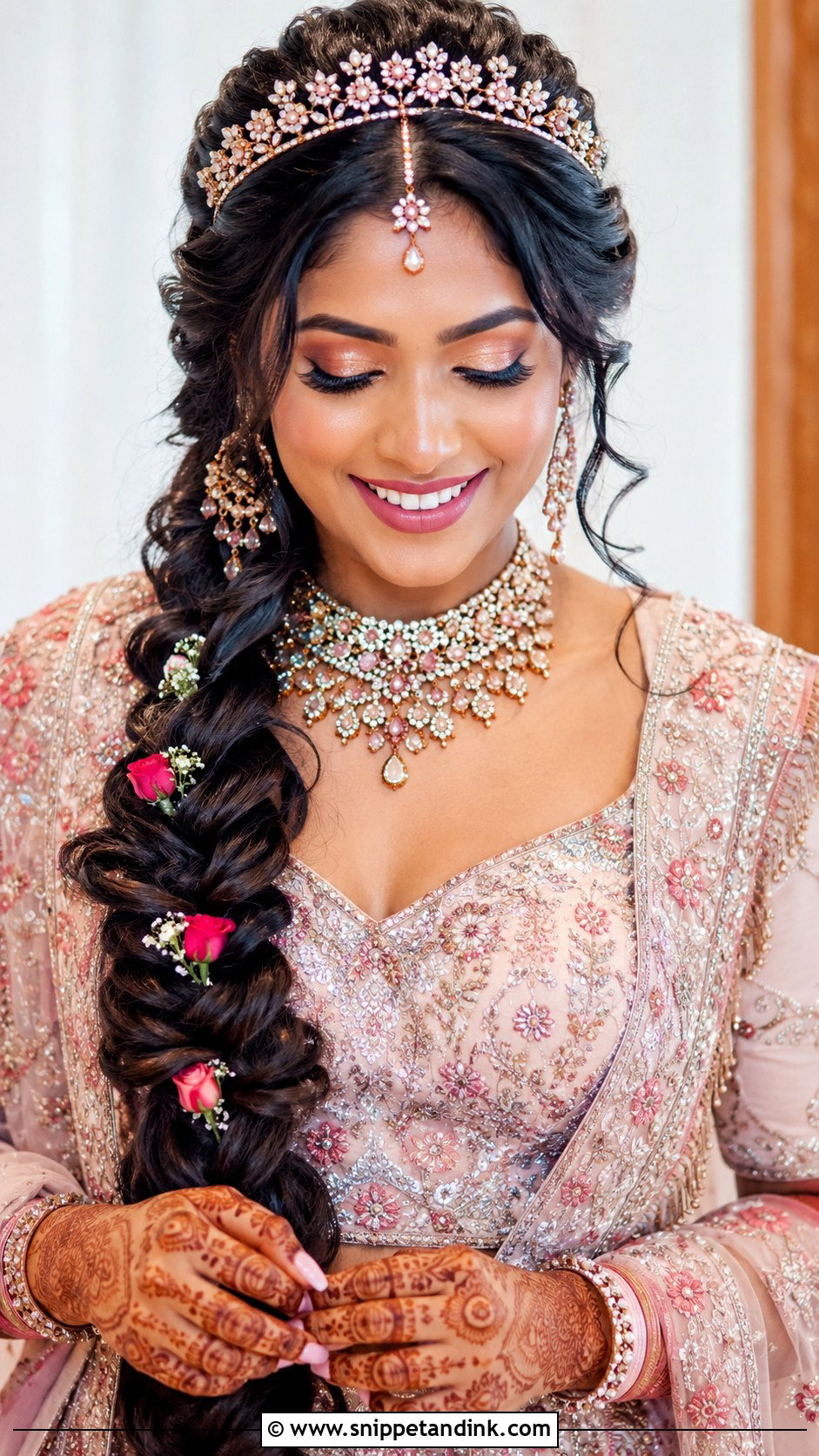
Loose braids look airy, but they’re built with more hidden pins than tight ones. I add volume at the crown, leave a few face-framing pieces and braid loosely, then pin through the braid at intervals so the shape doesn’t drop. A strong setting spray finishes it. It suits outdoor events, mehendi and receptions where you want movement without fully open hair. In damp heat, loose braids frizz faster than tight ones, so I’d choose this for an air-conditioned or evening venue.
10. Indian Bridal Dutch Braid
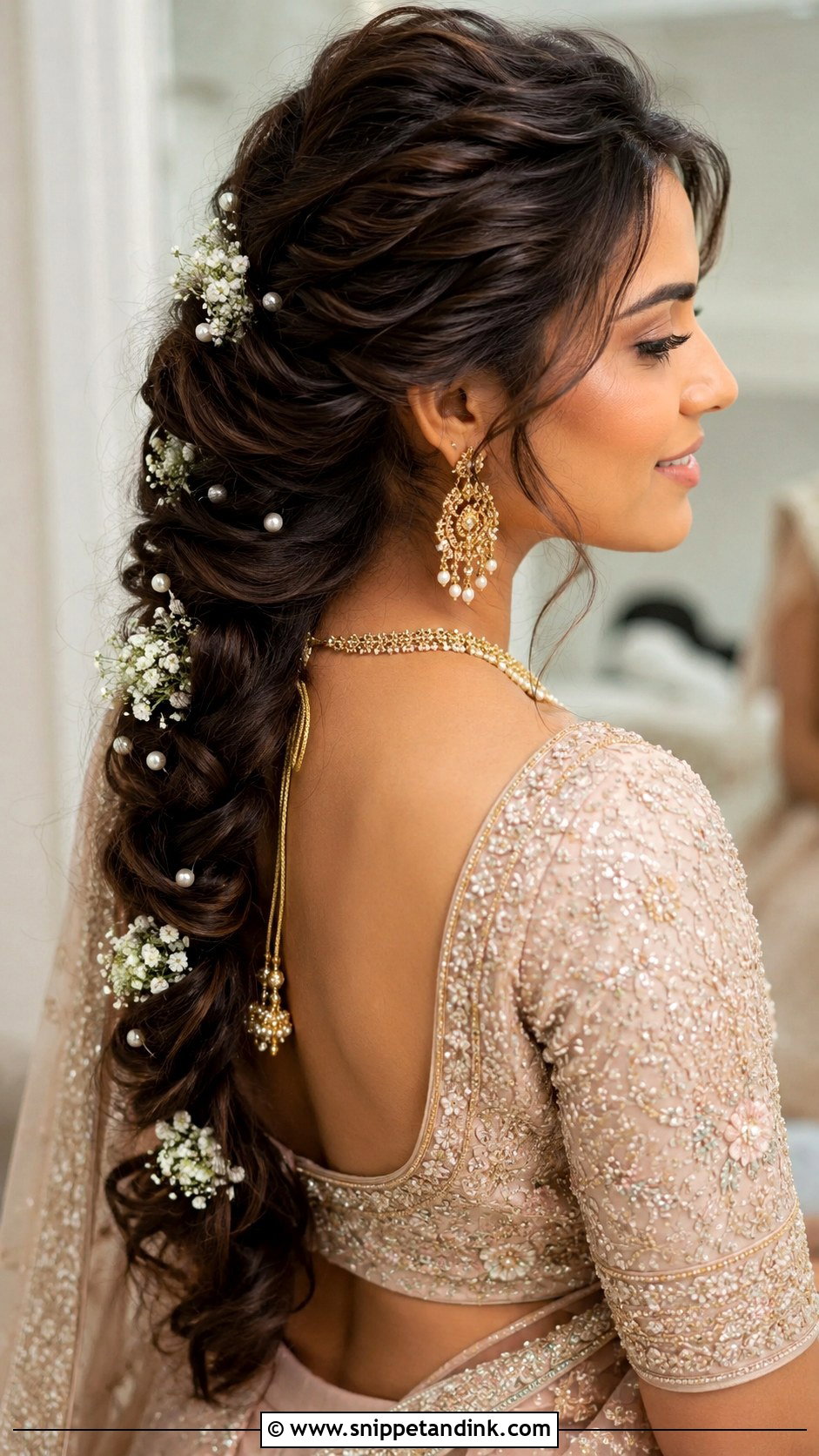
A Dutch braid sits raised above the scalp, so it stands out clearly in photos with very few accessories. It can start at the crown and run into a long plait, or I can work two side Dutch braids that join into one thick braid at the nape. Gold pins or small flowers along the raised edge add detail. It grips the scalp along its length, which makes it secure for pre-wedding dancing. With a heavily embroidered outfit, keep the front soft so the two don’t fight.
11. Indian Bridal French Braid
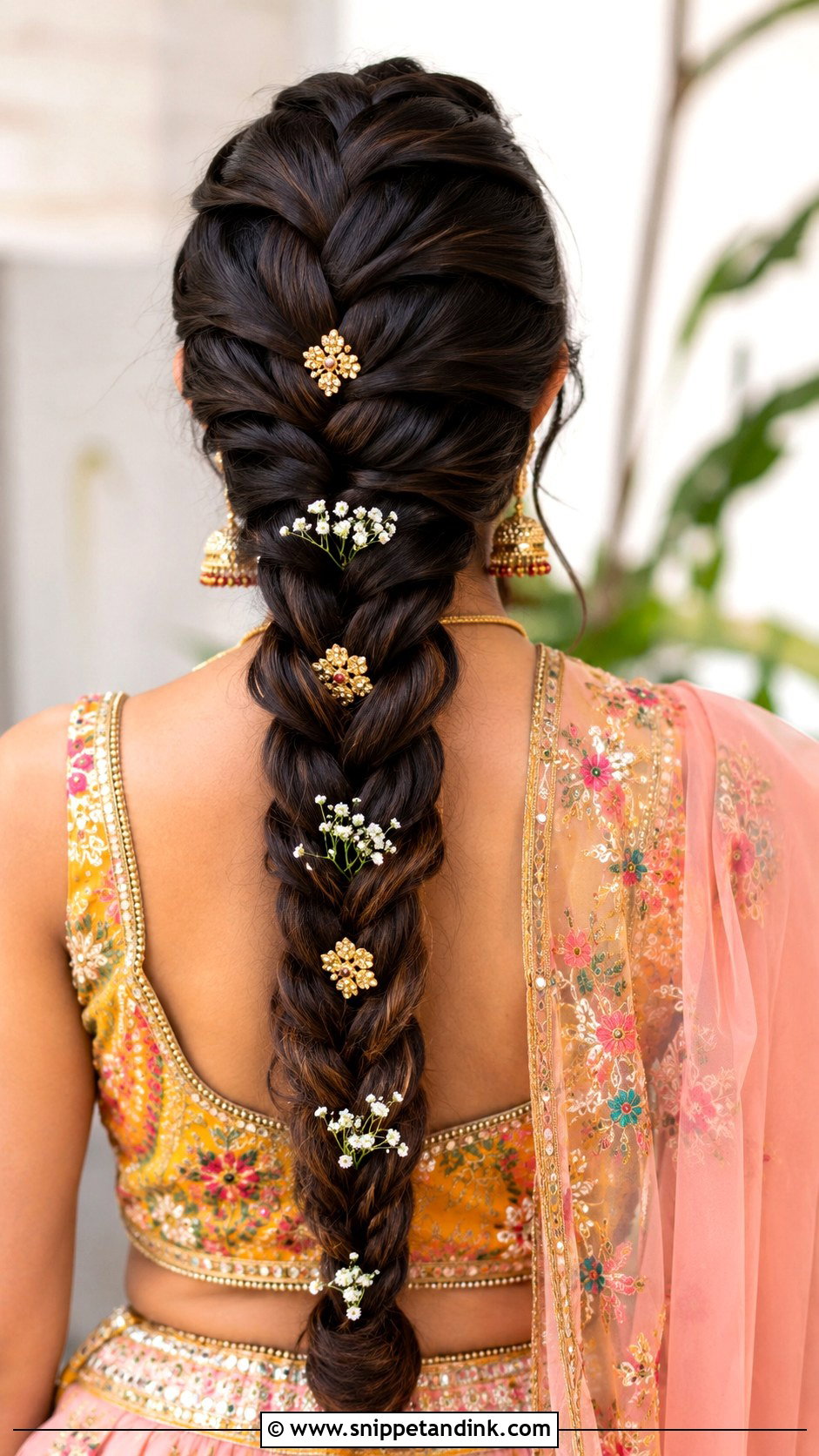
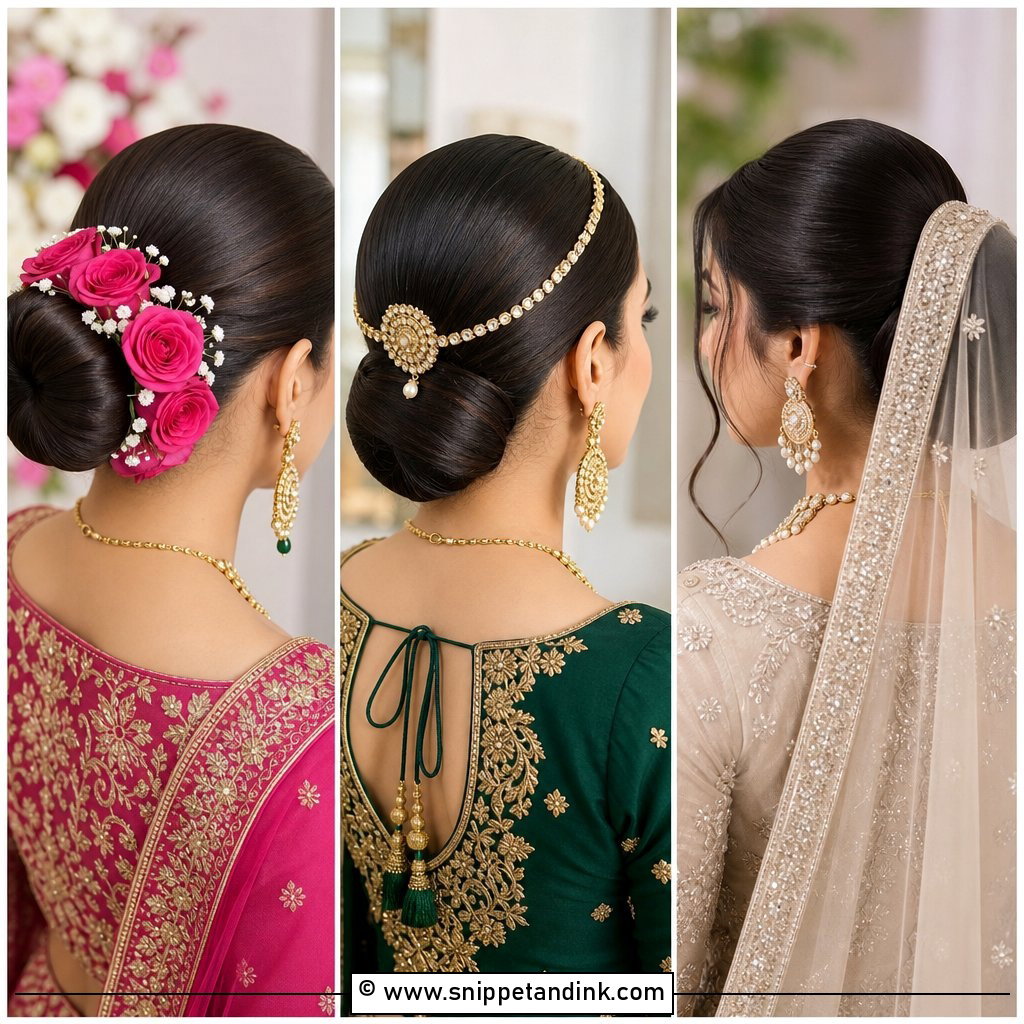
Woven close to the scalp, a French braid lies flatter than a Dutch braid, which is why I prefer it under a dupatta. The fabric sits smoothly over it instead of bumping over a raised ridge. It stays secure for hours and adapts easily: jasmine and gold pins for a traditional ceremony, roses and pearls for something softer. A little lift at the crown keeps it from looking like an everyday braid.
12. Indian Bridal Bubble Braid
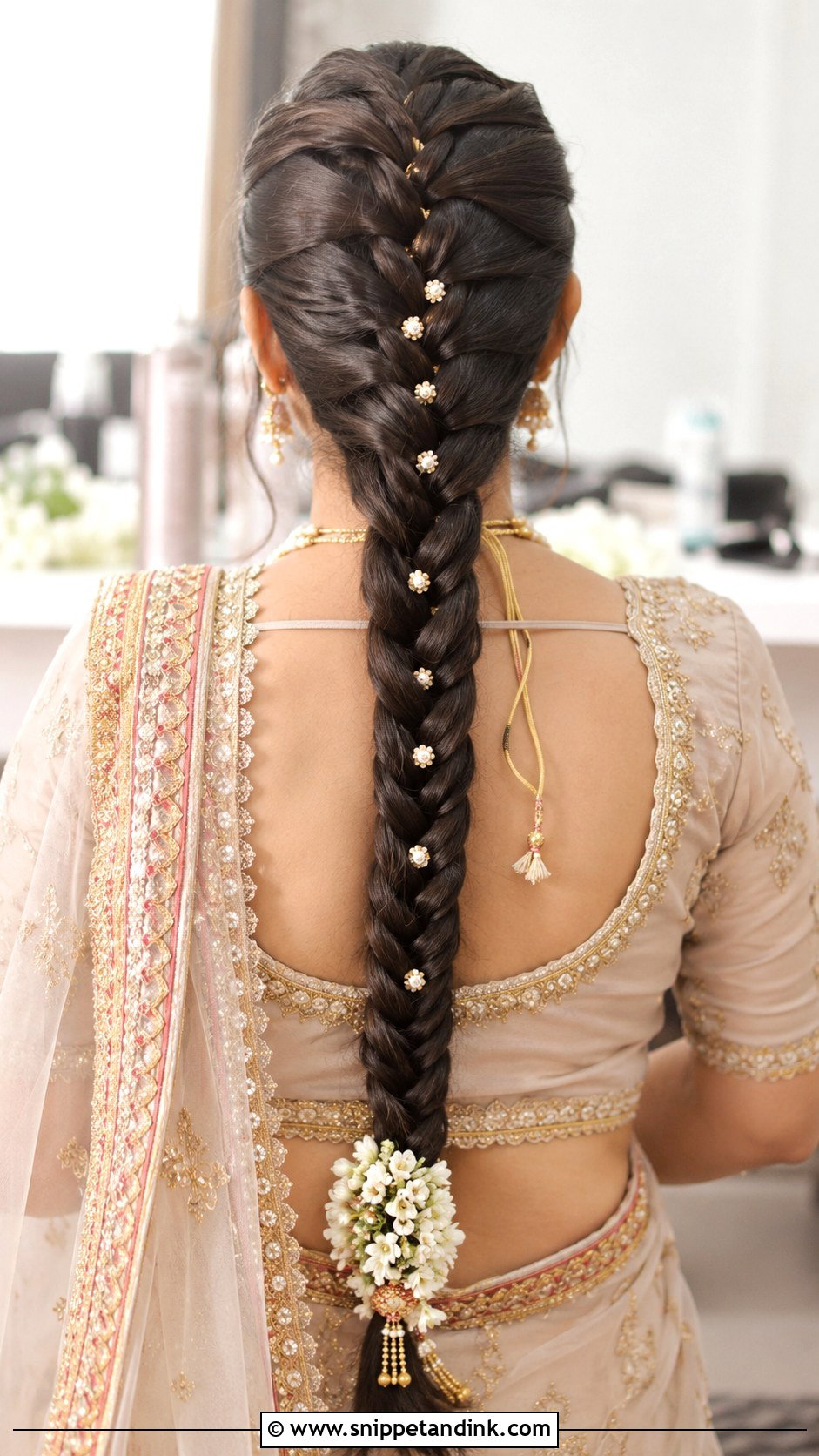
Bubble braids aren’t woven at all. The hair is gathered into a ponytail and sectioned with small elastics, and each section is pulled out into a round bubble. Wrapping gold thread, pearl strings or ribbon over the elastics makes it festive for mehendi or sangeet. It needs long, thick hair to look full, so extensions are common. The good news is that it’s quick to build and holds firmly through dancing.
13. Indian Bridal Braid With Roses
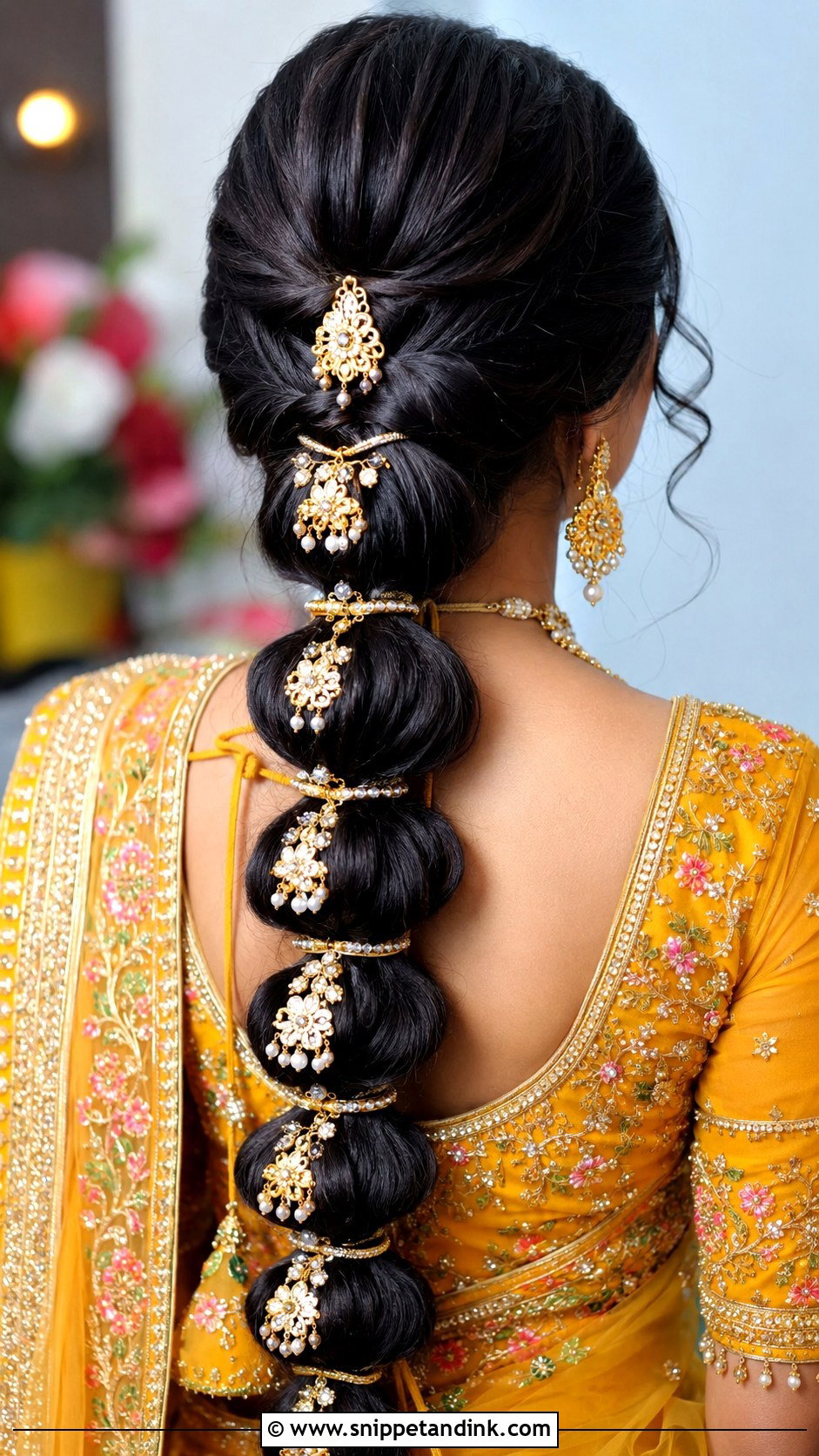
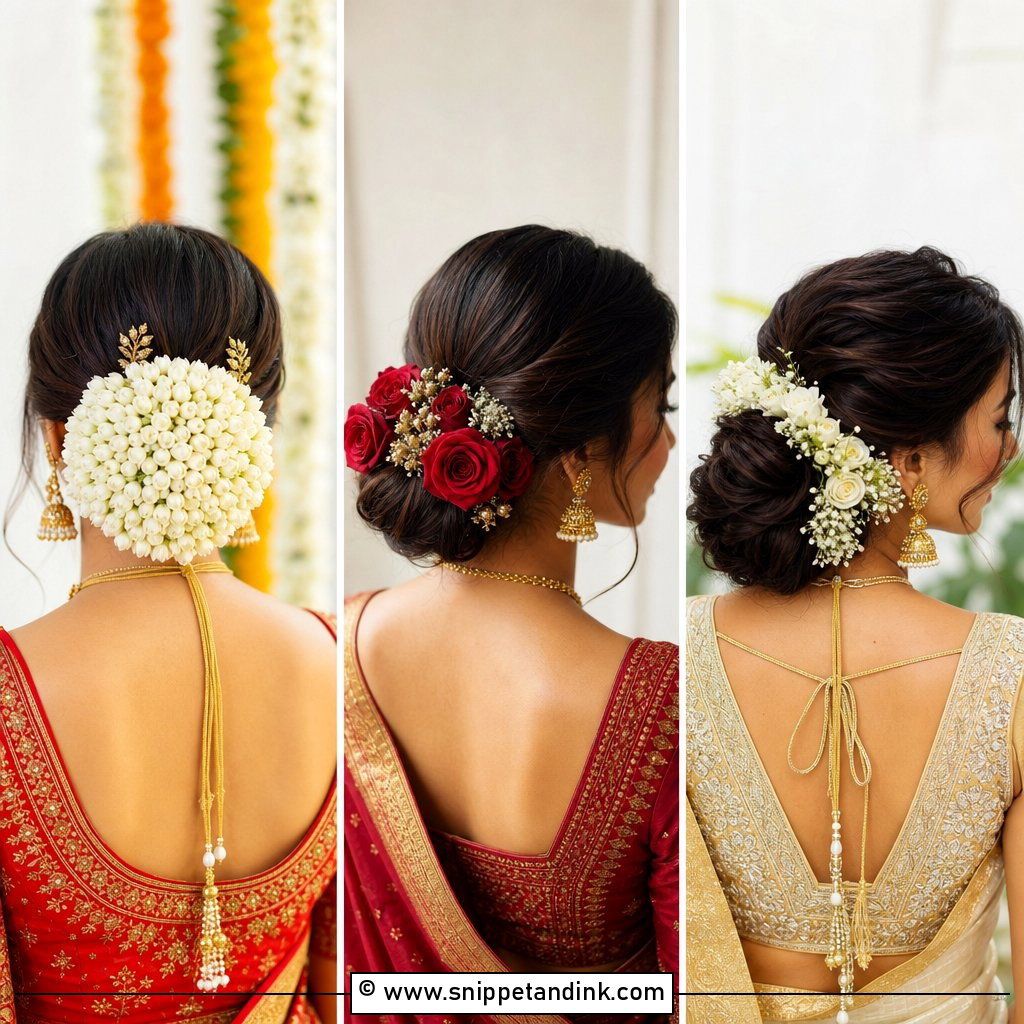
Rose color is the first decision. Red roses suit traditional reds and maroons; pink, peach or ivory roses suit pastel outfits. I tuck them along the braid, cluster them at the top, or mix them with jasmine for a fuller design. Roses are heavier than jasmine, so I wire or pin each bloom individually and keep the heads small. If your venue decor uses roses, ask your florist for a few spare heads in the same shade.
14. Indian Bridal Braid With Baby’s Breath
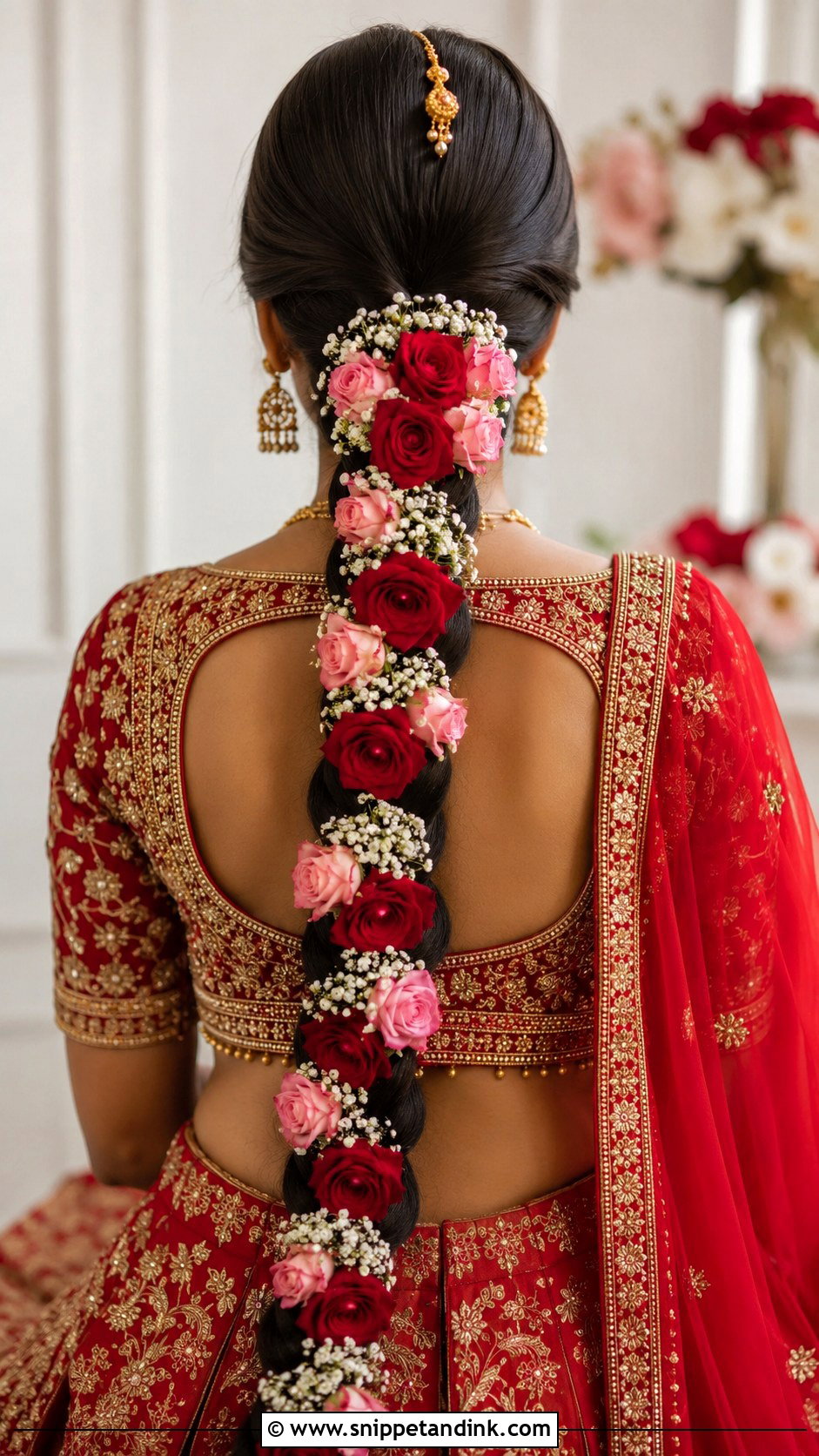
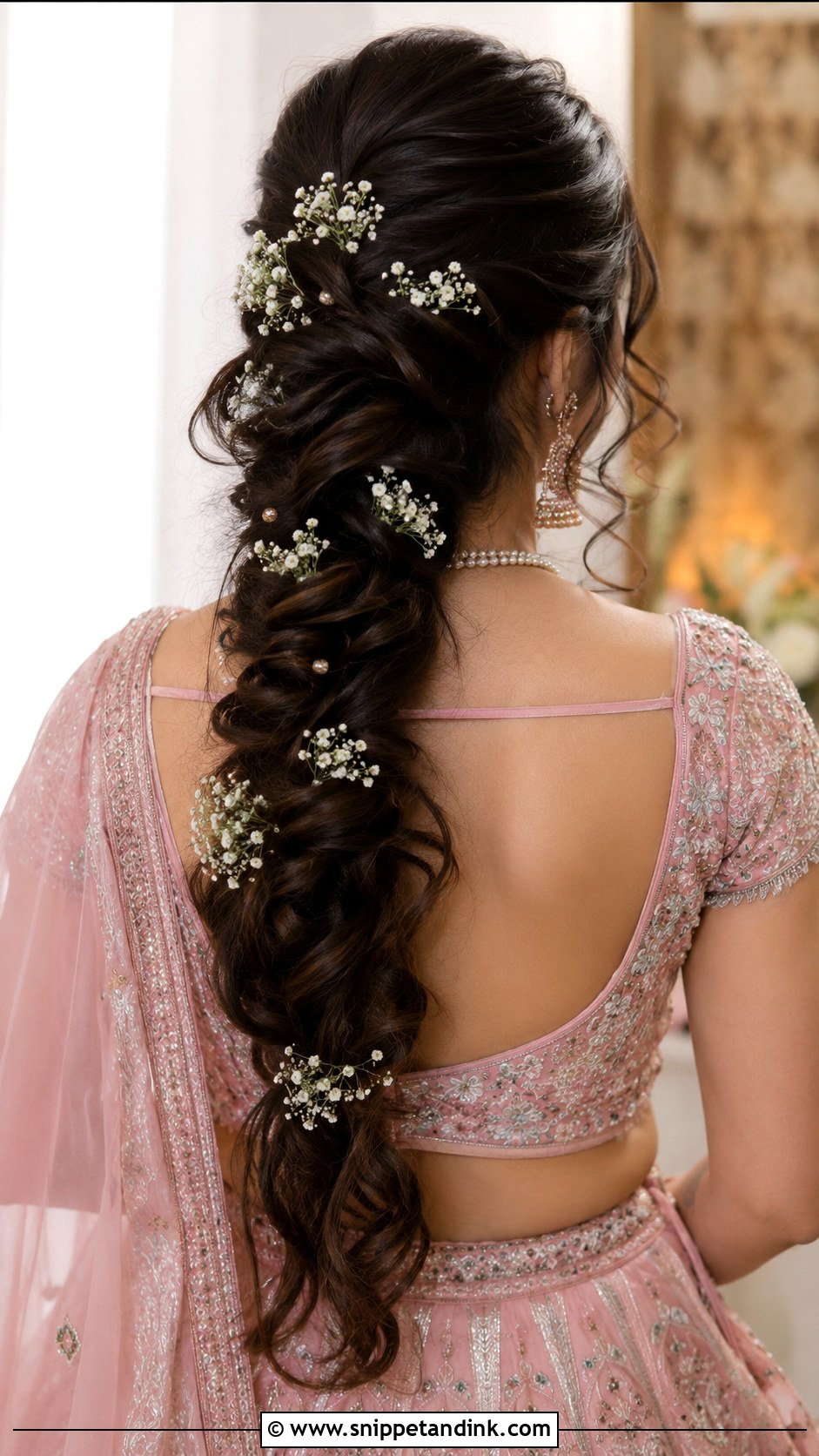
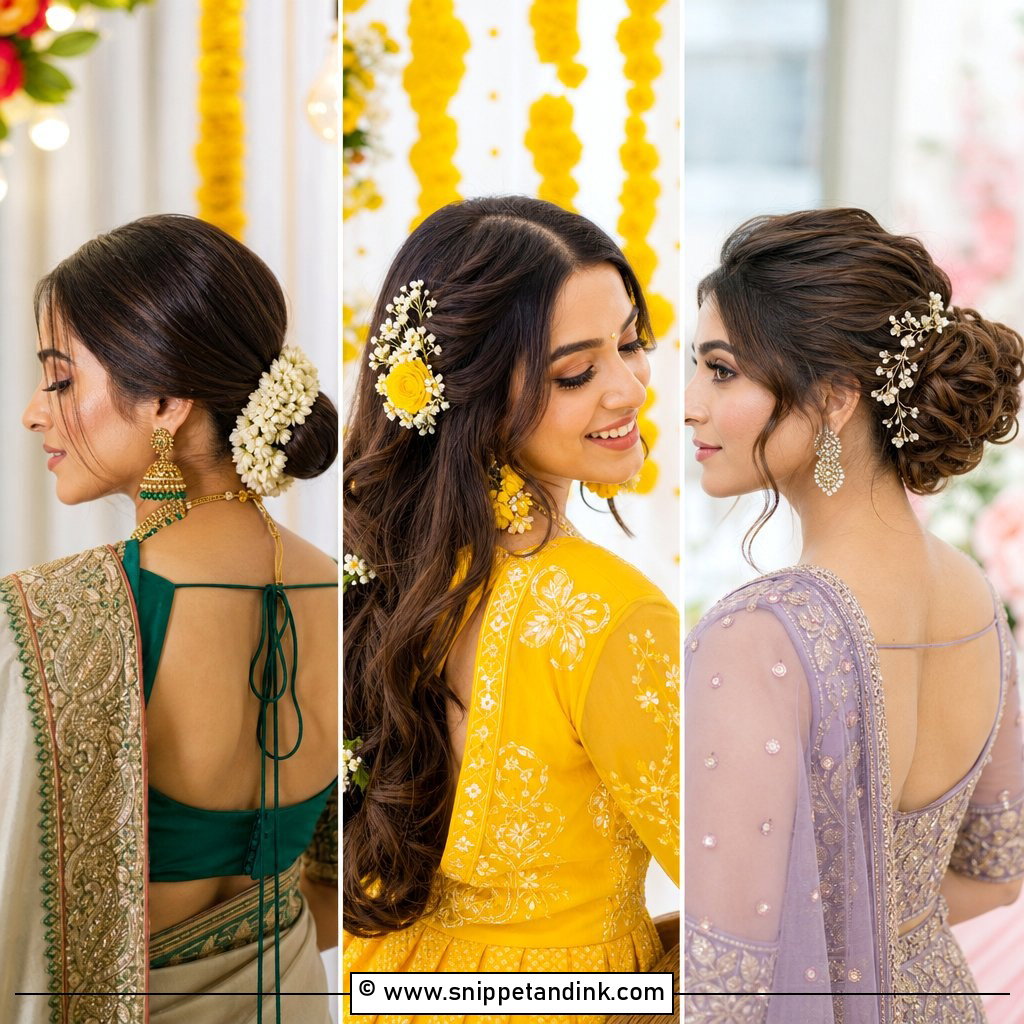
Baby’s breath adds detail with almost no weight, which makes it a comfortable choice for a long engagement or reception. It suits ivory, mint, lilac and champagne outfits. I place it in small clusters, not in an even line, so it looks gathered rather than manufactured. It lasts well out of water, far better than most fresh flowers. Pair it with a slightly textured braid and pearl jewelry.
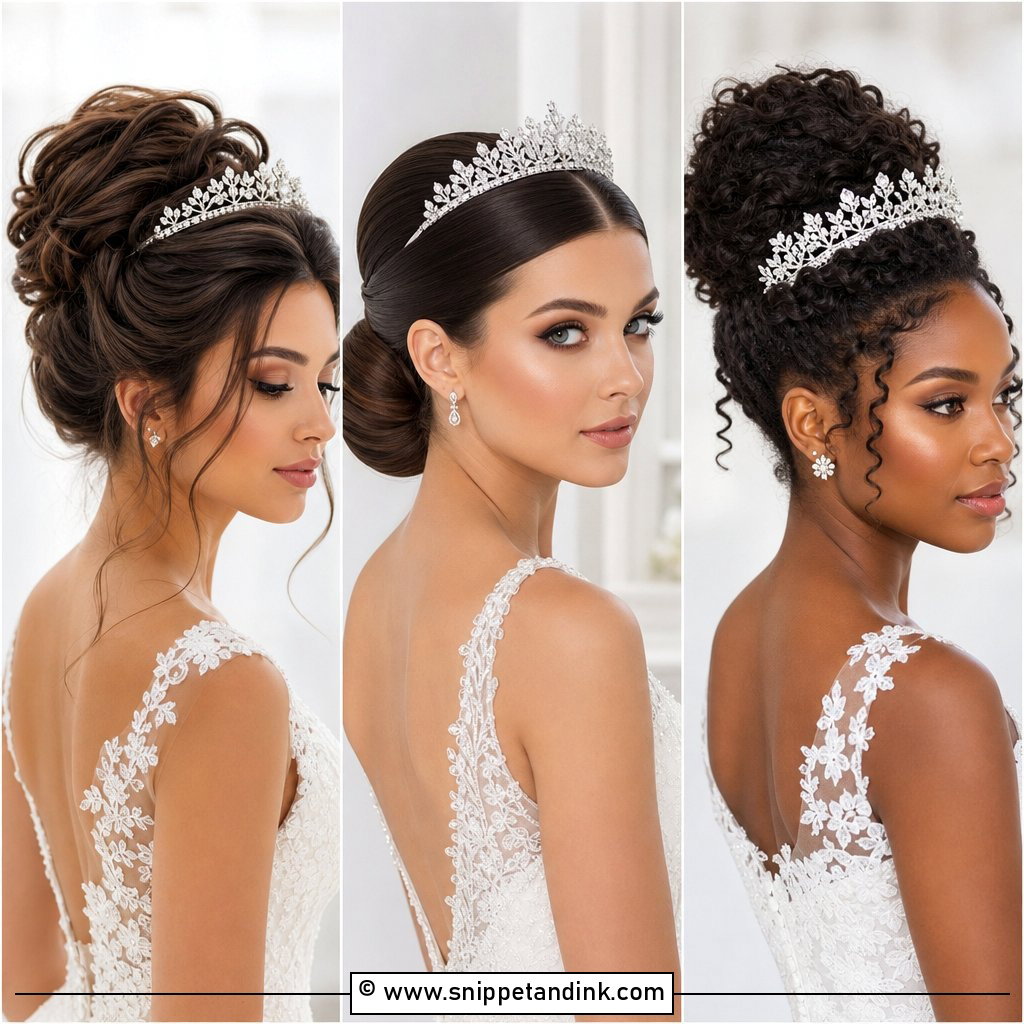
15. Indian Bridal Braid With Pearls
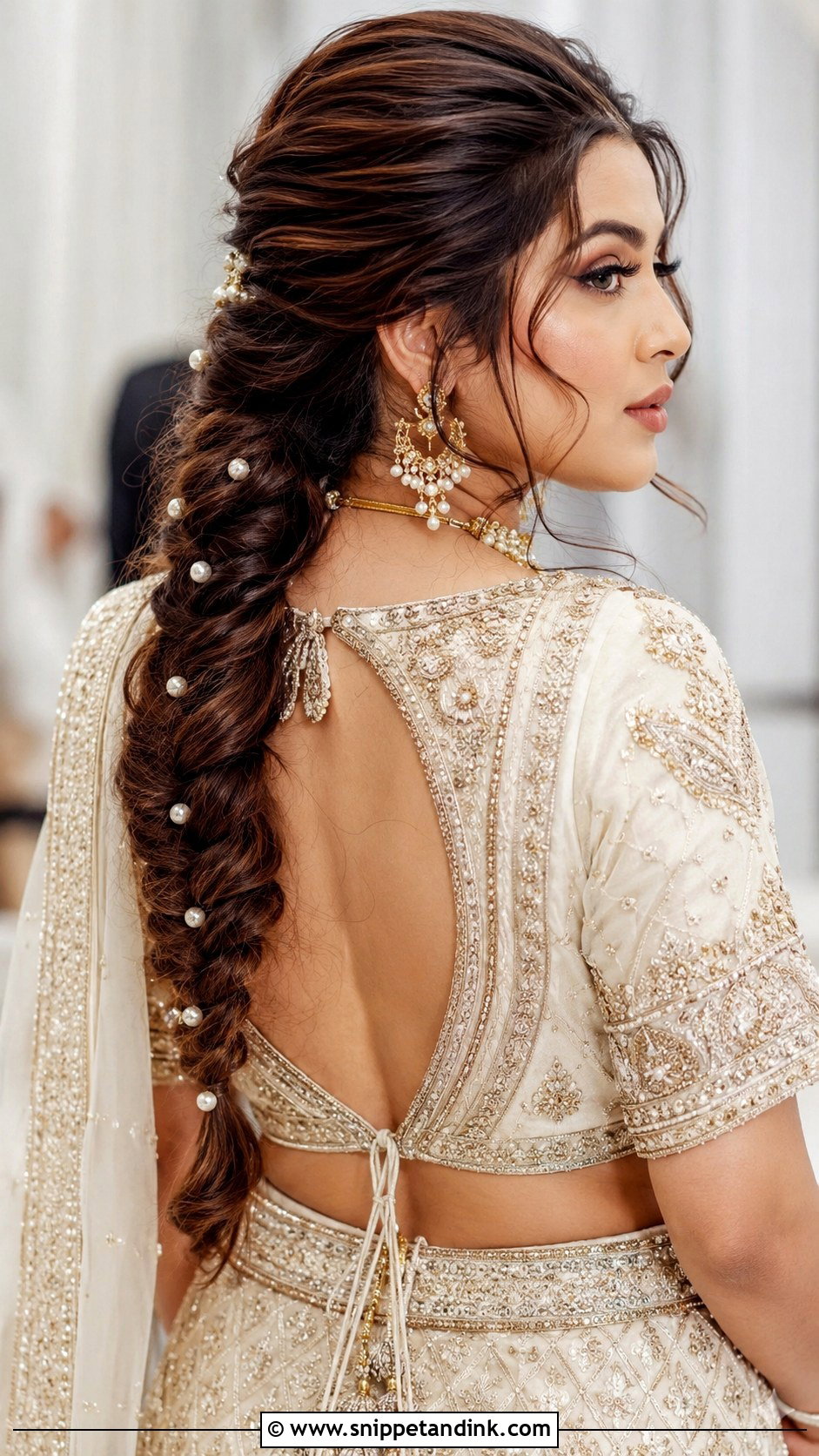
Pearls can be pinned along a classic braid, woven into a fishtail or set around a loose textured plait. They suit ivory, blush and champagne outfits and lean toward a reception look, polished without feeling heavily traditional. I keep the pearl size consistent along the braid. Mixing sizes at random makes it look crowded, and a braid of uniform pearls photographs as a clean line.
16. Indian Bridal Braid With Gajra
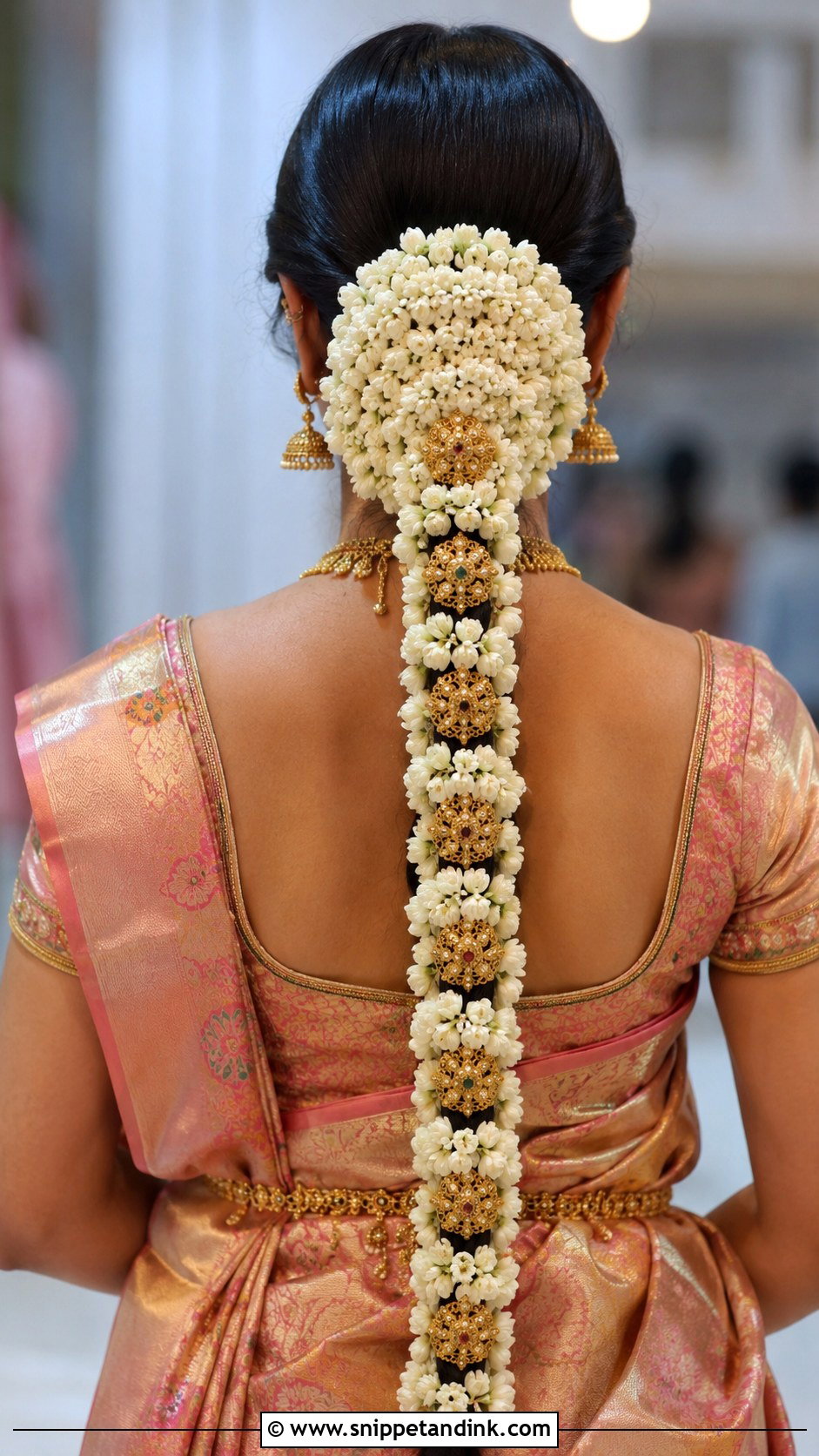
Gajra is heavier than it looks, especially jasmine strung thickly, and it gets heavier as the morning goes on. I wrap it around the base, spiral it down the braid or add it in thick sections, but always on a braid that has enough pins and, if needed, an extension to anchor into. Jasmine is the traditional choice; roses or seasonal flowers can be mixed in. Keep the front simple and neat. This one belongs with sarees, lehengas and temple jewelry.
17. Indian Bridal Braid With Kundan Accessories
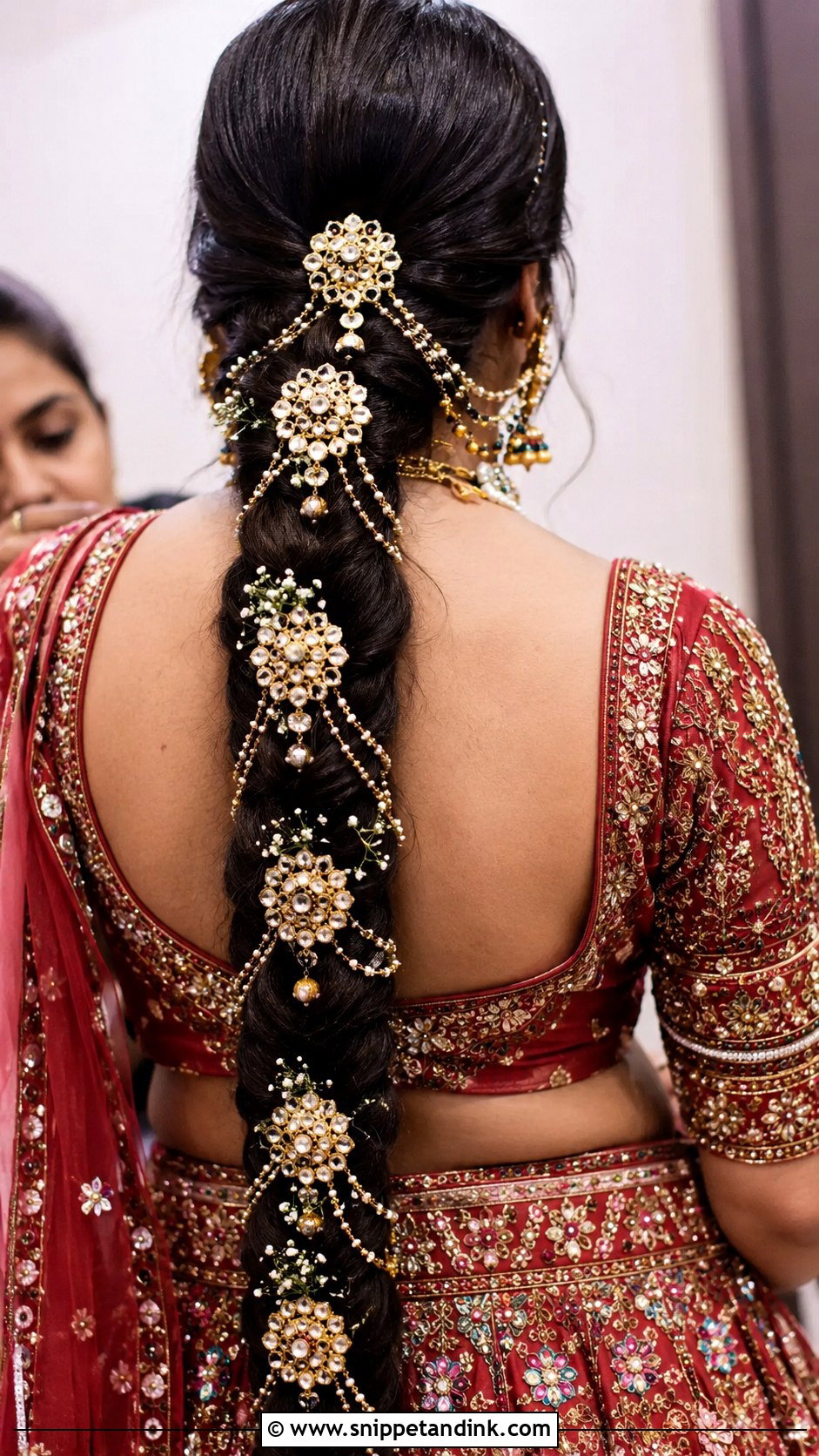
Kundan pins, clips or a braid ornament can be matched to your necklace, earrings and maang tikka. This works best with rich lehengas, velvet blouses and jewel-toned sarees. The braid underneath needs to be smooth so the pieces sit flat. My advice is to choose one main detail, kundan or flowers, rather than both. Too many accessory types make the back of the head look crowded, and kundan already catches plenty of light at a grand ceremony.
18. Indian Bridal Braid With Dupatta
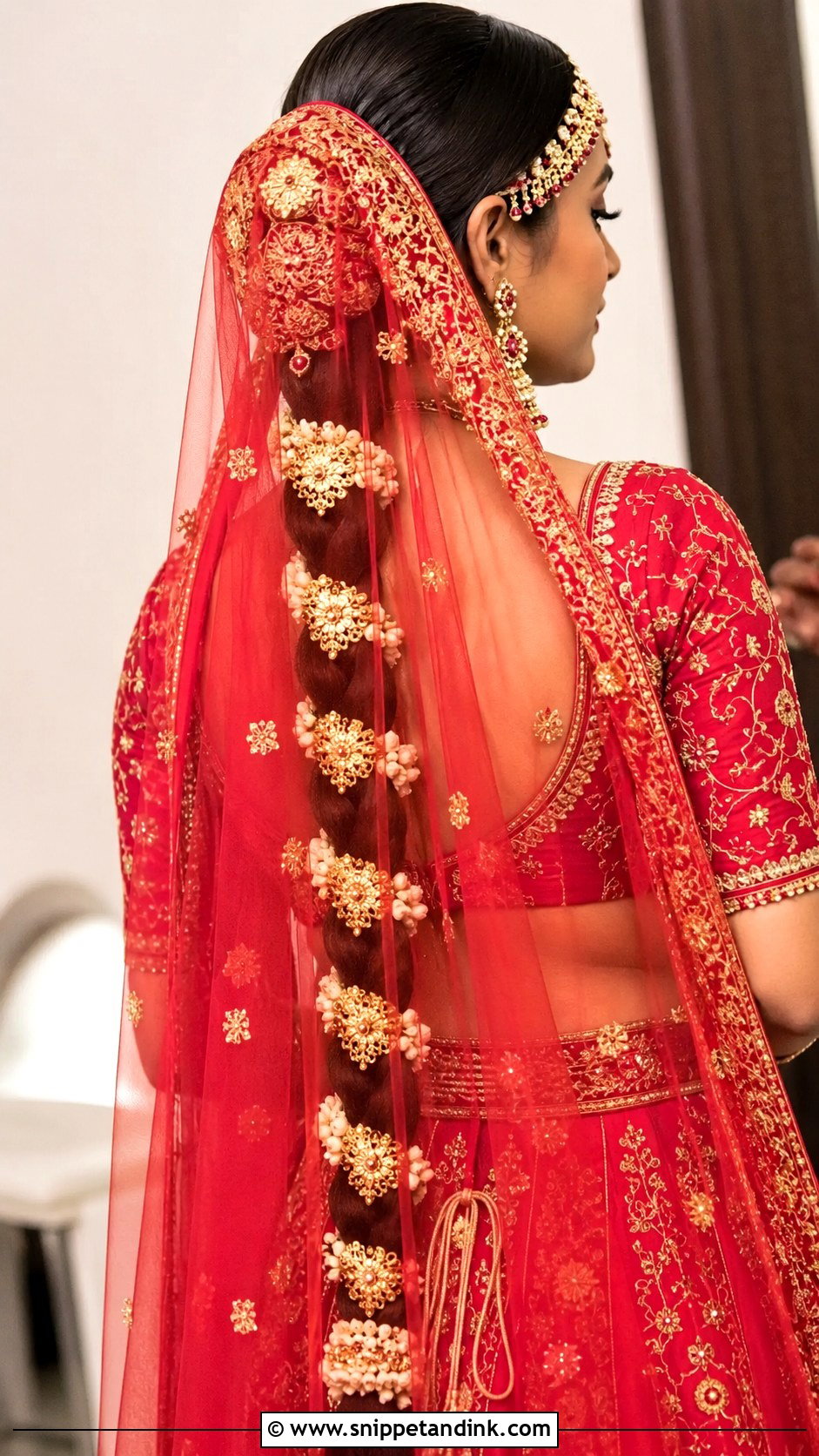
Planning a braid around the dupatta is mostly about where the dupatta pins. I place the braid low or straight down the back, and pin the dupatta at the crown or slightly behind it, into a firm section of hair rather than into the braid itself. That keeps the front jewelry visible and stops the dupatta from dragging the braid sideways. A sleek braid with flowers stays tidy under the fabric. Tell your stylist if pins hurt; there’s always a way to place them that doesn’t pull the scalp.
19. Indian Bridal Half Up Braid
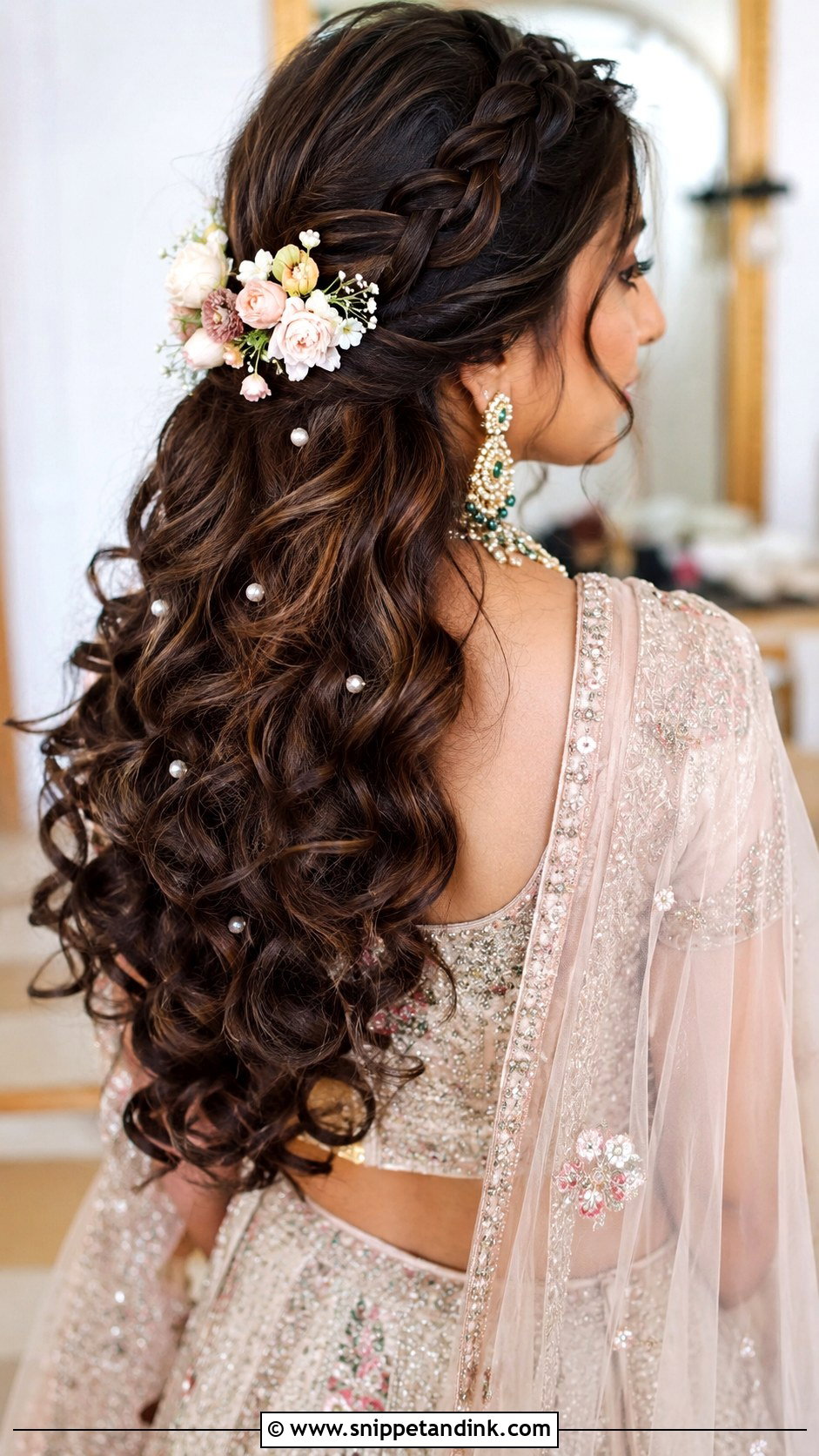
The top section is braided or twisted while the rest falls in curls. A half up braid is light and youthful, popular for engagement, mehendi and sangeet. A maang tikka, small flowers or pearl pins dress it up. The curls are the part that needs care, so I set them with pins as they cool and use an anti-frizz spray. It suits lighter dupattas and outfits with necklines worth showing.
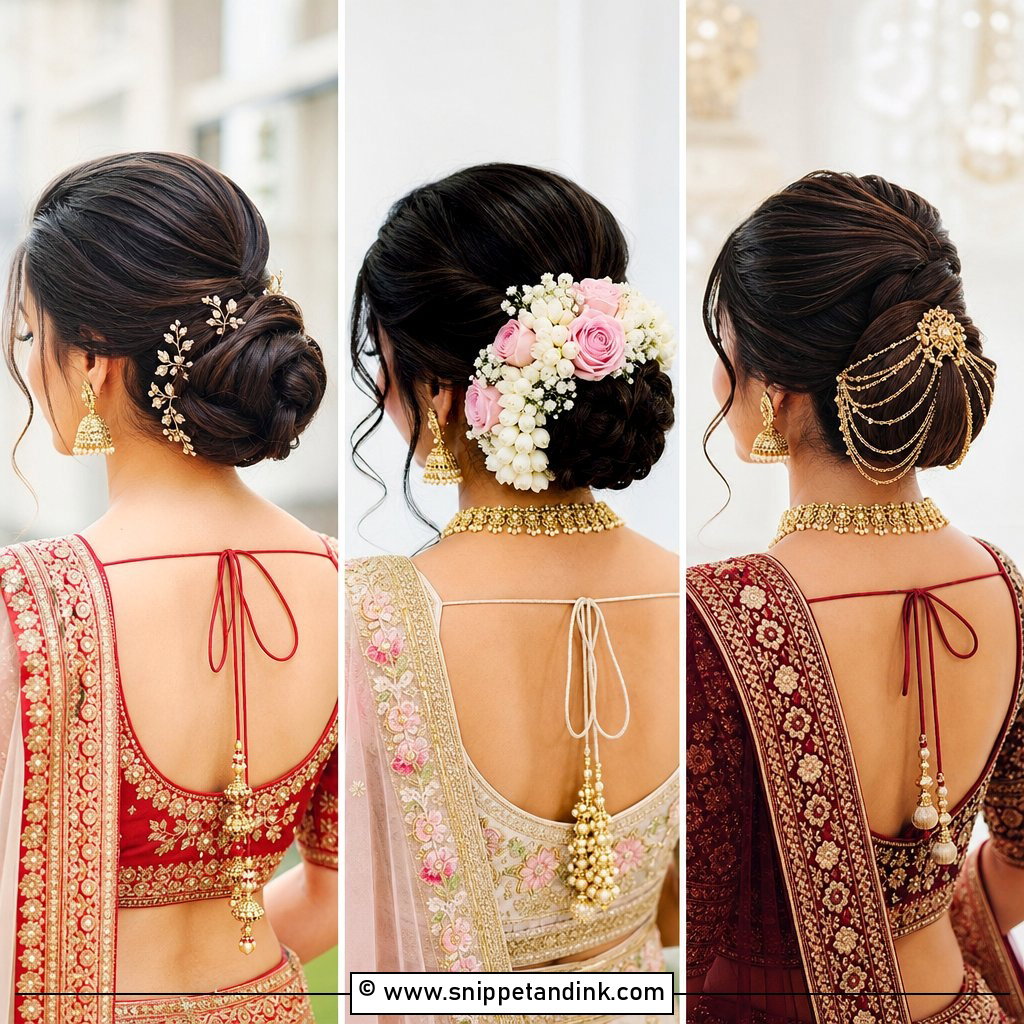
20. Indian Bridal Crown Braid
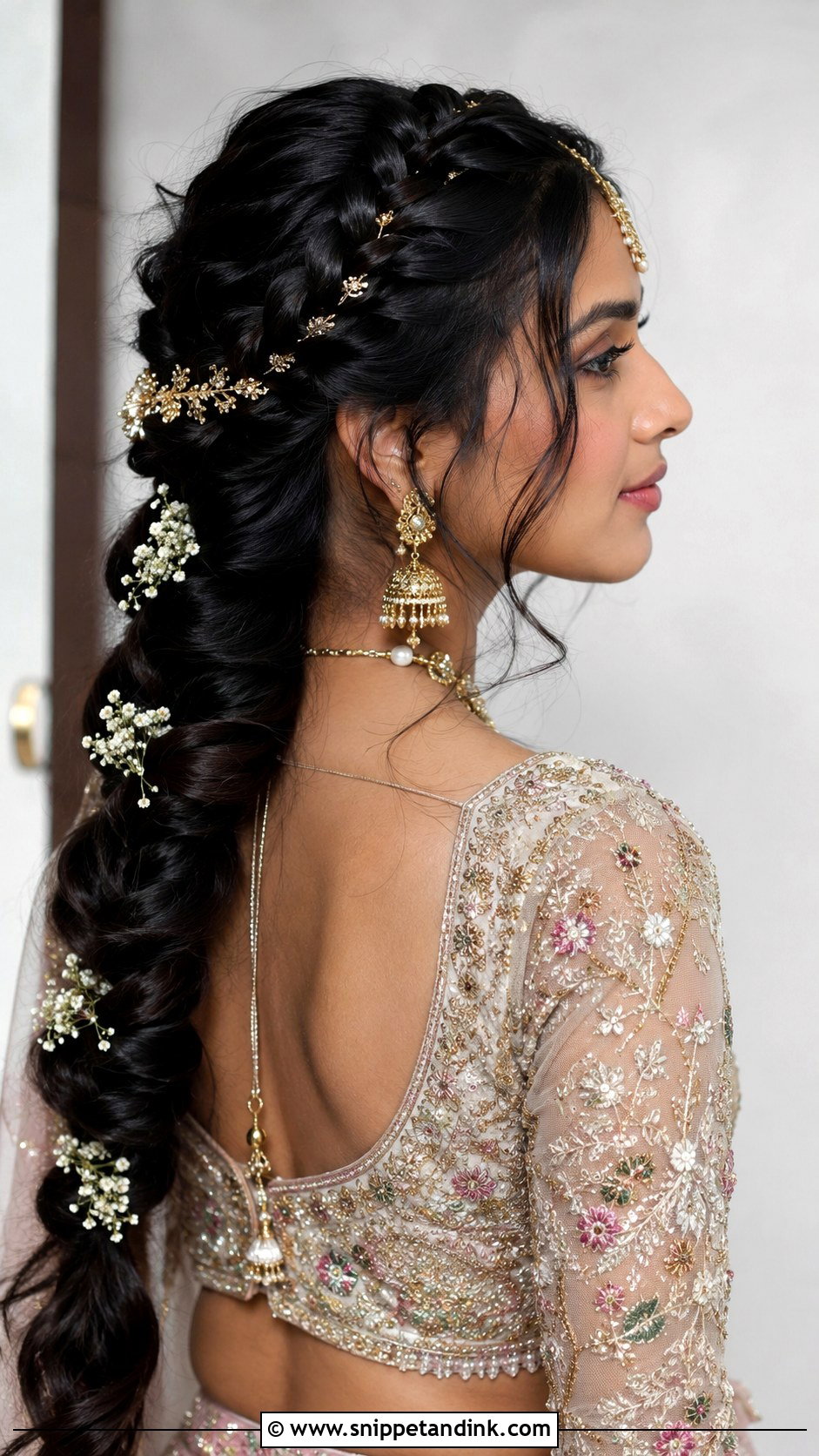
A crown braid frames the face like a soft band, and for a fully braided look I connect it into one thick plait down the back. It gives face-framing detail without needing heavy forehead jewelry. Small flowers or delicate gold pins sit nicely along it. It’s comfortable and secure for outdoor ceremonies and fusion outfits. Check the balance from the side at your trial; a crown braid that’s thicker on one side shows clearly in profile.
Working With a Mother’s or Grandmother’s Jada Billalu
Heirloom braid ornaments come out of storage for a wedding, and I always ask to see them well before the morning. Old jada pieces and parandas are often more fragile than they look: hooks have loosened, threads have dried out, and stones may be glued rather than set.
Bring them to your trial. I check every hook and attachment point, and anything shaky goes to a jeweler for a quick repair in the weeks before. Old pieces were usually sized for a particular braid, so I may need to add an extension to get the length they were made for. On the day, the heirloom gets sewn or tied on rather than pinned. Pins can scratch soft gold and old plating, and nobody wants to look for a lost disc under the mandap.
Will Your Braid Still Feel Comfortable at Midnight?
Any of these can be the right braid, from classic jasmine to a grand poola jada or a modern braid with pearls. What matters is how well it’s built for your outfit, your jewelry, your hair length and the length of your day. Plan a trial with the actual flowers or ornaments, especially if extensions or heavy pieces are involved. A well-made bridal braid should feel secure and never painful.
You'll Like These Ideas:


Leave a Reply