
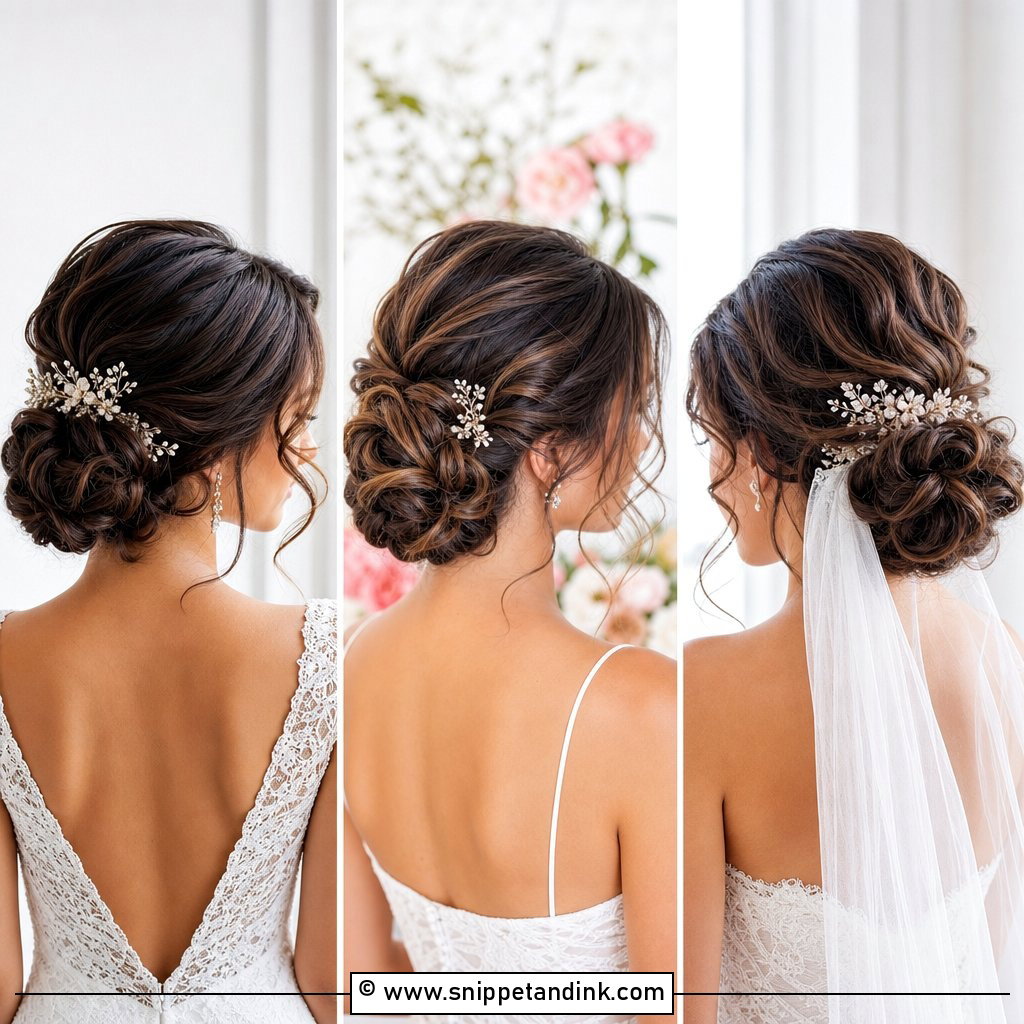
Ask me which Indian wedding hairstyle I pin most often and the answer is the low bun. It sits on the strongest part of the head for holding weight, so a dupatta, a matha patti and a full string of flowers can all hang from it without dragging the style down by evening. Sleek, it looks royal; wrapped in jasmine gajra, it is classic; with a few face-framing waves, it softens for the reception. The fifteen versions below suit lehengas, sarees and shararas, and they translate easily for bridesmaids, sisters and guests. I’ve added what I watch for with each one.
Bun Padding, Fillers and Getting Size From Shoulder-Length Hair
Most of the full, rounded buns in wedding photos are not made of hair alone. If your hair is shoulder length or fine, a filler does the heavy lifting, and choosing the right one matters more than the style name.
- A doughnut ring gives the classic round bun. Hair is wrapped over it and pinned underneath, so it needs hair long enough to cover the ring completely.
- A padded roll or sausage-shaped filler suits hair that only just reaches the nape, since the hair is pinned over it in sections rather than wrapped.
- A pre-made bun or juda attached with combs is the answer for bobs. It looks convincing once a gajra or chain covers the join.
Whatever you use, match its color to your hair at the nape, which is usually darker than the ends. A mismatched filler shows through gaps, especially under camera flash. Bring it to the trial so your stylist can see how much hair she has to cover it with.
1. Indian Low Bun With Gajra
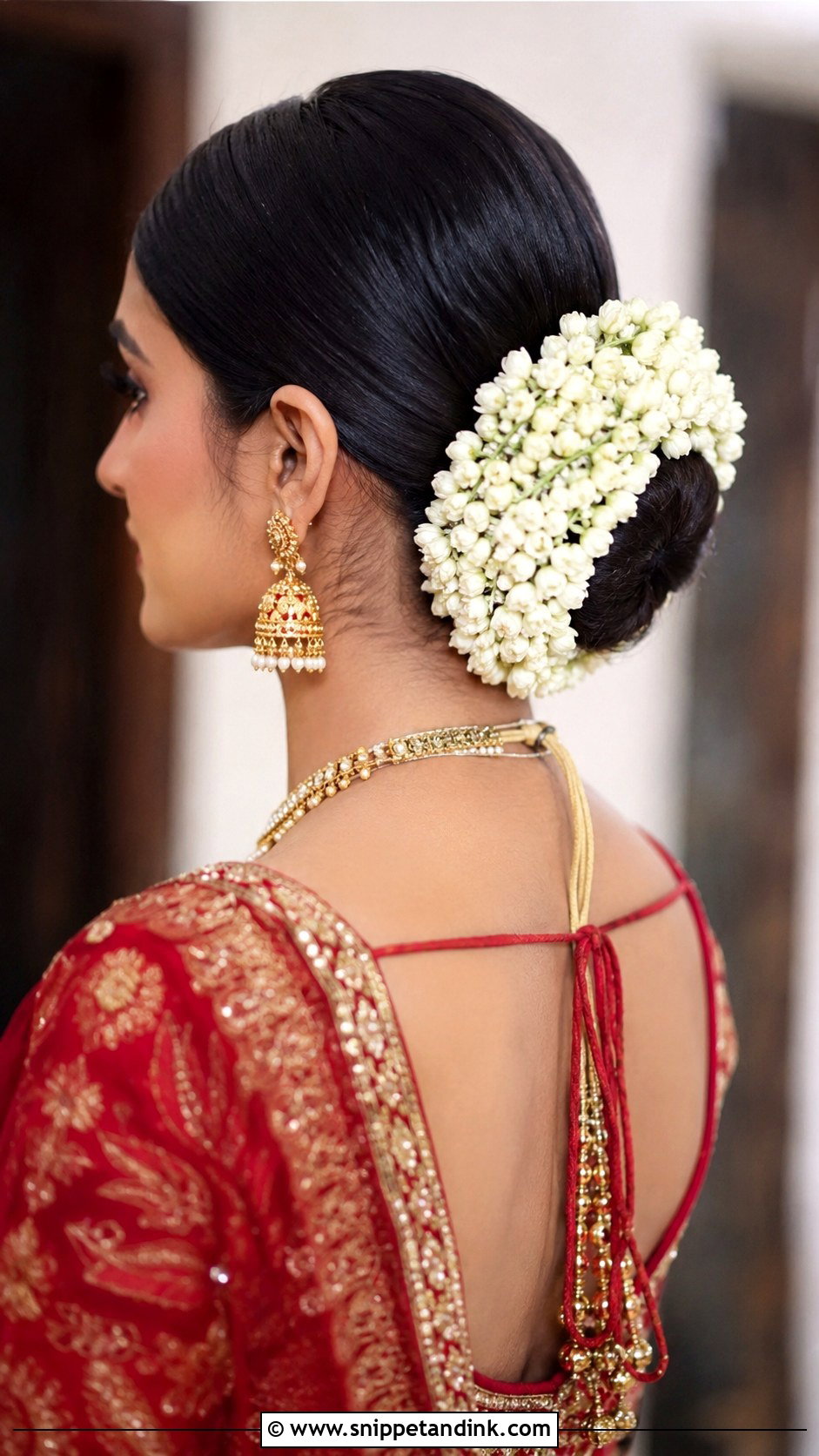
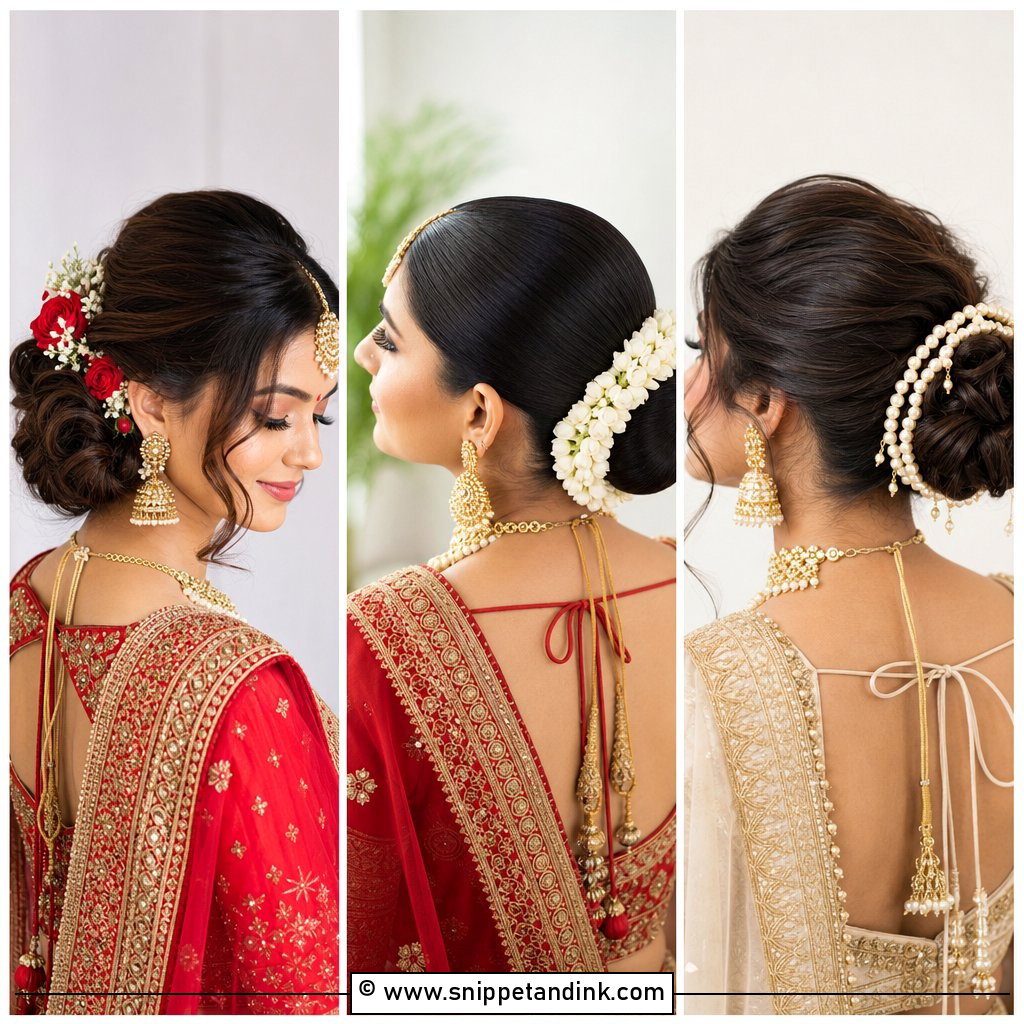
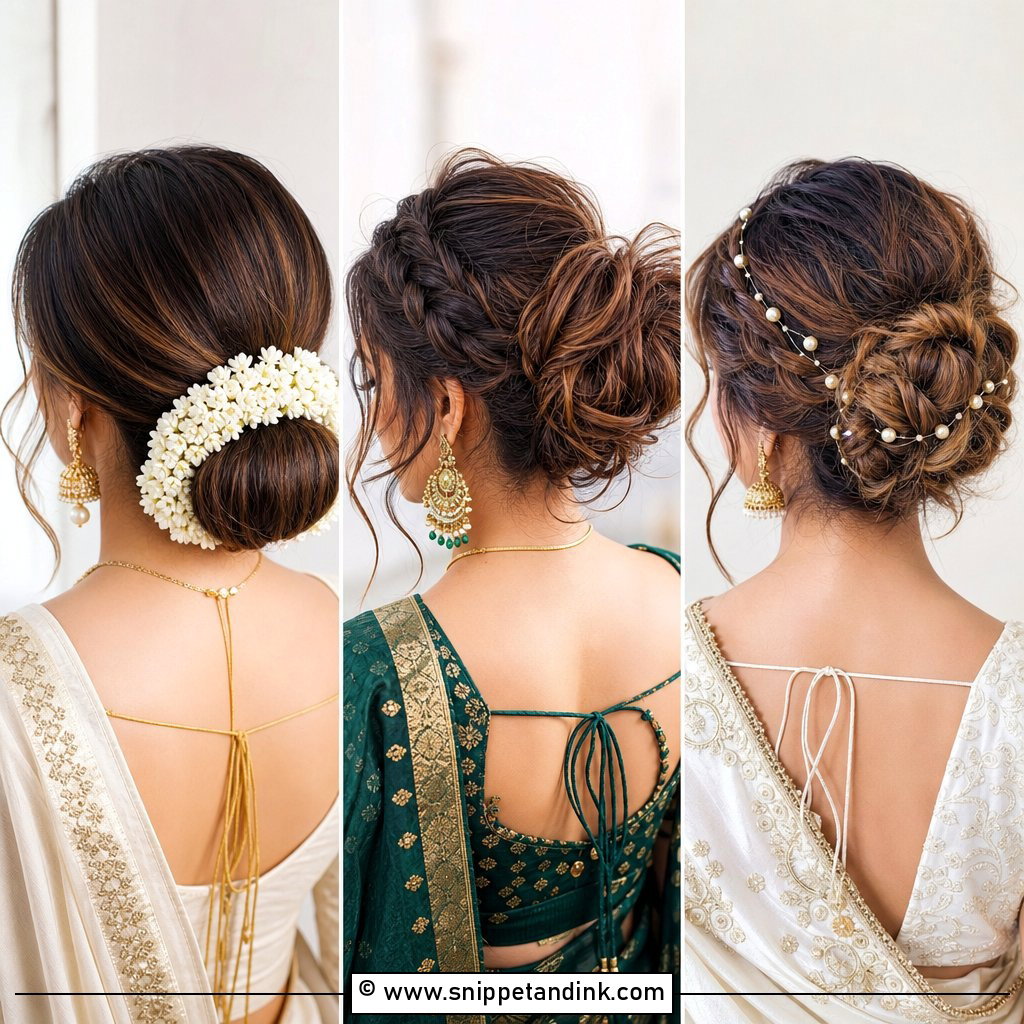
Gajra around a low bun has been worn for generations and still never looks dated. The bun sits neatly at the nape and fresh jasmine wraps it in fragrance, which suits silk sarees, red lehengas, Kanjeevaram drapes and gold temple jewelry. A center part keeps it classic; tiny strands left at the temples soften it. The gajra string slides if it is only pinned at the ends, so I pin it every few centimetres with U-pins pushed through into the bun itself.
2. Indian Low Bun With Maang Tikka
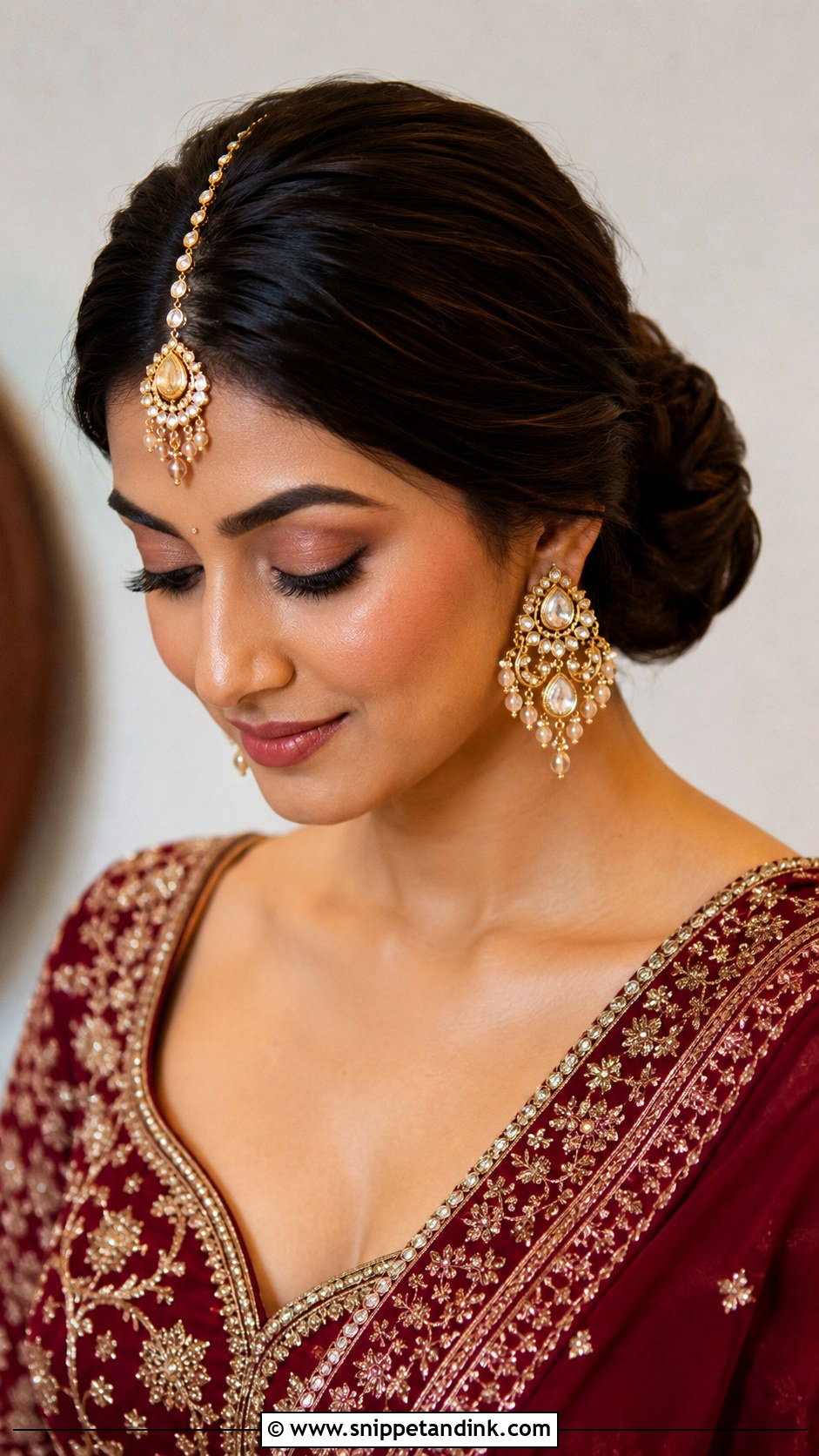
Pairing a low bun with a maang tikka lets the jewelry frame the face while the back stays clean. The bun adds structure without height, which flatters round, oval and heart-shaped faces. Everything depends on the parting: the tikka hangs exactly where the part sits, so I comb it in with a tail comb and check it against the nose before setting. I also hide a small pinned base under the crown for the tikka’s hook. Finish the bun with a few flowers or a net veil, according to how much the outfit is already doing.
3. Indian Low Bun With Jasmine Flowers
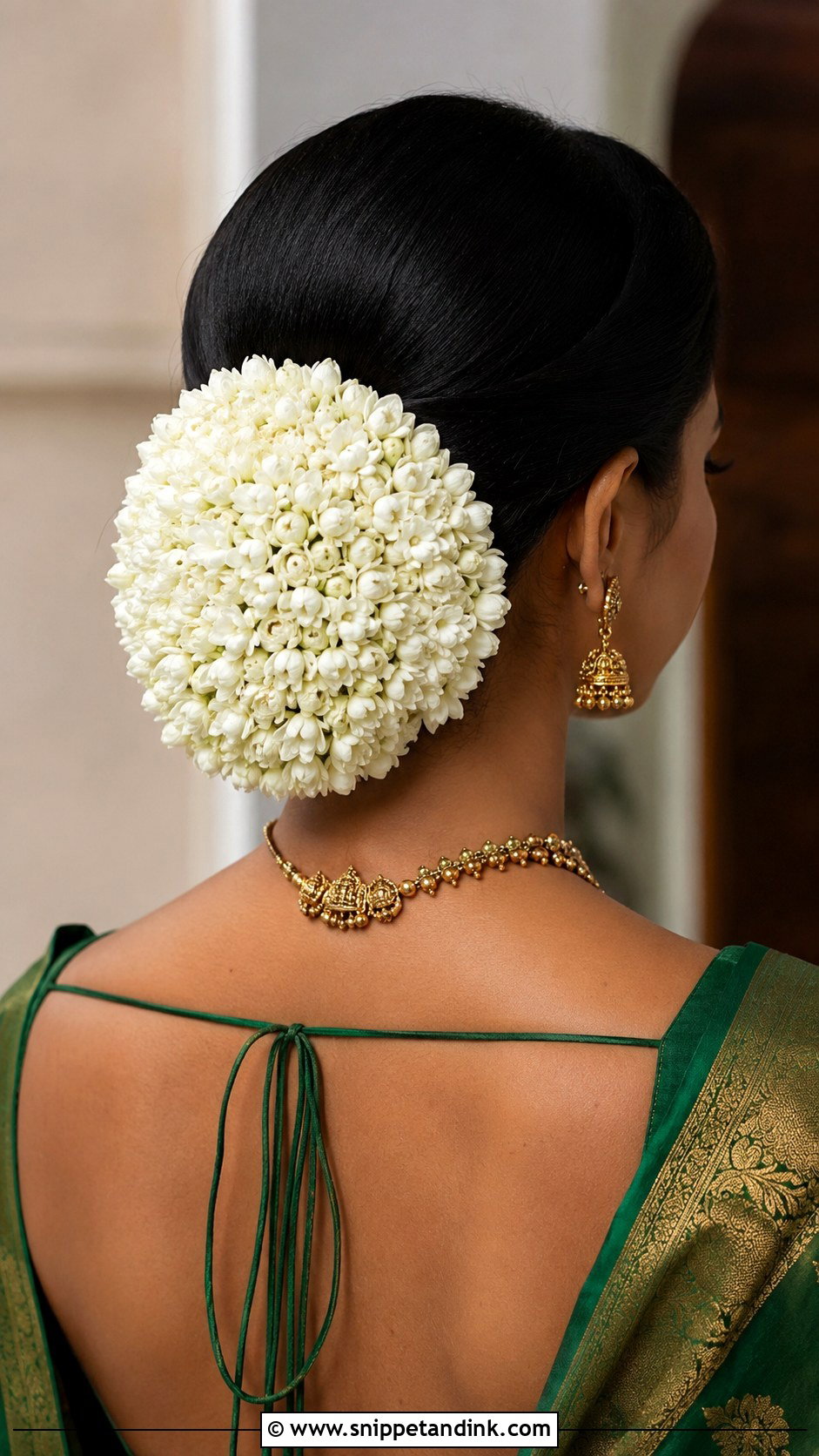
Layered jasmine makes the bun fuller than a single gajra string, tucked to one side or arranged in a half-moon. It belongs at South Indian weddings, temple ceremonies and traditional portraits. White jasmine against dark hair, a deep red or green saree and antique gold is about as strong a contrast as you can get. My rule for volume: a heavily embroidered outfit gets a smooth bun and fewer flowers; a simpler saree lets the jasmine become the main detail.
4. Indian Low Bun With Roses
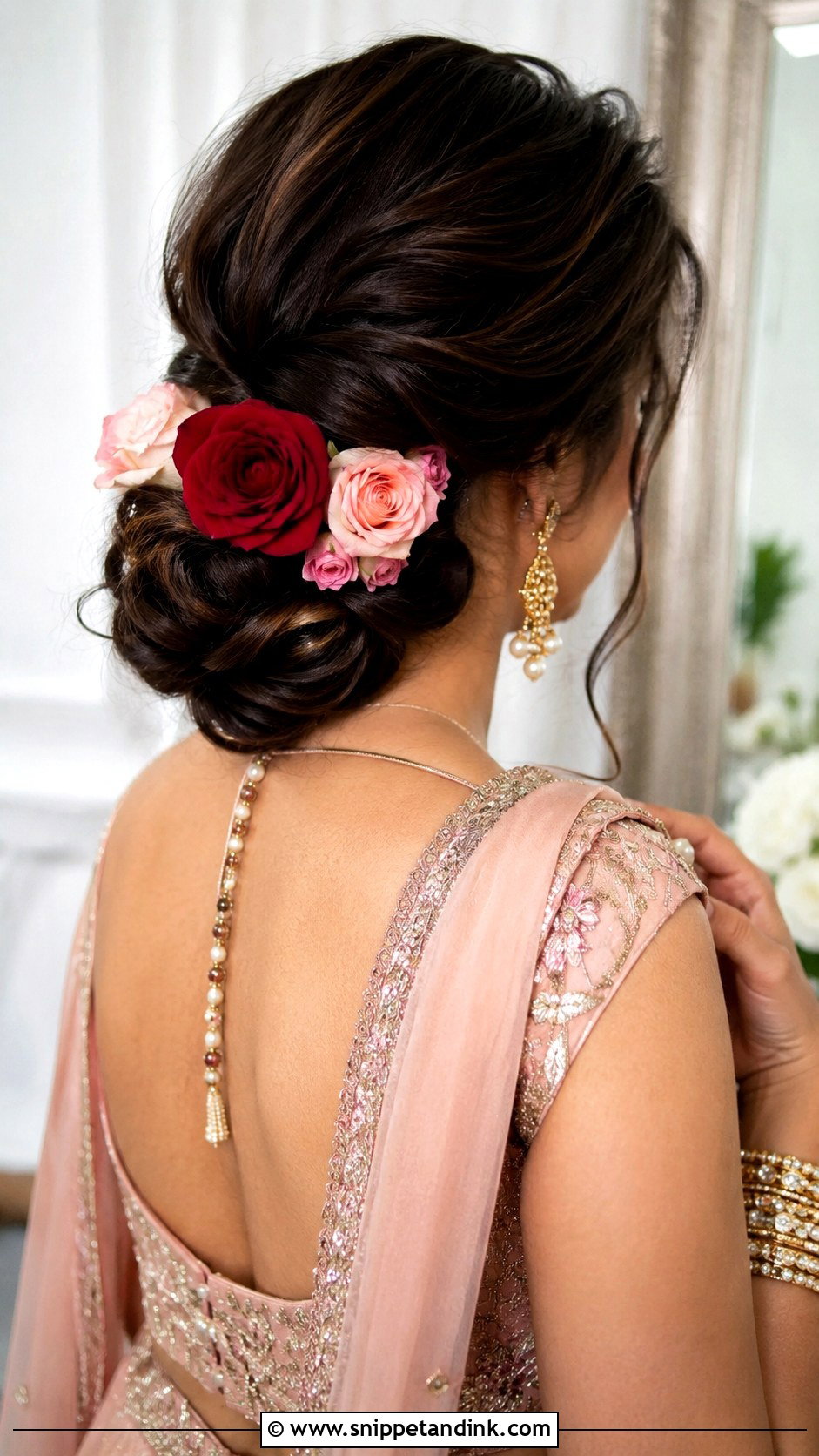
Roses change the mood of a low bun quickly. Red reads bold and bridal, pink softer, cream best with pastels. The bun underneath can be sleek, twisted or loosely textured. What goes wrong is placement: roses are heavy and big, and a cluster pinned too high or too wide starts to overwhelm the face from the front. I wire each stem short and set them in a crescent along the lower edge of the bun. For receptions, engagements or bridesmaids skipping the full gajra, match the color to the lehenga border or dupatta.
5. Indian Low Bun With Hair Accessories
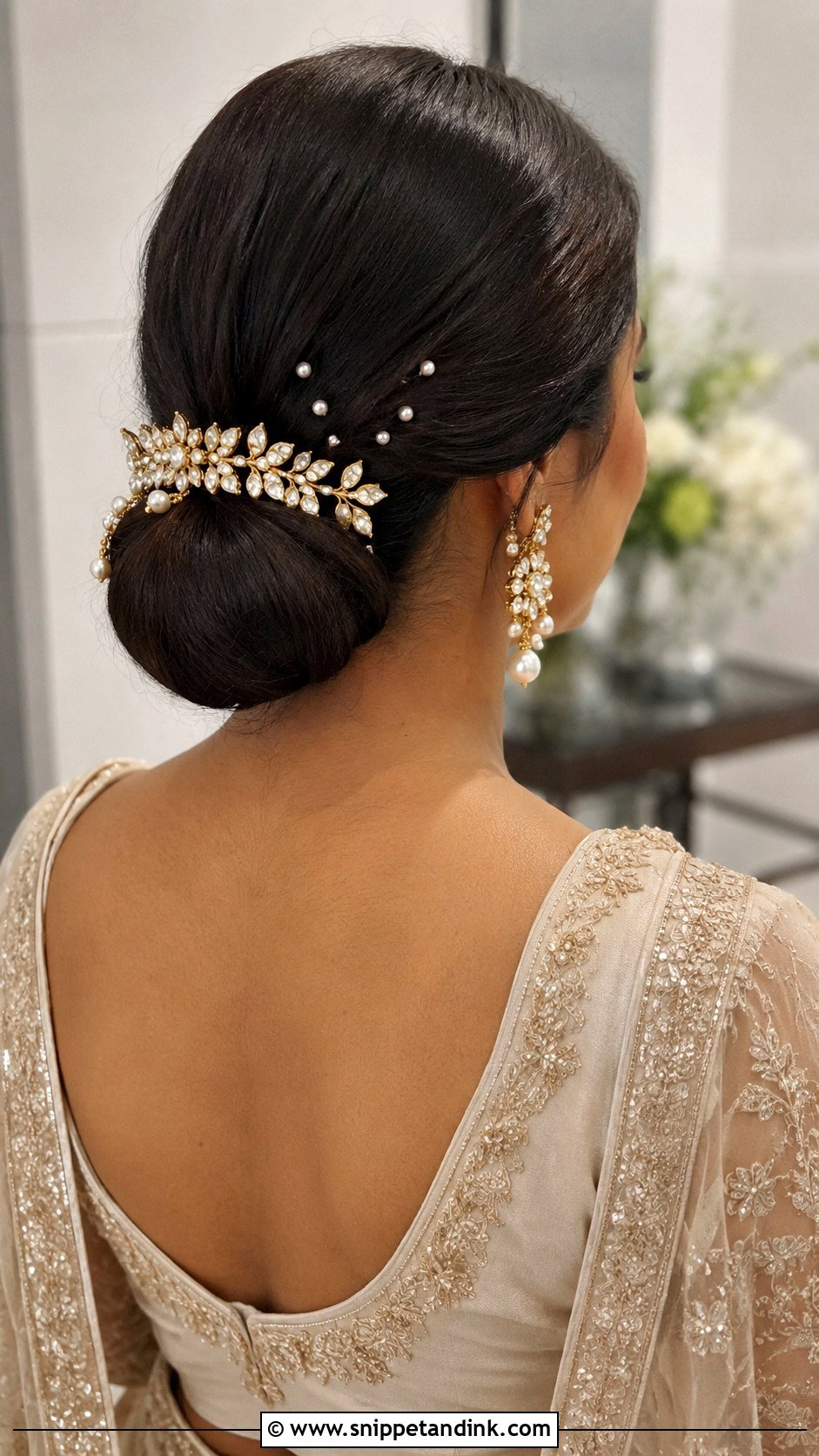
For sparkle, add pearl pins, gold juda pins, a kundan comb, delicate chains or small crystal clips around the bun. Balance is where people slip. If the necklace, earrings and dupatta are already heavy, one statement piece looks better than ten small ones. A smooth low bun gives accessories a clean base. It suits reception gowns, embroidered lehengas and cocktail sarees, and bridesmaids can wear it without pulling attention from the bride.
6. Indian Low Bun With Dupatta
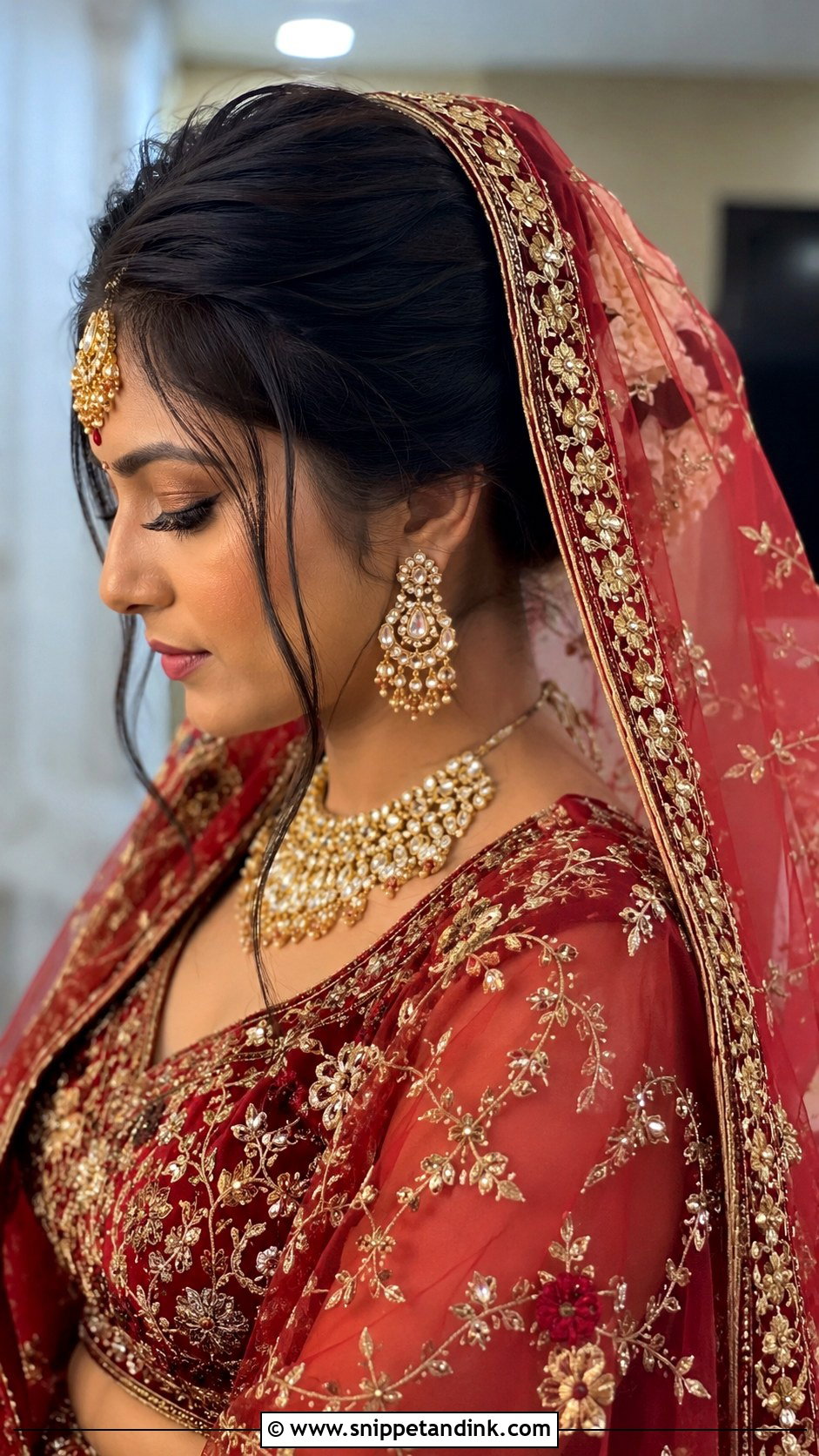
A low bun under a dupatta is practical. The bun anchors the fabric at the nape, so the weight doesn’t press down on the crown. I use it for pheras, nikah ceremonies, temple weddings and any look with a head covering. Leave some structure at the crown, a gentle tease underneath, or the dupatta flattens your hair completely. Here is the step most people miss: the dupatta should be pinned into a foundation of crossed bobby pins in the hair, not into the bun alone, or every tug pulls the bun loose.
7. Indian Low Bun With Matha Patti
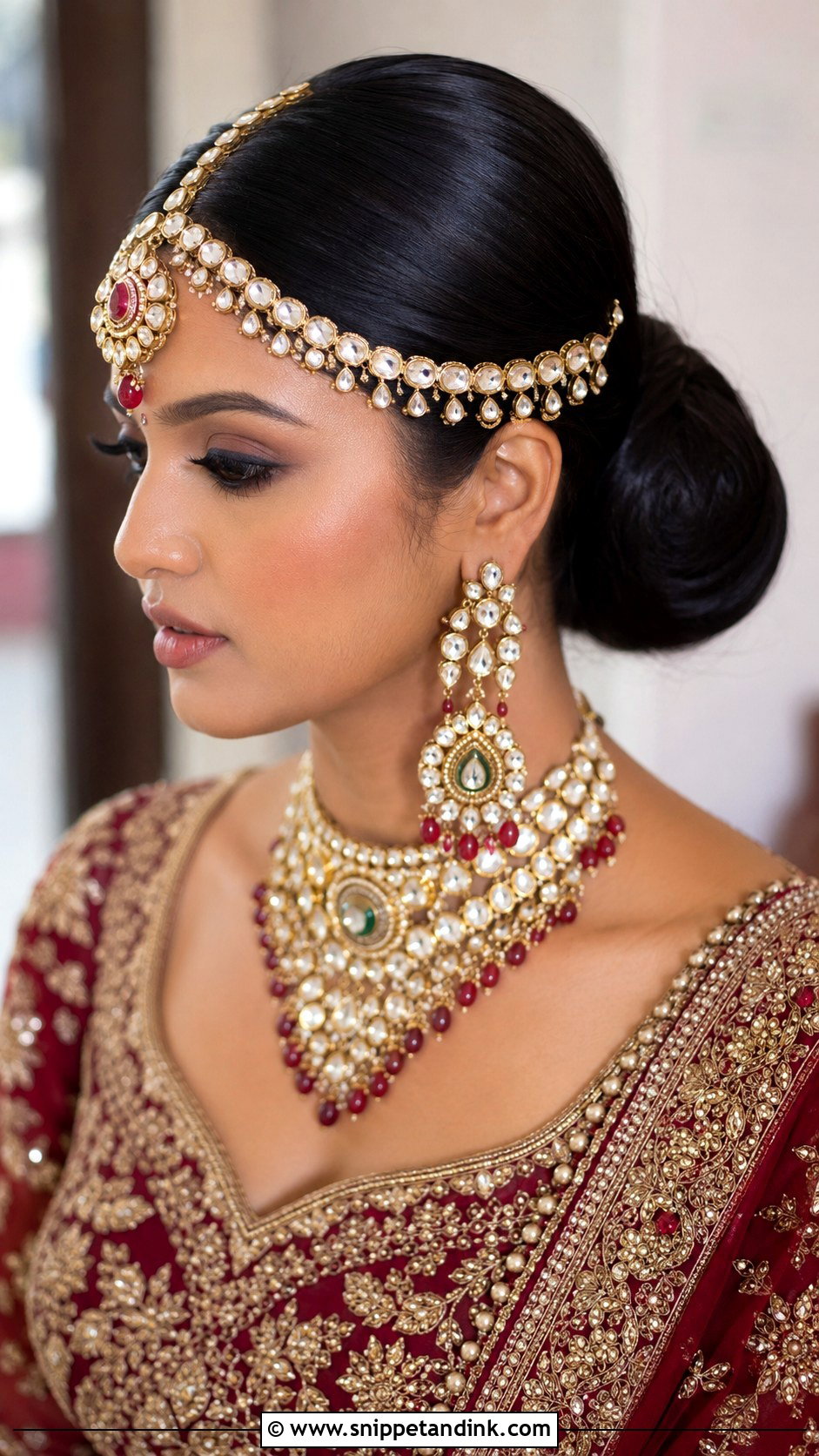
A matha patti with a low bun looks grand from the front and calm from the back. The center part must be exact, because the headpiece sits along it and any drift tilts the whole piece. The side chains of a matha patti hook into the hair behind the ears, so I place two anchor pins there before the jewelry goes on. Keep the bun slightly full to balance the headpiece, and keep baby hairs smooth at the forehead. Want softness? Leave tendrils near the ears rather than loosening the front.
8. Indian Low Bun With Side Part
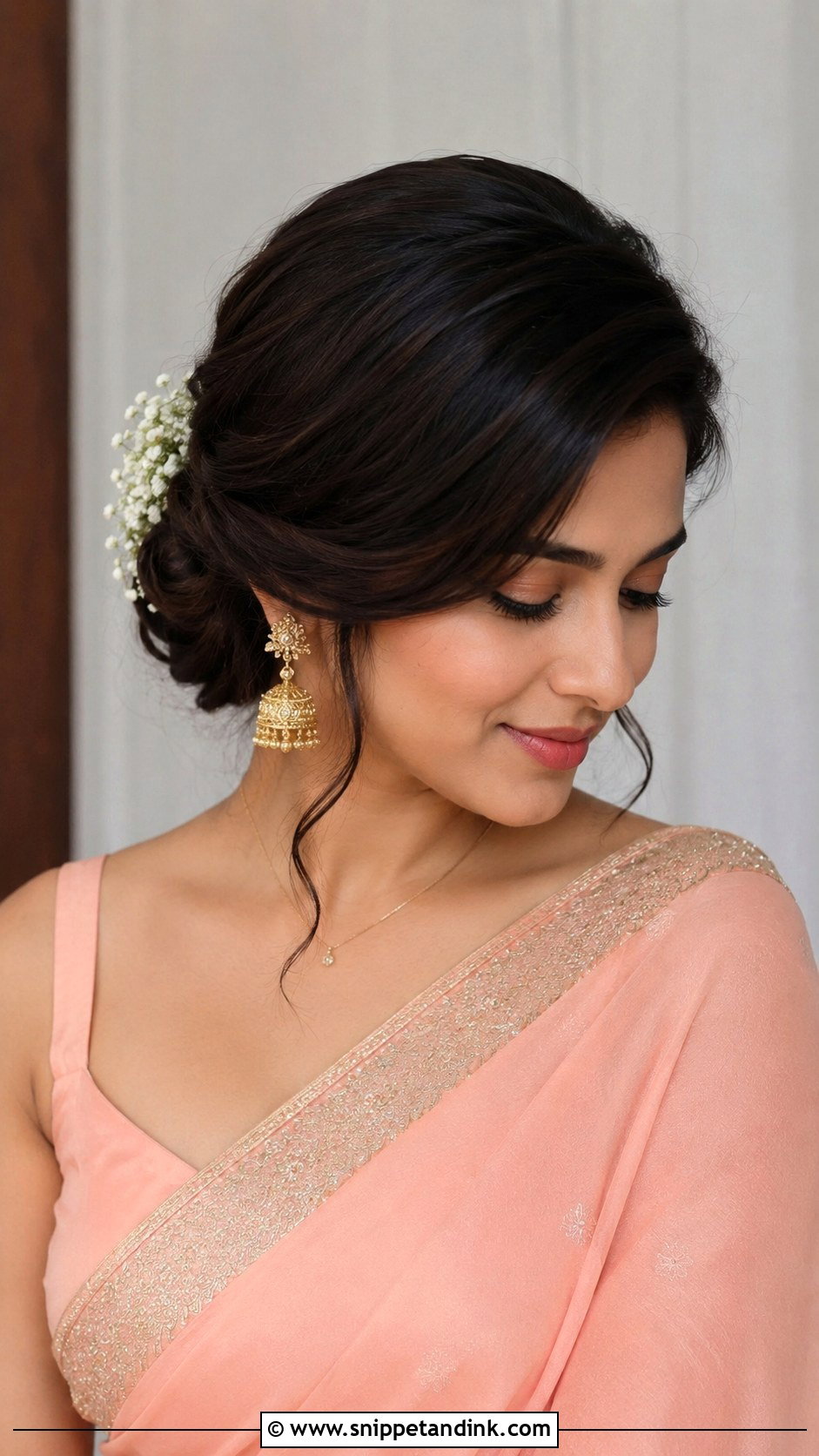
The side part is softer than a center-parted bridal bun, and it moves the eye toward one earring or a side-pinned dupatta. Bridesmaids, guests and brides leaning modern tend to prefer it. The bun can be round and clean or softly twisted. I place a few small flowers on the heavier side of the bun to balance the part, which also helps soften a strong jaw or a square face. It isn’t my choice with a maang tikka, which needs a center line to hang straight.
9. Indian Low Bun With Curls
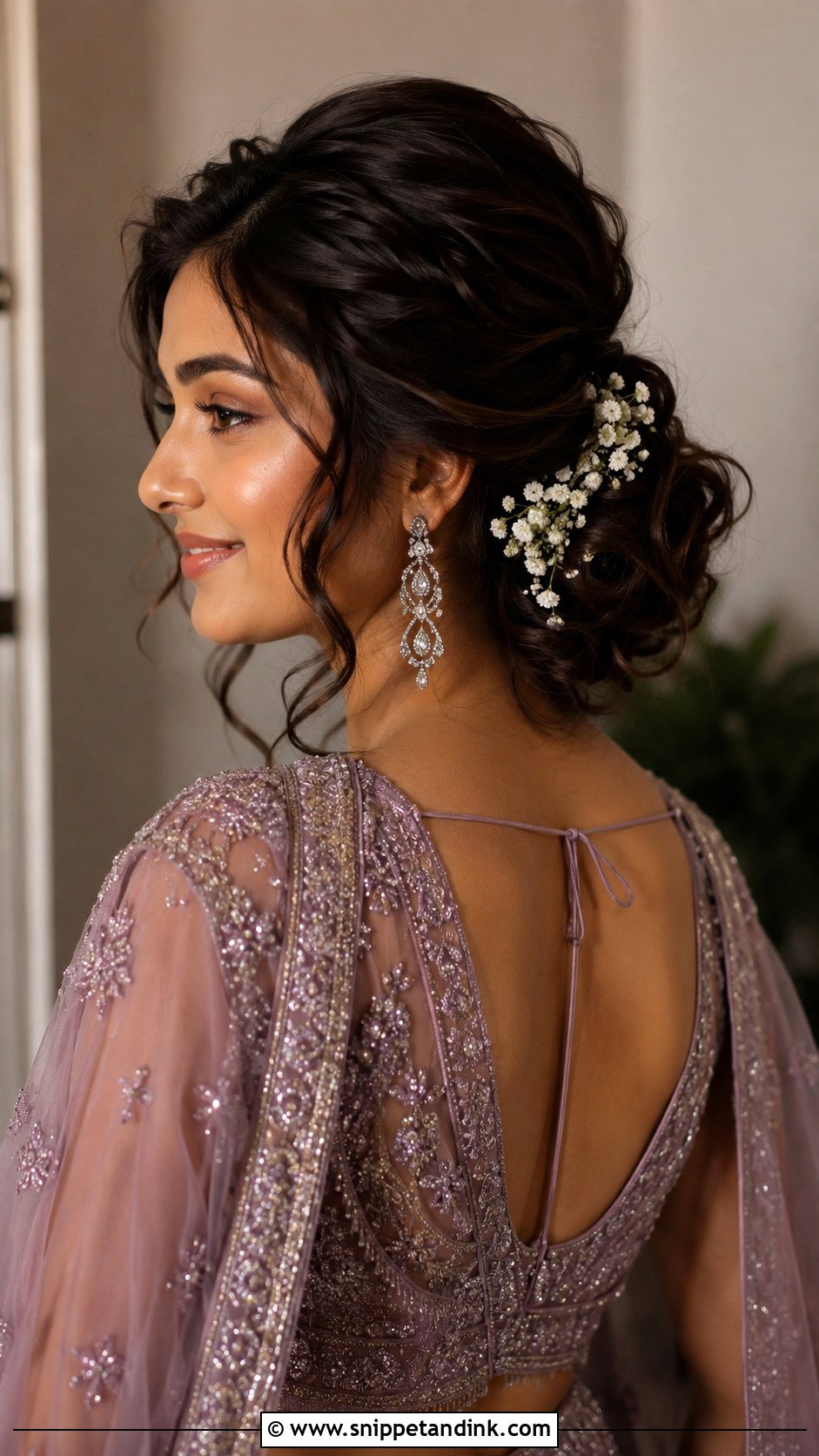
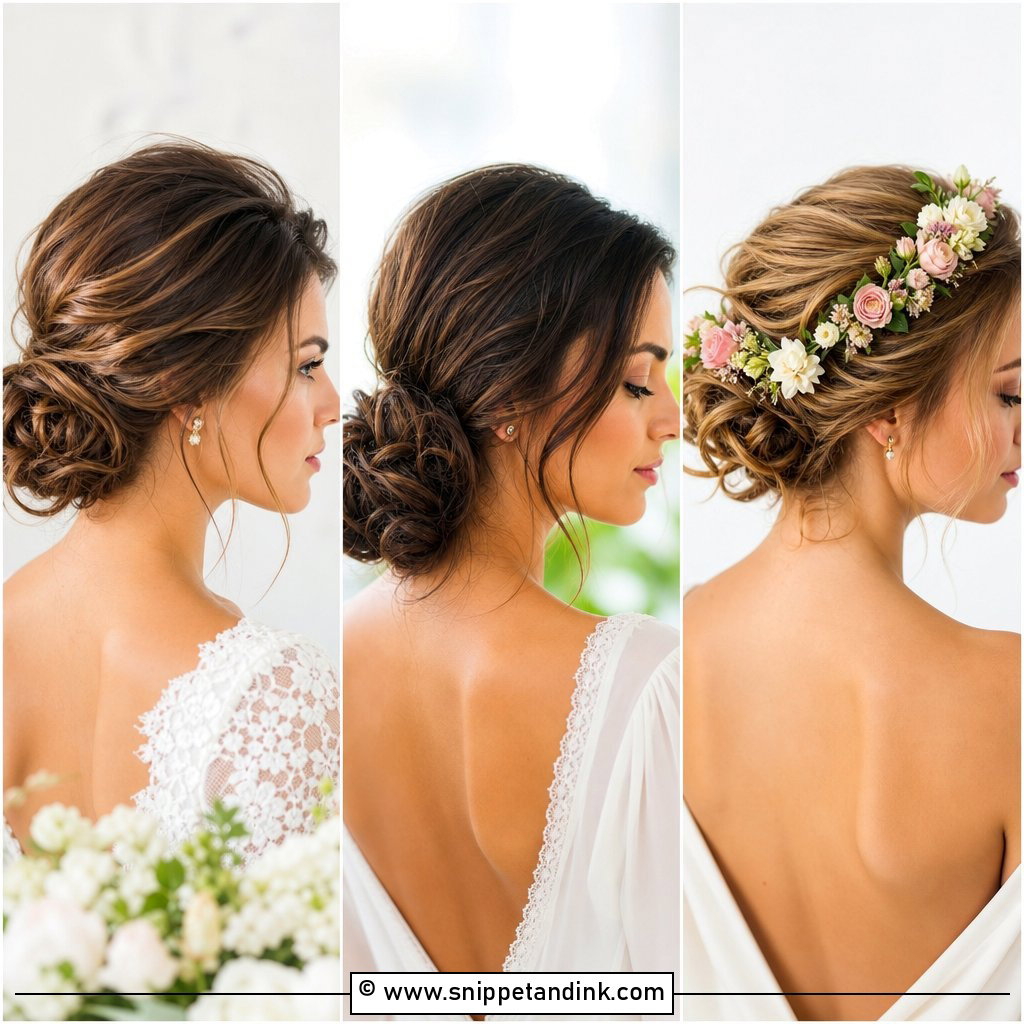
Curling the hair before shaping the bun gives volume and visible texture, so fine or medium-density hair looks thicker. I curl the whole head, let it cool, then pin the curls in loops rather than brushing them out. It suits reception nights, sangeet and softer bridal looks. Keep the front softly waved or pinned back with lift at the crown. A flexible hold spray keeps the curls touchable; a stiff one makes the loops look plastic in close-ups.
10. Indian Low Bun With Braids
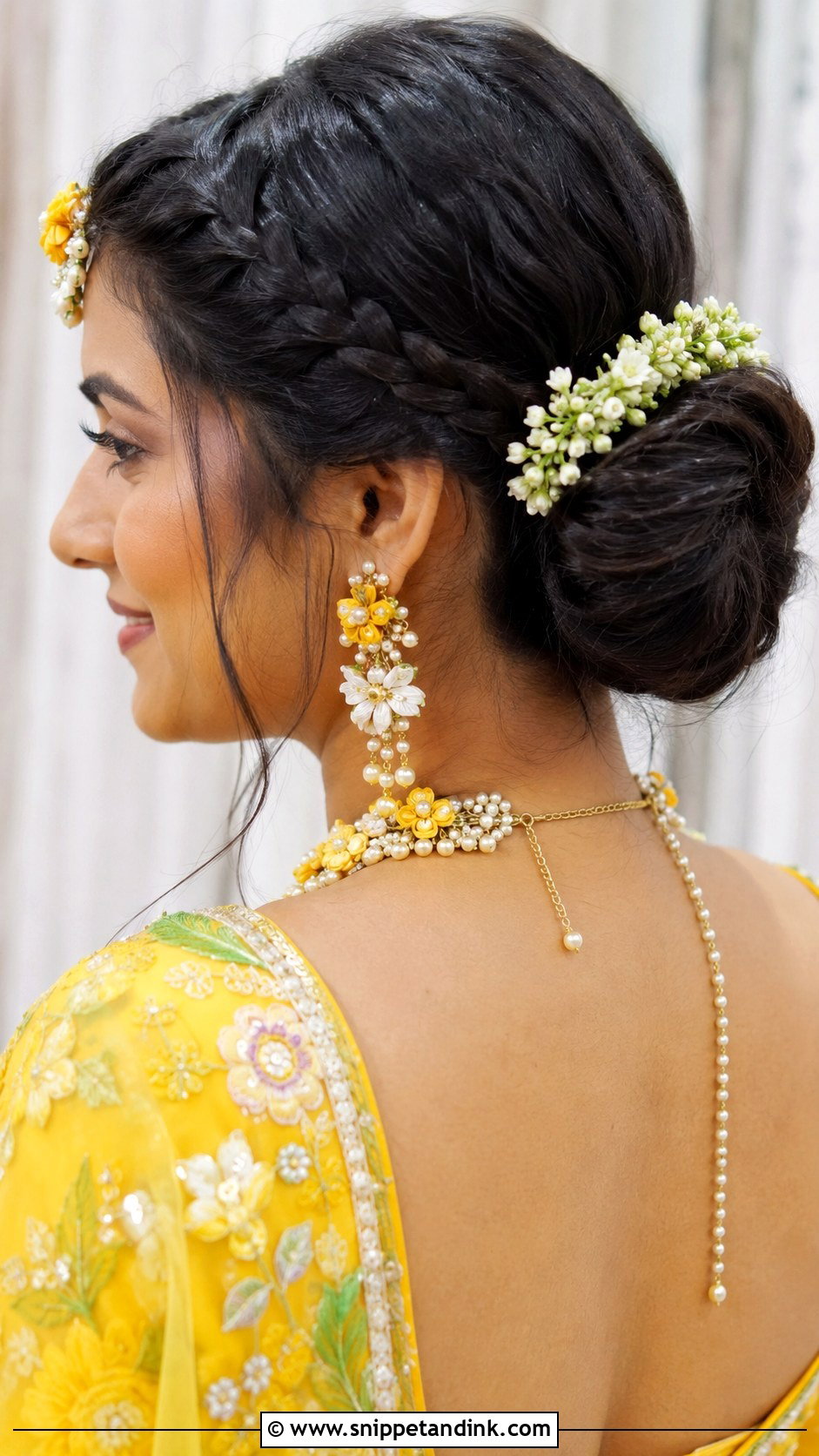
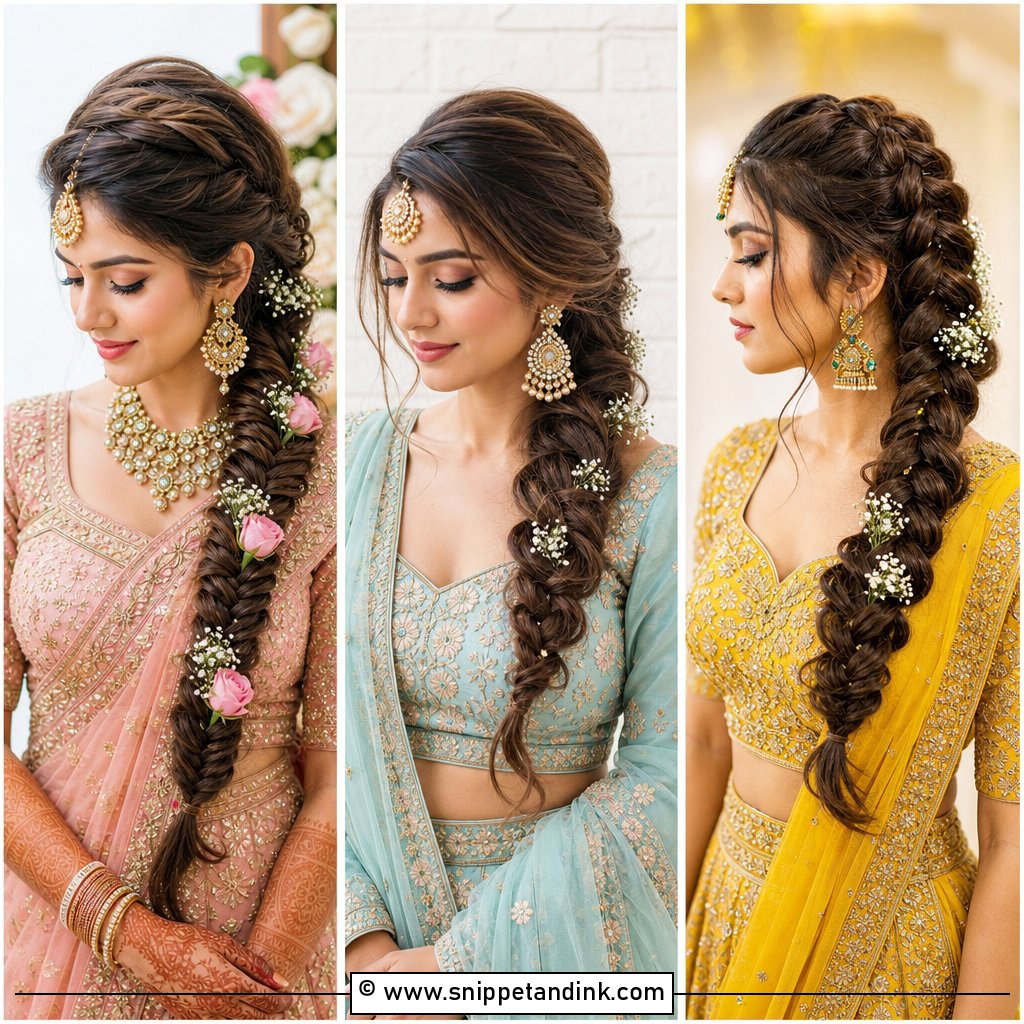
Small braids along the sides wrapping into the bun add detail without much weight, and they help hold shorter layers that would otherwise fall out. I like it for mehndi outfits, colorful lehengas and floral jewelry, though it dresses up for the main ceremony too. Smooth braids read traditional; braids eased apart gently read softer. The spot where the braid meets the bun is the obvious place for a few flowers, and it hides the pins at the same time.
11. Indian Low Bun With Pearl Pins
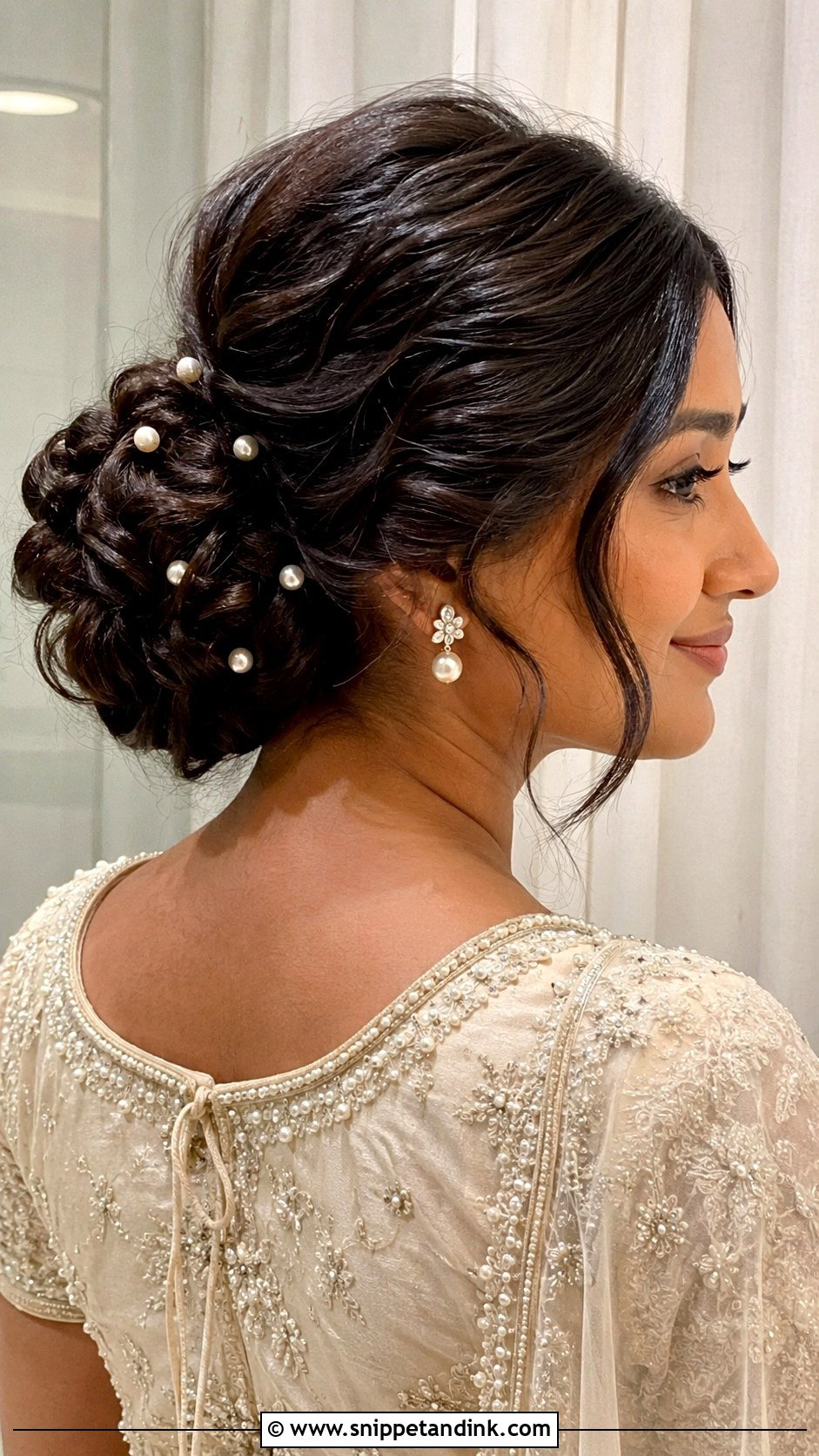
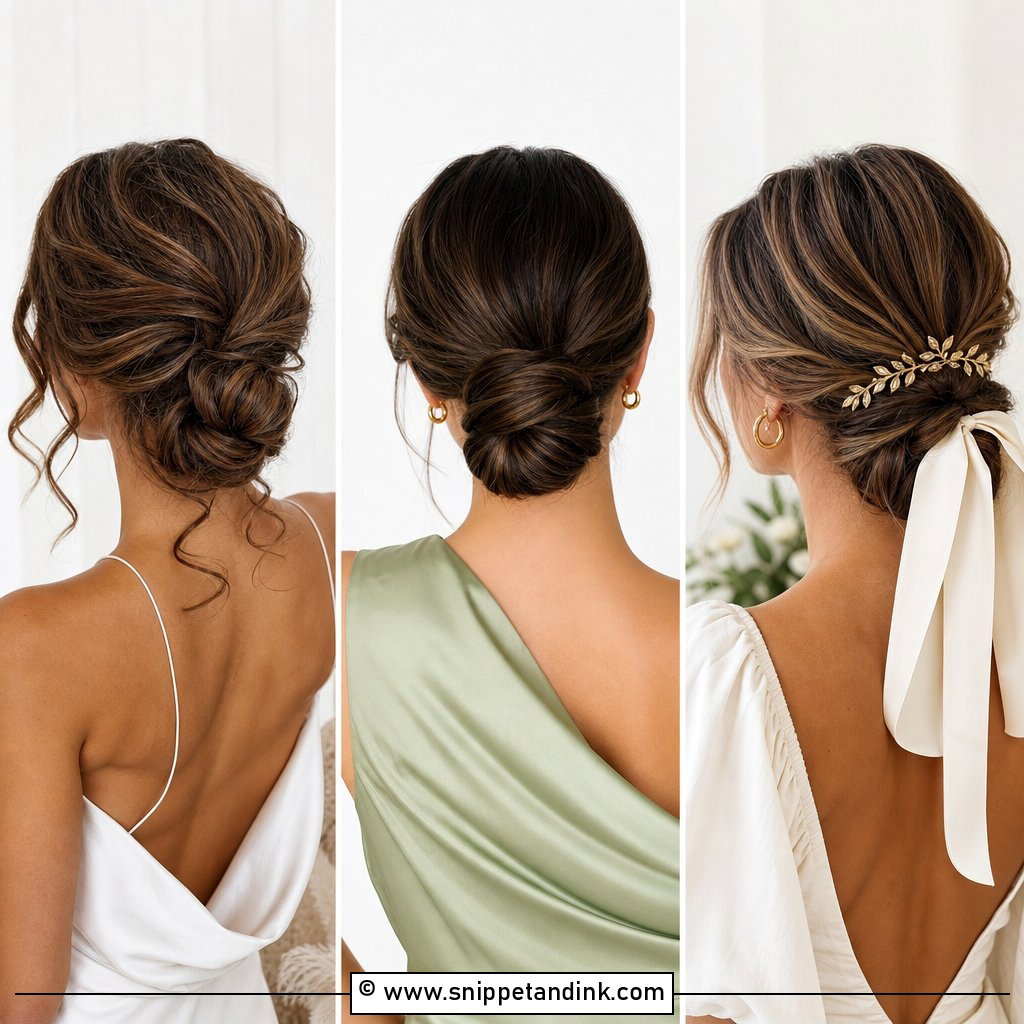
Pearl pins are light, so they decorate a bun without adding pull. I scatter them across a textured bun, line them down one side or ring a twisted bun in a regular pattern. Ivory lehengas, pastel sarees, champagne outfits and soft glam makeup suit them. They are also a good bridesmaid choice. Use pins with a bend or a spiral shaft; straight pearl pins slide out of smooth hair within a few hours. Keep other accessories to a minimum so the pearls register.
12. Indian Low Bun With Juda Pin
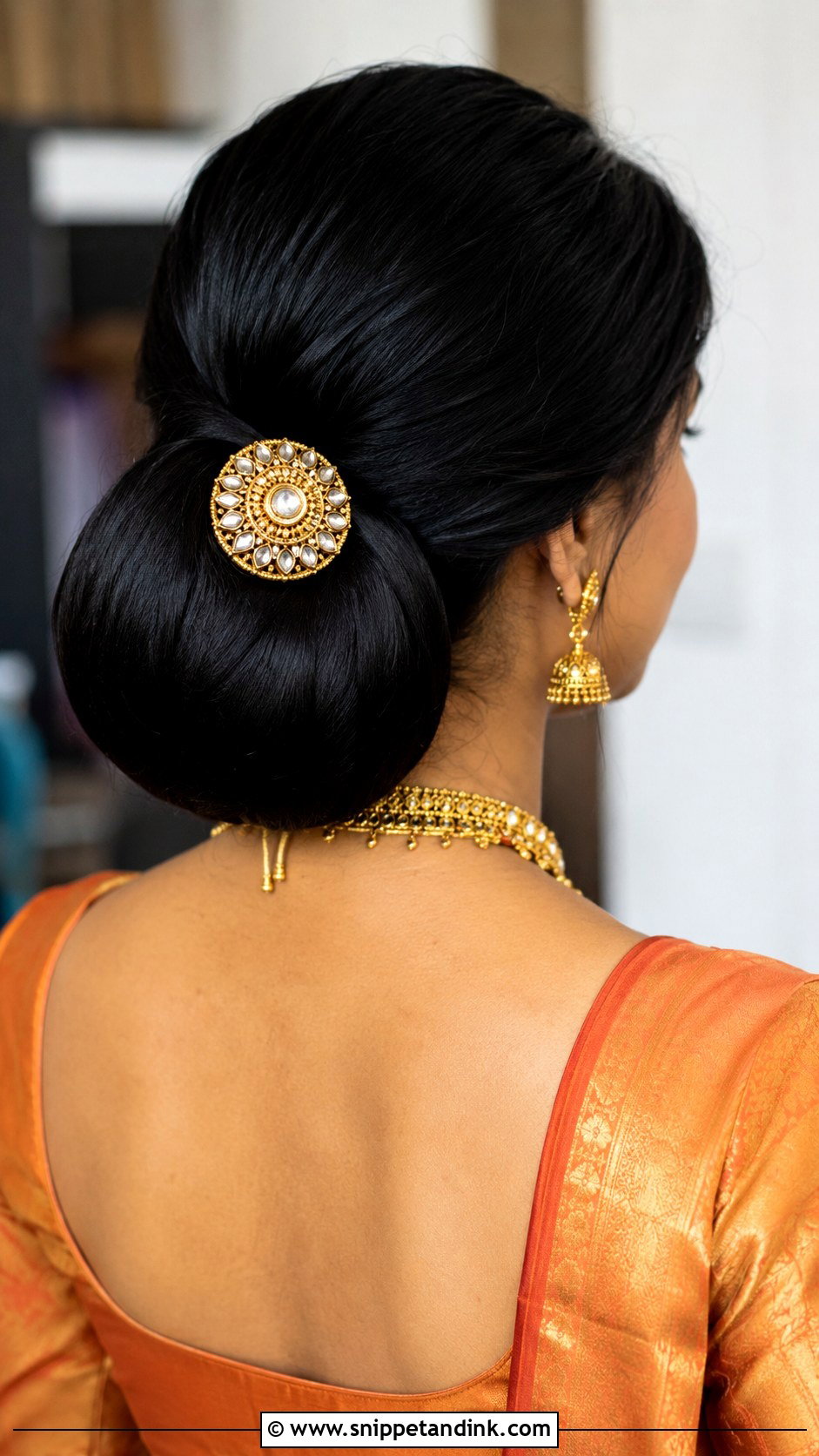
A juda pin needs a smooth, firm, rounded bun underneath, otherwise its weight tilts it. Gold, kundan, pearl or floral pins all work, depending on the outfit and jewelry. It is the traditional answer for brides who don’t want fresh flowers, and it travels between venues without wilting. I set the pin slightly above the center of the bun so it shows in back photos, and pin it through crosswise. Keep the front sleek.
13. Indian Low Bun With Hair Chains
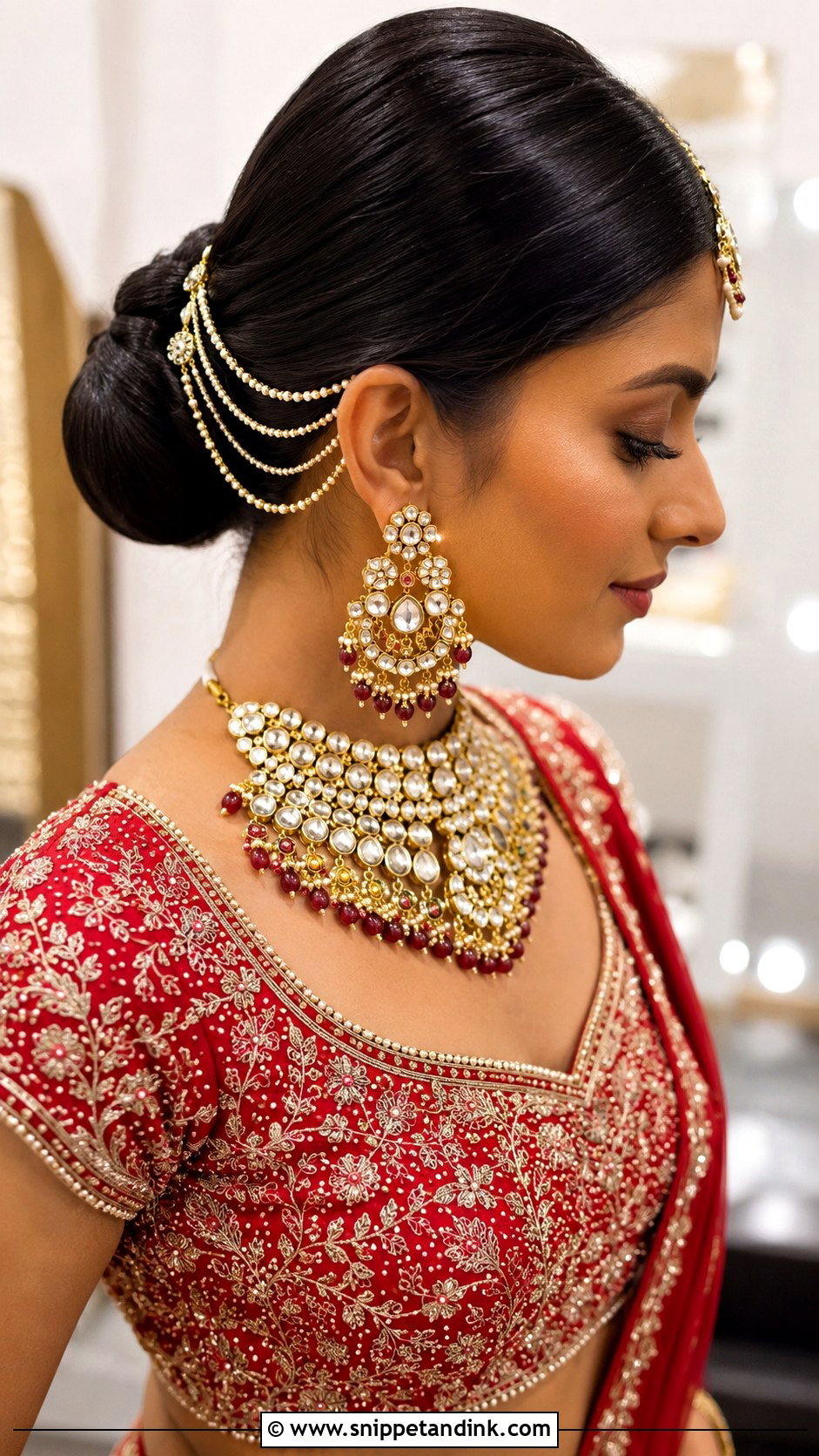
With hair chains draped from the crown to the bun, along the sides or over a sleek center part with a matha patti, the bun becomes a jewelry piece in its own right. It suits brides who love jewelry and want the back to look as finished as the front. The bun must be firm and the chains pinned at both ends and once in the middle, or they swing loose when you turn. Heavy lehengas, embroidered veils and gold or kundan sets suit it. Hold back on flowers so the chains stay the feature.
14. Indian Low Bun With Messy Texture
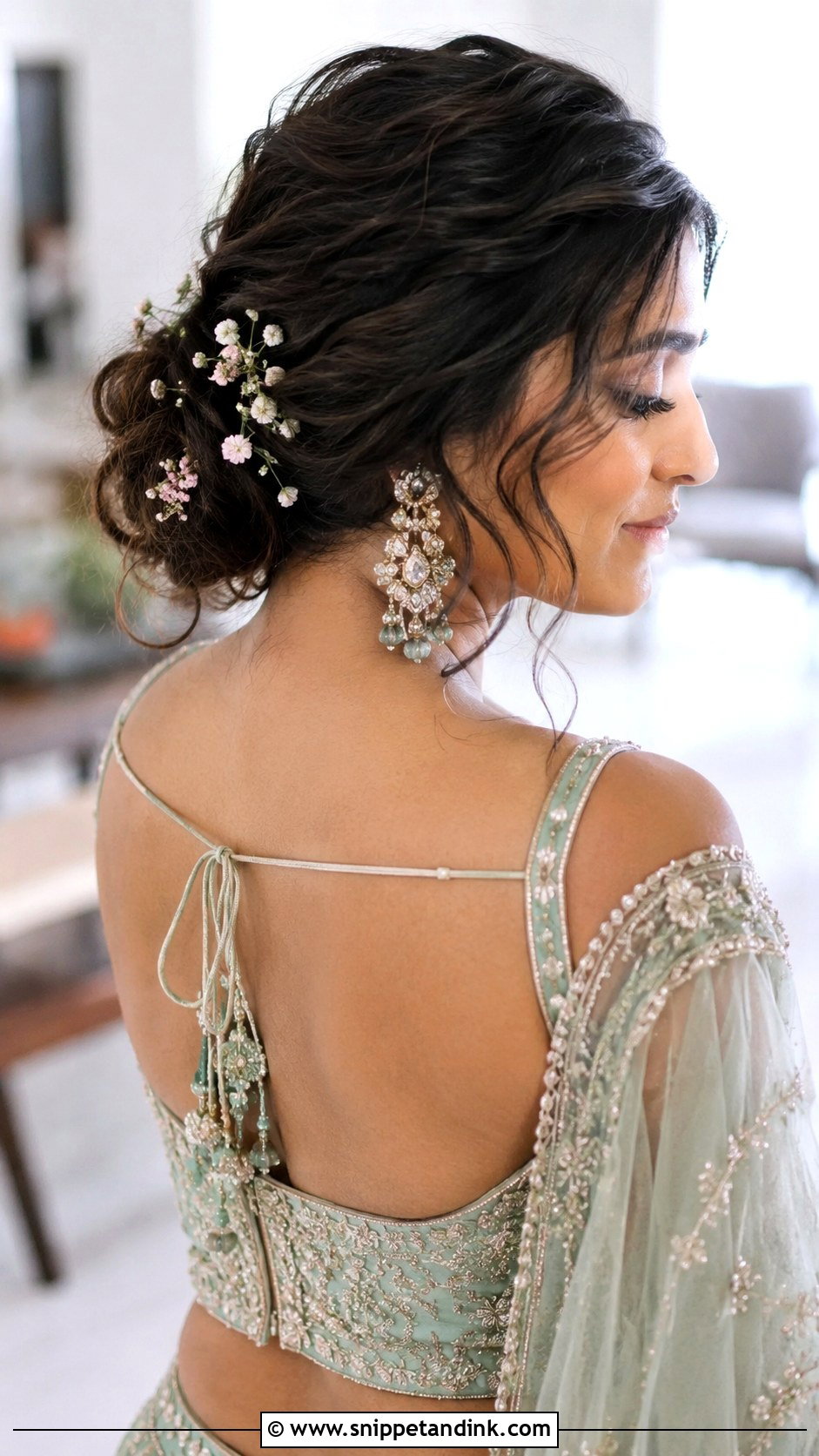
A textured low bun suits outdoor weddings, mehndi, haldi and modern portraits. It is placed low, then shaped with twists, curled pieces and soft volume instead of a smooth finish. The difference between airy and unfinished is small, and I judge it from three steps back, not in the mirror. Small flowers, pearl pins or a delicate comb keep it bridal. Any strands left around the face should be curled and placed, not just pulled out.
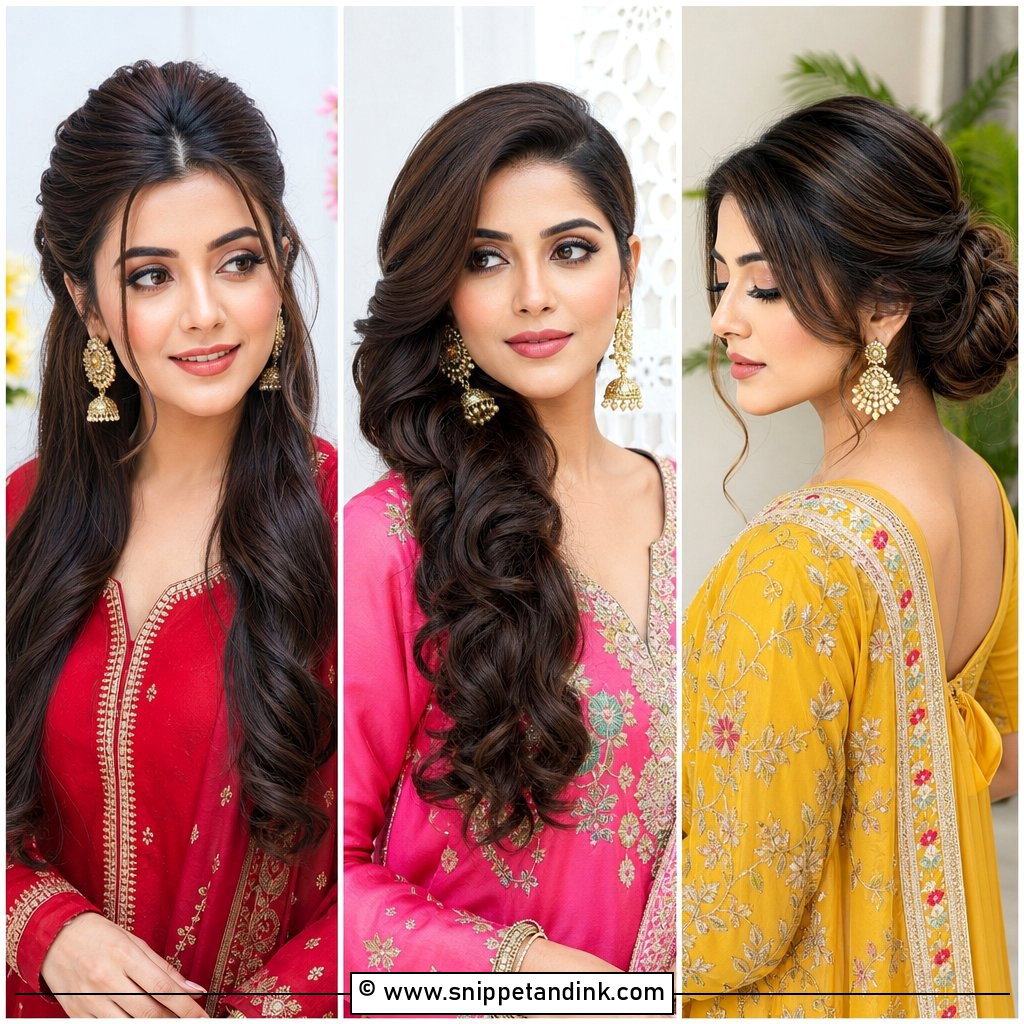
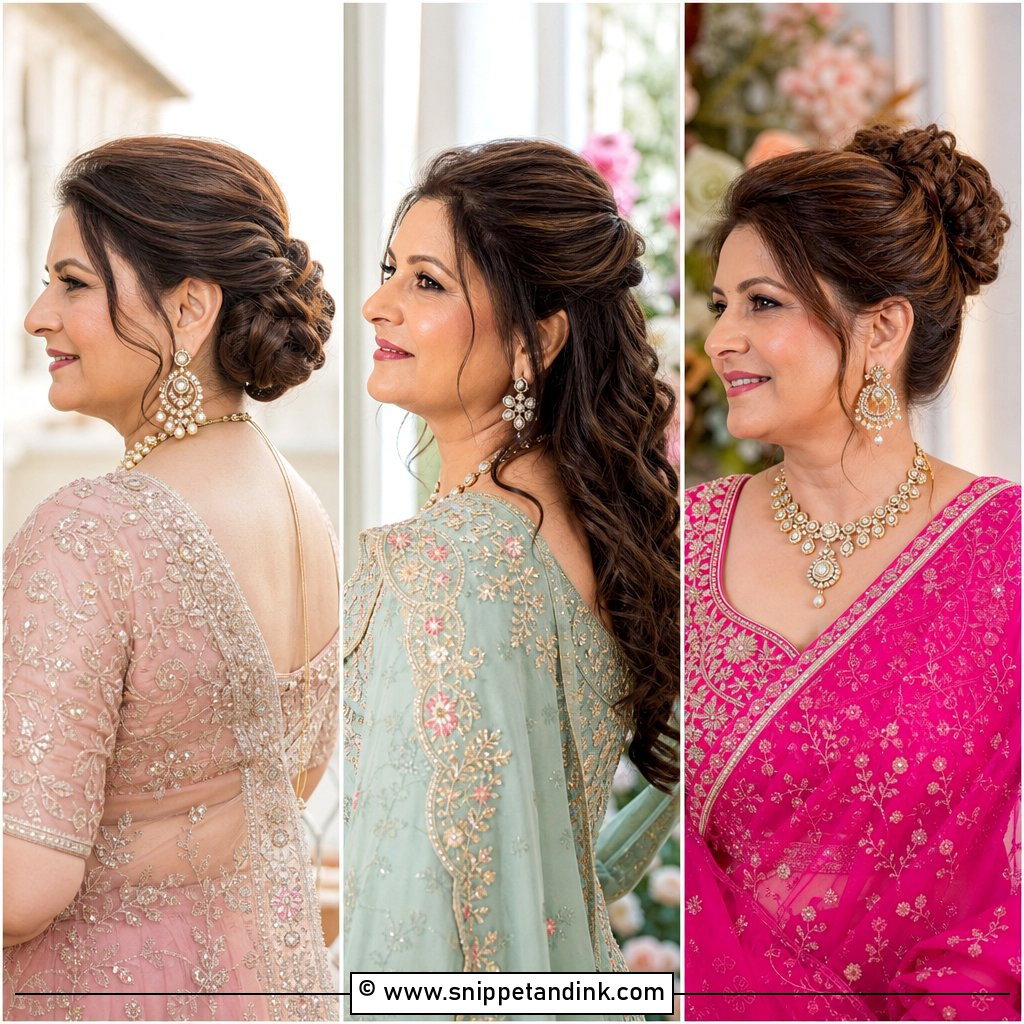
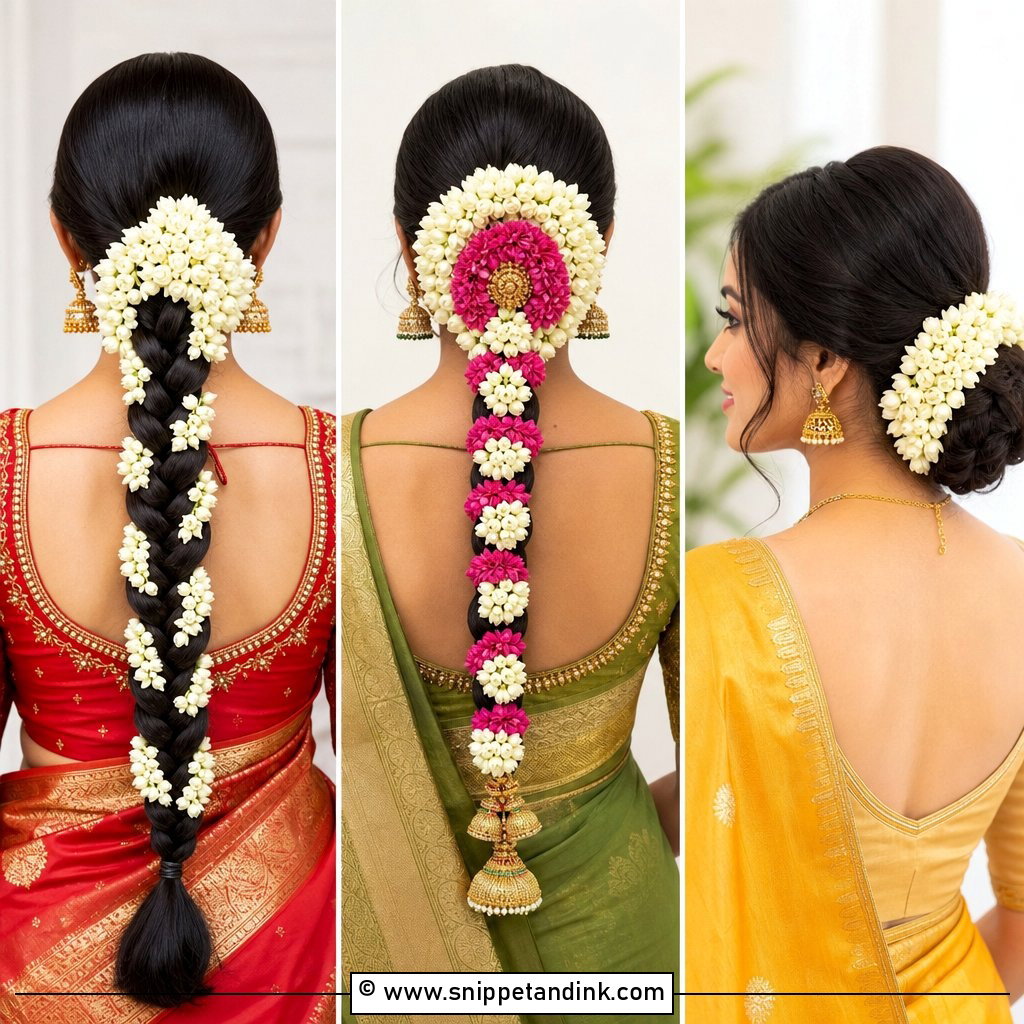
15. Indian Low Bun With Sleek Finish
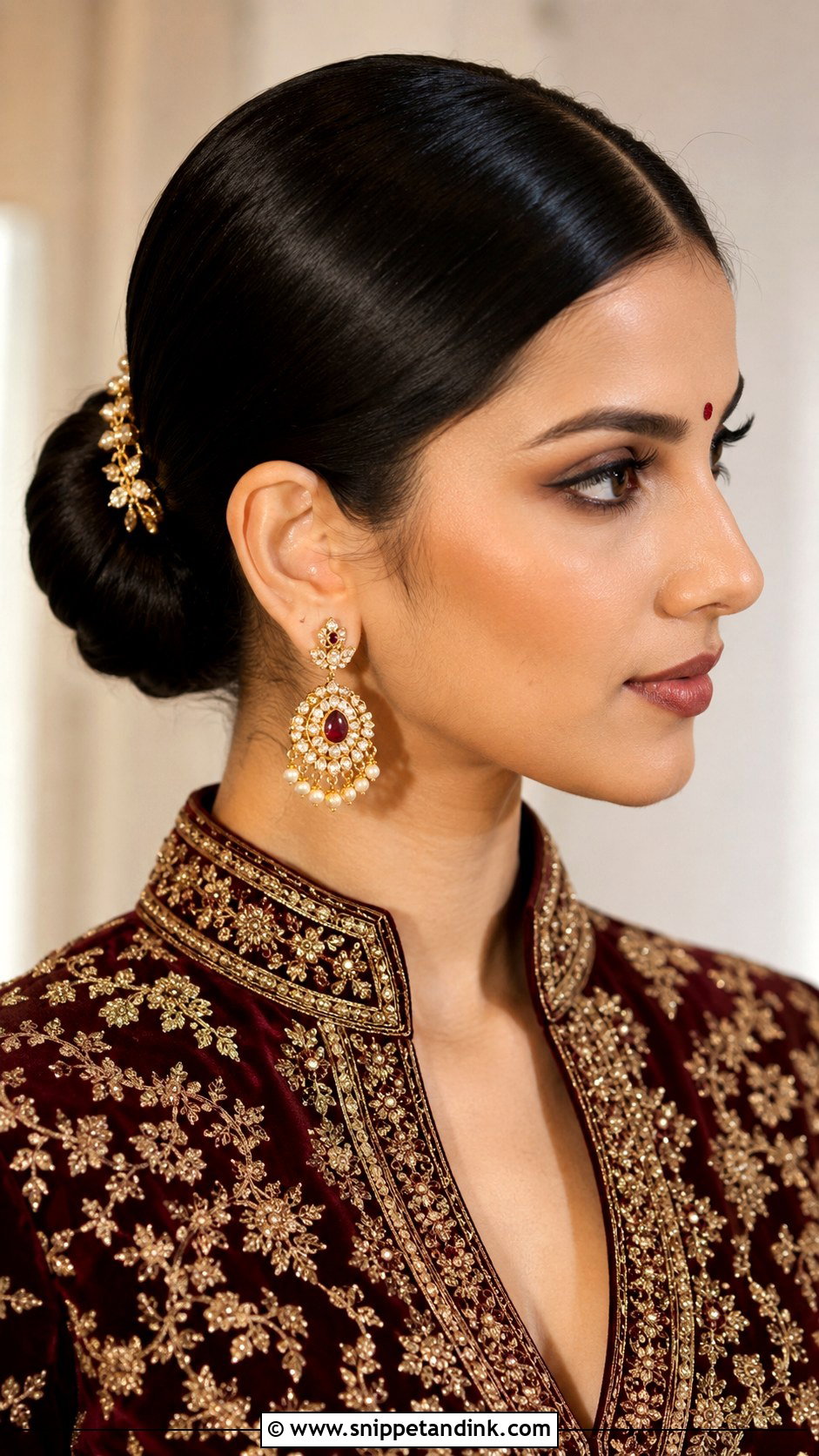
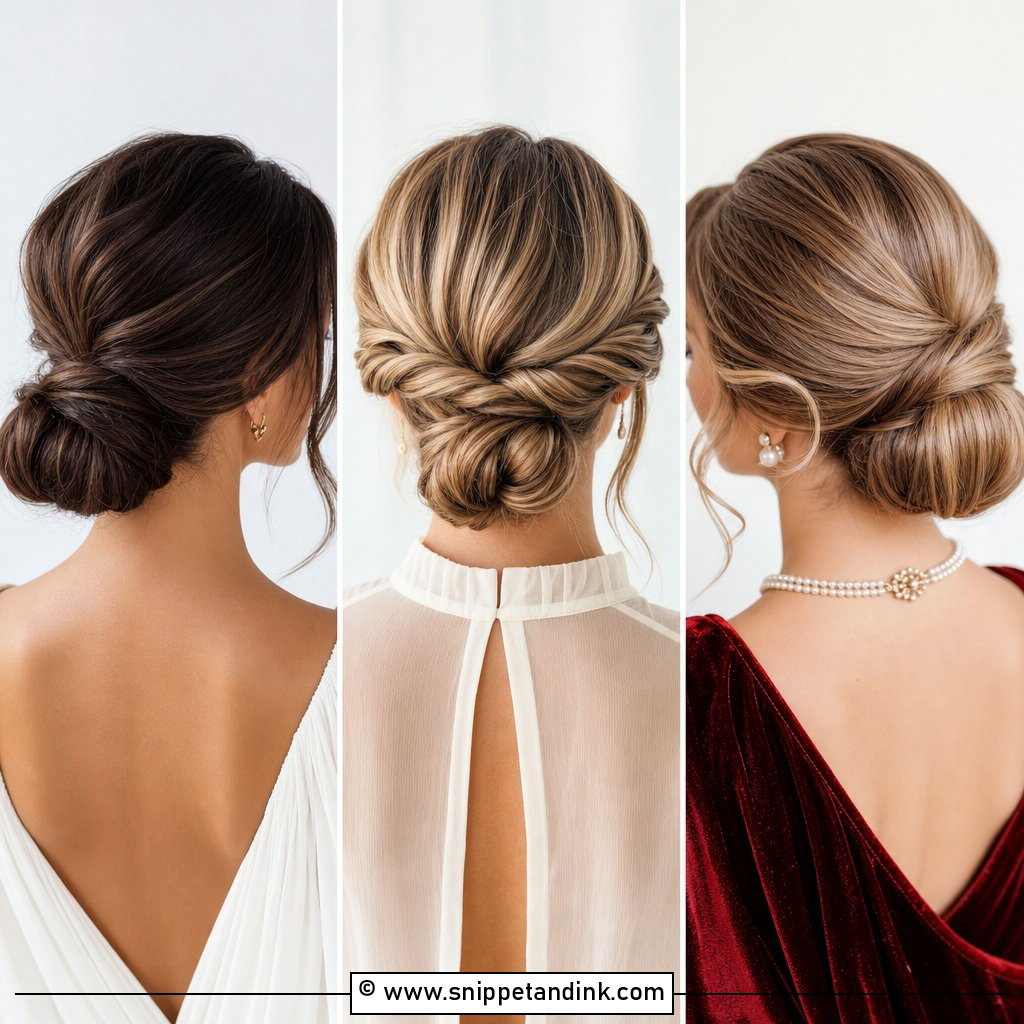
The sleek low bun is the most secure style here, and it shows off bold jewelry, high-neck blouses, structured lehengas and heavy dupattas without competing. The hair is smoothed back or parted sharply and tucked into a neat bun at the nape. Shine serum, a fine comb and strong pins do the work. On hair with lots of short broken strands, I’d add texture instead, since a sleek surface shows every flyaway in flash. Wear it plain or with one classic accessory.
The Varmala, the Chair Back and Everything Else That Presses on a Low Bun
A low bun lives at the nape, and that is the spot everything else in an Indian wedding touches. I plan for these before setting a single pin.
The varmala. A heavy flower garland rests right on the back of the neck and catches on bun pins and gajra. I keep the bun a little higher than usual, above the hairline rather than on the neck, and point every visible pin upward so the garland slides over instead of snagging.
Chairs and car seats. High-backed mandap chairs and car headrests push a low bun out of shape. A flatter, wider bun survives this better than a round, projecting one. In the car, sit forward or turn your head slightly.
Accessory weight. Juda pins, chains and fresh flowers stacked together get heavy. If your scalp starts aching, it is usually because all that weight hangs on a few pins, so ask your stylist to spread it across a wider anchor of crossed pins.
Same Low Bun, a Different Finish for Each Function
The low bun works with almost every bridal outfit and ceremony because you change the look through the front, the bun shape and the accessories rather than the base. For a classic ceremony, gajra, jasmine, a matha patti or a juda pin is a safe bet. For a reception or a bridesmaid, curls, pearls, roses or soft texture feel fresher. Comfort and hold matter most. A good low bun frames your face, supports the dupatta, stays put through hours of movement and photographs well from the back as well as the front.
You'll Like These Ideas:




Leave a Reply