
A messy braid is the style I’m asked for most across a multi-day Indian wedding, and it earns that. It carries jewellery, flowers and a pinned dupatta without collapsing, it survives hours of dancing, and it can be pushed traditional or modern with a change of accessories. It also works for bridesmaid looks, which helps when the whole family wants coordinated hair. Jasmine, roses, a paranda or jada pieces take it one way; pulled-out texture, pearls and soft curls take it the other. Thick, long or extension-filled hair shows these best, but most can be adapted for medium lengths if you tell your stylist early.

Mess That Lasts Through a Baraat Is Built, Not Left
The messy braids that still look good at midnight are almost always braided firmly first and loosened afterwards. Braid it loose from the start and the sections slip, the ends fray and the whole thing widens and drops as the day goes on. This is how I build texture that holds.
- Prep with grip. Freshly washed, silky hair is the hardest to braid. I prefer hair washed the day before, then a texture or dry shampoo spray at the roots and lengths.
- Add a light wave first. Bent hair locks into a braid; straight hair slides out of it.
- Braid with even tension and tie off with a small elastic.
- Pancake the braid by pulling the outer edge of each loop, working from the bottom up and anchoring as I go.
- Pull face-framing pieces last, and fewer than you think. Too many and the style looks like it’s coming down.
If you’re doing a trial, wear the braid for the rest of the day, dance in it if you can, and look at it at night. That tells you far more than how it looks in the salon chair.
1. Messy Side Braid Indian Wedding
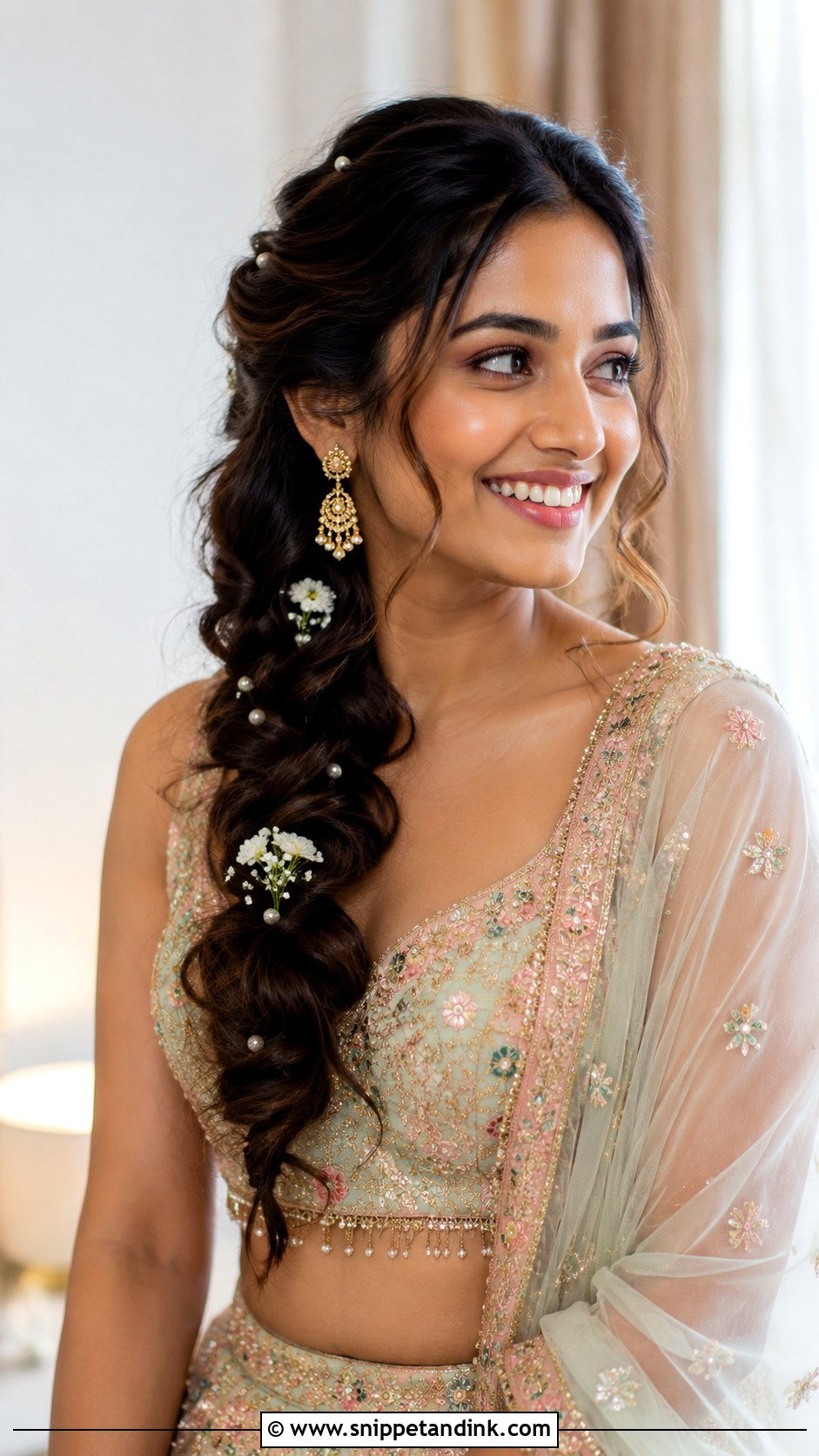
The side braid is the easiest one here to wear for hours. It sits over one shoulder, so it shows from the front in photos with a lehenga, saree, or sharara, and it never presses against a chair back. I start the braid behind the ear, not at the nape, so it lies forward on its own instead of needing pins to drag it round. Soft lift at the crown and a couple of loose front pieces keep it from looking flat. Tuck in small pearl pins or baby’s breath. Do check which side your dupatta drapes, because a braid and a heavy drape on the same shoulder fight each other.
2. Messy Fishtail Braid Indian Wedding
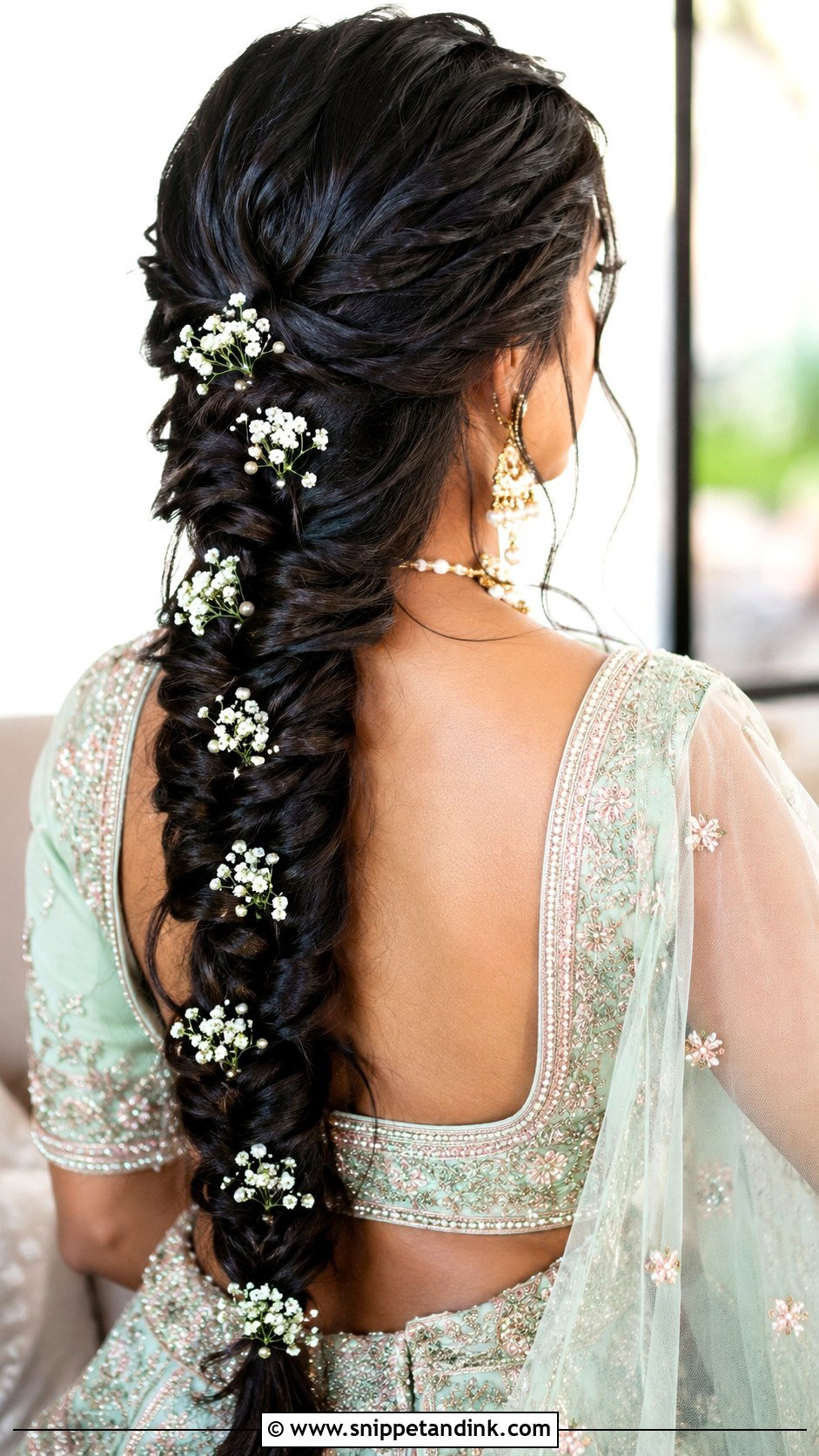
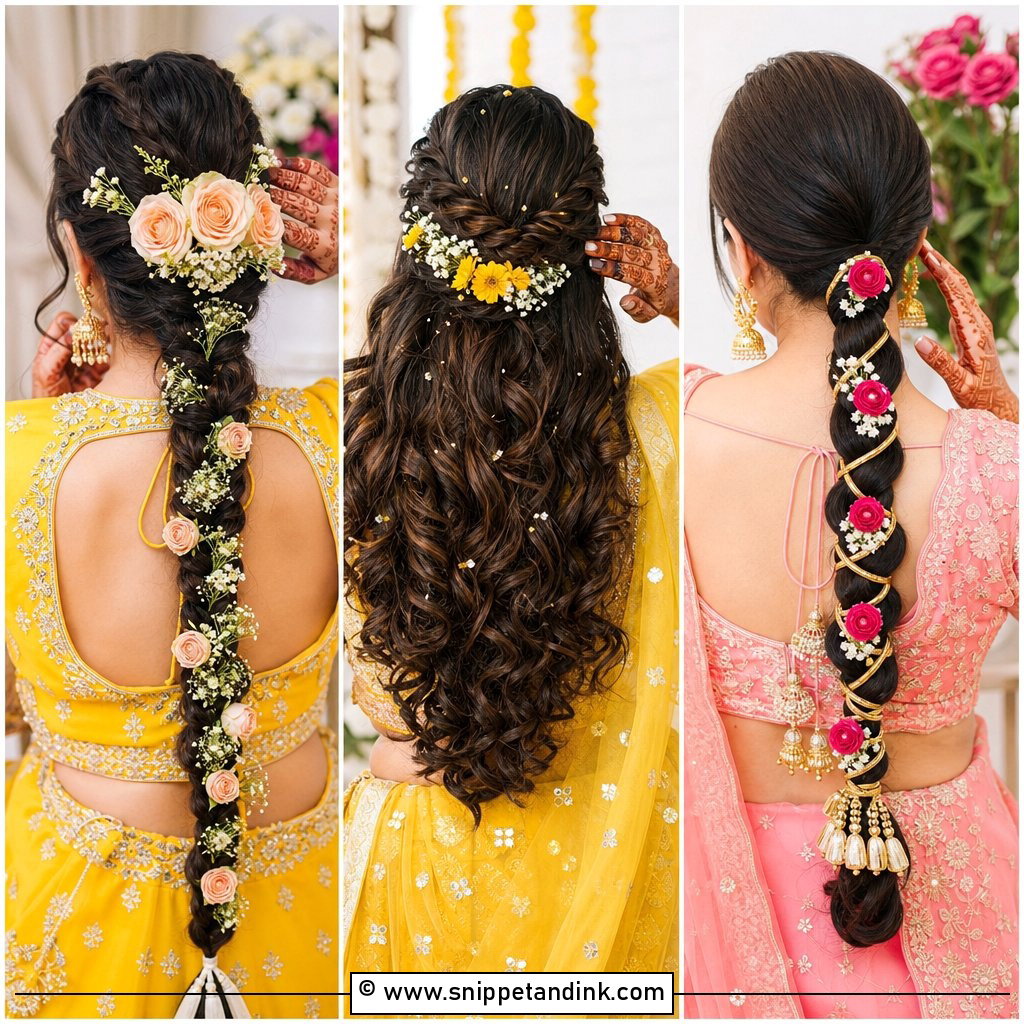
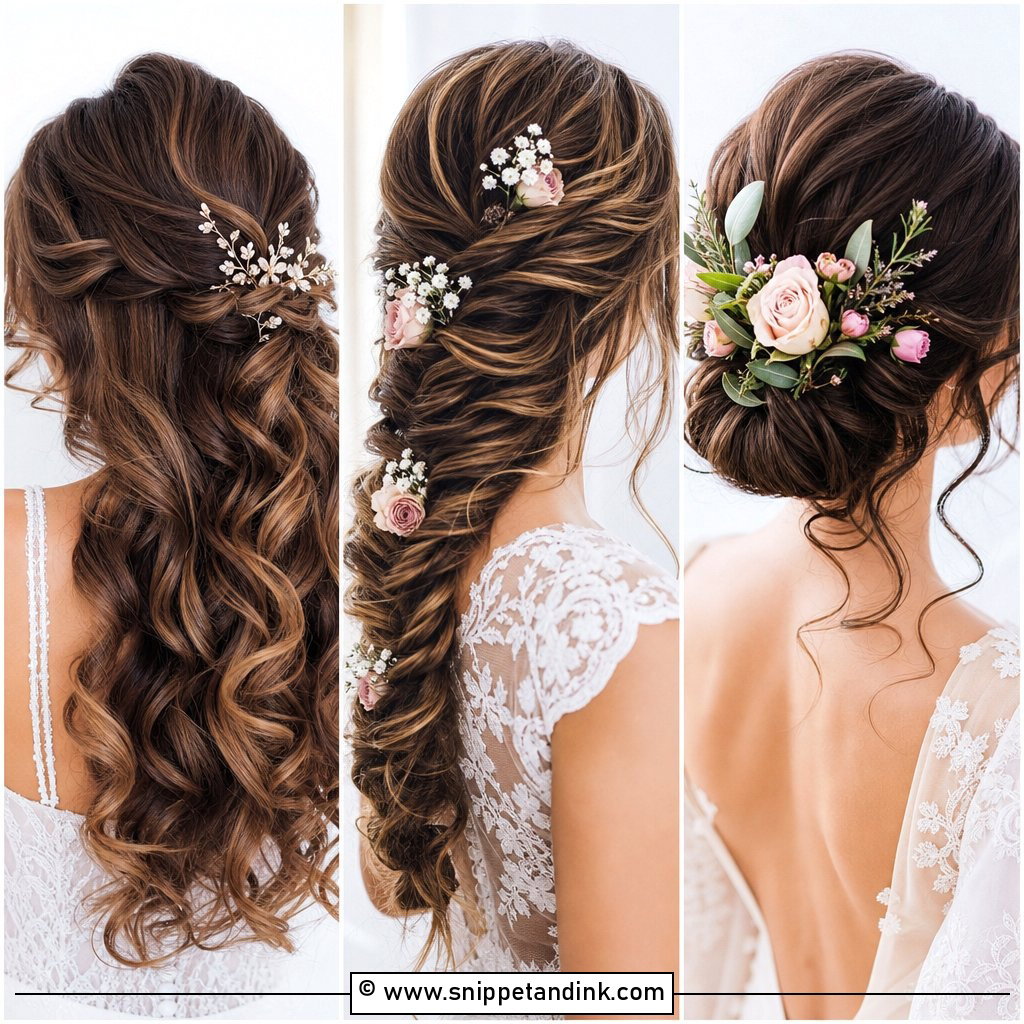
A fishtail looks more intricate than a three-strand plait, and once it’s loosened it reads soft rather than fussy. It photographs best from the back and side, which is why I like it for mehendi with pastel lehengas, mirror work blouses and floral jewellery. On hair that isn’t very thick, I add a weft or two before braiding; teasing alone gives a fluffy look that falls flat by the afternoon. Pull the edges out only after the braid is tied off. Pearl strings, mini mogra or gold pins go in last.
3. Messy Dutch Braid Indian Wedding
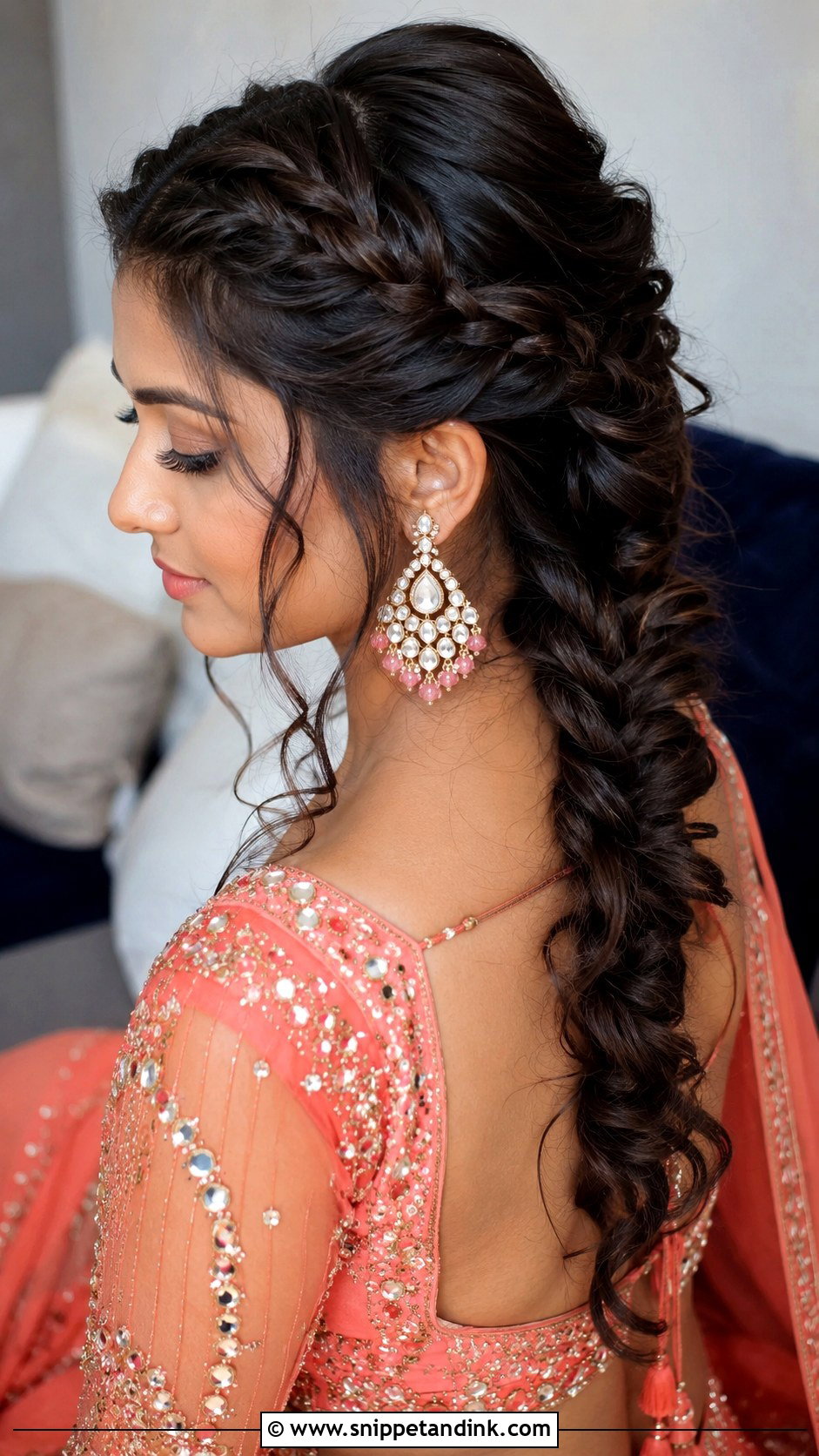
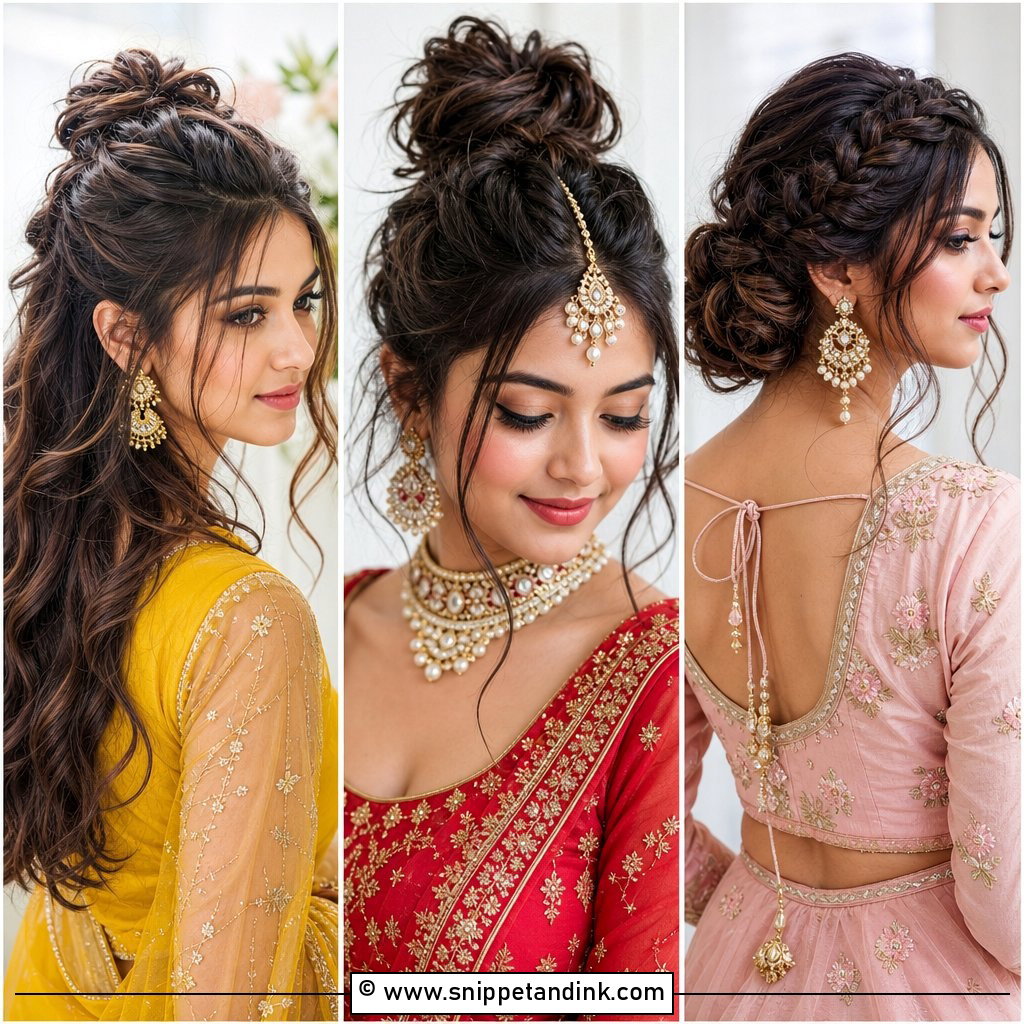
Because a Dutch braid sits raised on top of the hair, it holds its shape against heavy embroidery and big jewellery better than a flat plait. I like it on bridesmaids, sisters of the bride and for the bride’s own pre-wedding events. I prep with a texture spray and a light wave, braid one thick section, then loosen each loop working from the bottom up so the top doesn’t go lopsided. Wear it down the back or swept to one side. A slim hair vine or a few fresh flowers is enough decoration.
4. Messy French Braid Indian Wedding
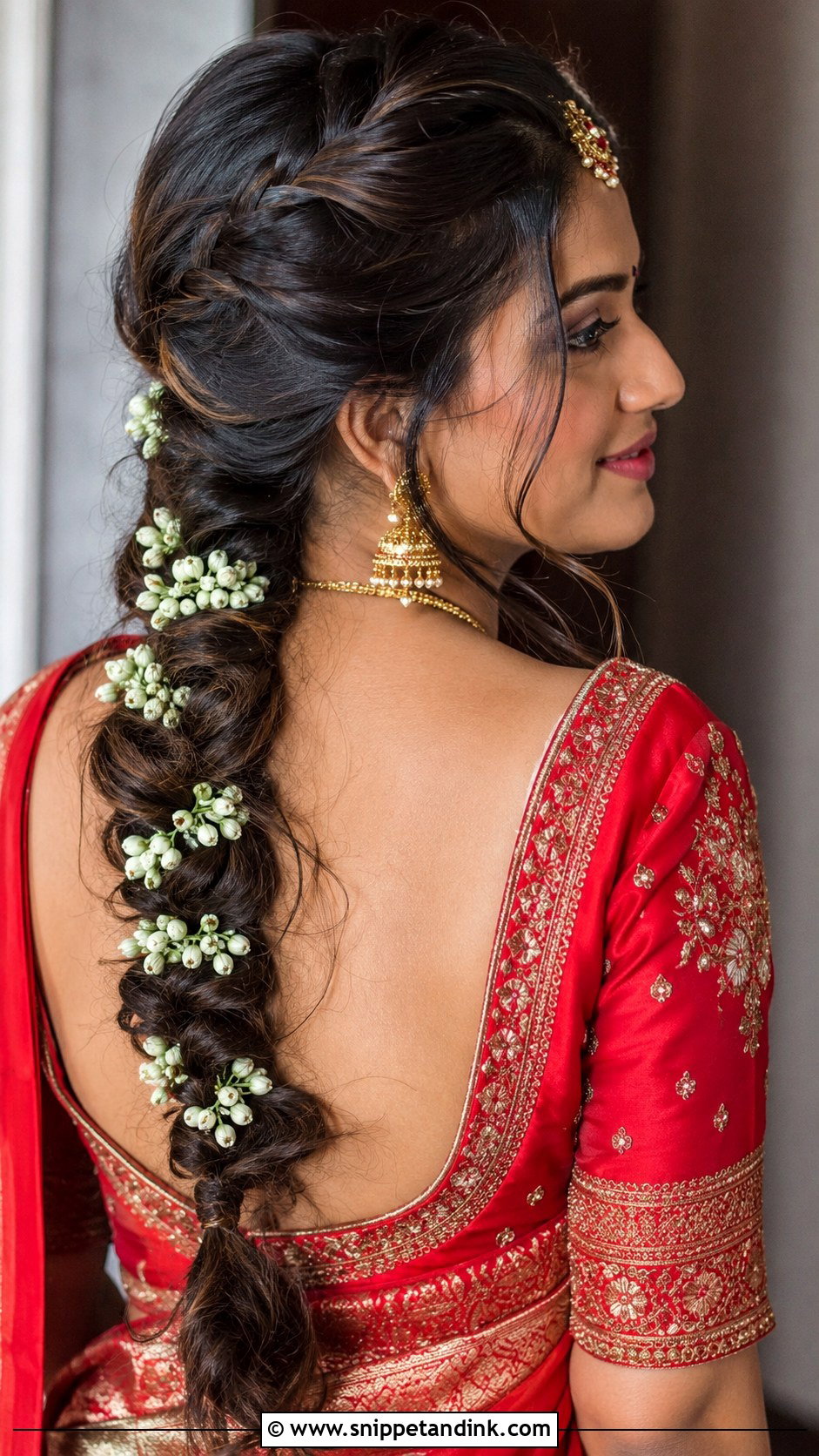
For a long function where you’ll sit and stand a lot, the French braid is the one I’d pick for comfort. It keeps everything controlled from the crown down without the raised ridge of a Dutch braid, so a light dupatta lies smoothly over it. If you’re wearing a maang tikka, I smooth the centre parting and anchor the tikka chain under the first crossover, which keeps it from sliding sideways. Leave a few curled strands at the temples. Jasmine buds or small gold accessories through the length finish it.
5. Messy Crown Braid Indian Wedding
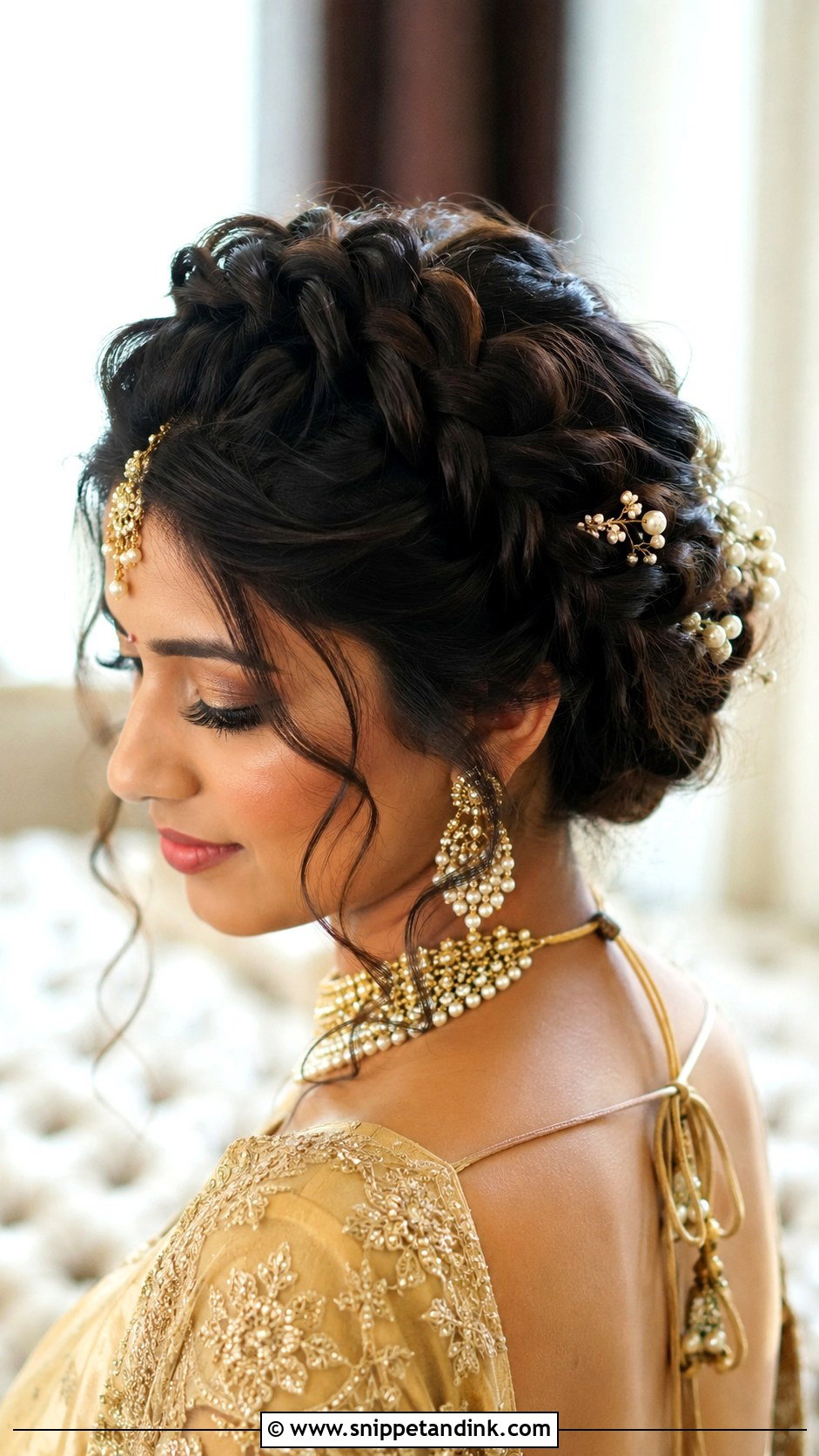
A crown braid keeps every strand off the face and neck, which makes it my go-to with chokers, jhumkas and high-neck blouses. The braid wraps around the head and can end in a low braided tail, loose curls or a tucked end. The one mistake I see is braiding it too tight at the hairline; it looks neat at noon and gives you a headache by evening. Keep the crown slightly lifted. Kundan pins or small flowers can sit along the wrap, spaced so the braid still shows between them.
6. Messy Waterfall Braid Indian Wedding
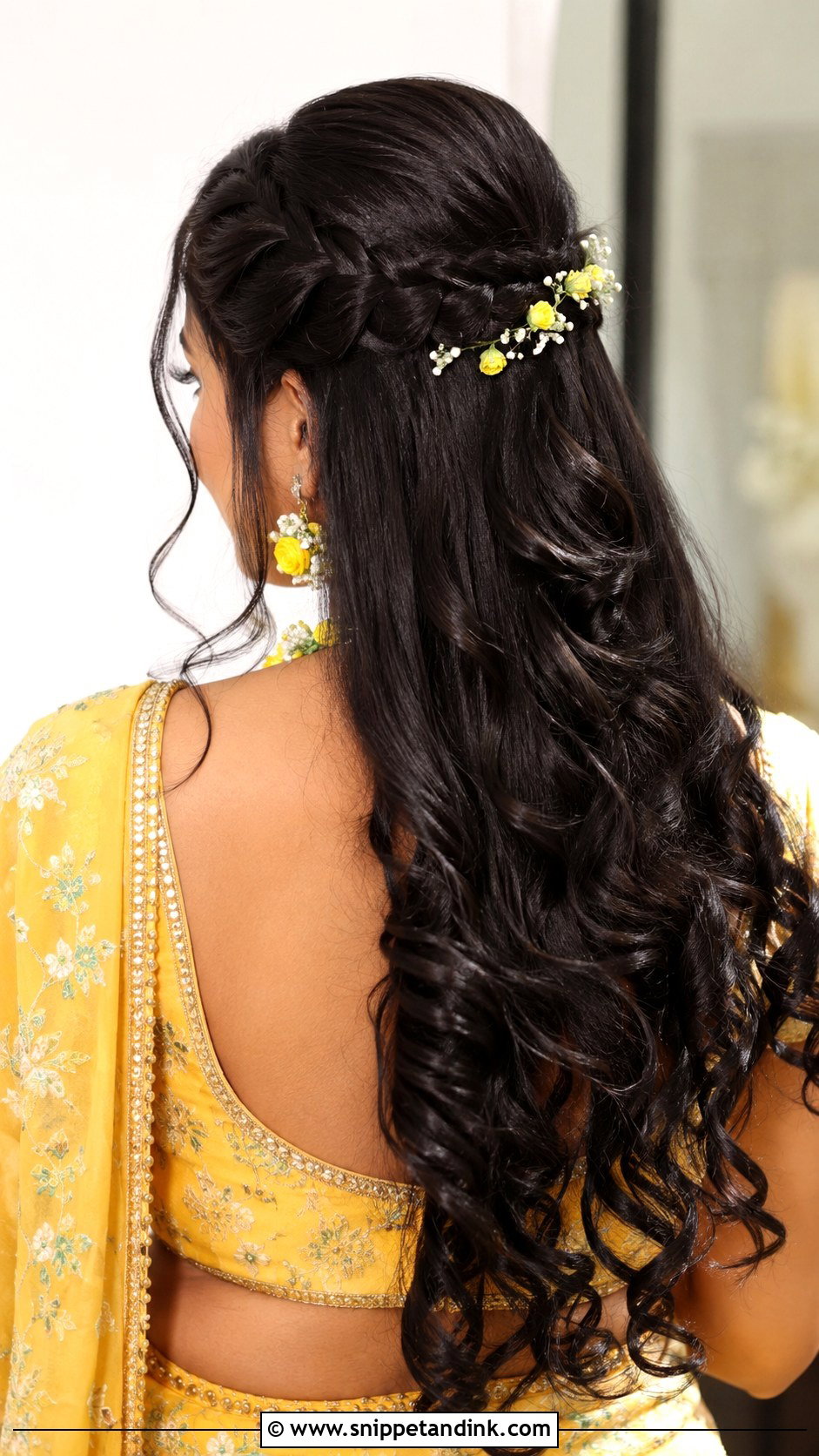
Some hair stays open with a waterfall braid, which suits engagement, haldi or a reception look in a lighter outfit. Soft curls fall through the braid as it crosses the head, so you get a half-up effect with all the length on show. I’ll be honest: it’s less secure than a full braid, because the dropped strands aren’t locked in. On silky, straight hair I curl first and add grip spray, or it can unravel by the end of the dancing. A delicate hair chain or two pearl clips is plenty.
7. Messy Braided Ponytail Indian Wedding
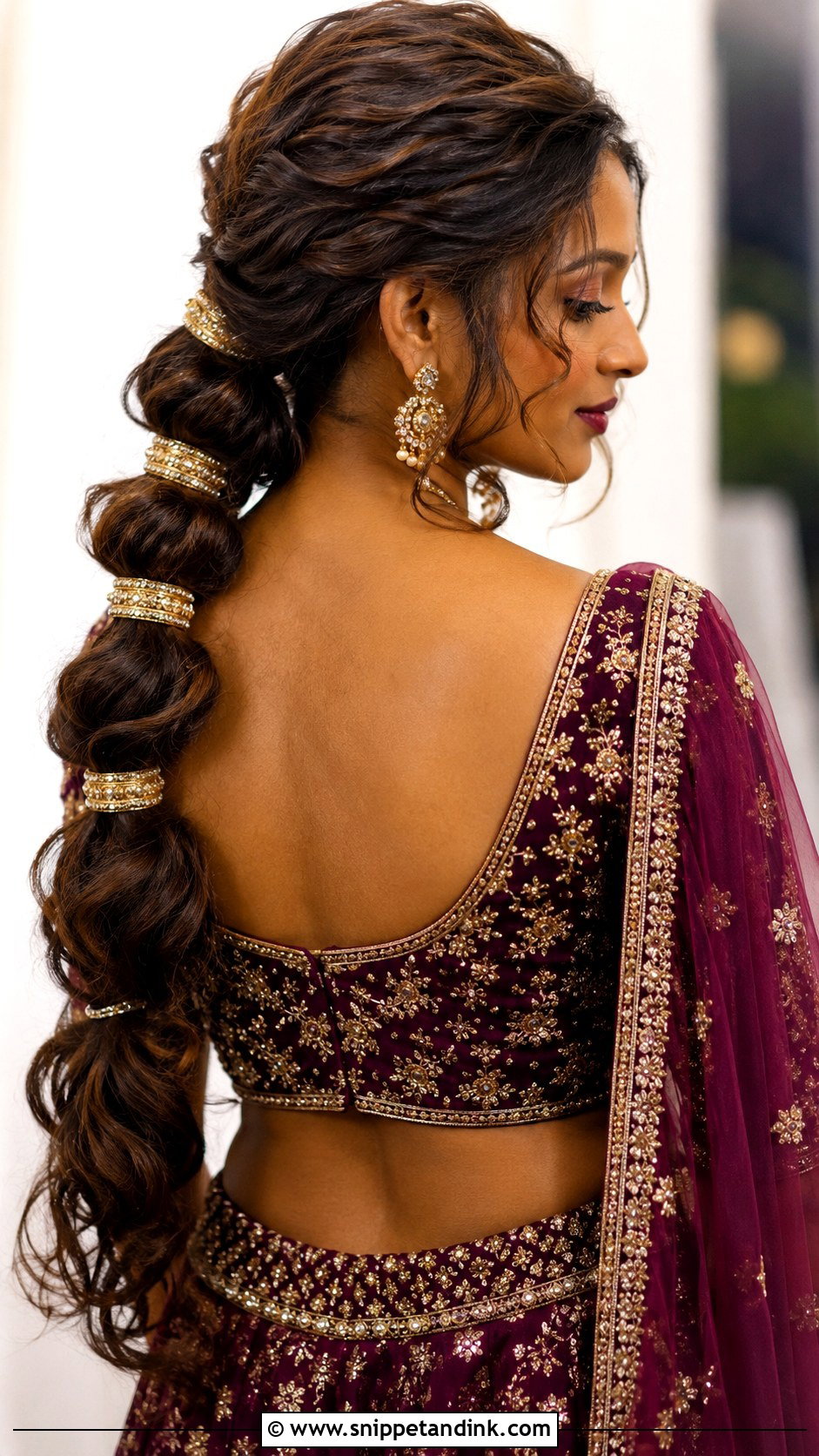
Dancing at the sangeet, a hot afternoon, a function where you’ll be up on your feet: that’s when I pull out the braided ponytail. You get the lift of a ponytail and the detail of a braid. The top can be teased, twisted or braided before the elastic, and the length becomes a loose plait. I always wrap a section around the base and pin it from underneath, since a bare elastic is the first thing that shows in candid photos. It goes well with cape blouses and Indo-western outfits. Gold cuffs along the braid look festive without needing flowers.
8. Messy Bubble Braid Indian Wedding
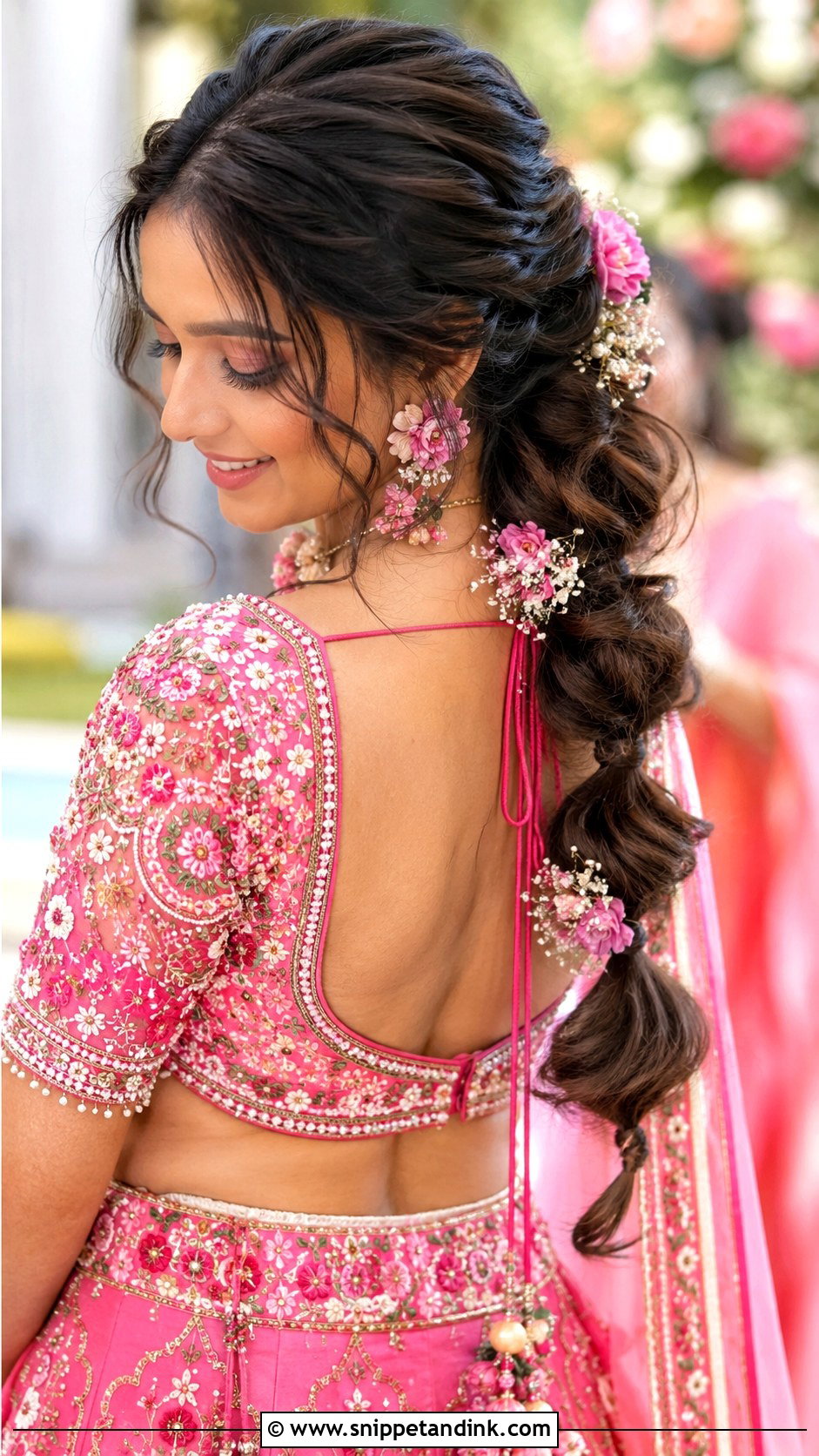
The bubble braid isn’t a woven braid at all. The hair is tied into sections and each one is puffed out into a rounded bubble, which makes it playful and a good pick for bridesmaids, mehendi guests or a modern bride. Volume is the whole point, so it needs thick hair or extensions; on fine hair the bubbles look small and gappy. Use small clear elastics and cover each one with a strand of hair, thread or a decorative tie. It sits happily with colourful lehengas and floral jewellery.
9. Messy Rope Braid Indian Wedding
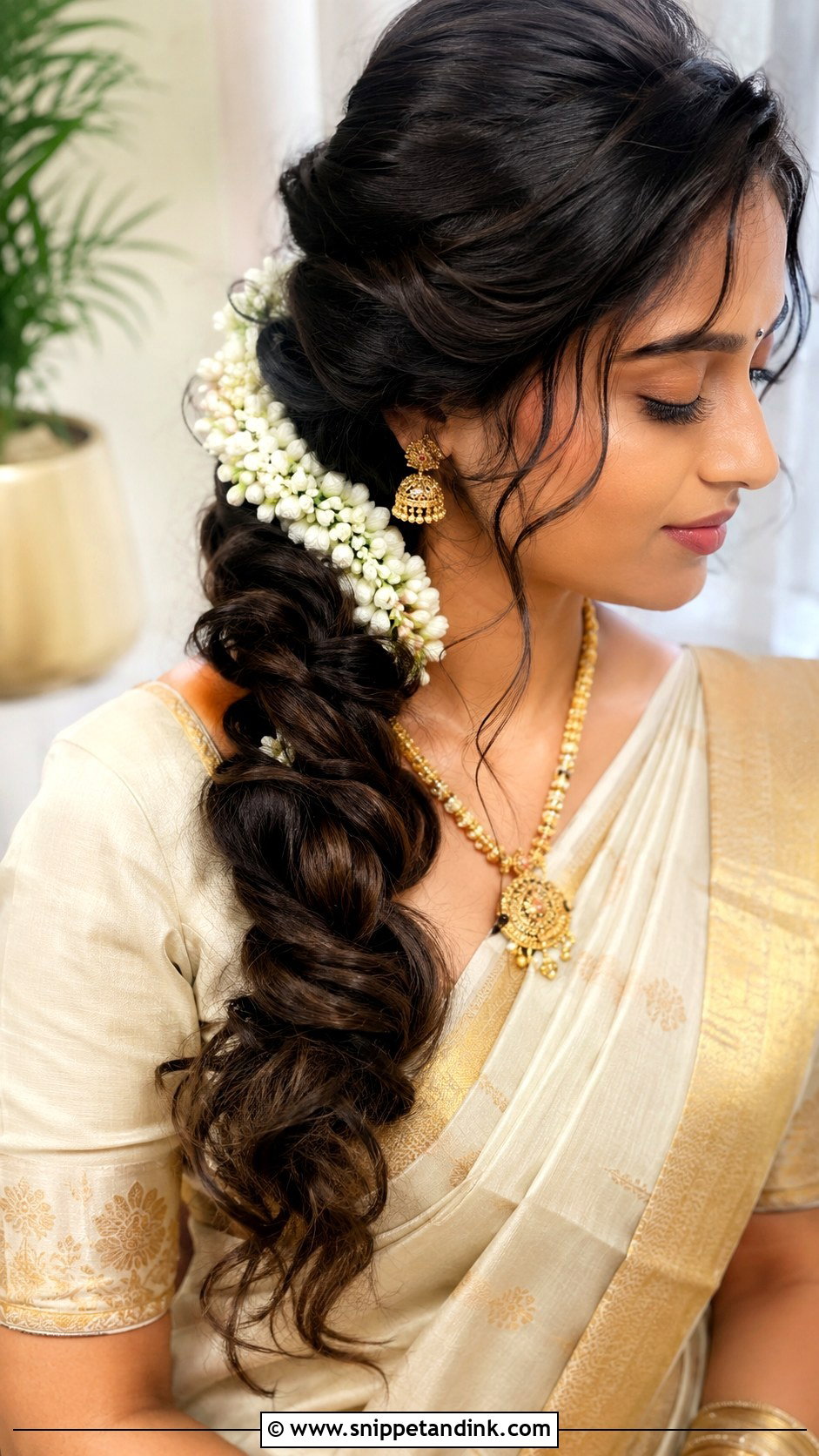
Rope braids are two twisted strands rather than a plait, and they give a smoother, almost sculpted shape. They’re less common, which is part of the appeal. The catch is that a rope braid untwists if the two strands aren’t twisted in the opposite direction from how they’re wrapped round each other, so I always secure the end firmly and mist with spray as I go. Curl the hair first for fullness. It suits silk sarees and minimal jewellery. Mogra or gold thread wrapped lightly along it looks traditional without being heavy.
10. Messy Pull Through Braid Indian Wedding
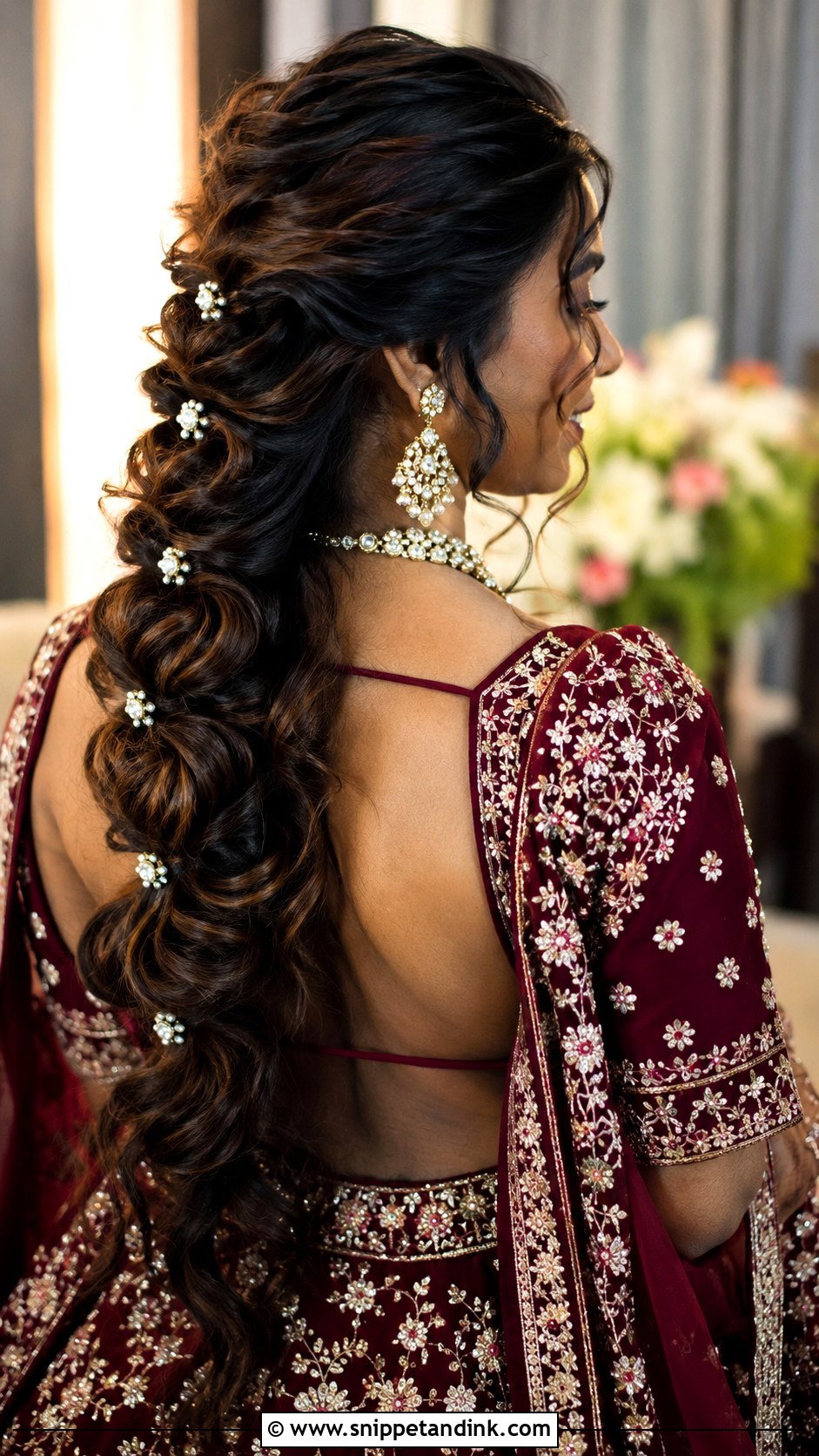
A pull-through braid gives the biggest, fullest shape on this list, and it’s my fix for layered hair. Instead of weaving, it’s built from small ponytail sections looped through each other, so short layers get caught in an elastic instead of poking out of a plait. Expand each section gently once it’s done. The volume balances a heavy bridal lehenga and bold jewellery well. Small roses, pearl pins or kundan pieces slot neatly between the sections.
11. Messy Mermaid Braid Indian Wedding
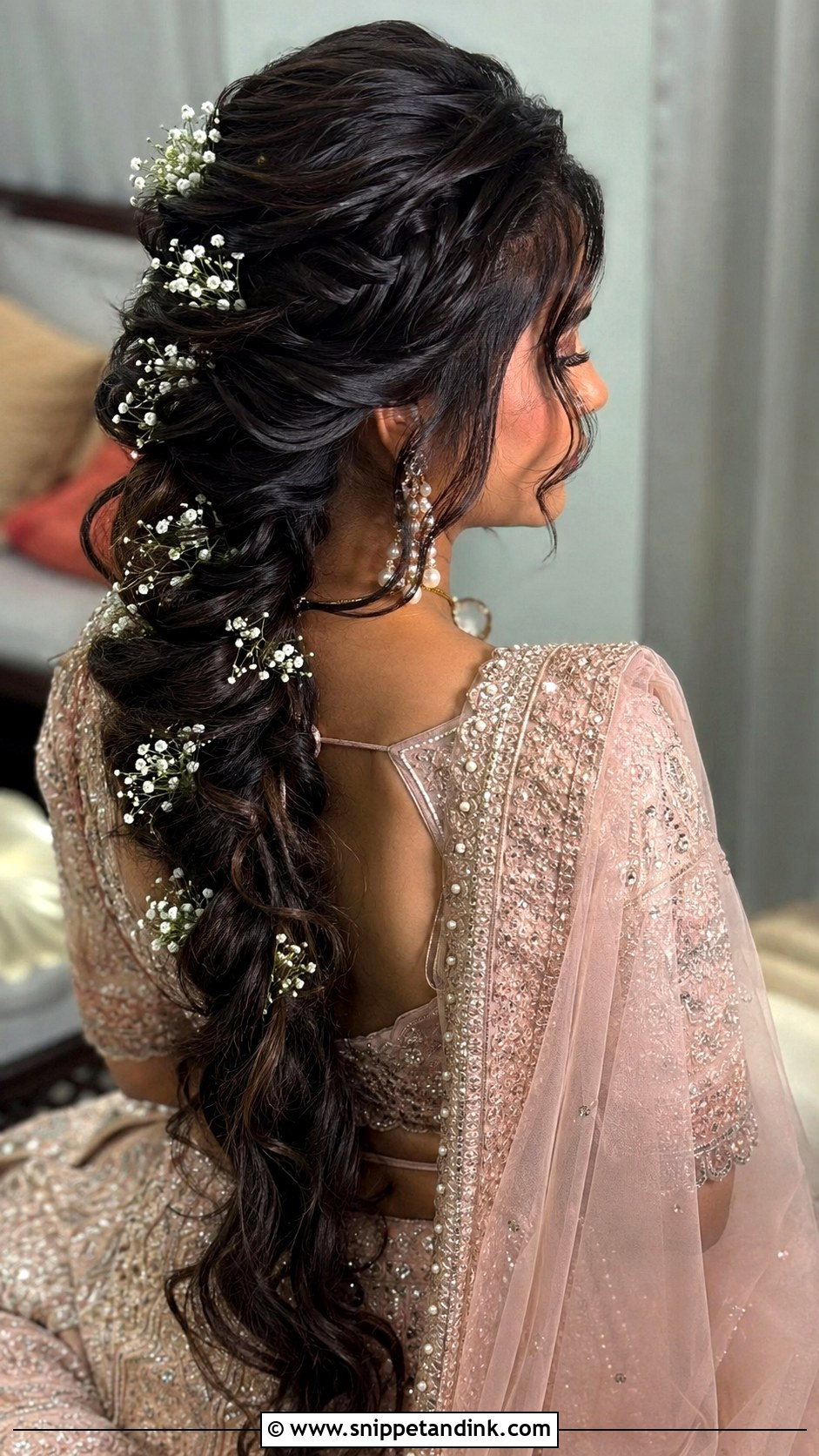
A messy mermaid braid is wide and loose, usually built by weaving several thinner braids together over soft waves. It’s at its best from behind, so I suggest it for a reception or engagement with an open-back blouse or a dupatta pinned to one side. You need real length, either your own or extensions, or the width has nowhere to go. Keep the front soft with a few curled tendrils. Baby’s breath or pastel flowers can pick up the outfit colour.
12. Messy Floral Braid Indian Wedding
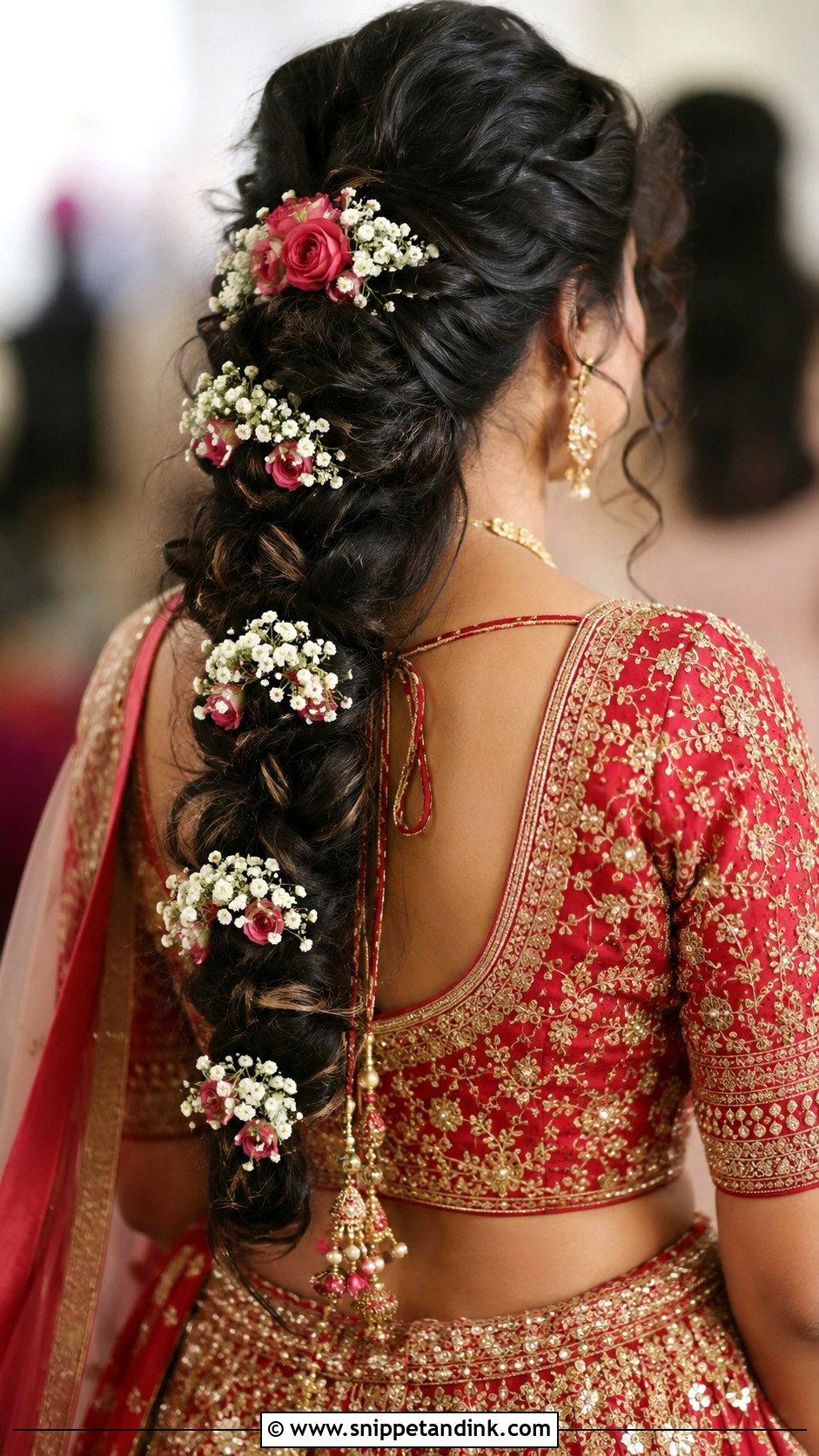
Flowers make any braid here feel festive, and the braid underneath can be a three-strand, a fishtail, a Dutch or a pull-through. What matters is the flower. Jasmine reads traditional, roses read bridal and baby’s breath feels modern. Real jasmine starts to brown within hours in warm weather, so I add it as late as I can and keep a spare string in the fridge for touch-ups. Keep the braid loose enough that the flowers sit into it rather than on top. It works for pheras, mehendi or haldi depending on the bloom, and pairs well with floral jewellery and embroidered lehengas.
13. Messy Pearl Braid Indian Wedding
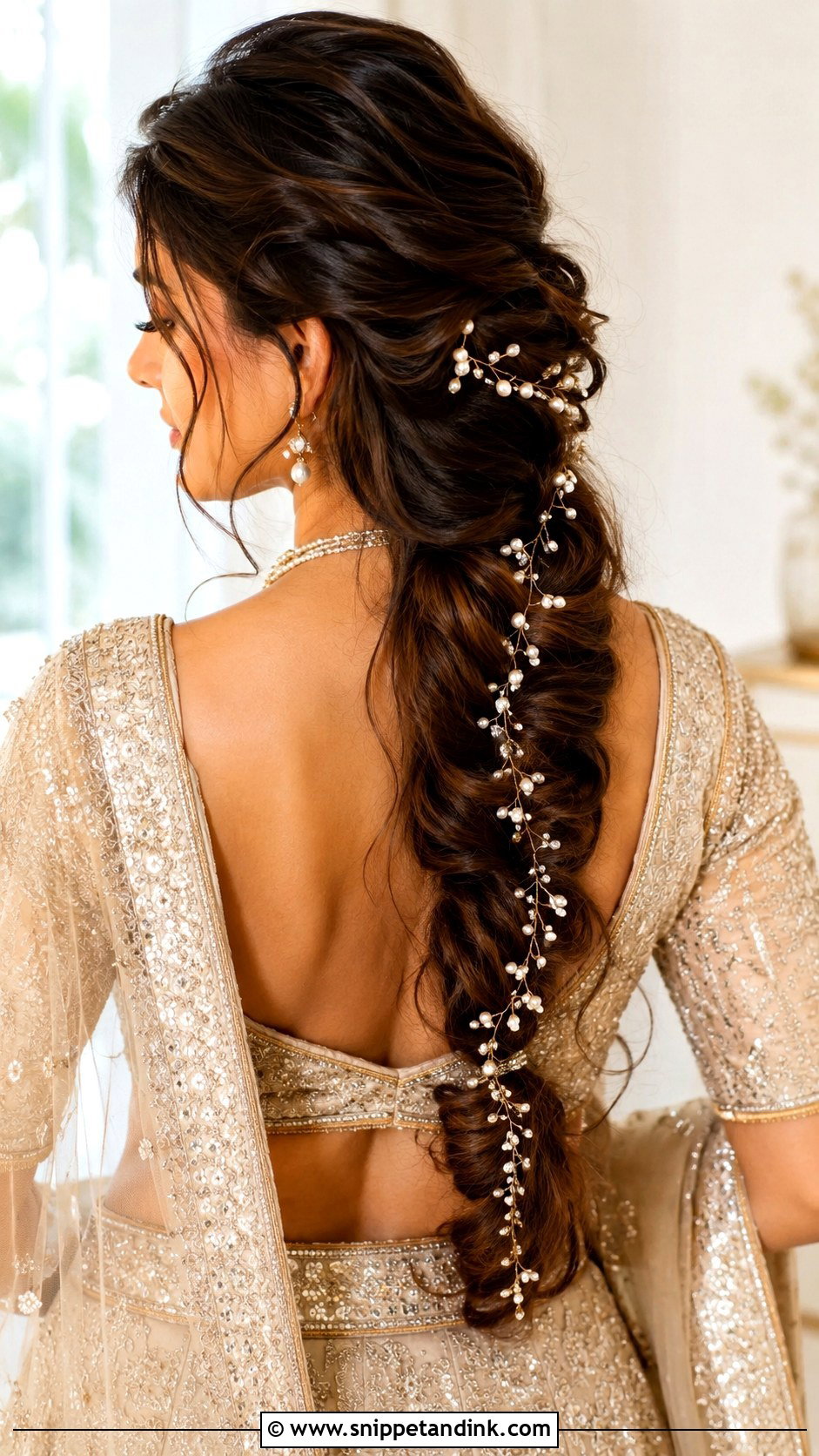
Pearls add detail with almost no weight, which is why I use them on brides who find flowers too heavy by evening. You can wear them in a side braid, back braid, fishtail or braided ponytail. Keep the braid textured and slightly loose, then thread a pearl vine along it or place single pins, each one hooked into a hidden bobby pin so they don’t slide out of loosened sections. Ivory, blush, champagne and gold outfits suit them best. If your necklace is already heavy, keep the hair pearls small so the two don’t compete.
14. Messy Paranda Braid Indian Wedding
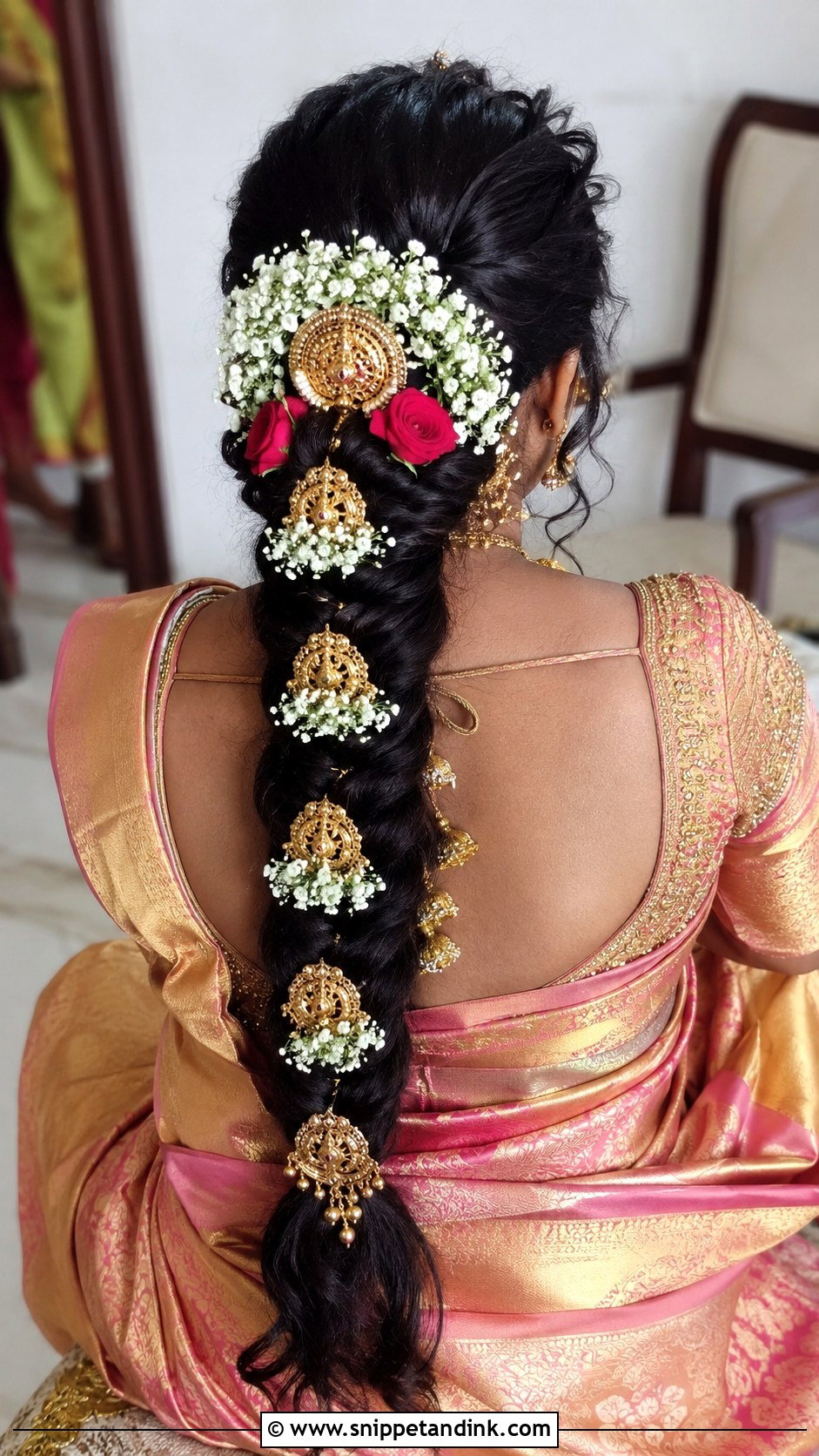
A paranda brings Punjabi-inspired detail into the braid along with extra length and swing. It’s the obvious pick for mehendi, sangeet or a bright guest look. The paranda is woven in from the nape, so the braid needs to start low and stay fairly firm there even if you loosen it further down. Match it to the outfit or go for a contrasting colour. Parandas with mirrors, tassels or beads add more weight than people expect, so long, thick hair or extensions carry them best.
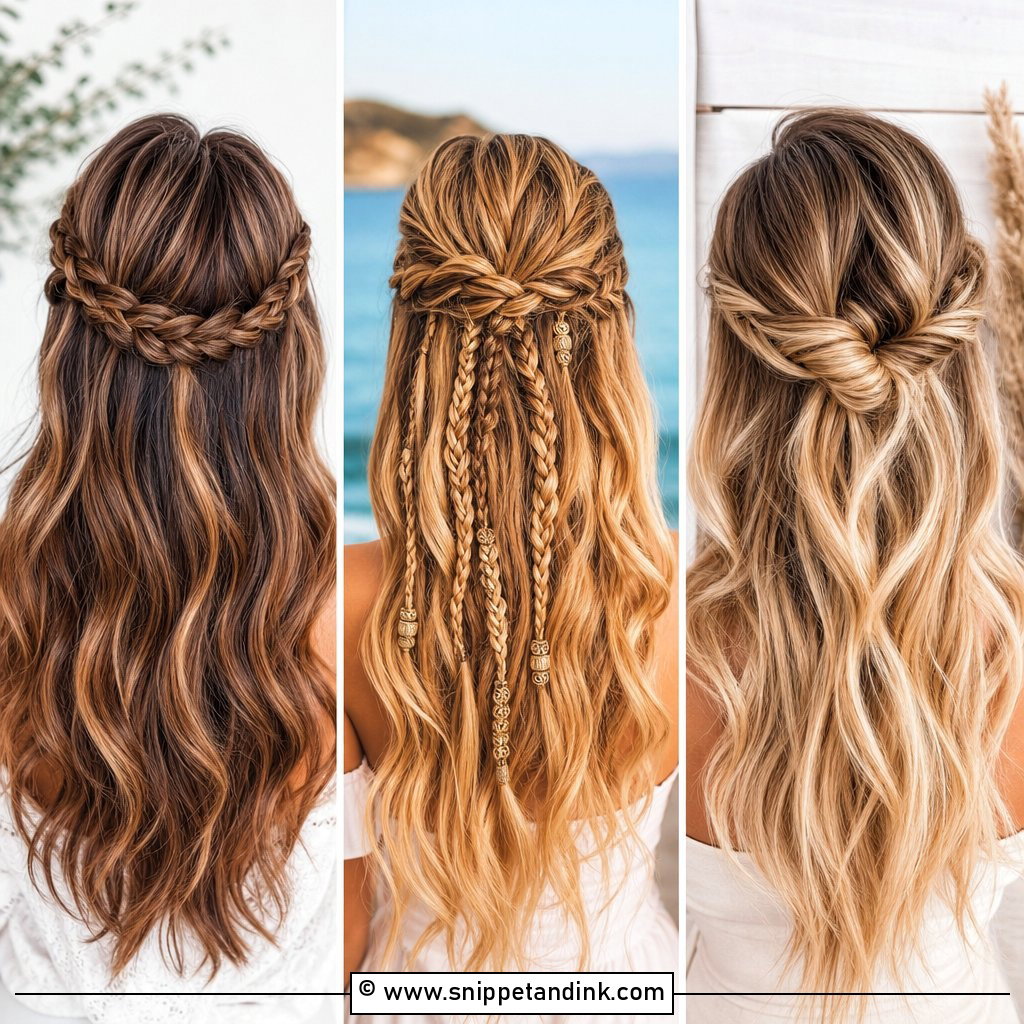
15. Messy South Indian Bridal Braid
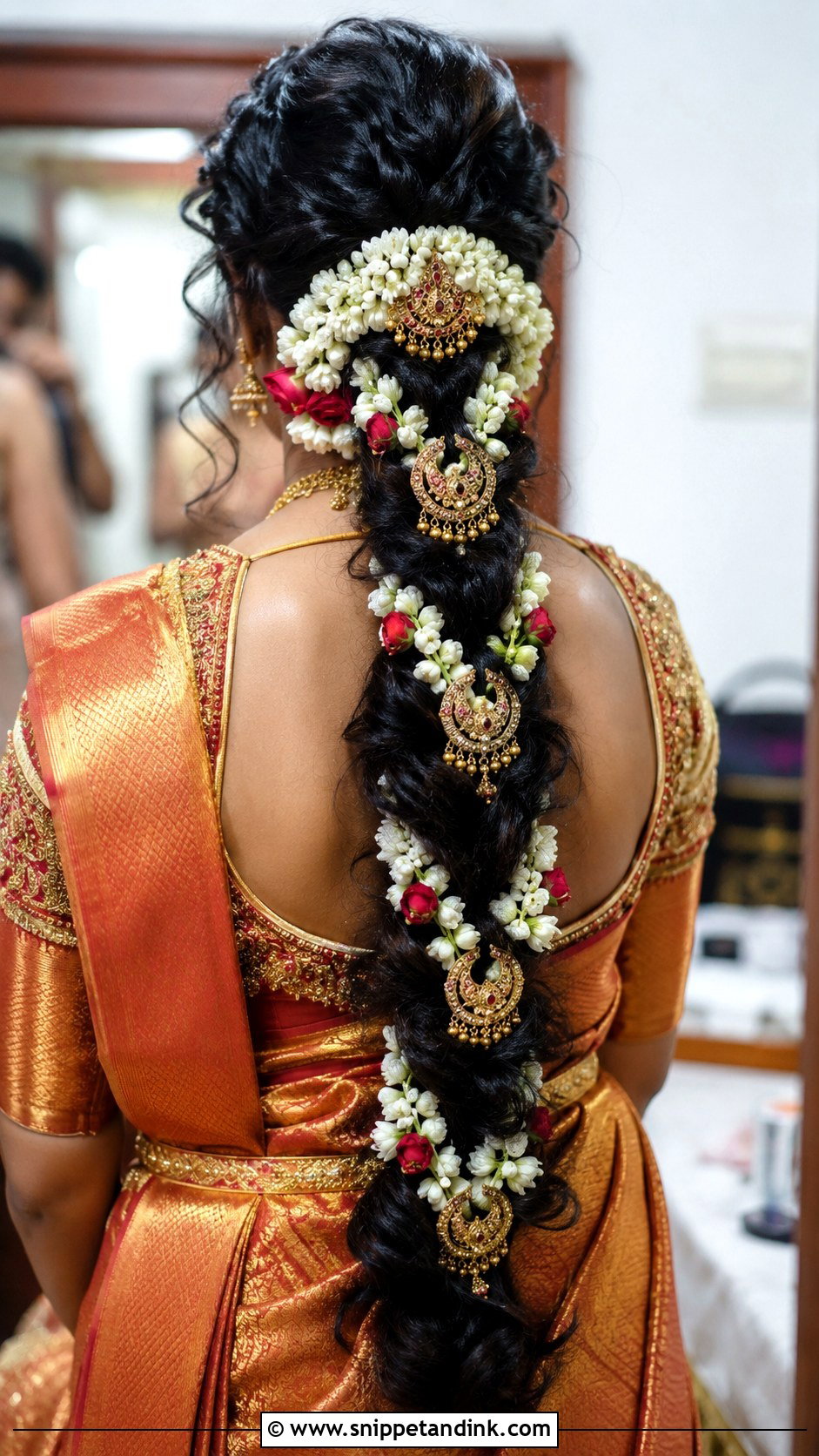
The South Indian bridal braid is long, down the back and usually decorated with jasmine, roses, gold or jada pieces. A messy version simply means lifting the crown and loosening the length a little so it doesn’t look stiff. Jada pieces are heavy, so I sew or pin them along a firm core braid and only loosen the outer edges, otherwise the ornaments drag the braid out of shape during a long ceremony. It sits beautifully with silk sarees and temple jewellery. Extensions are common here for length and fullness, and nobody will know if they’re blended well.
Gajra, Jada and Paranda Weight on a Soft Braid
A loose braid has less grip than a tight one, so heavy accessories are where messy styles most often fail. A full gajra, a jada set or a beaded paranda can pull a braid sideways, drag the crown flat and leave you with a sore scalp before the reception starts.
- Give the weight a firm anchor. I place a small hidden elastic or a tight section at the top of the braid and attach heavy pieces there, not to loosened loops.
- Thread long gajra strings onto the braid in two or three places instead of hanging them from one pin.
- Ask for the accessories at your trial, not just photos of them. Their actual weight changes how I build the braid.
- If you’re sensitive to headaches, choose lighter pieces for the longest function and save the heavy ones for the shortest.
Reworking One Braid Across Several Functions
Many brides want a braid at more than one event. Second-day hair actually braids better than clean hair, so a mehendi braid can become a sangeet braided ponytail with little more than a brush-out and some fresh texture. What doesn’t carry over well is a hard-set style full of spray, which turns stiff and dull the next day. Sleep in a loose plait on a silk pillowcase and keep heat to touch-ups only. For the pheras or reception, most brides do best with a fresh wash and a full restyle, so plan your appointments around that.
How Undone Should Your Braid Really Look?
Every braid here can be pushed traditional, with jasmine and gold, modern, with pearls and soft curls, or playful, with a paranda or bubble braid. Your outfit, your jewellery, the function and your hair length decide which. For heavy bridal looks, a fuller braid with flowers or jada balances the weight of the lehenga. For mehendi and sangeet, side braids, bubble braids and braided ponytails are easier to dance in. The texture you see should be loose; the structure underneath should not be. Set it well and finish with a flexible spray, and a messy braid will see you through every function.
You'll Like These Ideas:


Leave a Reply