
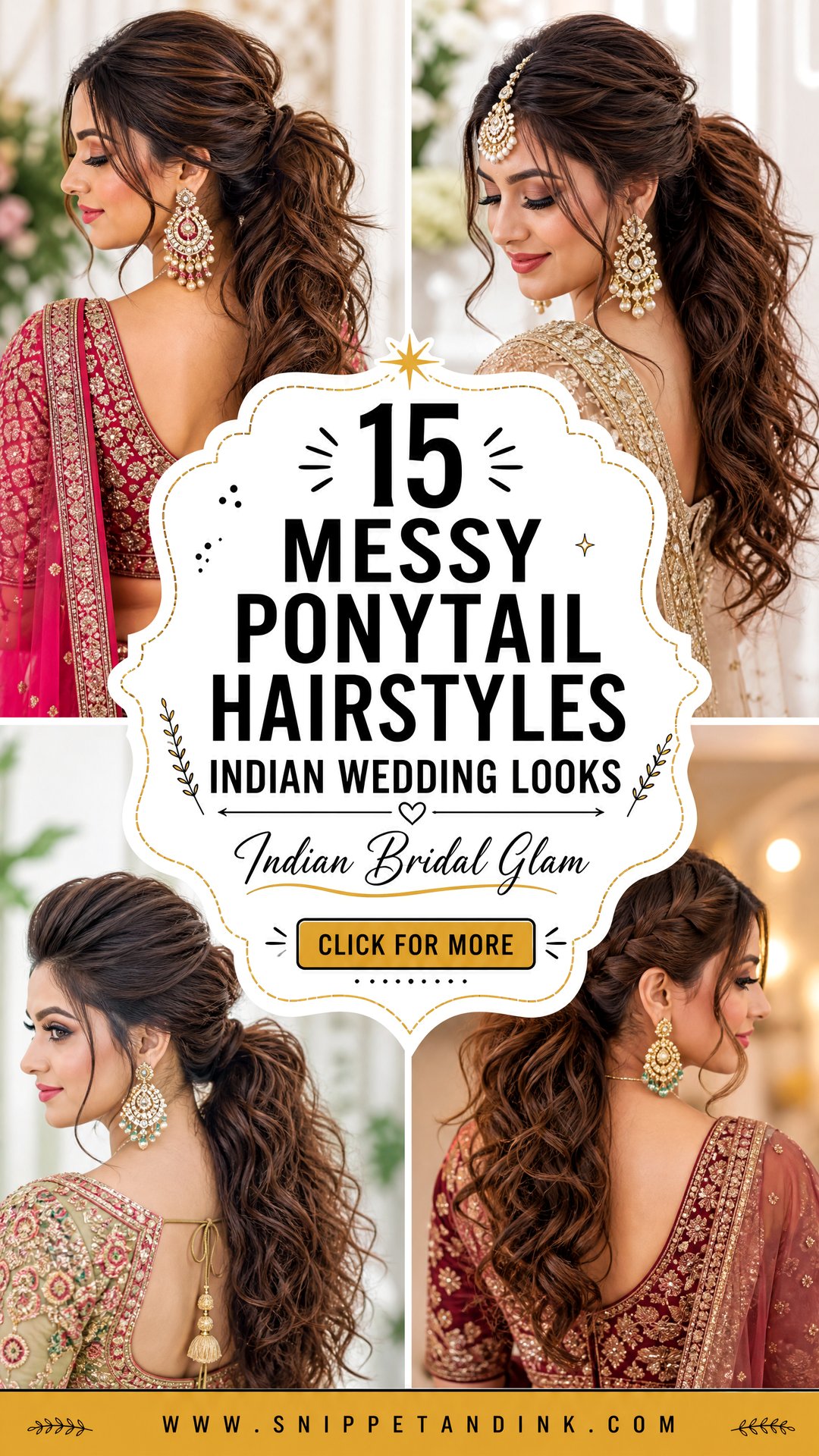
A ponytail gets underestimated at Indian weddings. People assume a bride needs a bun for anything formal, but a well-built messy pony holds up to heavy jewellery, a long dupatta and hours of dancing better than a lot of updos. It also suits lehengas, sarees, shararas and Indo-western outfits. What it needs is a strong base and enough texture for jewellery and flowers to grip. Below are the versions I do most, from a plain low pony to one dressed with gajra or a tikka.
A Different Ponytail for Each Function
An Indian wedding is several events, and the same pony won’t suit all of them. Each function asks something different of your hair, so I plan them together at the trial.
- Haldi: turmeric paste stains light or highlighted hair yellow. Wear a simple low braid or old hairstyle, and cover lighter hair if you can. Save your best styling for later.
- Mehendi: you’ll sit still for hours with your hands out. A high or side pony keeps hair off your arms and neck so the design can dry undisturbed.
- Sangeet: you’ll dance. A braided or bubble pony with strong anchoring copes best with movement.
- Wedding ceremony: you may sit for a long time and the dupatta often covers the head. A low pony or low braided pony sits flat under it.
- Reception: this is where a high or curled pony with jewellery comes into its own.
If functions fall on the same day, ask your stylist to plan a quick change, such as taking a low pony up to a high one, rather than a full restyle.
1. Messy Low Ponytail Indian Wedding
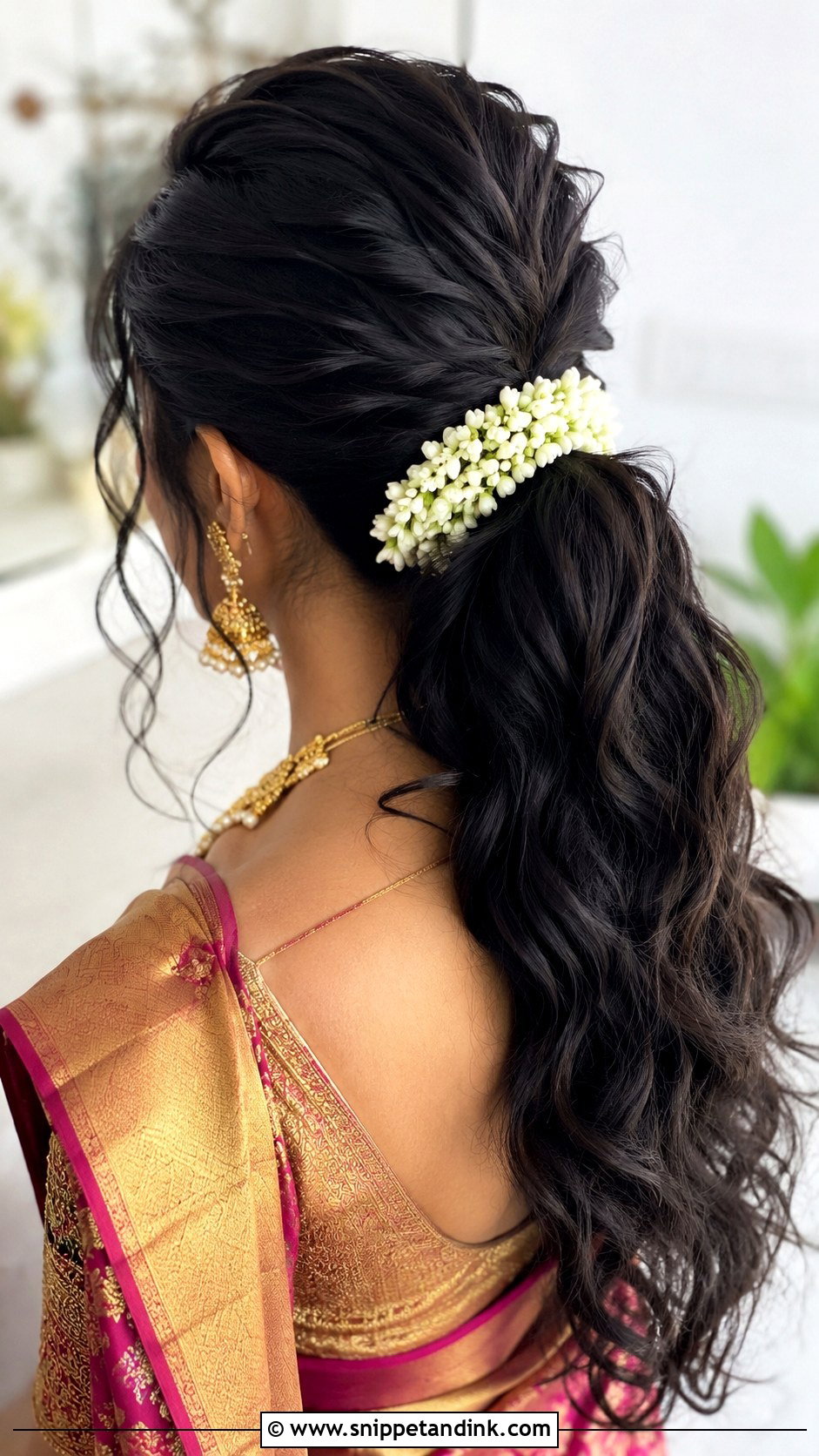
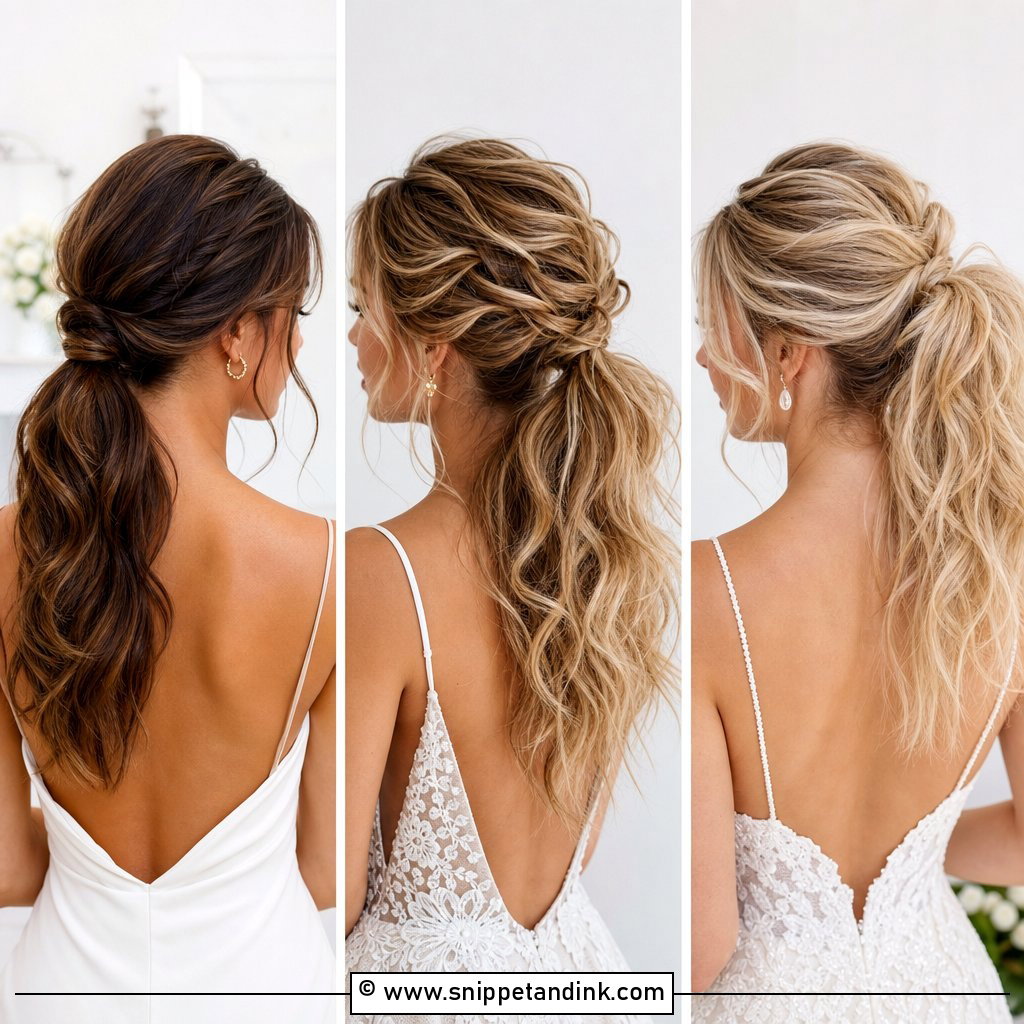
The low ponytail is the one I’d choose if you’re unsure. Sitting at the nape, it stays clear of heavy dupattas, statement earrings and embellished blouse backs, which a high pony can hide. I curl the length, add soft crown volume rather than hard teasing, and wrap a strand round the base to cover the elastic. Small pearls or jasmine pins finish it. On thick Indian hair, I use two stacked elastics, because one alone tends to slip down by the evening.
2. Messy High Ponytail Indian Wedding
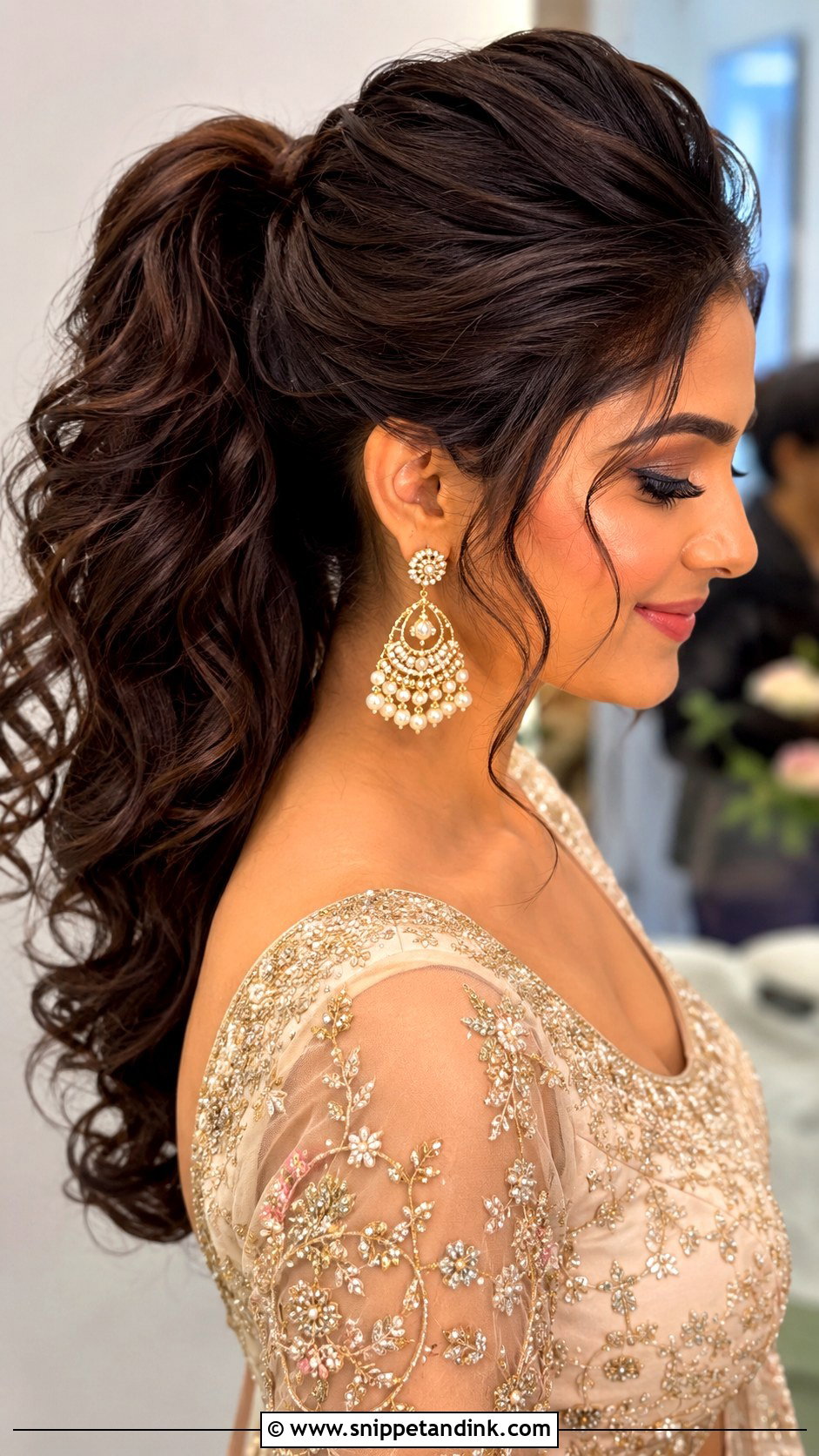
Height changes the whole face. A high ponytail lifts the eyes, shows off the cheekbones and gives earrings and makeup clear space, which is why I love it for sangeet, cocktail and reception nights. Curls stop it looking sporty. Long, thick hair in a high pony is heavy, though, and can bring on a headache within a few hours, so I build it on a small hidden braid to spread the pull. Extensions or light backcombing add volume. Pair it with a lehenga, pre-draped saree or a gown, and leave a few soft tendrils at the front.
3. Messy Curly Ponytail Indian Wedding
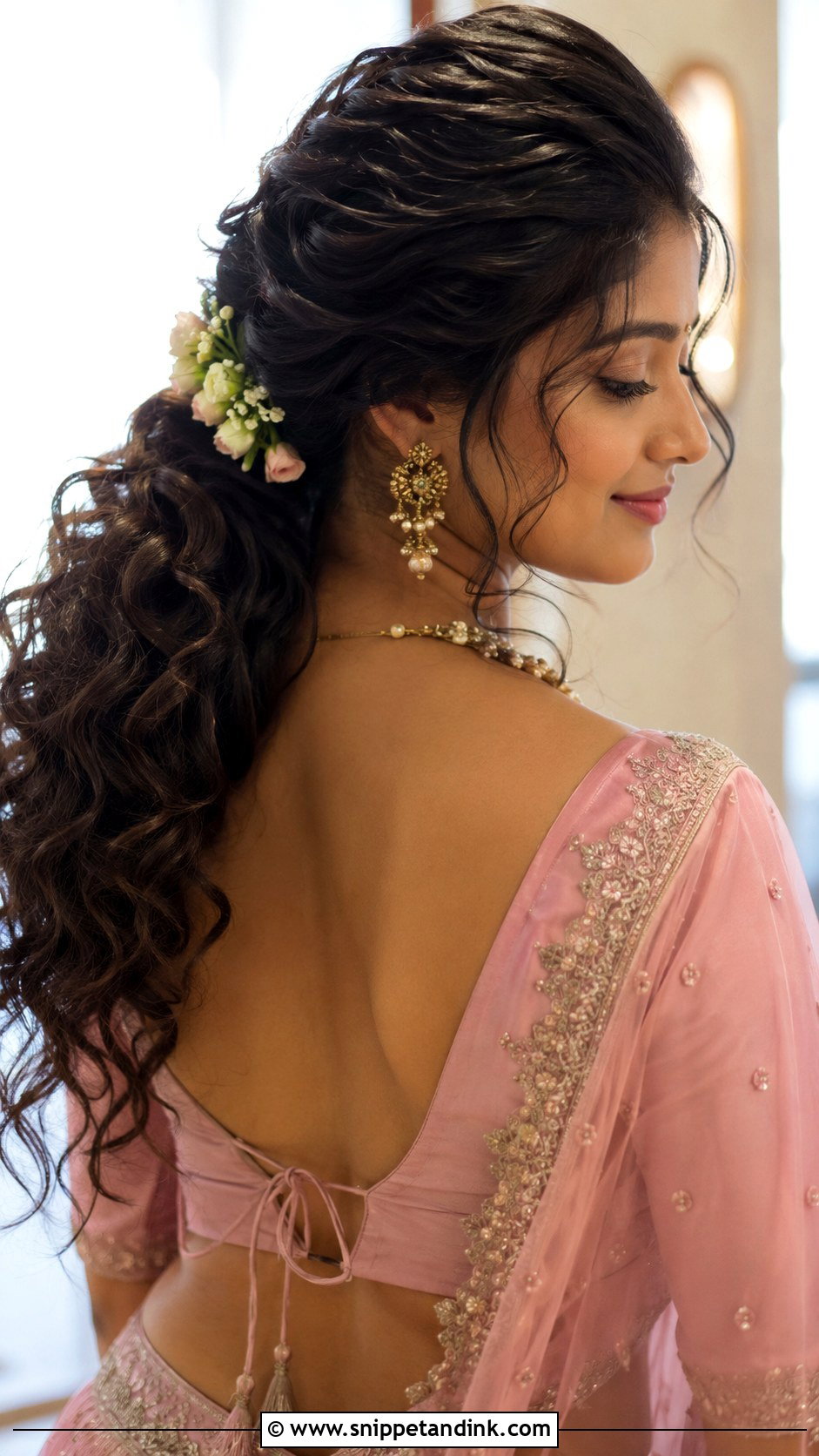
Curls make a ponytail look twice as full, so this is the one I steer fine-haired guests toward. Natural curls, heat curls or clip-ins all work. I brush the curls out just enough to soften them, with texture left at the crown. Heat-set curls on very straight hair need setting in pin curls and plenty of cooling time, or they drop before the baraat arrives. Keep front pieces light so they don’t fight the jewellery. Tiny floral pins are enough decoration.
4. Messy Braided Ponytail Indian Wedding
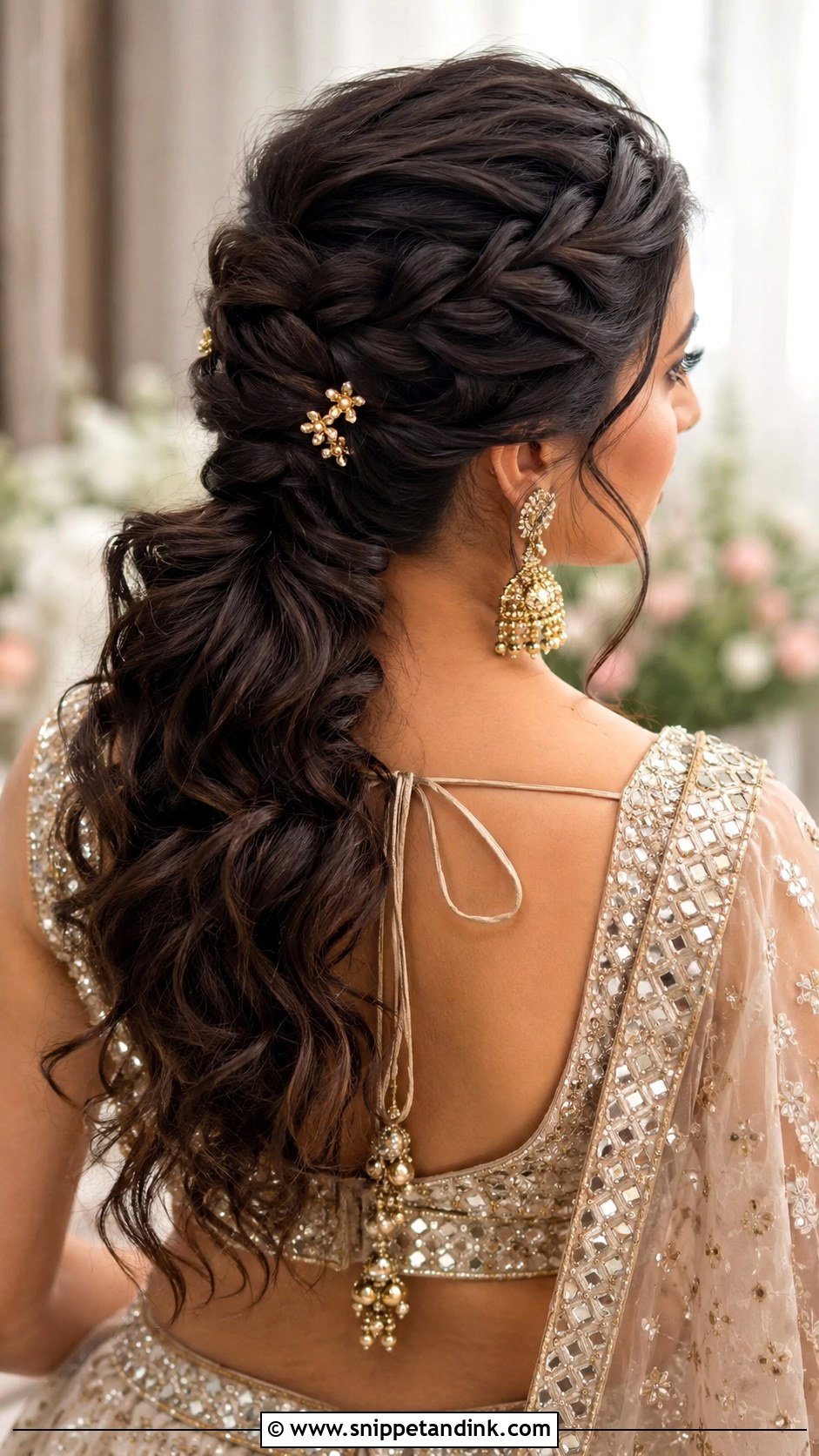
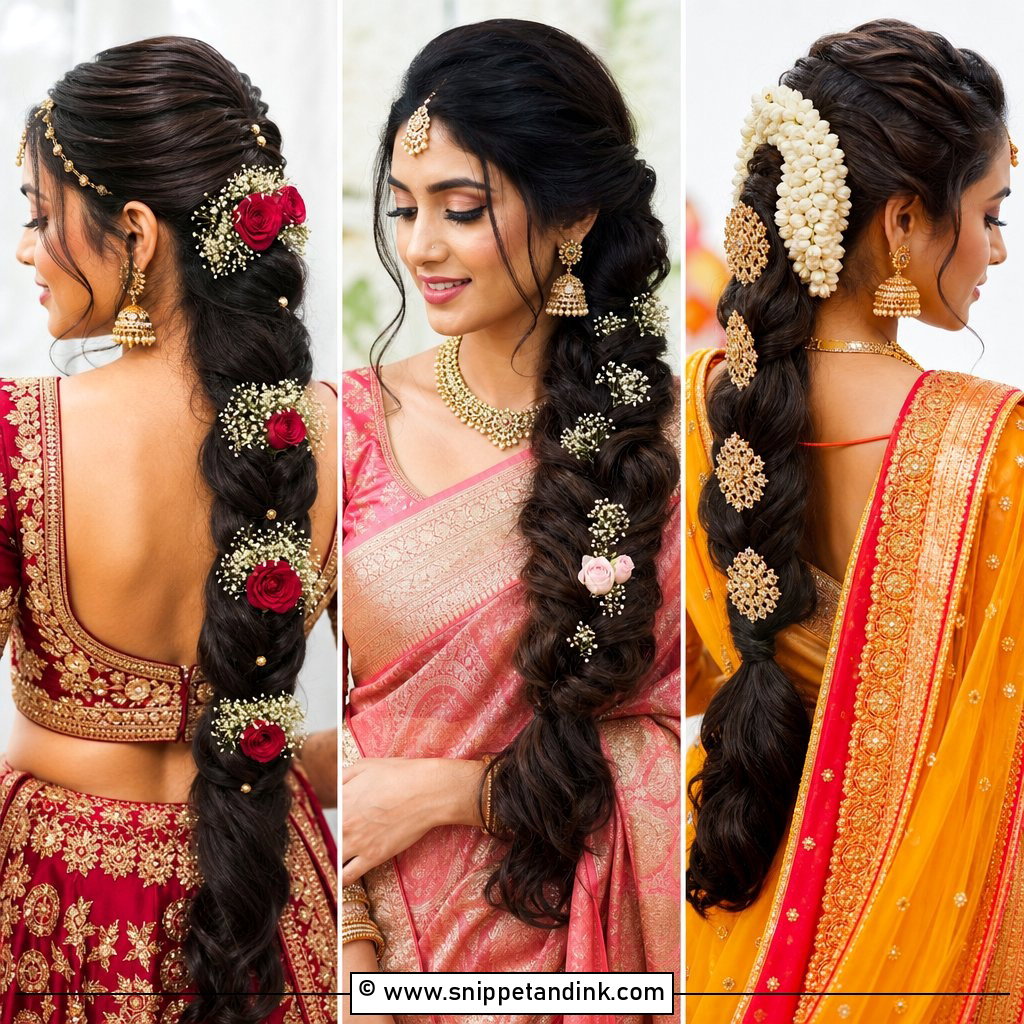
This is the most secure ponytail on the list, and it’s the one I’d do for a bride who’ll be dancing for hours. The braid locks the hair in place while the ends stay loose and soft. It can start at the crown, wrap into the pony or run down one side. I pull the braid apart for fullness and wave the ends. It looks especially rich with mirror-work lehengas, embroidered sarees and antique or oxidised jewellery.
5. Messy Side Ponytail Indian Wedding
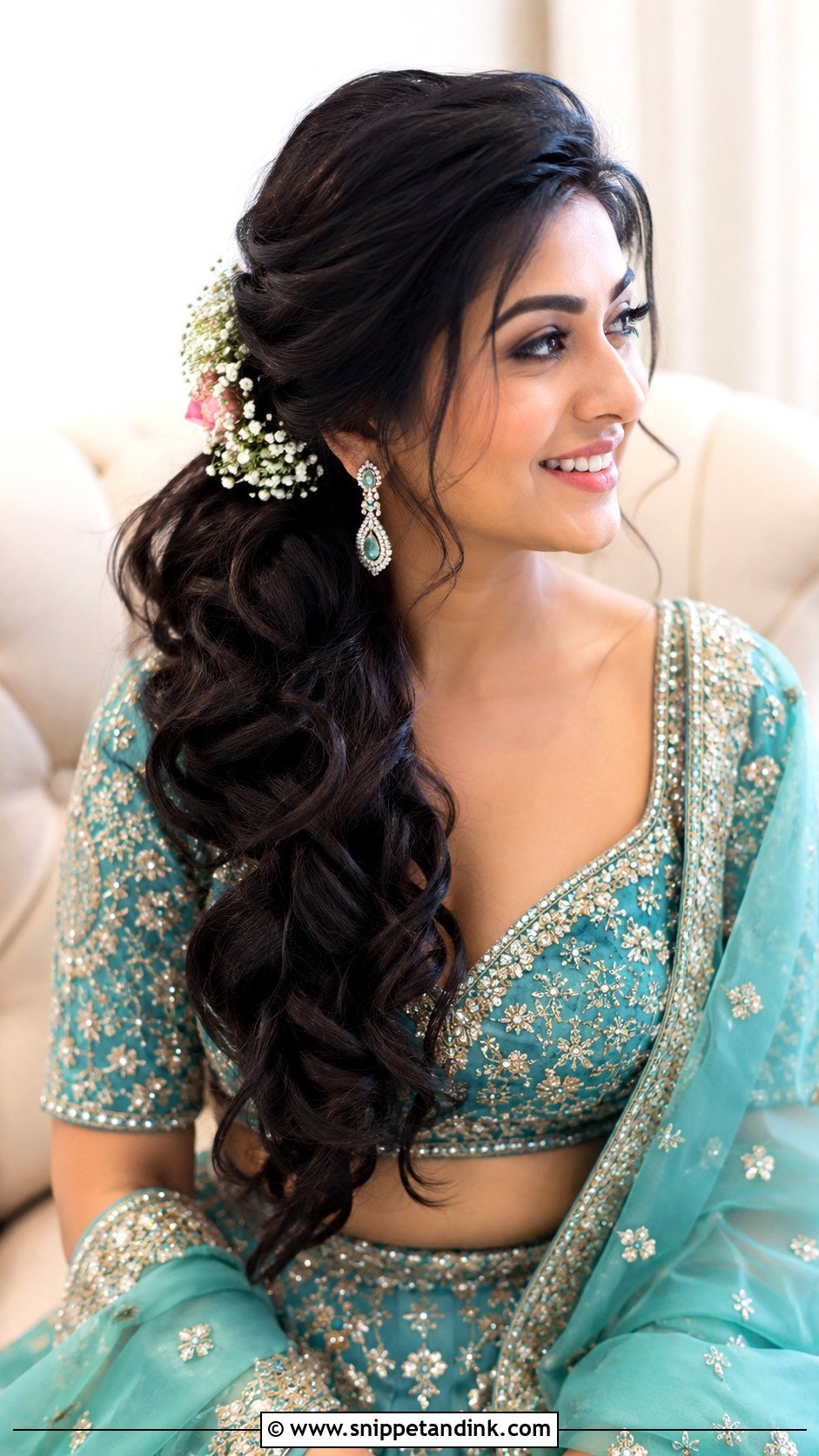
Pulling the pony to one side puts all the length in front-on photos, which a centre ponytail can’t do. It drapes over the shoulder, so long curls, flowers or a hair vine are fully visible. I place it on the side opposite the dupatta drape, otherwise the two compete for the same shoulder. A loose curl, soft crown volume and a few pieces at the forehead complete it. It suits mehendi, engagement and reception looks well.
6. Messy Ponytail With Maang Tikka Indian Wedding
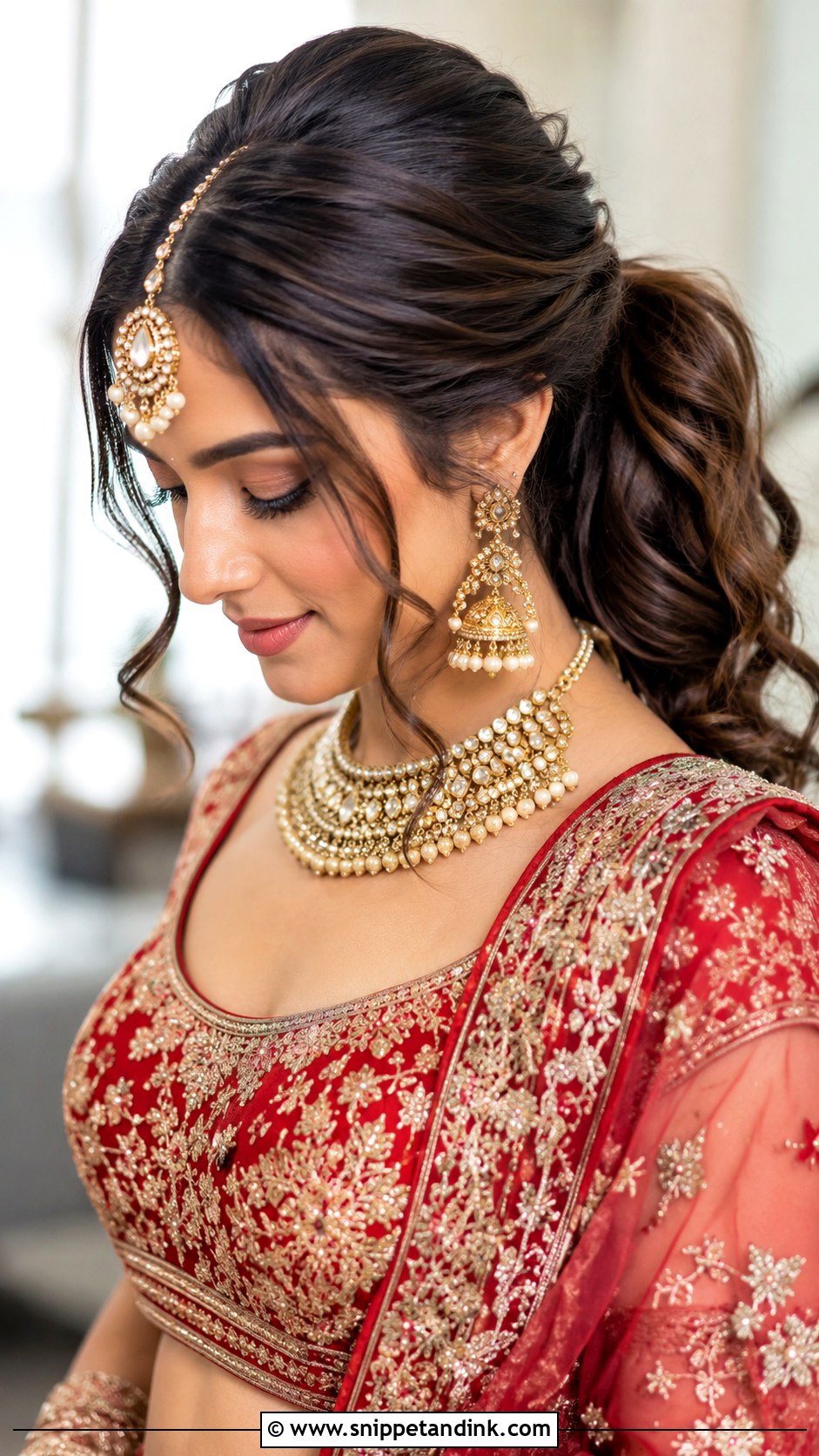
A maang tikka needs a clean centre part and a firm base, and that’s where most ponytail versions go wrong. I pin the tikka chain through a small section at the crown with two crossed bobby pins, hidden under a bit of backcombing, so it doesn’t swing off-centre when you move. The rest is then gathered into a soft pony. If you want a traditional bridal feel without a tight bun, this is the version to go for. The length can be curled, waved or loosely braided.
7. Messy Ponytail With Gajra Indian Wedding
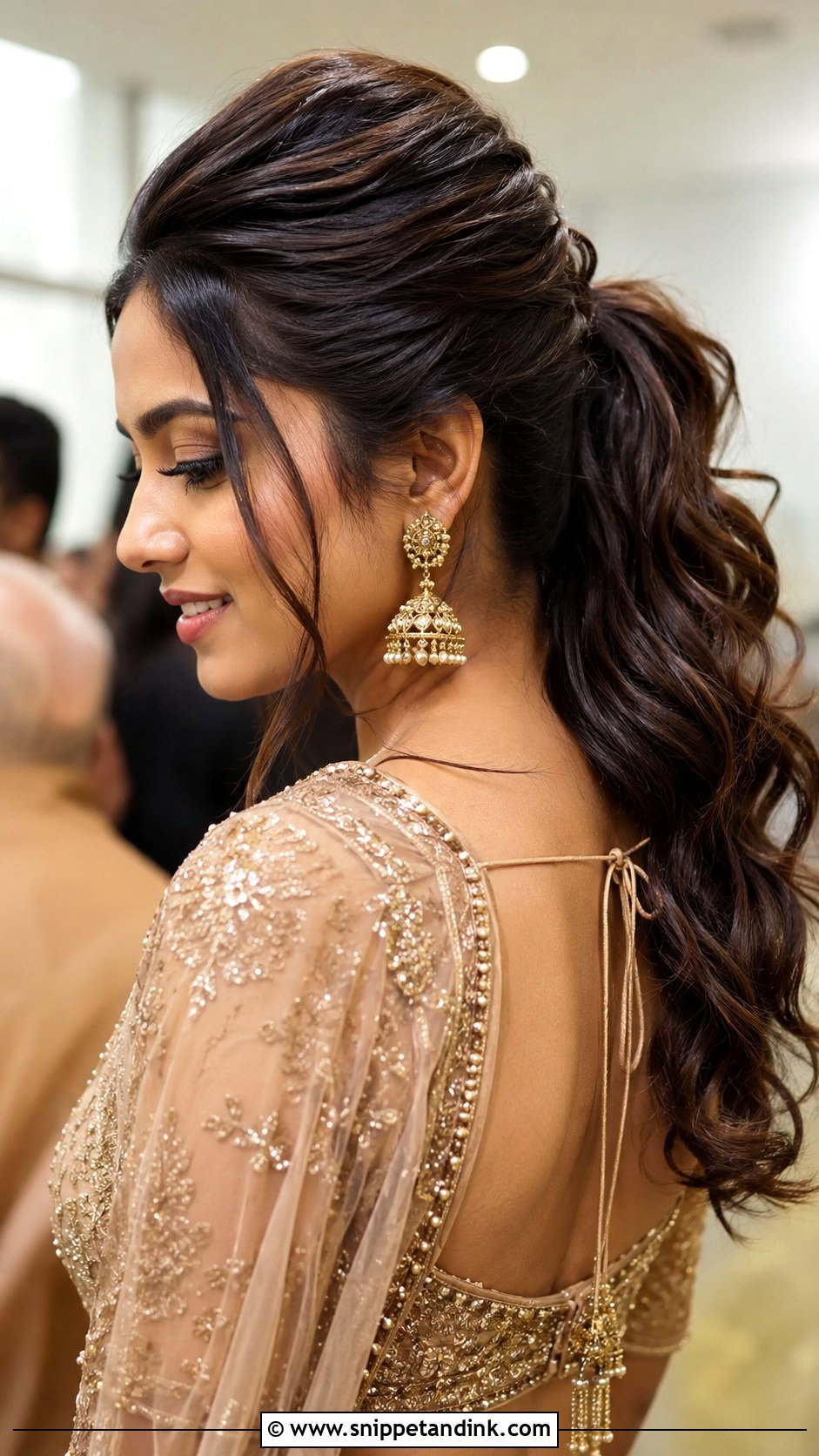
Gajra wrapped round the base of a pony is classic and smells wonderful. The practical issue: fresh jasmine browns within a few hours in heat. I keep the strands wrapped in a damp cloth in the fridge until the last minute, then pin them in after the hair is done. The pony itself can be wavy or lightly curled. It suits South Indian weddings, mehendi functions and daytime ceremonies. Keep the gajra neat at the base so it doesn’t swamp the texture.
8. Messy Ponytail With Flowers Indian Wedding
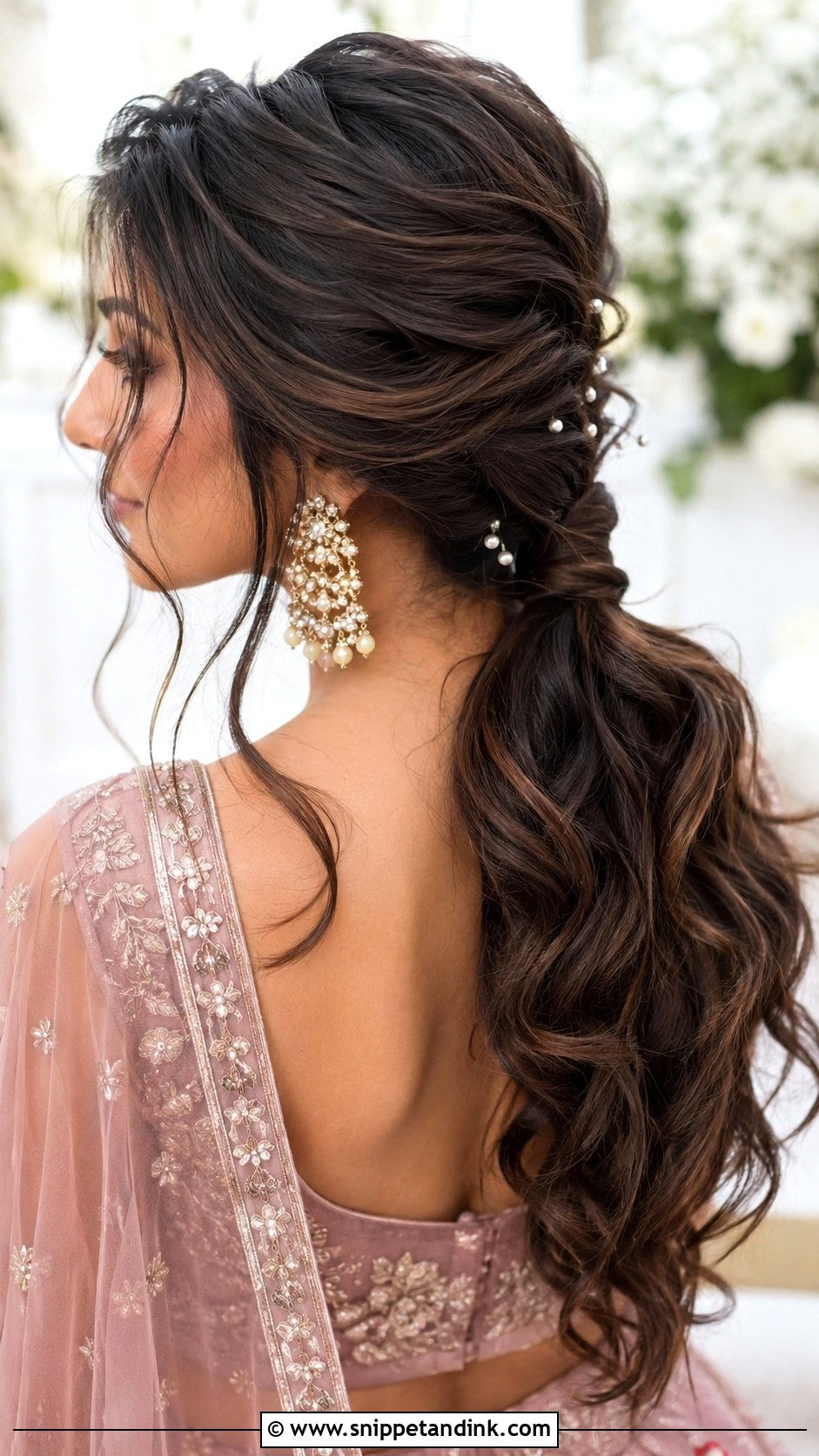
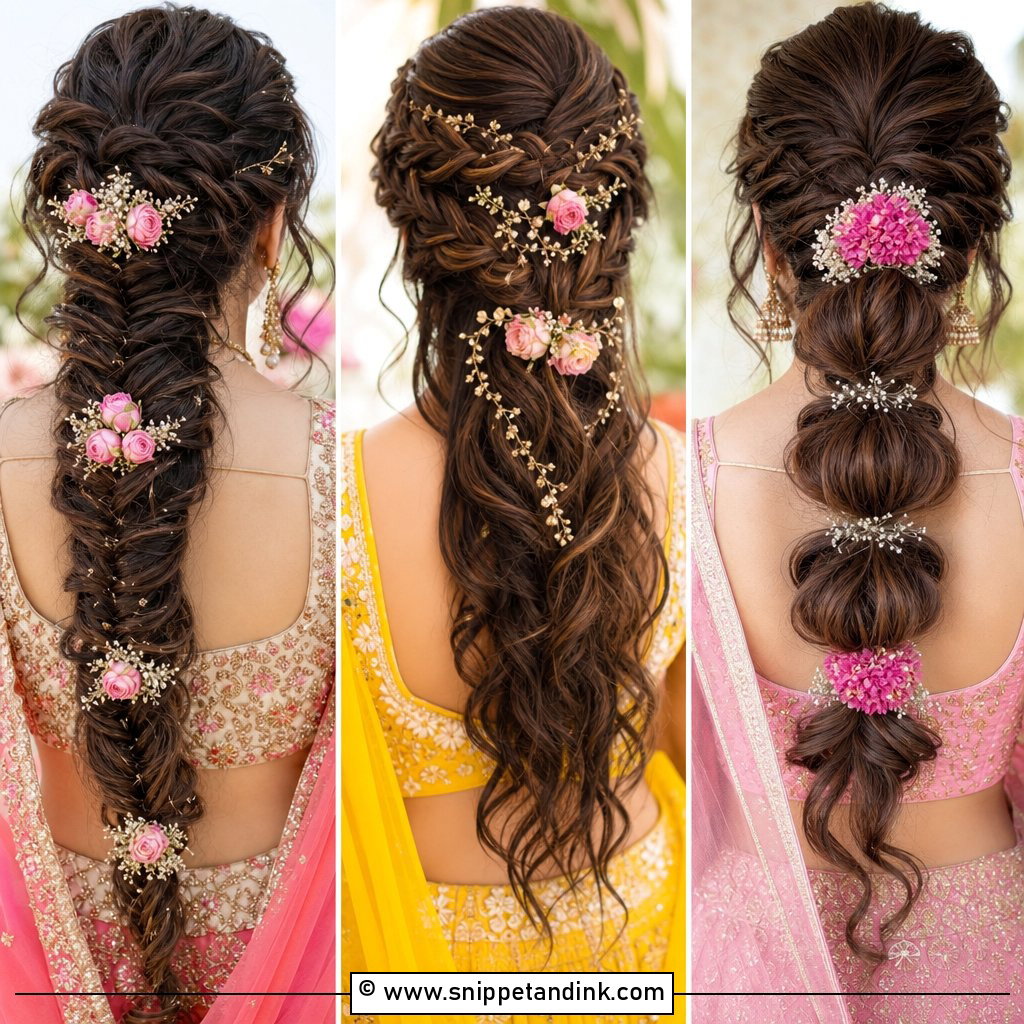
Flowers work best placed along the base or tucked to one side, not covering the whole ponytail. Roses, baby’s breath, orchids, mogra and pastel blooms all have their place, depending on the outfit colour. I wire or glue each stem to a pin so nothing falls out when you dance. Fresh flowers wilt, especially outdoors, so dried or silk ones are a sensible swap for long daytime events. Dewy makeup and delicate jewellery suit this one.
9. Messy Bubble Ponytail Indian Wedding
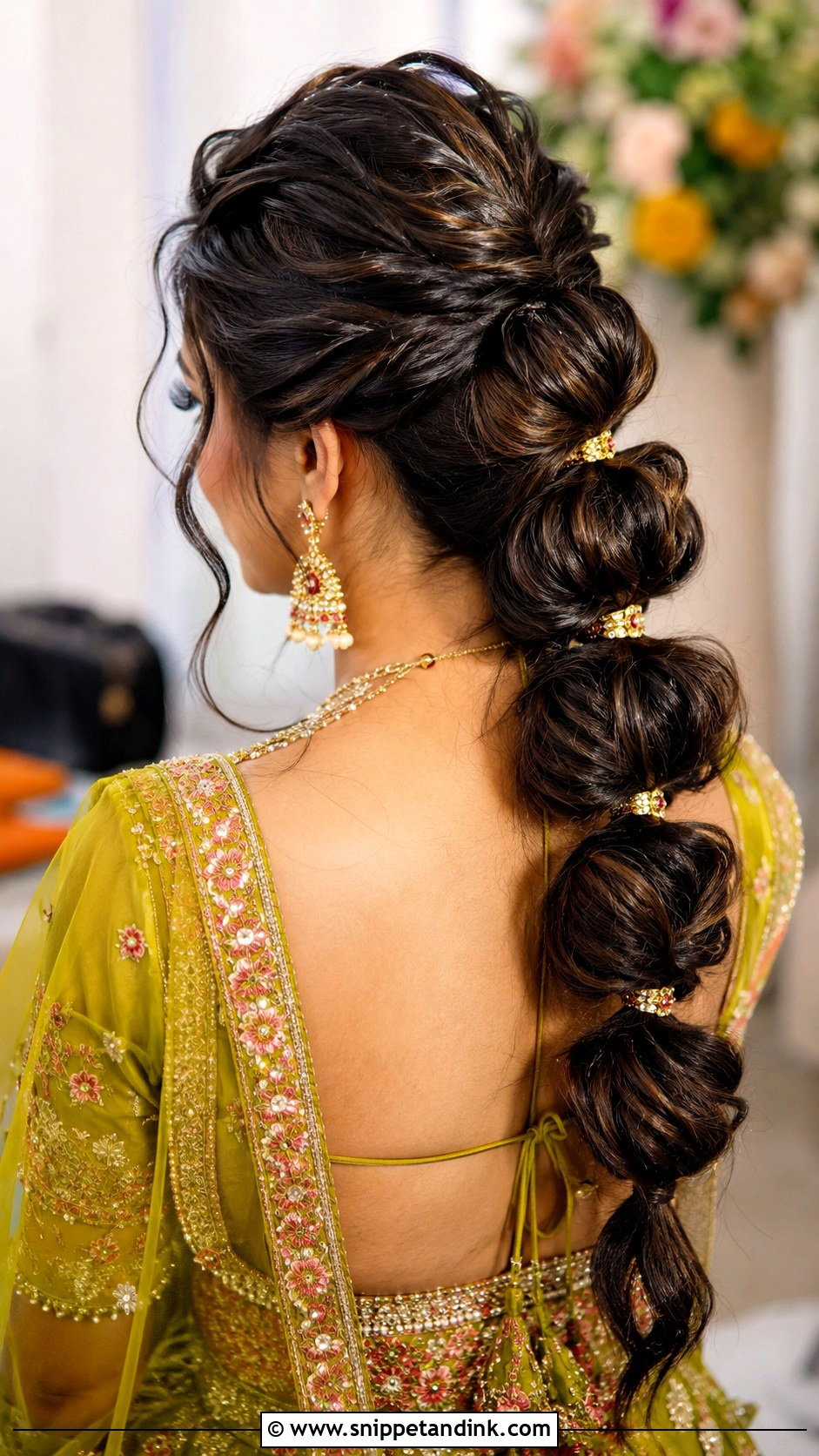
The bubble ponytail is playful, and the bubbles only show if there’s length to work with, so it needs long hair or extensions. I tie small clear elastics down the pony at even intervals, then pull each section apart to form a rounded bubble. Gold cuffs, pearl pins or florals can sit between the bubbles. It’s a sangeet or mehendi style; I wouldn’t do it for the pheras. Pair it with a modern lehenga or Indo-western outfit.
10. Messy Ponytail With Front Puff Indian Wedding
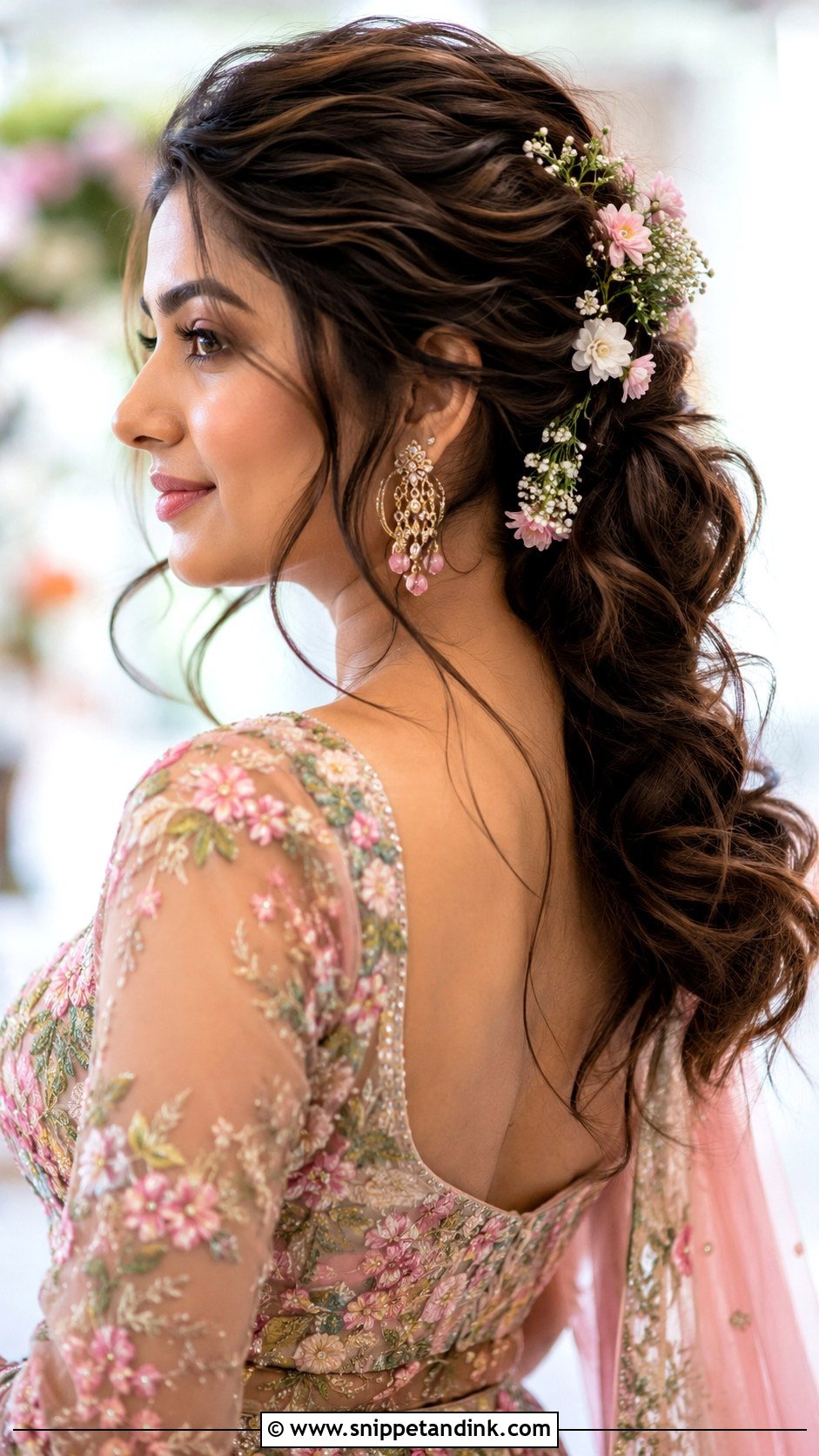
A front puff gives height at the crown that heavy Indian outfits often need to keep the proportions balanced. It should be soft and blended into the hair behind it, not a stiff bump. Ponytail height follows your face shape and jewellery. I like it in humid weather because the front section stays controlled with pins while the length keeps its texture. It’s excellent with a maang tikka, jhumkas and embroidered dupattas.
11. Messy Ponytail With Soft Curls Indian Wedding
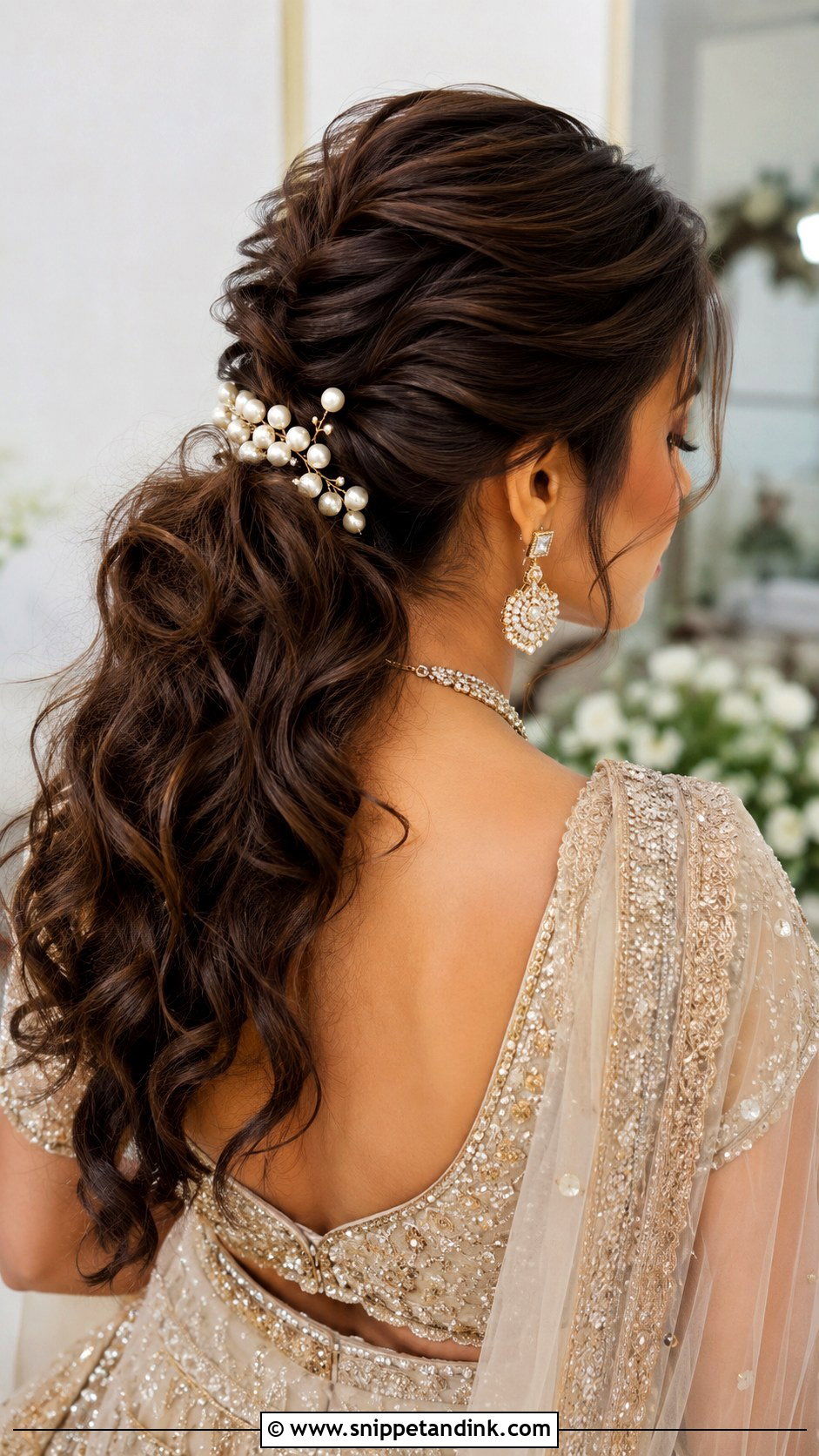
Soft curls are looser than ringlets, so they move and still look finished. Medium to long hair suits it, and extensions can fill it out. I texture the crown lightly and leave tendrils at the cheeks. It’s a reliable bridesmaid look because it needs less chair time than braided versions. Pearl pins, a crystal clip or a fine hair chain add sparkle.
12. Messy Fishtail Ponytail Indian Wedding
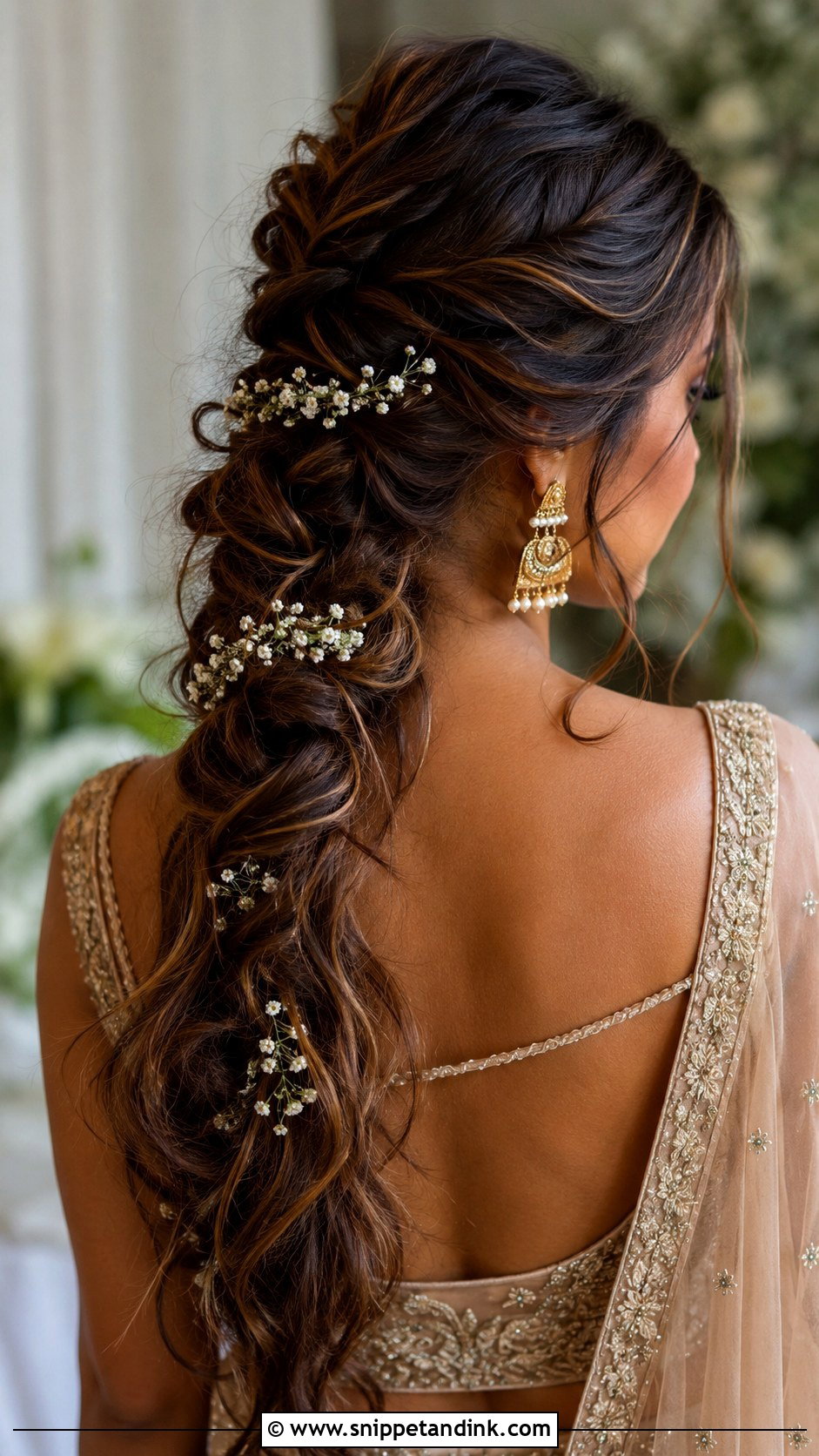
The fishtail runs through the ponytail itself, which gives detail without the weight of an updo. On very dark, single-tone hair the pattern can blur in photos, so it really shows on balayage or naturally dimensional hair. I pull it apart once it’s tied so the sections read from a distance. It’s good for mehendi and boho bridal outfits. Small flowers or gold accents can go between the sections.
13. Messy Half Braided Ponytail Indian Wedding
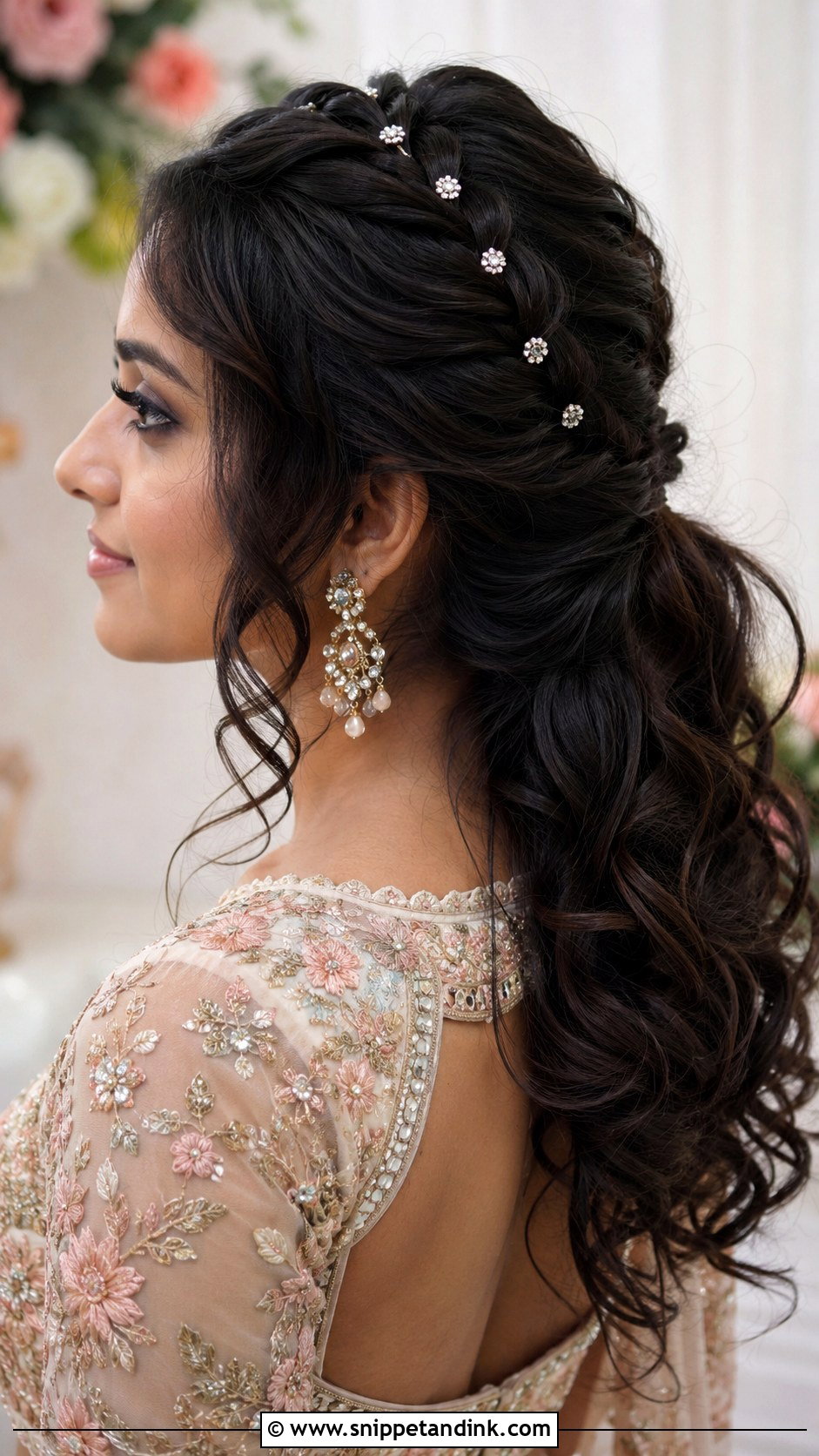
The top section gets the detail, a braid, twist or rope, and the lower ponytail stays open in curls. That keeps hair off your face, which matters when you’re bending forward for rituals or eating with your hands. It suits lehengas, sarees and fusion outfits. Accessories sit along the braid. Keep the pony full so the top doesn’t look busier than the length.
14. Messy Wavy Ponytail Indian Wedding
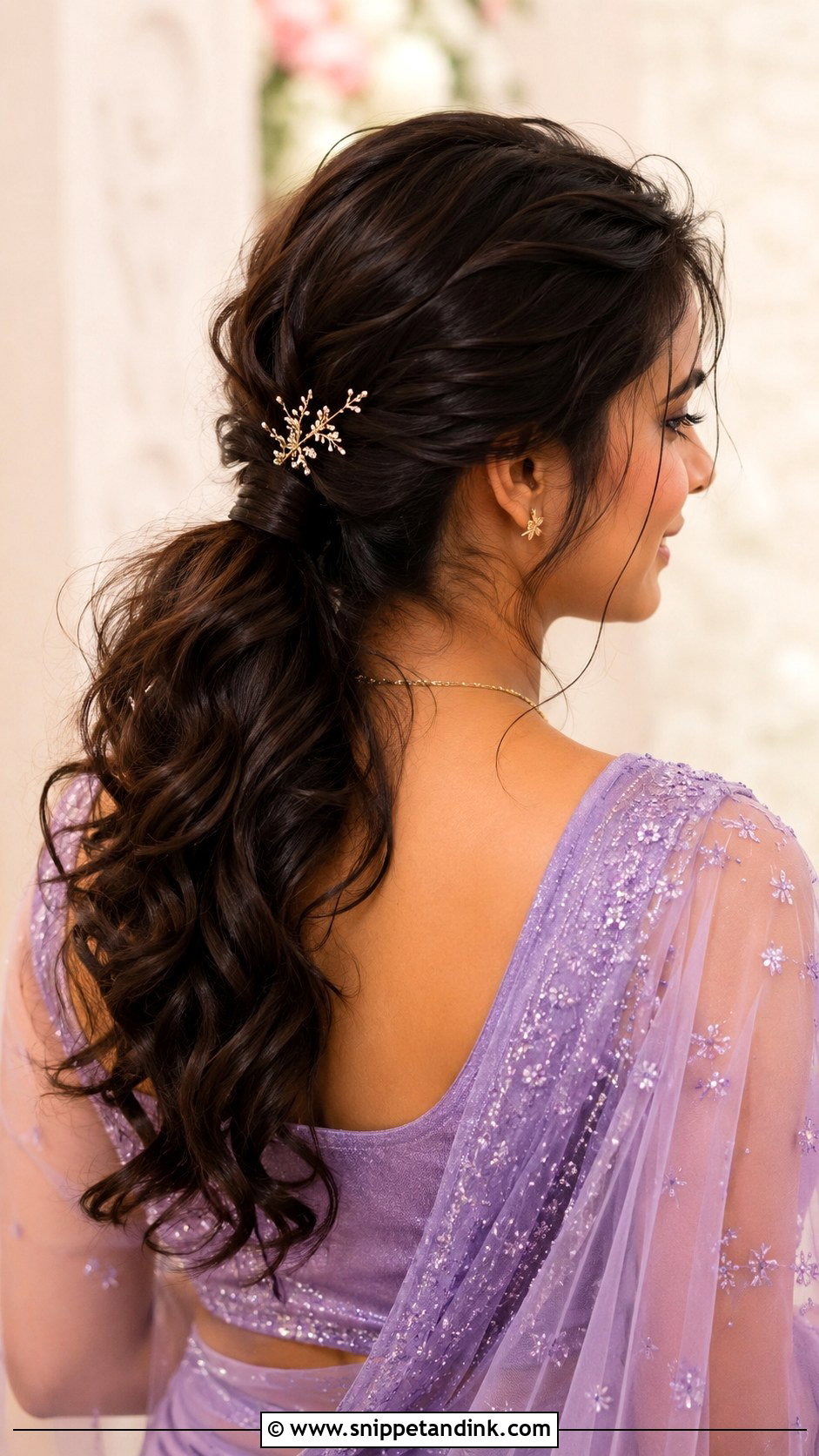
Waves are the quickest of these to style, so they suit guests and bridesmaids who share one stylist on a tight morning. They’re softer and flatter than curls. I add a wrapped base, a little crown volume and face-framing waves. One small jewelled pin or floral clip is plenty. Waves fall faster than curls in heat, so expect them to loosen by the evening function.
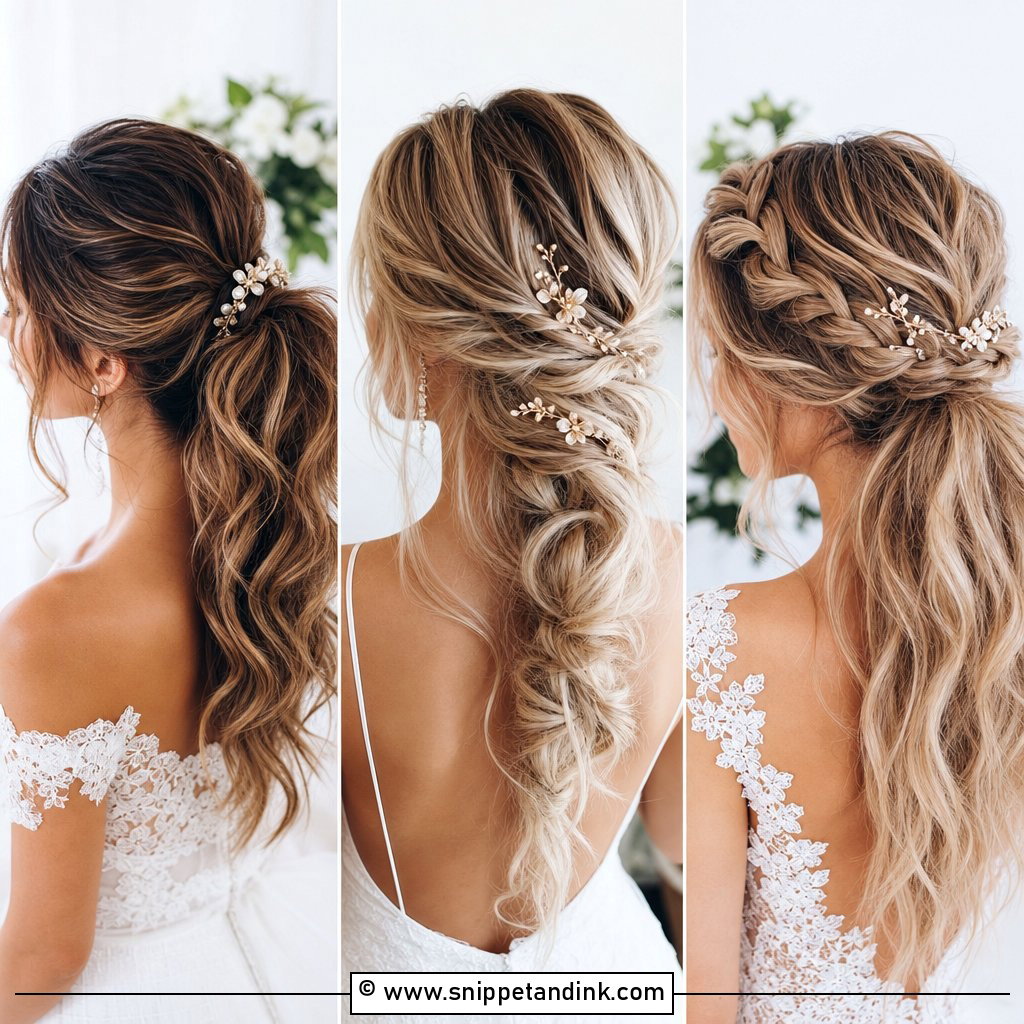
15. Messy Ponytail With Hair Accessories Indian Wedding
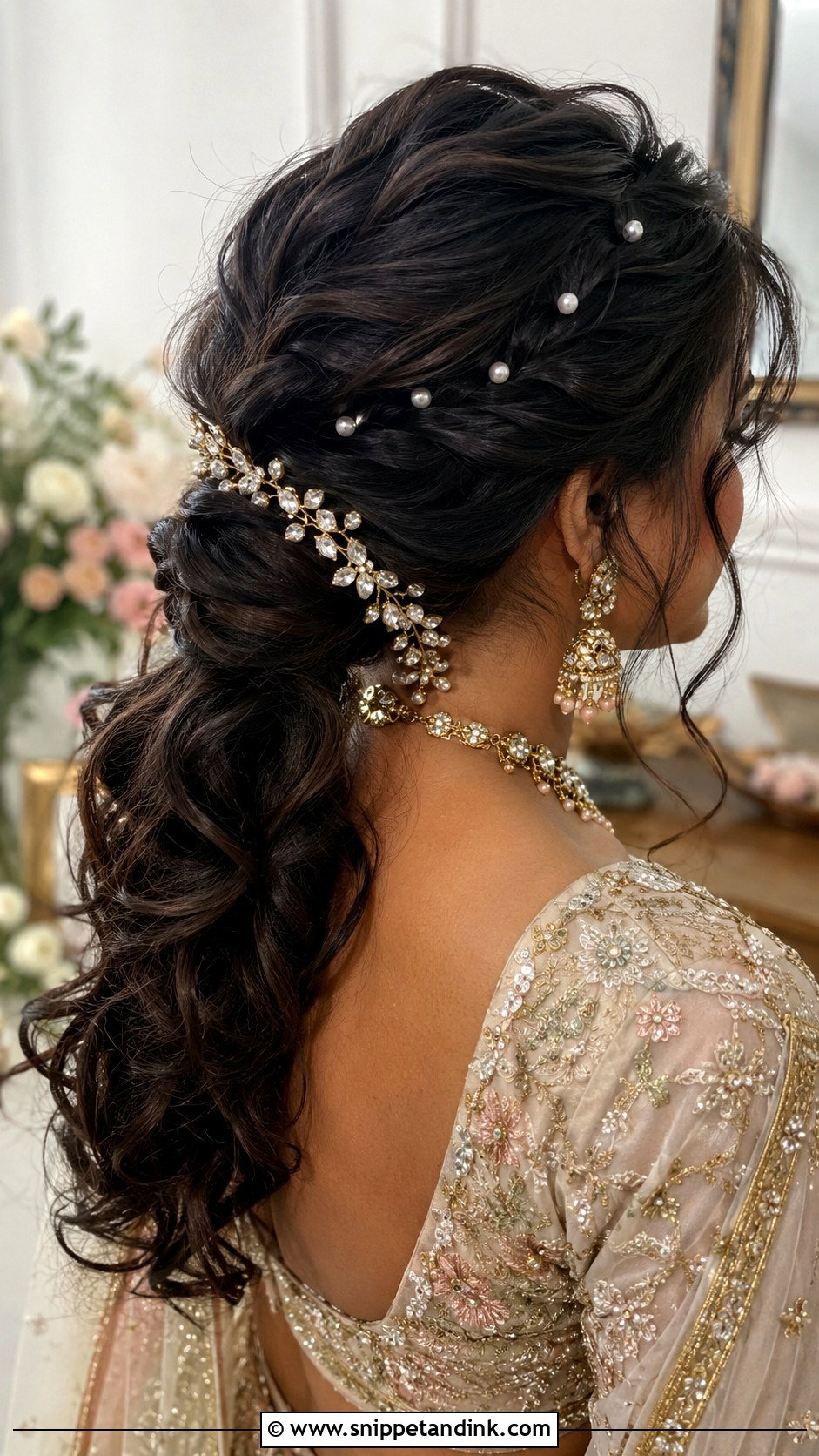
Accessories let you match the ponytail to the outfit and the event: pearl pins, kundan clips, crystal vines, gold cuffs, floral combs or fine chains. The rule I follow is simple. If the outfit is heavily embellished, keep the hair pieces small. If the outfit is plain, choose one standout piece near the base or side. Heavier kundan pieces need their own anchor pins, or they’ll pull the ponytail sideways. It gives brides, bridesmaids and guests a finished look without a bun.
Where the Tikka and Dupatta Anchor When There’s No Bun
With a bun, the dupatta and jewellery have something solid to pin into. With a ponytail, I have to build that anchor myself, and skipping it is the most common reason a pony collapses mid-function.
How I Set It Up
- A small flat section at the crown is backcombed and pinned with crossed bobby pins. That’s where the tikka chain hooks in.
- For a head-covering dupatta, I pin it to that same anchor and to the base of the pony, so it doesn’t drag the ponytail backward.
- Heavy jhumkas with sahara chains get pinned above the ear, into the side hair, which takes weight off your earlobes.
- Extensions go in before any of this, clipped above the elastic line so the pony hides the clips.
Pack spare U-pins and black bobby pins for whoever is helping you. A dupatta gets moved and repinned many times over a long wedding, and every time it tugs on the hair.
Plan the Ponytail Around Your Heaviest Outfit
A messy ponytail can carry you through every function: low for grace, high for drama, curled for volume, braided for hold. Flowers, gajra, a tikka or jewelled clips make it festive. Base your choice on your neckline, jewellery, dupatta placement and hair length, and build it on a firm anchor so it survives the dancing. Try the heaviest outfit at the trial, with the dupatta pinned, before you settle on the height.
You'll Like These Ideas:


Leave a Reply