
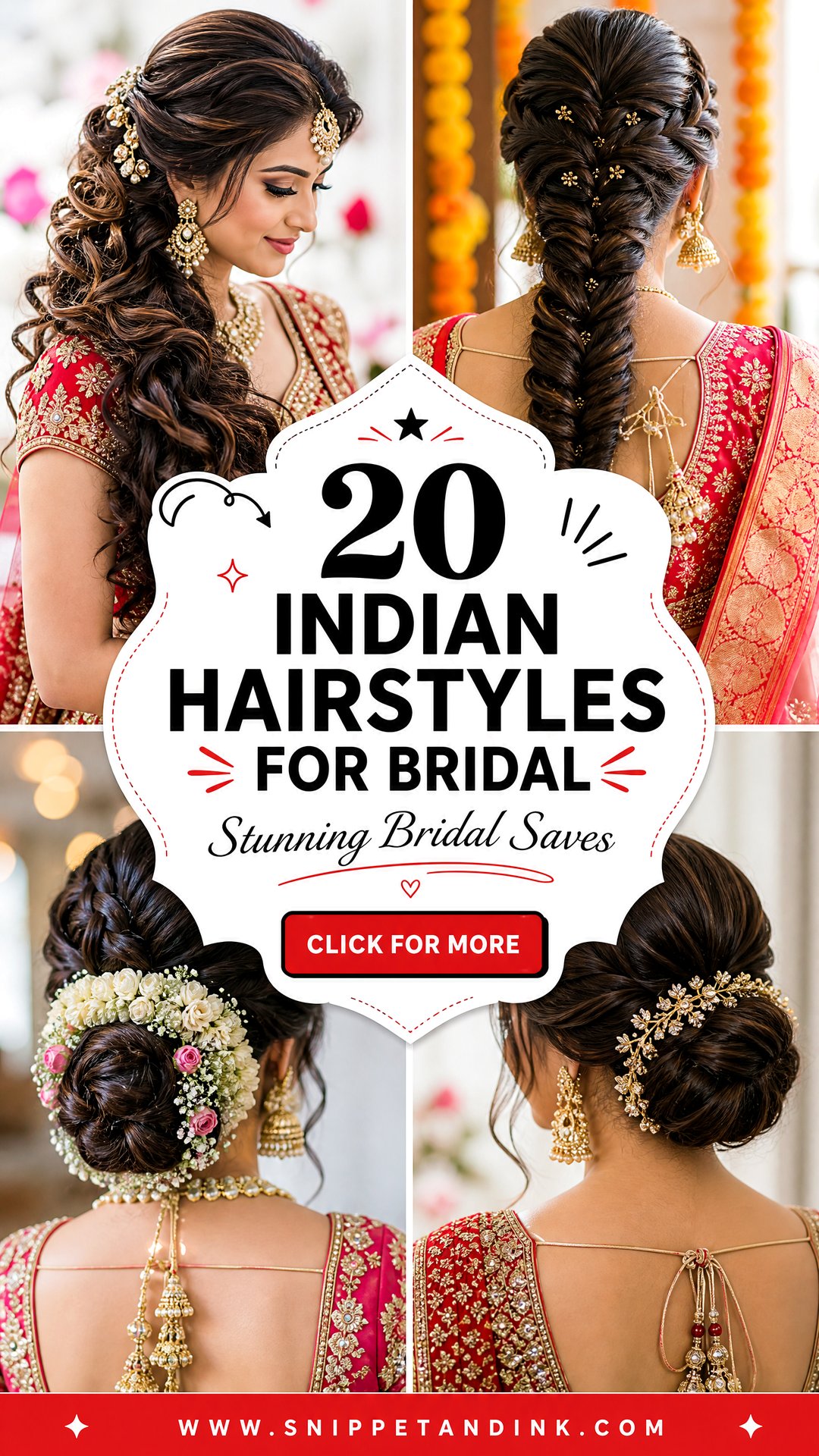
Indian bridal hair has to do several jobs at once. It holds the jewellery, carries the flowers, anchors the dupatta and still has to look like you after a twelve-hour day. Across the mehendi, sangeet, wedding and reception you may wear four different styles, and each one is built differently underneath. This list of 20 Indian bridal hairstyles mixes the classics with the shapes celebrity brides have made popular lately, from flower-heavy buns and long gajra braids to open waves and sleek chignons. For each one I’ve added what I look at before I’d recommend it.
Bring the Jewellery, the Dupatta and a Phone Camera
A hairstyle that looks right in a photo can still fail under your own bridal pieces. The only way to know is to try it with the real things, roughly four to eight weeks before the wedding, after any colour appointment so the shade matches what you’ll have on the day.
What I ask brides to bring
- The actual maang tikka, matha patti, earrings and any hair ornaments. Weight changes everything.
- The wedding dupatta, or one of the same weight. Net sits very differently from heavily embroidered velvet.
- A top with a neckline close to your blouse, so we can judge the balance with your shoulders.
- Clip-ins or a braid extension if you plan to use them, to match colour in daylight.
How to judge it
Have someone photograph you from the back and both sides, with flash and without. Then keep the style in for the rest of the day. Sit down, hug someone, turn your head quickly. If anything pulls, aches or slips within a few hours, it will be worse after a full wedding day, so say so then. A good stylist will rebuild rather than defend the first version.
1. Floral Bun for Indian Bride
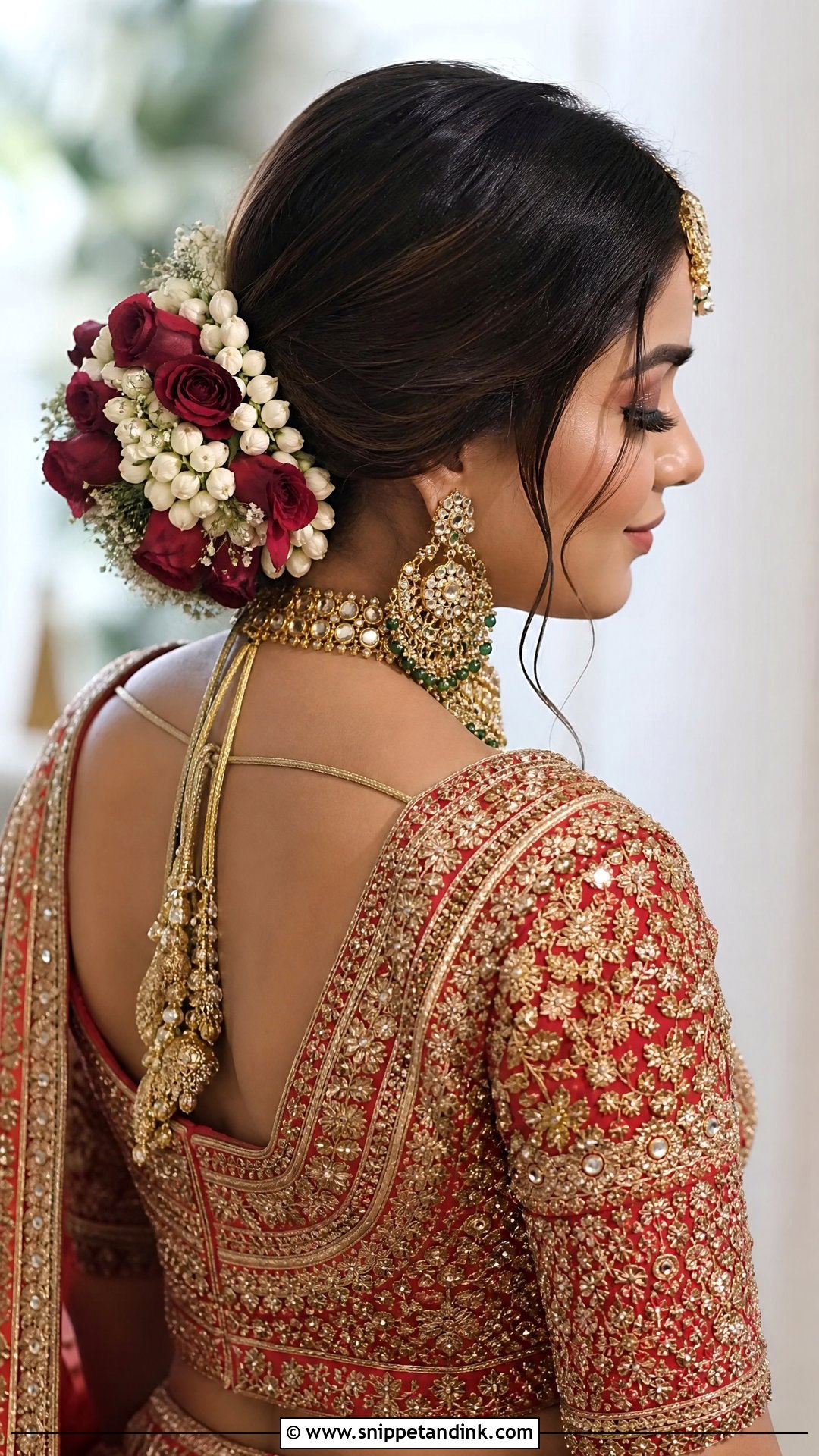
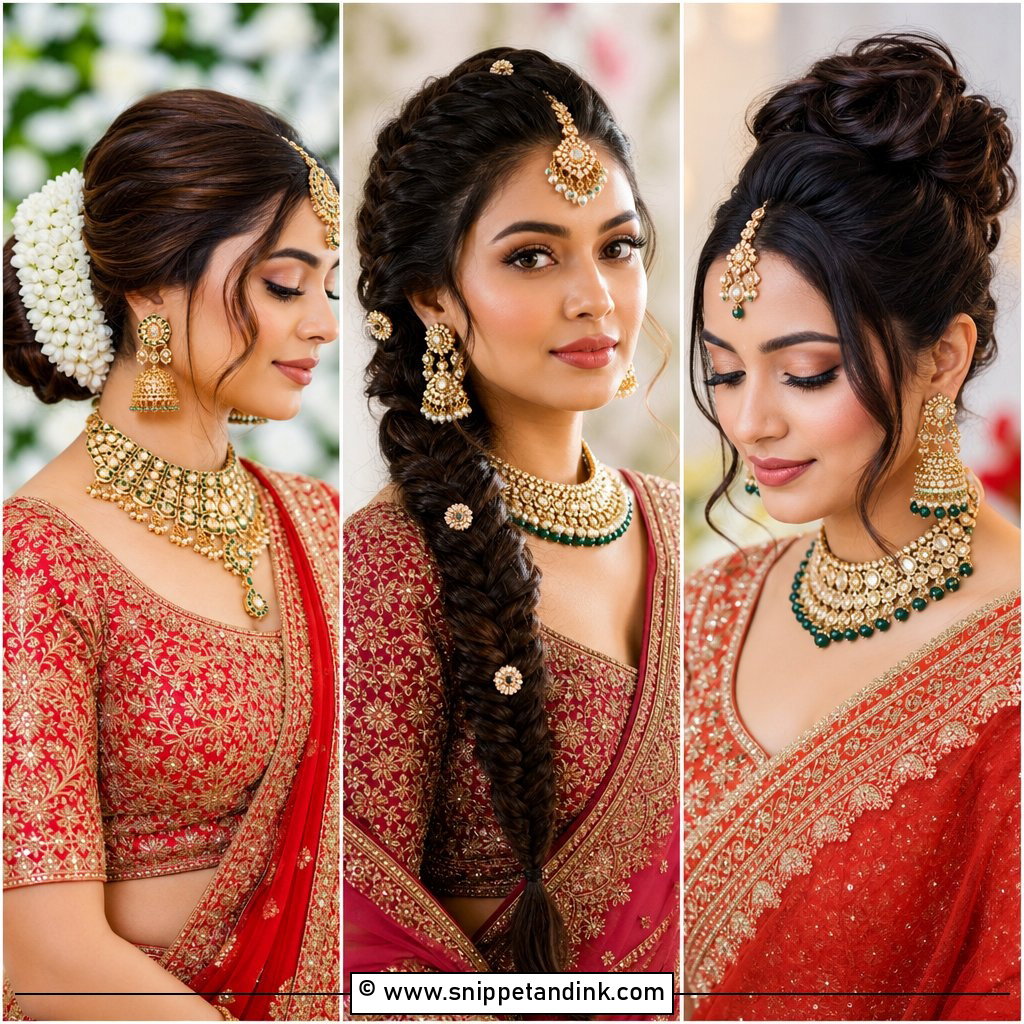
Flowers piled onto a smooth low or mid bun until it looks full: roses, jasmine or orchids, or a mix. It belongs with heavy lehengas and traditional jewellery at the main ceremony. The weight is the thing to plan for. A full cover of fresh flowers is heavier than any ornament you’ll wear, so I build the bun on a firm ponytail and use U-pins through the flower stems into the base, never just into the surface. Neat or with a few loose petals, it holds for hours if the base is right.
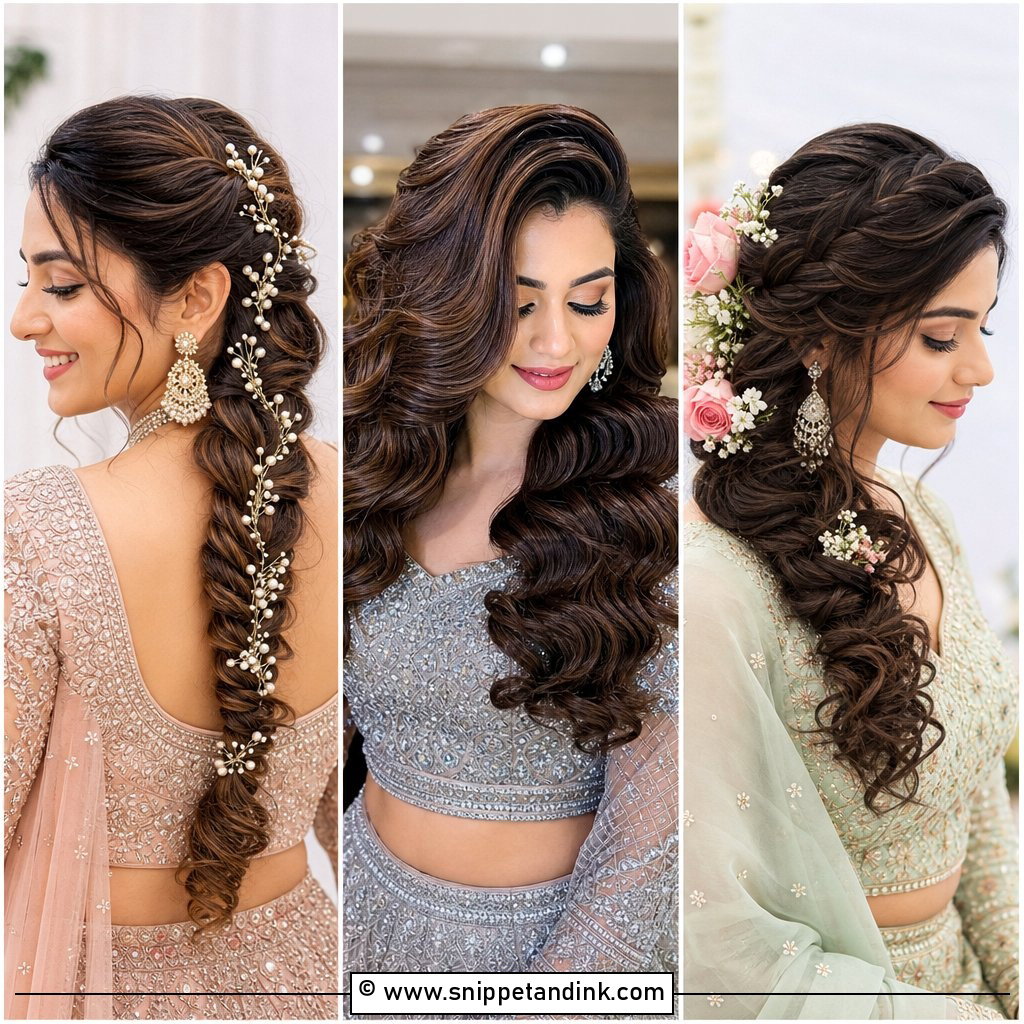
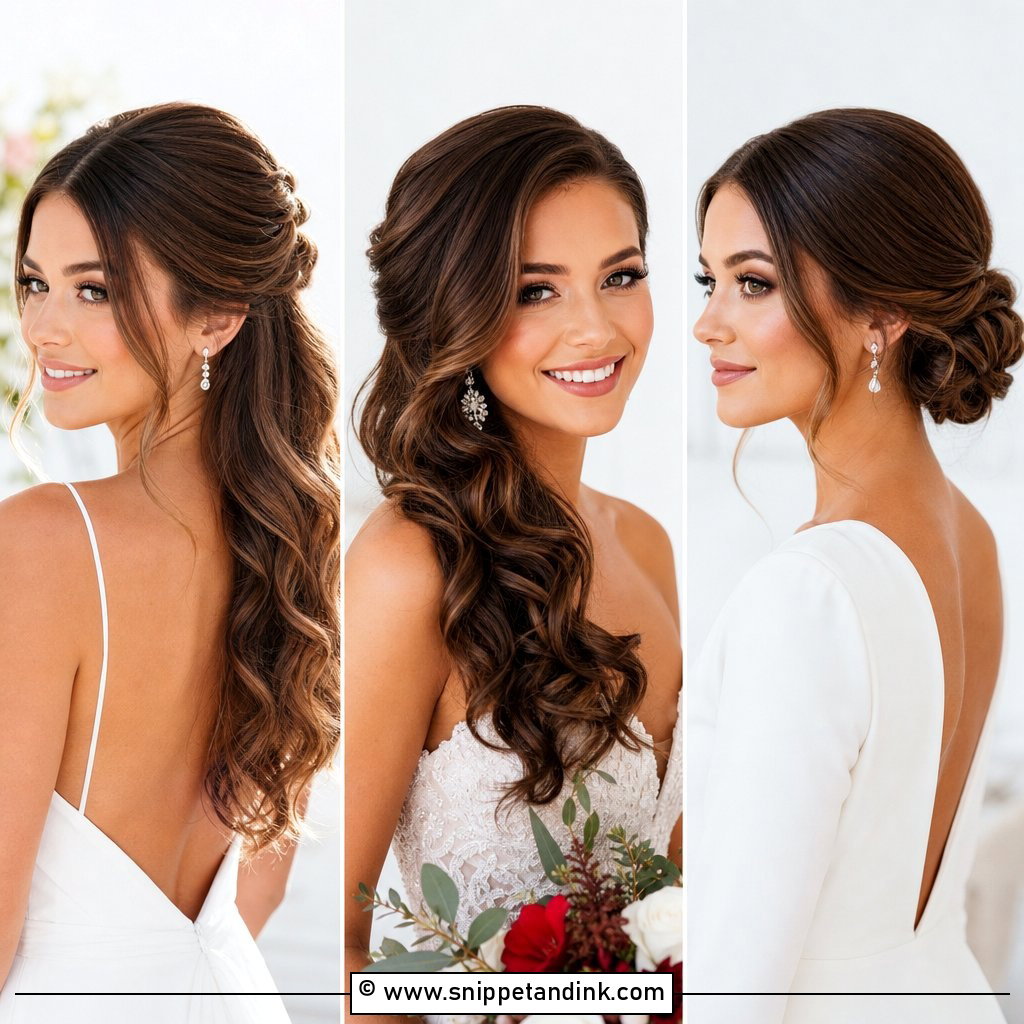
2. Side Swept Curls for Wedding
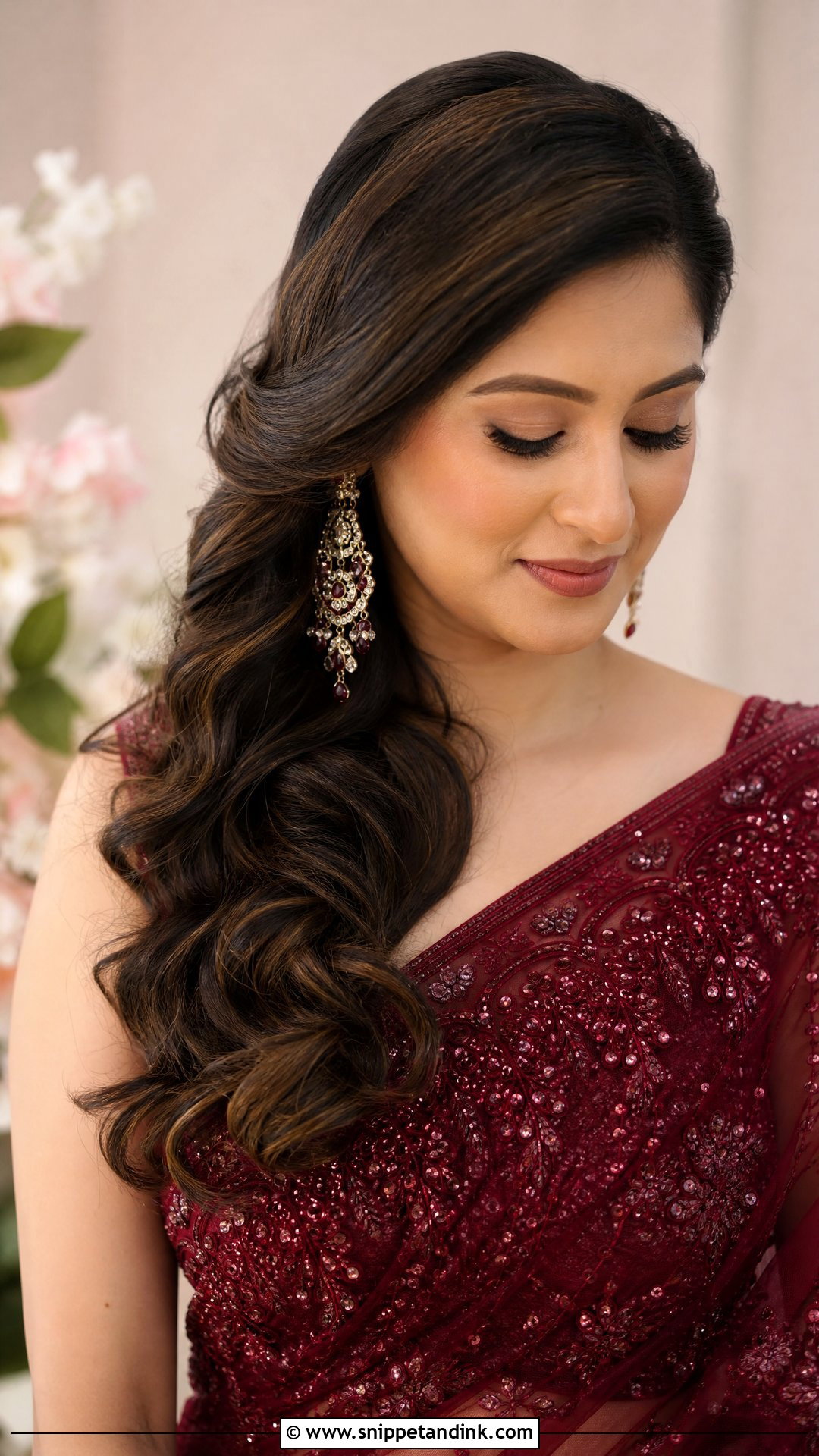
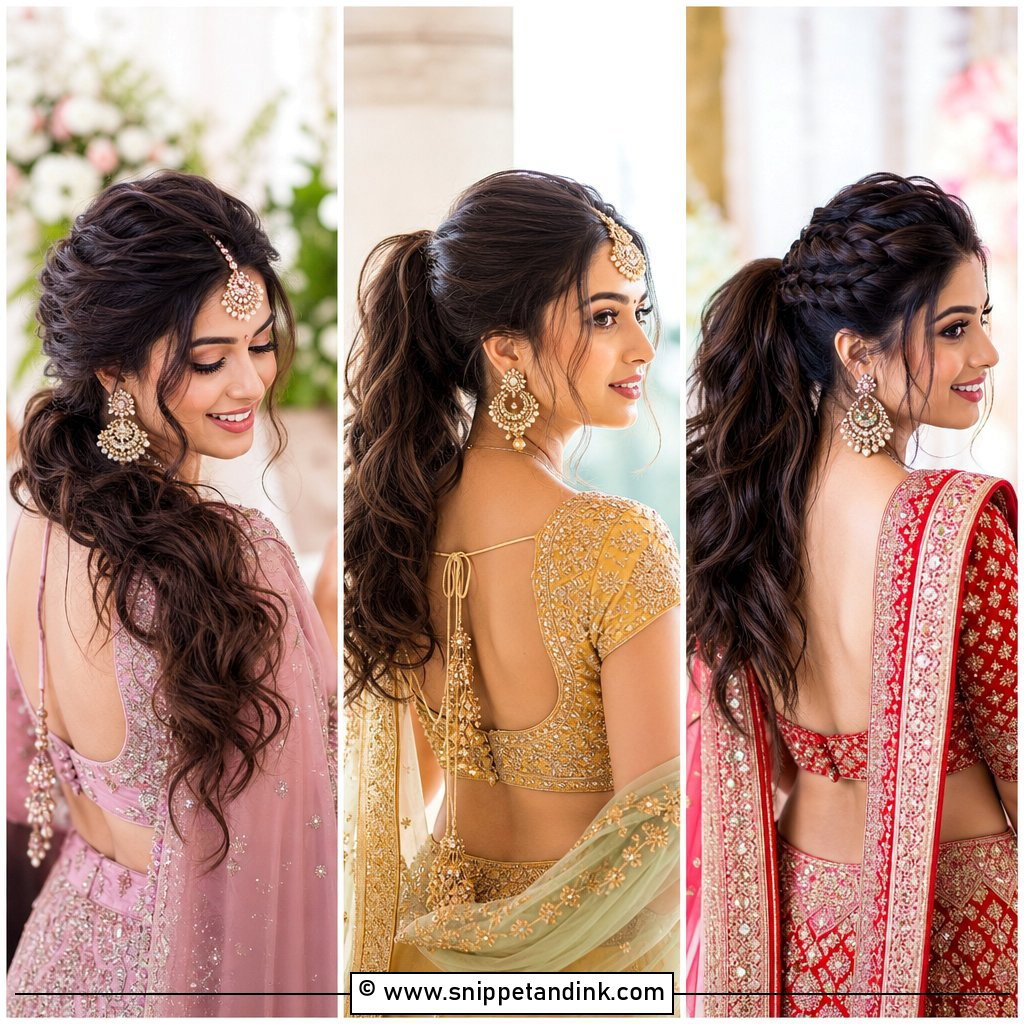
Curls swept over one shoulder and pinned at the side, so the hair is mostly open but controlled. Statement earrings and a maang tikka stay visible, and it moves well at receptions and cocktail events. My honest note: curls relax in warm rooms, and over a long evening these will drop into waves. I set them in pin curls until the last minute and use a light flexible spray, which buys the most time. A small clip or a single flower near the part finishes it.
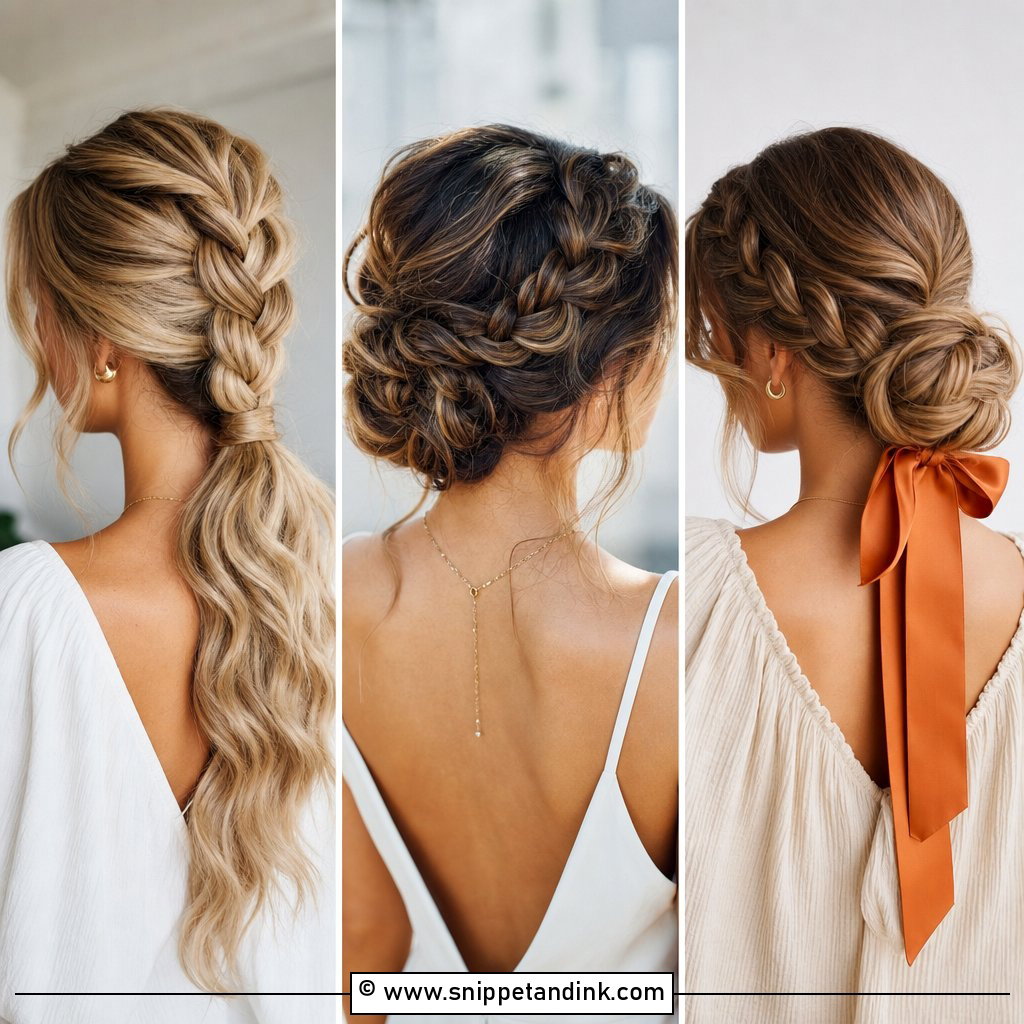
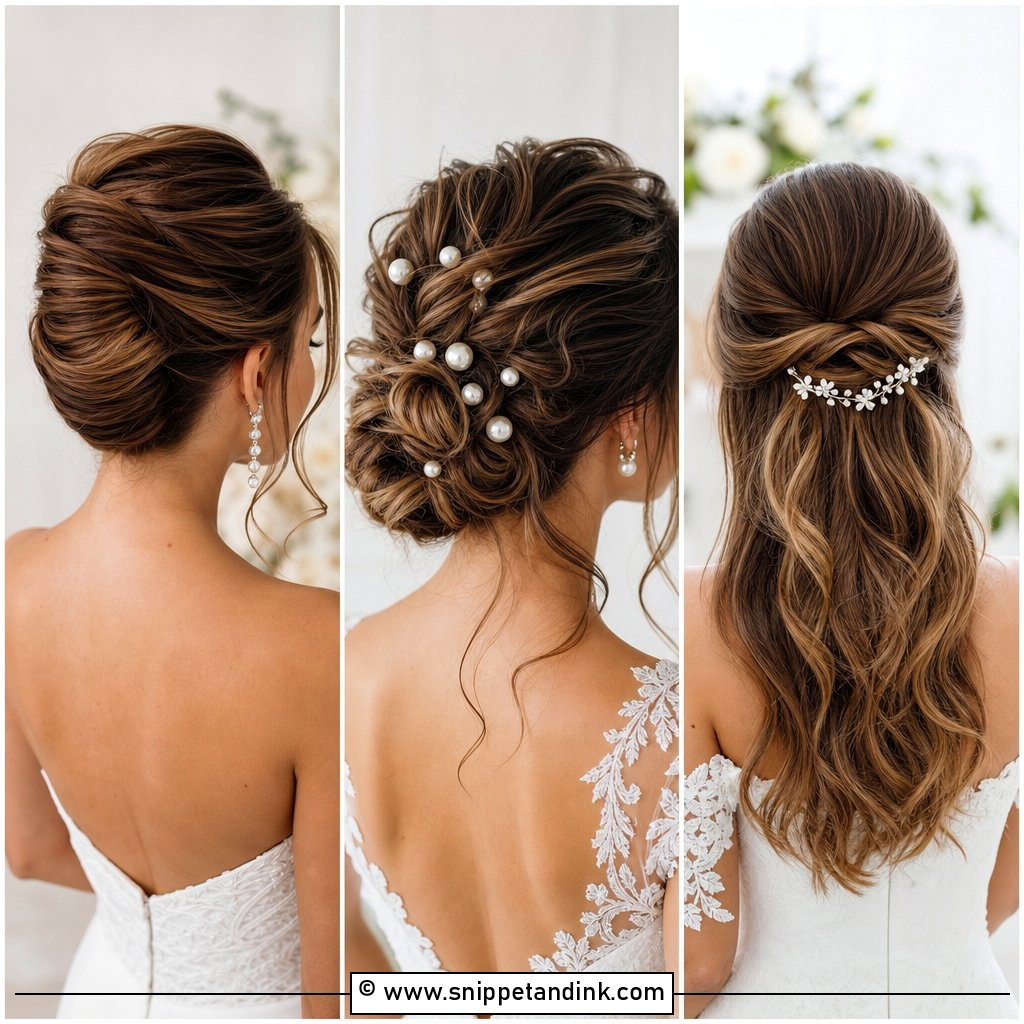
3. Gajra Braid for Indian Wedding
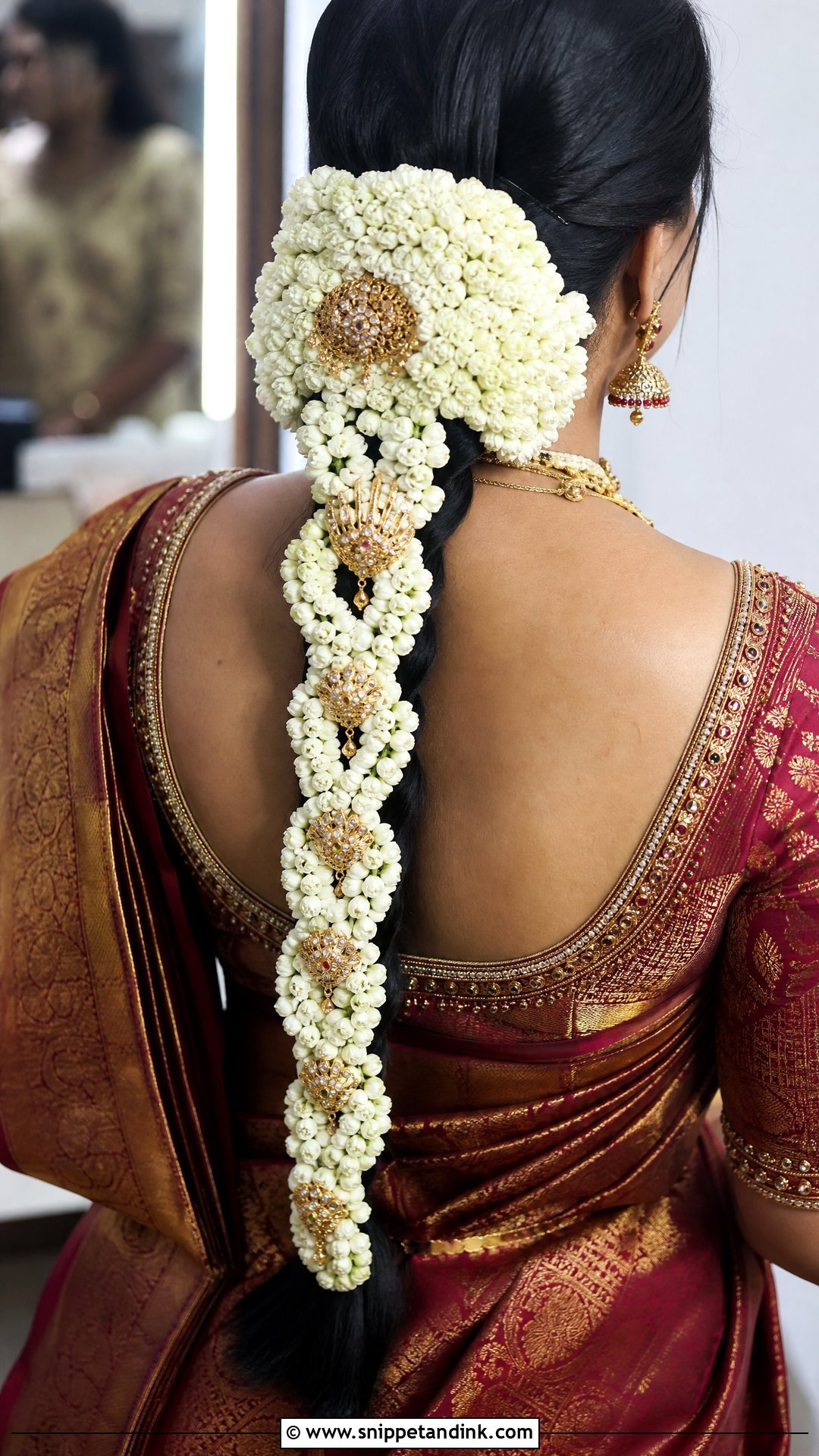
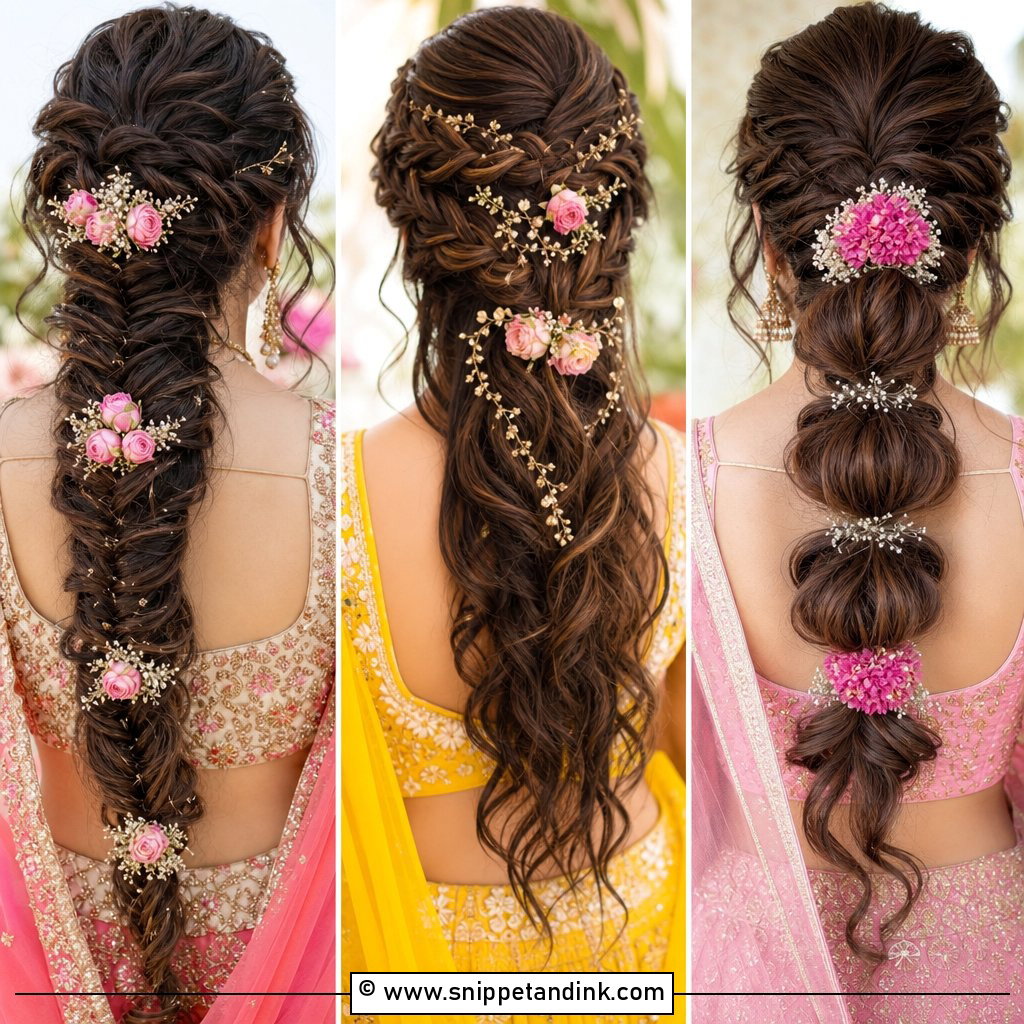
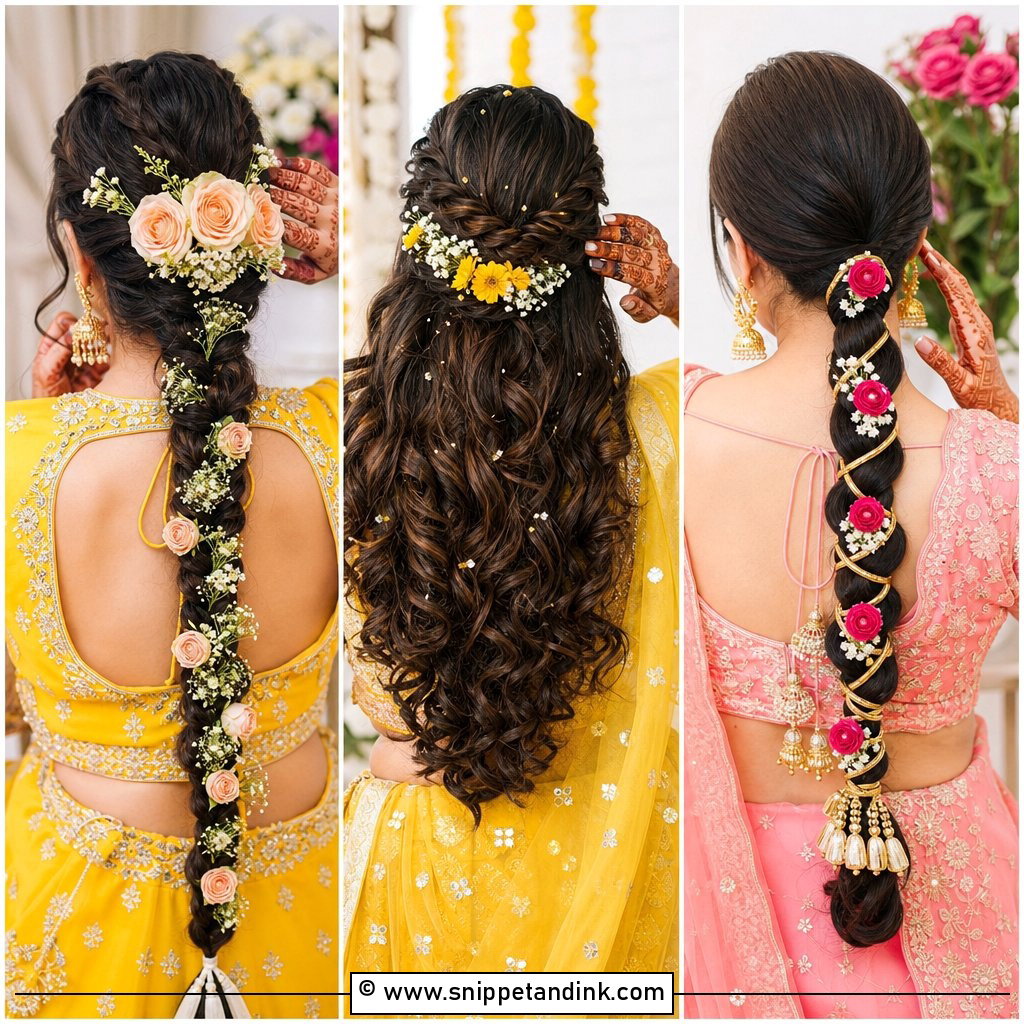
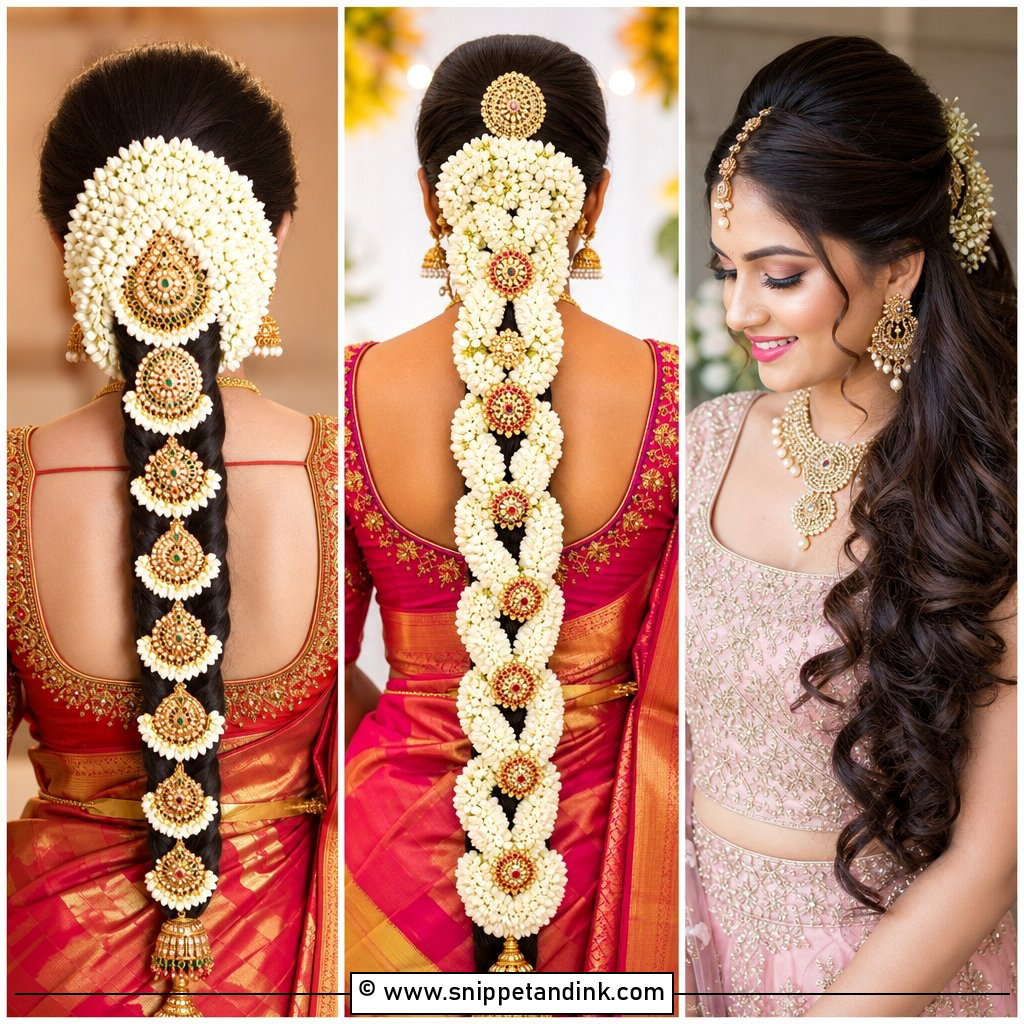
A thick plait running down the back, wrapped in strings of jasmine, with white flowers against dark hair. South Indian and many regional brides wear it as a matter of tradition. Most brides need a braid extension to get the length and thickness the ornaments expect, and I always match it in daylight, not under salon lights. Keep the plait smooth or tease it slightly for volume. Jada pins or gold pieces along the length add weight, so the braid has to be secured to the head at the top with a firm base, not left hanging from a single elastic.
4. Low Bun with Maang Tikka
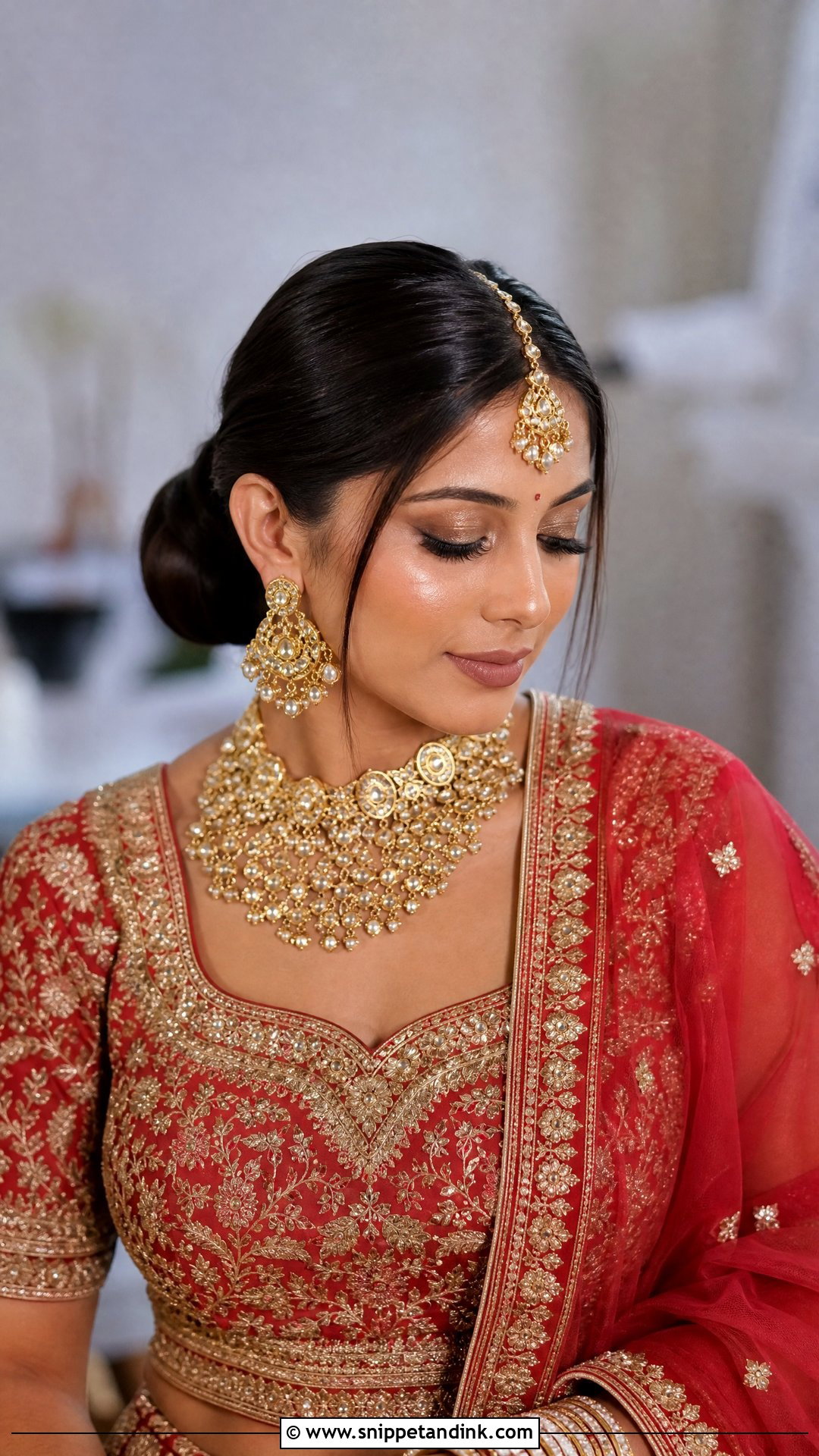
The sleek low bun is the quiet option that lets the maang tikka and a heavy bridal set do the talking. It sits at the nape, clean and structured, and gives a draped dupatta a solid anchor. With the face fully open, your makeup has nowhere to hide either, so this is the style where I’d make sure the makeup artist has seen it at the trial. A thin braid wrapped around the bun or a few small flowers adds detail. It holds through long ceremonies better than almost anything else here.
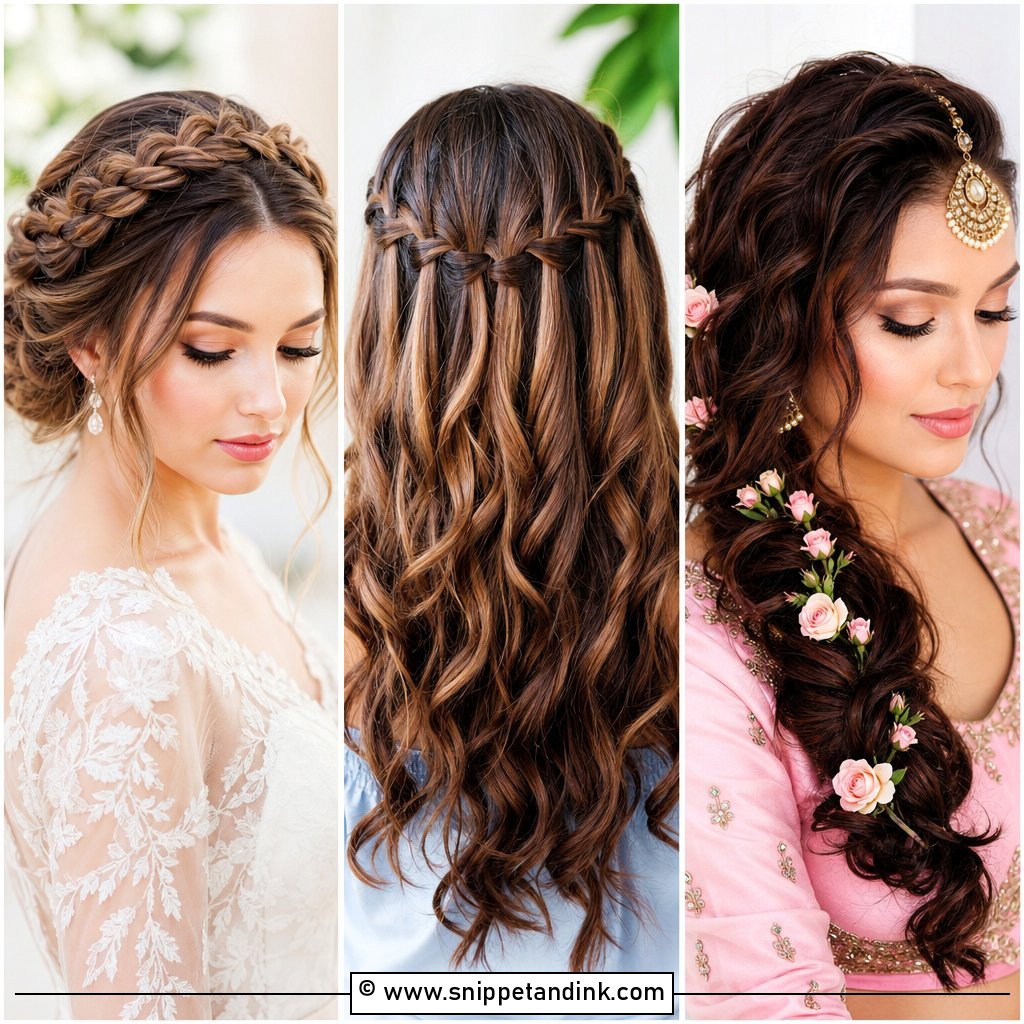
5. Open Hair with Soft Waves
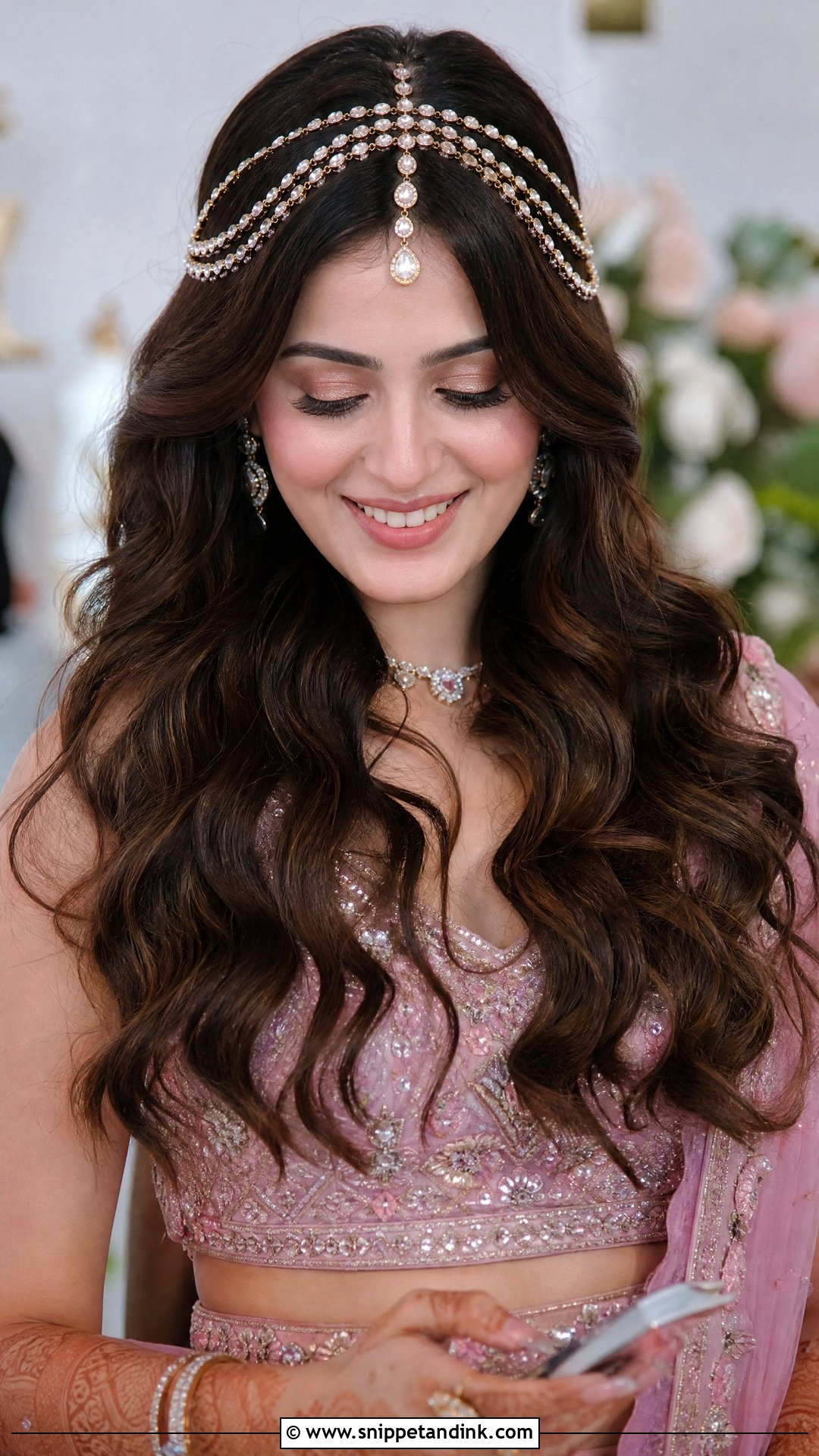
Celebrity brides have made open hair a real option, and it’s lighter to wear than any updo. Soft waves fall down the back with a centre or side part, and a few tiny flowers or a delicate matha patti make it bridal. Where it struggles is under a heavy dupatta, which flattens the crown and tangles in the lengths, so I’d keep it for the sangeet or reception. Very thick hair gets hot worn down all evening. That’s worth weighing if your venue is outdoors.
6. Bouquet Bun with Fresh Flowers
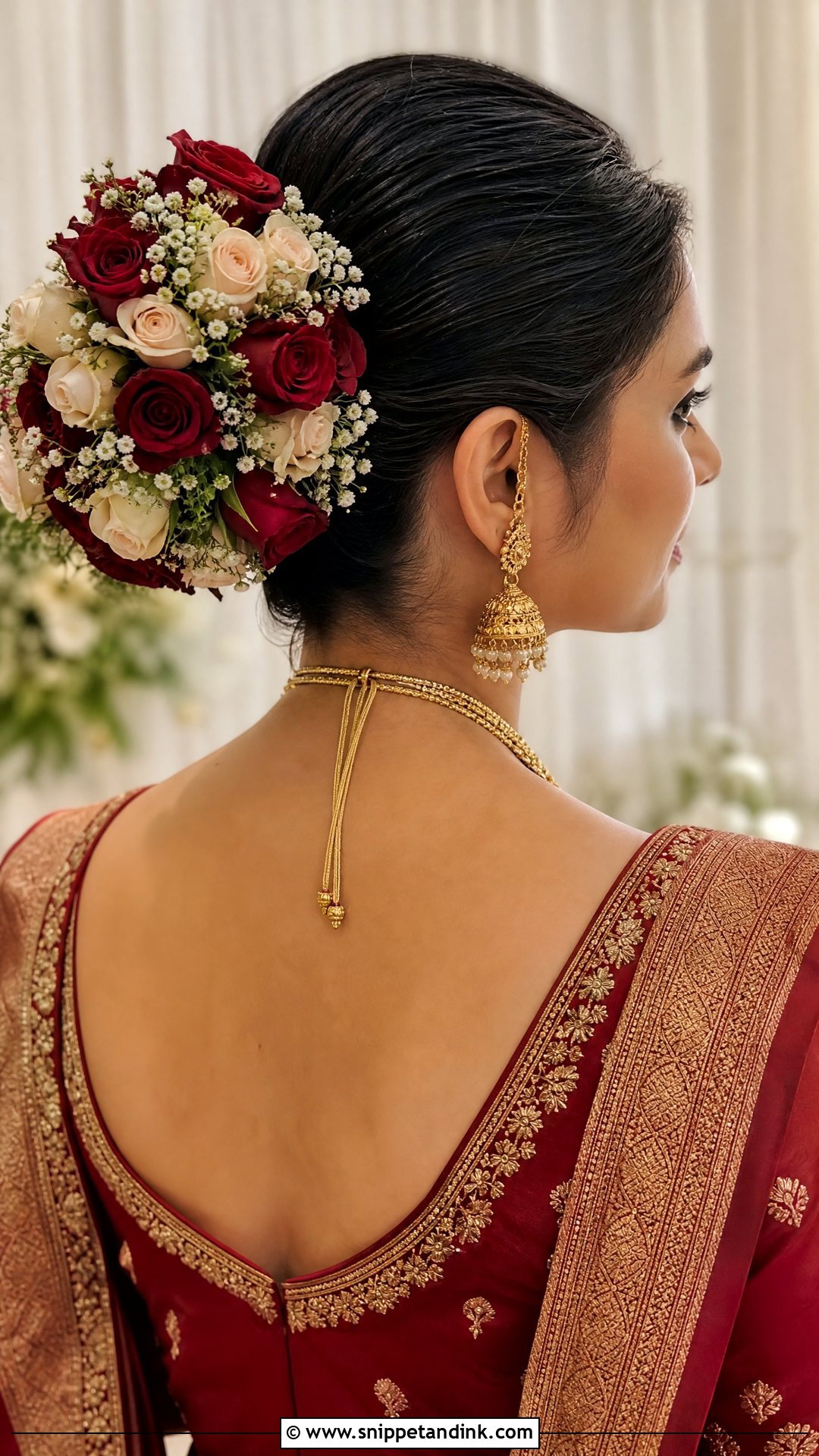
Instead of covering the whole bun, the flowers are clustered on one side like a small bouquet. It’s tidier than a full floral bun and easier to keep neat through the day. Roses, carnations and orchids hold up well for it. I wire the cluster together first, then pin it as one piece, so it sits at a deliberate angle instead of drooping flower by flower. It goes with traditional and contemporary outfits alike.
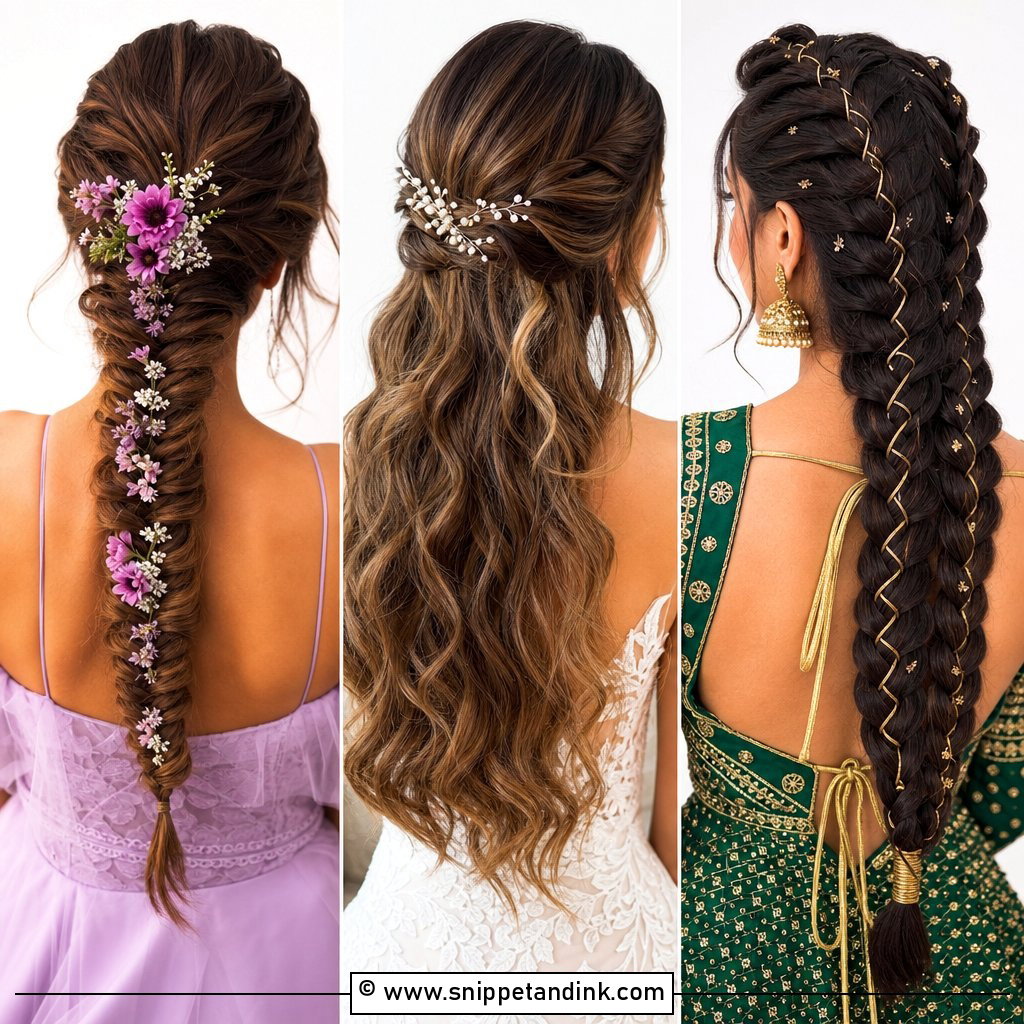
7. Half Updo for Indian Bride
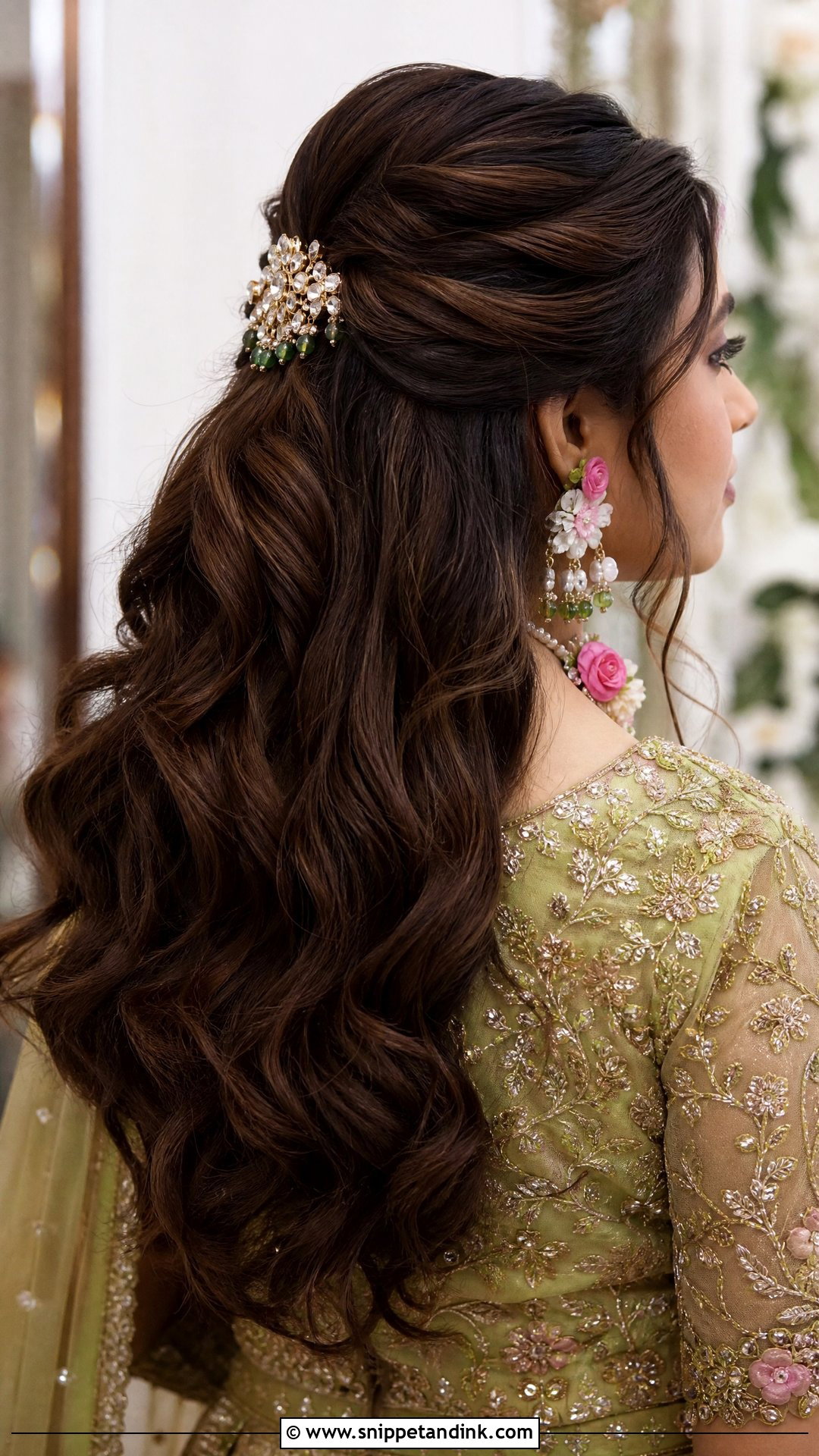
Top section pinned back, the rest falling in waves or curls. It keeps strands off your face while showing length, which makes it comfortable for mehendi and sangeet events. A little height at the crown adds lift and balances round and heart-shaped faces. I fix the top with a hidden elastic before any decorative clip goes on. Expect to sweep the open lengths behind your shoulders while the mehendi dries.
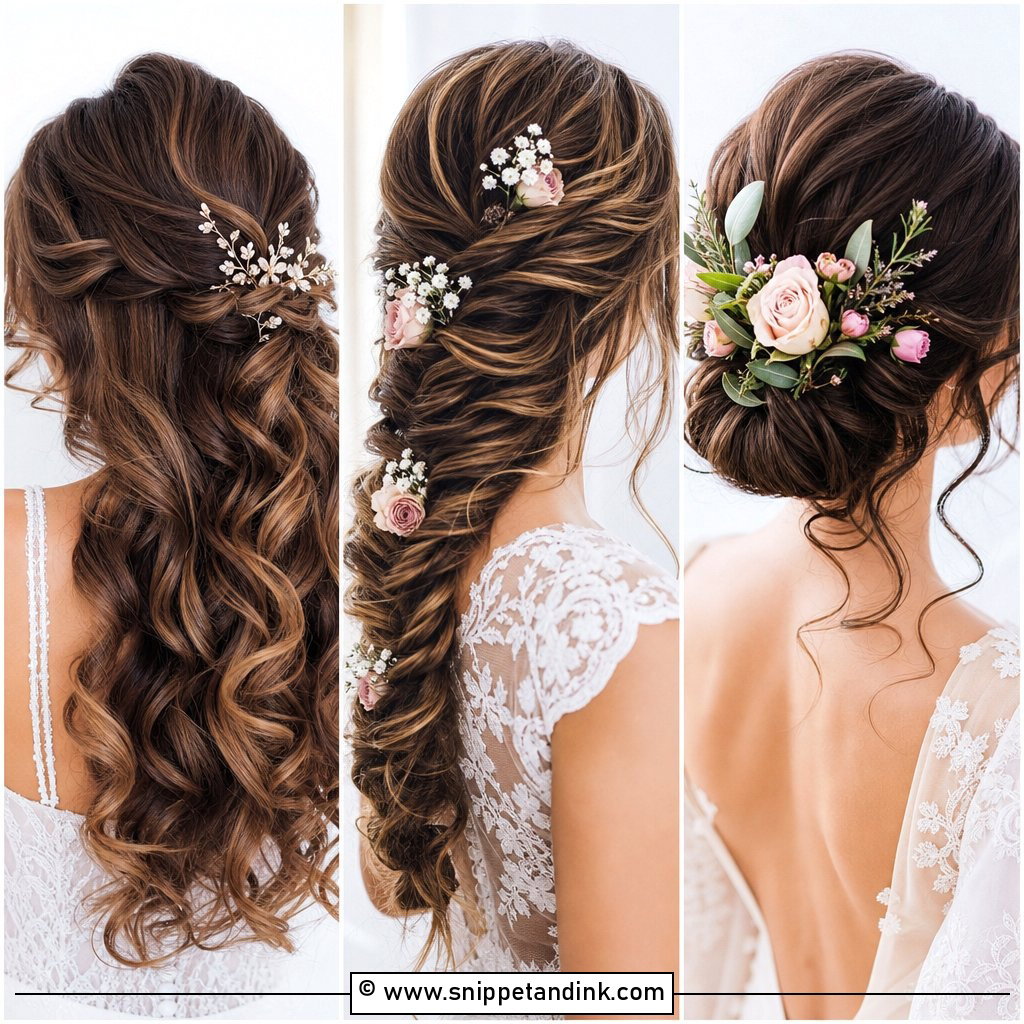
8. Fishtail Braid for Wedding
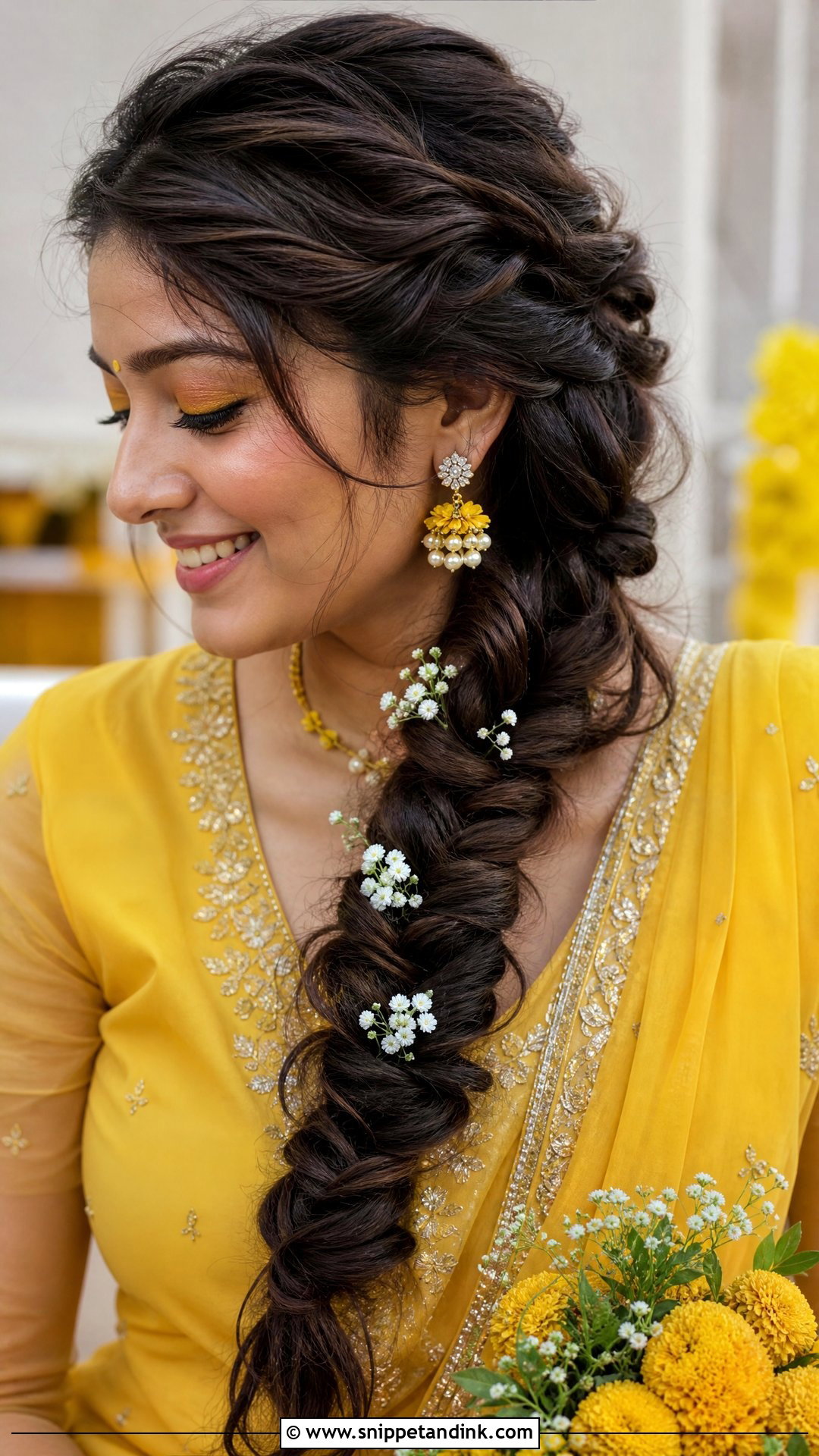
Detailed but soft. A fishtail looks intricate, especially when loosened slightly, and it can sit down your back or over one shoulder with tiny flowers or pearls tucked along it. Mehendi and haldi suit it, since it stays put while you sit cross-legged for hours. Long, thick hair shows the weave best. If yours is finer, I add clip-ins before braiding so the finished plait doesn’t taper to a thin tail.
9. Messy Bun with Gajra
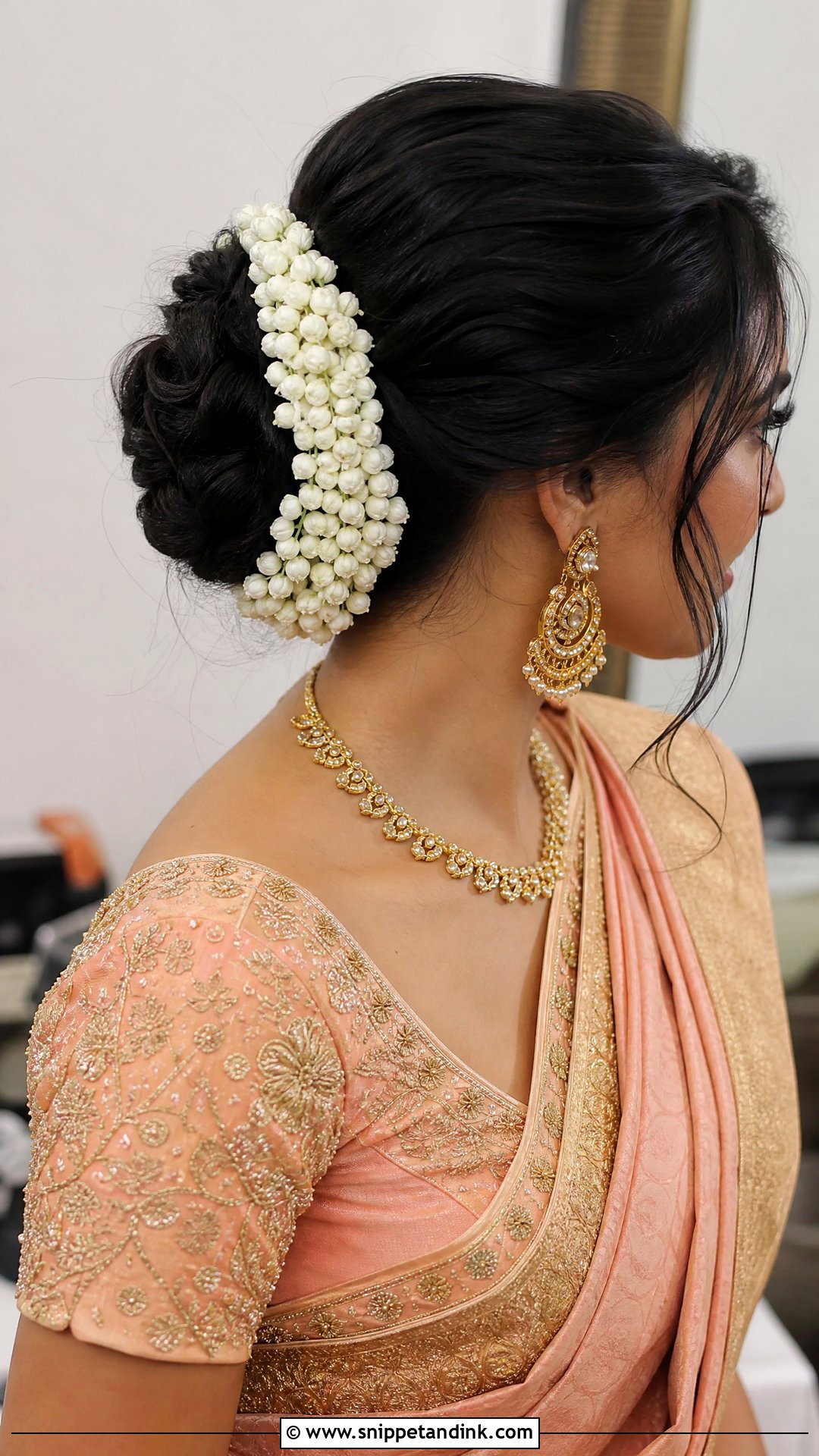
A soft, messy bun decorated with gajra trades the sleek finish for loose strands and gentle volume. The jasmine adds traditional contrast against the texture. It’s comfortable through a long day and suits intimate ceremonies and daytime events. Messy has to be built, though: I curl the hair, pin the bun firmly and only then pull out pieces by hand. Leave a few face-framing strands loose to soften the jawline.
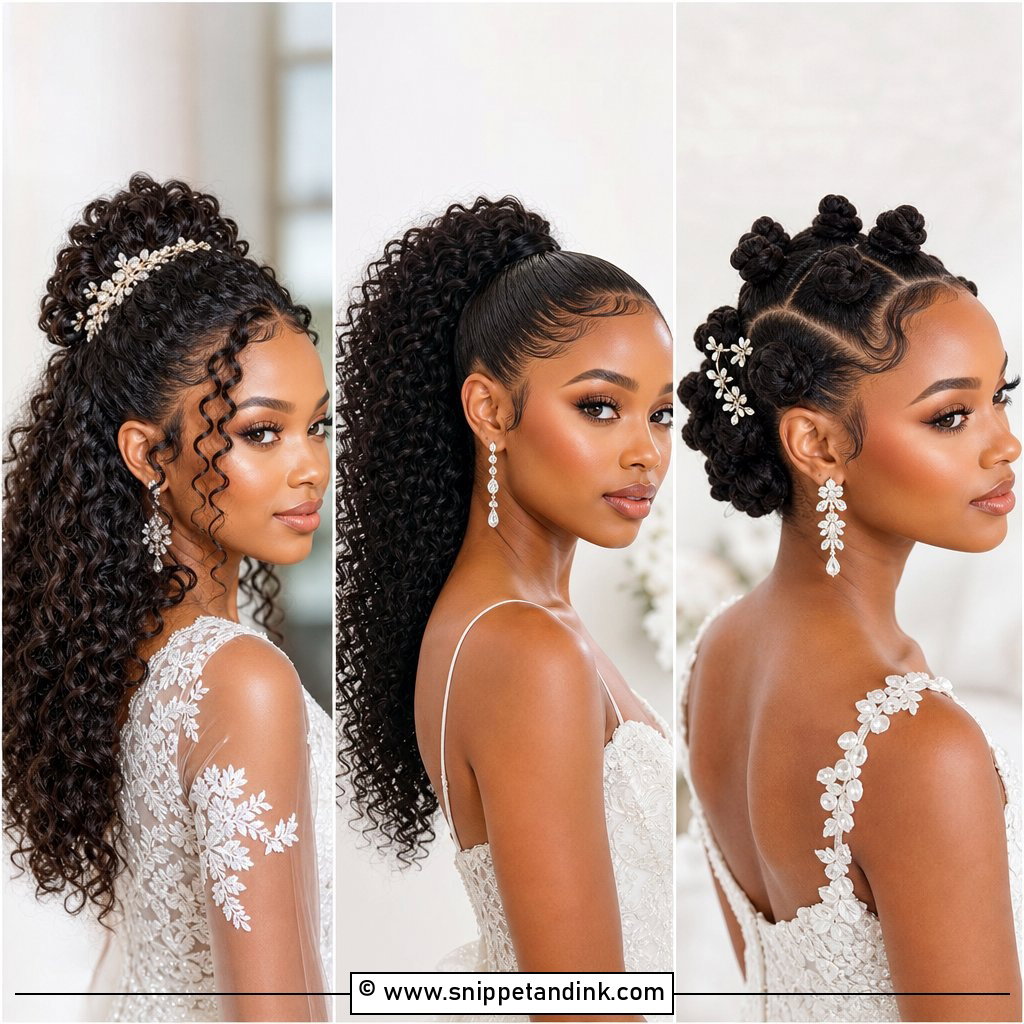
10. Sleek Ponytail for Reception
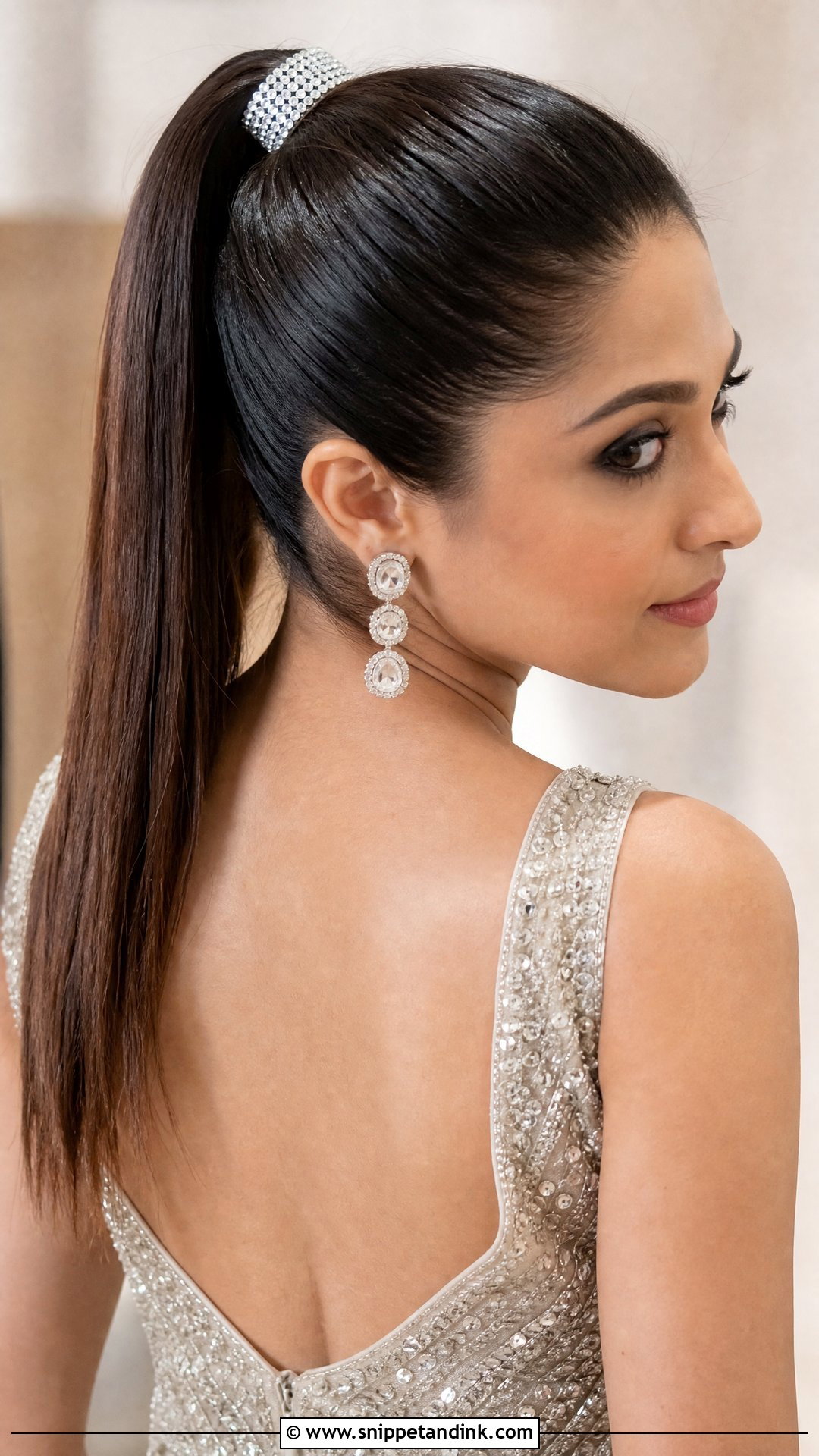
A high, sleek ponytail is the boldest reception option here. All the hair goes up and back into a smooth, shiny tail, which shows off the jawline, earrings and neckline with contemporary outfits. A wrapped strand or a jewelled cuff hides the elastic. Two things to know. It doesn’t work with a dupatta on the head, and a very tight high pony can ache after a few hours; I use a spiral tie under the wrap to ease the pull. It is cool to wear on a dance floor, though.
11. Braided Bun with Flowers
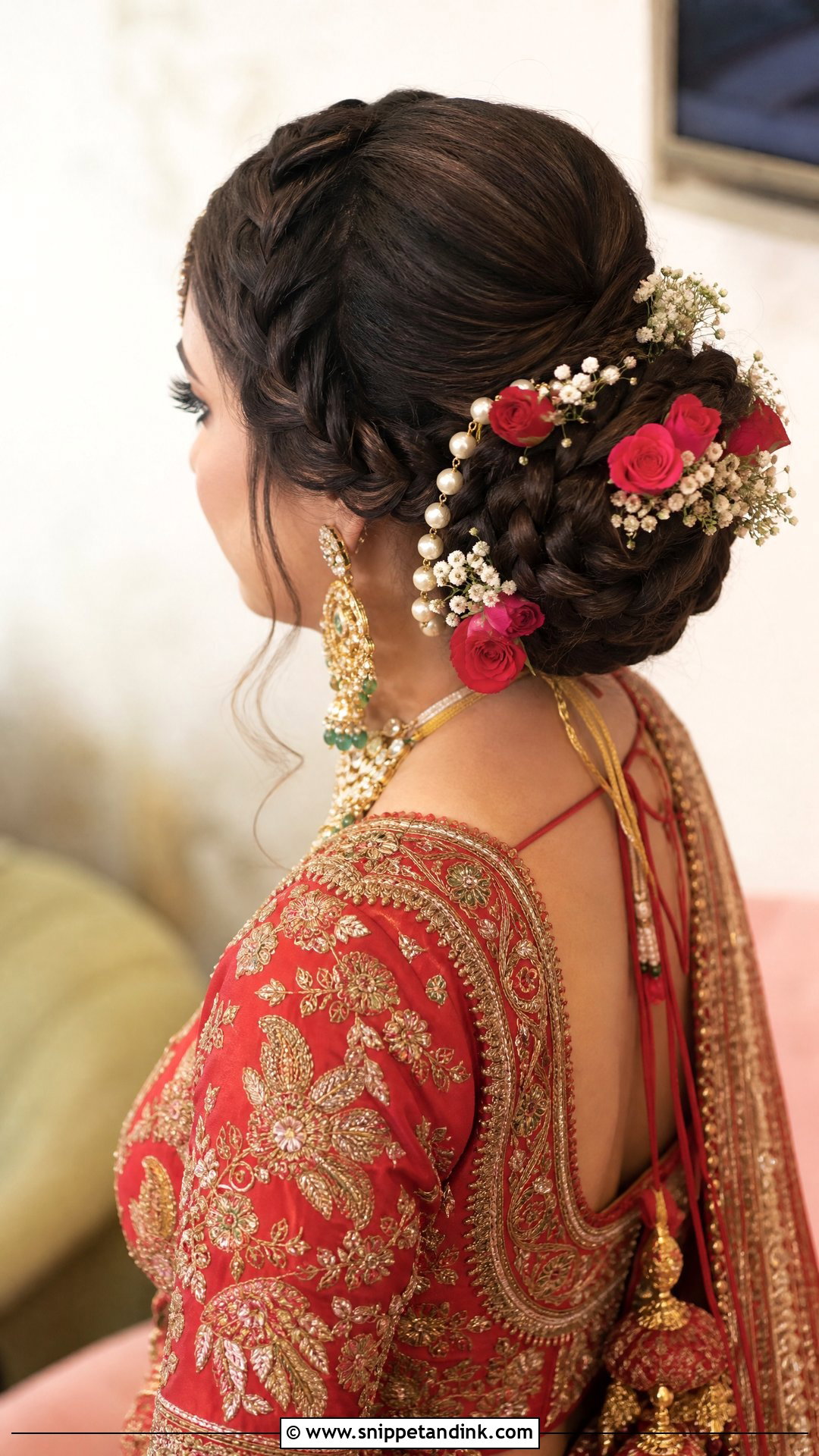
Braiding the sections before coiling them gives the bun depth and grip, because braids hold pins far better than smooth hair. I coil each braid into a bun at the nape, then fill the gaps with fresh flowers, pearls or gold pins. It suits thick, long hair and holds steady through long ceremonies. With a heavy lehenga and statement jewellery, it reads as rich and traditional from the back, which is the view guests see most during the pheras.
12. Curly Hair Updo for Bride
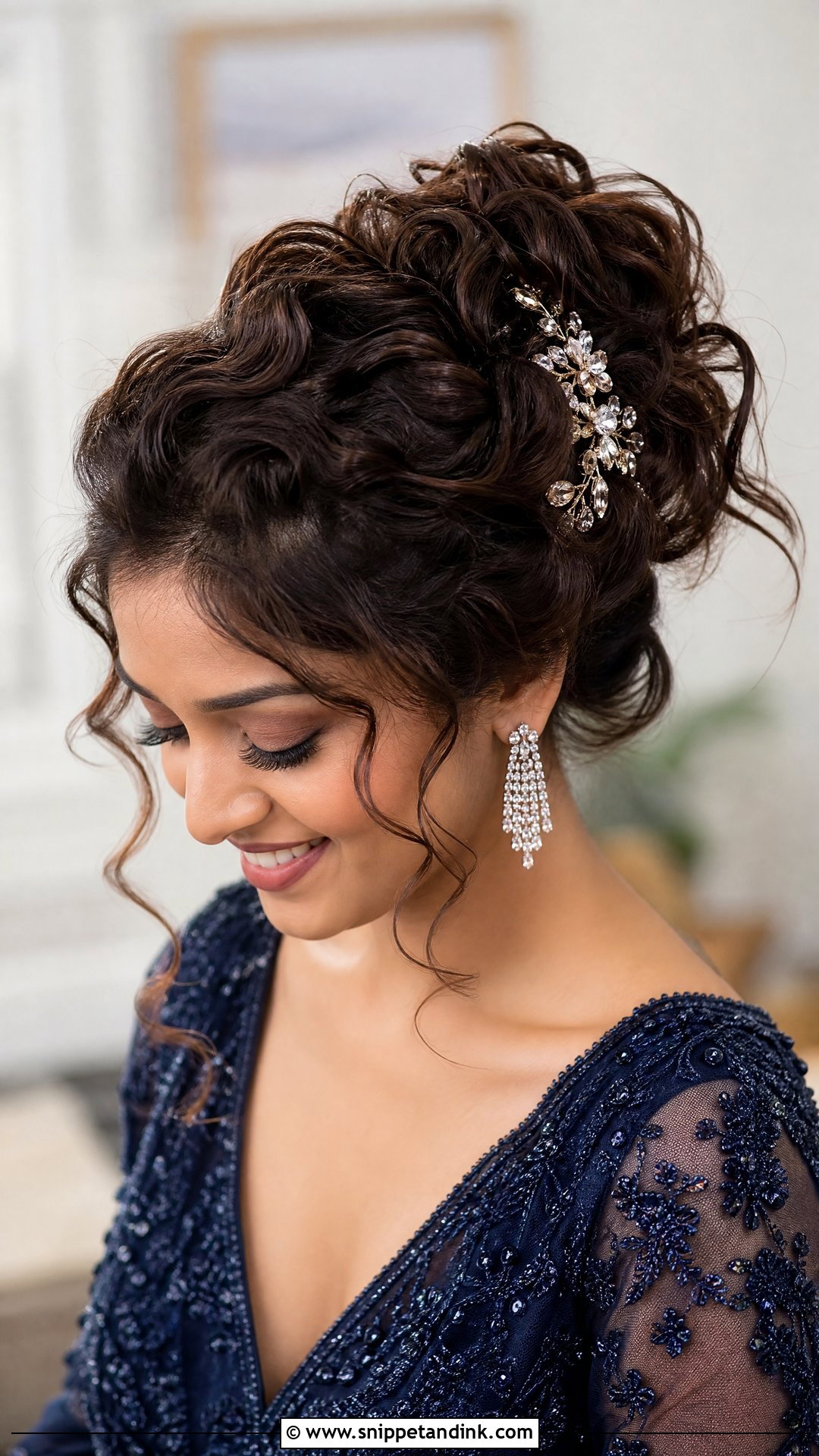
Curly hair should be gathered, not straightened into submission. I set the curls with cream, let them dry fully, then pin them loosely at the back or crown so the texture shows, with a few left to frame the face. A sparkling clip, a small flower or a thin band decorates it. It brings height to receptions and evening events. Brushing curls dry ruins them, so if you’re doing touch-ups yourself, use fingers and a drop of cream, never a brush.
13. Rose Twist Bridal Hairstyle
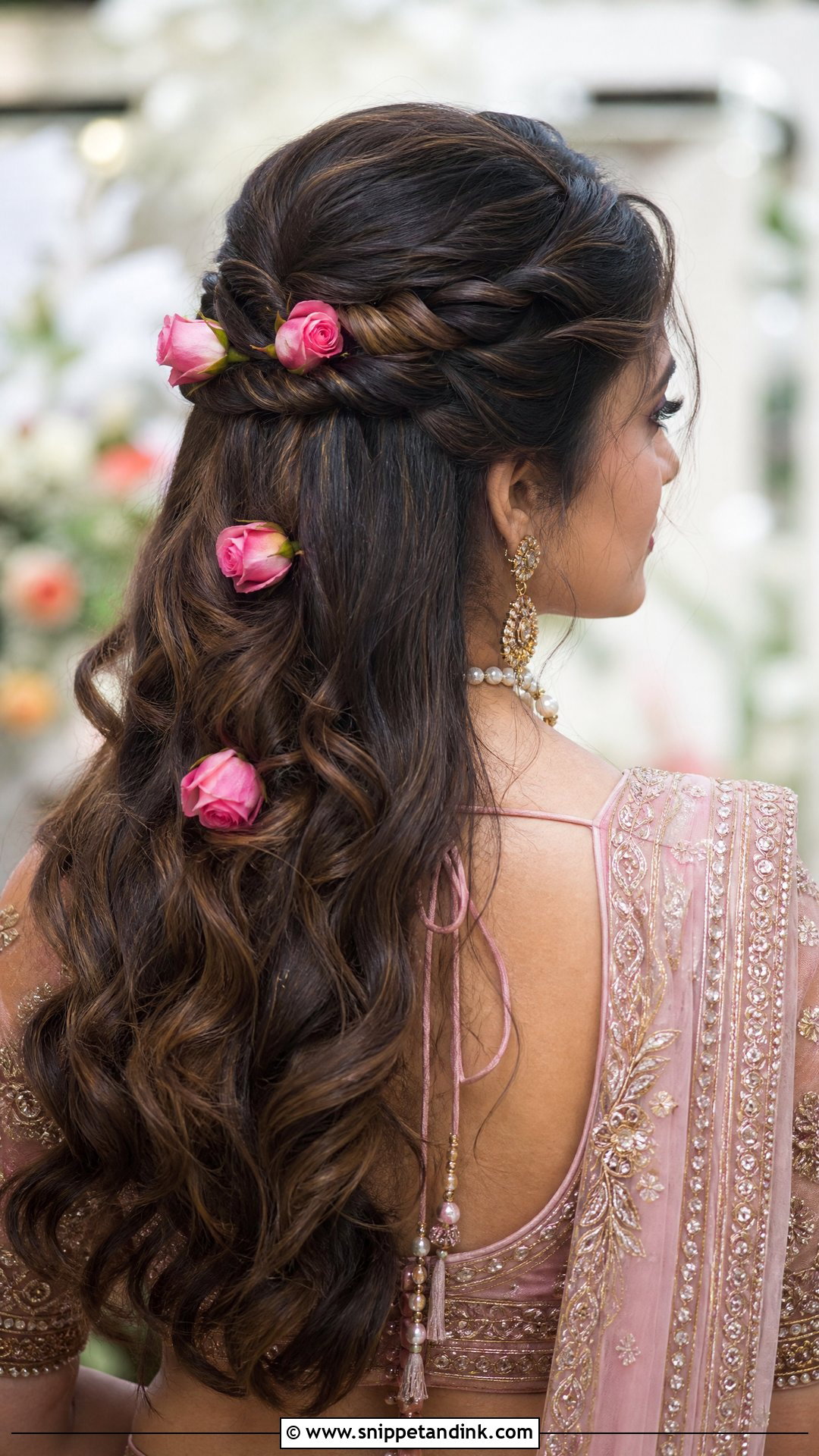
Sections of hair are twisted and fresh roses tucked into the design as it builds, so the flowers seem to grow out of the hair. It works as a half updo or fully pulled back. Pink or deep red roses both show clearly against dark hair. Roses wilt faster than jasmine once they’re out of water, so for a long day I’d use the sturdiest roses the florist has, or good silk ones. It suits the mehendi, sangeet or the wedding itself.
14. Chignon for Indian Wedding
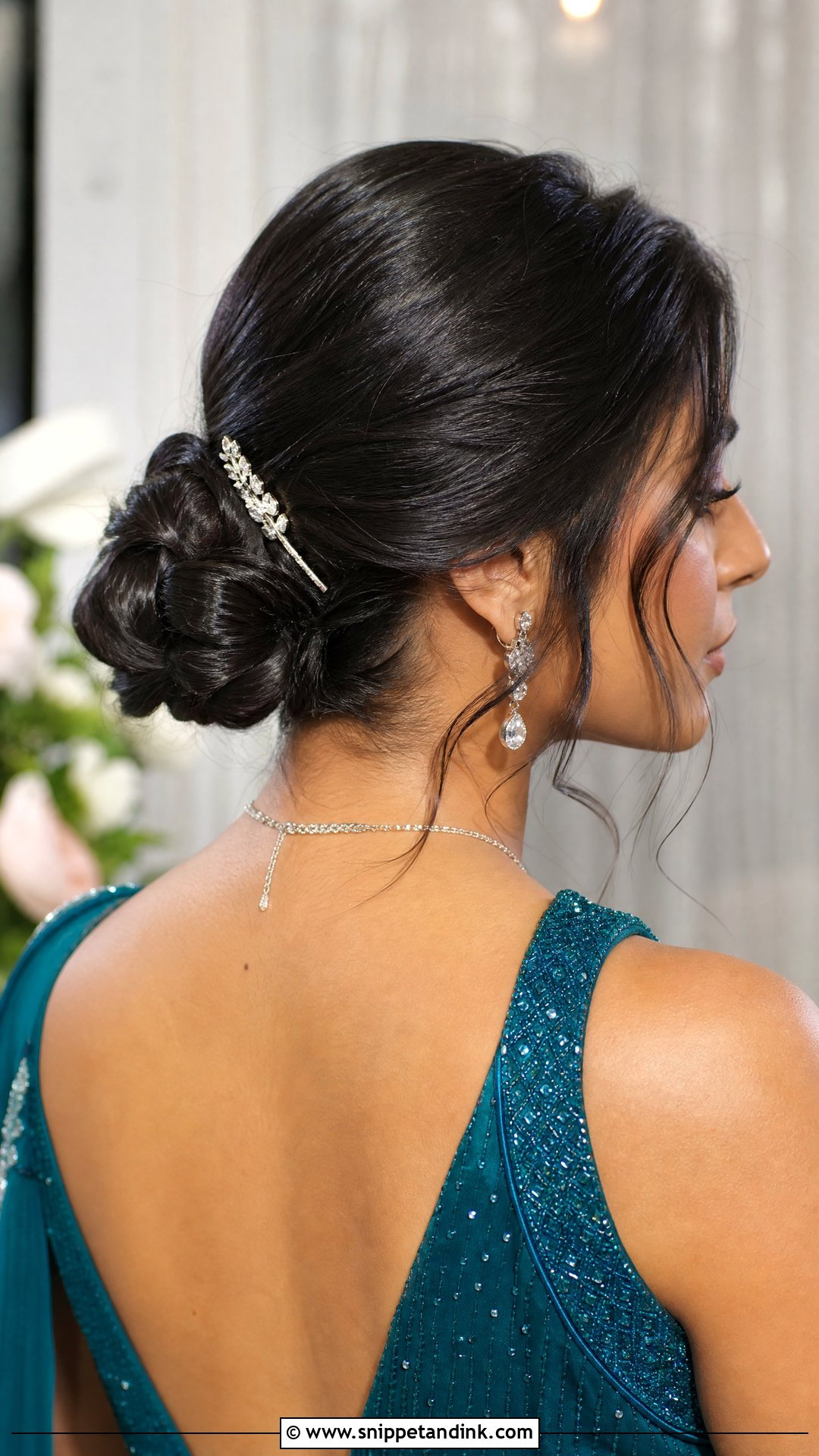
A chignon is a low, neat bun twisted or knotted into a refined shape. It sits well with contemporary gowns, sarees and modern lehengas at receptions and cocktail evenings. I like it on shoulder-length hair because a twisted chignon needs less length than a round bun. Soft waves at the face balance its smoothness, and a slim jewelled pin or a single bloom is all it needs. The clean outline keeps attention on your jewellery.
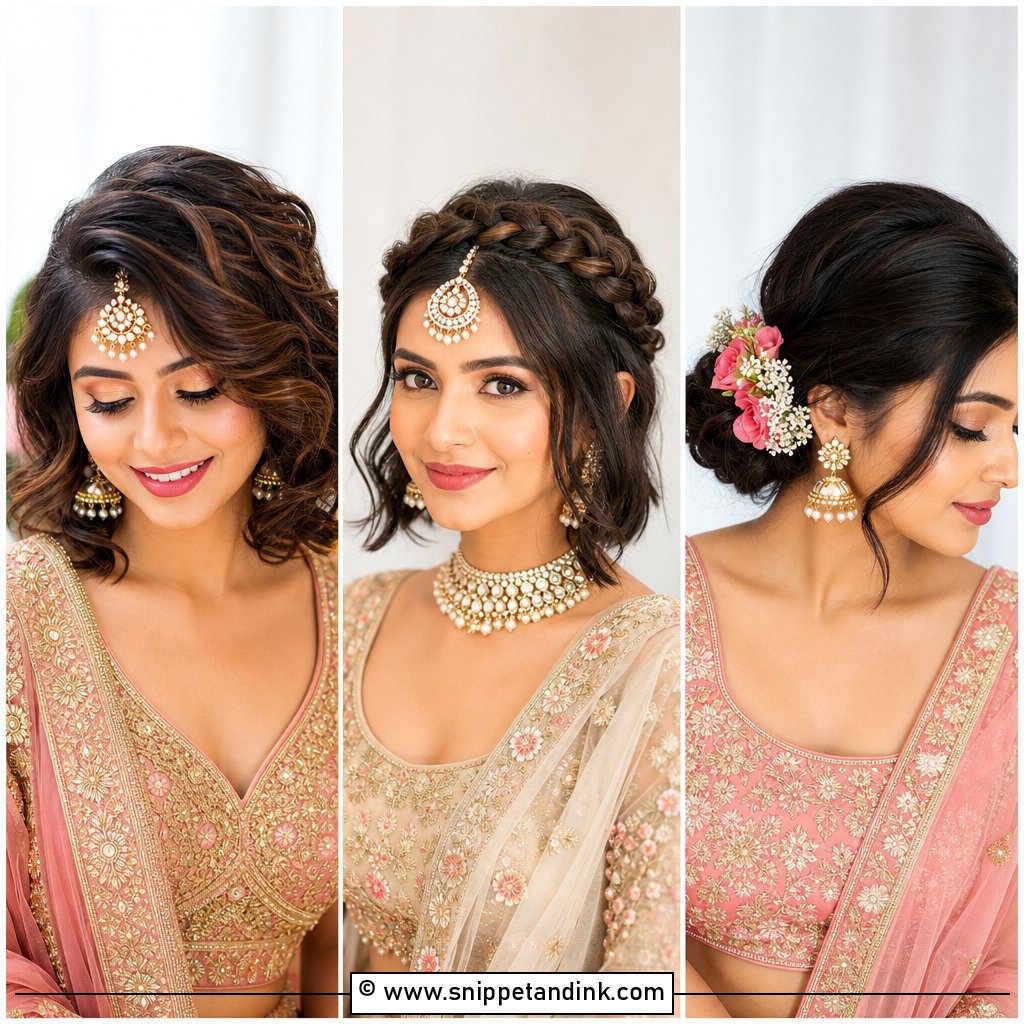
15. Mermaid Braid with Flowers
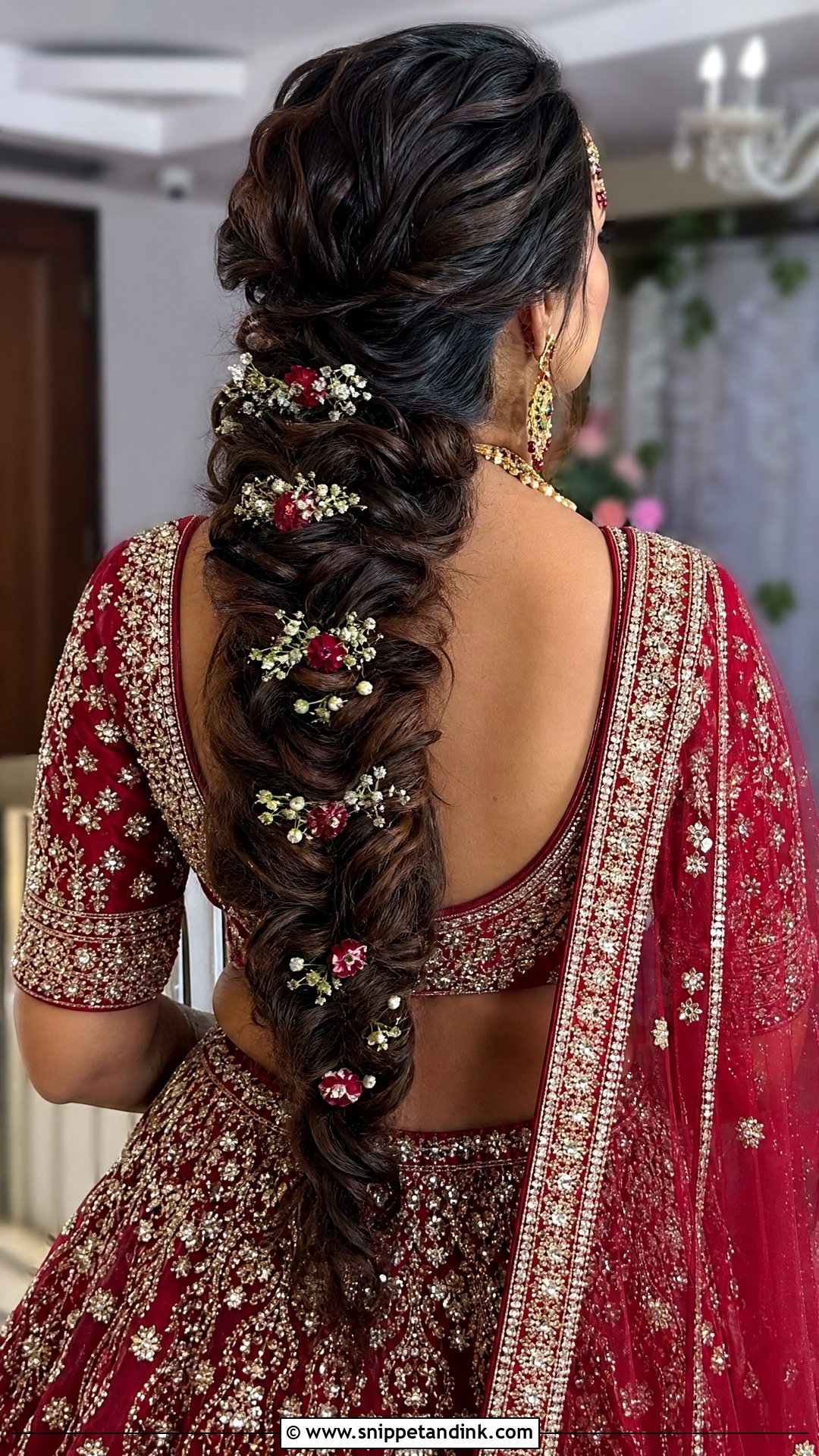
A thick, full plait with a widened weave that makes hair look longer and fuller than it is. Mini flowers, butterflies or pearls decorate it, and jada pins or gold accessories add a regal touch. It became popular after several celebrity weddings and still gets asked for. It suits long, thick hair. On finer hair the illusion depends on extensions, which I’d colour-match and blend before the wedding day, not on the morning.
16. Side Bun with Gajra
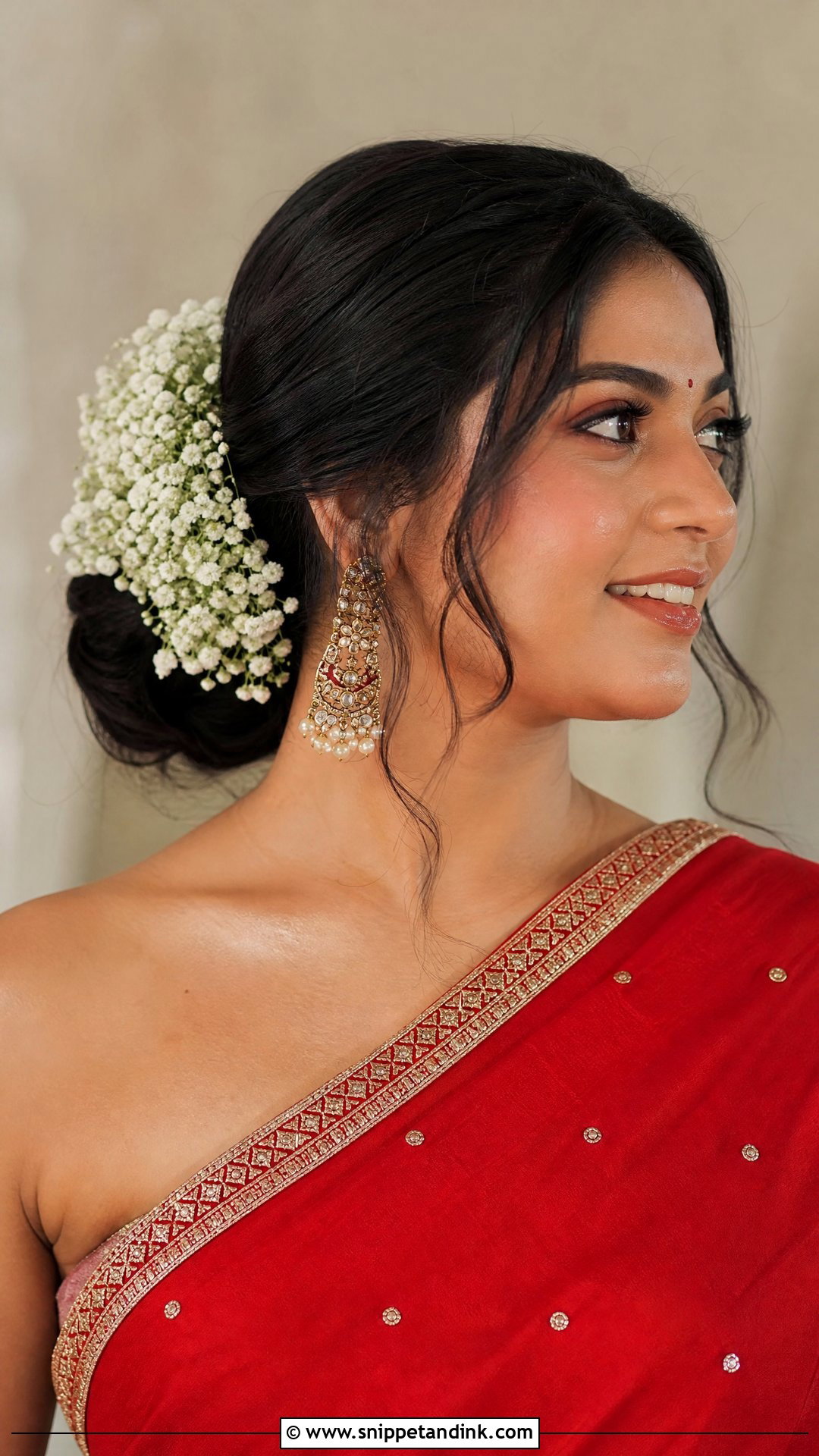
A low bun set to one side, wrapped in gajra. The off-centre placement softens the look, and the fragrant jasmine flowers keep it traditional. One-shoulder draping and statement earrings suit it. Placement decides whether it works: I sit it just behind the ear line so it doesn’t rest on your shoulder or get crushed by the dupatta when you turn. A few face-framing strands soften it. It holds well for the main wedding and smaller family functions.
17. Puff Hairstyle for Bride
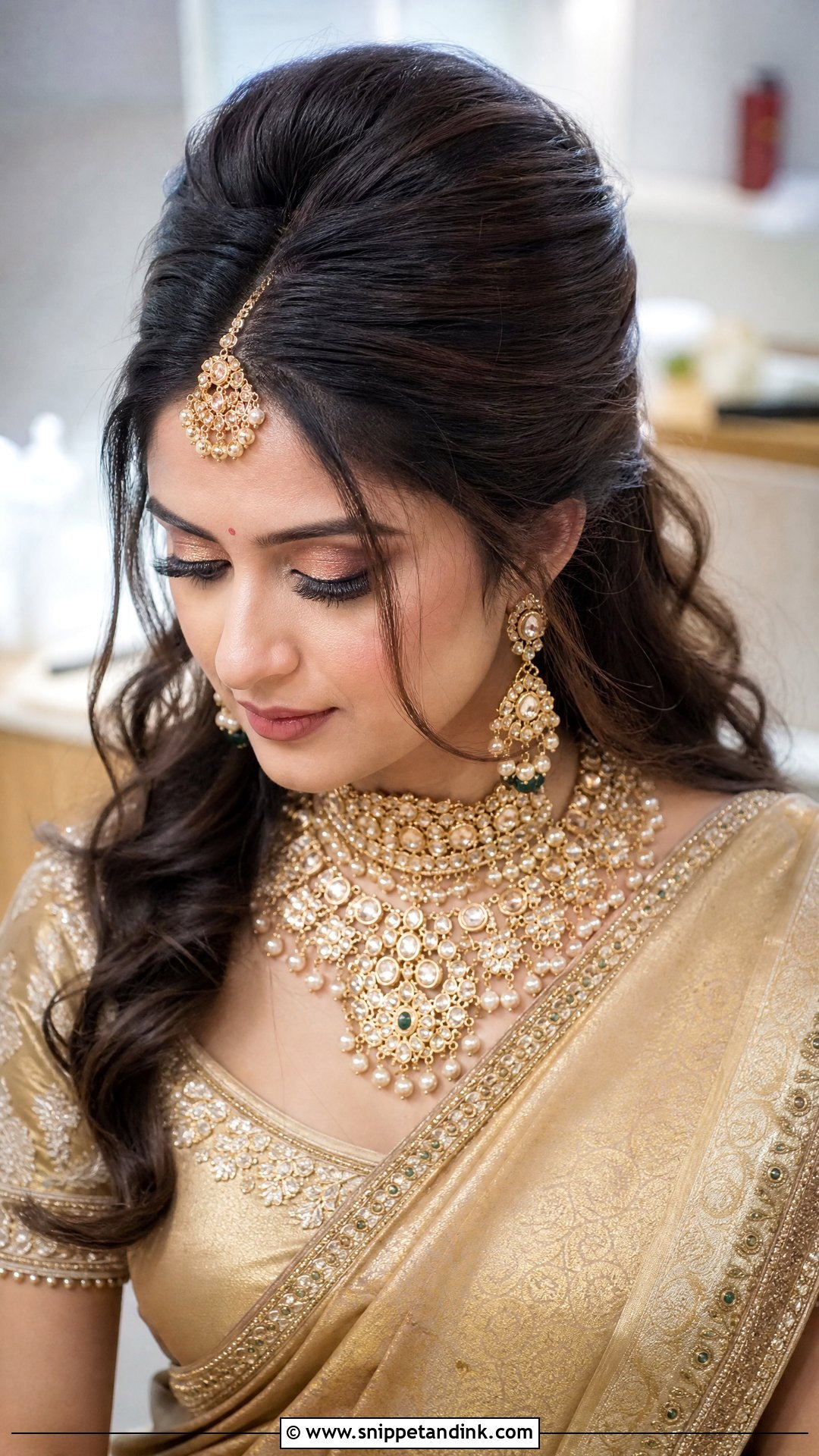
A puff at the crown adds height and structure. I tease the front section at the root, smooth the top layer over it and pin it up, then style the back as open waves, a braid or a bun. It balances heavy bridal jewellery and suits traditional lehengas and sarees. Height is where it goes wrong. A modest puff looks graceful; a tall one looks dated in photos and lifts the dupatta so it slides back all day. Flowers or pins finish the back.
18. Twisted Updo with Jewelry
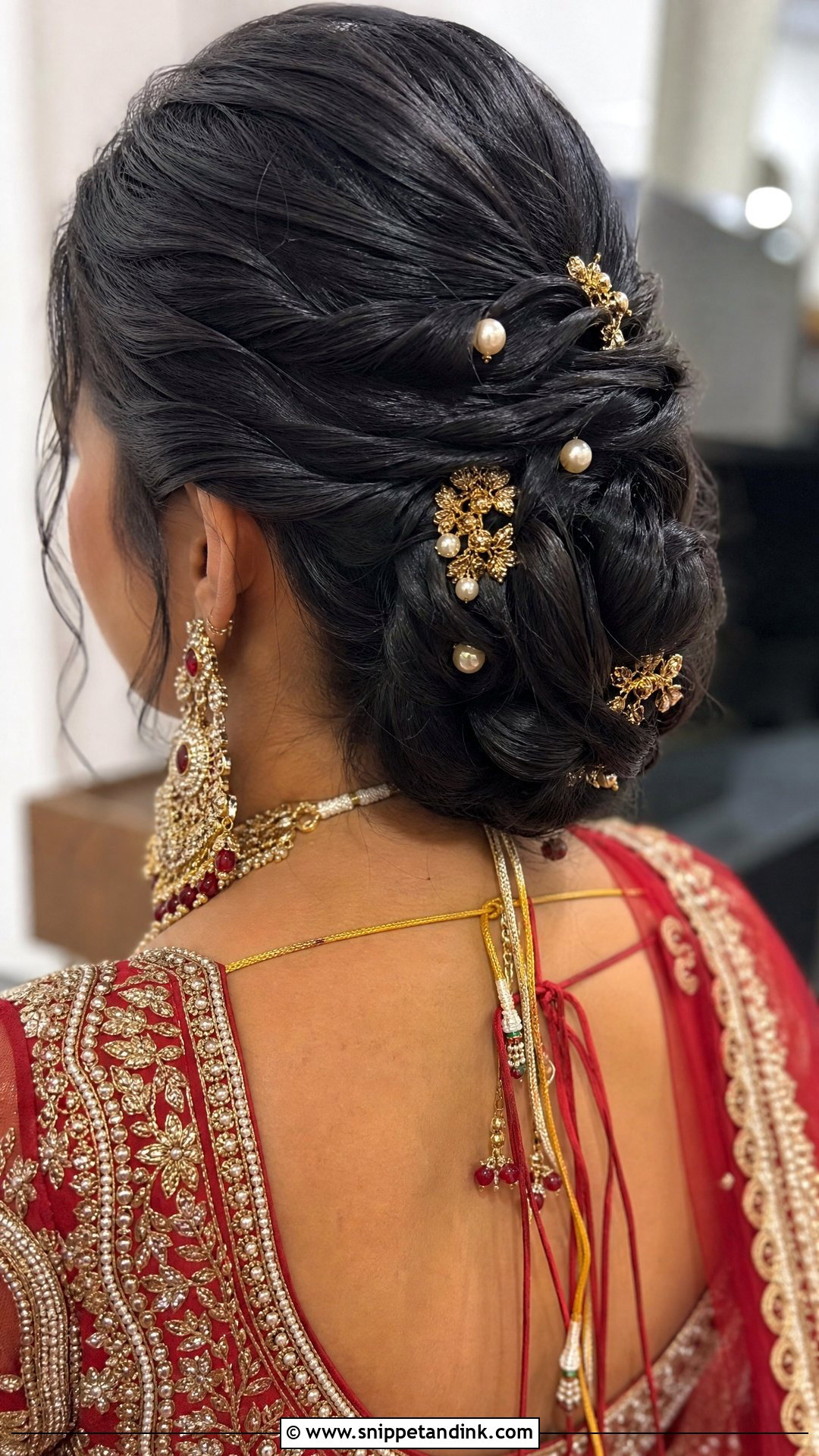
Twisted and pinned sections form the shape, then pearls, gold pins and crystal clips go in throughout. It feels luxurious for the main ceremony and holds securely through long hours and dancing, because each twist locks against the next. Heavy jewelled pieces need a firm base, so I add them only after the whole updo has been tested with a head shake. It pairs with heavy lehengas, statement earrings and a carefully draped dupatta.
19. Crown Braid for Wedding
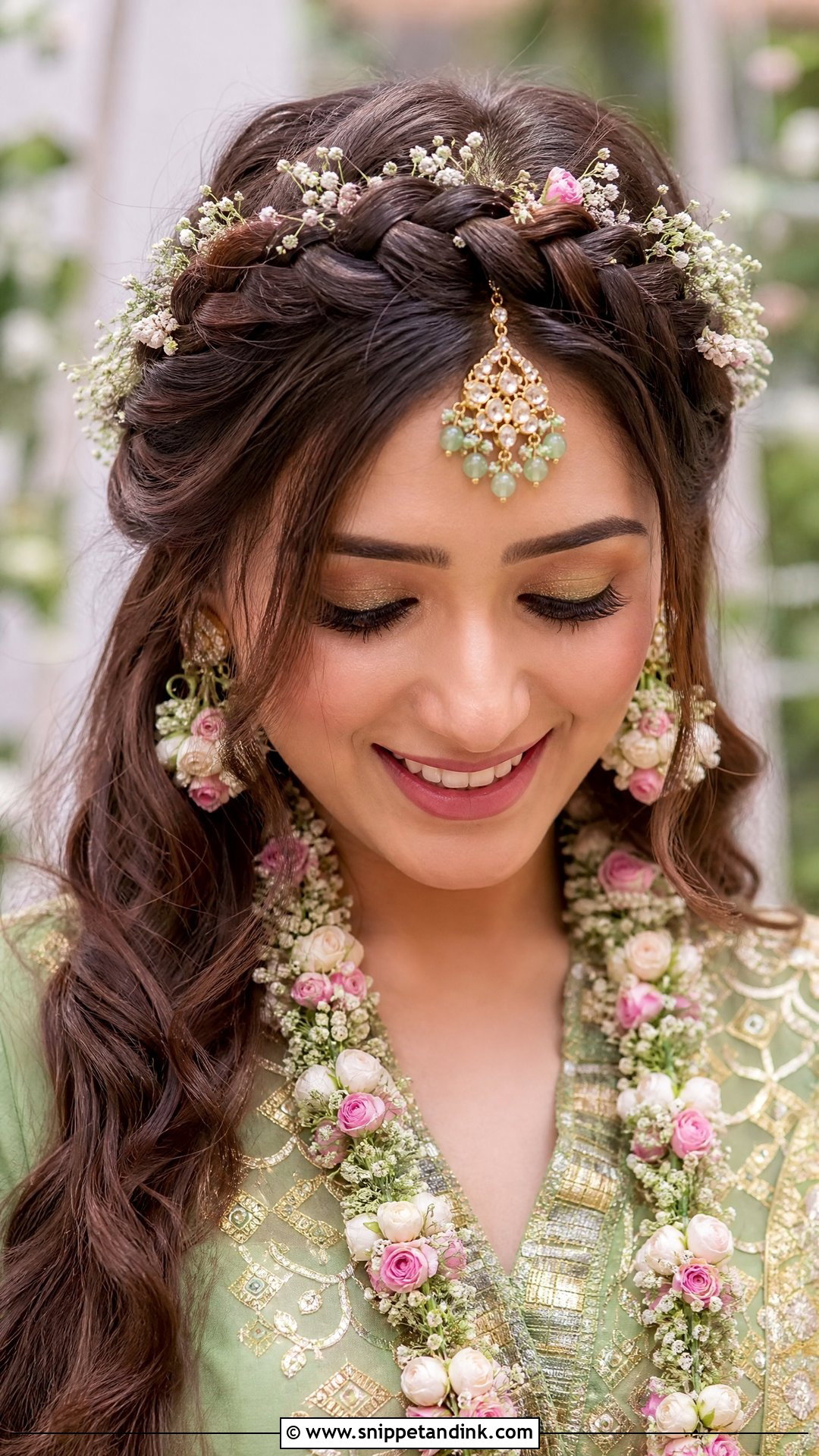
A braid circling the head sits up and away from the face. Small flowers or pearls tuck along it, and because it keeps your forehead open, it pairs neatly with a maang tikka or matha patti. Mehendi and daytime ceremonies suit it, and with no hair on the neck it stays cool. It needs enough length to wrap around; if yours is shorter, two braids pinned to meet at the back give the same effect.
20. Open Curls with Maang Tikka
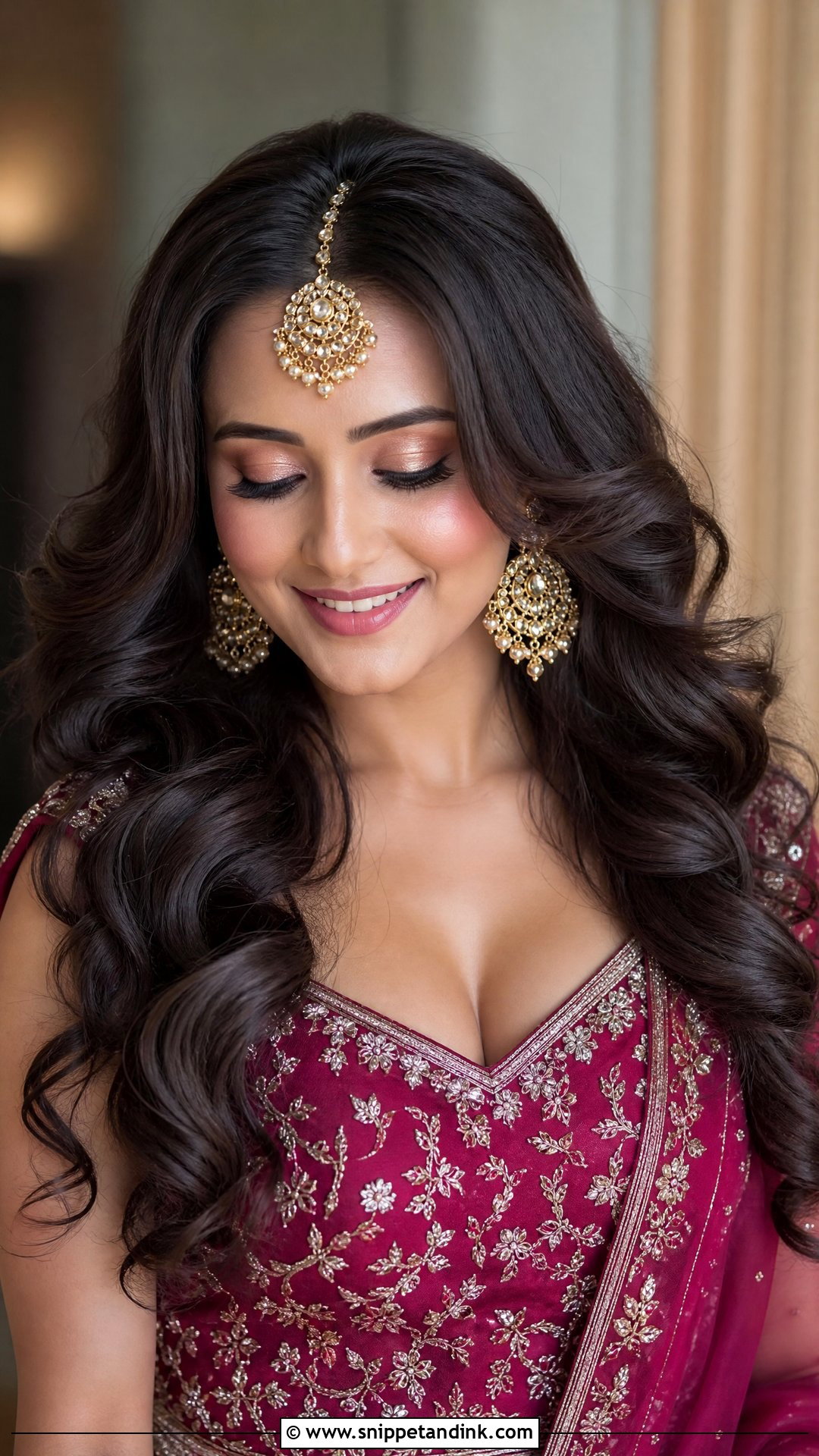
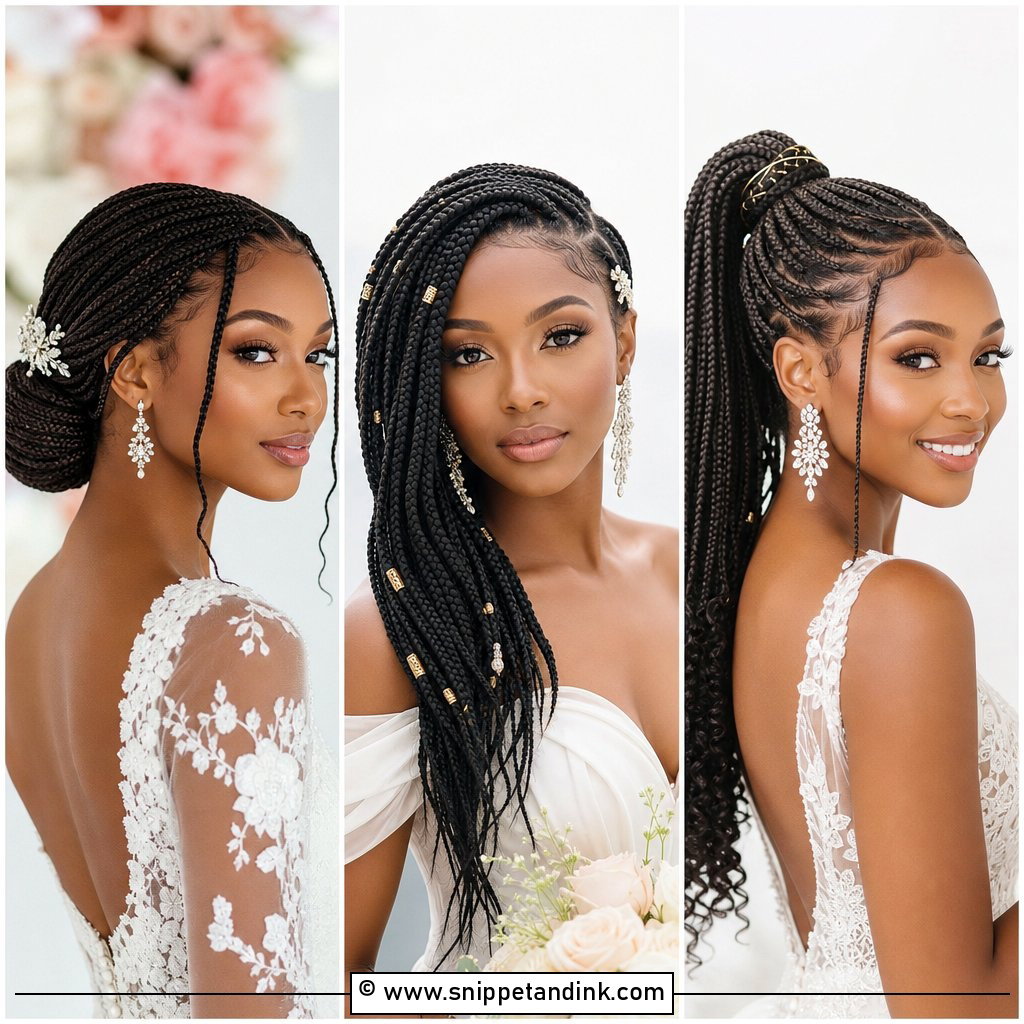
Loose, bouncy curls left open, with a maang tikka on a centre part. It’s a youthful choice for receptions and sangeet events and shows off your length. The centre part needs to be exact, since the tikka exaggerates any tilt. Subtle volume at the crown adds a little drama. I pin the tikka chain into the part with two small crossed pins so the open hair moving around it doesn’t drag it sideways.
Ordering Hair Flowers Alongside the Décor
Hair flowers are easy to forget until the morning of the wedding, when the market is shut and the florist is busy with the mandap. Put them on the same order as your décor and give your stylist’s requirements in writing: which flowers, roughly how many strings or stems, and what time they need to arrive.
- Jasmine and mogra should come as buds, wrapped in a damp cloth, delivered the same morning.
- Roses, orchids and carnations for a bouquet bun or rose twist are best wired and taped by the florist, with the stems cut short.
- Ask for spares. A few extra stems cover any that bruise during pinning or wilt before the reception.
- Keep a set of good artificial flowers as a backup for a very hot day or a long outdoor ceremony.
If you’ve never worn a full gajra, smell the flowers before the wedding. Some brides find the scent too strong over many hours in a closed hall, and it’s much easier to switch to a single string or a mix with roses now than to pull flowers out mid-ceremony.
What You’ll Wear, How Long You’ll Wear It
Your wedding hair should feel like you, and it should last as long as your day does. Floral buns, gajra braids, open waves and modern chignons all have a place across the functions. Decide with your outfit, your jewellery and the hours you’ll be sitting through ceremonies in mind. Mixing traditional flowers with newer shapes is fine, as long as you’ve tested the combination before the week of the wedding. Take a short list of three favourites to your stylist, with back views, and build from there.
You'll Like These Ideas:




Leave a Reply