
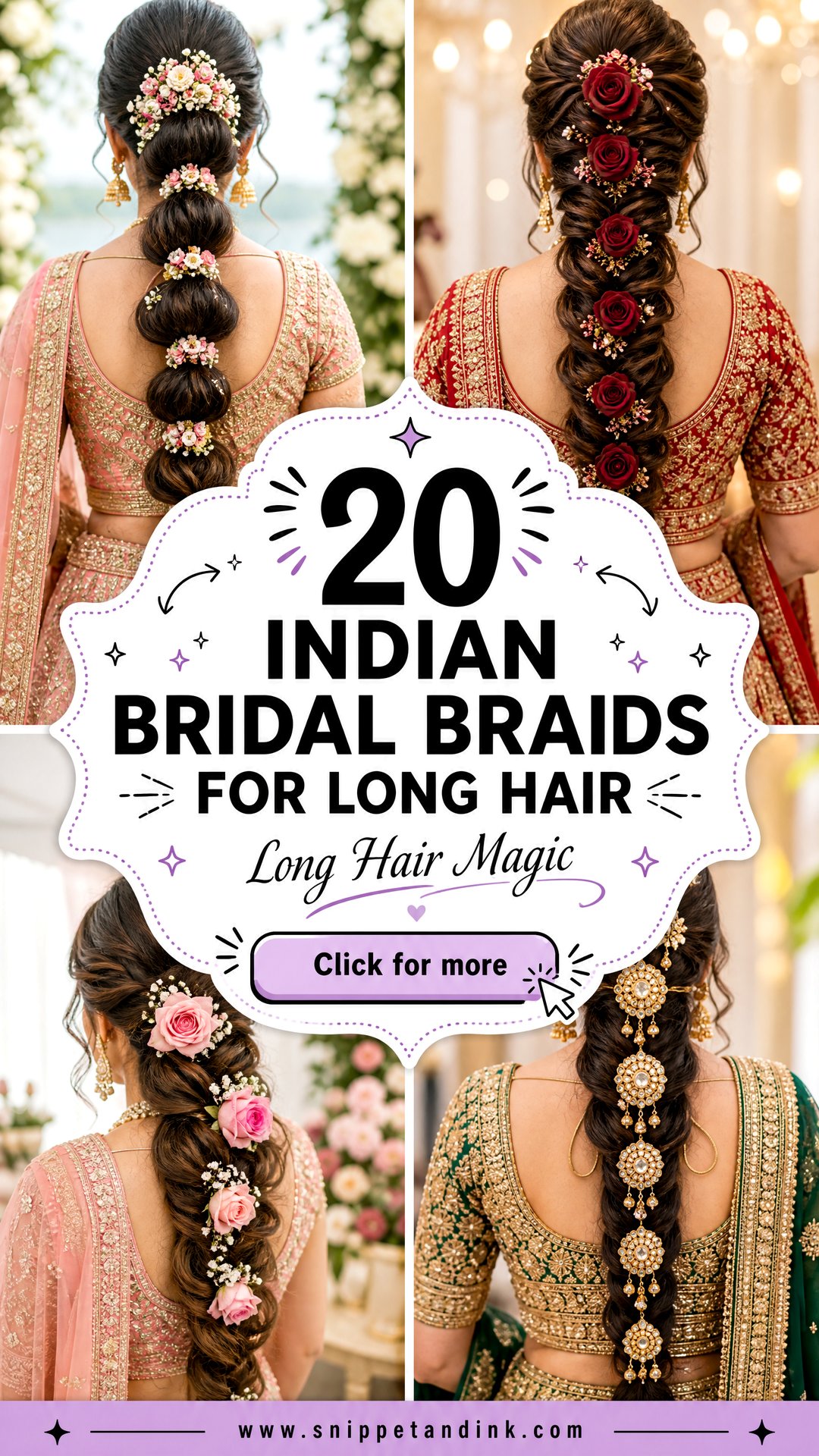
Long hair gives a bridal braid something real to work with: weight, length and a tail that swings when you walk. It also brings problems short hair never has, from tangling under a dupatta to a heavy plait pulling at the crown by evening. Braids solve most of them, which is why I suggest one to nearly every long-haired Indian bride. The list below runs from classic South Indian plaits in jasmine to bubble braids and fishtails, finished with kundan pins, pearls or fresh mogra. These are twenty I would put on long hair, with what each one does well and where it struggles.
What Waist-Length Hair Asks of a Bridal Braid
Long hair is heavy, and a bridal braid puts all that weight in one place. Very thick, waist-length hair in a tight single plait can pull at the crown hard enough to give you a headache by the reception.
Spreading the weight
I braid with firm tension but anchor the top into a small pinned base, so the pins carry part of the load instead of the hairline. For very dense hair, two braids that join lower down are often more comfortable than one.
Thick at the top, thin at the tip
Most long hair tapers, so the bottom of a plait can look skinny next to the top. A small matching piece near the end, or a tassel, evens out the line without adding much weight.
Extra chair time
Long hair takes longer to dry, curl and braid. Time your hair at the trial and add a margin on the wedding morning, especially for fishtails and multi-strand braids.
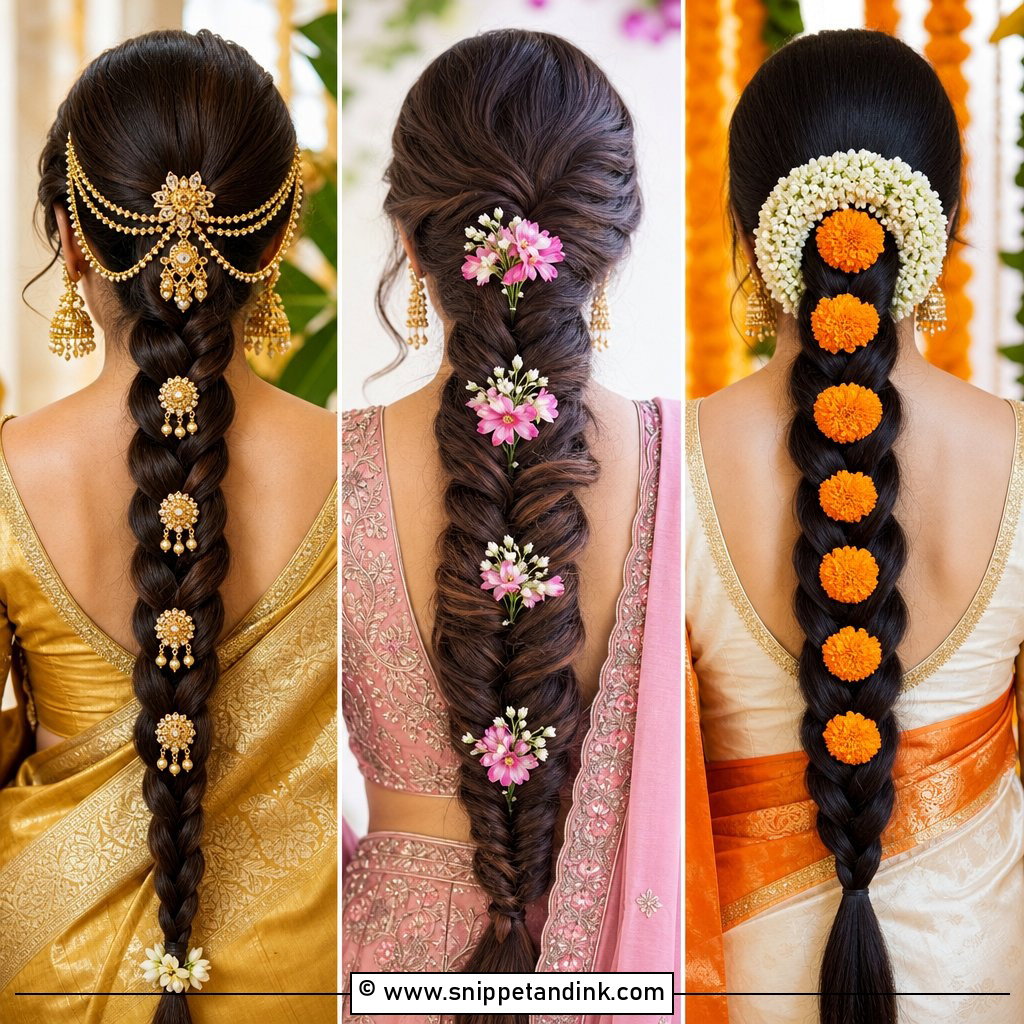
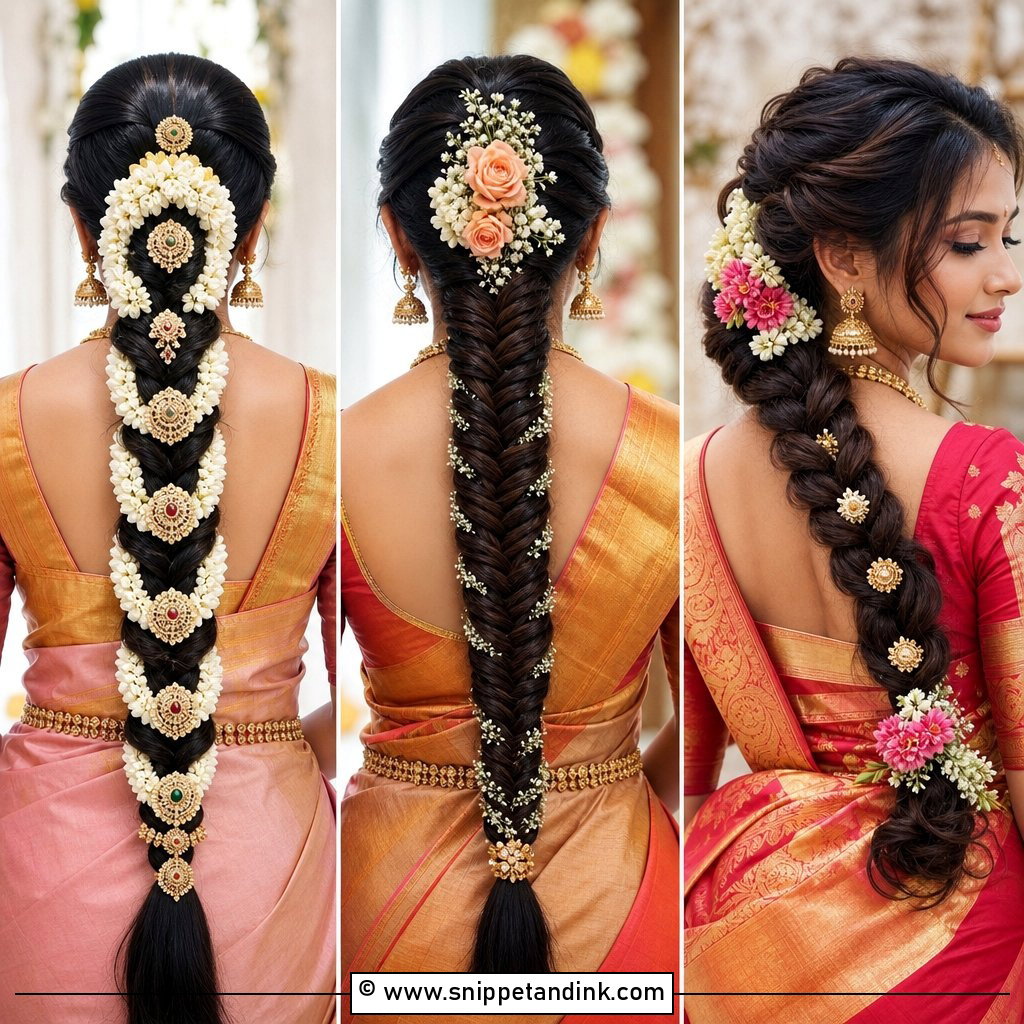
1. South Indian Jasmine Braid for Long Hair
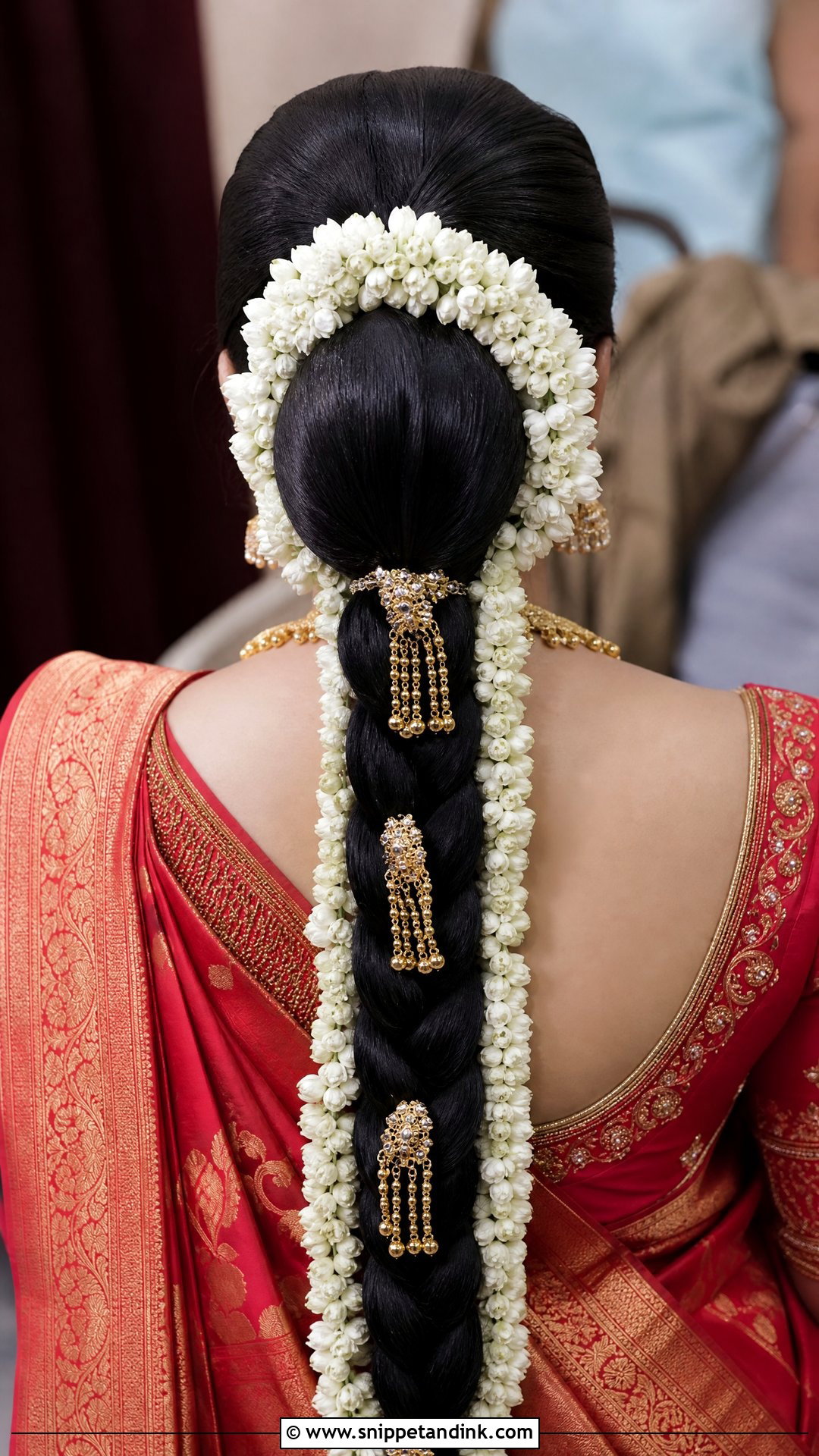
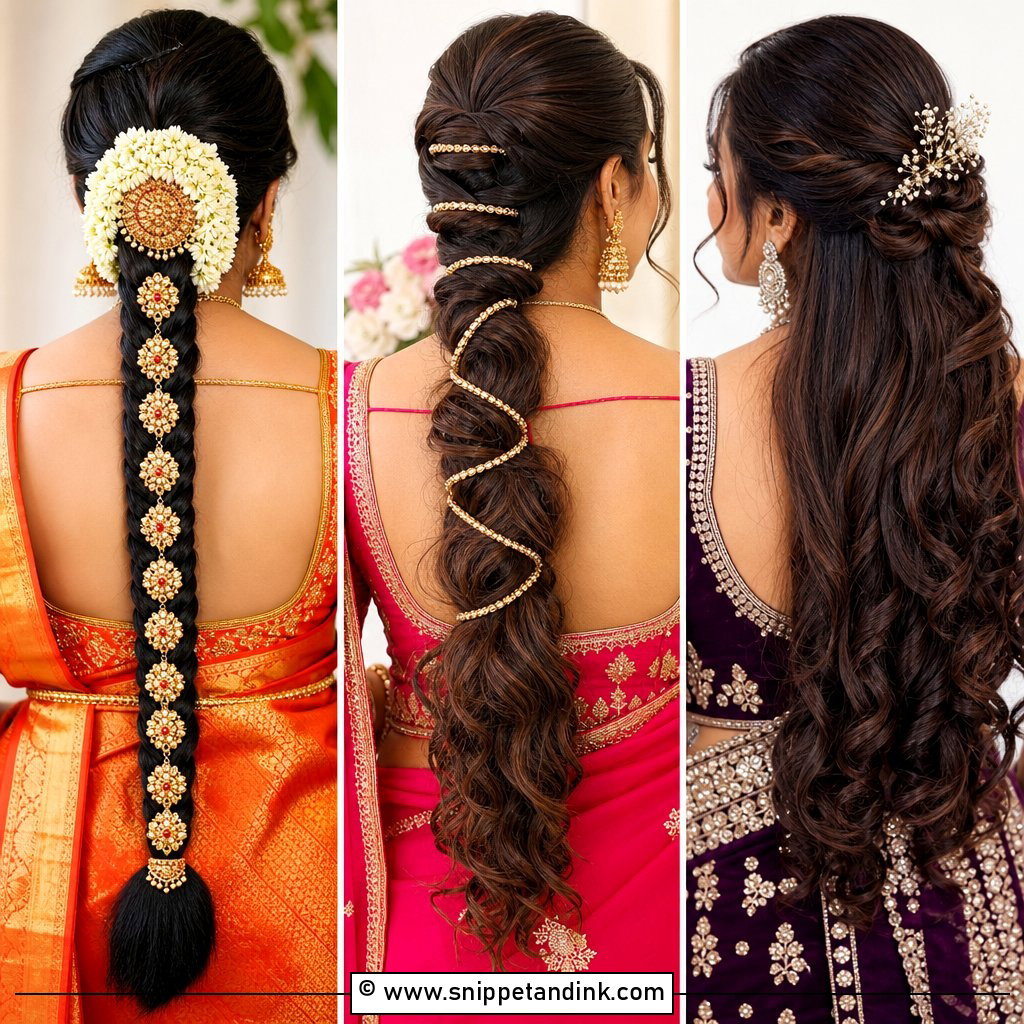
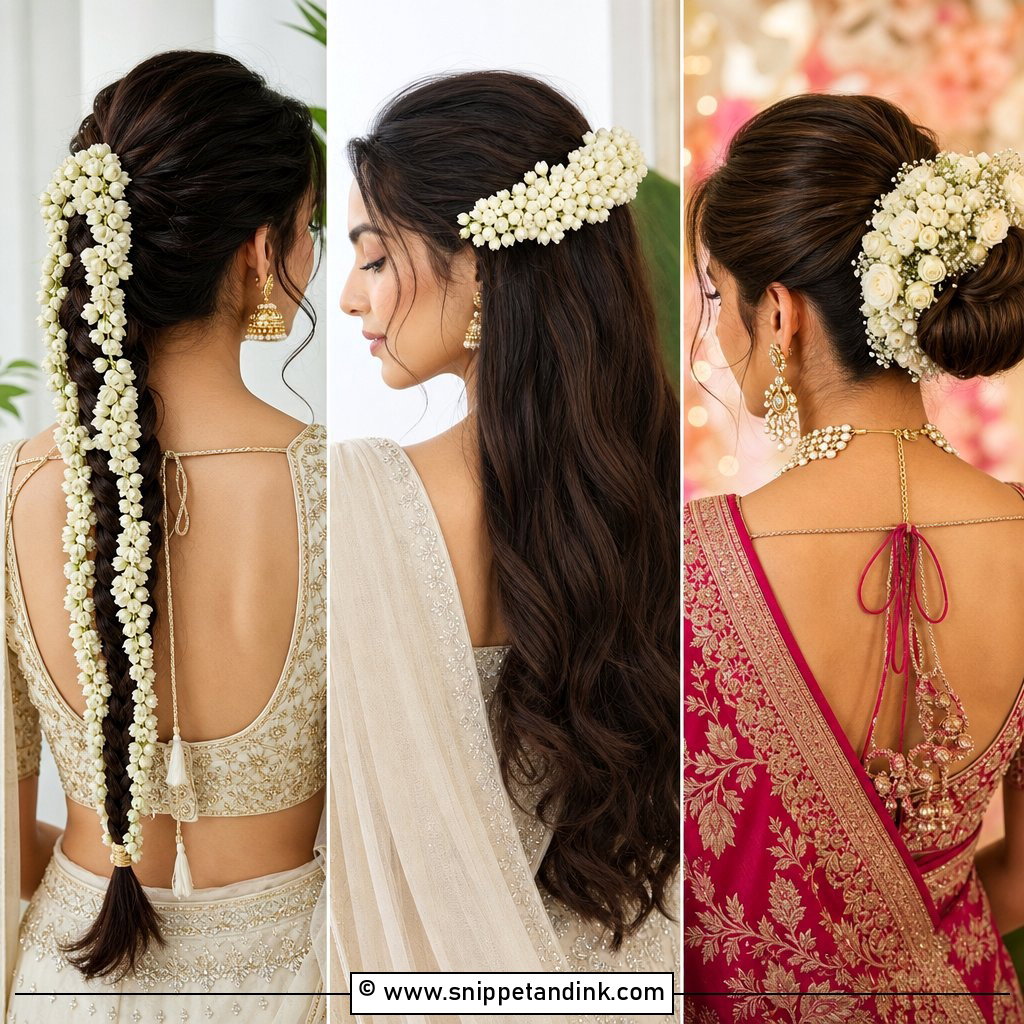
A thick, sleek plait down the back, wrapped in white jasmine, is still the braid South Indian brides ask for most, and nothing shows off length better. I part the hair cleanly, braid one firm plait and wrap fresh mogra around it in rows, with gold kunjalam tassels at the tip. It belongs with a silk kanjeevaram saree. With genuinely long hair I often skip extensions, but I check the tail first. If the last few inches thin out sharply, a small matching piece at the end keeps the plait even all the way down.
2. Fishtail Braid With Mogra Flowers
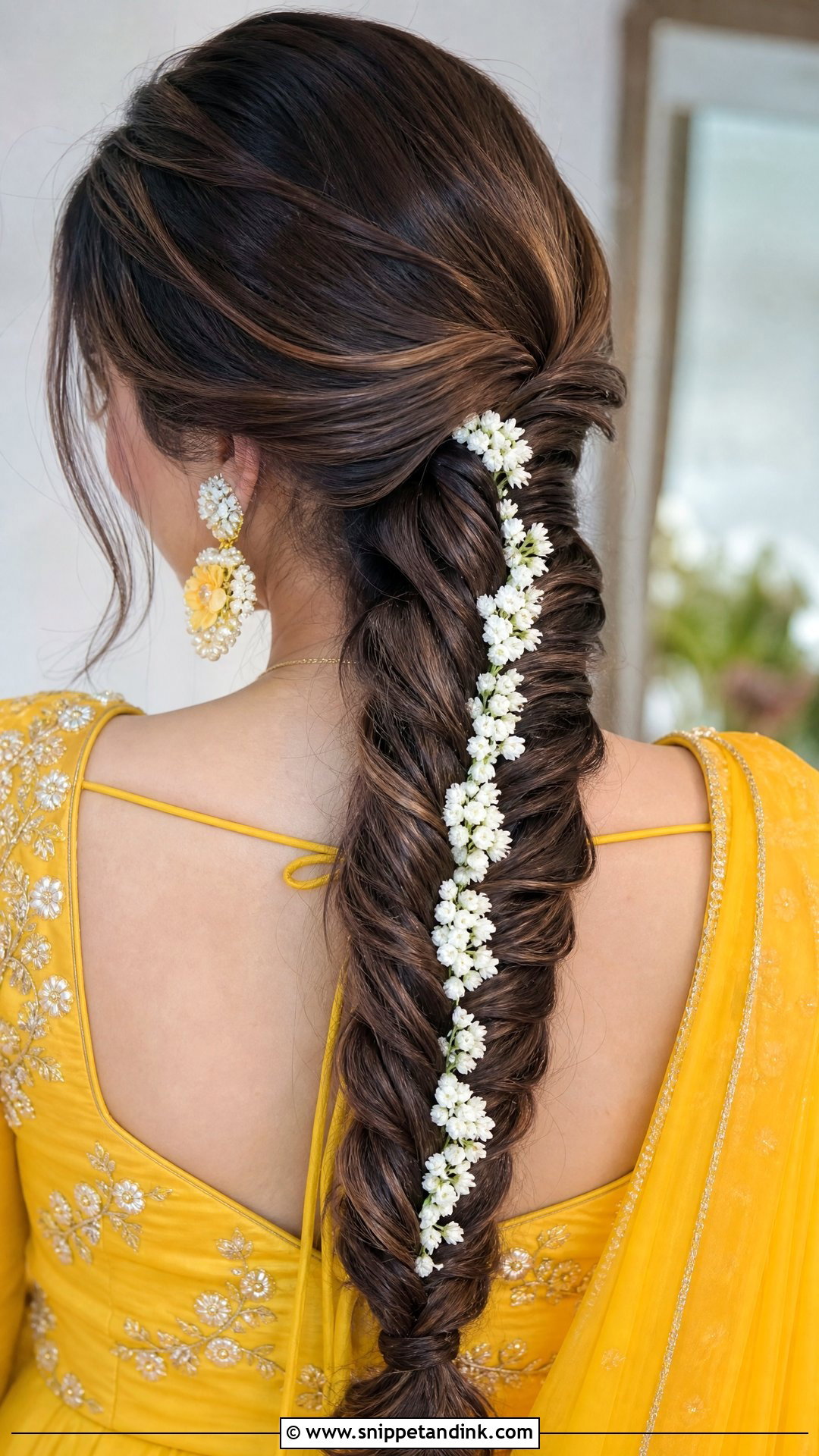
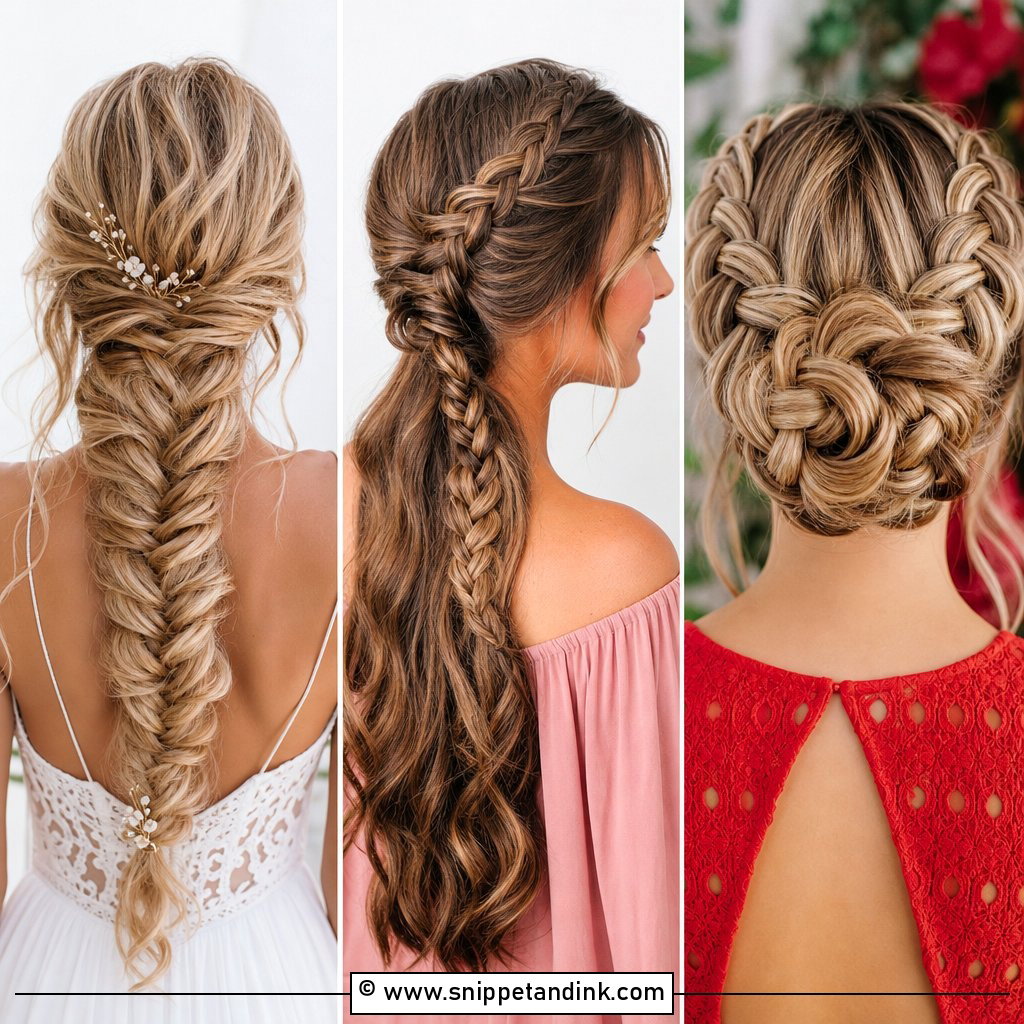
Up close a fishtail looks almost like lace, because each crossing takes only a thin section. Mogra tucked along it adds scent, and easing the edges out makes it wider. I keep it for haldi and mehndi, where it holds through dancing. Long hair is what makes it worth the effort, since the pattern needs inches to develop. It does take far longer than a three-strand plait, so give your stylist that time in the schedule.
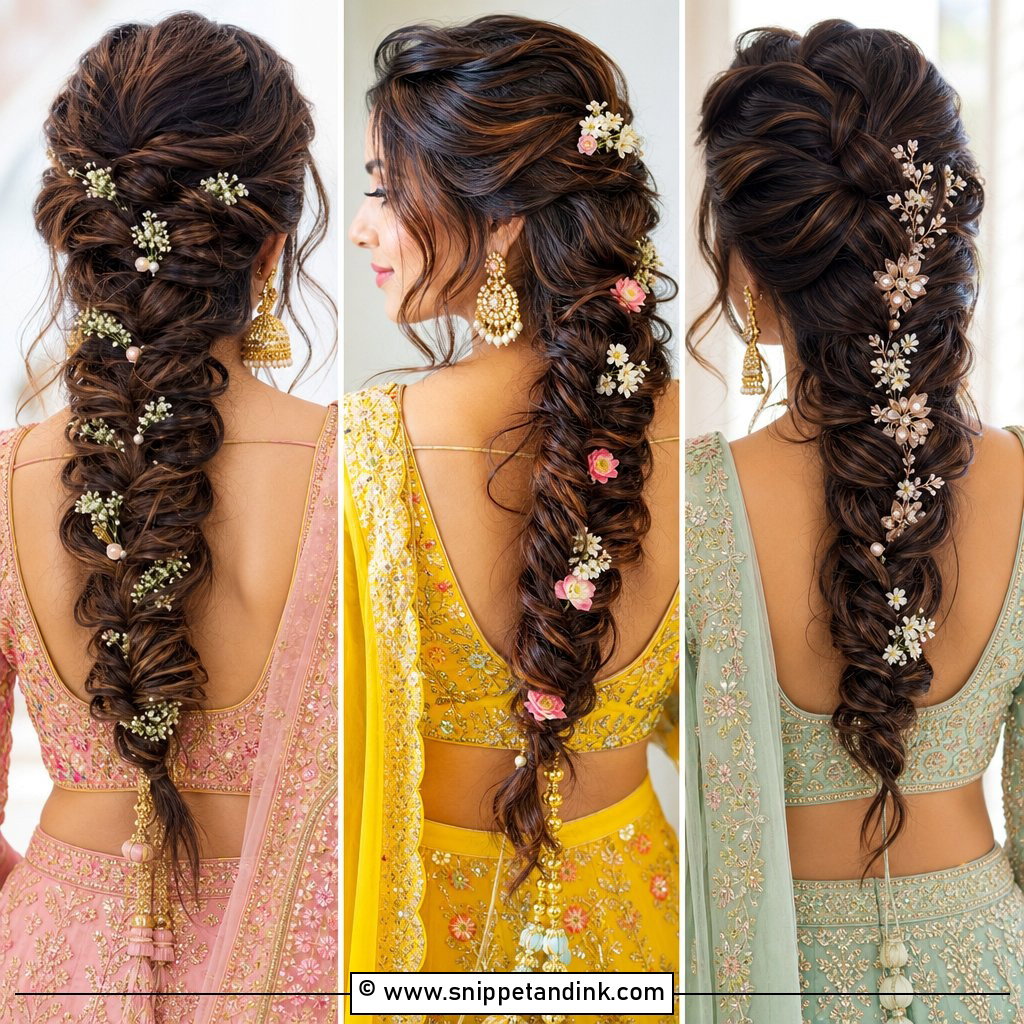
3. Pearl Embellished Waterfall Braid
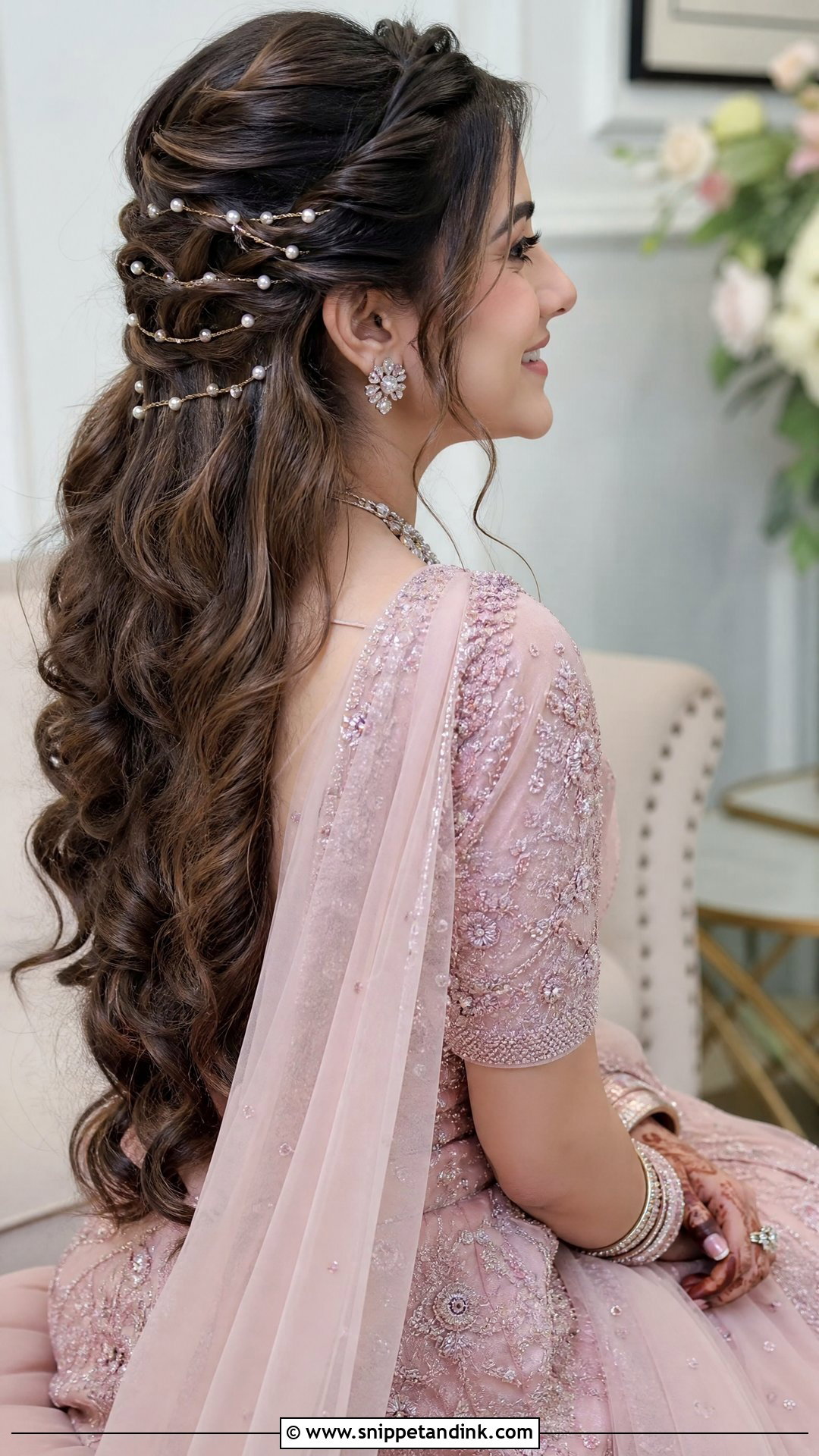
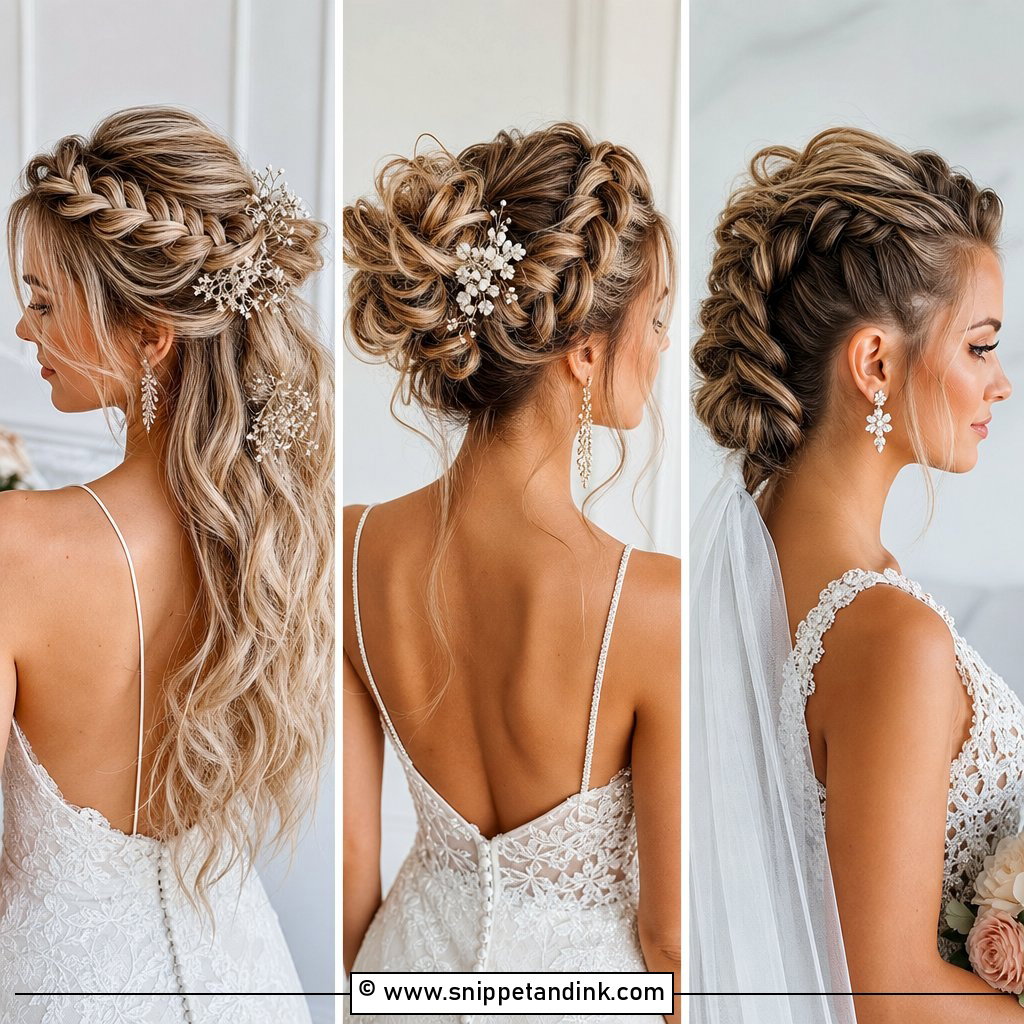
Strands drop through a horizontal braid and fall loose below, so most of your length stays open, and tiny white pearls along the braid line catch the light. I use it for receptions and pre-wedding shoots. Open hair is the catch. Long, loose lengths snag on embroidered blouses and dupatta edges, so I curl the lengths in large, smooth sections instead of tight ringlets, and the bride keeps a wide-tooth comb in her clutch.
4. Dutch Braid Into Fishtail Combo
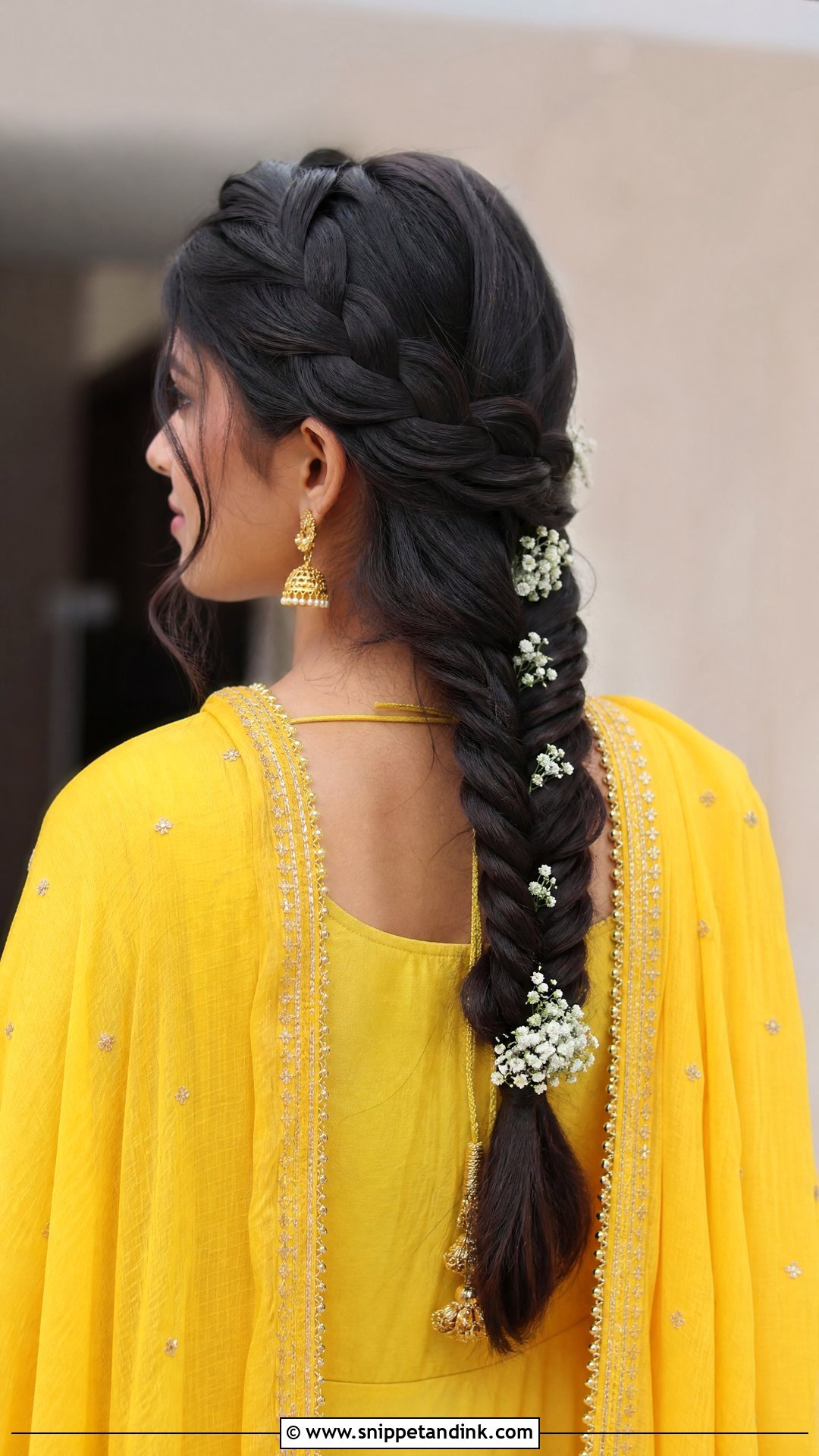
This one starts as a Dutch braid at the crown, raised and bold near the face, then switches to a fishtail lower down where it softens into fine weave. I cover the switch point with small flowers or pearl pins, because the change of pattern leaves a visible step. Haldi and sangeet suit it, with a salwar kurta or lehenga. It takes a practiced hand. If your stylist has not done the switch before, ask to see it at the trial rather than on the day.
5. Bubble Braid With Floral Accents
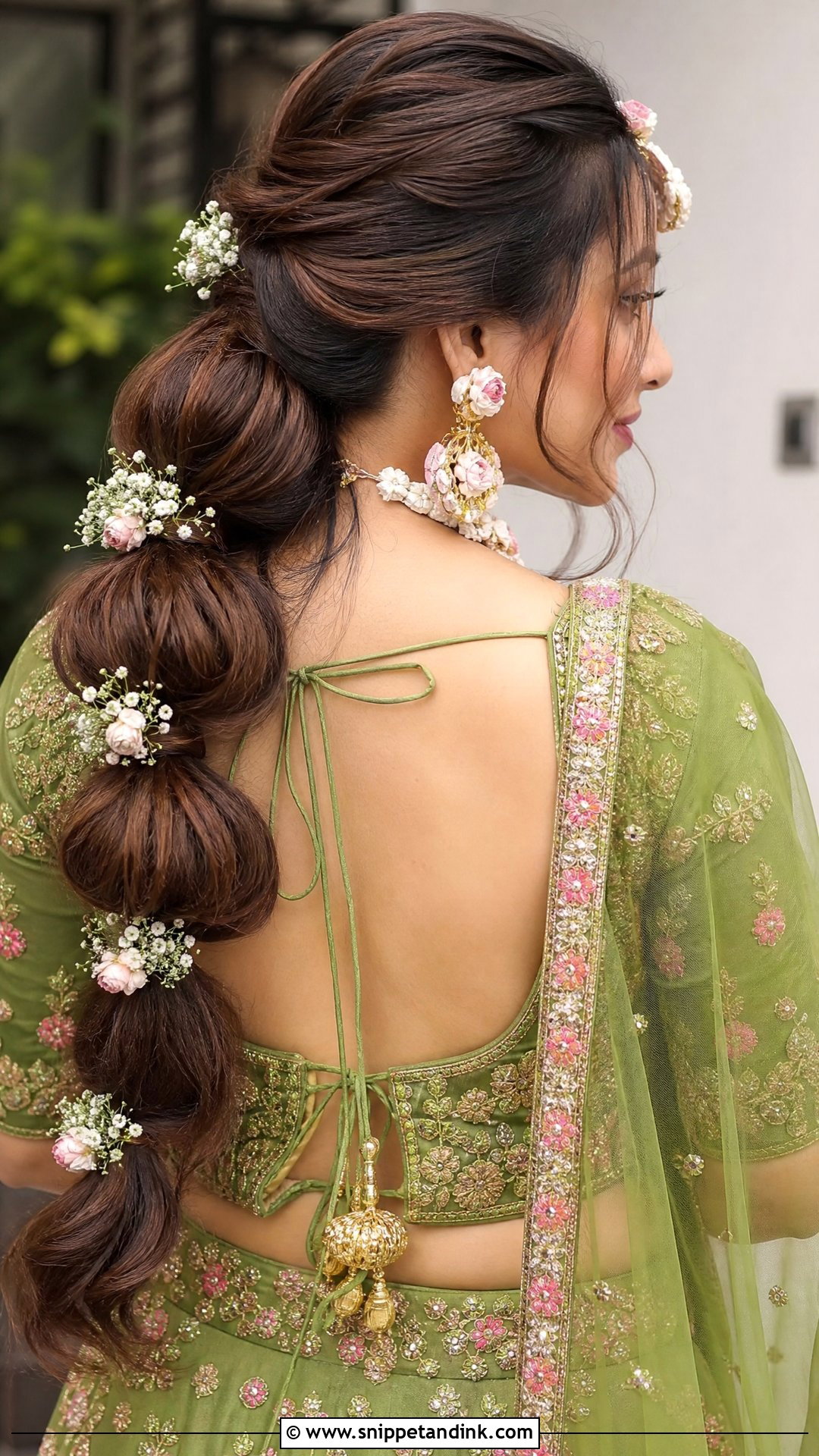
Small elastics down a ponytail, each section puffed out between them: no weaving and very little time. On long hair the bubbles come out large and even, which is where this braid looks its best. Tiny flowers or pearl pins hide each elastic. Mehndi and sangeet nights are its home, and it keeps its shape through hours of dancing. I would skip it for the main ceremony unless your style leans playful, since it can look too casual next to heavy zari.
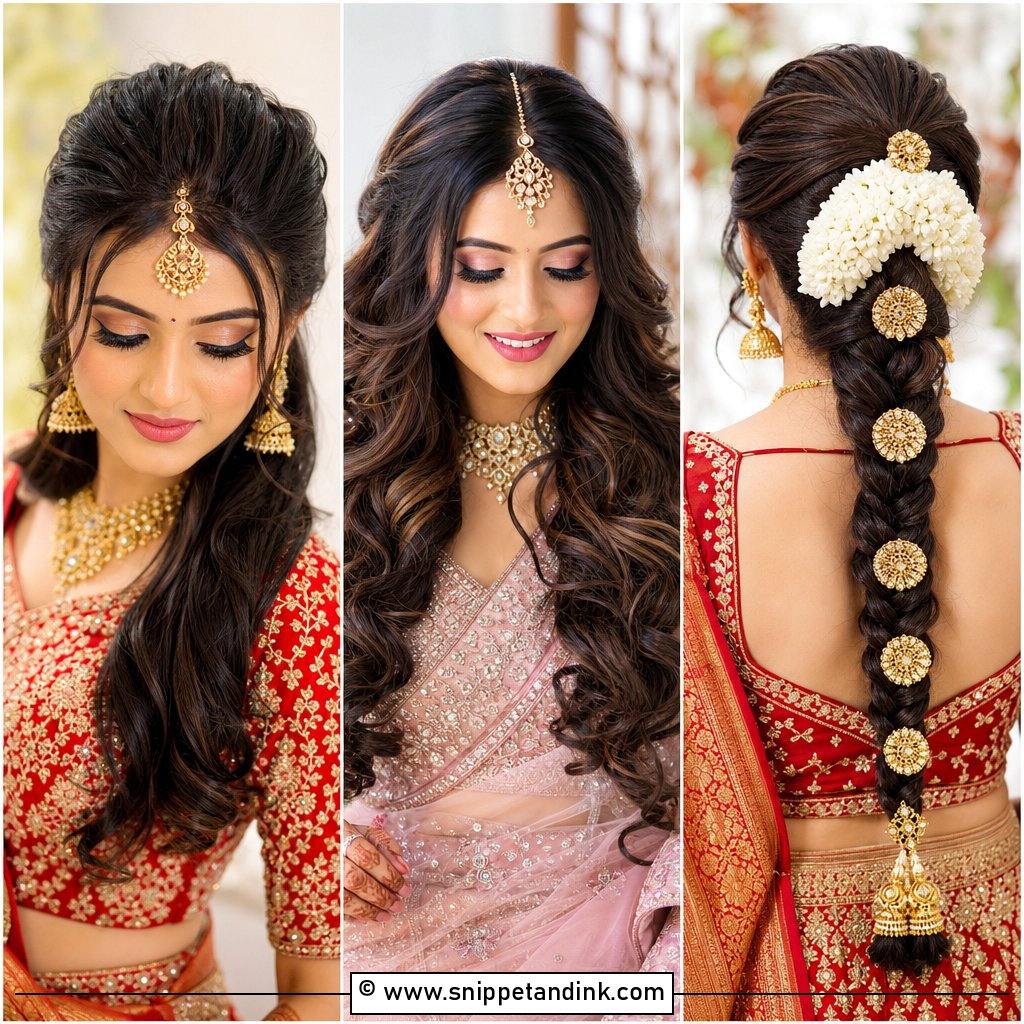
6. Mermaid Braid With Mini Butterflies
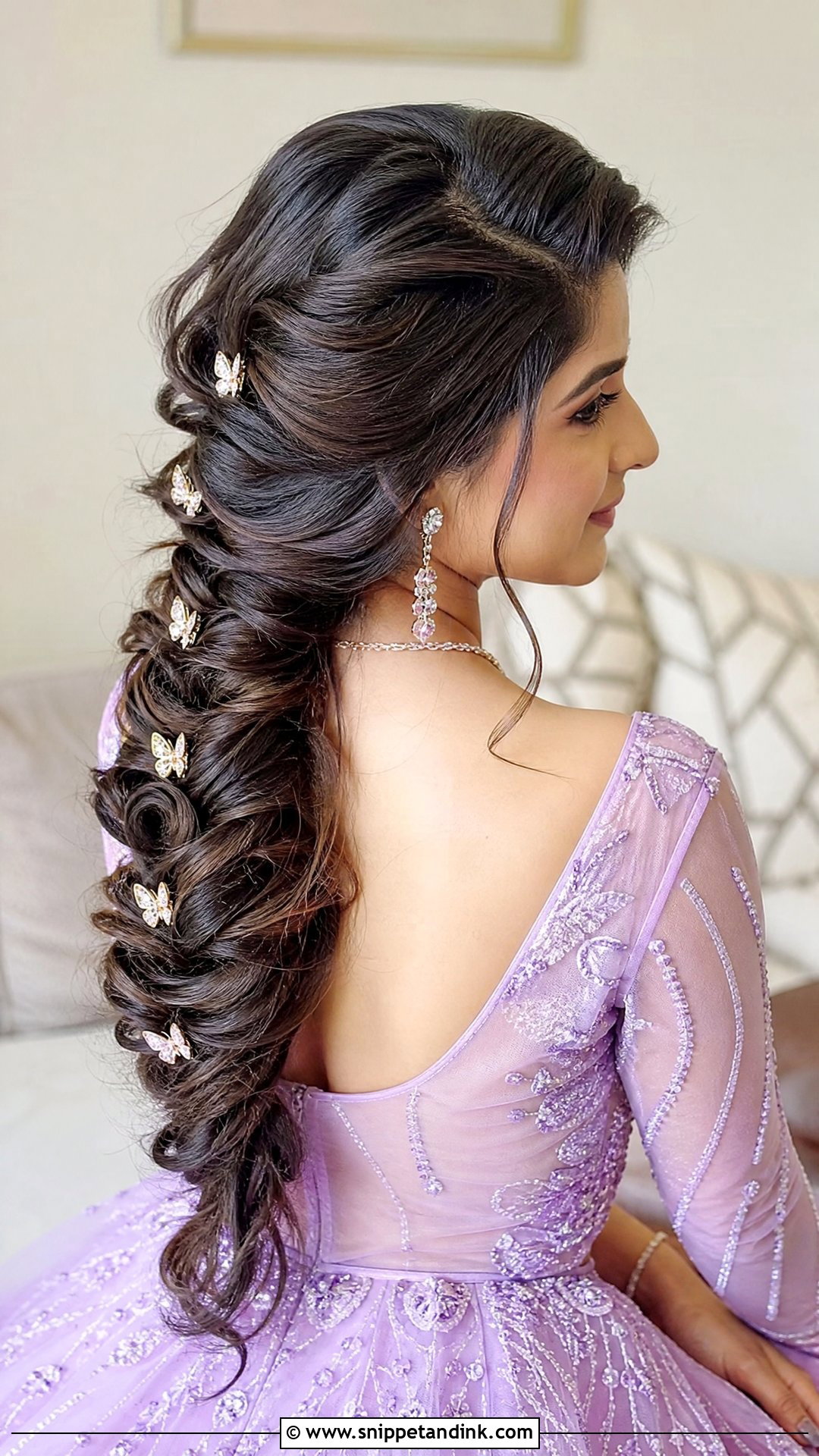
A mermaid braid is woven wide and loose from thin sections, so it looks thicker than the hair really is. Tiny butterfly clips or small flowers scattered along it add whimsy. Long, thick hair suits it best, and I would use it at a reception or a creative shoot rather than a religious ceremony. Butterfly clips are light, but their little spring mechanisms slide off loose weaving, so I mount them on pins pushed into the braid instead.
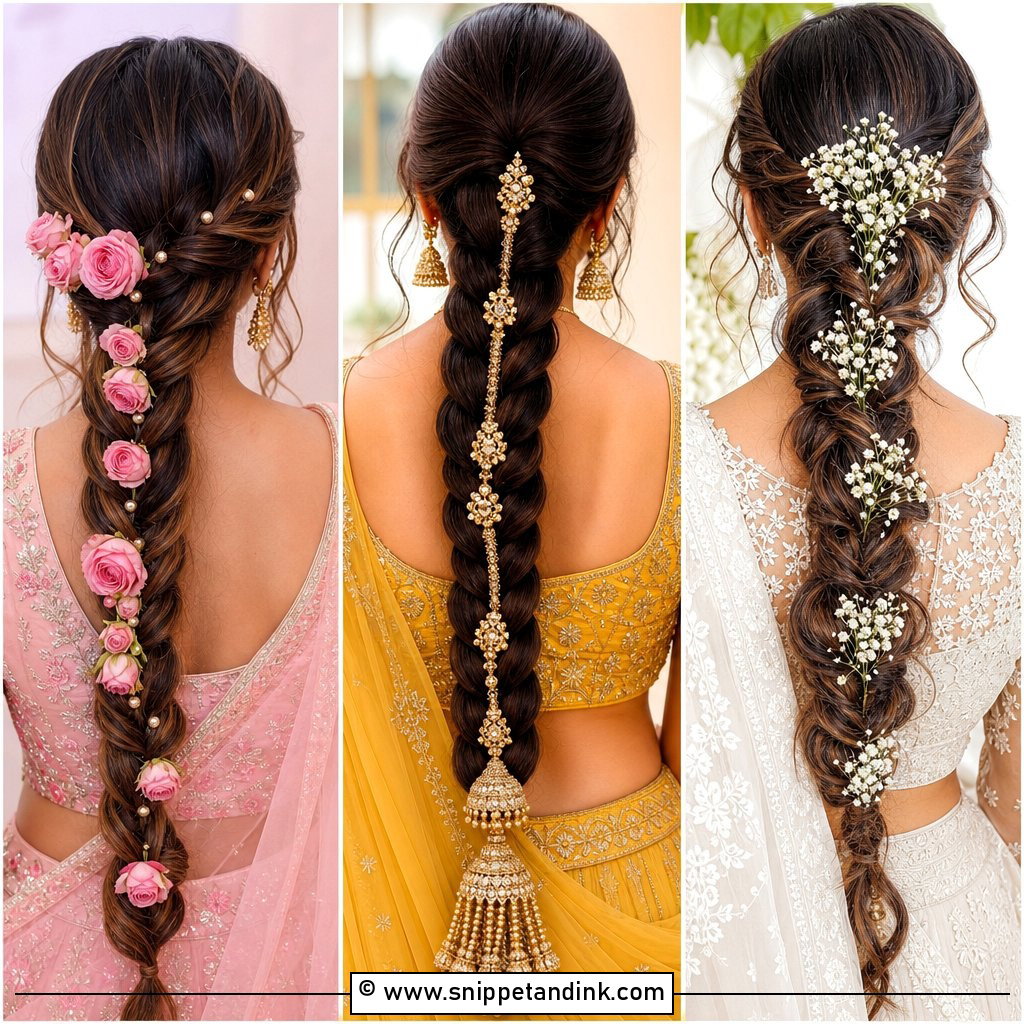
7. Rose Twist Braid for Brides
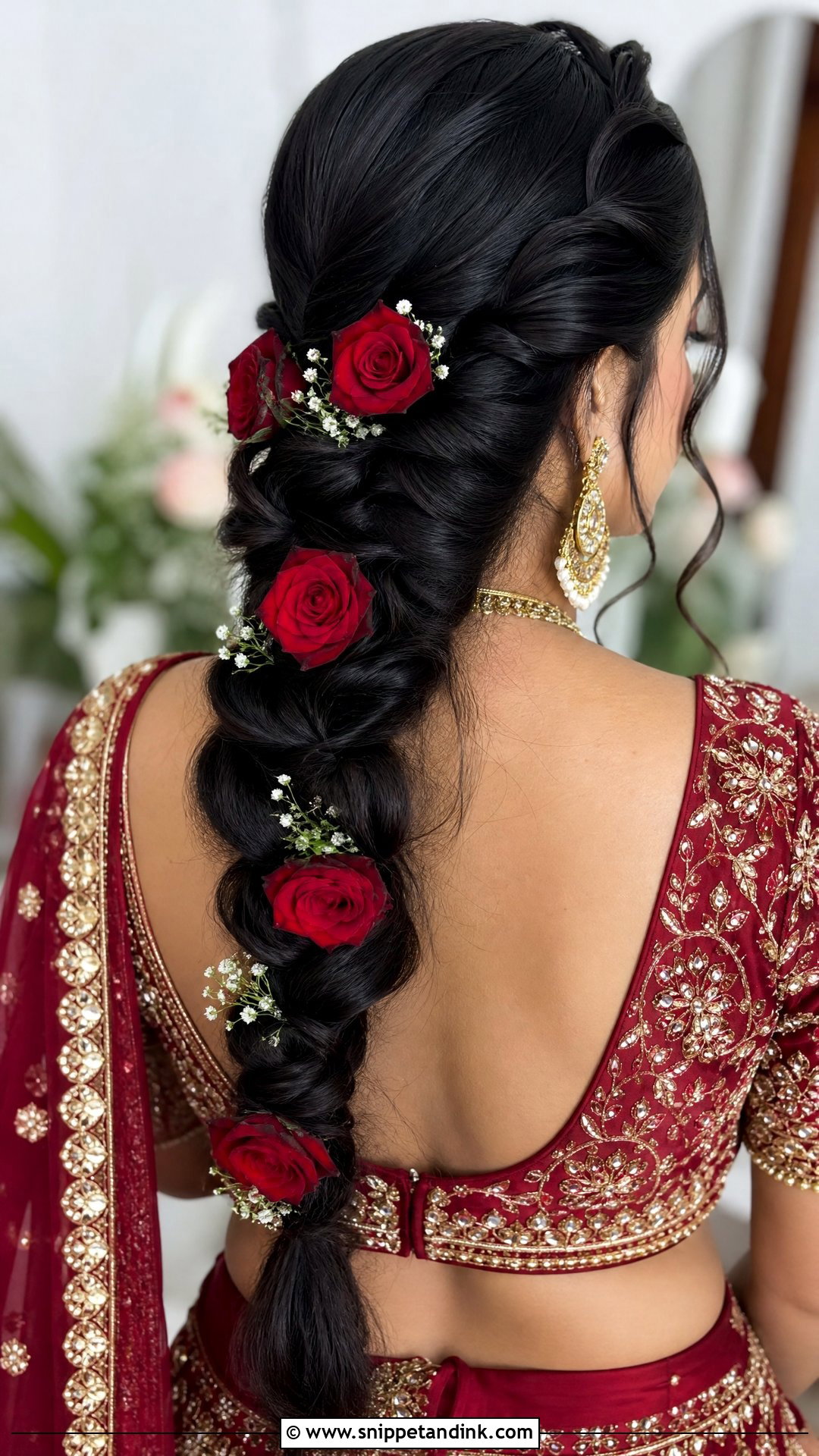
Rose twists coil small sections into flower shapes along the braid, so the hair itself becomes the decoration. Fresh roses or pearl details can sit between them. It is delicate but structured, and I would wear it to a reception or engagement. Each rosette is pinned separately, often with two crossed pins, which makes it slow to build but one of the more secure looks once finished. Very slippery hair needs a texturizing spray first or the coils loosen.
8. Loose Side Braid With Roses
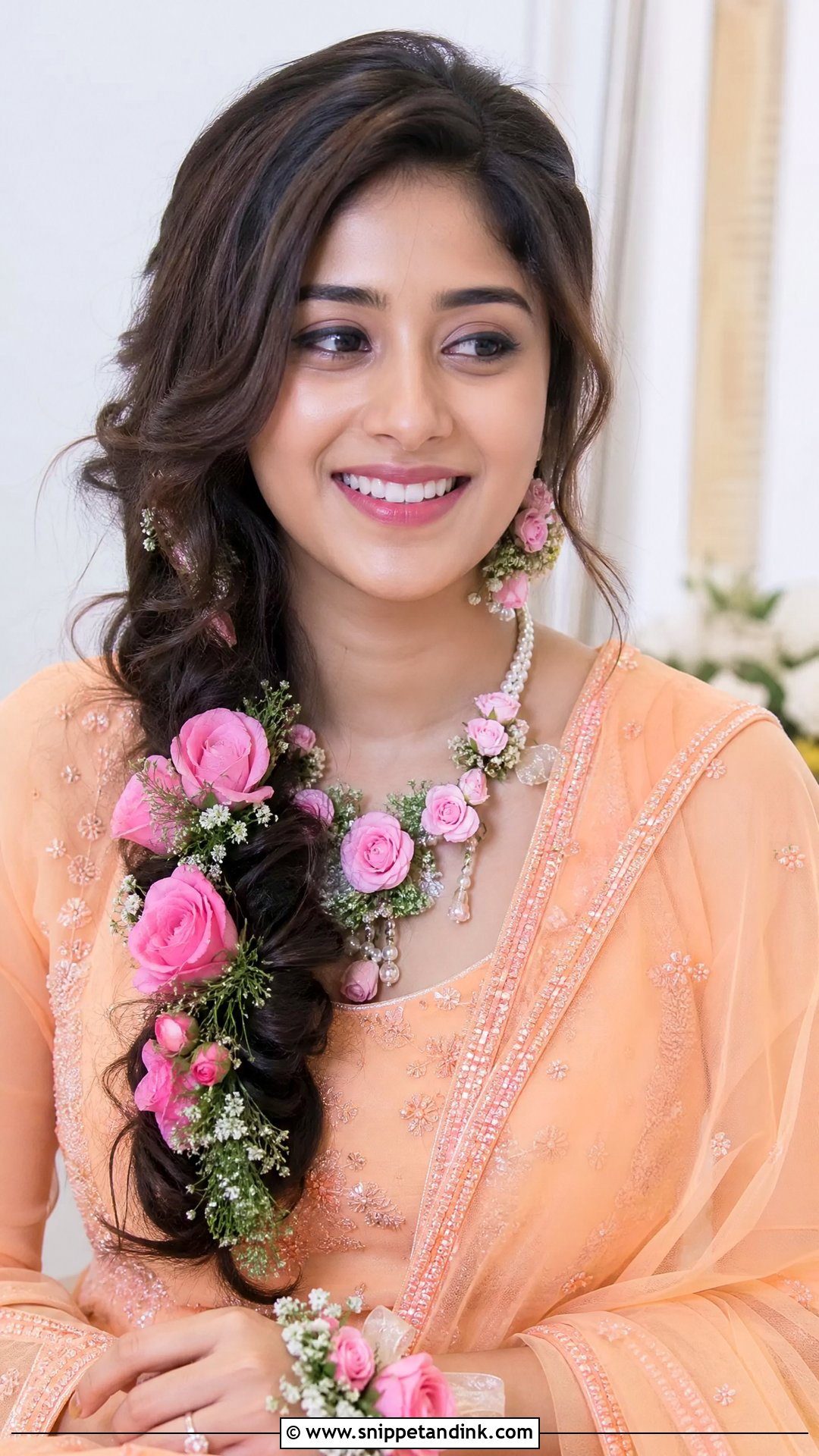
Not every bridal braid needs to be tight. This one drapes over one shoulder with waves and a slightly undone texture, and fresh roses tucked along it. It frames round and oval faces softly and suits haldi, mehndi or small ceremonies, with long hair giving it body. The usual mistake is braiding it loosely from the start. I braid it firm and then ease it open, which stops the shape collapsing as the day goes on.
9. Crown Braid With Fresh Flowers
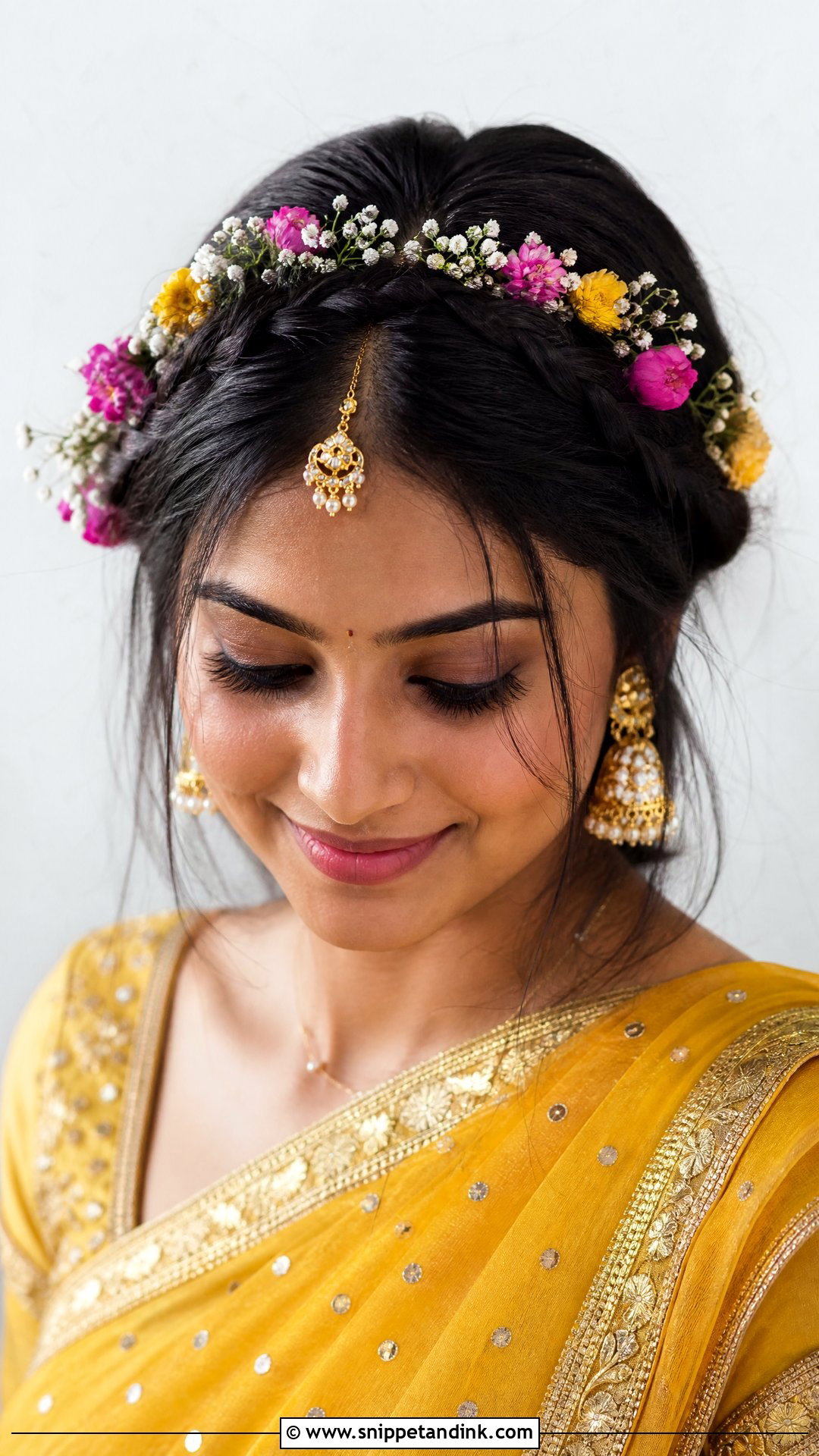
Circling the head, a crown braid lifts hair off the face and neck, and that matters at warm-weather and outdoor ceremonies. Fresh flowers tucked in give it a garden feel, and a maang tikka with jhumkas sits well beside it. Very long hair is almost too much for one crown wrap. I either split the length into two braids that cross at the back or tuck the extra into a small hidden bun.
10. Kundan Embellished Braid
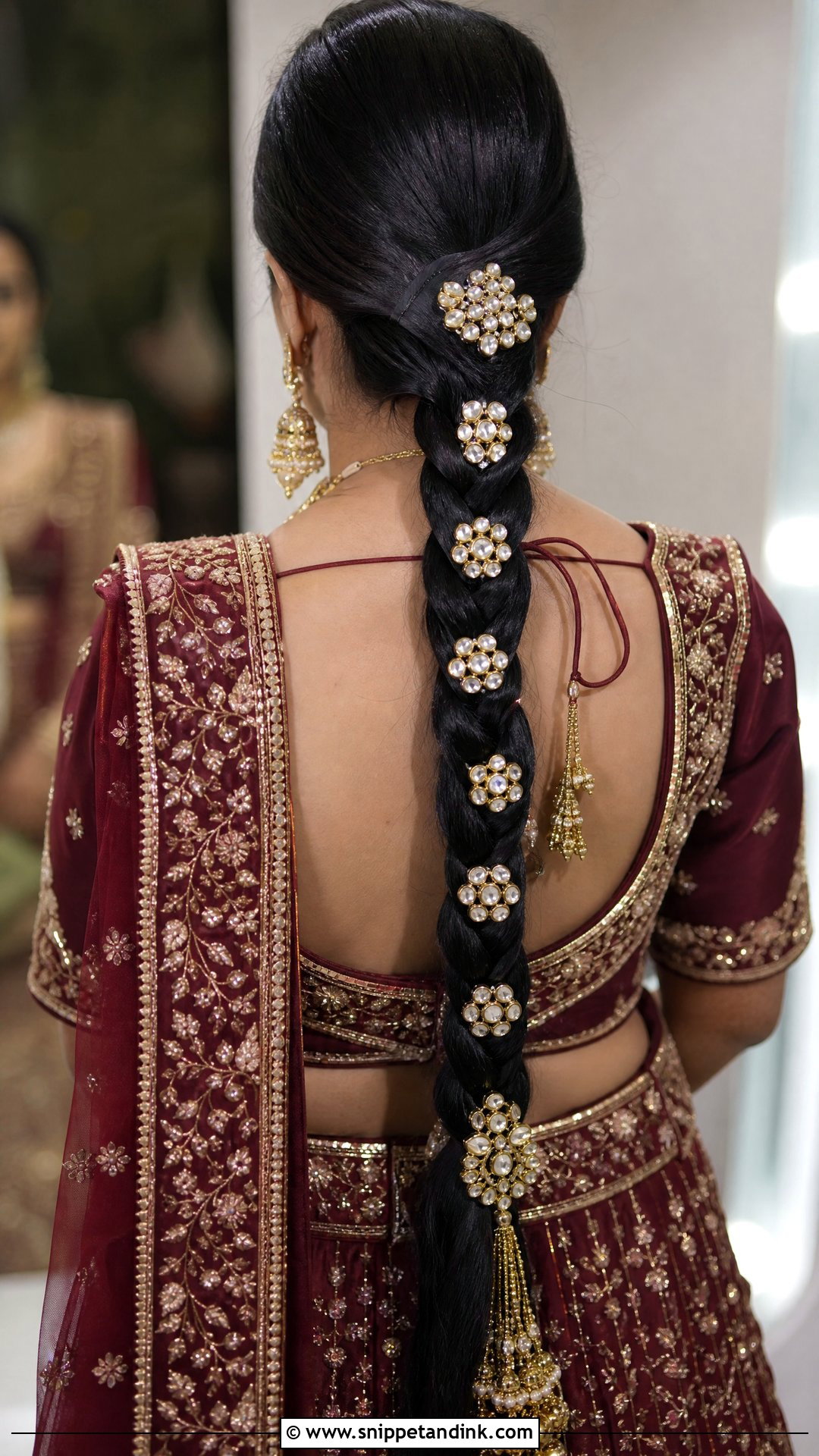
Kundan or polki pieces woven through a thick plait make the braid read as part of the jewelry. The gold and stones catch light while the braid itself stays sleek and full. Heavy bridal lehengas, the main ceremony and the reception all suit it. I match the pieces to the necklace set, then pin the largest ones into the top third of the braid, where the hair is thickest and grips best. Heavy pieces placed near a thin tail tend to slide.
11. Boho Braid With Baby’s Breath
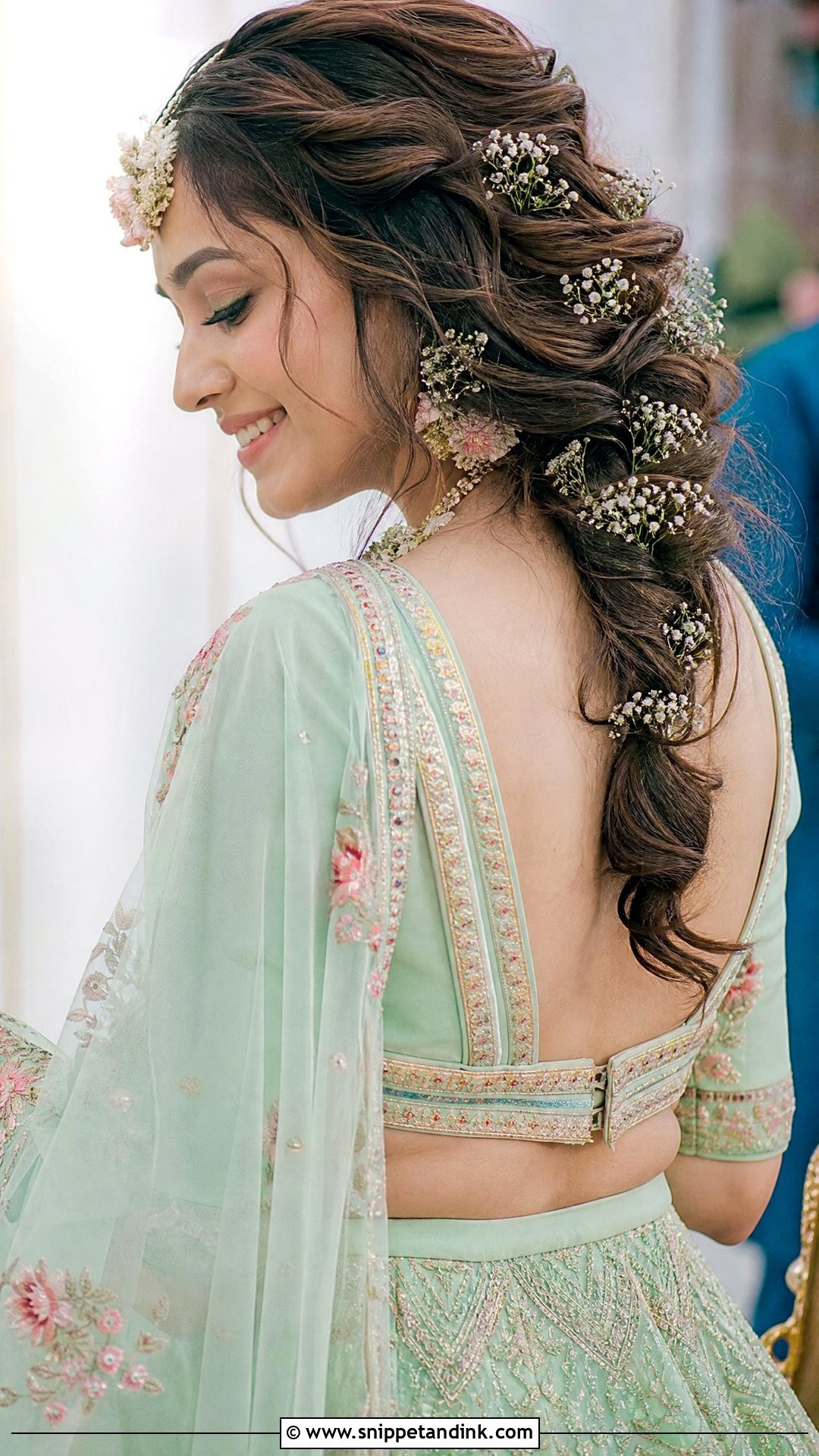
Loose, textured braiding with tiny baby’s breath tucked throughout gives a soft, airy result. Pastel lehengas and floral jewelry match it, and mehndi, haldi and outdoor pre-wedding shoots suit it, with long hair giving it volume. Baby’s breath is sturdy and lasts well out of water, which is why I like it in hair. I snip the stems into tiny sprigs and push them in at an angle so they lock under the crossings.
12. Thick Single Braid With Gold Tassels
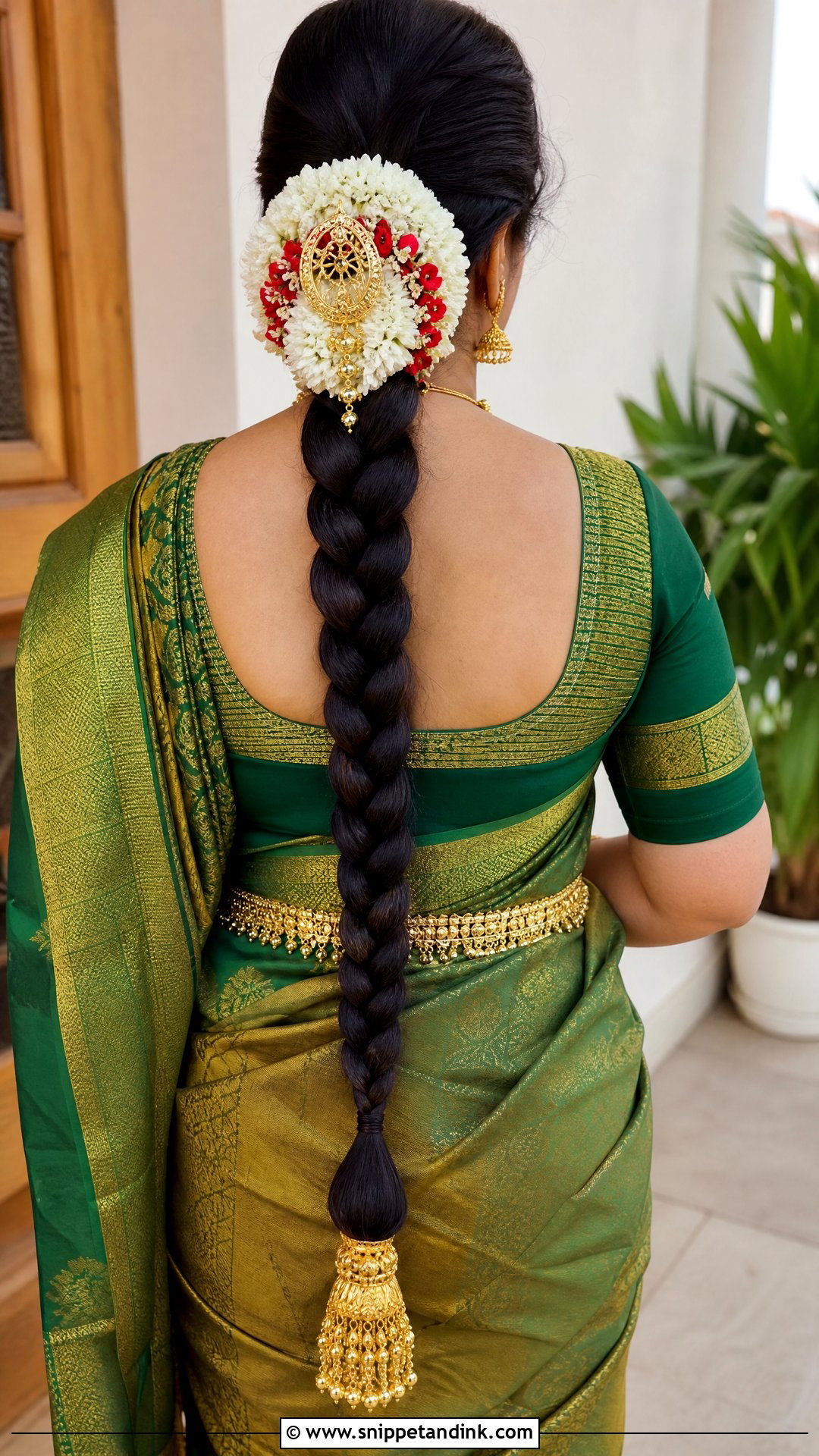
One full, sleek plait runs down the back, often thickened with extensions. Gold kunjalam tassels hang at the tip and swing as you walk. It is South Indian tradition at its plainest, with silk sarees and temple jewelry, for the ceremony or the reception. Tassels pull on the very end of the braid, so I secure the tip with a strong elastic wrapped in hair before the kunjalam goes on. Tied onto bare ends, it can slip off when you sit down.
13. Fishtail Crown Braid Updo
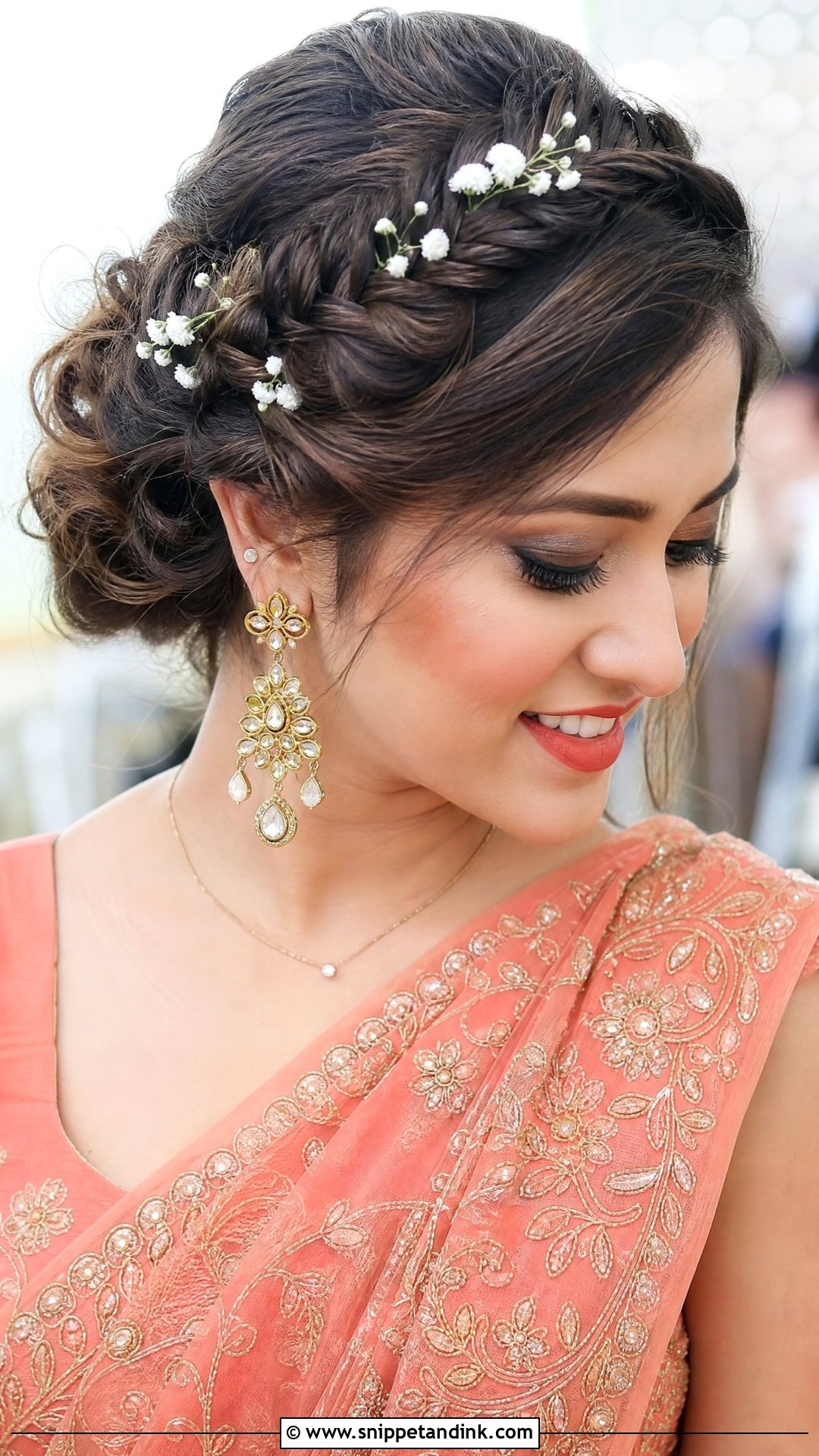
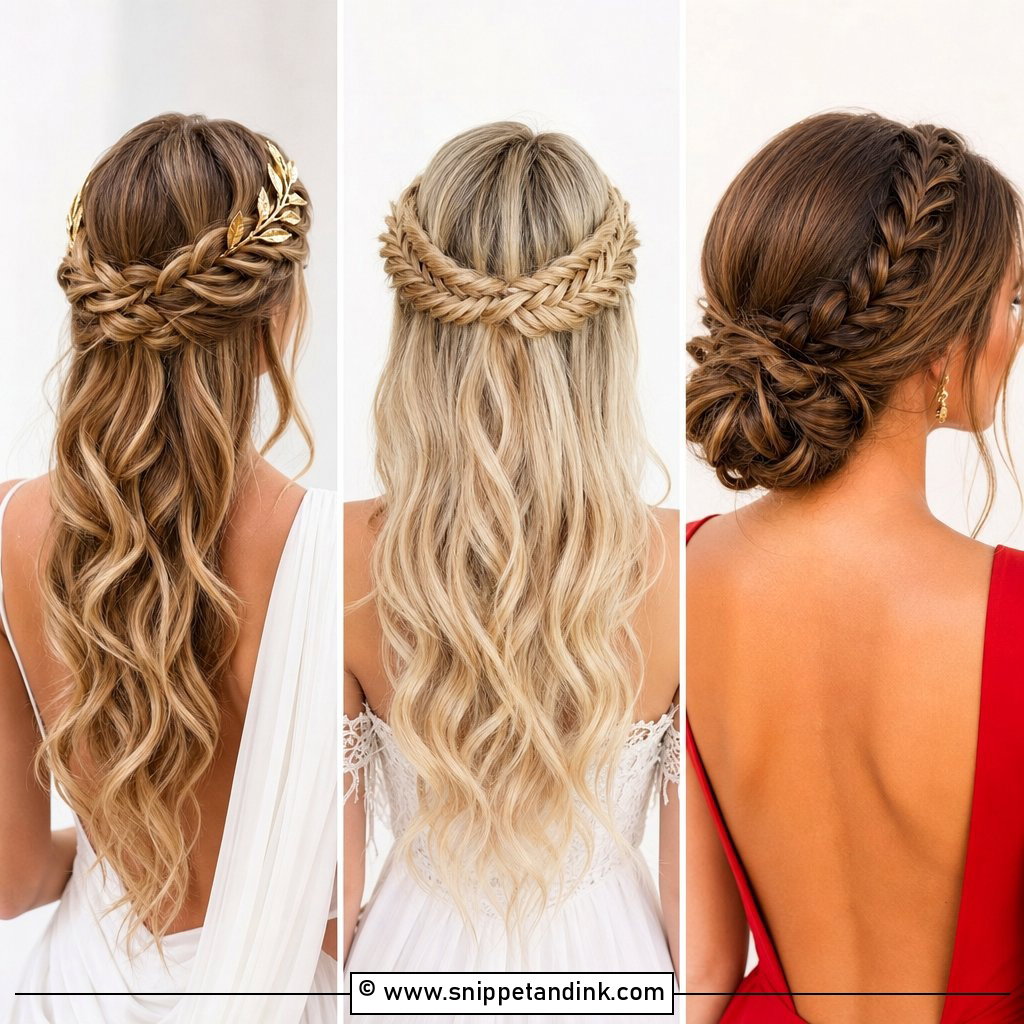
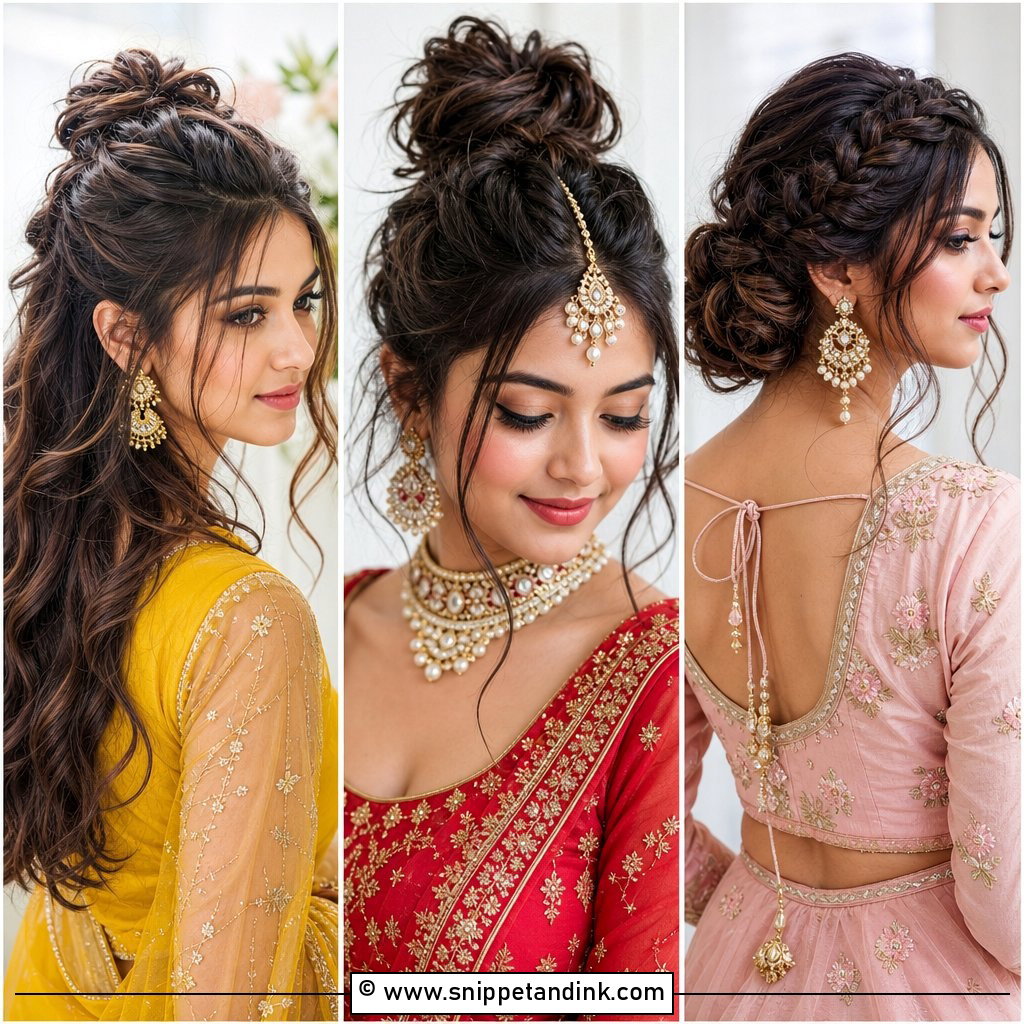
A fishtail wrapped around the head like a tiara turns long hair into a soft updo. The fine weaving gives detail, and small flowers or pearl pins add to it. In warm weather it keeps hair off the neck, and statement earrings and a maang tikka suit it. You need real length for one fishtail to circle the whole head. With less length, I braid two fishtails, one from each side, and join them at the back.
14. Halo Braid With Pearls and Flowers
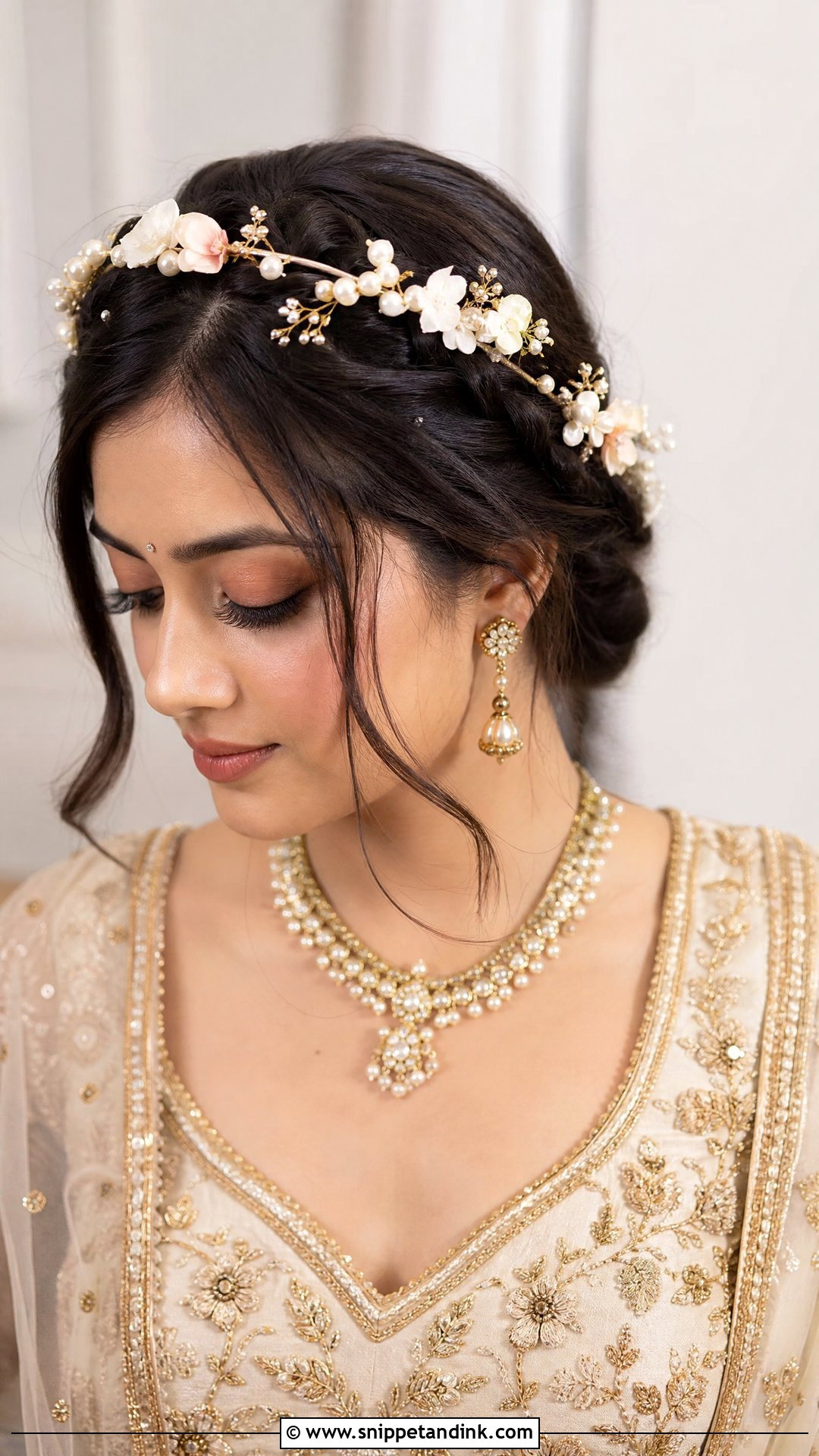
One continuous loop around the head frames the face, and pearls plus fresh flowers bring shimmer and color together. It keeps long hair wrapped neatly through long ceremony hours, with delicate jewelry and soft makeup. Pearls and flowers compete for space, so I alternate them instead of crowding both into every gap. A halo also sits exactly where a dupatta often needs to be pinned, so plan the dupatta first.
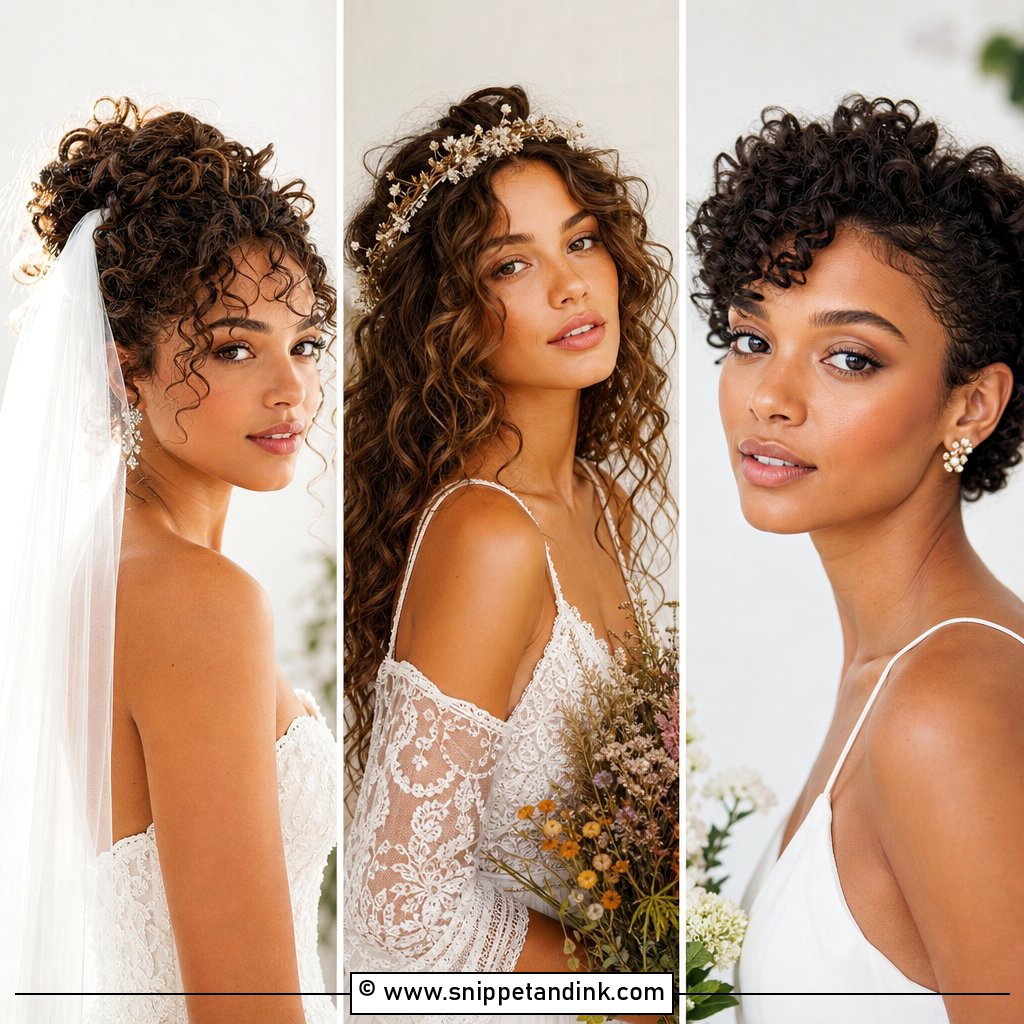
15. Twisted Rope Braid for Long Hair
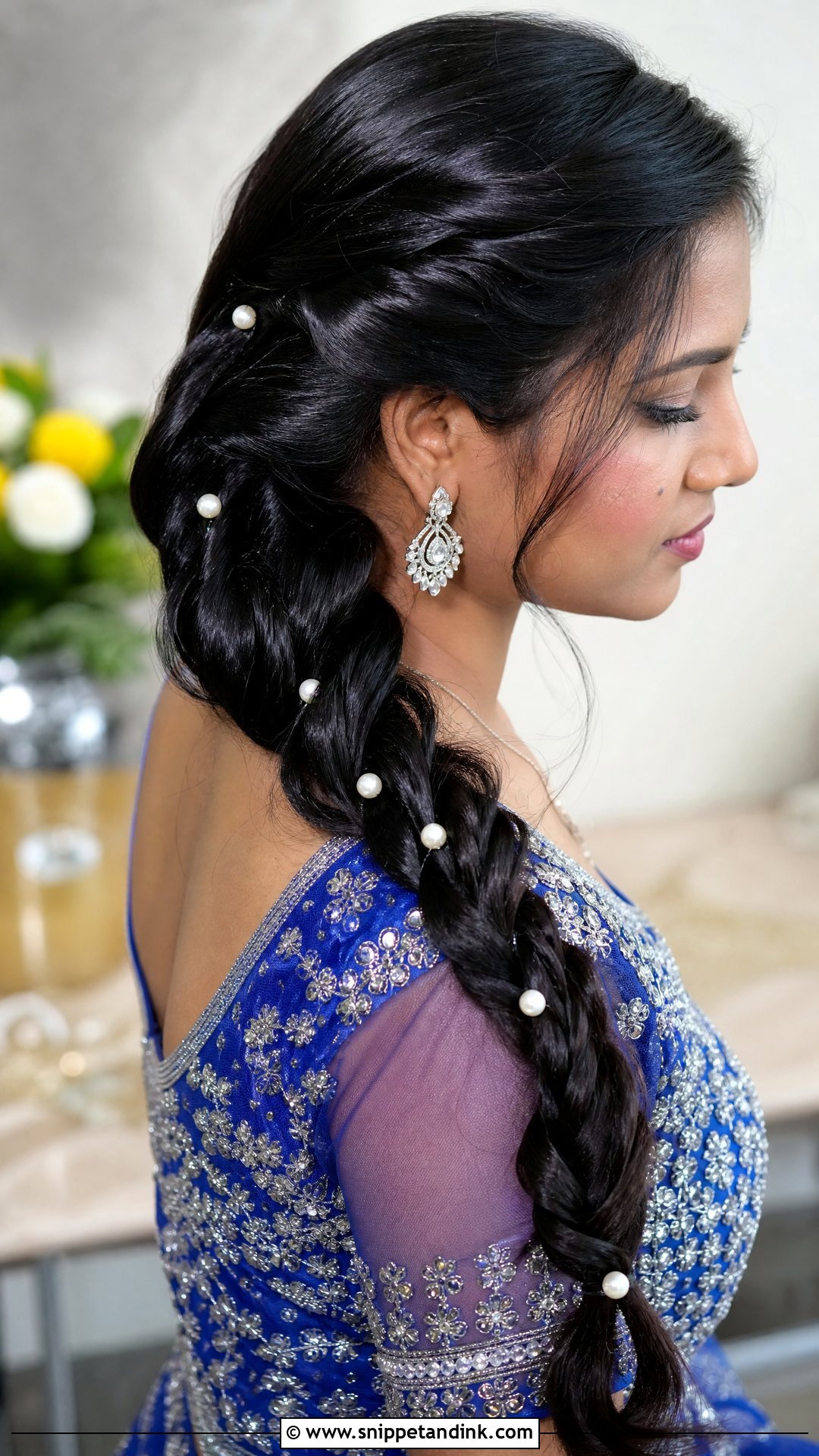
Two sections twisted around each other form a rope that looks structured and clean. Worn down the back or over one shoulder, with pearl pins or small flowers, it suits receptions and engagements. On long hair the rope gets thinner as it travels down, because most hair tapers toward the ends. I mist a little volume spray on the lengths before twisting and tie off higher if the ends are wispy.
16. Braided Low Bun With Jasmine
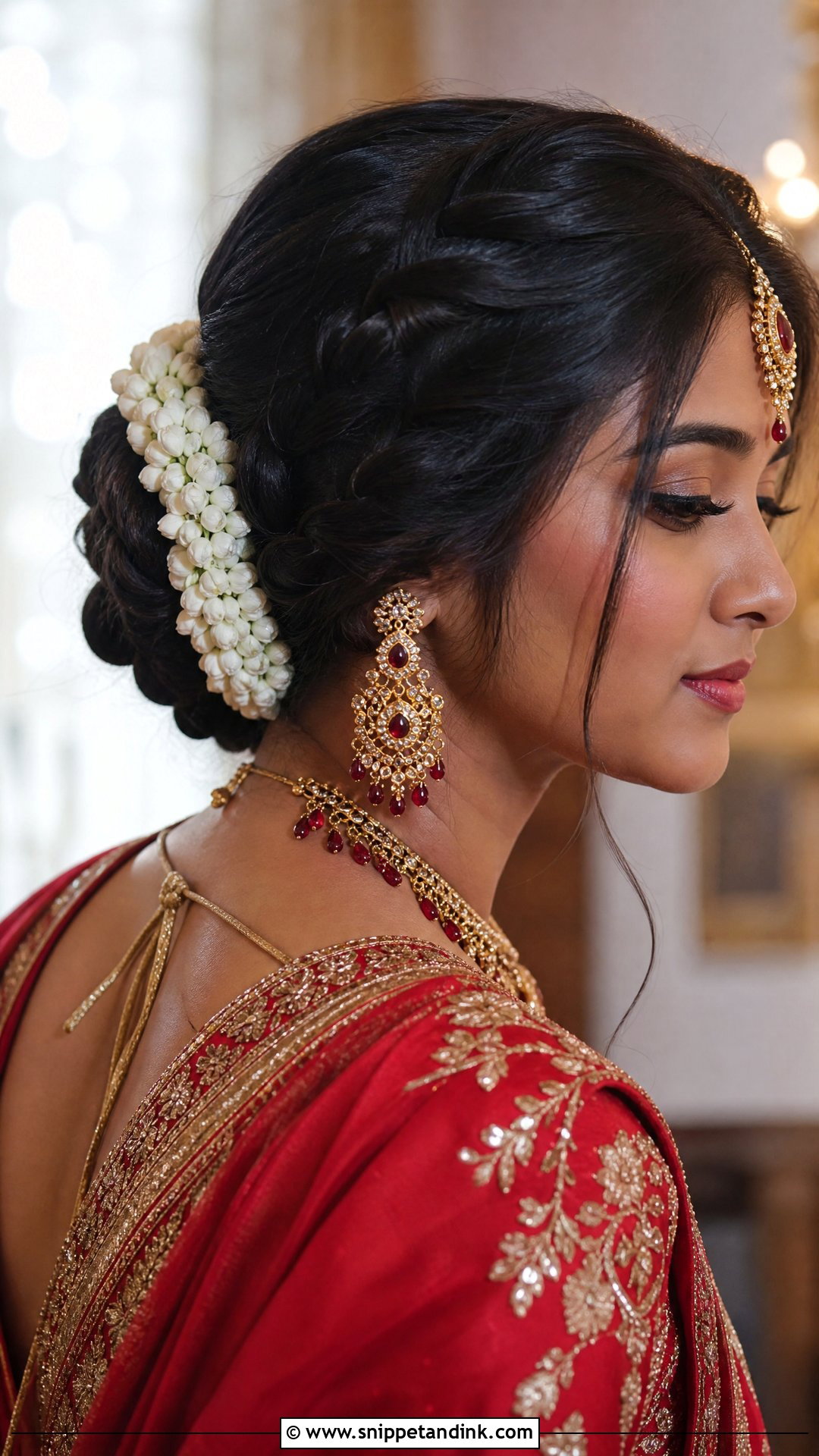
Braided first, coiled into a low bun and circled with jasmine, this is the neat, classic shape I use for temple ceremonies. The braided texture adds depth and the bun keeps everything secure under a dupatta. Heavy earrings and a maang tikka suit it. Very long hair makes a very large bun, which can drag at the nape, so I split the length into two braids and coil them side by side to keep it flatter.
17. Side Swept Fishtail With Embellishments
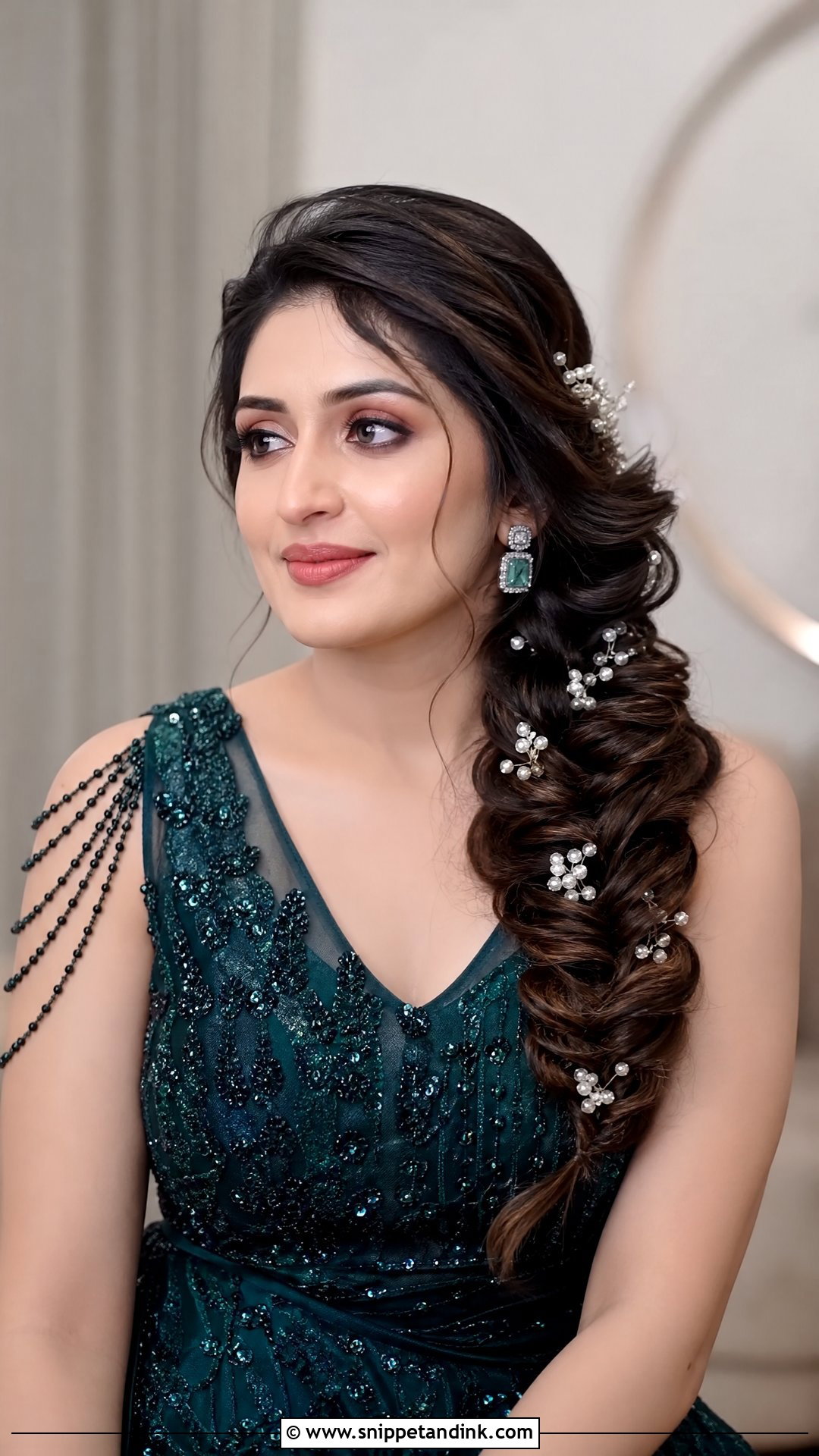
Gathered to one side and woven into a fishtail, this braid adds drama and frames the face. Pearls, crystals or small flowers along it make it bridal, and it suits receptions and engagement parties, especially with statement earrings and an open neckline. The hair has to travel across the back of the head to reach one side, and that is where it gaps. I anchor it with a hidden row of pins behind the ear before I start braiding.
18. Multi Strand Braid With Flowers
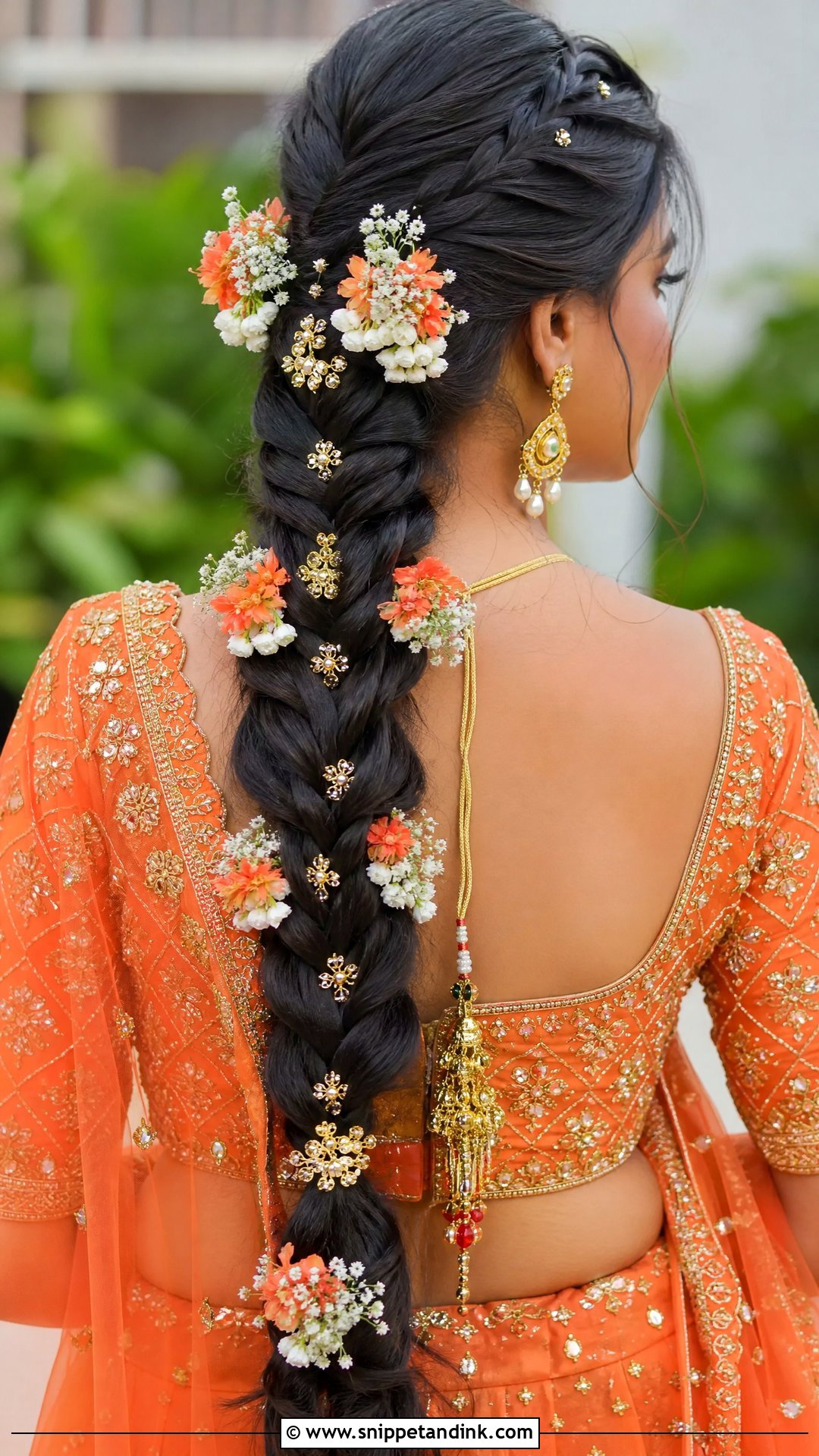
Four, five or more strands woven together create a layered plait with real depth. Flowers tucked in add the traditional note, and pearls or gold accents add shine. It needs long, thick hair so each strand stays substantial; on fine hair the pattern looks stringy. Sangeet, mehndi and the reception suit it. Ask your stylist whether she has done multi-strand braids before, because keeping them even takes practice.
19. Braided Half Updo With Open Hair
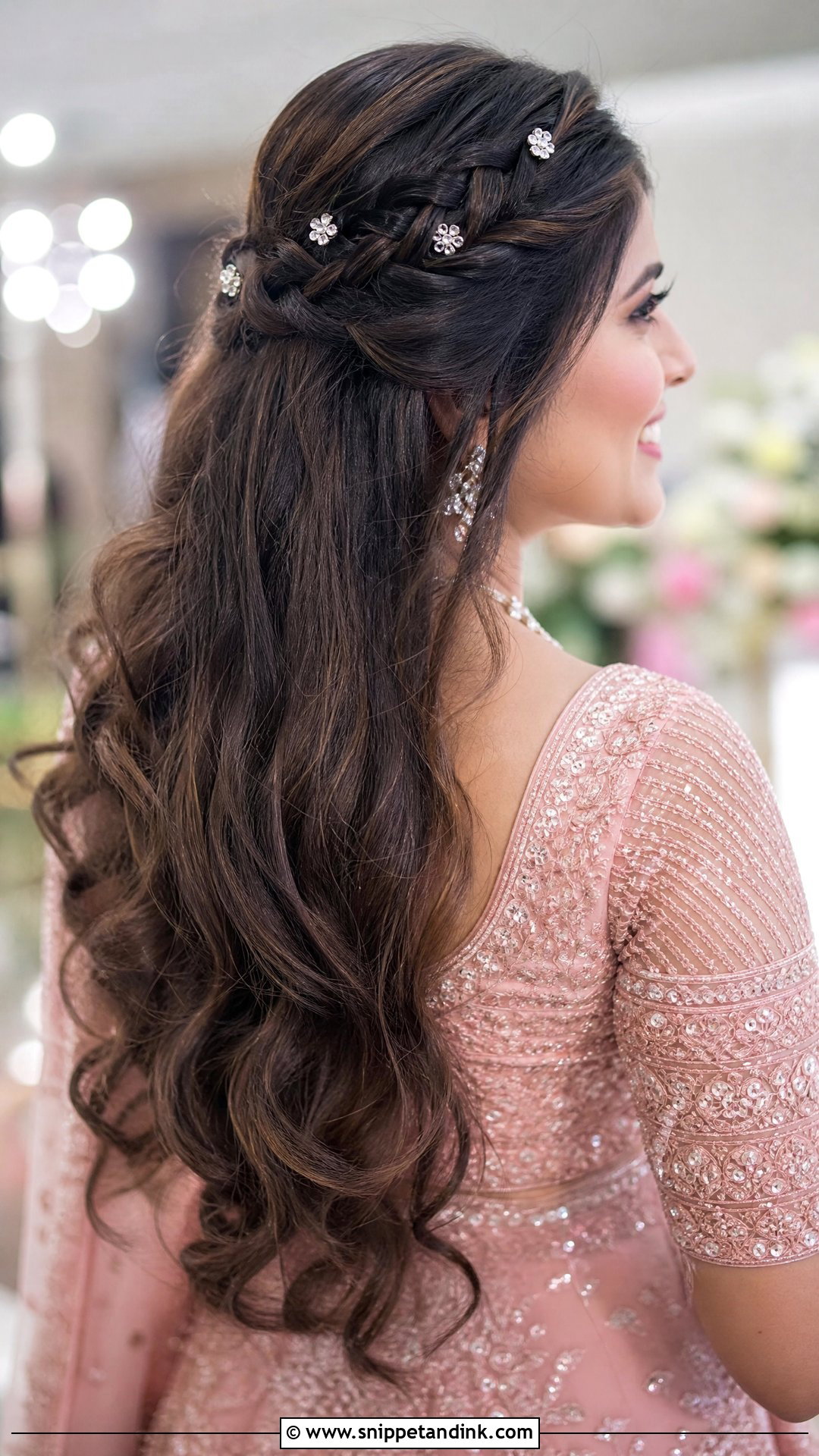
The top section is braided back and the rest left flowing, so the face stays clear and the length stays on show. Diamond pins or small flowers finish it. It suits receptions and pre-wedding shoots and flatters most face shapes. Long open hair is heavy, and its own weight pulls curls straight within a few hours. I set the curls with heat, leave them pinned up until the last moment and only brush them out just before the bride leaves the room.
20. Double Dutch Braids for Brides
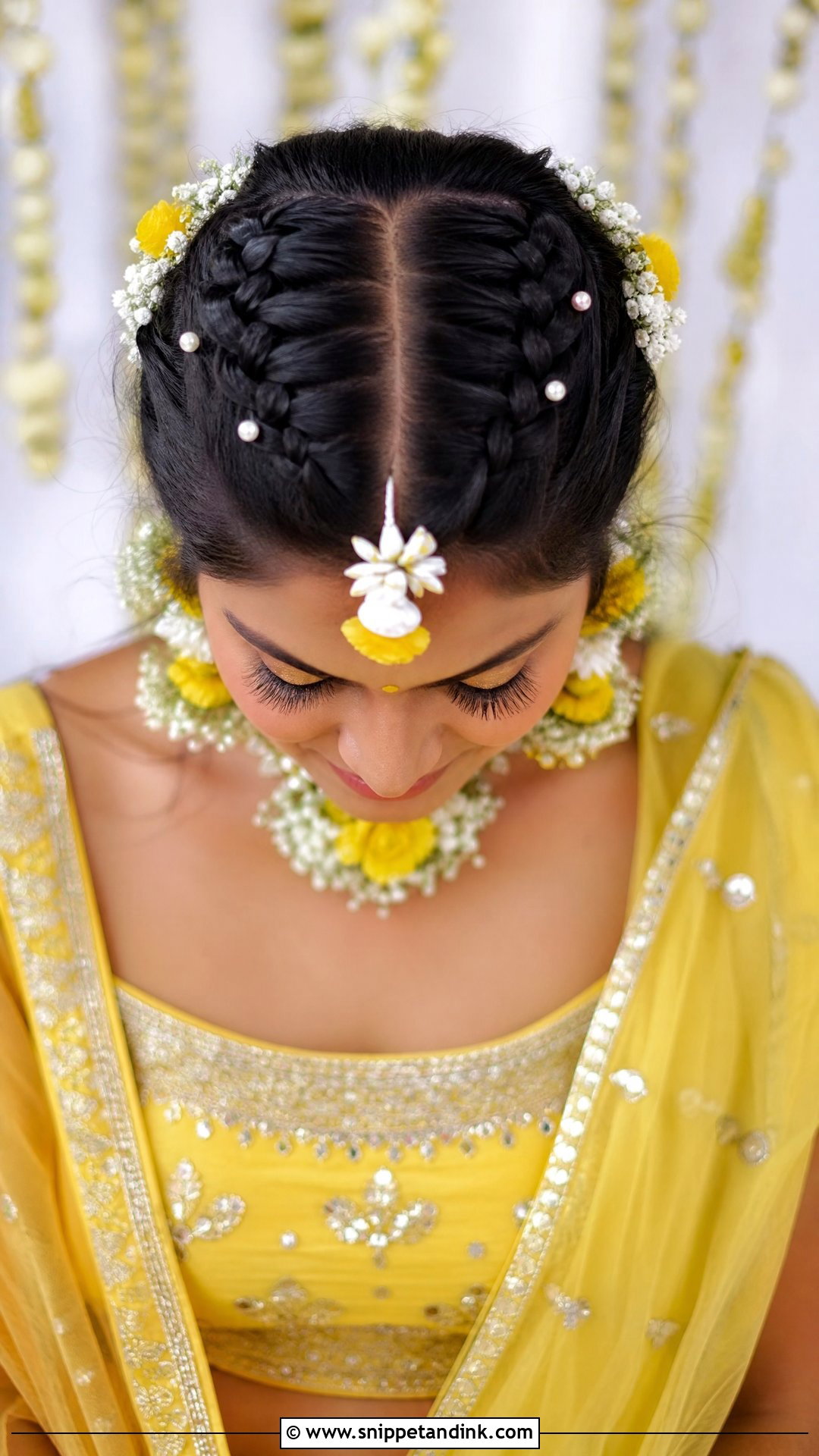
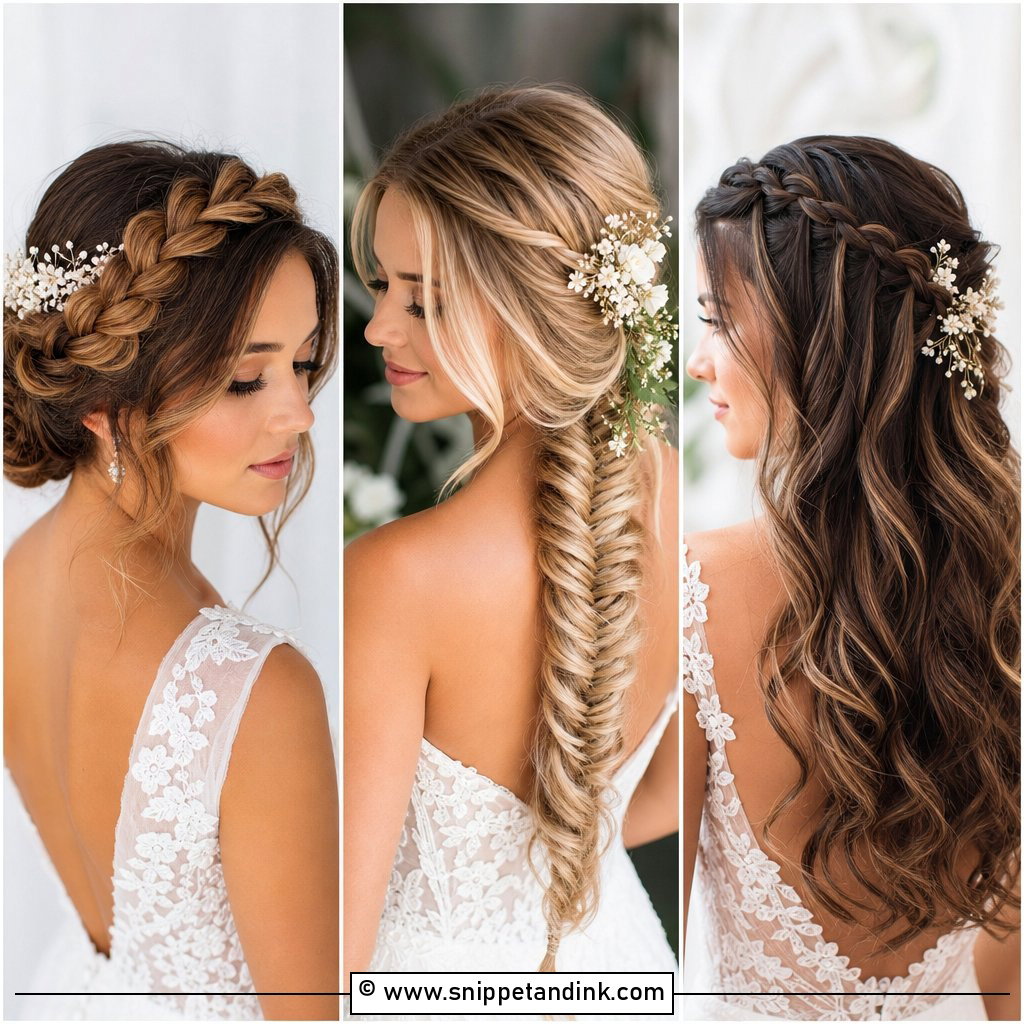
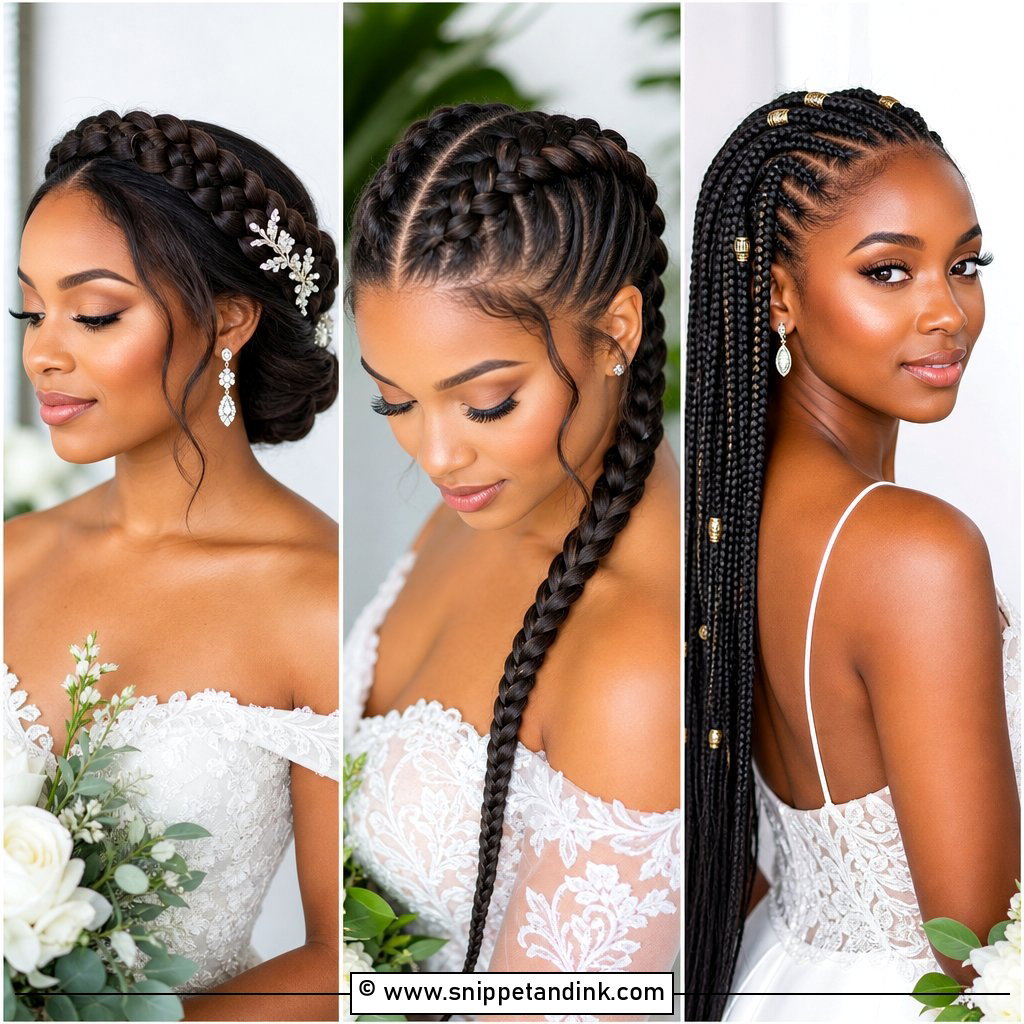
Two braids worked close to the scalp run down both sides, raised and symmetrical. Leave them as they are or gather them into a bun or ponytail, with small flowers or pearls to make them bridal. Haldi, mehndi and playful pre-wedding events suit them. Double Dutch braids are also one of the few styles you can sleep in and still wear the next morning, which helps on a crowded schedule. Symmetry is everything, so check both sides in a mirror before any pins go in.
Dusting the Ends Before a Long Bridal Plait
Split ends show most at the tail of a long braid, right where the tassels and flowers hang. Ask for a light dusting, not a real cut, about three to four weeks before the wedding, so any uneven ends have time to settle. Avoid a big change in length or a new color close to the date.
- Sleep in a loose braid with a soft scrunchie, or on a silk pillowcase, to cut down on tangles and breakage.
- Go easy on daily heat styling in the last few weeks.
- Do a deep conditioning treatment a few days before the wedding, not the night before. Very soft, freshly conditioned hair is often too slippery to hold pins.
Unpicking Pins and Flowers After the Reception
A long bridal braid can hold dozens of pins. Remove the flowers and ornaments first, then run your fingers slowly along the braid to find every pin; it helps if your stylist tells you roughly how many went in. Undo the plait from the bottom up.
Work a little oil or conditioner through the lengths and detangle with a wide-tooth comb, starting at the ends. Dragging a brush through a crimped, sprayed braid at the end of a long night is exactly how long hair breaks.
Try Two or Three Braids at One Trial
Long hair widens your options: traditional South Indian plaits, playful bubble braids and fishtails all work on it. Add jasmine, pearls, kundan or fresh flowers to match each outfit and ceremony. At your trial, try two or three braids in one session if there is time, photograph each from the back and the side, and keep your favorite in for the rest of the day. By evening you will know whether it is the one.
You'll Like These Ideas:


Leave a Reply