
An Indian wedding isn’t one outfit, it’s four or five. Haldi, mehendi, sangeet, the ceremony itself and a reception each ask something different of your clothes: a floor seat, a dance floor, three hours of rituals by a fire, a long night of photos. I style brides and their families across all of them, and the list below mixes bridal lehengas, silk sarees, shararas, Anarkalis, gowns and fusion sets. Each one comes with the jewelry, shoes and bag I’d pair with it, plus the practical note I’d give at a fitting.
Which Fabric Suits Which Function?
Most styling mistakes I see at Indian weddings come from wearing the right outfit at the wrong function. A velvet lehenga at an afternoon mehendi in May, or a delicate organza saree at a turmeric-soaked haldi. Before looking at colors, I match fabric to the event:
- Haldi: washable cotton, cotton silk or georgette. Expect stains and floor seating.
- Mehendi: light fabrics with short or three-quarter sleeves, since you may be sitting still for hours and sleeves get in the artist’s way.
- Sangeet: anything that moves. Shararas, lehenga sarees and pre-draped sarees handle dancing better than heavy bridal skirts.
- Pheras or the main ceremony: silk, brocade and heavier embroidery, worn seated on a low platform for a long stretch. Comfort at the waist matters more than at any other event.
- Reception: velvet in winter, sequins, satin and net for evening light. Expect long periods standing on stage.
Season changes everything. Silk and velvet at an outdoor summer event will be miserable by the second hour, while chiffon at a winter night function needs a shawl. Ask the hosts whether venues are indoors or out before you buy.
1. Red Bridal Lehenga
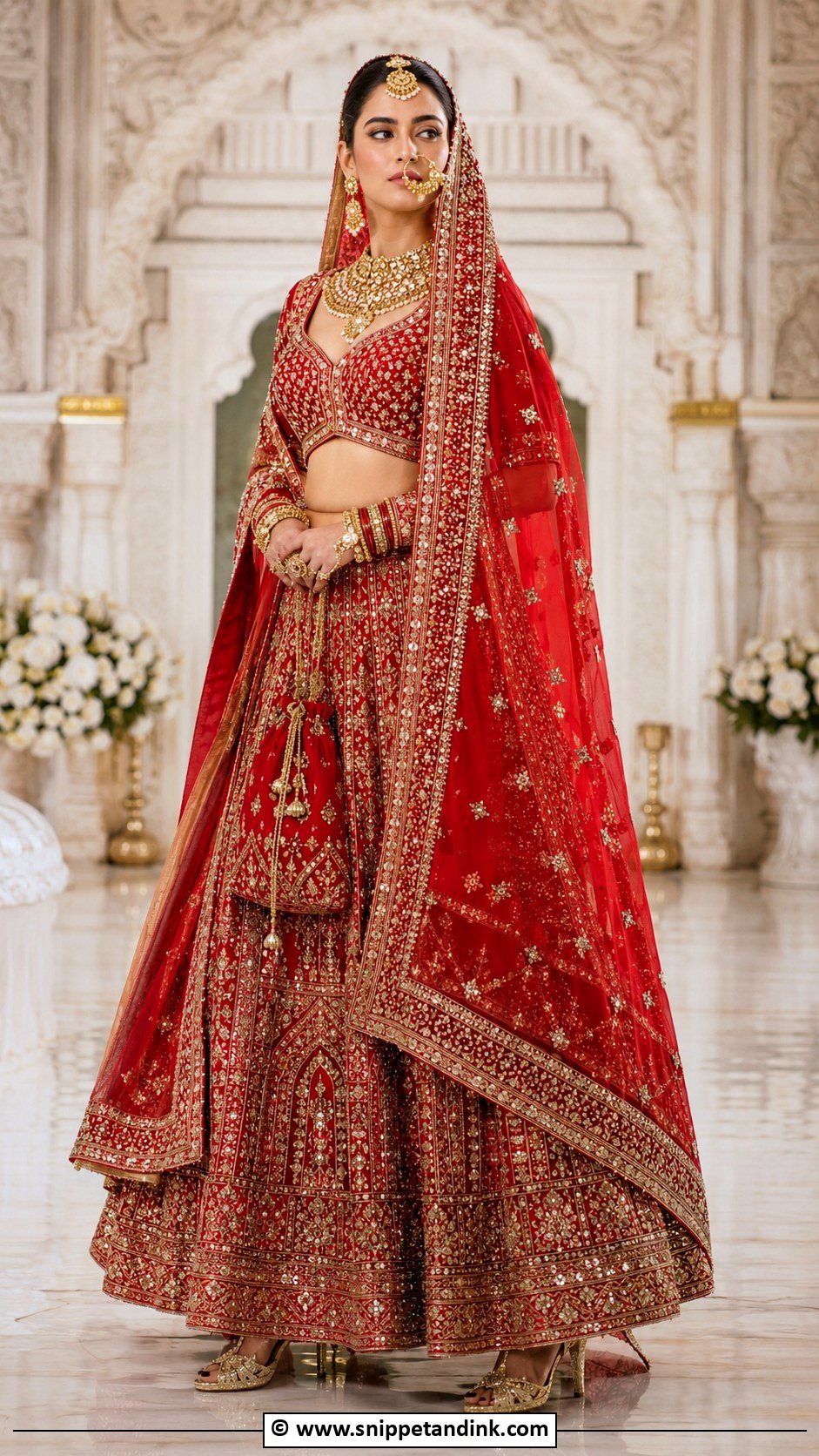
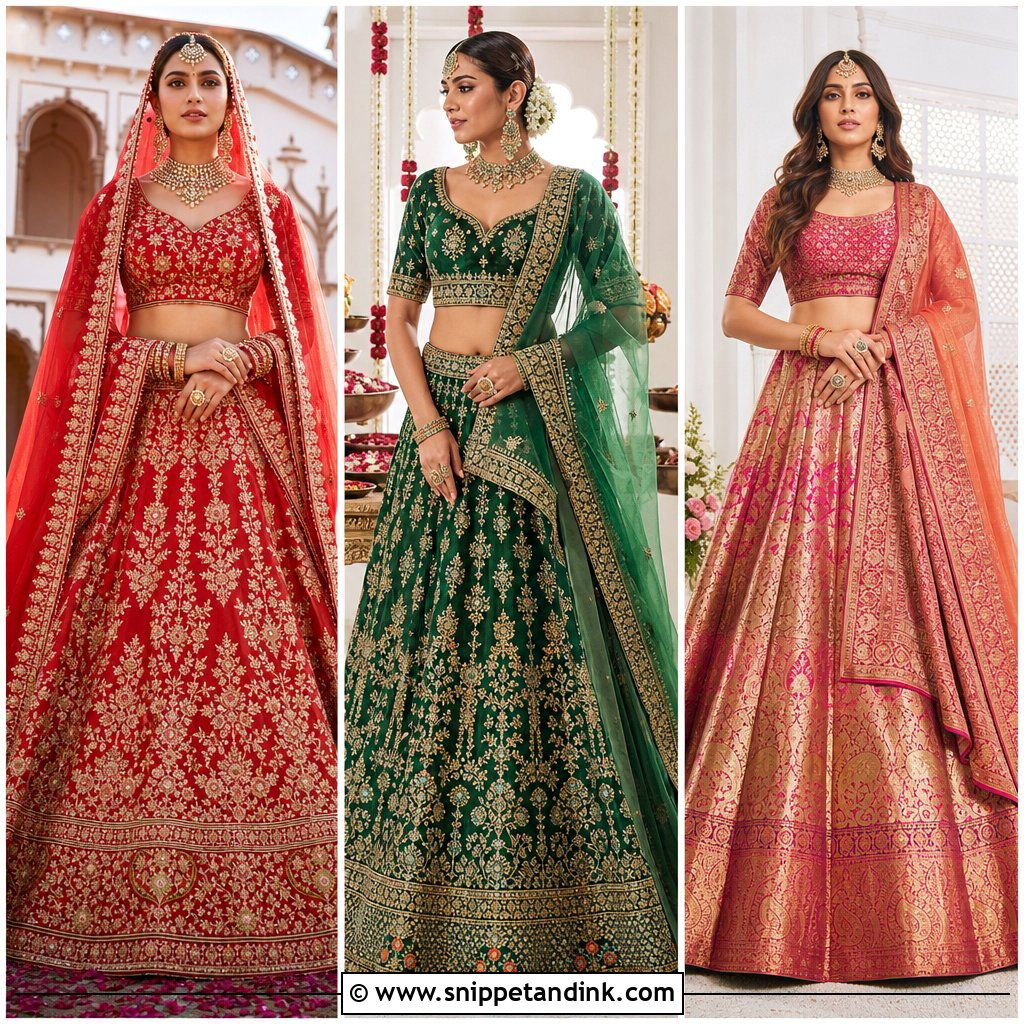
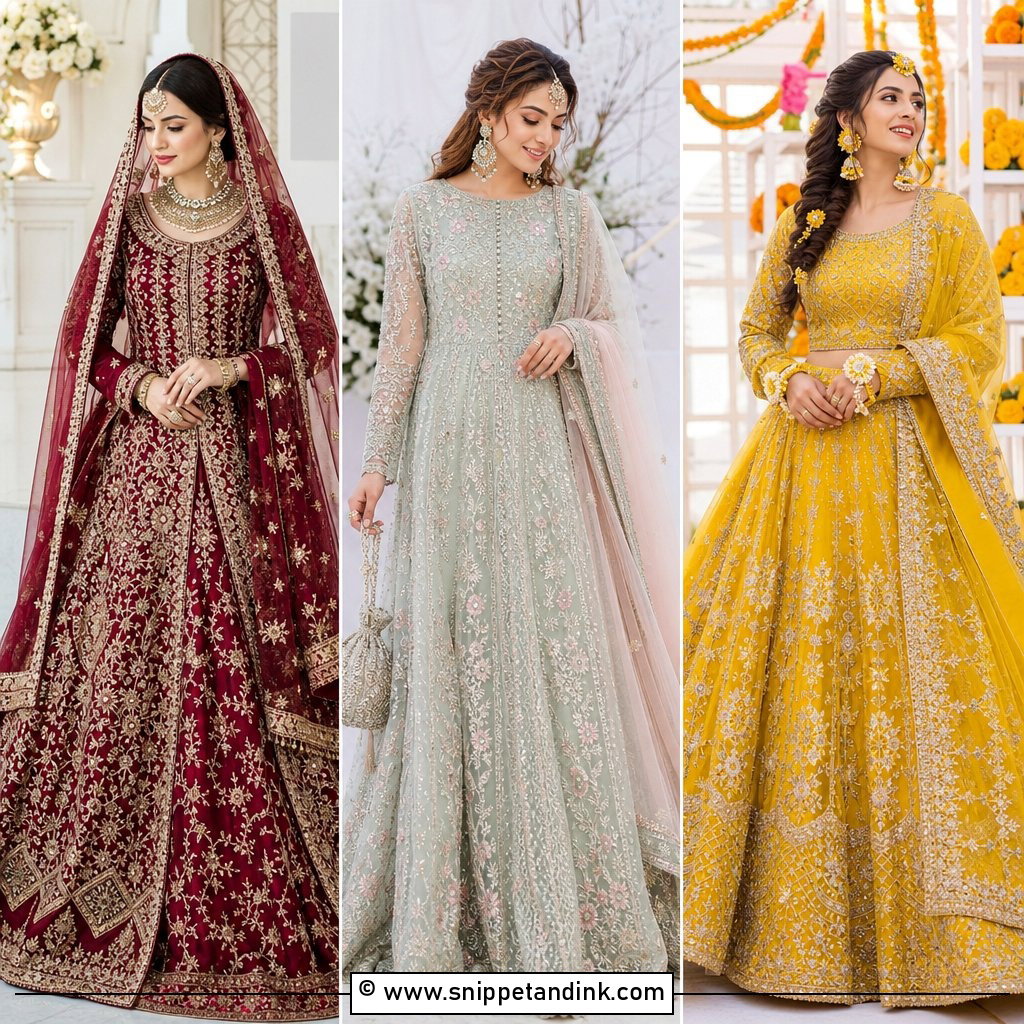
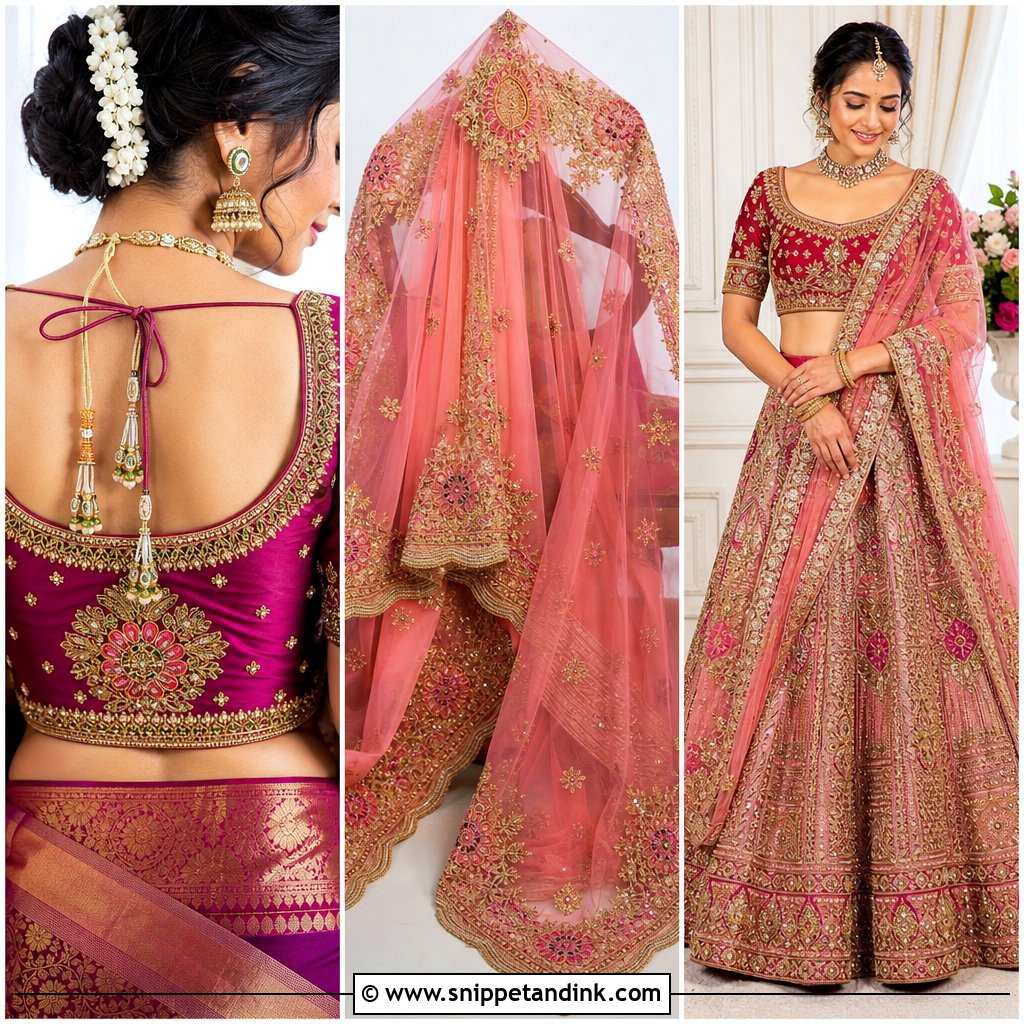
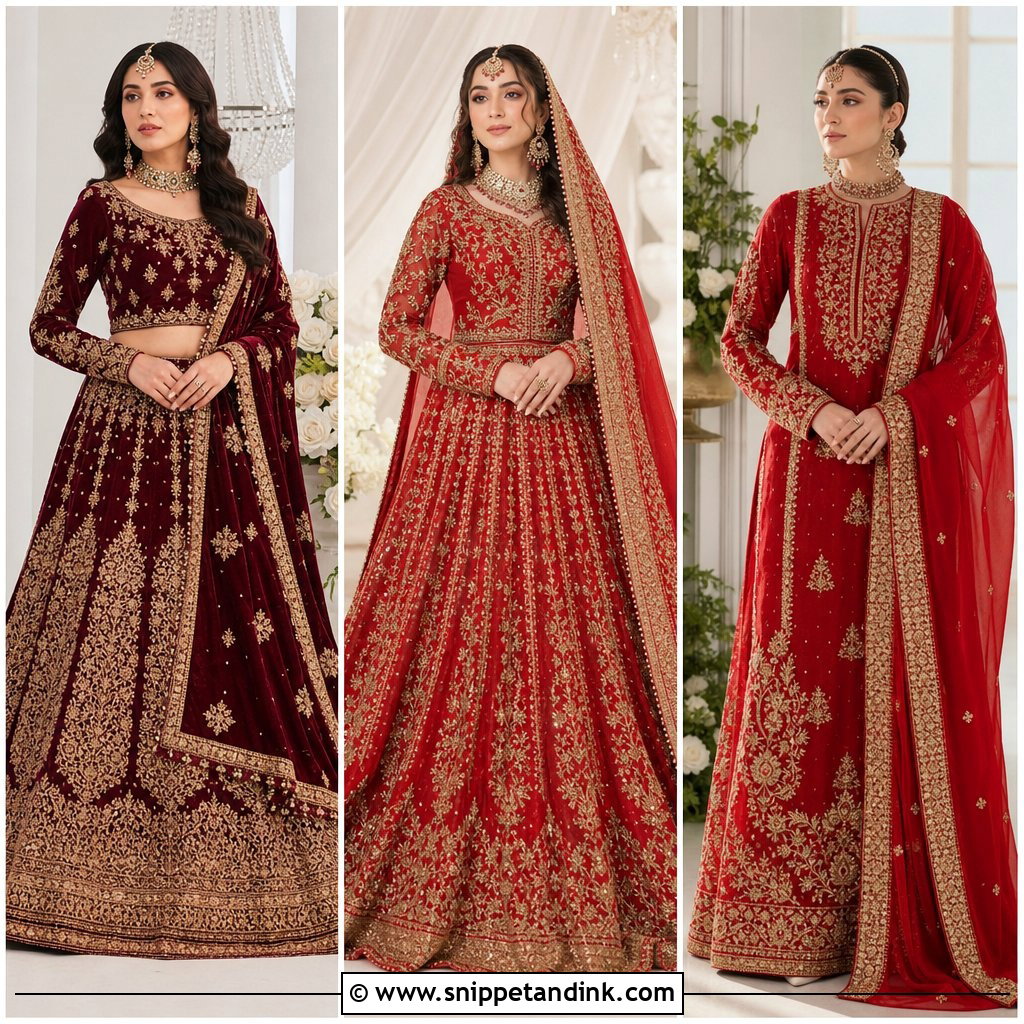
Red is still the color I dress most brides in for the pheras, and silk, velvet or brocade with zari or zardozi gives it the weight a ceremony deserves. That weight is real, though. A heavily embroidered bridal lehenga can be several kilos, so ask for a can-can layer that holds the flare and a waistband with a wide, soft lining. A double dupatta, one over the head and a lighter one across the shoulder, is traditional. Gold choker, long rani haar, maang tikka and bangles complete it. Hide block heels or wedges under the skirt, since you’ll walk circles around the fire.
2. Pastel Bridal Lehenga
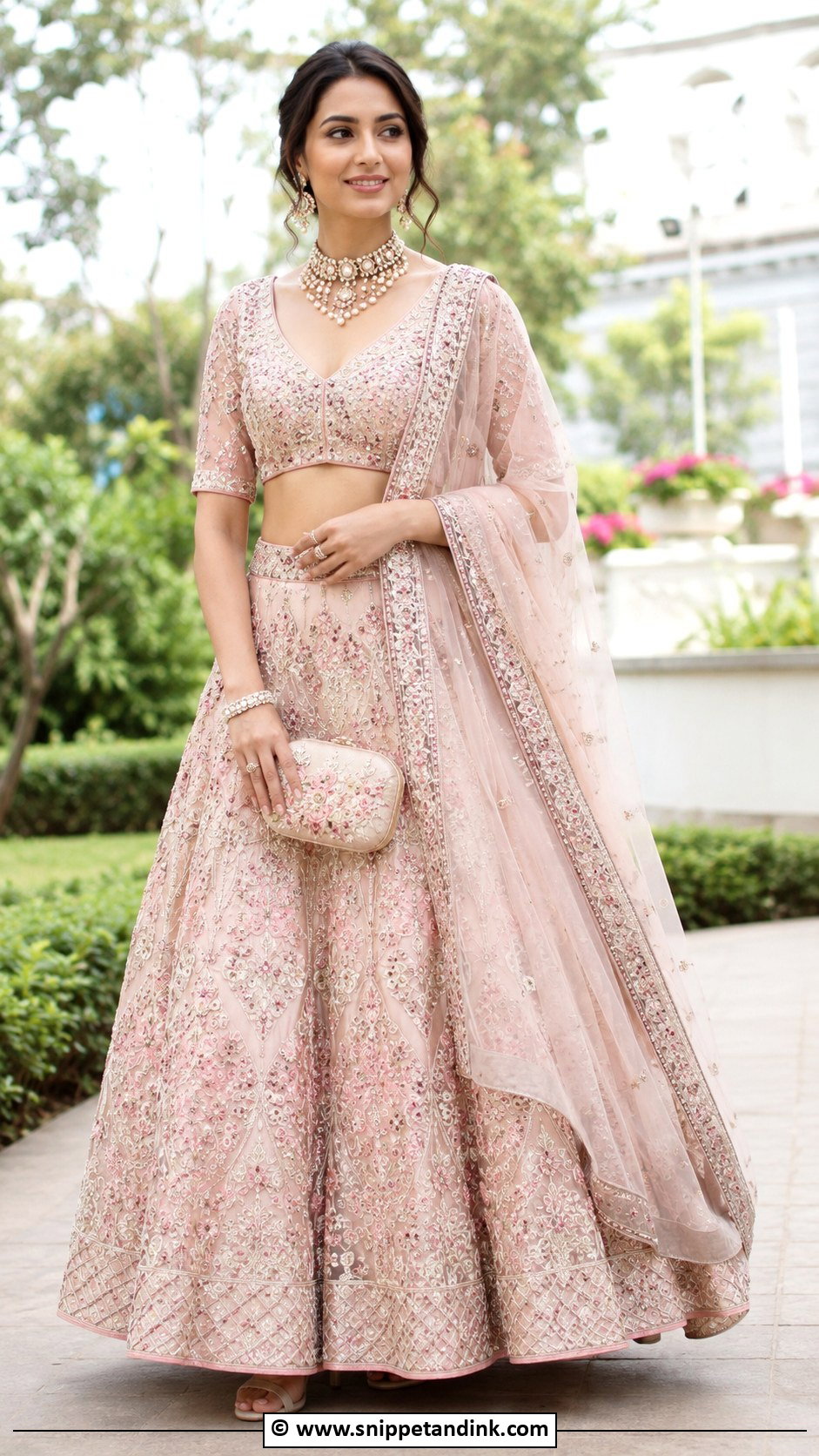
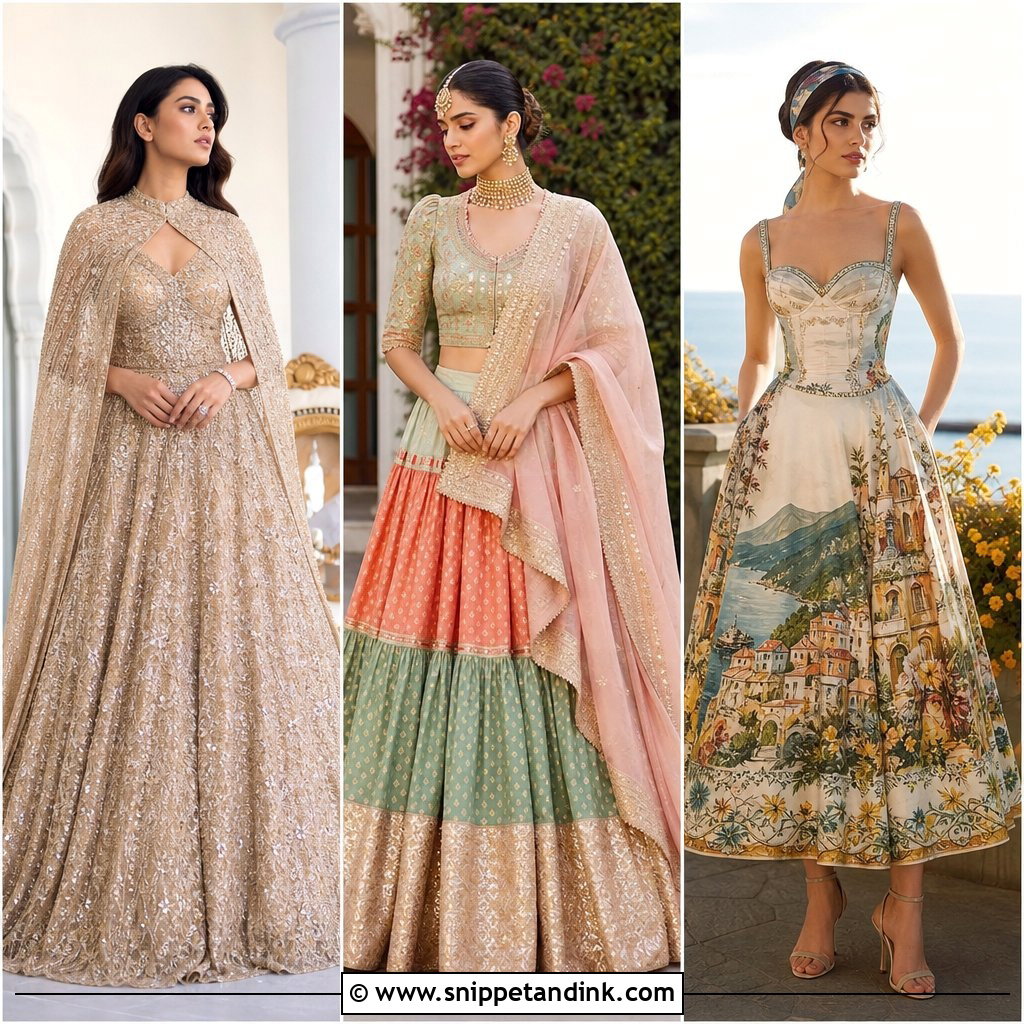
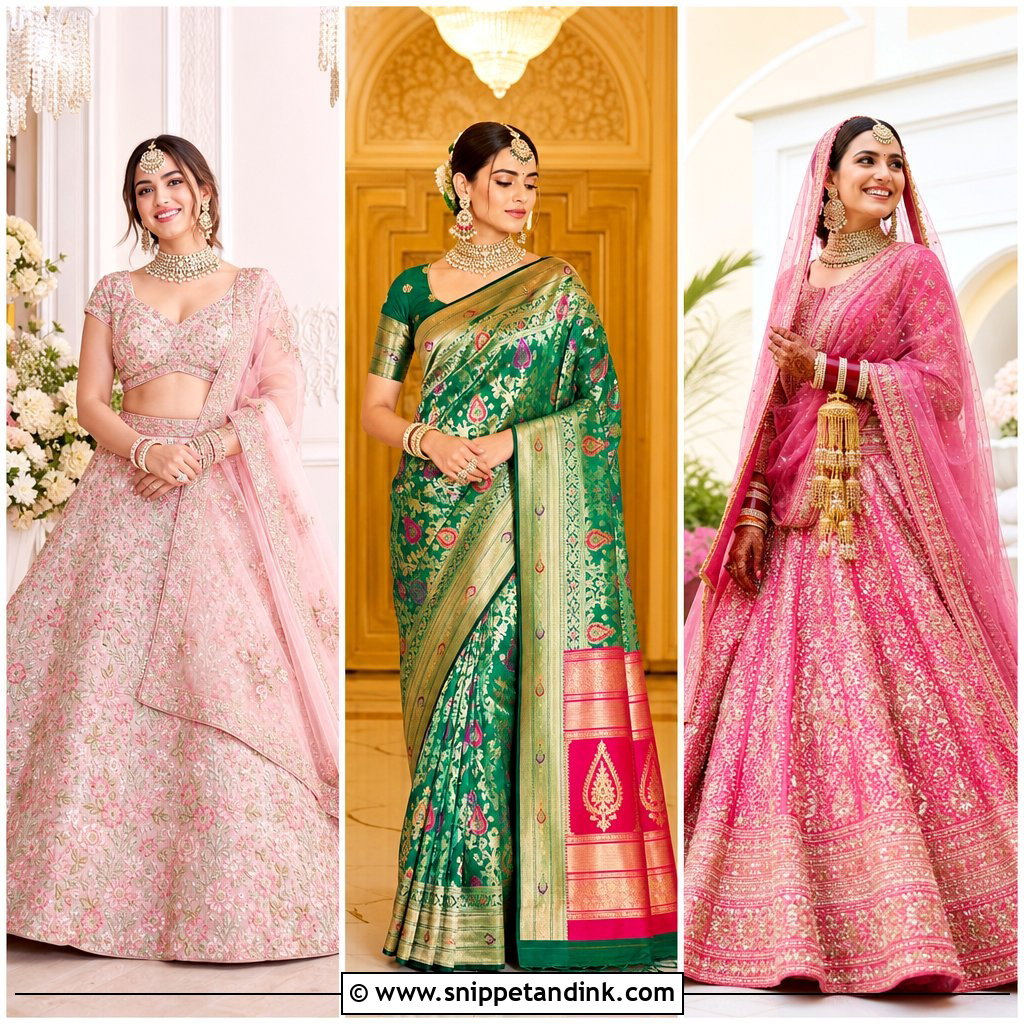
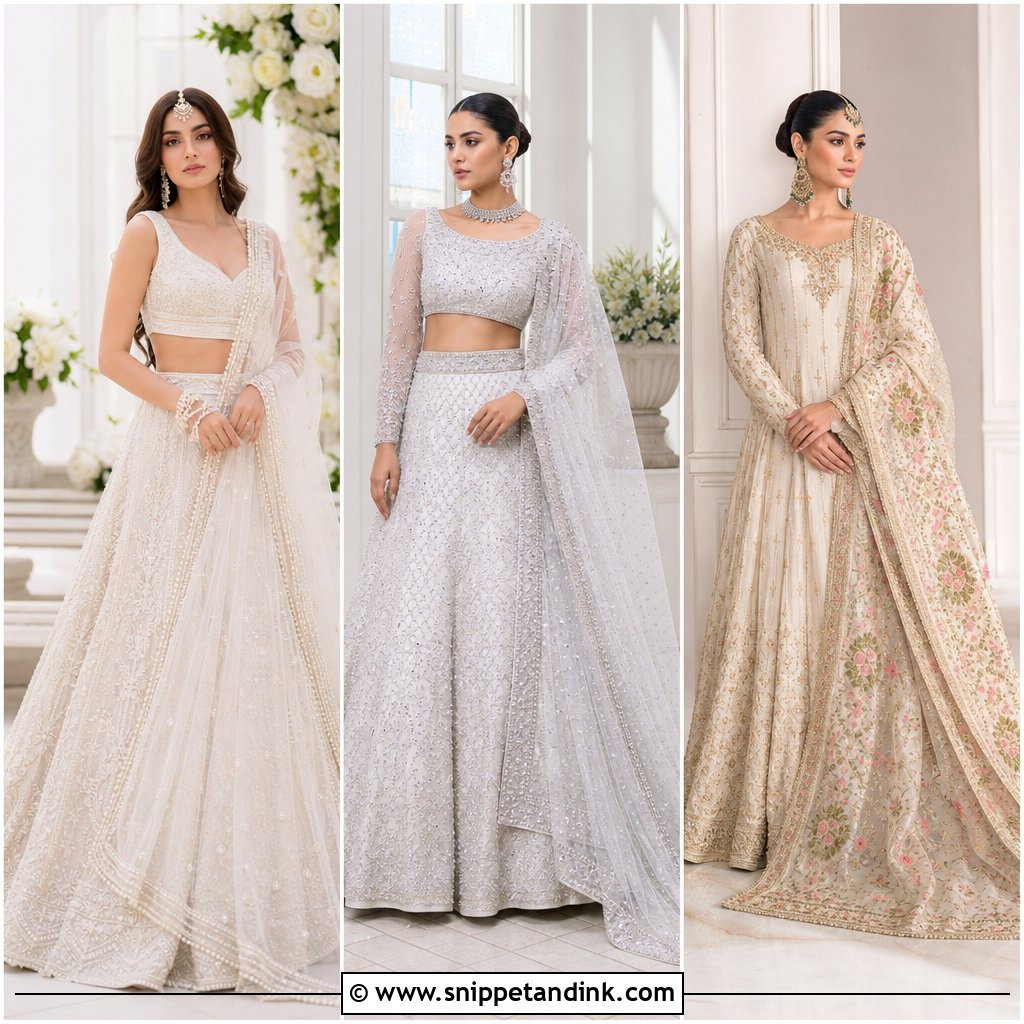
Pastels read best in daylight. Blush, ivory, mint, peach and powder blue look fresh at an outdoor ceremony and turn flat under yellow banquet lighting at night. I’d pair them with tonal threadwork, pearls or mirror work rather than heavy contrast embroidery. A square or sweetheart blouse gives structure, a sheer dupatta keeps it light, and pearls or polki suit the palette better than bright gold. Nude or metallic heels and a small embroidered potli finish it.
3. Banarasi Silk Saree
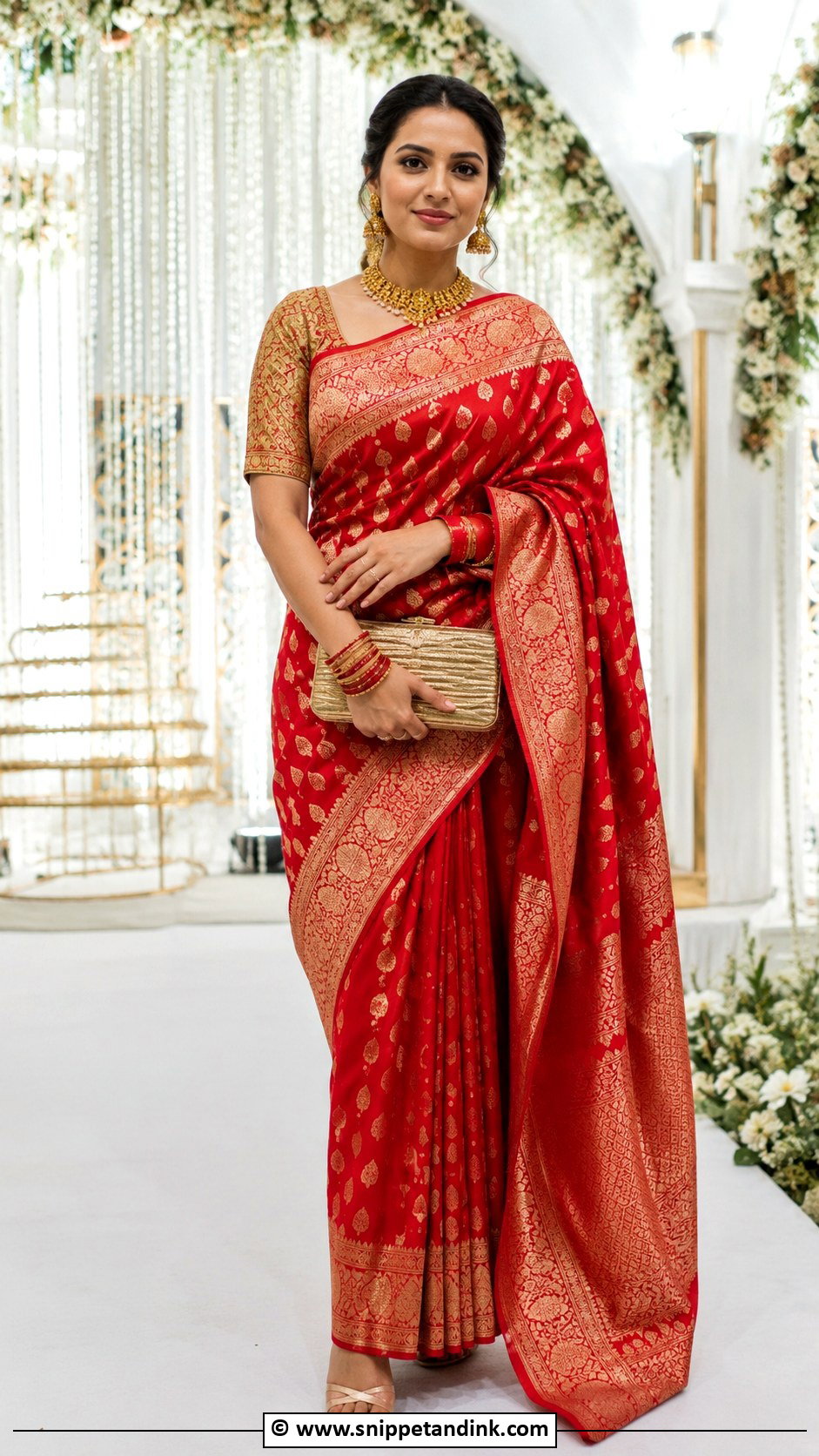
A Banarasi silk saree needs very little help. The woven zari brocade carries the whole look, which is why it works across generations, from the bride to her mother to a guest. Deep red, emerald, royal blue, rani pink and gold are classic. Pair it with a fitted brocade blouse or a contrasting silk one. Real Banarasi silk is heavy in the pallu, so pin it at the shoulder in two places. Temple earrings, glass bangles and a sleek bun with fresh flowers complete it.
4. Kanjeevaram Saree
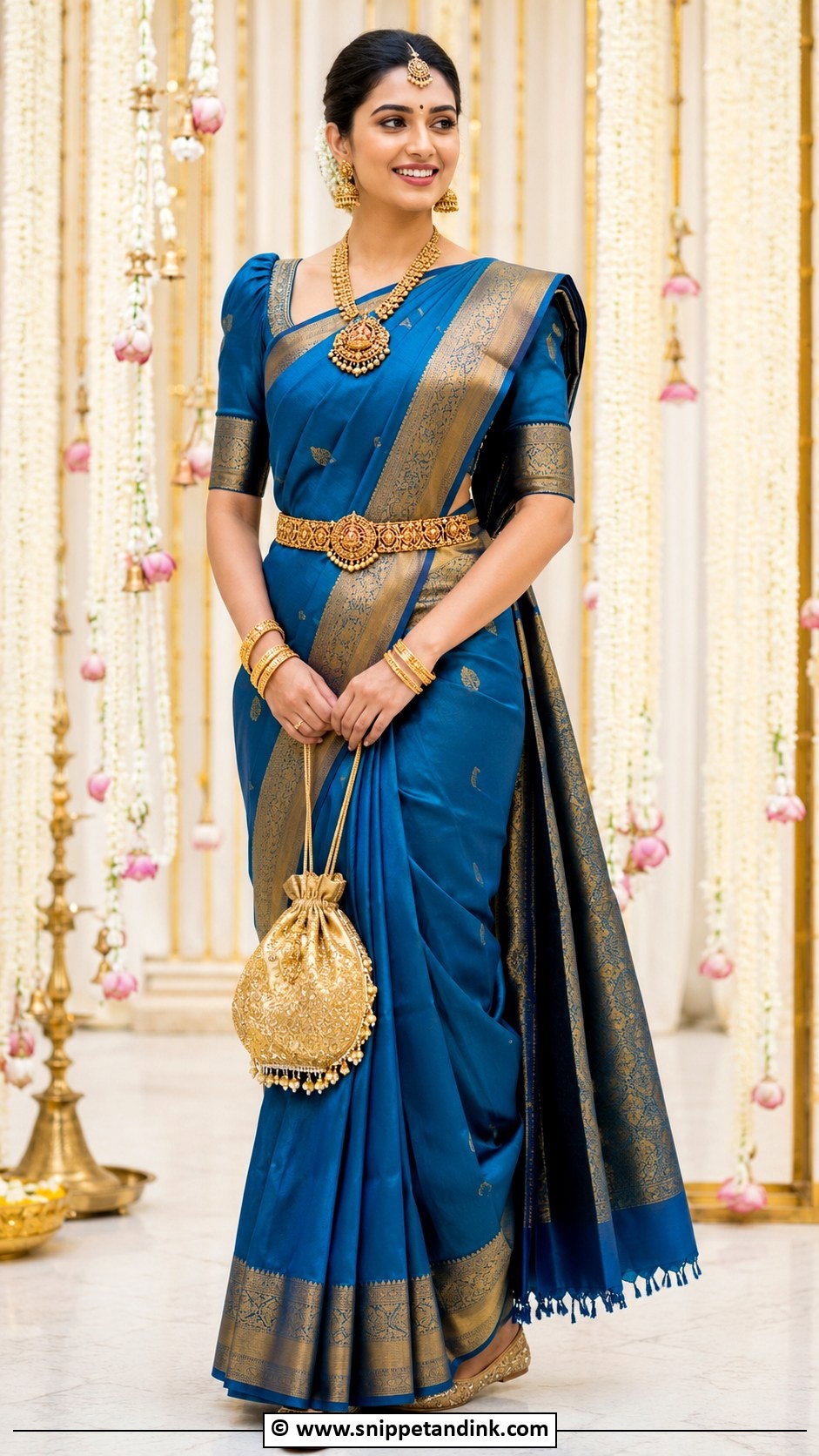
Kanjeevaram silk is woven heavier than most sarees, with a contrasting border that’s traditionally interlocked rather than simply stitched on. That density gives it a sculpted drape and also means the pleats hold firmly once set. Maroon, mustard gold, peacock blue, purple and green are the traditional jewel tones. Temple jewelry, jhumkas and an oddiyanam waist belt make it ceremonial. A center-parted bun with jasmine balances the strong border. Keep the bag simple, because the saree already says everything.
5. Embroidered Anarkali Suit
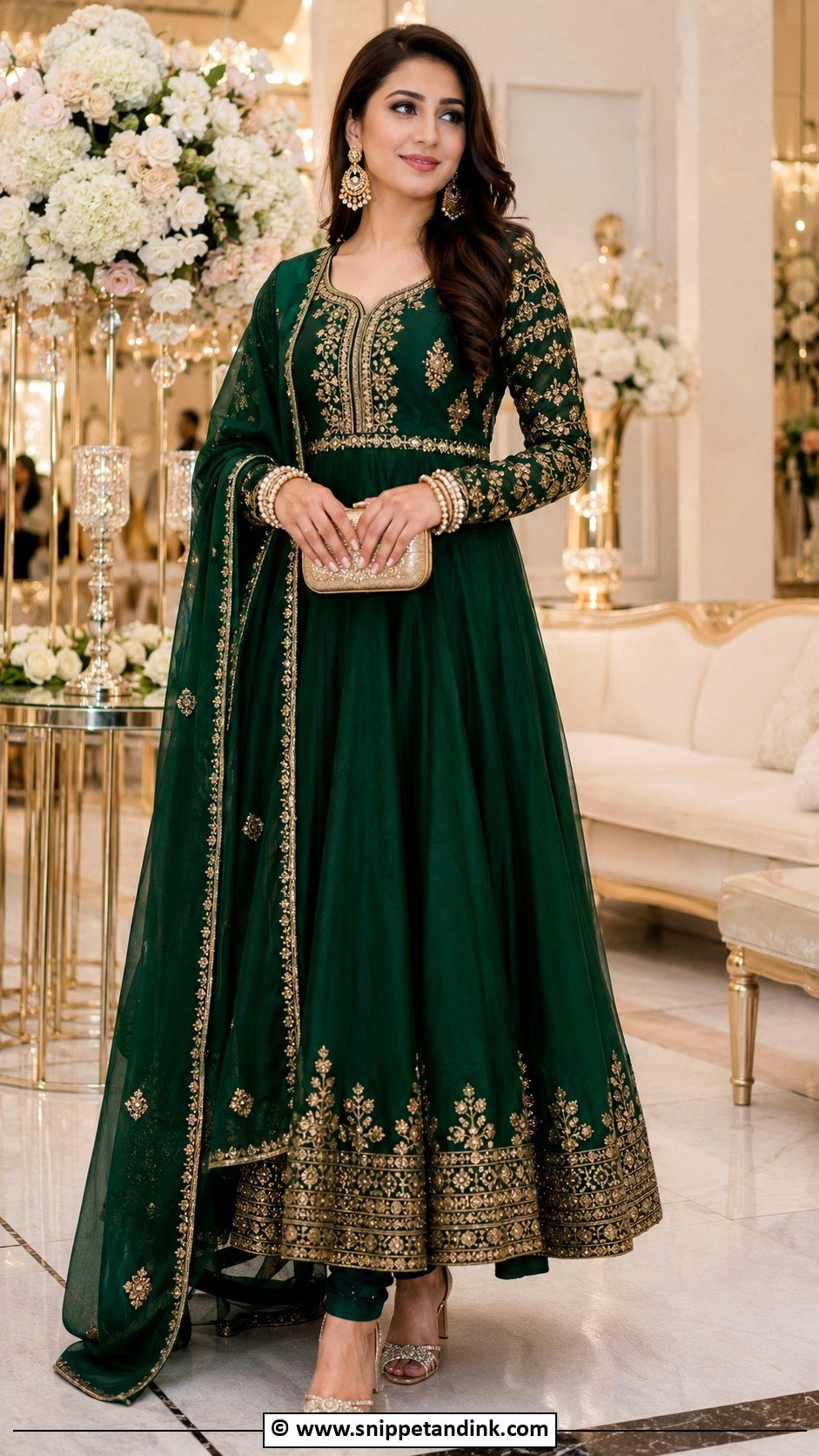
An embroidered Anarkali is the easiest way to look formal without managing drapes. The flare moves by itself, so you never need to adjust anything mid-function. Zari, sequins, gota patti and threadwork all suit it. Wine, navy, emerald and deep pink work for evenings; lighter shades for daytime. Wear churidar or slim trousers underneath and drape the dupatta over one shoulder. Check the hem at the fitting: floor-length anarkalis catch heels on stairs, so have it finished a centimetre above your shoe.
6. Sharara Suit
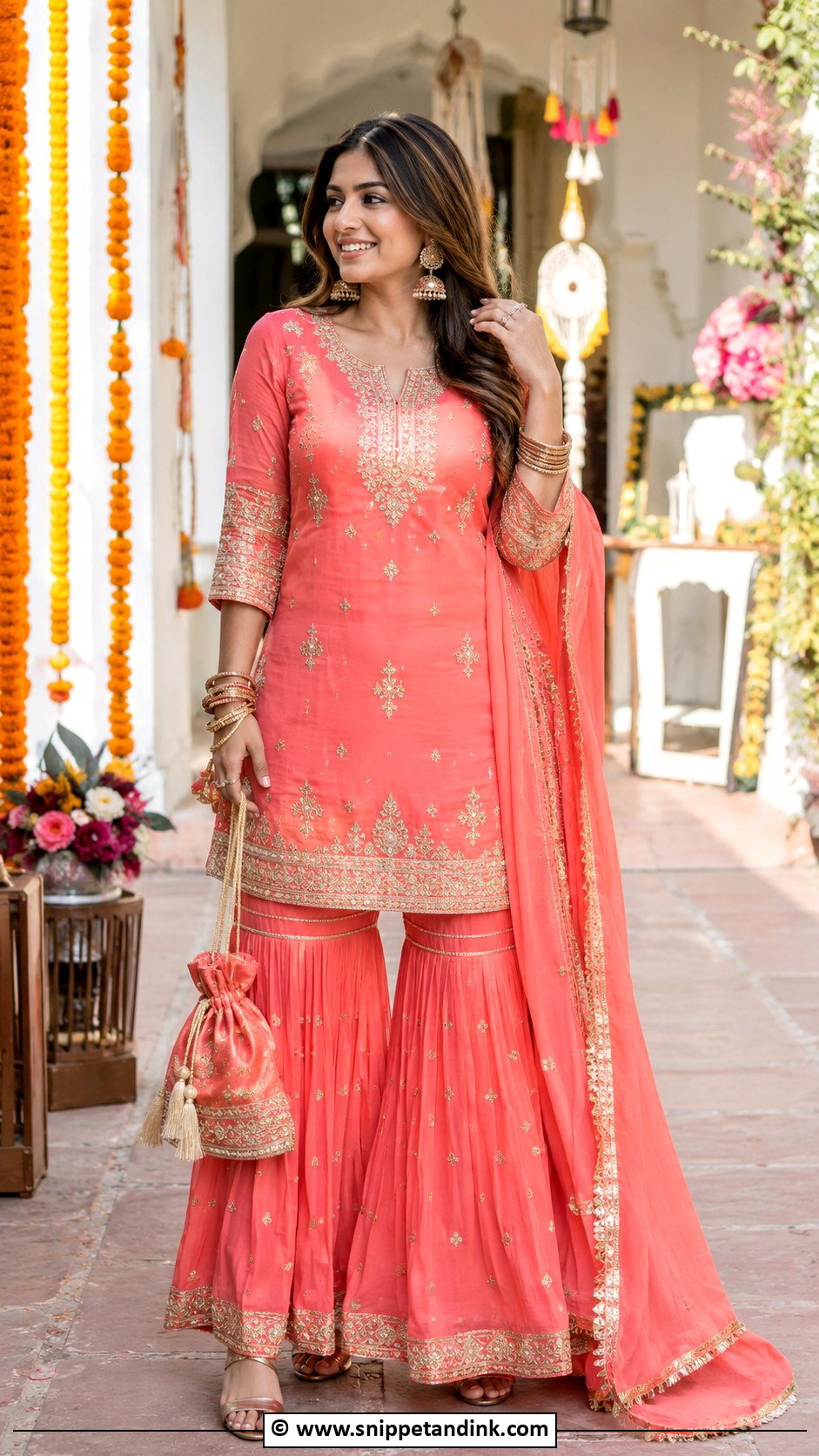
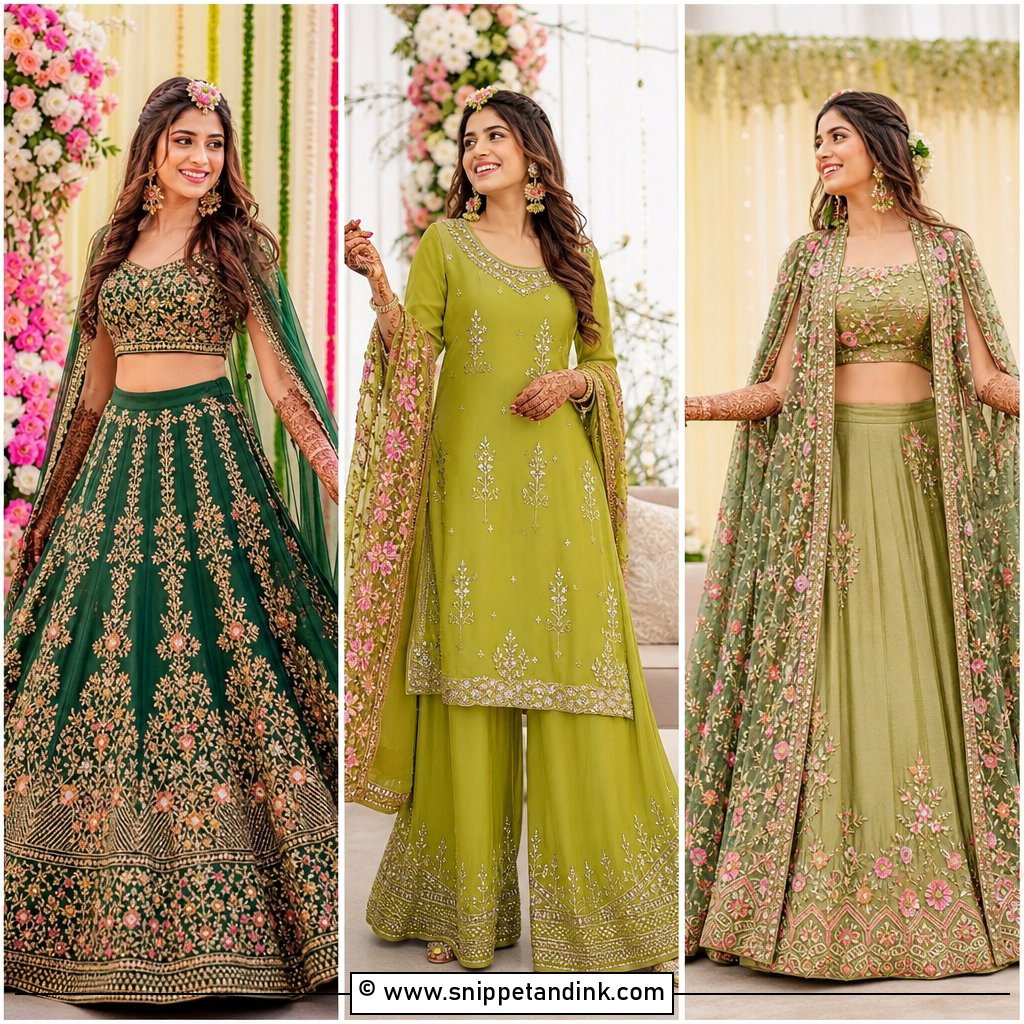
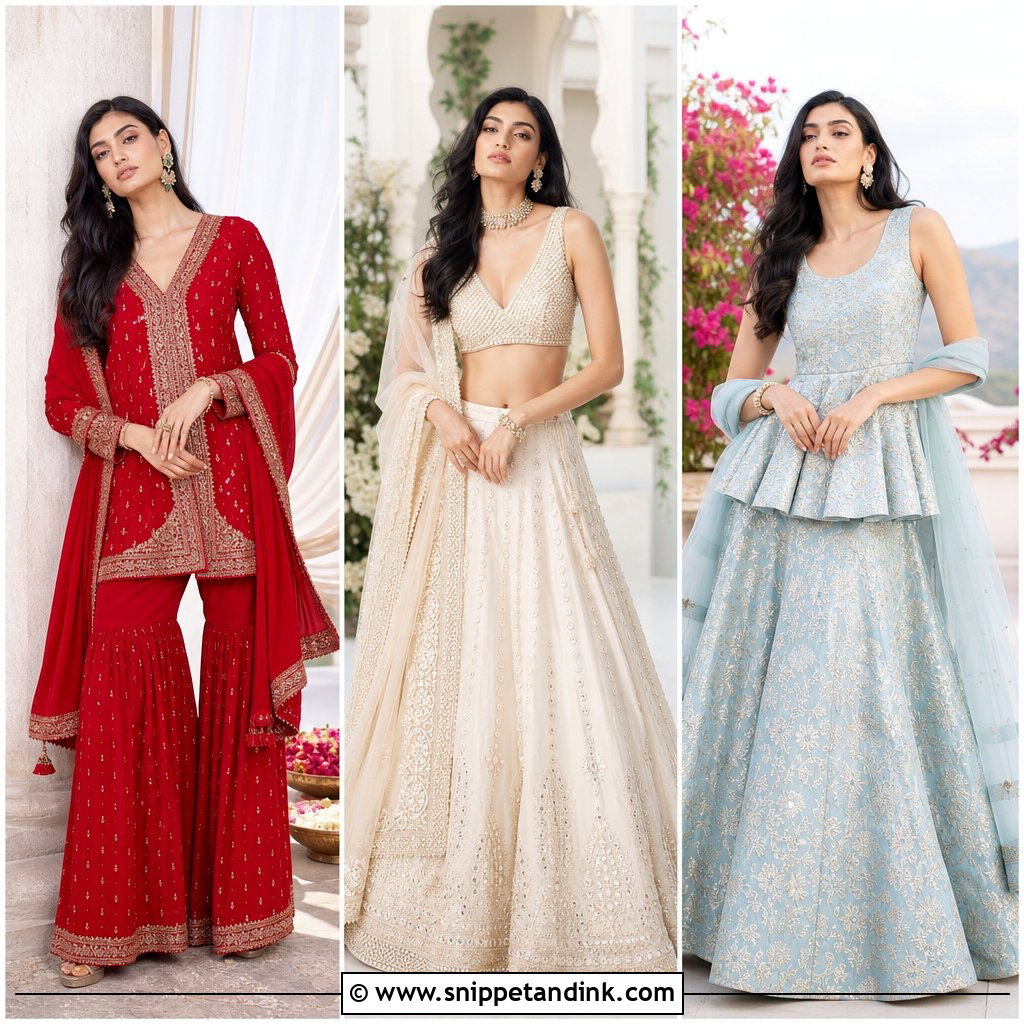
A sharara suit is my default suggestion for sangeet and mehendi because the wide legs move freely when you dance. A short or mid-length kurta in georgette, silk, crepe or organza balances the volume, with mirror work, sequins or gota patti for sparkle. Drape the dupatta over both shoulders or one side. Heels help here, lifting the sharara so the hem doesn’t drag. Yellow, coral, turquoise and fuchsia feel joyful by day, ivory and gold for evening.
7. Gharara Suit
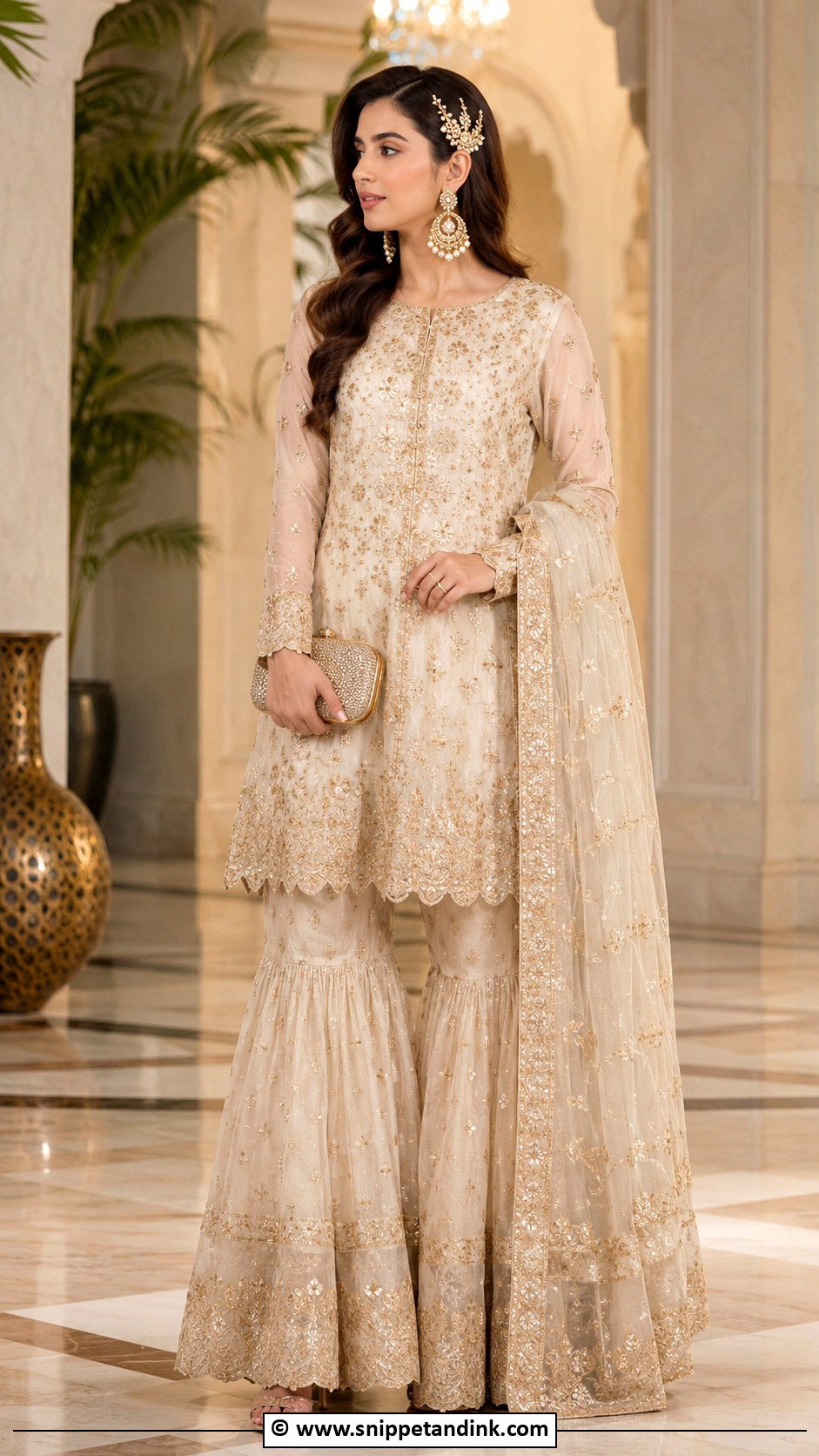
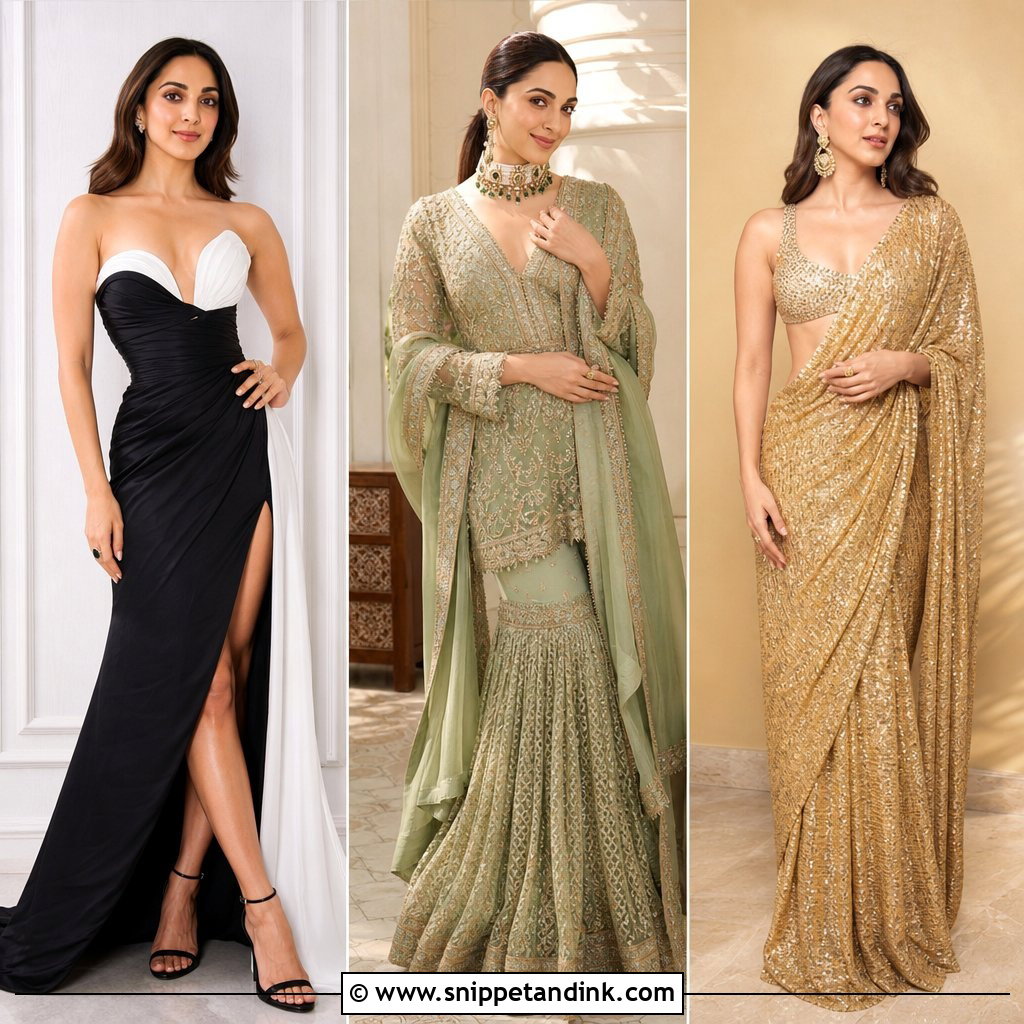
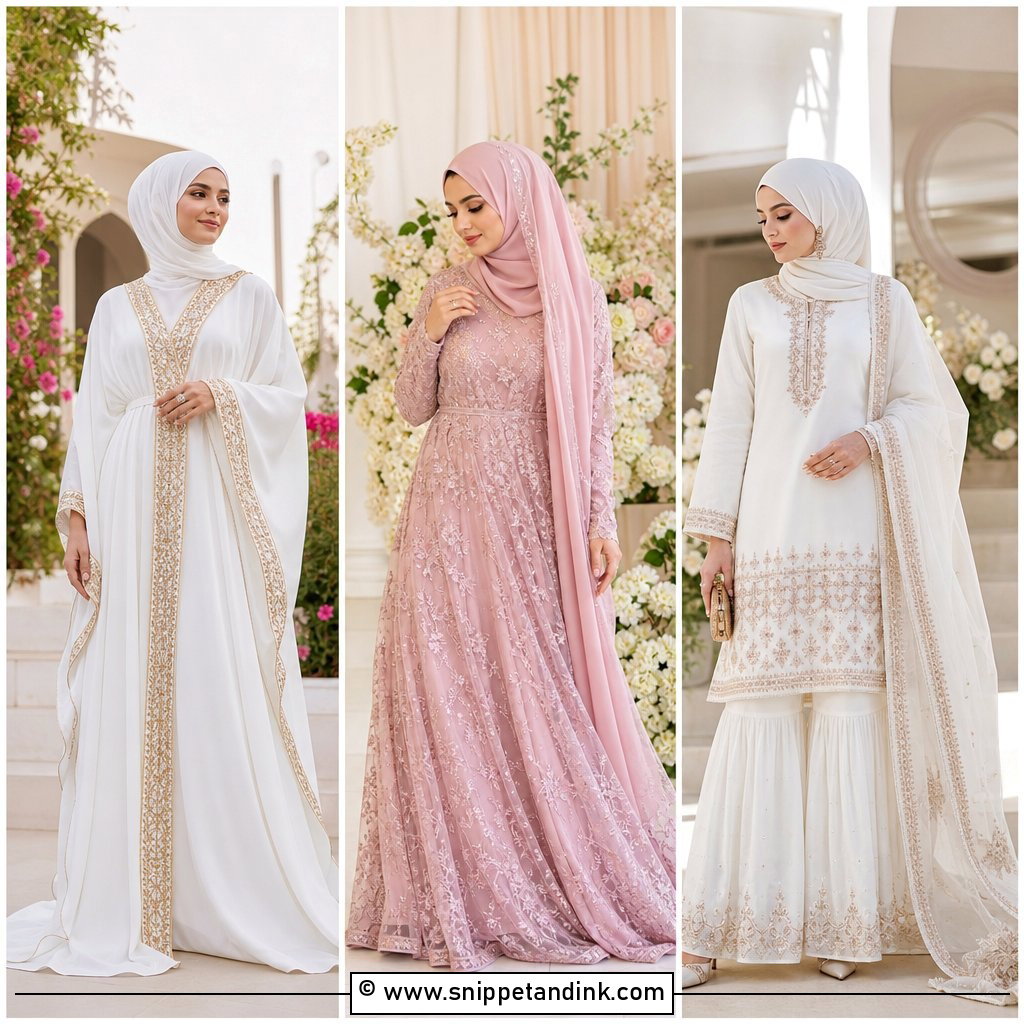
A gharara suit is more structured than a sharara: fitted to the knee, then flaring out from a band of gota or embroidery. That knee band is the heritage detail and also the weak point, because if it’s cut tight, sitting pulls it out of shape. Silk, brocade or embroidered georgette suit formal functions. A short kurti, detailed dupatta and chandbalis or a passa complete the look. Ivory, champagne, mint, rose, maroon and emerald all work if you want something traditional that isn’t a lehenga.
8. Lehenga Saree
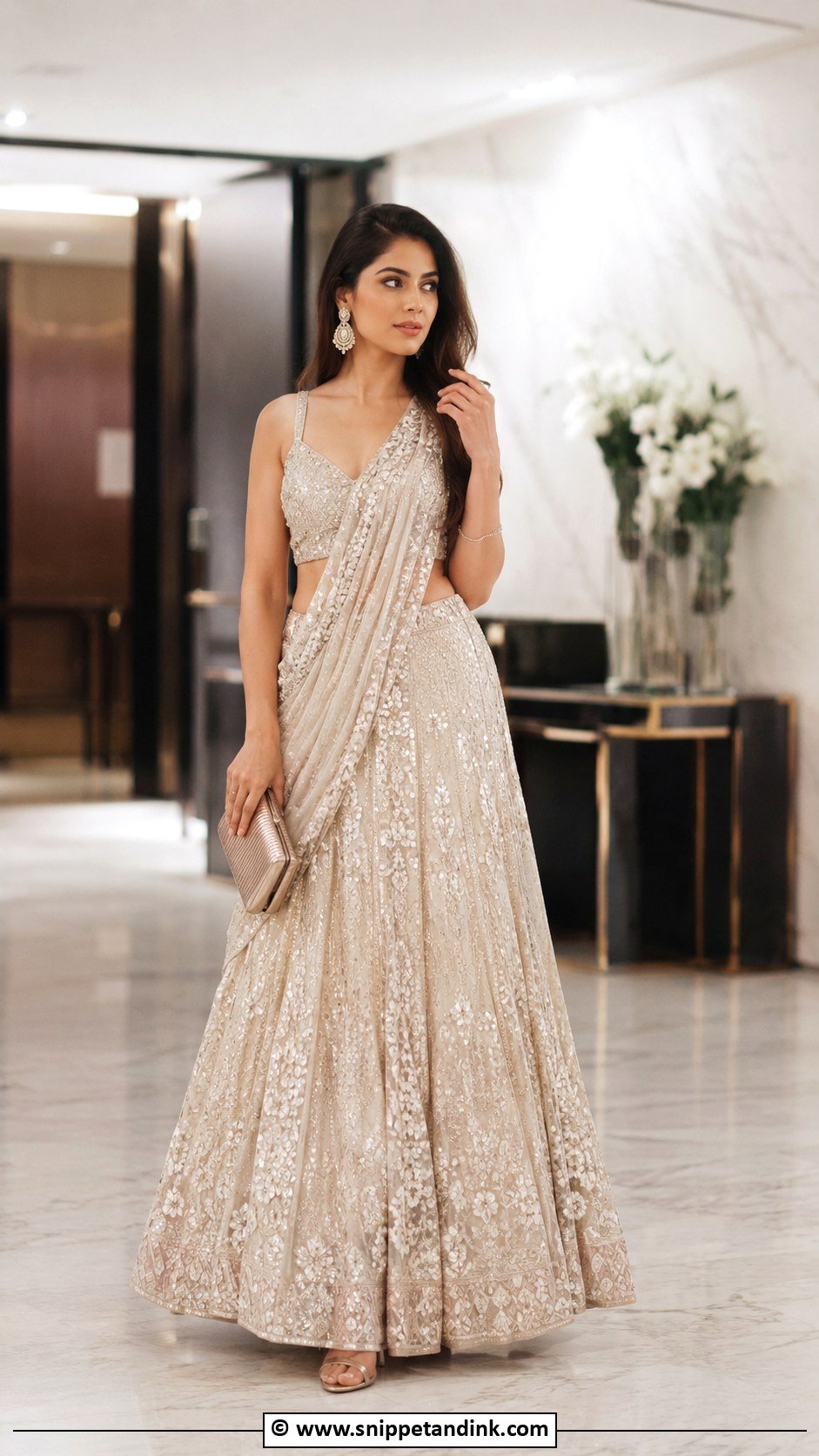
A lehenga saree gives you a saree’s drape with a skirt’s security. The flared bottom and attached pallu mean nothing comes undone on a crowded dance floor. Embroidered net, georgette, silk and satin all suit receptions and sangeet nights. I’d keep the neck bare and put the jewelry into earrings and a bracelet stack, because the pallu already crosses the chest. Metallic heels and a structured clutch finish it.
9. Pre Draped Saree
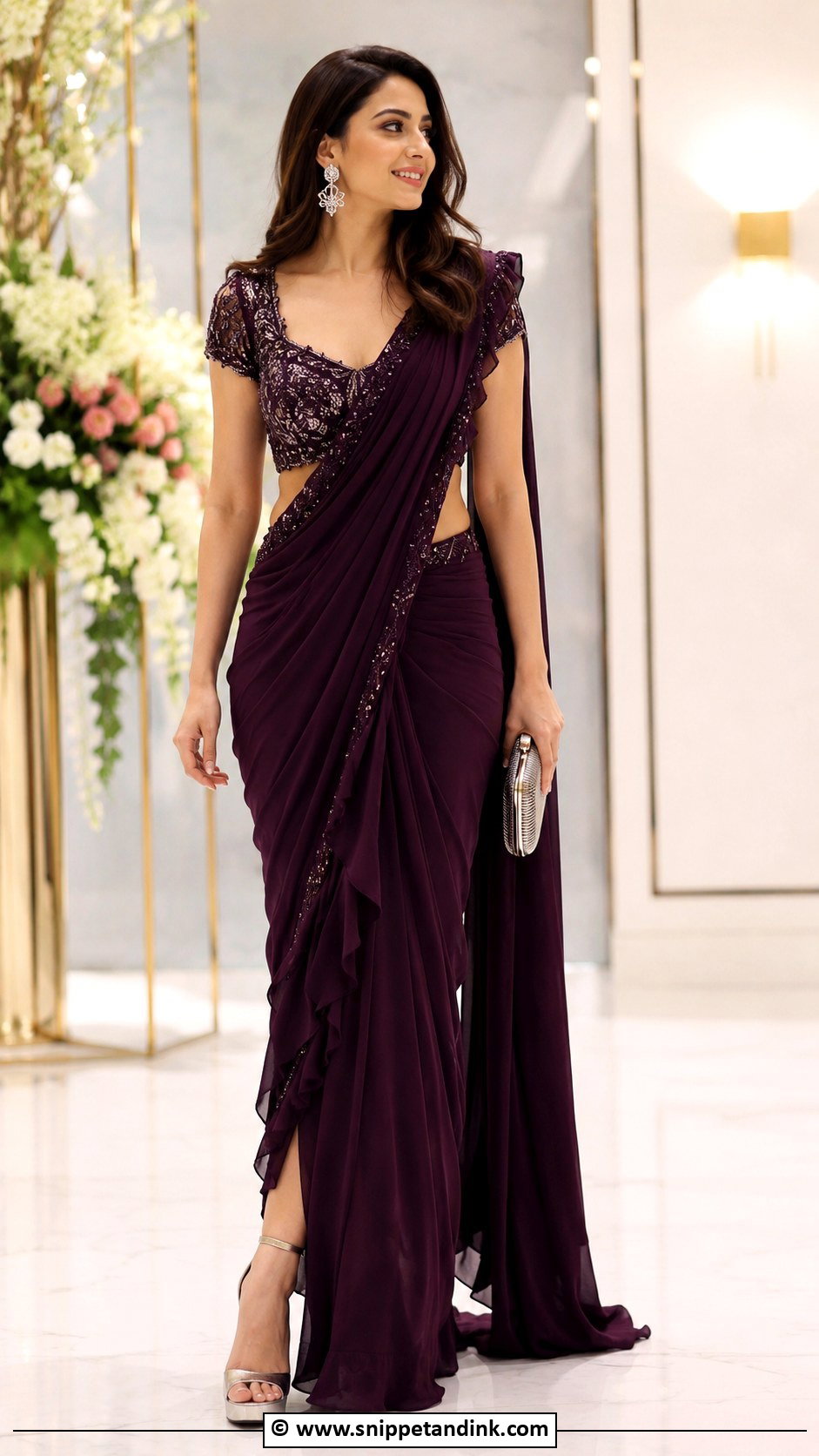
Pleats slip. After an hour of hugging relatives, a hand-draped saree on someone who rarely wears one usually needs fixing. A pre-draped saree solves that with stitched pleats, an attached pallu and often a belt. Satin, crepe, chiffon and georgette versions look modern and clean. Pair with a statement blouse, sculptural earrings and heels. It’s what I suggest for bridesmaids and guests at a sangeet where they’ll be dancing for hours.
10. Floral Lehenga
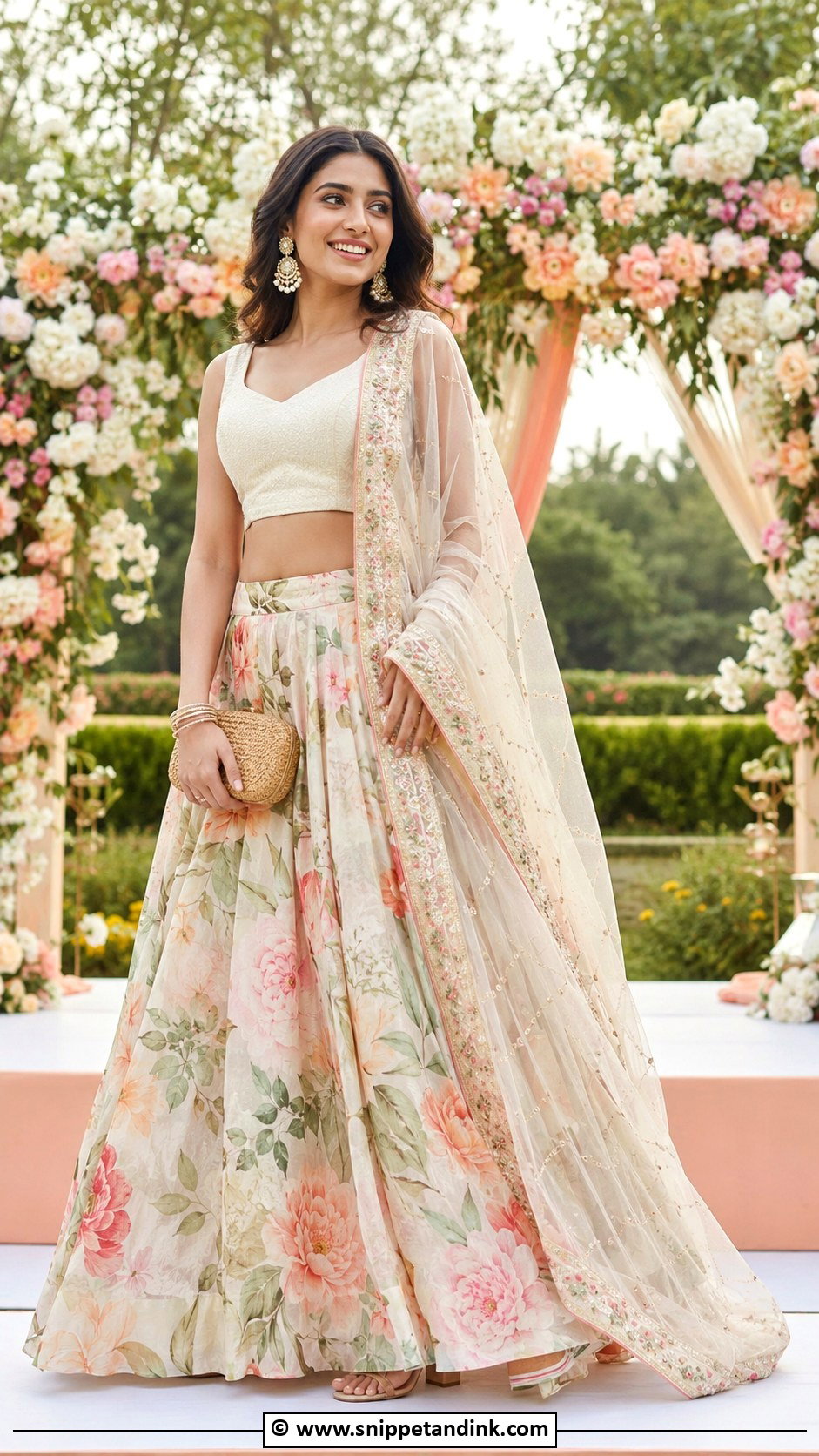
Florals belong in daylight, at mehendi, in gardens and at spring or summer weddings. Printed florals feel light; embroidered ones look formal. Pastel, ivory, yellow, sage, blush or lavender bases keep it soft. Let the print lead, with a plain blouse and sheer dupatta. Pearls, small jhumkas or kundan studs suit it. On grass, block heels or wedges sink less than stilettos.
11. Mirror Work Lehenga
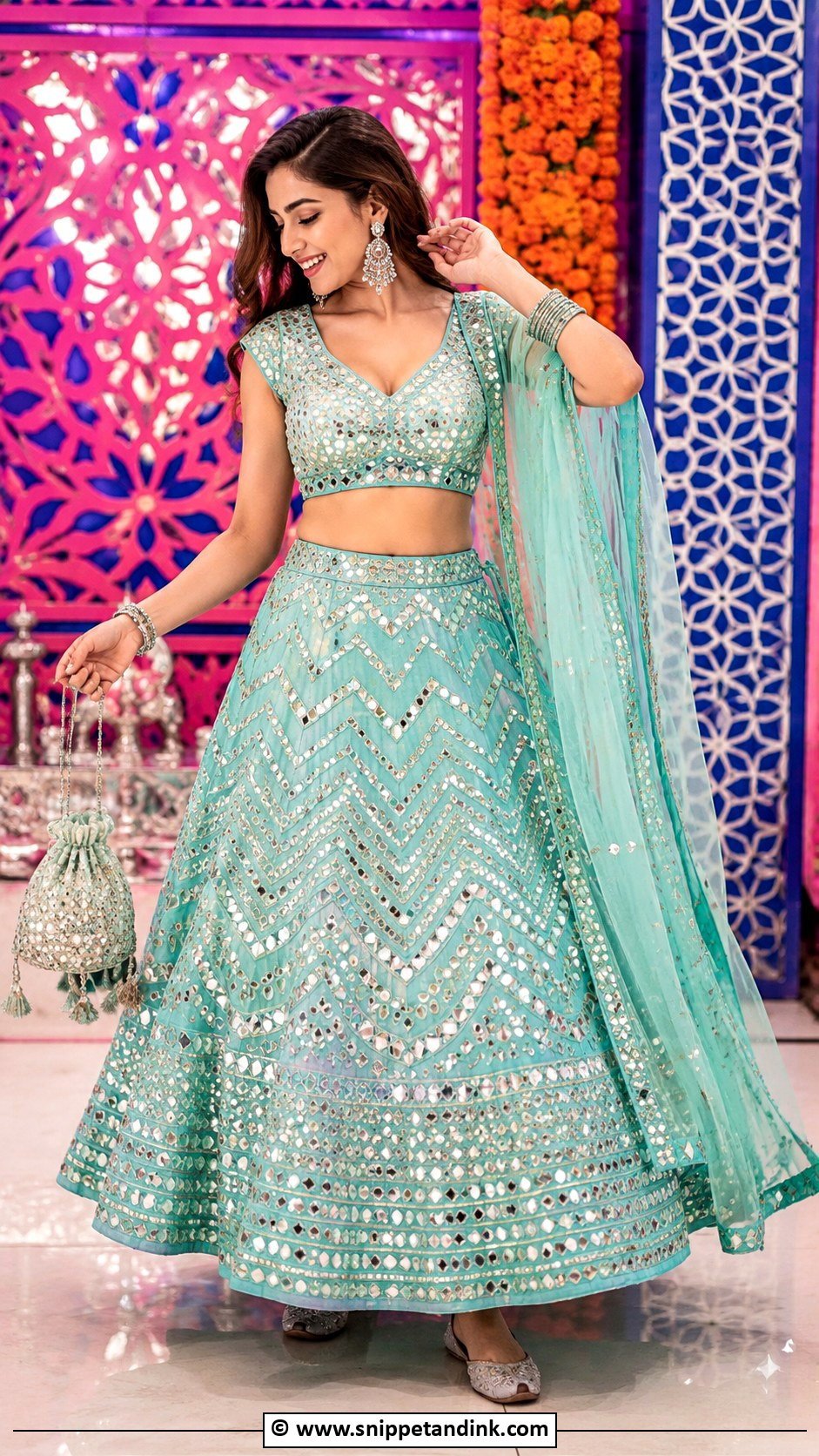
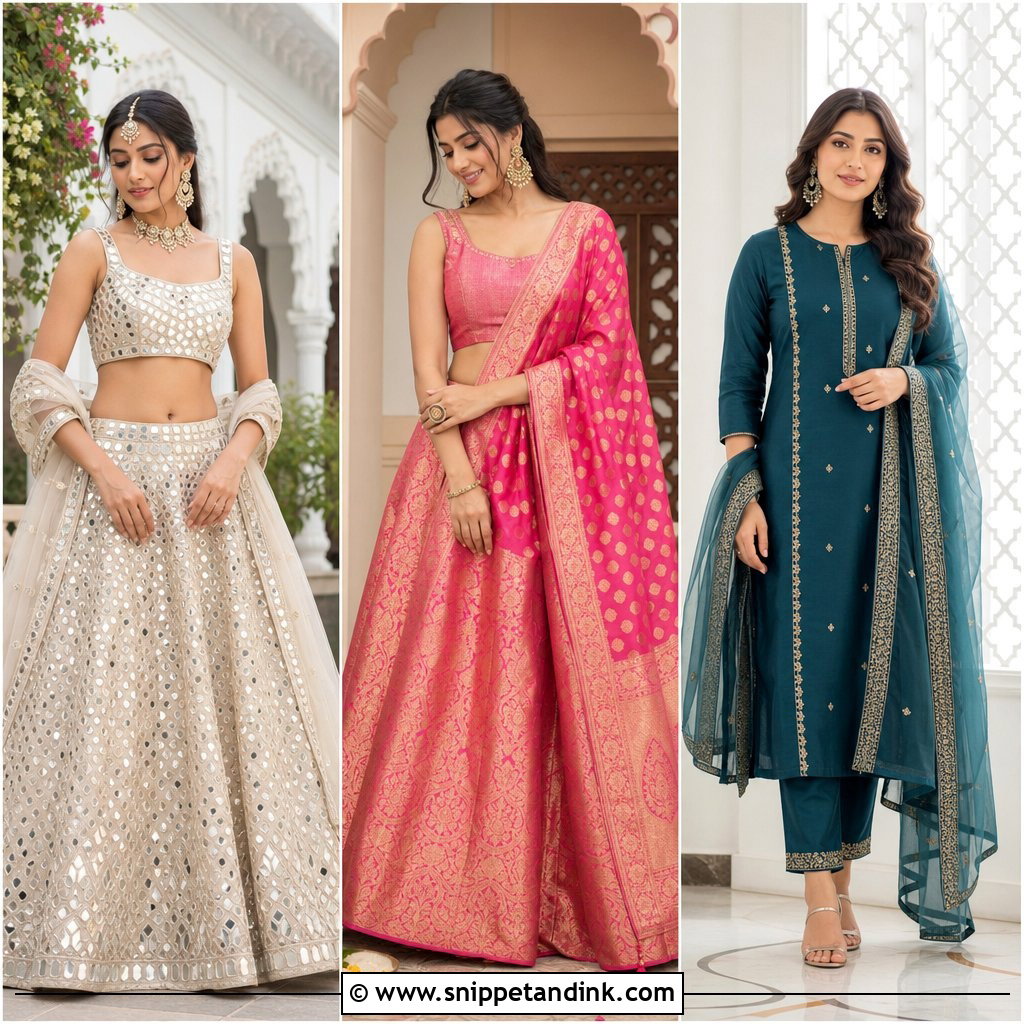
Mirror work bounces light, which is why it shows up at garba nights and sangeets where the room is dark and the dancing is fast. Orange, turquoise, magenta, yellow and royal blue suit the festive mood. Traditional mirror work is stitched around each glass piece, so a well-made lehenga is heavier than it looks; try spinning in it before you buy. Silver-toned jewelry suits mirror work better than gold. Flats or embellished low heels are essential if you’ll dance.
12. Sequin Saree
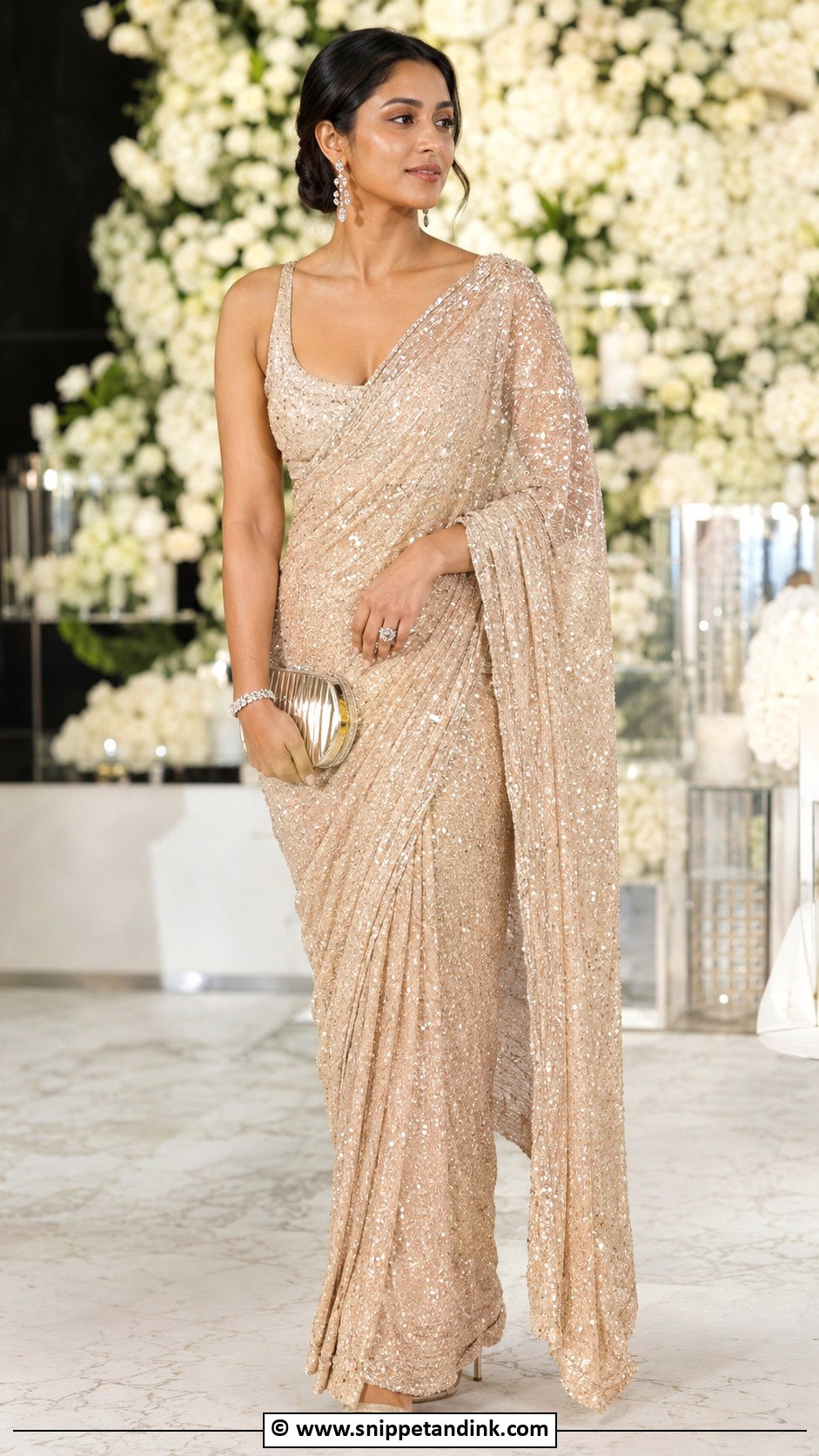
Sequins photograph strongly at night, so a sequin saree is an easy reception look. Champagne, silver, rose gold, bronze and charcoal feel polished, and jewel tones look richer. Keep the blouse clean. Sequins scratch the inner arm on long sleeves, which is why I usually suggest sleeveless or a lined sleeve. Drop earrings and one cocktail ring are enough jewelry. A hard-case clutch and heels finish it.
13. Velvet Lehenga
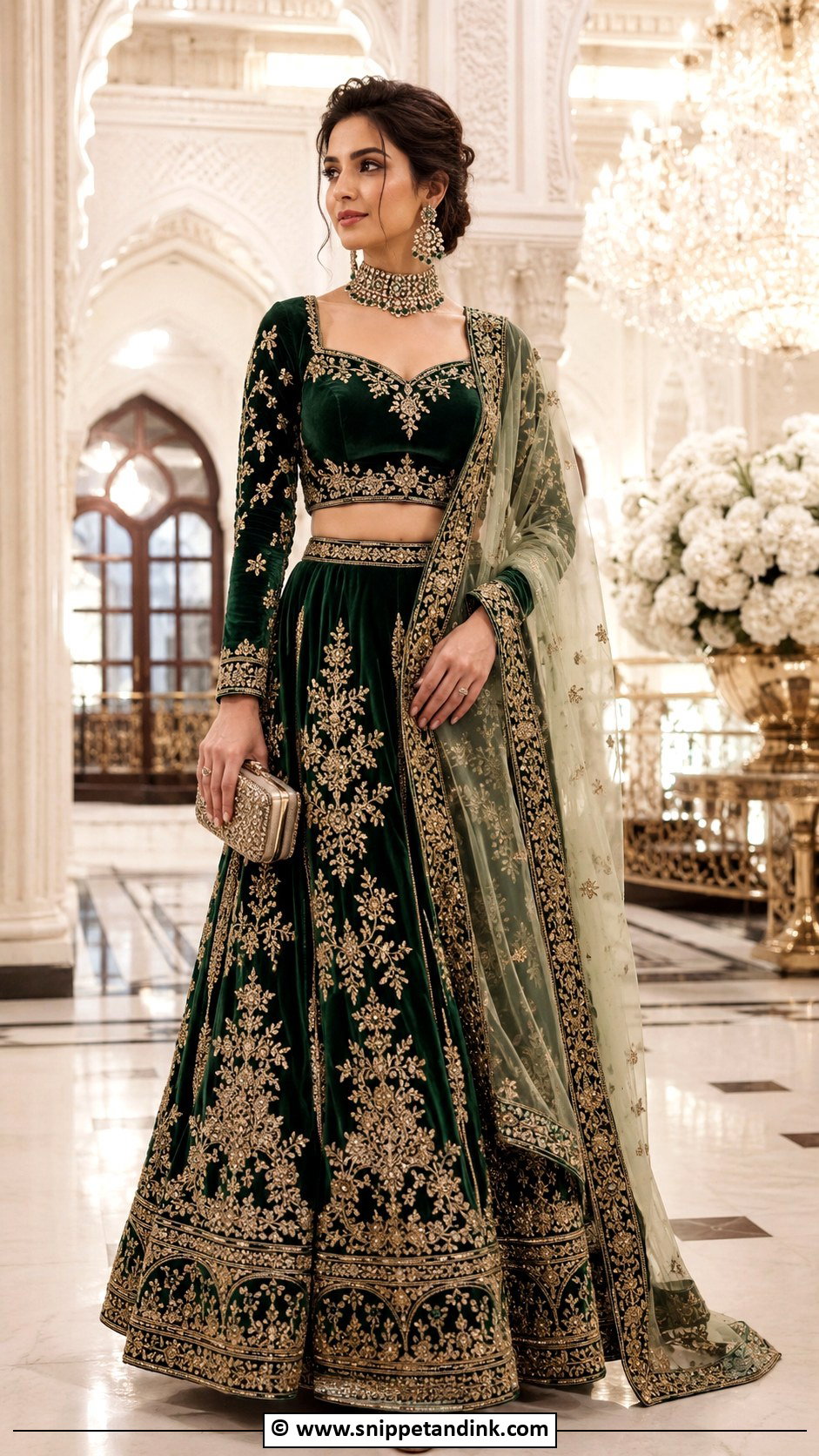
Velvet is a winter fabric, full stop. In a hot hall it traps heat and shows sweat. For December weddings and cold evenings, though, maroon, emerald, navy and plum velvet with gold or antique silver embroidery look rich. Balance the heavy skirt with a light net or organza dupatta. Kundan and a statement choker suit the depth of the color. Velvet crushes if folded, so travel it rolled or hanging.
14. Organza Saree
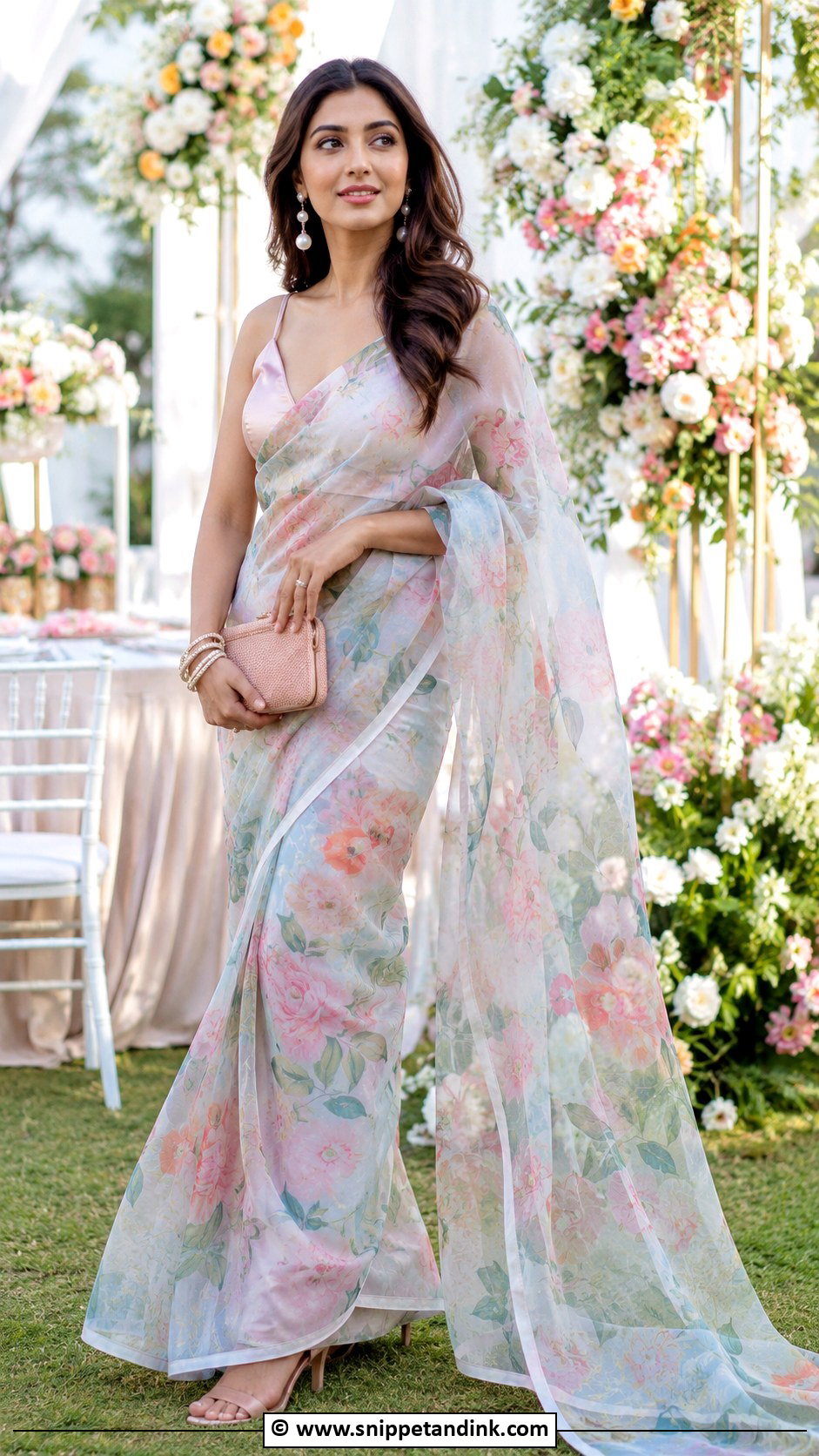
Organza is crisp and airy, good for daytime weddings and engagement ceremonies. It holds volume, so the drape needs pins at the shoulder and pleats or it puffs out sideways. Pair it with a silk, satin or brocade blouse for structure. Florals, pastels, pearl details and soft embroidery all suit it. Pearl earrings, delicate bangles and nude heels keep it light, and a potli in a matching shade completes it.
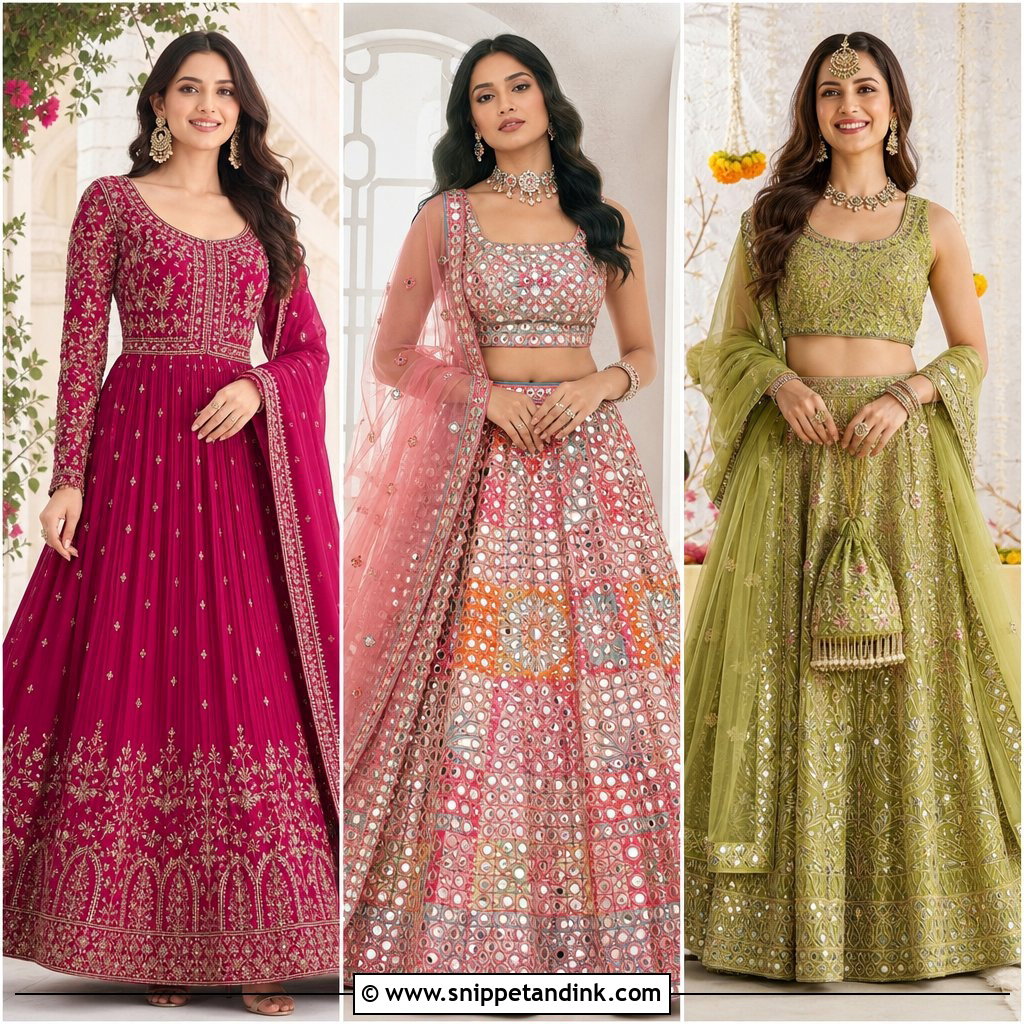
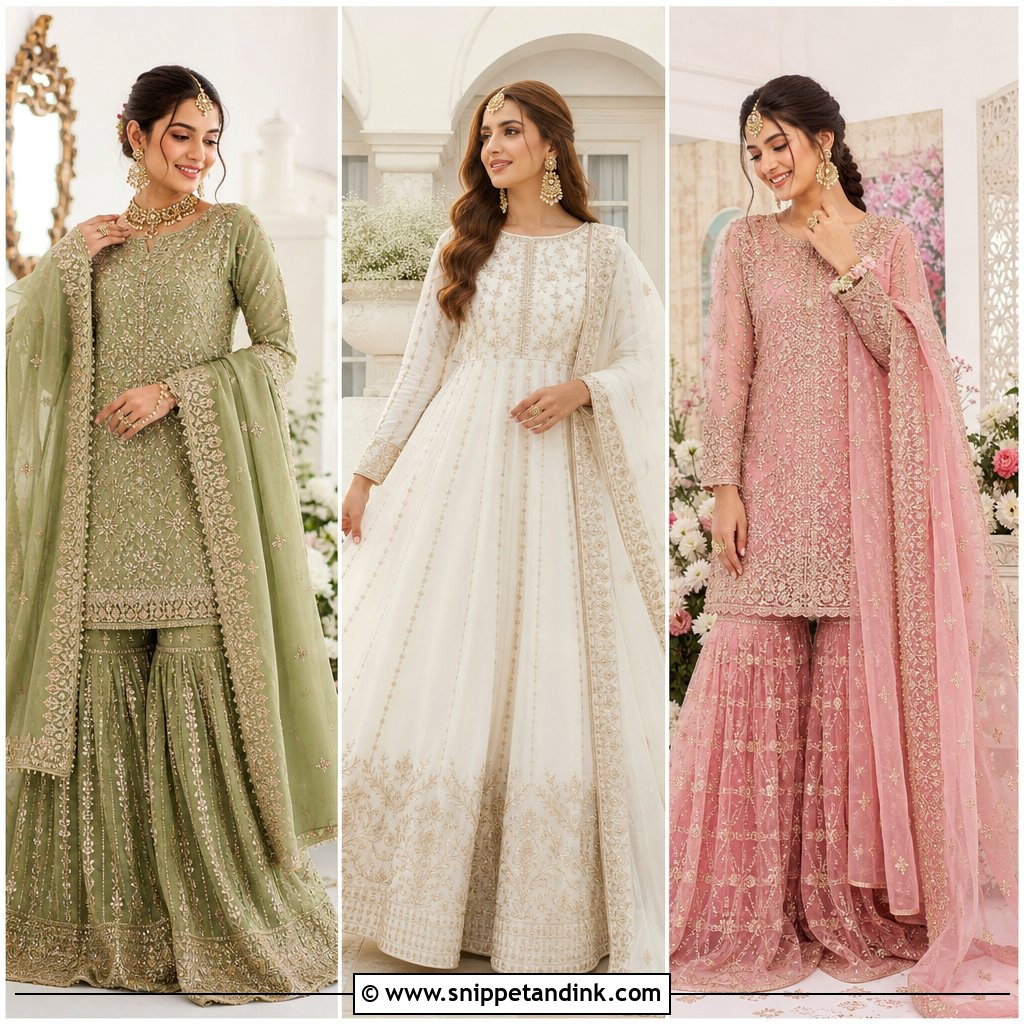

15. Chikankari Lehenga
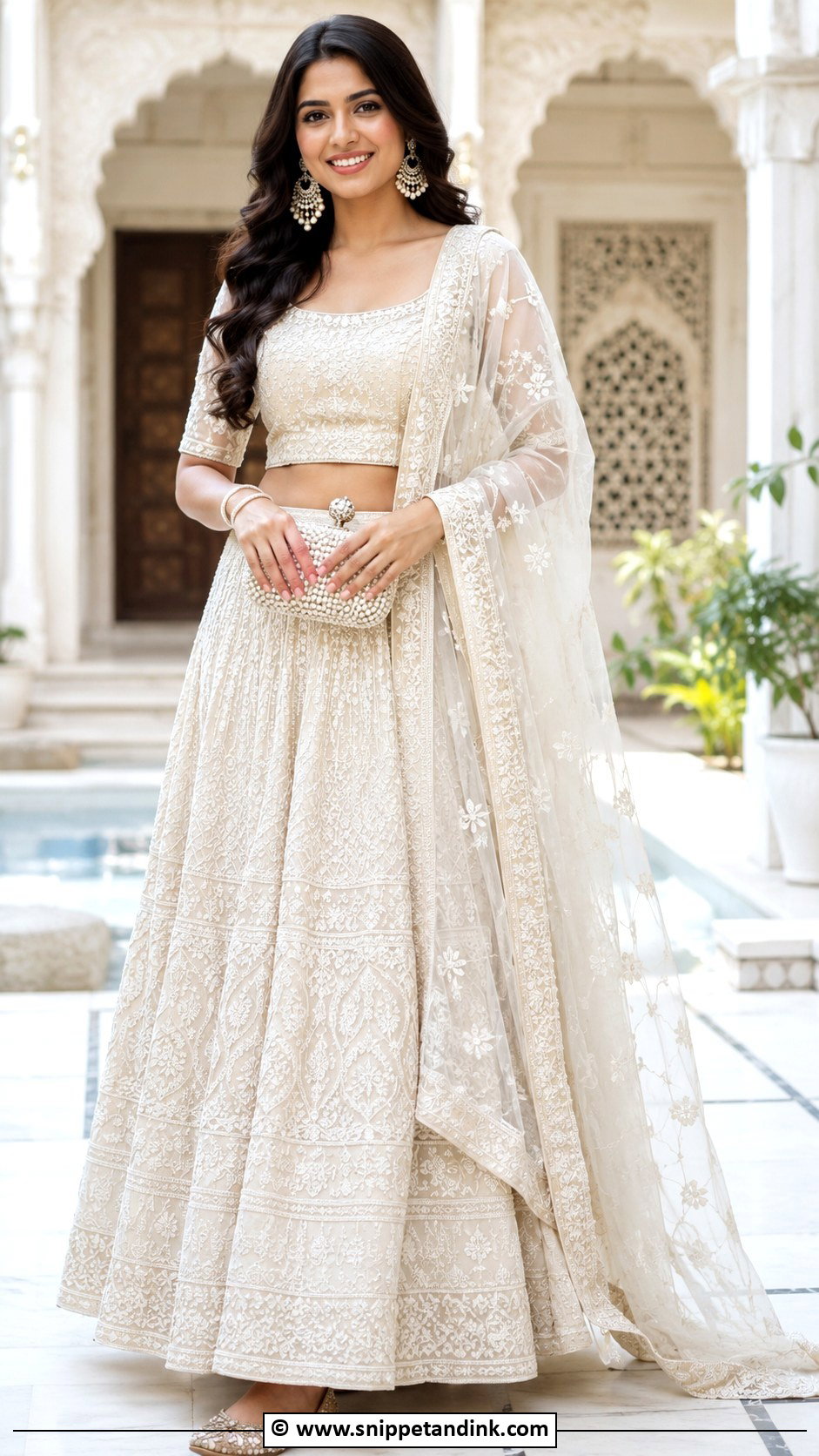
Chikankari is fine shadow embroidery from Lucknow, worked by hand, and a chikankari lehenga is one of the lightest festive pieces you can wear. That’s why I recommend it for summer weddings. Ivory, blush, sage, powder blue and pastel yellow suit daytime, darker bases suit evenings. Pearls, kundan earrings or a soft polki necklace pair well with the handwork. Hand chikankari should be dry-cleaned or gently hand-washed; machine washing frays the threads.
16. Jacket Lehenga
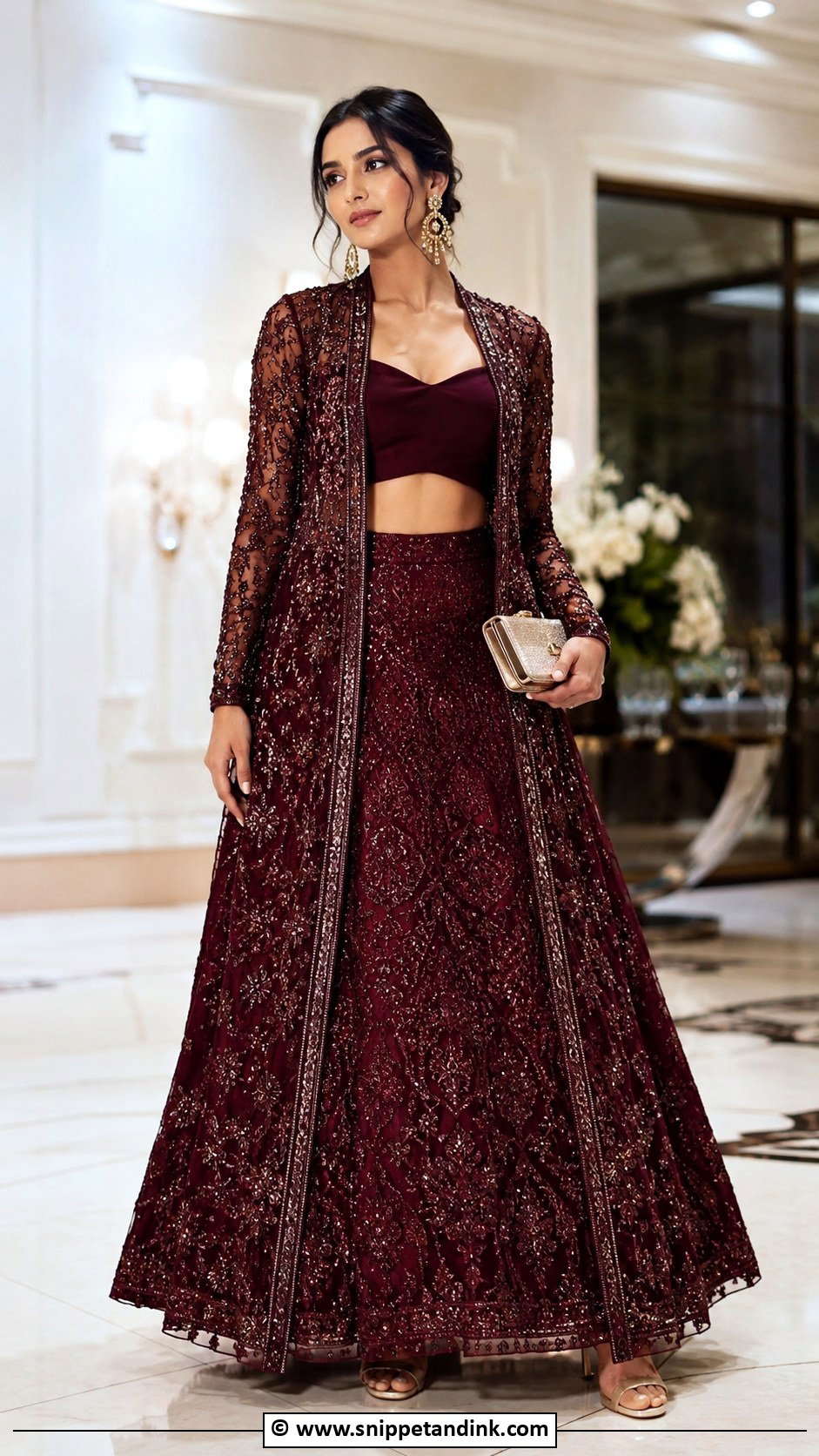
A jacket lehenga swaps the dupatta for a long embroidered jacket over a skirt and blouse. It gives more coverage and less to manage. Sheer jackets suit summer; brocade or velvet suit winter. Keep the blouse plain if the jacket is busy. Long jackets look best on taller frames, so petite women should choose a hip-length jacket and a high-waisted skirt. Statement earrings and heels finish it for a reception or sangeet.
17. Cape Lehenga
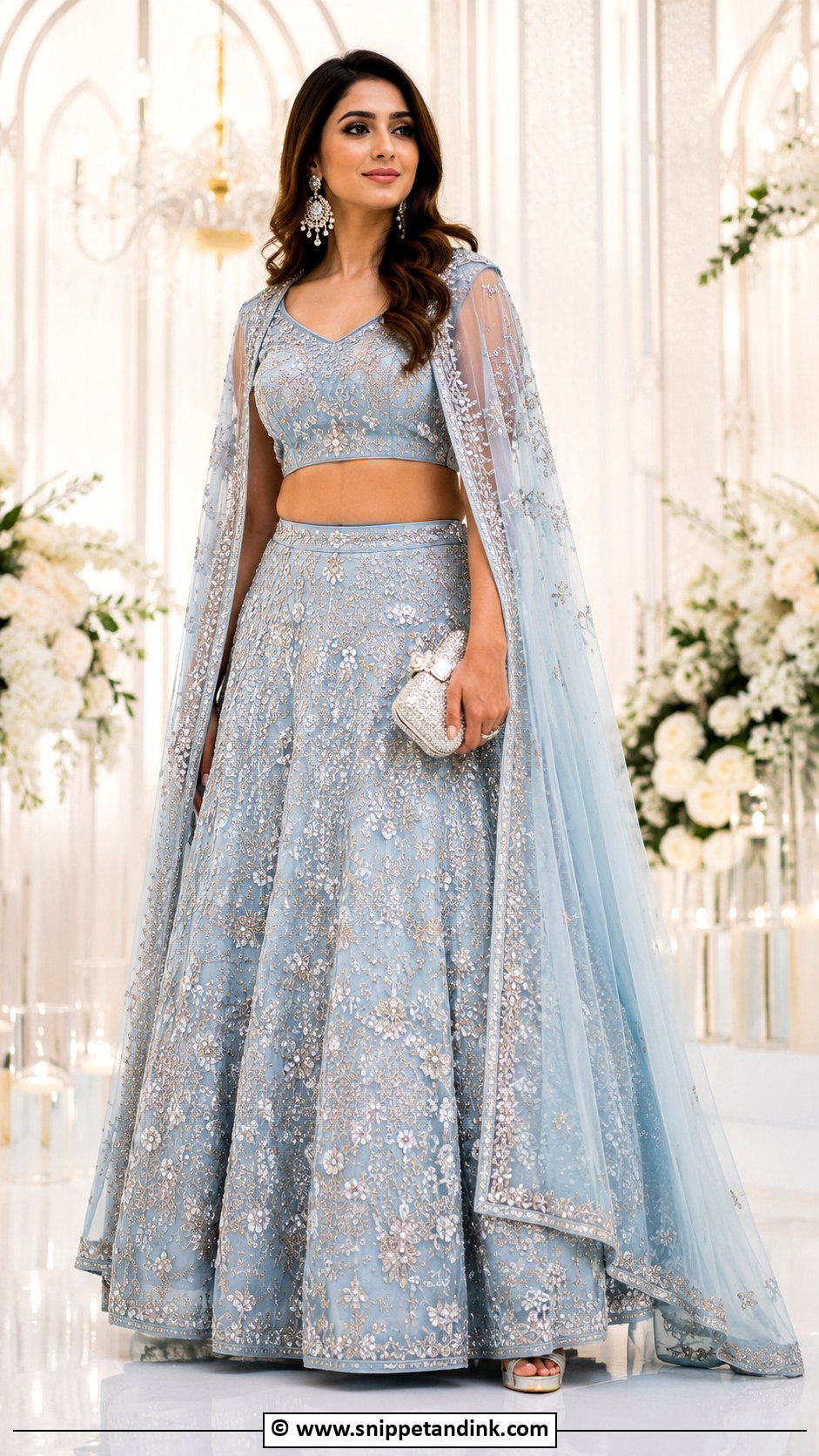
A cape frees both hands, which matters at a reception where you’re holding a plate, a drink and greeting people. The cape can be sheer, embroidered, beaded or attached to the blouse. Because it adds volume at the shoulders, skip heavy necklaces and put the jewelry into earrings and rings. Choose soft colors for a light look or jewel tones for more presence. Heels and a compact clutch keep the line clean.
18. Peplum Lehenga
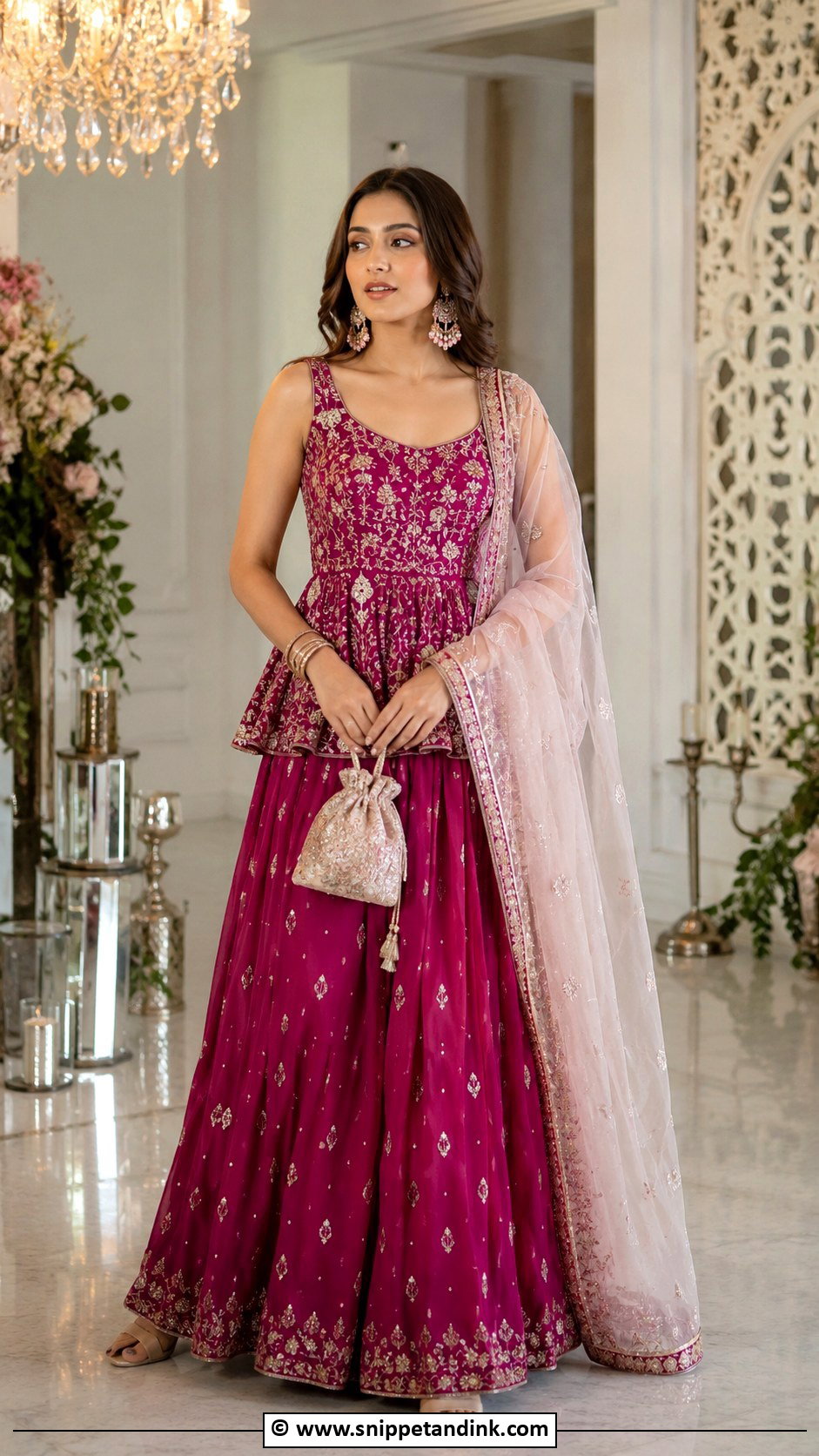
The peplum top is my answer for anyone self-conscious about the midsection: it shapes the waist and then falls away. Choose a peplum with embroidery, mirror work or sequins over a simpler skirt. A light dupatta can drape over one shoulder or be left off entirely if the top is detailed. Block heels suit the slightly casual line. Pastels, jewel tones and brights all work, and it’s easy to move in over a long celebration.
19. Kurta Palazzo Set
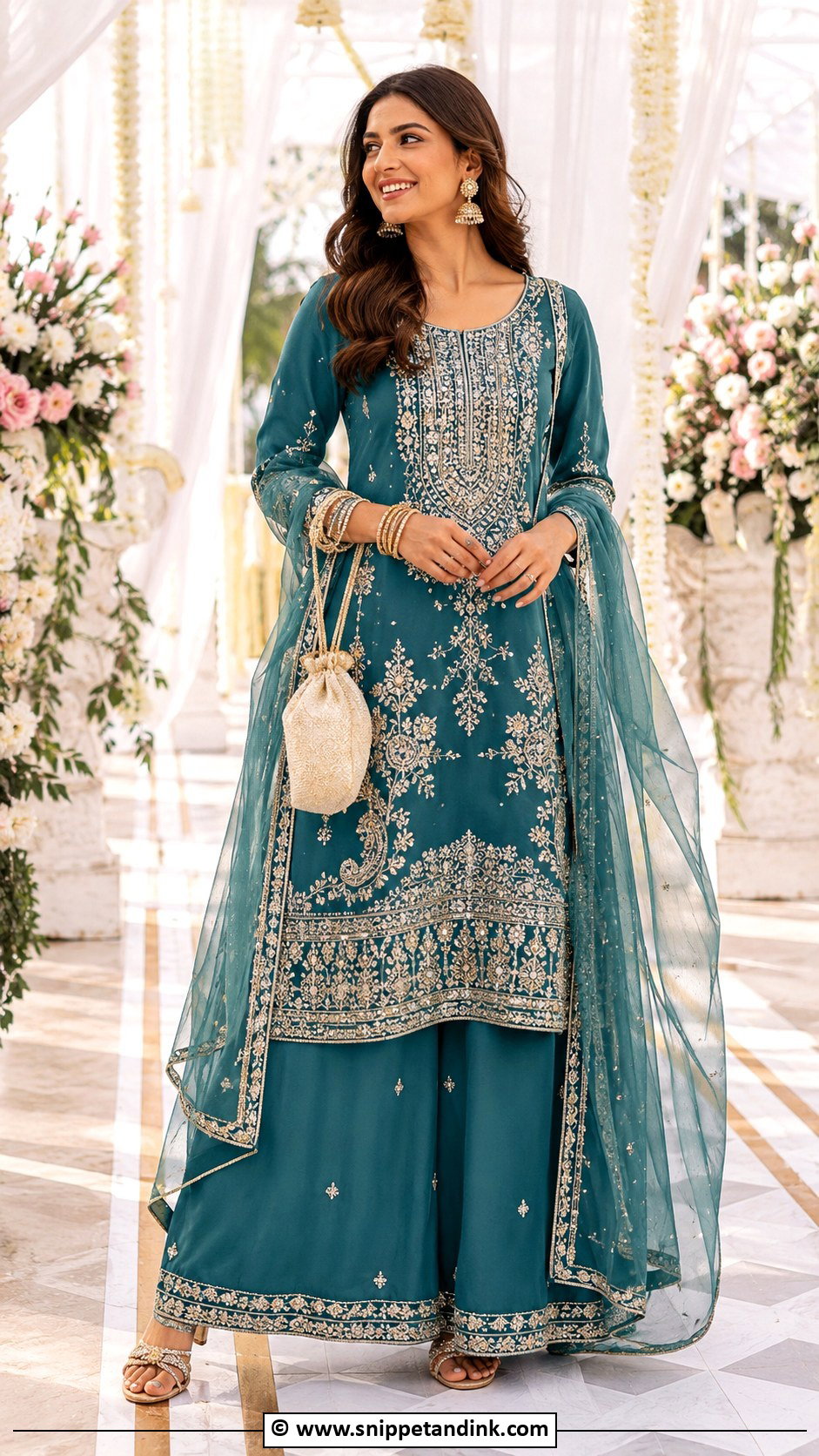
For smaller functions or a guest who wants comfort, a kurta palazzo set is the obvious pick. A long embroidered kurta over wide palazzos in silk, georgette, chanderi or crepe looks polished. Matching top and bottom in one color makes you look taller. Jhumkas, bangles and embellished sandals keep it festive. It packs flat and can be restyled with different jewelry, which makes it handy for destination weddings.


20. Silk Salwar Kameez
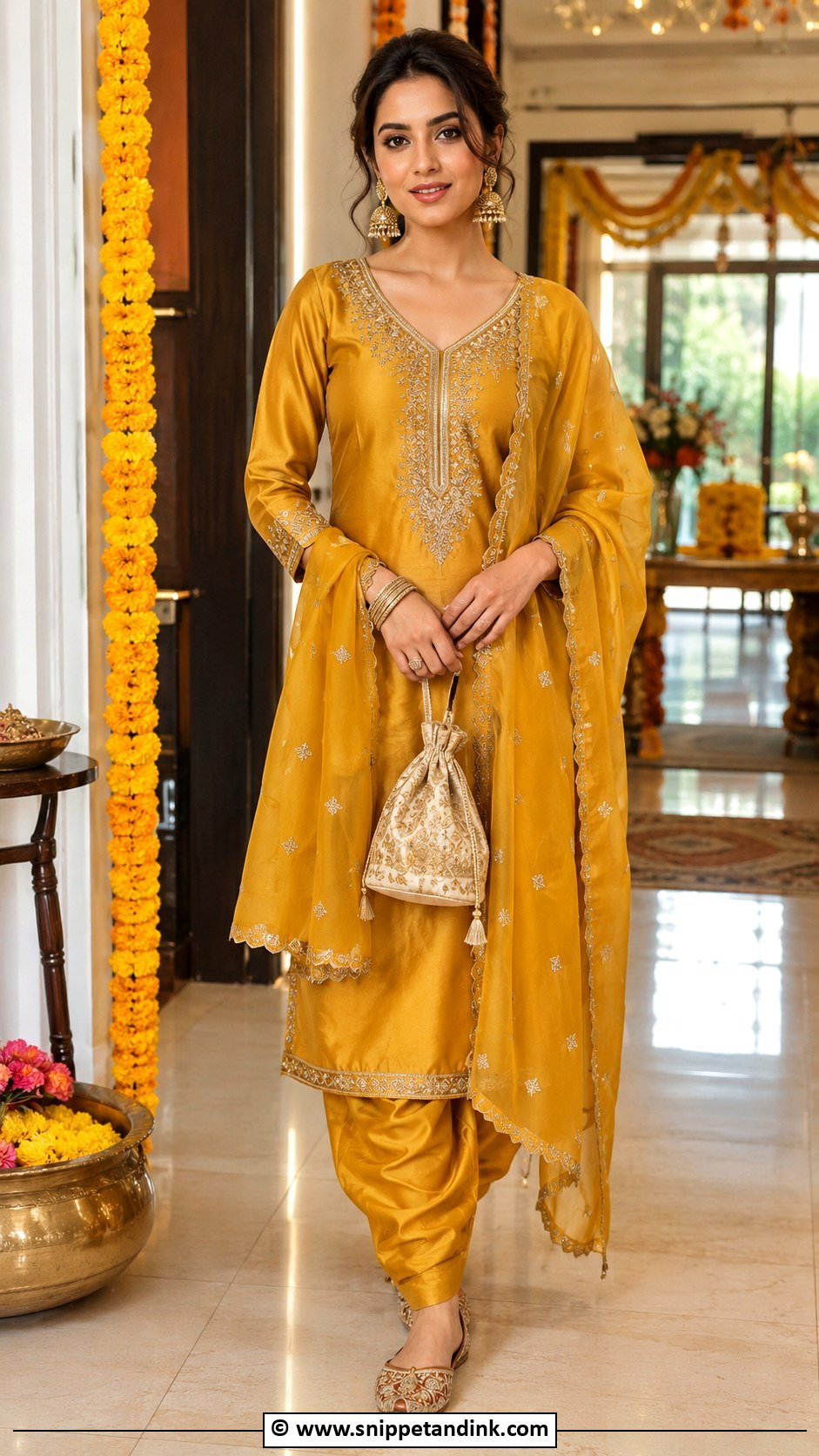
A silk salwar kameez is the quiet classic of wedding dressing. Magenta, mustard, emerald, teal and maroon silk with an embroidered neckline look right at family ceremonies and pre-wedding gatherings. It covers well and lets you sit on the floor for rituals without fuss. Gold earrings, bangles and embroidered juttis or low heels complete it. Ask for side slits high enough to sit cross-legged.
21. Indo Western Gown
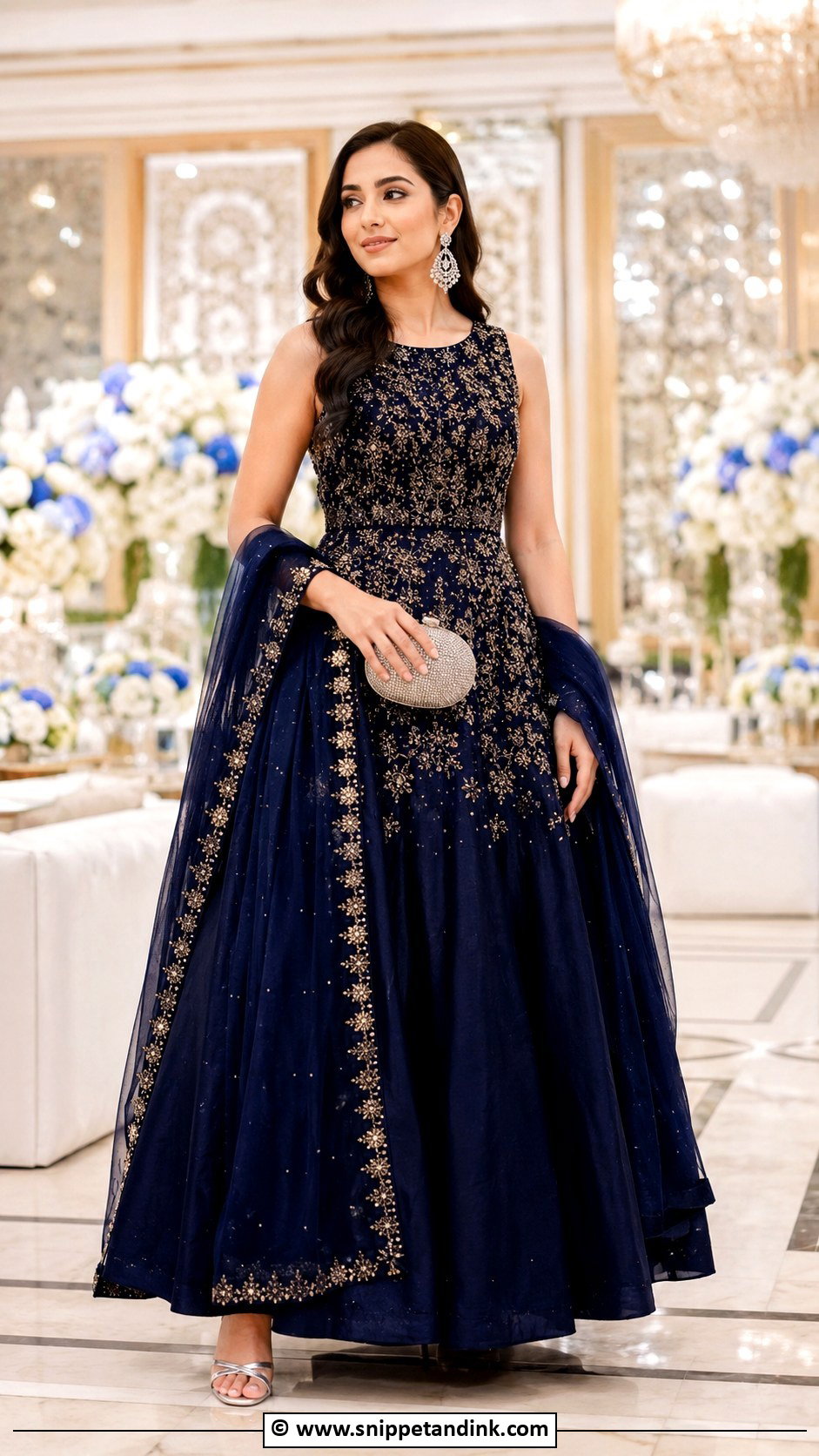
An Indo-western gown puts Indian embroidery on a Western silhouette: A-line, fit-and-flare or cape gowns with zari, sequins, mirror work or a draped dupatta overlay. It’s one piece, so it’s quick to wear. If the neckline is embroidered, skip the necklace and focus on earrings, hair and rings. Jewel tones, metallics and pastels all suit receptions and formal evenings.
22. Saree Gown
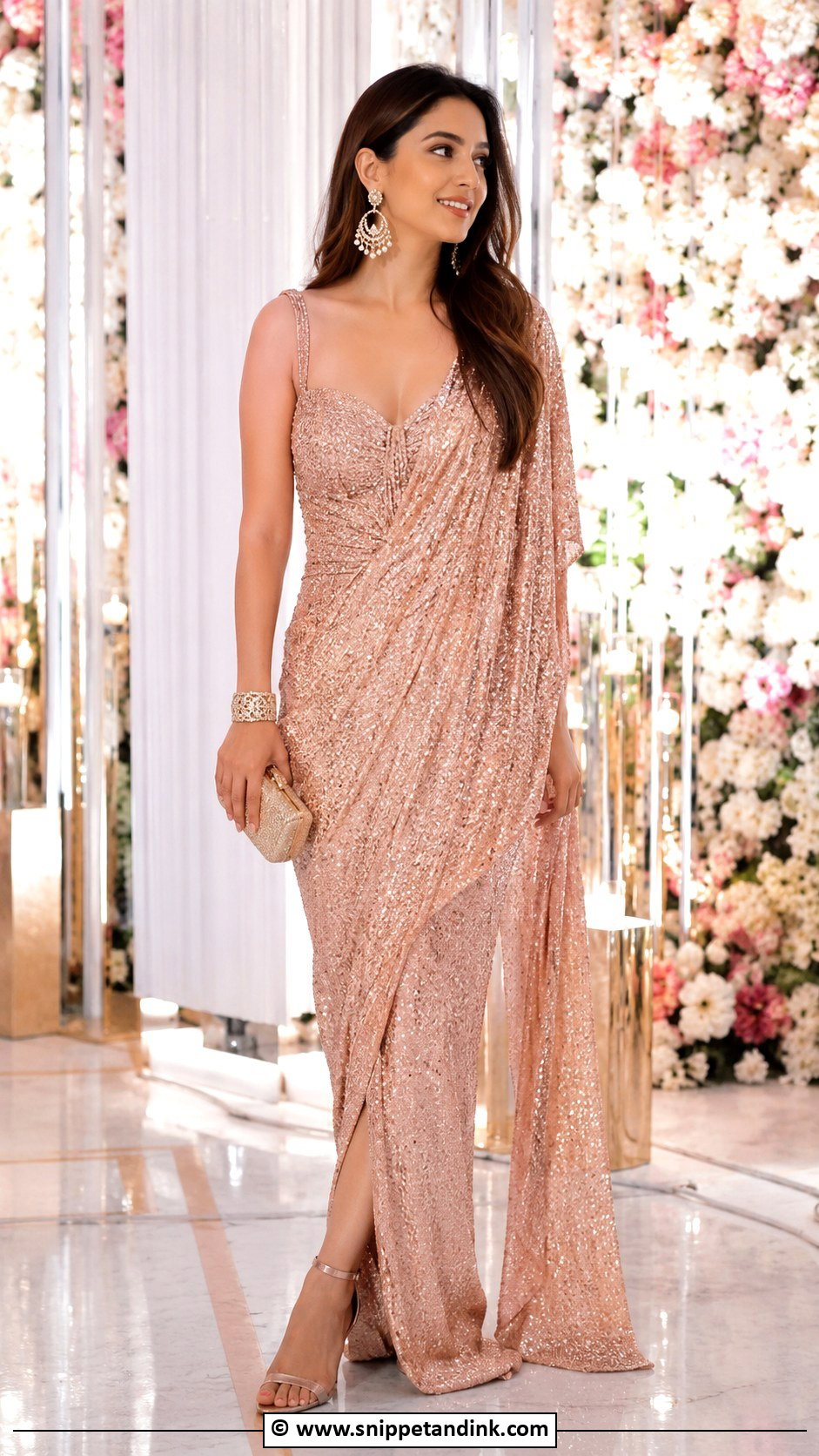
A saree gown looks like a draped saree but zips up like a dress, with pre-stitched pleats and a fixed pallu. Satin, crepe, georgette and shimmer jersey give the smoothest drape. For guests who’ve never draped a saree, it removes all the stress. Bold earrings, a cuff and heels are enough. Have the length checked in your actual shoes, as the pleats look wrong if they puddle.
23. Dhoti Pant Set
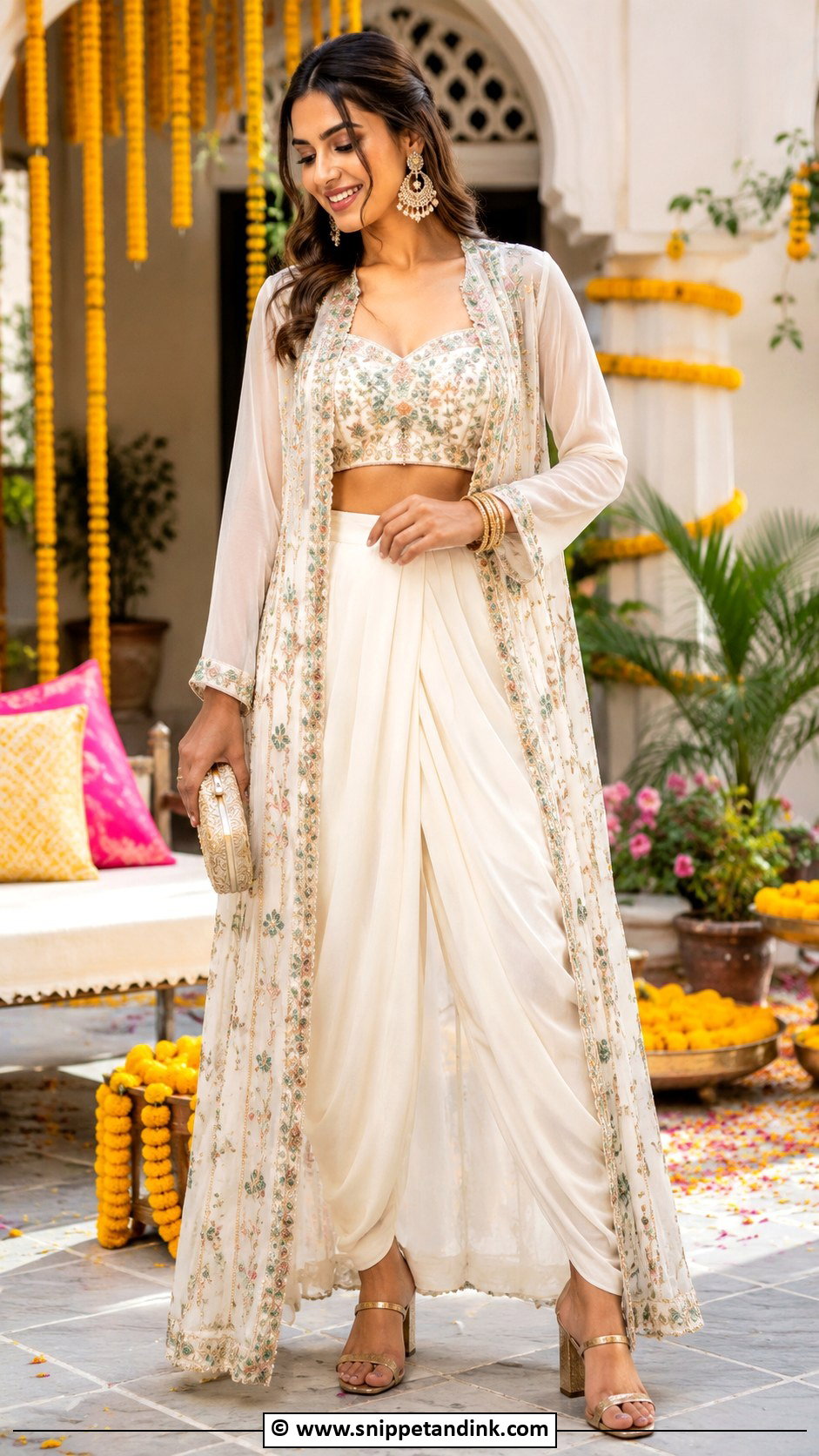
A dhoti pant set pairs draped dhoti trousers with a crop top, kurta, cape or jacket, and it’s one of the most comfortable fusion outfits for mehendi and sangeet. Bright colors, mirror work, embroidery or printed silk suit the mood. Do a squat test in the fitting room; a low drop crotch can feel restrictive when sitting on the floor. Bangles, statement earrings and block heels or flats finish it.
24. Co Ord Lehenga Set
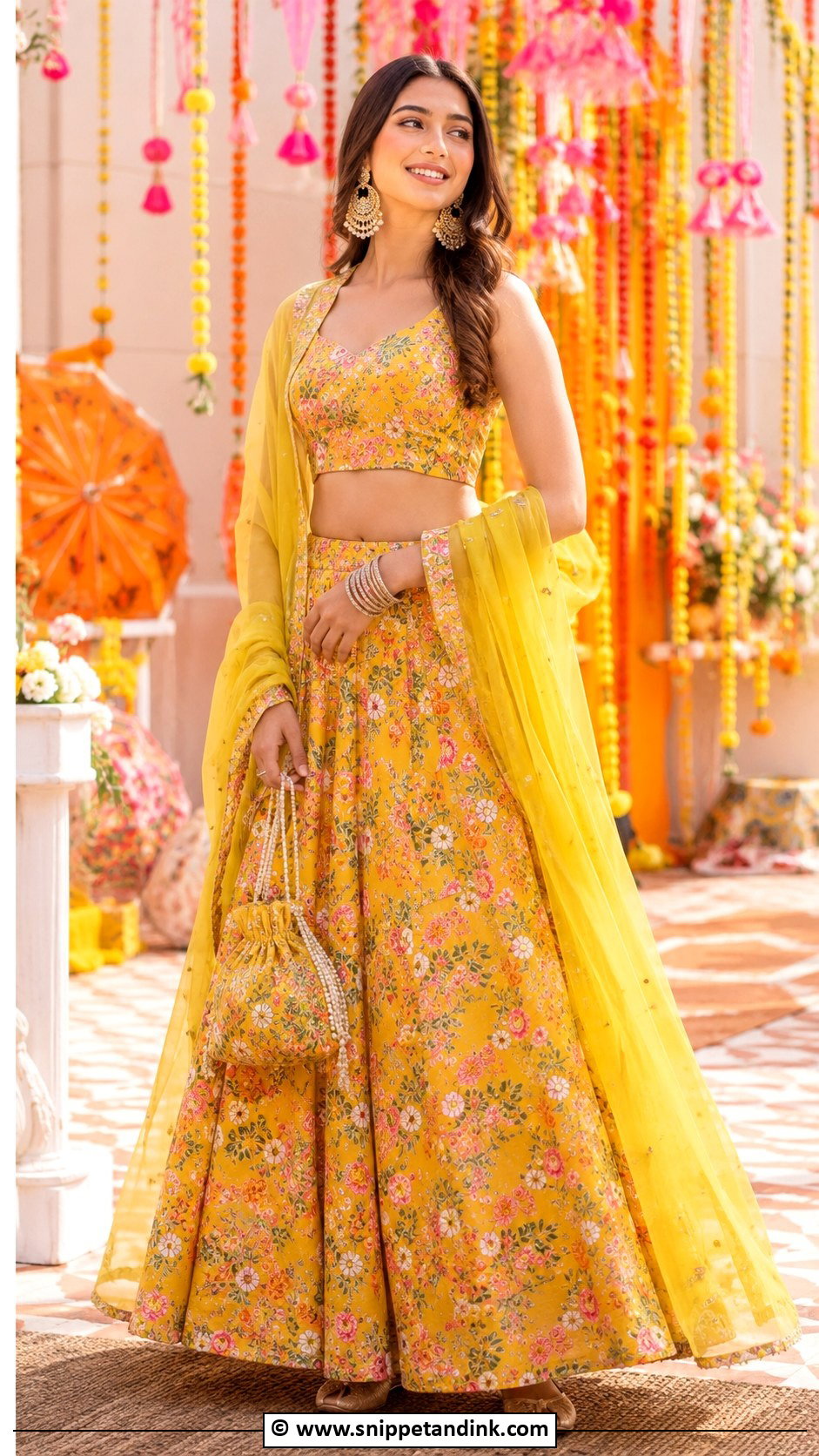
A co-ord lehenga set is a matching skirt and top, sometimes with a jacket or dupatta, and it’s the most rewearable item on this list because the pieces separate. Bright prints for mehendi, satin or sequins for the reception. Earrings, stacked bangles and heels or juttis complete it. Cousins and bridesmaids can coordinate colors without matching exactly.




25. Ruffle Saree
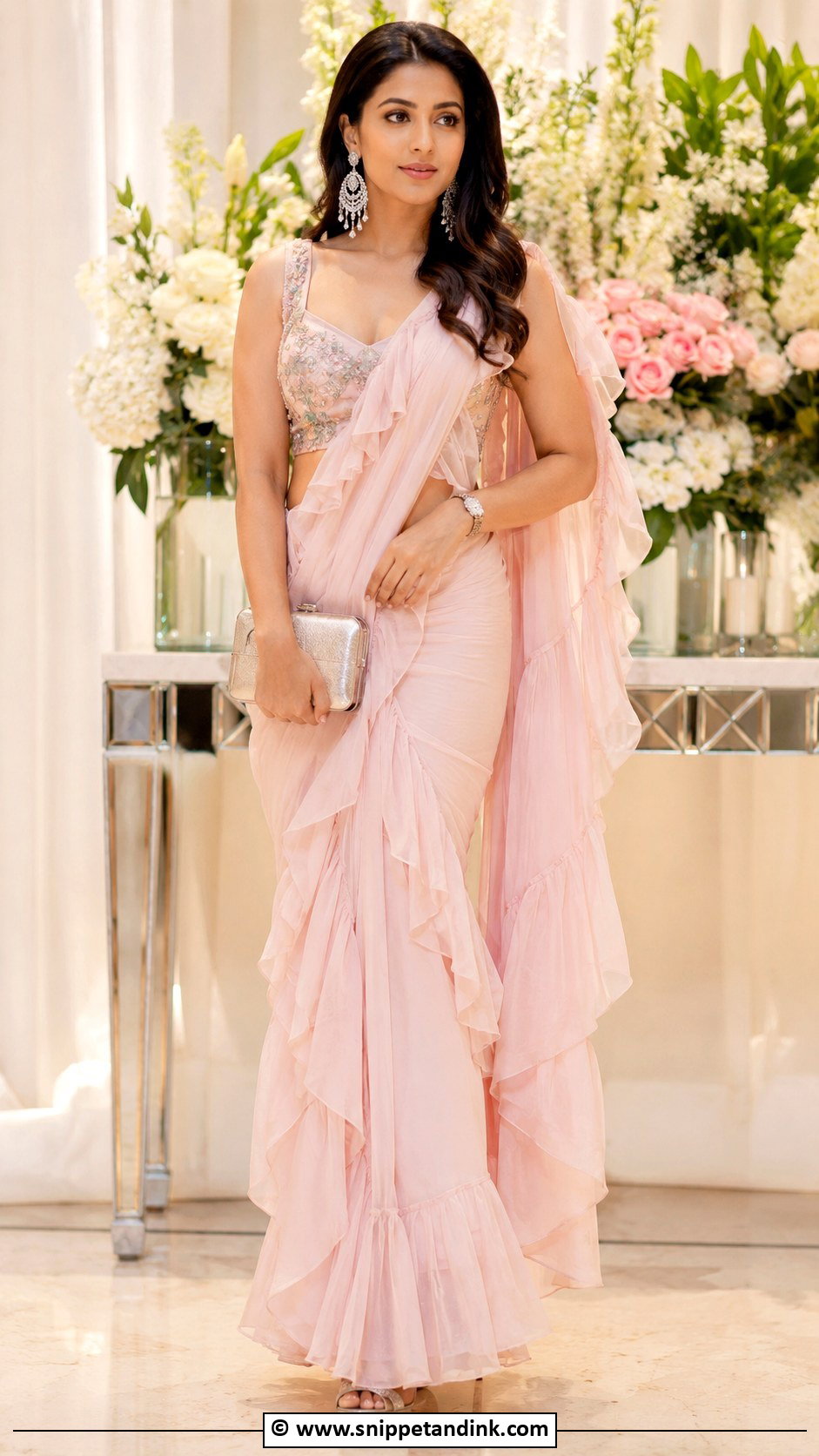
Ruffles need soft fabric to fall properly, so choose georgette, chiffon or light organza, never stiff net. A ruffle saree works for cocktail-style receptions and sangeet nights. Pair it with a corset, sleeveless or embroidered blouse and keep jewelry to statement earrings and a bracelet. Heels help the ruffled hem hang cleanly. Keep the color controlled: blush, ivory, lavender, emerald or champagne.
26. Net Lehenga
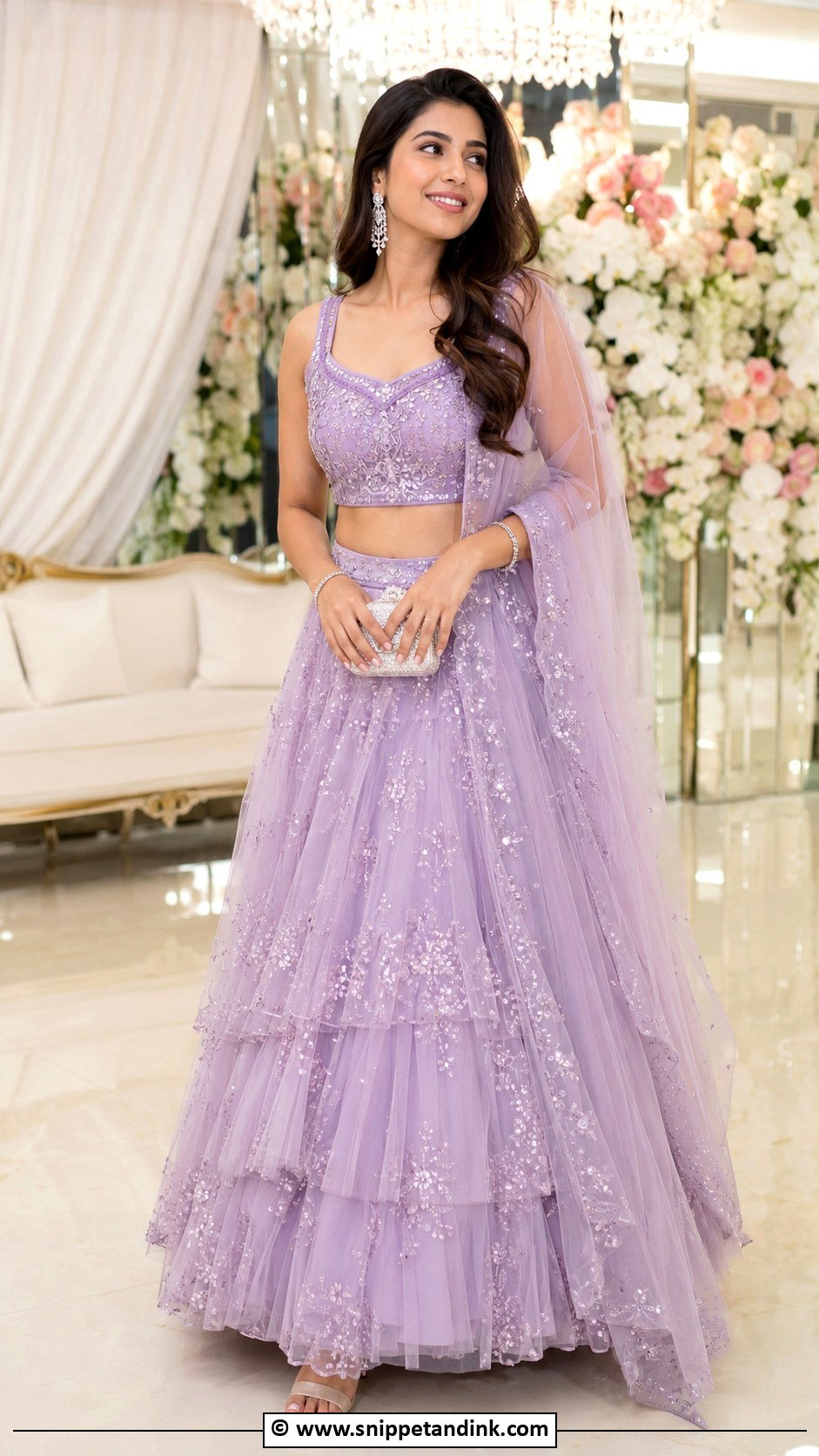
Net lehengas give volume without weight, which is why bridesmaids wear them so often. Layered net with embroidery, sequins or threadwork looks festive; pastels look soft and deeper shades suit evening. Net snags on bangles, rings and the edges of chairs, so keep jewelry smooth on the side you’ll brush against the skirt. A fitted blouse, sheer dupatta and heels that keep the hem off the floor complete it.
27. White And Gold Saree
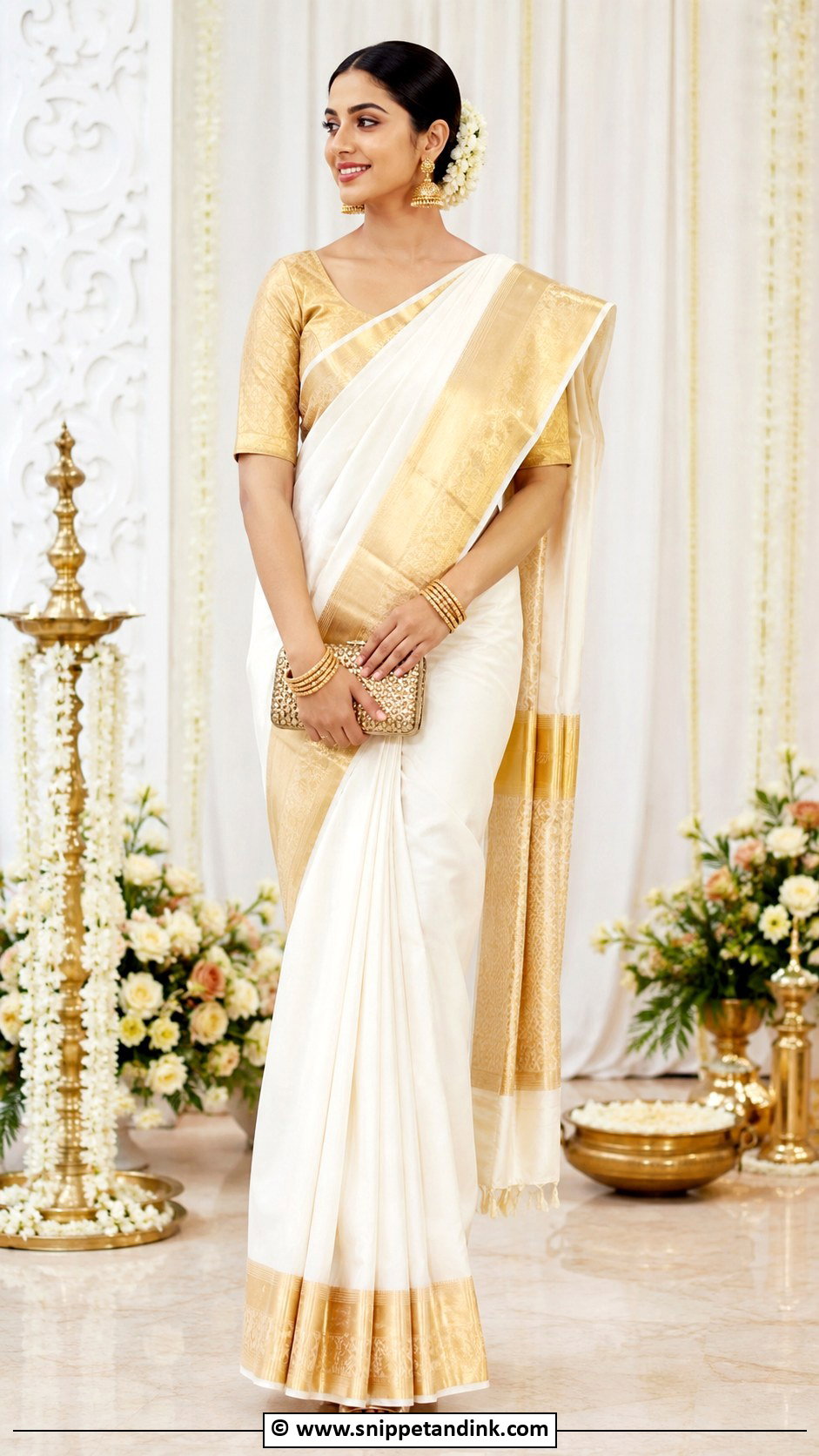
White and gold is the traditional Kerala kasavu palette, and in silk, tissue, organza or georgette it looks quietly luxurious. A gold blouse keeps it classic; an emerald, maroon or blush blouse adds richness. Temple jewelry, bangles and a sleek bun suit it. In some communities plain white is linked to mourning, so if you’re a guest at an unfamiliar family’s wedding, a white saree with a strong gold border or a colored blouse is the safer choice.
28. Green Bridal Lehenga
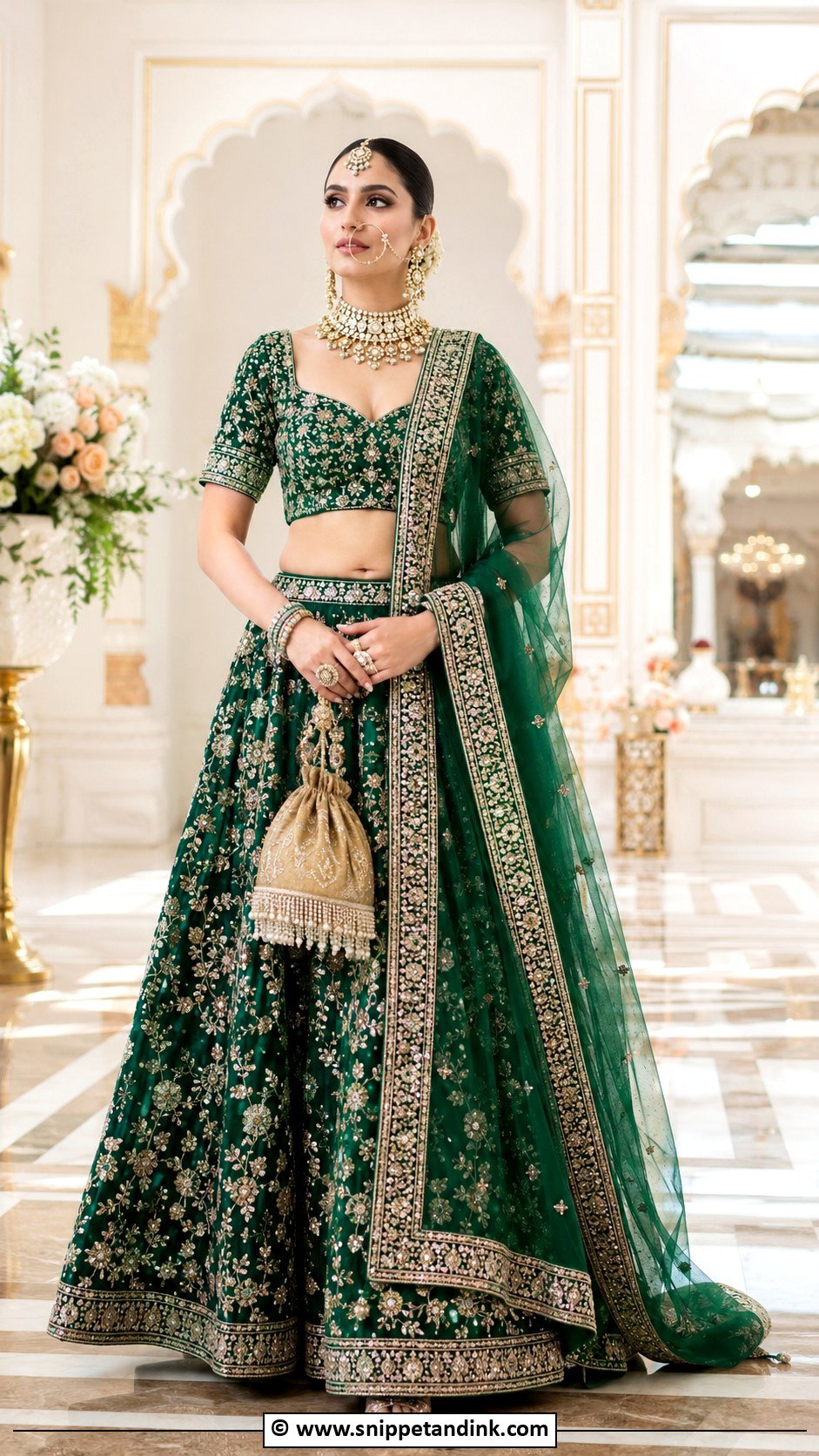
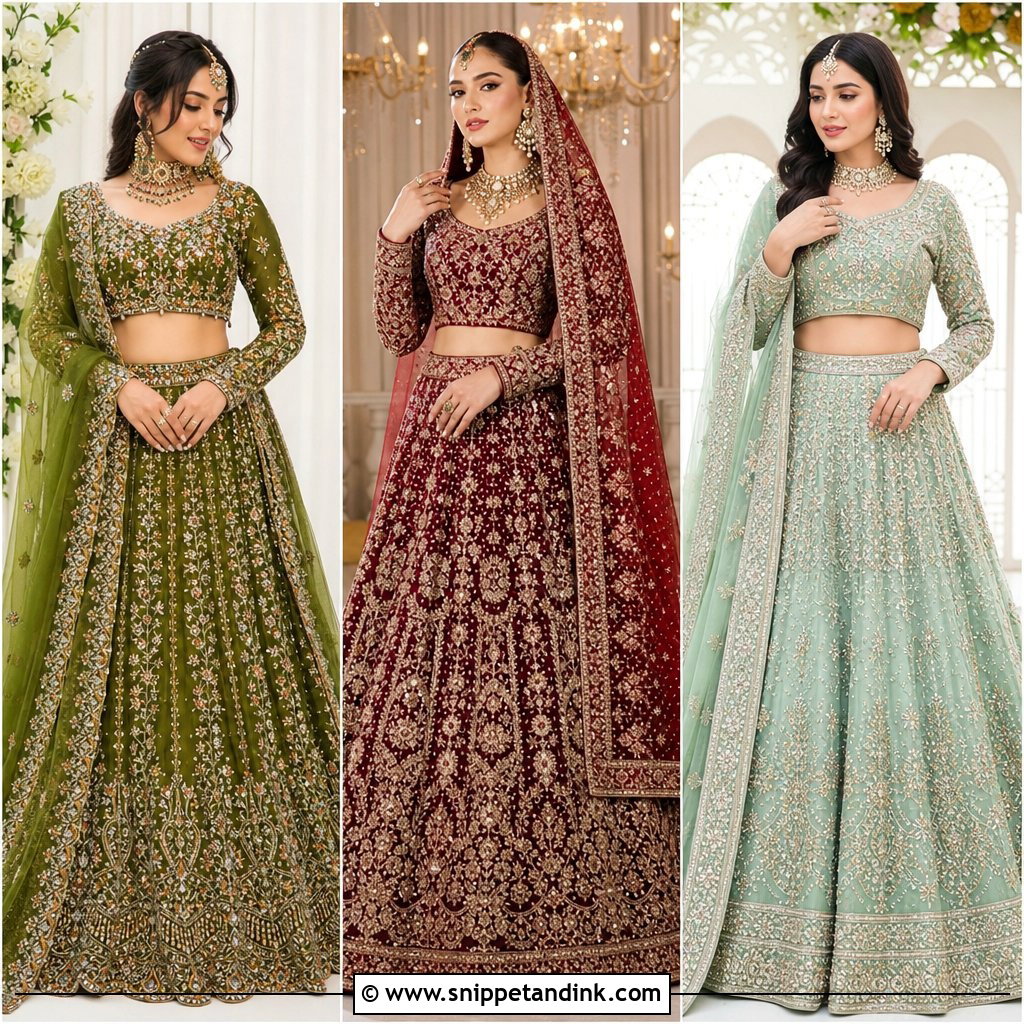
Green is the alternative I suggest most for brides who don’t want red but still want a ceremonial color. Emerald, bottle green, mehendi green and olive-gold all look rich with gold embroidery. Pair the lehenga with kundan or polki, and add a red or maroon accent dupatta if the family wants a traditional touch. Deep green holds its color in both daylight and indoor flash, which isn’t true of every bridal shade.
29. Yellow Haldi Lehenga
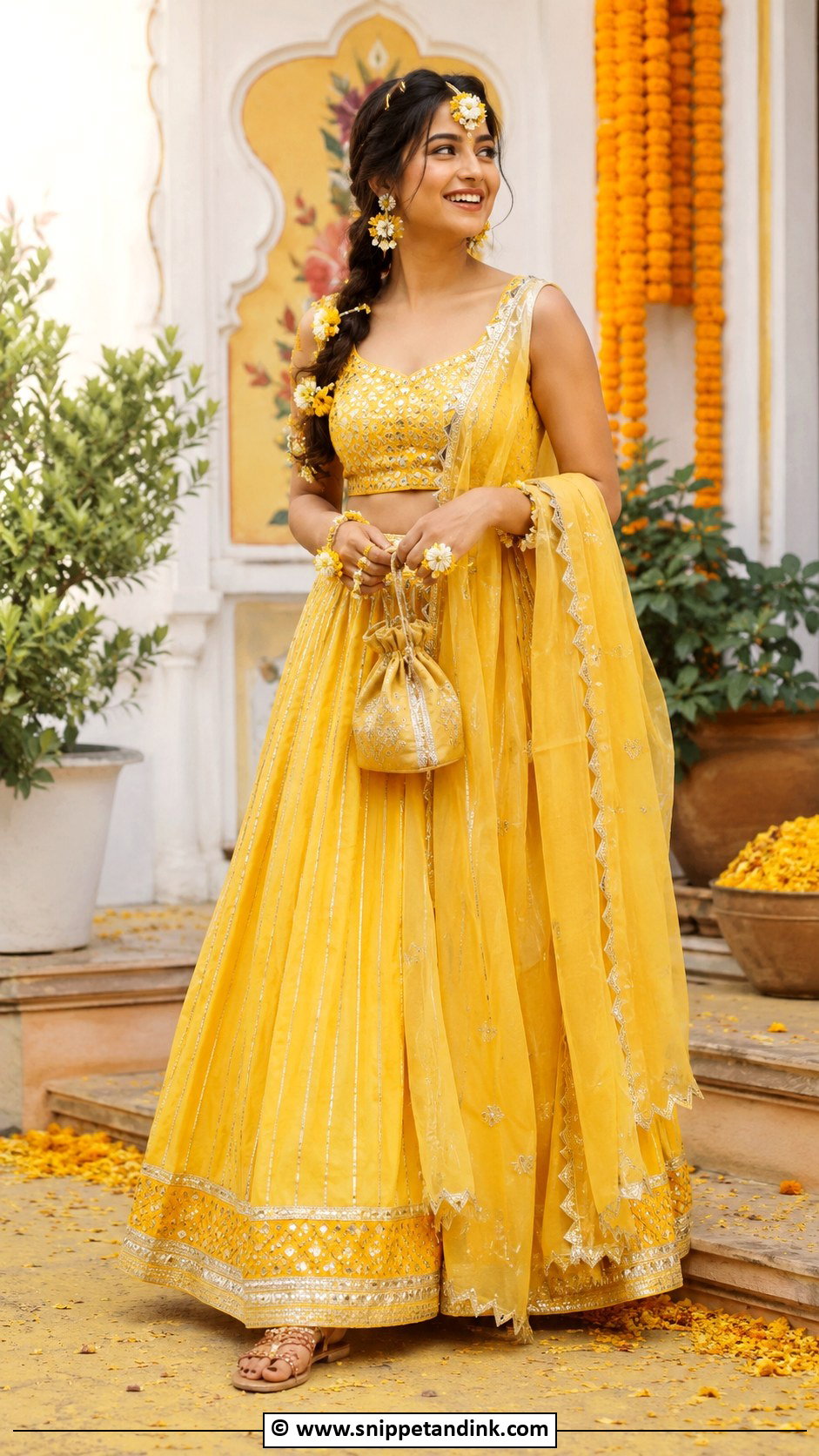
A yellow haldi lehenga should be light enough to sit on the floor and cheap enough not to cry over. Cotton silk, georgette, organza or chiffon move easily; mirror work, gota patti or floral prints suit the mood. Pin the dupatta firmly. Floral jewelry, simple earrings, bangles and flat sandals complete it. Turmeric stains natural fibers fast, so skip anything delicate or precious.
30. Black Reception Lehenga
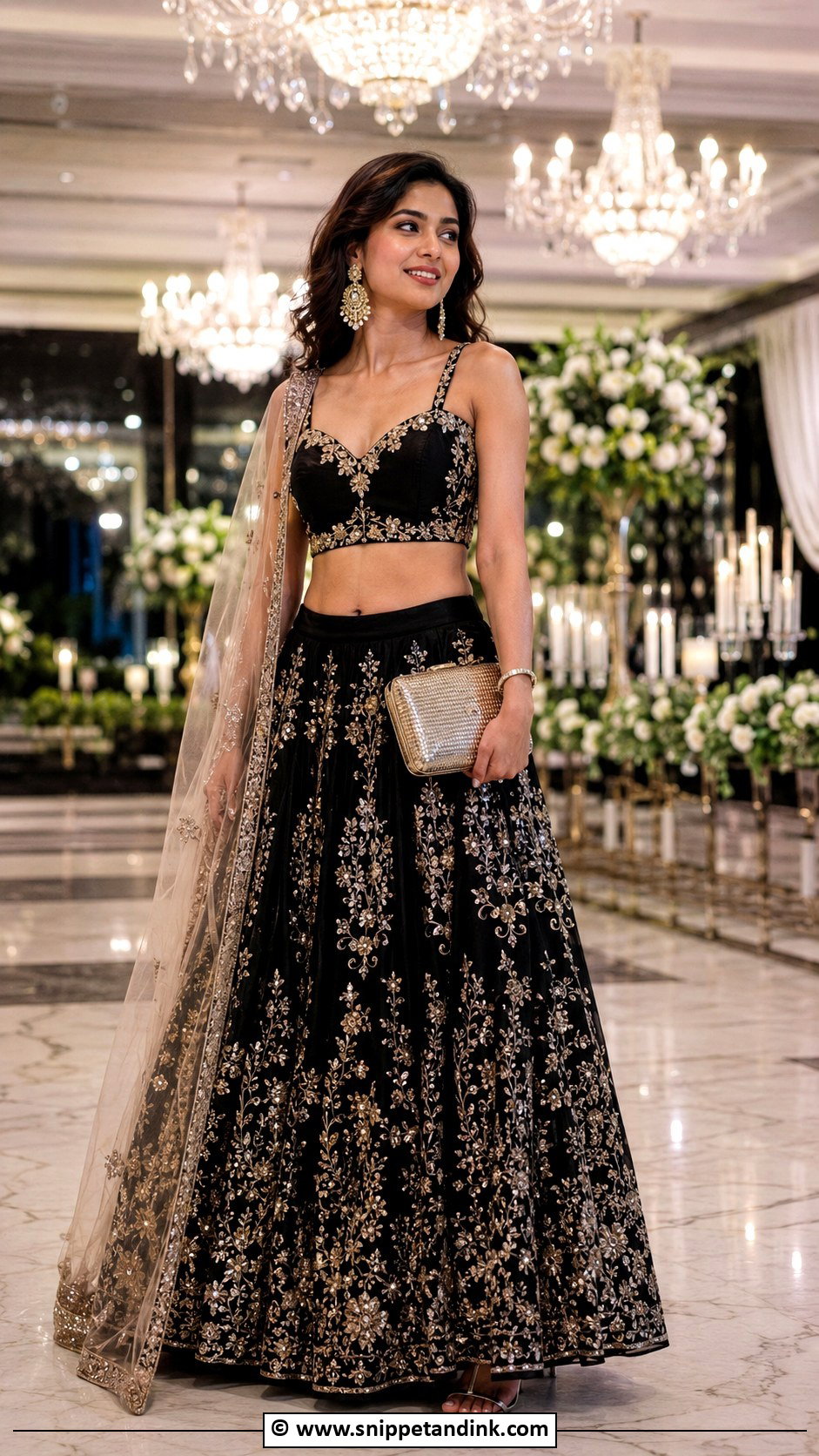
Black looks modern and glamorous at an evening reception, with gold, silver, champagne or tonal embroidery. Velvet, satin, silk and net all work. Ask before you buy: some families still avoid black at weddings, and a guest in black at a traditional reception can cause quiet offense. Where it’s welcome, pair it with a fitted blouse, light dupatta or cape, statement earrings and heels, and a metallic clutch.
Silk, Zari and Velvet Need Air After the Wedding
A bridal lehenga or Banarasi saree is often kept for decades, and most damage comes from storage rather than wear. Here’s the routine I give families:
- Air the outfit for a day after wearing, inside out and out of direct sun, before you put it away.
- Dry-clean silk and zari pieces, and point out any food, makeup or perfume marks so the cleaner can treat them.
- Wrap each piece in plain muslin or soft cotton, never plastic, which traps moisture and can yellow silk.
- Refold sarees every few months along new lines. Silk left on the same fold for years can crack at the crease.
- Store heavy lehengas flat or rolled rather than hung, since the weight of embroidery stretches the waistband over time.
- Spray perfume before you dress, not onto the outfit. Alcohol and oils tarnish metallic zari thread.
Keep stored pieces somewhere dry and check them once or twice a year. If an heirloom piece will be worn again by a daughter or niece, plan a fitting at least two months ahead, as older silk sometimes needs reinforcing before it can be altered.
Dress for the Ritual First, Then the Room
From a red bridal lehenga to silk sarees, cape sets and fusion gowns, Indian wedding dressing gives you a huge range. Start with the function: what you’ll be doing, how long you’ll sit, whether you’ll dance, and the time of year. Then choose fabric and color to suit the light and the season. Jewelry, shoes and the bag finish the look, but they come last. An outfit that fits the ritual will always look better than one that fights it.
You'll Like These Ideas:


Leave a Reply