
The sangeet is the one wedding night built around music, so the outfit has to dance as well as it looks. Brides I dress lately are moving toward lighter lehengas, mirror work, pre-draped sarees, shararas, capes and corset blouses, and the wider sangeet outfit trends point the same way: less weight, more movement. When a bride brings me a shortlist, my first question is what she’ll actually be doing in it, because a choreographed performance in front of every aunt and cousin asks something very different from fabric than a seated dinner does. Below are thirty-five directions, each with the fitting and styling notes I’d give you at a consultation.
Fitting a Sangeet Outfit Around Your Choreography
Most sangeet outfits are chosen for how they look in a mirror and then worn for four hours of dancing, so I fit them backwards, starting from the routine. If you’re performing, tell your designer or tailor the moves before the final fitting. A spin, a deep bend and a lift each put strain on a different part of the outfit, and a good tailor can add ease exactly where it’s needed.
What I test at the last fitting
- Arm lift: raise both arms fully. If the blouse rides up or the armhole cuts in, it needs more ease at the side seam.
- Skirt weight: heavy can-can layers look full but tire you quickly. Ask whether one layer can come out for the performance.
- Hem length: hem with the exact shoes you’ll wear on stage. A skirt brushing the floor will catch under a heel on the first turn.
- Dupatta plan: decide whether it’s pinned, worn as a cape or taken off before you perform, and practise removing it.
- Hooks and latkans: tug every hook and tassel. Loose latkans fly off in spins and land exactly where someone will step.
Then do the whole routine once, fully dressed, at least a week before. It’s the only way to find the sequin that scratches your inner arm while there’s still time to have it removed.
1. Gold Sequin Sangeet Lehenga
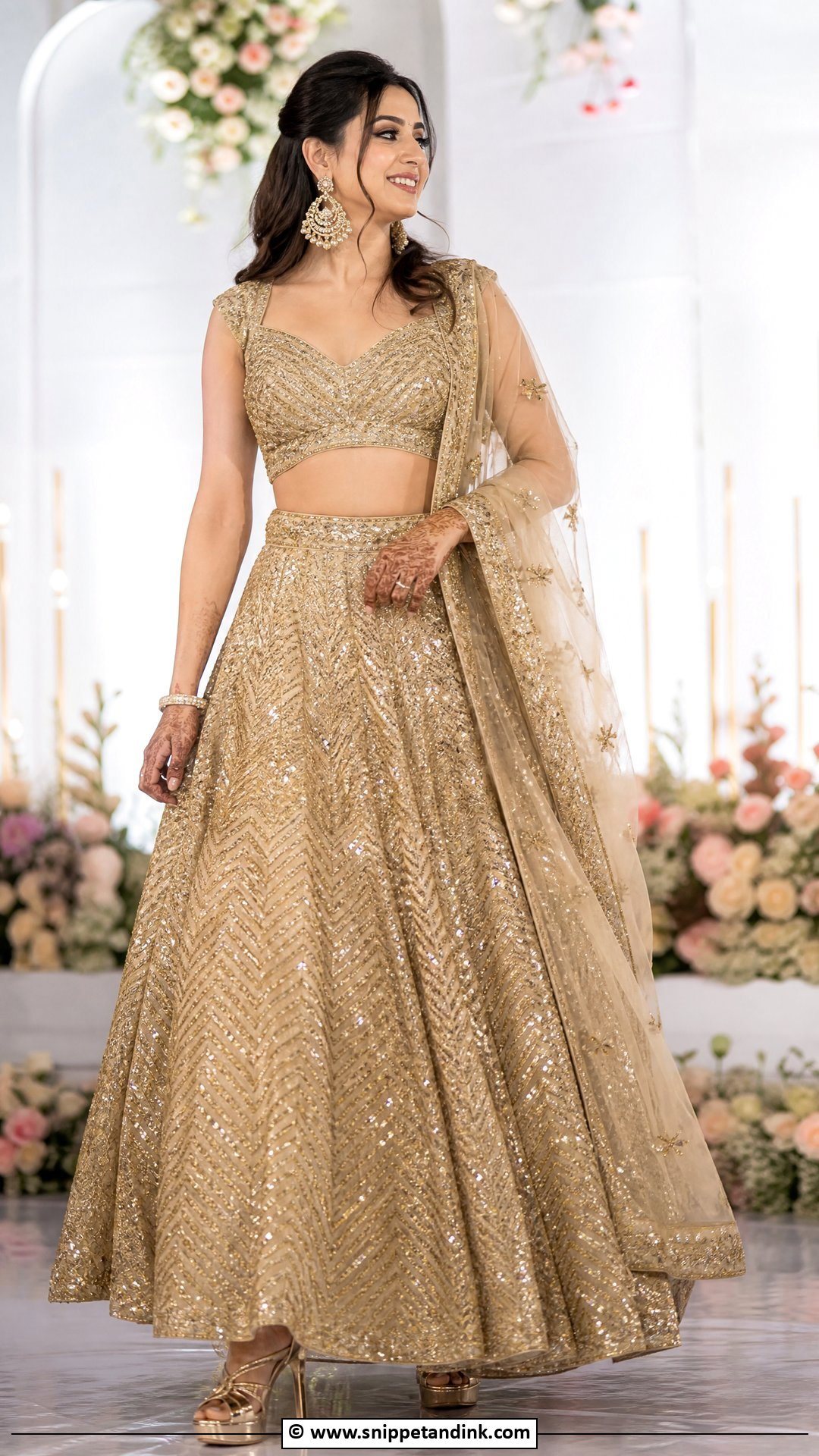
Gold sequins are the easiest way to own a stage, since they throw back almost any light a decorator points at you. The catch is weight. Sequins stitched onto heavy raw silk can make a skirt exhausting by the third song, so I ask for them on net, georgette or tulle and lift the skirt in the shop before I look at anything else. Keep the blouse fitted, the dupatta soft and let one pair of statement earrings handle the jewelry. Sit down in it at the fitting too: a sequined waistband that scratches when you bend is the only thing you’ll remember by midnight.
2. Pink Mirror Work Sangeet Lehenga
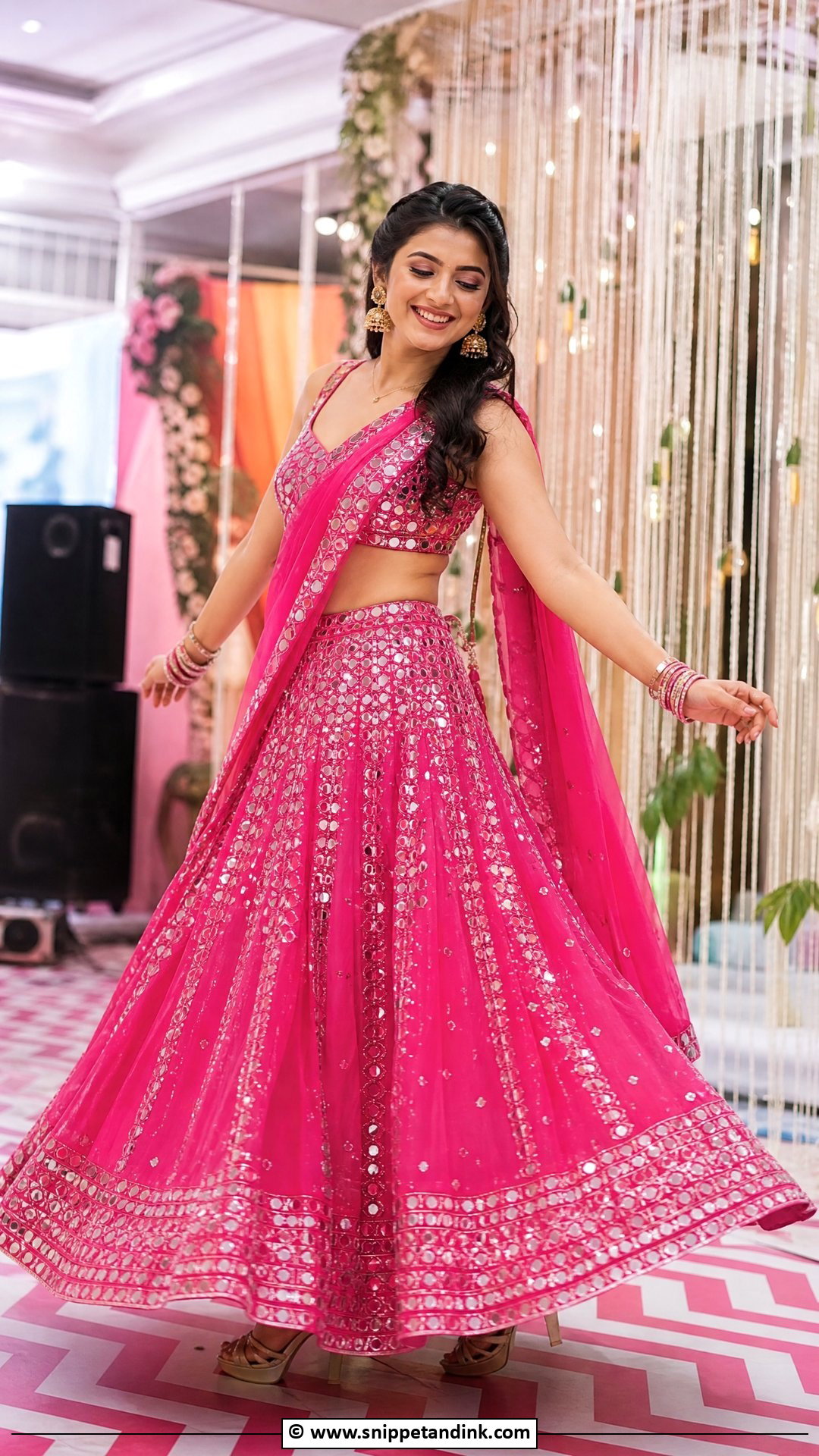
Mirror work is lighter than most brides expect, and in blush, rose or rani pink it reads bright on video because every little glass piece flashes as you turn. What I watch is the edging. Cheaply finished mirror embroidery has rough thread around the glass that snags dupattas and catches on a partner’s sleeve during the couple dance, so I run a hand over the panels before anything is bought. Pin the dupatta at the shoulder with two safety pins hidden under the fold rather than one, and switch to block heels if there’s choreography.
3. Emerald Green Sangeet Lehenga
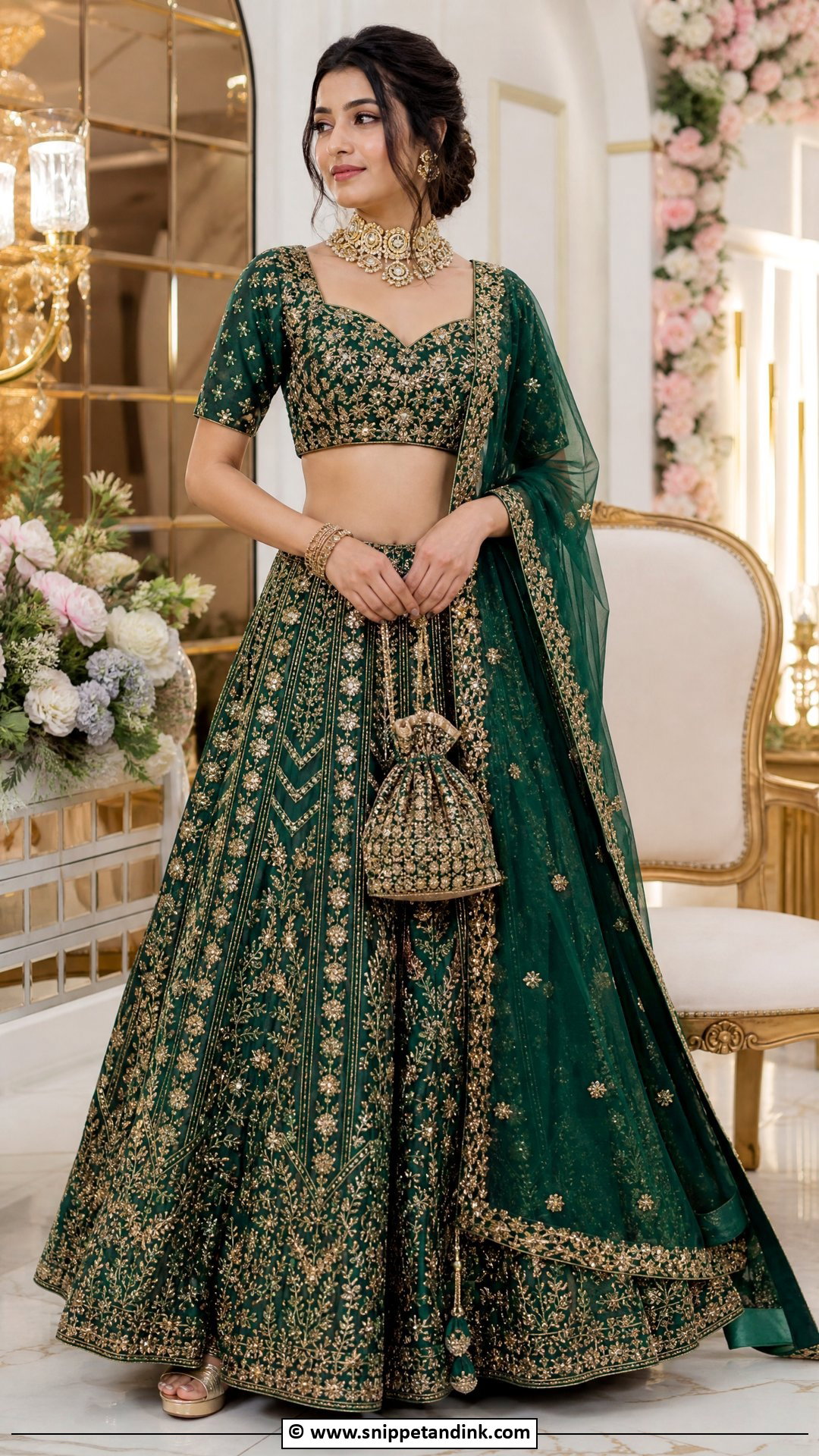
Emerald keeps its depth under warm evening lighting, where paler greens can turn muddy, which is why I suggest it to brides who want colour beyond red or pink. It sits well against gold, champagne or antique embroidery. Pair a flowing skirt with a structured blouse so you get shape without the waistband digging in, then finish with a kundan choker, gold heels and a small embellished potli. A low bun with a few loose face-framing strands survives dancing far better than open hair. Show your makeup artist the fabric before the trial, since a foundation that matches in daylight can look grey next to deep green.
4. Electric Blue Sangeet Lehenga
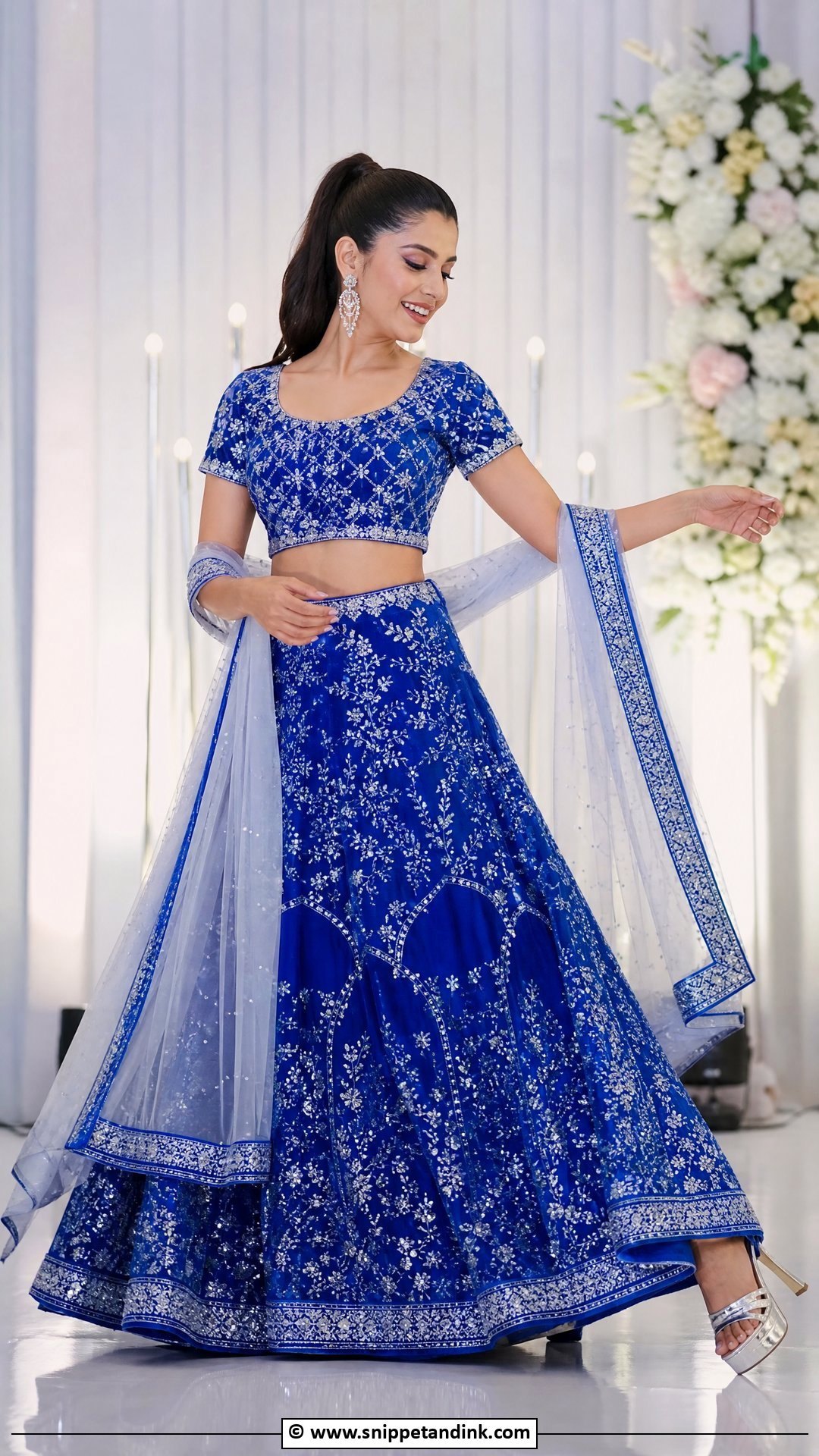
Electric blue is the shade I suggest to the bride who wants to be spotted from the back of the hall. Silver sequins or crystal work on it go sharp and cool under stage lights. Because the colour is already loud, I keep the dupatta featherweight so it isn’t fighting the choreography, and a sleek high ponytail makes the whole thing look deliberate. If that feels too severe for you, loose waves and dewy skin soften it without losing the colour.
5. Lavender Sangeet Lehenga
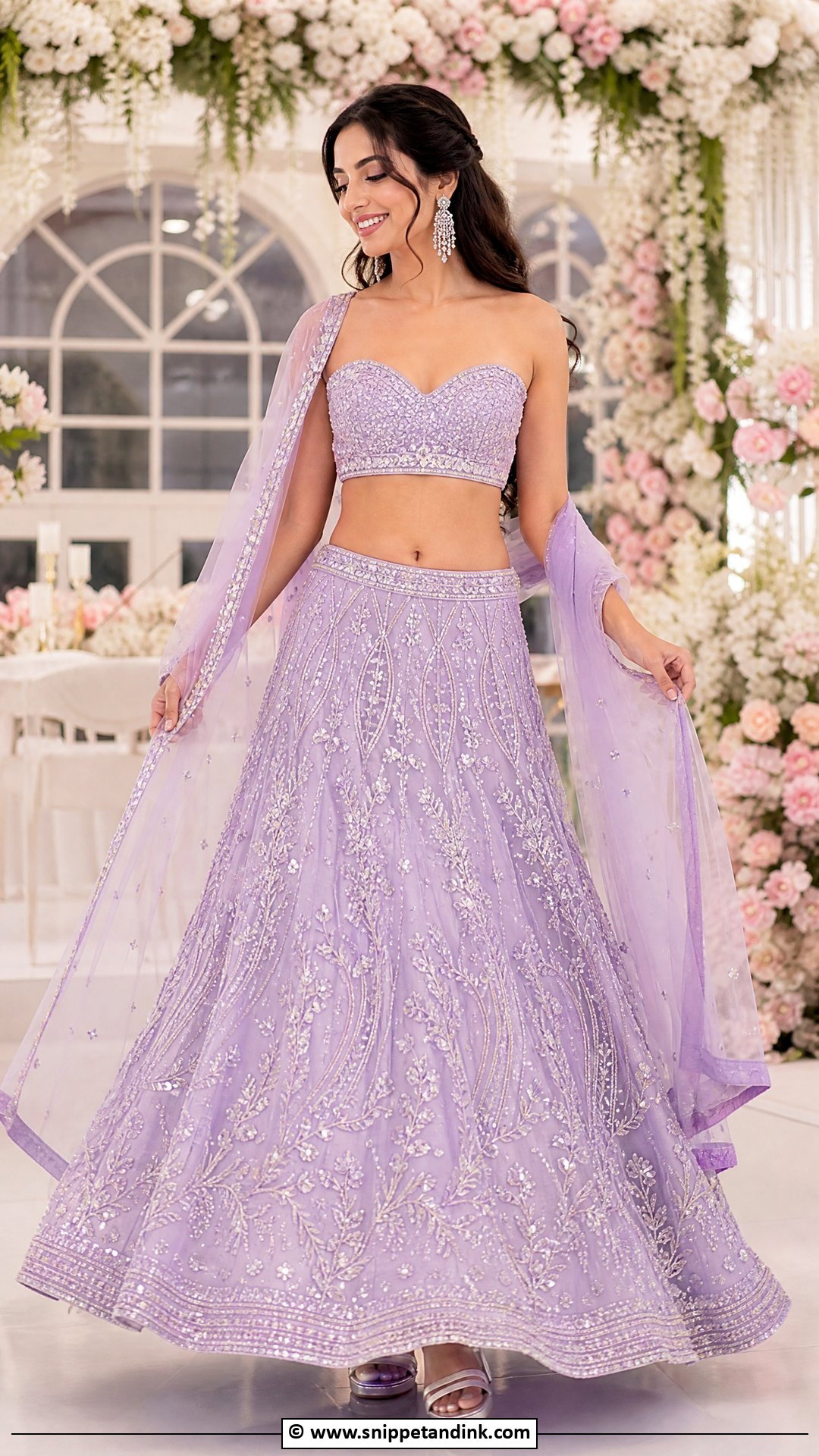
Lavender is one of the trickier pastels to buy, because depending on the dye and the bulbs it drifts grey or pink. I always look at the fabric near a window and again under warm indoor light before ordering. Fine silver embroidery or pearl details keep it delicate, and a corset or sweetheart blouse brings it up to date. Silver sandals, crystal earrings and a sheer dupatta over one shoulder are all it needs. It belongs at indoor sangeets and garden venues with a pastel palette; in a hall full of saturated jewel tones it can disappear.
6. Ivory And Gold Sangeet Lehenga
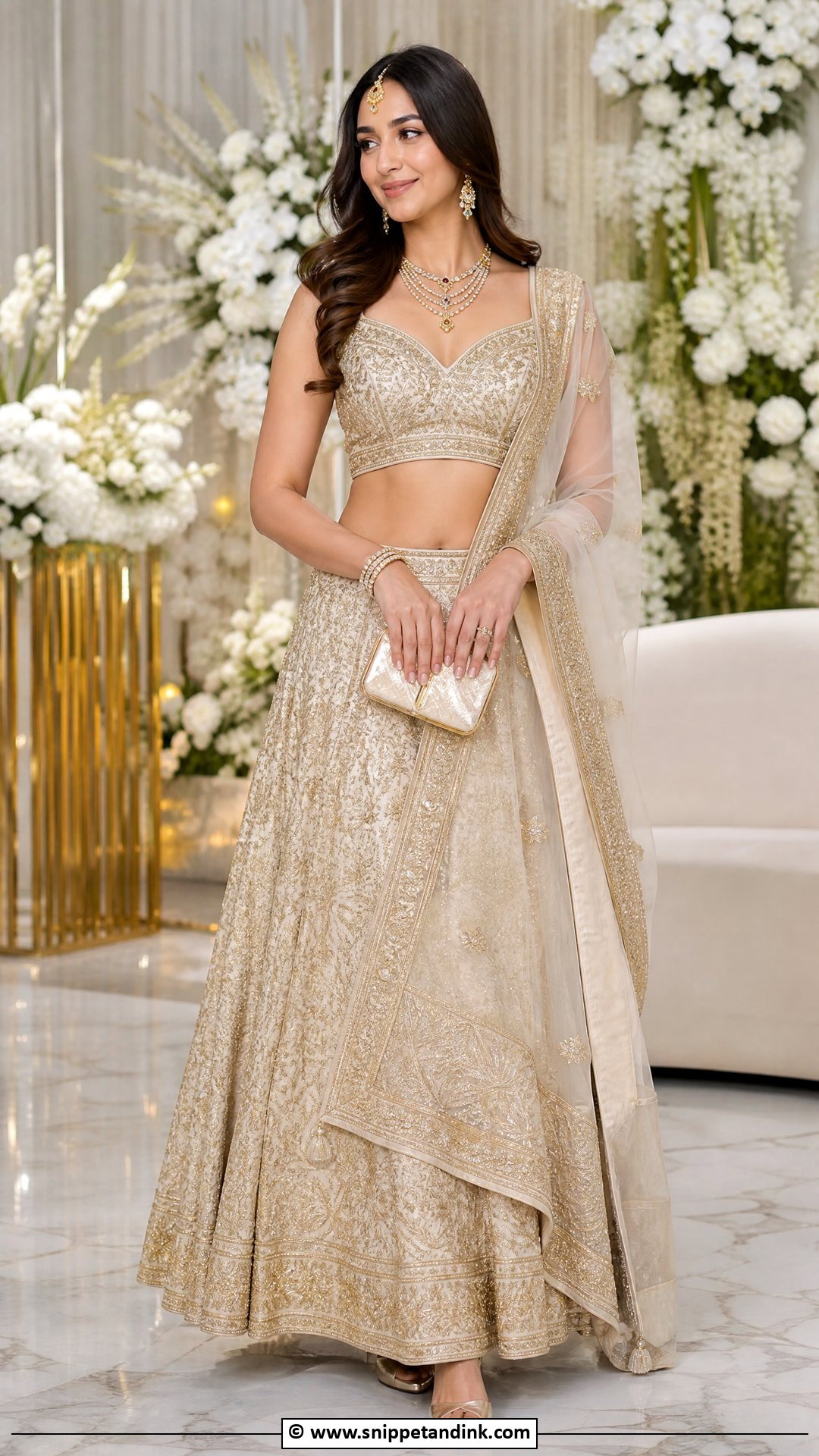
Ivory and gold reads bridal without leaning on colour, but a plain ivory skirt looks washed out in a room full of saturated outfits. I look for gold zari, sequins or pearl work dense enough to give the skirt texture from across the floor. A structured blouse, sheer dupatta and layered jewelry finish it, with gold heels and a metallic clutch. The practical warning: if your mehndi was done the day before, the oil and balm brides rub into fresh designs can mark pale silk, so keep your hands off the skirt until they’ve been wiped.
7. Red Sangeet Lehenga
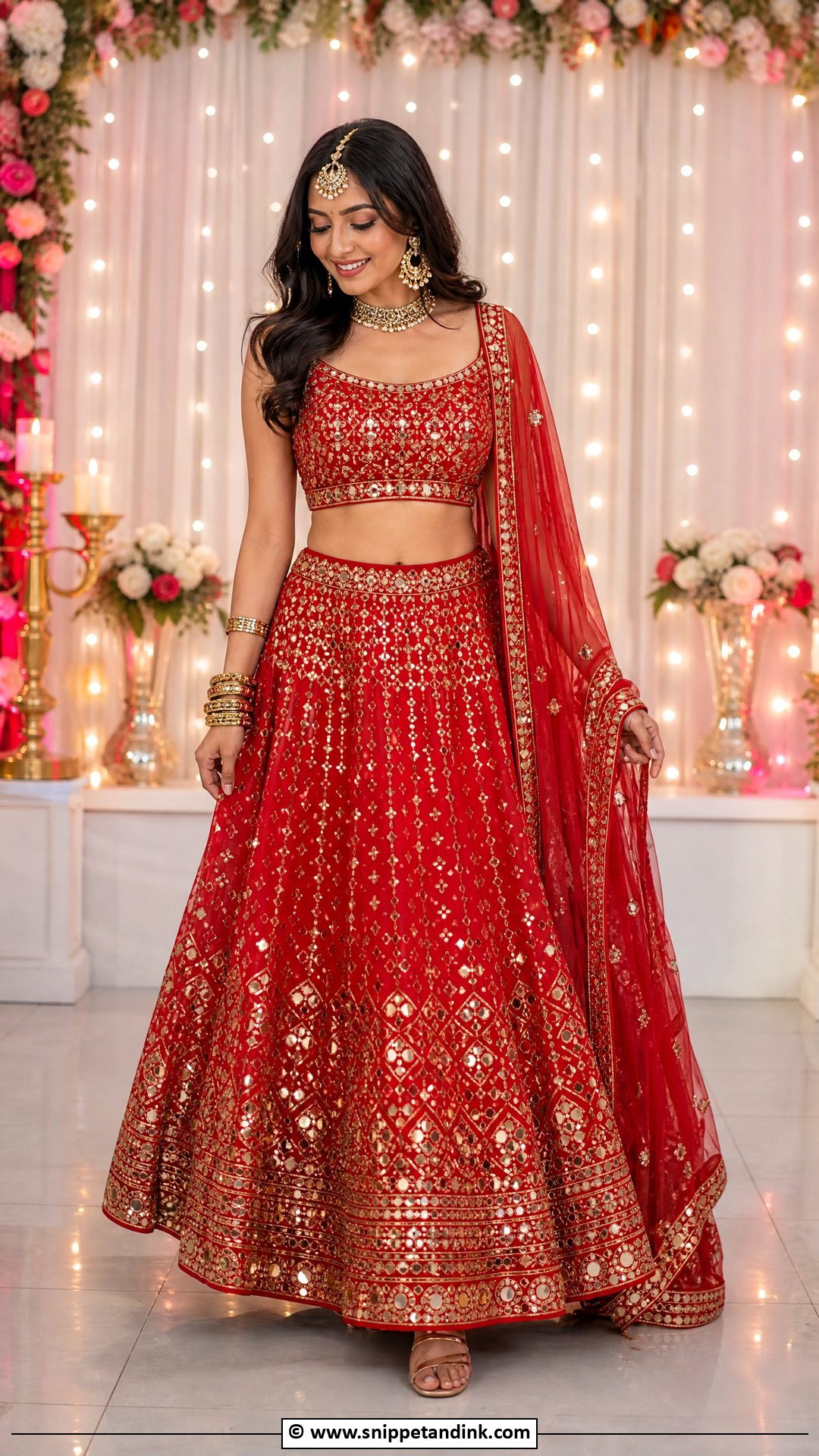
Red makes sense at the sangeet when your wedding outfit is another colour and you still want one classic bridal red moment. What I steer brides away from is a ceremony-weight lehenga here. For dancing you want a lighter fabric, playful embroidery or a modern blouse cut. Red with mirror work, sequins or gold thread looks rich on stage. If you’re wearing a bold lip, ask for softer eyes so your face isn’t competing with the outfit.
8. Black Sangeet Lehenga
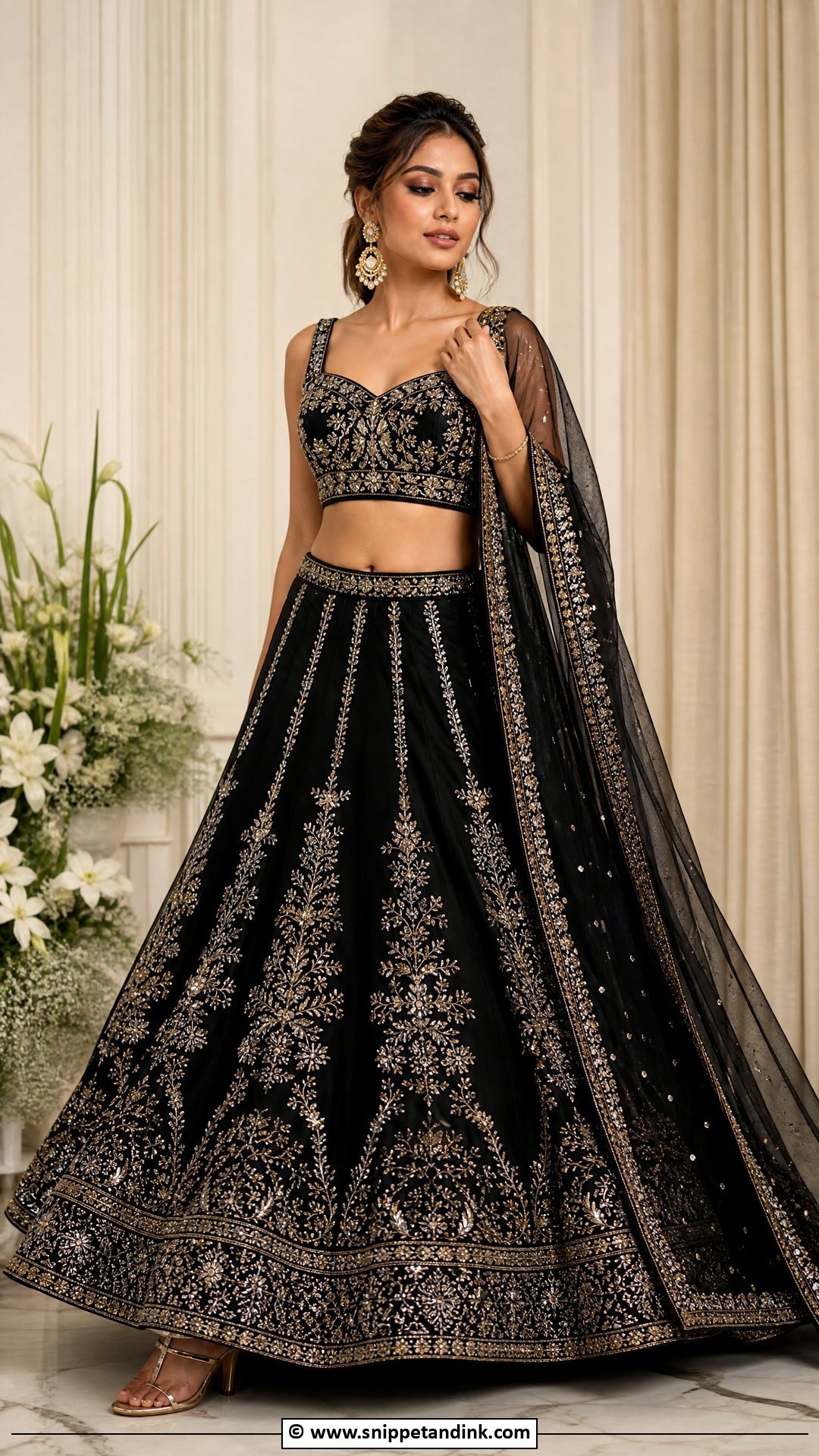
Black is the most fashion-forward colour on this list, and in some families it’s still a sensitive one, so I’d mention it at home before the order goes in. Gold, silver or multicolour embroidery keeps it festive rather than severe, and the silhouette does the rest: fitted blouse, flared skirt, light dupatta. There’s a practical upside too. Black hides the sweat marks and makeup smudges that pale fabric shows after two hours of dancing, which is one reason I like it for brides who perform.
9. Champagne Sangeet Lehenga
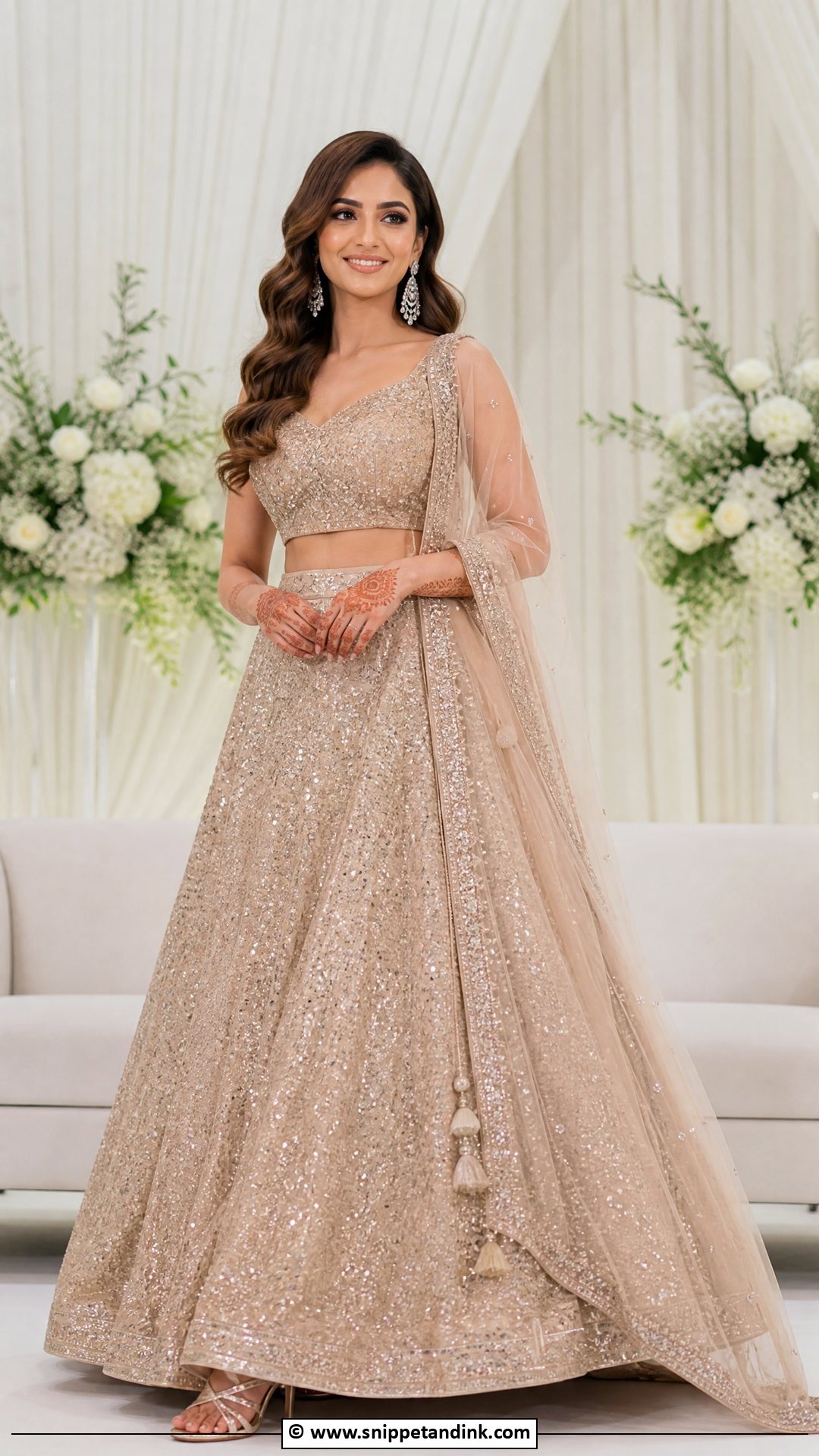
Champagne looks expensive because it lets texture show; sequins, crystals and pearls all read clearly on a neutral base. It takes gold, rose gold or silver jewelry equally well, which helps if you’re borrowing family pieces. I check the flare by asking the bride to spin at the fitting, and if the hem doesn’t lift, it won’t move on stage either. Hold the fabric against your face in daylight first, as some champagne shades sit so close to wheatish or fair skin that they flatten the look without warm makeup.
10. Multicolor Sangeet Lehenga
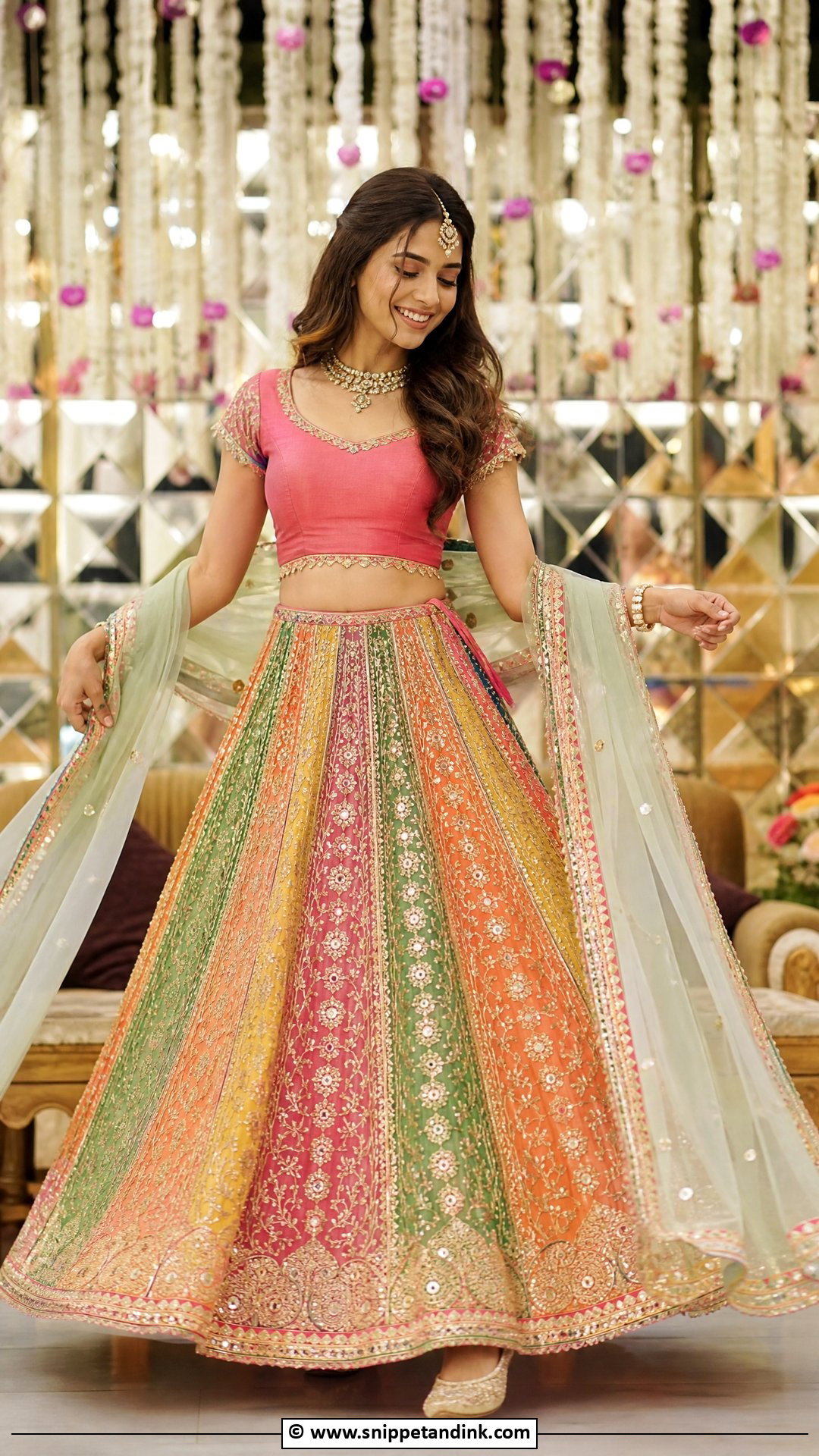
A multicolour lehenga works when the decor and the family performances are already bright, so the outfit belongs to the room. Colour-blocked panels or floral threadwork in pink, orange, green and yellow carry it, and I keep the blouse in one dominant shade so the eye has somewhere to land. Jewelry stays simple. Embellished juttis are a better call than heels if you’ll be on your feet through every family dance.
11. Floral Sangeet Lehenga
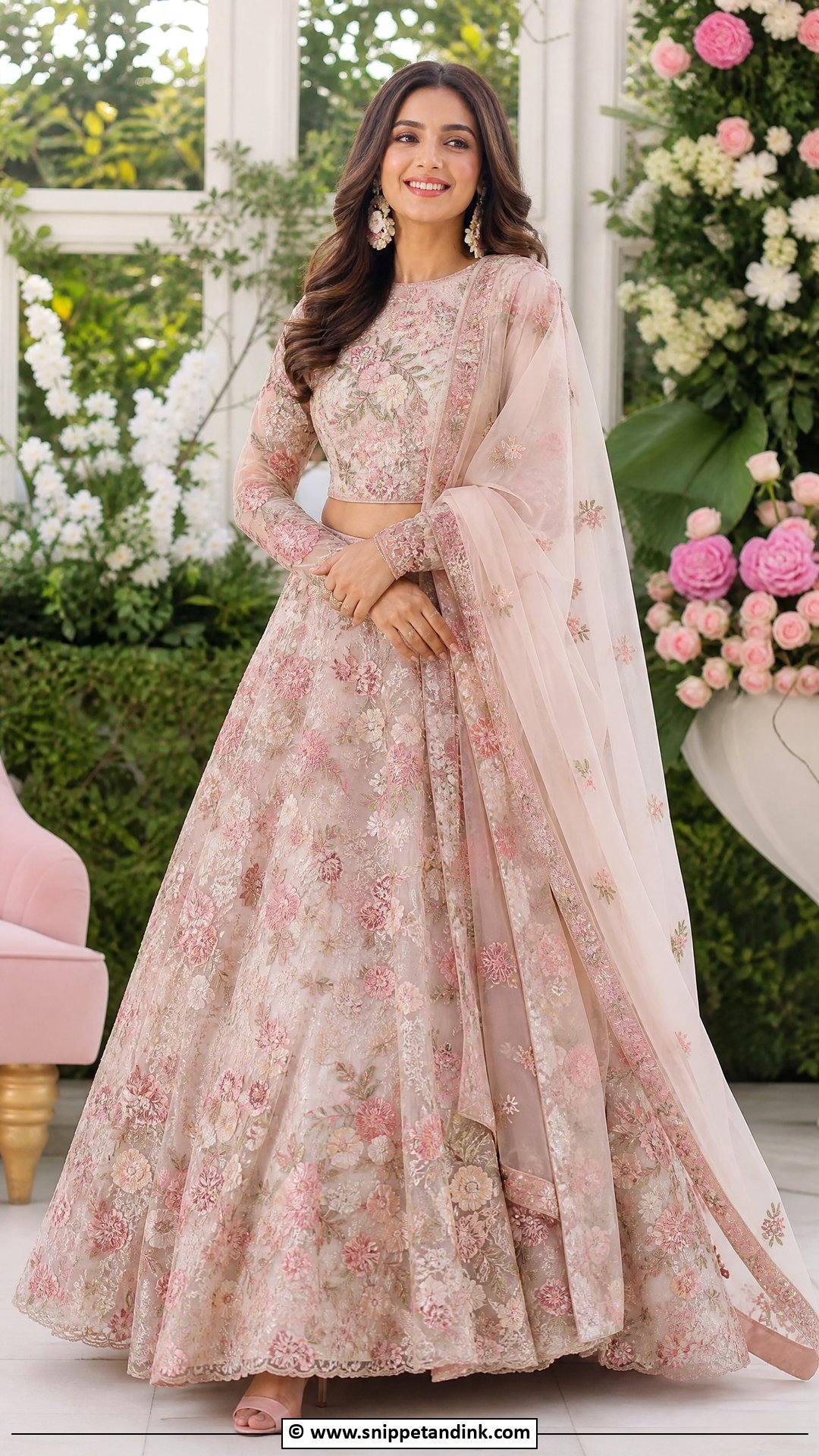
Florals belong to daytime sangeets, resort weddings and spring or summer dates, when natural light keeps the colours fresh. Embroidered flowers look richer on camera than prints, and printed organza with light sequins sits somewhere in between. A matching blouse and sheer dupatta stop it reading as two separate outfits. When the lehenga is busy, I ask the makeup artist to pull back to pink cheeks and a glossy lip so the face doesn’t get lost.
12. Velvet Sangeet Lehenga
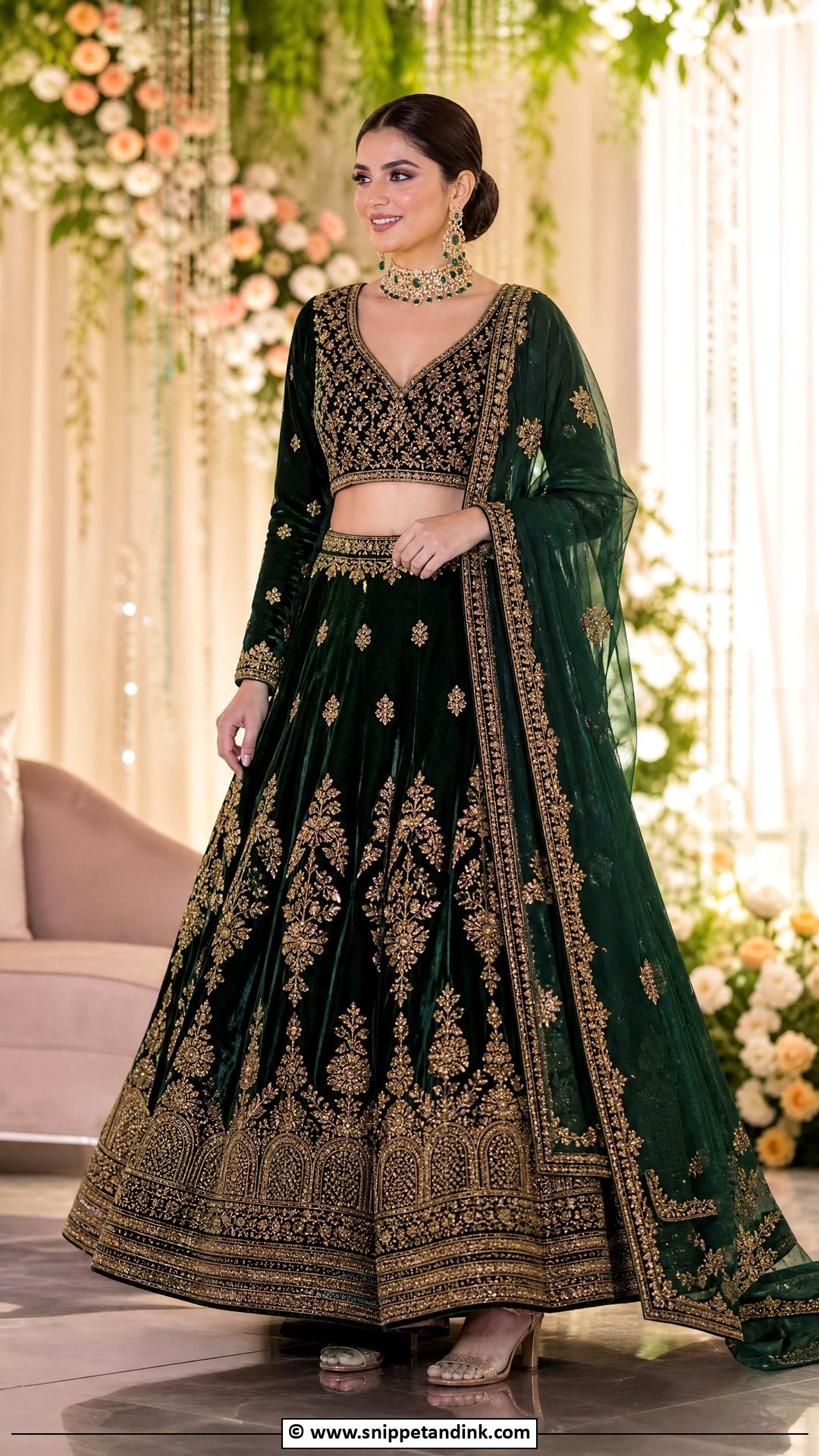
I reach for a velvet sangeet lehenga for winter dates and air-conditioned ballrooms. Velvet is warm and dense, and at an outdoor summer venue it will cook a dancer. Maroon, navy, emerald and plum are where it looks richest. Since the fabric already has weight, keep the embroidery lighter and the skirt cut simpler, and choose block heels over stilettos. Velvet also crushes wherever you sit, so steam it on the morning and stand for the first round of portraits.
13. Pastel Sangeet Lehenga
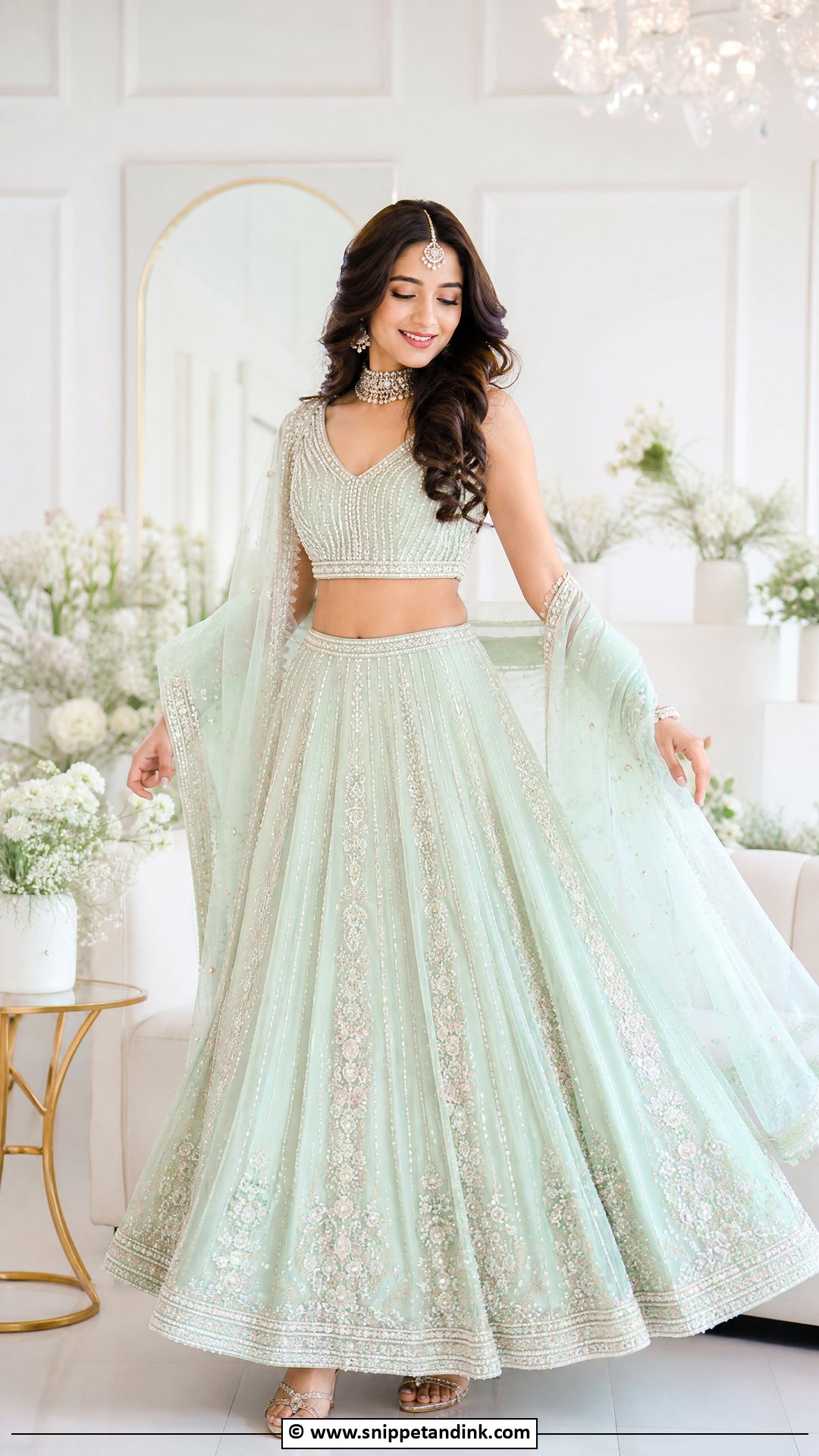
Mint, powder blue, peach and blush are easy to wear for long evenings, but pastels flatten under strong stage lighting unless something on them reflects. That’s why I insist on pearl work, mirror detailing or metallic thread on any pastel sangeet piece. Pin the dupatta securely and keep the jewelry soft. Glowing makeup and loose waves suit it; heavy contour looks harsh against such a gentle shade.
14. Yellow Sangeet Lehenga
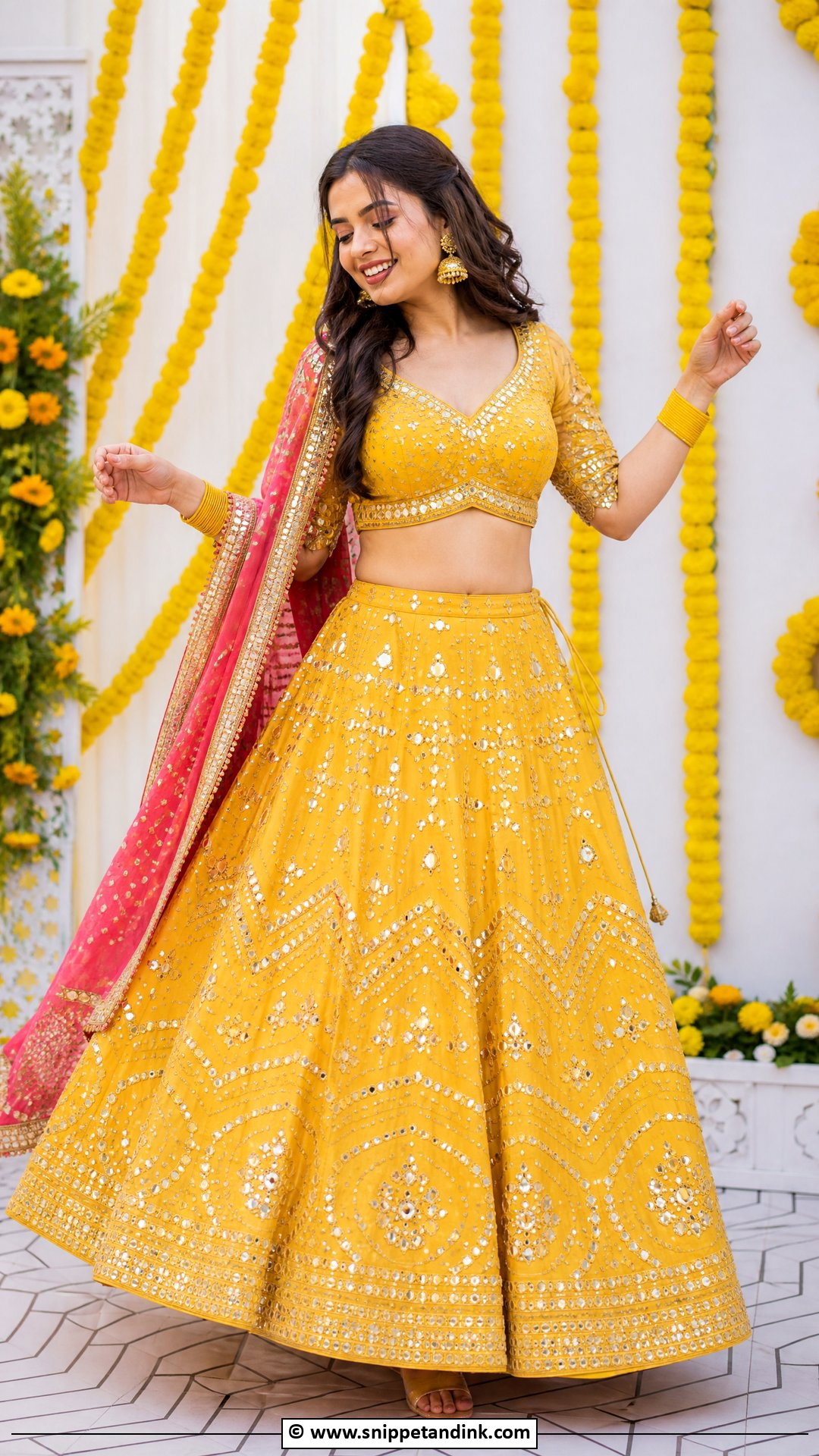
Yellow usually belongs to the haldi, so if you wear it to the sangeet, change the texture. Mirror work, sequins, gota or multicolour embroidery make it read as evening wear. Mustard and marigold carry better at night than lemon or butter yellow, which I’d save for daytime. A contrast dupatta in pink or green adds depth, and peach-toned makeup sits better with yellow than cool pinks.
15. Orange Sangeet Lehenga
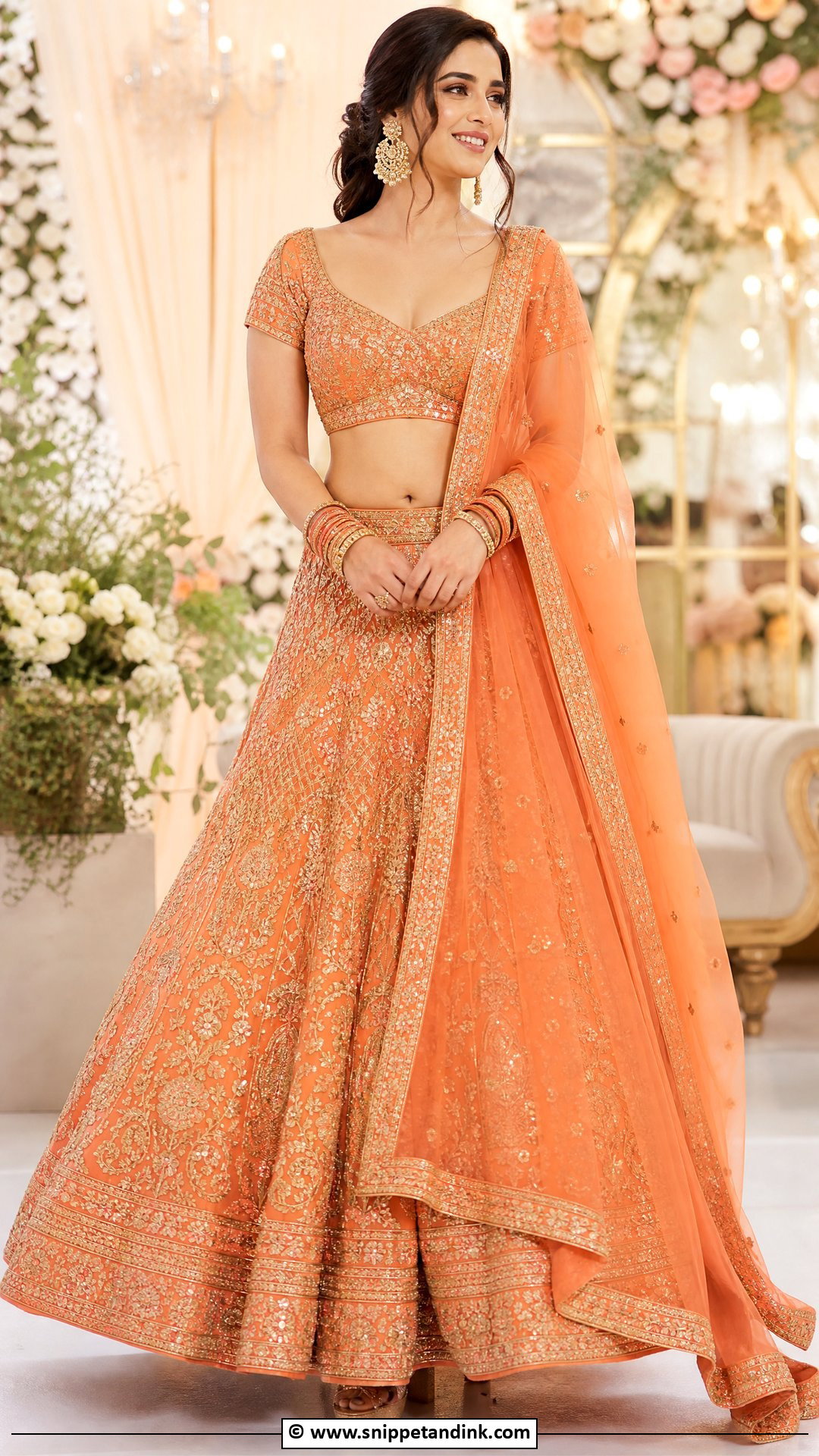
Orange photographs warm and lively and gives you a traditional feel without repeating bridal red. Burnt orange reads rich, coral is softer, tangerine is pure party. Gold embroidery and mirror work sit naturally on it. I like stacked bangles with orange, but if you’re performing, check they’re sized snugly enough not to fly off mid-spin.
16. Maroon Sangeet Lehenga
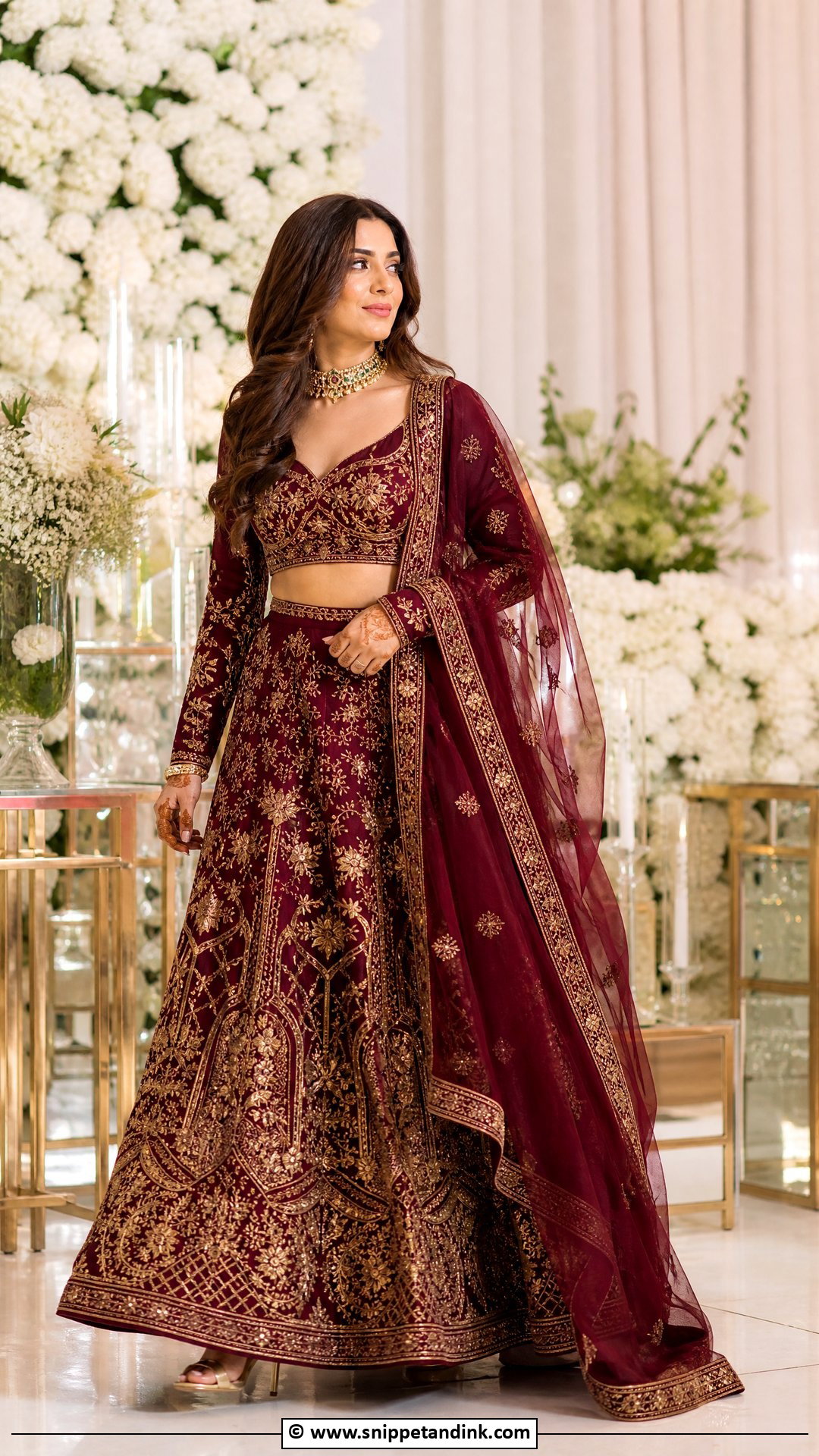
Maroon carries bridal weight without looking like a rehearsal for the wedding outfit. Velvet and silk suit winter evenings, while net and georgette are kinder at a warm venue. Antique gold, champagne or copper embroidery gives it depth. If you’re wearing a choker set, I’d keep the blouse neckline open enough that the necklace sits on skin rather than on embroidered fabric, where it twists. Defined eyes and a berry or warm nude lip finish it.
17. Silver Sangeet Lehenga
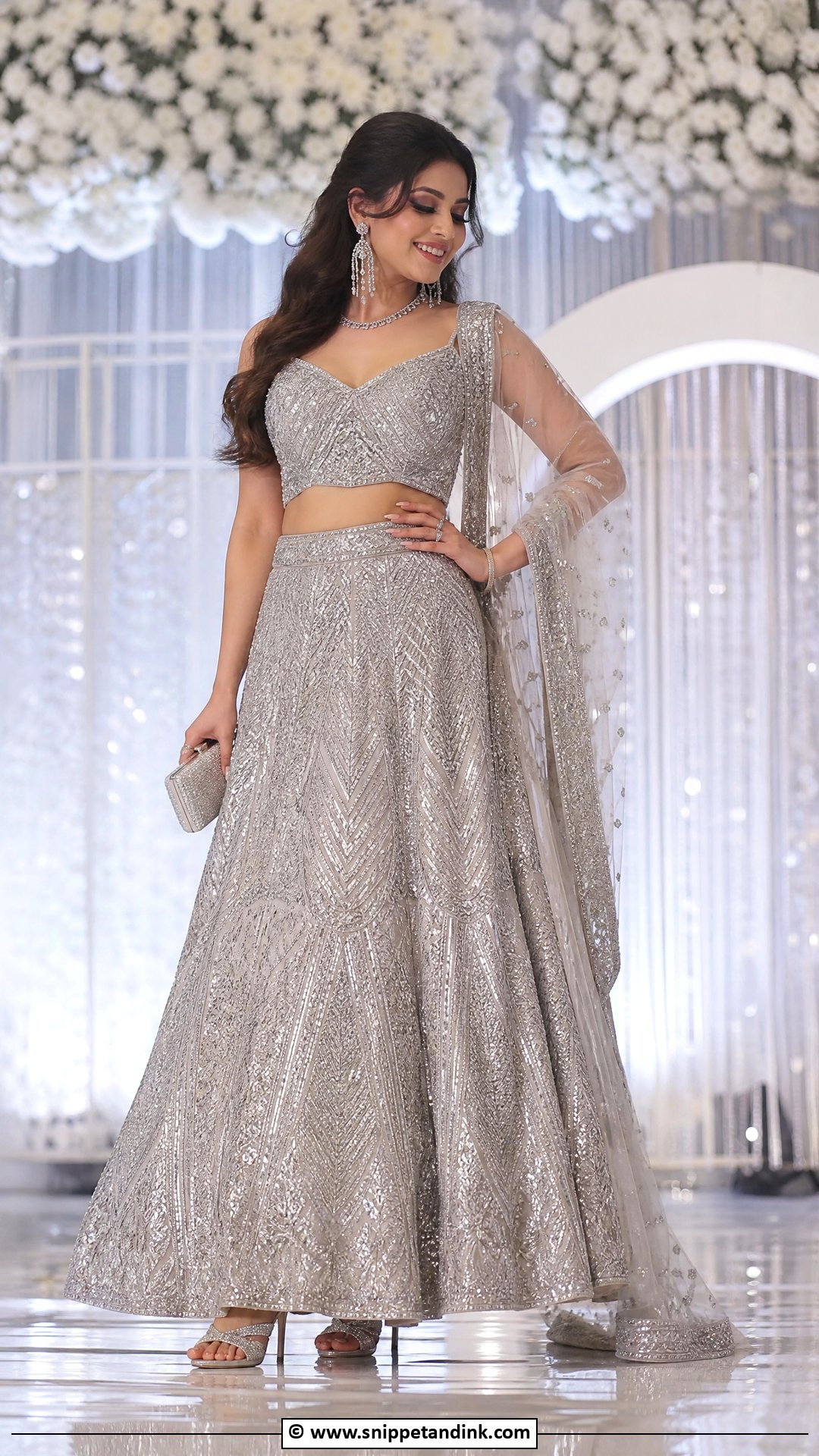
Silver sparkles harder under stage lights than almost any other finish, but it can look icy against the skin. I counter that with warm-toned makeup and a glossy lip rather than piling on more silver jewelry. Diamond-style earrings, silver heels and a sleek clutch are plenty. Choose a sheer dupatta with a narrow border so it doesn’t fight the skirt.
18. Cape Sangeet Lehenga
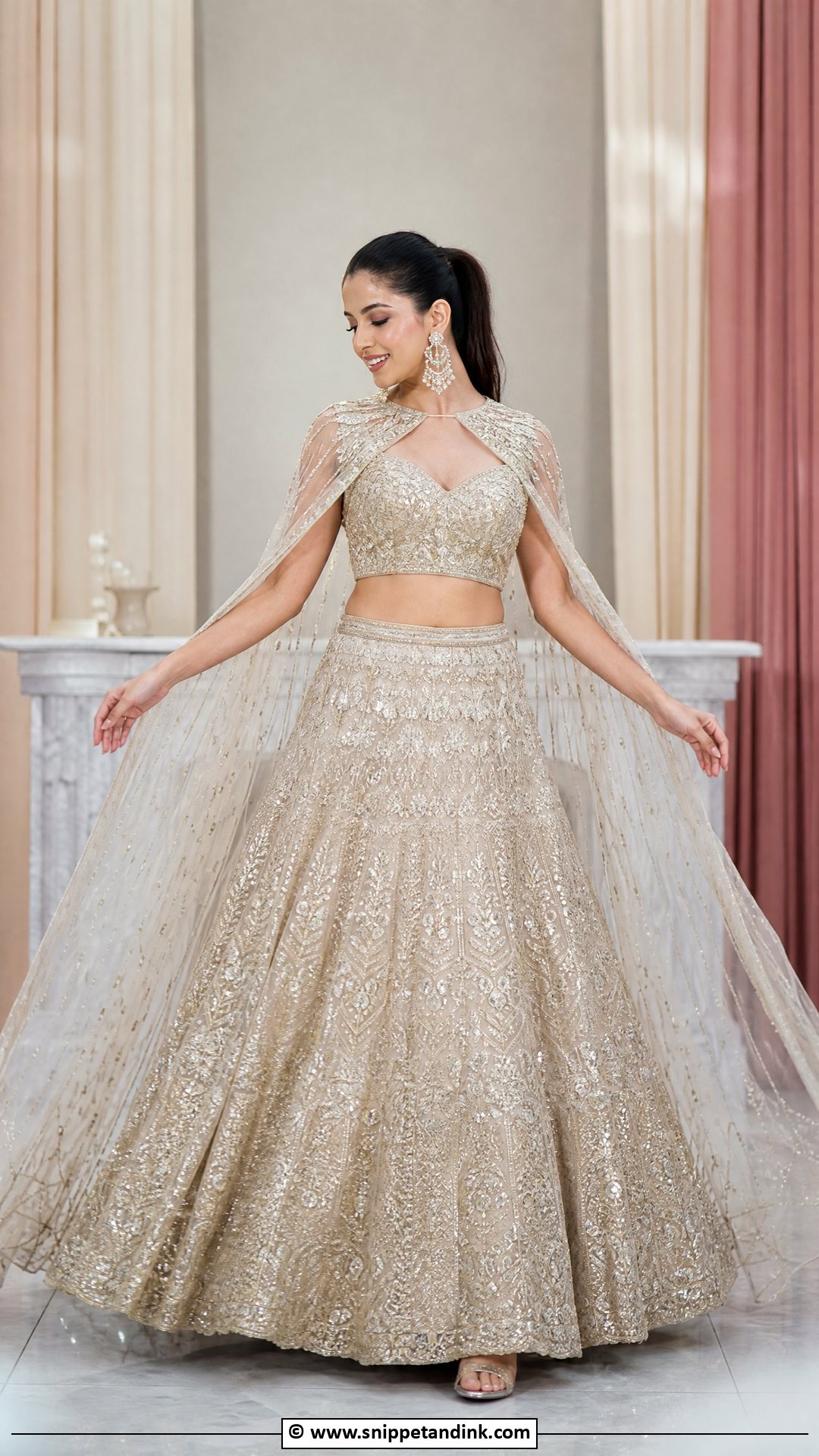
A cape gives you drama without a loose dupatta, which frees both hands for choreography. The detail I check is the neckline: a high-neck cape and a heavy necklace fight each other, so switch to statement earrings. Sequins, tassels or crystals on the cape all catch movement. Do one full arm-raise at the fitting, because some capes are tacked to the blouse in a way that pulls at the shoulder when you lift your arms.
19. Jacket Sangeet Lehenga
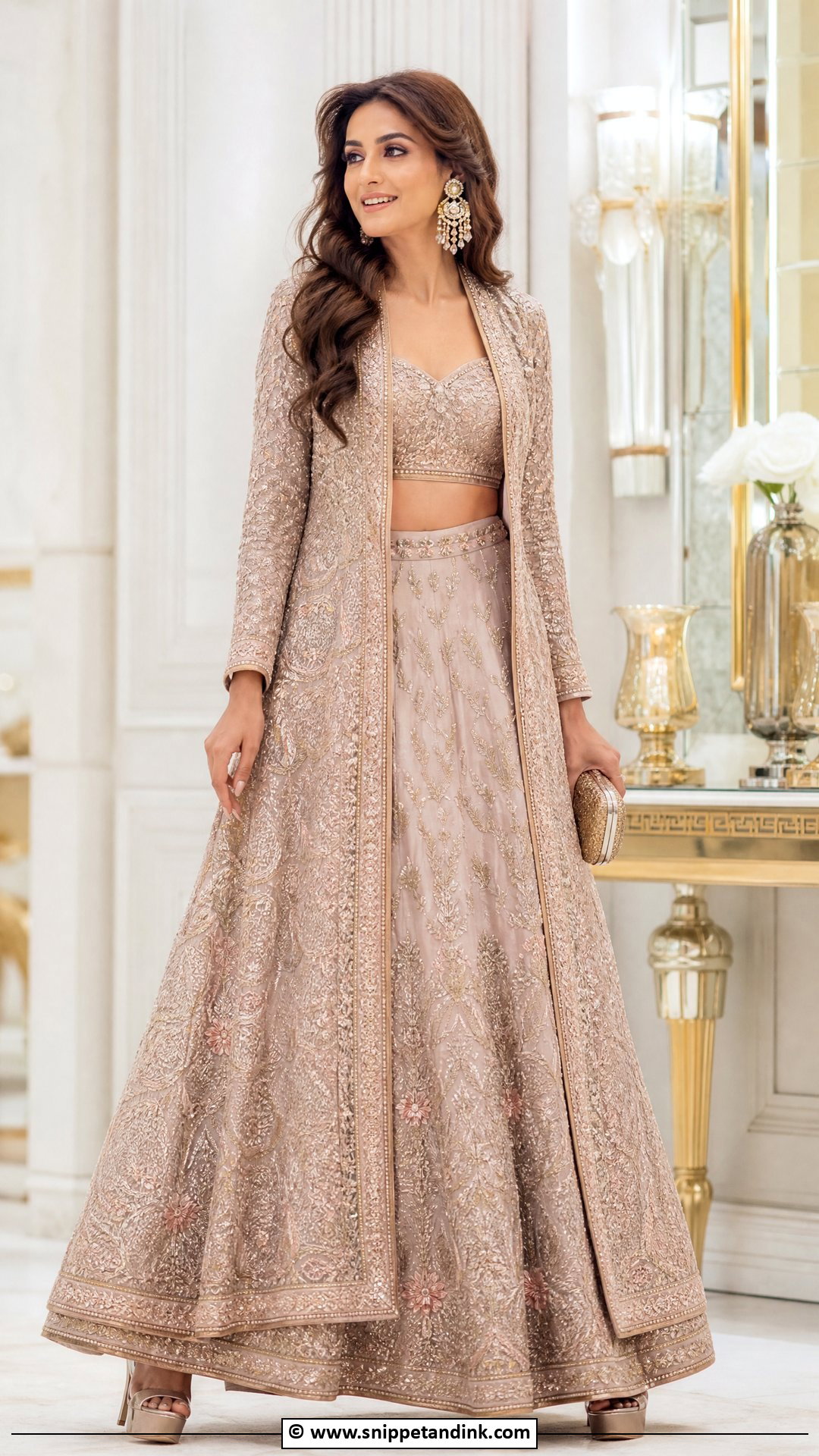
A jacket gives coverage and structure, and a long embroidered one can replace the dupatta altogether. Short peplum jackets tend to suit petite brides; floor-length sheer layers look best on taller frames, where they don’t swallow the skirt. Mirror work, zardozi or sequins keep it bridal. Heavy zardozi gets hot fast, though, so I’d confirm the venue is air-conditioned before committing to a fully worked jacket.
20. Ruffle Sangeet Lehenga
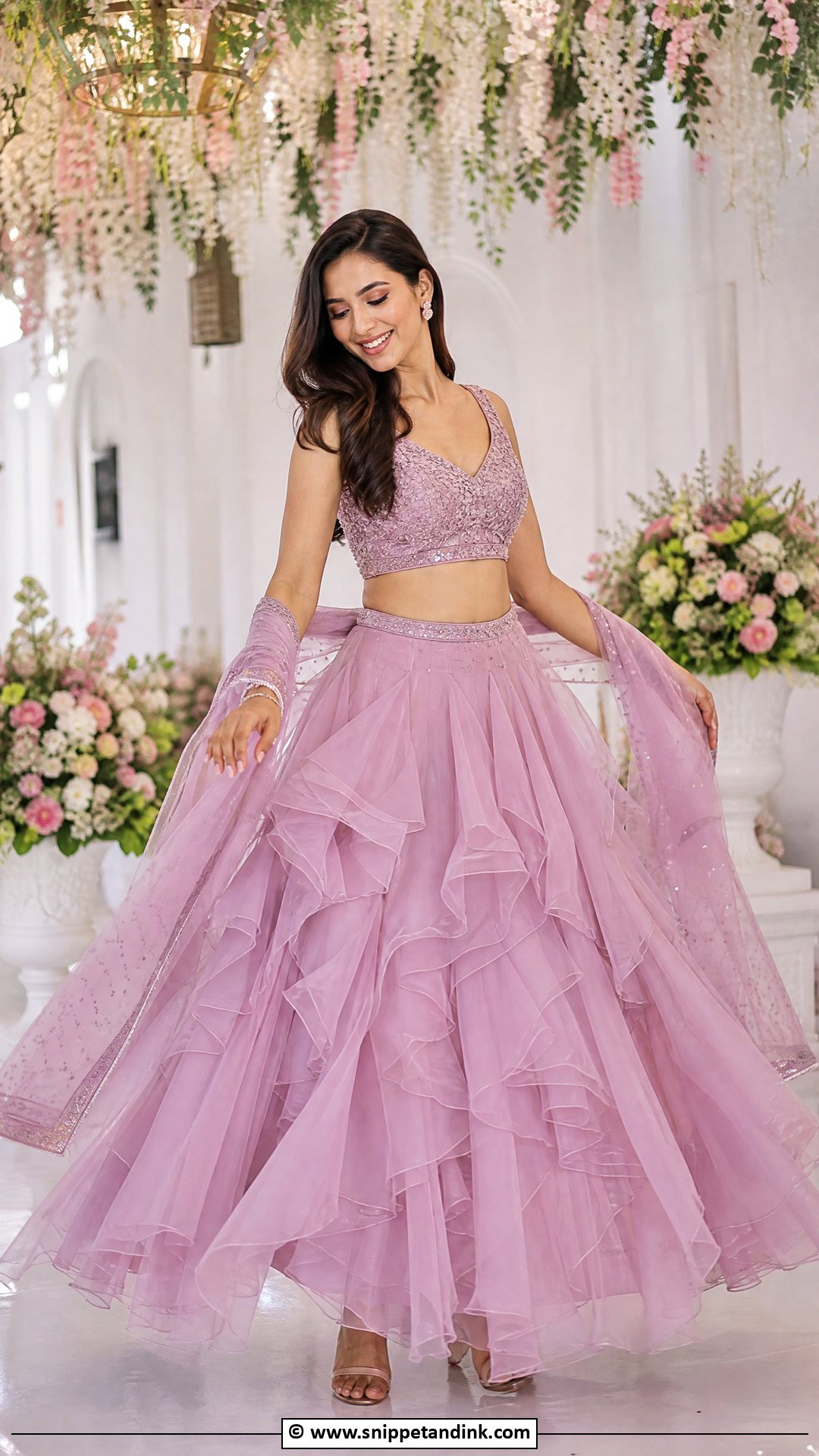
Ruffles exist for twirls. The volume has to come from light fabric such as organza, georgette or tulle, otherwise the skirt drags instead of floating. Keep jewelry minimal because the ruffles carry the drama. One trade-off I always mention: tiered ruffles near the hem catch heels on stage steps, so practise the stairs in your actual shoes.
21. Fish Cut Sangeet Lehenga
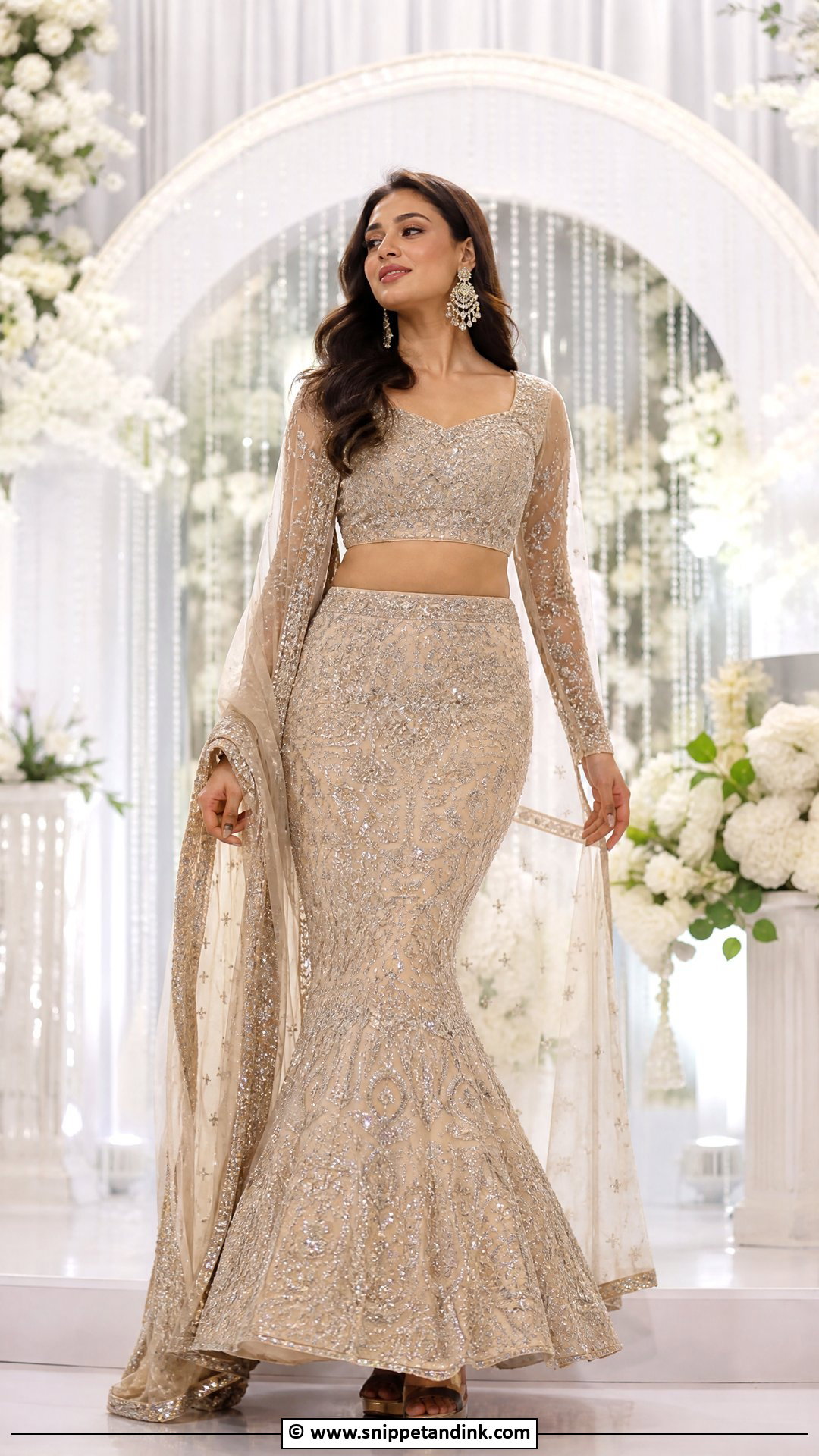
A fish cut hugs the waist and hips before flaring near the hem. It’s the most glamorous shape here and the least forgiving to dance in. If you’re performing, ask your tailor about a hidden side slit or an extra panel at the knee so you can step wide. Stretch-friendly lining and a comfortable waistband matter more than embellishment, and if there’s a train, make sure it can be bustled or held. Sequins or tonal crystals keep it festive; smooth waves suit the sleek line.
22. Pre Draped Saree Sangeet Outfit
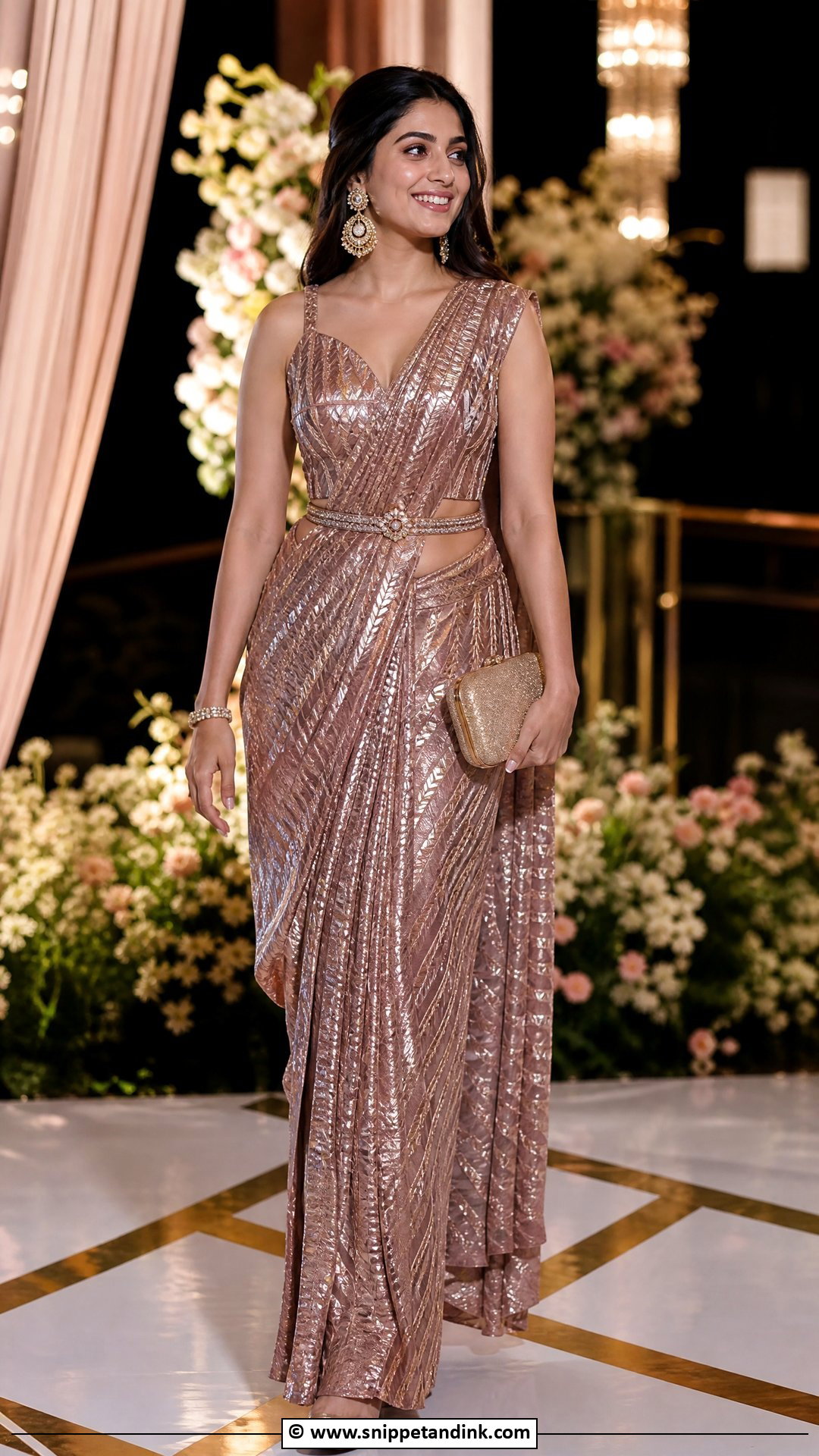
A pre-draped saree gives you the saree silhouette with the pleats already stitched, so nothing unravels mid-dance. Sequins, metallic fabric or a ruffled pallu make it festive. The belt matters more than brides expect: it holds the pallu and stops the drape shifting when you raise your arms. I do the trial with the exact blouse, since a slightly loose blouse makes even a stitched drape slip.
23. Sequin Saree Sangeet Outfit
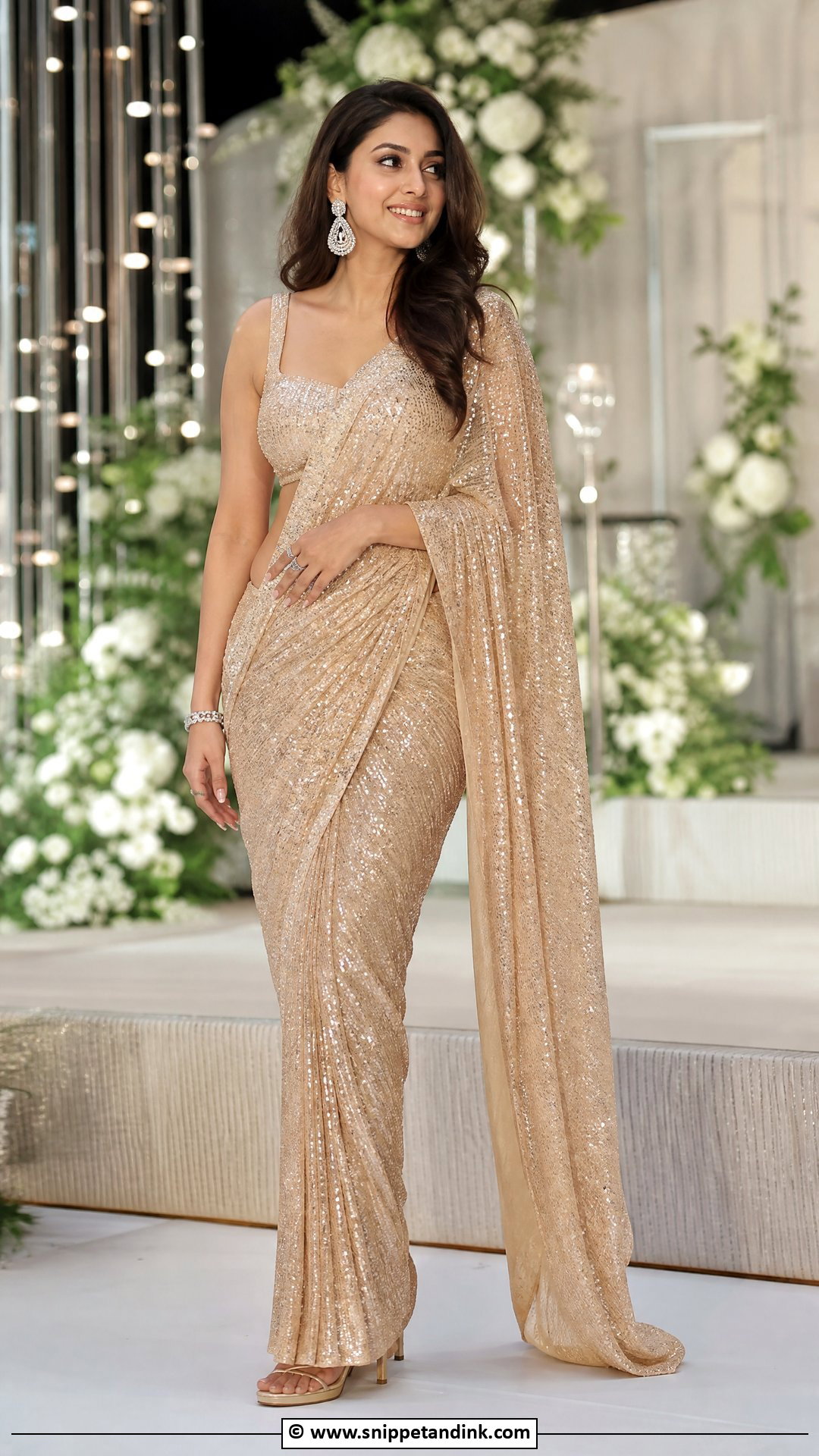
A sequin saree gives full-length sparkle at a fraction of a heavy lehenga’s weight, and champagne, gold, emerald or rose pink all read strongly at night. Sequins on a drape pull at the shoulder, though, so I pin the pallu to the blouse with a hidden pin and add a waist belt. If the saree is very shiny, one statement piece of jewelry is enough.
24. Banarasi Saree Sangeet Outfit
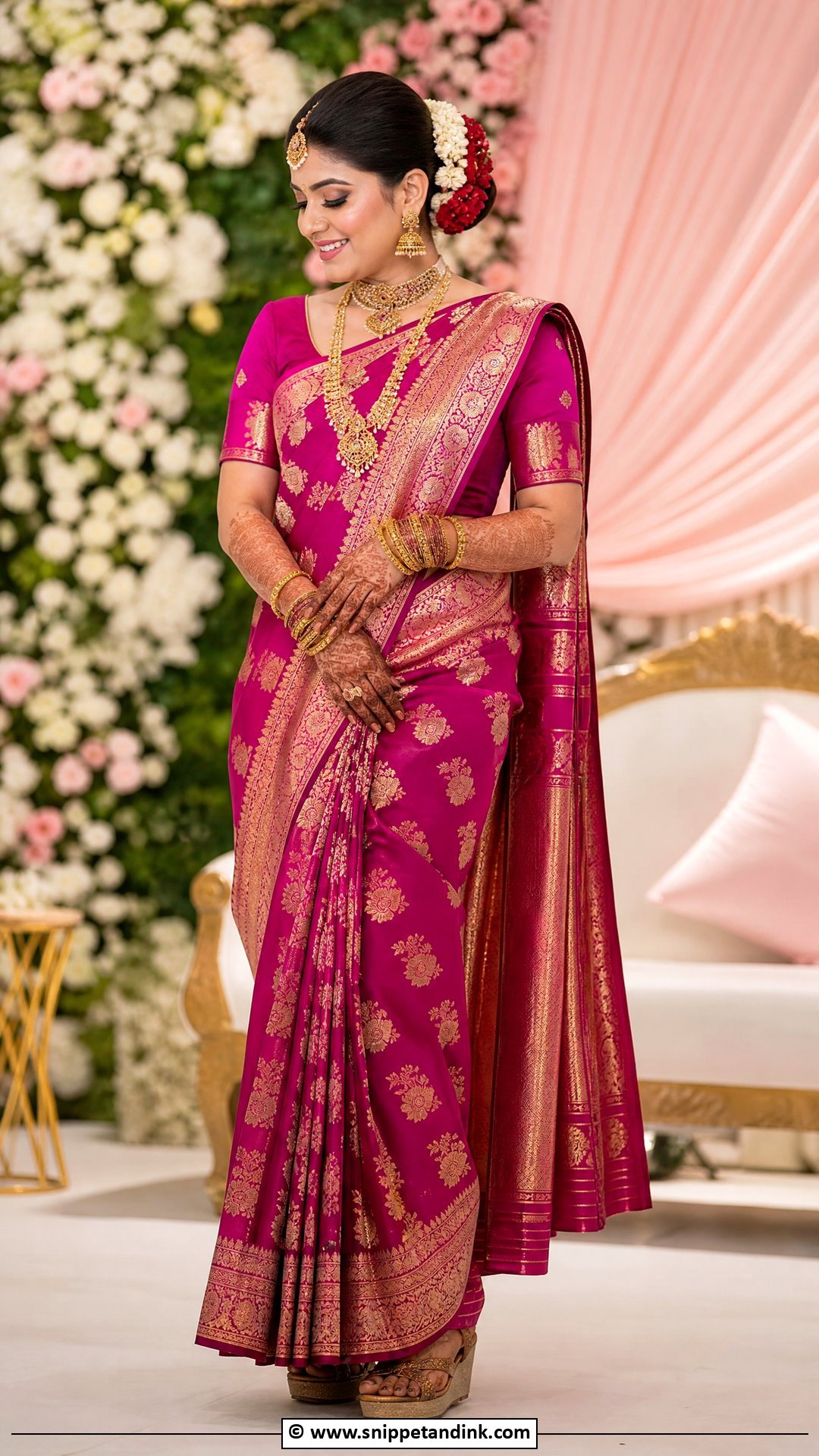
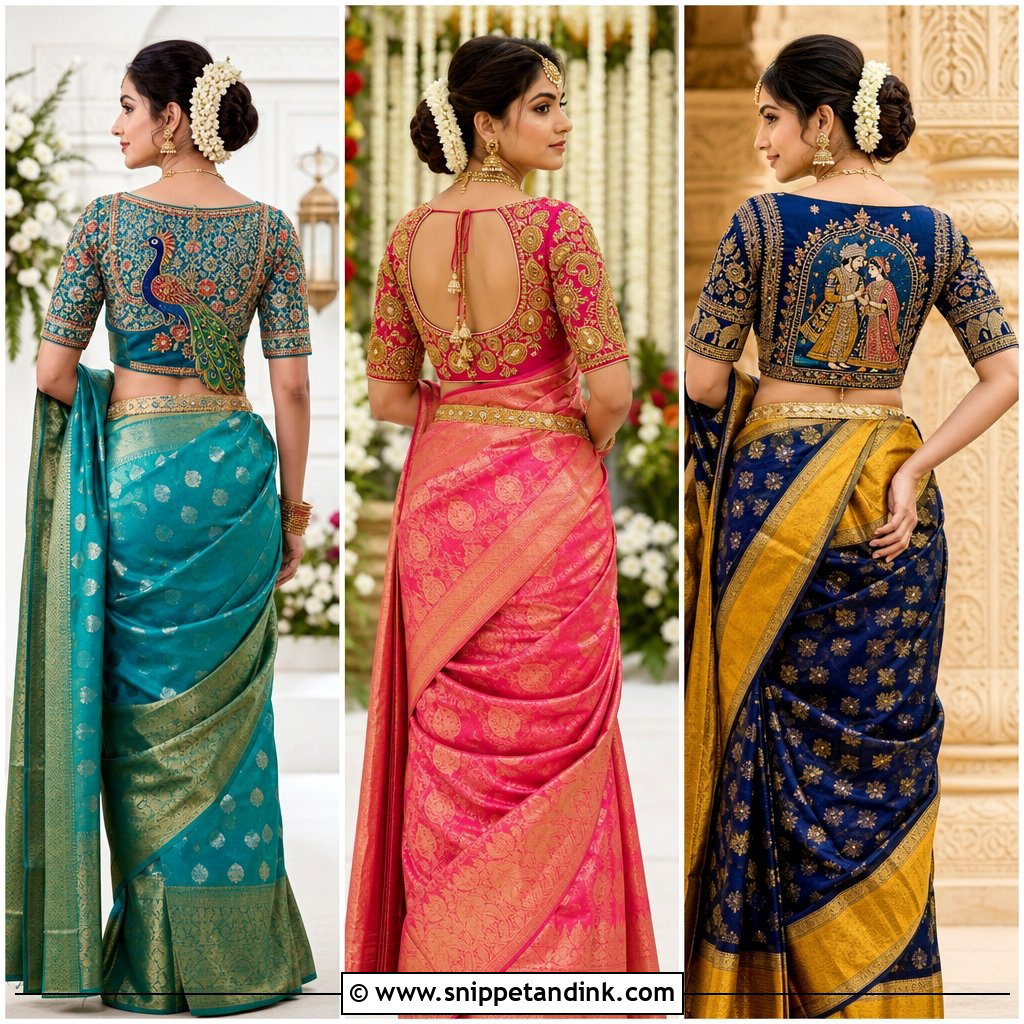
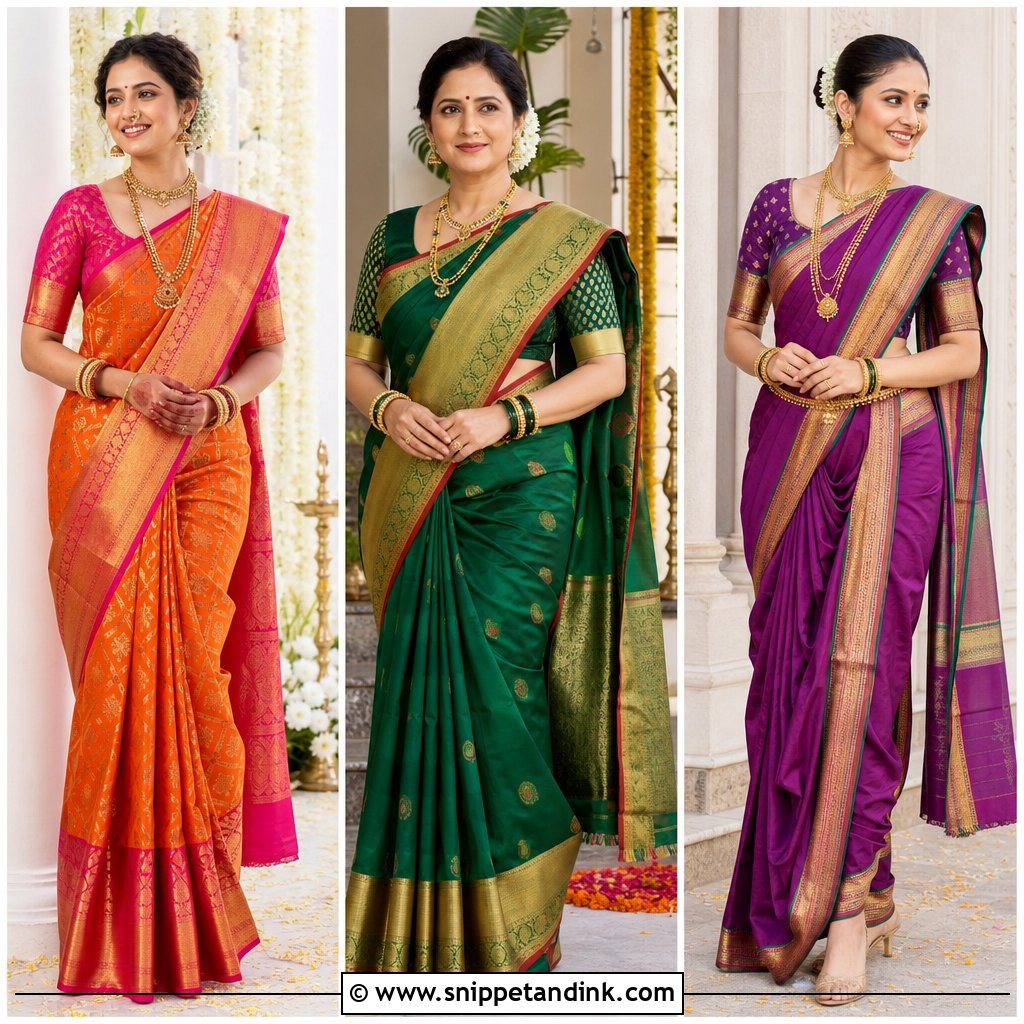
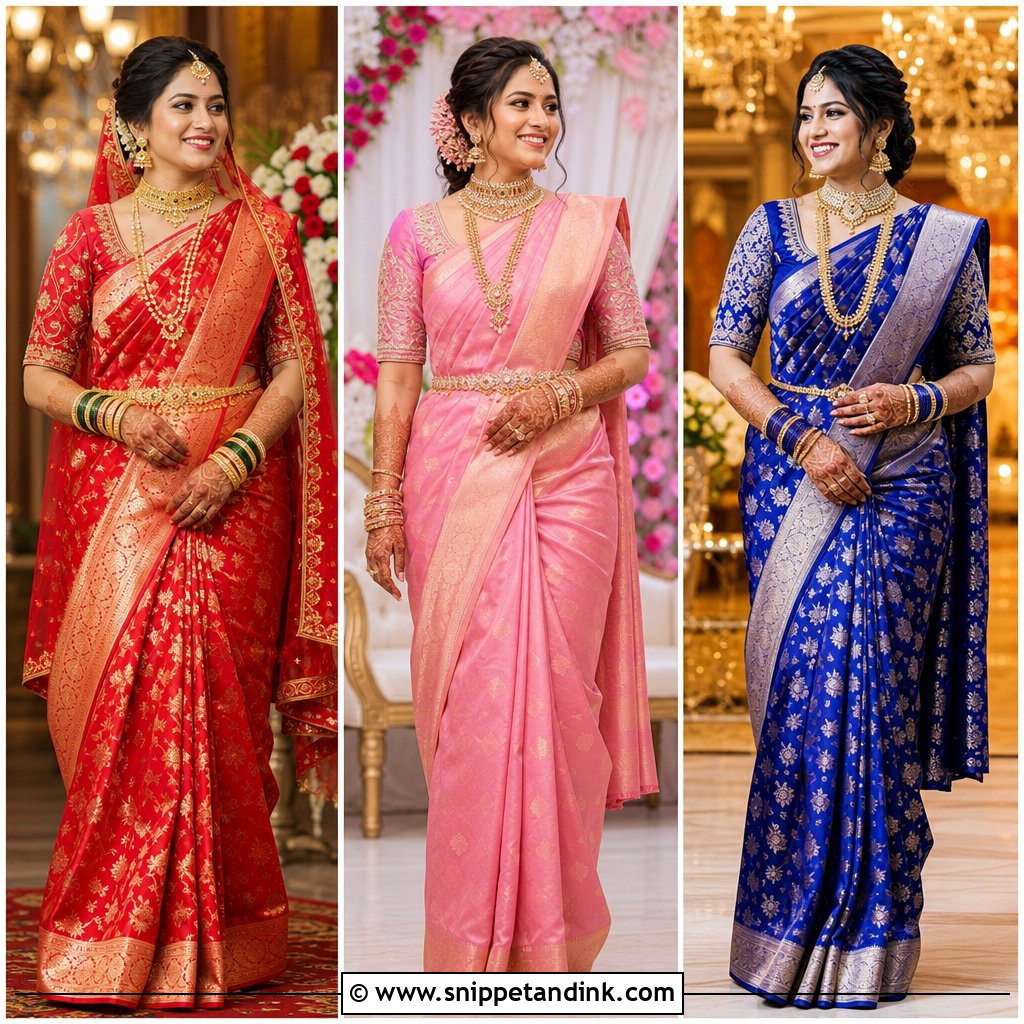
A Banarasi saree sangeet outfit brings heritage into the evening, and it’s often a family piece, which carries meaning no new purchase can. Magenta, royal blue, maroon or purple with rich zari suit the night. Banarasi silk is stiffer than georgette, so I pair it with a modern blouse cut and pleat it a little narrower to make dancing easier. Temple jewelry and a bun with hair ornaments keep it classic; loose waves soften it.
25. Organza Saree Sangeet Outfit
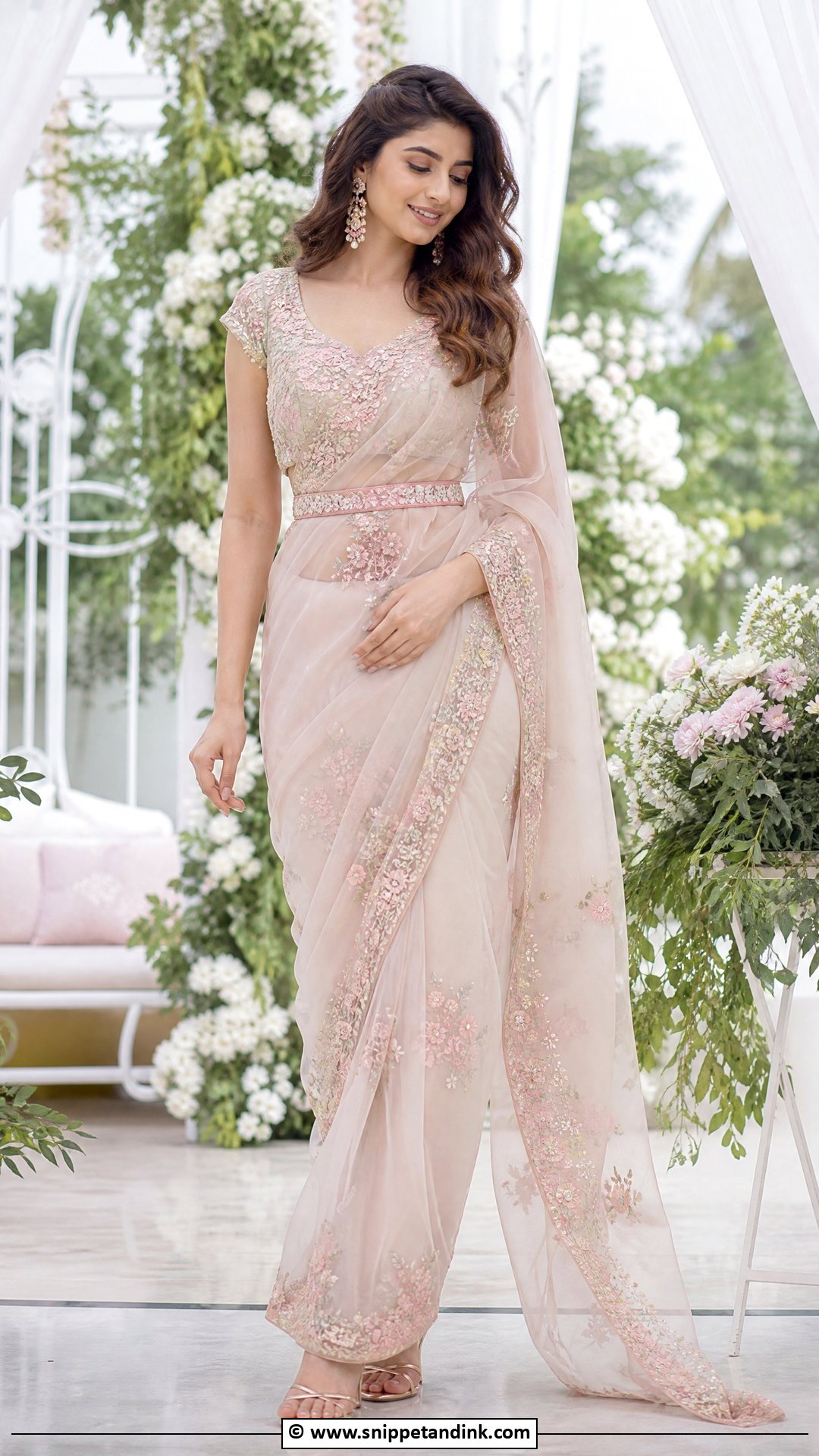
Organza is light and airy but also crisp, so it creases in sharp lines and stands away from the body instead of draping close the way chiffon does. I like it for summer and intimate sangeets. Embroidered borders or floral threadwork give it enough festivity, and a fitted blouse with a slim waist belt holds the drape. Hang it the night before; folded in a suitcase, organza arrives with creases you won’t steam out in ten minutes.
26. Sharara Sangeet Outfit
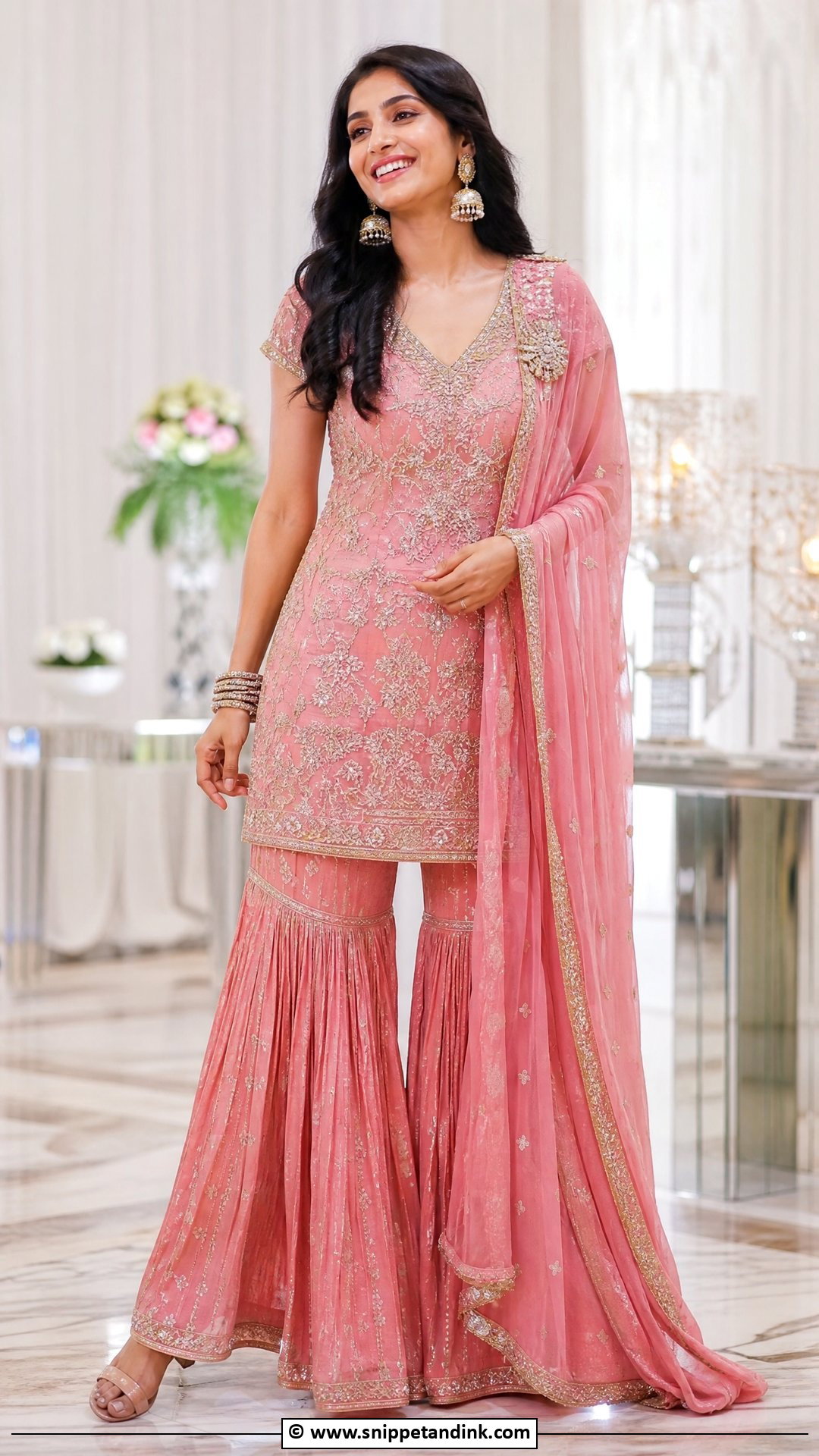
A sharara is my practical favourite for brides who dance a lot, because the wide flared legs move freely and there’s no skirt hem to step on. A short kurti feels playful, a longer one gives more coverage. Gota or sequin detailing keeps it bridal. Pin the dupatta at one shoulder and wear block heels or juttis, since the flare looks best when it falls just above the floor.
27. Gharara Sangeet Outfit
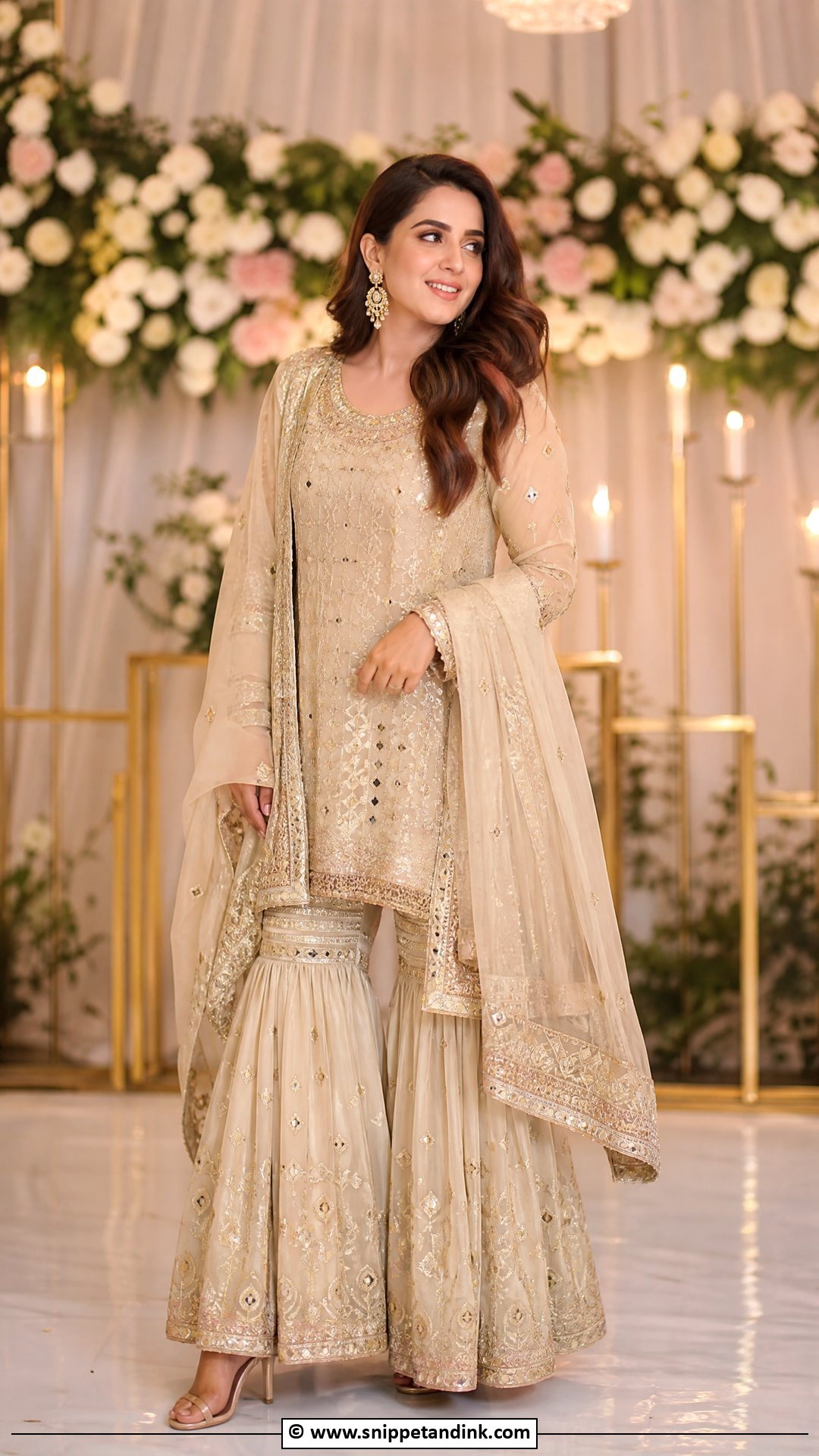
The gharara is fitted to the knee and flares below it, with a decorative band where the two meet, so the silhouette reads traditional from across the room. Get the length right by hemming it with the shoes you’ll actually wear, because a gharara that’s a little too long trips you in a fast number. Silk, brocade, georgette or net all work. Ivory, sage or maroon look rich with embroidery concentrated around the knee and hem.
28. Anarkali Sangeet Outfit
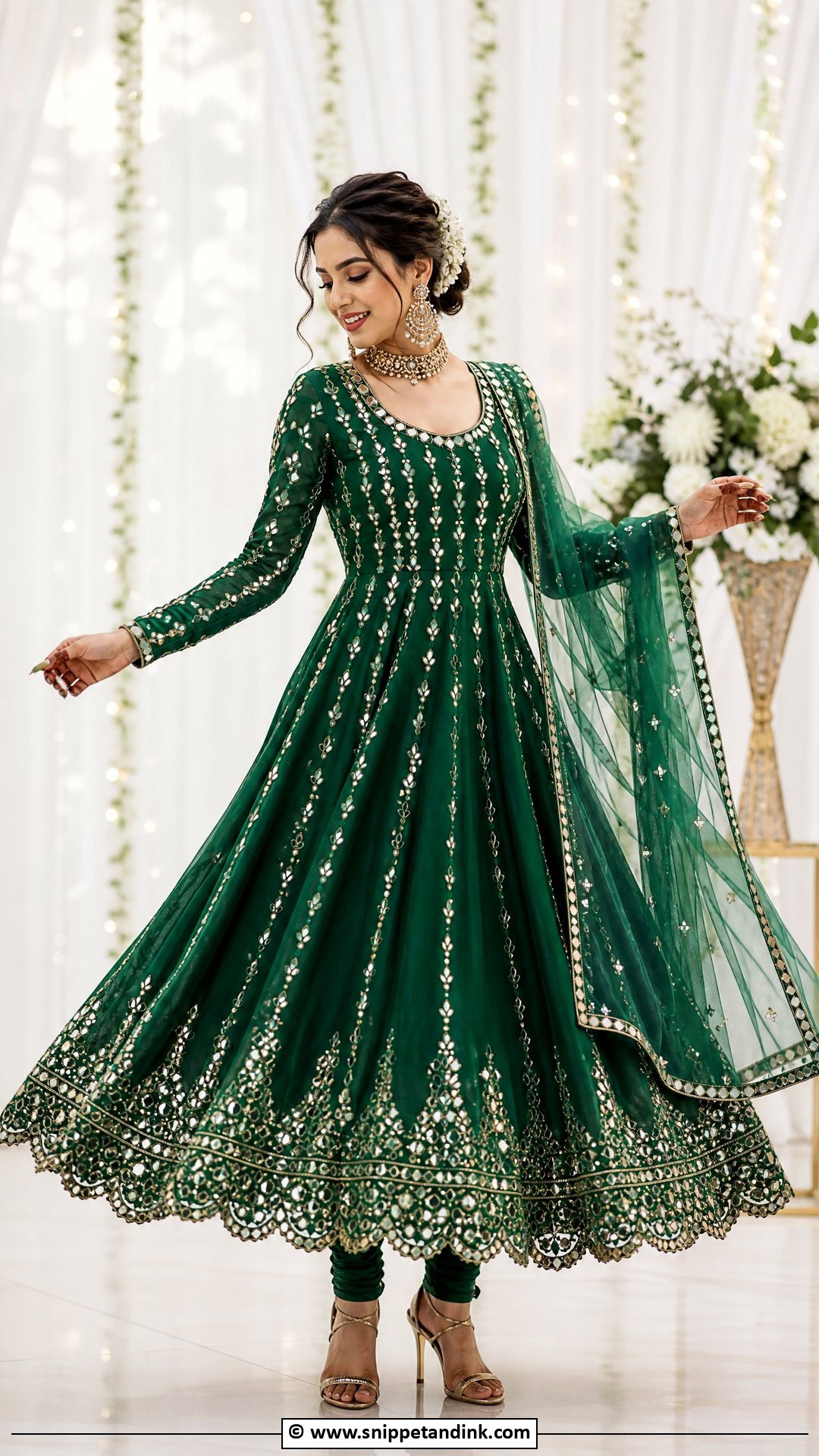
An Anarkali flatters a wide range of body types because the flare starts high and the line runs unbroken to the floor. It’s also the easiest outfit here to sit, eat and dance in for hours. Look for sequins, mirror work, gota or zari for a bridal finish, worn with churidar and a light dupatta. A belt adds waist definition if you want it. I suggest it most to brides facing a family-heavy sangeet who want coverage without feeling dressed down.
29. Indo Western Sangeet Gown
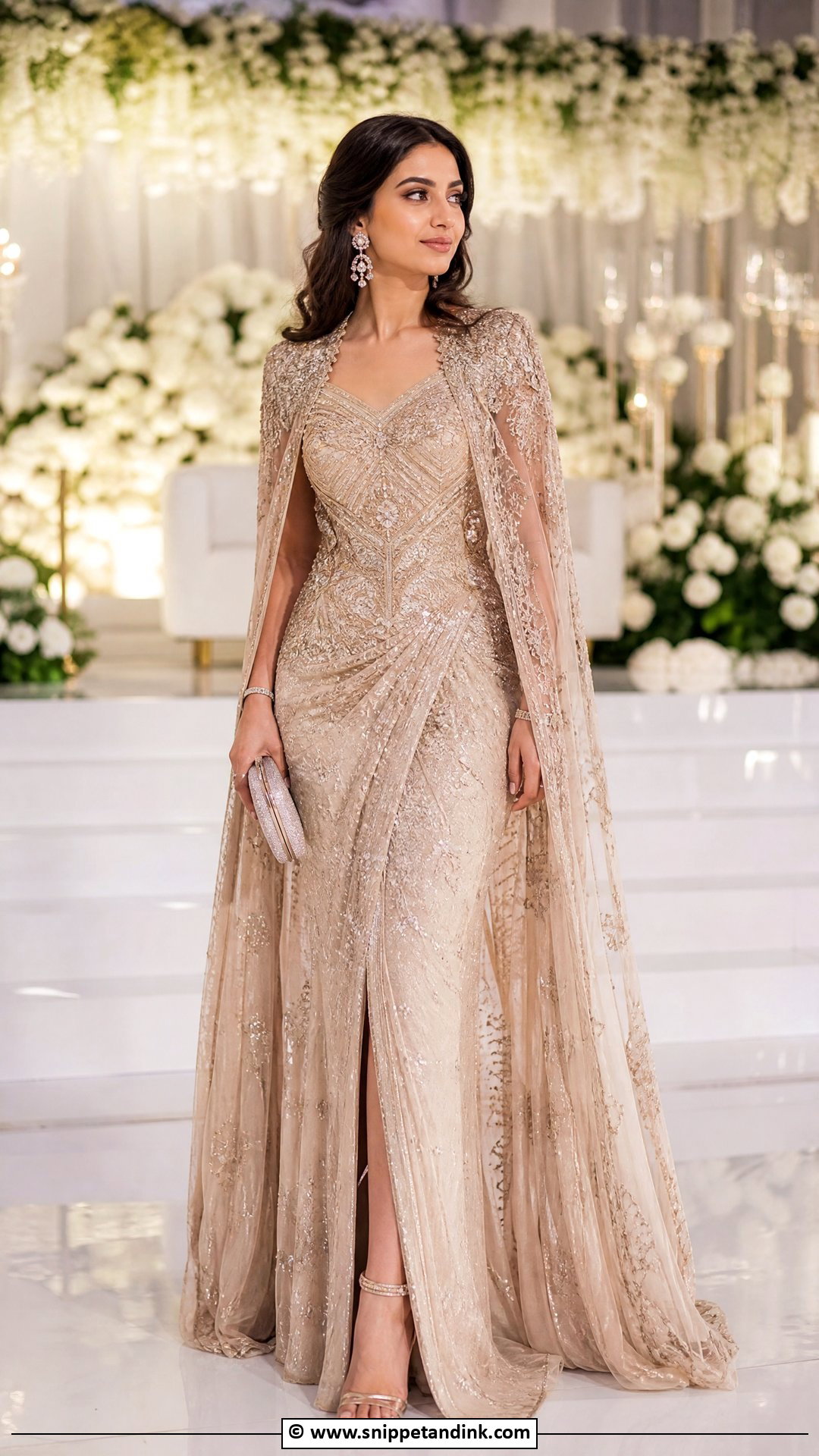
An Indo western sangeet gown puts Indian detailing onto a gown format: embroidered bodices, cape sleeves, draped skirts. With no dupatta to manage, it’s simple to move in. Champagne, navy, deep purple or emerald suit an evening. Fit the bodice for dancing, not standing still. I have brides do a few big arm moves at the fitting to check nothing gapes or slides.
30. Dhoti Sangeet Outfit
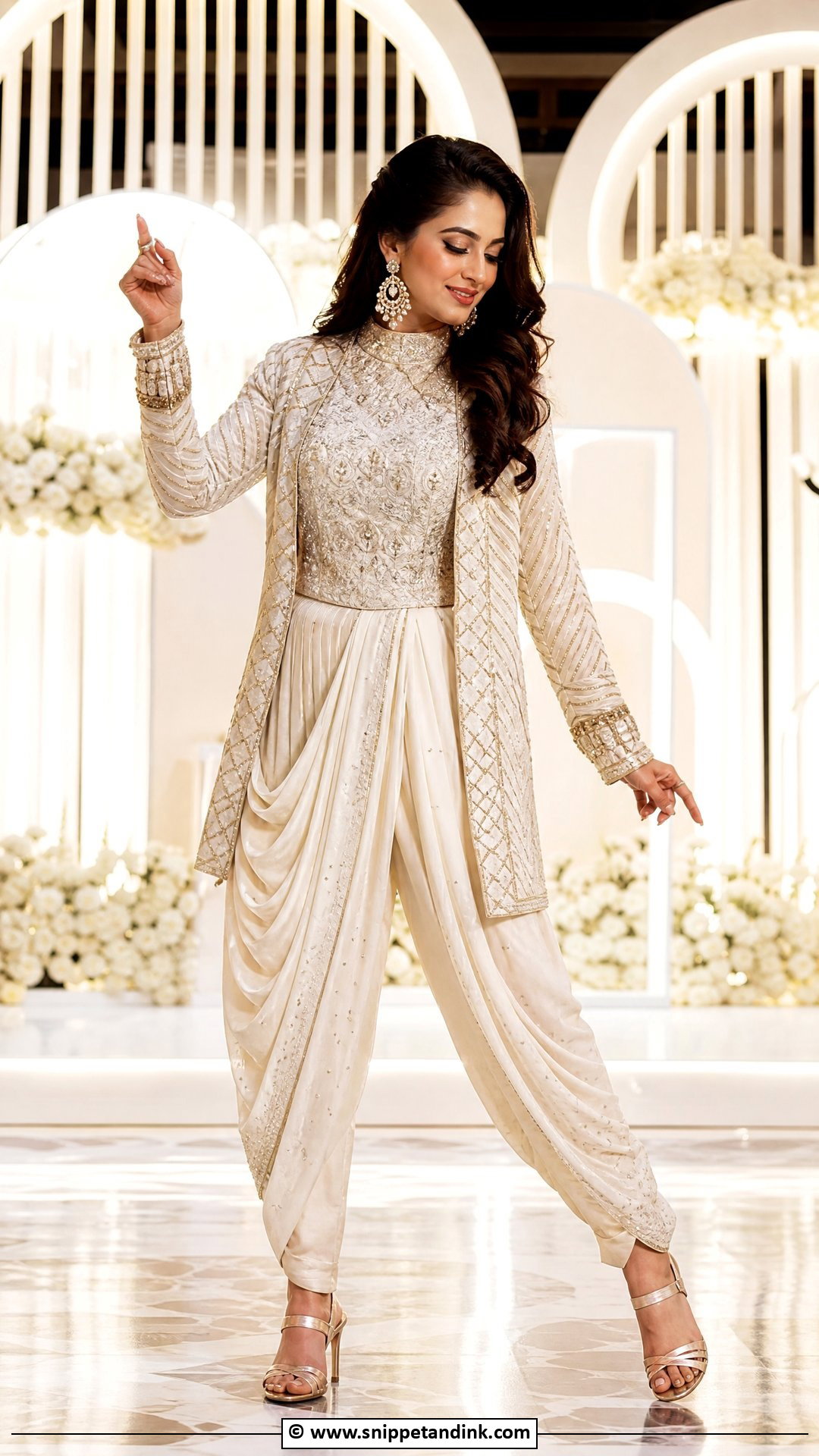
This is the boldest silhouette on the list and one of the easiest to perform in. Pair draped dhoti pants with an embroidered crop top, peplum blouse or jacket, then add a cape or belt for shape. The drape should break just above the ankle so it doesn’t catch, and that decides your shoes. Sharp jewelry like stacked cuffs suits it better than delicate pieces. It needs a confident wearer; if you’d feel self-conscious, a sharara gives you similar freedom with a softer outline.
31. Pant Saree Sangeet Outfit
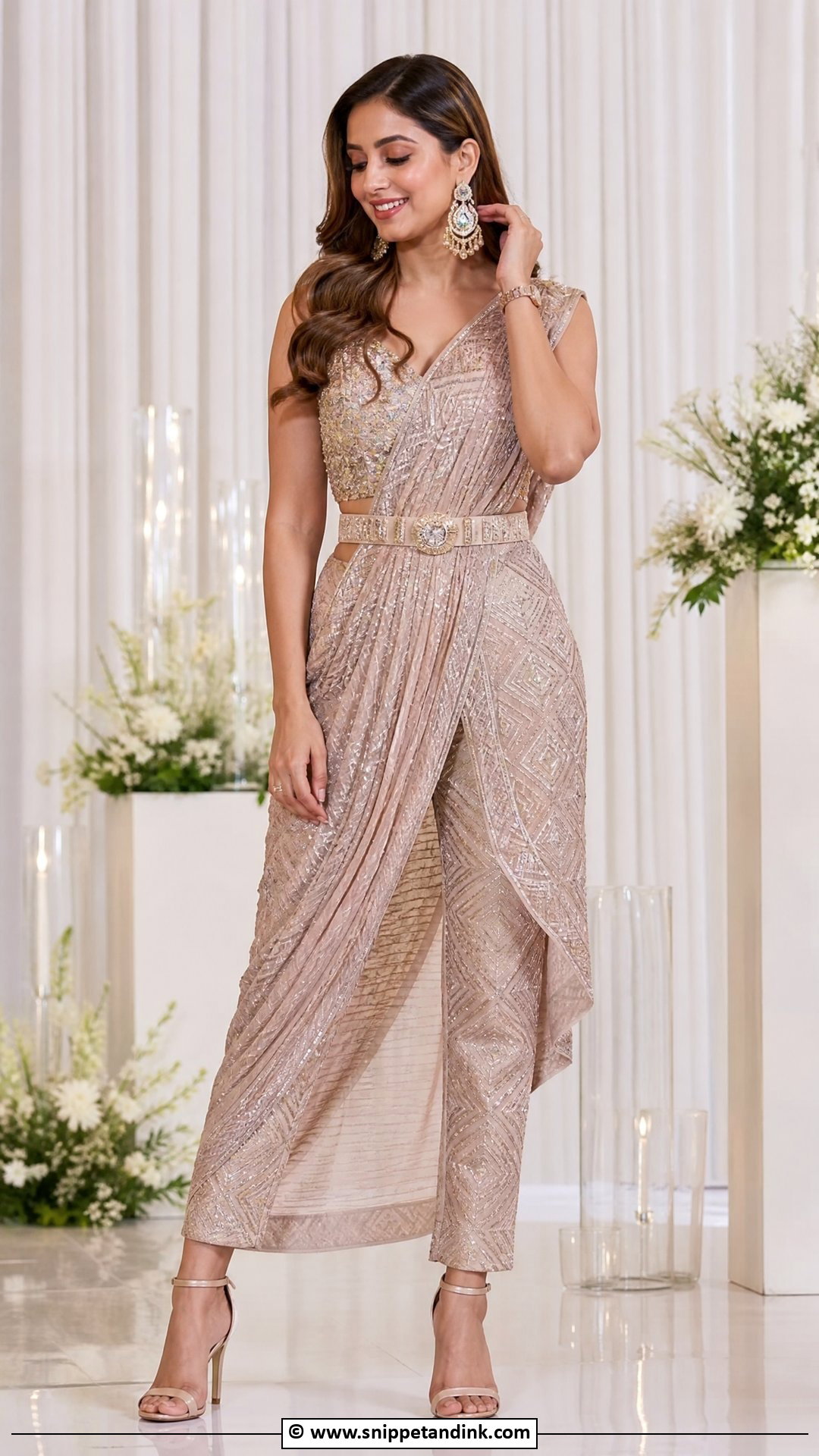
A pant saree drapes over tailored pants or palazzos, so it looks like a saree and moves like trousers. It’s secure for dancing and sleek on camera. Metallic fabric, silk or embroidered panels make it festive, with a statement blouse and a belt. I’d have it pre-stitched rather than draped on the day, especially when your draper is also handling the rest of the family.
32. Peplum Sangeet Outfit
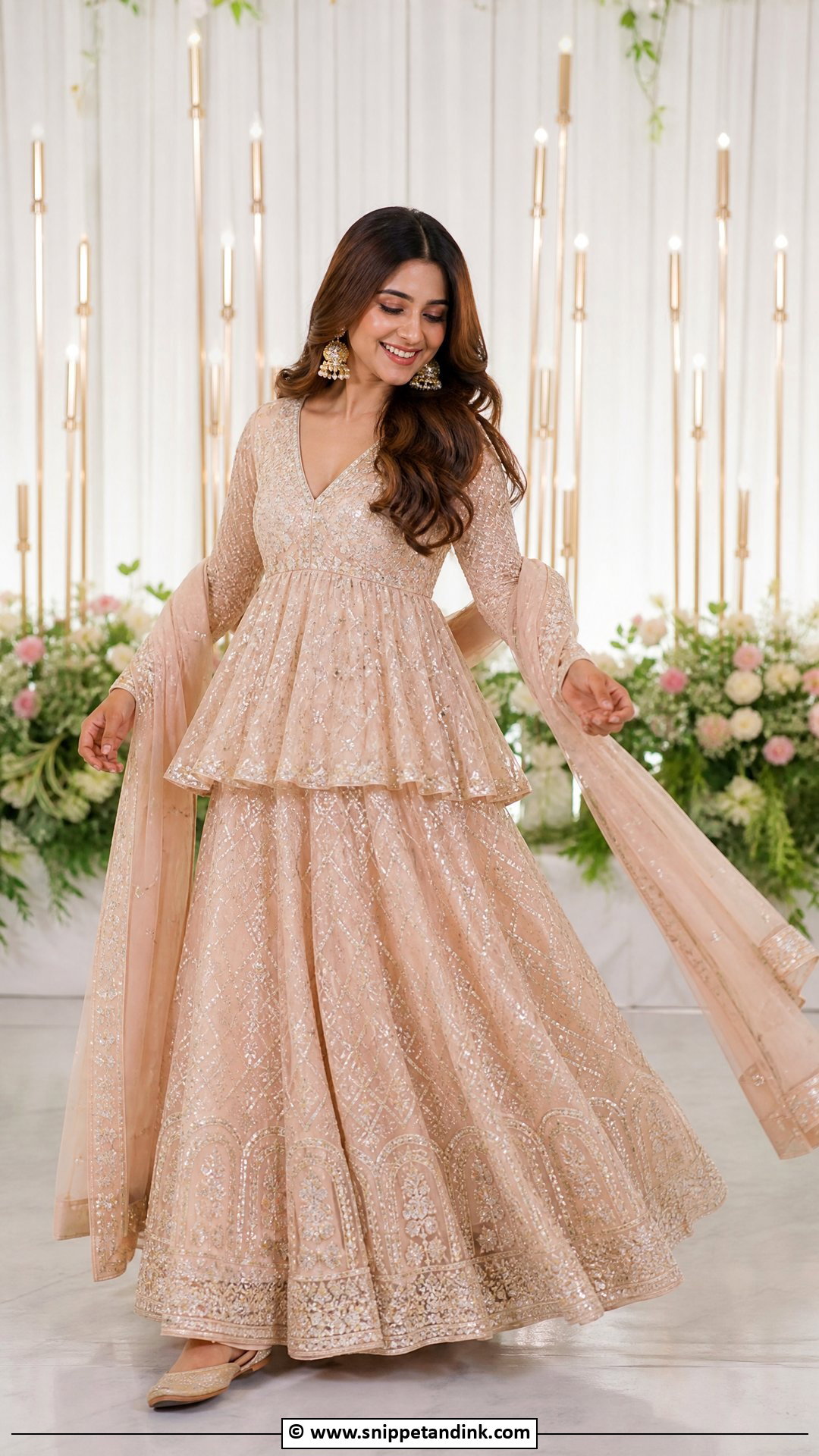
A peplum top defines the waist and gives soft cover over the midsection, which is why brides who feel self-conscious about their tummy often end up loving it. Pair it with a lehenga skirt, sharara or flared palazzos, in embroidered silk or brocade for a bridal finish. Where the flare starts matters: it should begin at your natural waist, because set even a little low it shortens the legs in every photo.
33. Corset Lehenga Sangeet Outfit
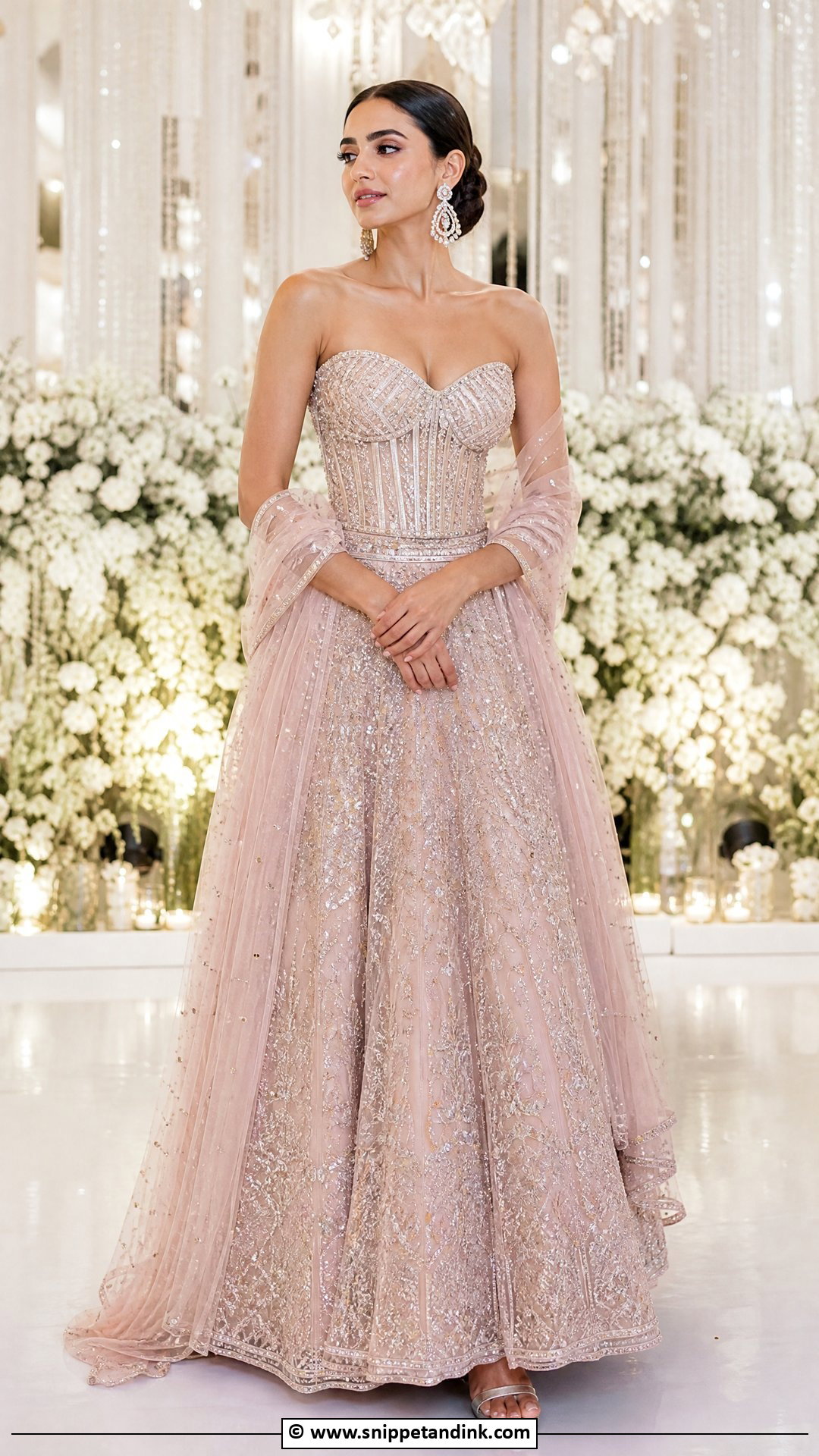
A corset blouse gives real support and a sharp shape, but boning fitted for standing can dig in once you’re dancing and eating. I ask brides to sit, bend and breathe deeply at the fitting before anything is finalised. Embroidery, crystals or mirror work keep it festive. Pair it with a flowing skirt in tulle, net or georgette, then decide on the dupatta: a sheer one softens the look, going without reads more modern.
34. Co Ord Sangeet Outfit
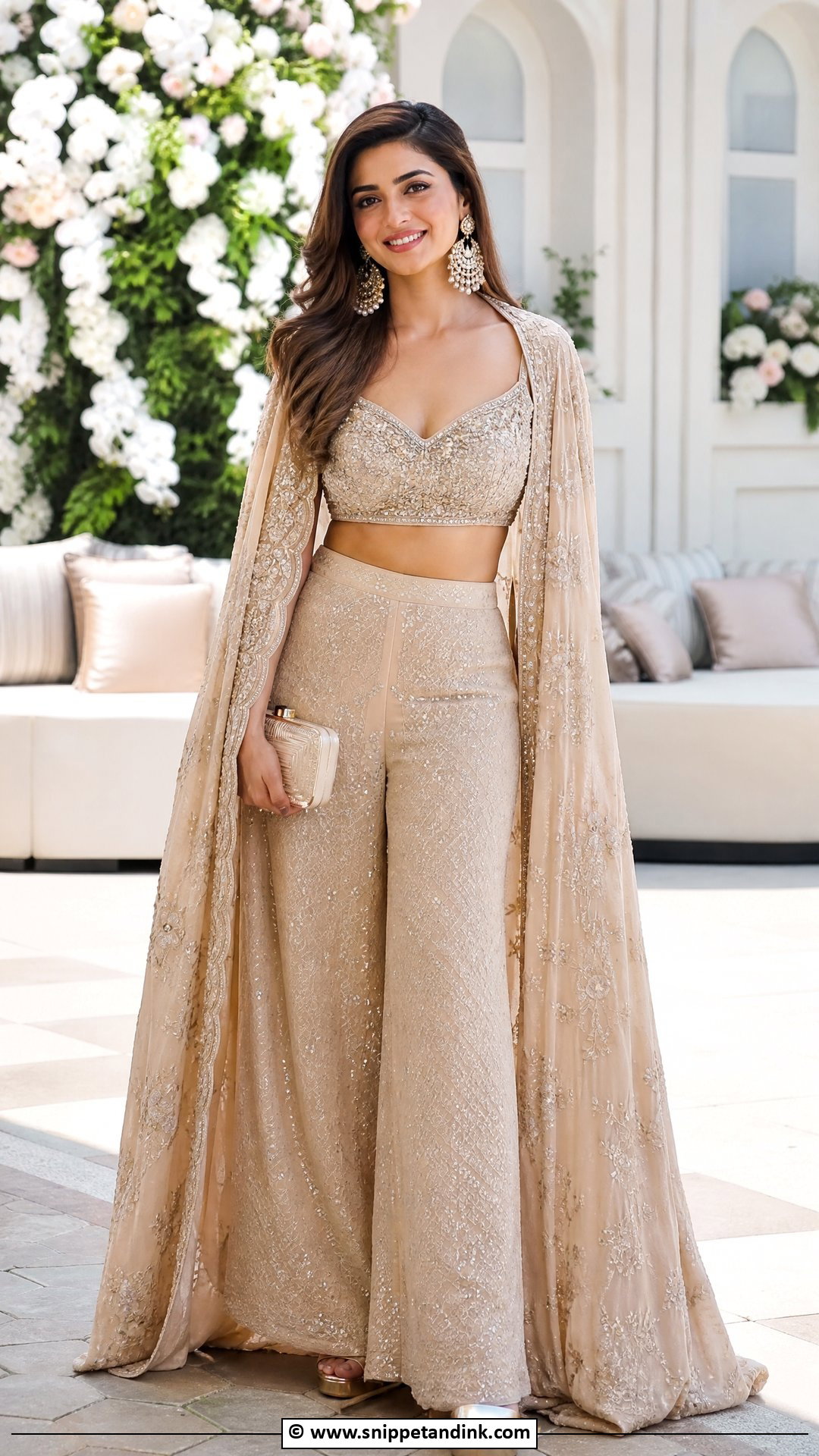
A co-ord set is the sangeet outfit you’re most likely to wear again, which makes it a smart pick for smaller sangeets and destination weddings. An embroidered crop top and skirt, or a jacket with palazzos, looks finished because the fabric matches. Sequins, mirror work or pearls bring it up to bridal level. Bold earrings, heels and a clutch complete it, and adding a light cape or dupatta makes it feel more ceremonial when the family expects that.
35. Fusion Skirt Sangeet Outfit
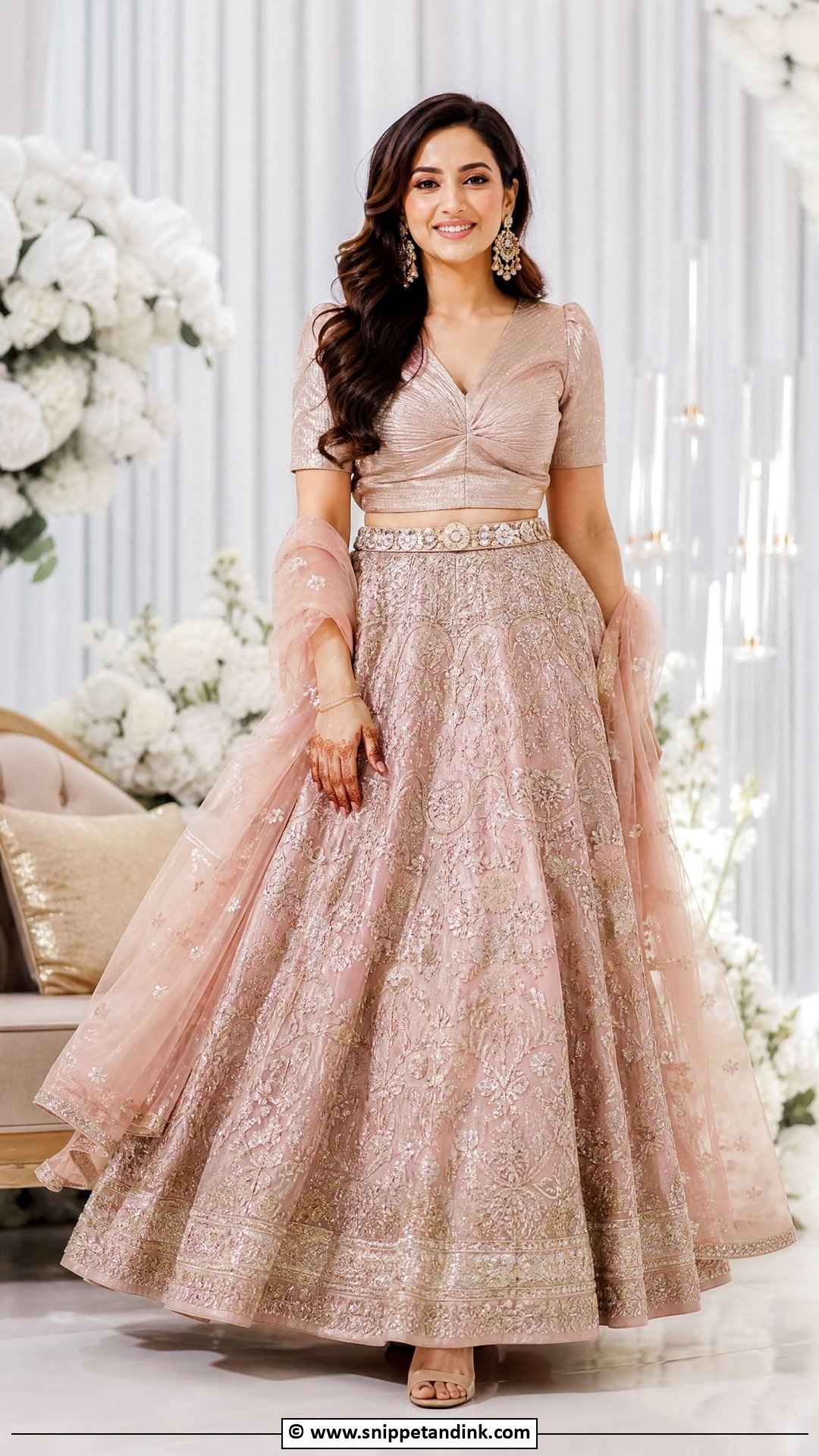
A fusion skirt lets you mix Indian and modern pieces: a heavily embroidered skirt with a silk shirt, a structured blouse or a cape top. It’s the most personal option here, and the skirt can be worn again later with a plain top. Let the skirt carry the embellishment and keep the top quieter, or the two halves compete. A waist belt ties it together. I’d only suggest it to a bride who already dresses this way, since on someone who doesn’t it can feel like a costume.
Custom Lehenga Lead Times and Fittings
A custom embroidered lehenga from a designer studio commonly takes a few months from order to delivery, and wedding season stretches that, since handwork is the slow part. Ready-made pieces with alterations can be turned around in a few weeks, but tailors fill up quickly in peak months. Timelines vary a lot by studio, so ask for a written delivery date.
My usual advice is to settle the wedding outfit first and the sangeet outfit soon after, leaving room for at least two fittings. The first checks the cut. The second, close to the date, catches any change in your measurements from pre-wedding nerves or a fitness push, which happens more often than brides expect.
Sequins Will Fall Off, So Pack a Pouch
Something always gives on a dance night. I hand a small pouch to a cousin or bridesmaid who’ll stay near the stage, not to the bride, who will have no pockets and no free hands.
- Safety pins in two sizes, including a few tiny gold ones that disappear on embroidery
- Double-sided fabric tape for a slipping pallu or a gaping neckline
- A needle already threaded in the outfit’s main colour, plus two spare blouse hooks
- Blotting papers and a pair of soft flats for the last hour
- A stain wipe, tested first on a hidden seam, because some leave a ring on silk
Dance in It Once Before You Say Yes
The sangeet is often the most photographed night before the wedding and easily the most physical, so the outfit has to survive both. Before you commit, wear it at home for a full hour, run your routine, sit down and raise your arms. Think about the venue temperature, the lighting, your jewelry and your shoes together rather than piece by piece. From a sequin lehenga to a pre-draped saree or a fusion set, the right one is the outfit you forget you’re wearing once the music starts.
You'll Like These Ideas:





Leave a Reply