
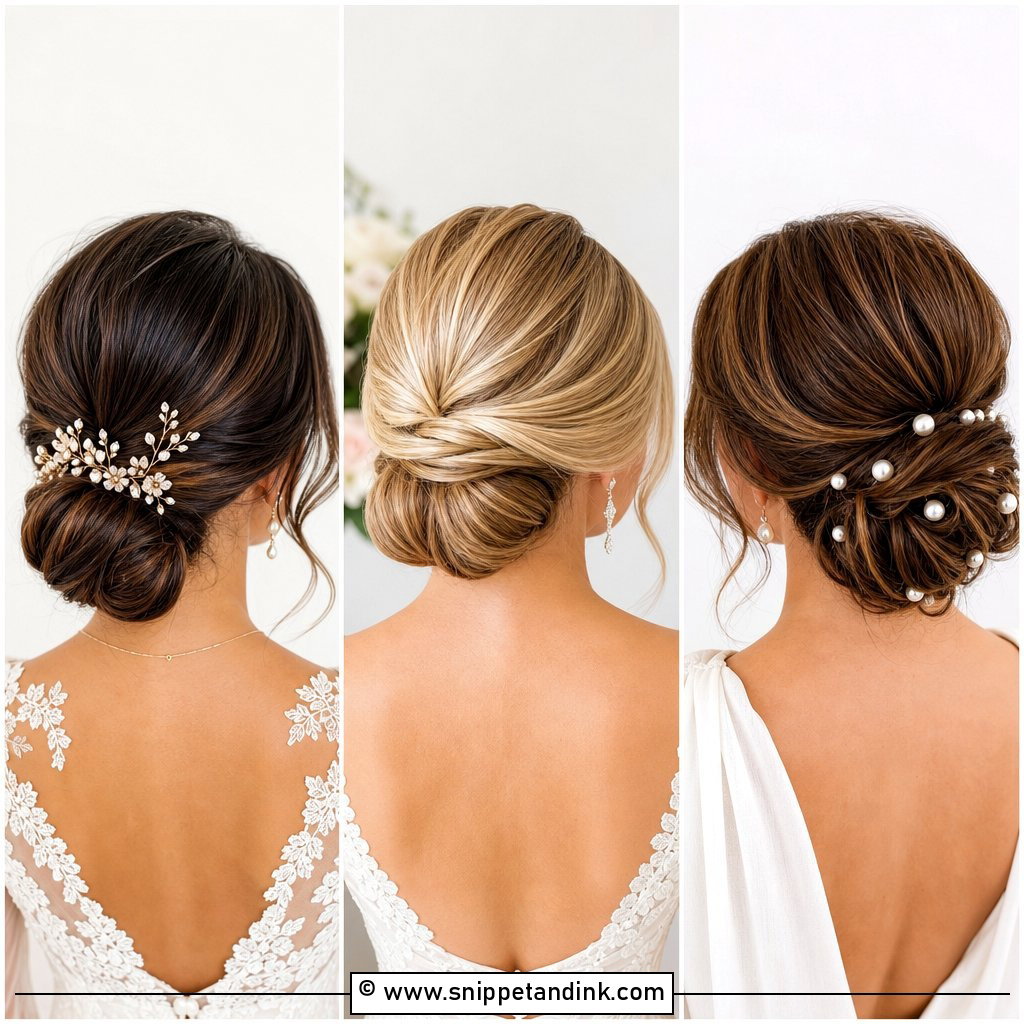
A low bun is the updo I recommend most often, and not because it’s safe. It sits where the head carries weight most easily, it stays put through vows, hugs and the dance floor, and it still leaves softness around the face if it’s built well. The ones that go wrong are pulled too tight or sprayed until they shine like a helmet. The ones that work have a little lift at the crown, some movement in the bun itself, and details chosen for the dress and veil. Here are 20 ways to wear it, from a smooth chignon to natural curls gathered at the nape.
Where the Bun Sits Changes How the Dress Looks
Before I talk texture or accessories, I ask to see the back of the dress. A low bun is close to the neckline, so its height decides how much of the gown’s back detail you see.
- Open or low back: set the bun right at the nape or slightly above, so it doesn’t sit in the line of buttons or lace.
- High neck or collar: lift the bun an inch or two higher, or it will rub against the fabric every time you turn your head.
- Off-shoulder or strapless: a wider, softer bun balances bare shoulders better than a small tight one.
- Cathedral veil: the bun needs to be firm enough to carry the comb’s weight, so I build the base more solidly.
Bring the dress, or at least a clear photo of its back, to your trial. Wear a top with a similar neckline if you can. A bun can look perfect in the mirror and then fight the collar the moment you sit down.
Getting the side profile right
Most wedding photos of the hair are taken from the side or three-quarter angle, not straight behind. I check the profile with a hand mirror at every trial. The crown should have a gentle curve rising slightly above the bun, not a flat line dropping into it.
1. Soft Low Bun Wedding Hair With Face Framing Pieces
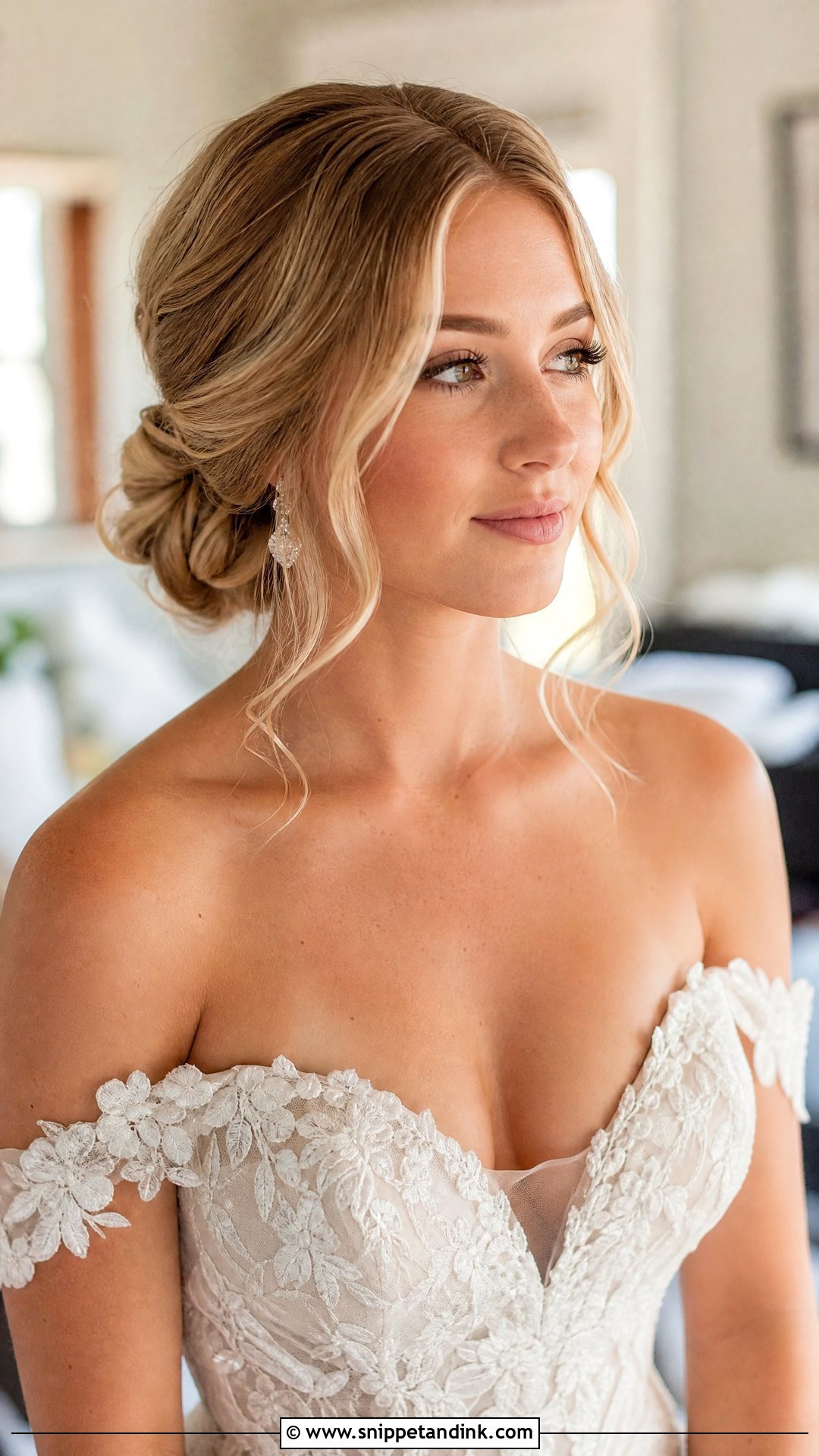
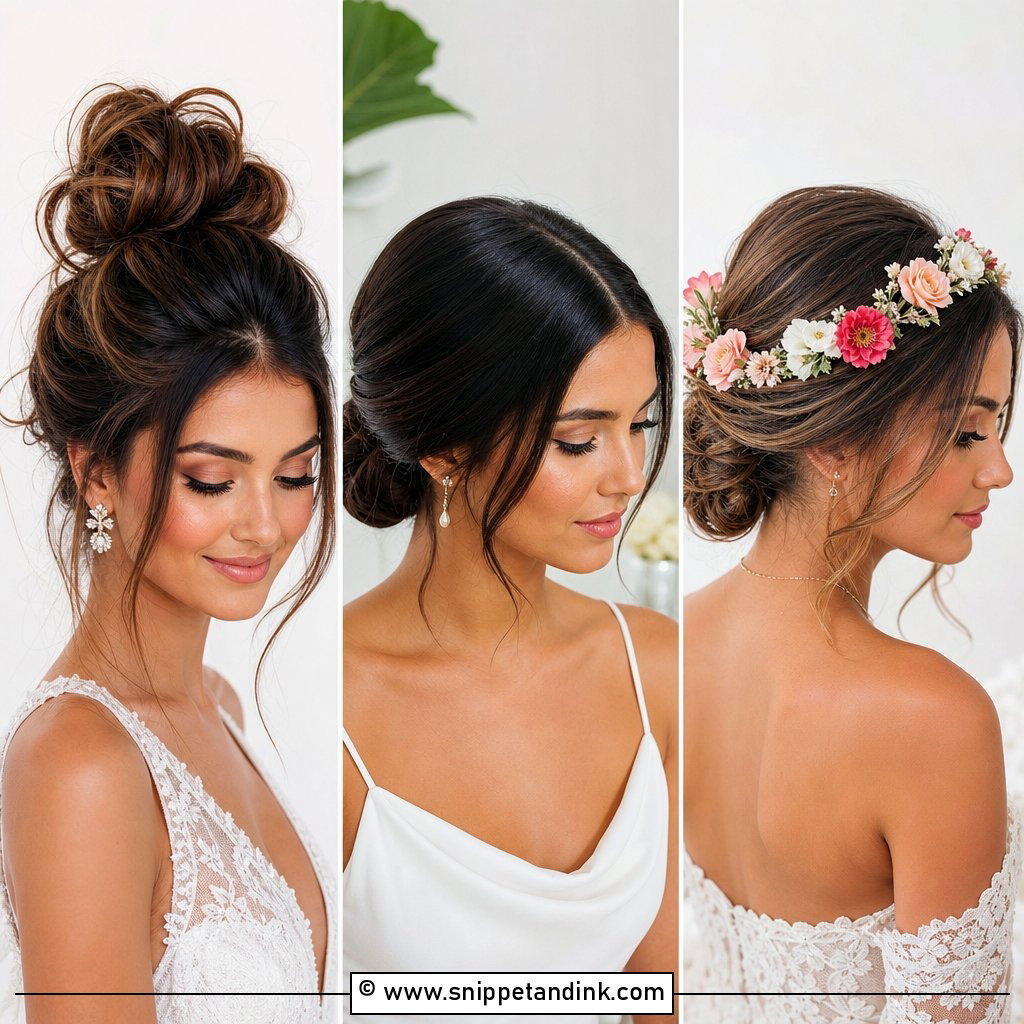
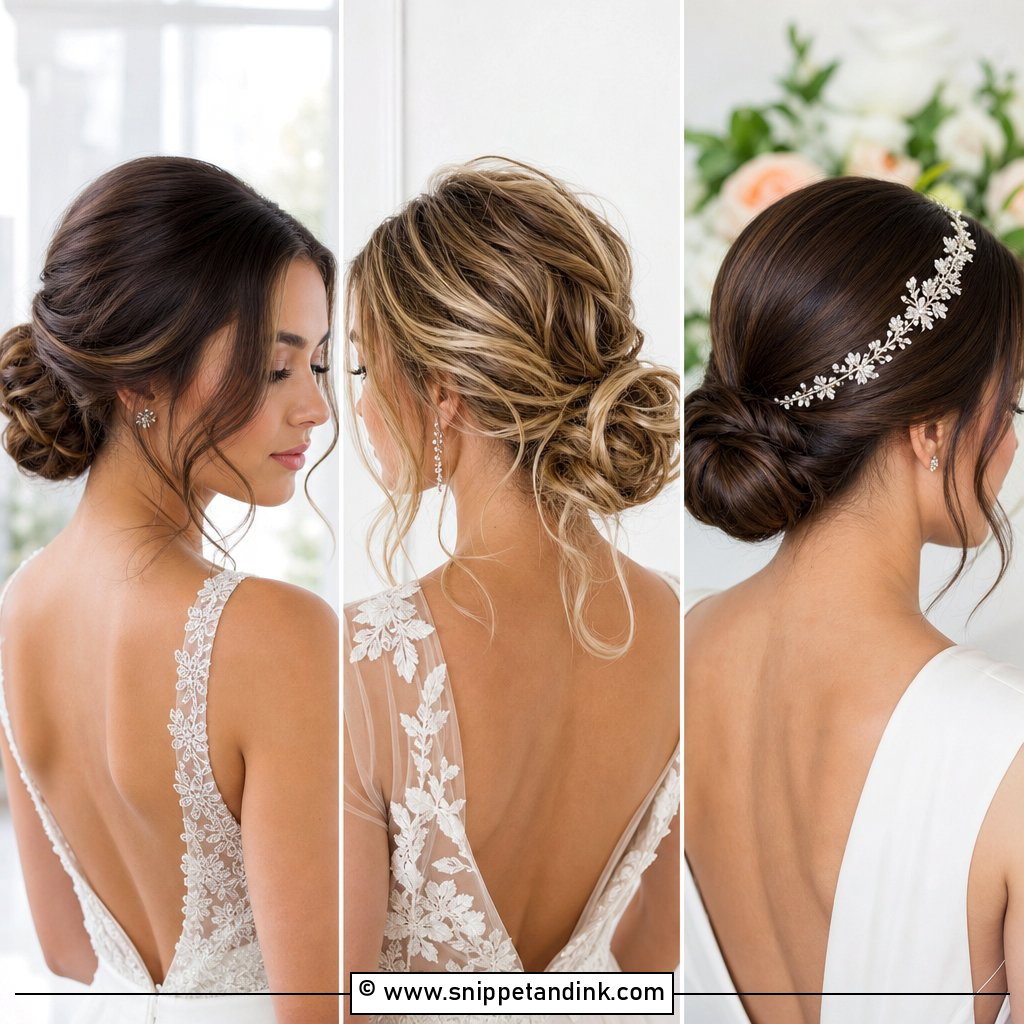
Face-framing pieces are what stop a low bun from looking like work hair. I cut them out of the front section before anything else is pinned, curl them away from the face, and leave them alone until the very end so they keep their bend. They soften a strong jaw and move a little in candid photos. Ask for loose texture through the crown too, or the bun ends up flat on top. This opens up the shoulders, which is why it sits so well with strapless gowns, sweetheart necklines and off-shoulder styles.
2. Soft Low Chignon Wedding Hair
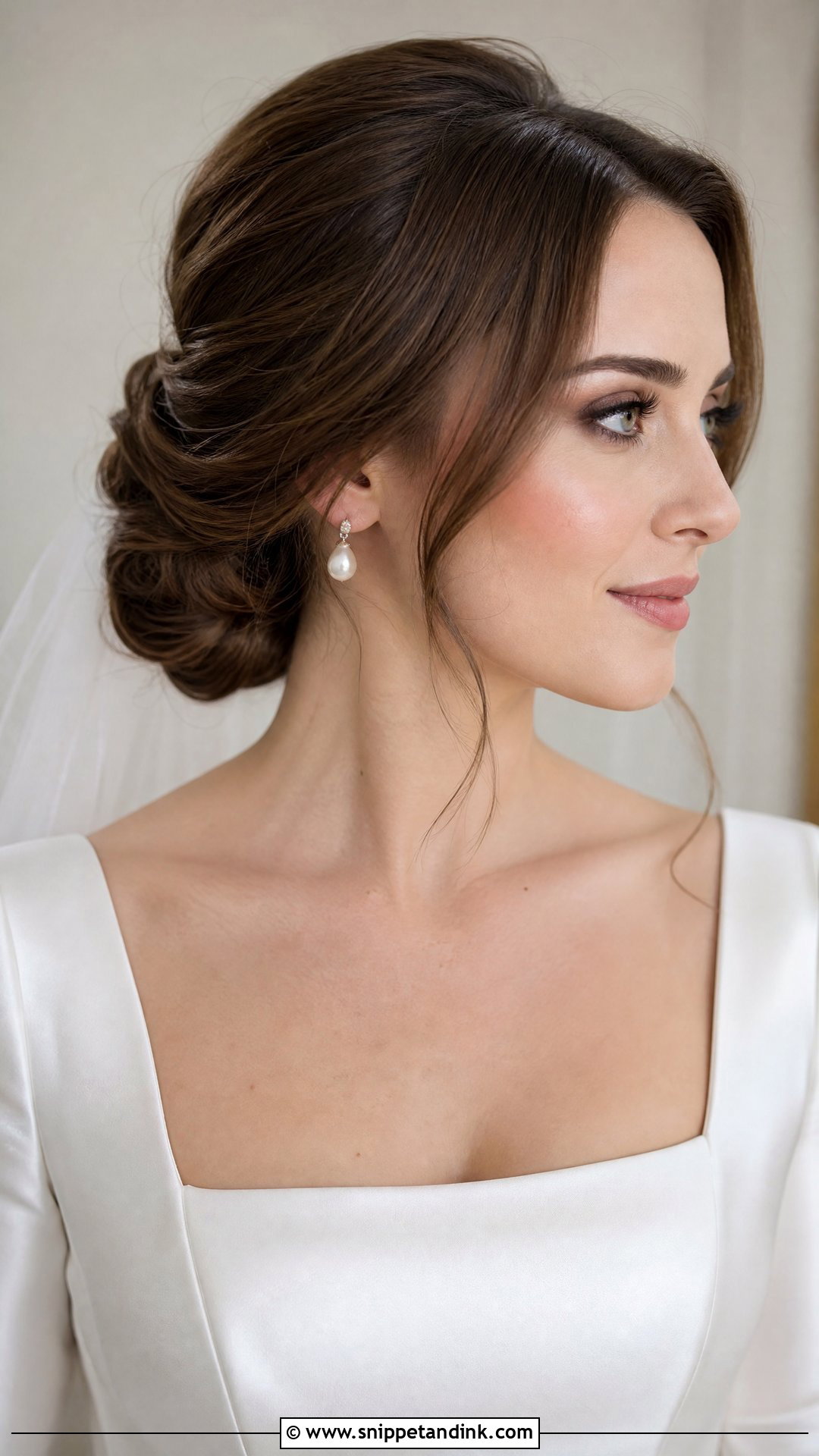
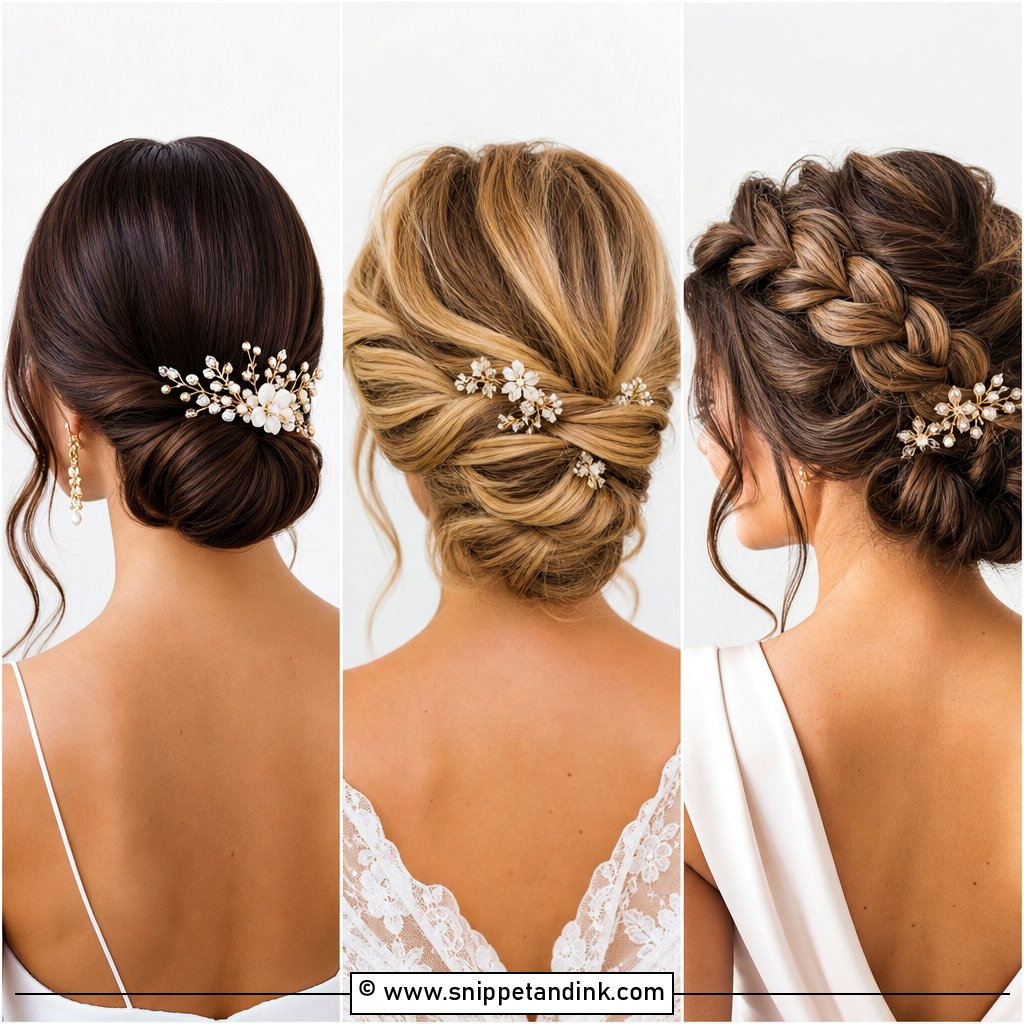
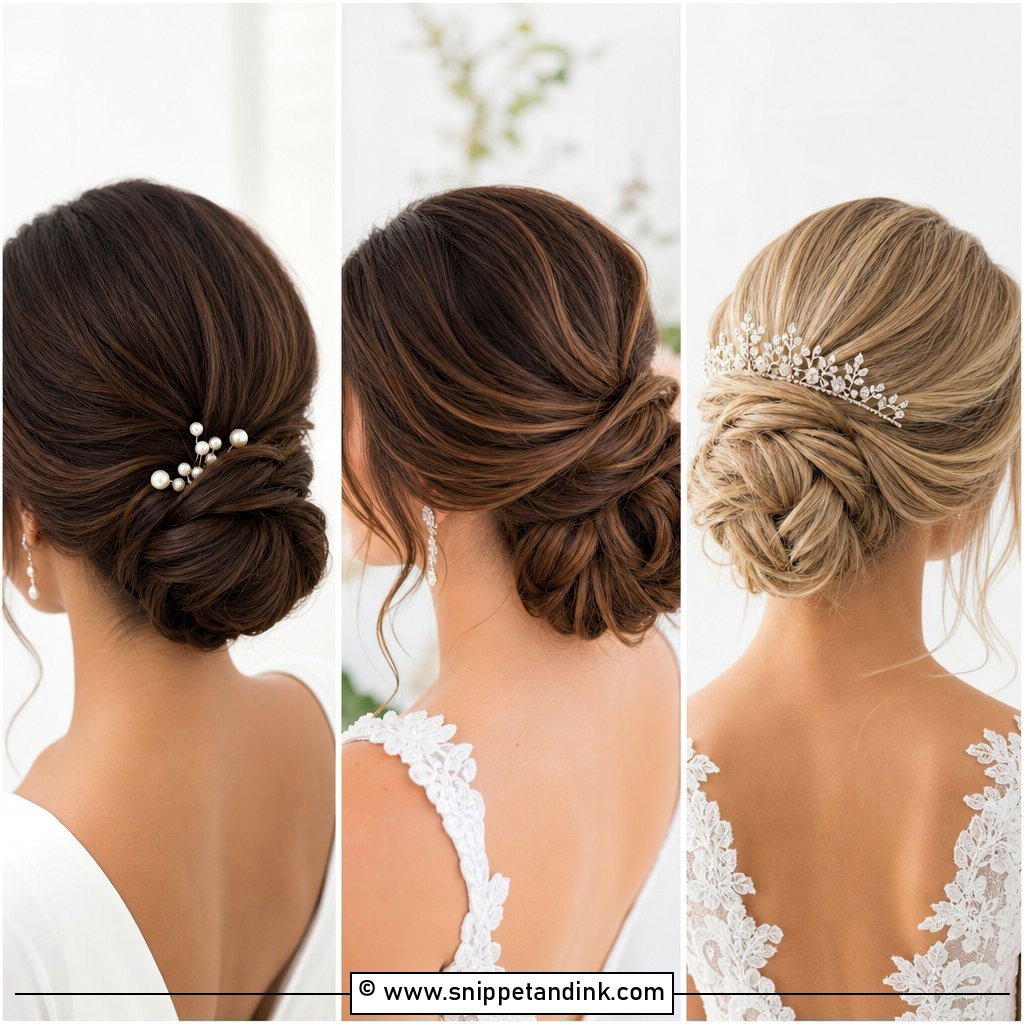
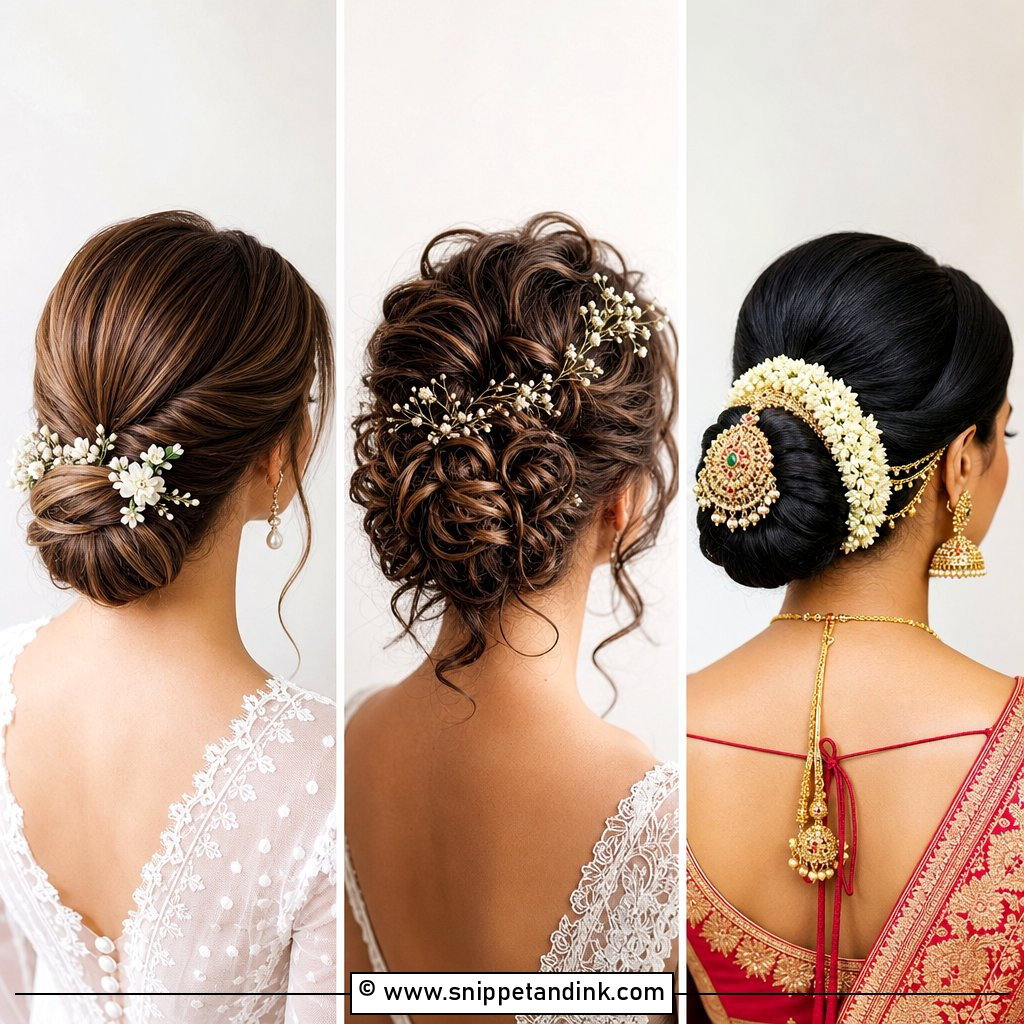
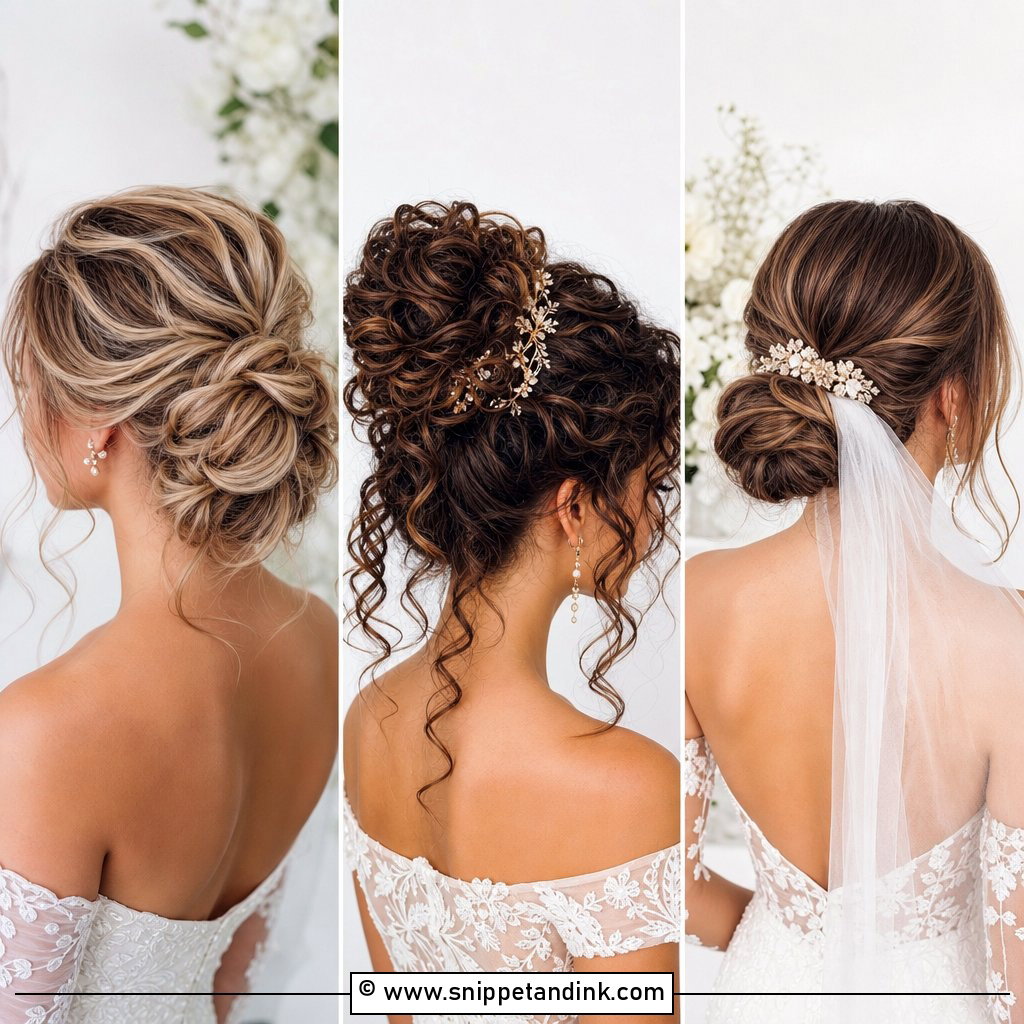
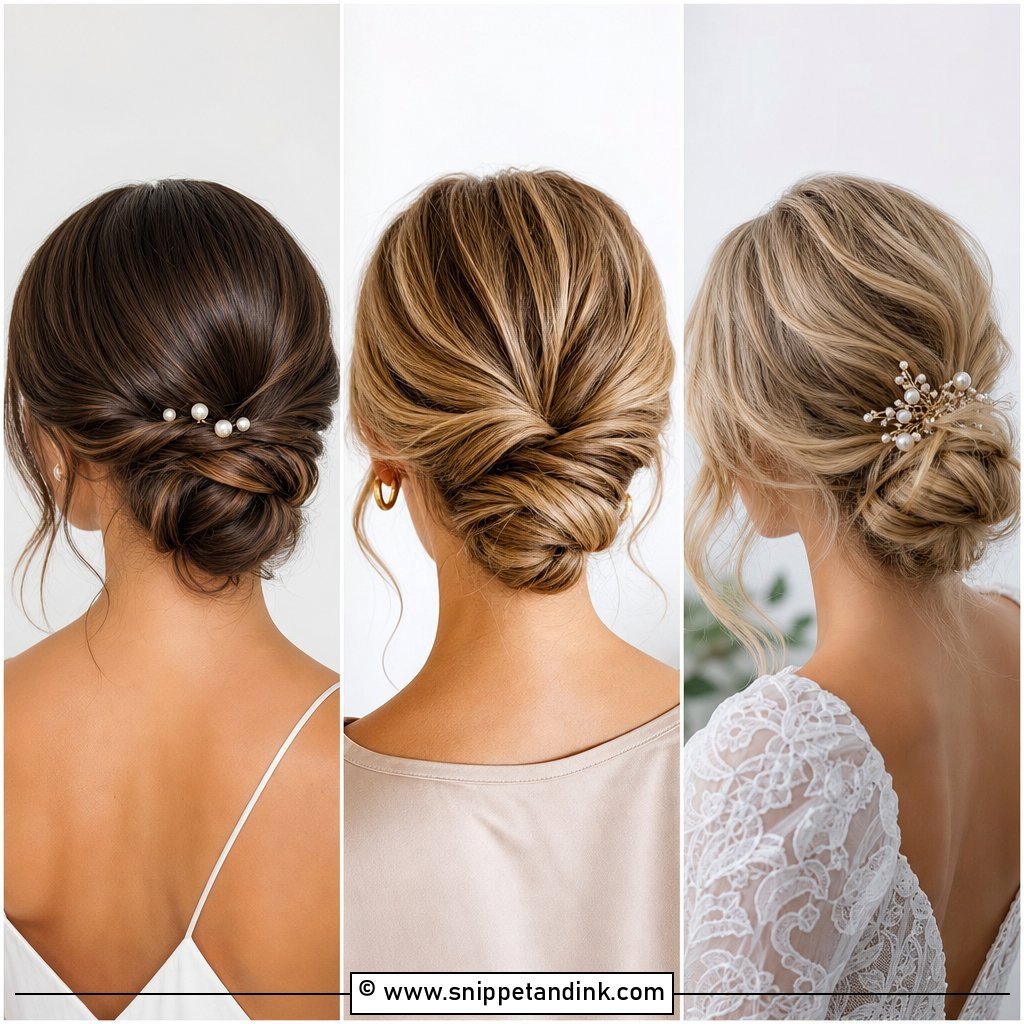
The chignon is the classic: hair smoothed or lightly waved, then tucked and pinned into a rounded shape at the nape. This softer version keeps some air in the sections rather than wrapping them tightly, so it looks finished from behind without looking stiff. It goes with veils, pearl pins, lace or satin. On fine hair I’ll use a small padding or a few extensions to give the shape body. Thick hair needs the opposite: I split it into two smaller sections so the bun doesn’t end up wider than the neck.
3. Soft Low Bun Wedding Hair With Veil
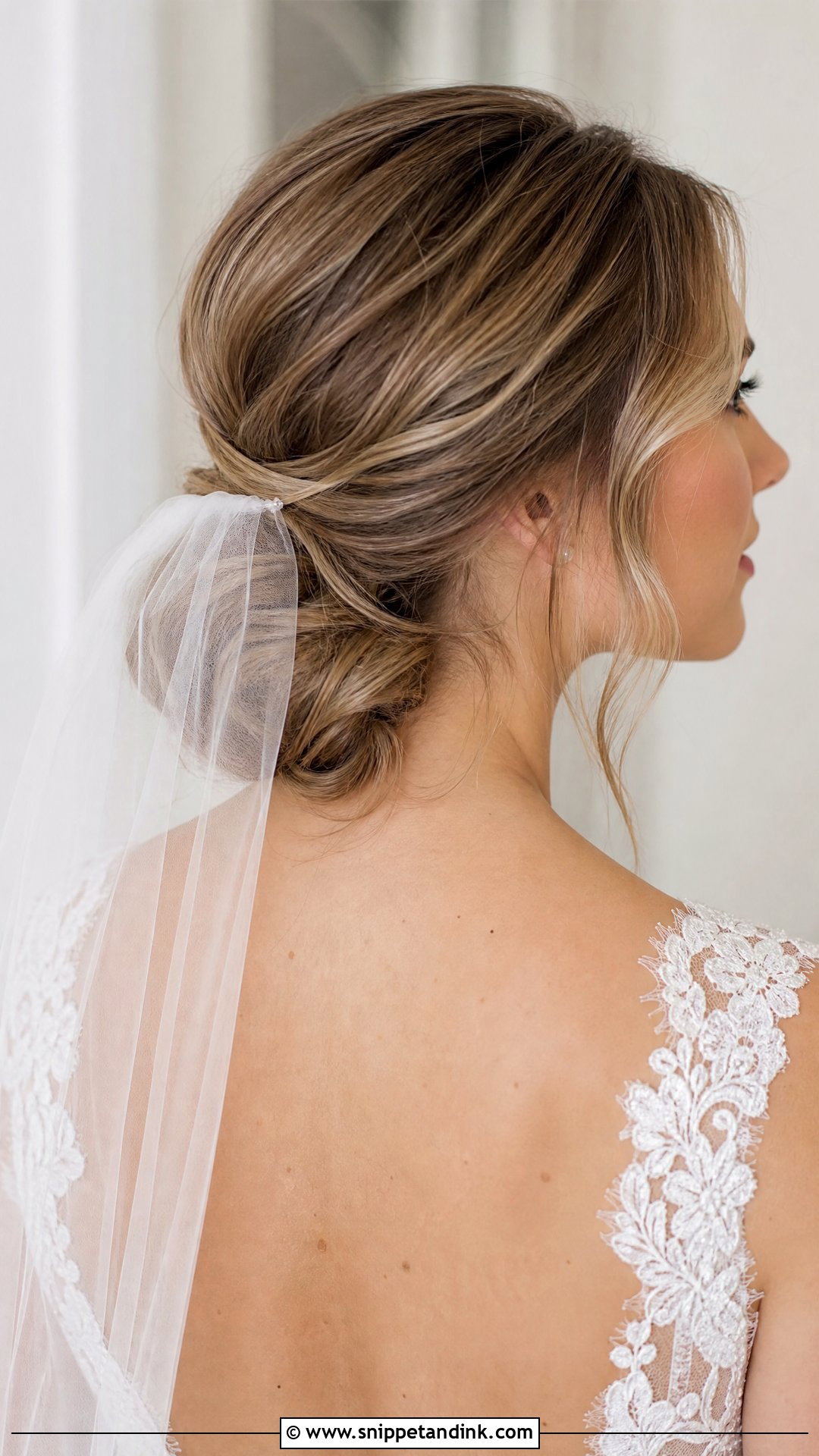
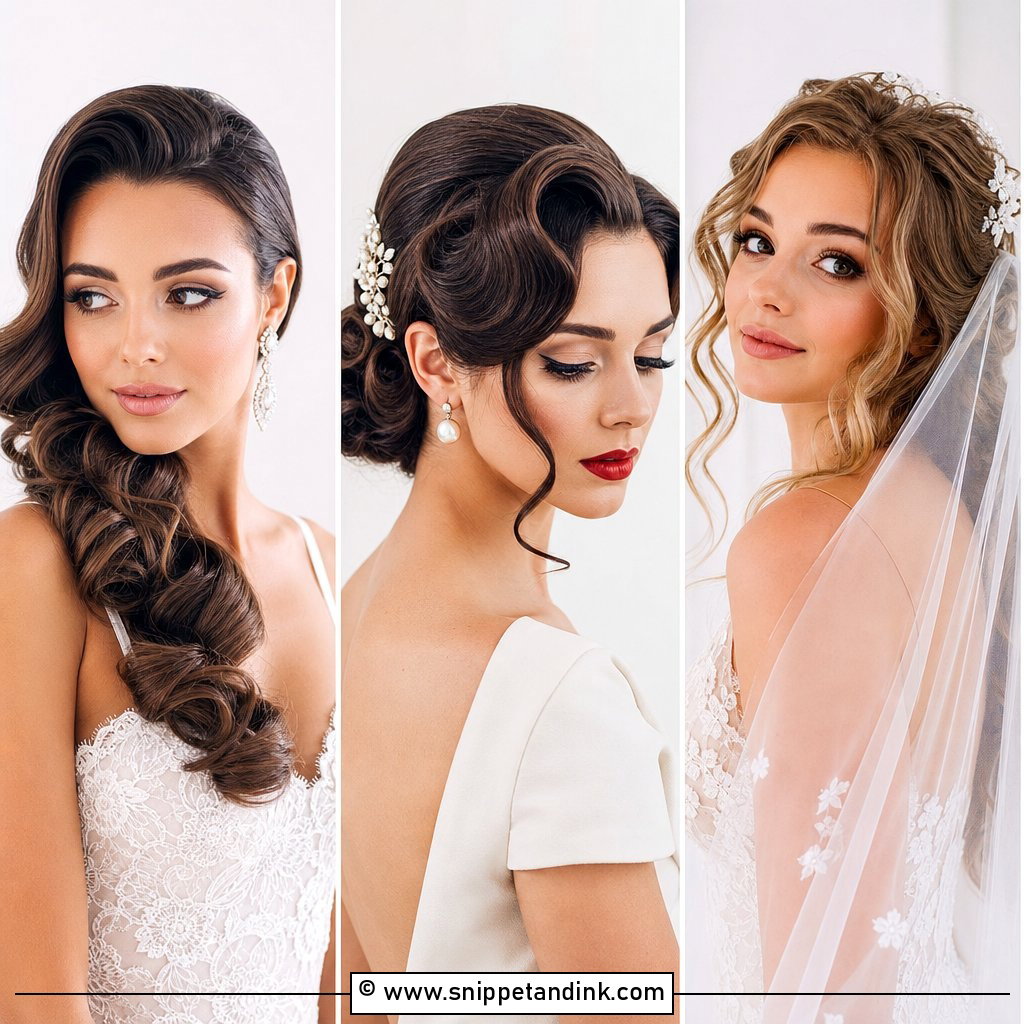
The bun gives a veil something solid to hold onto, which is why this pairing lasts so well. I place the comb just above the bun for a traditional fall, or tuck it underneath for a cleaner line where the bun stays visible in photos. A little texture at the crown helps the comb grip without extra product. Fingertip, cathedral veils, pearl-edged and simple tulle all sit well here. Higher placement gives more float down the aisle; lower placement shows more of the hair.
4. Soft Low Bun Wedding Hair With Pearl Pins
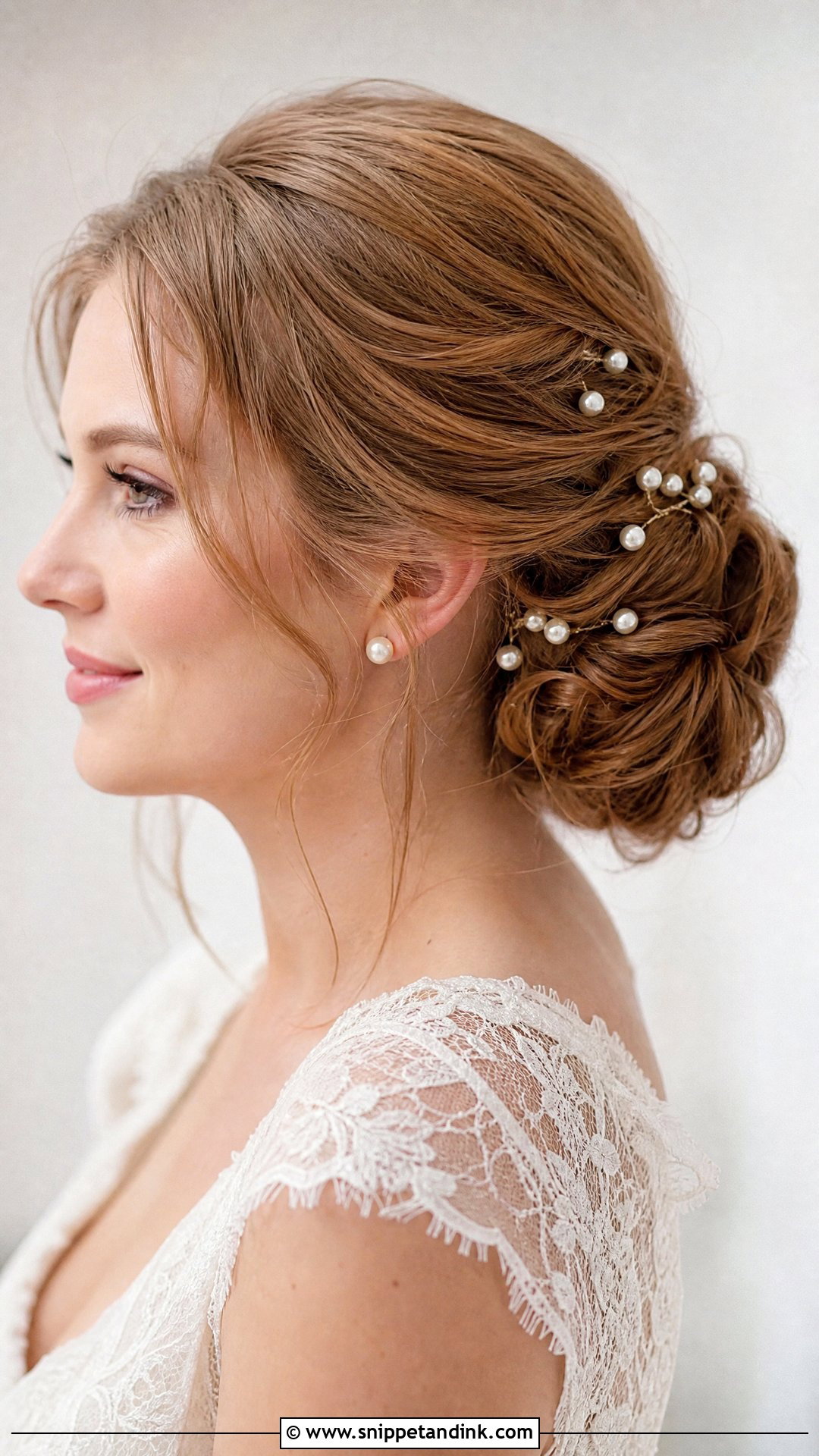
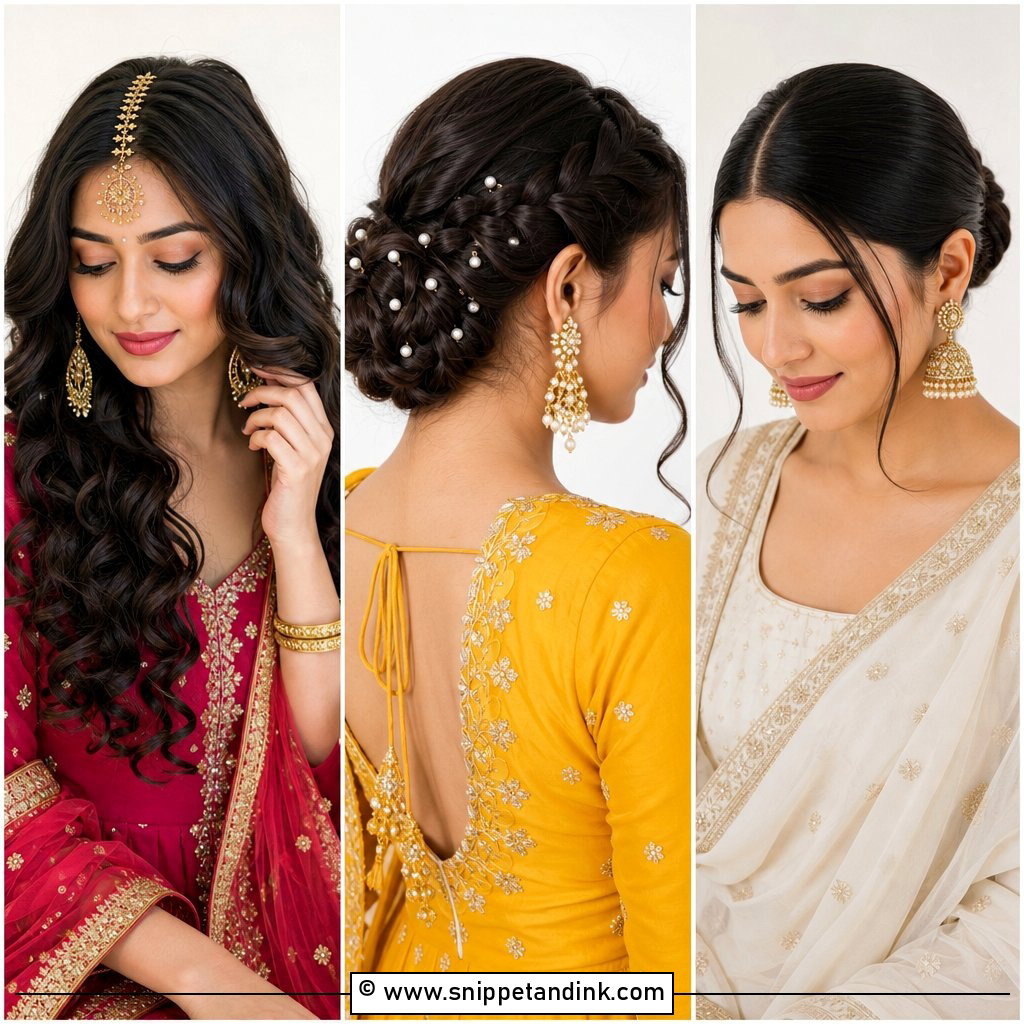
Pearls need somewhere to sit. On a smooth bun they look stuck on, but on one with a little texture they settle into the twists. I put them in a loose curve on one side, following the line of the bun rather than dotting them evenly around it. They’re a good bridge if your gown has pearl beading and your earrings are plain. Six or seven is usually plenty; past that, the bun starts to look like a pincushion.
5. Soft Low Bun Wedding Hair With Braids
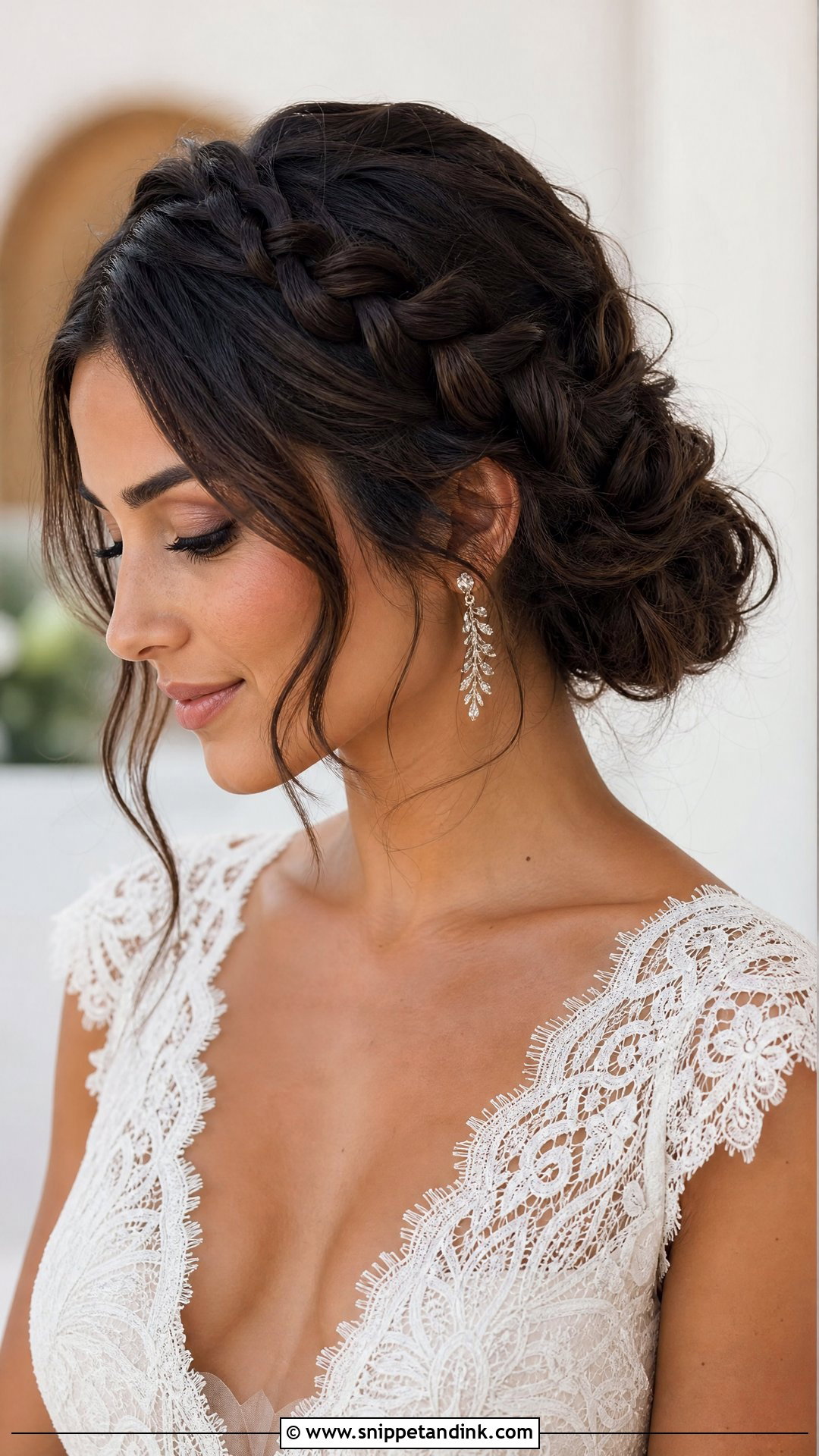
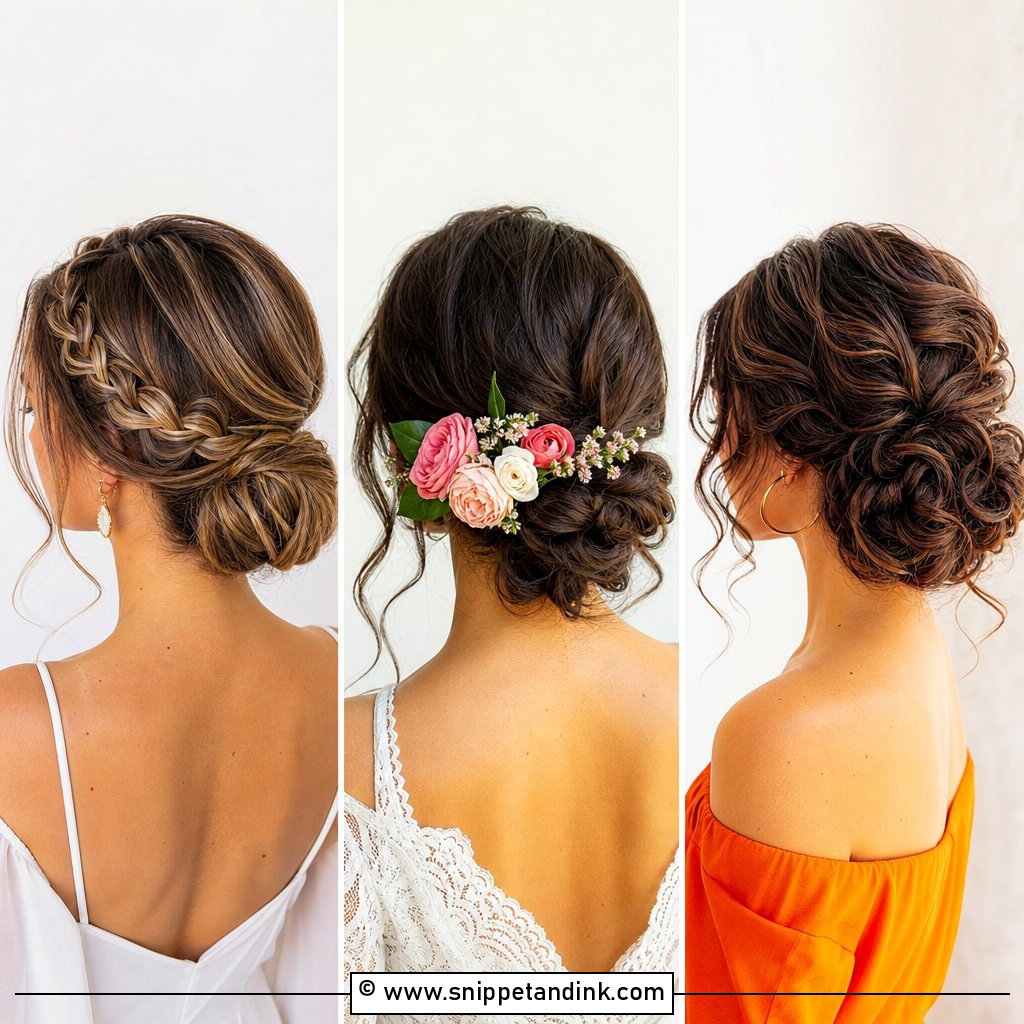
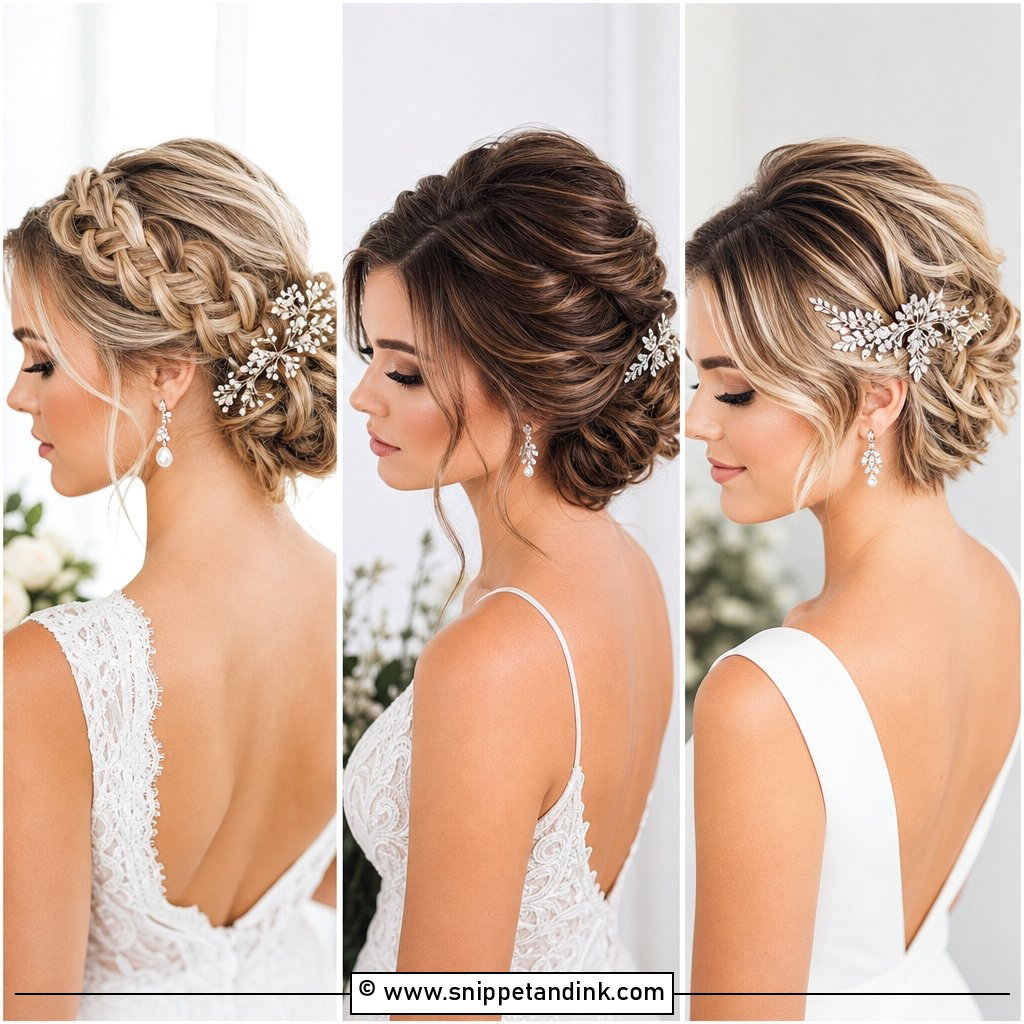
A braid running into the bun adds detail and does a practical job: it locks down front layers that would otherwise slip free in the wind. That makes it my first suggestion for an outdoor ceremony. I start the braid near the part or along one side and loosen it gently with my fingers once it’s pinned, so it looks soft rather than tight against the scalp. Lace sleeves, a boho gown or a few floral pins suit it.
6. Soft Low Bun Wedding Hair With Middle Part
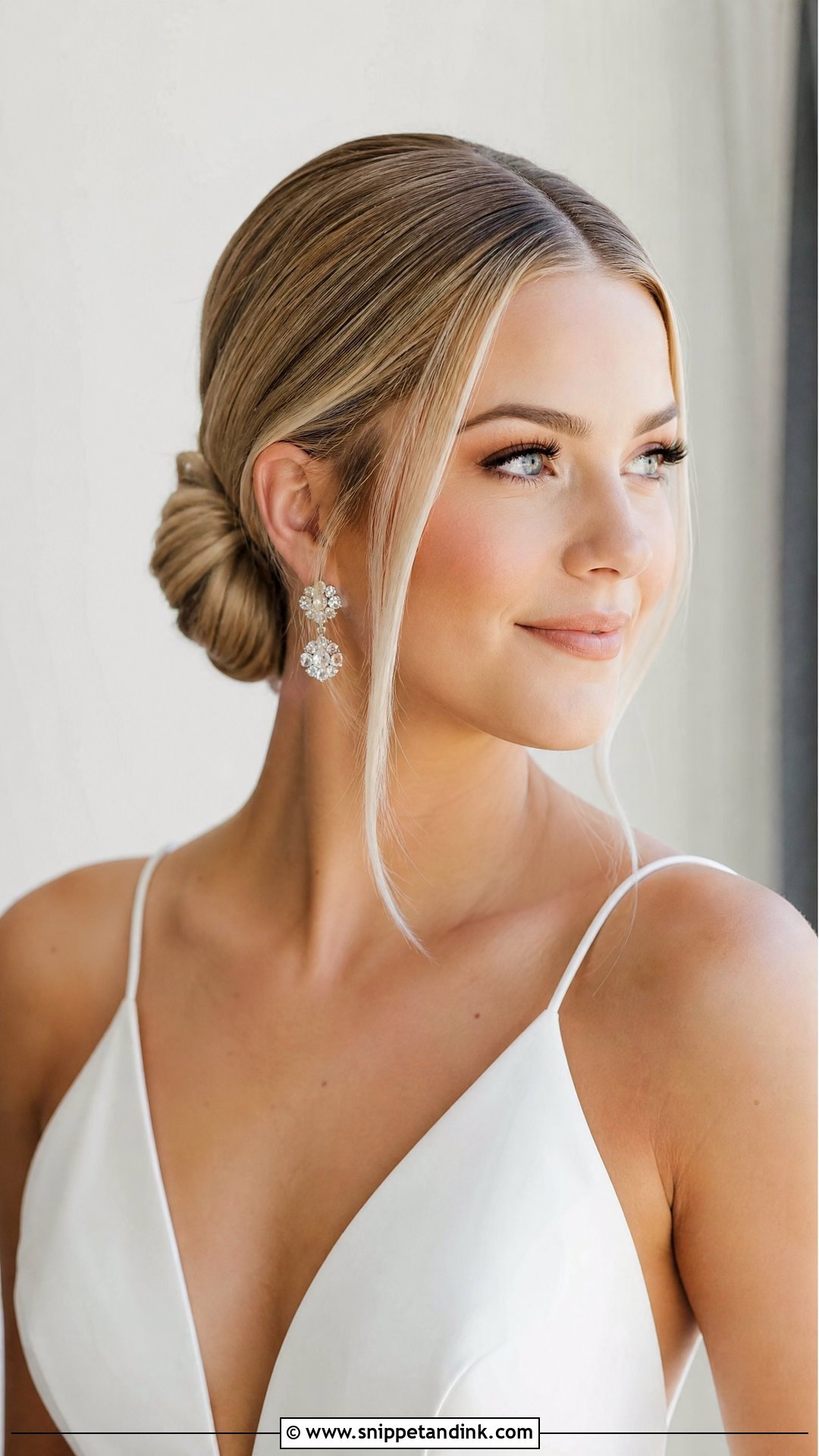
With a middle part, the front has to be smooth but not scraped back, or the face looks severe. I keep a little lift at the crown and a rounded bun at the nape to balance the clean line. Because nothing is happening at the sides, the attention goes to your earrings, neckline and makeup. Long front layers can be tucked behind the ears or left as a couple of wisps. The finish reads current and quiet, and it suits a symmetrical face especially well.
7. Soft Low Bun Wedding Hair With Side Part
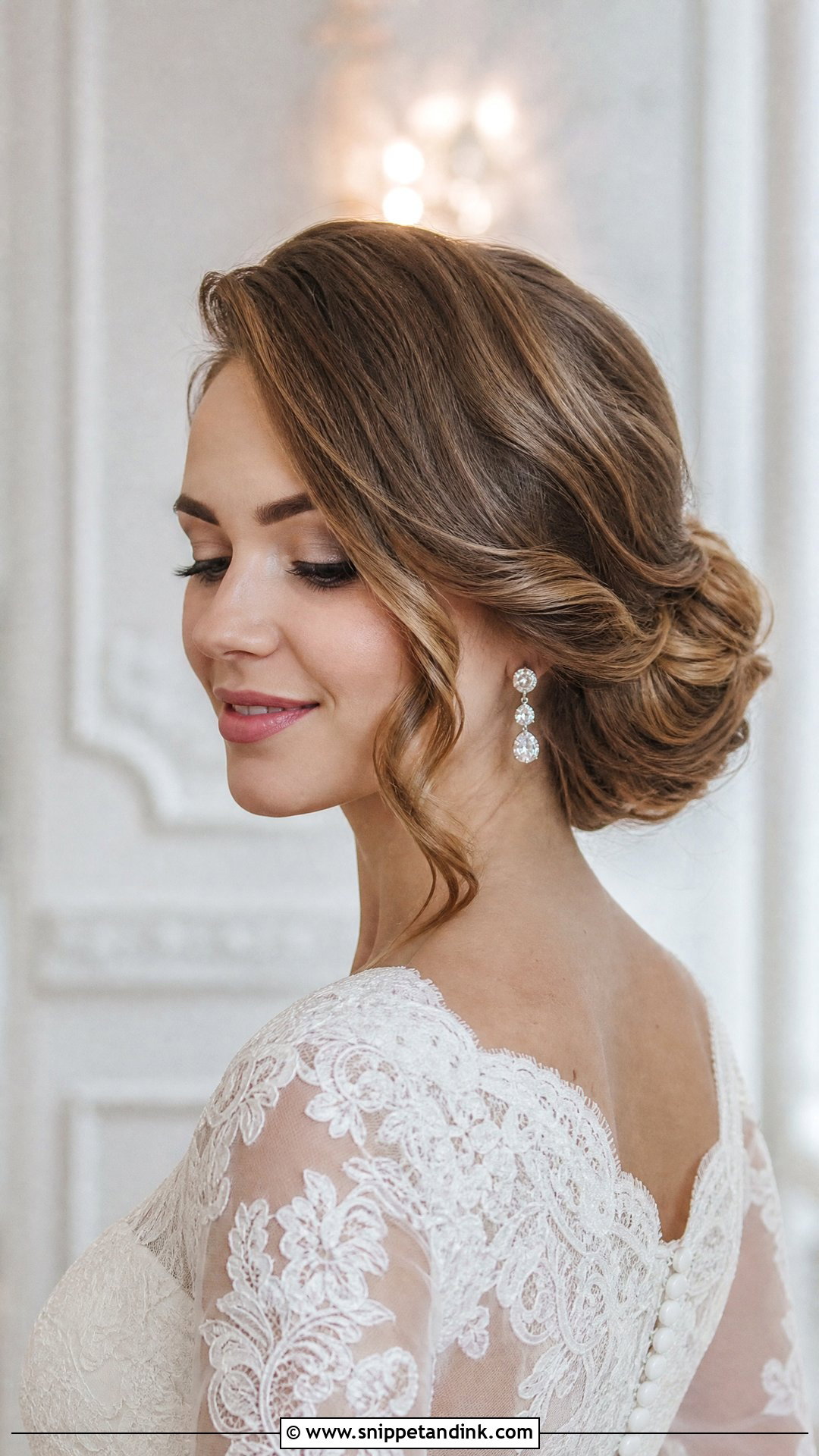
A side part brings a touch of old-Hollywood movement to a low bun. The front can sweep across the forehead, curve back into the bun, or drop into one face-framing piece. I set the bun slightly off center, toward the light side, so the side sweep has something to balance against. Vintage lace and drop earrings pair well. Finish with a flexible spray rather than a stiff one; the sweep is meant to move.
8. Soft Messy Low Bun Wedding Hair
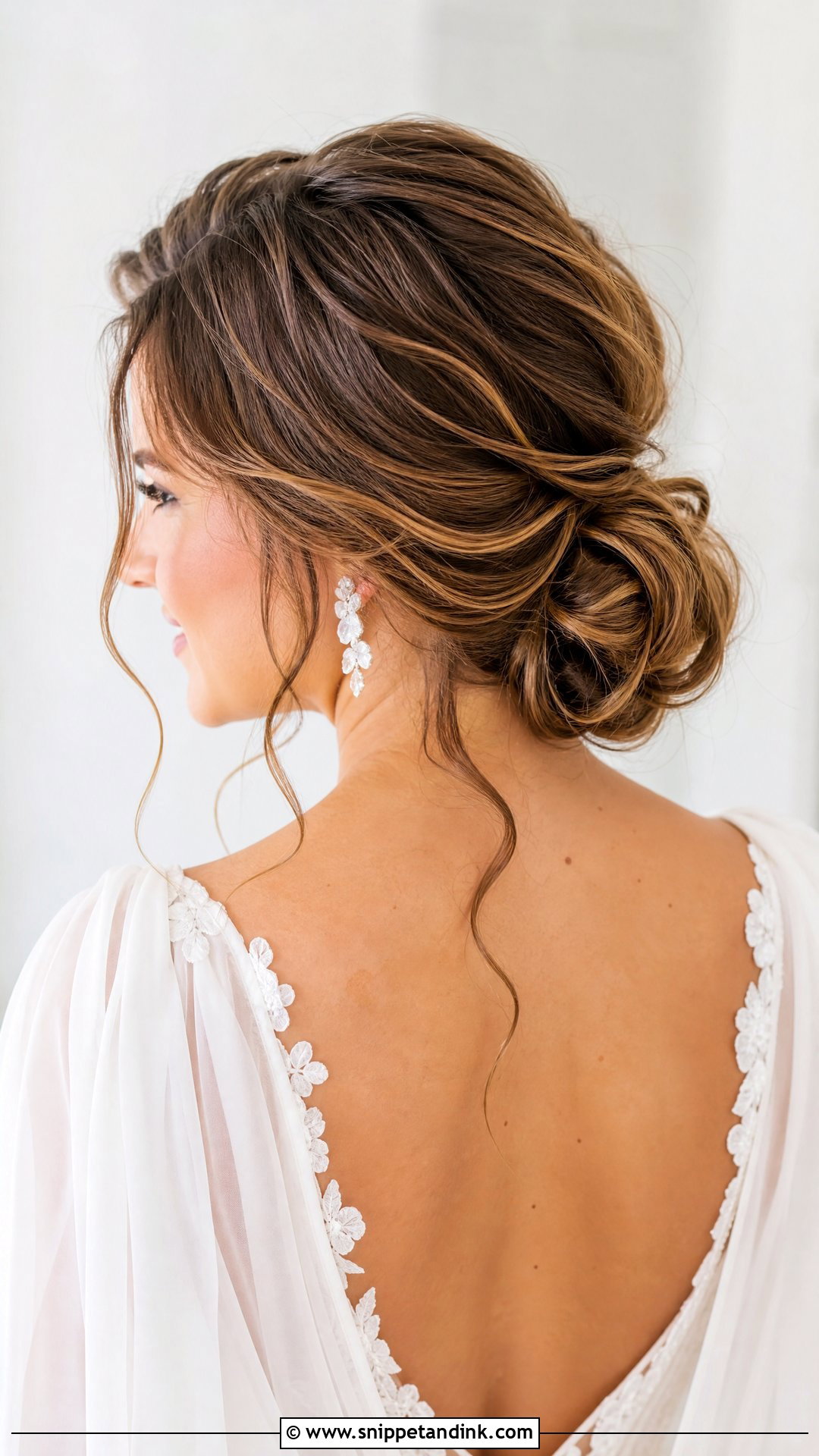
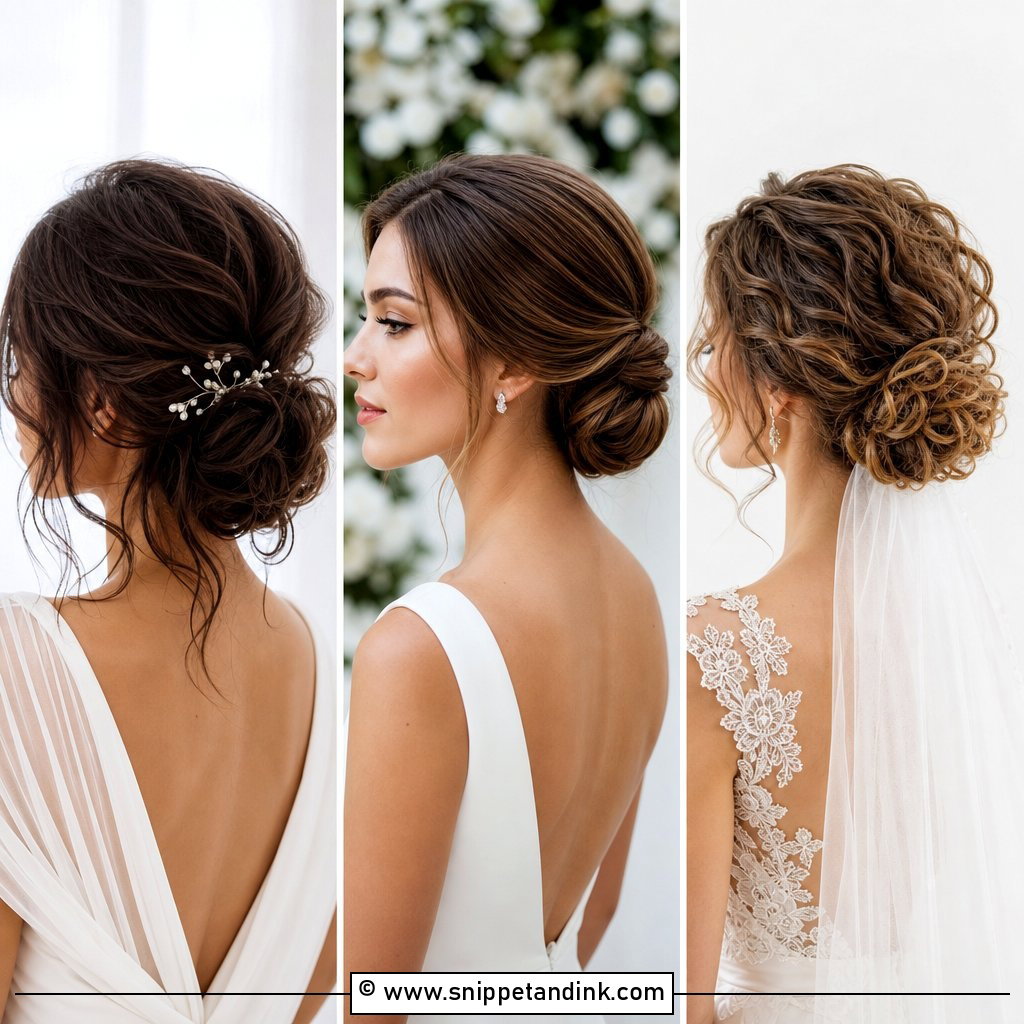
Messy should never mean rushed. Underneath every relaxed bun I build a firm base, usually a small pinned ponytail or a pair of crossed pins, so the loose sections on top have something to anchor to. The hair gets curled first and then pinned in pieces, with a few bends left free at the temples and nape. Garden, beach and barn venues suit it. The skill is making every loose strand look chosen, which takes longer than a neat bun, not less time.
9. Soft Textured Low Bun Wedding Hair
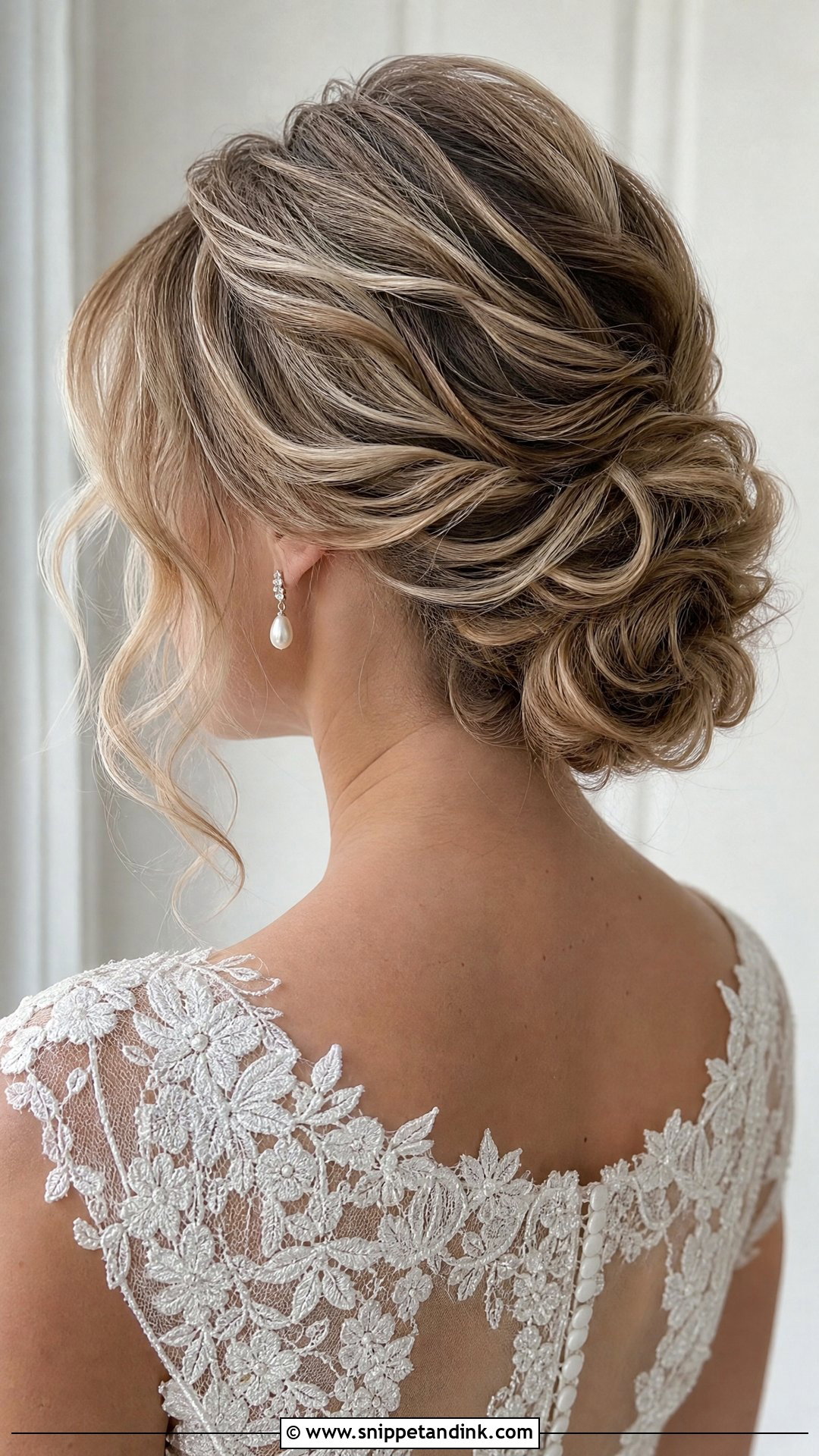
Texture is what makes a bun read in photos, especially from behind. This one is built from waves, twists and pinned sections layered at the nape. Highlighted or balayage hair shows it best, because the lighter and darker strands outline each twist. Medium to long hair can take this shape without it getting bulky. I keep the edges slightly undone and add soft lift at the crown so the bun isn’t the only point of volume.
10. Soft Low Bun Wedding Hair For Thin Hair
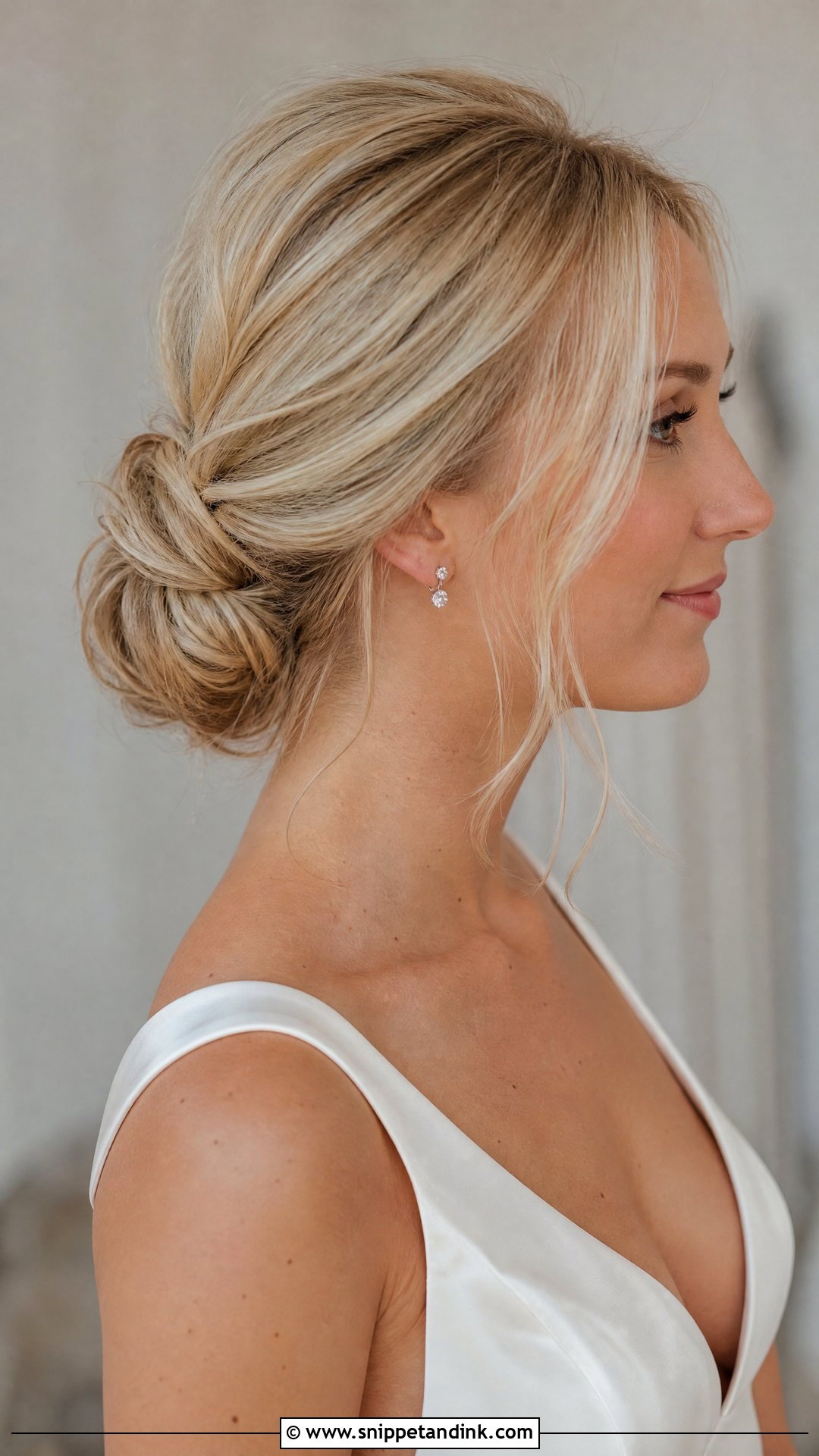
Thin hair can wear a full bun with the right preparation. Light backcombing at the roots, a texture spray, a small padding or a few clip-in extensions create fullness that doesn’t look added. I twist the hair rather than coil it, because a twist spreads the hair wider and gives the impression of more. Oils and heavy creams are the enemy here: they weigh fine strands down within an hour. Keep the front soft and the bun gently pulled wider with your fingertips once it’s pinned.
11. Soft Low Bun Wedding Hair For Long Hair
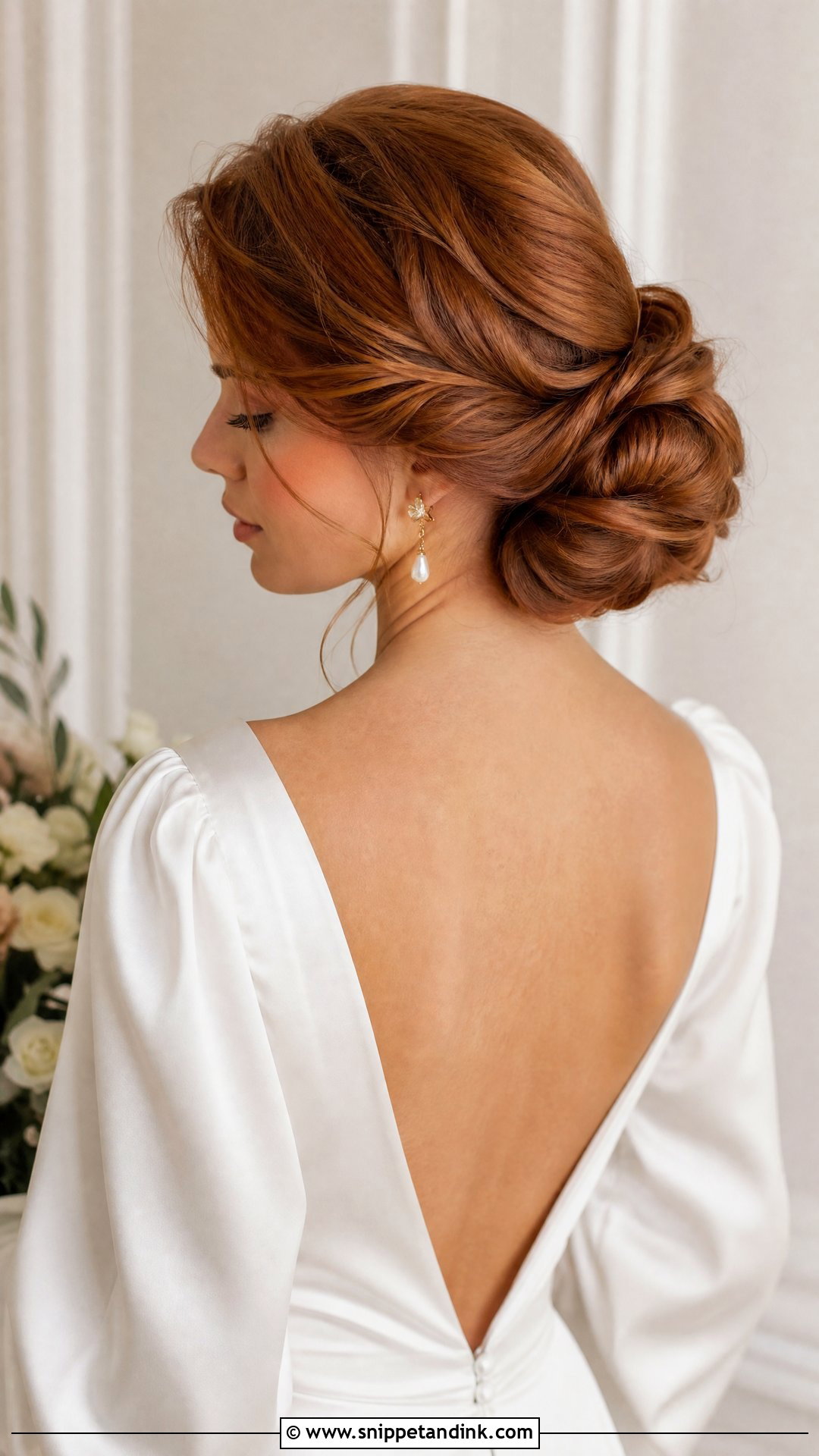
Long hair has the material for a wide, folded or braided bun, but it also brings weight. If all that length hangs off one elastic, it drags and gives you a headache by mid-afternoon. I spread the load across a secure base with a ring of crossed pins, and I curl the lengths first so the bun has grip and doesn’t slide. The result keeps the sense of length through its fullness without pulling at the scalp.
12. Soft Low Bun Wedding Hair For Medium Hair
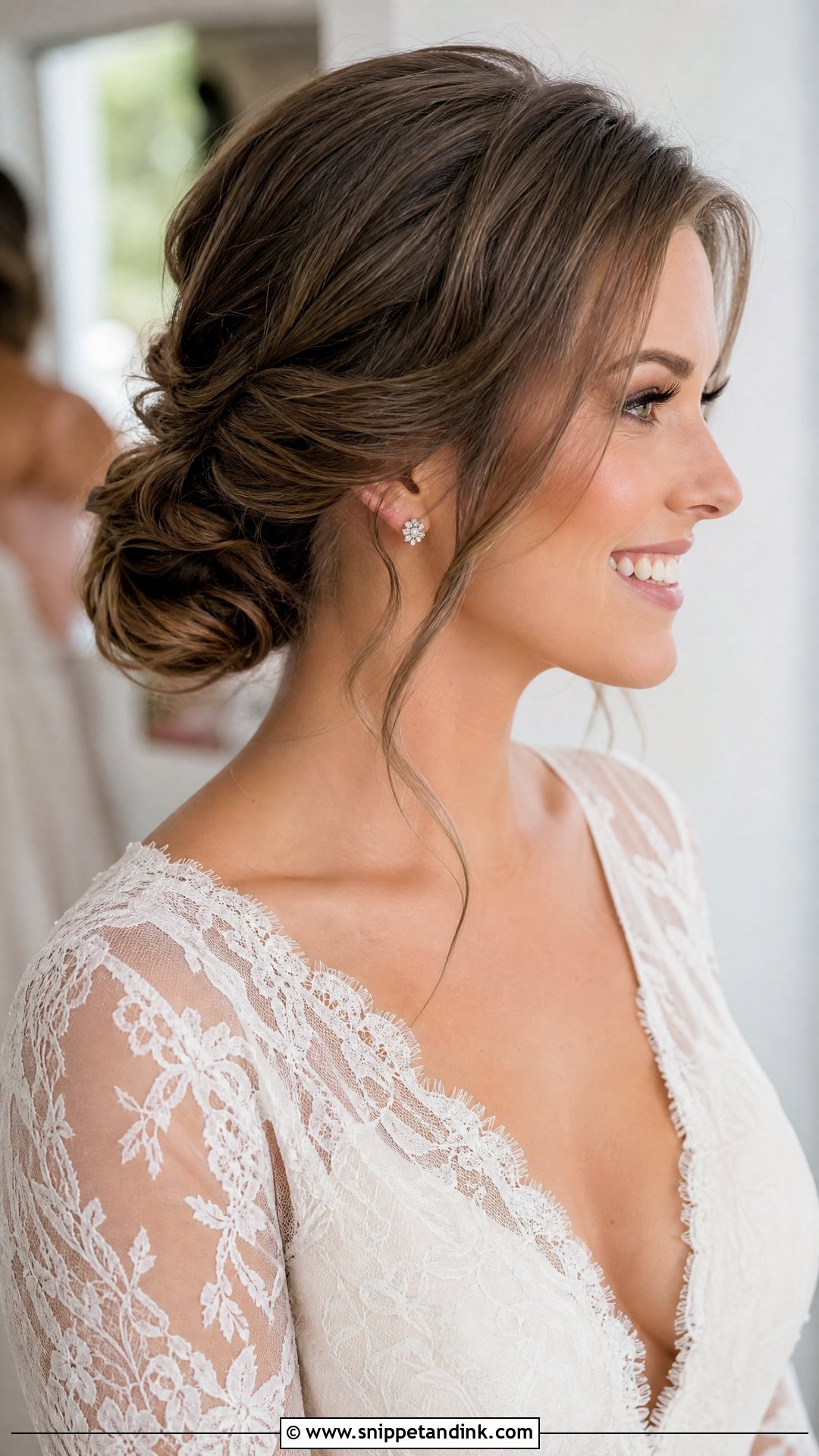
Medium hair is the easiest length to work with for a low bun: long enough to pin securely, short enough not to get bulky. A tucked chignon, twisted bun or loose knot all work. Shorter layers that won’t reach the nape can become face-framing pieces instead of being forced in, where they’d only spring out later. I curl everything first for bend and grip. It suits plain satin and floral lace equally.
13. Soft Low Bun Wedding Hair With Curtain Bangs
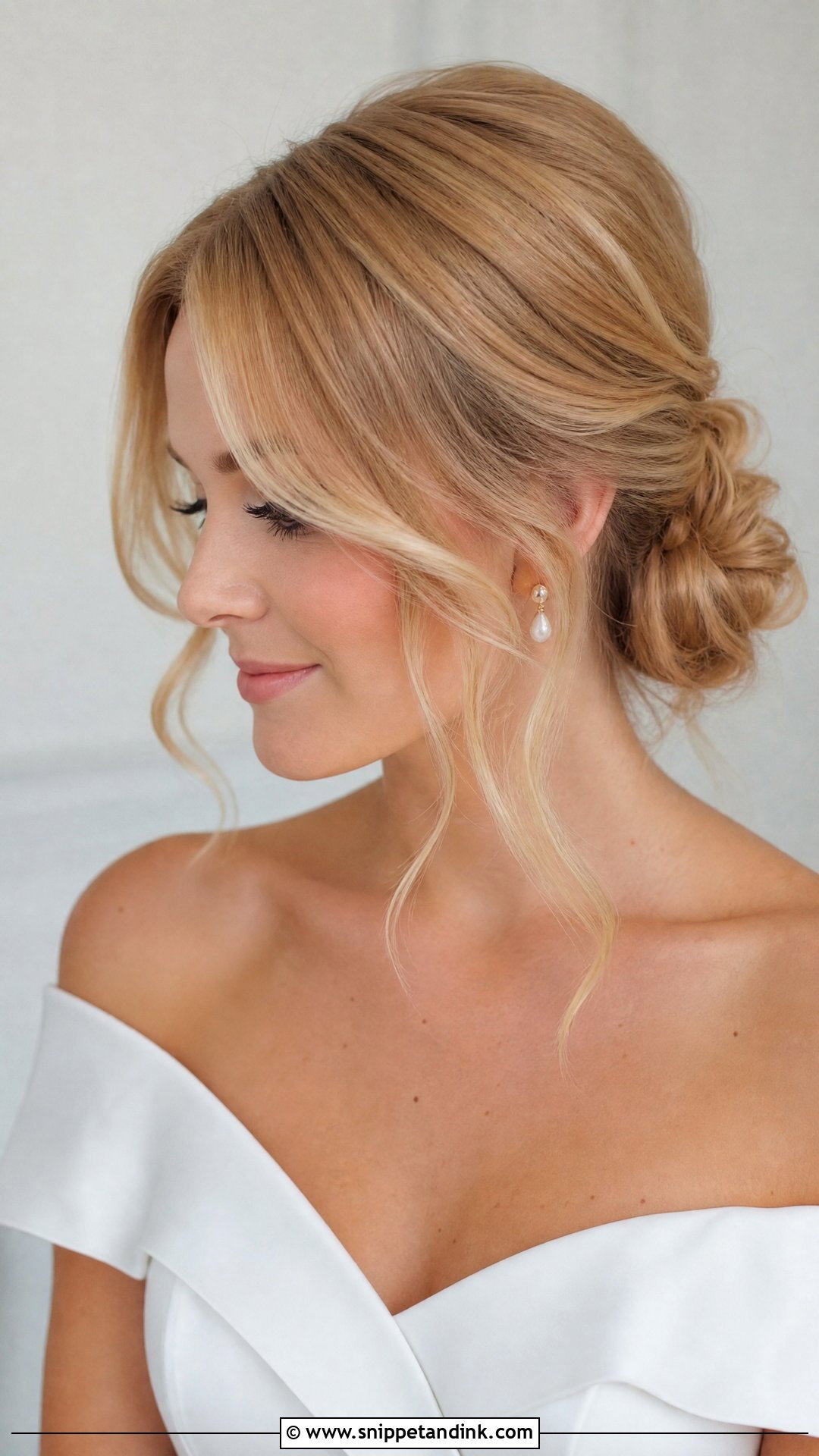
Curtain bangs frame the face on their own, so they pair naturally with a neat bun at the nape. I blow them out with a round brush in a gentle curve and blend the ends into loose side pieces. If you wear curtain bangs every day, keep them; brides who pin them back for the wedding often say they didn’t recognize themselves in photos. Keep a little lift at the crown so the bangs don’t become the only shape on the head.
14. Soft Low Bun Wedding Hair With Loose Curls
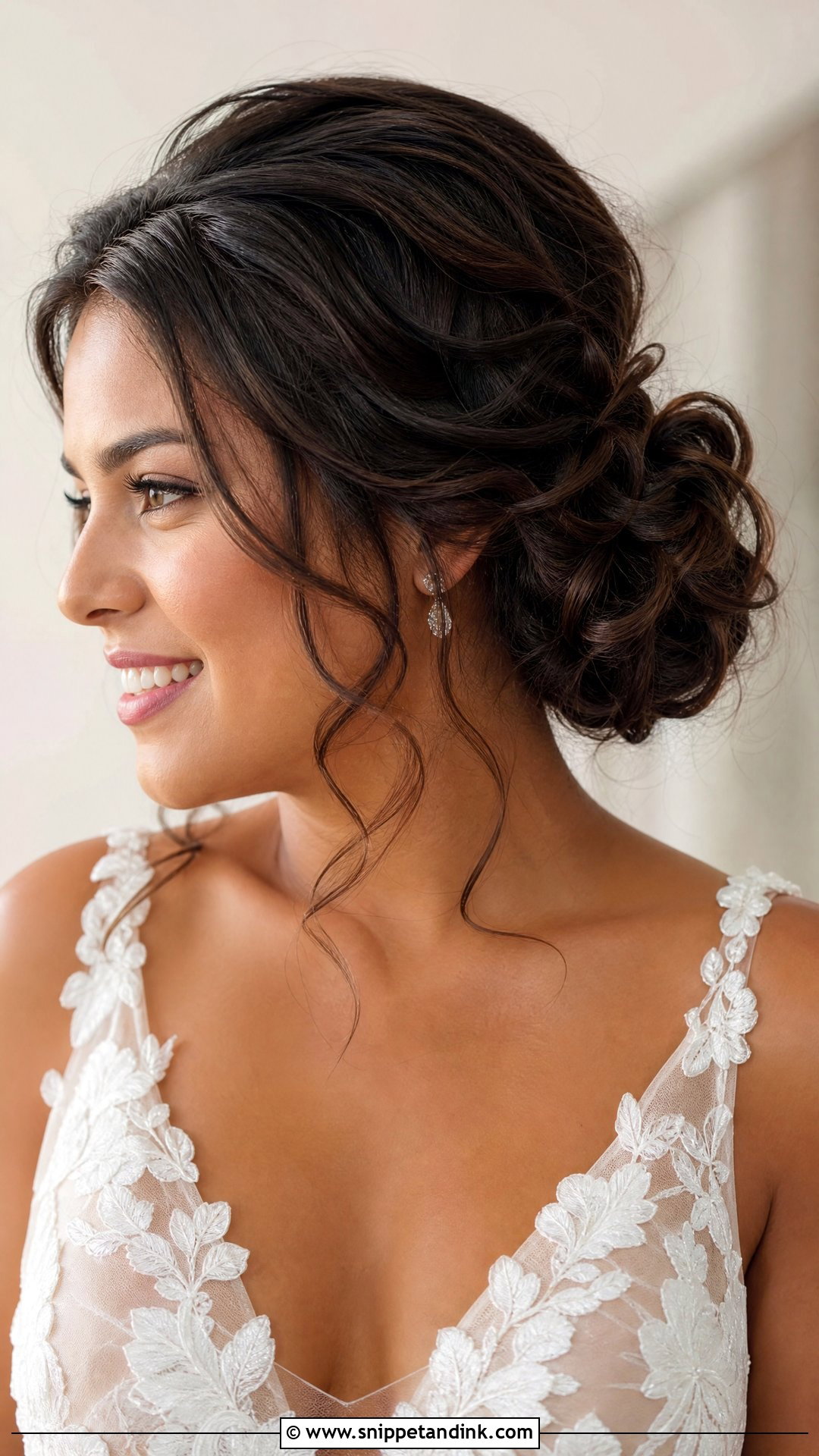
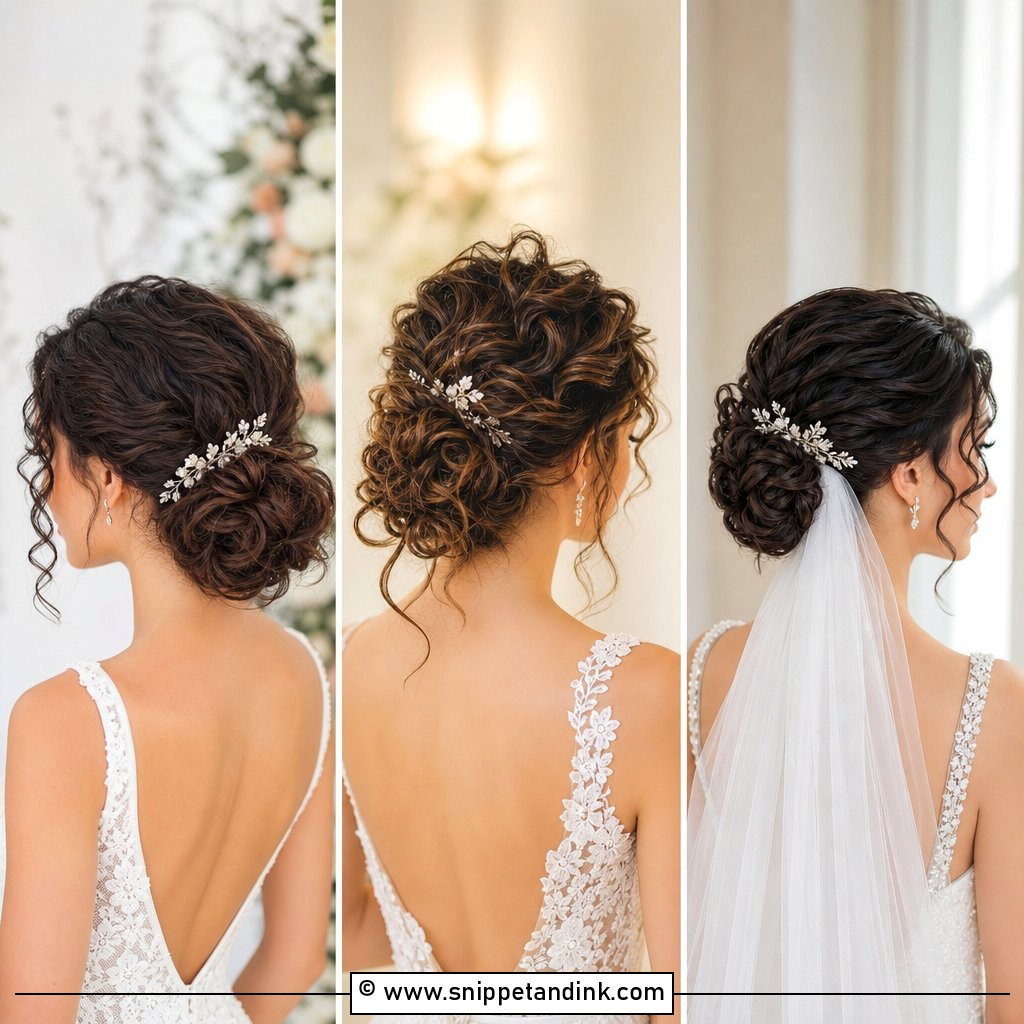
Here the curls stay visible inside the bun instead of being smoothed away. I curl the whole head, let every curl cool in a pin, then gather them loosely at the nape with enough room that each one still shows. A few tendrils around the face echo the shape. The risk is flat curls by evening, so lightweight products and that cooling time are non-negotiable. Lace, tulle and chiffon suit the softness.
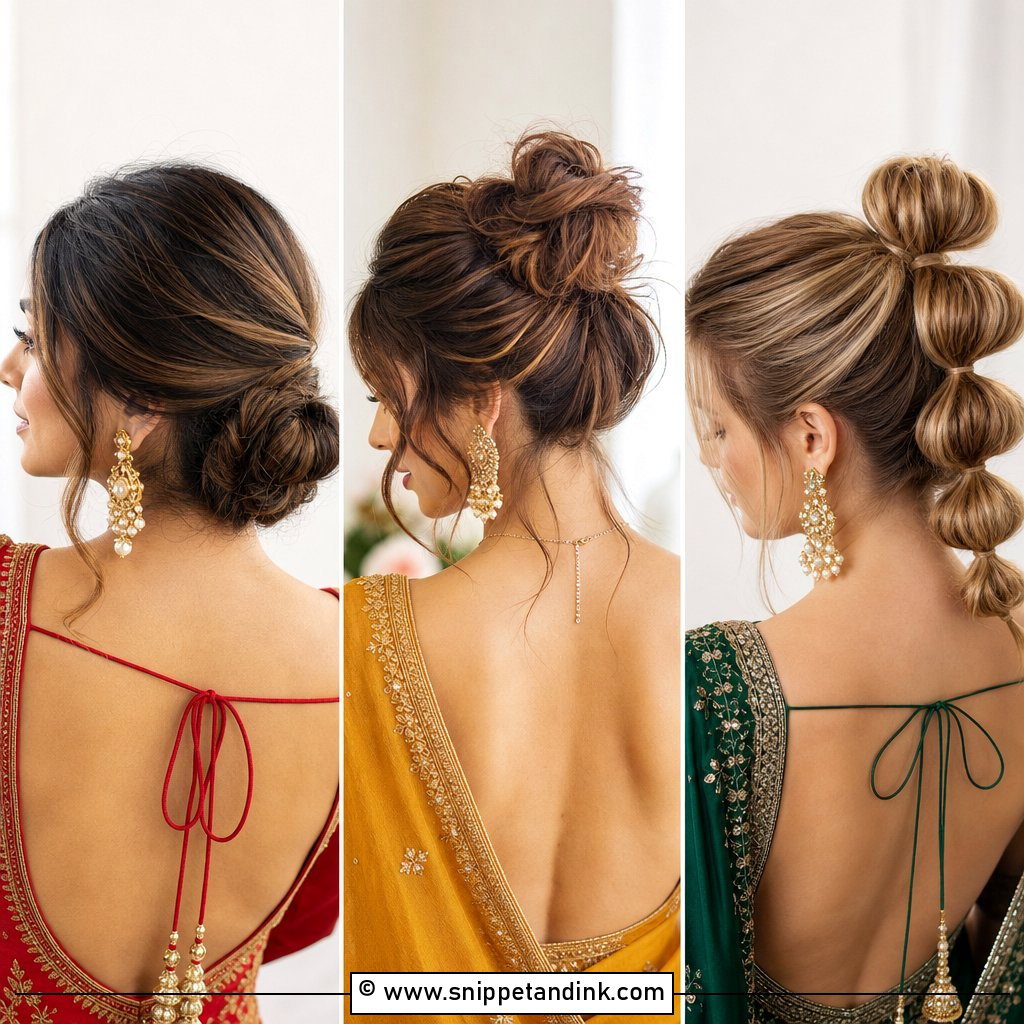
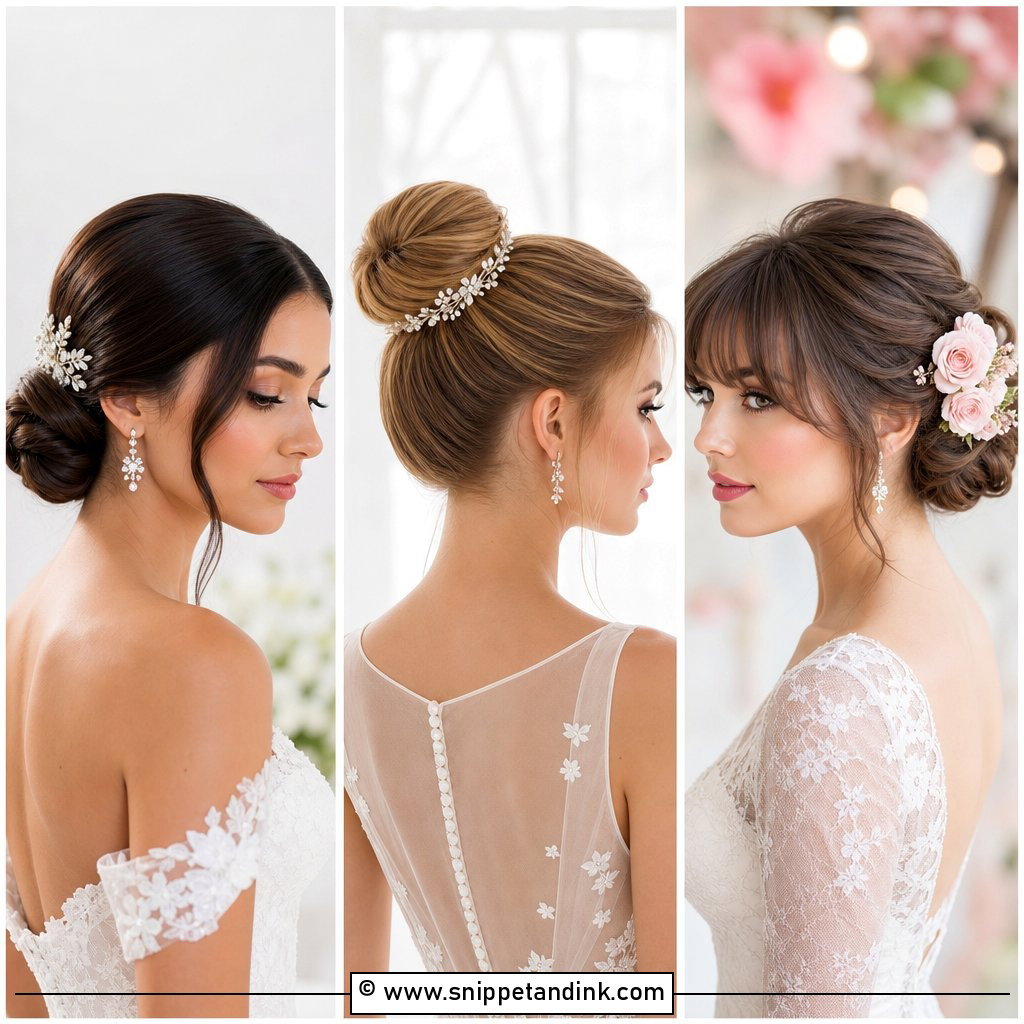
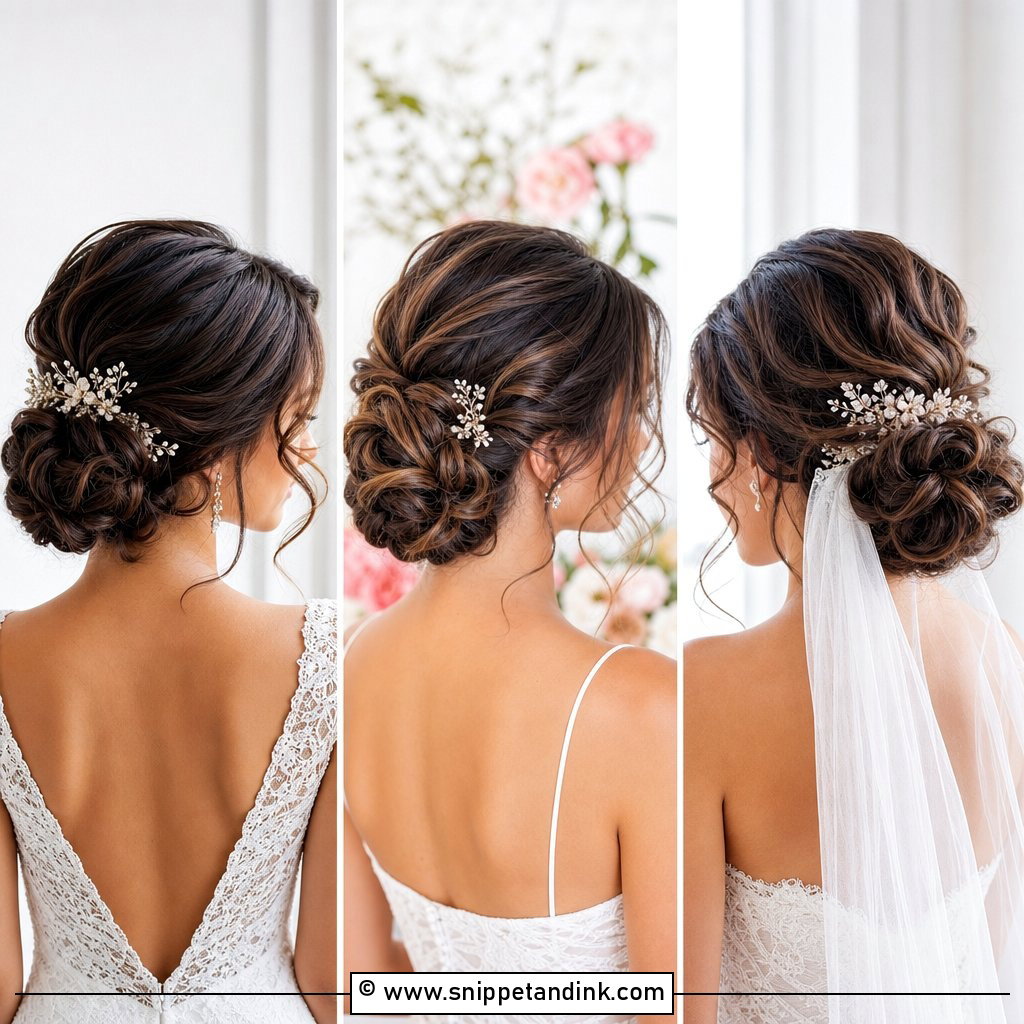
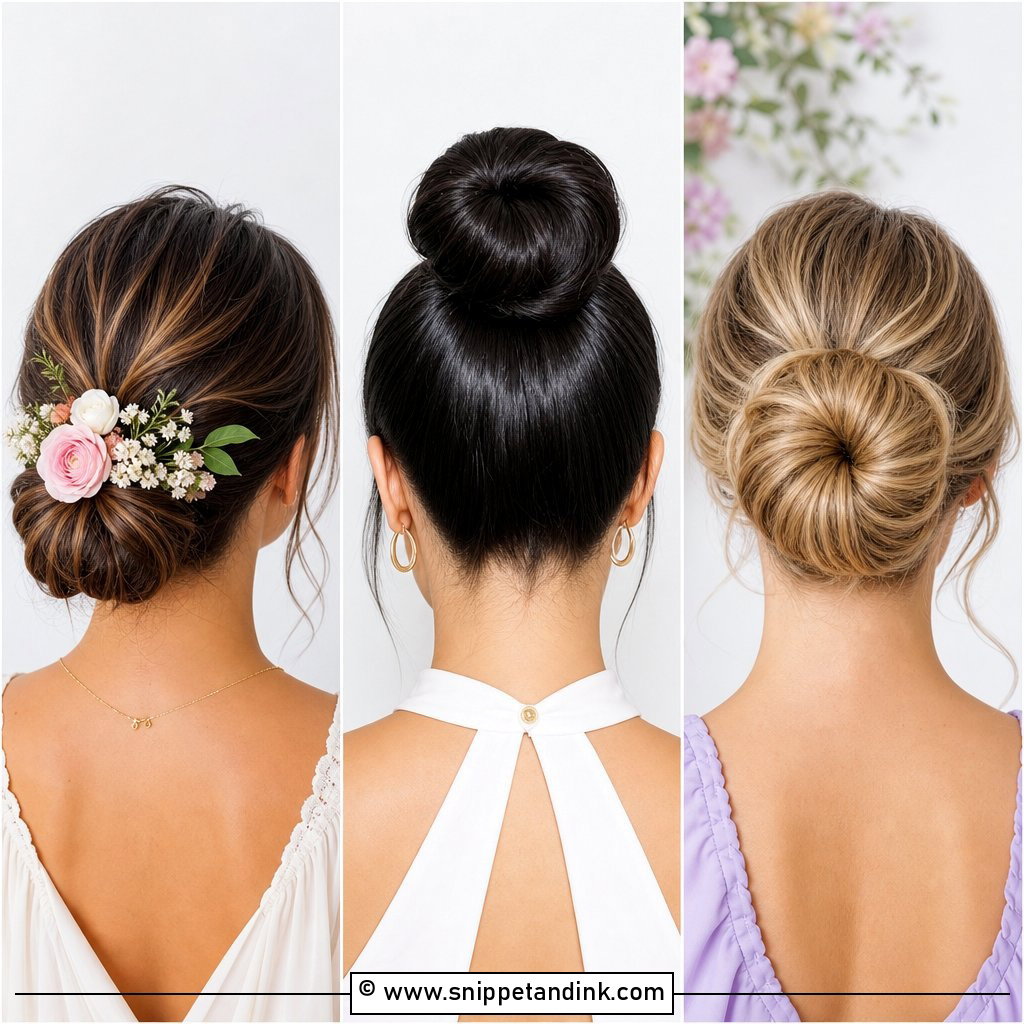
15. Soft Low Bun Wedding Hair With Floral Pins
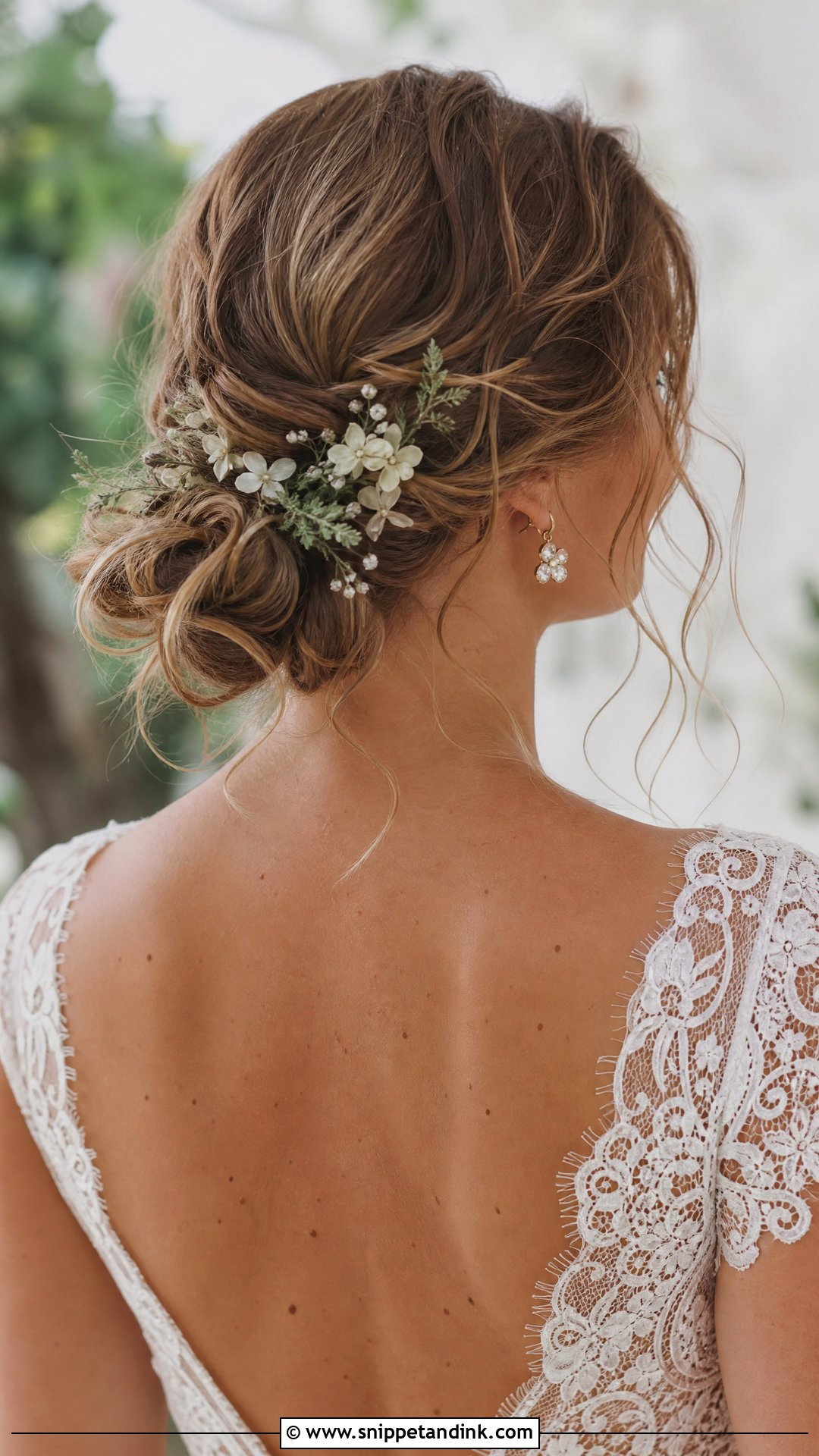
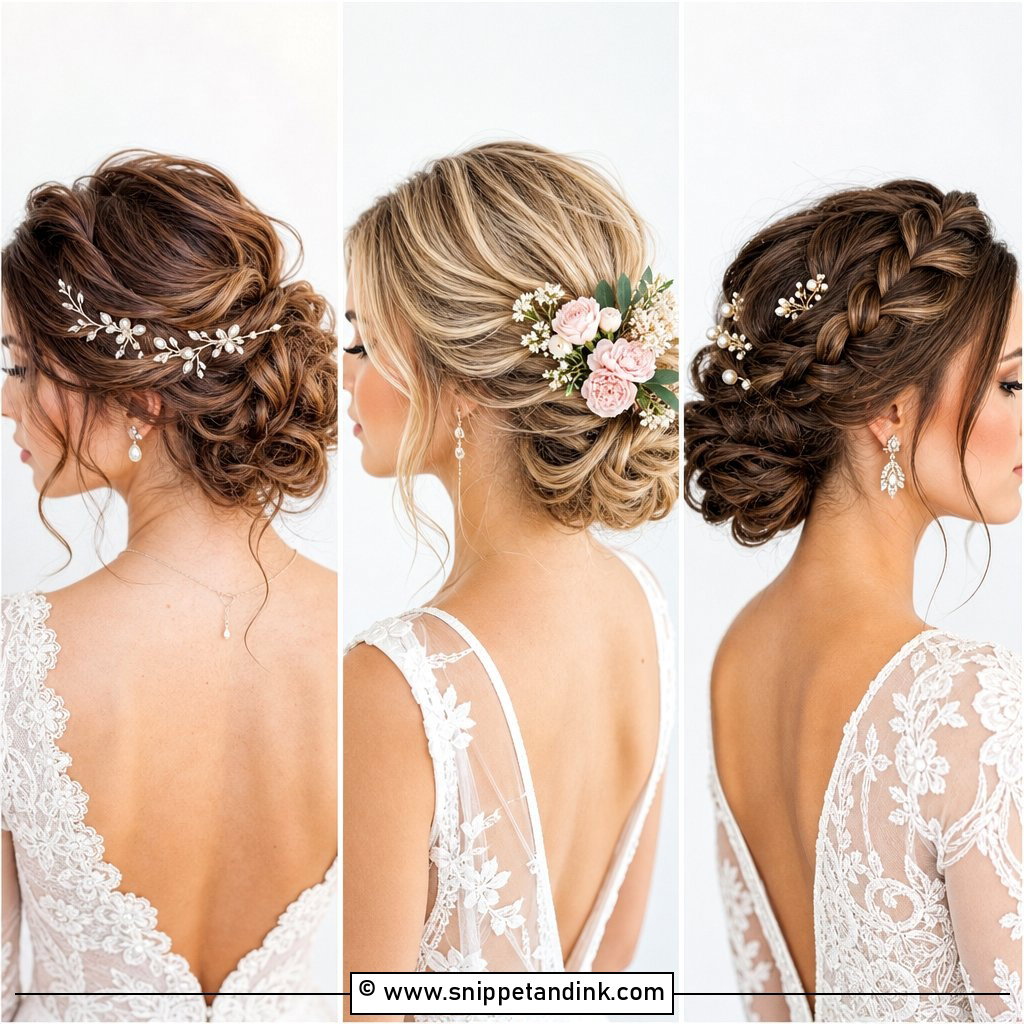
Flowers look best tucked around the bun in a small cluster, not scattered across the whole head. I match them to the bouquet or keep it to white blooms, baby’s breath or greenery. The bun has to stay textured, otherwise the stems have nothing to grip. Fresh flowers need planning: I ask the florist for wired stems and sturdy blooms that cope out of water, and I add them last, just before the dress goes on.
16. Soft Low Bun Wedding Hair With Hair Vine
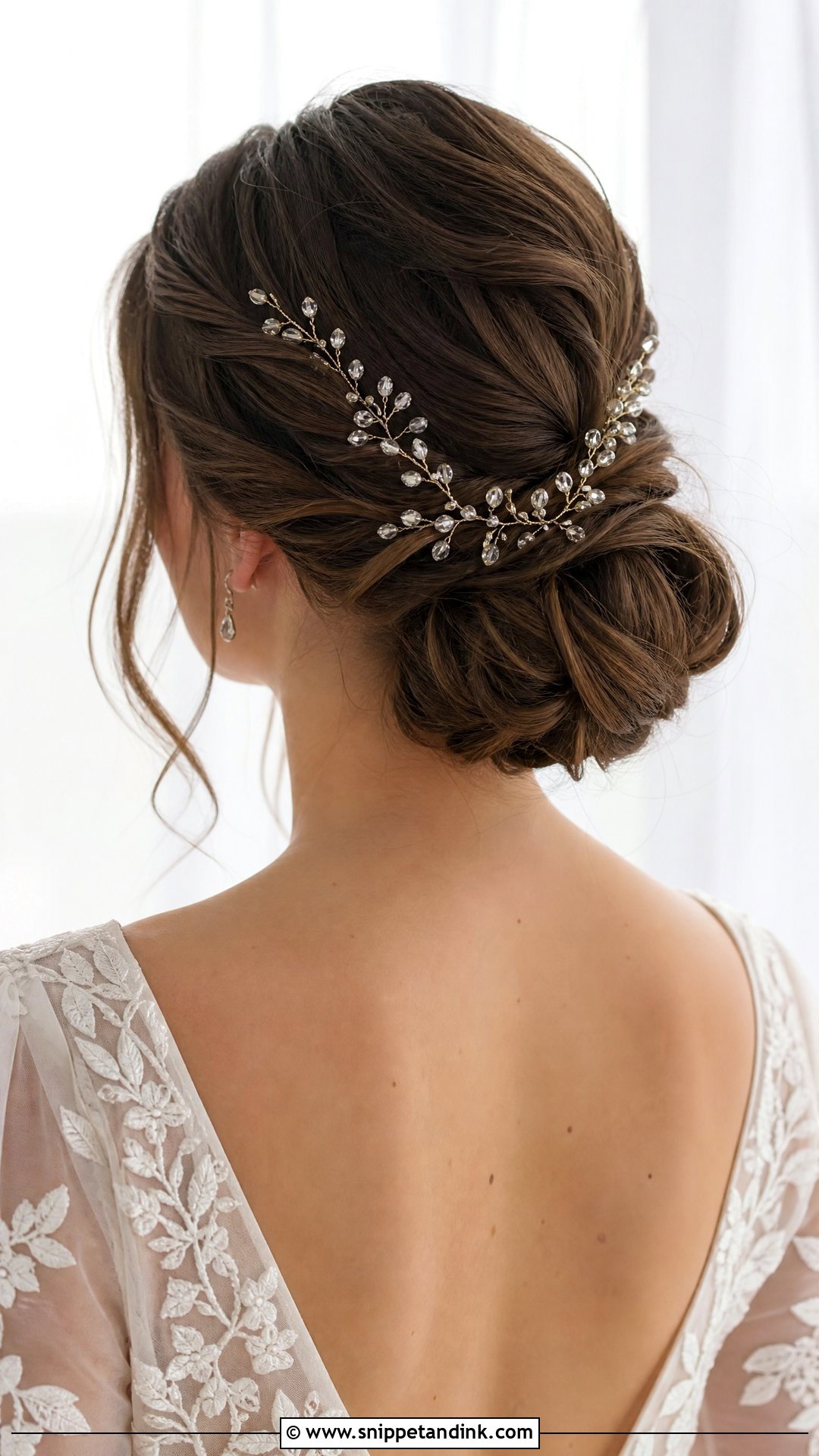
A hair vine gives sparkle without the weight of a tiara. I bend it to follow the curve of the bun, run it just above, or let it trail along one side. Textured buns hold a vine better, because the wire threads through the twists and stays put. Keep the front light with a couple of loose pieces or a soft part. It’s easy to pair with both a plain gown and a beaded one.
17. Soft Low Bun Wedding Hair With Twists
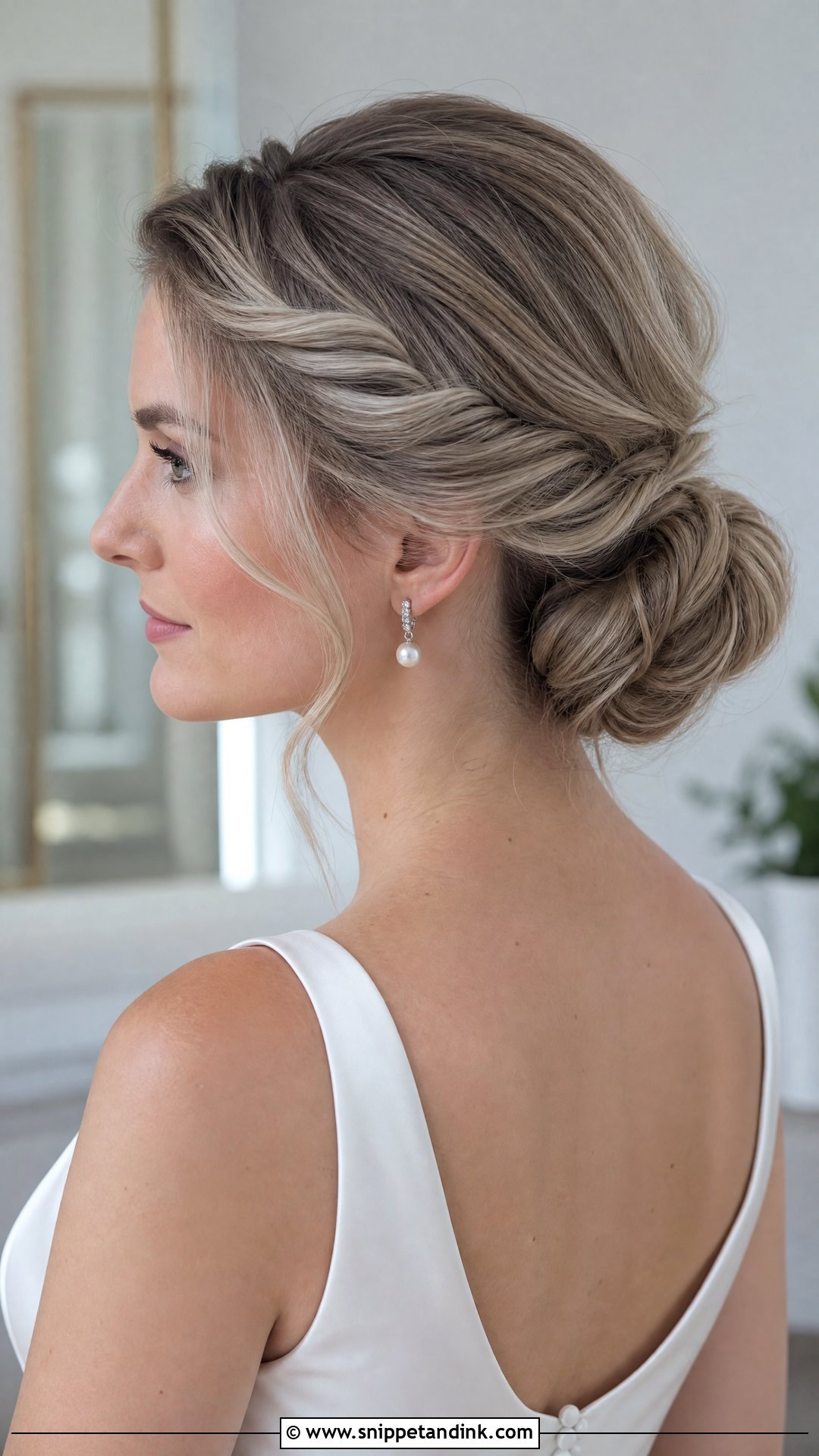
Twists give structure without the harder line of a braid. I take the front and side sections, twist them back toward the nape, and pin them into the bun, which keeps shorter layers from escaping. The bun itself can be rounded, loose or textured. It’s a quiet workhorse of a style: secure enough for a long day, soft enough for close-ups, and happy with or without pins, a comb or a veil.
18. Soft Sleek Low Bun Wedding Hair
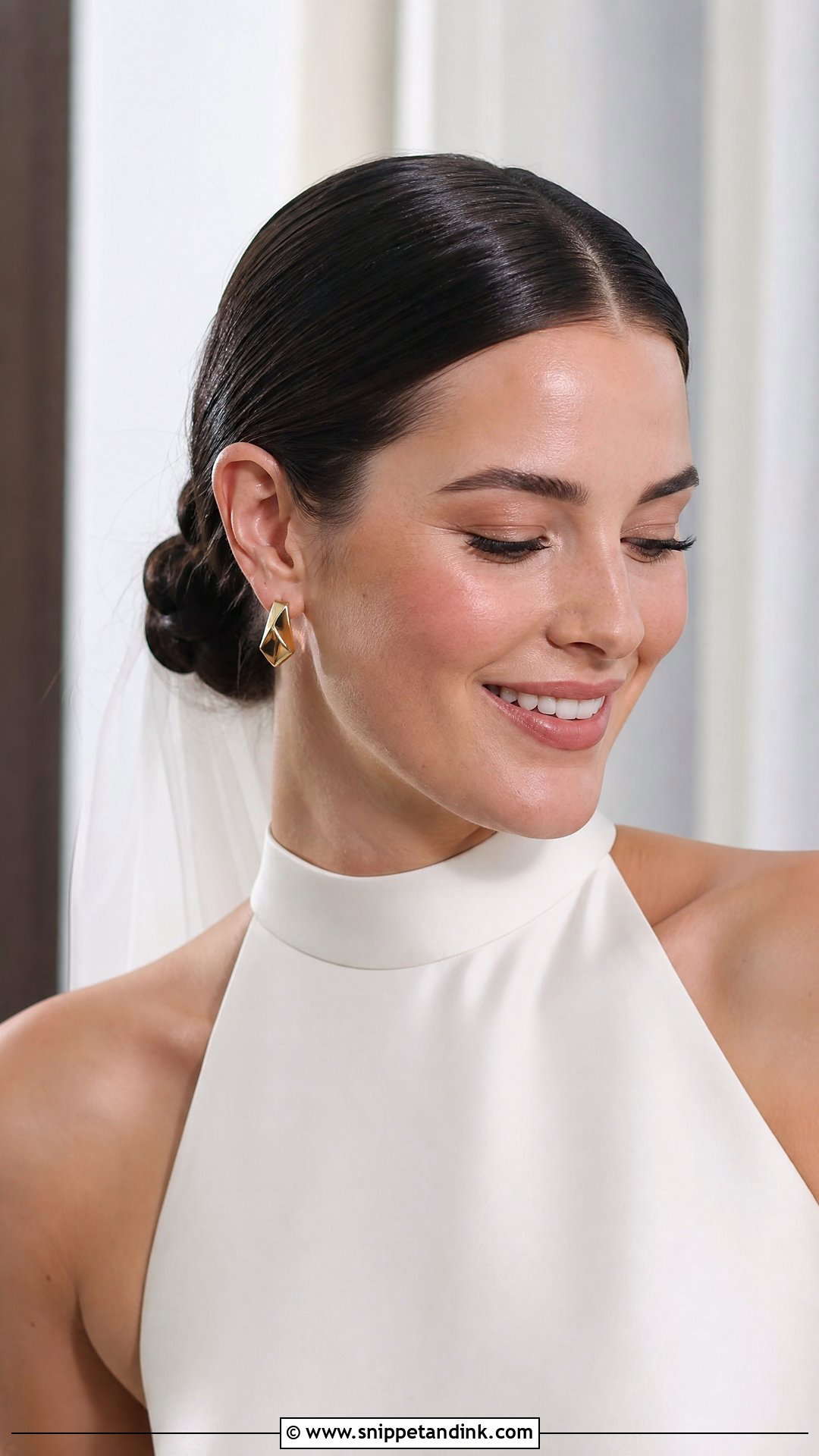
The sleek version has a clean part, smooth sides and a neat bun at the nape, but I still leave a little roundness in the shape so it doesn’t look severe. It suits minimalist gowns, satin, high necklines and statement earrings. Shine product goes on lightly with the palms; too much and the hair looks wet in flash photos. In humid weather this is the style I’d choose for you, since smooth, controlled hair has fewer places for frizz to show.
19. Soft Low Bun Wedding Hair With Comb
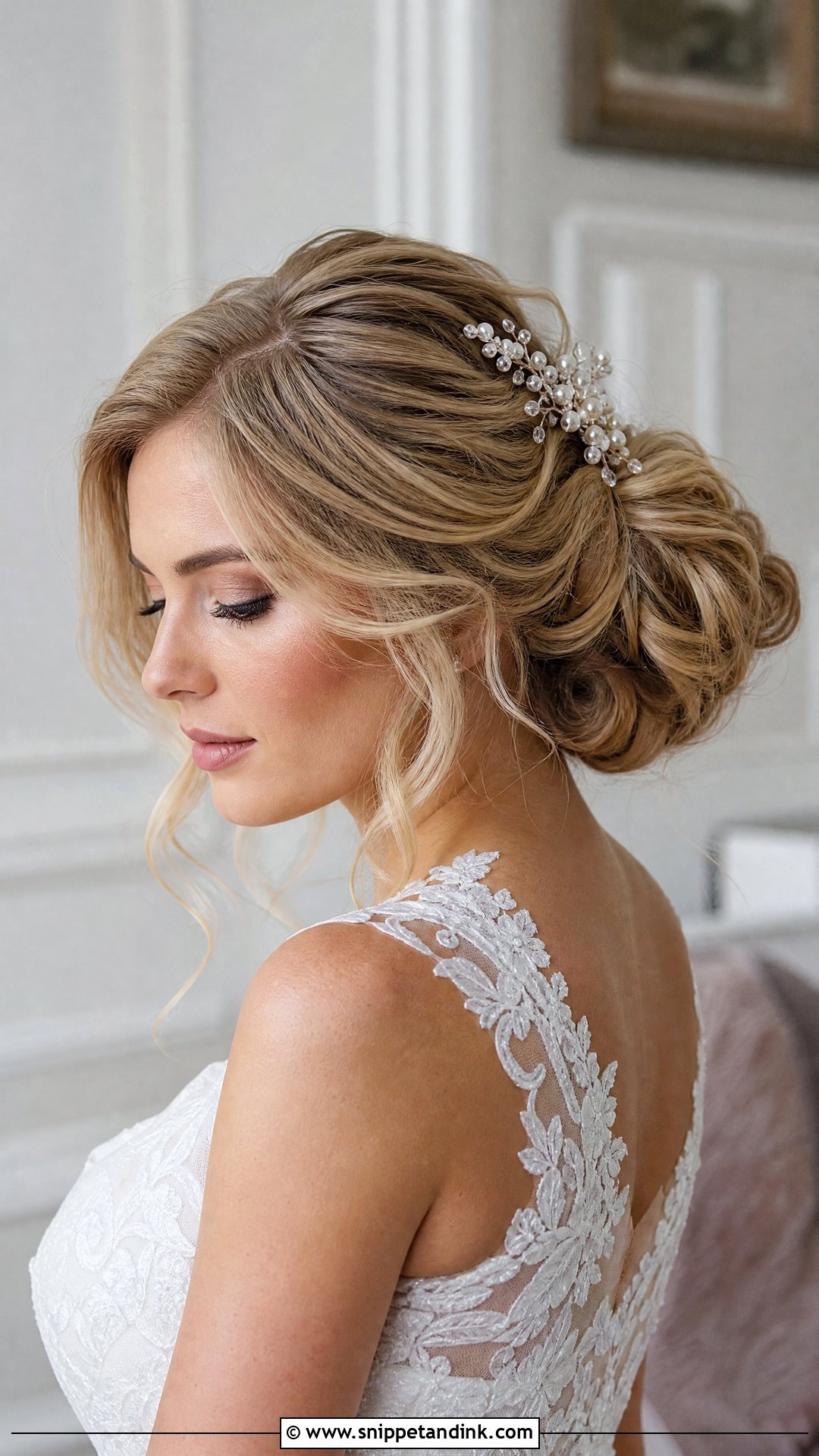
A comb is the easiest way to add one clear accent. I place it above the bun for a veil-friendly look, or slide it into one side for something more modern. Pearl, crystal, floral and gold all work; take your cue from the dress embellishment. The bun has to be full and firm enough to hold the comb’s teeth, so I pin a small base under it first. One good comb looks cleaner than a dozen scattered pins.
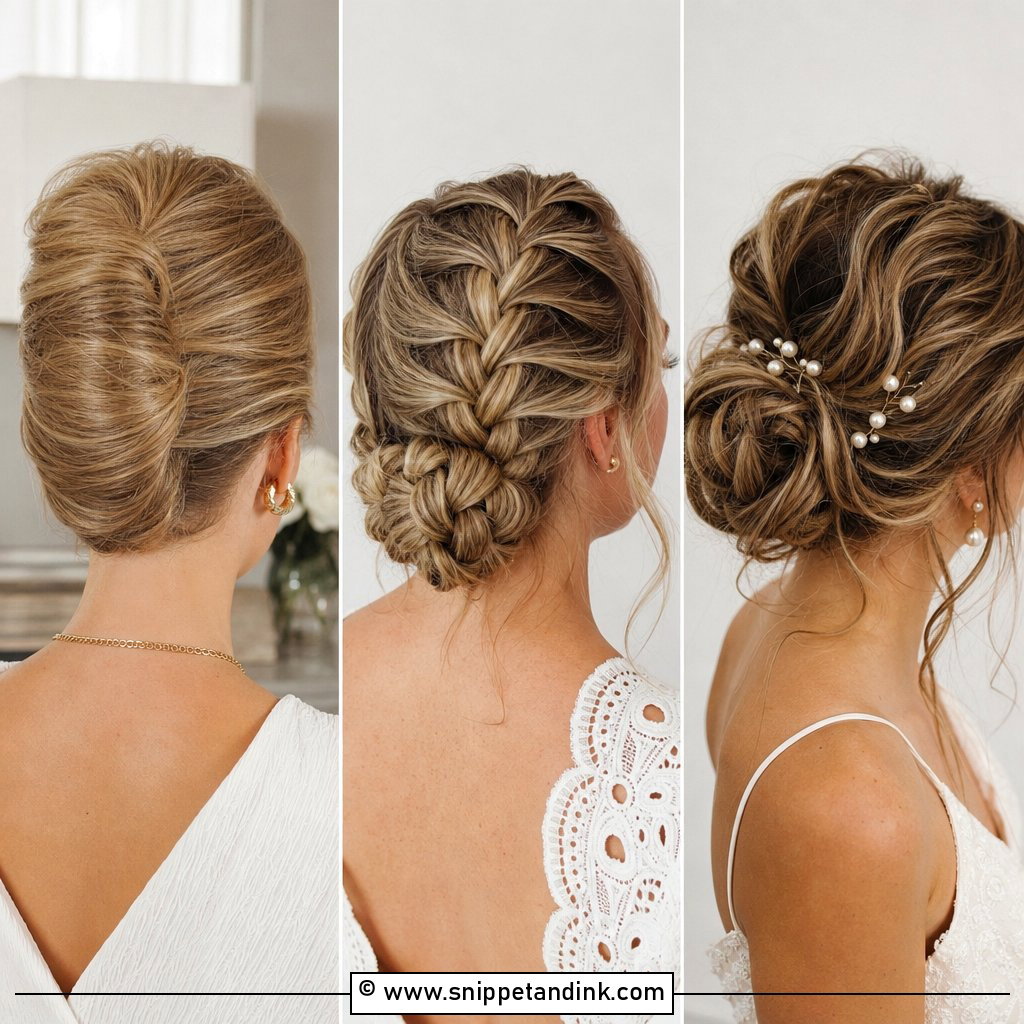
20. Soft Low Bun Wedding Hair With Natural Curls
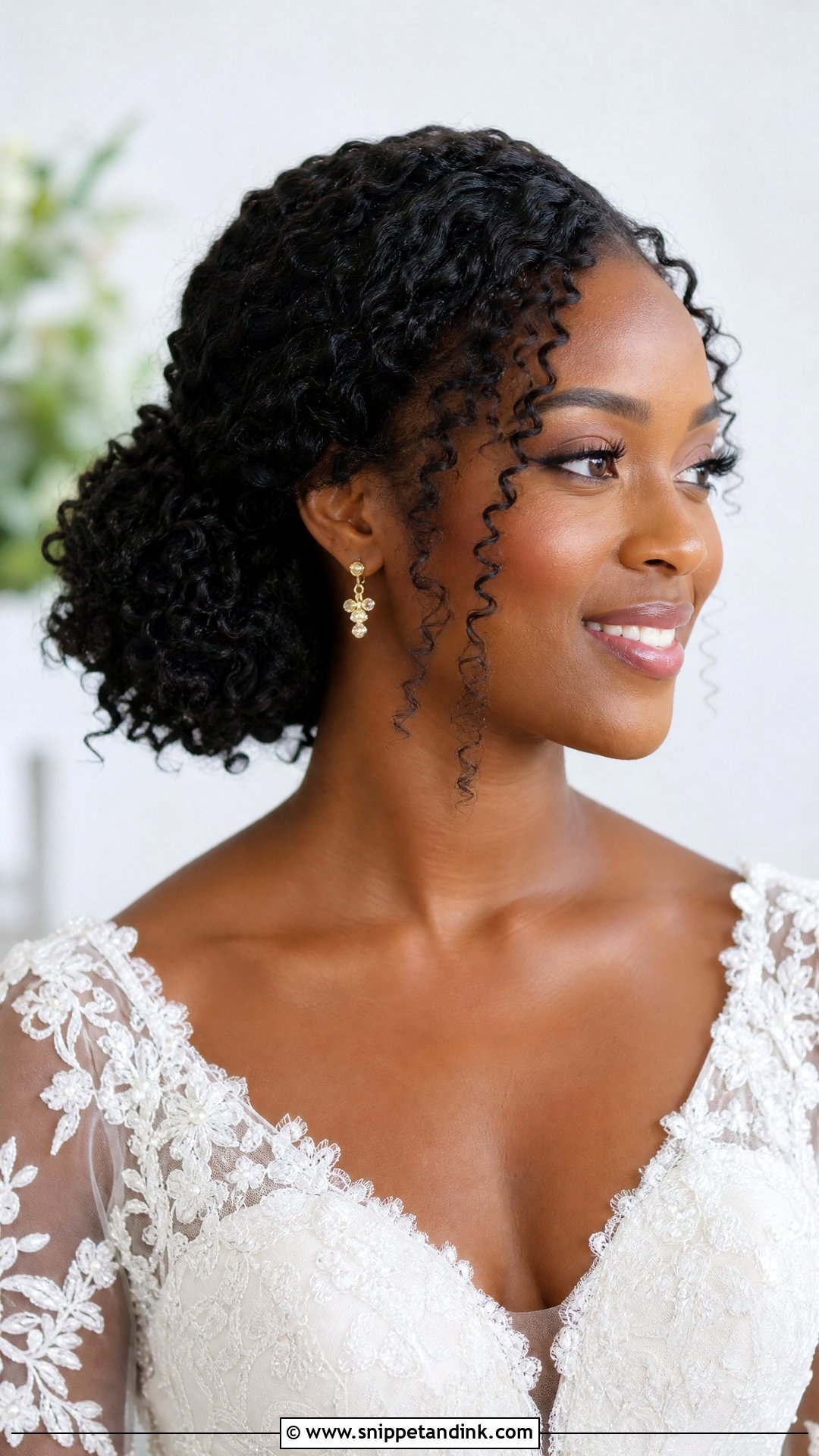
Natural curls bring their own volume and definition, so a bun made from them barely needs help. I gather them gently at the nape and leave a few defined pieces around the hairline. Don’t brush them out beforehand; the definition is what makes the bun look deliberate. Curl cream, a light gel and pins that match your hair colour keep it secure. It’s a way to wear your own texture while keeping hair off your shoulders all day.
Pins, Pressure and a Twelve-Hour Day
A headache in the afternoon almost always comes from one of two things: an elastic tied too tight, or bobby pins pushed straight in so the ends dig into the scalp. I avoid both. The base is secured with crossed pins that grip hair, not skin, and I use U-shaped pins to shape the bun, since they hold by friction without pressing down.
Tell your stylist right away if something pinches during the trial. A spot that is mildly annoying at minute five gets worse with time and the weight of a veil, not better.
Letting it down at the end of the night
- Remove the veil and any accessories first, then pins one by one. Feeling with your fingers is easier than pulling hair blindly.
- Don’t brush straight away. Work out tangles and backcombing with fingers and a little conditioner or oil.
- Wash the next day with a gentle shampoo, focusing on the scalp to lift hairspray build-up.
Count your pins at the trial, or ask your stylist how many went in. It saves a frustrating search at one in the morning.
Which Low Bun Fits Your Hair and Your Day
A low bun fits almost every length, texture and dress, which is exactly why the details matter. A chignon reads classic, a textured bun romantic, a sleek one modern, and a braided or floral one softer. Bring photos to your trial, and be honest about your hair type, your veil, your accessories and the weather forecast. With a good base and careful placement, it will still feel comfortable at midnight and look right in every photo.
You'll Like These Ideas:


Leave a Reply