
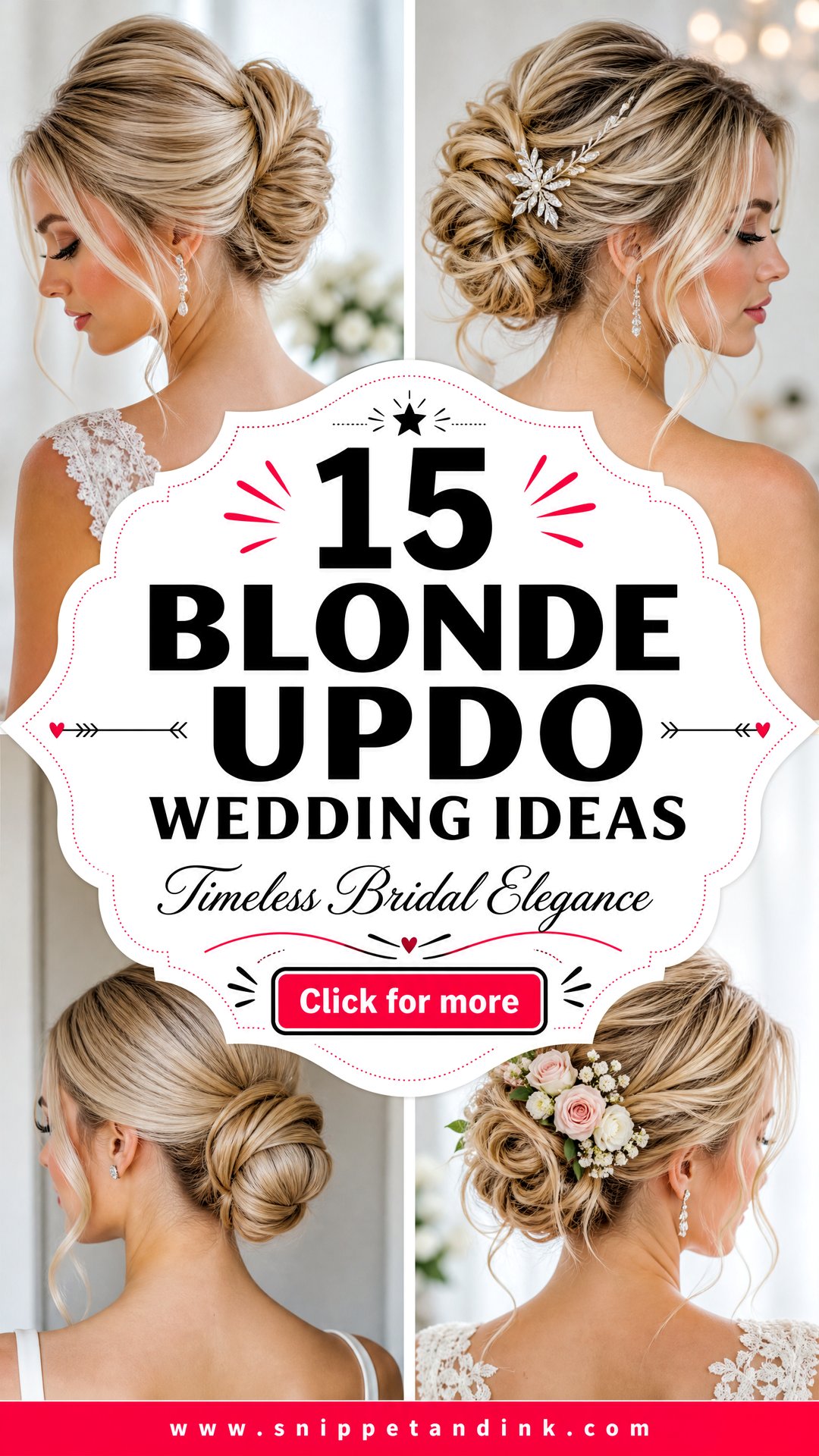
Put blonde hair up and suddenly you can see the construction: every fold of a chignon, every pass of a braid, every place a curl was tucked and pinned. Darker hair hides a lot of that, which helps when a style is meant to look undone and works against you when you want the detail noticed. That’s why light hair suits updos so well, as long as the finish keeps some movement and doesn’t set like a helmet. I’ve laid out fifteen shapes below, from low chignons and soft buns to braided crowns, French twists and loose pinned curls. All of them take veils, pearl pins, floral combs and clean modern gowns, and most suit bridesmaids or guests who want their hair off the neck until the last song.
Your Guests See the Back of Your Head First
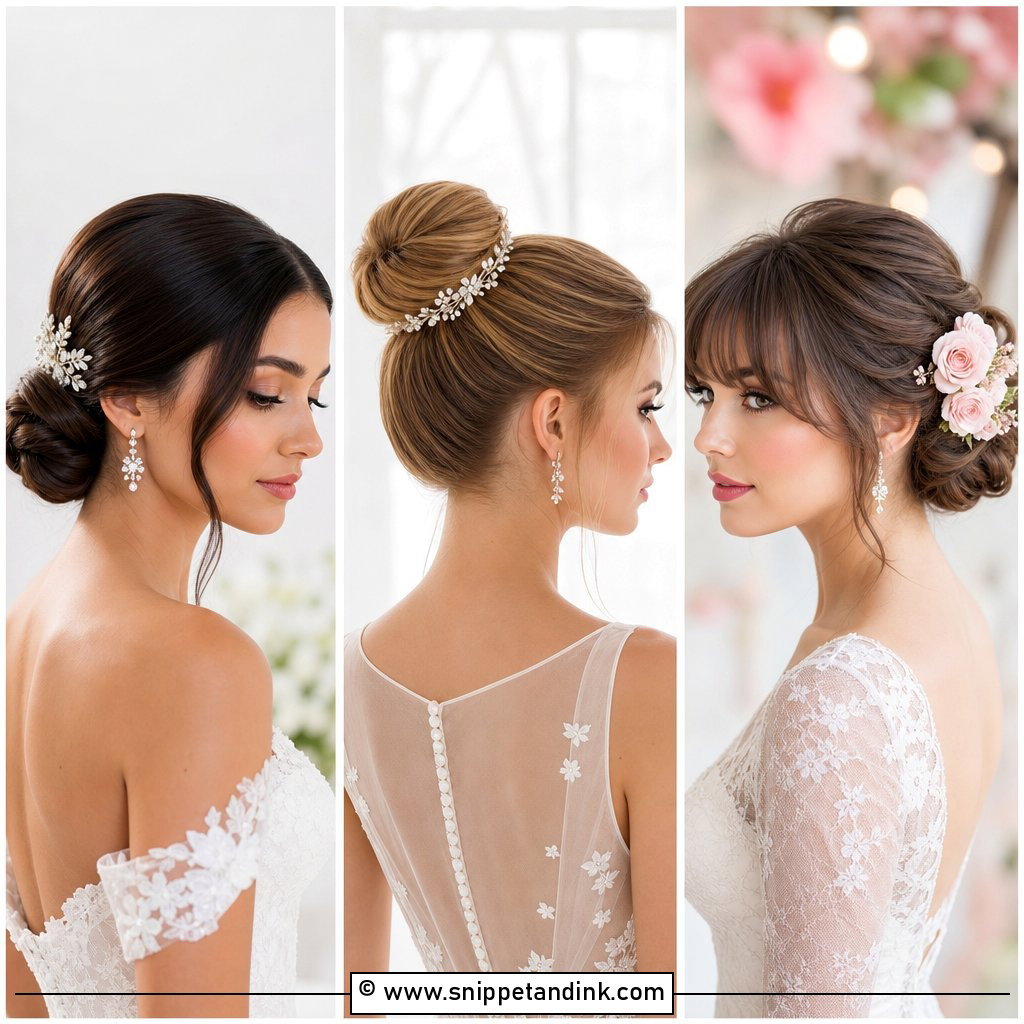
Brides forget this at the inspiration stage: for the whole ceremony, most guests are looking at the back of your hair, not your face. An updo is the one style where that view is the point, so I decide where the bun sits with that in mind.
- Open or low back gowns: a low chignon or nape bun keeps the line clean and lets the dress do its work.
- High necklines and lace collars: a mid or high bun stops hair from crushing the neckline and keeps it visible.
- Long veil worn all ceremony: a low placement lets the comb sit above the bun so the shape still shows through the tulle.
- Short veil you plan to remove: any height works, but the pin points must be hidden once it comes out.
At your trial, ask someone to photograph you from behind while you stand still for a minute. It feels like an odd request, and it’s the most useful picture you’ll take that day.
1. Blonde Wedding Low Chignon
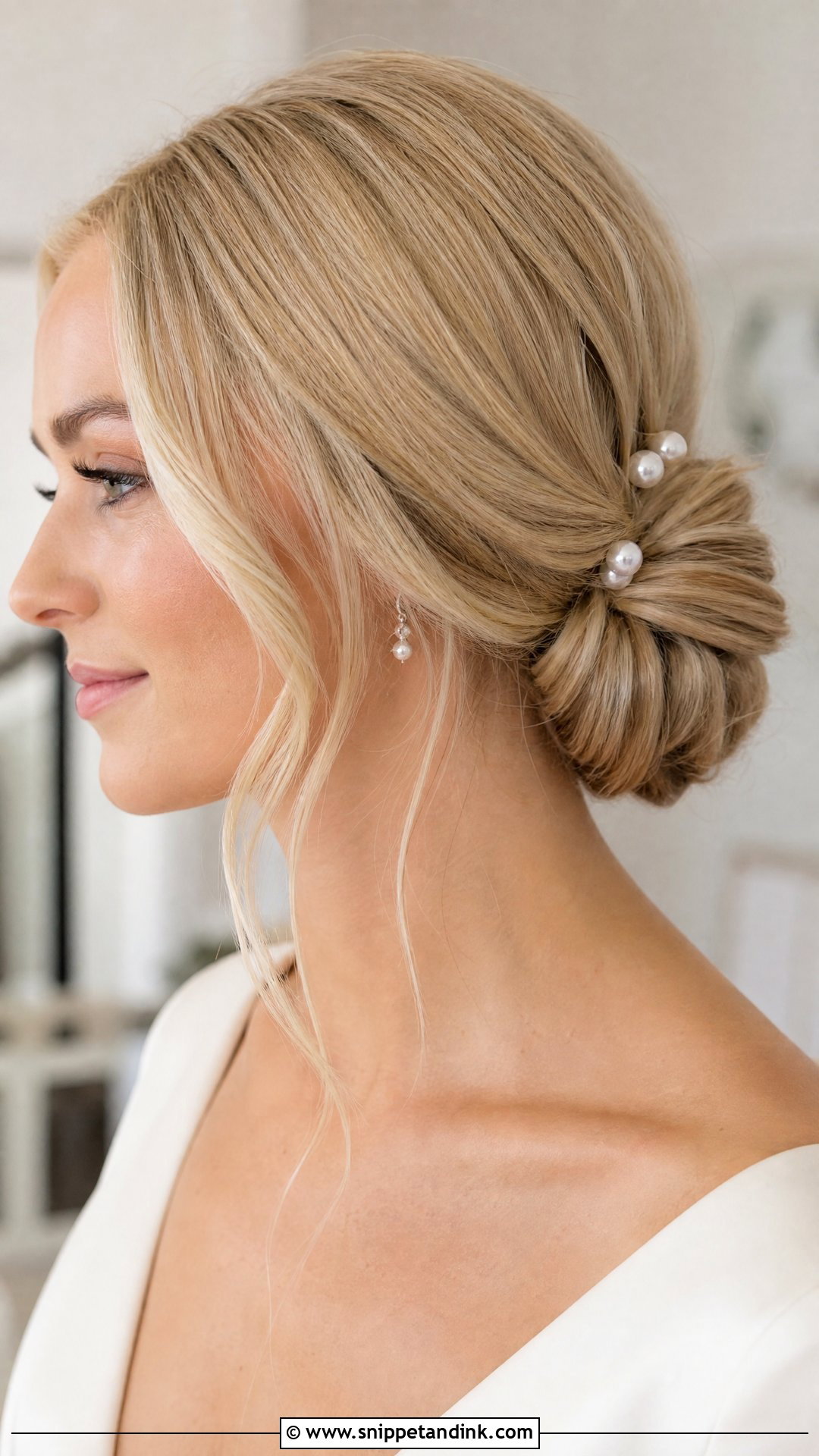
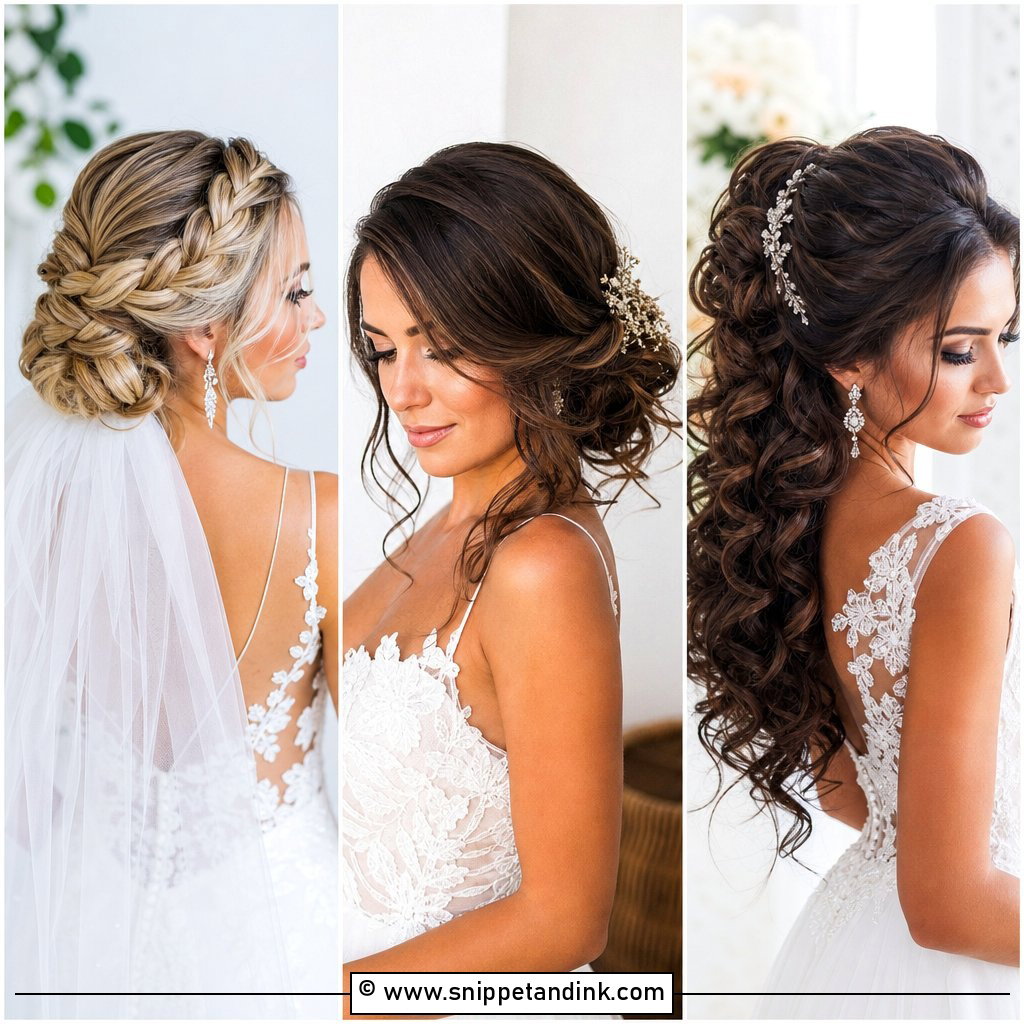
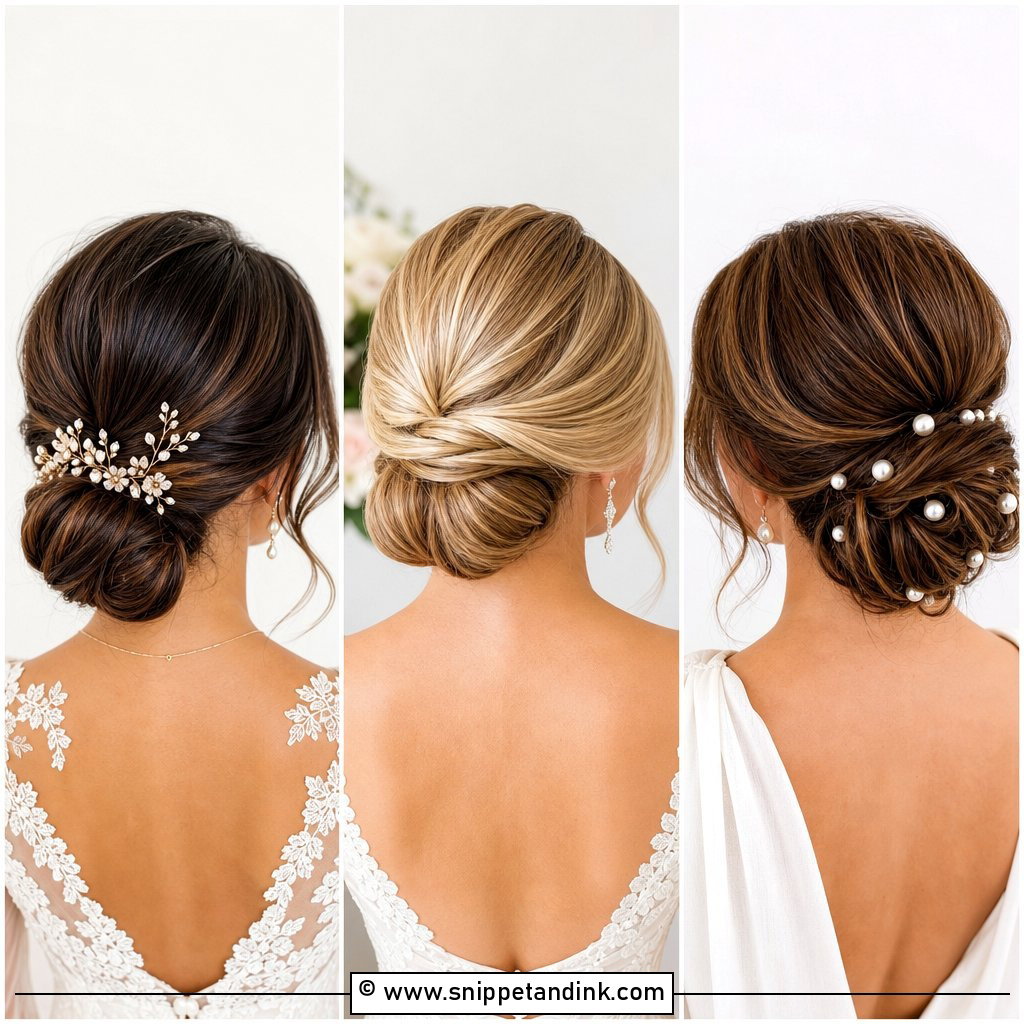
The low chignon is the updo I can put with almost any neckline without a second thought. It sits at the nape, out of the way of straps, collars and veil combs. Folded blonde hair shows its highlights and lowlights in layers, so even a simple roll looks considered. I decide between smooth and textured by the fabric: a crepe or satin gown gets a polished chignon, lace or chiffon gets a softer one with a few bends left in. Because the bun sits low and solid, it’s also the easiest anchor for a veil.
2. Blonde Wedding Messy Bun
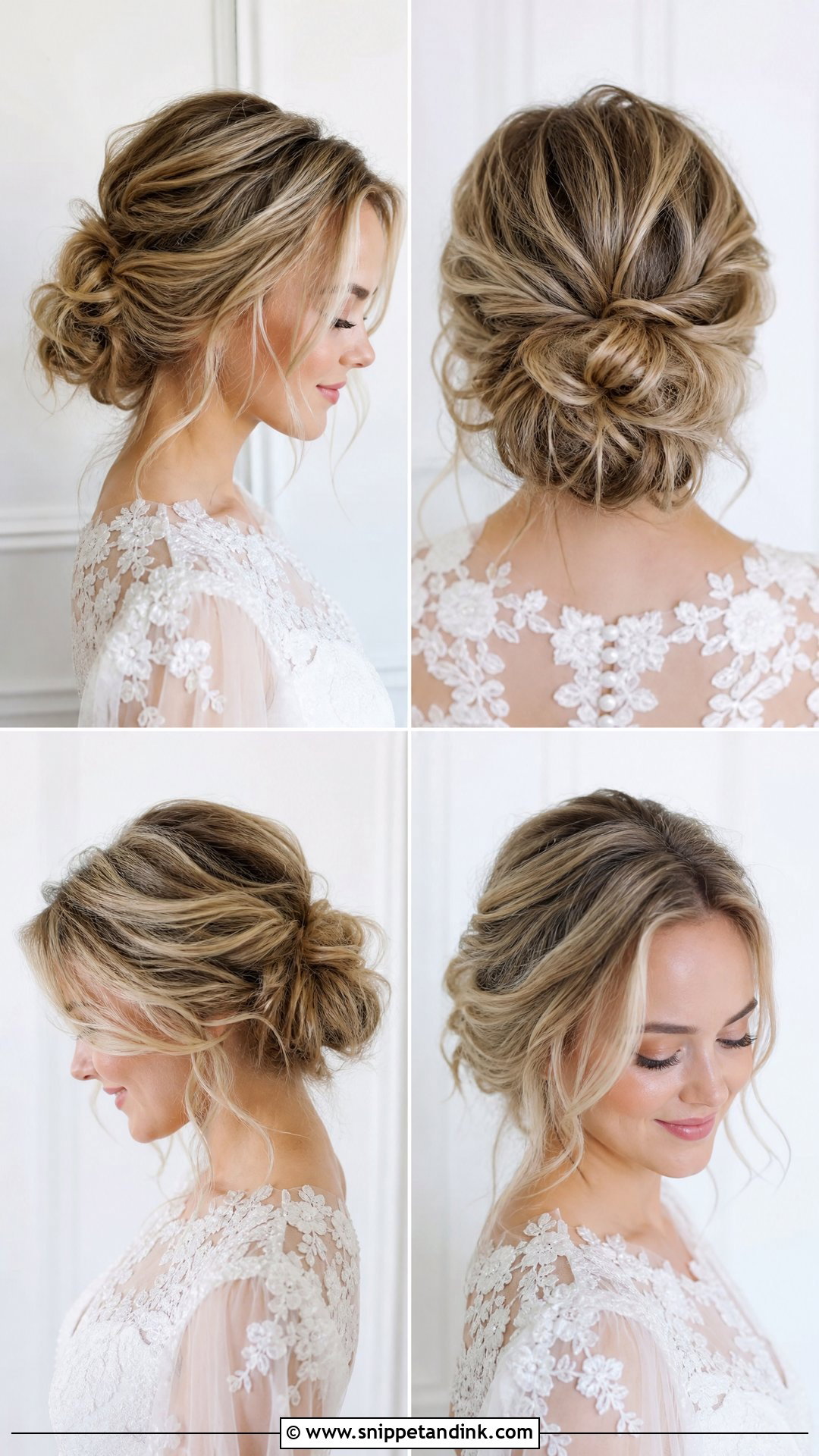
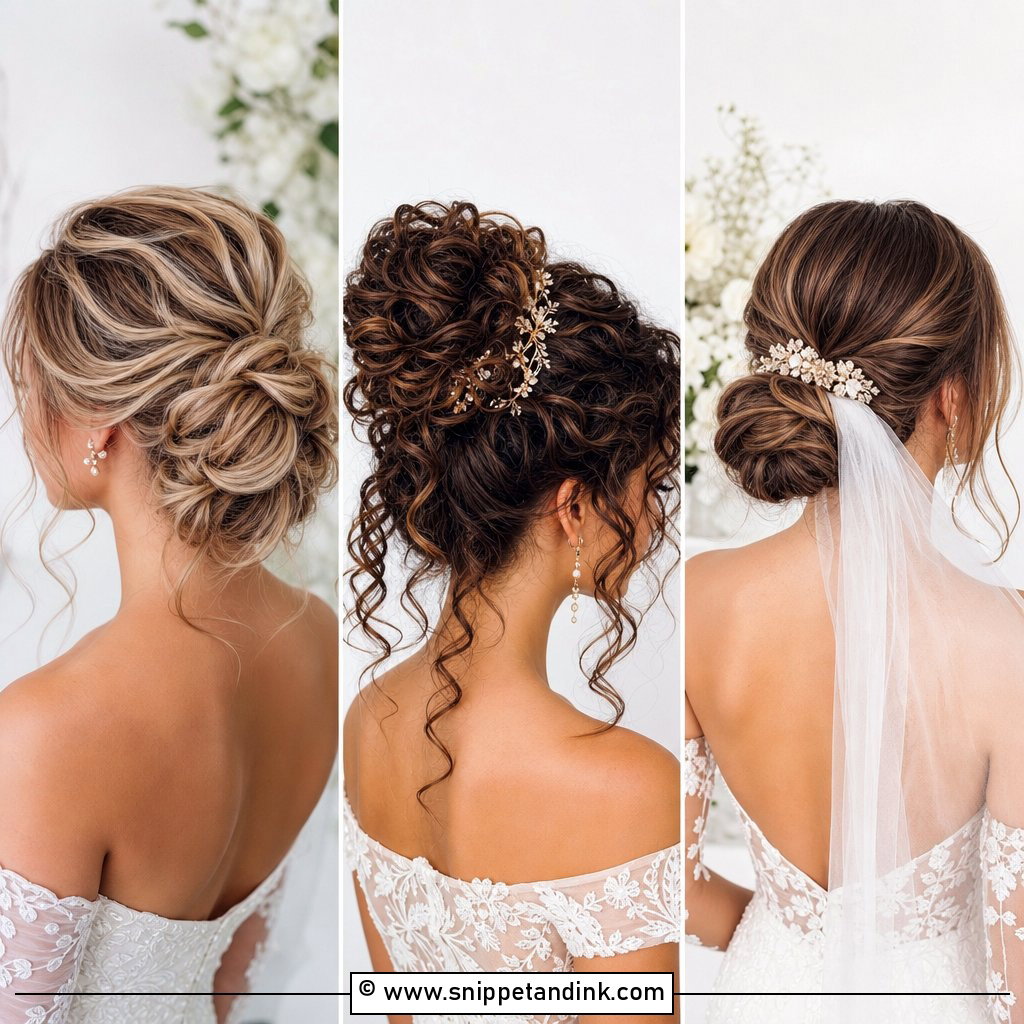
A messy bun takes longer to make than a sleek one, which surprises people. Every loose bend is placed and pinned so the shape looks relaxed from the front, sides and back rather than collapsed on one side. On blonde hair those lifted sections catch light and give depth that a flat bun lacks. I leave a few soft tendrils around the cheeks or temples and curl them separately, so they hang with intent instead of looking like they escaped. It sits best with lace, flowing fabric and outdoor settings. Brides with very straight, silky hair need extra texture spray first, or the bun slides apart by evening.
3. Blonde Wedding Braided Updo
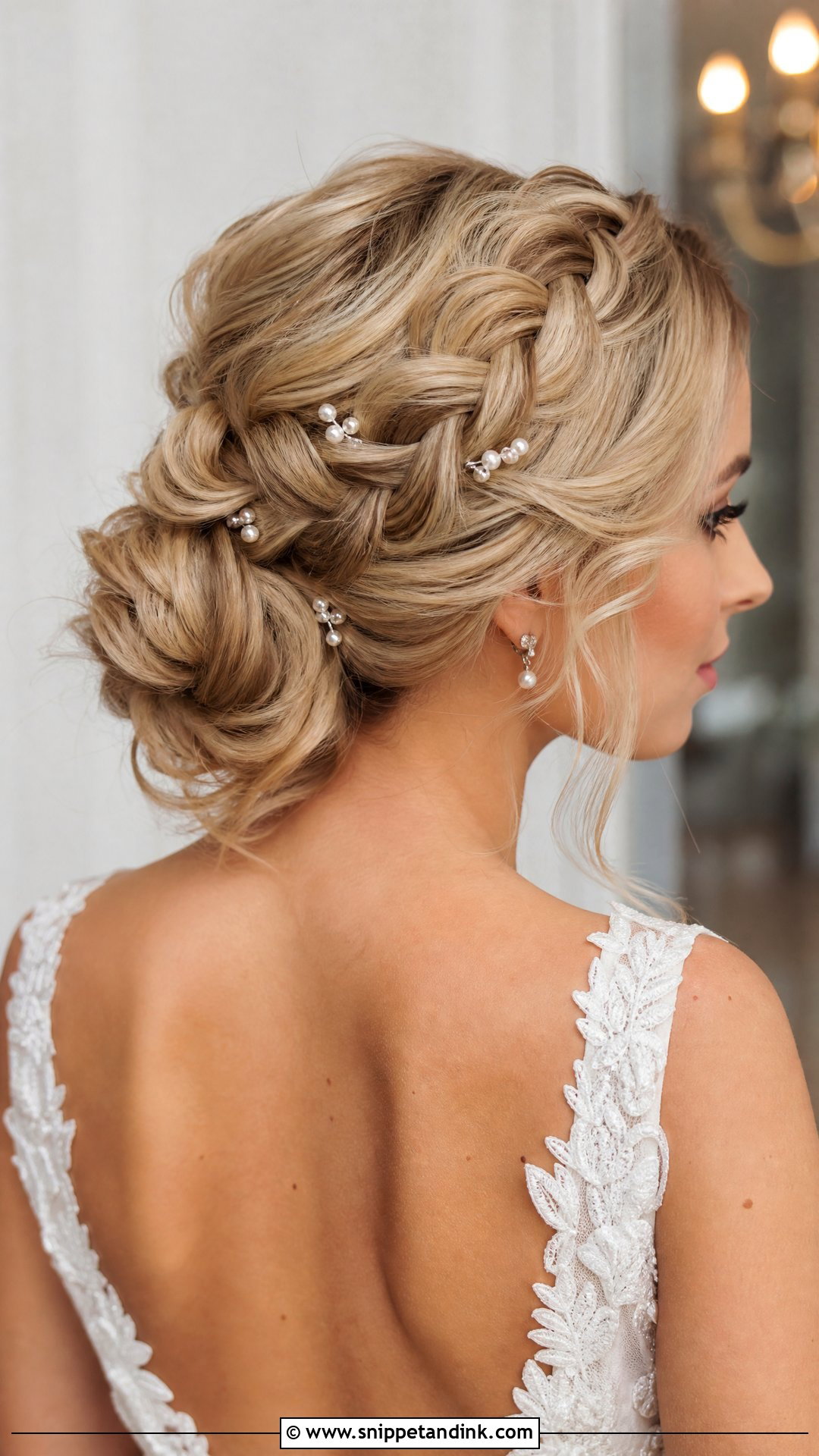
Braided updos are the ones I recommend when wind is a real worry. Woven sections hold each other in place, so they survive a breezy hilltop far better than pinned curls. Blonde shows each crossover clearly, with darker strands outlining the pattern. The braid can be a loose crown, a side braid, a Dutch braid or a braid wrapped into a low bun. I pull the edges apart after pinning to widen it. Small pearl pins or a few tiny flowers are enough; anything bigger hides the weave you chose it for.
4. Blonde Wedding French Twist
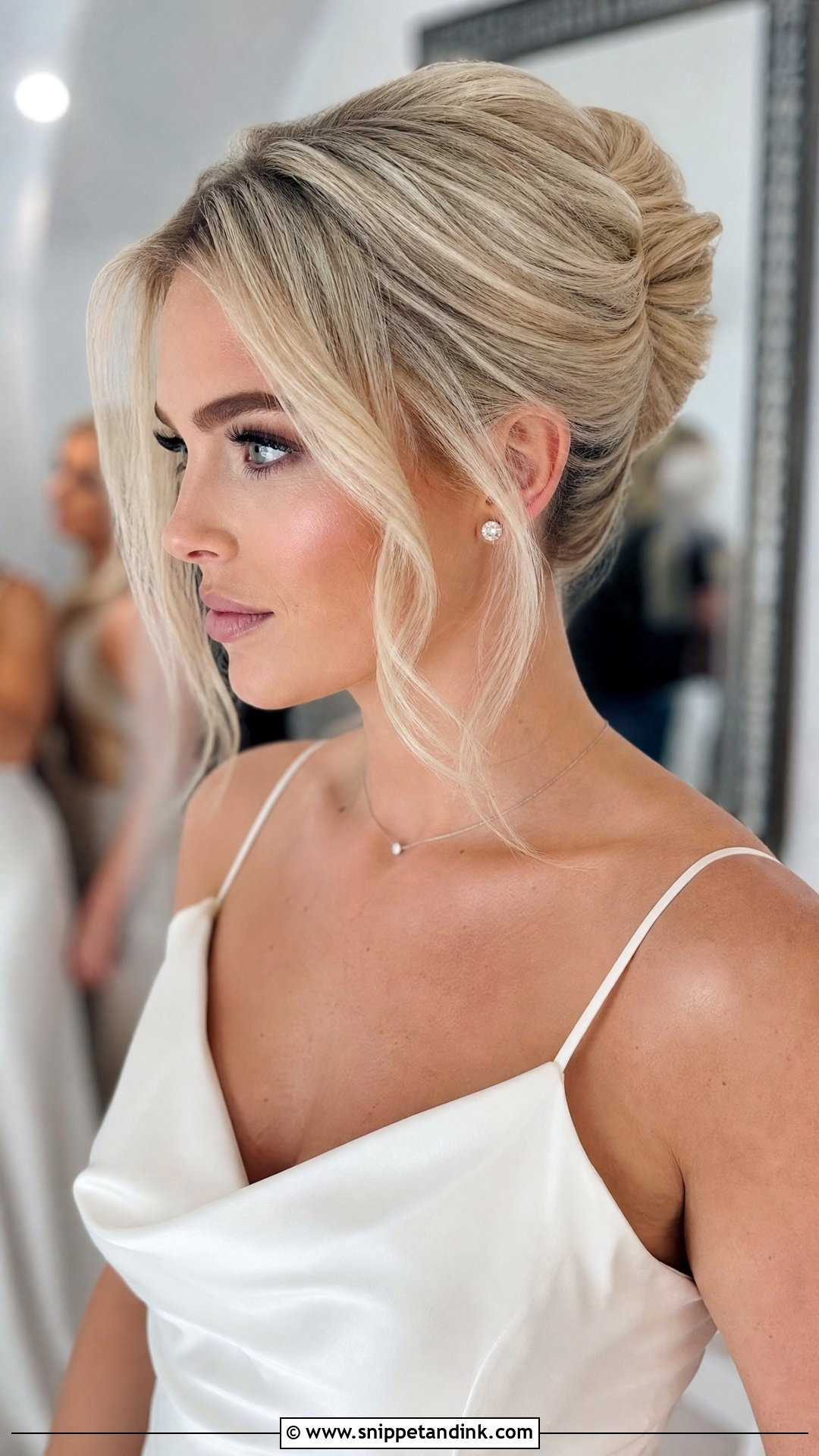
The modern French twist is softer than the stiff vertical roll many people picture. I build a little volume at the crown, roll the twist loosely and leave a couple of fine pieces at the face. On blonde the curve of the roll reads almost sculpted, because the light hits the outer edge and the fold stays in shadow. Satin gowns, high necklines and open backs all suit it. The thing I watch for is spray: too much and the twist goes hard and shiny like plastic, so I set it with pins and use a light mist only.
5. Blonde Wedding High Bun
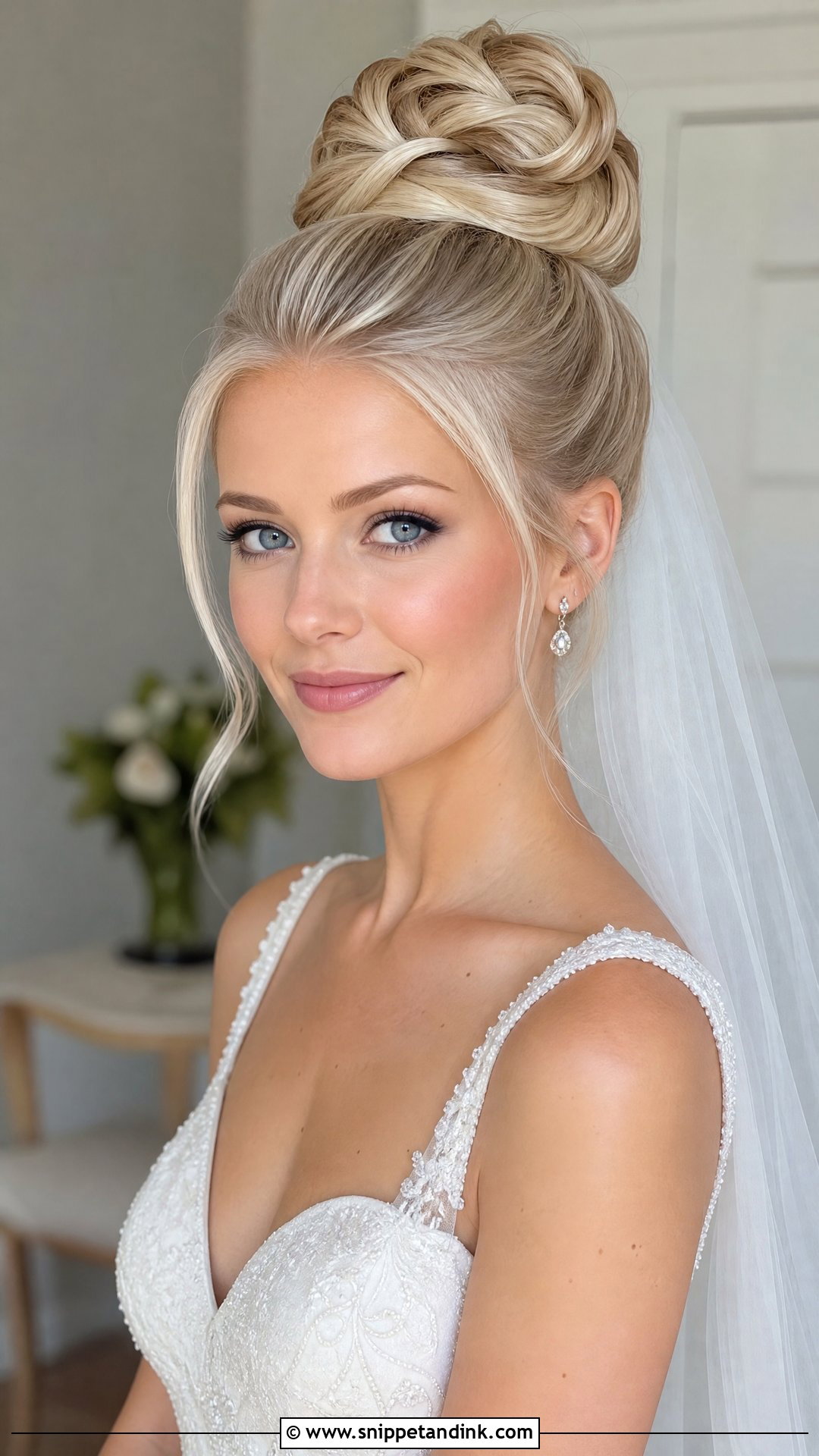
A high bun puts your face, earrings and neckline on full display, and it keeps hair off a damp neck at a summer wedding. It can go sleek and ballerina-inspired or softer, with curled pieces wrapped round the base. Blonde reflects light from crown to ends, so the bun looks fuller than the same hair would in brown. Fine hair rarely has enough bulk for a convincing high bun on its own, and I’ll usually suggest a padding form or a few extensions underneath. Keep in mind it changes how a veil sits; a high bun pushes the comb underneath, not on top.
6. Blonde Wedding Textured Updo
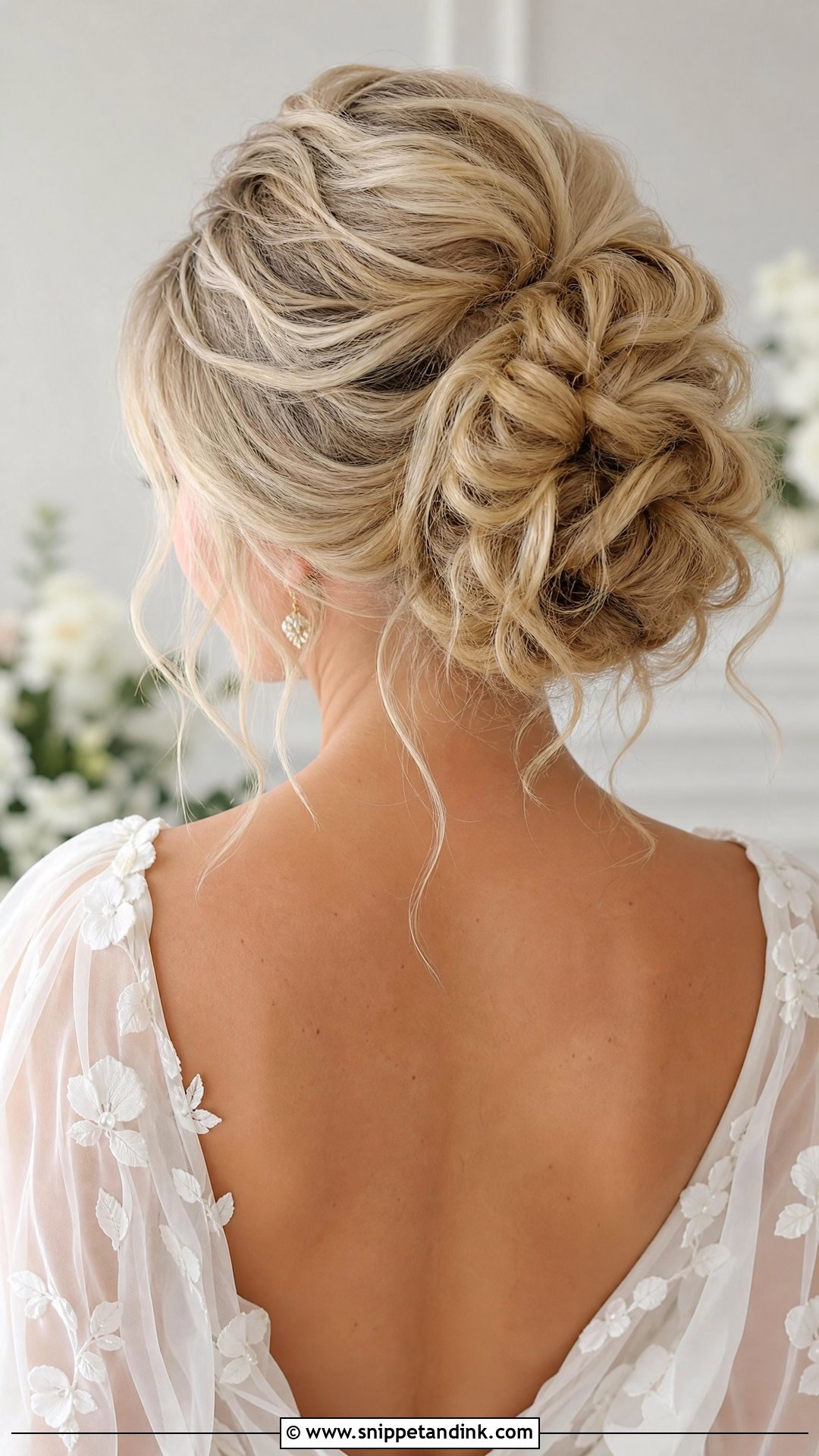
Textured updos are a halfway house between hair up and hair down. Loose curls, twists and pinned sections create fullness through the back and sides, so there’s still movement around the head. Highlights make each section look placed rather than random. The line between soft and frizzy is thin, though. I curl with a heat protectant, let the hair cool, then break the curls apart with fingers only, never a brush, so they stay defined. It suits medium to long hair and adjusts for fine or thick texture, and a sheer veil or a couple of floral pins finish it without crowding.
7. Blonde Wedding Side Bun
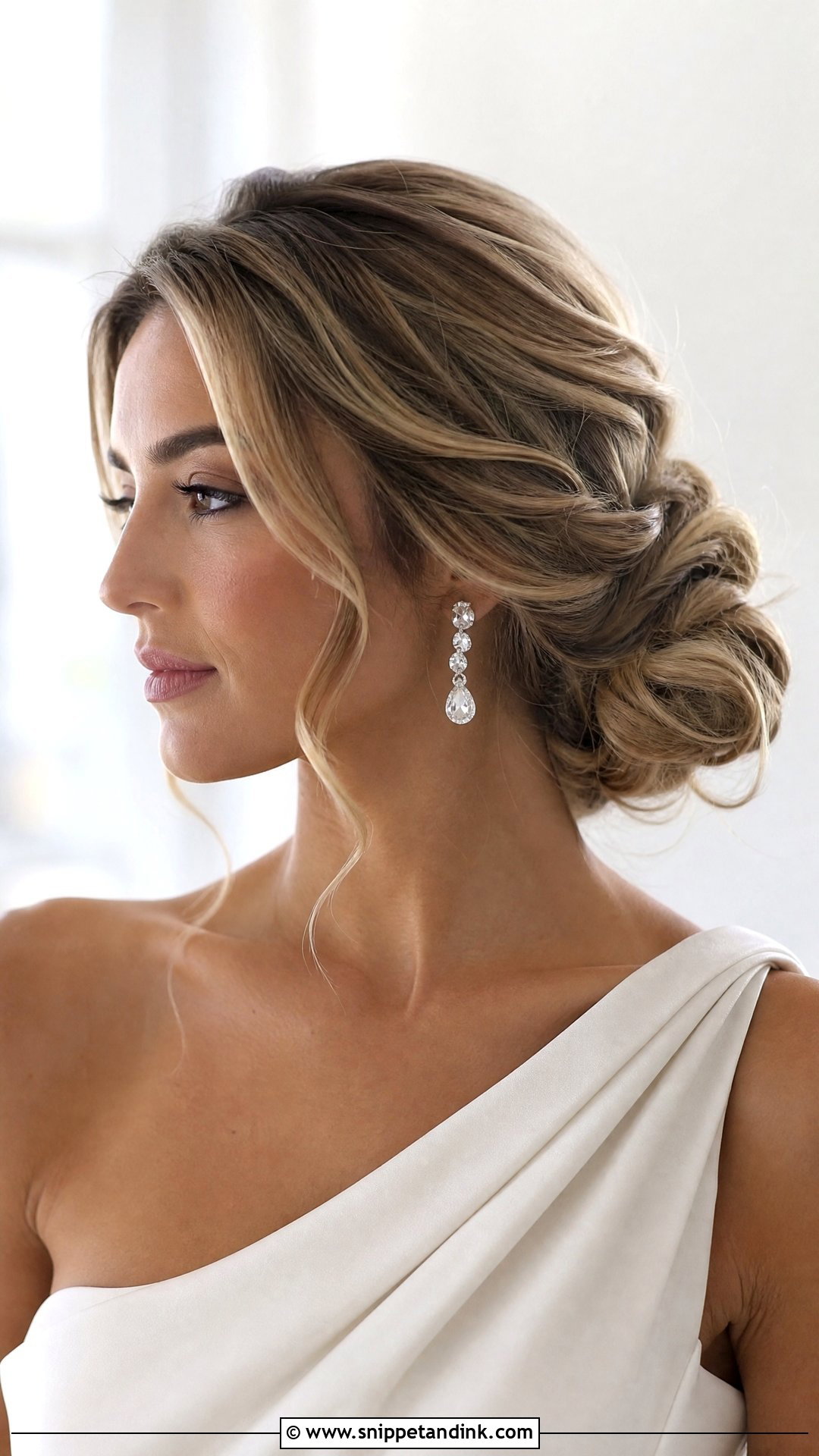
Moving the bun slightly off center changes the whole silhouette. From the front you see a curve of hair on one side; over the shoulder you see the full bun, which gives photographers a second angle to work with. Blonde makes the pinned curls more visible in that side view. I place it on the side opposite the strap on a one-shoulder or asymmetric gown, so the hair and dress balance each other. Keep it low and loosely gathered, and pair it with a side part that leads the eye toward the bun.
8. Blonde Wedding Curly Updo
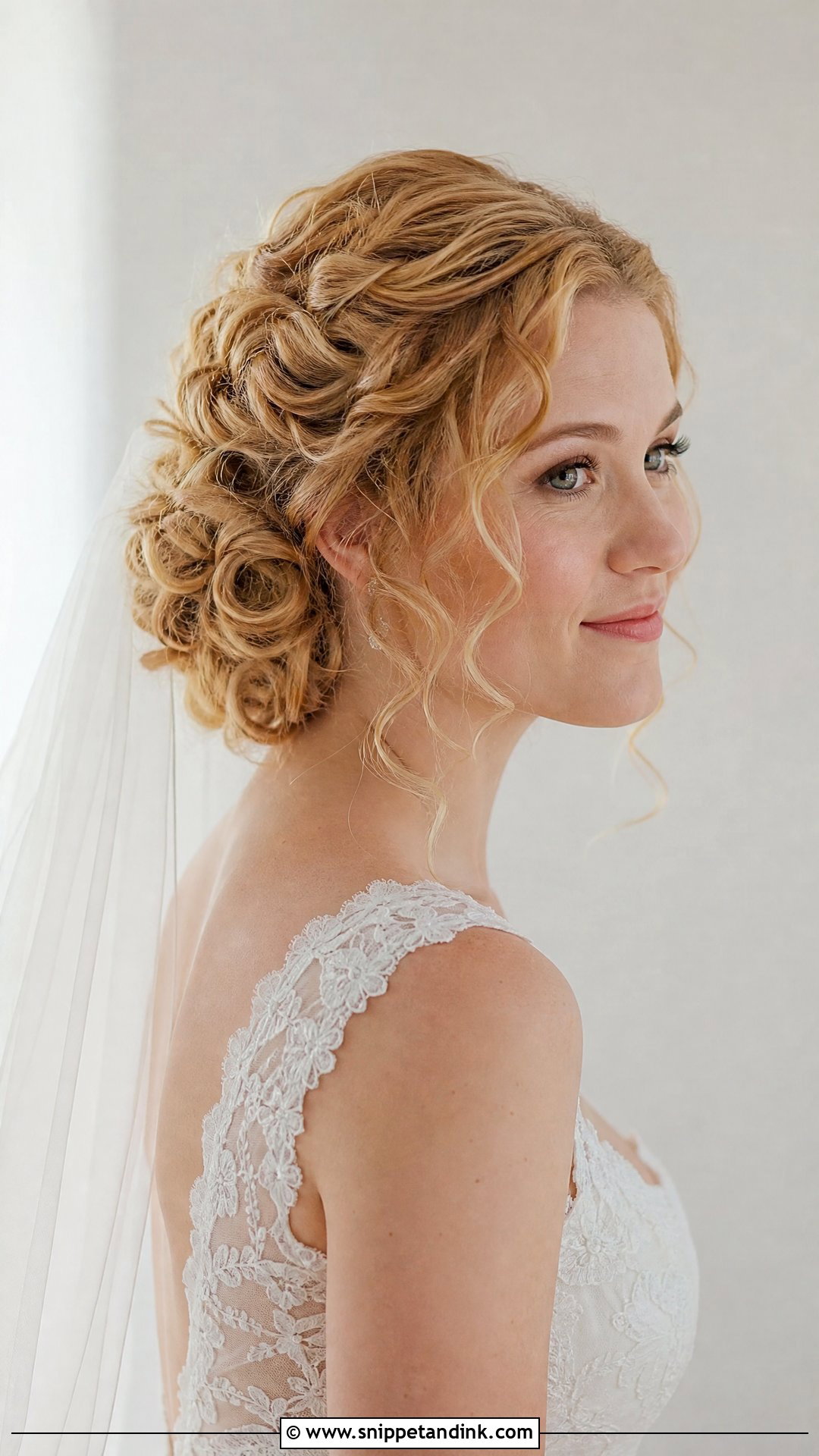
A curly updo can start from natural curls or from blonde hair curled for the day, and the prep is different for each. Natural curls need moisture and a curl cream so they clump and hold their own pattern; I pin them loosely so the shape doesn’t flatten the curl. Heat-set curls need a grippy mousse and time to cool before they’re gathered. Either way the shape sits low or mid-height, with a few defined pieces left at the face and neckline. Blonde curls show their spiral clearly because each turn catches light differently. Pearl pins, tiny flowers or a delicate veil complete it.
9. Blonde Wedding Sleek Bun
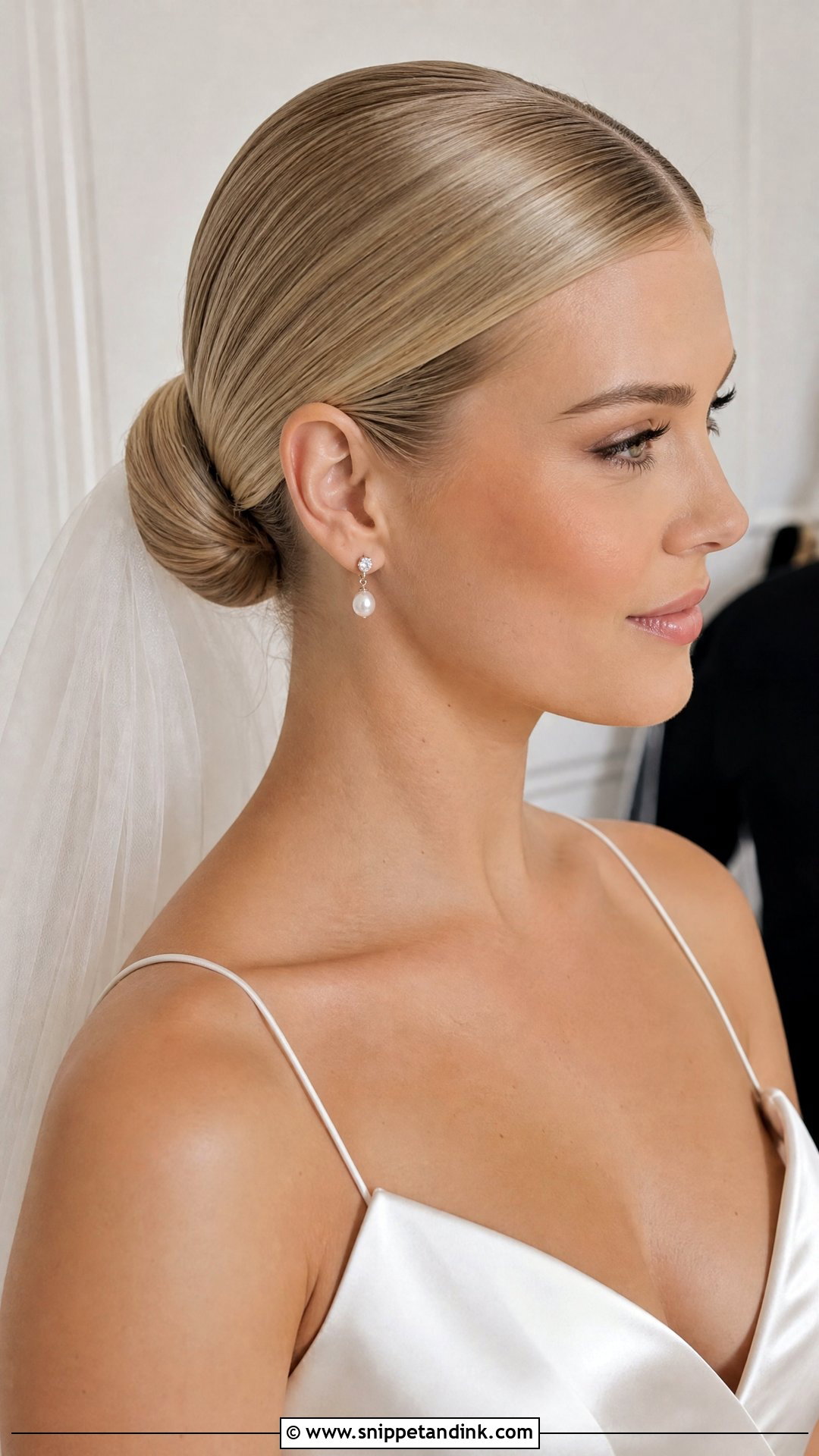
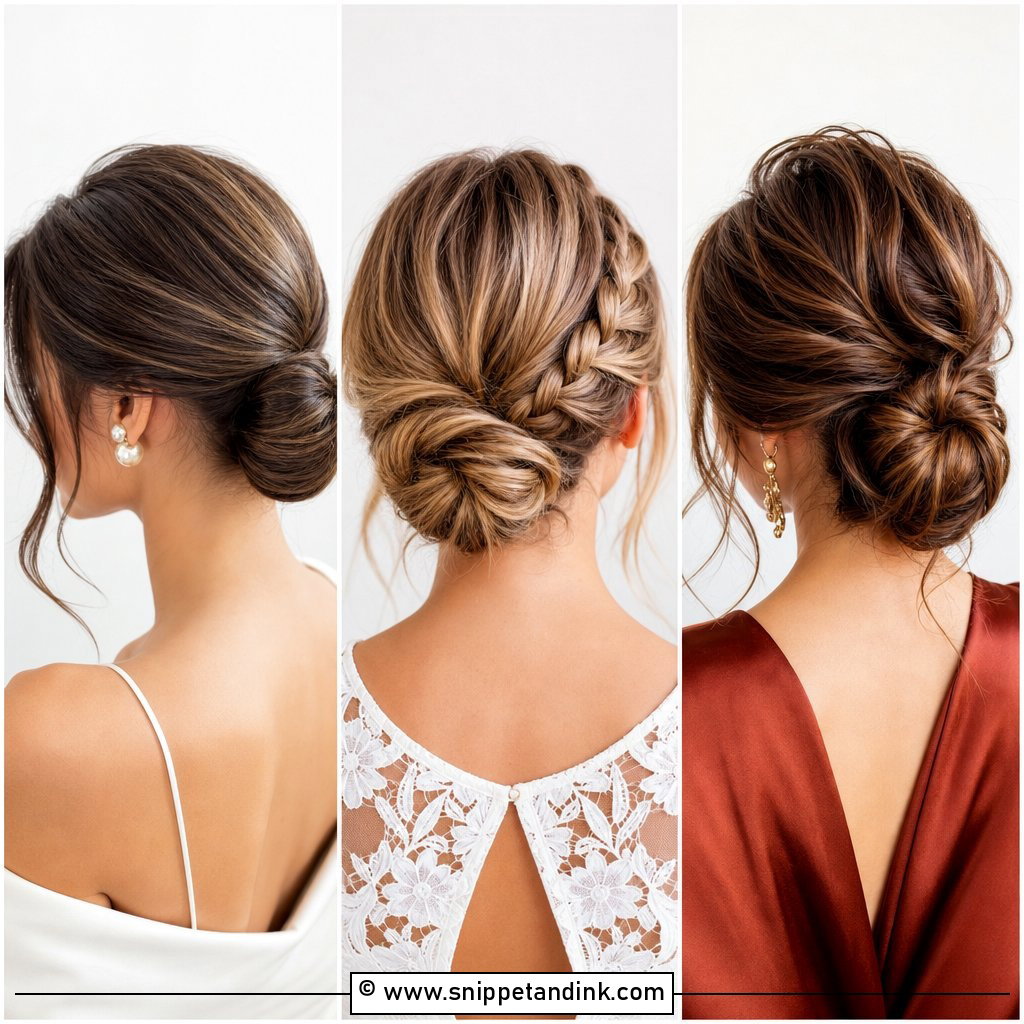
Sleek buns look simple and are unforgiving to make. Every flyaway shows on smooth, light hair, so I blow-dry the hair completely straight with a paddle brush and use a little serum before gathering it. A center part reads clean and graphic; a deep side part softens it. It belongs with minimalist gowns, sculptural earrings and a clean beauty look. If you worry it will feel severe, ask for slightly softer edges at the hairline instead of slicked-flat temples. Since the hair gives nothing away, it keeps the focus firmly on your face, makeup and dress.
10. Blonde Wedding Loose Updo
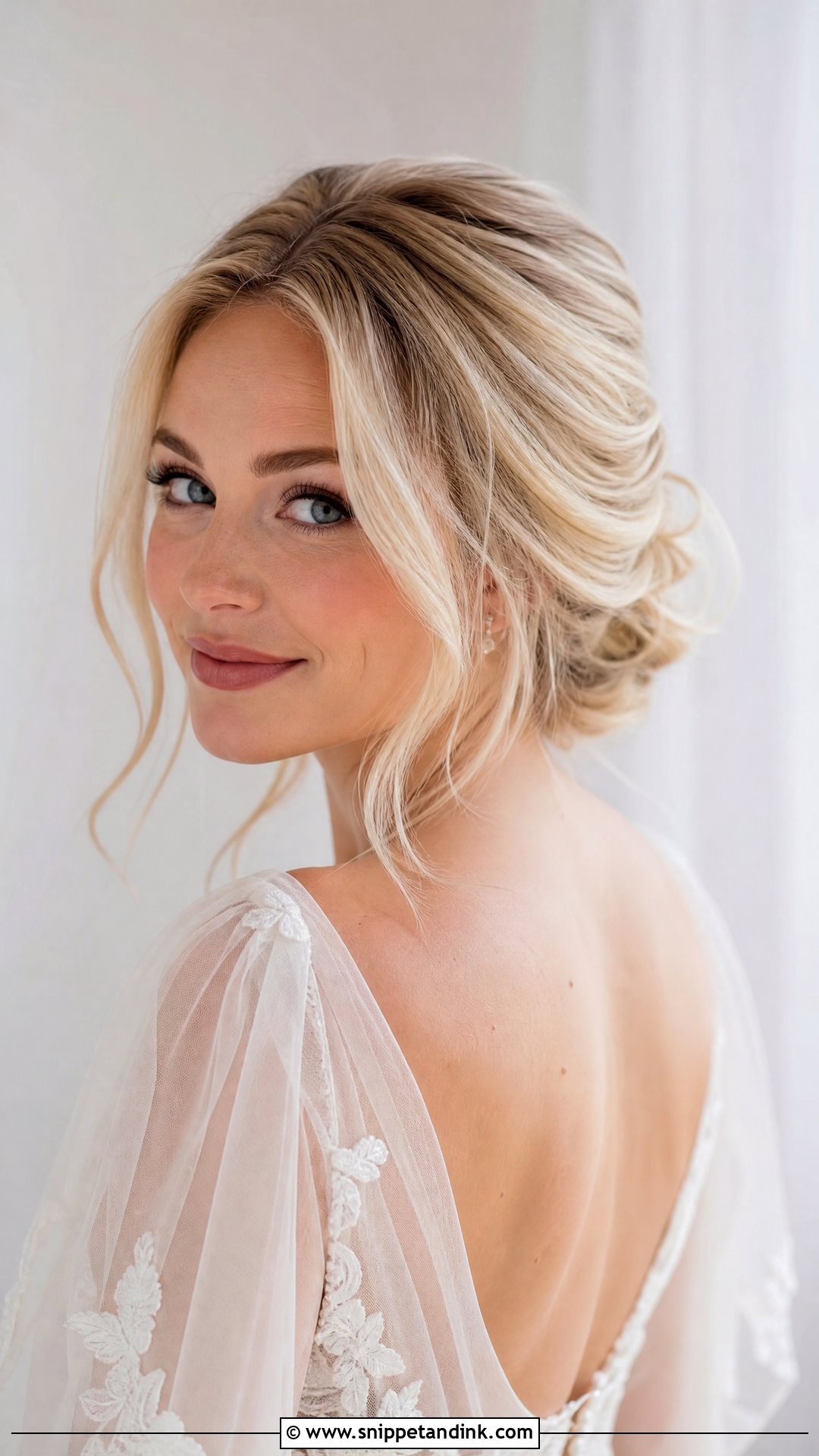
If you rarely wear your hair up and fear not recognizing yourself in the photos, start here. A loose updo has a low gathered shape, a little lift at the crown and relaxed pieces around the cheeks. Balayage helps, because those loose sections look airy rather than unfinished. The trick is that I pin the back firmly while the front only looks casual. That split is what keeps it comfortable and in place all day.
11. Blonde Wedding Twisted Bun
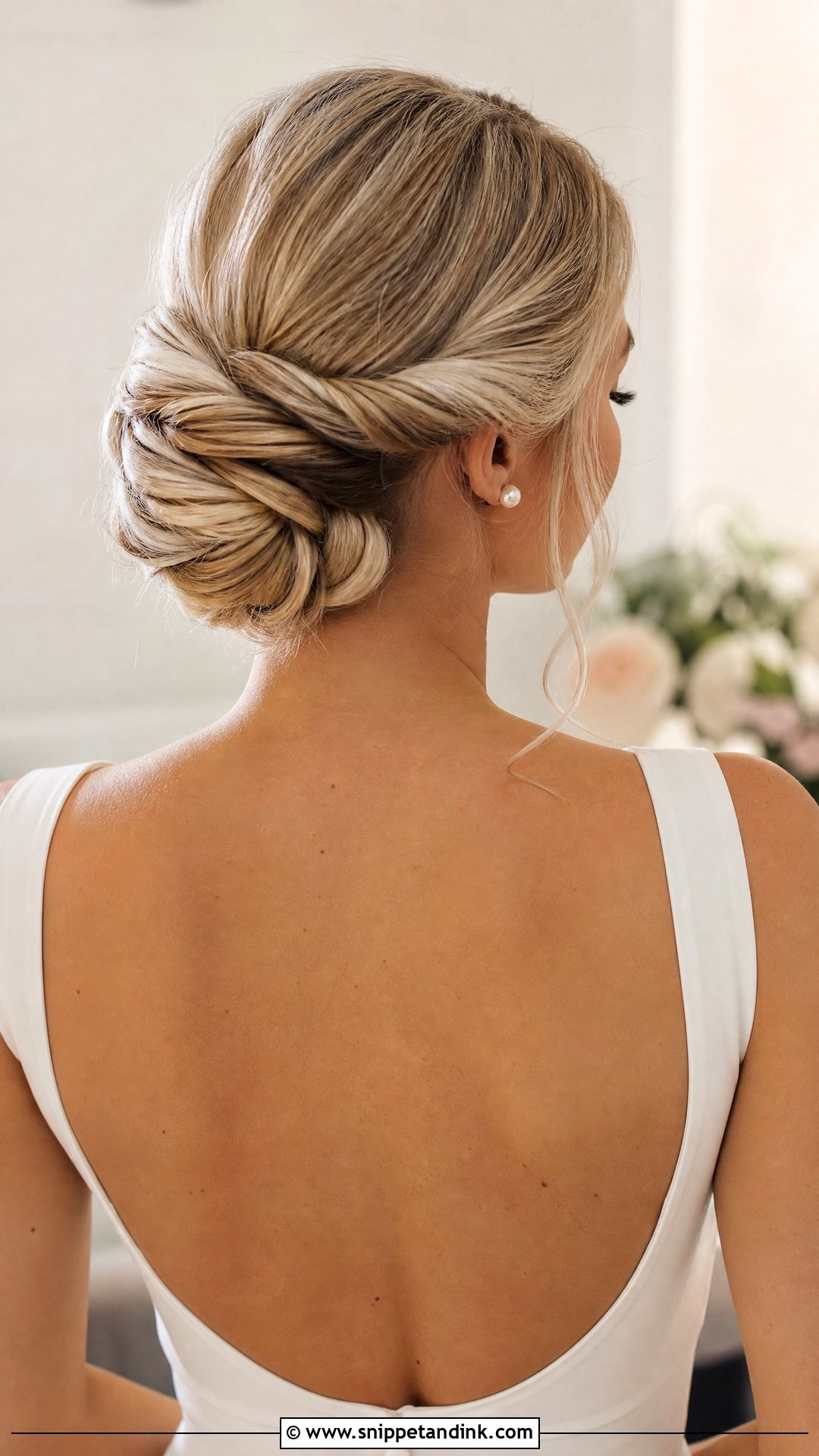
Twisted buns get their detail from smooth rope twists rather than curls or braids, which is why I suggest them to brides who want pattern without frizz. The sections wrap into a bun at the nape or lower back of the head. Ribbons of beige, champagne, honey or icy blonde run along each twist and make it stand out. Medium-length hair does well here, because twisting a section makes it look thicker than it is. A small comb above the bun is plenty, or leave it bare.
12. Blonde Wedding Updo With Veil
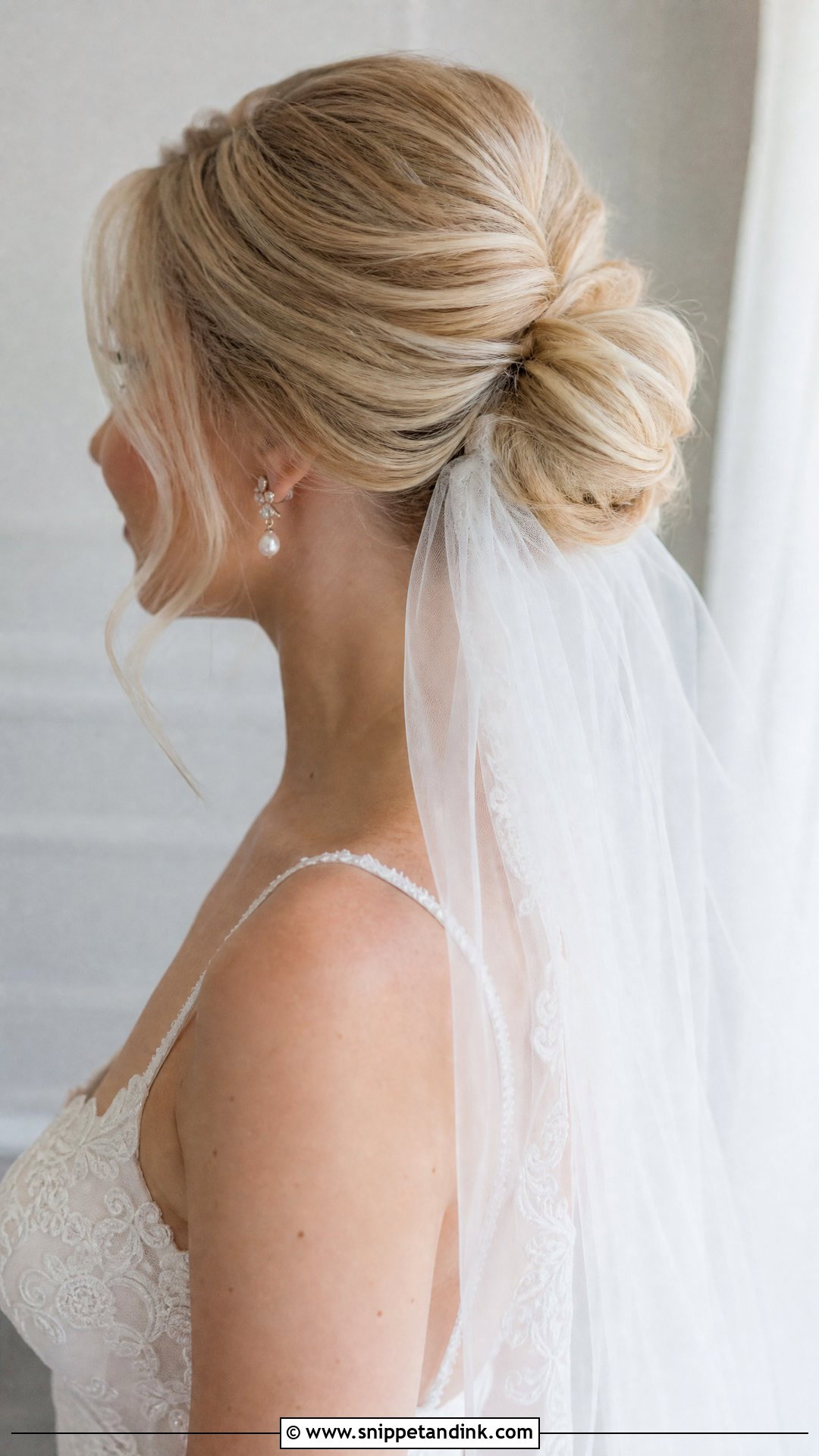
An updo worn with a veil has to look good covered and uncovered. A low bun, chignon or soft twisted updo gives the comb a stable seat while the shape still shows through the tulle. Blonde hair looks bright under sheer fabric, so you don’t lose it in photos. I always plan the veil at the trial, with the actual veil, because the comb needs pins underneath it and those pins can dent the shape if they’re added at the last minute. If the veil comes off after the ceremony, I tuck a few pearl pins into the spot where the comb sat so the hair still looks finished.
13. Blonde Wedding Updo With Pearls
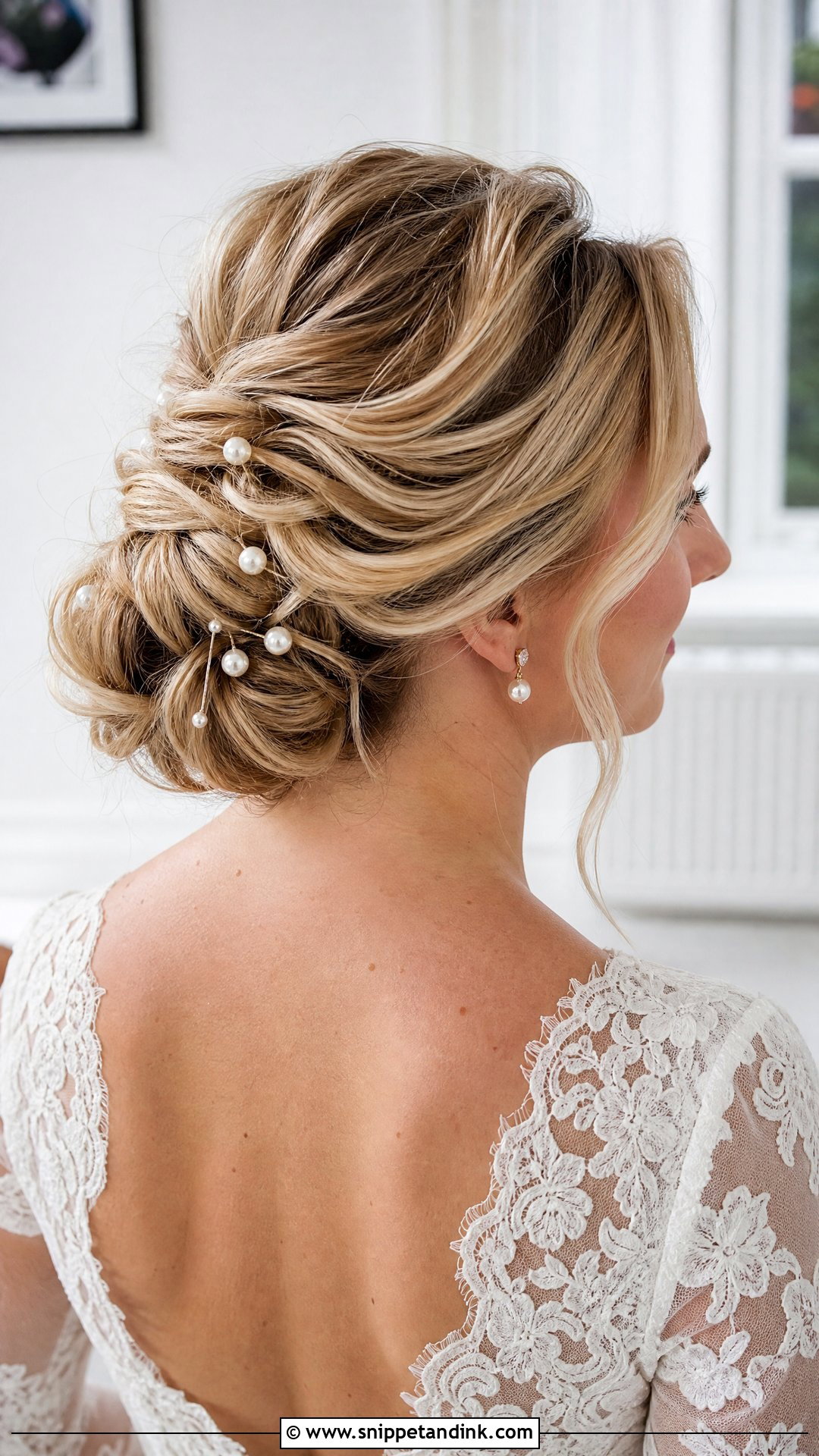
Pearls are kind to blonde hair. They stand out without the harsh contrast they have on very dark hair, so they suit buns, chignons, braids and twisted updos alike. Scattered pins give a soft effect; a single comb gives one clean focal point. The updo needs texture underneath, or pearl pins slip on smooth sections, which is why I prefer a low bun or braid as the base. Keep the rest balanced: with bold pearls in the hair, choose simpler earrings and a quieter veil.
14. Blonde Wedding Updo With Flowers
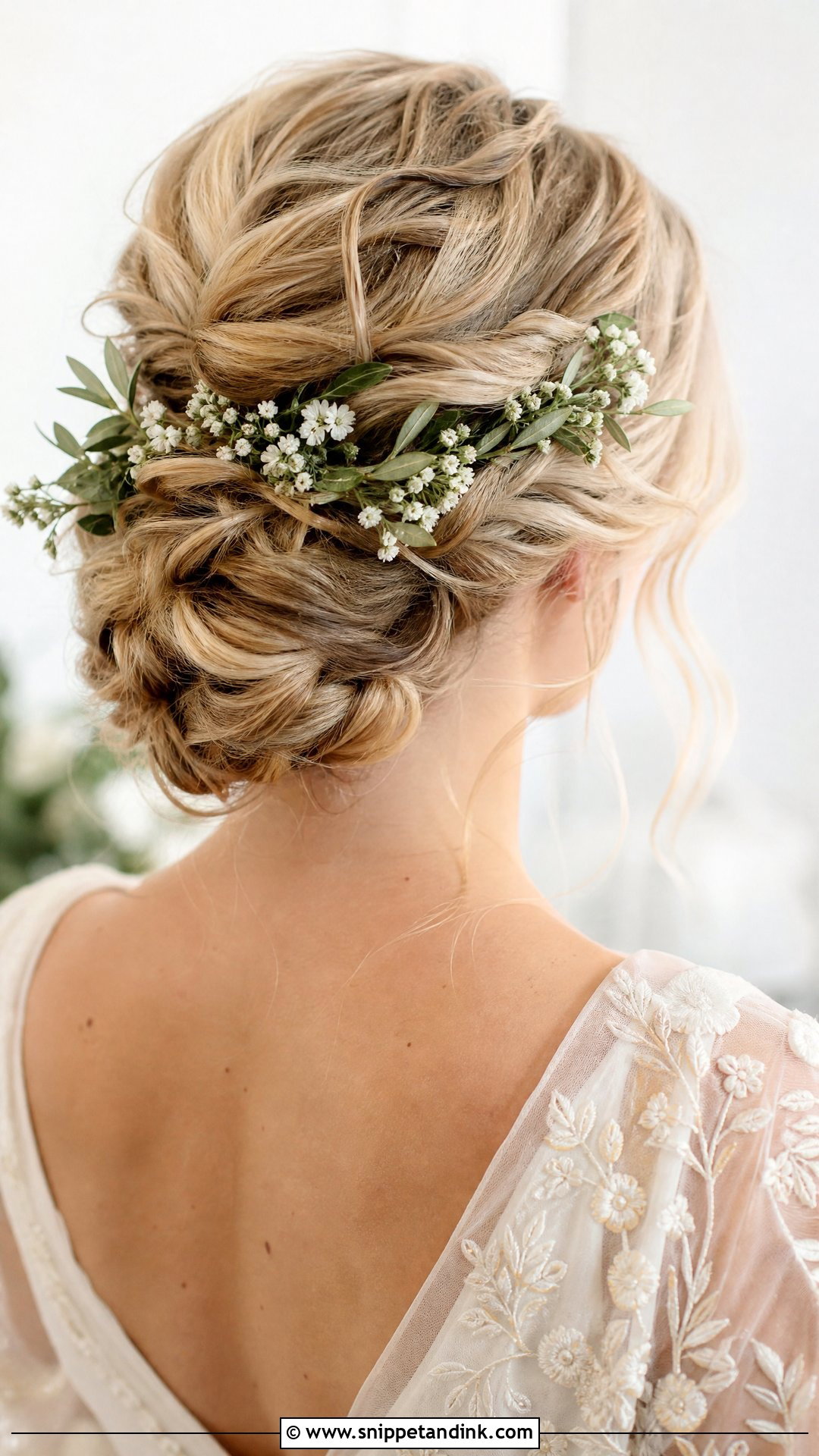
Fresh flowers suit outdoor weddings in spring and summer, tucked into a low bun, braided updo or loose chignon. Light hair is a soft backdrop for white, ivory, blush, pale blue or greenery. Scale decides whether it looks graceful or costume-like, and small blooms almost always win over large ones. I ask the florist for flowers wired and kept chilled until I’m finished spraying, because hairspray scorches petals and heat wilts them fast. Hardy choices like waxflower, spray roses and small orchids last the longest out of water.
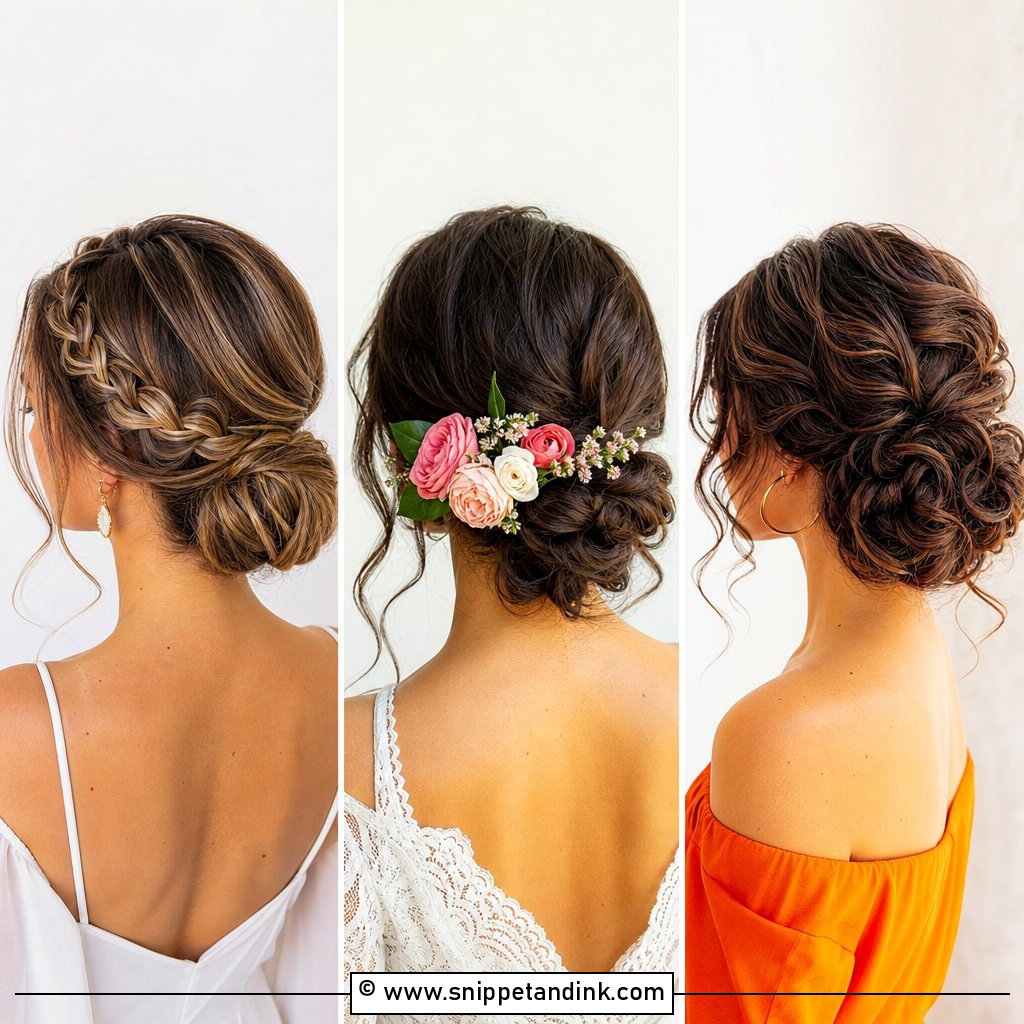
15. Blonde Wedding Updo For Thin Hair
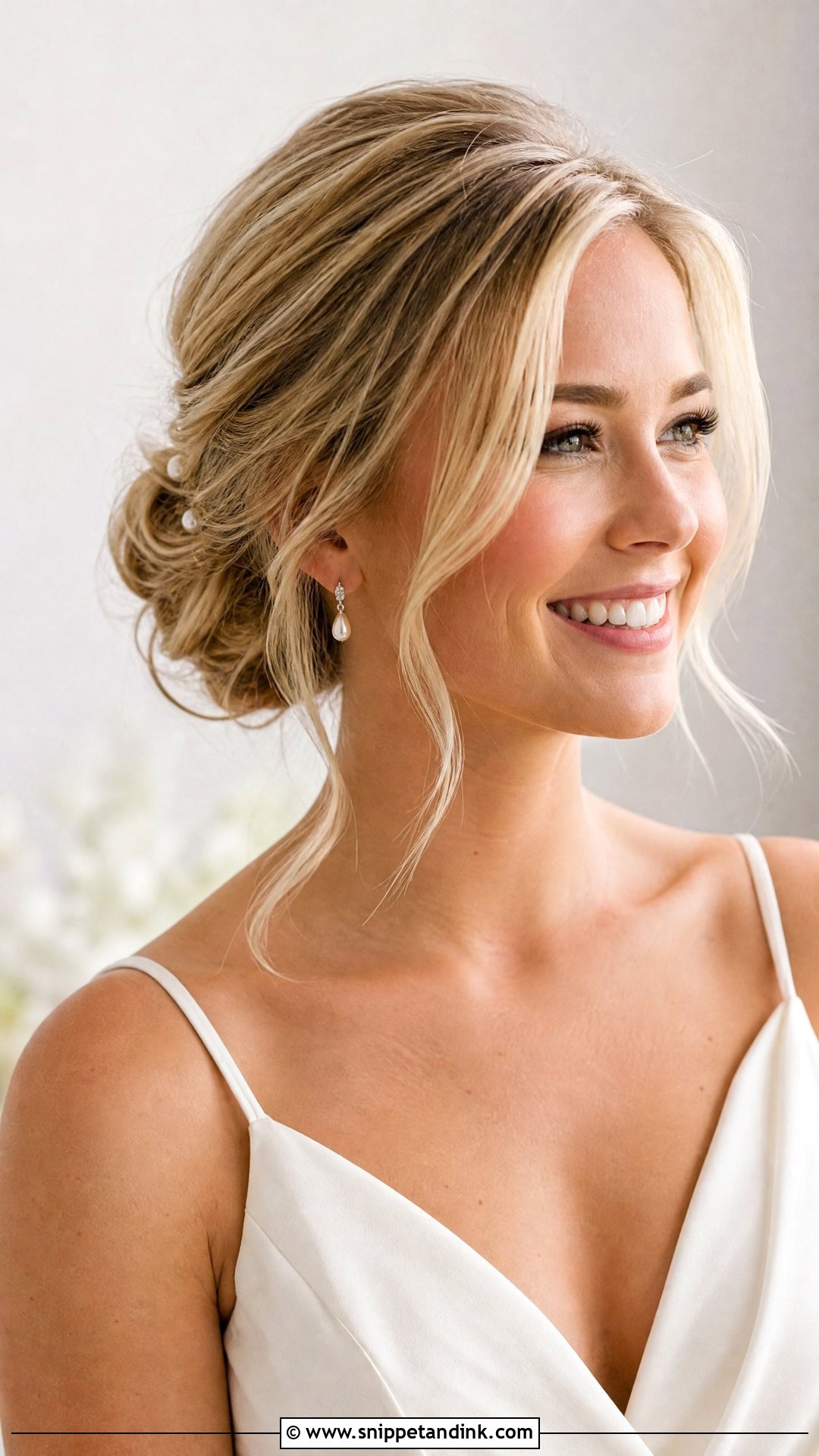
Thin hair can wear an updo and look full; it just needs the right shape and some help. Low buns, twisted chignons and airy textured styles build volume without needing heavy length. I wave the hair before gathering it, since bends take up more space than straight strands and blonde reflects light off every curve. Padding, clip-in extensions or careful root teasing add bulk that nobody will spot. The one thing I avoid on fine hair is a tight, small bun, because it makes the head look smaller and shows scalp at the crown.
Headaches, Heavy Pins and the Midnight Takedown
A secure updo holds a lot of pins, and over a long day that weight adds up. Tight sections at the nape and crown are the usual reason a bride has a dull headache by the speeches. It’s fixable, but easier to prevent.
Ask for comfort at the trial
Wear the trial updo for the rest of the day, not just the drive home. If one spot starts to throb, tell me exactly where, because I can usually change how that section is anchored without changing the look. Bun padding is lighter than you’d expect and often means fewer pins overall.
Taking it down without snapping lightened ends
Bleached hair is more fragile than untouched hair, and hairspray plus teasing makes it easy to break the ends when you’re tired. Go slowly, ideally with someone helping.
- Remove accessories and veil combs first, then pins one at a time, working from the bottom of the updo upward.
- Leave teased sections alone until you can coat them in conditioner or a detangling spray.
- Work through knots with your fingers before a wide comb, starting at the ends.
- Wash the next morning rather than sleeping on wet hair.
Keep a small pouch for the pins as they come out. Pearl pins are tiny and easy to lose in hotel bedding.
Let the Back of Your Dress Pick the Bun
If you’re stuck between a few of these, go back to the dress. A low chignon or twisted bun follows a classic neckline, a messy bun belongs with lace, a French twist wants satin, and braids earn their place outdoors where wind is a factor. Hair thickness and veil placement narrow it further. Bring photos of the front, side and back of each style to your trial, and wear a top with a neckline similar to your gown. Then keep the updo in for a few hours before you decide. How it feels at hour four tells you more than how it looks in the chair.
You'll Like These Ideas:


Leave a Reply