
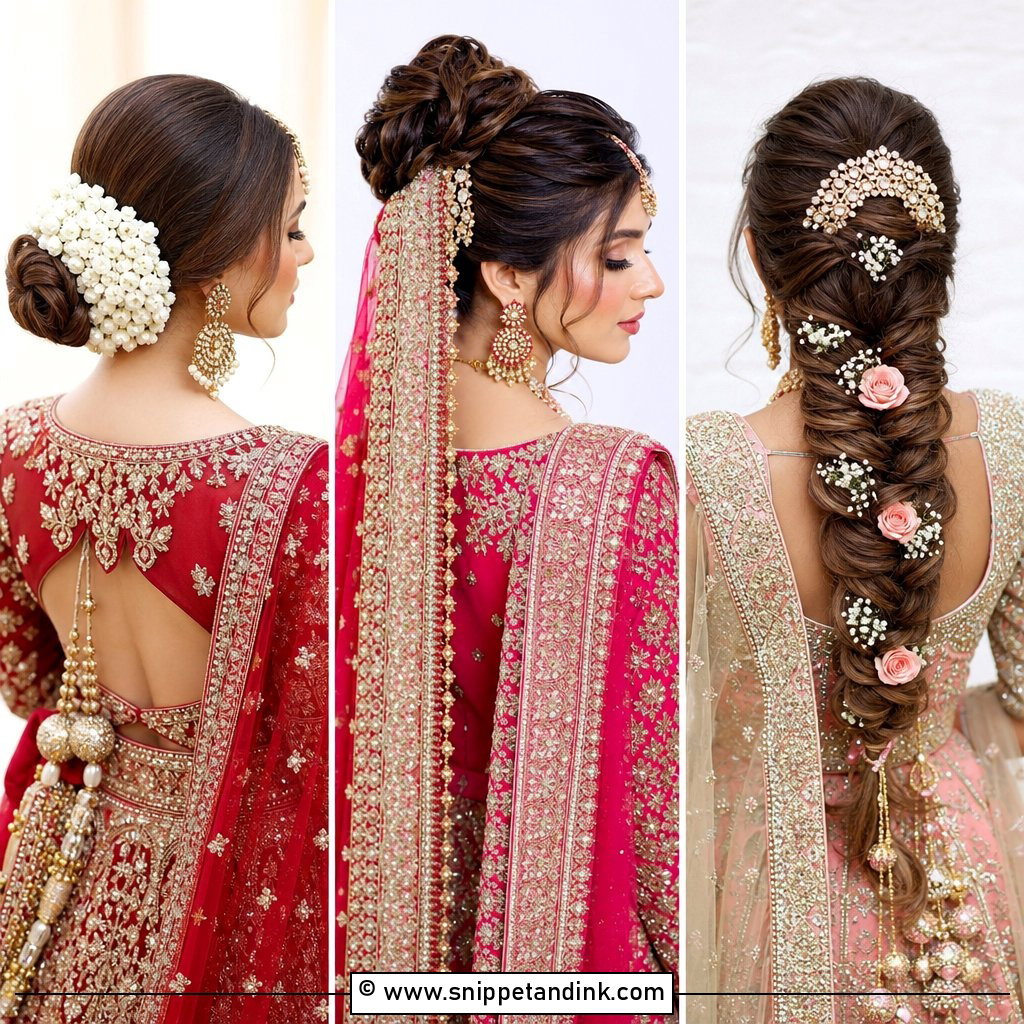
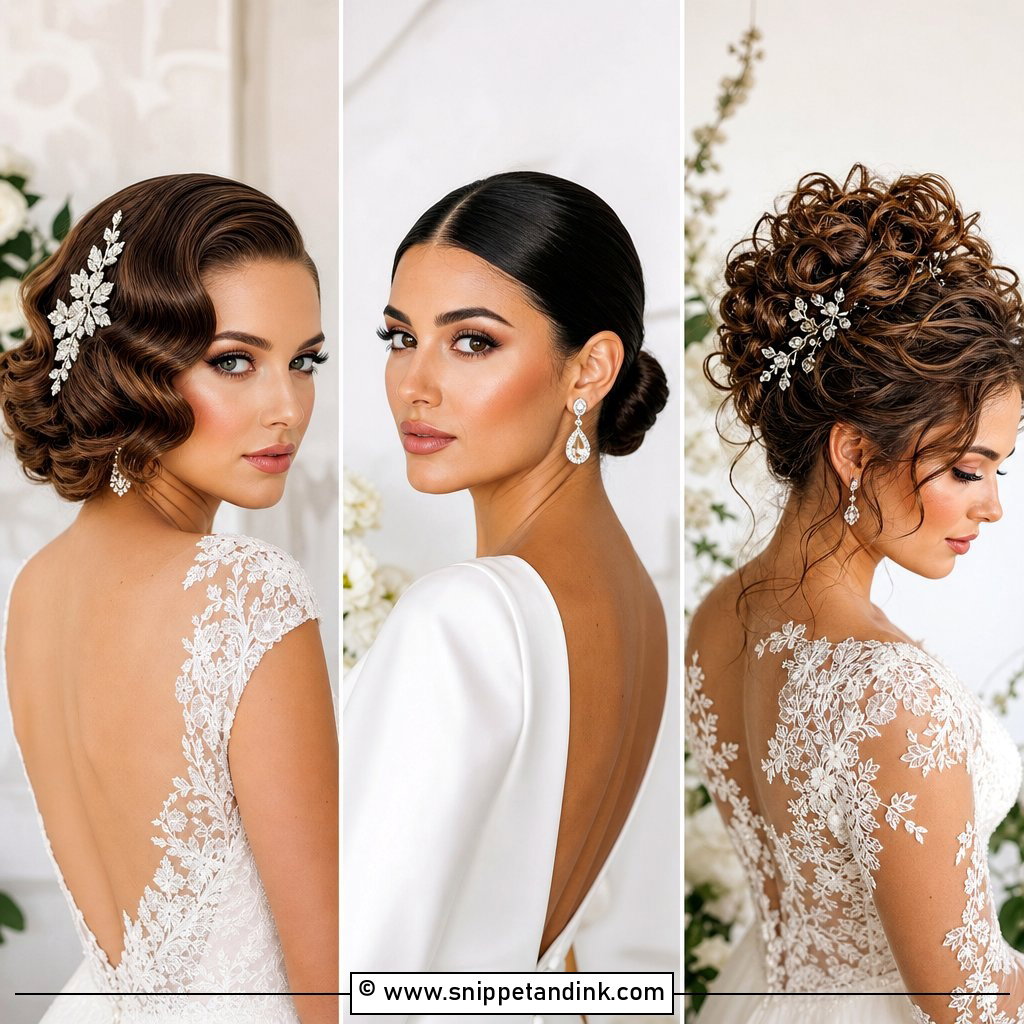
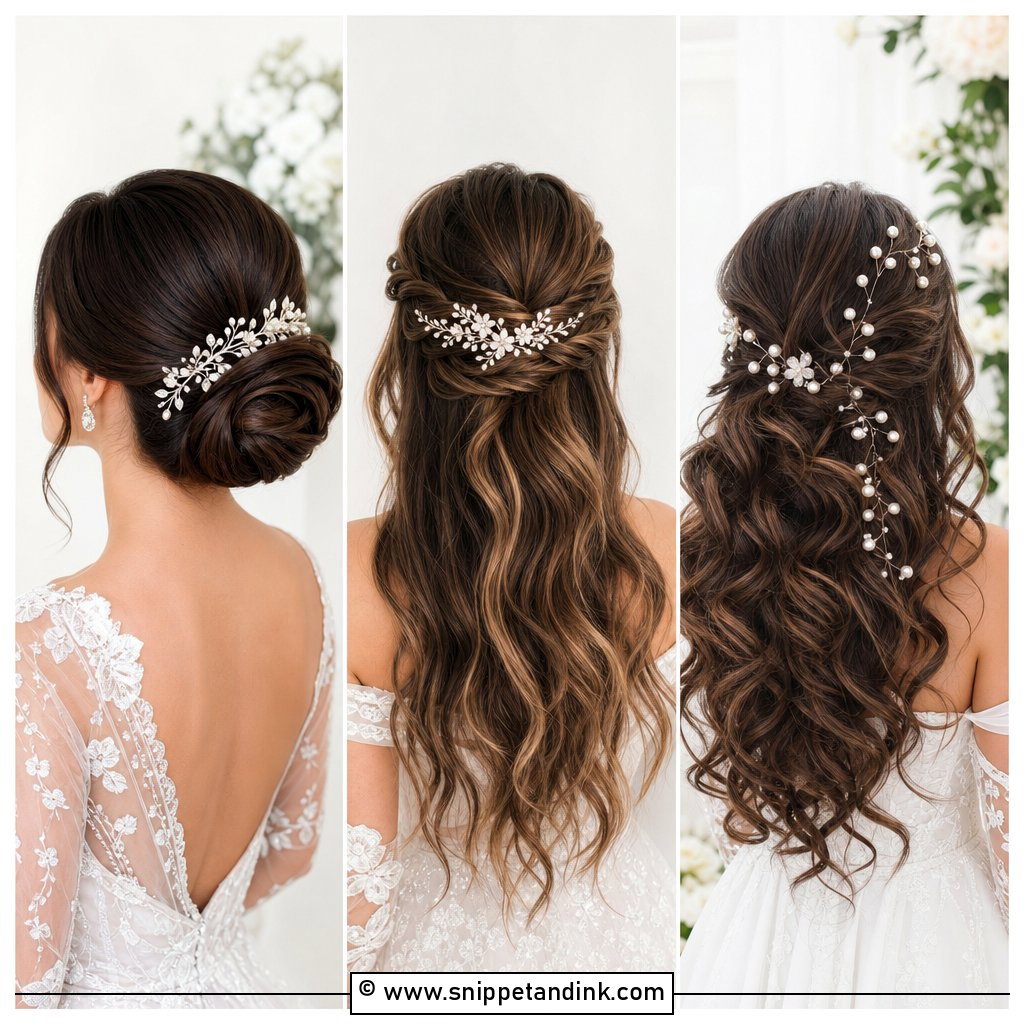
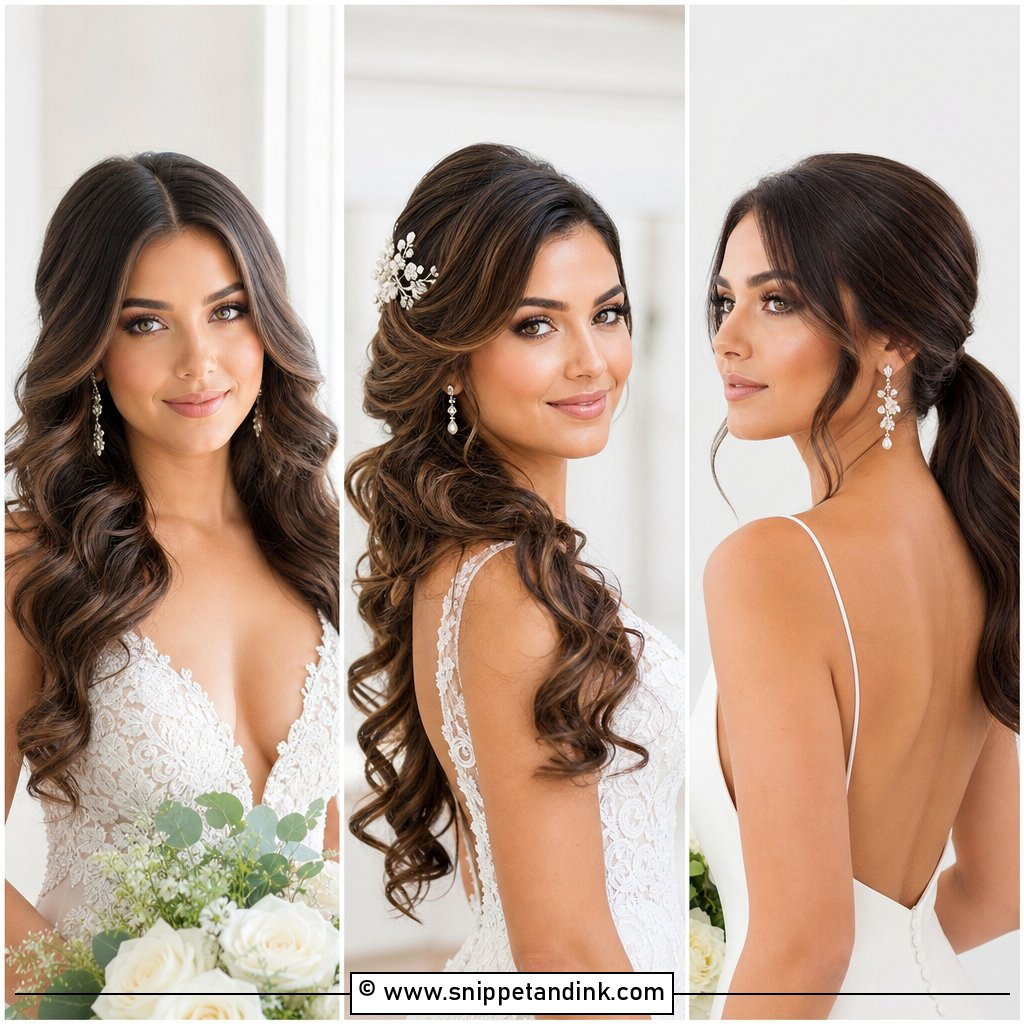
Open hair on an Indian bride has to do more work than it looks like it does. It sits under a dupatta that can weigh as much as a small handbag, it carries jewellery that pulls on one spot, and it has to last through a havan, a varmala and hours of hugging relatives. When I plan an open look, I start with the outfit and the jewellery, then build hidden structure underneath so the lengths can stay loose. Soft curls, half-up sections, floral pins, maang tikka placements and a clean centre part all come from that same idea. The fifteen looks below cover the wedding day as well as the sangeet, mehendi, engagement and reception, and I’ve added notes on what each one needs to stay put.
Wedding Week Prep for Hair You Plan to Wear Loose
Open styles show the condition of your hair far more than a bun does, because every end is on display. The work starts well before the wedding morning.
- Get a light trim three or four weeks out. A fresh cut right before the wedding can leave blunt lines that curls don’t hide.
- Skip a new colour or keratin treatment in the final fortnight. Both change how hair takes heat and hold, and your trial result won’t match the day.
- Wash the night before or on the morning, not two days earlier. Slightly oily roots make curls slide out, but squeaky-clean fine hair can be too slippery for pins, so tell your stylist your hair type and let her decide.
- Avoid a heavy oil champi in the 48 hours before. It’s a lovely ritual for scalp and nerves, but oil left in the lengths stops curls from setting.
If you’re having mehendi done, sit with your hair already loosely plaited. Stray strands sticking to wet henna paste mean a smudged stain on your hands and a sticky knot in your hair the next day.
1. Open Curls With Maang Tikka
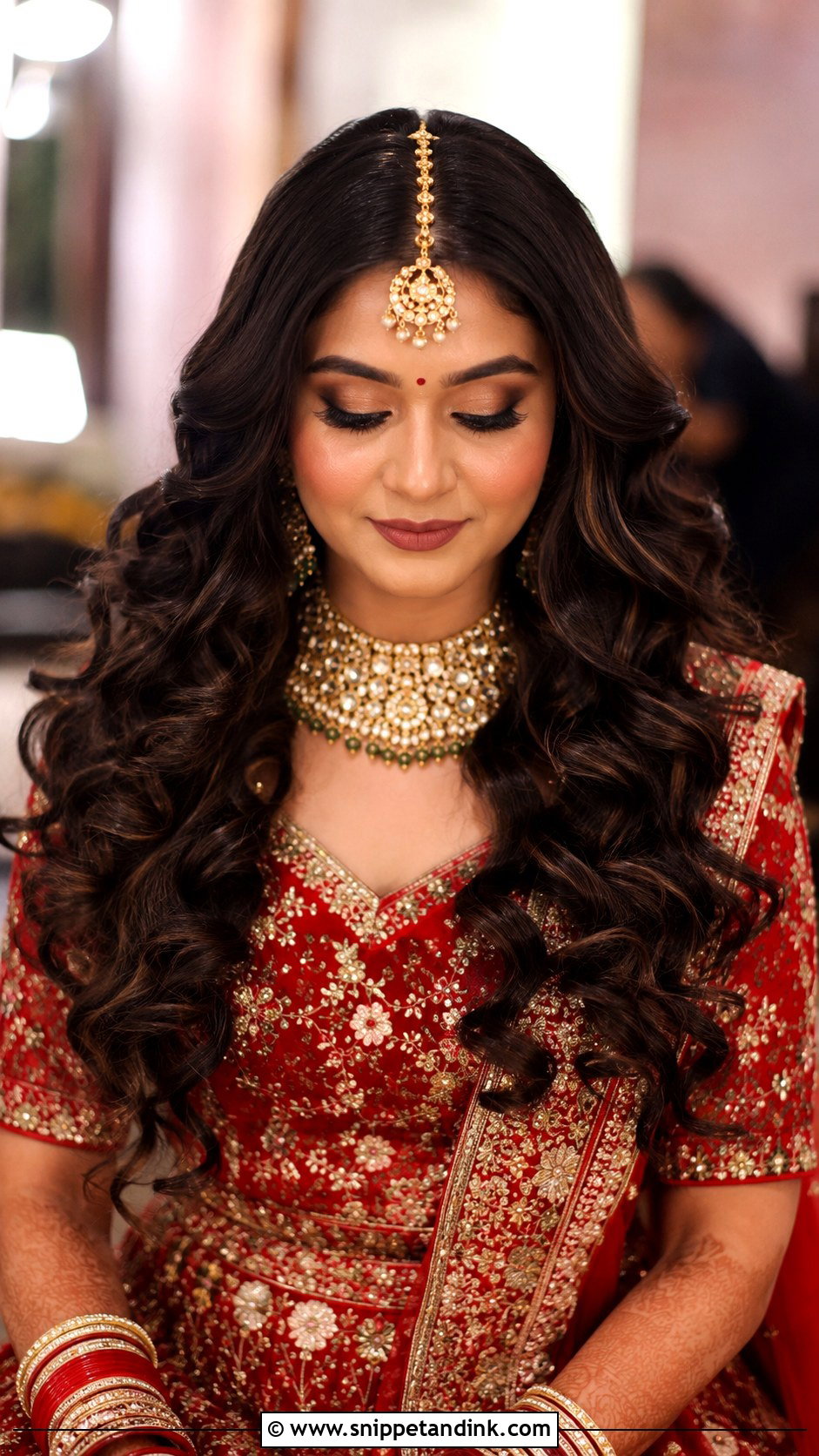
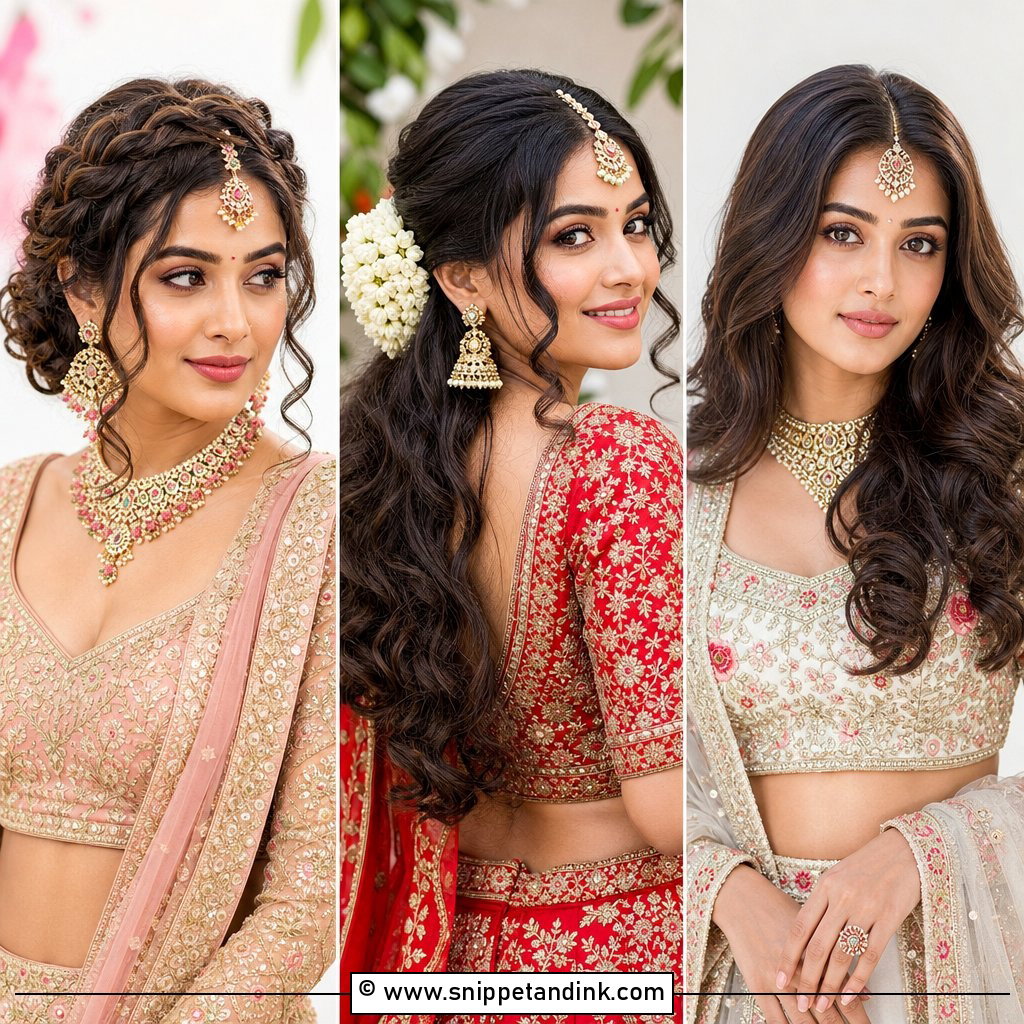
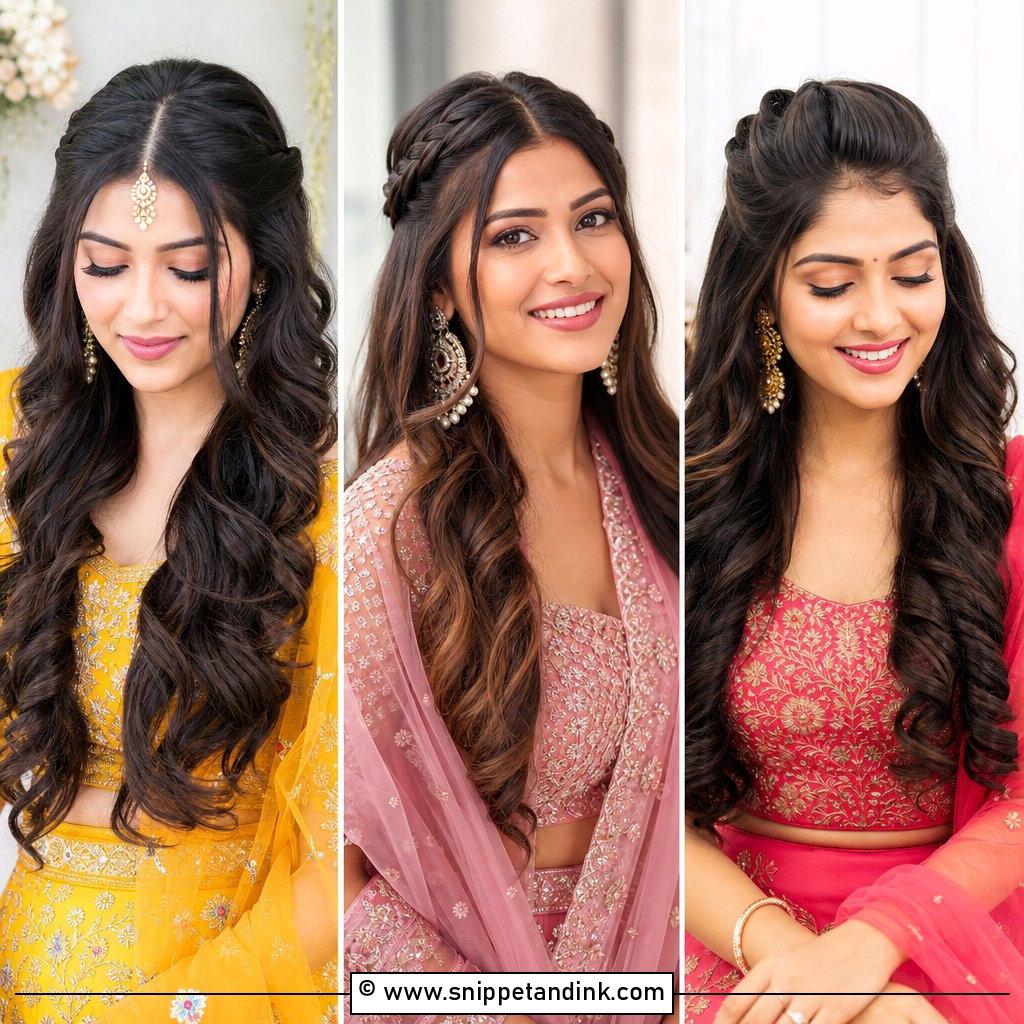
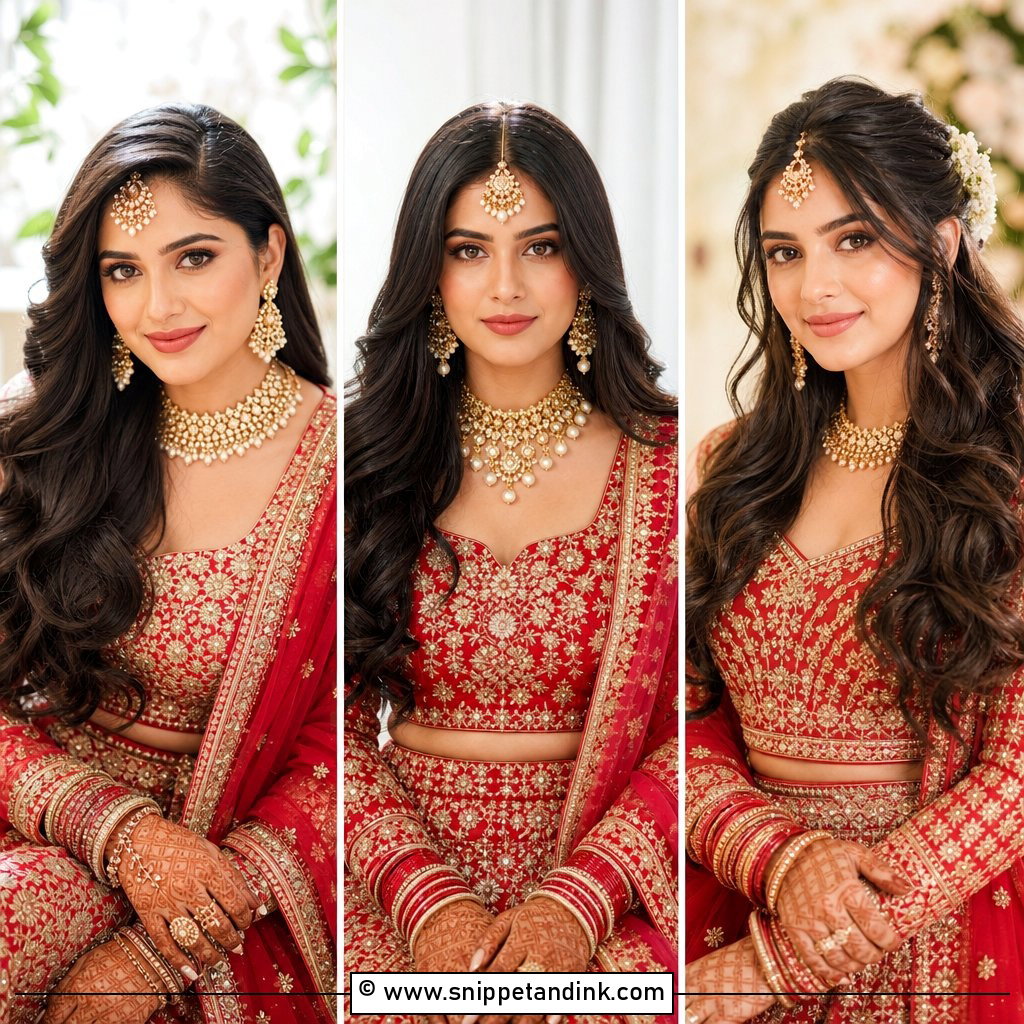
This is the look I’m asked for most, and it works because the tikka and the curls do separate jobs. The middle part gives the tikka a straight line to sit on, while the curls carry the volume down at shoulder level. I always build a small backcombed cushion at the crown and clip the tikka hook into a hidden pin there, not into loose hair, or it drifts sideways by the first photo. Ask for set, polished curls rather than beach waves; loose waves read as casual next to heavy embroidery. Flexible hairspray lets them move without dropping flat.
2. Open Wavy Hair With Matha Patti
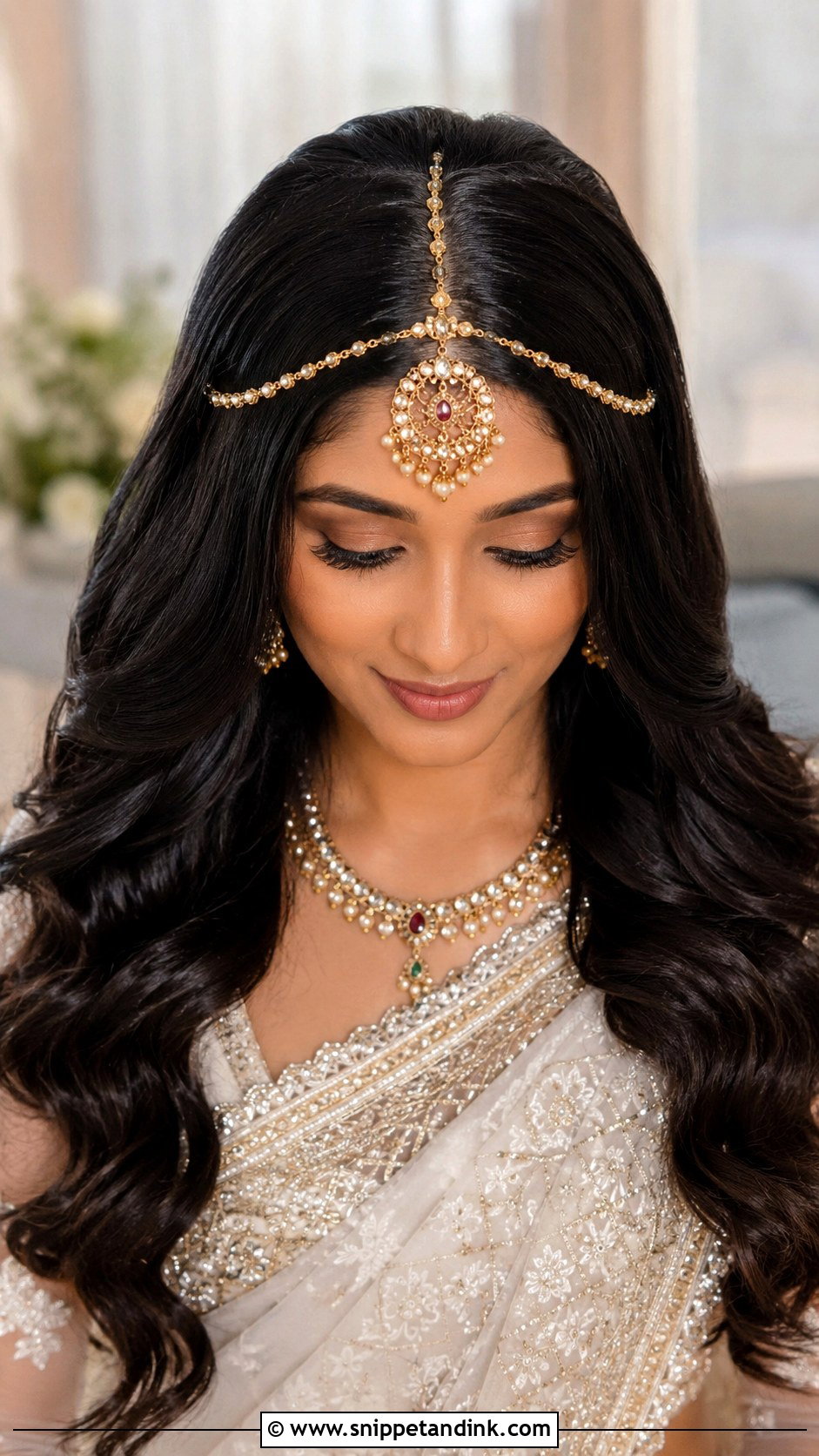
Open wavy hair with a matha patti turns the forehead jewellery into the frame of the face, so the front has to be smooth enough for the chains to lie flat. I start the waves below the cheekbones; anything higher fights with the side strands of the patti and looks busy. Lift the crown slightly if the dupatta will rest behind the head, because a flat crown makes the patti look like it’s slipping backwards. The side chains are held with two or three small pins each, criss-crossed under a section of hair so they can’t slide. It suits long and medium hair with almost any outfit colour.
3. Half Up Open Bridal Hairstyle
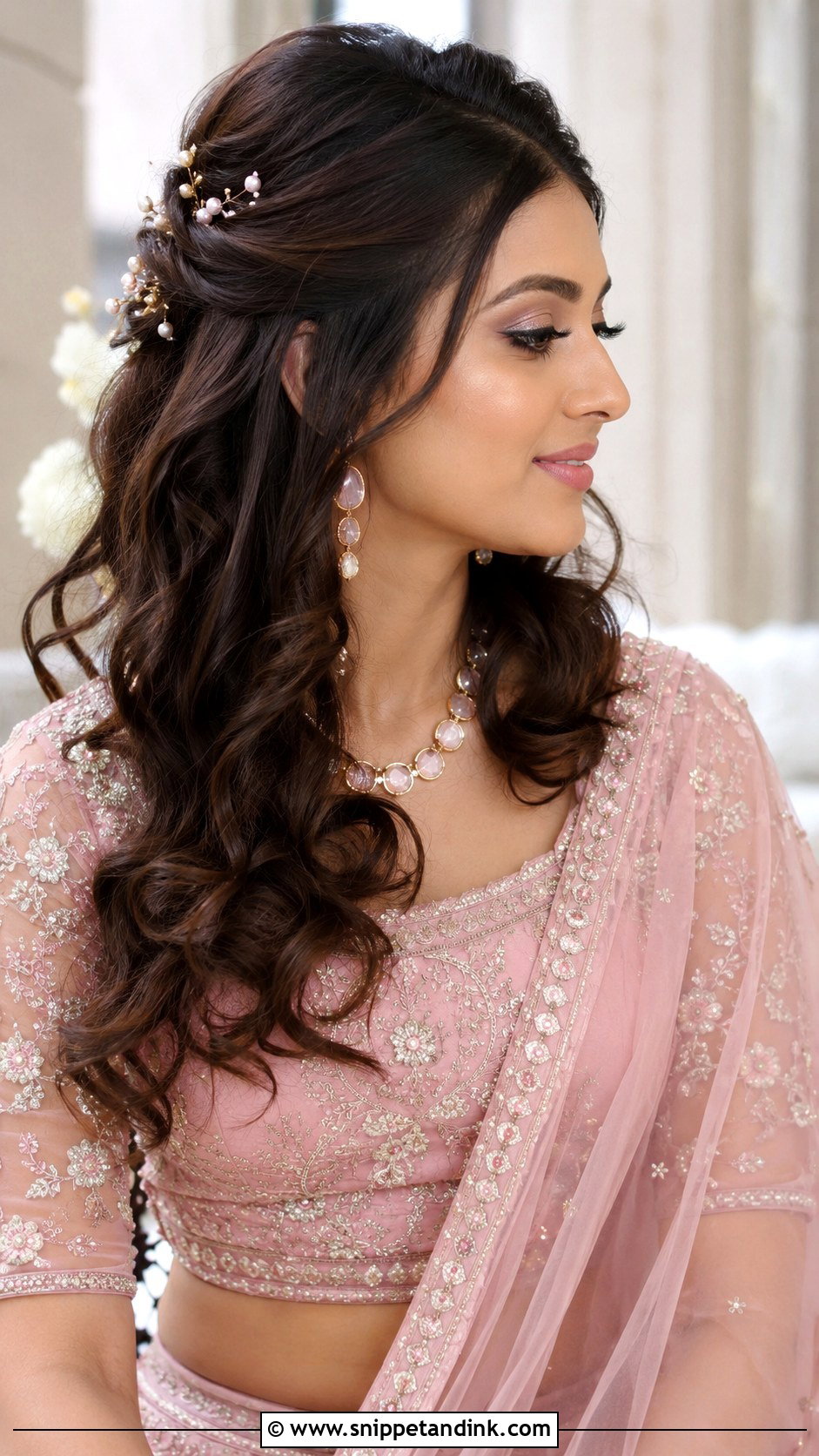
Half up is my answer when a bride wants loose hair but is nervous about it falling into the havan smoke or the camera. Pinning back the top section clears the face during rituals, and the lower lengths stay open in curls or soft bends. Because the pinned section sits at the crown, it also becomes the anchor for the dupatta, which matters more than most people realise. It sits comfortably next to jhumkas and chokers without crowding the neck. A small puff, twisted sides or a few pearl pins finish it. Fine hair needs the pinned section backcombed first or it flattens within an hour.
4. Open Hair With Soft Curls
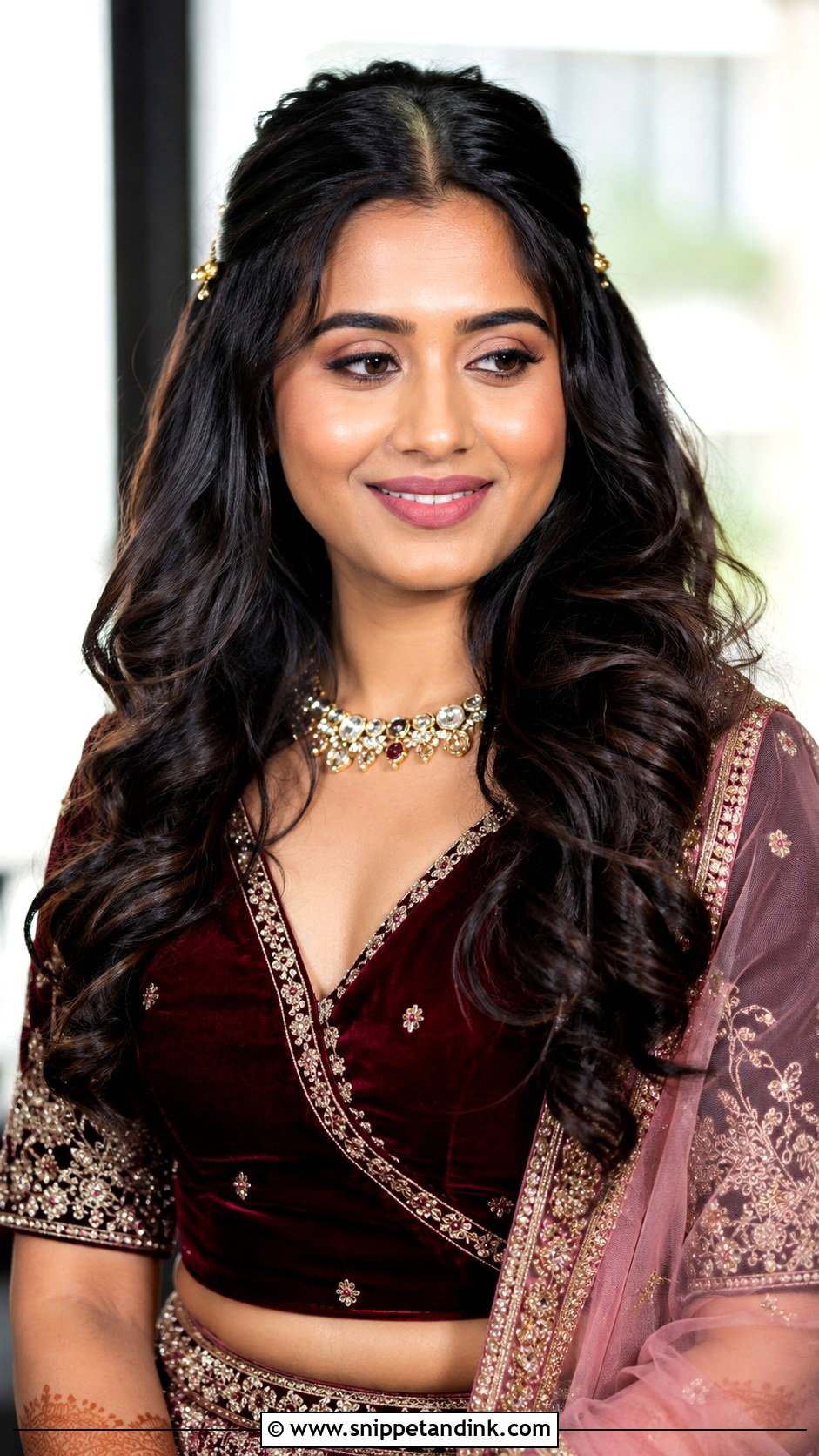
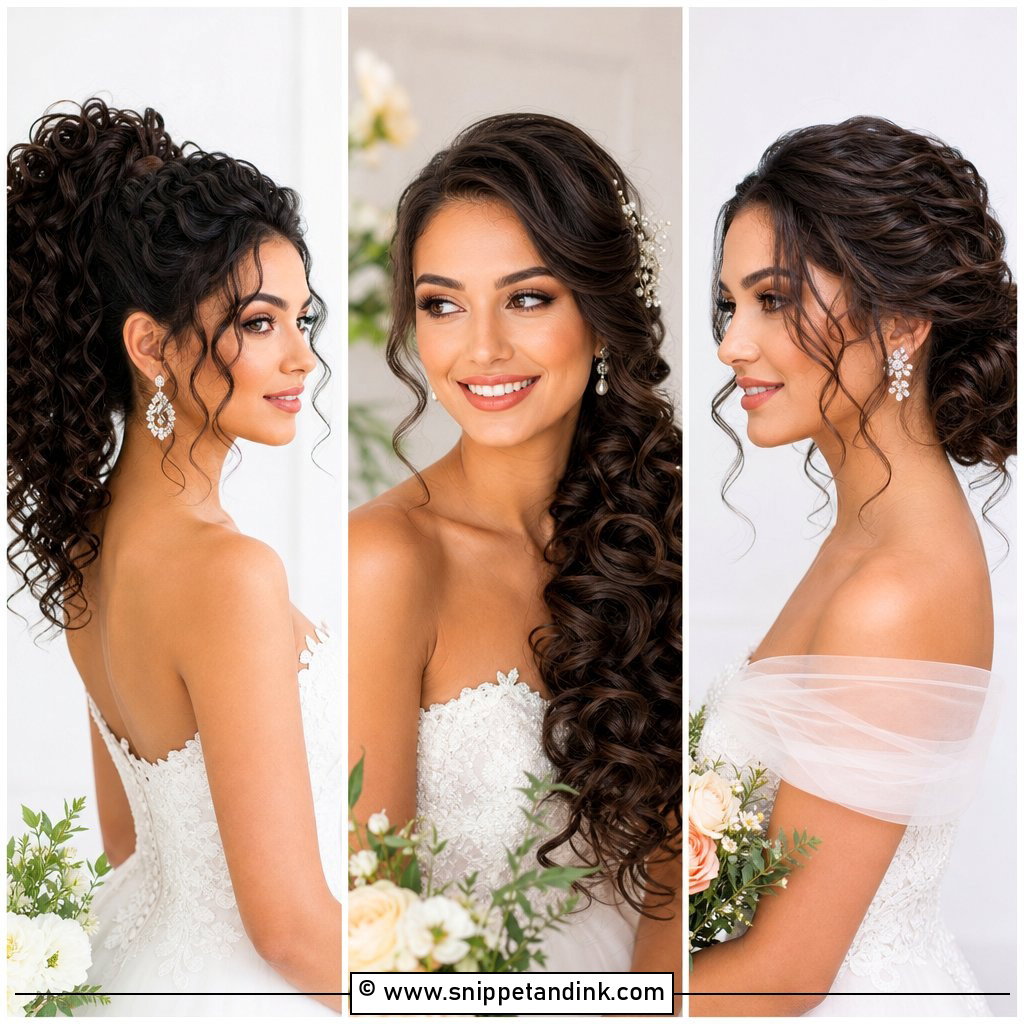
Soft curls are a safe choice, but only if they are curled properly. I curl in small sections, let each curl cool in a pin curl, and brush them out only once the whole head is done; skip the cooling and they drop by lunch. They should look smooth and defined, never crunchy. Layered hair gets natural bounce, while one-length hair often needs a few clip-ins to stop the ends looking thin against a lehenga. Centre part for a traditional face, soft side part for evening glamour. A drop of light serum on the ends keeps them from going fluffy by evening.
5. Open Straight Hair With Center Part
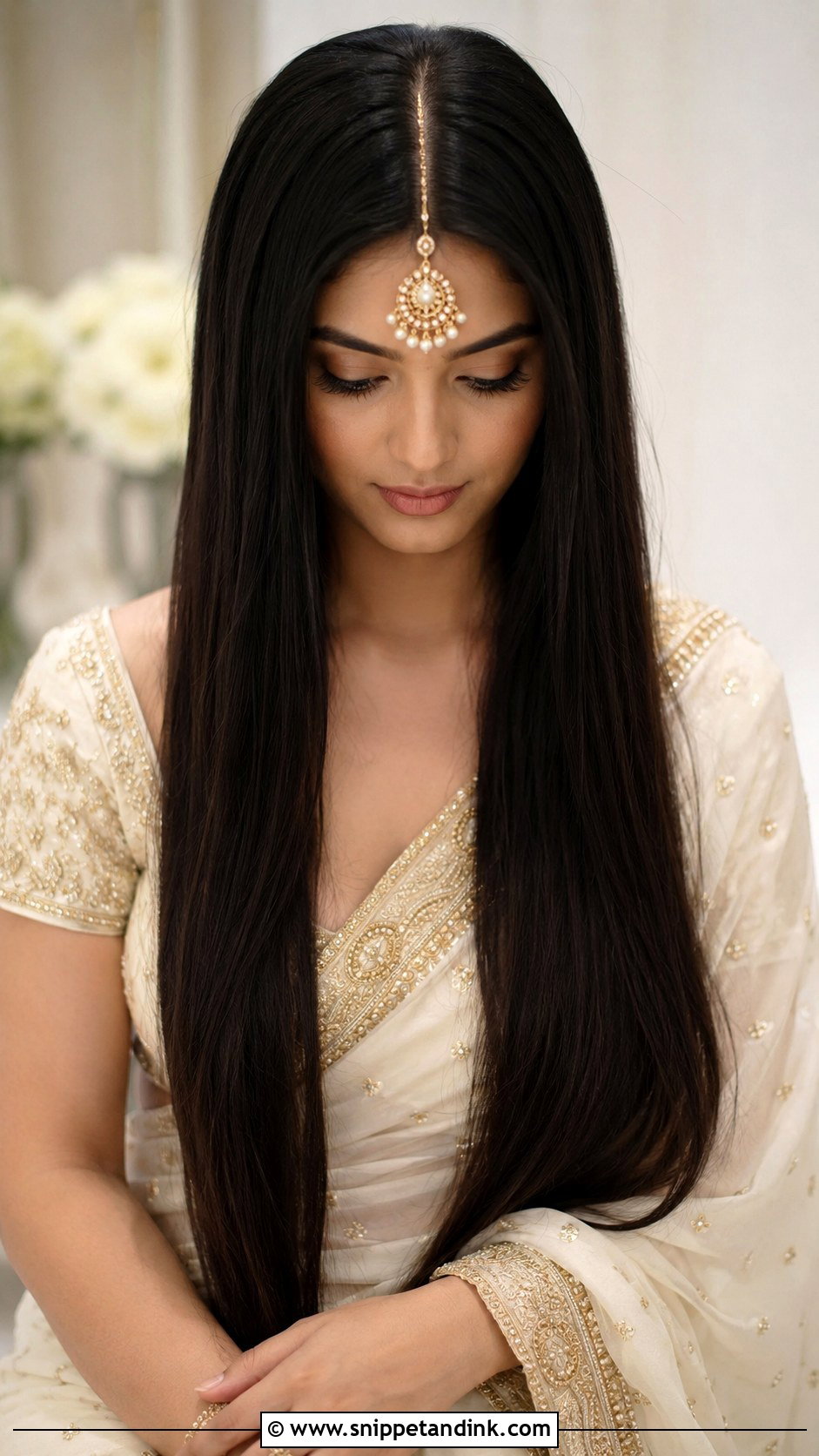
Straight open hair with a centre part is the minimalist bride’s look, and it is the least forgiving one on this list. Every frizzy strand shows, so I blow-dry with a paddle brush, flat-iron in thin sections and finish with a shine spray rather than heavy oil, which goes stringy under lights. The part is a natural line for a maang tikka or a fine forehead chain, and it leaves the stage to statement jewellery. Tuck the front sections behind the ears if you want a neater frame. I’d keep this for indoor or air-conditioned ceremonies; humidity breaks it faster than any curled style.
6. Open Hair With Front Puff
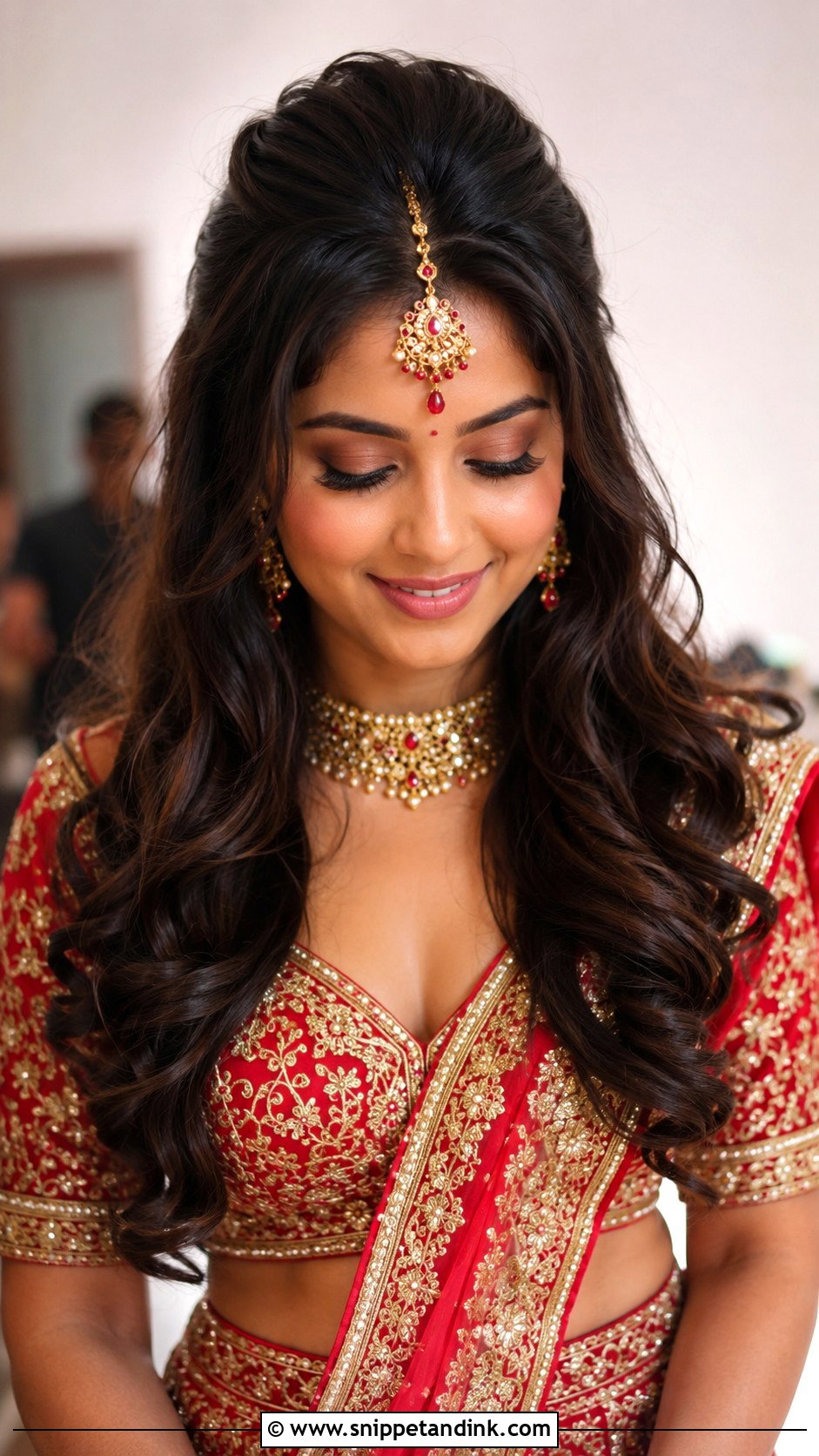
A front puff lifts the face, which is why I often suggest it under a heavy dupatta or with a high-neck blouse that shortens the neck. The height should be modest, about two fingers, or it starts to look dated in photos. Build it on a backcombed base and lock it with crossed bobby pins so it doubles as a secure point for tikka chains and the veil. The rest can be curled, waved or smoothed to suit the outfit. It balances round and heart-shaped faces well because it adds length above the eyes.
7. Open Hair With Side Part
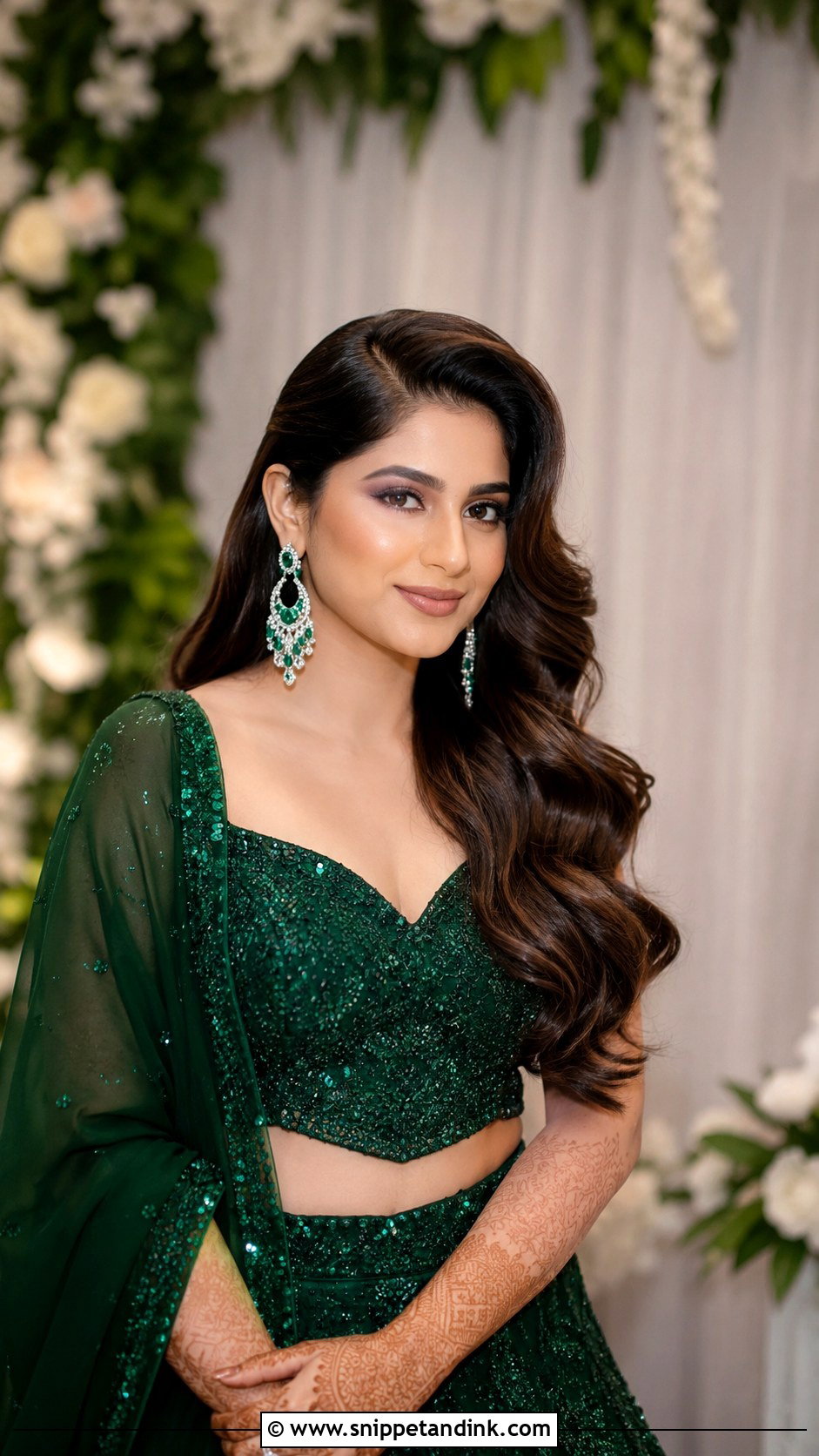
Open hair with a side part instantly makes hair look thicker on the heavy side, which is why I use it on brides with finer hair. It goes with soft curls, vintage waves or a smooth blowout. Pair it with a one-sided dupatta drape or a single statement earring, and keep the lighter side pinned behind the ear so the earring shows. One warning: a deep part sends hair across the face when you bend forward to touch feet, so I pin a hidden anchor just behind the hairline. It shines at the reception, cocktail or sangeet, especially under evening lighting.
8. Open Hair With Floral Pins
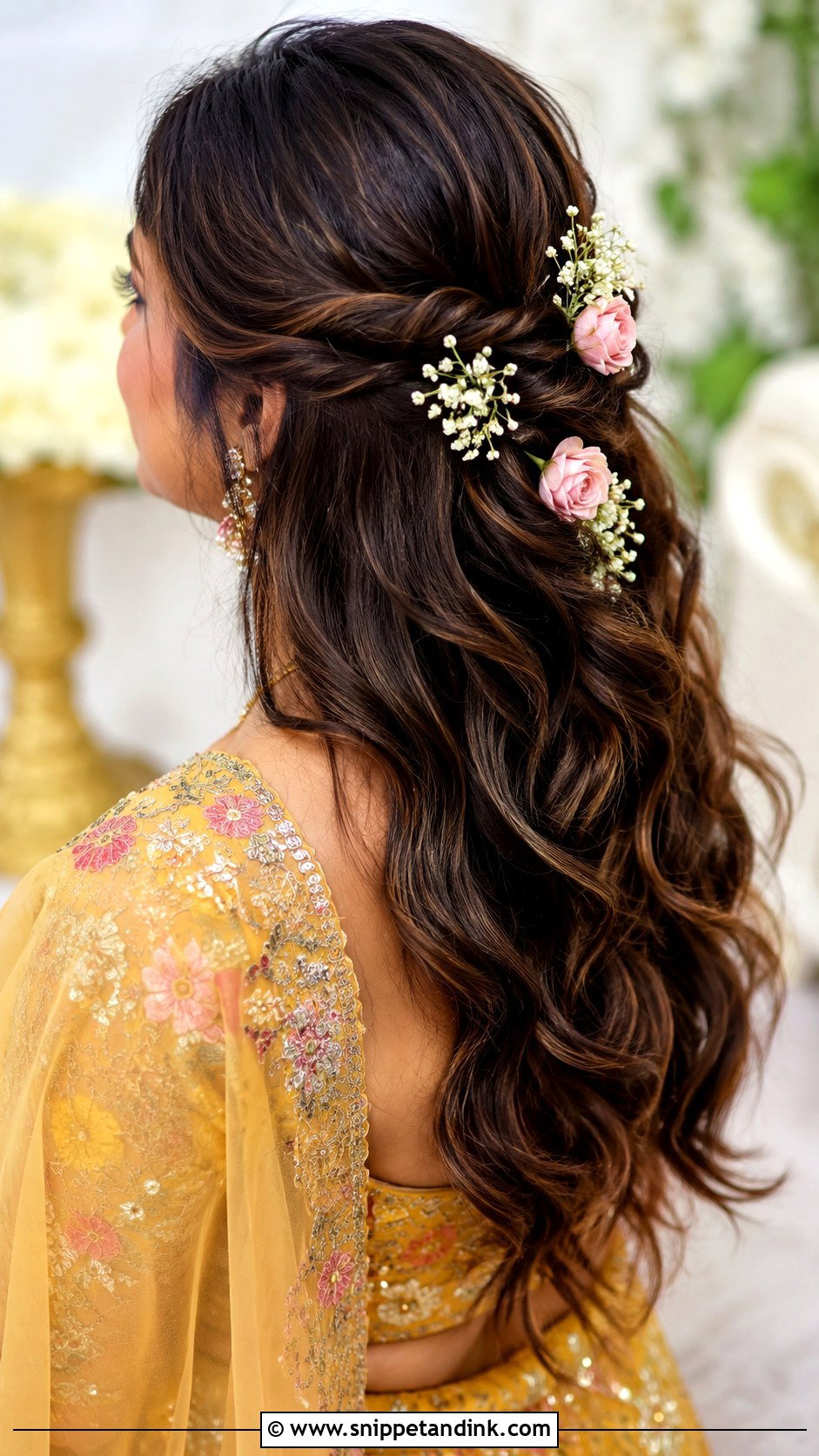
Flowers in open hair are at their best for mehendi, haldi and daytime garden ceremonies. Fresh jasmine, baby’s breath or small roses all work, as do good artificial blooms if the day is hot. Rather than covering the head, I pin flowers along small twisted side sections or behind one ear, because a pin needs a twist or braid to grip; it will slide straight out of loose curls. Fresh jasmine wilts and browns in a few hours of direct heat, so I keep a spare string in a damp cloth in the fridge. If your outfit already has heavy embroidery, use fewer flowers.
9. Open Hair With Jhumar
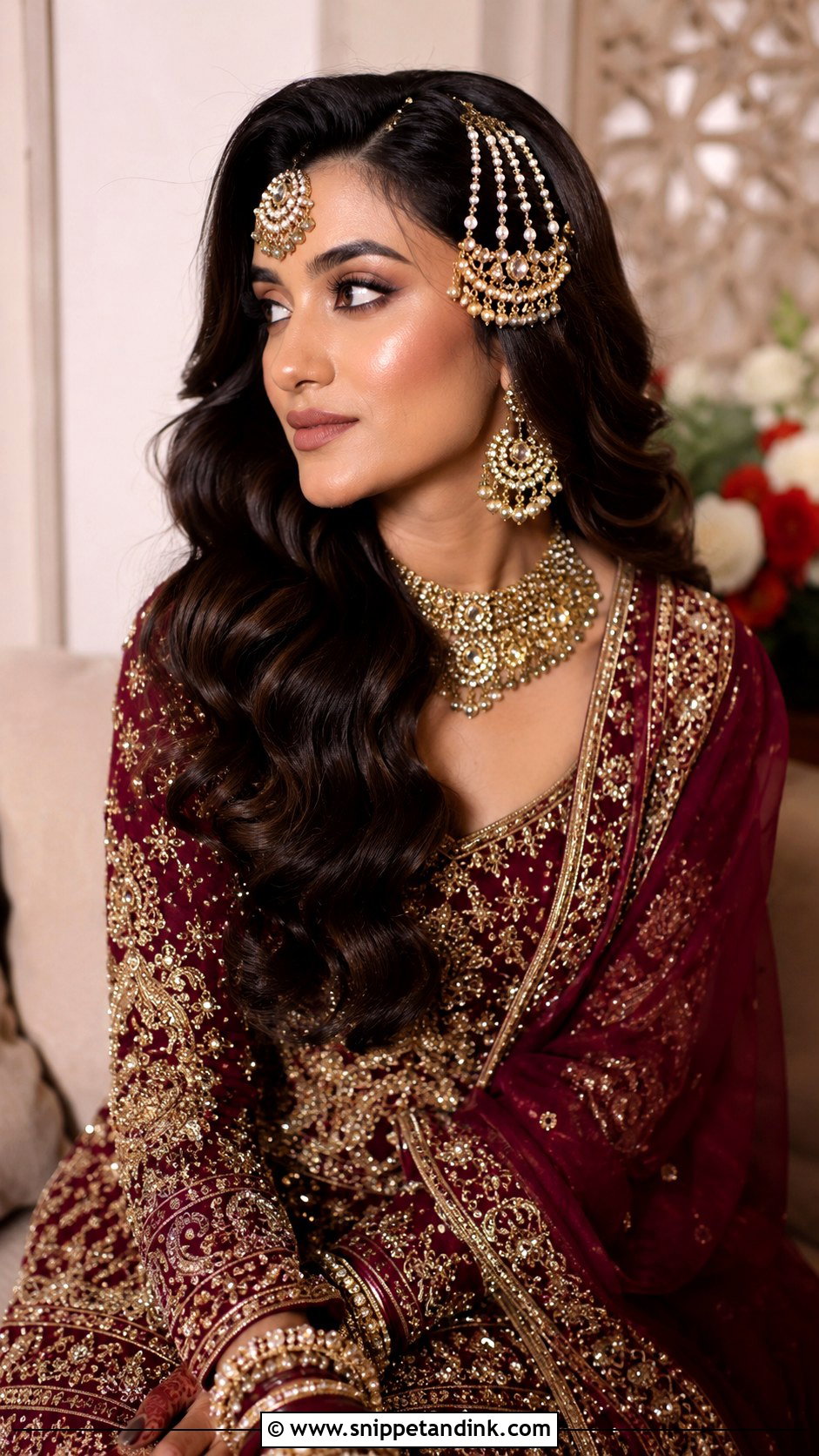
Open hair with a jhumar suits brides drawn to Mughal-style jewellery, but the jhumar is heavy and it all hangs from one side. I build a firm, backcombed base under it and anchor the hook with several pins locked together, otherwise it tips forward after an hour and drags on the scalp. A soft side part or side-swept waves balance its weight. The lengths can fall over one shoulder or stay behind the back, depending on how the dupatta is draped. It sits naturally with shararas, ghararas and heavily embroidered lehengas.
10. Open Hair With Loose Waves
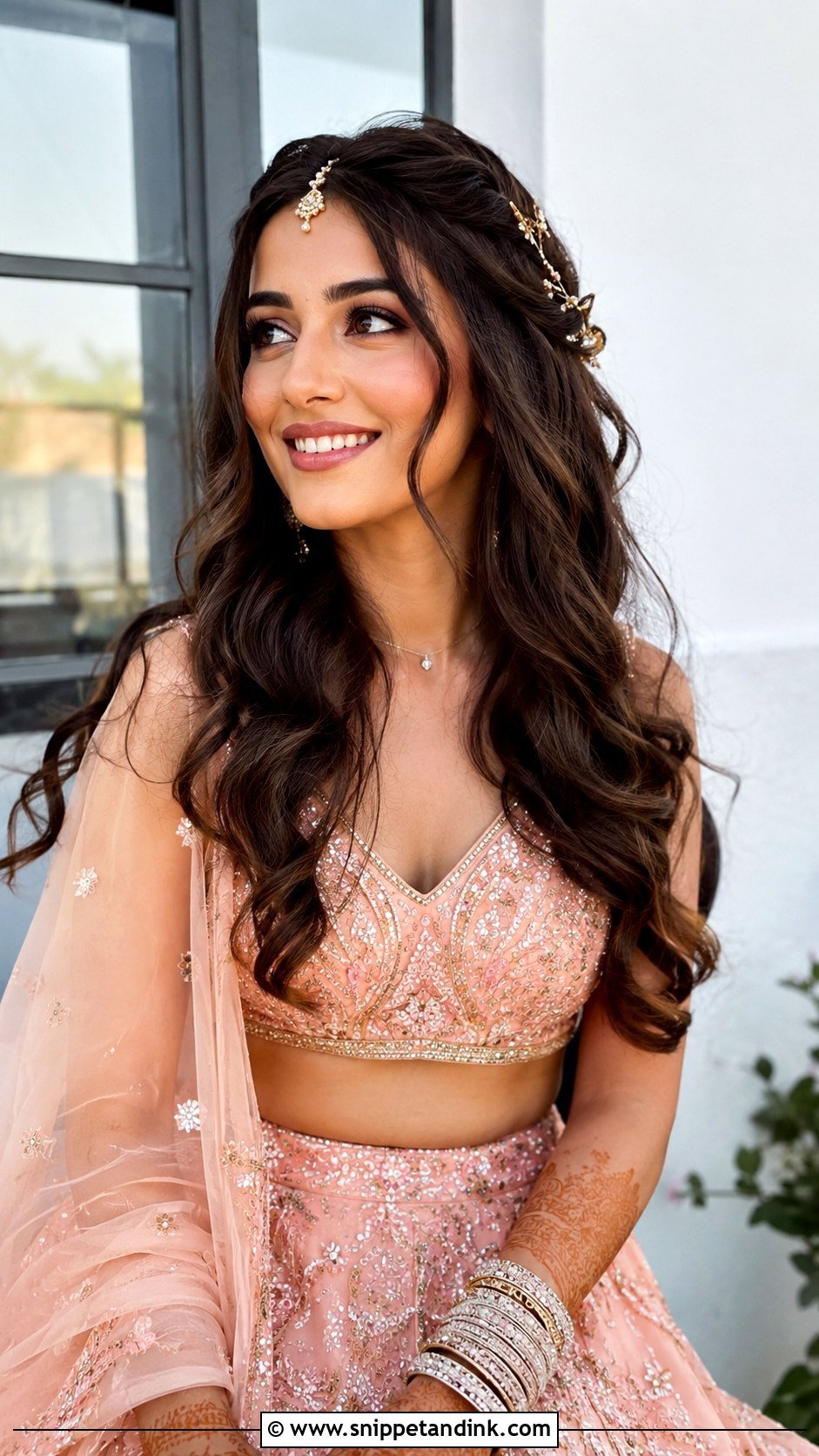
Loose waves are the relaxed end of open bridal hair, which makes them right for the engagement, sangeet or a beach wedding. Start the waves around the cheekbone or jawline and keep the roots smooth; waves that start at the root look undone in photos rather than intentional. They suit long, medium and layered hair. In humid weather I apply an anti-frizz serum before curling, not after, because it seals the cuticle before heat goes in. Add a tikka, a few pins or a light dupatta at the back.
11. Open Hair With Braided Crown
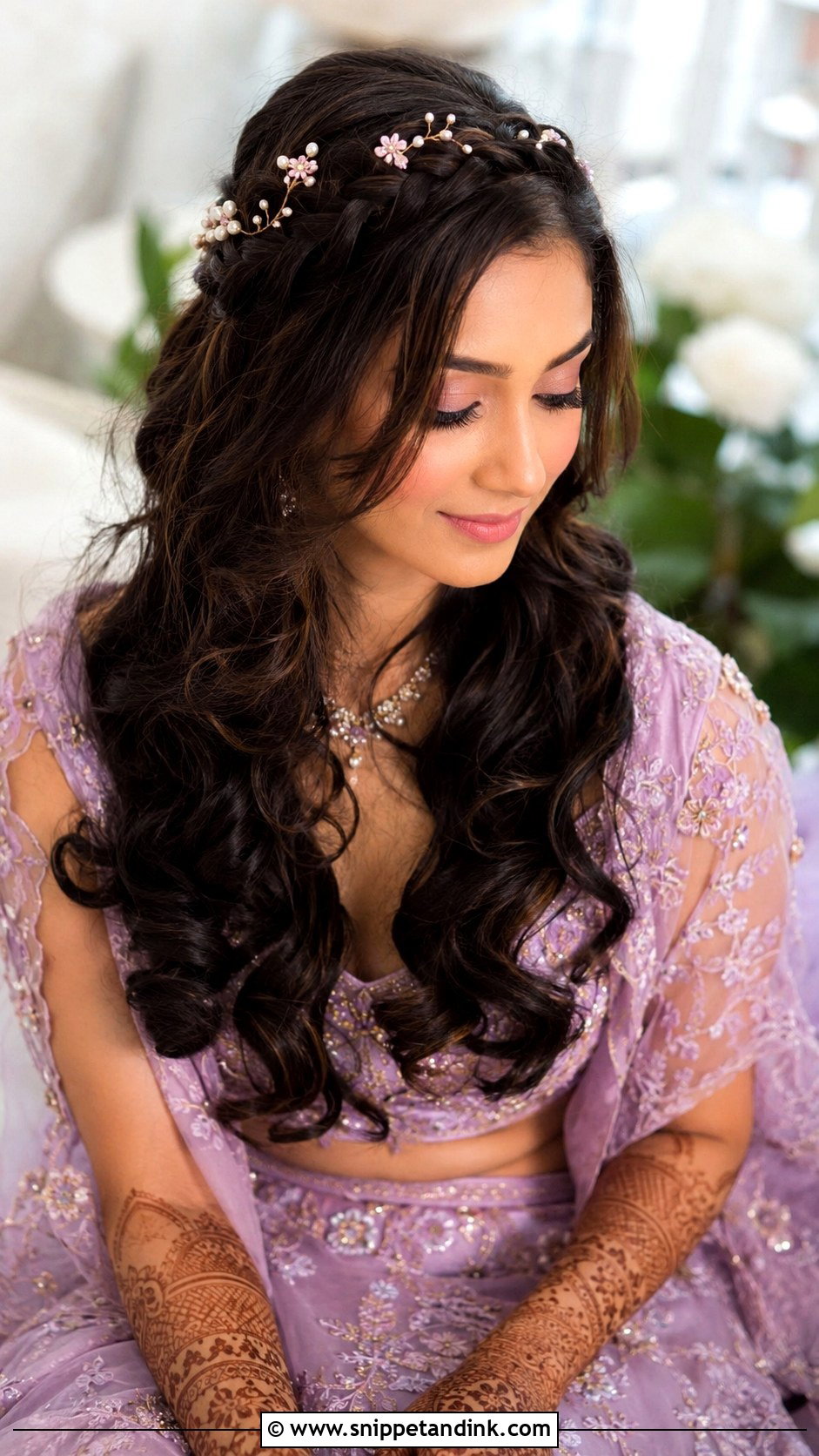
A braided crown gives you control around the face while nearly all the length stays open. The braid can run across the front like a band or circle the crown like a halo, and either way it becomes the hidden anchor that holds pins and flowers. I pancake the braid gently once it’s pinned so it looks soft rather than tight. Thick hair has enough volume on its own; fine hair usually needs a slim padding piece or a clip-in weft woven in. It sits well through mehendi, sangeet and pheras, when you’ll be sitting and leaning for a long time.
12. Open Hair With Side Braid
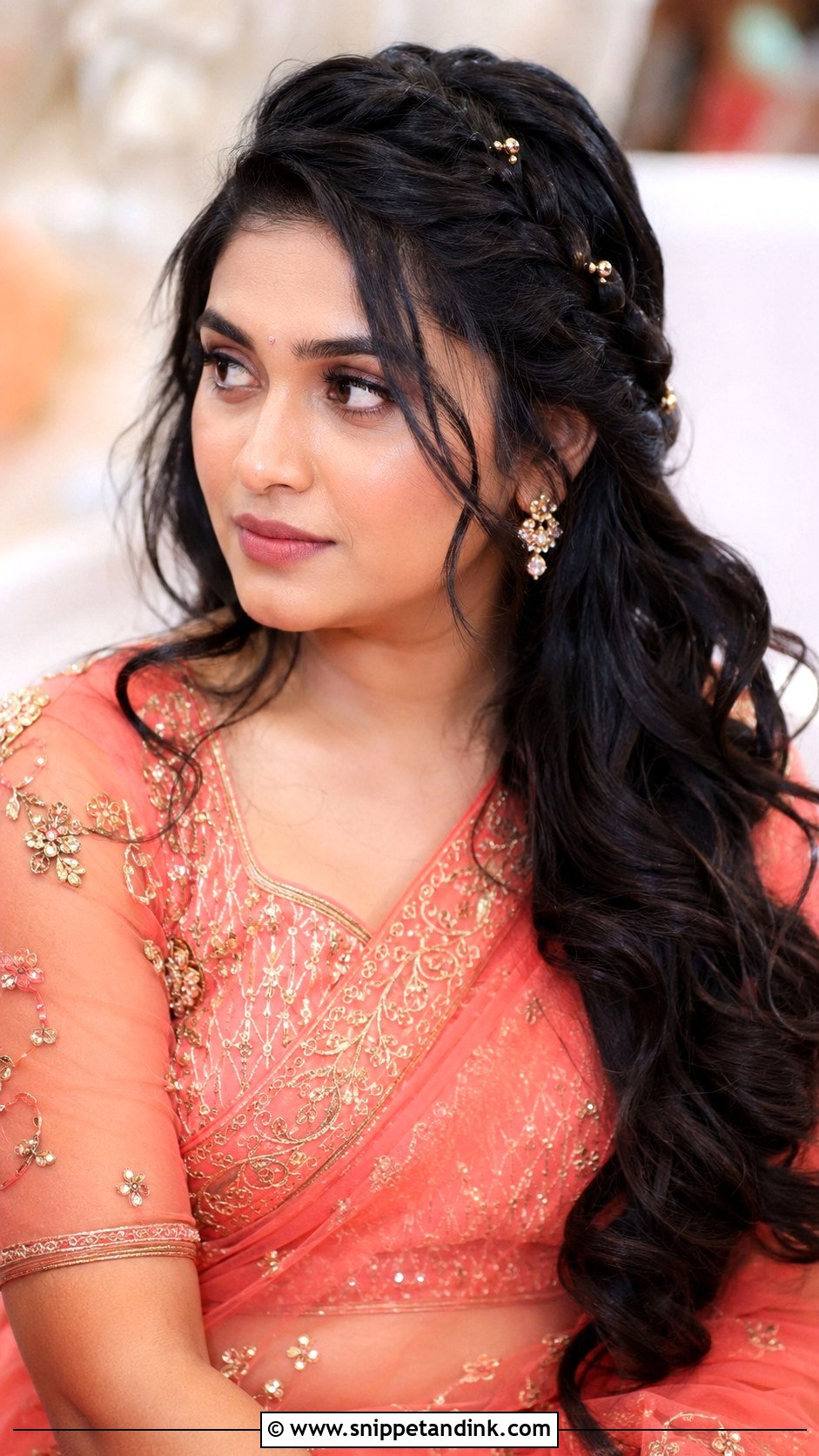
A single side braid adds detail without tying the hair up. It keeps one side of the face clear while the rest flows open, and it works with curls, waves or a textured blowout. I loosen it slightly with my fingers after pinning, because a tight braid next to loose curls looks unfinished. Small flowers, pearls or gold pins tucked into the plaits give it a wedding finish. It’s especially practical for long ceremonies, and it shows off an off-shoulder blouse or a saree drape nicely.
13. Open Hair With Pearl Accessories
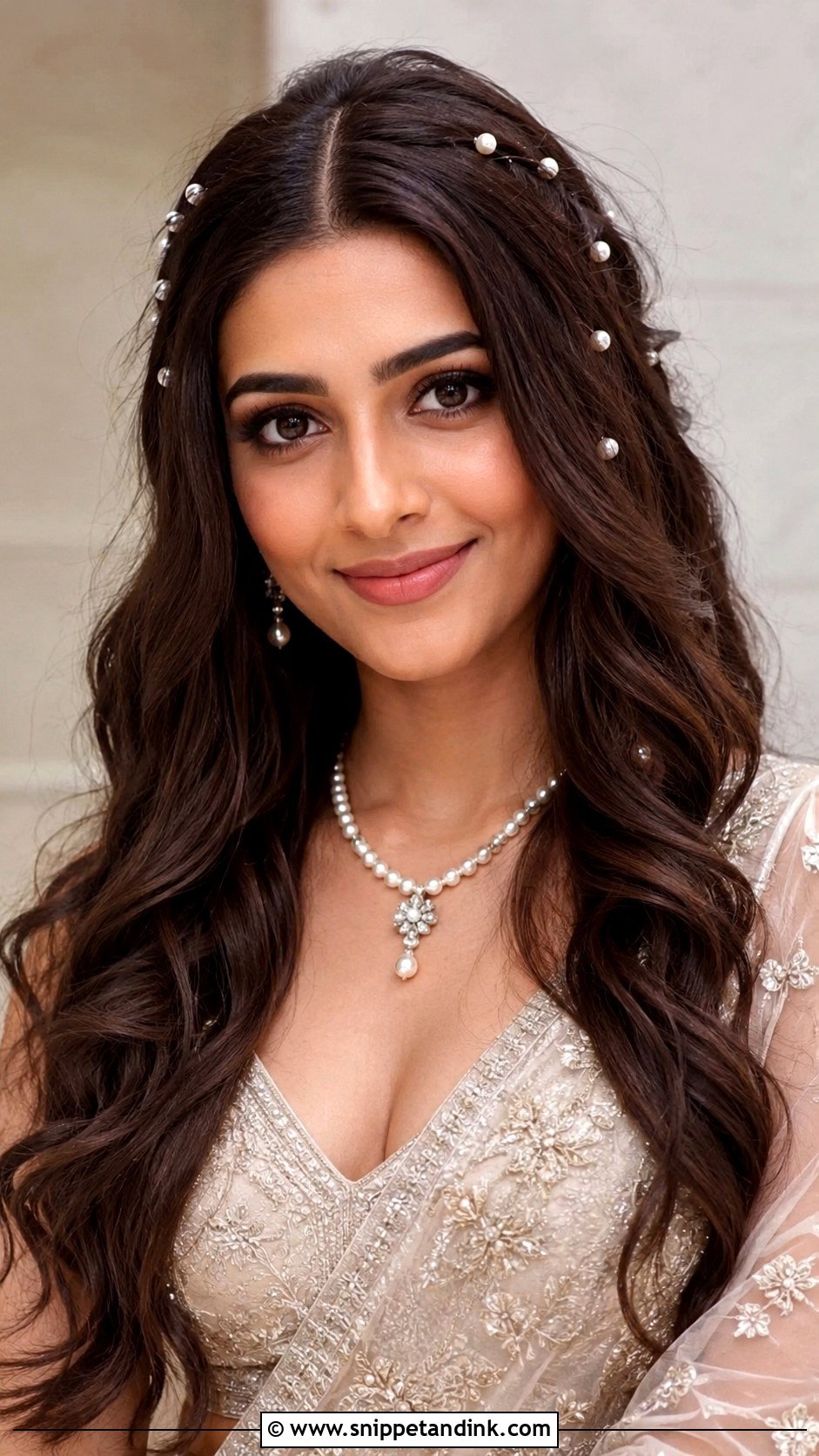
Pearls are the accessory I reach for when the outfit is ivory, pastel, champagne or blush, though they also sit well against deep red. Style the hair in waves, curls or a smooth half-up first, then add pearl pins or a fine pearl chain. The mistake I see most is too many pearls on an already embellished outfit. Five or six well-placed pieces look richer than twenty scattered ones. Pearls catch the flash softly without bouncing glare back into the camera, so they work well at receptions and engagements.
14. Open Hair With Dupatta
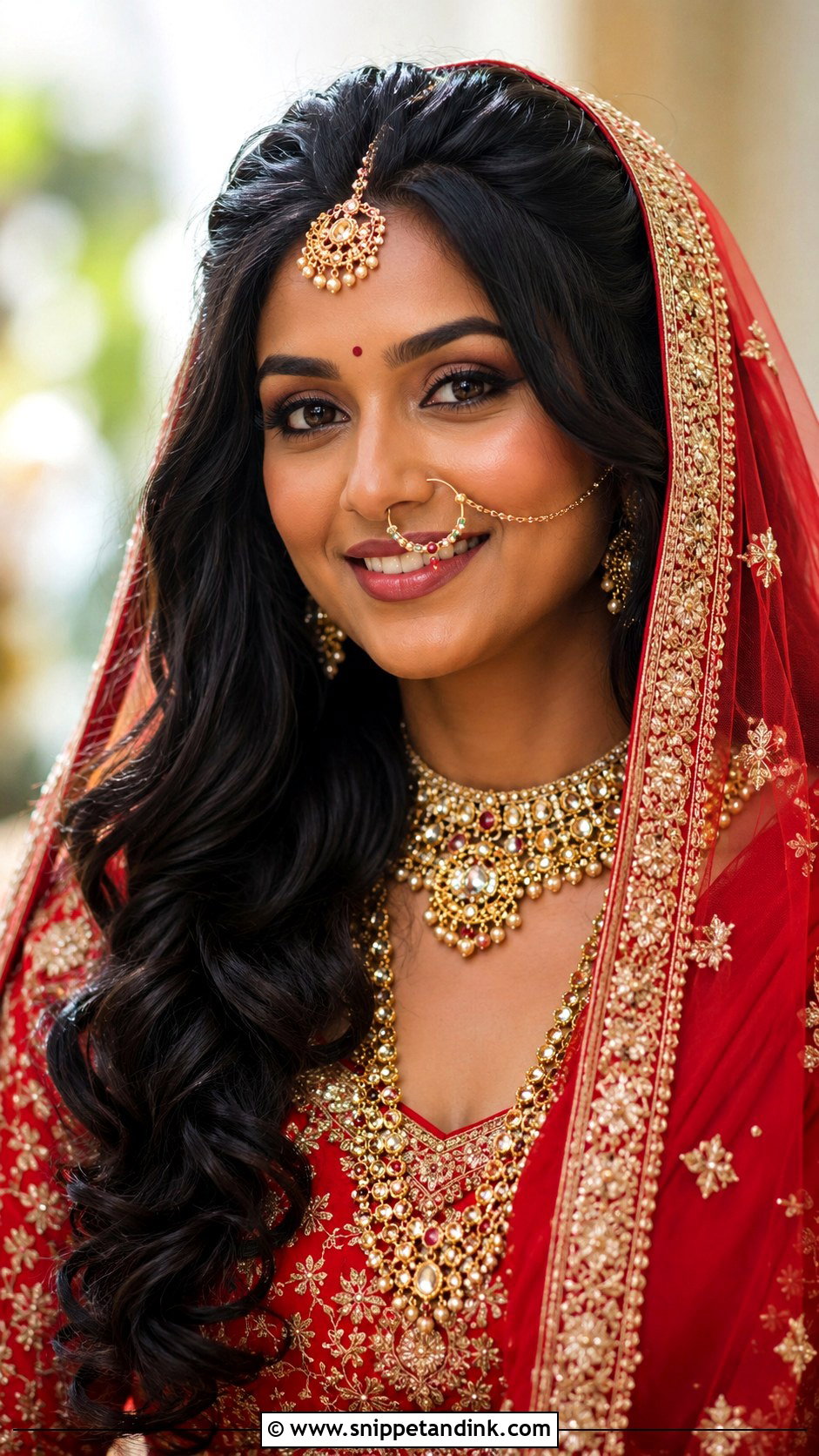
Open hair with a dupatta takes the most planning of anything here, since bridal dupattas can be heavy. The hair stays open but I build hidden support at the crown, usually a small half-up base or a backcombed section with crossed pins, and the dupatta is pinned into that and never into the loose lengths. Curl or wave the lengths so they don’t flatten under the fabric. Keep the front smooth if you’re adding a tikka or matha patti. Do a trial with the real dupatta, wear it for at least an hour, and tell your stylist where it pulls.
15. Open Hair With Bridal Hair Chain
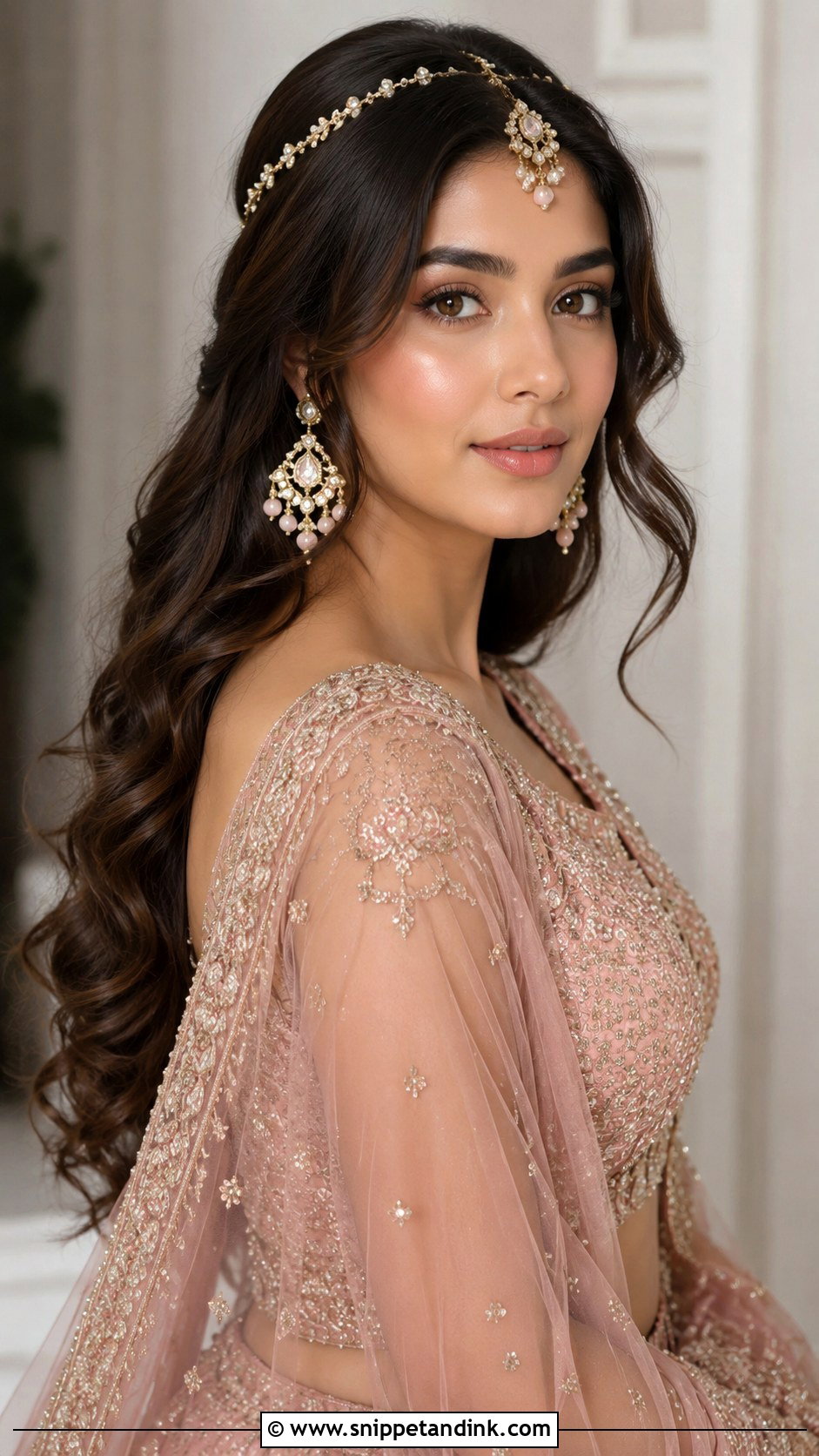
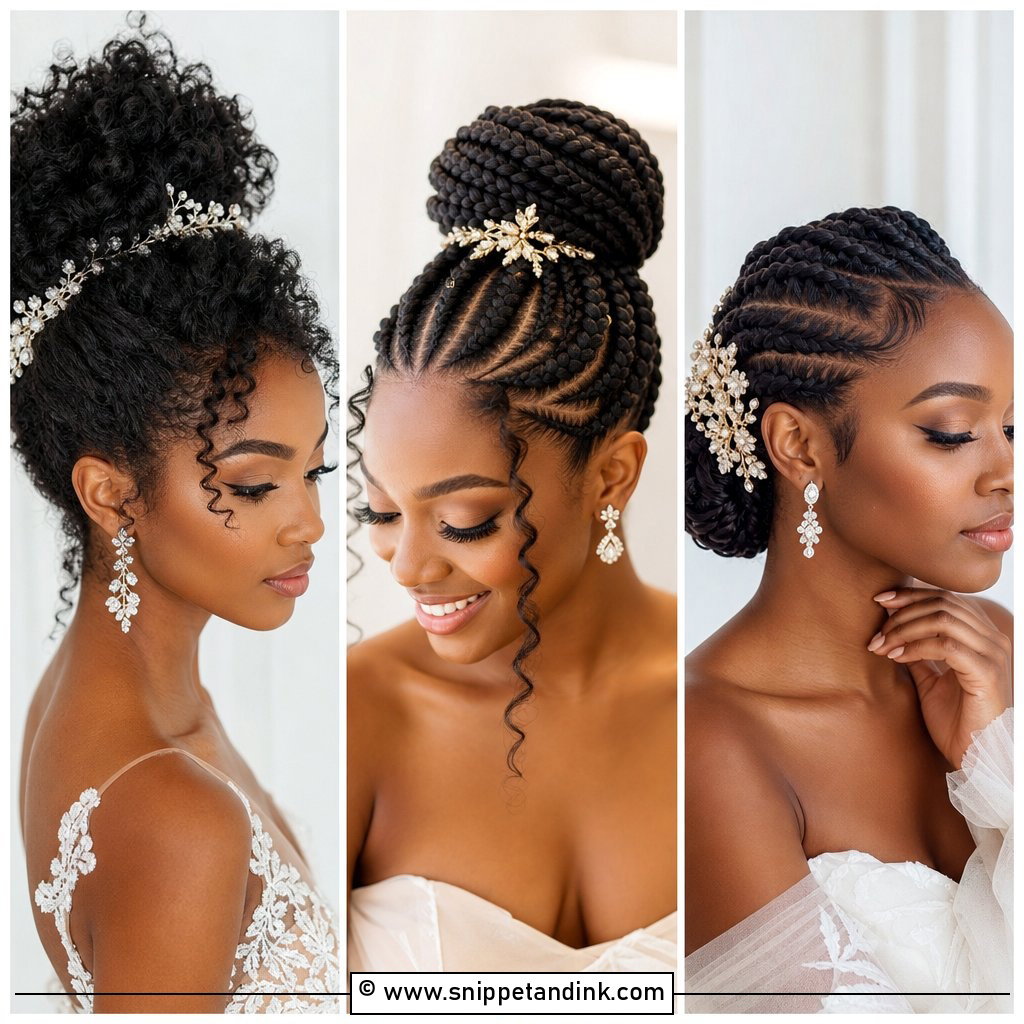
A bridal hair chain gives you more detail than pins but less weight than a full matha patti. It can sit across the crown, follow a centre part or drape back into the open hair. The chain needs a smooth base, so I pair it with polished waves or curls; on frizzy hair it disappears. Match the metal to your other jewellery, whether that’s gold, kundan, pearl or an antique finish. Keep the rest of the hair simple so the chain doesn’t compete with a heavy necklace.
What Six Hours of Pheras and Vidaai Do to Open Curls
The ceremony is where open hair gets tested. You sit cross-legged for a long time, you lean toward the fire, someone ties the gathbandhan to your dupatta and you’re tugged gently around the agni. Each of these moves pulls on the crown, which is why that’s where I put the strongest pins.
Near the havan
Heat and smoke from the fire dry out curls and can loosen hairspray. I sweep the lengths behind the shoulders for this part, and ask the bride’s sister to keep them there. Hair falling forward near a flame is a real hazard, not a cosmetic issue.
A small repair pouch
Give one person a pouch with bobby pins in your hair colour, two U-pins, a mini hairspray, a wide-tooth comb and a few spare flowers. Open curls tangle at the nape when you hug people and lean back, and a quick finger-comb with a spritz rescues them in a minute. Don’t brush curls with a fine comb on the day; it turns them into frizz.
For the vidaai and the late reception, it’s fine to let a half-up section down or pin one side back. A change of shape after many hours often looks better in photos than curls that have slowly flattened.
Secure Base, Loose Lengths
Open hair can feel every bit as bridal as a bun or braid as long as there’s structure you can’t see. Your best option depends on how heavy your outfit and dupatta are, the venue, the weather and your hair texture. Curls, waves, centre parts and half-up sections each set a different mood, from minimal to regal. Book a trial with your real jewellery and dupatta. With proper prep and pins placed where the weight sits, open bridal hair will look as good in the vidaai photos as it did in the first portrait.
You'll Like These Ideas:





Leave a Reply