
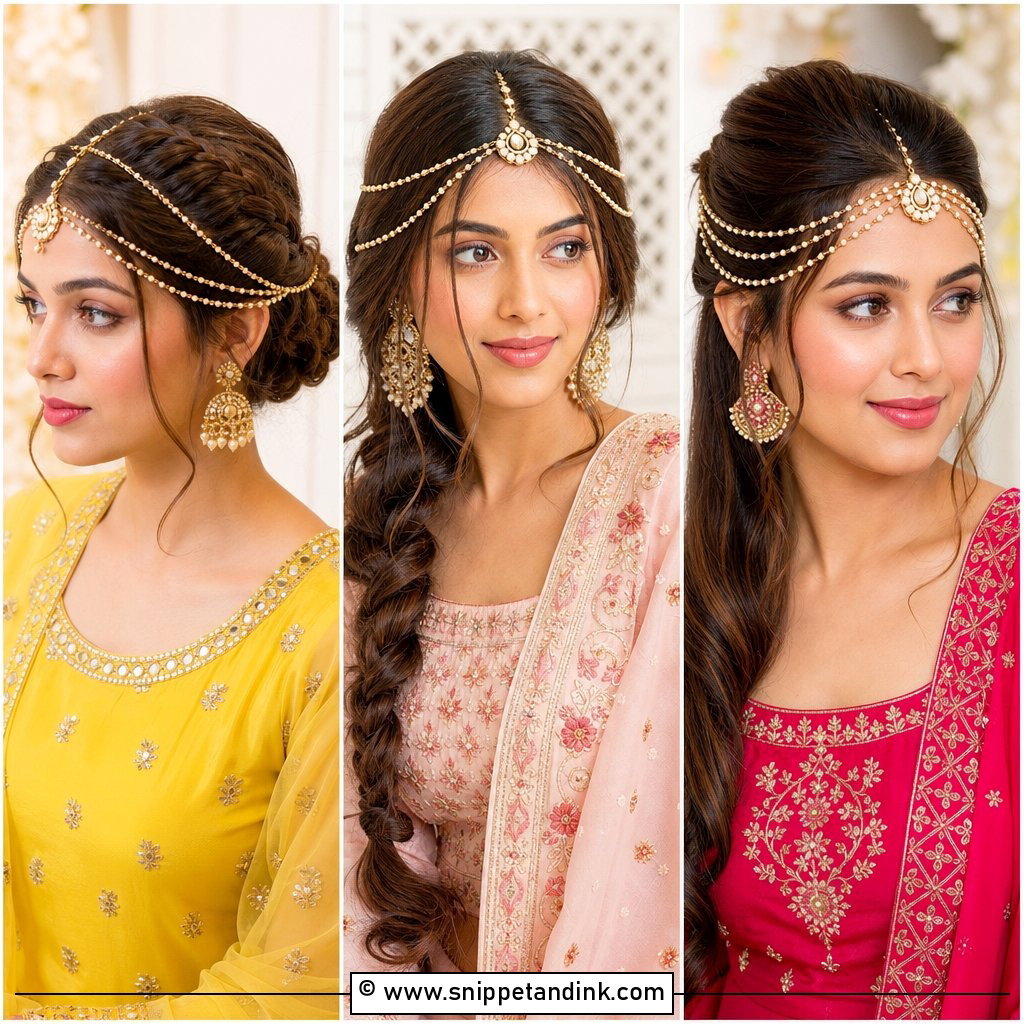
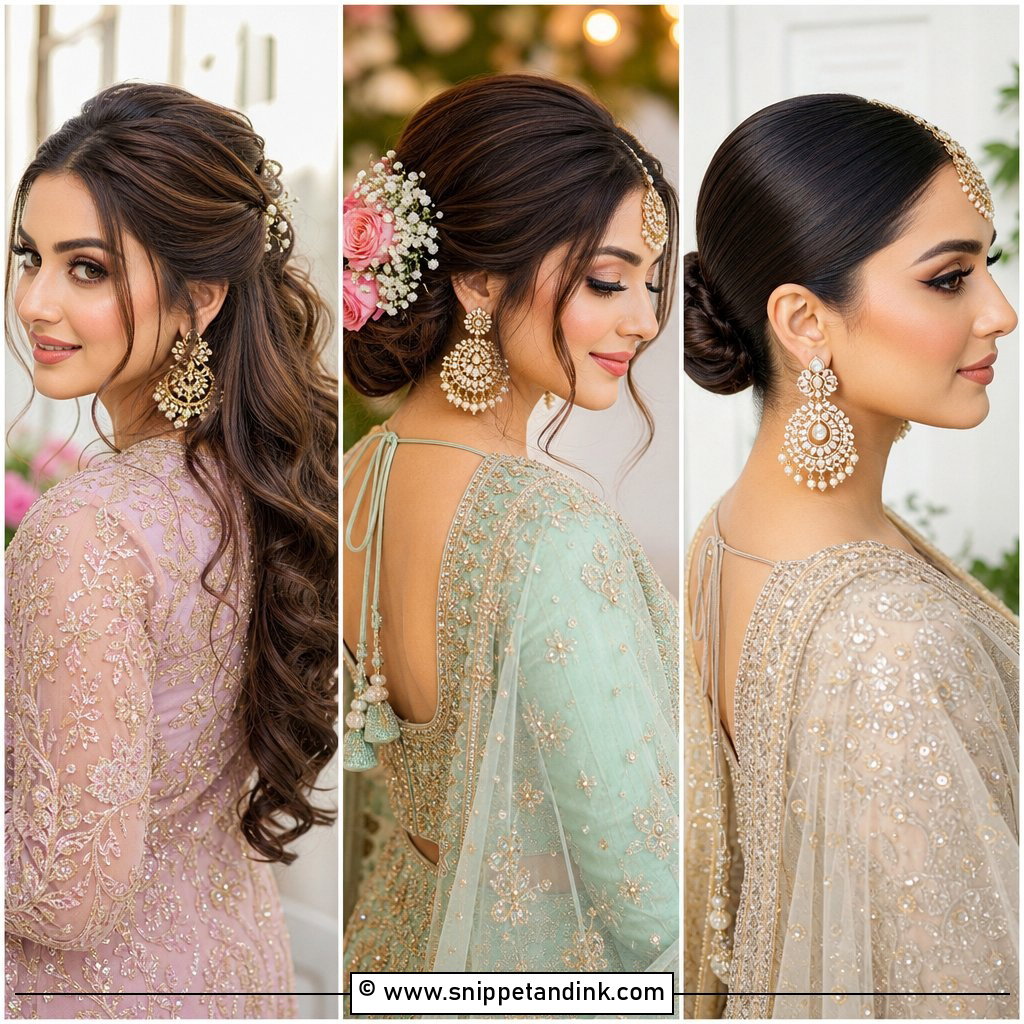
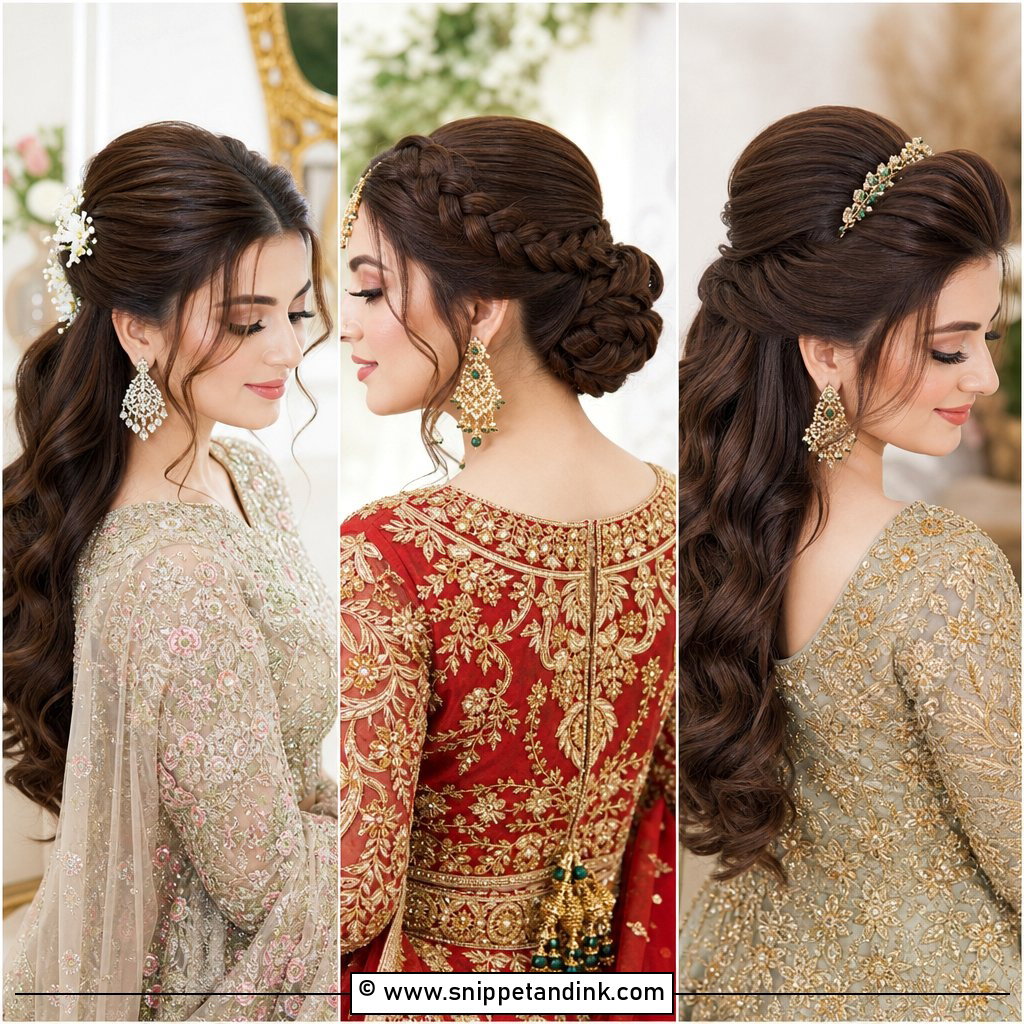
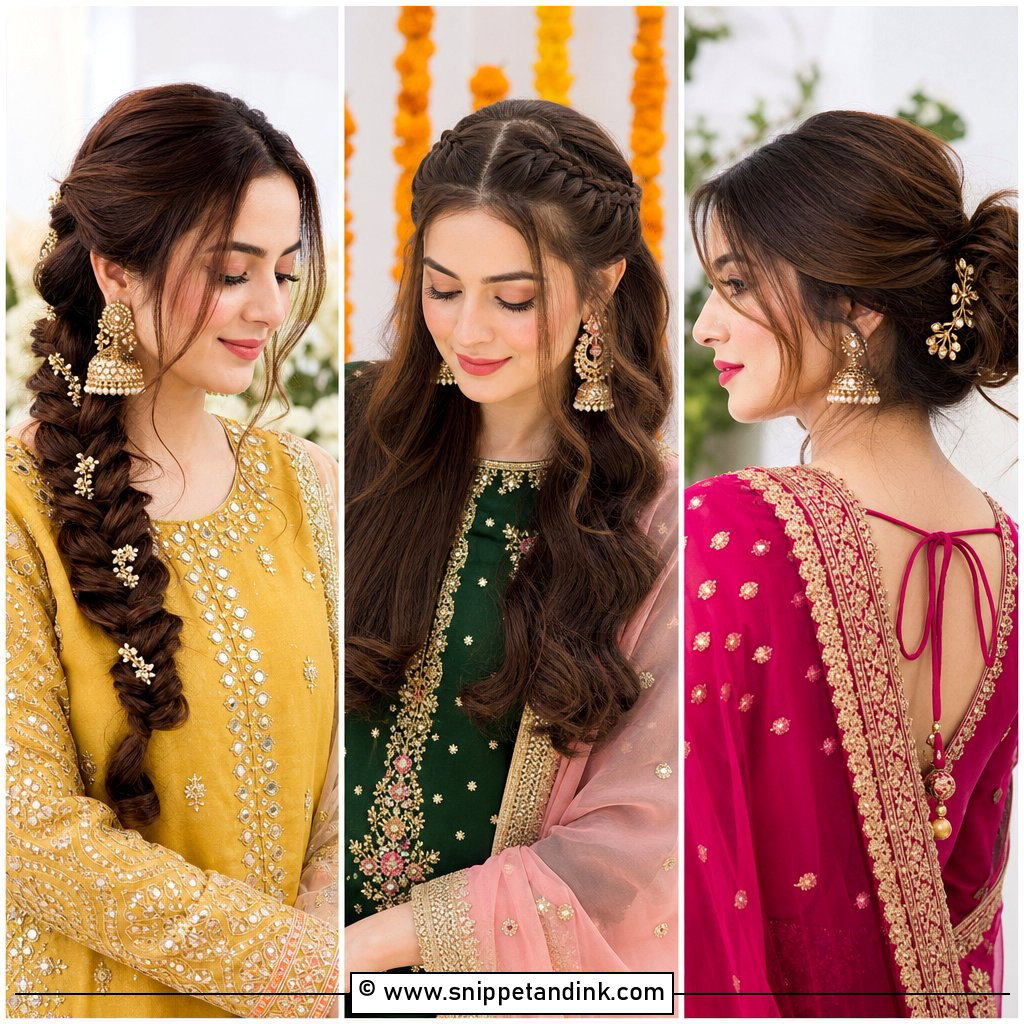
A jhumar, or passa, hangs from the parting down one side of the head, and once it’s on, the whole hairstyle has to be built around it. Most Pakistani bridal hairstyles can carry one: buns, curls, braids, even half-up hair. The difference is in the engineering. The hair needs a firm section for the hook, room for the dupatta, and a shape that balances one-sided jewelry against your face. Below are fifteen I build regularly for Nikah, Barat and Walima brides, with what I’d watch for in each.
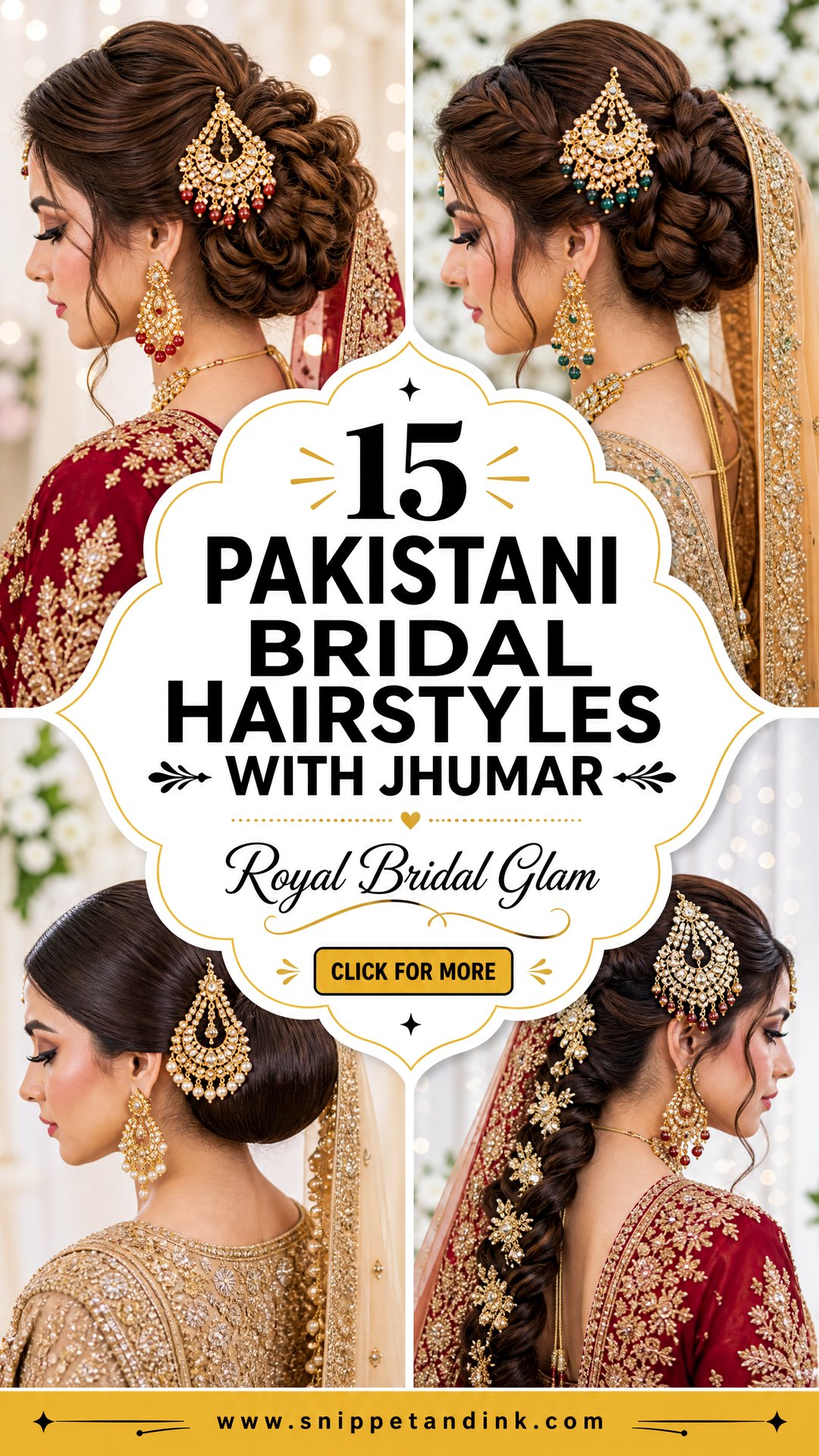
Left Temple or Right? Deciding Jhumar Placement
Traditionally the jhumar is worn on the left, and most brides keep it there. But if your parting naturally falls to one side, or your face is noticeably fuller on one side, it’s worth trying both at the trial. I look for three things before I pin anything.
- Which side faces outward when you’re seated on stage beside your groom, since that side appears in most couple photos.
- Where your parting sits; the jhumar hangs from the part, so a deep side part changes how far it falls.
- How the chains land against your ear and earring. If they clash with a large jhumka, the jhumar may need shortening.
The jhumar’s lowest strand should usually finish around the top of the ear. Many have adjustable hooks or links, and a jeweler can shorten one that hangs too low before the wedding.
1. Pakistani Bridal Bun With Jhumar
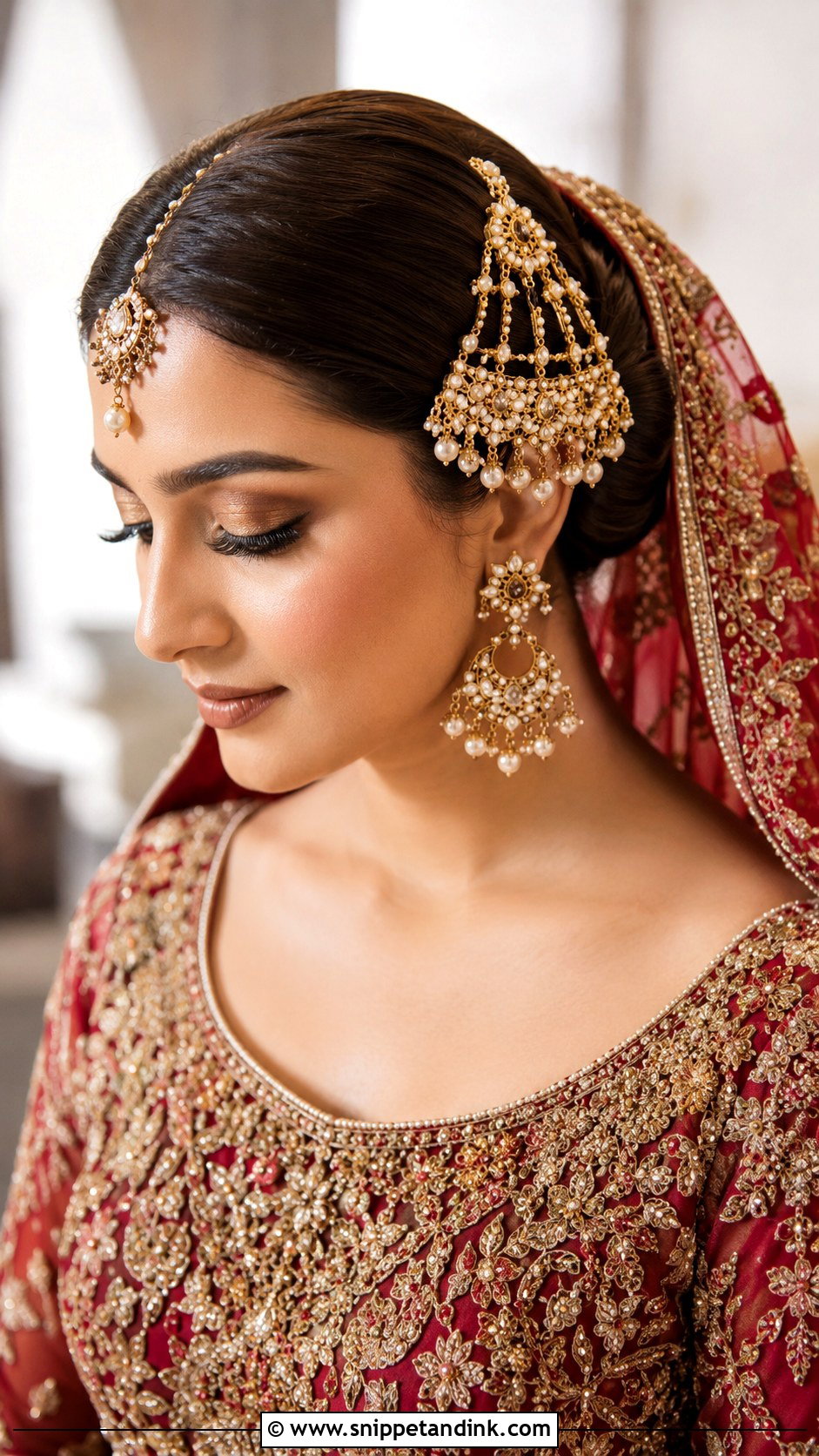
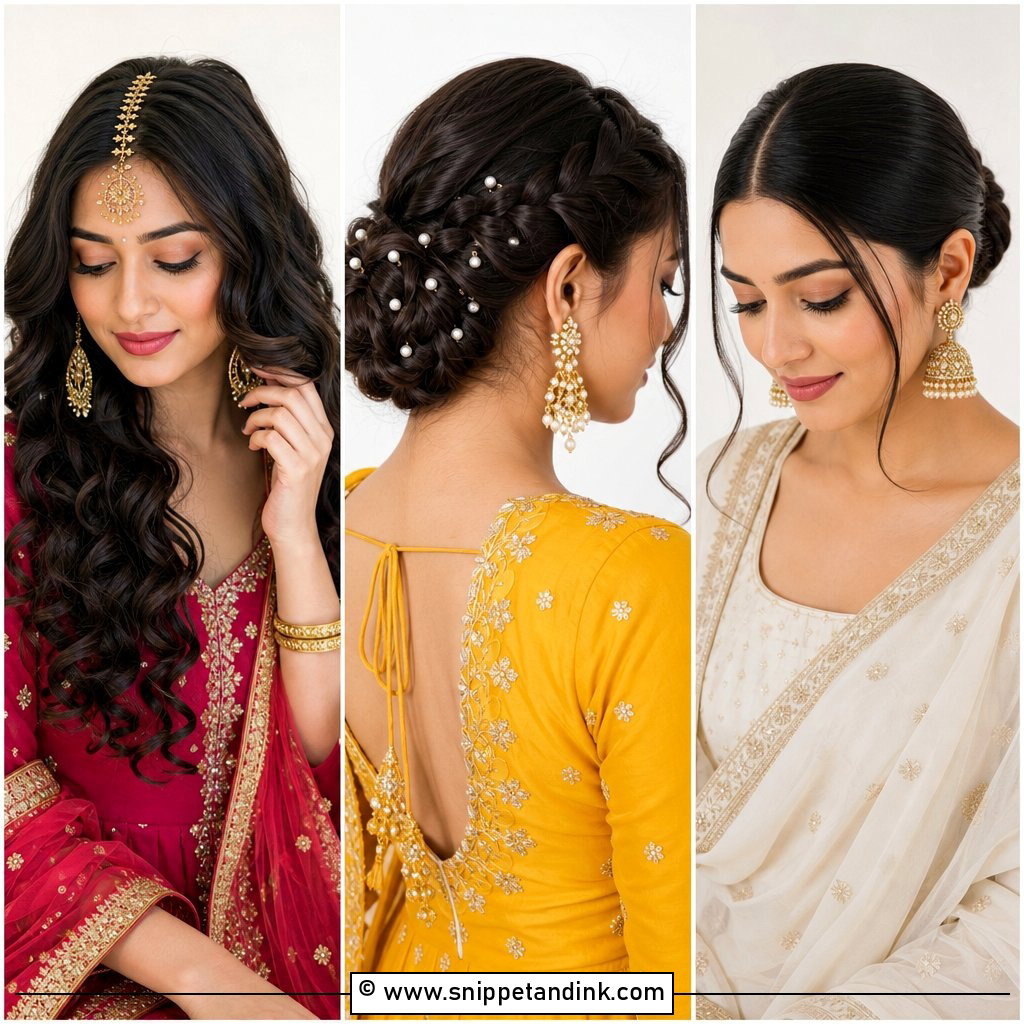
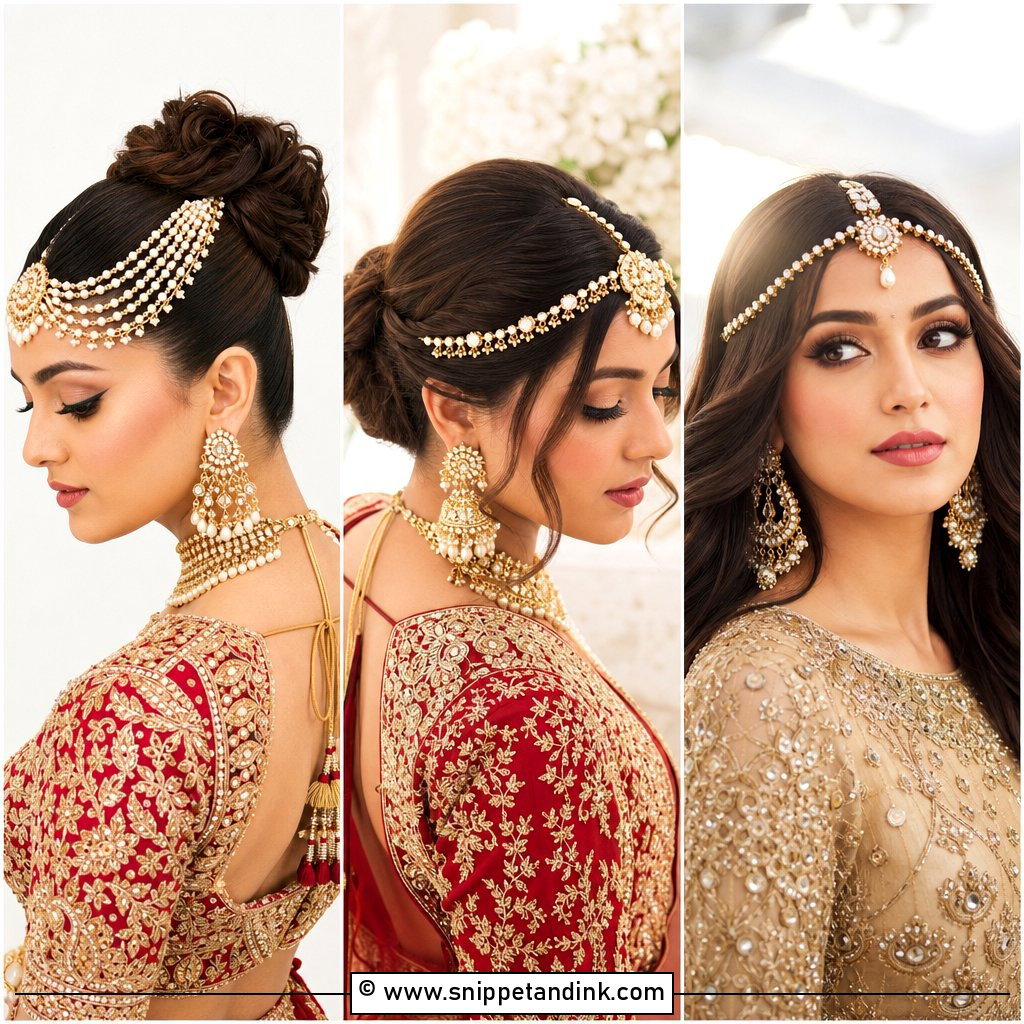
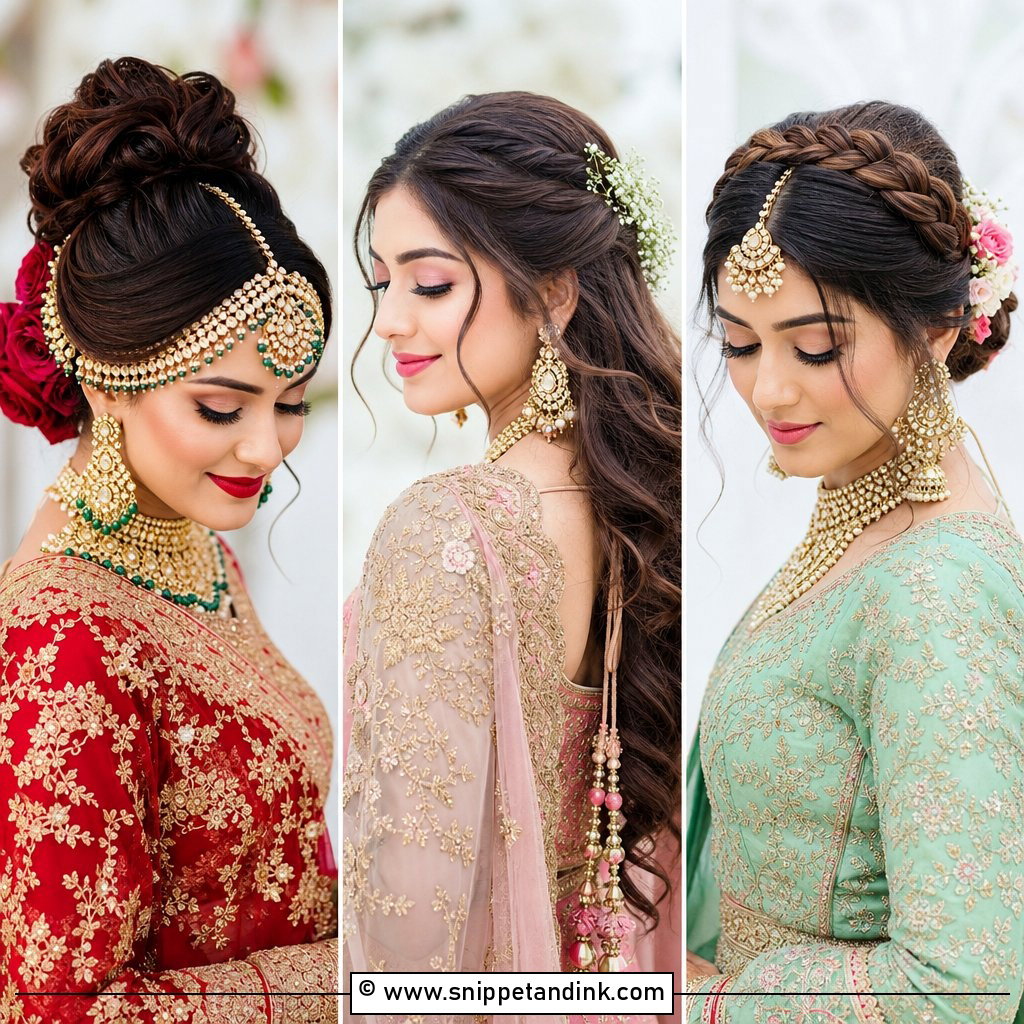
This is the standard, and for good reason. A center or slightly off-center part, hair smoothed into a low or mid bun, and the jhumar on one side with a maang tikka or matha patti on the center line. It gives strong dupatta support and keeps the neckline of a heavily embroidered Barat outfit clear. I add a little crown volume so the dupatta doesn’t sit flat, pin the bun with crossed pins, and leave fine face pieces only on the side without the jhumar, so the two don’t tangle.
2. Pakistani Bridal Low Bun With Jhumar
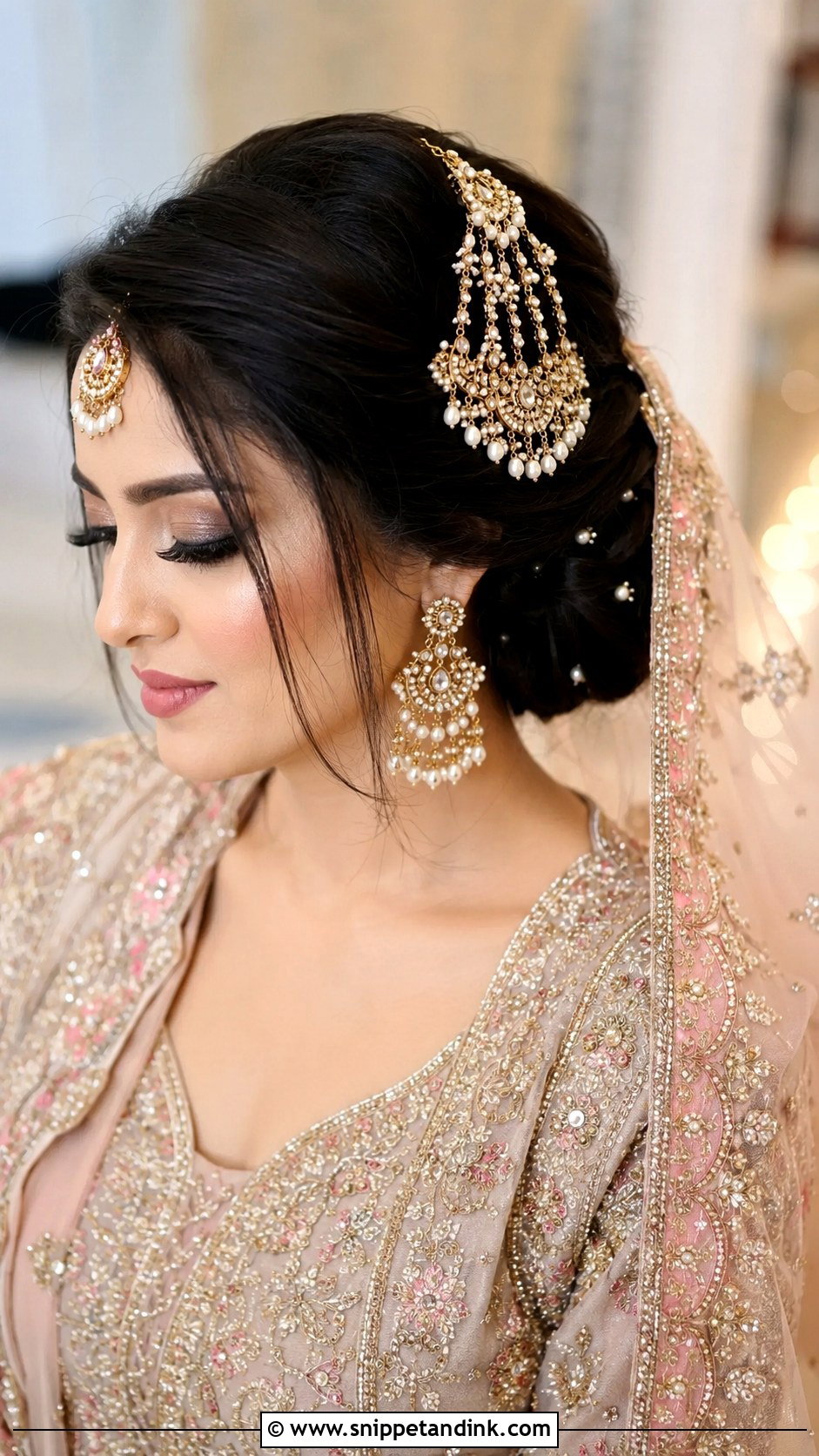
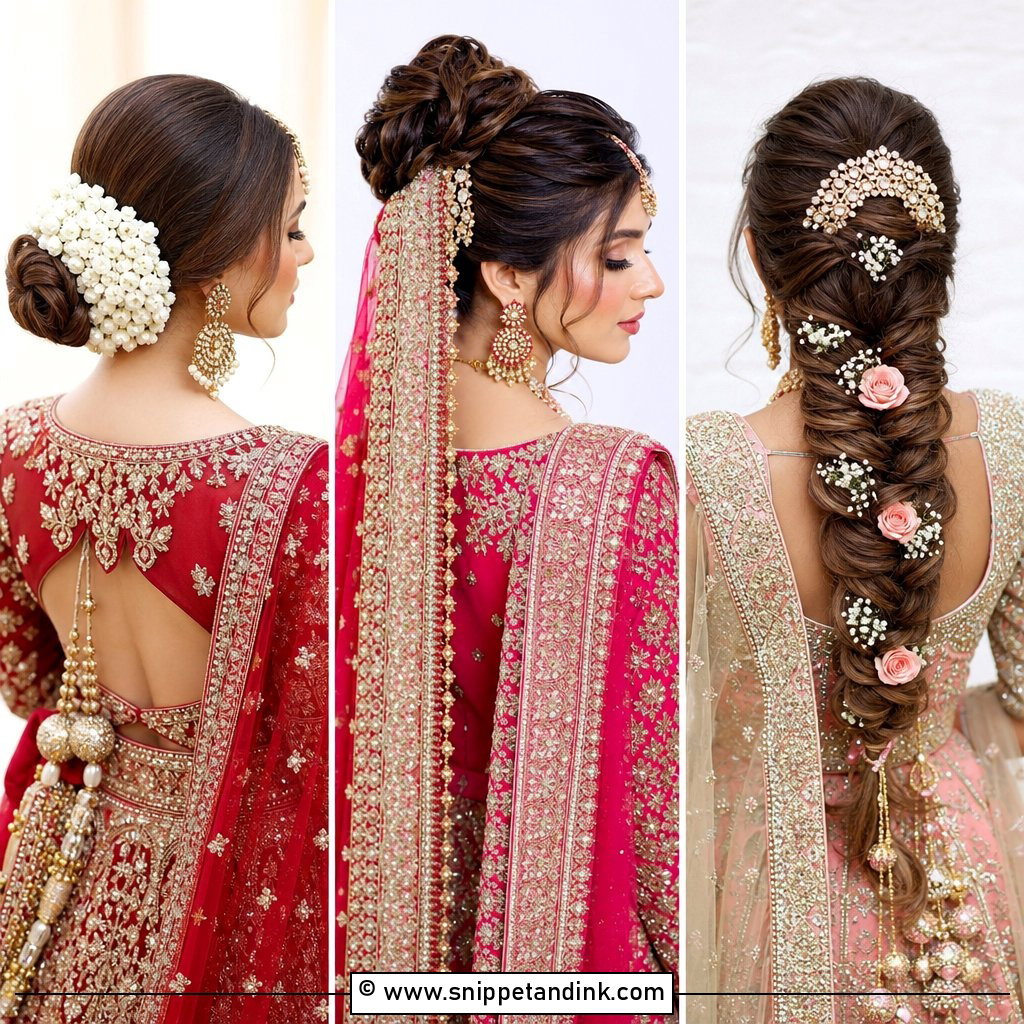
If you don’t want height, keep the bun at the nape. It sits comfortably under a dupatta for a long event and balances most face shapes, round, oval and heart-shaped included. A center part feels traditional; a side part, with the jhumar on the fuller side, makes it look more dramatic. Fine hair needs some padding in the bun, or it looks small against heavy jewelry. I keep the front smooth but not slicked, since a stiff front makes the jhumar look stuck on.
3. Pakistani Bridal High Bun With Jhumar
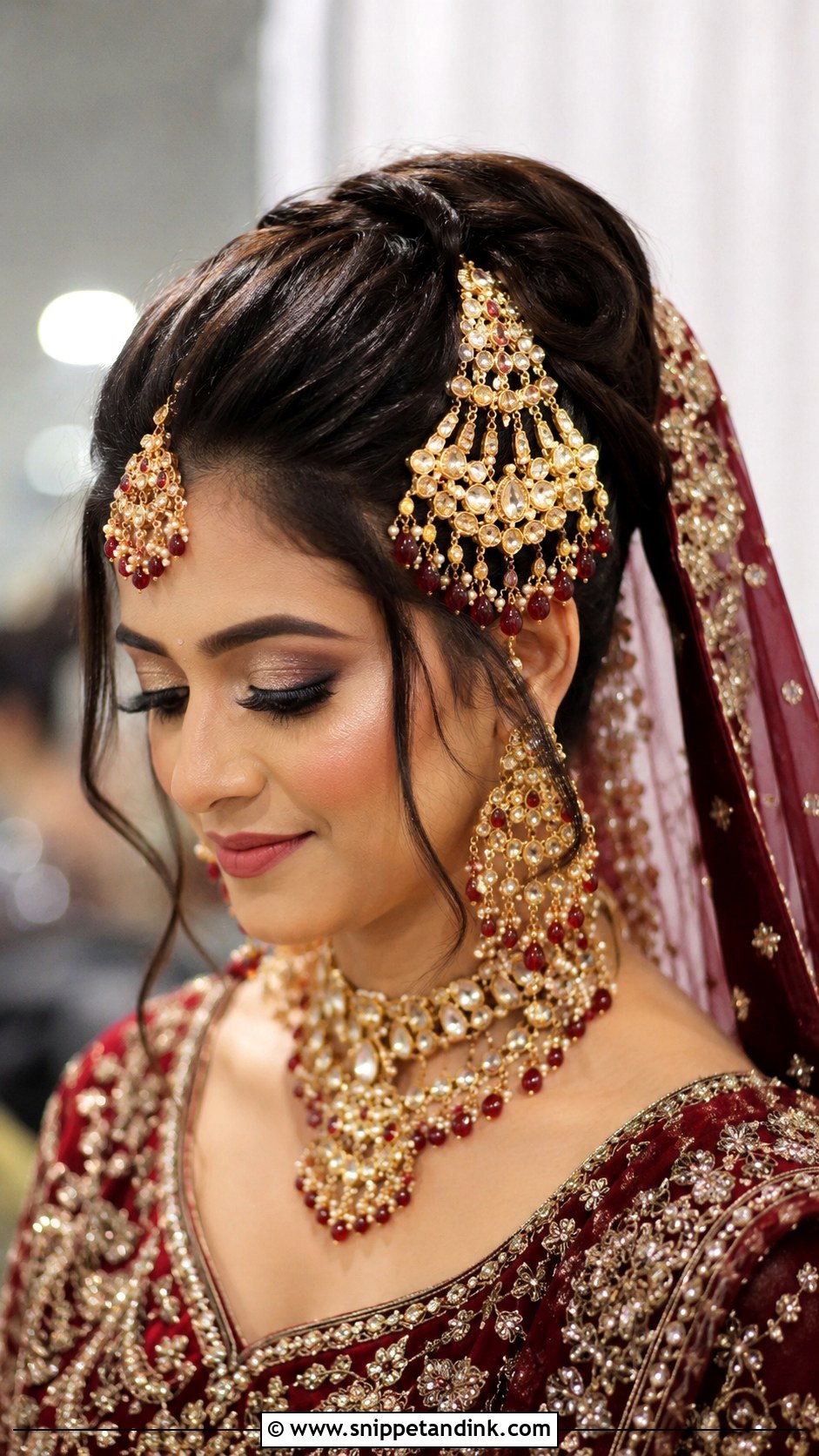
A high bun gives a lifted, statuesque outline that helps petite brides look taller in full-length stage photos, and it makes a secure base for a heavy dupatta. The tricky part is the jhumar. It should follow the temple line, and if the hair is pulled tightly up toward the bun, the jhumar chains lie flat against the scalp and lose their shape. So I leave a little softness over the ear on the jhumar side. Bold earrings and traditional sets suit it.
4. Pakistani Bridal Side Bun With Jhumar
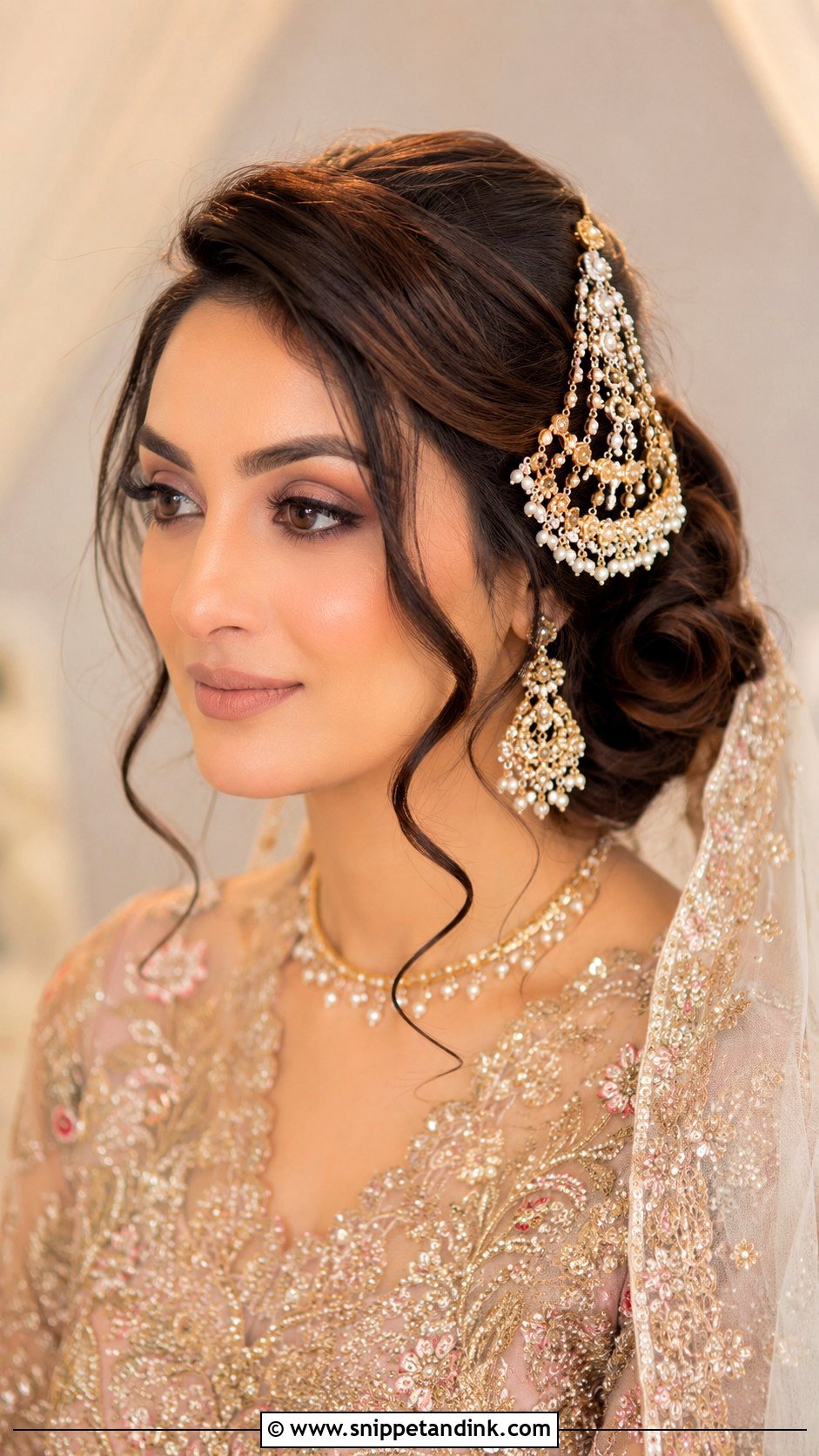
With the jhumar already on one side, I put the side bun low on the opposite side, or nearly centered, so the face isn’t crowded. That opposition gives a balanced profile and keeps the hairstyle visible even with a dupatta on. Waves can be twisted into the bun for movement. Walima brides in pastels and softer makeup tend to like it. Side buns slip more than centered ones, so I build a firm pinned base underneath before shaping anything on top.
5. Pakistani Bridal Braided Bun With Jhumar
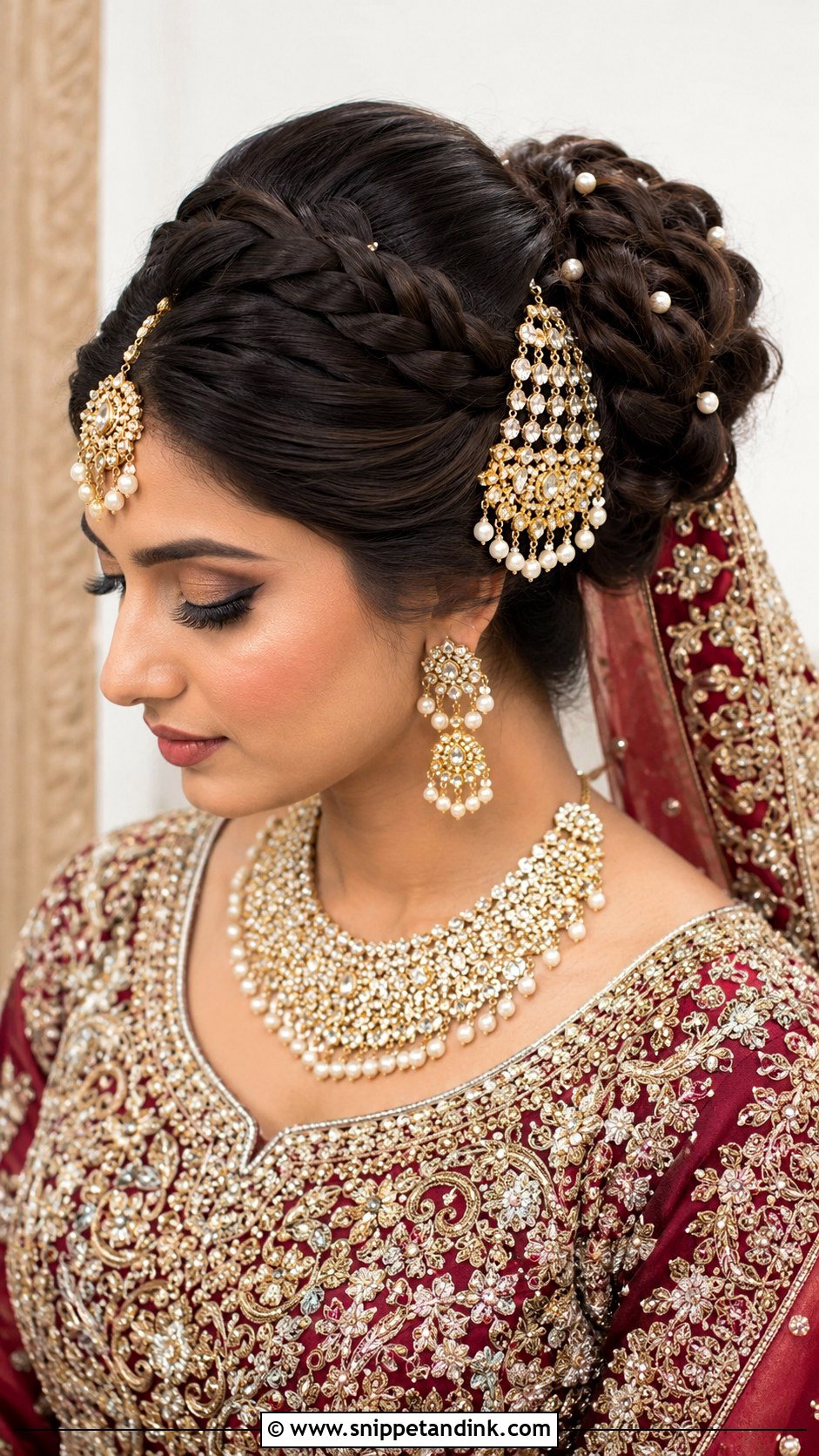
Braids give a jhumar something to sit against. The braid can wrap the bun, cross the crown, or run along the sides before the hair goes up, and the gold or kundan of the jhumar shows beautifully against that texture instead of disappearing into smooth hair. Thick hair braids well; finer hair needs extensions. I widen each loop slightly so the braid looks rich in close-ups, but not so far that it loses its edge.
6. Pakistani Bridal Sleek Bun With Jhumar
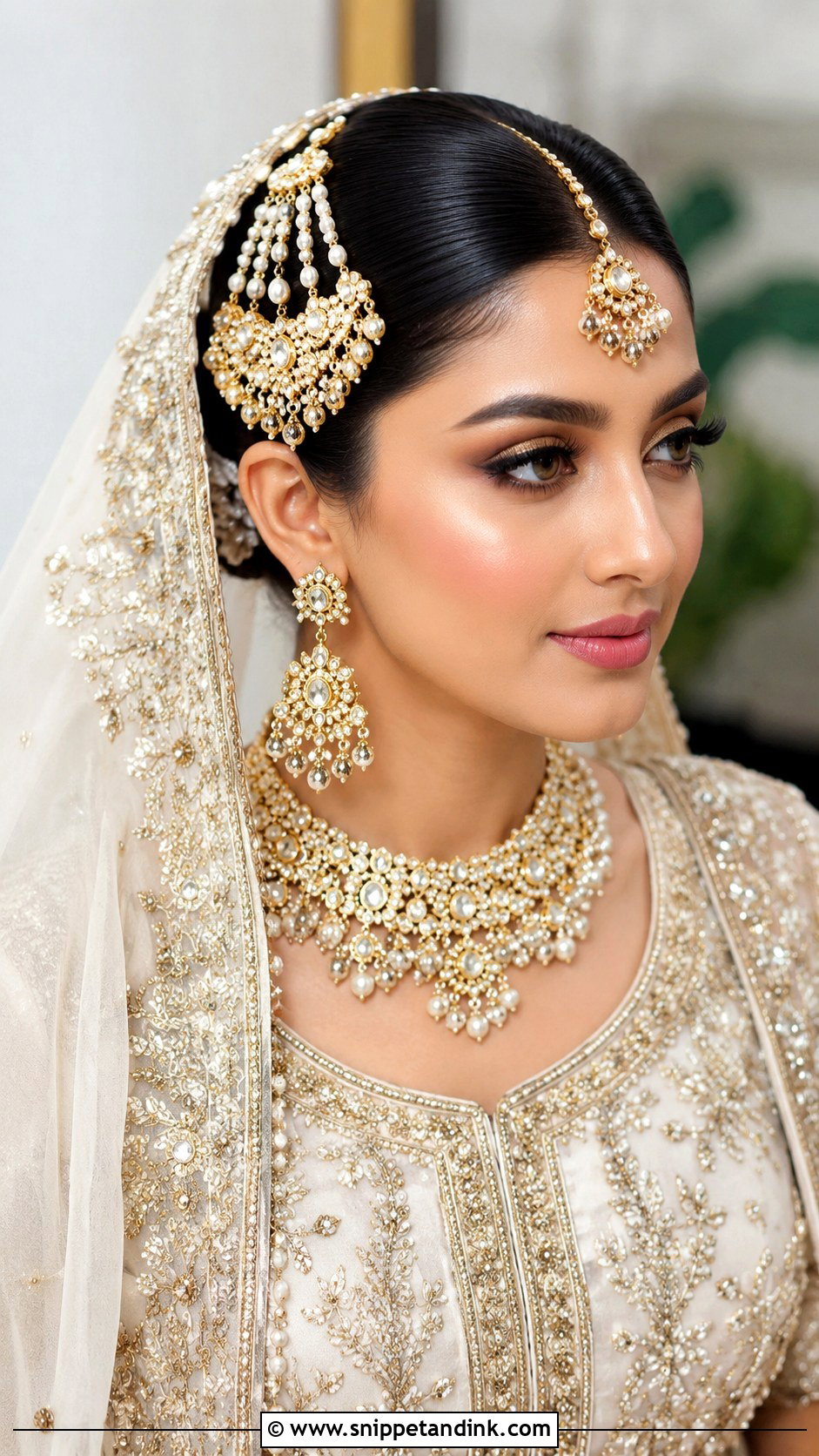
Clean lines and heavy traditional jewelry make a good pair. A smooth center part, a glossy finish and a tightly controlled bun let the outfit and the jhumar carry the look, and with bold eye makeup or a heavily worked dupatta nothing competes. On humid days I use an anti-frizz cream before smoothing and a firm setting spray after, because sleek hair shows every flyaway. The one thing I watch is the hairline: if it’s thin at the temples, the sleek finish exposes it right where the jhumar sits.
7. Pakistani Bridal Curly Bun With Jhumar
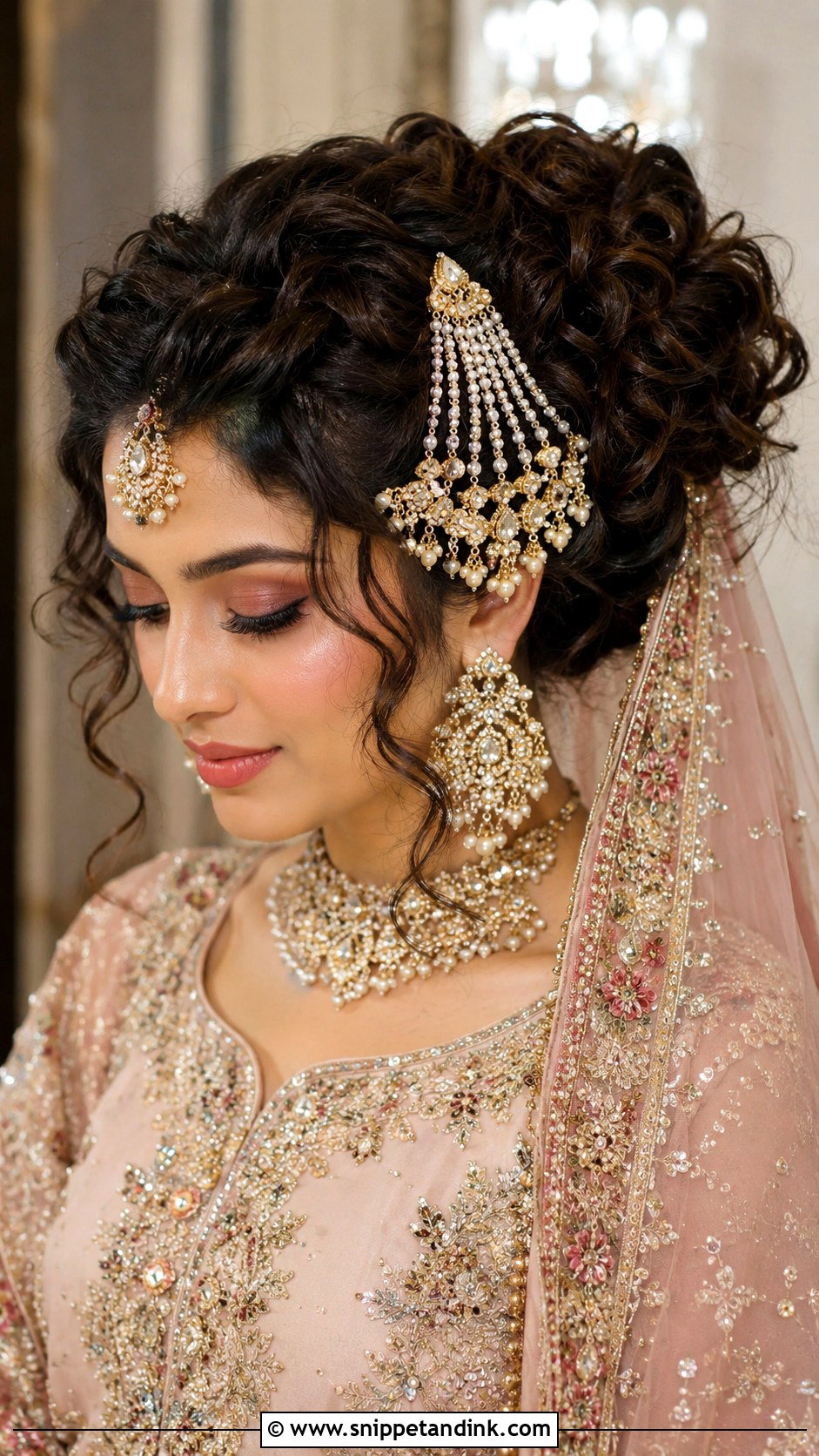
Curls pinned into a loose bun keep their shape visible and give softness and volume, which suits brides who hate flat or tight hair. The problem is jewelry in curls. The jhumar chains catch and knot in loose texture, so I always pin the jhumar onto a smooth section near the part and curl only behind it. Some padding inside the bun adds fullness. It suits Nikah, Barat or Walima and most face shapes.
8. Pakistani Bridal Half Up Hair With Jhumar
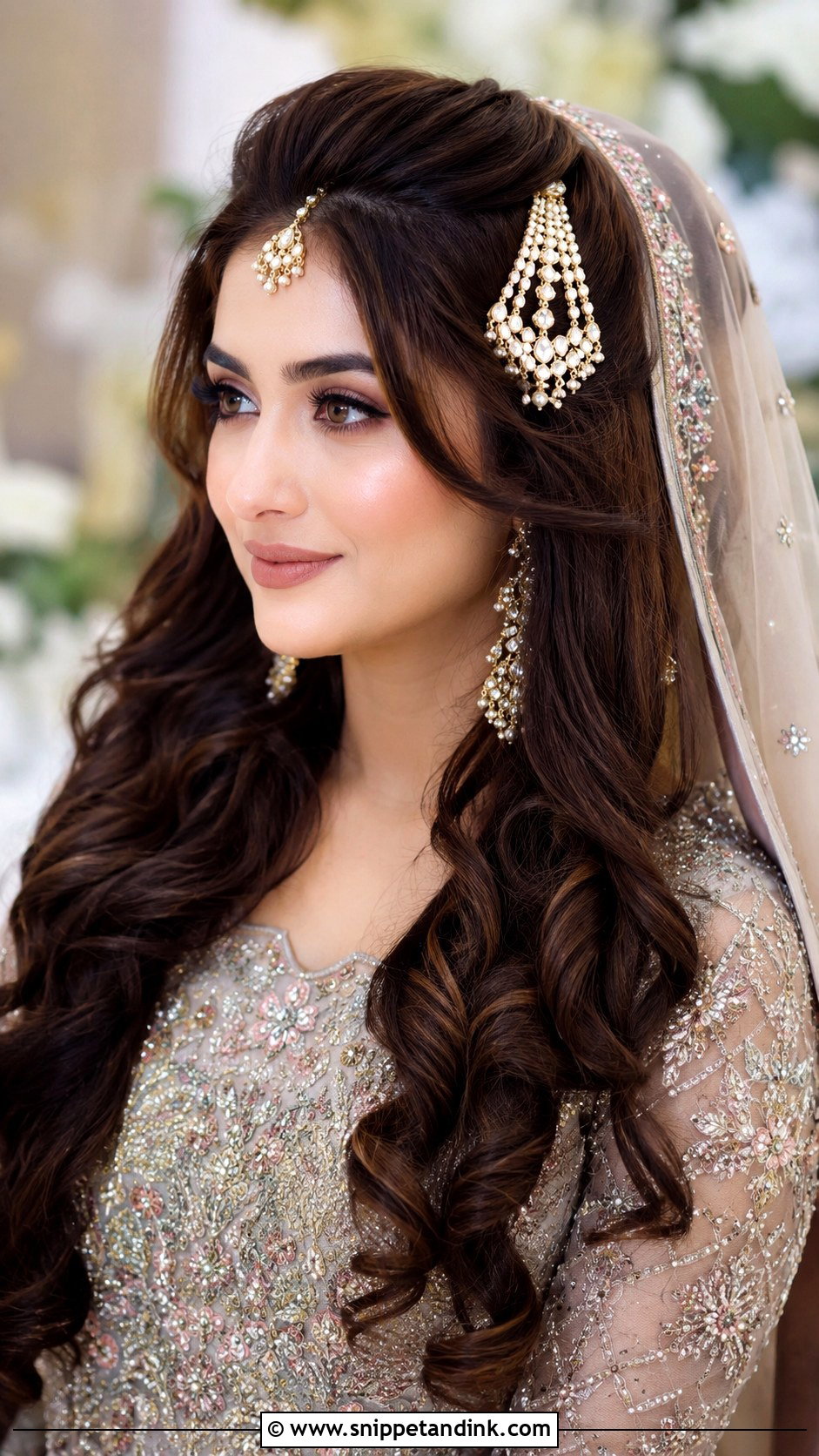
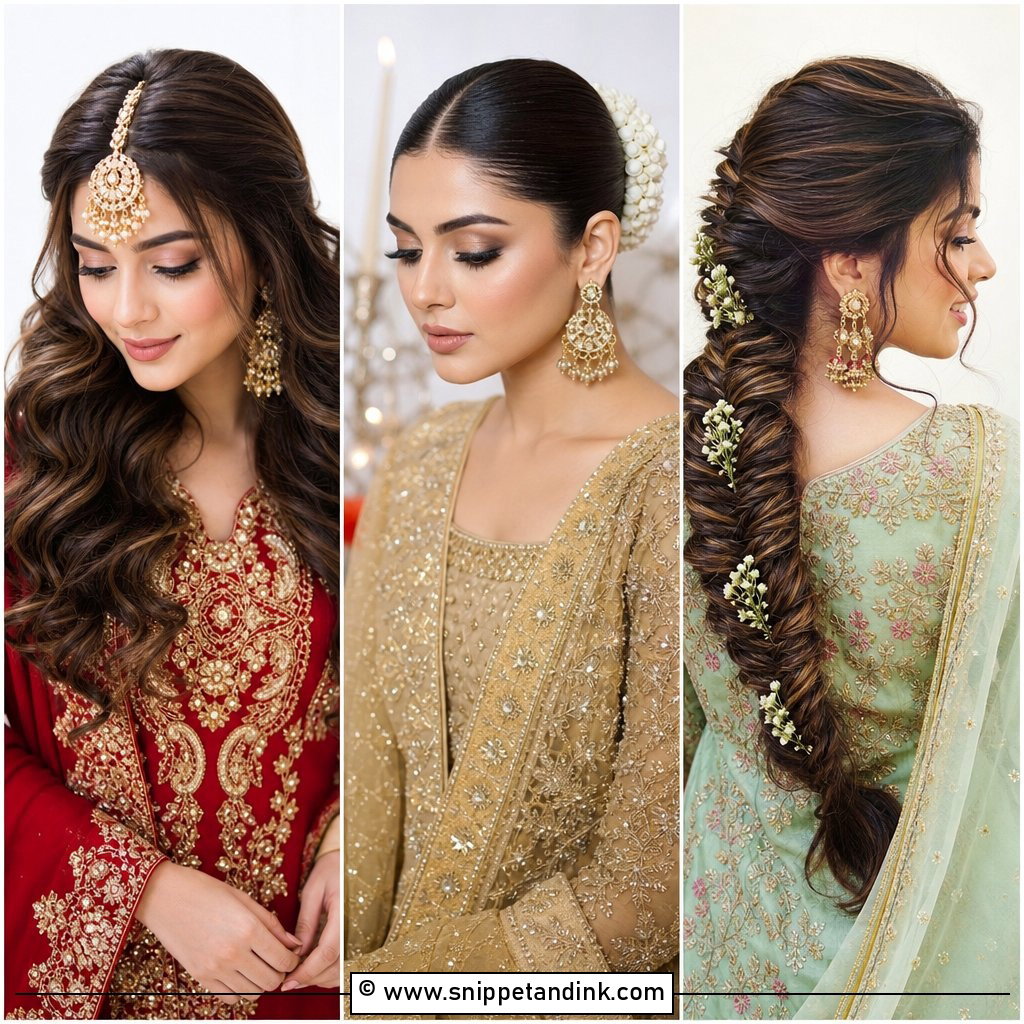
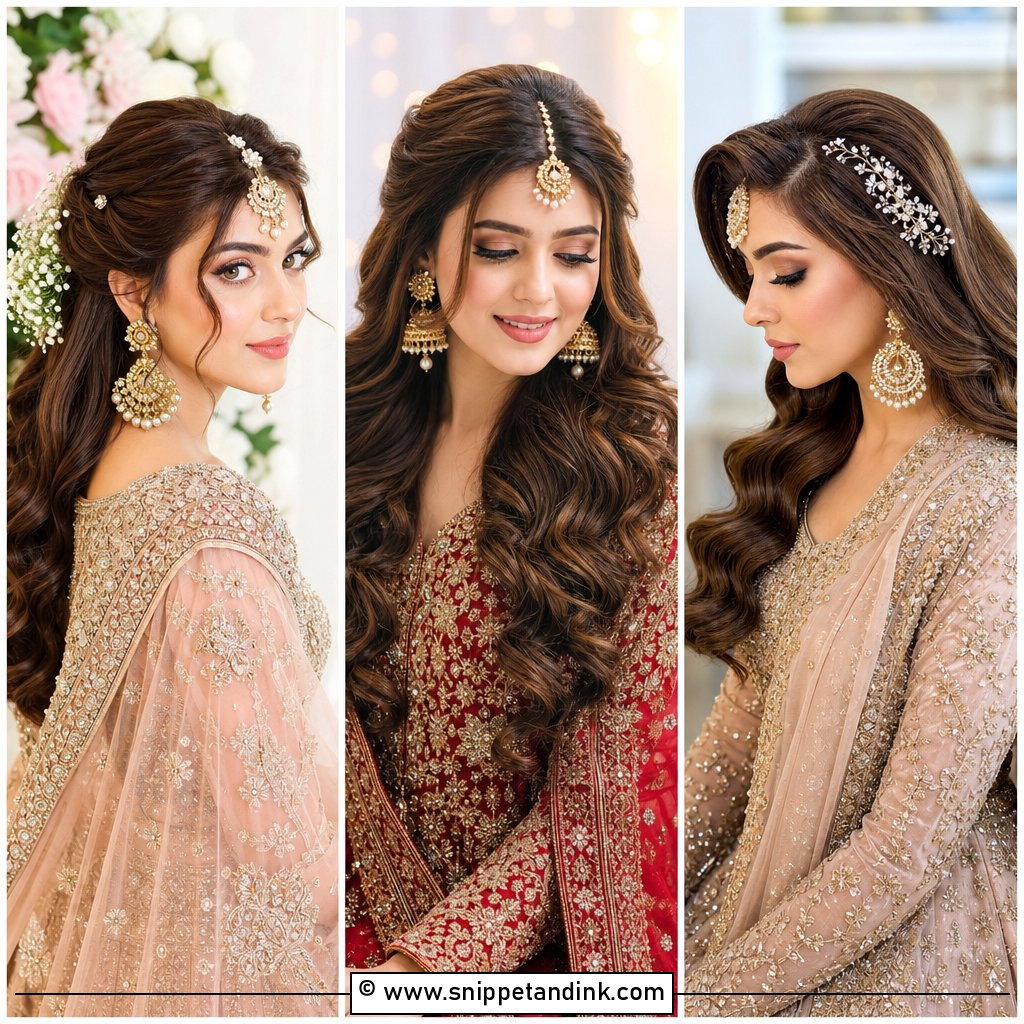
Half up gives open hair below with a pinned crown above, and that crown is what carries the jhumar. I tease it lightly at the root and secure it into a small hidden ponytail, then hook the jewelry into that. A heavy jhumar on a weak half-up section drags the top down within an hour. This look suits lighter dupattas or ones set well back, and it’s popular with Walima brides who want something softer.
9. Pakistani Bridal Open Curls With Jhumar
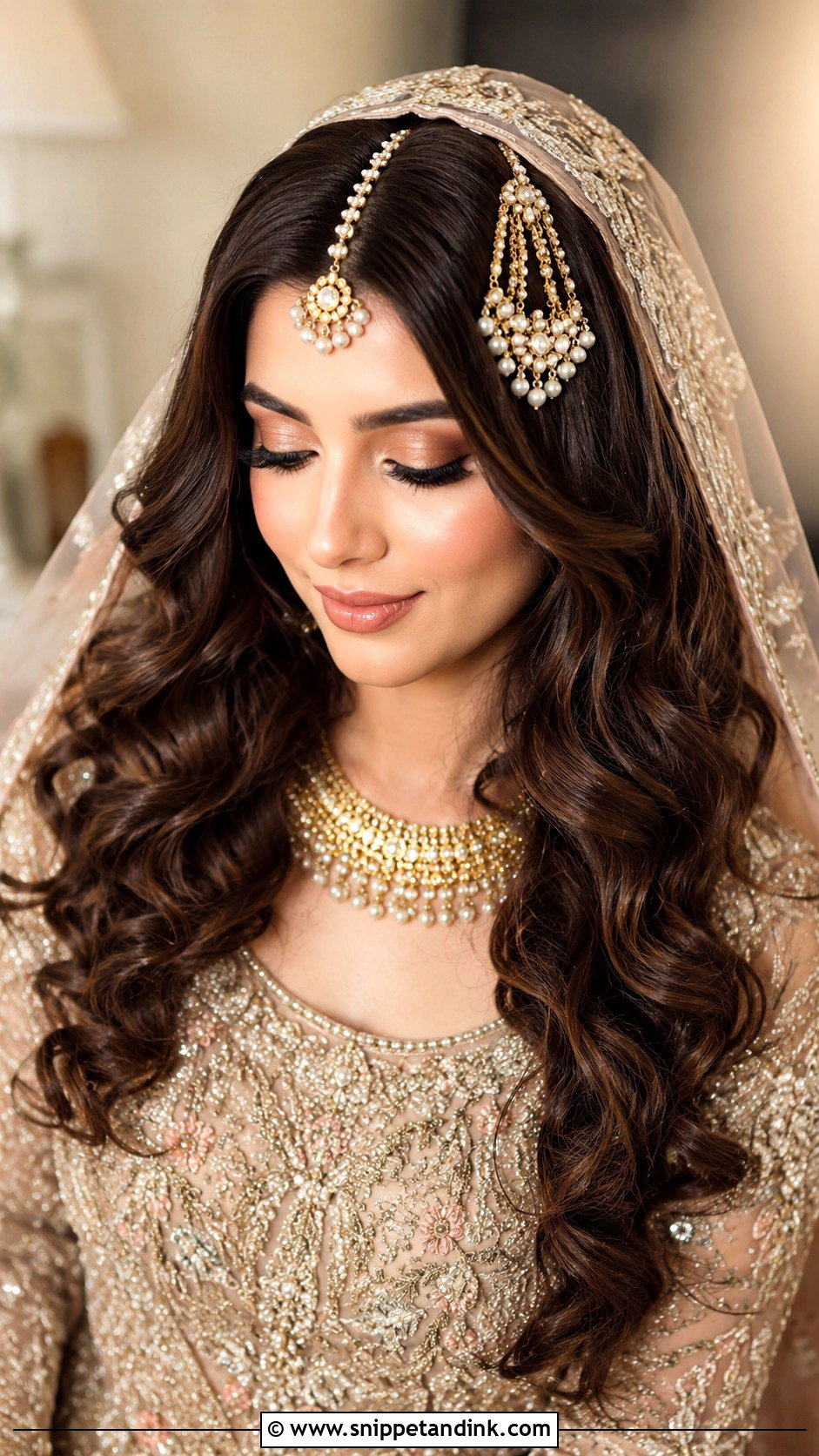
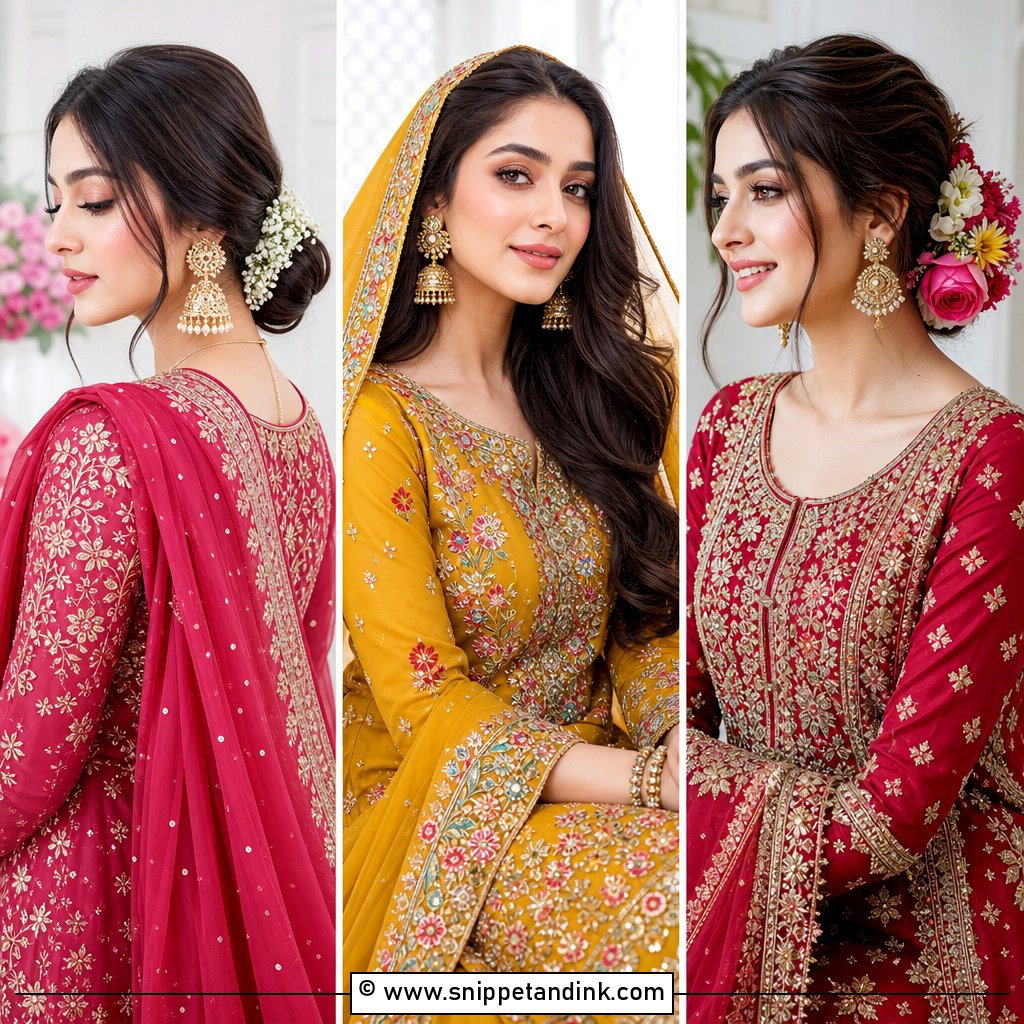
Open curls can work with a jhumar if there’s enough structure. I brush the curls into a polished shape and keep them away from the face so the jewelry shows. A center or deep side part both work, depending on your face and the jhumar’s size. Lighter dupattas, capes, or dupattas pinned behind the crown suit this. I prep with root lift and a curl-setting product, and anchor the jhumar with hidden pins slightly above the temple, which stops it sliding down toward the ear over the evening.
10. Pakistani Bridal Side Swept Curls With Jhumar
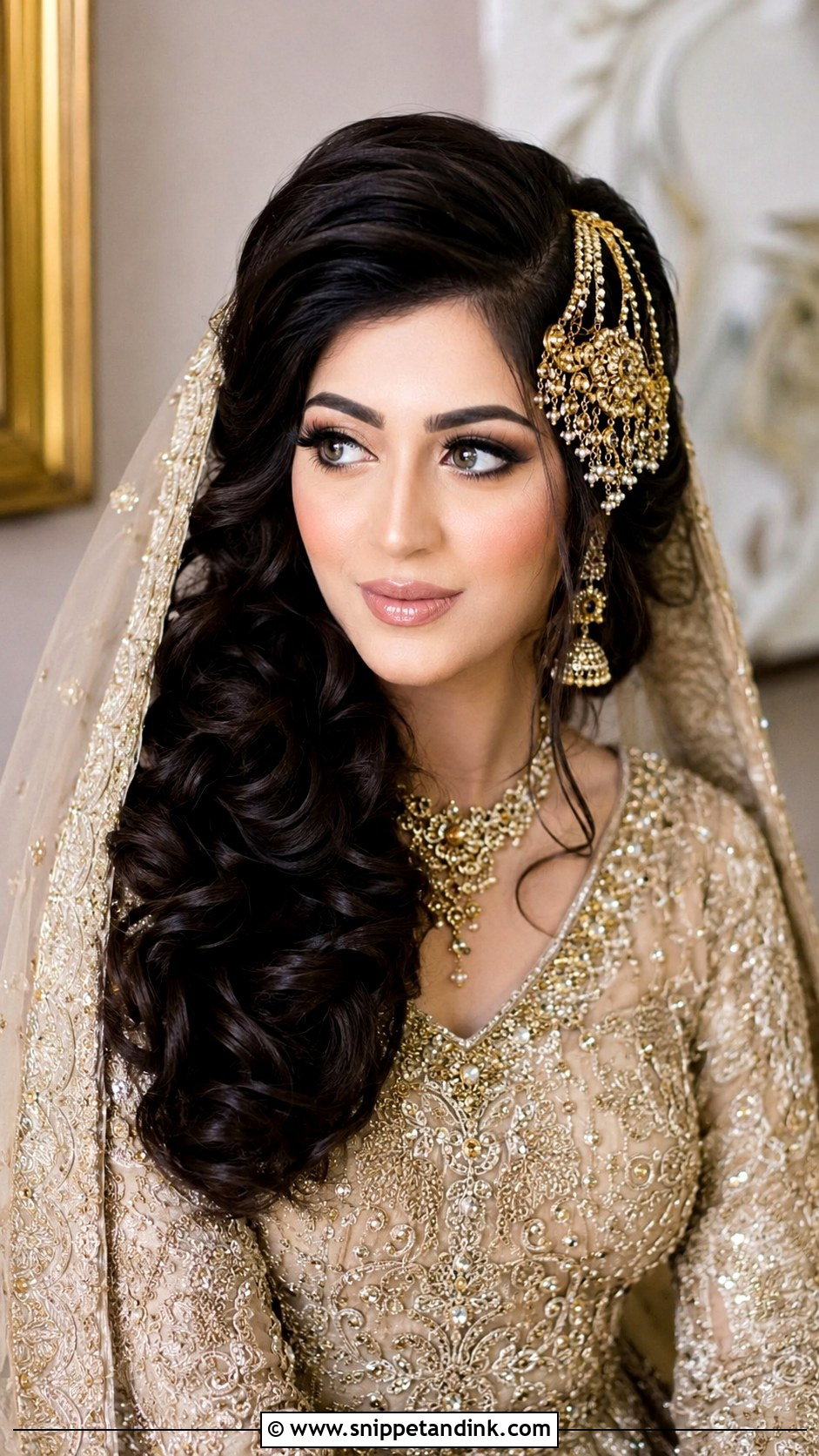
Swept over one shoulder, the curls create drama but stay formal. I curl the hair, sweep it across, and pin it behind the ear with crossed pins so it holds. The jhumar sits on the opposite side or above the sweep, framing the face from both directions. Walima receptions and engagement portraits suit it. Long or medium hair works, with extensions if needed. Finish with a light spray and brush through with fingers, never a comb, so the curls stay defined and soft.
11. Pakistani Bridal Long Braid With Jhumar
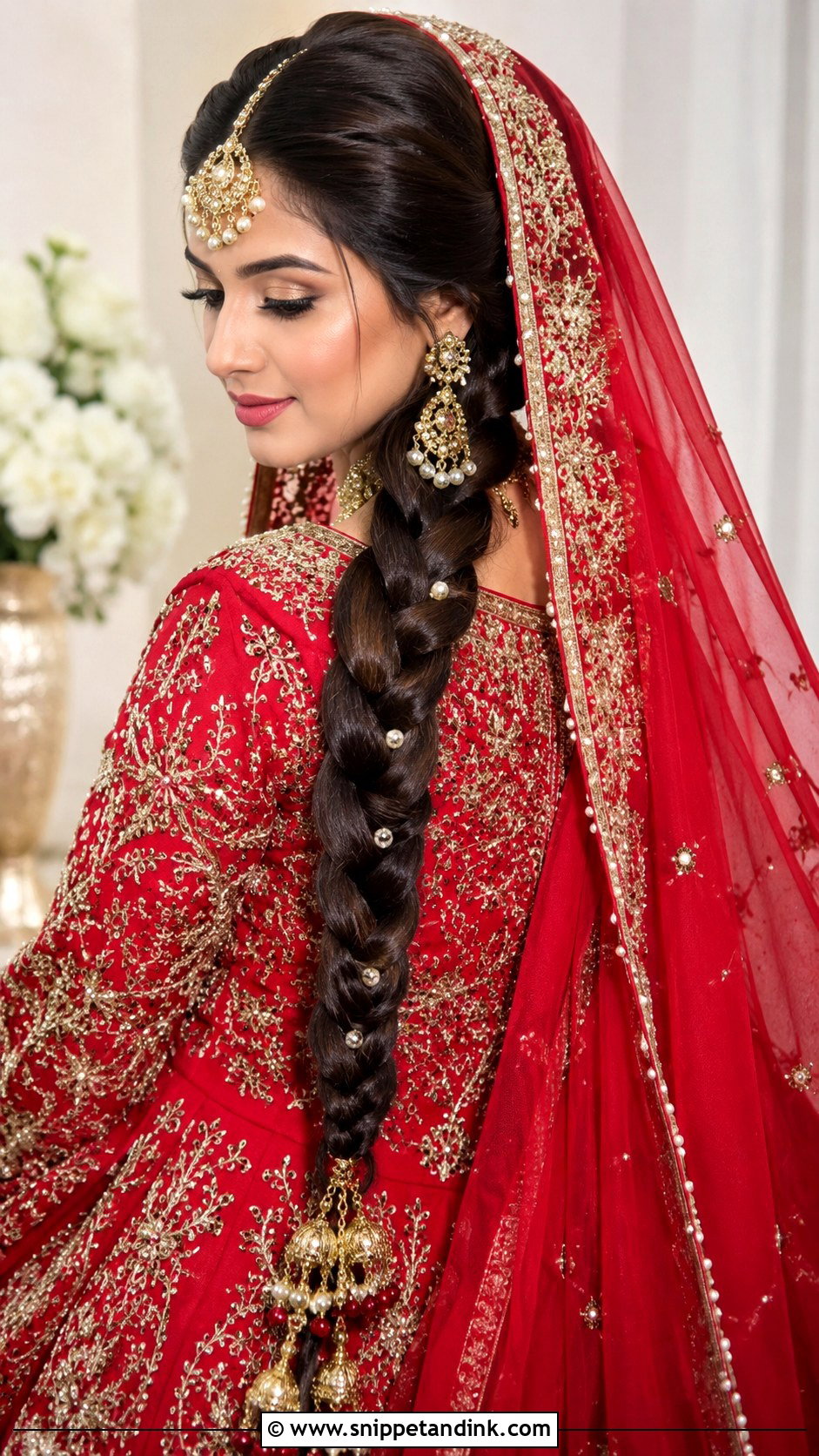
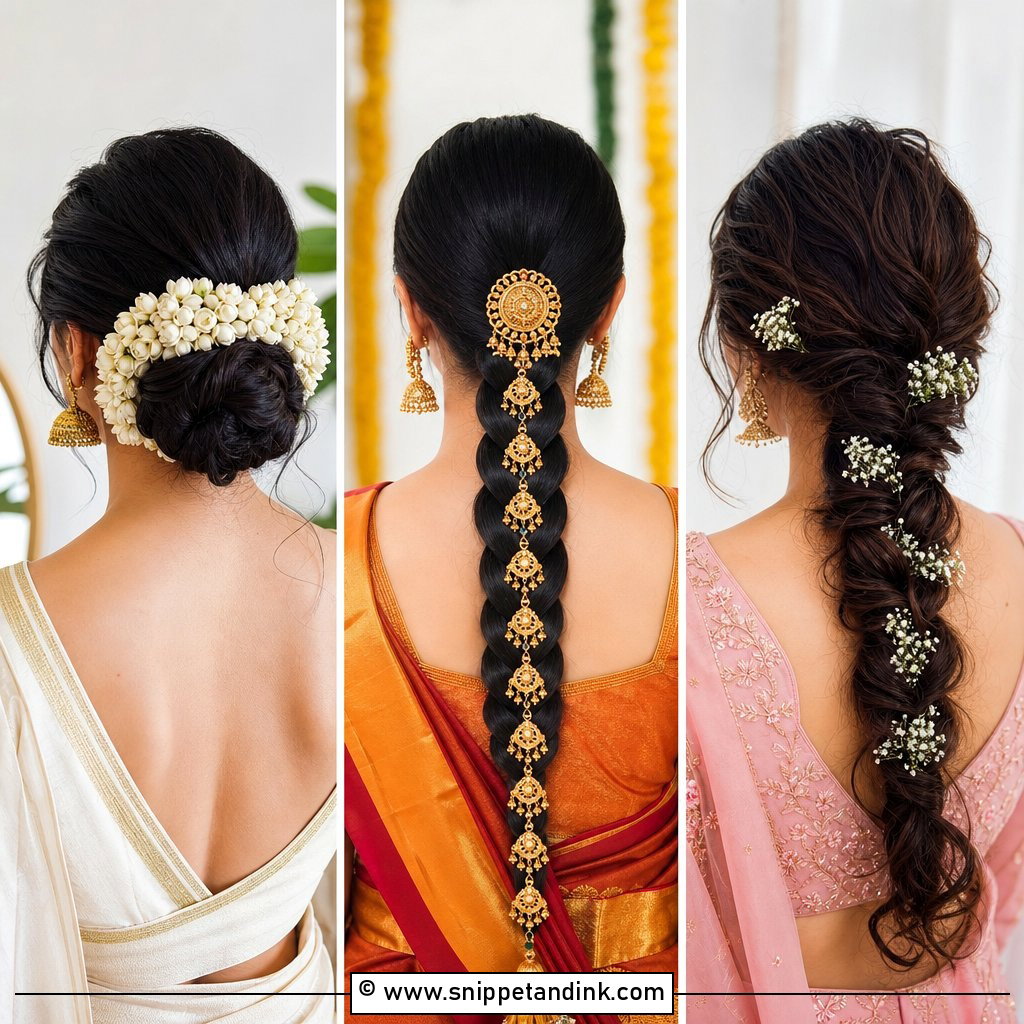
A long braid keeps the hairstyle visible under a dupatta, which most updos can’t. It can be a simple three-strand, a fishtail, a rope or a softly widened plait, finished with pearl pins, fresh flowers or a paranda. The jhumar decorates the front while the braid runs down the back or over a shoulder. It suits Mehndi, Nikah, and Barat looks. If your hair is shorter, extensions give the braid enough length and thickness to balance heavy jewelry; otherwise it looks thin beside it.
12. Pakistani Bridal Side Braid With Jhumar
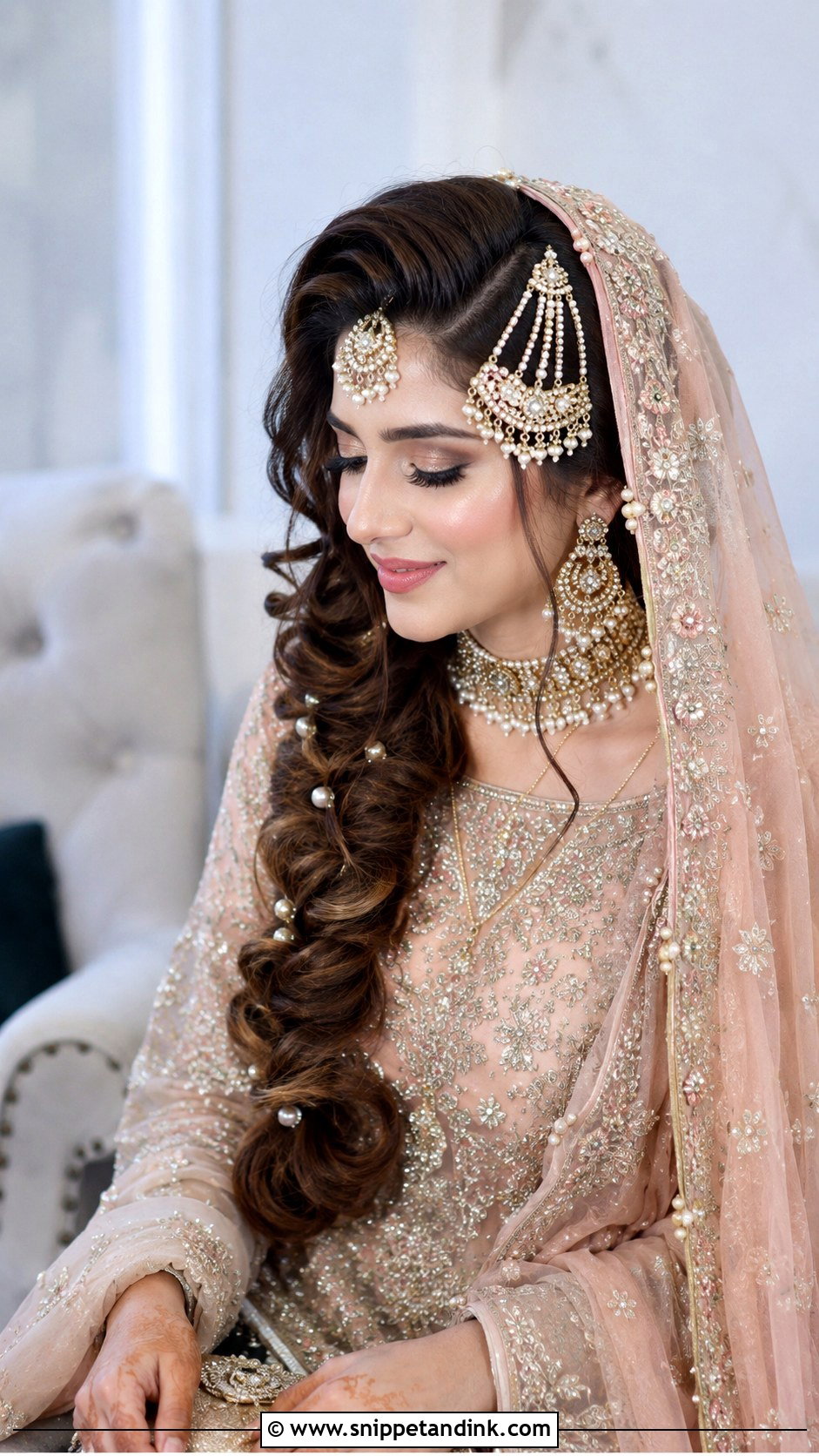
A side braid brings the hair forward, so it shows clearly in portraits and seated ceremony photos. When it’s thick and dressed with small accents, it looks rich next to a jhumar. Same side gives a heavy, traditional effect; opposite side gives balance. I generally prefer opposite, as having both on one side can make the head look tilted in photos. Layered hair needs pins and light spray to stop short pieces escaping. Shararas, ghararas and embroidered dupattas suit it.
13. Pakistani Bridal Front Puff Bun With Jhumar
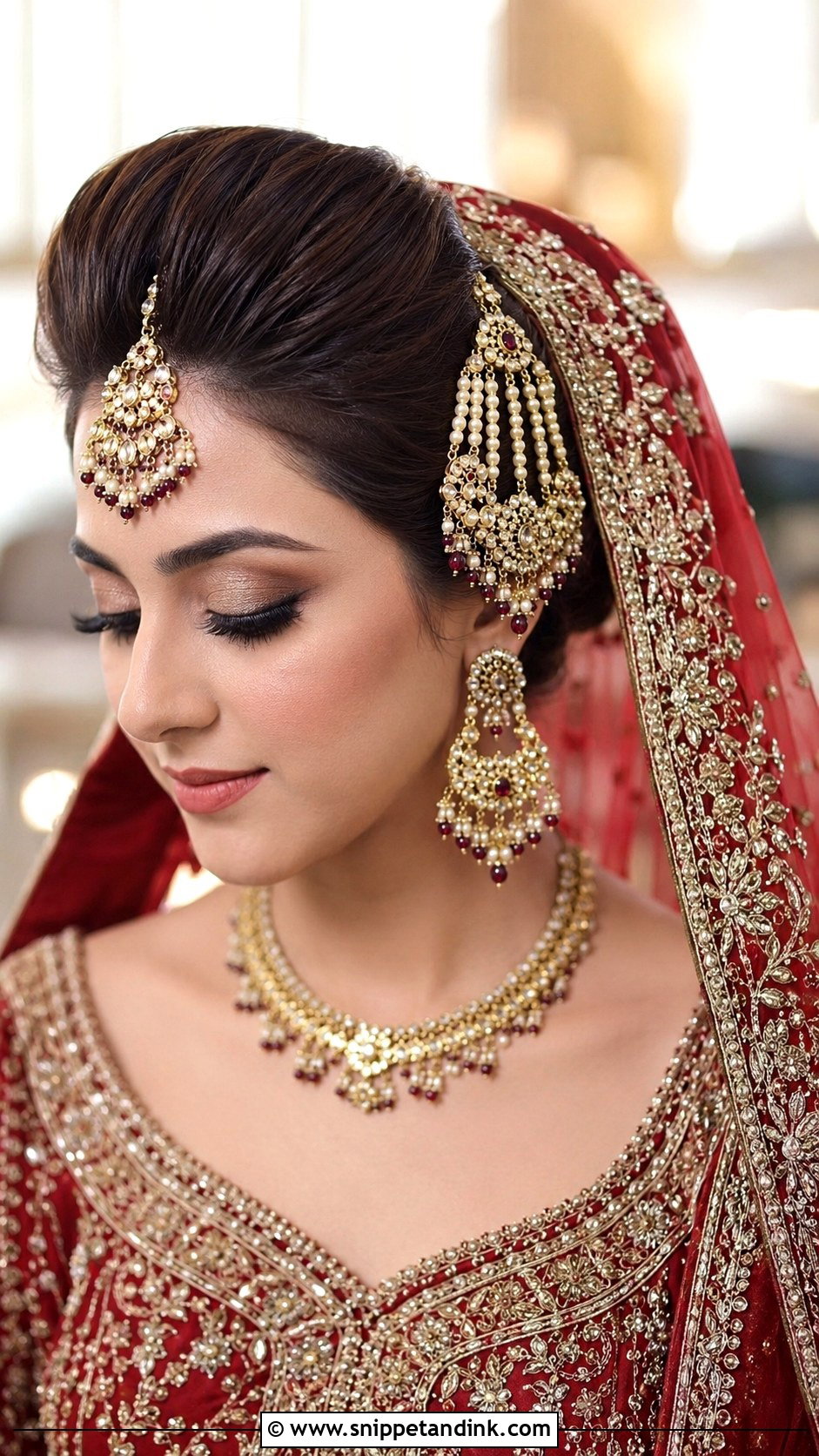
The puff gives height at the front and keeps the rest secure. It must stay soft and fairly low, because a tall puff lifts the hair the jhumar and tikka hang from and pushes them out of place. It lengthens round faces. I backcomb in fine sections and smooth the surface with a brush for a clean finish, then set the bun low or mid-height, depending on the dupatta. For Barat brides in red or maroon with heavy jewelry and bold makeup, it’s the classic shape.
14. Pakistani Bridal Center Part Bun With Jhumar
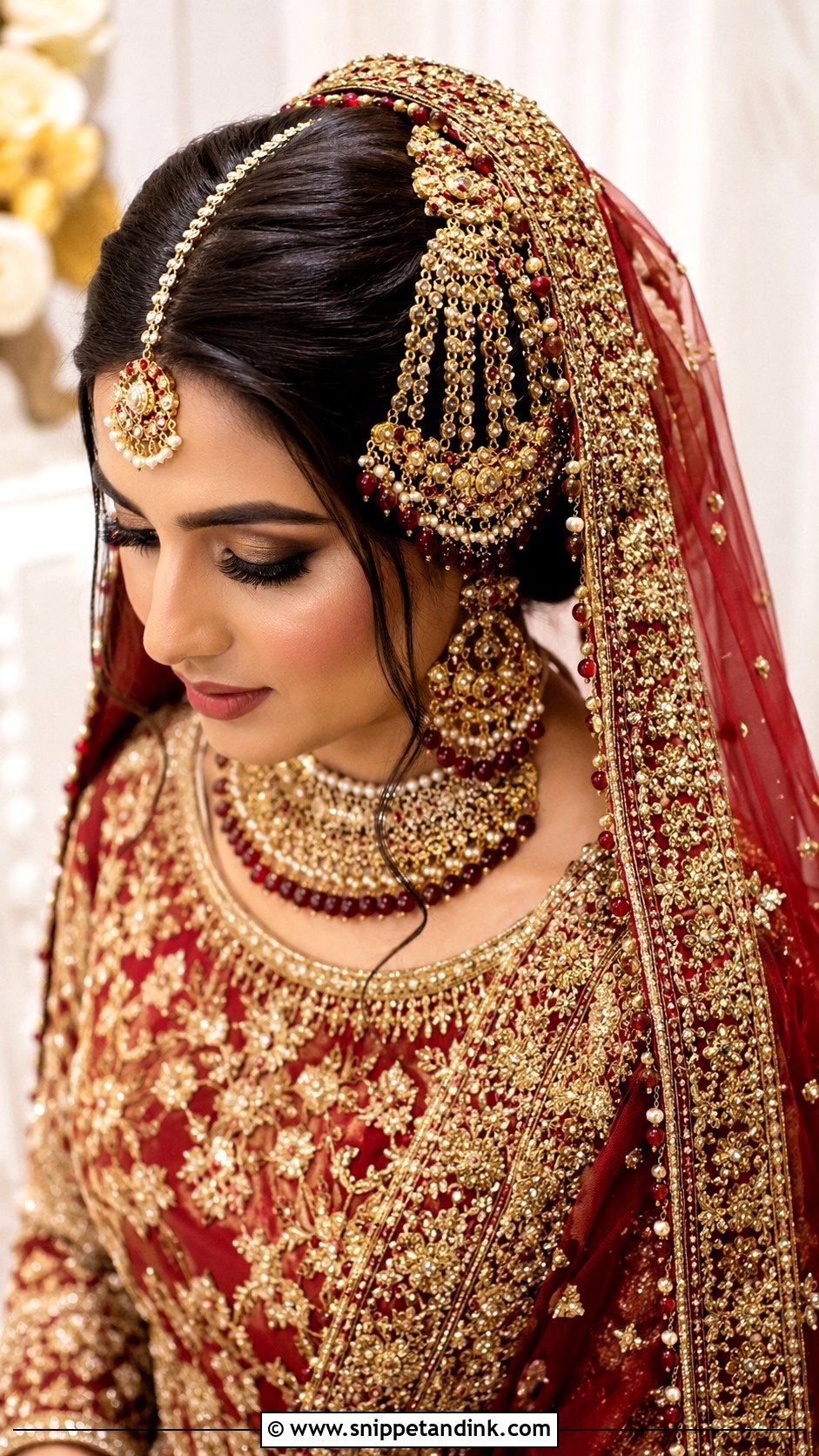
A center part bun with jhumar is the most recognizable Pakistani bridal shape. The middle part gives the maang tikka a straight line to follow, and the jhumar decorates one side. The bun behind can be sleek, curly, braided or floral. If you’re also wearing a matha patti, the center part matters even more, because it lets every chain sit evenly. I soften the front at the temples on most brides; a hard center part can look severe. It’s dependable under a heavy dupatta for long hours.
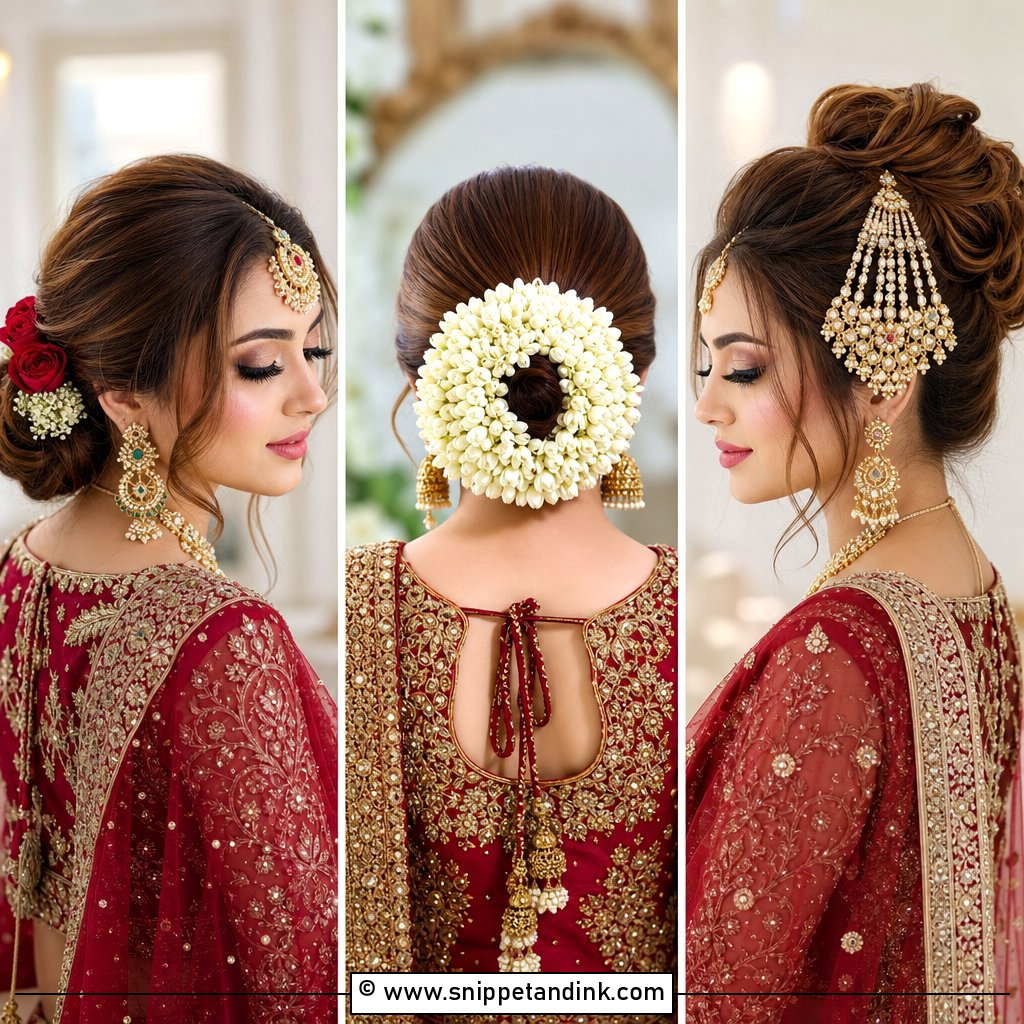
15. Pakistani Bridal Floral Bun With Jhumar
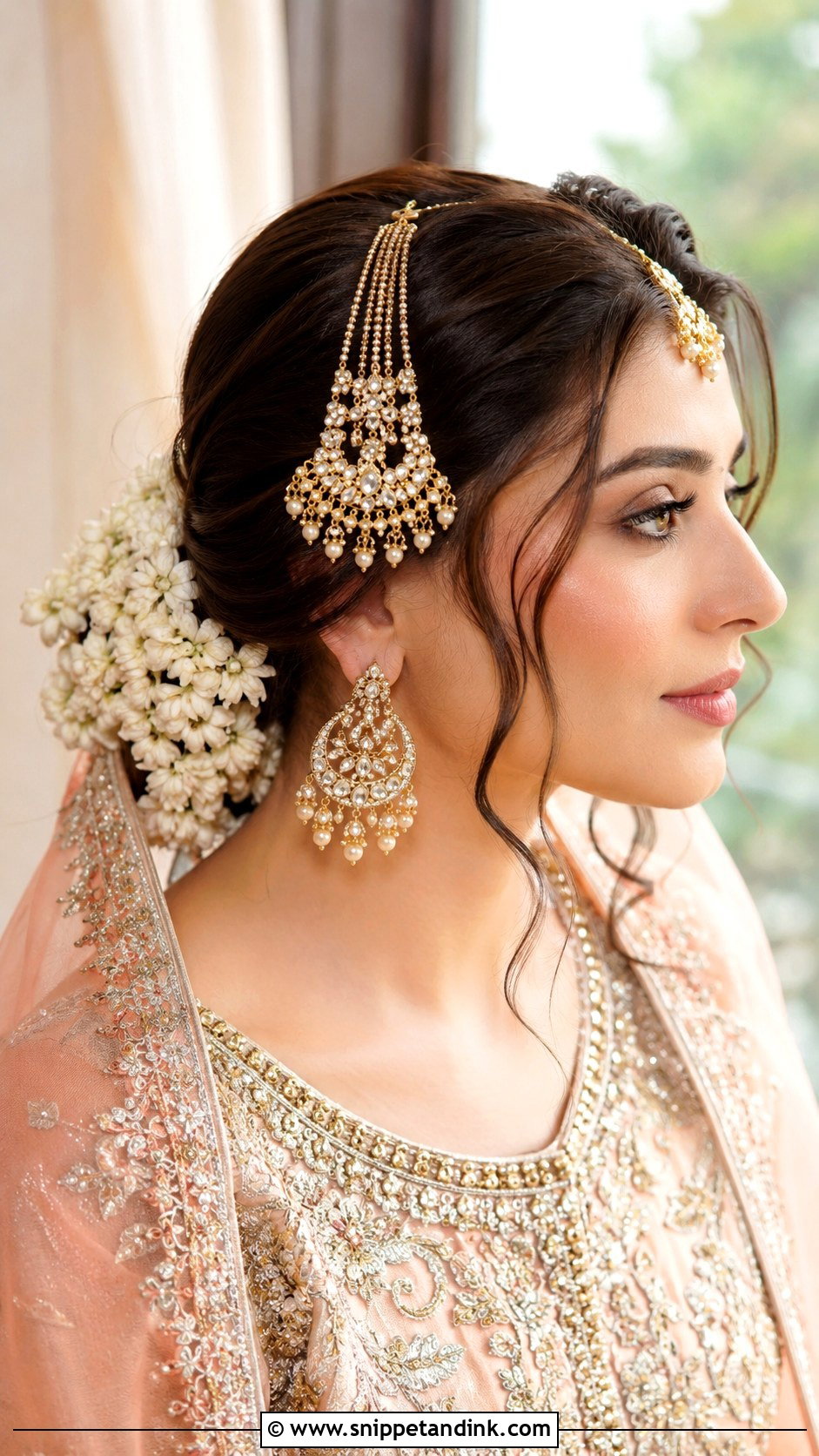
Flowers bring texture and color to the back while the jhumar adds sparkle at the front. A Pakistani bridal floral bun can carry blooms around it, tucked on one side, or as a soft gajra. Mehndi, Nikah and daytime events suit it most, though it can work for Barat. Flowers and jewelry both add weight, so the bun must be well anchored underneath. I choose blooms that last, such as roses or jasmine kept chilled until the last minute, over delicate flowers that wilt in a warm hall.
Anchoring a Heavy Kundan Jhumar So It Stays Put
A light jhumar can hook into almost any hairstyle. A heavy kundan or polki one slides, tilts and drags the hair down if it isn’t anchored properly, and it’s the most common thing I’m asked to fix at receptions.
- Make a small twisted or braided section where the hook will go, and pin it flat with two crossed bobby pins.
- Hook the jhumar through that section, not through loose hair.
- Pin each side chain once along the temple with a pin matched to your hair color.
- Turn your head and nod a few times in front of a mirror, then adjust anything that shifts.
If the jhumar still feels like it’s pulling, the weight is hanging from one point. A second hook point, or a fine thread tied from the top link to a pinned section, spreads the load. Brides with very fine hair might be happier with a lighter jhumar than a heavy one held up by dozens of pins.
Pinning a Jhumar Over a Hijab
Hijabi brides can wear a jhumar too, pinned onto the fabric rather than hair. I start with an underscarf or inner cap so there’s a non-slip base, add a bun volumizer if the outer hijab needs shape, then pin the jhumar through the hijab into the underscarf with small safety pins hidden under the chains. A lighter jhumar is kinder here, since fabric gives less grip than hair.
A Jhumar Needs Hair Built Around It
There are many ways to wear a jhumar, and they all depend on balance. Buns give the strongest dupatta support; curls and half-up looks feel softer and more current; braids add detail; floral buns feel festive. What decides it for you is the weight of your outfit, the size of your jhumar, your hair length, your face and the event. Always do a trial with the actual jhumar and dupatta, especially if either is heavy. Correct placement and firm pinning are what make it look right in person and in photographs.
You'll Like These Ideas:


Leave a Reply