
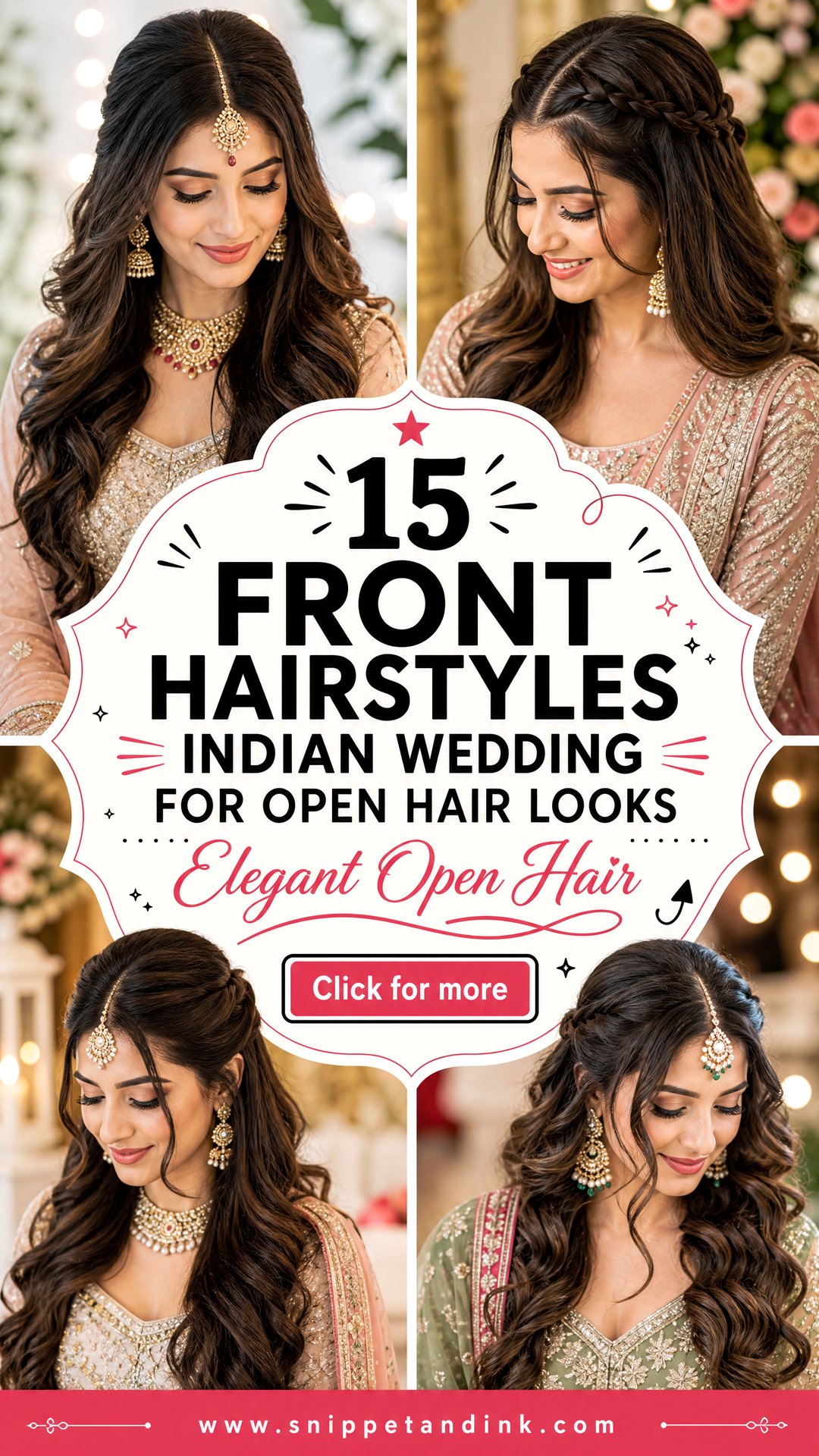
With open hair at an Indian wedding, the front does most of the work. I can curl the lengths perfectly and still lose the look if the first few inches around the face are wrong: the maang tikka tilts, the earrings disappear, or the dupatta flattens everything by the second hour. So these Indian wedding open hair ideas are really about the front: the parting, a puff, twists, braids and sweeps, and how each one behaves under a lehenga dupatta, a saree pallu or a gown with bare shoulders. Brides usually lean toward a centre part with curls, guests toward side-swept waves, and most of these can shift a little between mehendi and reception.
Your Jewelry Sets the Front, Not the Other Way Round
The thing I see go wrong most with open hair is a front planned on its own. The curls look right at the trial, then the matha patti goes on and the part sits slightly off centre, or the passa has nothing to hook into because the side was smoothed too sleek. A few habits at the trial prevent that:
- Bring every head piece: tikka, matha patti, passa, any hair jewelry, and the actual dupatta if it will be pinned to your head.
- Let me set the part with the tikka already in place. A single tikka or matha patti suits a centre part; a passa usually wants a gentle side part on the side it sits.
- Ask for a small hidden anchor, a tiny braid or a backcombed, pinned section, wherever heavy jewelry hooks in, so the weight pulls on that and not on loose strands.
- Pin the dupatta last, once the curls have set, and check the back view in a hand mirror.
- Take photos of the front and both sides in daylight before you leave.
Fabric matters more than people expect. Net and georgette dupattas sit lightly over open curls. Velvet and heavy zardozi press on the crown and flatten volume within an hour, so with those I’d choose a front puff or a half-up base, because the pins have something firm to grip.
1. Middle Part Front Hairstyle For Indian Wedding Open Hair
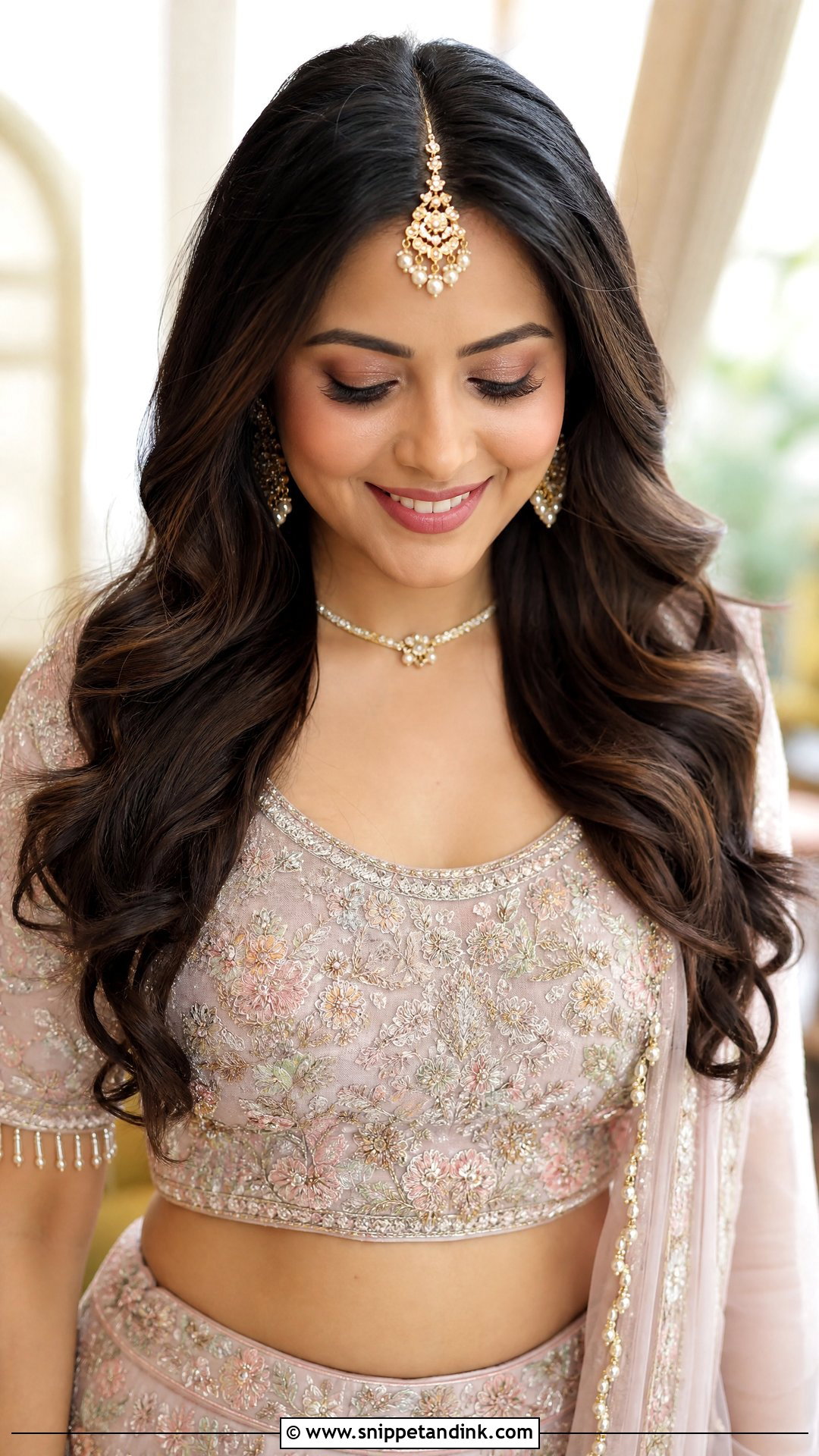
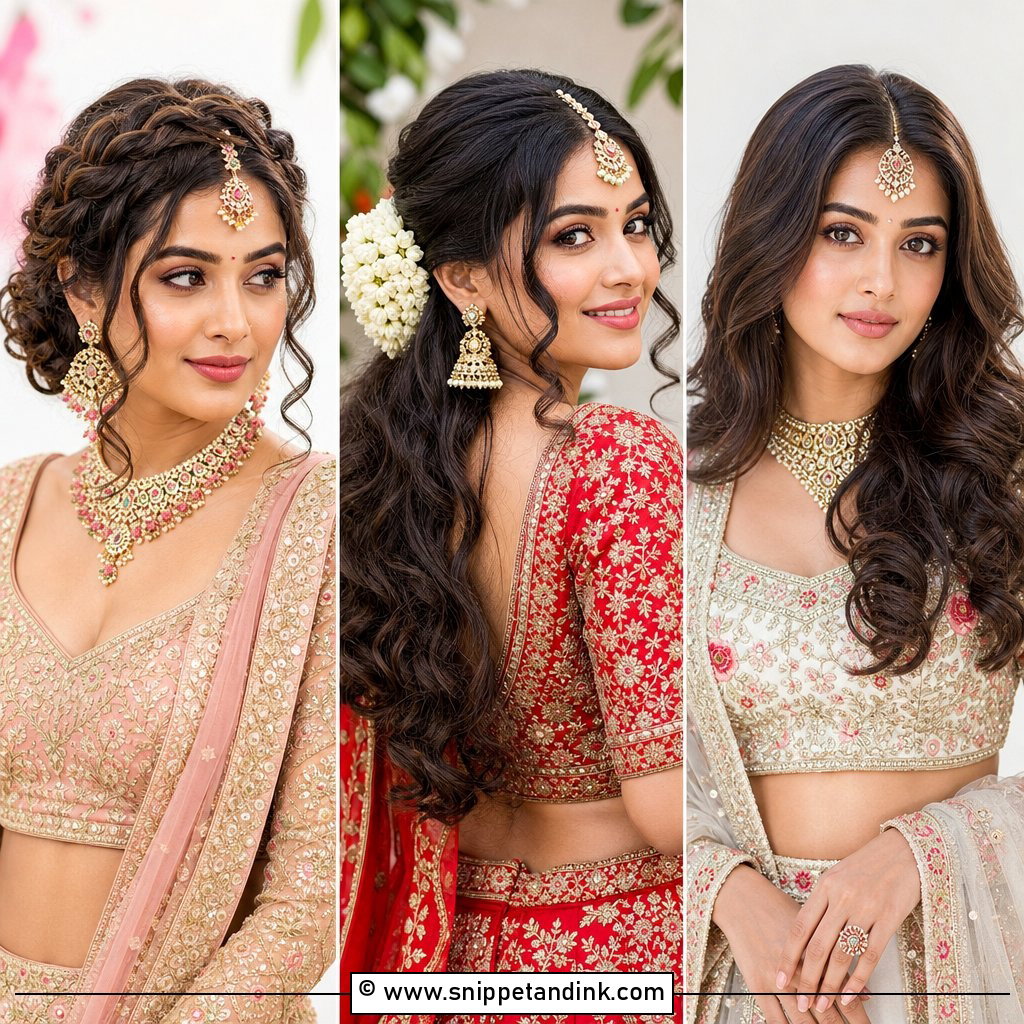
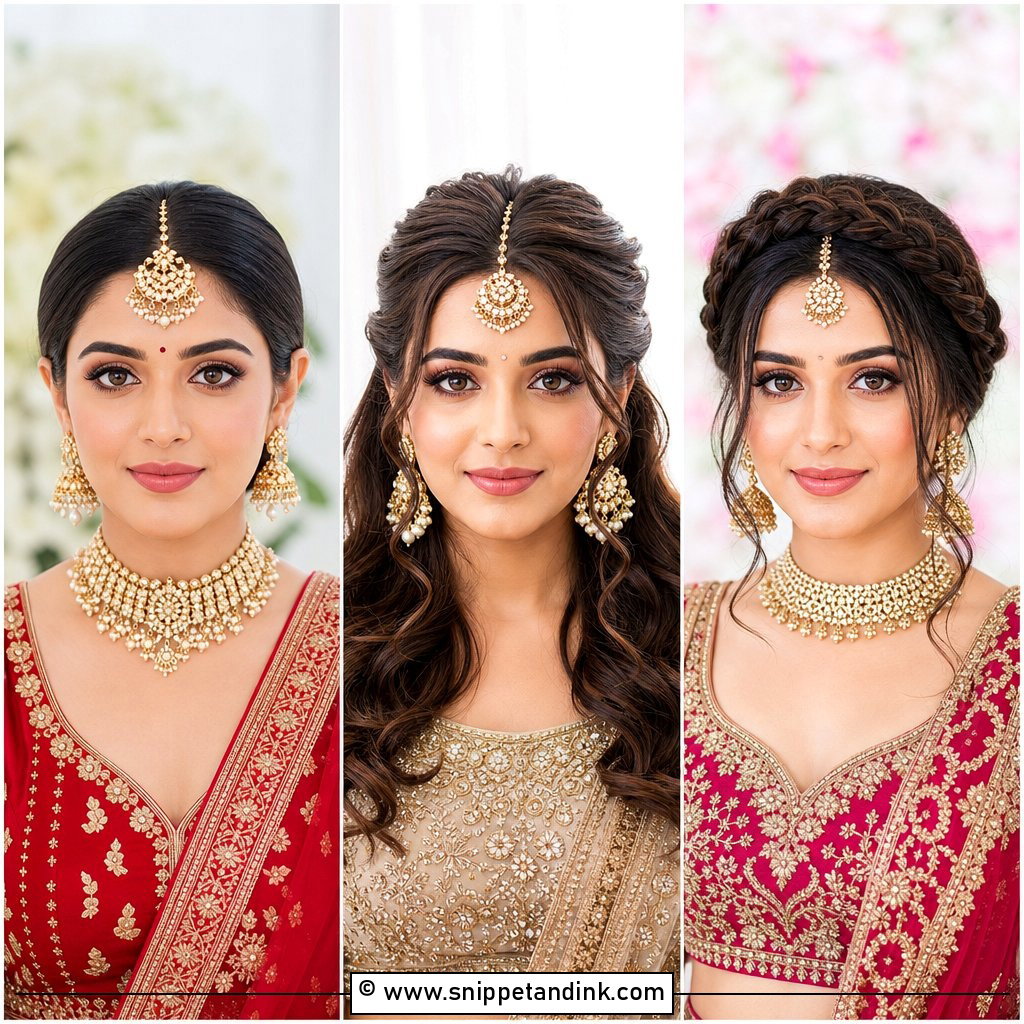
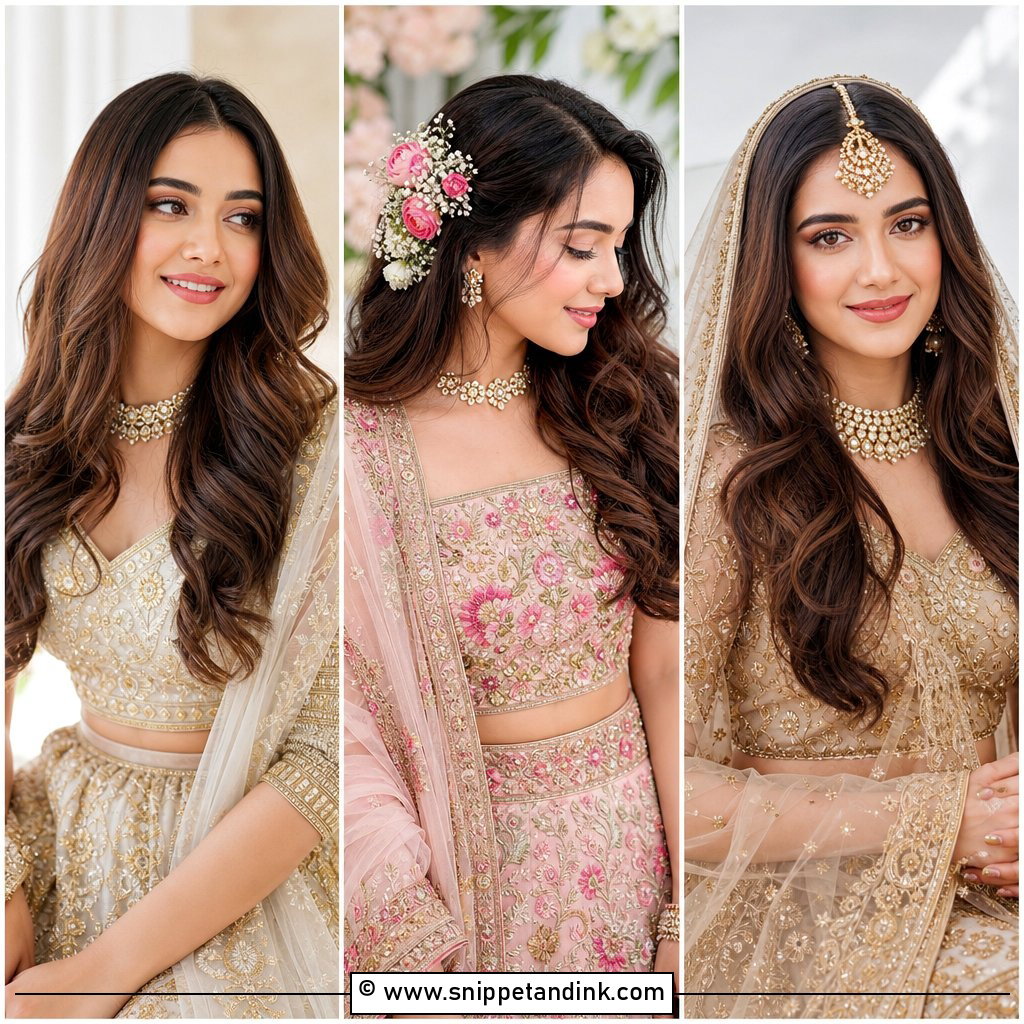
A middle part front hairstyle is the one I reach for first under a maang tikka or matha patti, because the jewelry needs a straight line to hang from. I set the part with a tail comb while the hair is still slightly damp from the blow-dry, then press the roots flat with a little serum on my palms so the line stays crisp under flash. The catch is symmetry. A centre part shows every difference between the two sides of your face, so if one side of your hairline is thinner or has a cowlick, I’d rather know at the trial than on the morning. Curls through the lengths keep it from looking severe.
2. Side Part Front Hairstyle For Indian Wedding Open Hair
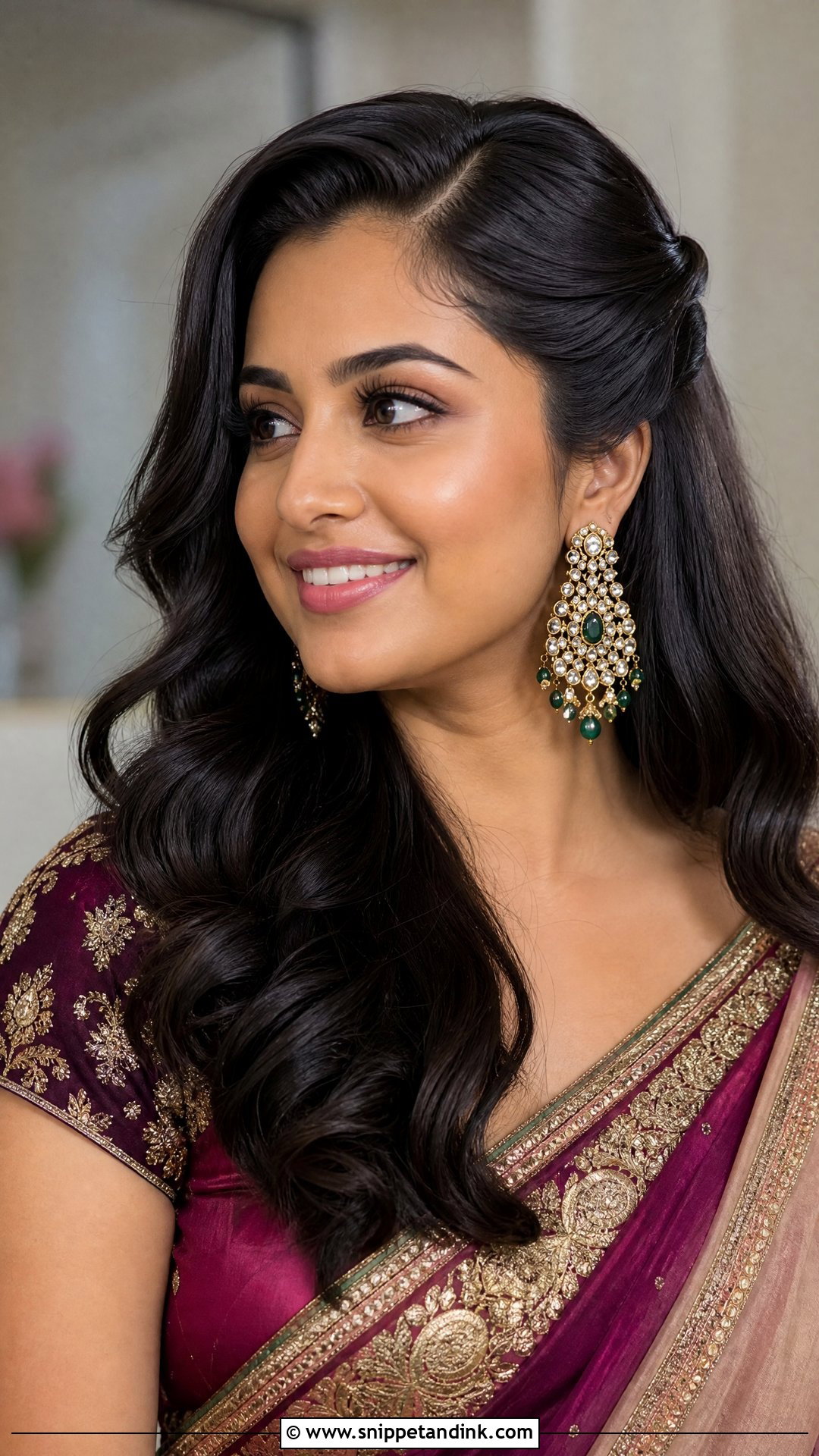
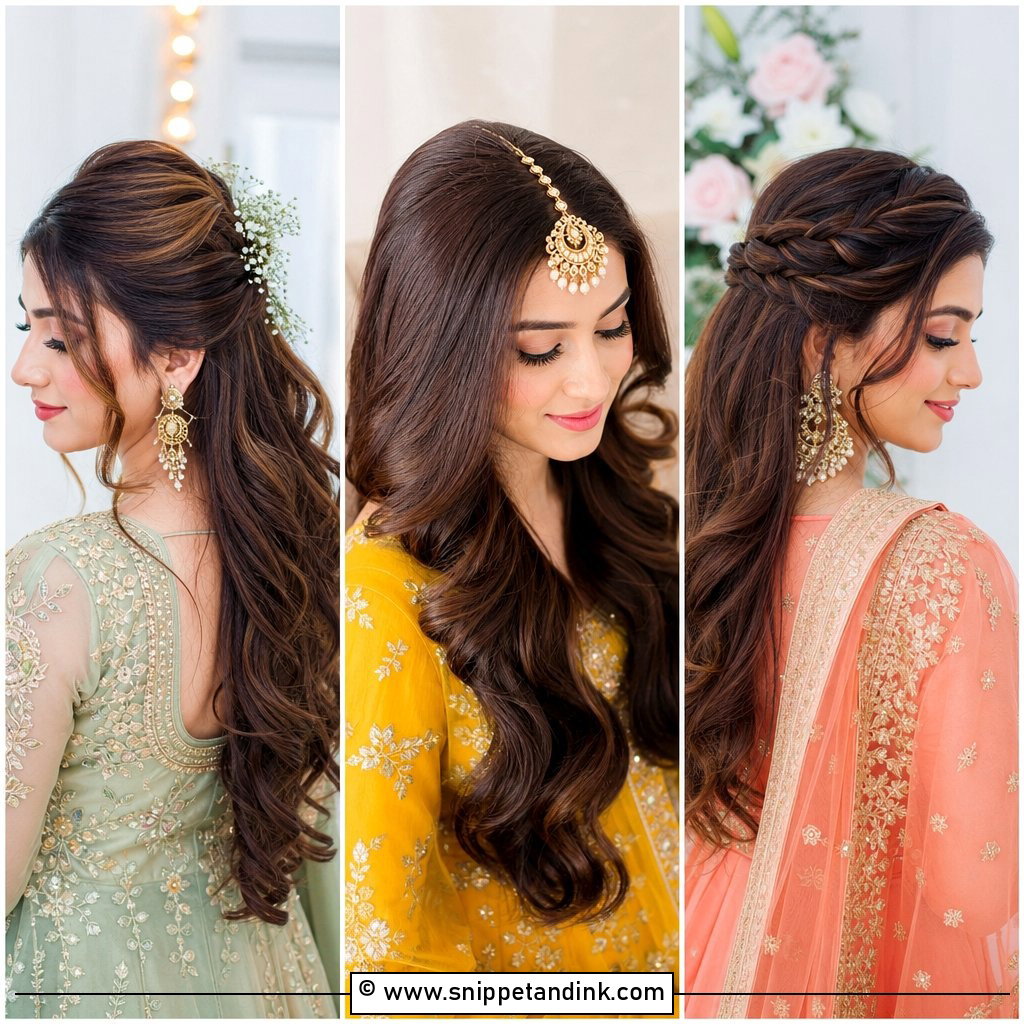
A side part softens open hair straight away and is kinder to most faces than a dead-centre line. I place it roughly above the arch of one eyebrow, not further, because a very deep part pulls the heavy side down onto the cheek within a couple of hours. Tuck the lighter side behind your ear to show the earring and let the fuller side fall in waves over the shoulder. It suits sangeet, engagement and reception nights. Lift the crown slightly with a round brush at the roots; a flat crown is the first thing bright stage lights show up.
3. Front Puff Open Hairstyle For Indian Wedding
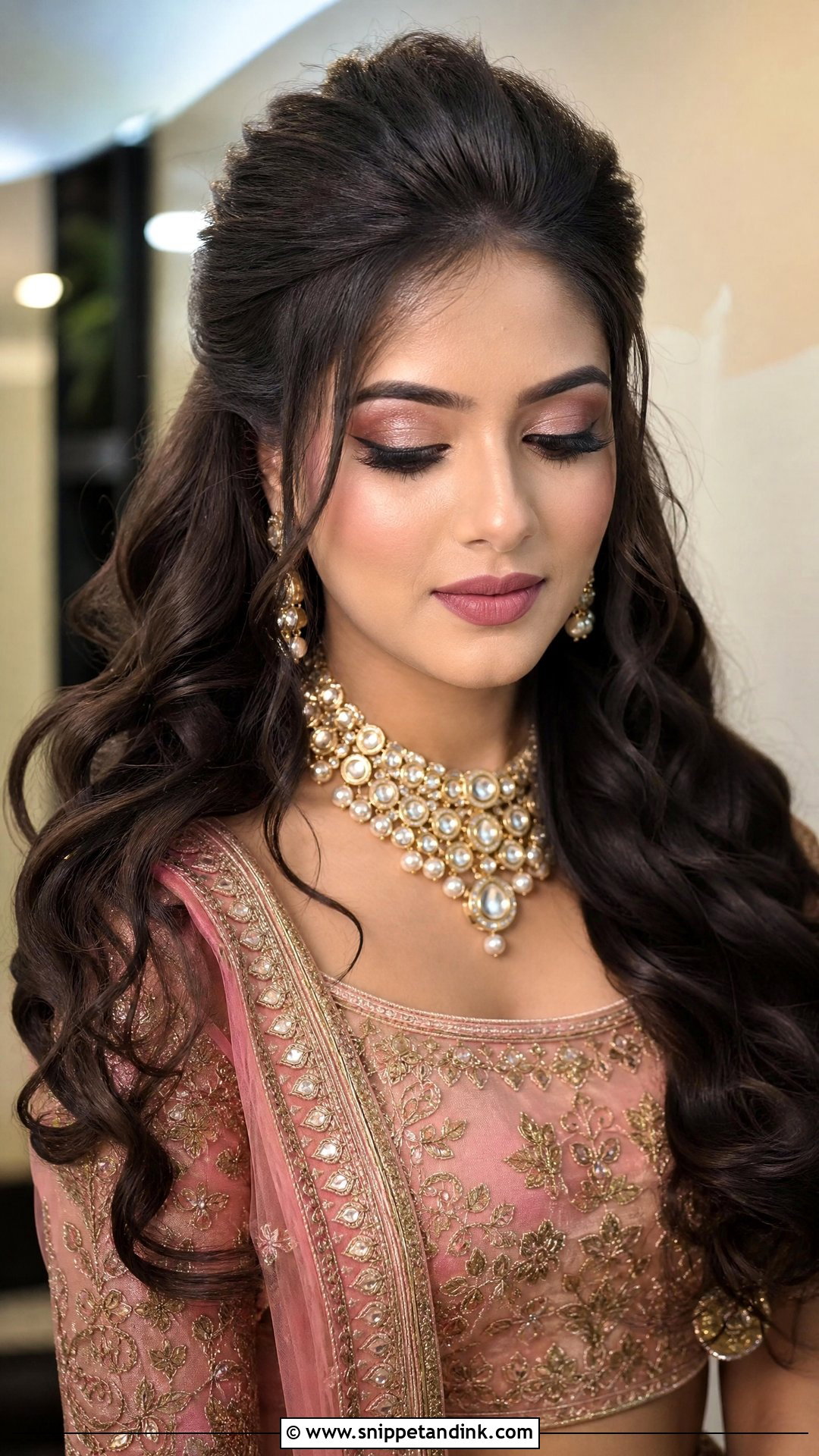
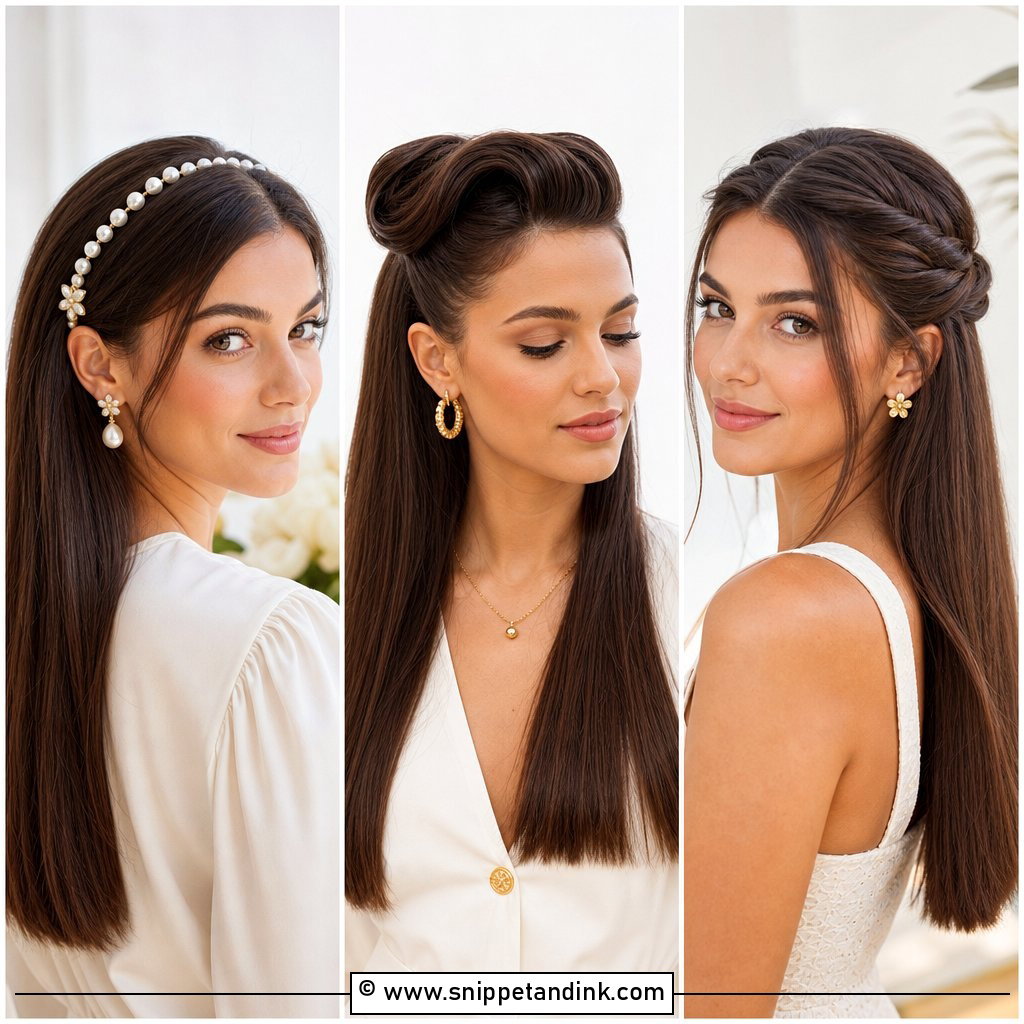
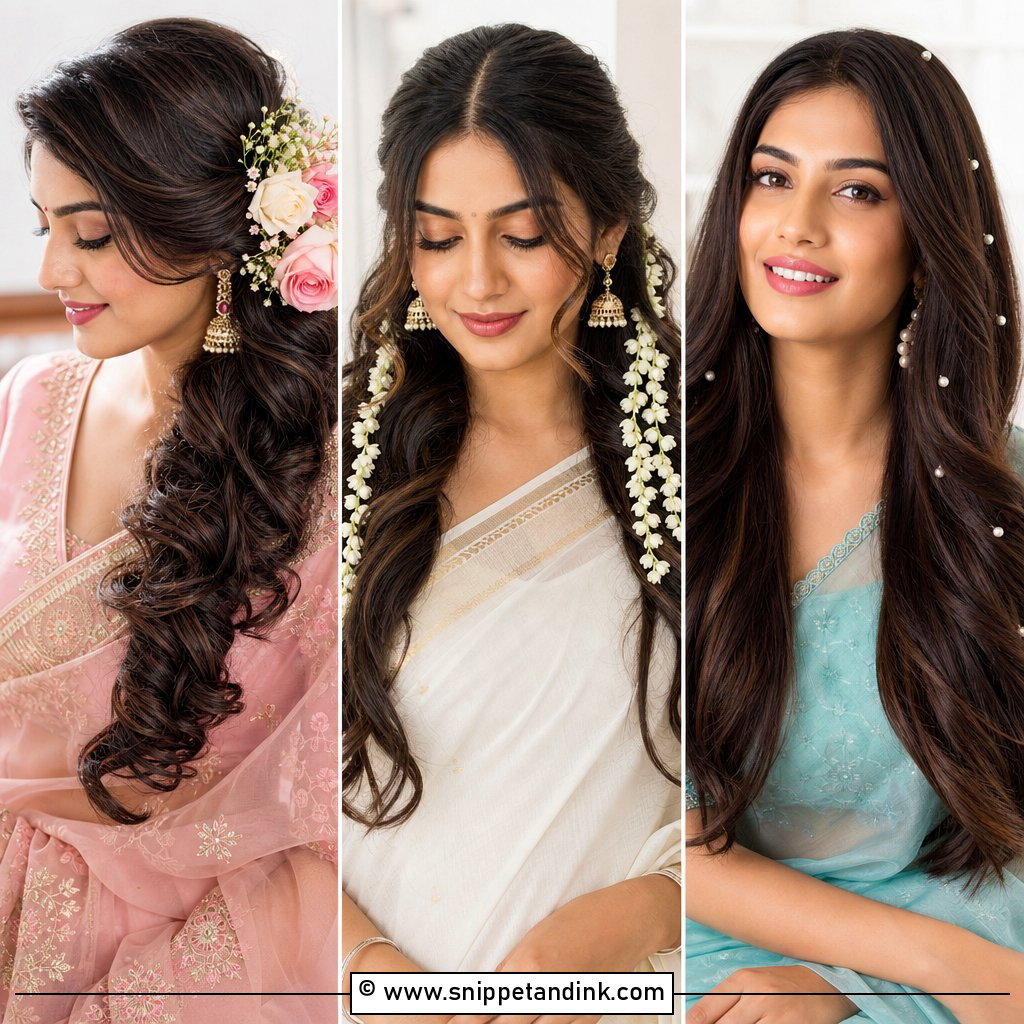
Height at the crown with everything else loose: that’s the appeal of a front puff, and it does make a round face look a little longer. I backcomb only the underside of the front section, smooth the top layer over it and lock it with two criss-crossed pins, never one. A dupatta then has something to rest against instead of sitting on flat hair. The common mistake is a puff that’s too tall and too tight, which reads stiff from the side. Aim for a soft rise of a couple of centimetres, not a dome.
4. Front Twist Open Hairstyle For Indian Wedding
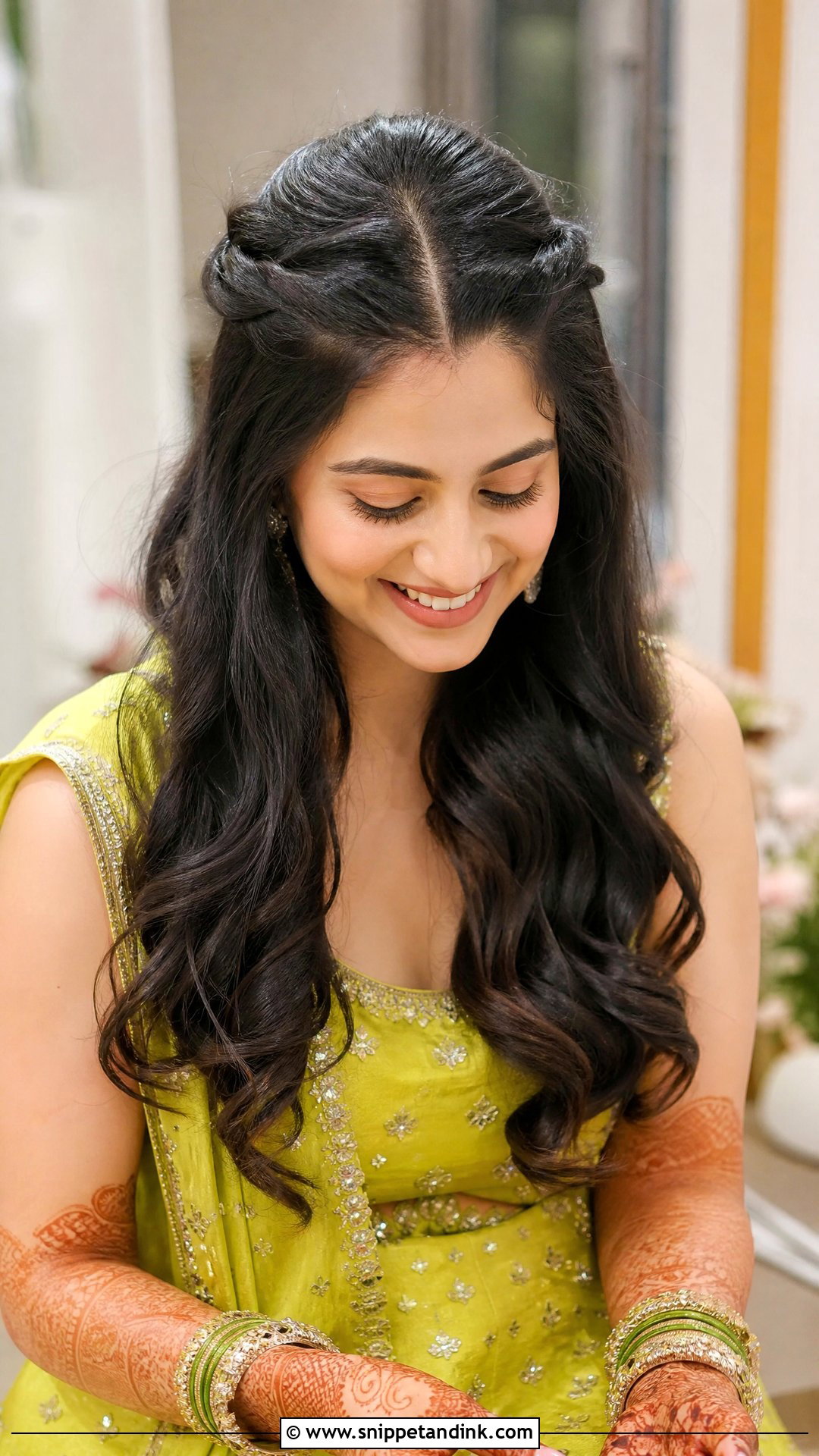
Twisting the front pieces back is my quiet fix for long functions. I take a small section from each temple, twist it away from the face and pin it at the back of the crown so the pins hide under the top layer. Everything else stays open in curls or a smooth blowout. At mehendi and haldi, where you’re leaning forward and getting hugged constantly, this keeps hair off your face and out of the henna. It leaves room near the ears for earrings or a few small flowers without crowding the face.
5. Front Braid Open Hairstyle For Indian Wedding
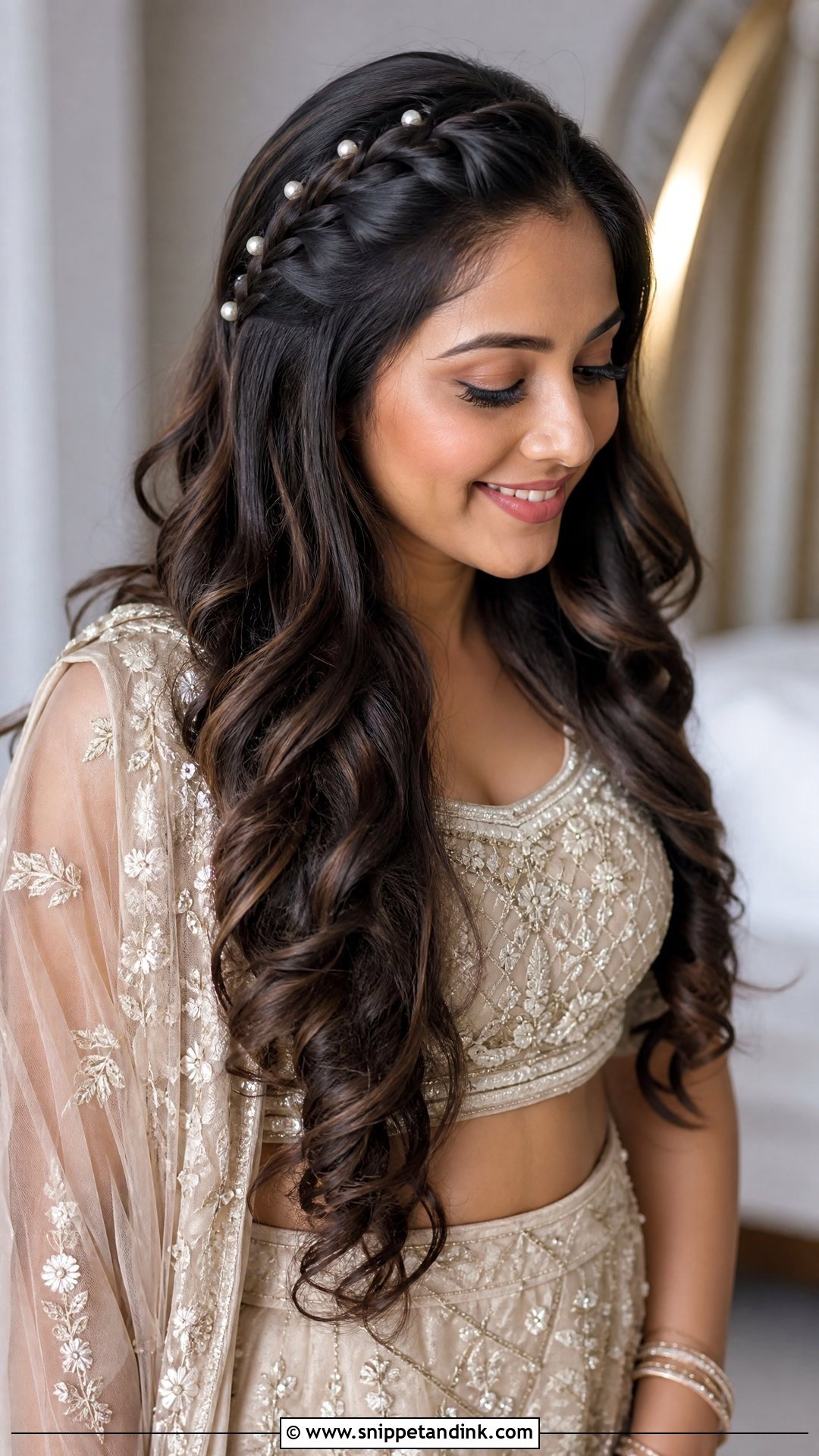
Front braids hold up through dancing better than almost anything loose, because the braid itself is the anchor. I’ll do one slim braid along the hairline, a soft crown braid, or two thin braids meeting at the back, depending on how much the client wants on show. Pancake the braid gently by pulling the edges out so it looks fuller on camera; a tight braid looks thin in photos. Pearl pins or small kundan clips slot straight into the plait. On very layered hair, short pieces will poke out of the braid, so I set those with a little gel on a toothbrush.
6. Maang Tikka Front Hairstyle For Open Hair
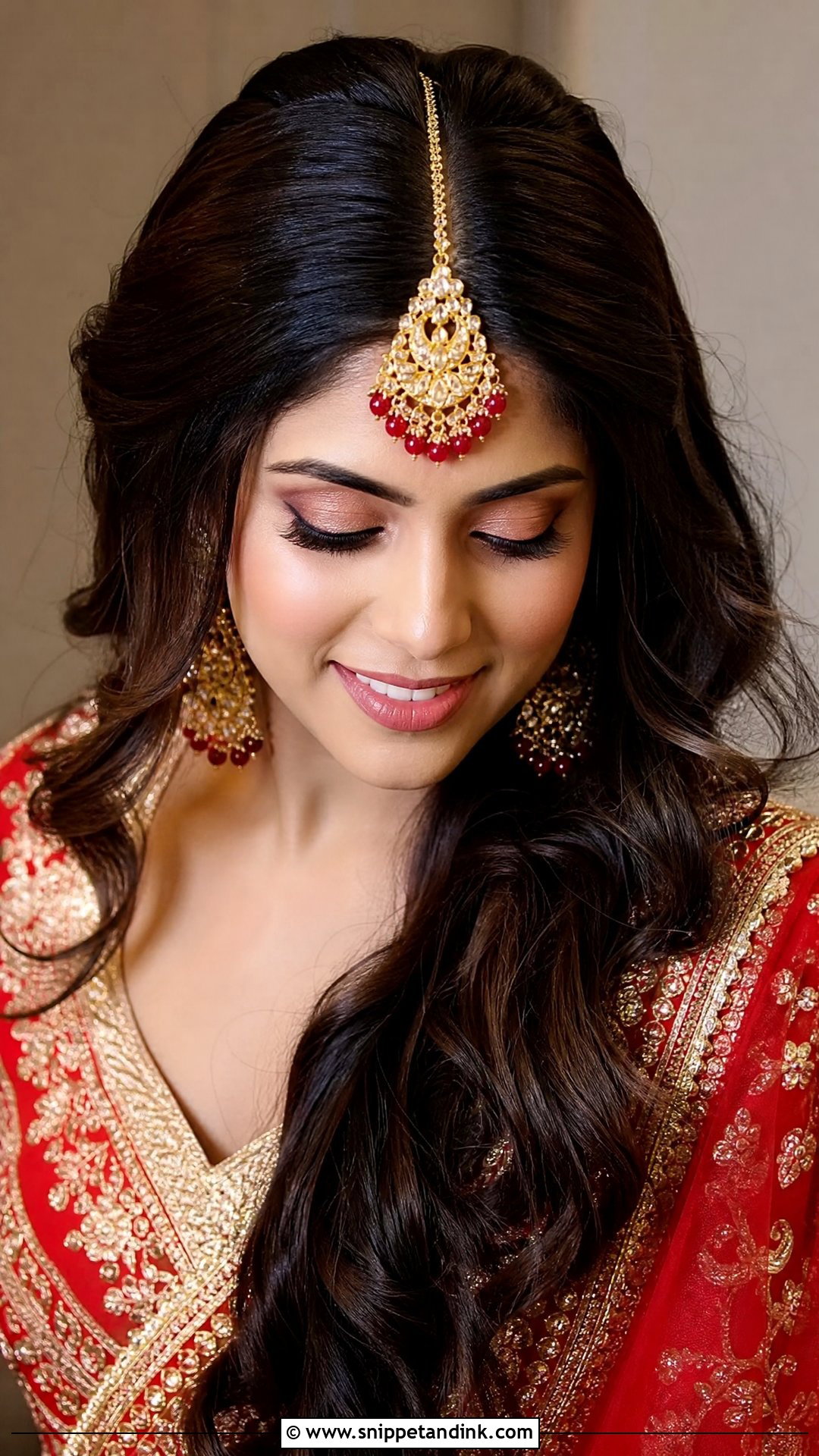
Under a tikka, a neat part and a smooth hairline matter more than the curls. My usual maang tikka front hairstyle is a centre part with soft waves over both shoulders. I secure the tikka chain under the hair with two pins crossed in an X just behind the parting, then lay a thin section of hair over the hook to hide it. Pull the front too tight to hold the jewelry and you’ll have a headache by the pheras, so the hold has to come from the pins, not from tension on your hairline.
7. Matha Patti Front Hairstyle For Open Hair
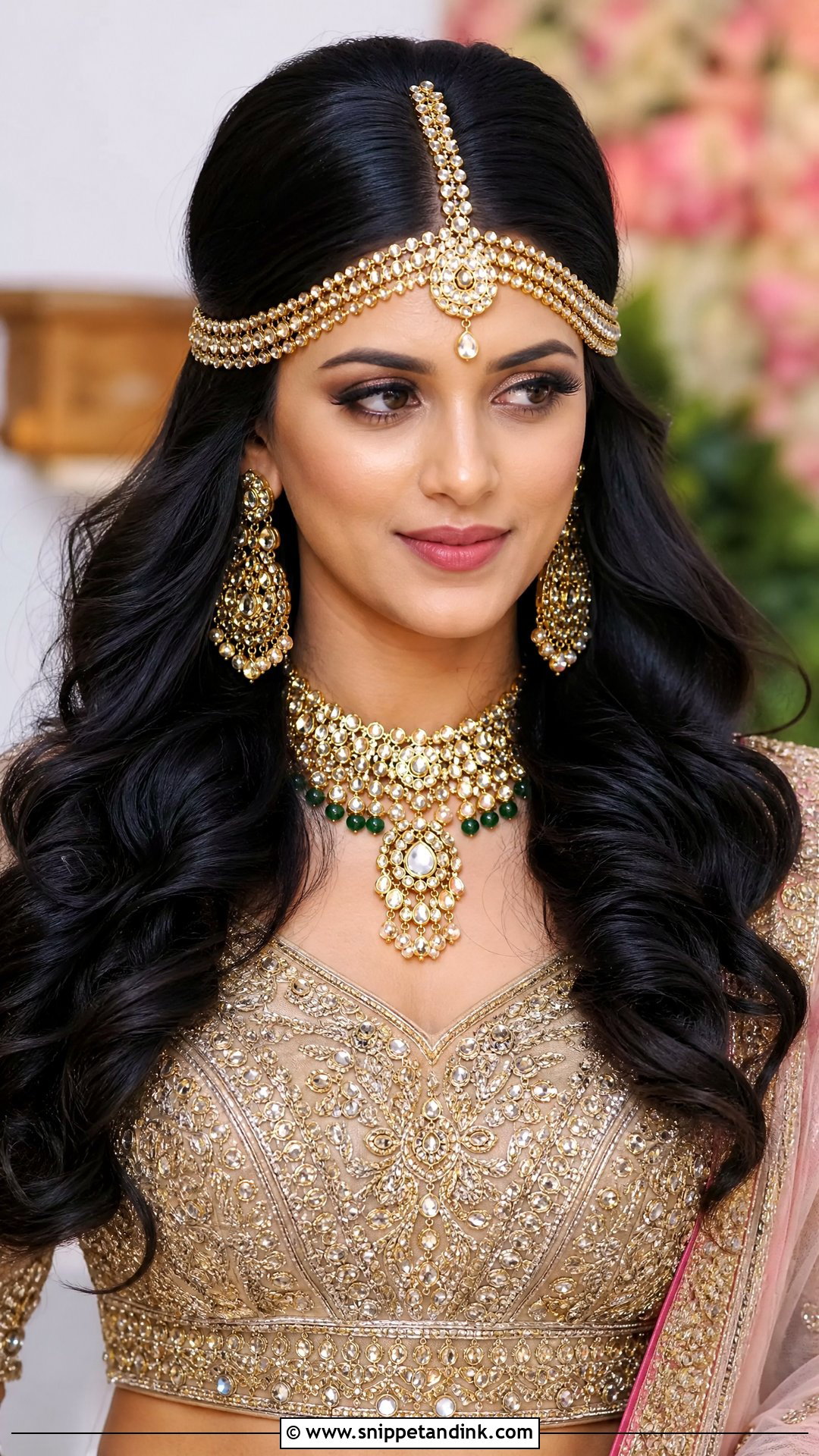
Matha patti with open hair gives a regal front, but the side chains need somewhere to hook. I build a small hidden anchor behind each ear, a tiny braid or a backcombed and pinned section, so the weight pulls on that and not on loose curls. Keep the roots smooth and the volume low around the crown, then let the fullness sit in the lengths to balance the jewelry. A heavy matha patti on fine hair can drag the part open by evening; if that’s you, ask for the anchors to be placed a little higher.
8. Passa Front Hairstyle For Indian Wedding Open Hair
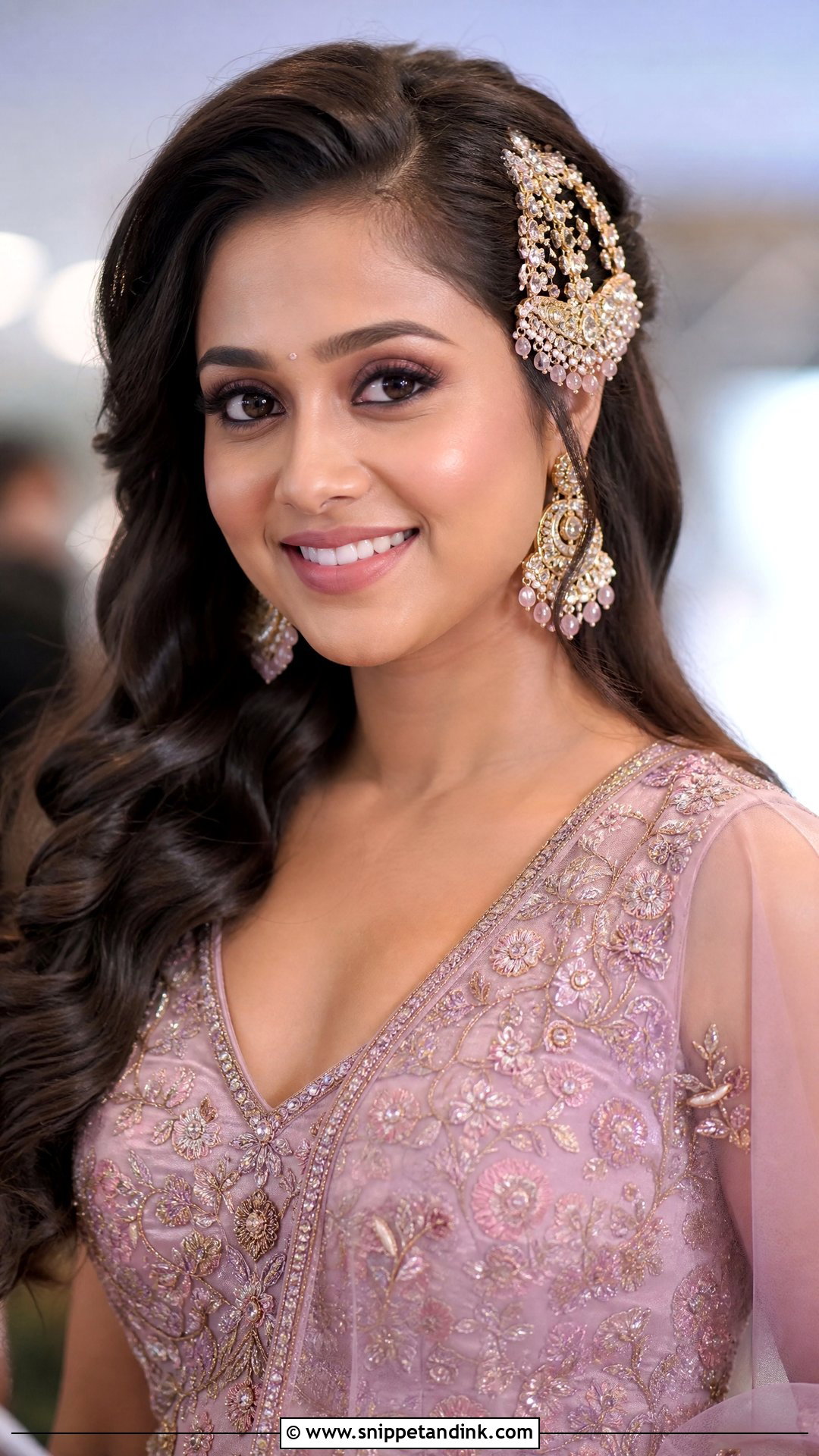
A passa wants a side-focused front, with the part shifted slightly toward the side it sits on. I hook the passa into a pinned base near the temple, then let open curls fall on that side for balance so the jewelry doesn’t look like it’s floating. The opposite side should stay clean or lightly pinned to show the earring and neckline. It’s a common choice for Nikah, engagement and reception looks. Resist adding extra clips near the face here; a passa is already the statement, and a second piece next to it just competes.
9. Front Layers Open Hairstyle For Indian Wedding
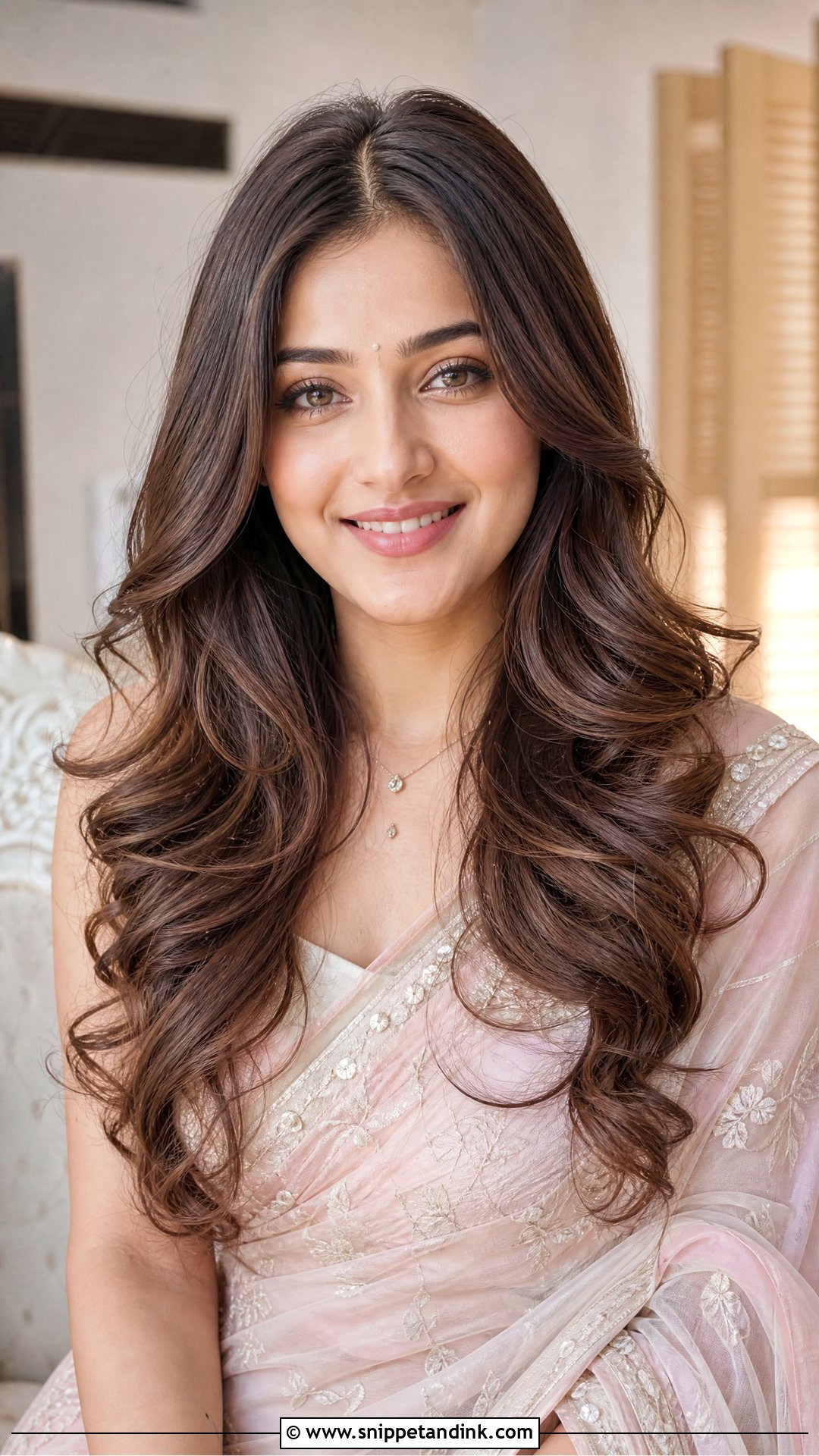
If you already have face-framing layers, I curl them away from the face, never toward it, so they blend into the lengths instead of hanging across your eyes and makeup. Layers pair with a middle part, side part or light puff, depending on the outfit. The honest limitation: very short front layers, around chin length, won’t stay in a pin and spring loose by the afternoon. For those I’d rather use them as soft framing pieces than try to sweep them back.
10. Side Swept Front Hairstyle For Indian Wedding Open Hair
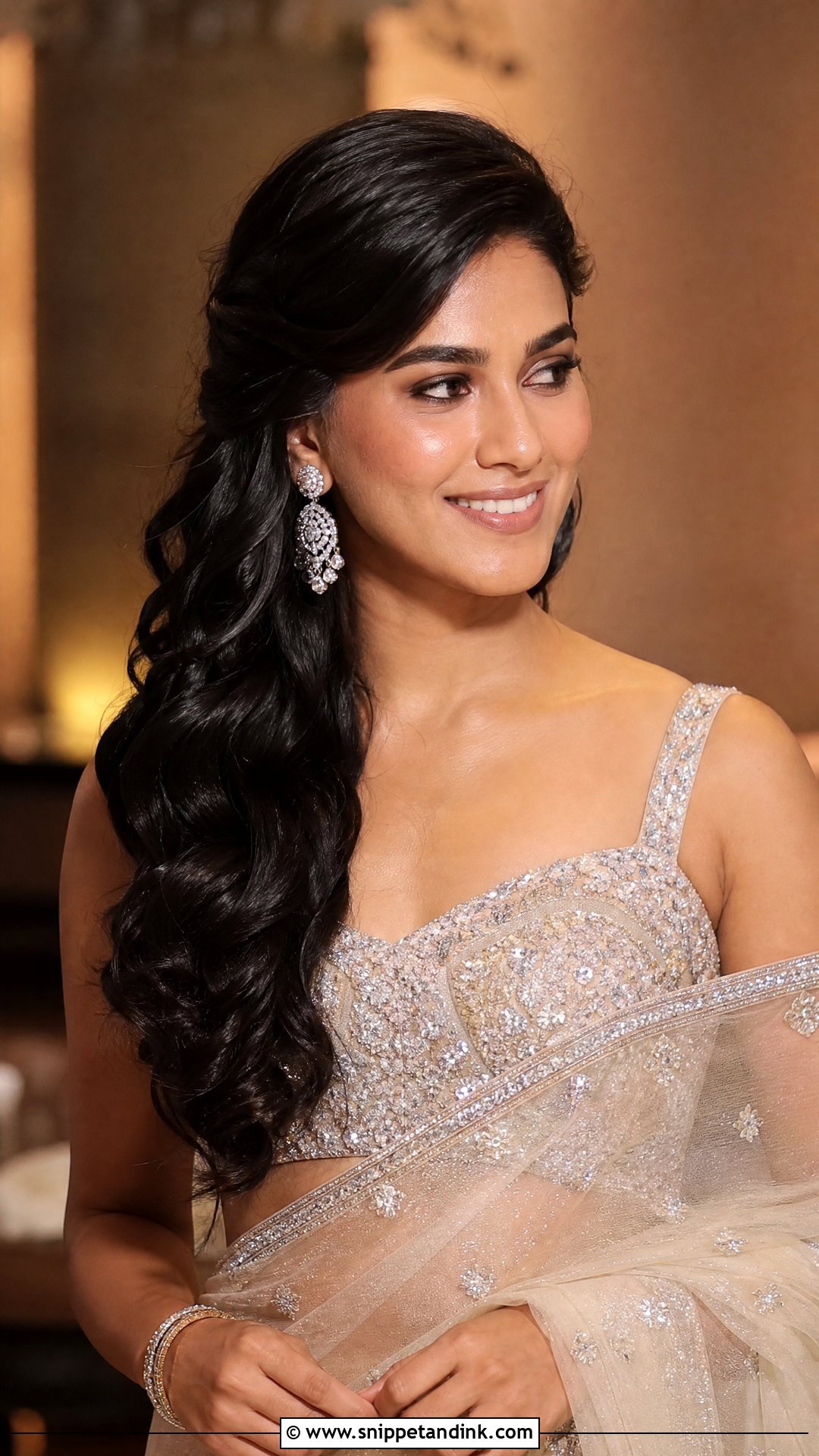
For evening functions I like a sweep across the front with the lengths gathered over one shoulder. It opens the neckline and shows the blouse back and the dupatta border on the other side. The trick is hidden support: I pin the sweep under the top layer behind the ear on the opposite side so it can’t slide forward. Finish with a light shine spray rather than a lacquer. If you’ll be dancing at the sangeet, a sweep held only by spray will drift back toward the centre.
11. Waterfall Braid Front Hairstyle For Open Hair
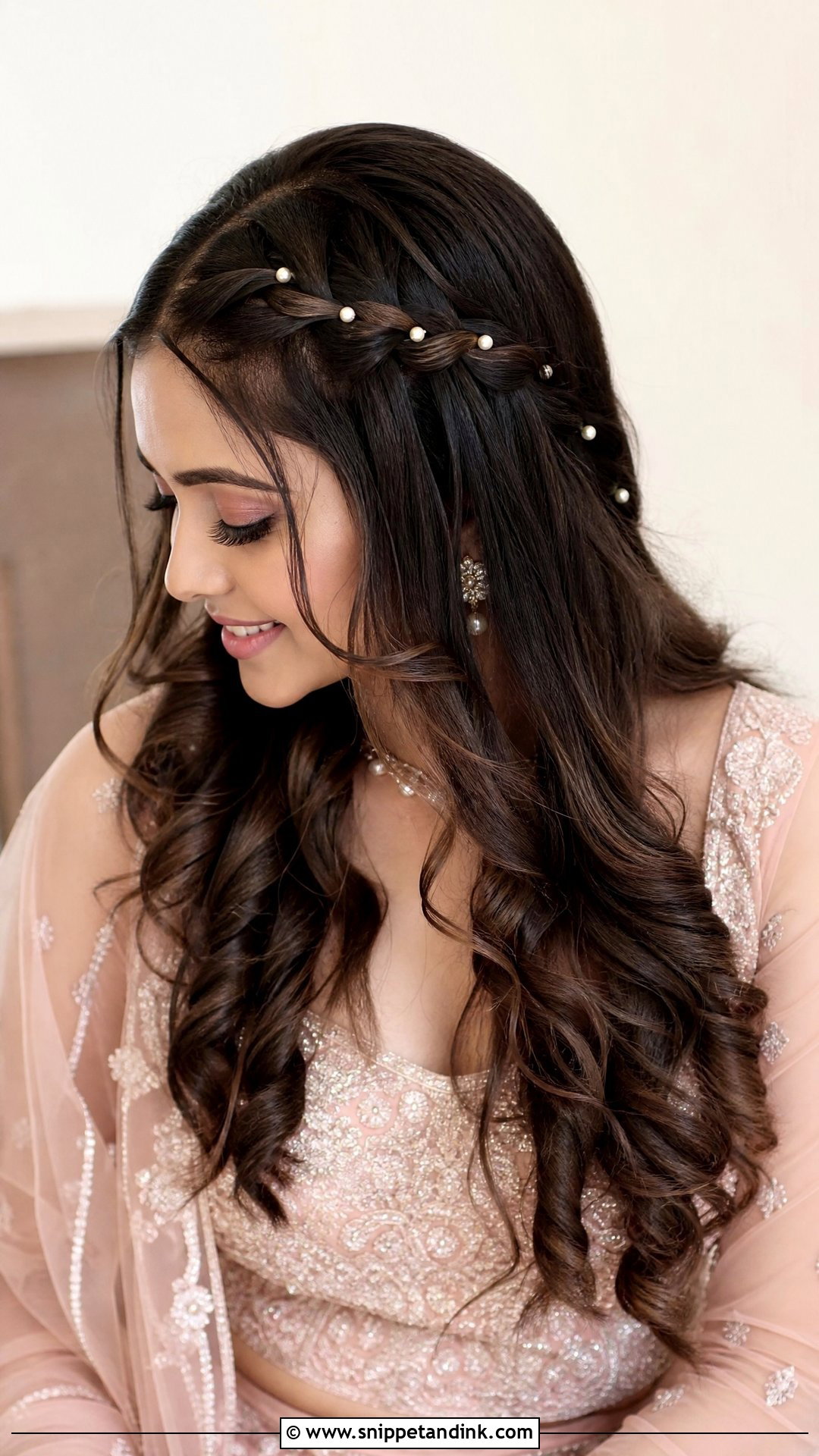
A waterfall braid adds detail without closing off the length, which is why it suits open hair so well. I start it near one temple and carry it across the side or crown, dropping a curled strand through each pass so the lengths fall from it like ribbons. It’s harder to do on yourself than it looks and very hard on short layers, which slip out of the dropped sections. Once it’s in, though, it gives open hair structure that keeps it neat at outdoor mehendi and engagement functions. Brush the curls out loosely so the braid blends in rather than sitting on top like a headband.
12. Half Up Front Hairstyle For Indian Wedding Open Hair
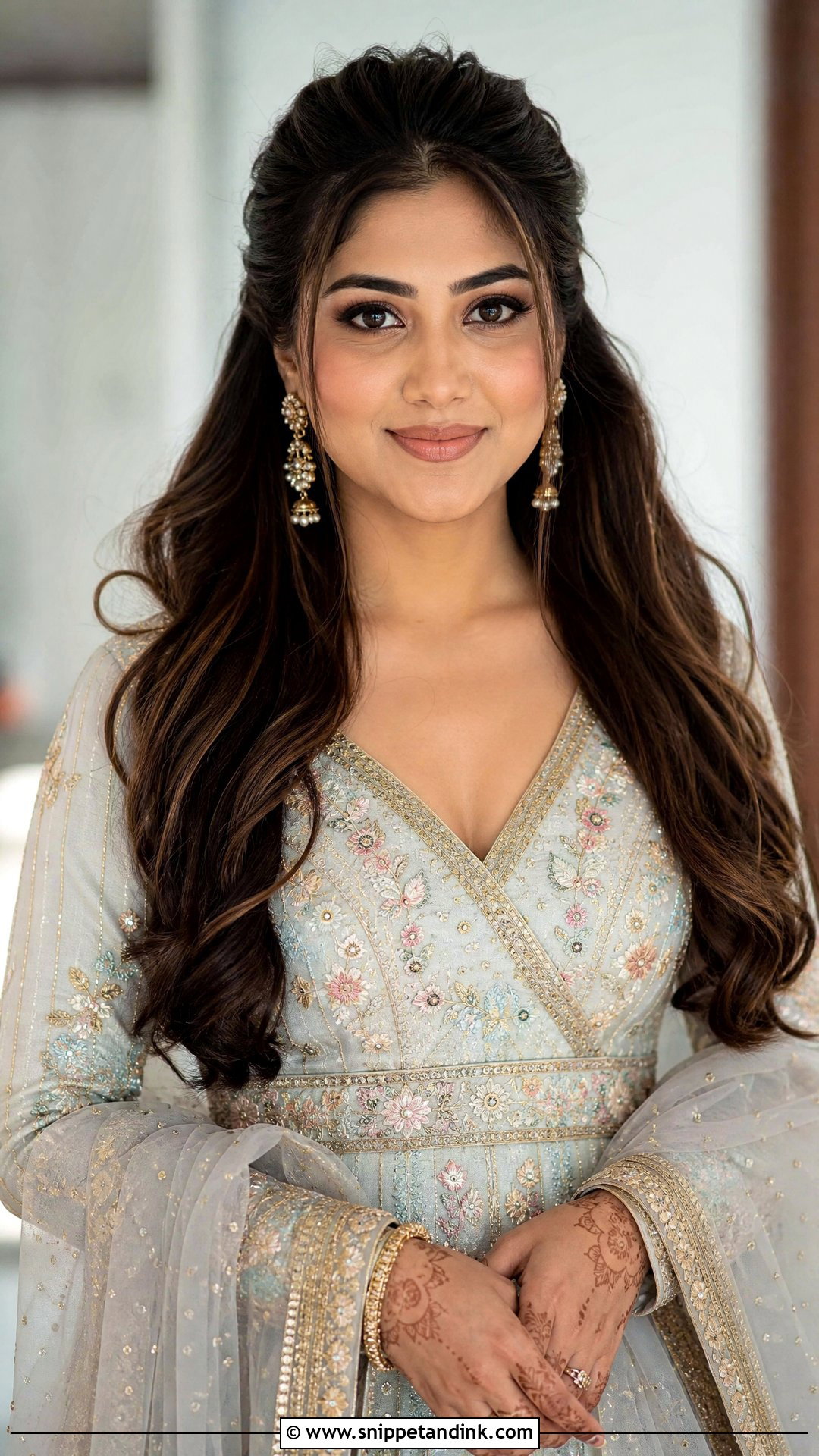
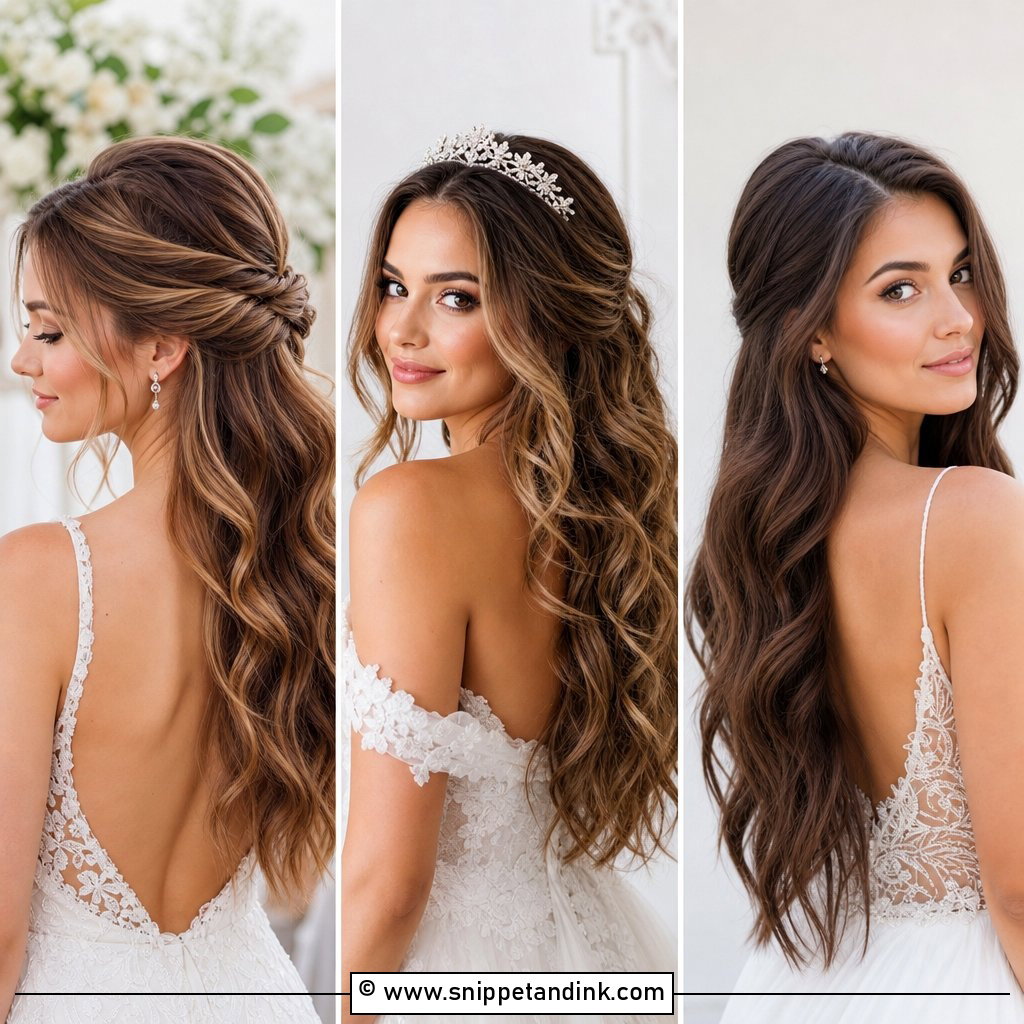
Half up is what I suggest when a bride wants open hair but is nervous about the ceremony. The front is twisted, braided, puffed or simply pulled back softly, and the lower half stays open in curls. It gives me a firm base for pins, small jewelry and a light dupatta, so nothing depends on loose hair. It handles thick and medium-density hair without fuss. On very fine hair the pinned section can show scalp at the crown, which a little texture spray at the roots before sectioning helps.
13. Sleek Front Open Hairstyle For Indian Wedding
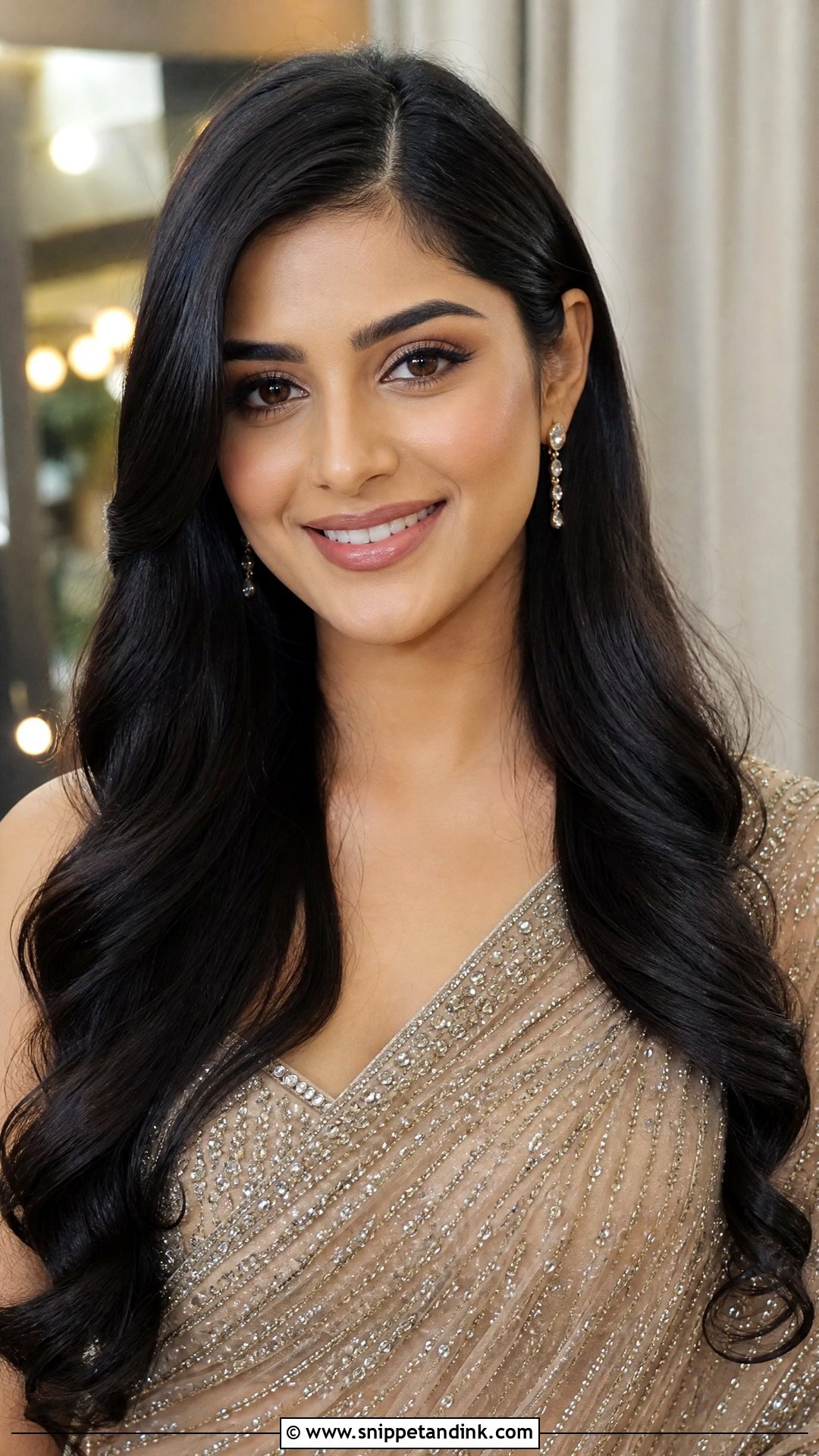
Sleek fronts suit receptions where the outfit or jewelry is already loud: a gown, a cocktail saree, a minimal lehenga with big earrings. I smooth the front with a centre or side part, keep the lengths straight or softly bent at the ends, and use a few drops of serum rather than spray. Flyaways around the hairline are the enemy here, so I set them with a clean mascara wand and a light gel. Fine or very thin hair is the exception: flash finds every gap in a sleek part, so I’d add some root lift before committing.
14. Floral Front Hairstyle For Indian Wedding Open Hair
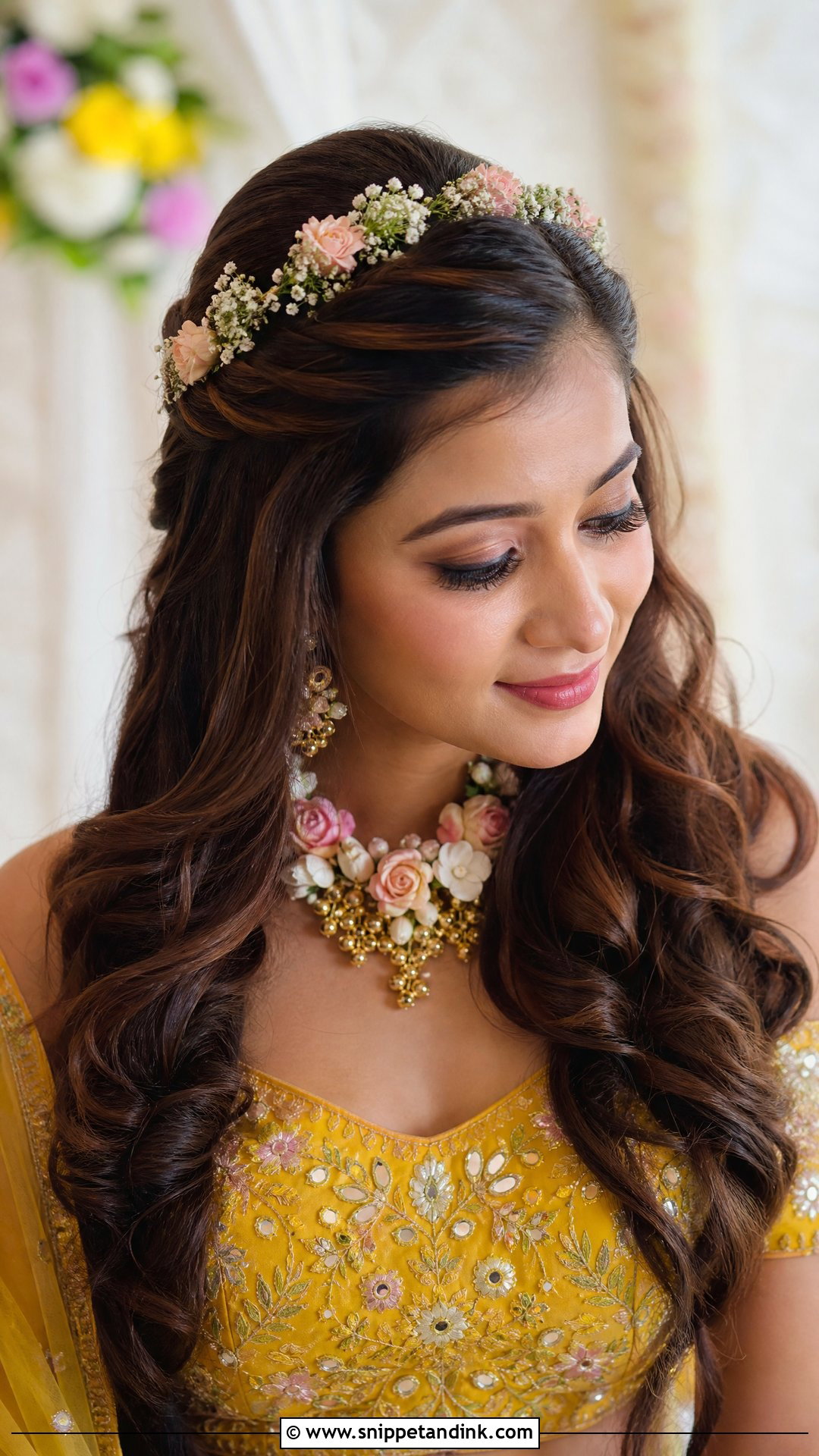
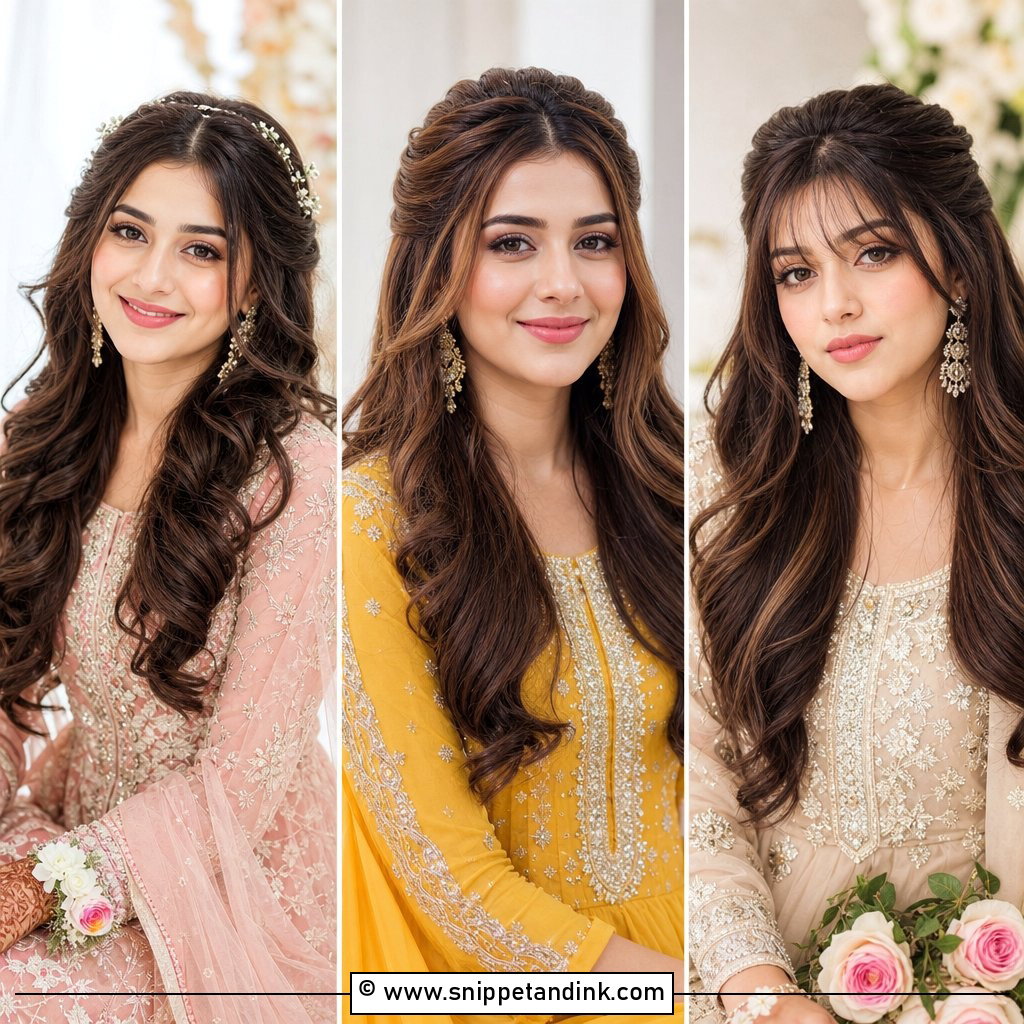
Fresh flowers make open hair look festive at haldi, mehendi and daytime events. Rather than covering the whole head, I tuck small blooms along a front twist, a braid or one pinned side section. Jasmine, baby’s breath, roses and small pastel flowers all suit Indian wedding looks. Jasmine wilts and browns in heat within a few hours, so I wire short sprigs and keep a spare string in the fridge for a midday swap. Flowers sit far more securely in a twist or braid than in loose curls.
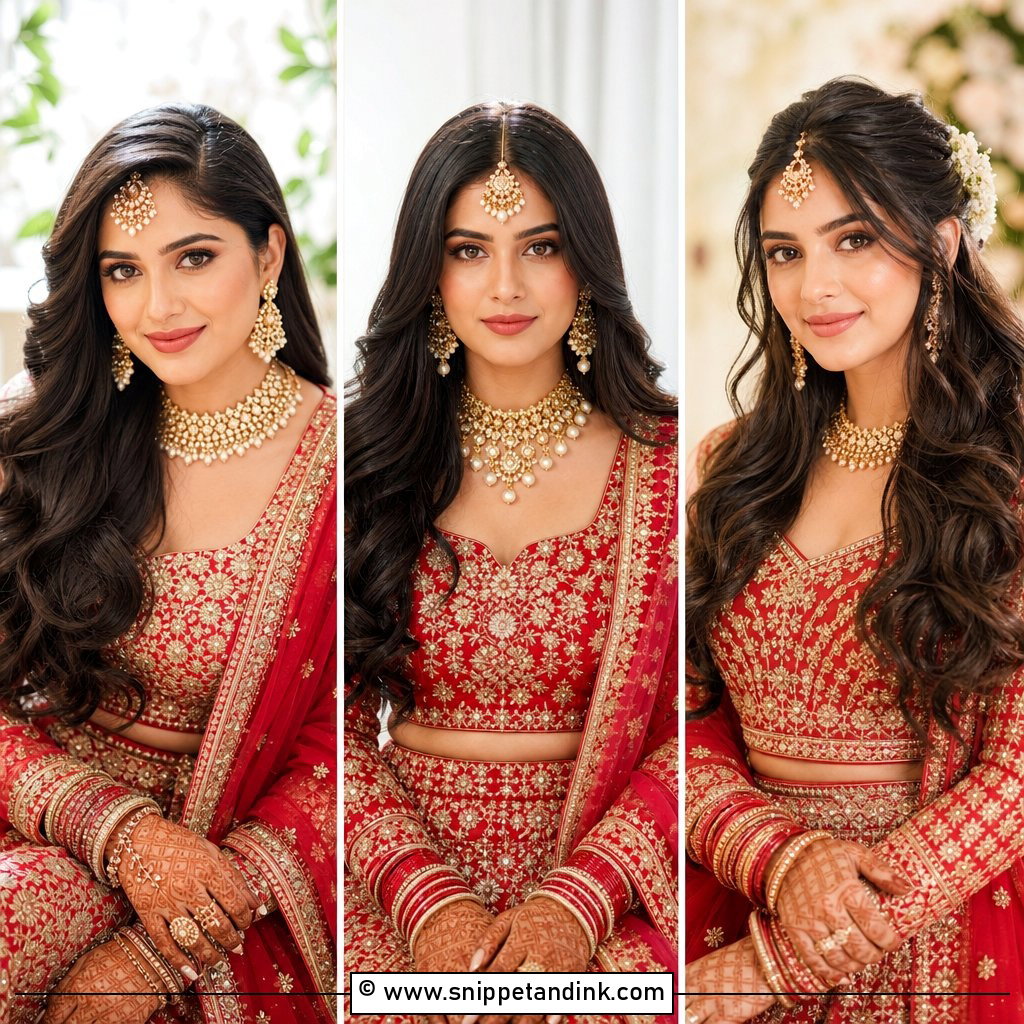
15. Front Curls Open Hairstyle For Indian Wedding
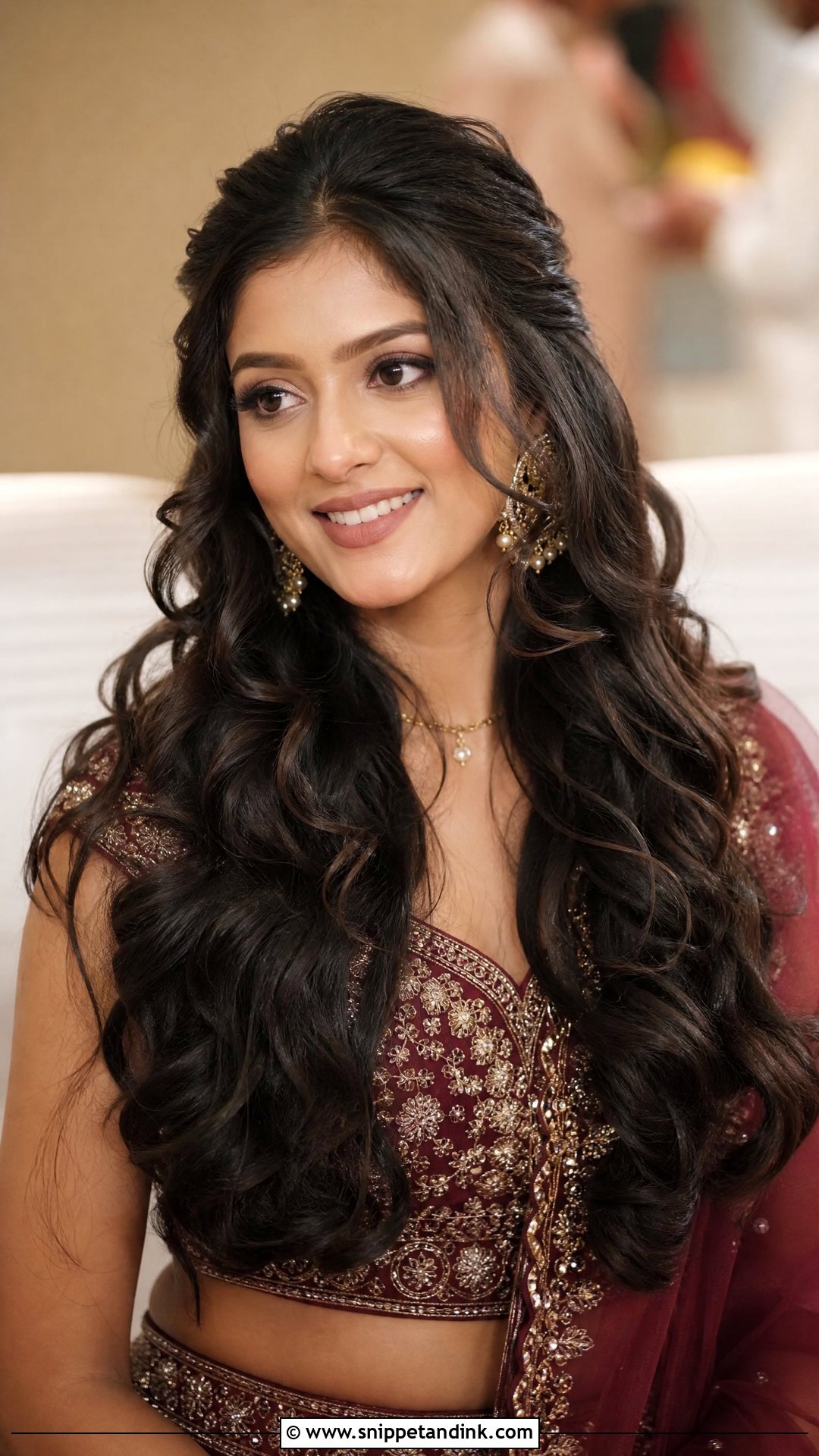
Curls around the face make open hair look fuller in pictures, provided they’re shaped away from the face rather than falling over your eyes. I curl the front sections back, lift the crown slightly, and let the rest fall in loose curls over the shoulders. Each curl needs to cool fully before I touch it; brushing a warm curl is the main reason they drop by the reception. Finish with a flexible-hold spray so they move and still keep their shape.
Open Hair Through the Pheras, Jaimala and a Long Sangeet
Open hair is the prettiest option and the least forgiving across a full Indian wedding day. Here’s what tends to happen, and what I plan for.
Sitting beside the havan
During the pheras you sit close to the sacred fire, often for an hour or more, and every time you lean forward your hair falls with you. Hairspray is flammable, so loose ends near a flame are a real concern. Sweep the lengths behind your shoulders before you sit, keep the side nearest the fire twisted or pinned back, and ask a sister or cousin to watch for stray strands.
Garlands, hugs and dancing
Heavy flower garlands catch curls at the nape and drag them into a knot. Lift your hair over the garland as it goes on. At the sangeet, heat and movement loosen curls quickly, which is where a front twist or half-up style earns its place: the lengths can drop and your face still looks neat.
Humidity and outfit changes
In humid weather, tight curls relax into waves within a few hours. I set them with a flexible spray, hand someone a comb and a few bobby pins for their clutch, and if you’re changing between ceremony and reception, I plan a short touch-up rather than a full restyle.
Borrowed Volume for Fine or Collarbone-Length Hair
Open hair needs some length and density to look finished from the side. If yours is fine or stops around the collarbone, there are still honest options:
- Clip-in extensions matched to your shade add fullness at the back and sides. Wear them for an evening beforehand so you know how heavy they feel by midnight.
- A front puff or a little backcombing at the crown adds height and hides wefts well.
- Ask for loose waves rather than tight ringlets, since tight curls shrink your length.
- Skip the sleek front if your hair is very fine; flash shows every gap at the part.
Very thick hair has the opposite problem. Heavy curls drop fast under their own weight, so I work in smaller sections and let each curl cool completely before brushing it out.
The Parting Decides More Than the Curls
Plan the front around the outfit, the jewelry, your face and the function, and open hair holds up far better than people expect. A plain middle part reads bridal under a maang tikka, while twists, braids, puffed sections and side-swept curls make the same hair look entirely different. For long functions I’d always build in hidden pins or a little structure at the front. Heavy jewelry wants a clean front; lighter outfits can take flowers, pearls or a braid. The version to pick is the one you stop thinking about an hour in, because that’s the one still holding in the last photos.
You'll Like These Ideas:






Leave a Reply