
On an Indian wedding day, the front of the hair works harder than the back. It holds the maang tikka in place, carries the weight of a matha patti, gives the dupatta something to sit on, and frames the face in every close-up portrait. The bun or braid behind it is often hidden under fabric for the main rituals. So when I plan bridal hair, I start at the hairline: which jewelry, how heavy the dupatta is, how long the ceremony runs, and whether you’ll sit near the fire. The fifteen front styles below cover middle parts, puffs, twists, sleek buns and open curls, matched to lehengas, sarees and different functions.
Let the Heaviest Jewelry Decide the Front
Brides often fall for a front style before choosing jewelry, then find on the day that the matha patti won’t sit on it. I work the other way round. Bring your tikka, matha patti, passa and the dupatta you’ll wear on your head to the trial, and we build the hair to carry them.
- Maang tikka only: nearly any front works, as long as there’s a clean center part or a smooth spot to pin the hook.
- Matha patti: center part, smooth sides, minimal volume at the forehead. Puffs push the chains out of line.
- Passa: side part, with the passa on the side where you have more hair for grip.
- Heavy dupatta over the head: a compact low or mid bun and a gentle puff so the fabric has a base to rest on.
Ask your stylist to pin jewelry before the dupatta, and to pin the dupatta into the bun at two or three points, not only at the crown. A dupatta held at a single point twists every time you turn your head.
1. Indian Bridal Front Puff Bun
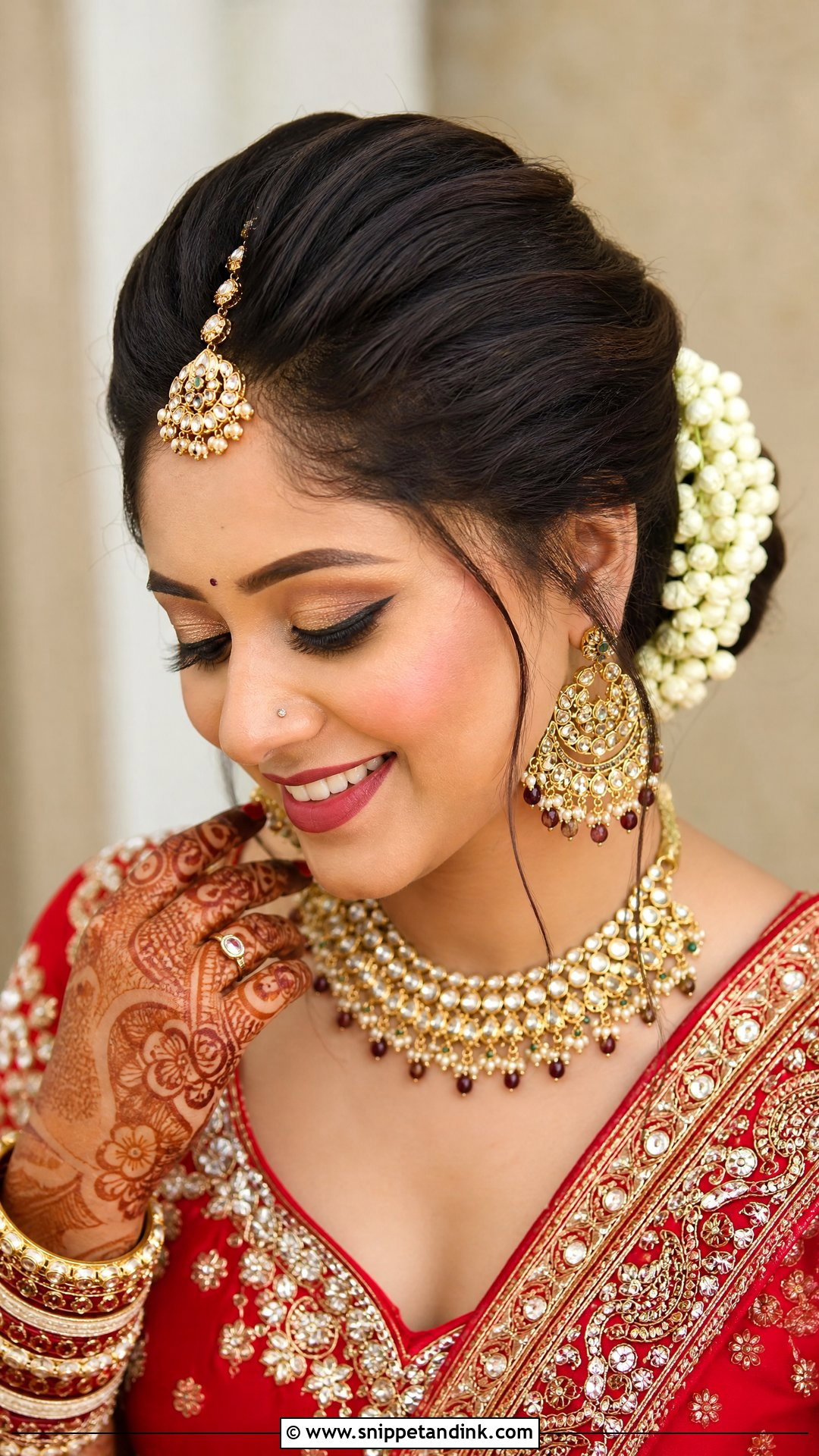
A front puff gives height, and height makes heavy jewelry look proportionate rather than piled on. An Indian bridal front puff bun leaves room for a maang tikka, matha patti or passa without covering the hairline, and it balances a heavy lehenga or silk saree. I build the puff from teased sections smoothed over, then lock it with crossed pins behind it. The mistake is too much: a tall, rigid puff looks dated in close-ups and pushes the dupatta up into a peak. I keep it soft and only as high as the jewelry needs.
2. Indian Bridal Middle Part Bun
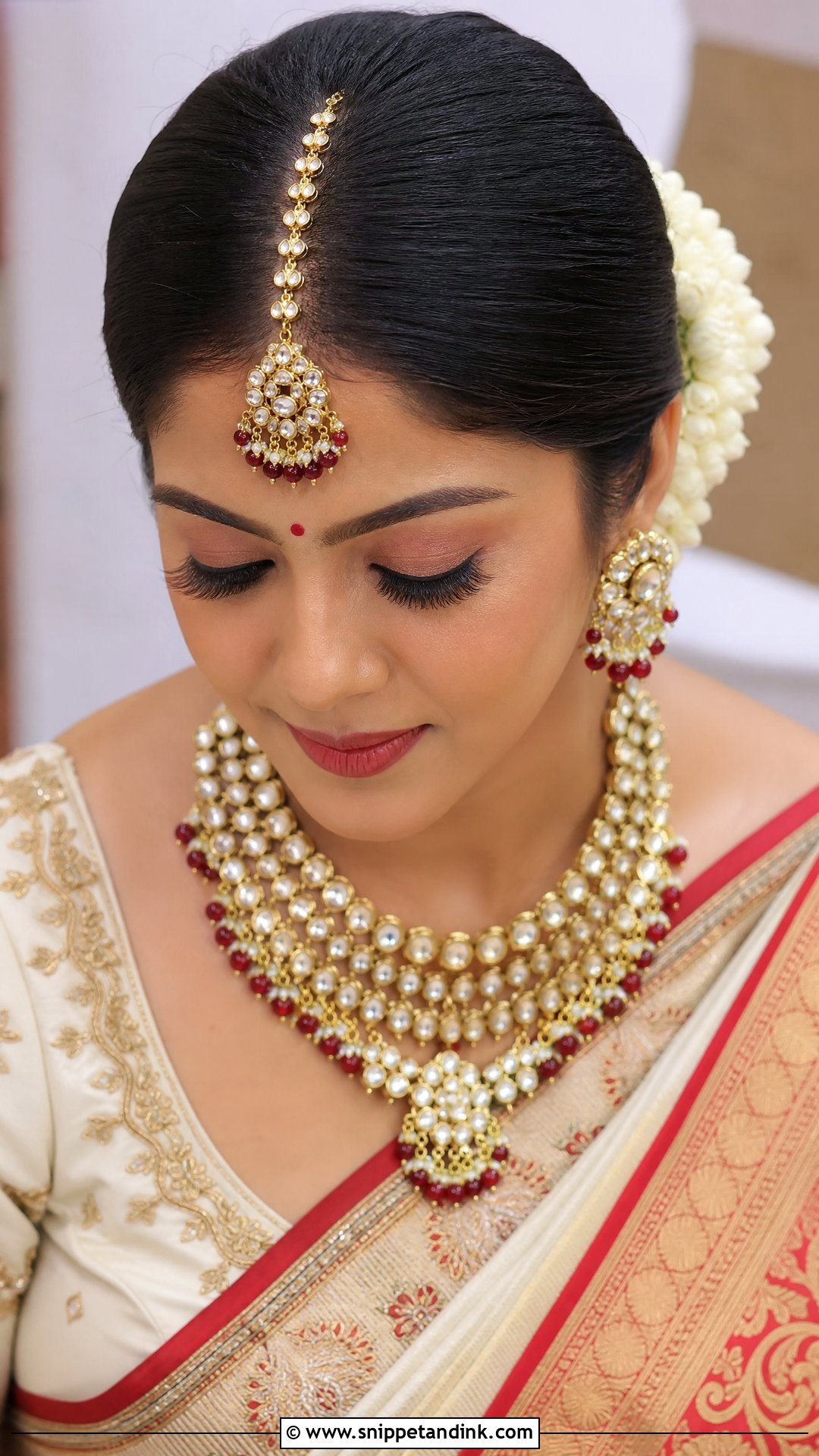
The center part is the most traditional front, and it’s where a maang tikka naturally belongs. Smooth on both sides, it keeps the face neat so the matha patti, heavy earrings and embroidered dupatta take over. Brides who prefer classic looks to volume usually land here. Gajra, roses or gold hair accessories can wrap the bun. My caution is about the part itself: if your natural part is off center, I spend time training it the day before, because a forced part lifts by afternoon and the tikka drifts sideways.
3. Indian Bridal Side Part Bun
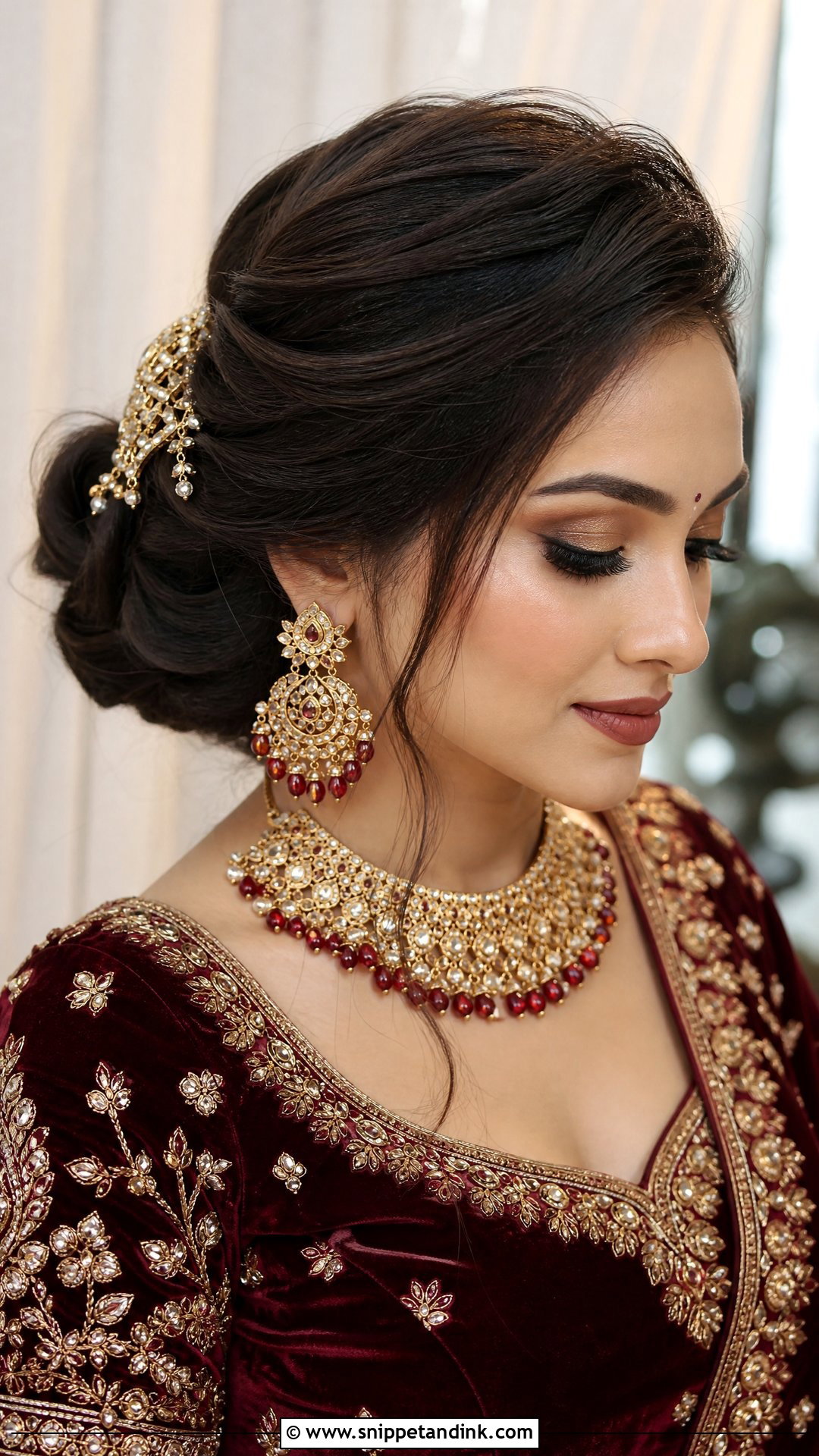
Moving the part to the side softens the face but keeps everything up. It flatters round, square and heart-shaped faces, and it creates space on one side for a passa or hair chain, which is why it’s common in North Indian, Pakistani-inspired and royal bridal looks. The bun can sit at the nape or slightly higher. I add soft waves at the temples. The passa side must be the heavier hair side; pinning a passa on the thin side of a part leaves nothing to grip and it sags within an hour.
4. Indian Bridal Sleek Low Bun
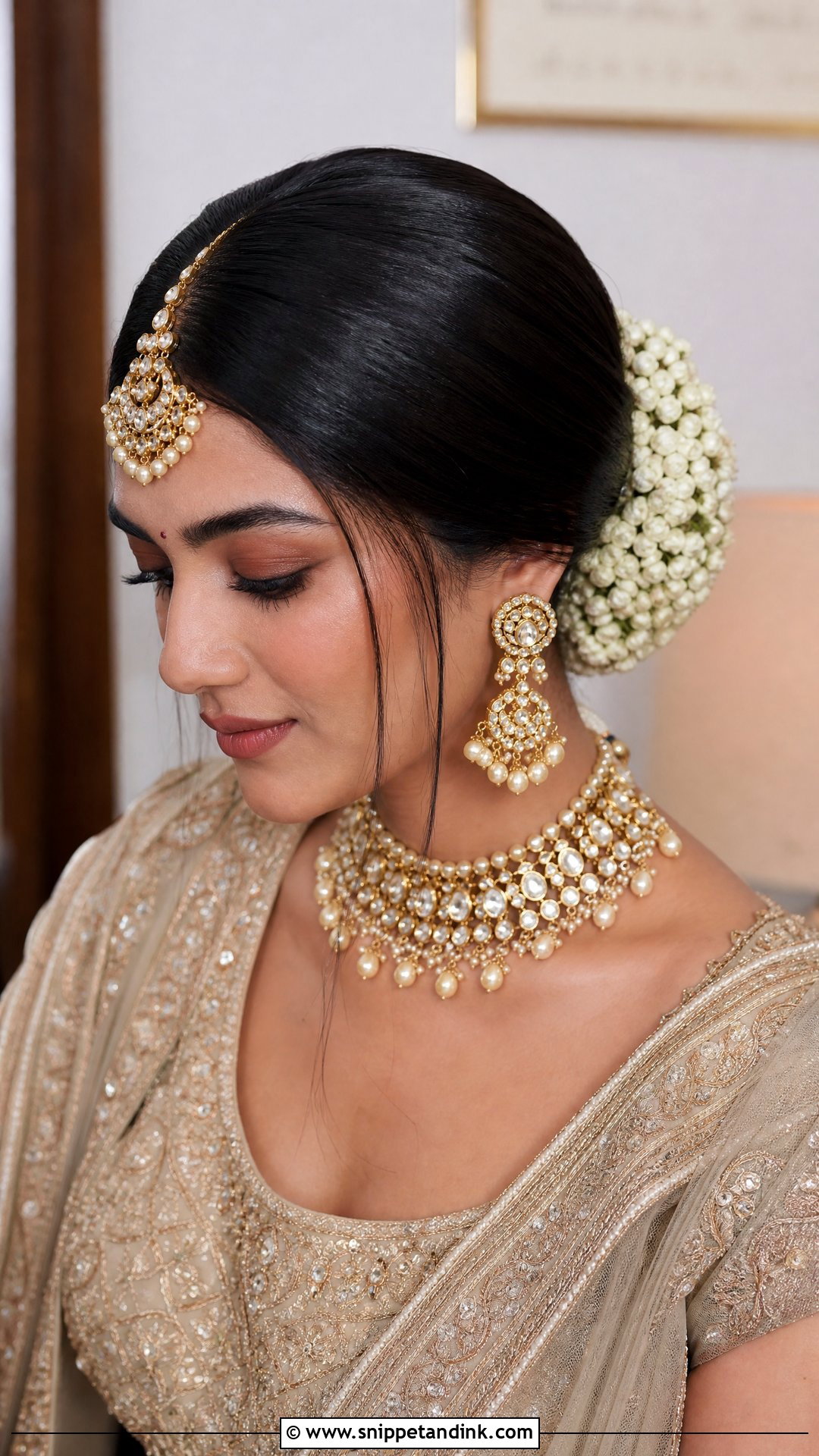
If you’re wearing a heavy dupatta over your head, this is the style I’d trust most. A sleek low bun stays compact, so the fabric drapes neatly and the hairstyle doesn’t shift under its weight. The front is parted in the center or softly to one side, smoothed so your makeup, jewelry and outfit stand out in photos. Jasmine gajra, pearl pins or a floral ring finish the bun. Keep a little hidden volume at the crown; perfectly flat roots under a dupatta can make the head look small next to a full lehenga.
5. Indian Bridal Front Twist Bun
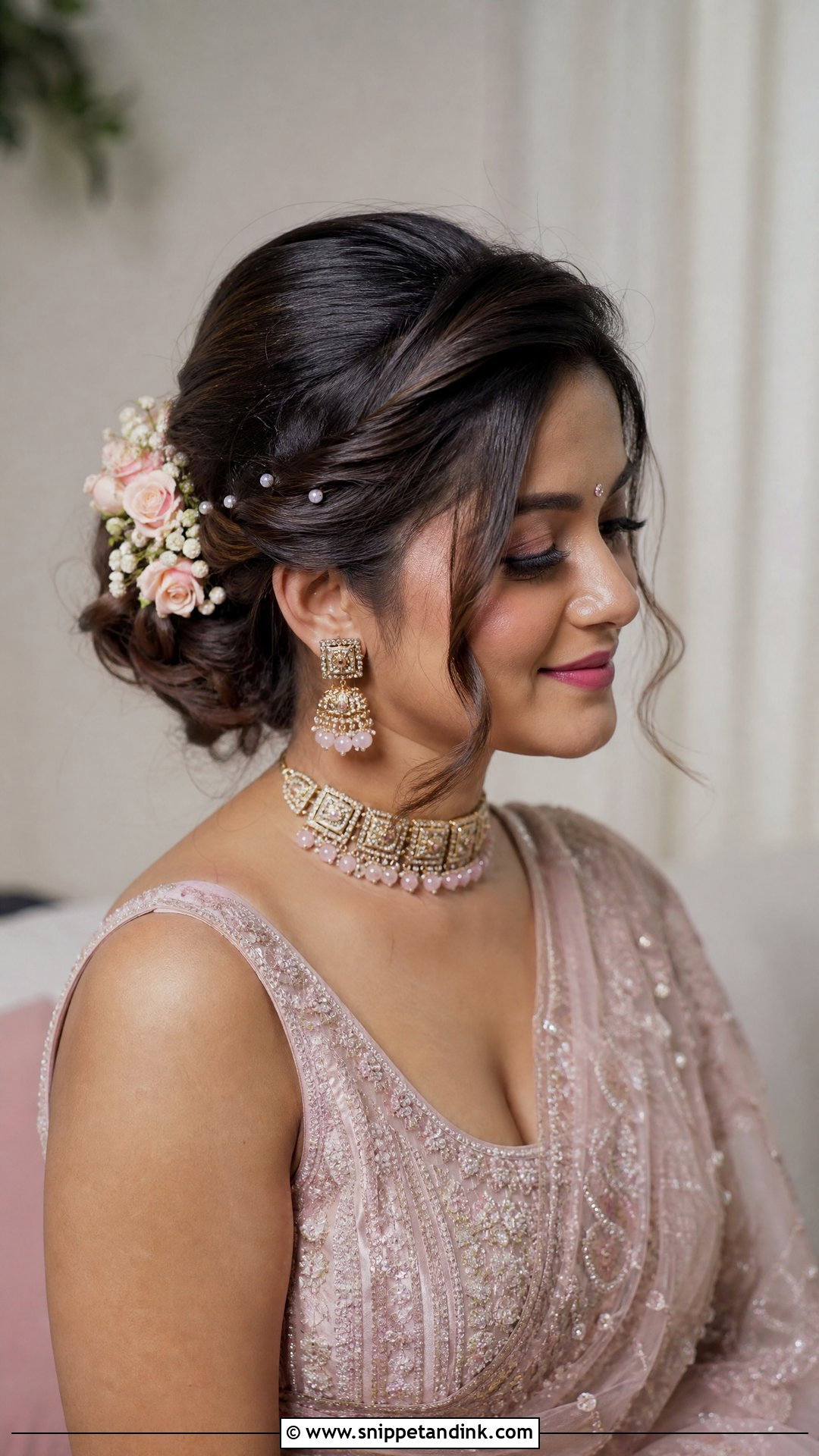
Twisting the front sections back from each side frames the forehead and temples with detail, but no strict part. That suits brides whose hair won’t sit well in a center part, and it holds shorter layers off the face. The twists can lead into a low bun, a floral bun or a textured bun. I like it for mehendi, haldi and engagement, and on the wedding day too if the jewelry is light. Small pearl pins or baby’s breath along the twists make them festive. Heavy oil-based products make twists slide, so I prep with a texturizing spray instead.
6. Indian Bridal Front Braided Bun
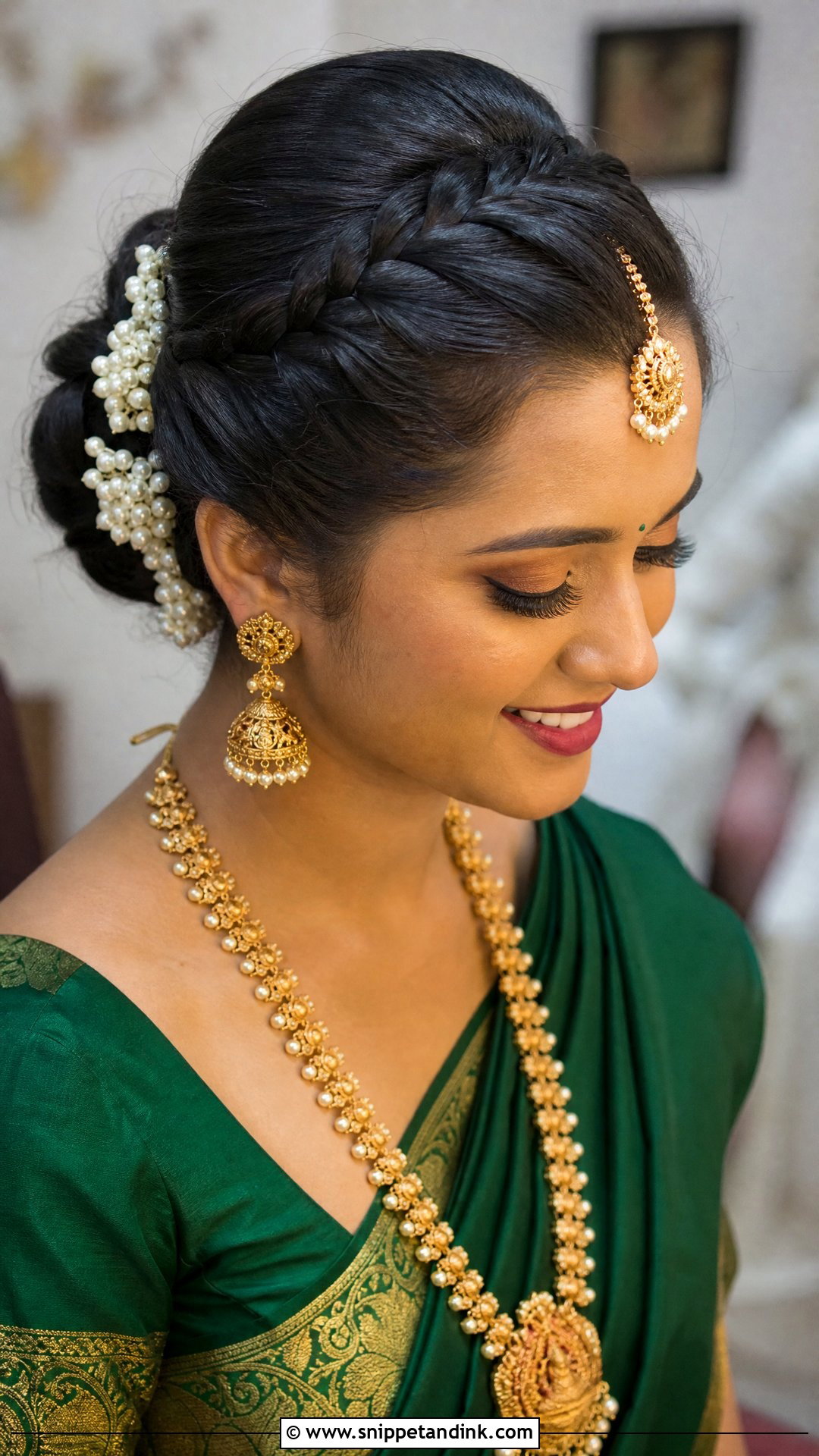
A braid running from the hairline into a low or mid bun keeps everything controlled and shows detail up close. It’s the answer I give brides with lots of layers, since the braid catches short pieces that would otherwise escape. It pairs with temple jewelry, floral accessories and sarees for traditional ceremonies. Thin braids are subtle; a fuller braid makes the front the focus. One practical point: a braid pinned near the hairline gives a matha patti hook an easy anchor, which helps if your jewelry is heavy.
7. Indian Bridal Soft Curls Bun
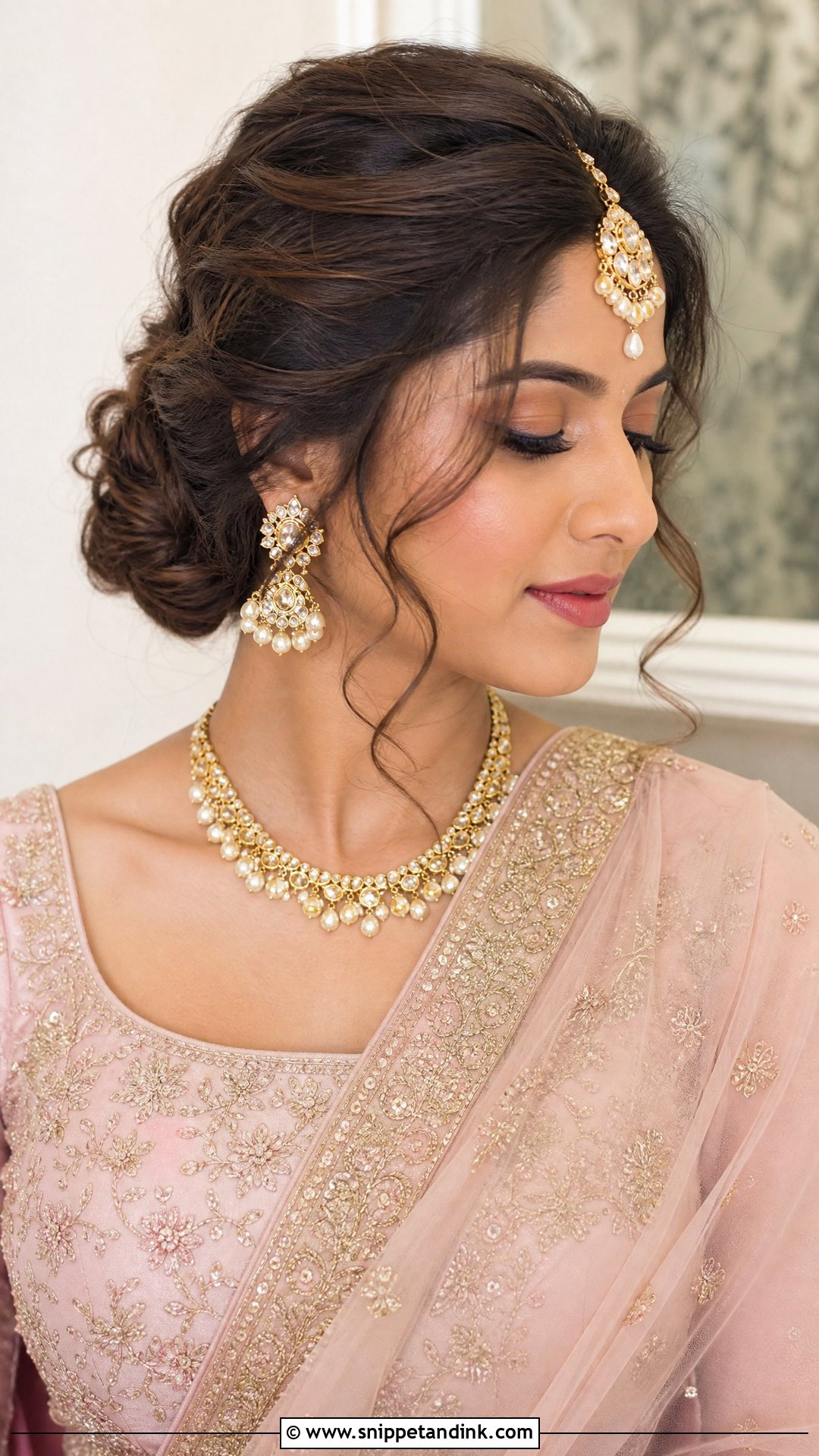
Soft curls at the front gentle the effect of a bun, and heavy jewelry looks less severe next to them. The base is usually a low bun at the back, with curled face-framing pieces near the cheeks or jawline. I limit the pieces to two or three on each side. During rituals, especially when you bow your head, loose curls fall forward into your eyes and get caught in earrings. This front works best for reception, sangeet and modern ceremonies with pastel lehengas or soft glam makeup.
8. Indian Bridal Open Hair Front Curls
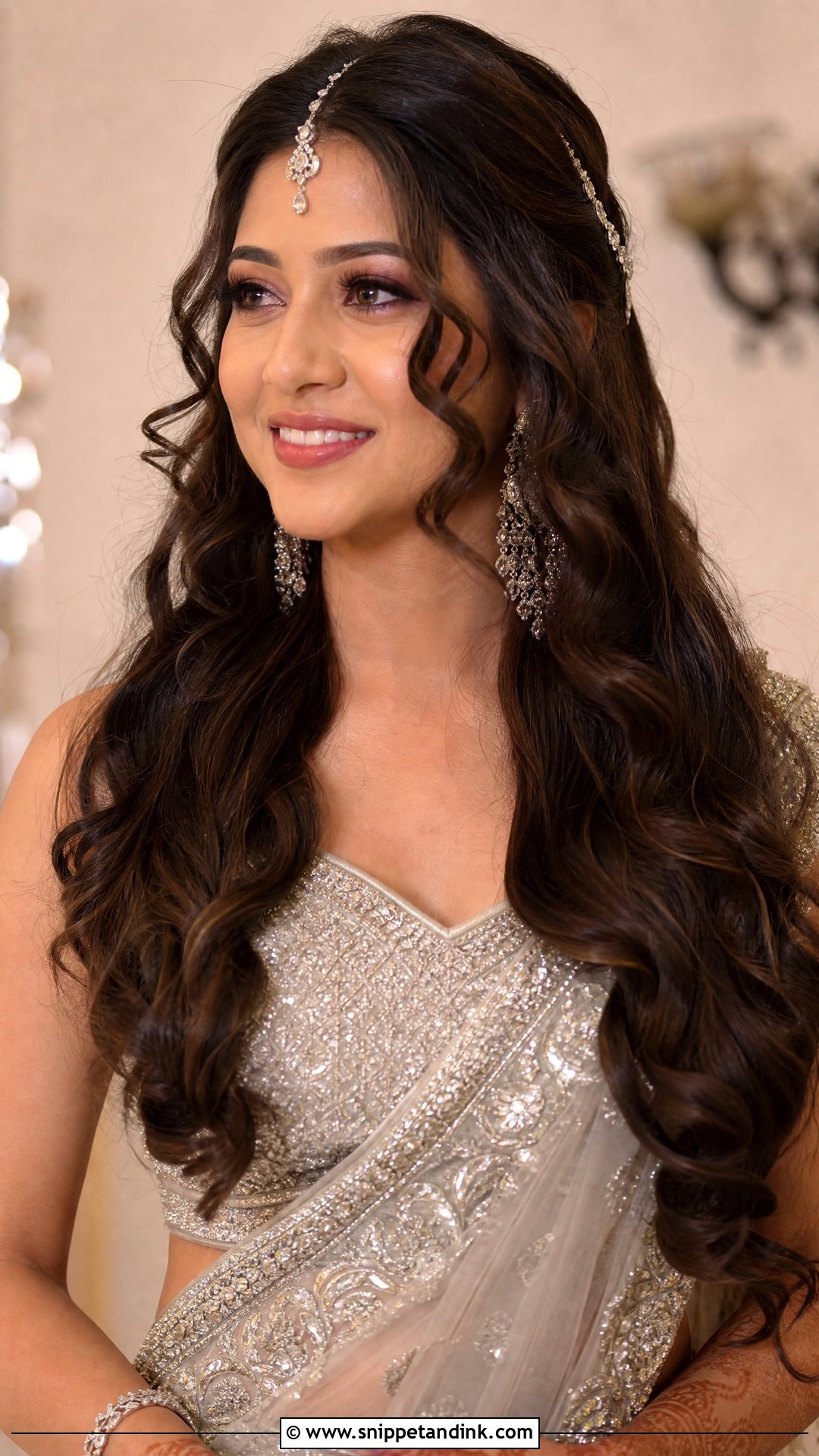
Open hair with front curls is youthful and glamorous, and it shines at events where the dupatta isn’t over your head: reception, engagement, cocktail night and sangeet. The front can be a middle part, a soft side part or a small lifted crown, with curls or waves through the length. It pairs well with lighter jewelry, shimmer outfits and modern lehengas. A maang tikka, pearl pins or a fine hair chain keeps it bridal. Open hair suffers most in humidity and dancing, so I set every curl with a strong-hold product and let it cool before brushing.
9. Indian Bridal Half Up Front Hairstyle
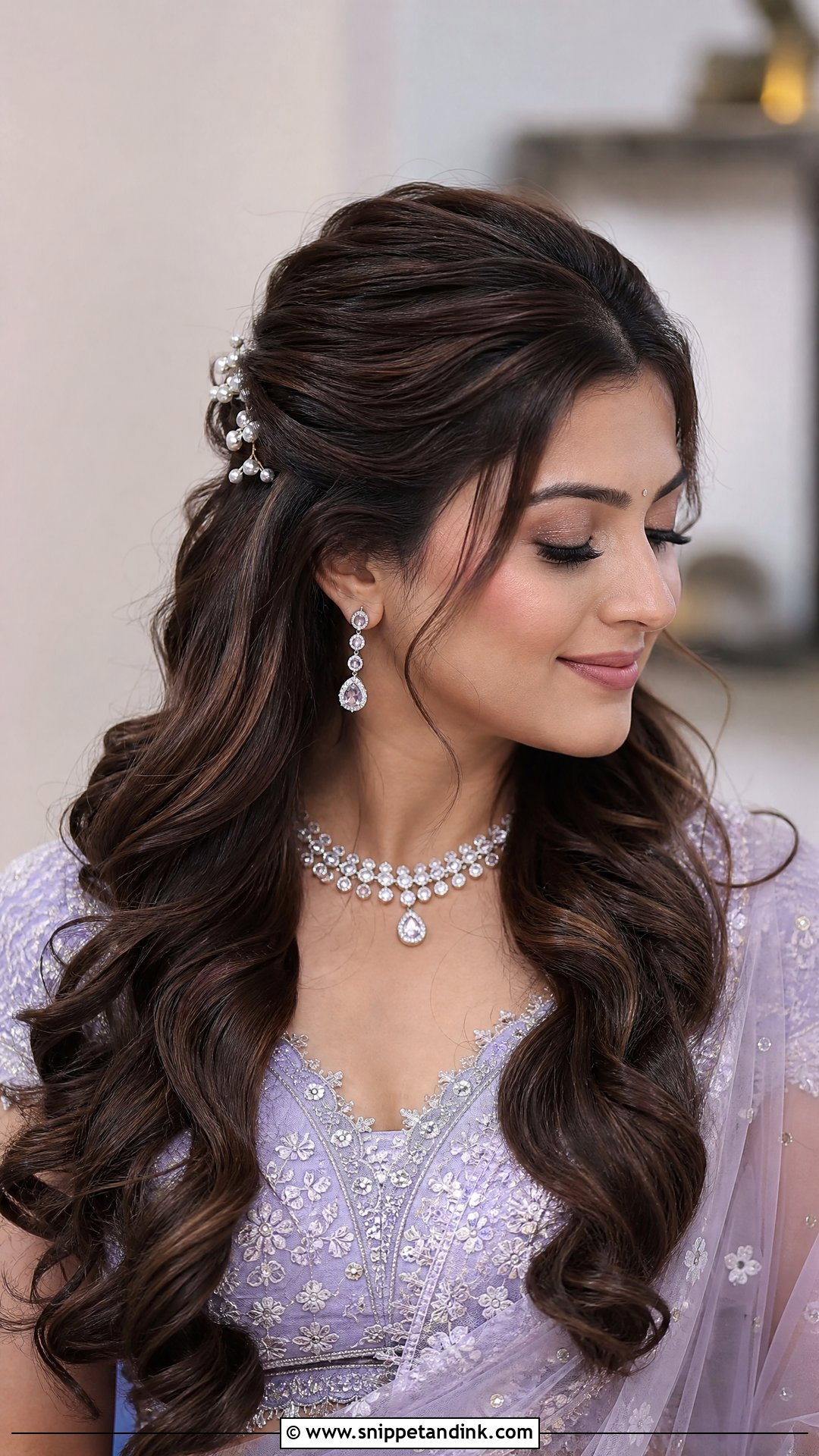
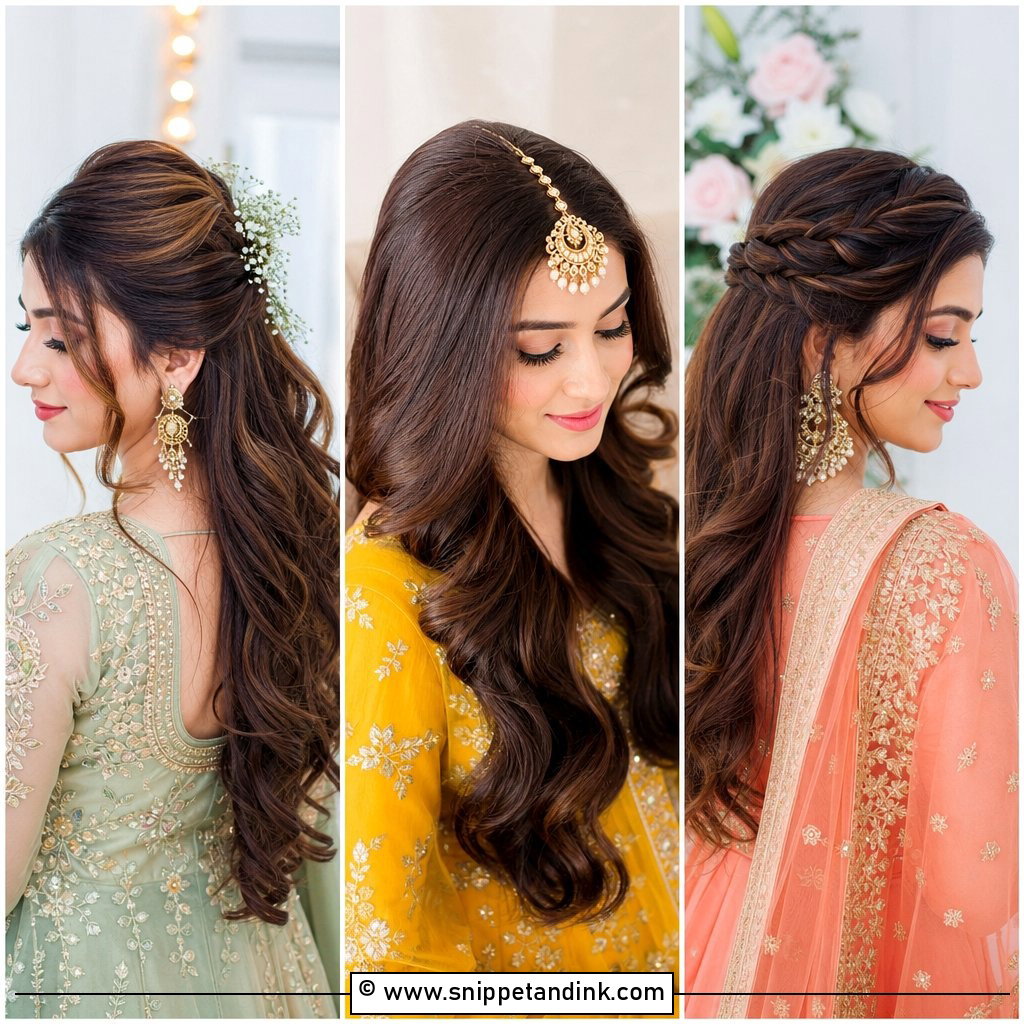
Half up is my compromise when a bride loves open hair but fears it falling forward. The front and crown are secured with twists, a small puff, a middle part or soft side sections, and the length stays in curls, waves or soft texture. Lehengas, gowns and lighter sarees all suit it. Tiny flowers or pearl pins where the pinned part meets the curls hide the hardware. It’s a strong choice for engagement, sangeet and reception. I wouldn’t choose it for a long seated ceremony with a heavy dupatta, which crushes the curls against your back.
10. South Indian Bridal Front Bun
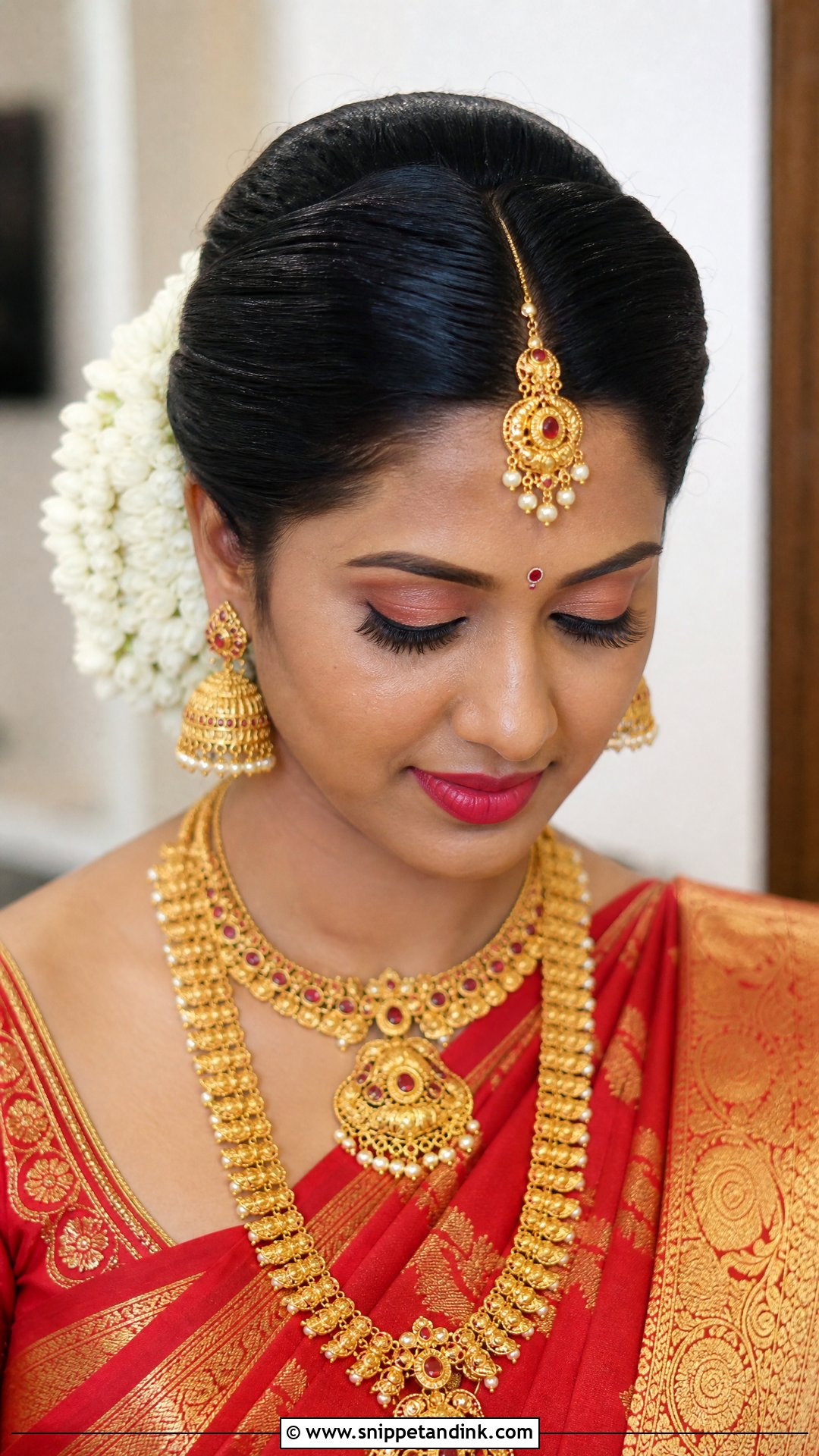
In a South Indian bridal look, the front is parted neatly, smoothed back, or given a gentle puff before it connects to a bun or braid. It pairs with temple jewelry, jhumkas, maang tikka and fresh jasmine, and it’s the classic choice with silk sarees. The front has to be neat enough to support jewelry but soft enough to flatter the face. A bun wrapped with gajra completes it. Fresh jasmine is heavier than it looks once wrapped in strings, so I pin each loop separately into the bun rather than relying on the wrap alone.
11. Indian Bridal Front Hairstyle With Matha Patti
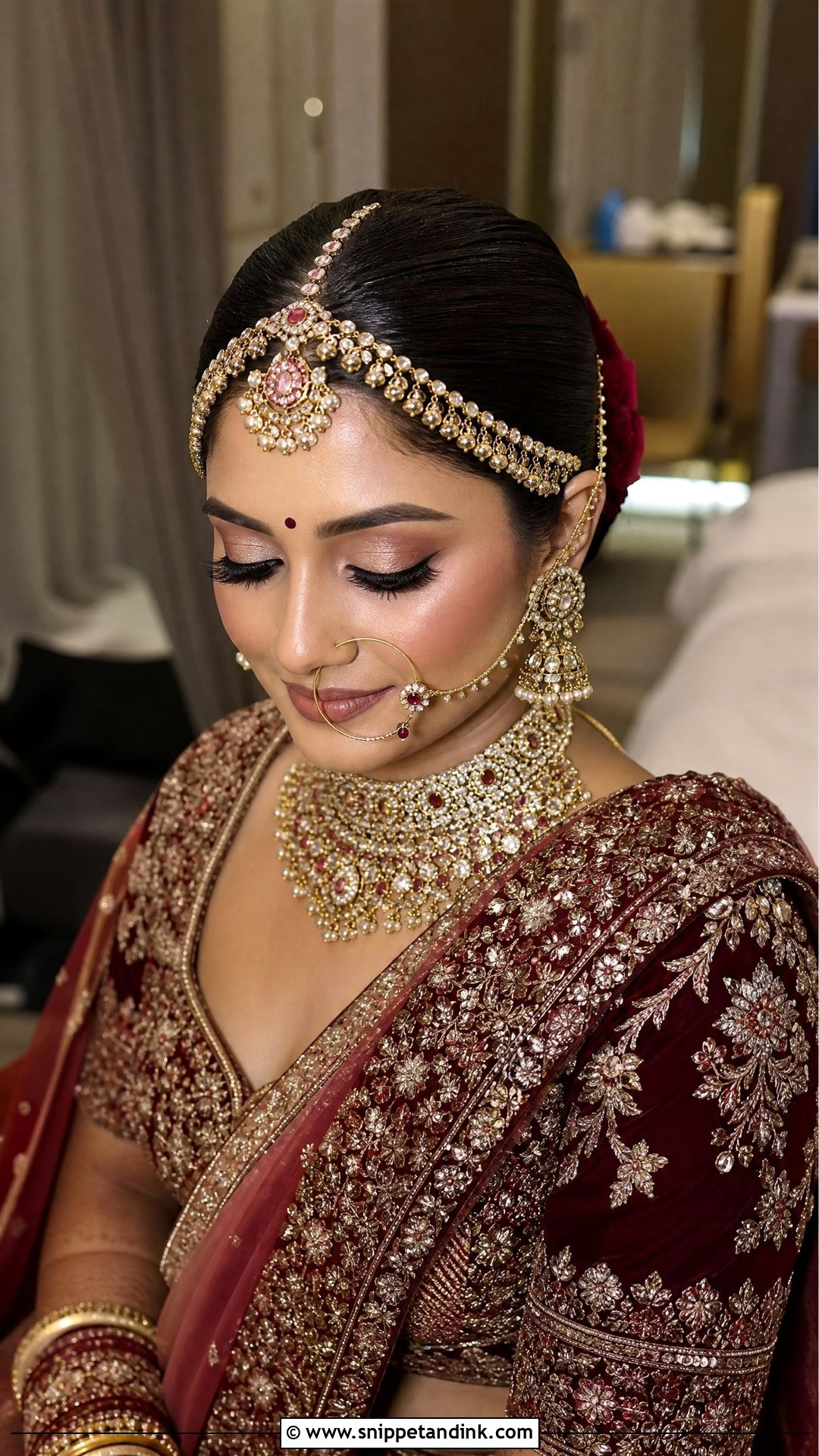
A matha patti takes over the front entirely, so the hair’s job is to stay out of its way. A center part usually works best, smoothed evenly on both sides so the chains sit symmetrically. The rest can be a bun, braid or half up curls. It suits heavy lehengas, kundan sets and royal outfits. I avoid volume near the forehead because it pushes the chains up and makes them sit crooked. I pin the side chains with small bobby pins hidden under a smoothed section, firmly enough to hold, gently enough that it isn’t pulling at your temples after five hours.
12. Indian Bridal Front Hairstyle With Maang Tikka
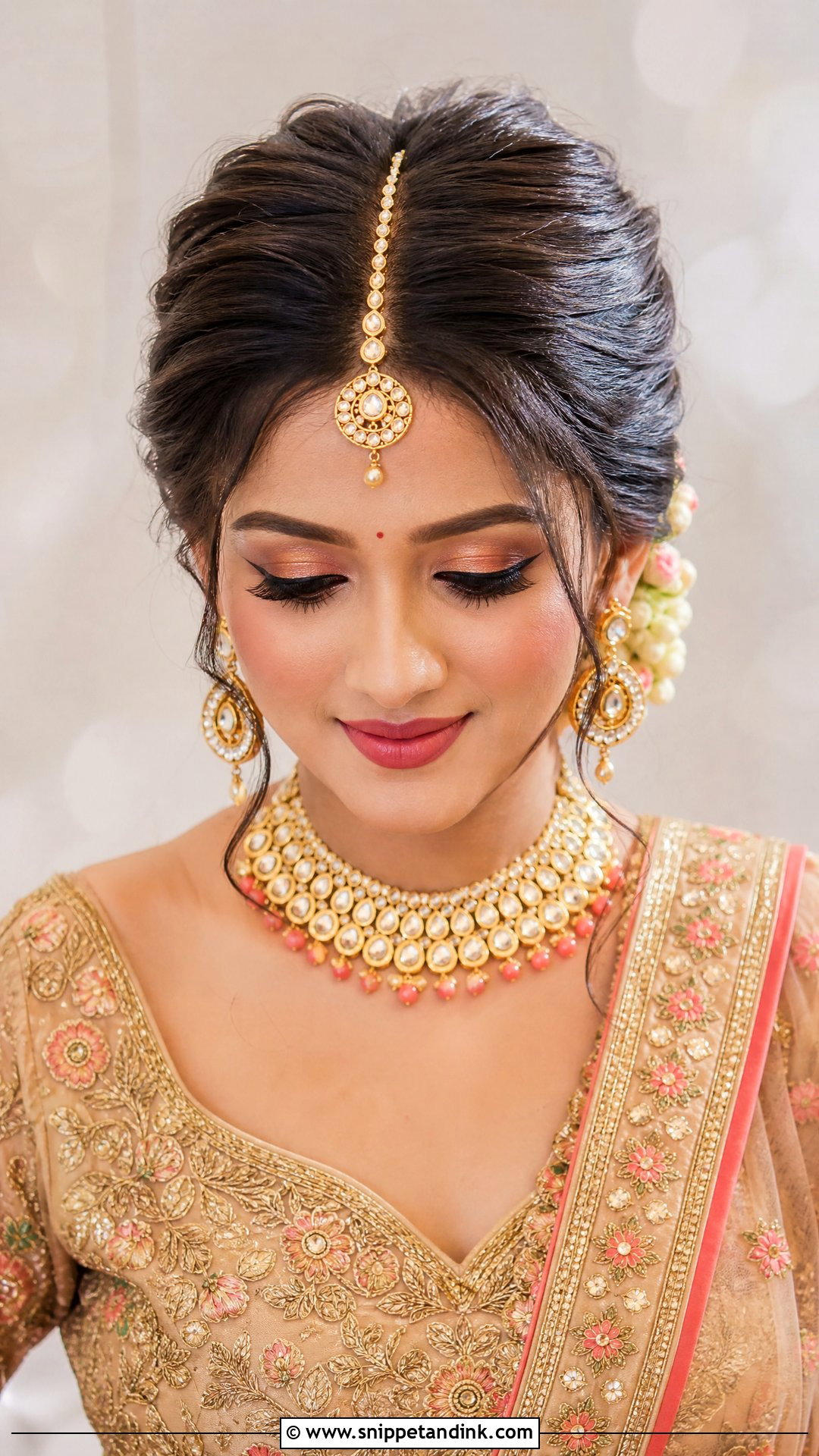
A tikka needs a clear center line to hang from. A maang tikka looks best with a middle part bun, soft puff, half up curls or a sleek low bun, depending on your outfit and face shape. The pendant should land in the center of the forehead, not cover the eyebrows. I adjust the chain length by where I pin the hook along the part. If you want something traditional without a full matha patti, this is the lighter route, and it carries across functions, haldi through reception. Keep the part smooth and add gentle volume at the crown or sides.
13. Indian Bridal Front Hairstyle With Dupatta
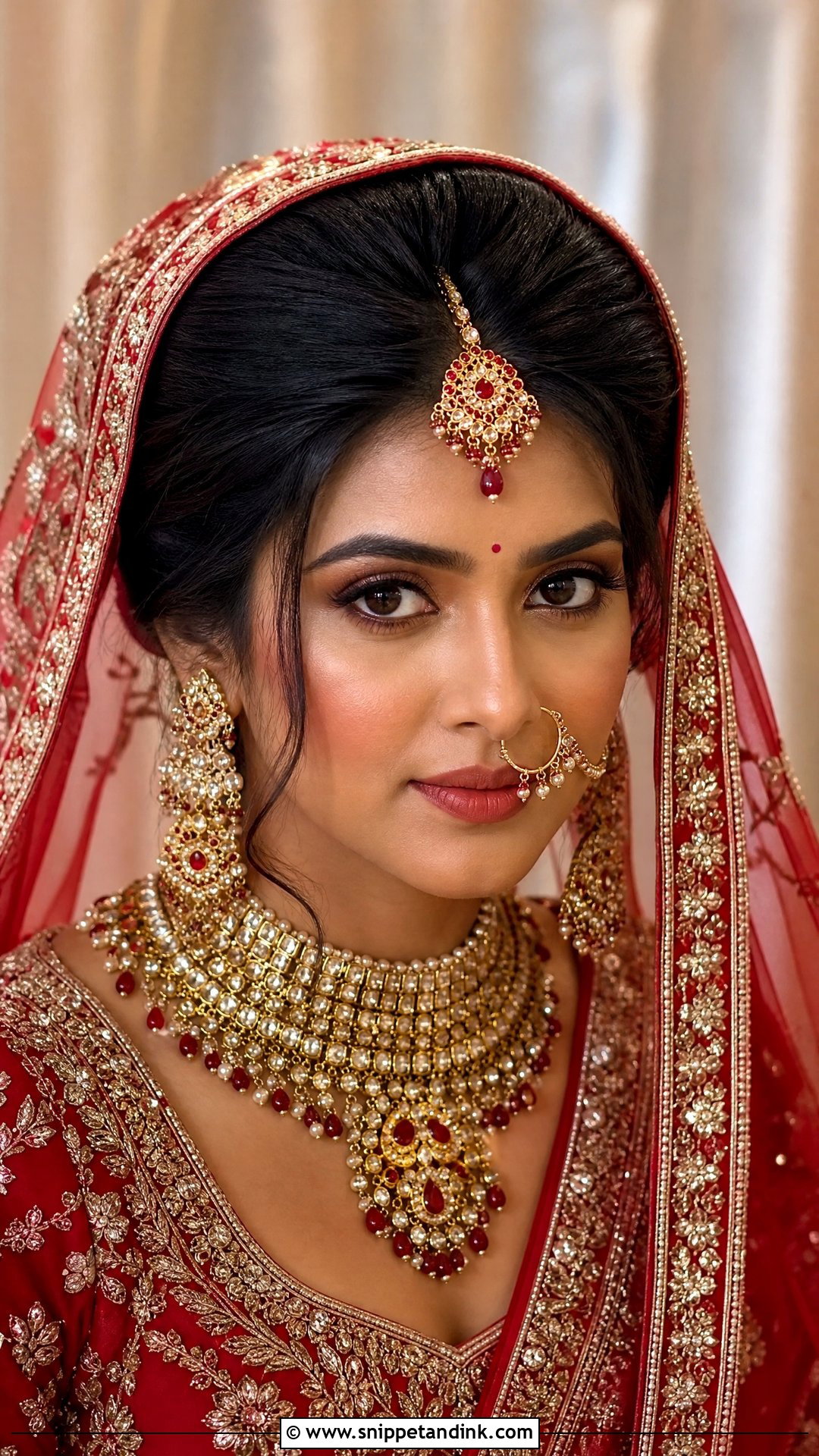
A dupatta flattens volume and drags jewelry, so this front needs planning more than any other. A sleek middle part bun, a soft puff bun or a side part bun gives structure underneath. The front should be pinned with hidden pins without looking hard or over-sprayed, and there must be visible shape around the forehead or the hair disappears in photos. Heavy red lehengas and embroidered head dupattas need this most. I always set the dupatta at the trial, using the real one if possible, since a light chiffon and a heavy velvet behave completely differently.
14. Indian Bridal Front Messy Bun
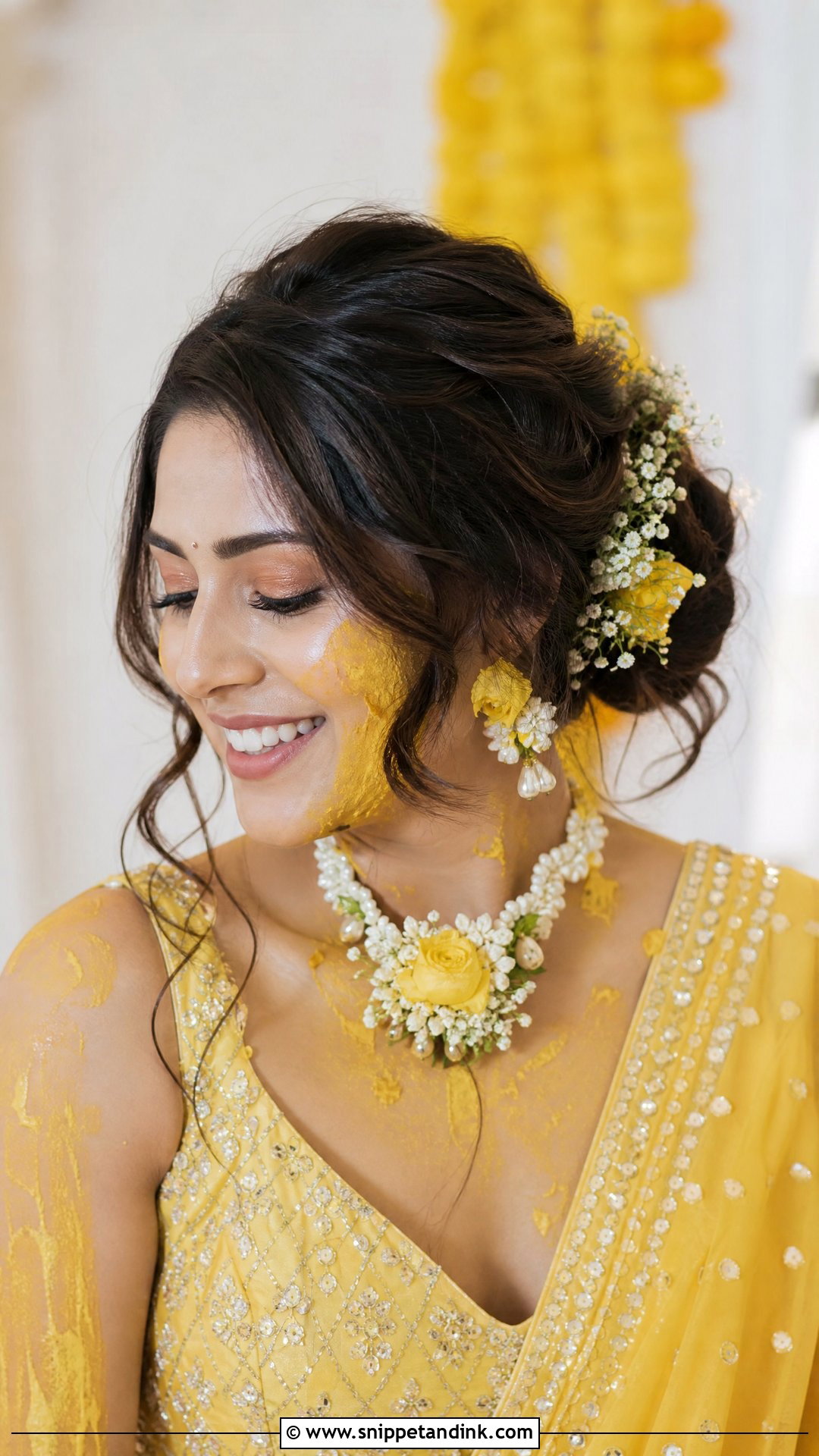
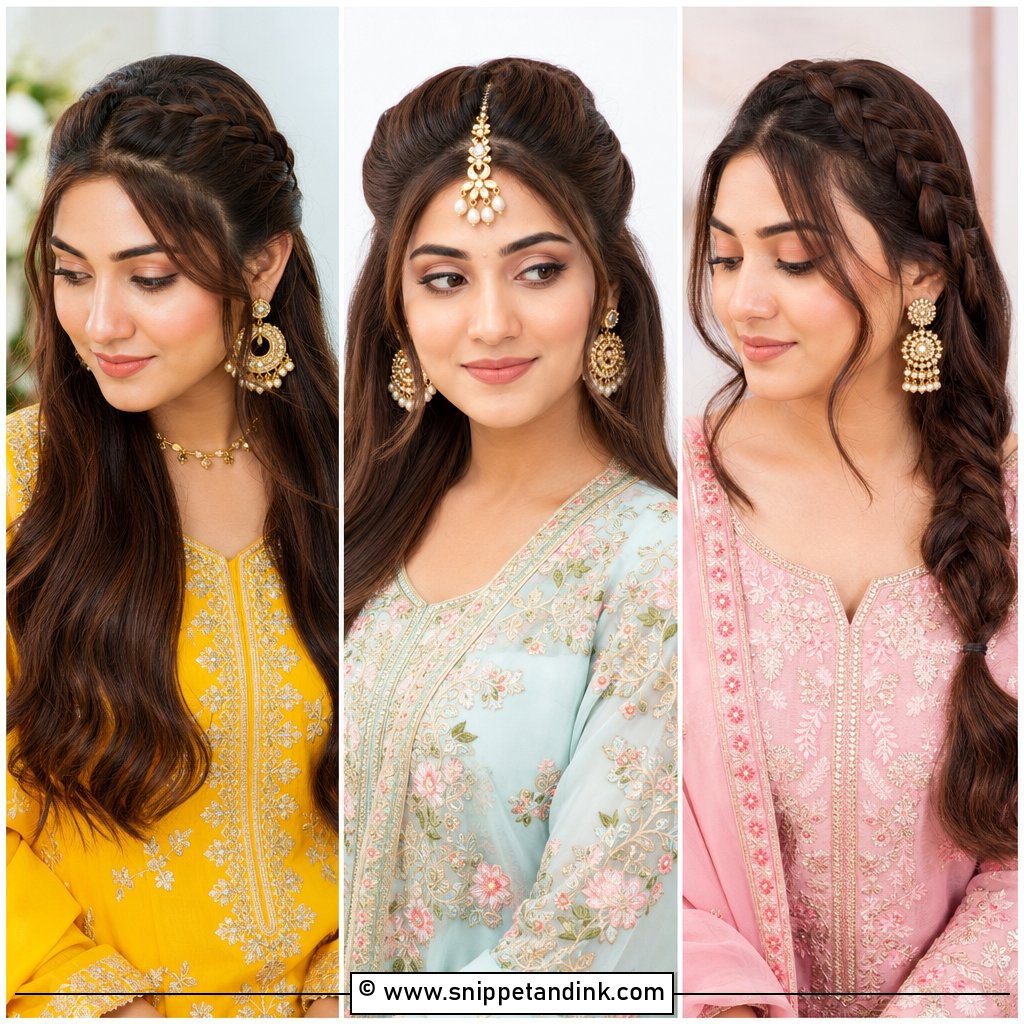
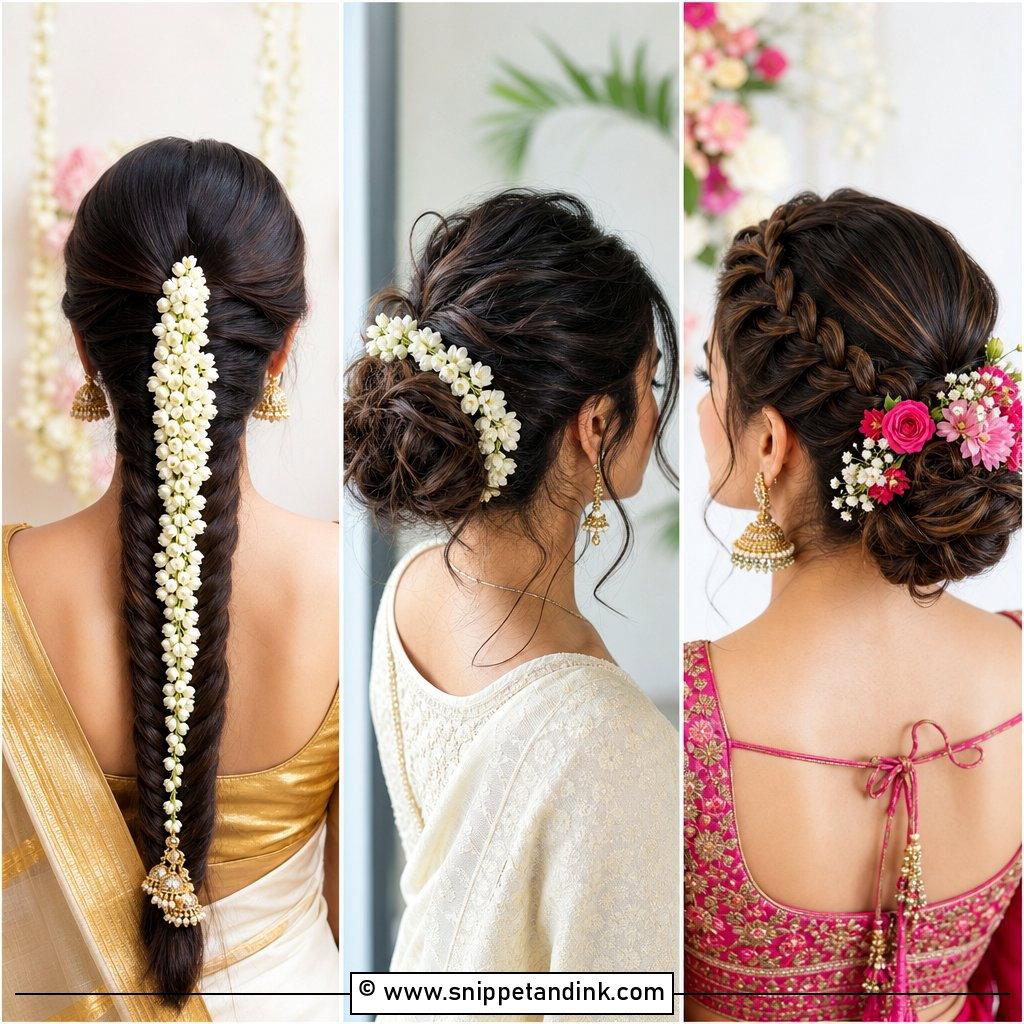
A textured bun with relaxed front pieces suits the daytime functions, mehendi, haldi, sangeet or an outdoor ceremony. Loose curls, a gentle side part or airy face-framing pieces flow into the bun. It pairs with floral jewelry, pastel lehengas and fresh flowers. Messy has to be controlled: I pin the base firmly and pull pieces out last. For haldi in particular, plan to wash afterward; turmeric paste gets into the front pieces and can stain lighter or highlighted hair.
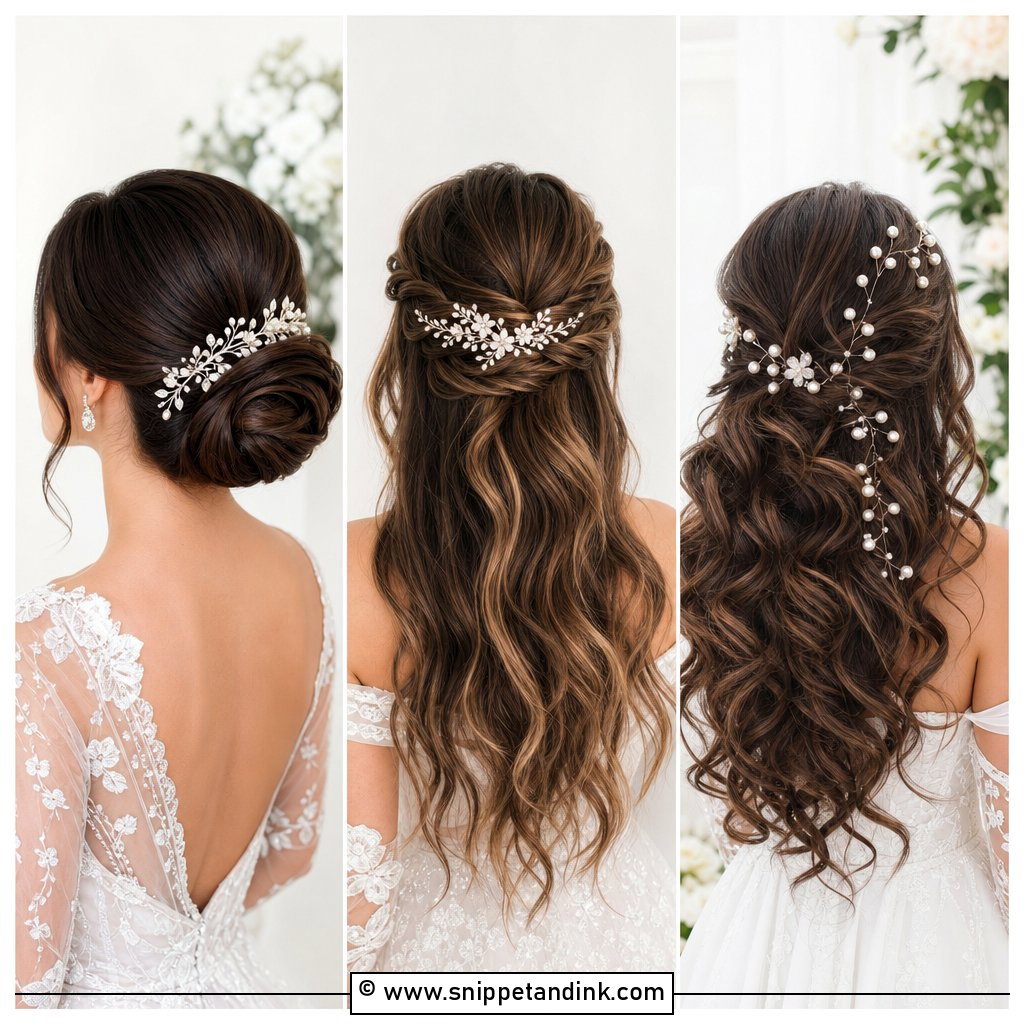
15. Indian Bridal Front Jada Hairstyle
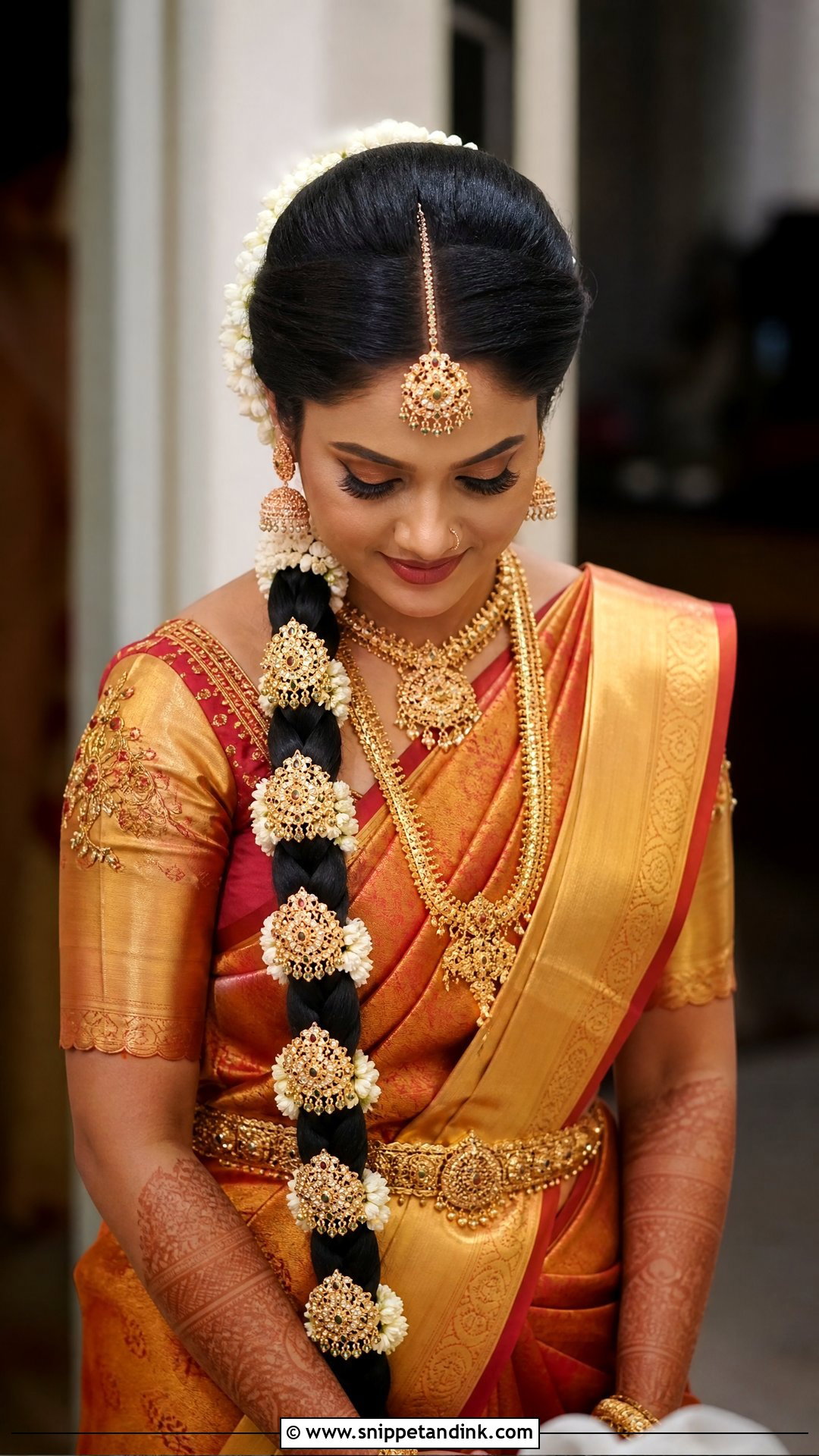
A jada starts with a clean front, center parted, softly puffed or with smooth side sections, and leads into a long decorated braid. It’s especially loved at South Indian weddings, where the braid carries flowers, gold ornaments or jada billalu. Silk sarees, temple jewelry and jasmine complete it. The ornaments add real weight, so I anchor the top of the braid to a tight base at the crown; if the front isn’t locked down firmly, the braid’s weight pulls the hairline back over the hours.
Hair Oiling, Wash Day and the Night Before
Many brides oil their hair right up to the wedding, which I understand, but it makes the front almost impossible to set. Oil coats the hair so pins slide out and puffs collapse. These are the prep rules I give every bride.
- Stop oiling at least two days before, or wash thoroughly after the last oiling.
- Wash the day before with a light shampoo and skip heavy conditioner on the roots.
- If you want mehendi on your hands the day before, wash your hair first; you won’t be able to for a while afterward.
- Arrive with dry, product-free hair, and wear a front-buttoning shirt so nothing goes over your head.
Changing the Front Between Pheras and Reception
When the ceremony and reception are on the same day, I often change only the front rather than restyle everything. After the dupatta comes off, a few front sections can be released and curled, the matha patti swapped for a lighter tikka, and the bun refreshed with new flowers. It takes about half an hour and looks like a new look in photos. Ask your stylist to stay for the change, or show a cousin which pins come out first.
Start at the Hairline and Work Back
A pretty photo is where planning starts, not where it ends. The front you choose has to hold your jewelry, suit the outfit, flatter your face and stay comfortable through hours of rituals. A sleek bun stays tidy under a dupatta; soft curls suit reception and sangeet; a puff adds height; a middle part centers the tikka; a jada brings tradition. Before the wedding, gather your favorite looks, bring your actual jewelry and dupatta to a trial, and wear the full setup for at least an hour. That’s how you find out what will really last.
You'll Like These Ideas:


Leave a Reply