
An Indian wedding is rarely one look. It is a haldi, a mehndi, a sangeet, the ceremony and a reception, often across three or four days, and the partition is the thread I can carry through all of them. A side part softens a heavy lehenga, frames chandbalis and gives a maang tikka a natural line to follow. It works for brides, bridesmaids and guests alike. These are twenty side partition styles I’d put on the list for every Indian wedding function, with notes on which ones hold up under a dupatta and which are better saved for the dance floor.
Sindoor, Tikka and Dupatta on an Off-Center Part
In many Hindu weddings the groom applies sindoor along the bride’s parting during the ceremony. If you wear a side partition, that line is where it will go. I mention this at every trial, because some families expect the sindoor in a center parting and it is better to talk about it before the day than in the mandap.
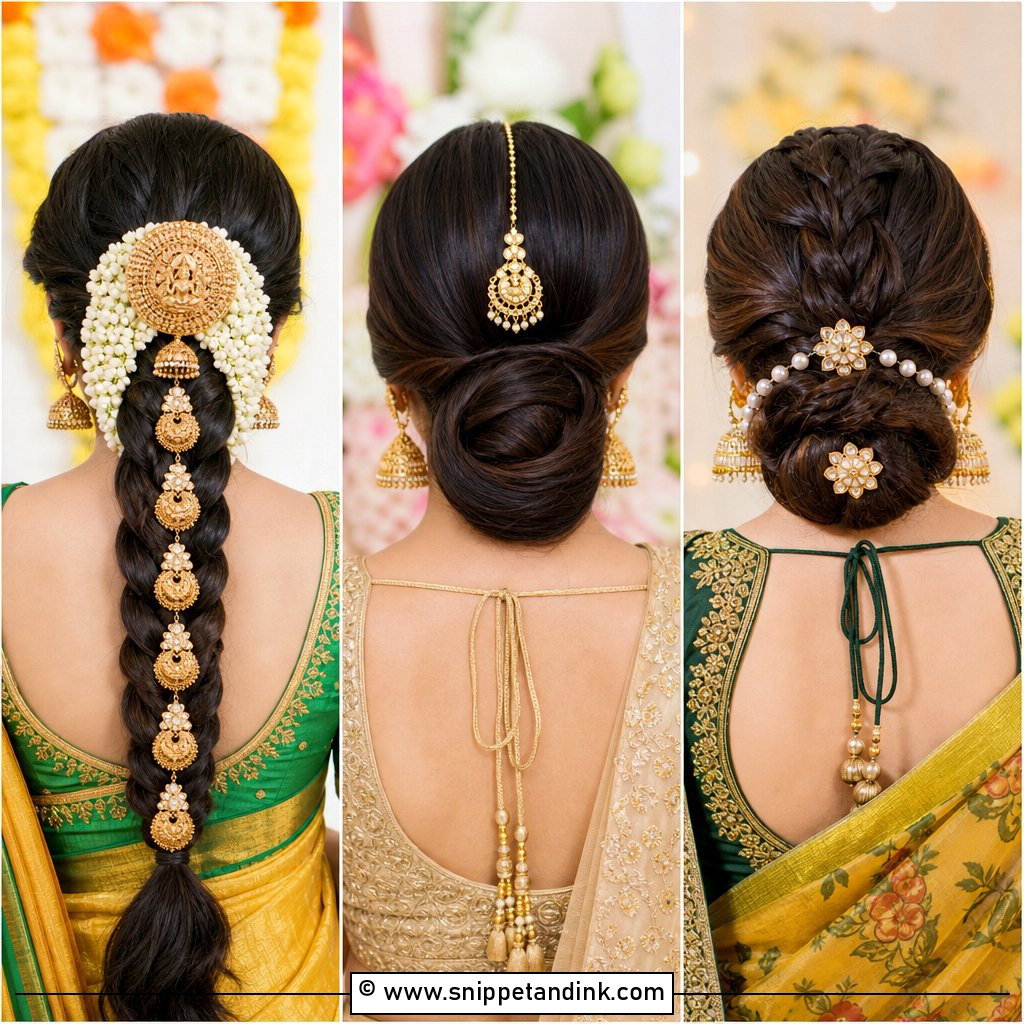
The maang tikka also needs planning. Its chain runs along the part and the pendant should land in the center of the forehead. With a deep side partition the chain sits at an angle, which looks lovely, but it needs a pin at the hairline and another one hidden behind the crown to keep the pendant centered.
Pinning a heavy dupatta
- The bun or updo must be firm enough to take pins; a soft, loose bun will let the dupatta slide back.
- I place the first pins at the crown on the heavy side of the part, where there is more hair to grip.
- Heavily embroidered dupattas can weigh a lot, so bring the real one to the trial, not a substitute.
1. Side Part Low Bun With Gajra
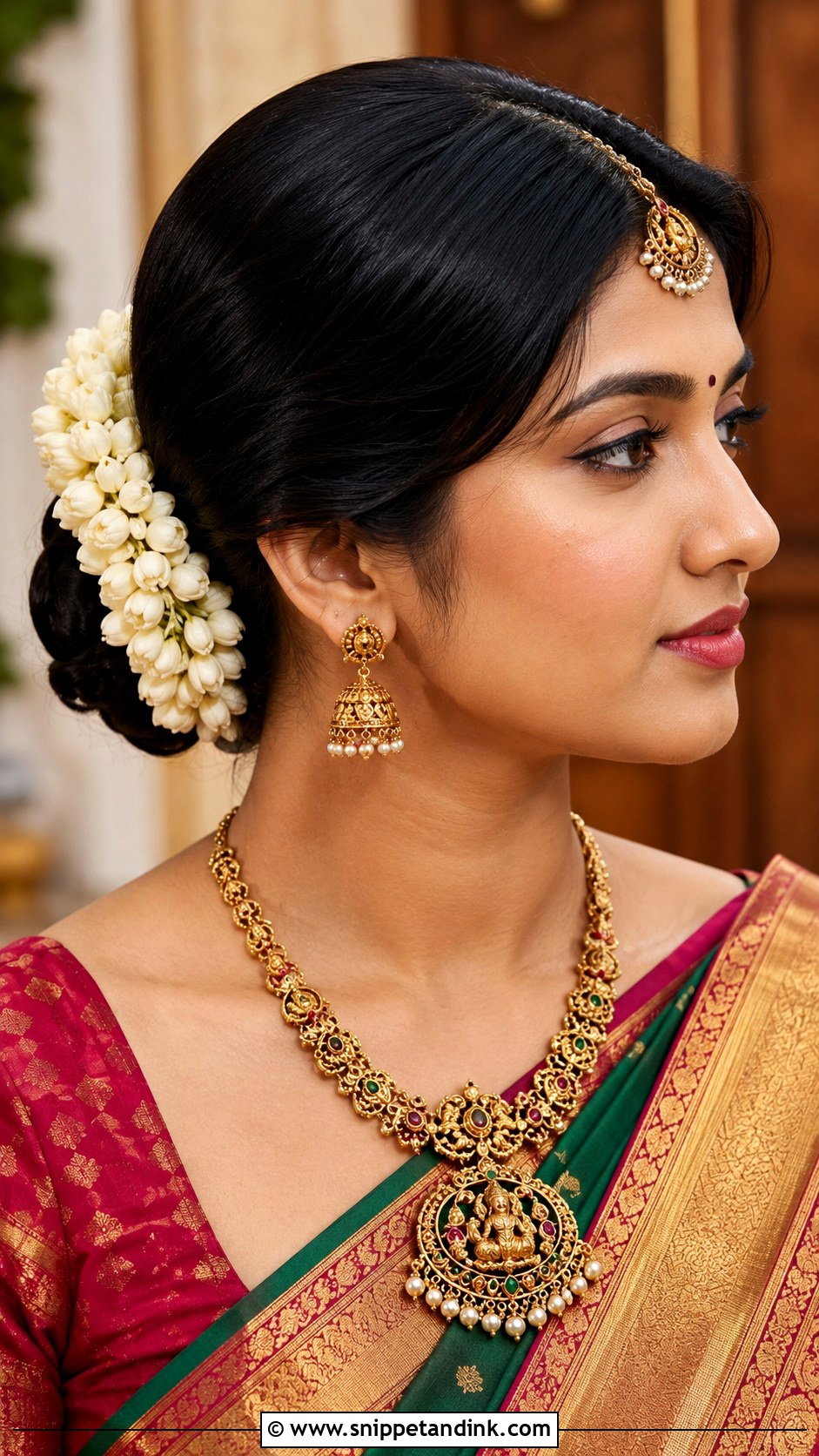
This is the polished low bun I reach for first for the pheras. I set a deep side partition, smooth the hair back and coil it at the nape, then wrap the gajra around the base. The bun becomes the anchor for the dupatta pins, so I make it firm with a donut or a padded base if your hair is fine. With the pallu or dupatta on top, only the front shows, and the side part is what keeps that front from looking flat.
2. Side Swept Curls For Reception
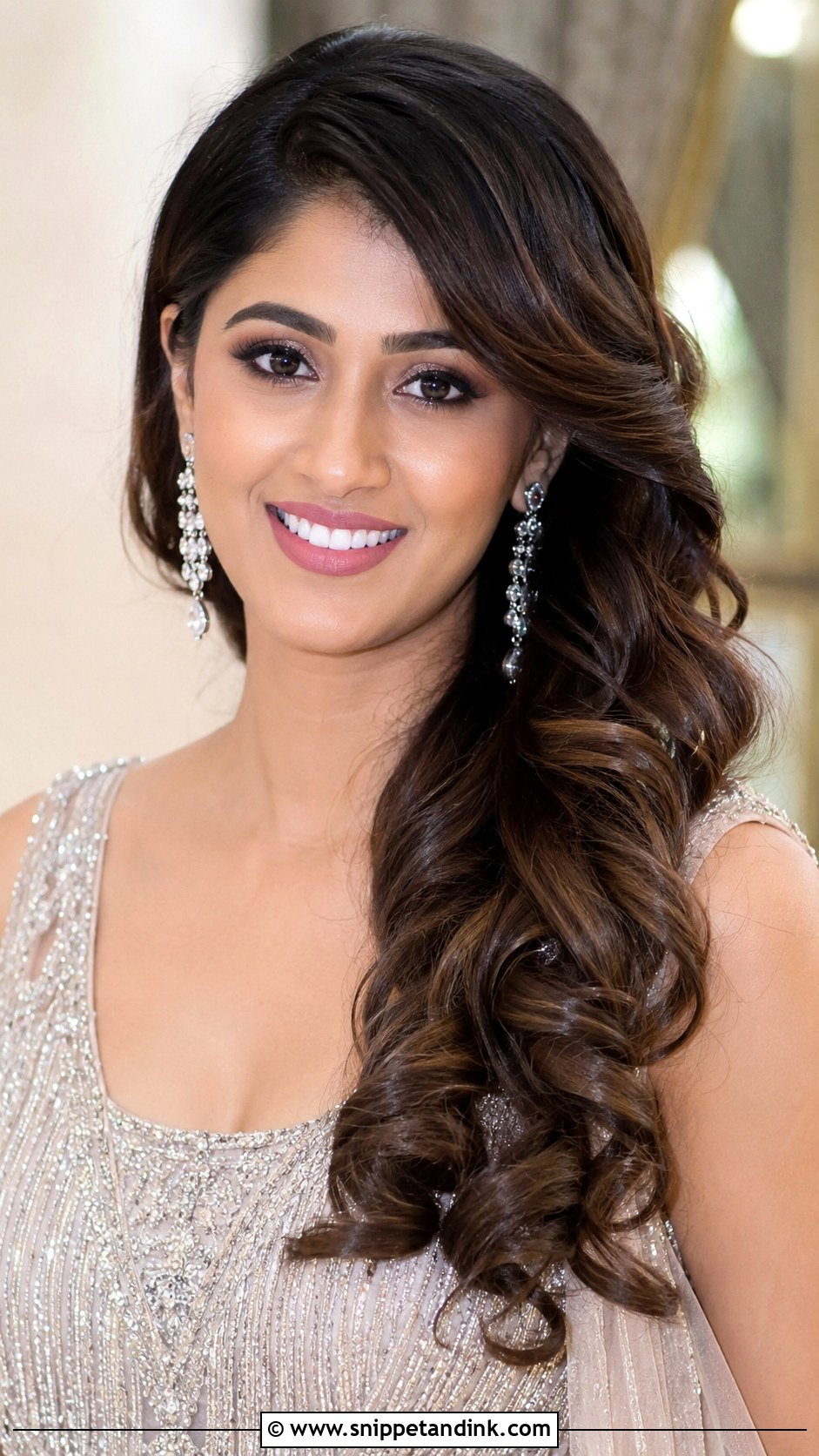
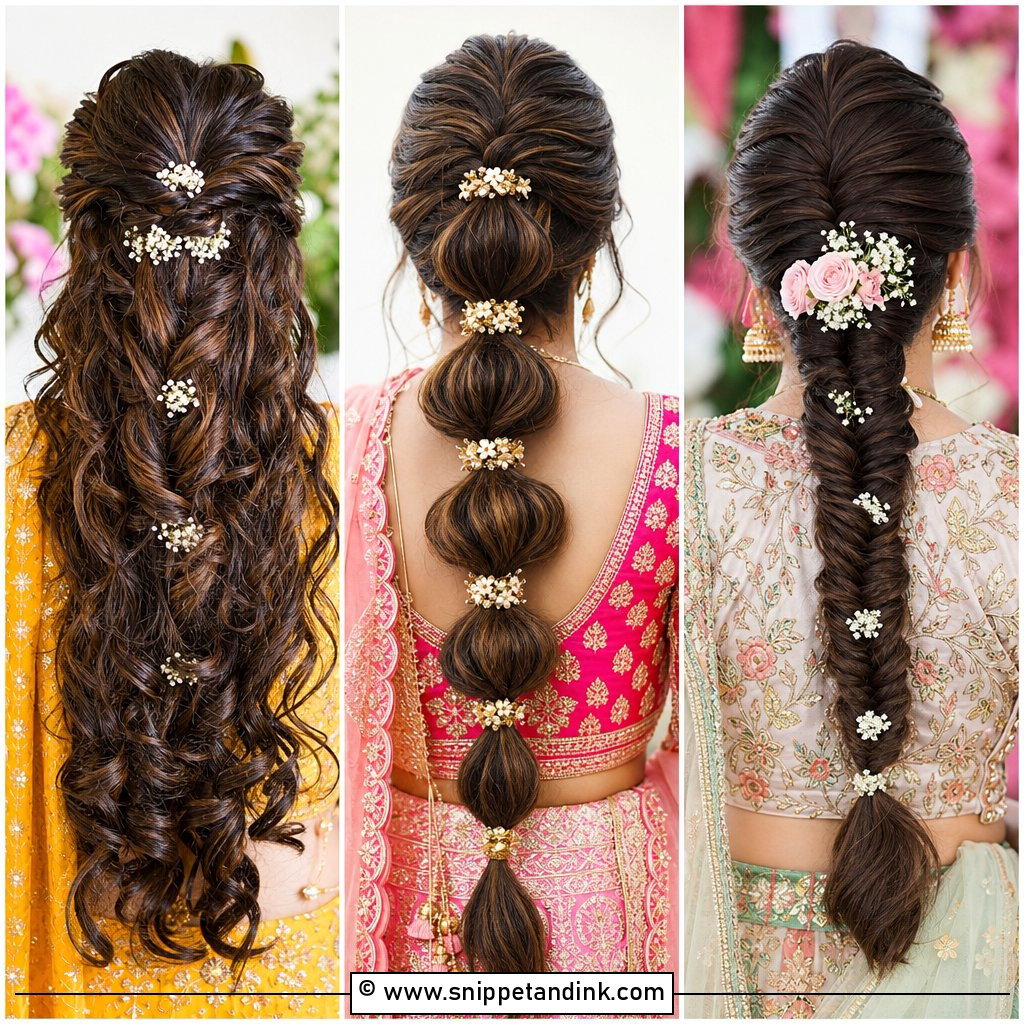
Receptions are where most brides finally want their hair down. I curl the lengths after setting a sharp partition, then sweep them over one shoulder and pin the opposite side behind the ear with crossed grips. That pinned side shows off your earrings and stops the curls drifting back toward the center while you greet guests. Indian hair is often thick and heavy, so I curl small sections and let them cool fully, or they relax within an hour. A hair vine or a few crystal pins near the part adds sparkle under stage lights.
3. Side Partition Fishtail Braid
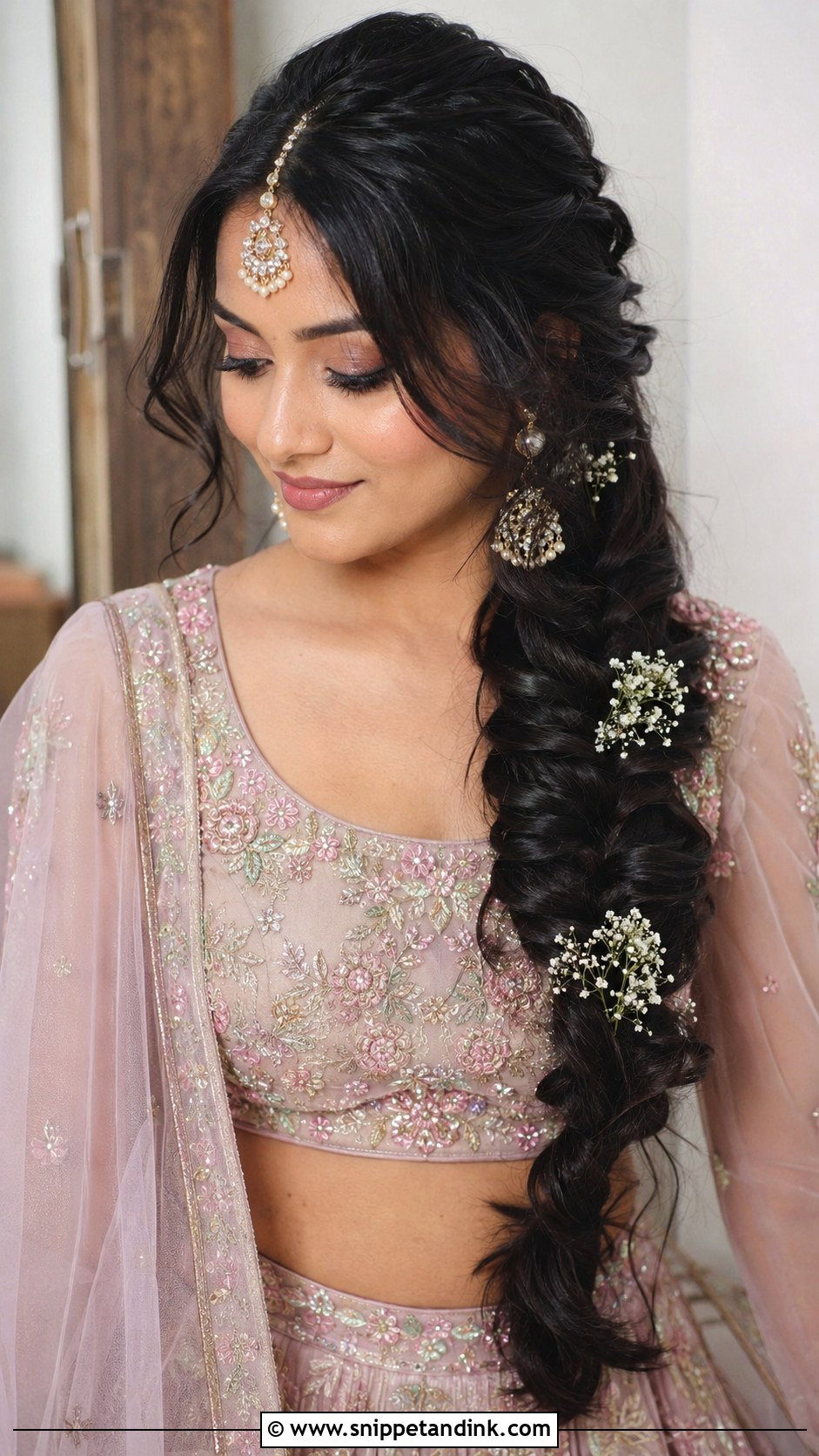
A loose fishtail braid over the shoulder is one of my favorite choices for sangeet and mehndi. I start the braid below the ear on the heavy side so it falls forward without twisting across the throat, then pull the edges out a little at a time. Baby’s breath and small rosebuds tuck neatly into the plaits. Longer hair carries it best; on shoulder-length hair I add a matching clip-in for length.
4. Sleek Side Part Bun For Saree
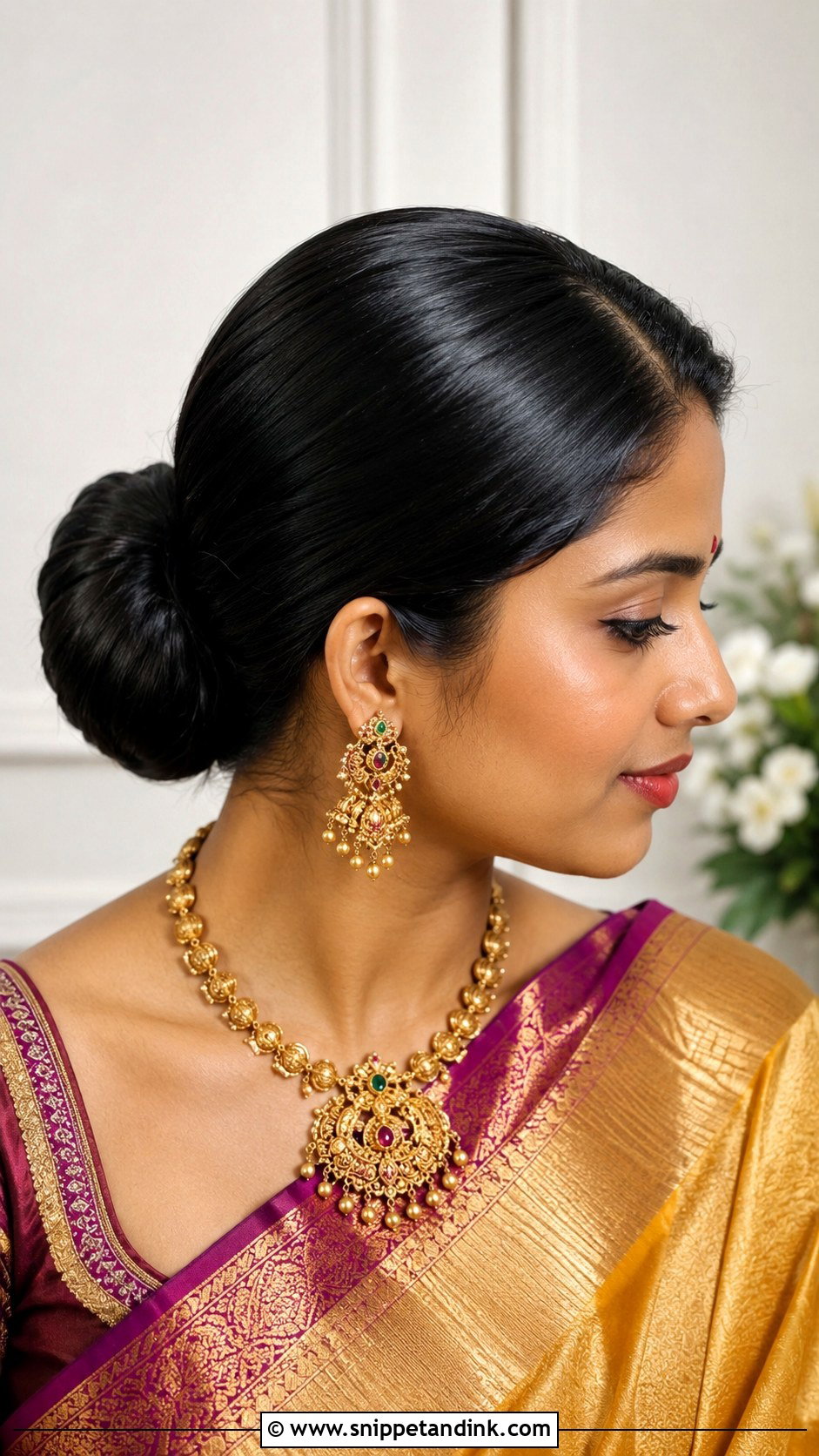
With a Kanjeevaram saree and temple jewelry, a sleek bun is hard to beat. I draw the partition with a tail comb, smooth everything back with a firm gel or cream and twist the length into a tight bun. Coconut oil is traditional on the morning of some functions, but for this style I’d ask you to skip it, since oiled hair won’t hold a sleek line through a long ceremony. One string of jasmine or a single jeweled pin is plenty.
5. Side Part Braided Bun
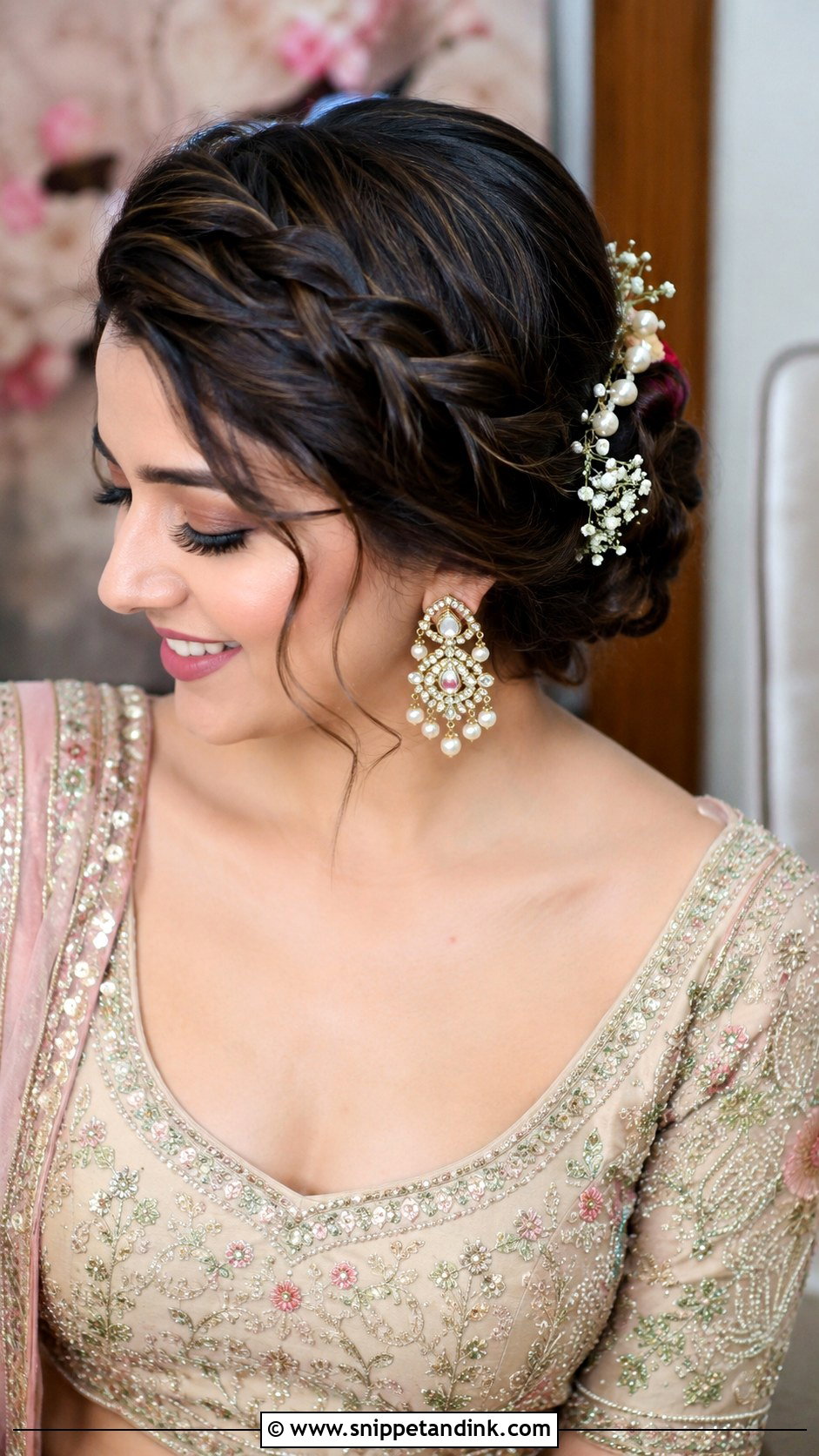
A braided bun gives more grip than a plain coil, which is why I use it for brides with silky, straight hair. I braid one section loosely, then wrap it into the bun so the plaited texture shows on the outside. Pearls or small flowers tuck into the braid without needing extra pins. It works for the ceremony with a lehenga or a saree, and it is also sensible for haldi, where hair needs to stay tied back and out of the turmeric paste.
6. Side Part Open Waves With Flowers
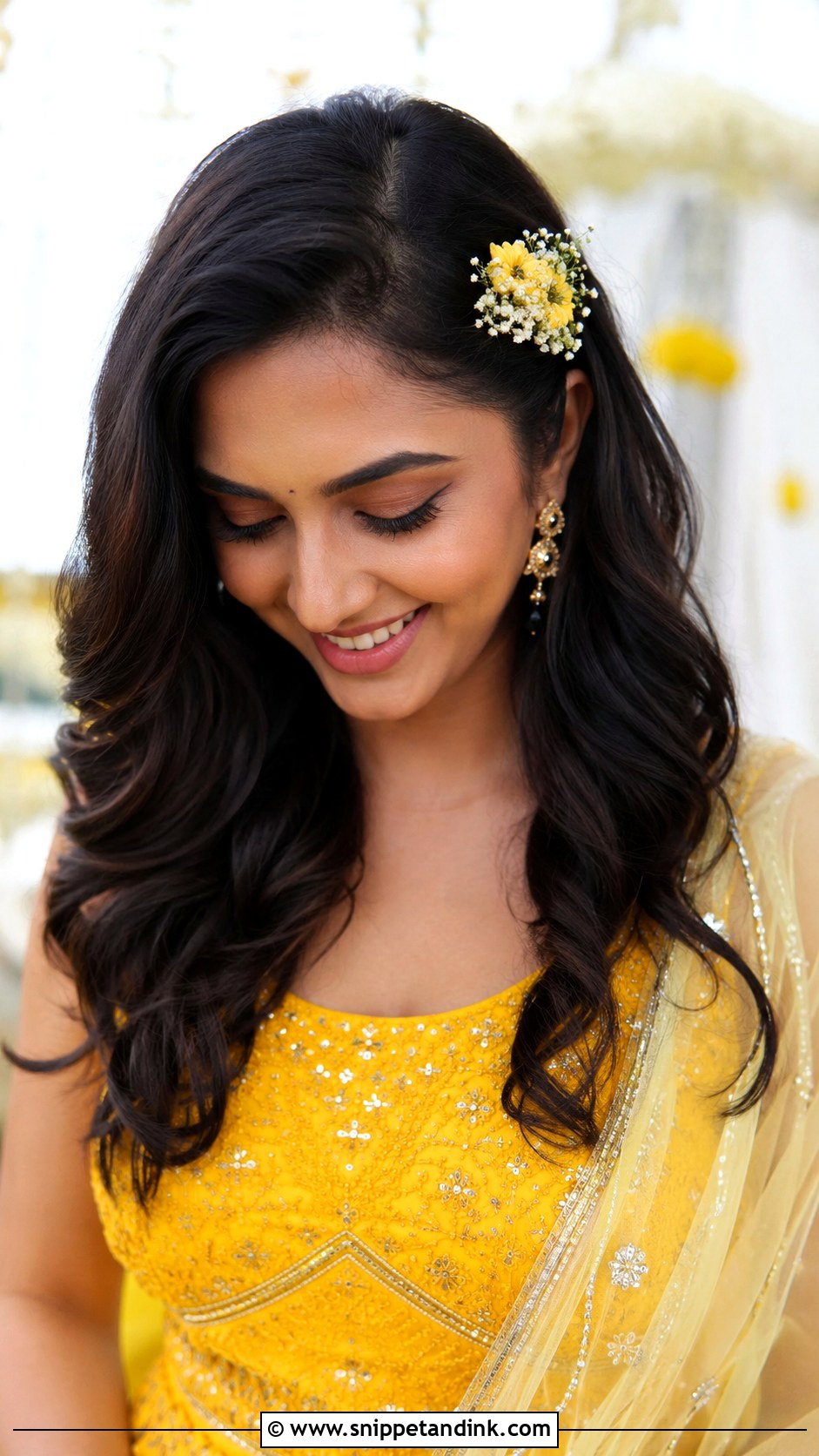
Open waves are the relaxed option for daytime functions. I set loose waves from a side partition and pin a small cluster of flowers just beside the part. Natural daylight is kind to this style. My one caution: for haldi, open hair will catch turmeric, and the stain can tint light or highlighted hair yellow. Keep open waves for the mehndi morning and tie hair up for the haldi itself.
7. Side Part Puff With Half Updo
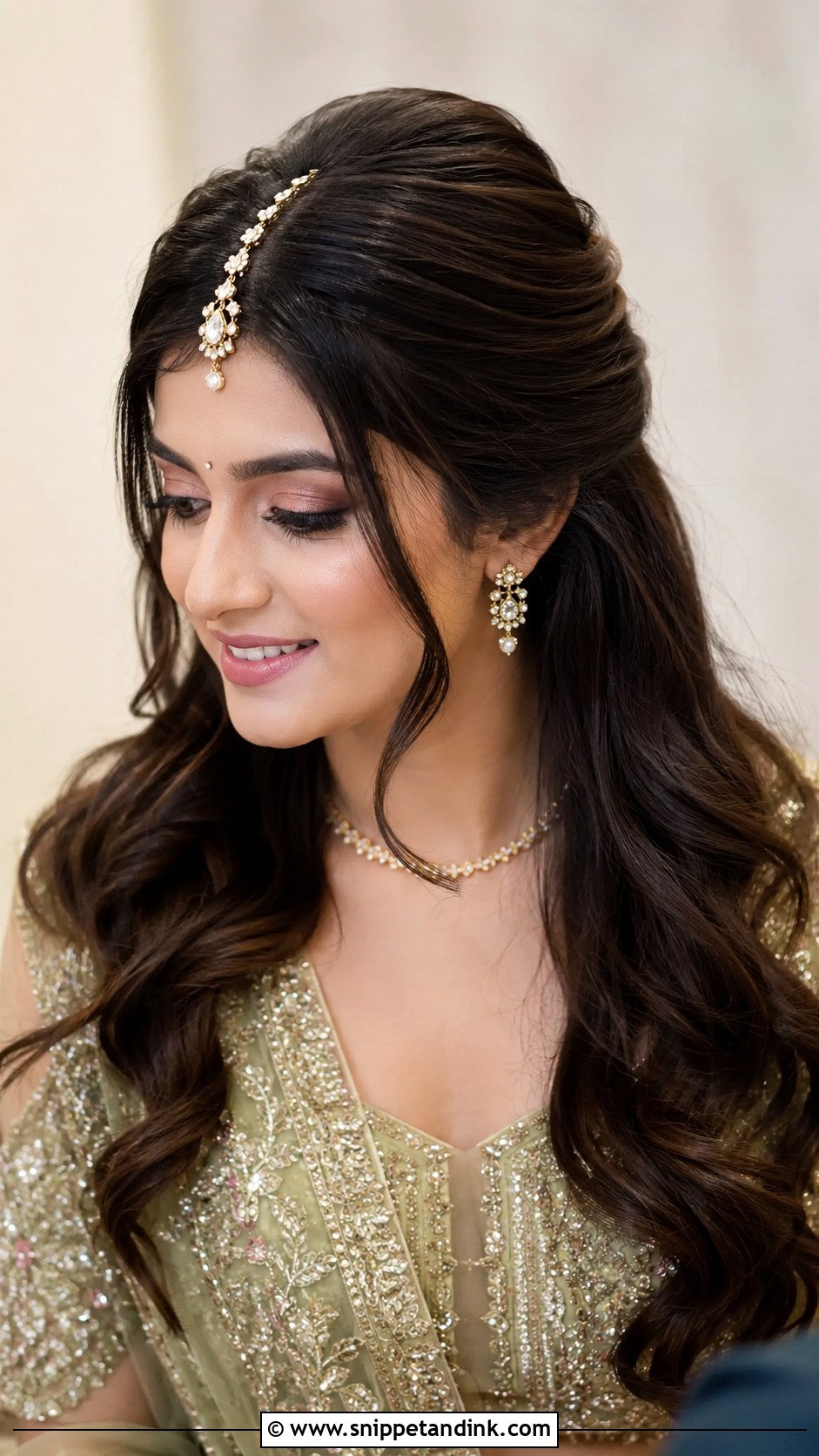
A puff with a half updo adds height that helps balance a heavy lehenga. I backcomb a small section at the crown, smooth the top layer over it and pin the puff slightly toward the heavy side of the partition. The lower half falls in soft curls. A maang tikka can rest along the part, but I’d keep the puff modest if you are wearing one, as a tall puff pushes the tikka chain upward and makes it sit crooked.
8. Side Part Side Braid For Mehndi
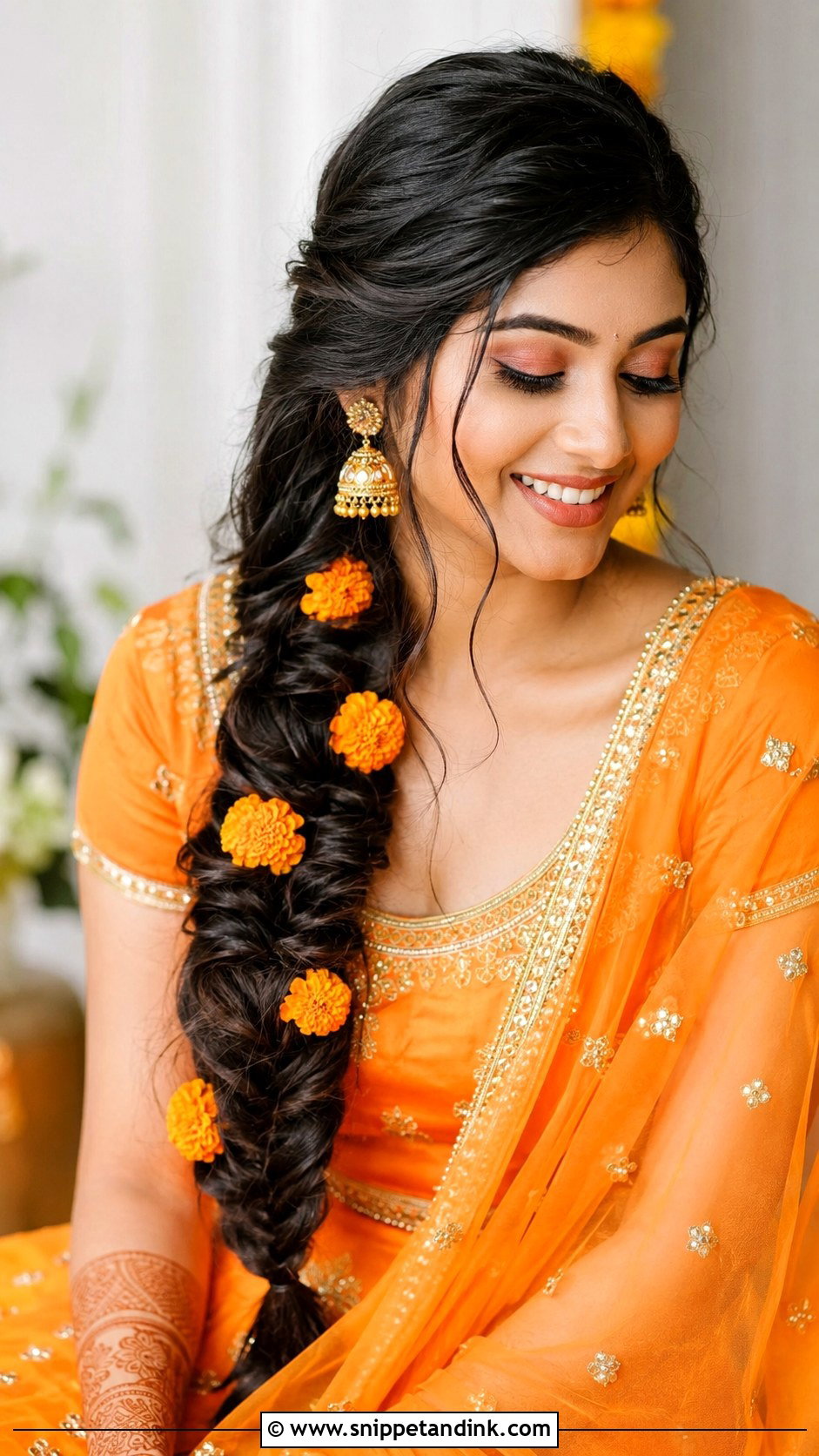
At a mehndi you’ll be sitting for hours with wet henna on both hands, so you can’t fix your own hair. That is why a single side braid is so practical here. I braid it firmly enough to last the whole sitting, drape it over one shoulder and weave in marigolds that suit yellow and orange outfits. Keep the braid on the side away from the hand being worked on, so your artist has room.
9. Side Part Messy Bun For Sangeet
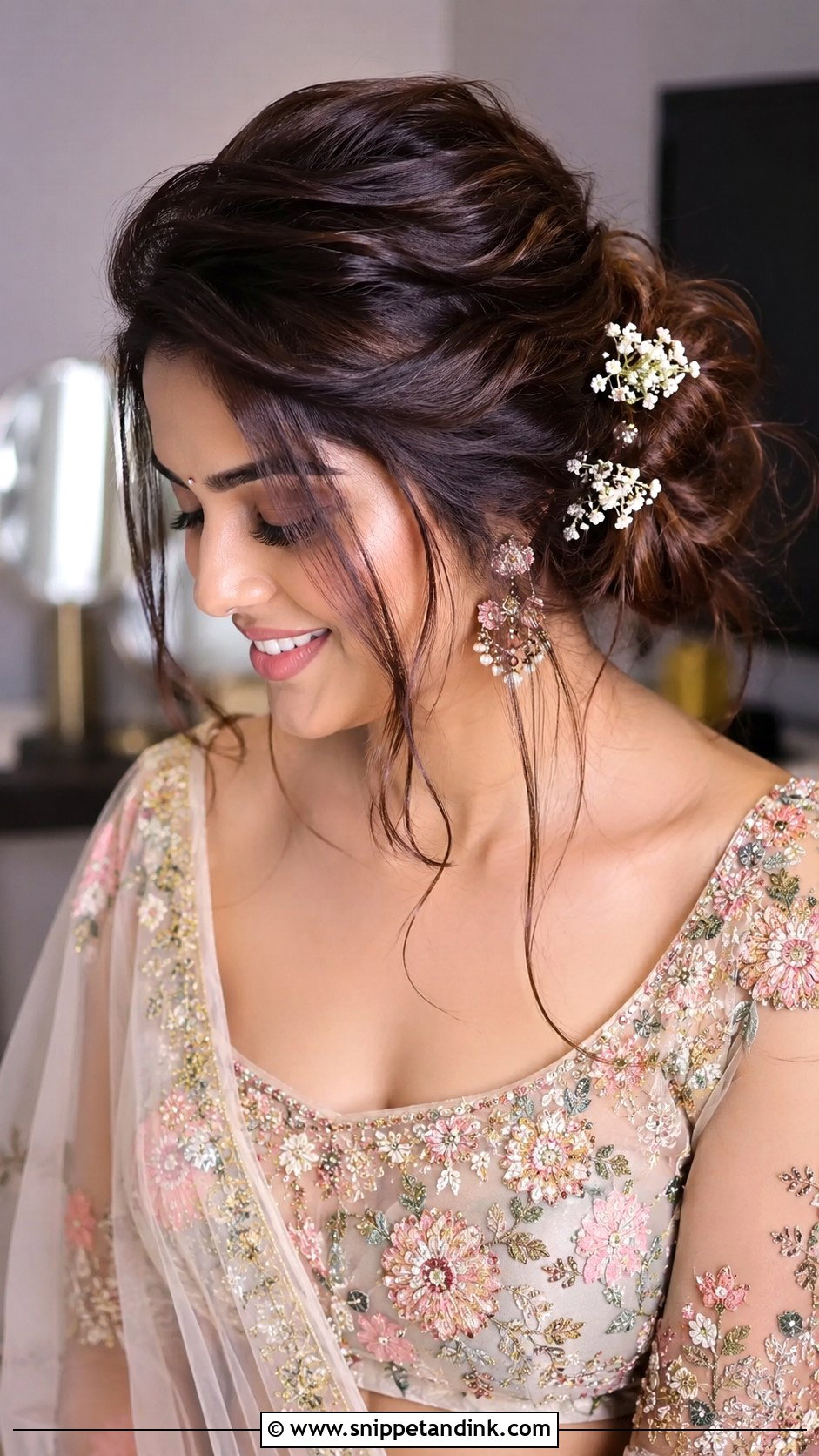
Sangeet hair has to survive serious dancing. A side-parted messy bun is built with hidden grips first and loosened afterward, never the other way round, which is how it stays put through a long choreography. A few face-framing strands keep it soft. It pairs with flowy lehengas and indo-western outfits and needs only a small accessory.
10. Side Part Wavy Ponytail
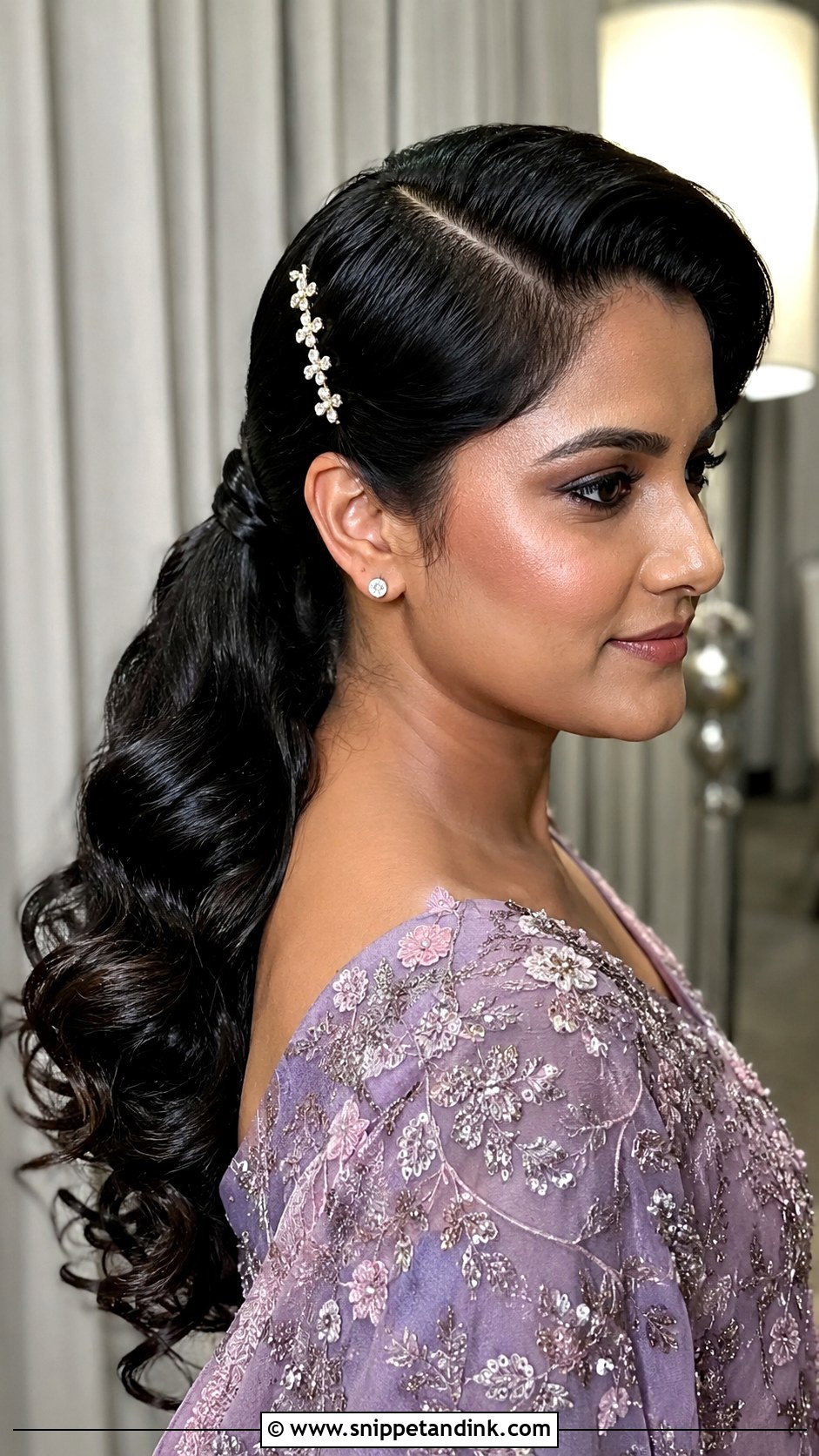
A wavy ponytail feels young and modern with fusion outfits or a cocktail gown. I tie it at the back of the head, not high, wrap a strand over the elastic and curl the lengths after the ponytail is secure. Curls made before tying get flattened by the band. A couple of sparkly pins along the partition finishes it. It is quick, which helps when you are changing outfits between events.
11. Side Part Crown Braid
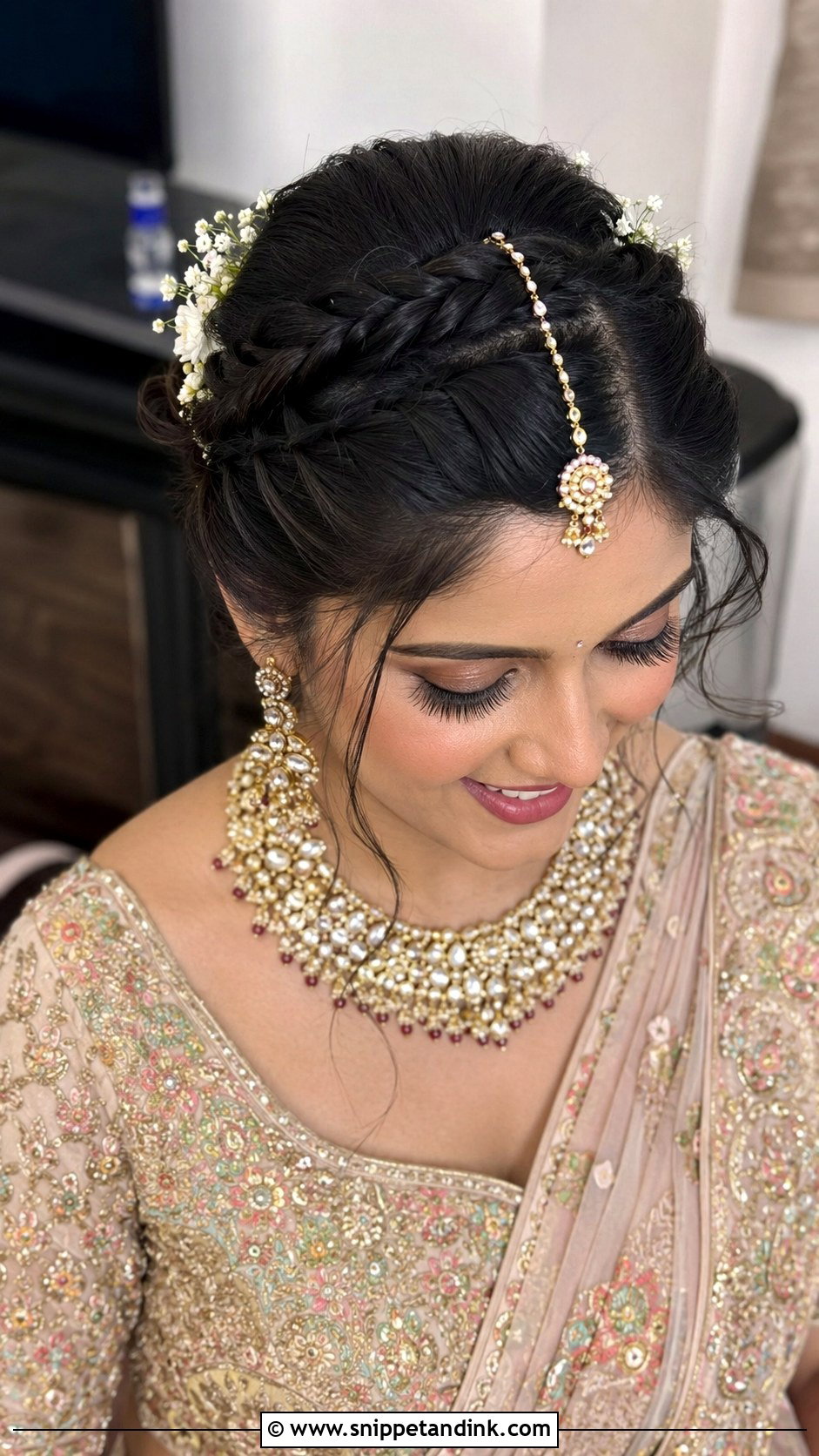
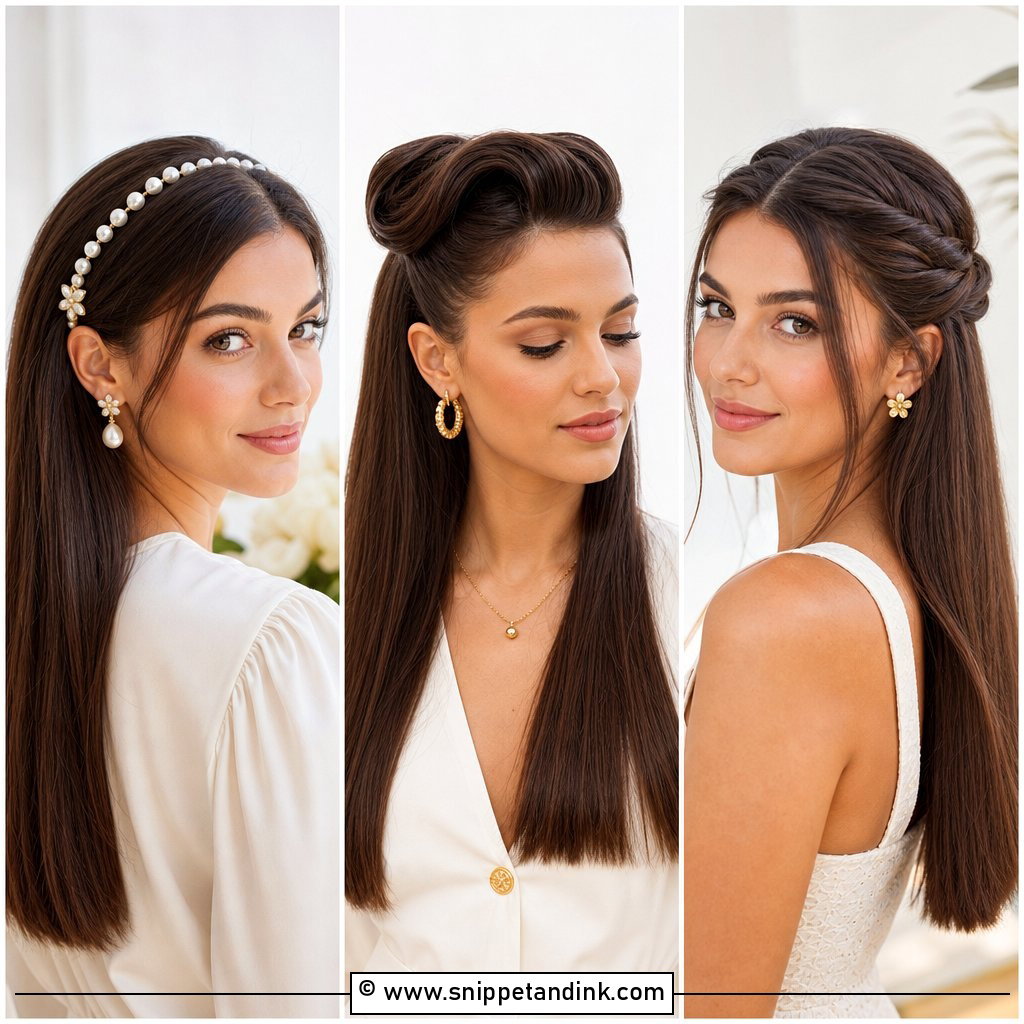
A crown braid keeps every strand off the neck, which matters in a hot outdoor venue. I braid sections from the side partition and pin them in a ring around the head, placing grips along the whole braid rather than only at the ends so it doesn’t slide. A maang tikka sits neatly just in front of the braid at the hairline. Tiny pearls between the plaits add sparkle without weight.
12. Side Part Loose Curls With Maang Tikka
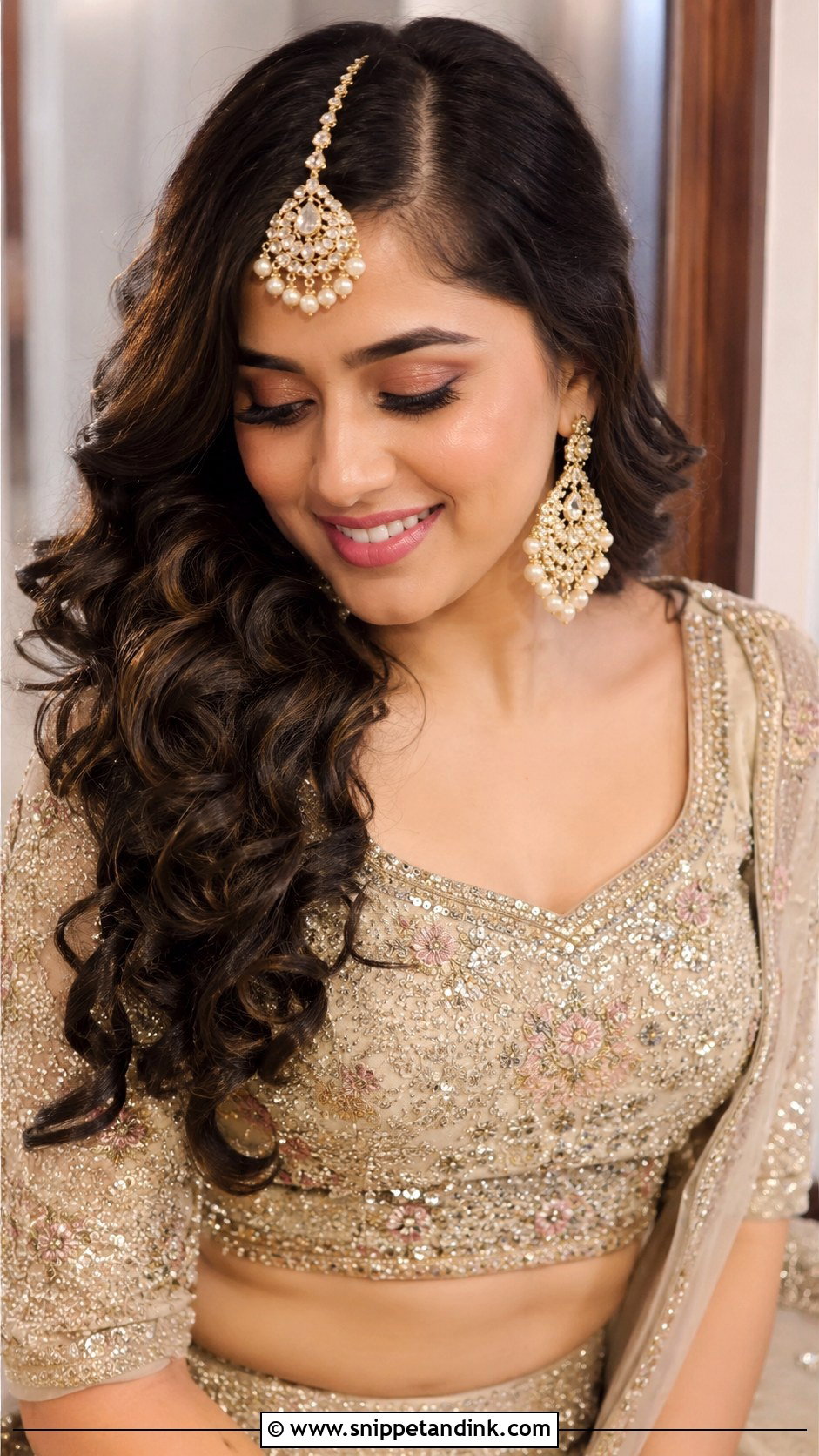
If your jewelry is the main feature, keep the hair simple and let the part do the work. I set the partition deep enough to leave a clear line for a statement maang tikka, then curl the lengths loosely. The tikka chain needs a pin at the hairline and one hidden further back, or a heavy pendant drags it off center. This look suits both the ceremony and the reception.
13. Side Part Twisted Updo
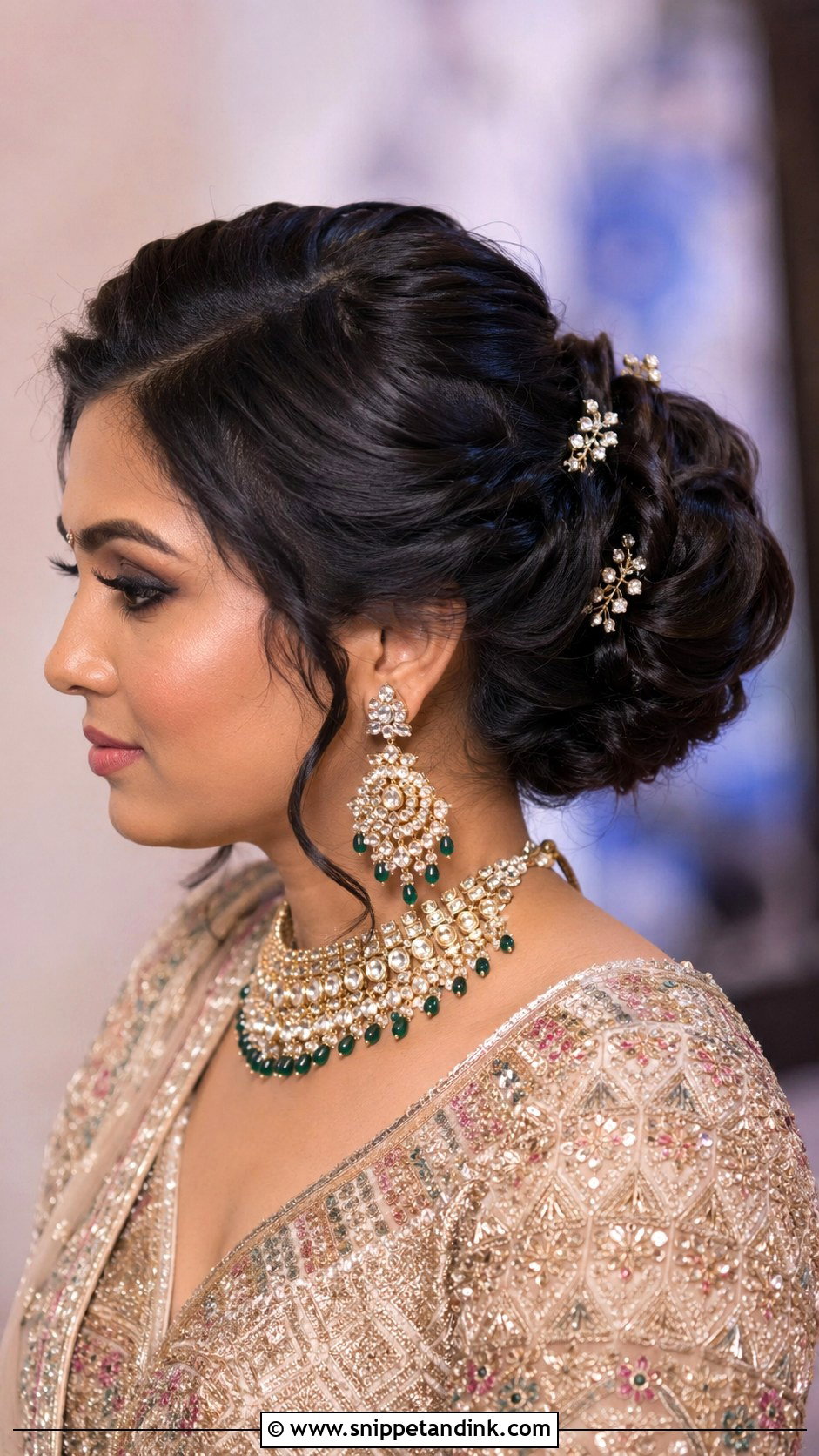
Twists pinned into an updo give a sculpted shape for the main ceremony. I twist from the heavy side of the partition and anchor each roll with a U-pin pushed into the base, which holds better under a heavy dupatta than bobby pins alone. Jeweled pins tuck between the twists. If you plan to drape the dupatta over your head, tell your stylist early, because the updo has to sit lower to give the pins somewhere to grip.
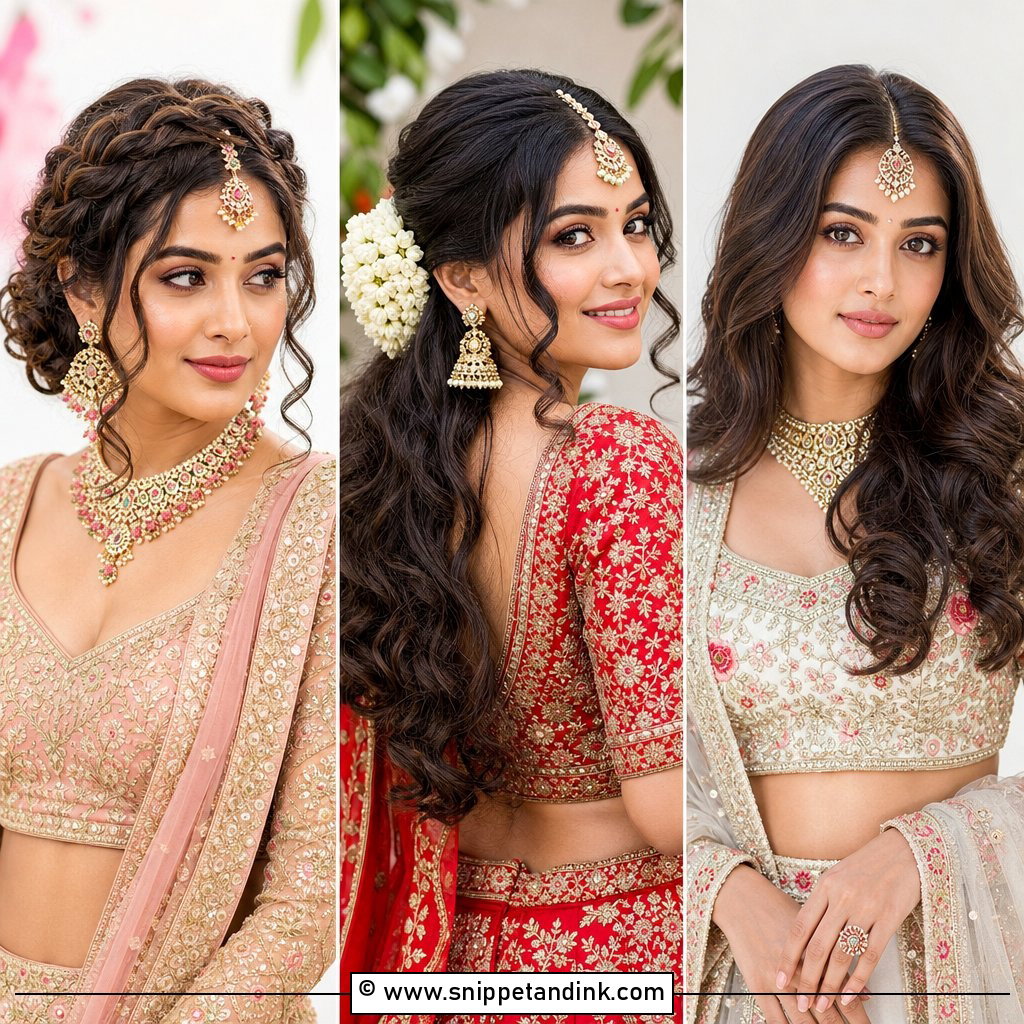
14. Side Part Bubble Braid
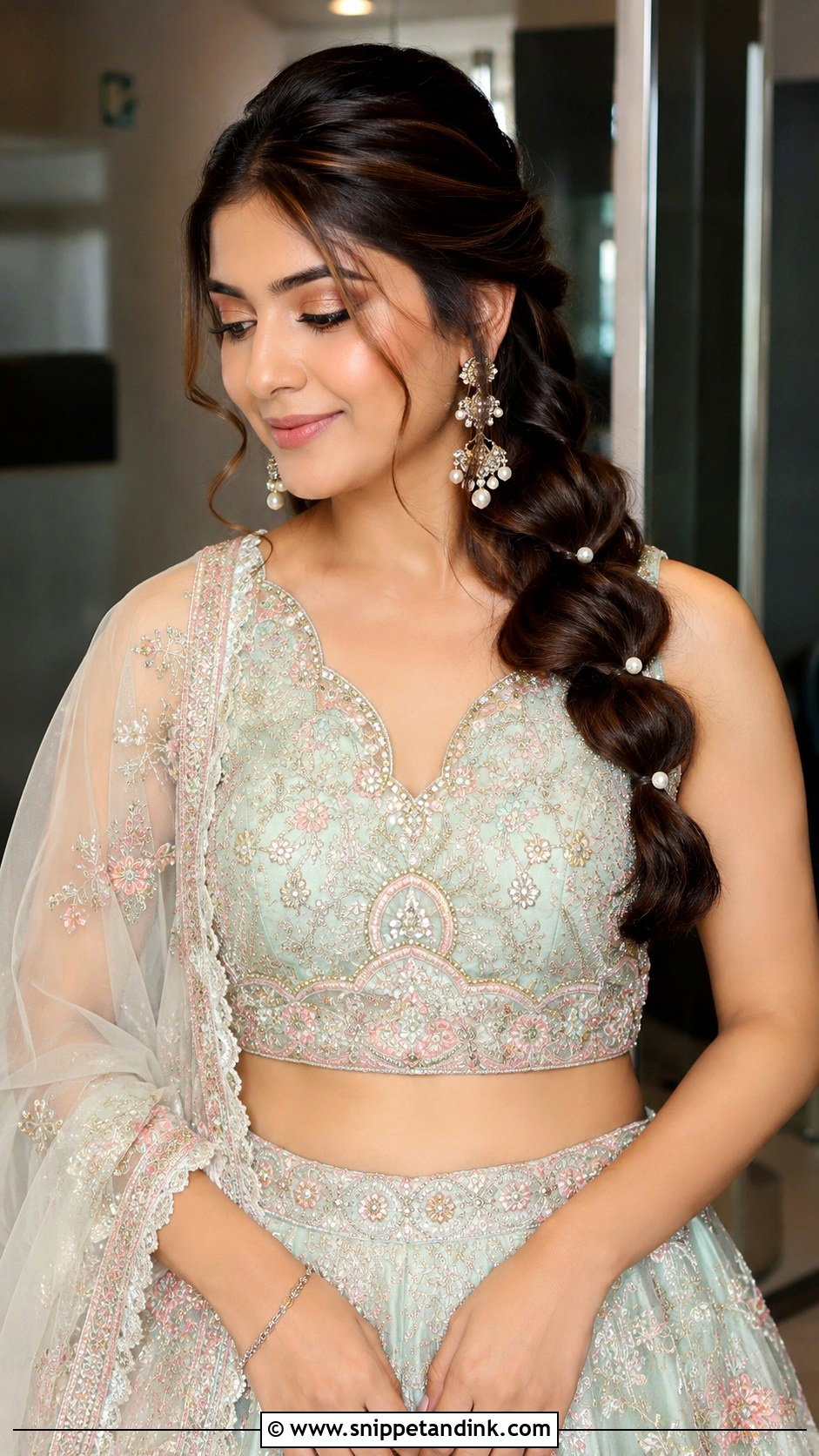
Bubble braids are fun for sangeet and mehndi and easy for bridesmaids to match. I section a ponytail with small clear elastics and gently pull each section out into a bubble. Thick hair gives the fullest bubbles; fine hair benefits from texture spray first. Small flowers or pearls between sections dress it up for a party with indo-western outfits.
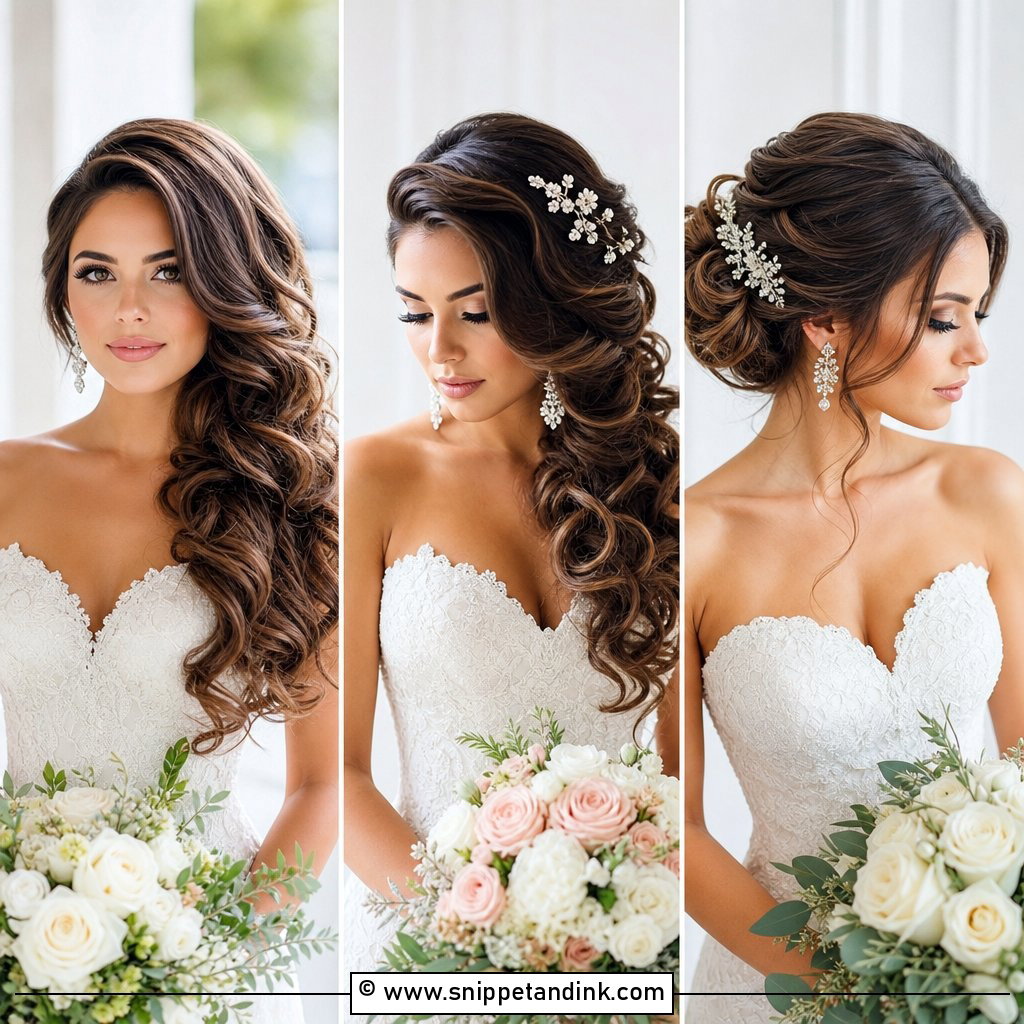
15. Side Part Sleek Straight Hair
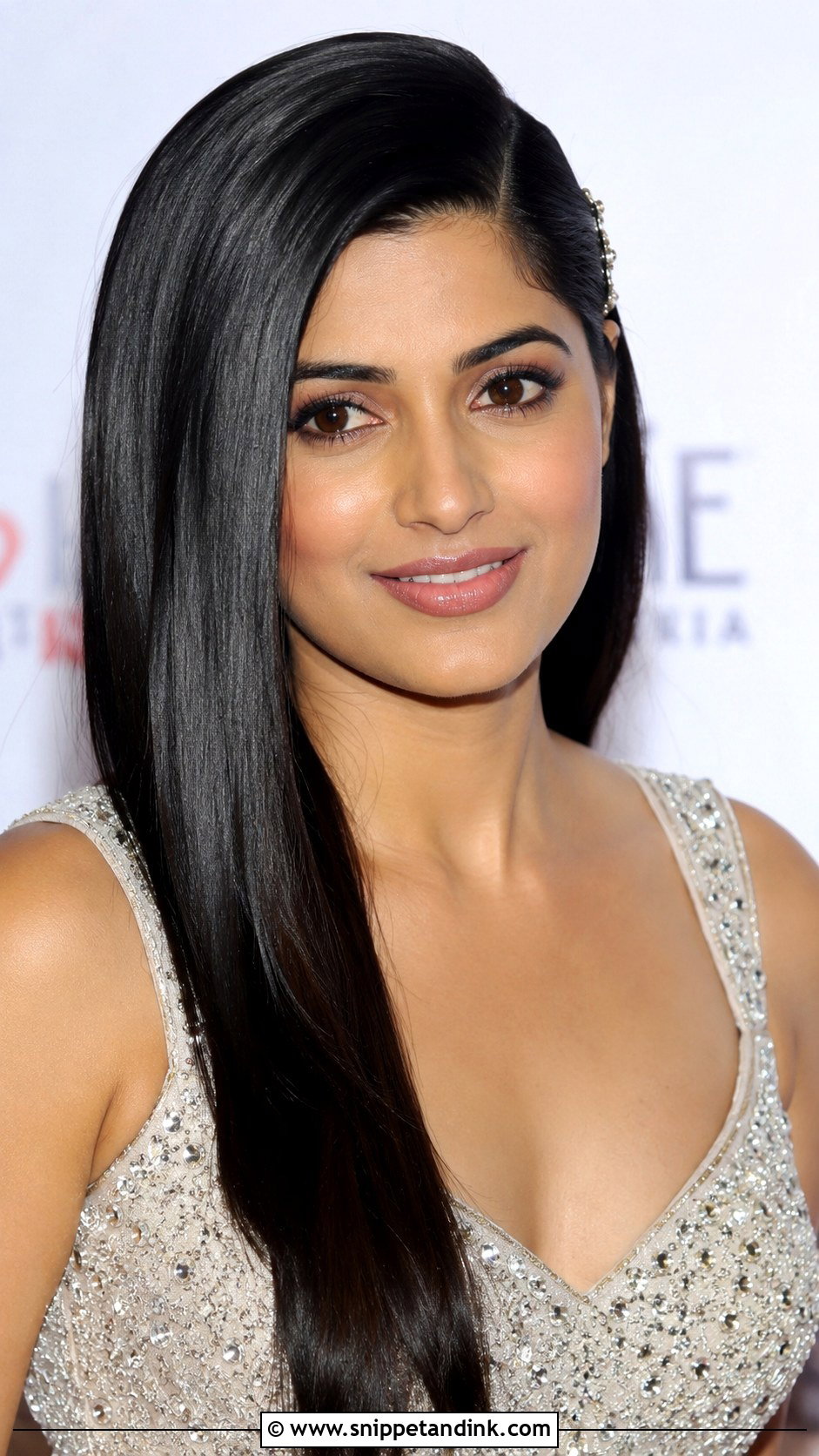
Sleek straight hair with a sharp partition is a strong choice with a gown or a fusion outfit at the reception. I flat iron in thin sections and keep serum on the ends only, since serum near the root makes the partition split open by evening. Monsoon or humid venues are the risk here, as straight hair shows frizz quickly. A small accessory near the part is enough.
16. Side Part Floral Bun For Bengali Bride
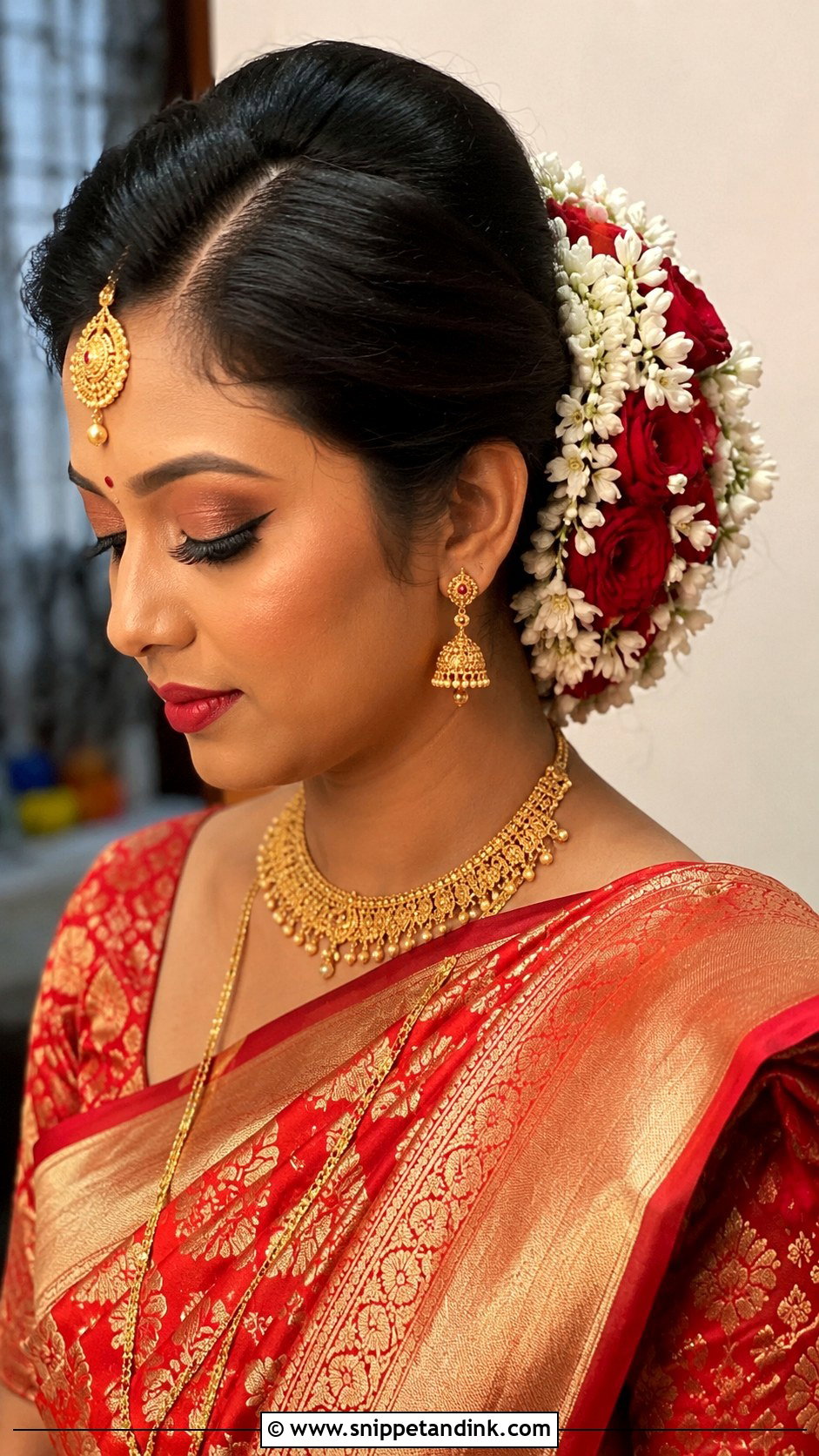
A Bengali bride’s bun is usually generous and floral, and the side partition keeps the front of the look neat while the bun carries all the decoration. I build the bun low and firm, then surround it with white and red flowers so they show from both sides. With a traditional saree and gold jewelry it looks ceremonial in the right way. If you plan to wear a mukut, mention it at the trial, because it changes how high the bun can sit.
17. Side Part Half Up Half Down
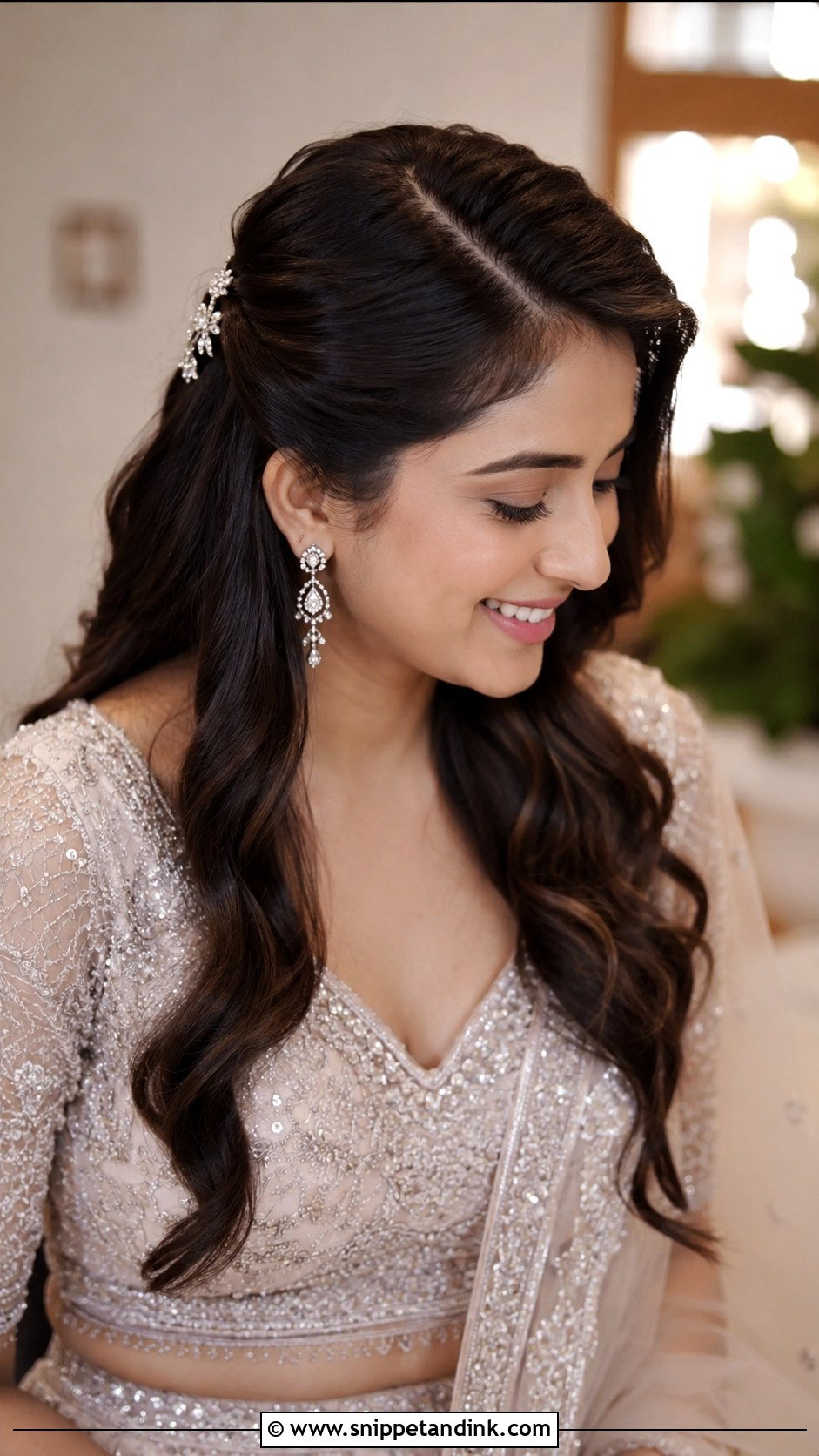
Half up, half down suits the engagement party, sangeet or reception when you can’t decide between hair up or down. I secure the top section slightly off center so it follows the partition, and build a small anchor of crossed grips under any decorative clip so it doesn’t slip. The lower half falls in waves. Long, heavy hair can pull this style flat, so I’d set those lower waves with rollers for longer.
18. Side Part Rose Bun
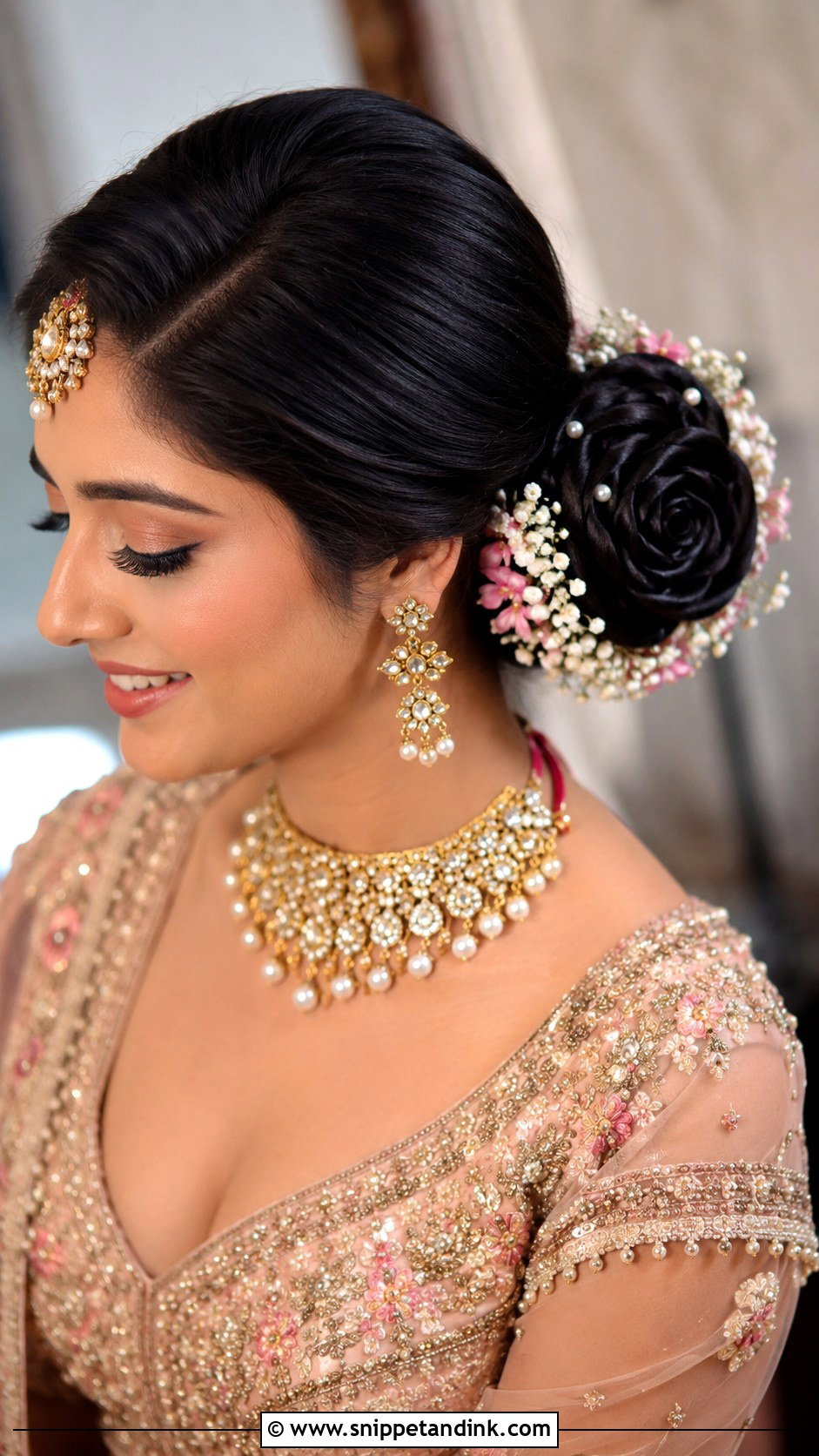
A rose bun is made by coiling twisted sections into petal-like layers, and it takes patience. I pin each petal from underneath with small pins so none show. It works on its own or with pearls and tiny blooms tucked into the center. It needs medium to long hair with some texture; very slippery hair will need a dry shampoo prep so the coils hold their shape.
19. Side Part Waterfall Braid
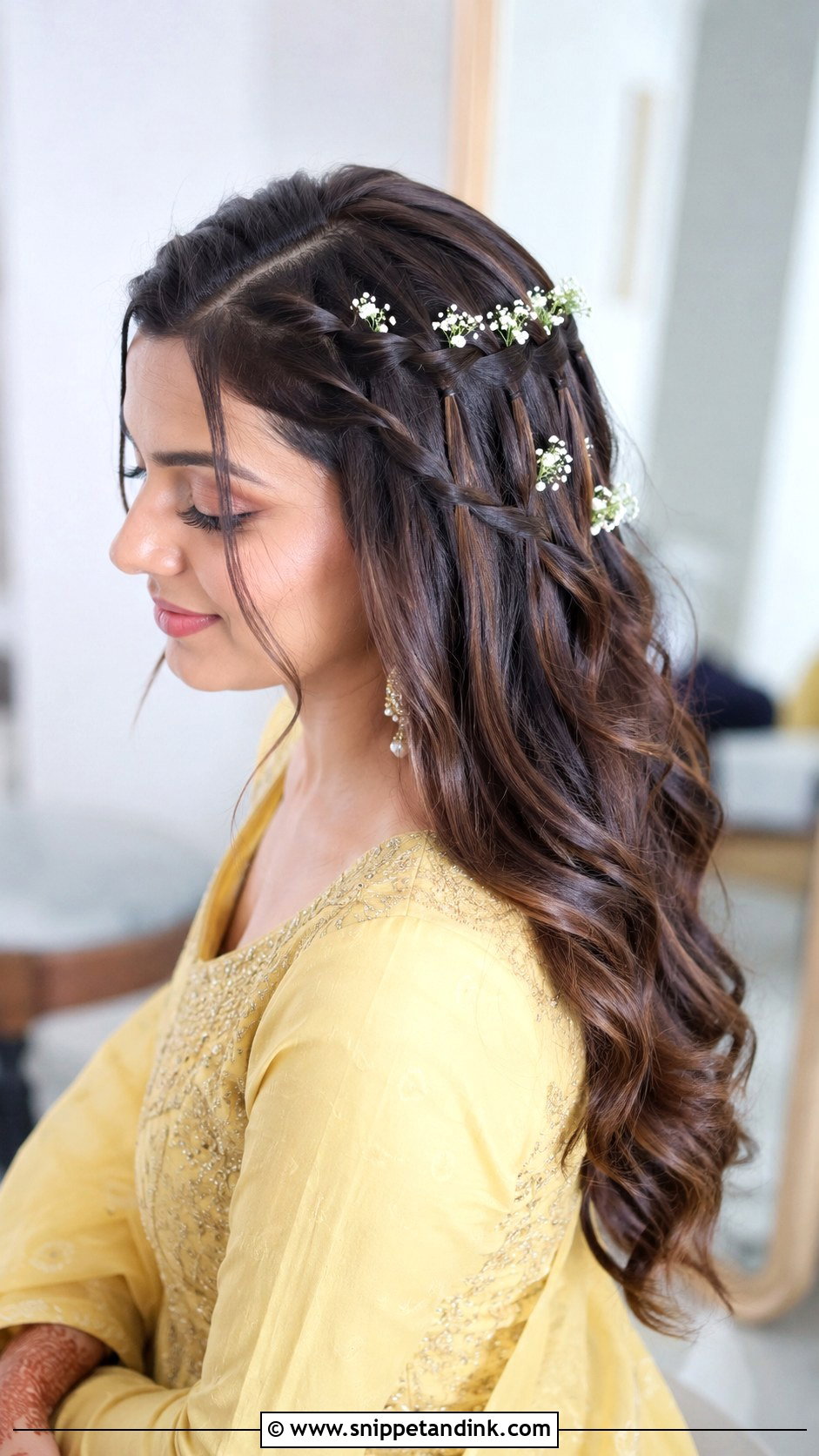
The waterfall braid is light and pretty for haldi and mehndi mornings. I braid across from the side partition, dropping a strand at each cross so it falls through into the loose waves below. Small flowers tucked along the braid suit light lehengas and anarkalis. It is delicate, so it is better for daytime functions than for a long night of dancing.
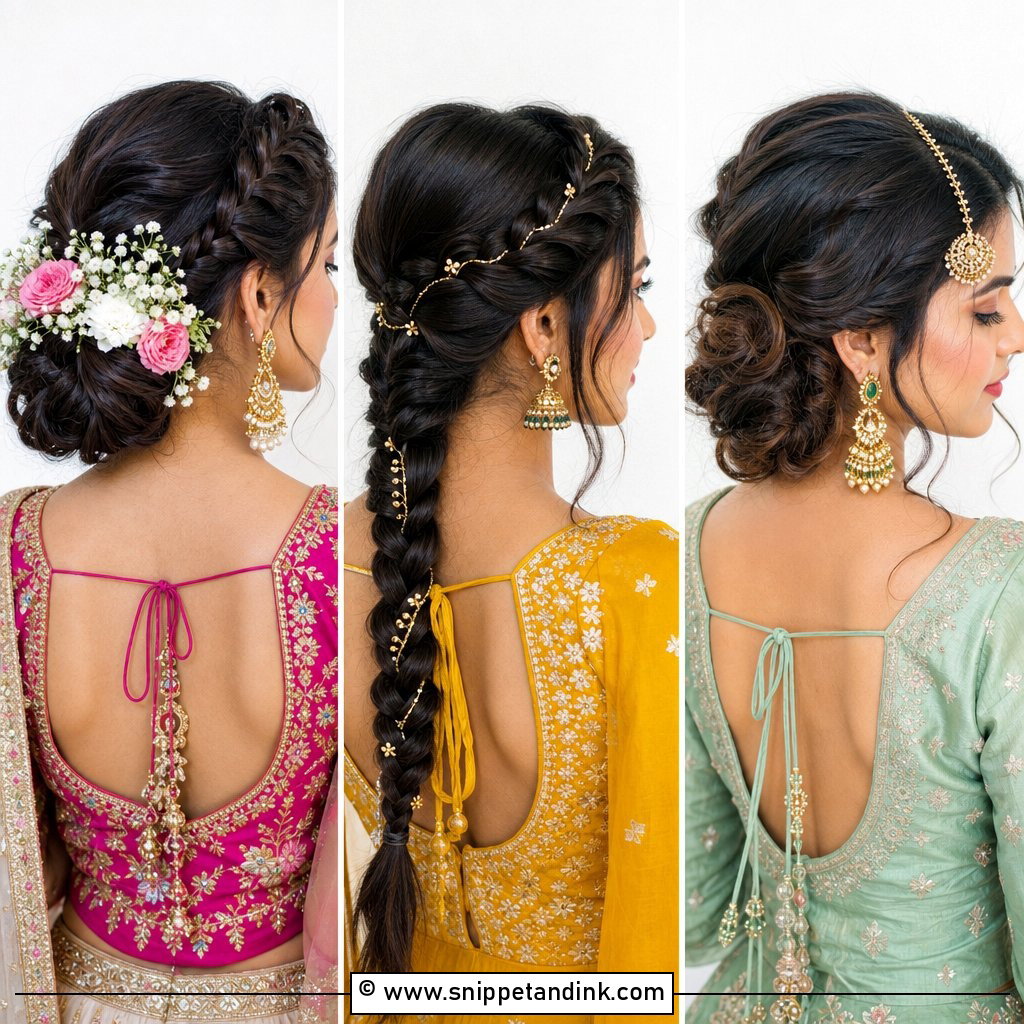
20. Side Part Voluminous Blowout
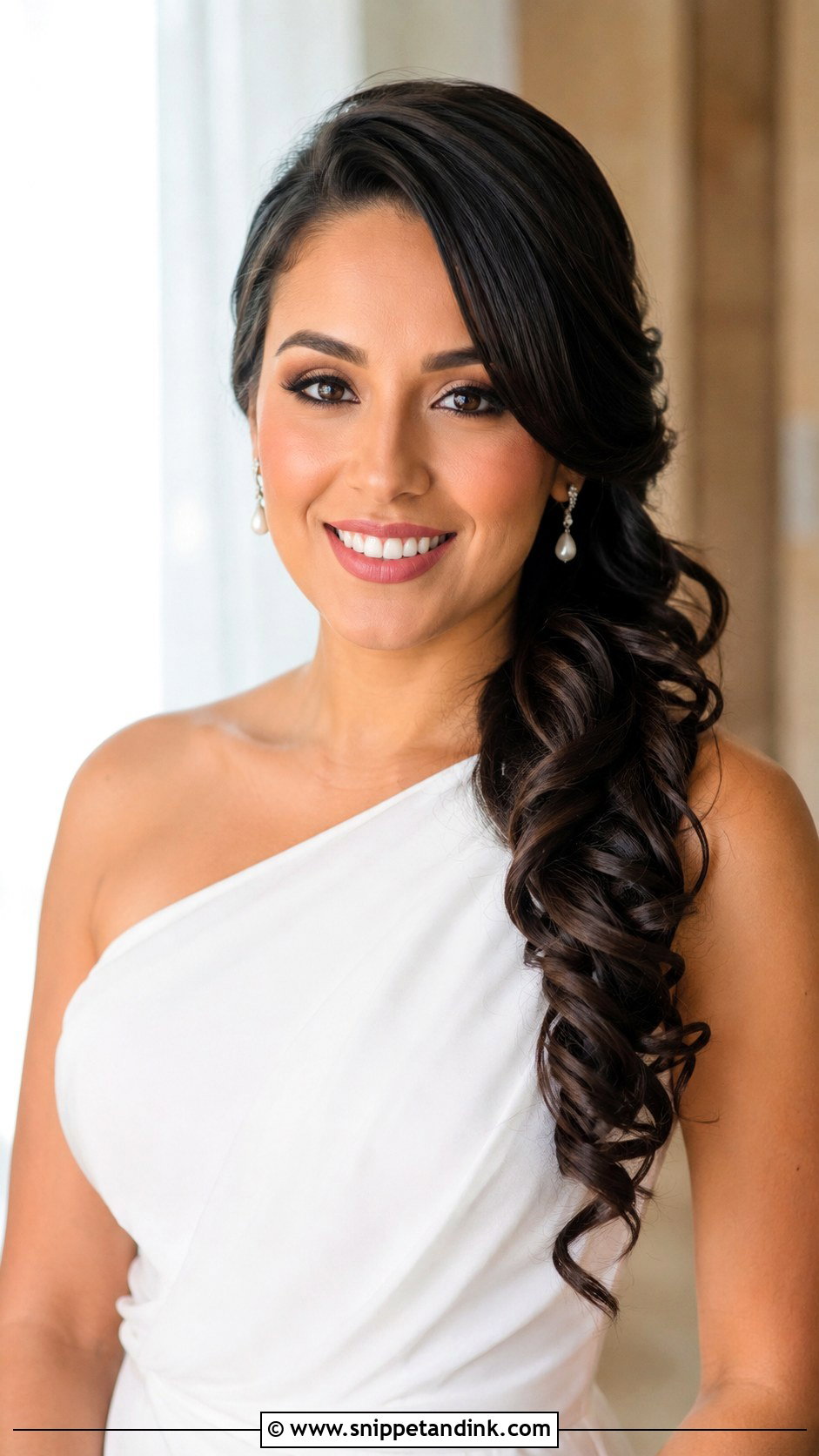
A big blowout is the Bollywood option for the reception. I build root lift with mousse and a round brush, then set the hair in large rollers while makeup is being done. The deep partition pushes the volume to one side. This style loses its bounce faster than any updo, especially in a warm hall, so a small brush and dry shampoo in your clutch makes a big difference for later photos.
Haldi to Reception Without Wrecking Your Hair
Back-to-back functions are hard on hair. Hairspray, pins and heat build up, and by the third day the scalp is sore and the lengths are dry. I plan the days so that the most tension-heavy style isn’t on the day before the ceremony.
- Haldi: tie hair back in a simple braid or bun. Turmeric paste stains, and light or highlighted hair can pick up a yellow tint.
- Wash after the haldi so the scalp is clean before the mehndi or ceremony.
- Mehndi: a braid you won’t need to touch while your hands are drying.
- Ceremony: the firmest style of the week, built to hold the dupatta and jewelry.
- Reception: the softer, open style, since you are no longer carrying a heavy dupatta.
Gajra jasmine is best bought on the day, still in bud. The flowers open through the evening, so a strand that looks closed in the afternoon is fully open by the ceremony. Keep it wrapped in a damp cloth in the fridge until I am ready to pin it in.
Which Function Gets Which Partition Style?
Think about the day each style has to survive. Haldi needs hair tied back, mehndi needs something you won’t have to touch, the ceremony needs a firm base for the dupatta and jewelry, and the reception is your chance to wear it down. Map your outfits first, then pick a style for each function. A single trial with the actual tikka and dupatta tells you more than any number of saved photos.
You'll Like These Ideas:



Leave a Reply