
A Pakistani wedding asks your hair to do different jobs on different days. The mehndi wants color and movement, the barat wants a style that can take a heavy dupatta and jewelry for hours, and the walima usually calls for something softer. Picture-perfect isn’t enough; the style has to suit your neckline, where the dupatta sits, how much the jewelry weighs and how long the event runs. The 20 Pakistani bridal wedding hairstyles below cover every event, from center-parted buns with a matha patti to long braids finished with a paranda, and for each I’ve noted the event it suits best and what to ask your stylist for.
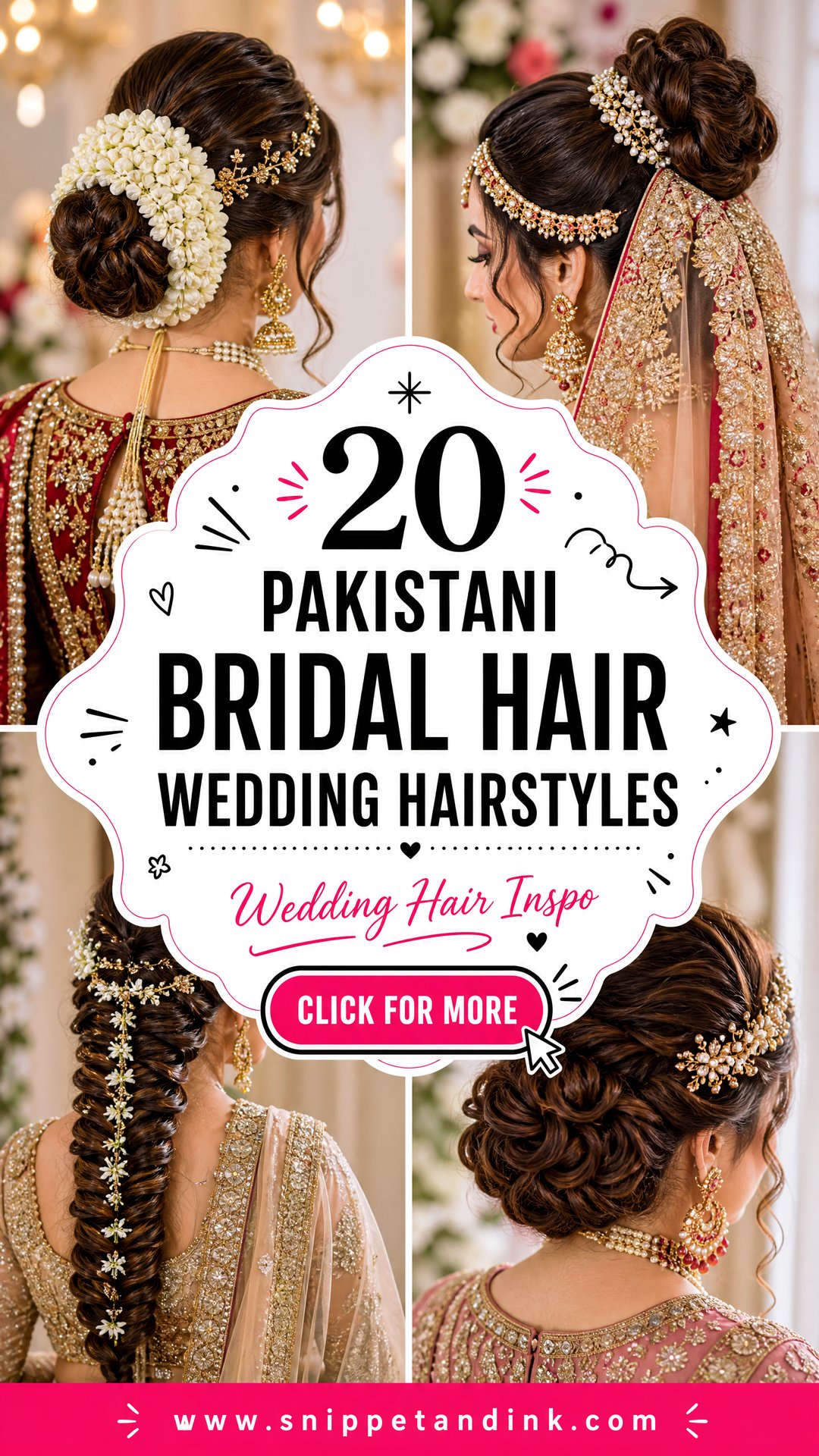
Planning Hair for Mehndi, Barat and Walima Together
Most of my Pakistani brides wear three or four different hairstyles in under a week. Planning them as a set, rather than one at a time, avoids repeating yourself in photos and protects your hair from too much heat in a row.
- Mehndi and mayun: braids, parandas and floral styles. They hold through dancing and need little heat.
- Nikkah: often a softer bun or twisted updo, depending on whether a dupatta covers the head for the ceremony.
- Barat: the most structured style of the week, because it carries the heaviest dupatta and jewelry.
- Walima: waves, curls or a soft bun, in contrast to the barat’s structure.
If your events fall on consecutive days, put the heat-heavy styles (curls and waves) furthest apart and give your hair at least one braided or low-heat day between them. Tell your stylist the full schedule at the first trial so she can plan the week, not just one look.
1. Pakistani Bridal Low Bun With Dupatta
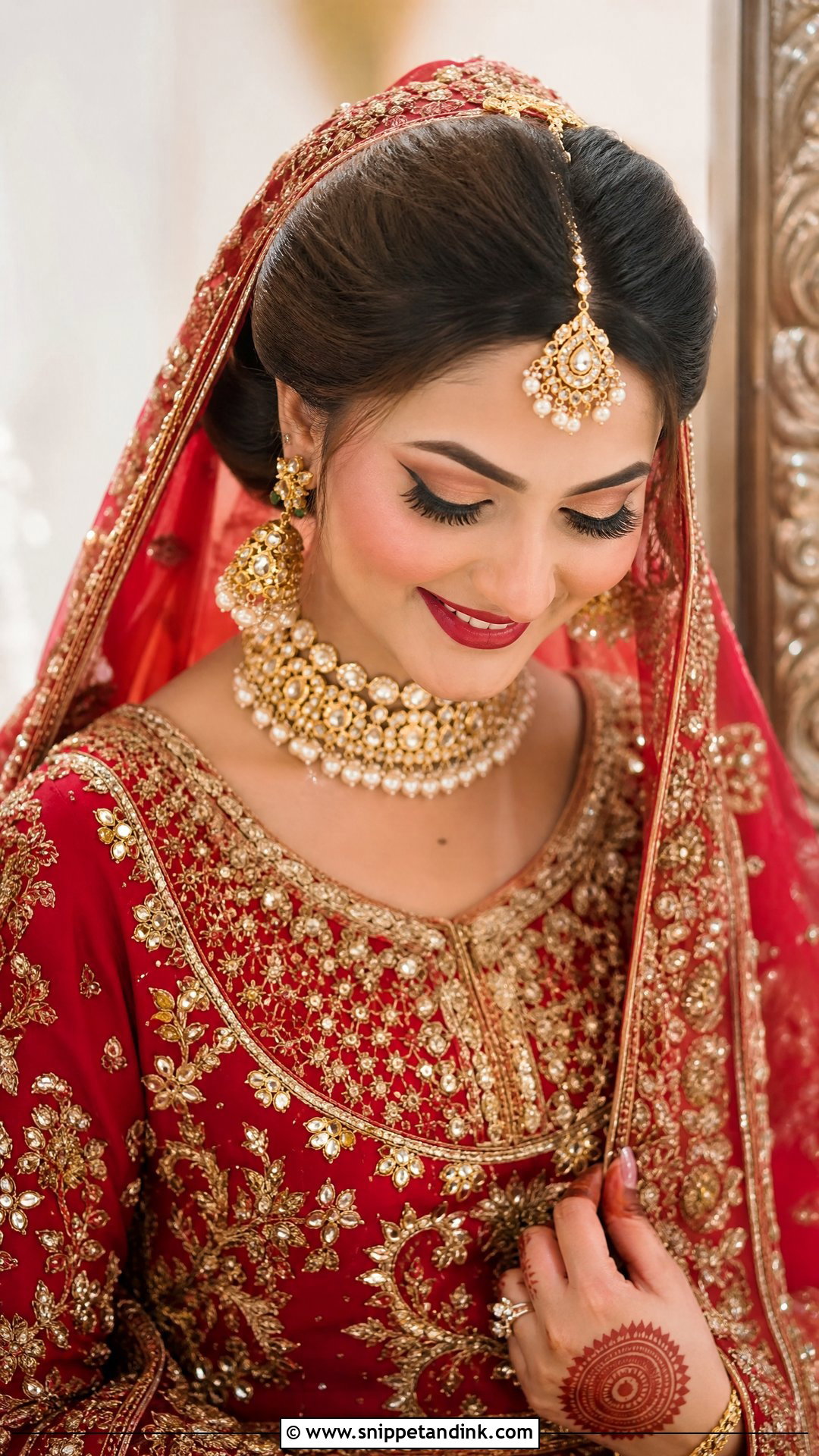
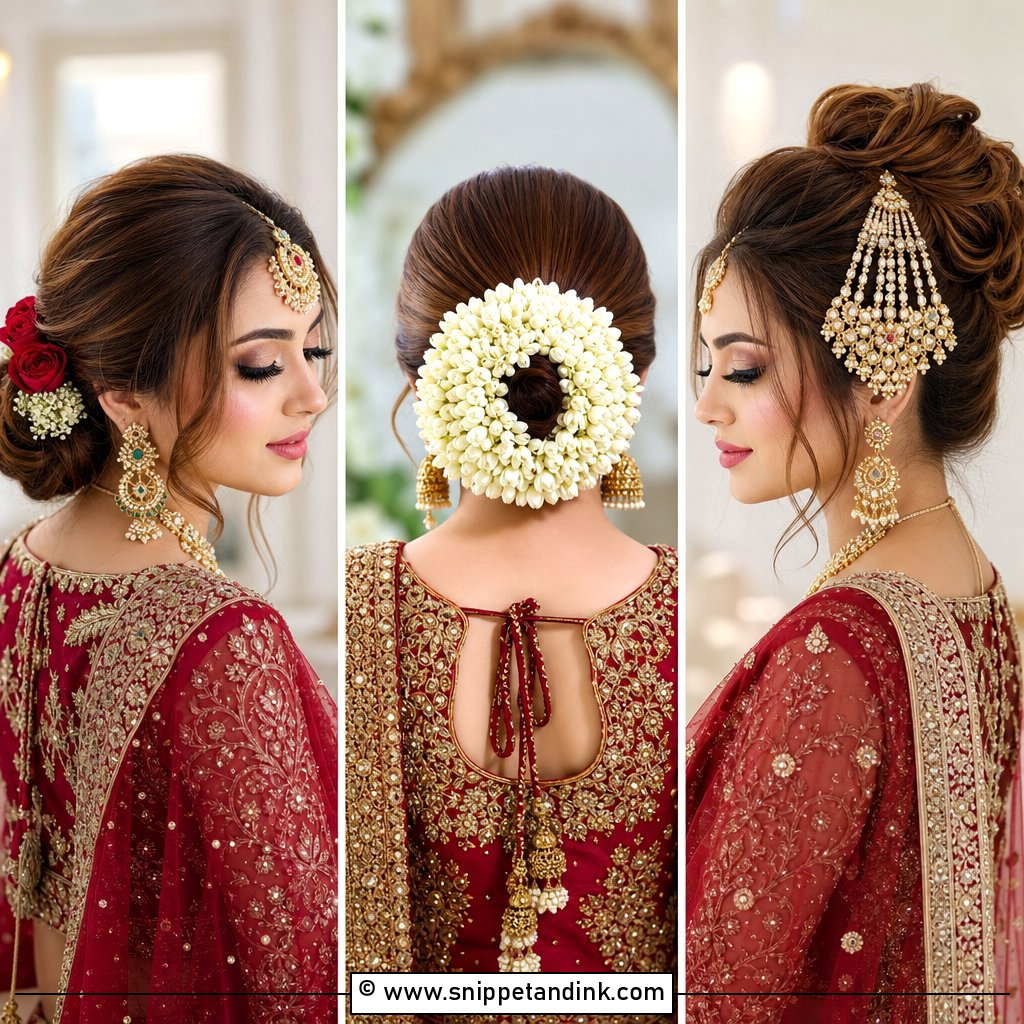
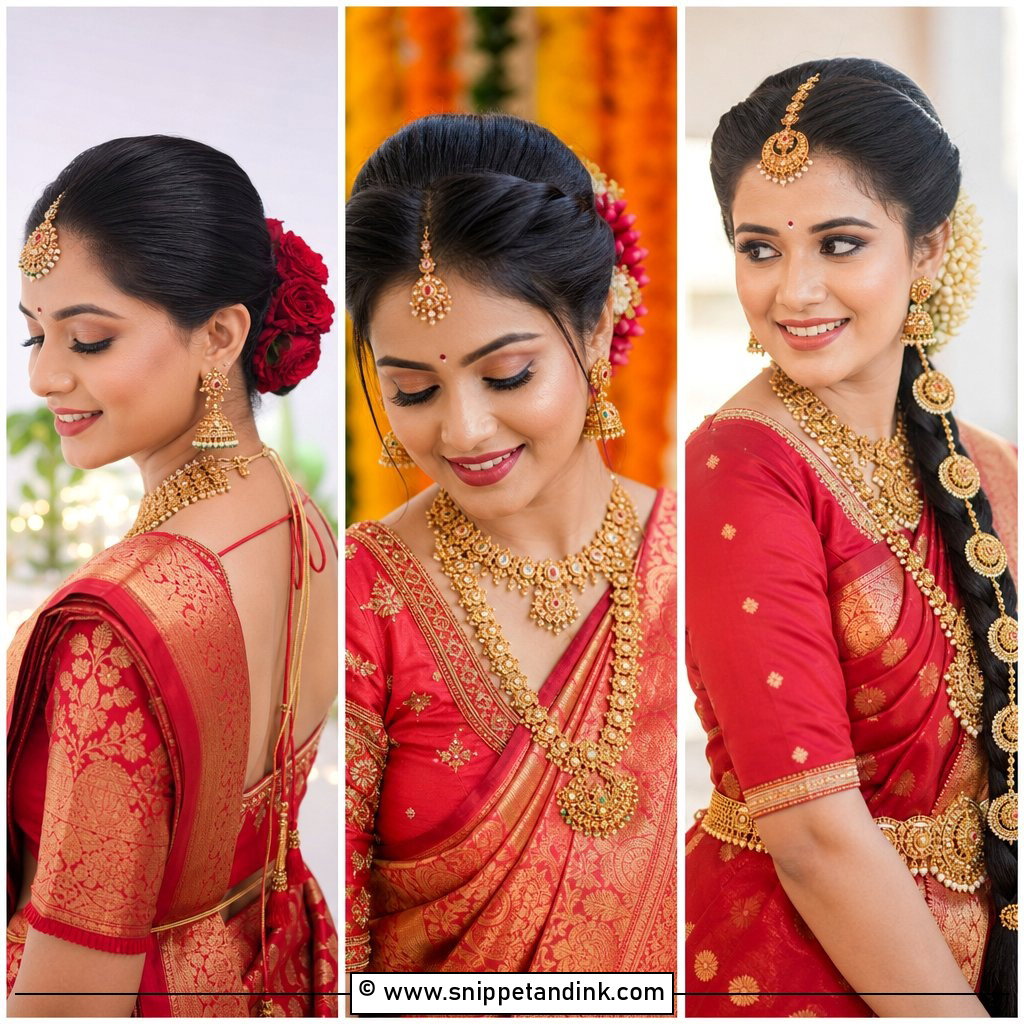
For a barat, I trust a low bun more than any other shape. A Pakistani bridal low bun sitting near the nape gives the dupatta a strong base without hiding your face, and it leaves room for a heavy matha patti, jhumkas and a layered necklace. A soft center part keeps it traditional. Thick hair can make the bun on its own; fine hair needs padding or extensions to look round under the fabric. Pin the dupatta into the upper edge of the bun, not the middle, and it won’t drag the bun downward.
2. Pakistani Bridal Sleek Bun With Matha Patti
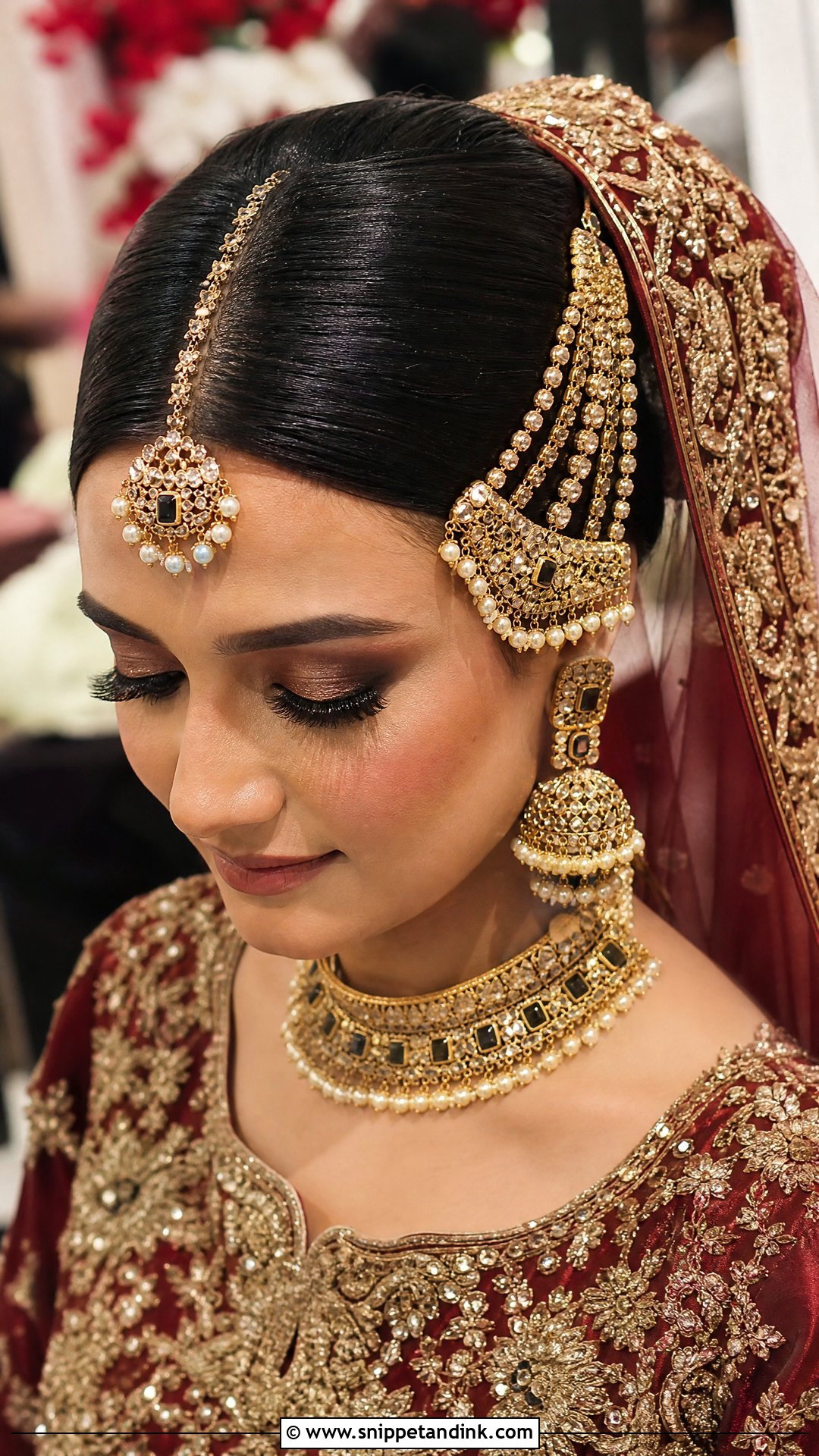
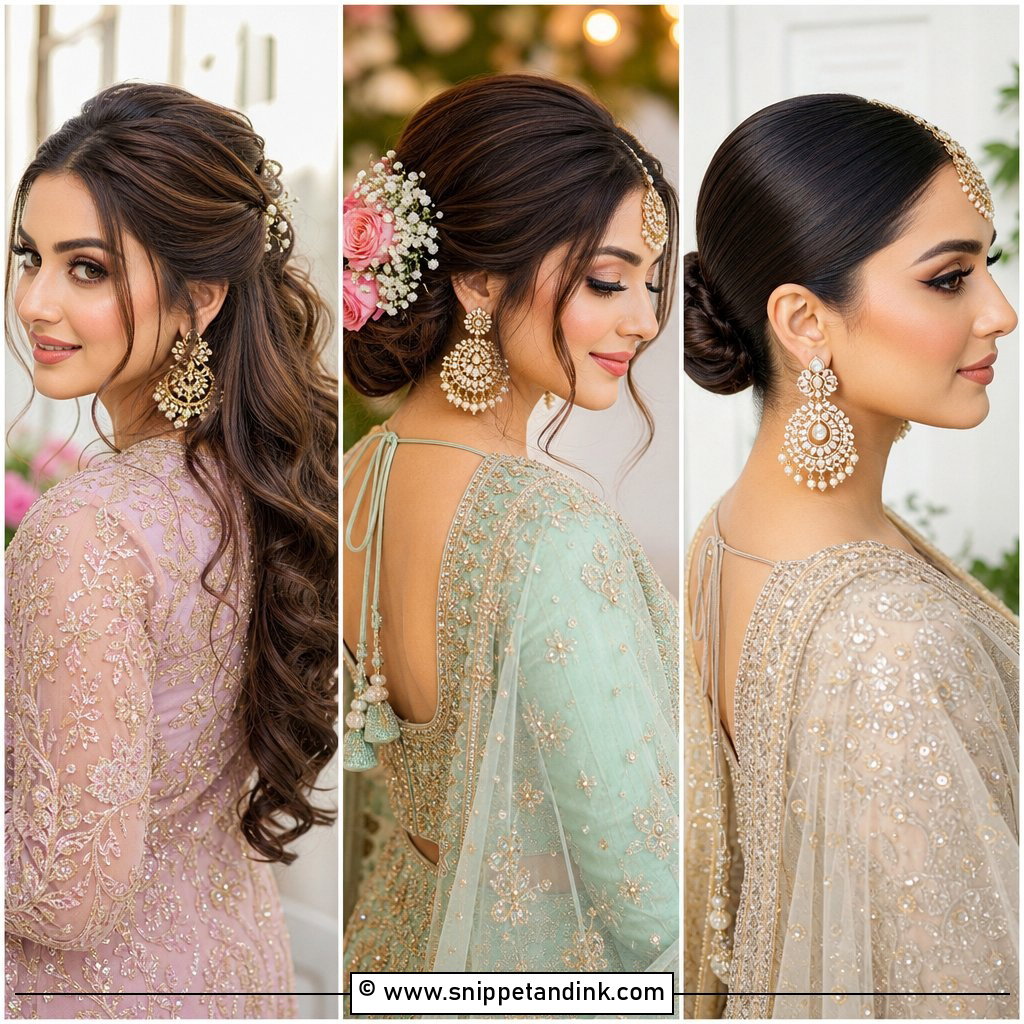
Smooth hair pulled into a tight bun puts every bit of attention on the matha patti, the makeup and the dupatta border. It is the right call when your outfit has a high neckline or very heavy work. The sleek finish also controls frizz through a long ceremony. One request to make clearly: ask for firm hold, not tight. A sleek bun that pulls at the hairline gives most brides a headache within a couple of hours, and you can’t loosen it once the jewelry is set.
3. Pakistani Bridal Gajra Bun
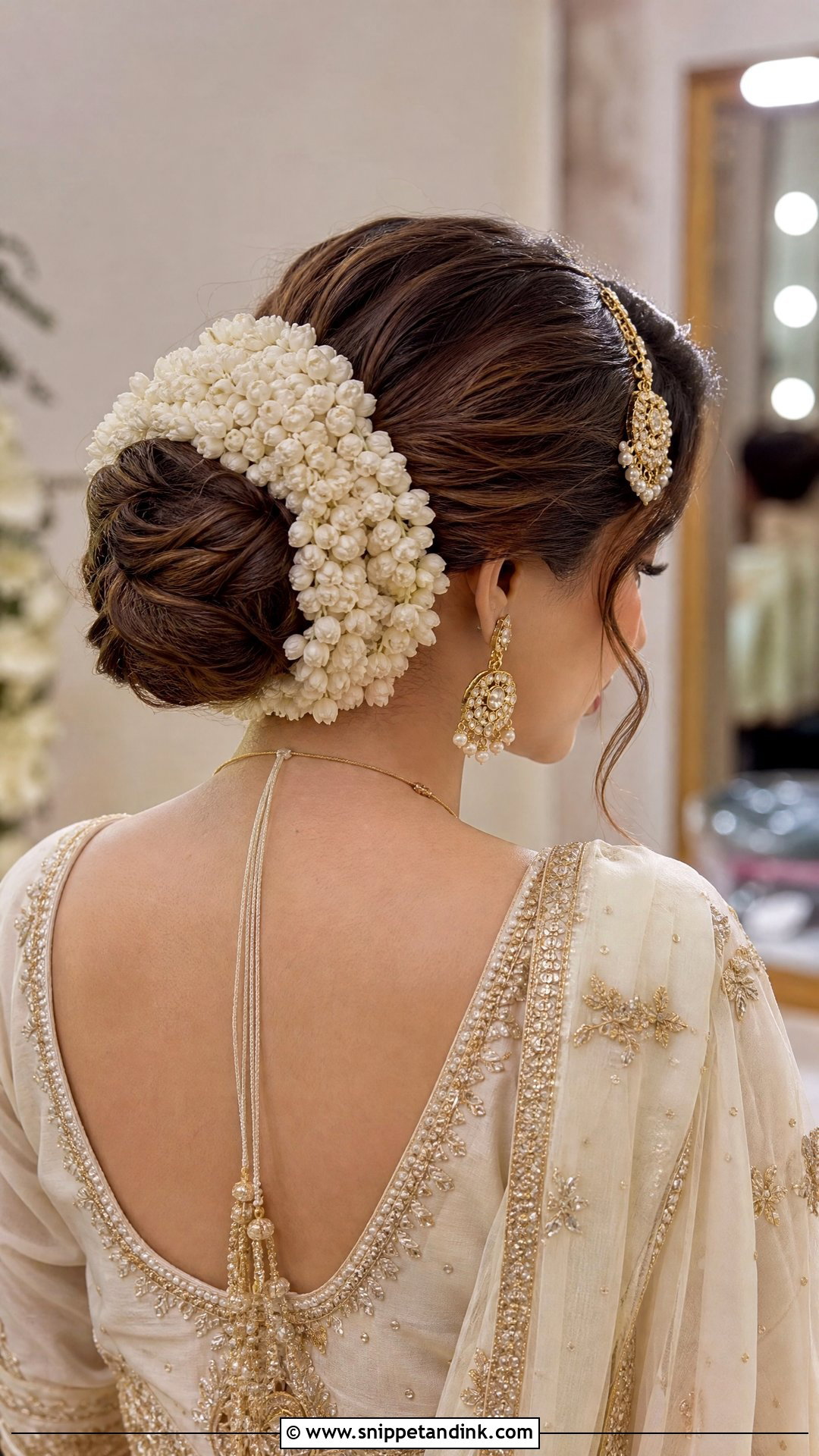
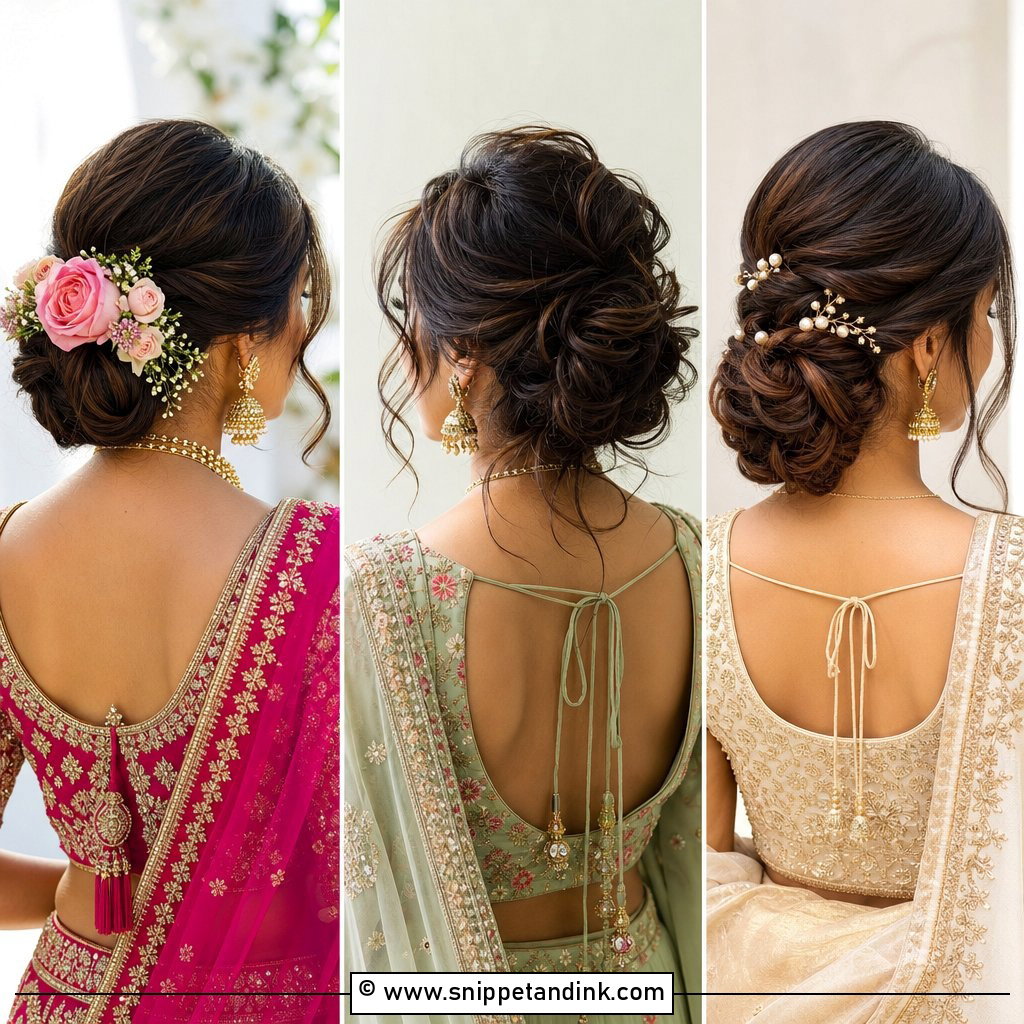
A gajra turns a plain bun festive in a minute. Jasmine, roses or baby’s breath around the bun add scent and softness, and the look works at a mehndi, mayun, nikkah or traditional barat. The bun can sit low, mid-height or slightly full depending on the dupatta. Since flowers make the back view more detailed, it helps in stage photos where guests see you from behind. I keep the front smooth so the flowers don’t fight with face-framing pieces. Fresh jasmine bruises fast, so the gajra should go on at the very end.
4. Pakistani Bridal High Bun With Dupatta
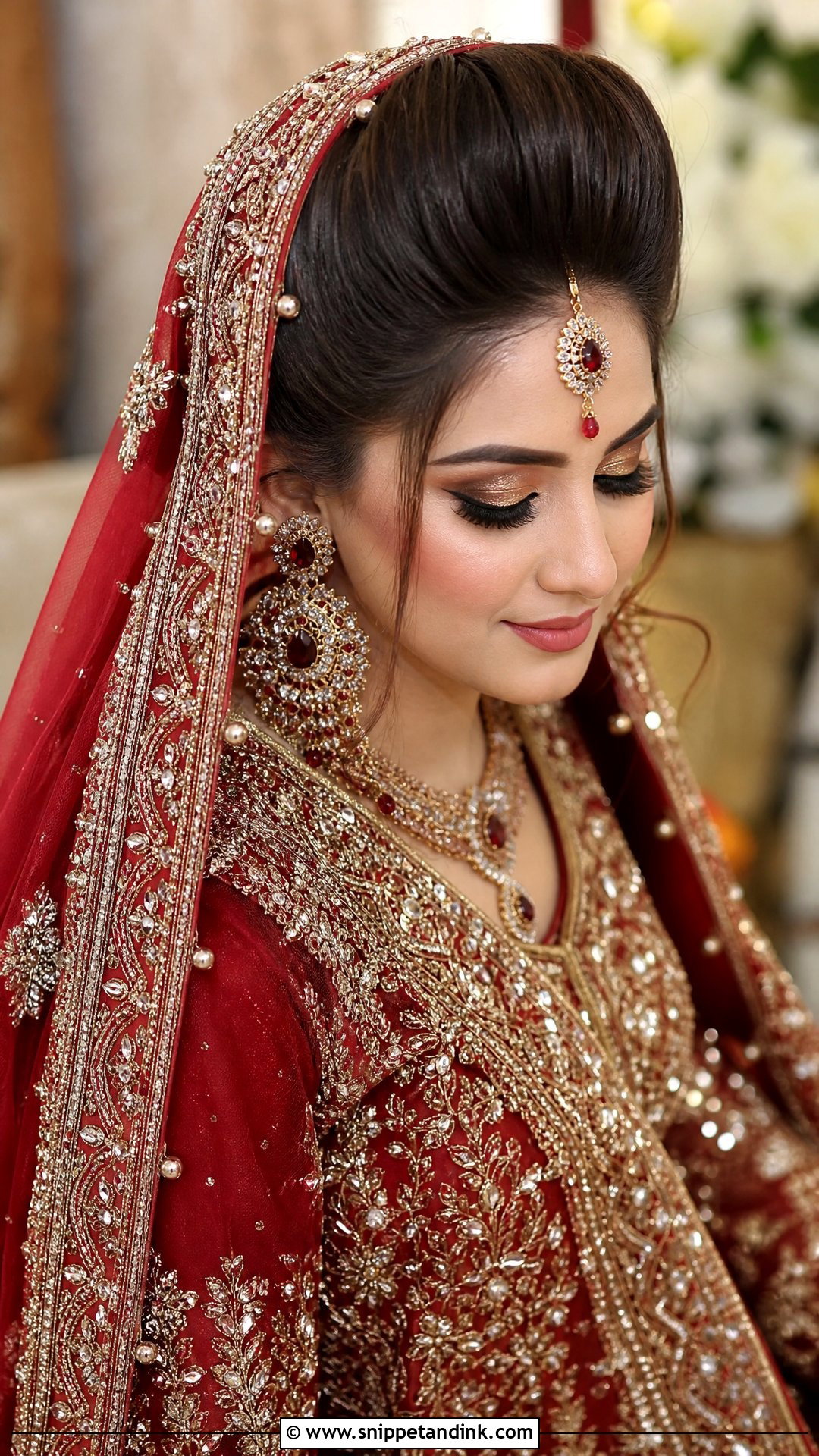
Height at the crown is useful when the dupatta is heavy: the high bun lifts the fabric instead of letting it flatten your hair. It also lengthens the neck and frames statement earrings. The front can be sleek, puffed or softly parted. Round faces often look great with the extra height; long faces look better with a lower, softer crown. Expect the dupatta to fall from the top of the bun, which gives a more structured silhouette in side profile photos.
5. Pakistani Bridal Braided Bun
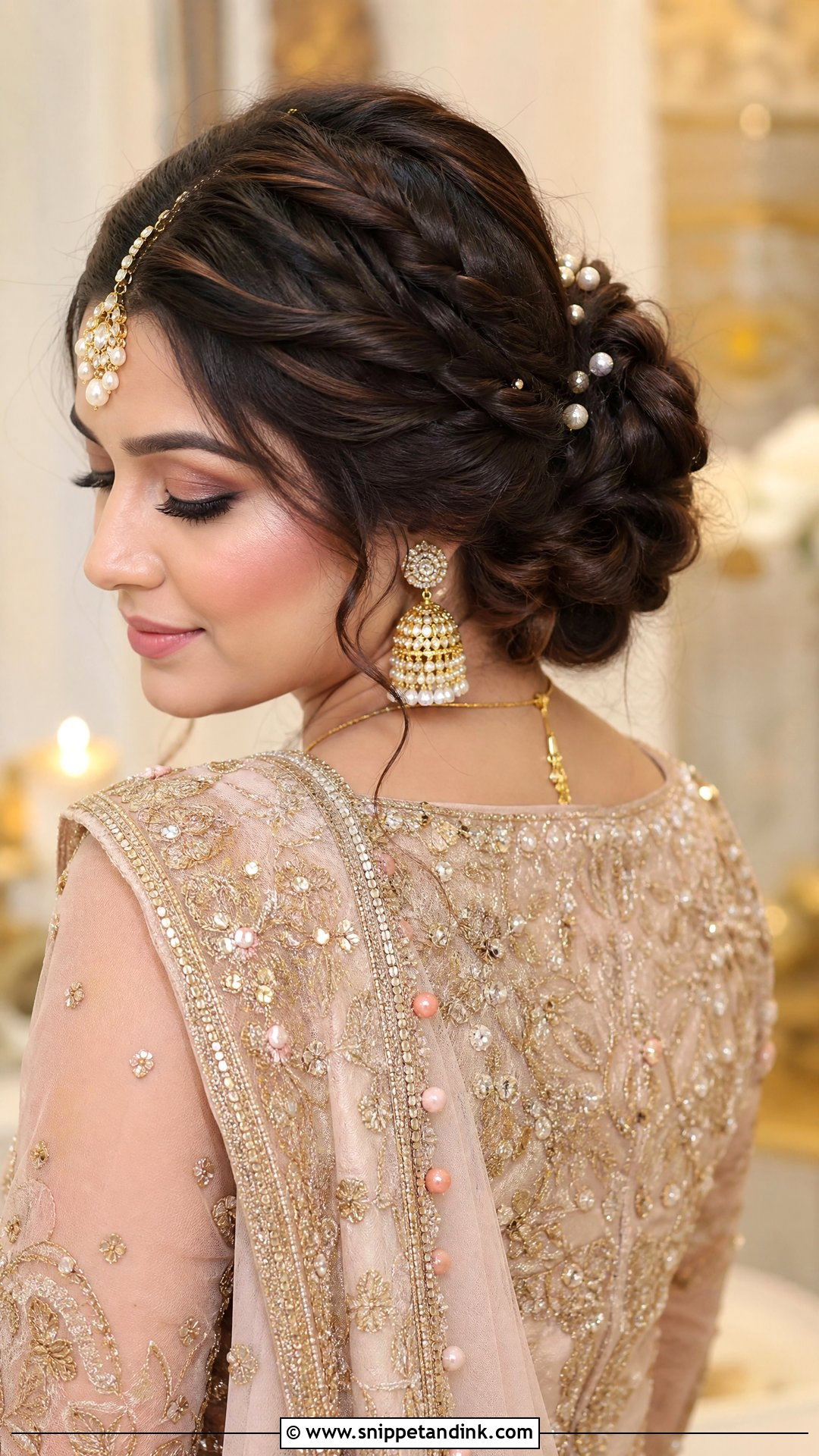
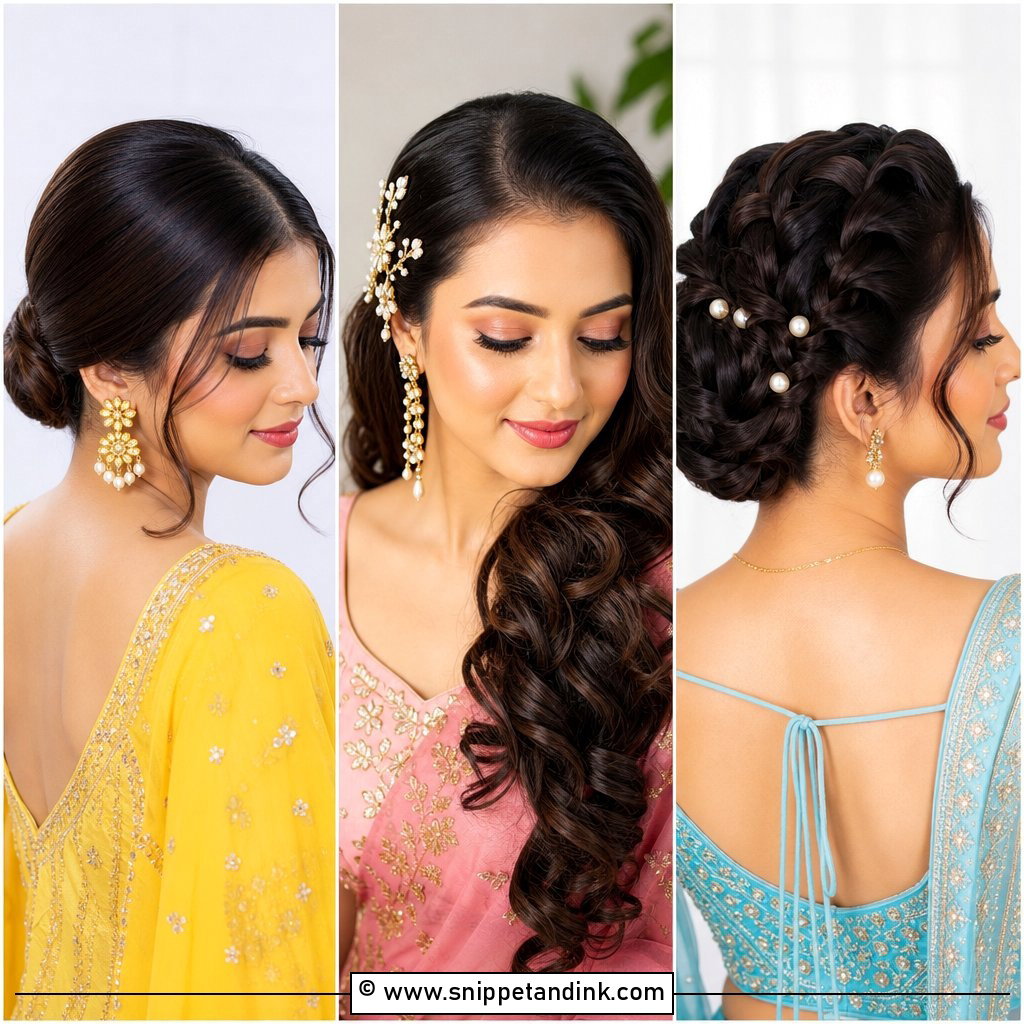
Braided sections wrapped into a bun give you texture while keeping every strand under control. It suits a bride who wants traditional without plain, and it takes pearls, pins, a gajra or small flowers well. The real advantage shows when the dupatta comes off for portraits: a smooth bun can look flattened by then, while braids keep their shape. Keep the front clean with a middle part, a soft puff or a few waved pieces.
6. Pakistani Bridal Side Bun
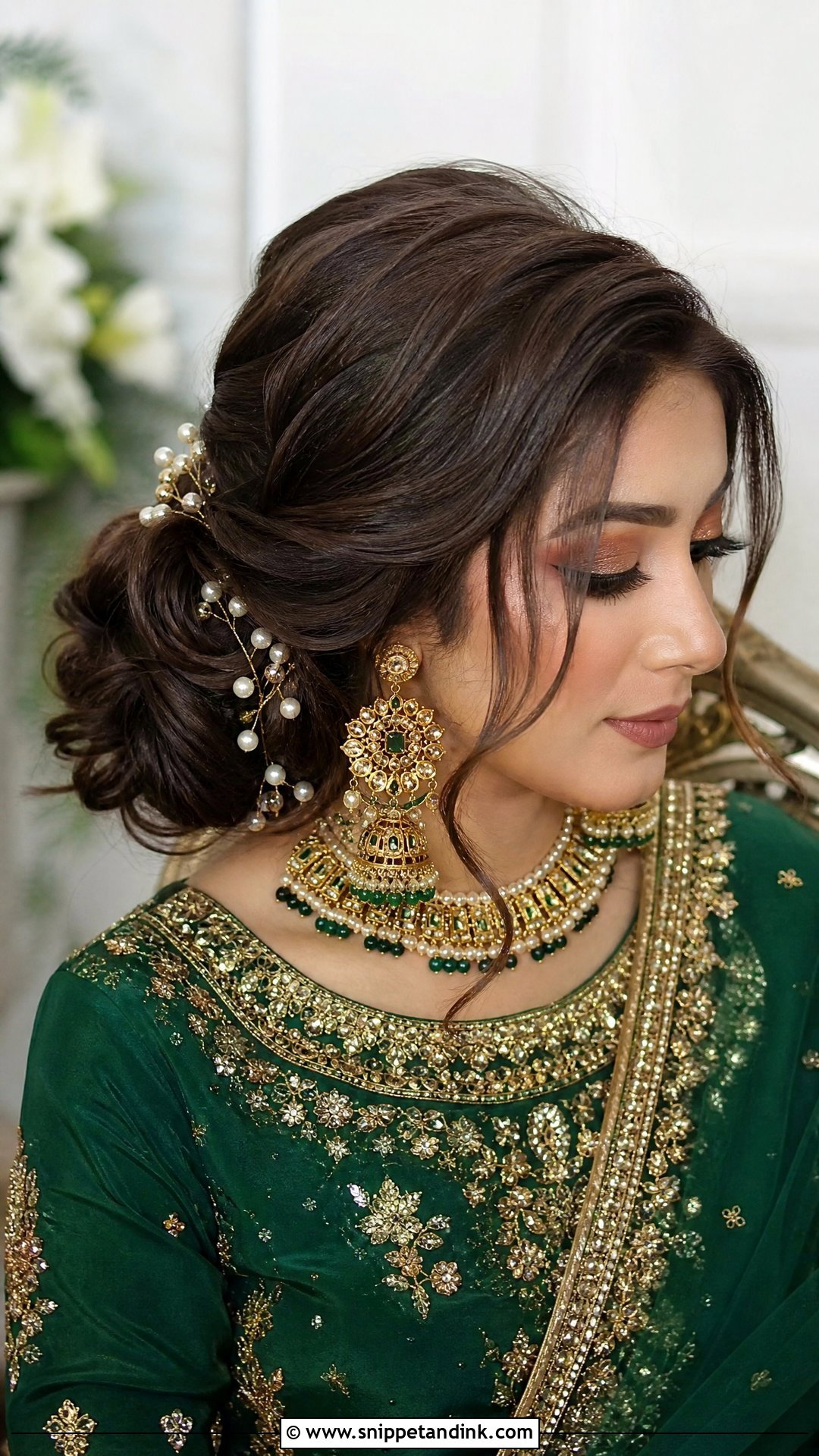
A side bun sits low near one side of the neck, which shows off earrings, the dupatta border and detailed blouse work. It gives more movement around the face than a center bun. Soft waves or twists can lead into it. I usually suggest it for walima, nikkah or an engagement. It can carry a barat too, but only if it’s pinned firmly, because a heavy dupatta pulls an off-center bun sideways over the evening.
7. Pakistani Bridal Open Curls
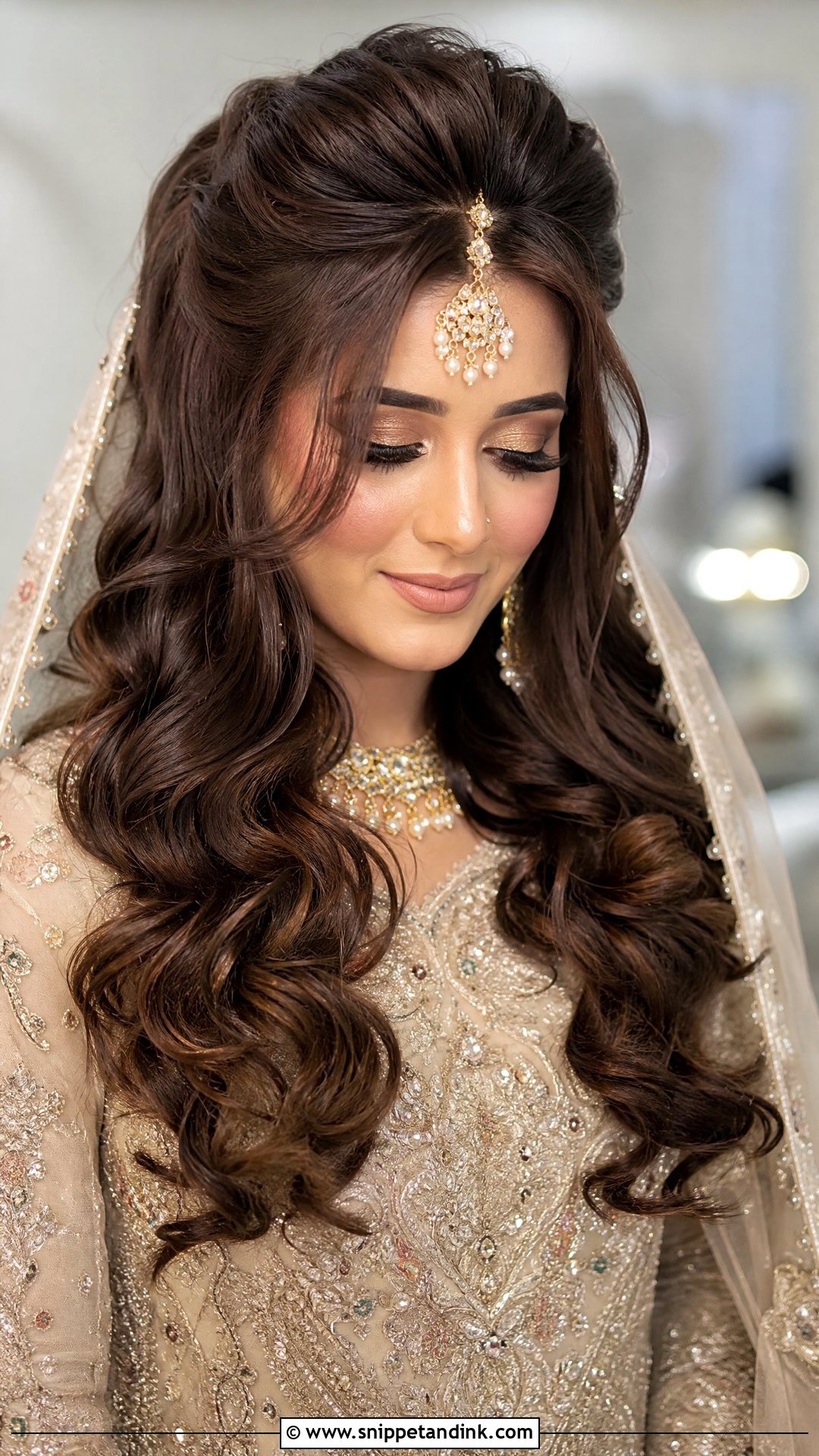
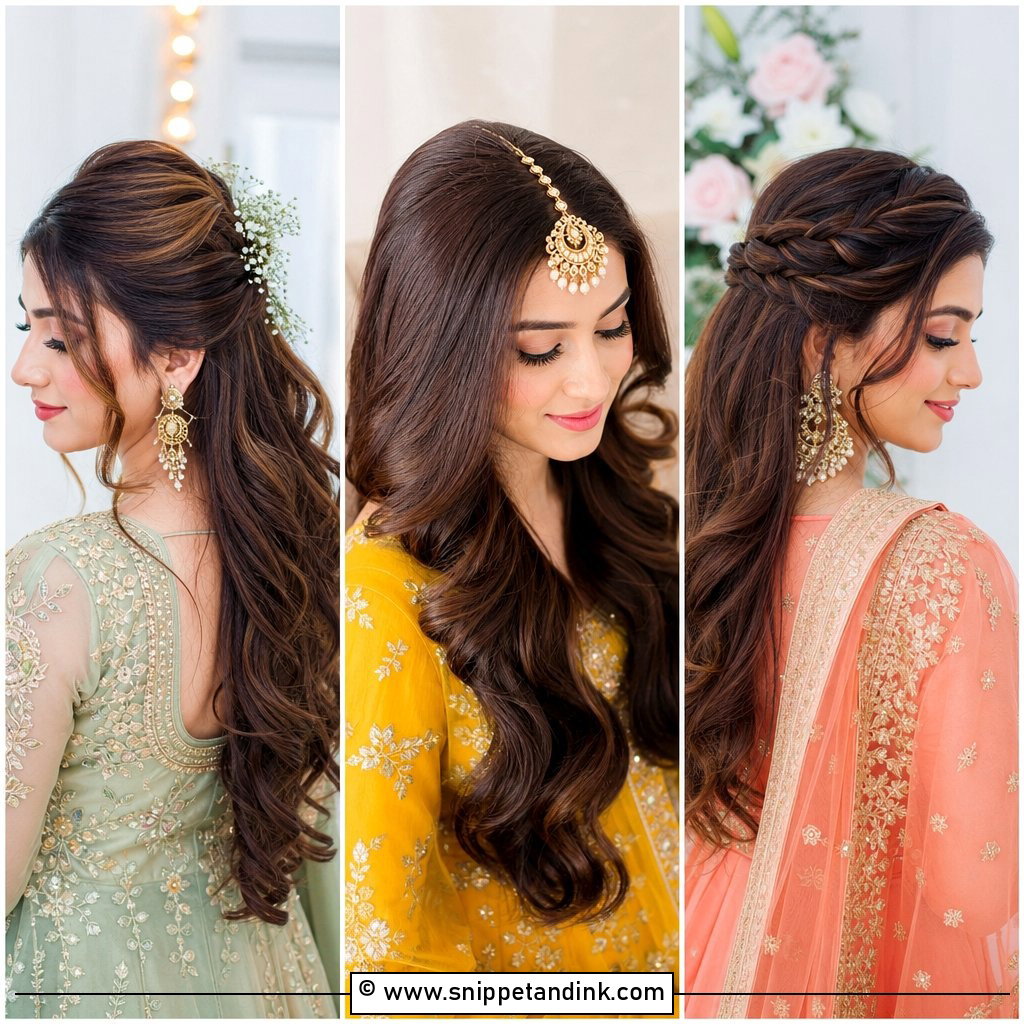
Open curls are the softest choice and the one that suits walima or a reception best, especially with pastel or champagne outfits. The hair is curled in long waves with volume at the crown and controlled layers around the face. If a dupatta goes on your head, ask your stylist to build a small pinned base at the crown first, or the curls collapse under it. Extensions add length and fullness. I brush curls out once and then leave them; over-brushing turns defined curls into frizz.
8. Pakistani Bridal Half Up Curls
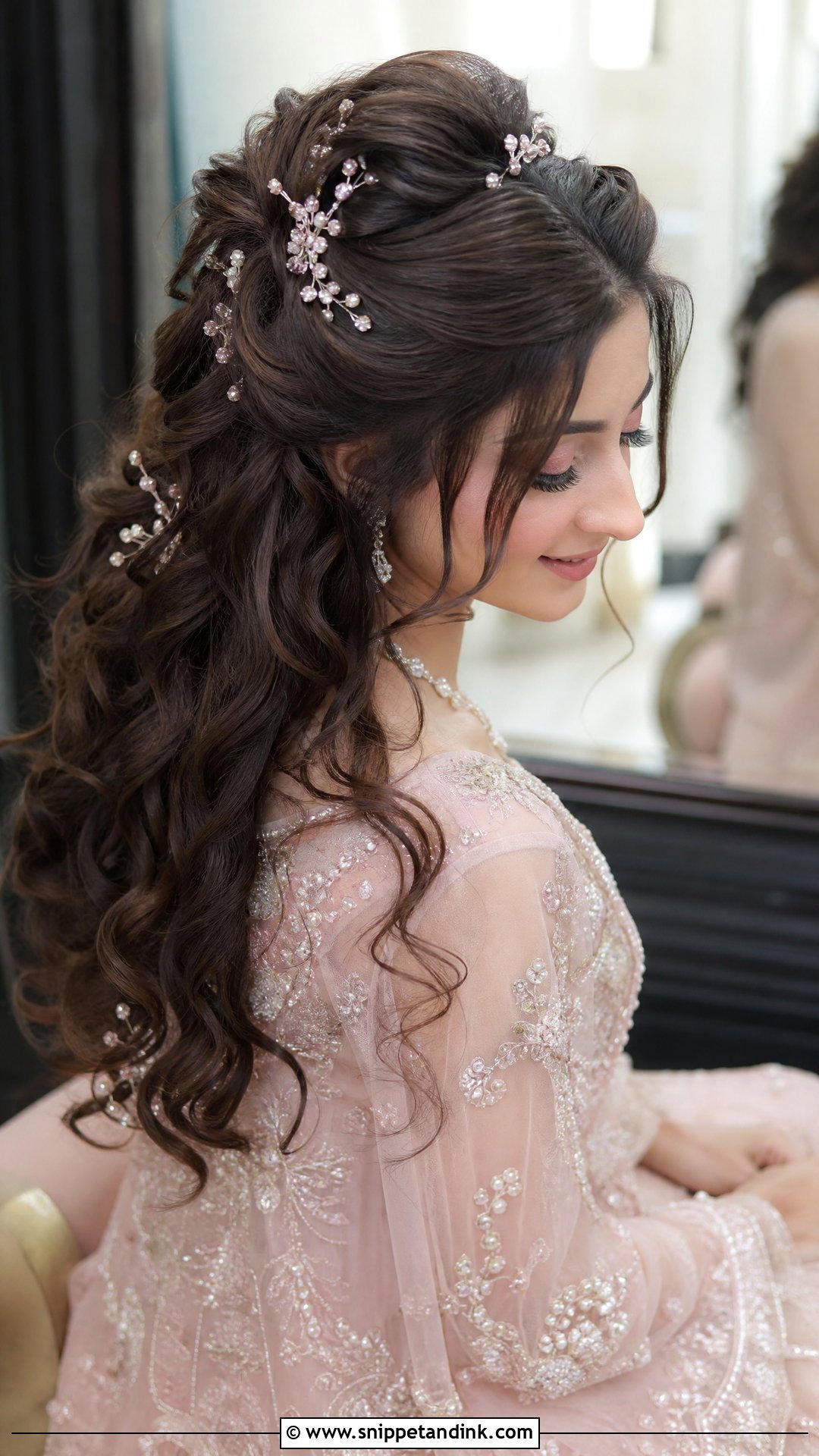
Half up with curls gives you open hair plus enough structure at the crown to set the jewelry and dupatta. The top section is pinned back with volume while the rest falls over the shoulders. It works with a tikka, a passa and delicate hair pins. Medium-length hair can use extensions for fullness. Near the jewelry, keep loose pieces to a minimum; they catch on hooks and chains and end up tangled by the end of the night.
9. Pakistani Bridal Long Braid With Paranda
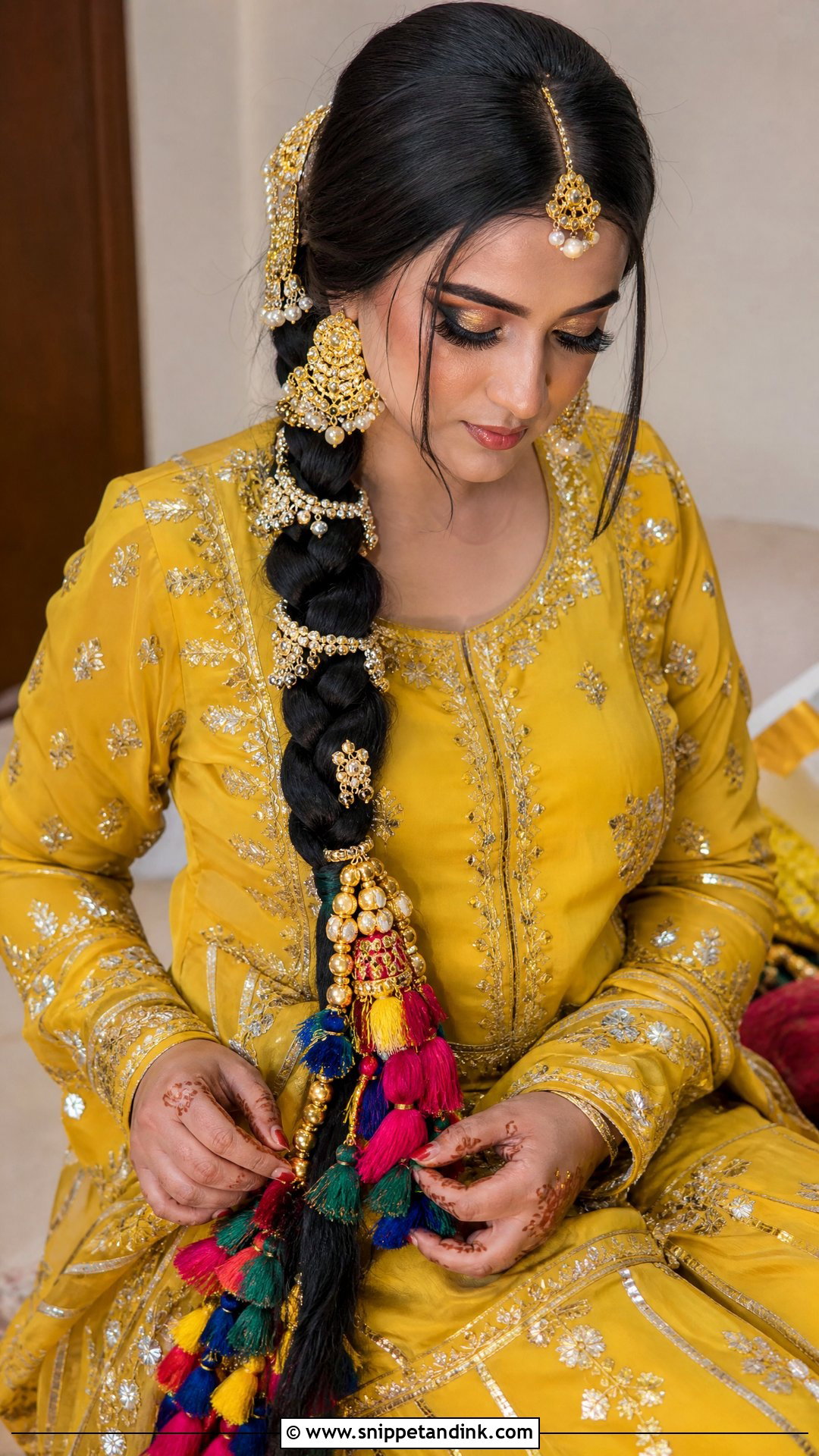
Nothing says mehndi or mayun like a long braid finished with a paranda. The braid can be smooth or slightly textured, and the paranda’s tassels are usually chosen to match the outfit, so it sits naturally with gota, bangles and bright mehndi colors. It is practical as well: the hair stays secure through dancing and long celebrations. Shorter or finer hair can borrow length from extensions. I weave the paranda in from about a third of the way down the braid, so its weight is spread along the plait rather than hanging off the ends.
10. Pakistani Bridal Fishtail Braid
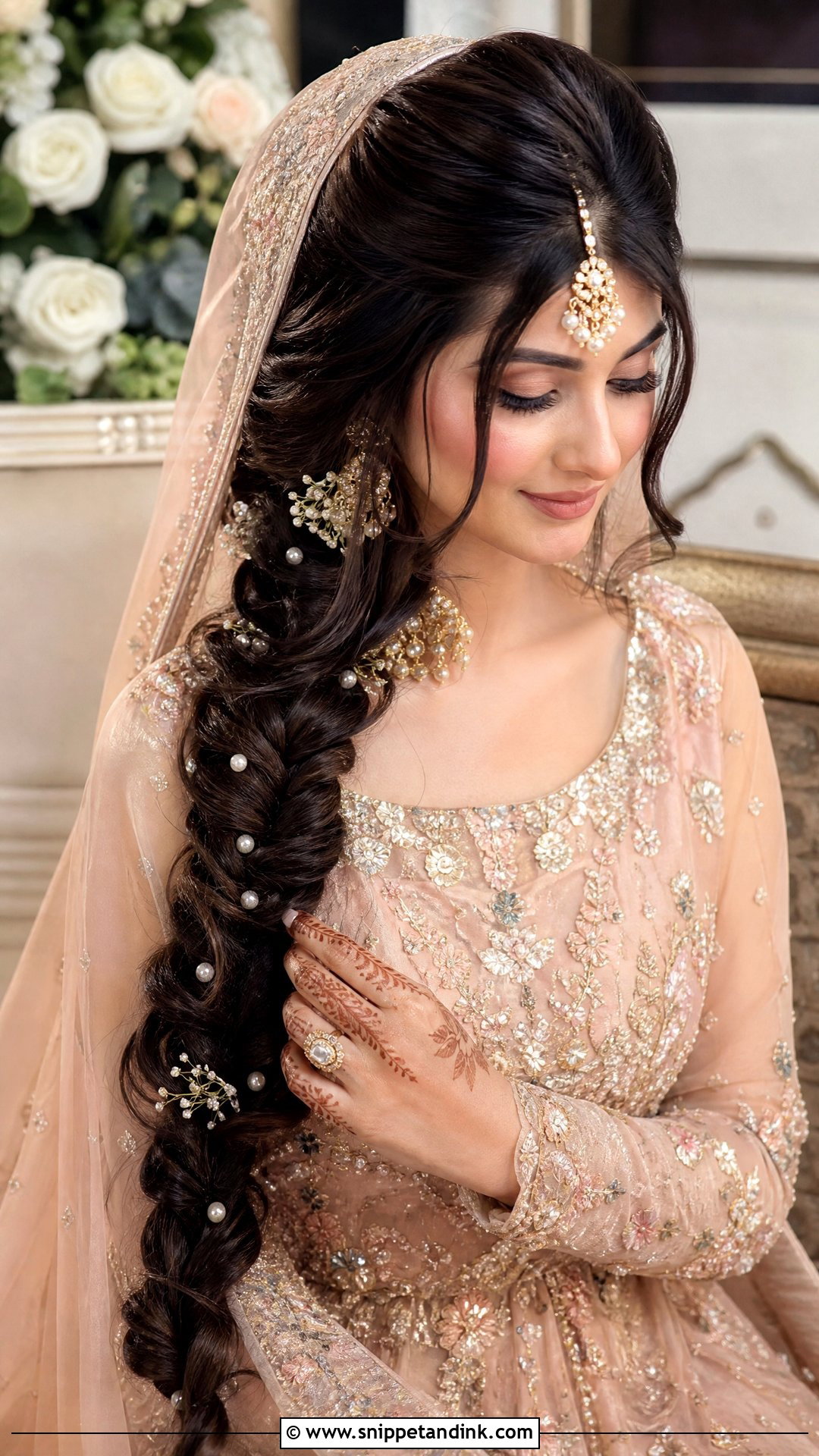
A fishtail is detailed without feeling heavy, and it suits a mehndi, nikkah or relaxed daytime event. It can run down the back or come over one shoulder for photos. Making it slightly fuller, by widening the crossings after braiding, gives a richer look with pearls, mini flowers or delicate pins. Your hair stays visible even with jewelry and a dupatta. Add some lift at the crown and smooth the face-framing sections, otherwise a fishtail can read as casual rather than bridal.
11. Pakistani Bridal Bubble Braid
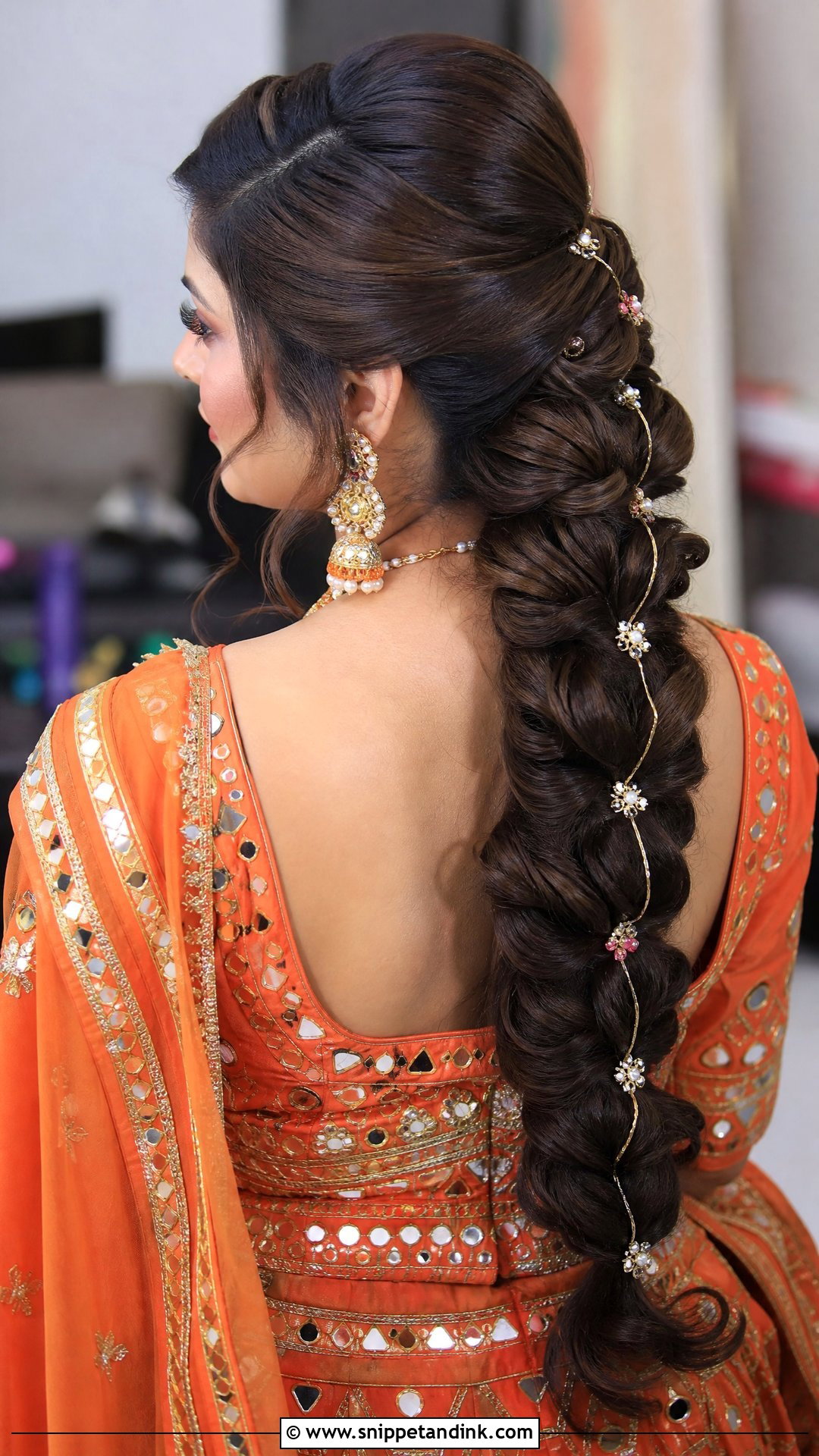
Modern, but still at home with traditional clothes, a Pakistani bridal bubble braid is a long ponytail tied at intervals and puffed out into rounded sections. It suits mehndi outfits, shararas and ghararas. Brides who want volume without tight braiding like it. Flowers, pearls, gold thread or paranda details can sit between the bubbles. Use small clear elastics and pull each bubble out evenly before adding decoration; uneven bubbles are the first thing you notice in a back-view photo.
12. Pakistani Bridal Puff Bun
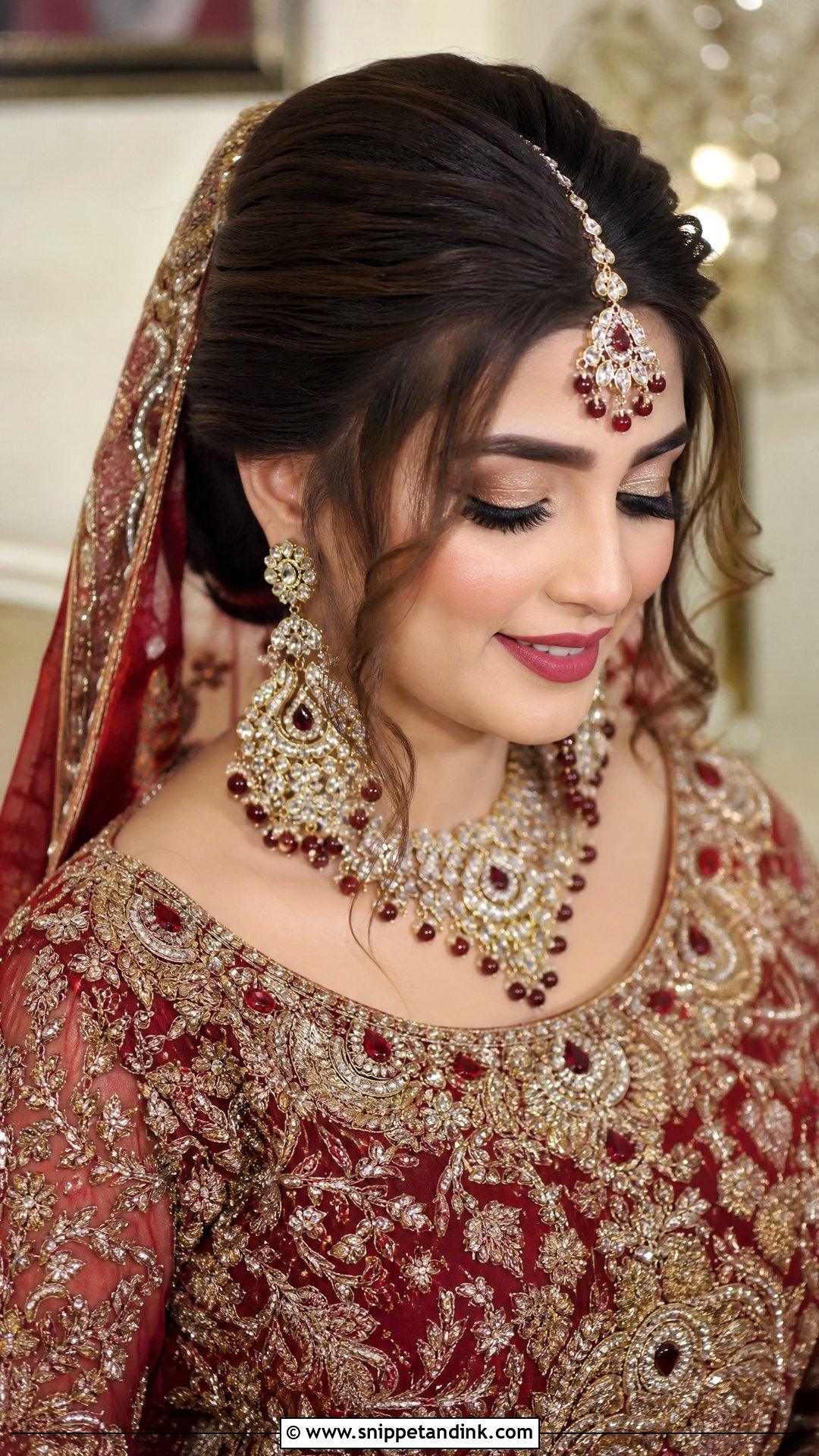
Lift at the crown without a severe front: that is what a Pakistani bridal puff bun does. The puff is rounded and blended into a bun at the back, and it holds a tikka, matha patti, passa and heavy dupatta well. With a small forehead, keep the puff gentle; on a round face, a little more lift balances the shape. I tease only the underneath layer at the root and smooth the top over it. It’s a strong choice for barat, nikkah and formal family portraits.
13. Pakistani Bridal Center Part Bun
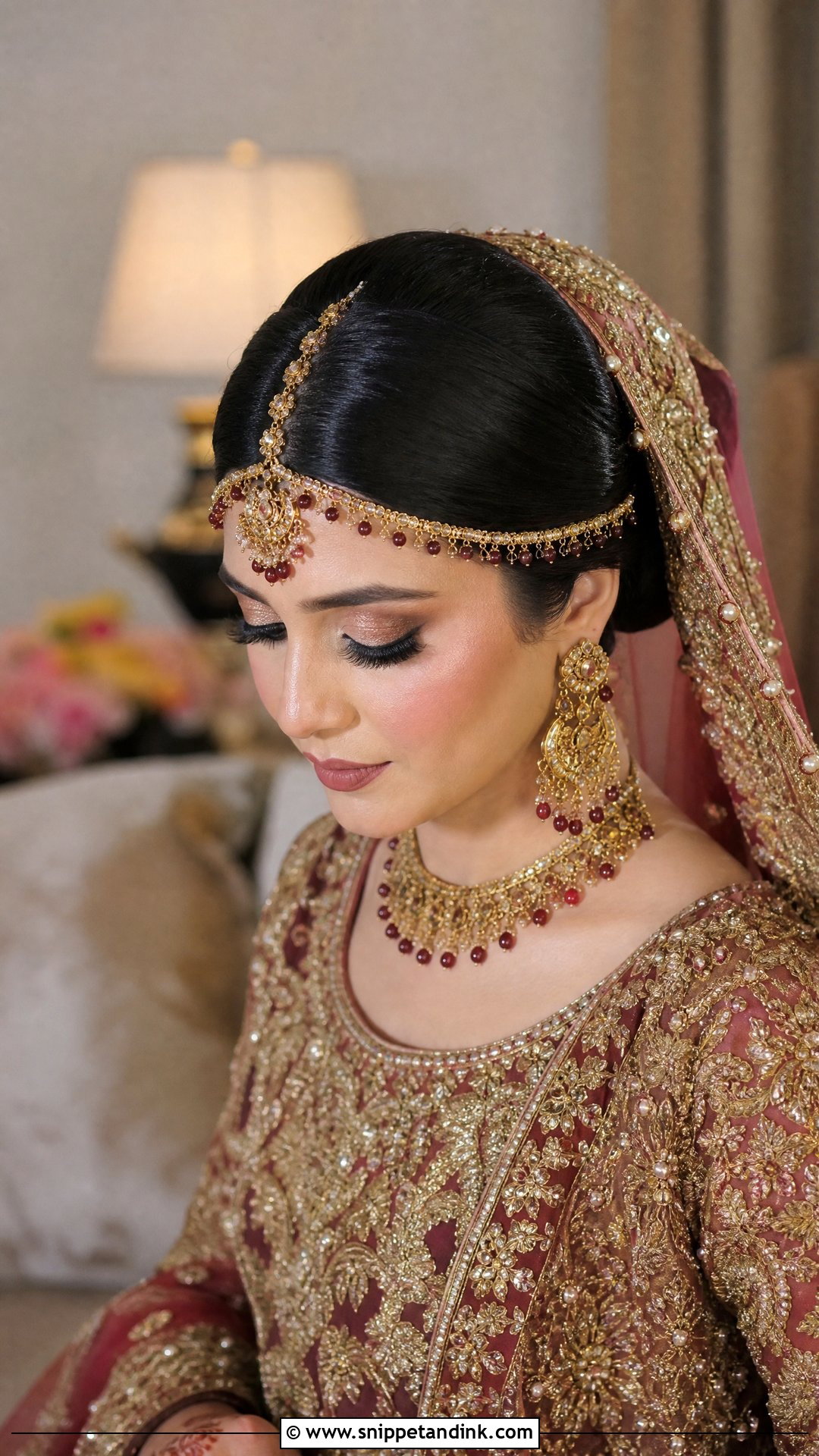
Symmetry is the point of a center-part bun, and it lines up perfectly with a tikka and matha patti. The bun itself can be low, round, braided or wrapped. It suits a bride who wants a traditional look without volume at the front, and it keeps attention on the eyes and jewelry. A smoothing cream gives a cleaner shine than heavy spray. If you want a little softness, a couple of fine face-framing pieces are enough, curled away from the face.
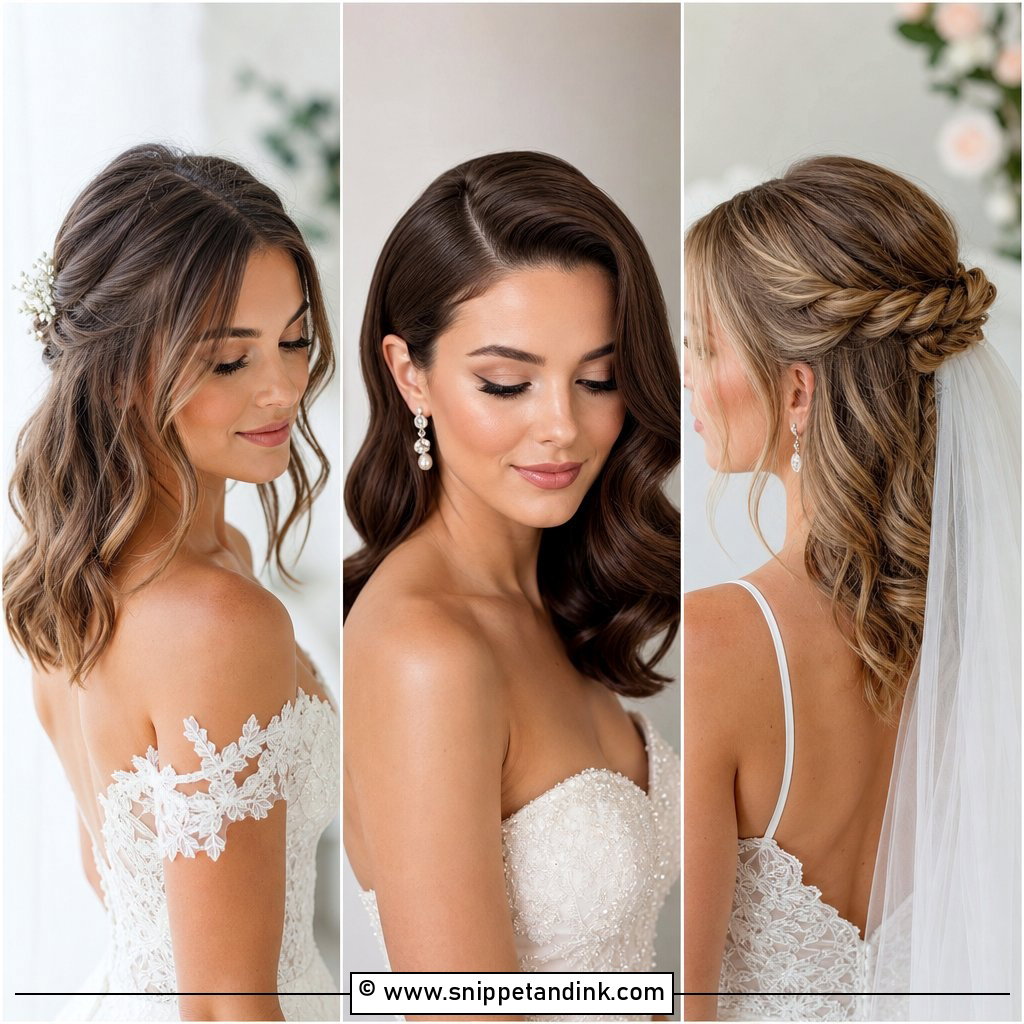
14. Pakistani Bridal Side Part Waves
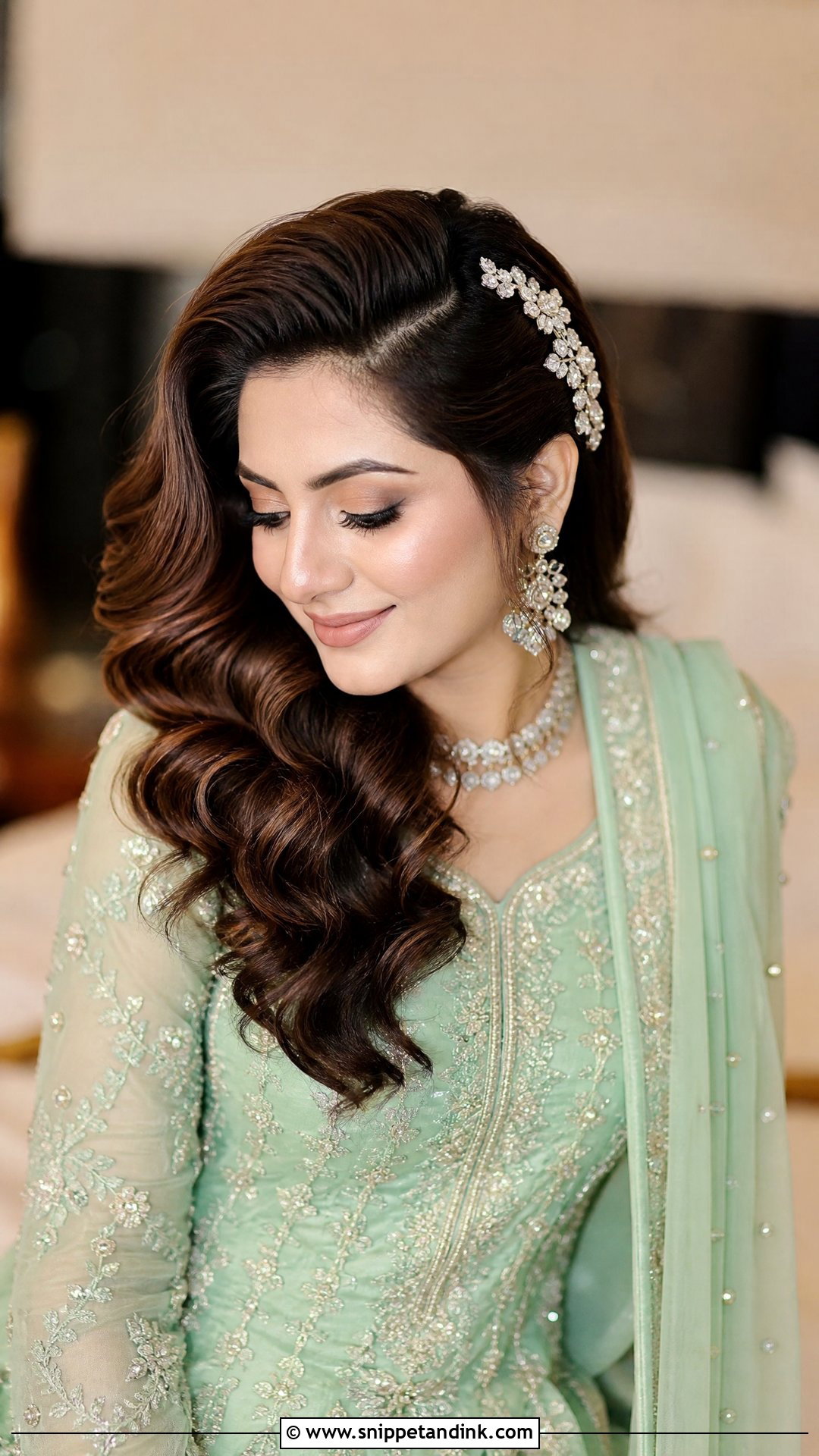
A deep side part with waves gives shape around the face, and it belongs at a walima or engagement with a lighter outfit and delicate jewelry. It also balances a heavier dupatta worn over one shoulder rather than on the head. Naturally wavy hair only needs its texture enhanced. Straight hair needs proper setting, and possibly extensions, to hold the pattern. Keep the waves smooth, not beachy, so the finish stays formal.
15. Pakistani Bridal Hollywood Waves
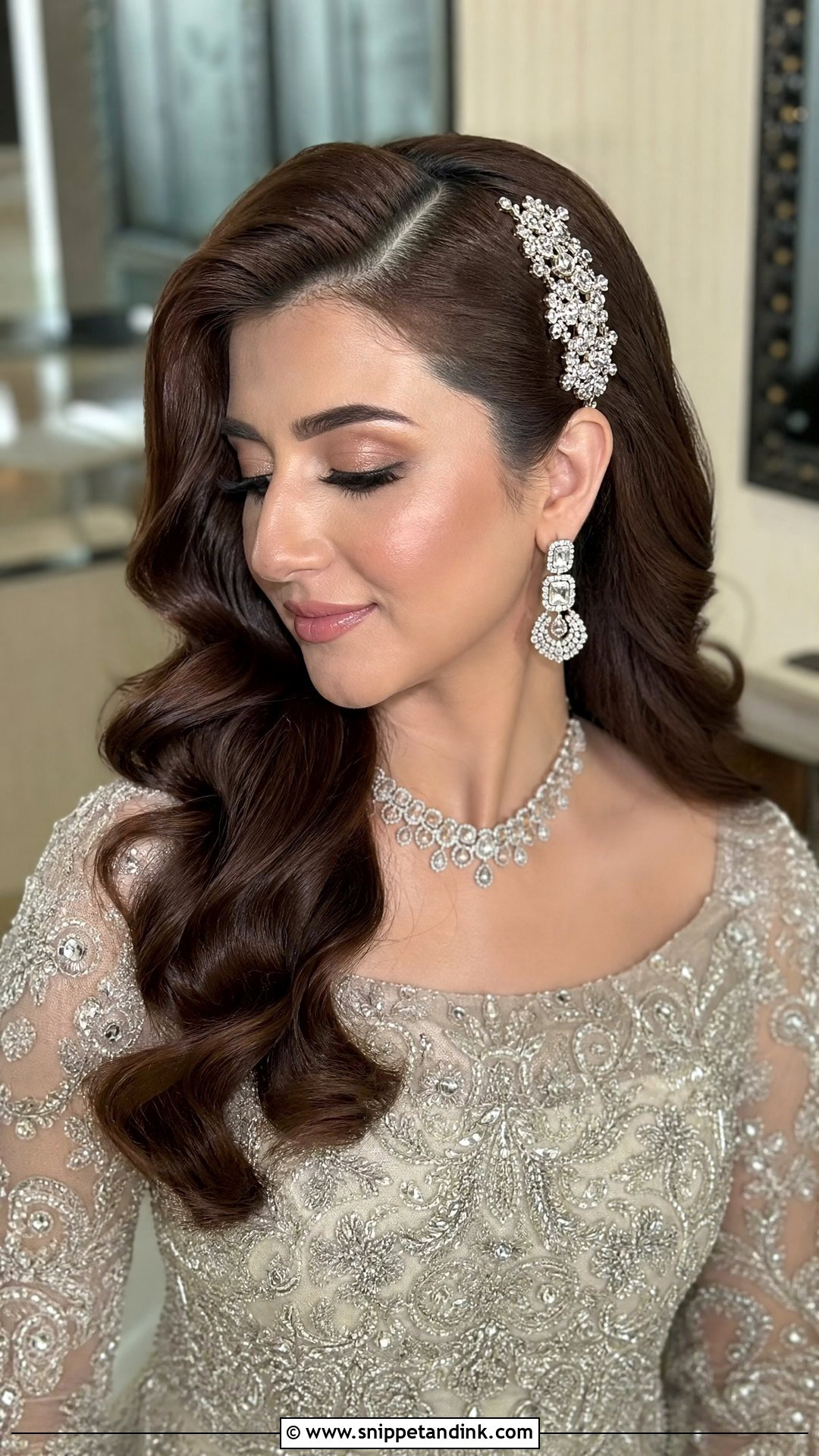
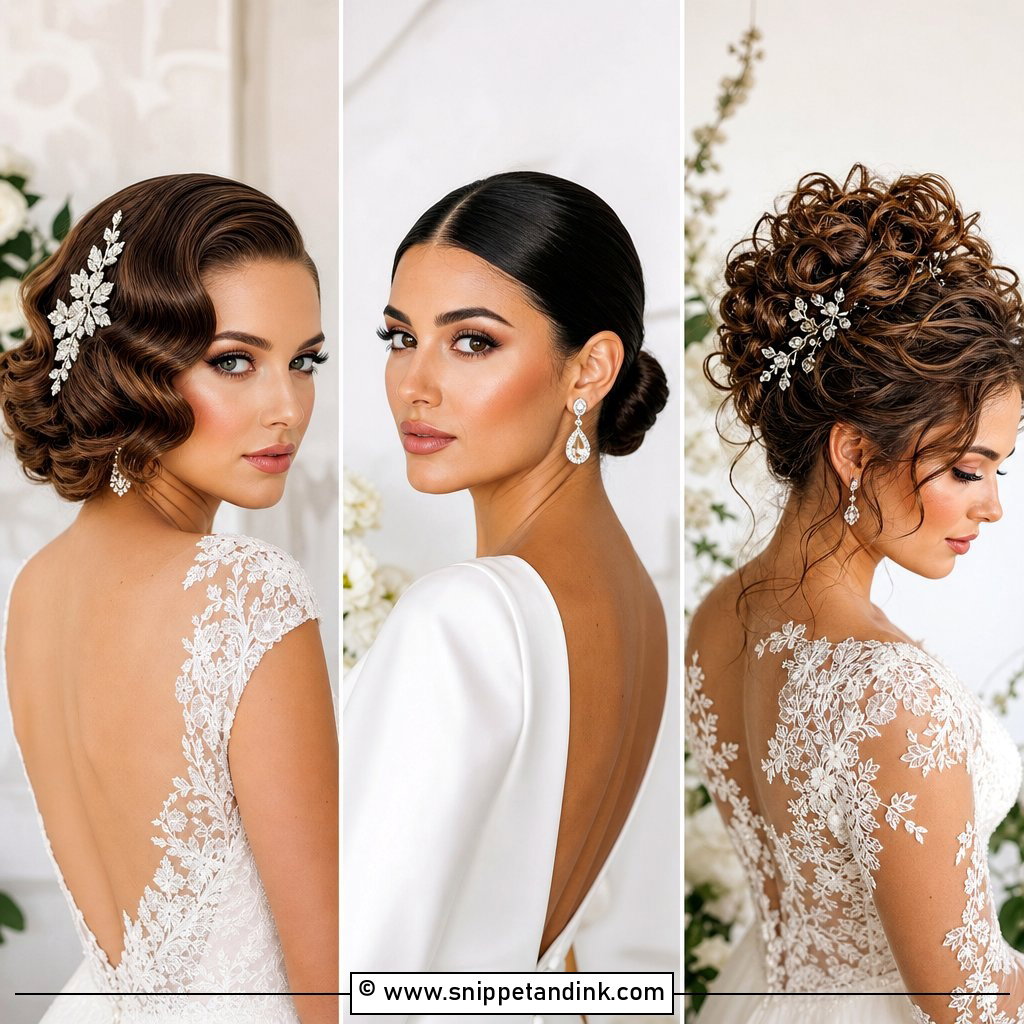
Hollywood waves are smooth, glossy and shaped in one direction, usually with a side part. They suit walima brides in ivory, silver, blush or soft gold. The wave pattern is the whole look, so the dupatta should be light or draped off the head. A jeweled clip on one side is all the ornament it needs. To get the pattern, every section has to be curled in the same direction and pinned to cool, then brushed into waves; skip the cooling and the waves won’t hold their shape on camera.
16. Pakistani Bridal Front Puff Curls
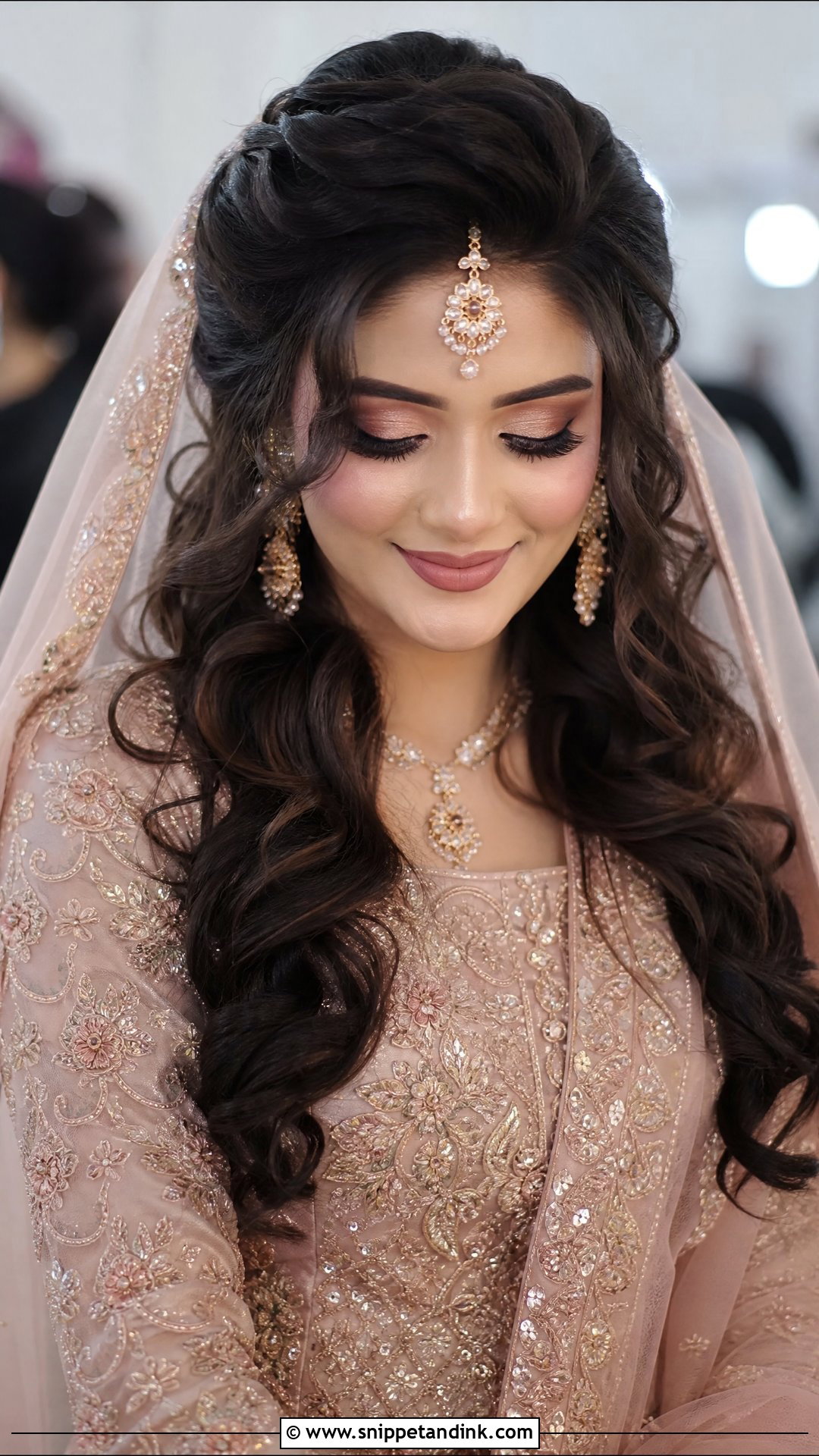
If a flat center part doesn’t suit you, front puff curls give you height, softness and open hair together. The front section is lifted into a gentle puff and the rest falls in curls. The puff gives a secure place to pin a dupatta or tikka. Curl the hair tighter for a mehndi and looser for a walima. Make sure the puff is blended smoothly into the curls and not too high, or it starts to look dated.
17. Pakistani Bridal Floral Braid
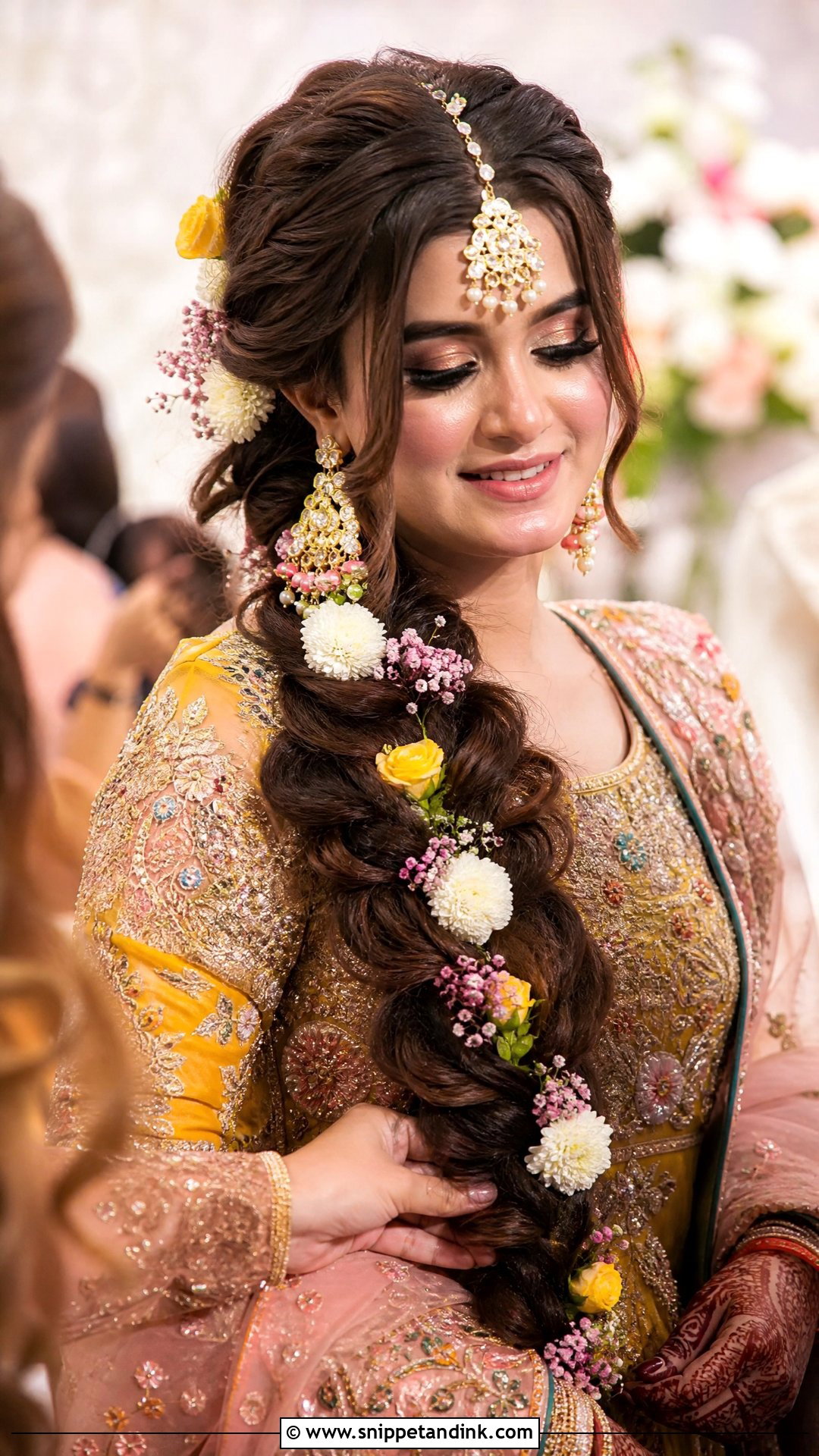
Mehndi and mayun are made for a floral braid. The braid can be loose or pulled apart for volume, then dressed with fresh flowers that match the outfit; yellow, white, pink, orange and red all suit Pakistani wedding colors. It looks especially good with gota jewelry and traditional ghararas, and it’s comfortable because the hair stays gathered. Space the flowers evenly from top to bottom. When they’re bunched near the top, the end of the braid looks bare.
18. Pakistani Bridal Bun With Passa
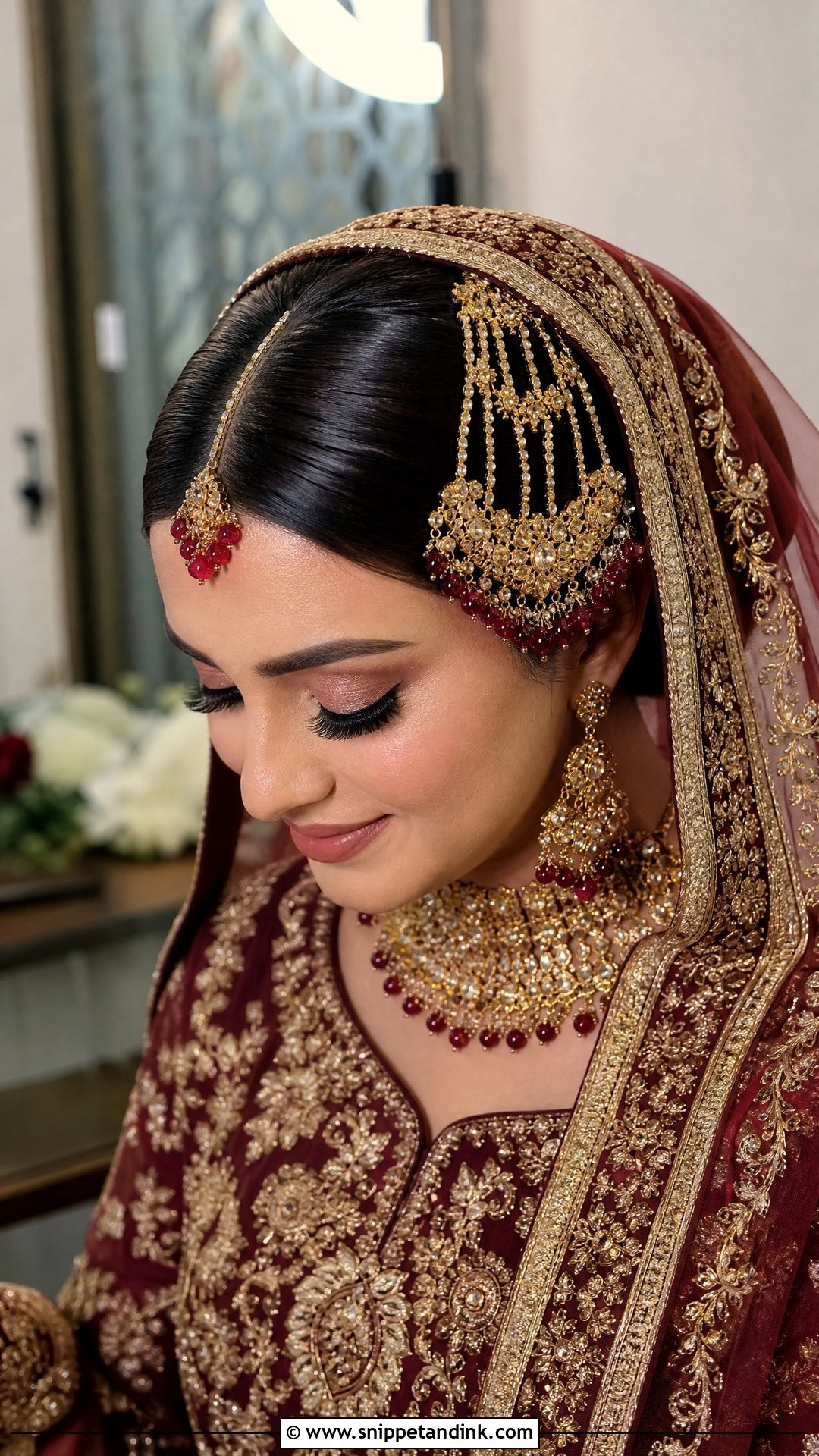
A passa sits on one side of the head, so the hair underneath needs a smooth base and secure pins at exactly that spot. A low bun or a center-part bun keeps the jewelry balanced. For a barat bride in heavy jhumkas, a choker and an embroidered dupatta, this is a classic. The front should be sleek enough to support the passa without being tight. I hook the passa into a small hidden braid or a pinned section, never into loose hair, because loose hair lets it swing forward.
19. Pakistani Bridal Soft Messy Bun
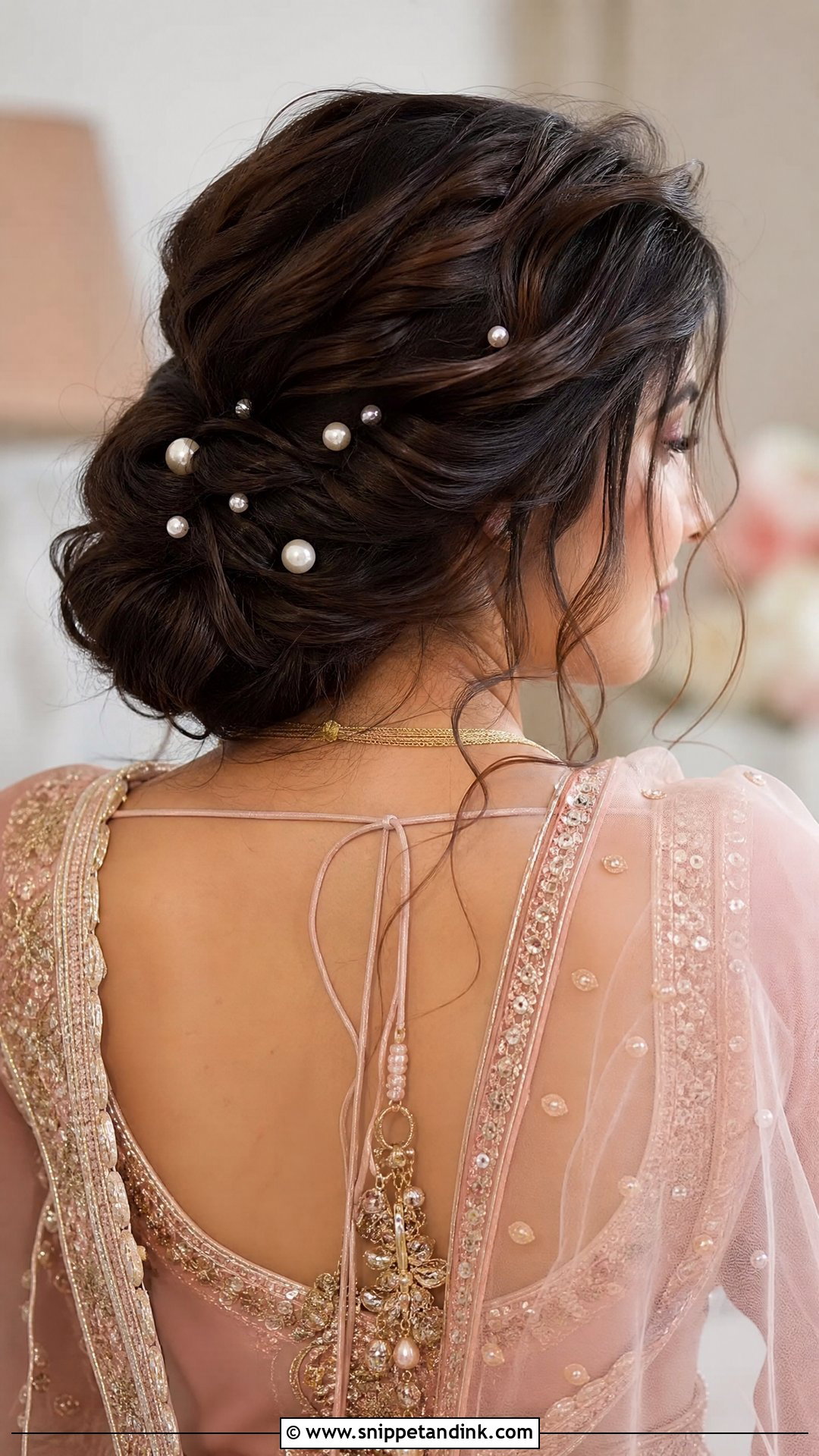
The soft messy bun is not really messy. It is carefully pinned to look airy, with loose waves, gentle twists and face-framing pieces. It suits a nikkah or walima bride who wants her hair up without a severe sleek finish, and it pairs well with lighter dupattas, organza and pastel colors. Use more pins than you think it needs. Every hug from a relative pulls at an airy bun, and it’s the loosest styles that lose their shape first.
20. Pakistani Bridal Twisted Updo
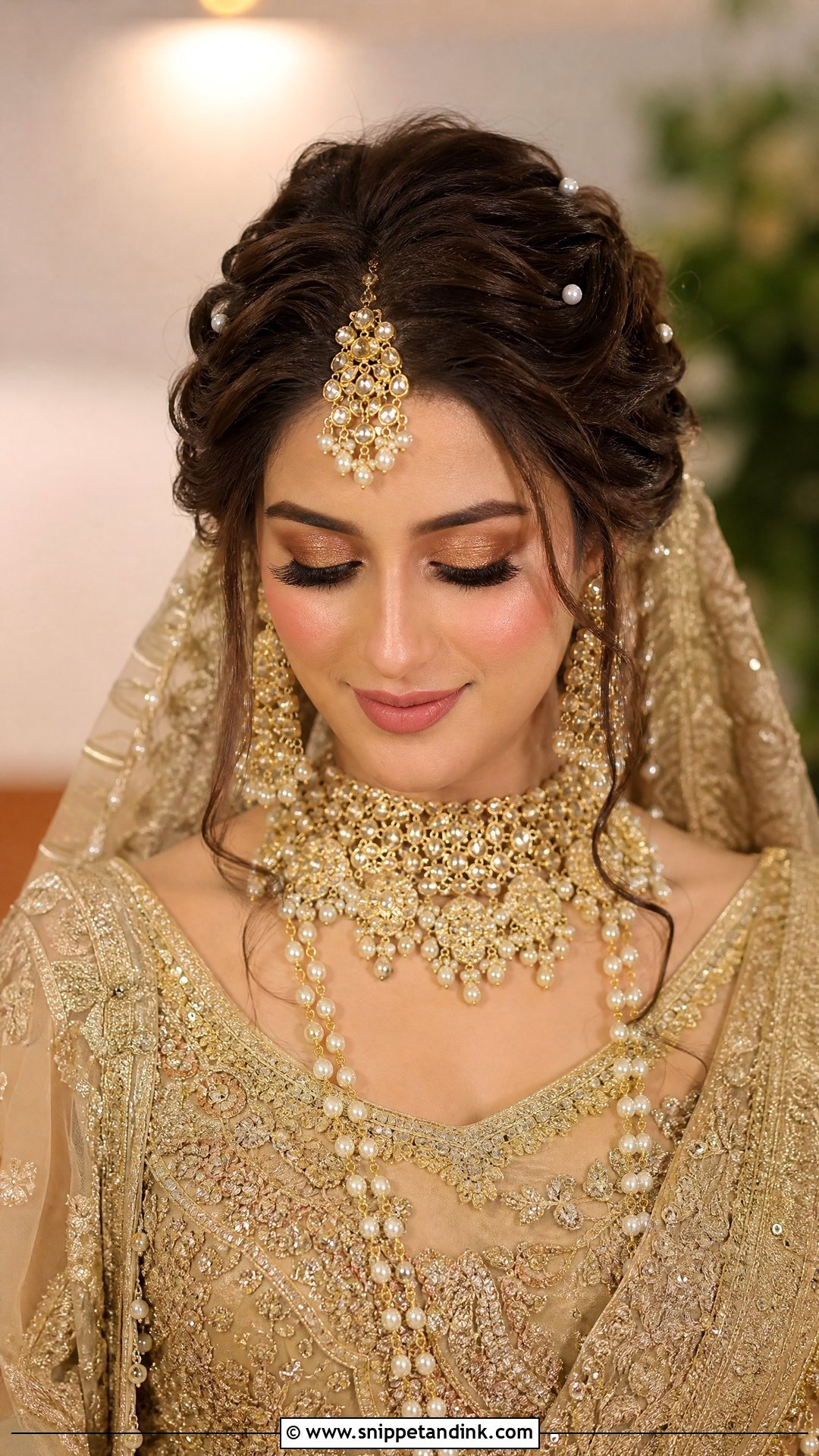
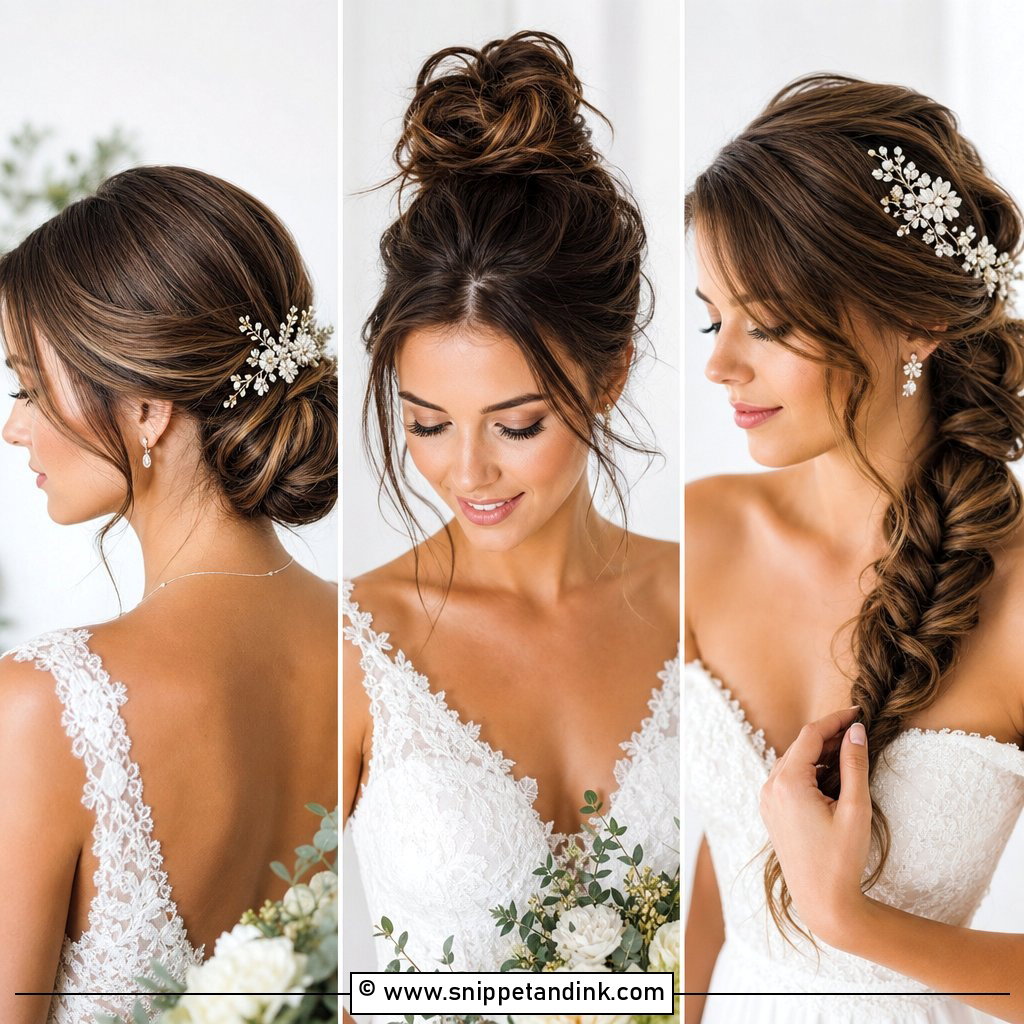
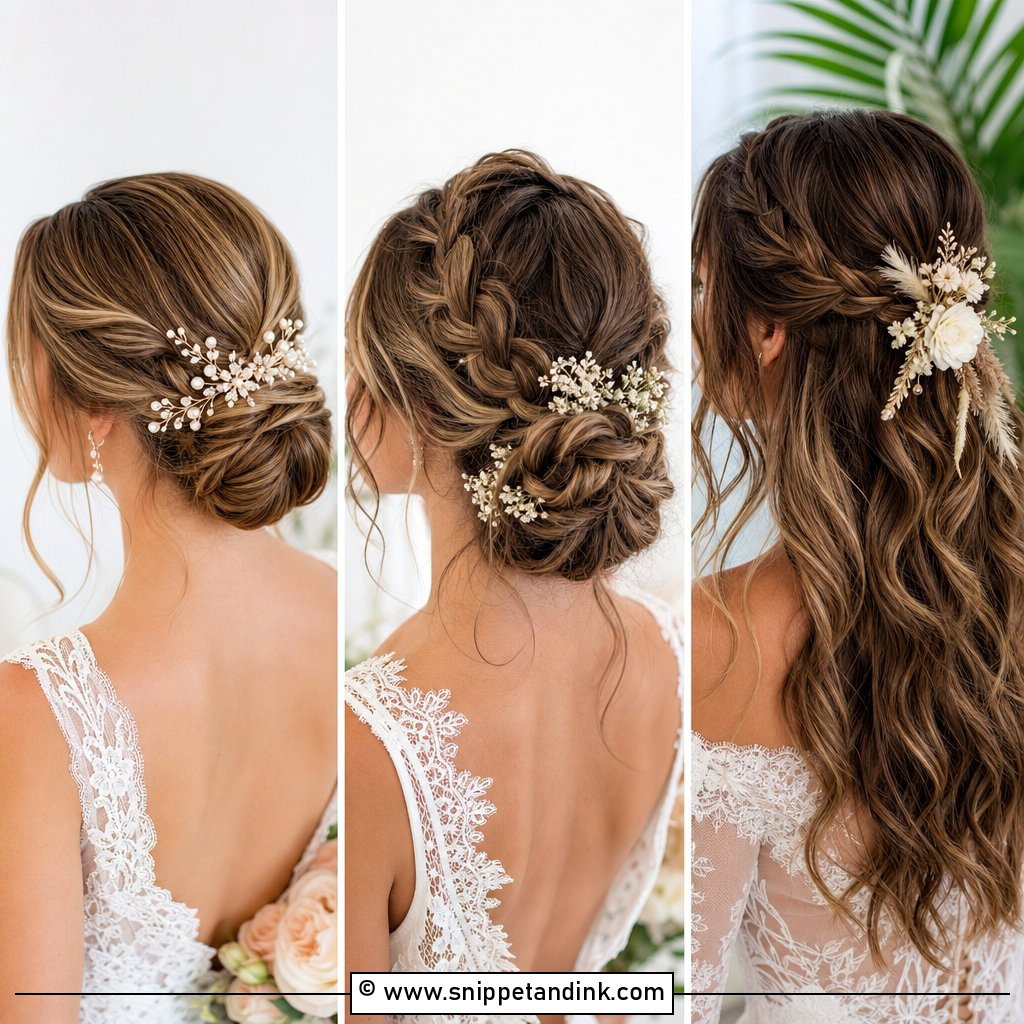
Twisted sections pinned into a low or mid-height bun give this updo a soft woven texture. A Pakistani bridal twisted updo can be dressed up or down, so it works at a nikkah, barat or walima with a tikka, pearl pins, flowers or a light dupatta. Layered hair suits it, as shorter pieces can be twisted in rather than fighting them. The balance to aim for is enough texture to look special and enough polish to read as bridal.
Resetting Your Hair Between Events
The night after a big styled event is when hair gets damaged, usually by tired brides pulling pins out in a hurry. A little patience keeps your hair ready for the next day.
Taking it down
Take the jewelry and dupatta pins out first, then find the pins in the bun by feel and slide them out the way they went in. Don’t brush teased or heavily sprayed hair while it’s dry. Work conditioner through it in the shower and comb gently from the ends up.
After the mayun
If oil or ubtan went into your hair at the mayun, one shampoo won’t remove it. Shampoo twice, and condition only from the mid-lengths down, otherwise the next style slips.
Sore scalp and the walima
A tender scalp after a barat bun is common. If your walima is the next day, ask for a looser style placed somewhere else on the head, such as side waves instead of another bun in the same spot.
Sleep with your hair loosely braided on a silk or satin pillowcase. It cuts down on tangles and friction, and the slight wave it leaves behind gives your stylist a better starting point than hair that has been flattened against cotton all night.
A Different Style for Every Function
The prettiest style on a mood board is not always the right one for your day. For a traditional barat with heavy accessories, I’d start from a low or sleek bun. Open curls, Hollywood waves and soft messy buns belong at the walima or nikkah, and braids, parandas, flowers and gajra come into their own at the mehndi and mayun. Book a trial if you can, bring your dupatta and jewelry, and test the style for long enough to know it will stay comfortable.
You'll Like These Ideas:


Leave a Reply