
Plain bridal clothes are harder to get right than ornate ones. With no lace or beading to draw the eye, every seam, every wrinkle and every strap mark shows, so the work moves from decoration to fit and fabric. I love dressing brides this way. Below are thirty clean looks, from a satin slip and a crepe column to a suit, a jumpsuit and outfits for a beach, a garden or a registry office, each with the detail I check first and the trade-off I would want a bride to know before she buys.
Plain Fabric Shows Every Fitting Flaw
A dress with no lace has nothing to hide behind. Pulling at a zip, a strap that slides or a hem that dips at the back will all be visible in photos. I tell minimal brides to set aside more time and money for alterations than they expect, and to schedule at least two fittings.
- Check the zip lies flat when you sit. A rippled zip is the most common flaw in plain satin and crepe.
- Stand side-on to the mirror. The hem should be level from front to back in your wedding shoes.
- Raise your arms. If the bodice moves more than a centimetre, it needs taking in.
- Look for drag lines pointing at the bust or hip; they mean the fabric is too tight there.
The Underwear Question Comes Before the Dress
With slip dresses and backless gowns, underwear decides the line. I ask brides to bring their chosen bra and shapewear to the first fitting, since swapping later changes the fit. Bonded, edge-free pieces in a shade close to your skin show less than white ones. For an open back, a sewn-in cup is more reliable than adhesive bras.
1. Simple Bride Satin Slip Dress
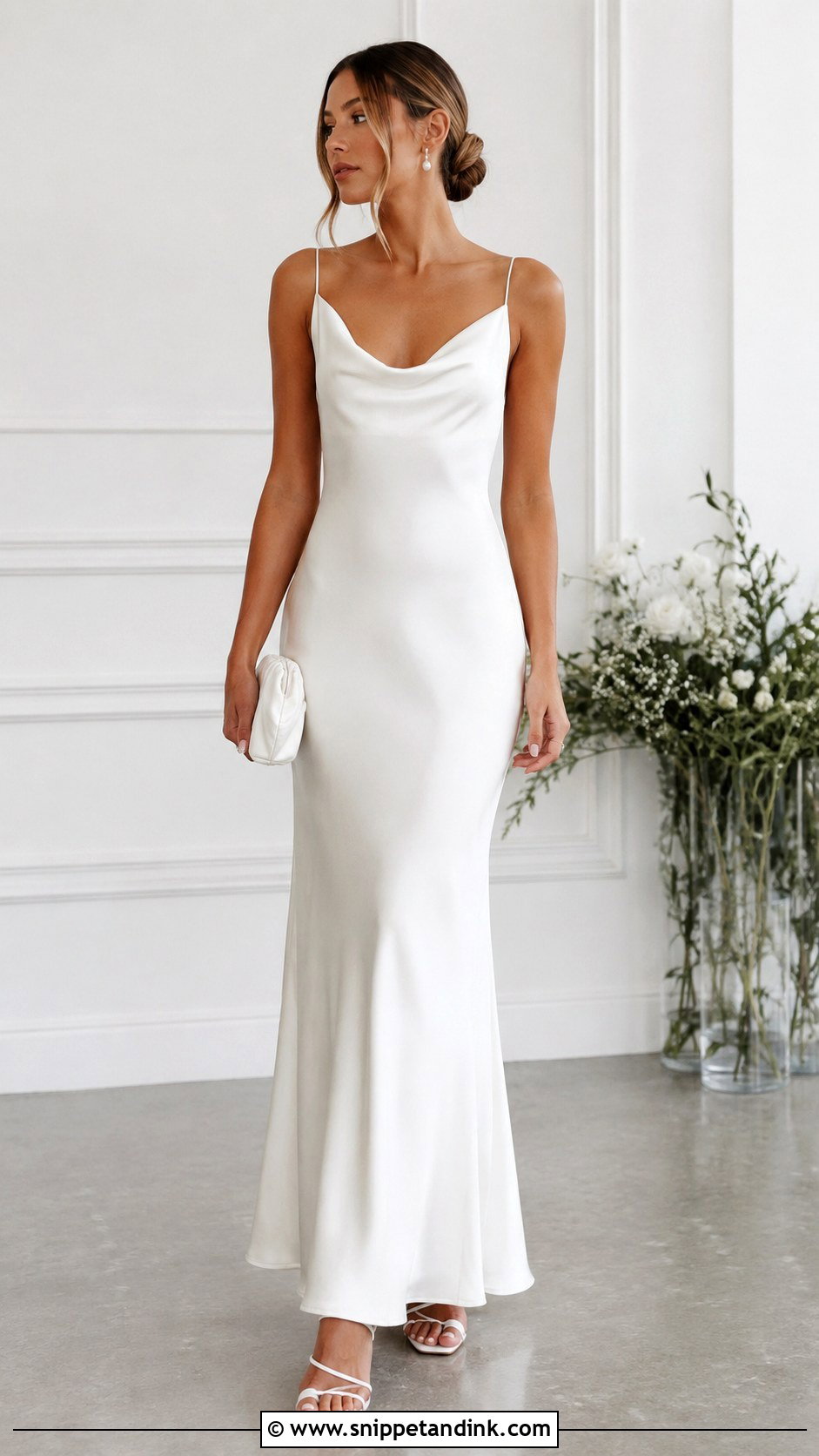
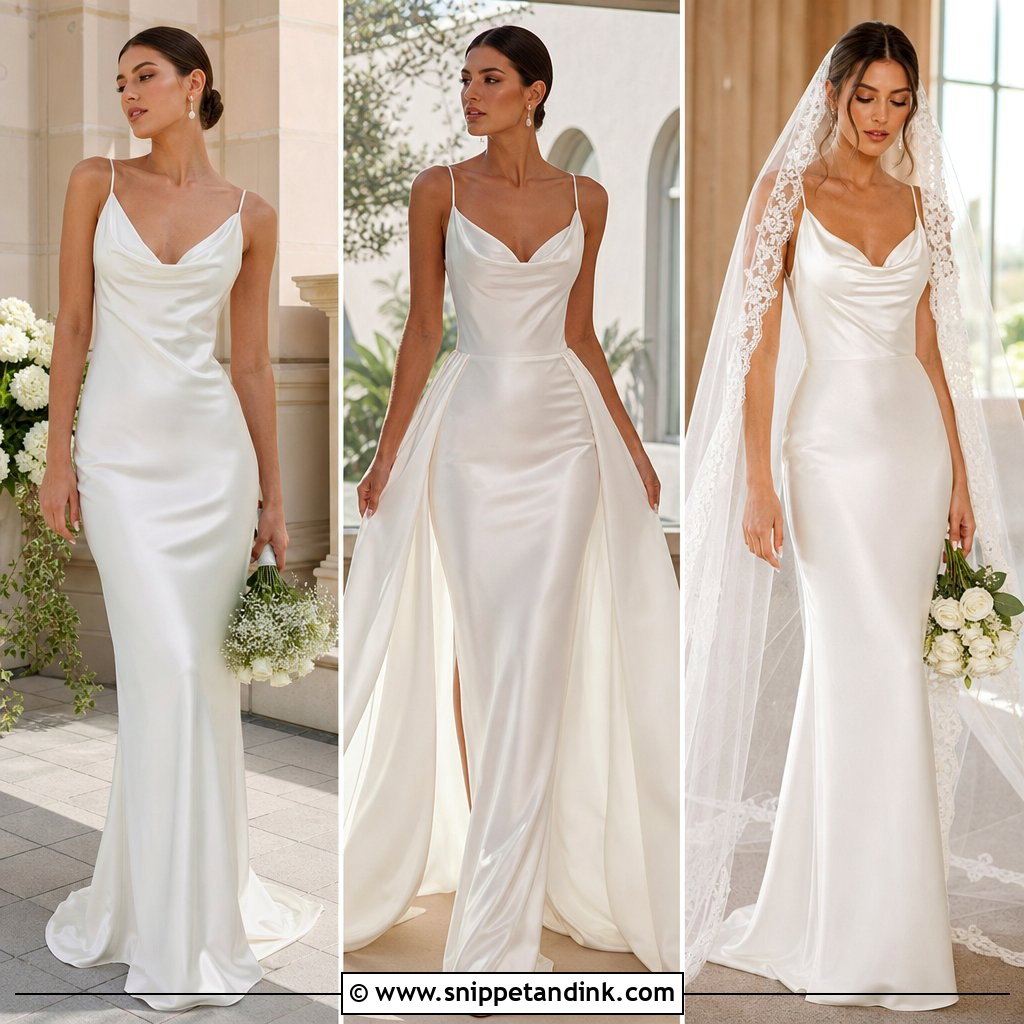
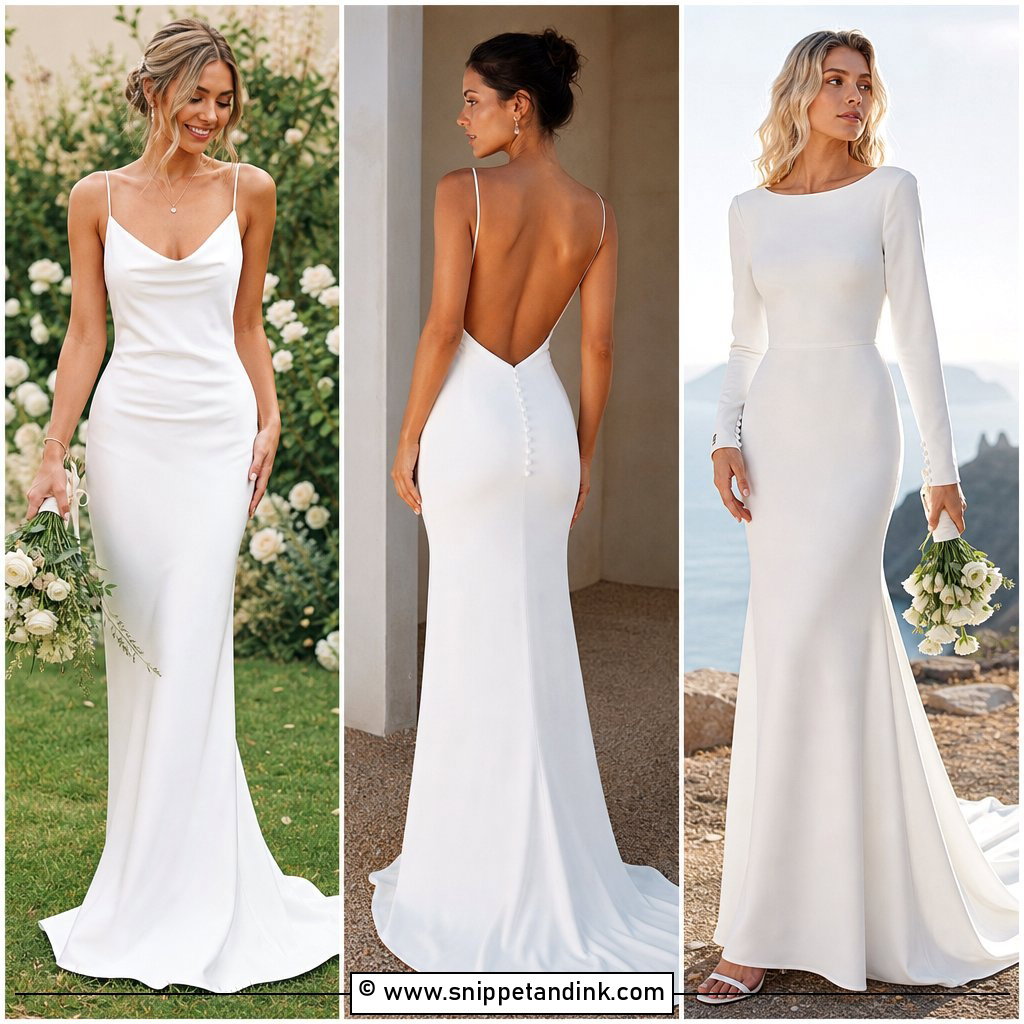
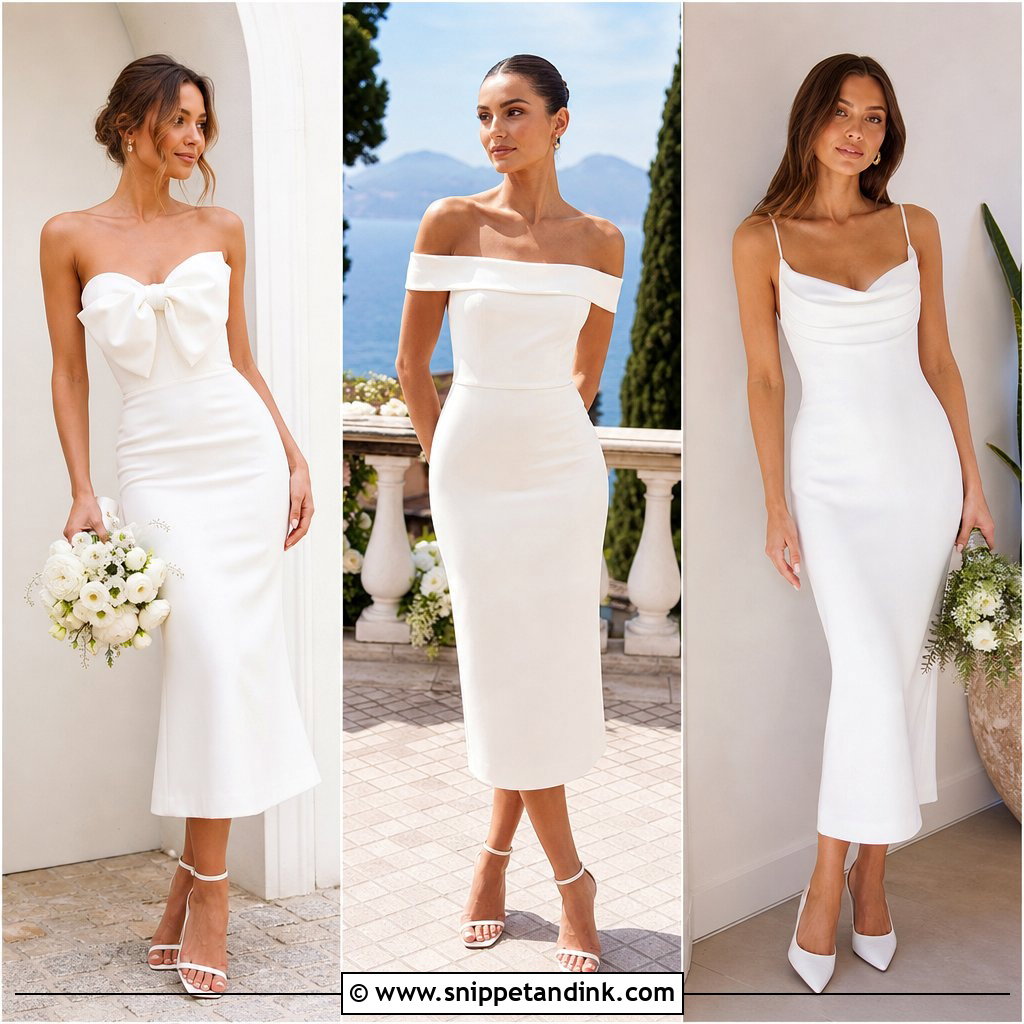
Bias-cut satin is the classic minimal dress, and it is also the least forgiving. Because the fabric is cut on the diagonal, it stretches and clings over the hip and stomach, so I fit it over the exact underwear the bride will wear on the day. Ivory or white, slim heels, pearl drops and a small silk clutch are plenty. A fingertip veil adds a bridal note for a courthouse or an intimate ceremony.
2. Simple Bride Crepe Column Dress
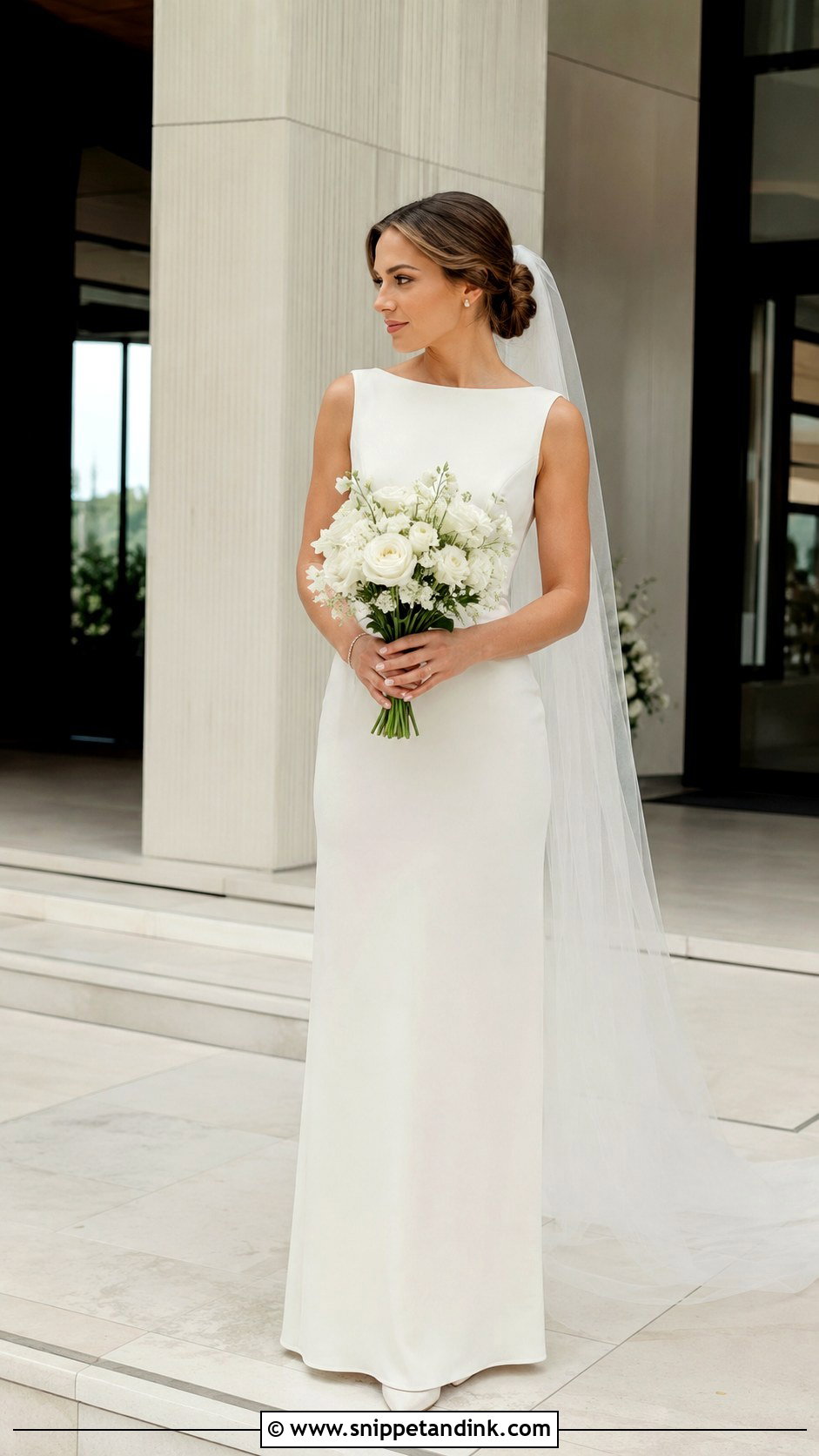
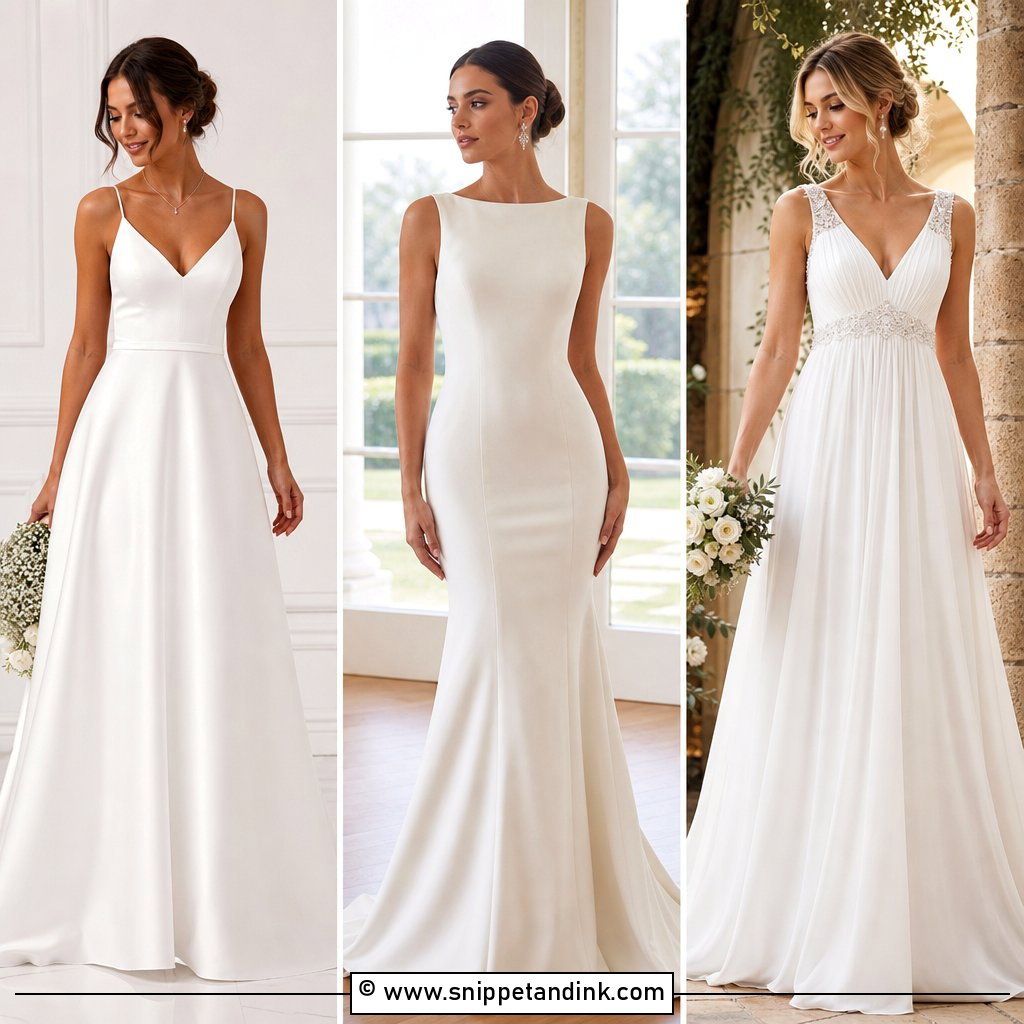
Crepe is my favourite fabric for a minimal bride. Its matte surface hides small creases and photographs without glare, and a good heavy crepe falls straight without clinging. A column with a bateau or square neckline needs almost nothing else. I keep jewellery to small studs and a bracelet, and suggest a low chignon so the neckline stays clear.
3. Simple Bride A Line Dress
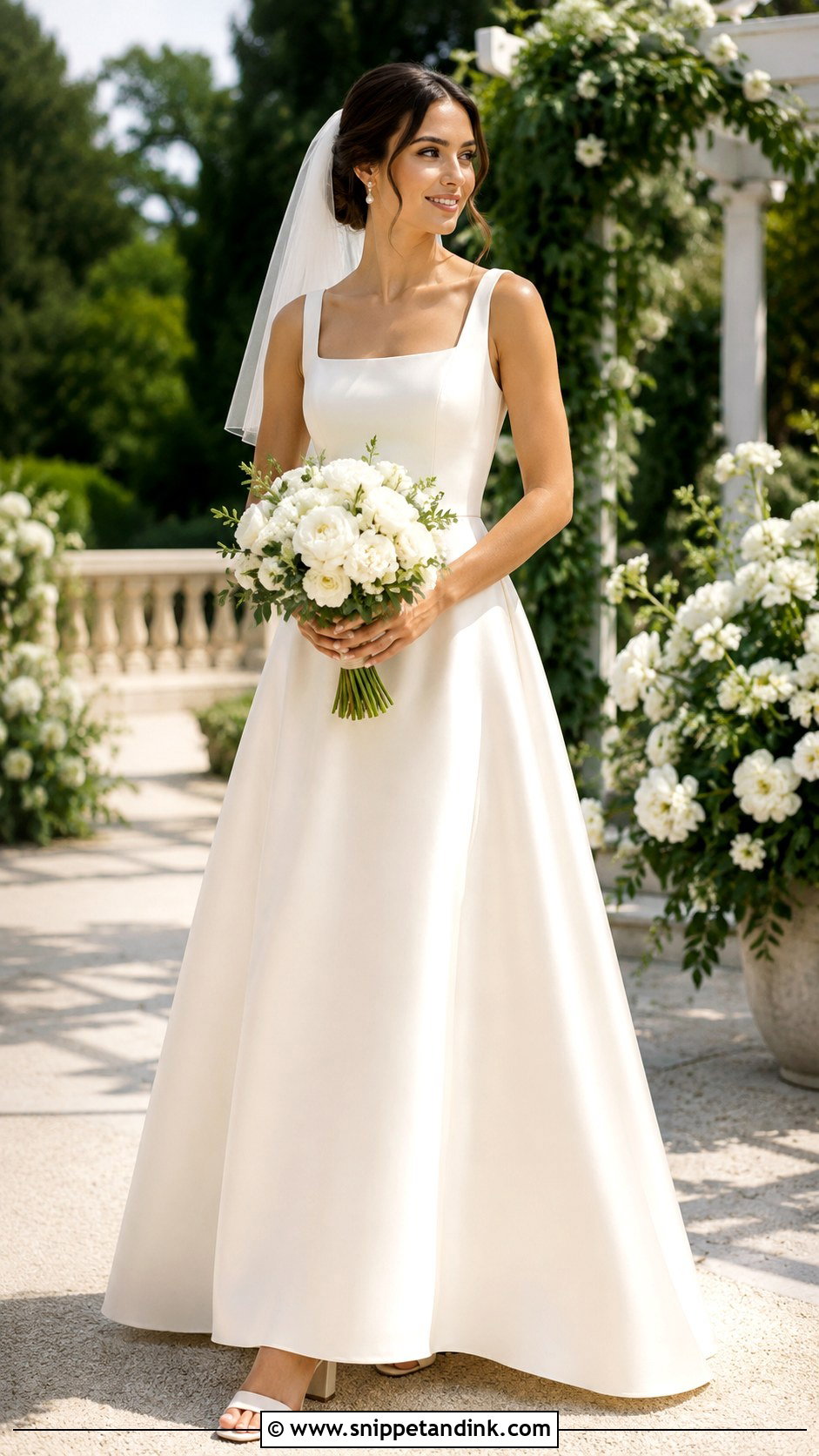
An A-line is the shape that suits the widest range of figures, so it is where I start with a bride who is unsure. Plain satin, mikado, crepe or soft organza all hold the skirt without beading. Mikado is crisp and structured; organza is lighter and catches the breeze. Skip a necklace with a high neckline, and carry white roses or calla lilies.
4. Simple Bride Strapless Dress
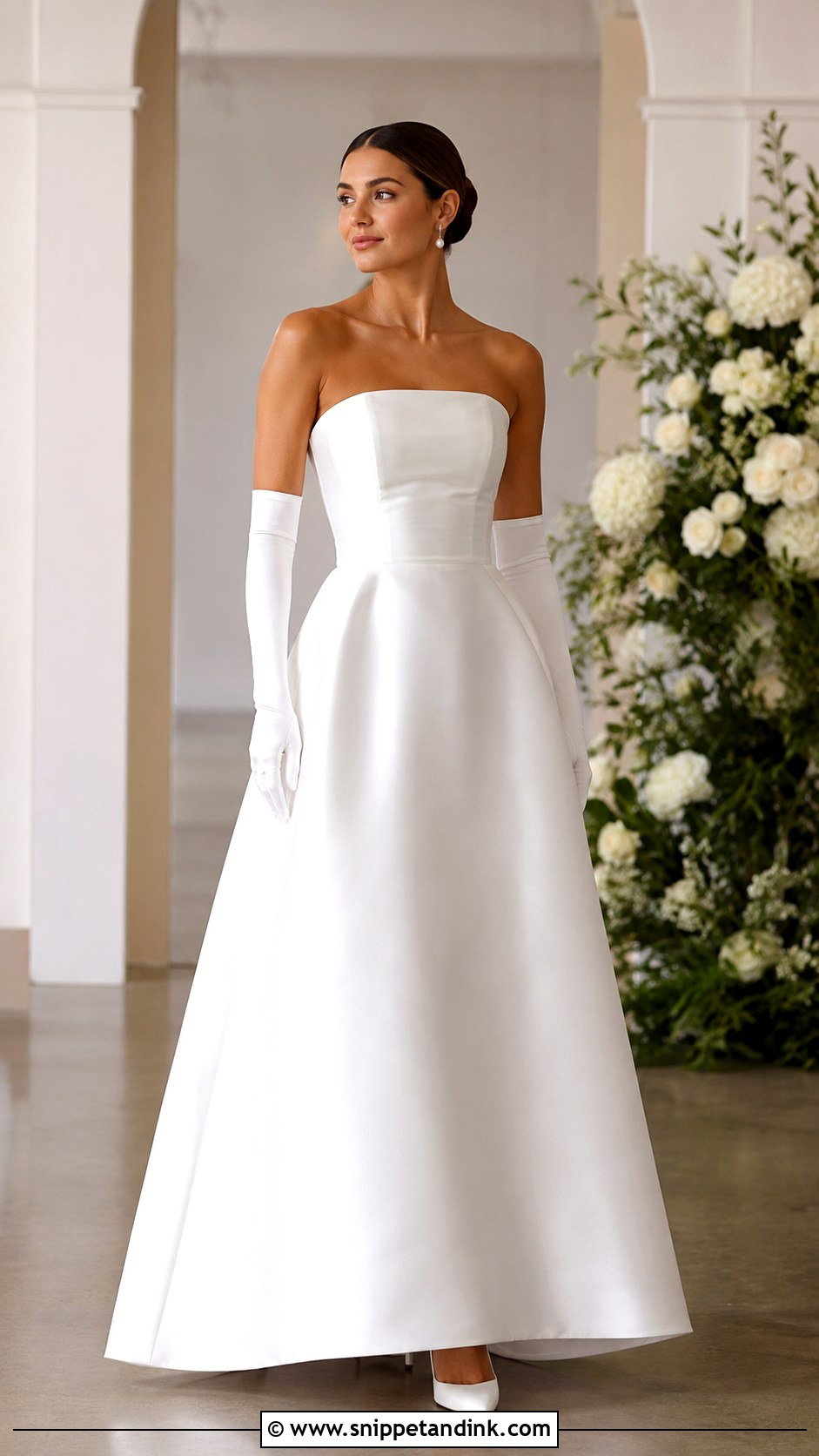
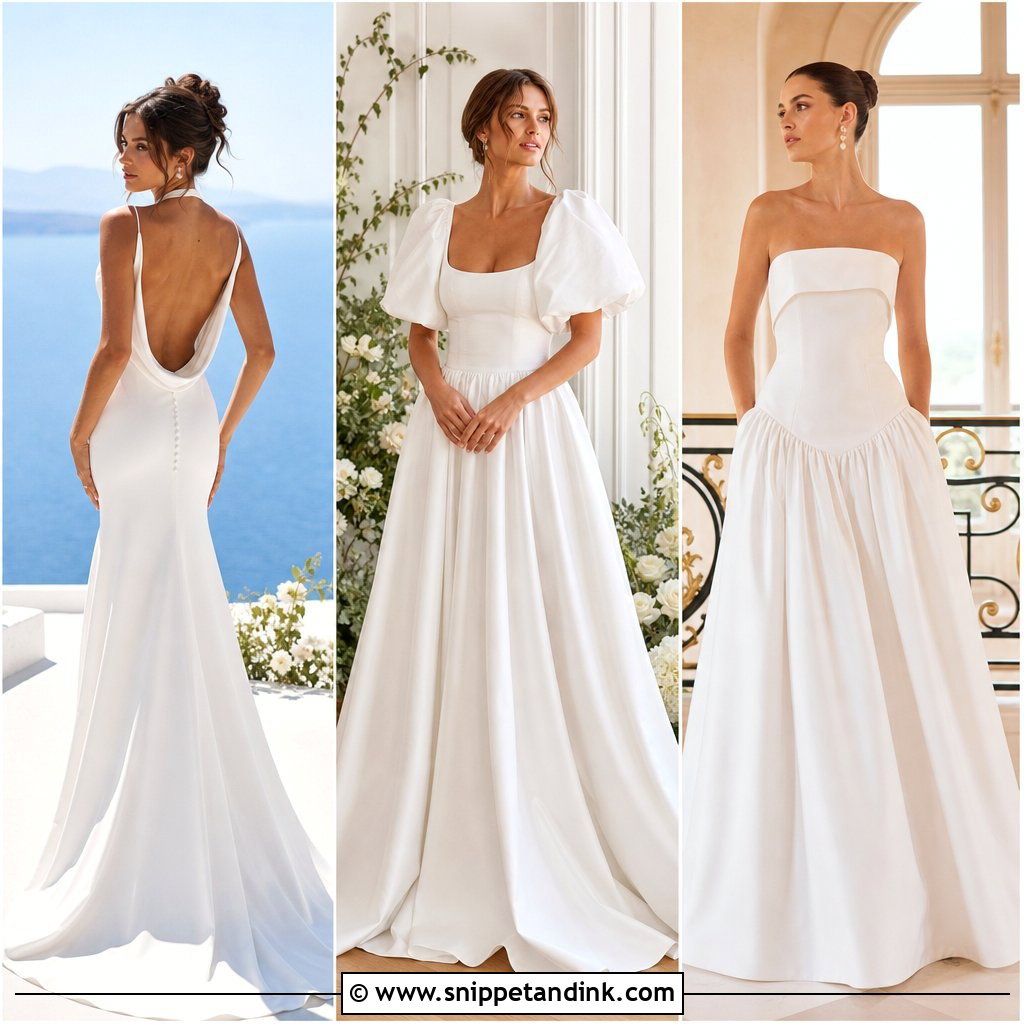
Strapless works when the bodice is engineered properly. I look for boning, a firm internal waistband and a grip strip at the top edge, then ask the bride to hug me and sit down to check nothing slips. Satin, crepe and mikado hold the shape best. Long gloves make it formal; pearl earrings and bare sandals make it relaxed.
5. Simple Bride Long Sleeve Dress
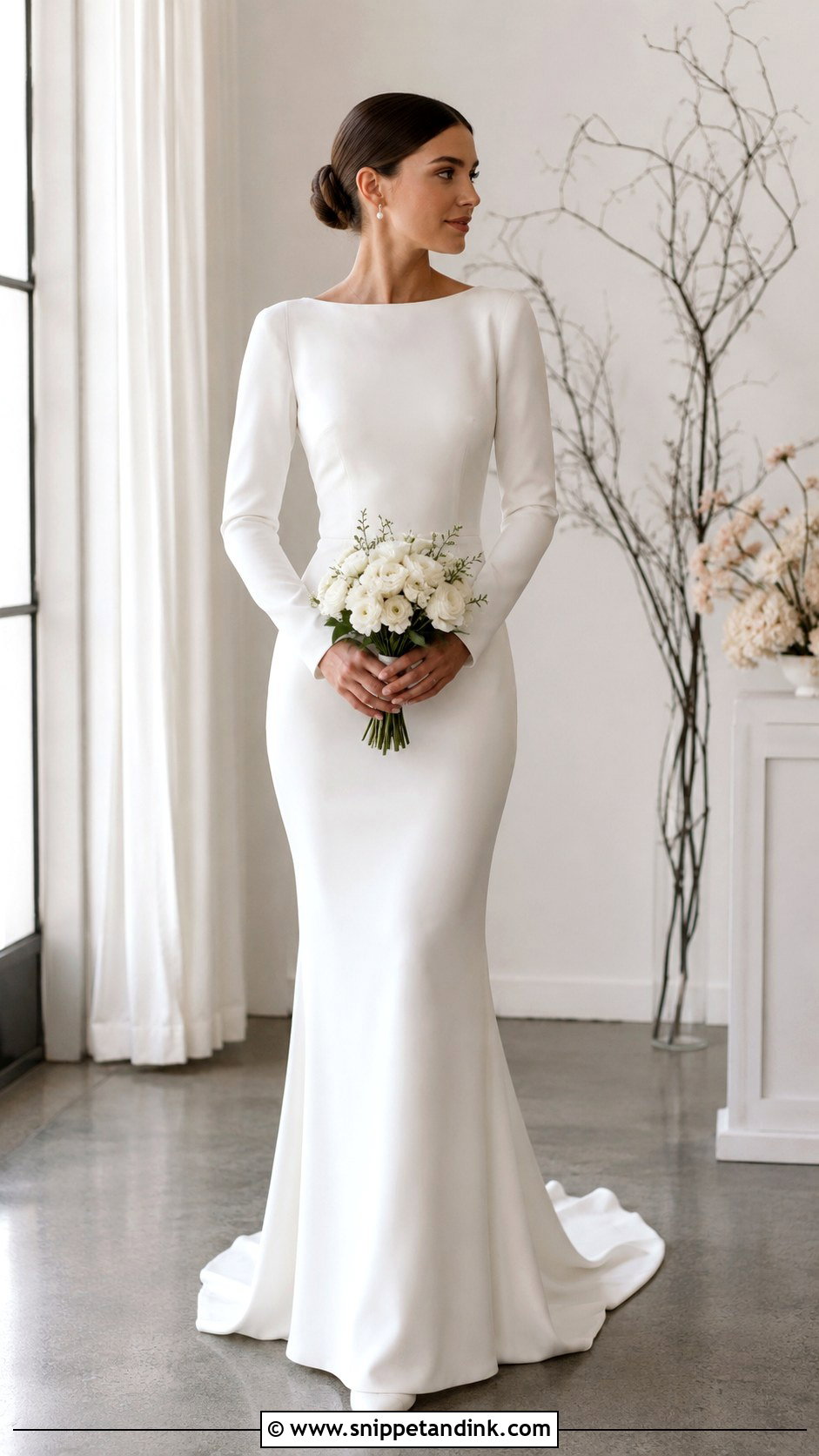
Long sleeves in a plain dress need to be cut with movement in mind. Tight crepe sleeves can restrict the arm when the bride raises a glass or hugs guests, so I check the sleeve at the elbow and shoulder with arms lifted. Smooth crepe, light satin or chiffon sleeves keep it simple. Closed-toe heels and a low bun suit autumn, winter and city venues.
6. Simple Bride Short Dress
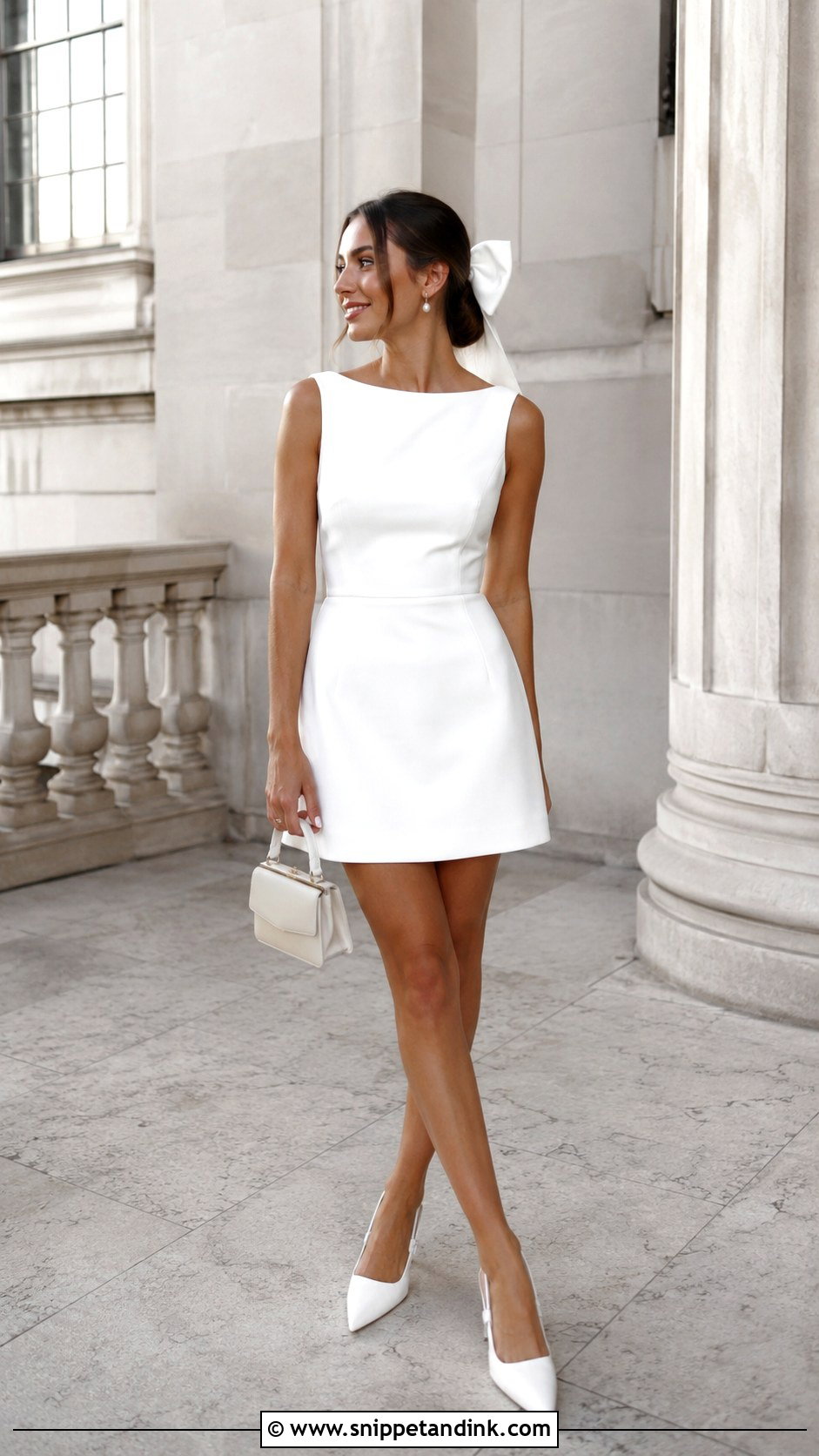
Short dresses suit courthouse weddings, elopements and reception changes. A crisp fabric makes it look intentional rather than like a day dress, so I prefer structured cotton, mikado or heavy crepe for this length. White slingbacks and a small top-handle bag keep it polished, and a birdcage veil or satin bow brings in the bridal note.
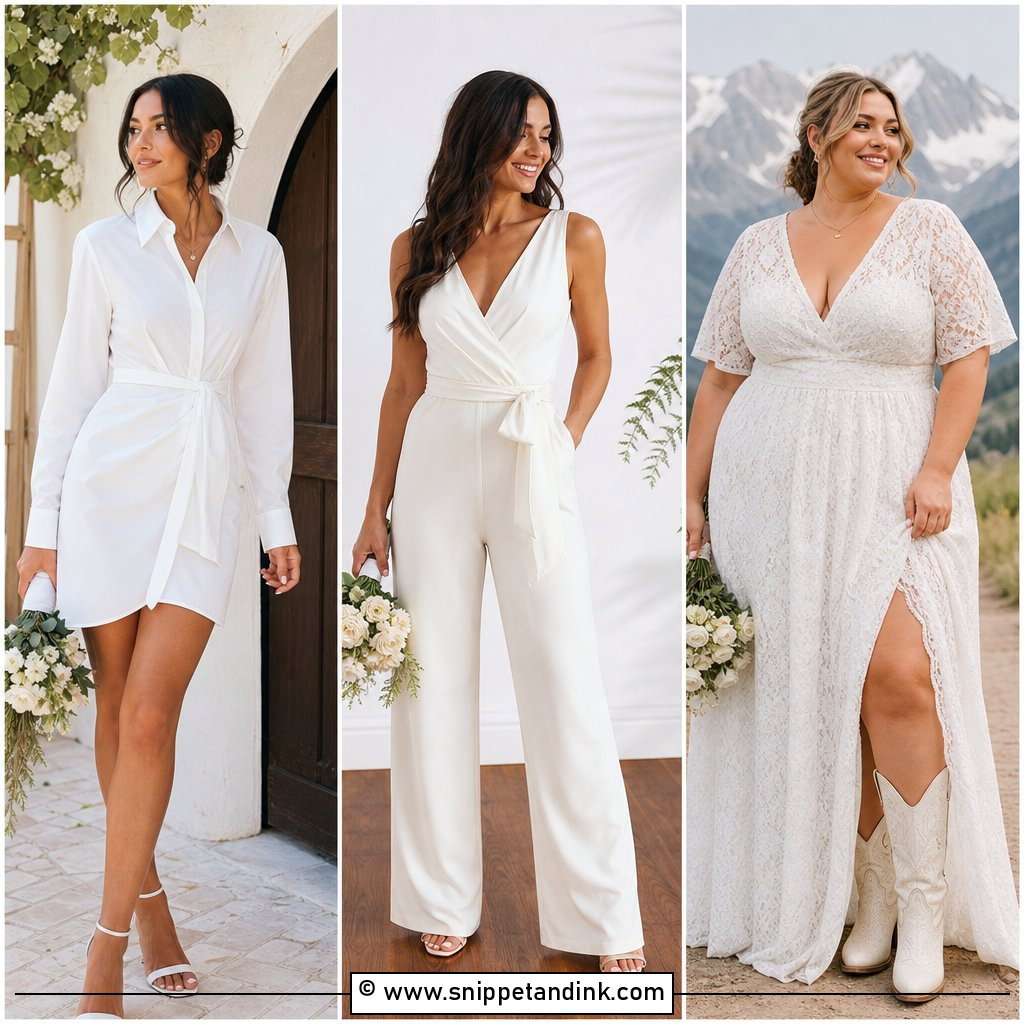
7. Simple Bride Courthouse Suit
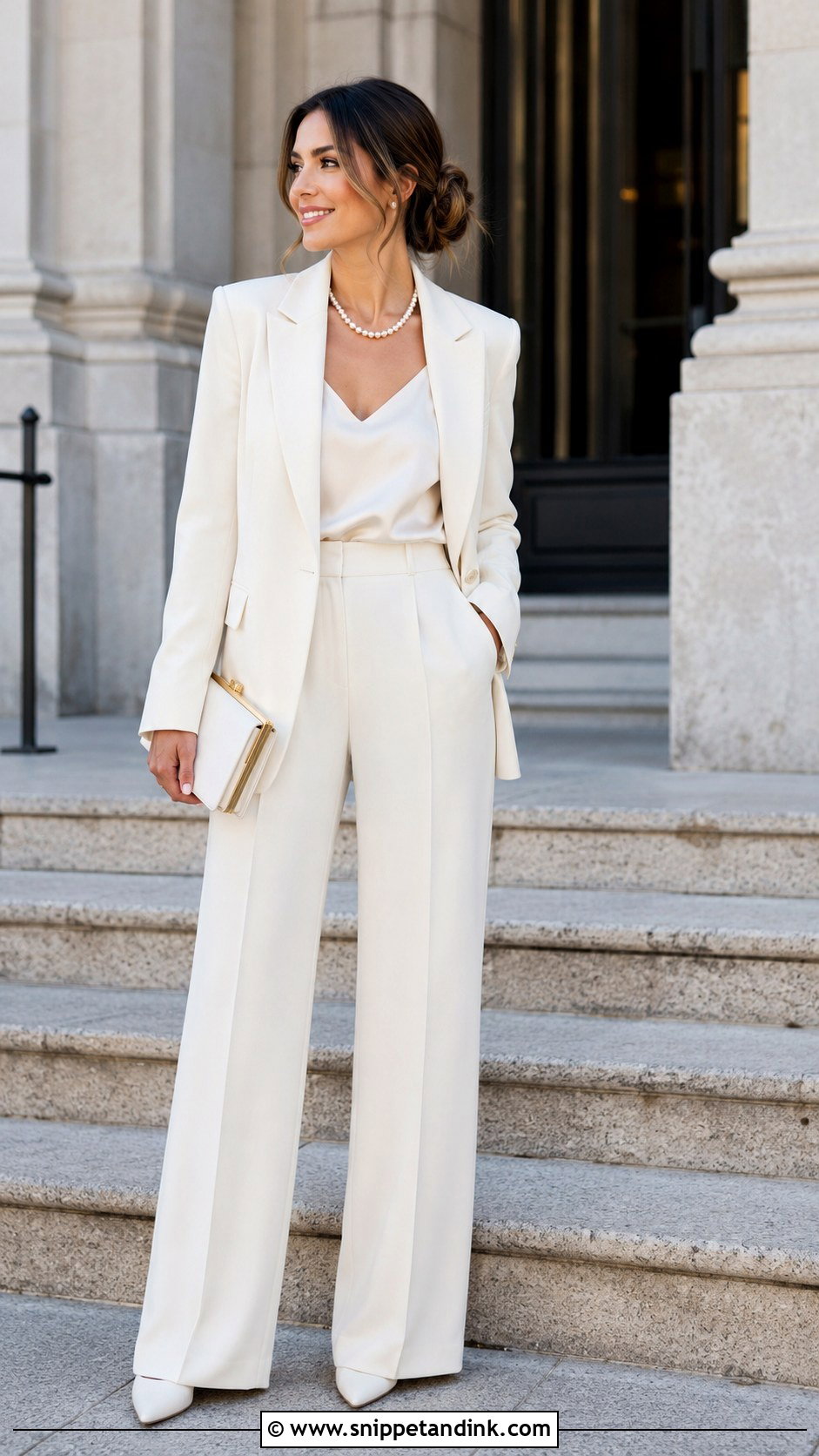
A tailored courthouse suit in white or ivory looks bridal and strong. The blazer shoulder is the hardest part to alter, so buy for the shoulder and have the sleeves and trousers adjusted. Wide-leg trousers look elegant; slim trousers look sleek. A silk camisole or bodysuit underneath keeps it smooth, and pointed pumps lengthen the leg.
8. Simple Bride Wide Leg Jumpsuit
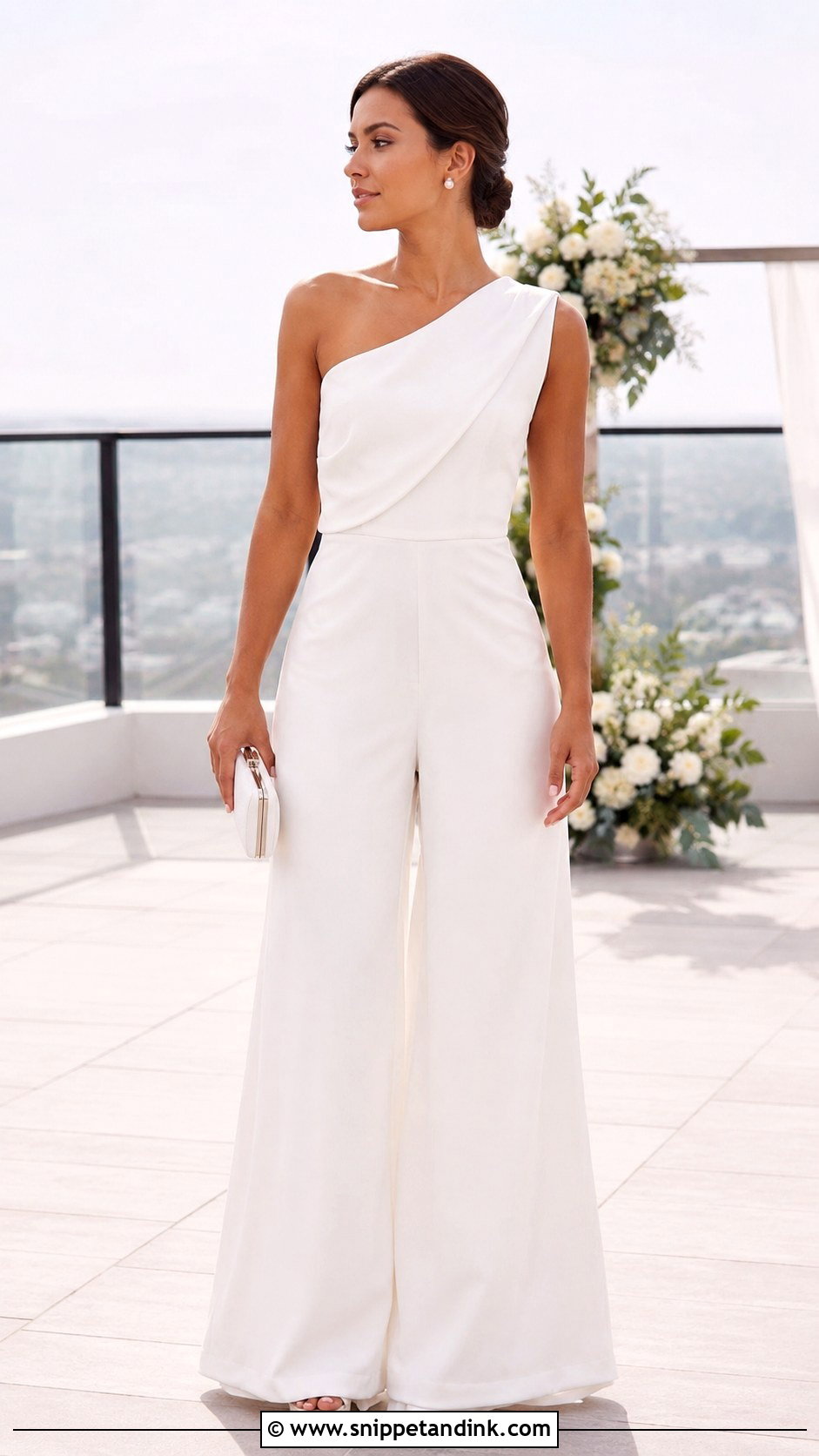
Jumpsuits are comfortable, but the crotch length is the fit point people forget. Too short and it pulls when you sit; too long and it sags. A white wide-leg jumpsuit in crepe, satin or heavy georgette looks bridal. Hem the trousers to the shoes you will wear, so they just skim the floor. Ask about bathroom access too, since some jumpsuits need help with a back zip.
9. Simple Bride Two Piece Set
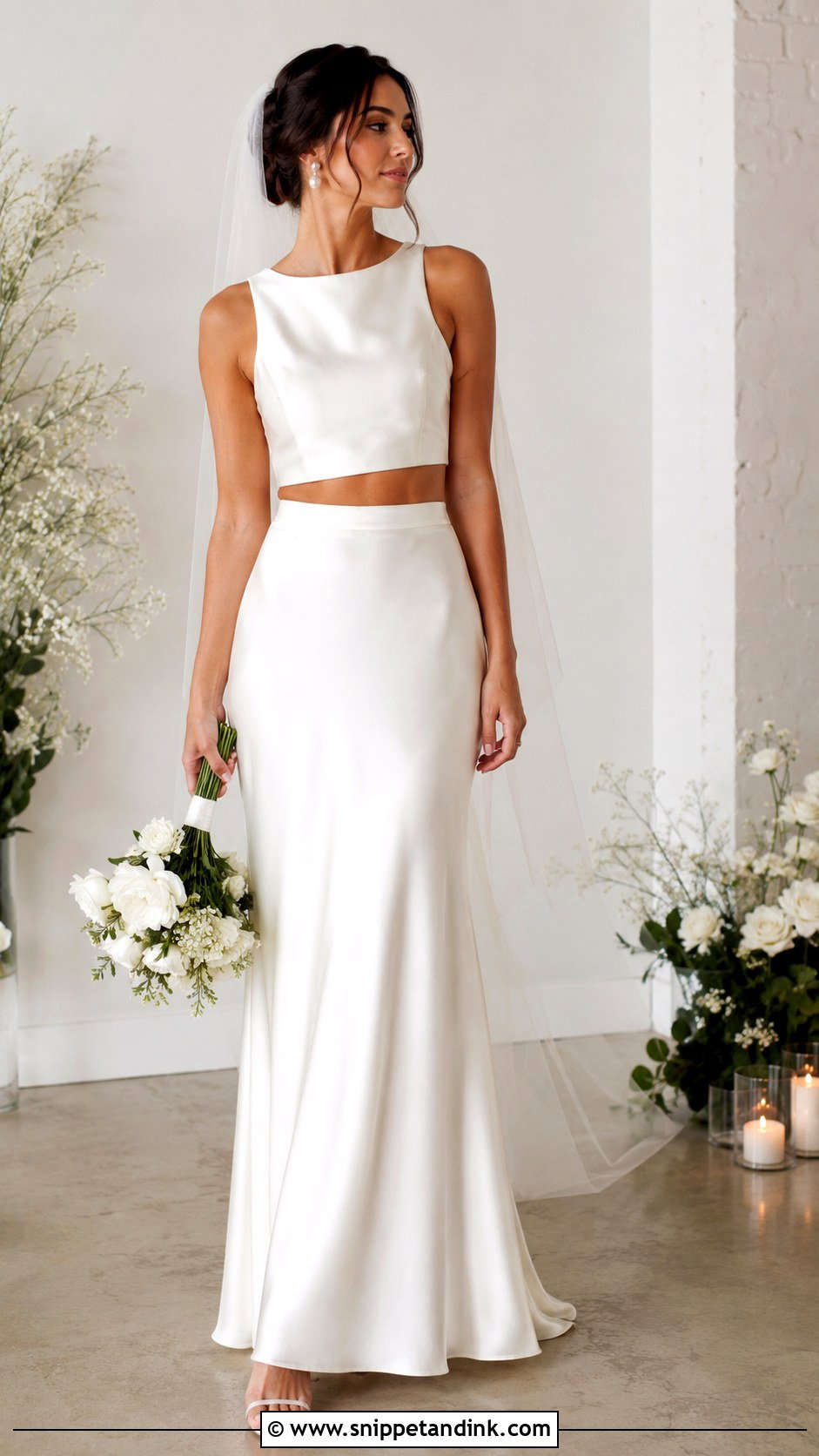
Matching whites matters in a two-piece: ivory beside optic white makes one look dirty. I buy both pieces from the same maker or hold them together in daylight. A cropped satin top with a high-waisted skirt or a structured top with wide-leg trousers both work. You can rewear the pieces separately later, which is a real advantage.
10. Simple Bride Silk Midi Dress
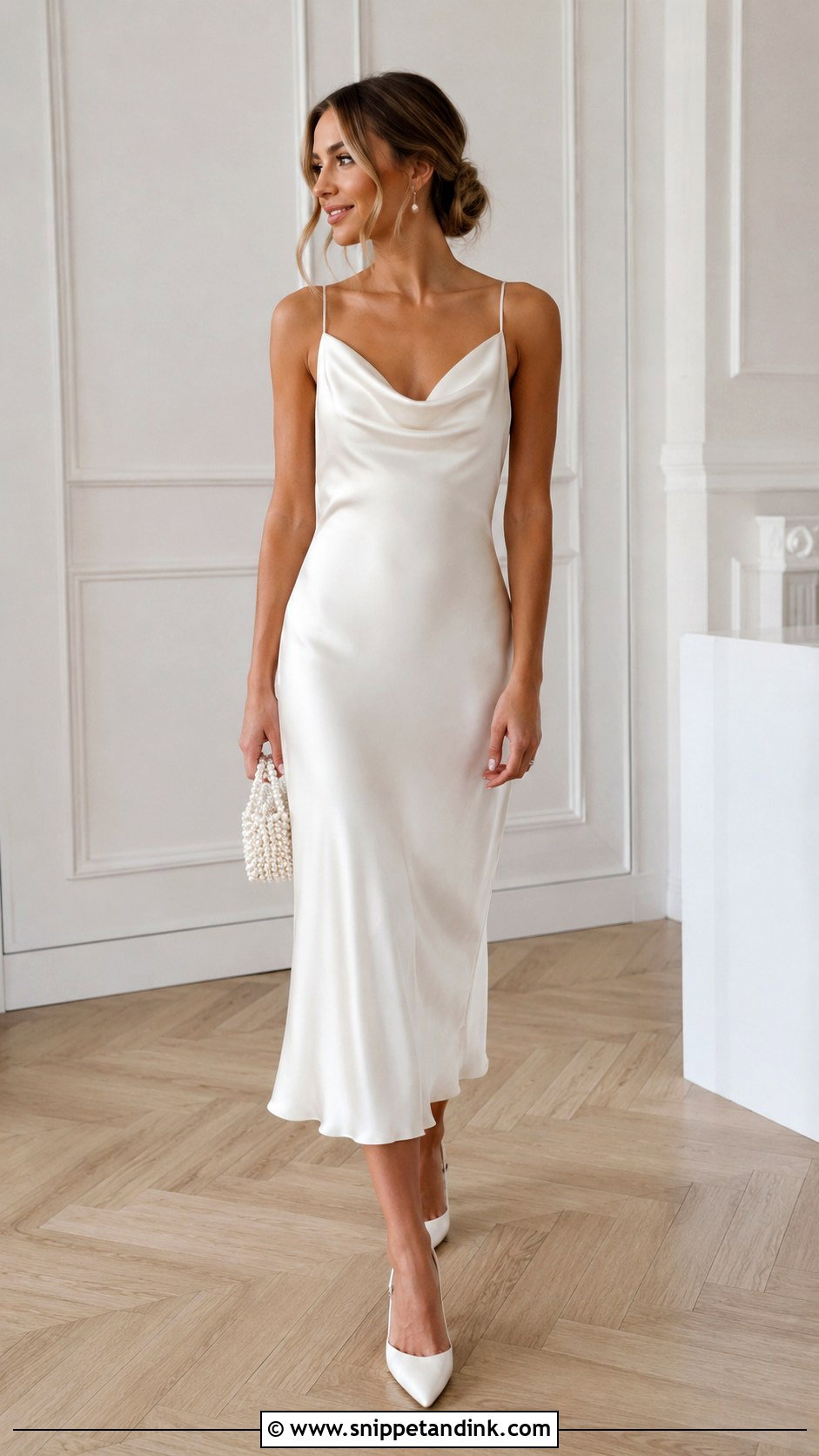
Silk midi dresses move naturally and suit garden ceremonies or brunch weddings. The midi length shows the shoes, so pair it with strappy heels or pointed slingbacks. Silk marks with water, so carry a handkerchief and keep drinks away. A cowl or square neck and a loose low bun complete it.
11. Simple Bride Tea Length Dress
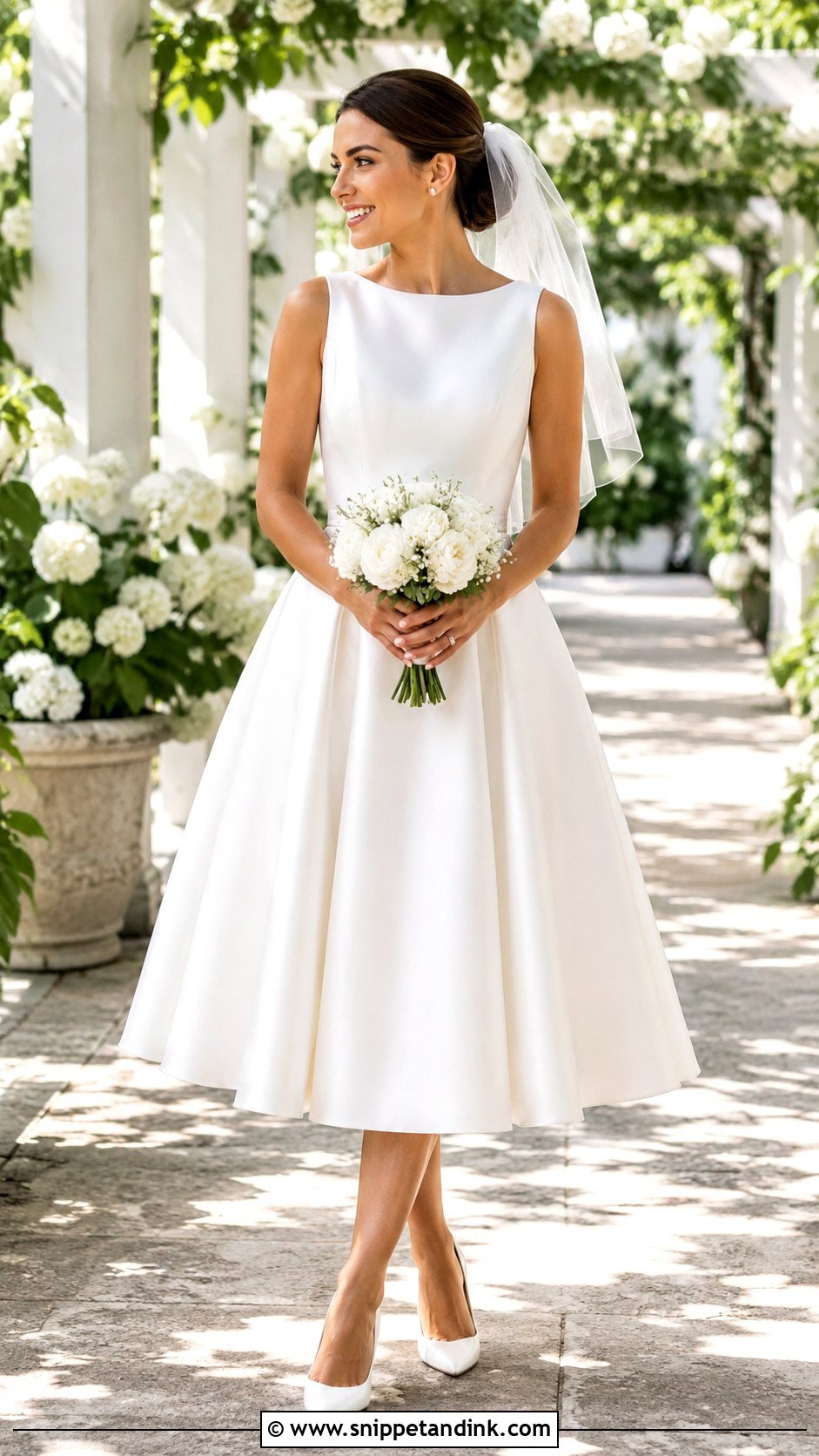
Tea length falls between the knee and ankle and shows the shoes. A fitted bodice and a clean satin or tulle skirt keep it simple. Pointed pumps or bow heels suit it. It moves more easily than a floor-length gown, which makes it a sensible choice for daytime ceremonies with lots of walking.
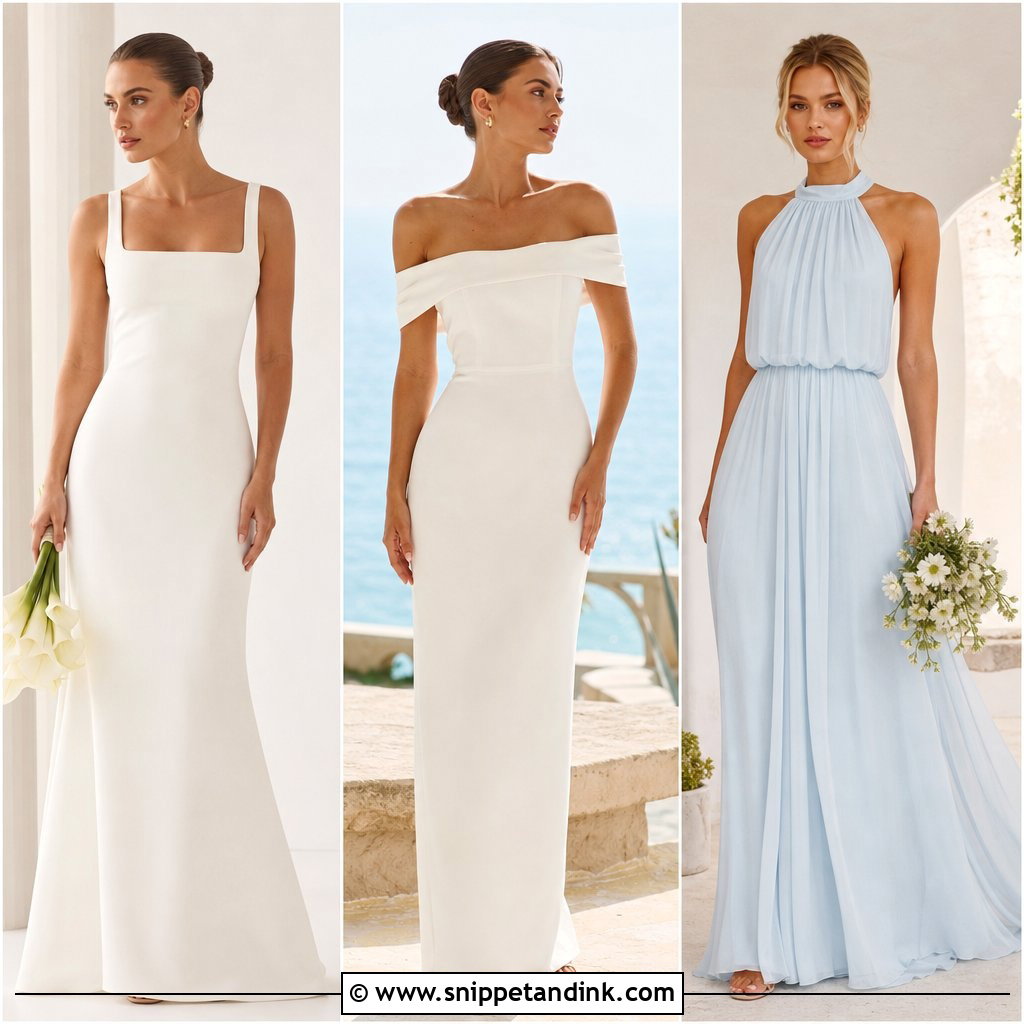
12. Simple Bride Off Shoulder Dress
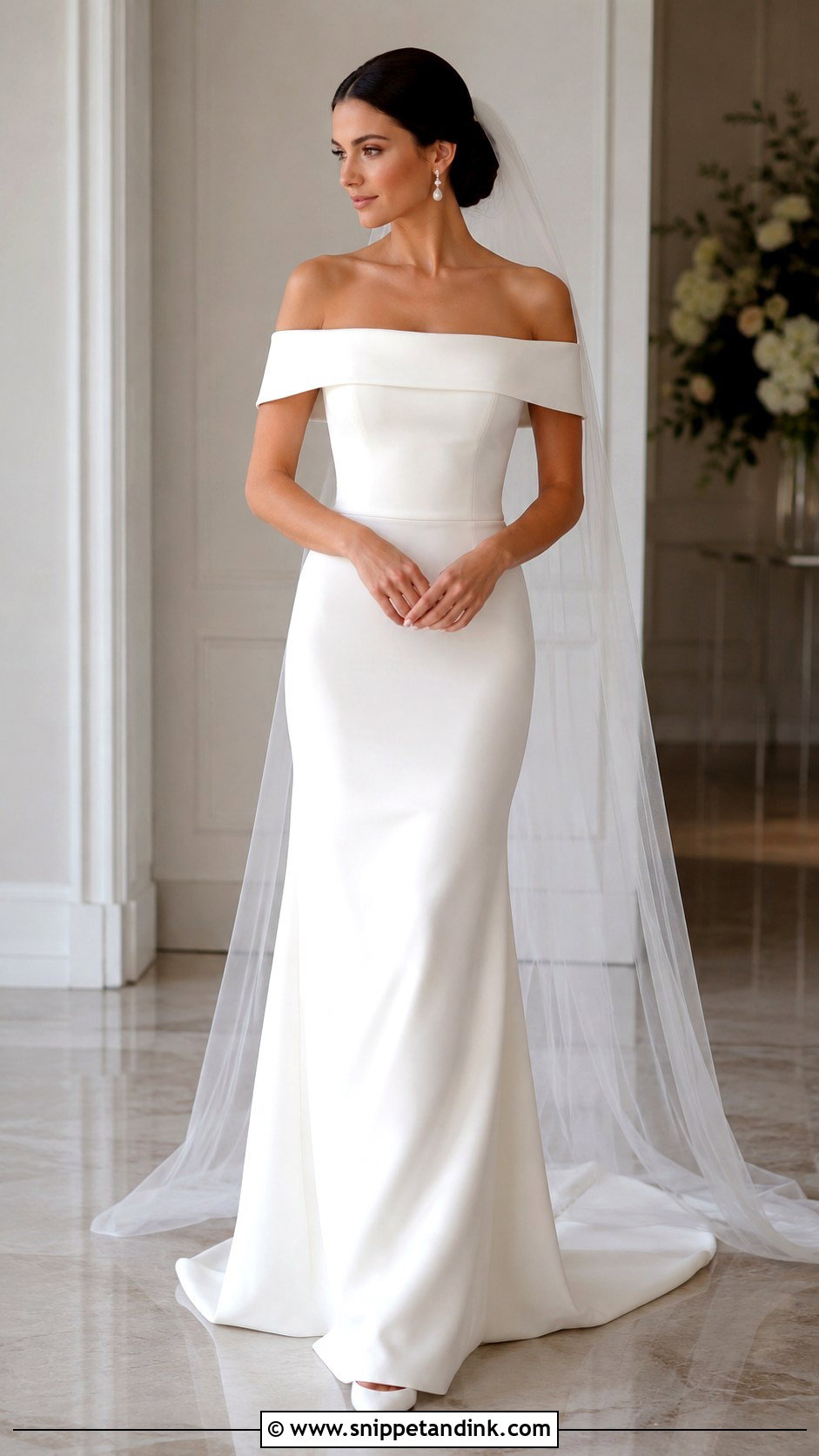
An off-shoulder neckline is the detail, so keep everything else plain. I check that the bodice band stays in place when the bride raises her arms, because off-shoulder lines creep up. Crepe or satin with minimal seams works best. Drop earrings and a neat updo frame the shoulders.
13. Simple Bride Square Neck Dress
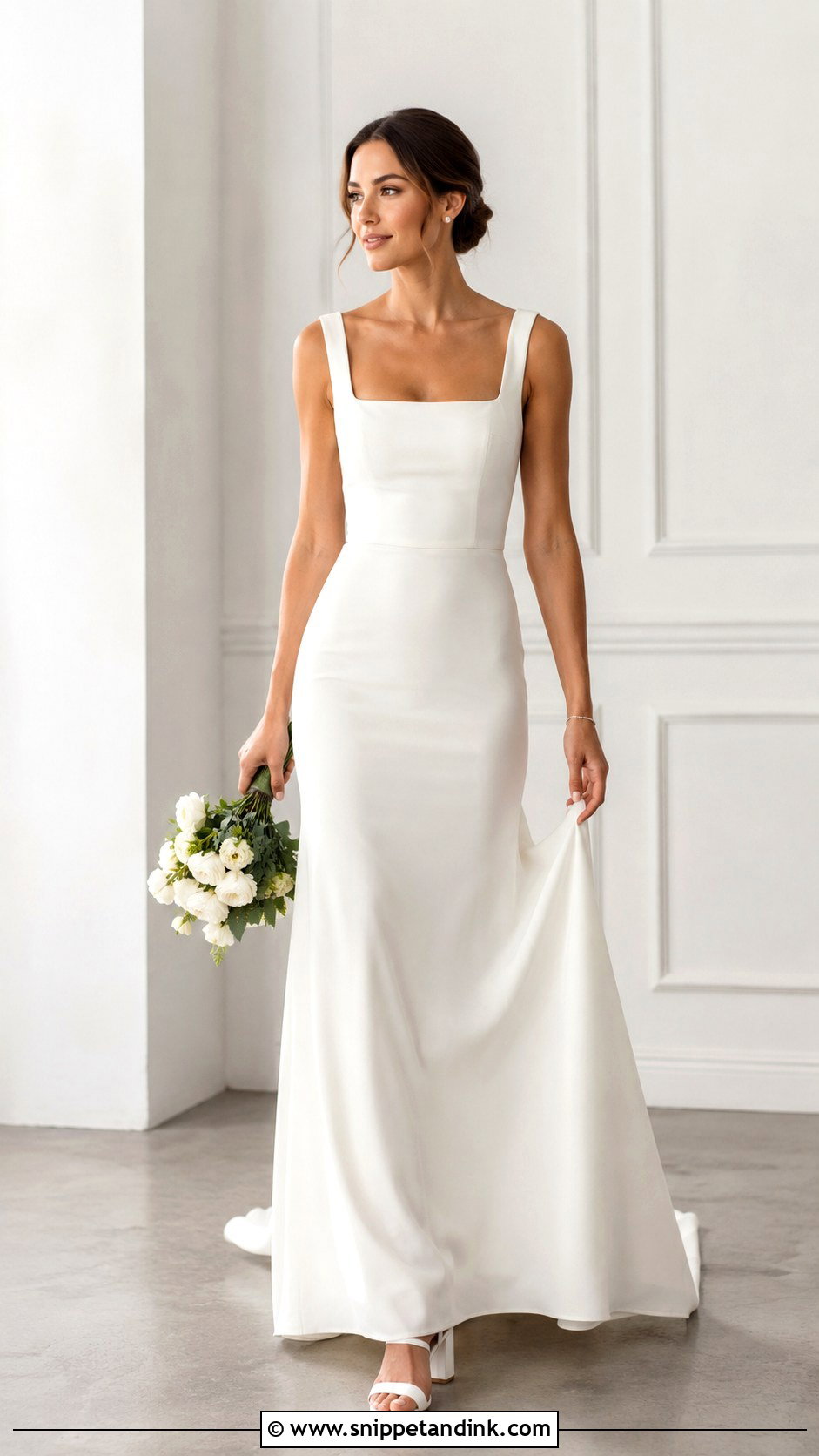
A square neckline frames the collarbone crisply. Wide straps make it feel structured; thin straps feel lighter. Crepe, satin or a simple column all work. The neck edge should lie flat against the chest; if it gapes when you lean forward, it needs taking in at the side seams.
14. Simple Bride High Neck Dress
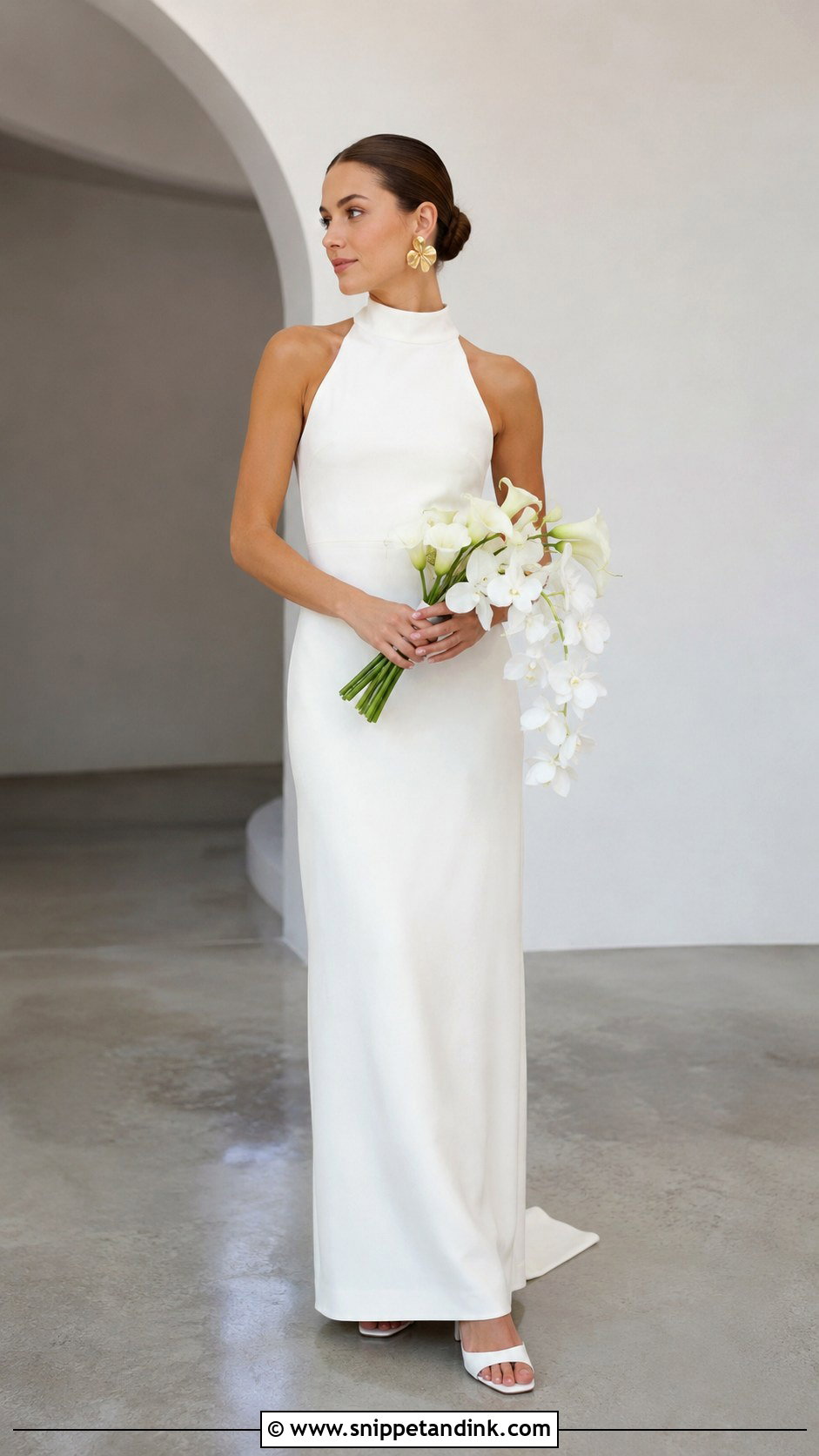
High necklines remove the need for a necklace, so the focus moves to earrings, shoes and hair. Sculptural earrings or pearl studs suit it, and the hair should be up or tucked back. I like it in crepe or chiffon for modern venues and cooler weddings. A high neck can feel warm in summer, so check the fabric breathes.

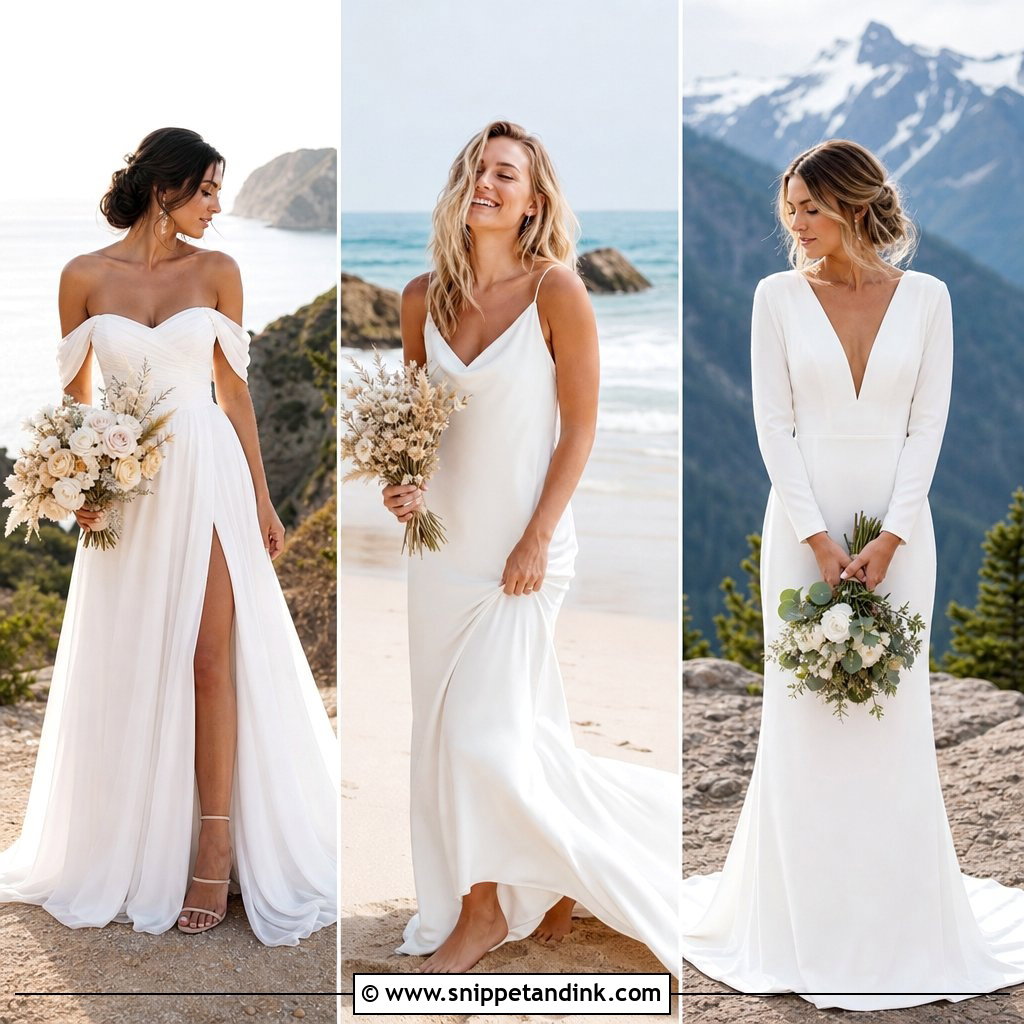
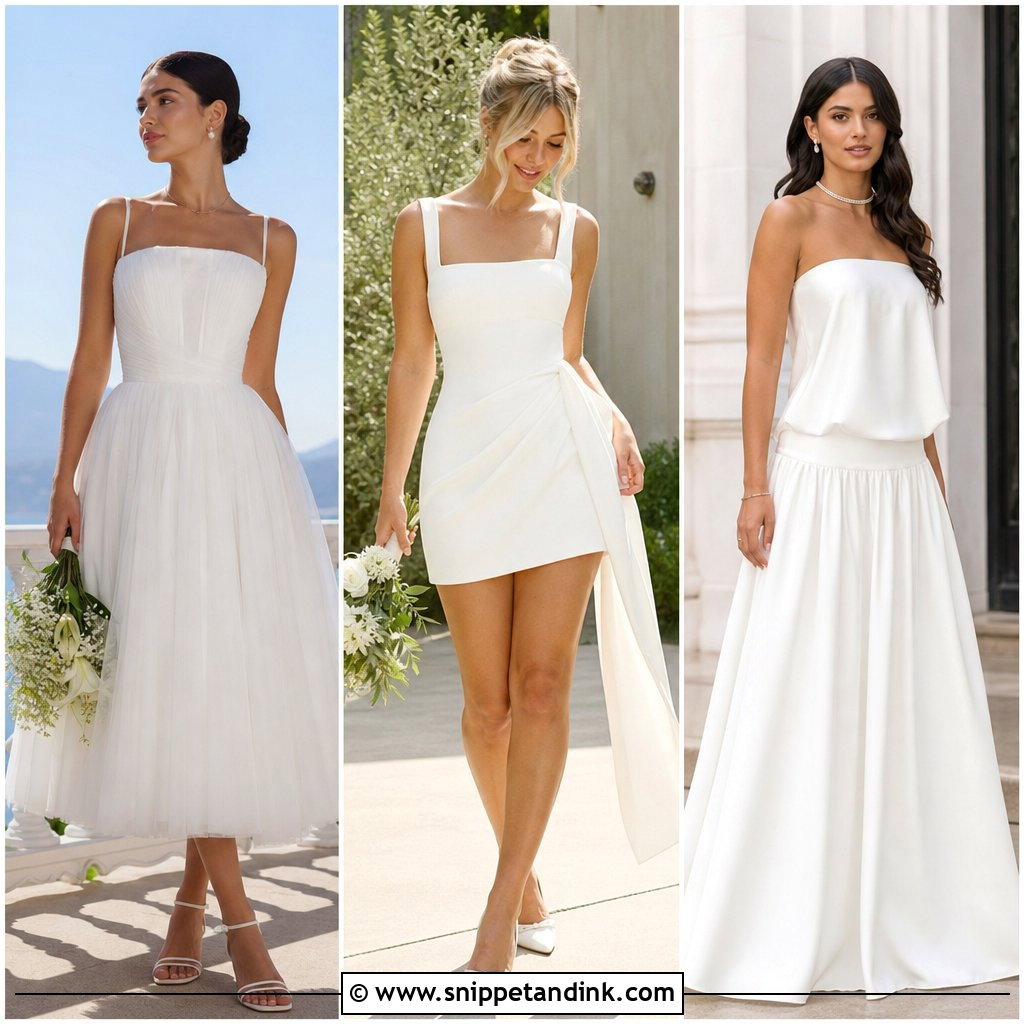
15. Simple Bride Halter Dress
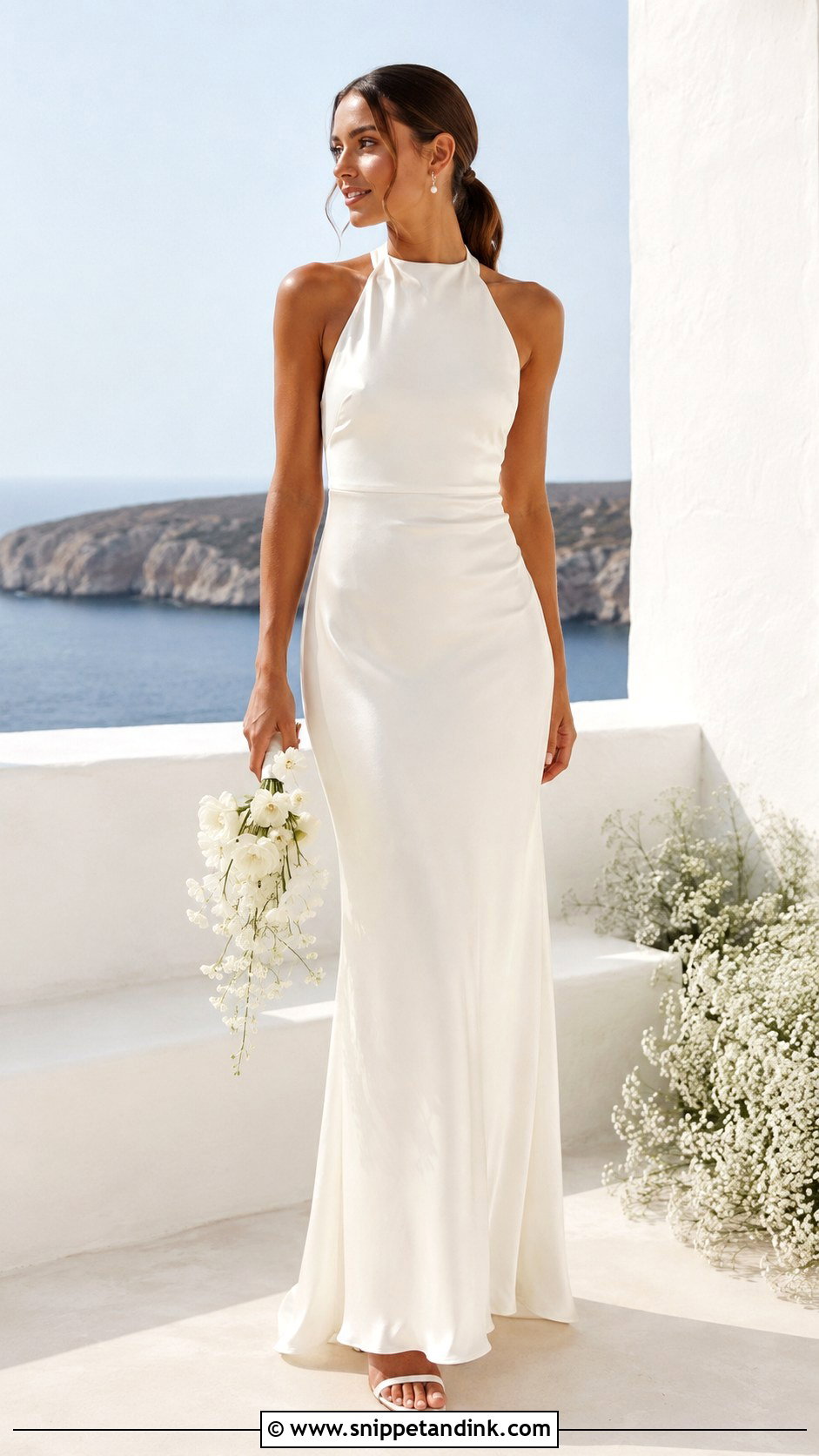
Halter necklines lengthen the neck and suit strong shoulders. Satin, crepe or silk with a column or flowing skirt looks clean. The neck strap can pull after several hours, so I ask for an adjustable hook at the back of the neck. Skip the necklace and wear the hair low.
16. Simple Bride Backless Dress
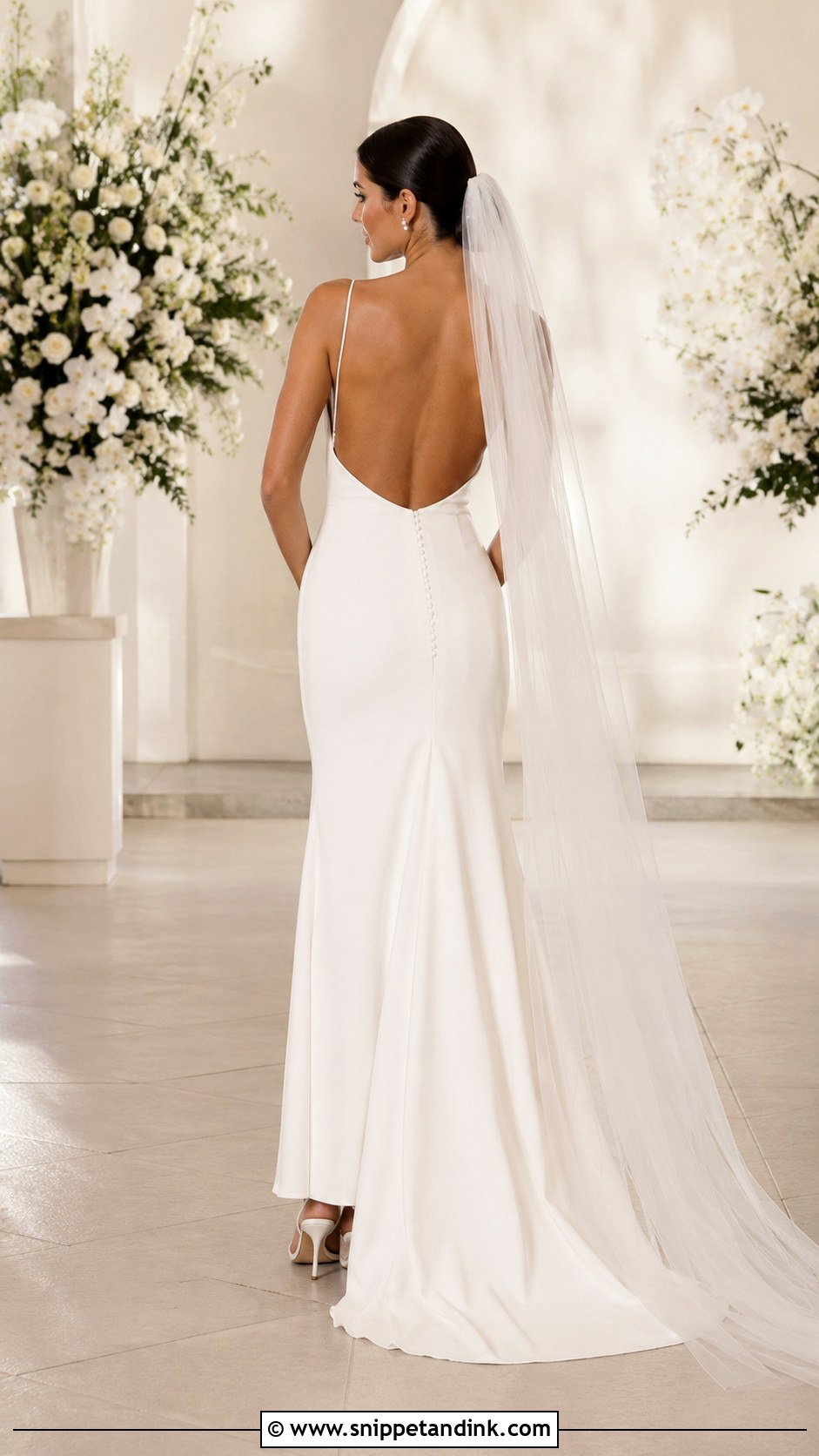
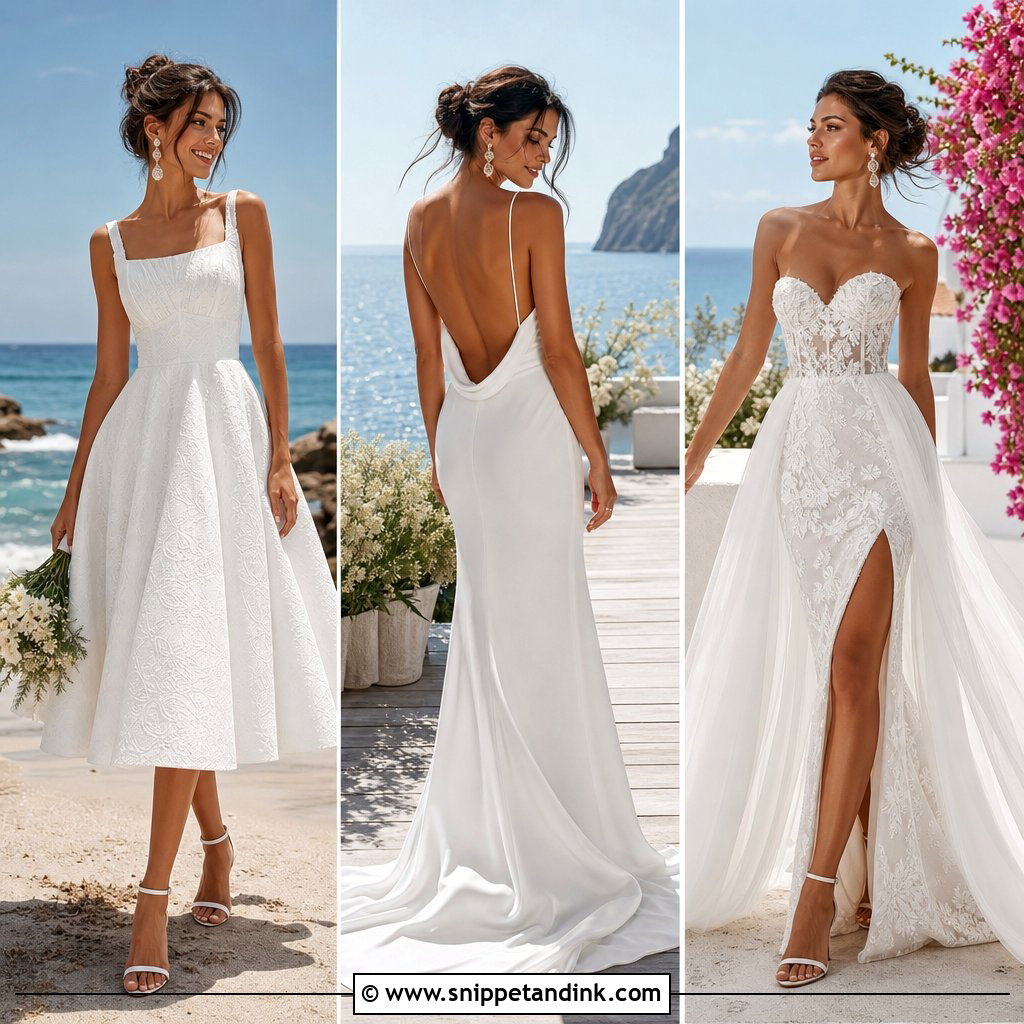
An open back is simple from the front and dramatic from behind. The fit at the back edge must be secure, so I check it while the bride bends and dances. A long veil covers the back during the ceremony and comes off for the reception. Satin slips, crepe columns and soft A-lines all suit it.
17. Simple Bride Bow Detail Dress
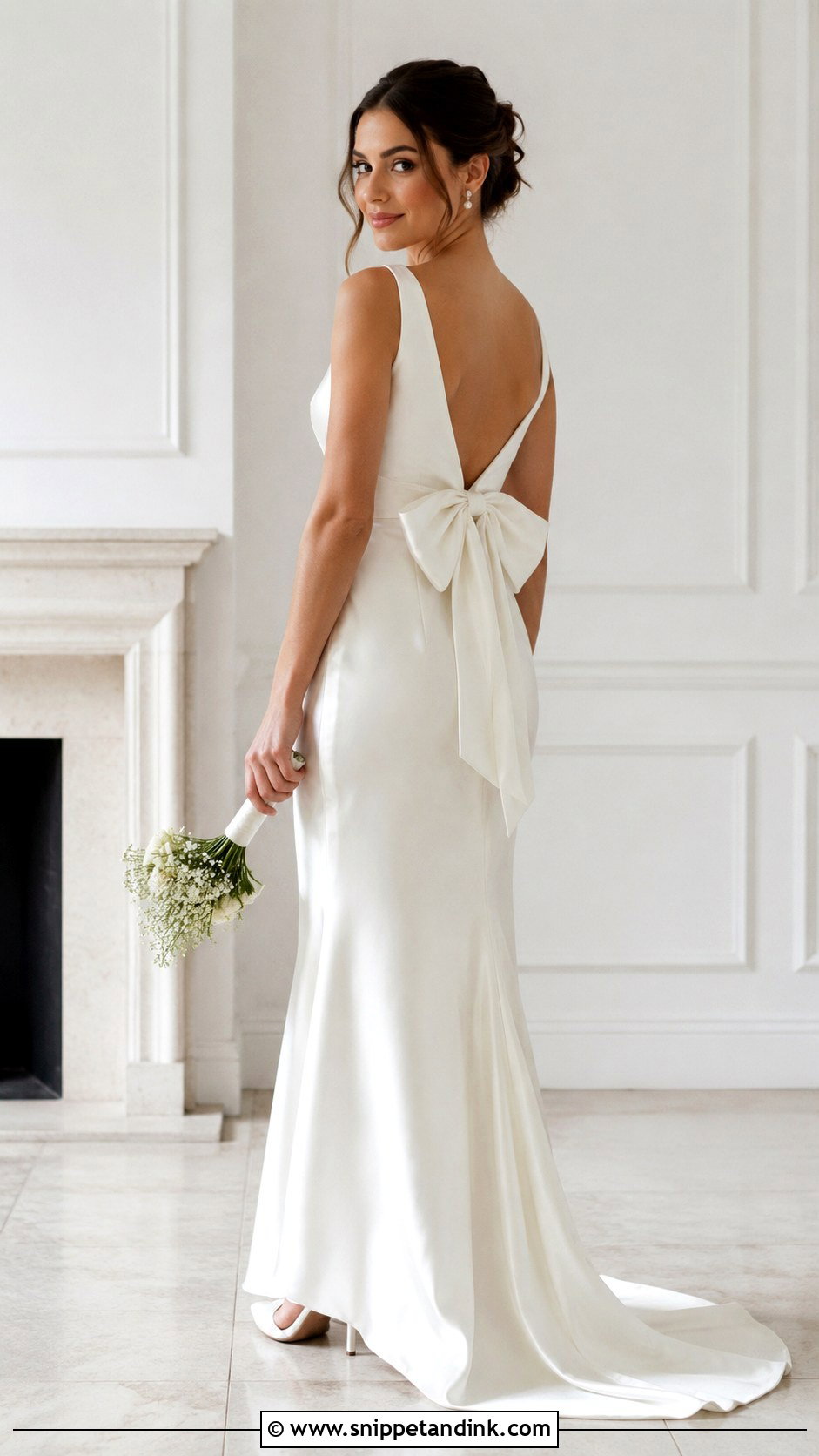
One bow is enough. A back bow, shoulder bow, waist bow or hair bow adds a feminine note to a clean satin, mikado or crepe dress. A large bow should be the only statement; a small one leaves room for a short veil. Check the bow is stiffened so it does not droop by the evening.
18. Simple Bride Cape Dress
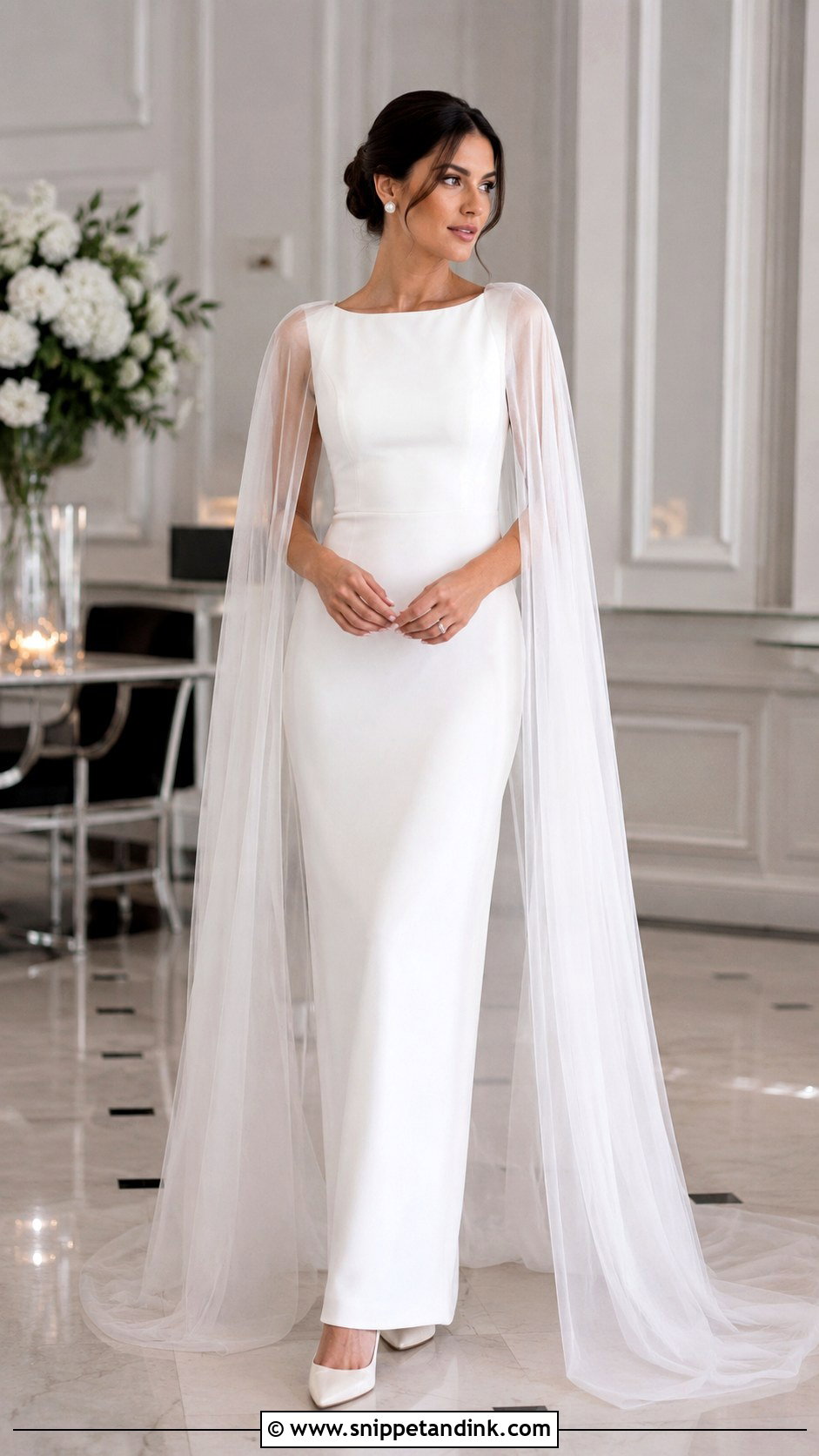
A cape can replace a veil and adds movement for photos. A sheer, crepe or detachable shoulder cape suits a simple column, slip or sheath. Attach it with hooks so it can come off for dancing. Pointed heels and a neat hairstyle keep the look streamlined.
19. Simple Bride Detachable Skirt Dress
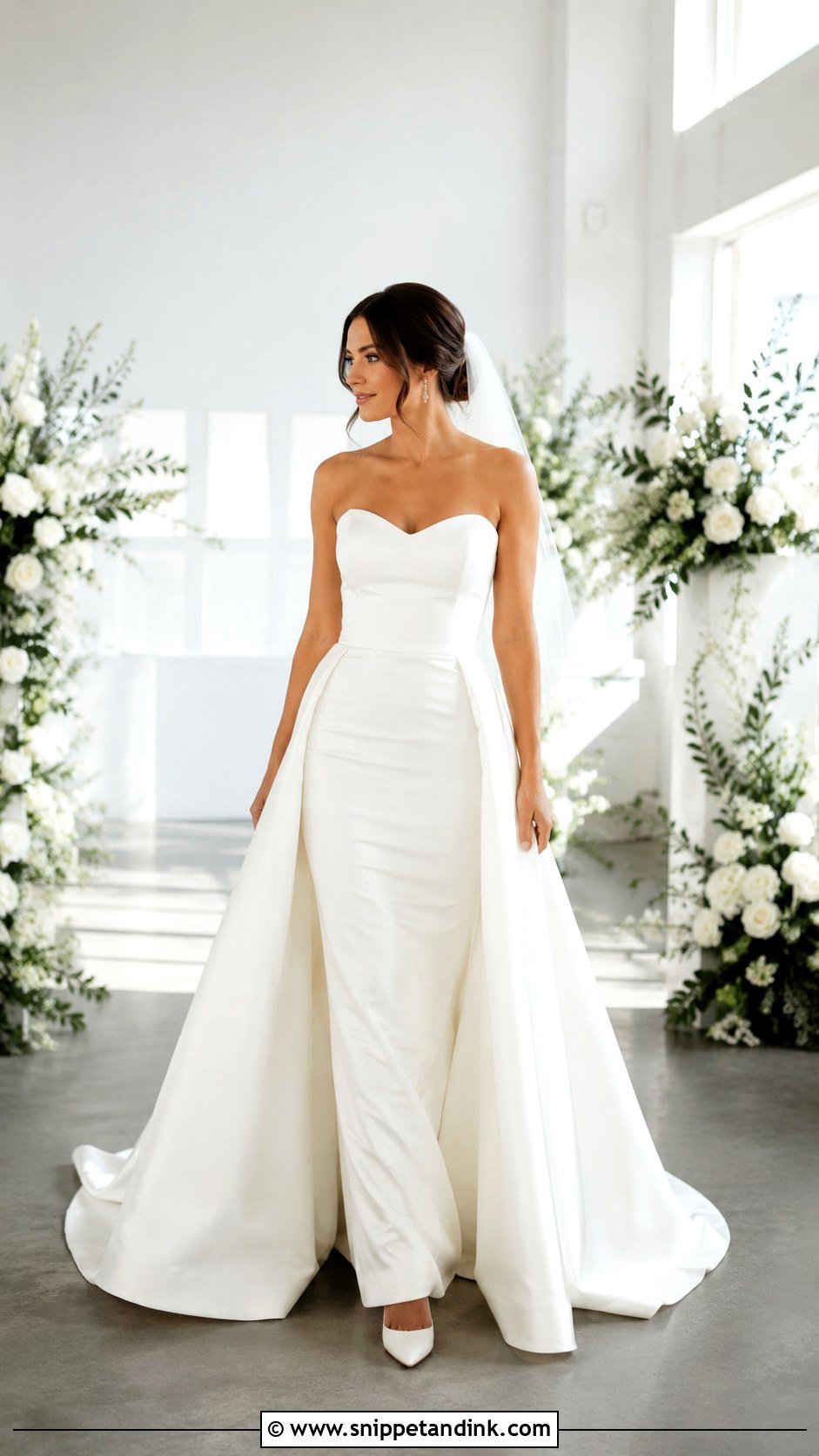
A detachable skirt dress gives two outfits: a fuller ceremony look and a lighter reception one. The base should be a fitted dress or jumpsuit, with satin, crepe or organza connecting the pieces. The overskirt must sit smoothly at the waist, so I ask for a hidden waistband with strong hooks.
20. Simple Bride Minimal Ball Gown
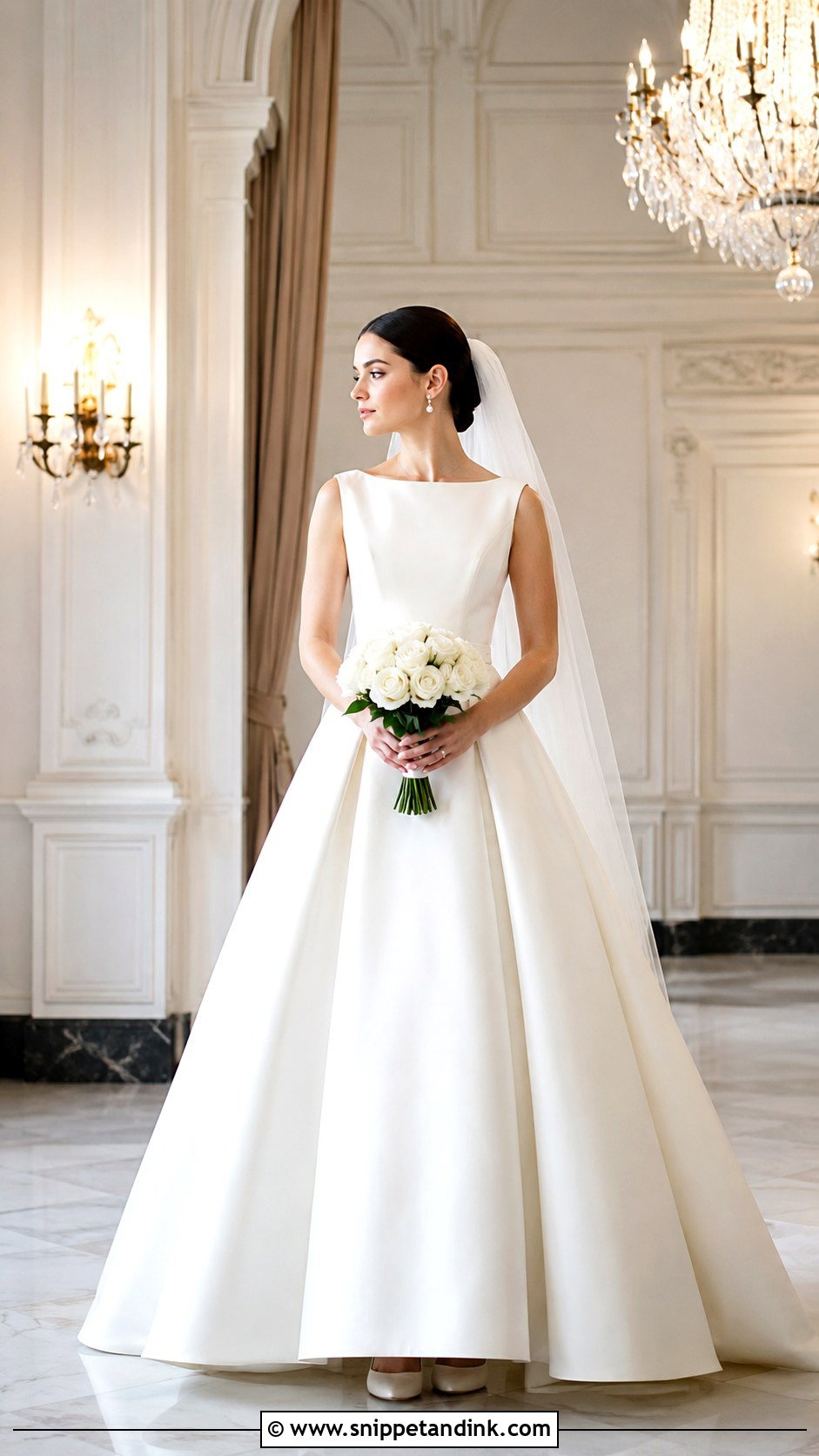
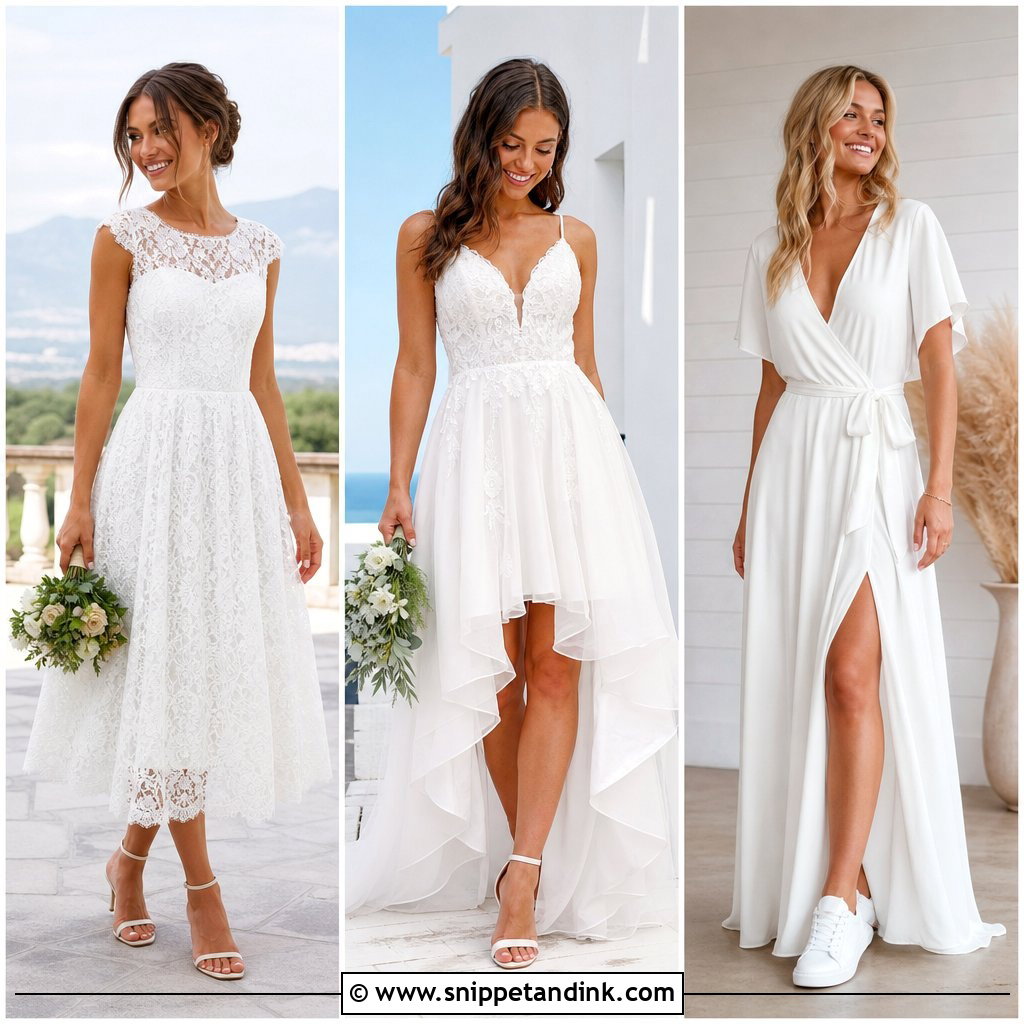
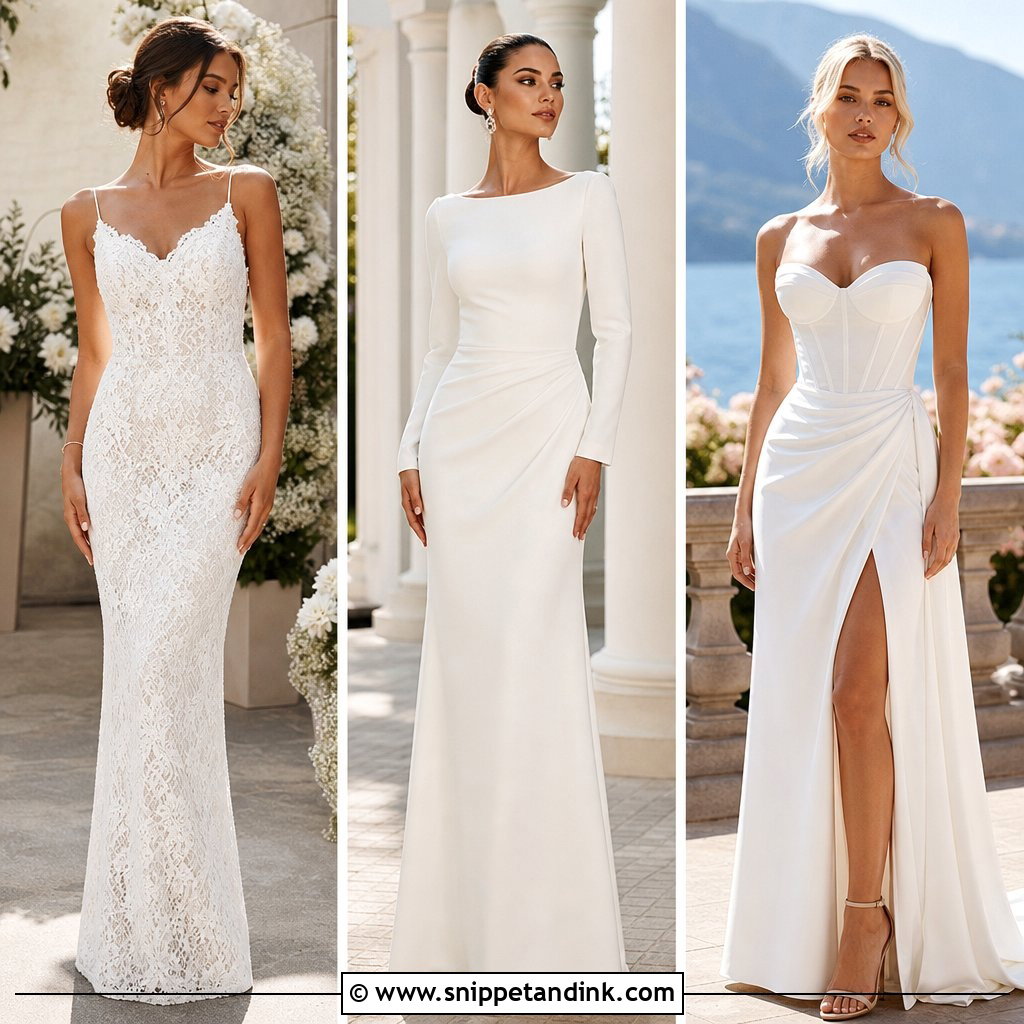
A ball gown can be simple when the fabric does the work. Mikado, satin or plain organza holds the full skirt without beading. Structure replaces decoration. Classic pumps and a smooth veil keep it balanced. It suits large venues, where the skirt has presence from a distance.
21. Simple Bride Beach Dress
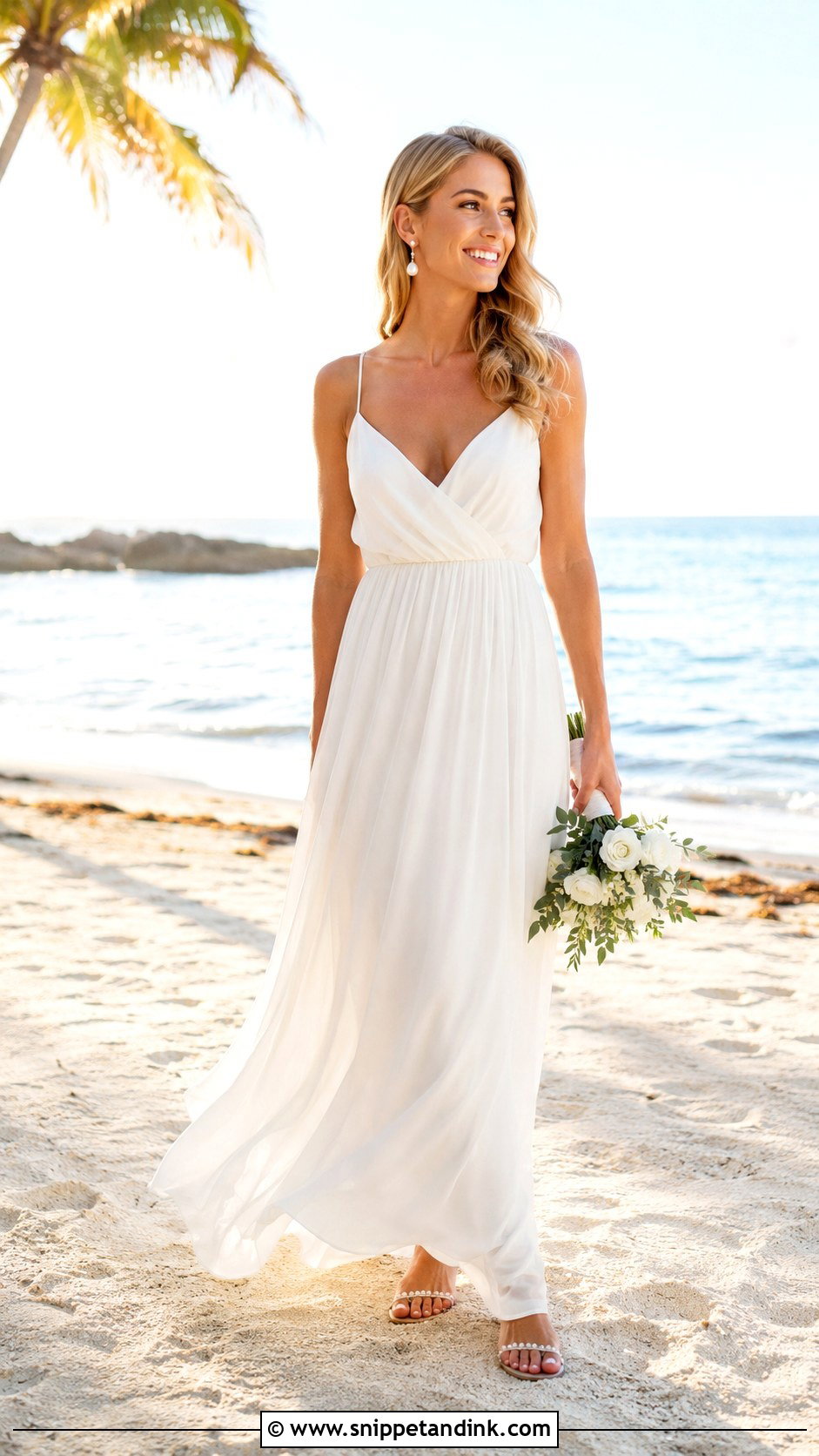
Beach dresses need to be light and short enough at the back to clear the sand. Chiffon, silk or soft crepe with minimal layers work. Avoid long trains that drag. Flat sandals or bare feet suit the setting. A lightweight veil moves in the breeze, but pin it firmly or it will fly.
22. Simple Bride Garden Dress
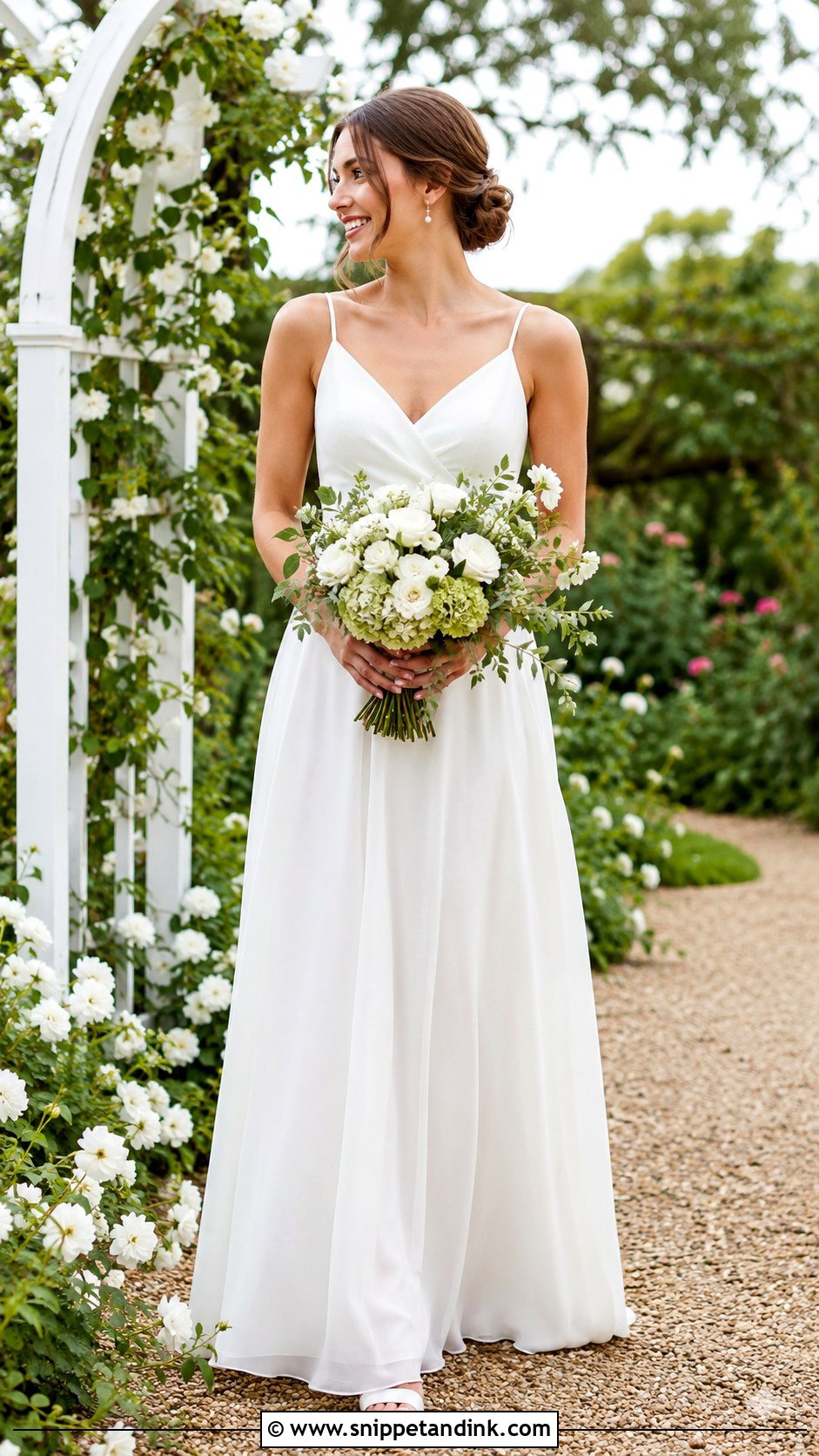
Garden weddings mean grass, and heels sink. Block heels or elegant flats solve it. A simple A-line or chiffon dress with delicate straps suits the setting; keep embellishment light. White and pale green flowers in the bouquet echo the surroundings.
23. Simple Bride City Wedding Dress
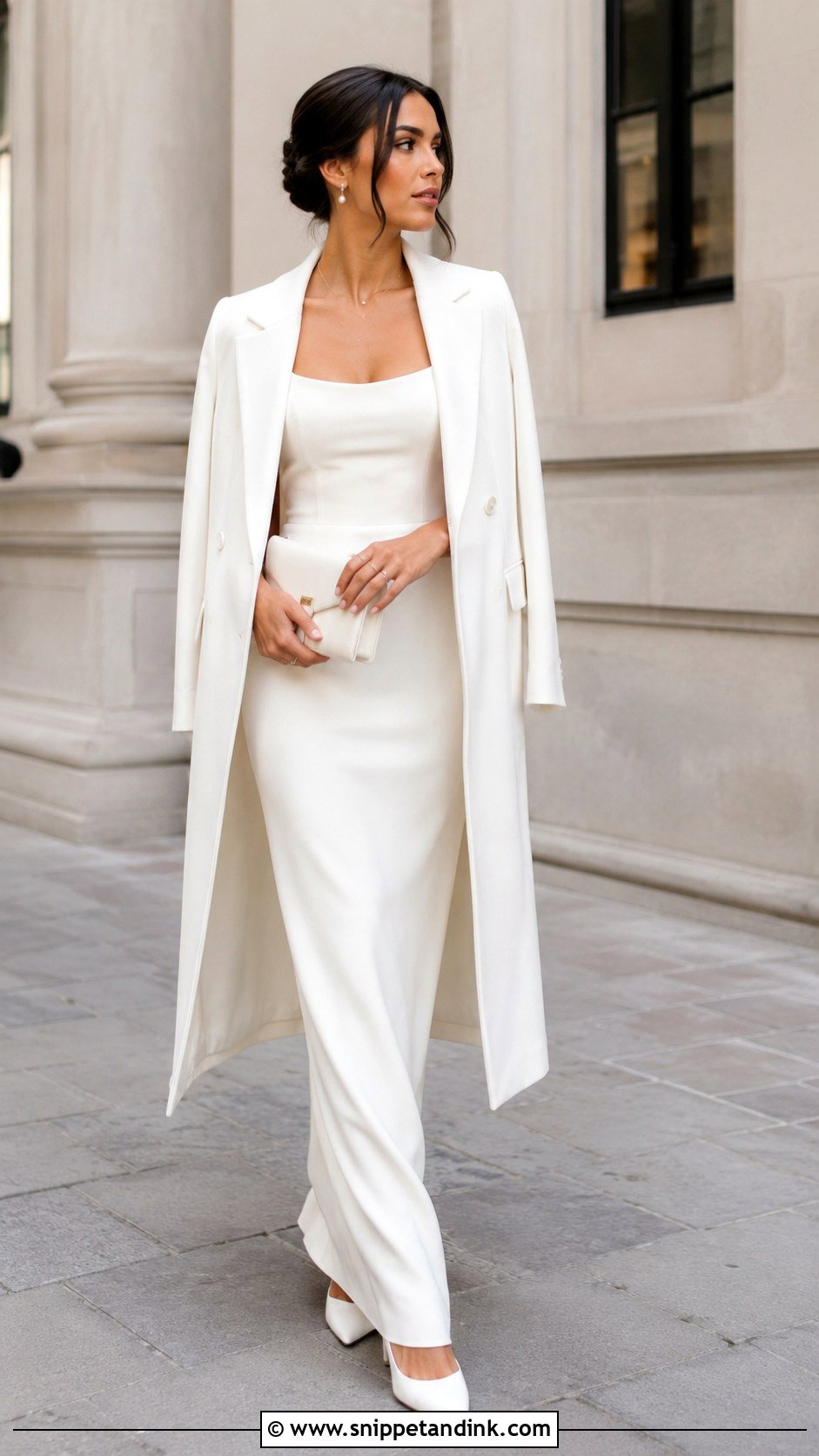
City weddings involve walking, stairs and sometimes cars, so the outfit should be easy to manage. A crepe column, satin midi or tailored mini looks sharp. A long coat or cropped jacket adds polish for travel between places. Pointed heels and a structured clutch finish it.
24. Simple Bride Winter Dress
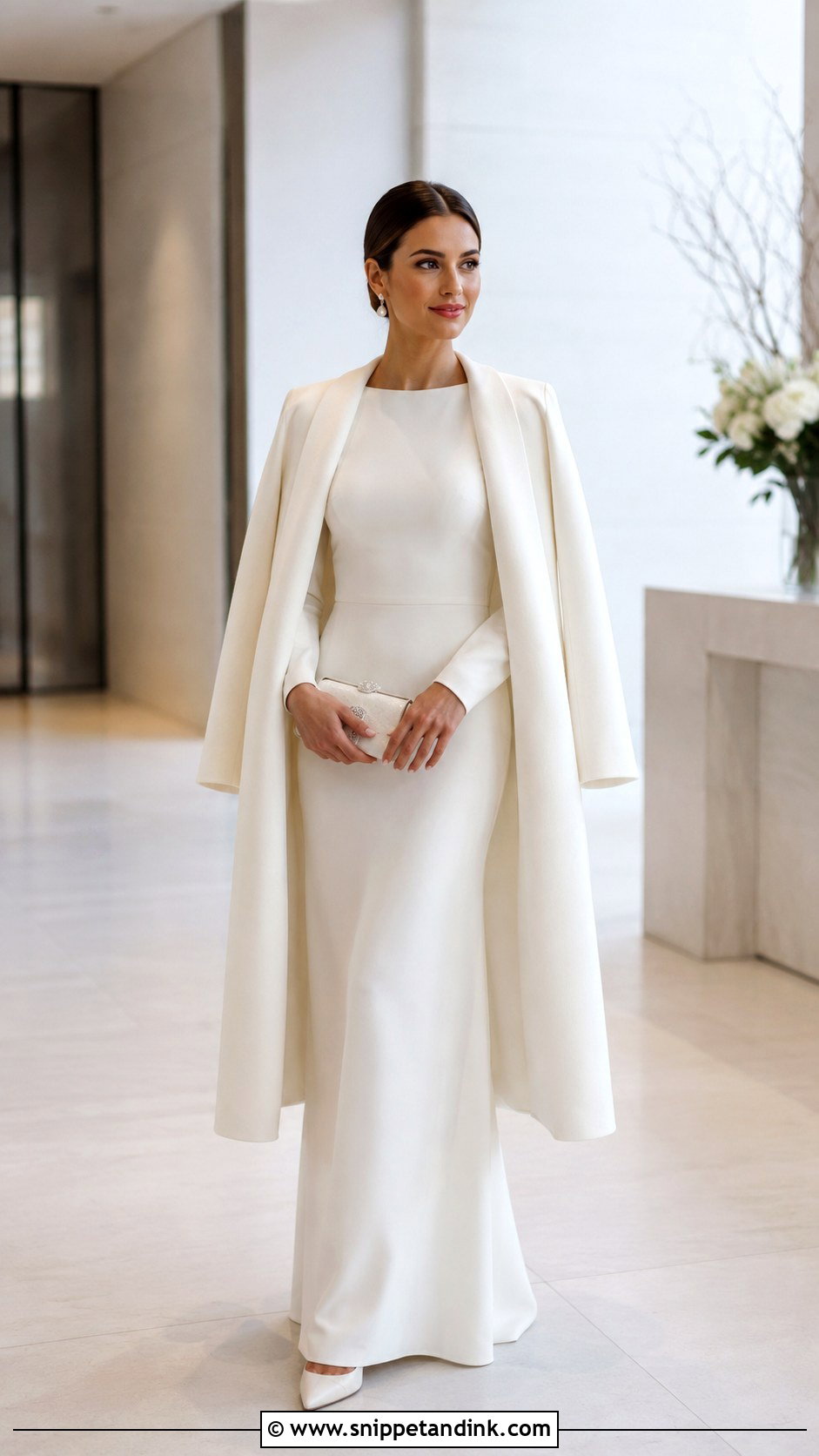
Winter needs a layer. A white wool coat, faux fur wrap, or tailored cape keeps the bride warm for outdoor photos. A long-sleeve crepe or satin dress suits the season. Closed-toe heels and a low bun work with the extra layers. Keep the palette white, ivory or cream.
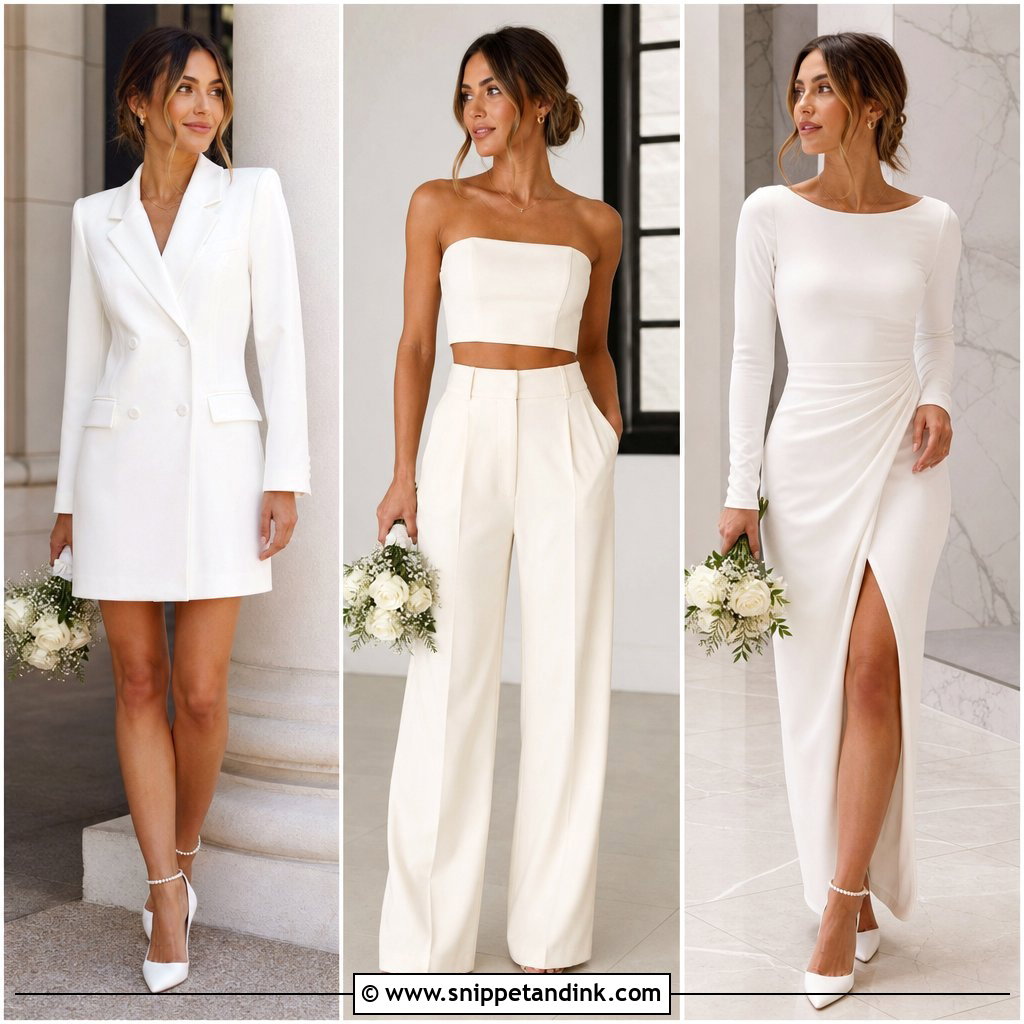
25. Simple Bride Summer Dress
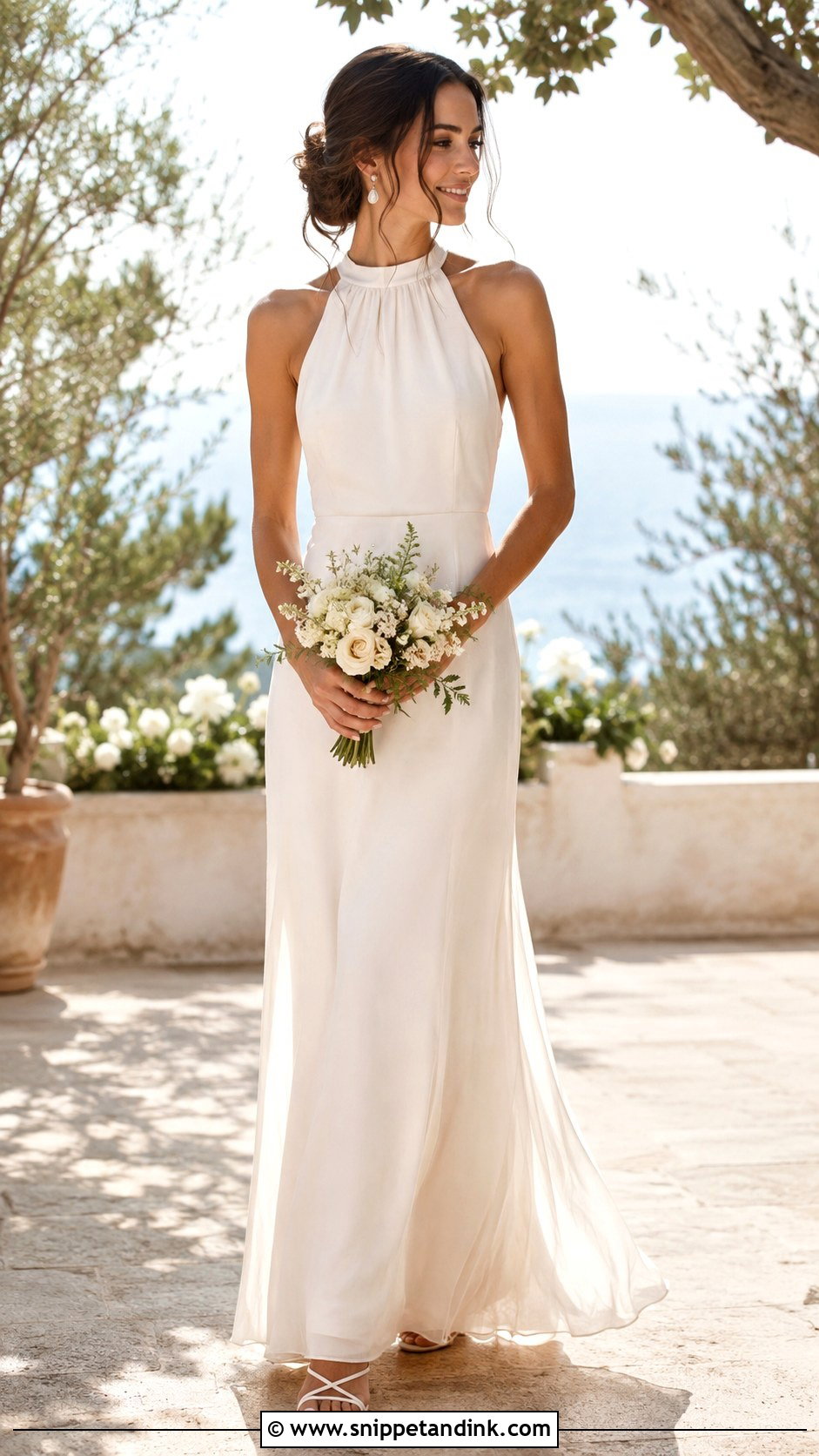
Summer heat makes synthetic satin uncomfortable, so I prefer silk, chiffon or light crepe. Halter or strapless shapes keep the arms cool. Strappy sandals and a loose updo help in warm weather. A light tulle veil will not overwhelm the outfit.
26. Simple Bride Reception Dress
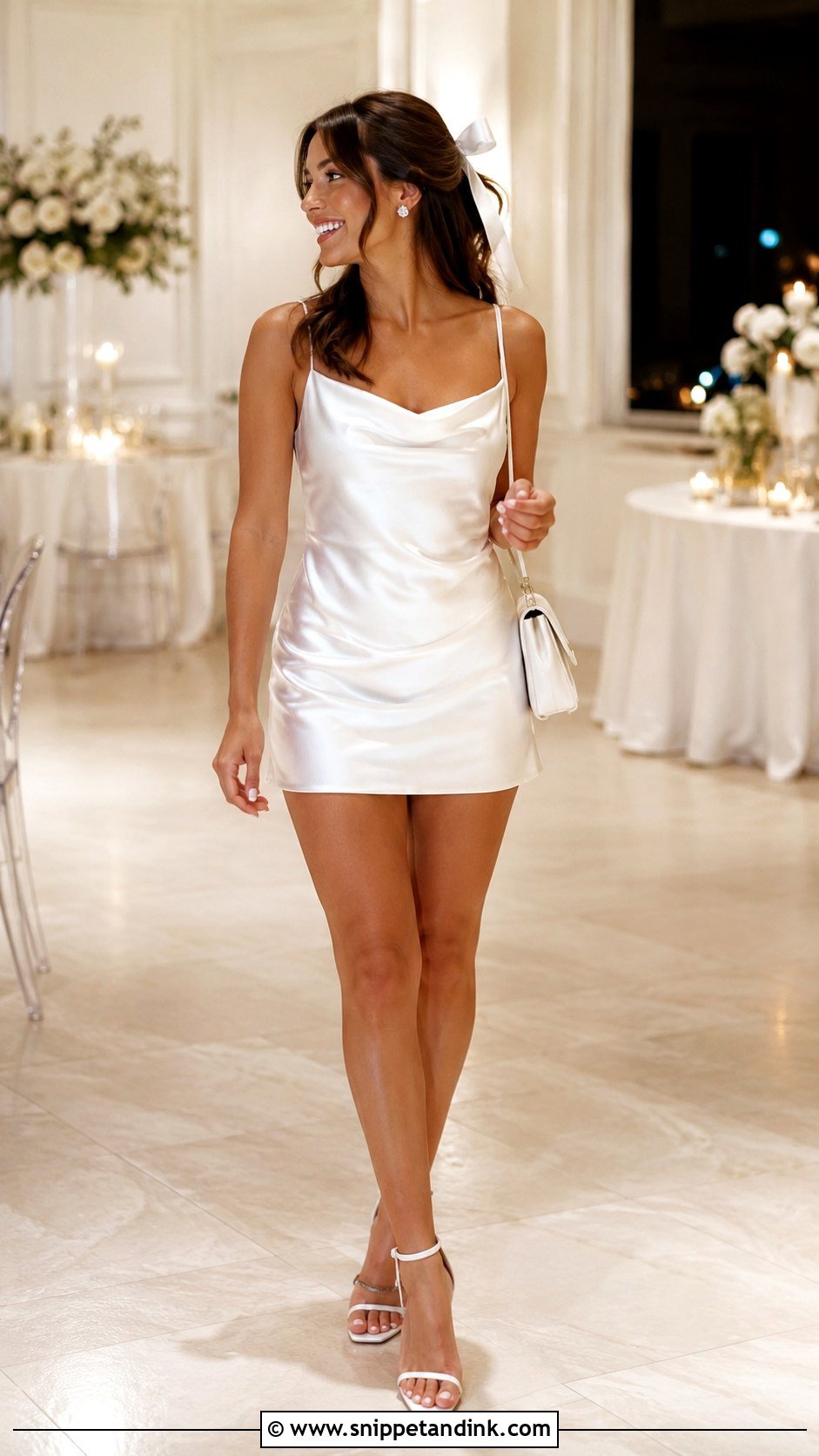
A reception dress should let you dance. A short satin dress, feather-trim mini or slip dress works. Keep it white or ivory so it still reads bridal. Comfortable heels and sparkly studs complete it. Plan where the change will happen and who will help with the fastenings.
27. Simple Bride Elopement Dress
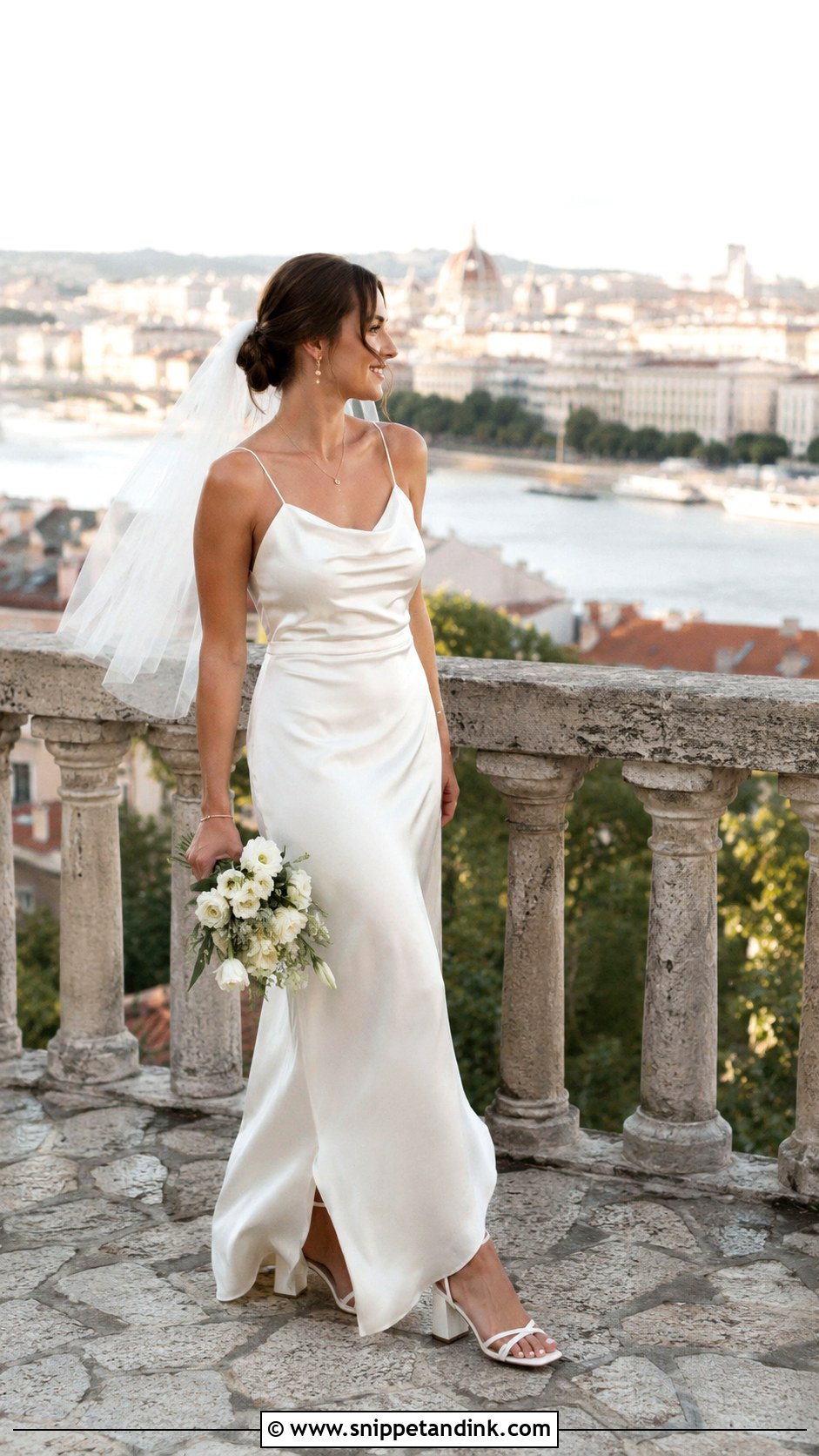
Elopements usually involve travel and walking, so the outfit should pack well and resist creasing. Crepe and heavy satin recover better than silk. Practical shoes, block heels or flats, are essential. A lightweight veil or scarf adds the bridal note.
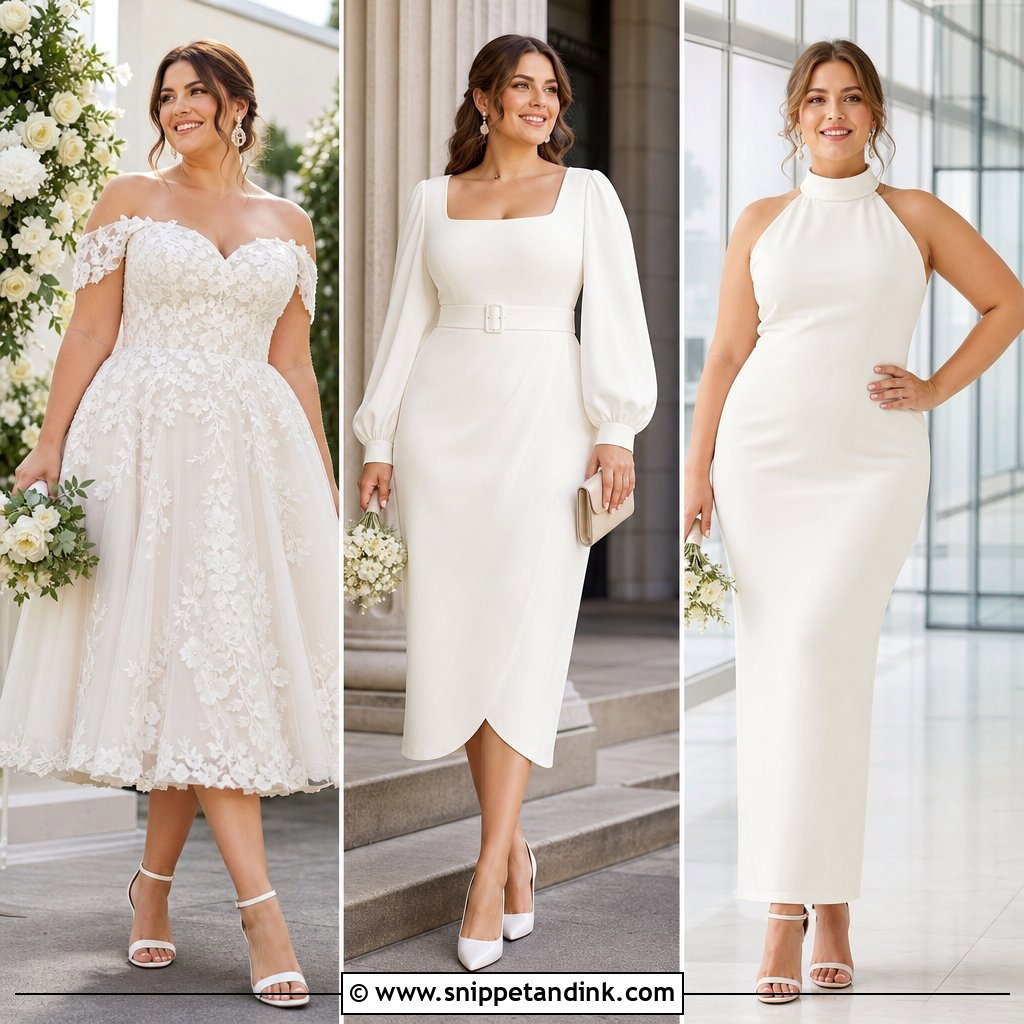
28. Simple Bride Plus Size Dress
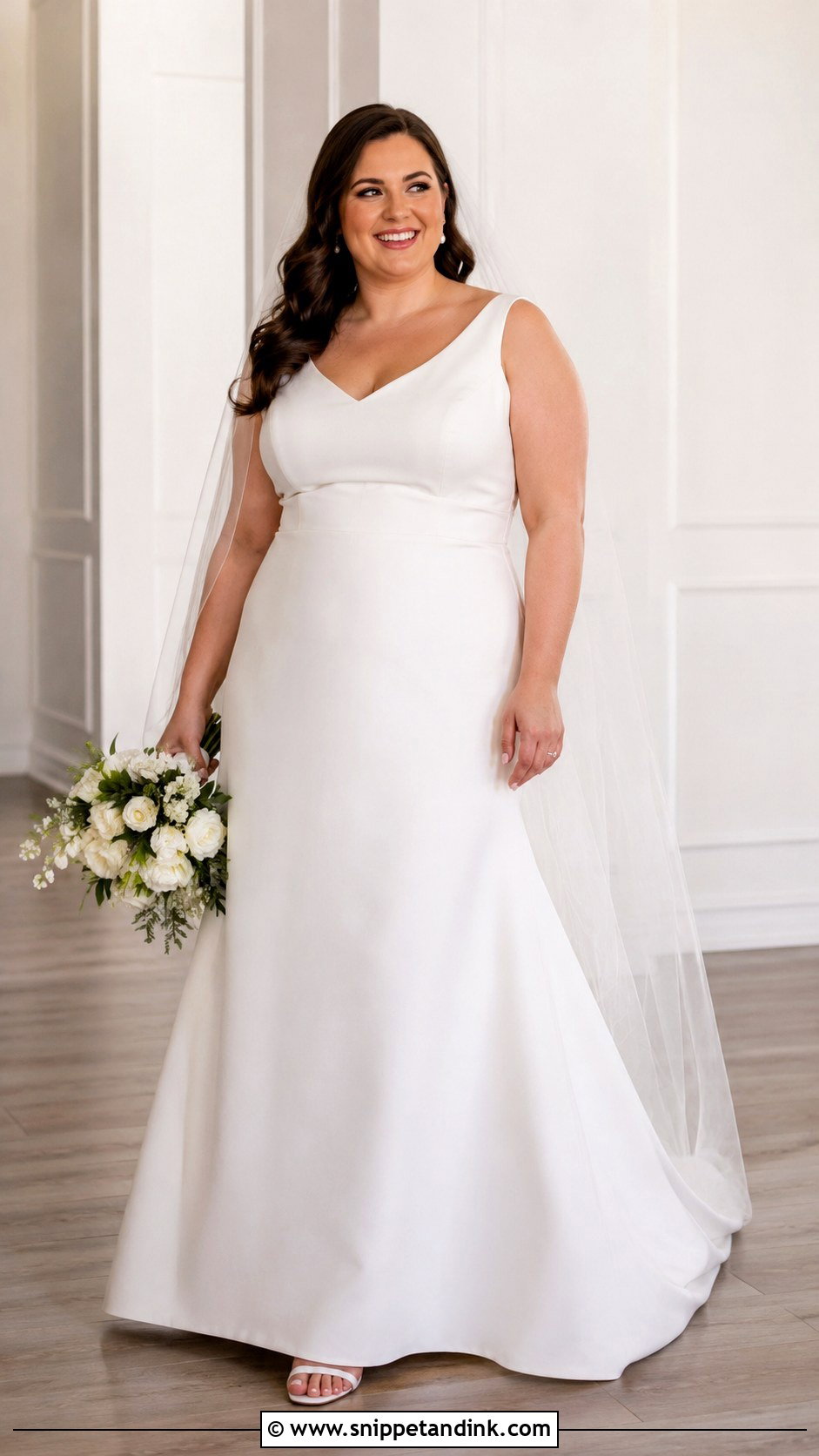
For a plus size bride, fit and support matter more than any design detail. The dress should feel secure through the bust, waist and hips without pulling. A-lines, wrap dresses, crepe columns and structured satin all work. Supportive undergarments decide how smoothly the fabric lies, so bring them to every fitting.
29. Simple Bride Maternity Dress
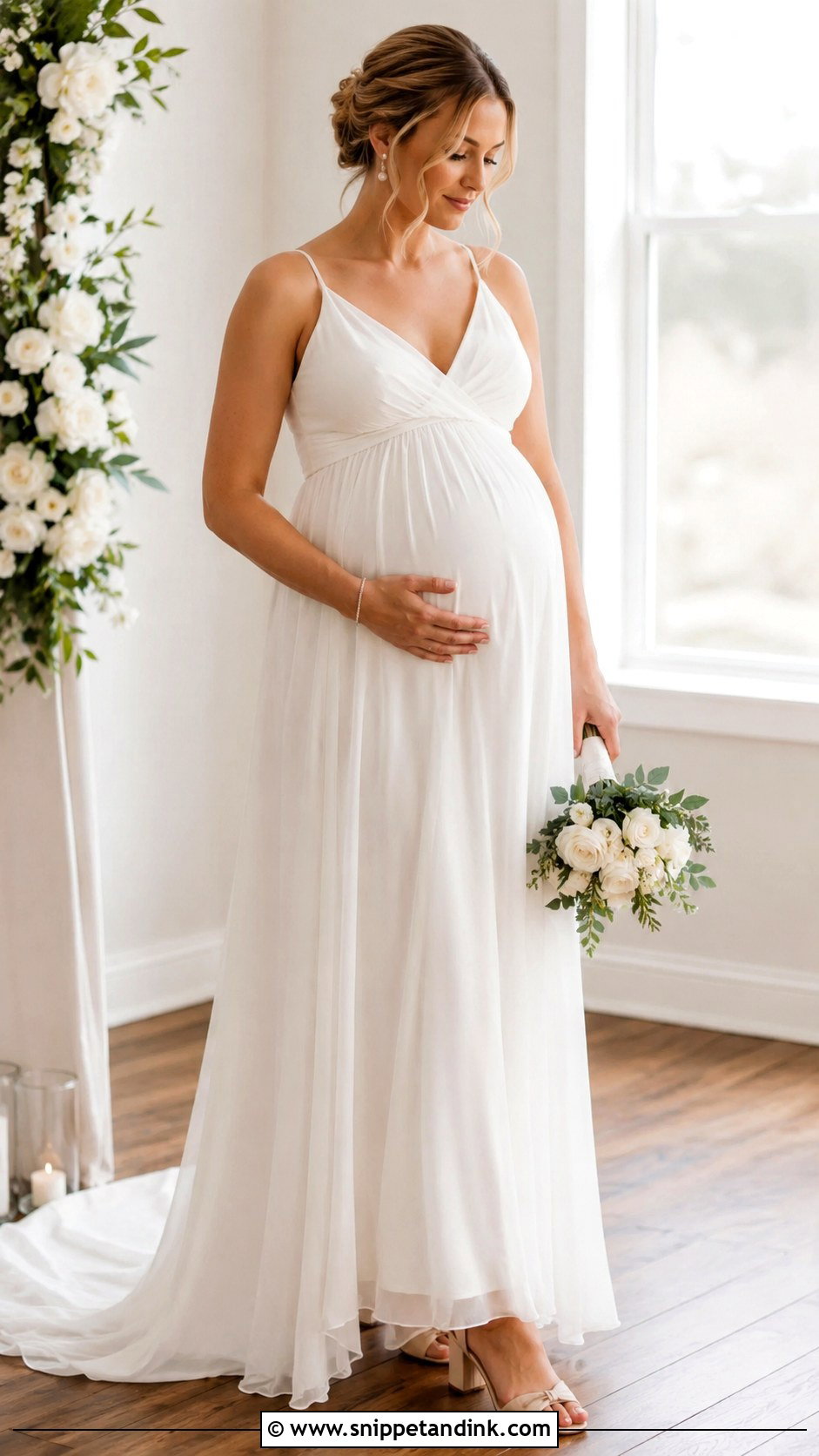
Maternity dresses need room to grow between fitting and wedding. I schedule the final fitting as close to the date as possible. Empire waists, stretch crepe, wrap dresses and chiffon suit a bump. Low block heels or cushioned flats keep the bride comfortable through a long day.
30. Simple Bride Civil Ceremony Dress
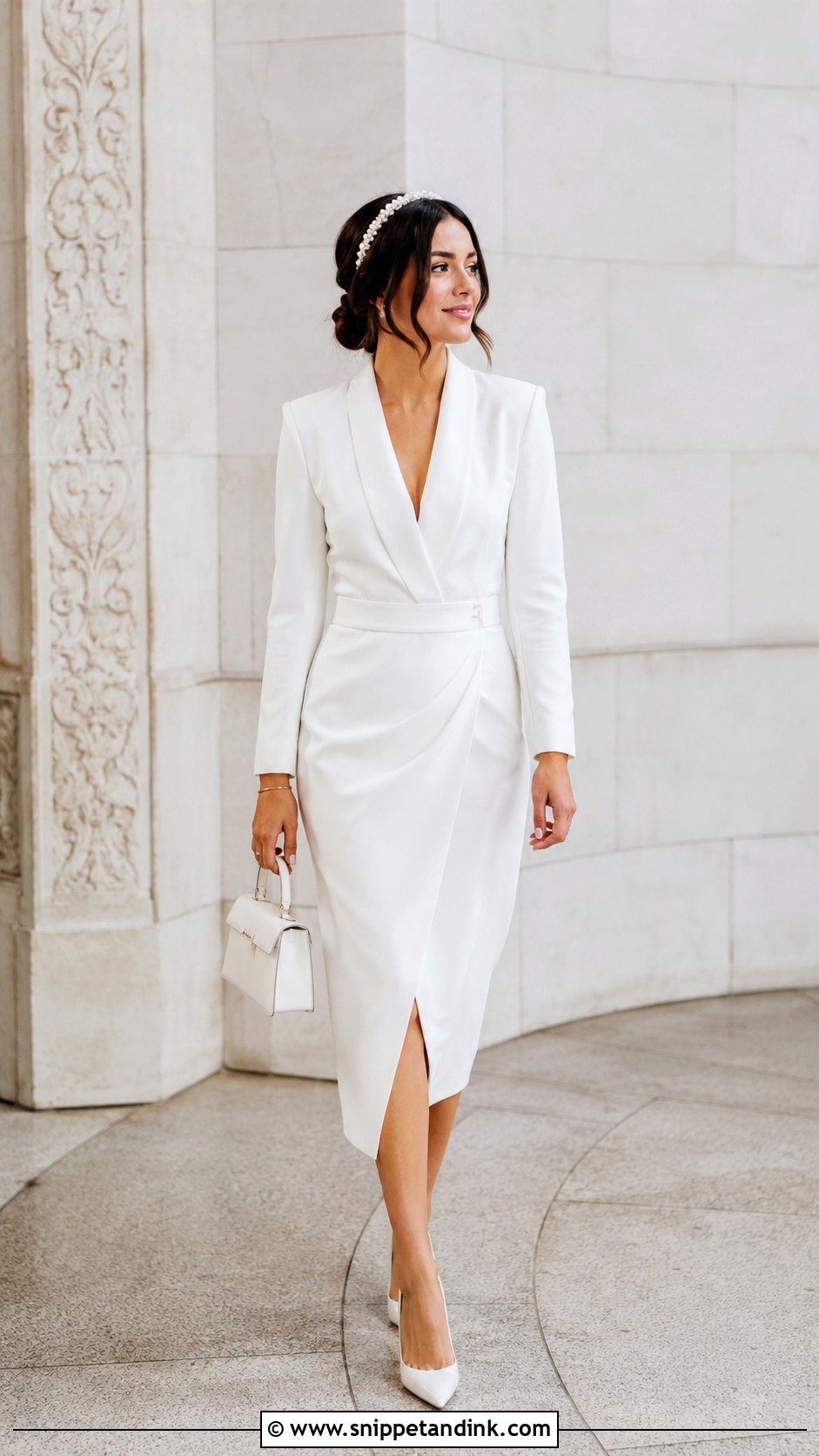
Civil ceremonies are short and simple, so clean tailoring makes the impact. A white midi dress, tailored mini, suit or jumpsuit all work. A short veil, pearl headband or satin bow makes it bridal for photos. Pointed heels and a structured bag complete it.
Steaming Satin and Other Wedding-Morning Fixes
Simple dresses show creases, so I bring a hand steamer and steam from the inside, holding it a little away from the fabric. Satin can water-spot if the steamer spits, so test on the hem first. Crepe recovers quickly; silk needs the most care.
Pack a small kit: safety pins, fashion tape, a white chalk stick for small marks, clear nail polish for a run in tights and a spare pair of flat shoes. These small items solve most problems on the day.
Wearing a Plain Wedding Outfit Again Afterwards
One quiet advantage of a minimal outfit is that it can have a second life. A suit’s blazer goes with jeans, a slip dress can be shortened into a party dress, and a silk crepe column can be dyed, which a beaded gown cannot. If rewearing matters to you, say so at the first fitting. I avoid cutting seam allowances too short on those dresses so they can be let out or reshaped later, and I steer clients toward natural fibres, since polyester barely takes dye at all.
Spend the Money on Fit, Not Trim
A clean dress, tailored suit, soft jumpsuit or two-piece can look as special as a heavily detailed gown when the fit is right. Focus on fabric, shape and comfort, and add one or two meaningful accessories. Consider your venue, season, shoes and hair so the whole look feels complete.
You'll Like These Ideas:








Leave a Reply