
A wedding dress has to do far more than look right on a hanger. It has to let you walk an aisle, climb out of a car, hug sixty people, sit through dinner and dance, and it has to hold up in photographs you’ll keep for decades. When I work with a bride, the first fitting room conversation is never about lace or satin. It’s about the venue, the season and how much she wants to move. Below are thirty silhouettes, necklines, fabrics and finishes, from structured ball gowns to courthouse minis, each with the shoes, veil and jewelry I’d put with it and the honest catch I’d mention before she falls in love.
What I Ask Before a Bride Pulls Any Gown off the Rail
Most brides arrive at their first appointment with photos of one silhouette and leave in a different one. That’s normal. The shape that suits a body and a day often isn’t the one that looked right on a model, so I start with practical questions before any dress goes on.
- What is underfoot? Grass, sand, gravel and cobbles all punish long trains and thin heels.
- How long will you wear it? A ten-hour day in a heavily boned bodice feels different from a two-hour ceremony.
- Will you sit on the floor, ride in a small car or climb stairs? Volume and fitted skirts both need testing for that.
- How warm will it be? Heavy satin and layered tulle get hot fast in summer sun.
- Do you want one dress all day, or a change for the reception?
At the fitting I have every bride walk, sit, lift her arms and do a small dance step. If anything pinches or slides during those five minutes, it will be far worse by the end of the night.
1. A Line Wedding Dress
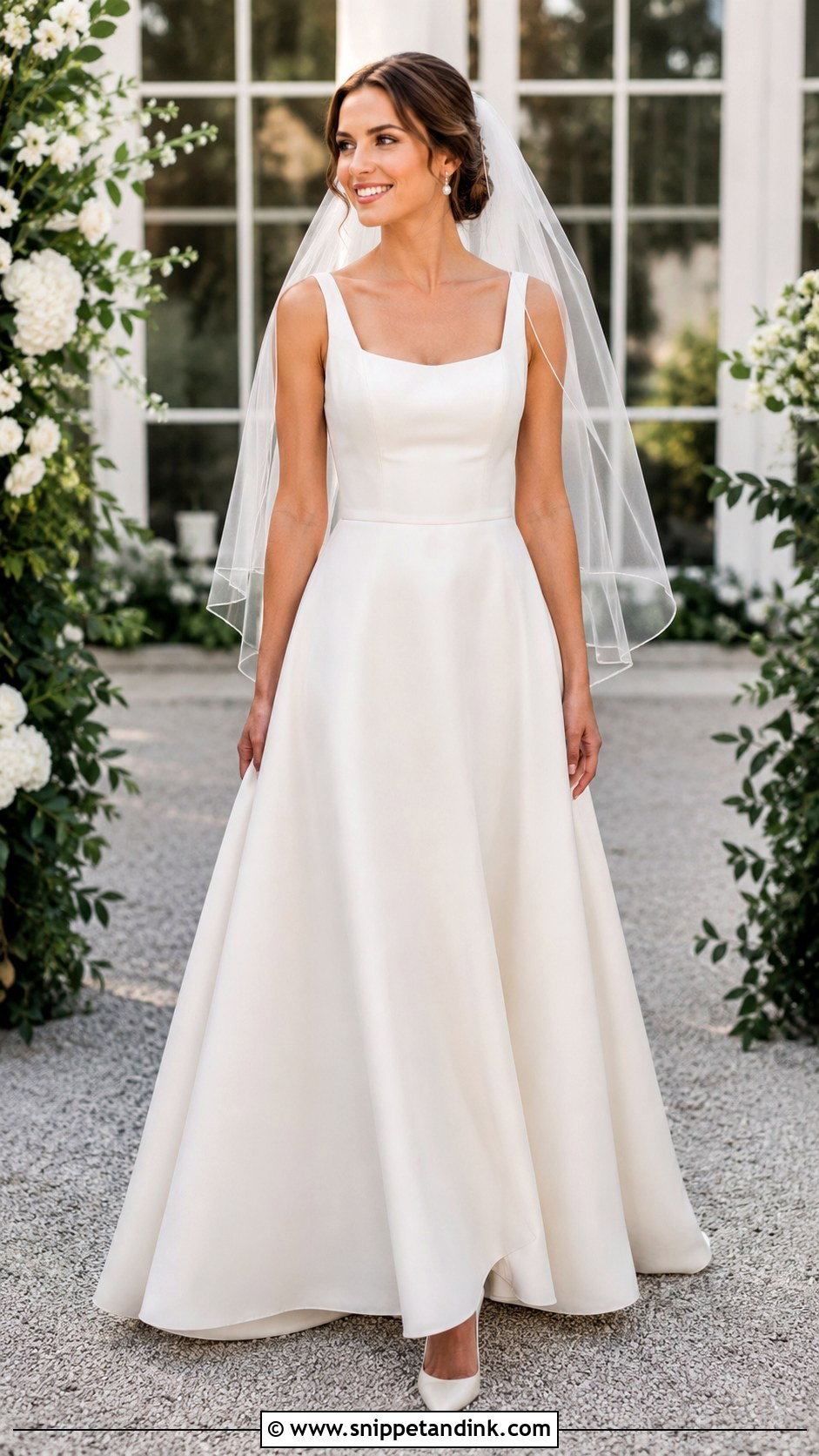
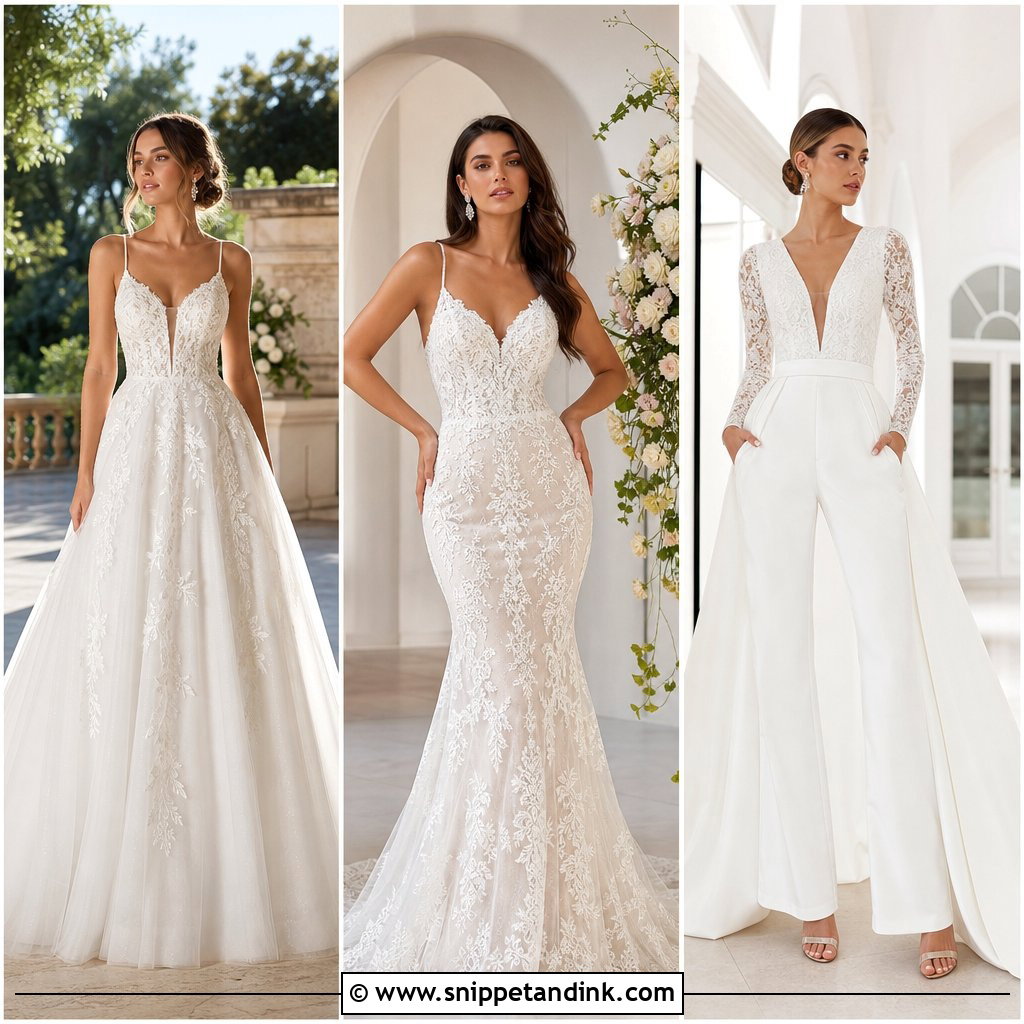
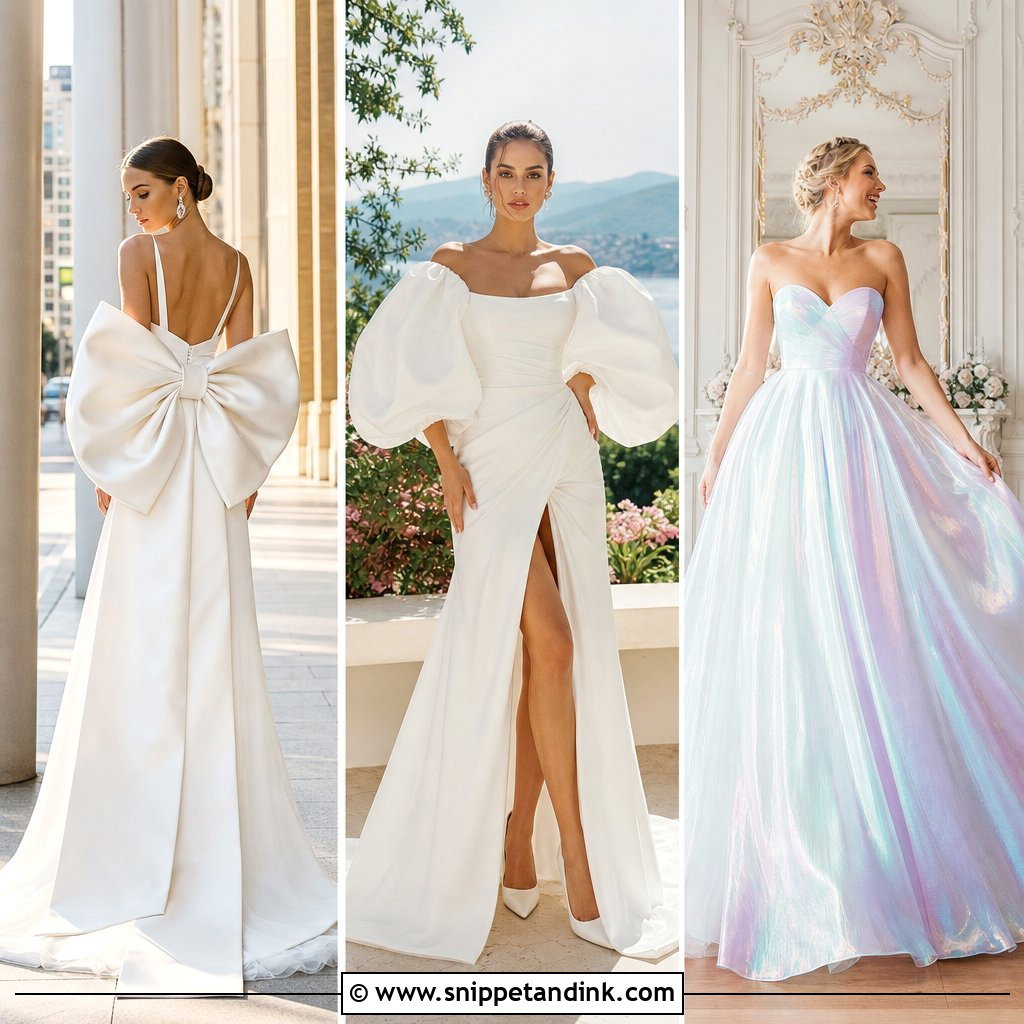
The A line is the shape I pull first for almost every bride who isn’t sure where to start, because it skims the hip instead of gripping it. A fitted bodice and a skirt that widens gradually suits garden ceremonies, ballrooms and church aisles alike. In satin it holds a clean triangle; in tulle it softens and moves. I’d pair it with pointed ivory heels, pearl drops and a fingertip veil, which ends right where the skirt starts to flare. The one thing I check is that the waist seam sits on her natural waist, since a seam even an inch low makes the torso look short.
2. Ball Gown Wedding Dress
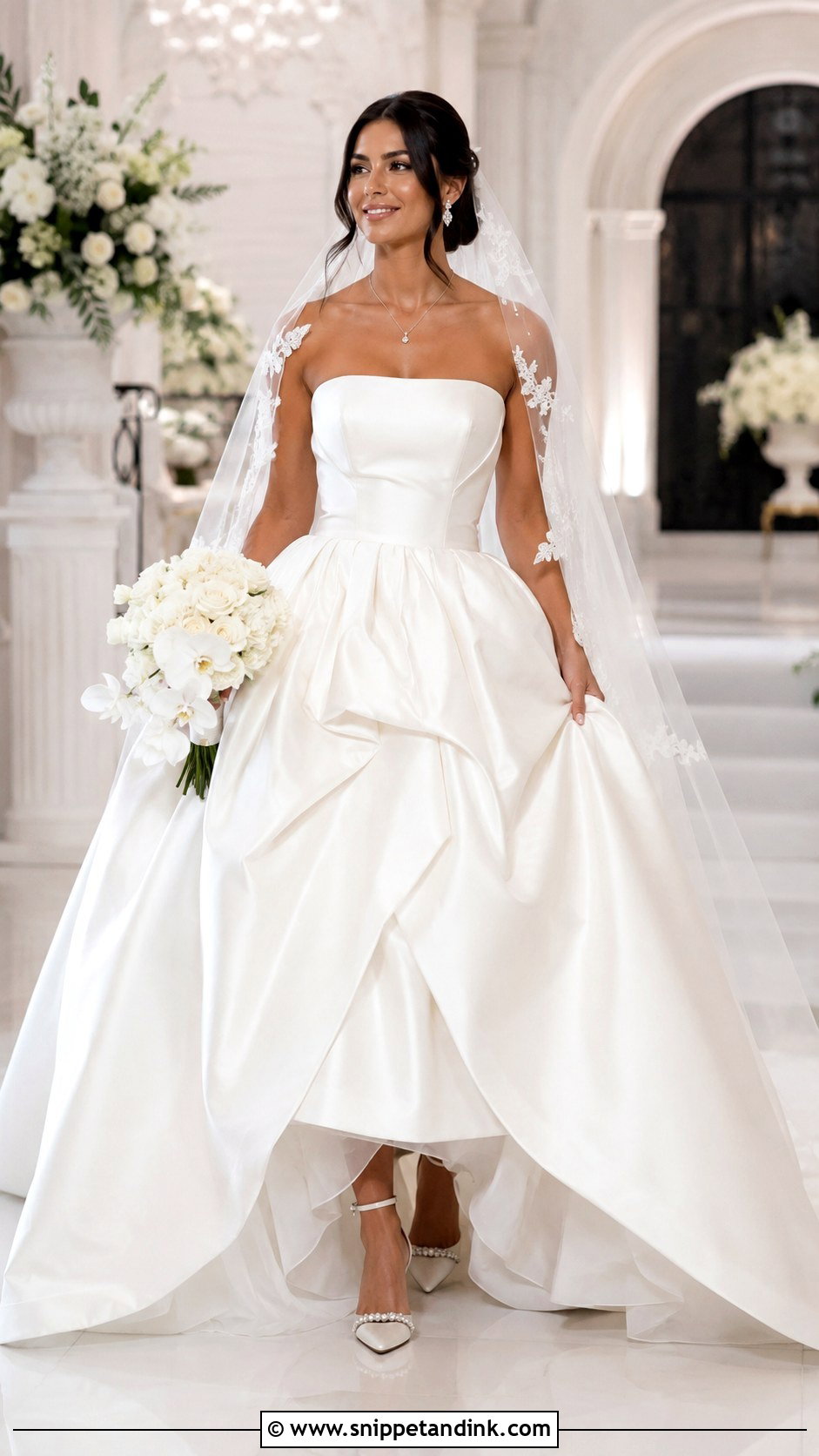
A ball gown wedding dress makes the entrance, but it also takes up the room. Before anyone commits, I ask about doorways, the car and the bathroom, because a full skirt over a hoop or several tulle layers needs a helper every time she sits. Mikado and heavy satin hold the dome shape without much petticoat; layered tulle gives volume with less weight. The bodice should be boned firmly enough that she isn’t hitching it up by the second hour. Keep the shoes plain and let a cathedral veil carry the drama if the aisle is long enough to show it.
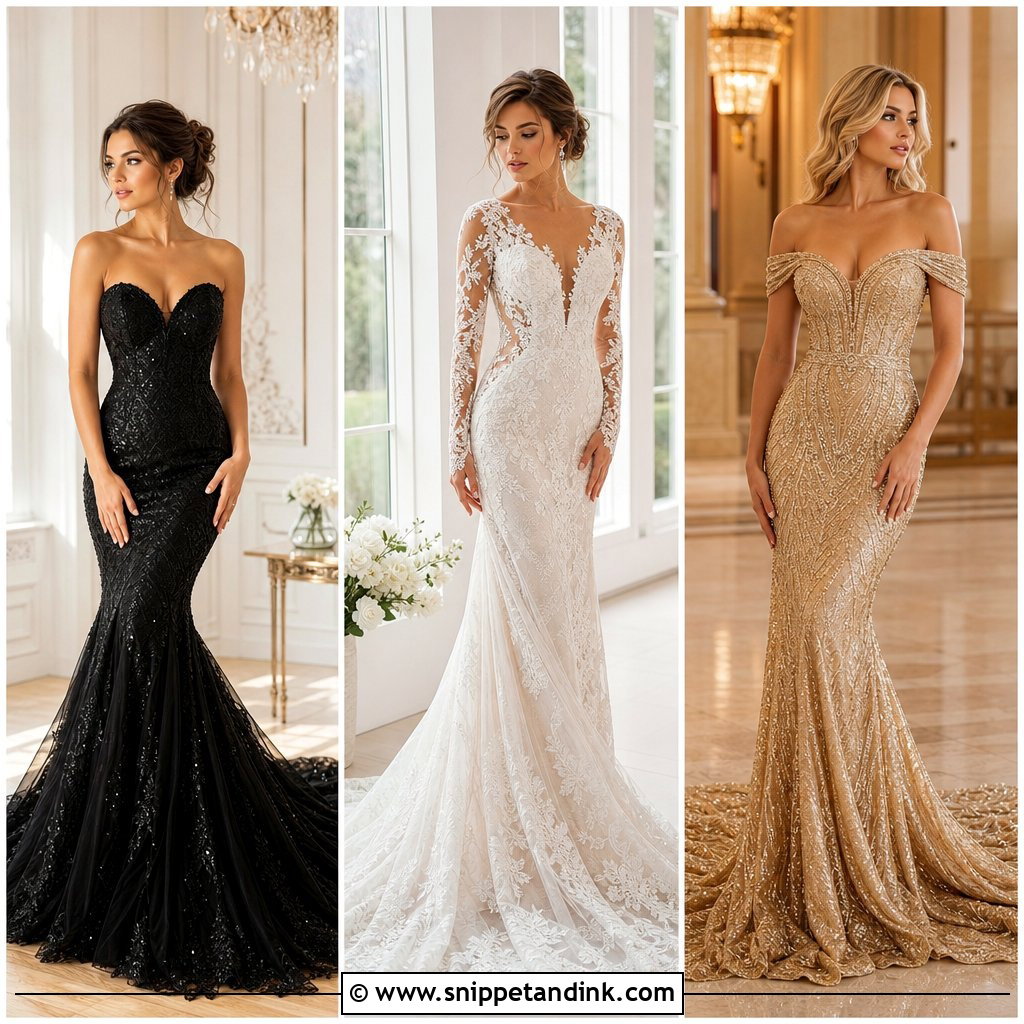
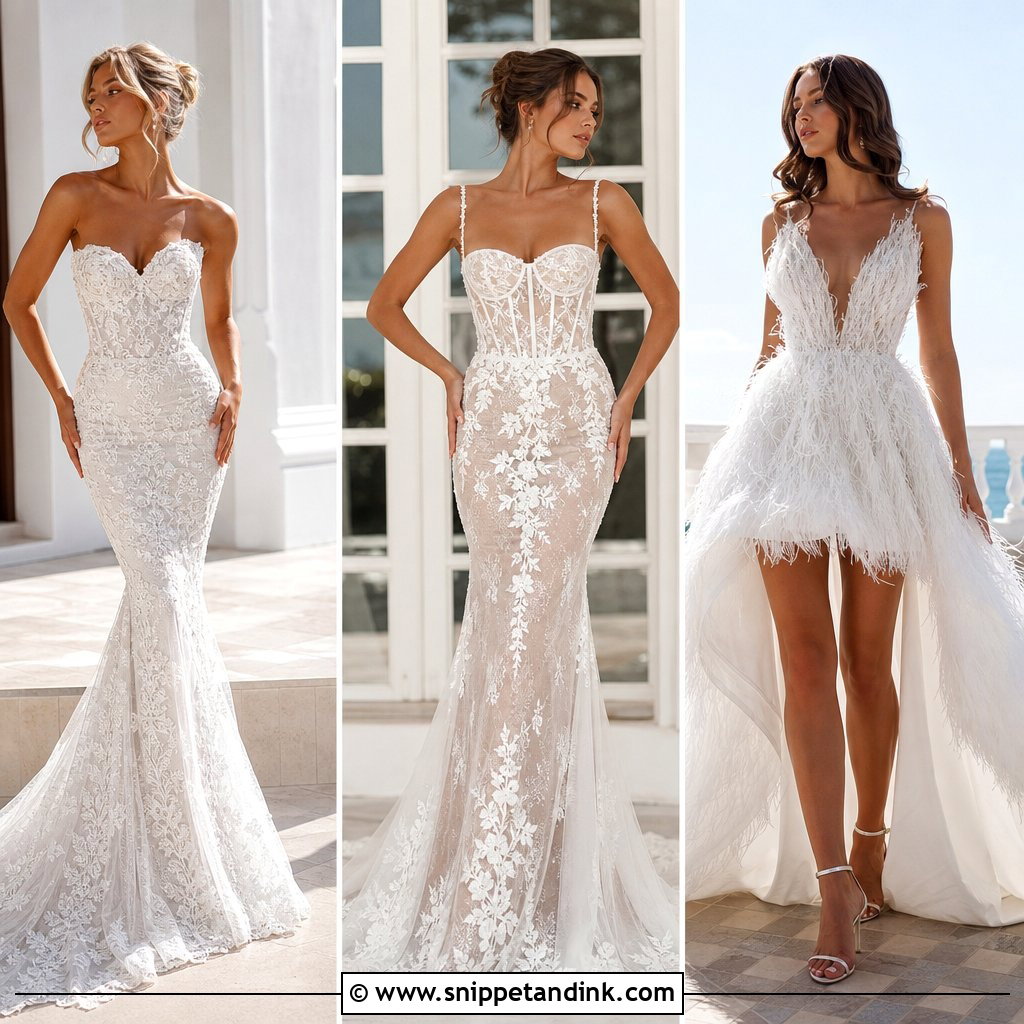
3. Mermaid Wedding Dress
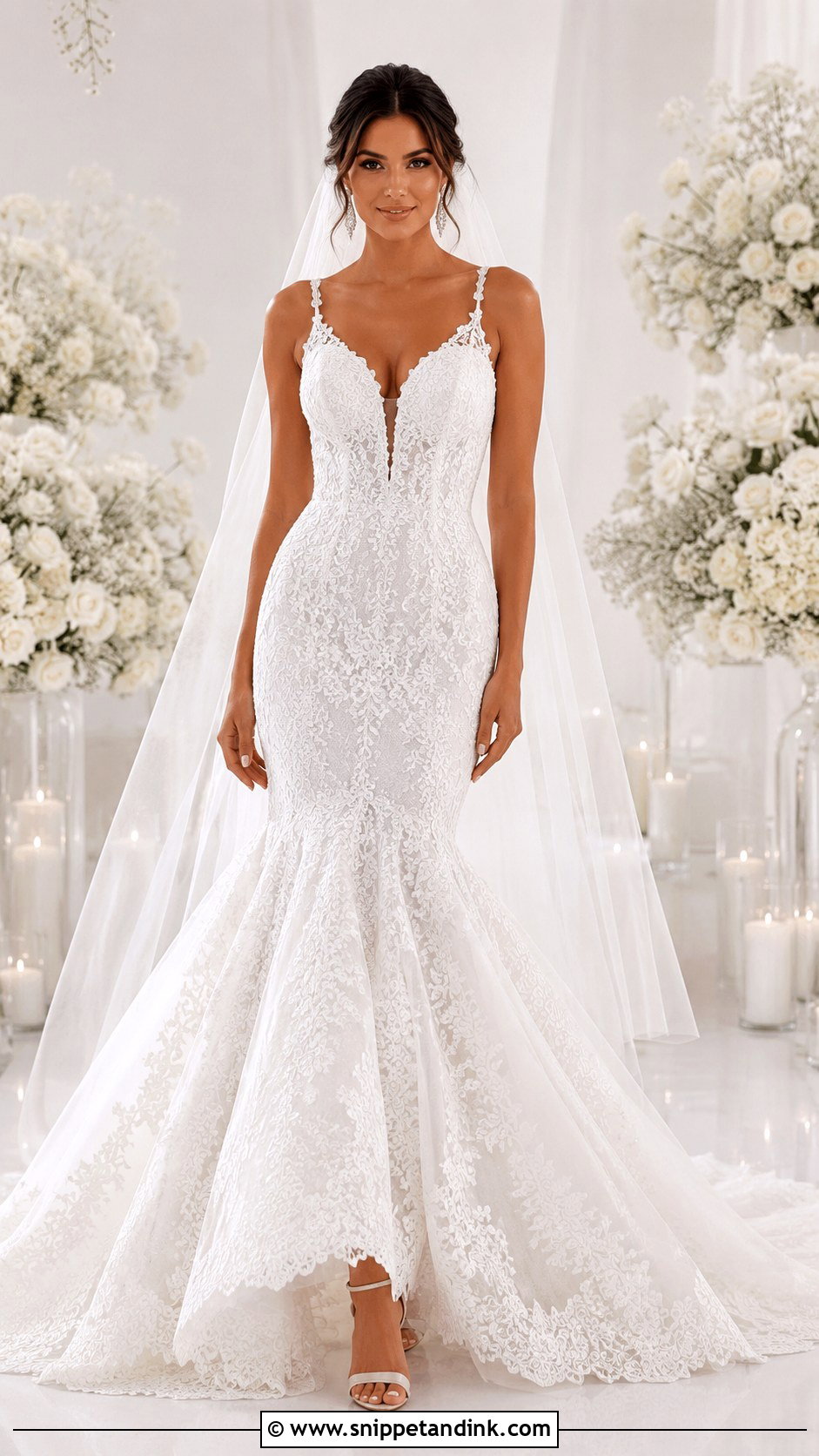
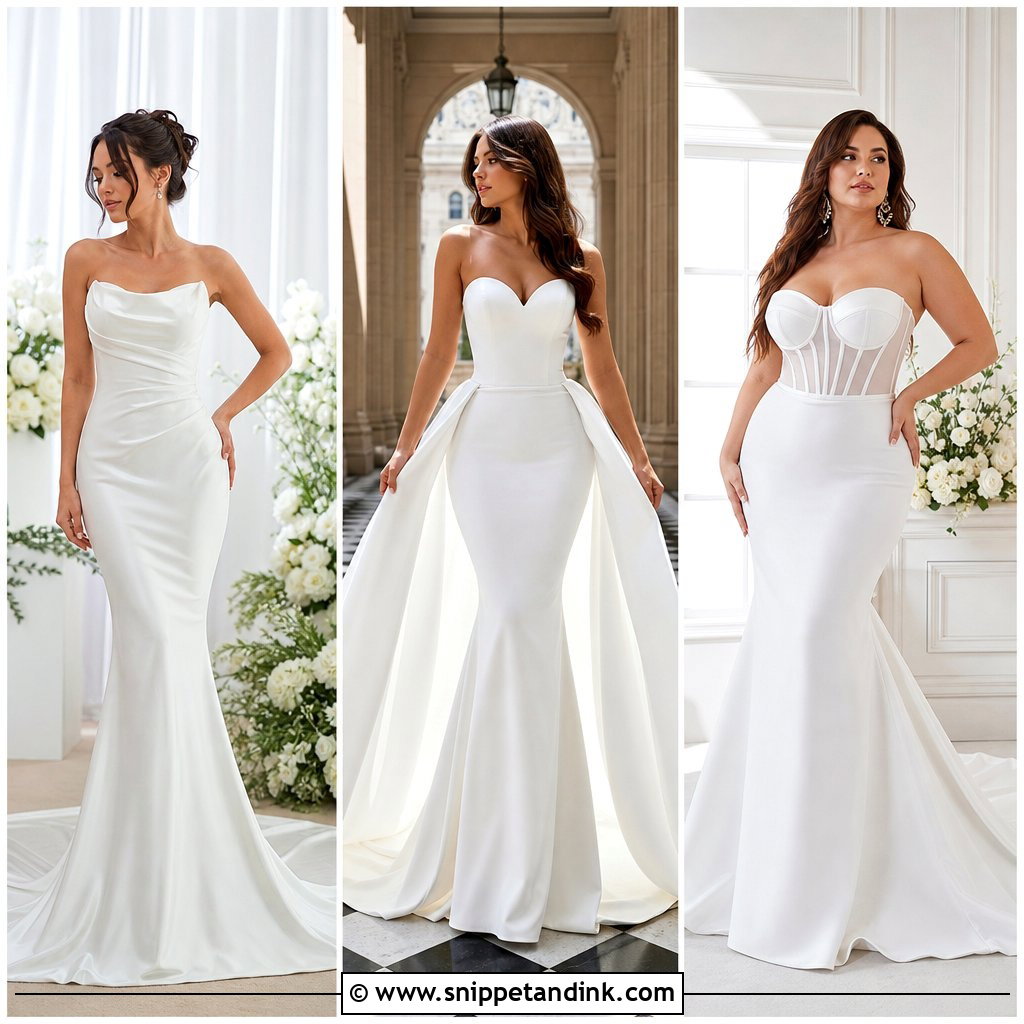
Mermaid gowns fit closely to just above or below the knee before flaring, and that flare point decides everything. Set too high, the skirt cuts the leg; set too low, she can’t take a normal stride. I always have the bride sit, climb a step and do a slow turn at the fitting, because a skirt that’s fine standing can lock the knees together once she moves. Stretch crepe is the most forgiving fabric for this shape. Lace looks softer but has no give. Long earrings and a smooth veil keep the line clean, and I’d budget for alterations here more than with any other silhouette.
4. Sheath Wedding Dress
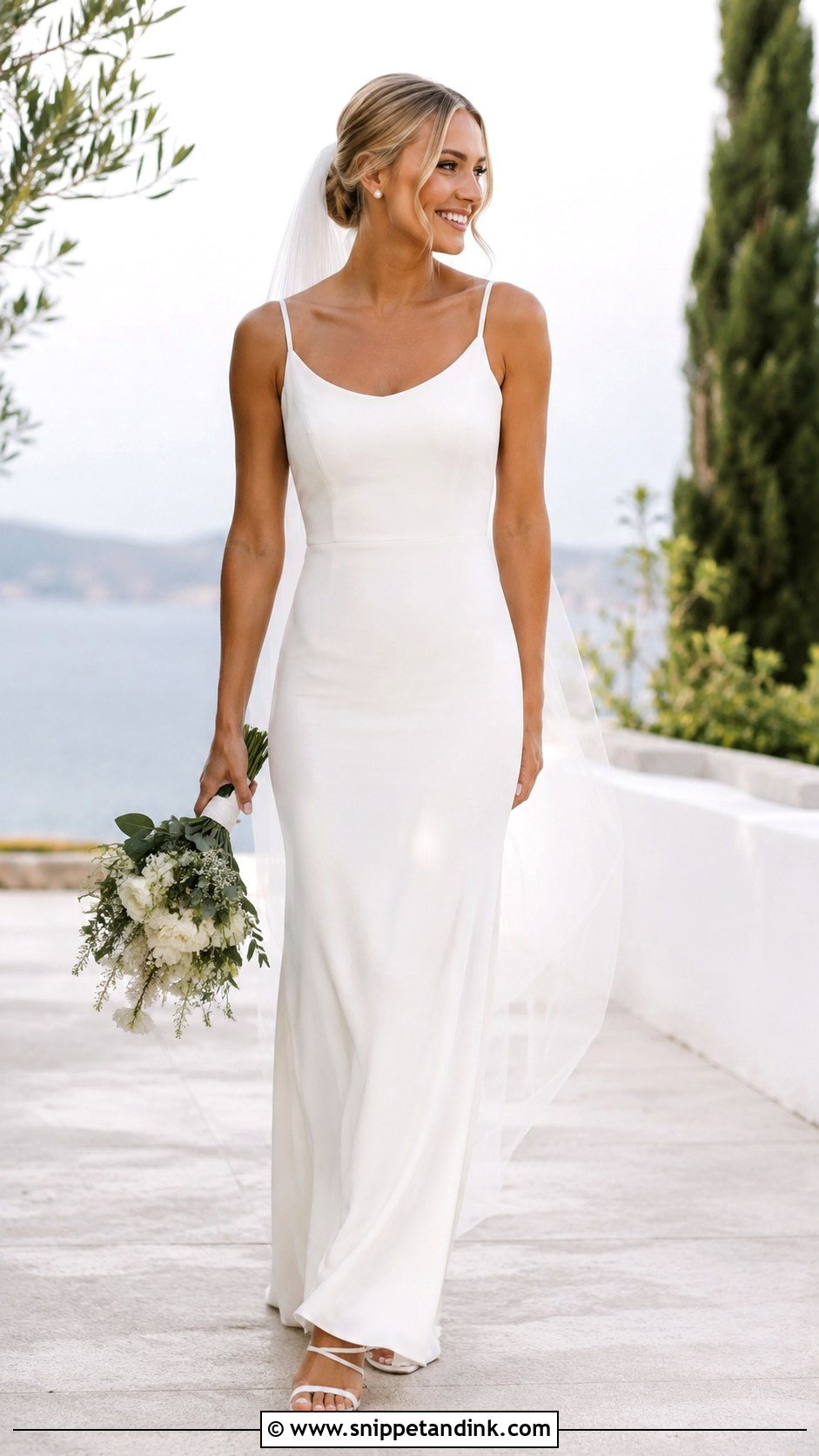
A sheath follows the body without shaping it, so the fabric has to be good. Thin crepe shows every seam and undergarment line; a heavier crepe or bias silk hangs cleanly. It’s easy to travel with and comfortable on sand or a city sidewalk, which is why I suggest it for beach, courthouse and small-venue weddings. On a petite frame it keeps proportions in balance where a full skirt would swamp her. Strappy heels, a low bun, pearl studs and a long veil give it enough ceremony.
5. Satin Wedding Dress
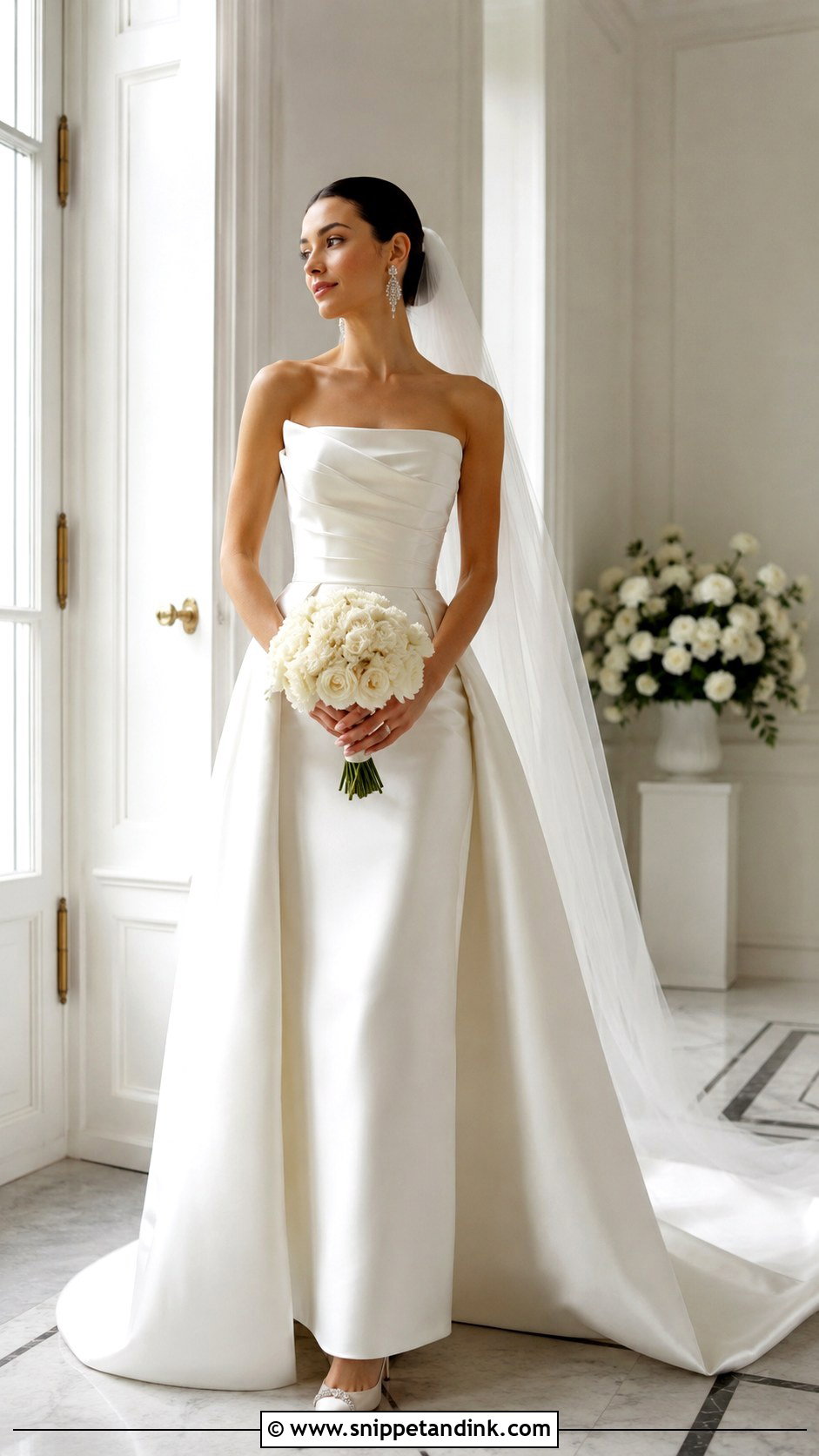
Satin reflects light, so it reads as bridal even in the plainest cut. That same sheen is honest about everything underneath it: I fit satin gowns with the exact bra and shapewear she’ll wear on the day, because a seam line shows straight through. Heavier duchess satin holds a structured bodice; a lighter charmeuse drapes into a slip. Satin also creases when she sits, so a quick steam before portraits helps. Sleek heels, crystal studs and a clean-edged veil let the fabric do the talking.
6. Lace Wedding Dress
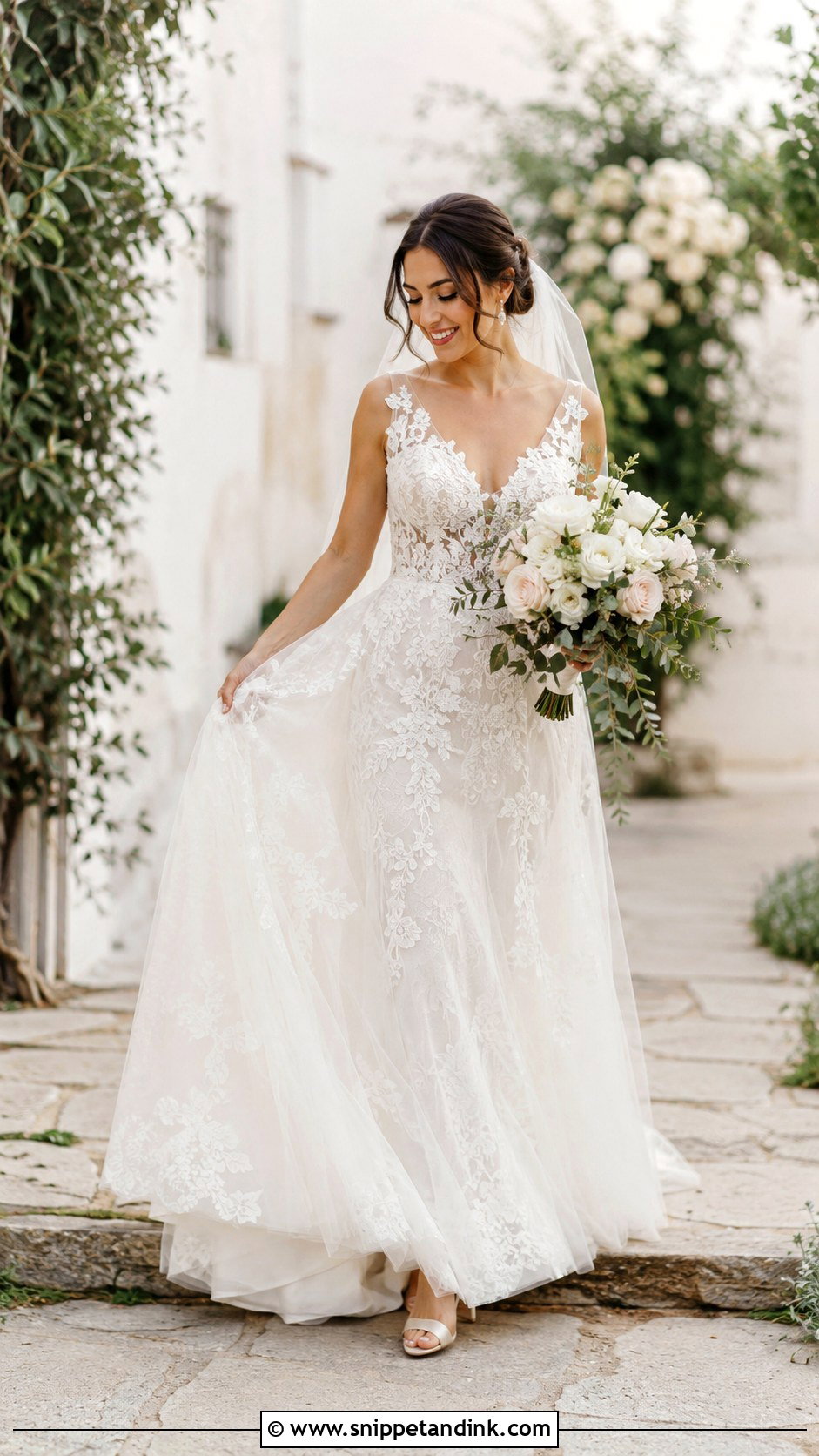
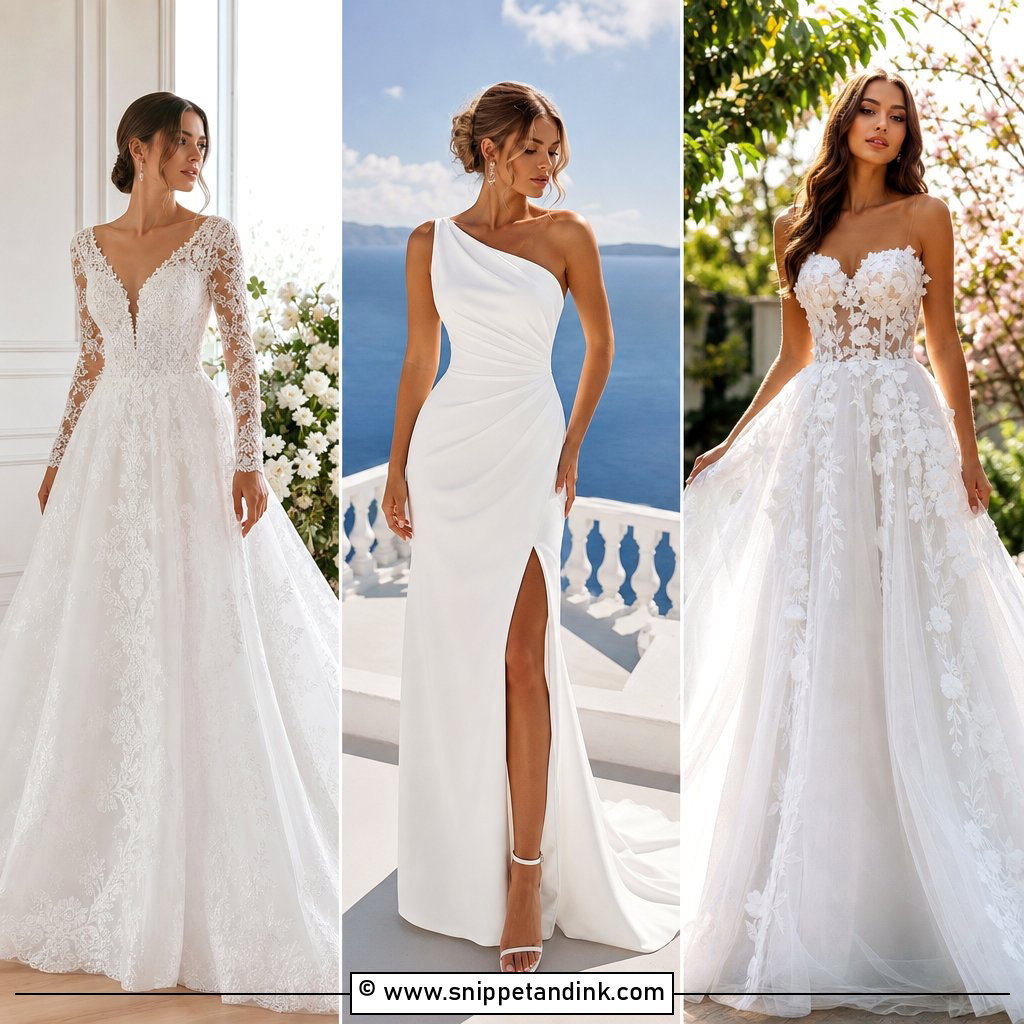
Lace changes character with the pattern. Chantilly is fine and soft, alençon has a corded outline that gives it depth, and guipure is heavy and almost sculptural. Large florals suit a garden; geometric or graphic lace reads more modern. I always look at the lining color under lace, since an ivory lace over a nude lining changes the whole look in daylight. When the dress is this detailed, the veil should be plain or very lightly edged so the two don’t compete. Simple ivory heels and one piece of fine jewelry are plenty.
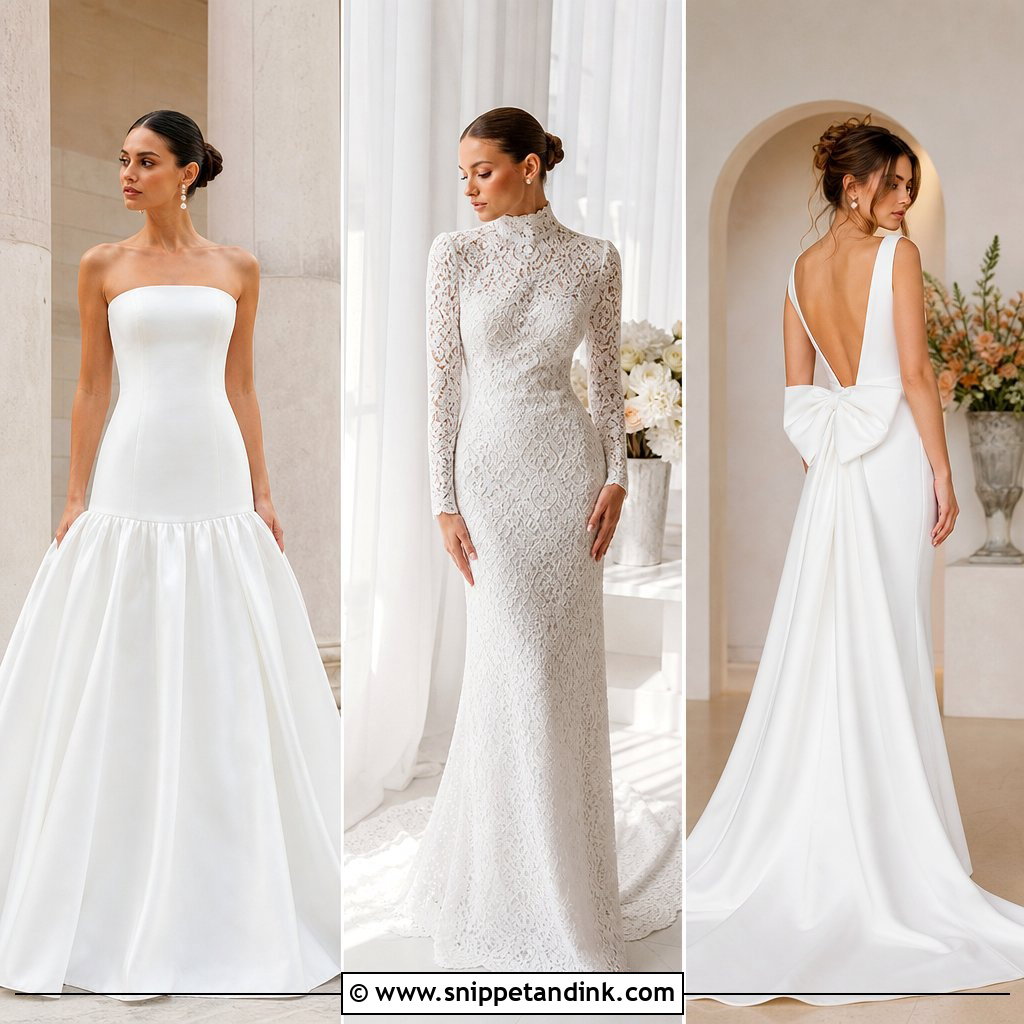
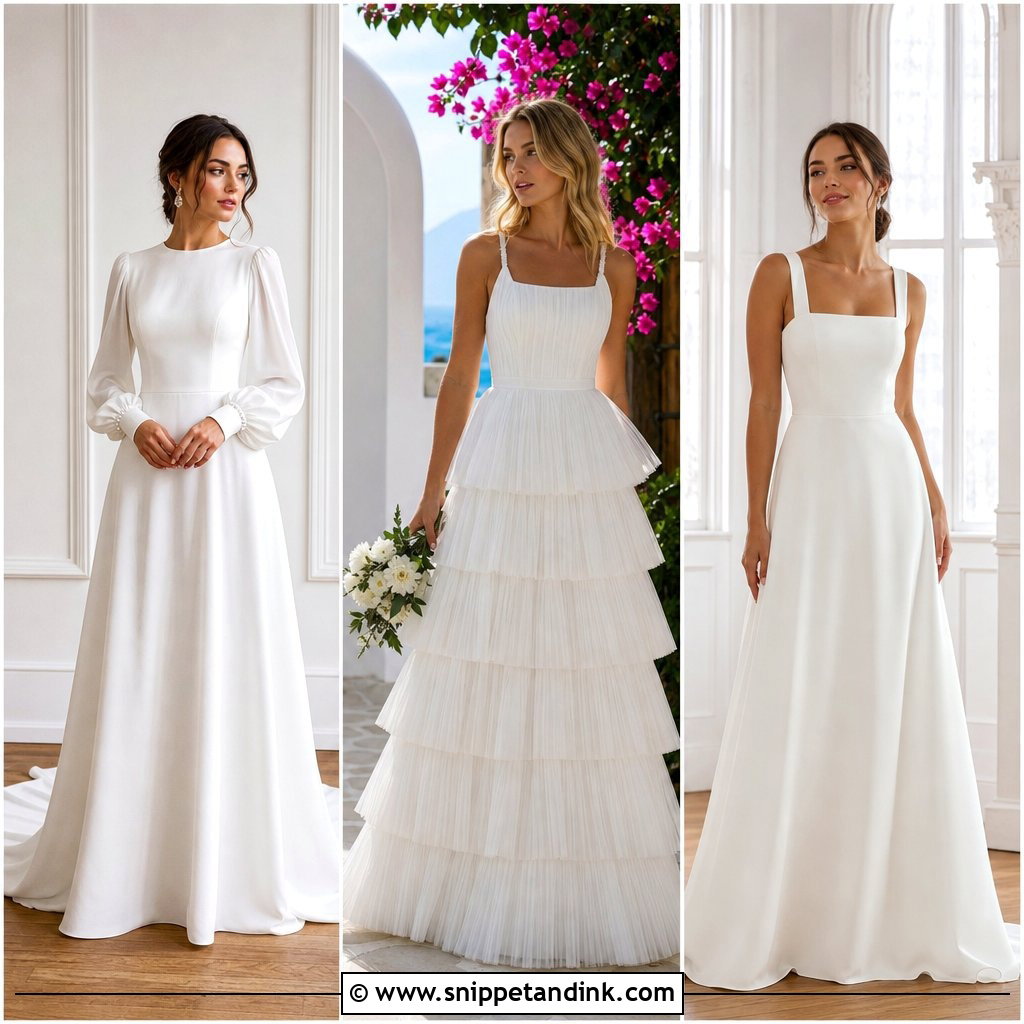
7. Long Sleeve Wedding Dress
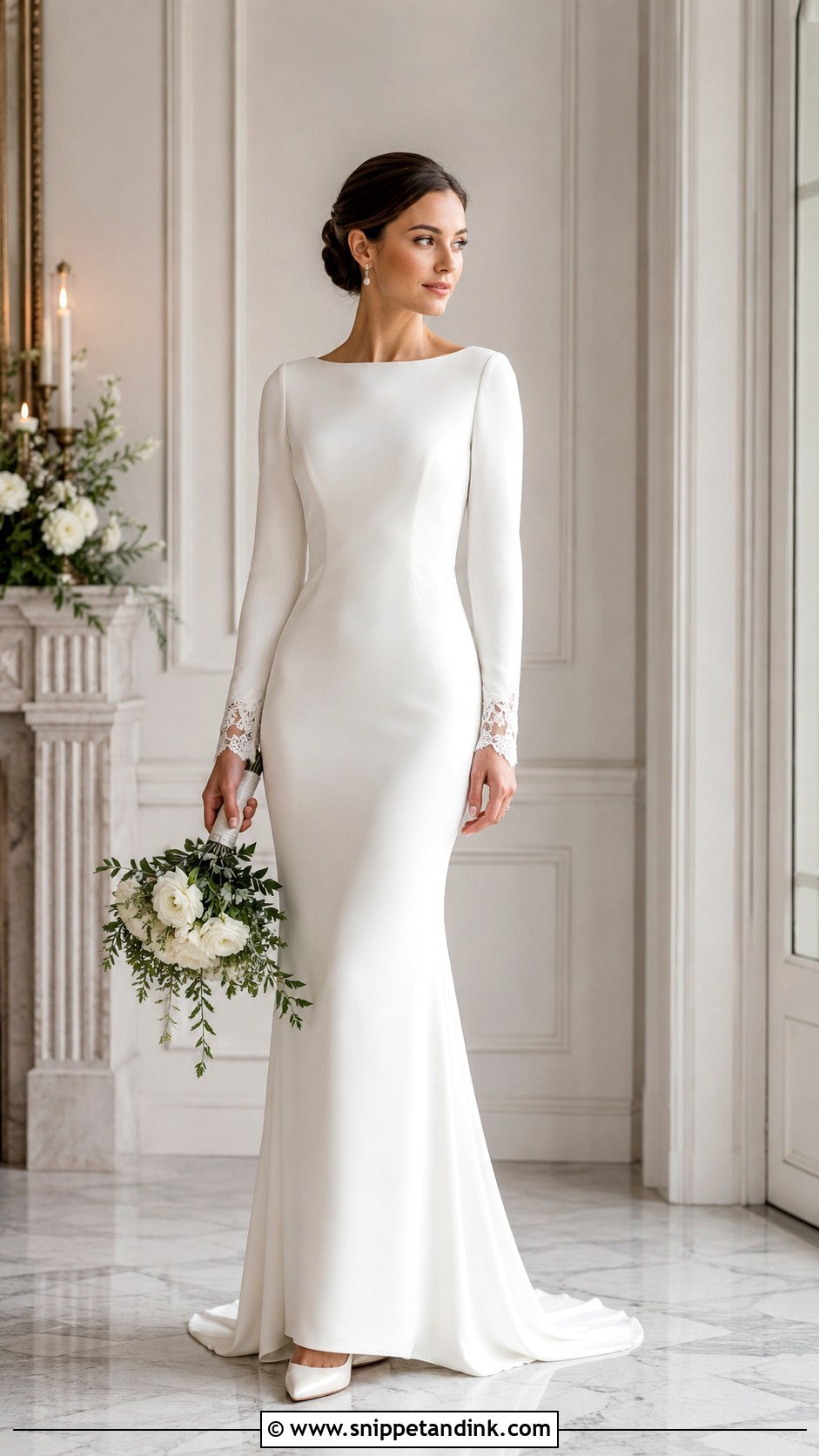
Sleeves are the first thing I mention for autumn and winter weddings, and sheer lace sleeves keep them wearable in late spring. The detail I test is the arm raise: a fitted sleeve set into a tight armhole pulls the whole bodice up when she lifts her arms to hug someone. Bishop sleeves give more room and a softer outline. A high neckline in crepe feels modern; lace feels classic. With sleeves and a high neck, a smooth updo keeps the neckline clear, and pearl studs and closed-toe heels finish it.
8. Strapless Wedding Dress
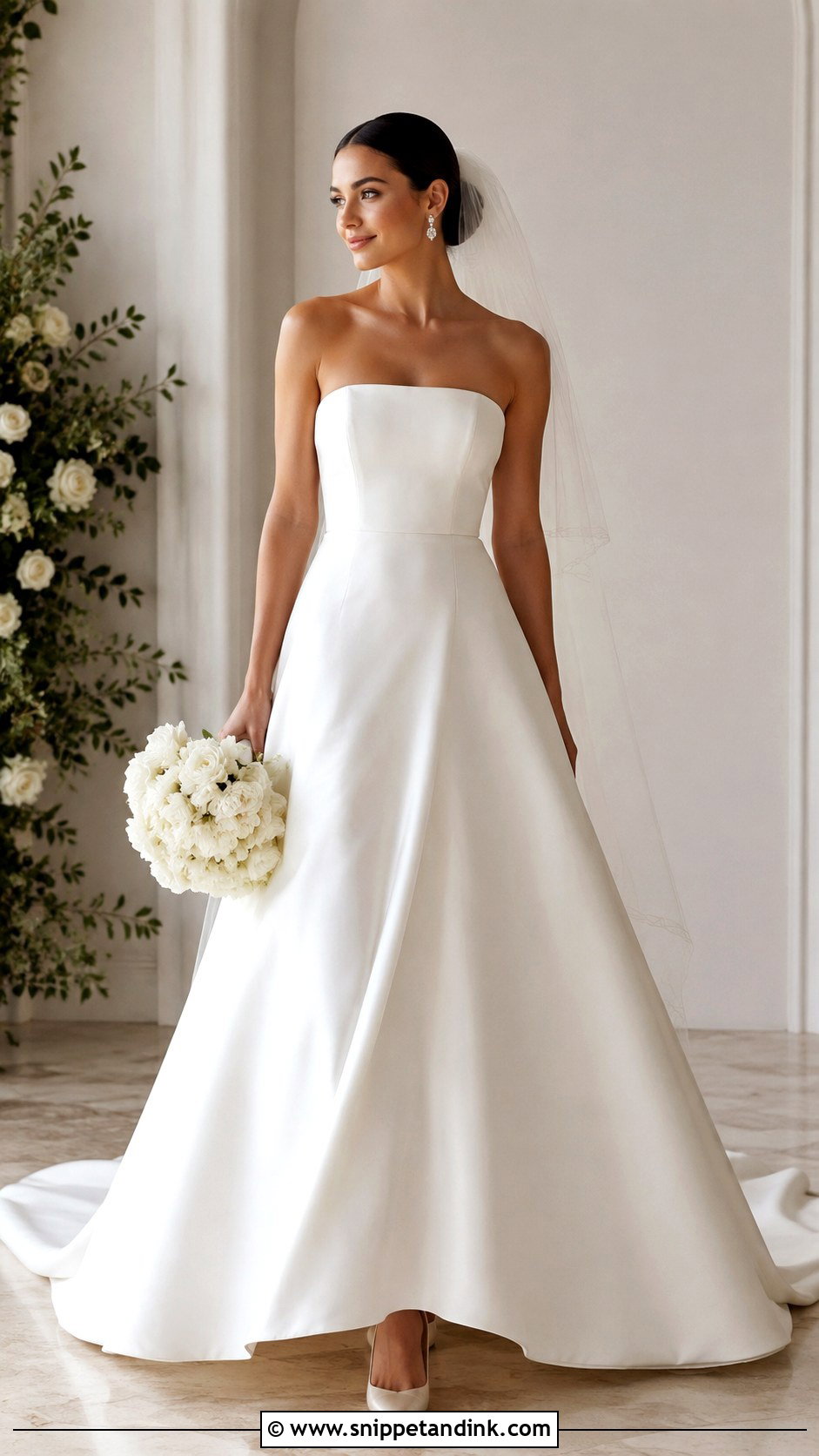
A strapless gown depends entirely on what’s inside the bodice. I look for proper boning, a waist stay that fastens snugly under the bodice, and silicone grip tape at the top edge. If the bride is tugging at it in the mirror, it will slide by the reception. With shoulders and collarbones bare, she can choose a statement necklace or skip the necklace altogether and wear drop earrings instead. Pointed heels and soft waves balance the open neckline.
9. Off Shoulder Wedding Dress
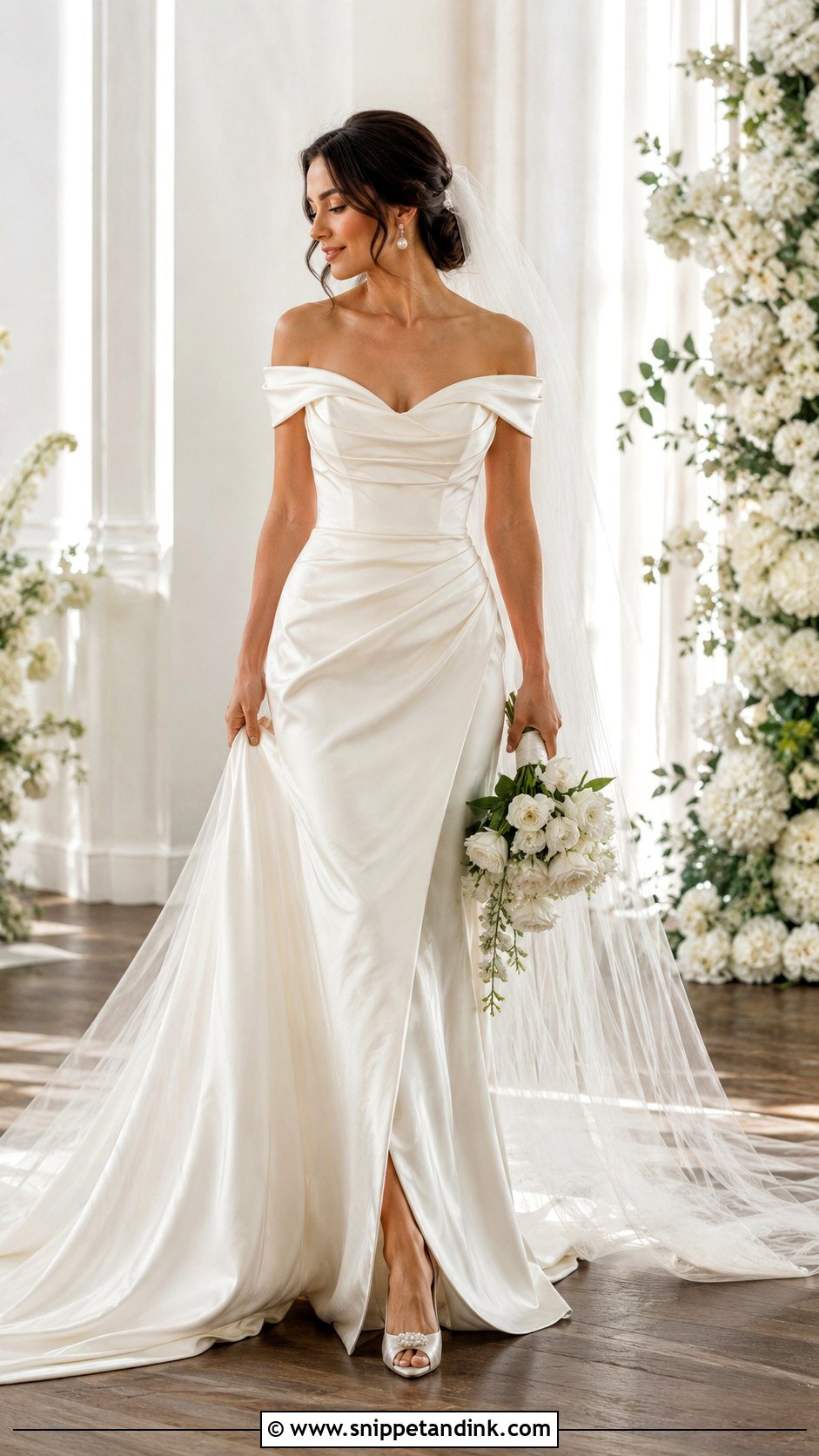
Off shoulder necklines sit on the upper arm, which looks romantic but limits how high she can lift her arms. I mention that early, because it affects the bouquet toss and the first dance hold. Lace versions feel softer; satin feels more formal and holds the band better. Keep jewelry light since the neckline is doing the framing: pearl studs or small drops. Ivory heels and a long veil complete it.
10. Square Neck Wedding Dress
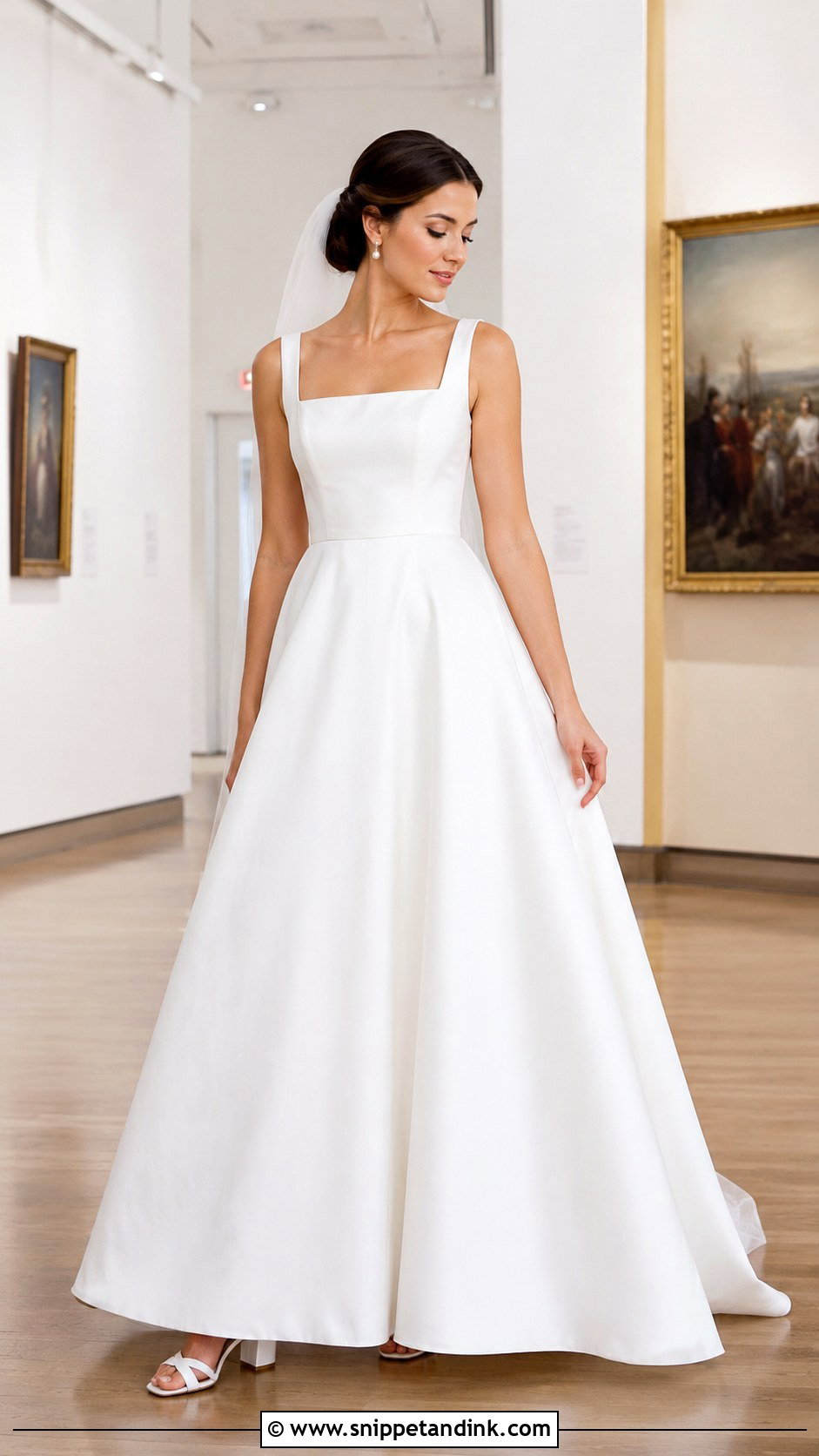
A square neckline brings a little architecture to the bodice without adding any embellishment. Wide straps make it feel classic; thin straps or a fitted crepe version look sharper for a city wedding. It suits many builds because the horizontal line frames the collarbone. I check that the corners of the square sit level with each other in the mirror, since a fraction of difference shows clearly in straight-on portraits. A low bun, pearl earrings and block heels or pointed pumps.
11. V Neck Wedding Dress
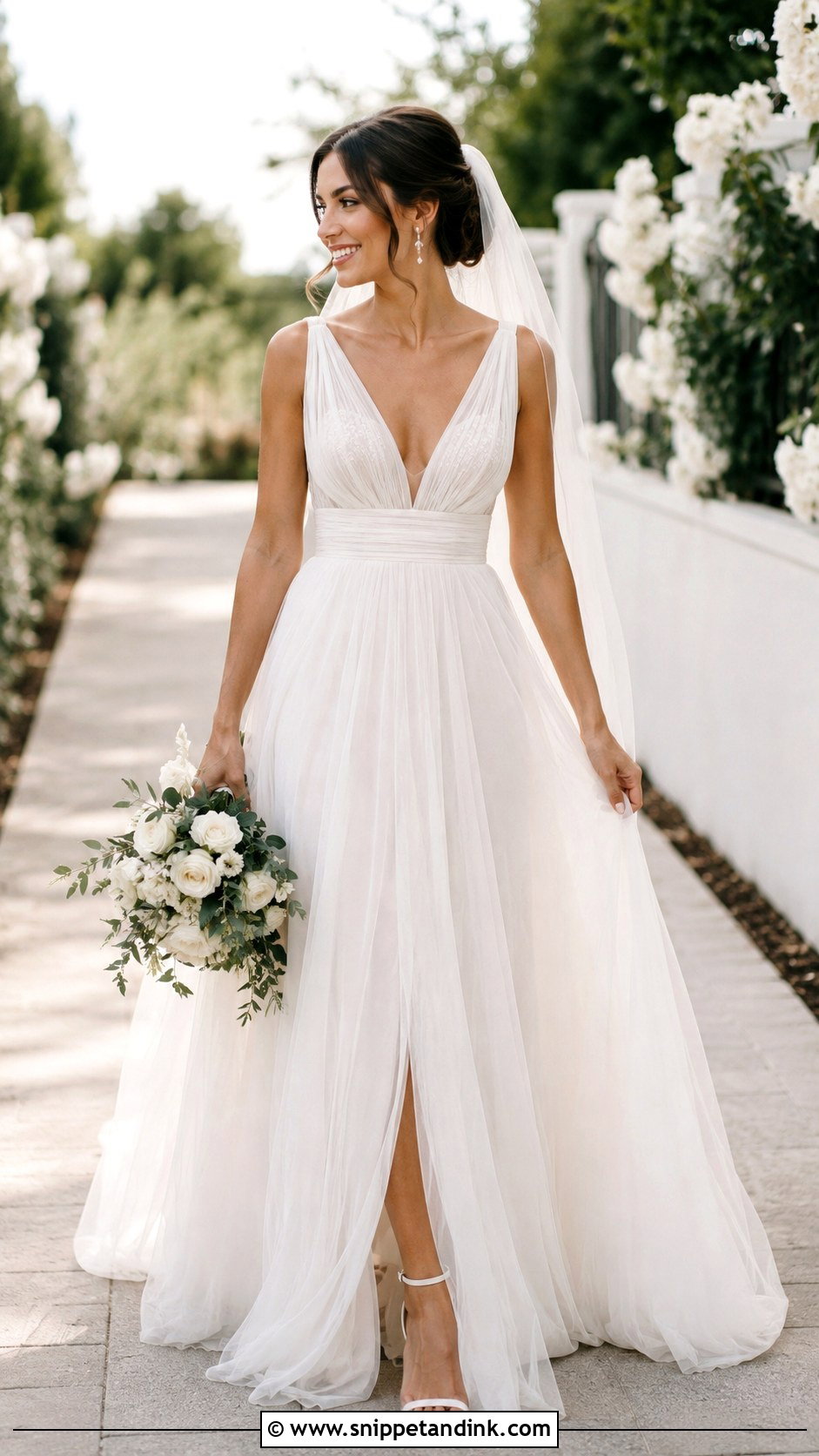
A V neck draws the eye down and lengthens the upper body, which helps a shorter torso. The depth is the decision: a modest V is easy to wear all day, while a plunge needs fashion tape and a fitter who knows how to secure it for dancing. In lace it feels soft; in crepe or satin it looks sleek. Only add a pendant if it sits inside the V without touching the fabric. Drop earrings are usually cleaner. Comfortable heels, a light veil and soft waves.
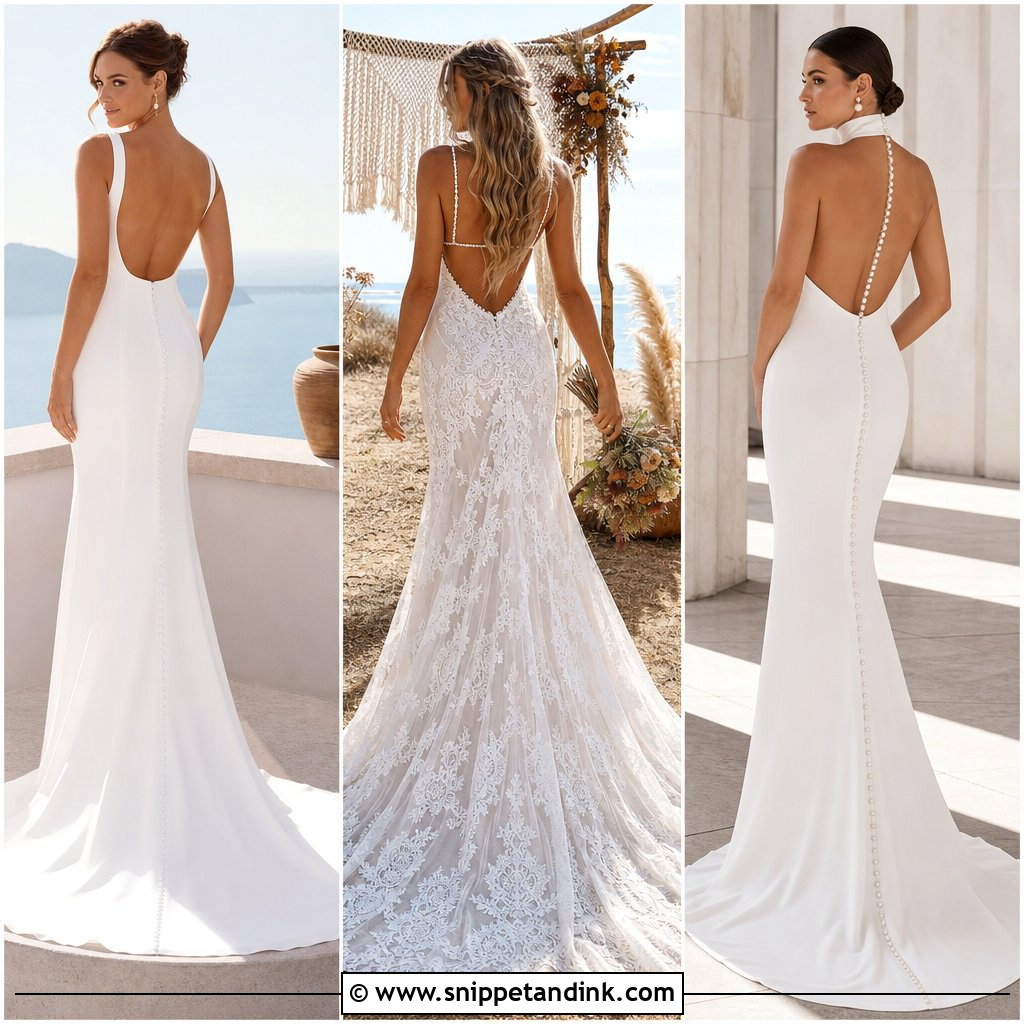
12. High Neck Wedding Dress
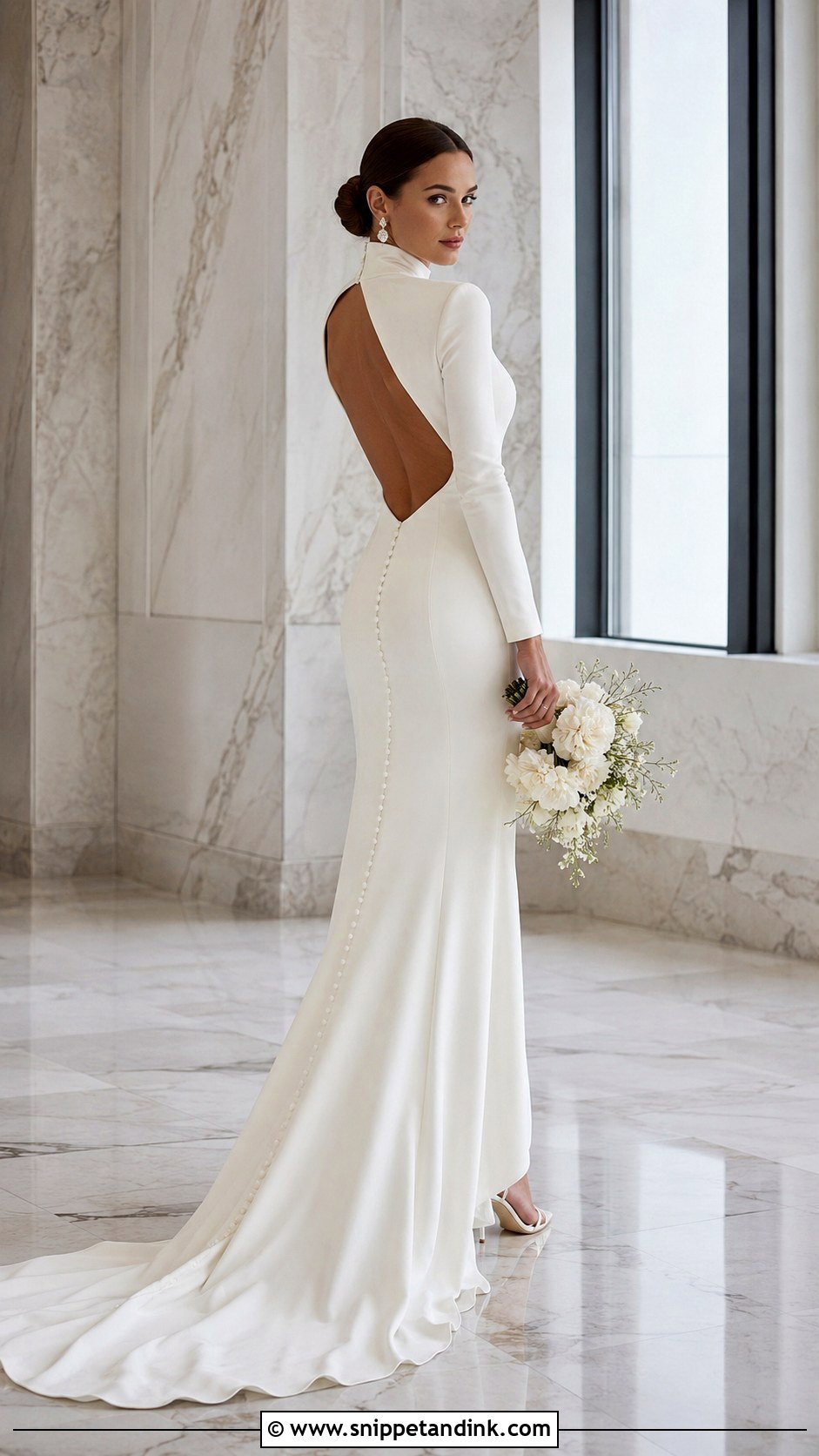
A high neck covers the chest and puts the attention on the arms, shoulders or back. That’s why so many high neck gowns have an open back or sheer panels. It can look vintage in lace, modern in crepe and regal in satin. Skip the necklace; earrings and a sleek bun are enough. The fit around the neck matters more than people think, so I make sure she can turn her head fully and swallow comfortably, or she’ll be aware of it all day.
13. Sweetheart Wedding Dress
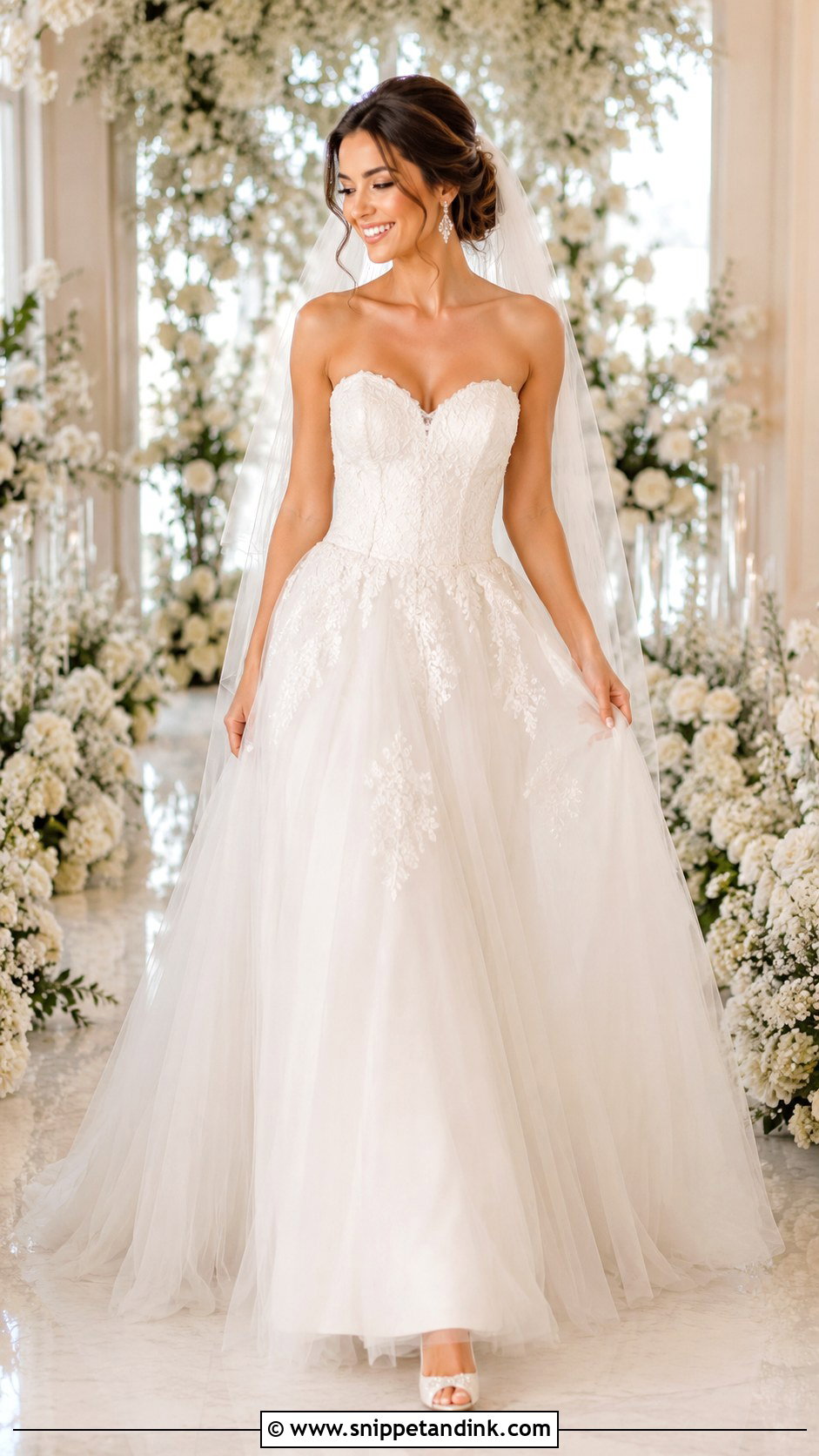
The sweetheart’s curve softens a strapless bodice and gives more shape at the bust. It can be strapless, sleeved or worn under an illusion neckline for more coverage. A sweetheart A line in tulle or satin is classic; a fitted lace or mermaid version is more glamorous. The curve should follow the bust, not cut into it, which I adjust at the fitting. A simple veil, crystal earrings and comfortable heels let the neckline stay the focus.
14. Simple Wedding Dress
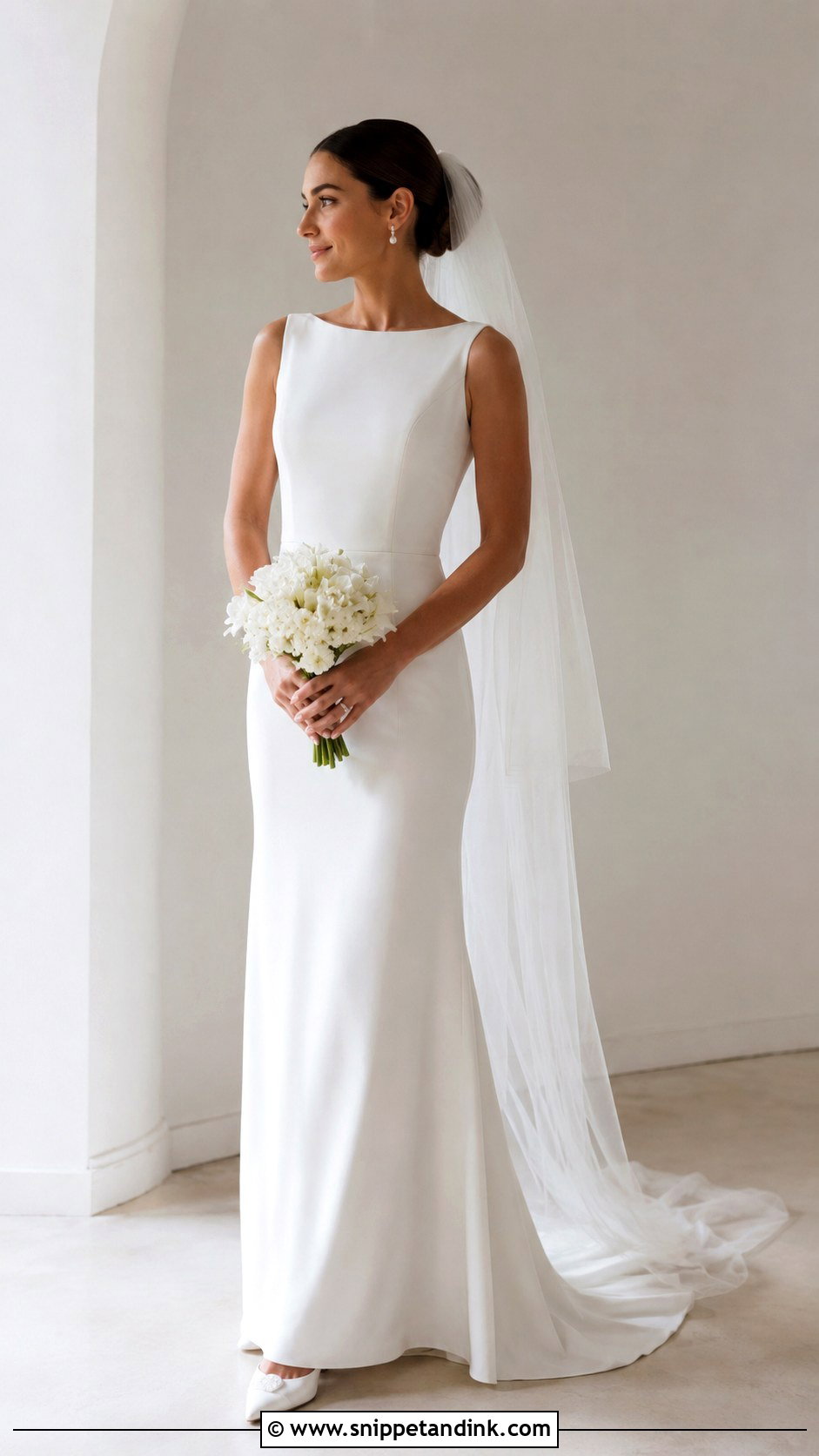
A plain gown hides nothing, which is exactly why it looks expensive when it fits. Clean lines and good fabric make the look; a crepe sheath, a satin A line or a minimalist slip all carry it. Because there’s no embellishment to distract, I spend more of the fitting time on hem length, strap placement and how the back sits. A simple dress also leaves room for a bolder hairpiece, a colored shoe or a long veil. Pearl earrings, pointed heels and a small bouquet are a good starting point.
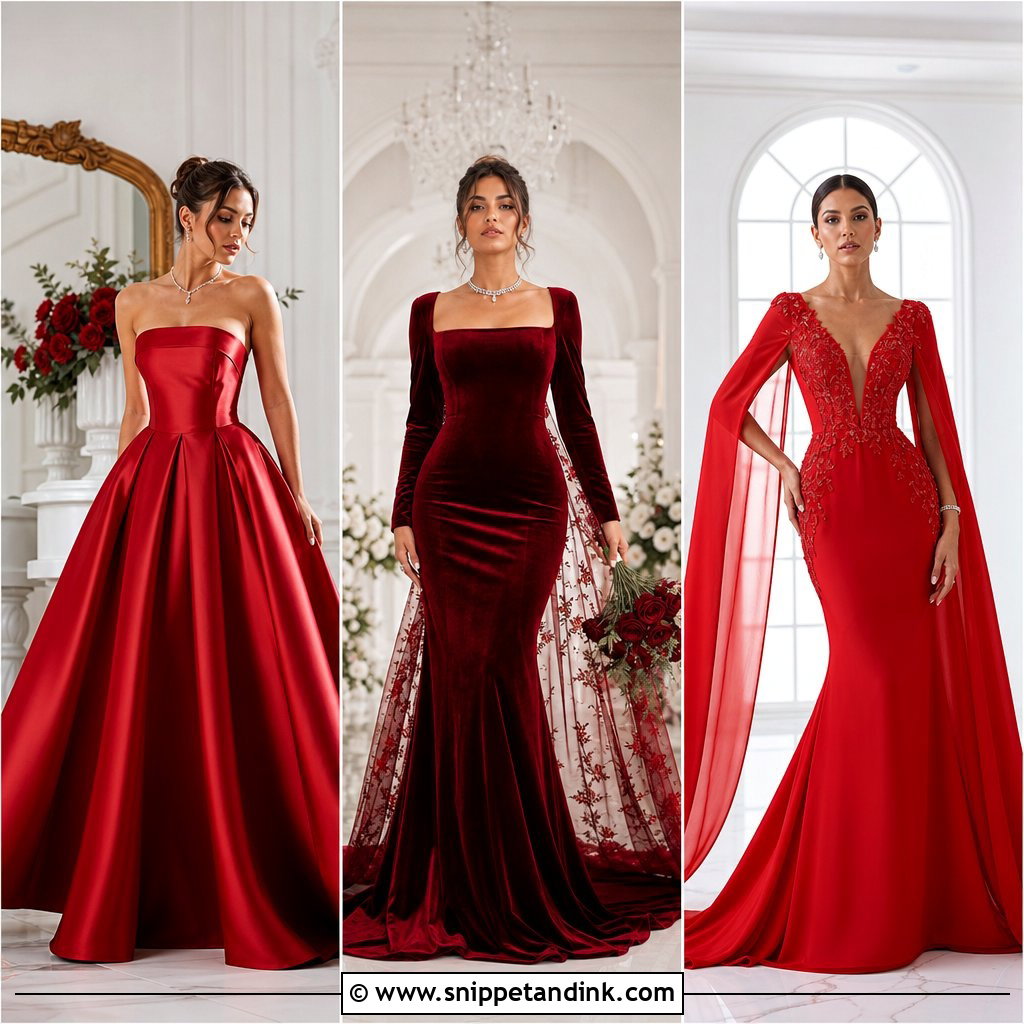
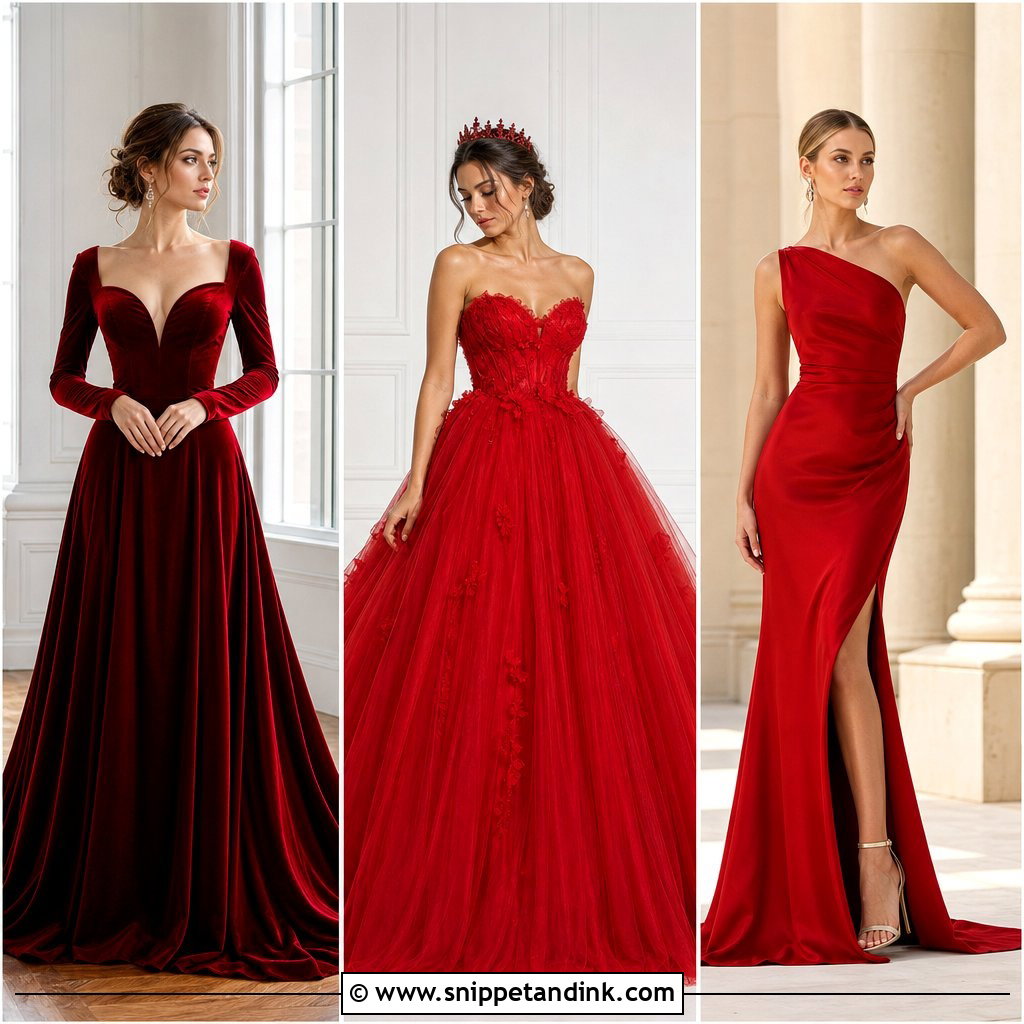
15. Minimalist Wedding Dress
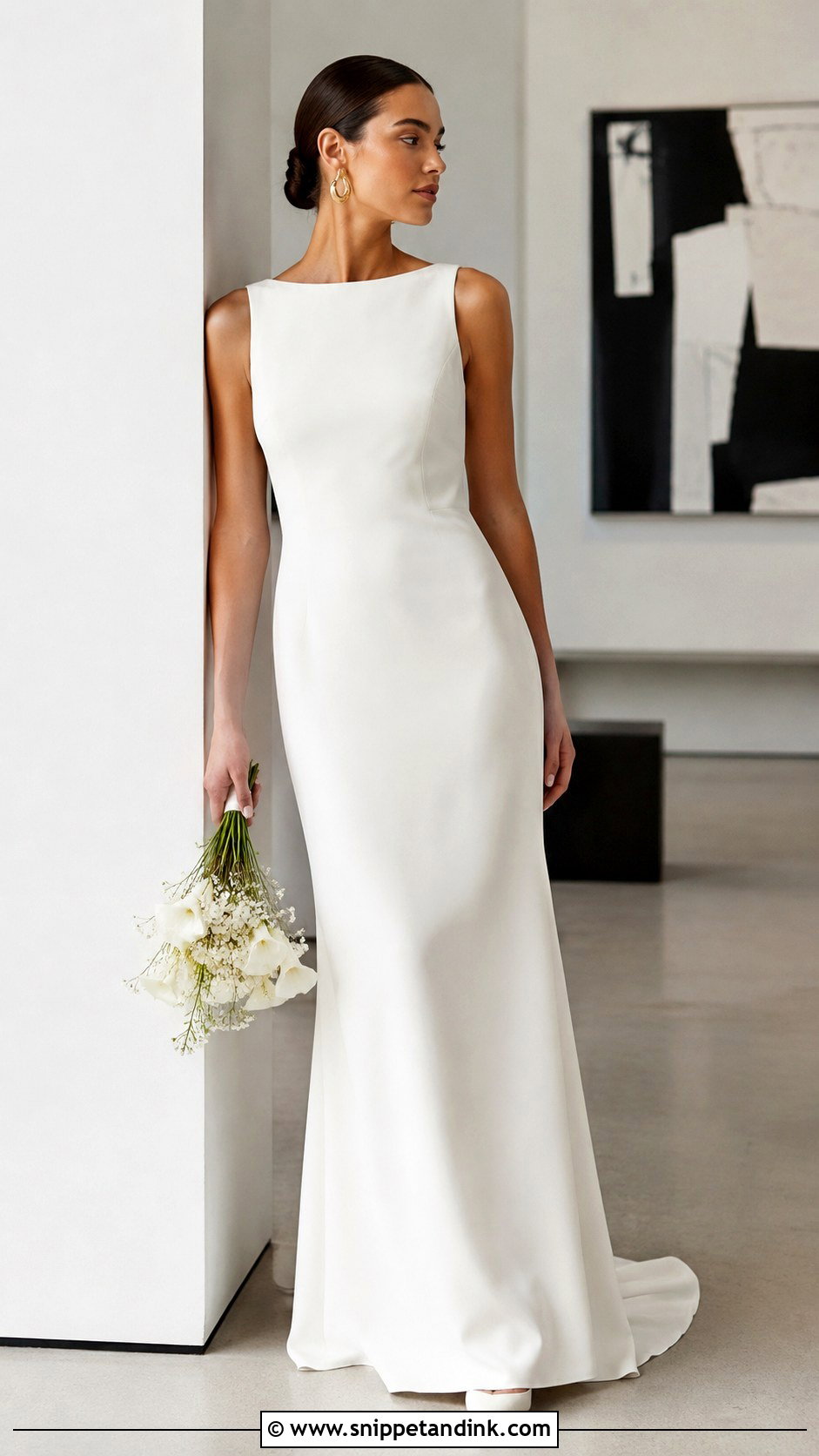
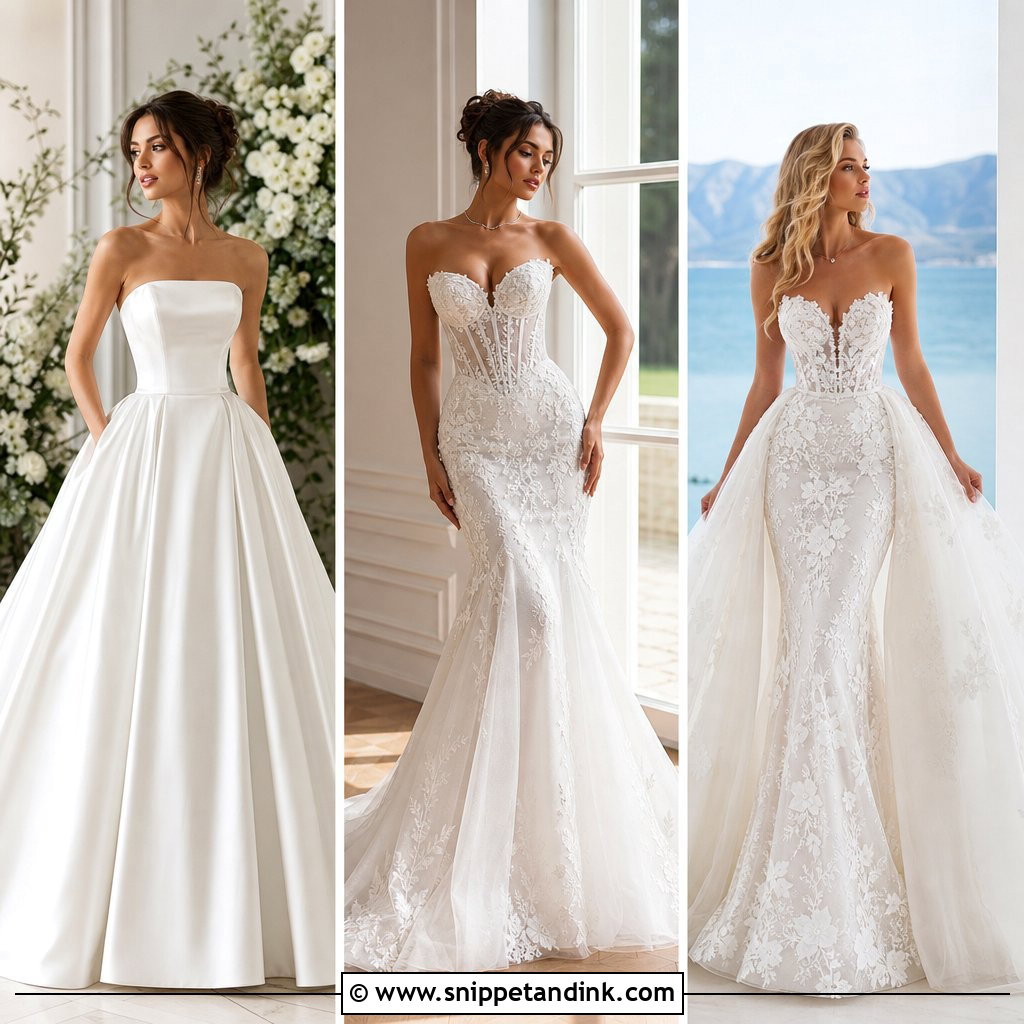
Minimalist bridal relies on shape rather than sparkle: a column, a square neckline, an open back. Smooth satin, matte crepe and structured bodices without any added trim. It suits city weddings, modern hotels and galleries, where a cleaner look matches the architecture. Sleek heels, sculptural earrings and a low bun, with either a plain veil or none. My one warning: any wrinkle or pulled seam is visible, so a final pressing on the morning is non-negotiable.
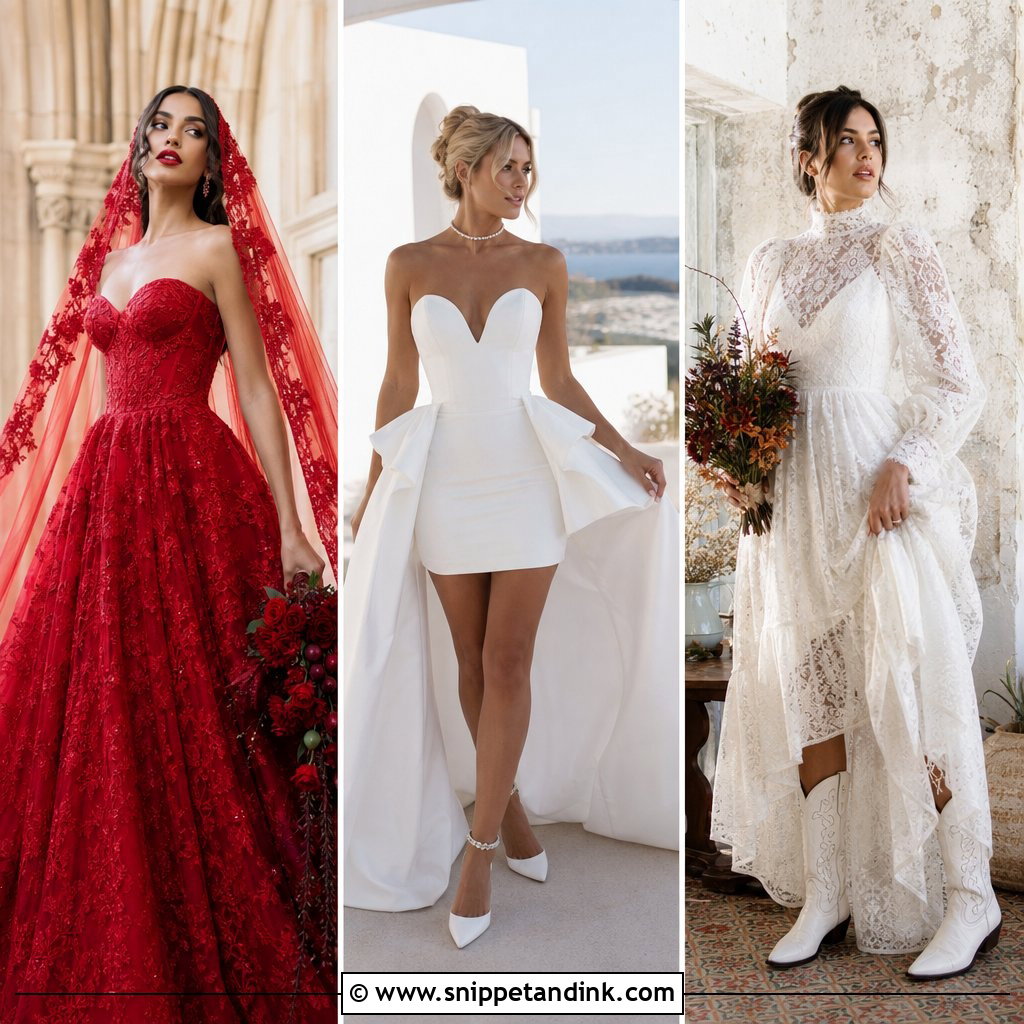
16. Boho Wedding Dress
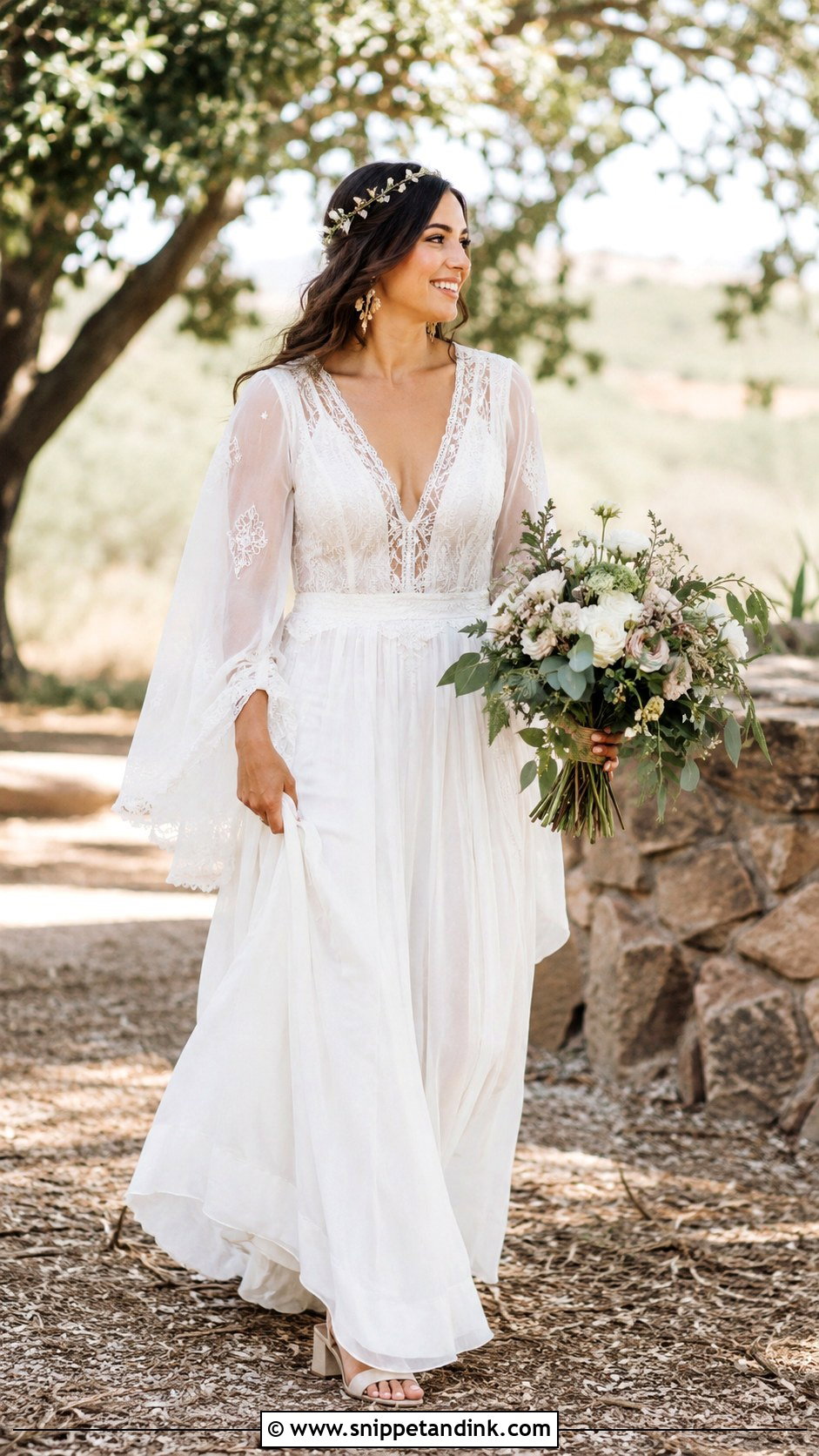
Boho gowns are built for movement: soft lace, flowing sleeves, light skirts, open backs and crochet-style trim. They suit outdoor, desert and rustic venues where a structured gown would look out of place. Loose waves, nature-inspired jewelry and low block heels or simple sandals keep the look easy. A flower comb, a hair vine or a soft veil finishes it. Light lace snags easily on bark and rough stone, so I’d keep a small sewing kit handy for any outdoor ceremony.
17. Beach Wedding Dress
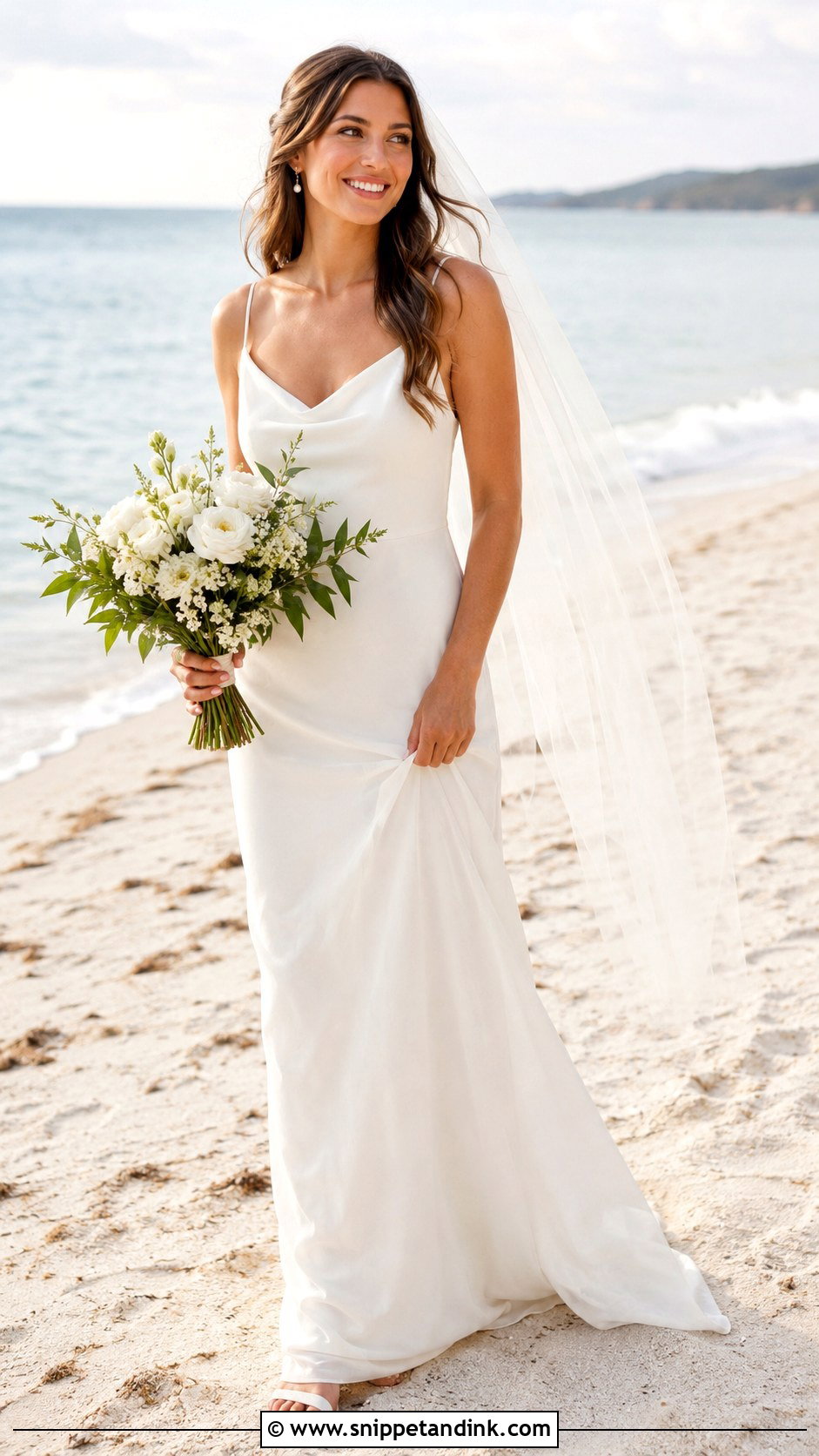
On sand, weight and length become the main problems. A heavy skirt drags, collects sand and gets wet at the hem, so I steer beach brides toward chiffon, crepe, silk or a light lace that clears the ground or barely touches it. Long trains are hard to manage on a beach and pull against the wind. A sheath, slip or soft A line works well here. Flat sandals or barefoot jewelry, pearl studs and a short or weighted veil that won’t fly across her face in the breeze.
18. Courthouse Wedding Dress
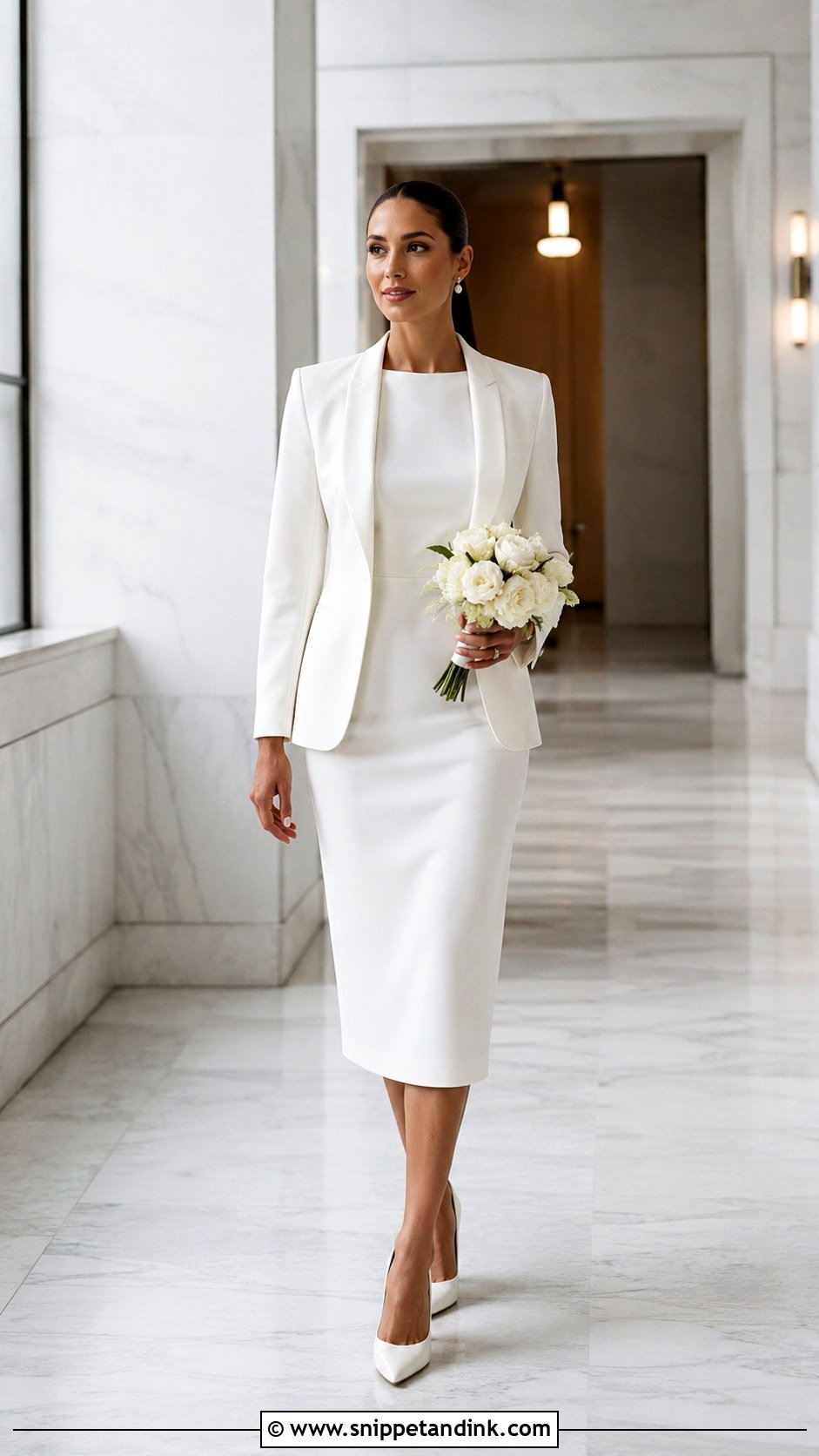
A courthouse wedding dress can be anything from a tailored mini to a column midi. City hall ceremonies are short, there’s often a lot of walking and standing, and the photos are taken on steps and sidewalks. A white crepe midi with pointed pumps, a structured blazer, pearl earrings and a small bouquet is a polished starting place. For something more playful, a bow-back mini or satin slip. I’d always plan for the lunch or dinner afterwards when choosing the shoes.
19. Short Wedding Dress
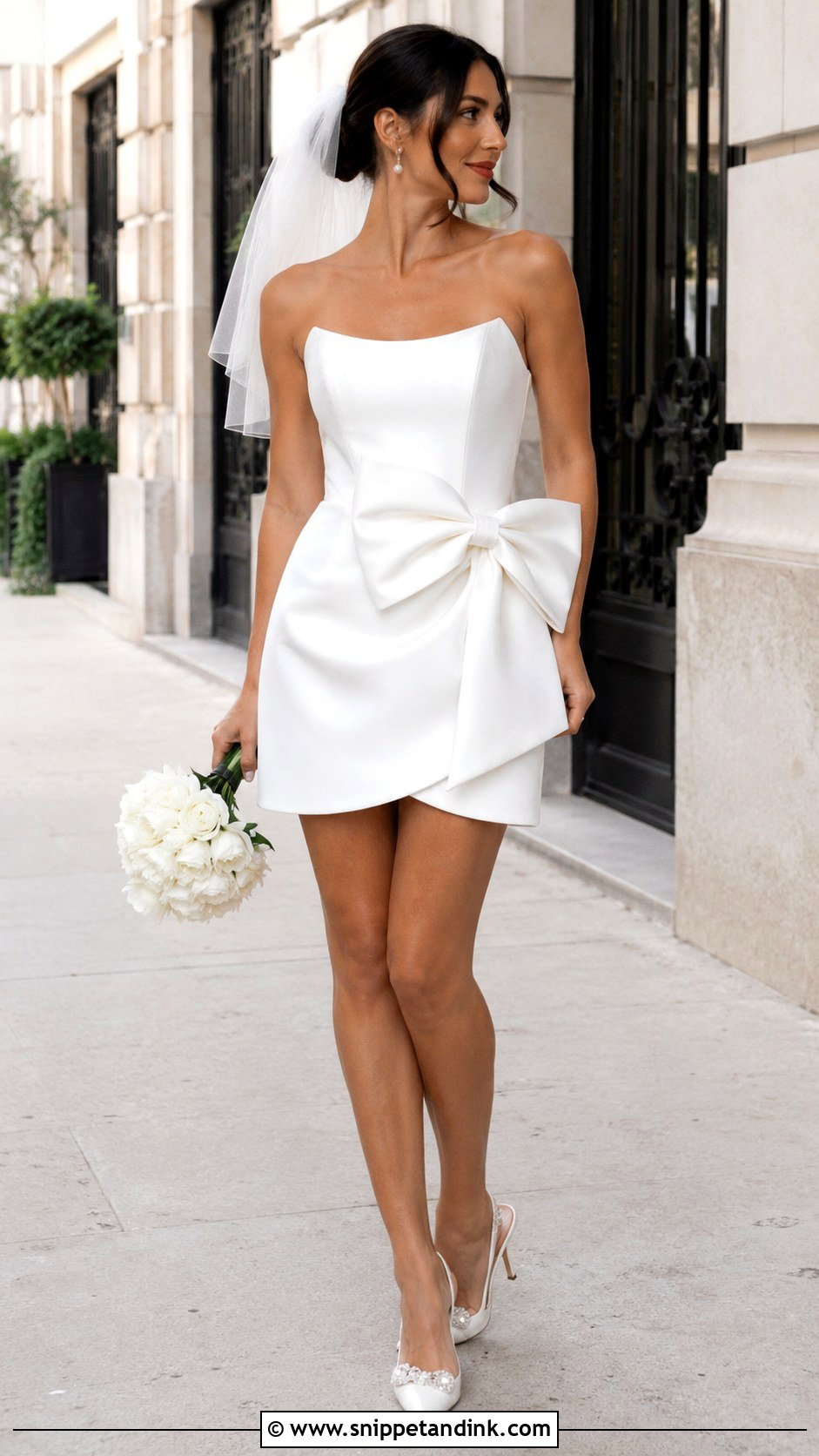
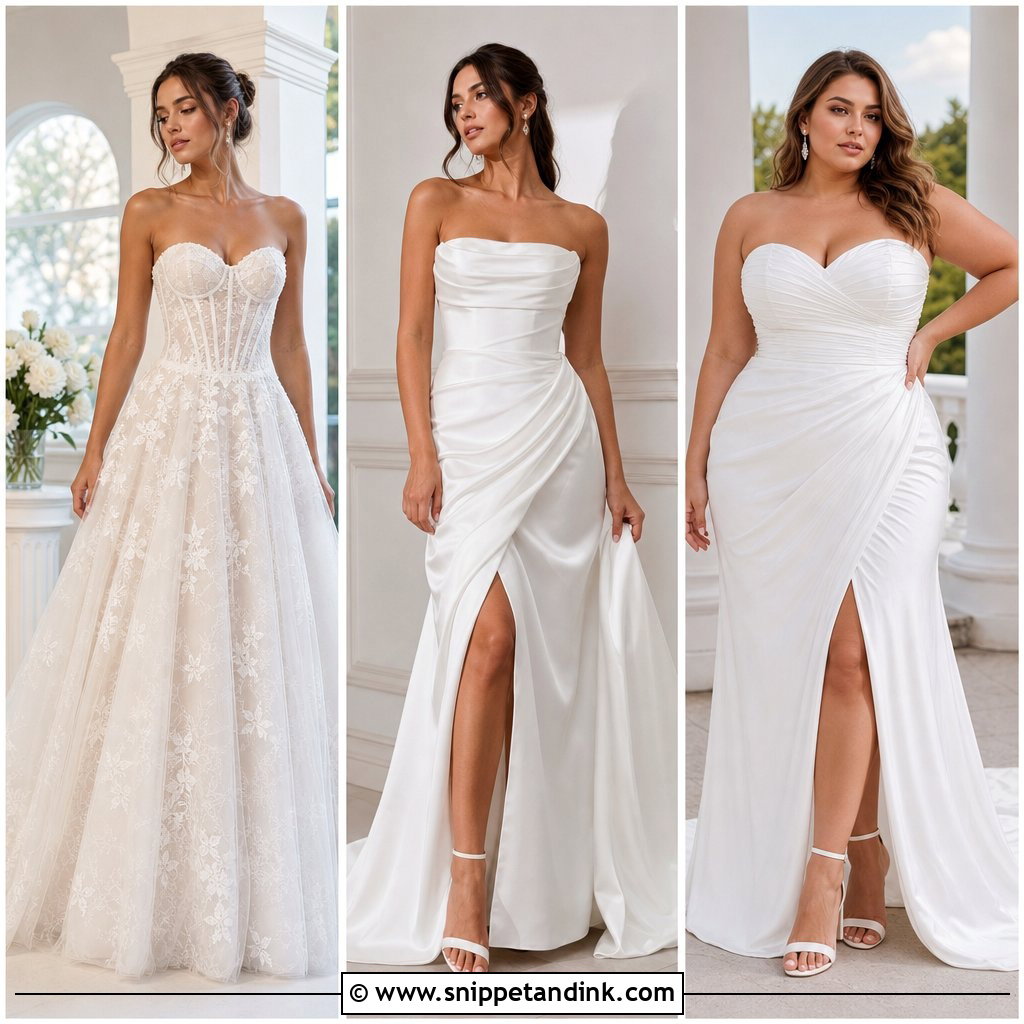
Short dresses are fun to wear and easy to move in, and they suit elopements, receptions, after-parties and warm-weather ceremonies. A structured mini holds its shape; a lace knee-length or satin midi feels more classic. The shoes become a visible part of the outfit, so I’d treat them like an accessory: pointed heels, slingbacks or embellished flats. A short veil, pearl earrings or a bow detail add the bridal note. Check how the hem rides up when she sits on a low chair before buying.
20. Tea Length Wedding Dress
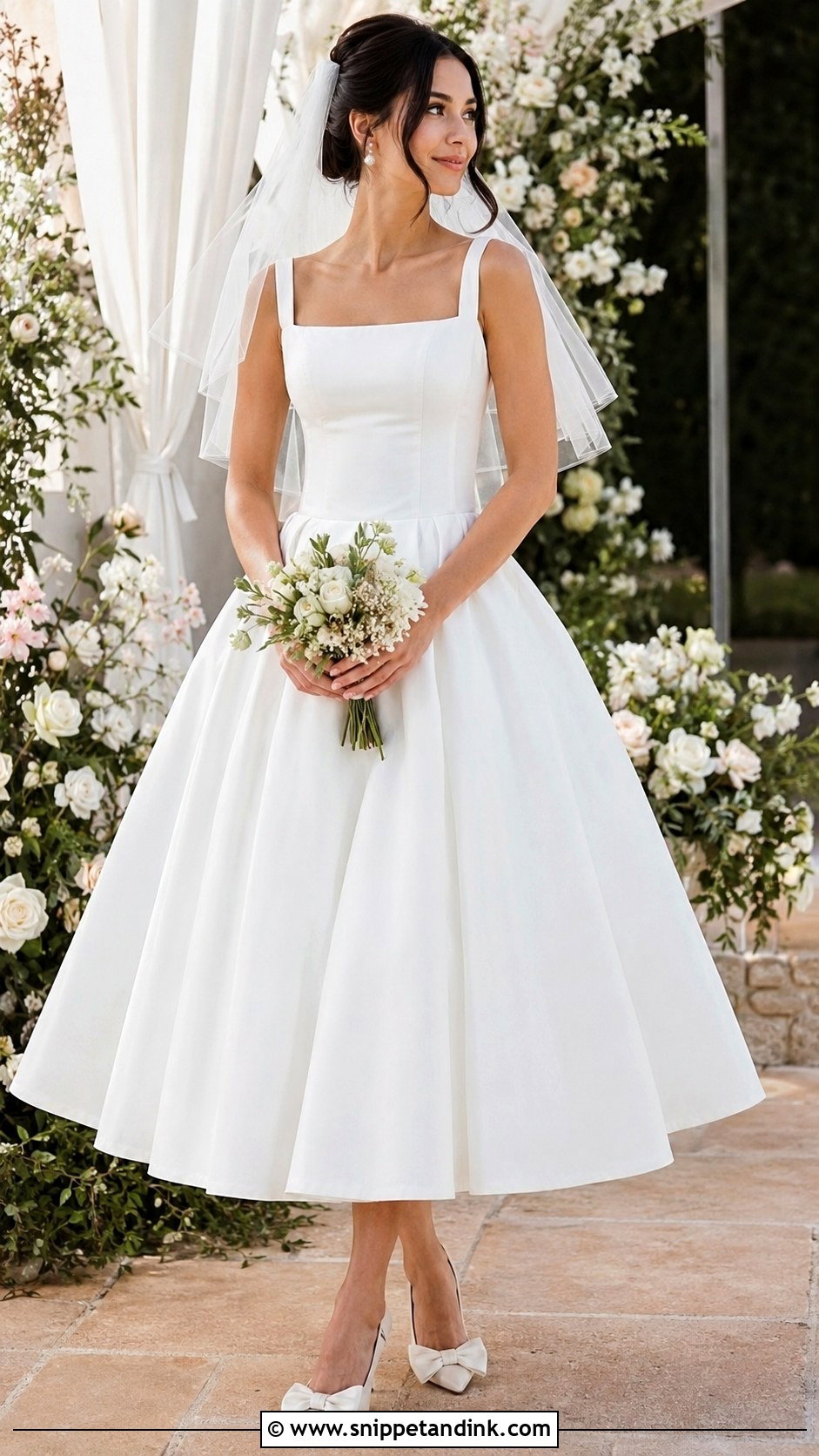
Tea length falls between knee and ankle and has a 1950s feel, especially with a full skirt. Because the shoes show completely, they deserve as much thought as the dress. Pointed pumps, bow heels or pearl-trimmed sandals all suit it. Lace overlays, satin and fitted bodices work well with this length. A birdcage or short tulle veil matches the era. It clears grass and gravel, which makes it practical for gardens, brunches and courthouse ceremonies.
21. Slip Wedding Dress
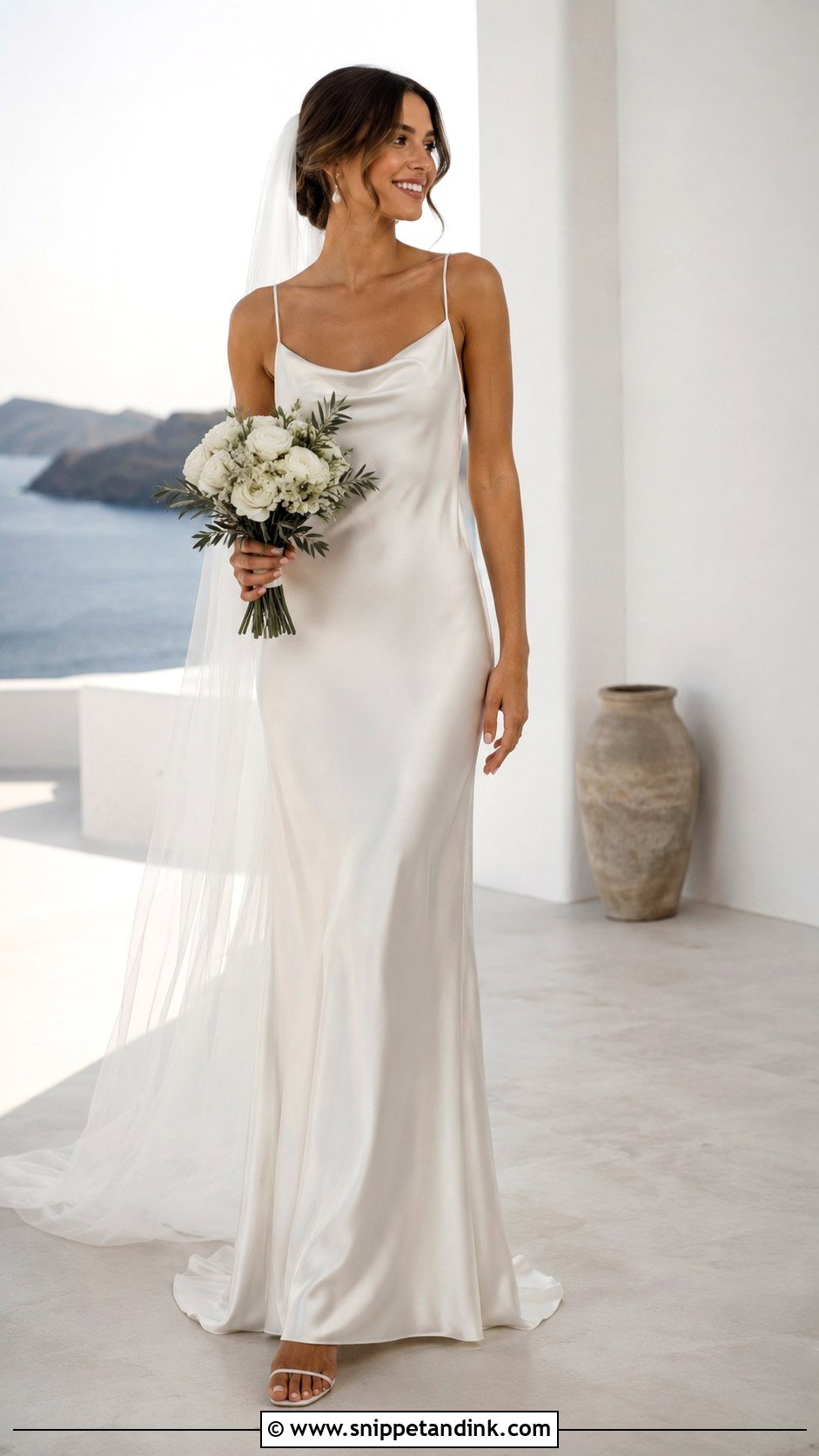
Slip dresses are usually cut on the bias, which makes them skim the body and move like liquid. That same cut shows everything underneath, so I fit them with smooth, edge-free underwear and check the back in natural light. Silk and heavier satin hang best; thin polyester satin can cling and crease. A sheer veil, delicate sandals and small pearl earrings keep it minimal. For a church ceremony or a cooler evening, a tailored bridal blazer or sheer cape adds coverage. Fit and fabric quality decide whether it looks expensive or flimsy.
22. Corset Wedding Dress
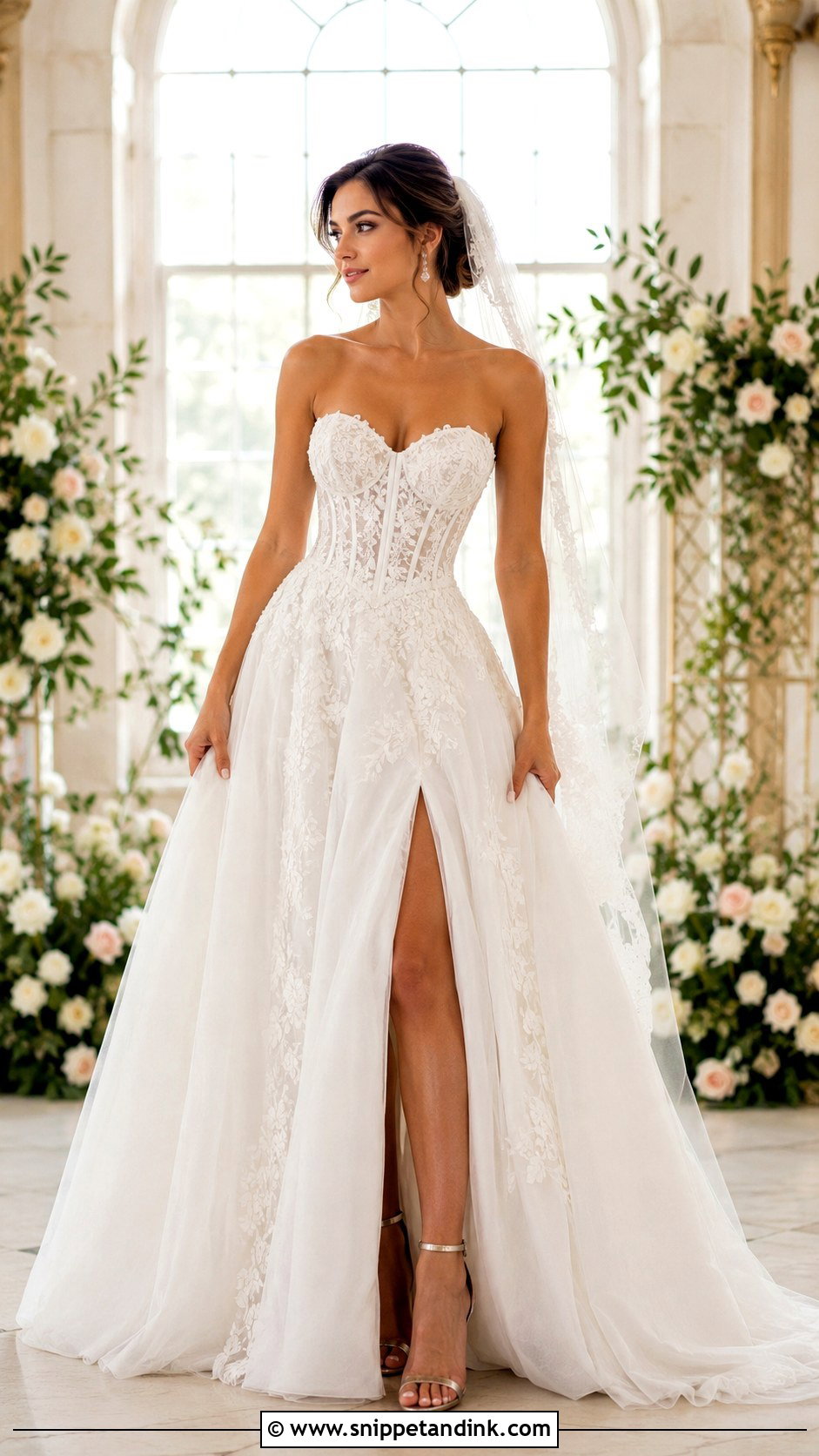
A corset bodice gives support and defines the waist, and many brides find it more comfortable than they expect because the boning spreads pressure evenly. Exposed boning is a fashion detail; hidden boning keeps the outside smooth. Lace-up backs can be adjusted on the day, which helps if she’s been nervous and eaten little all week. If the corset is the feature, keep earrings delicate and the veil simple. Elegant heels finish it.
23. Basque Waist Wedding Dress
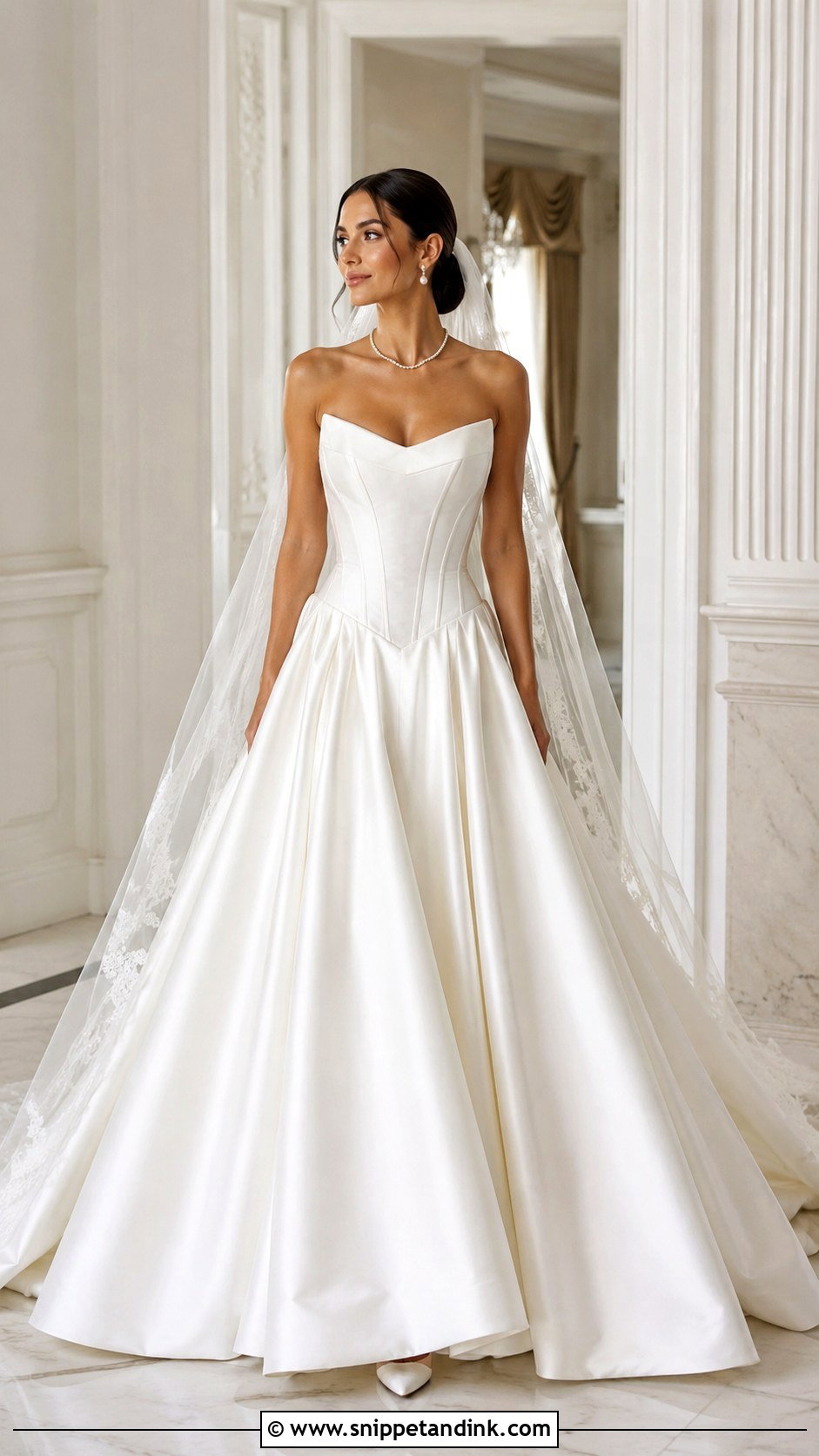
The Basque waist dips into a V or U at the center front, which lengthens the torso and makes the skirt look fuller below it. It’s a classic shape that’s very popular again, especially with full satin skirts and romantic lace. The point has to land at the right spot on her body, so this is a seam I’d never have altered by someone without bridal experience. Keep accessories quiet since the waist already draws the eye. A long veil and pointed heels balance it.
24. Drop Waist Wedding Dress
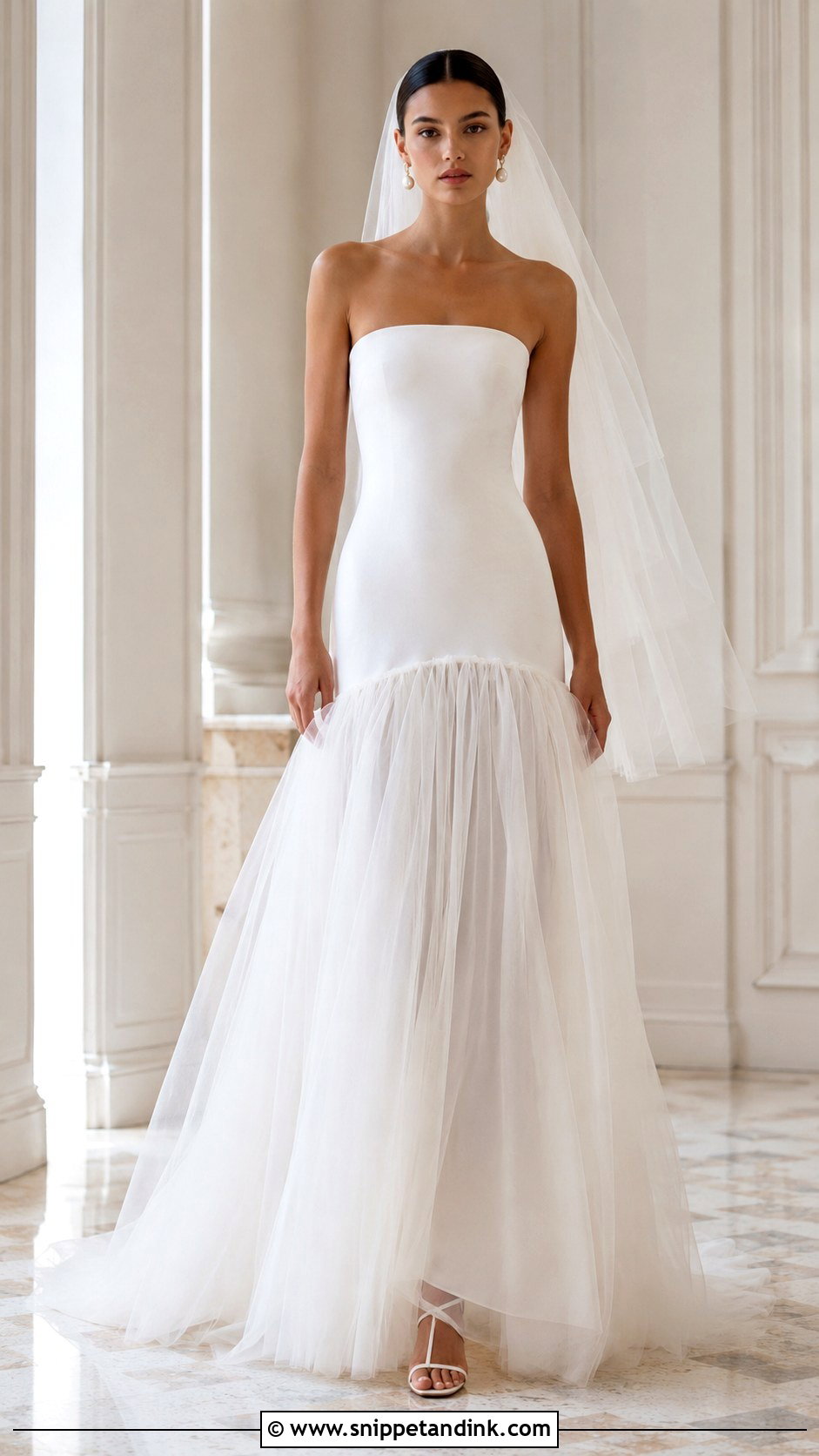
A drop waist lowers the seam onto the hips before the skirt starts. It can look sleek and editorial in fitted satin or softer in tulle. Because the waist placement is the whole design, tailoring makes or breaks it: a seam at the wrong height makes the legs look short. I’d suggest it to someone who has tried a natural waist and found it too expected. Simple heels, clean jewelry and a veil that doesn’t break the long torso line.
25. Floral Wedding Dress
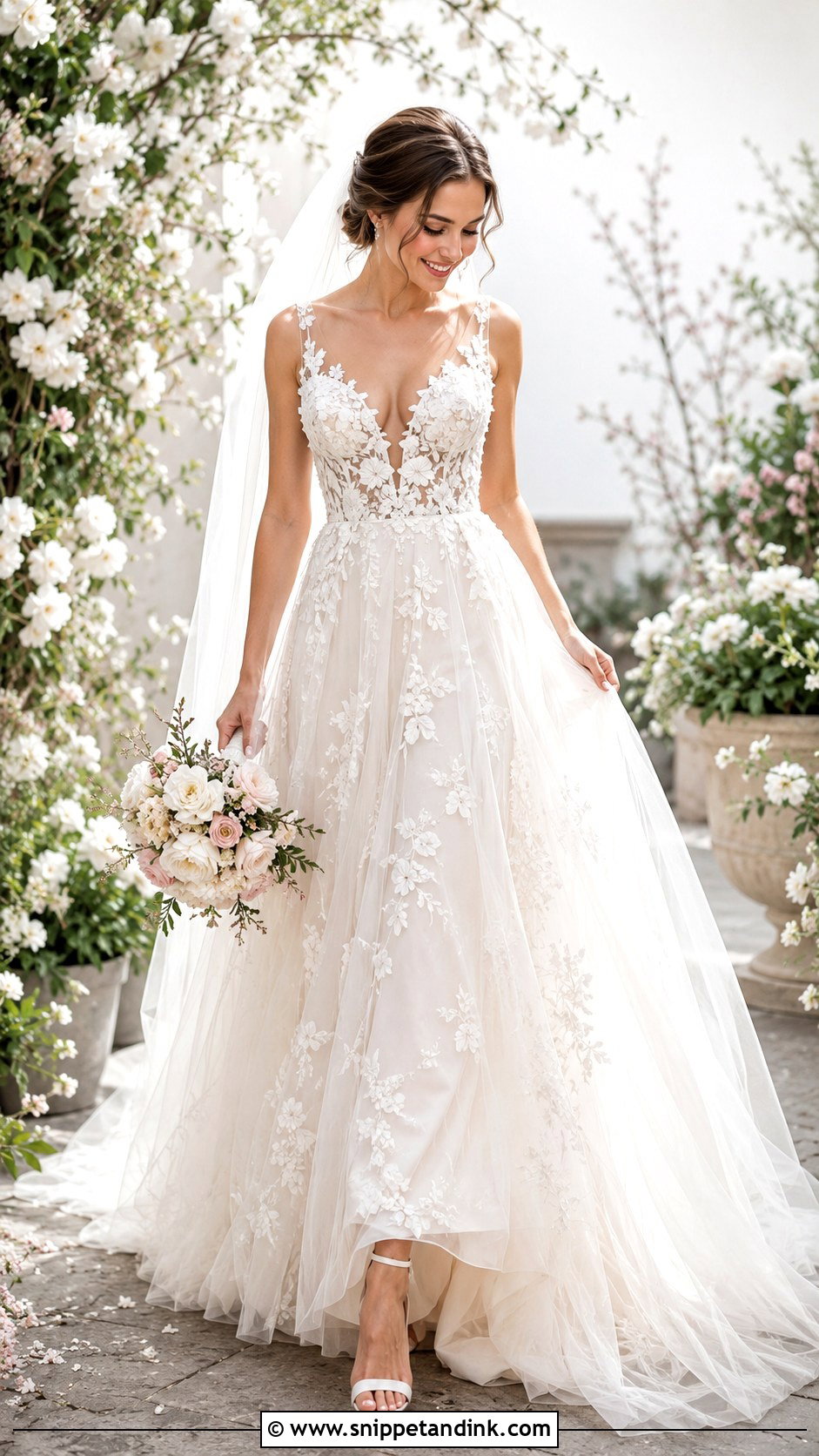
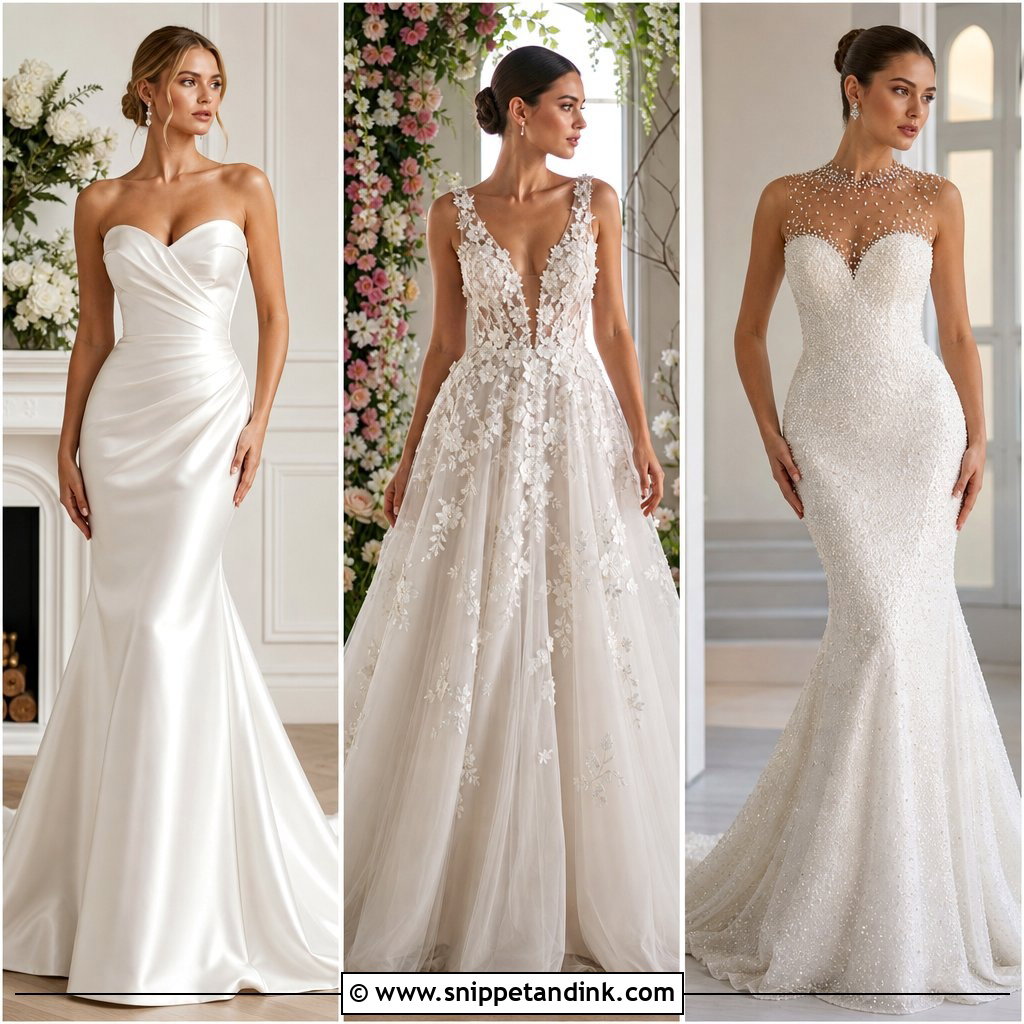
Florals can come as lace appliqué, embroidered blooms, 3D petals or a subtle print. The way to keep it bridal rather than costume is one floral feature, not several. If the bodice is covered in 3D flowers, I’d keep the skirt plain and the veil unadorned. Garden venues, spring weddings and romantic indoor settings suit it naturally. 3D petals crush when hugged, so I’d suggest she check them before portraits. Simple heels and small earrings are enough.
26. Pearl Wedding Dress
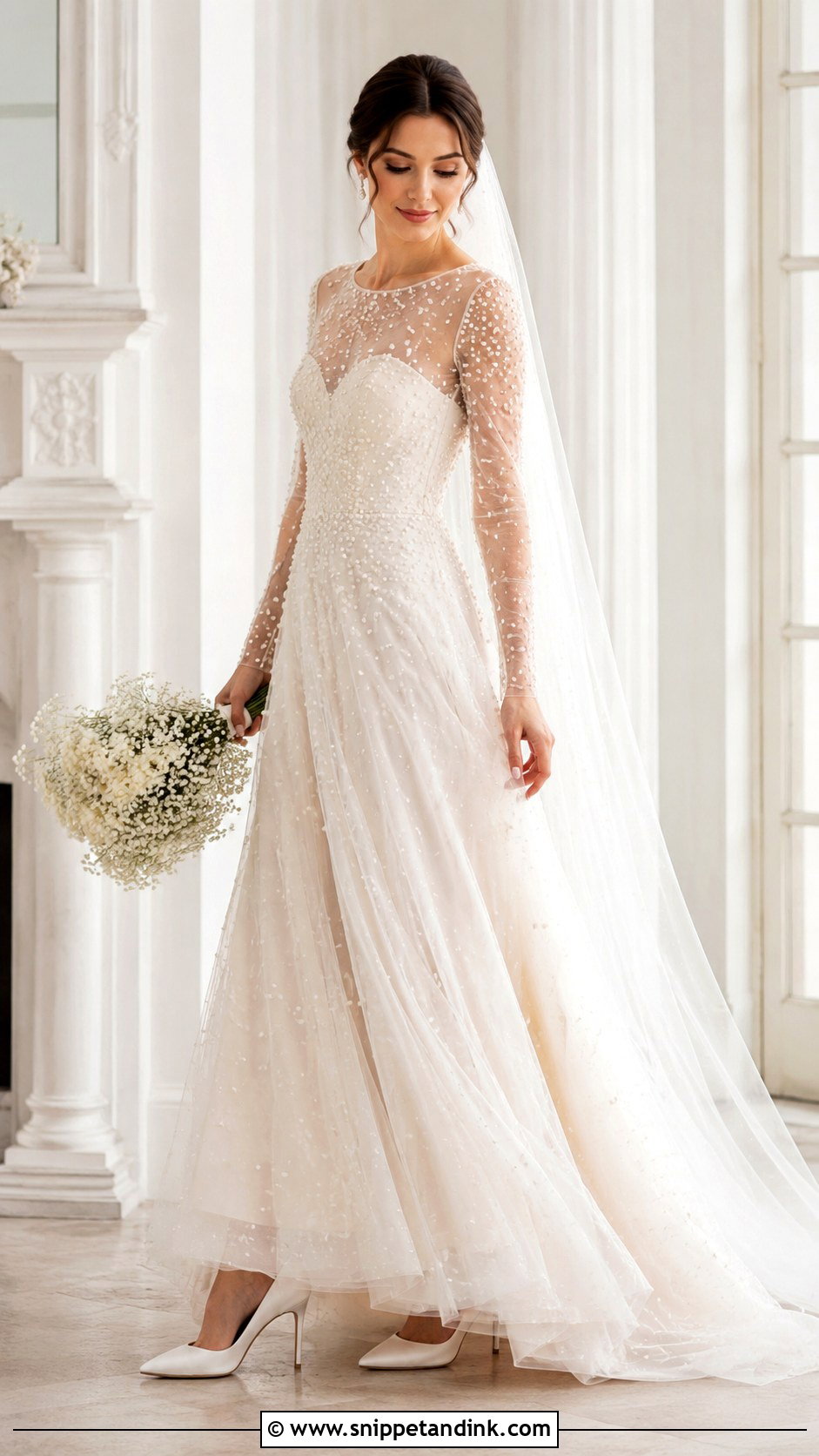
Pearls give a soft glow rather than the sharp sparkle of crystals, which suits daylight ceremonies especially well. They can be scattered over tulle, placed along a neckline, or covering the bodice and sleeves. A pearl-detailed sheath is subtle; a pearl tulle gown is more dramatic. Match the jewelry tone to the pearls on the dress, since cream and bright white side by side look mismatched. Satin heels and a simple veil, and no extra accessories.
27. Beaded Wedding Dress
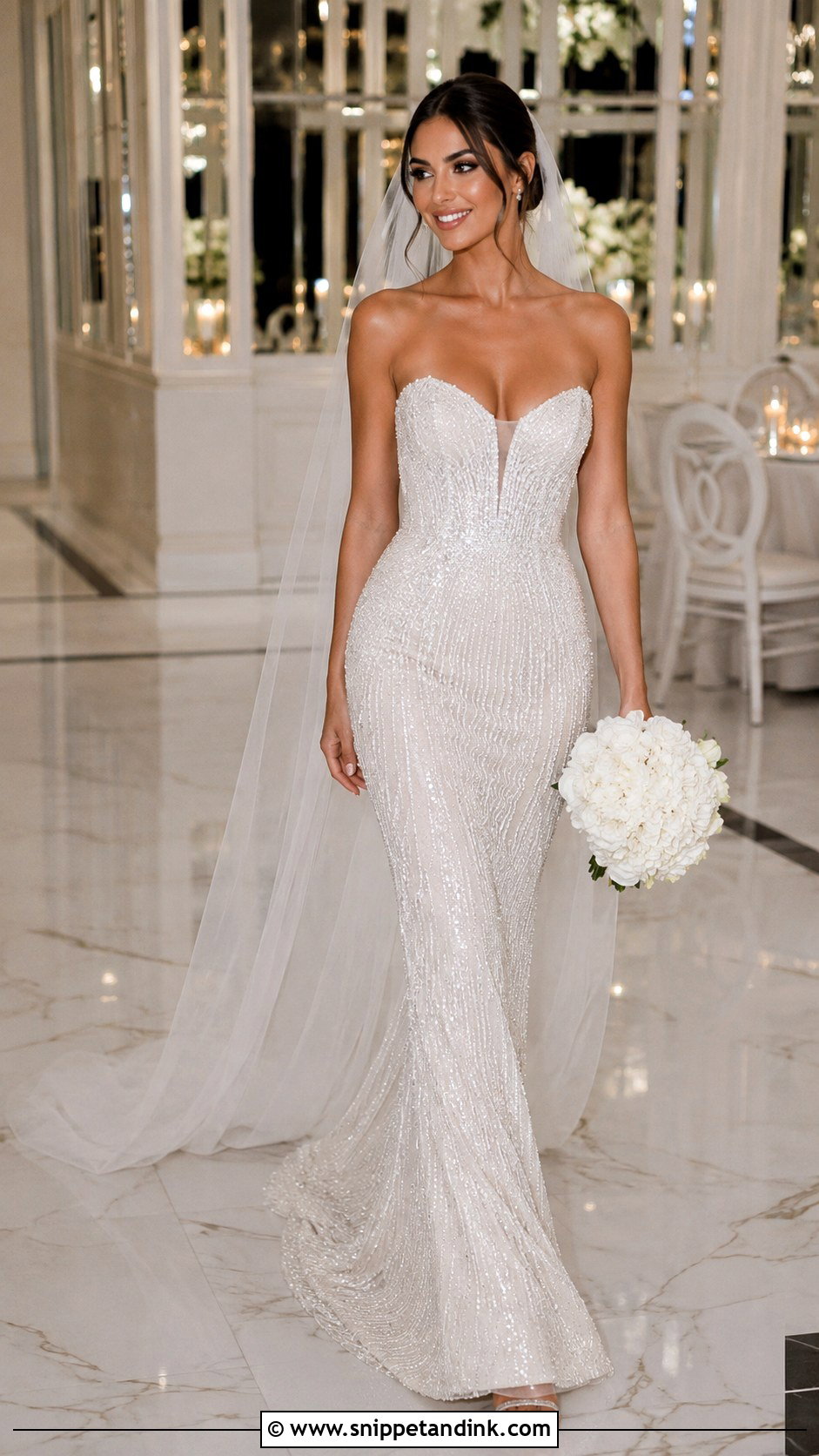
Beading catches candlelight and evening lighting in a way plain fabric can’t, so I suggest it most for evening weddings and formal receptions. Allover beading is dramatic and heavy; beadwork just on the bodice is lighter and easier to dance in. Heavy beading can weigh a skirt down noticeably, so try walking and sitting in it before ordering. Simple heels, minimal jewelry and a clean hairstyle. A plain veil balances the sparkle, while no veil looks more modern.
28. Tulle Wedding Dress
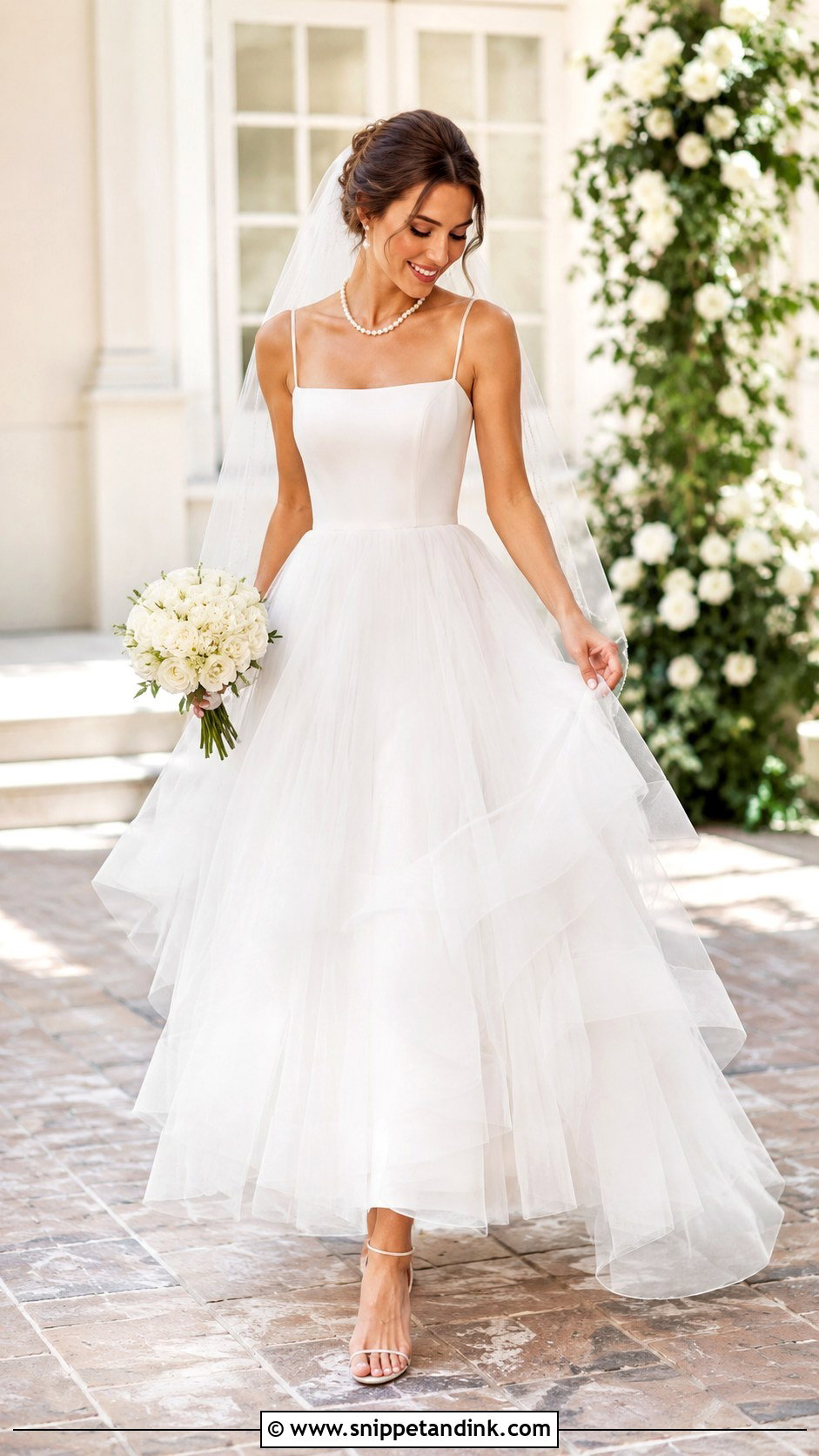
Tulle gives volume without the weight of heavier fabrics, which is why it’s so comfortable to wear for a long day. A layered tulle A line is classic; a full tulle ball gown is more dramatic. It does snag easily on jewelry, beading and rough surfaces, so I keep bracelets smooth and check her ring setting for sharp edges. A clean bodice over a tulle skirt keeps it modern. Delicate heels, pearl jewelry and a light veil that blends with the skirt.
29. Backless Wedding Dress
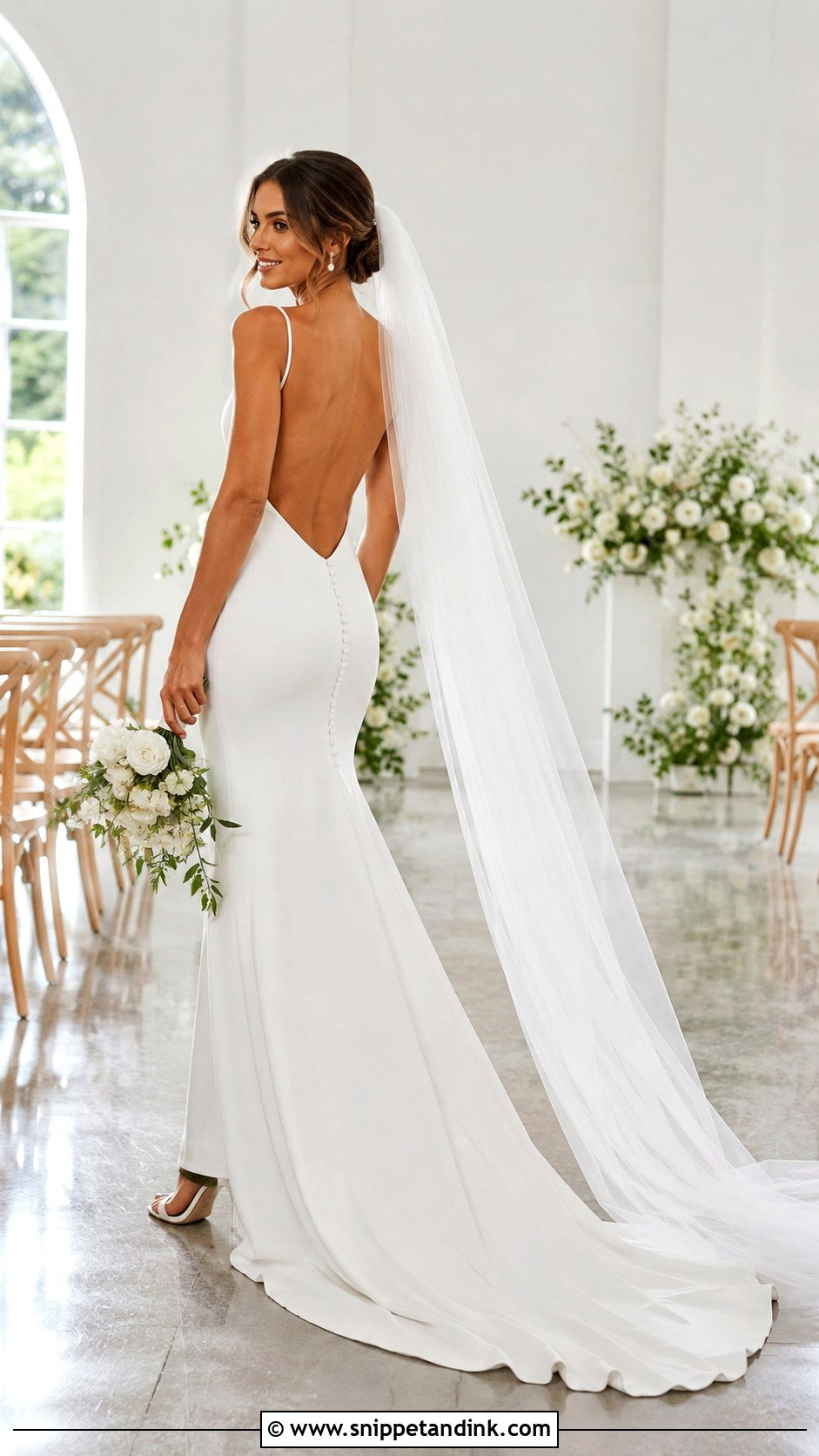
An open back is what guests see during the whole ceremony, so it’s worth planning around. Hair should be up or swept to one side to show it. A fitted crepe gown, a lace sheath or a satin slip can all be cut with a low back. The fit at the lower back edge is the detail that matters: if it gaps when she bends forward, it needs taking in. Delicate earrings, clean heels and a removable veil so the back shows in reception photos.
30. Colored Wedding Dress
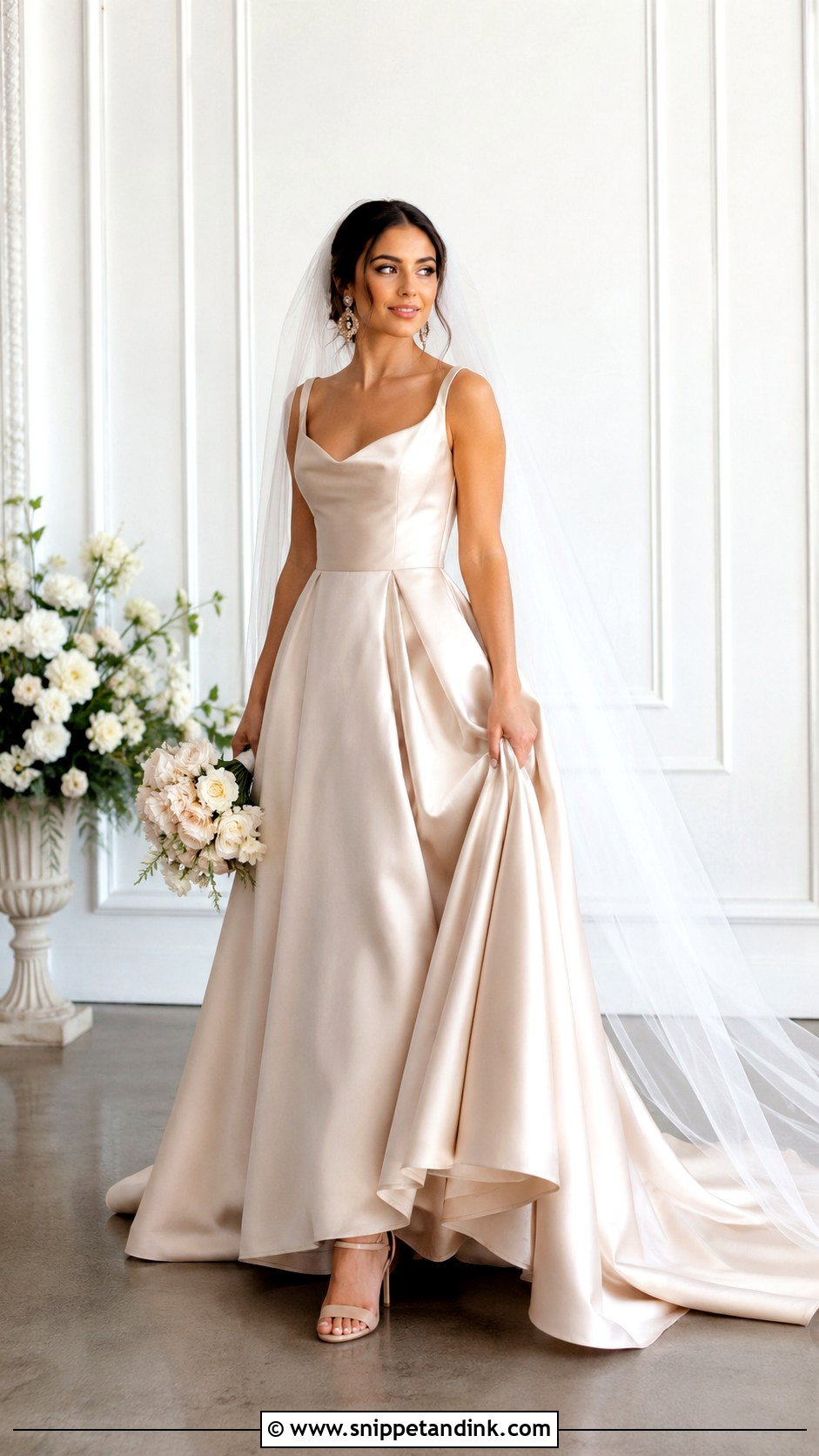
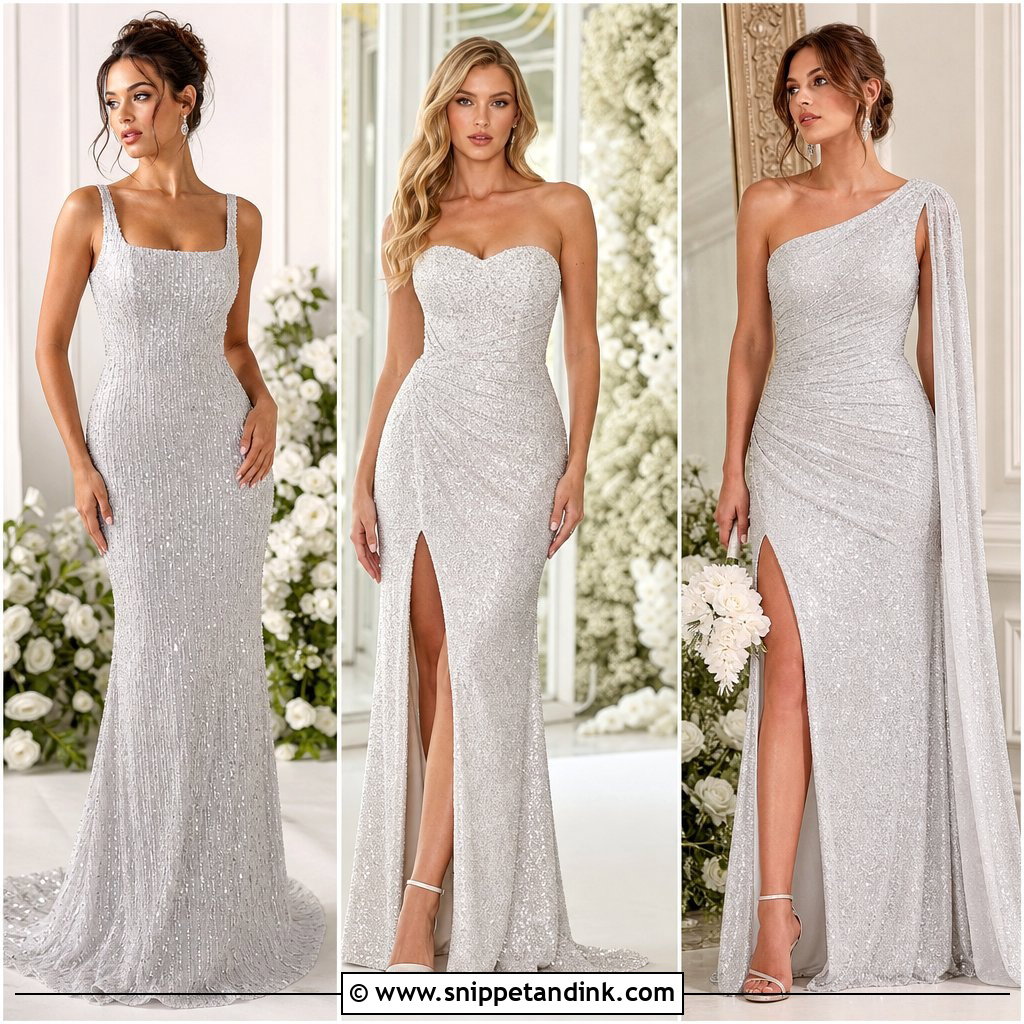
Color is a real option for a main gown, not only a second look. Blush, champagne, pale blue, silver, nude and pale gold all read as bridal. The tone has to suit her skin in the venue’s light, so I always look at swatches in daylight and under warm indoor lighting before ordering. Champagne satin reads rich; blush tulle reads soft. Neutral heels, refined jewelry and a matching or sheer ivory veil. It’s a good choice for second looks, destination weddings and modern ceremonies.
Order Dates, Fittings and the Alterations Calendar
Timing catches more brides out than style does. Most made-to-order gowns take several months to arrive from the designer, and the exact wait varies a great deal by brand and season, so I’d ask the shop for a written delivery date before paying a deposit. Starting the search around nine to twelve months out leaves room for both production and alterations without rush fees.
How the fittings usually run
- First fitting, roughly two to three months before the wedding: hem, bodice and straps are pinned.
- Second fitting: the changes are checked and the bustle is designed.
- Final fitting, a week or two out: bring the shoes, underwear and whoever will bustle you on the day.
Bring the real shoes to every fitting. A hem set with flats will drag once you put on heels, and changing it again late is stressful for everyone.
Bustles, Steaming and the Night Before
Trains need a bustle for the reception, and the person doing it needs to have practiced. Over-bustles hook the train up onto the back of the skirt; under-bustles tuck it underneath with ribbons. Have the seamstress show your helper, and number the ties if there are several.
On the morning, hang the gown high from a door frame or a hook so the skirt hangs freely, and steam it rather than iron it, keeping the steamer moving and a little away from beading and lace. I keep a small kit in my bag for every wedding: safety pins, clear fashion tape, white chalk for marks on ivory, a needle with white thread and a lint roller.
Try On at Least One Shape You Think You’ll Hate
There isn’t one right gown, only the one that suits the venue, the season and the way you want to spend the day. Some brides want the full drama of a ball gown; others feel most like themselves in a simple slip dress, a lace sheath or a short courthouse dress. Try a few shapes before settling, think about the shoes and veil alongside the dress, and book fittings early enough that nothing is rushed.
You'll Like These Ideas:





Leave a Reply