
Slicked-back hair asks for very little decoration and a lot of discipline. Every strand goes in one direction, so the result depends on the product you choose, how evenly it is brushed in and how much tension your scalp will tolerate for a full day. Quiet-luxury celebrity weddings made it popular, and it has stayed because it really does put your face, dress and jewelry first. Below are 20 slicked back bridal hair ideas, from a plain low bun to a ponytail tied with a bow, and my notes on how each holds up in real wear.
Gel, Pomade or Cream? The Product Decides the Finish
Most failed slick backs come down to product, not technique. Each one gives a different shine and hold, and the wrong match for your hair shows up within a couple of hours.
- Gel gives the strongest hold and the wettest shine. It dries hard, so it beats humidity, but it can flake as white specks on dark hair if it is brushed after drying.
- Pomade stays slightly soft and shines without crunch. Short hair and side parts take it best, but on fine hair it can look greasy by the evening.
- Styling cream gives a soft, satin finish and the least hold. It suits a slicked half-up or tendrils more than a tight bun.
- Edge control is only for the hairline and baby hairs, never the whole head.
For curls and coils, I apply gel to soaking wet hair so it can lay the pattern flat; on straight hair I work into dry or slightly damp hair. Either way, plan a clarifying wash the next day. Strong gel left in overnight is hard on the hair and on your pillowcase.
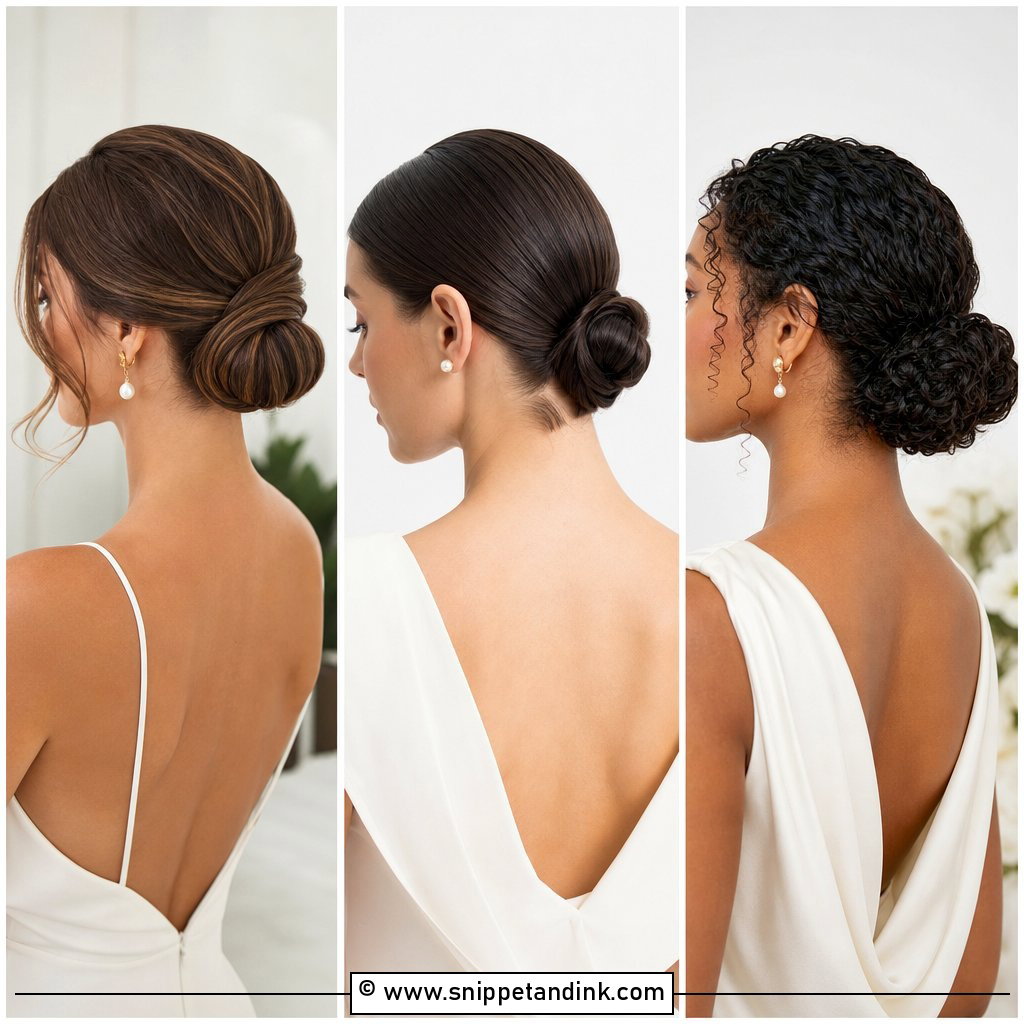
1. Slicked Back Low Bun
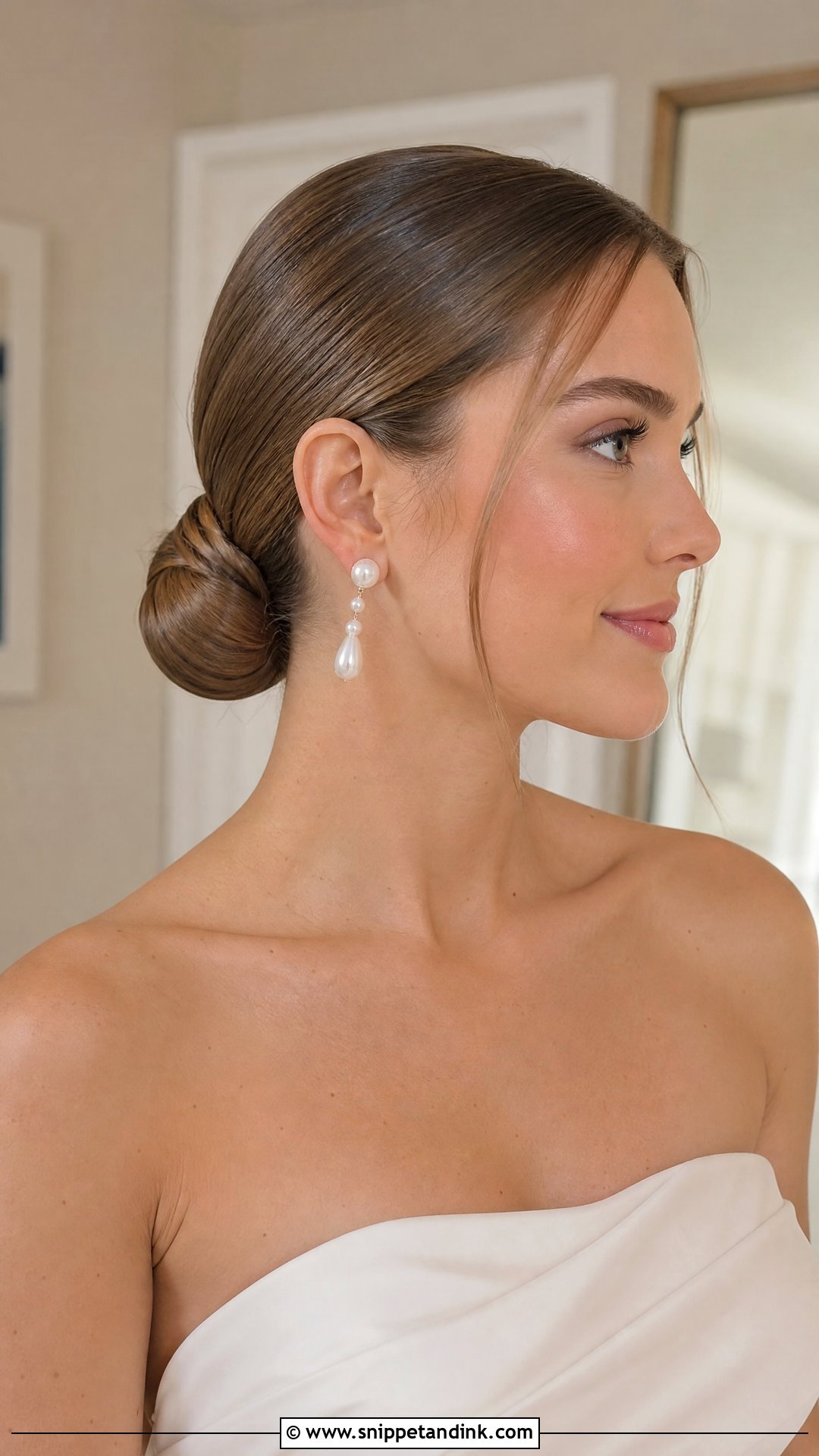
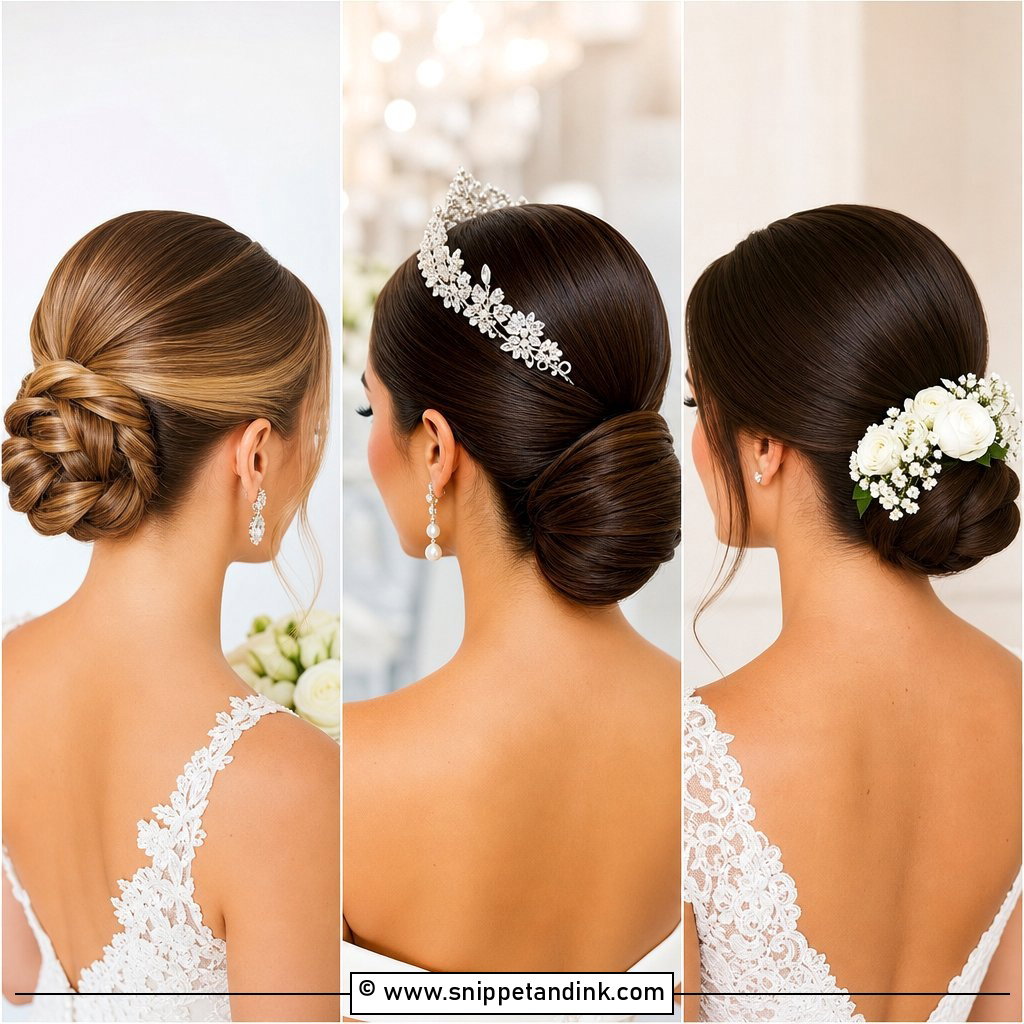
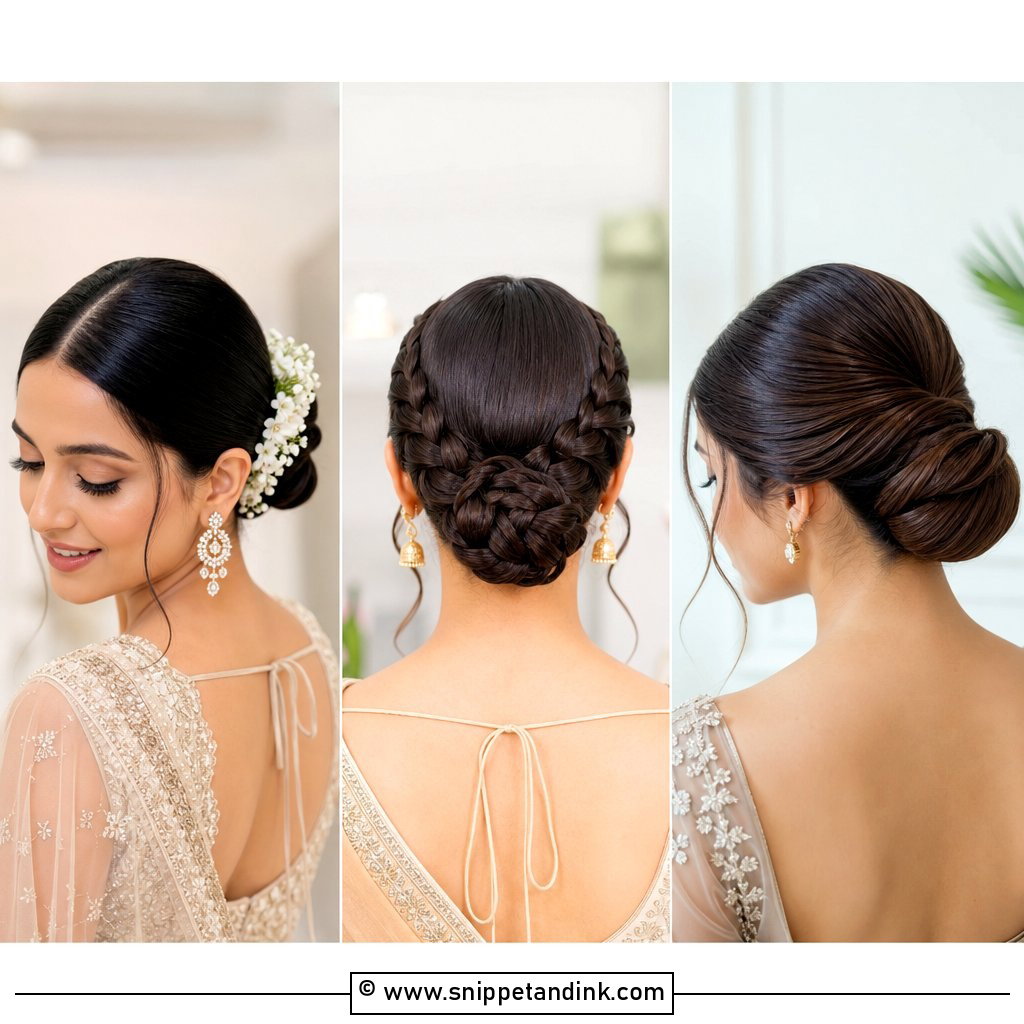
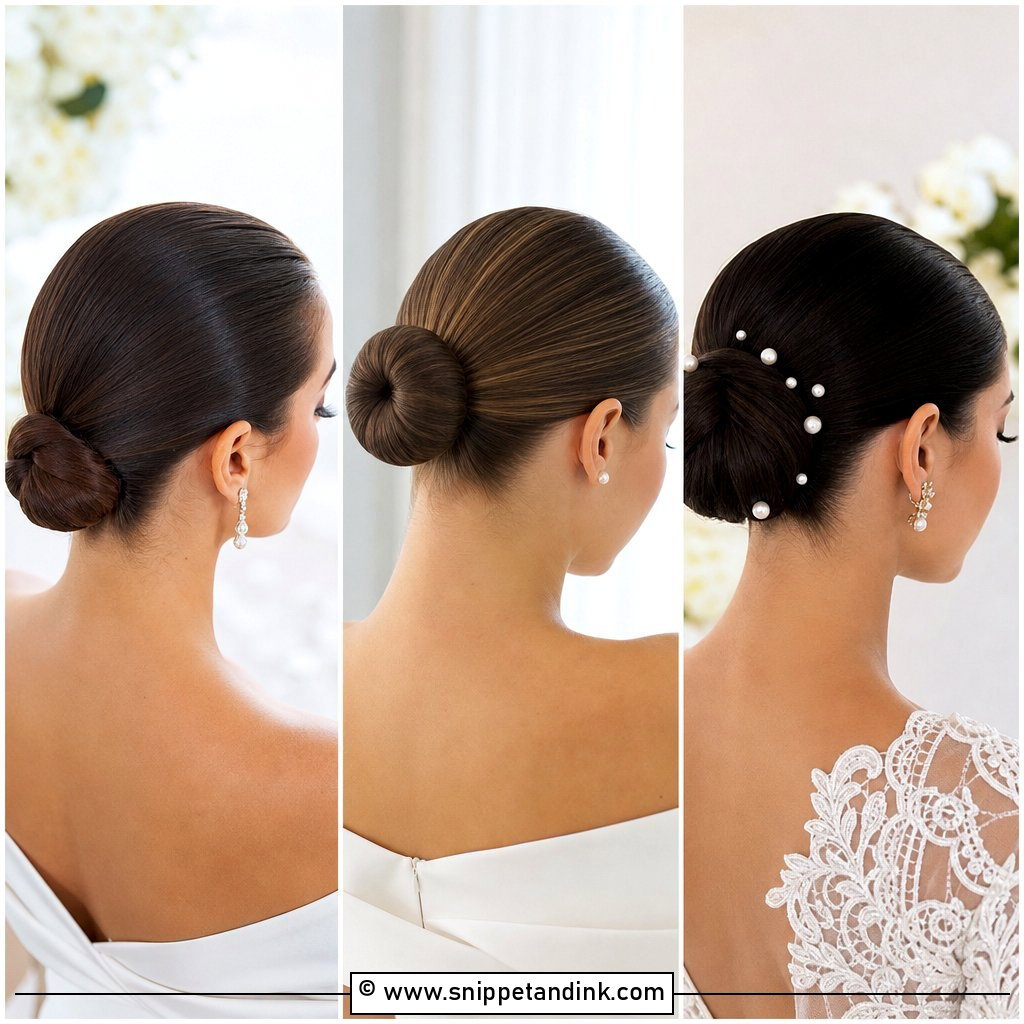
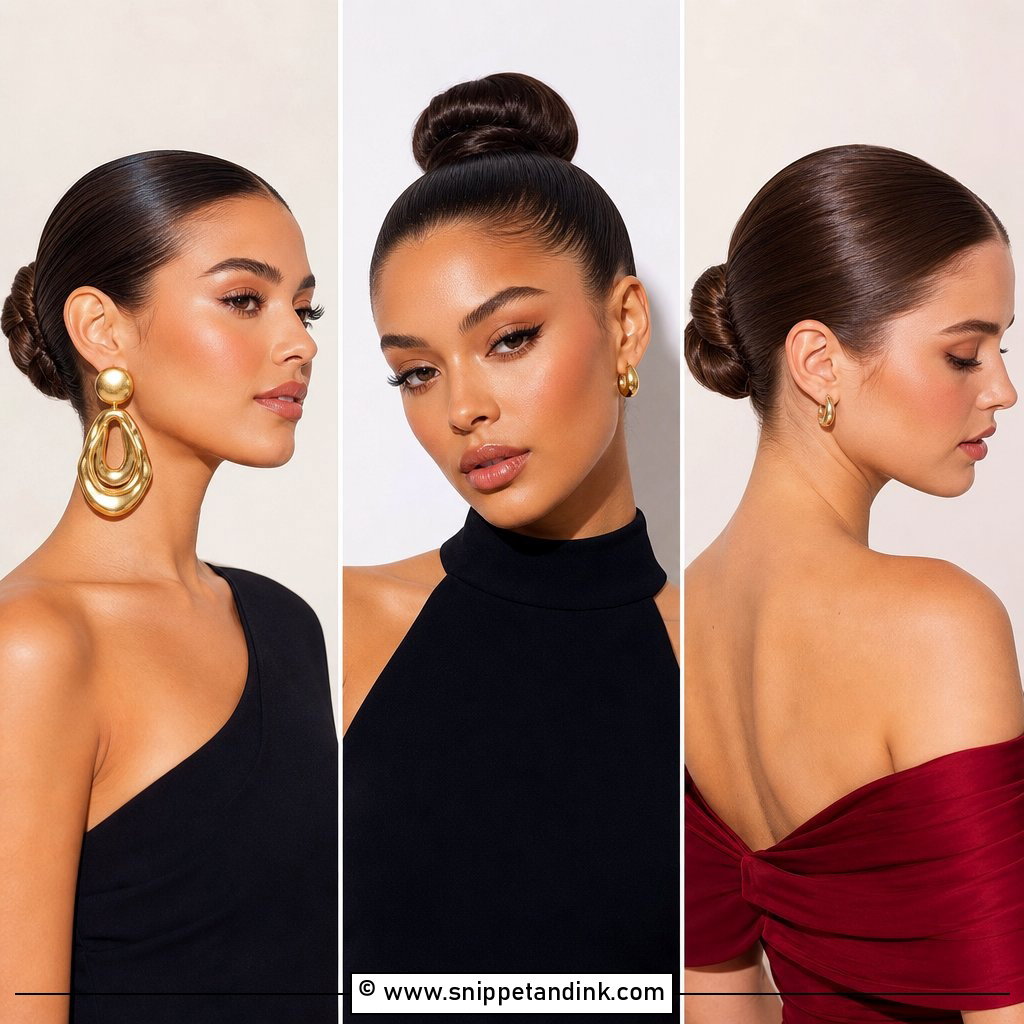
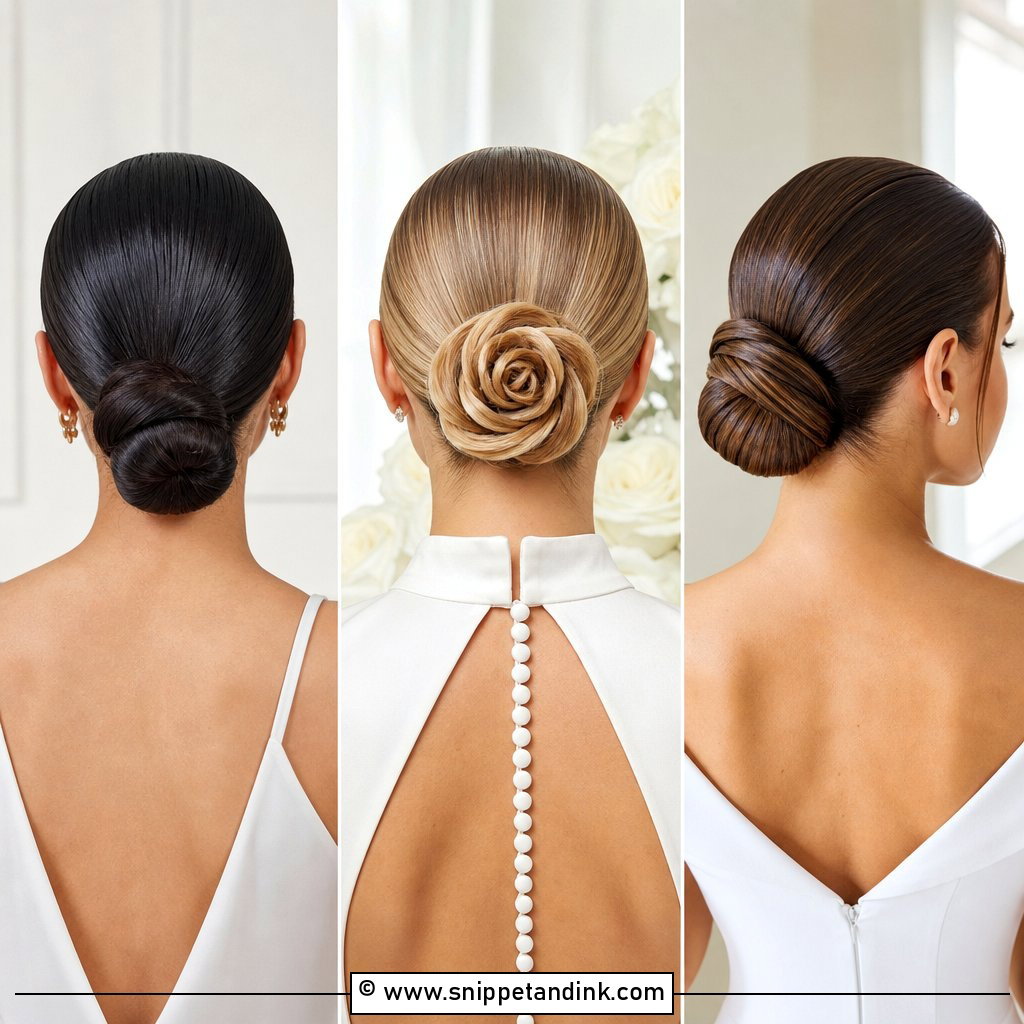
Start here if you are unsure. The slicked back low bun is the version I can make work on almost any texture, because the knot sits at the nape, where the pull on the scalp is lowest. I brush the hair back in sections, secure the base, then twist the length into the bun. With an open-back gown it leaves the shoulders bare. Shine serum goes on last, and only a few drops; one drop too many and it starts to separate into strings.
2. Slicked Back Wet Look Hair
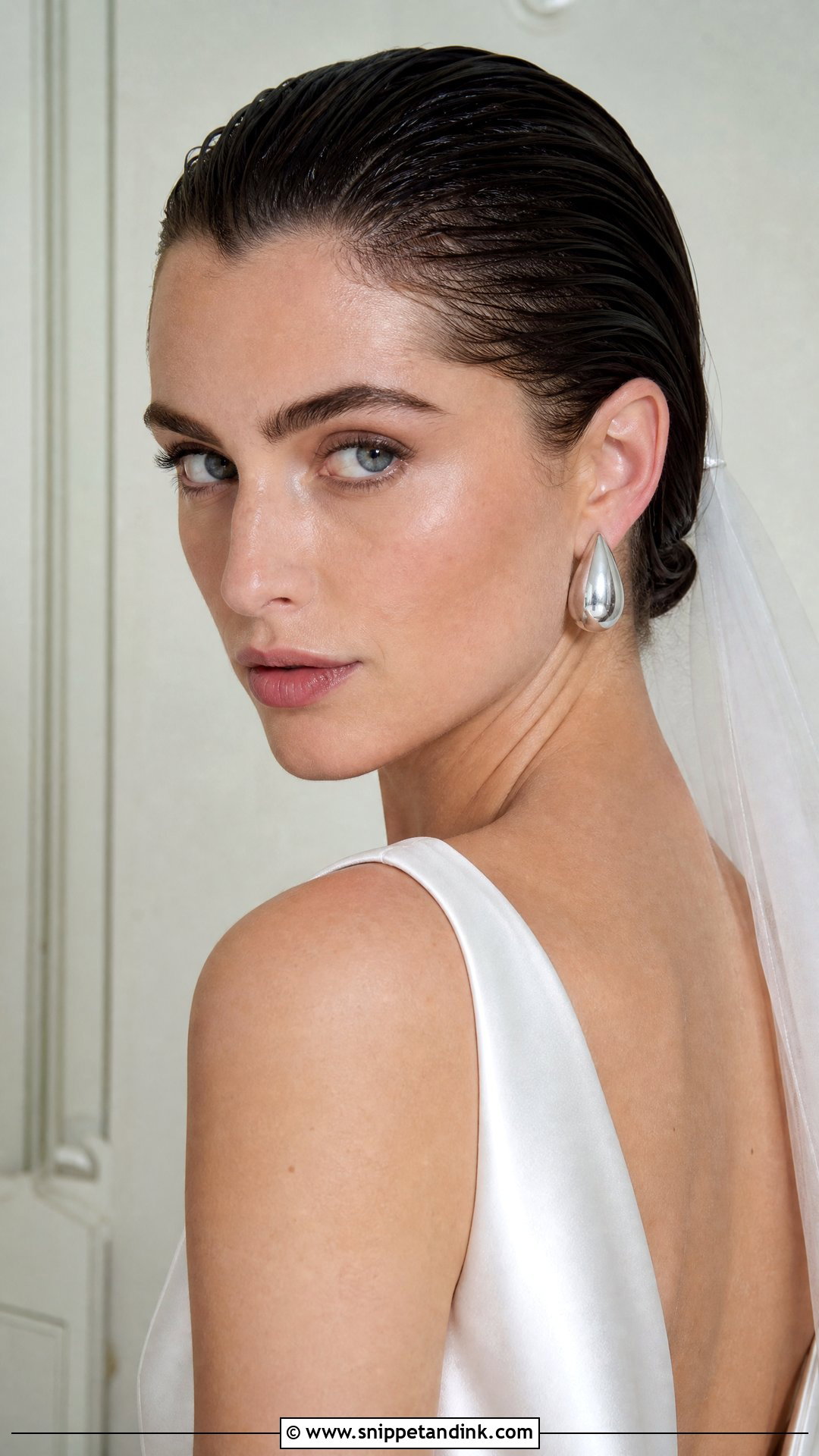
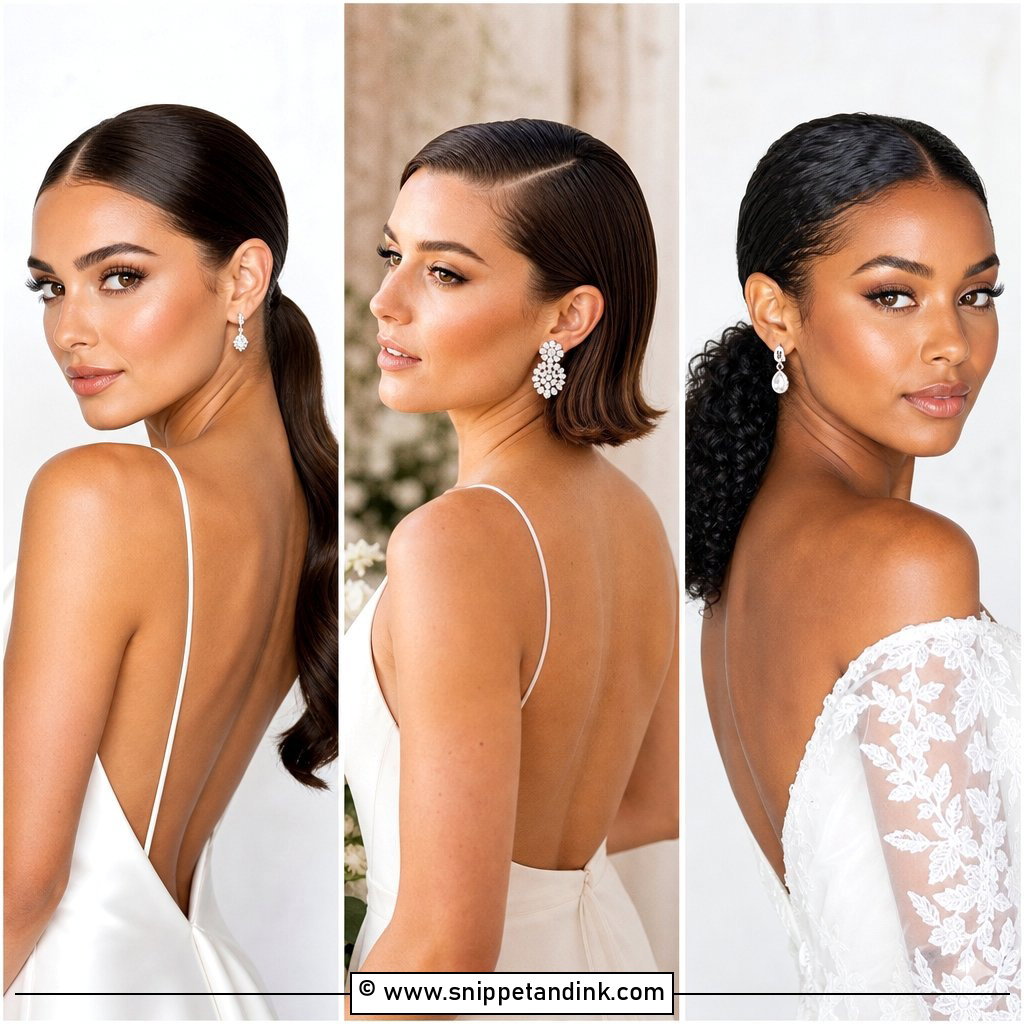
The wet look is the boldest finish here. A strong gel or pomade is combed through damp hair so it dries with that just-out-of-the-water gloss, flat to the head. I build it in thin layers, letting each one tack up before the next, because one thick coat dries cloudy. It suits minimal gowns and architectural jewelry. Gel also locks the hair against humidity better than any loose style, so it is a smart choice for a summer or beach ceremony, as long as you can accept a look with no softness at all.
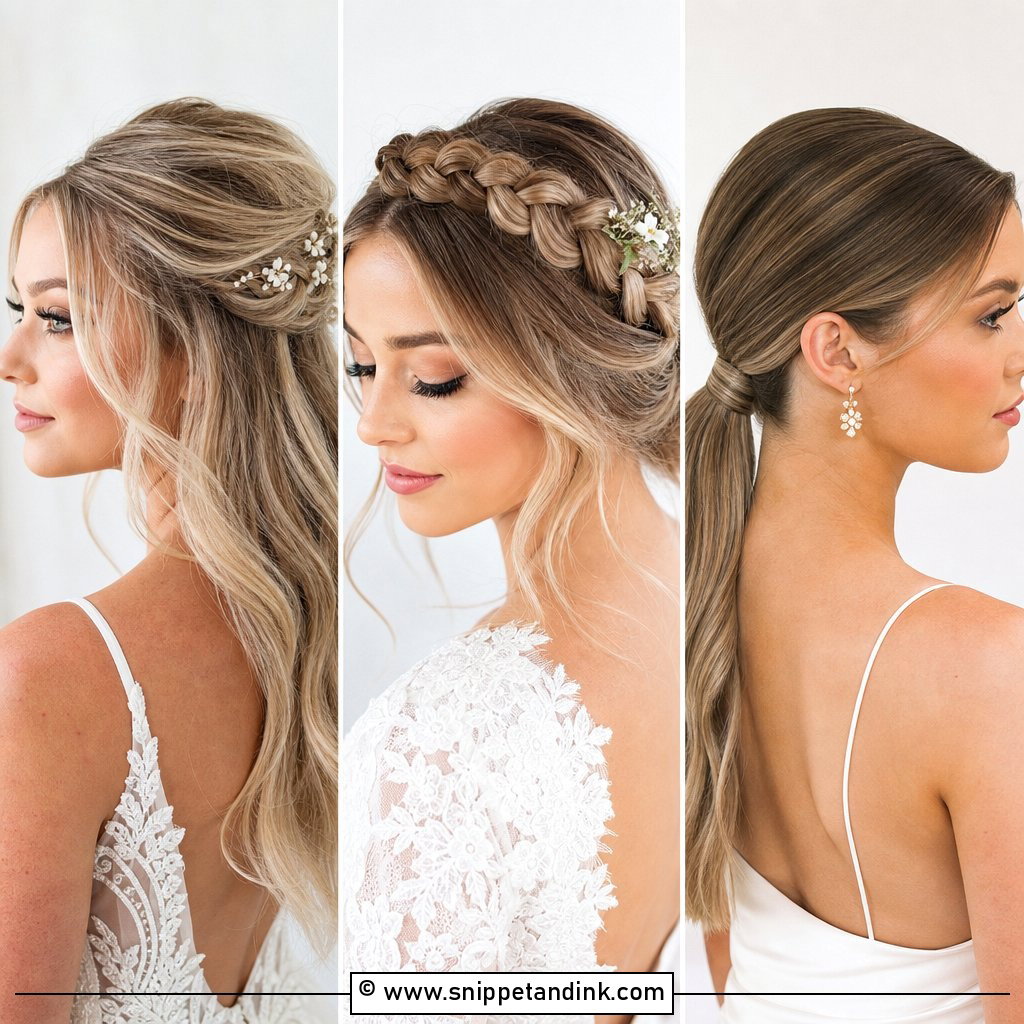
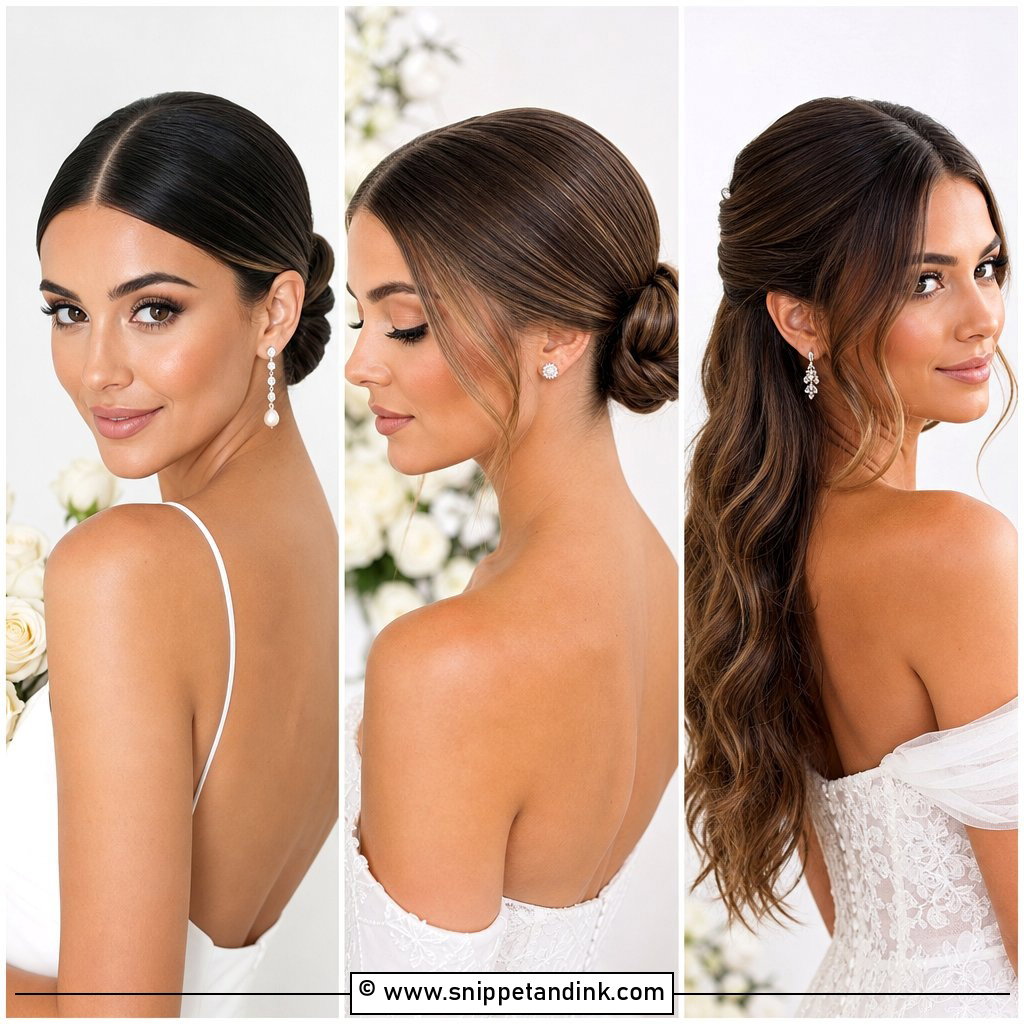
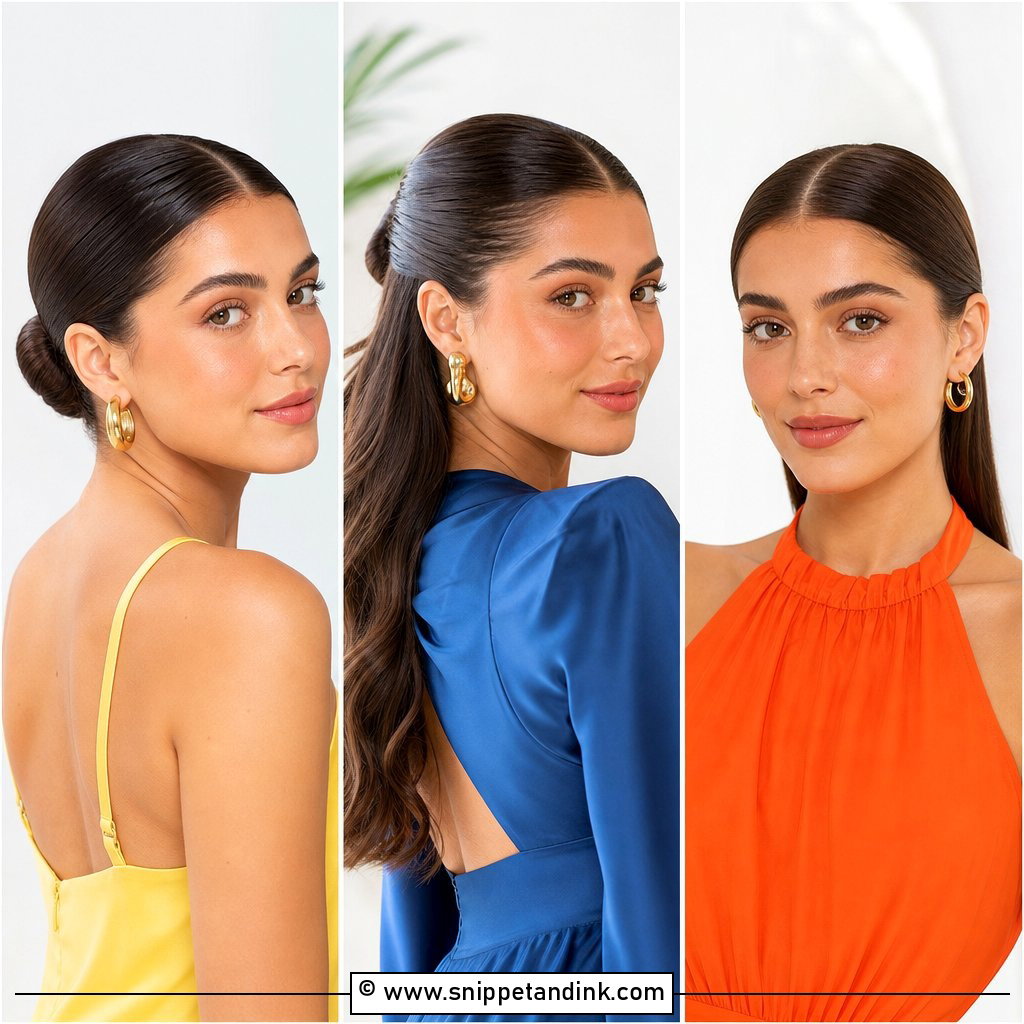
3. Slicked Back Half Up Half Down
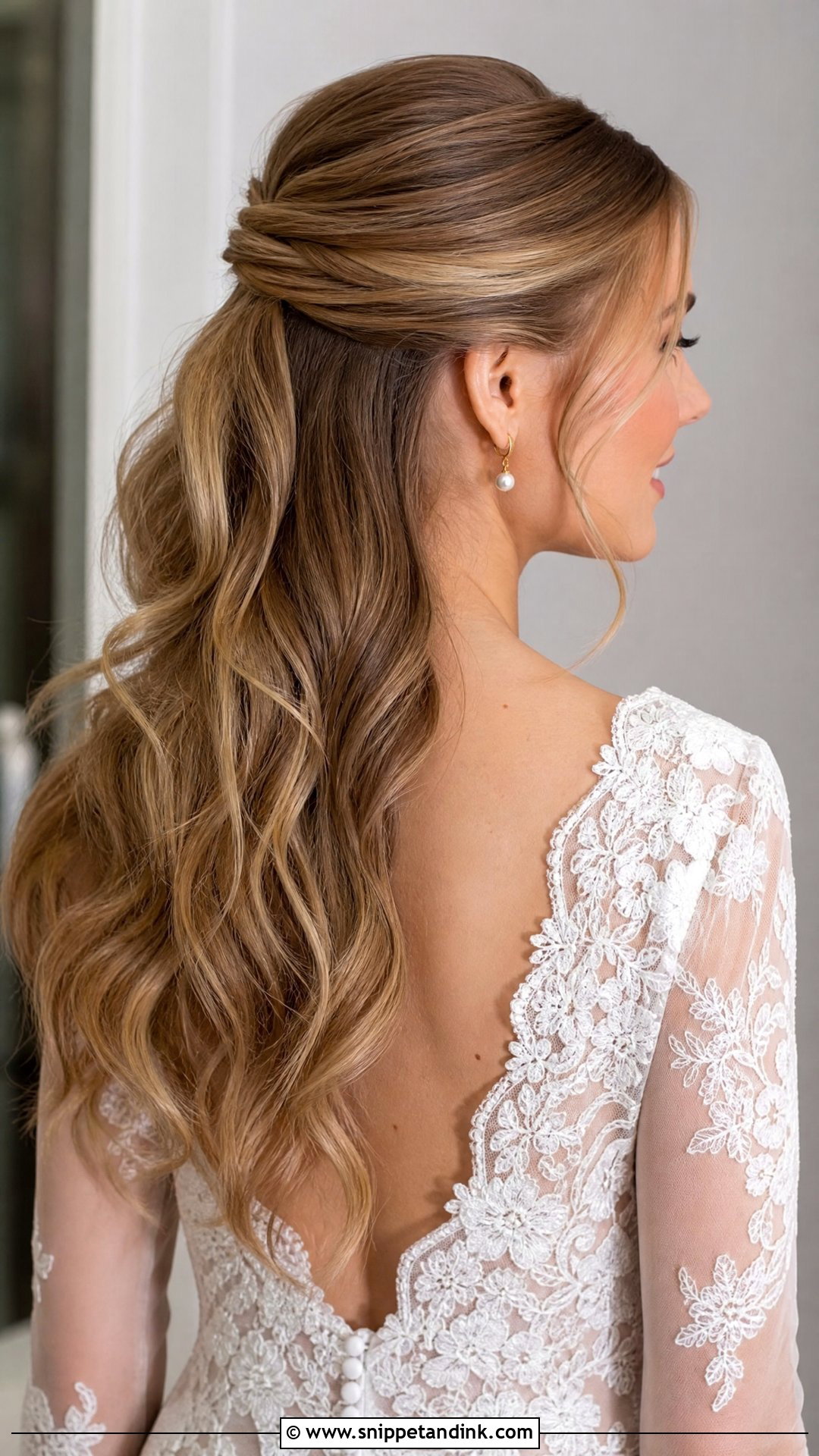
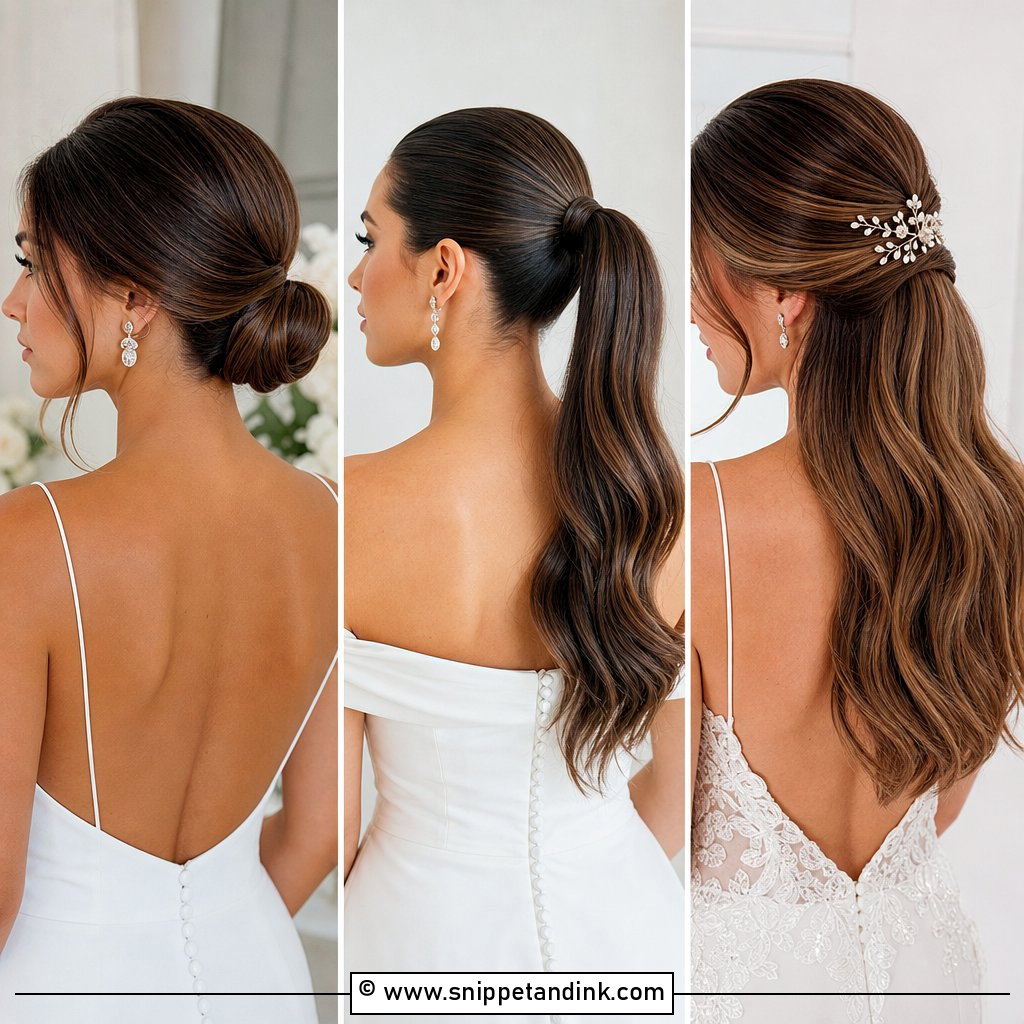
Only the top section is slicked here; the rest hangs down your back, straight or waved. I backcomb the crown lightly first, then smooth the surface over it, which gives a little lift so the head shape doesn’t look flat in profile. Where the top meets the loose lengths is the weak spot. I hide the join with a small clip, or wrap a strand around it if you want it bare. It is a good middle ground if a full slick back feels too severe.
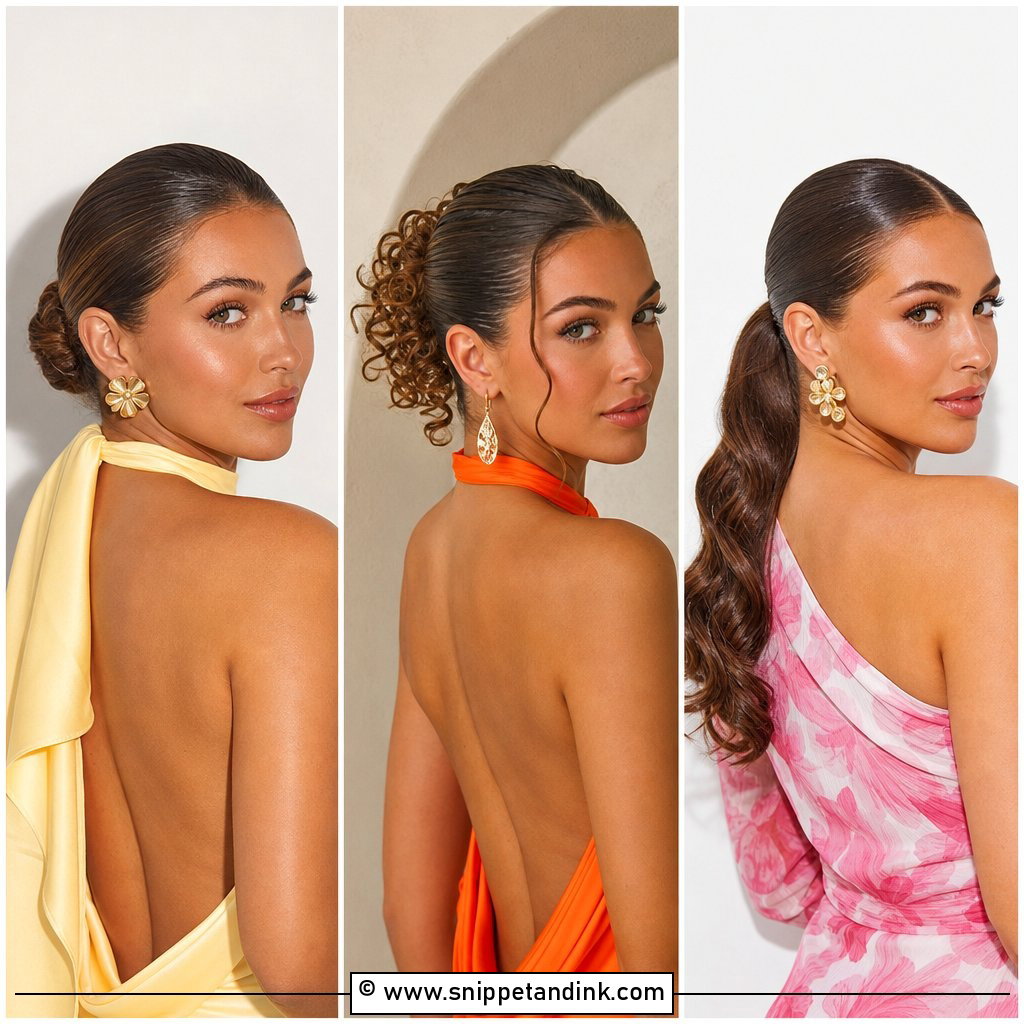
4. Slicked Back Bridal Ponytail
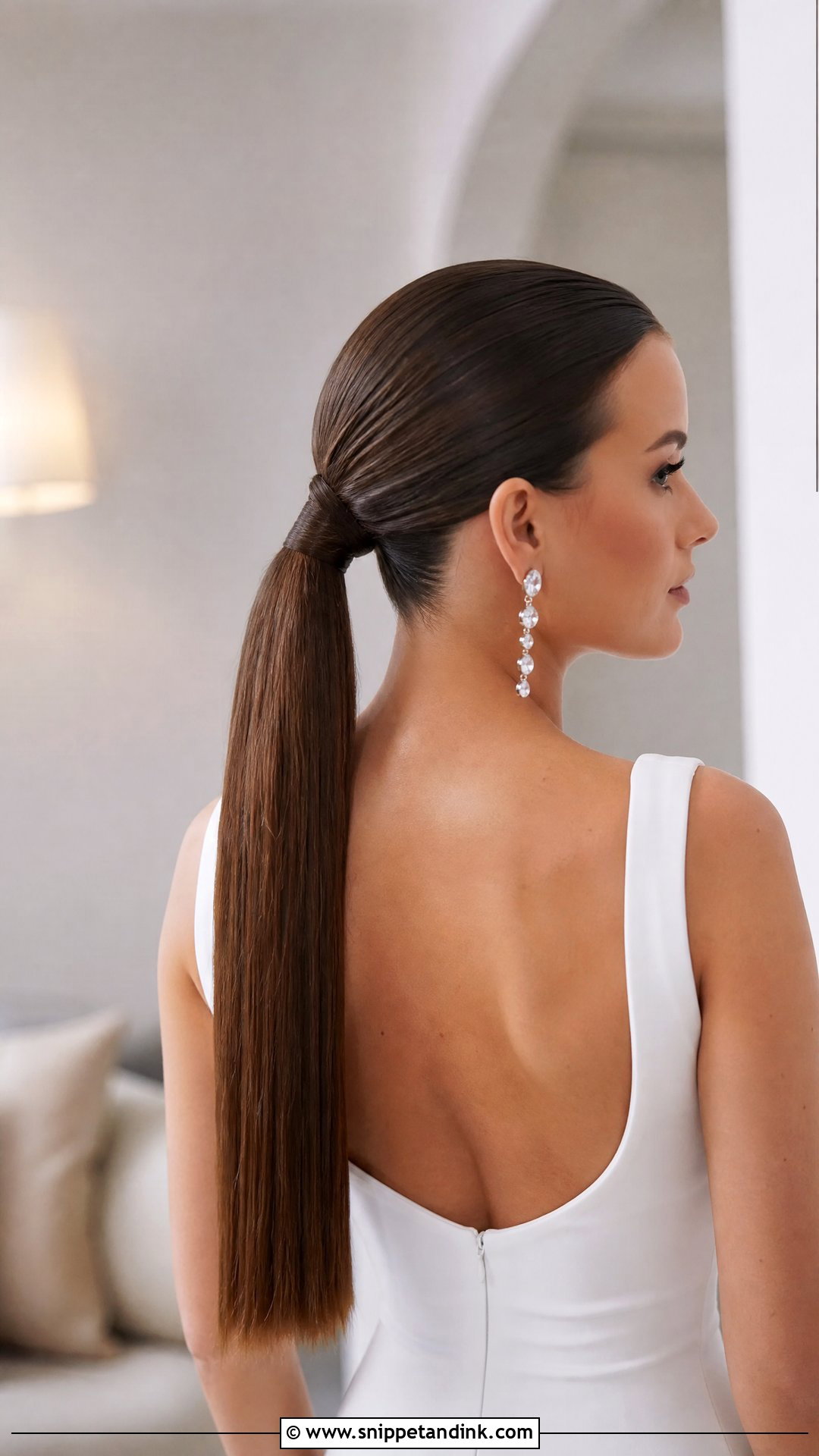
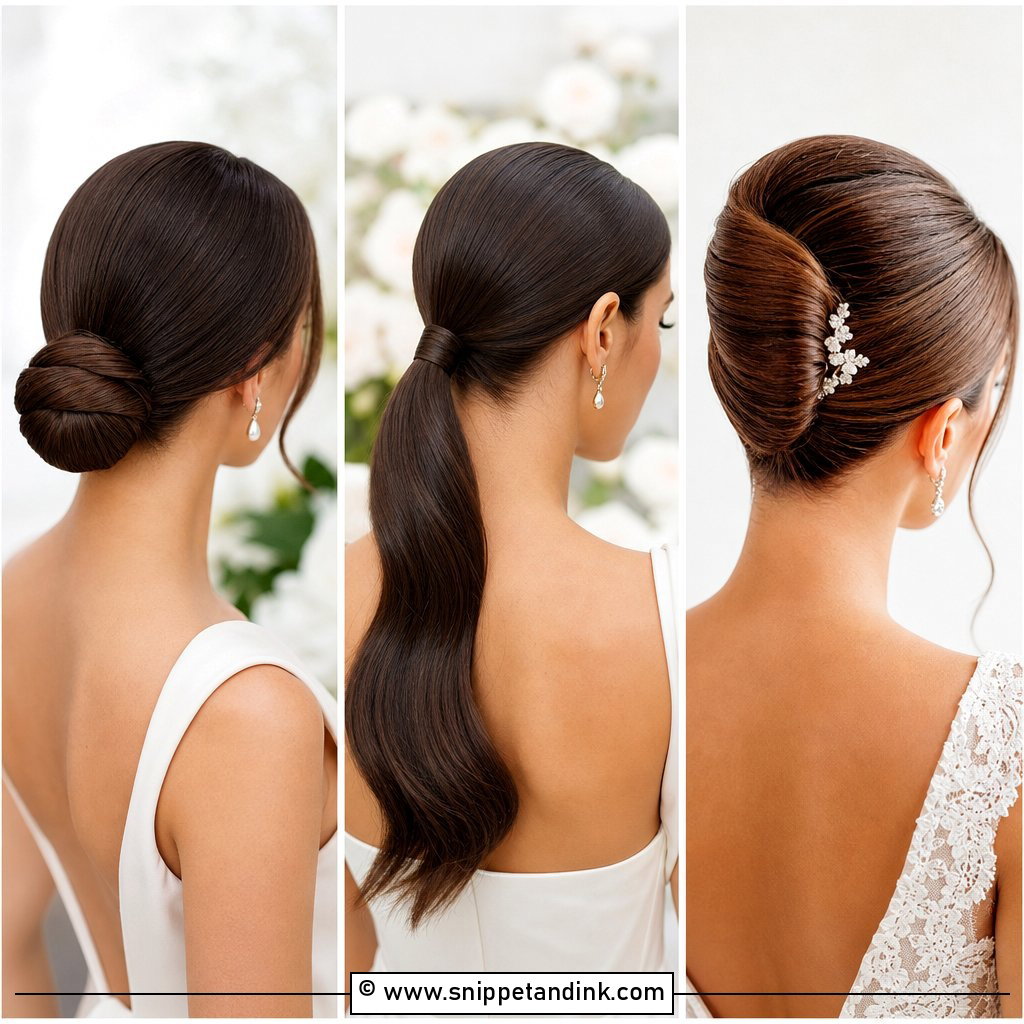
Placement changes the whole mood of a ponytail. High reads youthful and dramatic, low reads calm and grown-up, and both lengthen the neck. Brides who choose this usually want movement without a heavy updo. I hide the elastic with a strand wrapped around the base and pinned underneath. One caution: a high slicked ponytail puts sustained tension on the hairline, so if you get headaches from tight styles, choose the low version.
5. Slicked Back Hair With Veil
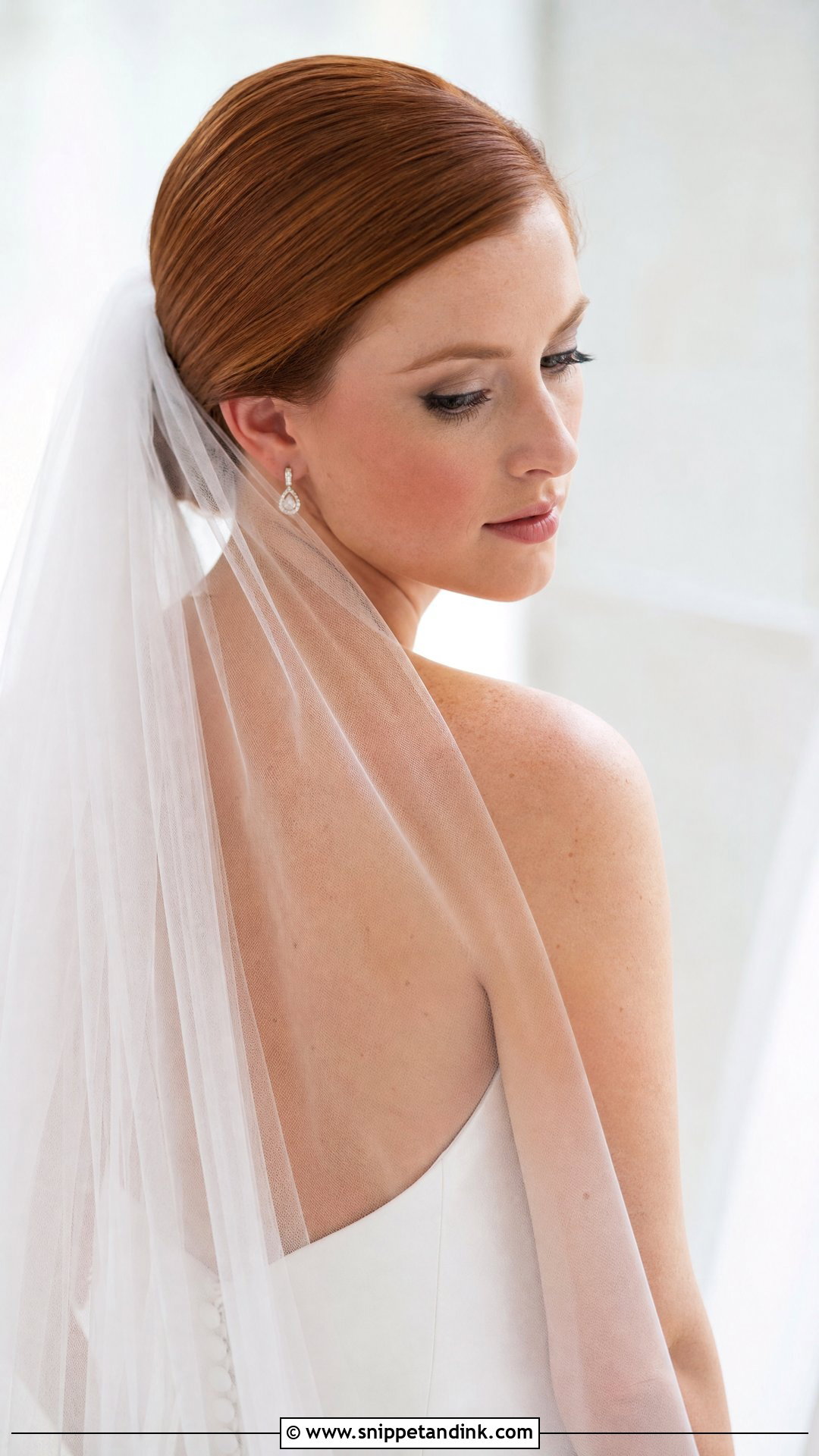
A slicked base is the most secure foundation a veil can have. Cathedral or birdcage, the comb grips a smooth, tight base far better than loose curls, where it slides with every hug. I tuck the comb just beneath a low bun or at the base of a ponytail and pin through its teeth. The contrast of glossy hair against soft tulle is part of the appeal. Take the veil off at the reception and the hair underneath still looks finished, with no dents to fix.
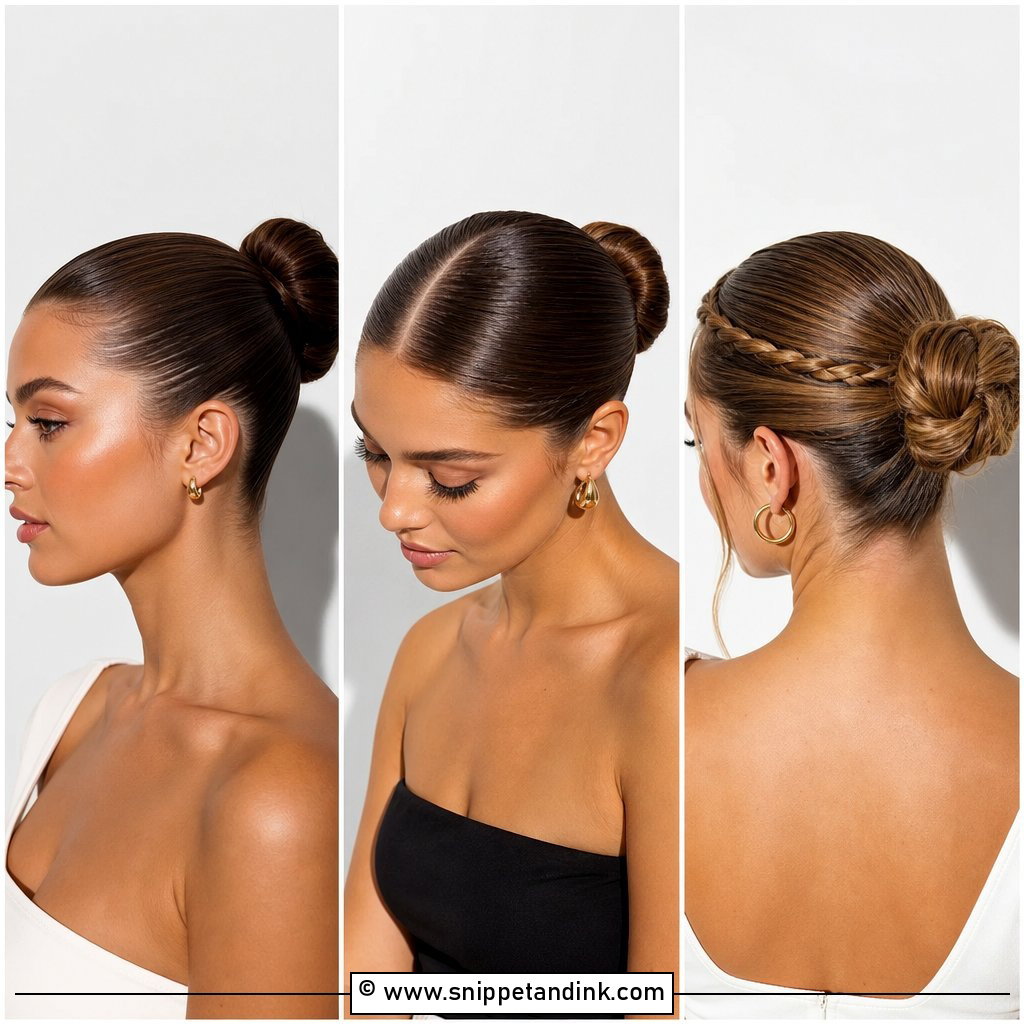
6. Slicked Back Middle Part Bun
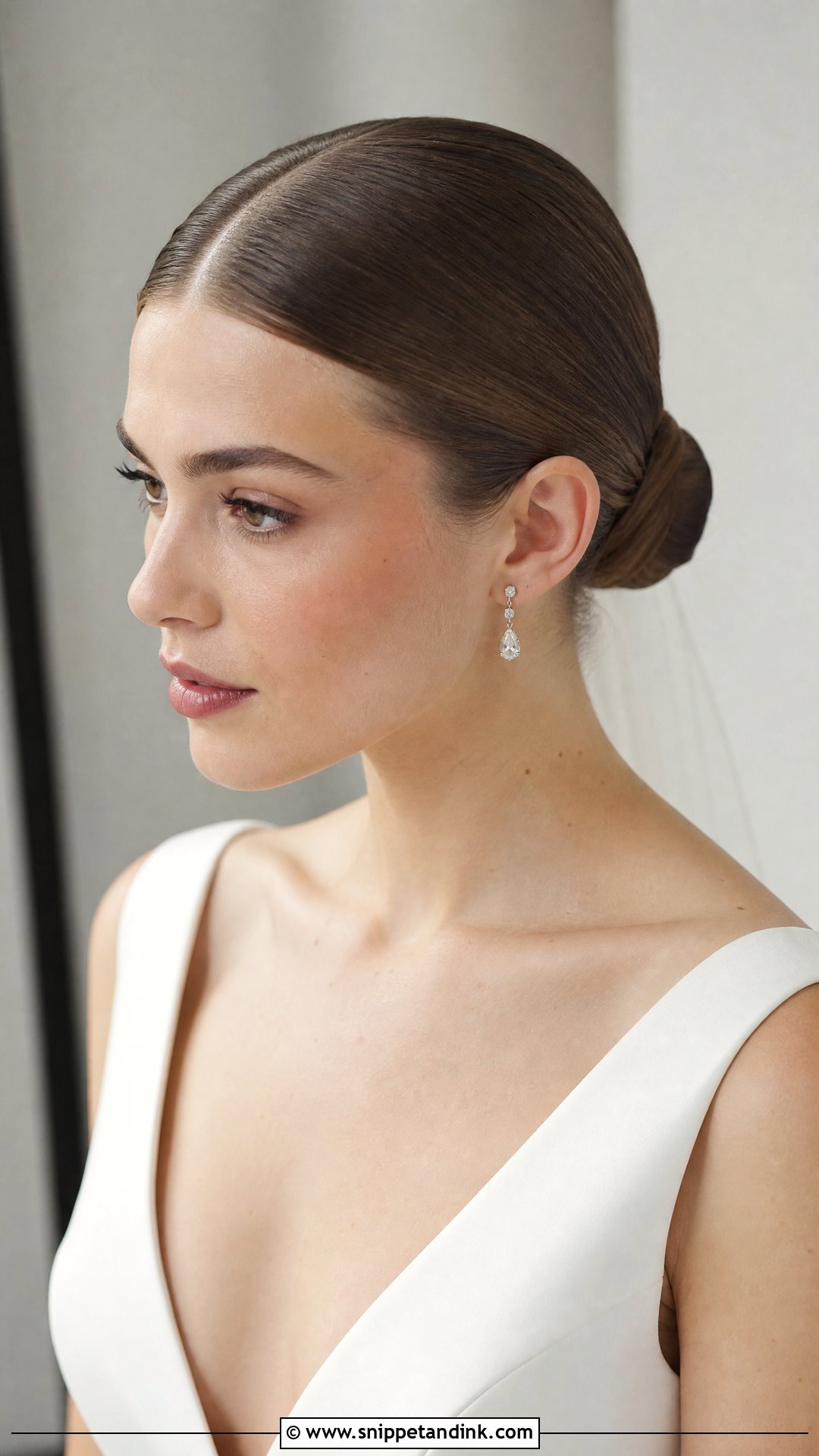
Symmetry suits oval and heart-shaped faces best; a square jaw can look harder with a dead-center part. I split the hair cleanly down the middle, then brush each side back into a knot at the nape. This is the quiet-luxury look in its purest form, so keep the jewelry simple, ideally drop earrings and a bare neckline. A fine-tooth comb with a little hairspray on it catches flyaways along the part without disturbing the line.
7. Slicked Back Side Part Bun
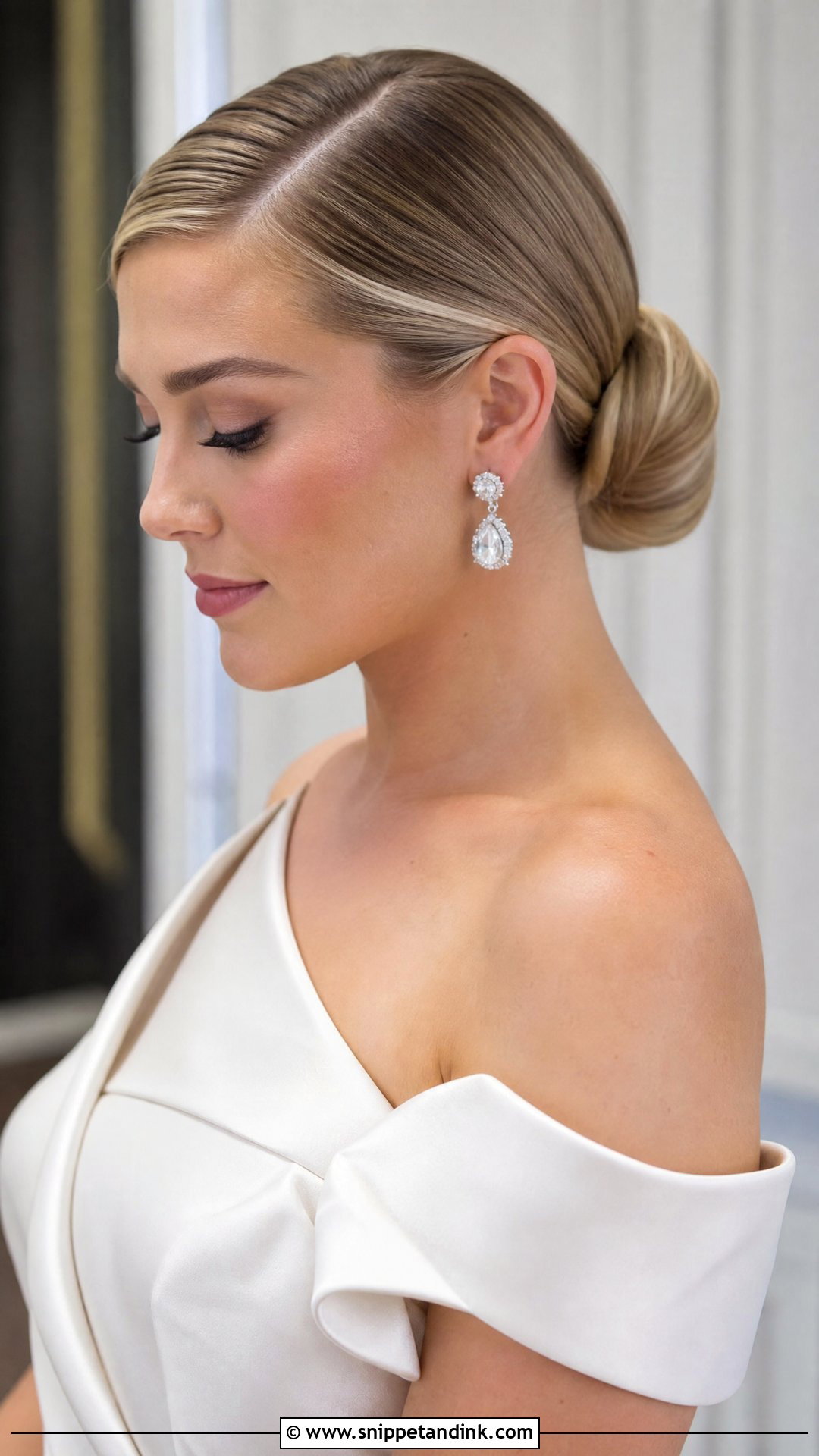
Moving the part deep to one side adds height on that side and a sculpted angle across the forehead. The hair sweeps over and disappears into a low bun, which makes the hair look thicker than a center part would, useful if yours is fine. The swept section is the part most likely to relax, so I set it with clips while the product dries. Wear one statement earring on the open side and let the rest of the jewelry go quiet.
8. Slicked Back Bun With Baby Hairs
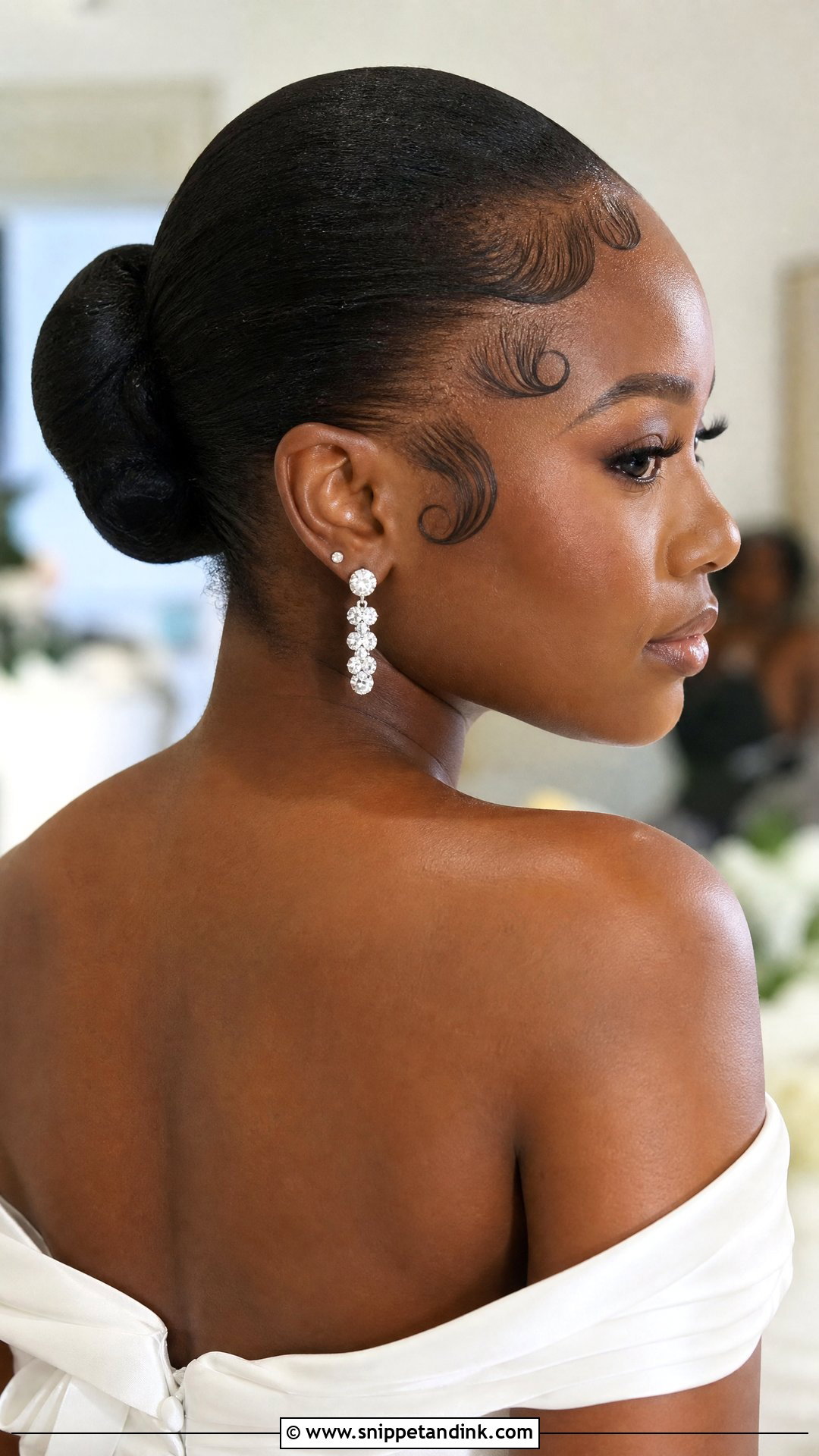
A slicked bun gets its personality from styled baby hairs around the hairline, and for many brides with textured hair they are simply how they wear their edges every day. I shape them with a small brush and edge control, keeping the swirls to a size that suits your forehead. They need setting: I press them under a silk scarf for a few minutes. Close-up shots pick them up clearly, so they are worth getting right at the trial.
9. Slicked Back Bun With Hair Accessory
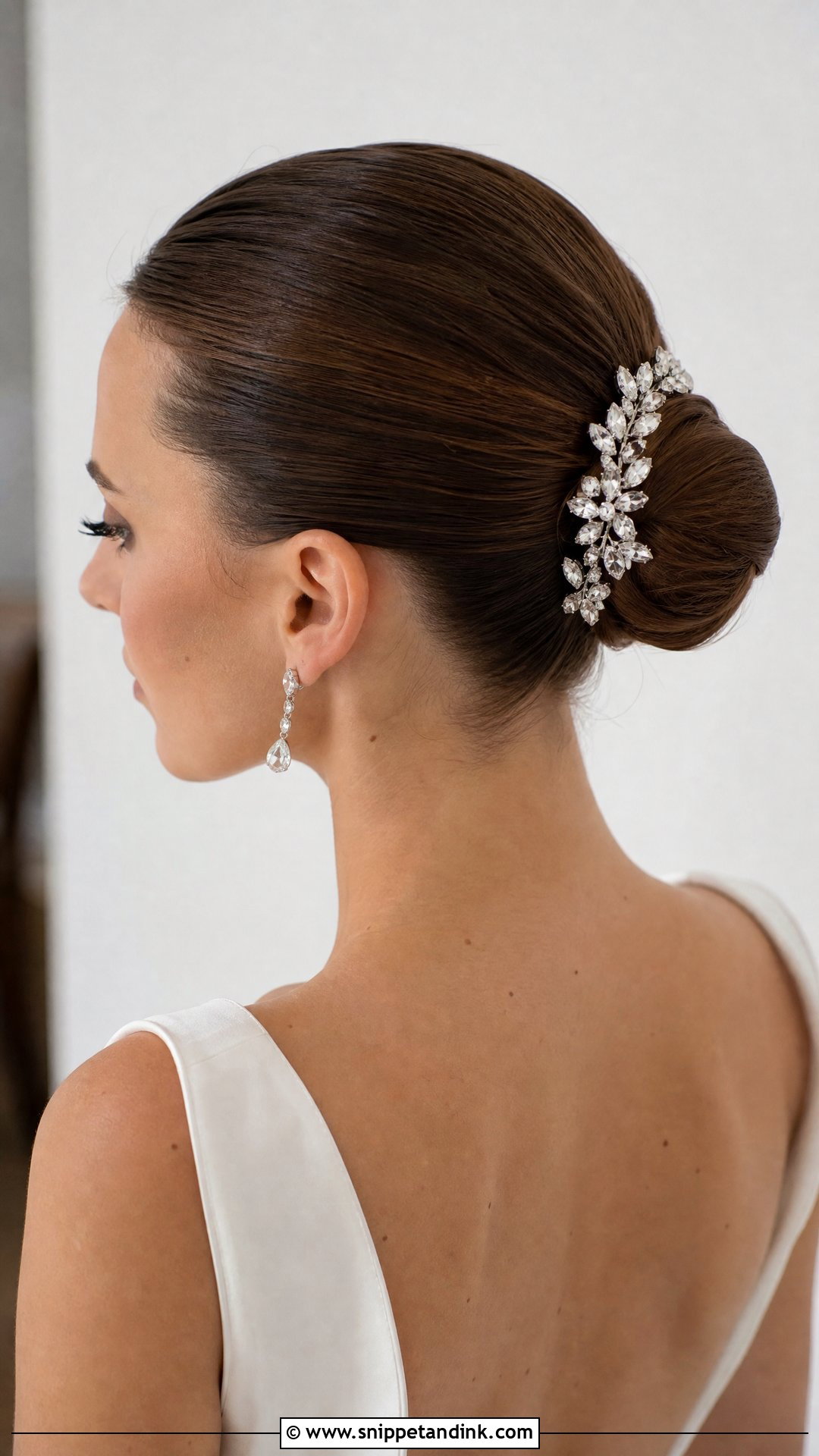
A single accessory changes a plain bun more than anything else on this list. A jeweled comb, pearl pins or a crystal clip all stand out against slicked hair because nothing else competes. I slide pearls along the twist of the bun, or place a comb just above it, and secure each piece through an existing pin. Keep the rest of your styling minimal. If the piece has heirloom value, ask for it to be pinned so it cannot fall out while dancing.
10. Slicked Back Bridal Bob
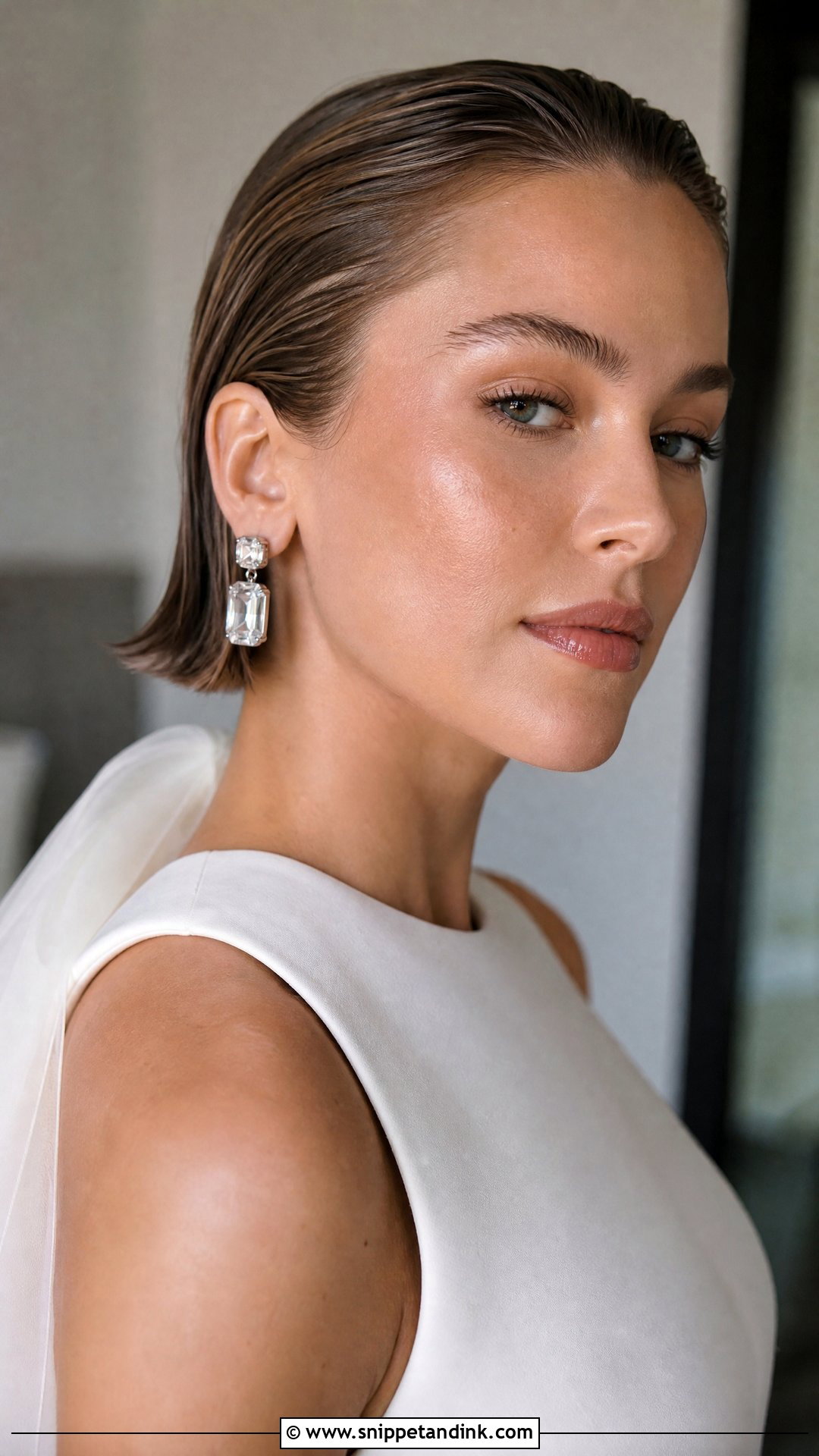
Short hair takes to the slick back very well, because there is less weight pulling the shape down. I brush the bob back and flat against the head, letting the ends tuck behind the ears or curve at the nape. It looks confident and clean, and it pairs well with bold earrings and an open neckline. Under a veil, the comb needs a small anchor, so I braid a tiny section underneath to grip it. A cut about two weeks before the wedding keeps the nape tidy.
11. Slicked Back Curly Bridal Updo
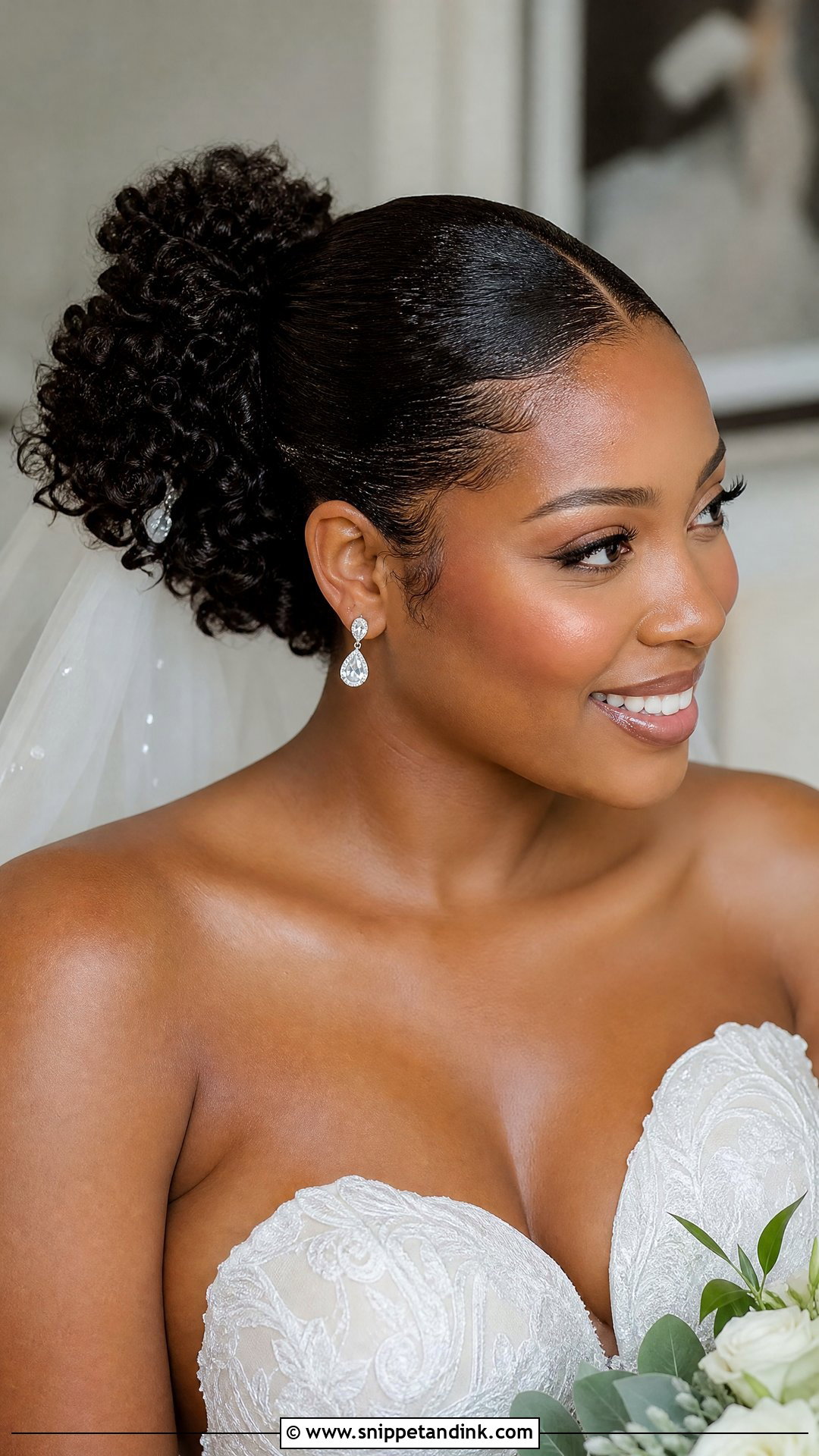
Curly hair can absolutely be slicked, and the contrast is the best part. The front and sides are brushed back smooth with gel, while the curls collect into a voluminous updo at the back. I apply the gel to wet hair and brush it in sections, then define the curls behind with a cream and leave them alone to dry; touching them while wet causes frizz. Fresh flowers or a delicate veil sit well among the curls.
12. Slicked Back Hollywood Waves
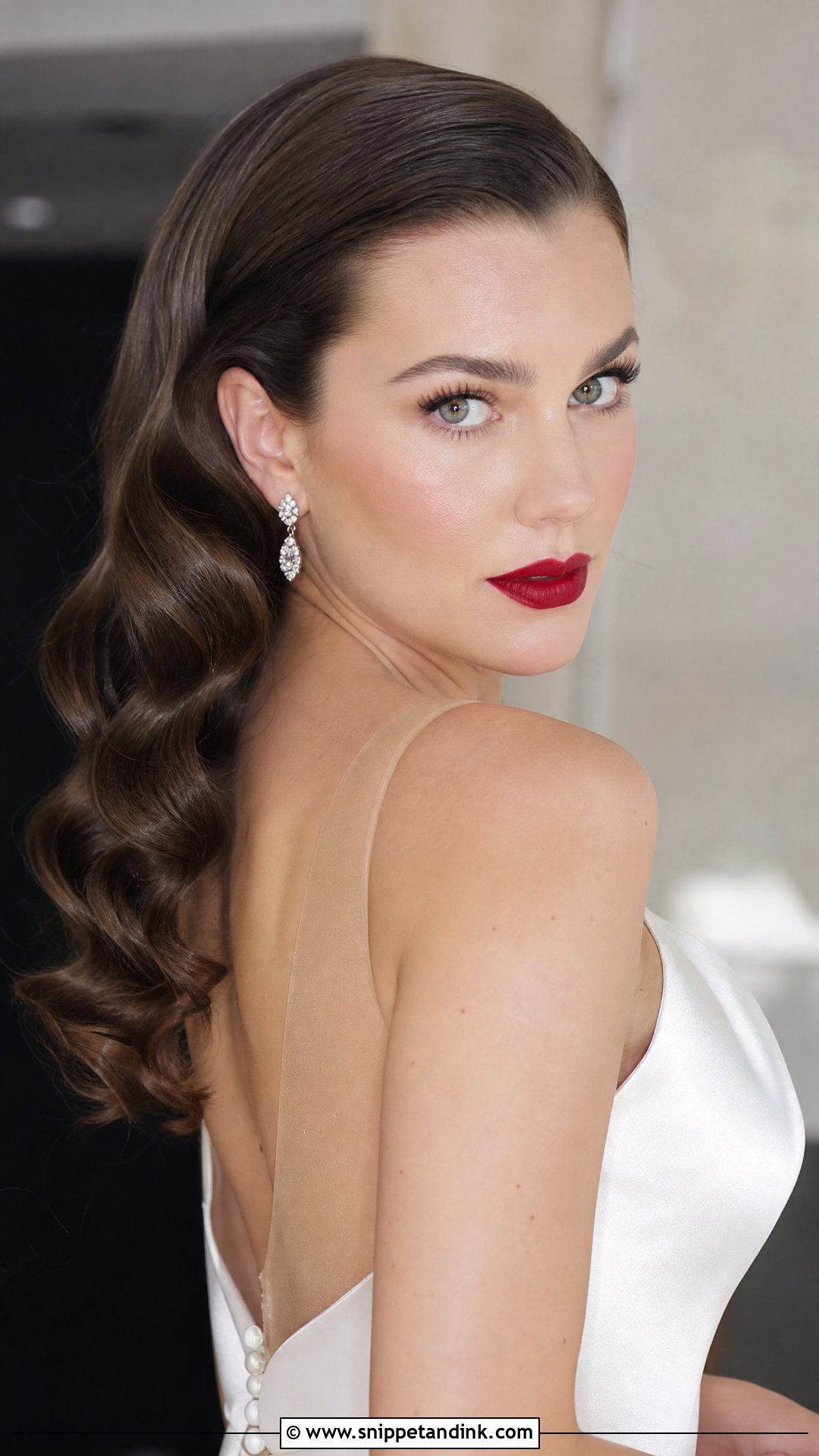
Slicked roots with deep, uniform waves at the ends: this is the black-tie version of a slick back. I curl the lengths with a large barrel, let every section cool, then brush them out into a continuous ripple. Brushing too soon is what kills these waves by the first dance. A deep side part and a red lip push it fully into film-star territory. It needs length past the shoulders for the pattern to read.
13. Slicked Back Braided Bun
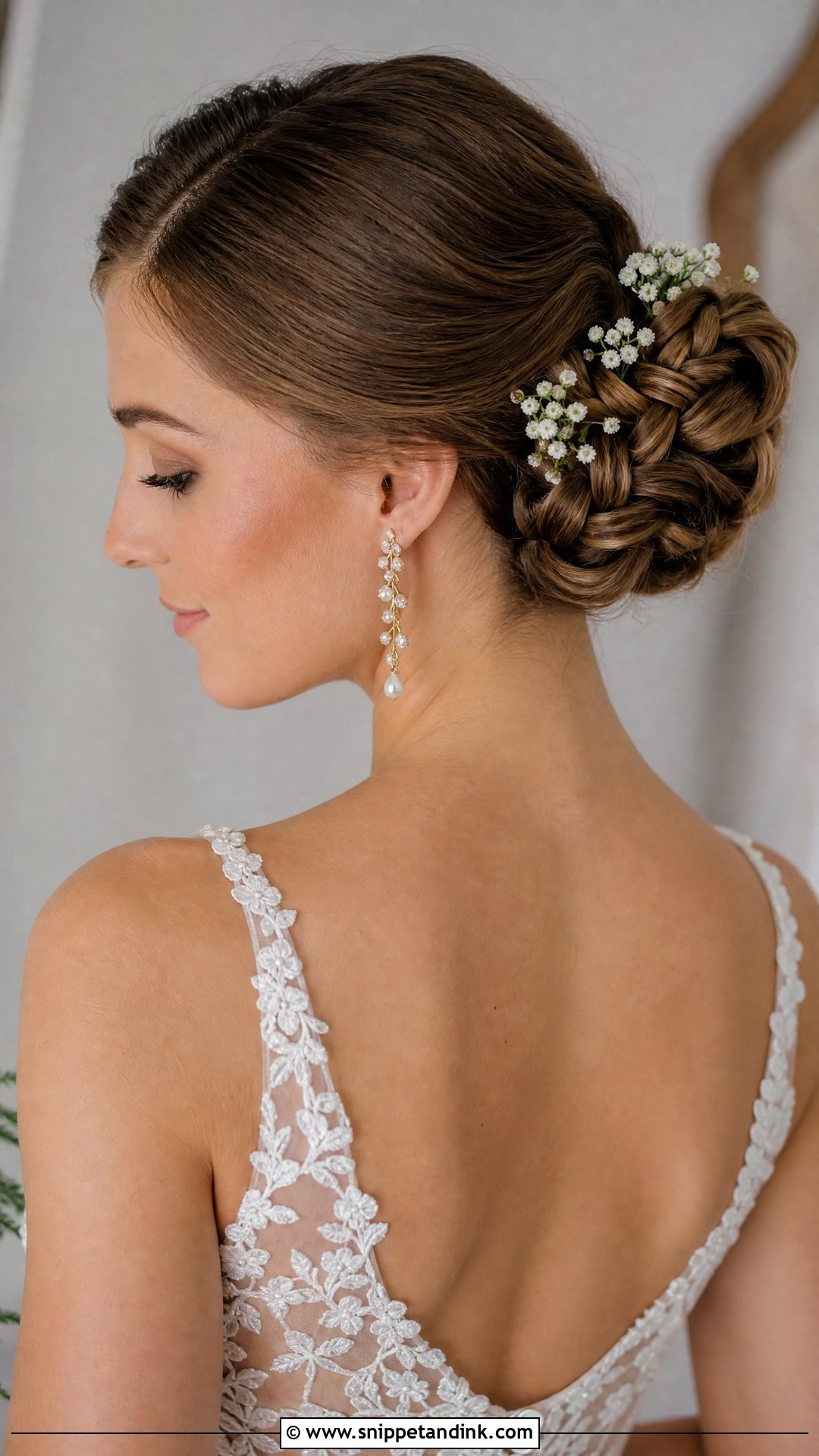
Braiding the length before coiling it into a knot adds detail and better pin grip. A classic three-strand braid reads neat; a fishtail looks more intricate but uses up more length, so the bun ends up smaller. I braid fairly tight and only tease the outer edges, which keeps the slick surface intact. A few small flowers tucked into the braid give it a relaxed, boho-glam feel.
14. Slicked Back Hair With Pearls
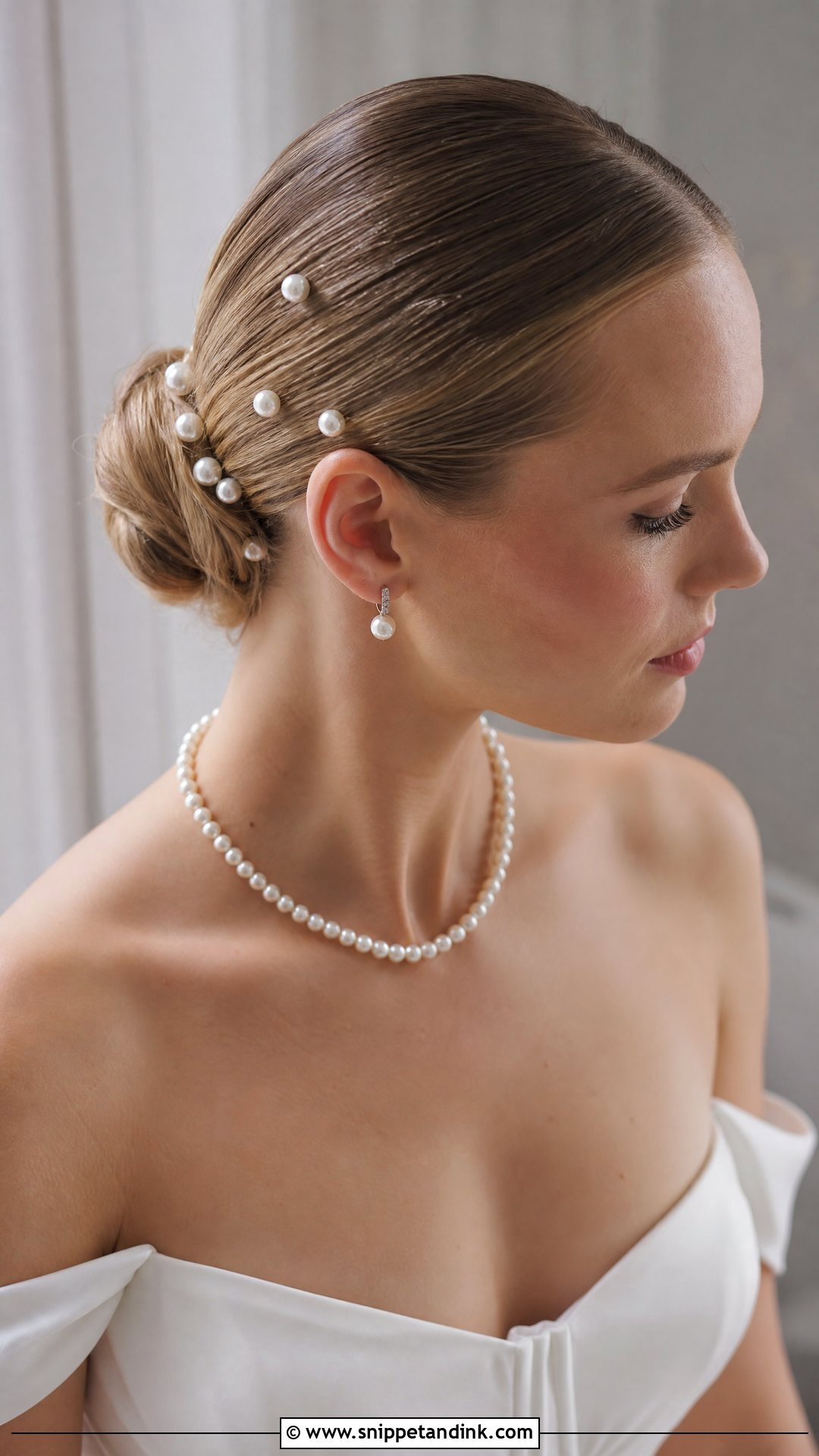
Pearls and slick hair suit each other because the pearl’s soft sheen sits against the gel’s sharper gloss. I scatter single pearl pins across a low bun or thread a pearl strand through a ponytail. If your gown has beading, match the pearl tone to it. Pearl pins have smooth heads that slip in gel, so I lock each one under a bobby pin. It suits both classic and modern brides and gives a subtle glow without a lot of sparkle.
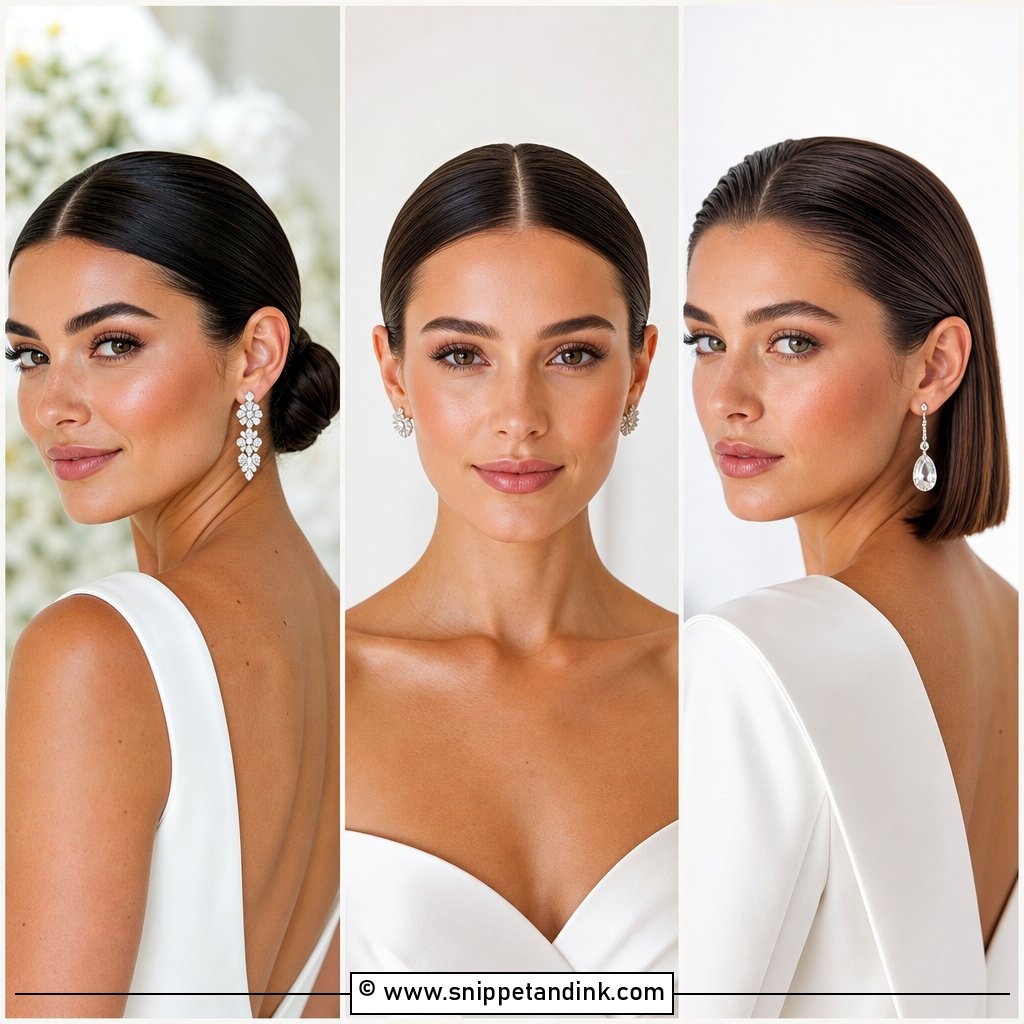
15. Slicked Back Hair With Flowers
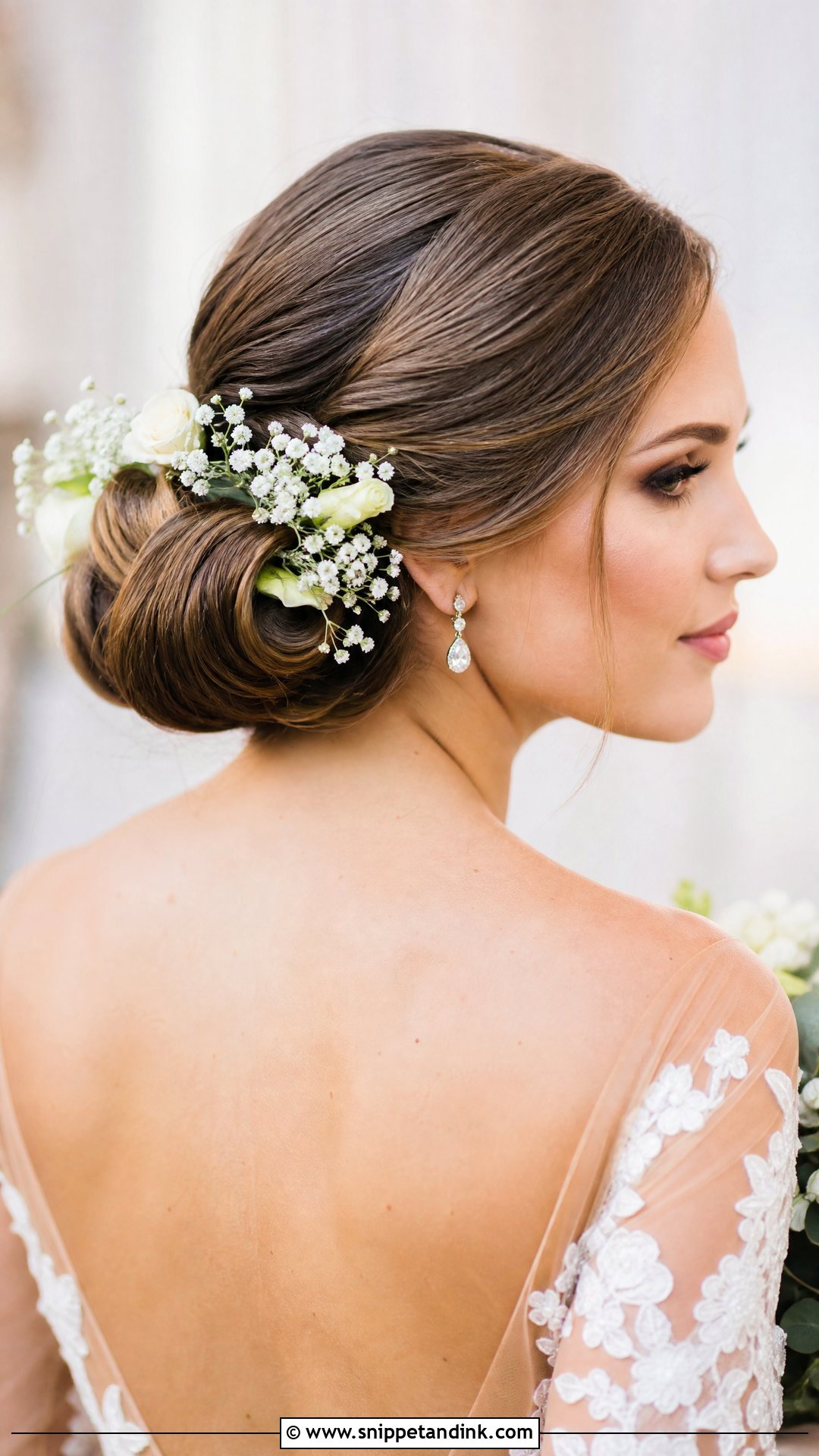
Fresh flowers soften the strict lines of a slick back. Baby’s breath, small roses or wildflowers tucked along the side of a low bun or ponytail stand out clearly against the smooth surface. Gel and hairspray dull petals, so I place the flowers last, after all the product. For outdoor and spring weddings, ask your florist for a few spare stems, and pick blooms from your bouquet so the two belong together.
16. Slicked Back French Twist
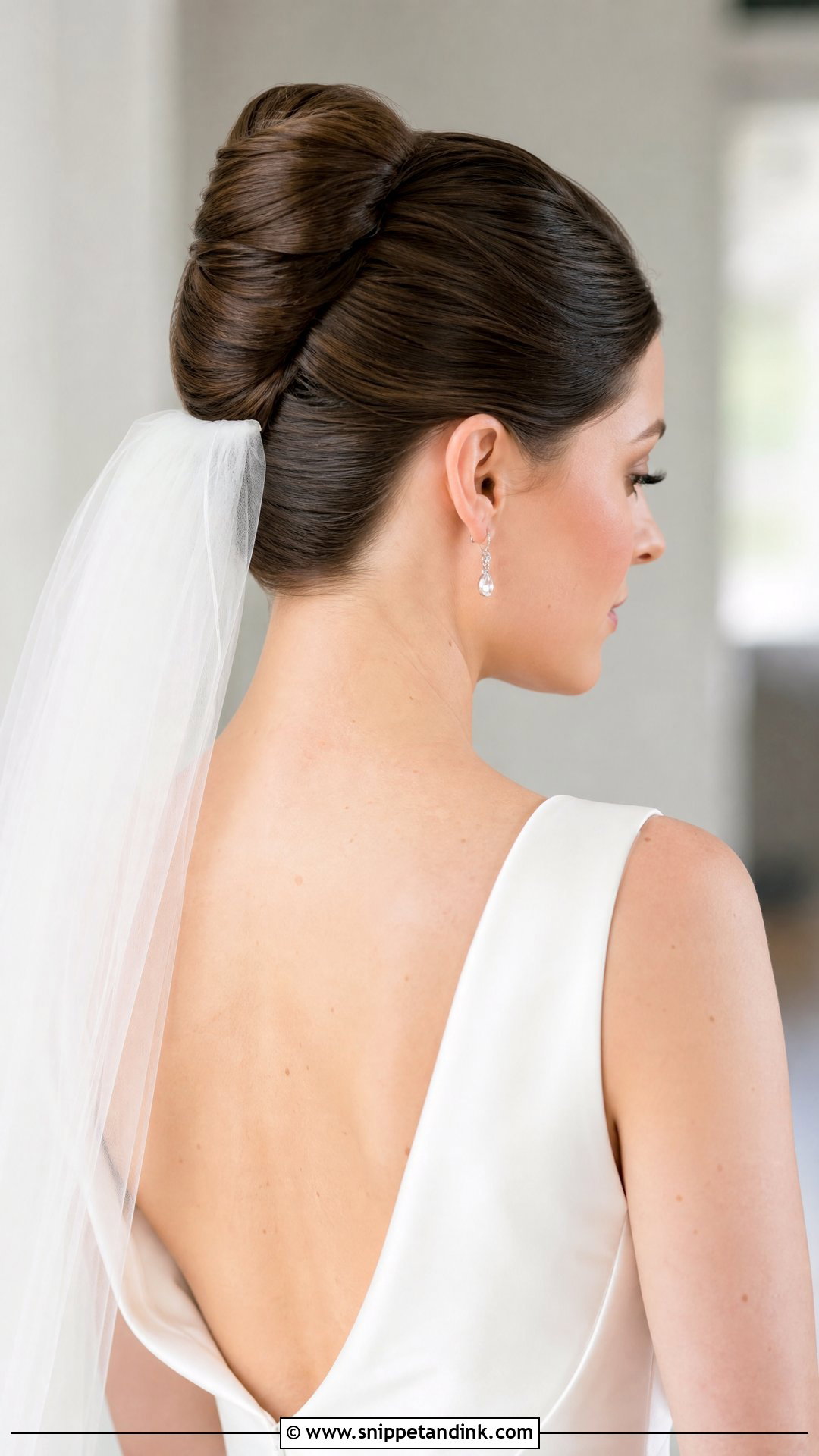
The French twist with a slicked front feels newer than the classic version, since there is no soft volume at the crown. I smooth the hair back, twist it vertically and tuck it into a roll that adds structure at the back. Once pinned, it is one of the steadiest styles here for a long, formal day. A simple veil slides under the top of the roll, or add a few sparkling pins along the seam.
17. Slicked Back Bridal Chignon
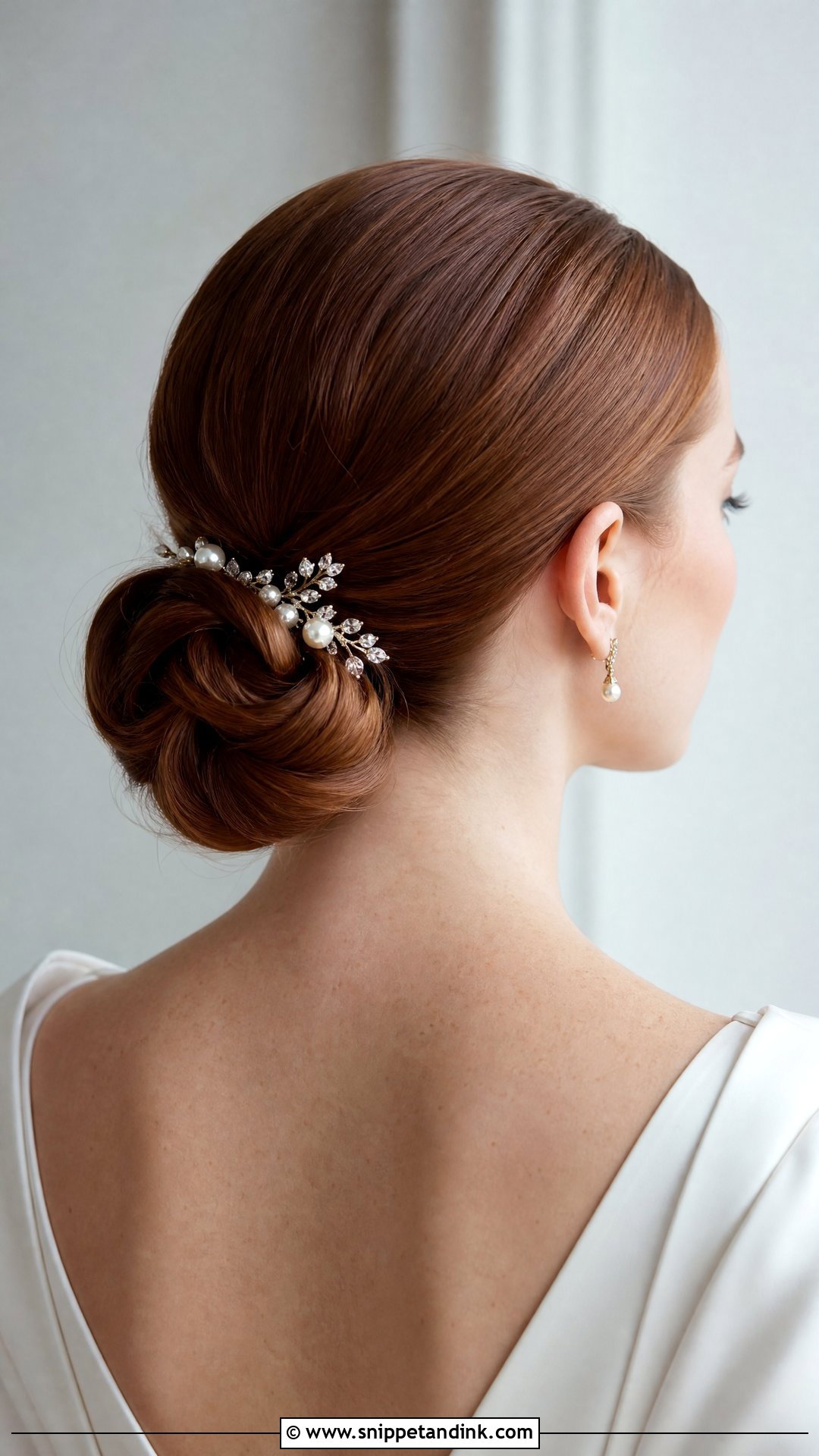
A chignon looks softer than a tight bun because the knot keeps some volume while the front stays sleek. I gather the hair into a looped knot at the nape and pin it loosely enough that the loops keep their shape. The low placement suits most necklines. A few pins or a small accessory finish it. If your hair is very fine, I add a small padding piece inside so the chignon has enough body to show from the front.
18. Slicked Back Hair With Bun And Tendrils
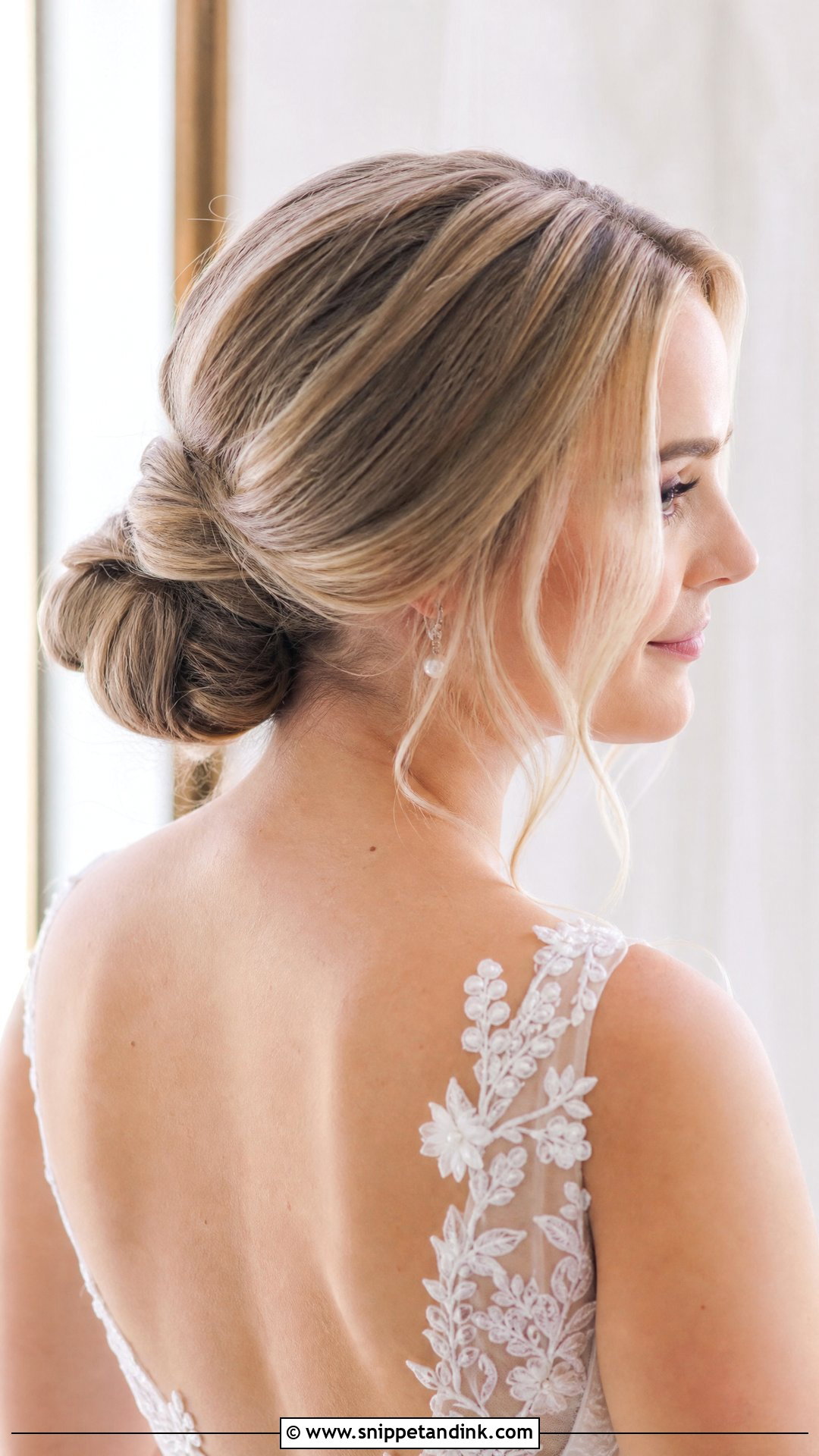
Tendrils break up a severe slick back, and they are best used sparingly. I leave a few wisps loose around the face, curl them lightly with a small iron, then pin them out of the way until photos start. On humid days they drop fast, so keep a mini curling iron or some spray in the bridal room. The result reads relaxed and glamorous at once, which works for formal and casual weddings alike.
19. Slicked Back Hair With Headband
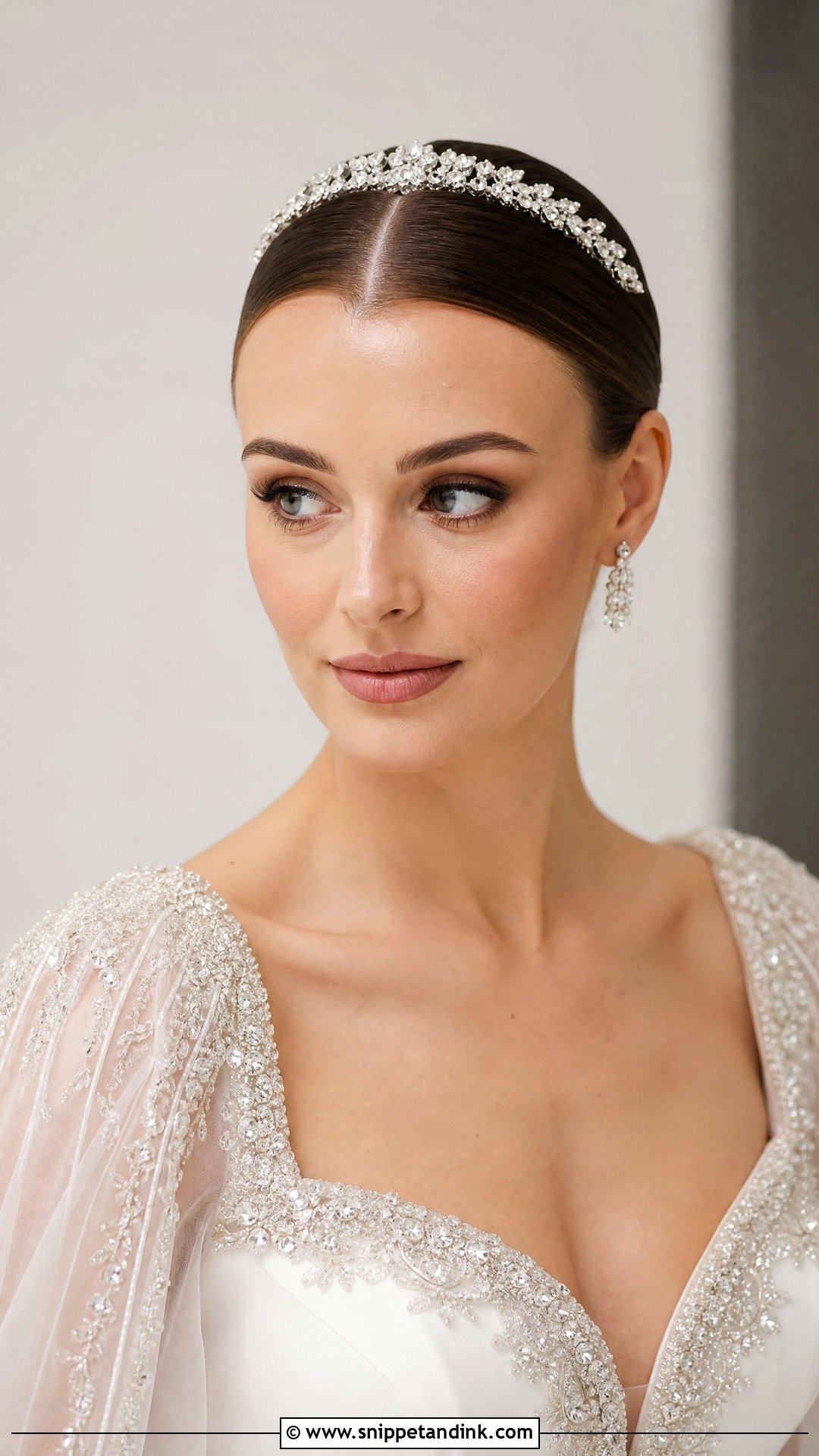
A jeweled or pearl headband sits just behind the hairline and frames the face like a crown, without the height. Slicked hair keeps it from sliding forward, since the gel gives the band’s teeth some grip. Headbands can press behind the ears after a few hours, so wear yours around the house for an afternoon before the wedding. Crystals, pearls or a plain metal band all work; match the metal to your earrings.
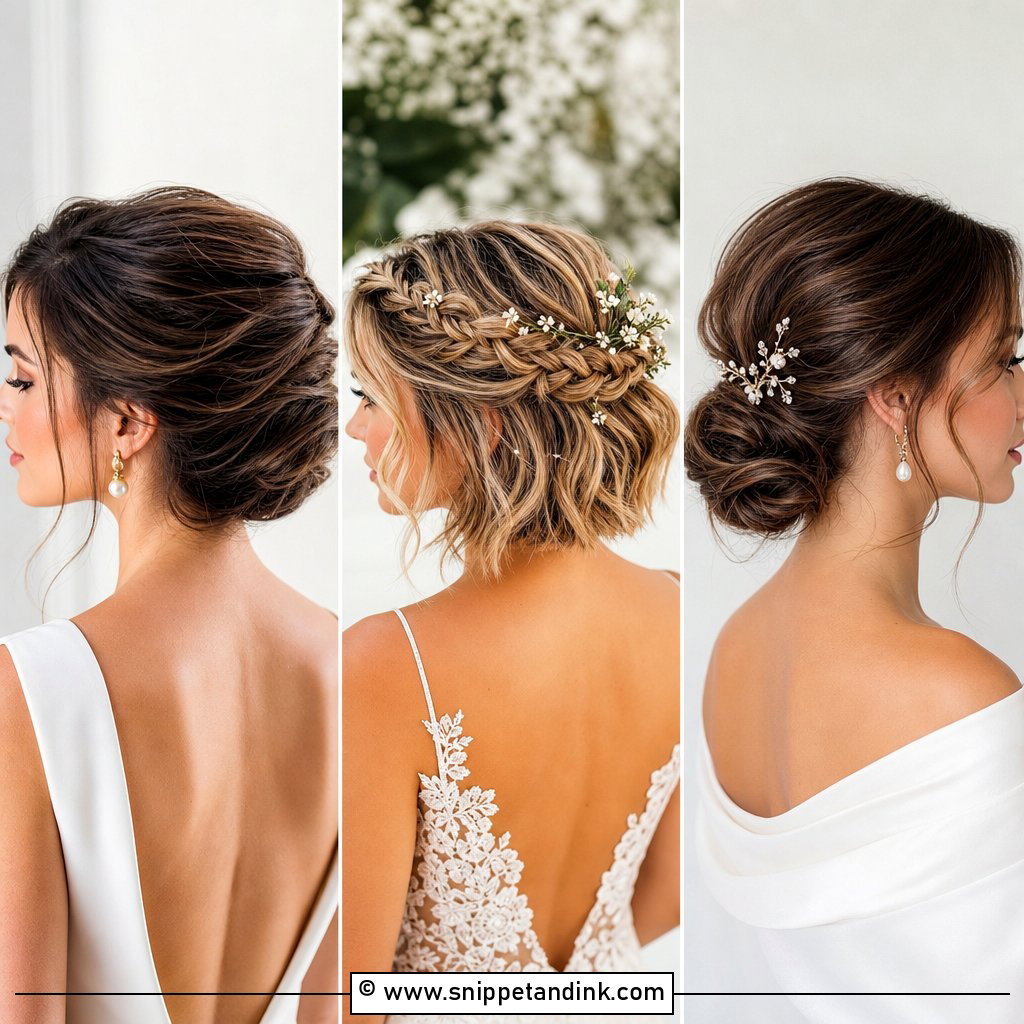
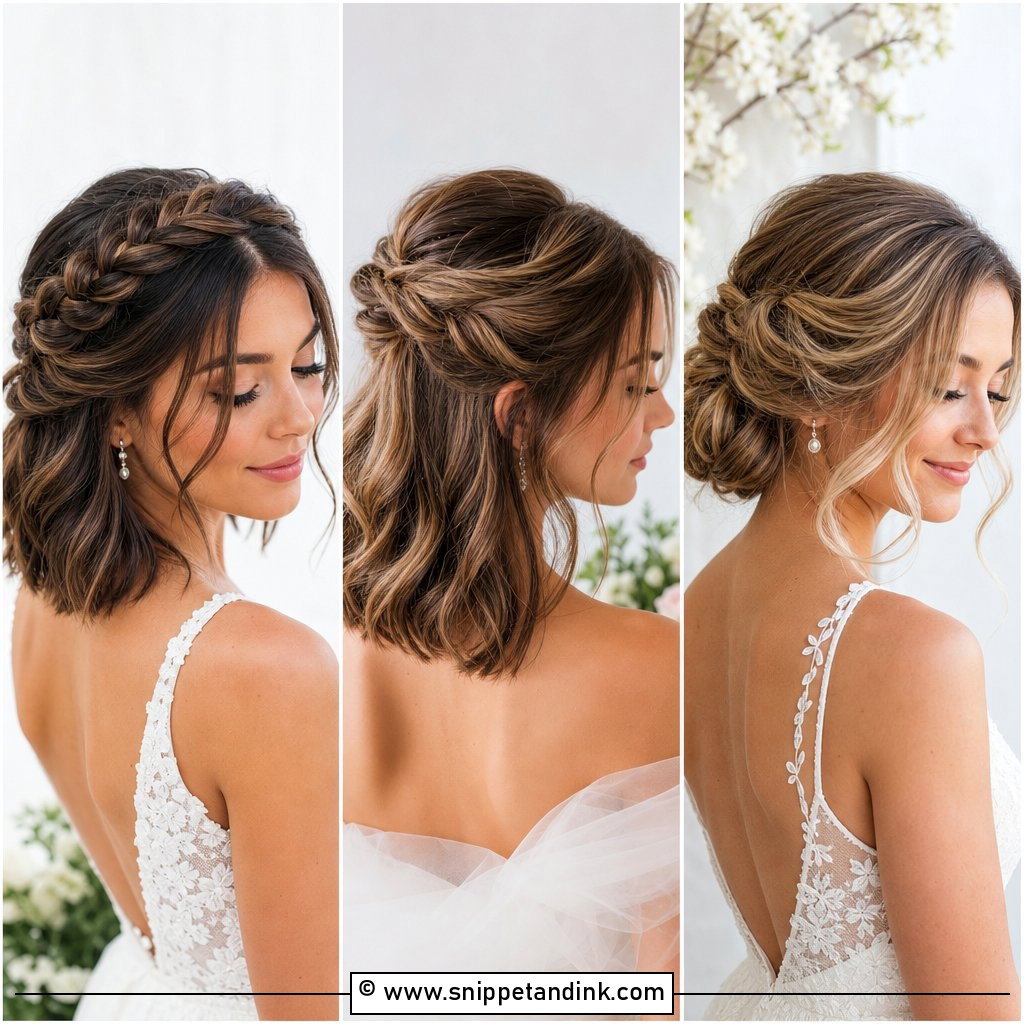

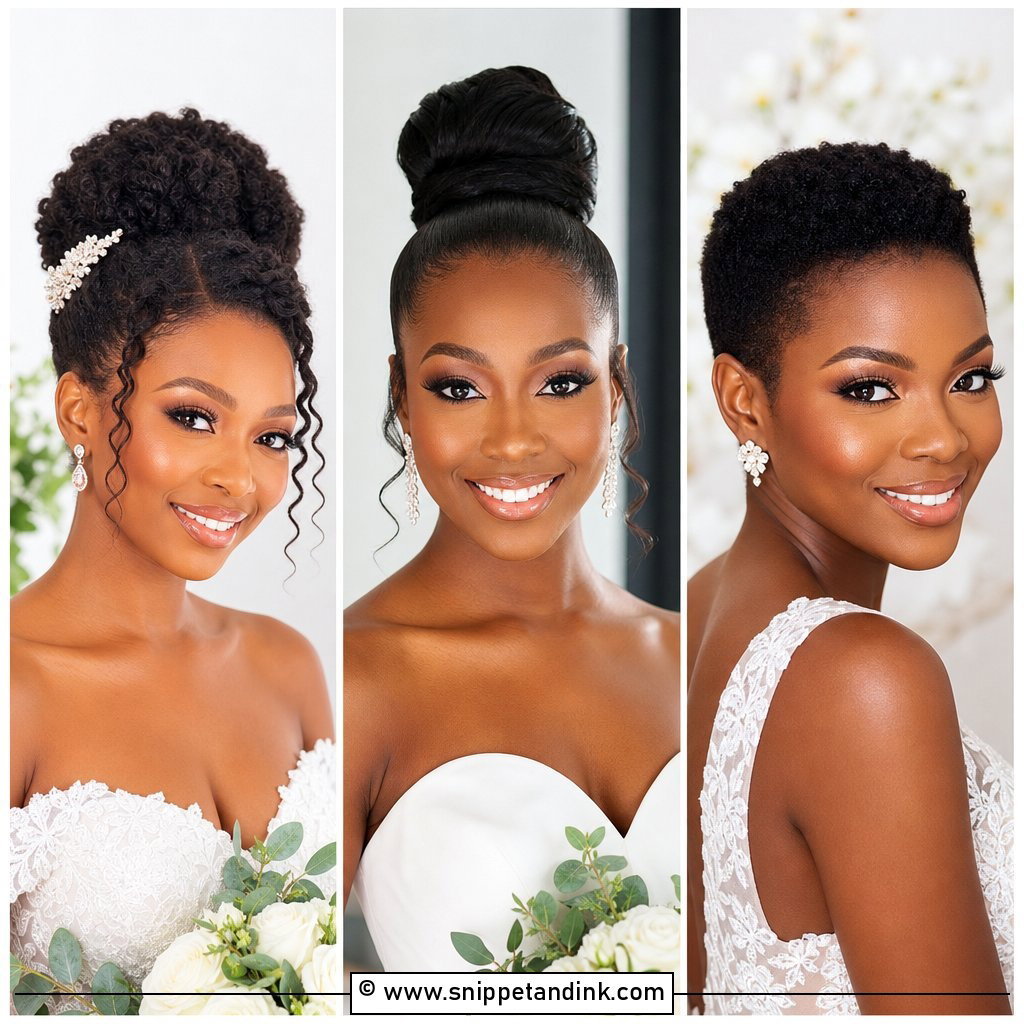
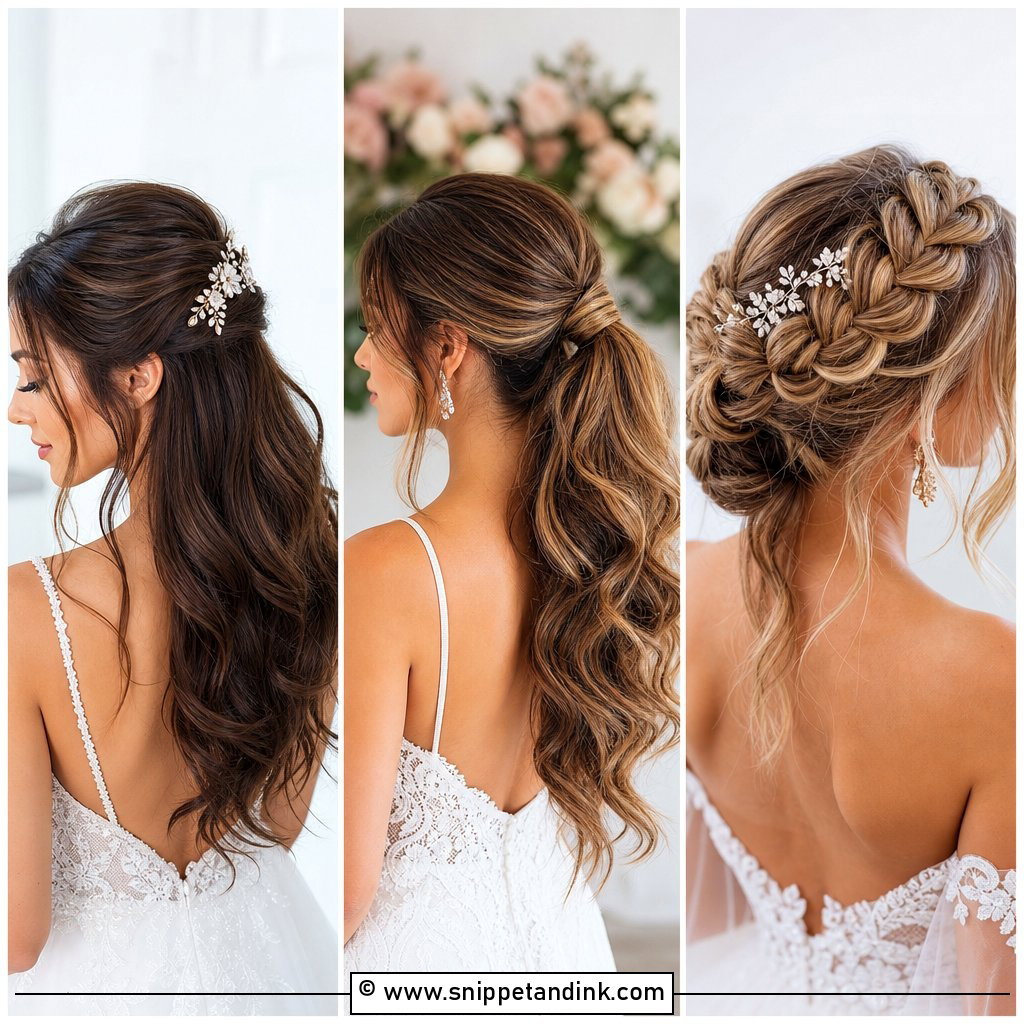
20. Slicked Back Low Ponytail With Bow
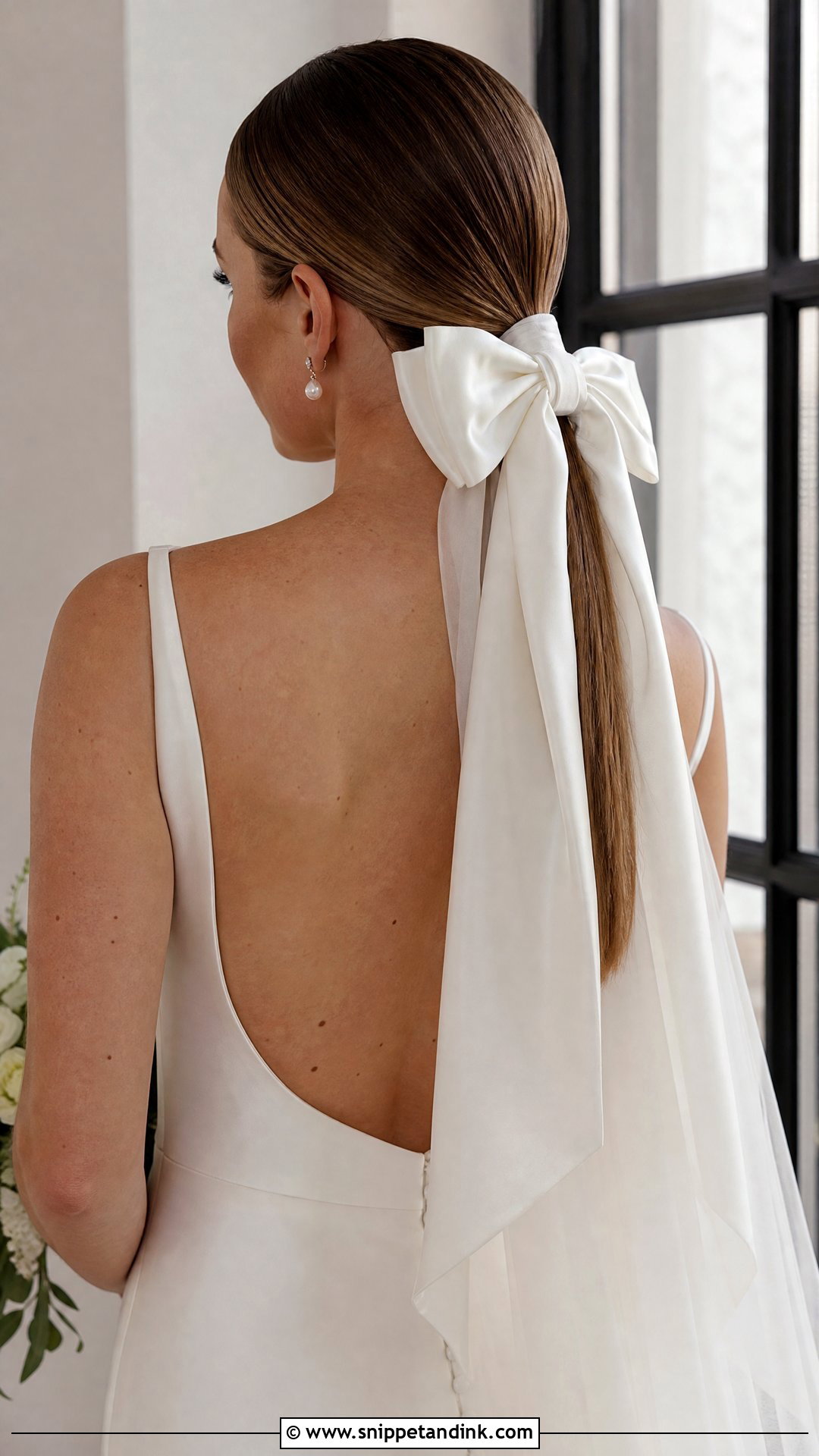
Bows have become a real bridal trend, and the slicked back ponytail with a bow is the easiest way to wear one. Hair is smoothed into a low ponytail, then an oversized bow goes over the elastic at the base. Satin holds its shape best; organza can wilt, and pearl-embellished bows can be heavy enough to drag the ponytail down. I pin the bow through its knot into the base so it stays upright all night.
Slicking It Back Yourself on the Morning
A low slicked bun is one of the few bridal styles you can realistically do yourself, provided you practice it a few times first. Here is the order I teach brides:
- Start with hair washed the day before, so it has some natural grip.
- Mist the hair lightly with water, apply your product in thin layers and brush back with a boar bristle brush.
- Tie the ponytail where you want the bun to sit, with a small clear elastic first, then a stronger one on top.
- Twist and pin the bun, using pins in crossed pairs.
- Lay a silk scarf over the hairline for ten minutes while you dress, then remove it and finish with spray.
One warning from the chair: repeated tight styles can thin the hairline over time. If your edges already look sparse, ask for a softer pull at the temples or wear a side part that disguises them. Tension should feel firm, never sore.
How Tight Is Too Tight for a Slick Back?
A good slick back looks like nothing at all, which is why it is so easy to get wrong. Bring your favorite looks to your trial, and talk honestly about product, tension and how your hair behaved the last time you wore it slicked. The slicked back trend works on curls, bobs and long straight hair alike, as long as the base is built for your texture and your scalp is comfortable at hour ten.
You'll Like These Ideas:


Leave a Reply