
Slicked hair is honest styling. With nothing loose around the face, the shape of your head, the line of your part and the neckline of your dress do all the talking, which is why it suits brides who’d rather show their face and earrings than a cloud of curls. It’s also the most practical finish I know for heat, wind and a long day, because every strand already has somewhere to be. Below are fifteen slicked shapes, from low buns and ponytails to slicked-back hair worn down, with what each one asks of your length, texture and patience in the chair.
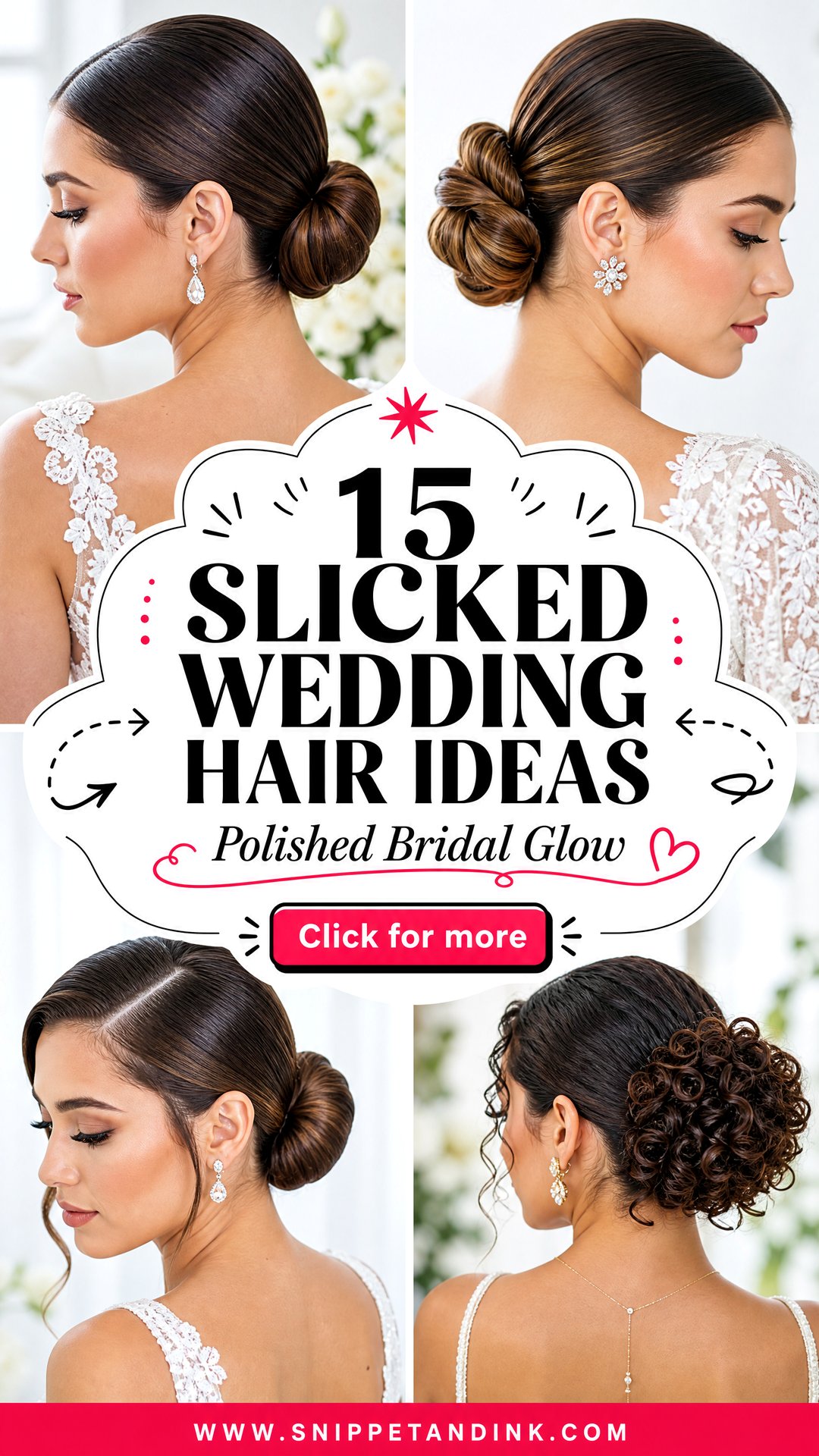
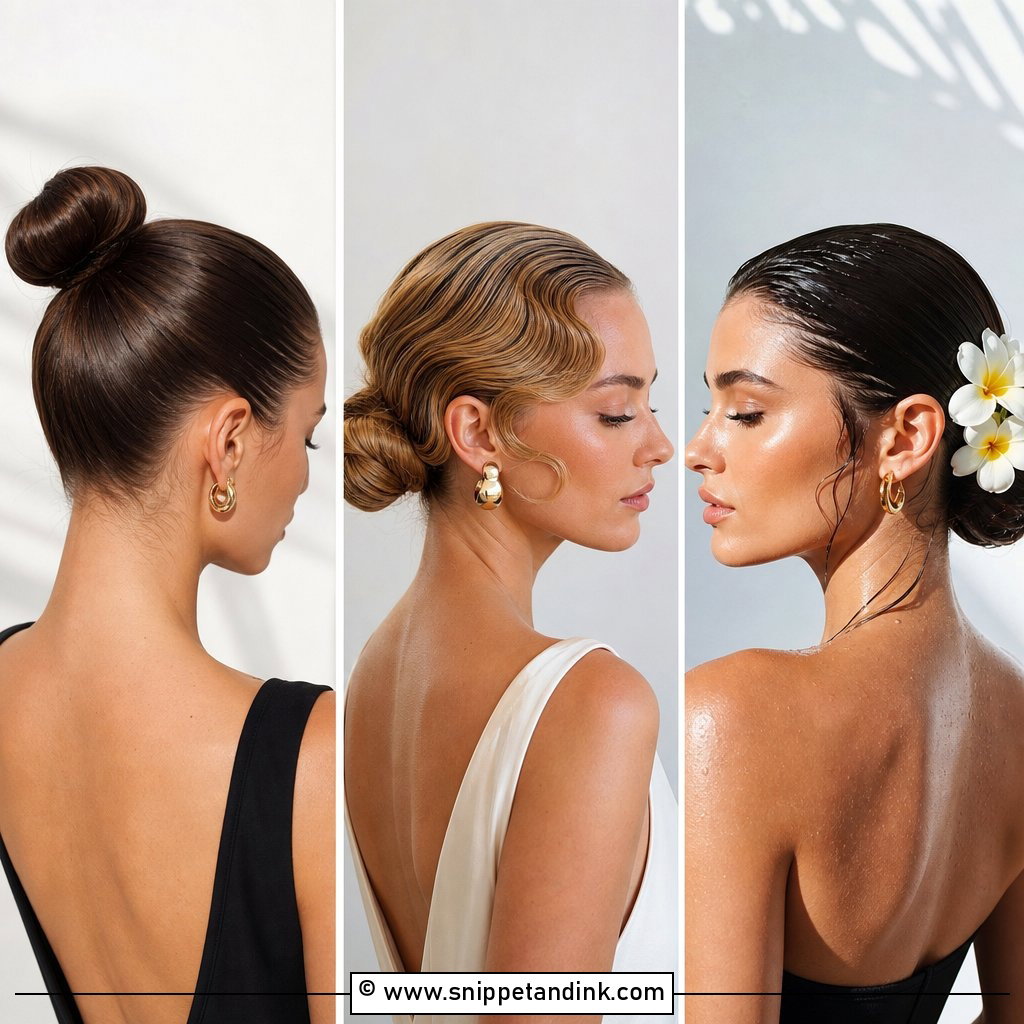
Sheen, Gloss or Wet? Picking a Finish for Your Light
Every style below can be done at three levels of shine, and the level matters as much as the shape. I decide it with the bride by thinking about the light she’ll be photographed in, not just the mood she wants.
Soft sheen
Hair looks smooth and healthy, with no visible product. This is what most brides mean when they say polished. It works in bright daylight, where heavy gloss can turn into white hot spots along the crown in photos.
Gloss
A clear reflective band across the top of the head. It suits evening receptions, satin gowns and candlelight, and it photographs richly on dark hair. On very light blonde it shows less, so I sometimes push it a little further.
Wet look
Hair that looks as if you’ve just stepped out of water. It’s editorial and deliberate. It needs a strong gel, it stays stiff to the touch, and it doesn’t forgive a second day. If you plan to wear your hair down the morning after, choose a gentler finish.
Whichever level you choose, ask your photographer to shoot a few frames at the trial or the first look with their usual flash. Shine reads differently through a lens than in a bathroom mirror.
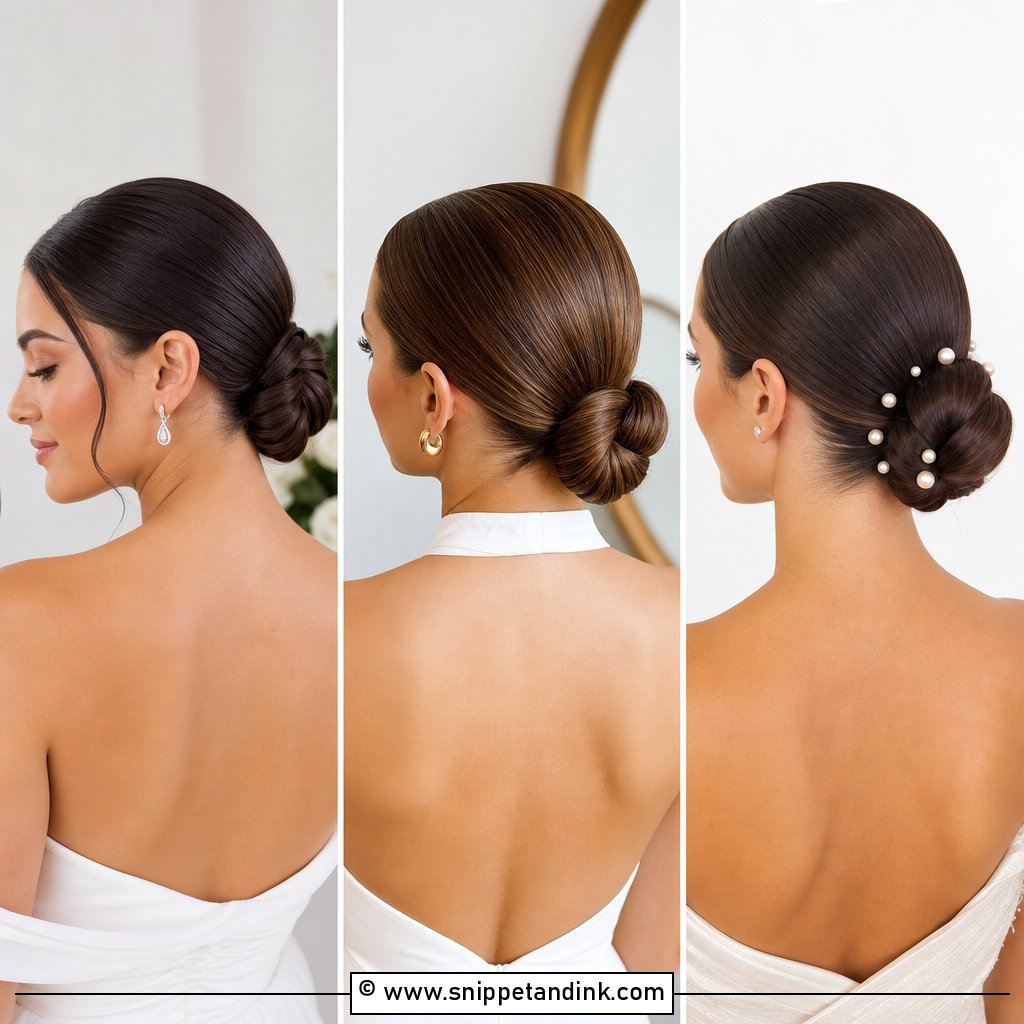
1. Slicked Wedding Low Bun
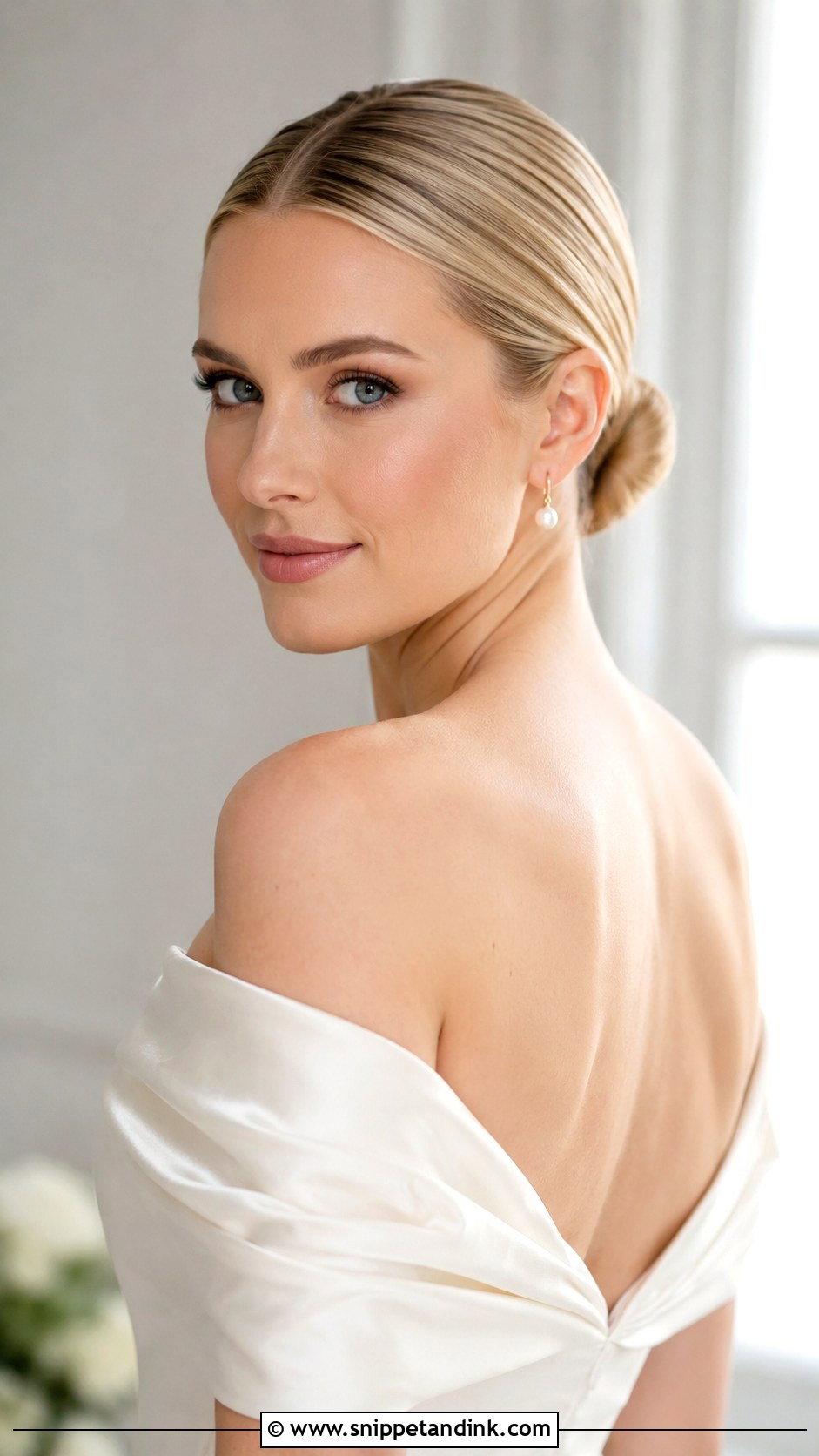
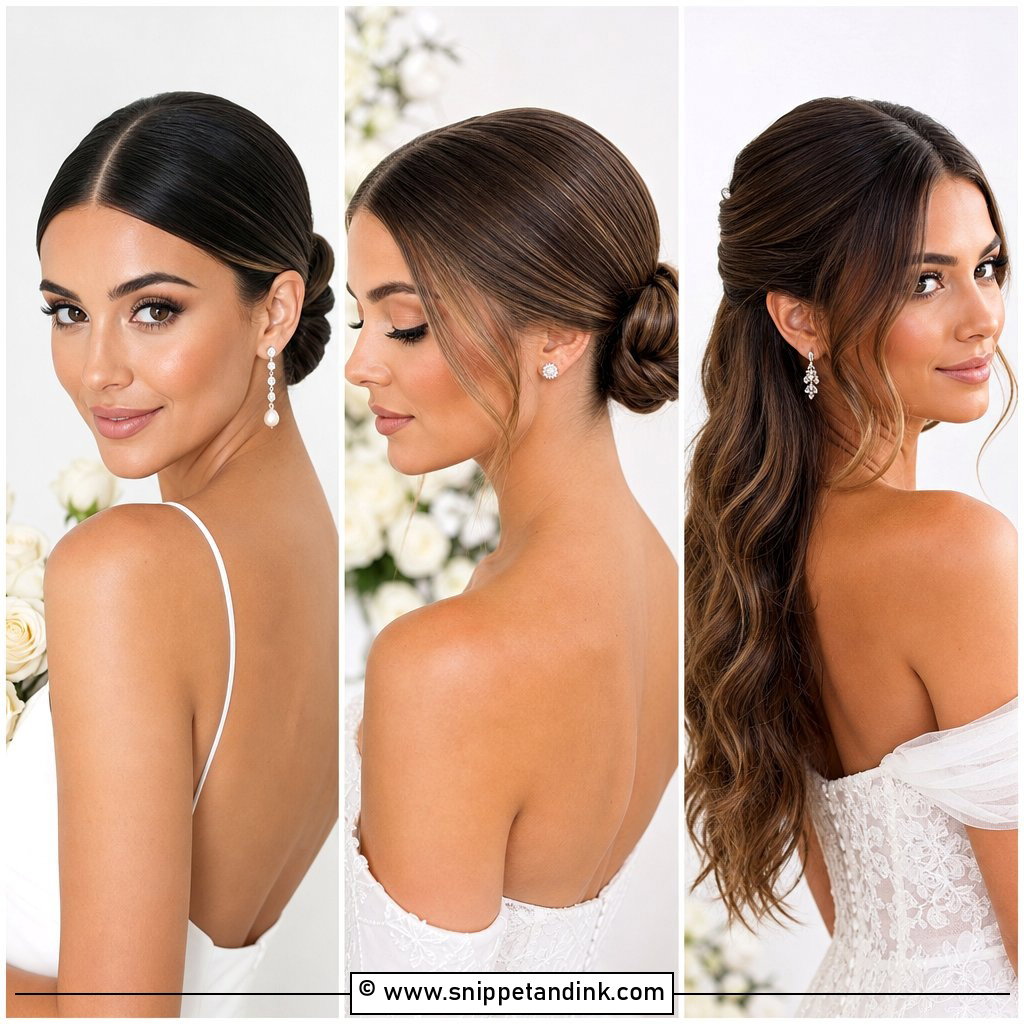
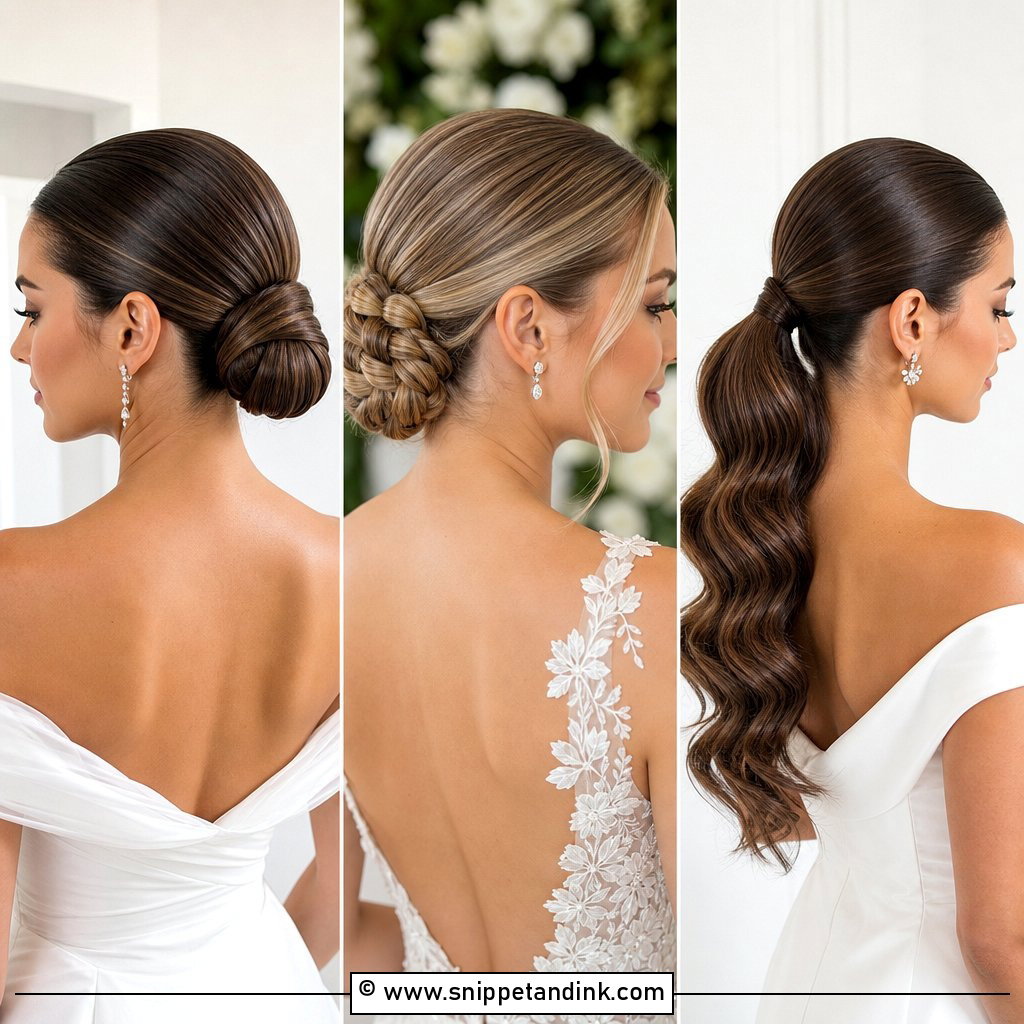
A slicked wedding low bun is where I’d start most brides who are unsure. Brushed smooth from the hairline and gathered at the nape, it carries a veil comb, pearl pins or heavy earrings without strain, and it clears both high necks and strapless gowns. In humid weather it’s my first suggestion, since there’s simply no loose hair for the air to swell. A middle part feels current; no part sweeps everything back more softly. I’ll aim for shine rather than a wet finish unless you ask for wet.
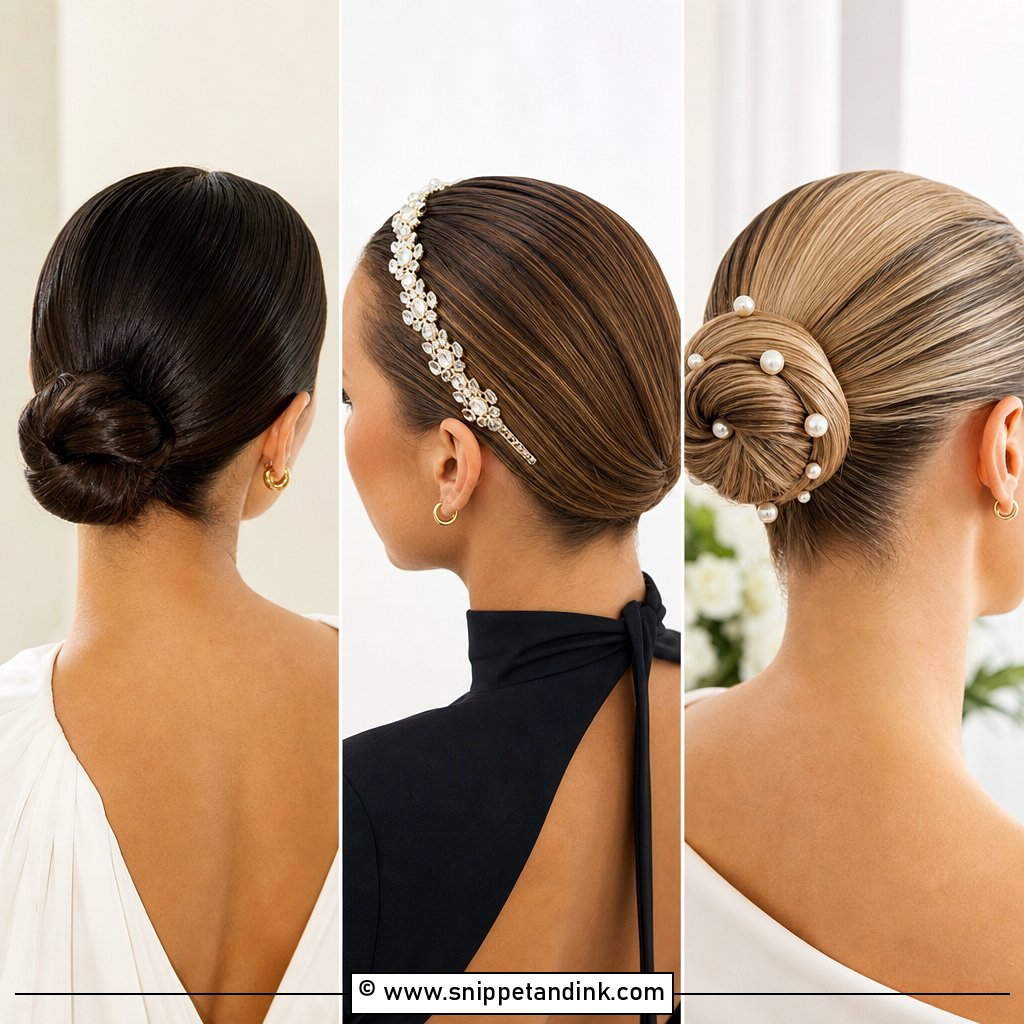
2. Slicked Wedding High Bun
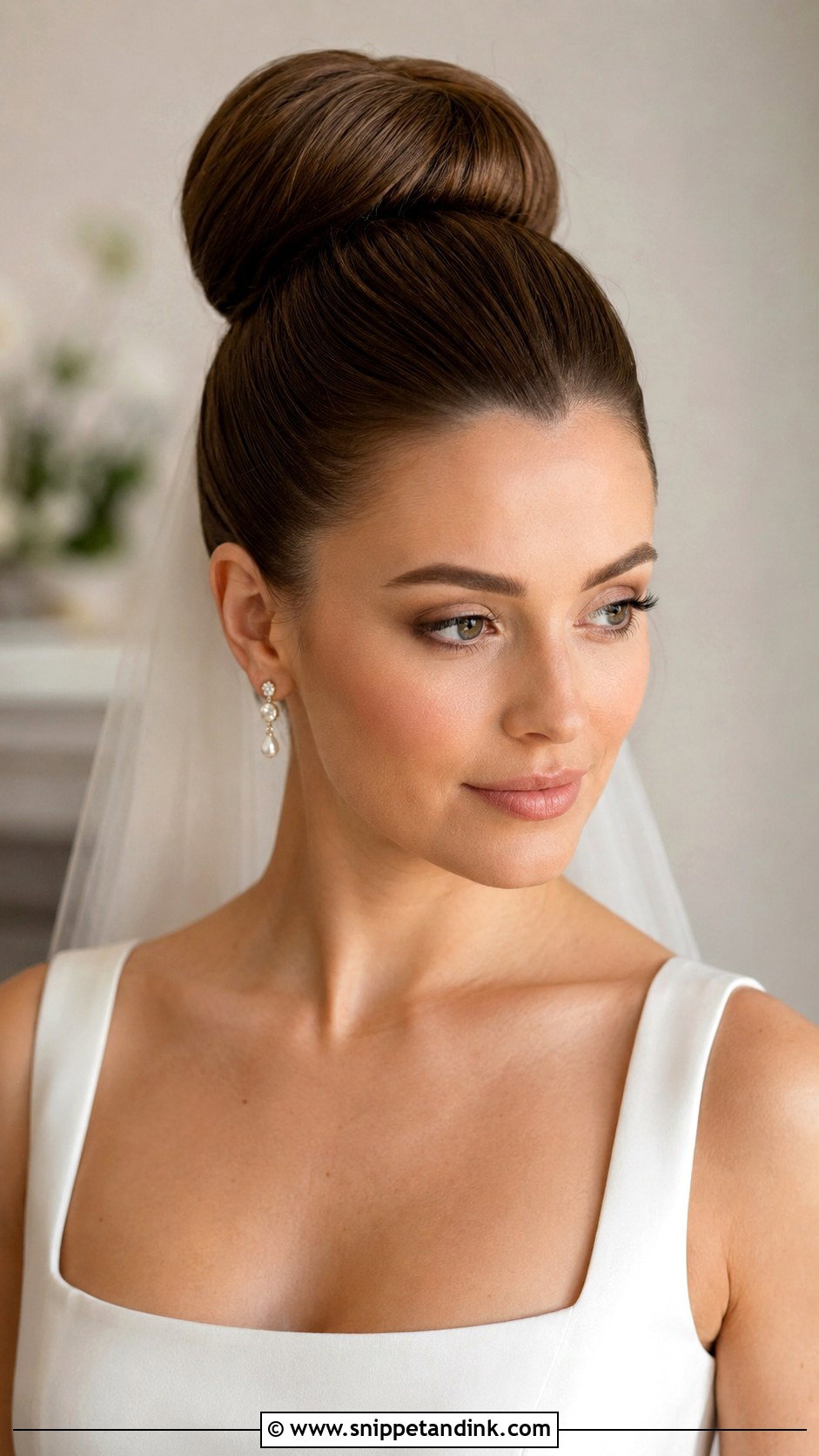
Lifting the bun to the crown gives height without any volume at all. I’d keep this one for a bride whose shoulders should be completely clear, and for gowns with a dramatic back that deserves to be seen. The bun can be round, knotted or wrapped into a ballerina-inspired finish. Fine hair usually needs a little padding to look full at that height, while thick hair needs careful sectioning so one side doesn’t sit heavier. A high bun pulls harder on the scalp than a low one, so wear it for a few hours after your trial before deciding.
3. Slicked Wedding Chignon
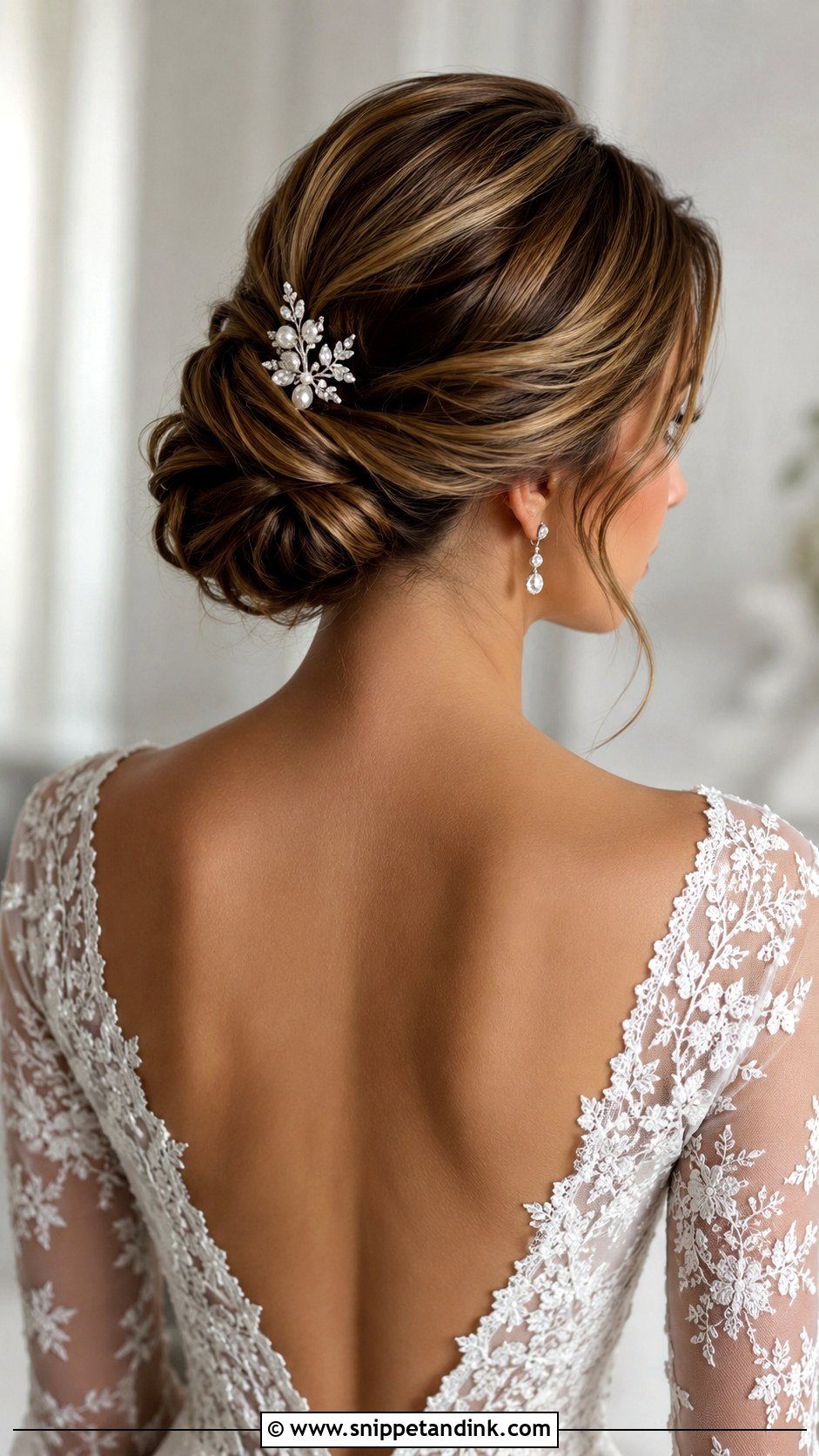
I reach for a chignon when a bride wants structure but finds a tight round bun too severe. The hair is folded and tucked low against the neck, so it reads softer from the side and gives a cathedral veil a dense, grippy base. Medium to long hair suits it, and it can sit centered or slightly off to one side. Satin gowns and lace sleeves both work with it. The crown should stay smooth, but I leave a little shape just above the fold so the profile doesn’t look flat in side portraits.
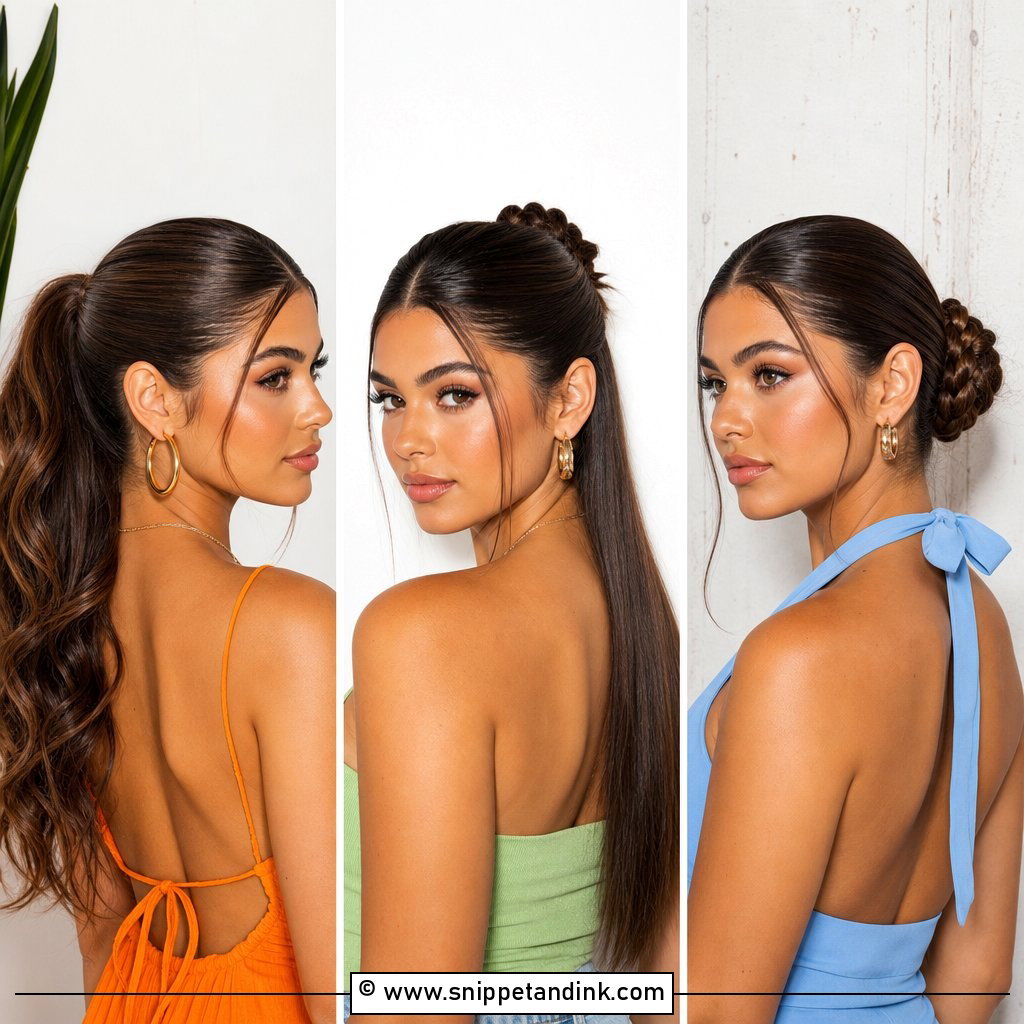
4. Slicked Wedding Ponytail
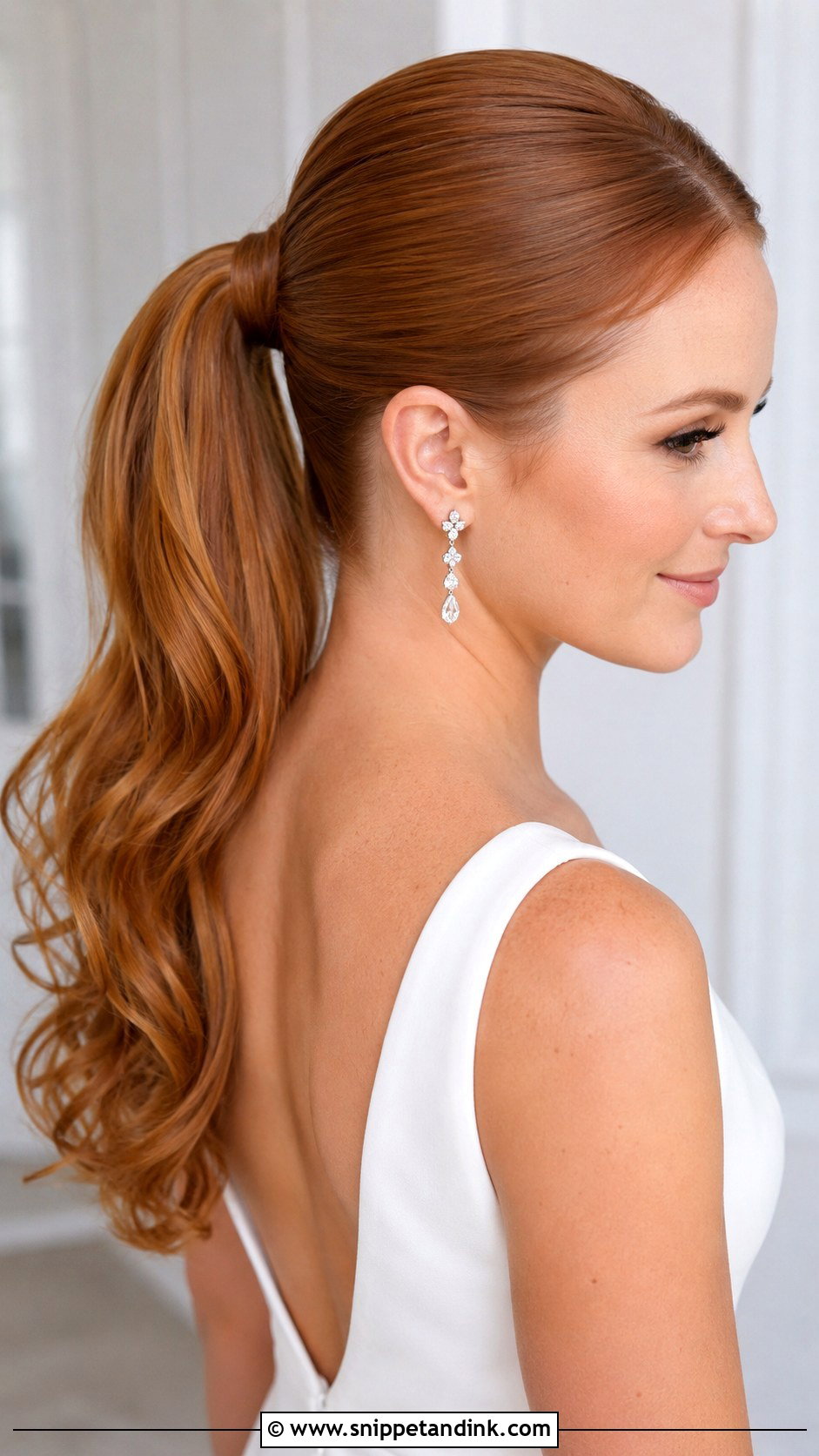
The ponytail gives you movement without wearing all your hair down. Top and sides are smoothed close to the head, a strand is wrapped round the base to hide the elastic, and the length can be straight, waved or curled. Height changes the mood: low is classic, mid or high leans glamorous. Clip-in extensions add swing if your own length is thin at the ends. My caution is the elastic. A ponytail carries its whole weight on one band, so I use two, one on top of the other, and pin the wrap through both.
5. Slicked Wedding Half Up Hair
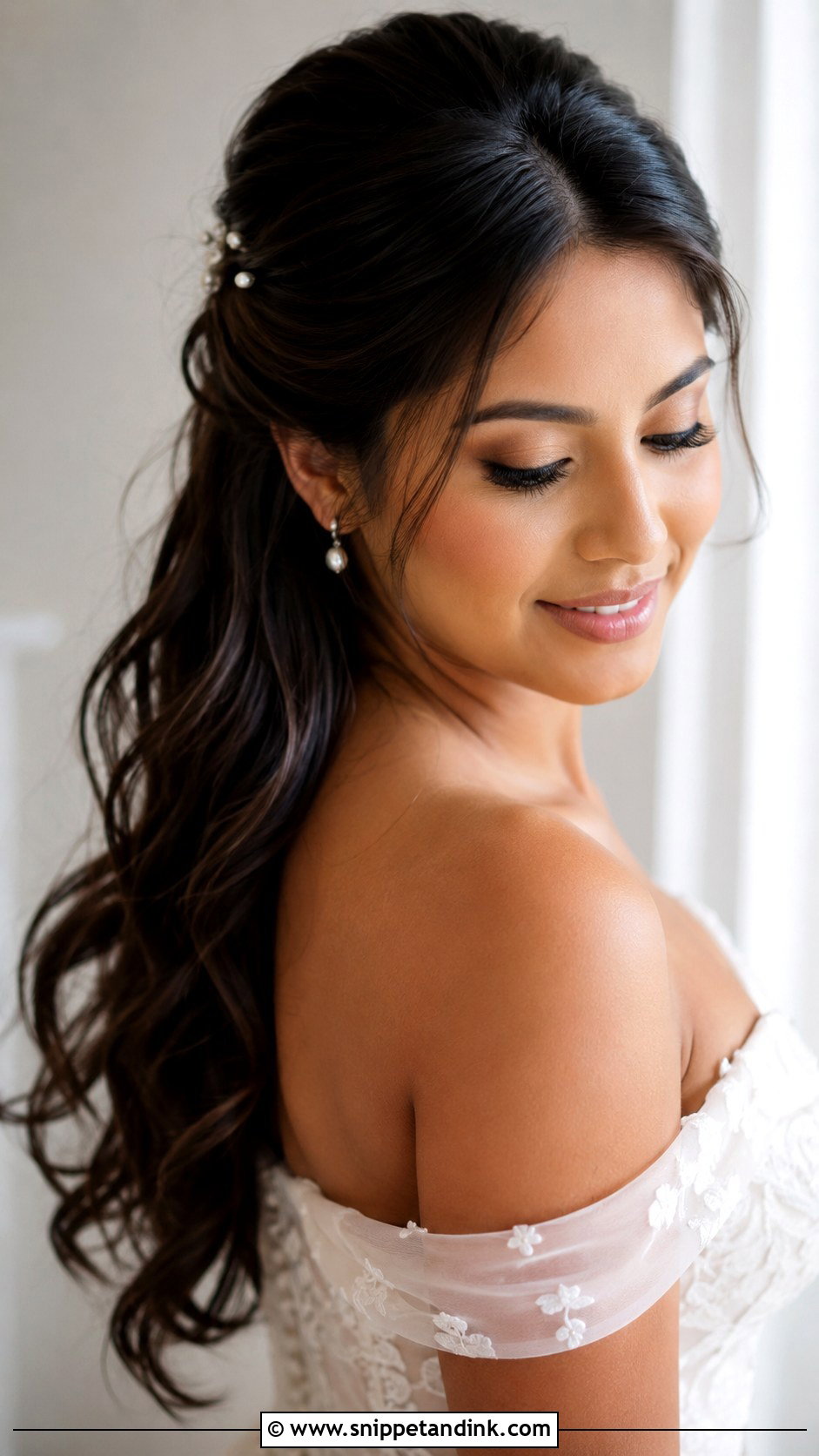
Half up, slicked, solves a specific problem: brides who want their length on show but hate face-framing pieces drifting into their lipstick. The front is smoothed back and secured, and the rest falls in waves, curls or a glossy straight finish. The secured section also gives a veil comb something firm to hold. Where it struggles is with very heavy, very long hair, because the loose length drags on the pinned section over a long day. A small hidden elastic under the pins fixes most of that.
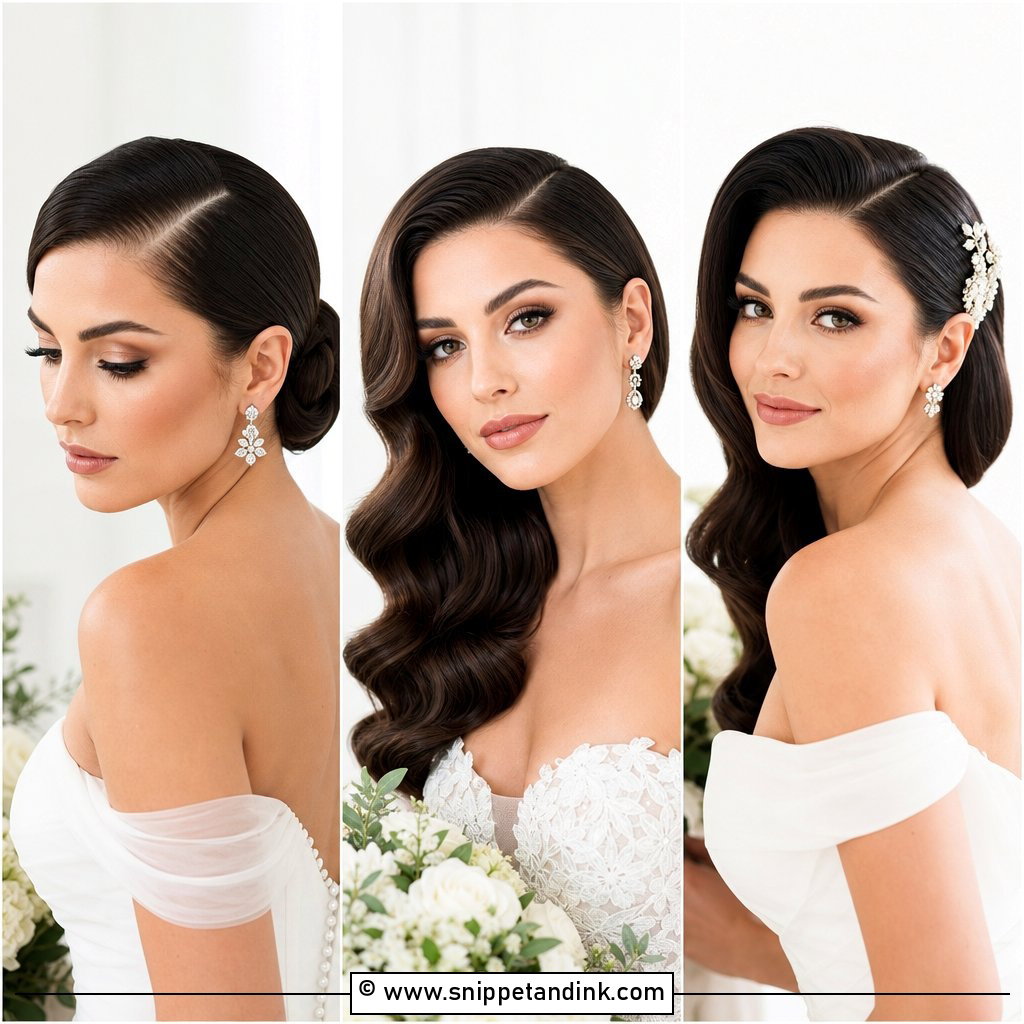
6. Slicked Wedding Hollywood Waves
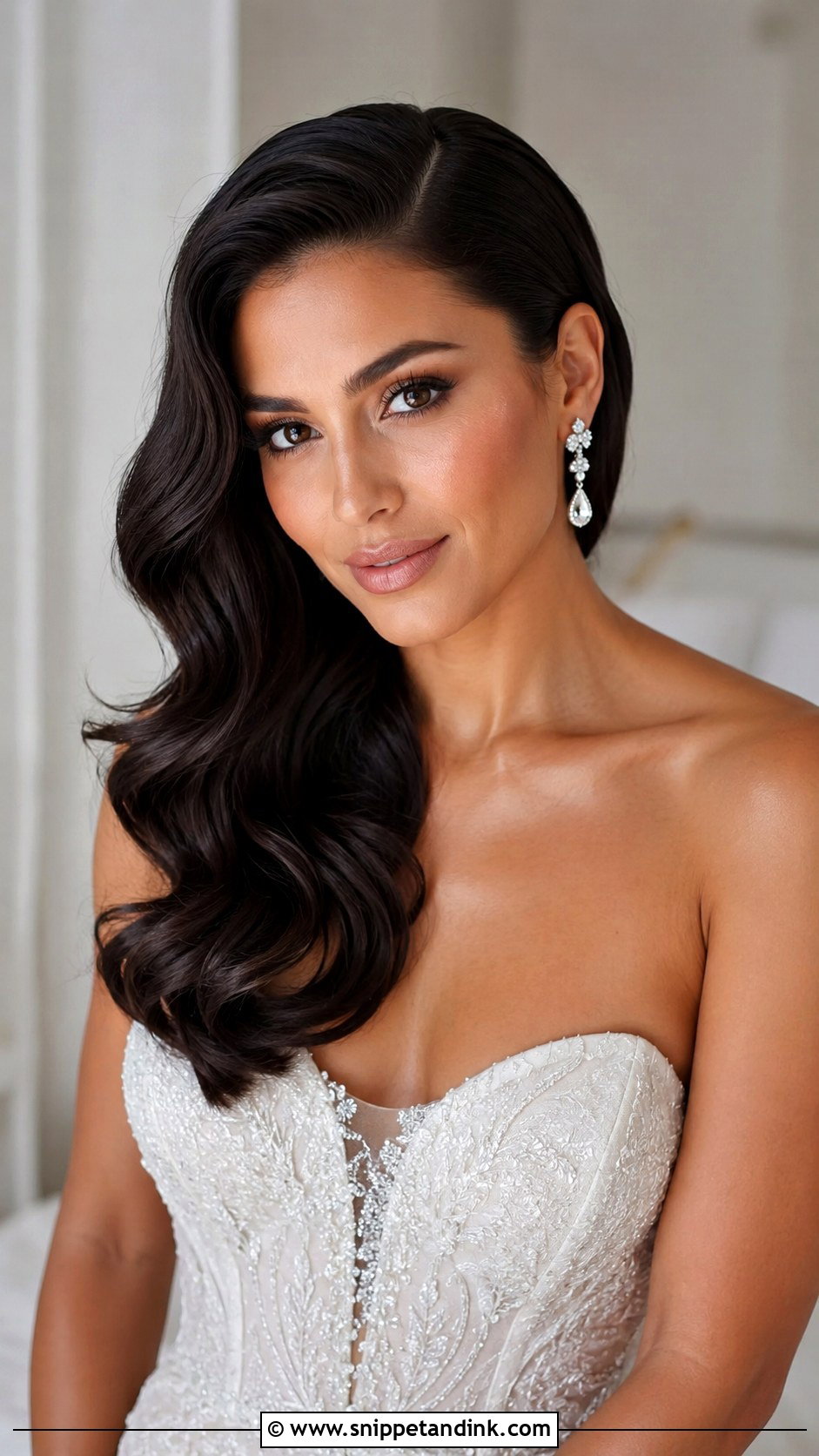
Here the old Hollywood wave meets a slicked crown. One side is often smoothed tight and tucked behind the ear while the length falls in uniform waves that catch light along each ridge. It’s a strong shape with a one-shoulder or fitted gown and sparkling earrings. Getting there takes time: every curl has to be set in the same direction, cooled completely, then brushed out into one ribbon and pinned while the shine spray dries. Outdoors in midday heat the waves relax faster, so I save this one for evening and indoor ceremonies.
7. Slicked Wedding Wet Look Hair
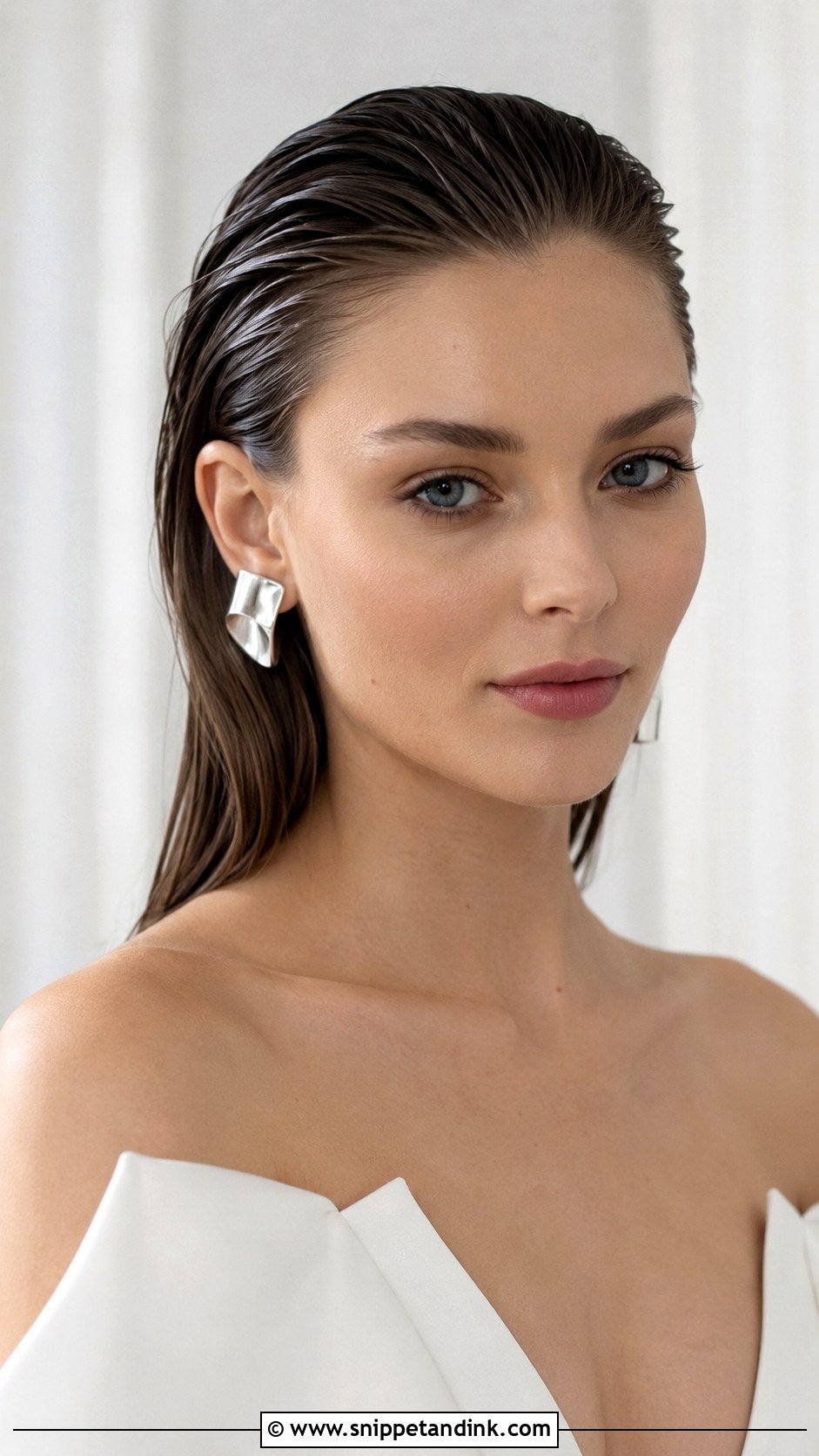
Slicked wedding wet look hair is a fashion choice more than a bridal tradition, and it rewards a confident bride with a simple gown and sculptural jewelry. It can be worn down, tucked behind the ears or finished into a low bun, which is the most wearable version. The danger is the line between gloss and grease. I layer cream, then gel, then a shine spray, and keep the product off the very ends so they don’t clump. Ask for a test photo with flash at the trial, since high shine looks different under a camera than in a mirror.
8. Slicked Wedding Middle Part Bun
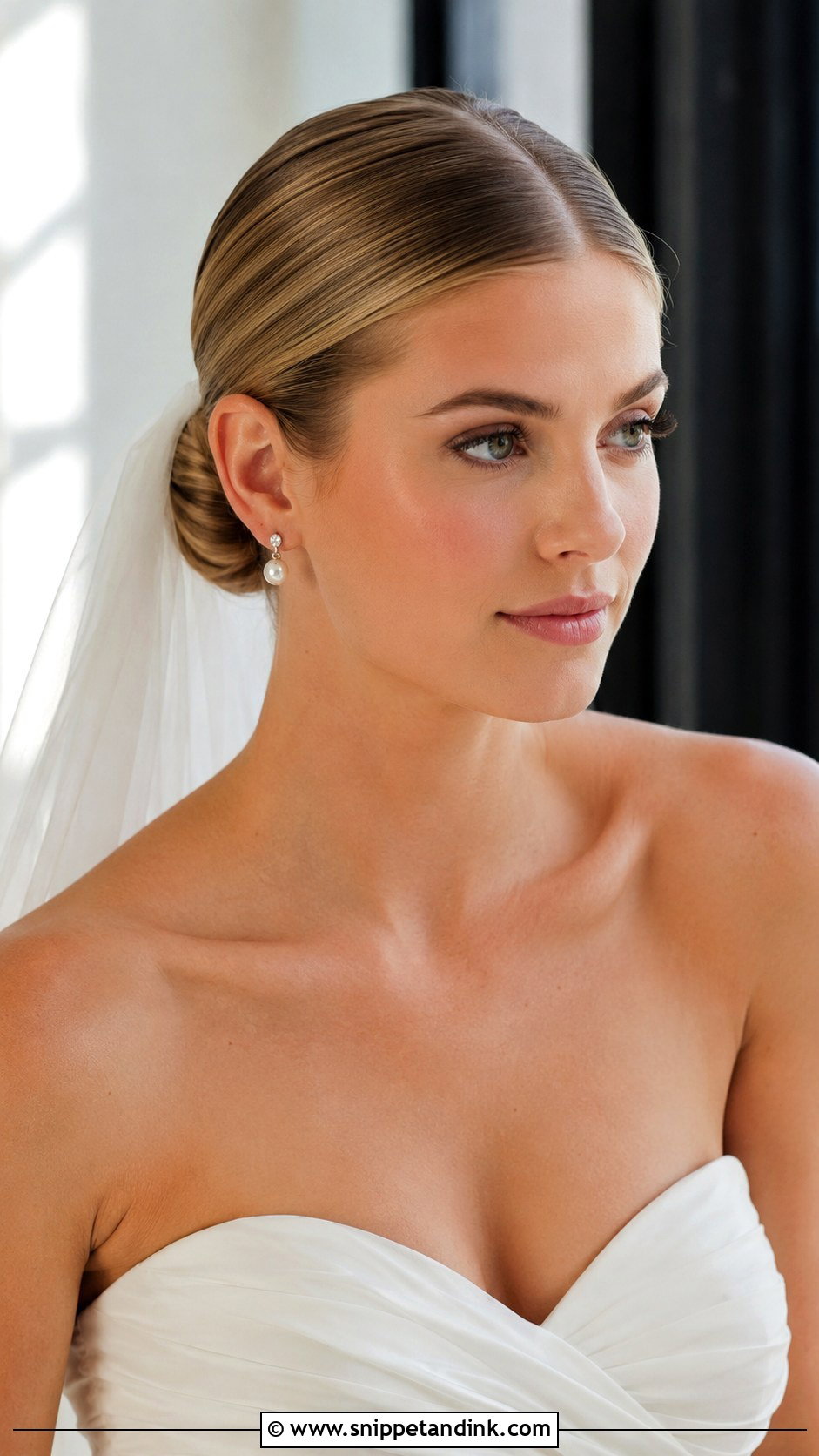
There’s a reason the middle part bun gets requested so often: symmetry is flattering, and the shape suits almost any neckline. But a center part shows every unevenness of the hairline and the face, so I find where your hair naturally splits first. It looks particularly clean with a veil placed under the bun, pearl earrings and a square or strapless gown. For a softer face shape, I keep the bun slightly rounded rather than pulled small and tight. A fine-tooth comb for the part, smoothing cream, and strong pins are all it takes.
9. Slicked Wedding Side Part Bun
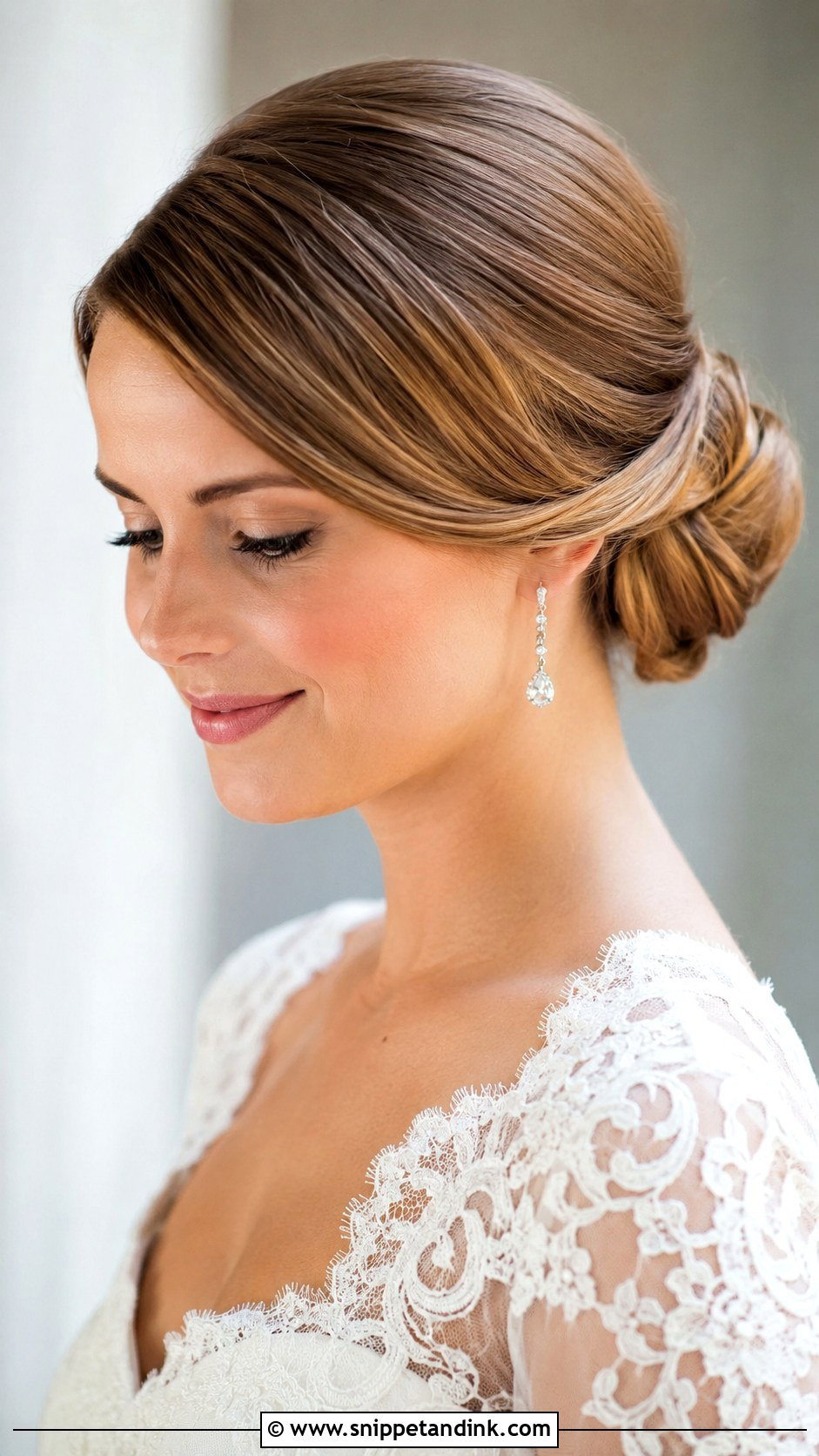
A deep side part takes the edge off a slicked style. It curves across the forehead and gives the face some shape, with a slight vintage lean that stops short of full retro waves. The bun can sit low at the nape or just off-center for a softer profile. Lace gowns and drop earrings suit it. The detail I spend most time on is where the sides meet the bun, because a visible ridge there spoils the whole line. Brides with a strong cowlick at the front may find their hair resists a side part on that side, which I’ll check at the trial.
10. Slicked Wedding Braided Bun
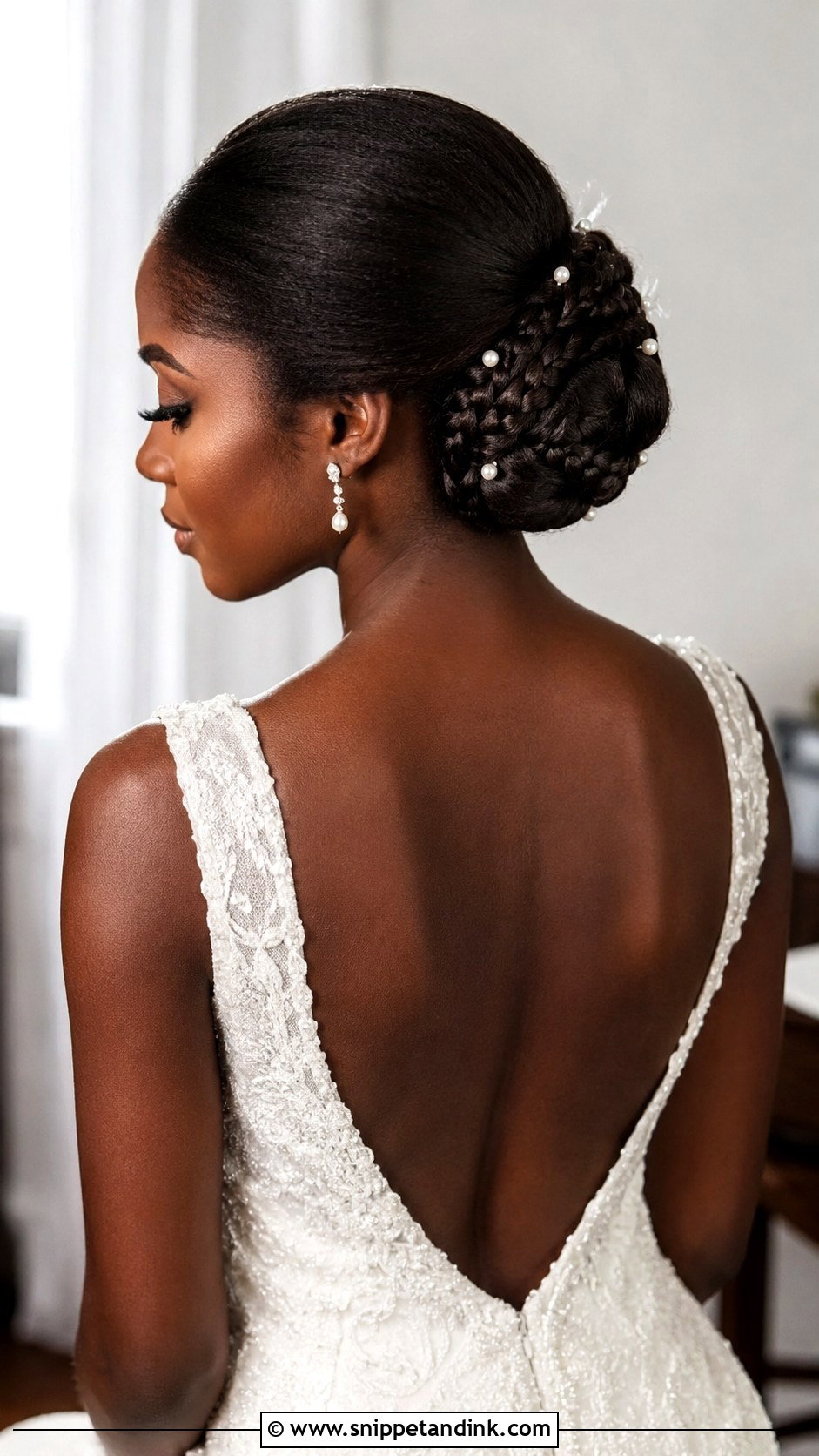
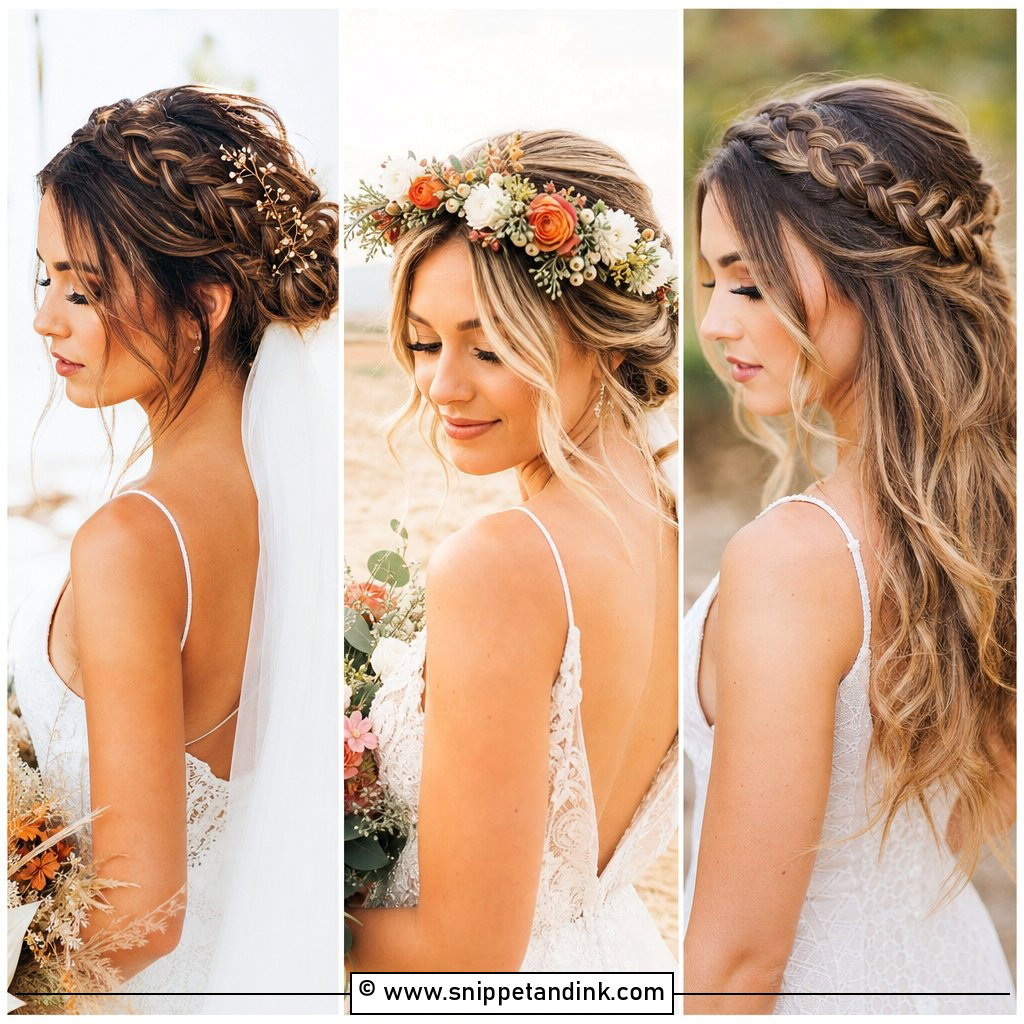
Braiding the length before wrapping it gives the bun texture without loosening the slick. The hair is smoothed into place, braided, then coiled at the back or nape. Thick hair takes to it best, since the braid compresses volume that would otherwise make a plain bun look oversized. From behind it reads clearly, which matters with a backless gown or a veil set low. Fine hair gives a skinny braid, so I’d pancake it gently before wrapping. Keep decoration minimal; a slim comb is plenty, and pearls on top hide the braid you went to the trouble of making.
11. Slicked Wedding Curly Bun
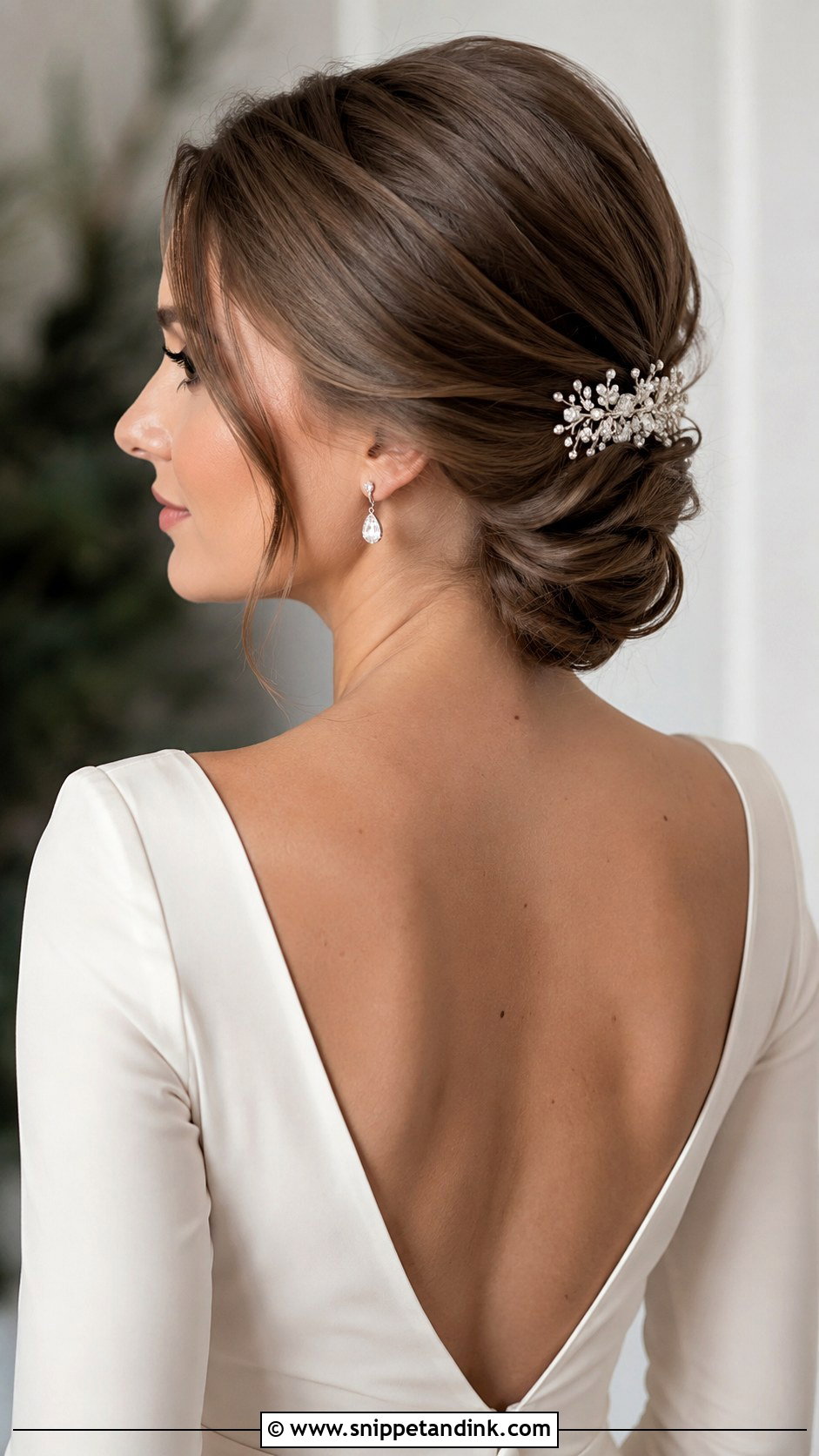
With a curly bun, the goal is to frame the curl pattern, not erase it. I smooth the front, sides or crown with moisture and a flexible gel, then gather the curls into a soft bun that keeps its own shape and bounce. Stretching curls straight first only makes them frizz later in the day. Edge control helps the hairline stay neat, but it needs to dry clear rather than flake. This suits curly, coily and textured hair and curly extensions. Low feels soft and romantic, while high reads bold.
12. Slicked Wedding Short Hair
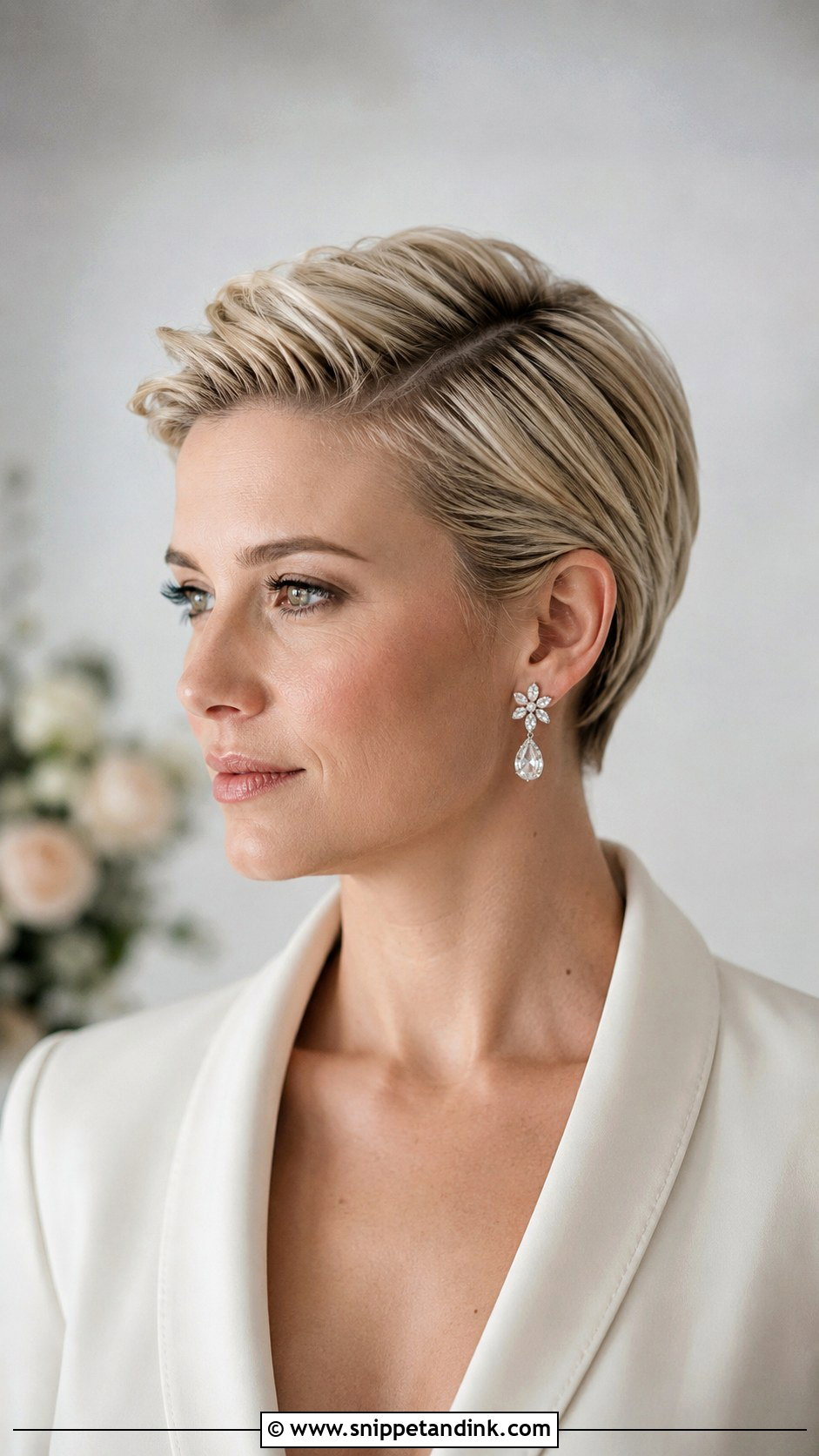
Slicked wedding short hair is one of my favorite things to style, because a pixie, bixie or short bob slicked back shows off the cheekbones and the neckline like nothing else. The direction of combing is the whole design: swept straight back is soft, a deep side part is more dramatic. I use a light pomade or cream rather than heavy gel, because short hair shows product weight quickly. A headband, a comb or a short veil all sit well against it. If you’re getting a cut, have it a week or so before the wedding so the edges have softened.
13. Slicked Wedding Bob
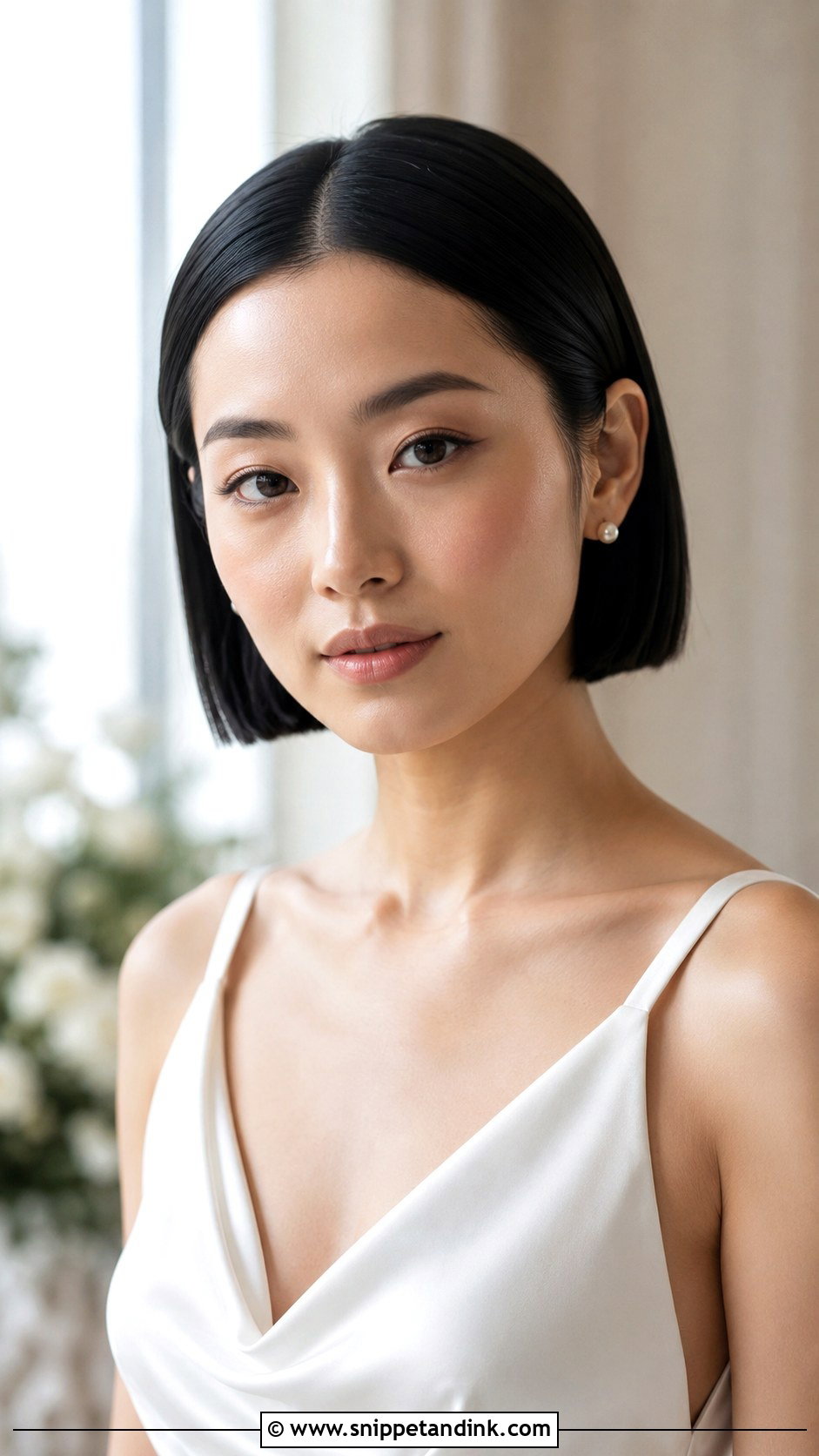
A slicked wedding bob keeps structure without asking for an updo. It can be tucked behind both ears, parted in the center or swept into a deep side part. Blunt bobs suit it best; a heavily layered cut tends to spring out of the tuck within an hour. I smooth it with a flat iron and finish with a drop of serum through the ends only. For chin or collarbone length, hidden pins behind the ears keep the tuck in place, and those pins are worth checking before the speeches.
14. Slicked Wedding Low Twist
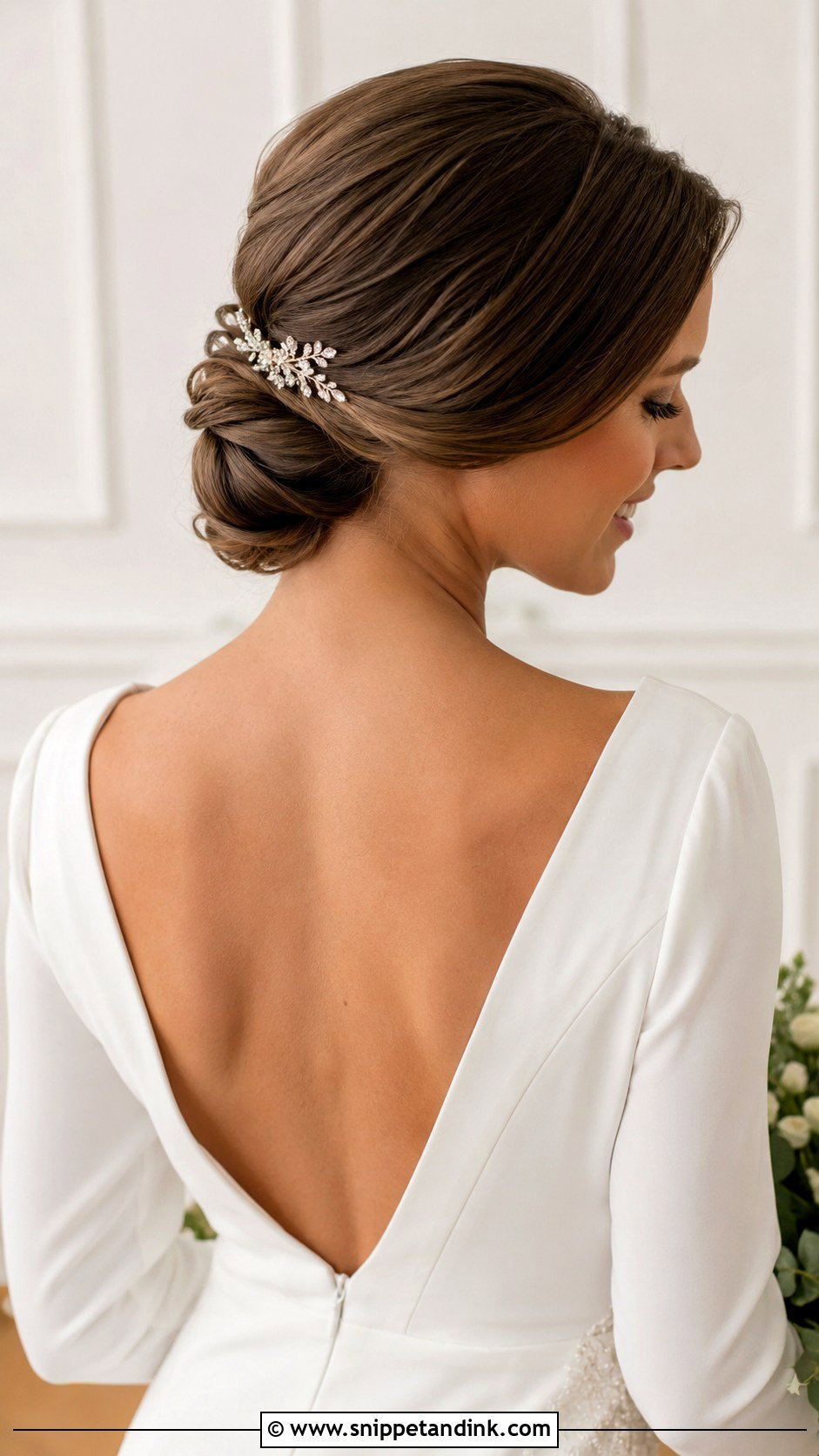
This low twist is a French twist brought down to the nape. The hair is smoothed back, gathered low and rolled into a clean roll or folded shape that looks graceful from the front and detailed from behind, which is exactly the angle your guests see during the ceremony. It needs medium to long hair. I build it over a row of crossed pins so the roll has something to lock onto. Keep the crown sleek but not harsh; a touch of lift at the back makes the twist sit better against the head.
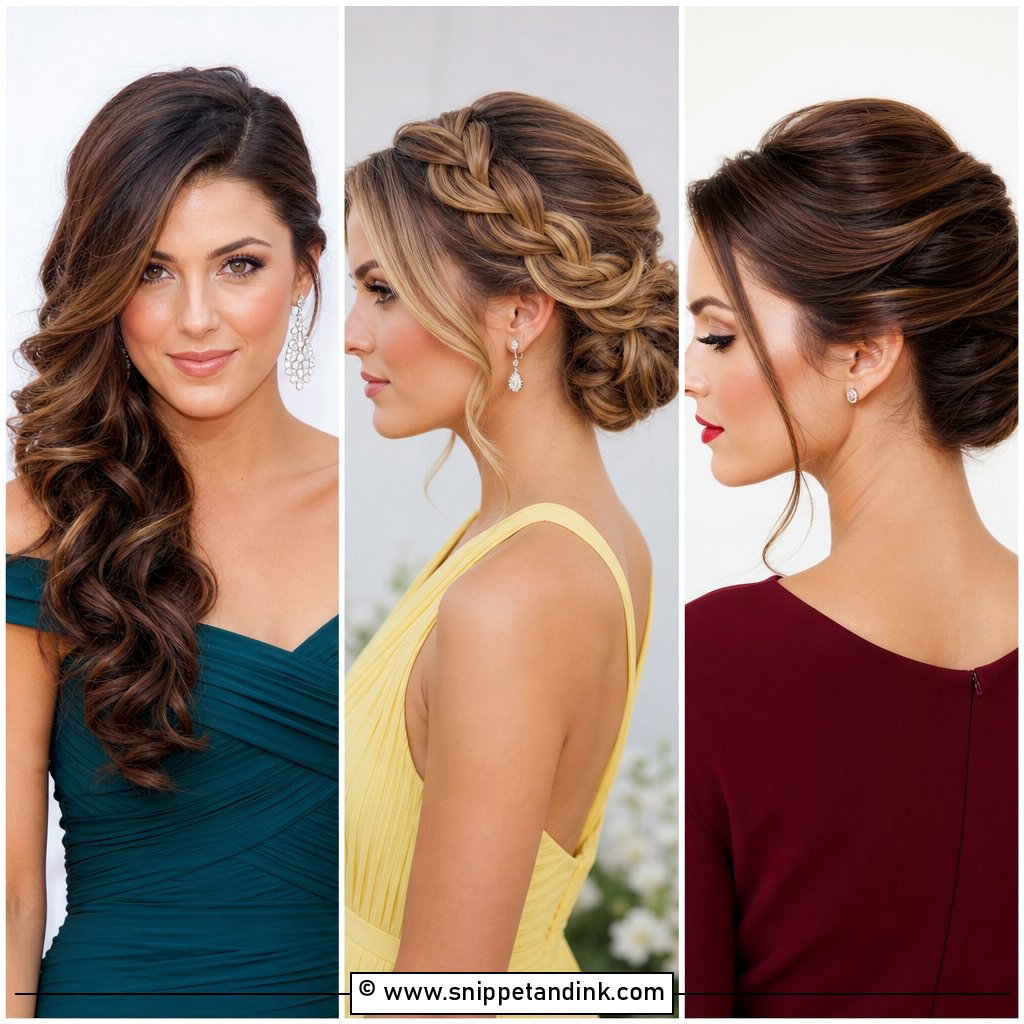
15. Slicked Wedding Hair Down
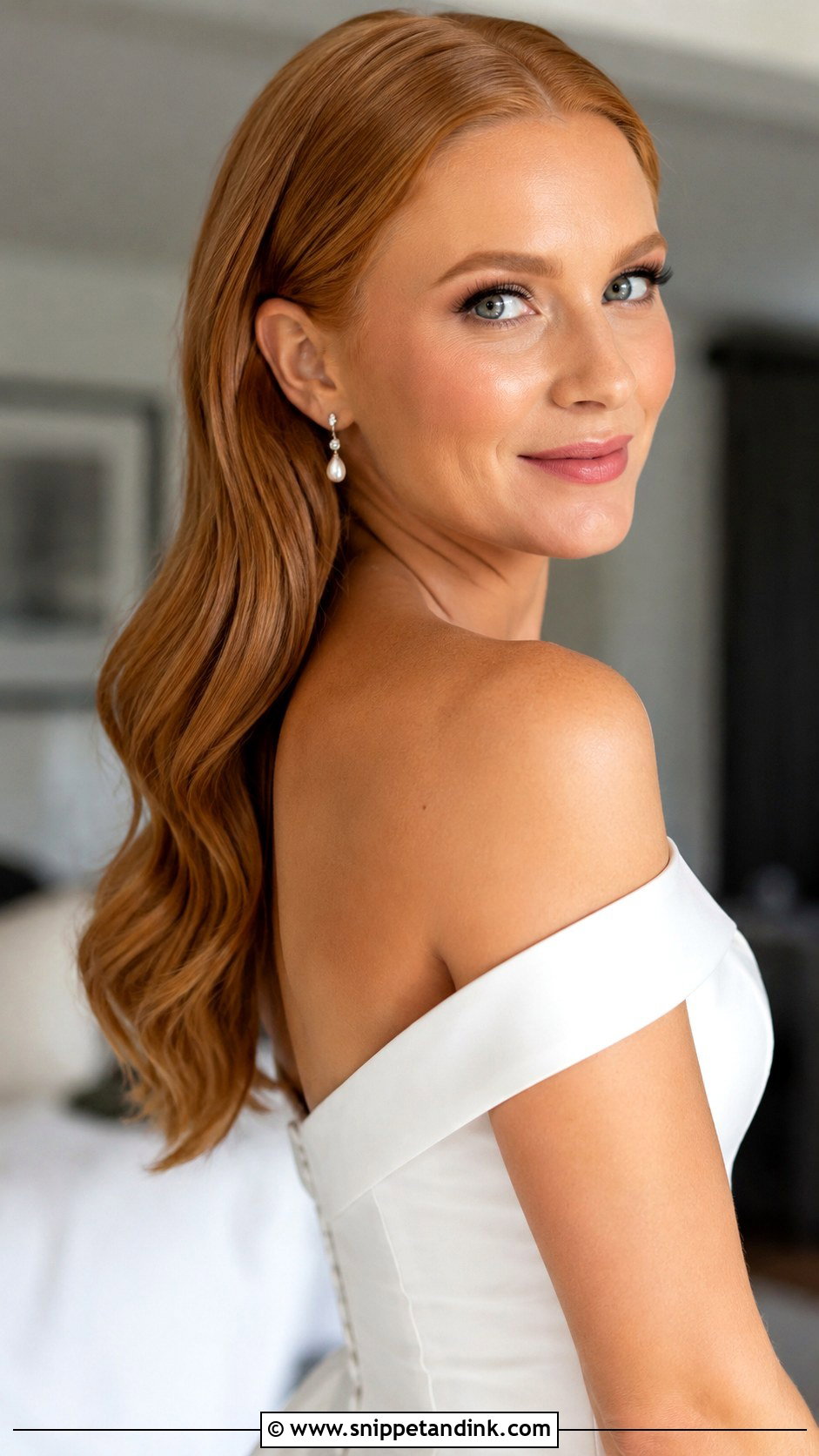
Wearing it down but slicked at the front gives you a clean face and all your length. The front sections are smoothed back or tucked behind the ears, and the rest stays straight, softly waved or curled. Long hair, layered cuts and extensions all work, because the length becomes the feature. To keep the front from creeping forward, I use a couple of hidden pins, sometimes a small elastic at the nape, and a light cream along the hairline. Of all fifteen it’s the most relaxed, and the easiest to wear into the evening.
Your Roots and Part Line Will Be on Show
Nothing exposes regrowth like a slicked style. Loose waves hide an inch of roots; hair brushed flat against the head lays them out in a straight line, and a center part shows it right at the top of every photo. If you color your hair, plan it around the wedding date rather than squeezing it in the day before.
- Have color done roughly one to two weeks before, so the tone settles and the scalp isn’t sensitive when products go on.
- Gray strands along the hairline are more visible slicked back than worn loose. A root touch-up spray or powder covers them for a day.
- Avoid a dramatic new cut in the final weeks. Short layers around the face can refuse to lie flat, and a fresh fringe is impossible to slick.
- Bring your colorist’s shade name to the trial if you’ll be using a temporary root cover, so it matches.
Taking the Slick Out at the End of the Night
This is the part nobody plans for. After a full day of gel, spray and forty pins, pulling your hair down quickly can snap strands and leave you with a matted knot at the nape.
- Find and remove every pin before touching the elastic. Feel along the bun slowly; there are always more than you think.
- Cut the elastic with small scissors rather than tugging it out of set hair.
- Don’t brush dry. Wet the hair in the shower and work conditioner through to dissolve the gel before combing from the ends upward.
- Shampoo twice the next morning. A single wash rarely clears strong hold products from the roots.
Leave a wide-tooth comb and a travel bottle of conditioner in your overnight bag. Your hair will thank you on the morning after.
Which Slicked Shape Fits Your Dress and Your Day?
A slicked style can be minimal, glamorous or bold, depending on the shape underneath it. A low bun keeps things classic, a high bun lifts, a ponytail moves, and slicked hair worn down stays relaxed. Your dress, face shape, texture, venue and comfort all narrow the choice. Bring photos to your trial, but be open to small changes: moving the part a little, lowering the bun, or leaving the ends softer can make a picture-perfect reference suit your face. Prepared properly, the slick holds from the first look to the last dance.
You'll Like These Ideas:


Leave a Reply