
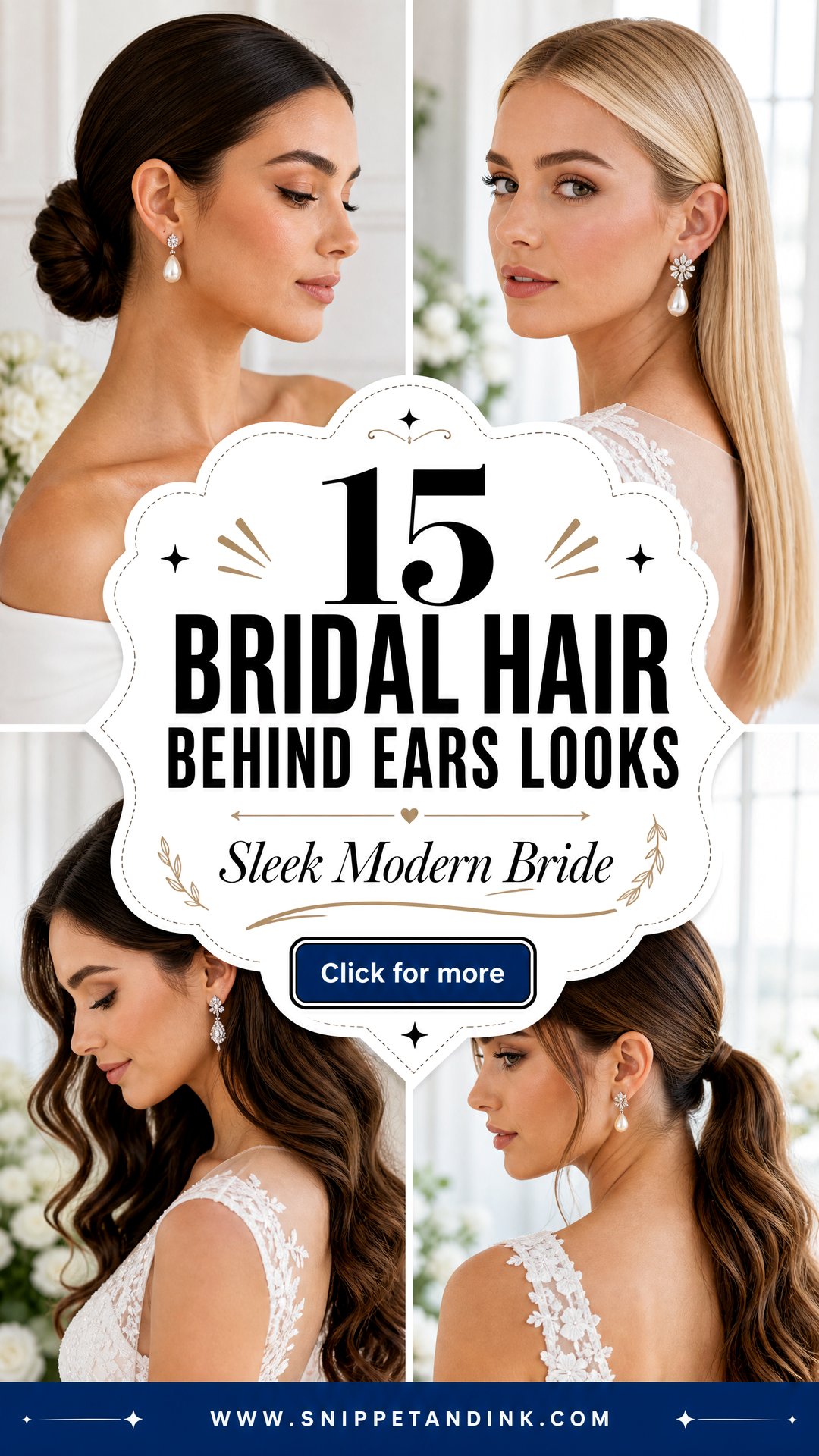
Tucking hair behind the ears is a small move that changes a whole bridal look. It opens the face, gives earrings and the neckline room, keeps hair off lipstick and lashes, and still feels softer than scraping everything back. I use it with glossy waves, buns, half-up styles, ponytails, bobs and lobs, so it suits almost any mood. The skill is in the balance: secure without looking stiff, polished without losing softness. Below are fifteen ways I’d style it, with notes on what holds a tuck in place for a full wedding day.
Glasses, Hearing Aids and Prominent Ears
Some brides avoid tucked styles because of something about their ears, and most of the time the style can be adjusted rather than abandoned.
If you wear glasses
Bring them to the trial. The arms sit right where I’d normally pin the tuck, so I place the pins lower, below the arm, and keep the section slightly looser so the frames don’t press the hair flat against your head.
If you wear behind-the-ear hearing aids
A full tuck will show them. Some brides are happy with that; if you’d rather not, I tuck only the top of the hair and let a soft layer fall over the device, which still opens the face.
If your ears stick out
Tucking both sides tightly can push them forward. I prefer a soft tuck on one side or hair smoothed loosely over the top third of the ear, which keeps the clean line without drawing attention.
1. Bridal Hair Behind Ears With Hollywood Waves
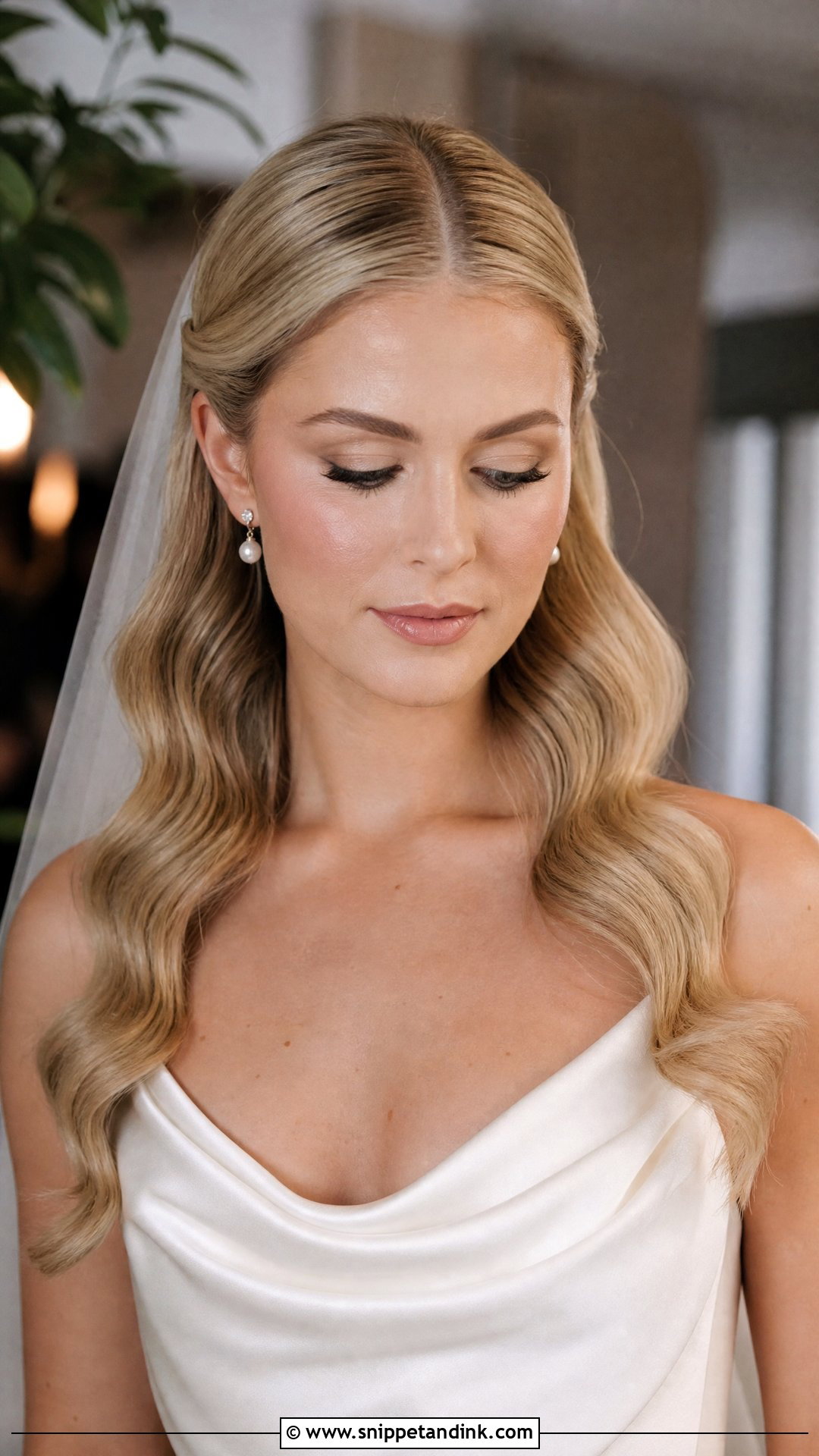
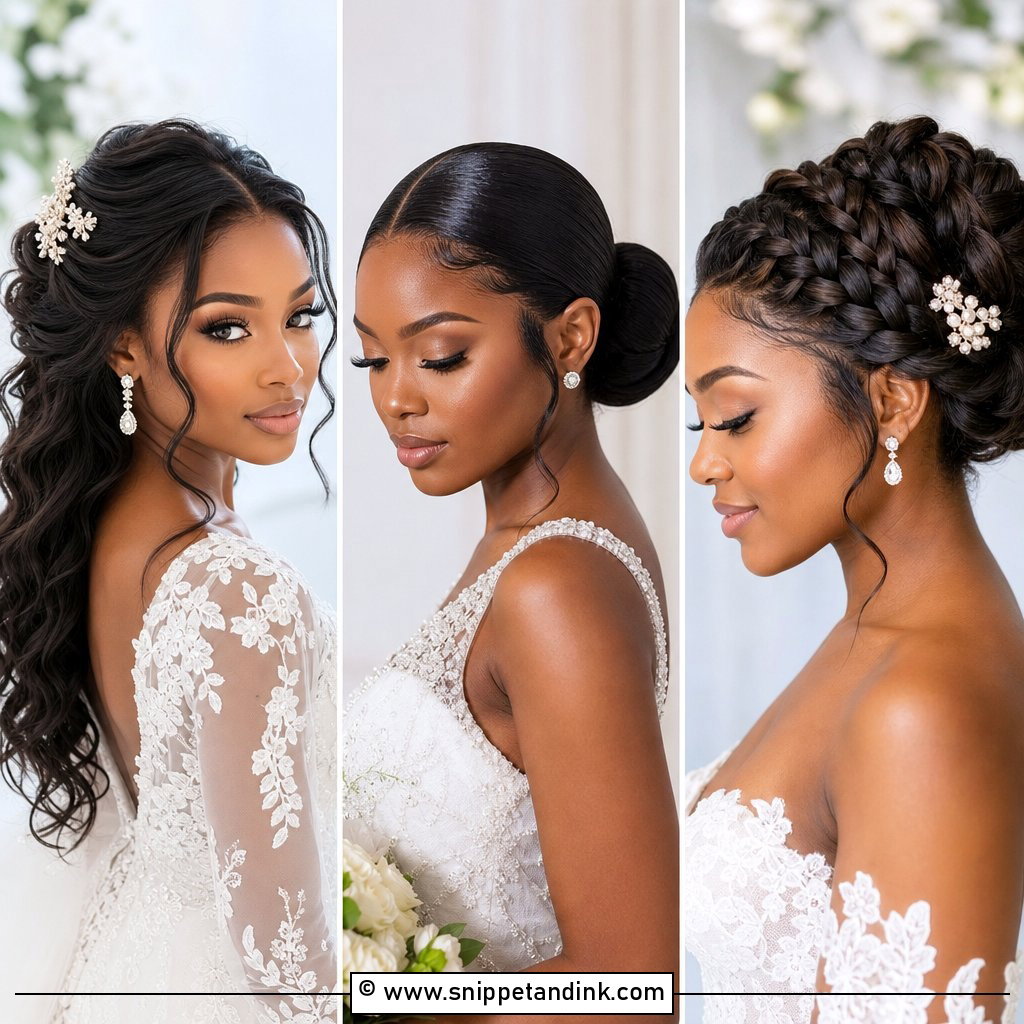
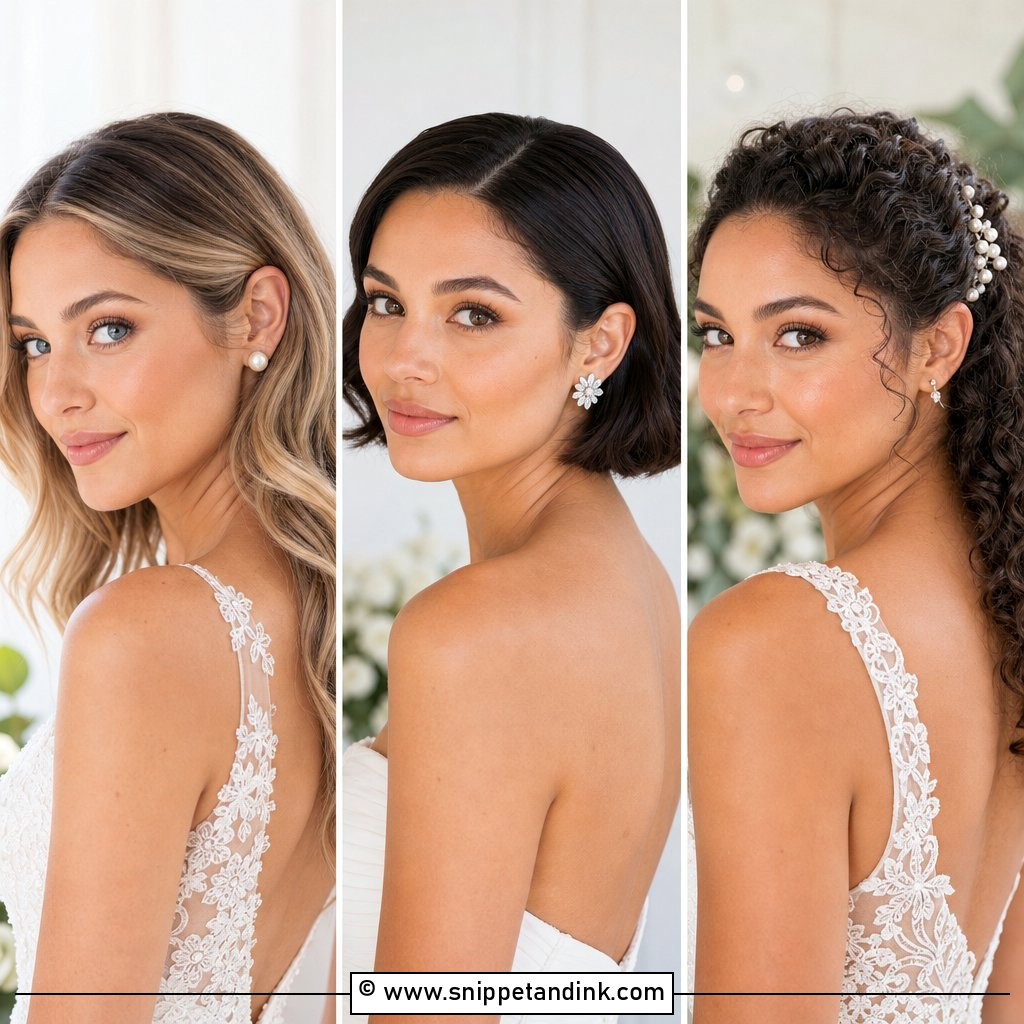
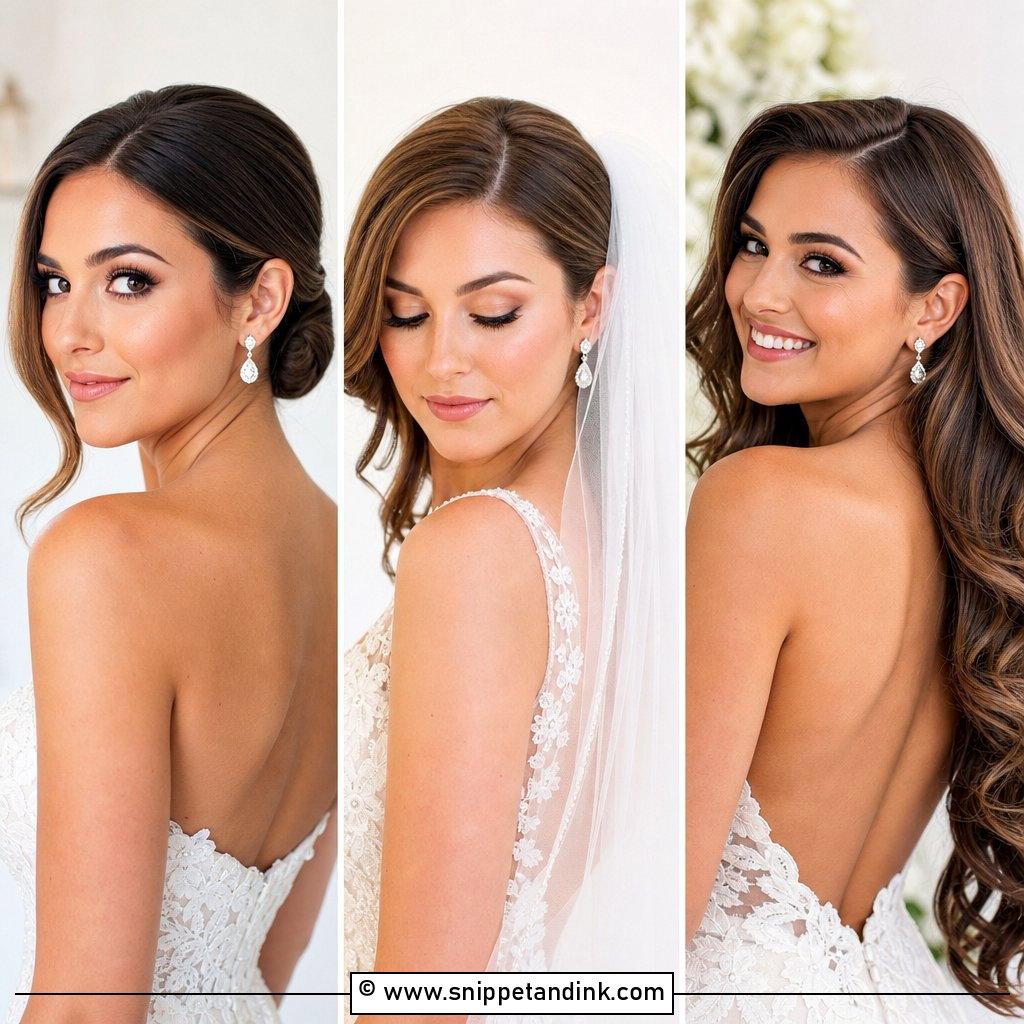
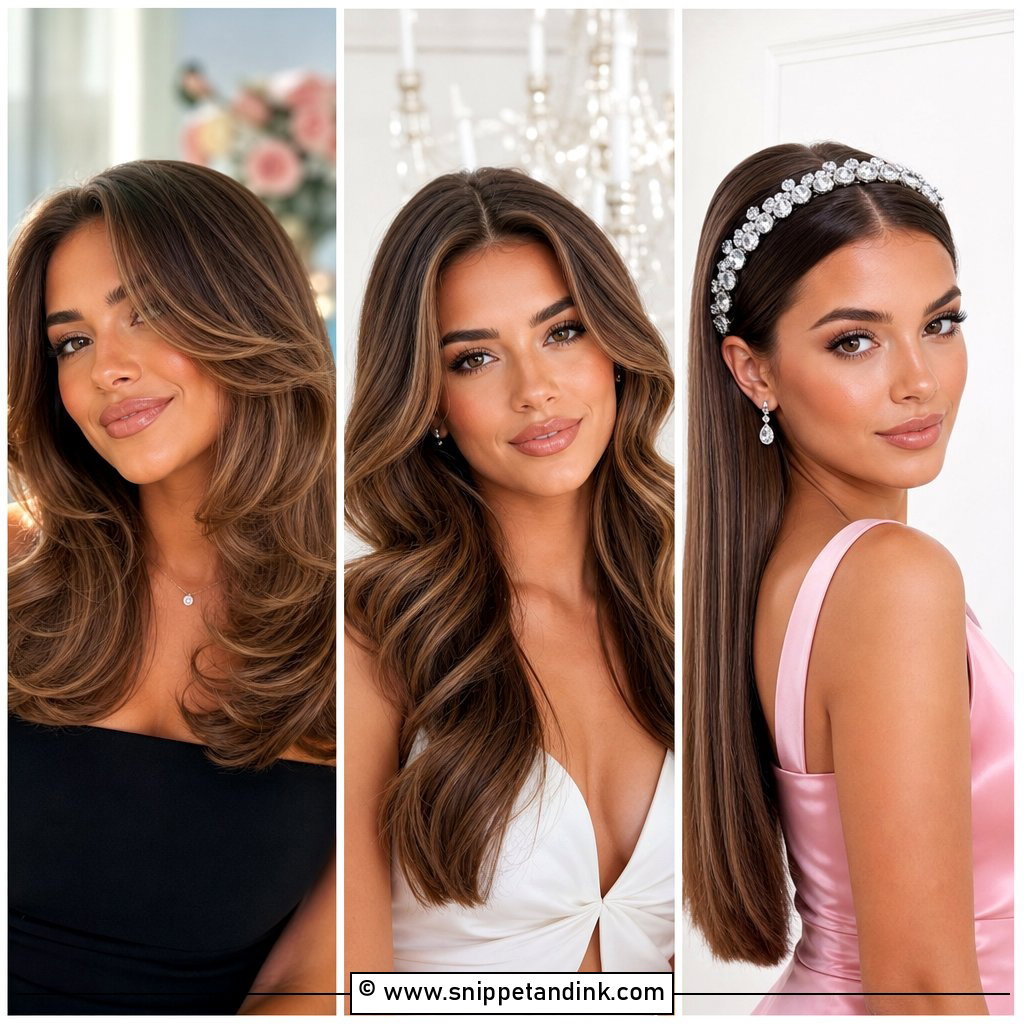
Hollywood waves with the front tucked behind the ears are glamour you can actually move in. The waves are brushed into one flowing shape and the tuck opens your face, so pearl drops or crystal studs get seen. A center part feels current; a deep side part leans vintage. I keep the roots sleek and start the wave around the cheekbone, never at the scalp, because a wave beginning too high pushes back out from behind the ear within an hour. Two crossed pins hidden under the tucked section keep it there through dancing.
2. Bridal Hair Behind Ears With Sleek Low Bun
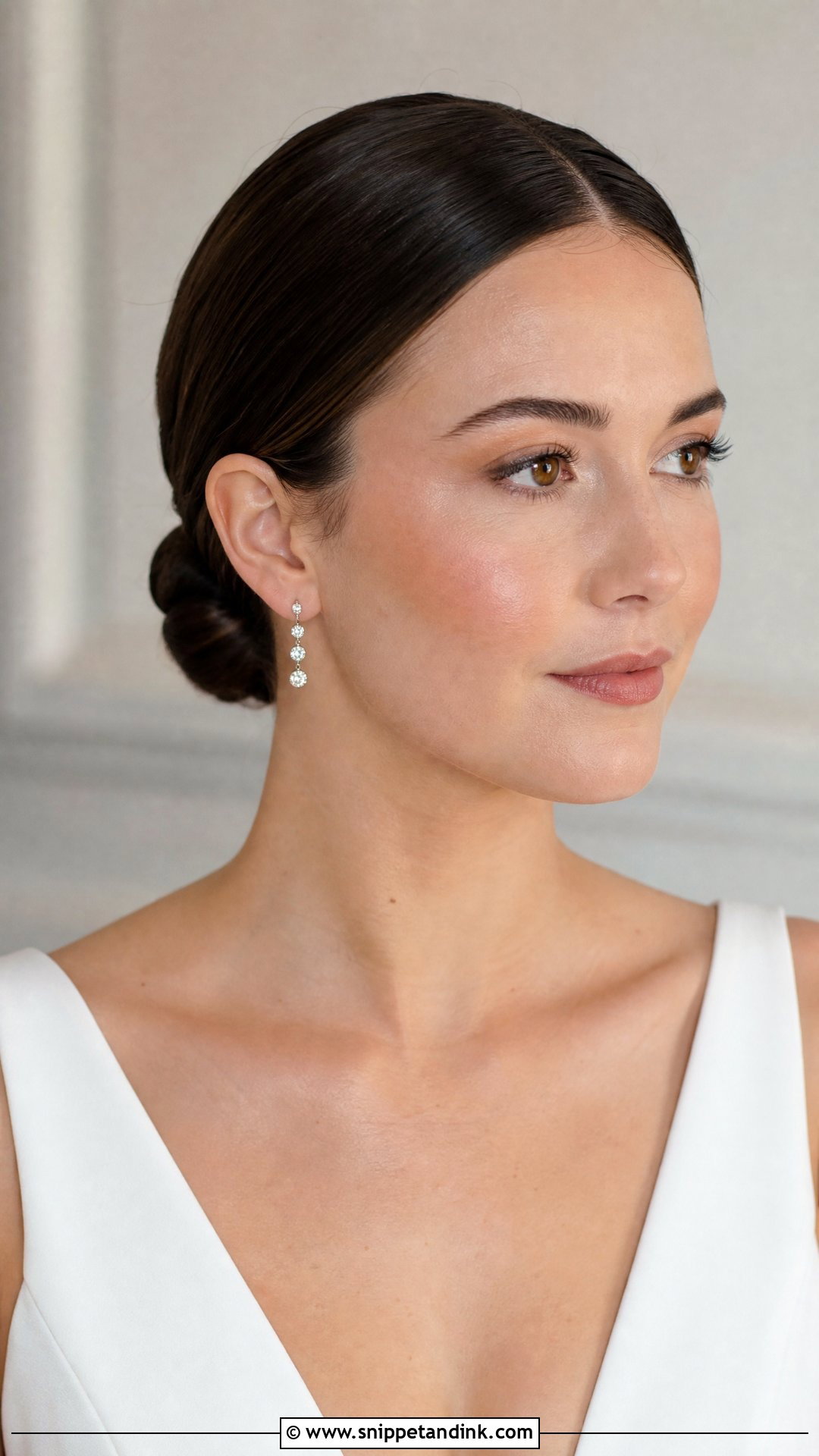
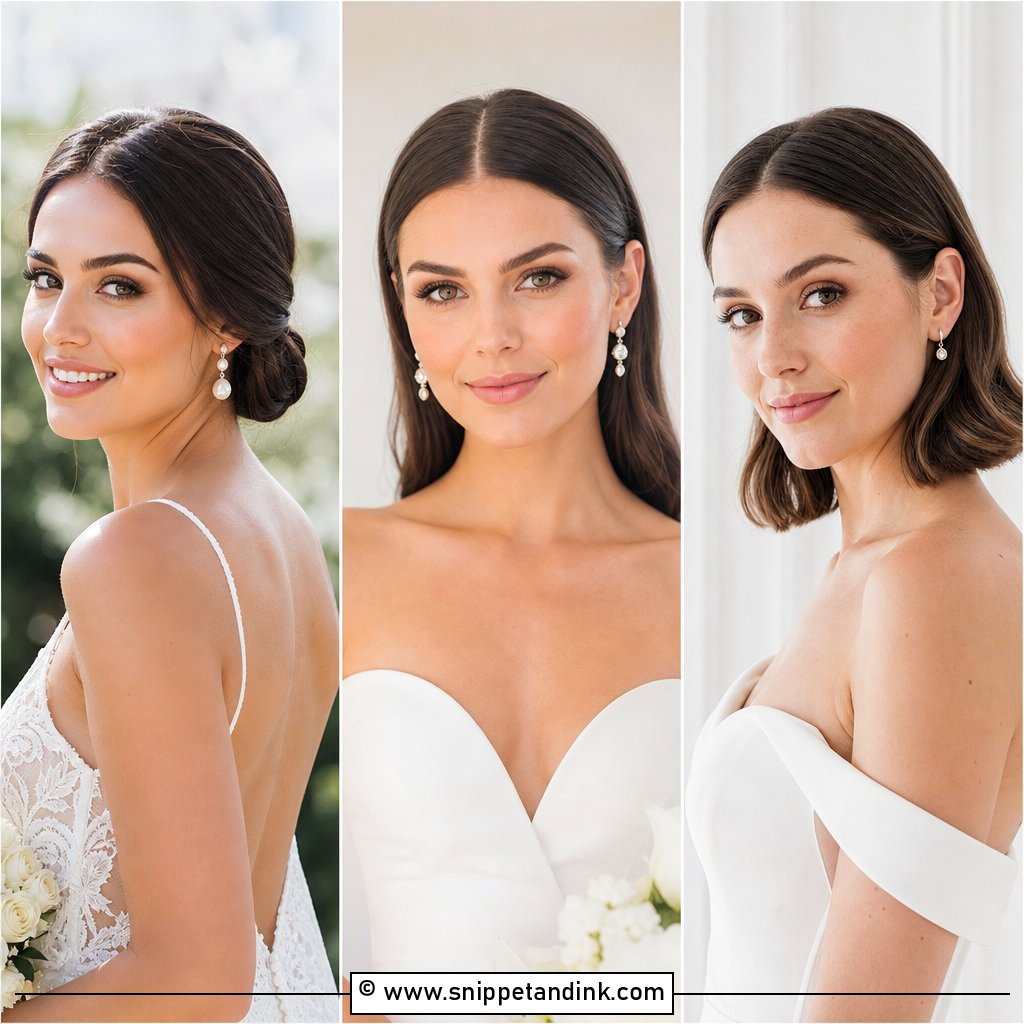
With a sleek low bun, the tuck becomes part of the line. Hair is smoothed close to the head, wrapped around each ear and gathered at the nape, a clean finish for minimalist dresses, high and square necklines and dramatic veils. I check the wrap around the ear carefully: pulled too far forward, it folds the top of the ear down, which looks odd in profile and gets sore. A center part is sharp and modern, a soft side part more romantic. Prepped properly, it stays neat through hugs, weather and a long reception.
3. Bridal Hair Behind Ears With Soft Low Chignon
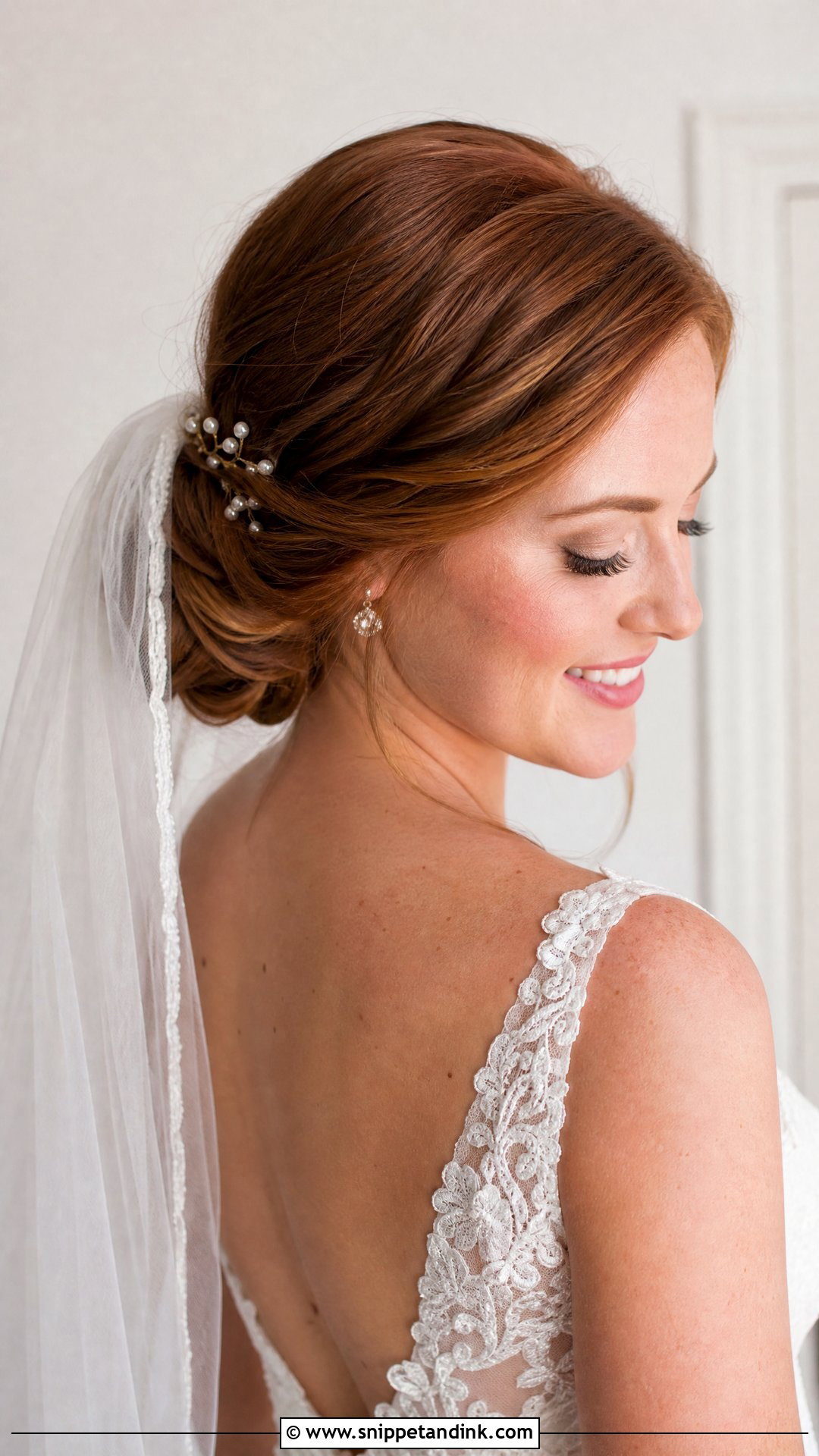
A soft low chignon gives structure around the face while the knot itself stays airy, so it’s my pick when a bride asks for an updo that doesn’t feel tight. I smooth the sides back lightly over the ears rather than pressing them flat, and add a little volume at the crown so the profile doesn’t drop. The veil can sit above or below the chignon depending on the dress. A few tiny pearl pins or a slim comb add detail without hiding the tucked finish.
4. Bridal Hair Behind Ears With Half Up Waves
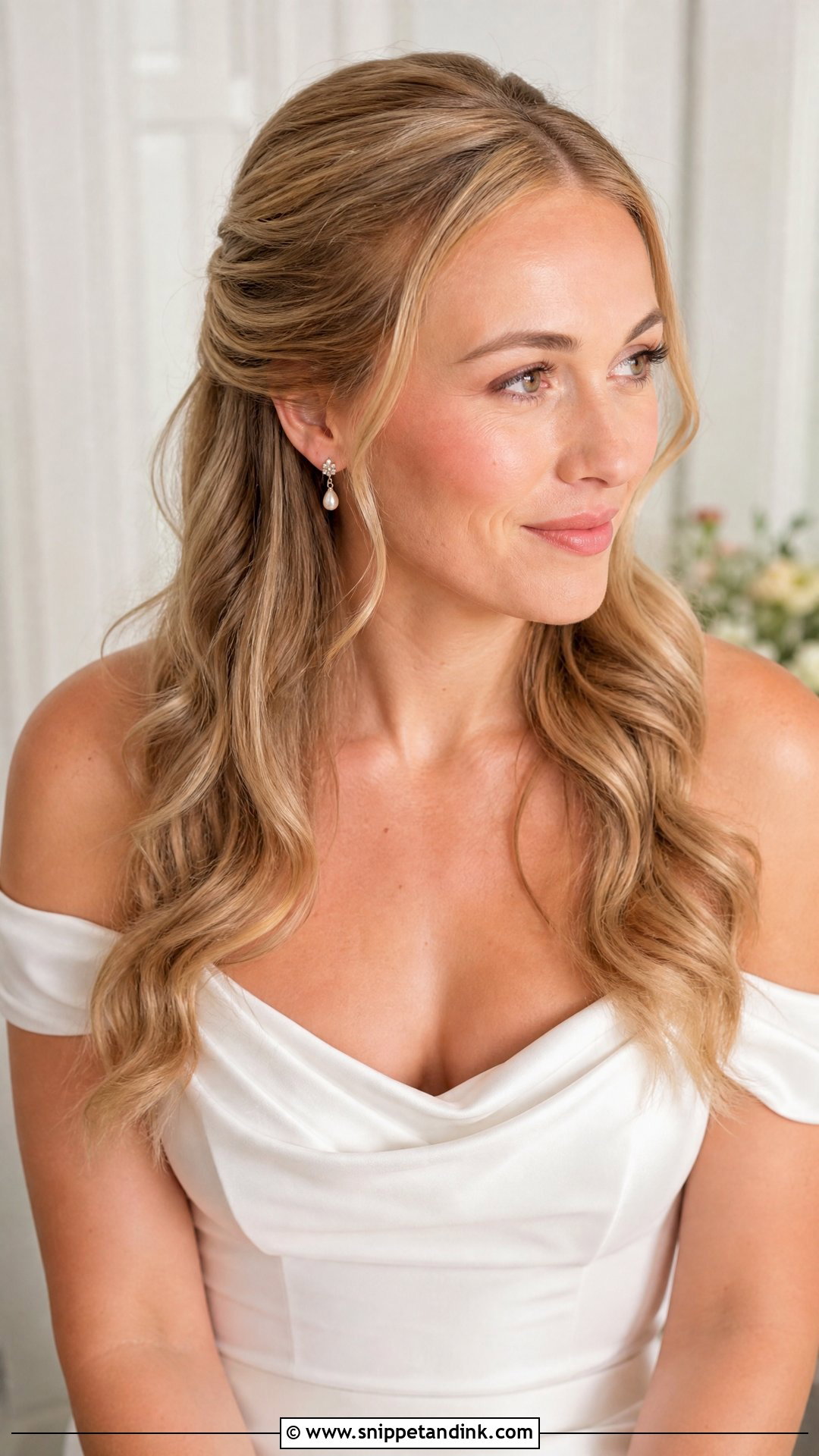
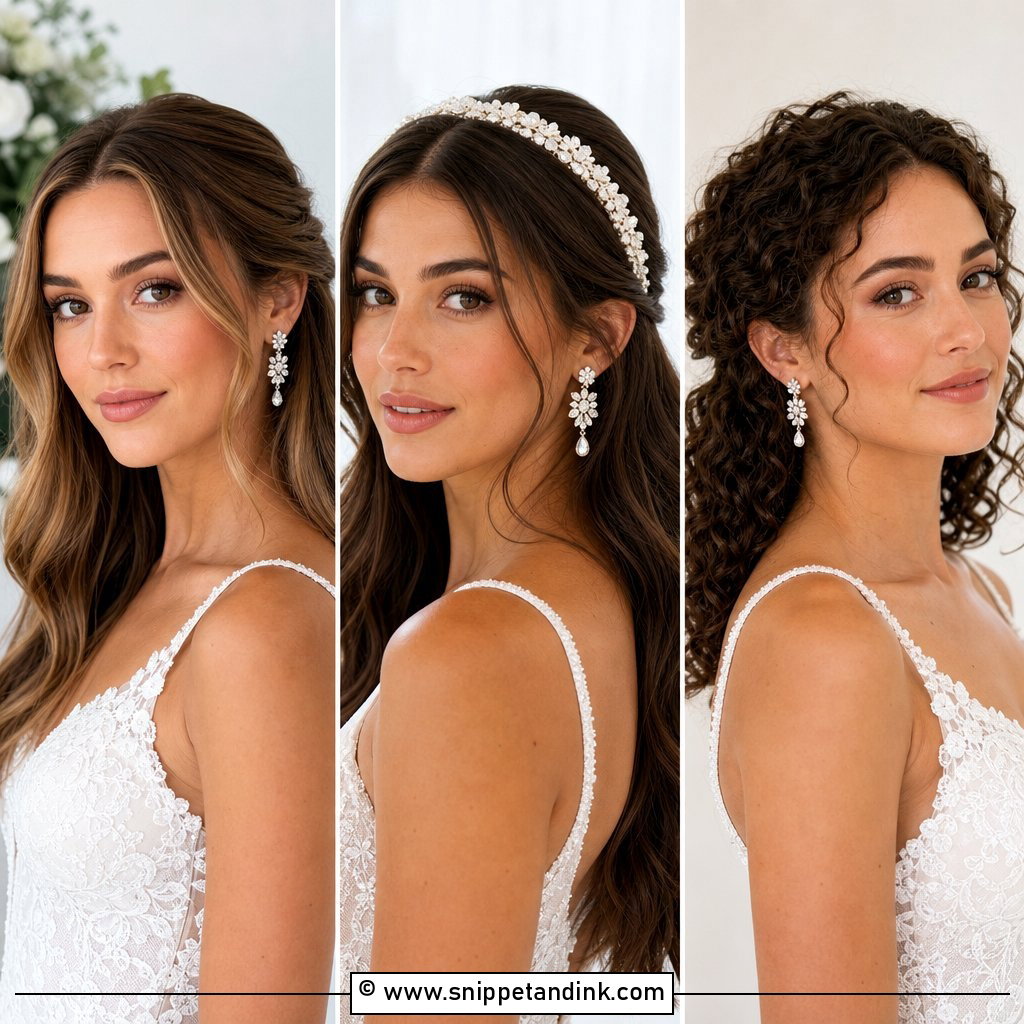
Half up waves give you hair down while the top and sides stay controlled. Tucking the front behind the ears keeps strands off your lipstick and lashes in close-ups, and frames earrings and a veil nicely. It suits medium to long hair, with loose, brushed or soft curled lengths. The weak point is the join at the back where the side sections meet. I secure them with a small clear elastic hidden under the top layer, then pin over it, so the tuck has something to pull against.
5. Bridal Hair Behind Ears With Center Part
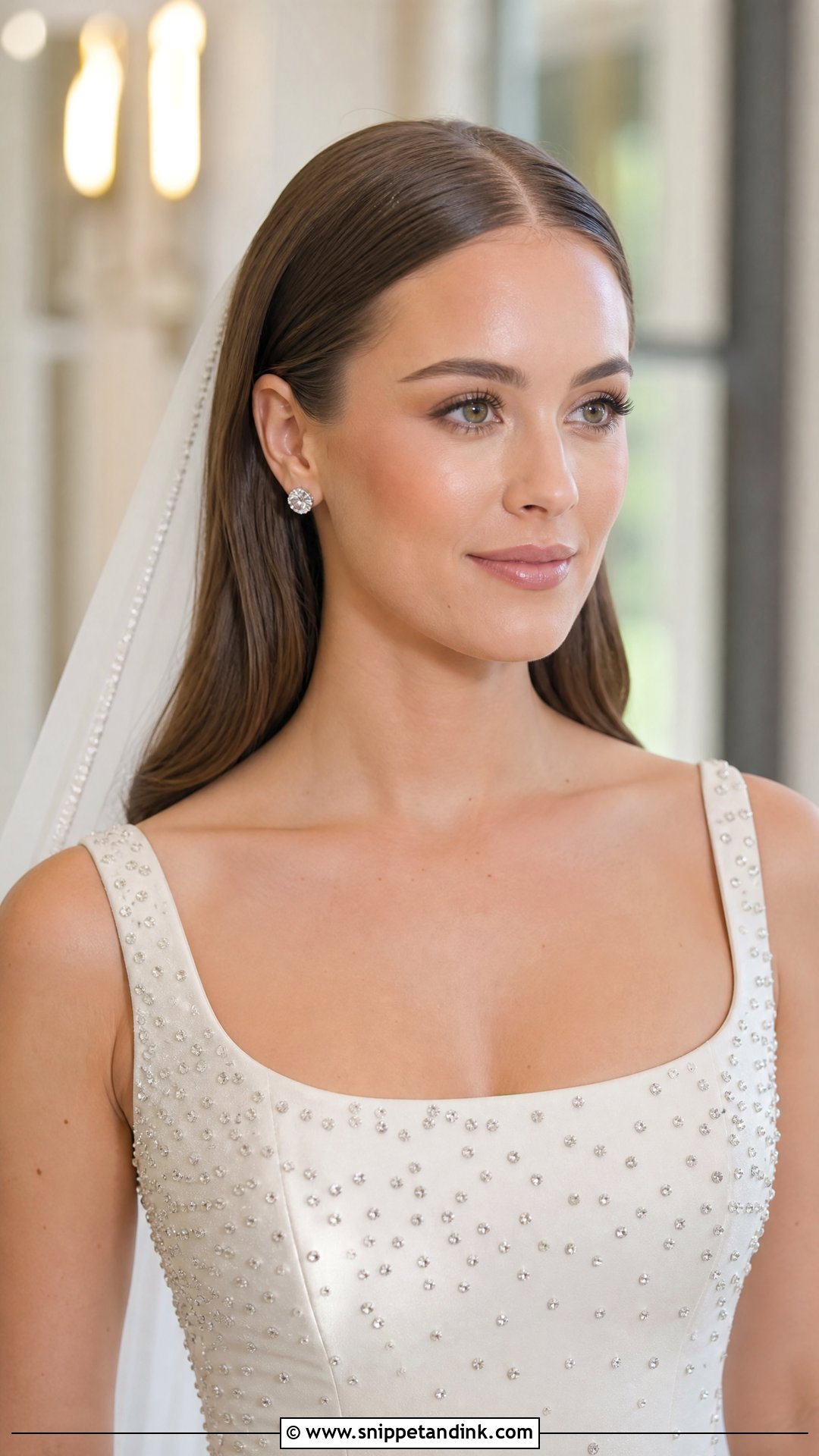
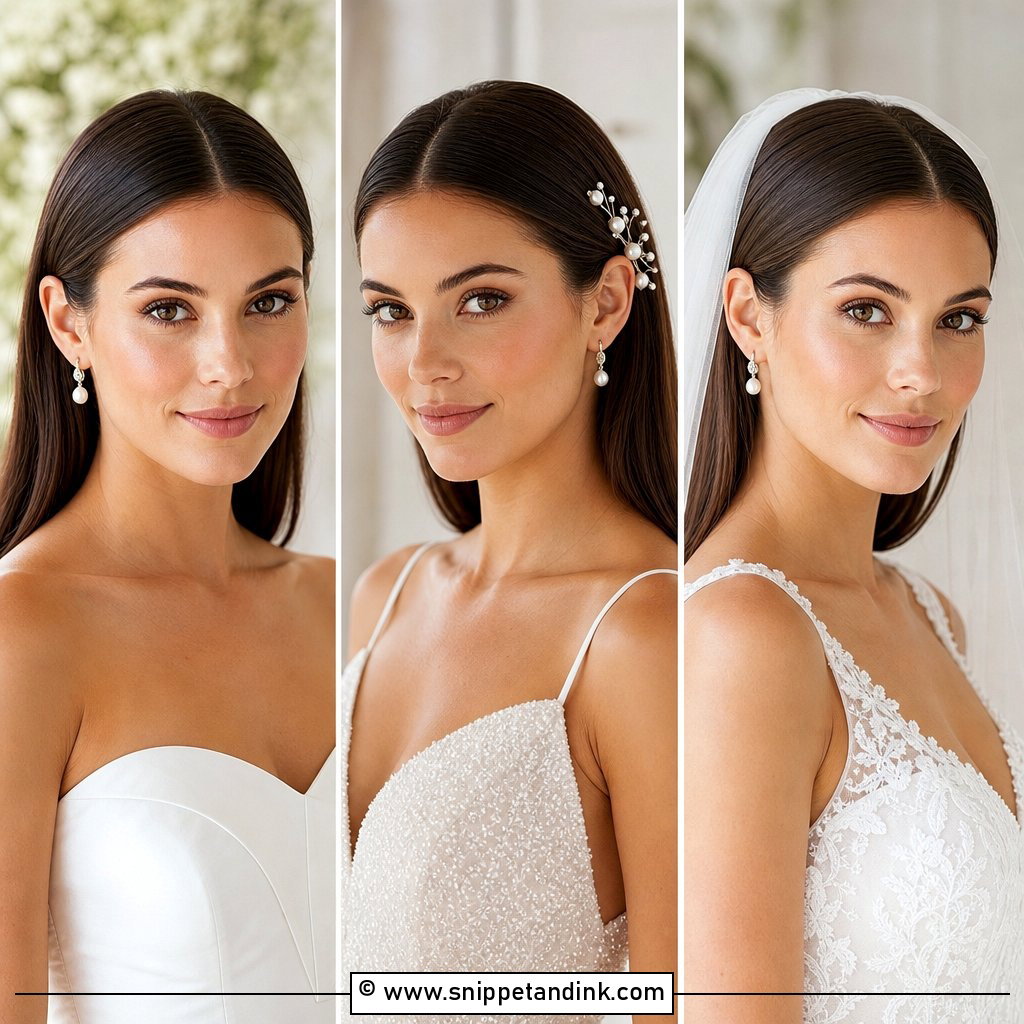
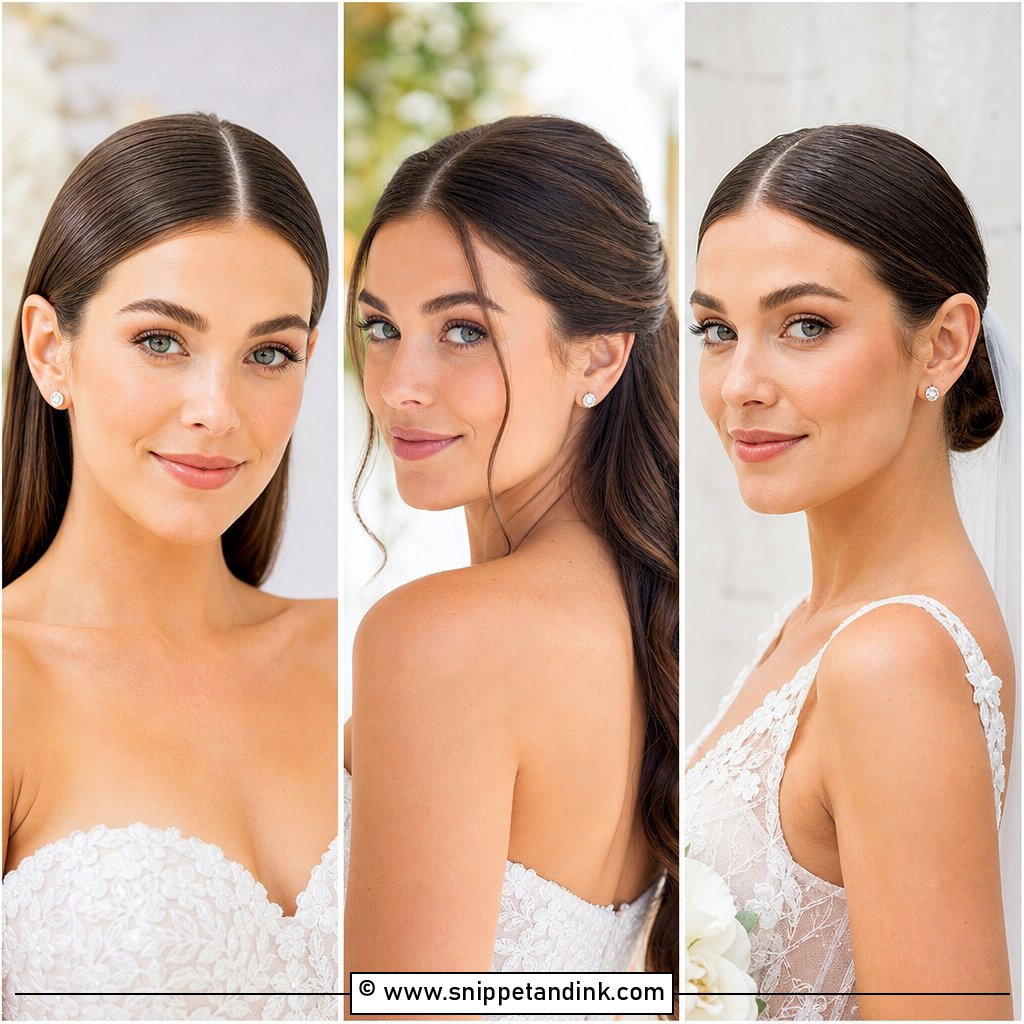
A center part with both sides tucked is symmetrical and very modern, and it works whether the hair is down, in a bun or in a ponytail. Nothing competes around the cheeks or jaw, so statement earrings can carry the look. Here’s what makes it bridal instead of everyday: shine, a perfectly straight part and polished ends. I set the part with a tail comb and a little gel at the root, finish with a light serum, and hide a pin behind each ear. A crooked part is the first thing a camera finds.
6. Bridal Hair Behind Ears With Side Part Waves
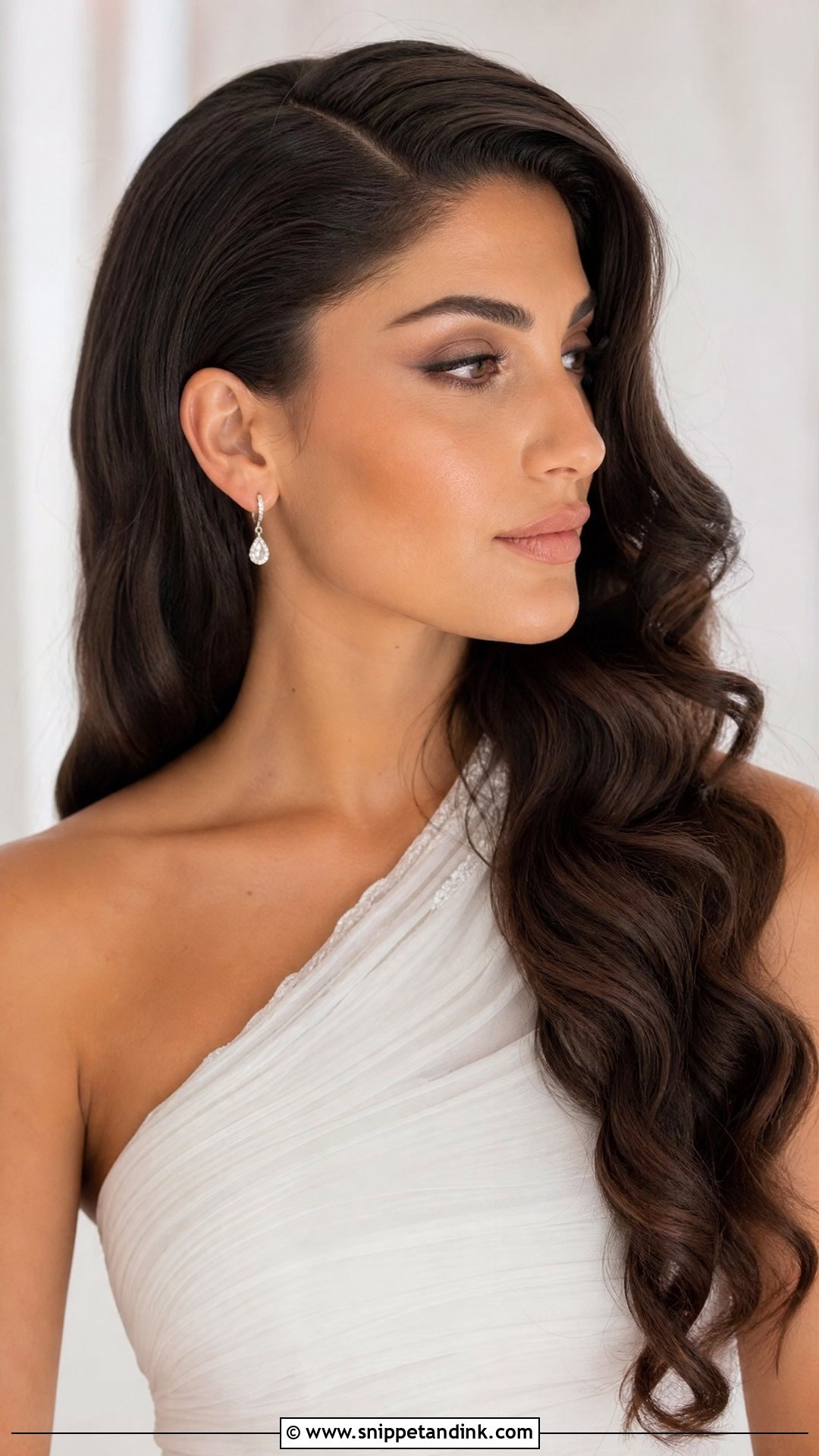
Side part waves give movement and shape. I usually tuck the lighter side and let the heavier side fall with volume, which balances the face and suits one-shoulder, off-shoulder and thin-strap gowns. The waves add softness at the cheek without hiding your features. On the tucked side, I keep the hair smooth and pin it at the nape too, because the weight of the fuller side pulls the whole head of hair across over a few hours. The waves can be loose or sculpted for a formal ceremony.
7. Bridal Hair Behind Ears With Straight Hair
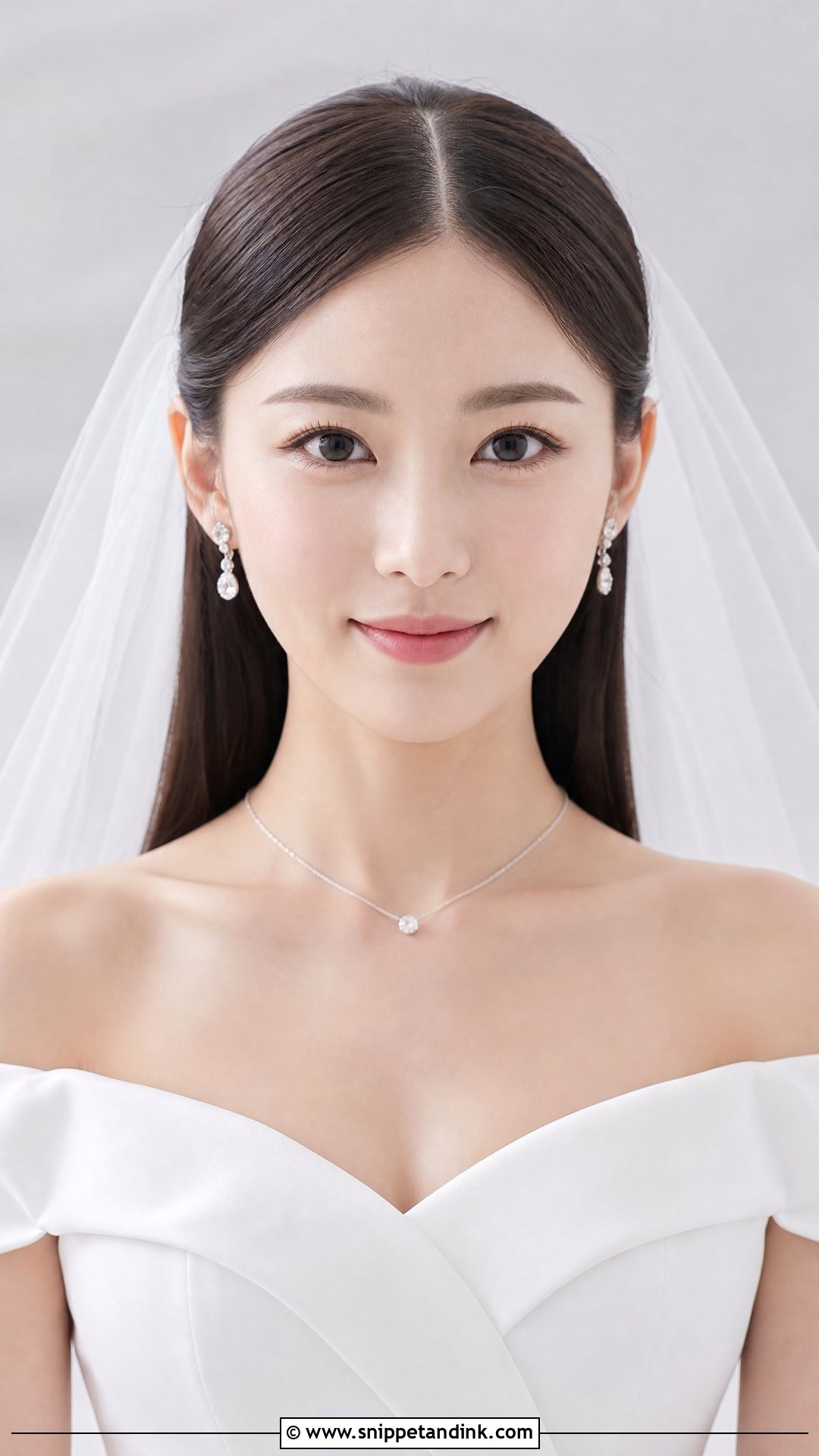
Straight hair tucked behind the ears is minimal but bold. The finish needs to look glossy and deliberate rather than flat, which is harder than it sounds: straight hair shows every kink, frizz and pin. I press it in fine sections with a shine product and leave the ends blunt, softly bevelled or slightly turned in. A precise center part gives a high-fashion feel; a soft side part relaxes it. The tucked sections get hidden pins so the front stays smooth all day, and I avoid tucking freshly heated hair, which kinks into a dent that won’t brush out.
8. Bridal Hair Behind Ears With Loose Curls
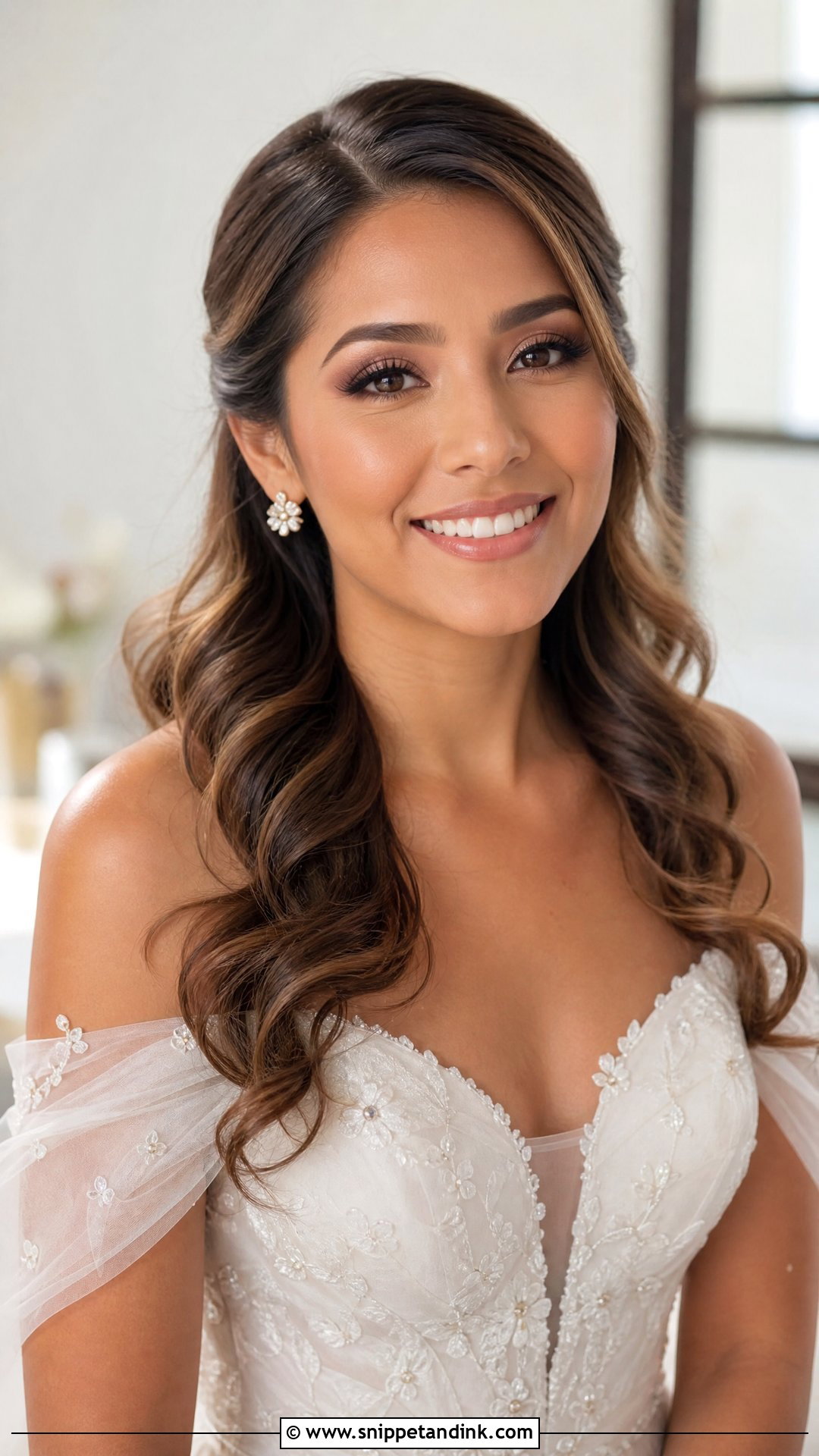
Loose curls behind the ears give volume and softness while keeping your face open for makeup, earrings and the veil. For a modern effect, start the curl at mid-length and keep the roots smooth. Tuck both sides for neatness or just one for some asymmetry. Curls that start high tend to bulge forward around the ear and spring free of the tuck, which is why I’d rather begin lower. With a good hold product, this style copes well outdoors.
9. Bridal Hair Behind Ears With Low Ponytail
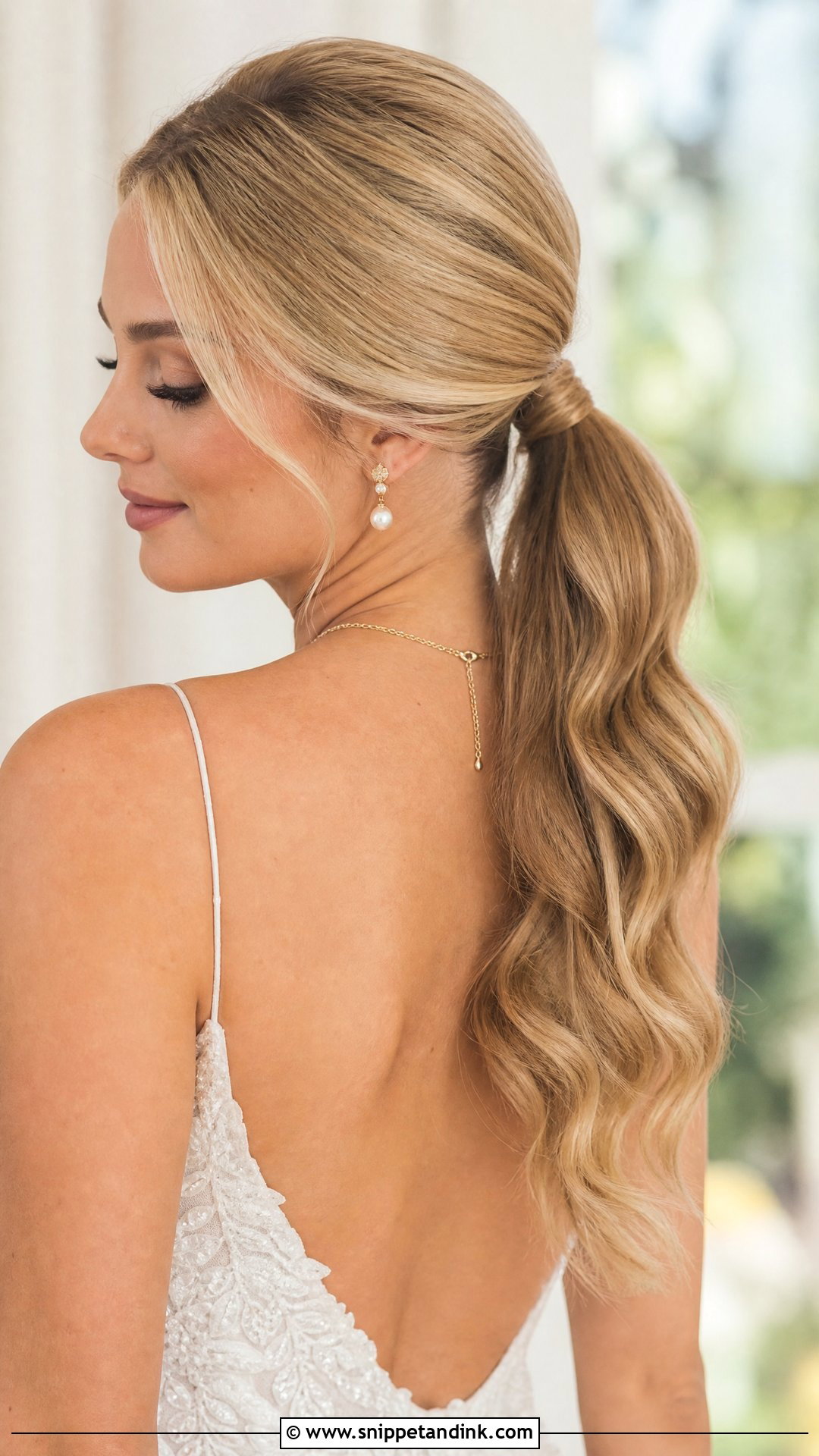
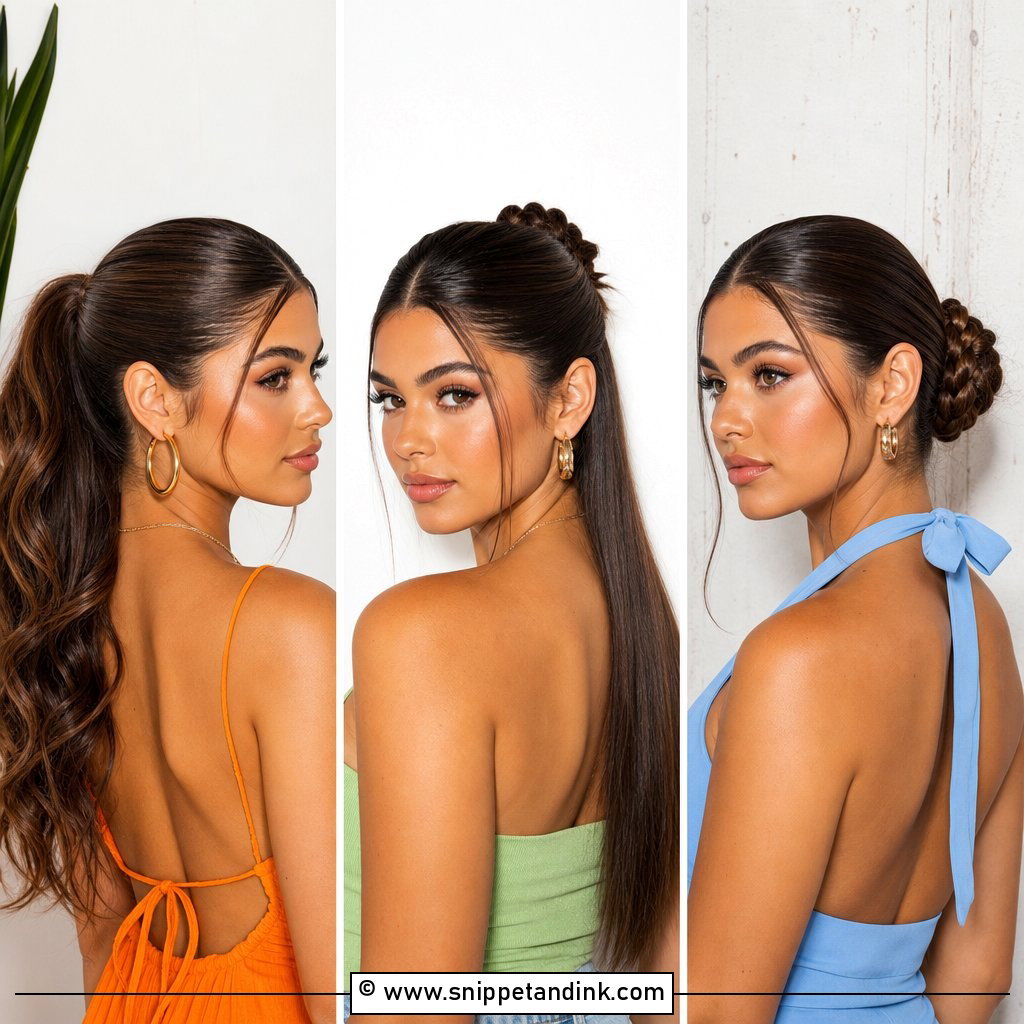
A low ponytail with tucked sides is comfortable and controlled, and it shows the back of an open-back gown while still giving length. The front can be sleek with a center part, waved with a side part or lifted at the crown. I wrap a strand around the elastic and pin it underneath. The key detail is tucking first and then gathering, so the hair around the ear is caught in the ponytail and can’t drift forward. Pearl pins or a satin bow soften it.
10. Bridal Hair Behind Ears With Textured Bun
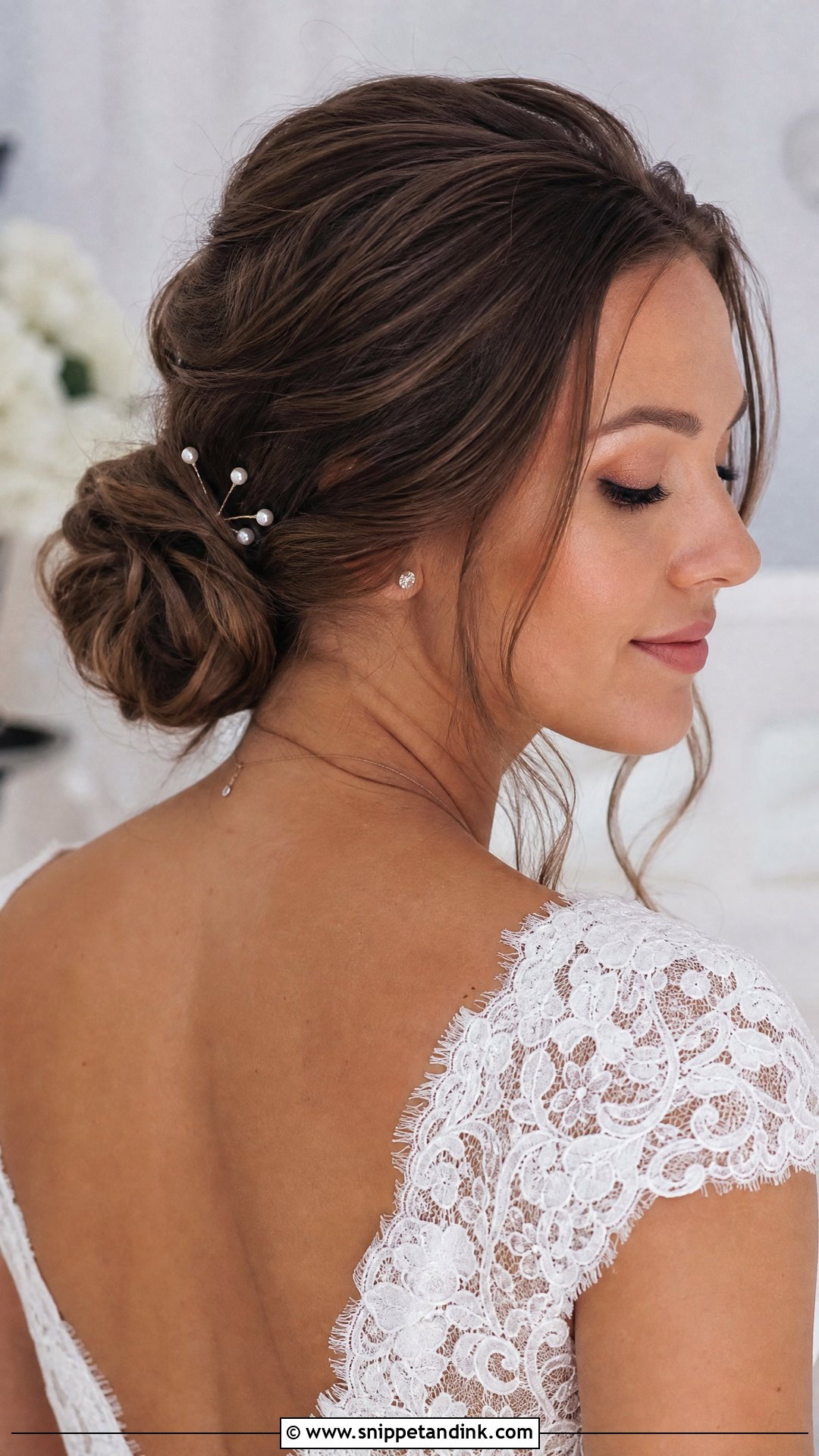
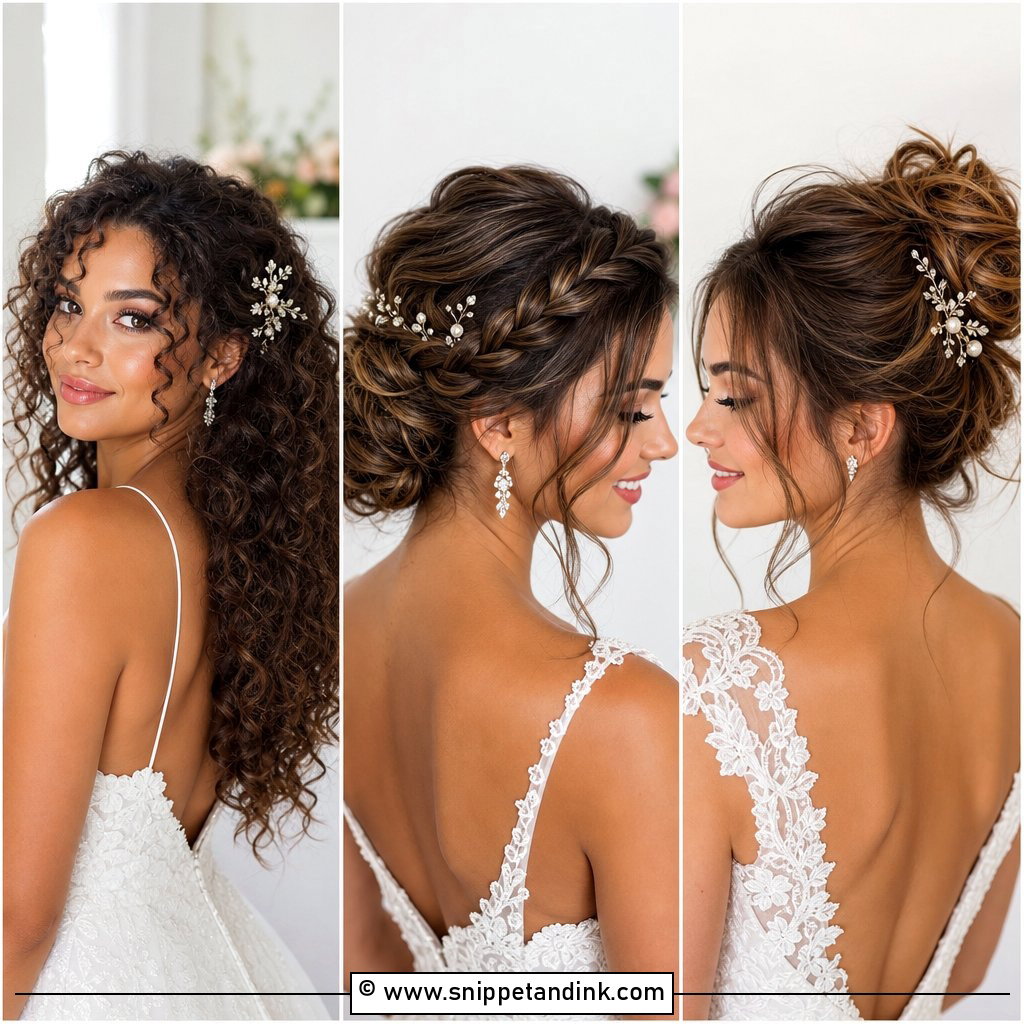
A textured bun with a clean, tucked front gives you polish at the face and softness at the back. It suits brides who don’t want a perfectly slick updo but do want their hair off the face. The bun can sit low or a little higher, depending on the veil and neckline. I wave the whole head before pinning, because waved hair has the grip and volume the bun needs. Pull the bun apart gently, but leave the area around the ears neat; that contrast is what makes the style look intentional.
11. Bridal Hair Behind Ears With Short Bob
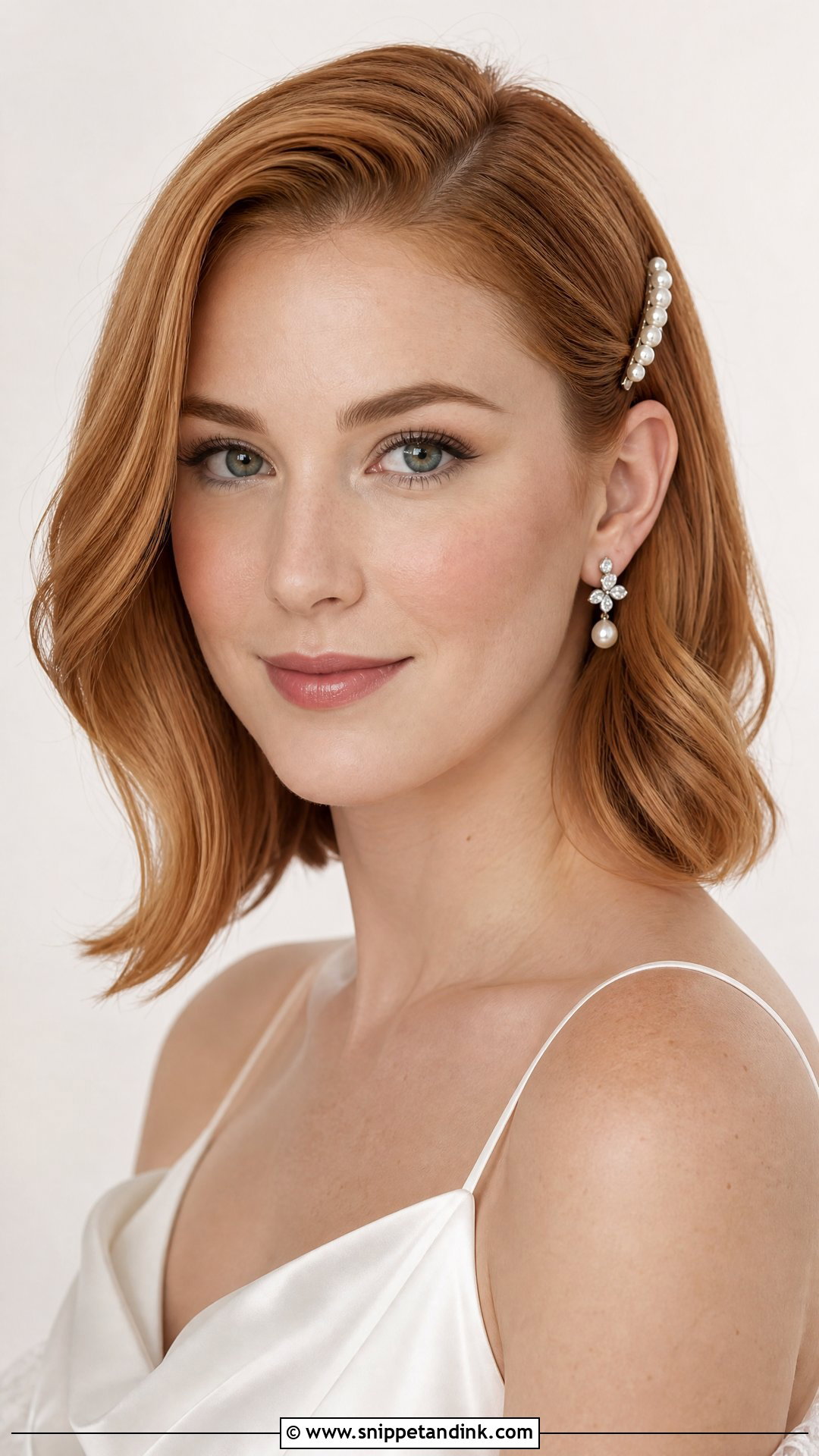
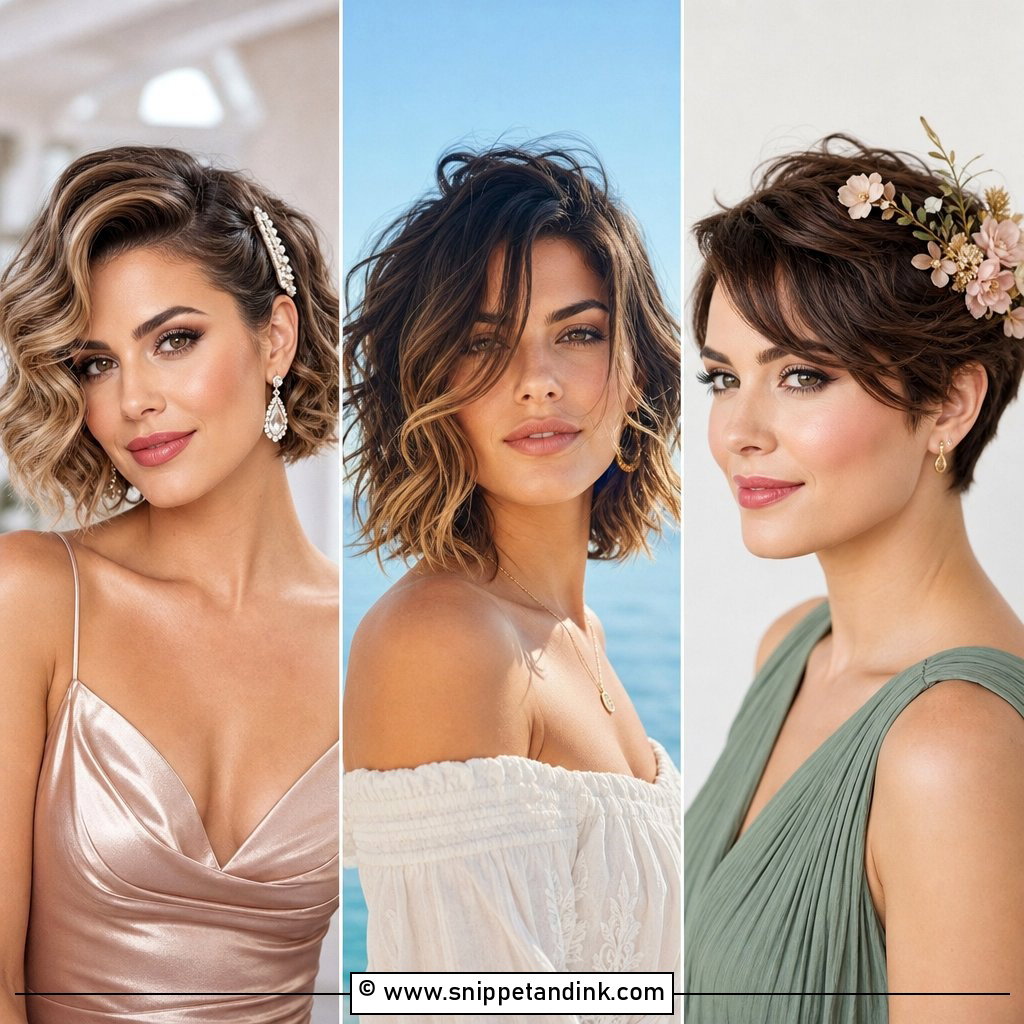
A short bob tucked behind the ears can look very bridal with shine and shape, and it saves you from extensions or a complicated updo. It suits chin-length and jaw-length hair, styled sleek, softly waved or curved under. Short hair is springier than long hair, so tucks pop out more easily. I use a tiny amount of pomade on the section before tucking and pin it with a pin that matches your hair color exactly. A slim headband, pearl clip or small comb makes it feel special.
12. Bridal Hair Behind Ears With Lob Waves
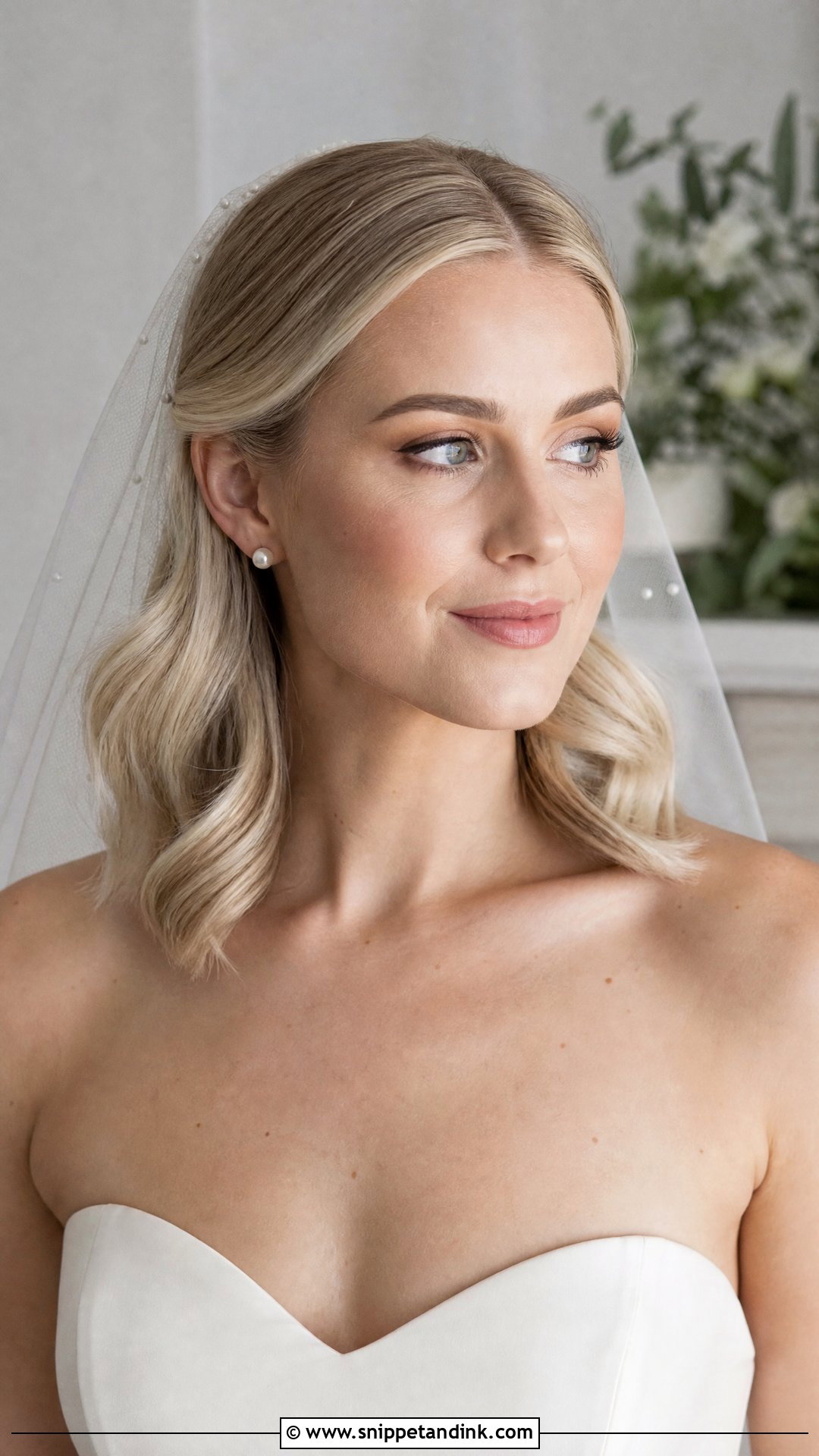
Lob waves tucked behind the ears are ideal for medium-length hair. There’s enough length to wave and not so much that the style feels heavy. Strapless dresses, square necklines and simple veils all sit well with it. Both sides tucked looks clean and modern; one side tucked feels relaxed. If your hair naturally falls forward, hidden pins behind the ears do a lot here, and I’d also pin a little lower, at the nape, so the weight of the waves can’t drag the tuck loose.
13. Bridal Hair Behind Ears With Veil
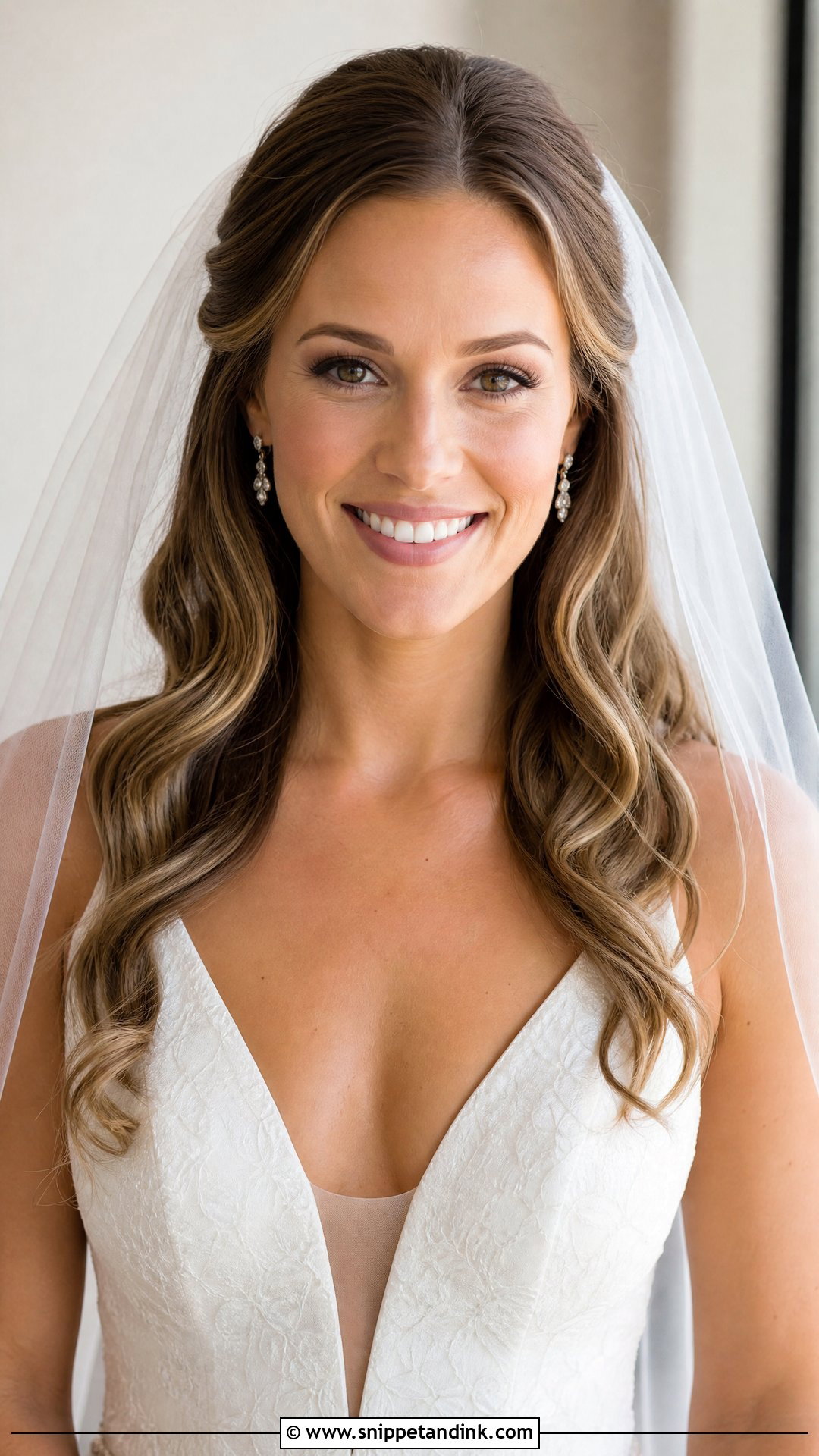
A veil over tucked hair looks right because the face stays clear and the veil adds softness from behind. It works with waves, buns, ponytails and half-up styles. With hair down, the comb sits at the crown or just below; with a bun, above for a classic look or under for a softer drape. Test this at your trial, because the veil’s weight pulls backward and can loosen tucks. I put the veil in and then re-pin behind each ear, so the comb and the tuck aren’t relying on the same pins.
14. Bridal Hair Behind Ears With Pearl Clips
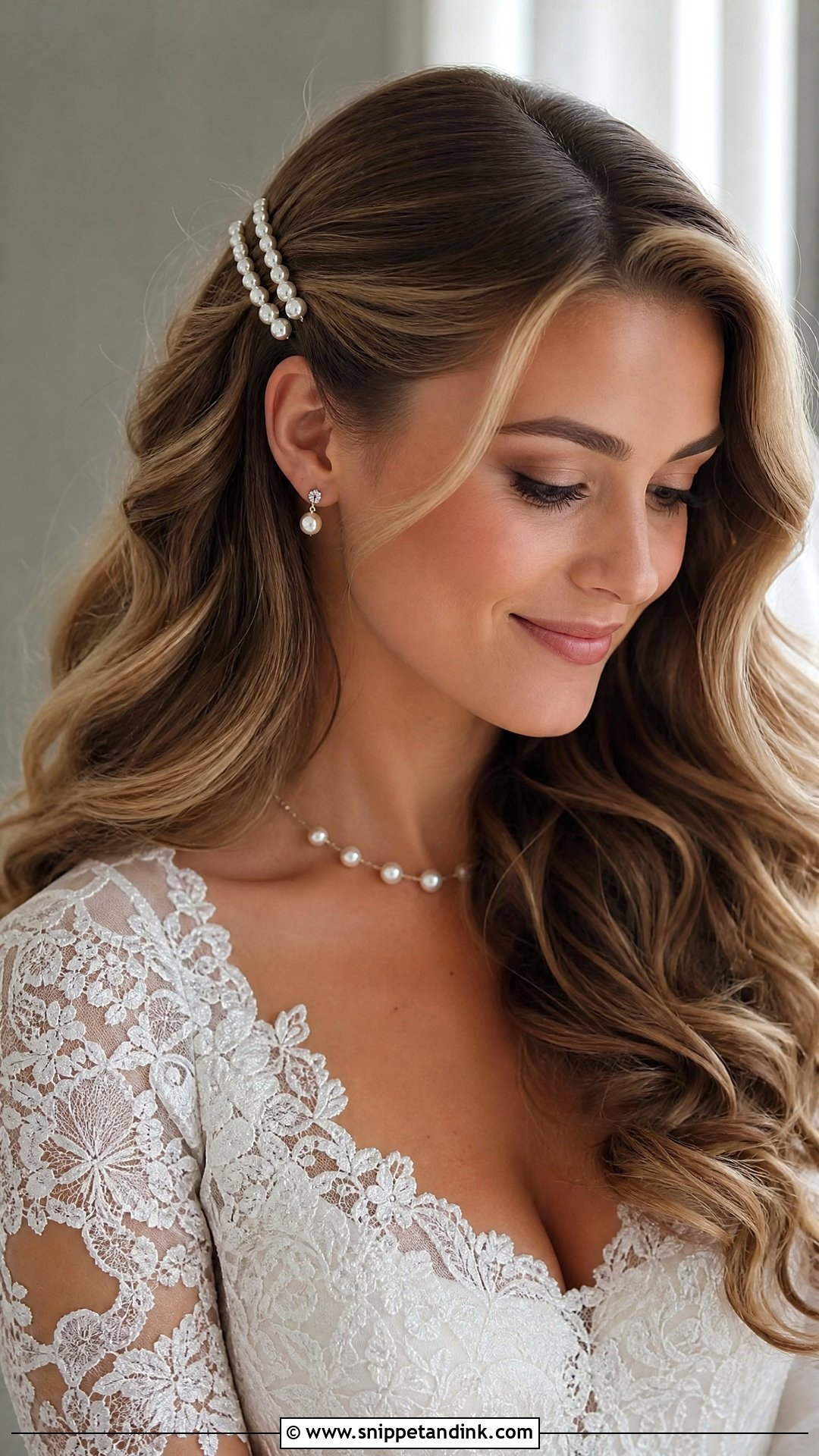
Pearl clips add detail to tucked hair without making it busy. Placed just above or behind the ear, they do a practical job too, holding the tuck while decorating it. They suit waves, a bob, a lob or a low bun. Small pins look delicate, one larger clip becomes a focal point. Keep the hair around them smooth so the pearls stand out. I always clip into a small amount of hair rather than skimming the surface, because a clip in only the top layer slides off in an hour.
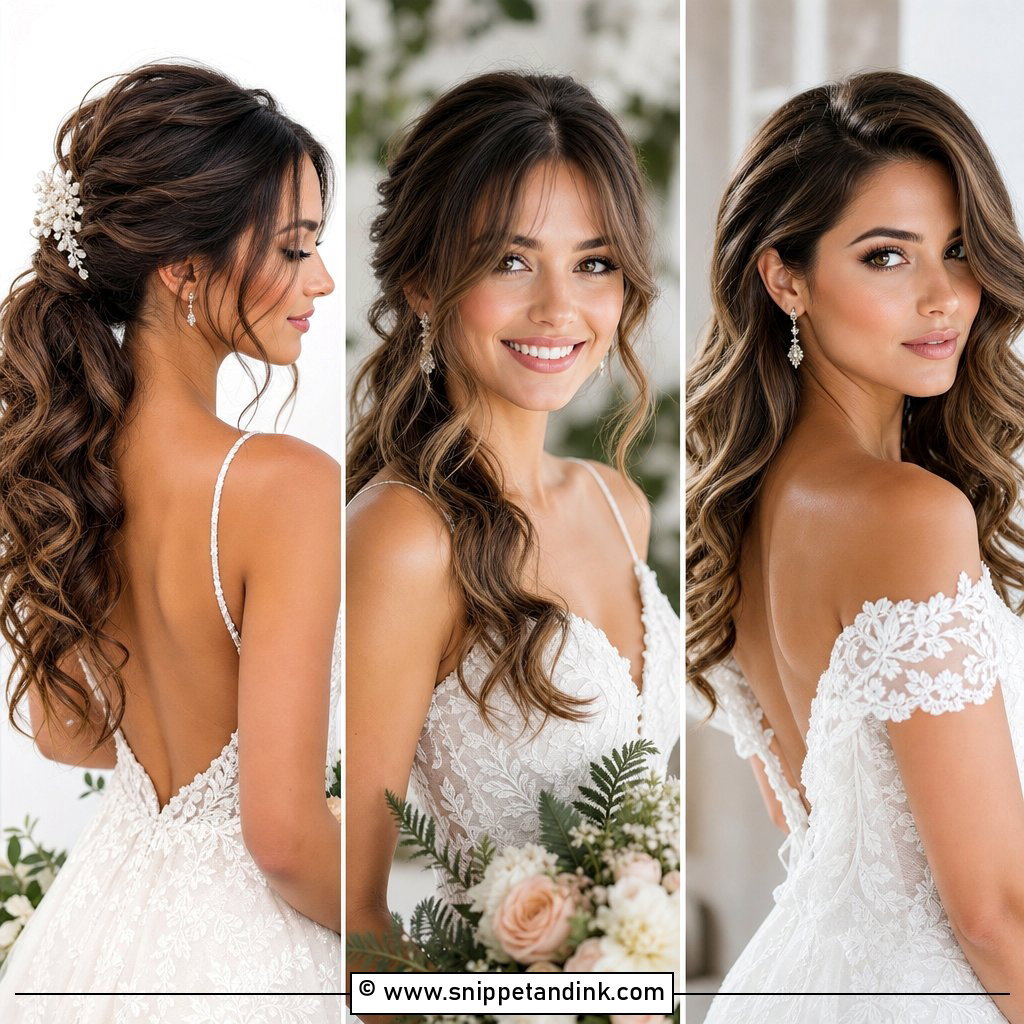
15. Bridal Hair Behind Ears With Natural Curls
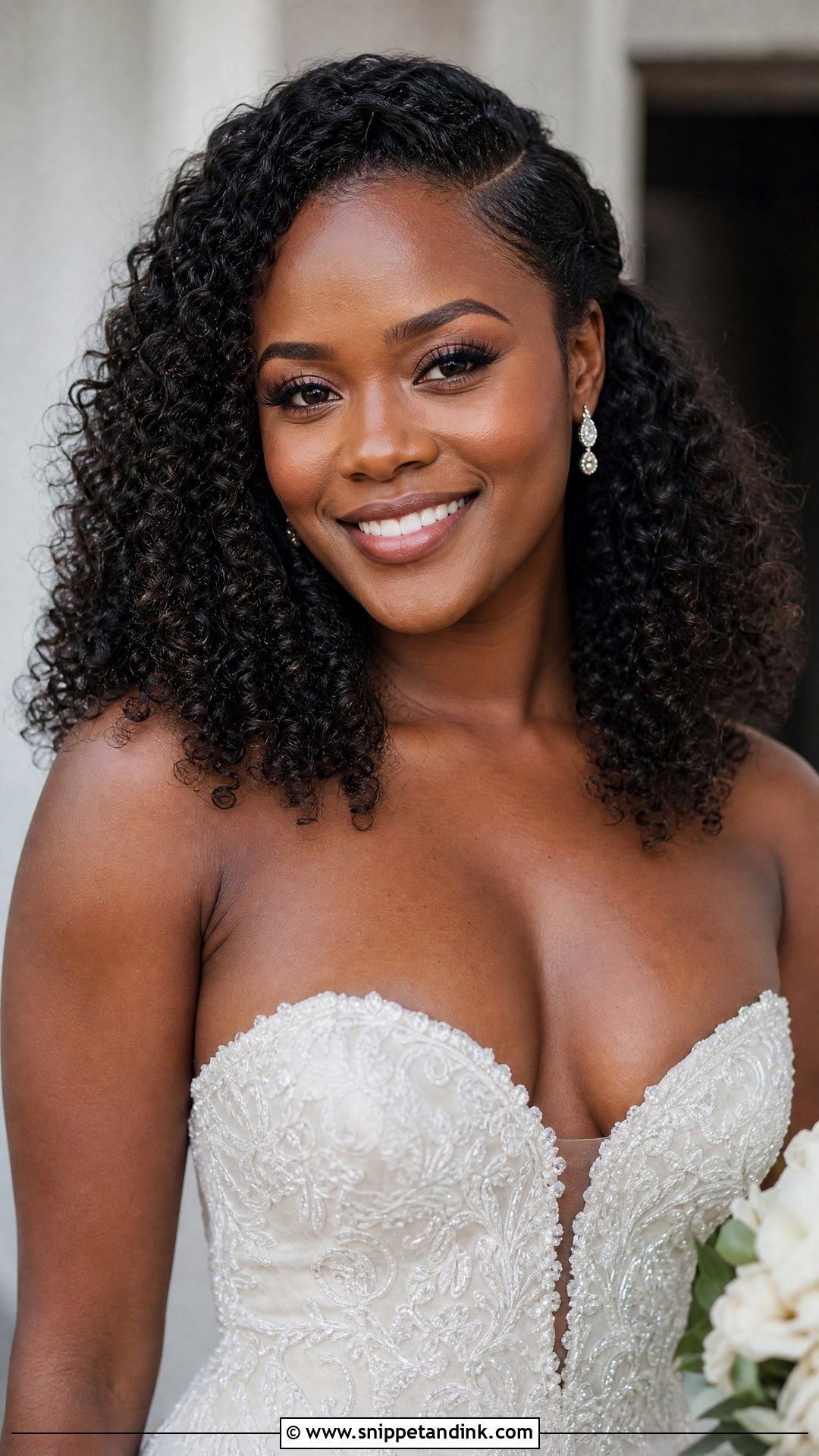
Natural curls tucked behind the ears look joyful and soft. The aim is to shape the texture so your face stays open while the curls stay full, not to flatten anything. A side part adds volume; a center part balances the face. I define the curls with cream or gel, then pin the sides gently behind the ears without pulling, because tension at the temples flattens the curl pattern right where it shows most. A veil, floral pins or delicate earrings suit it, and it lets you keep your texture while still looking finished.
Why a Tuck Slips Forward and How I Stop It
A tuck fails for three reasons: the hair was tucked while still warm from the iron, there’s nothing for the pin to grip, or the weight below it pulls it out. I let every section cool before tucking. Then I make a small anchor behind each ear, either a pinch of back-combing or a thin braid you’ll never see, and cross two bobby pins into it in an X. If the lengths are heavy, a third pin at the nape takes the strain.
At the trial, I ask the bride to shake her head, laugh and hug me before I call the style done. If a tuck survives that, it will survive a receiving line. If it springs out, I would rather fix the anchor then than send a bridesmaid chasing it with pins all evening.
One more thing changes once the hair is back: your ears and the sides of your neck become part of the makeup. Ask your makeup artist to blend foundation onto the ears and down the neck, and choose earrings you can wear for ten hours, because with nothing covering them, a heavy pair pulling the lobe will be obvious in every photo.
Test the Tuck for a Few Hours Before You Commit
Tucked hair solves several problems at once. It keeps hair off your face, shows your earrings, supports a veil and gives a clean shape in photos. It can be sleek, soft, natural, short, long, up or down, so it isn’t tied to one bridal aesthetic. What it does need is a trial. Test your part, the tuck, your veil, your accessories and the hold, and bring photos from the front, side and back. Then wear it for a few hours and see whether it stays tucked without you touching it.
You'll Like These Ideas:


Leave a Reply