
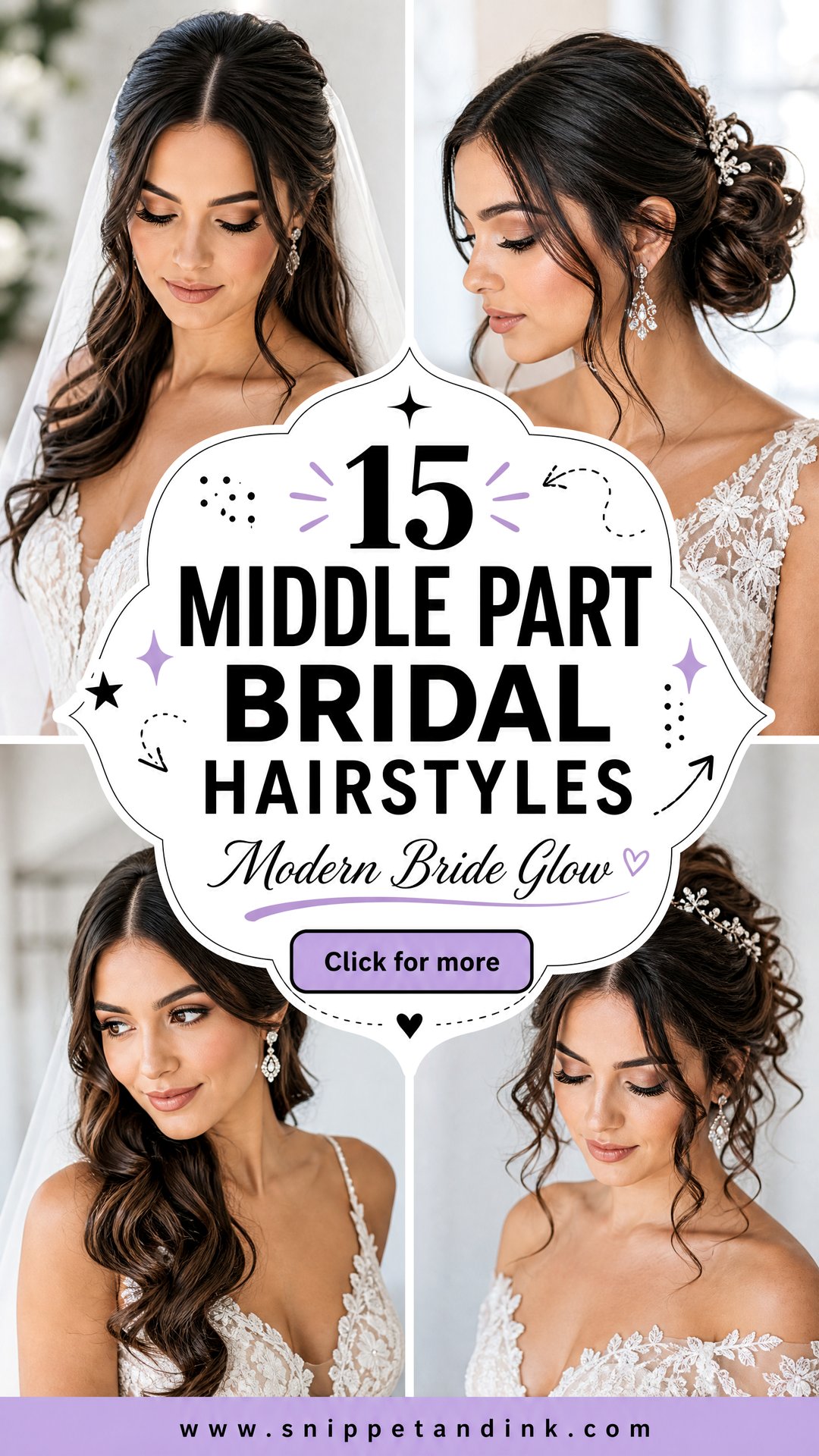
A center part is the most honest parting in hairdressing. It frames the face evenly, makes a bun look cleaner and a ponytail look deliberate, and it hides nothing: not an uneven hairline, not a cowlick, not two weeks of root regrowth. When it suits you, it looks modern and calm under a veil, with pearl pins, floral clips or a tiara. Below are fifteen ways I build bridal hair around a middle part, from sculpted and glossy to soft and loose, plus what I check before I commit a bride to one.
Training a Side Parted Head to Sit in the Middle
If you’ve parted your hair on one side for years, the roots will resist a center part. They lift on the old side and lie flat on the new one, so the part looks wobbly by the afternoon. I ask brides to start wearing the middle part two to three weeks before the wedding.
The fix is in the blow dry. Dry the roots in the opposite direction to how they naturally fall, then comb them back into the center part once they’re dry. Do it every wash. By the trial, the roots will lie much flatter and your stylist won’t be fighting them.
Finding your actual center
Your center is not always the middle of your forehead. I line a tail comb up with the bridge of the nose and draw the part back from there, then check it in a mirror with the bride looking straight ahead. If your face or hairline is a little asymmetric, the part may need to sit a few millimeters off to look centered.
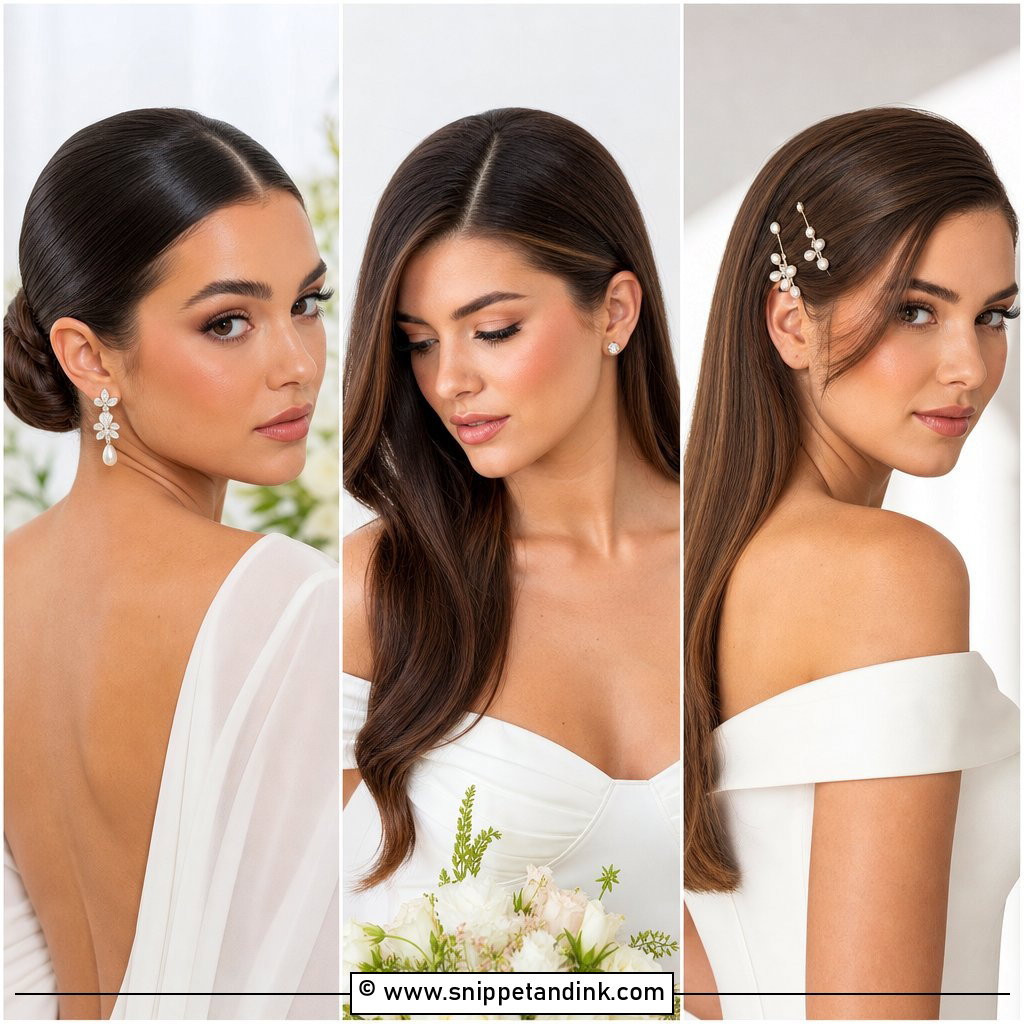
1. Middle Part Bridal Low Chignon
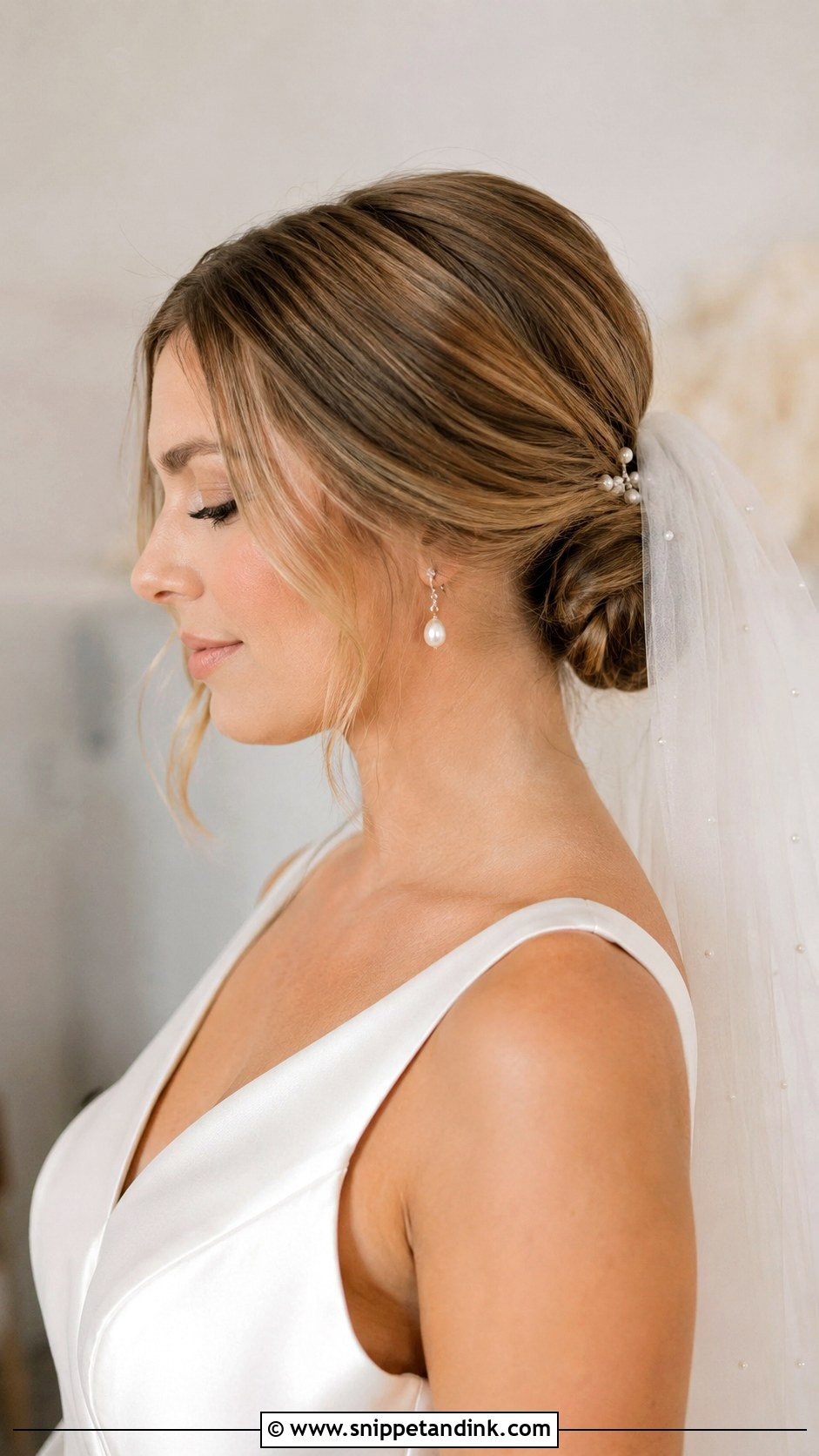
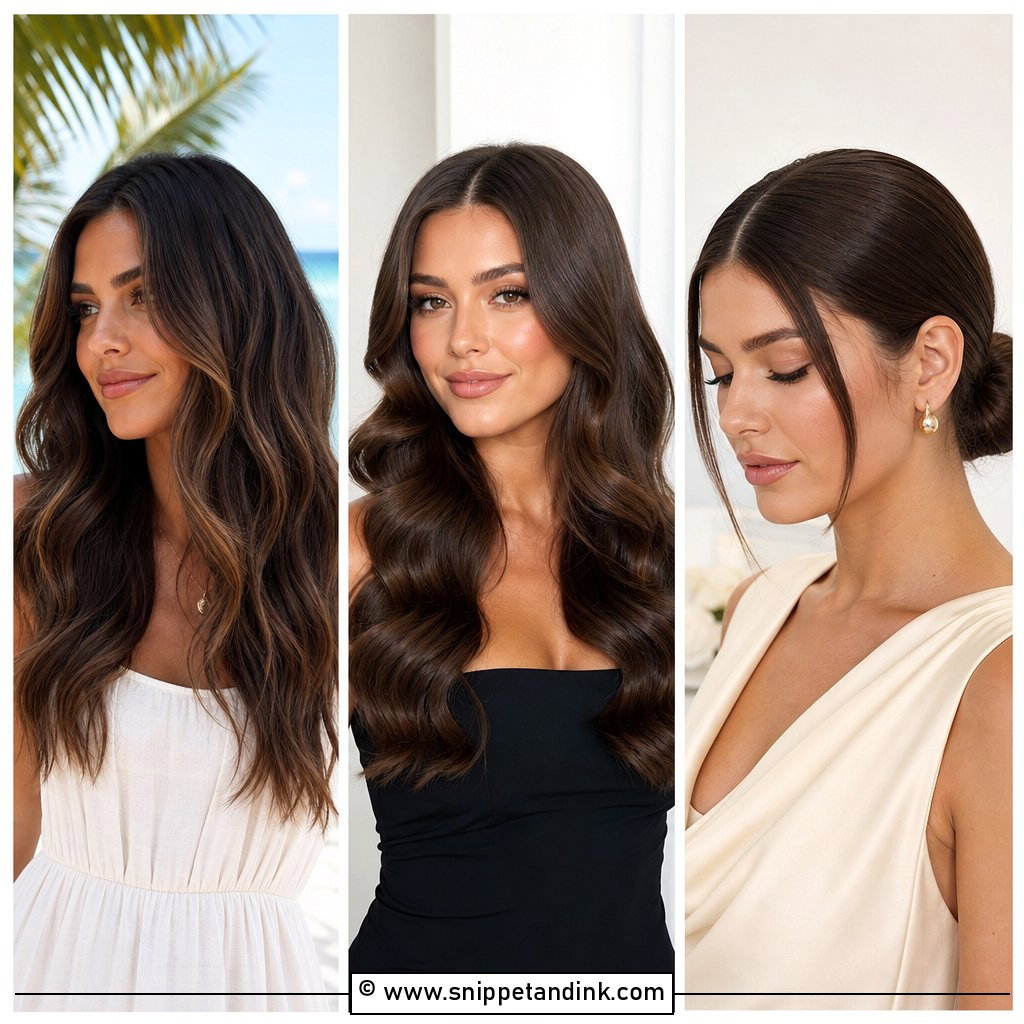
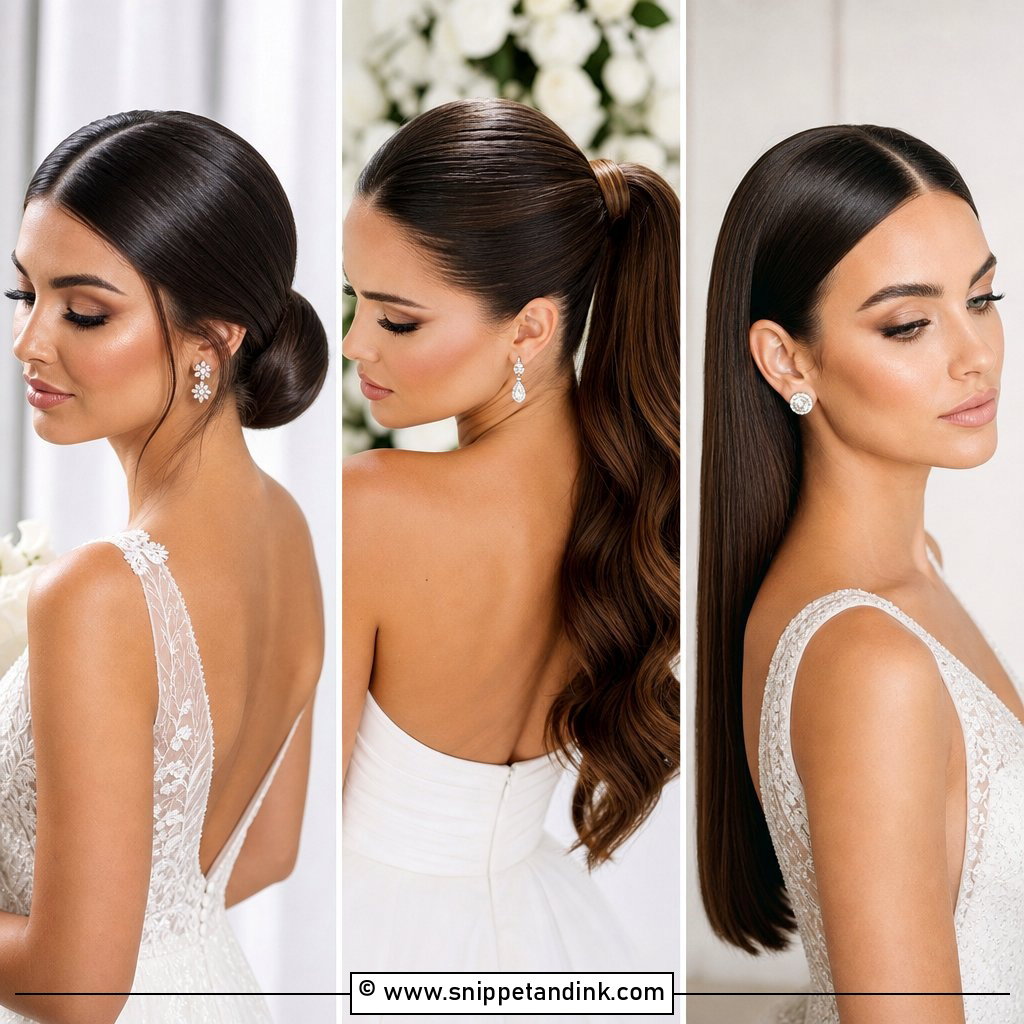
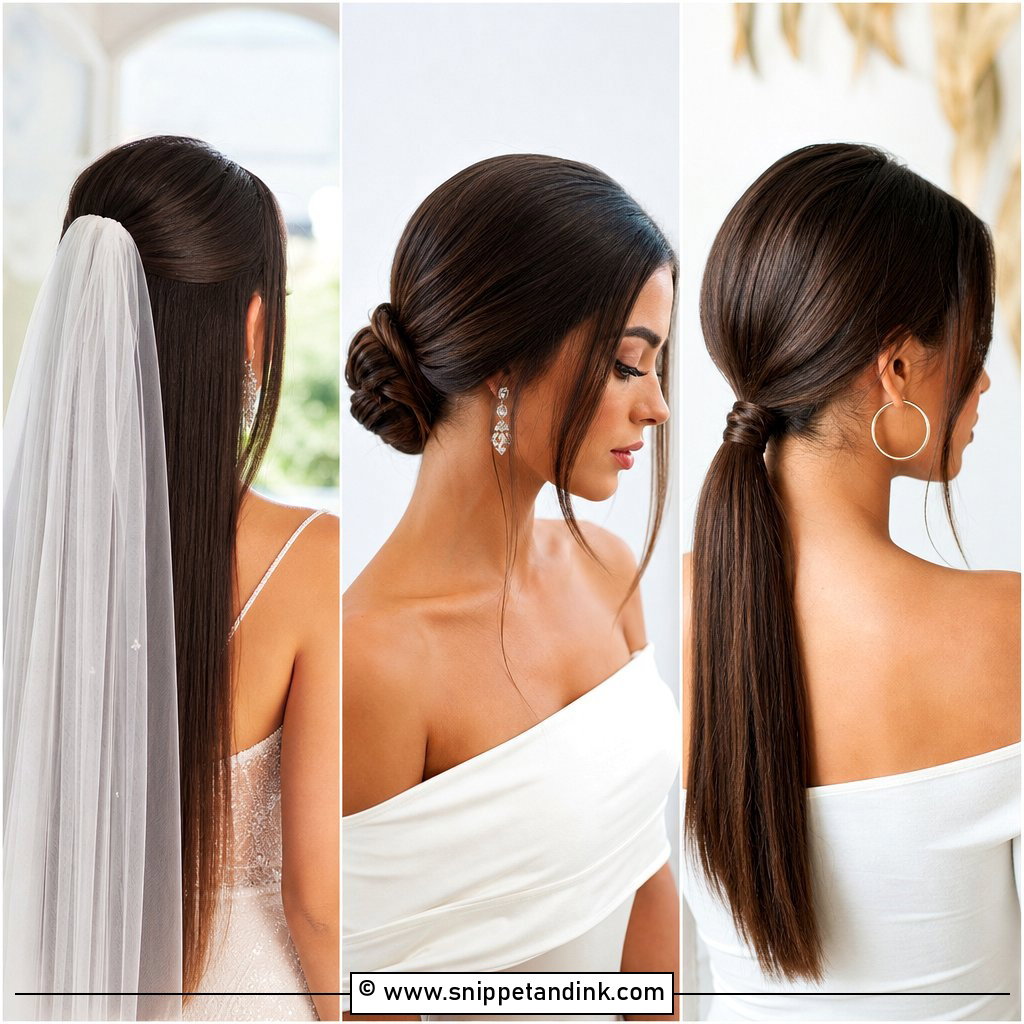
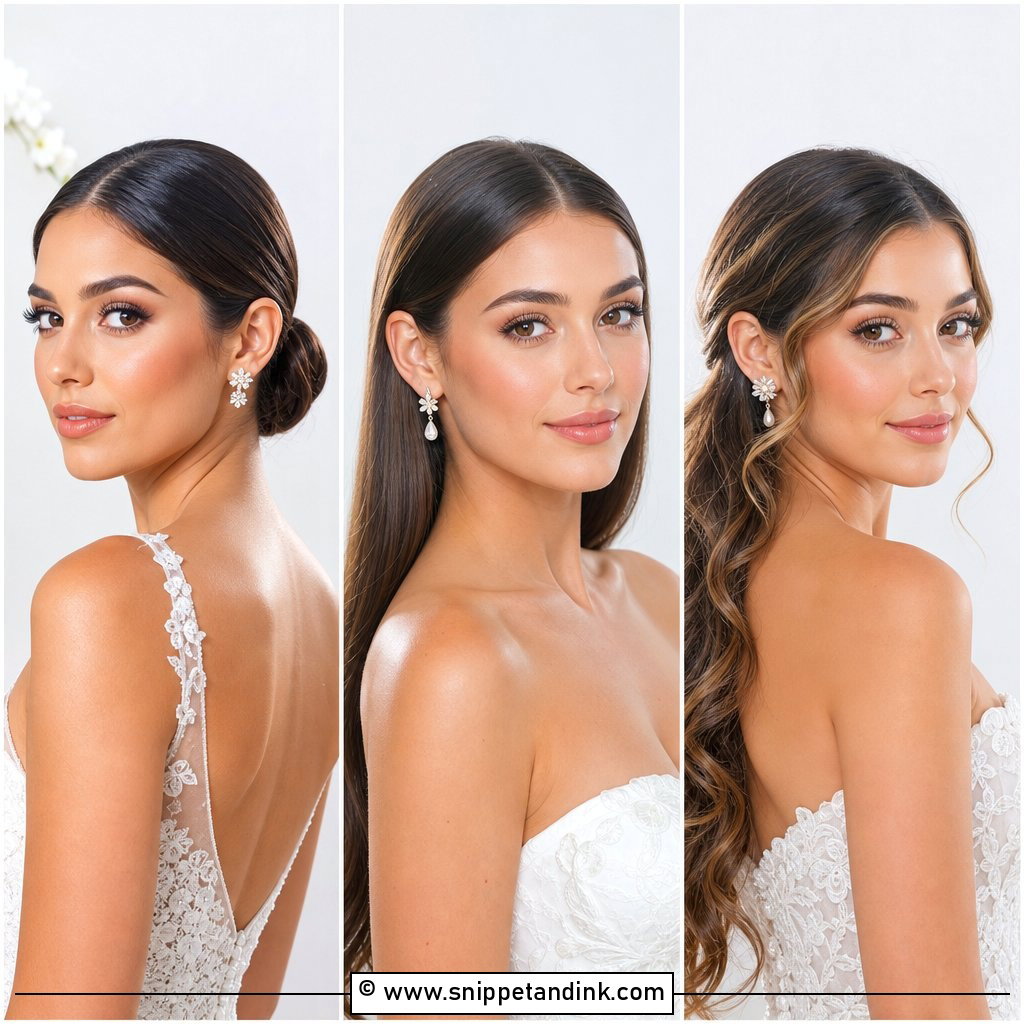
Here’s the first style I’d try on almost anyone who likes a center part. The part gives symmetry, and the bun at the nape leaves the neckline and the back of the dress clear for a veil or earrings. I want a little grip in the hair, so on very silky hair I’ll add a dry texture spray before twisting the bun into place over a crisscross of pins. The finish should be shiny but still soft to the touch; a helmet of spray cracks the first time you hug someone. A delicate comb or pearl pins sit nicely just above it.
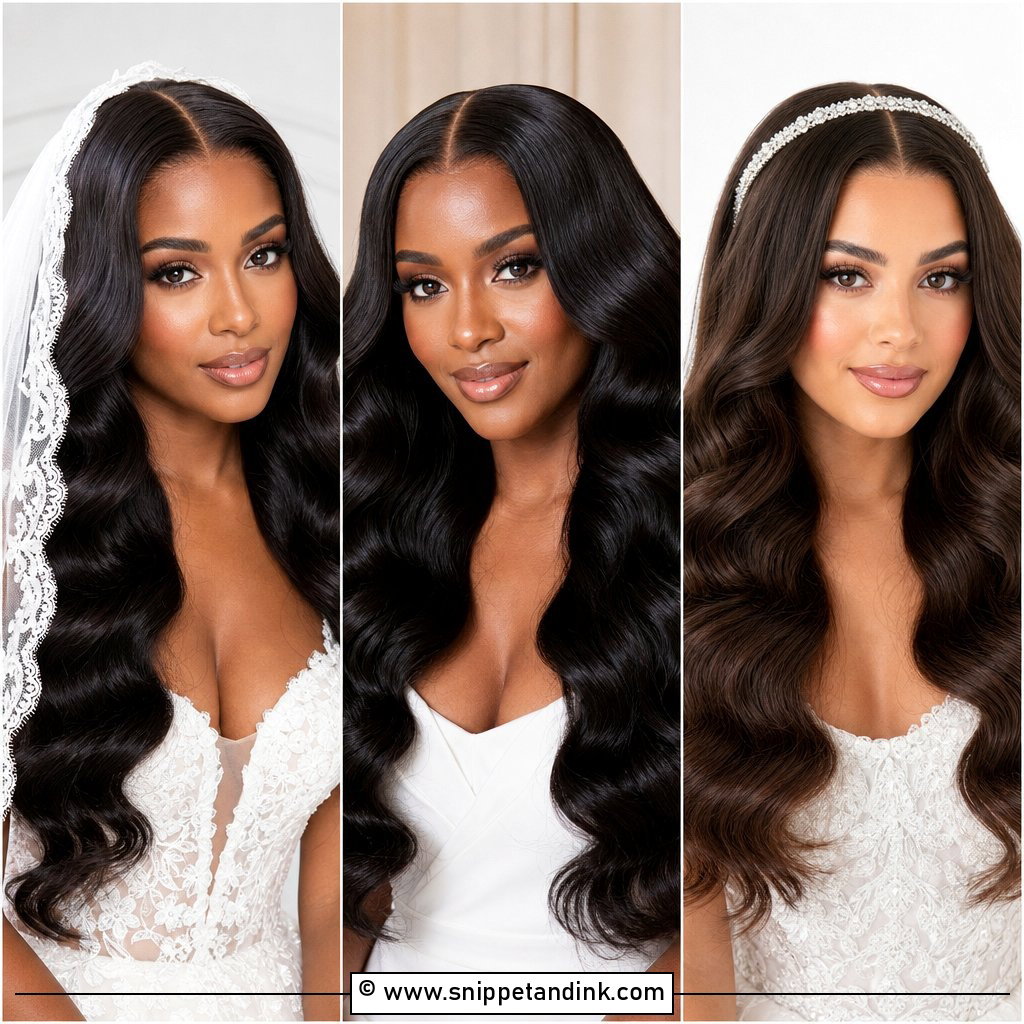
2. Middle Part Bridal Hollywood Waves
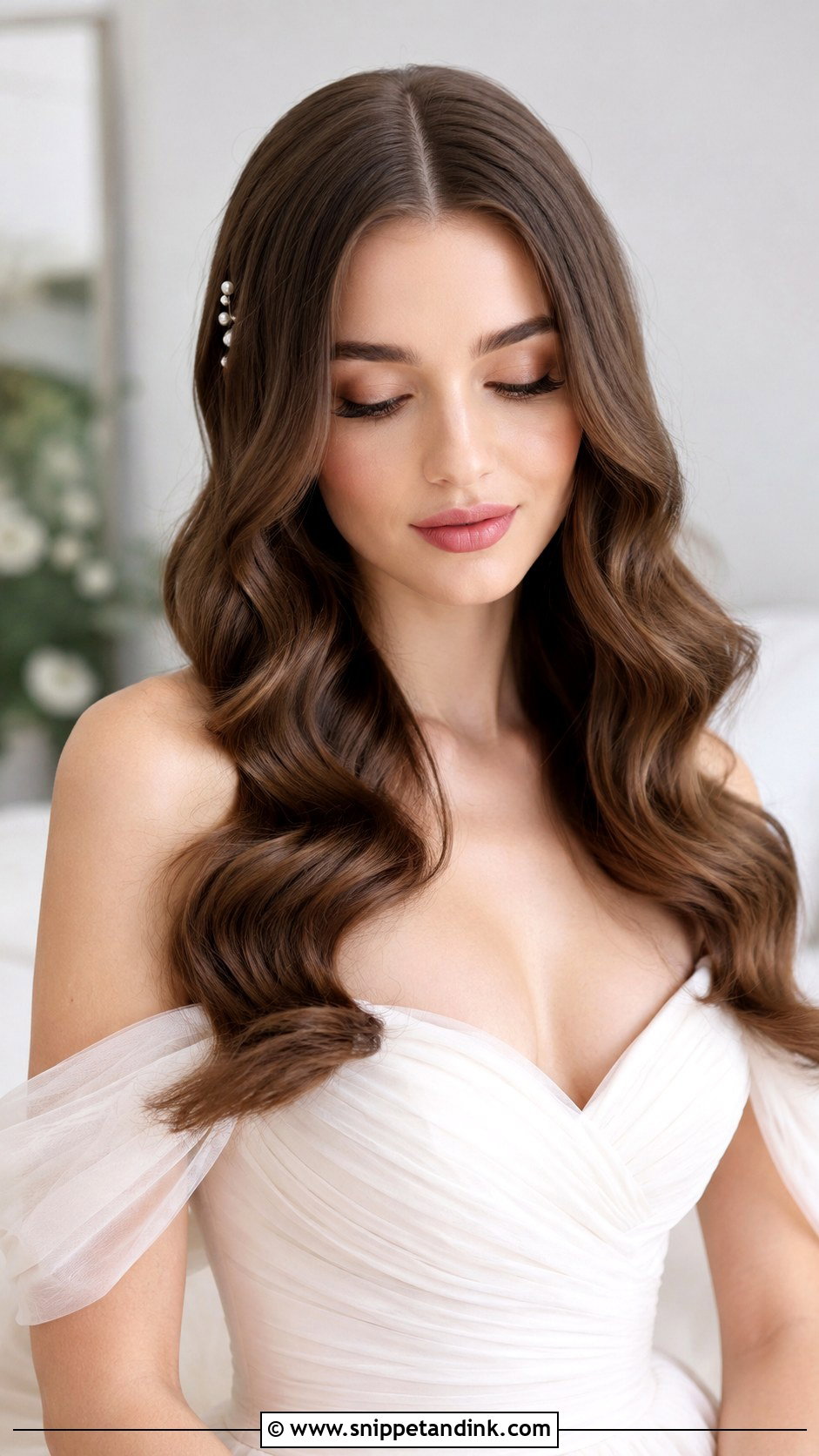
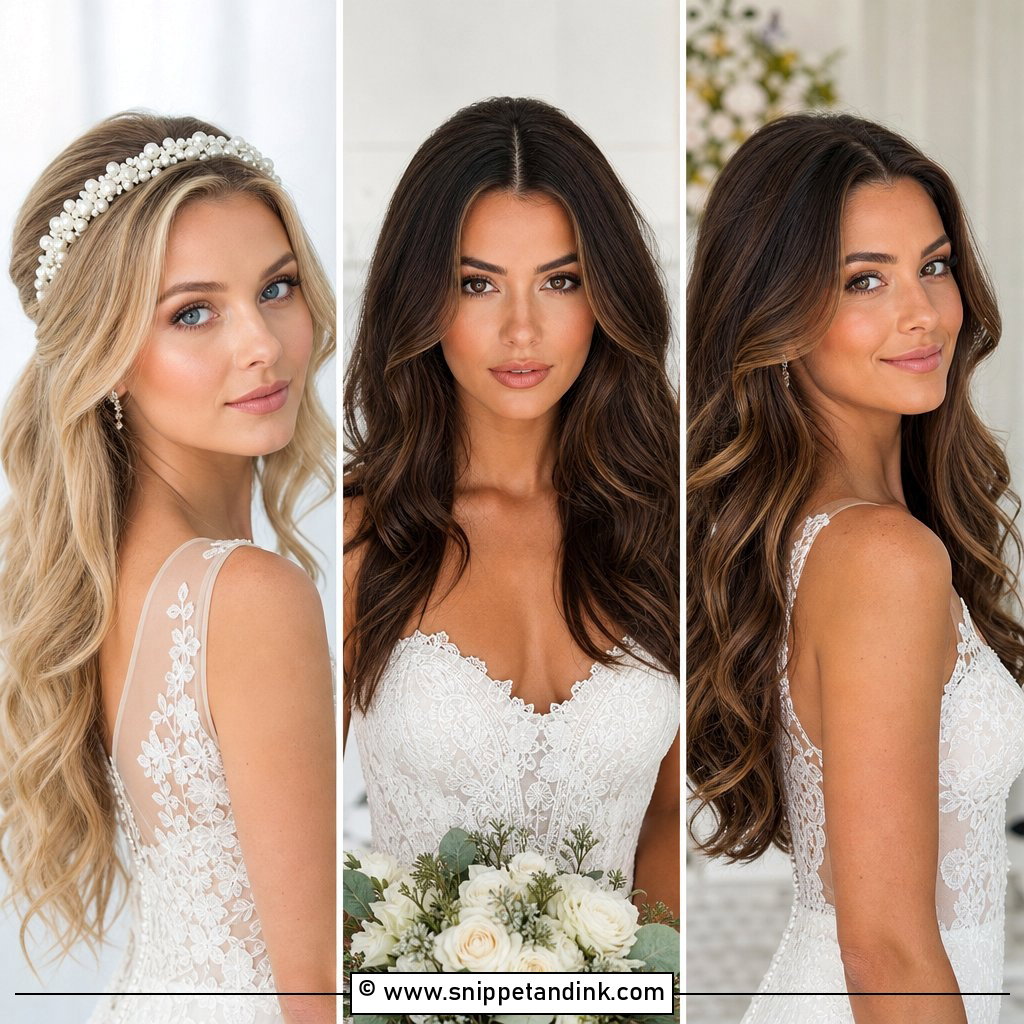
Hollywood waves with a center part look less like a costume and more like now. The waves need to fall in one direction on each side, which is trickier with a middle part than a side part, because each side mirrors the other. I curl the left side away from the face and the right side the same way, set and cool the curls, then brush them into a single ribbon. Length helps the S shape show, so long hair and extensions suit it best. Pair it with strapless, off-shoulder, or fitted gowns and keep accessories minimal.
3. Middle Part Bridal Half Up Hair
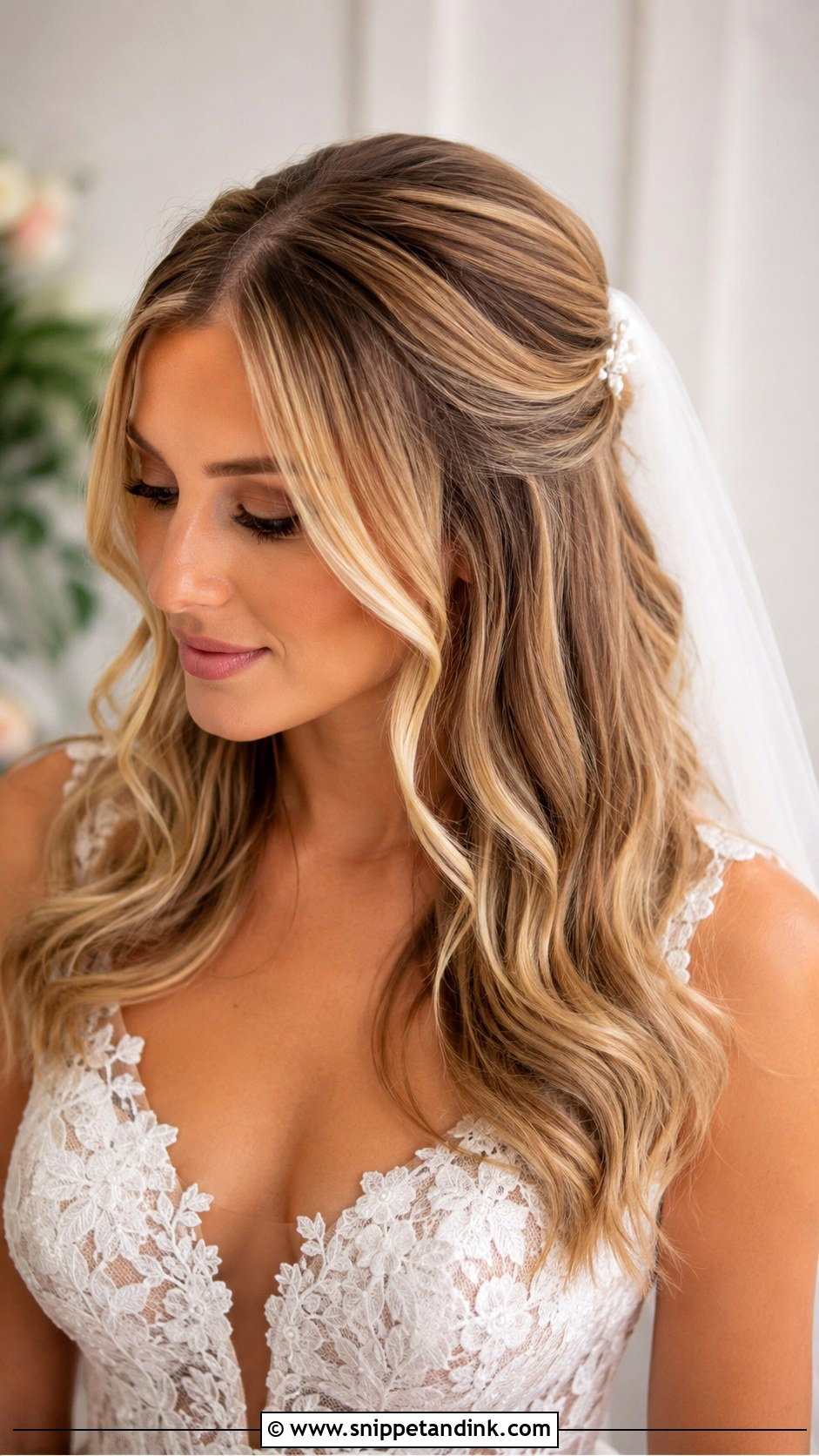
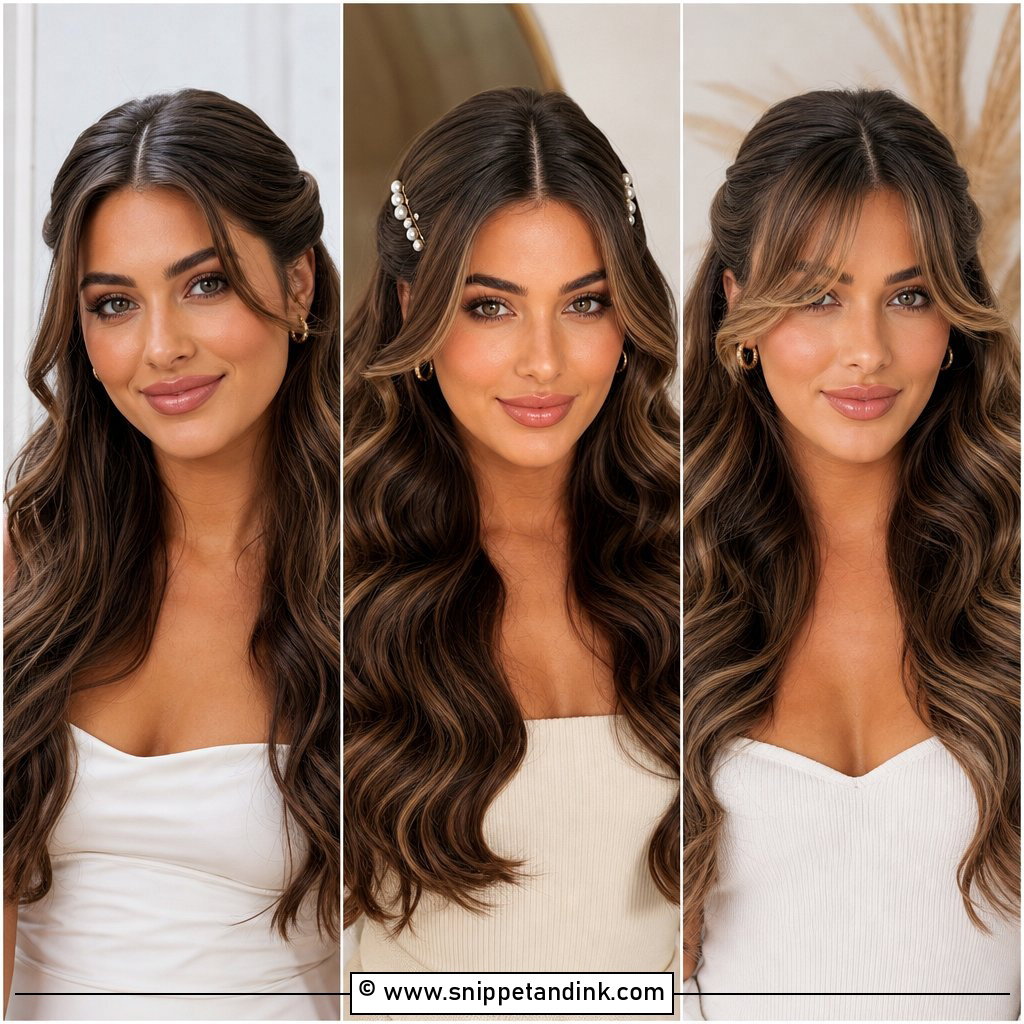
Half up with a middle part is a good compromise if you want hair down but need something holding it. I take two sections from just behind the front hairline on each side and pin them at the back, which keeps the part crisp because nothing pulls it sideways. A veil comb slides in just under the pinned section. Front pieces should look chosen, so I curl them away from the face rather than leaving them straight.
4. Middle Part Bridal Sleek Bun
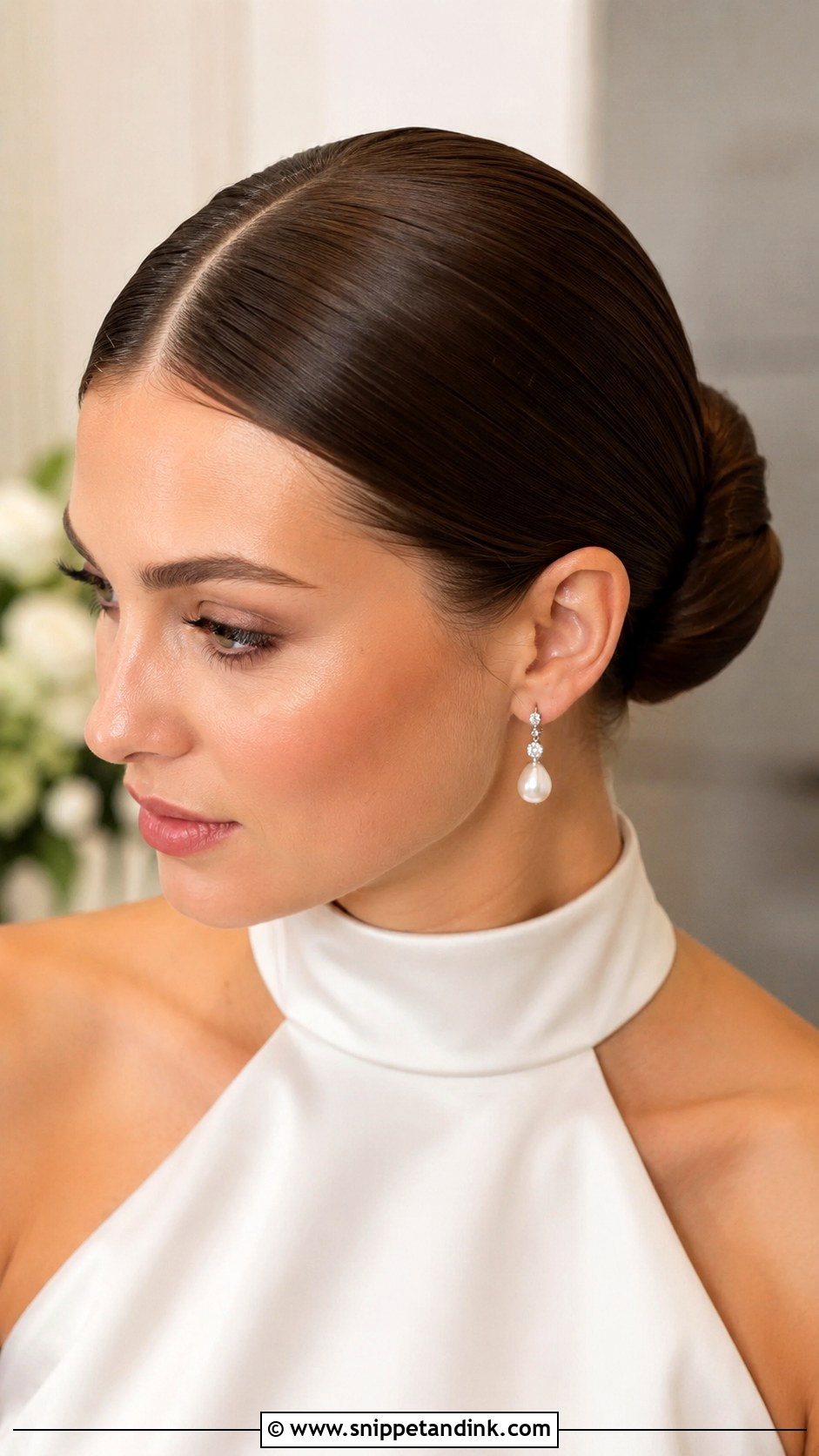
A sleek bun with a center part is all lines: forehead to crown to bun. Any bump shows, so I comb the hair back with a fine tooth comb and smoothing cream, then go over the surface with a soft bristle brush before securing. It holds well in heat because everything is controlled. Where you place the bun is personal; low suits most face shapes, a little higher lifts the cheekbones. High necklines and big earrings look great with it. I’d avoid it if you have a strong cowlick at the front, since it fights the smoothing all day.
5. Middle Part Bridal Loose Waves
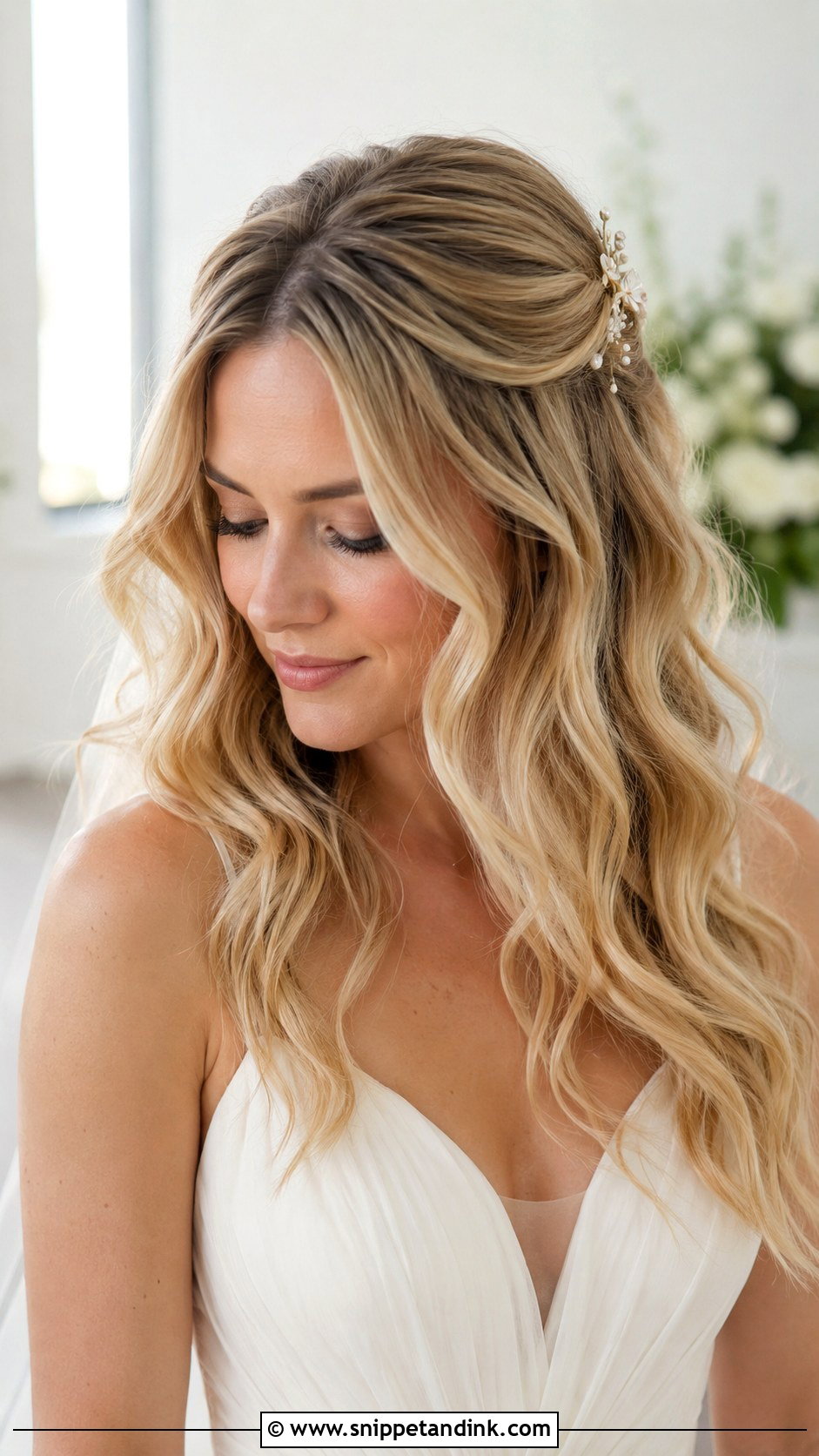
Loose waves with a middle part can still feel bridal when the prep is done properly. I start with heat protection, curl in alternating directions so the waves don’t clump together, and let the curls cool before brushing. That cooling step is what makes them last through photos and dancing. Beach and garden venues and simple dresses suit this best. A light flexible spray is plenty.
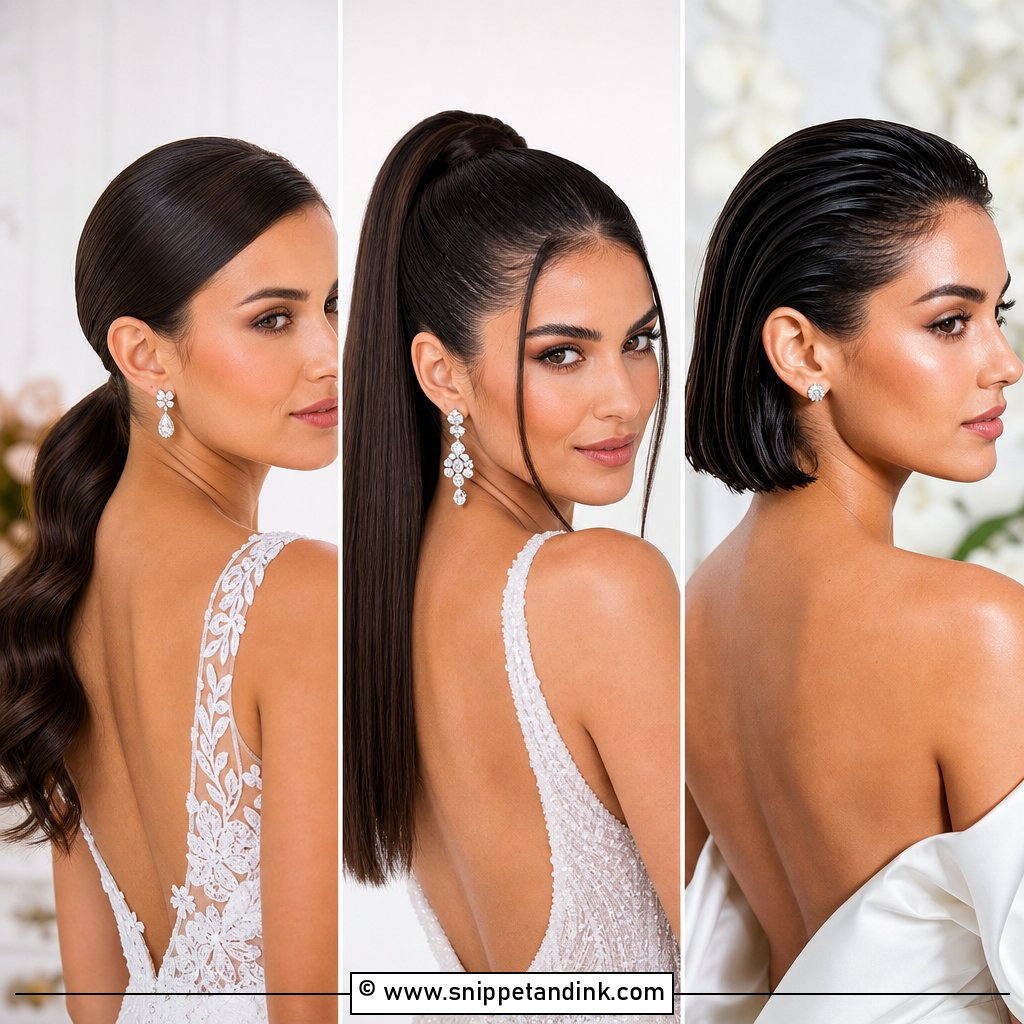
6. Middle Part Bridal Low Ponytail
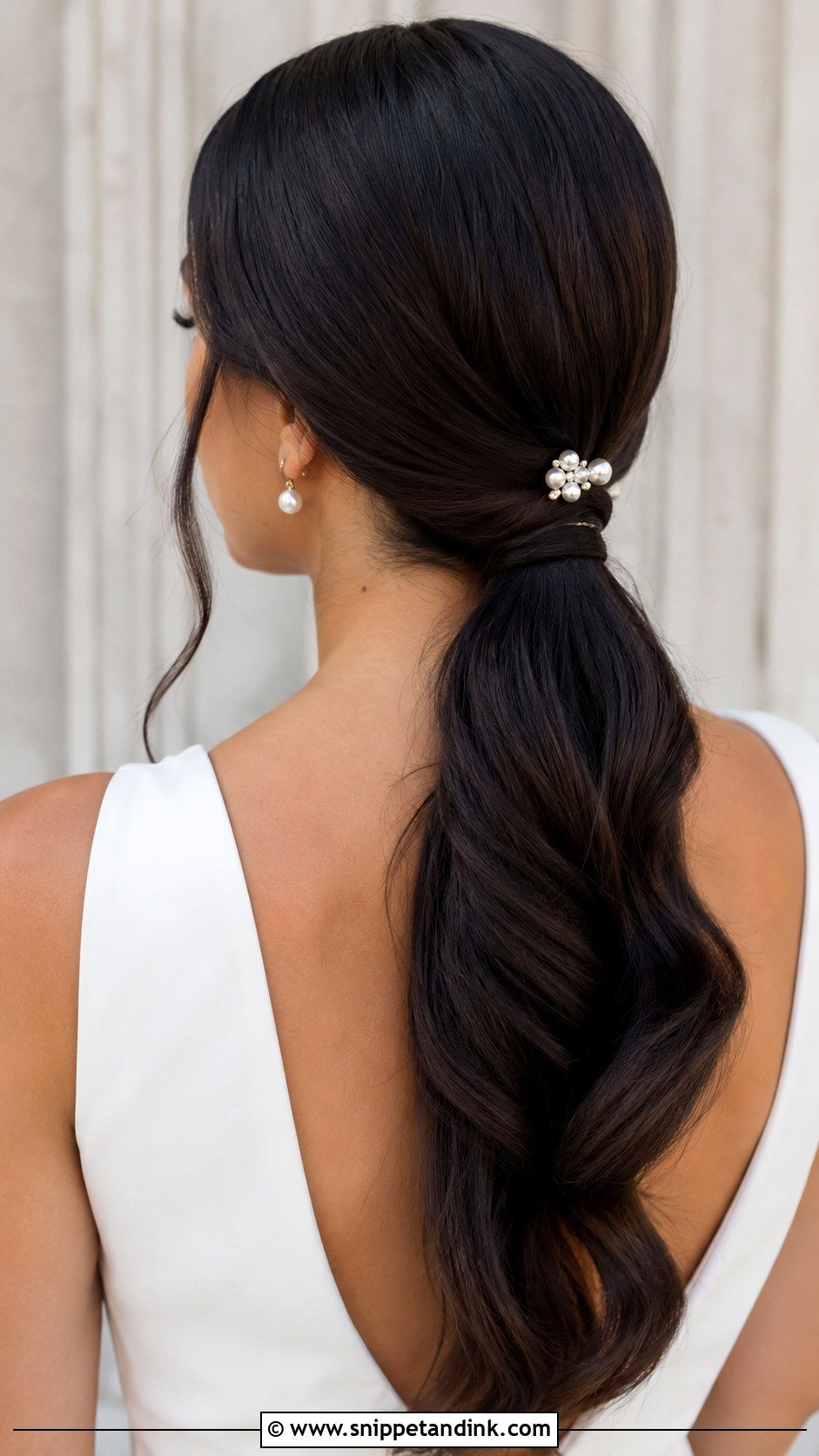
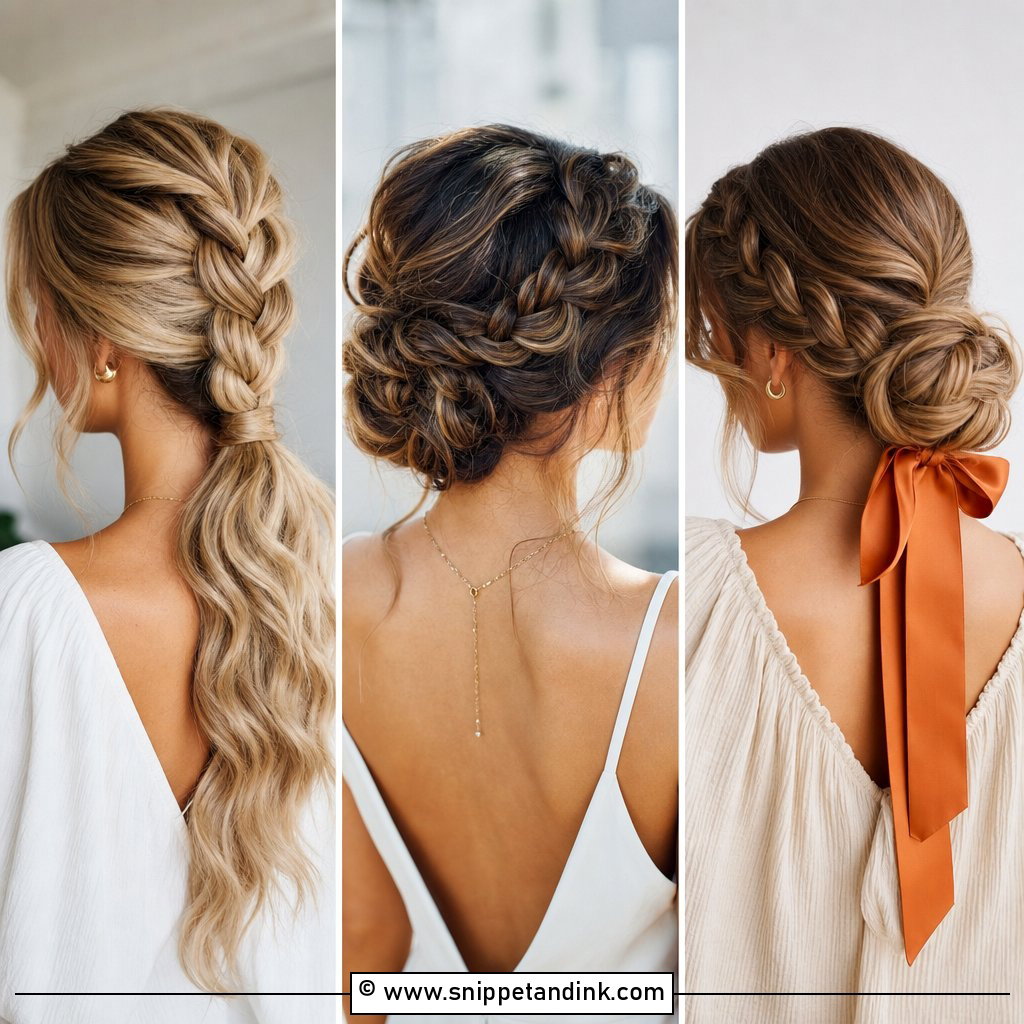
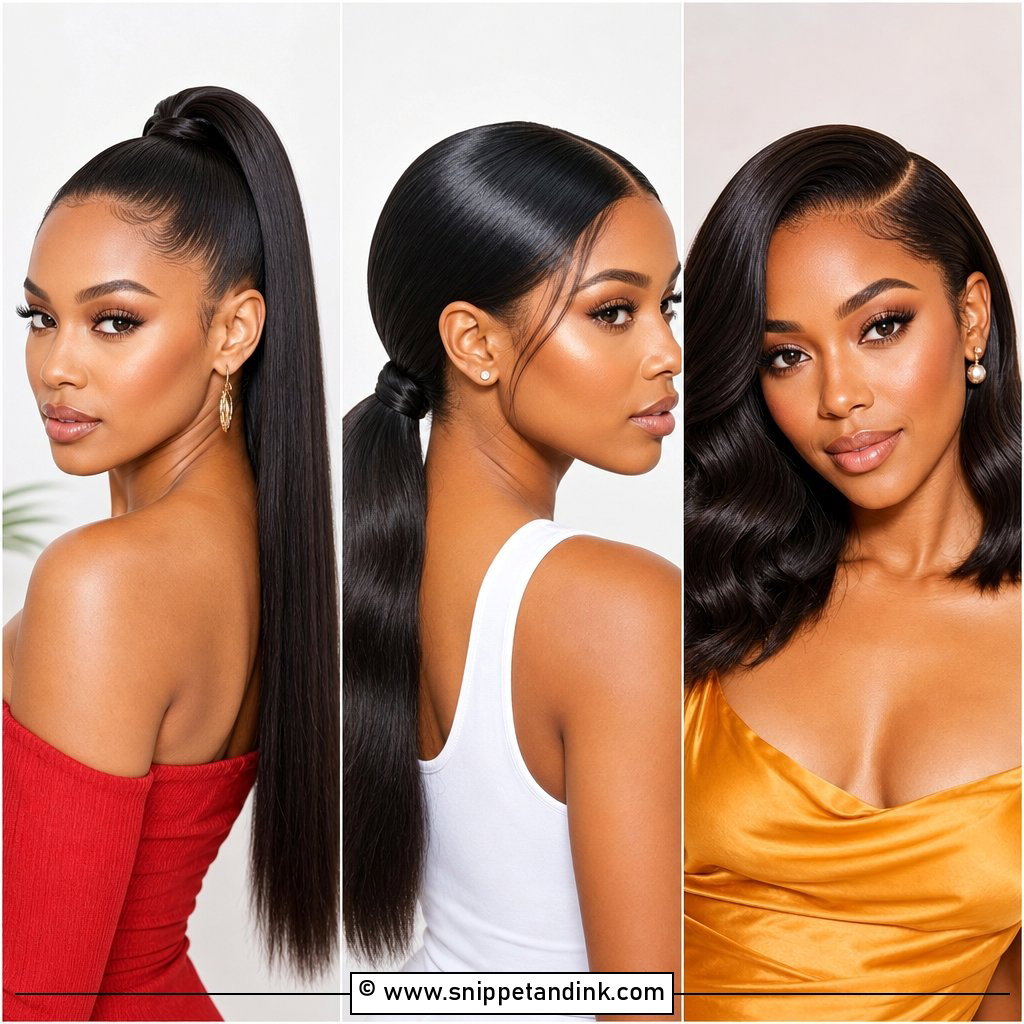
Low ponytails are underrated at weddings. With a middle part, the face is framed cleanly and the length falls down your back or over a shoulder. I backcomb a little at the crown first, then gather the hair at the nape, wrap a strand around the elastic and pin it underneath so there’s no band showing. It can be glossy straight or softly waved. It’s comfortable too, with nothing pressing on the back of your head when you sit. Pearl pins, a bow or a veil above it finish the look.
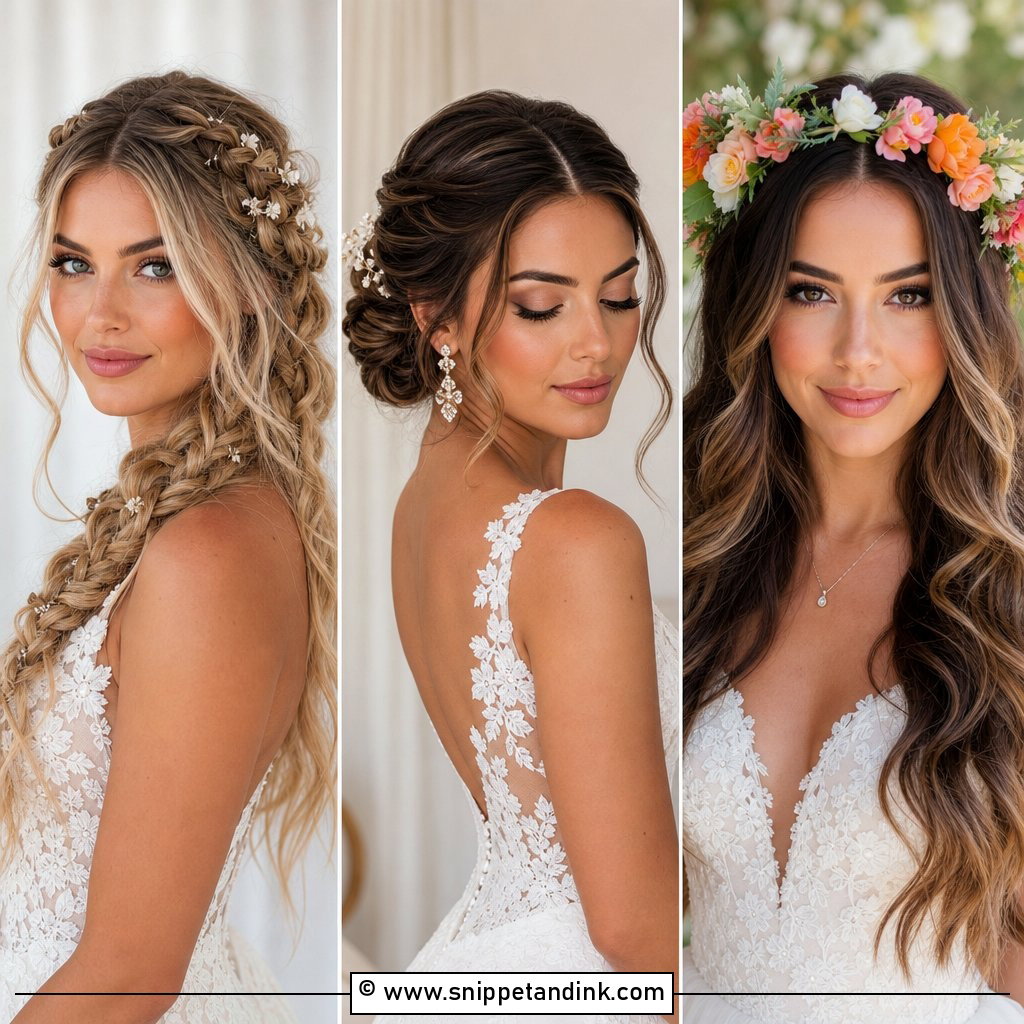
7. Middle Part Bridal Textured Bun
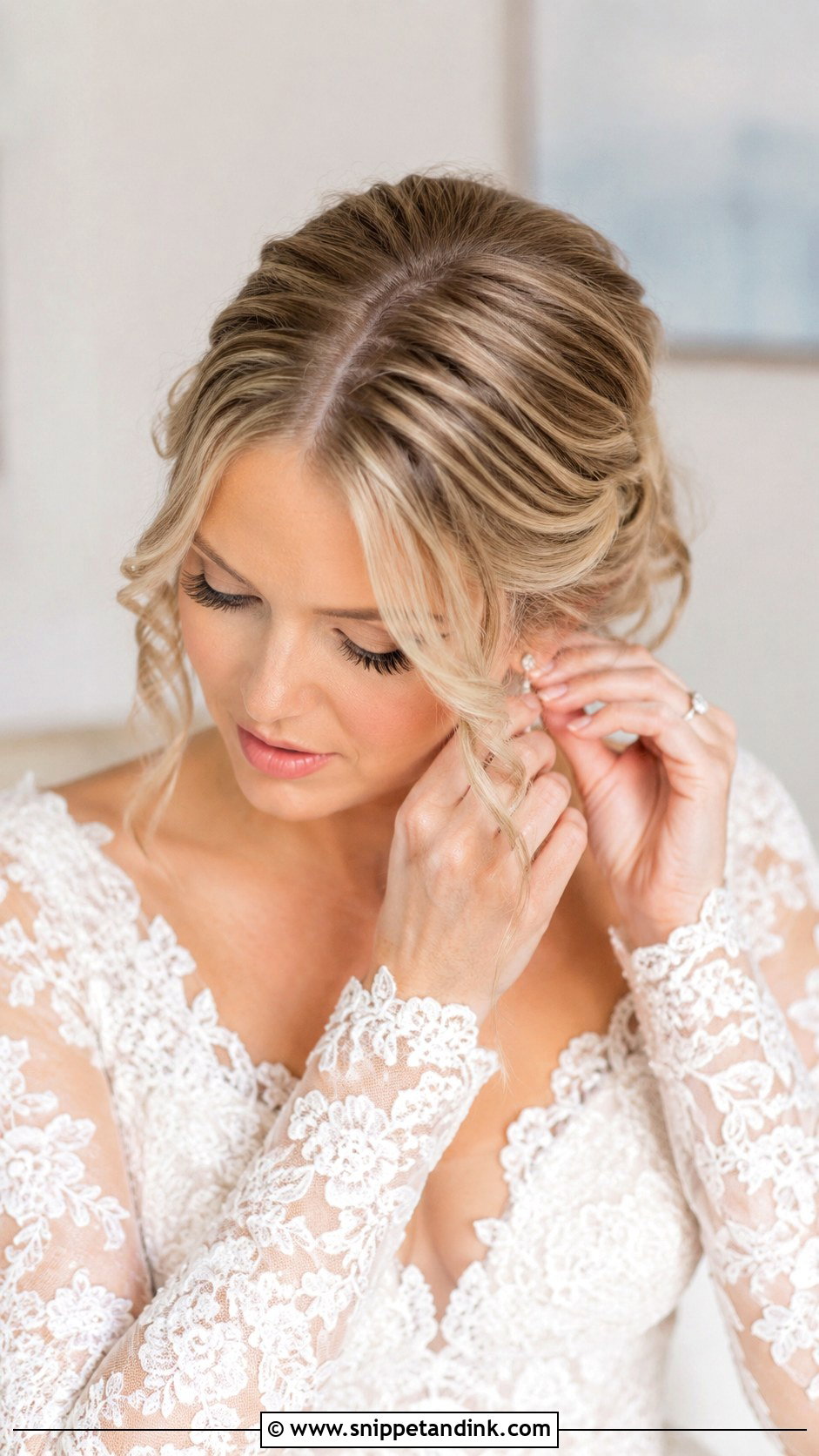
A textured bun is the soft opposite of the sleek version. Waves, twists and loose pieces give it shape, and highlighted hair looks especially good because the texture shows off the different tones. I keep the front smooth and neat at the part, then let the back be airy. If you want soft face framing pieces, ask for them to be curled; straight ones can look like they’ve fallen out. Lace gowns and light veils sit well with it.
8. Middle Part Bridal Straight Hair
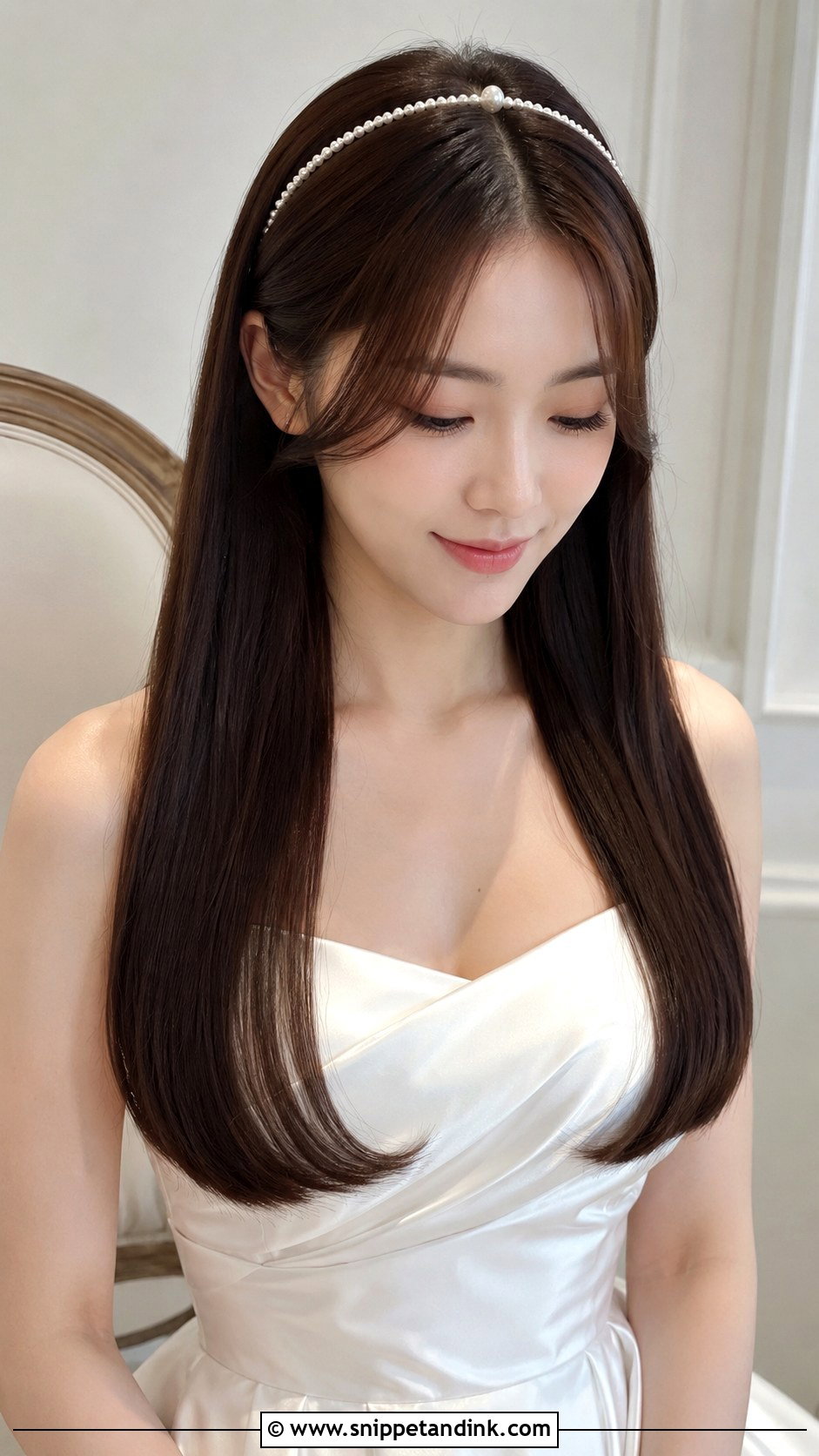
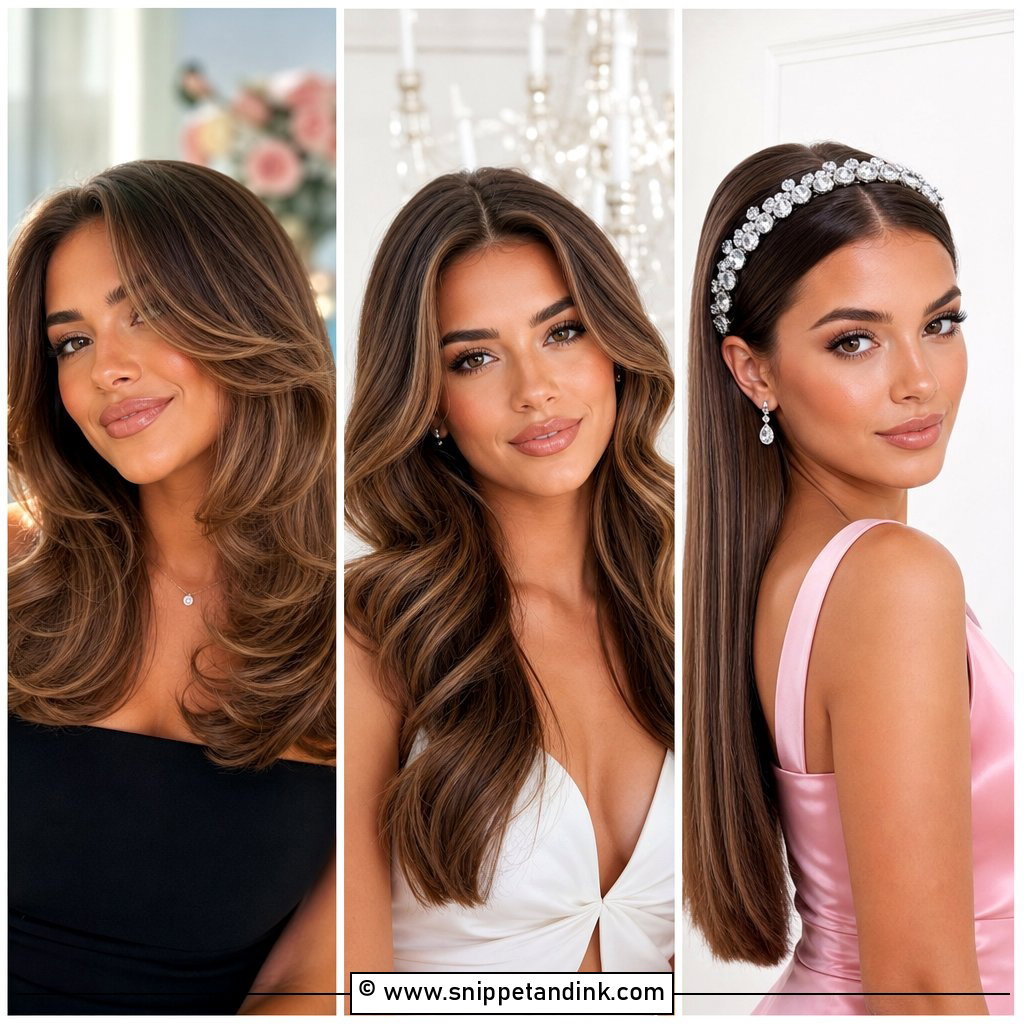
Sleek straight hair with a center part is a fashion look, and it relies on polish. I flat iron in thin sections, smooth the roots so the part lies flat, and finish with a shine serum on the ends only. It works with long layers, blunt ends or face framing pieces. The trouble is humidity: straight hair puffs at the roots first. An anti humidity spray and a small travel flat iron in the getting ready room help. A veil, a headband or pearl clips add the bridal detail.
9. Middle Part Bridal Braided Bun
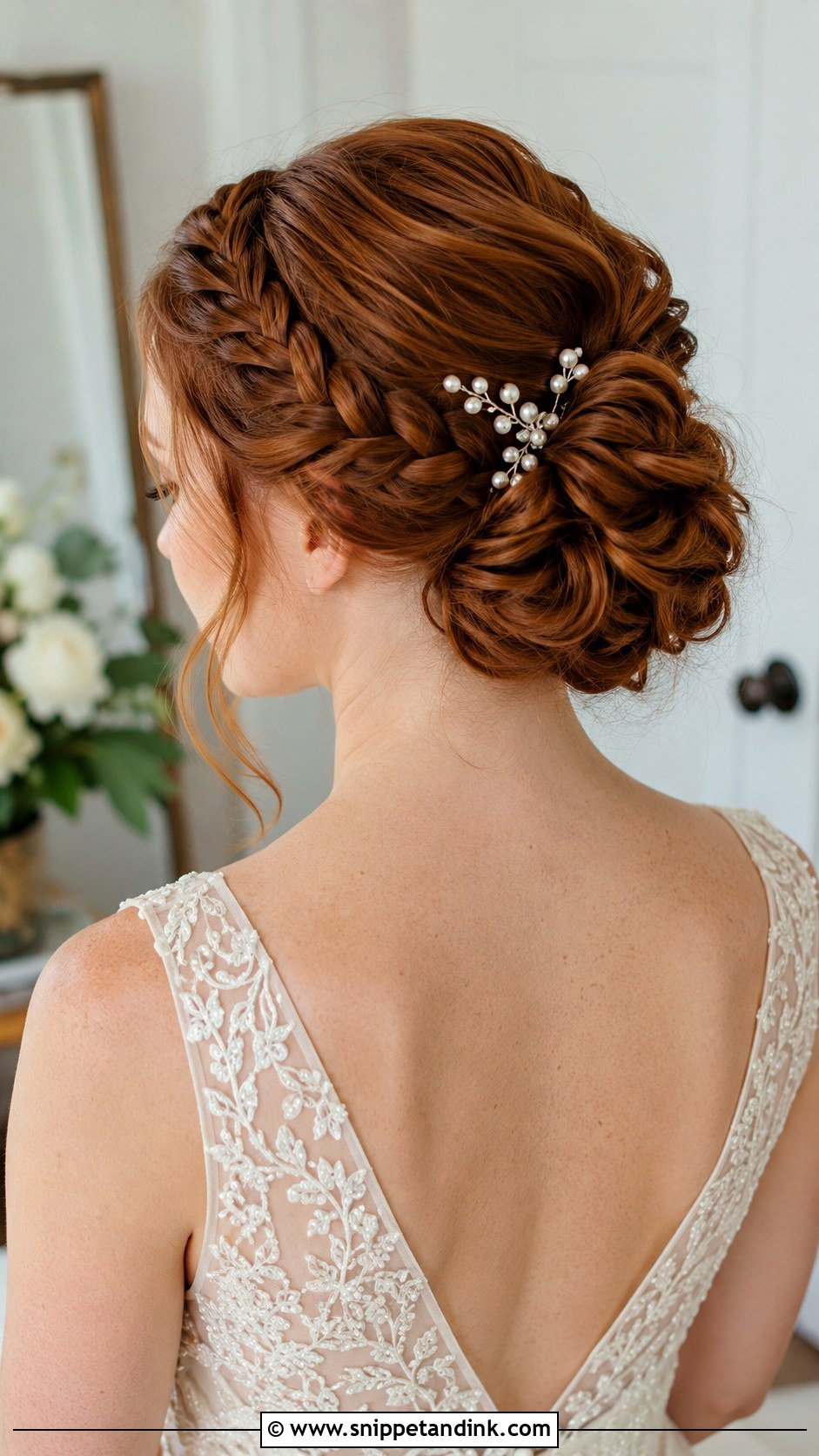
Braids add detail to the side sections and let the bun read as more than a knot. I usually braid from the temple back on each side and wrap the braids around the bun, so the middle part stays clean in front. Soft, pulled apart braids look romantic; tight ones look structured. Both last well. Pearl accents or a few small flowers sit neatly in the braid loops.
10. Middle Part Bridal Soft Curls
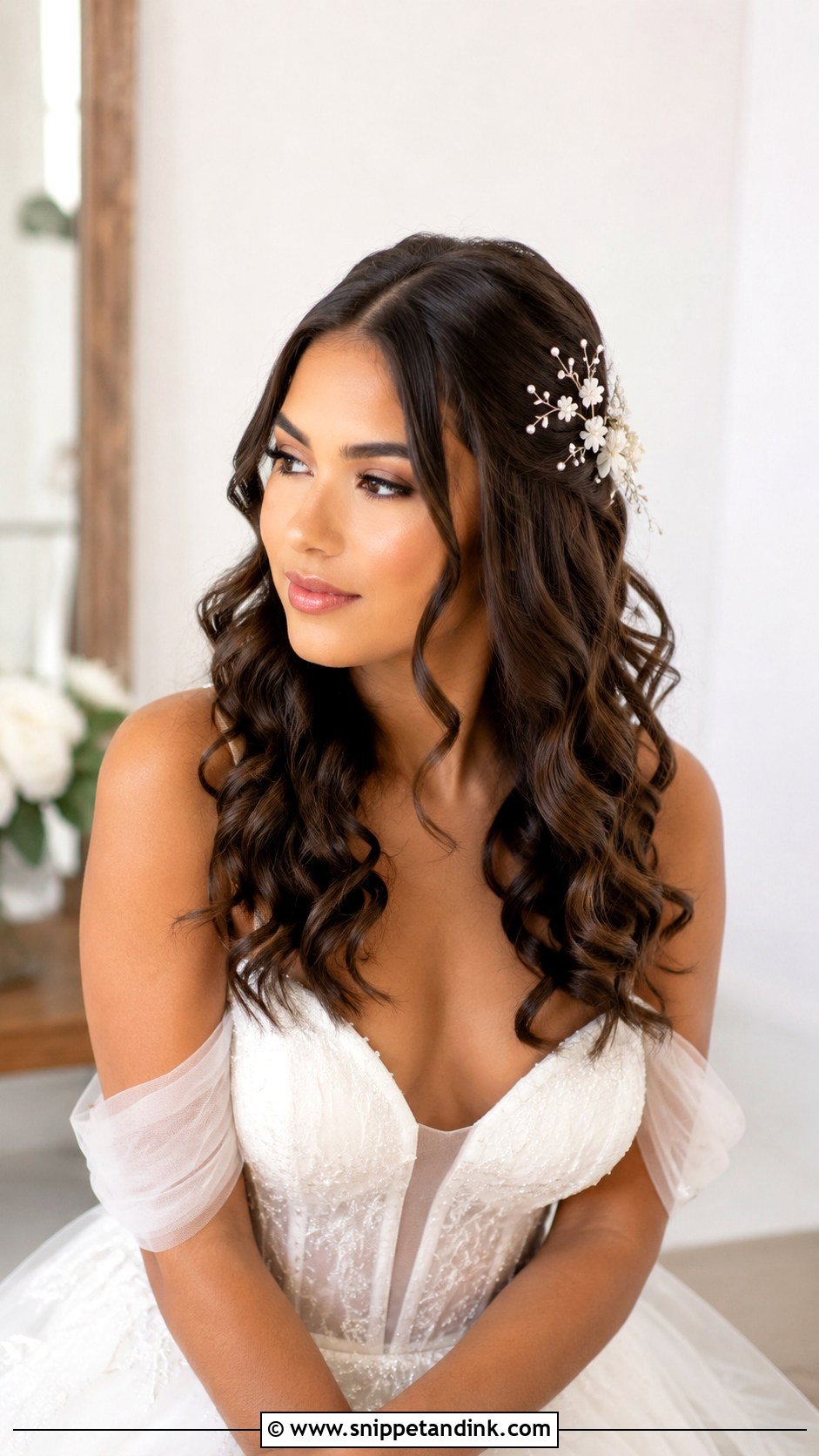
Soft curls on a middle part are one of the most flattering looks I do, as long as the curls are not too tight near the face. I curl the front pieces away from the face and the back in alternating directions, then separate them gently. Natural curls, heat set curls and extensions all work. Soft curls around the face draw attention to the eyes and cheekbones, so let your makeup artist know the plan. Floral combs or a veil at the crown finish it.
11. Middle Part Bridal French Twist
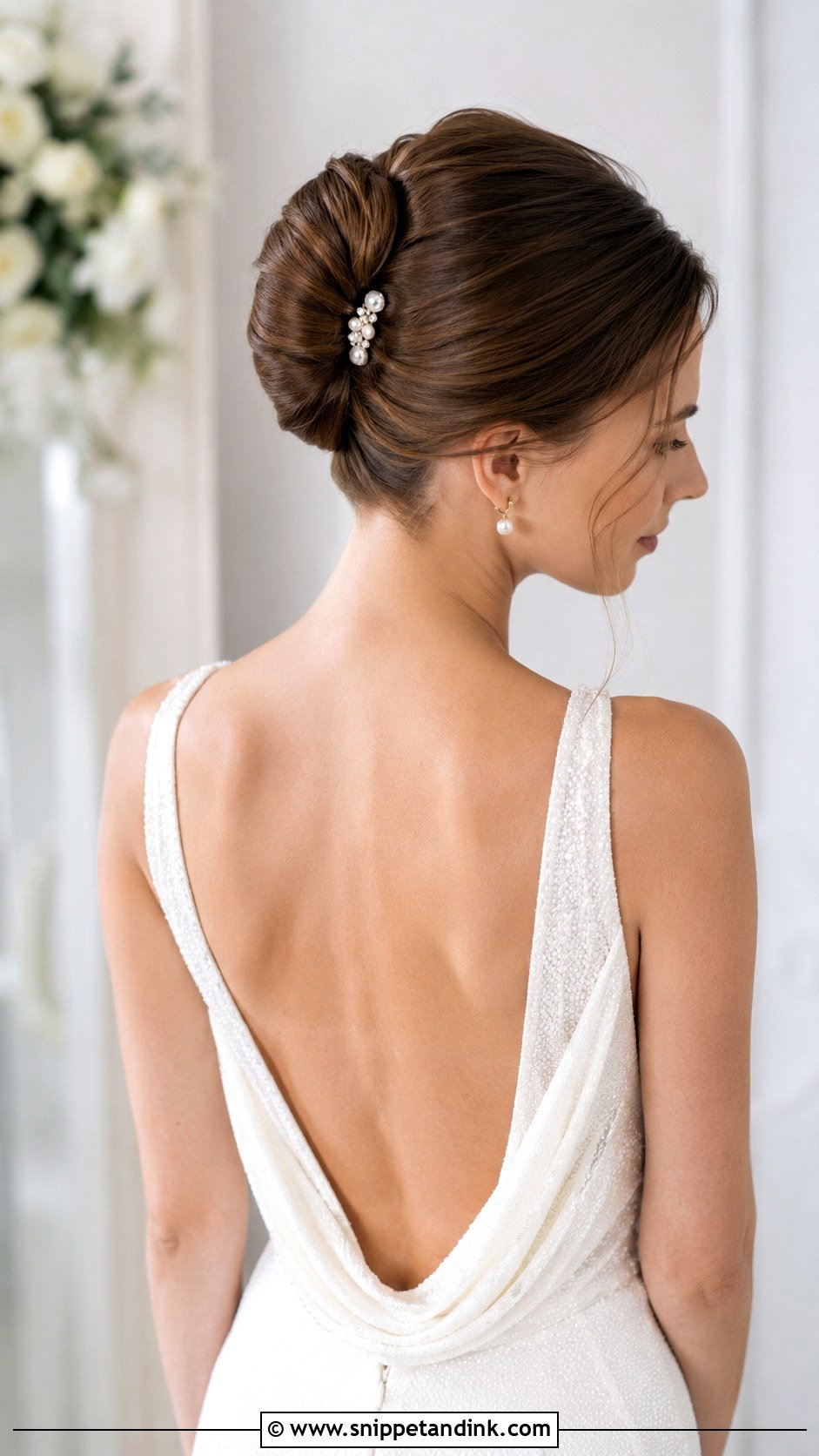
A French twist with a middle part looks vintage at first glance and modern on a second look. The part keeps the front simple, so the twist at the back carries the shape. I gather the hair to one side, pin a vertical line up the back, then fold the hair over it and hide the ends. Medium to long hair works. It suits formal weddings and historic venues, and a small comb or a sheer veil sits well along the twist.
12. Middle Part Bridal High Bun
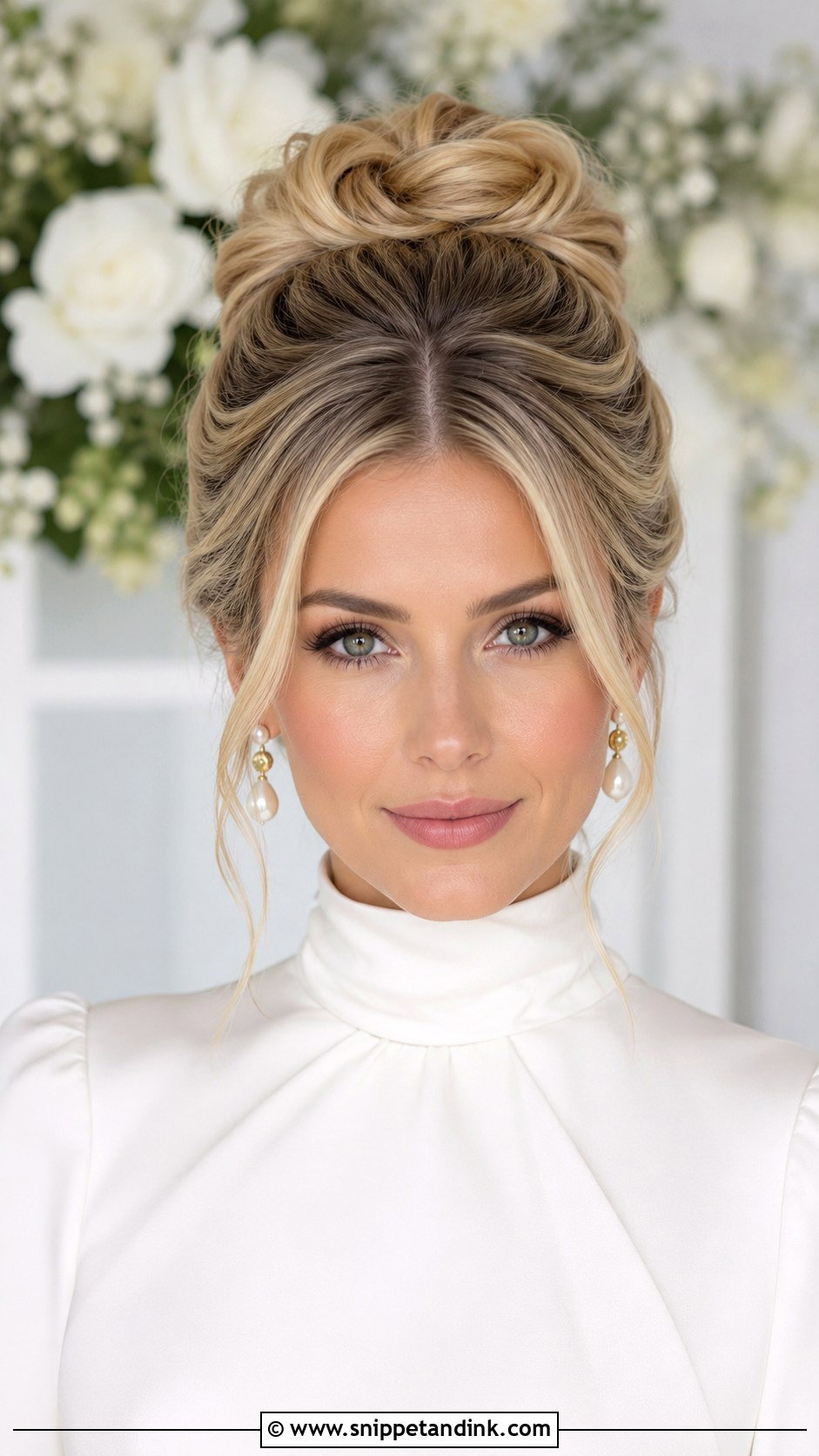
High buns change how long your neck looks, which is the main reason to choose one. With a middle part, the front stays neat and the bun sits around the crown. I’d skip it if you plan to wear a long veil all night, because a high bun carries the weight further from your head and you’ll feel it pulling by the reception. With a high neck gown and statement earrings, though, it looks great. Leave a few soft strands at the temples to stop it looking severe.
13. Middle Part Bridal Side Swept Waves
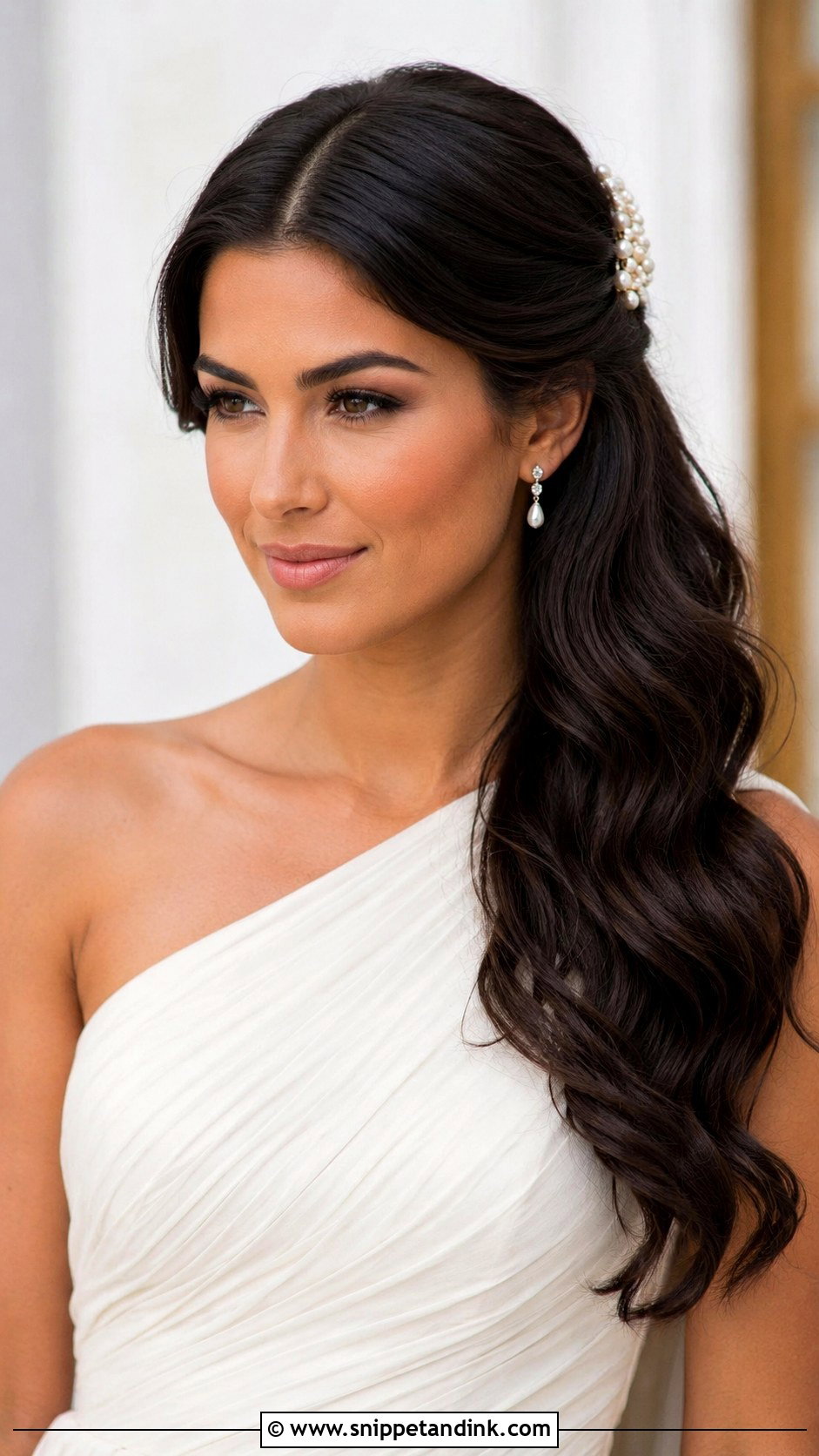
A center part with waves swept to one side sounds like a contradiction, but it works. The part stays centered at the hairline, and the waves are guided over one shoulder from behind the ear. It suits one shoulder gowns, open backs and delicate straps. I secure the swept side behind the ear with a row of crossed pins, hidden under a comb or floral clip.
14. Middle Part Bridal Curly Updo
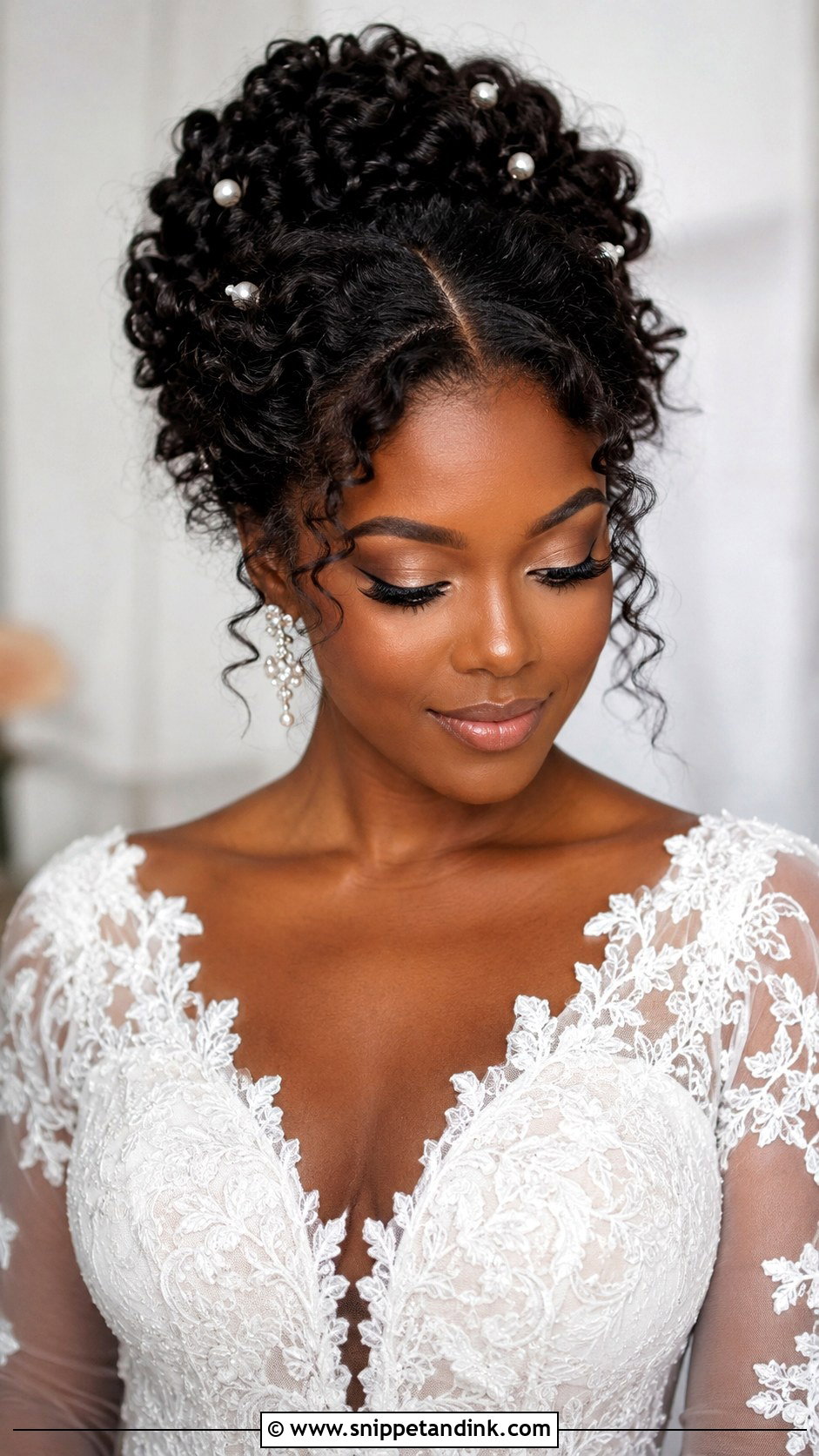
Curly updos with a middle part need the part done first, on damp hair, because curls won’t hold a clean line once they’ve dried. I set the curls with a curl cream, let them dry fully, then lift them into a soft updo, pinning low or around the crown. Never brush them smooth. Hydrate the curls in the days before and use humidity control on the morning. Veils, floral pins and pearl accents all sit well in curly texture.
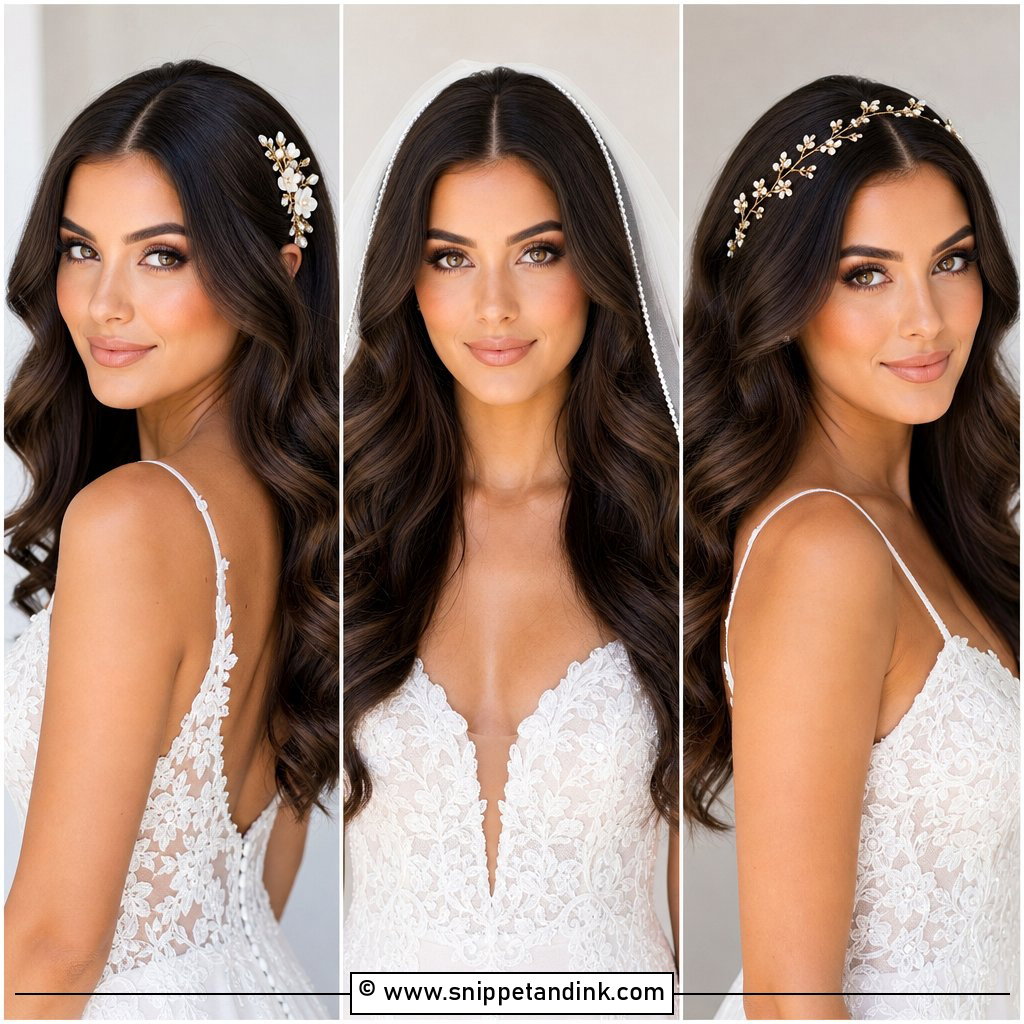
15. Middle Part Bridal Veil Hairstyle
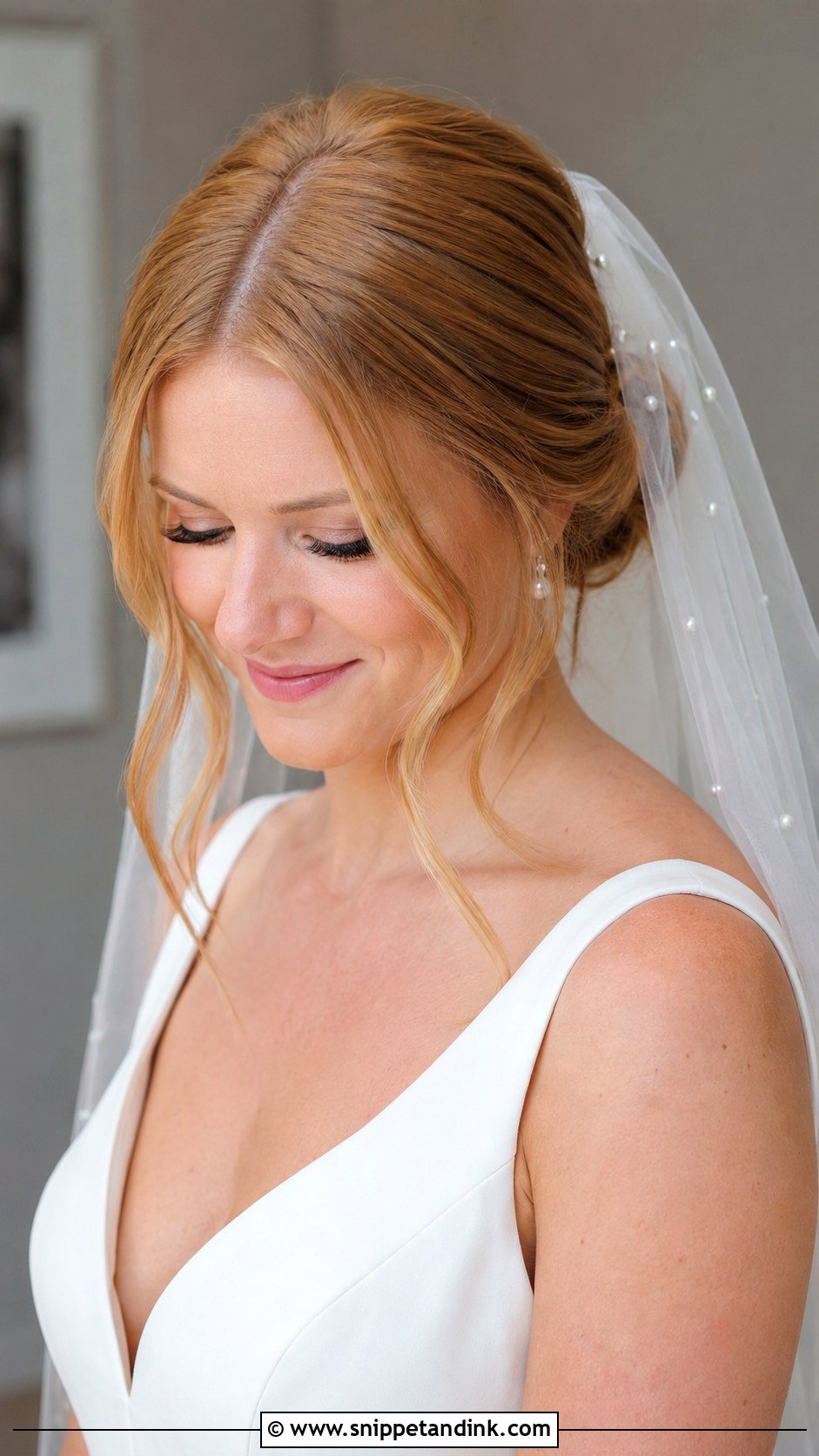
Your hair should look finished with and without the veil. With a center part, almost any base works: a low bun, waves, half up or a ponytail. What changes is where the veil sits. Tucked above an updo is classic; placed under a bun reads softer and more modern. If the veil has lace, pearls or beading, keep the hair smooth so the details don’t compete. Bring the actual veil to your trial and wear it for at least half an hour.
Your Part Line Under Flash and Daylight
A middle part runs straight down the top of the head, which is the first thing the camera sees in many shots: walking down the aisle, bending to sign the register, looking down at the rings. That makes the part line more visible in photos than you might expect.
Roots and regrowth
If you color your hair, book a root touch up about one to two weeks before the wedding. Too close and the scalp can still be a little stained along the part; too early and regrowth starts to show. Ask your colorist about a gloss at the same appointment for shine.
Scalp shine and fine hair
Flash can catch a shiny scalp line, especially on fine or thinning hair. I use a tinted root powder along the part, matched to your roots, and dab it in with a small brush. It fills the line softly without looking like makeup. Your makeup artist can do the same with a matte powder if needed.
When the center part is the wrong call
A strong cowlick at the front, a very uneven hairline or a part that keeps sliding sideways after a few weeks of training are all signs to try a soft side part instead. I’d rather tell you at the trial than have you fight your hair all day.
Symmetry Is Only Half the Story
A center part is versatile: it makes a low chignon look classic, Hollywood waves look current and a ponytail look polished enough for the aisle. What makes it work is the prep behind it, the training, the roots and the right style for your dress, weather and veil. Bring your photos to the trial and let your stylist adjust for your hairline and features. Then wear it for an hour before you decide.
You'll Like These Ideas:


Leave a Reply