
Silk does something no synthetic quite copies: it warms to the body and moves a fraction behind you as you walk, so the dress looks alive in photos rather than stiff. The catch is that silk covers fabrics as different as a liquid charmeuse slip and a mikado ball gown that could almost stand up on its own. Cut and weight decide everything. A bias slip suits a courthouse or a beach, structured silk carries a black-tie ballroom, and crepe sits quietly at a garden or city venue. Below are thirty-five silk gowns, with notes on how each one wears, what it forgives and where it struggles.
Charmeuse, Crepe, Mikado and Faille Behave Nothing Alike
Brides often arrive asking for silk as if it were one fabric. It’s a family, and the weave changes how a dress hangs, how warm it is and how it looks by the end of the night. These are the four I explain at almost every first appointment.
- Charmeuse is lightweight, liquid and shiny on the face. It drapes closest to the body, creases easily and shows water marks.
- Crepe is matte, with a slightly pebbled surface and a heavy fall. It resists creasing better than satin and suits clean, minimal cuts.
- Mikado is heavy, with a soft low sheen. It holds pleats, bows and full skirts by itself, but it’s warm in summer.
- Faille has a fine horizontal rib and a crisp hand, sitting between crepe and mikado in structure. It suits A-lines and tailored bodices.
Many gowns sold as silk mikado or silk satin are blends, and that isn’t necessarily a bad thing, since a little synthetic can reduce creasing and cost. Just ask for the fiber content in writing, and hold the swatches up in daylight, where silk’s warmth is easiest to judge.
1. Silk Slip Wedding Dress
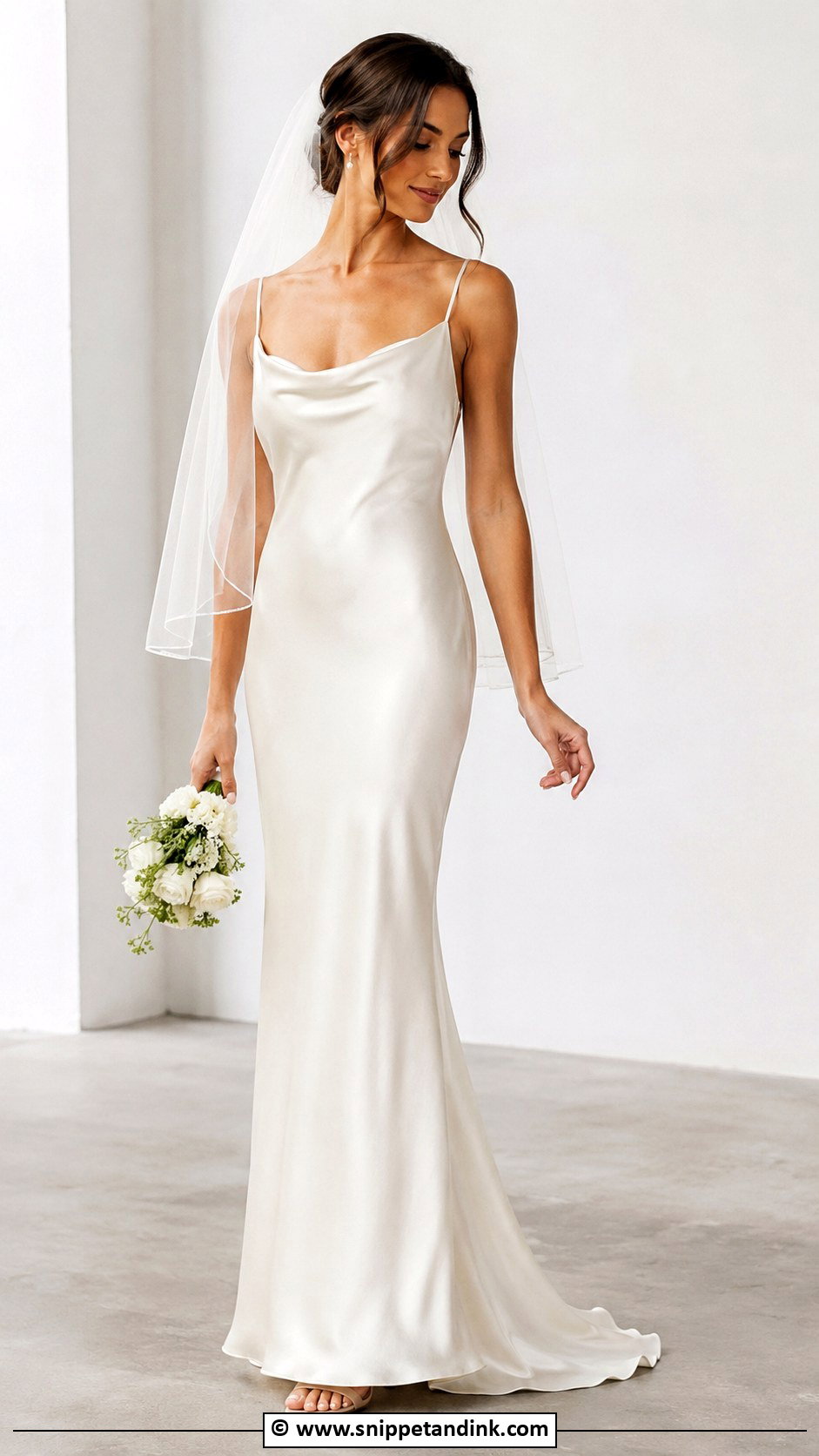
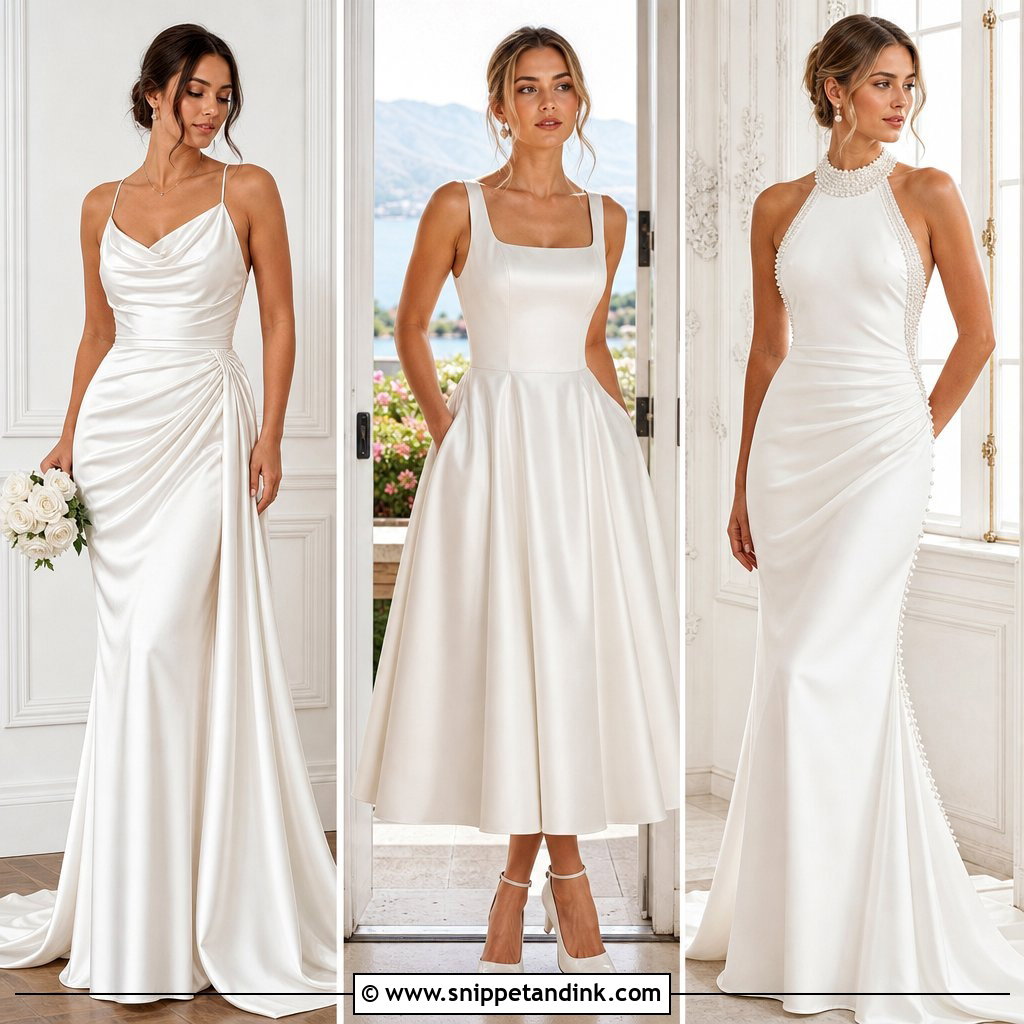
A silk slip wedding dress looks like the simplest gown in the shop and is actually one of the most demanding to fit. Bias-cut charmeuse follows every curve and every seam beneath it, so the undergarment plan has to be settled before the first fitting, not after. Ivory charmeuse or satin with a cowl neck, low back or slightly flared hem gives it shape without any embellishment. Delicate heels, a fine bracelet and a simple veil are all it needs. It suits intimate ceremonies, beaches and modern receptions, though I’d steer brides who want firm support toward a gown with an inner corset.
2. Silk A Line Wedding Dress
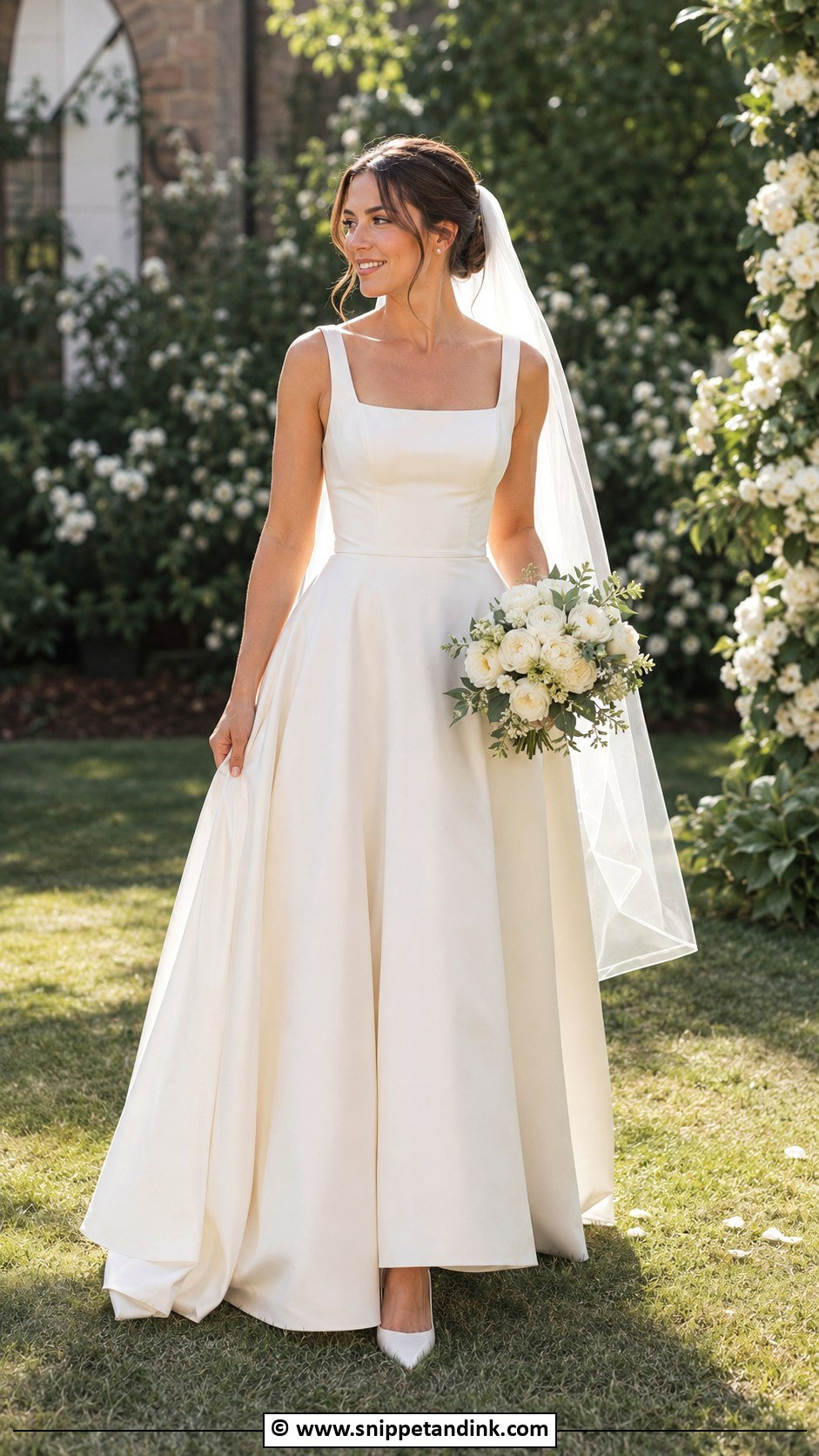
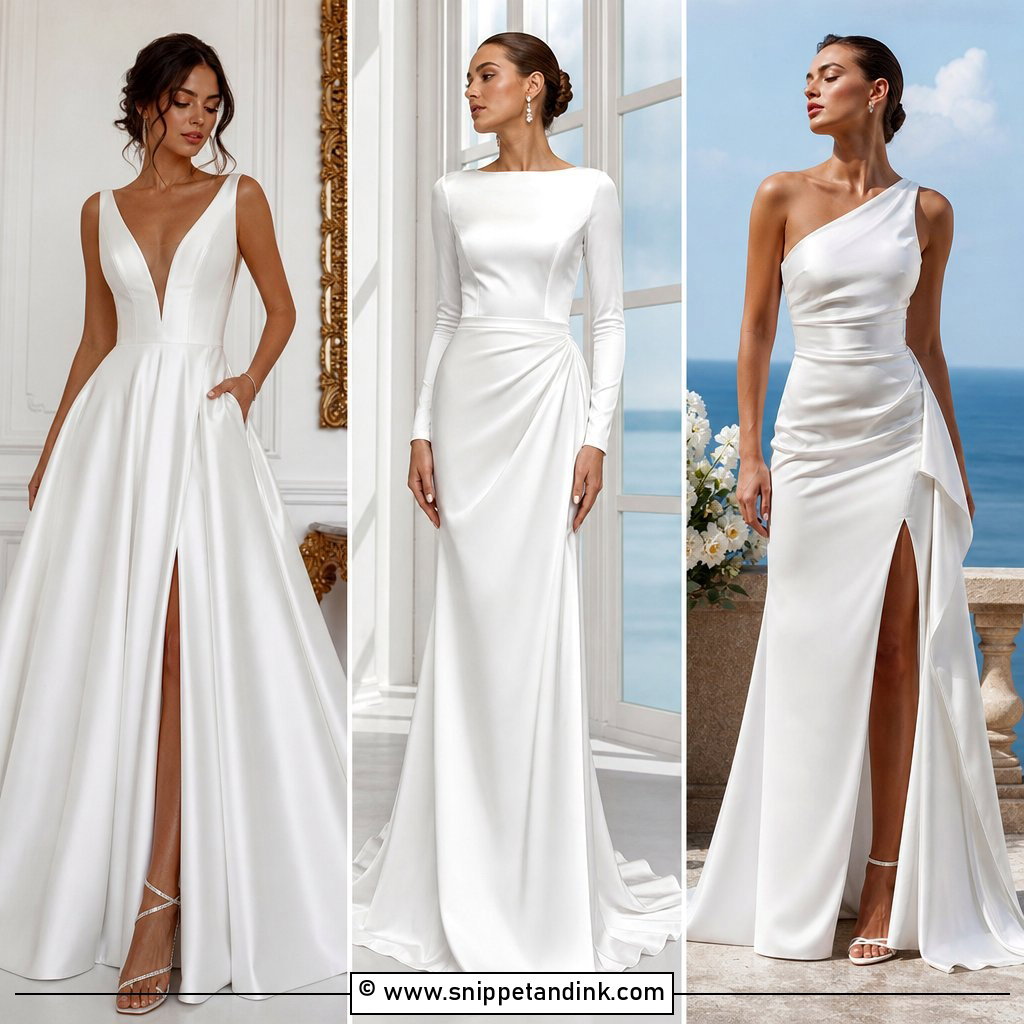
An A-line is the shape I pull first for a bride who isn’t sure what suits her, because the fitted bodice marks the waist and the skirt drops away cleanly from the hips. The silk changes its personality. Satin gives a soft gleam, faille has a fine rib and a crisper hand, and mikado holds the skirt out by itself. Pearl earrings, pointed heels and a soft veil keep it classic for garden, estate and traditional ceremonies. It walks, sits and dances without a fight.
3. Silk Mikado Wedding Dress
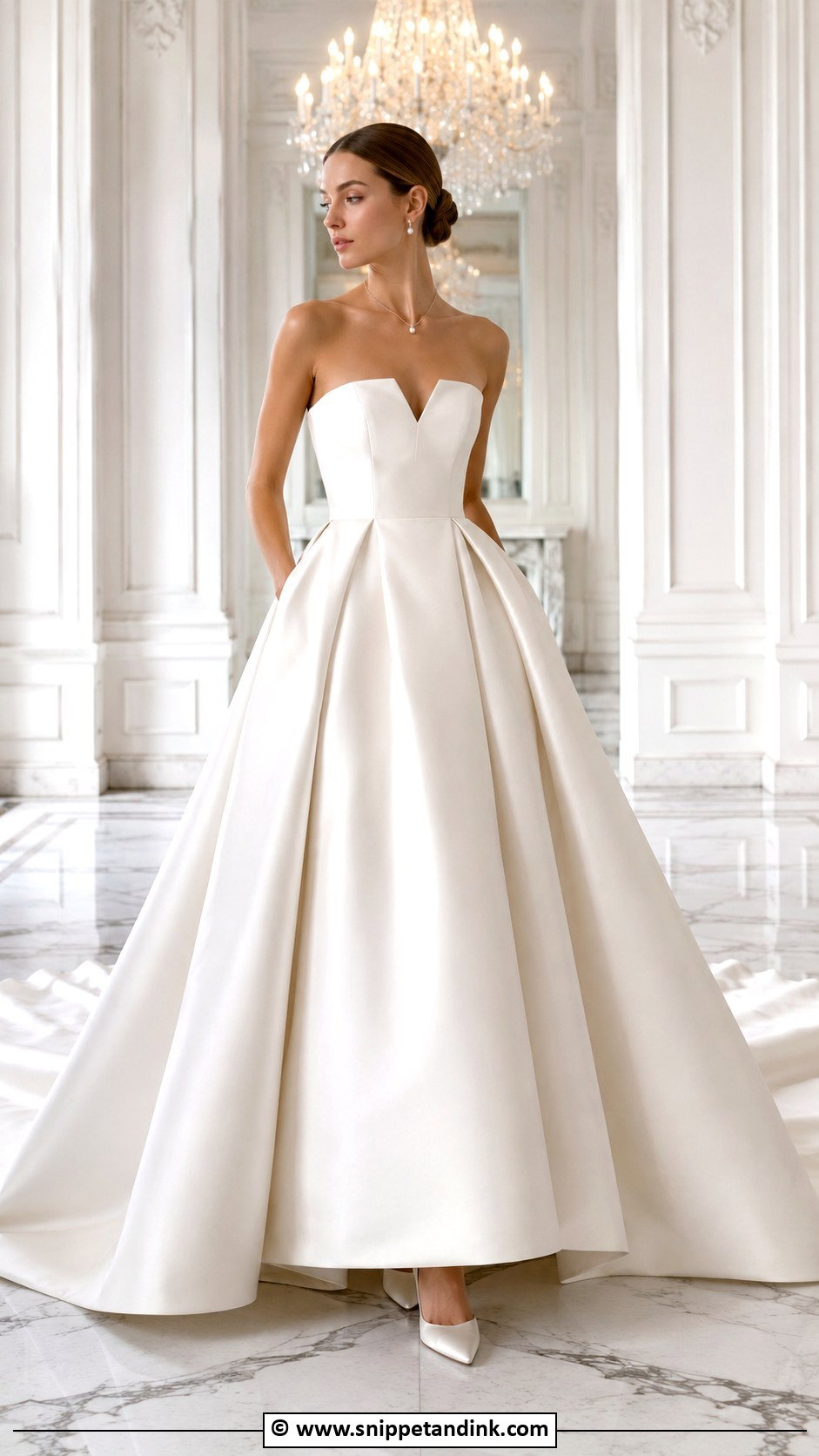
Mikado is the silk I recommend when the design depends on structure. It’s a heavier, slightly textured weave, so it holds pleats, architectural bodices, full skirts and long trains without layers of crinoline underneath. That weight is also the trade-off: a mikado ball gown is warm, and in a July garden you will feel it. Strapless and square necklines show off its clean seams. Keep accessories quiet with a sleek bun, satin pumps and a long veil. The sheen is low and soft, which reads well in formal venues and grand rooms.
4. Silk Satin Wedding Dress
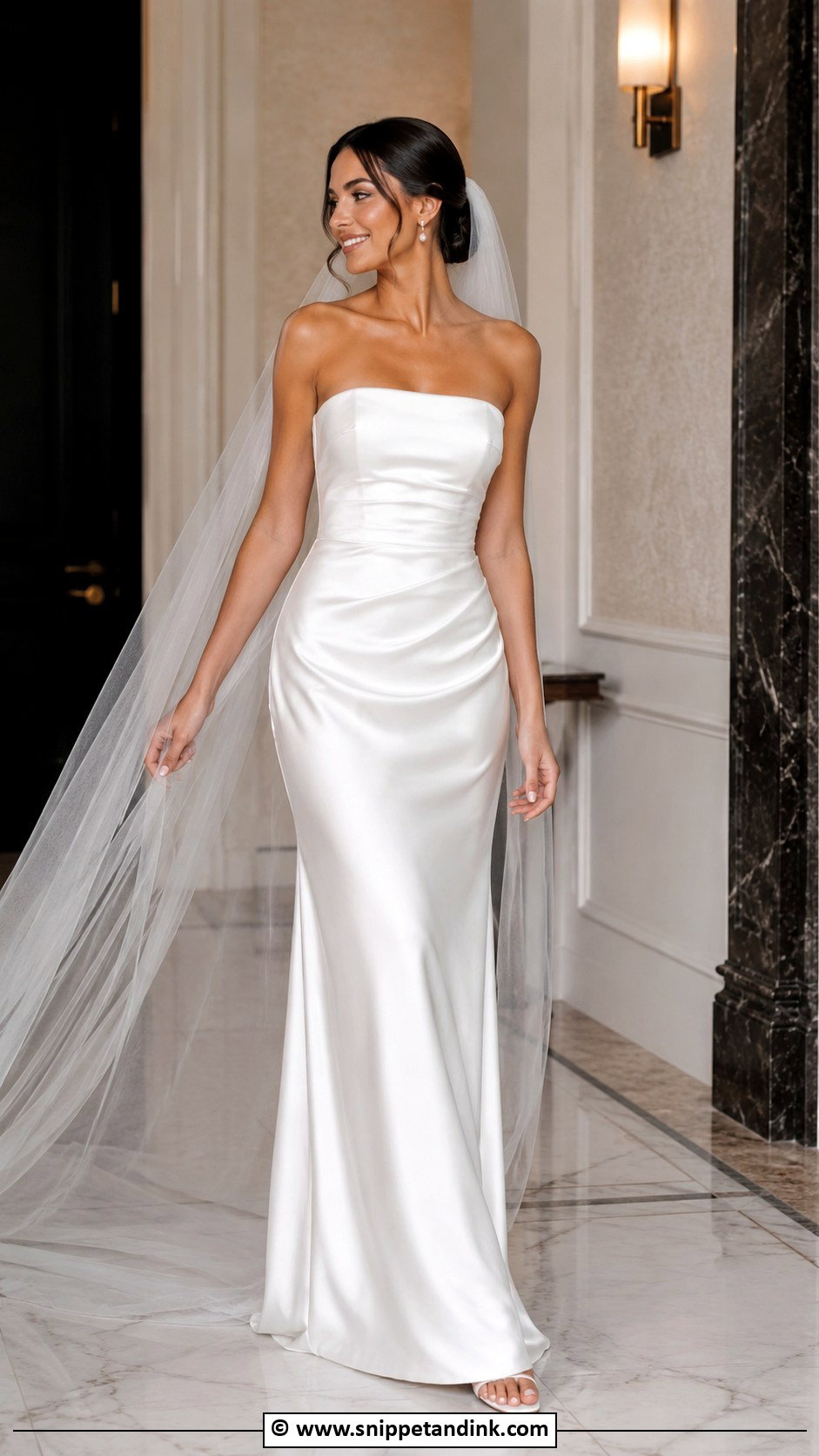
Silk satin catches light along every fold, which is why it looks rich in photographs and why it shows every crease from sitting. I always warn brides about the car ride, because satin skirts crush across the lap and need a quick steam between ceremony and portraits. It suits slips, columns, fit and flare and full skirts alike. A strapless or square-neck gown with minimal seams looks modern, while a cathedral veil, pearl studs and slim heels push it toward romance. Evening weddings and hotel ballrooms show it at its best.
5. Silk Crepe Wedding Dress
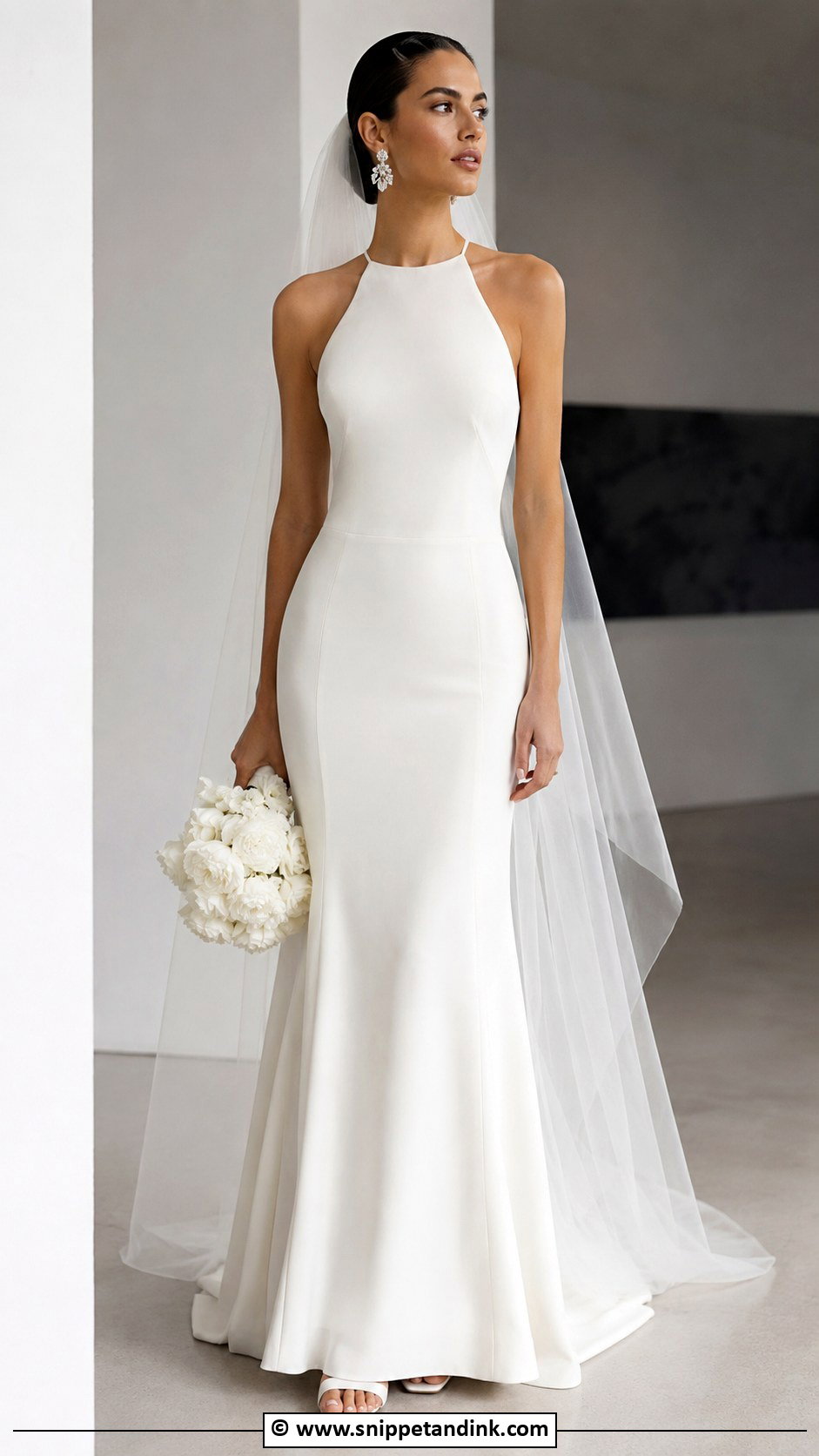
Silk crepe has a dry, matte face and a heavy drape, so you get the luxury of silk without the shine, and it’s kinder than satin about creasing. It works for sheaths, long sleeves, column silhouettes and minimalist gowns, where a bateau neck, square neck or deep V back provides the only detail. Sculptural earrings, sleek heels and a plain-edge veil keep it refined. One honest note: crepe clings wherever it touches, so the fit at the hip needs real care. City weddings and brides who prefer less sparkle tend to land here.
6. Silk Ball Gown Wedding Dress
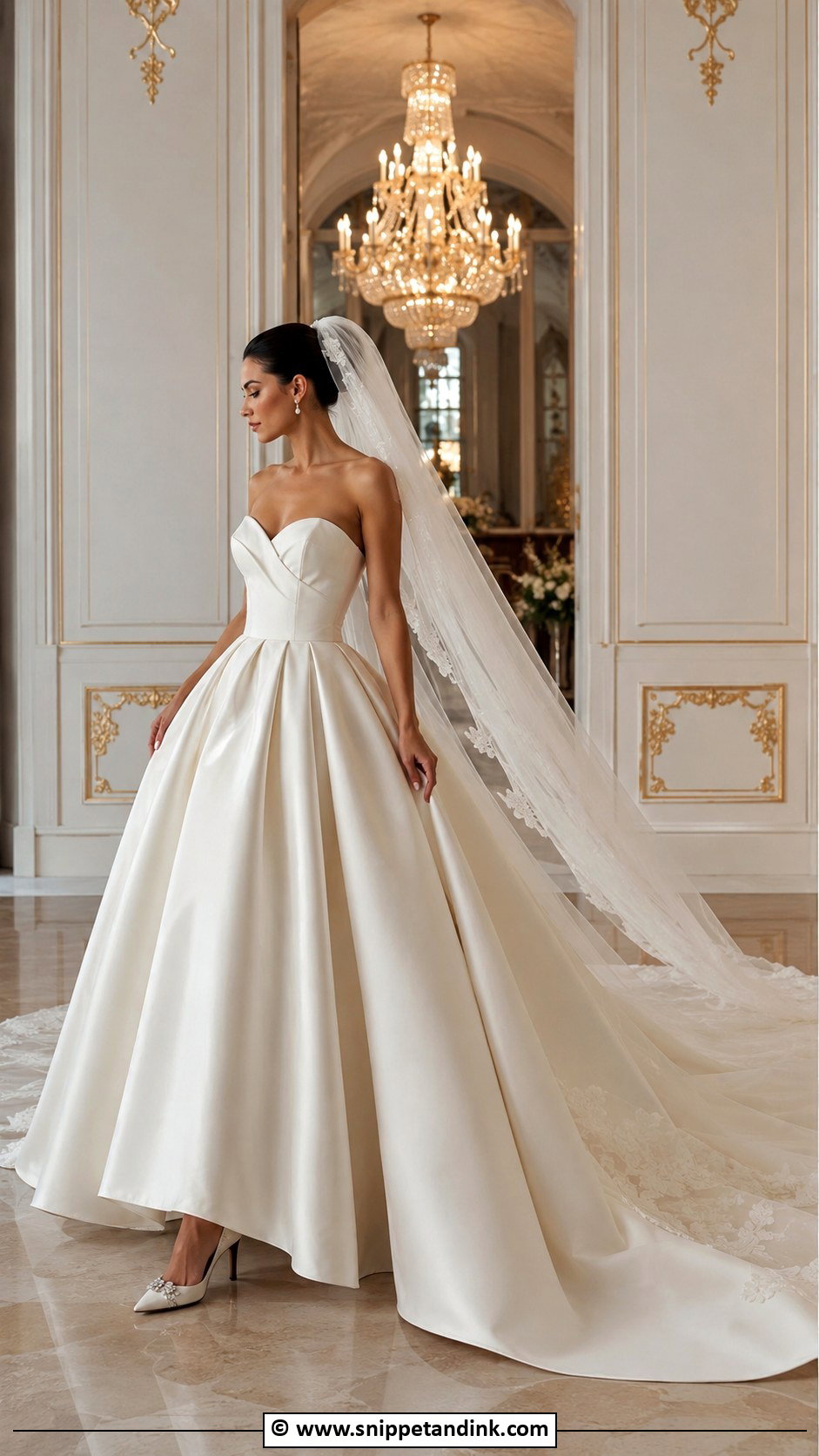
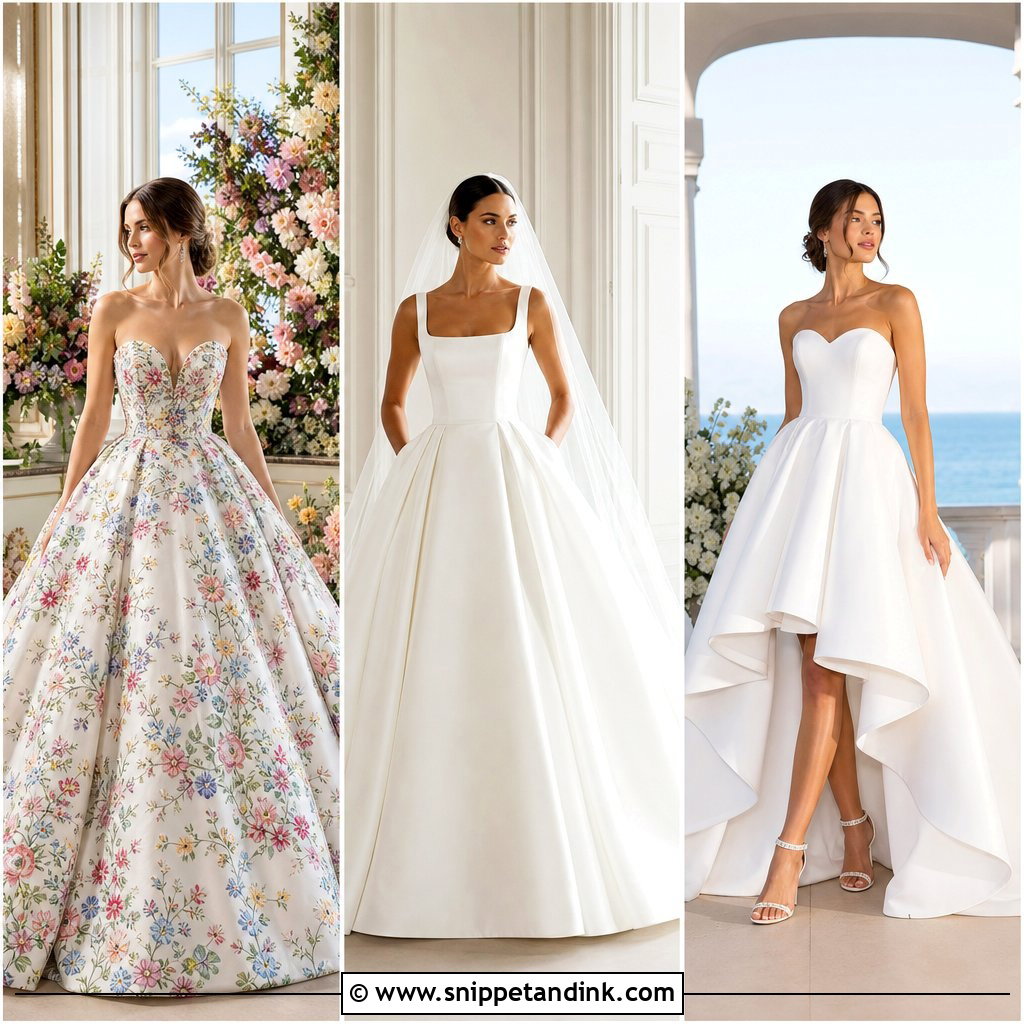
A silk ball gown needs a fabric that holds volume by itself, which narrows the choice to mikado, faille or a heavy duchess-weight satin. Those create a beautiful full skirt without the bulk of endless petticoats. A fitted bodice, clean waistline and sweeping train give the formal outline; strapless reads classic, while a square or off-shoulder neck feels fresher. Scale jewelry to the gown, so pearl drops, a structured veil and simple heels are enough. Plan the bustle at your first fitting, because a full silk train is heavy to carry through a ballroom reception.
7. Silk Column Wedding Dress
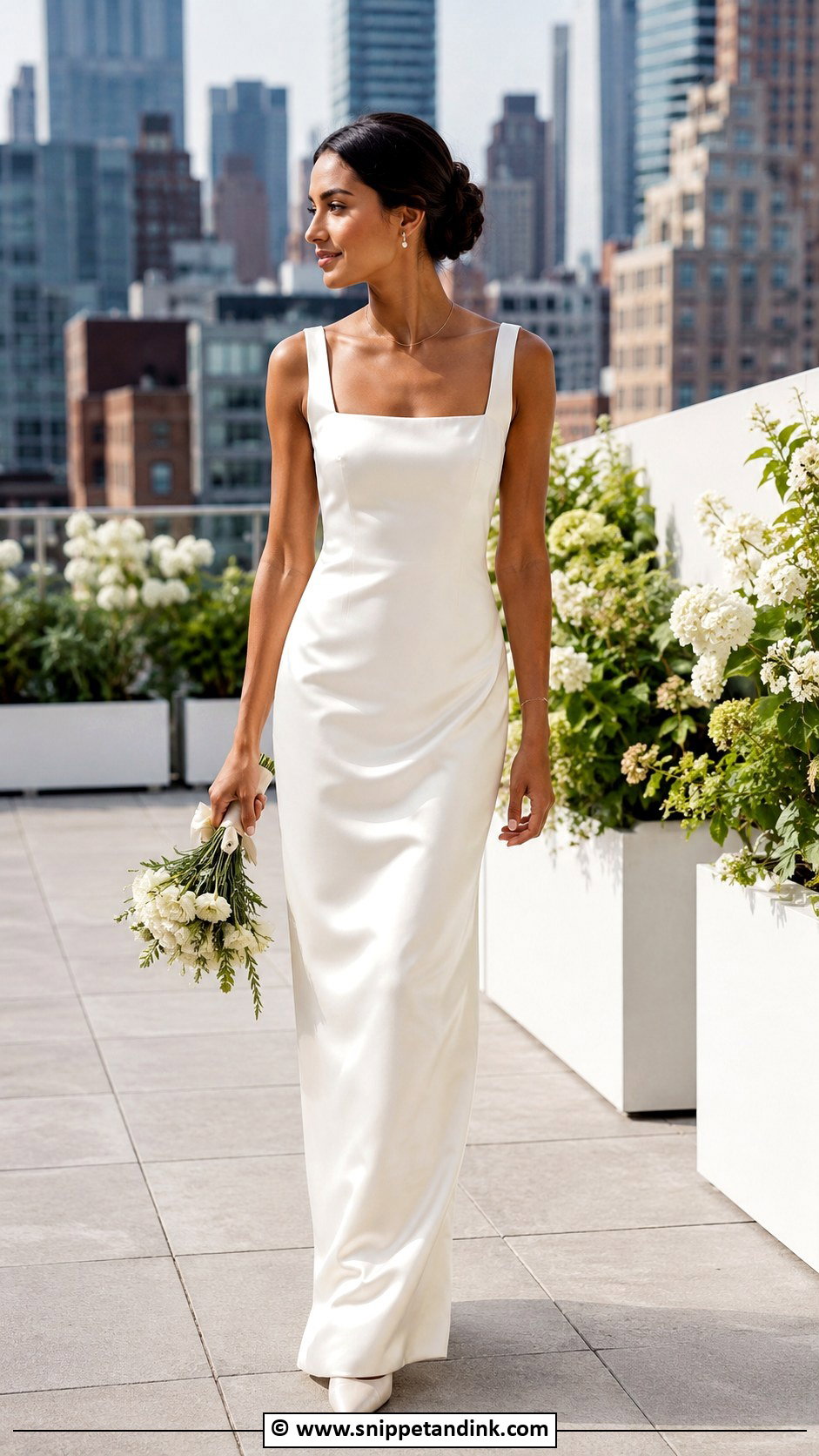
A silk column draws one unbroken line from neck to hem, so fit and fabric weight are the whole design. Crepe or a heavier satin skims without adding bulk, whereas thin charmeuse in a column shape shows every ripple. Strapless feels bold, and a high neck gives coverage with the same clean line. Pointed heels, a small bouquet and minimal jewelry keep attention on the cut for rooftops, galleries, courthouses and evening receptions. Climb a few steps in it before you commit, since a straight skirt usually needs a walking slit.
8. Silk Halter Wedding Dress
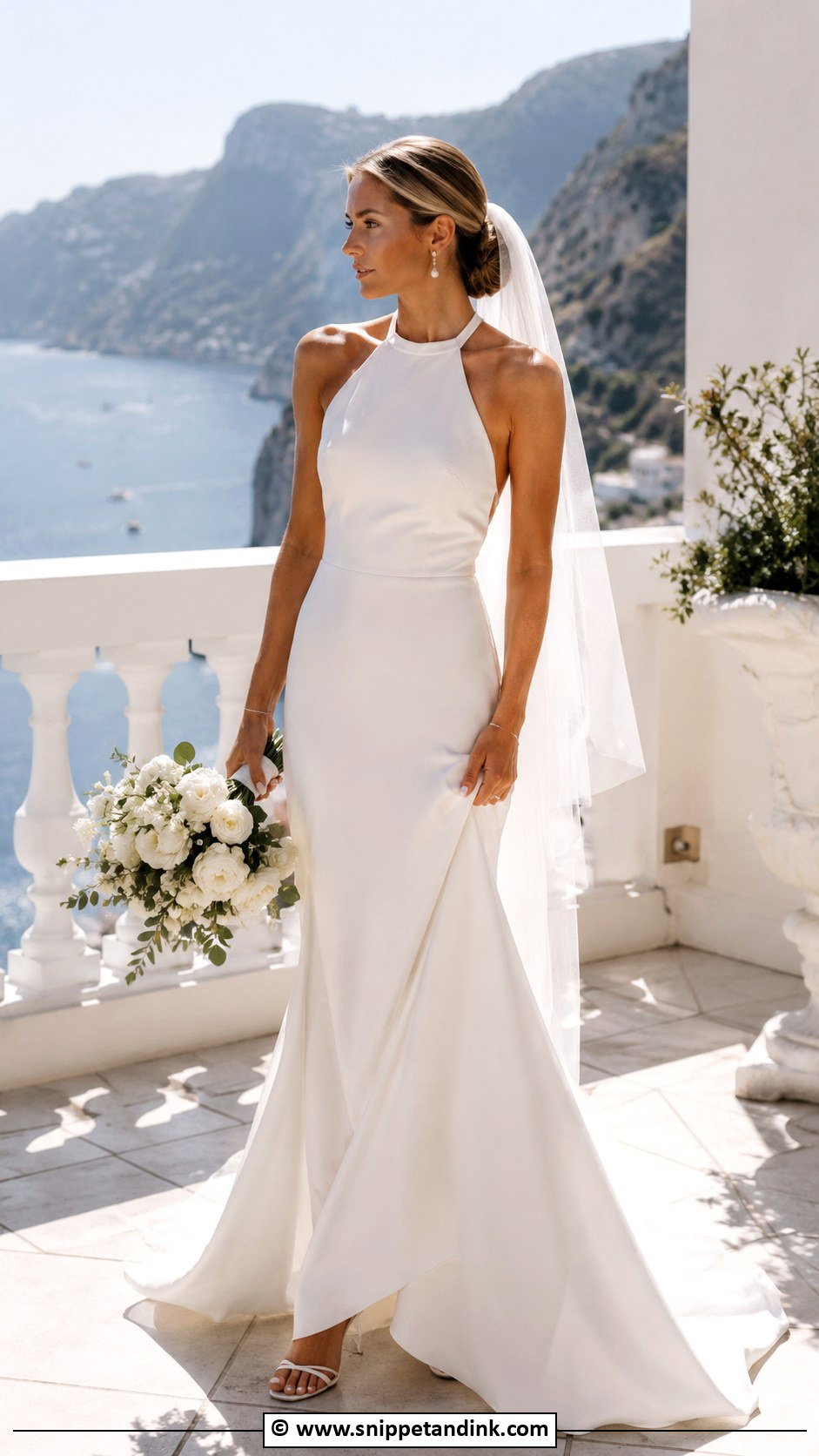
A halter puts the weight of the bodice on the neck, so I check strap width and inner support before anything else. Satin gives a dressy finish and crepe a softer matte one, and the skirt can be slim or full. Keep the neckline open with a low bun, drop earrings and clean heels. Bare shoulders breathe in heat, which makes it a strong summer and destination choice. Most strapless bras won’t work under a halter, so a built-in cup is worth asking about.
9. Silk Square Neck Wedding Dress
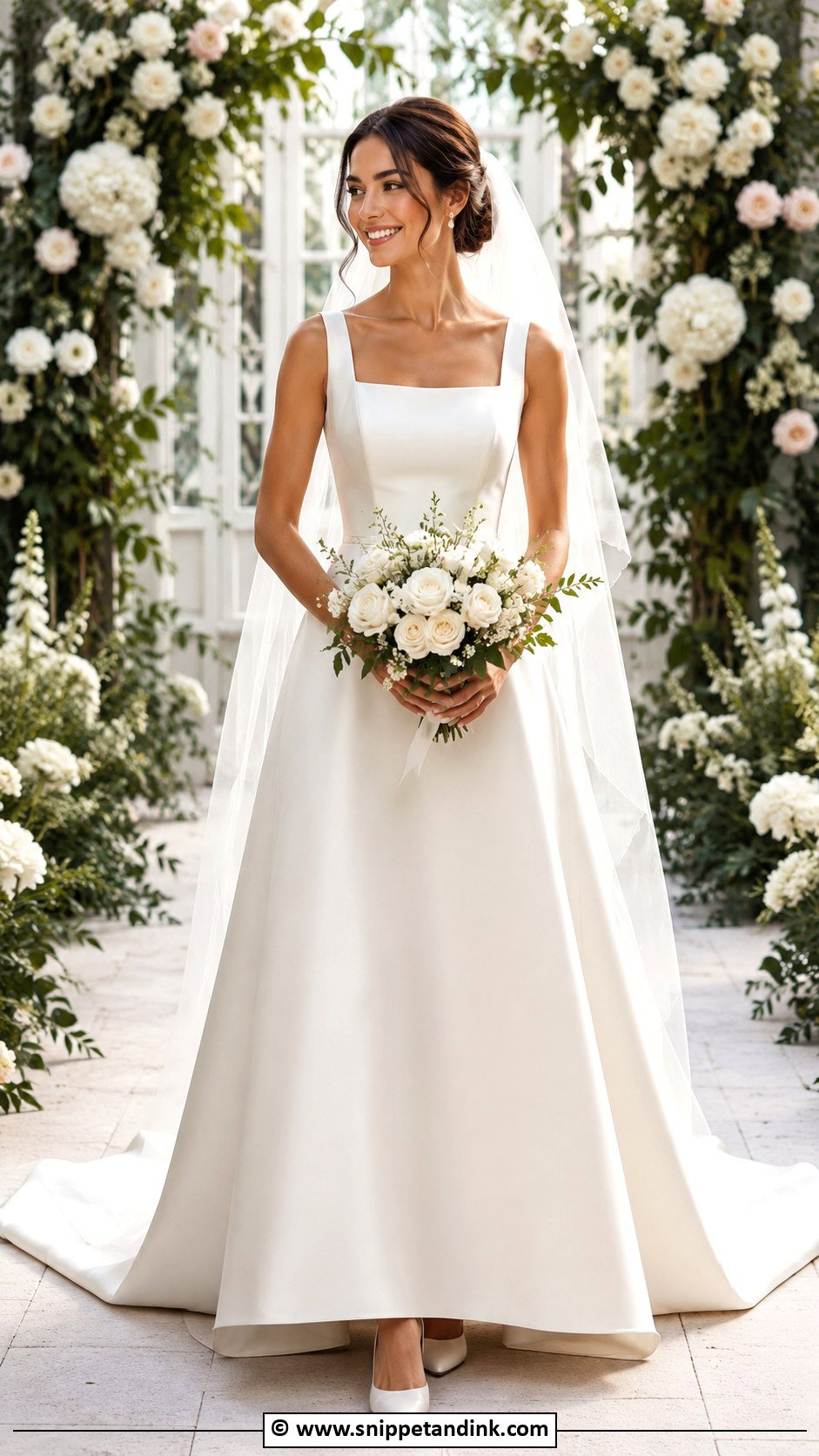
The square neck frames the collarbone and works with thin straps, wide straps or long sleeves. In mikado it looks structured and a little regal; in crepe or satin it softens. I suggest it when a bride wants support without a high neckline, because the straight edge sits flat and doesn’t gape the way a deep sweetheart can. Pearl studs, a soft veil and classic pumps suit it, and a simple updo keeps the face and neckline clear.
10. Silk Strapless Wedding Dress
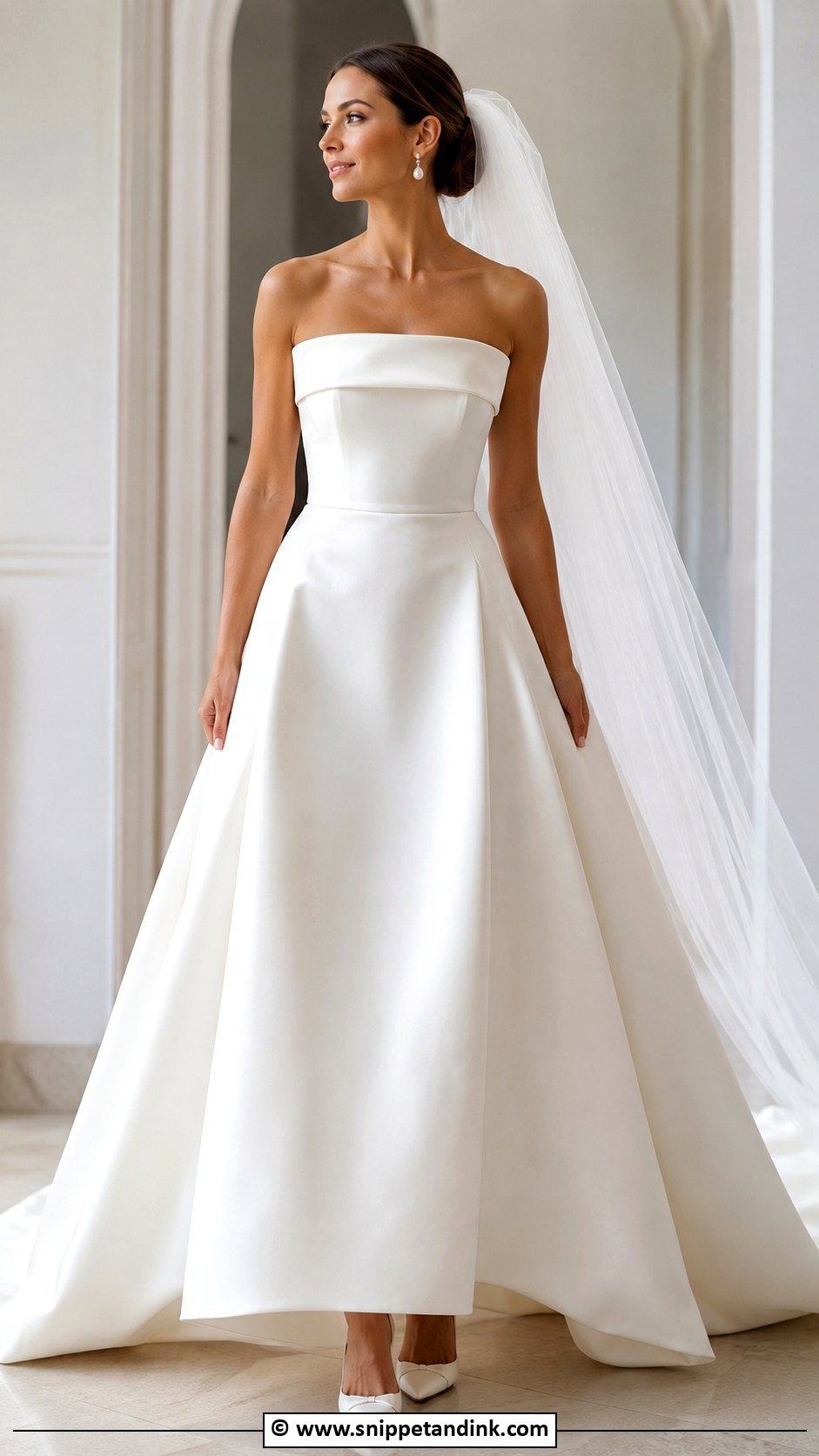
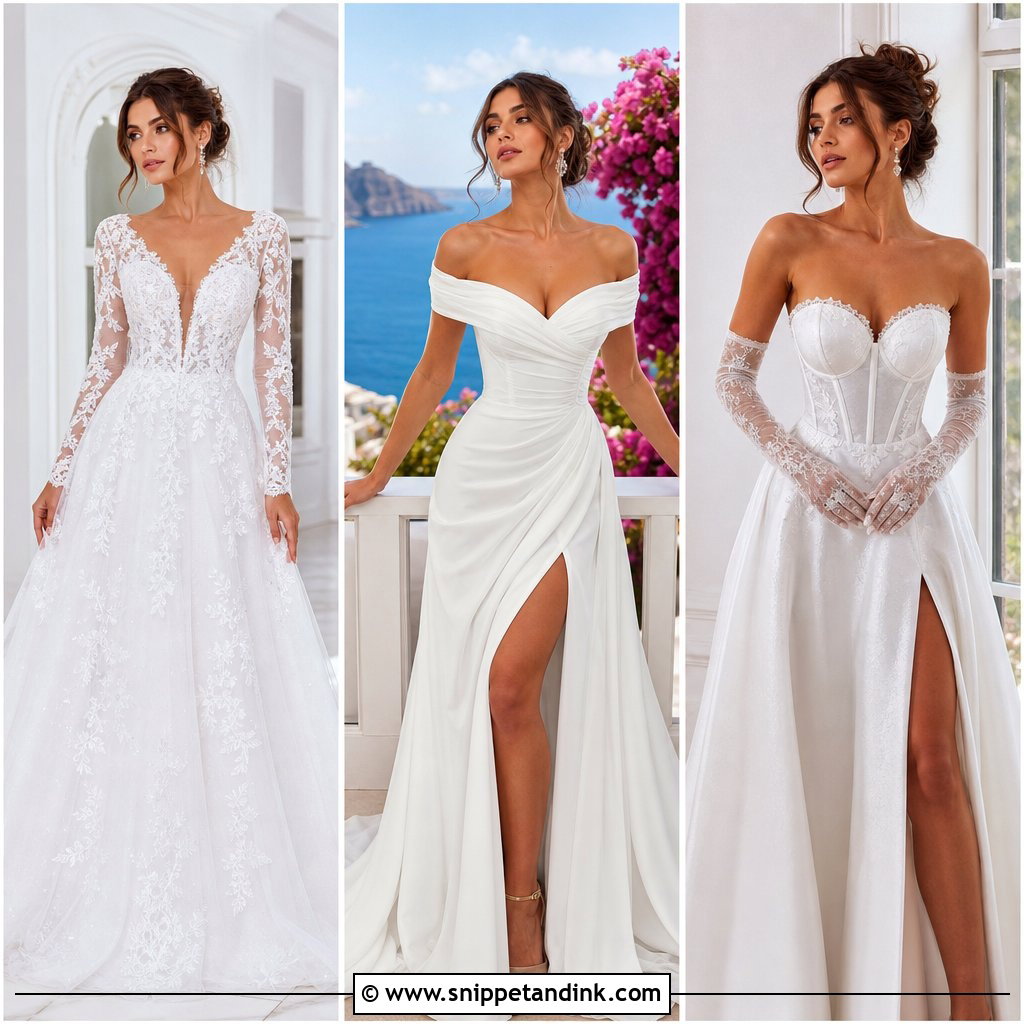
Everything in a strapless silk gown depends on what’s inside the bodice. Proper boning and a waist stay keep it from slipping, so you’re not hitching it up during the first dance. Mikado with a corset bodice or folded neckline gives structure, and satin with gentle draping softens it. A statement veil, pearl earrings or a sleek necklace finishes it, and the skirt shape decides the mood, from ballroom to garden. Before you buy, do the hug test: arms up and around someone, and the neckline shouldn’t move.
11. Silk Off Shoulder Wedding Dress
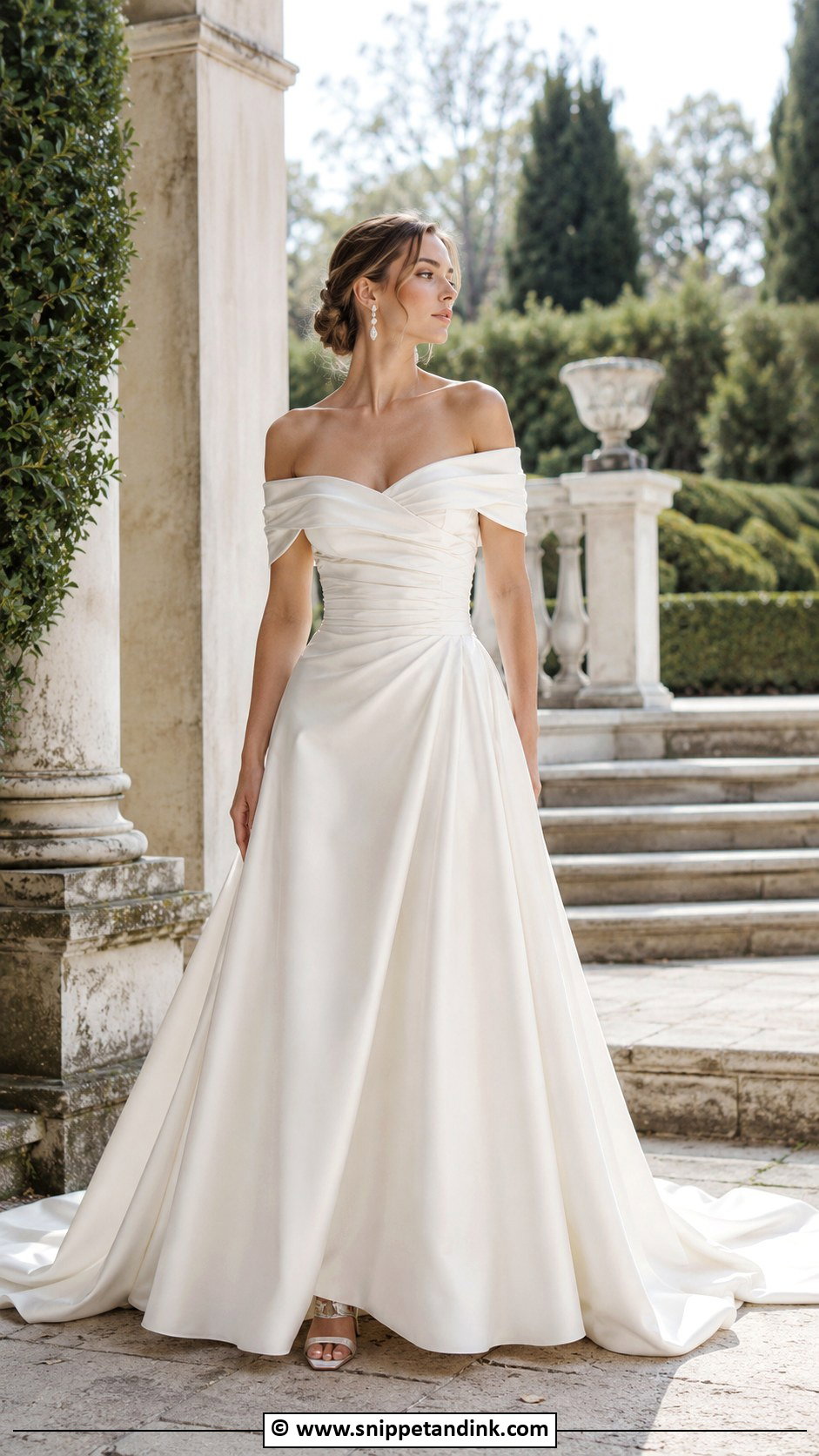
Off shoulder silk needs a neckline band with enough body to stay put, which is why satin and mikado suit it better than charmeuse. They hold folded bands, sculpted sleeves and draped details. A fitted bodice over an A-line skirt feels classic; an off-shoulder column feels newer. The limitation is arm movement, since you won’t raise your arms fully, so practice the hug and the bouquet toss at a fitting. A low chignon, drop earrings and a delicate veil keep the shoulders clear for formal, garden and estate weddings.
12. Silk Long Sleeve Wedding Dress
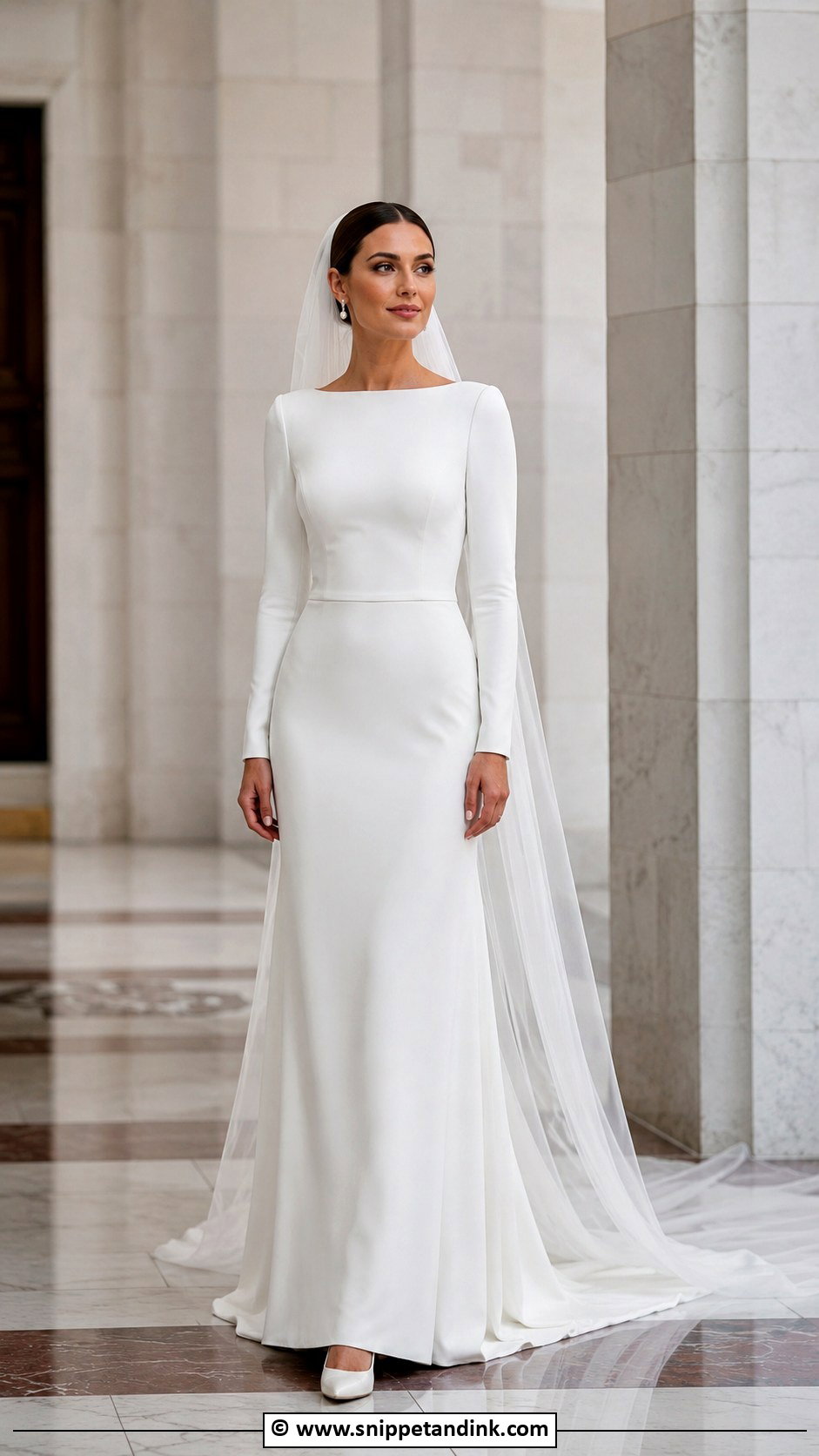
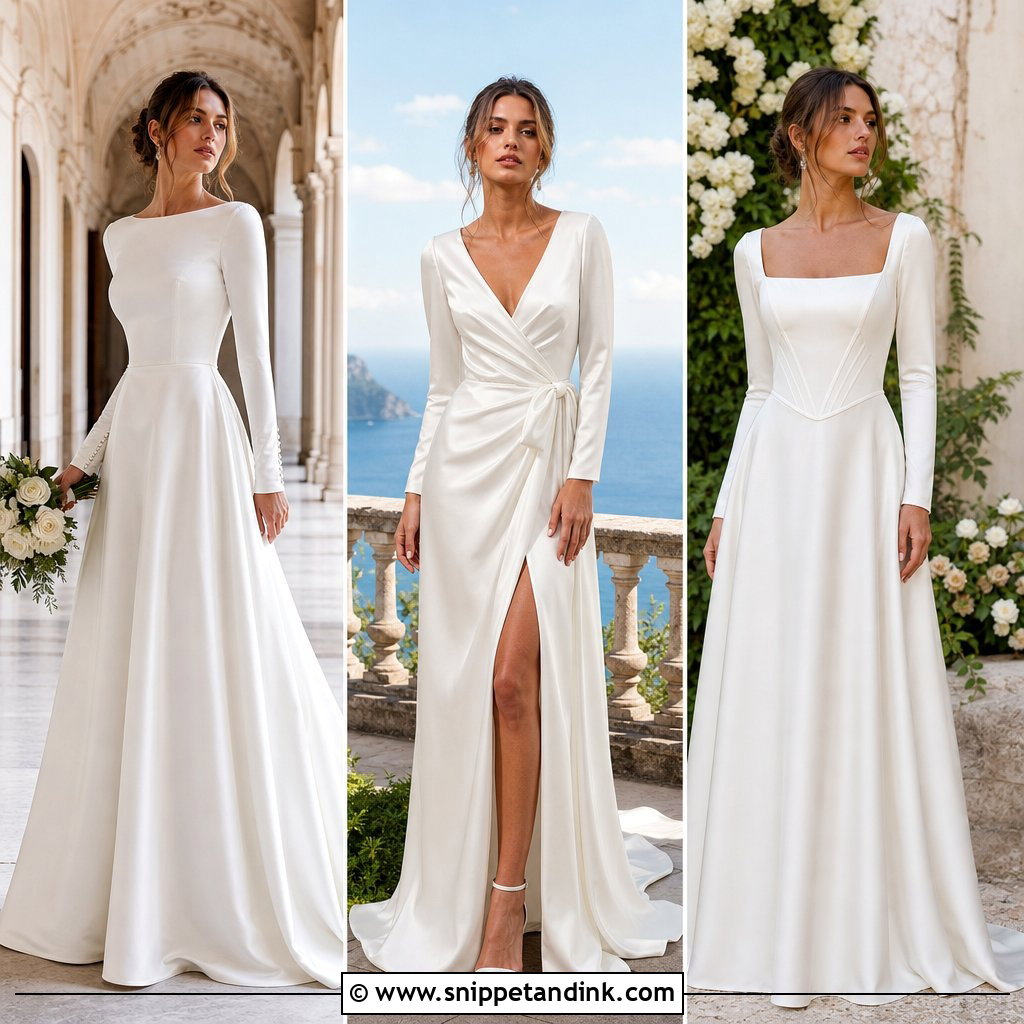
Long sleeves change character with the silk: minimal in crepe, softer in satin, sculpted in mikado. A high neckline gives a regal, modest outline, while a deep V or open back adds contrast. For fall, winter and formal indoor weddings, it’s my first suggestion. The fitting detail that matters is the sleeve head. Cut it too tight and you won’t be able to lift your arms to hug anyone. Simple earrings, closed-toe heels and a smooth veil keep it cohesive, and a very plain sleeved gown can carry a bold bouquet or a statement hair piece.
13. Silk Cowl Neck Wedding Dress
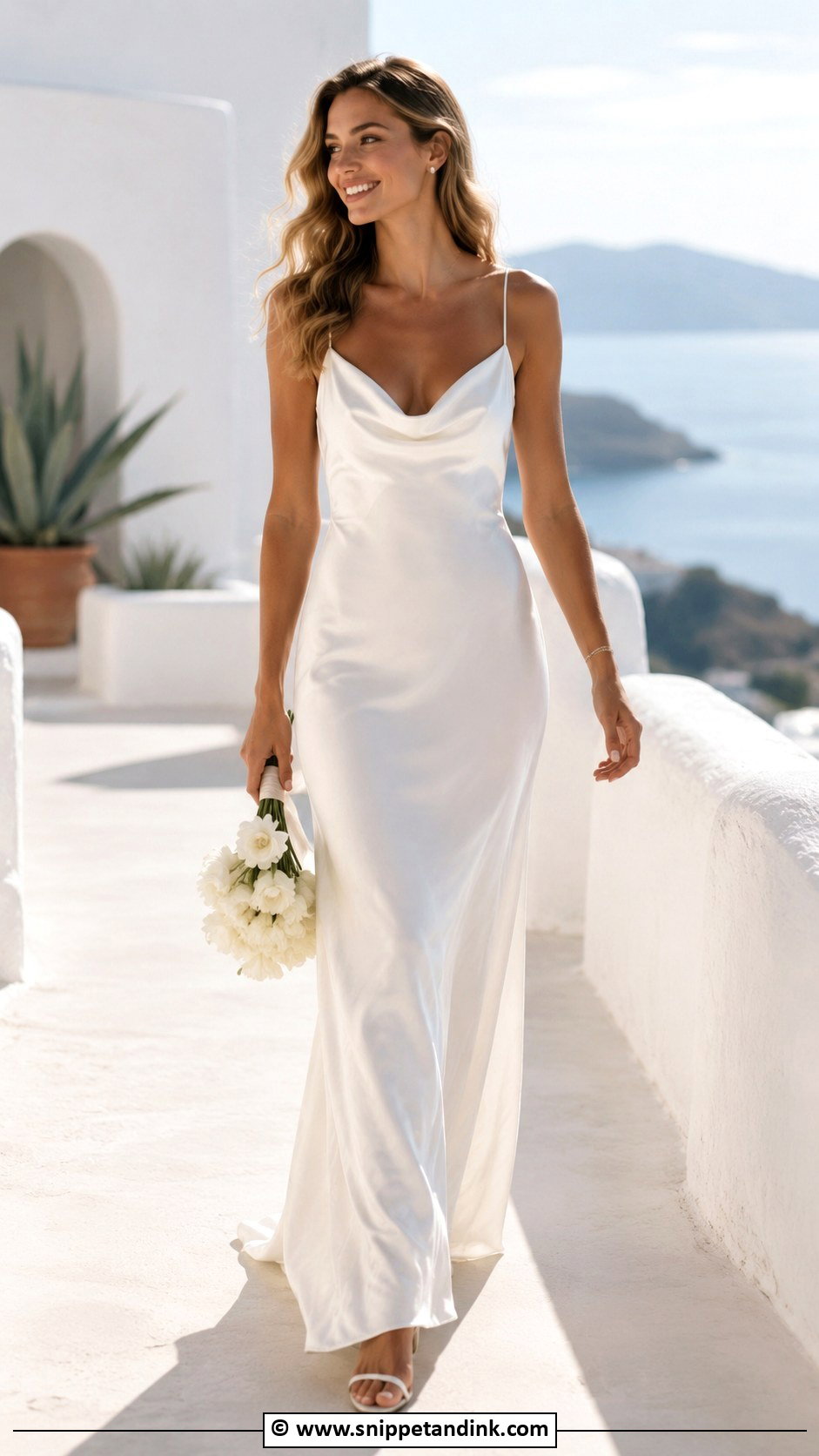
A cowl only falls properly in fluid silk, so charmeuse or a soft satin is the choice; stiff fabric just sits in a fold. Front cowls add soft shape at the bust, and back cowls give you the walk-away photo. Because the fabric hangs loose, a cowl front can dip when you lean forward, and a small weight or discreet tack sewn inside keeps it in place. Thin-strap heels, small earrings and a delicate bracelet are enough for destination, beach and evening receptions.
14. Silk Corset Wedding Dress
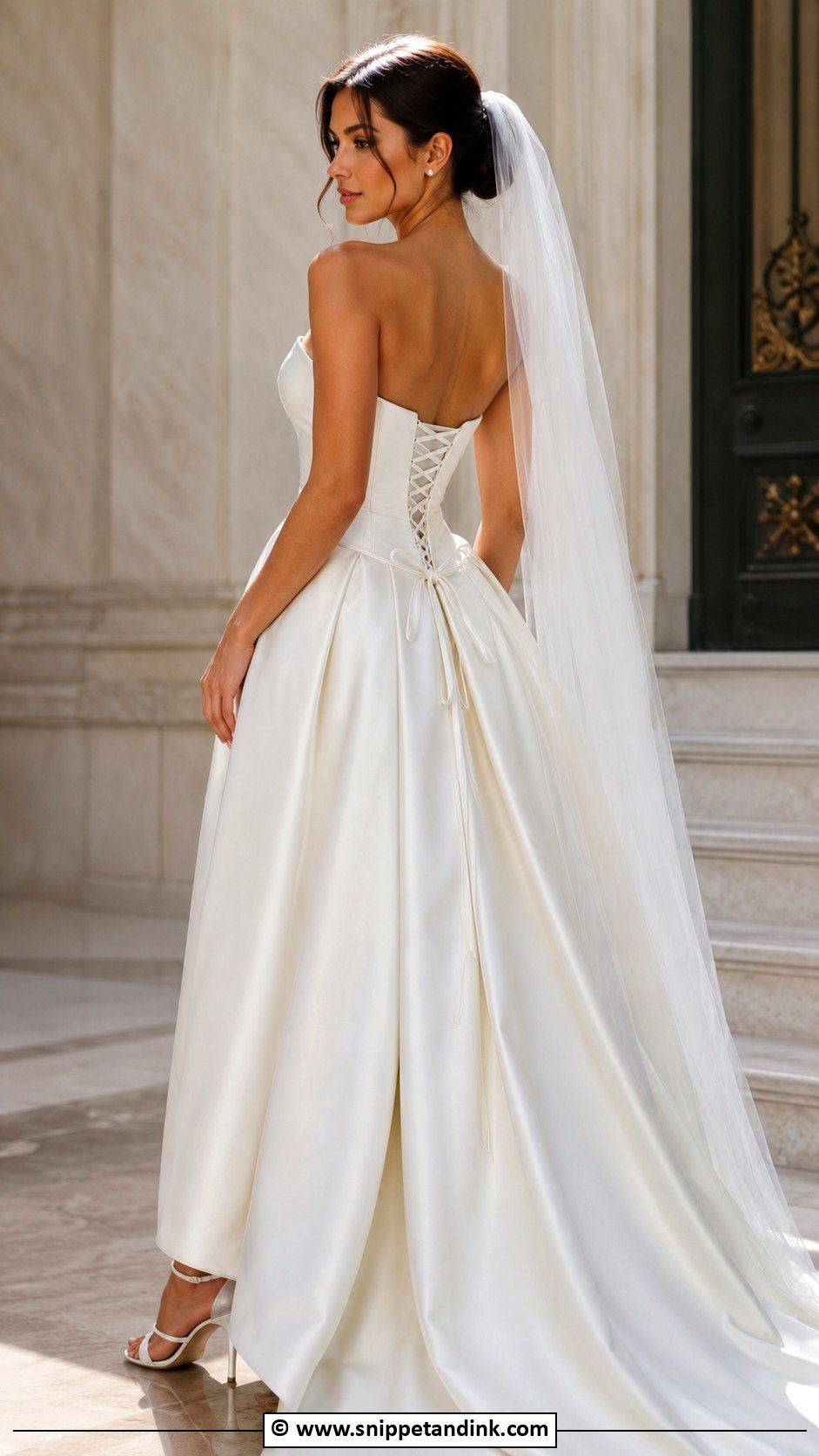
A silk corset bodice does the supporting so the rest of the dress doesn’t have to. It shapes the waist and holds the bust, while the silk softens the outline. Mikado suits a sculpted corset over a full skirt; satin works for a fitted or draped version. Visible seams, a basque waist or a lace-up back add detail, and lace-ups are forgiving if your weight shifts between fittings. A simple veil, heels and minimal jewelry let the structure show. Sit down in it at every fitting, since a corset cut too long will dig in at the hip.
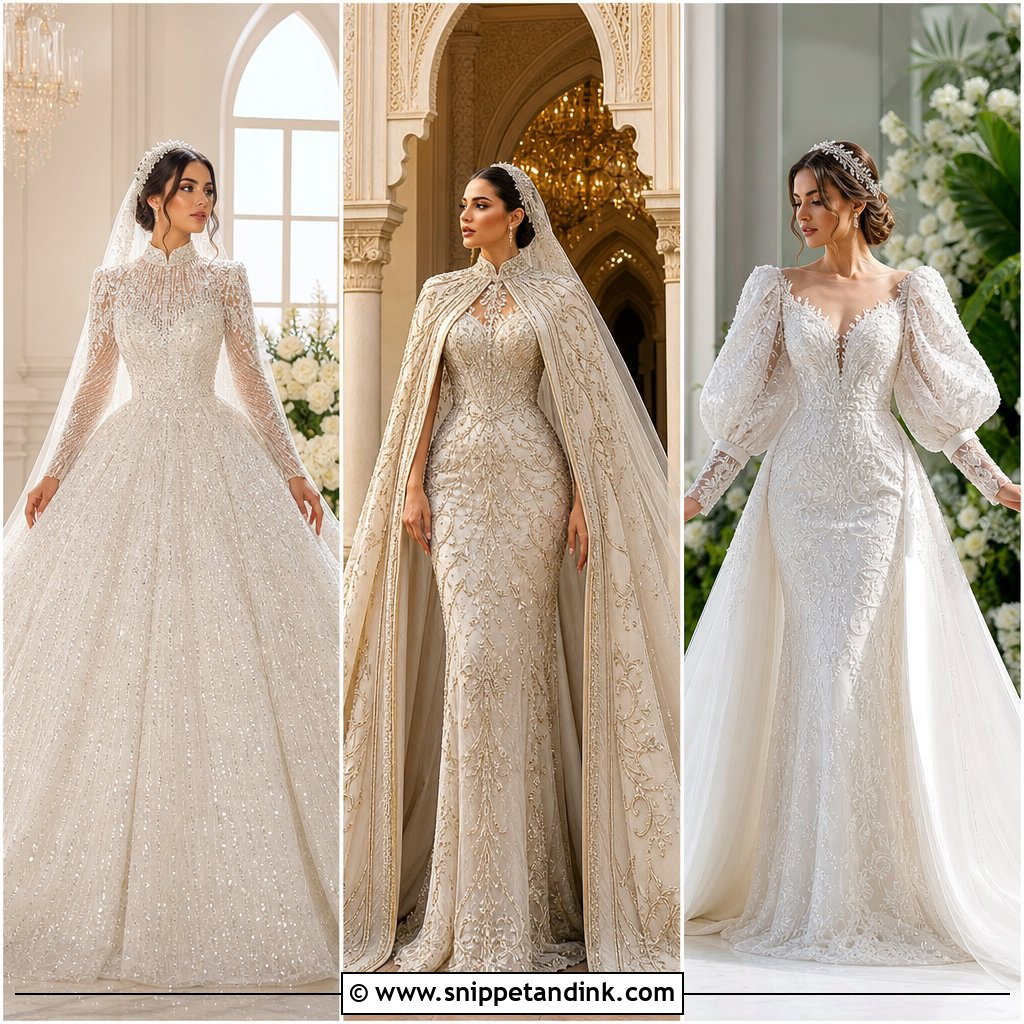
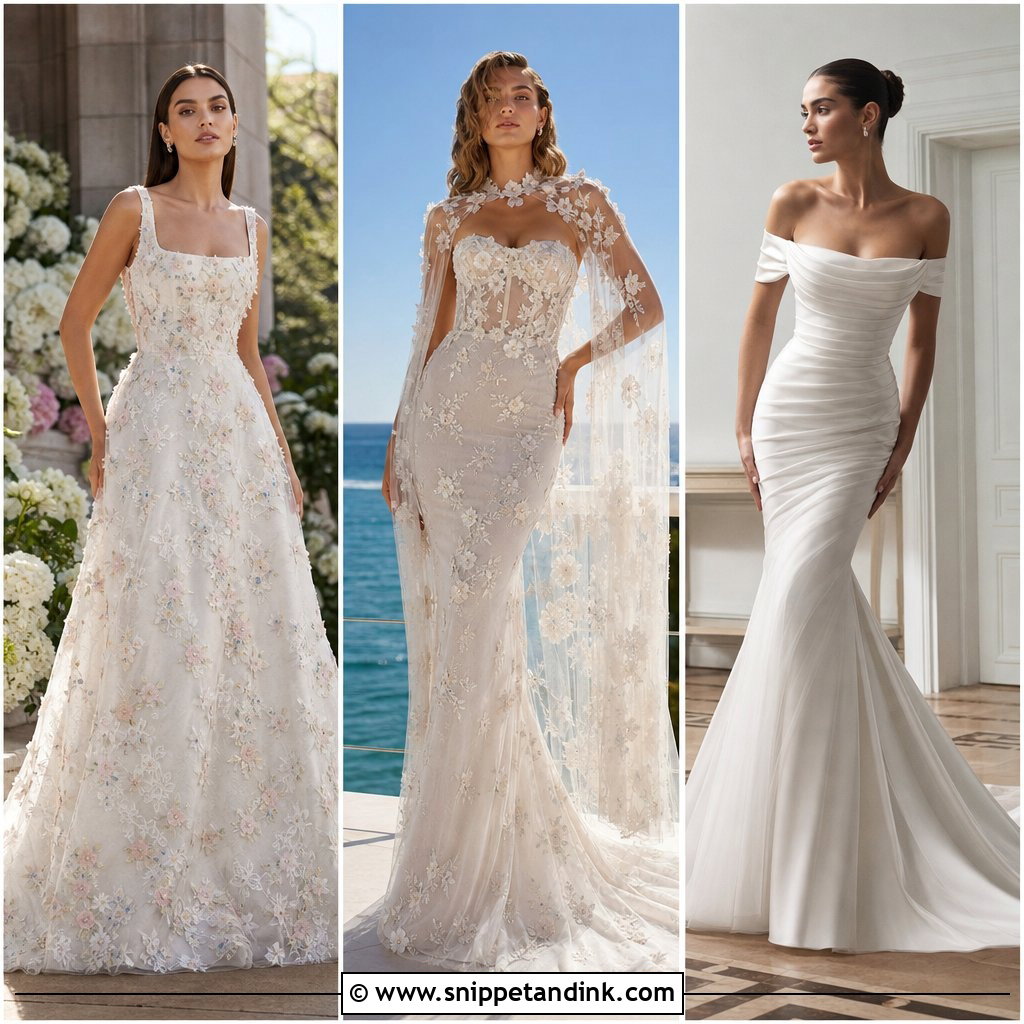
15. Silk Draped Wedding Dress
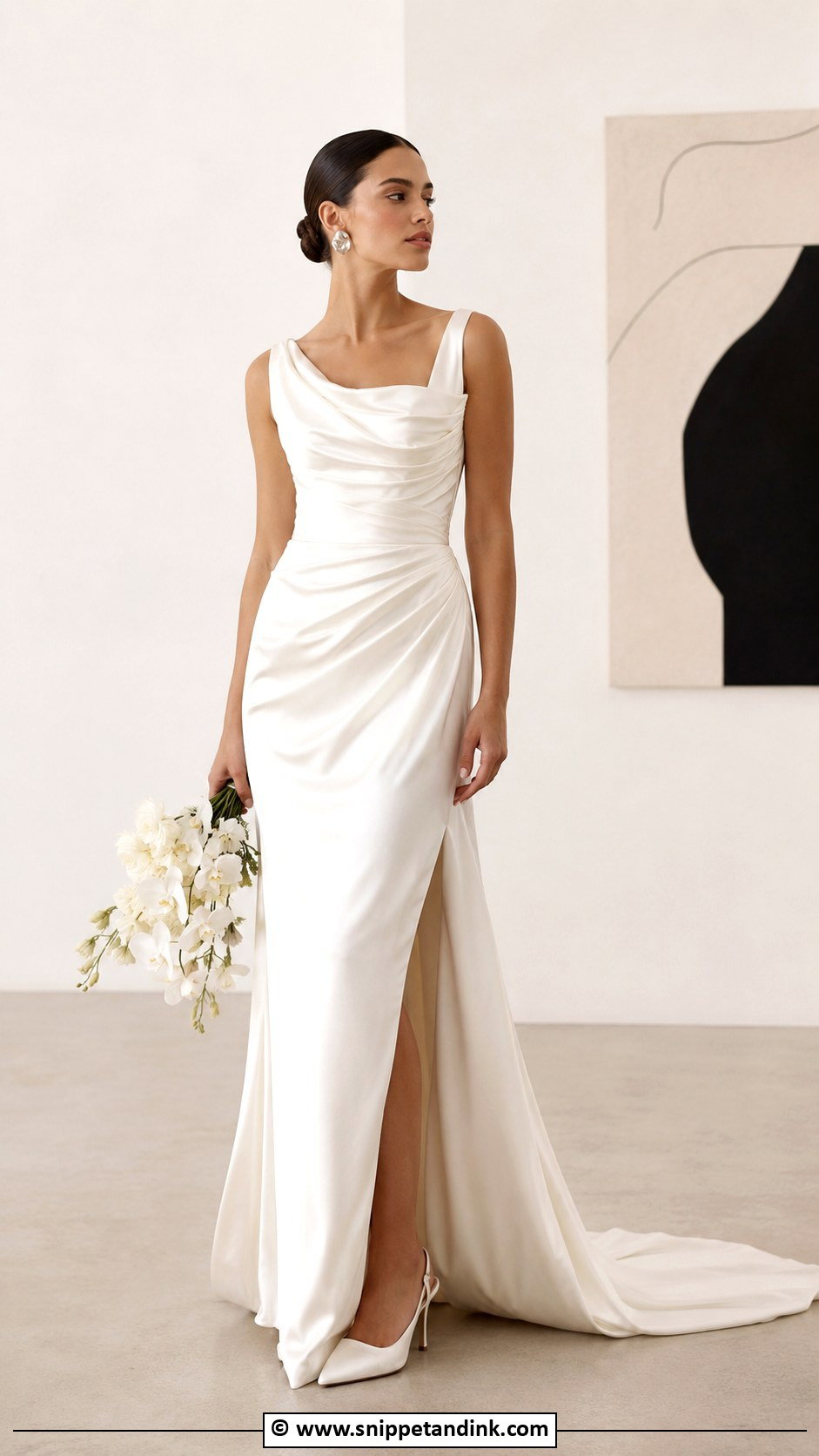
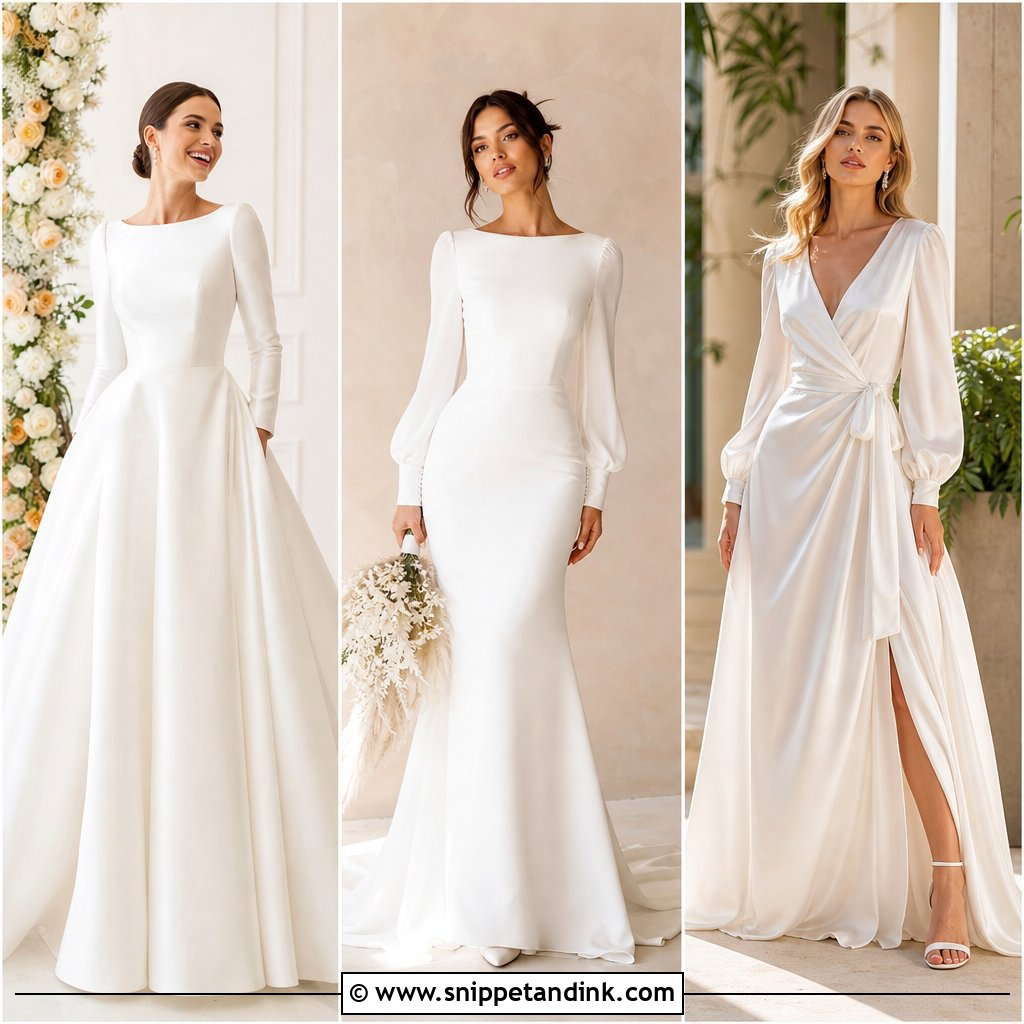
With a draped gown, the folds are the decoration. Satin, charmeuse and crepe fall naturally across the body to define the waist, soften the bust or create an asymmetric line. The skill lies with the seamstress: drapes are often hand-tacked, and they need checking after each alteration so they still fall where they should. Smooth hair, sculptural earrings and barely-there heels suit it. It should look fluid, never fussy, which makes it a good match for modern and gallery venues.
16. Silk Bias Cut Wedding Dress
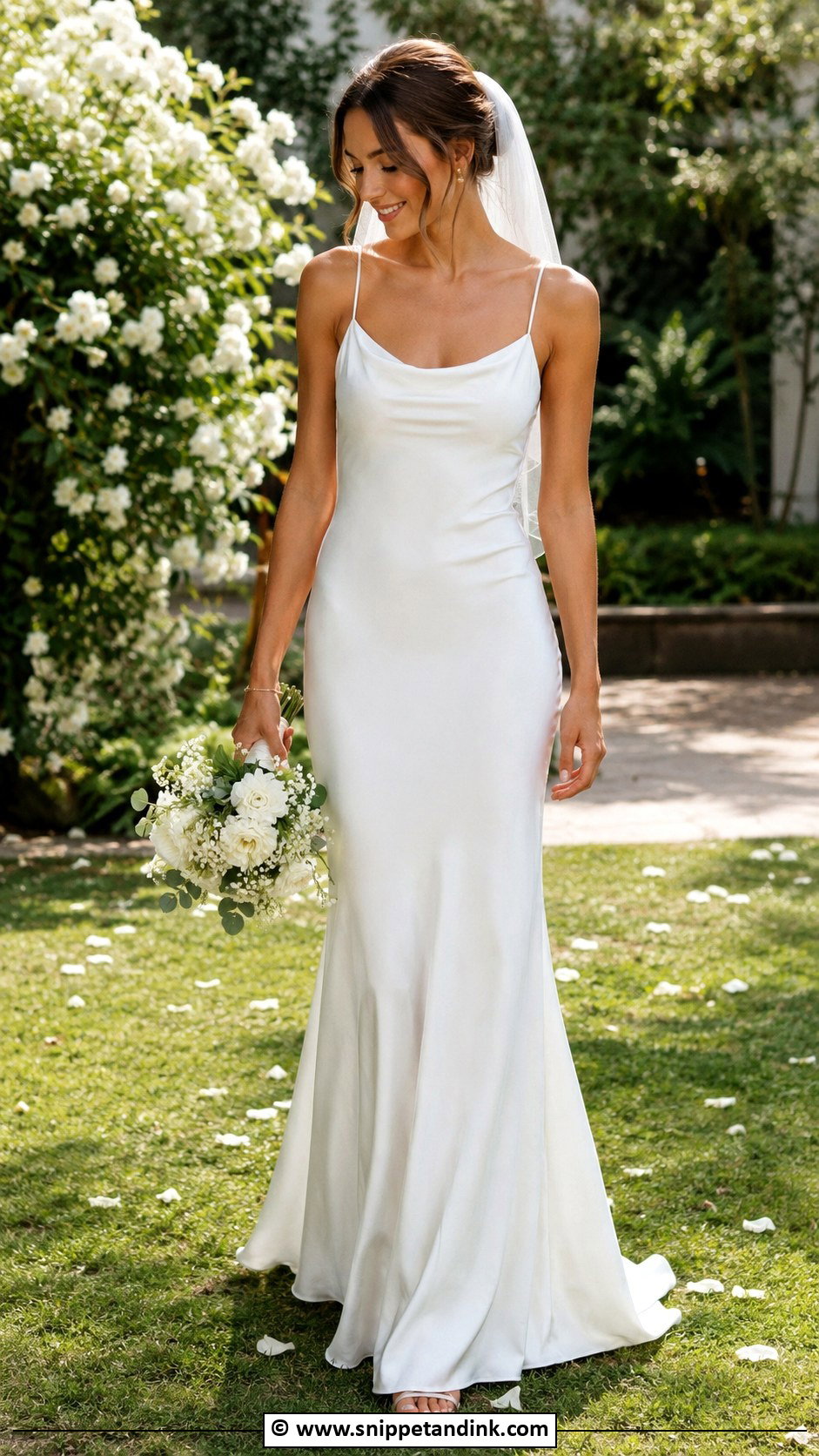
Cutting silk on the diagonal gives it a stretch it doesn’t have on the straight grain, so a bias dress follows the body closely without being tight. It also means the hem can drop as the dress hangs, which is why a good seamstress lets a bias gown rest on the hanger before marking the final hem. Charmeuse and satin are the usual fabrics, with spaghetti straps, a cowl or an open back. Delicate sandals, a short veil and simple jewelry fit beach, garden and relaxed modern weddings.
17. Silk Tea Length Wedding Dress
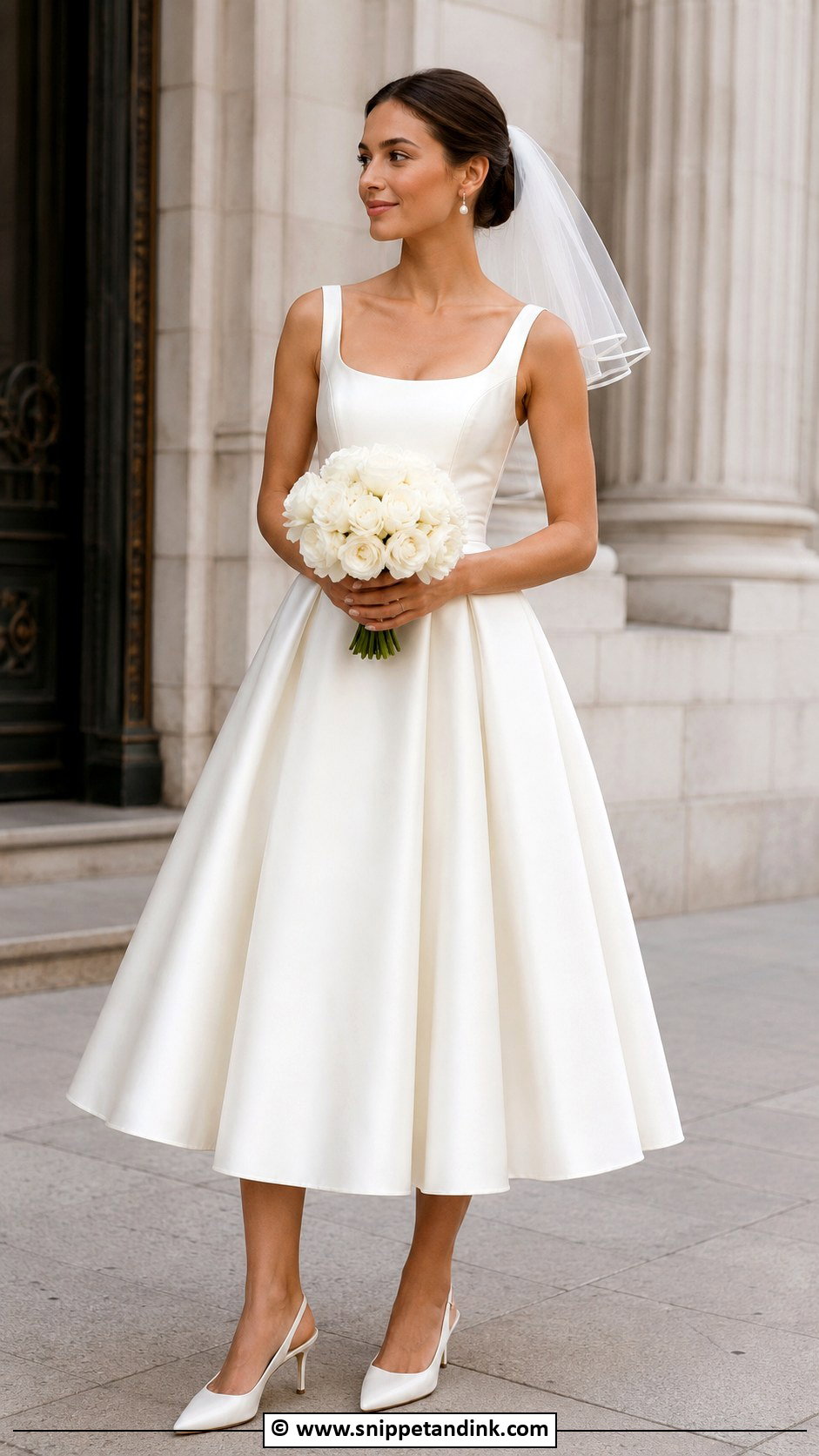
Tea length lets you walk, dance and show off good shoes. The hem sits between the knee and ankle, which feels vintage without tipping into costume when the fabric is plain. Mikado or faille holds a fuller skirt, and satin flows. Courthouse weddings, brunch receptions and elopements suit it, with slingbacks, pearl earrings and a short veil. It also answers the brief when a bride wants something unmistakably bridal that never needs a bustle.
18. Silk Mini Wedding Dress
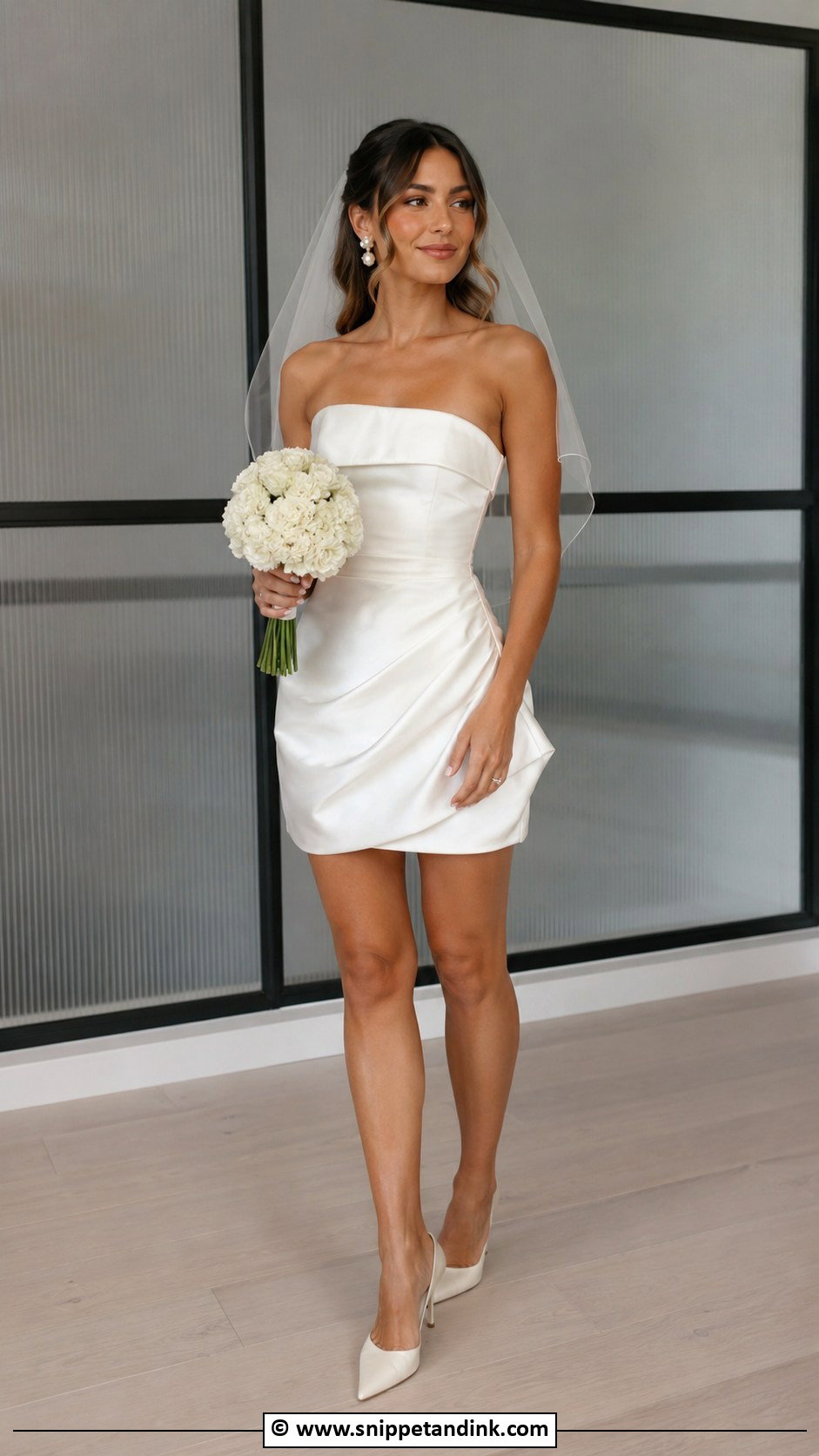
A silk mini works best as a second look: a reception change, an after-party or a courthouse ceremony. Mikado gives it structure, and satin gives a sleek, fluid finish. A shift, strapless, long-sleeve or bow-back mini all read bridal when the fabric is good. Since the hem is short, I keep everything else refined with pointed heels, a short veil and statement earrings. You’ll dance in it far more freely than in any gown.
19. Silk High Neck Wedding Dress
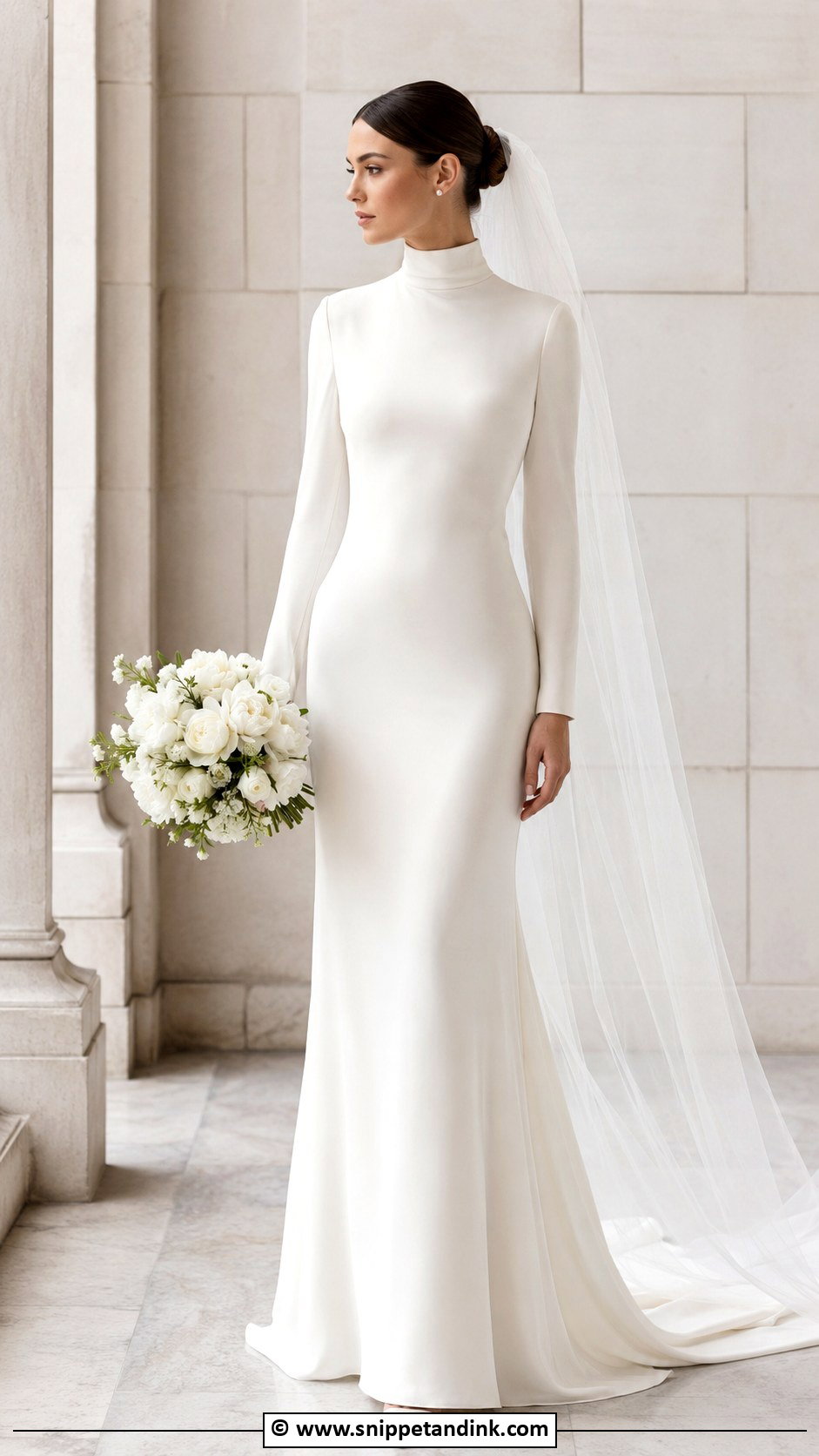
A high neck gives coverage and still looks current when the line is clean. Crepe makes the sleekest high-neck column, while satin softens it, and it pairs well with an open back, long sleeves or a slim skirt. The neckline is already strong, so leave the necklace off and choose earrings or a hair accessory. Formal ceremonies, city weddings and cool weather suit it. Make sure the collar stays comfortable when you turn your head, because a tight high neck gets tiring by evening.


20. Silk V Neck Wedding Dress
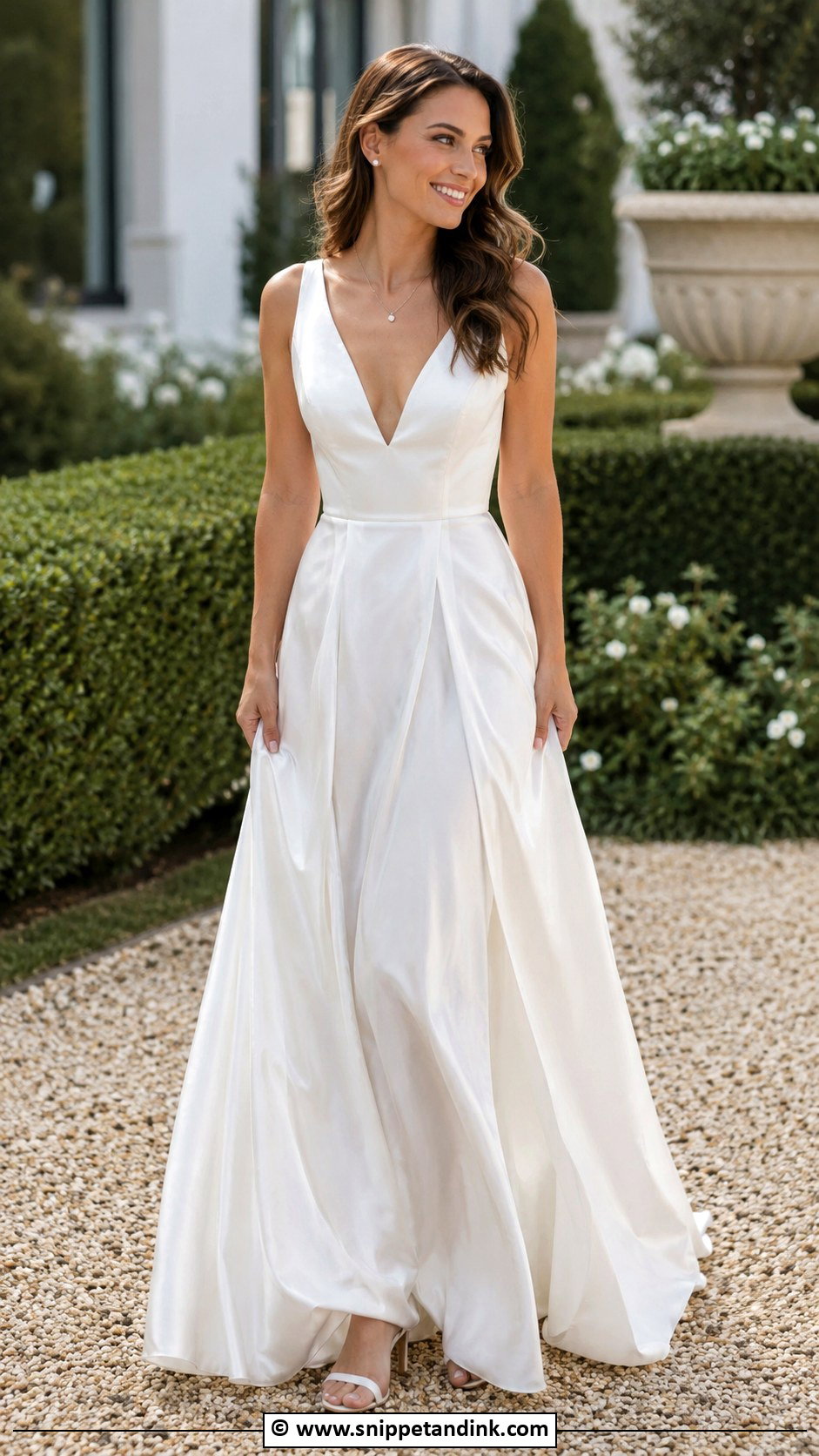
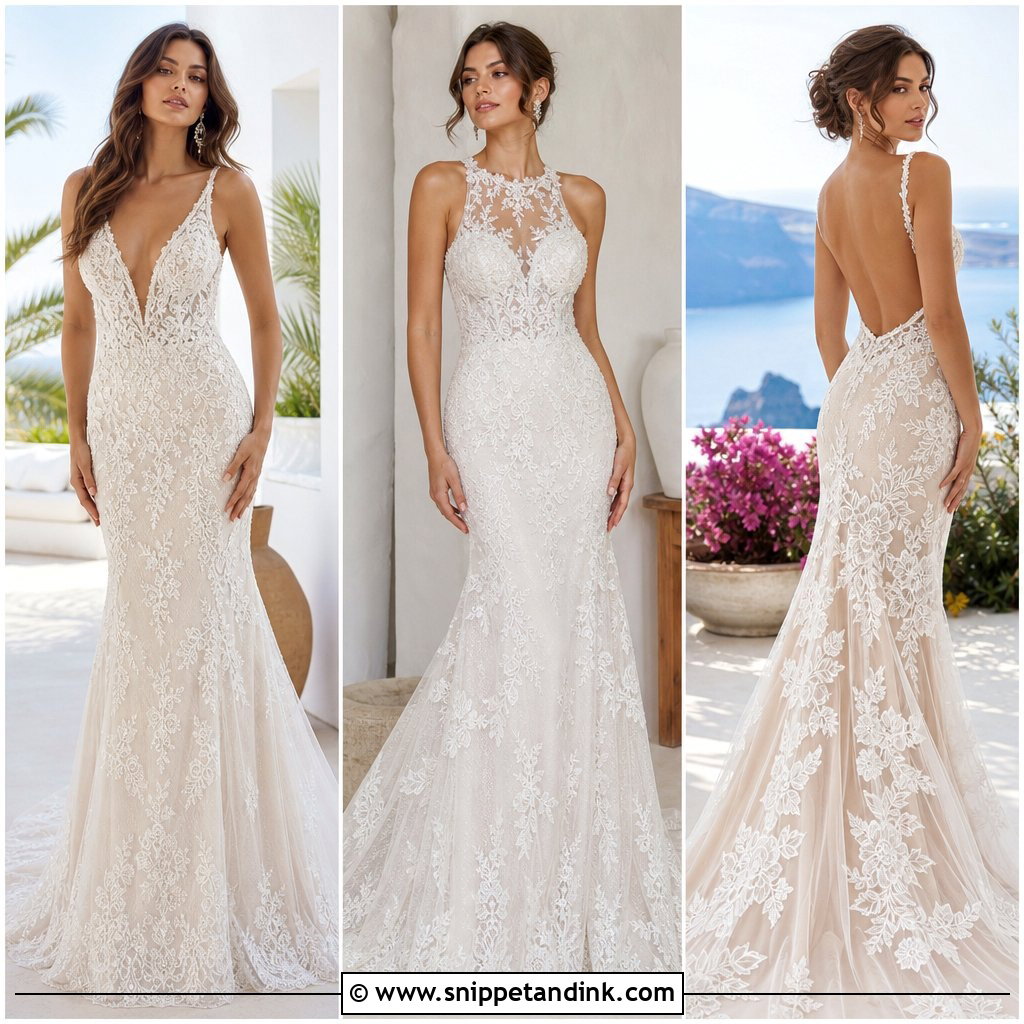
A V neck draws the eye downward and lengthens the torso, which is why it flatters such a wide range of figures. A shallow V is classic. A deep one is modern and needs fashion tape or a fine mesh panel to stay put. Satin and crepe both hold a clean line here. Choose a fitted sheath, a flowing A-line or long sleeves depending on the venue, and finish with a fine pendant, soft waves and simple heels.
21. Silk Open Back Wedding Dress
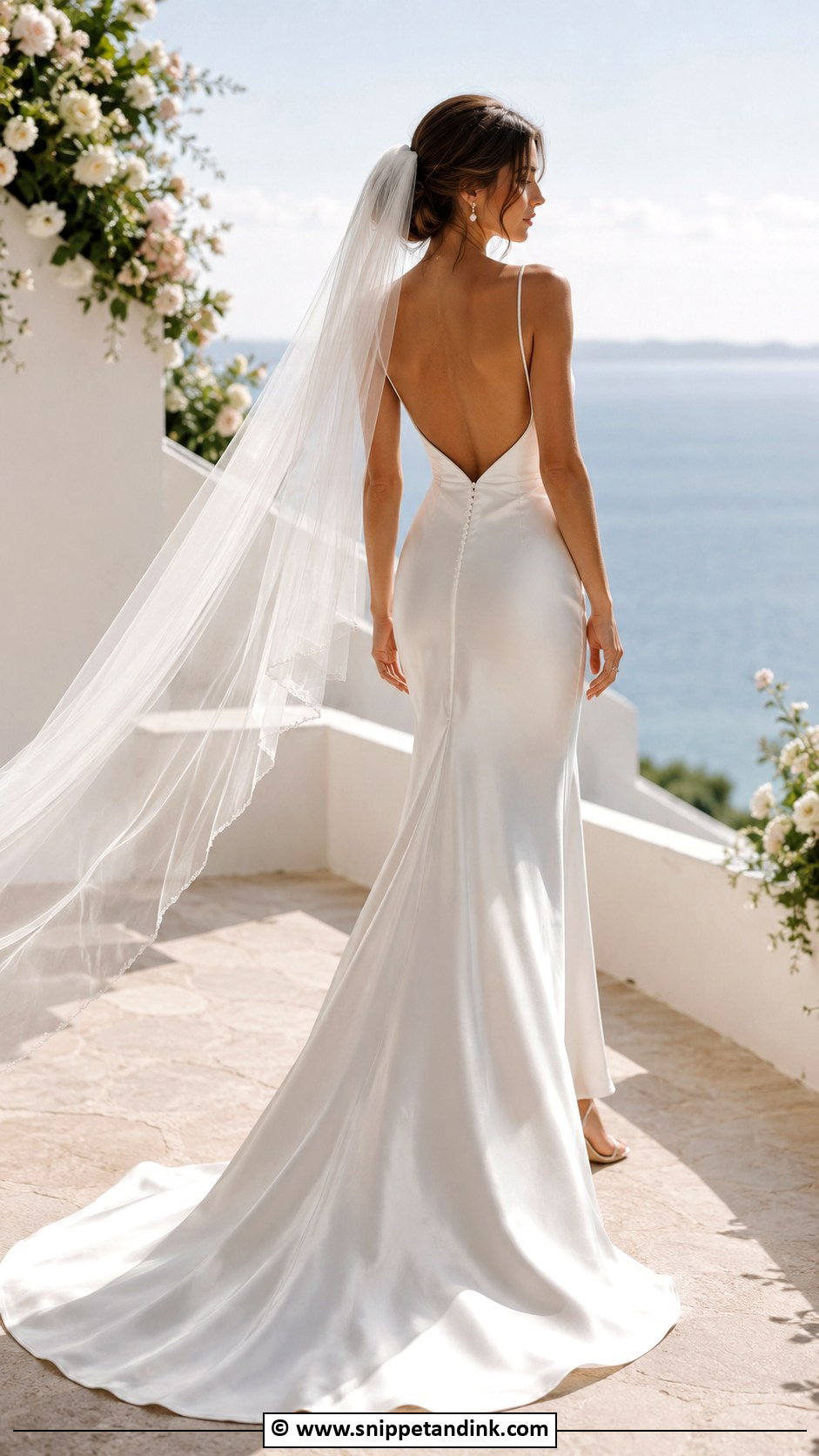
With an open back, the front can stay simple and the dress still makes its point as you walk away down the aisle. A low scoop, square opening, back cowl or delicate straps all work, especially in satin and charmeuse. The fitting challenge is support, since there’s nowhere to hide bra straps, so cups are usually sewn into the bodice. Wear your hair up so the back stays visible, with a sheer veil that lets the detail show. Beach, destination and modern venues suit it.
22. Silk Mermaid Wedding Dress
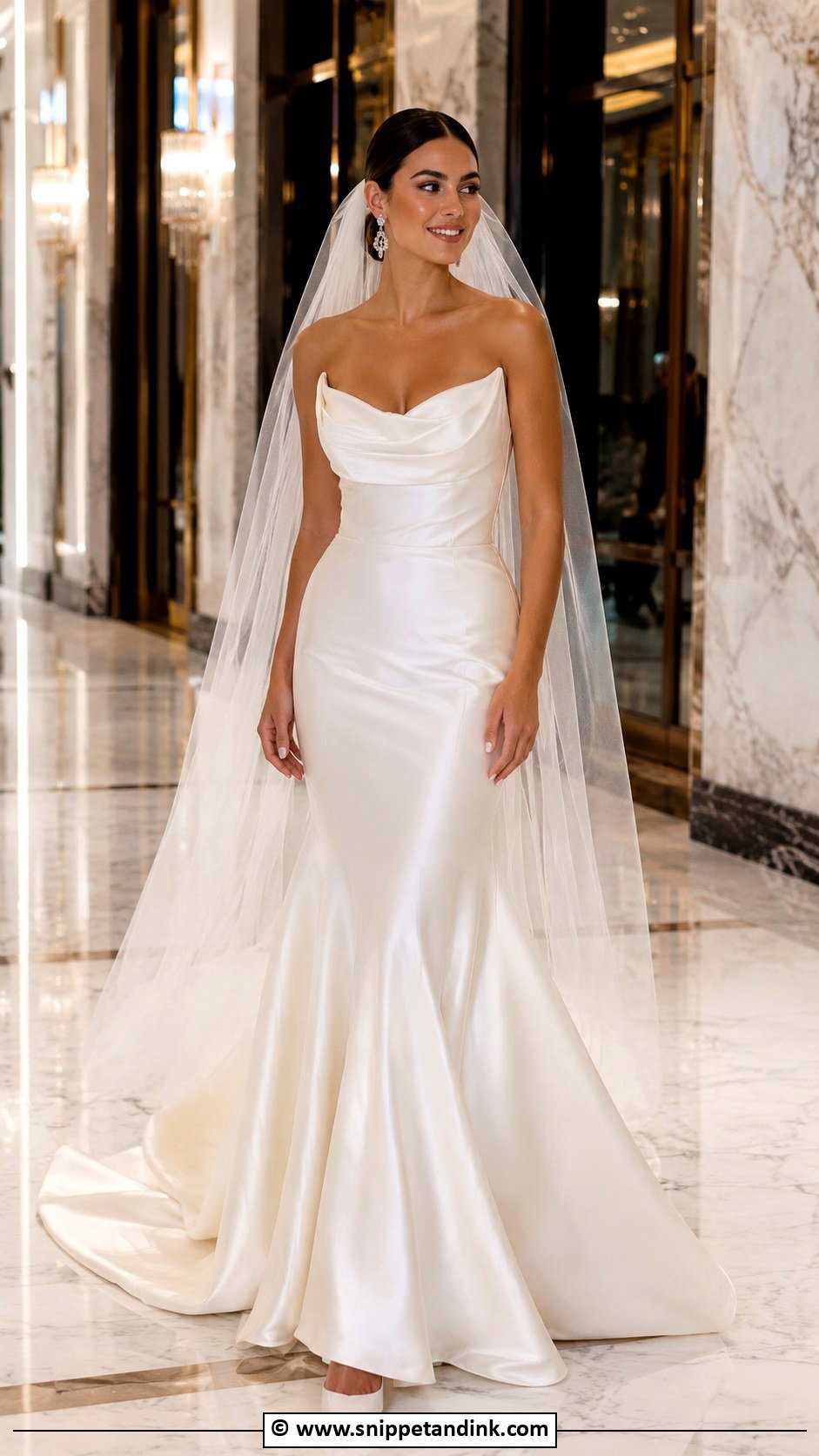
A mermaid gown fits through the bodice, waist and hips, then flares near the knee. Where that flare begins is everything: set it too low and you’ll shuffle all night, too high and the shape loses its drama. Satin gives smooth shine and mikado adds structure, while clean seams, a sculpted neckline and a modest train keep it elegant. Alterations aren’t optional, so book them early and walk stairs at the final fitting. Statement earrings, sleek heels and a long veil complete a confident entrance.
23. Silk Fit And Flare Wedding Dress
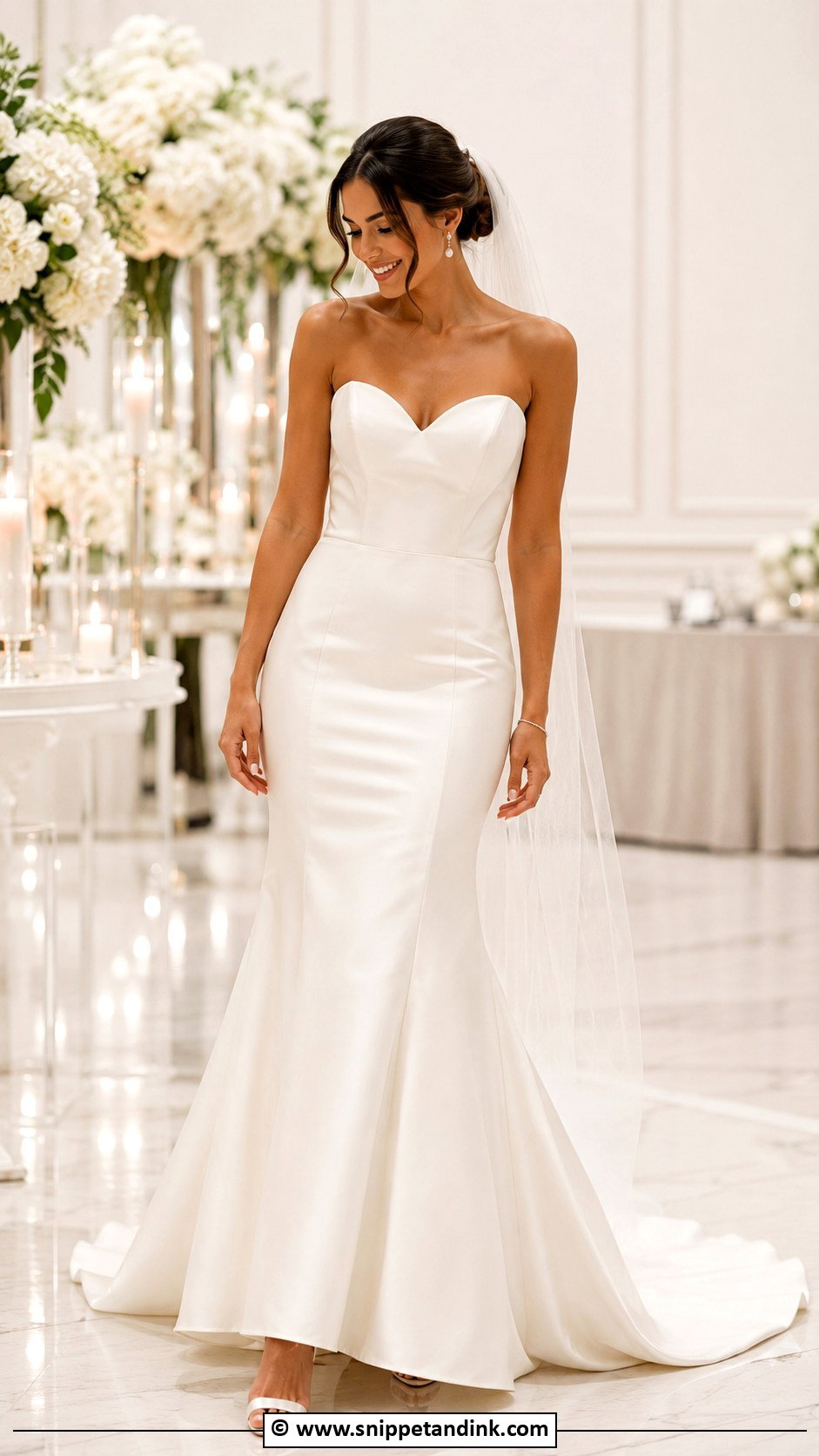
Fit and flare is the compromise I suggest to brides who love a mermaid’s shape but want to sit, dance and climb stairs without thinking about it. It hugs the bodice and hips, then opens gradually from mid-thigh. Crepe gives a smooth modern finish and satin adds sheen. Sweetheart, square or off-shoulder necklines all suit it. Classic pumps, a simple veil and polished hair carry it through formal, garden and evening weddings.
24. Silk Empire Waist Wedding Dress
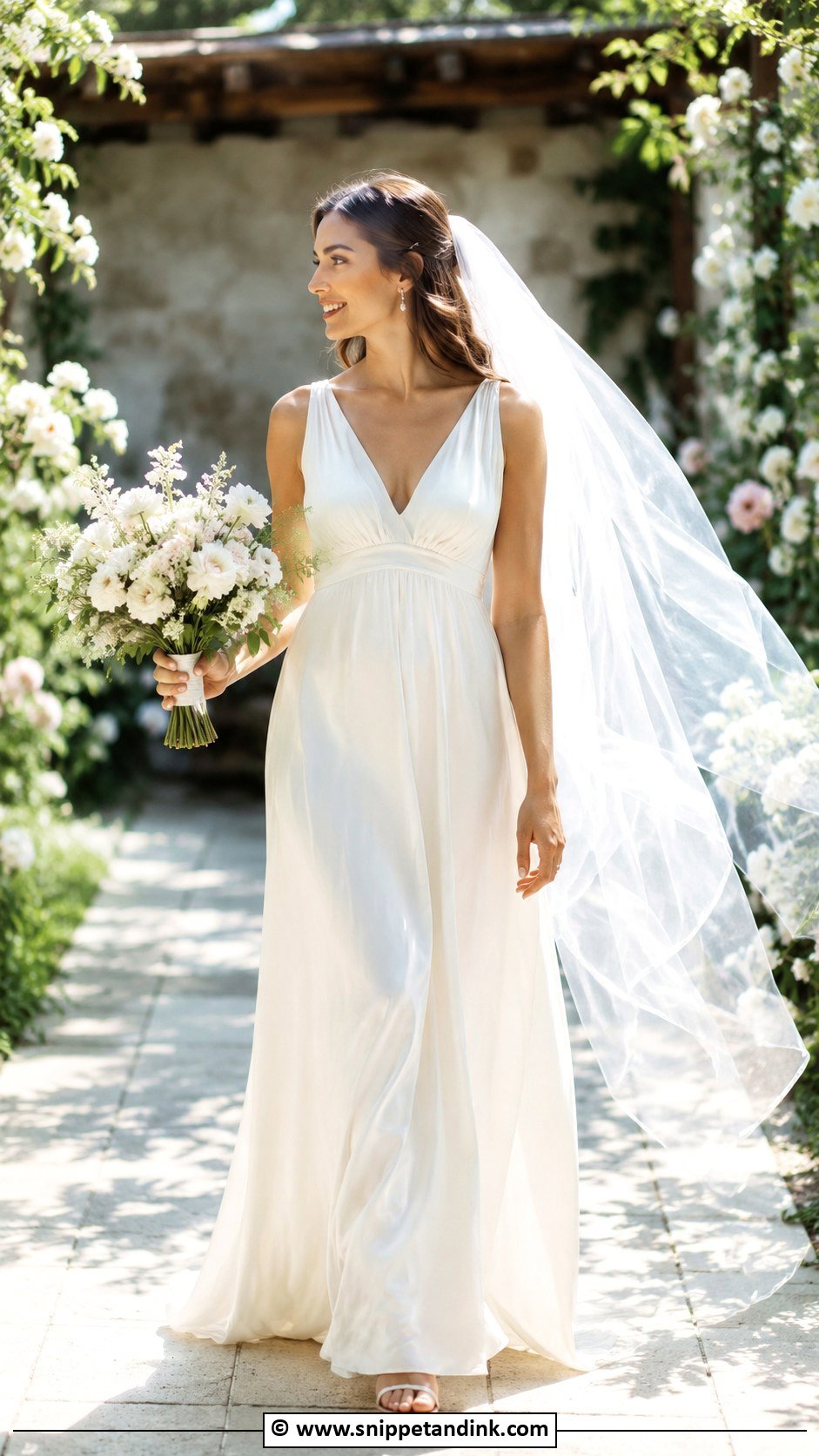
An empire waist sits just under the bust and lets the skirt fall straight down, so nothing is tight around the midsection. That makes it the most comfortable silhouette here for hot days and long receptions, and a kind one if you’ll be pregnant on the day. Silk charmeuse, chiffon-backed silk and lightweight satin drop cleanly from the high seam. Thin straps, flutter sleeves or a soft V keep it airy, with delicate sandals, pearl earrings and a loose veil for beach and garden ceremonies.
25. Silk Wrap Wedding Dress
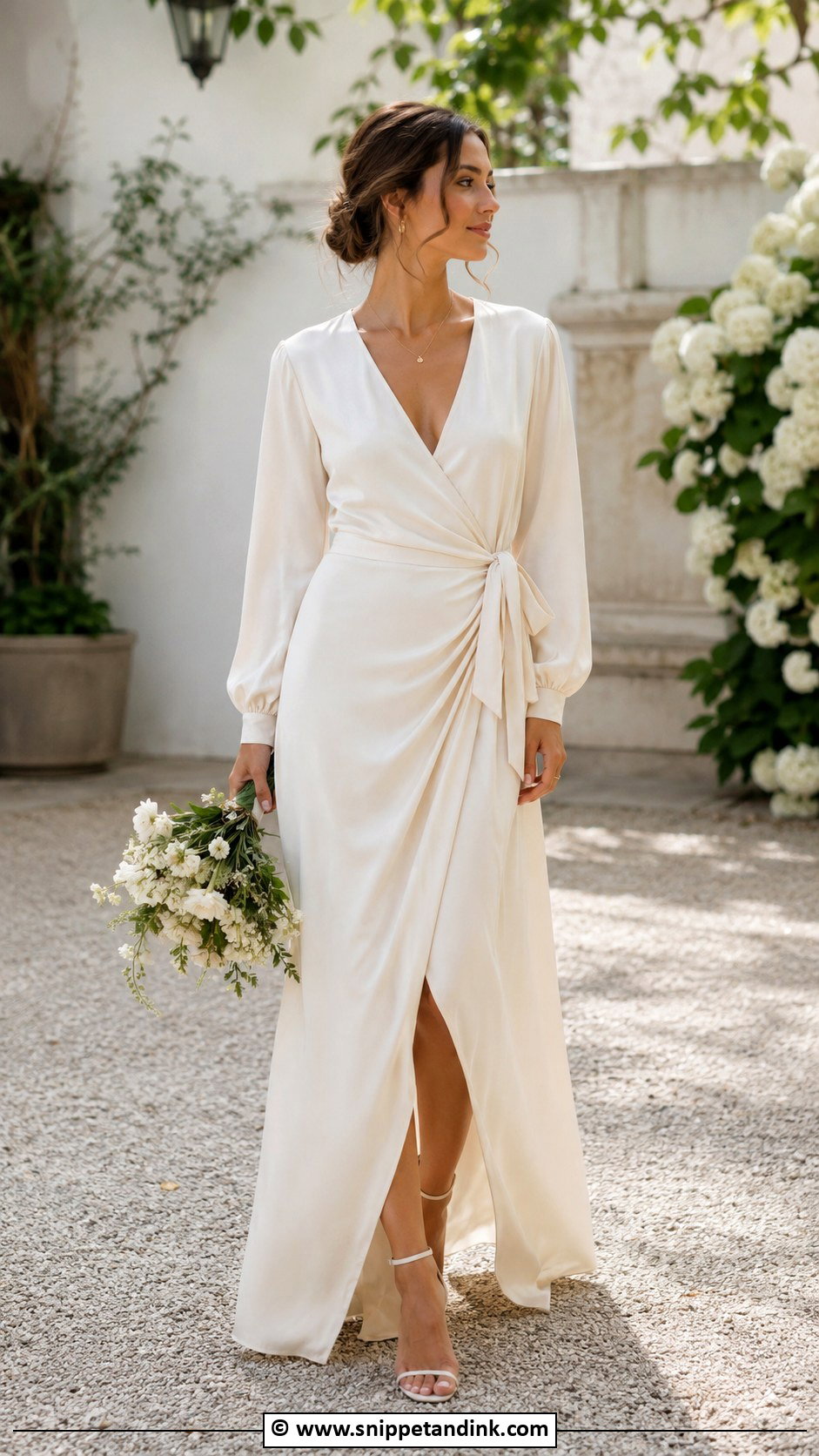
A silk wrap dress is about as unbridal as a bridal dress gets, which is exactly why some brides want one. The wrap defines the waist and creates a soft V; crepe gives a matte finish and satin a luminous one. Insist on a secure inner tie or snap, because a silk wrap without one will open when you sit. Heeled sandals, a low bun and simple jewelry keep it quiet for intimate and outdoor weddings.
26. Silk Wedding Dress With Bow
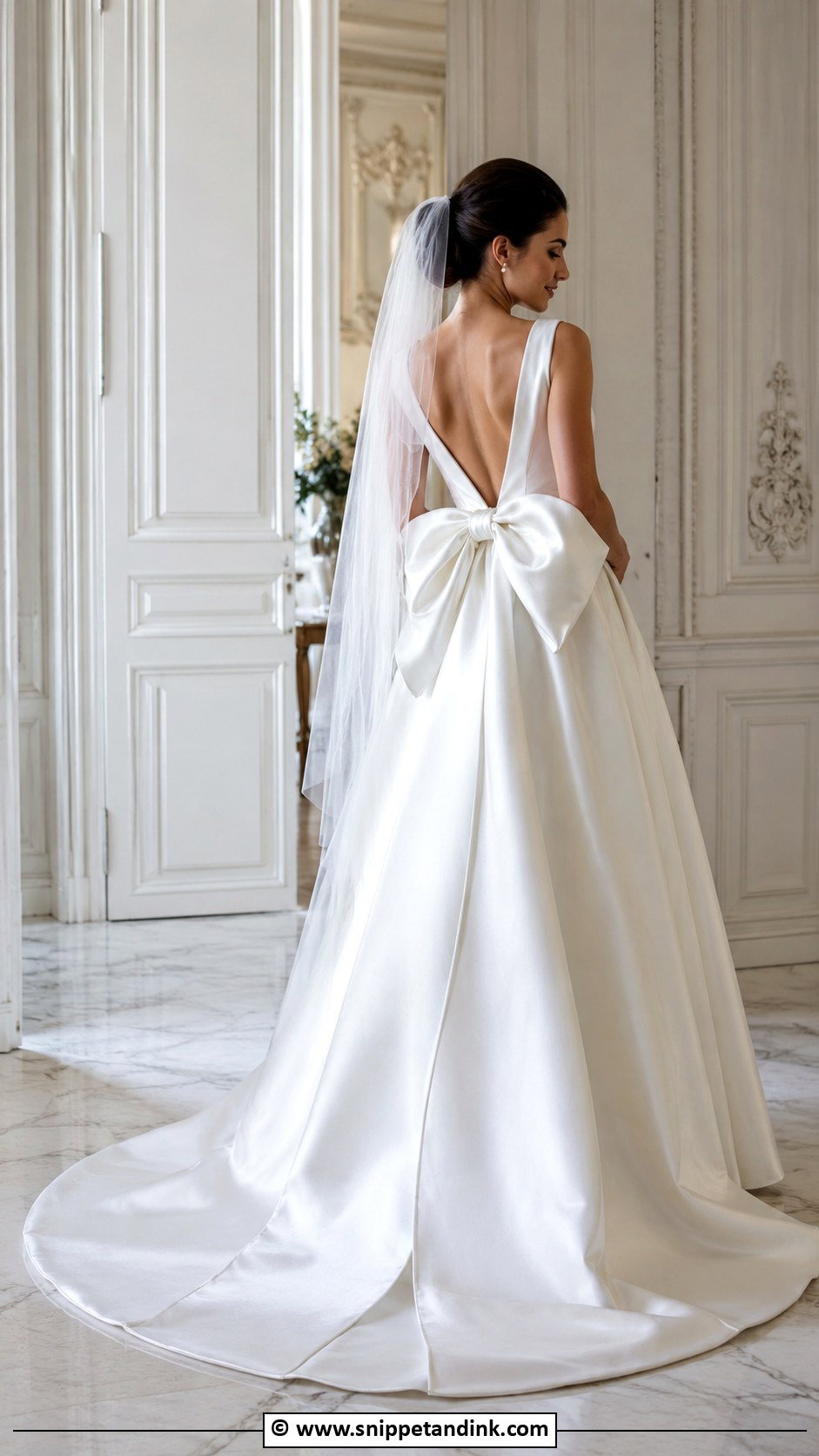
A bow is a single strong detail, so its scale and stiffness matter. Mikado holds a structured bow crisply, and satin makes a softer, trailing tie. It can sit at the back, waist, shoulder, neckline or train. Keep the rest of the gown clean so the bow looks intentional. A large back bow also gets sat on, so test it on a chair at the fitting. Simple heels, pearl studs and a smooth veil keep the proportions right.
27. Silk Wedding Dress With Train
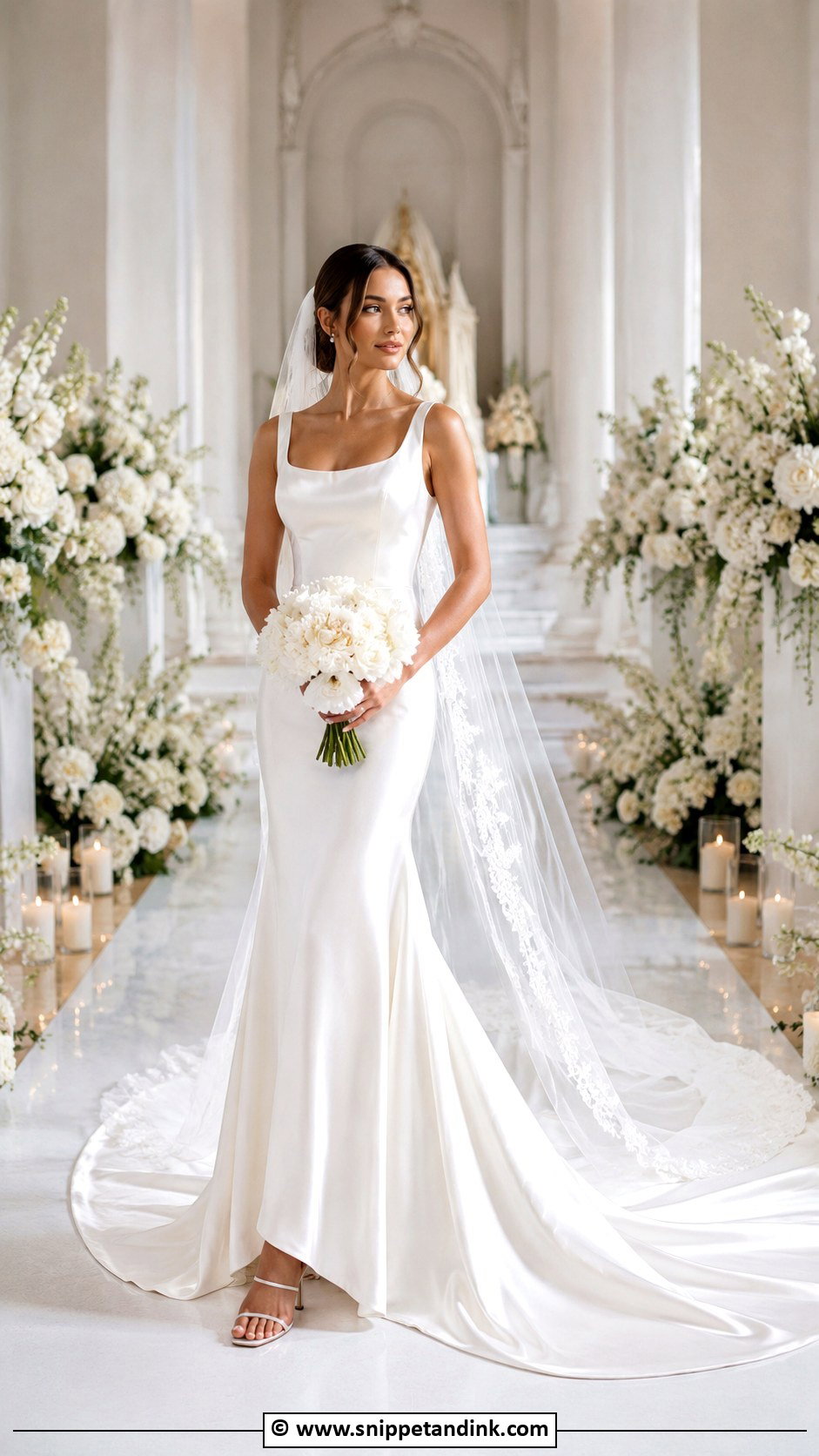
A train turns the walk down the aisle into the moment the photographer waits for. Chapel length suits most venues, while cathedral length belongs in long aisles and grand spaces. Satin trains pool and slide fluidly; mikado trains hold a more sculptural fan. Ask about the bustle at your first fitting rather than the last. French and American bustles lift the train differently, and your seamstress needs time to place the points. A simple veil, heels and minimal jewelry keep the outfit balanced at formal and estate weddings.
28. Silk Wedding Dress With Detachable Sleeves
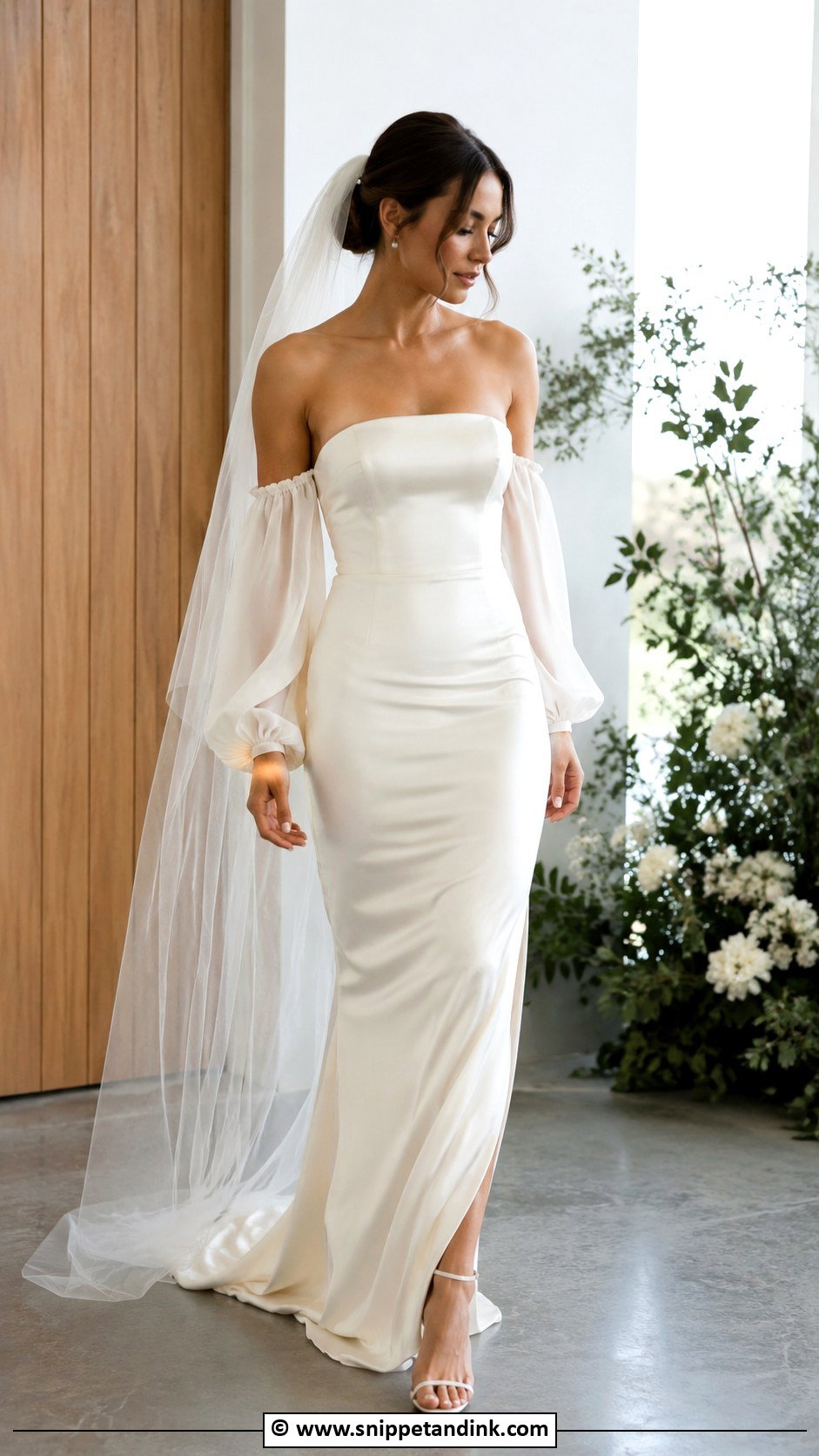
Detachable sleeves give you two dresses: covered for the ceremony, bare for dancing. Mikado or satin gowns take puff, fitted, off-shoulder or draped sleeve panels well. The sleeves usually fasten with snaps or tiny hooks, so practice removing them with whoever is helping you change, because nobody wants to fumble mid-reception. Keep the base gown simple, then add a soft updo, small earrings and classic heels.
29. Silk Wedding Dress With Pearl Detail
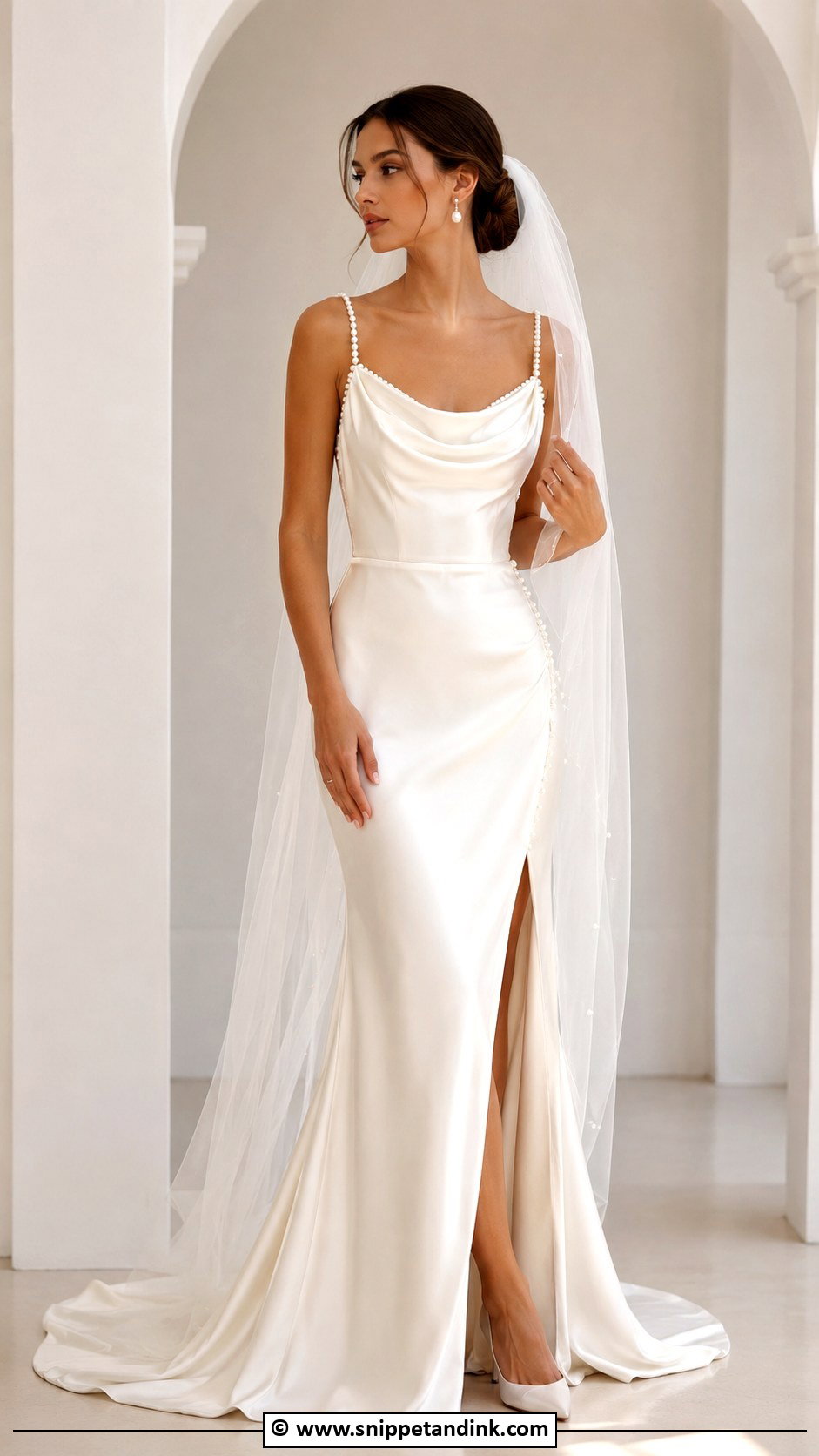
Pearls add texture with a gentler glow than crystals. They can be scattered across the bodice, lined along straps, sewn round the neckline or added to the veil, and satin or crepe makes a smooth base for them to stand out against. Tiny pearl buttons down the back are the subtle version; pearl-trimmed sleeves or a pearl-edged train make more impact. Heavy pearling adds weight and can snag a tulle veil, so I check how the two sit together at a fitting. Keep the other accessories plain.
30. Silk Wedding Dress With Floral Applique
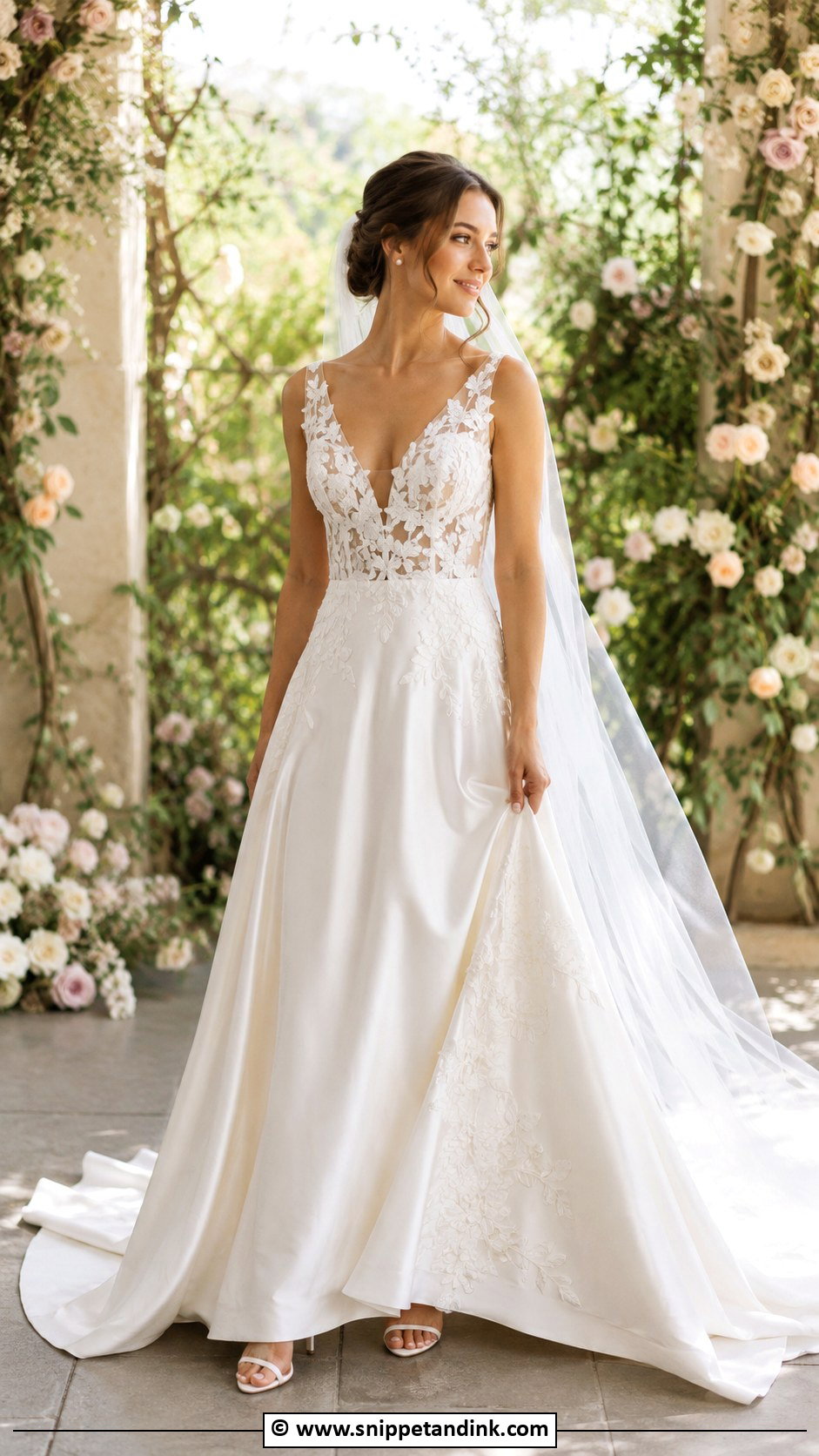
Silk with floral applique gives dimension without sparkle. Small flowers scattered along the bodice and straps feel garden-soft, while larger blooms at the shoulder, waist or hem look more editorial. Organza overlays, satin bases and mikado skirts all carry appliques well. Each piece is usually hand-stitched, so look at the edges up close and ask how alterations will be handled around them. Simple earrings, natural makeup and a clean veil suit garden and outdoor ceremonies.
31. Silk Wedding Dress With Cape
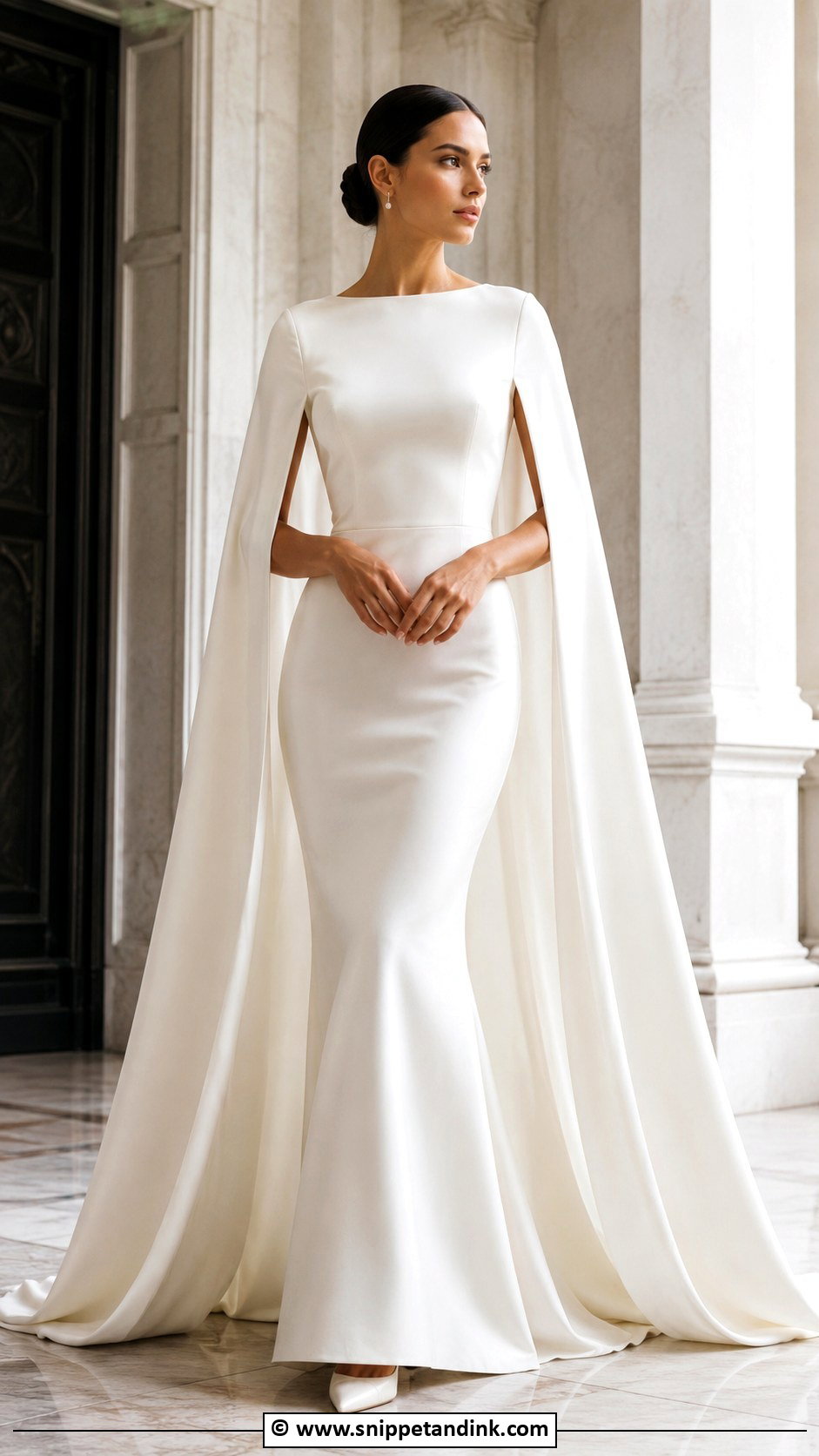
A cape can replace a veil entirely, which is one reason modern brides choose it. It might be short and sheer, floor length or attached at the shoulders, and over a crepe or satin gown it adds movement, especially in walking shots. Wind is the practical concern. A long sheer cape at an outdoor ceremony needs a calm day or a weighted hem. Sleek hair, minimal jewelry and simple heels keep the outline strong for formal and city weddings.
32. Silk Courthouse Wedding Dress
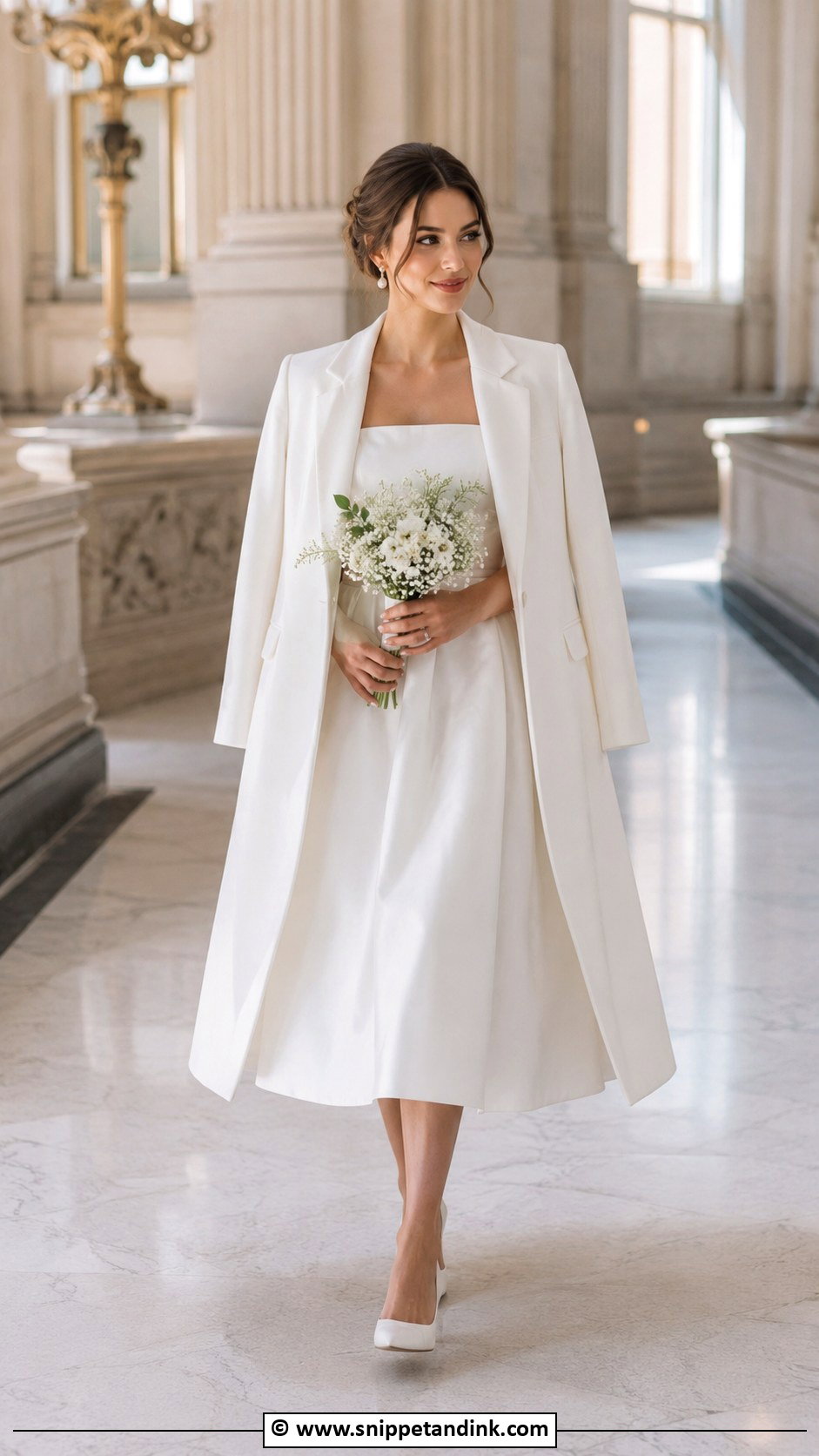
For a courthouse, the dress should look intentional without looking as if it needs a ballroom. A silk slip, tea-length, wrap or mini all work. Ivory satin or crepe keeps it bridal without a train, and pointed heels, a small bouquet, pearl earrings and a tailored coat finish it in cooler weather. Courthouse corridors and stairs reward a hem you don’t have to hold up. It suits civil ceremonies, elopements and small celebrations.
33. Silk Beach Wedding Dress
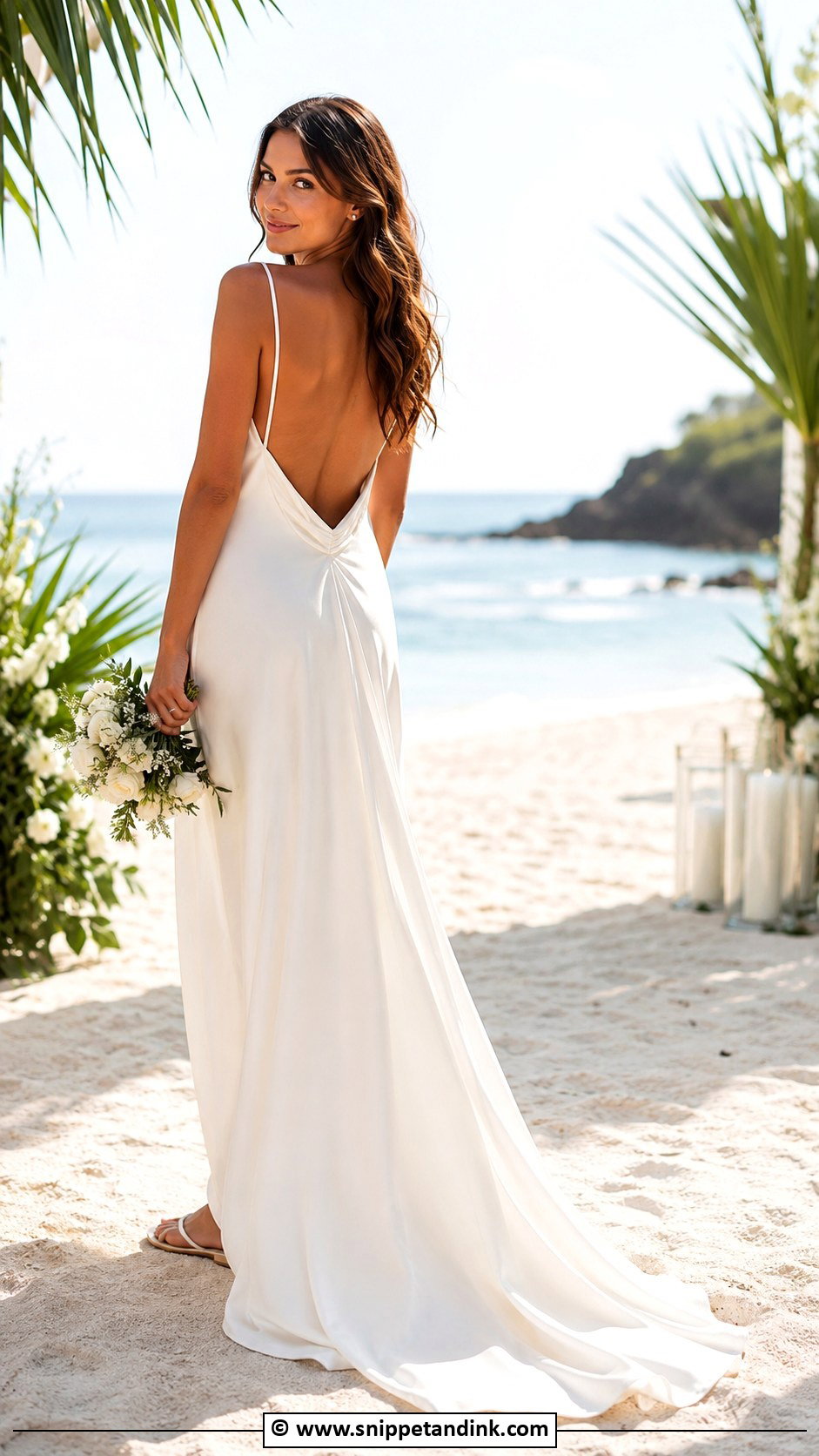
Silk at the beach needs honest planning. Charmeuse moves in a breeze and catches natural light, but it also shows water and salt spots, and it creases fast in humidity. Lightweight satin or a bias cut flows well, and heavy trains are best left off the sand. Thin straps, cowl necks, open backs and empire waists suit coastal ceremonies. Flat sandals, pearl studs, loose waves and a short veil or ribbon finish it.
34. Silk Garden Wedding Dress
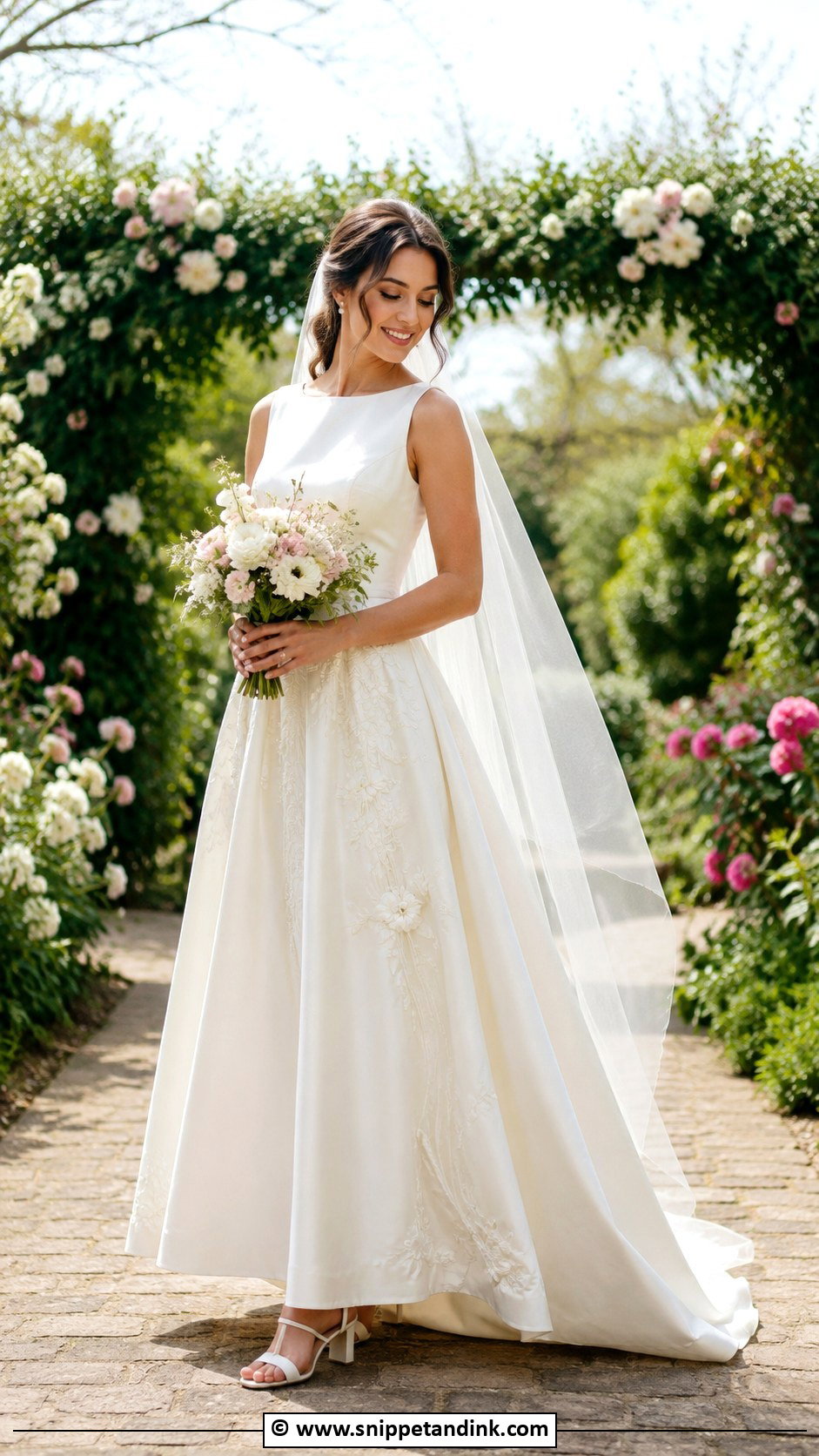
Grass and pollen are the two things I plan around for a garden wedding. A-lines, empire waists, applique gowns and soft drapes suit the setting, with satin for glow and organza or chiffon layers for softness. Keep the hem off damp lawns with a bustle or a slightly shorter length, because silk dragged across grass stains green easily. Delicate straps, a square neck or small floral accents keep it fresh, and block heels, pearl jewelry and a soft veil complete it for spring and summer estate weddings.
35. Silk Reception Wedding Dress
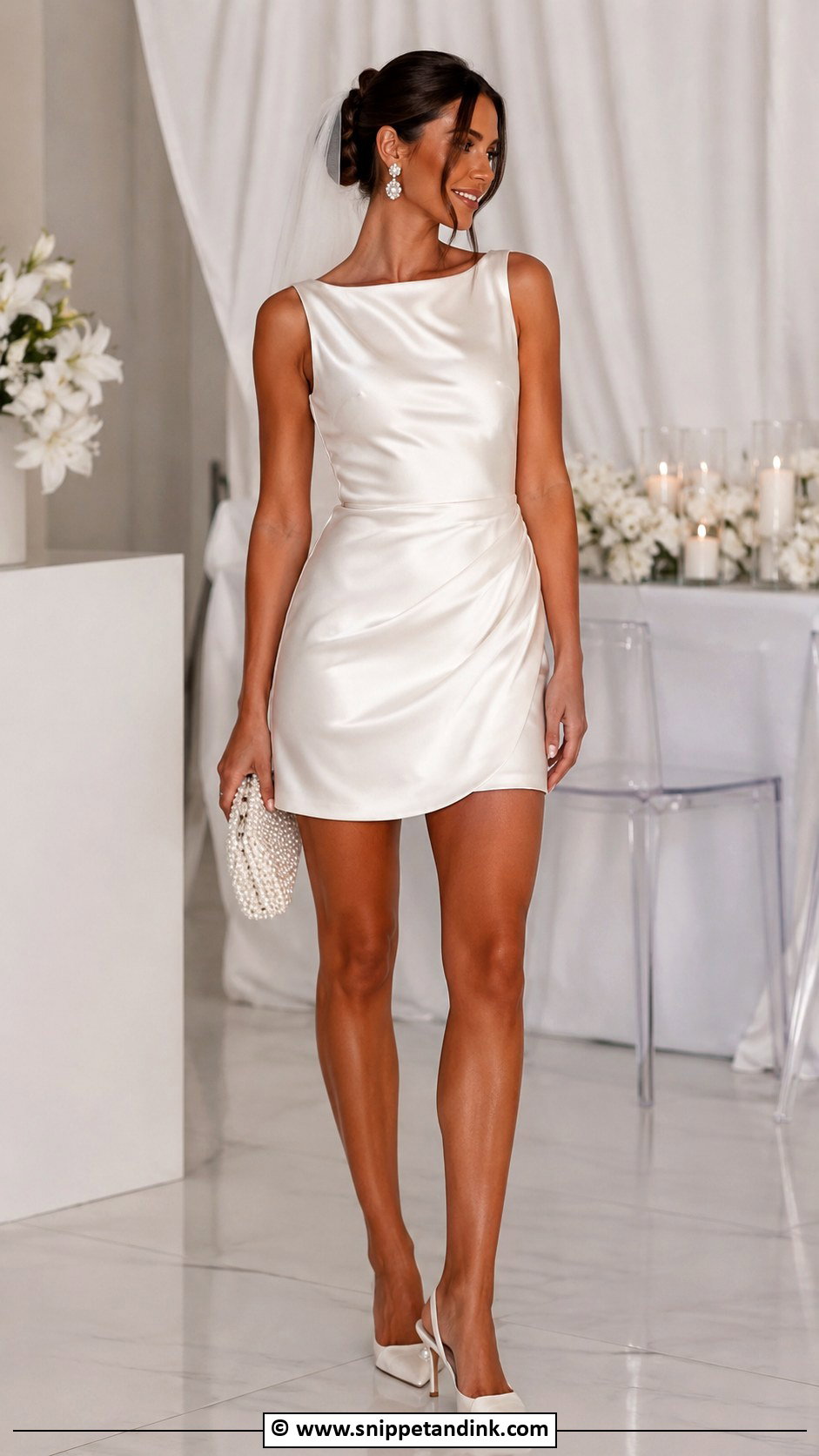
A reception dress should be lighter, shorter or simpler than the ceremony gown, so you can dance without hauling a train. A silk mini, slip, tea-length or plain column all work. Satin catches evening light; crepe feels modern and understated. If your ceremony gown is dramatic, make the second look sleek and fun. Comfortable heels, statement earrings and a small clutch are all you need, and the change takes minutes if you’ve decided in advance who helps you.
How Silk Copes With Rain, Wine and a Long Car Ride
Silk is tougher than it looks, but it shows trouble quickly. Water is the main enemy. A raindrop or a splash from a glass can leave a ring on charmeuse and satin as it dries, so blot with a clean white cloth and never rub, which breaks the surface sheen for good. Leave proper stain treatment to the cleaner afterward.
Sitting creases satin within minutes. In the car, I spread the skirt out behind the bride rather than letting her sit on it, and I keep a handheld steamer on low in the getting-ready kit. Hold it a few inches from the fabric and never let it spit water onto the silk.
The rest of the kit is small: white chalk for marks on matte silk, clear fashion tape, a few safety pins, and an anti-static spray or slip for gowns that cling in dry winter air.
Putting a Silk Gown Away So It Never Yellows
Have the gown cleaned within a few weeks, even if it looks spotless. Sugar from champagne or cake dries invisible on silk, then oxidizes into brown patches months later. Pick a cleaner who handles bridal silk regularly and ask how they treat beading and trims.
For storage, wrap it in acid-free tissue inside a breathable cotton bag or an acid-free box, never the plastic cover it came home in, which can trap moisture. Keep it somewhere cool, dark and dry; attics and basements swing too much in temperature and humidity. A heavy gown shouldn’t hang from its shoulders for years, because the weight stretches the bodice, so fold it over rolls of tissue and refold it now and then to stop permanent creases forming.
Your Body, Your Venue and the Weight of the Silk
Silk earns its reputation because it moves. A slip feels light and close, a mikado ball gown grand and formal, a crepe column modern, and satin brings classic shine. Match the weight of the fabric to your venue and season, then judge each dress by how it moves when you walk and how it looks after you’ve sat down in it. Fit and fabric quality matter far more than embellishment. Try the silhouettes you keep returning to in more than one silk, and you’ll know quickly which one is yours.
You'll Like These Ideas:








Leave a Reply