
A wedding hairstyle has a harder job than it looks. It has to sit right with your neckline and your veil or dupatta, hold through hugs, heat and hours of photos, and still look like you when you open the album years later. Bridal hair right now is moving toward softer, more personal shapes: polished waves, low buns, textured updos, half-up styles, natural curls and a few well-placed accessories. Below are the marriage hairstyles I find myself recreating most often, from a sleek chignon to a full Indian bridal bun, with notes on what each one needs from your hair. Save the ones that make you stop scrolling and bring them to your trial; a photo tells me more than any description.
Reading Your Own Hair Before You Fall for a Photo
Most of the hairstyles below were photographed on hair that had been prepped, padded or extended for the camera. Before you commit to one, I’d look at three things in your own hair, because they decide how a style behaves once the photographer has gone home.
- Density, not length. Fine hair with plenty of strands holds pins well; fine hair with few strands needs padding or extensions before a bun or ponytail looks full. If you can see your scalp easily when you part it, plan for added volume.
- How it holds a curl. If your curls are gone by lunchtime on an ordinary day, they’ll go faster under heat and nerves. That points you toward updos, braids and twists, or toward curls set with extra prep.
- Texture. Coily and curly hair holds updos and twisted shapes brilliantly. Very straight, silky hair resists messy texture until I give it some grip with powder or spray.
Then think about weight. A veil, a dupatta, a maang tikka and a floral ring all pull on the hair, and the style needs a base strong enough to take them. That’s why I steer brides wearing heavy traditional pieces toward buns, while brides with a light comb or a few pins have far more freedom with waves and half-up looks.
Schedule the trial roughly two to three months ahead, wash your hair the way you will for the wedding, and wear a top with a similar neckline. Take photos from the side and back as well as the front. That’s the view your guests have for the whole ceremony.
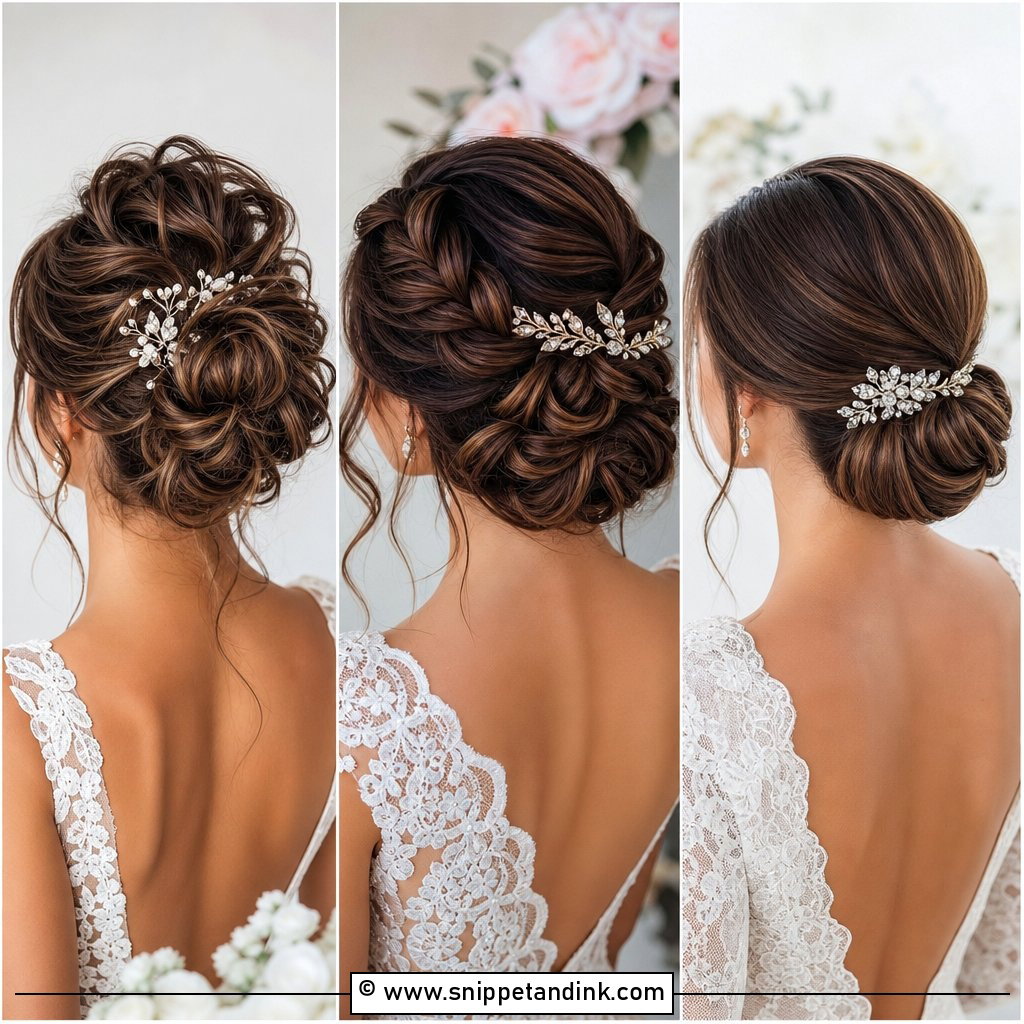
1. Low Bun Wedding Hair
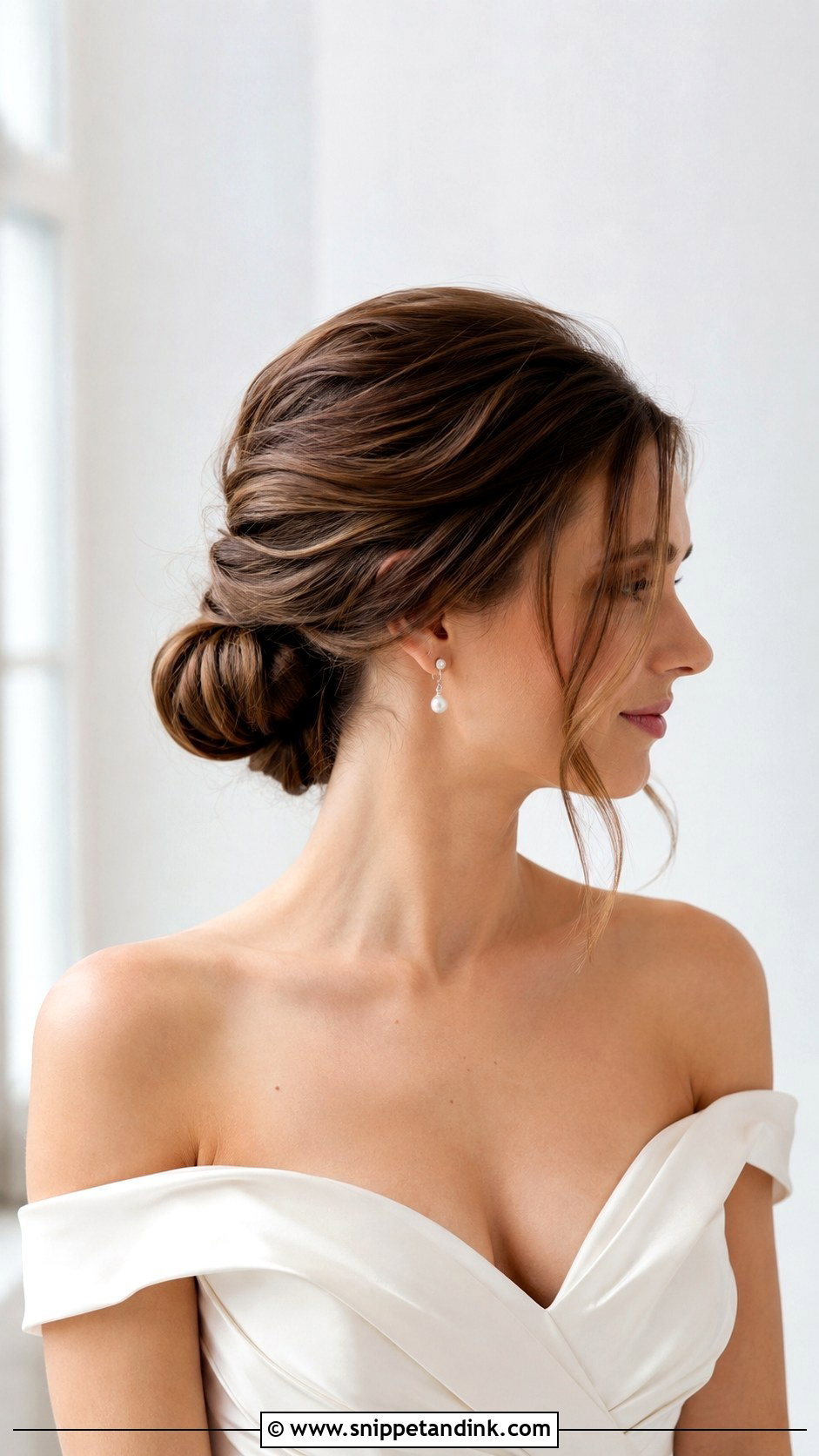
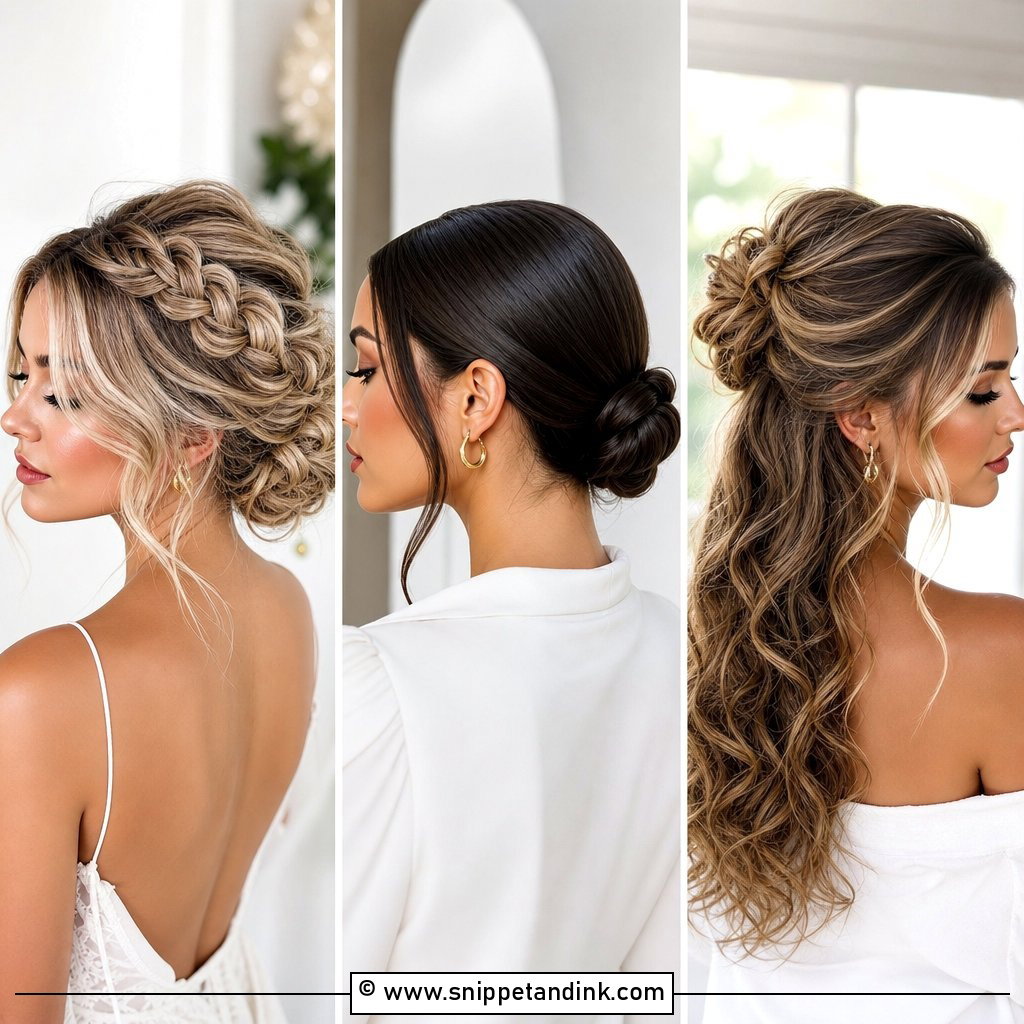
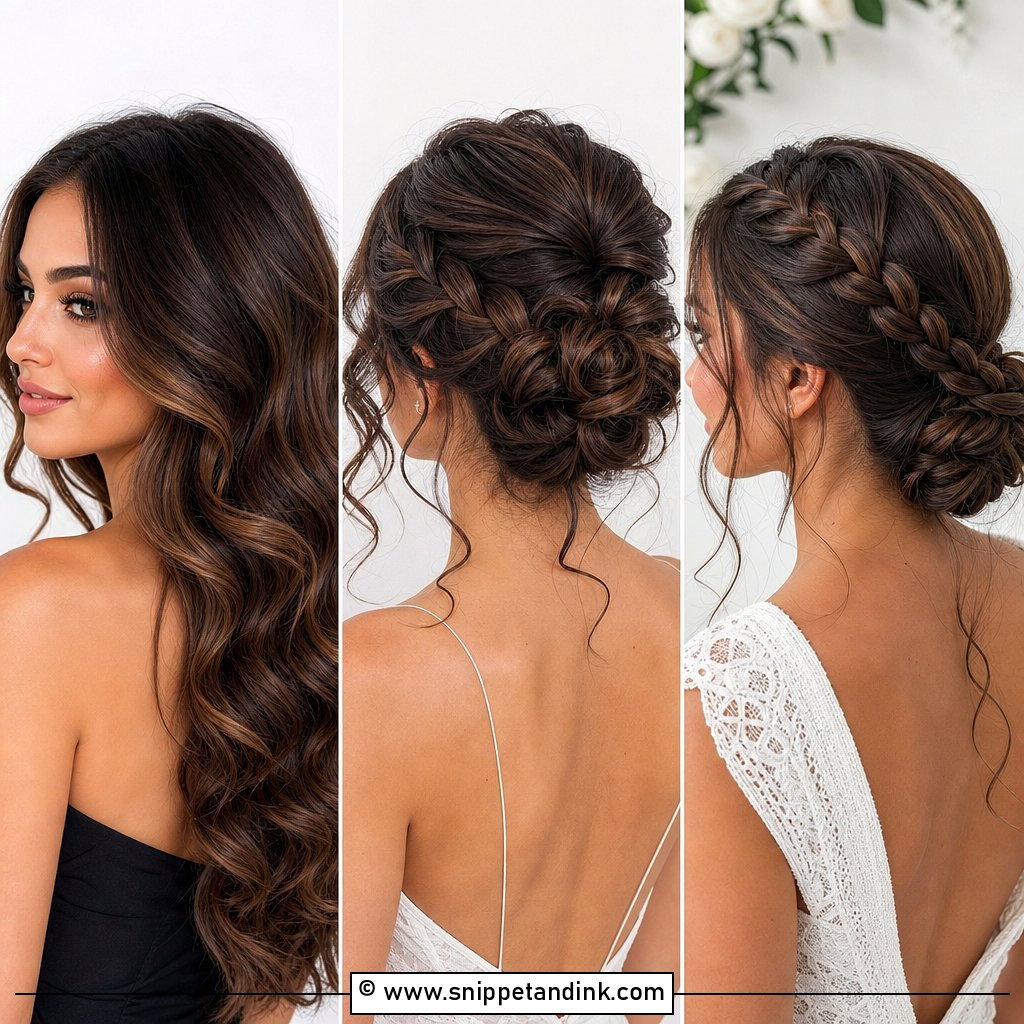
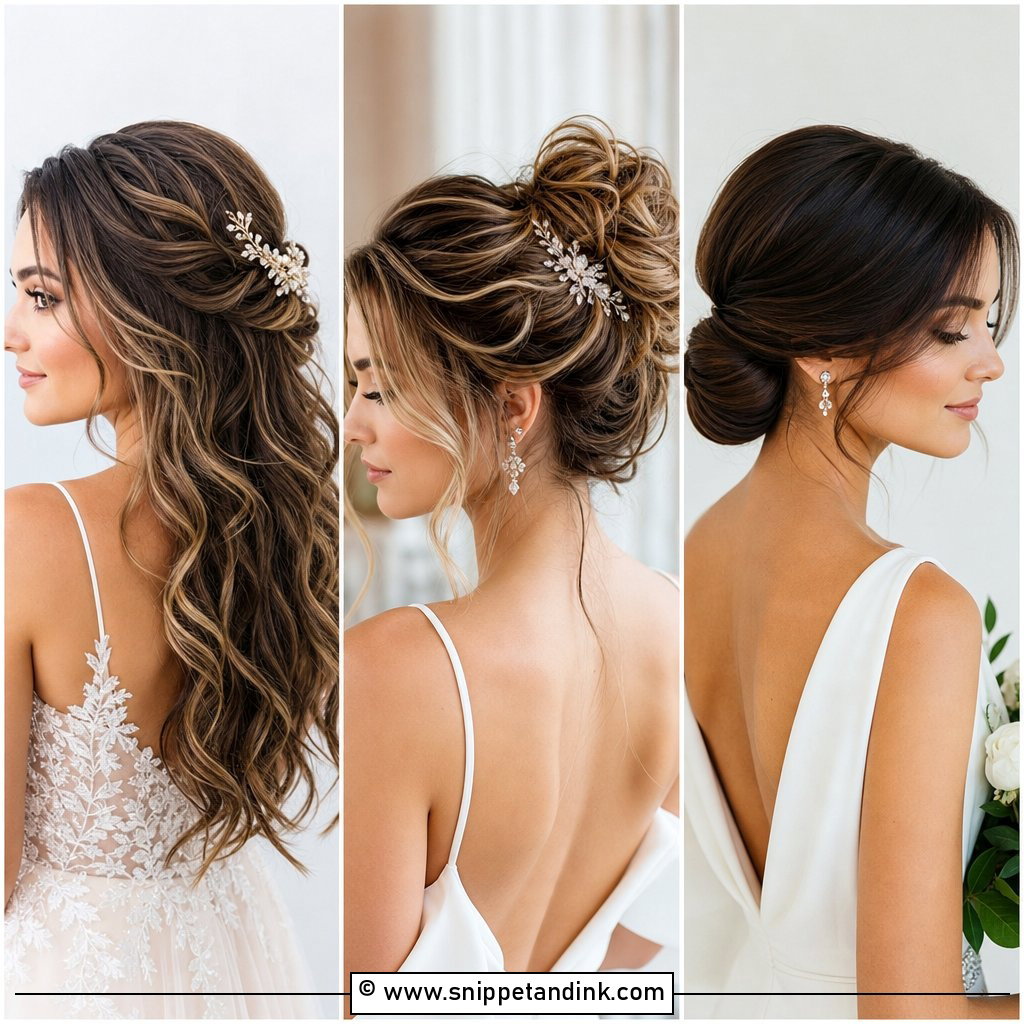
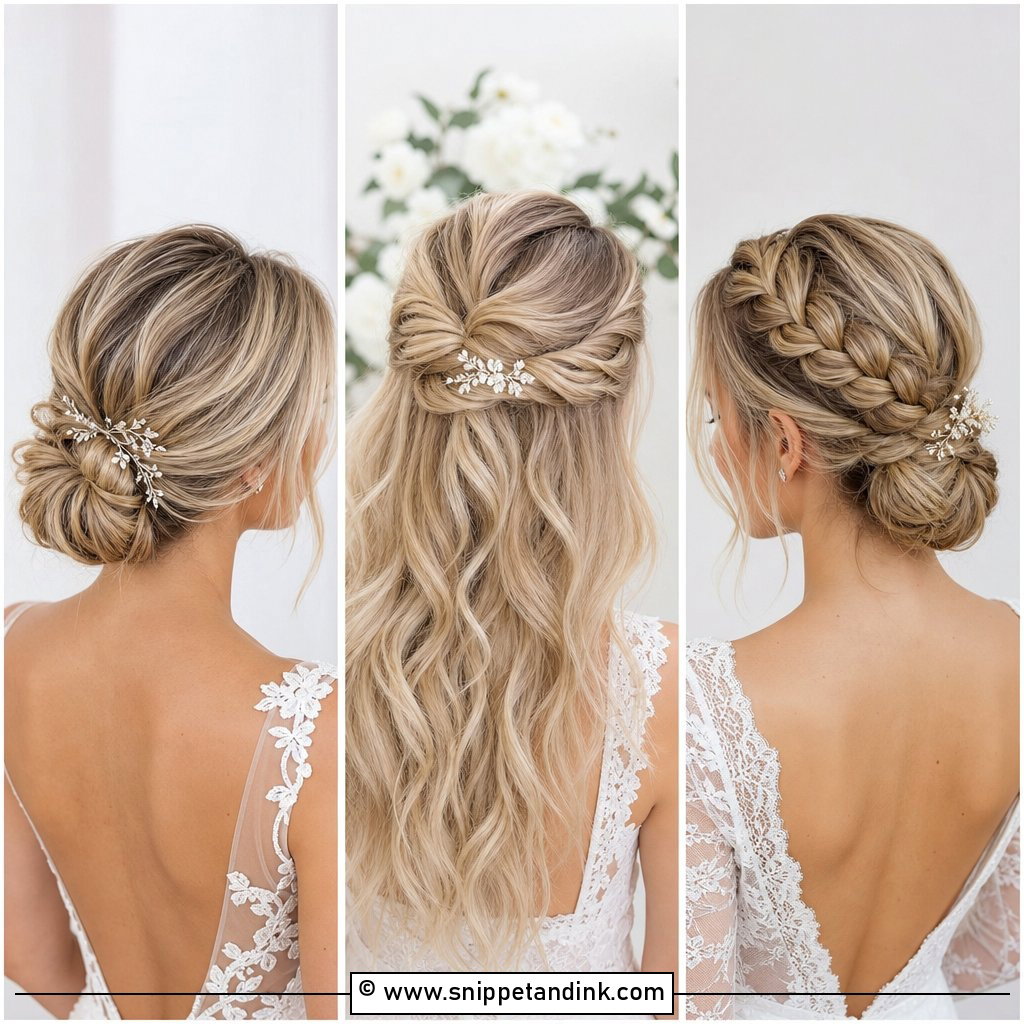
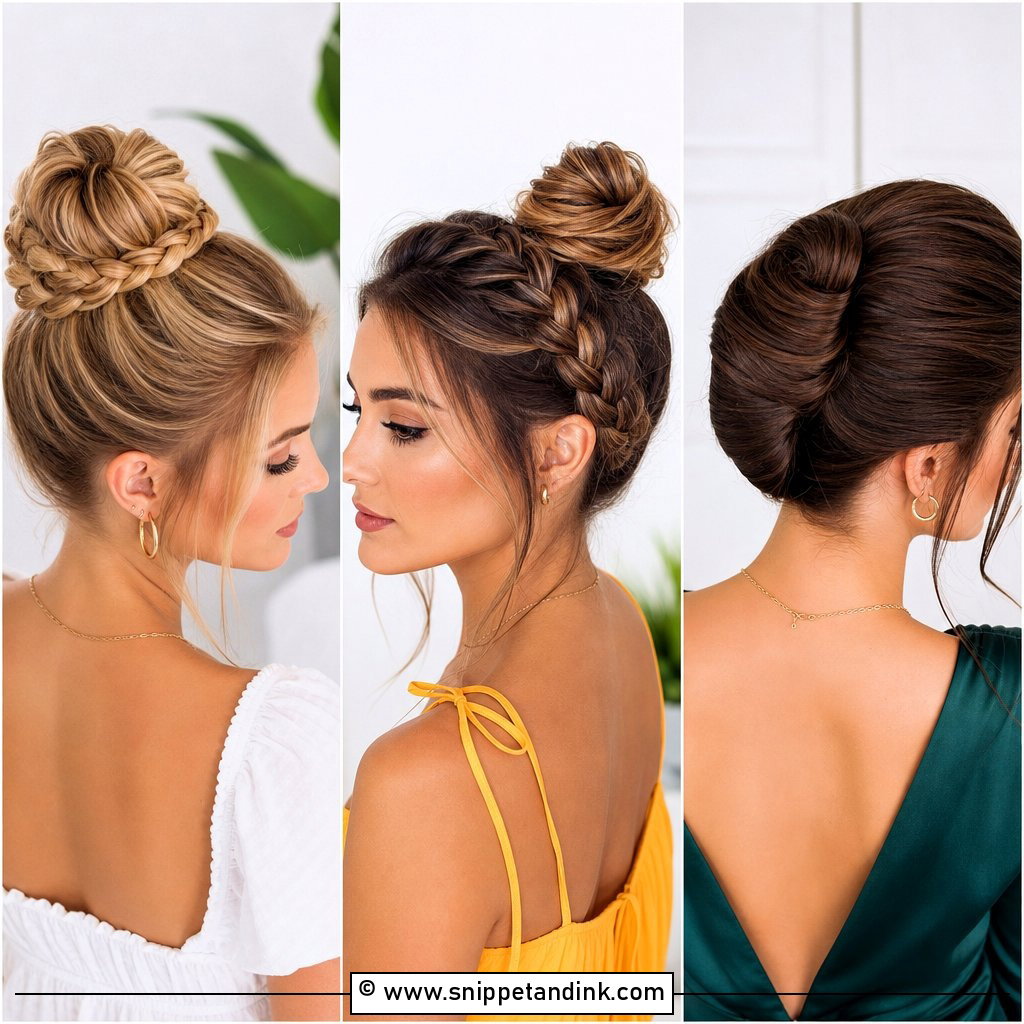
Of every shape on this list, this is the one I’d trust with a cathedral veil. Low bun wedding hair sits at the nape, so a comb can anchor above it and a dupatta can drape over it without crushing anything, and it leaves room for statement earrings and high or off-shoulder necklines. I build the bun on a tight base ponytail or a crossed pair of bobby pins, because a bun pinned straight into loose hair starts sliding by the reception. On fine hair, ask for a little backcombing at the crown before the bun goes in; without it the top looks flat in side profile. Smooth or slightly loosened is purely taste. The base is what decides whether it lasts.
2. Sleek Chignon Wedding Hair
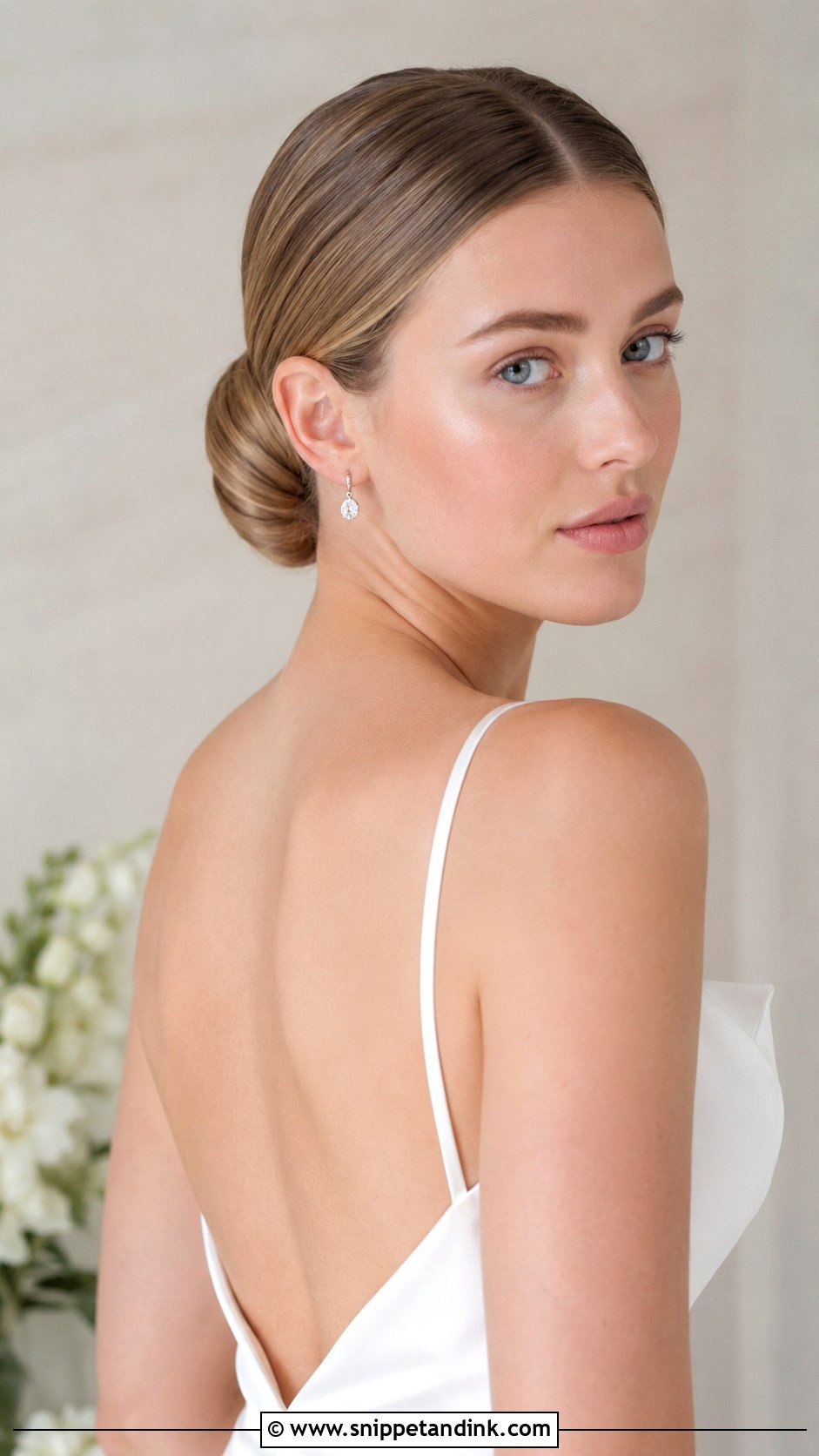
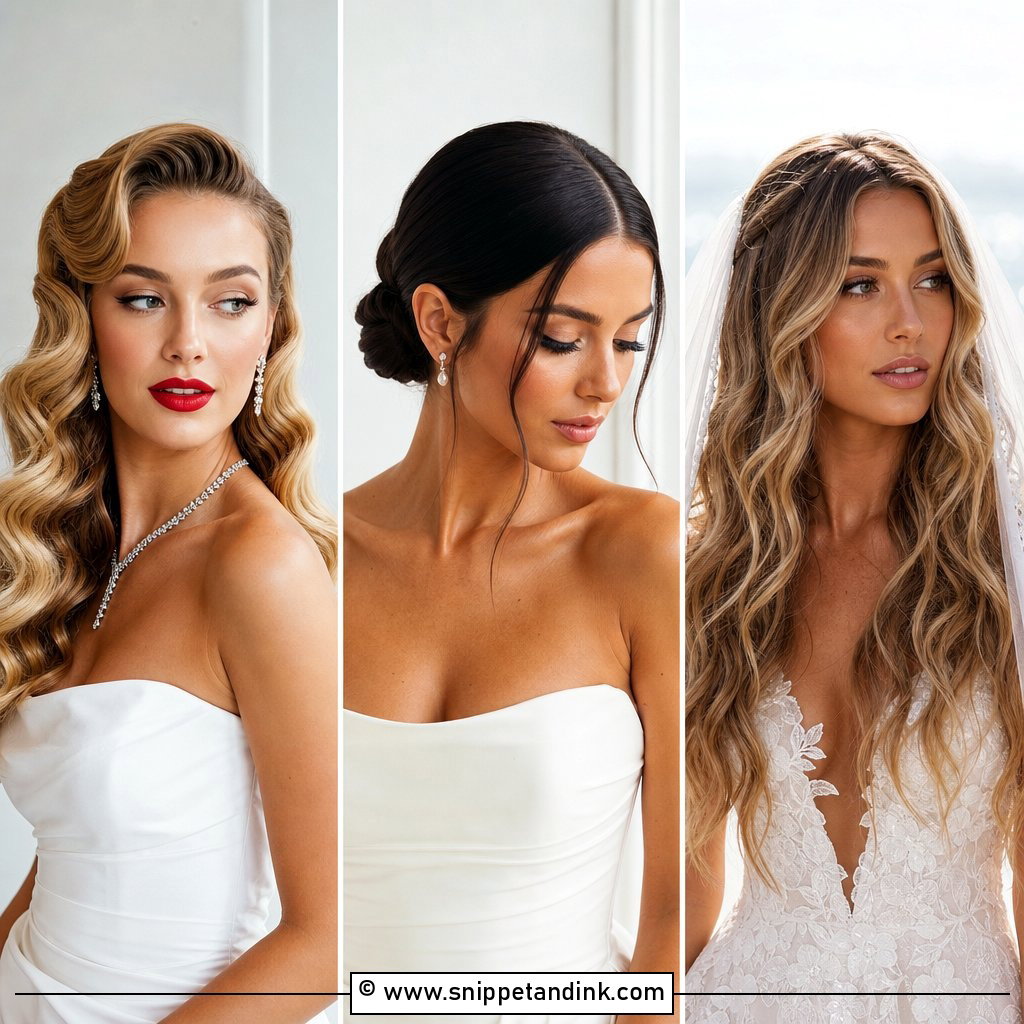
A sleek chignon is the most honest style here: every bump and flyaway shows. The hair is parted center or side, smoothed close to the head and tucked into a neat roll at the nape, which is why I save it for formal marriage functions and outfits with plenty going on, like a heavily worked lehenga, a beaded neckline or a big necklace. I smooth it with a small amount of serum and a boar bristle brush, then spray onto a comb rather than straight onto the head so it never turns crunchy. If your hair frizzes in humidity, book a smoothing blow-dry the day before, or this look will soften by evening.
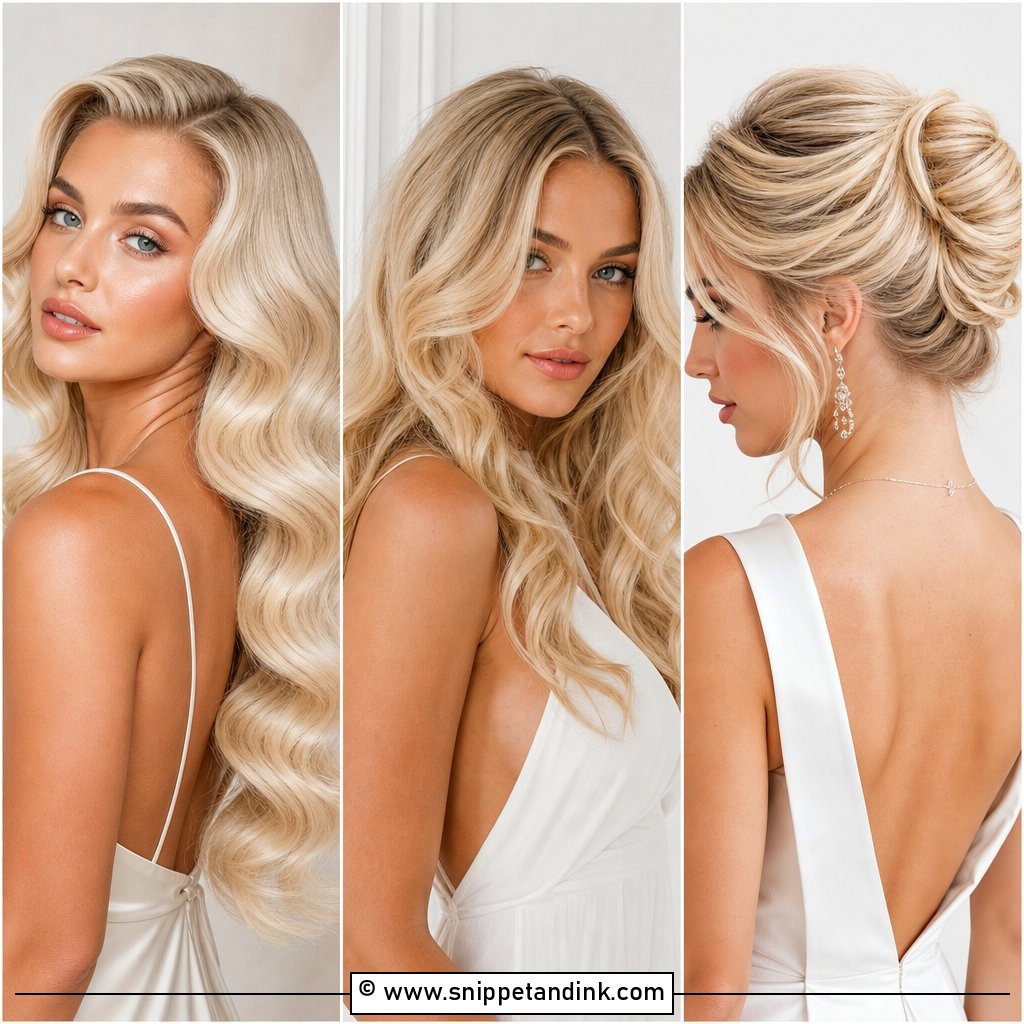
3. Hollywood Waves Wedding Hair
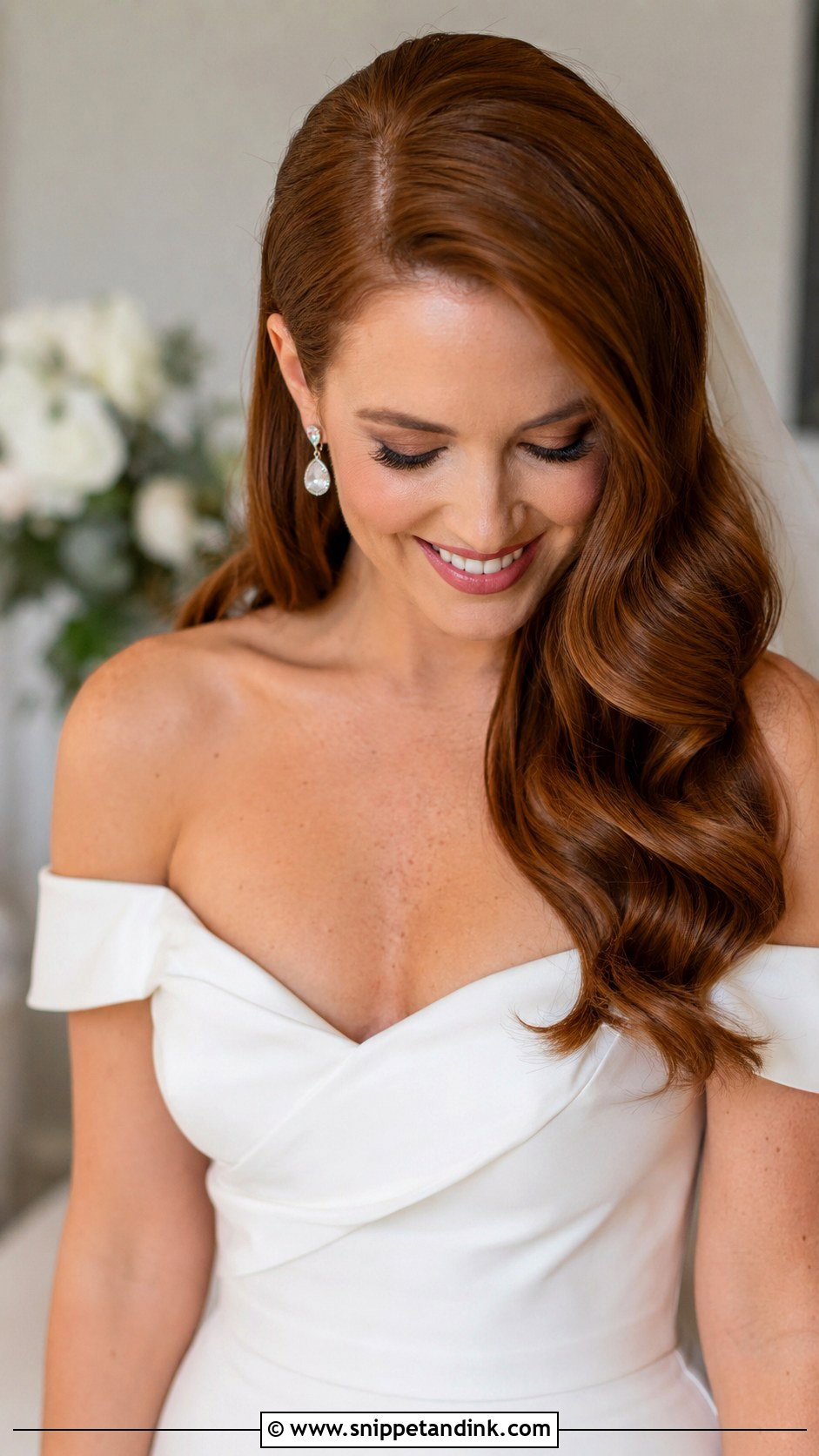
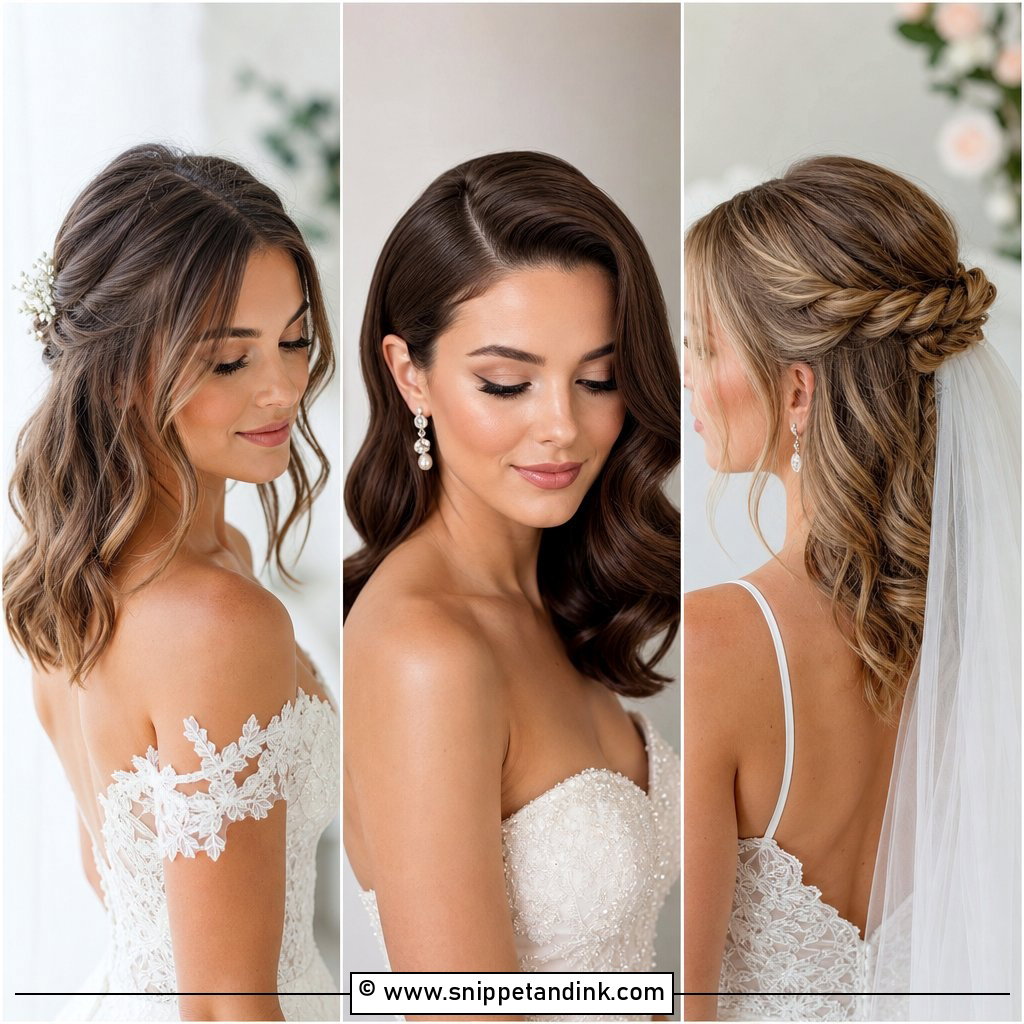
Glamour without an updo, as long as the set is done properly. These waves are curled in one direction, pinned while they cool, then brushed into a single glossy S-pattern, and the brushing is where most of the skill sits. They need medium to long hair with some weight; on heavily layered cuts the shorter pieces break out of the wave. I love them with strapless, sweetheart and off-shoulder necklines, and a deep side part adds drama. One caution: brushed-out waves relax over the hours, so I hand a small brush and two clips to a bridesmaid for a reception refresh. They suit an evening ballroom far more than a breezy field.
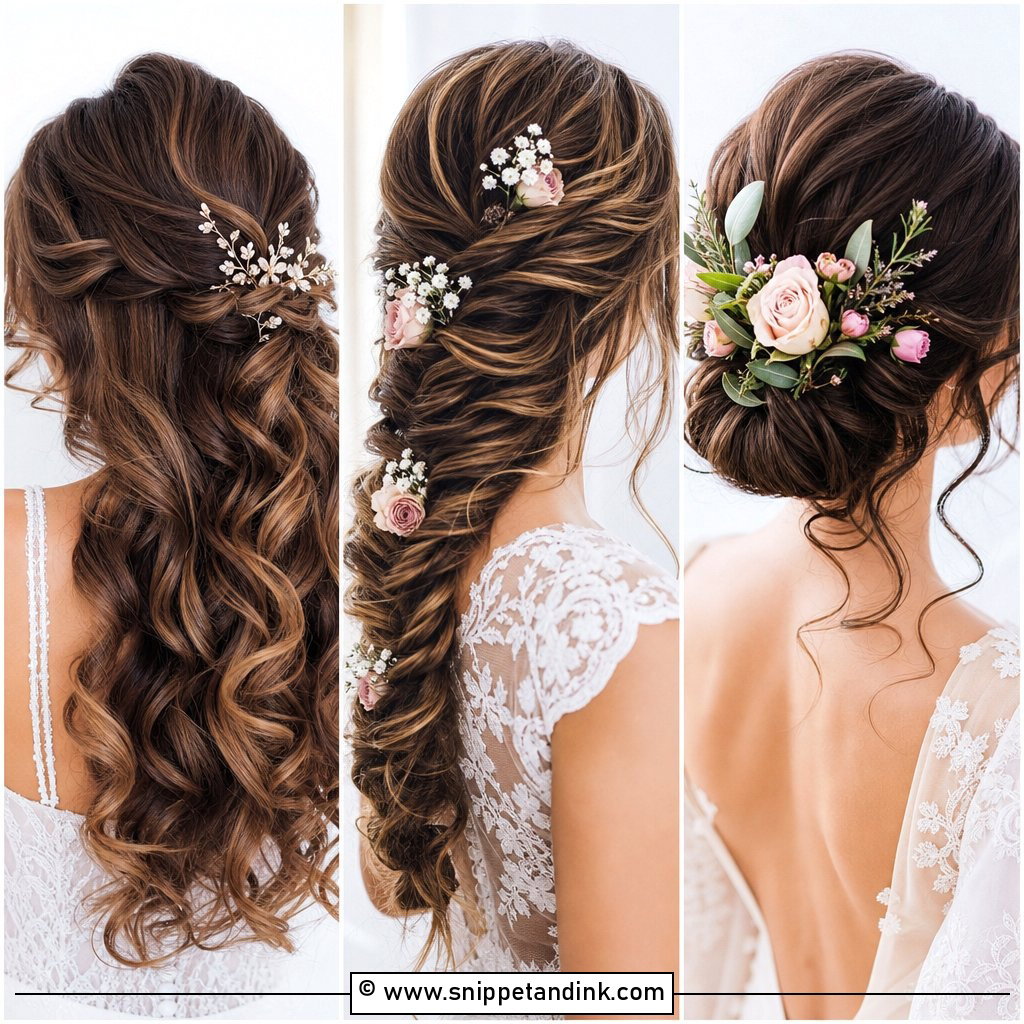
4. Half Up Half Down Wedding Hair
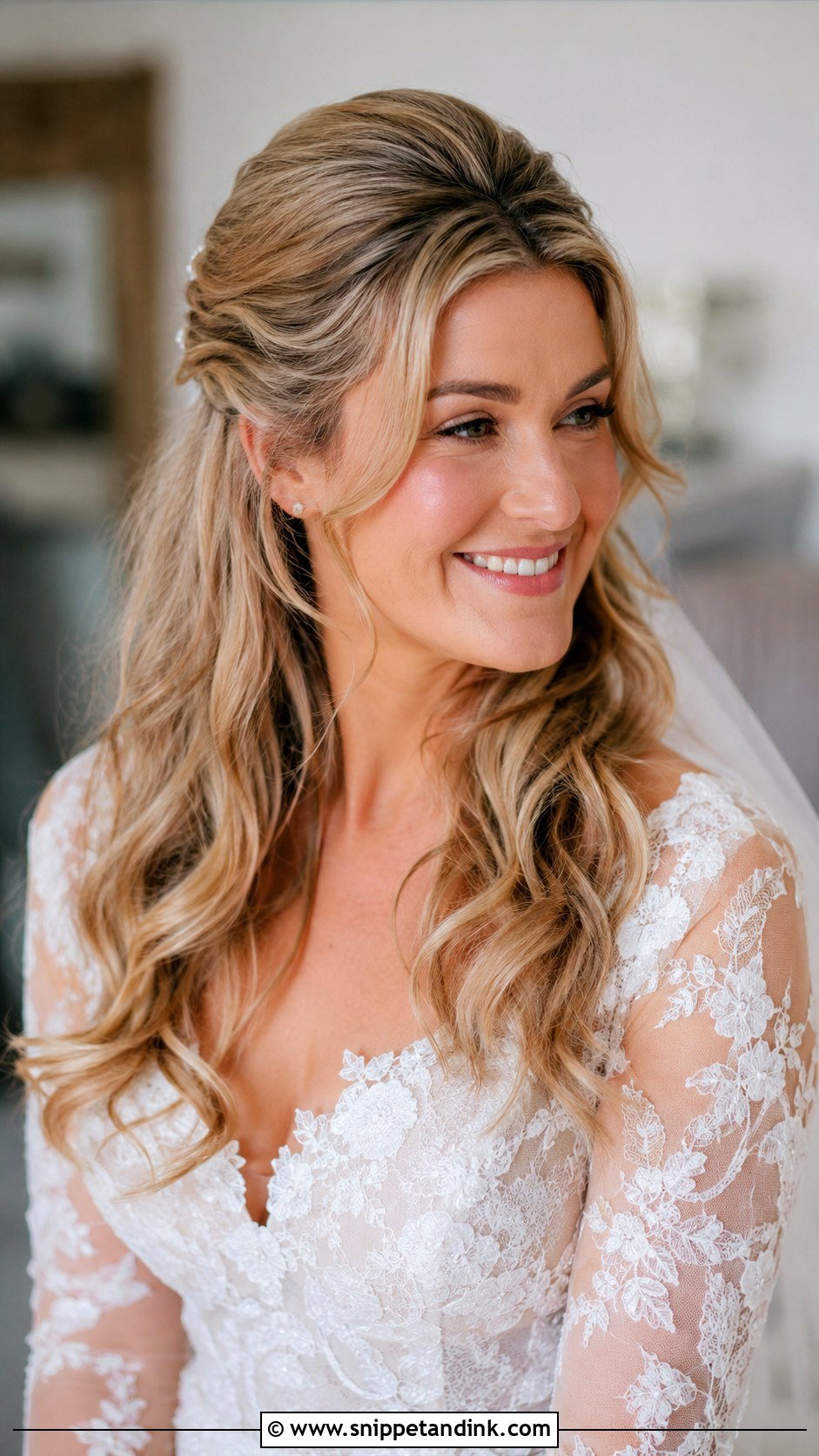
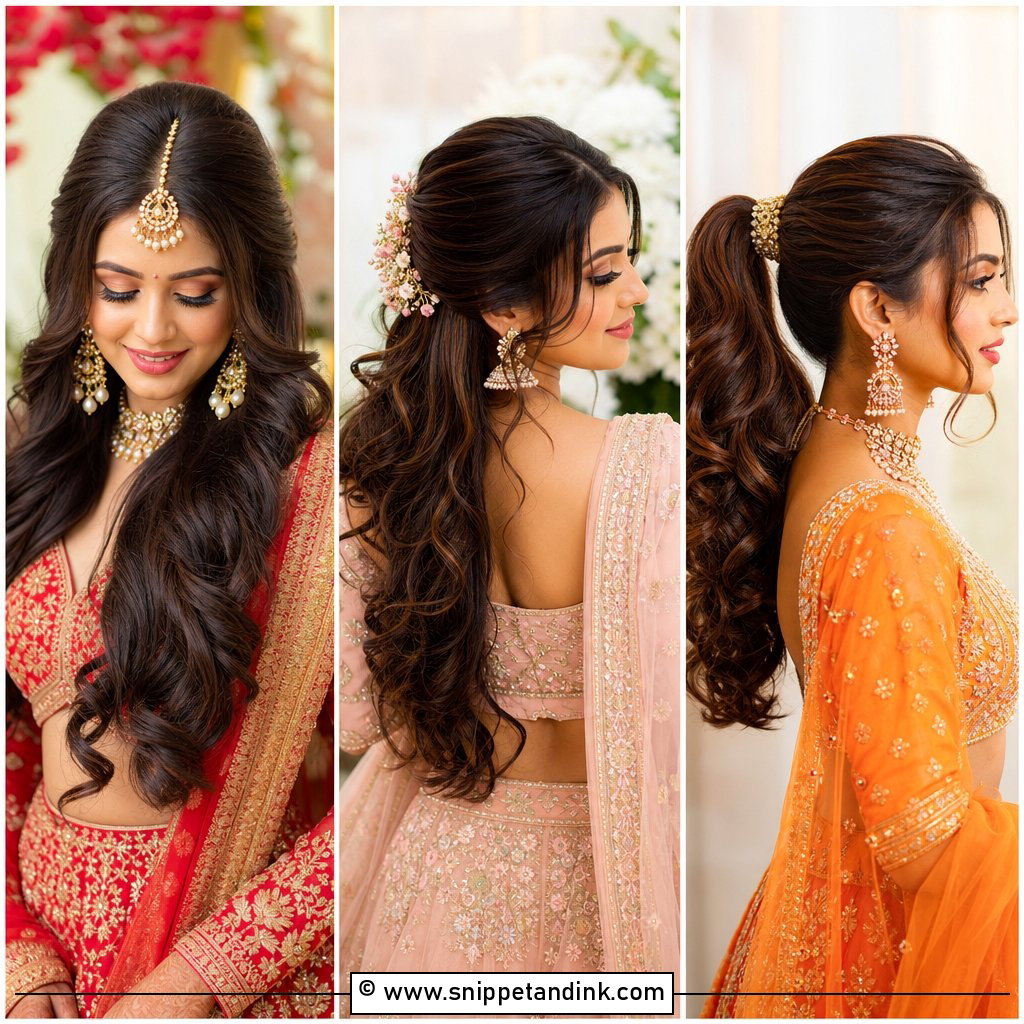
When a bride can’t decide between up and down, this is usually where we land. I lift and secure the top section, then curl or wave the rest so it moves. The weak point is always the down section. On fine hair, curls can drop within a couple of hours outdoors, so I set them with a firm spray and keep them pinned in rolls until the last possible minute. A small twist, braid or pearl pin at the join hides the grips. It keeps hair off your face for hugs and photos without the formality of a full updo, which is why it turns up so often at outdoor ceremonies and engagement functions.
5. Bridal Ponytail Wedding Hair
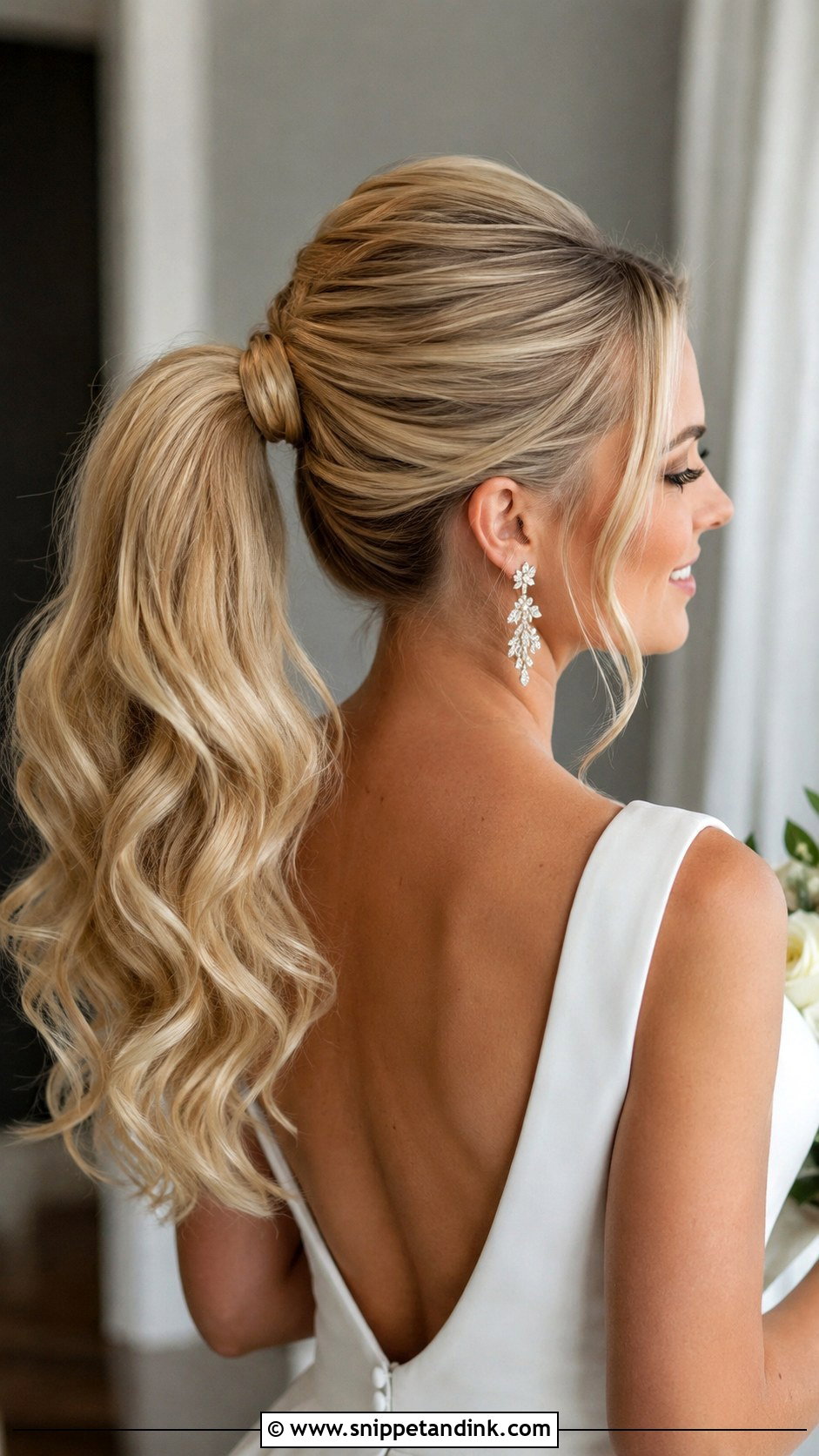
A ponytail sounds casual until you see one with real volume and a clean wrap. Low reads soft and classic; high is more fashion. I always wrap a strand of hair around the base to hide the elastic and pin it underneath, and I set waves through the lengths so the tail doesn’t hang like a flat rope. A thin ponytail is the usual disappointment, so on fine hair one or two clip-in wefts placed under the base change everything. Pair it with dramatic earrings and a fitted gown, since nothing at the sides competes with them.
6. Messy Bun Wedding Hair
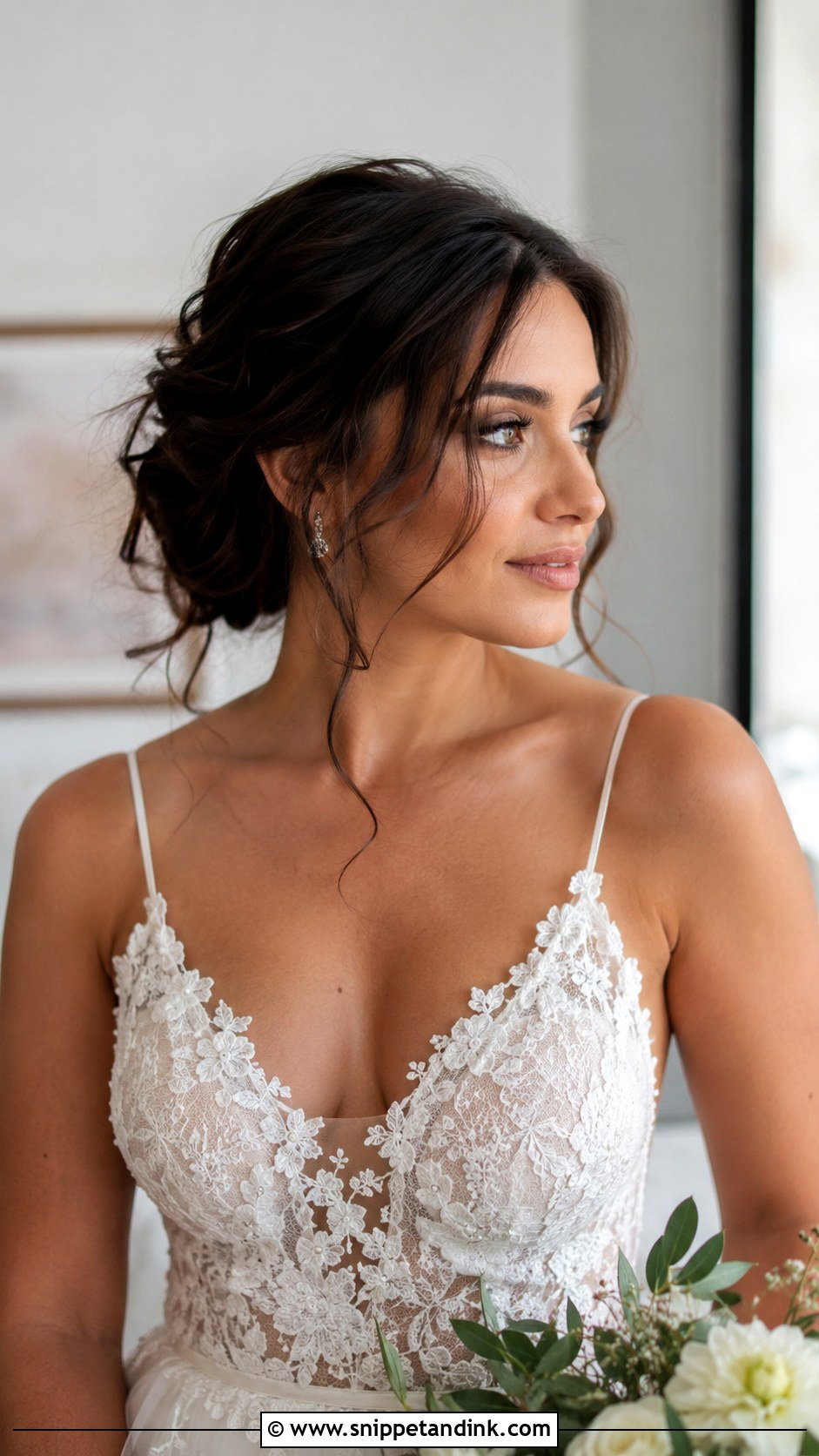
Messy is the wrong word, honestly. What you want is controlled softness: loose twists, pulled-out texture and a few face-framing pieces sitting over a structure pinned as firmly as any sleek bun. Freshly washed, silky hair is the hardest to work with here, so I ask brides to wash the day before and I add texture spray before I start. The loose pieces around the cheeks and jaw get adjusted to your face at the trial. Lace, floral details and garden ceremonies suit it; next to a sharply tailored crepe gown it can look unfinished.
7. Braided Bun Wedding Hair
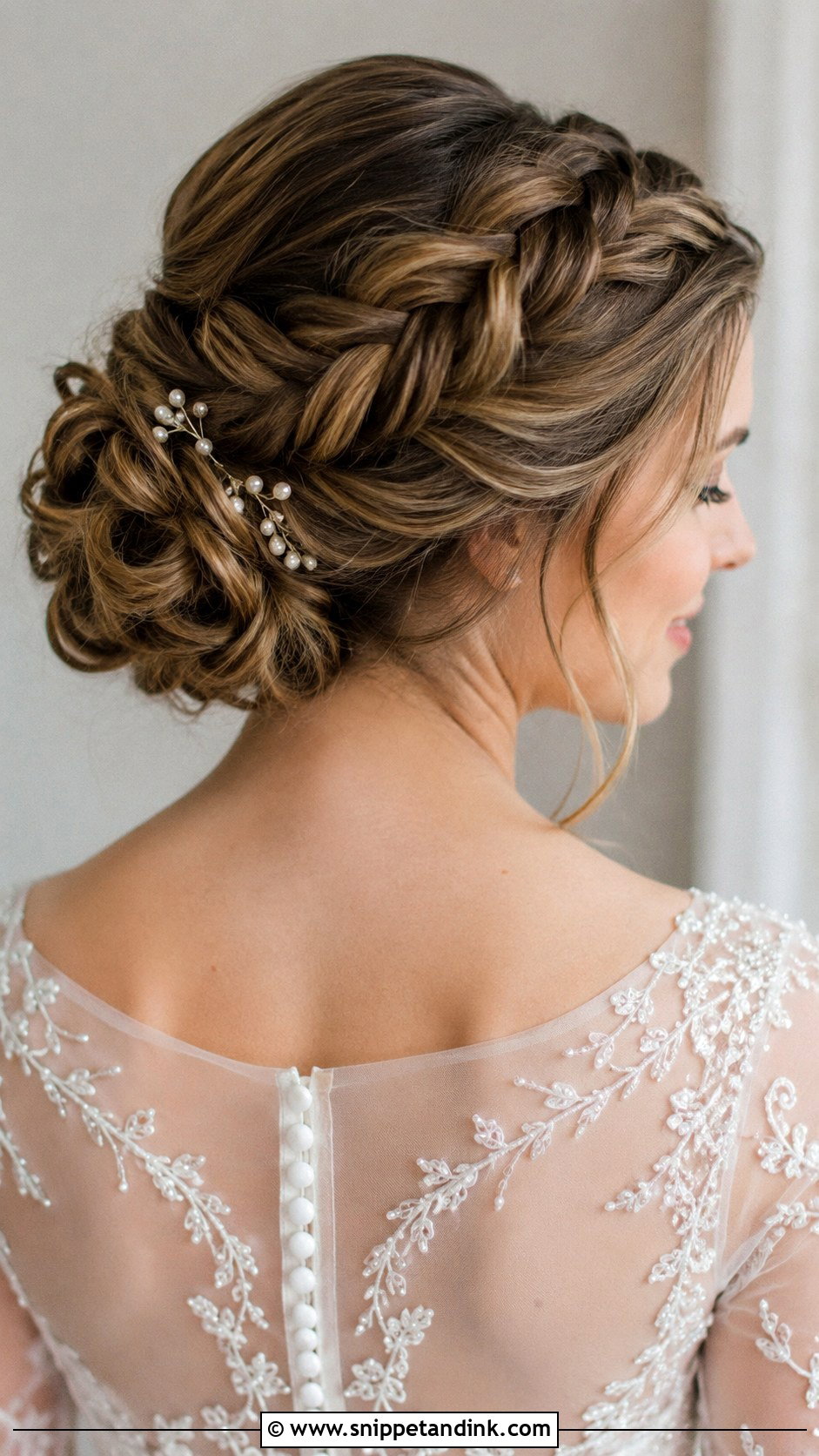
Adding a braid gives a bun texture while keeping the overall shape tidy. The braid can wrap around the bun, run along the crown or start at one side. Thick hair is where this one shines, because a braid absorbs volume that would otherwise make a bun huge and heavy. On fine hair I pancake the braid, gently pulling each loop wider, so it doesn’t look skinny next to the bun. It sits comfortably under a veil comb and takes fresh flowers, pearl pins or gold accessories well, since pins grip a braid far better than smooth hair.
8. Side Braid Wedding Hair
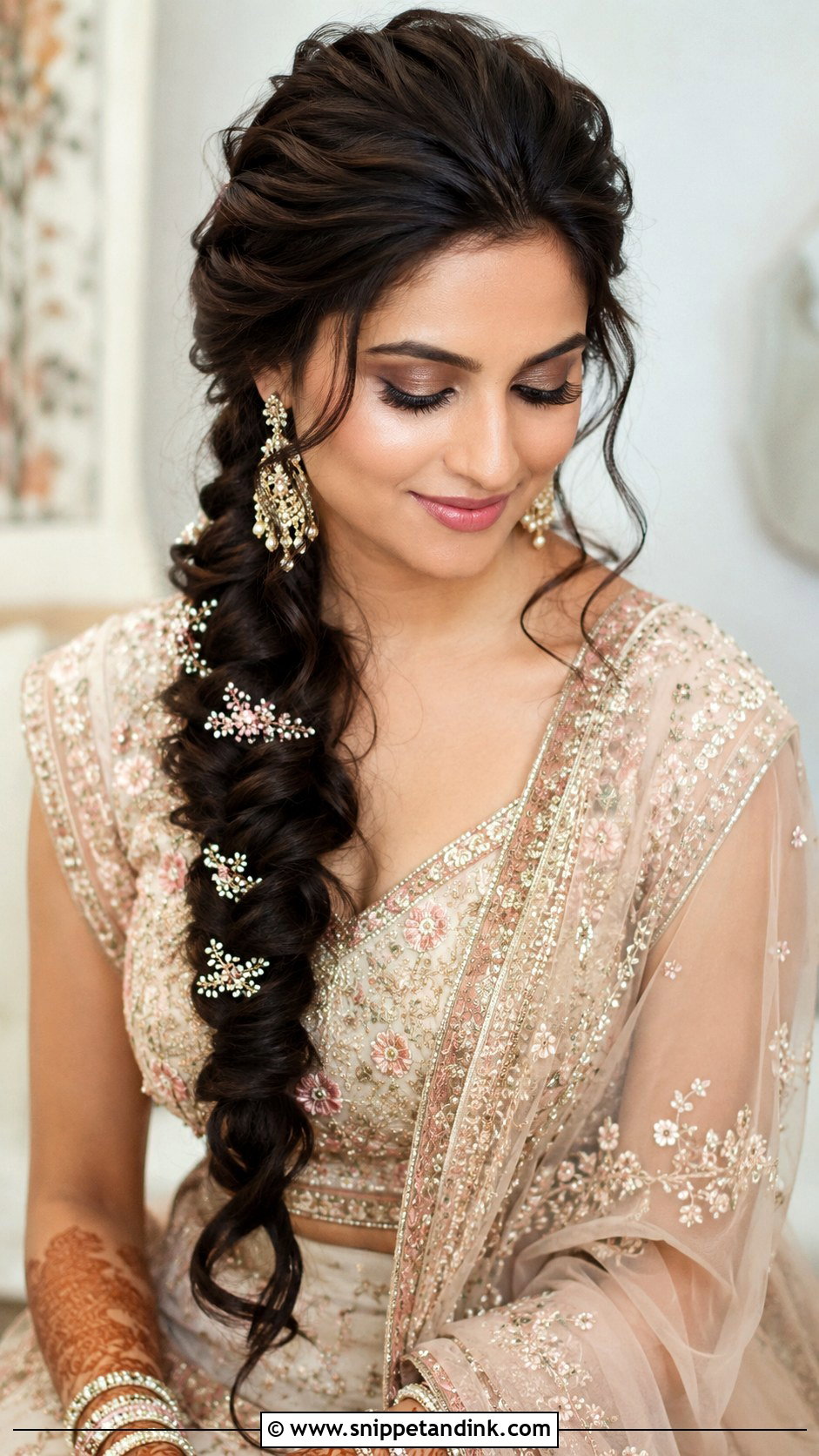
Worn over one shoulder, a side braid shows off length and fits outdoor, cultural and daytime ceremonies. It can be loose and textured, sleek and thick, or threaded with flowers and small pins. It pulls all the visual weight to one side, so at the trial I check which side your jewelry, dupatta drape or neckline detail sits on and put the braid opposite. Once it’s secured, I gently pull it apart to look fuller. Comfortable for a long day with a lehenga, saree or flowing gown.
9. Long Curls Wedding Hair
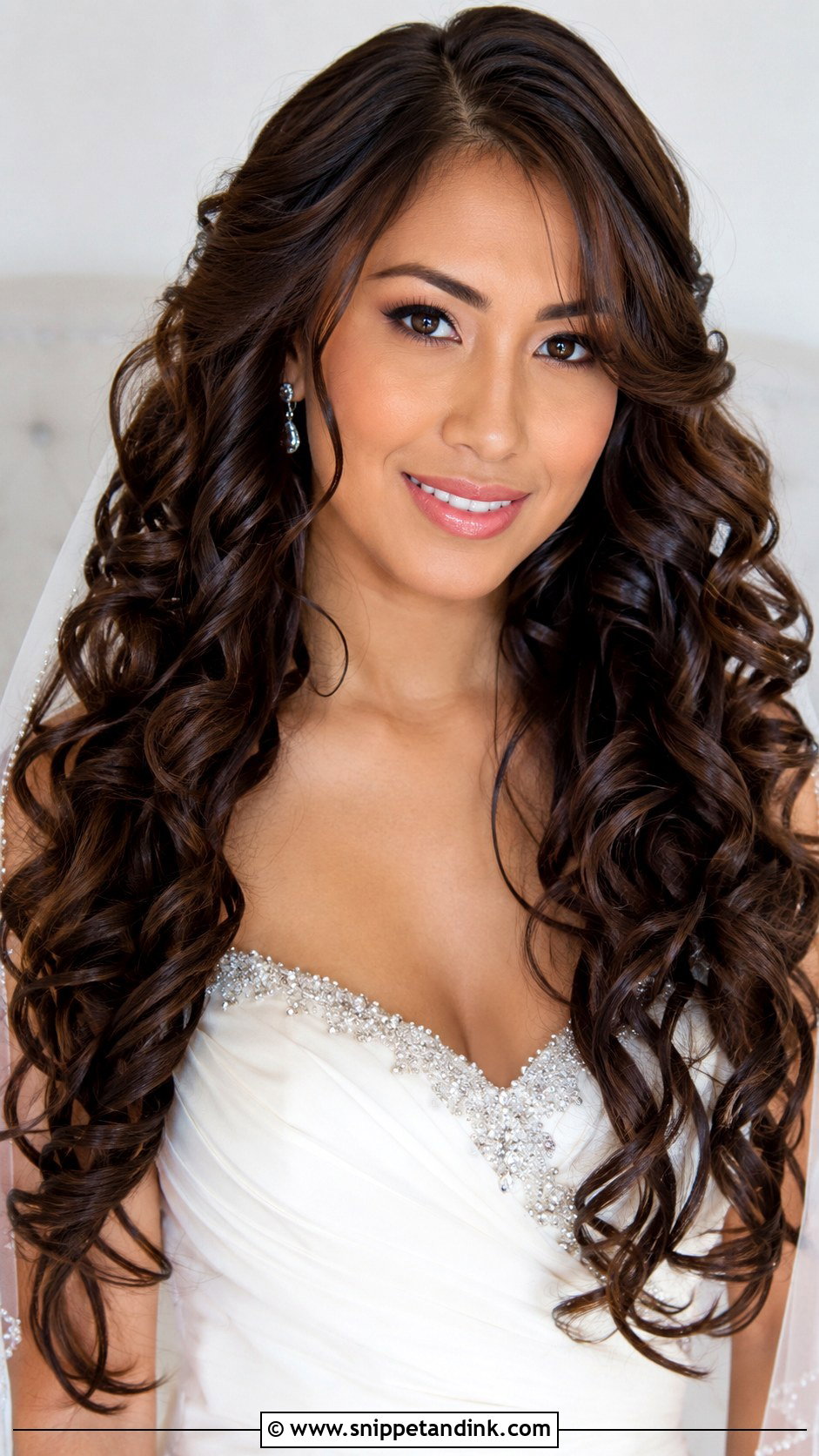
Long, loose curls are the style I see drop most often, so preparation matters more than the curling itself. They can be bouncy, loose or defined depending on your outfit and venue, and they show off layers well; extensions add fullness and length if your own hair is fine or shorter. My rule is that every curl cools completely, pinned in a roll, before a brush touches it. Brush a warm curl and it falls flat by the first dance. A center part reads classic, a side part more dramatic. Done this way, they keep their body for hours.
10. Soft Waves Wedding Hair
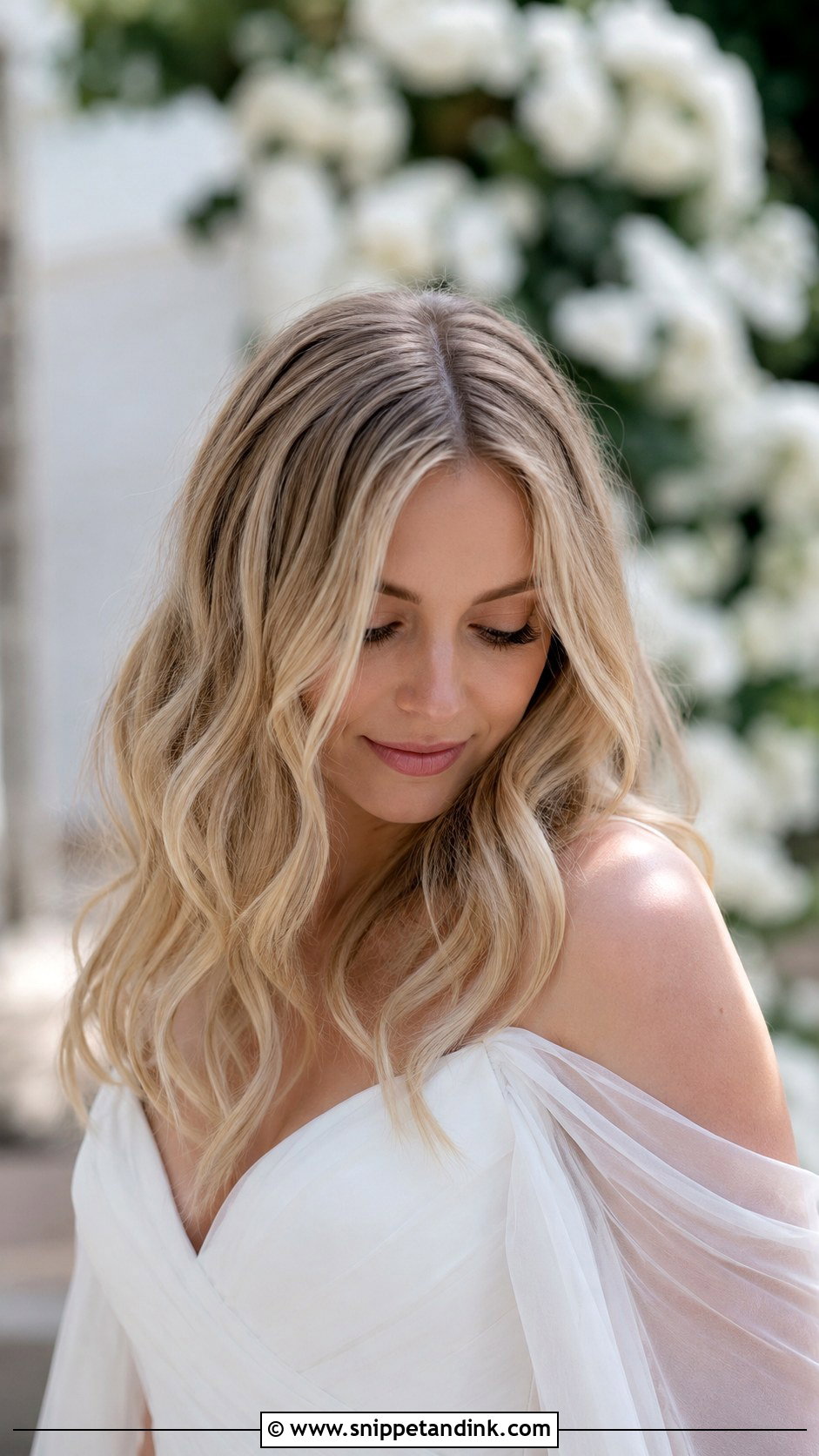
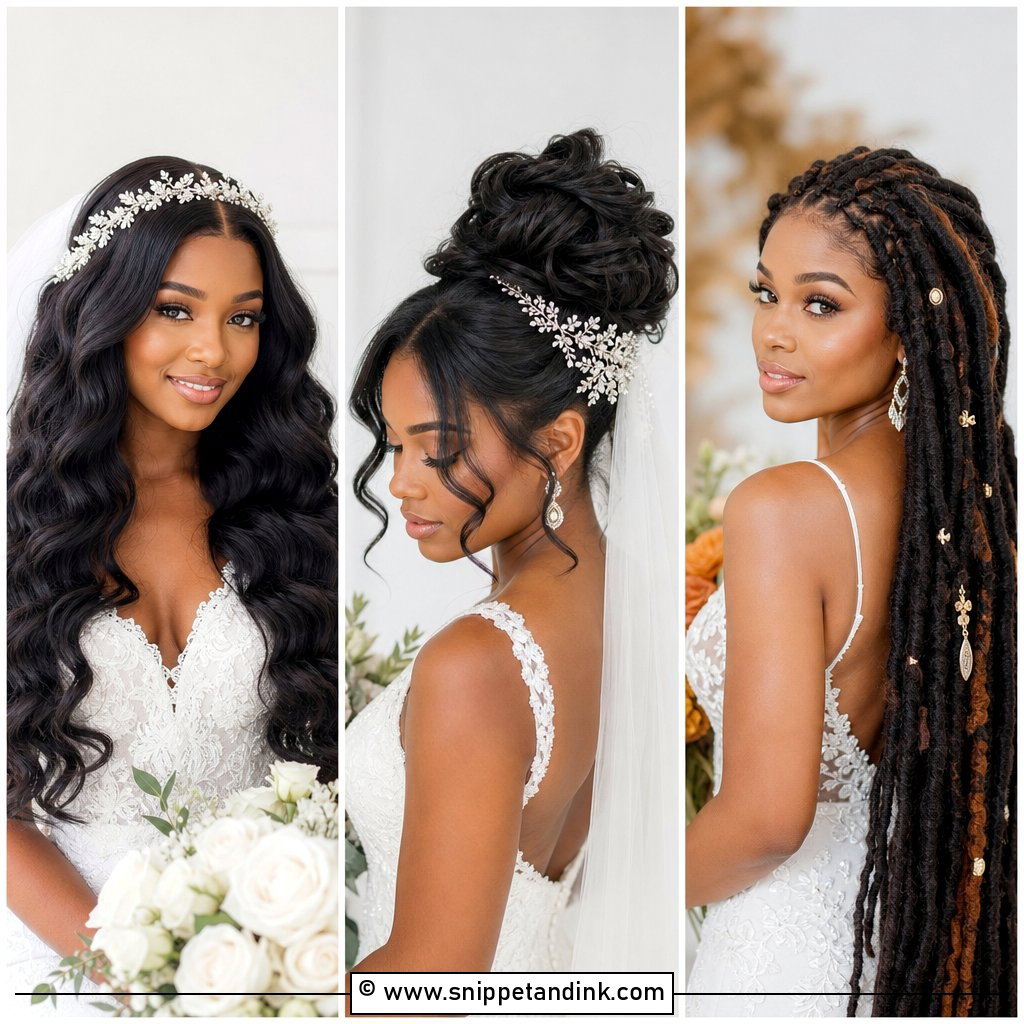
Soft waves are looser and less uniform than Hollywood waves, which is why they suit beach, garden and courthouse weddings. I make them with a large-barrel iron, alternating the direction so they don’t merge into one ripple, then break them up with my fingers. A light texture spray holds them without stiffness. Middle or side parts, curtain bangs and face-framing layers all sit nicely with them. Be realistic about humidity: by the sea, waves relax into something looser still, which is fine if you planned for that slightly undone finish. Add a veil or keep it bare.
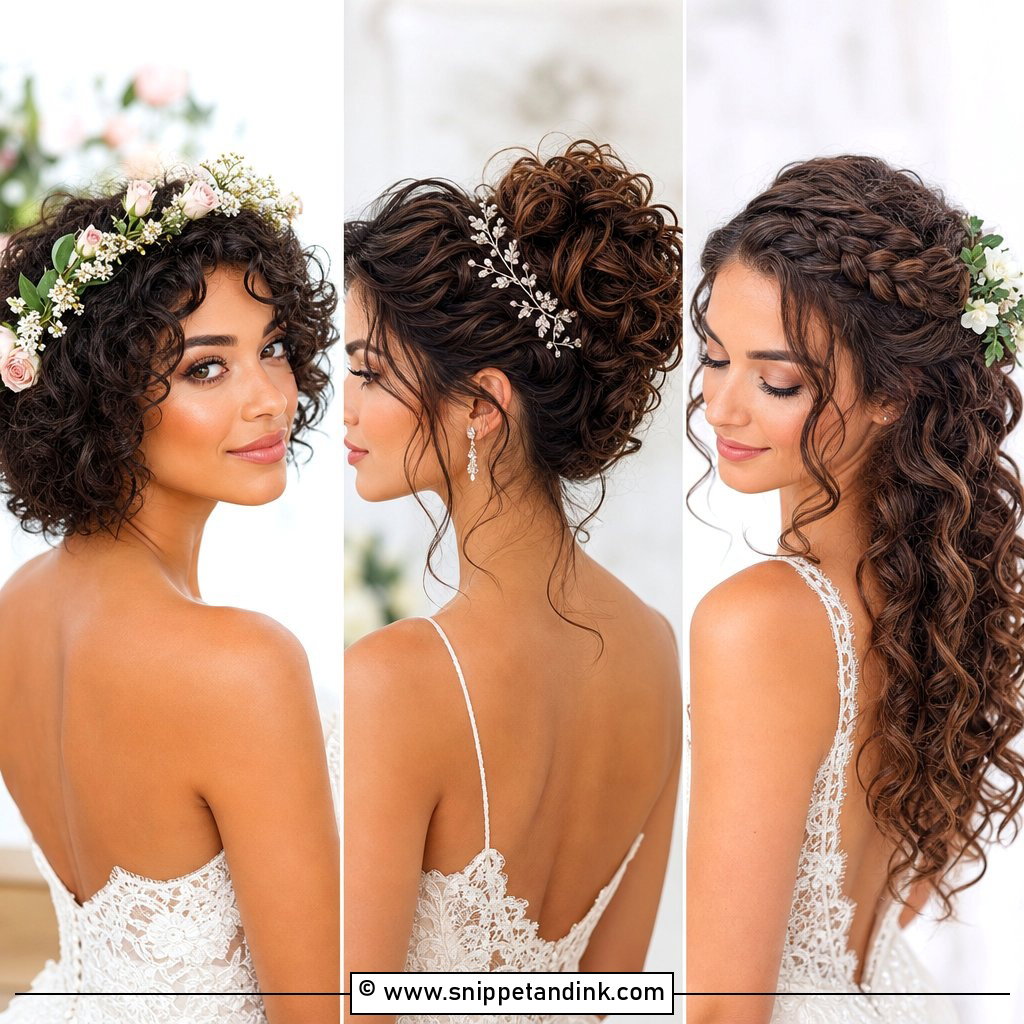
11. Curly Updo Wedding Hair
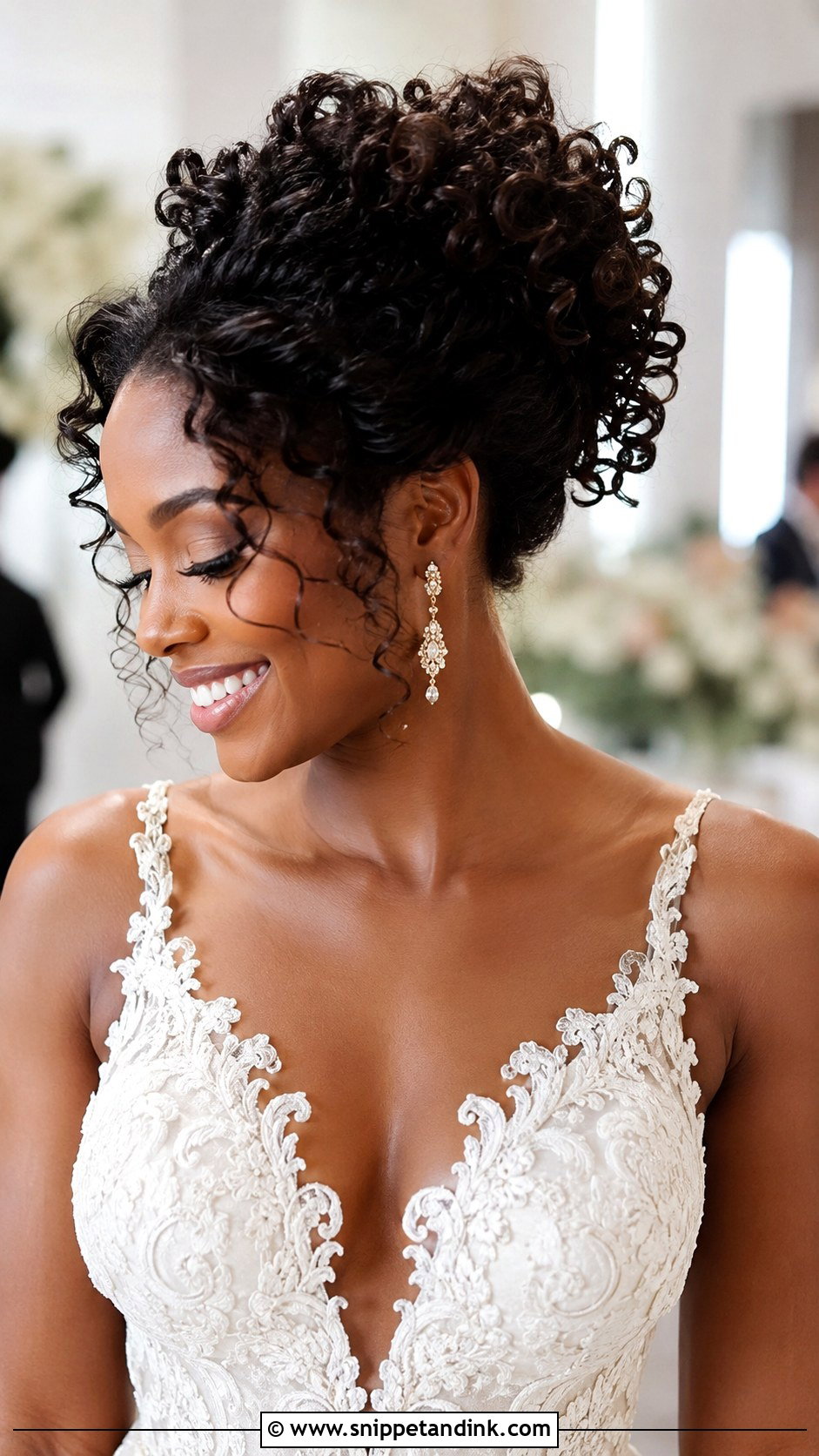
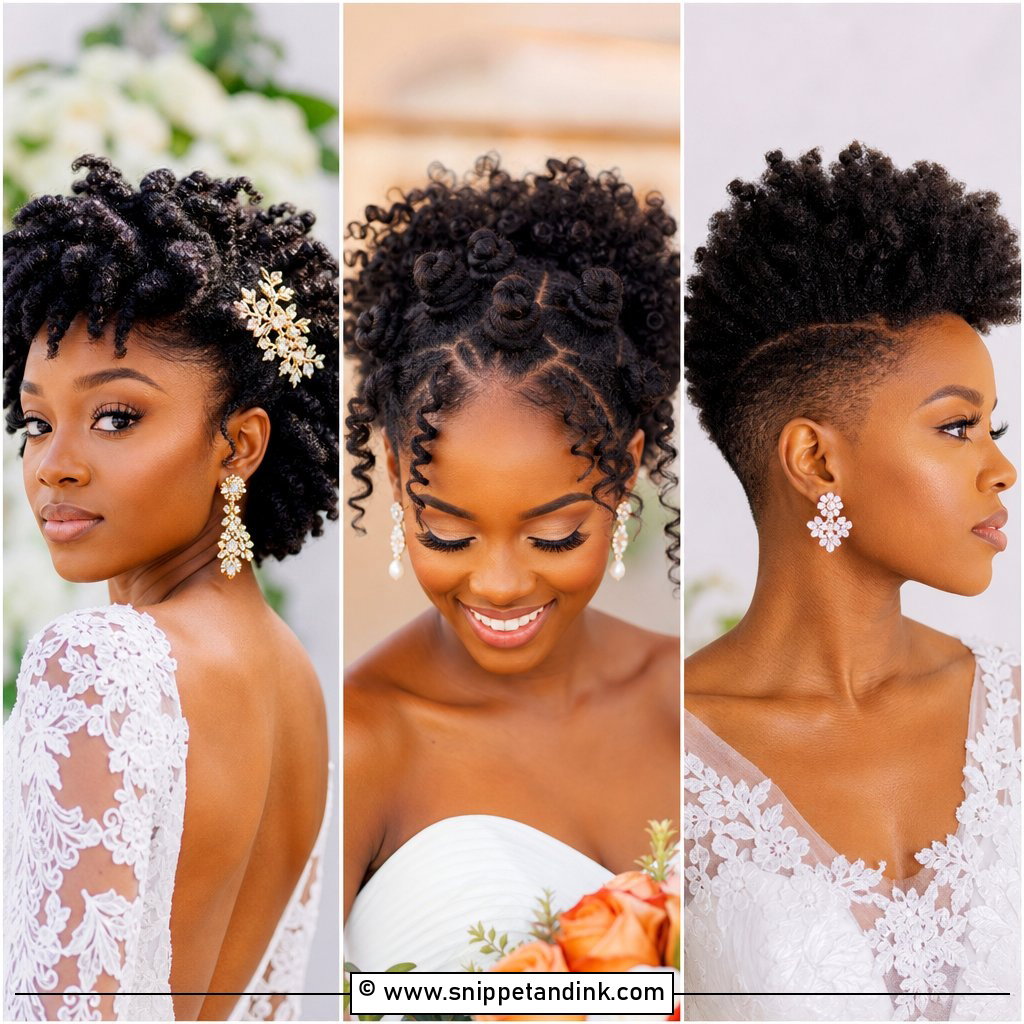
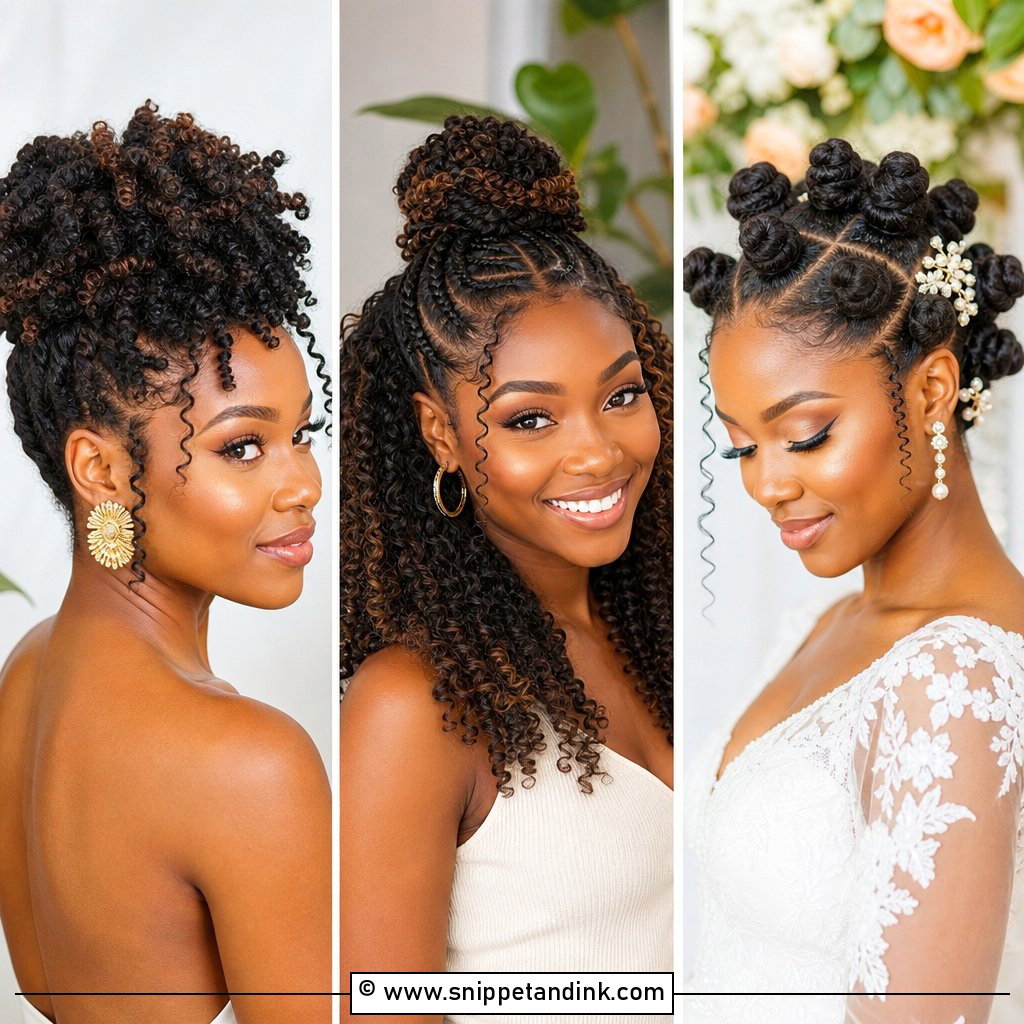
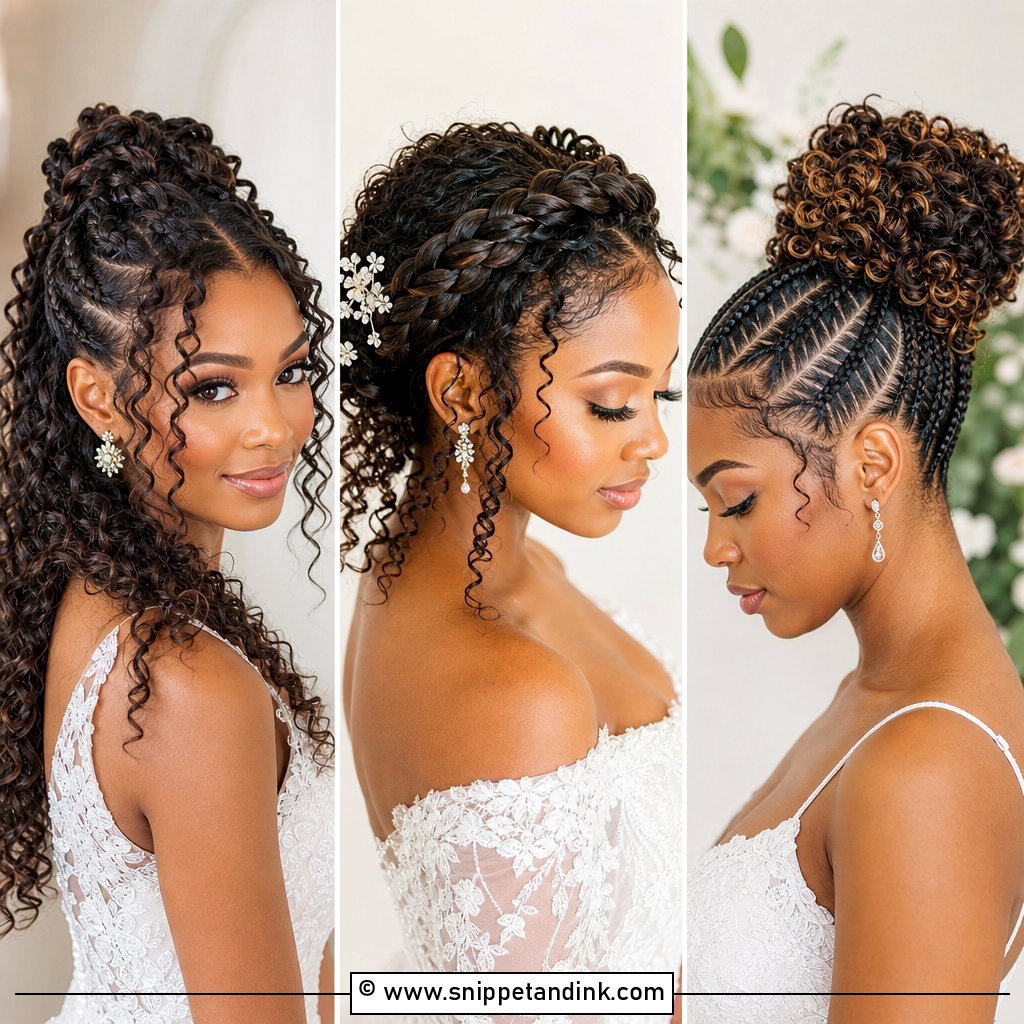
Here natural texture becomes the whole point, lifted and secured. Instead of smoothing curls flat, I shape them into an updo with volume and definition, so coily, curly and wavy hair all become the feature. Hydration comes first: curls moisturized and defined the night before look shiny on the day, while dry curls frizz the moment I start pinning. I use U-pins rather than bobby pins in curls because they hold the shape without crushing the pattern. Leave a few curls around the face, or keep the front defined for a formal finish.
12. Natural Hair Wedding Hair
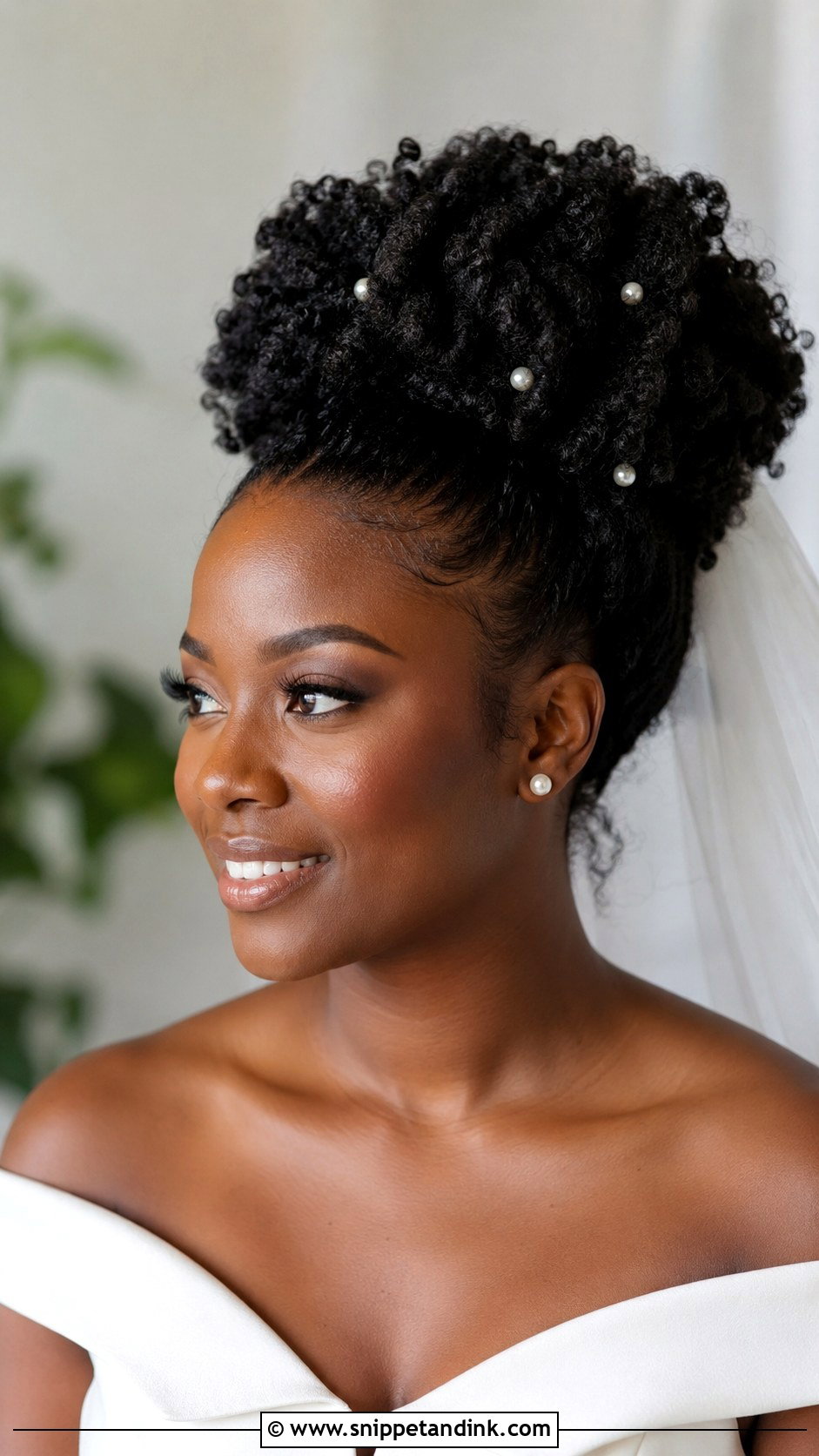
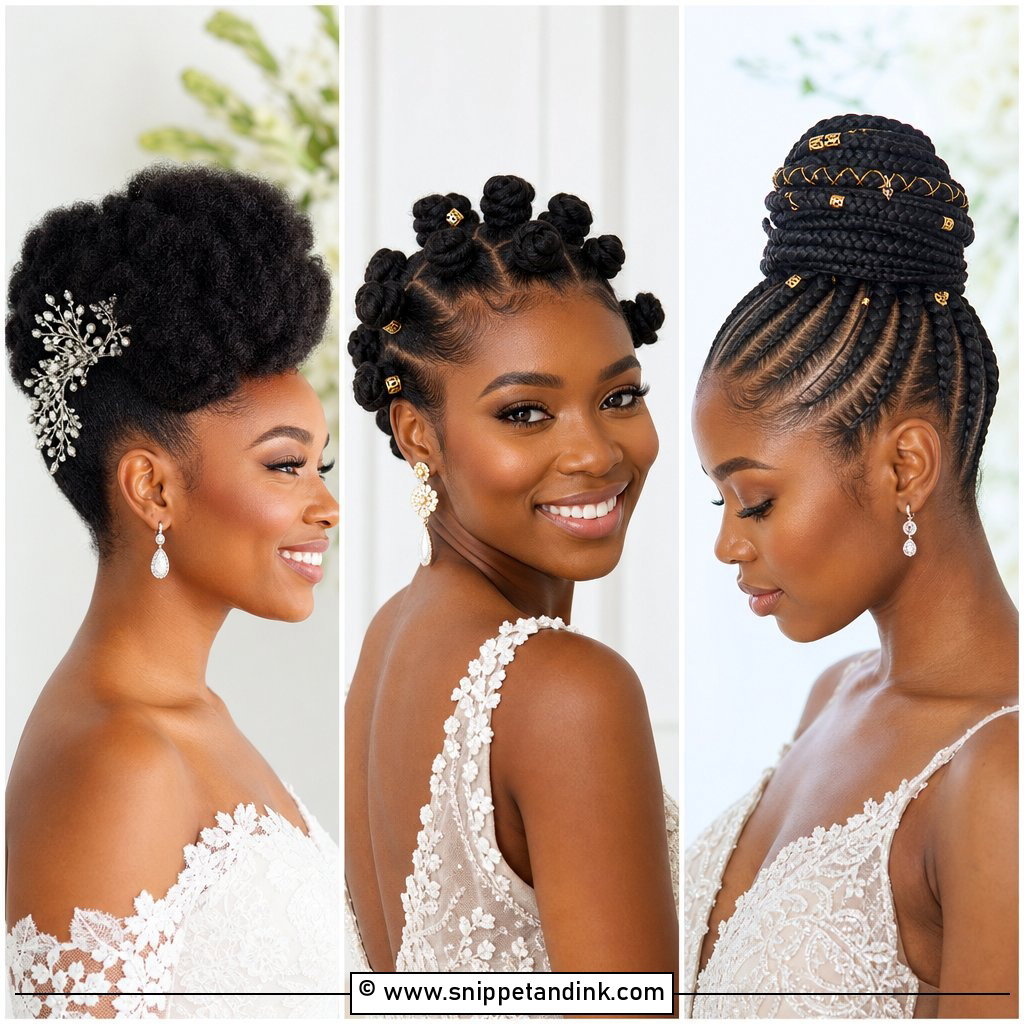
Natural hair can go bold, regal or soft depending on how you want to wear your texture: a shaped afro, a defined twist-out, a sculpted puff or a pinned updo. The aim is to enhance your curl pattern with a shape that looks deliberate and secure. I’d always do the trial on the same wash-and-style schedule you’ll use for the wedding, because a twist-out on day two behaves differently from day one. Moisture, definition and gentle edge control keep the finish fresh, and pearl pins, gold cuffs, a veil comb or fresh flowers add the bridal detail. You still look like yourself, only dressed for the occasion.
13. Twisted Updo Wedding Hair
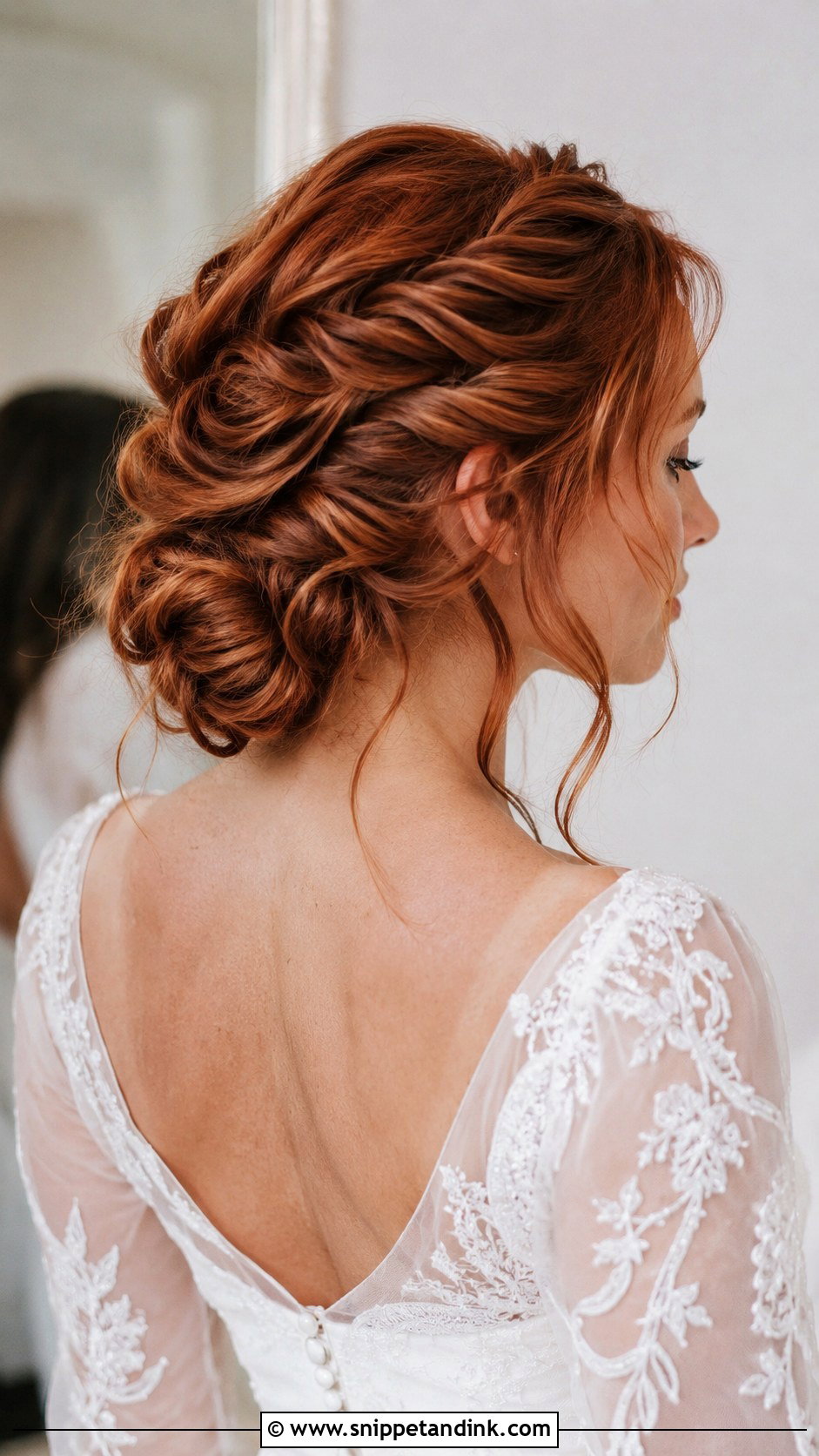
Twists are my favourite for mixed hair types because they don’t depend on tight curls holding or a heavy braid. I twist sections and pin them into a low or mid-height shape, which builds dimension at the sides, back and crown for the camera. Twists hide uneven layers and grown-out pieces, so they suit hair caught between cuts. Leave loose front pieces for softness or keep it clean for formal. Veil combs grip twists easily. The real risk is overdoing it: if every section is twisted, the back reads busy.
14. Floral Bun Wedding Hair
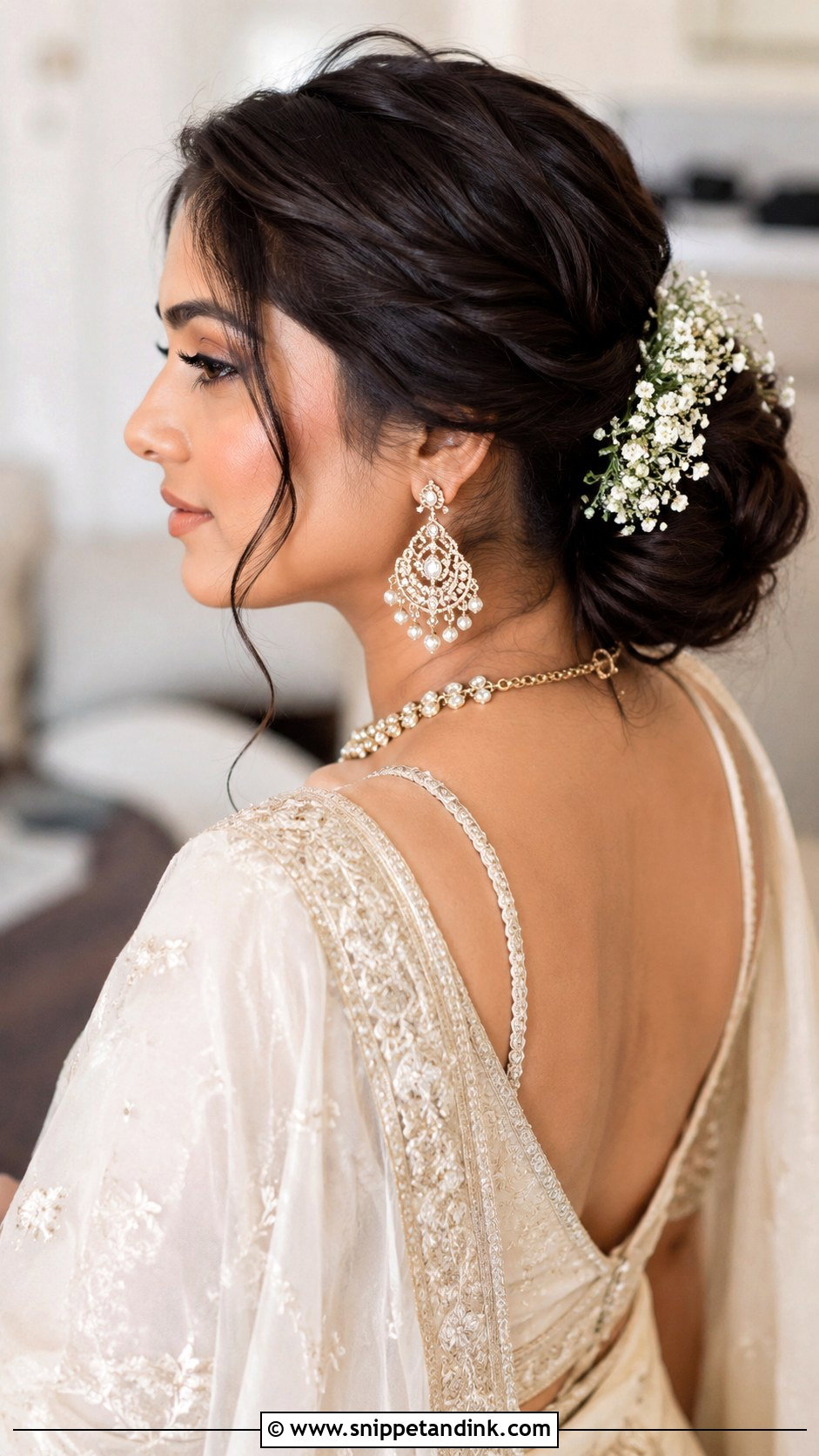
Fresh flowers can be tucked around a low bun, along one side or set as a full ring, and they give a festive, traditional finish. Small white blooms feel classic, while brighter flowers can pick up cultural wear or a bold palette. Flowers are heavier than they look, jasmine strings and roses especially, so I anchor them with pins and wire to the base of the bun rather than to its surface. Ask your florist for blooms that cope with hours out of water, because delicate ones wilt by the reception in warm weather. Guests mostly see this bun from behind during the aisle walk, so that’s where I balance the flowers.
15. Pearl Pin Wedding Hair
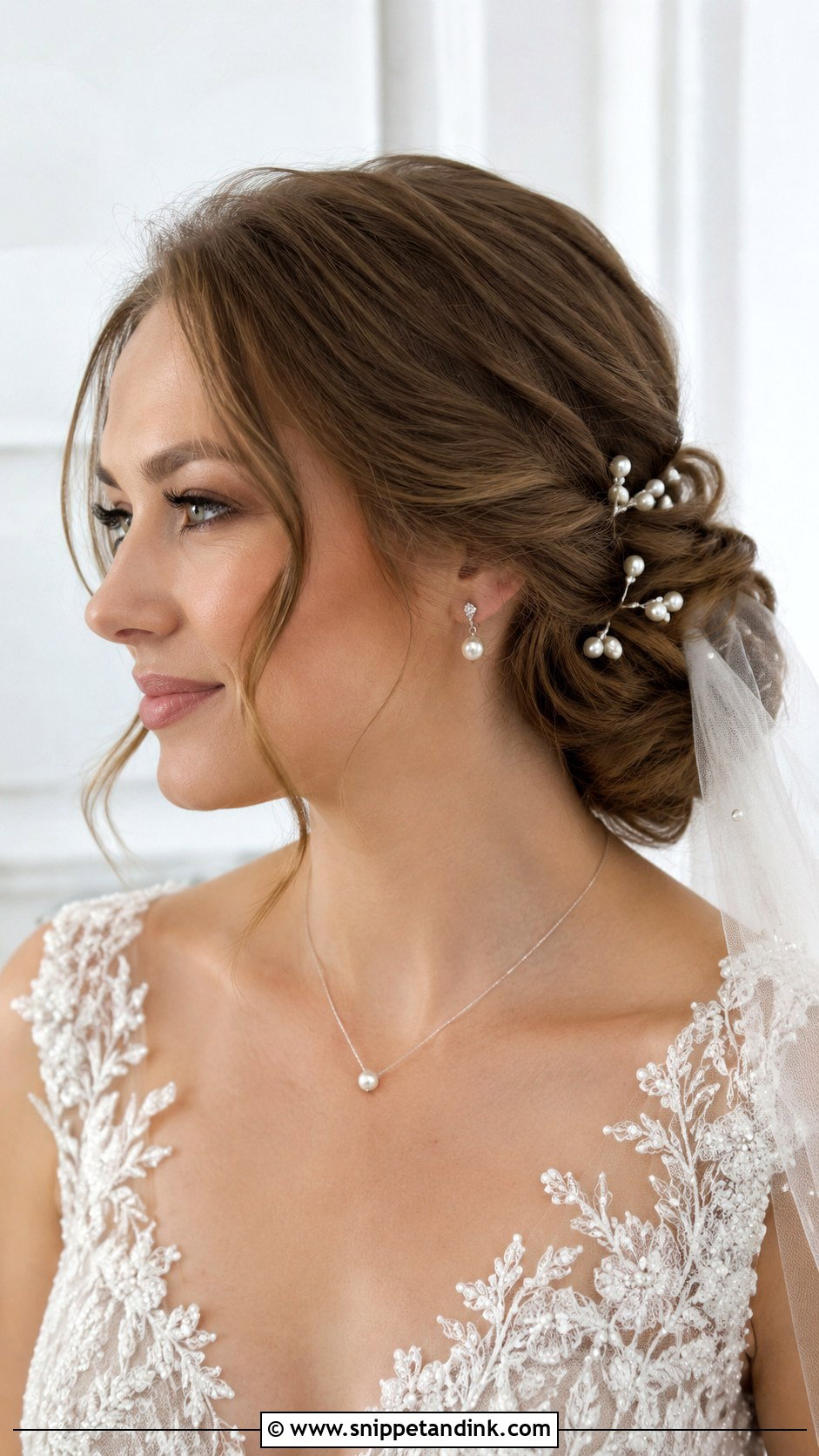
Pearl pins finish almost any bridal style: pushed through a low bun, scattered over waves, tucked into a half-up join or set along a braid. They suit outfits with pearl accents, lace, satin or classic jewelry. I place them with a purpose, usually where the hair needs extra hold, so they do structural work as well as decorating. Odd numbers in a loose curve look more natural than an even row. Buy a few spares, because pearl pins have a habit of vanishing on the day.
16. Veil Bun Wedding Hair
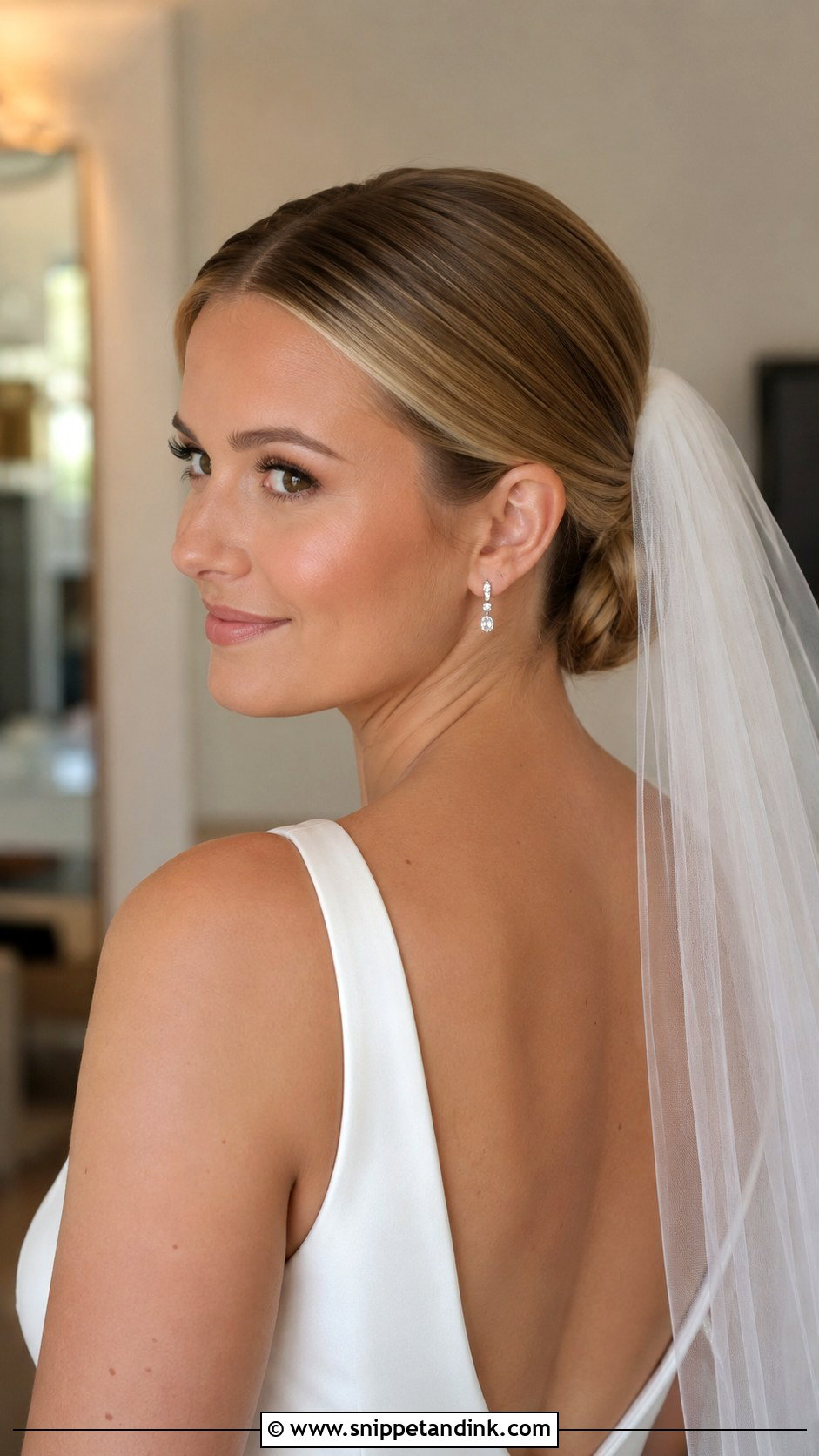
The bun here exists to give the veil a firm base. Low or mid buns suit best, because the comb can sit securely above or below them, and the front can be sleek, softly parted or framed with loose pieces. Long, detailed or heavy veils need this most. I insist on the actual veil coming to the trial: a sheer single tier and a beaded cathedral need completely different anchoring, and the comb often needs two crossed bobby pins under it to grip. Planned that way, bun and veil stay put from the ceremony through portraits, and the veil slides out cleanly for the reception.
17. Short Hair Wedding Hair
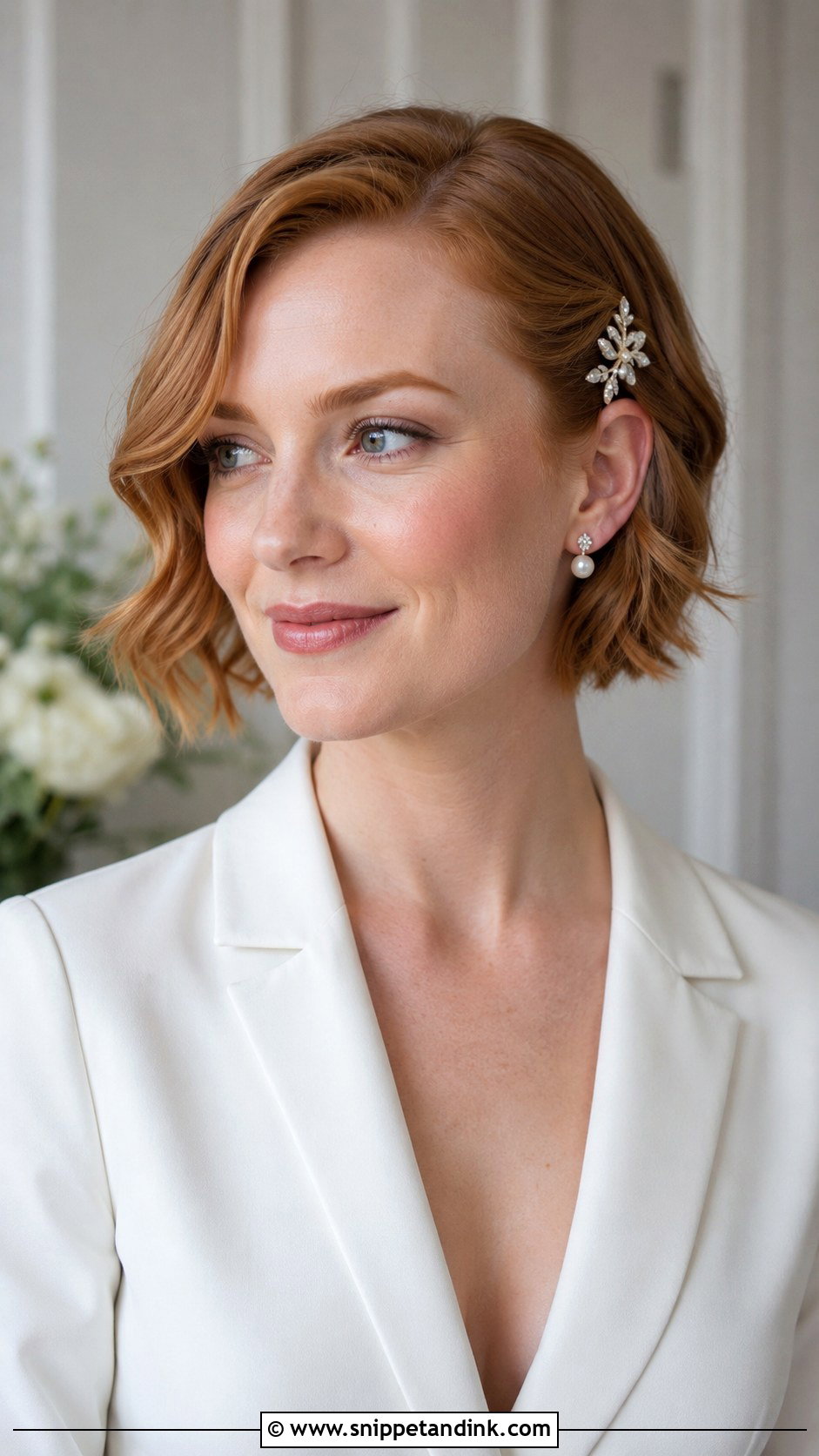
Short hair needs intention more than length. Short hair wedding hair on a bob can be waved, tucked, pinned to one side or given a sleek blowout, while a pixie can be textured, side-parted or dressed with a fine headband or clip. I get the polish from shine, root volume and clean edges, and I’d book your trim one to two weeks before the wedding, never the day before, so the cut has settled. Short hair shows off earrings, necklines and makeup. A birdcage veil or pearl accessory adds drama while your haircut stays center stage.
18. Bob Wedding Hair
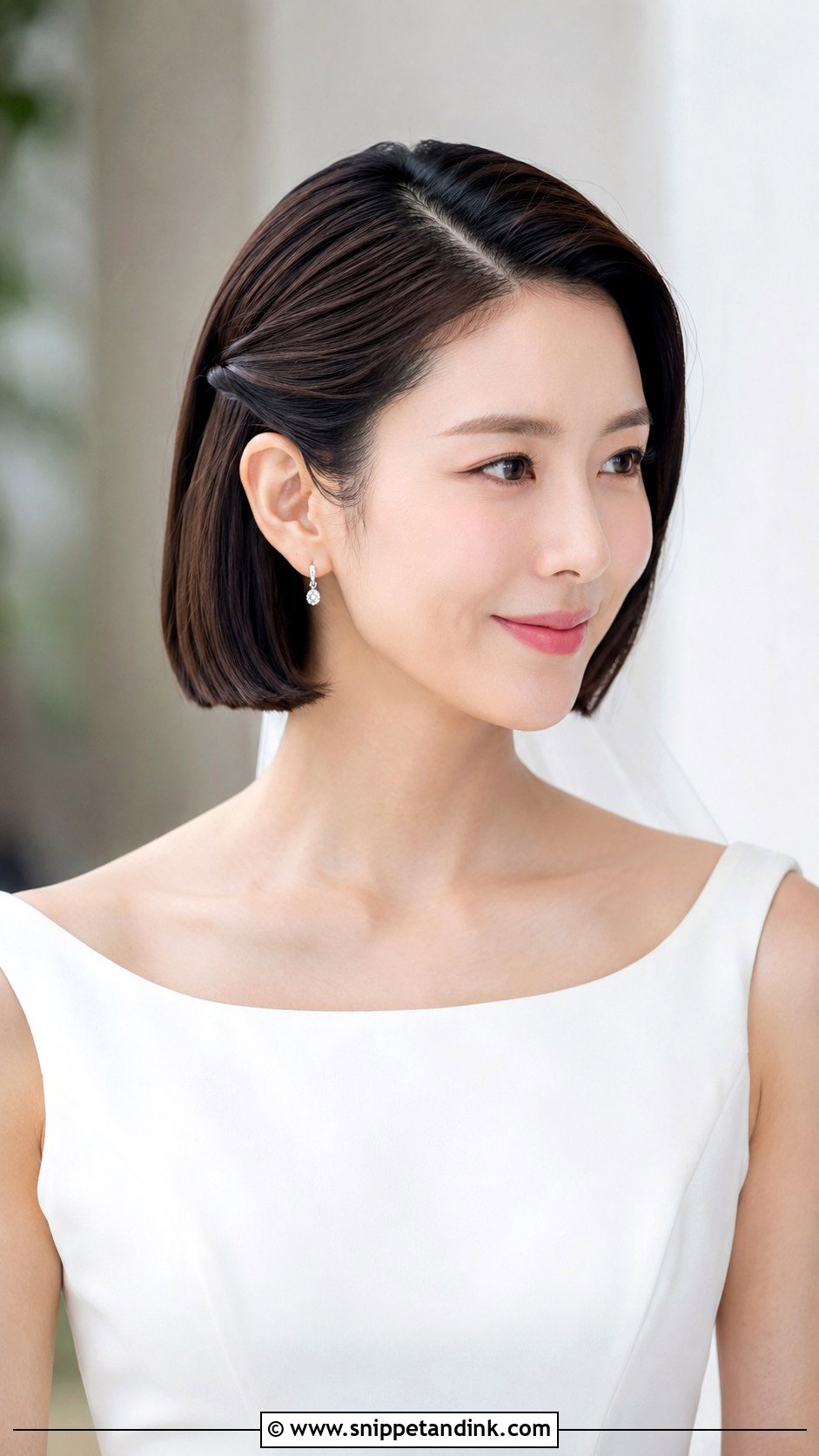
A bob reads modern: waved it turns romantic, blunt and sleek it goes fashion. Tuck one side behind the ear, add a crystal clip or create a deep side part for shape; it fits courthouse weddings, minimalist gowns, reception dresses and sarees alike. Bobs lose curl faster than longer hair because there’s no weight to hold the bend, and the ends hit your shoulders and push the curl out. I prep with mousse at the roots and finish with a light spray, and I’d suggest a slightly firmer curl than you think you want. The clean shape is easy to recognise in every photo.
19. Indian Wedding Bun Hair
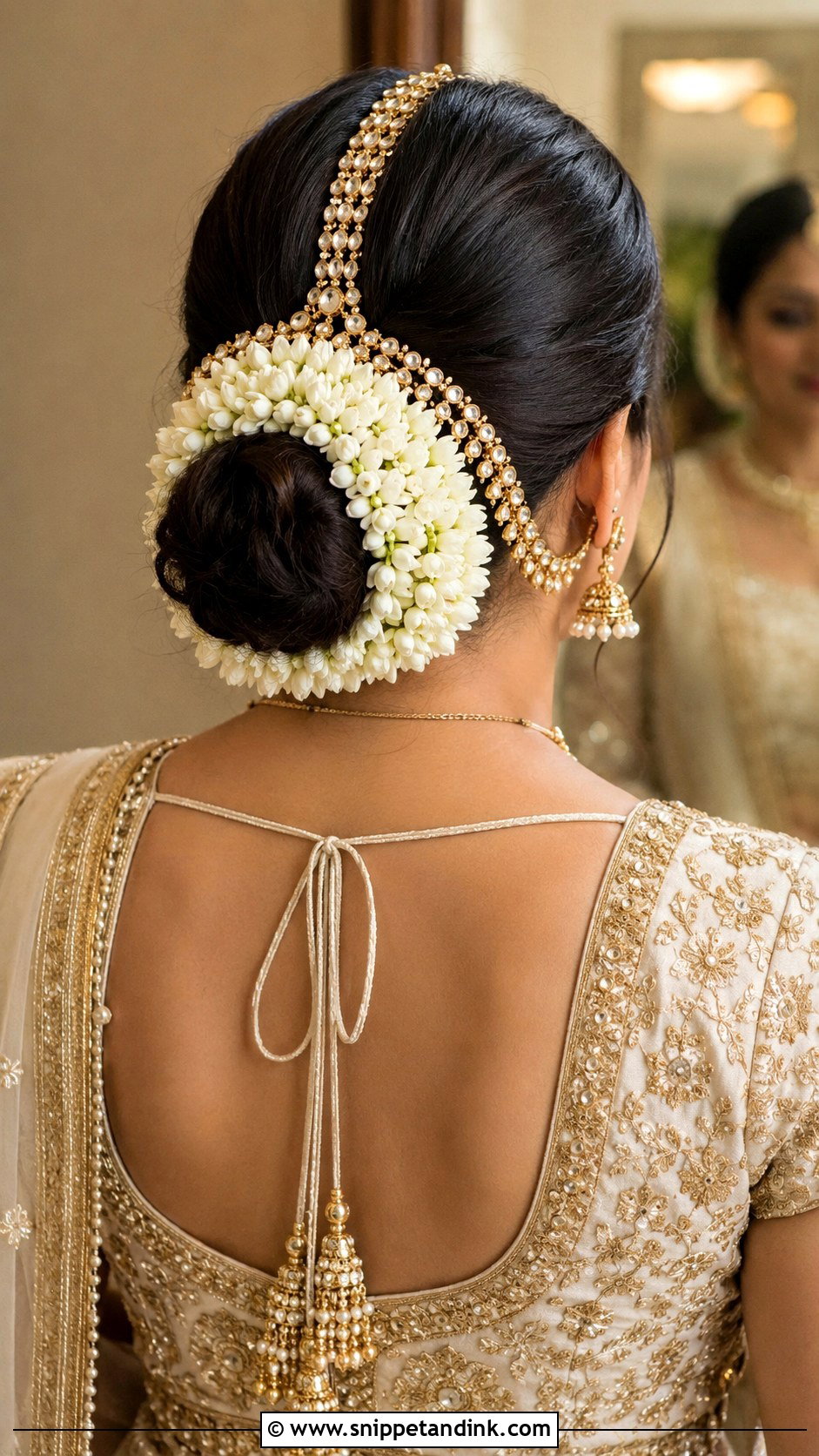
With sarees, lehengas and traditional jewelry, the bun has to carry real weight. Indian wedding bun hair can sit low or mid-height, decorated with fresh flowers, jewelry chains, pins or a dupatta setting. I build it over padding with a firmly secured base, because a maang tikka, a passa and a pinned dupatta all pull on the hair through hours of rituals. A center part with smooth sides is the classic finish; soft volume at the crown reads more modern. It keeps your face clear and holds its shape in warm venues through long ceremonies.
20. Reception Open Hair
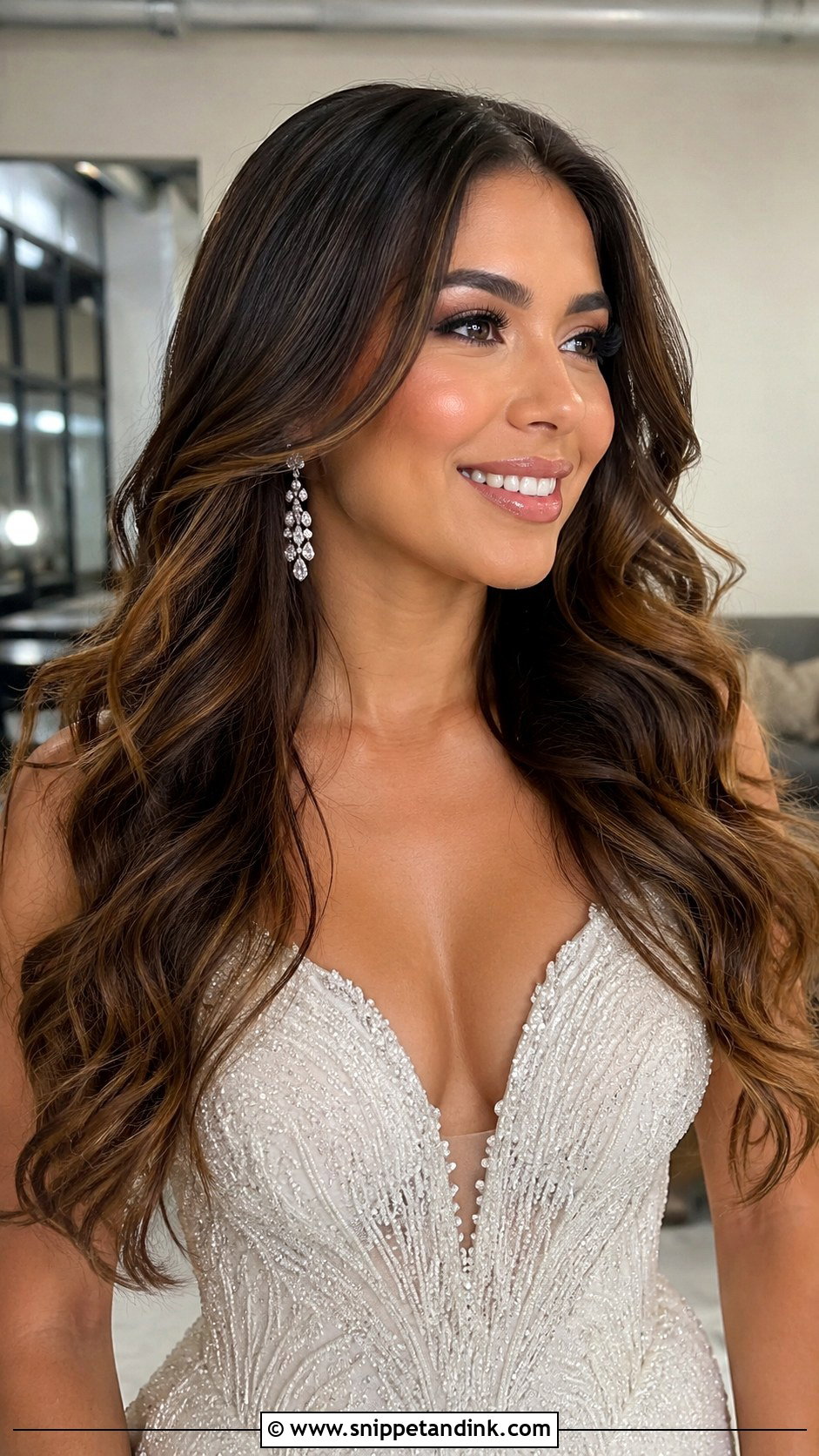
Letting the hair down after the ceremony gives you a second look and room to dance. Many brides keep the ceremony hair pinned, then switch to open waves, curls or a polished blowout for the party. Hair that has been pinned all day already holds kinks, so I plan the ceremony style around that: rolls and soft twists release into waves, while a tight sleek bun leaves dents. Long layers, extensions or face-framing pieces add fullness, and a touch of shine spray helps under bright reception lights. It pairs well with reception gowns, lighter lehengas and modern evening outfits.
Planning the Ceremony-to-Reception Change Without Losing an Hour
Plenty of brides want two looks, and it’s very doable, but the change has to be designed at the trial rather than improvised in a bathroom between events. This is how I set it up.
- Start with a ceremony style that converts. Soft rolls, twists and loose low buns release into waves; a slick, tight chignon leaves crimps that are hard to hide.
- Know where the pins are. I show the bride or a bridesmaid roughly where they sit, and the takedown goes much faster when nobody is hunting blind.
- Pack a tiny bag: a wide-tooth comb, a few clips, a travel shine spray, and a mini curling iron if the venue has a socket near a mirror.
- Comb from the ends upward, never from the root first, and let the bends left by the updo become the wave.
If you’d like your stylist to stay for the change, mention it when you book, since it affects their whole timeline for the day. A takedown and restyle into open hair takes around twenty to thirty minutes. Switching to a completely different updo takes longer, and in my experience it’s rarely worth missing your own cocktail hour for.
Book the Trial With Every Accessory You’ll Wear
The right hair for your marriage supports your outfit, flatters your features and lets you enjoy the day without fixing it every hour. A sleek chignon is polished and soft waves are relaxed; a floral bun leans traditional and a ponytail leans modern. Natural curls, short cuts, bobs, braids and reception changes all earn their place, because no two brides want the same thing. Book a trial, bring every accessory you plan to wear, and keep the style in for a few hours afterwards. If it still feels secure that evening, you’ve found your hairstyle.
You'll Like These Ideas:


Leave a Reply