
Thick hair gives me more to work with than any other type: updos come out full without padding, braids look bold, and curls have body. It also brings two problems most styling photos never mention. It’s heavy, so a badly anchored updo pulls on the scalp by evening, and it takes a long time to dry and set. Every look below can work for a bride, a bridesmaid, the mother of the bride or a wedding guest, from buns and braided crowns to ponytails and waves worn down. For each, I’ve noted how I deal with the weight so it still feels comfortable at midnight.
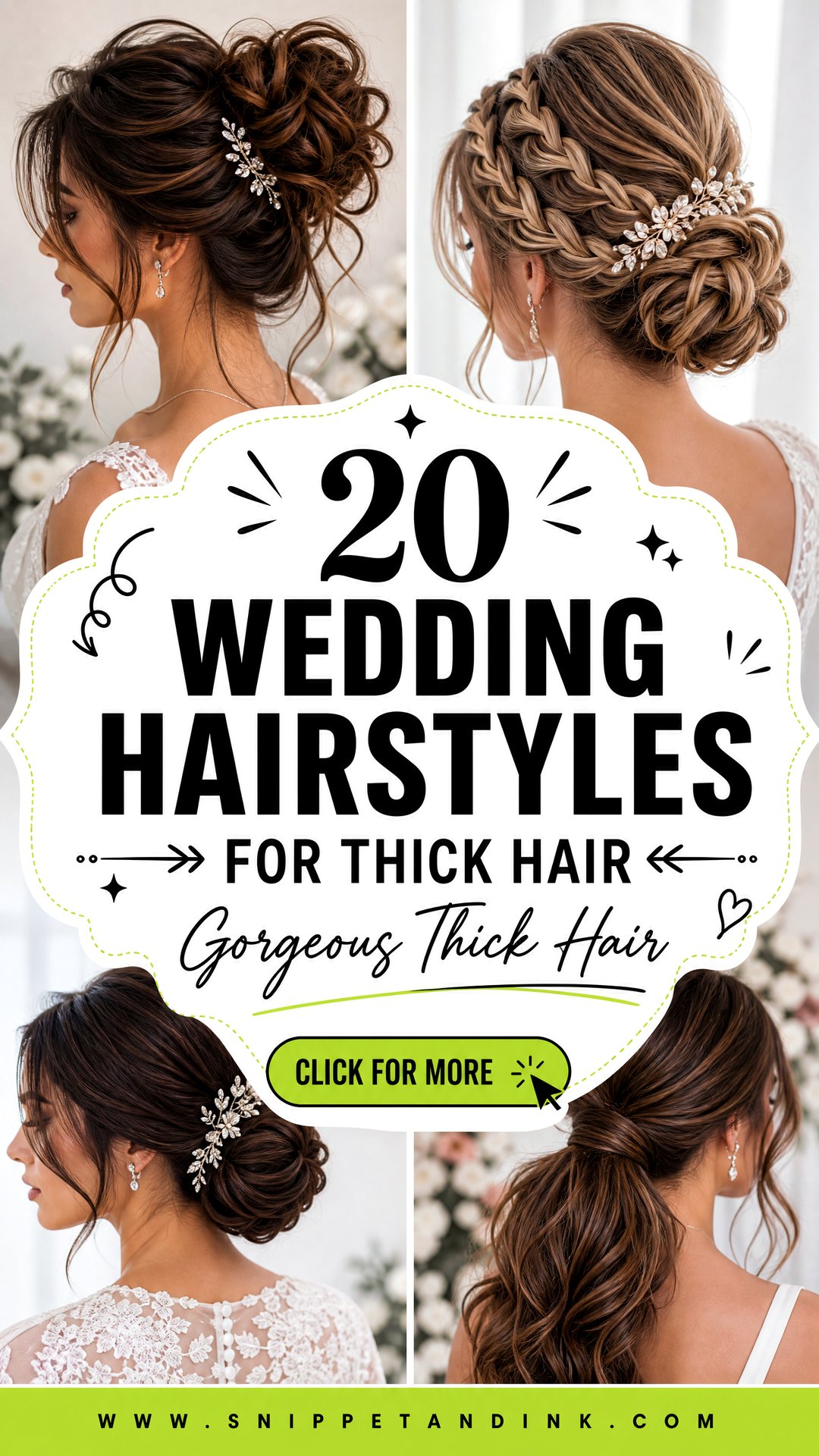
Why Heavy Updos Ache by Evening, and How I Prevent It
If you’ve ever taken an updo down and felt your scalp throb, you know the problem. The ache comes from weight hanging off a few points at the scalp, usually from pins pushed straight in or a high bun with nothing underneath it. With thick hair, the answer is spreading the load.
- Anchor first. I tie a small ponytail or braid as a base, then pin the style to that base instead of to loose hair.
- Use the right pins. Large U-pins hold bulk without digging in. Bobby pins are for small sections and finishing.
- Go lower. A bun at the nape sits on the neck. The higher it sits, the harder the scalp has to hold it.
- Wear it for a few hours after your trial. If it pulls, tell your stylist. It can almost always be re-pinned.
Accessories add weight too. A long cathedral veil on a heavy bun pulls backward all evening, so I pin the comb into the base, not the bun itself, and suggest switching to a shorter, lighter veil for the reception if you want to keep one on.
1. Half Up Half Down Wedding Hair For Thick Hair
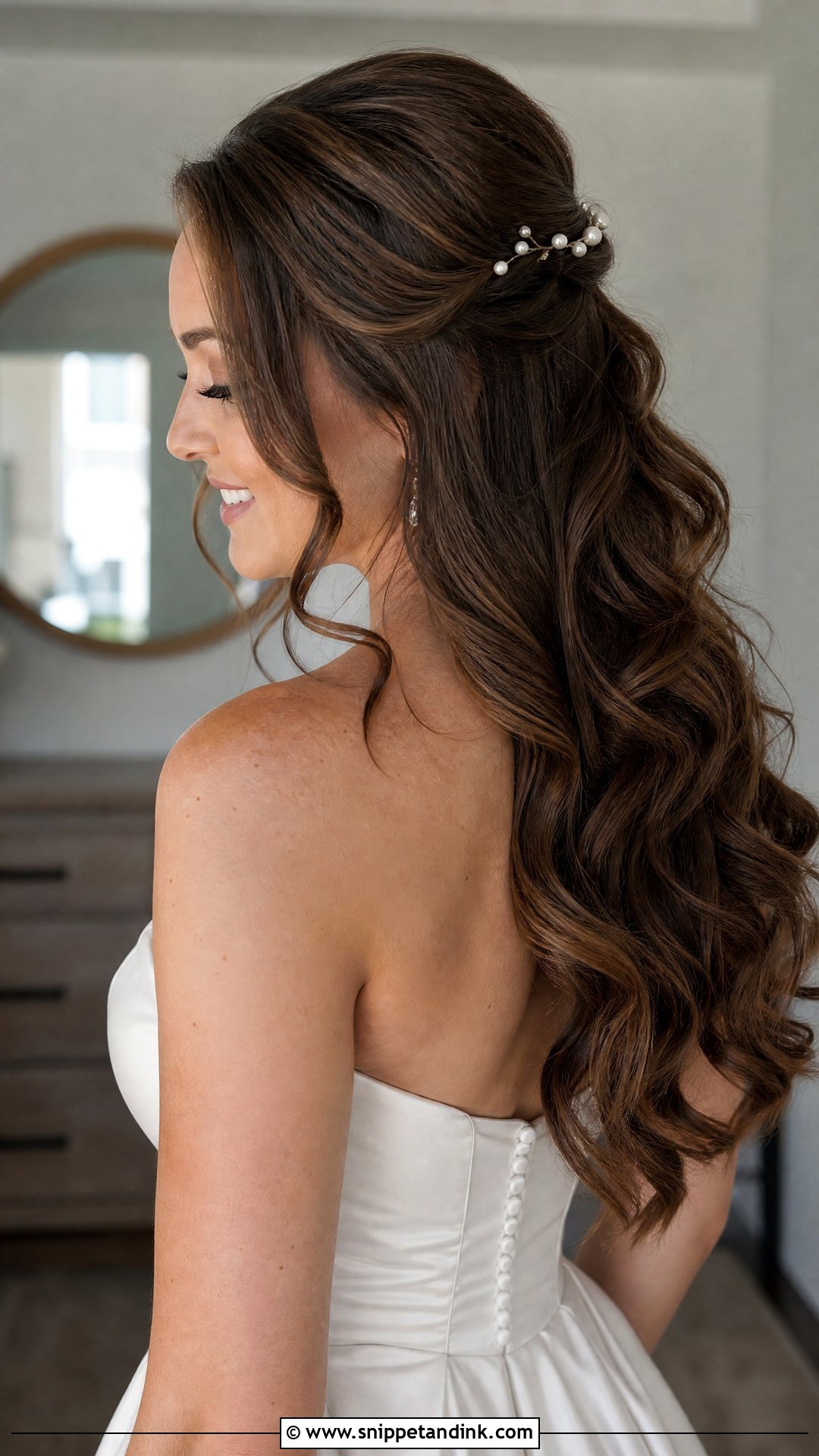
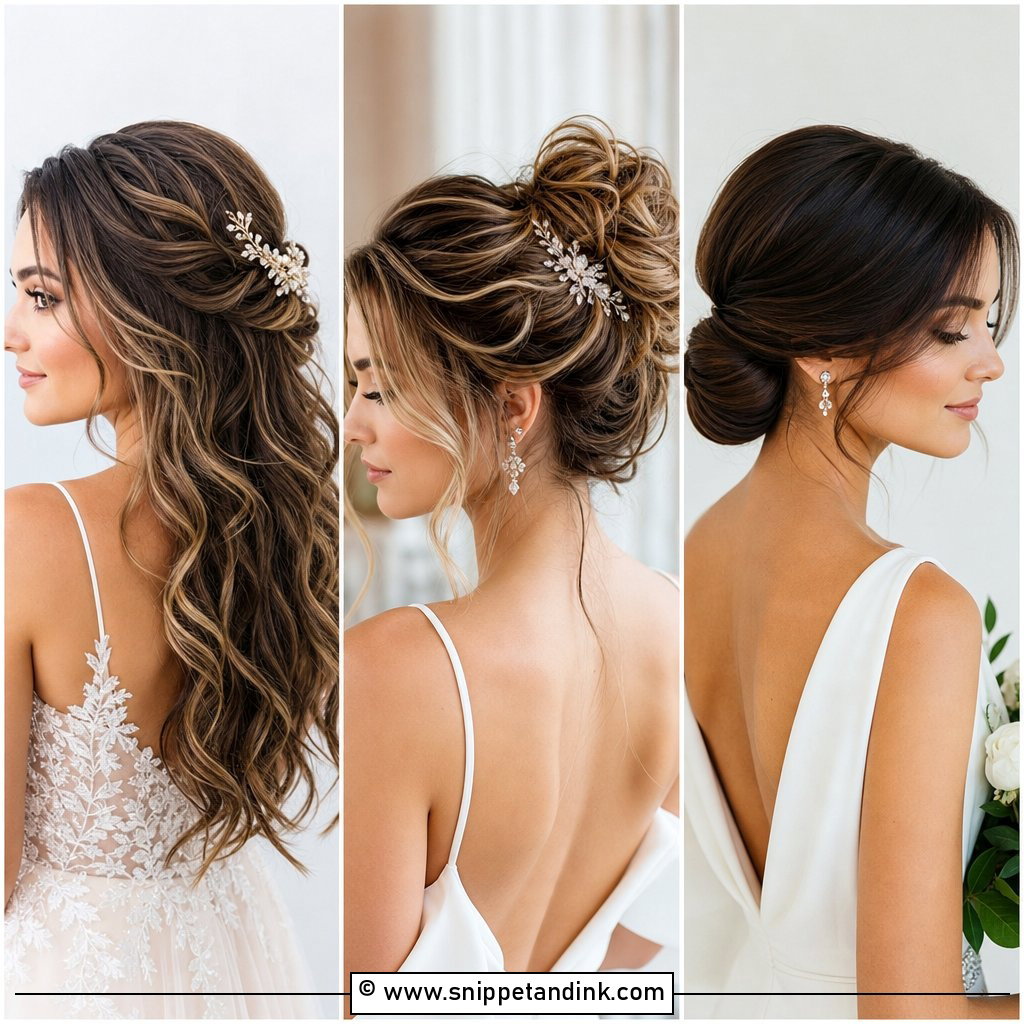
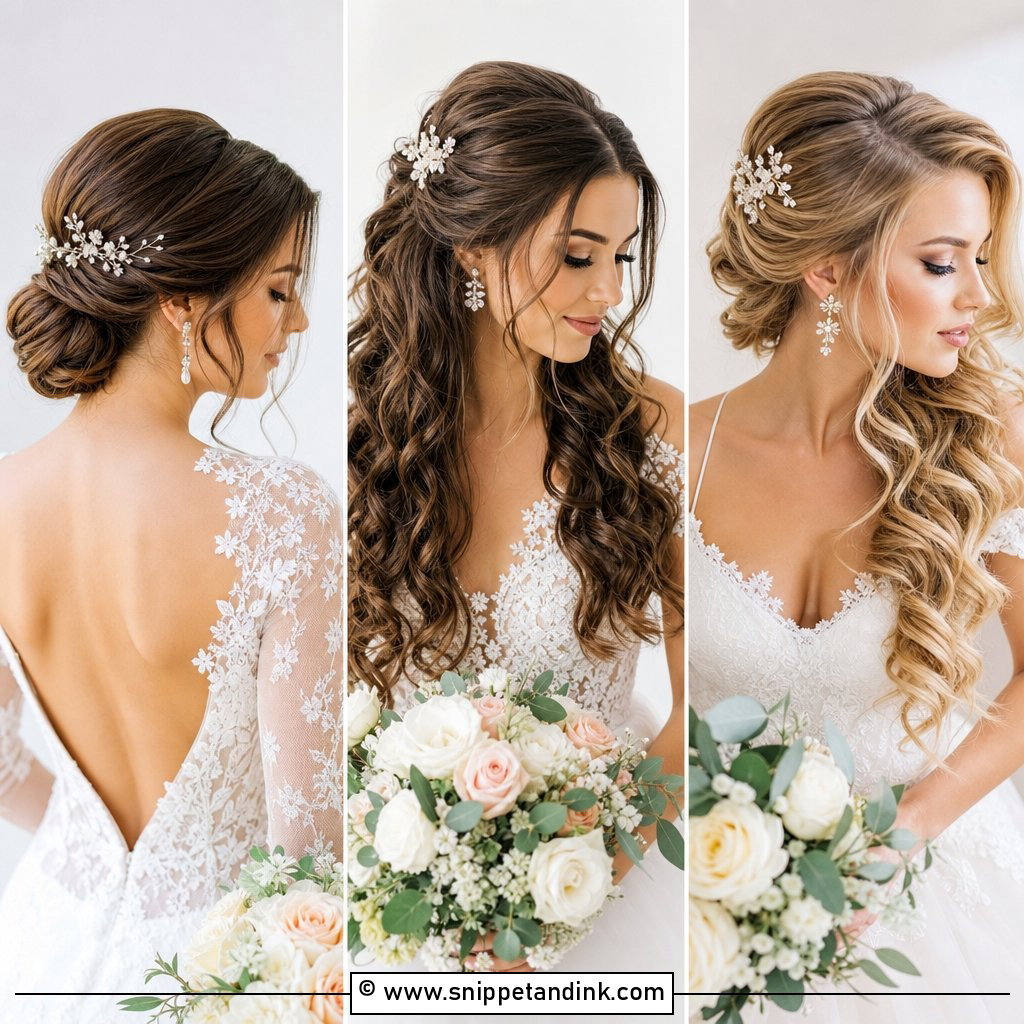
Thick hair makes the loose half of this style look rich without any teasing, which is why it’s my default suggestion for a bride who wants her length on show. The top section is lifted back from the face and the rest falls in full waves. Ask for a smooth crown and hidden pins that hold the top firmly. On very dense hair, I tie the top section with a small elastic first and pin over it, because pins alone can’t carry that much hair. Pearl pins, a veil or a small floral comb all suit it, and it’s practical for outdoor ceremonies.
2. Low Bun Wedding Hair For Thick Hair
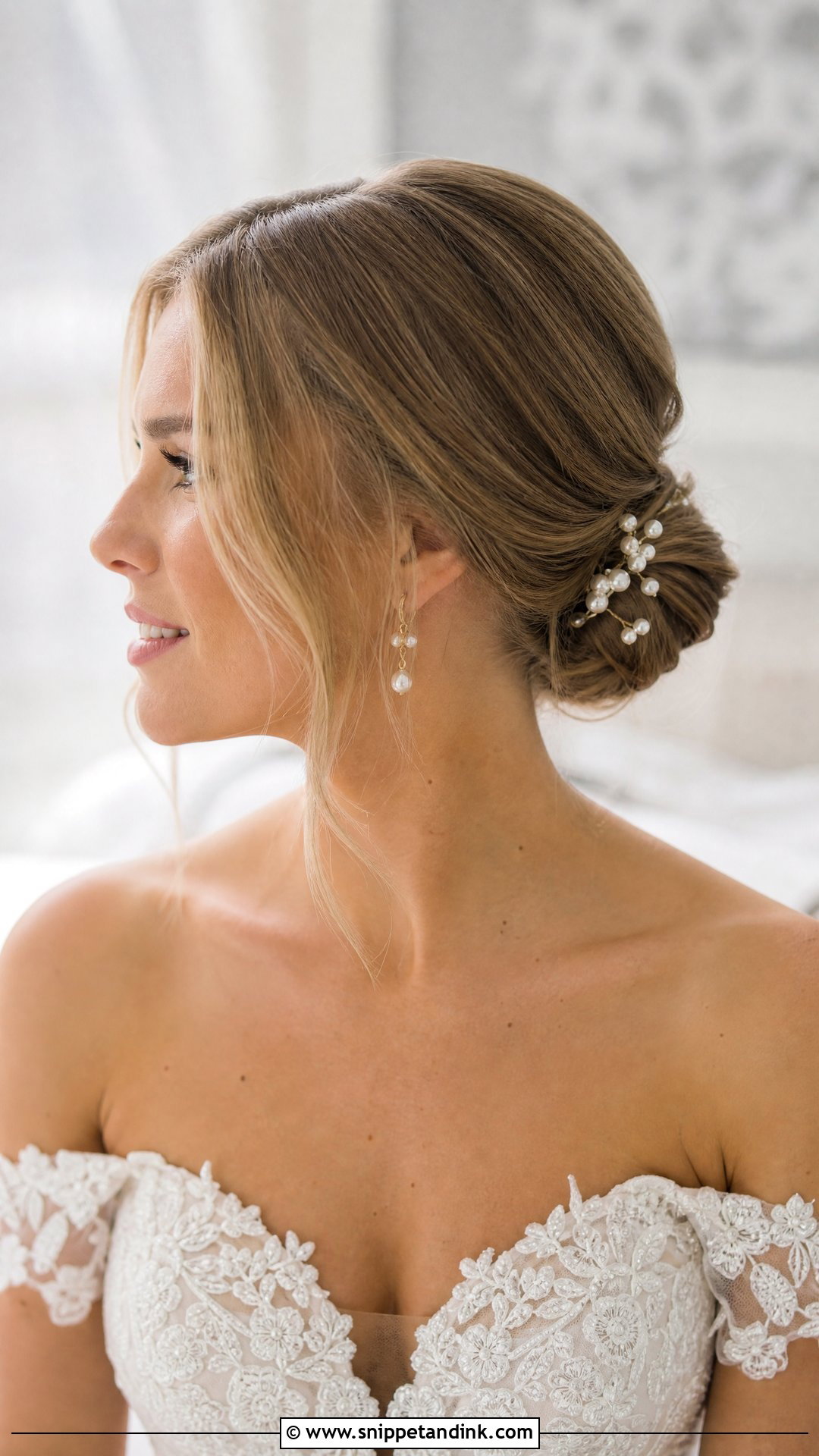
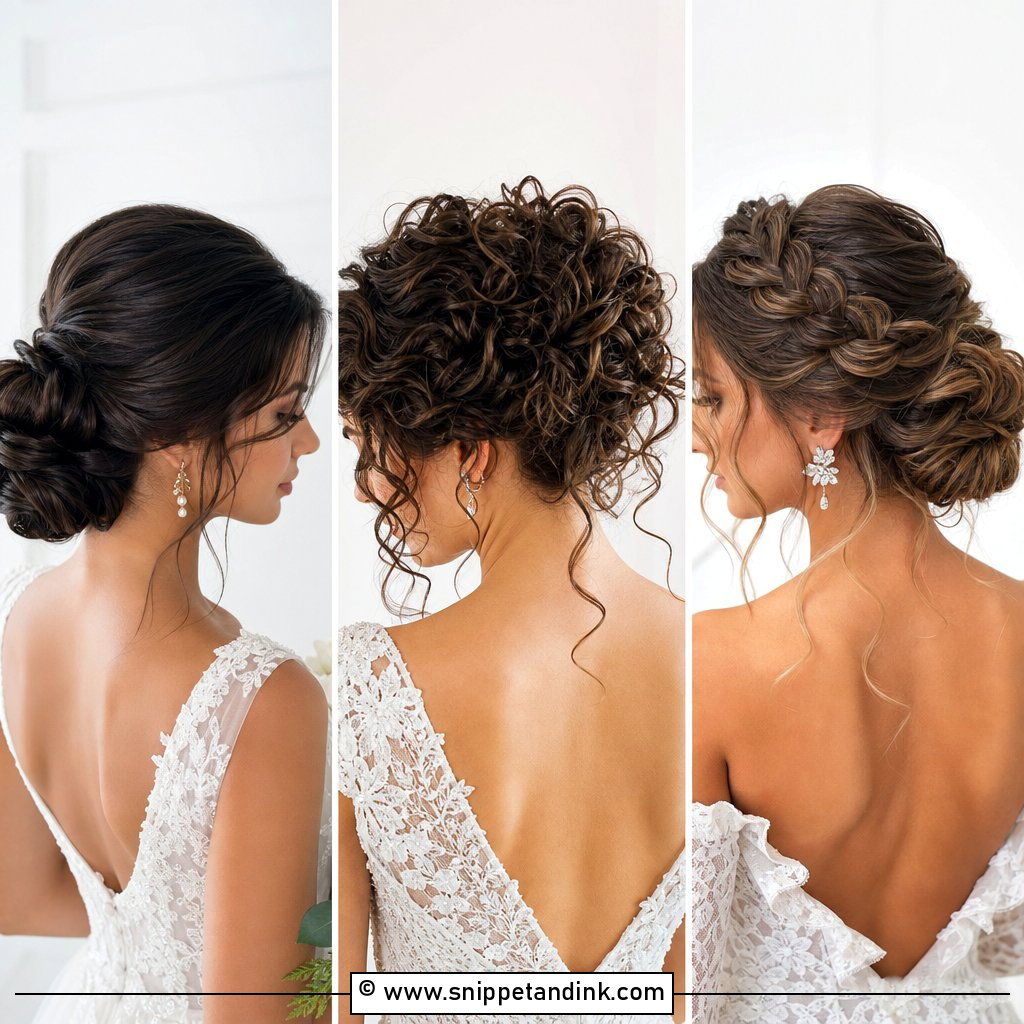
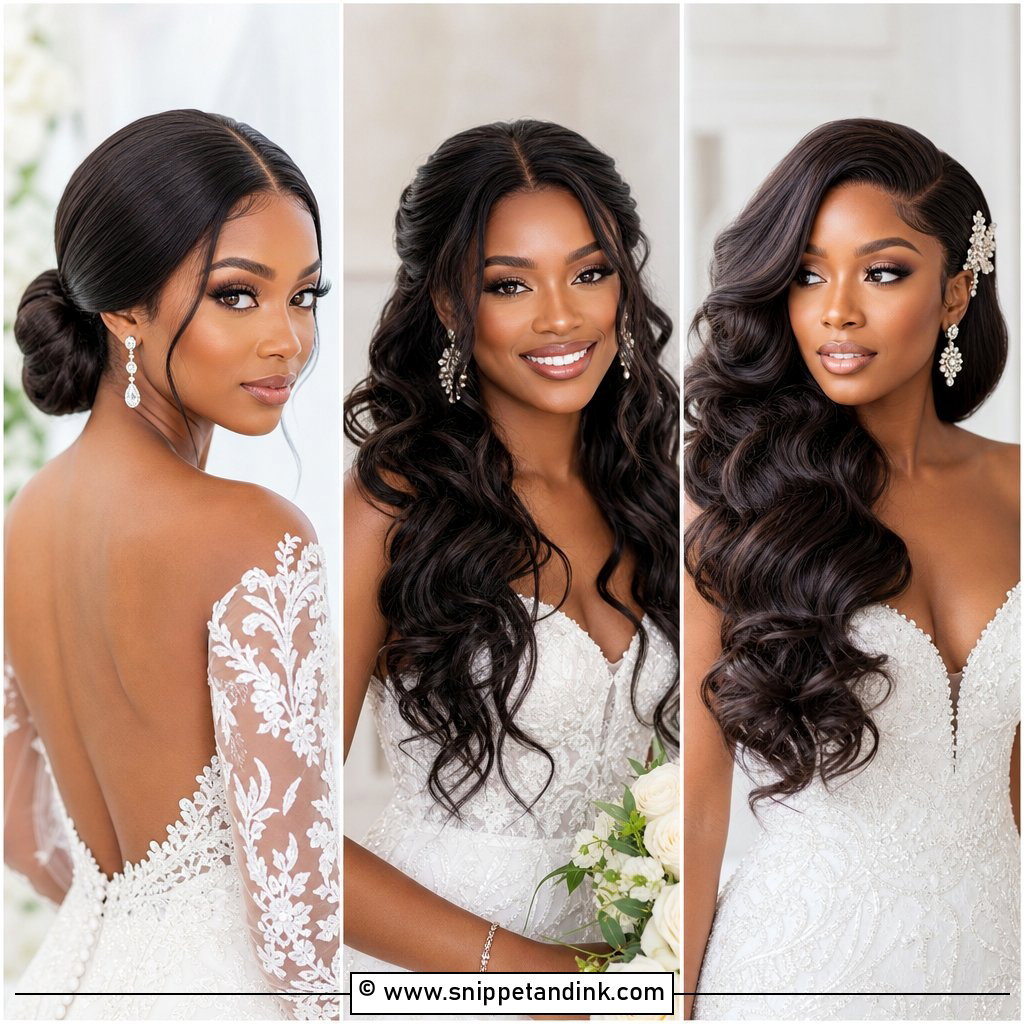
Low is the right height for a heavy bun. Gathering the hair at the nape rests the weight on the neck rather than stacking it on top of the head, which is what causes the evening headache. I smooth the sides, twist the length into a full bun and anchor it with large U-pins, which carry weight better than bobby pins. Soft face-framing pieces keep it relaxed. It works with veils, high necks, off-the-shoulder dresses and statement earrings.
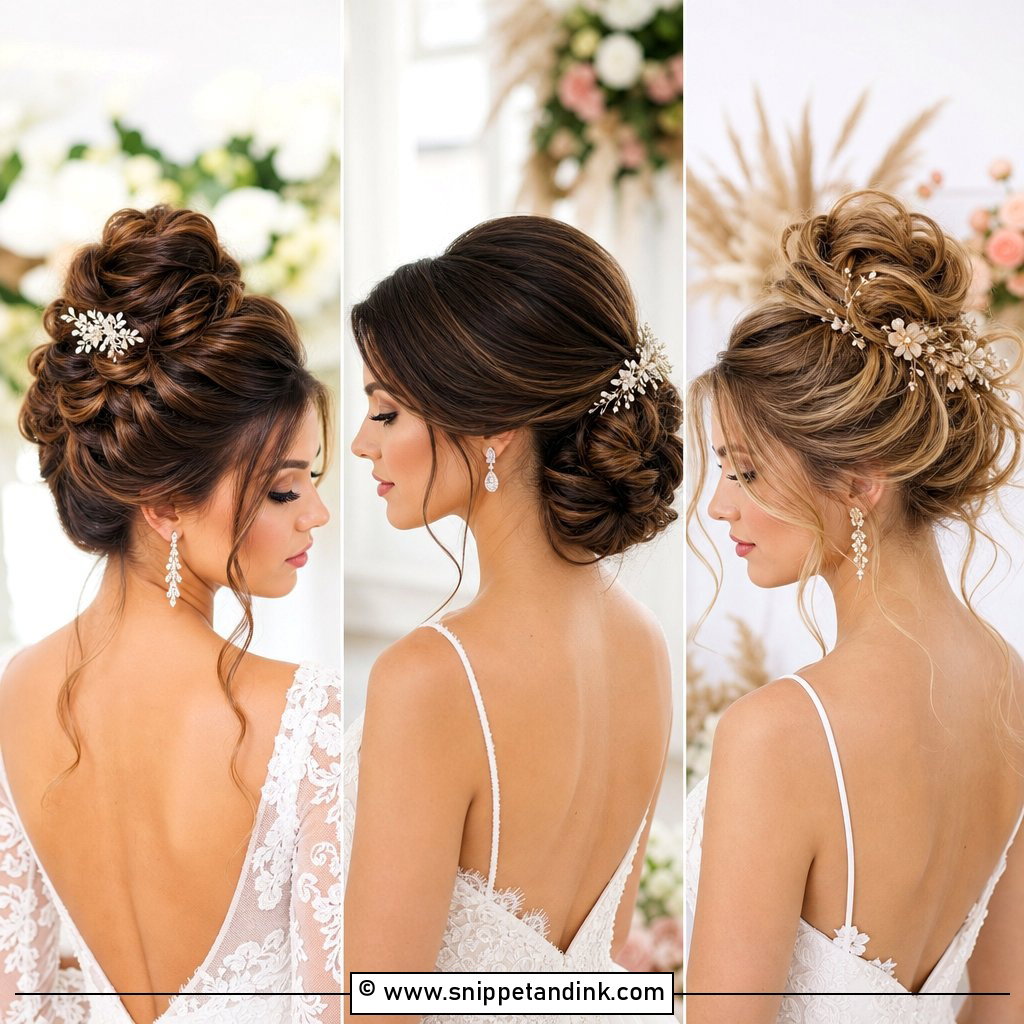
3. Messy Bun Wedding Hair For Thick Hair
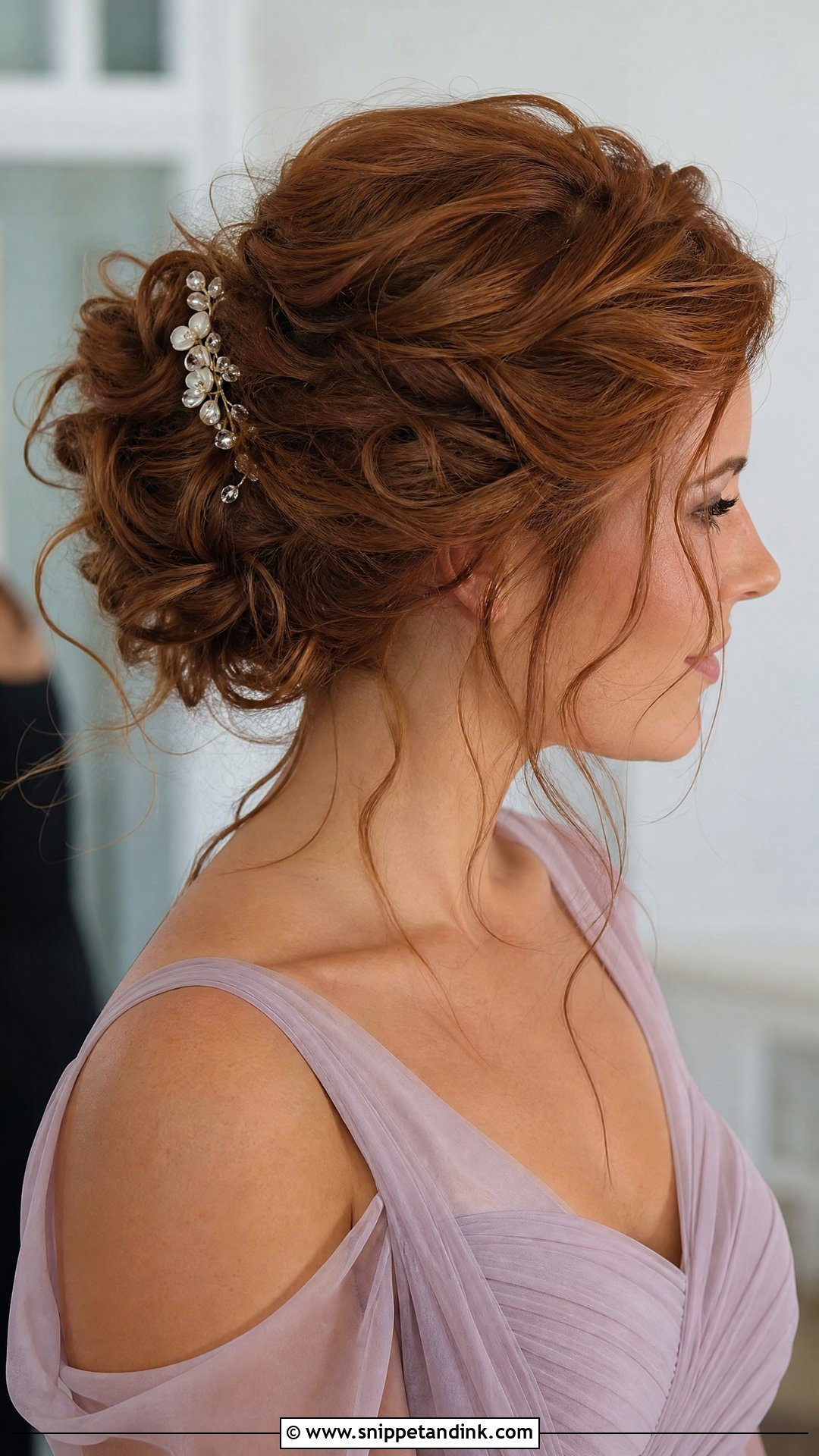
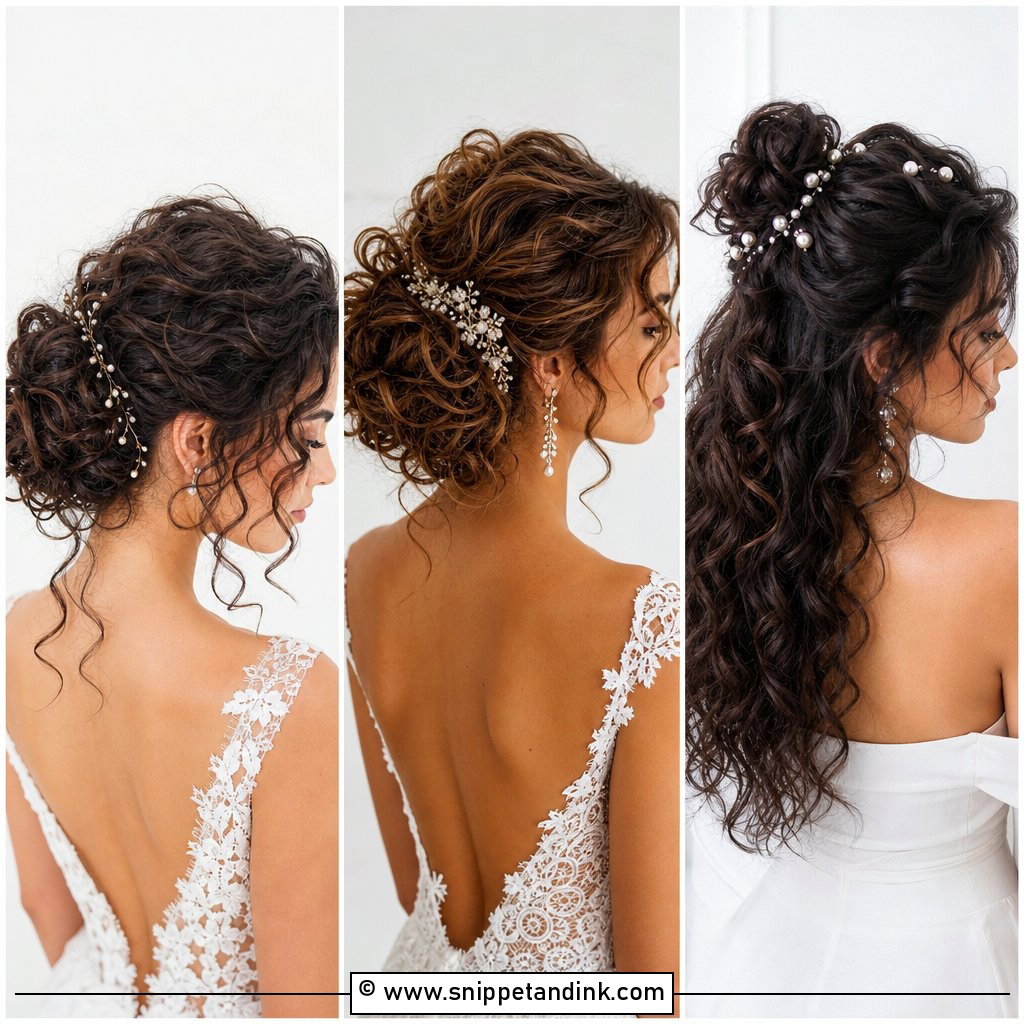
On thick hair, a messy bun looks plush instead of flat. Curl the hair first, then pin it loosely at the low or middle of the head; the curls give the pins something to hold. The aim is controlled softness. I pull out small pieces around the hairline and loosen the bun just enough to show texture, but the base underneath stays tight. It suits gardens, beaches, rustic venues and bridesmaids who want something less polished.
4. Sleek Bun Wedding Hair For Thick Hair
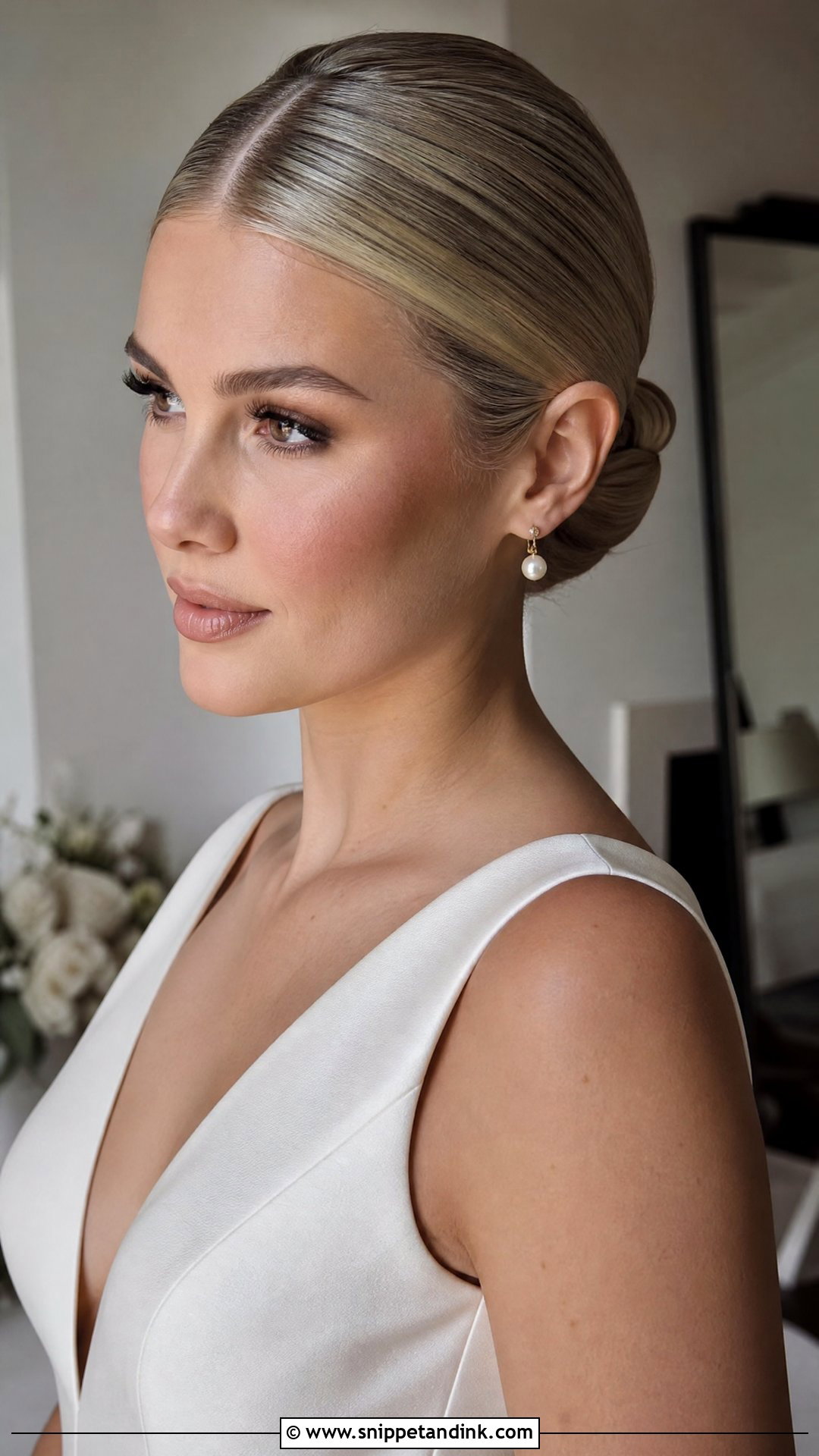
If your dress has strong detail, a dramatic neckline or a minimalist cut, a sleek bun keeps the attention there. The challenge with thick hair is that it expands during the day, especially in humidity, so I section firmly, apply smoothing cream to damp hair and blow-dry it straight before slicking it back. Set it low, middle or high depending on your face shape and where the veil goes. A centre part looks sharp; a side part is softer. This is the choice for anyone who wants her hair shiny and fully controlled from the vows to the last dance.
5. Braided Updo Wedding Hair For Thick Hair
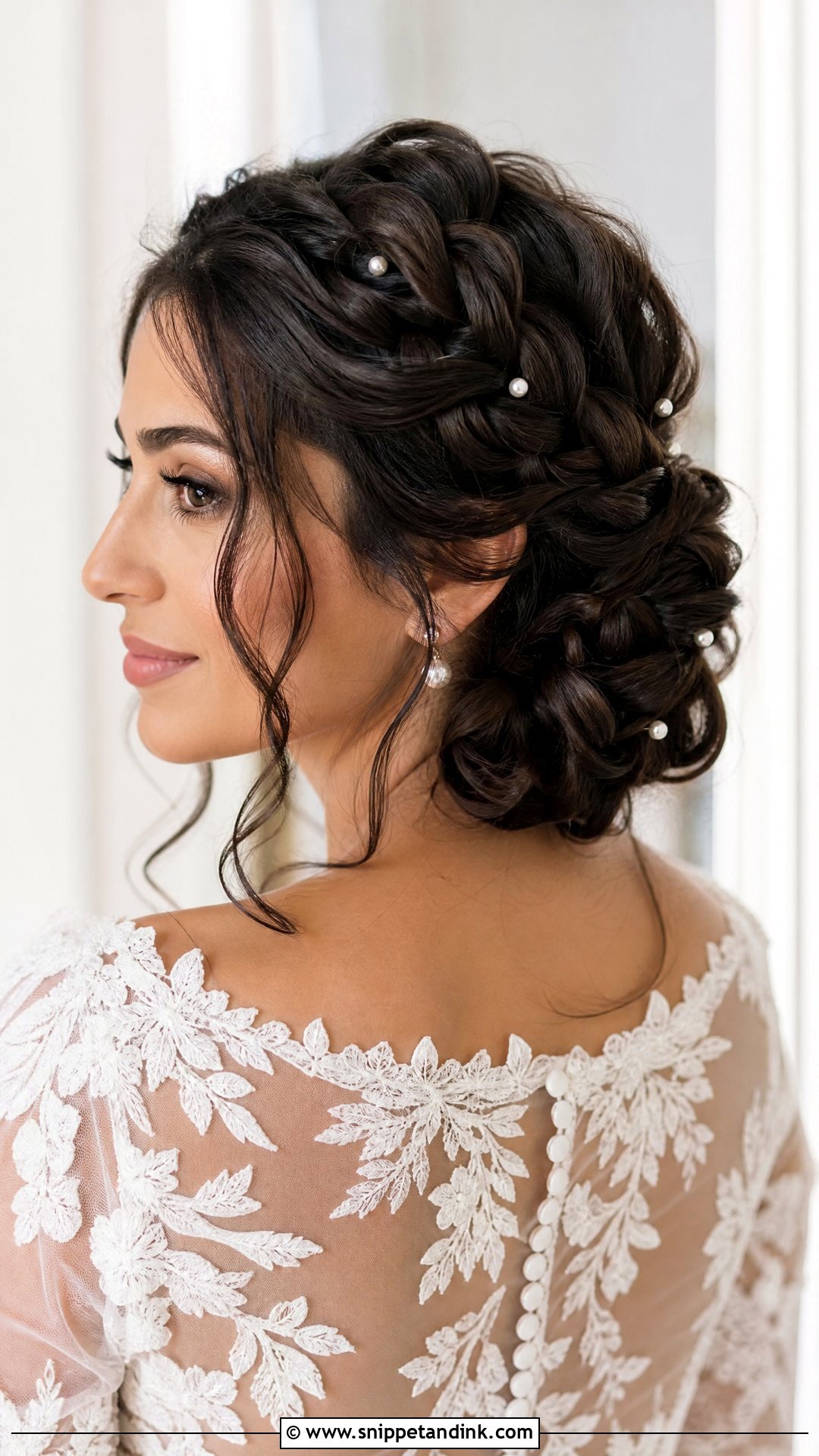
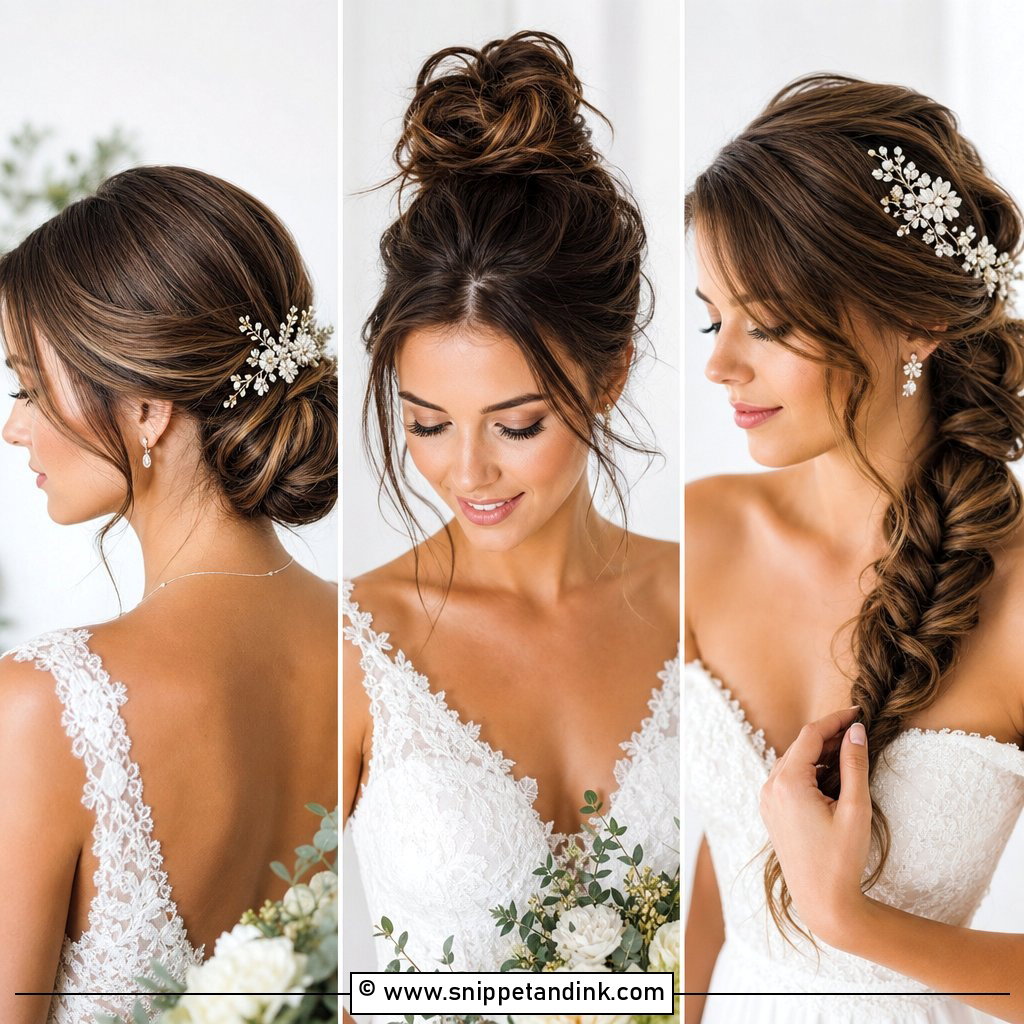
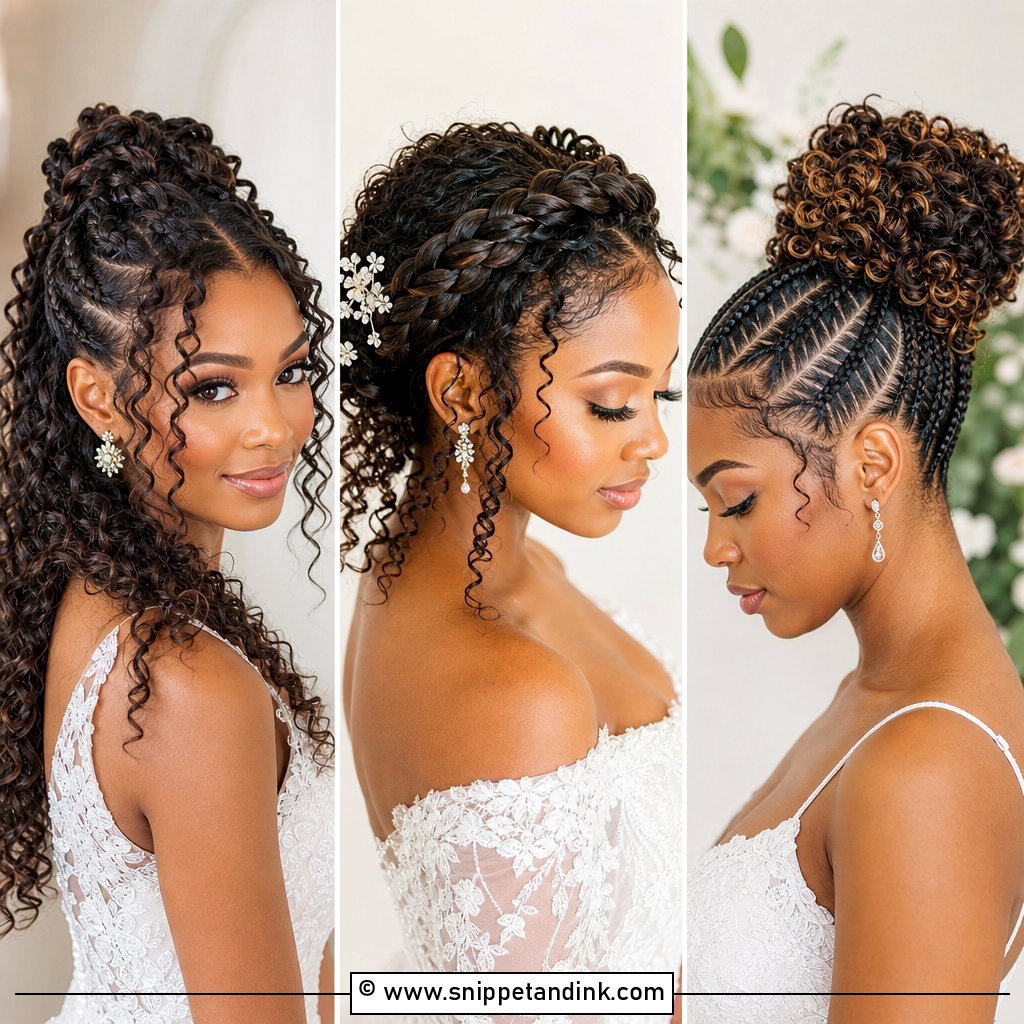
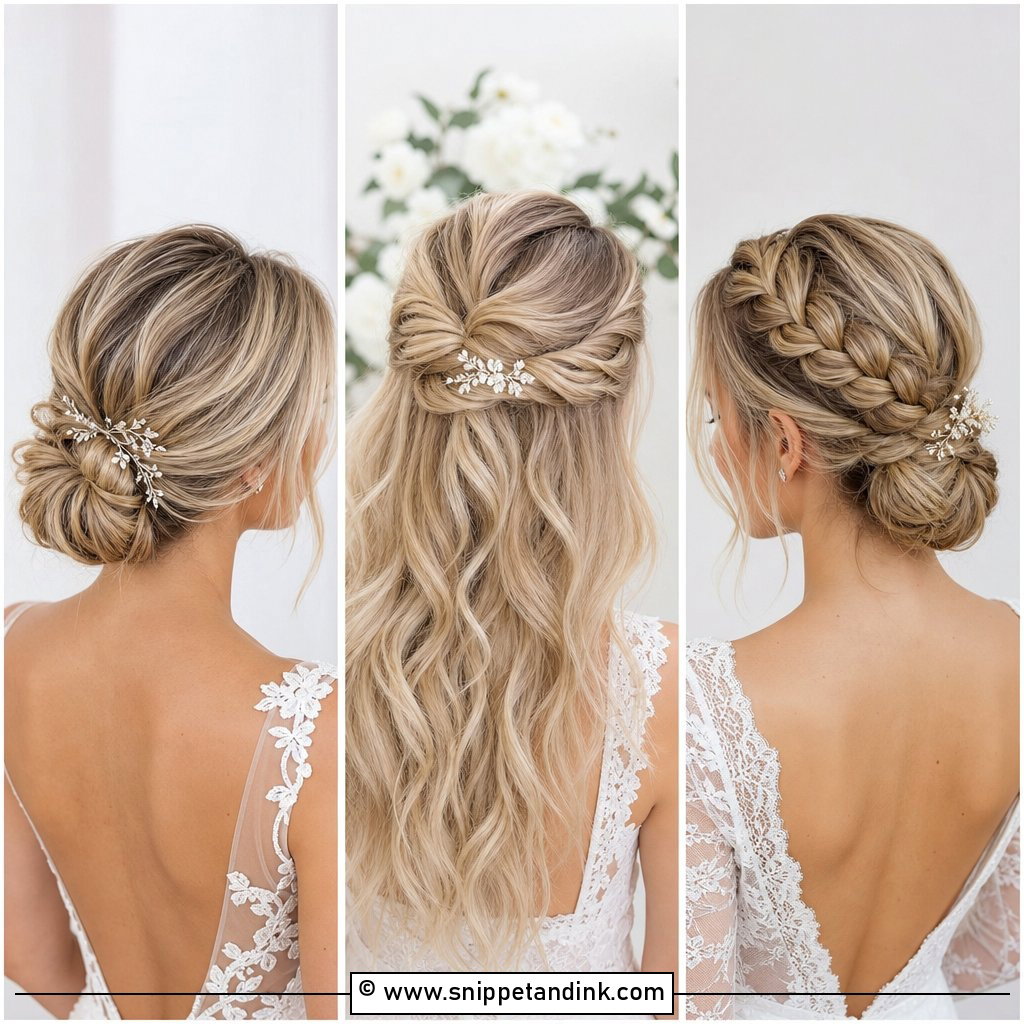
Braiding is one of the best ways to manage weight, because a braid compresses the hair into a tighter shape. Instead of hiding volume, a braided updo turns it into texture. The braid can wrap into a bun, sweep across the back or tuck into the updo, and on thick hair it looks bold and defined. It’s very secure, which matters on long wedding days. Pearl pins, tiny flowers or a little shine spray finish it.
6. Chignon Wedding Hair For Thick Hair
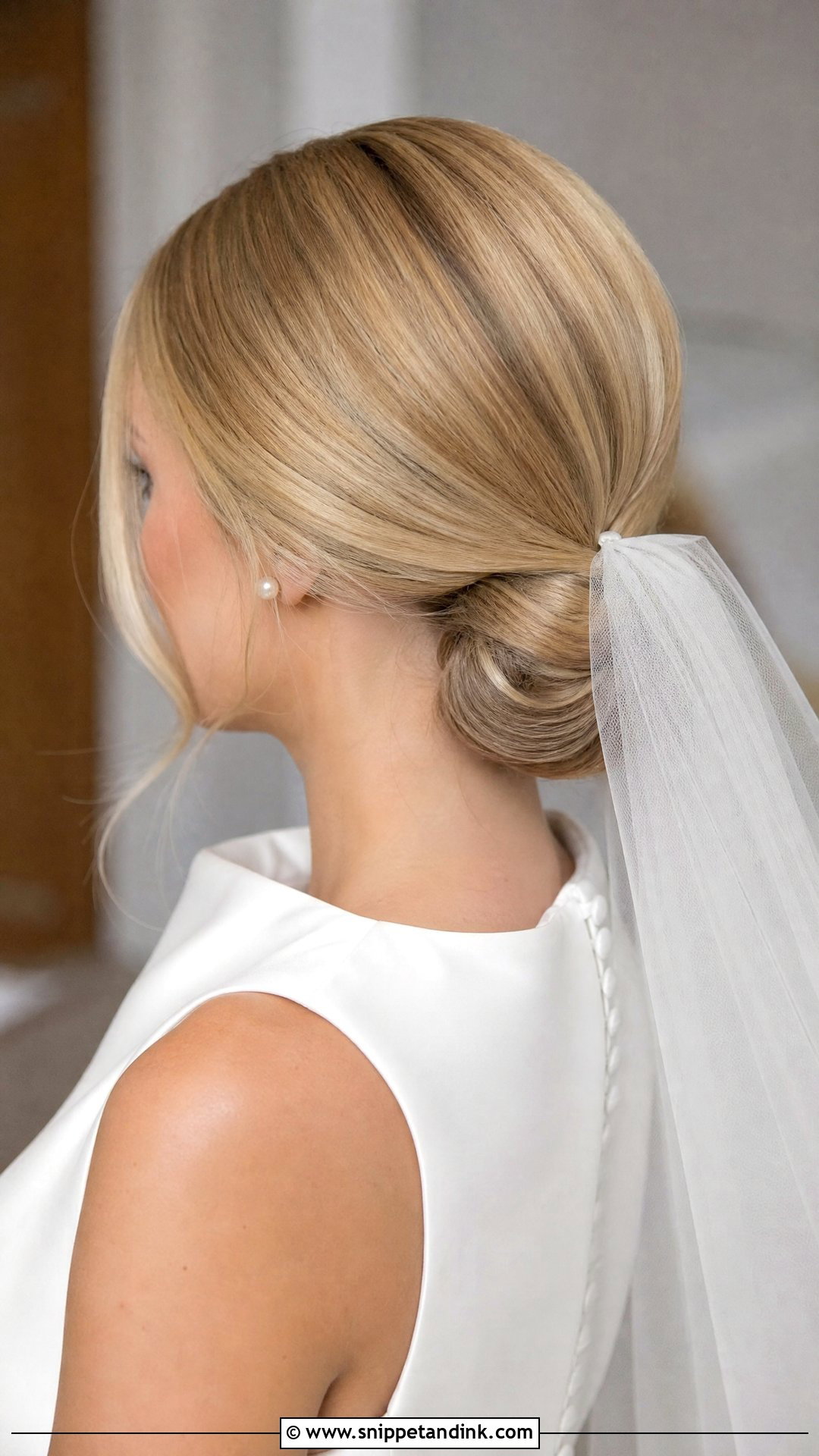
Thick hair gives a chignon a full, expensive look, but only if the bulk is managed. I split the hair into hidden sections, pinning some flat underneath, so the knot sits close to the head instead of sticking out. The hair is gathered low into a smooth or softly twisted knot. A veil can go above or below it. It suits formal weddings and classic gowns, and it won’t look dated in your photos years from now.
7. Hollywood Waves Wedding Hair For Thick Hair
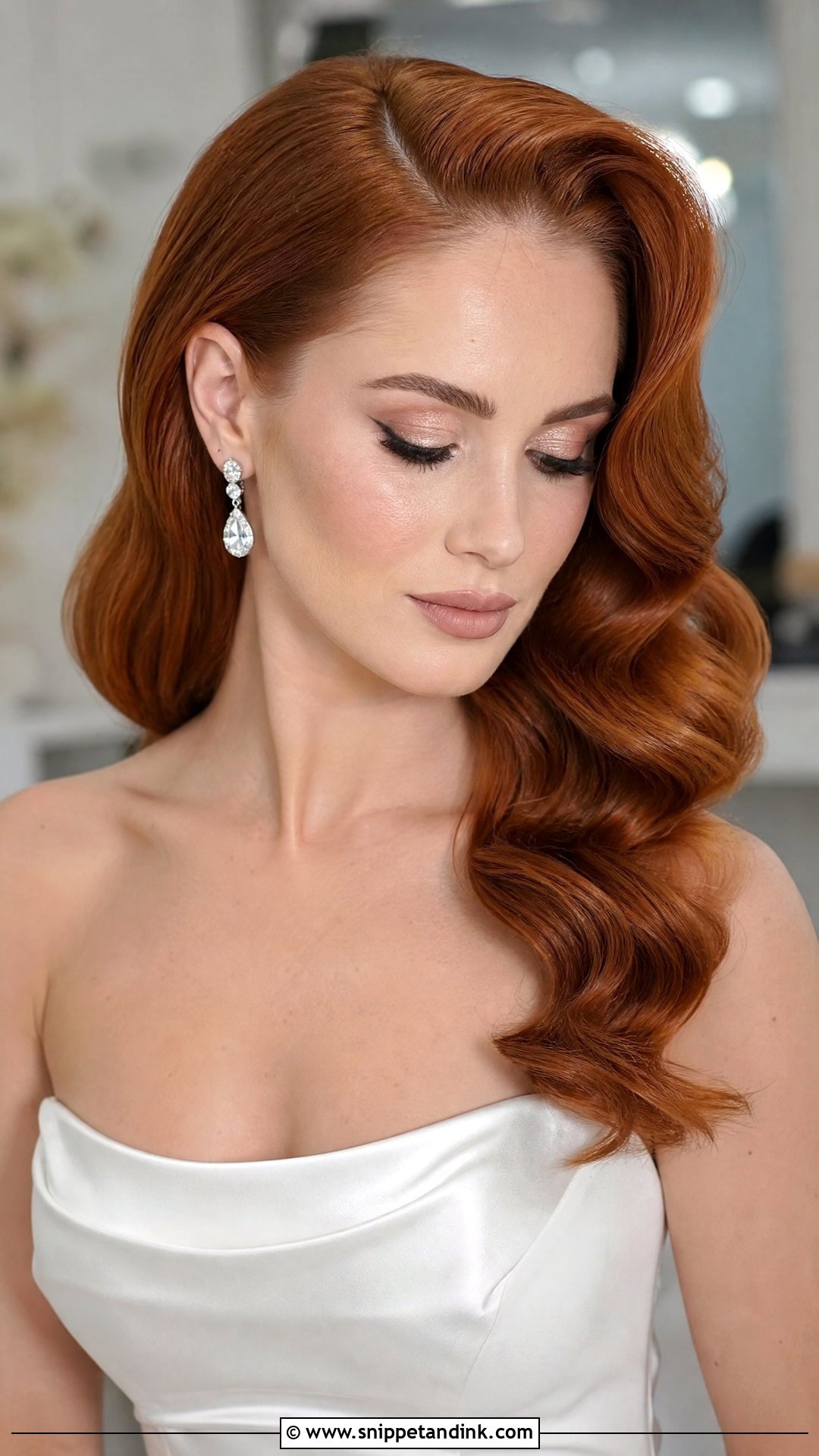
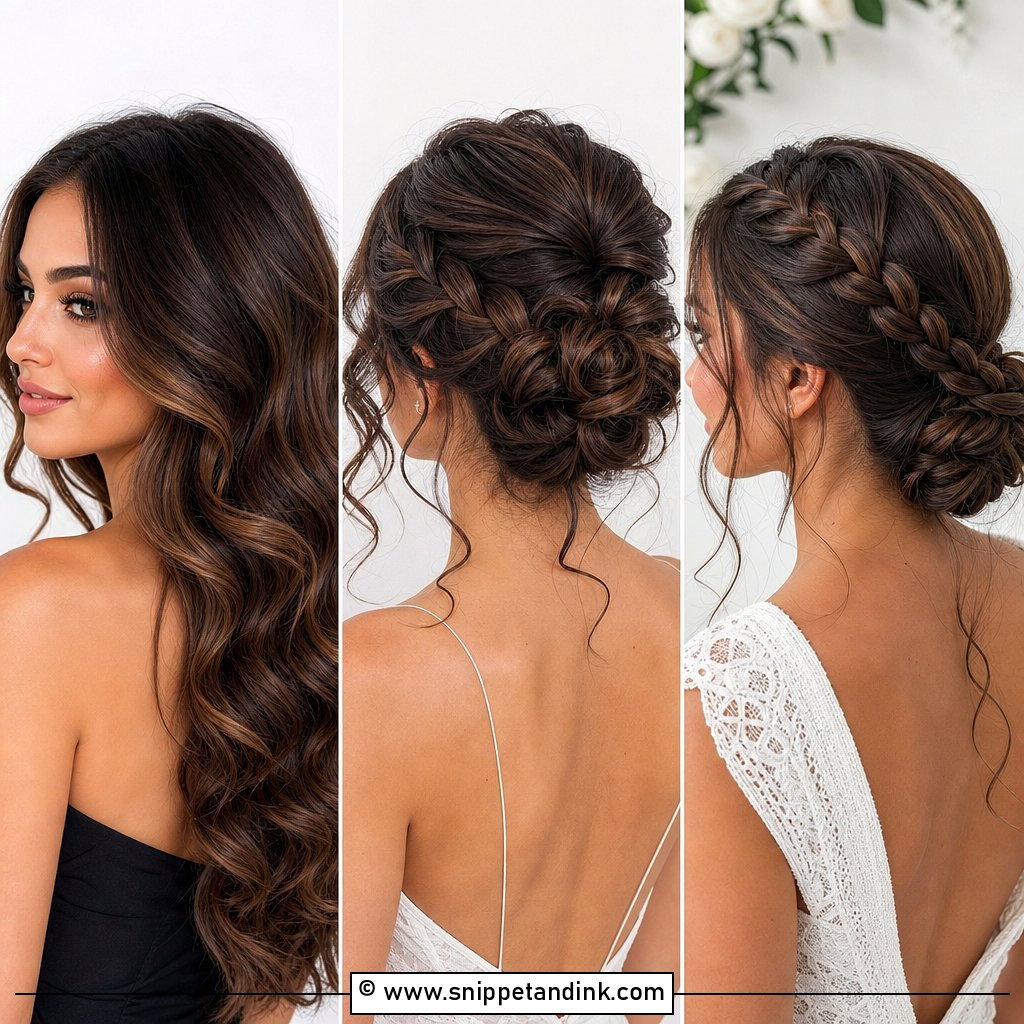
Thick hair holds a wave pattern well, so Hollywood waves have real depth and shine on it. They’re worn down with a deep side part and smooth, uniform bends. The secret is setting: each curl is pinned while hot and left to cool, then brushed out. Skip that step and thick hair drops the curl under its own weight. For a red-carpet look without an updo, keep the finish glossy with smoothing cream and flexible hairspray. Strapless gowns, satin and simple veils suit it.
8. Side Swept Wedding Hair For Thick Hair
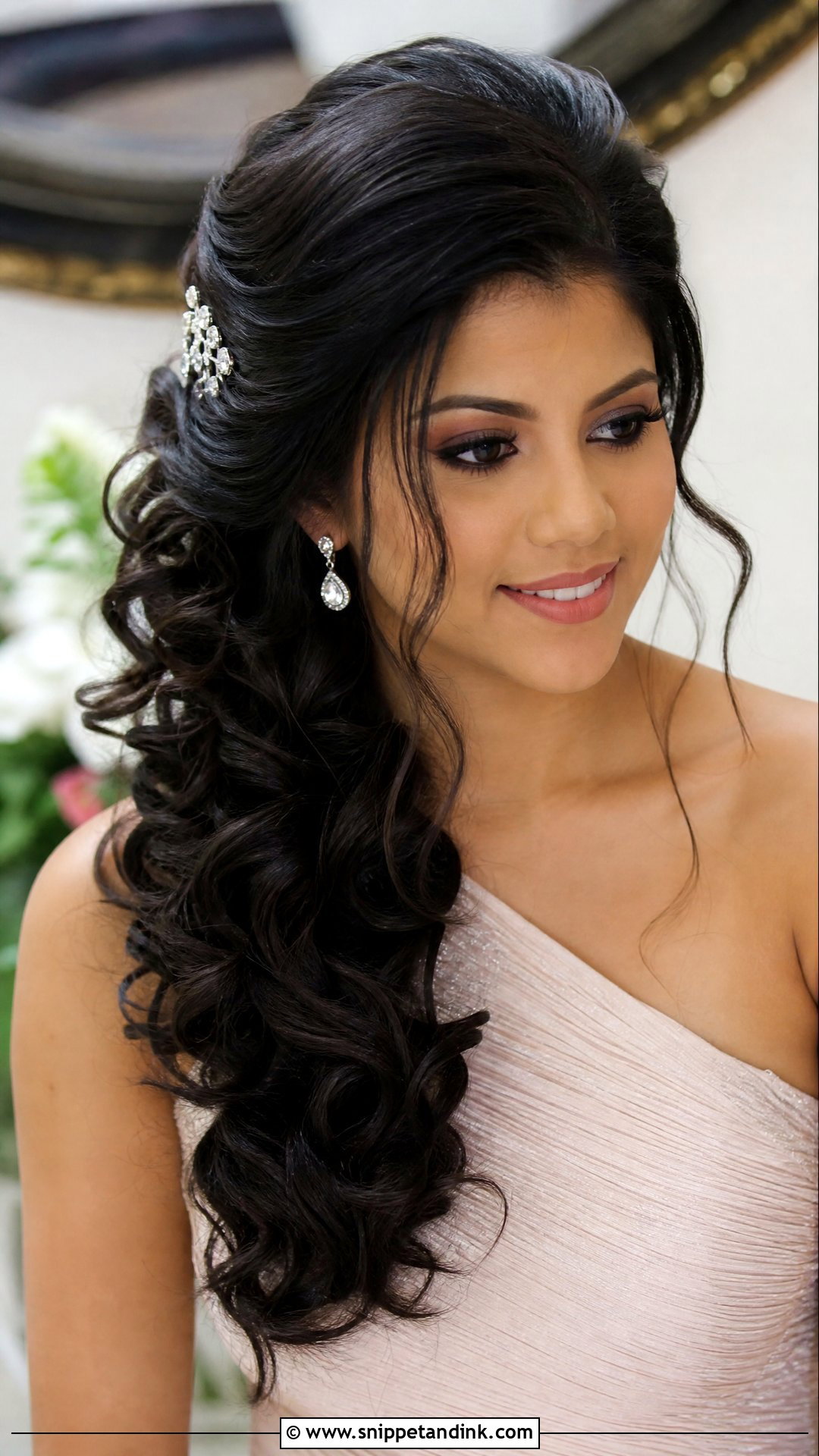
Swept over one shoulder, thick hair looks full and dramatic, and the back and neckline stay open. I curl it, brush it into waves, then pin it to one side. The weight wants to fall back, so I hide a row of crossed pins behind the ear on the far side and pin the swept section firmly under the hair. A comb, floral pin or pearl clip goes on the pinned side. One-shoulder and strapless dresses suit it best.
9. Curly Wedding Hair For Thick Hair
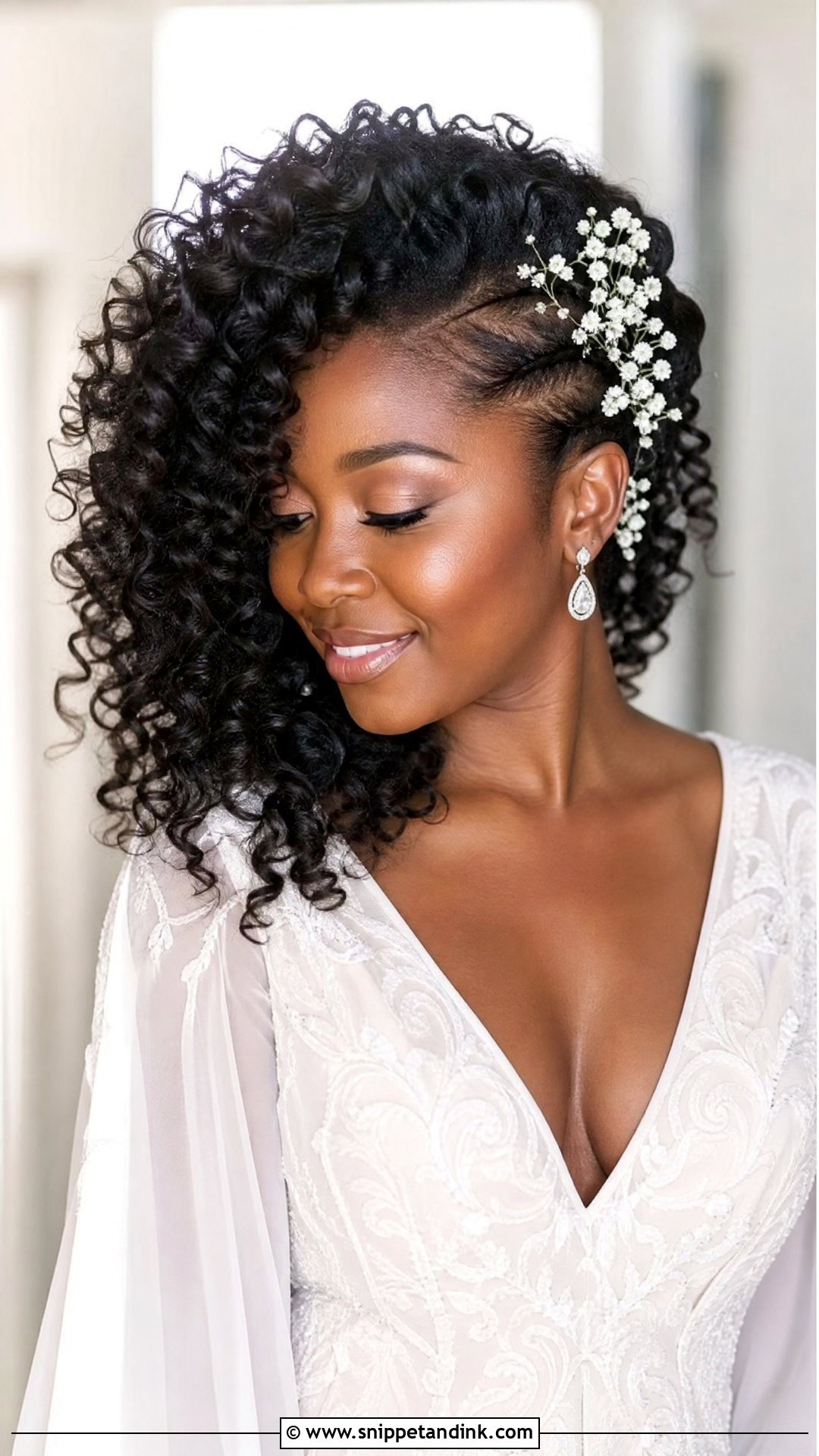
Thick curls need definition and shape, not stiffness. I enhance the curl pattern, lift the roots and pin selected pieces so the shape frames the face. Wear it down, partly pinned, or with a veil or flowers. Thick, curly hair tends to swell in humidity, so use curl cream, a humidity-resistant gel or spray, and do a trial in similar weather if you can. It’s a joyful style for outdoor or relaxed ceremonies.
10. High Ponytail Wedding Hair For Thick Hair
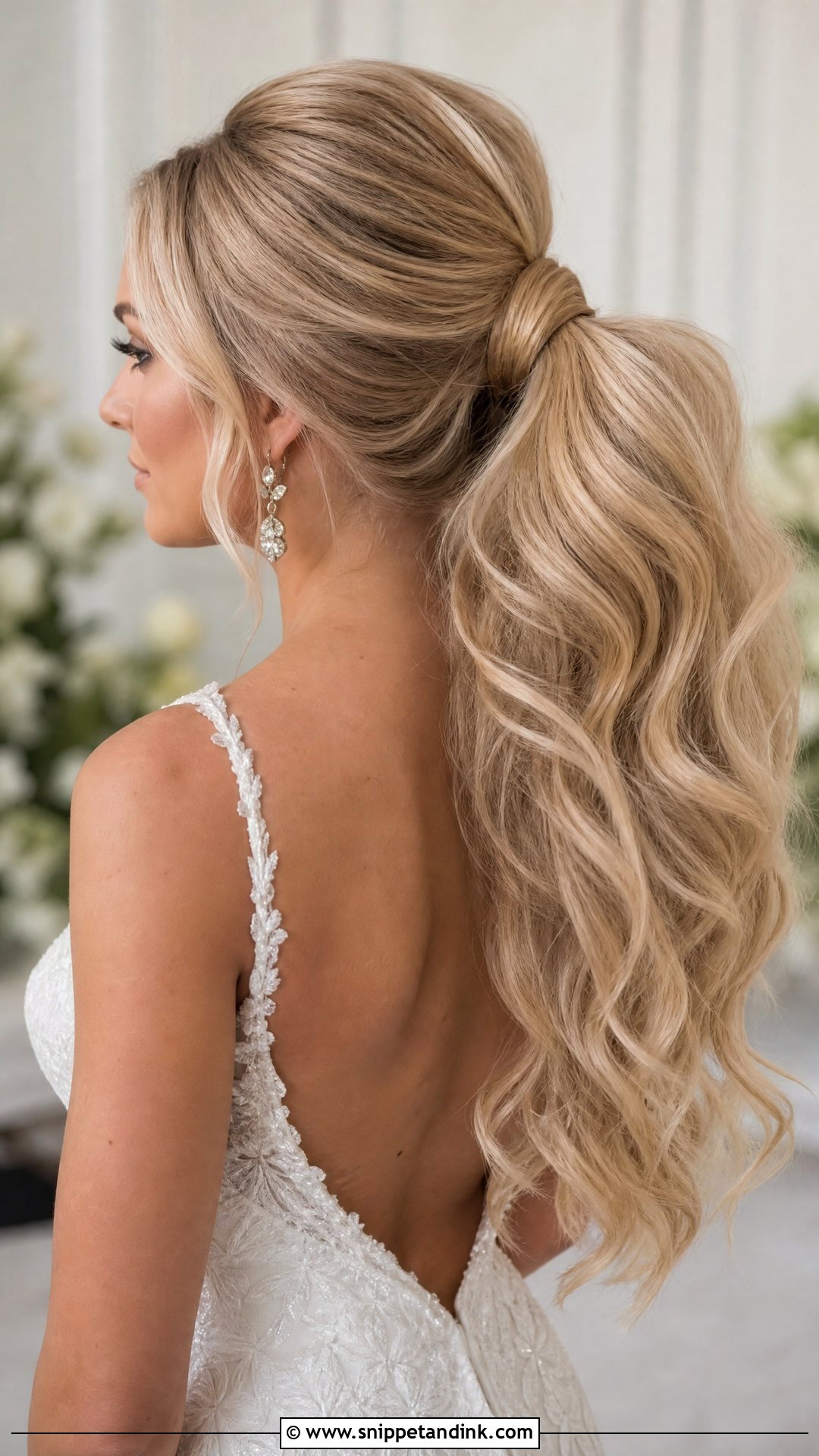
Thick hair gives a high ponytail a full, bouncy shape without extensions. I smooth or softly lift the crown, curl the ponytail into polished waves and wrap a piece of hair around the base to hide the elastic. The catch: a heavy high ponytail can tug at the crown after a few hours. I secure it with two elastics and a few pins underneath to spread the weight. It keeps hair off the neck in warm weather and suits modern gowns and statement earrings.
11. Low Ponytail Wedding Hair For Thick Hair
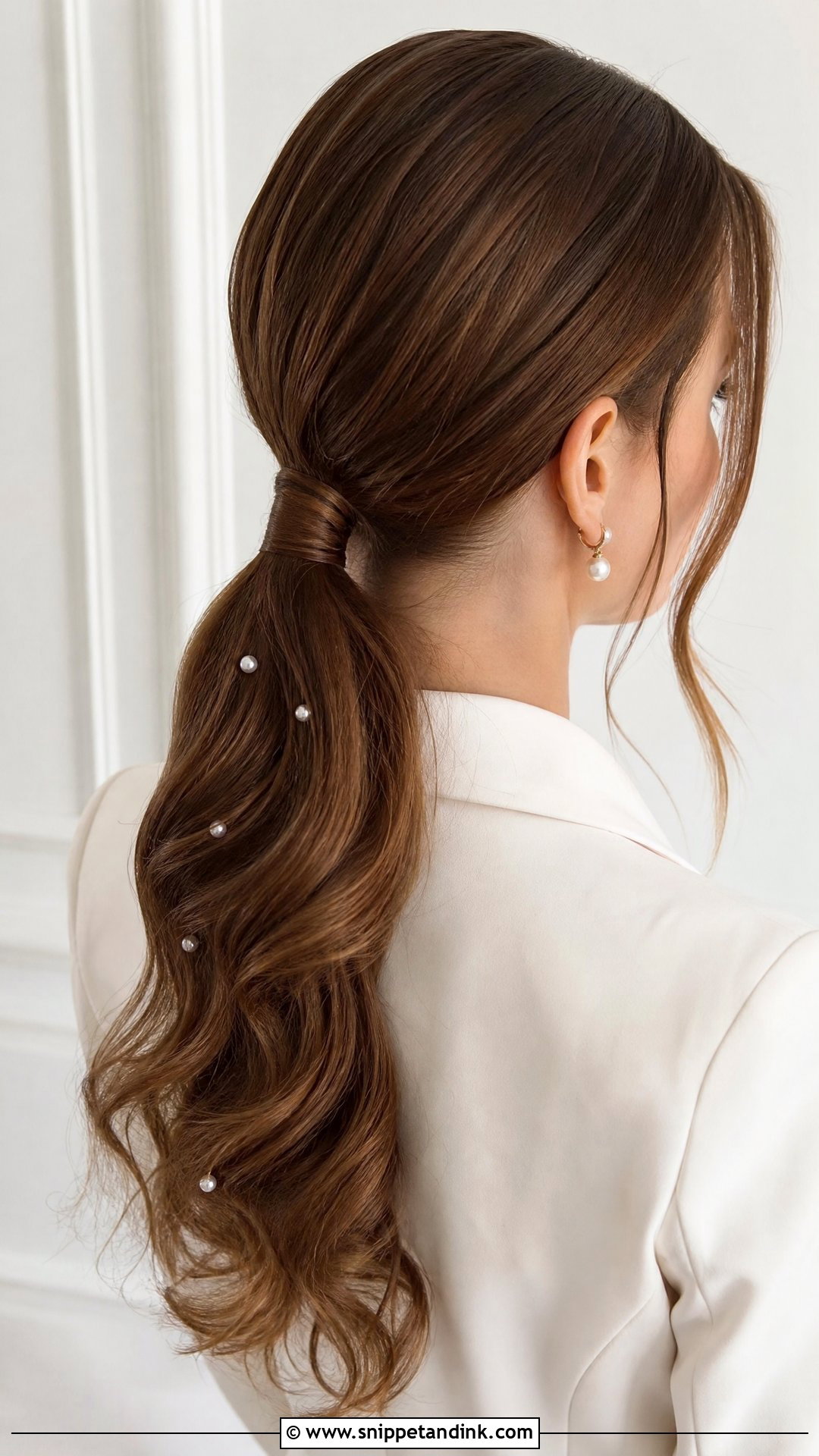
A low ponytail is far more comfortable than a high one on thick hair, since the weight hangs from the nape. Smooth, wave or texture the hair, then gather it low. A centre part feels chic, a side part more romantic, and a ribbon, pearl tie or a wrap of hair hides the elastic. It suits minimalist weddings, city venues and bridesmaids. Brush and smooth the hair before tying, or the volume bulges around the elastic.
12. Fishtail Braid Wedding Hair For Thick Hair
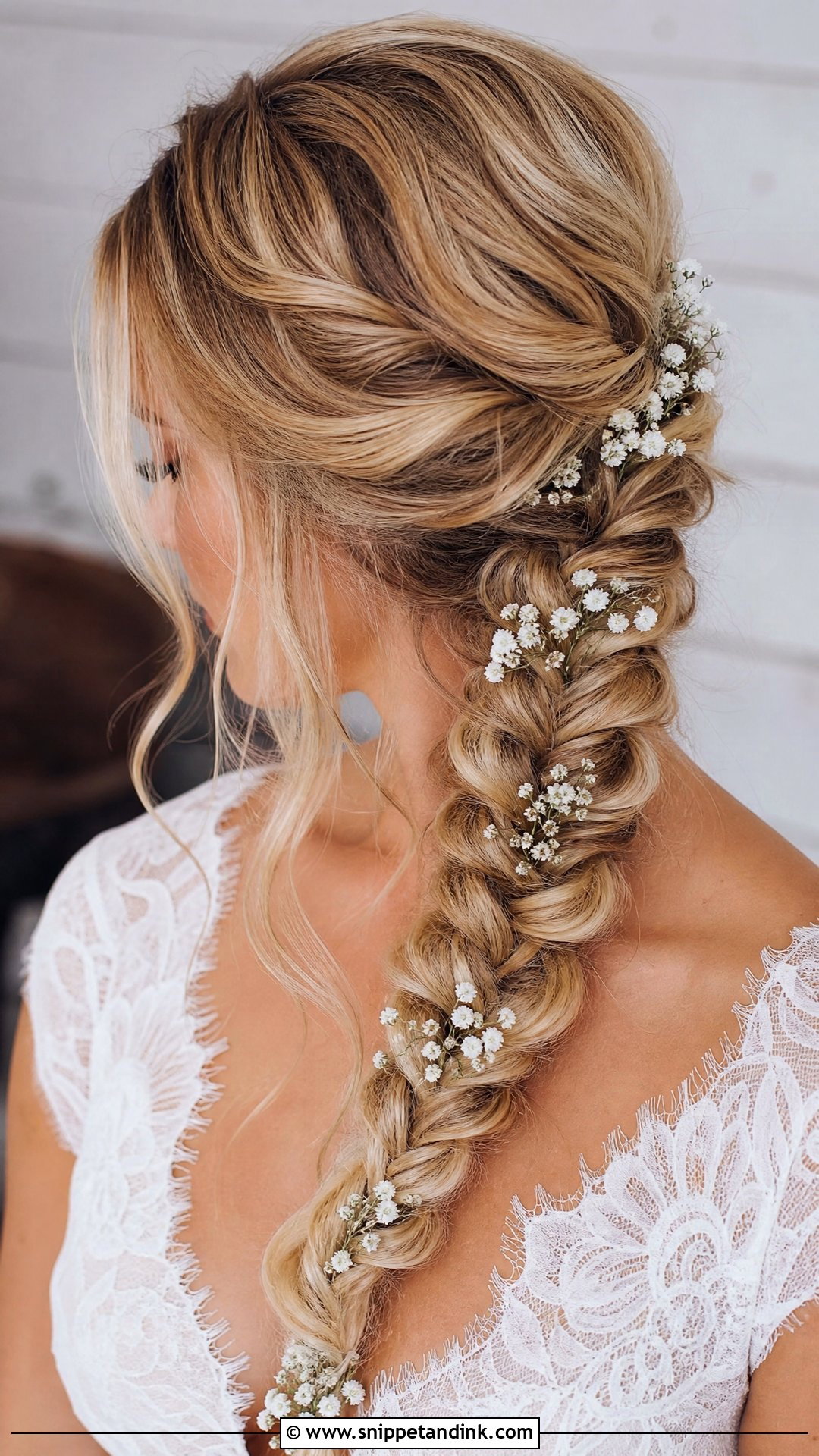
The fishtail pattern looks fuller on thick hair. Wear the braid down the back, over one shoulder or as part of a half-up style. After braiding, I gently pull the edges apart, which gives it width and softness. Keep the crown lifted and the braid textured. It suits boho, beach and barn weddings. Small flowers or pearl pins add a bridal touch.
13. Crown Braid Wedding Hair For Thick Hair
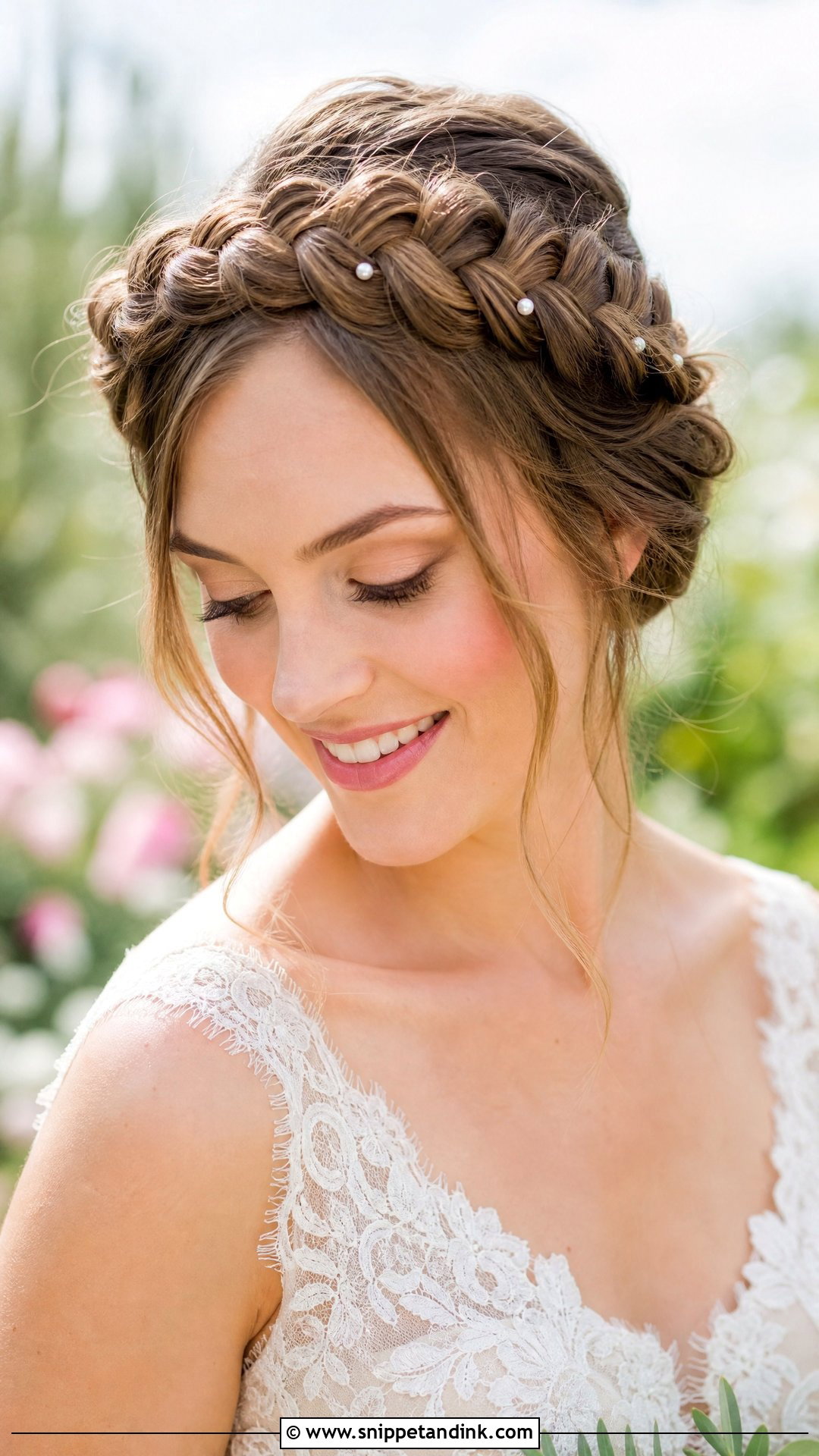
Wrapping a braid around the head like a soft halo is a smart way to control thick hair, because the weight spreads evenly around the head instead of pulling from one point. The ends are tucked and pinned securely. It can be polished or loose. Thick hair keeps the crown full from every angle. It suits garden weddings and outdoor ceremonies, and a bride who wants her hair up without a standard bun. Tiny flowers, pearl pins or soft tendrils finish it.
14. Twisted Half Up Wedding Hair For Thick Hair
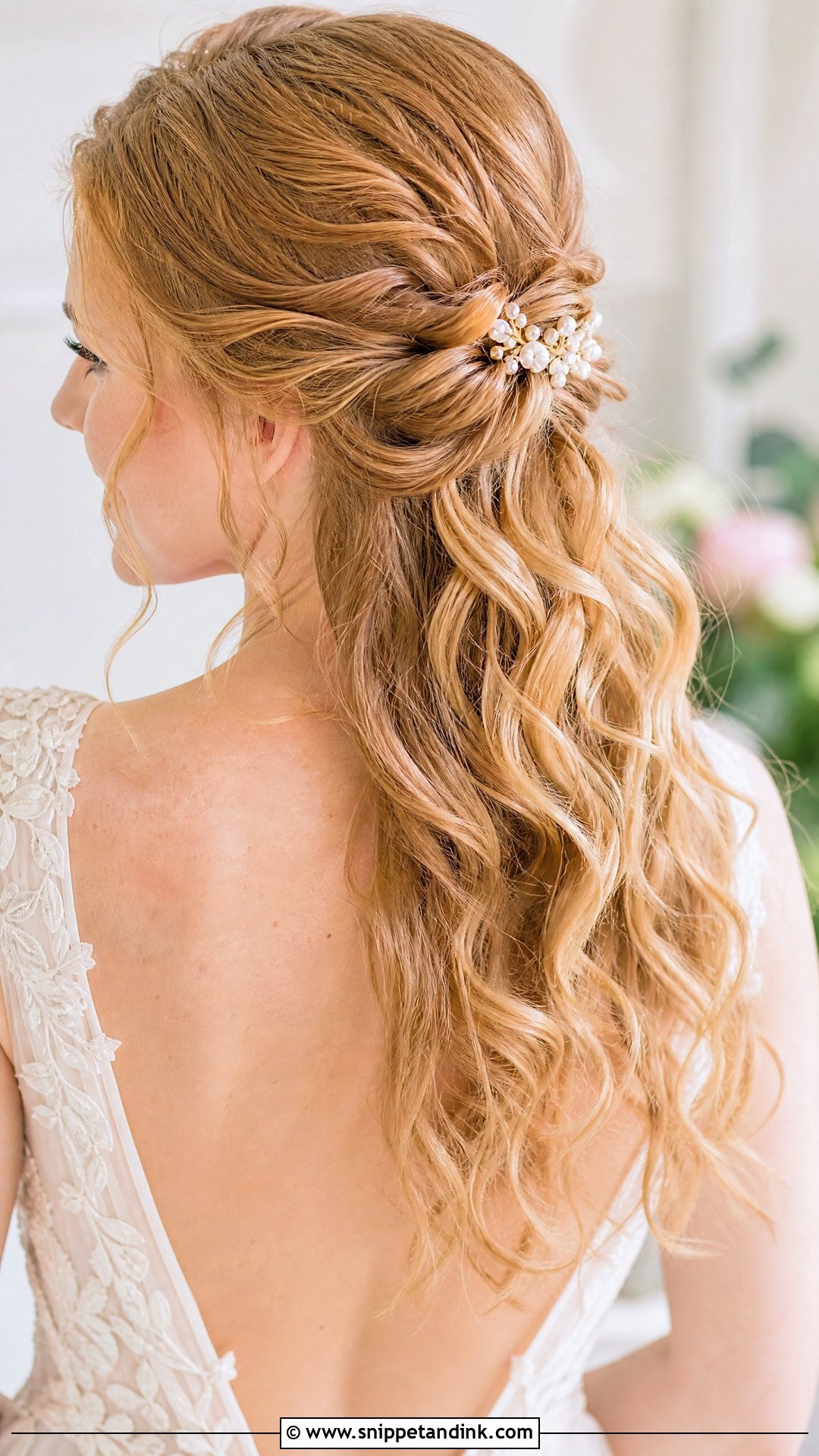
Sections from each side are twisted back and pinned together at the crown, so the front is controlled and the loose length stays full. Ask for loose curls through the ends and a little root lift for balance. On thick hair, I make the twist sections smaller than you’d think; a big chunk of dense hair won’t stay twisted. It works with veils, combs, floral pins and pearls, and suits brides, bridesmaids and guests.
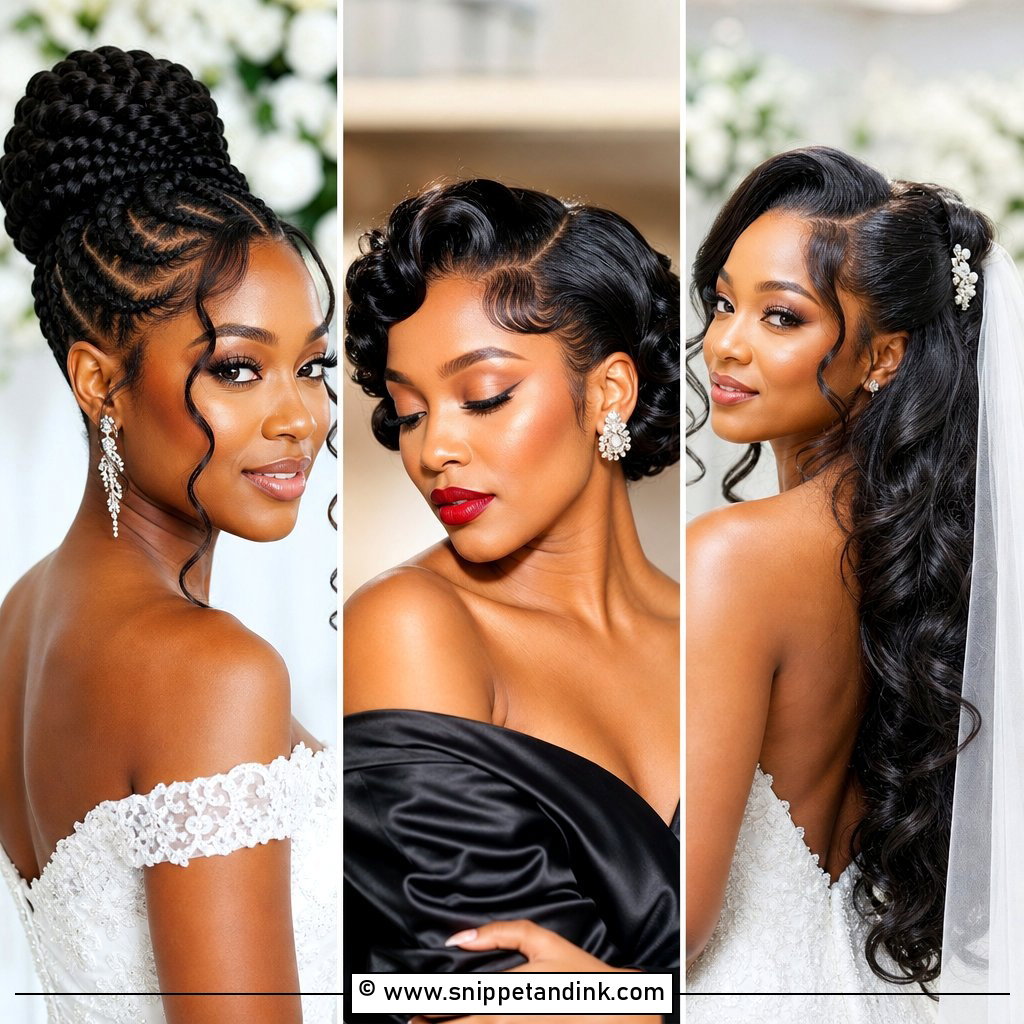
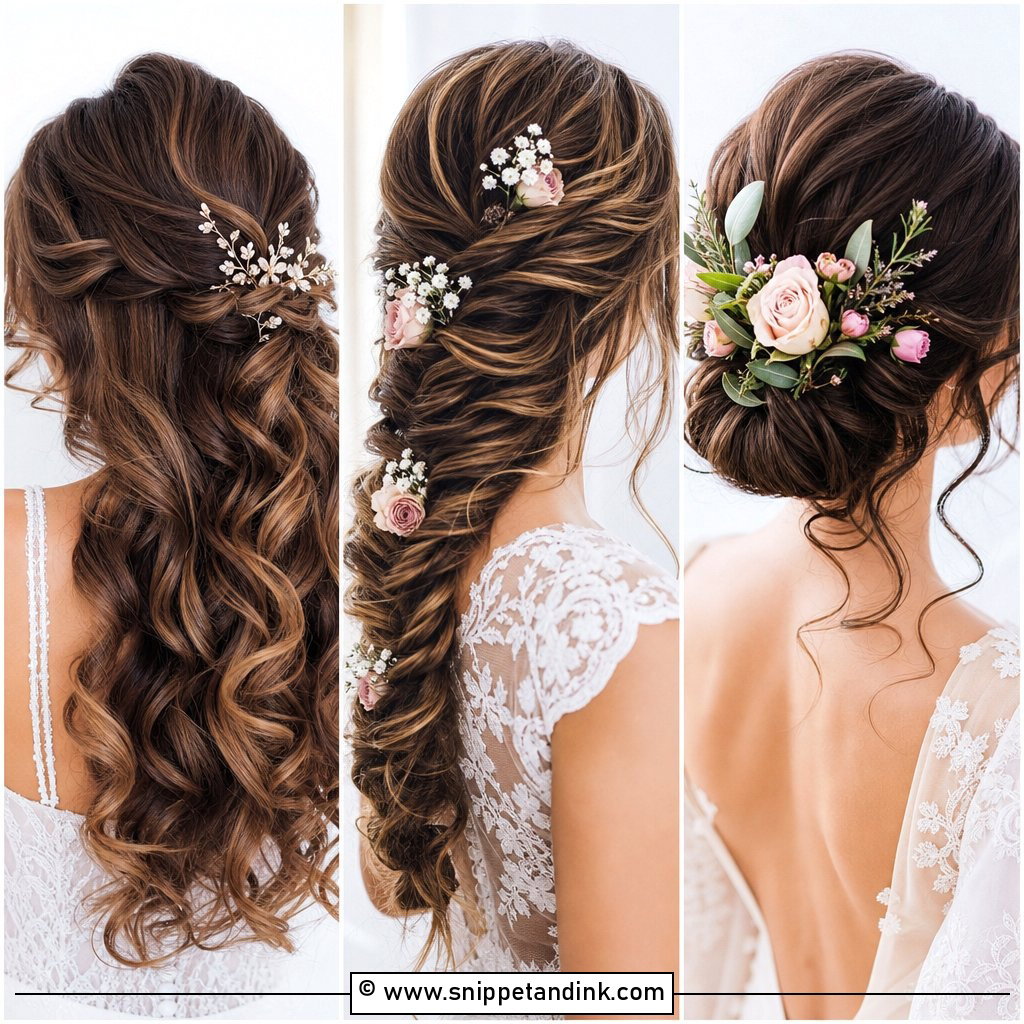
15. Loose Waves Wedding Hair For Thick Hair
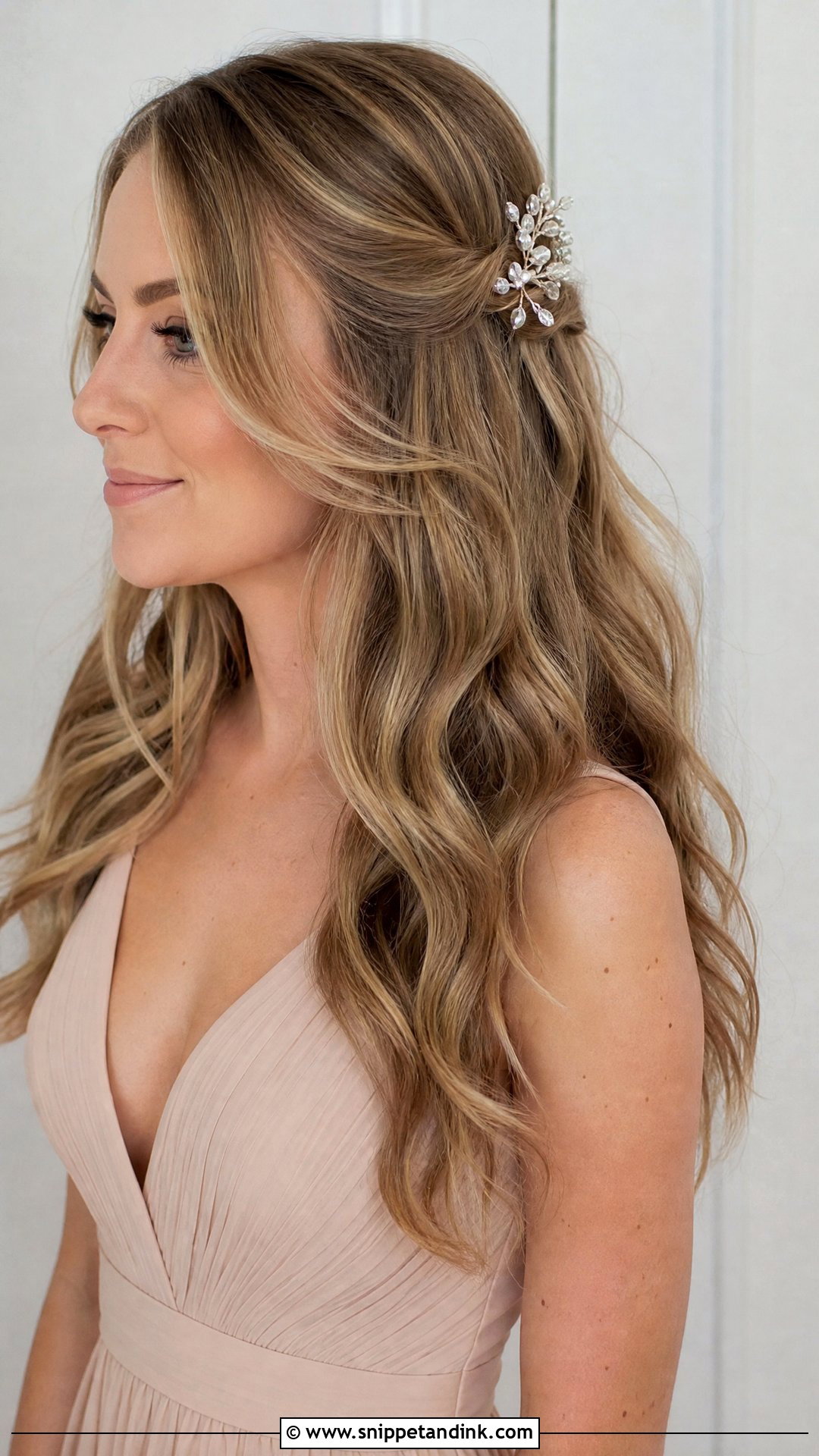
Thick hair gives loose waves natural movement. I smooth the roots and curl in large sections, then brush the waves out so they fall naturally. It’s the look for someone who wants to look like herself, only more polished. It suits many dresses and face shapes, so it’s a good bridesmaid choice. A delicate clip on one side adds detail. Thick hair takes longer to curl, so allow extra time on the morning.
16. French Twist Wedding Hair For Thick Hair
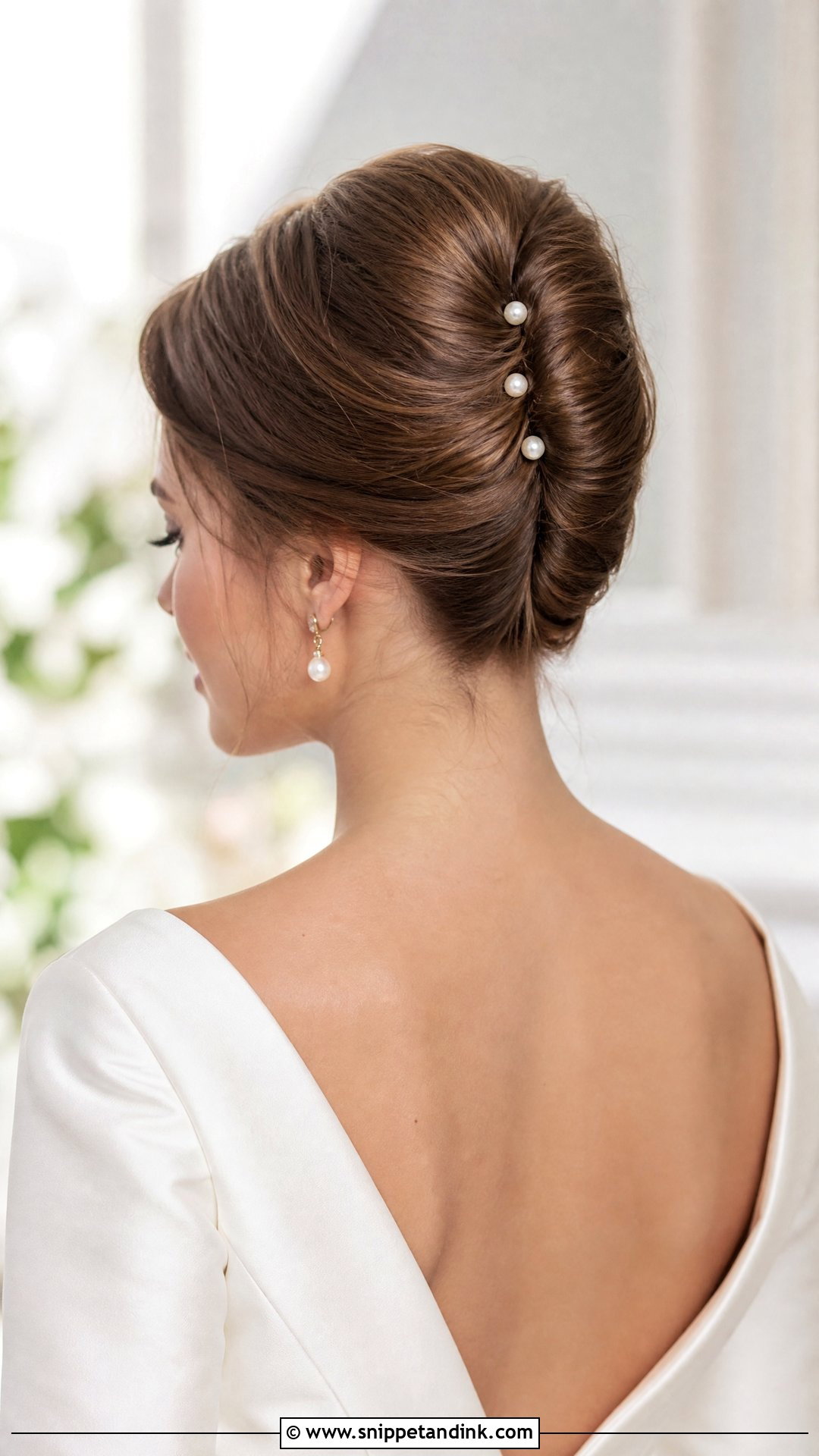
Thick hair gives a French twist a strong silhouette. The length is gathered vertically and tucked into a smooth roll at the back of the head. It needs serious pinning: I place a vertical line of crossed bobby pins up the centre before rolling, then pin the roll into that line. A softer version with face-framing pieces looks more modern. It suits formal weddings, courthouse ceremonies and classic bridal looks, with pearl earrings, structured gowns and a veil placed above the twist.
17. Bubble Ponytail Wedding Hair For Thick Hair
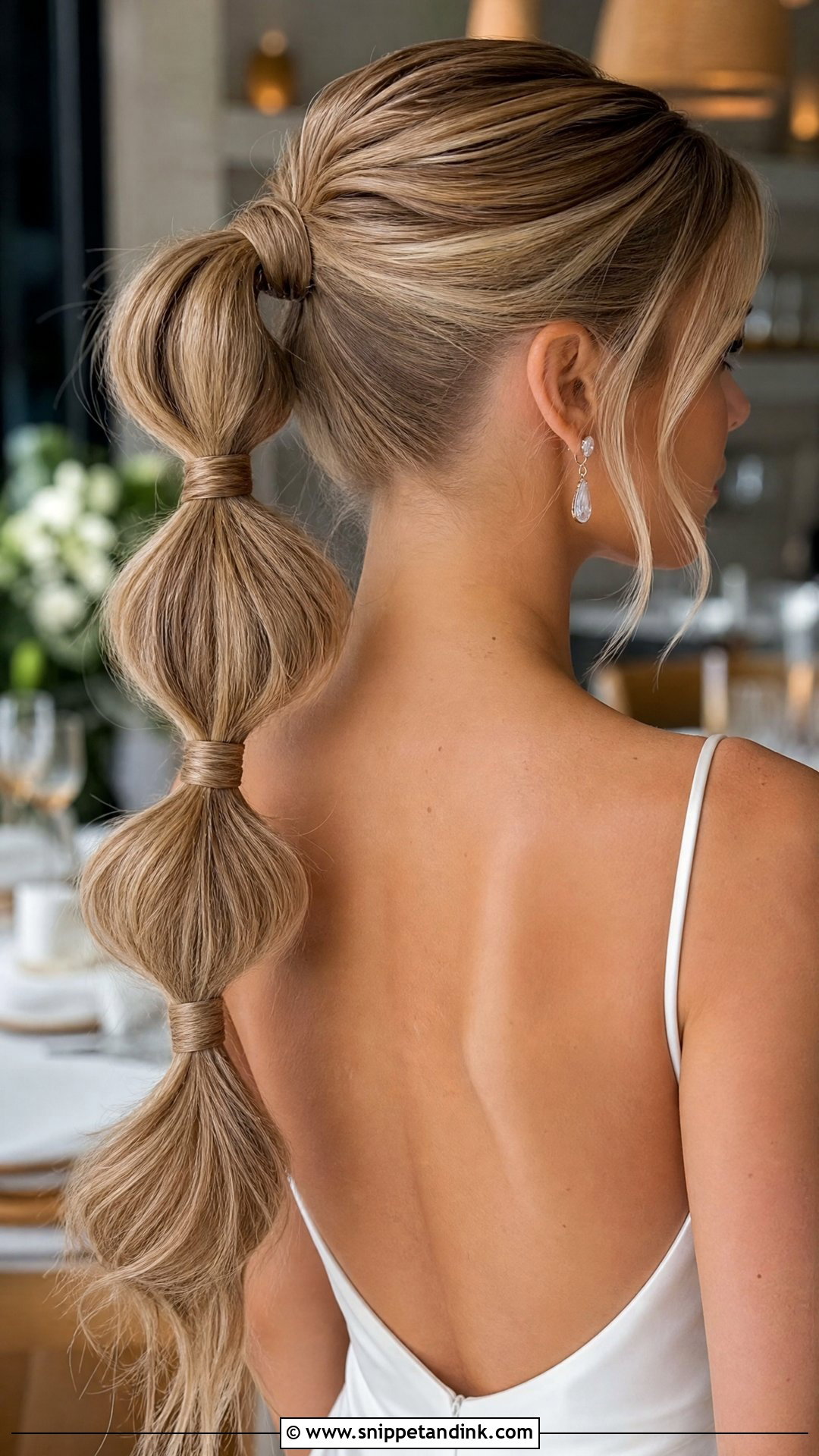
A bubble ponytail needs fullness to look right, and thick hair delivers it. The hair is gathered into a ponytail, secured with elastics down the length and gently pulled outward for rounded bubbles. For a bridal version, keep the crown smooth and cover each elastic with a small wrap of hair. It’s playful but polished. It suits fashion-forward brides, reception looks and bridesmaids.
18. Waterfall Braid Wedding Hair For Thick Hair
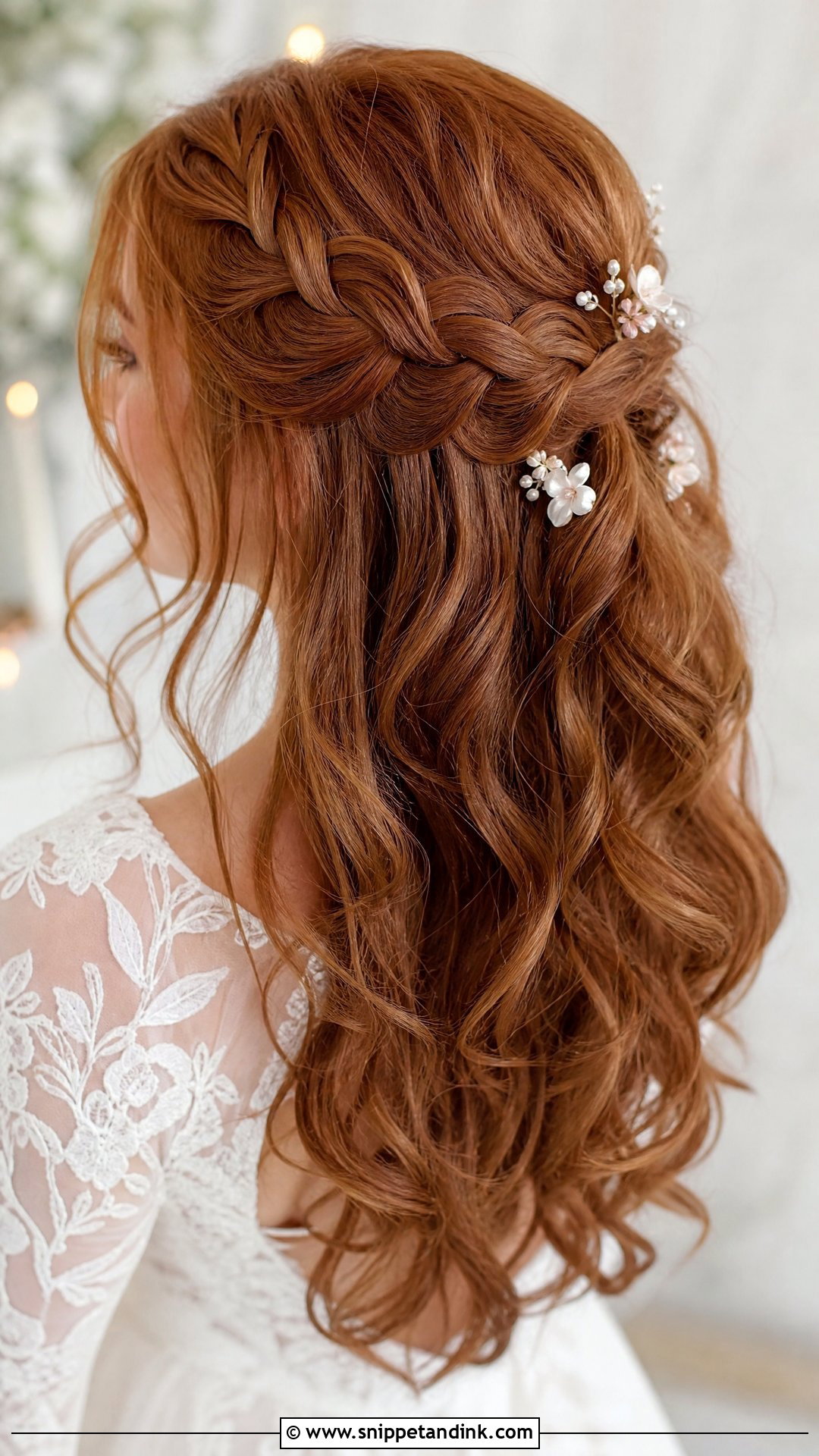
A waterfall braid runs across the back or side of the head, dropping pieces through it like ribbons, so your length stays visible. Thick hair makes the loose waves underneath look full. It’s for a bride who doesn’t want a full updo but still wants detail. Medium to long hair works, with soft curls and delicate accessories. On very heavy hair, I pin the braid every few inches so it doesn’t sag.
19. Textured Updo Wedding Hair For Thick Hair
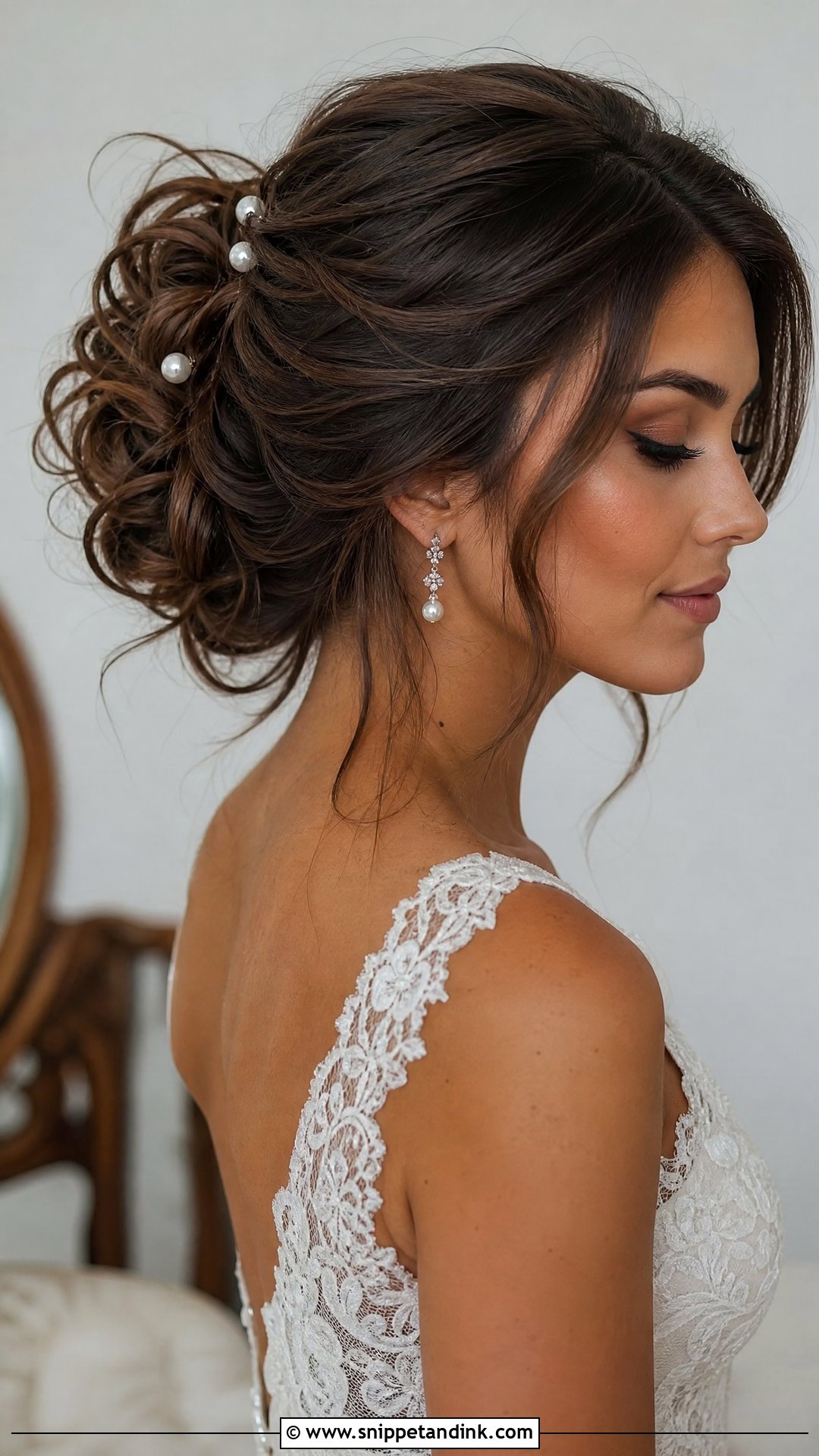
When thick hair needs shape but not polish, curl it first, then pin it into a loose bun or gathered shape with visible movement. Thick hair creates fullness naturally, so the updo looks soft and dimensional. Keep the weight balanced and the pins hidden, with gentle volume at the crown and soft pieces at the face. It suits romantic dresses, lace gowns, outdoor venues and bridesmaids.
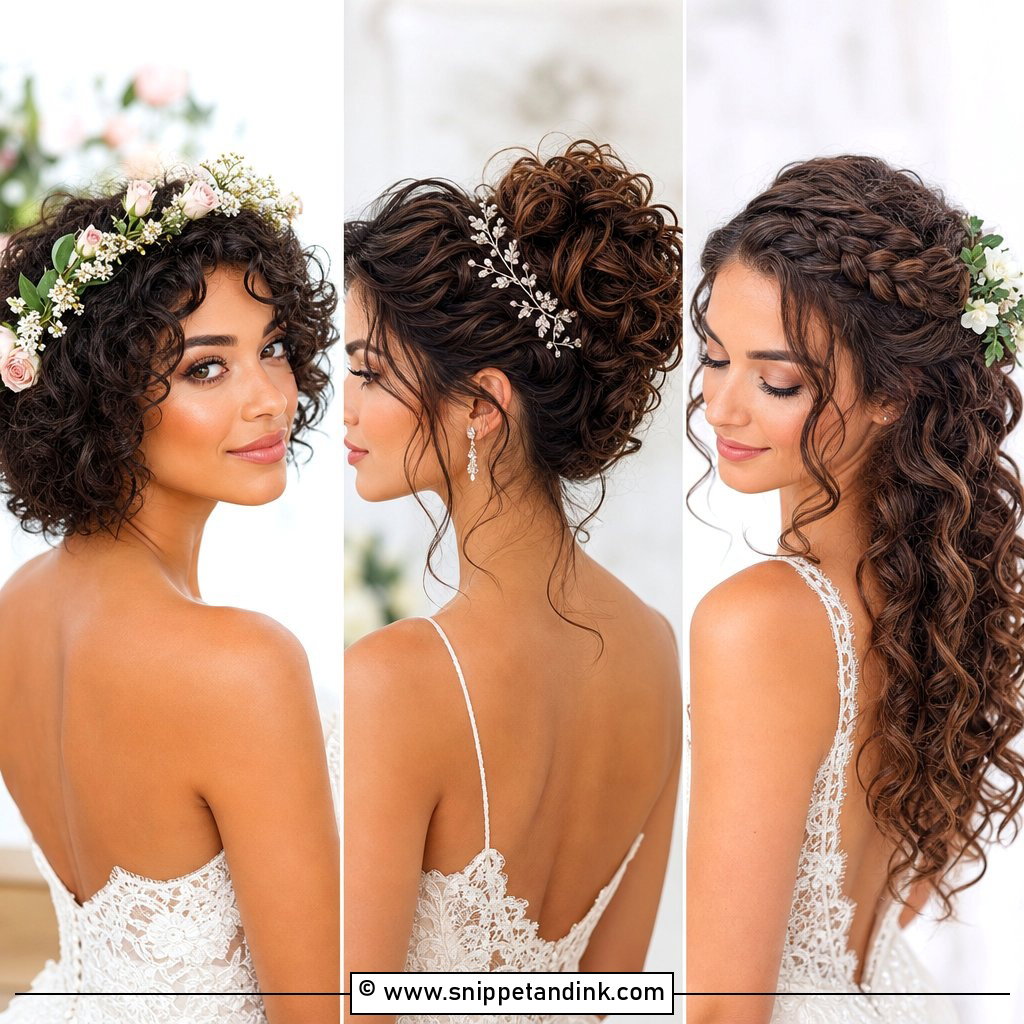
20. Down Wedding Hair For Thick Hair
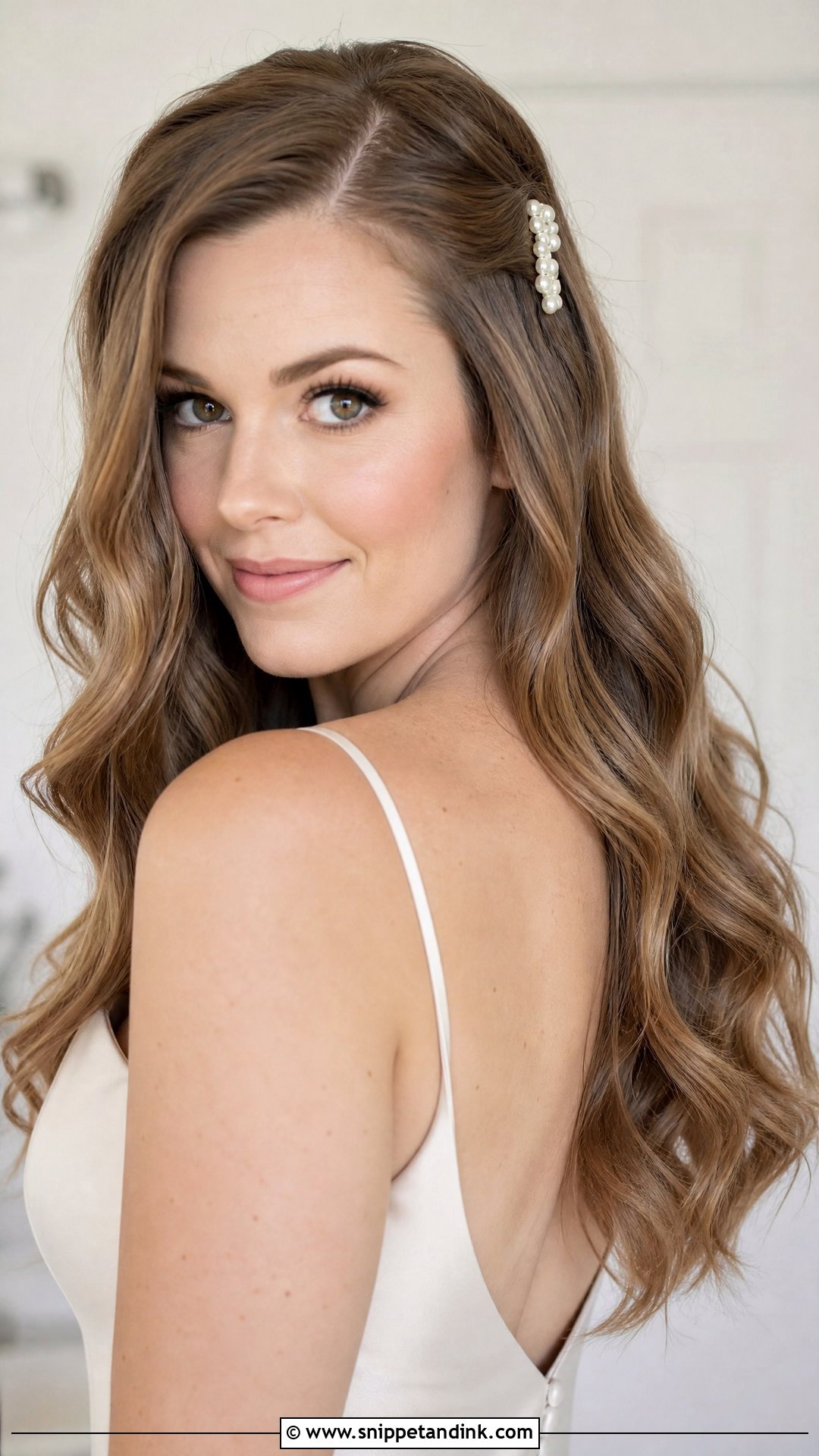
Thick hair worn down needs a plan, or it turns into everyday hair by the reception. The style should be polished and set to last through photos, hugs and dancing. Soft waves, smooth roots and face-framing pieces give it shape. Heavy hair drops curls faster, so I use pin-curl setting and a strong-hold spray. A veil, floral comb or pearl clip adds a bridal detail without hiding the length.
Drying Time, Chair Time and the Wedding Morning
Thick hair can take far longer to dry than you’d expect, and hair that’s even slightly damp at the roots won’t hold a curl or a set. Most stylists ask you to arrive with clean, completely dry hair. If yours takes hours to air dry, wash the night before and blow-dry it then, or book extra time so the stylist can do it.
Allow more chair time than the stylist quotes for average hair, especially for curled styles, where each section has to be smaller to heat through. Tell the stylist your hair is thick when you book, so they schedule you accordingly and don’t run the bridal party late.
Don’t get your hair heavily thinned out just before the wedding. A trim to tidy the ends is fine a couple of weeks ahead, but removing bulk changes how the hair sits and leaves short pieces that can poke out of updos.
Plan for the Weight First and the Look Second
Thick hair should feel secure and comfortable from the first photo to the last song. Chignons, sleek buns, waves, braided updos and modern ponytails all work. Your choice depends on your dress, venue, weather, hair texture and how much hair you want around your face. Book a trial, especially if your hair is long and heavy, and wear the style for a few hours afterward. If it starts to ache, tell your stylist; it’s an easy fix before the day and a miserable one on it.
You'll Like These Ideas:


Leave a Reply