
Expensive-looking and expensive are not the same thing, and most of my job in a bridal salon is helping brides tell them apart. A gown reads as luxury because of how its fabric falls, how cleanly it’s finished inside and how well it fits you, far more than because of sparkle. The shapes bridal designers keep returning to right now are sculpted corsets, liquid satin, drop waists, long trains, detachable overskirts and big couture bows, alongside pearl work and plain architectural cuts. Each one only works when it suits the venue, the season and the rest of what you wear. Here are thirty gowns I’d happily style, with what to check on each.
Reading a Gown’s Price From the Inside Out
When a bride asks me whether a dress is worth the money, I turn it inside out. The outside can be copied at almost any price point. The inside is where cost and craftsmanship show.
- Fabric content on the label: silk satin, silk mikado and silk crepe drape and age differently from polyester versions. Both can look good, but they shouldn’t cost the same.
- Lining and finishing: a full lining and neat, enclosed seams mean someone took time. Raw, overlocked edges inside a high-priced gown are a warning sign.
- Boning and structure: a corset or structured bodice should have boning in its own channels, plus a waist stay that holds the gown in place.
- How beading and appliqué are attached: individually stitched work lasts and can be cleaned. Glued or heat-fused embellishment often can’t.
Ask how long the gown takes to make. Many made-to-order designers quote several months before alterations even start, and some luxury pieces take longer, so it helps to start shopping about a year ahead.
1. Satin Ball Gown Wedding Dress
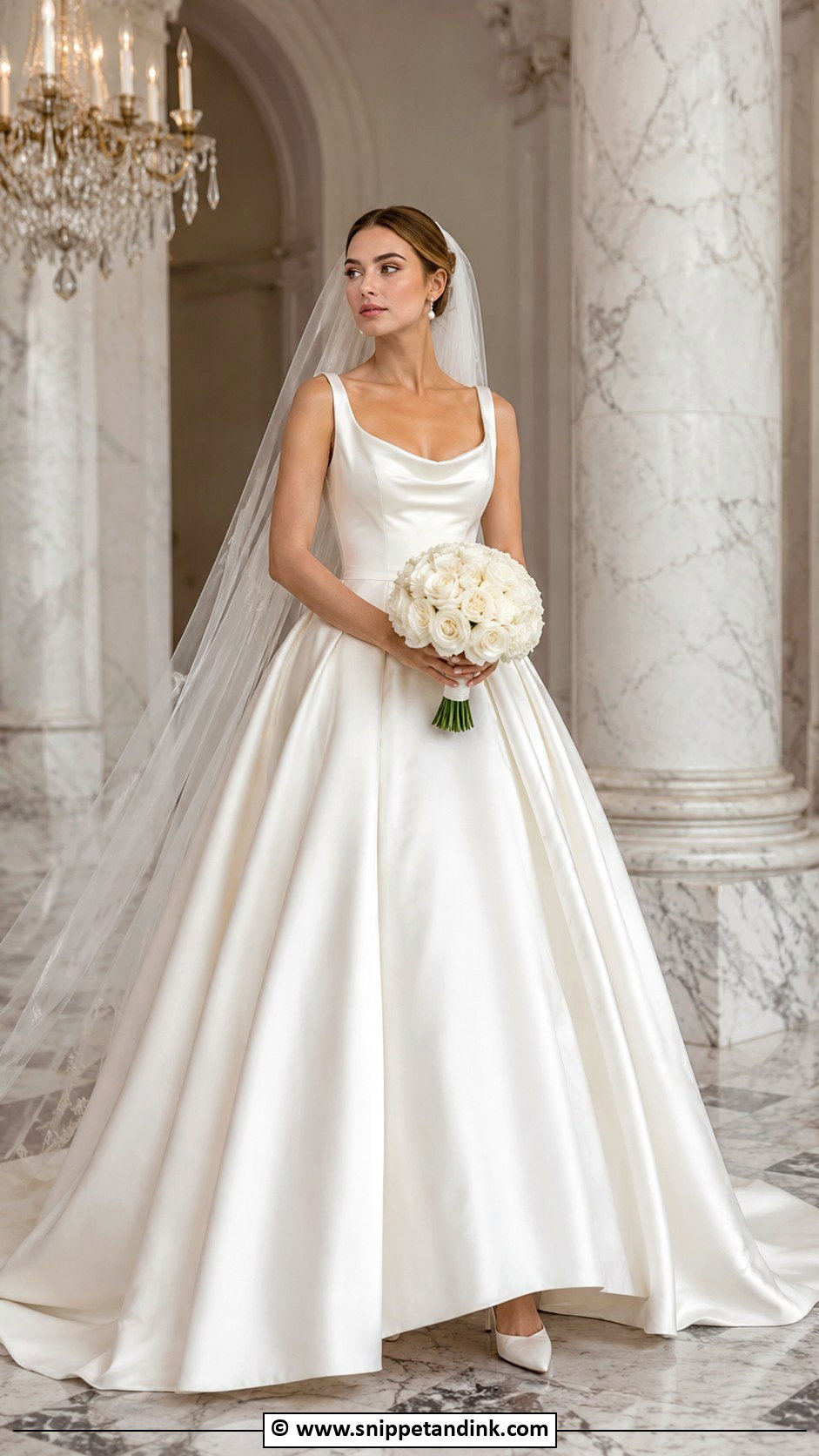
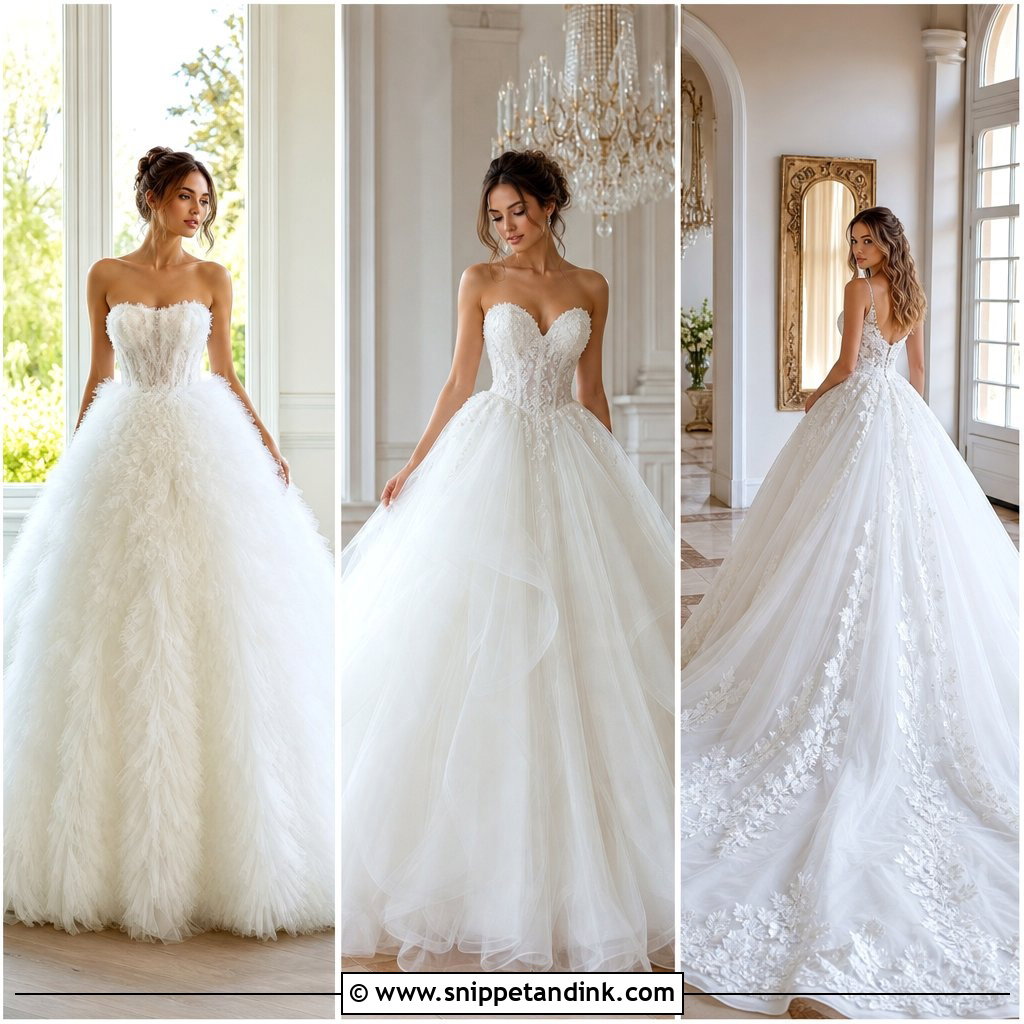
Satin ball gowns are all about the fabric, so this is the one where I feel the skirt before anything else. Good heavy satin holds its fullness from the petticoat down and doesn’t crease into sharp lines when you sit. A fitted bodice with a gently curved neckline is enough decoration. I’d style it with pointed satin heels, pearl drops, a cathedral veil and a low bun, plus a tight bouquet of white roses or orchids. Ballrooms and hotel ceremonies give the skirt room to spread out.
2. Lace Long Sleeve Wedding Dress
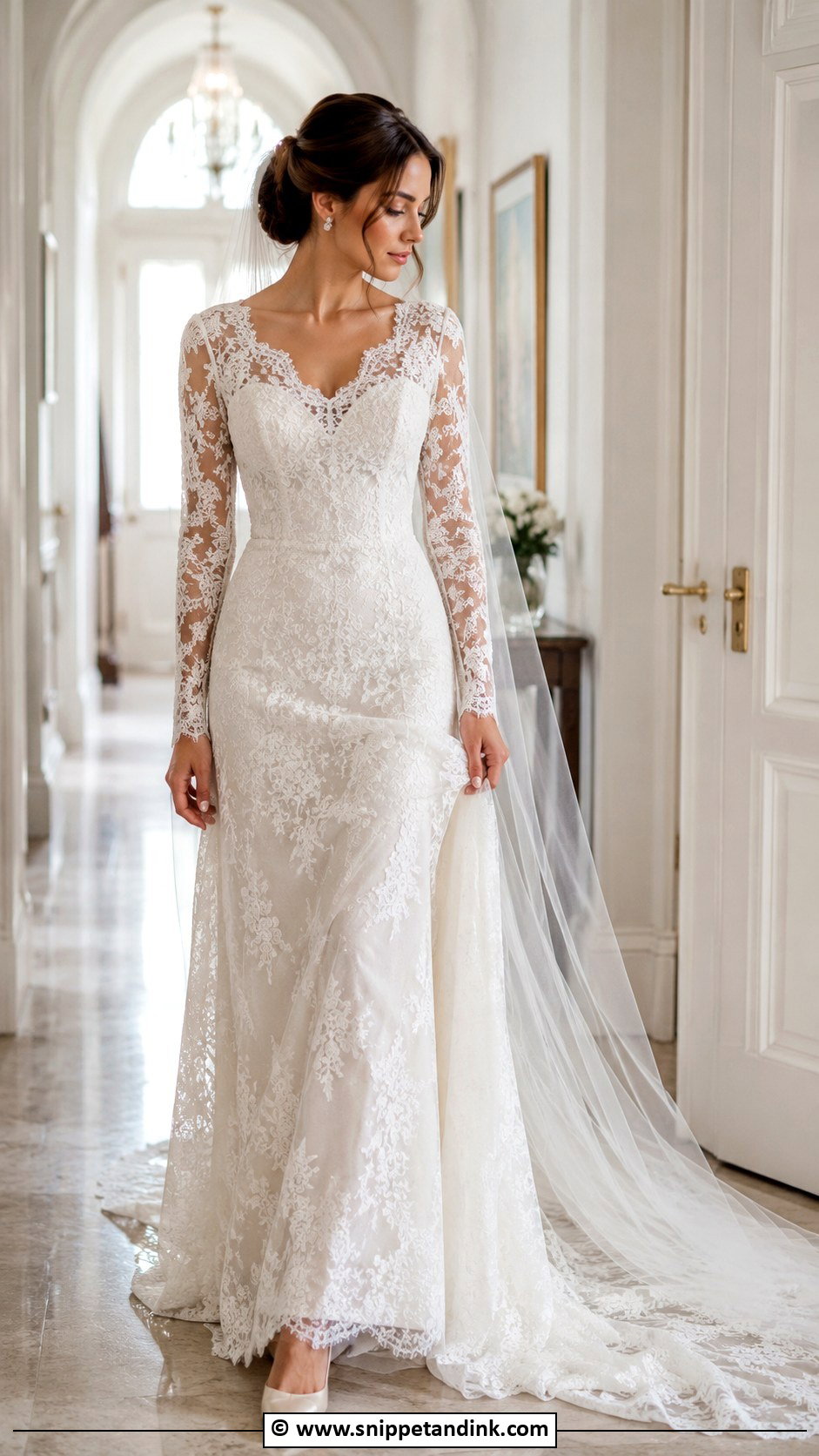
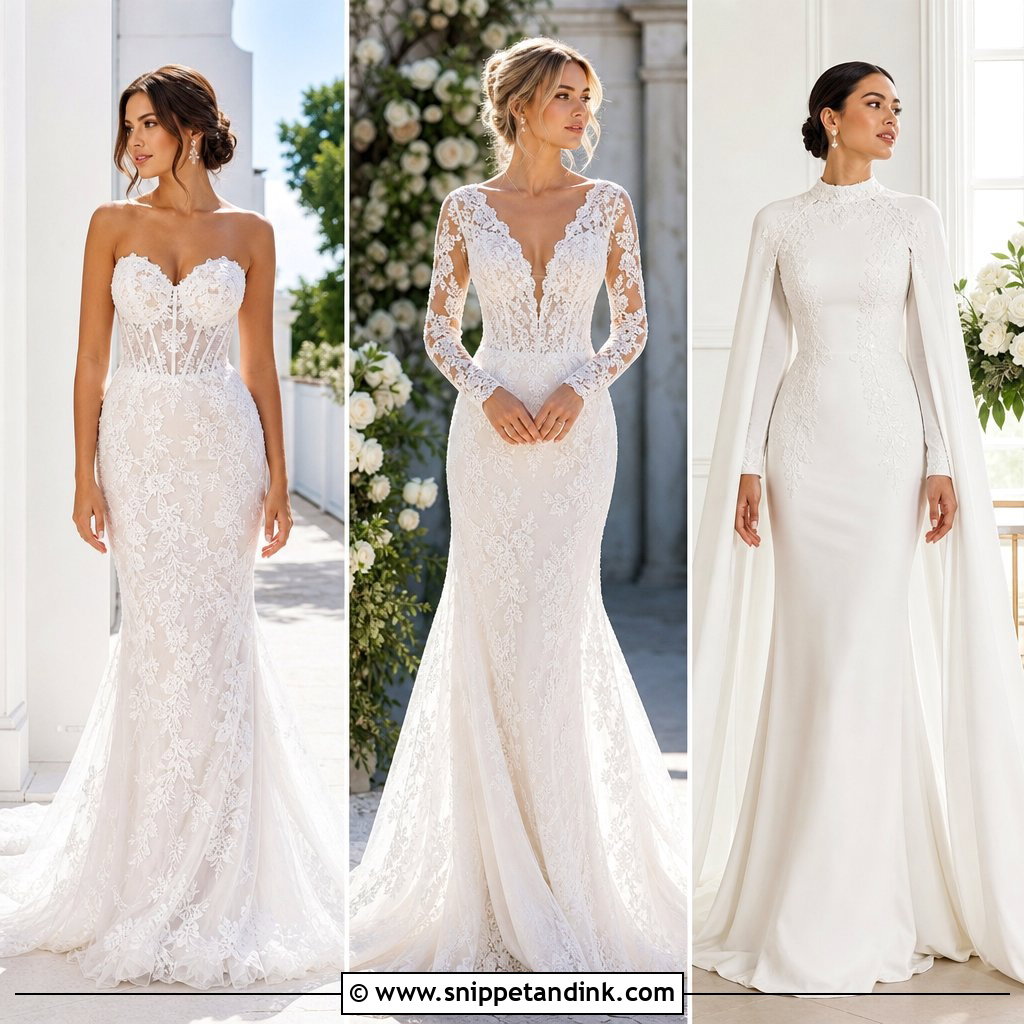
Long lace sleeves are where cheap and costly lace look most different, because the pattern sits right next to your skin and gets photographed up close. Look for lace with a defined motif and neat edges laid over a fitted lining, not lace printed onto mesh. A high neck feels regal. A V-neck lightens it. Ivory heels, small diamond studs and a plain veil let the pattern lead. It suits autumn and winter, and I’d keep the makeup soft so the texture stays the focus.
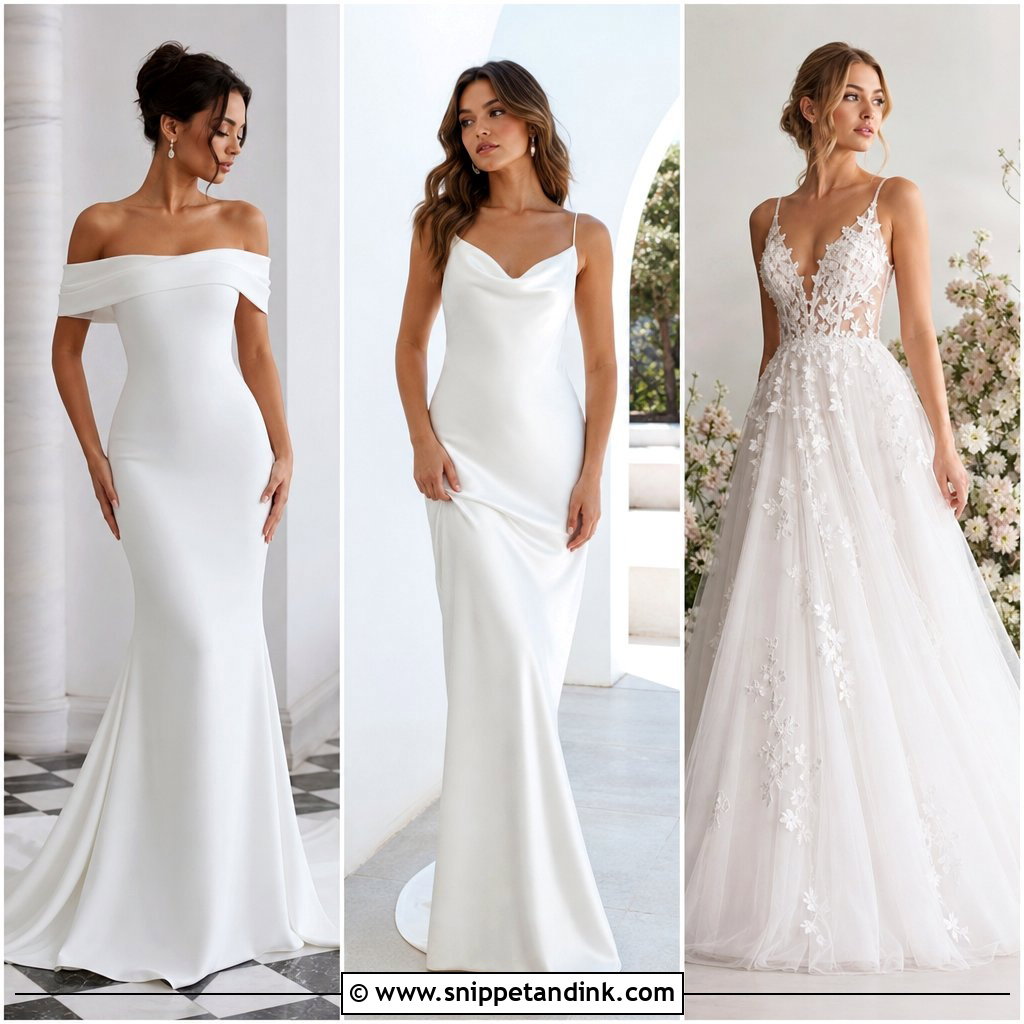
3. Silk Slip Wedding Dress
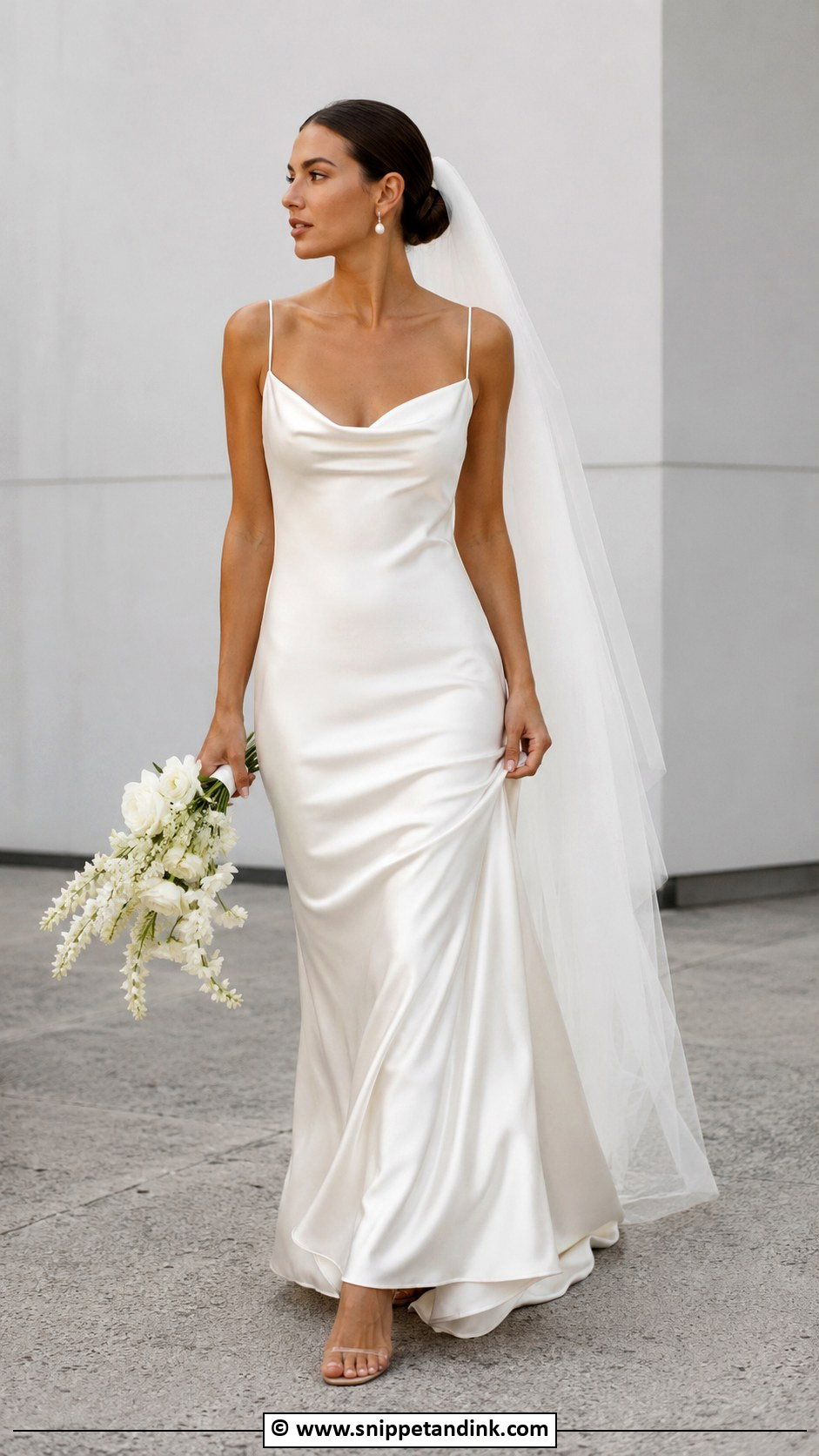
Silk slips are the gowns I’m strictest about at fittings. With nothing on the surface, every pull line and puckered seam shows. Bias-cut silk should skim you without clinging, and the neckline has to lie flat against the collarbone. Barely-there heels, a long sheer veil and hair tucked behind the ears suit it, with a slim bracelet or pearl earrings for shine. Expect the silk to wrinkle where you sit, which is normal for real silk and part of how it moves.
4. Off Shoulder Wedding Dress
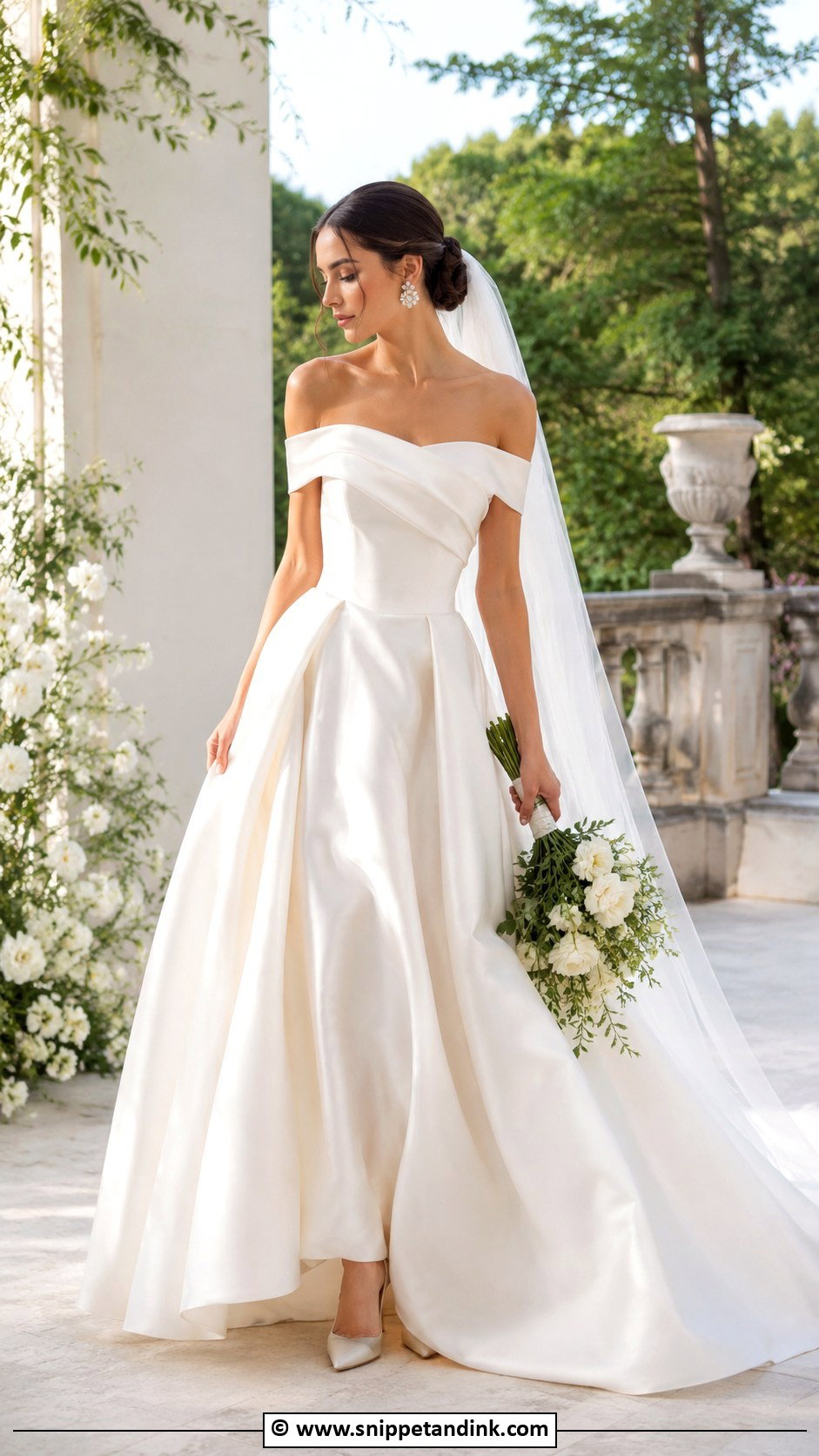
An off-shoulder neckline has to stay put, and on a structured gown that depends on the bodice, not the sleeves. If the bodice is boned and fitted properly, the sleeves rest on your arms without sliding. Mikado, satin or crepe give the cleanest line. Pair it with a chignon, statement earrings, ivory pumps and a veil set low at the back of the head. Leave the neck bare, since the shoulders already do the framing.
5. Drop Waist Wedding Dress
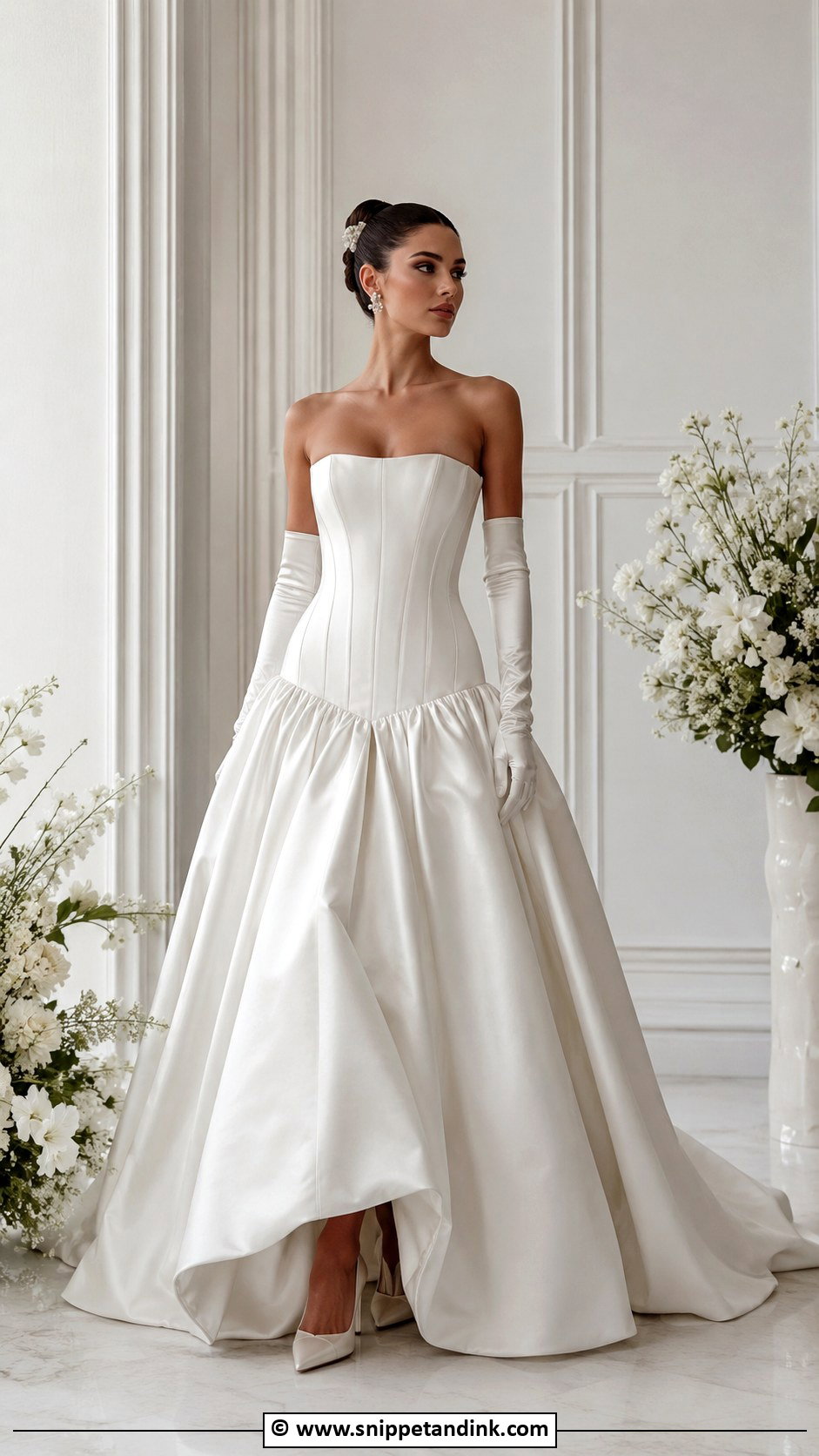
A drop waist wedding dress moves the seam down onto the hips, so the bodice looks long and sculpted before the skirt opens out. It’s a shape that looks fashion-led without needing sparkle. Satin, taffeta, organza and lace all handle it. I’ll be honest about who it suits: if you’re short in the torso, the low seam can make your legs look shorter, so try it next to a natural-waist gown before deciding. Long gloves, pointed heels and a sleek updo bring out the shape.
6. Corset Wedding Dress
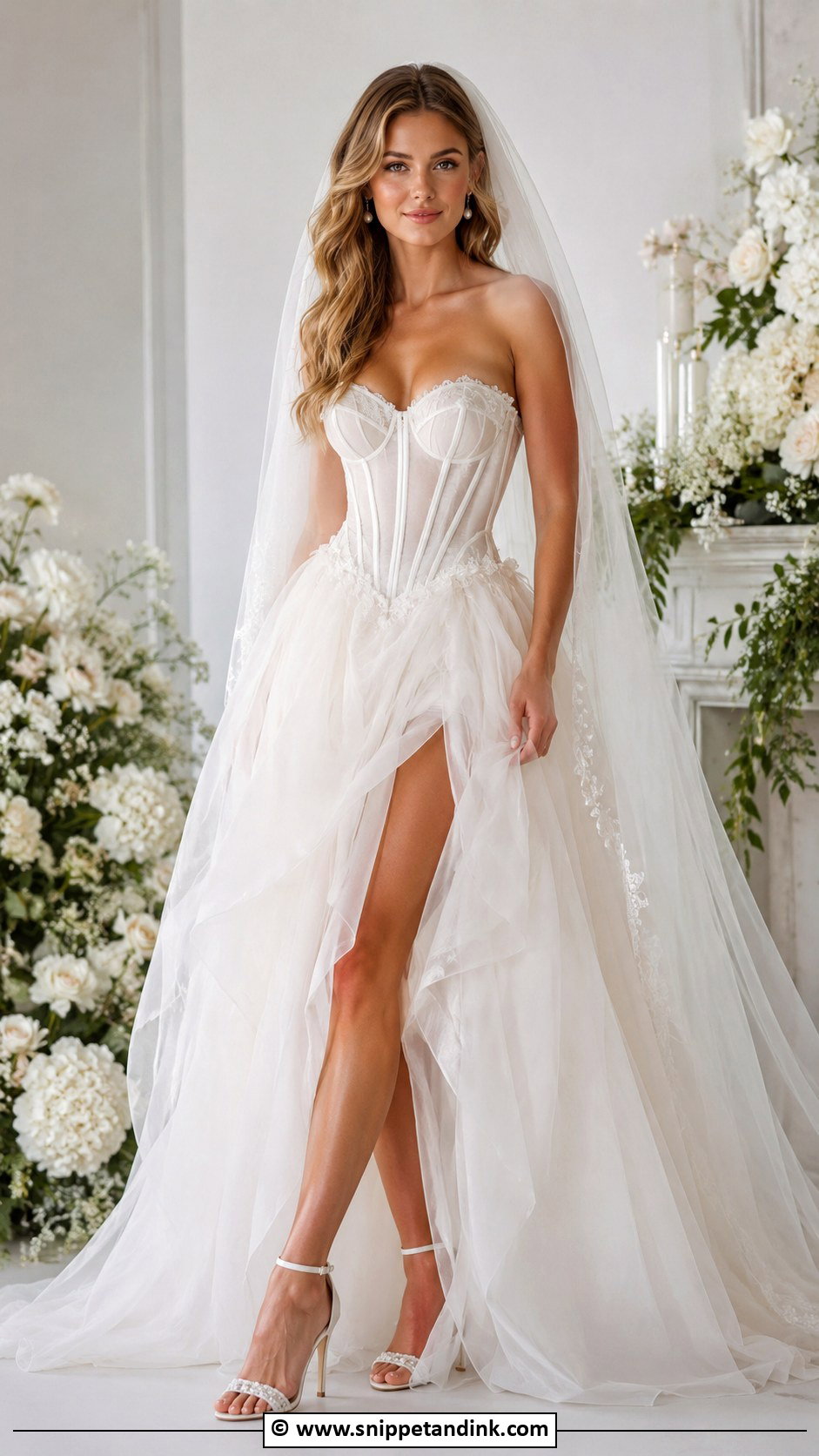
A properly made corset spreads its pressure across steel or spiral boning, and that’s what makes it comfortable for twelve hours rather than six. Visible boning under tulle or organza looks luxurious because it shows the construction. A full skirt goes romantic, a slim one goes modern. When I fit a corset, I have the bride eat something and sit for a while before we decide on the final tightness. Delicate heels, pearl earrings and soft waves are enough with it.
7. Pearl Beaded Wedding Dress
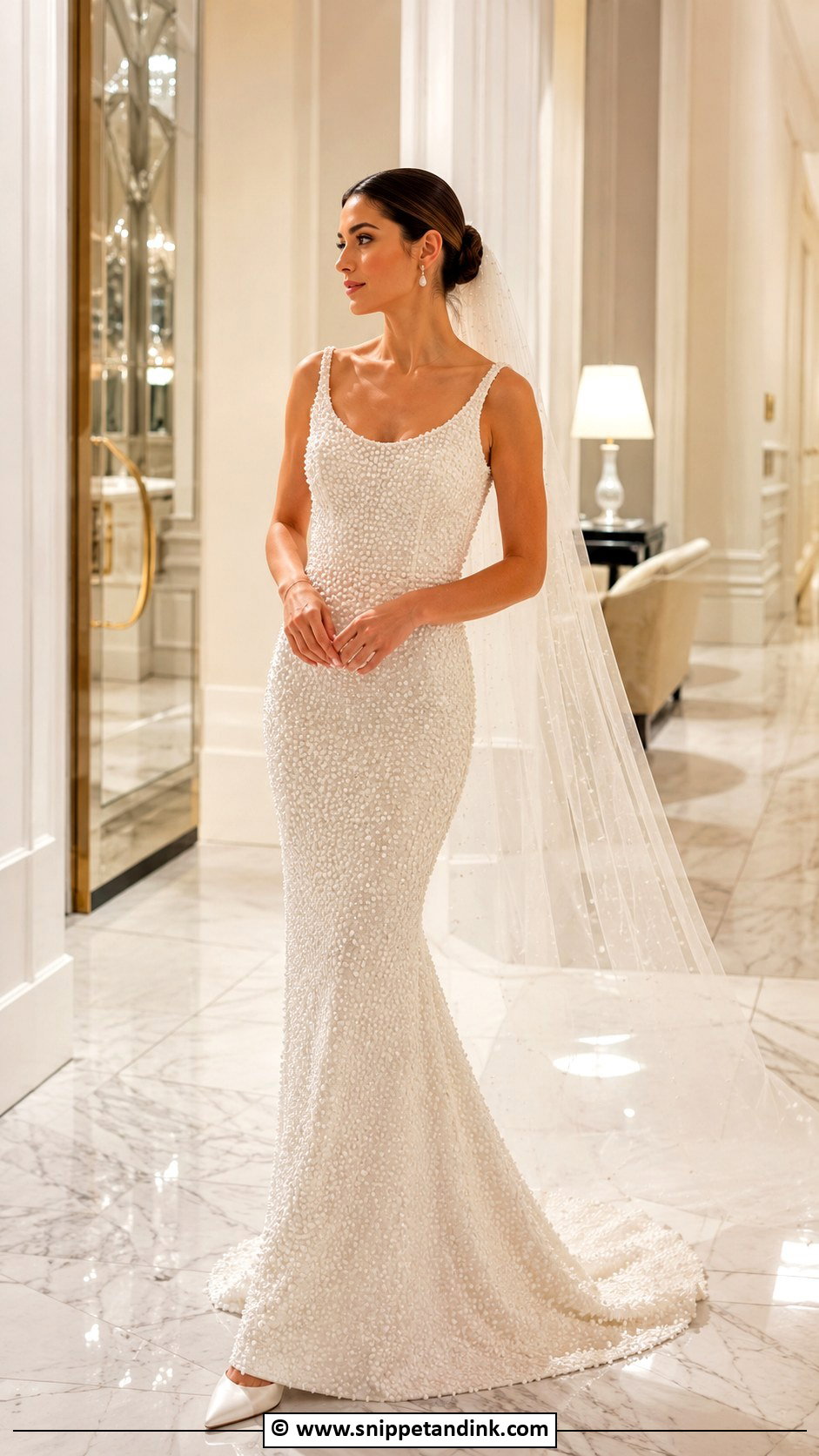
A pearl beaded wedding dress gives off a softer glow than crystal, because pearls reflect light instead of throwing it. Scattered across tulle, lace or crepe, they add texture without glare. Check that each pearl is sewn on individually rather than glued, since glued pearls drop off on the dance floor. A sheath, an A-line or a soft ball gown can all carry them. Keep the veil edge plain and the earrings small.
8. Mikado A Line Wedding Dress
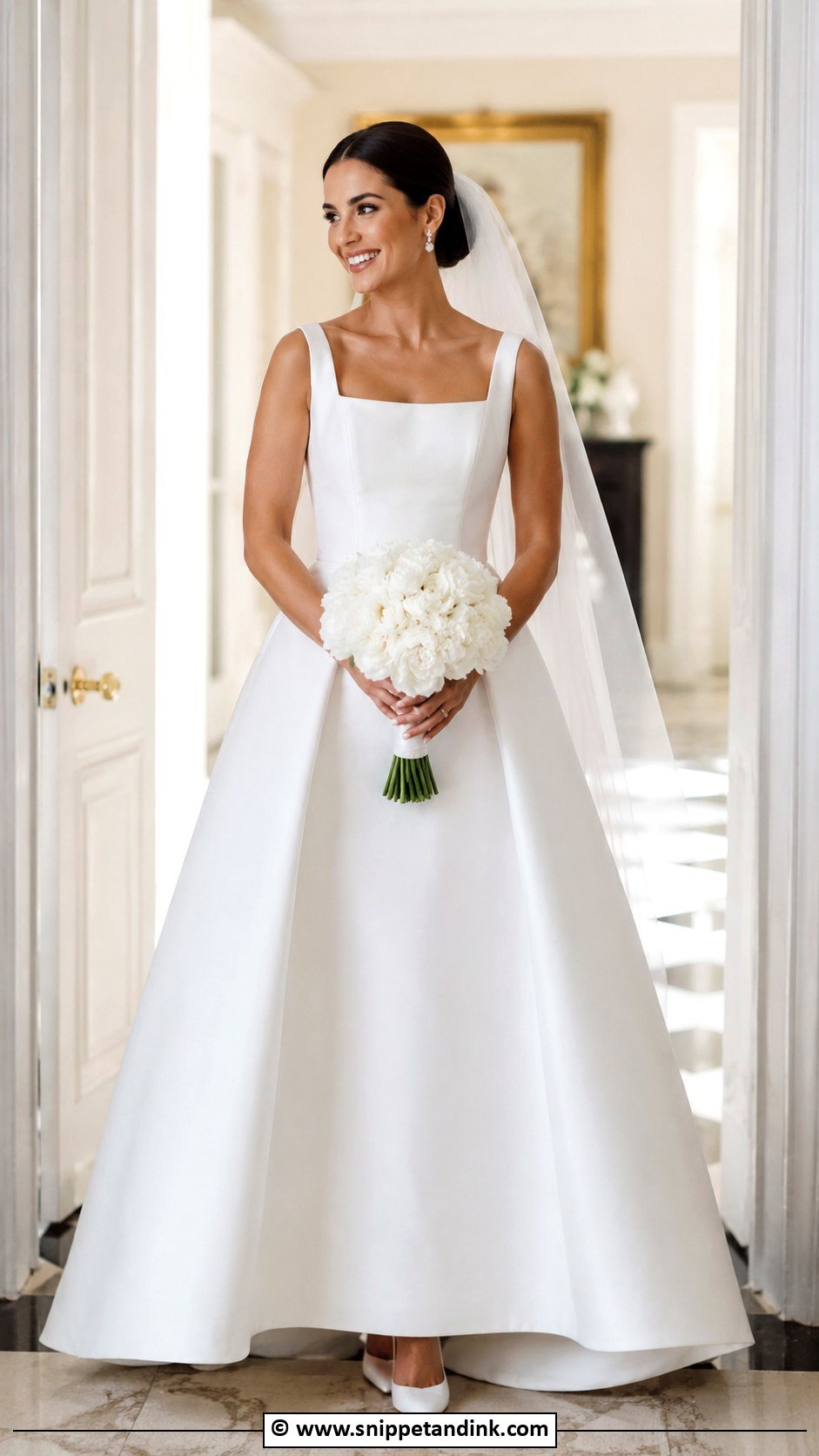
Mikado is a heavy silk or silk-blend with a slight sheen and a lot of body, which is why it holds a clean A-line without layers of petticoat underneath. The A-line defines the waist and falls away from the hips, so it suits a wide range of figures. A square, strapless or bateau neckline keeps it architectural. Satin pumps, a polished veil and classic jewellery are all it needs. Its stiffness means it creases less than softer satins through a long day.
9. Tulle Ball Gown Wedding Dress
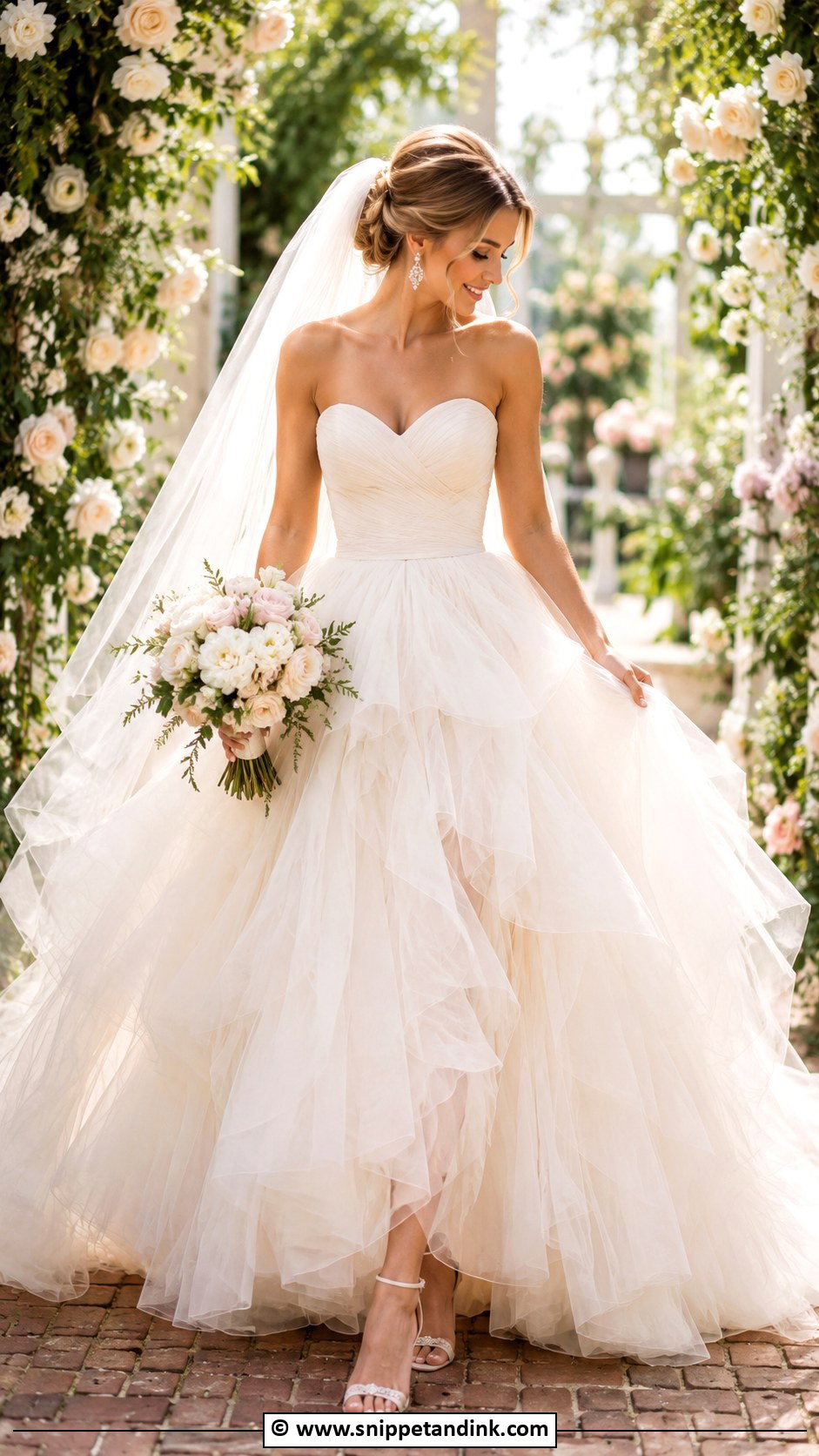
Tulle ball gowns live or die on the bodice. Without structure up top, all those layers of tulle collapse into a shapeless cloud. I look for a boned bodice and a tulle with a soft hand, because cheaper stiff tulle scratches and looks crunchy in close-ups. Crystal earrings and a long veil suit it. A soft updo keeps the neckline visible against all that volume. Garden venues and grand staircases give it room.
10. Crepe Mermaid Wedding Dress
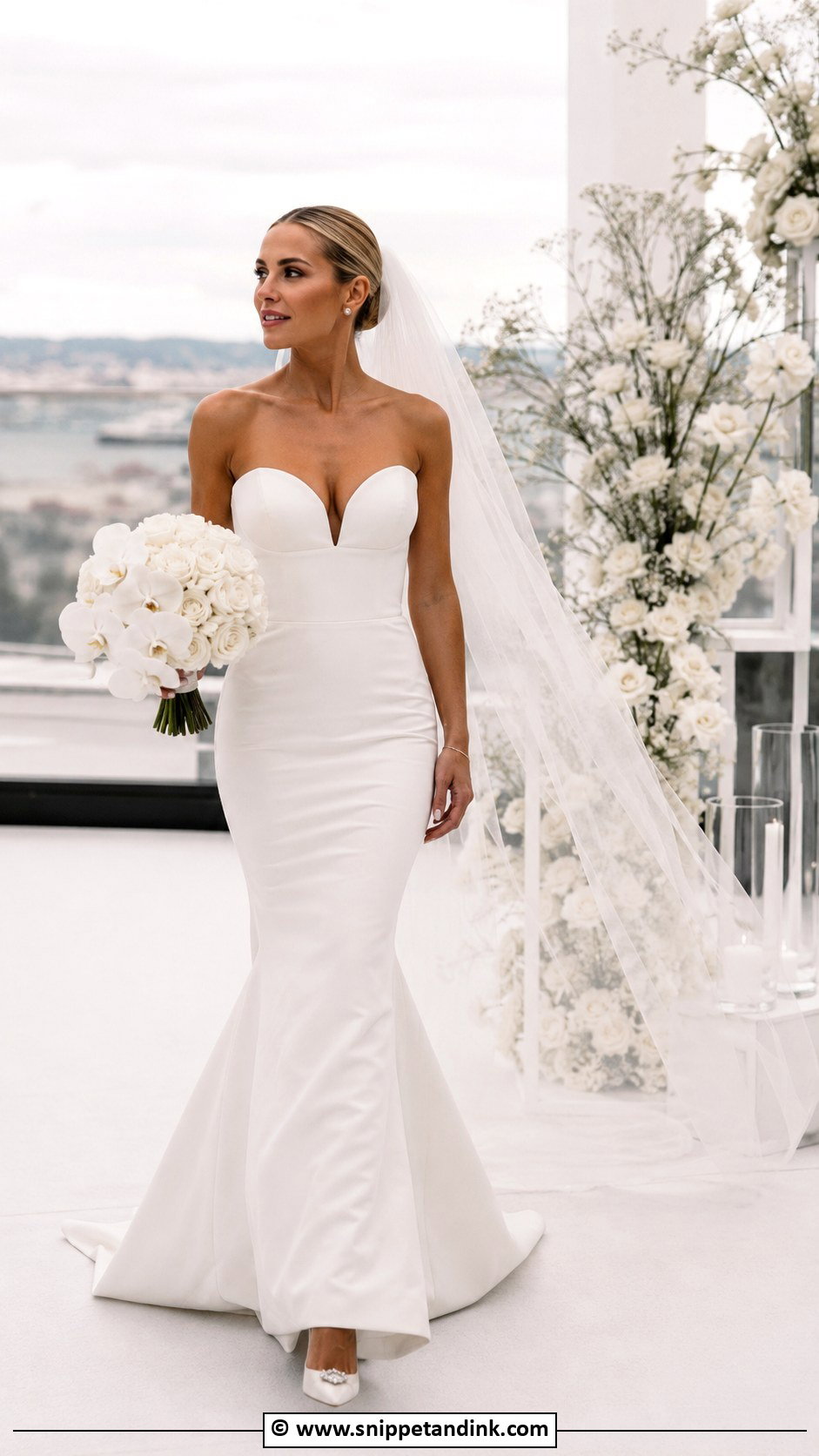
A crepe mermaid is the least forgiving gown in this list, so I treat it as a tailoring project. Crepe shows every bump in a seam, and the mermaid shape puts tension right across the hips and knees. Plan for extra fittings and do a full sit-and-walk test each time. A clean strapless neckline, long sleeves or a plunging V all work. Pointed heels, a long veil, diamond studs and a structured bouquet keep it sharp for a rooftop or evening venue.
11. Floral Applique Wedding Dress
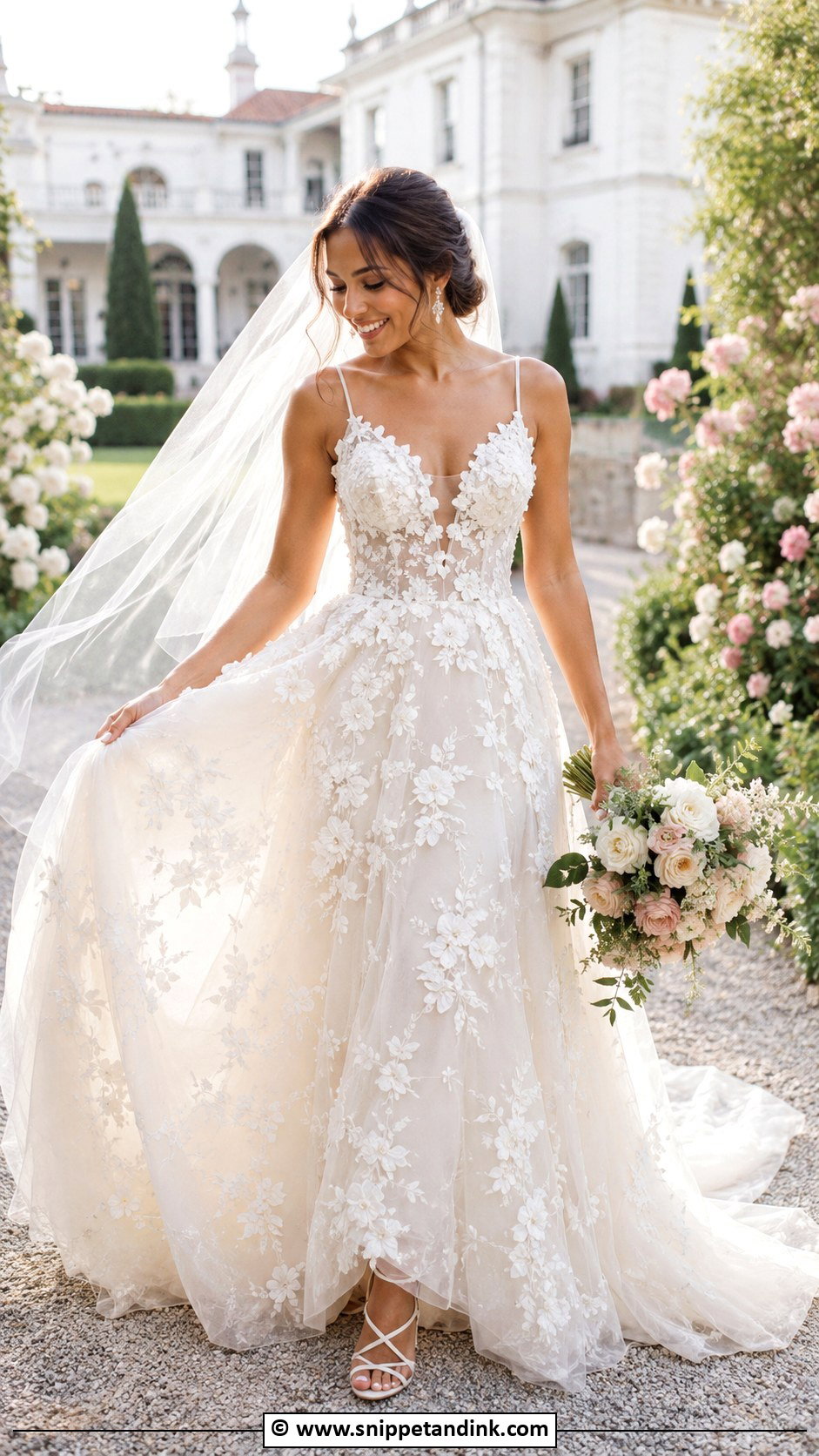
A floral applique wedding dress uses cut-out lace or fabric flowers stitched onto the gown, often with a little padding, so they stand off the surface. Ask how the appliqués are attached. Hand-stitched edges stay flat after cleaning, and fused ones can lift. Placement can run across the bodice, down the skirt or over sheer sleeves. A sheer veil lets them show through, and a tonal bouquet keeps the flowers from competing.
12. Strapless Column Wedding Dress
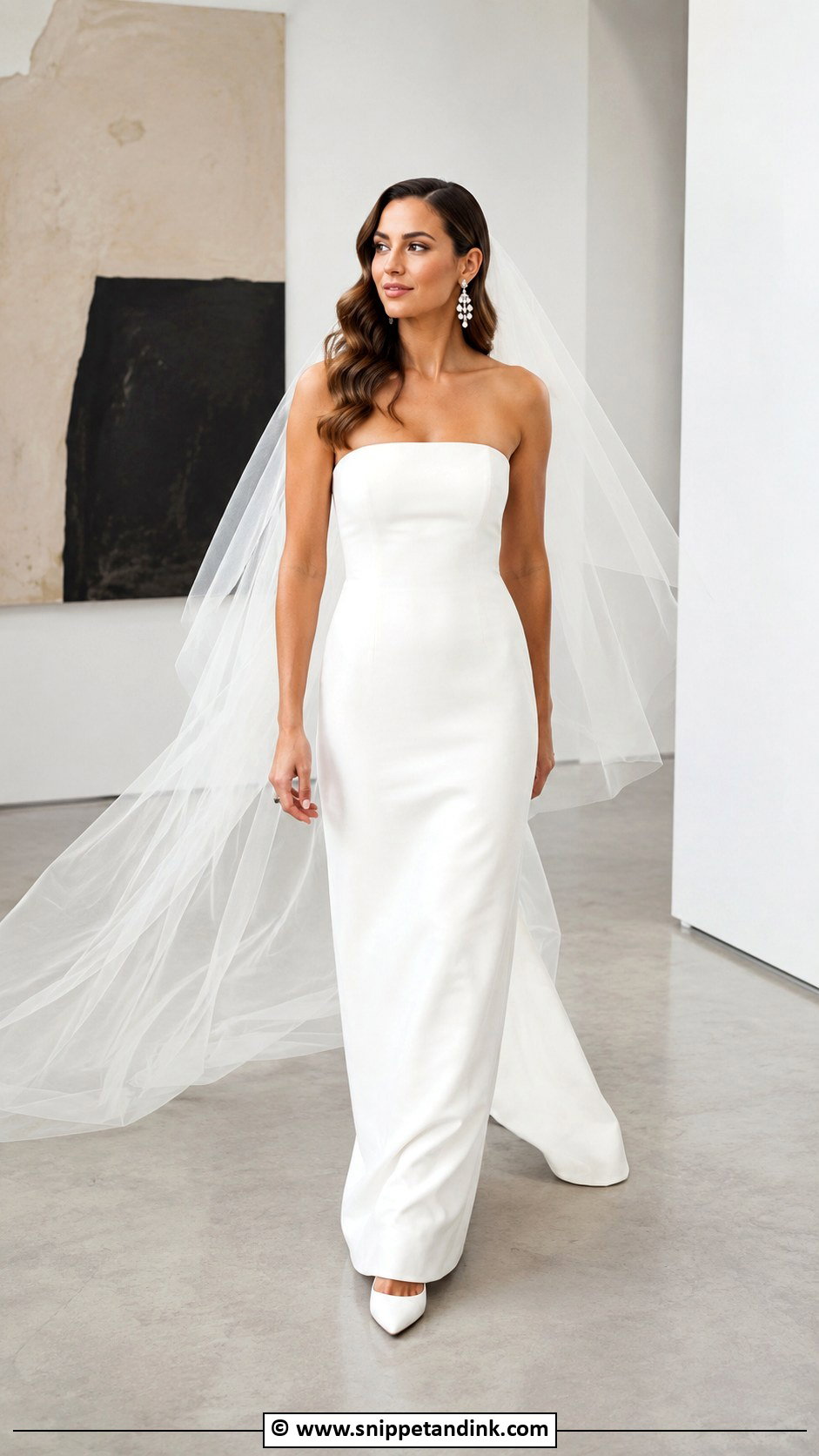
Column gowns have no flare to hide a bad fit, which makes them a good test of a dressmaker. The straight silhouette lengthens you, and a strapless top keeps it spare. Silk, crepe, satin or mikado all suit it. I always check the hem in the exact shoes you’ll wear, because a column that brushes the floor in flats will trip you in heels. A sculptural veil and statement earrings add impact, or go bold with the bouquet.
13. High Neck Wedding Dress
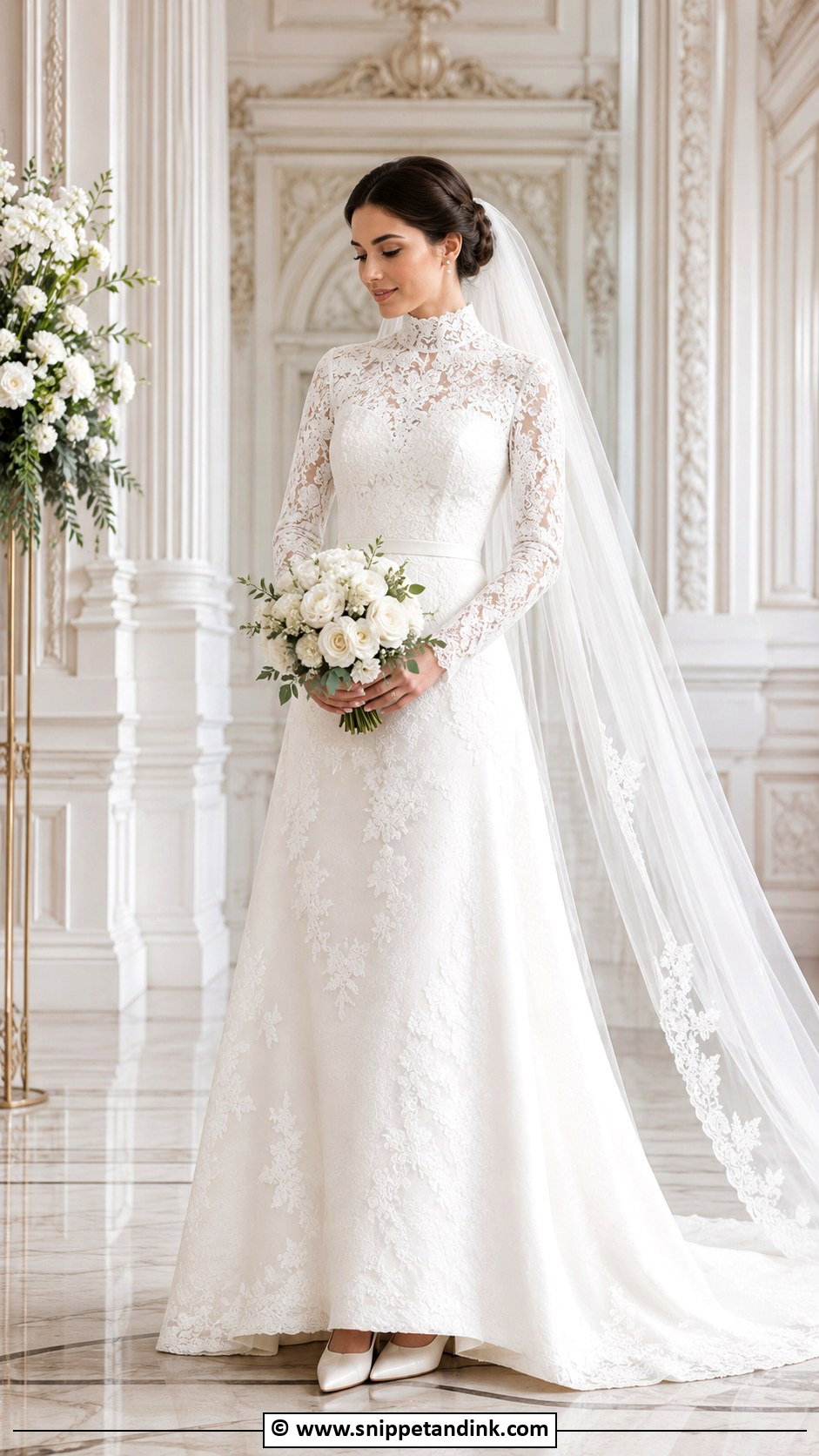
High necks cover a lot, so the fabric has to carry the interest. Lace adds romance. Satin and crepe feel modern. Watch for the collar pressing on the throat when you look down or sit. A comfortable high neck has a small amount of ease built in, and that’s worth asking the seamstress to check. Skip the necklace and put the effort into a sleek updo and small earrings. It suits cooler seasons and traditional venues.
14. Square Neck Wedding Dress
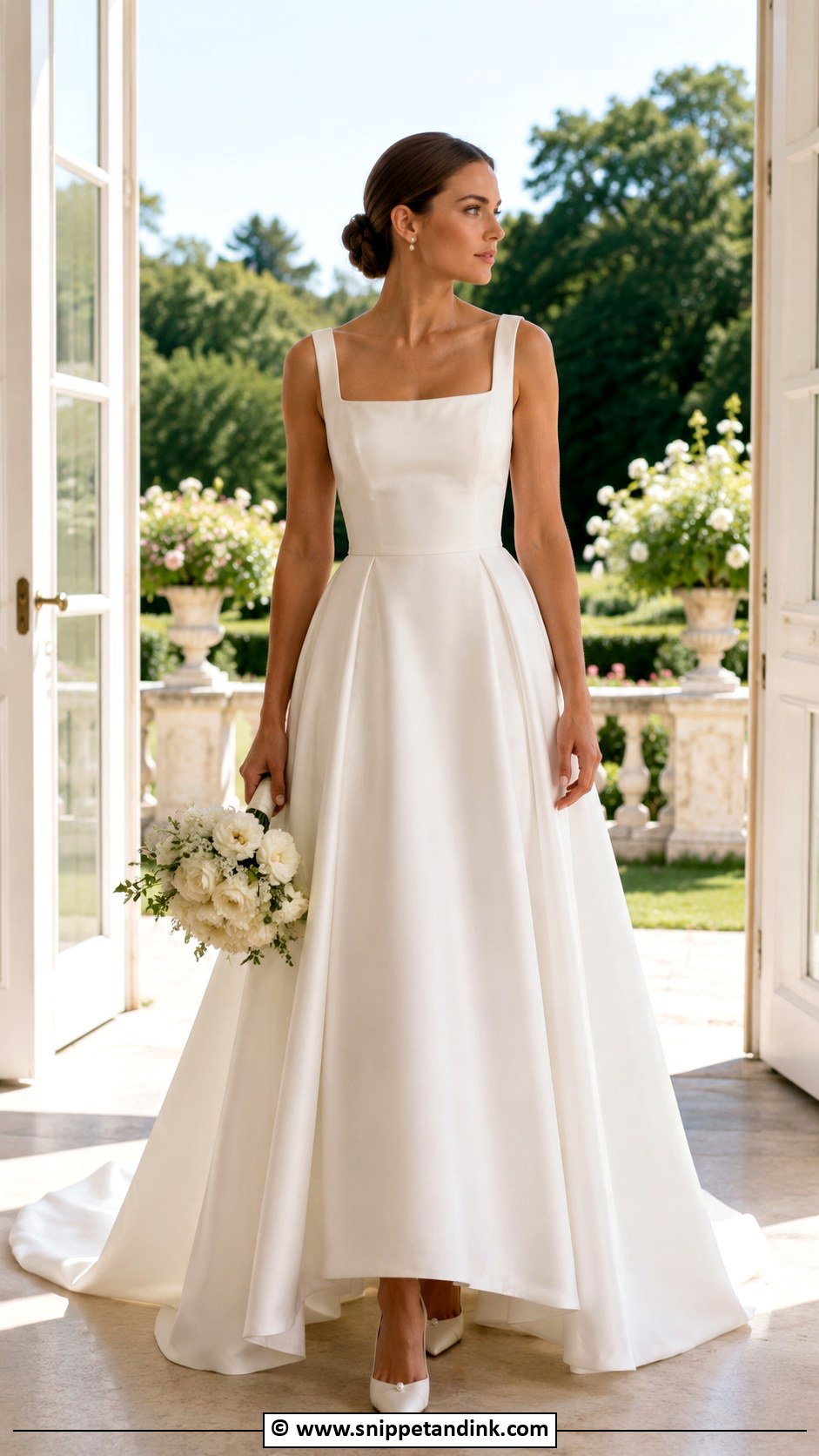
A square neckline gives a flat, architectural line across the collarbone, and it ages well in photos because it doesn’t belong to one particular year. It works on fitted gowns, A-lines and ball gowns alike. In satin, mikado or crepe, the corners stay crisp. Pearl studs, a soft veil and a low bun or smooth waves are plenty. My only caution: on a very full bust, the straight edge can flatten the shape, so try it before you commit.


15. Halter Wedding Dress
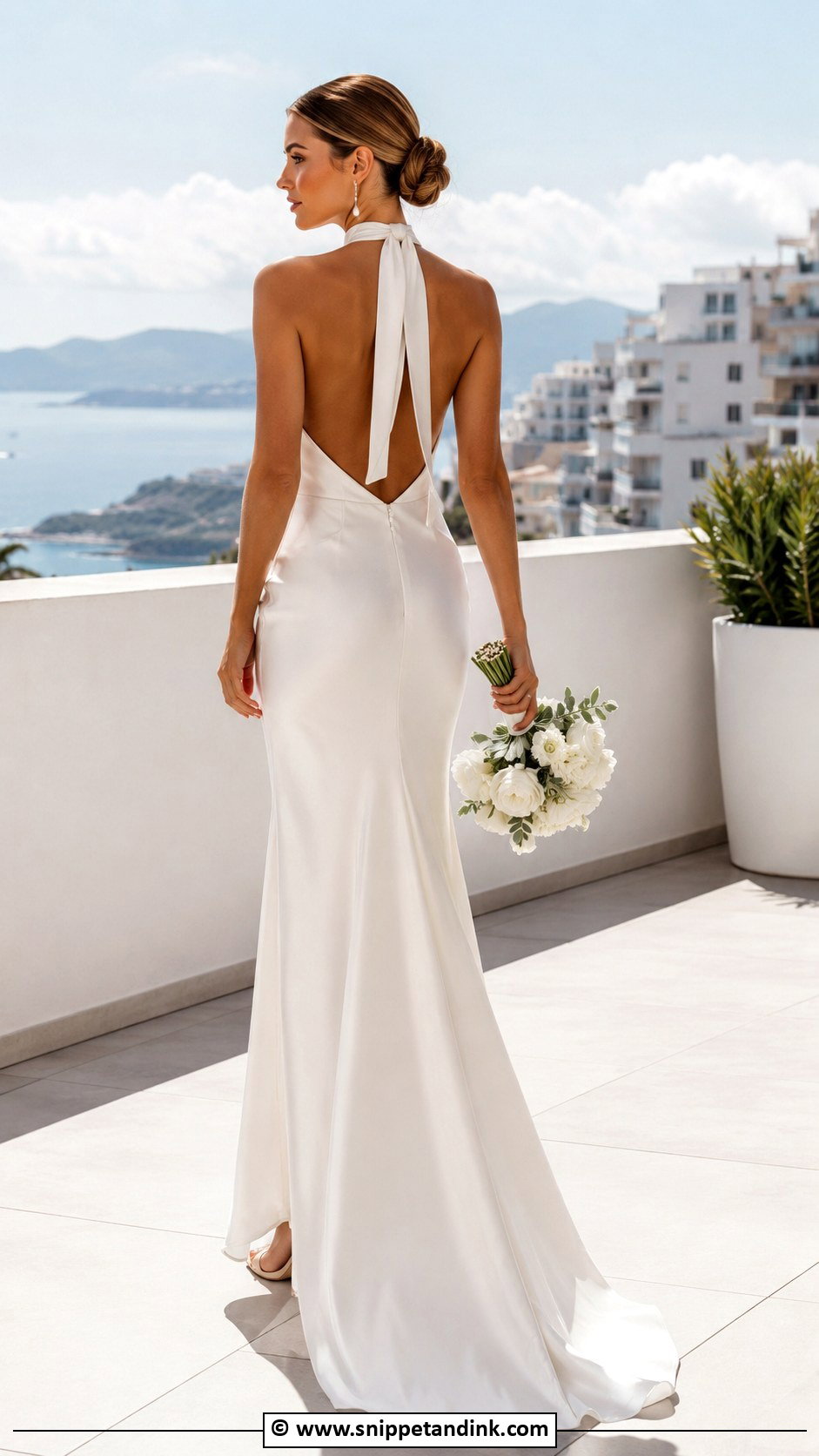
Halters pull the eye up to the shoulders and leave the arms and back open, which makes them good for warm destinations and evening receptions. Silk, satin or crepe give a sleek line. A beaded fabric adds glamour. The strap carries some of the bodice weight, so have it adjusted while you’re seated to avoid neck strain later. Wear a smooth bun, drop earrings and slim heels, and skip the necklace entirely.
16. Cape Wedding Dress
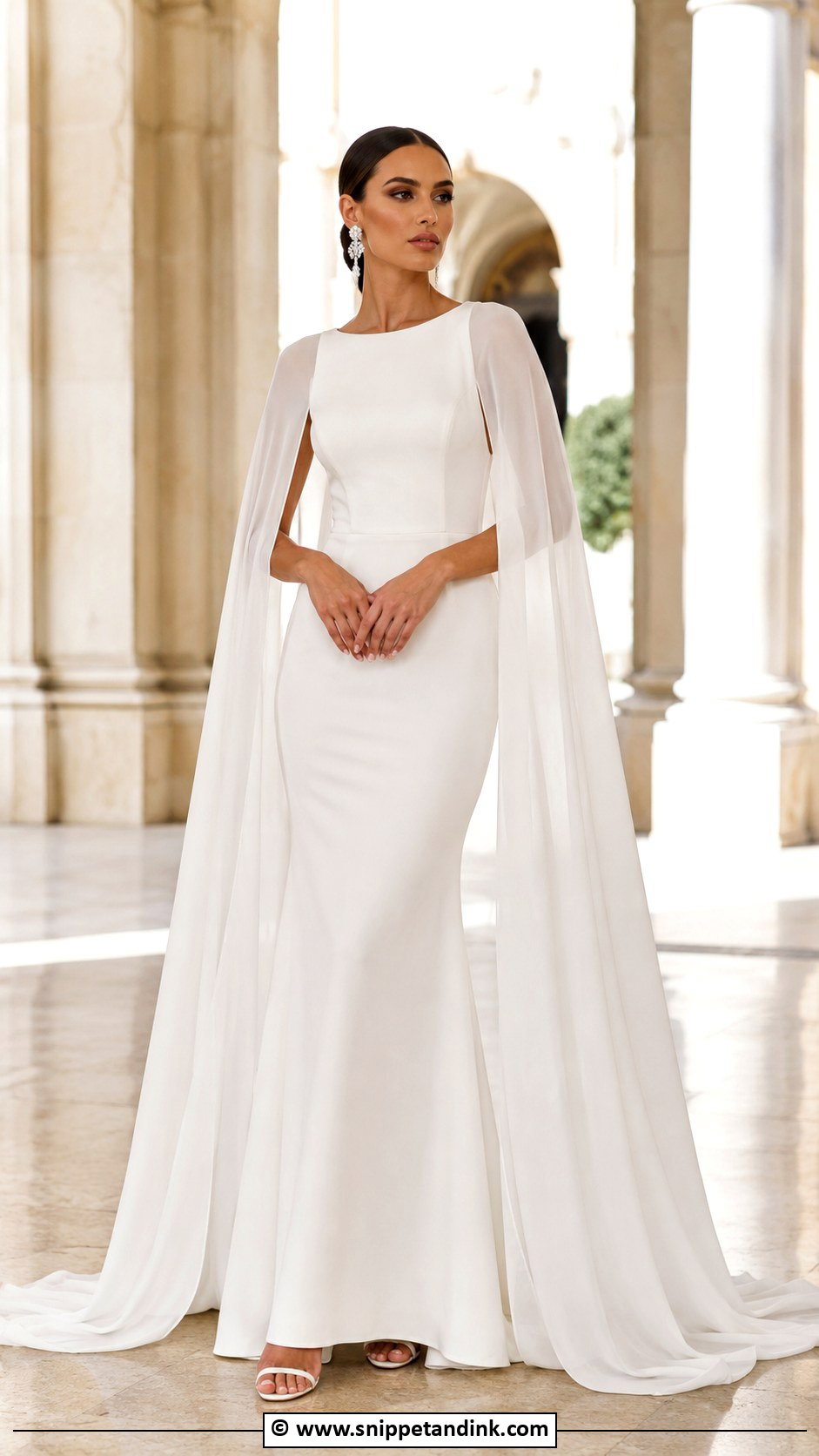
A cape replaces the veil and gives you movement from the shoulders as you walk. Sheer chiffon floats. Lace or pearl-trimmed capes carry more weight and need secure attachment points, usually small snaps or hooks at the shoulder seams. Underneath, I’d go plain: a fitted crepe, a satin column or a simple A-line. Smooth hair stops the cape catching. It also gives some arm coverage for a church ceremony without a jacket.
17. Bow Back Wedding Dress
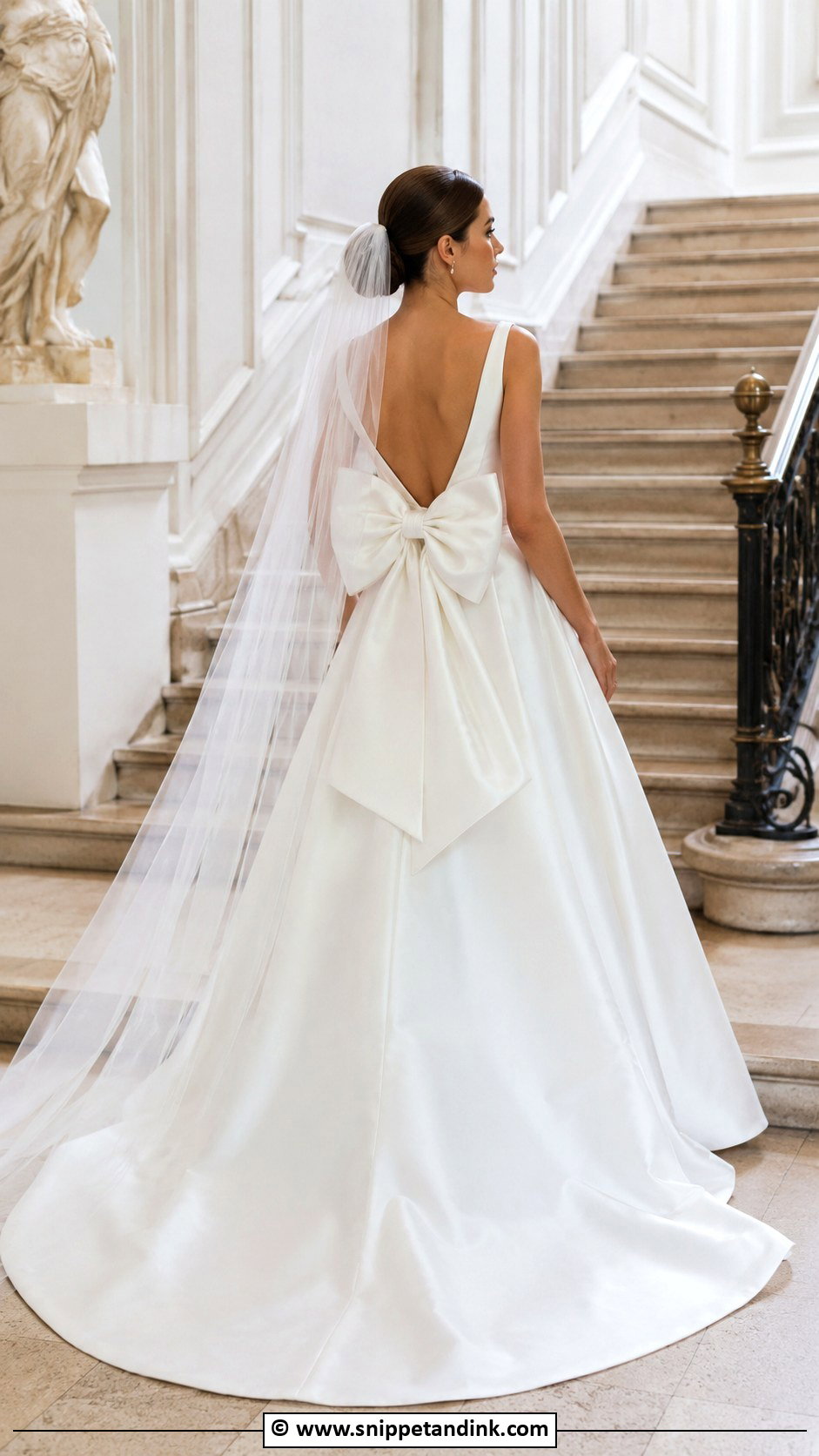
An oversized back bow only looks couture in a fabric stiff enough to hold it, which usually means satin, mikado or faille with an interfacing inside the loops. In thin fabric, a big bow sags by mid-afternoon. Keep the front of the gown completely plain so the back is the surprise as you walk up the aisle. Simple heels, a clean veil and minimal jewellery. Ballrooms and estates suit the scale of it.
18. Detachable Train Wedding Dress
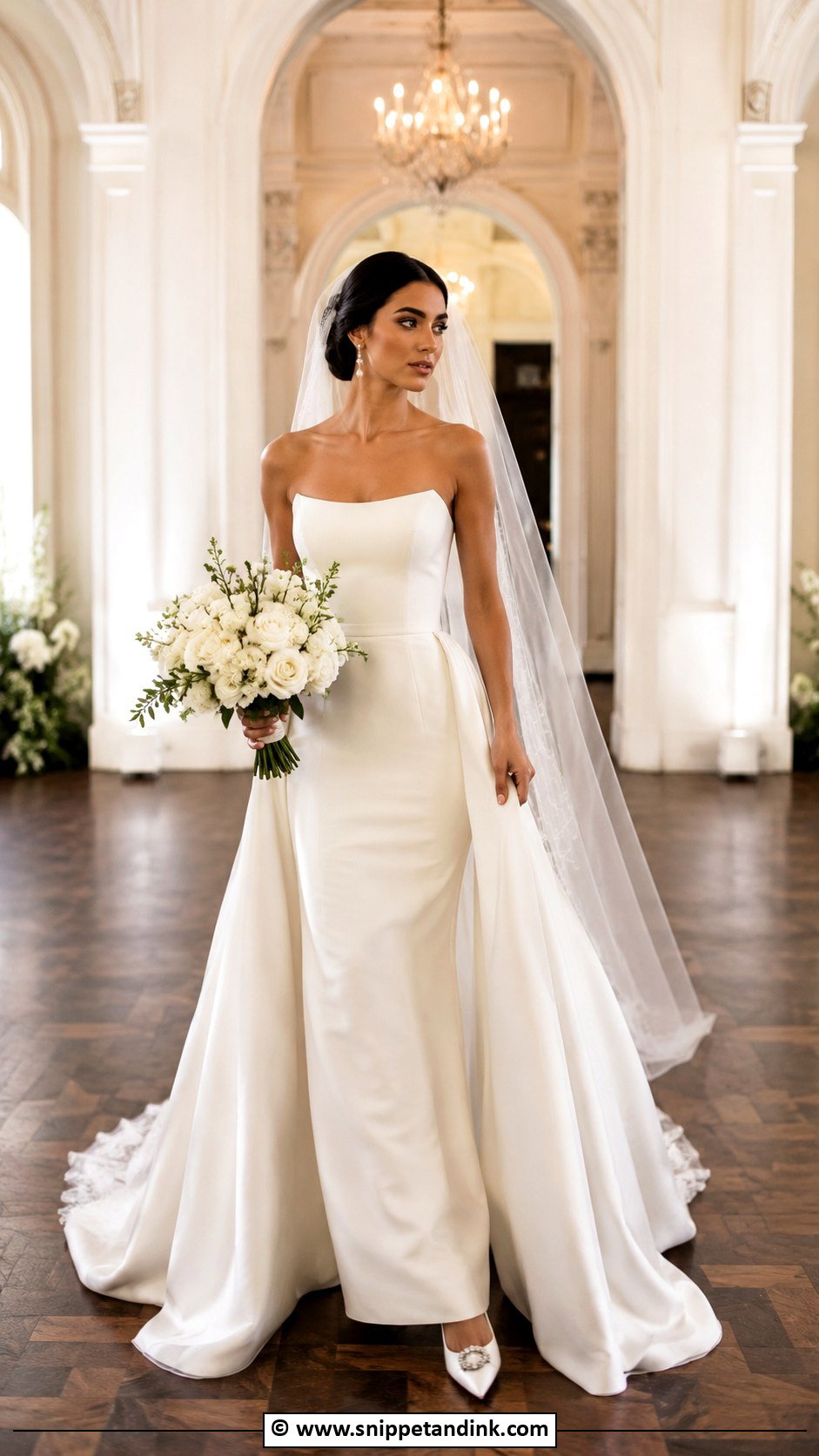
A detachable train wedding dress gives you the long ceremony train and then a lighter gown for dancing. The detail I always check is how it attaches: hidden hooks or snaps along the waist are neater than a visible button band. The train should be cut from the same fabric or a deliberate contrast, never a near-match. It works on fitted crepe, satin columns and corset gowns. Match the veil length to the train so the two don’t fight.
19. Overskirt Wedding Dress
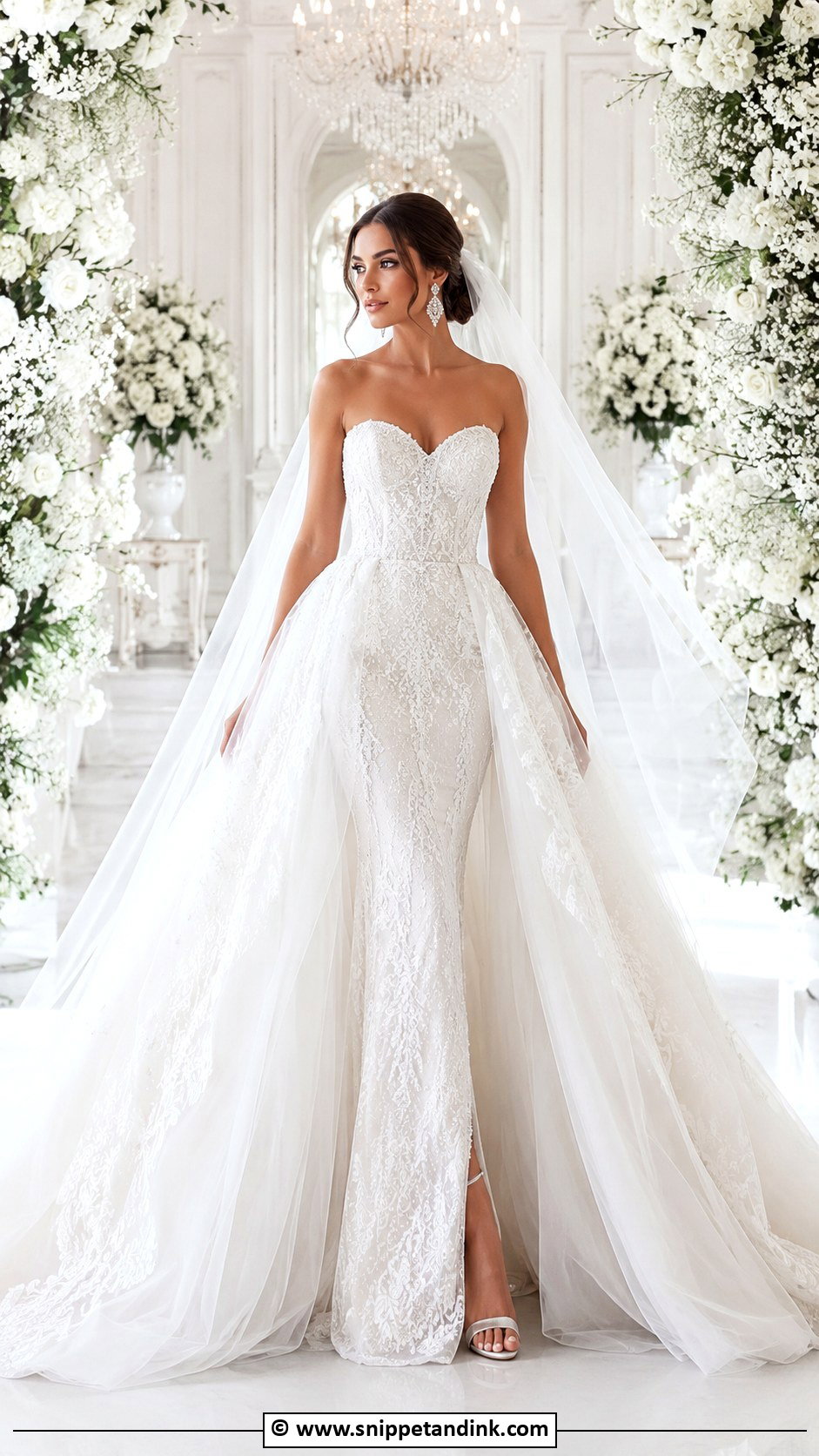
An overskirt wedding dress lets you walk the aisle in ball gown volume and then remove it to reveal a slimmer base dress. Tulle gives softness. Satin gives drama. Organza gives a light, airy structure. Practise taking it off with whoever will help you on the day, because the closure can be fiddly in a crowded room. A cathedral veil and sparkling earrings suit the ceremony version, and large venues show off the full skirt best.

20. Feather Trim Wedding Dress
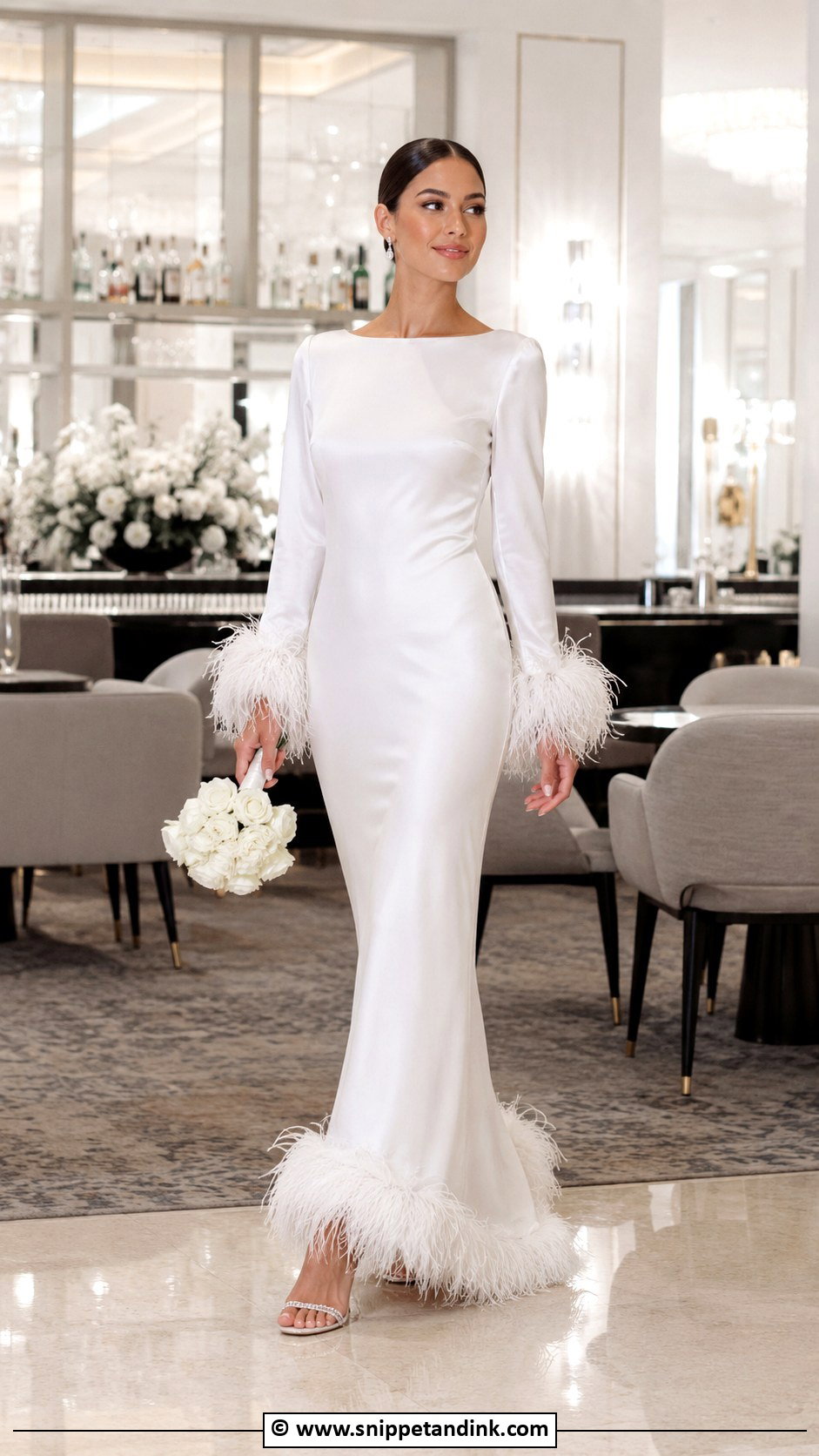
A feather trim wedding dress works when the feathers are the only embellishment. Ostrich feathers at the neckline, cuffs or hem add soft movement, and I’d put them on a plain silk, crepe or satin base. They don’t like rain or humidity, which flattens them, so I’d save this for an indoor evening wedding. Sleek hair and delicate earrings keep it from feeling theatrical. Ask for the trim to be removable so the gown can be cleaned.
21. Sequin Wedding Dress
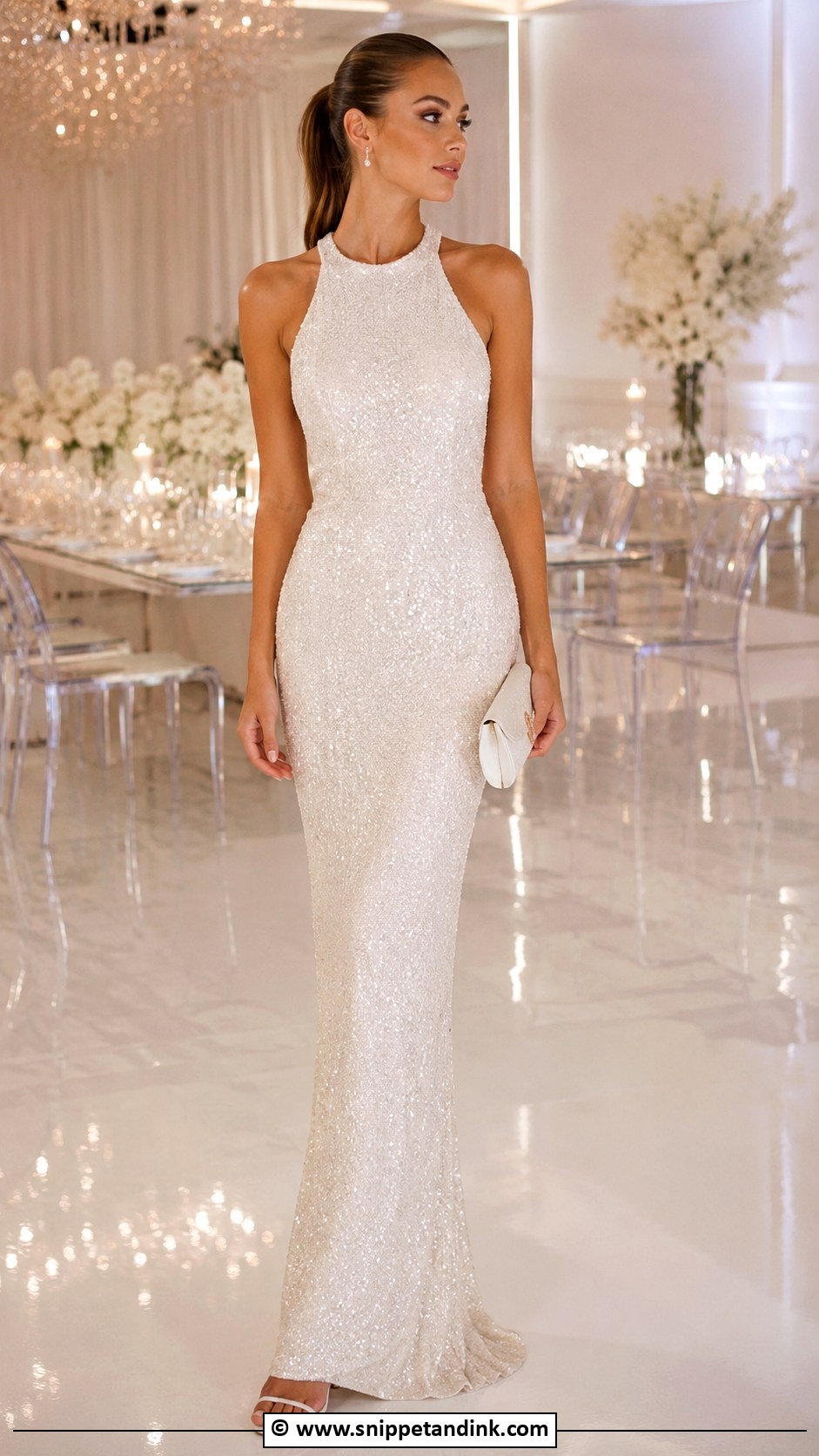
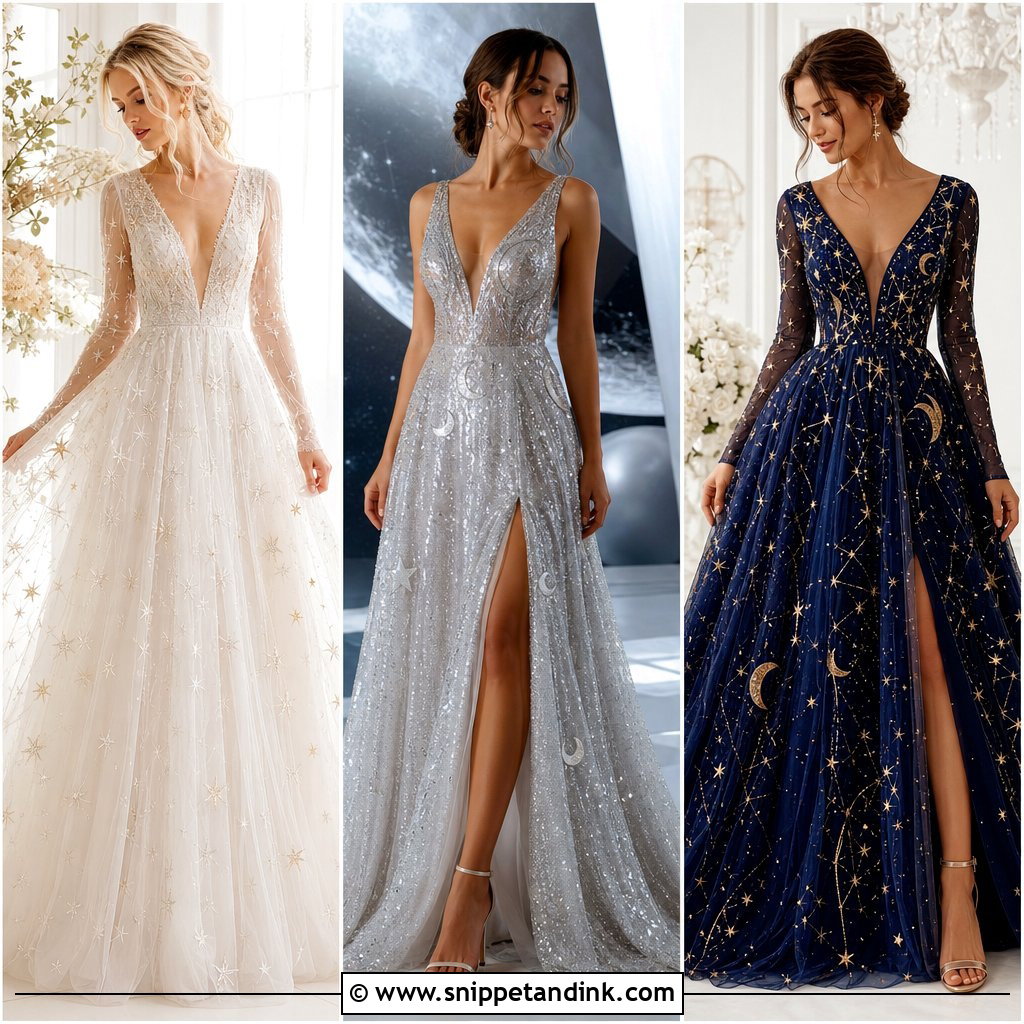
Sequins can turn costume-like fast, and the colour is usually why. Ivory, champagne or pearl-toned sequins on a simple column or long-sleeve gown look expensive. Bright silver often doesn’t. Check the inside too, since sequin backing can scratch your arms and the undersides of your wrists over a long night. Slim heels and small earrings, with a sleek ponytail. It works as a ceremony gown in the evening or as a second look.
22. Sheer Sleeve Wedding Dress
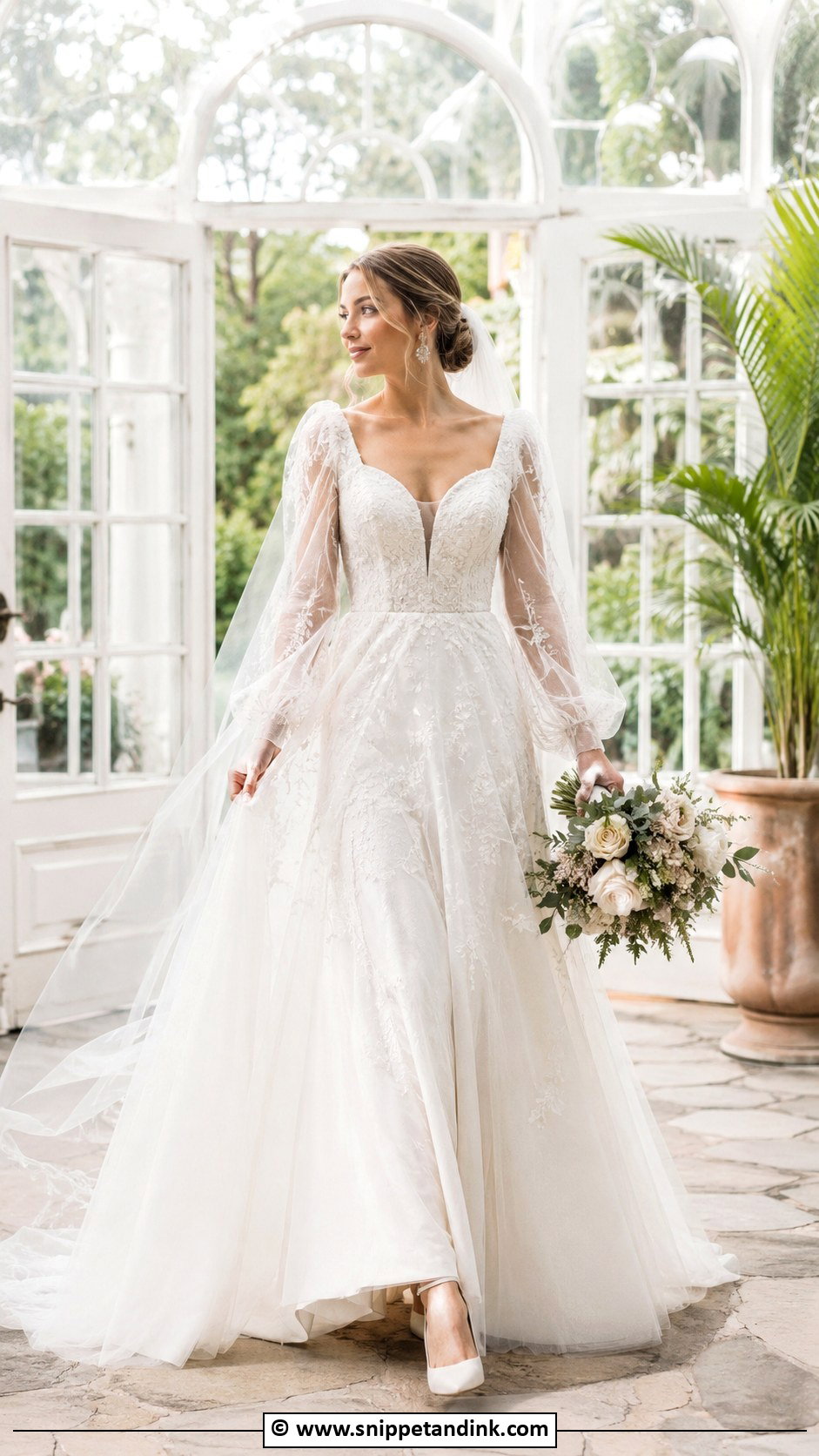
Sheer sleeves give coverage without weight. Plain tulle sleeves are the most discreet. Lace, pearl-dotted or embroidered ones add detail. What I look at is the fit through the upper arm, because sheer fabric that’s too tight creates a visible pinch line, while too loose looks baggy in photos. Ivory heels and a low bun keep it soft. It suits spring, autumn and winter weddings.
23. Embroidered Wedding Dress
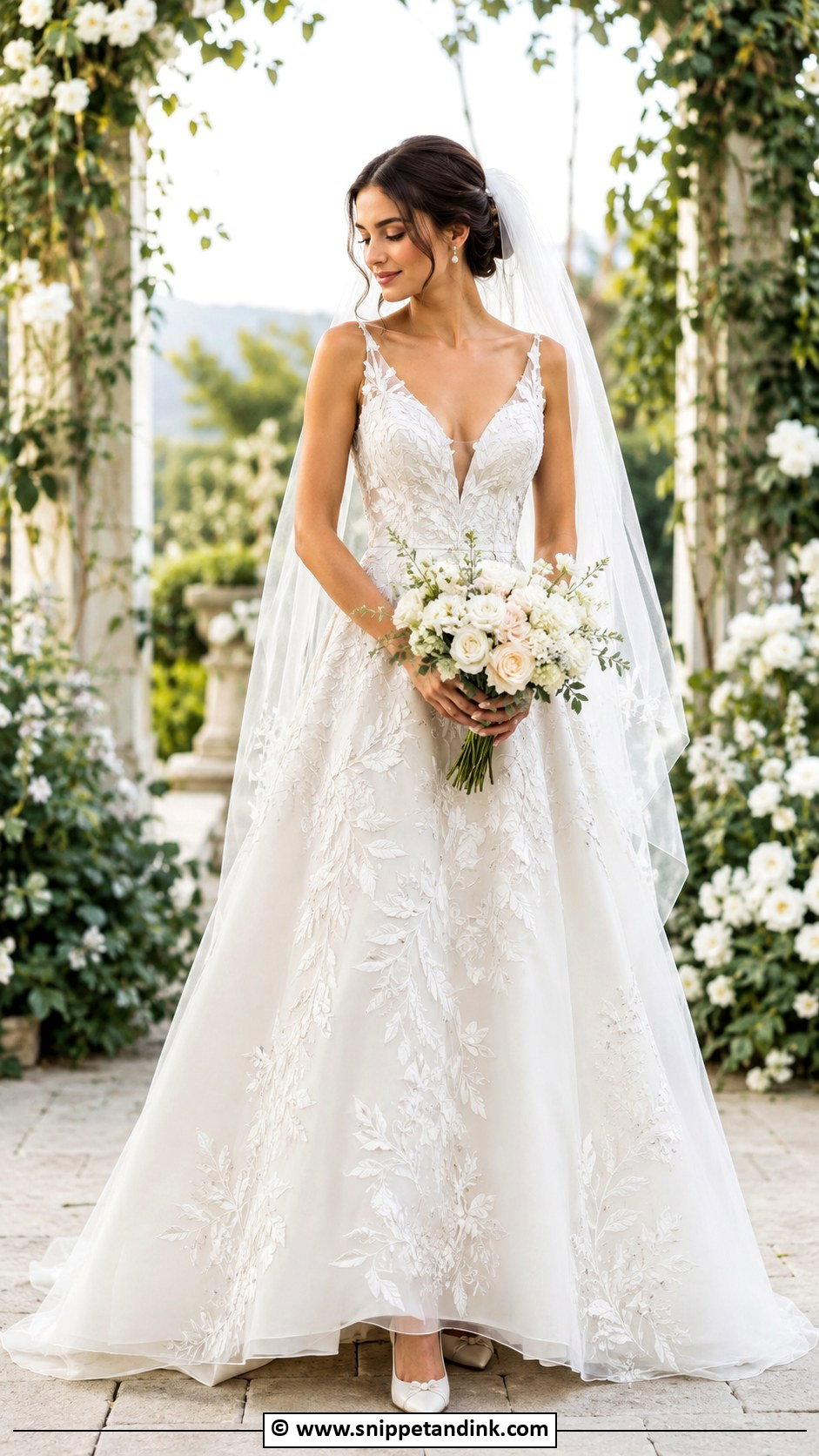
Embroidery is slow, skilled work, and it’s one of the clearest signs of a well-made gown. Floral, botanical, geometric or tone-on-tone thread can follow the bodice, sleeves or train. Look at the back of the stitching on a sample if the shop allows it. Tight, even stitches mean it’ll survive cleaning. Simple shoes and small earrings let the stitching speak, and a veil with a plain edge won’t hide it.
24. Minimalist Wedding Dress
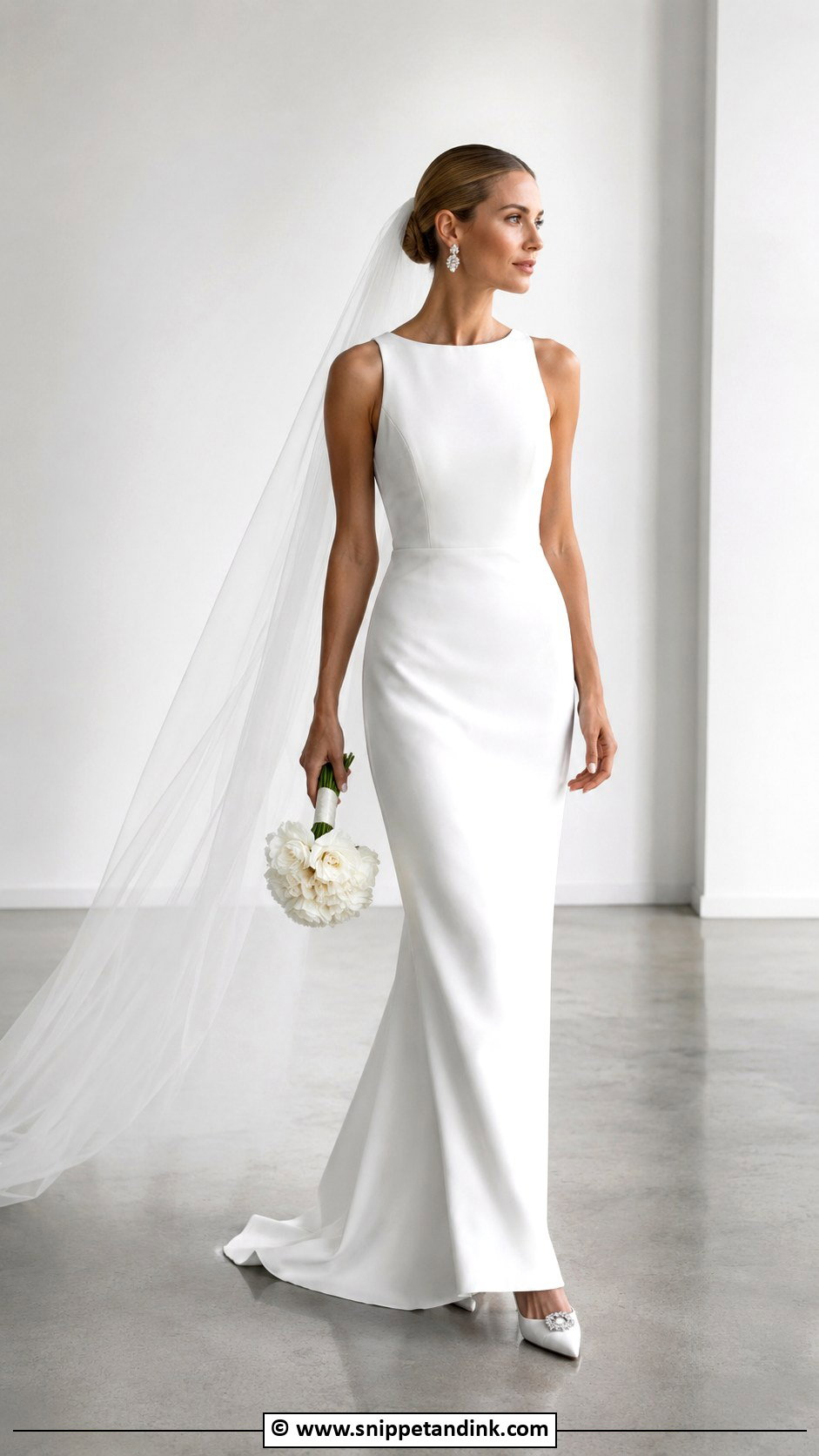
Minimal gowns are where your money goes into fabric and fit rather than decoration. A silk, crepe or mikado column, A-line or structured ball gown with a clean neckline and flat seams can look more expensive than anything beaded. Because nothing distracts, every alteration shows. Choose sculptural earrings and pointed heels, and make your hairstyle the one considered accessory.
25. Vintage Inspired Wedding Dress
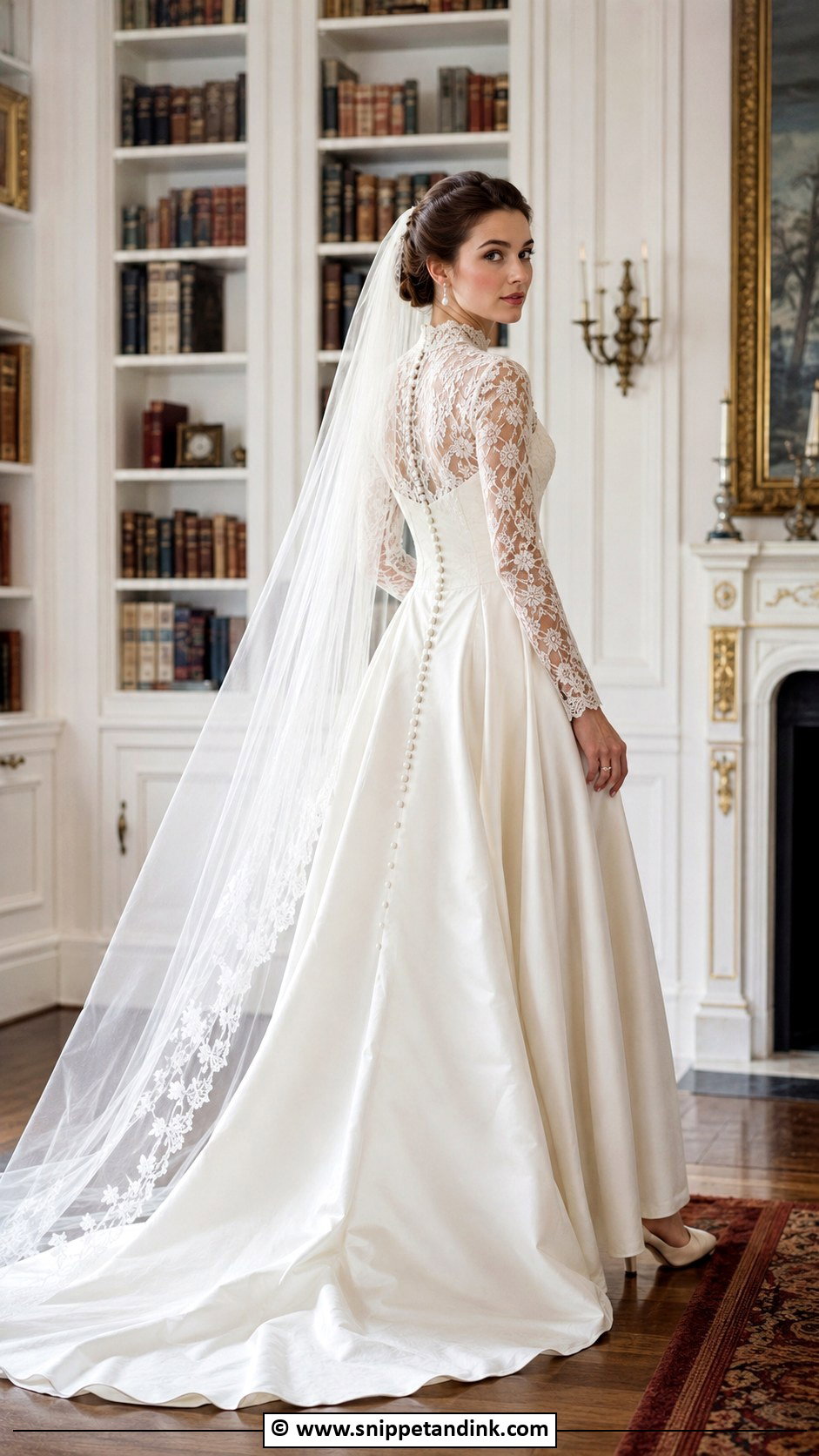
Vintage-inspired gowns look best with a restrained hand. Pick one or two details, such as lace sleeves, a basque waist, covered buttons, a high neck or soft satin drape, and keep everything else modern. Pile them all on and it starts to look like a costume. Pearl earrings and a soft veil suit it, and historic venues and libraries give it a natural setting. Fresh tailoring is what keeps it from looking dated.
26. Champagne Wedding Dress
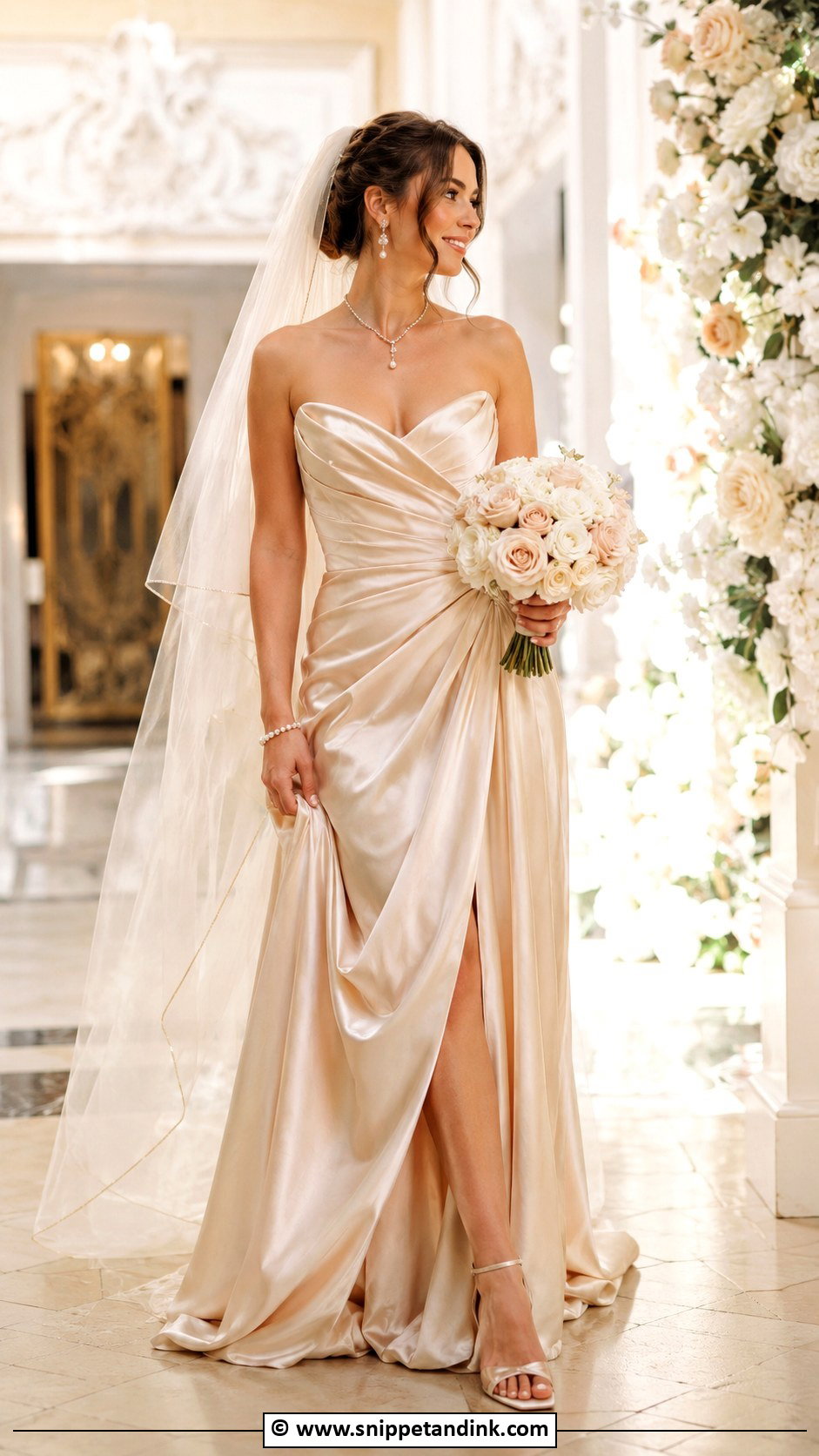
Champagne is the shade I suggest to brides who find bright white washes them out. It warms most skin tones and looks rich in satin, tulle, lace or beading. Matching is the tricky part. Ivory veils can look grey next to champagne, so bring a swatch of the gown when you choose the veil, shoes and jewellery. Gold or pearl jewellery and a bouquet in cream, blush and pale peach finish it.
27. Blush Wedding Dress
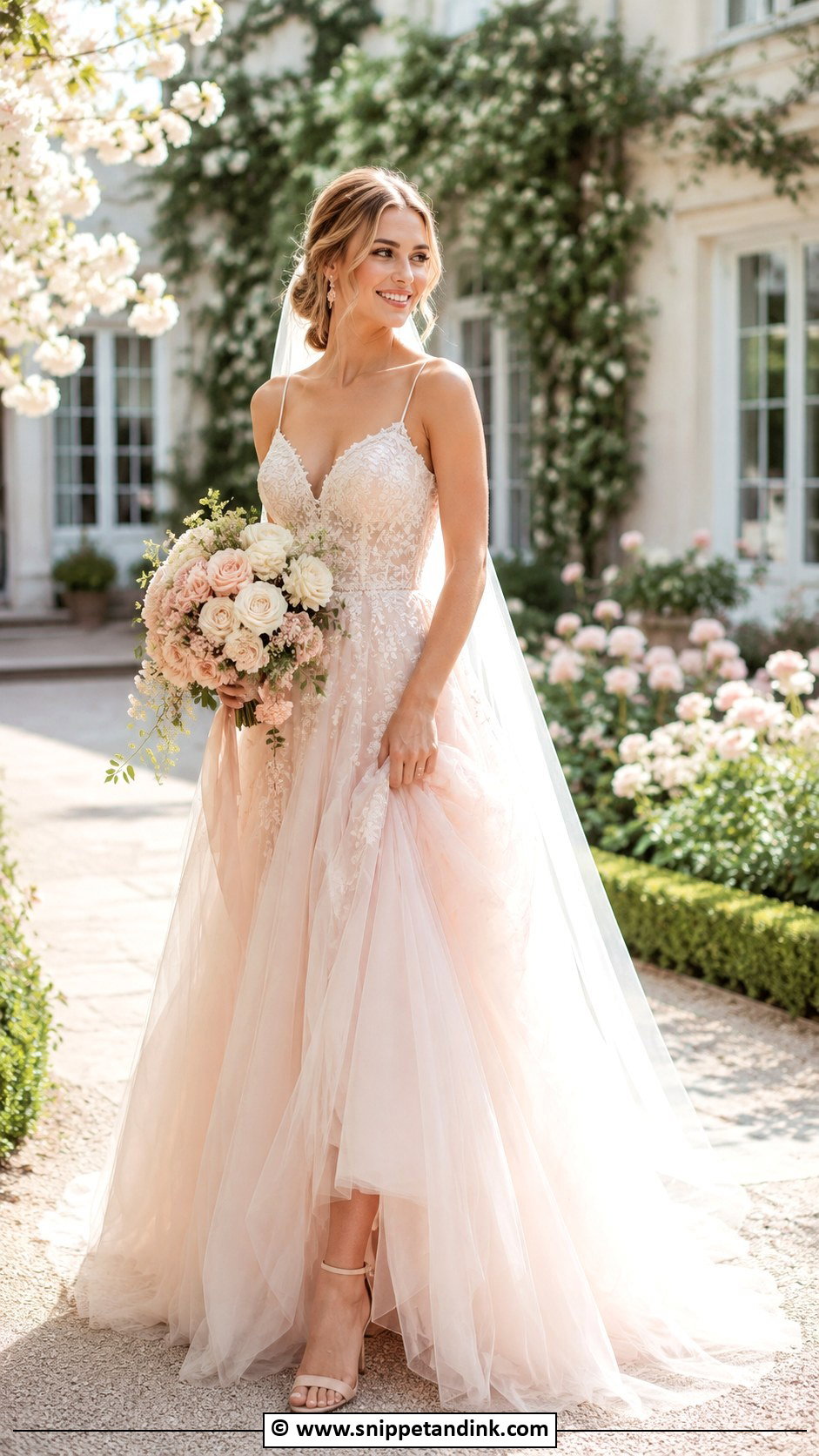
Blush gives you colour while still reading as bridal. The test is daylight: a blush that glows in a shop can disappear to white outside, or look much pinker than you expect, so see the fabric by a window before ordering. Tulle and organza keep it light. Satin makes it richer. I’d pair it with nude or ivory heels and rose gold jewellery, and keep the bouquet soft with greenery. Avoid saturated pinks if you want it to feel bridal.
28. Beaded Bodice Wedding Dress
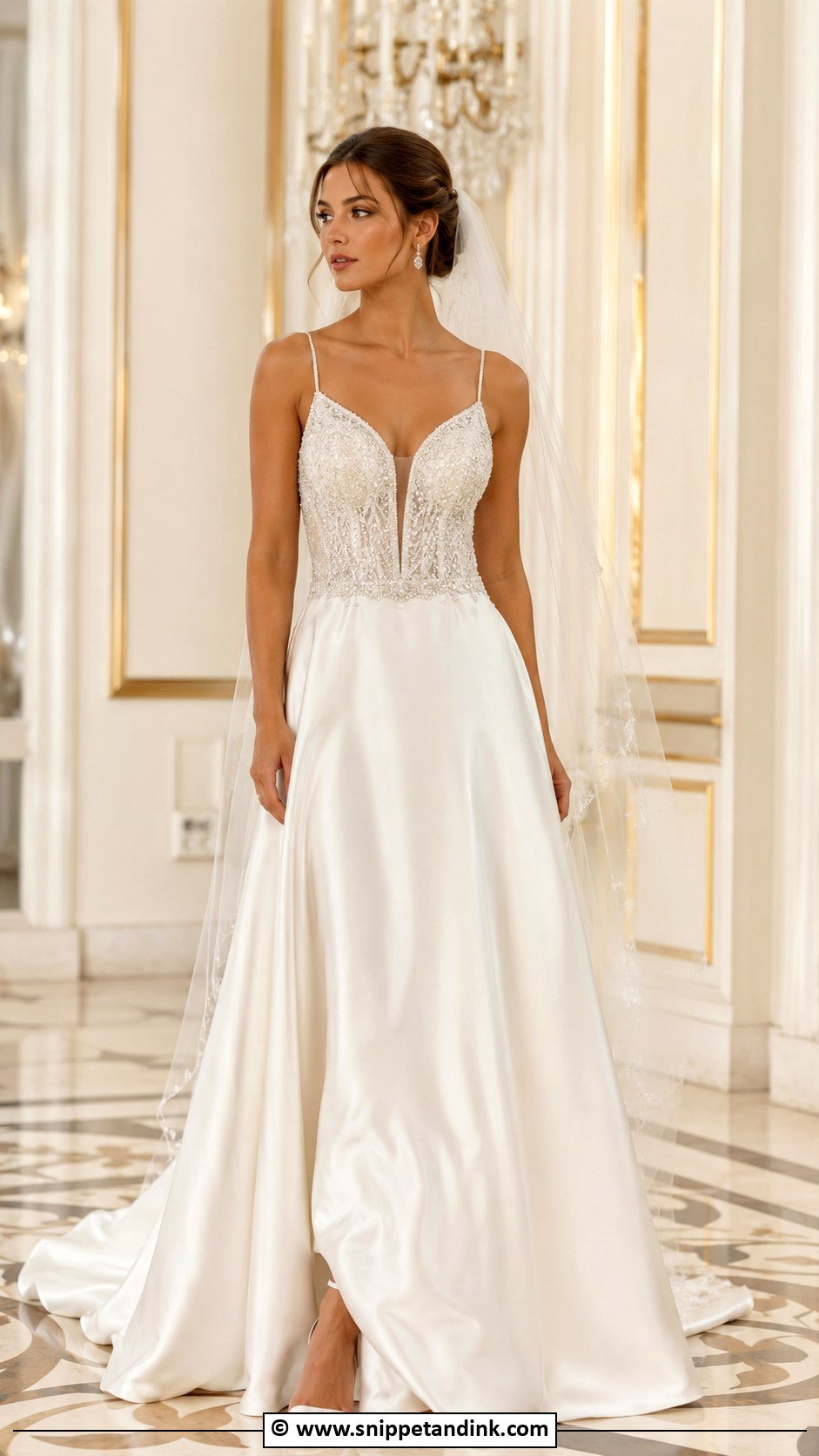
A beaded bodice puts the sparkle near your face and keeps the skirt quiet, which is a balance I like when a bride wants shine without sparkle from neck to hem. The skirt can be plain satin, soft tulle, chiffon or crepe. Pearls, crystals or tonal beadwork all work. Beading adds weight, so the bodice has to be well-structured or it pulls down at the front. Delicate earrings and a veil starting behind the shoulders complete it.
29. Sculptural Wedding Dress
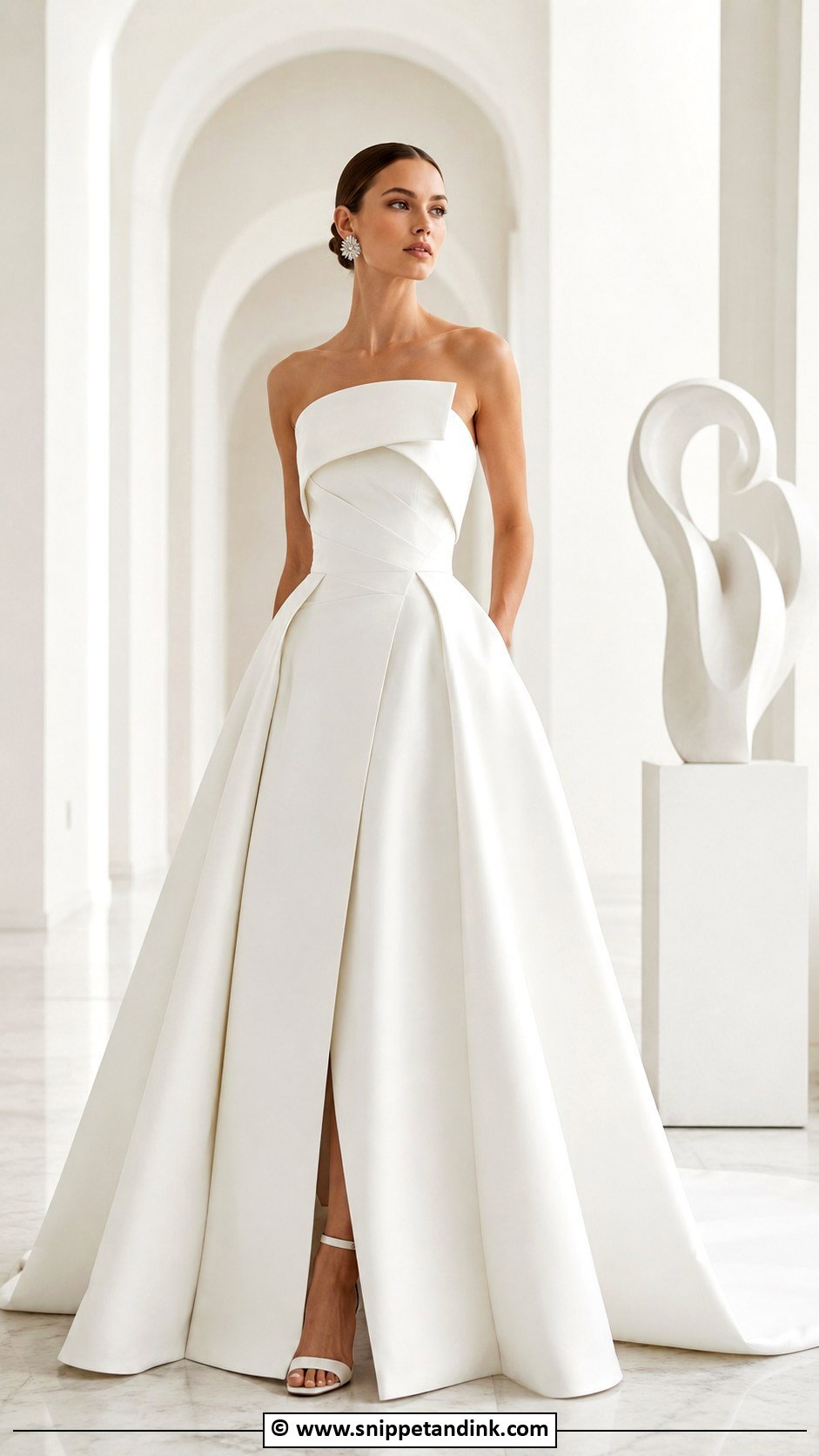
Sculptural gowns are built rather than draped. Folded necklines, architectural skirts and dramatic folds need fabrics with body, like satin, mikado, faille or organza, to hold their shape. Wear modern earrings and plain heels, with a polished veil or none at all. These gowns need careful handling at the venue, because crushed folds don’t spring back on their own. Pack a travel steamer and assign someone to use it.
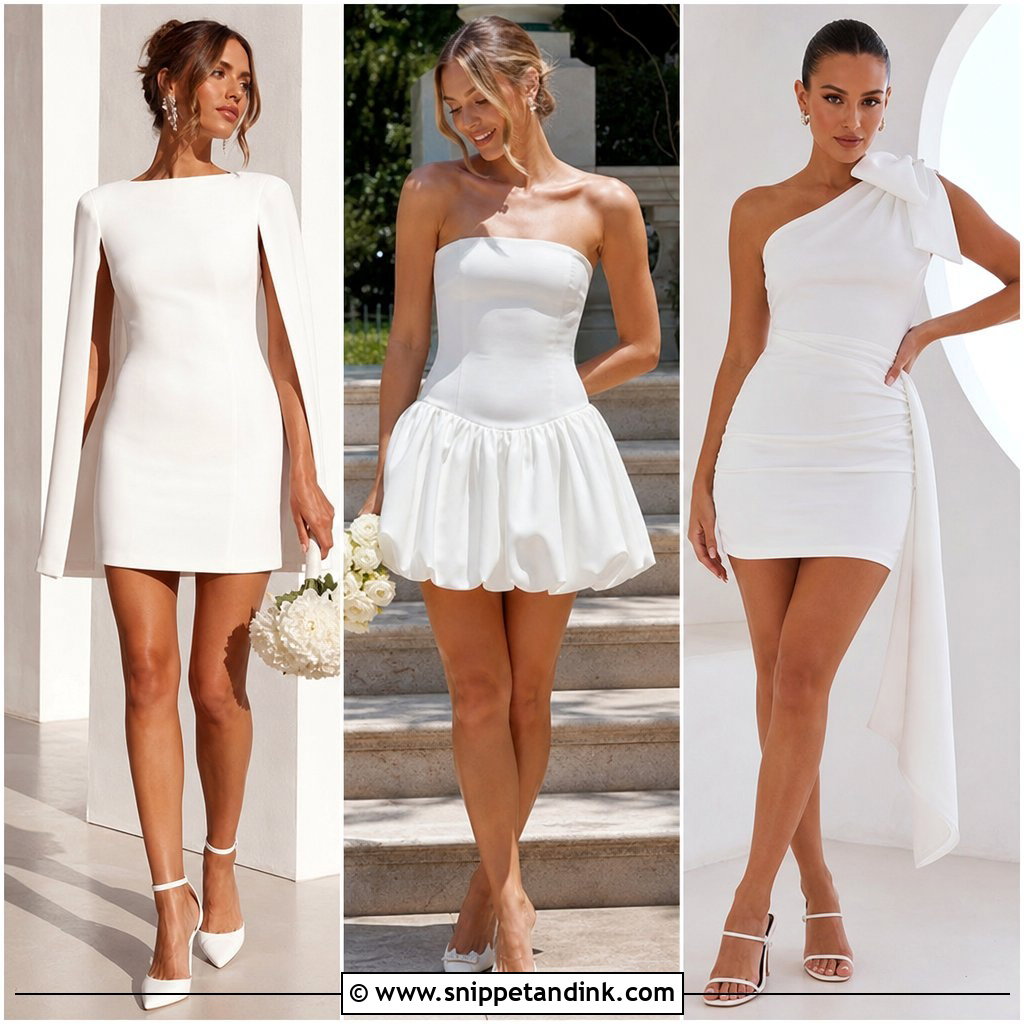
30. Reception Mini Wedding Dress
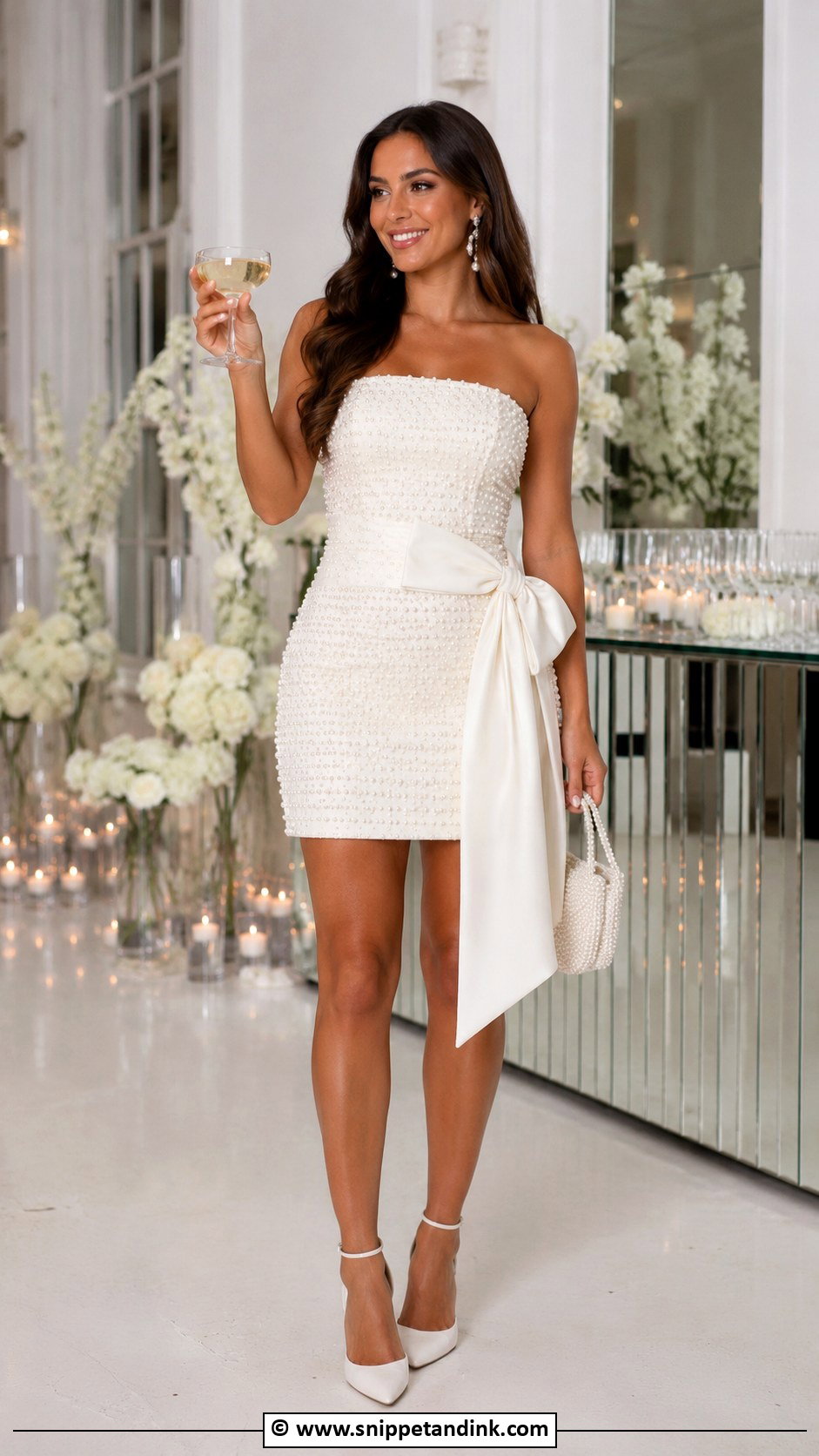
A mini for the reception is a fun way to dance properly, as long as it still reads as bridal. Satin, lace, pearl beading, feathers or a bow give it that feeling. Pair it with elegant heels, statement earrings and a small bridal bag. A short veil or a hair bow keeps the playful edge. It also works for a courthouse ceremony or a welcome party. Tie it back to the main gown with the same fabric or a repeated detail.
Silk and Beading Need a Plan Once the Party Ends
An expensive gown deserves a plan for the week after the wedding, because what happens then decides whether it yellows in a cupboard or lasts for decades.
Get it cleaned soon
Take it to a specialist wedding gown cleaner within a few weeks. Champagne, sweat and sugary drinks can dry invisible and then turn brown over time, especially on silk. Point out every stain you know about, including the hem, and ask how they’ll treat beading and appliqué.
Store it flat and in the dark
I’d never hang a heavy beaded or ball gown by its straps for long, because the weight stretches the shoulders. Fold it with acid-free tissue in an acid-free box, or use a breathable cotton bag if you must hang it, with the inner hanging loops taking the load. Keep it out of plastic and away from light, damp and heat, so no attics or basements. Refold it along different lines every year or so to stop permanent creases forming.
Fit Is the Real Luxury
Luxury in a wedding gown comes down to fabric, construction and fit, and the rest is styling. A satin ball gown, a silk slip, lace sleeves, a sculptural shape, a champagne tone or a reception mini can all look expensive when they’re well made and properly altered. Let your accessories support the gown rather than compete with it. The richest-looking bride in the room is rarely the one with the most sparkle. It’s the one whose dress fits as if it were made for her.
You'll Like These Ideas:










Leave a Reply