
There’s a reason so many brides land back on the same few shapes after weeks of scrolling. Low chignons, smooth buns, glossy waves, French twists and half-up curls frame the face, sit well under a veil and stay put from the walk down the aisle to the last dance. They also move easily between settings, from a ballroom to a windy coastal lawn. I’ve added notes to each idea on the gowns and hair types it flatters, and where I’d honestly steer someone elsewhere, so you can see quickly which belong on your shortlist.
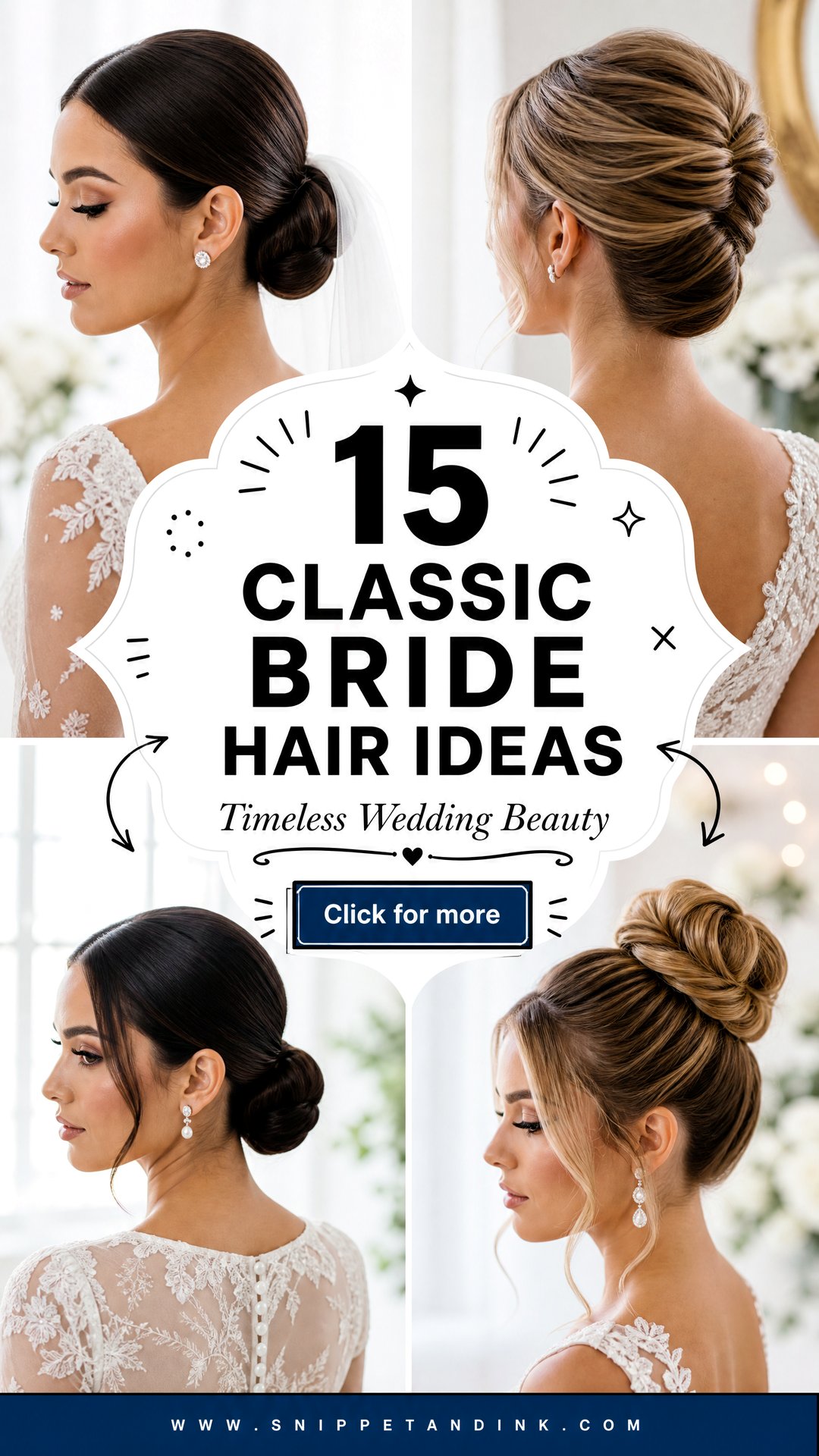
Three Months of Prep for Hair That Has to Shine
Classic styles are smooth, which means they show the condition of your hair far more than a messy, textured look. Split ends poke out of a sleek bun. Dry lengths go fuzzy in a set wave. With these styles, I’d rather see a bride plan a little ahead than try to rescue the hair on the morning.
Around three months out
Make any big colour change now, so there’s time to correct it if it turns brassy or patchy. If you’re growing hair for an updo, ask your hairdresser for small dusting trims rather than skipping cuts altogether. Ragged ends make a chignon harder to tuck neatly.
Around one month out
This is when I like to do the trial. Wear a top with a neckline close to your dress and bring the veil, or at least a scrap of tulle on a comb. Take photos in daylight and with a flash. Use a weekly mask if your lengths are dry, and ease off hot tools between now and the wedding.
The last two weeks
Have a light trim and any colour refresh about a week to ten days out, so it looks settled rather than freshly cut. Don’t switch shampoo, oil or treatments now. Ask your stylist when they want your hair washed; I usually prefer the evening before for updos, since day-old hair grips pins better.
1. Classic Bride Low Chignon
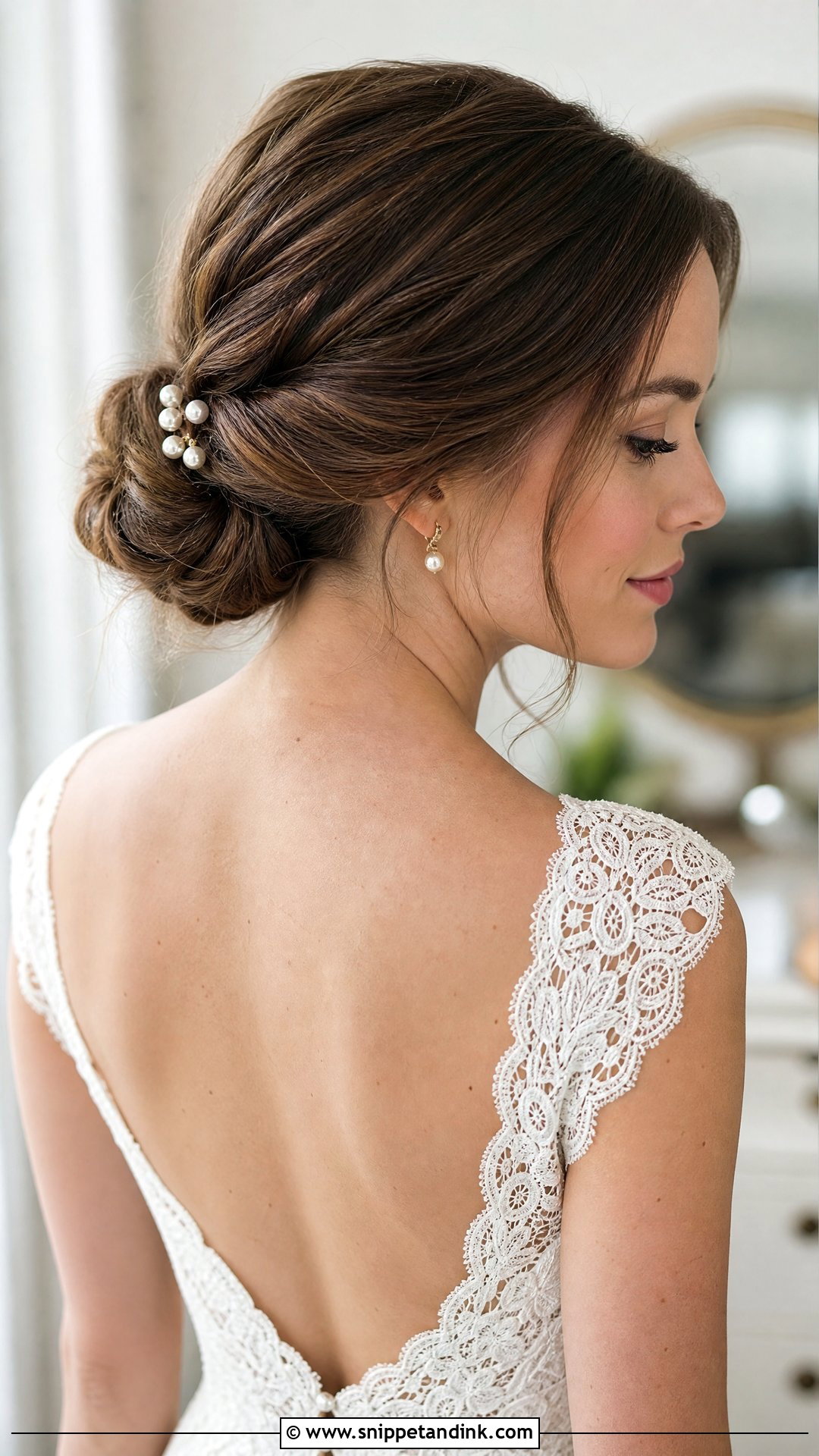
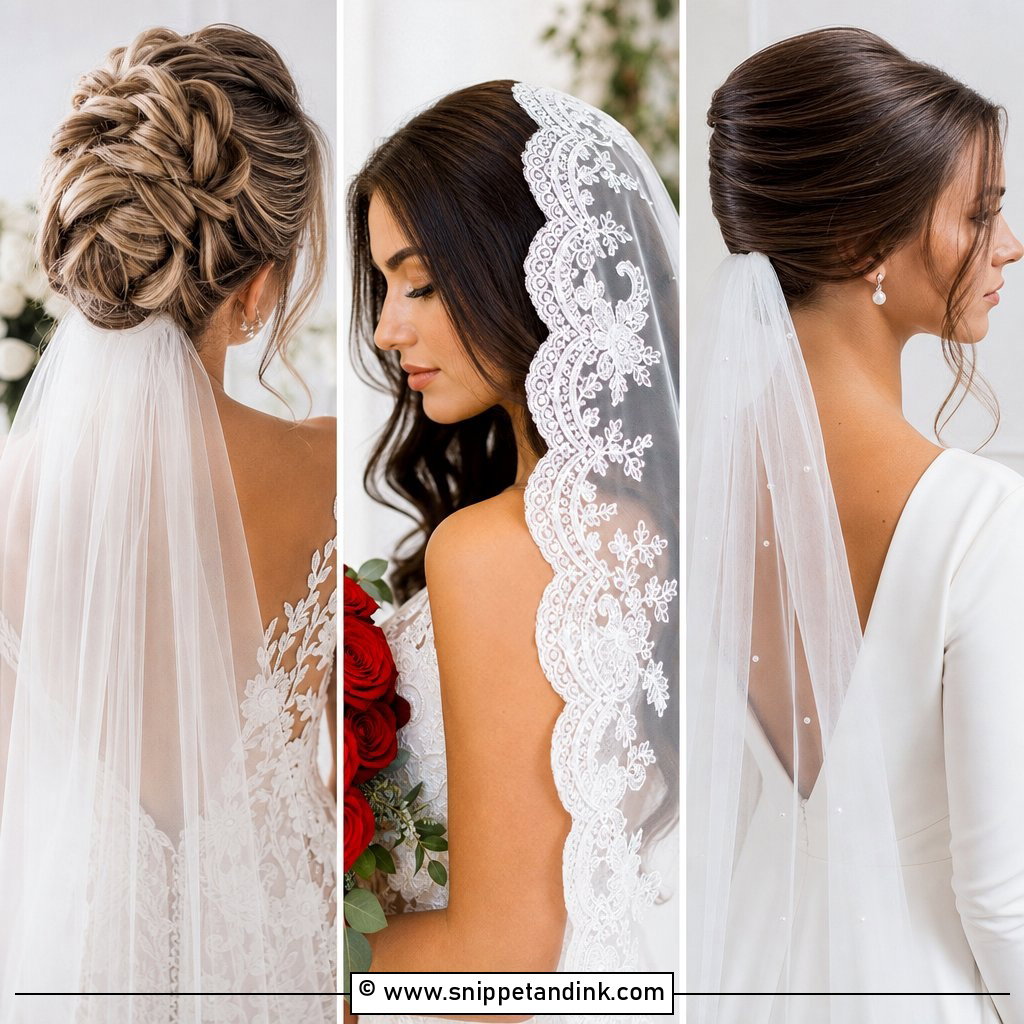
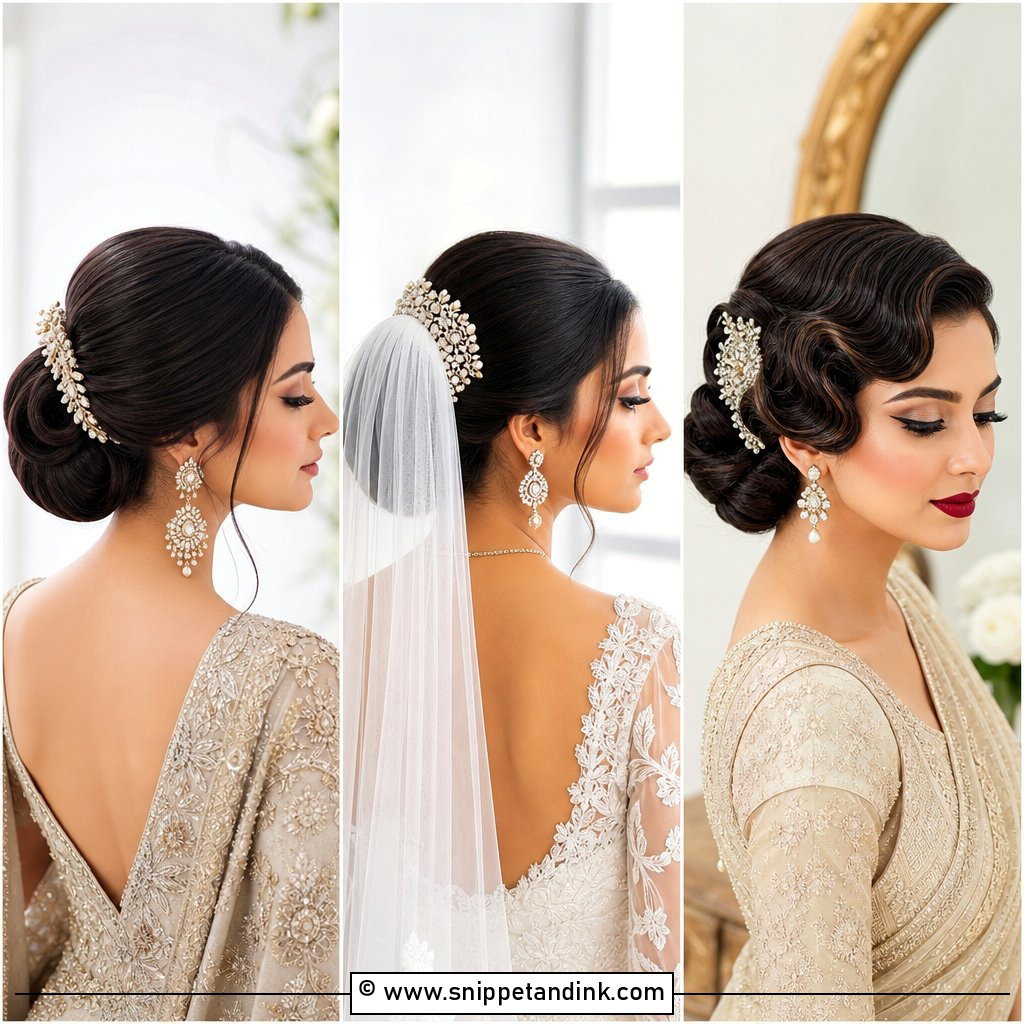
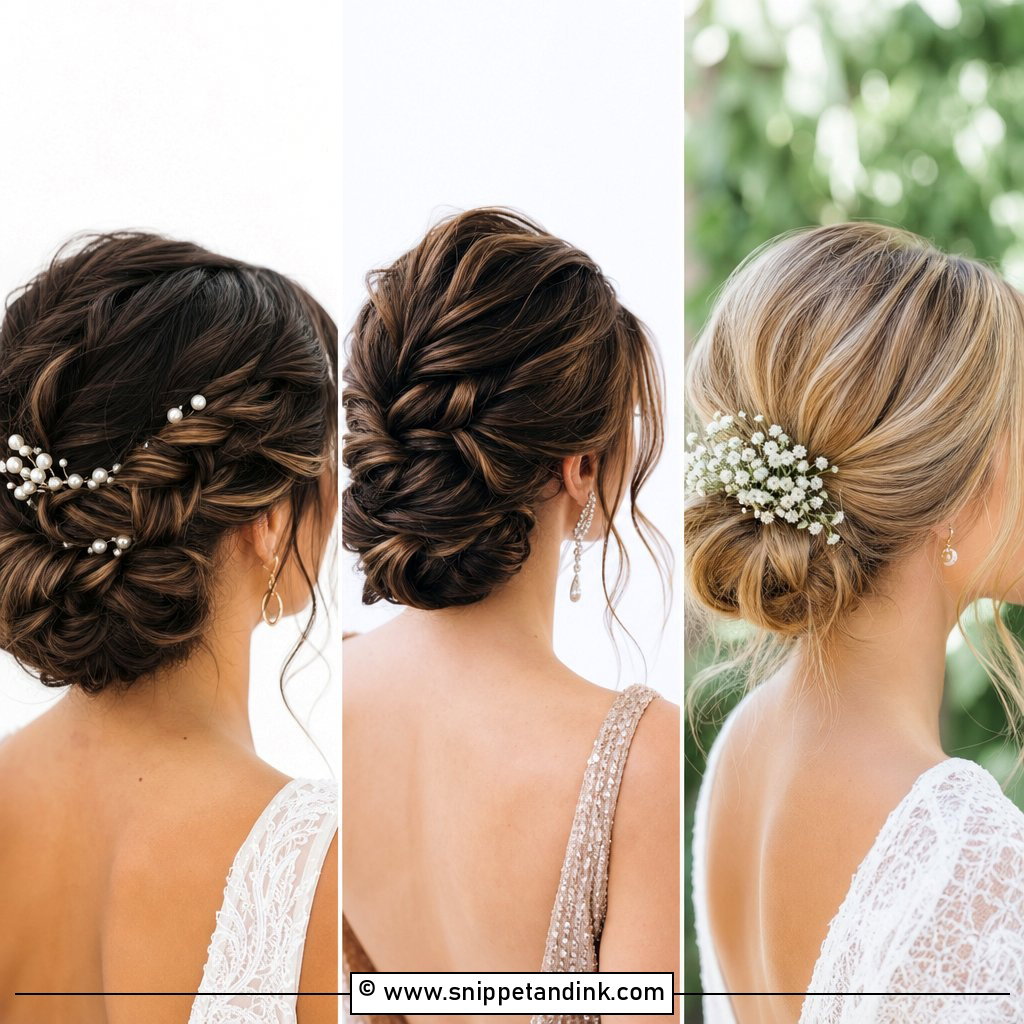
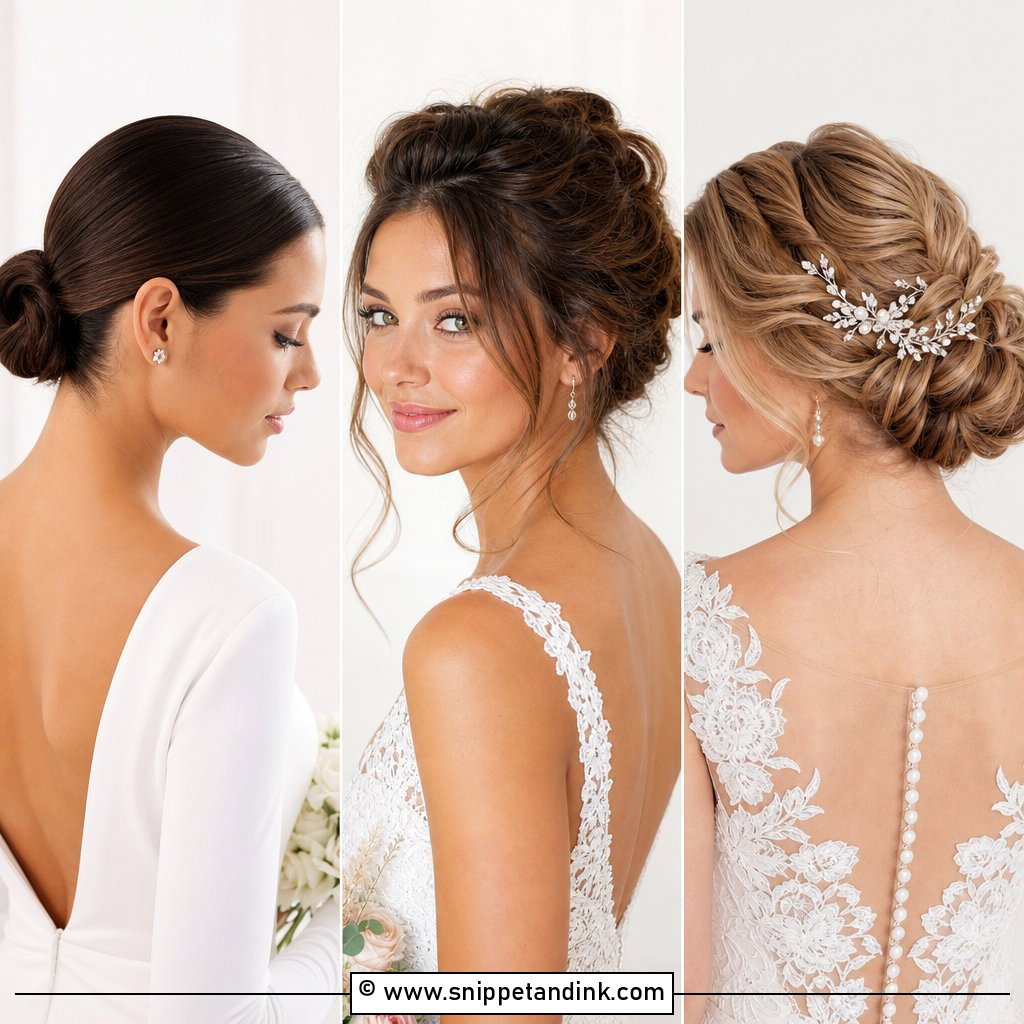
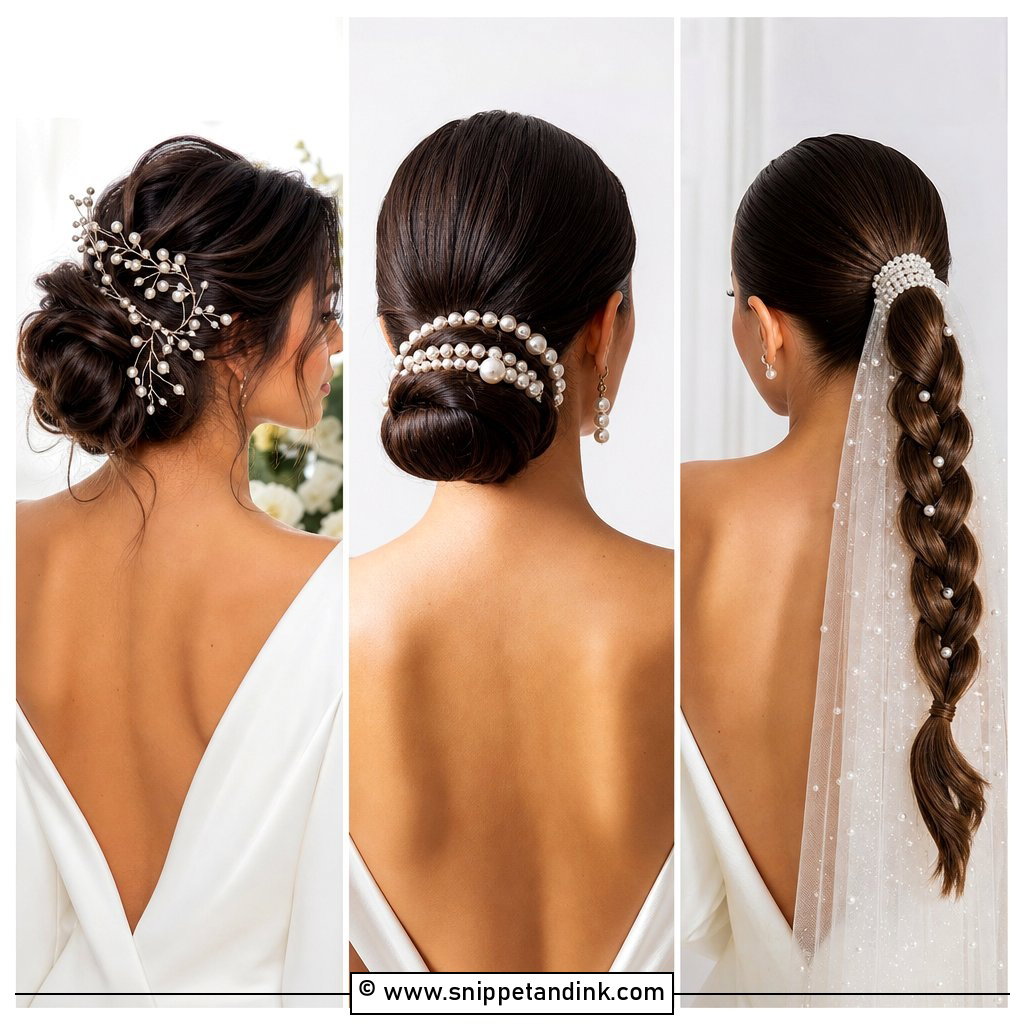
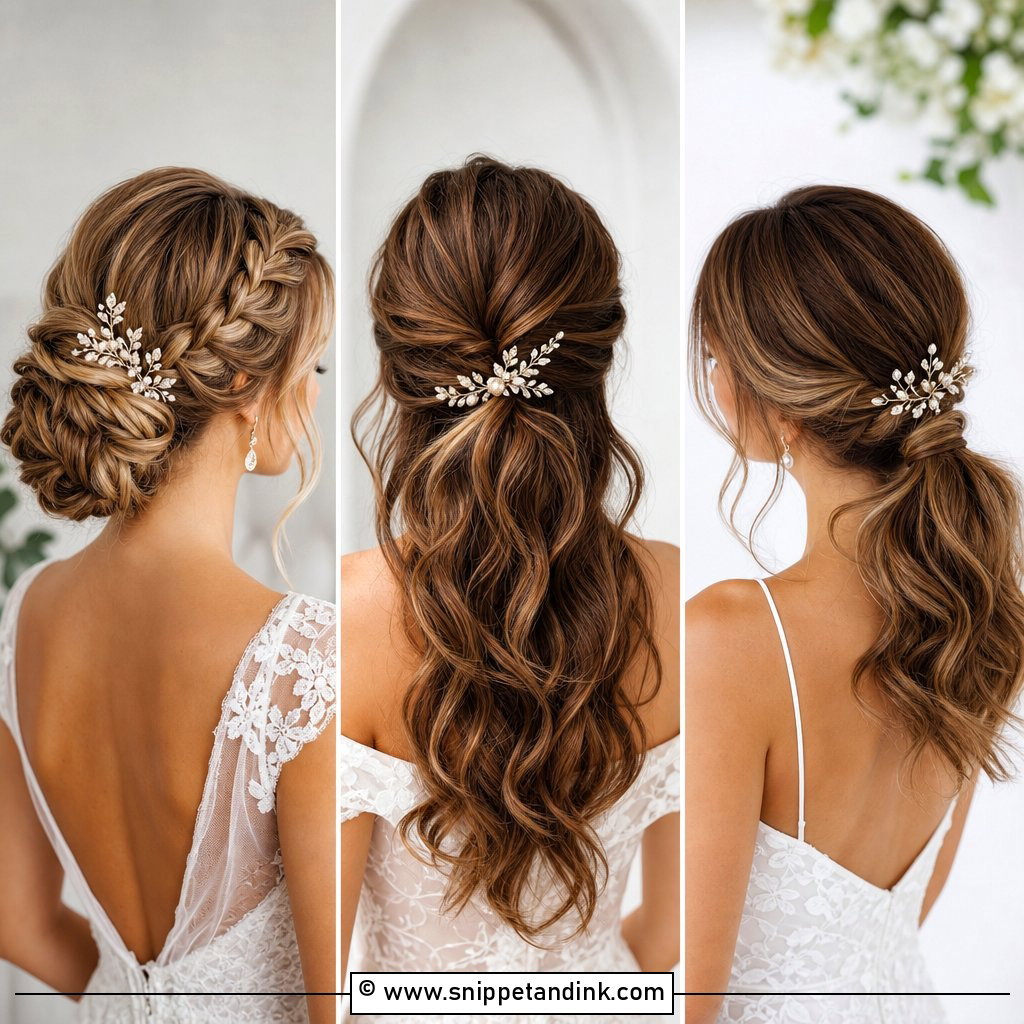
Reliable is the right word for a low chignon. It sits at the nape, out of the way of a veil, pearl pins or a comb, and it works above a high neck or an off-the-shoulder gown. Fine hair rarely has enough bulk on its own, so I’ll add a small padding piece or clip-in wefts underneath before shaping. Thick hair is the opposite problem: I thin out the bun by tucking some lengths into a flat twist first. Keep the hold soft. A chignon sprayed rigid loses the slight looseness that makes it read as a chignon at all.
2. Classic Bride Sleek Bun
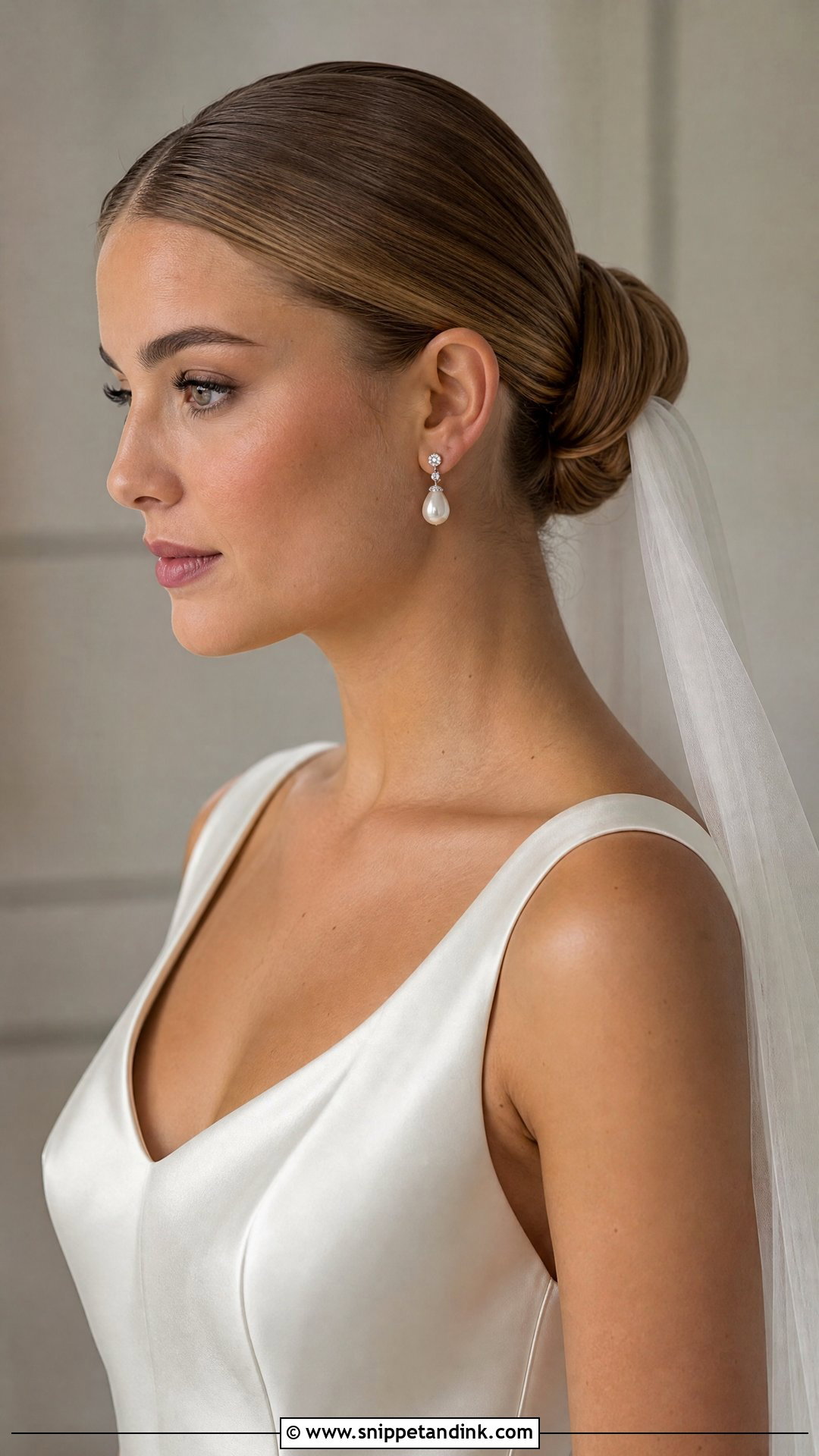
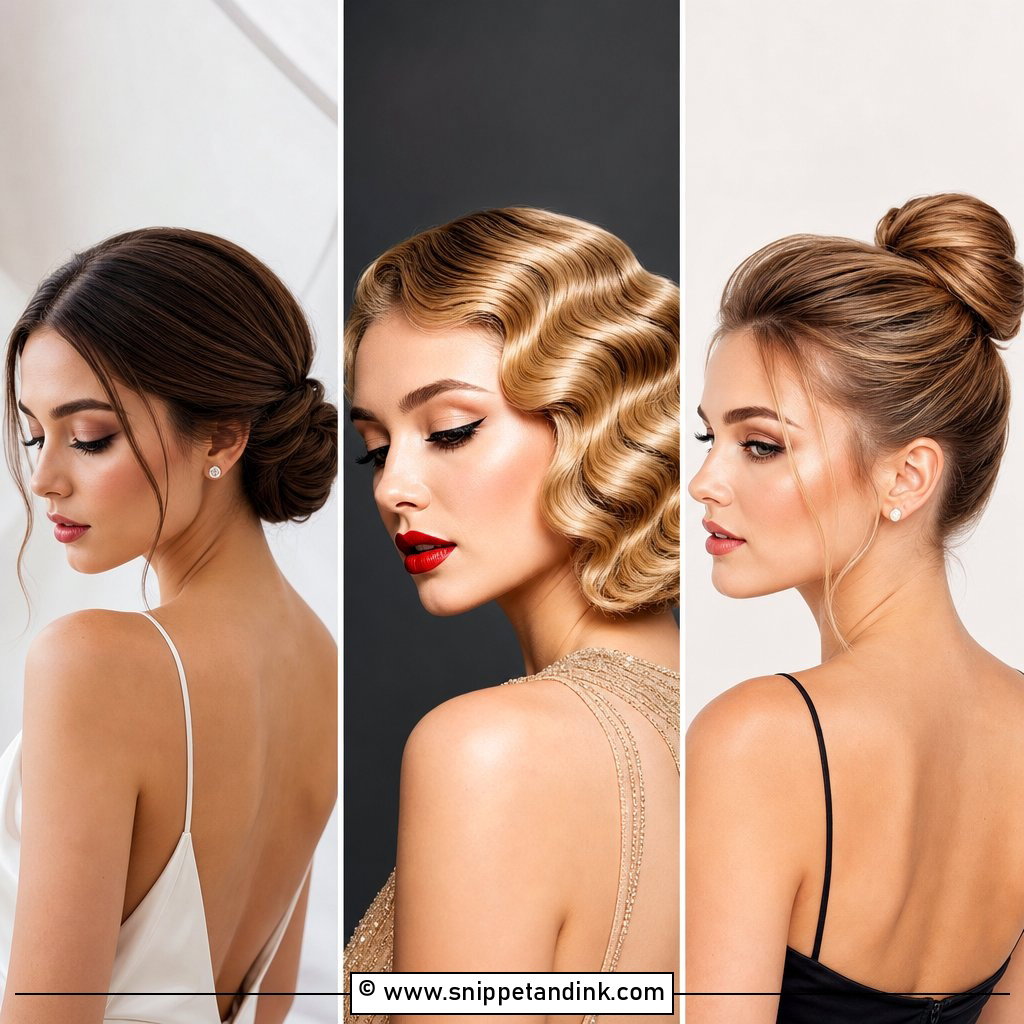
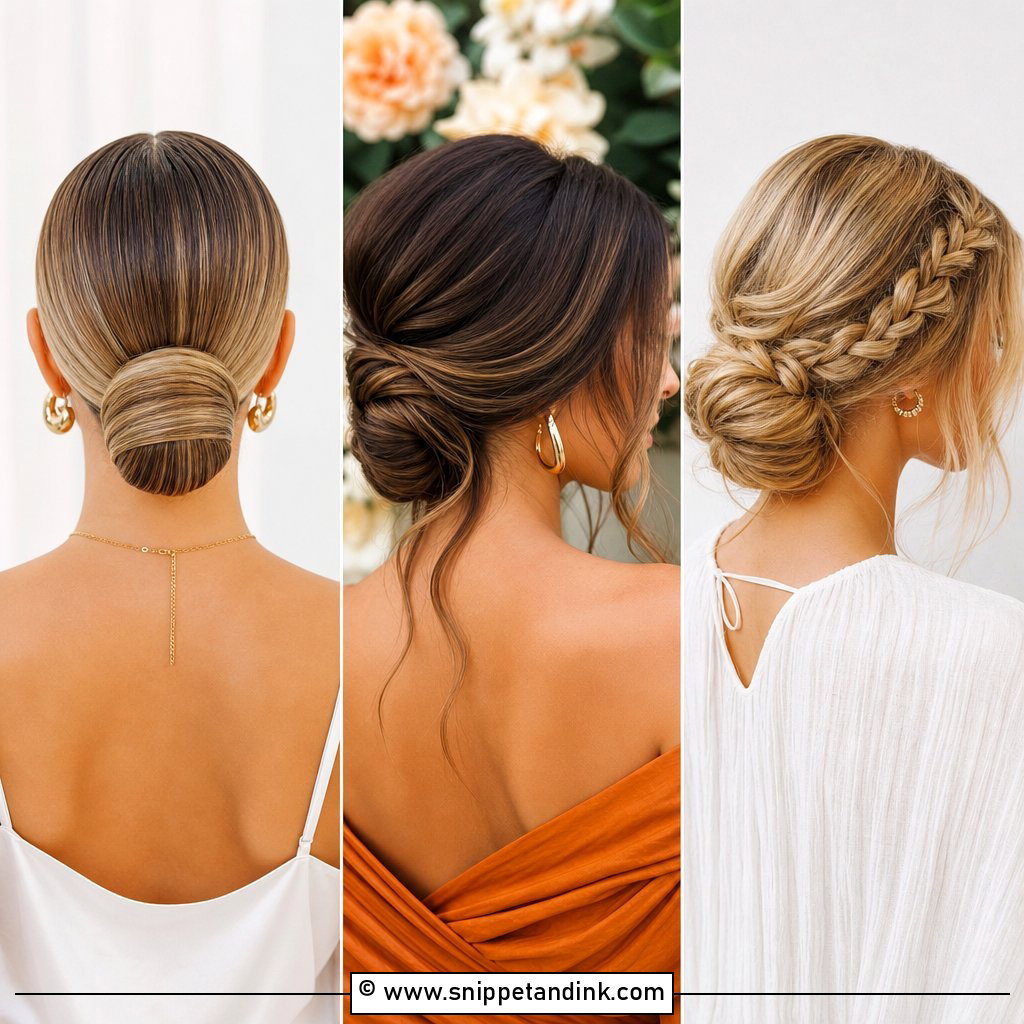
Nothing loose, nothing in the way. A sleek bun pushes attention to your face, makeup, earrings and neckline, which is why minimal dresses and city ceremonies suit it. I’d mention one thing most brides don’t expect: a bun pulled very tight can give you a headache by the speeches. I smooth the hair firmly at the hairline but leave the ponytail base just slightly relaxed, then hide that with brushing. A center part looks modern, a side part more traditional. In warm weather it’s one of the few styles I’d describe as fully sweat-proof.
3. Classic Bride Hollywood Waves
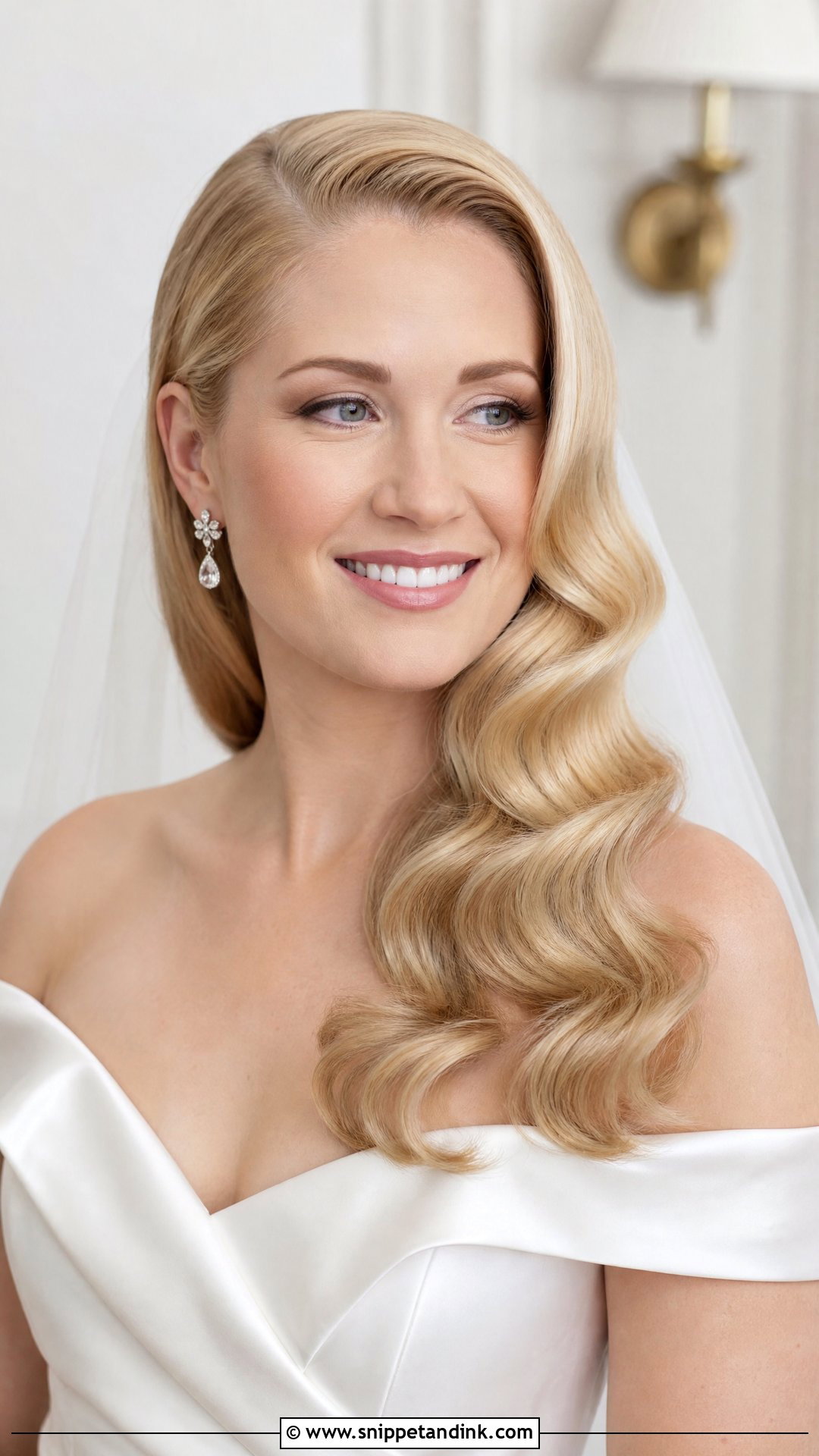
These waves bring vintage glamour without looking like a costume, provided they’re done properly. I curl every section away from the face in the same direction, clip each curl to set, then brush the whole head until the curls merge into one smooth S-shape that catches light. They’re especially rich against strapless gowns, satin and long sleeves. You need medium to long hair, or extensions for fullness. A deep side part is the dramatic version. Don’t let anyone rough them into beach texture, and expect them to relax a bit, so I start slightly tighter than the look you want at the end.
4. Classic Bride Half Up Hair
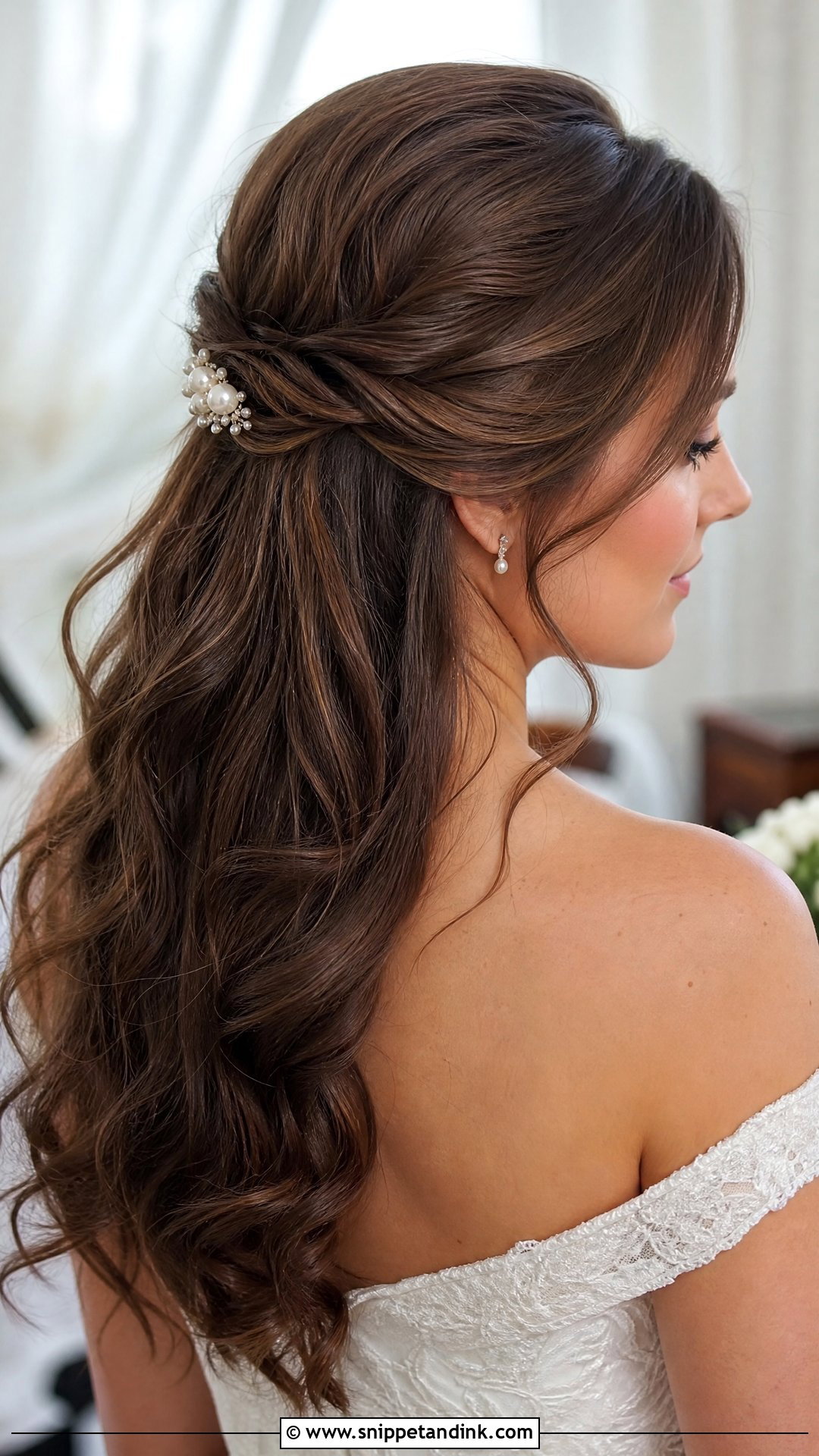
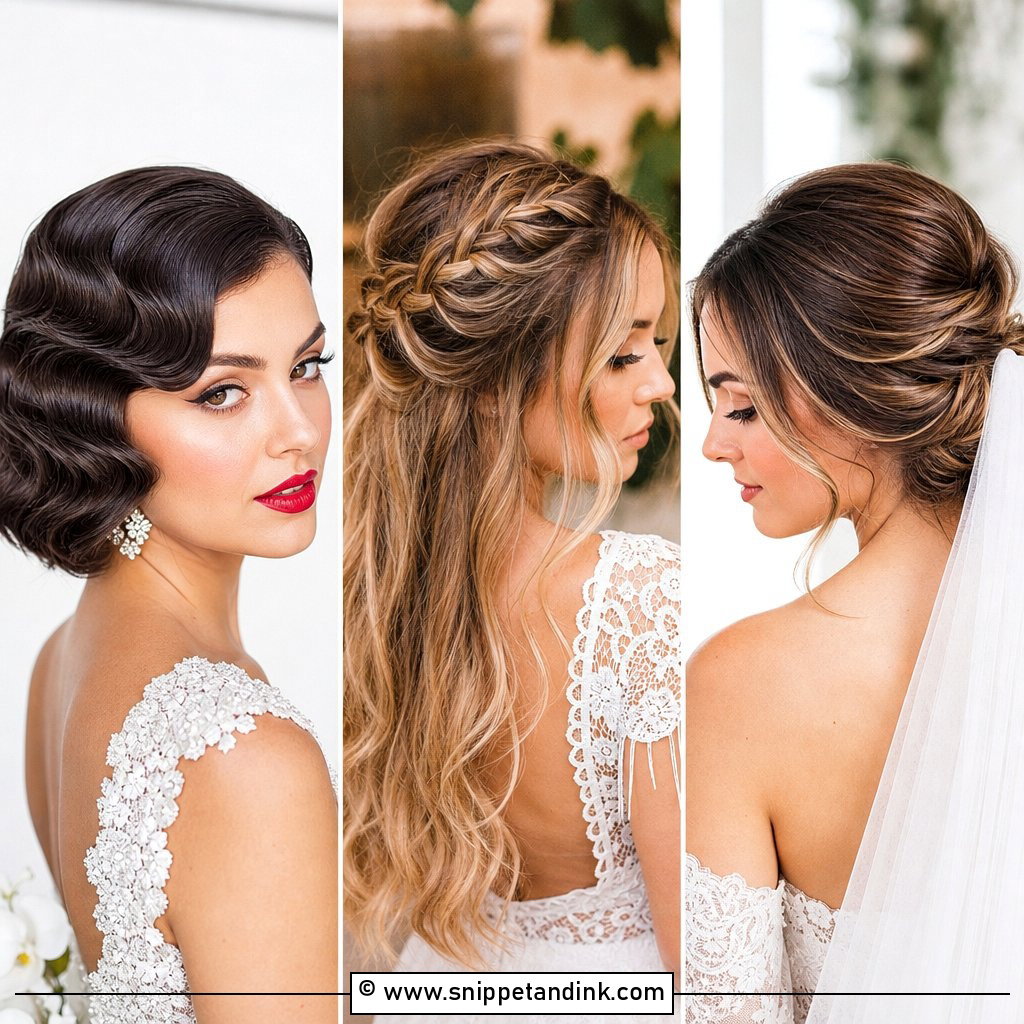
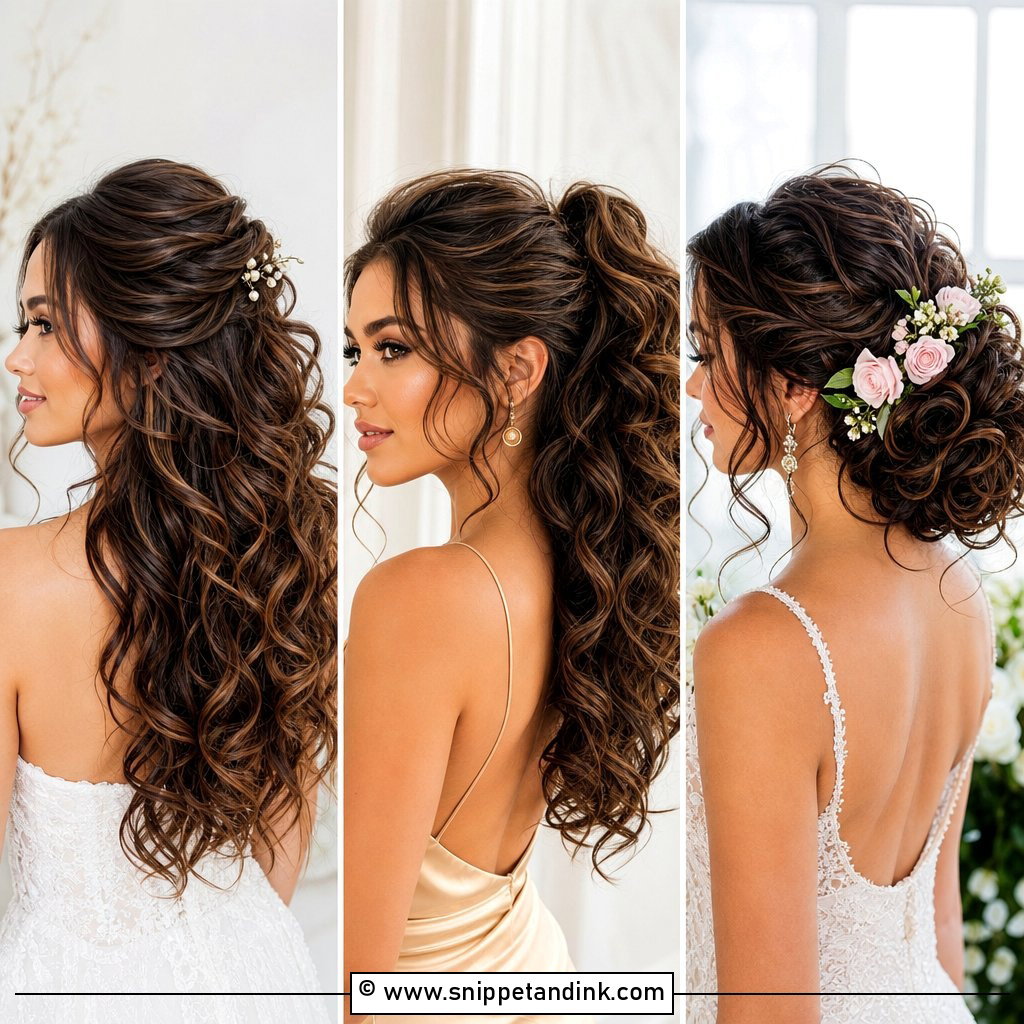
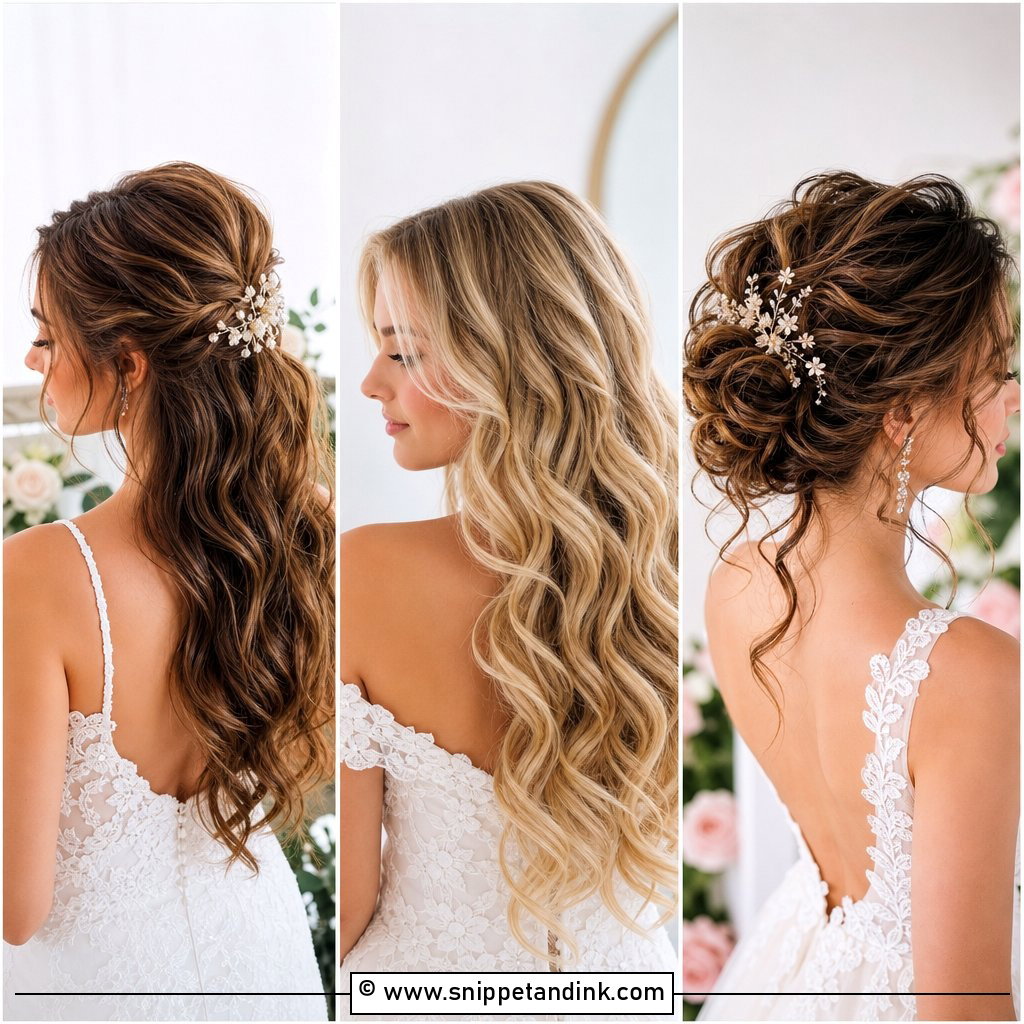
Half up gives you loose hair’s softness with a pinned crown that won’t fall forward during photos or dancing. The crown is lifted or twisted back, and the lengths fall in curls or waves. Veils, hair vines, pearl clips and floral combs all have somewhere to sit. My one warning: very long, heavy lengths pull on the pinned section all day, so I anchor it with a small hidden elastic, not grips alone. For a classic finish, keep the top smooth and brush the curls out rather than leaving them in tight barrels.
5. Classic Bride French Twist
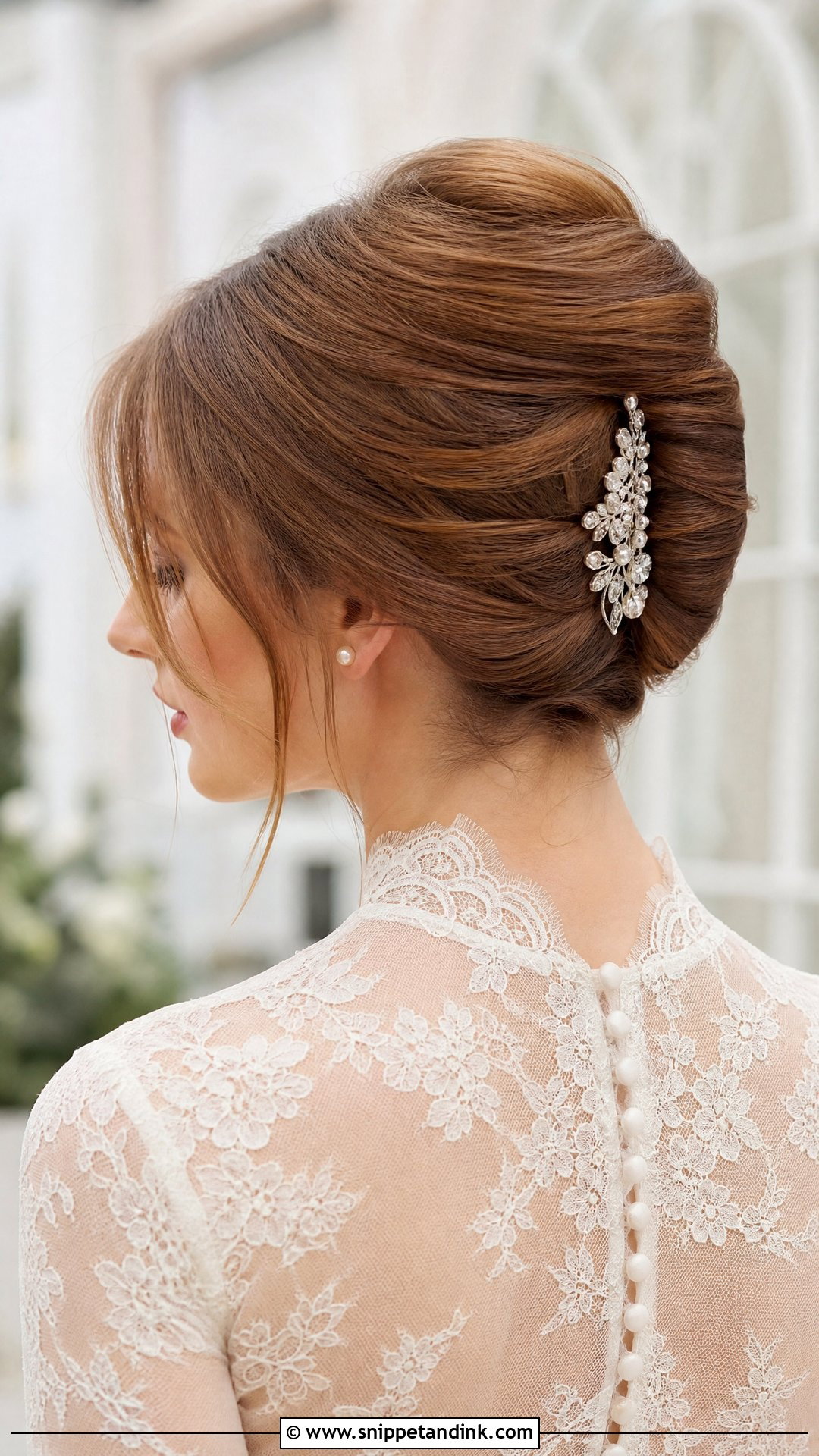
A French twist lifts the hair vertically into a sculpted fold, which makes the neck look longer than any bun can. It pairs with boat neck gowns, lace, cathedral veils and pearls. Layered cuts are the tricky part. Short layers want to spring out of the seam, so I prep with texture spray for grip and pin the shorter pieces inside the fold before closing it. Worn sleek it suits a formal ceremony; with a few loose front pieces it softens for a garden setting.
6. Classic Bride Soft Waves
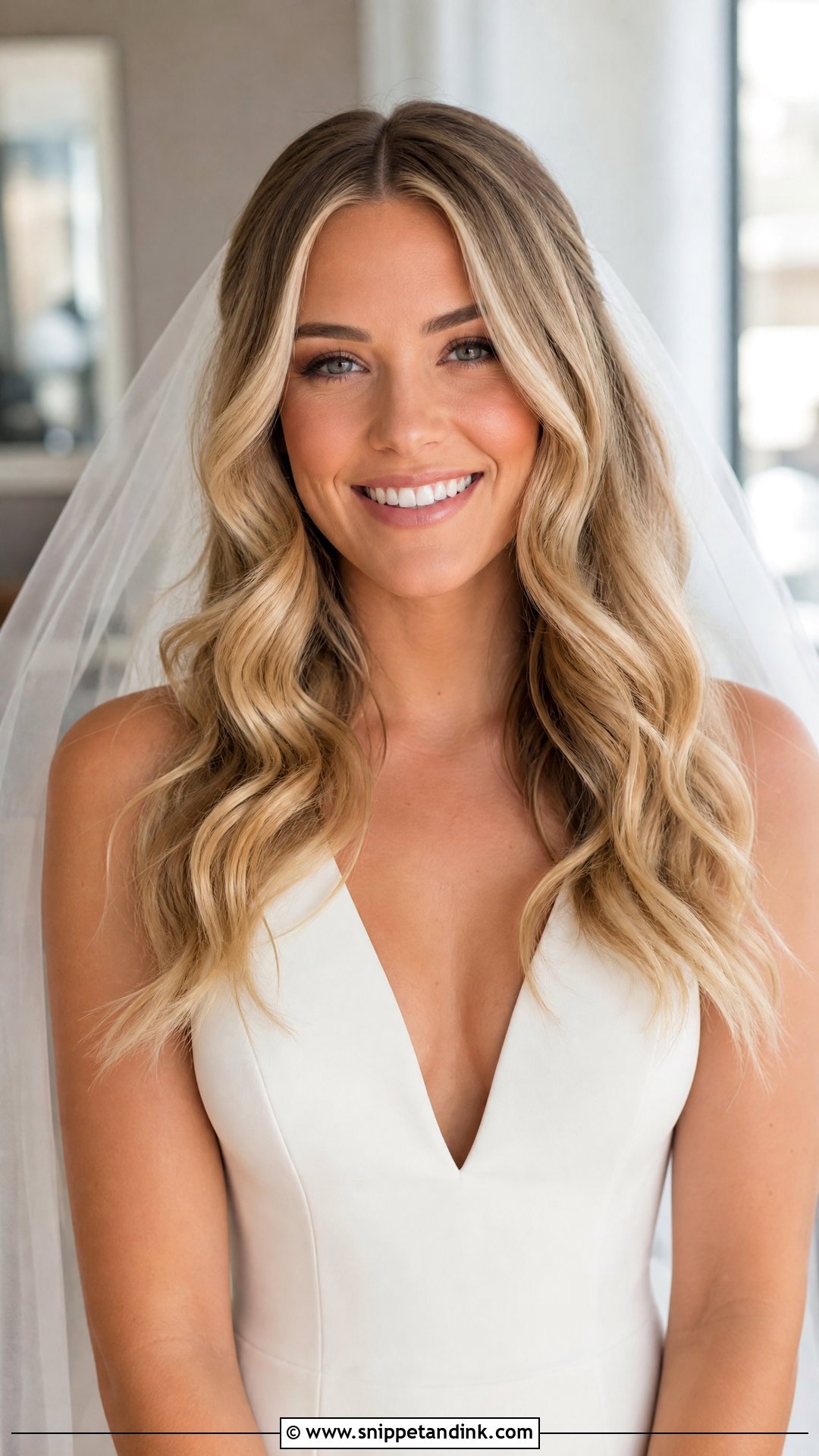
Soft waves are the style I recommend to brides who never wear their hair up and would feel like someone else in an updo. They should look smooth and intentional, not tousled. Clean but not freshly washed hair holds a curl best, so I often ask for a wash the evening before. A middle part reads modern; a side part more balanced on rounder faces. They suit simple veils, small clips and open backs. Flexible hold products keep the movement while the shape stays through the ceremony and well into the reception.
7. Classic Bride Low Bun With Veil
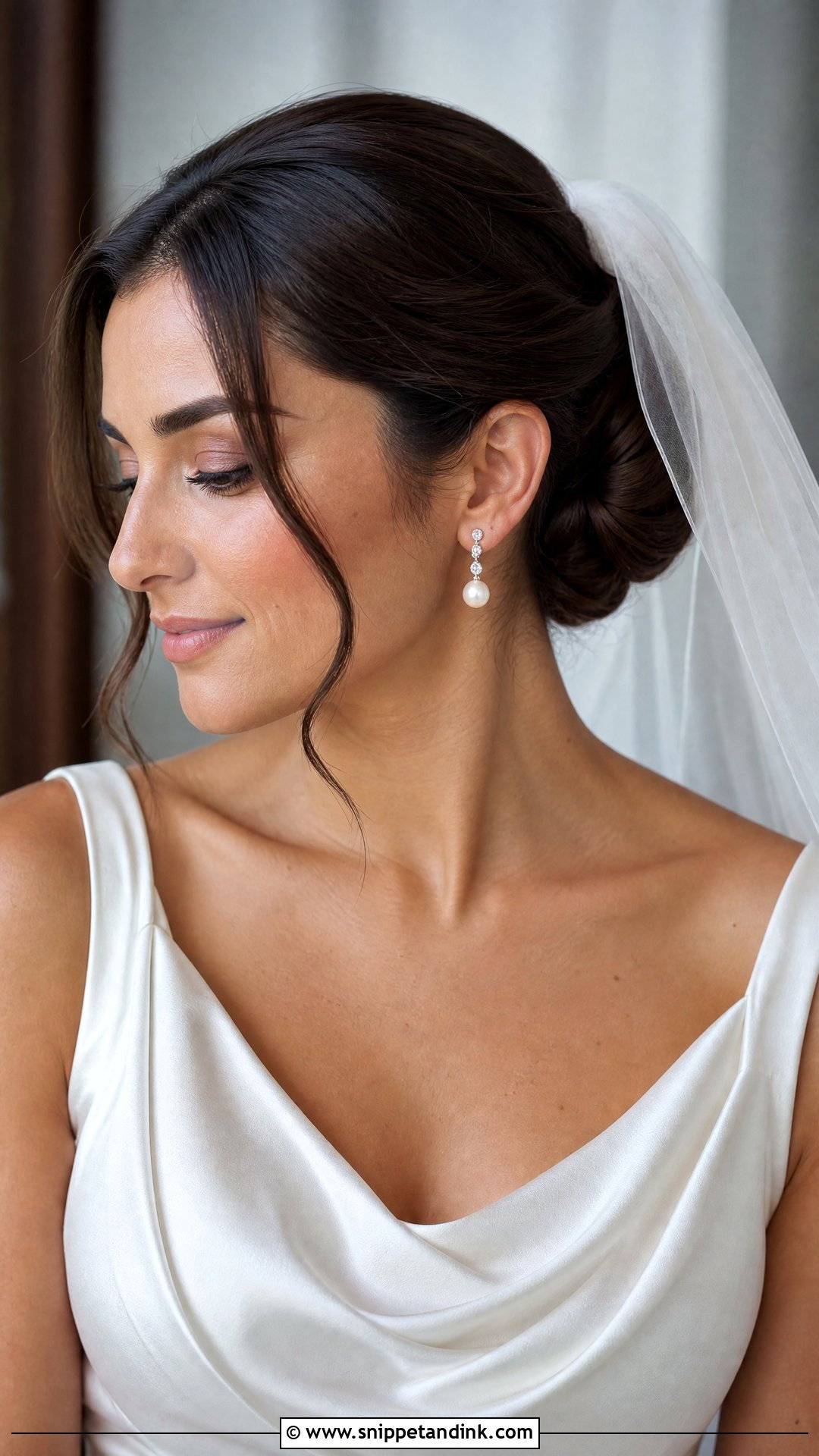
A low bun gives a veil the firmest possible base, so it stays put through walking, hugging and every gust of wind. It also keeps the neckline clear, which matters with lace, satin, crepe and structured gowns. The bun itself can be smooth, twisted, braided or textured. Above the bun gives the traditional look; underneath is softer and lets the bun show. If your veil is long and heavy, I’d go above, because a comb tucked under a bun takes the full weight of the tulle and drags it down over a few hours.
8. Classic Bride Curly Updo
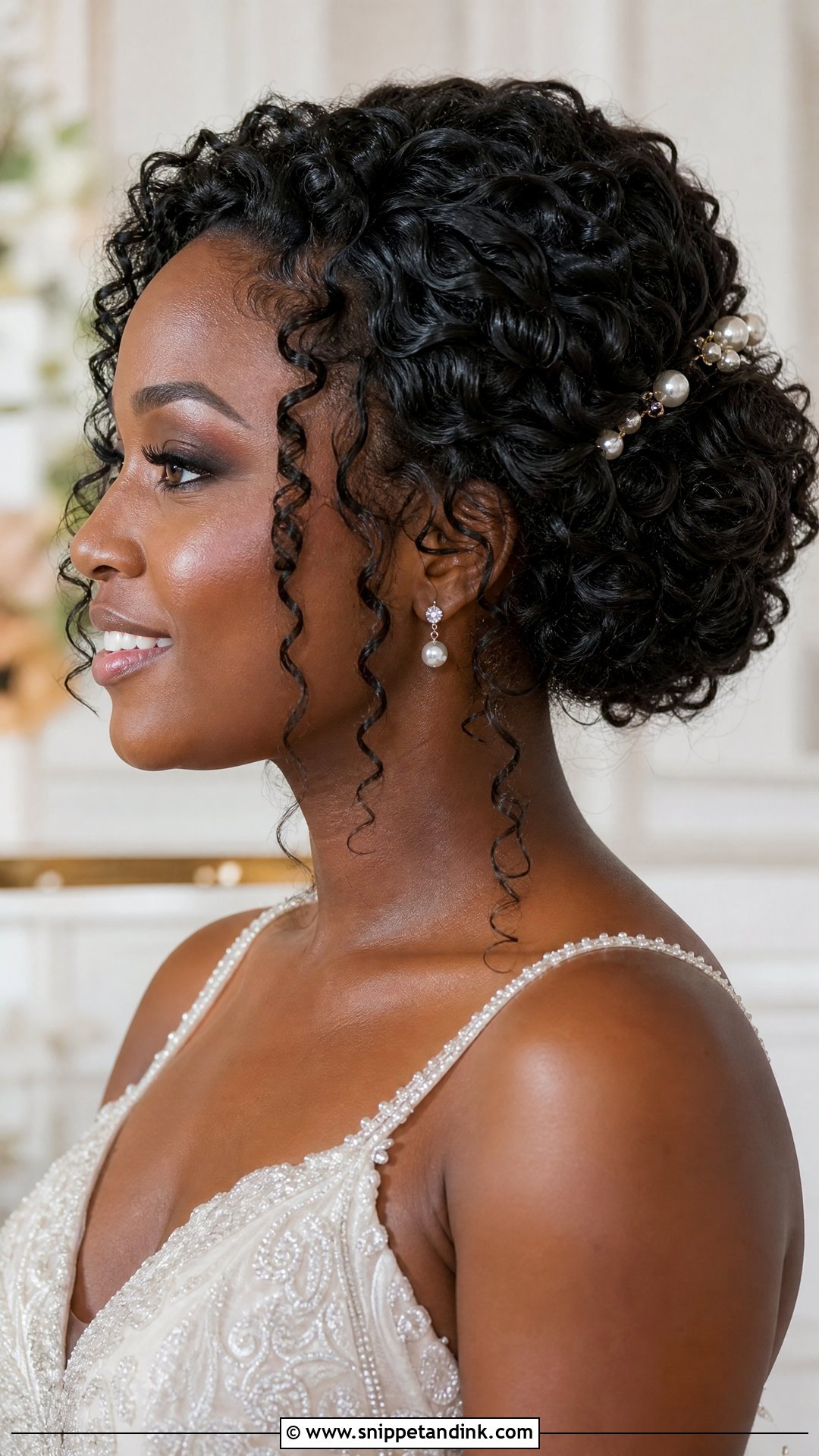
Curl prep decides this style, more than the pinning. Hydrated, defined curls hold their shape and catch light; dry ones turn into a halo of frizz once they’re gathered. I work in a leave-in and a curl cream the day before or at least an hour ahead, and I don’t touch the curls with a brush at any point. Then they’re gathered into a soft updo, low, centered or higher for lift. Leave curls around the face to soften it, and add pearl pins or a small comb. You get structure without giving up your natural texture.
9. Classic Bride Side Swept Curls
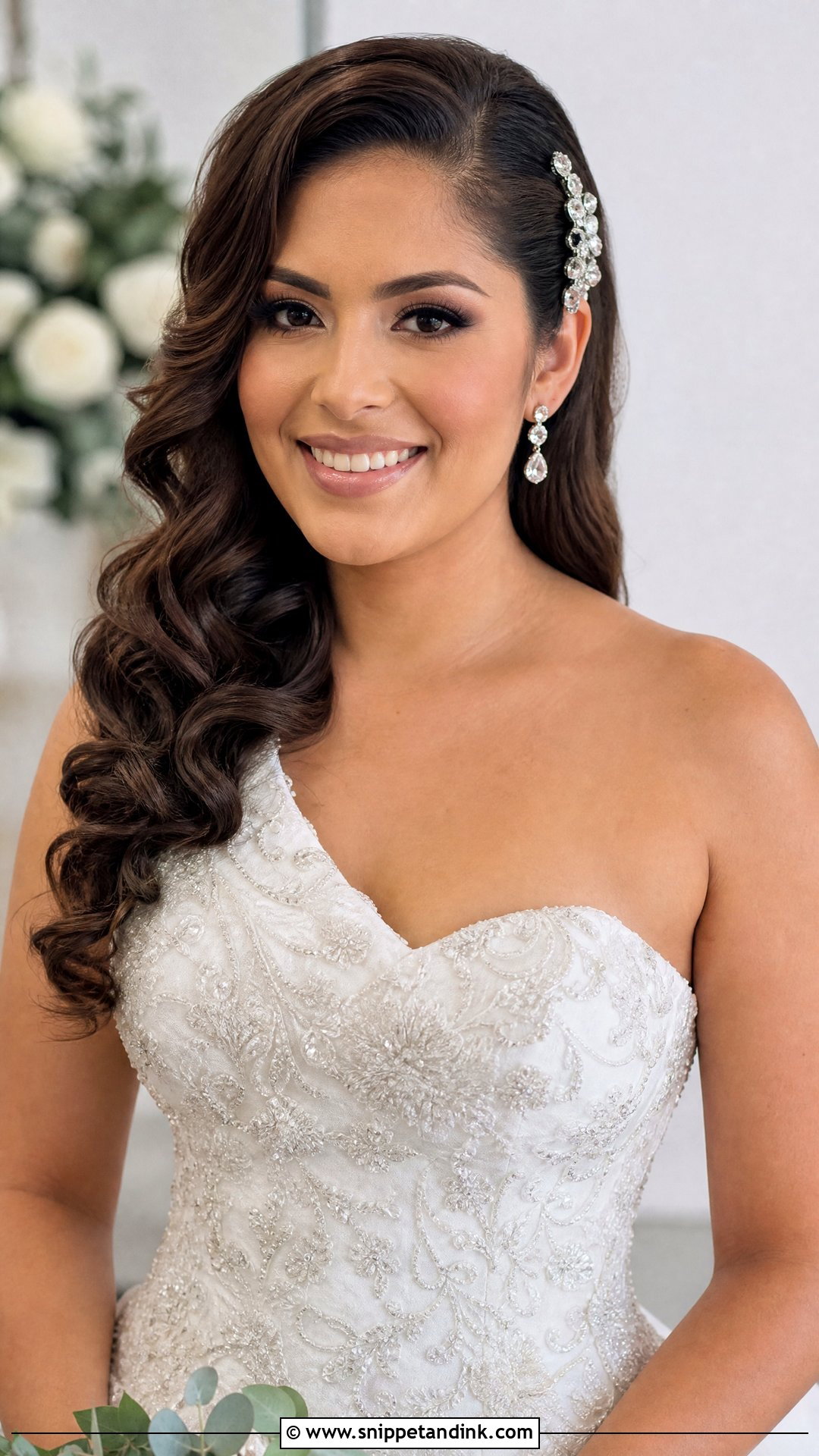
From the front, side swept curls look romantic; from the back, they show a sweep of curls across one shoulder. The hair is curled, brushed into smooth blended bends and pinned behind the opposite ear. One-shoulder gowns, detailed backs and statement earrings all suit it. The curls shouldn’t separate into tight ringlets. Since all the weight sits on one side, I cross several grips in an X behind the ear and cover them with a jeweled clip or comb, which also hides the anchor point when you turn your head.
10. Classic Bride Braided Chignon
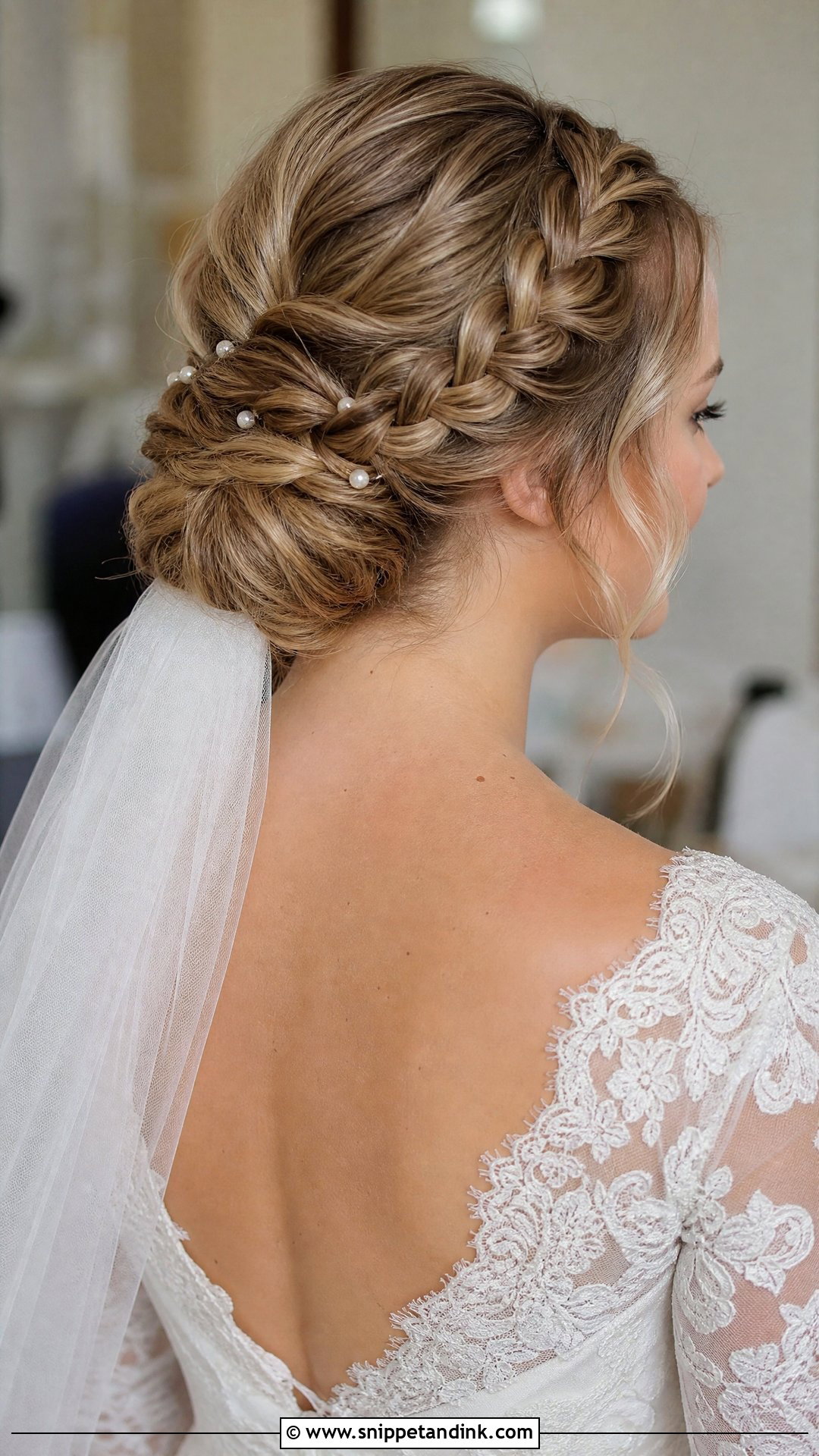
A braid gives a chignon texture without tipping it into a trendy undone look. It can wrap the bun, cross the crown or run along one side to the nape. Highlighted hair suits it well because each braid loop shows a different tone. The balance I aim for is a braid loose enough to look soft but locked down at both ends, since braids usually fail where they’re tucked in. A few pearl pins, a comb or a simple veil is all it needs.
11. Classic Bride Middle Part Bun
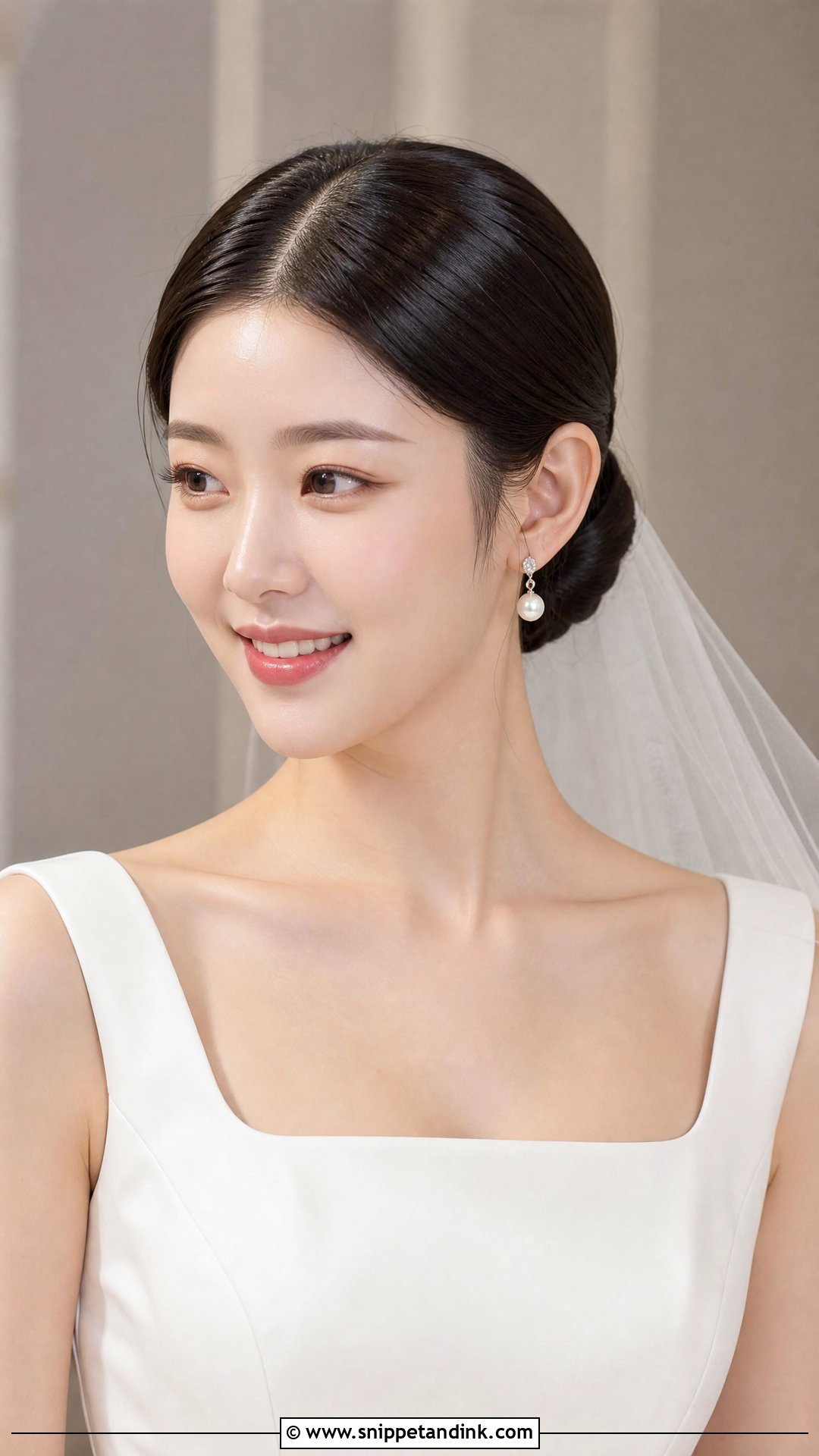
Symmetry is the whole point of a middle part bun, so I’d only recommend it if you’re happy with your face being framed dead center. Most people’s faces aren’t perfectly symmetrical and that’s fine in person, but a hard center part makes small differences more visible in close-up portraits. If that doesn’t bother you, it’s crisp and chic with drop earrings, square necklines and sleek makeup. Wear it at the nape or higher. I soften the front by keeping the hair at the temples smooth but not pulled flat, so it looks bridal rather than severe.
12. Classic Bride Vintage Waves
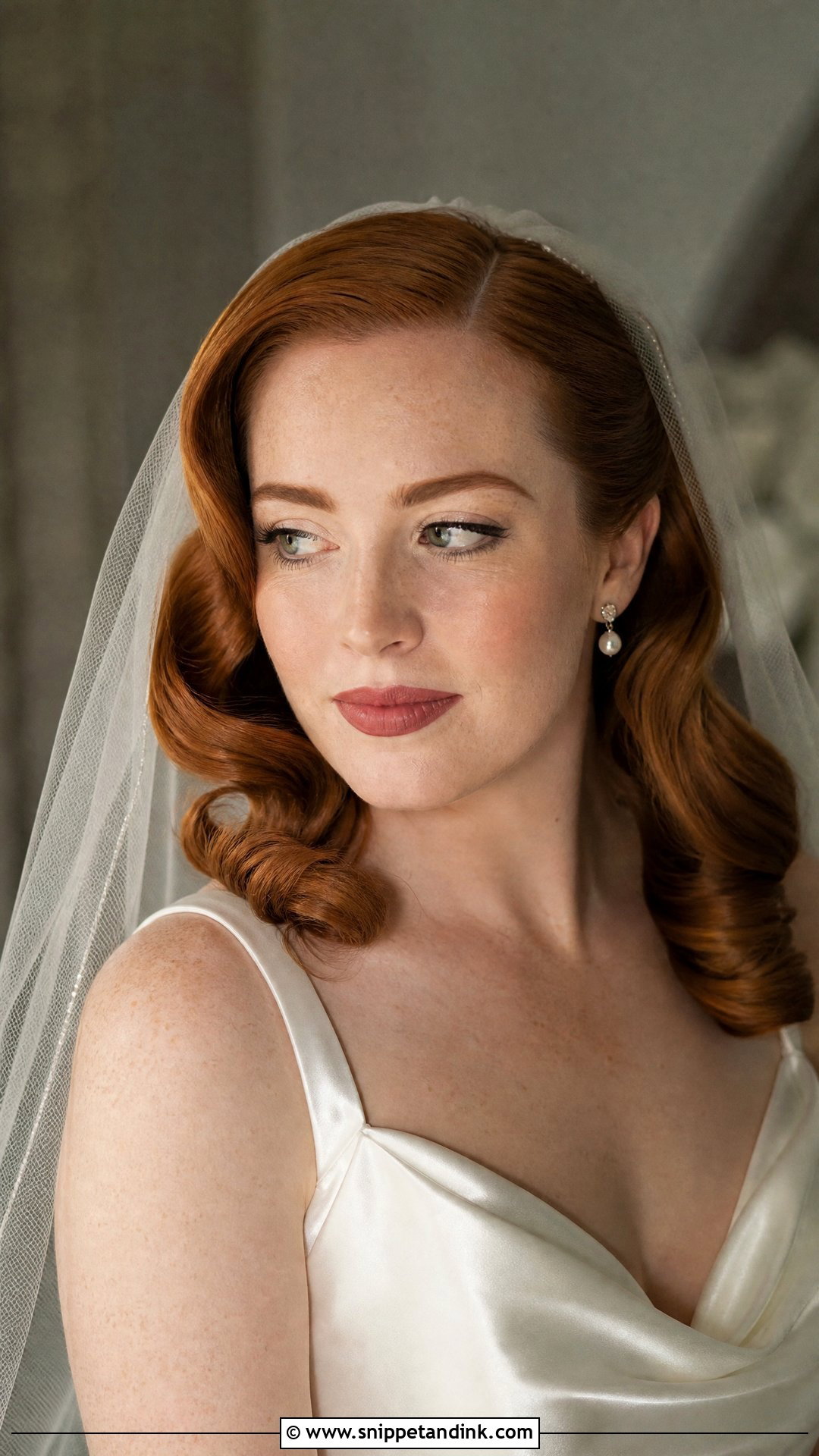
Vintage waves are set, not just curled. Each section is curled, pinned while it cools, then brushed and shaped, often around a side part, so the bends sit in a clear sculpted pattern. That process takes longer than loose waves, and I’d plan for it in your morning timeline. They pair with red lips, pearl earrings, lace or satin, and birdcage or fingertip veils. They look strong both in close-ups and full-length shots because the shape holds its outline at a distance.
13. Classic Bride High Bun
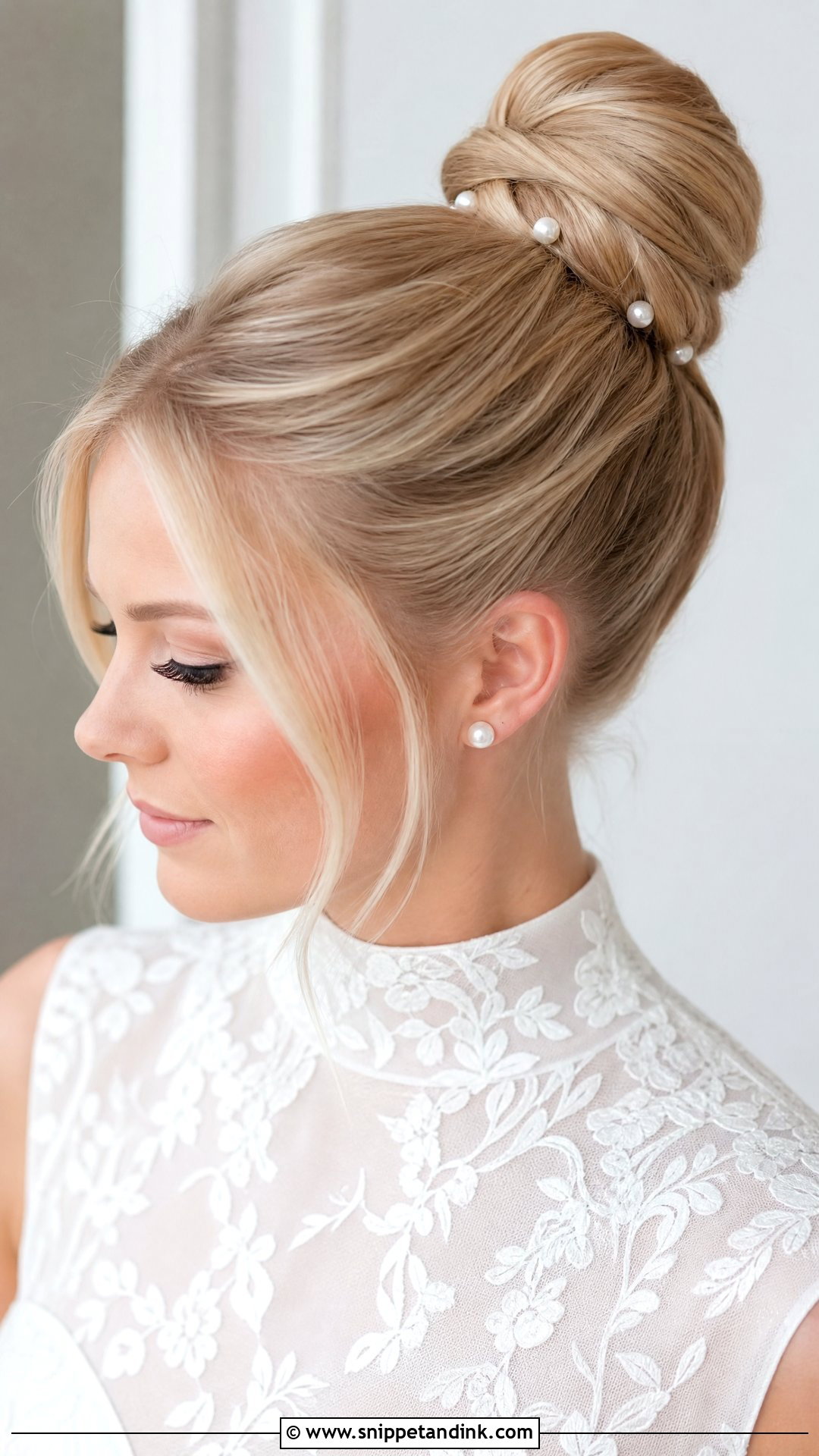
A high bun gives that graceful ballerina-inspired shape and lifts every strand off your neck. With dramatic veils, high necks and open backs, I think it’s one of the strongest options here. Placement is where I spend the most time: I check it from the side in a hand mirror, because a bun that looks centered from the front can sit too far forward in profile. Smooth and round is the polished version; slightly textured is more romantic. On hot days and for long dancing sets, it’s very hard to beat.
14. Classic Bride Long Hair Down
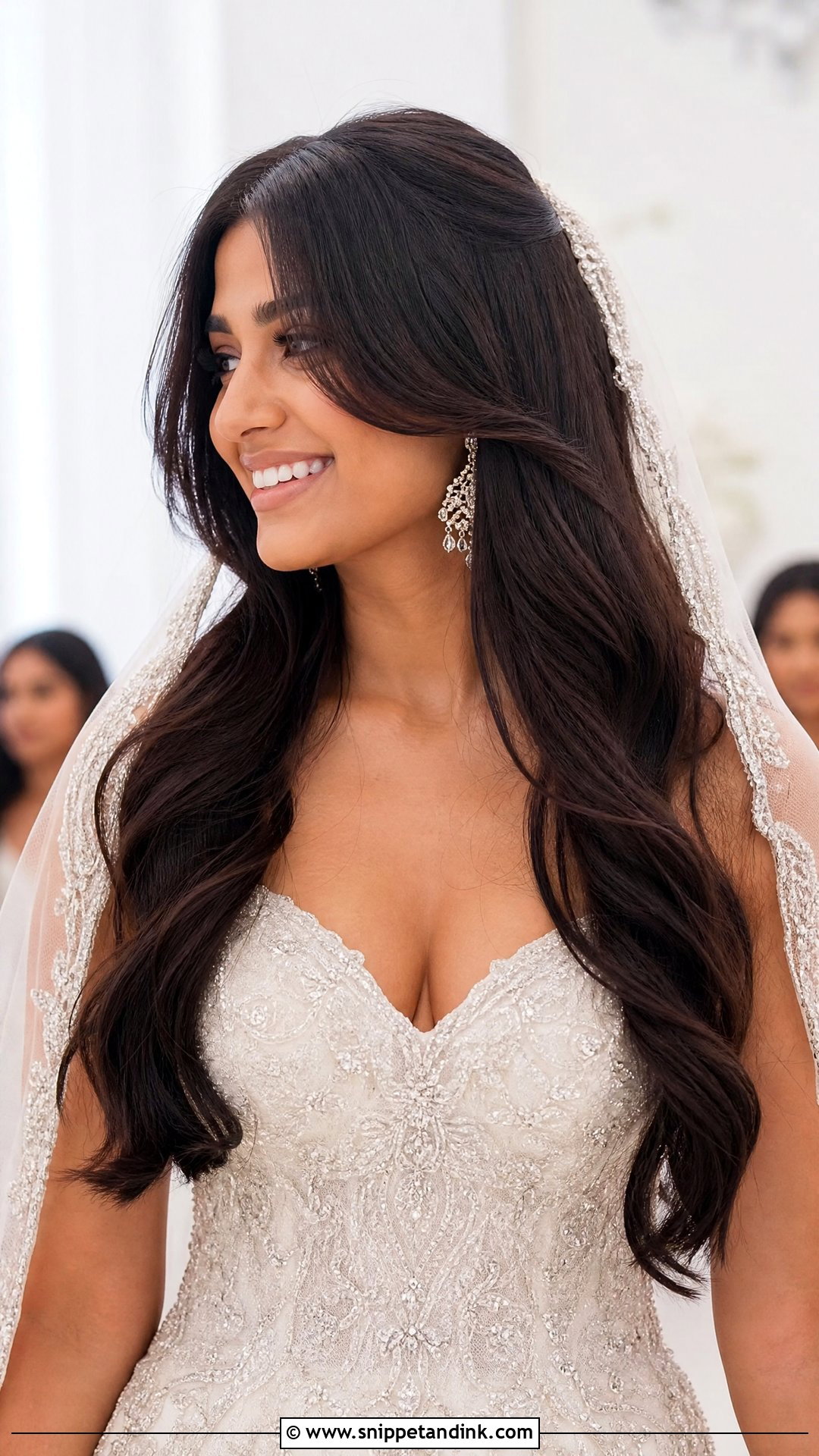
Long hair down needs intention or it reads as everyday hair. Soft waves, polished bends or a smooth blowout all work as long as the finish looks healthy and controlled. I set a clear part, shape the pieces around the face and use enough anti-frizz product to keep the surface smooth. It suits simple veils, floral combs and clean necklines. Book a trial if your hair is very fine, very heavy or prone to dropping curl, and don’t arrive with freshly washed, silky hair on the day. Hair with no grip is the main reason curls fall out early.
15. Classic Bride Short Hair
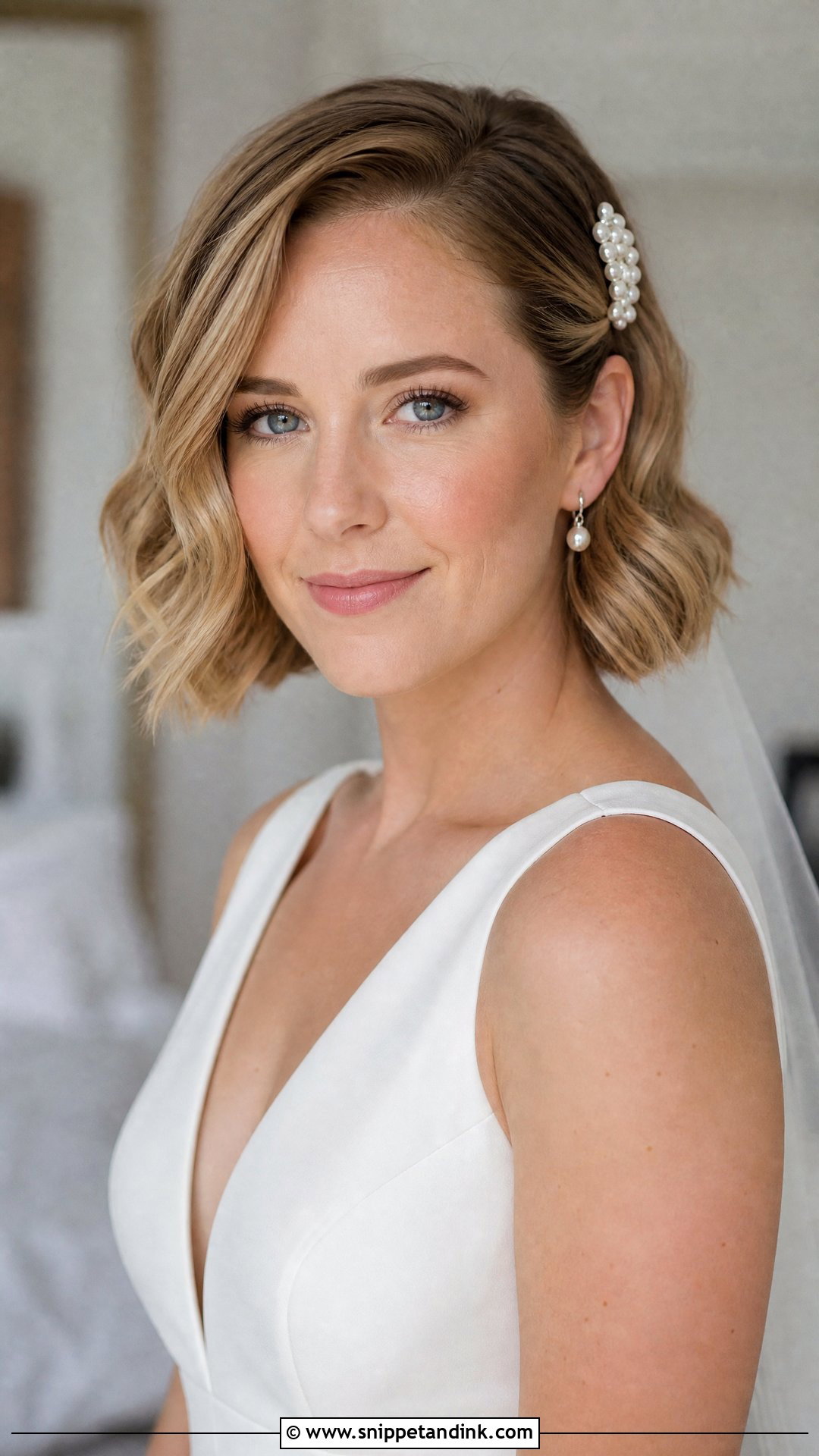
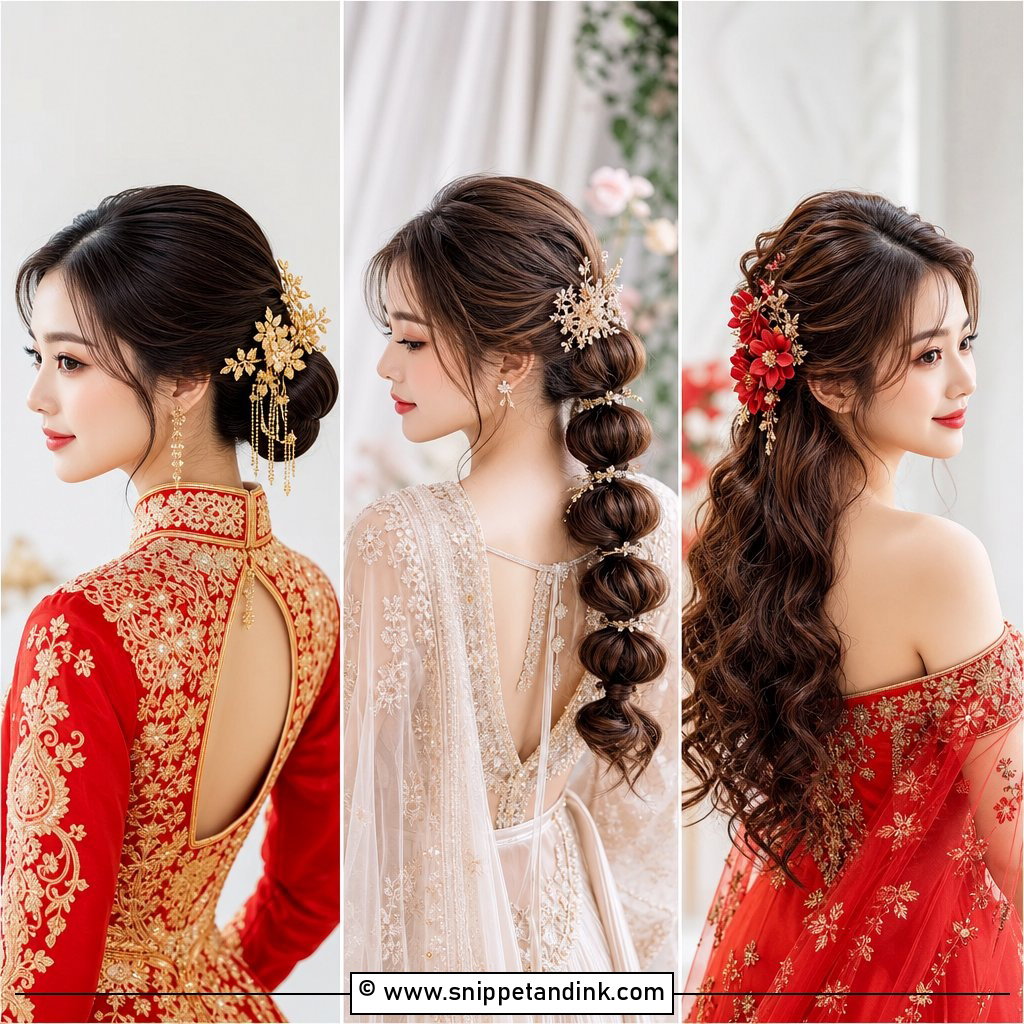
Short hair can look every bit as bridal as long hair. A bob, lob, pixie or cropped cut can be styled with soft waves, smooth volume, a deep side part or a neat tuck behind the ear. What matters is that the cut looks deliberate. I’d schedule a trim about a week before so the line is crisp but not freshly blunt. Pearl clips, small combs, headbands and veils all work; scale them down so they don’t swamp the haircut. A veil set into a short style needs a small backcombed base to hold its comb.
Quick Repairs a Bridesmaid Can Do at the Reception
Even a well-pinned style shifts over a long day. Most problems take a few minutes in the bathroom to fix, as long as someone has the tools and knows the trick. These are the fixes I teach the bridesmaid holding the emergency bag.
- Waves have flattened. Twist a few sections around a finger, pin each flat against the head for five minutes, then release and finger-brush. A spritz of flexible spray before pinning helps.
- A piece has slipped out of a chignon or twist. Don’t pull it straight. Twist the strand, lay it back along the shape and slide a grip in at an angle so it bites into the existing pins.
- Frizz after outdoor photos. Rub a pea-sized amount of smoothing balm between your palms until almost nothing is left, then press lightly over the surface. Never rake through.
- The veil comb is tugging. Lift it out completely and reinsert slightly higher, where the hair is firmer. Tugging usually means it’s resting on loose hair or too few pins.
- A sleek bun has lost its shine. A tiny mist of shine spray from arm’s length, then smooth the crown with a clean palm.
Pack a hand mirror for the back of the head. Most of these fixes fail because nobody can see what they’re pinning.
Your Dress Has Already Narrowed This Down
Most brides find their shortlist shrinks fast once they hold a picture of the gown next to these. A high neck points toward a bun or twist, an open back toward an updo that shows it off, a strapless bodice toward waves or side-swept curls. After that it comes down to your texture and the weather. Book a trial, bring photos of the dress and veil, and step outside before you leave the chair. Salon lighting flatters almost everything; I always walk my brides to a window, because daylight is where you see the truth.
You'll Like These Ideas:


Leave a Reply