
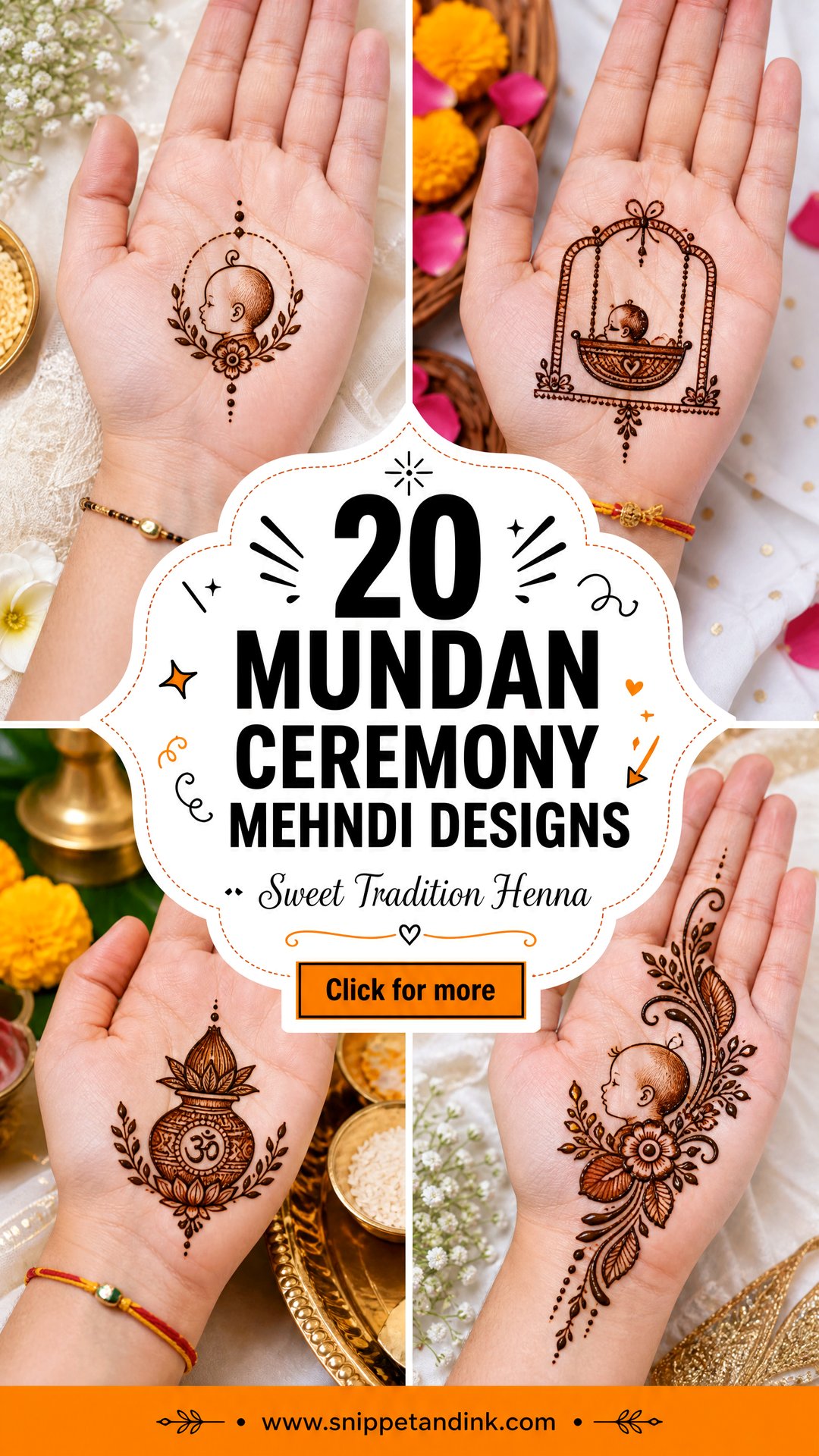
Mehndi for a mundan is a different job from bridal work. The mother will spend the morning holding a squirming baby, passing sweets and folding her hands for blessings, so the design has to be finished, dry and comfortable long before the ritual starts. When families book me for a mundan, I lean toward lighter layouts with one meaningful motif: tiny feet, small kalash details, a cradle or a lotus, set inside floral trails, mandalas, paisleys or jhumka shapes. Grandmothers, aunts and sisters usually want something quicker still. Below are the designs I suggest most, from a single palm motif to full arms, with notes on who each one suits and how it behaves once the paste comes off.
Planning the Henna So It’s Dry Before Anyone Hands You the Baby
At a mundan, the baby is the reason for everything, and that changes how I plan the mehndi. Wet paste and a small child don’t mix. Little hands grab, and a baby resting against your arm will smear a fresh design and get paste on their skin.
My advice is to have the mehndi done the evening before, or even two days ahead for the mother. Natural henna starts orange when the paste comes off and keeps darkening for a day or two, so an early sitting gives you a deeper color on the morning of the ceremony and no paste anywhere near the baby.
Two safety points I’m strict about. First, use only natural henna paste. Avoid so-called black henna and instant dark cones, which can contain chemical dyes that cause serious skin reactions. Second, if anyone in the family has sensitive skin or reacts to strong scents, ask your artist what essential oils are in the paste and do a small patch test first. Once the paste is scraped off and your hands are clean, holding the baby is no problem.
1. Simple Mundan Ceremony Mehndi Design
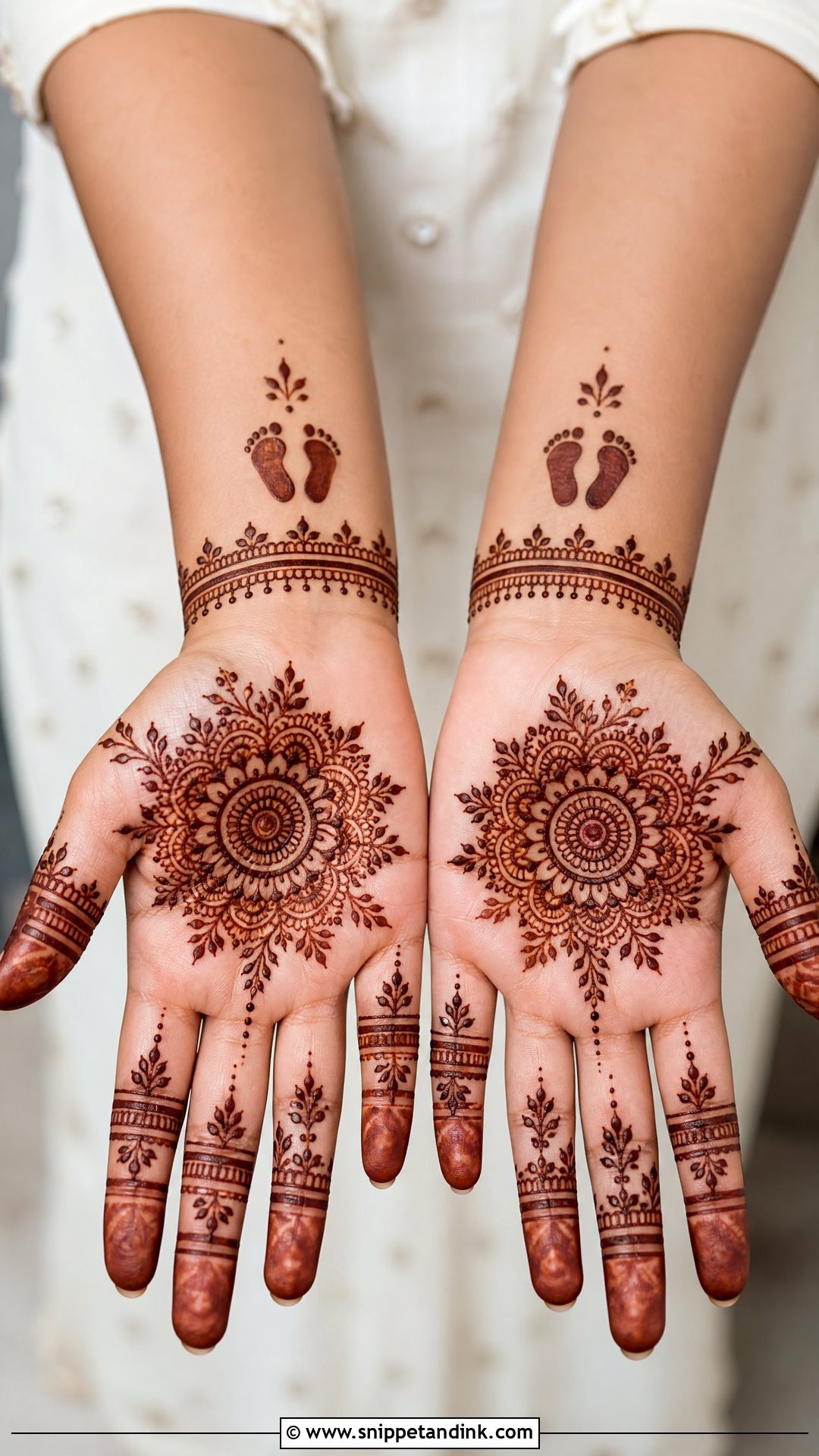
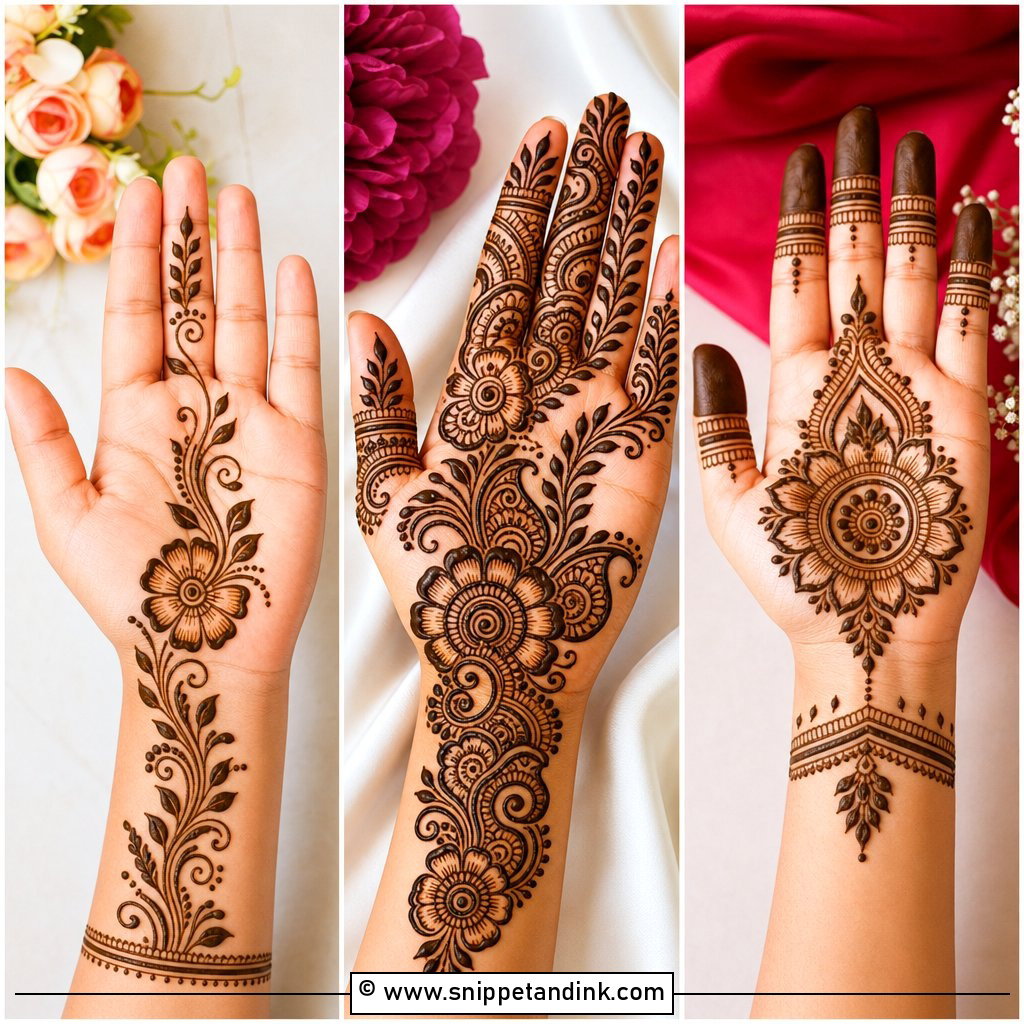
A simple palm design is what I recommend to anyone short on time or patience. I keep the palm mostly open with one small mandala, soft dots, tiny leaves and clean lines up the fingers, which takes me a fraction of the time a full hand does. A little Om, a pair of baby feet or a kalash near the wrist gives it a reason to be at a mundan. The risk with a light design is that it looks unfinished, so I balance the spacing between the center and the fingertips rather than leaving one large gap. It holds up well to an hour of holding a baby and touching elders’ feet.
2. Baby Feet Mundan Mehndi Design
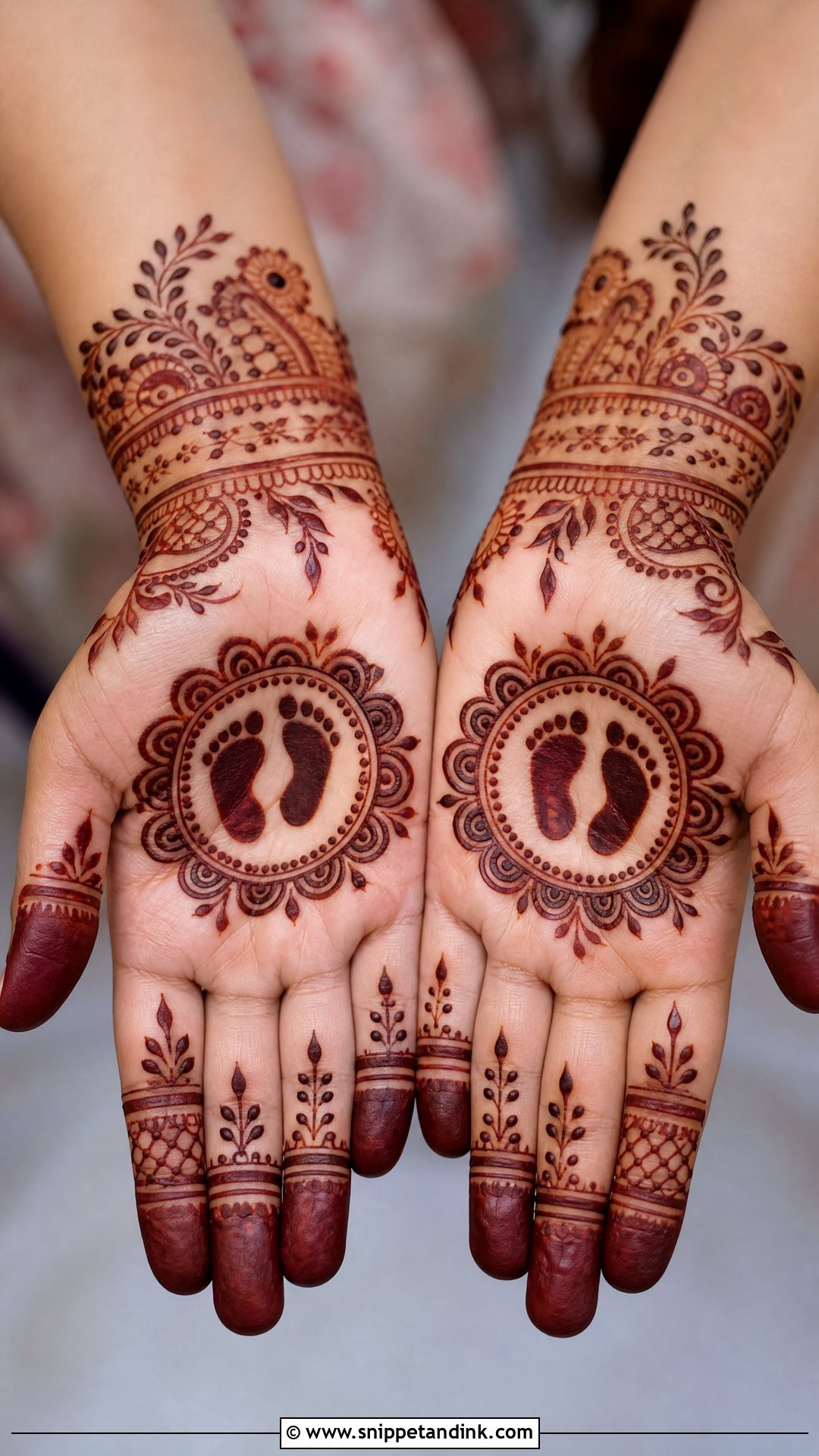
Baby feet are the motif families ask for first at a mundan, and they are harder to draw well than they look. Each foot needs a clear heel, a slight curve on the inner edge and five toes graded in size, or it reads as a blob once the stain darkens. I place them on the palm or back of the hand inside a floral circle, heart or small mandala, then keep the surrounding hand light so the feet stay the focus. The baby’s initial near the wrist is a nice touch for the mother or grandmother. Ask your artist to use a fine cone tip for the toes; a thick line fills them in.
3. Mother And Baby Mundan Mehndi Design
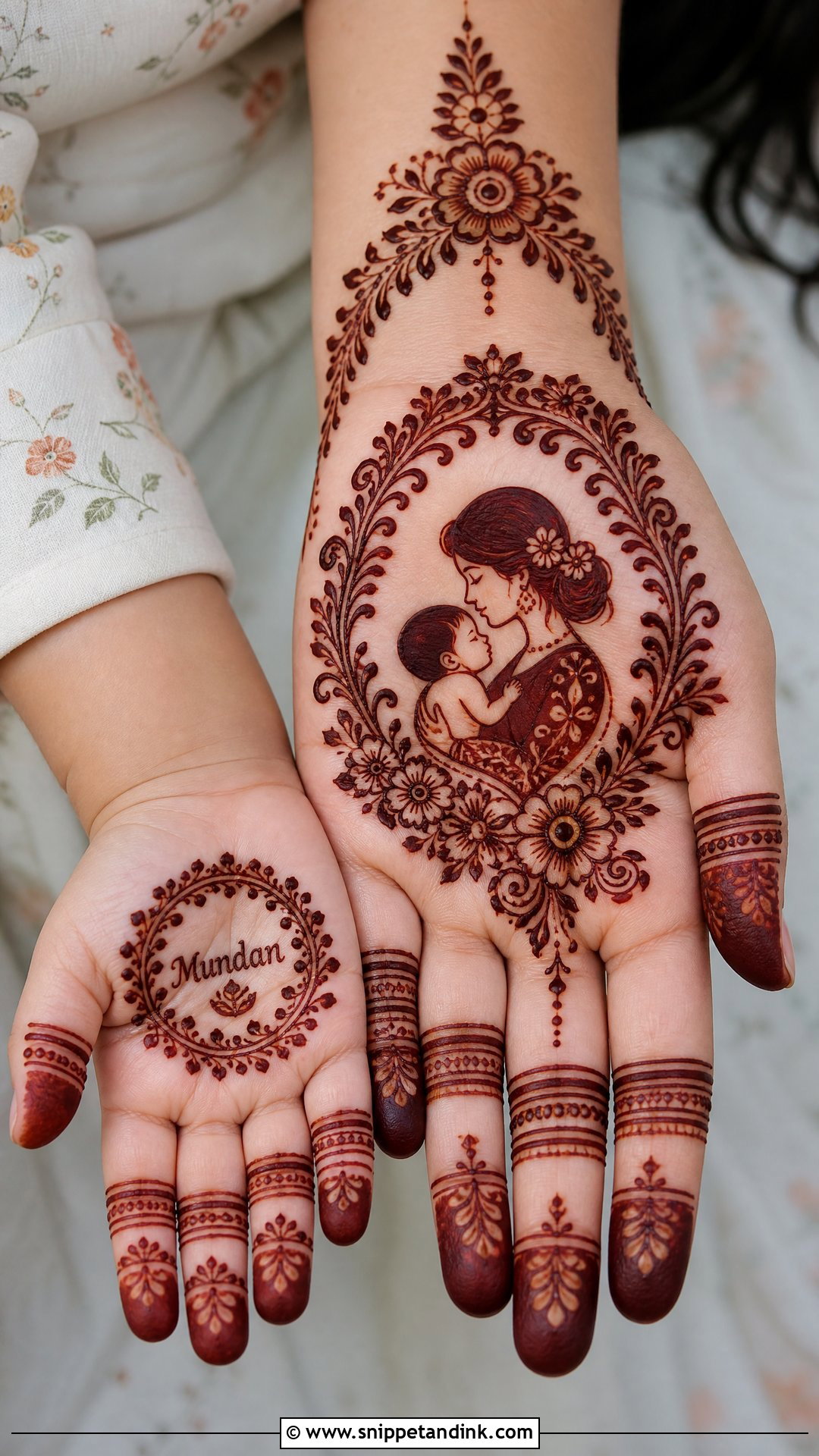
The mother and baby figure tells the story of the day better than any other motif, but it only works on the palm, where there’s enough flat space for the silhouette. I draw the outline first and fill it sparingly, because figures are where detail turns to mud as the stain darkens and lines spread slightly. A cradle or a soft frame of flowers around the pair is enough. The fingers can carry plain vines and dotted bands. I’d steer a mother away from this one if she’ll be washing her hands often that morning, since a palm design wears faster than one on the back of the hand.
4. Full Hand Mundan Ceremony Mehndi Design
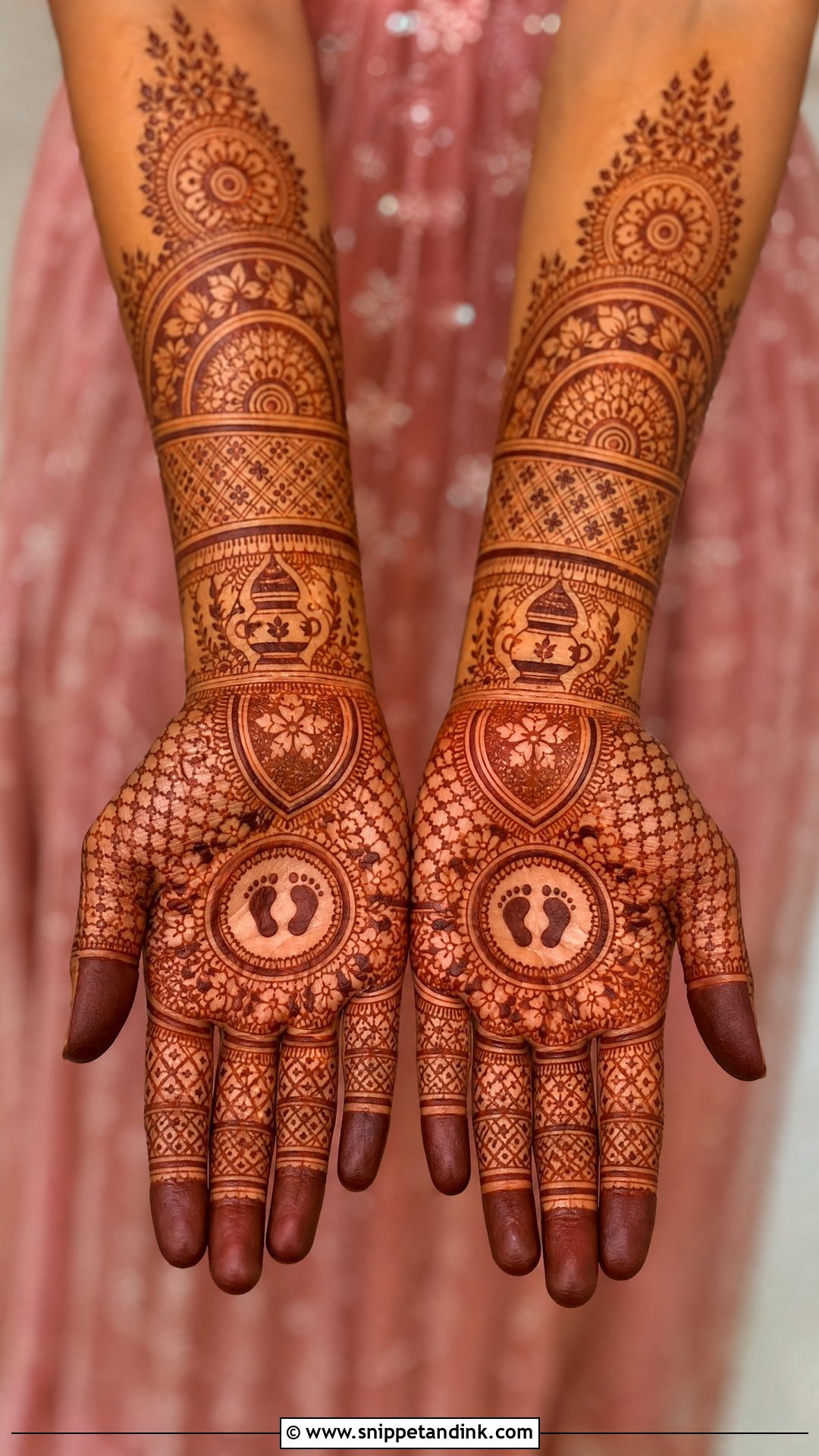
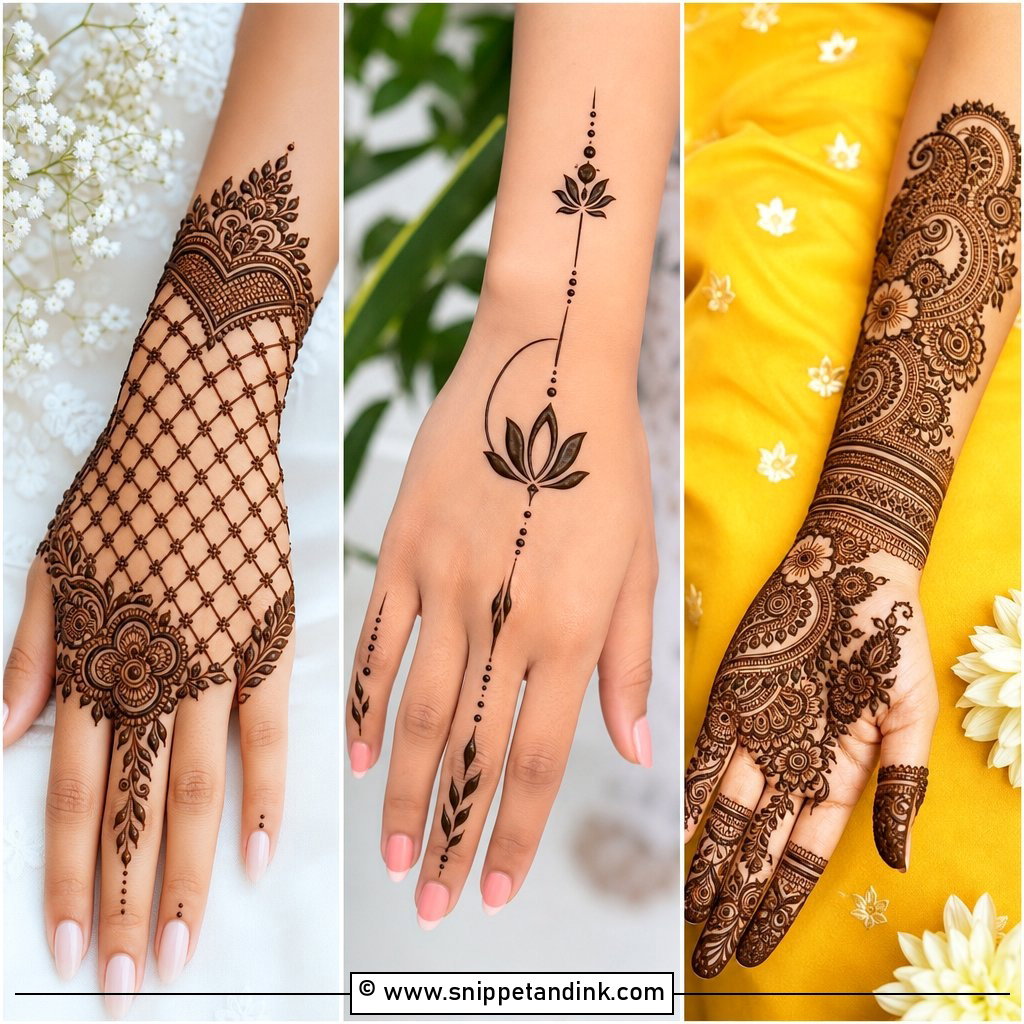
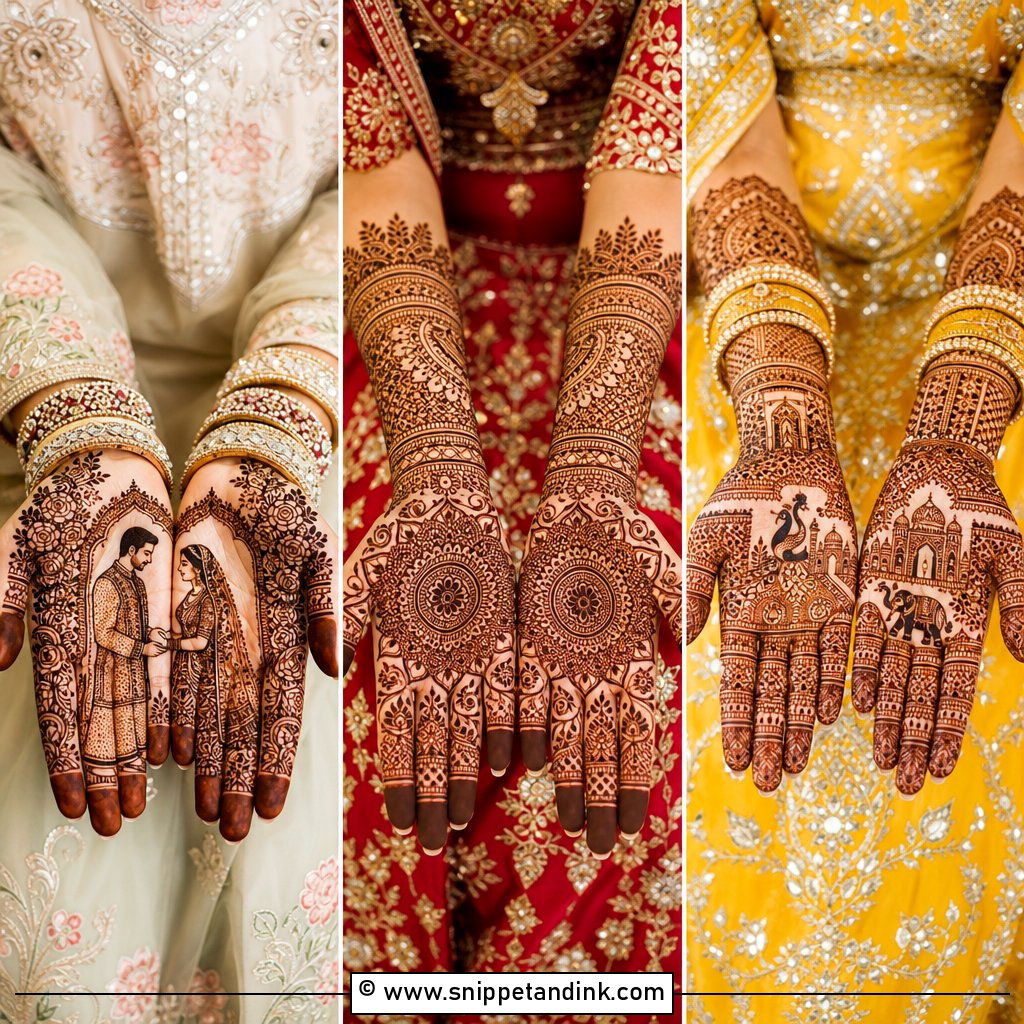
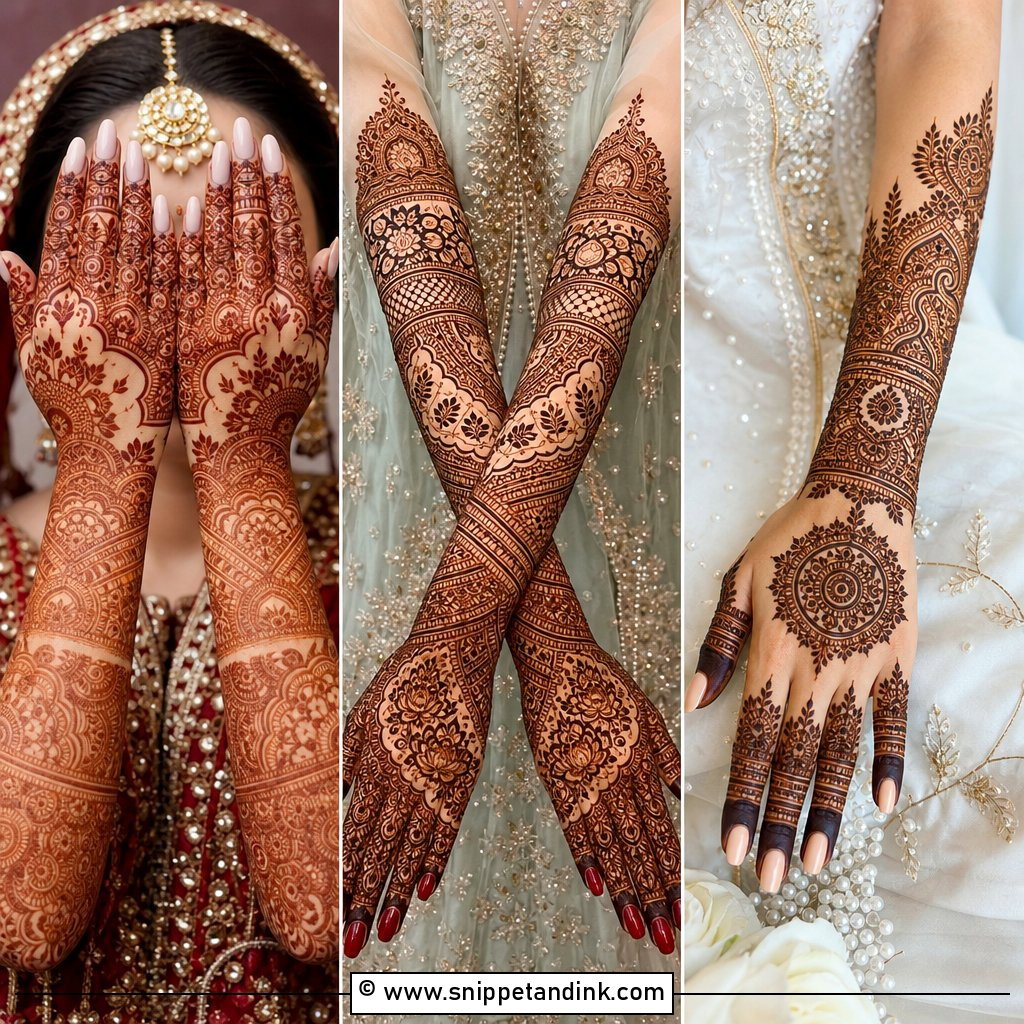
Full hand coverage makes sense when the mundan is a big family gathering, or when it falls alongside other rituals. Paisleys, flowers, mandalas, jaali mesh and small auspicious symbols can run from fingertips to wrist or a little beyond, with baby feet, a kalash or a cradle tucked into the palm. The trap is drifting into bridal density. I leave small breathing spaces between motifs on purpose, which also helps the stain show its contrast. Budget a good hour or more per side and plan where you’ll sit afterwards, because it needs time to dry undisturbed. It sits well with a silk saree or heavy lehenga.
5. Arabic Mundan Ceremony Mehndi Design
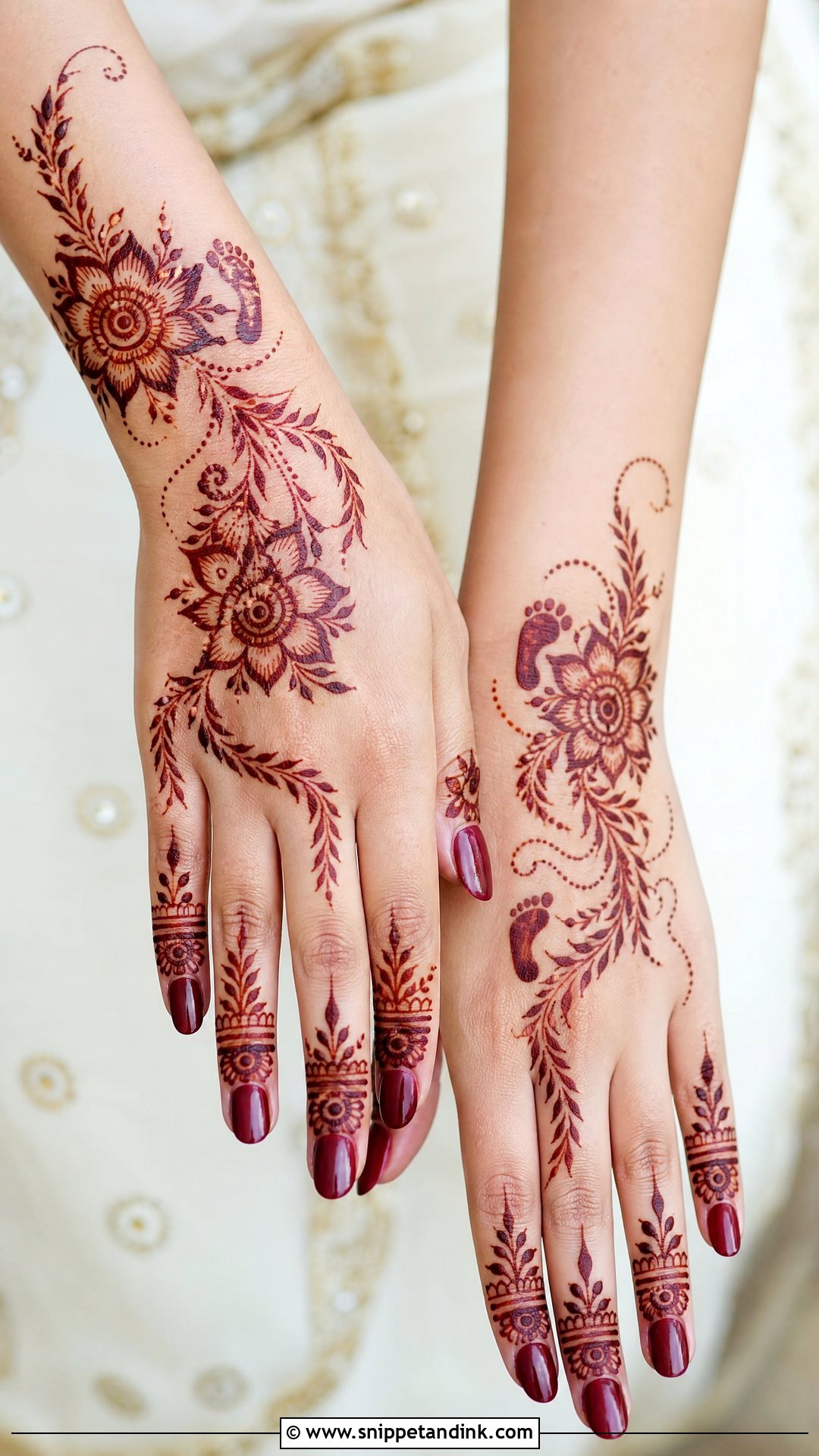
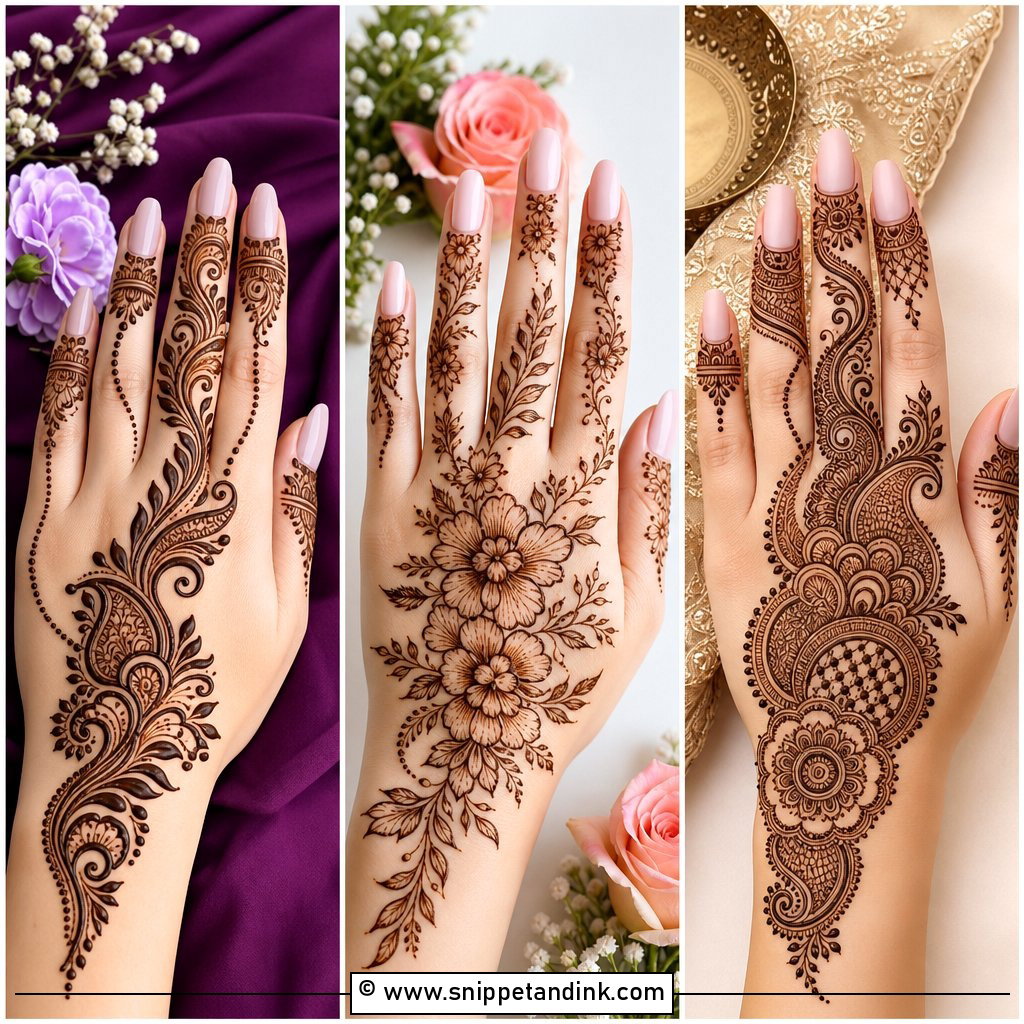
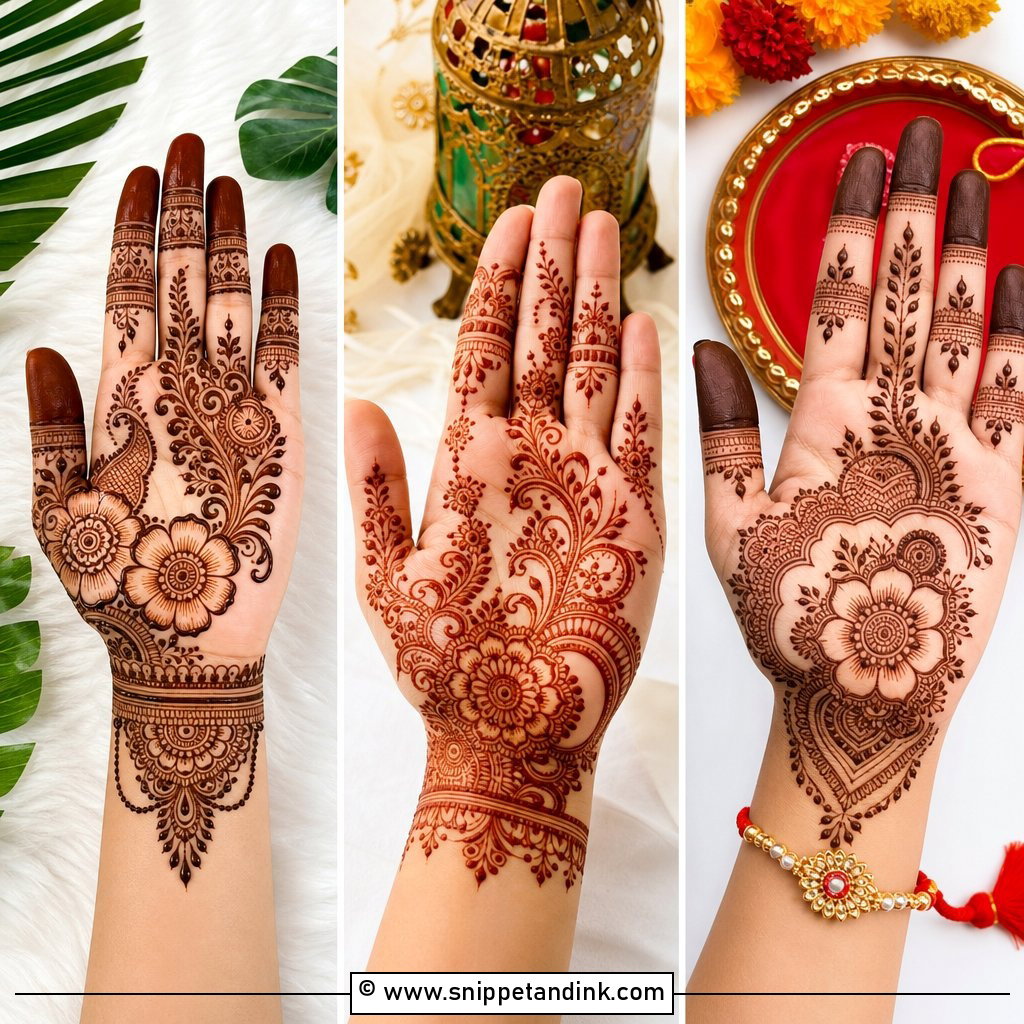
Arabic mehndi is my usual answer for guests and busy relatives, because it applies quickly and leaves plenty of bare skin. The design flows diagonally from the wrist toward one side of the fingers with bold flowers, leafy curves and shaded petals. Shading is done by thinning the paste or drawing fine parallel strokes, and it stains lighter, which is what gives Arabic work its depth. A tiny foot, kalash or initial near the wrist ties it to the ceremony. The open spaces make the stain read clearly in photos, especially with bangles and rings.
6. Indian Mundan Ceremony Mehndi Design
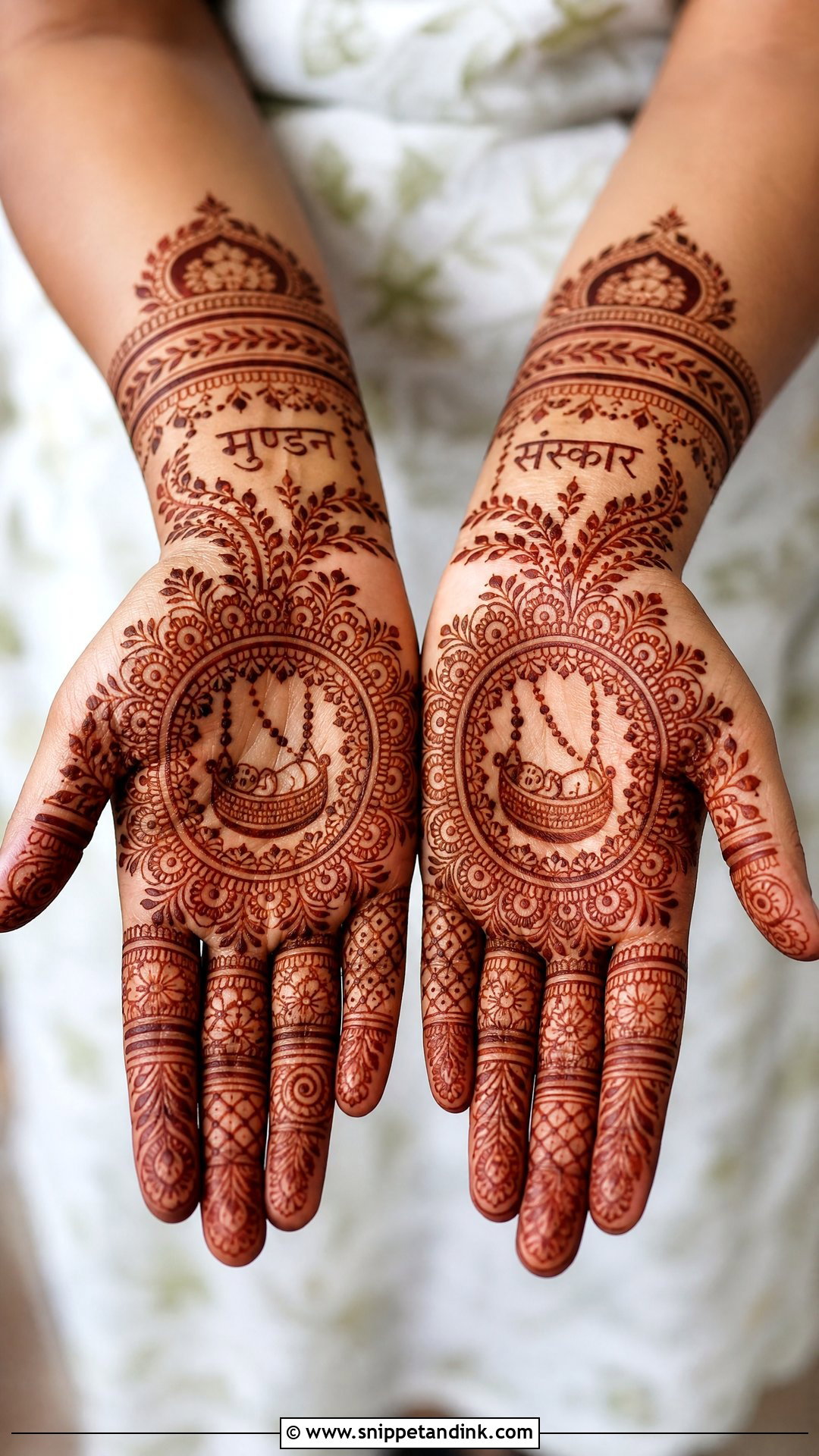
Traditional Indian layouts bring the most richness without tipping into bridal work. A central mandala, paisley chains, fine floral filling, leafy borders and careful finger detail make up the base, with small feet near the palm center or a cradle near the wrist as quiet references to the day. I aim for the two hands to balance rather than mirror exactly, because a slightly different motif on each side looks hand-drawn rather than stamped. These designs need a steady sitting, so I suggest booking them the evening before the mundan. They sit naturally with sarees, anarkalis and embroidered suits.
7. Back Hand Mundan Mehndi Design
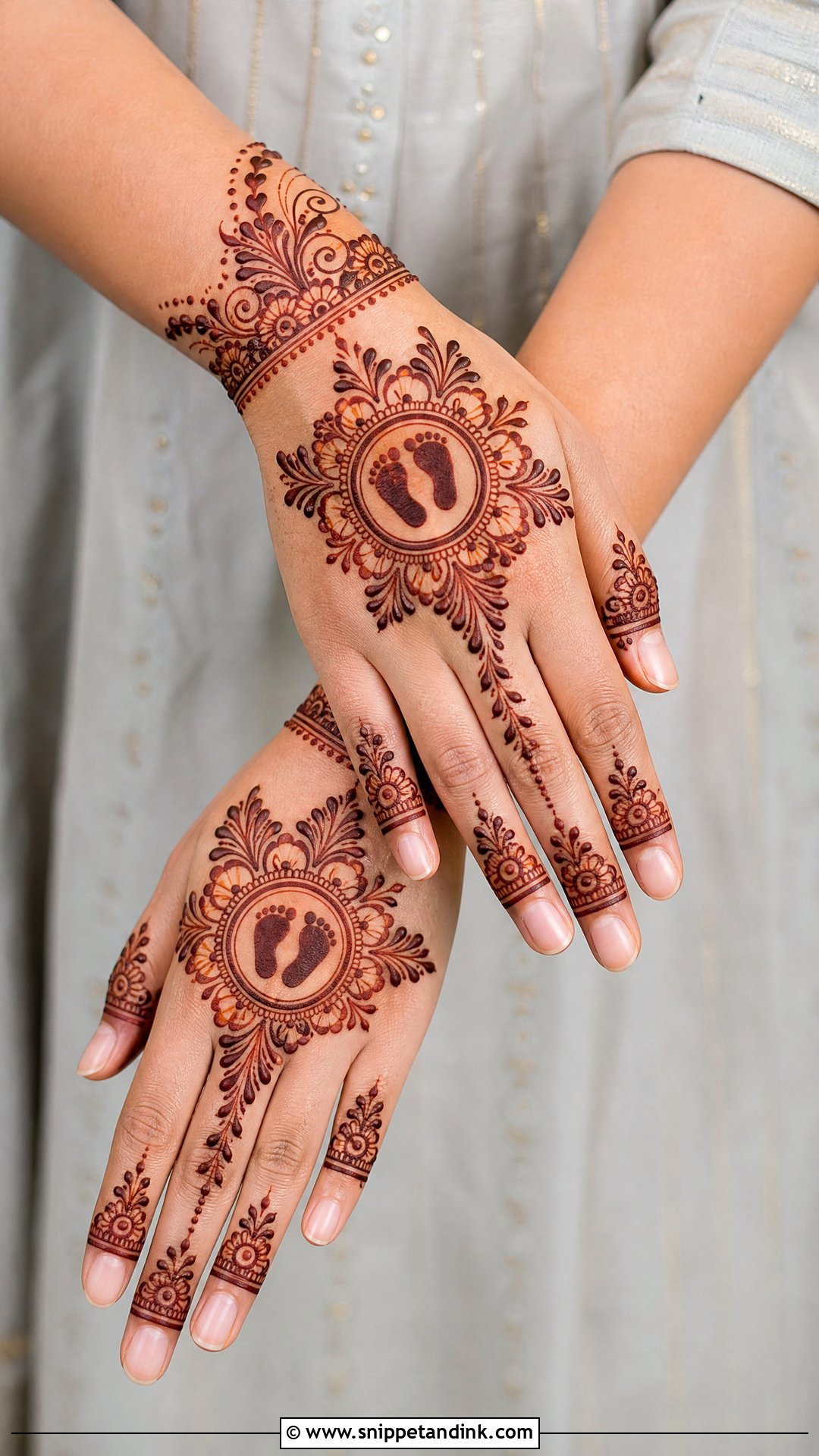
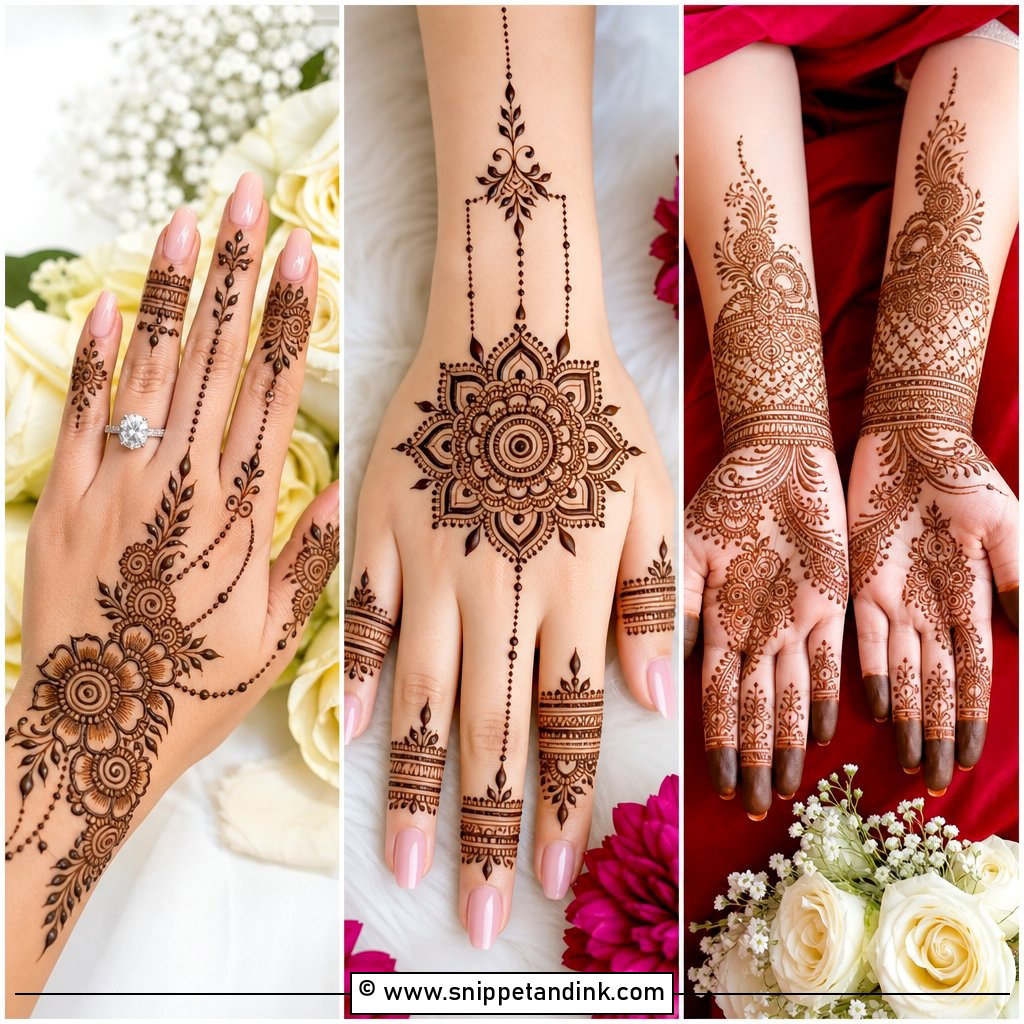
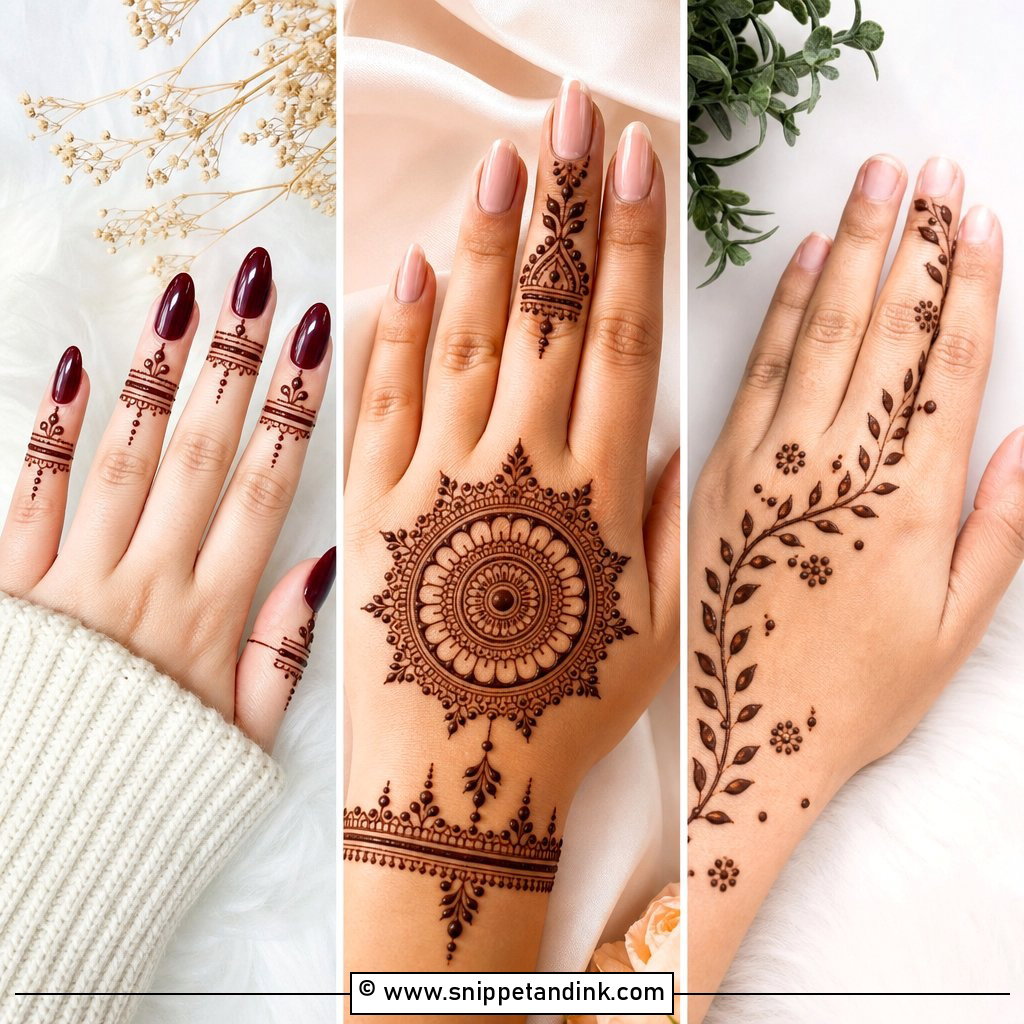
The back of the hand is what everyone sees when you’re holding the baby, serving sweets or posing with family, which is why I often suggest putting the design here for mothers. A central mandala or floral cluster can extend into finger chains, leafy trails and a bracelet band at the wrist, with tiny feet or the child’s initial in a small circle. With the palm left free, nothing stops you from washing hands or handling the baby. Back-of-hand skin is thinner and stains a little lighter than the palm, so I don’t skimp on drying time here.
8. Front Hand Mundan Mehndi Design
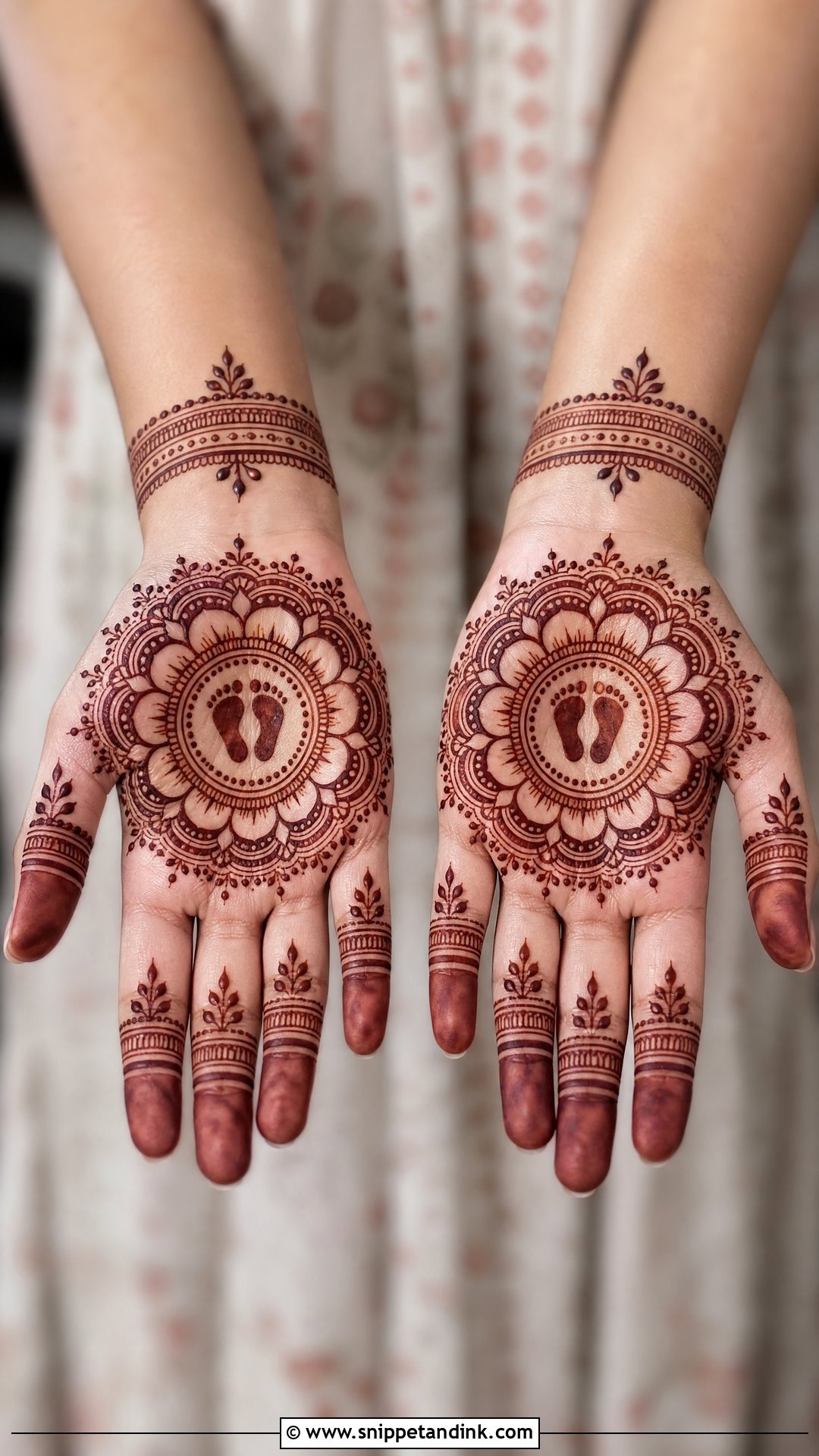
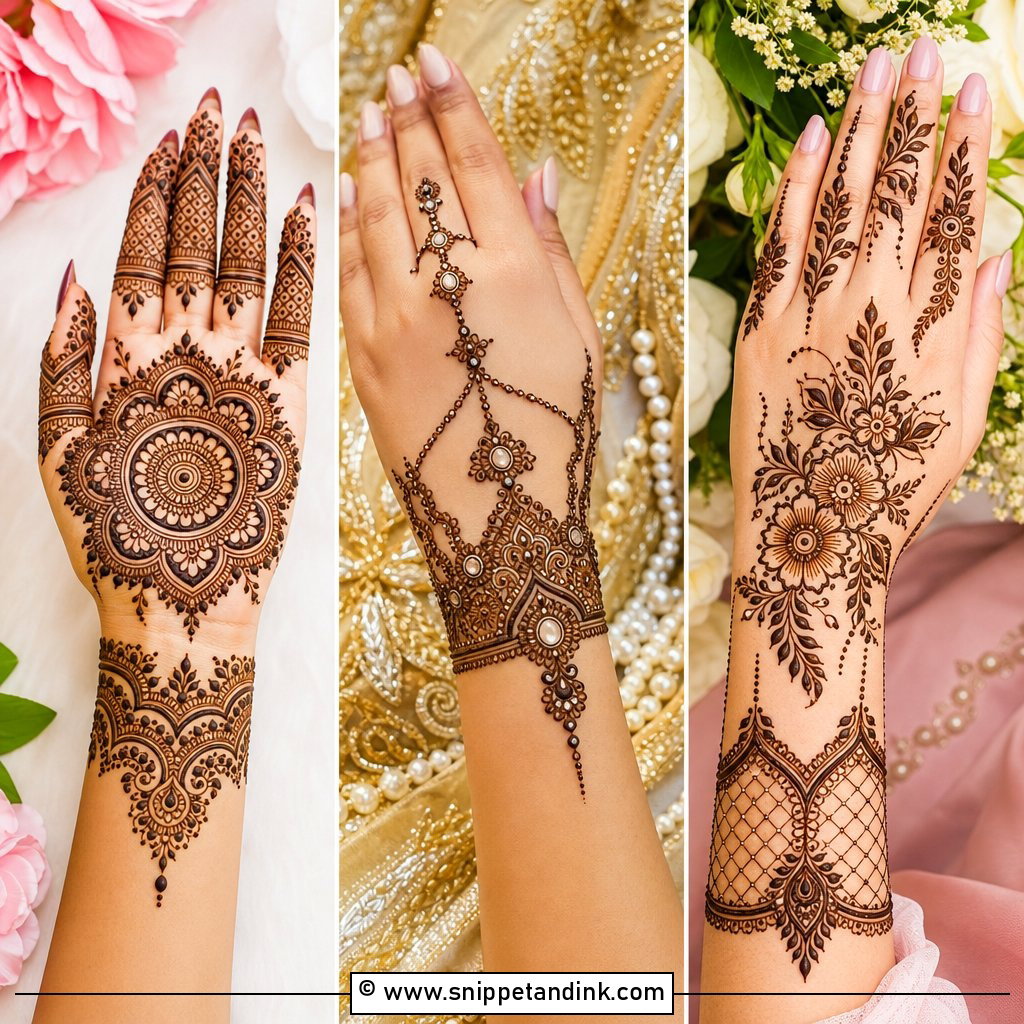
Front hand mehndi suits families who show their palms during blessings and folded-hands moments. A round mandala, lotus, paisley circle or small baby feet sit at the center, with fine lines, mini florals and dotted bands on the fingers and a simple border at the wrist. Palms take the darkest stain on the body, so even a medium design reads strongly. For the baby’s mother or grandmother I often place the main motif here, because it appears in the ritual photos when palms are held together. The trade-off is wear: frequent hand washing fades a palm faster.
9. Minimal Mundan Ceremony Mehndi Design
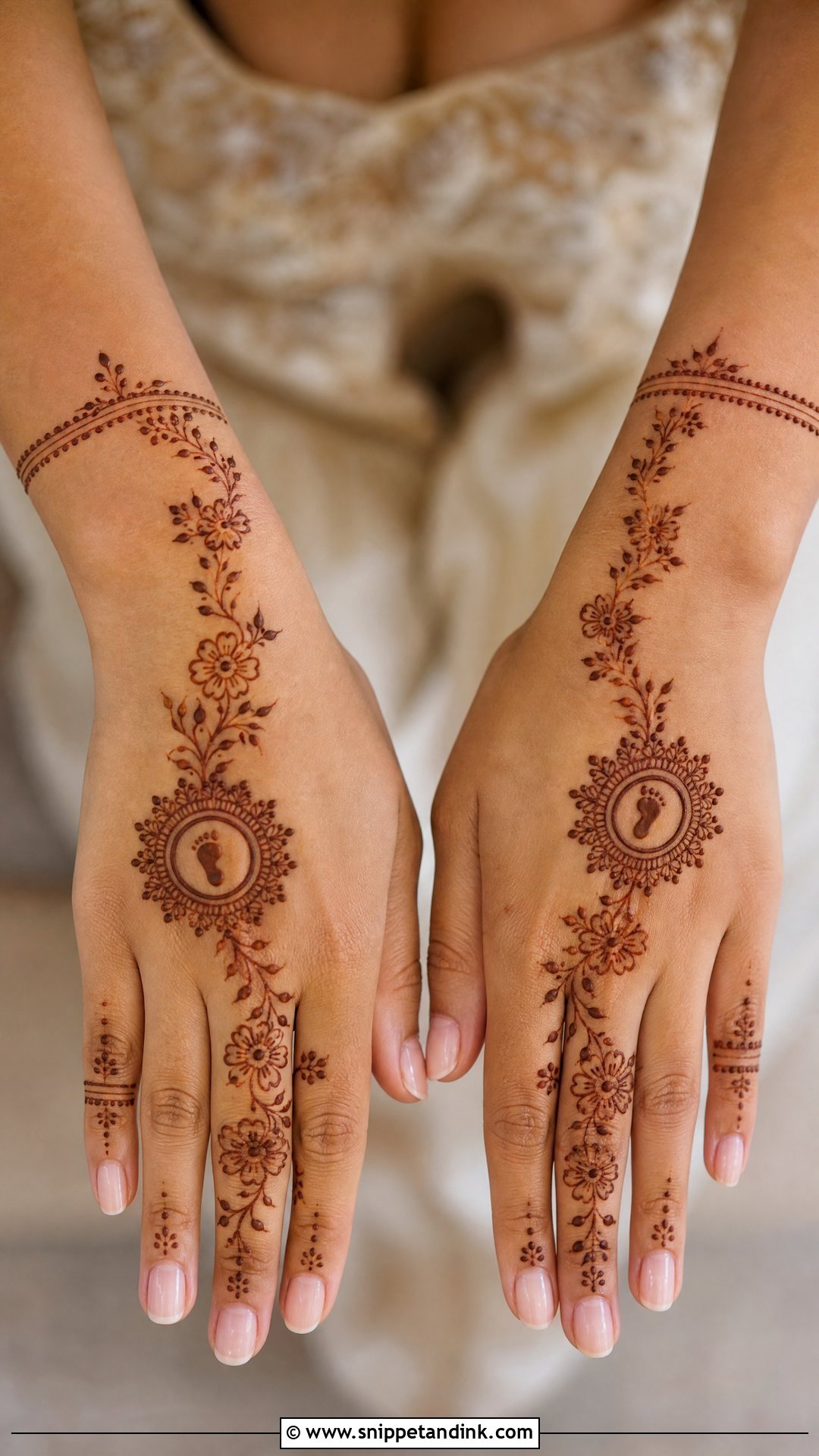
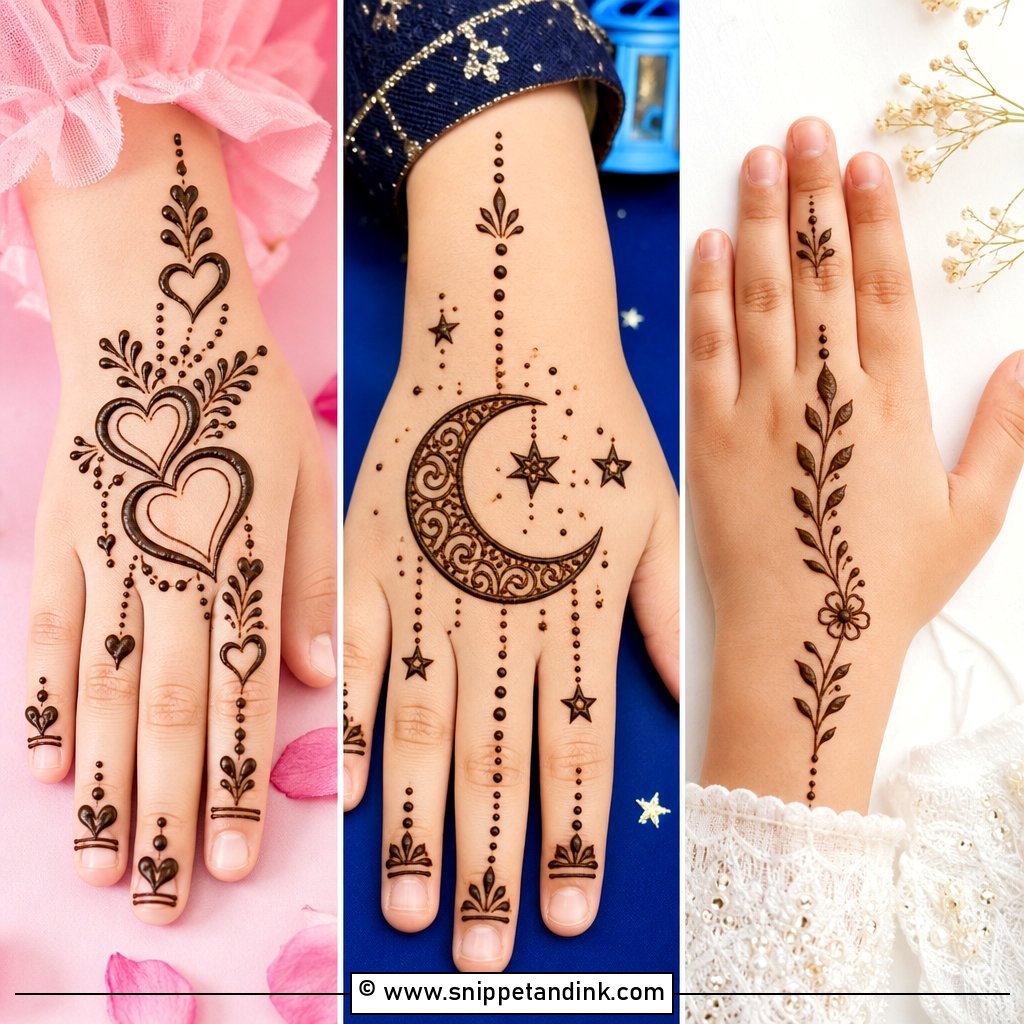
Minimal mehndi works for young mothers who are back at work, guests who dislike heavy coverage and anyone attending a daytime function in pastels. One small mandala, a fine floral trail, light finger details and a thin wrist bracelet are enough. With so few lines, each one has to be crisp, so I use a fine cone and a smooth, well-strained paste. A tiny footprint or star near the wrist makes it about the day without crowding it. It also fades more gracefully than a full hand, which some people prefer.
10. Mandala Mundan Ceremony Mehndi Design
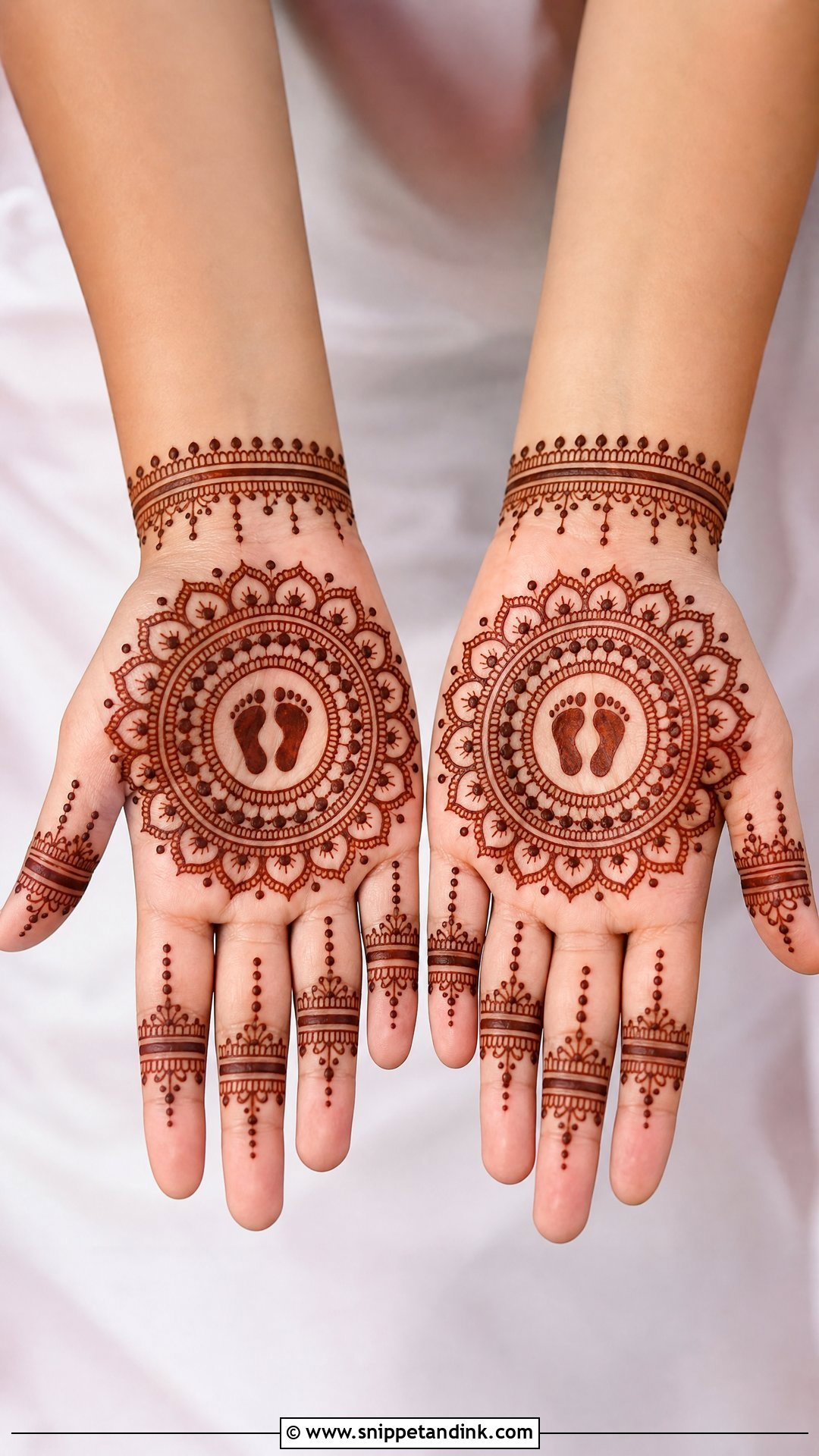
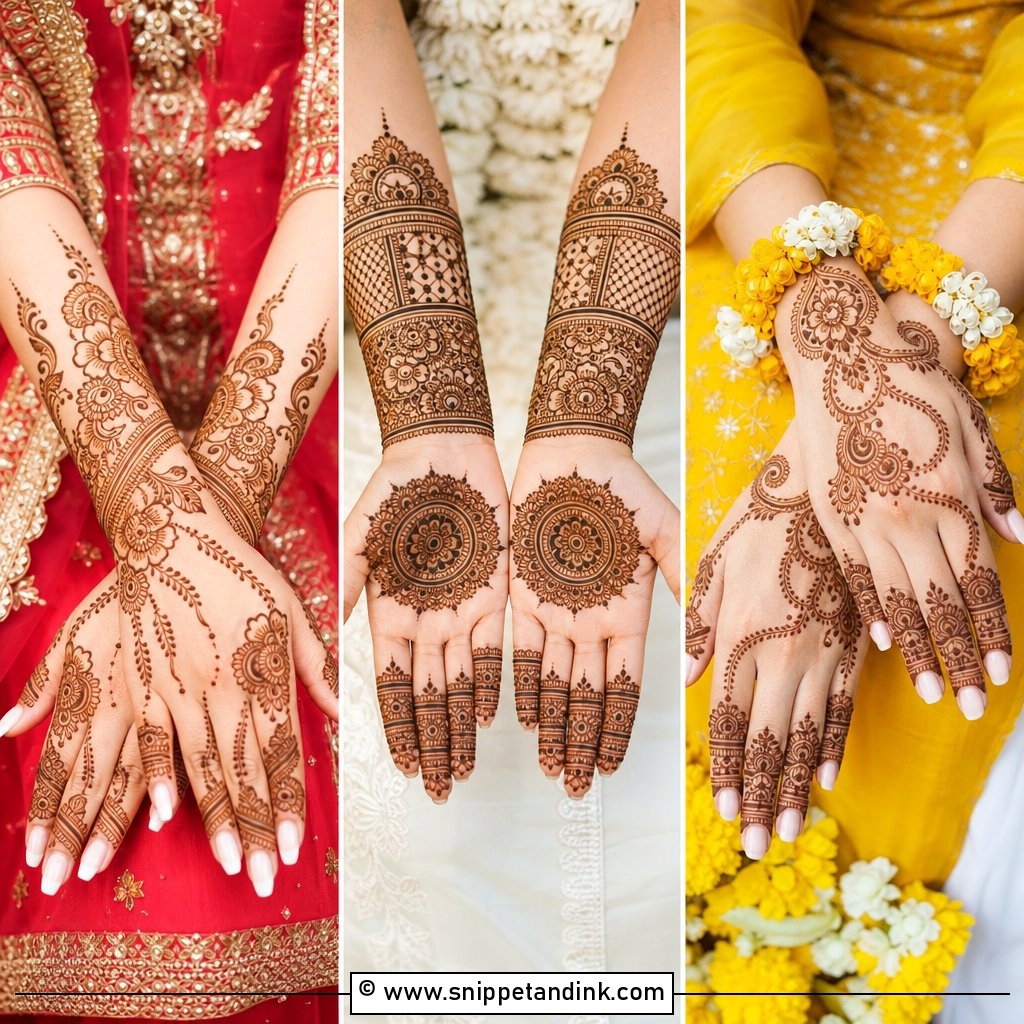
Mandalas are the most adaptable shape I draw. The main circle sits in the center of the palm or back hand, with petals, dots and thin rings spreading outward, and a pair of tiny feet or initials can go right in the middle. Because the round structure gives a natural focal point, it suits small and large hands alike. I build the rings outward from the center and check symmetry after each one, since an uneven ring is the first thing the eye catches. Keep the fingers simple with straight lines, leafy tips and small dot chains.
11. Cradle Mundan Mehndi Design
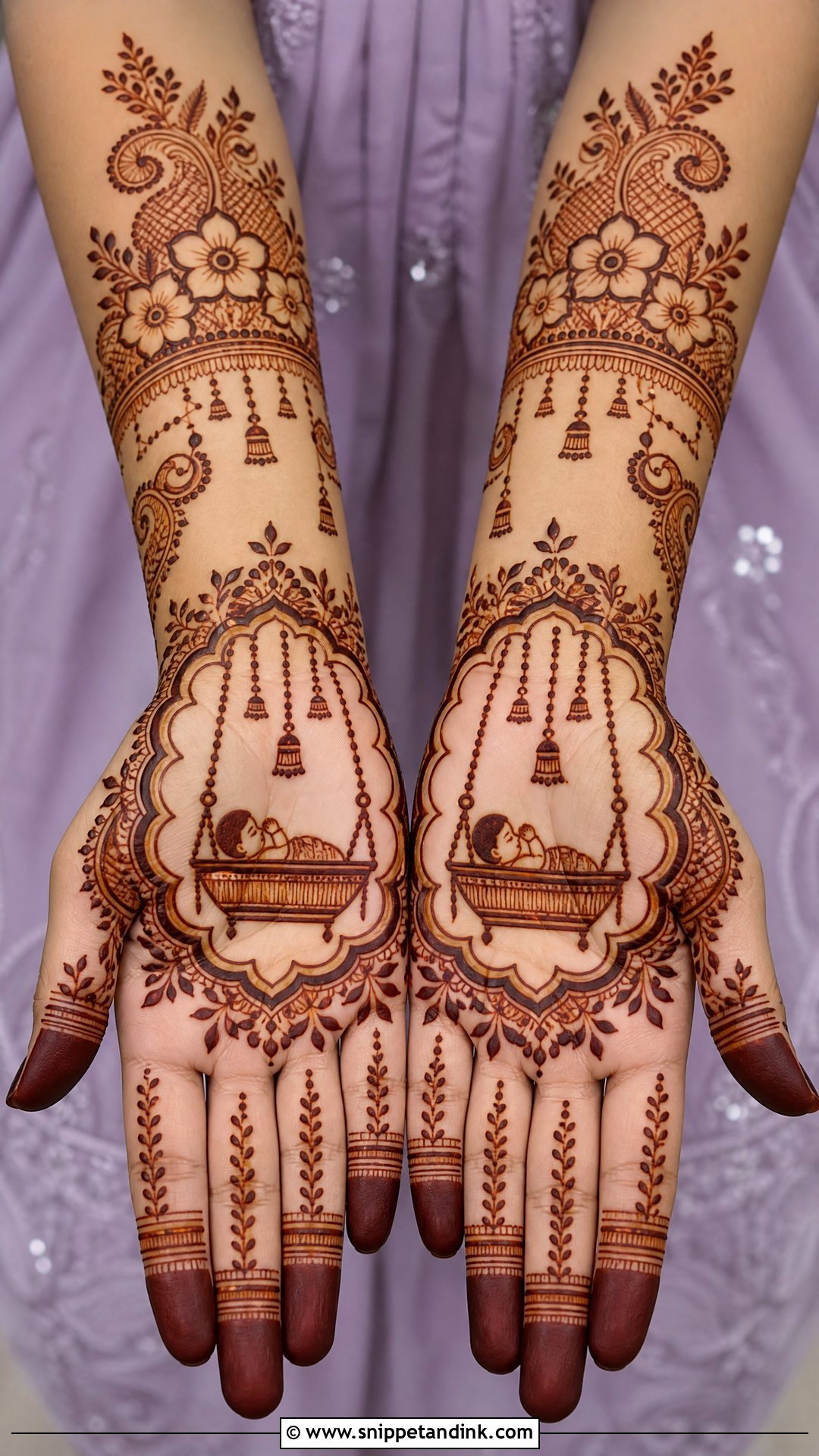
A cradle connects to the milestone more directly than any floral pattern. I draw it on the palm with clear, simple lines so it’s recognizable at a glance, then frame it with flowers, paisleys and dotted strings, sometimes with little bells hanging from the frame. The baby’s initial can go just below. Since the cradle carries the theme, the fingers should stay light, with simple lines and small floral tips. Mothers, aunts and grandmothers choose this one most often, and it’s a good alternative to feet if several relatives already have footprints.
12. Kalash Mundan Ceremony Mehndi Design
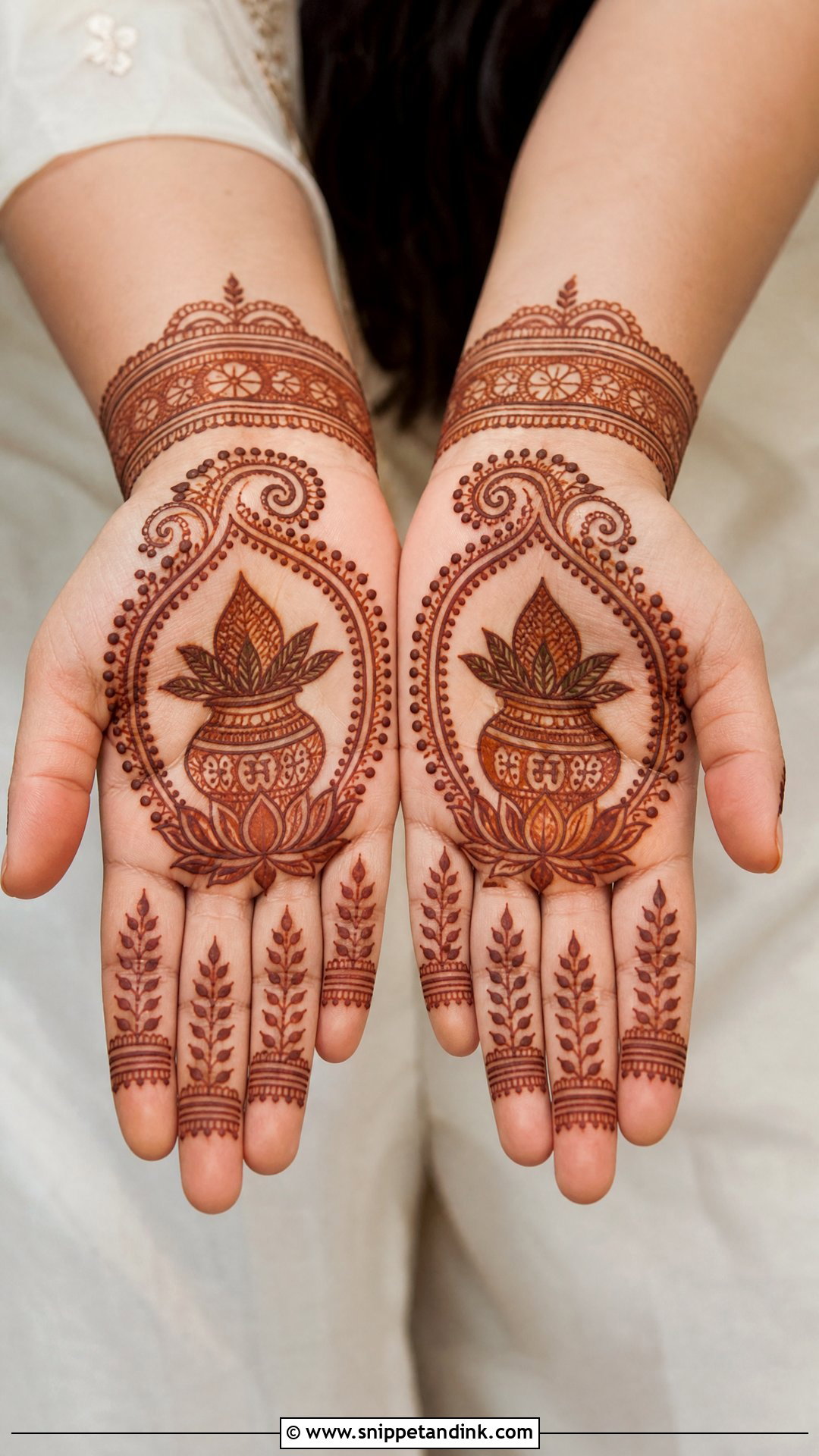
The kalash carries real religious meaning, so I treat it with care: a clear pot shape, mango leaves fanning from the rim and a coconut on top if the family wants it, set inside a round frame of dots, paisleys and lotus details. I never crowd the space around it, because the symbol should read cleanly and respectfully. The wrist can take a bracelet border and the fingers fine leafy patterns. Families who prefer a devotional look for the puja choose this one, often with bright sarees and temple jewelry.
13. Lotus Mundan Ceremony Mehndi Design
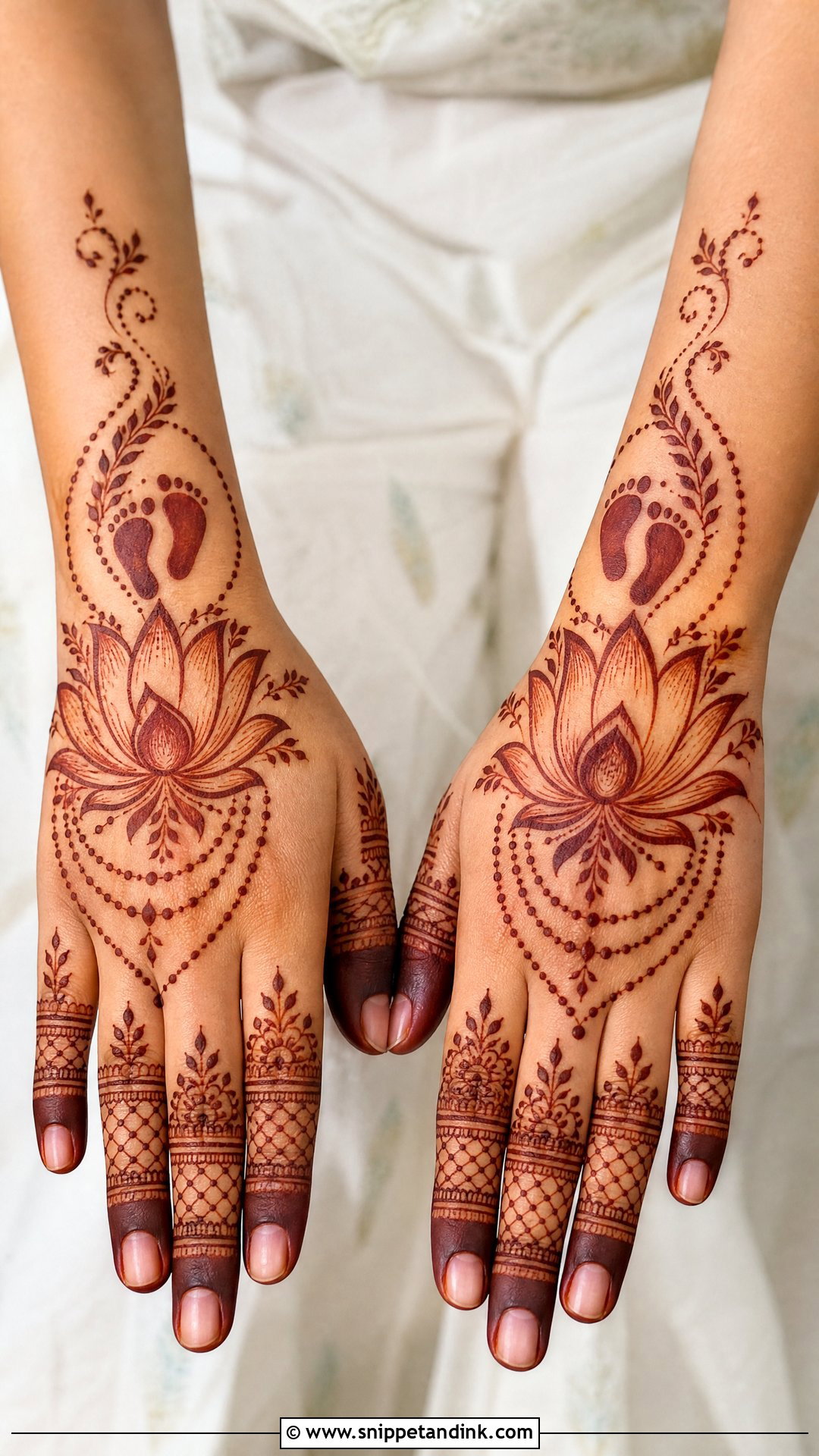
A lotus suits the purity theme of a child’s first haircut. I place a large bloom on the palm or back hand with the petals opening toward the fingers, then complete it with dotted arcs, leafy vines and small paisley curves. Tiny footprints can sit near the wrist or in a small side circle. Layered petals are where I take my time, since overlapping lines can merge as the stain spreads. Natural henna leaves a reddish-brown color that deepens over the next day or two, and lotus petals look their best once it has fully developed.
14. Peacock Mundan Ceremony Mehndi Design
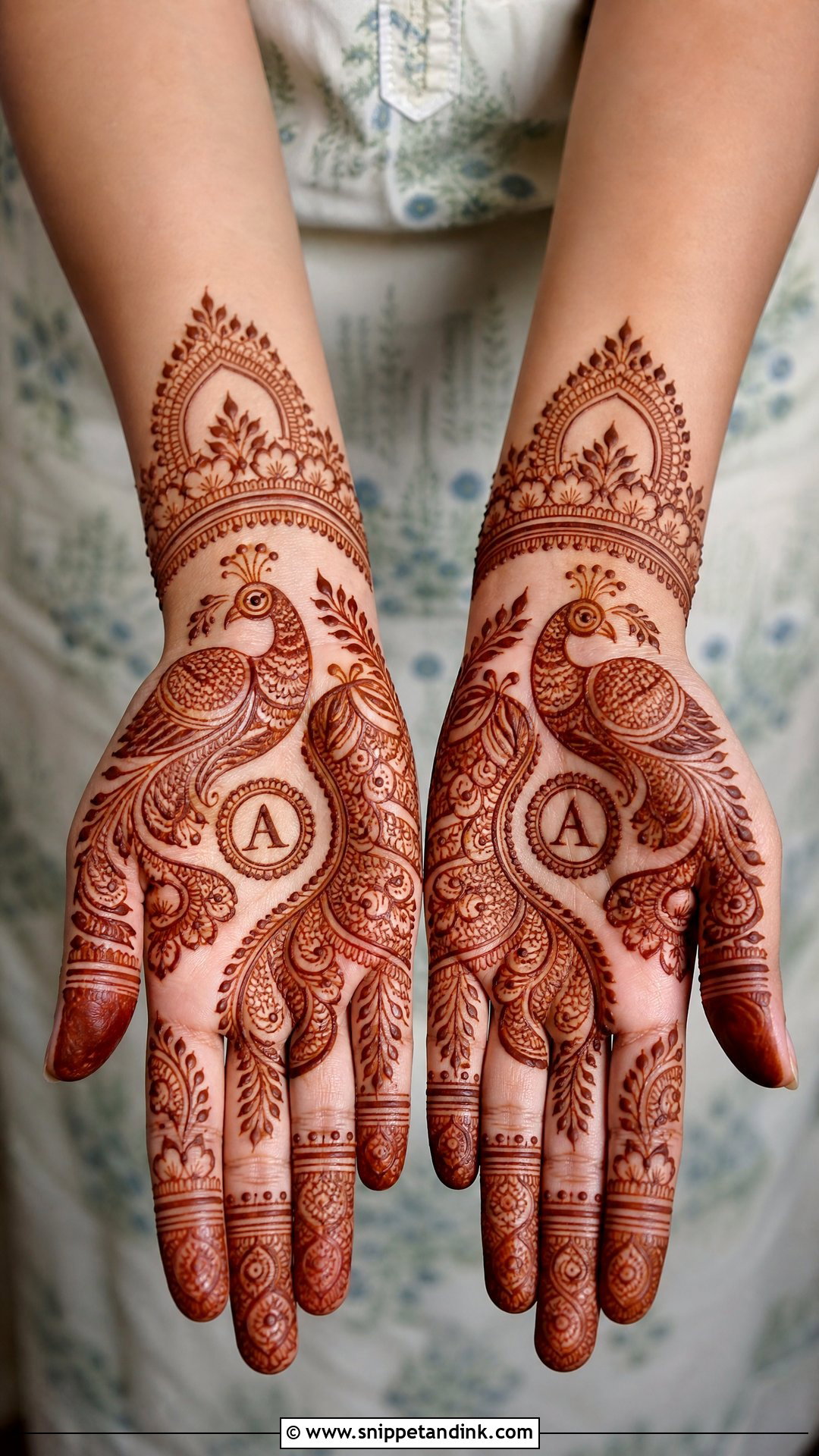
A peacock mundan ceremony mehndi design gives the hand a rich Indian feel without going bridal. The peacock can curve along the palm edge or sit on the back of the hand, its feathers flowing toward the wrist or fingers. I leave one small open space near the tail for baby feet or the child’s initial, which keeps the theme subtle. Feathers take patience, because each eye needs a clean outline and a filled center, so this is a medium-length sitting. It suits close family who want more than a simple pattern and less than a full bride’s hands.
15. Paisley Mundan Ceremony Mehndi Design
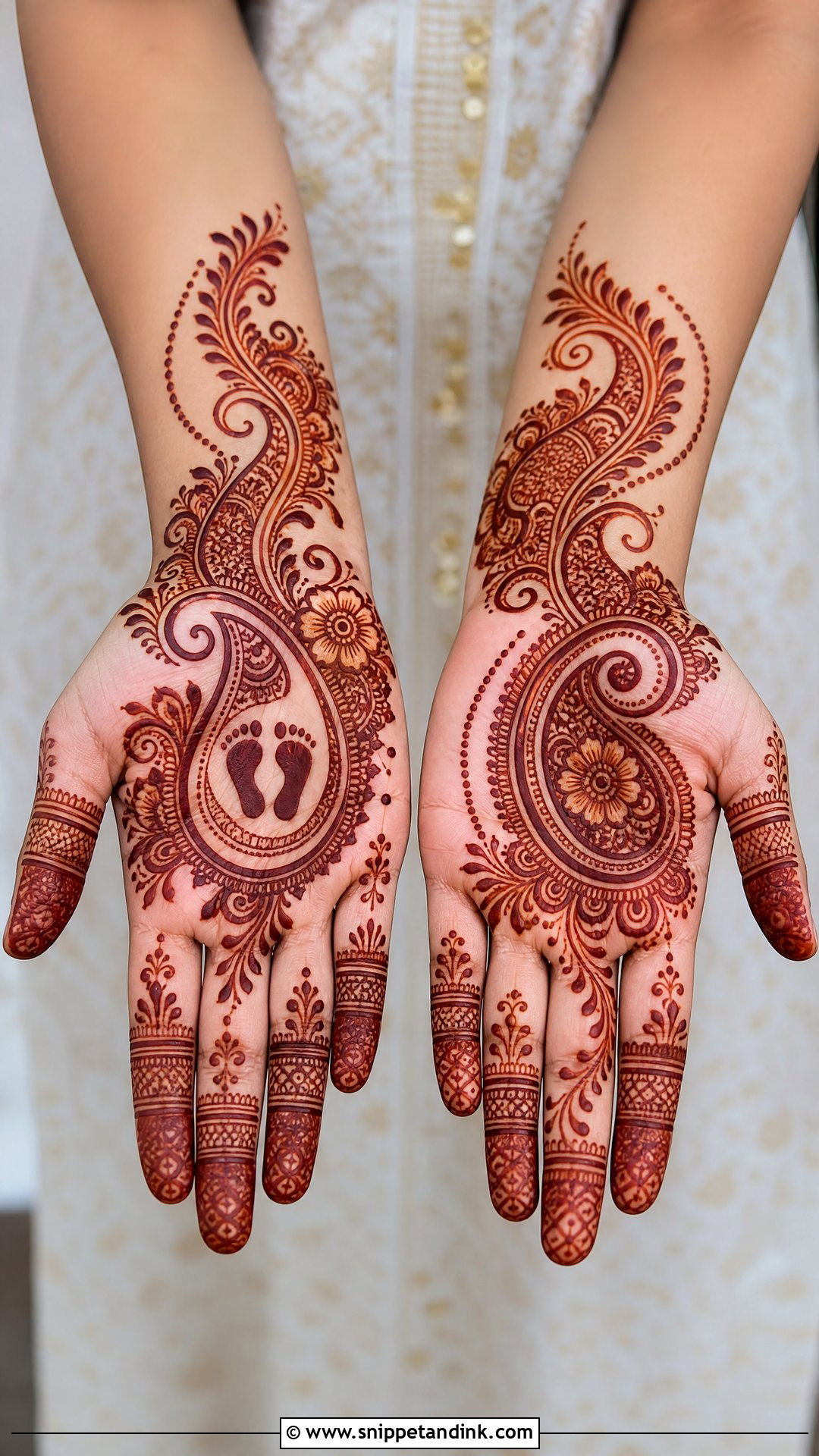
Paisley is the motif I can bend to almost any hand. It can flow from wrist to palm with flowers, dots, leaves and curved borders in between, stretched long on narrow hands or stacked on broad ones. Coverage can be light or medium depending on how long you can sit. One paisley can hold a baby footprint, small cradle or kalash as the themed detail. Paisley outlines are bold by nature, so they stain well and stay readable even as the color fades over the following week.
16. Jhumka Mundan Ceremony Mehndi Design
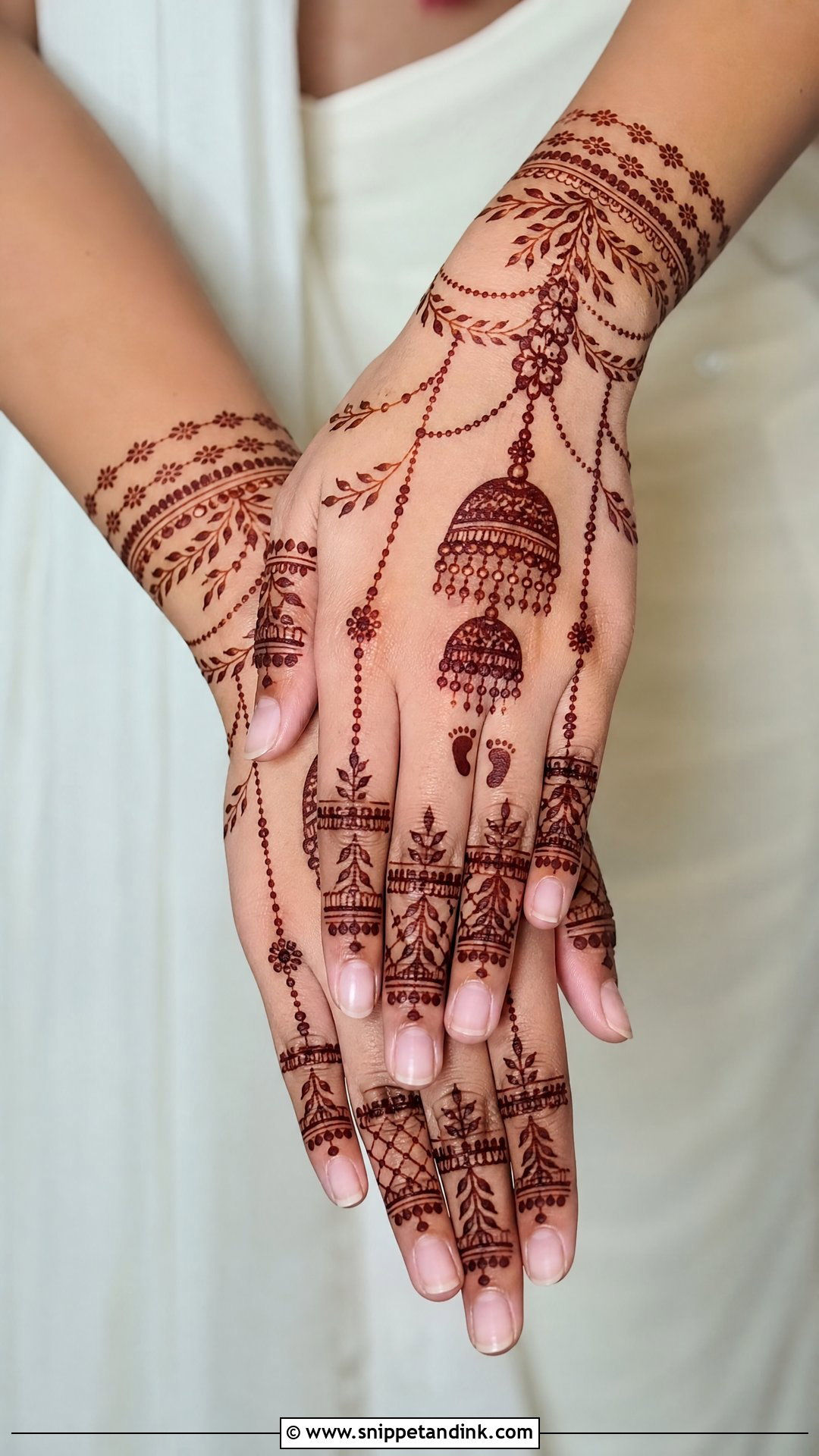
Jhumka designs borrow the shape of an earring, hanging from finger chains or a bracelet-style band on the back hand or palm. Small flowers, dots and curved strings keep the jhumka itself delicate. For the ceremony, tiny feet can sit beside it or an initial can go inside the wrist band. This is a good pick for someone who loves ornament-style mehndi but doesn’t want full coverage. Clean lines matter more than detail here, because the bell shape is what makes it recognizable.
17. Bracelet Mundan Ceremony Mehndi Design
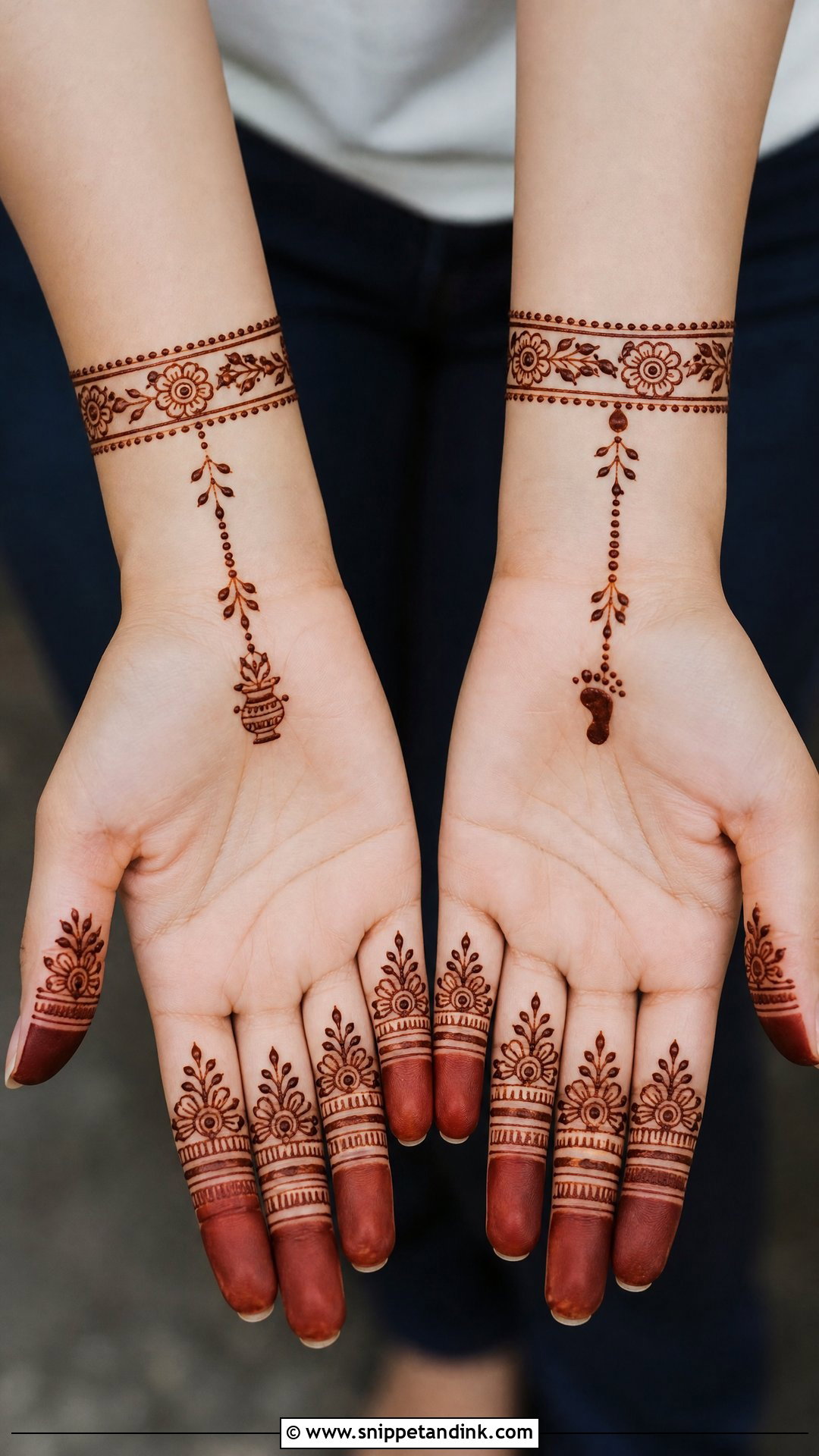
A bracelet mehndi design keeps most of the work at the wrist, where a band of flowers, dots, leaves and fine jaali extends toward the fingers in thin chains. For a mundan, I hang a tiny charm from the band: a baby foot, a cradle or a kalash. It’s comfortable through a long day of rituals because the palm and fingers stay free. Wear it with real bangles and the two layers look deliberately matched. Guests and cousins often pick this one when they want something done in a short sitting.
18. Finger Mundan Ceremony Mehndi Design
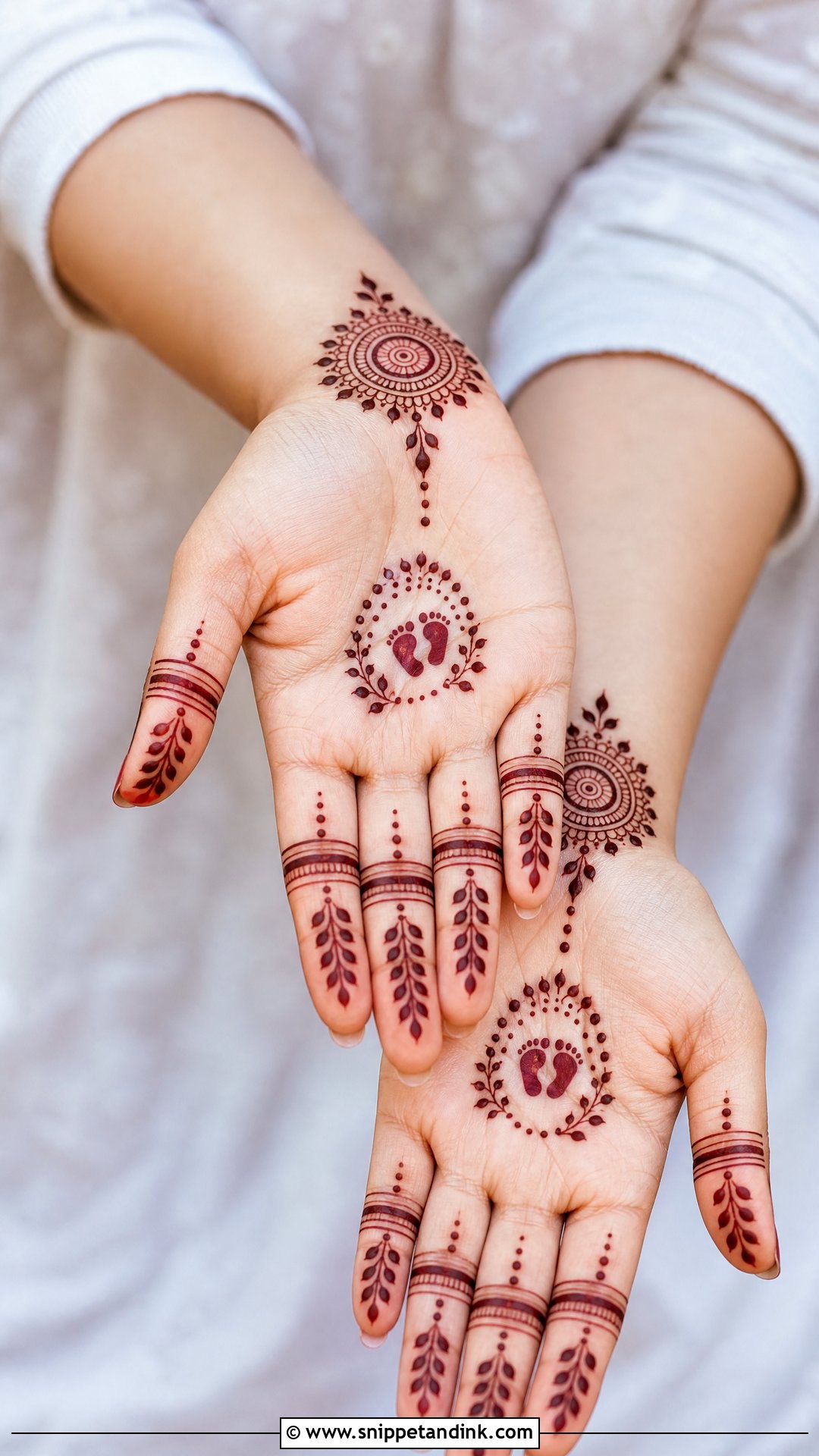
Finger mehndi is the quickest design here and one of the most practical for a new mother. Most of the palm stays open while the fingers get leafy lines, dots, tiny flowers and ring-style bands, with a small motif near the wrist such as baby feet or a tiny mandala. Fingertips stain very dark, so even fine lines show up well. Fingers also wear fastest through washing and handling, so expect this one to fade sooner than a back-hand design. It sits well with simple suits and daytime sarees.
19. Indo Arabic Mundan Mehndi Design
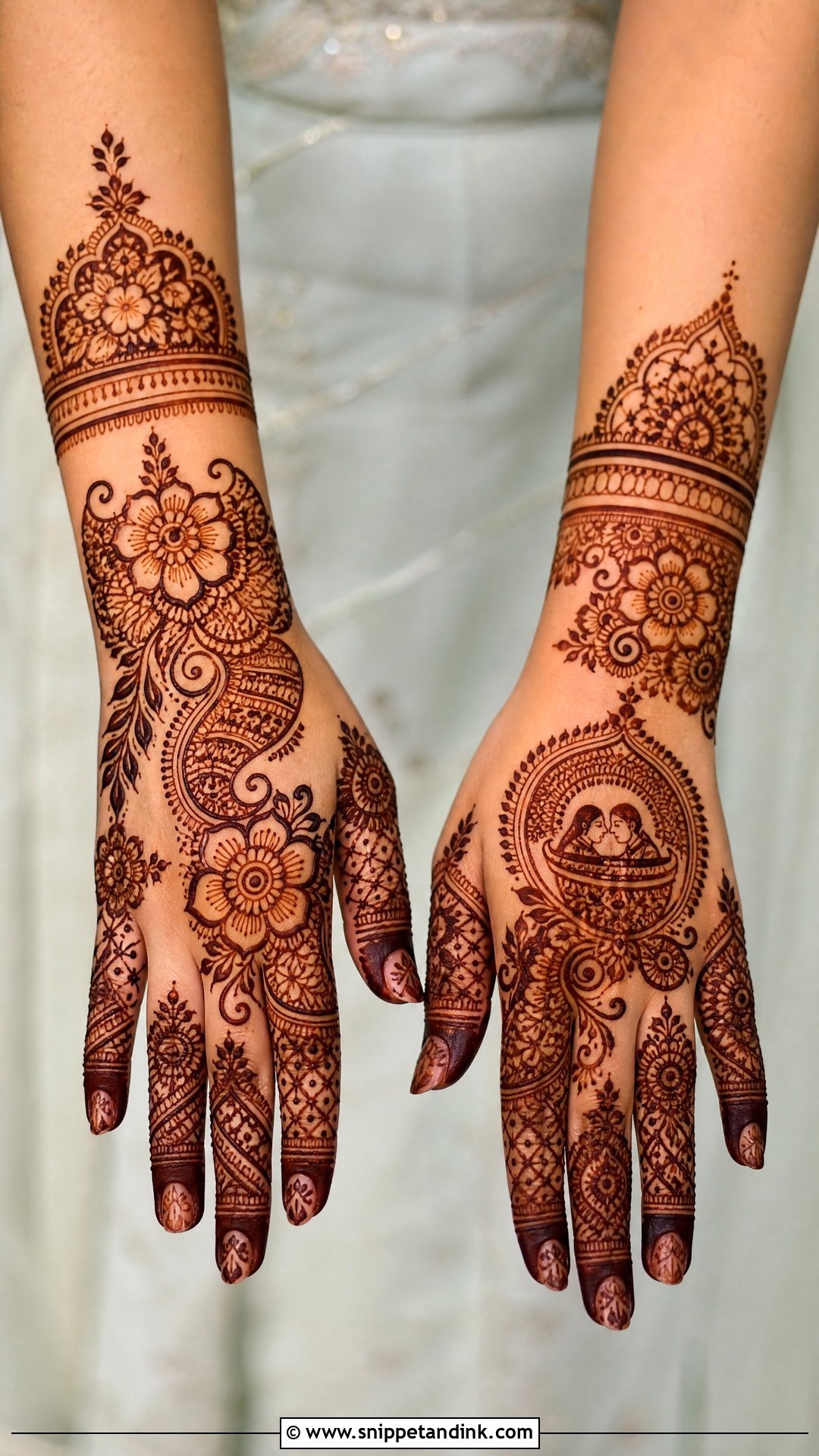
Indo-Arabic designs take the flow of Arabic trails and add the fine filling of Indian work, giving festive coverage while still leaving open skin. Bold floral trails, paisley curves, small mandalas and fine filler make up the base, with a baby footprint pair, small kalash or cradle placed in the center. The mix of thick outlines and fine detail is what gives strong contrast in photos. I suggest it for mothers, sisters and close relatives who want something traditional that still looks current. It takes longer than pure Arabic, so plan your sitting accordingly.
20. Full Arm Mundan Ceremony Mehndi Design
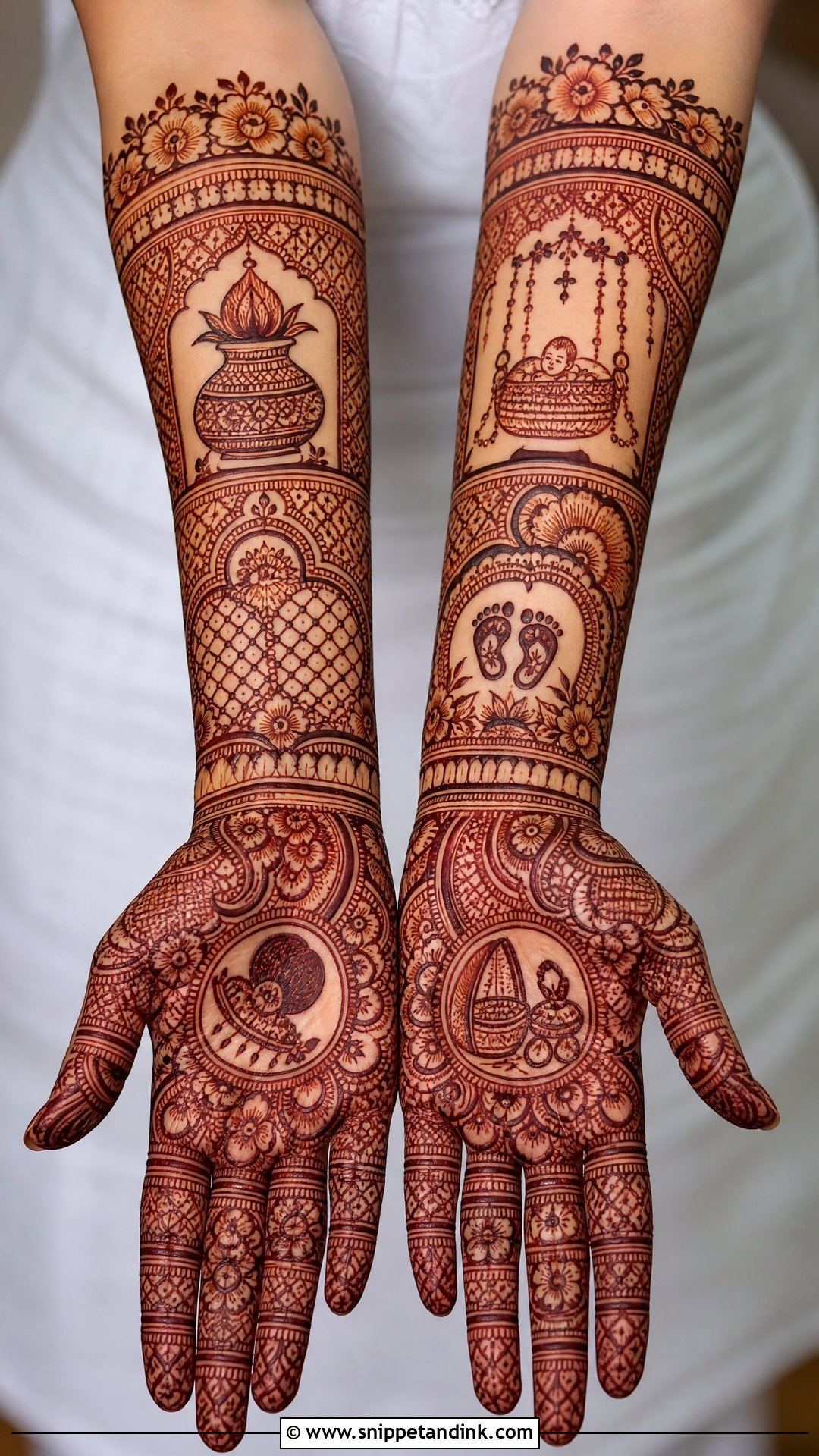
Full arm mehndi is for the baby’s mother or a very close relative who wants the most celebratory look. The design runs from fingertips up the forearm with mandalas, paisleys, flowers, jaali, baby feet, a cradle and auspicious symbols, organized into sections so it never looks crowded. I keep the main baby motif on the palm and use floral bands and traditional borders on the forearm. This is a long sitting, often several hours for both arms, and forearm skin stains lighter than hands, so the paste needs to stay on as long as possible. Short sleeves and bangles show it off best.
Getting a Deep Stain by the Morning of the Mundan
The design is only half the result. How you treat the paste over the next day decides how dark it turns. This is the routine I give every client:
- Leave the paste on for at least six hours, overnight if you can. Wrap loosely in tissue for sleep rather than plastic.
- Scrape it off with a blunt edge or your fingernail. Don’t wash it off.
- Keep water away from the design for the rest of that day, and avoid soap for longer if you can.
- Rub a little balm or coconut oil over the stain before you wash your hands. It gives the skin a light barrier.
- Keep your hands warm. A stain deepens better on warm skin, so cold air-conditioned rooms slow it down.
Expect the color to peak about two days after application, then fade gradually over one to two weeks. Palms and fingertips stay dark longest. The back of the hand and forearm fade first, so if the mother wants her stain at its darkest for the photos, those two days of planning really do count.
Matching the Mehndi to Your Part in the Ceremony
Think about what your hands will be doing on the day before you pick a design. The mother, who holds the baby and leads the rituals, usually wants one meaningful motif such as feet, a cradle or a mother and baby figure, placed where it shows. Guests do well with Arabic trails, bracelet patterns, mandalas or finger designs that take less time in the chair. Families with a more devotional tradition often lean toward kalash, lotus, peacock and paisley layouts. A small family gathering suits a light hand; a large function can carry full hands or forearms. Book early enough that your stain has a day to darken before the ceremony.
You'll Like These Ideas:






Leave a Reply