
Most of the updos I’m asked for are simpler than people expect. A low bun, a clean chignon, a twisted knot, a braid wrapped into the back: none of them takes long, and all of them keep hair off your face from the ceremony to the last song. What separates a good simple updo from a tired one is placement and grip, not the number of pins. The styles below suit brides, bridesmaids, mothers and guests, and I’ve added what I actually watch for when I build each one, from bun height to which hair types fight back.
Your Neckline Decides How High the Bun Should Sit
Before I look at inspiration photos, I ask what the dress does at the neck and back. Bun height should balance the neckline, and getting that wrong is the most common reason an updo looks slightly off in photos even when the hair itself is perfect.
- High necks and halters: a mid to high bun, so the hair doesn’t crowd the collar.
- Open or low backs: a low bun or chignon that frames the top of the back rather than covering it.
- Strapless and sweetheart: almost any height works; I lean toward low and soft so the shoulders don’t look bare and unbalanced.
- One-shoulder: a side bun placed opposite the strap, so each side has something going on.
Veils change the plan. A comb needs firm hair to grip, which usually means the bun goes lower and the comb sits just above it. If your veil is long and heavy, bring it to the trial; I’d rather rework the base there than discover on the morning that the bun can’t hold it.
1. Simple Low Bun Wedding Updo
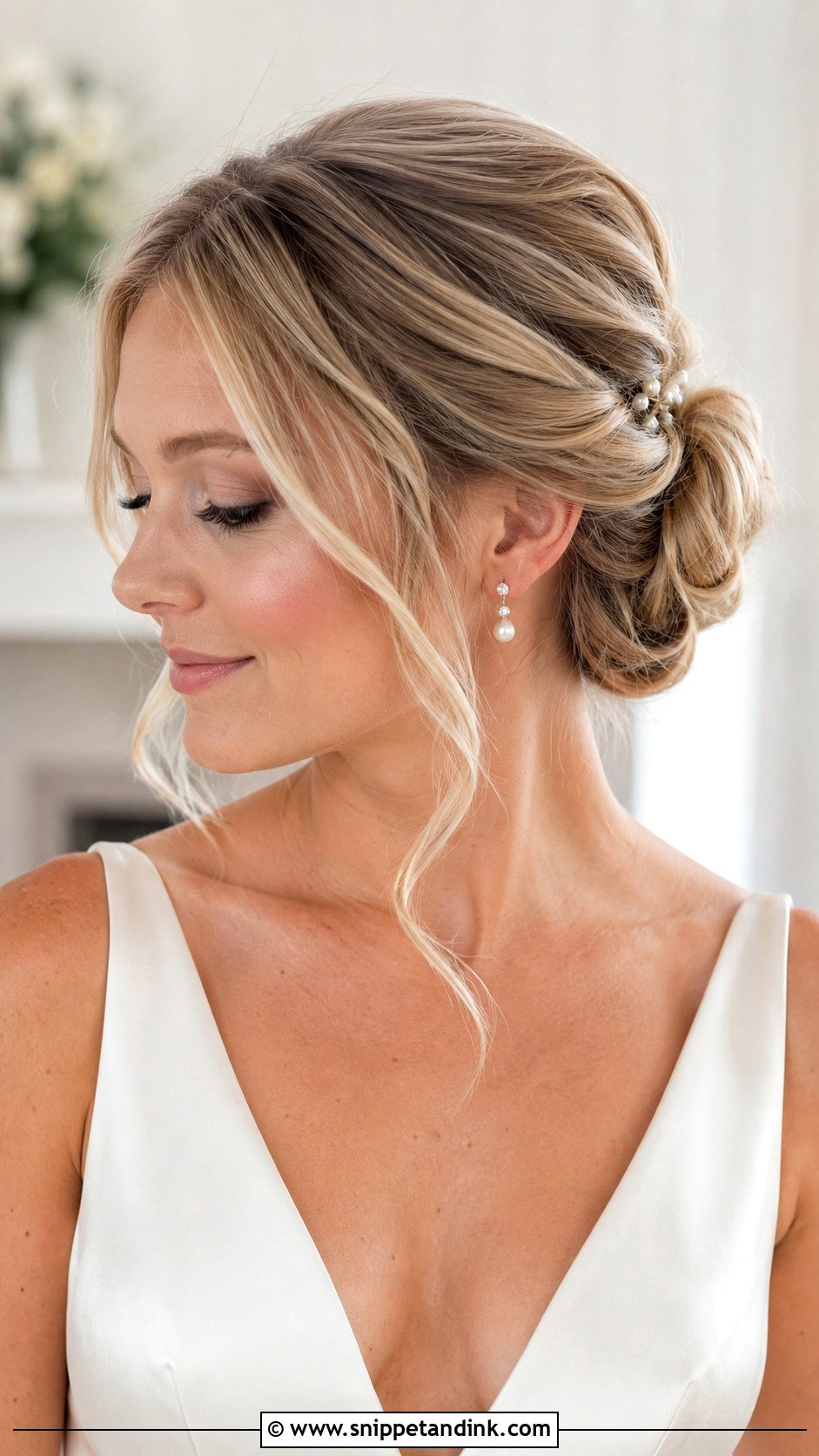
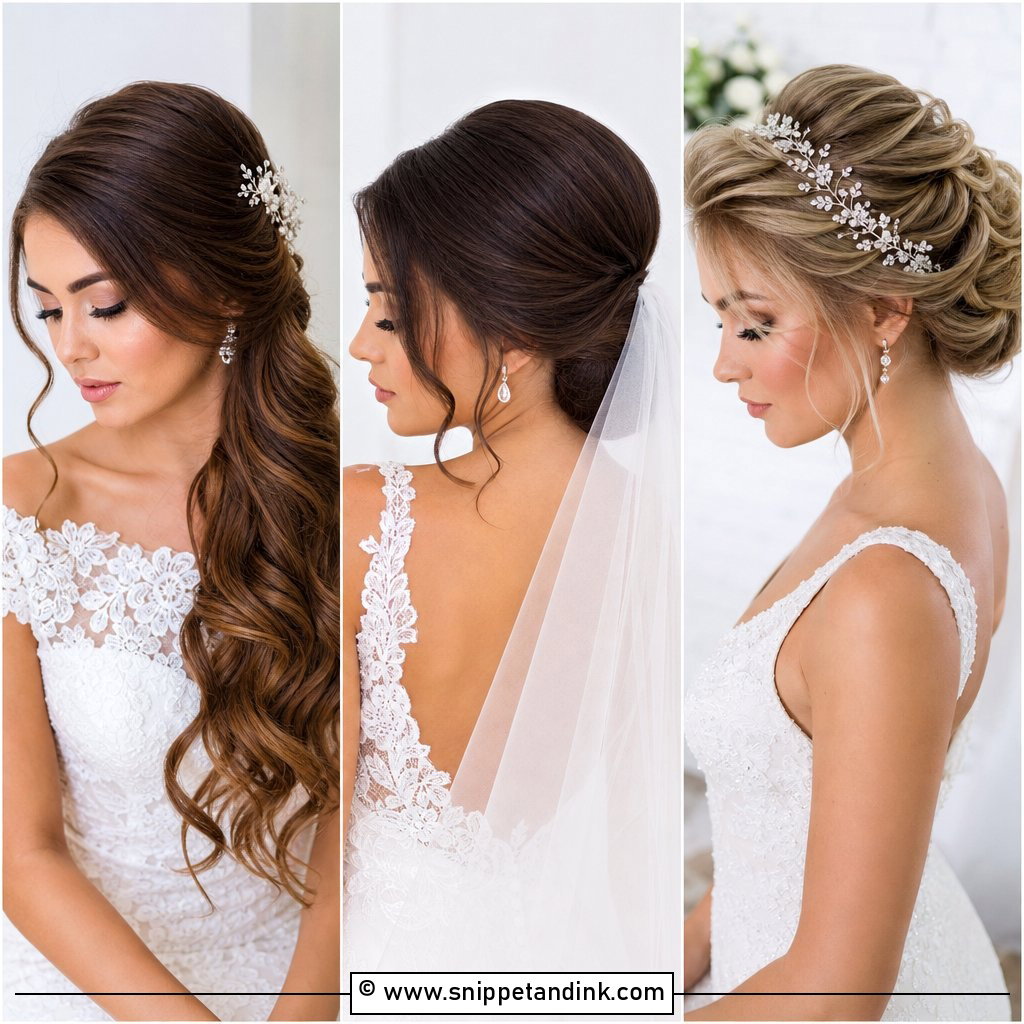
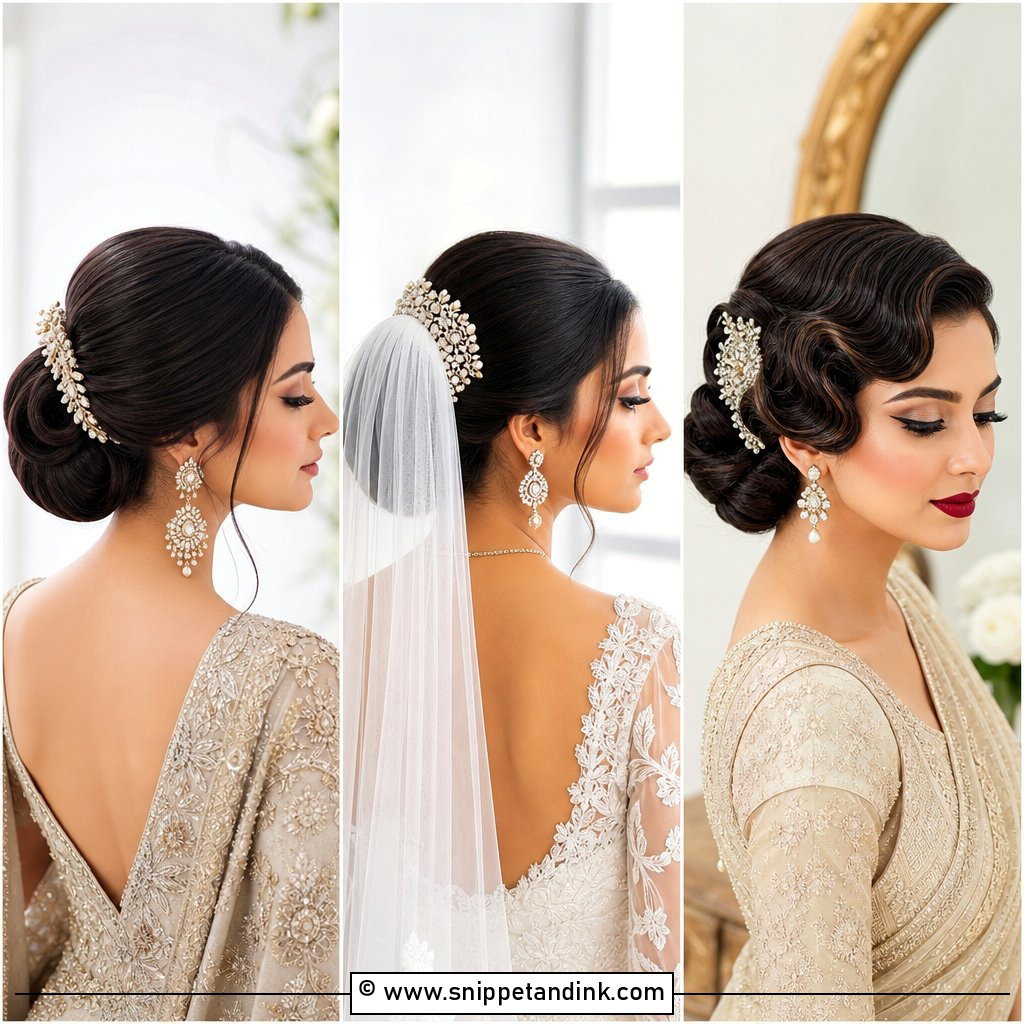
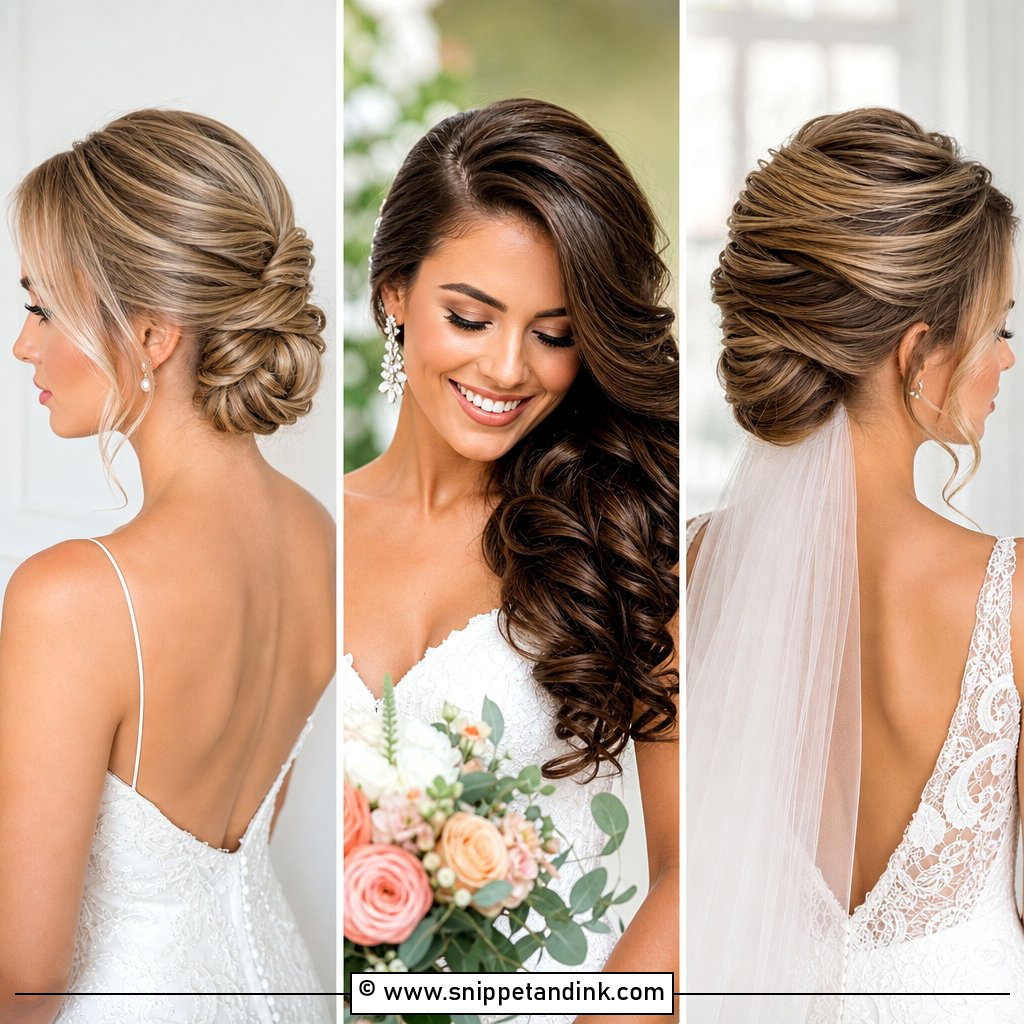
If I had to put one updo on every bride, this would be it. The bun sits at the nape, which leaves room above it for a veil comb or pearl pins and shows off an open back. Smooth the crown for a clean finish or lift it gently for something softer. Outdoors it’s reliable because a low bun has very little leverage for wind to work against. If you leave pieces out at the face, keep them fine; thick front sections look heavy next to such a small, neat shape.
2. Simple Chignon Wedding Updo
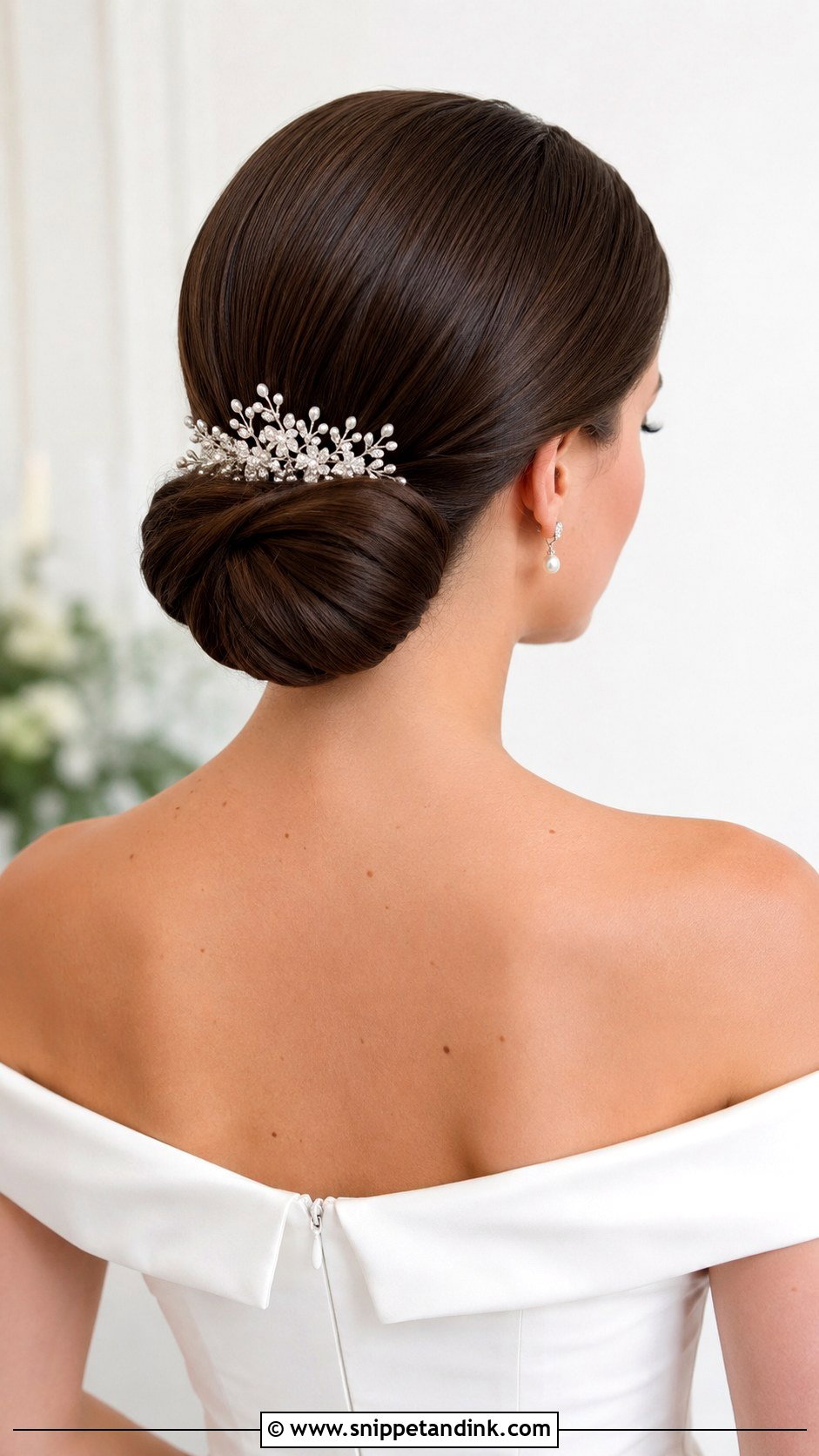
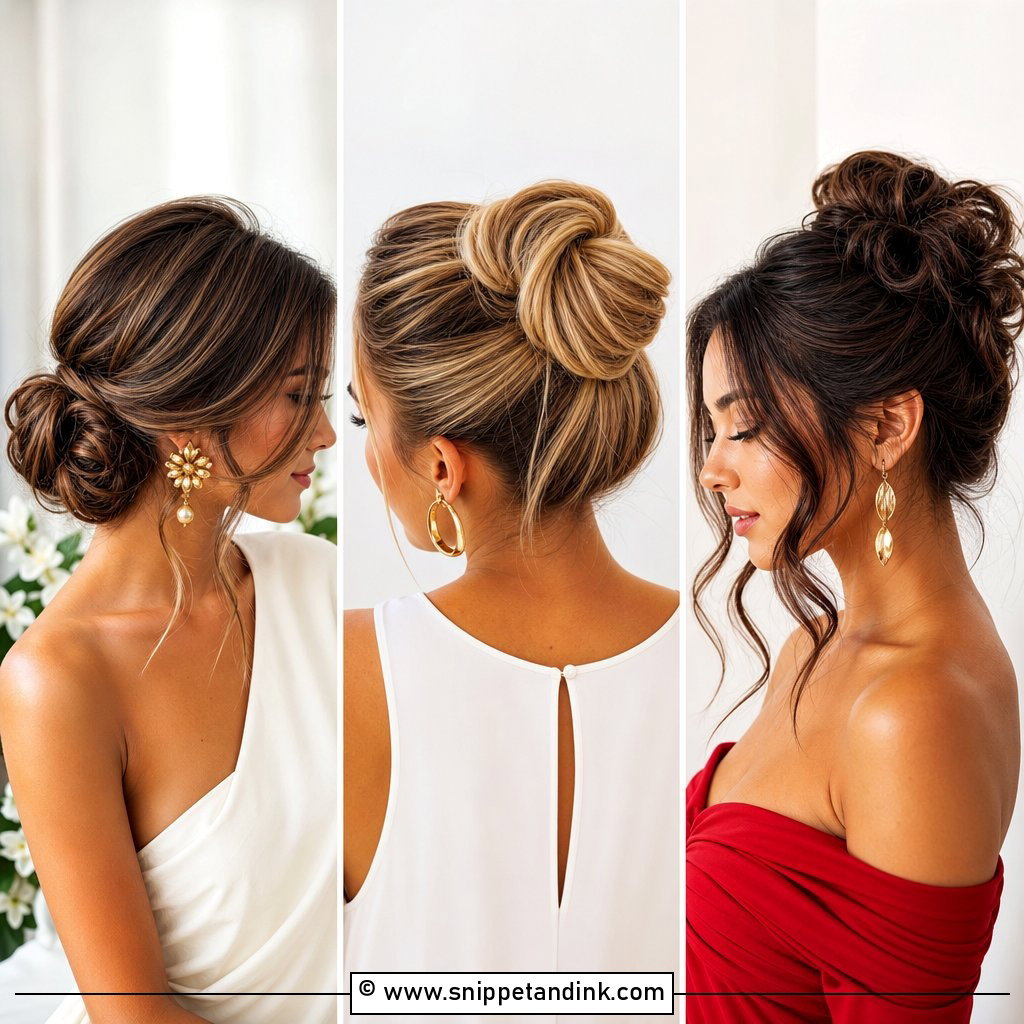
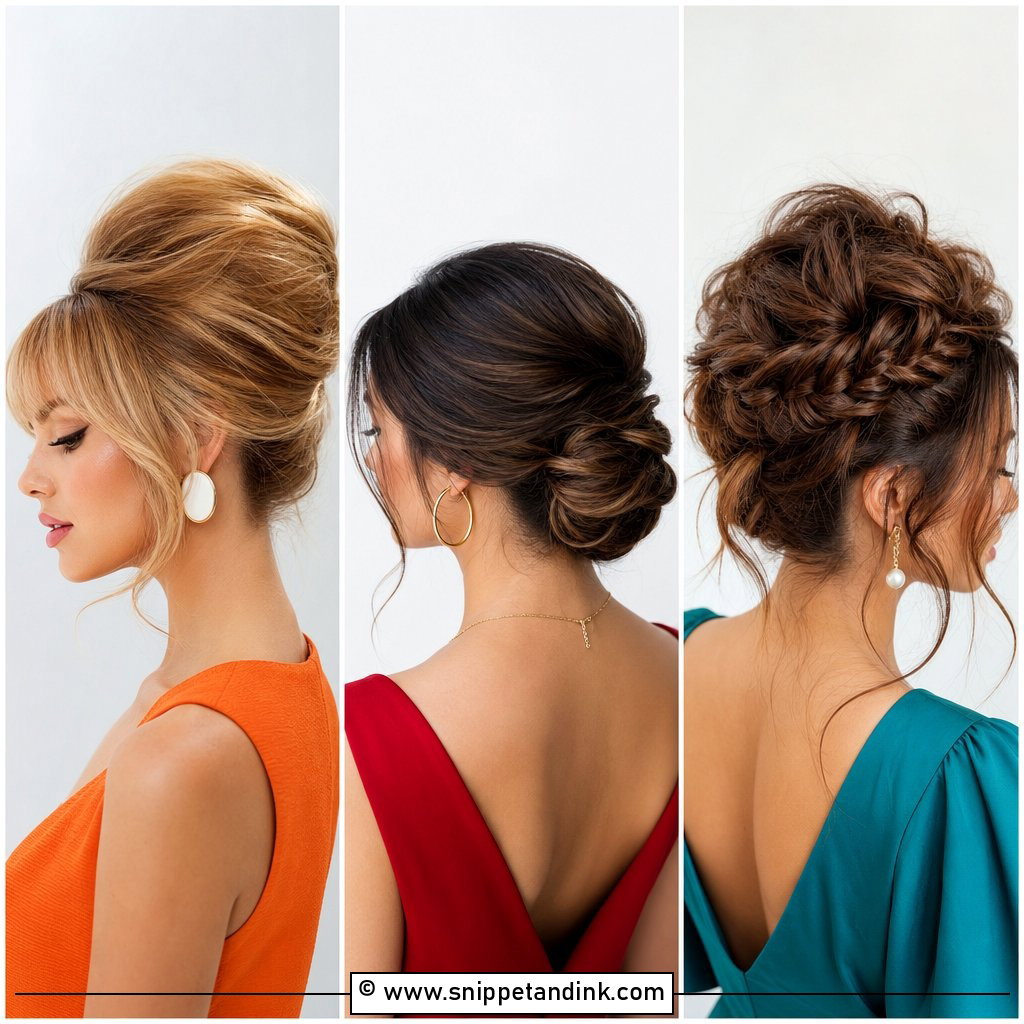
The chignon is a low roll, tucked smooth or into a softly textured roll, and it suits almost any dress because it keeps attention on the face and neckline. Strapless gowns, high necks and fine lace all sit well with it. Fine hair needs help: I backcomb the inside of the roll lightly or fold a small mesh pad into it so it doesn’t look flat from the side. For a modern version, I keep the part crisp and use a single accessory.
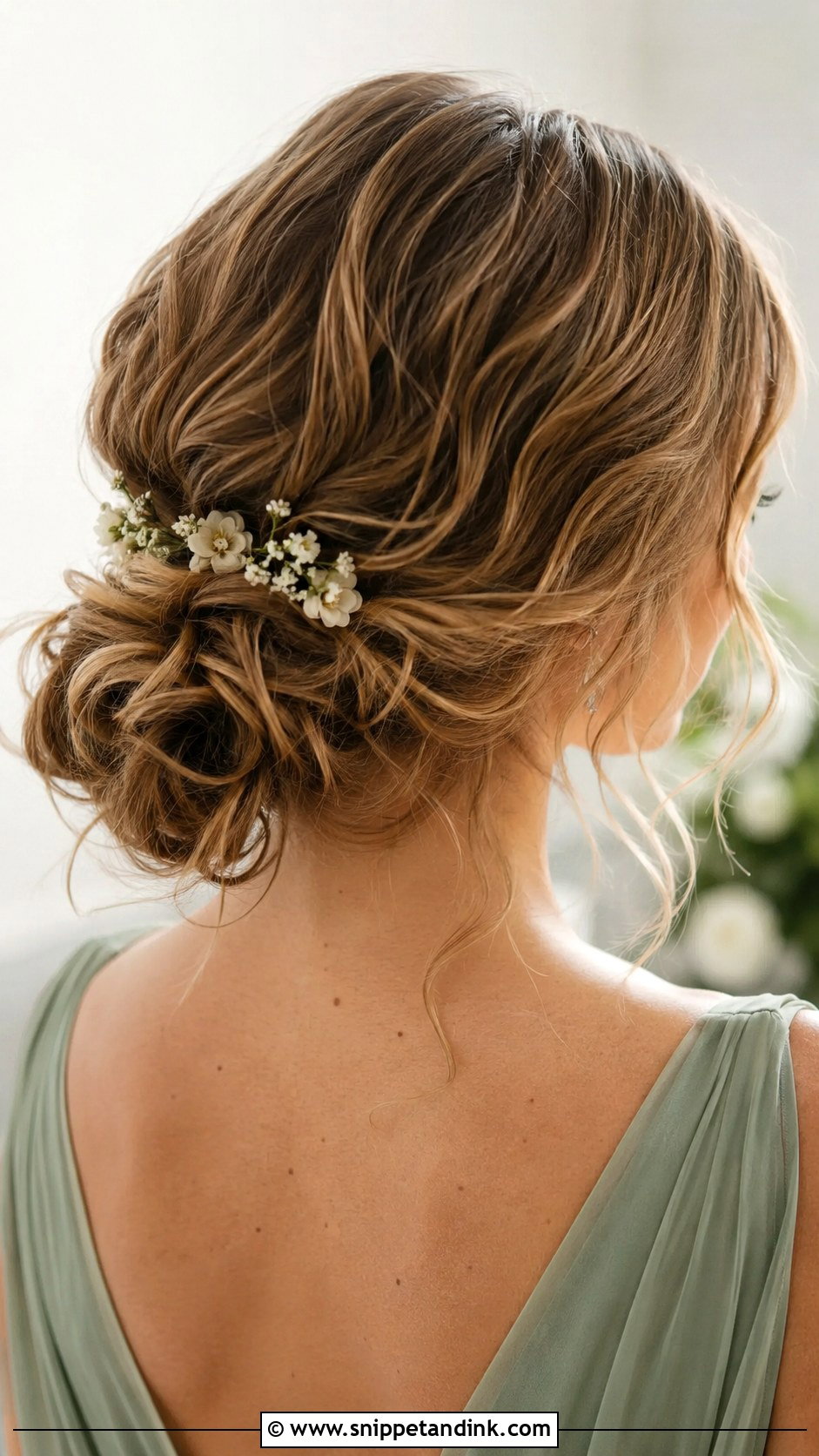
3. Simple Messy Bun Wedding Updo
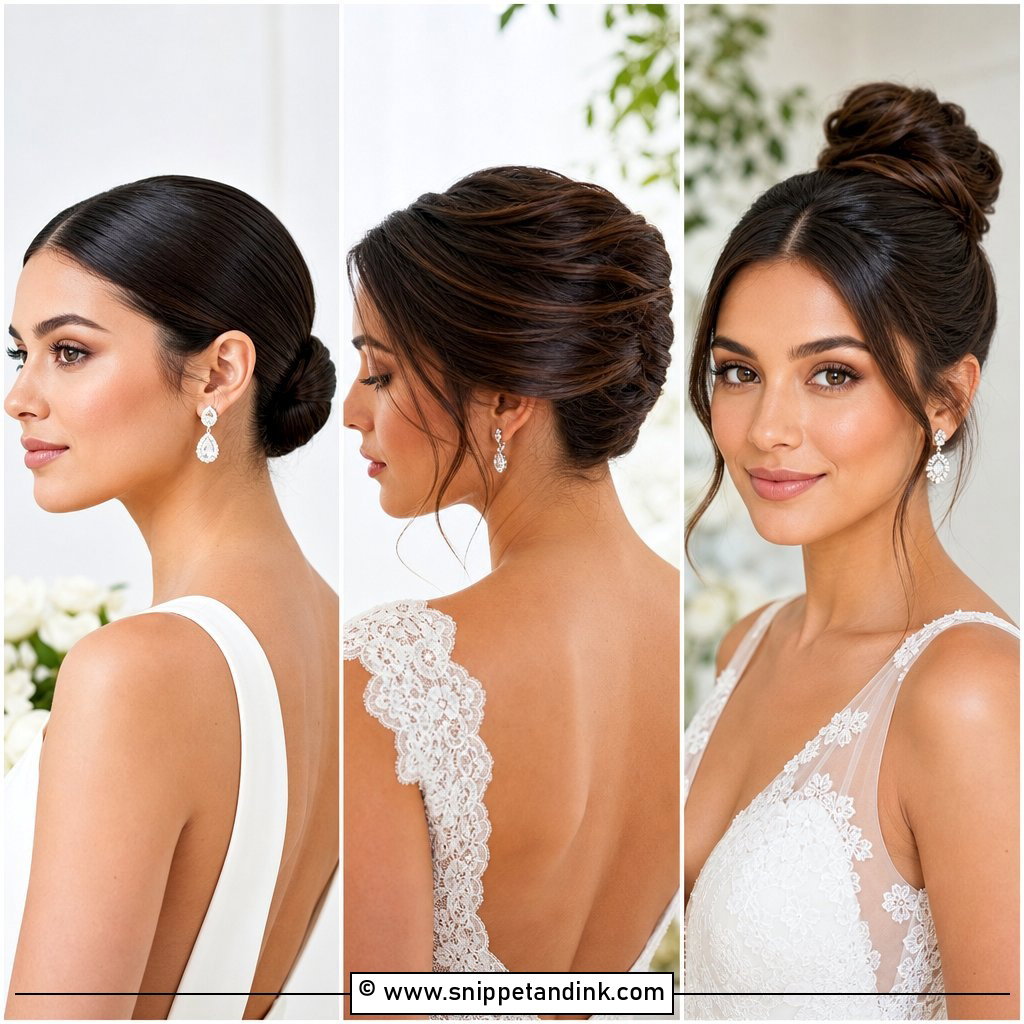
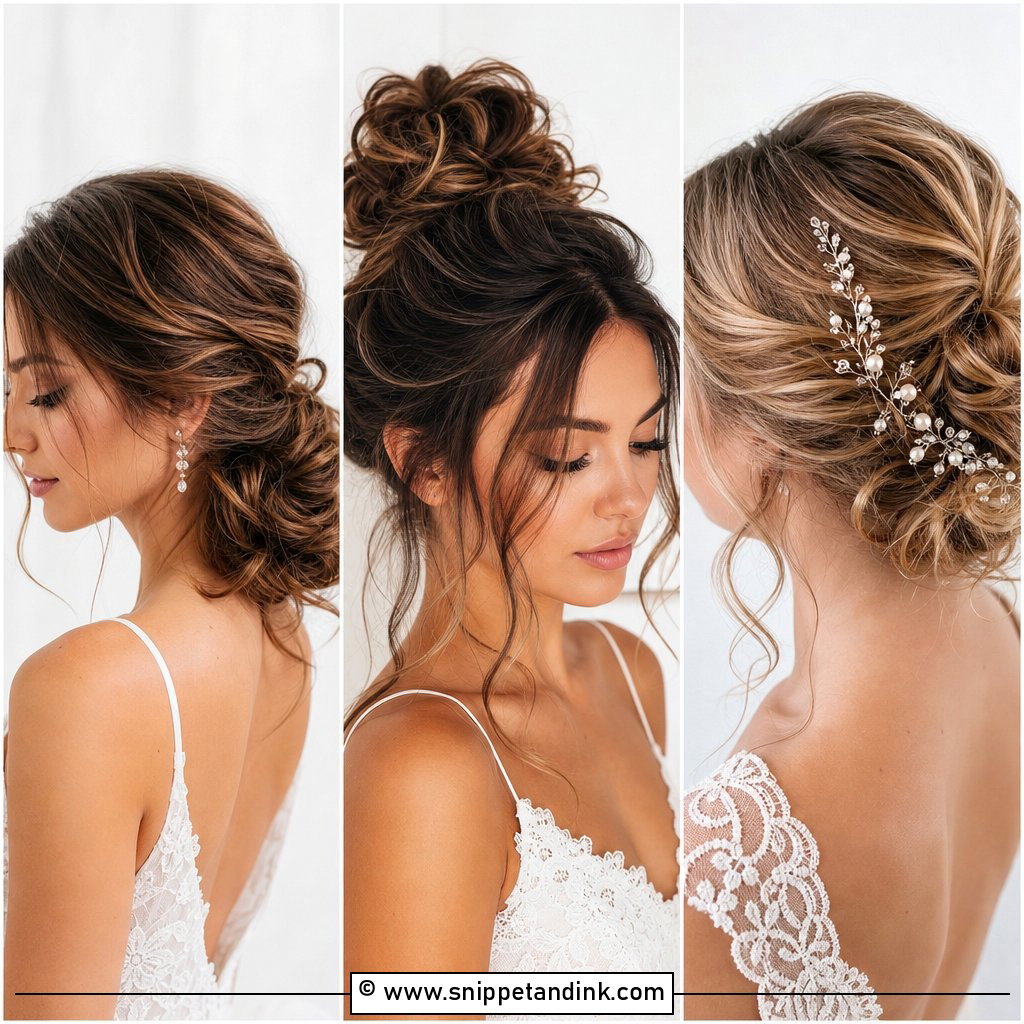
Messy is the hardest effect to get right. Underneath, every section in this bun is pinned as firmly as in a sleek one; the looseness is only on the surface, pulled out by hand at the end. Skip that structure and it slides by the speeches. It shows off wavy hair, layered cuts and highlighted color because every bit of texture catches light. Small pearl pins or a couple of flowers are plenty, and nothing at all is fine too.
4. Simple Twisted Bun Wedding Updo
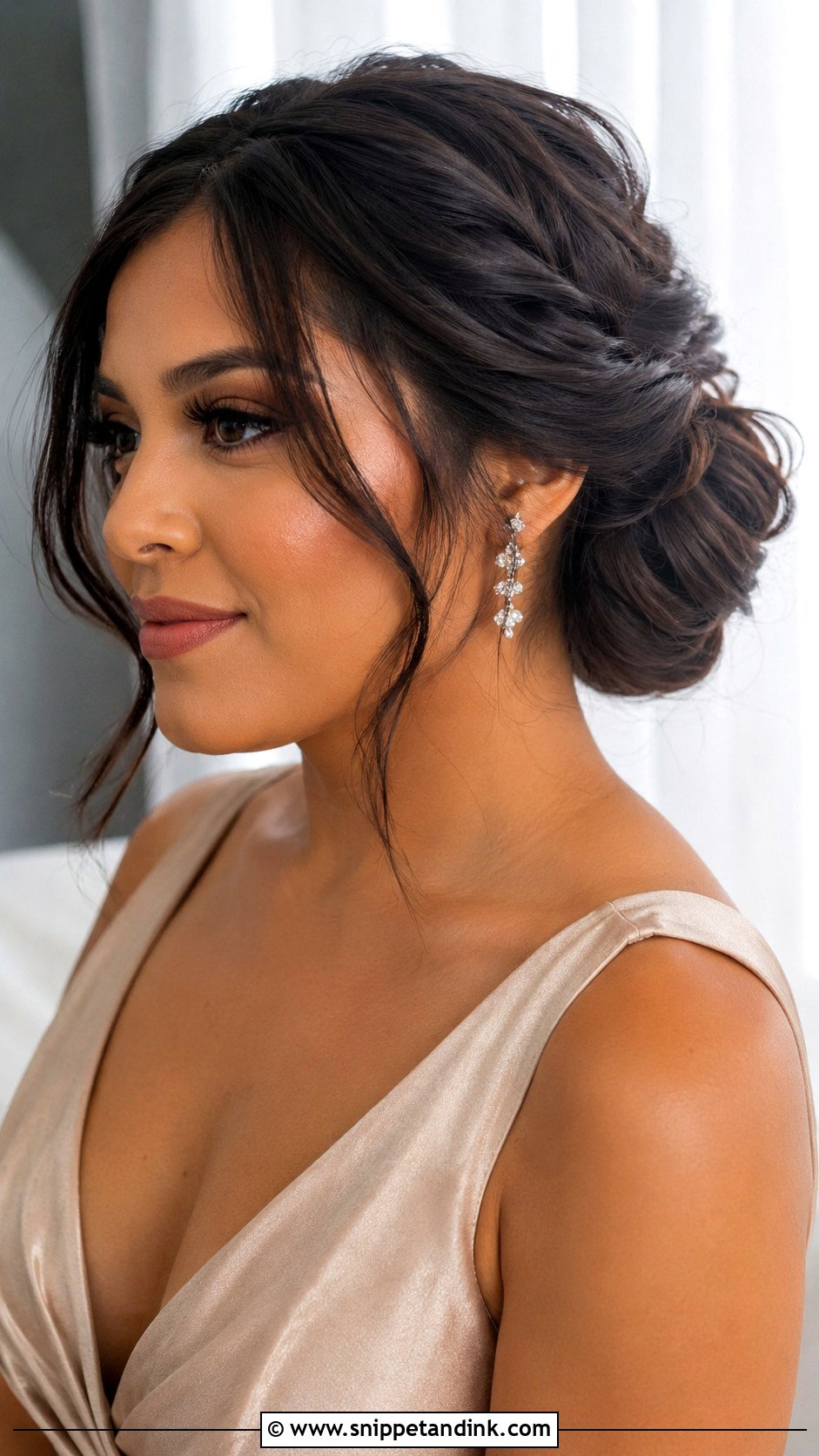
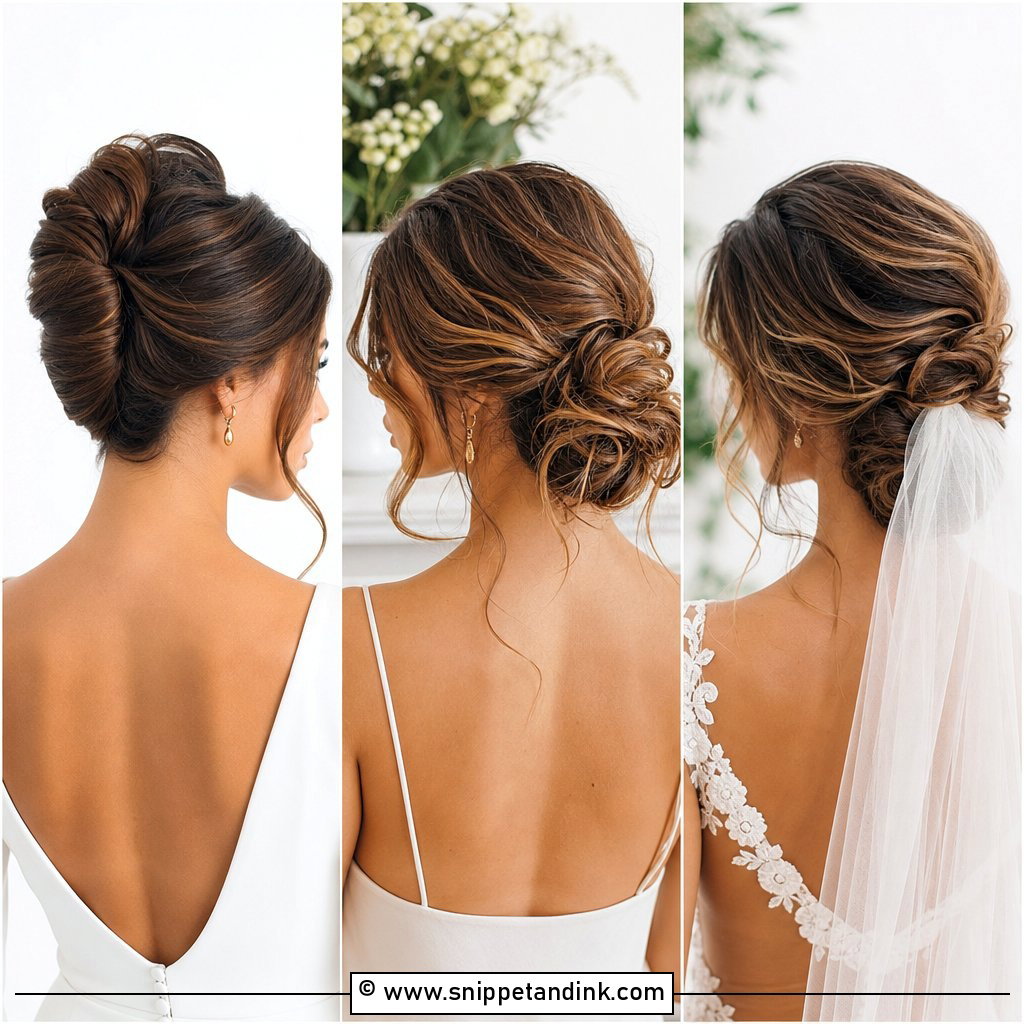
Twisting is my go-to when a bride wants detail but finds braids too busy. Small sections are twisted back from each side and pinned into a low bun, so the shape has movement from every angle and the sides soften the face. It’s especially useful for medium-length hair, because a twist traps the shorter layers that would escape a plain bun. I always twist away from the face, which keeps the front from collapsing forward as the day goes on.
5. Simple Braided Bun Wedding Updo
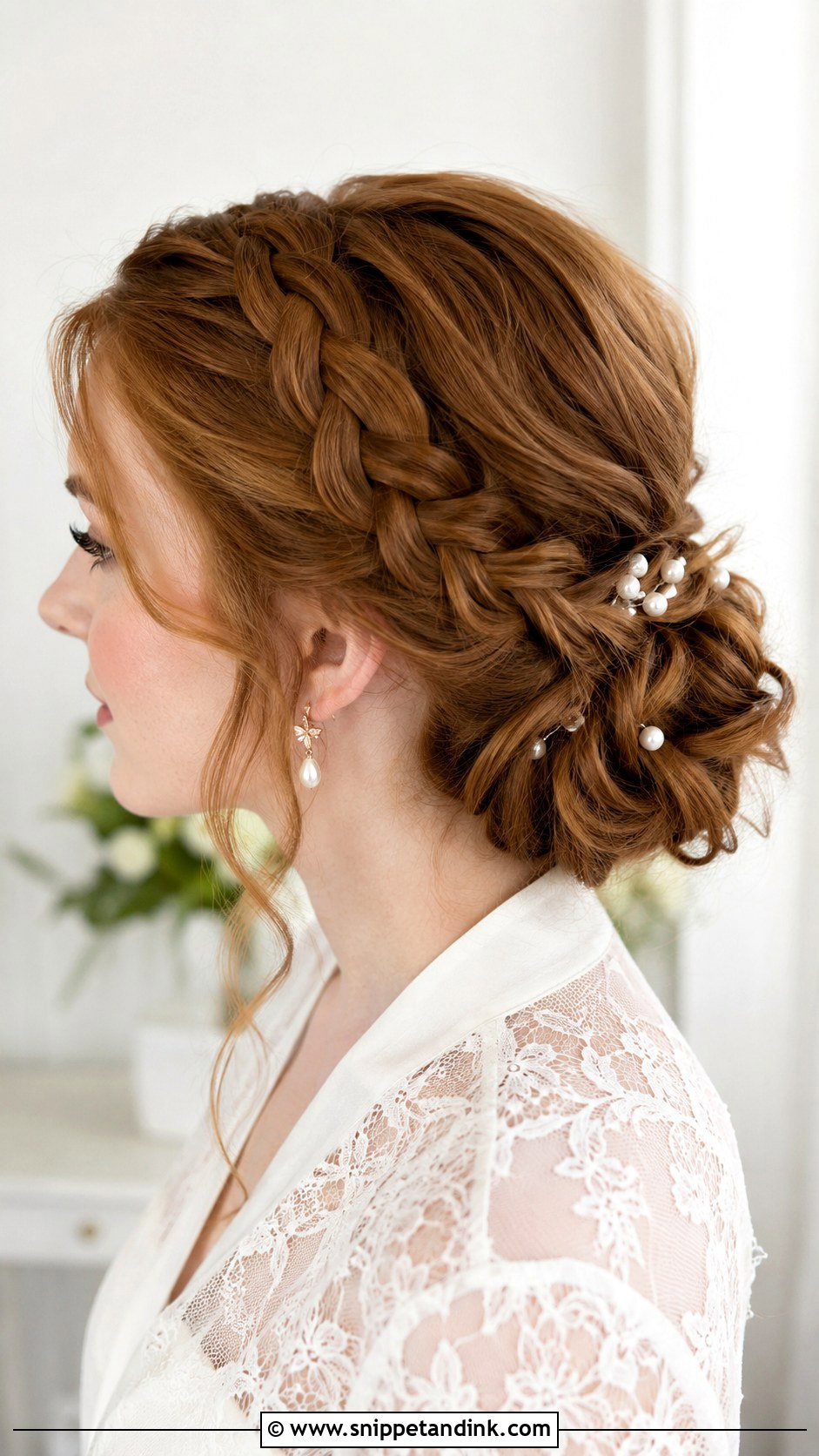
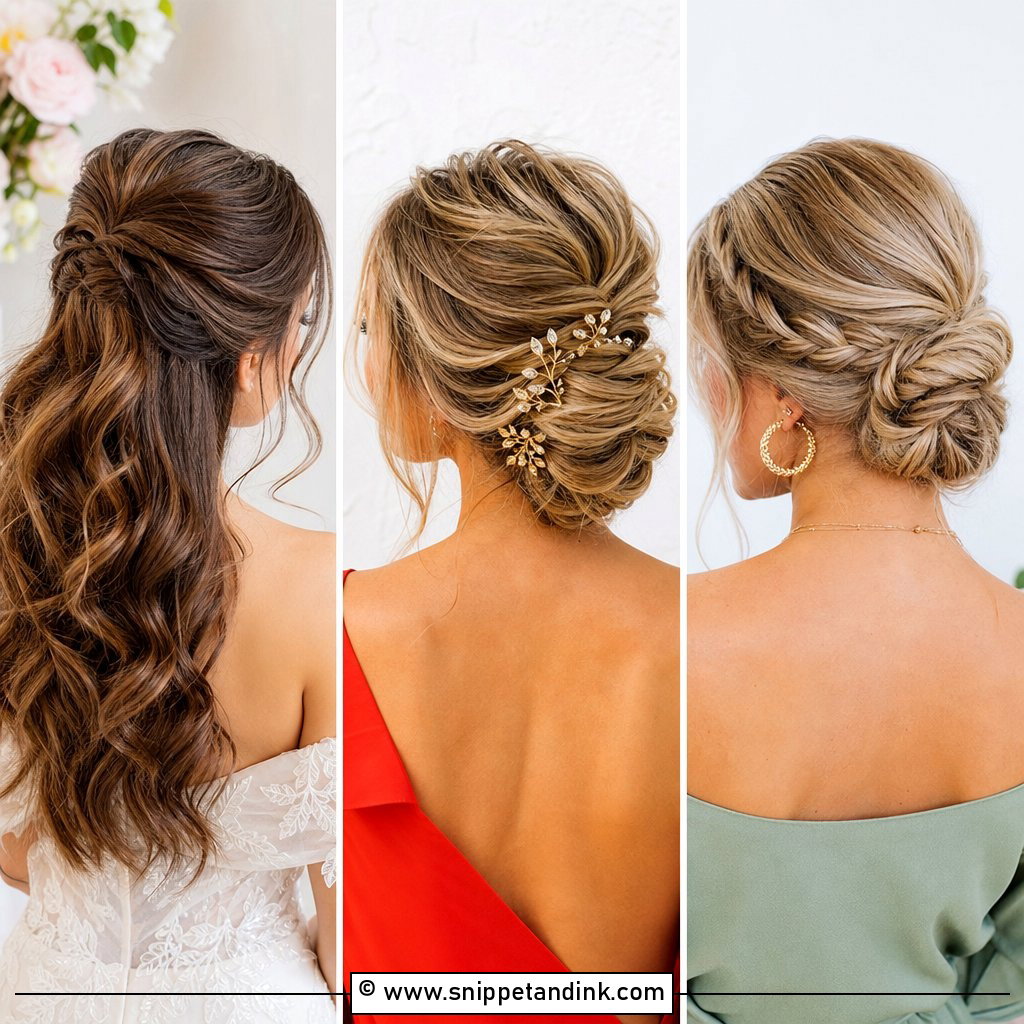
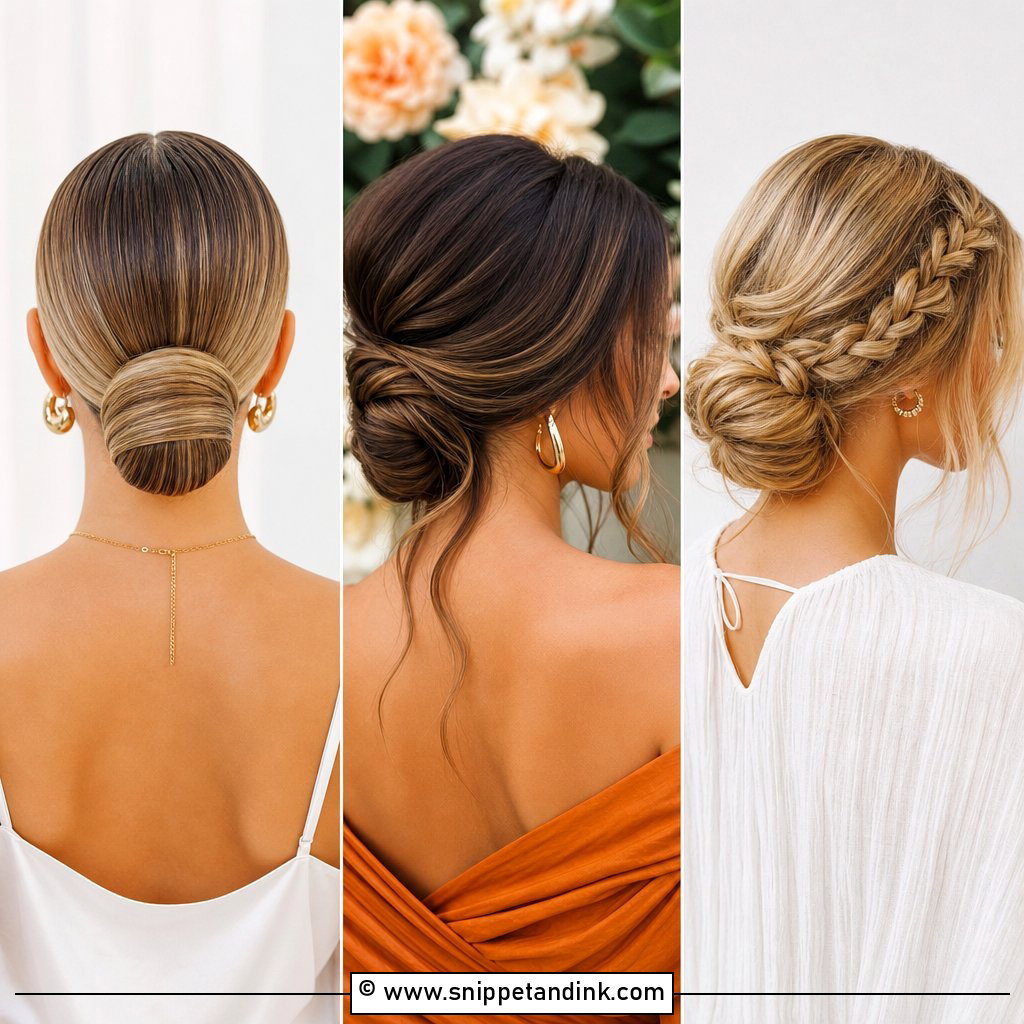
Adding a braid to a bun gives texture without making it fussy. It can wrap the bun, run along one side or thread through the back. This is a beautiful option for bridesmaids since the detail shows from the side and back, the angles a bridal party is photographed from most. Braids also lock layered hair in place far better than a smooth wrap. I loosen the braid only after it’s pinned, then finish with a light shine spray.
6. Simple French Twist Wedding Updo
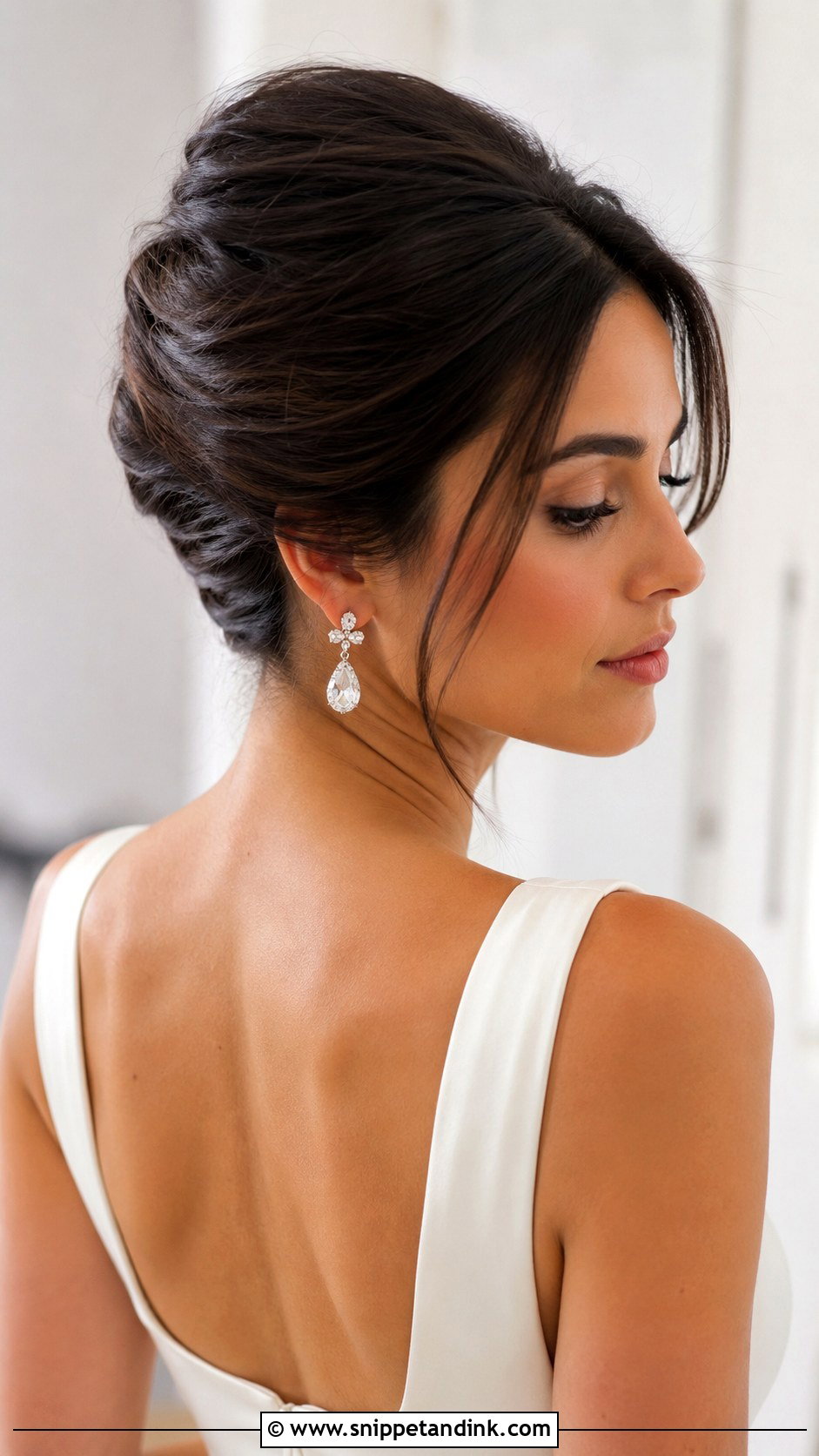
A French twist suits a bride who wants a refined, upright shape. The hair is swept up and tucked into a vertical roll, lengthening the neck and giving a strong profile, which is why it sits so naturally with formal, city and minimalist weddings. It does need some length and body; on very fine, shoulder-length hair the roll can look narrow, and I’d suggest a low chignon instead. For softness, loosen the crown and free a few front pieces. Statement earrings get the stage because the sides are lifted.
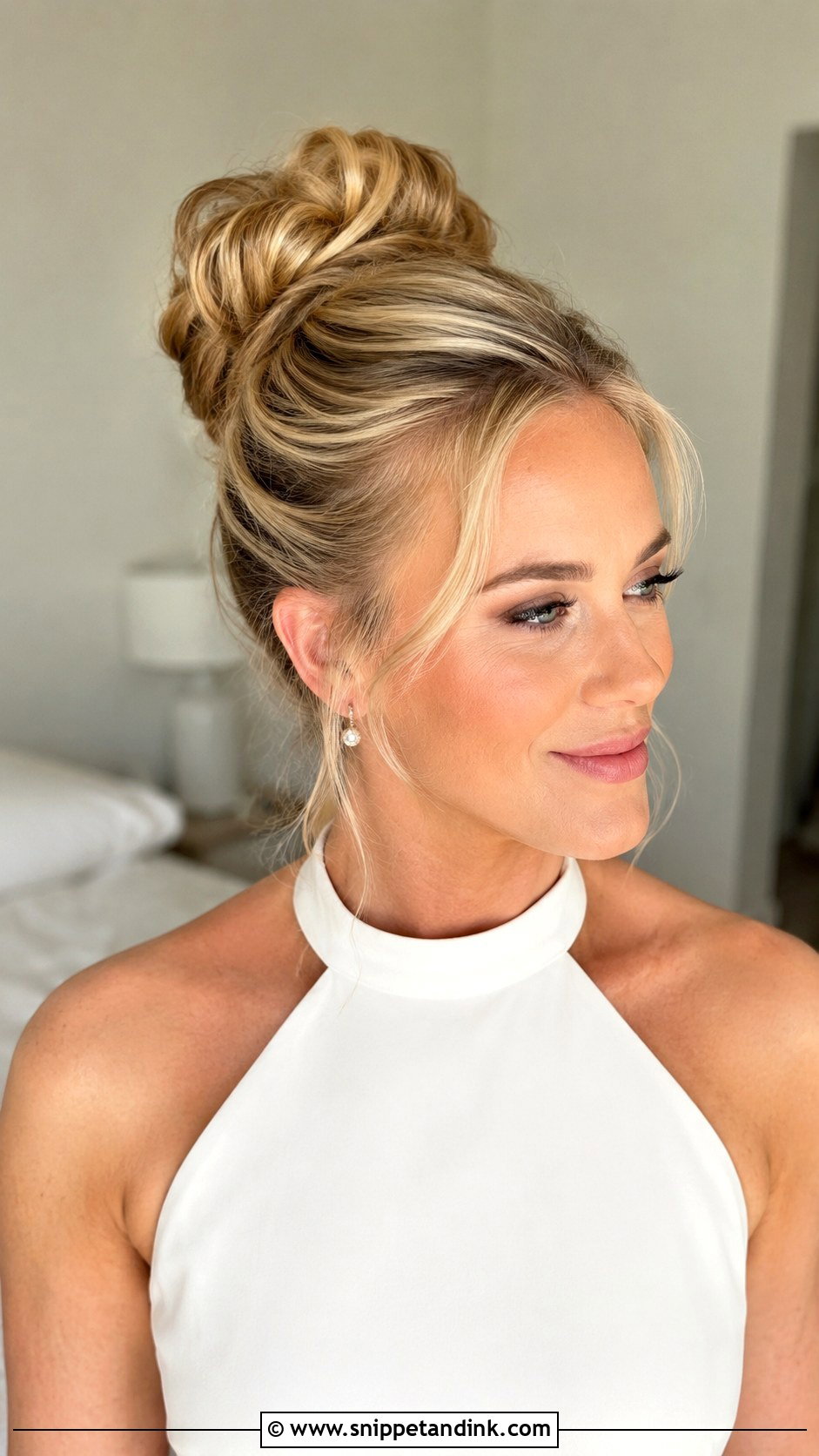
7. Simple High Bun Wedding Updo
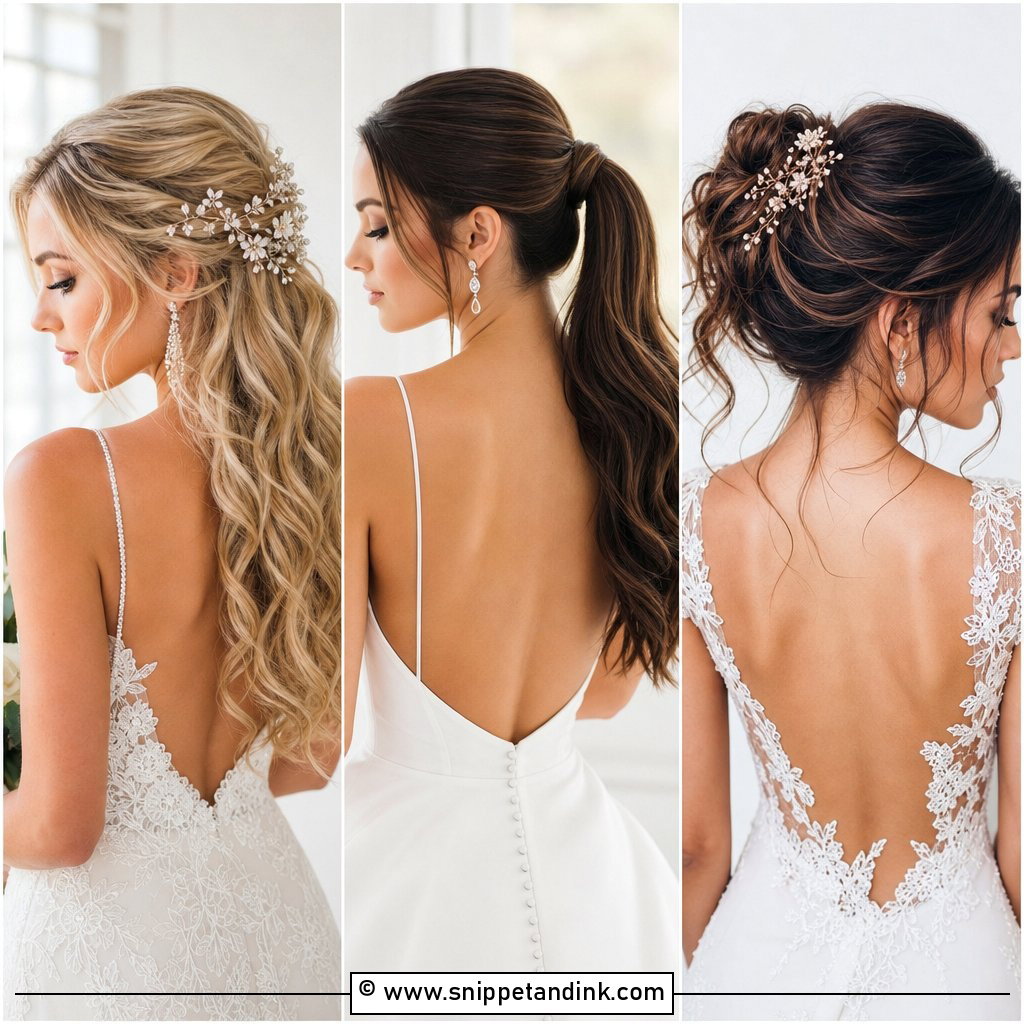
Higher placement opens the face and adds height, and in summer it keeps the whole neck cool. It sits well with halter necks, off-the-shoulder dresses and detailed bodices, where you want the shoulders clear. Don’t let it get too tight; a little texture at the crown and a few light hairline pieces keep it from looking severe. One practical note: a high bun makes a cathedral veil awkward, so if you’re wearing one, place the comb underneath the bun rather than in front of it.
8. Simple Sleek Bun Wedding Updo
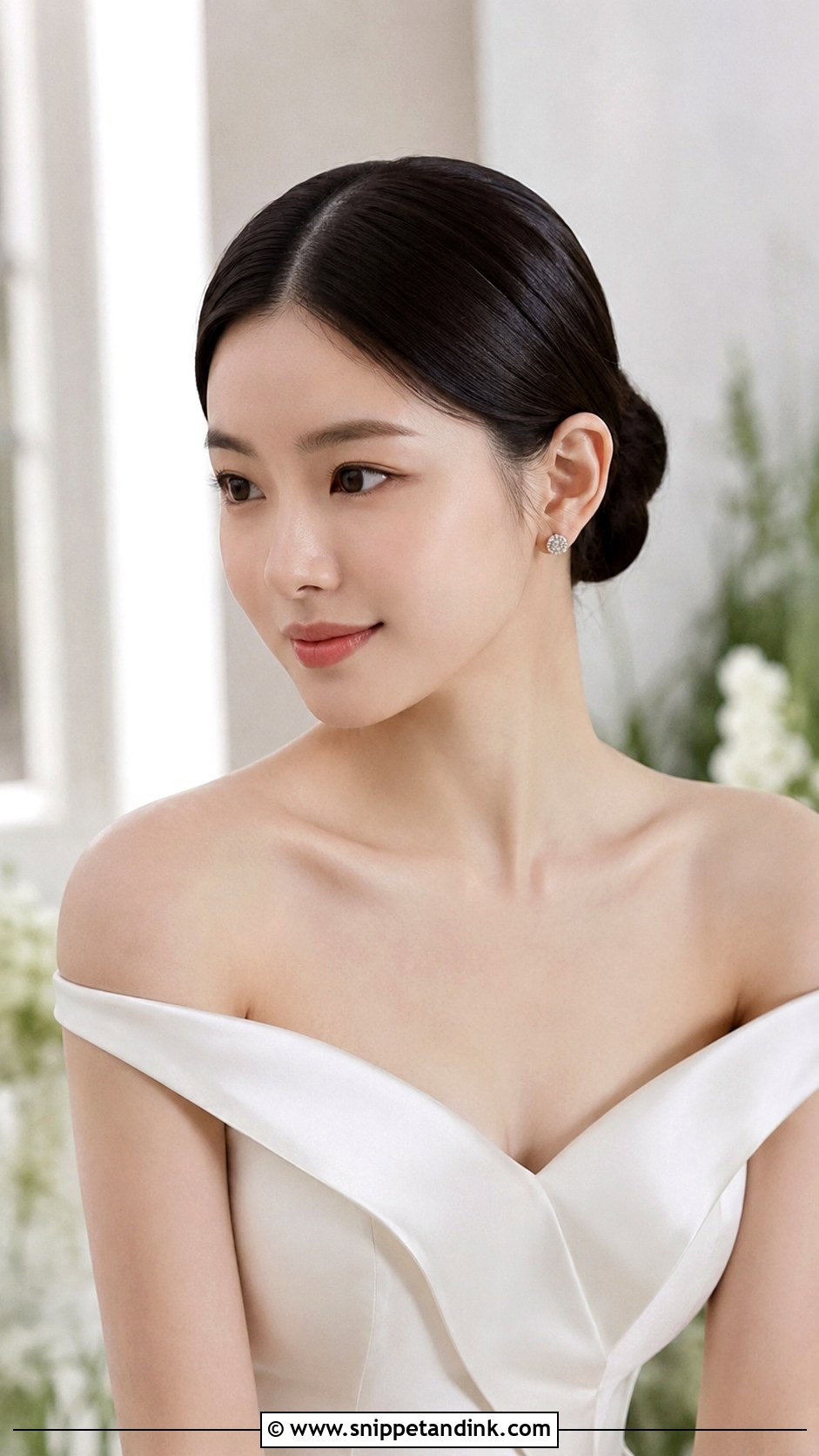
Sleek buns look simple, and they expose every bump. I smooth the hair with a cream and a fine-tooth comb, then set it with flexible spray rather than heavy gel, which turns flaky and dull under flash. It looks sharp with plain satin, structured gowns and bold earrings. Add bridal detail with a veil at the base of the bun or a small pearl comb just above it. If you have a cowlick at the crown, mention it at the trial, since it decides where the part can go.
9. Simple Curly Wedding Updo
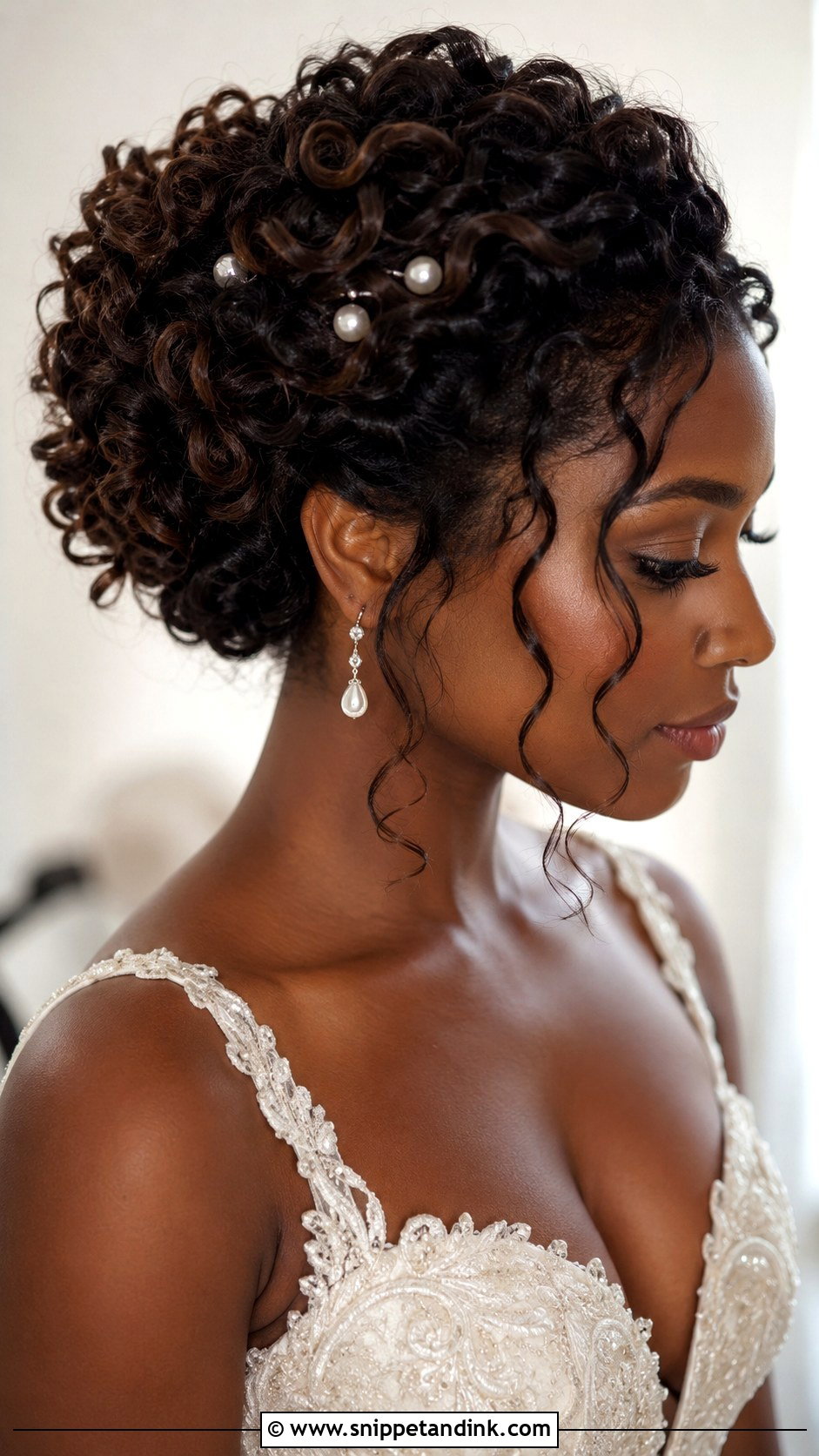
A curly updo keeps your natural curl pattern or set curls visible instead of brushing them into a tight bun. The curls are pinned in clusters to build shape and volume, which reads beautifully in close-ups. Naturally curly, wavy and permed hair all suit it. I style curly clients on hair that was defined with curl cream the day before or that morning, and I barely comb at all, because combing breaks clumps into frizz. A few defined tendrils at the face stay springy if you leave them alone.
10. Simple Half Up Wedding Updo
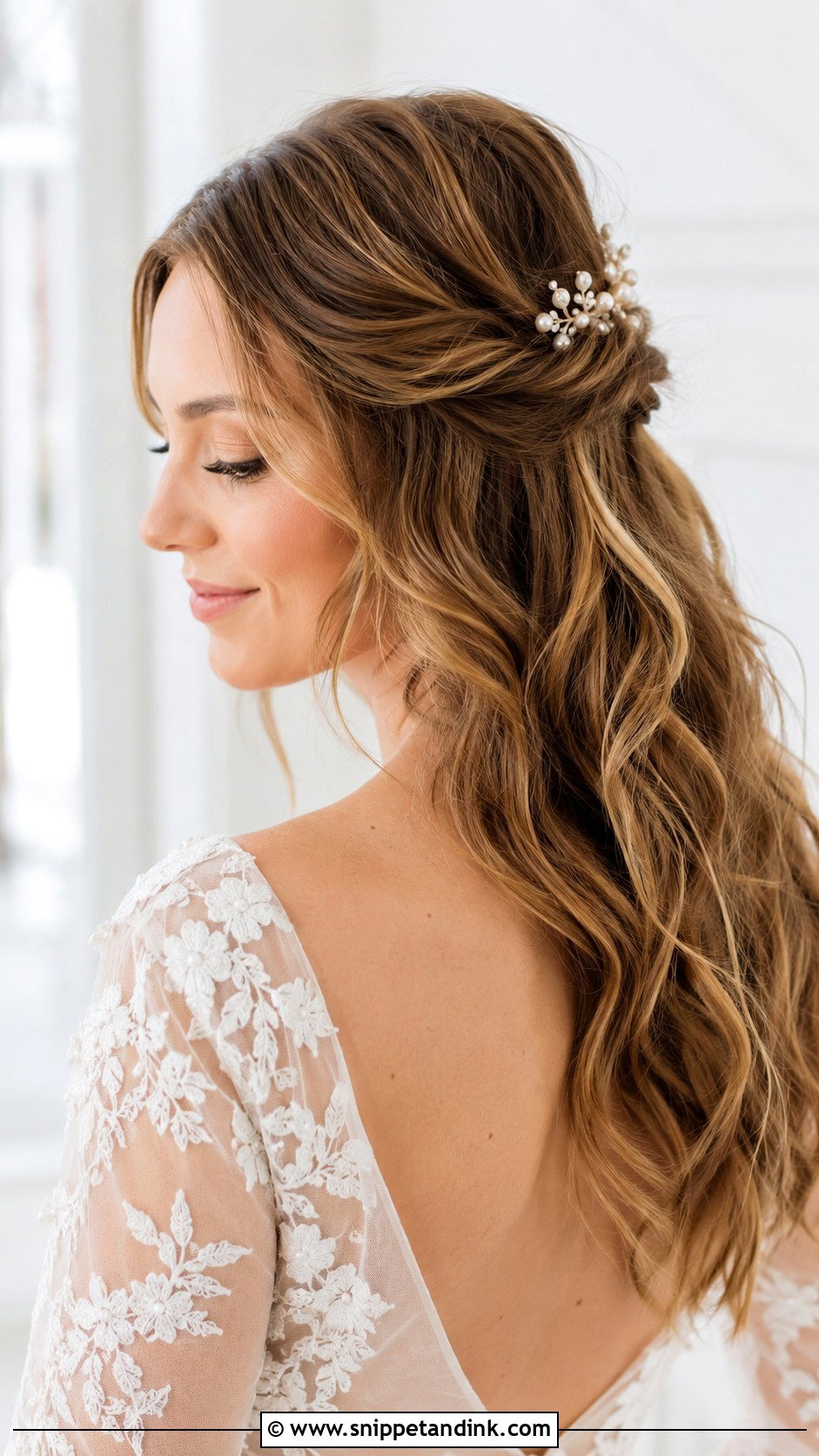
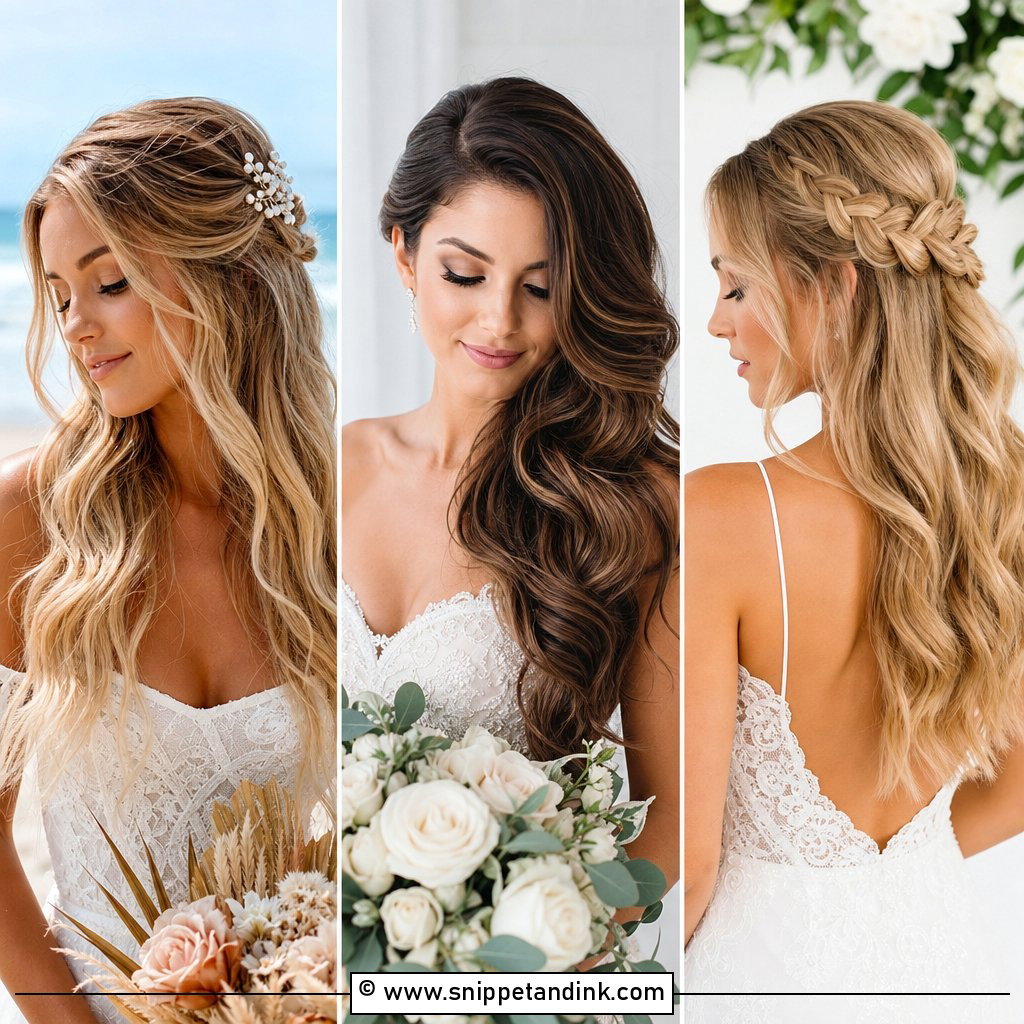
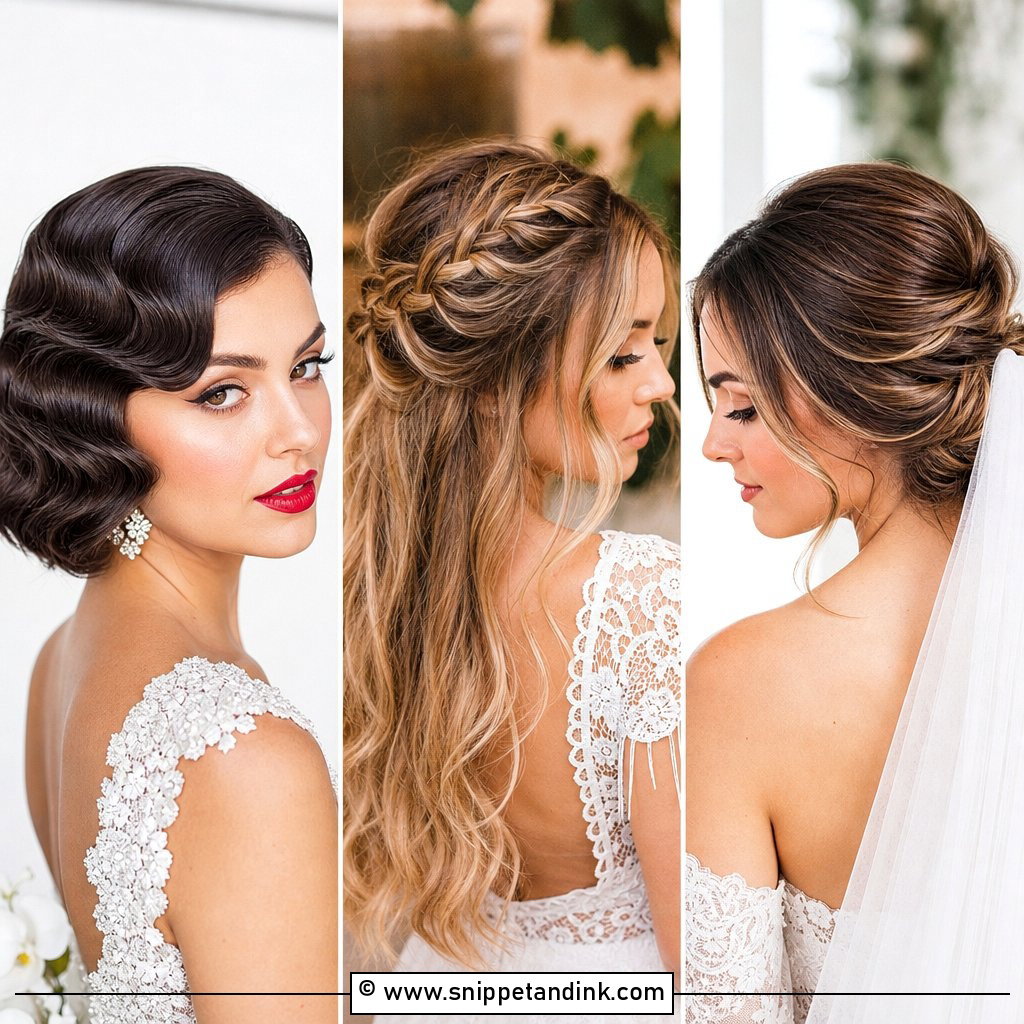
Half up is the compromise for brides who feel more themselves with hair on their shoulders. The top section is twisted, braided or pinned back and the rest falls in waves. It sits naturally at garden, beach and outdoor weddings. The danger is that it reads casual, so I make sure the pinned section has a definite shape and a little crown lift, and I finish where the sections meet with a small comb. On slippery hair, a tiny elastic under the pins stops the top from sliding.
11. Simple Low Ponytail Wedding Updo
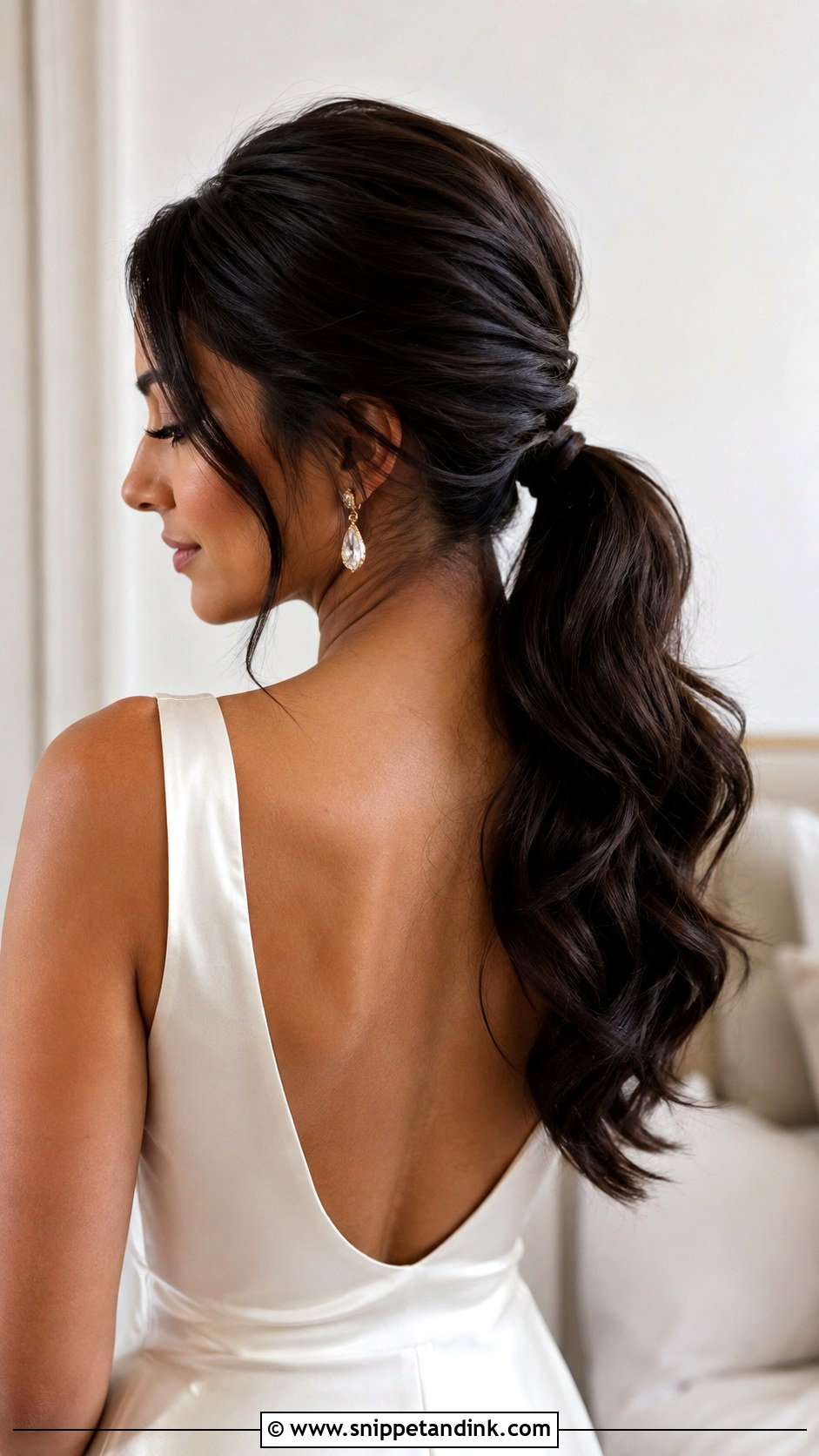
A low ponytail gives you movement without fully loose hair. It sits at the nape and can be sleek, waved or wrapped with a strand to hide the elastic. Long hair and dimensional color show it off, and clean dress silhouettes keep it from looking sporty. I smooth the top hard and keep the volume subtle at the crown, because a pony with a lumpy top is the first thing anyone notices from the side.
12. Simple Side Bun Wedding Updo
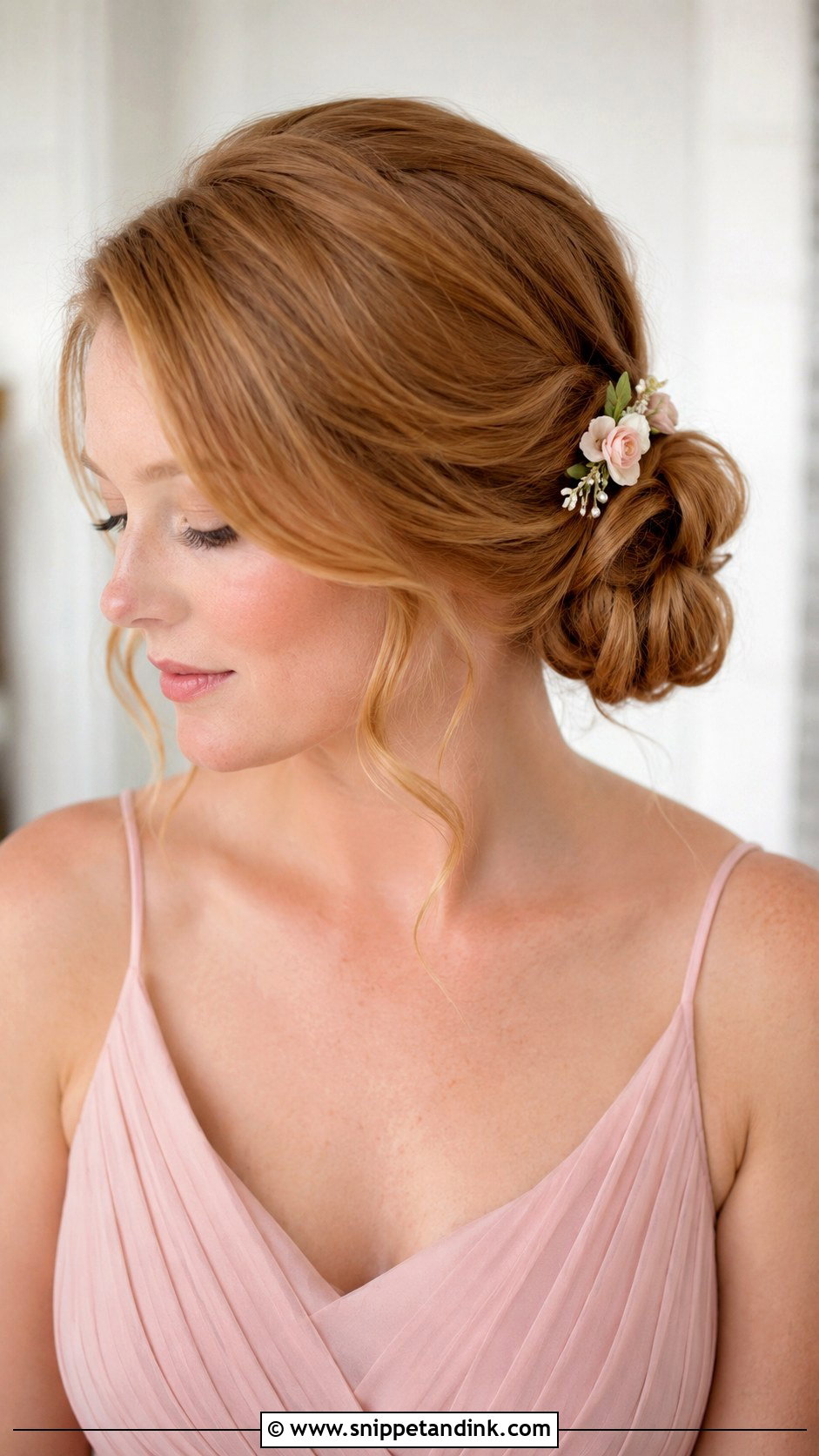
Set low and off to one side, a side bun gives you a shape that’s visible from the front, which matters in portraits where a nape bun disappears. It sits well with side parts and one-shoulder dresses and draws the eye to the jaw and collarbone. Put it on the side away from your partner during the ceremony so it shows in the vow photos. Keep it loose enough to look graceful but pinned well enough to survive hugs; side buns take more knocks than centered ones.
13. Simple Short Hair Wedding Updo
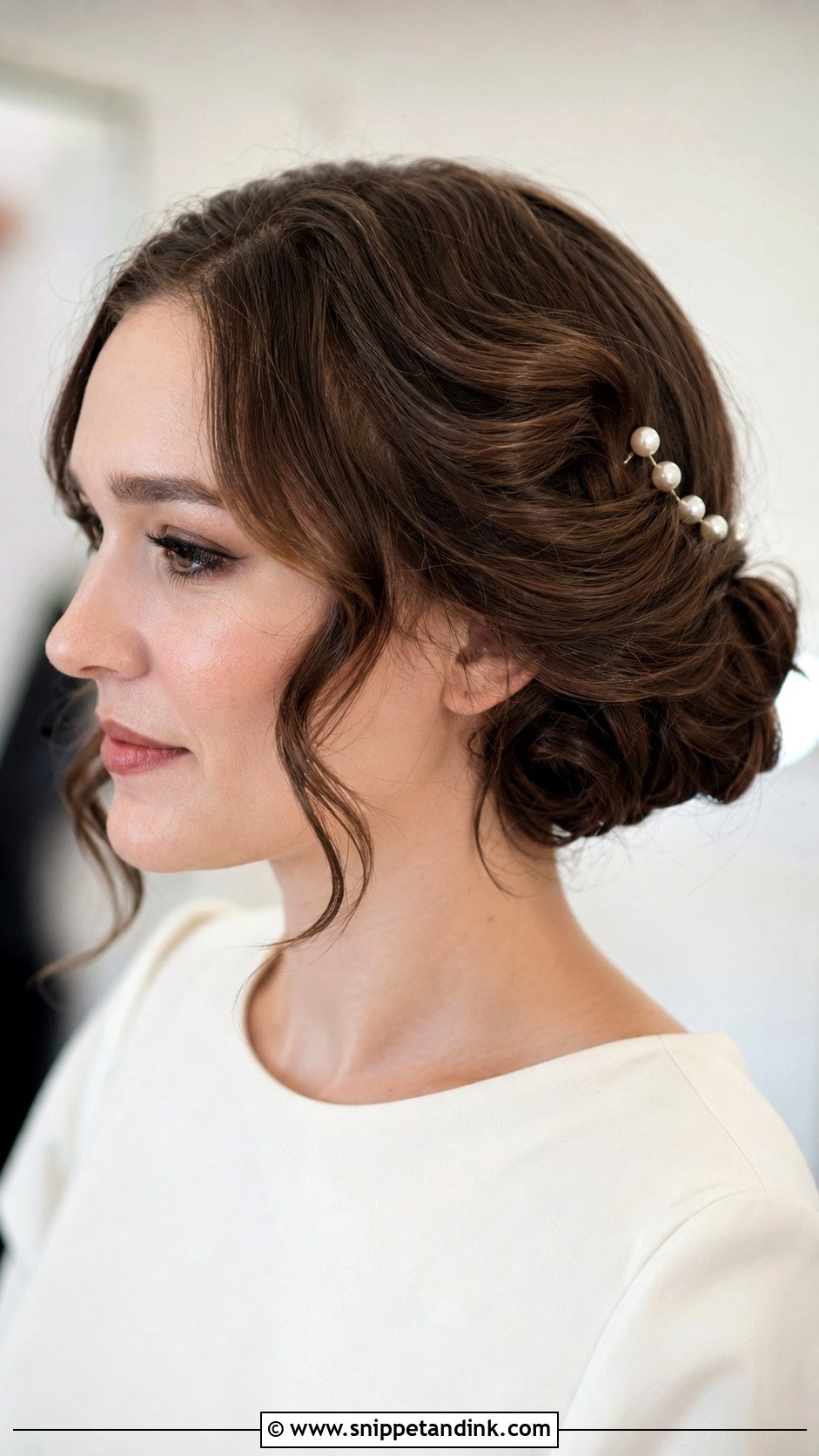
Short hair can absolutely go up. On bob or shoulder-length hair, I tuck the back into a mini chignon, a small bun or a pinned twist, and wave the shorter front layers so they fall softly. The challenge is the nape: short pieces there escape constantly, so I pin them upward in a hidden row before building the shape. Pearl pins, a slim headband or a tiny comb add detail if you want it. No extensions needed, just a clean, balanced shape.
14. Simple Medium Hair Wedding Updo
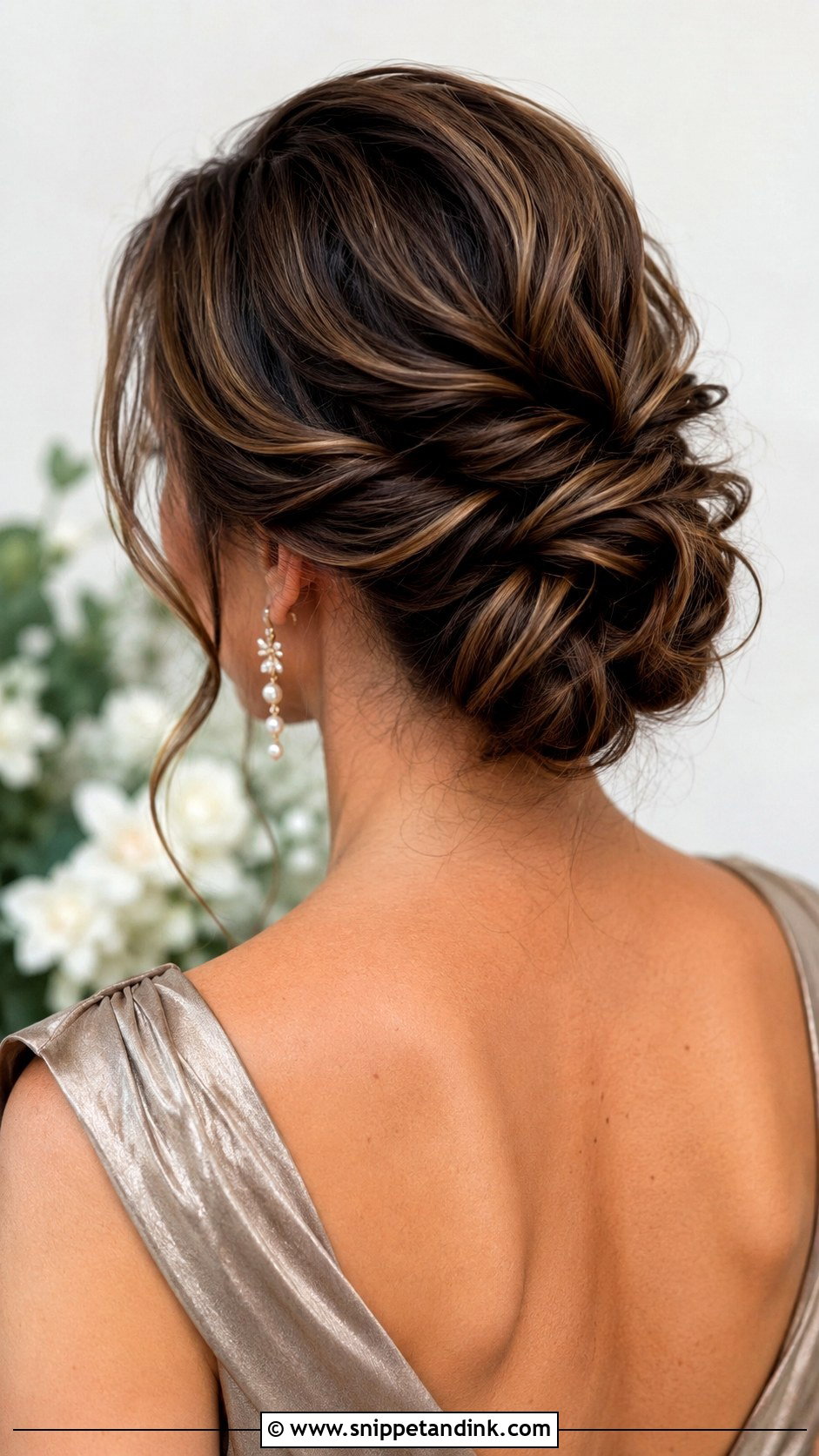
Medium length is my favorite to put up. There’s enough hair to pin, twist or braid without the weight that drags long hair down by evening. A low bun, tucked roll or loose knot all work well here. Medium hair usually holds a curl, so I wave it before building the updo, which adds fullness and grip. That flexibility is why I suggest it for bridesmaids with different face shapes and necklines; the same base can sit a little higher or lower for each of them.
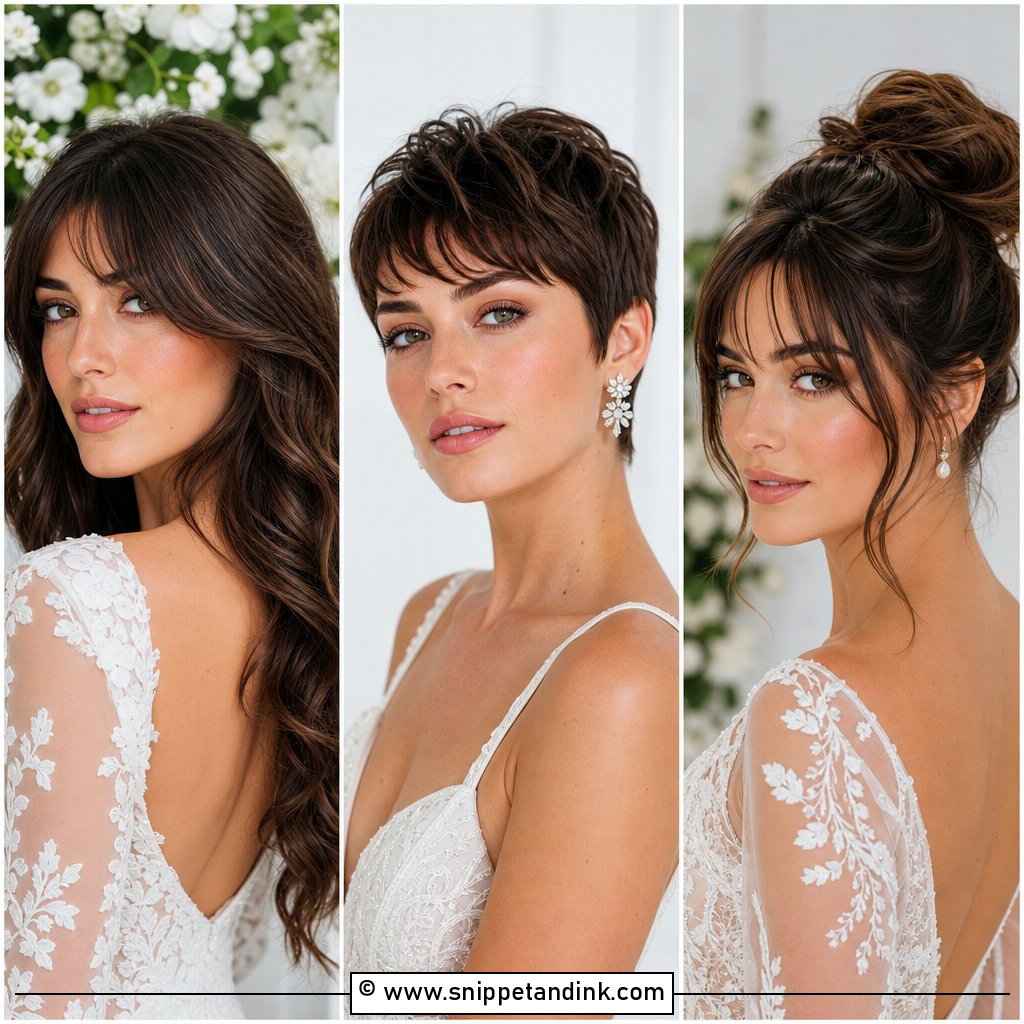
15. Simple Wedding Updo With Face Framing Pieces
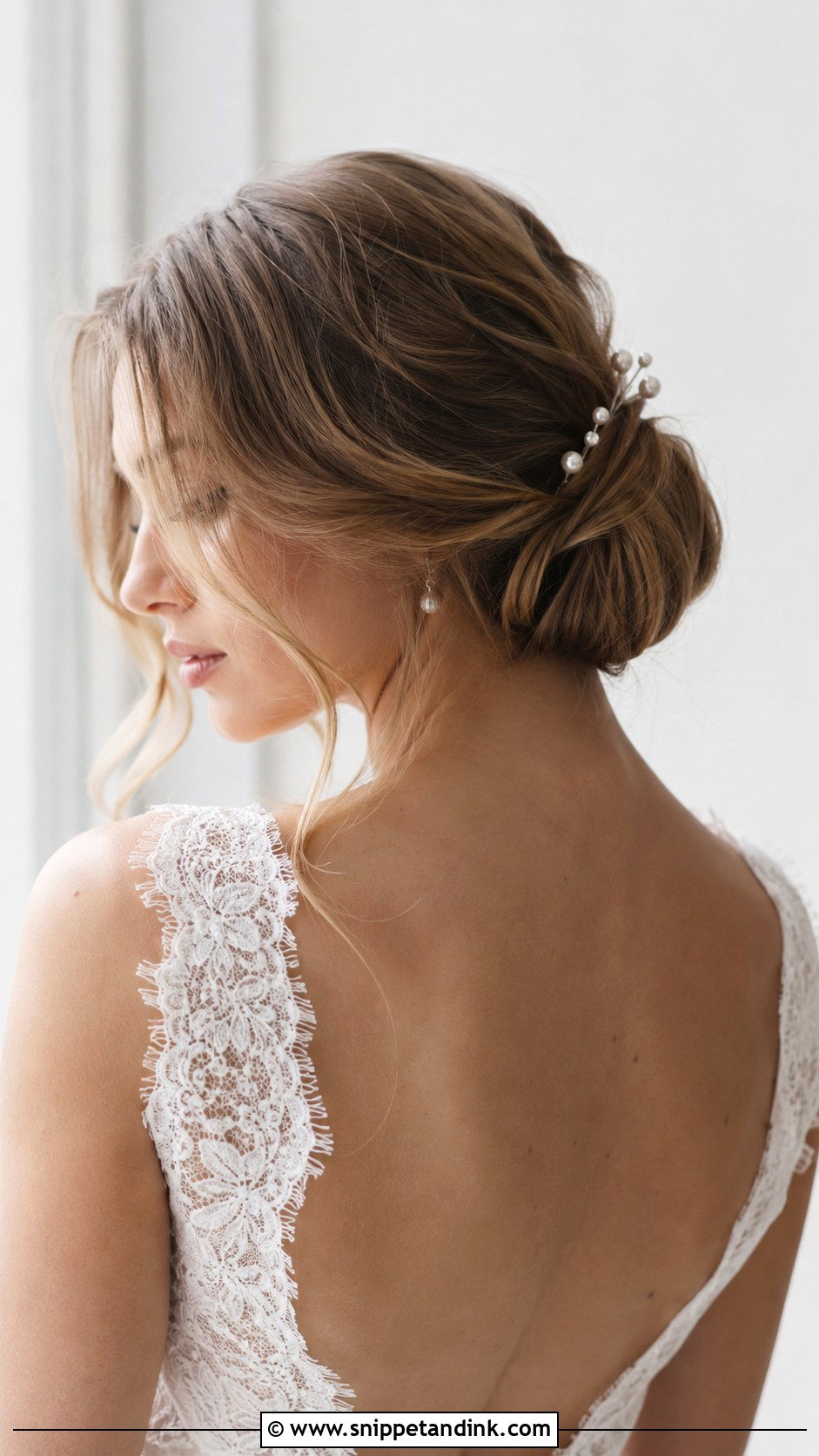
Face-framing pieces soften any updo, whether the main shape is a bun, chignon, twist or ponytail. They balance a formal style and make it feel more relaxed, especially with curtain bangs, long layers or a side part. I keep them thin and curl them away from the face; a thick piece hangs into the eye and falls flat within an hour. If your face tends to get warm, ask for slightly shorter pieces, since they hold their curl longer.
That Inspiration Photo Probably Has Extensions in It
Many of the fullest updos you’ll save are built with clip-ins or padding, shot on a model with very thick hair, and photographed before anyone moved. That’s not a reason to avoid them. It’s a reason to bring the right photos and talk honestly about your own hair.
At a trial, these are the things I want to know from you:
- Whether your hair holds a curl overnight or drops within an hour.
- How the photo compares to your own density; if the bun in it is twice the size of your ponytail, it was padded or extended.
- Whether you’ve ever had a headache from pins, so I can shift the weight lower.
- What you’ll be doing most: dancing, hugging dozens of relatives, or sitting through a long ceremony.
Bring a photo of the back of the style as well as the front, and one of a look you dislike. Knowing what you don’t want is often more useful to me than another favorite.
Is Your Updo Still Comfortable at Eleven at Night?
That’s the real test for any updo. A sleek bun reads modern, a messy bun or curly updo softer, a chignon classic and a low ponytail fresh, but the right one is the one that suits your dress, length, texture and venue and doesn’t give you a headache by dinner. Save a few looks, bring them to your stylist and book a trial. Wear the style home afterward and notice how it feels hours later. That tells you more than the mirror does.
You'll Like These Ideas:



Leave a Reply