
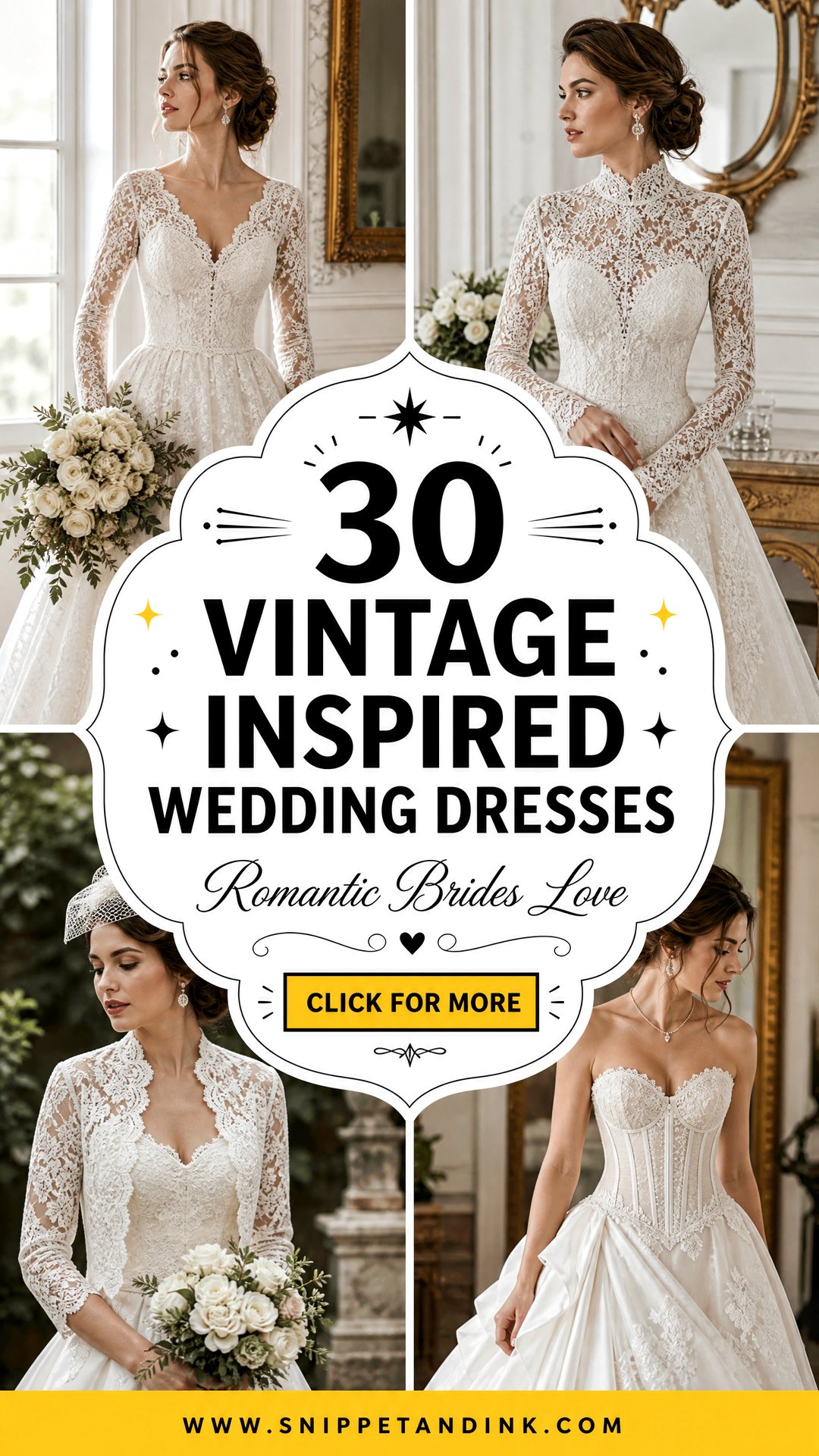
A gown with a past gives a bride something a plain modern dress rarely does: a reason behind every seam. The references below come from very different decades, from Victorian lace and 1920s beading to 1930s satin, 1950s tea-length skirts, 1970s sleeves and the bare shapes of the 1990s. You don’t need a true antique to get that feeling. A new dress cut in an old silhouette fits better, survives a dance floor and comes with a lining that won’t shred at the seams. I’ve grouped thirty looks here, each with the styling I’d actually put on it and the catch I’d mention at a fitting.
Reproduction, Restored Antique or a New Gown in an Old Cut
When a bride tells me she wants vintage, my first question is whether she means a true old dress or the look of one. It changes the whole timeline. A genuine antique gown is a single size, often sized for a smaller frame than today’s averages, and silk from the 1930s or earlier can split along the grain when it is let out. Restoration is possible, but it needs a specialist and can take months.
A new gown cut to an old silhouette is the easier route for most people. You get modern linings, a hidden zip and seam allowances that can be adjusted. A reproduction made to order sits in the middle, and it usually needs the longest lead time of the three.
What I check on any vintage piece before you buy
- Underarms and waist seams for yellowing or brittle stitching, held up to daylight.
- Whether the seams have enough fabric inside to let out, or only to take in.
- Small brown spots in the silk, which are old oxidised stains that rarely come out fully.
- The smell. Mustiness can be aired out; a sharp vinegar smell in old fabrics usually means the fibres are breaking down.
1. Lace Long Sleeve Wedding Dress
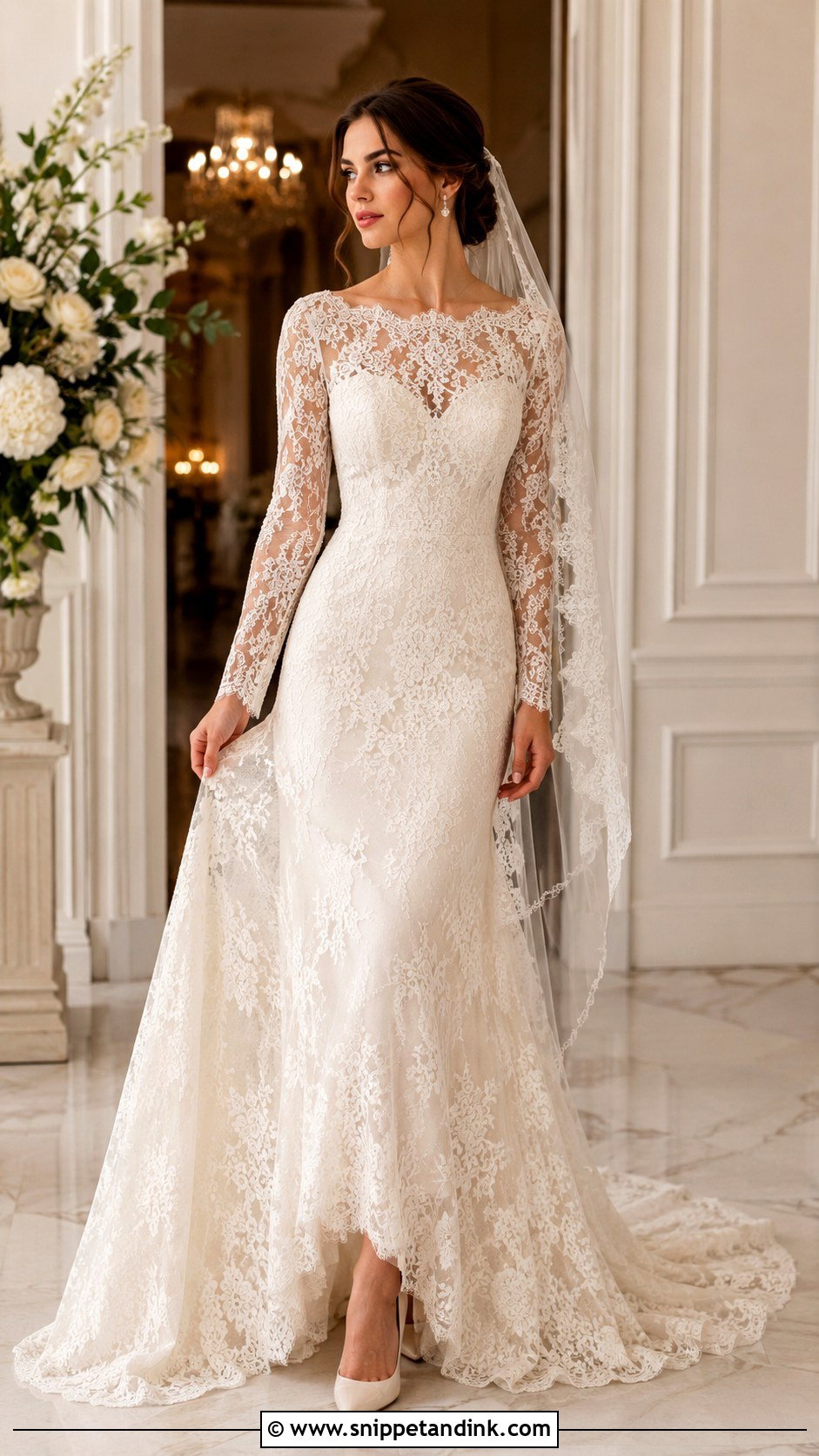
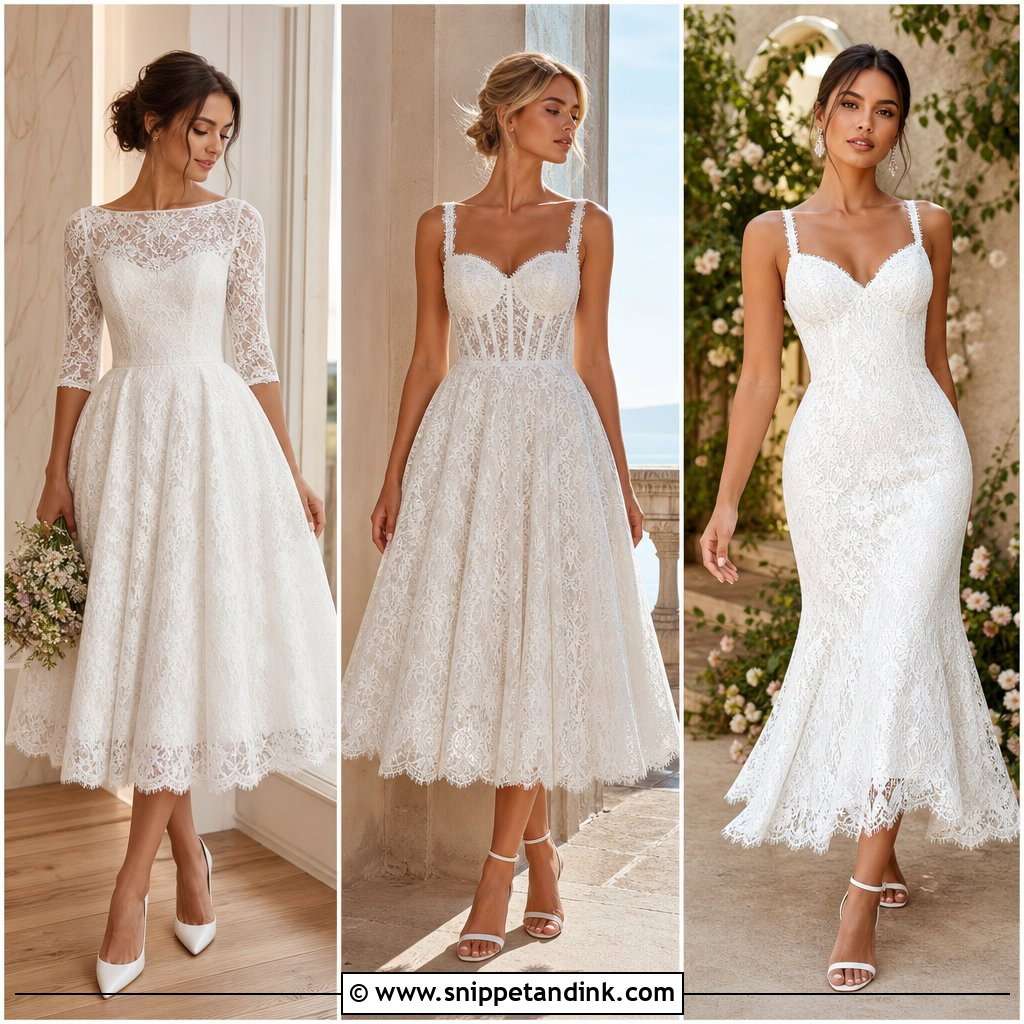
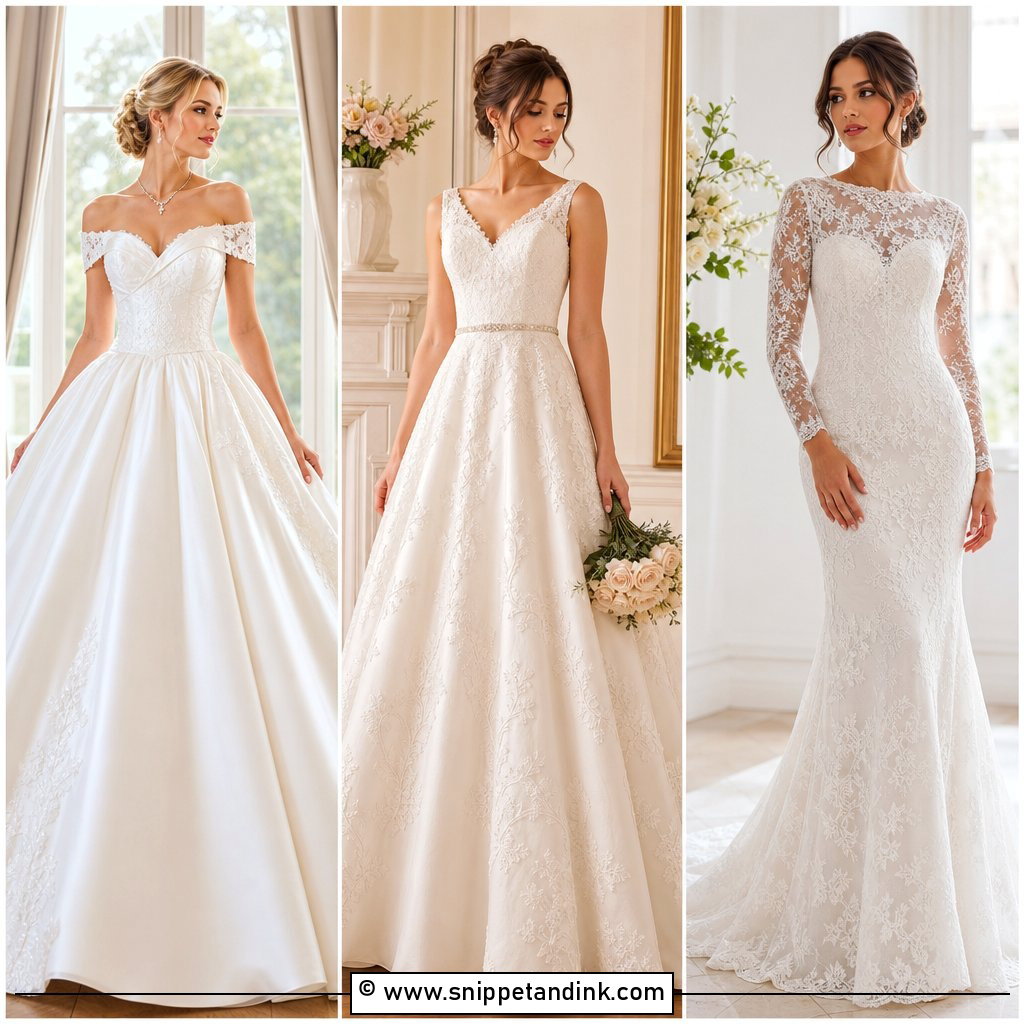
Long lace sleeves are the first thing most brides try when they ask me for vintage, and for good reason. Chantilly lace is fine enough to sit flat over the arm, while heavier appliqué adds bulk at the elbow, so I always ask a bride to bend her arm and hug someone in the fitting room. If the sleeve pulls at the back of the shoulder, it needs a gusset or a slightly wider armhole. A sheer veil, pearl drops and a low bun or loose waves keep the lace as the main event, and the coverage earns its place in an autumn church or a cold indoor venue.
2. Tea Length Wedding Dress
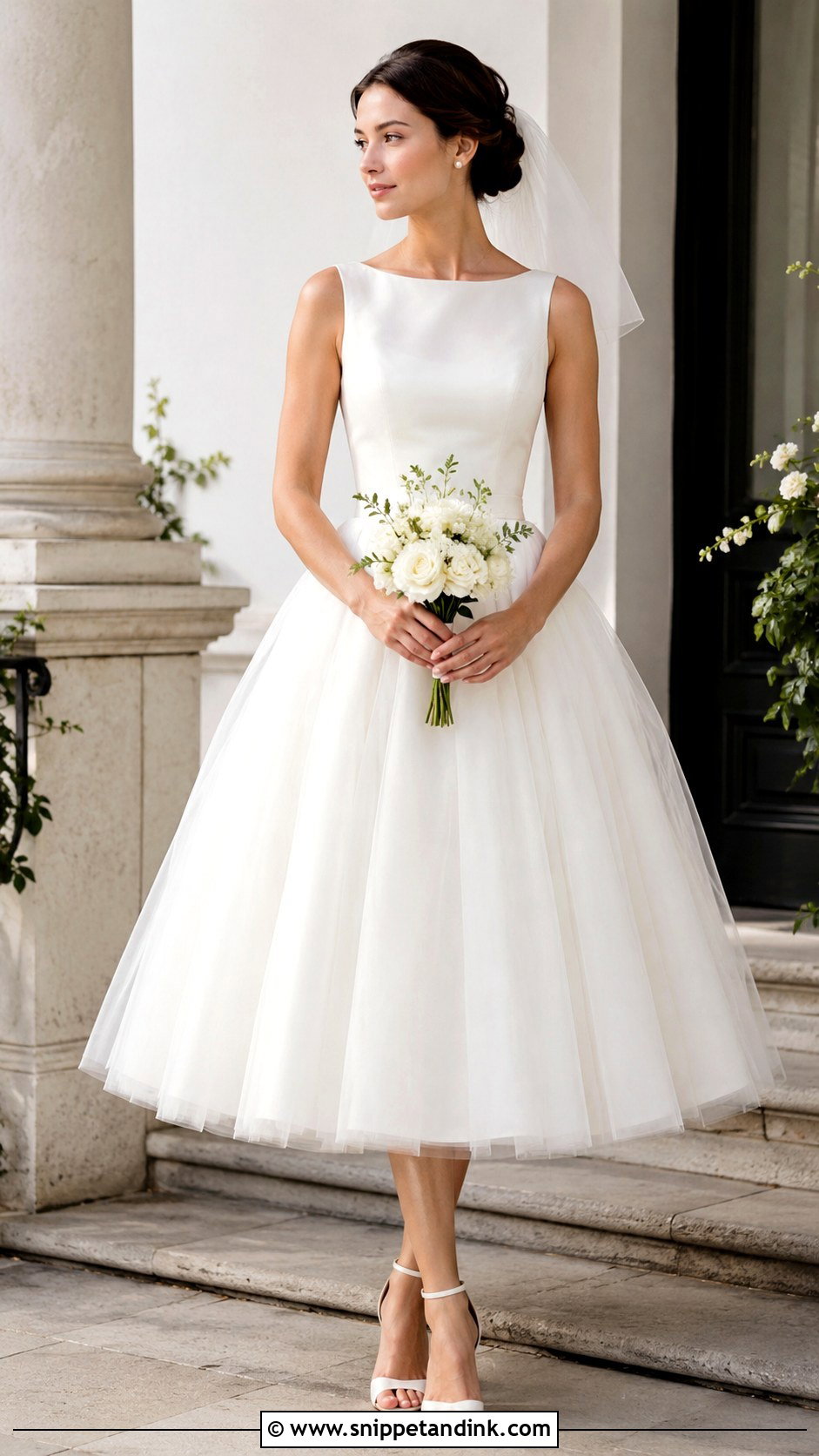
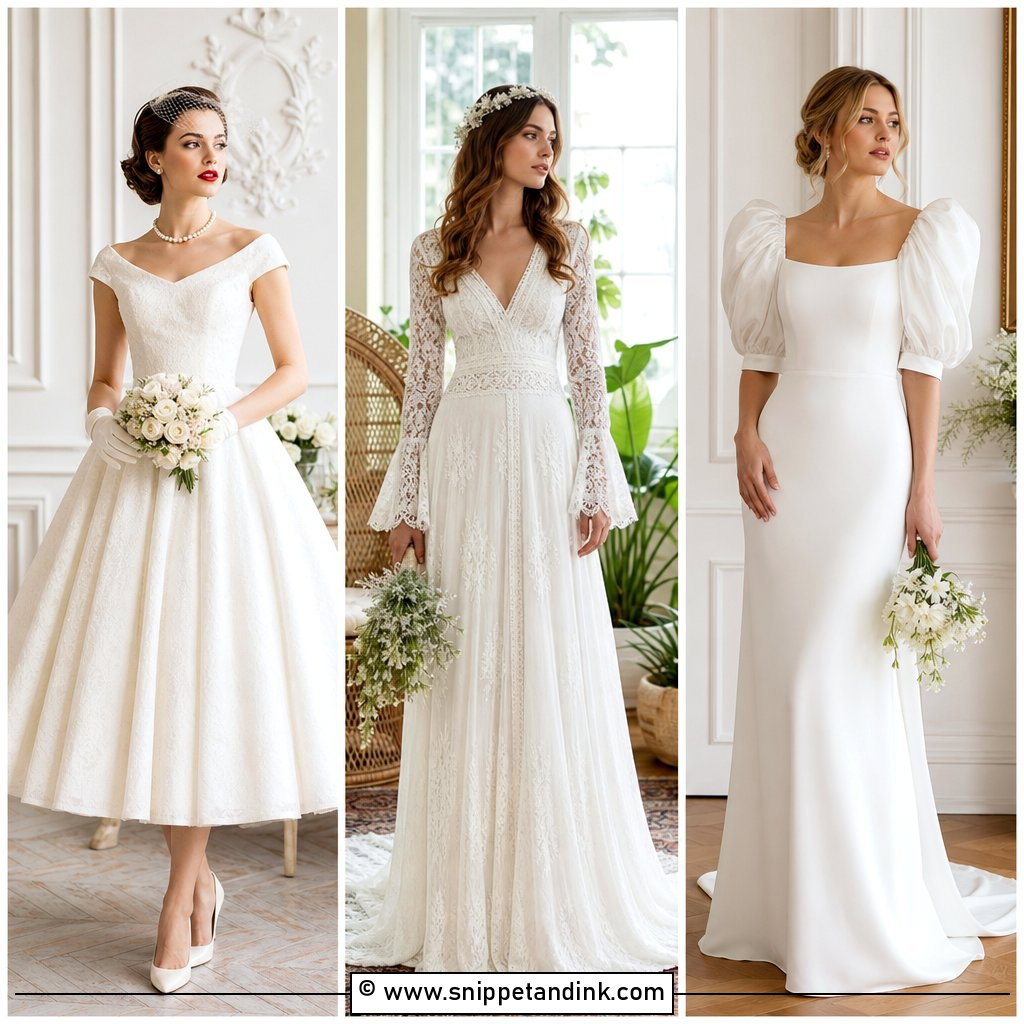
A tea length wedding dress puts the hem somewhere between knee and ankle, and that exact point matters more than brides expect. Mid-calf is the most forgiving spot; a hem that lands at the widest part of the calf can shorten the leg. Because your shoes are on show all day, buy them before the hem is set and wear them to every fitting. A fitted bodice over tulle or satin, a birdcage veil and a short glove read as 1950s without tipping into costume. I’d pick ivory over bright white here, since bright white looks clinical next to that retro shape.
3. Satin Bias Cut Wedding Dress
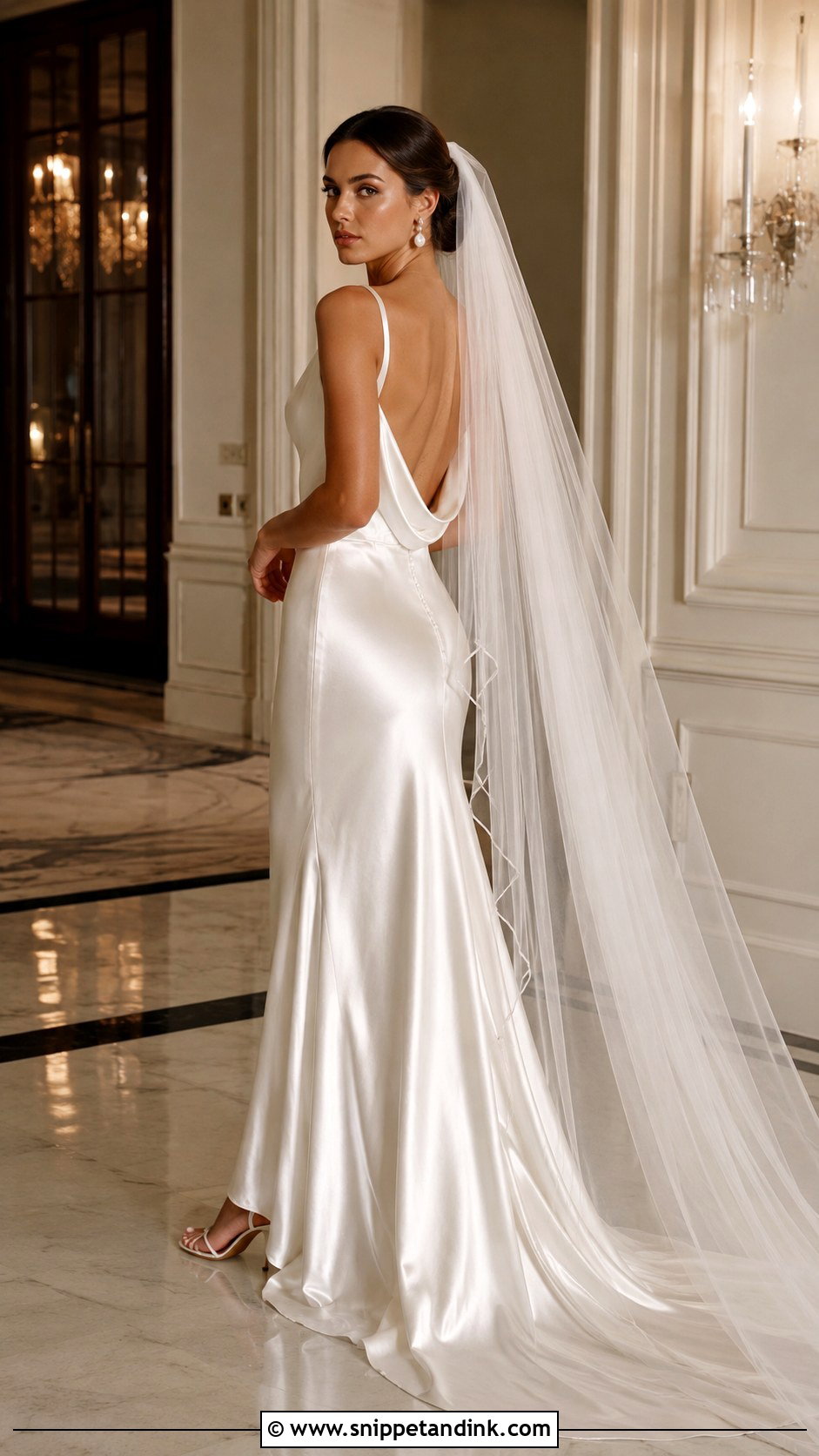
Bias-cut satin is cut diagonally across the grain, which is why it pours over the body and moves when you walk. That same stretch makes it honest about everything underneath. I fit these over the exact underwear you’ll wear and steer away from anything with lace edges or seams. A cowl neck or low back looks very 1930s, and soft curls with a fingertip veil finish it. Keep jewellery quiet, because satin already throws light. In my fittings, the brides who love this cut are usually the ones who stand very still and like a city venue in the evening.
4. High Neck Lace Wedding Dress
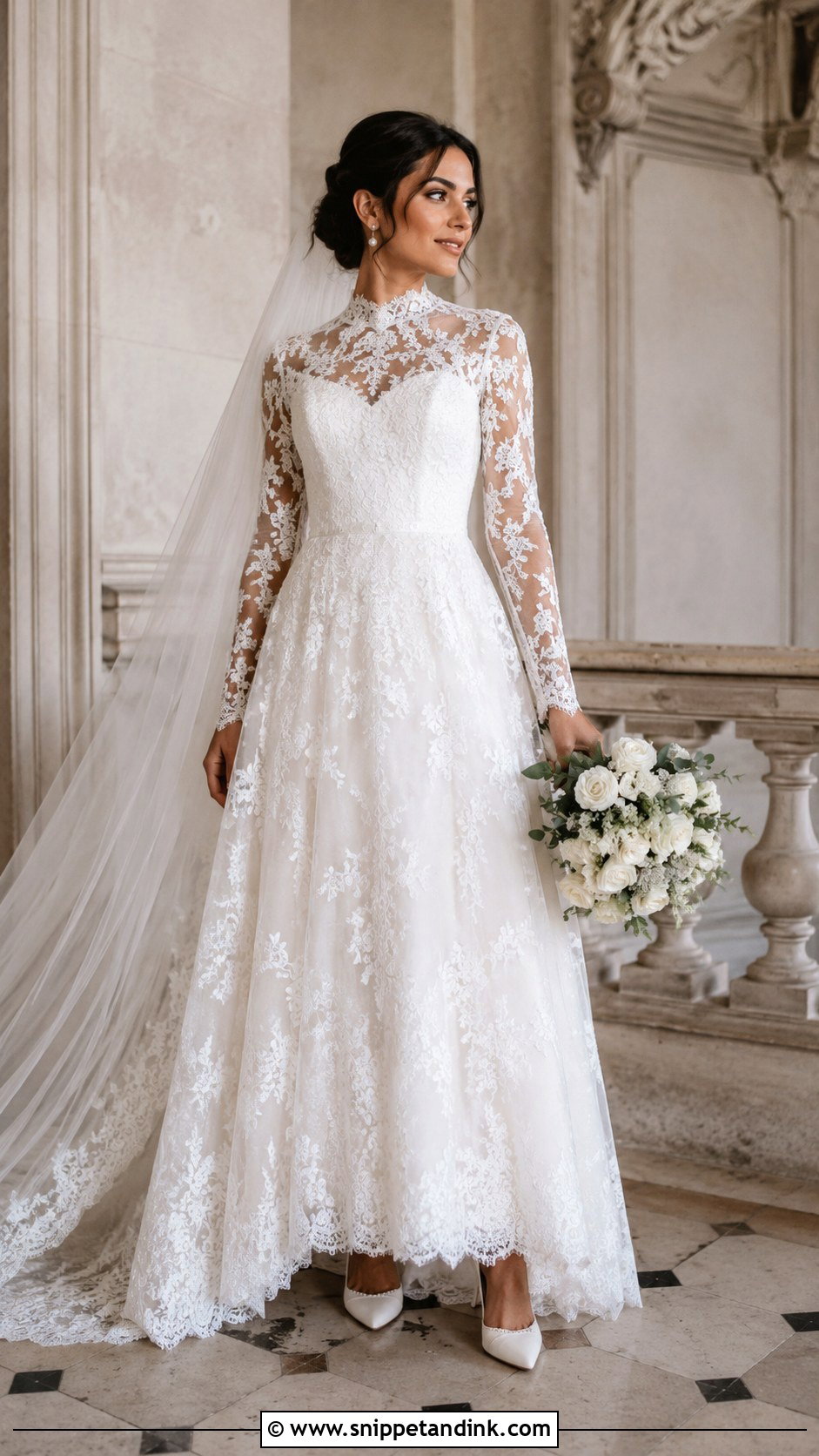
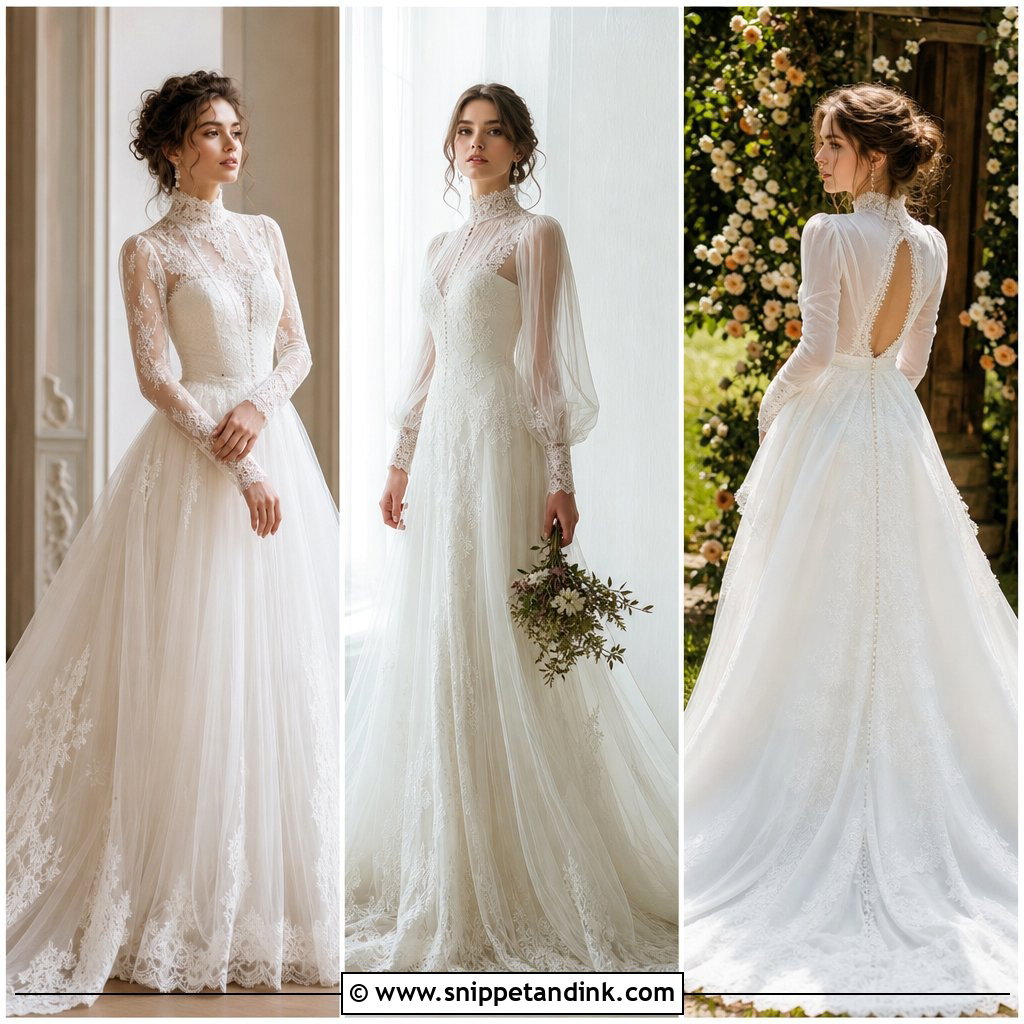
High necks belong to Victorian and Edwardian dressing, and the hard part is stopping one from feeling heavy. I look for a neckline in sheer lace or illusion tulle, so skin shows through above the bust, then pair it with an A-line skirt so the coverage doesn’t stack top to bottom. Check the collar while seated: if it rides up into the chin, it needs taking down a few millimetres. A smooth updo matters with this one, because hair resting on a lace collar catches and frizzes. It suits brides who want modest coverage and still want the dress to feel romantic.
5. Beaded 1920s Wedding Dress
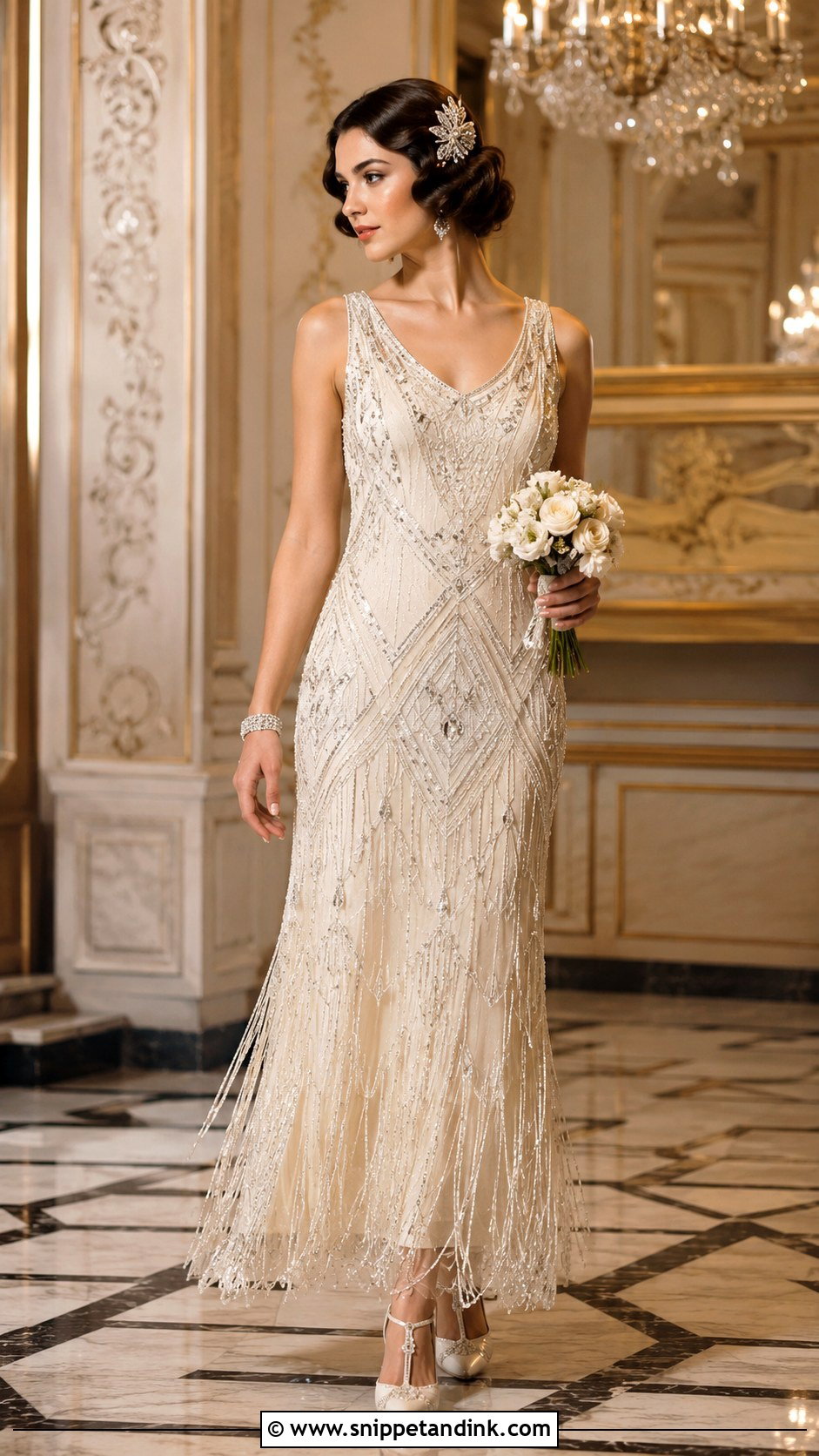
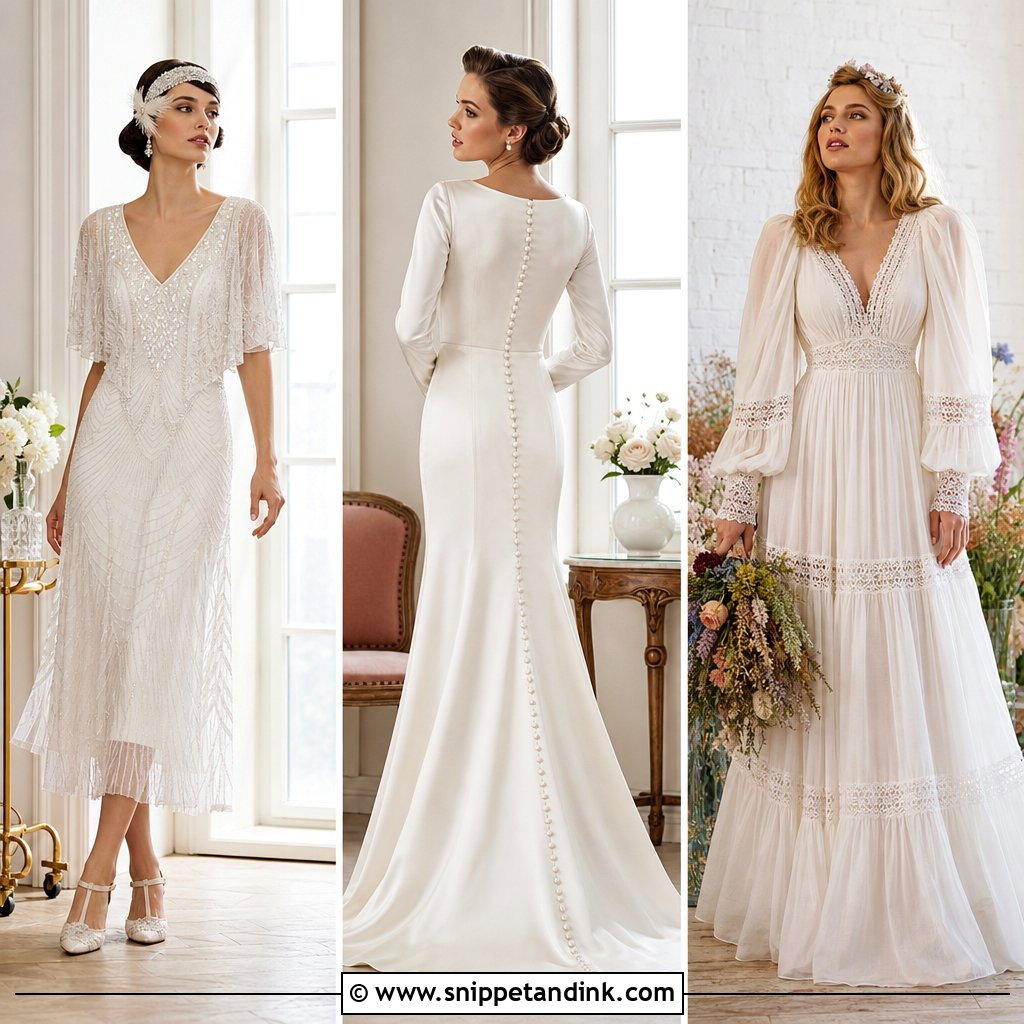
Real 1920s beadwork is heavy, and a modern copy can be too. Before you fall for a beaded column, ask the shop to weigh it or simply hold it on a hanger for a minute. Geometric Art Deco beading, a little fringe and a drop waist dance well, but the beads catch on lace veils, so I usually suggest a plain tulle veil or none at all with a beaded comb. T-strap heels finish the period nicely. Champagne and pearl tones show the beading better than stark white, and the jewellery should stay small because the dress already does the sparkling.
6. Vintage Ball Gown Wedding Dress
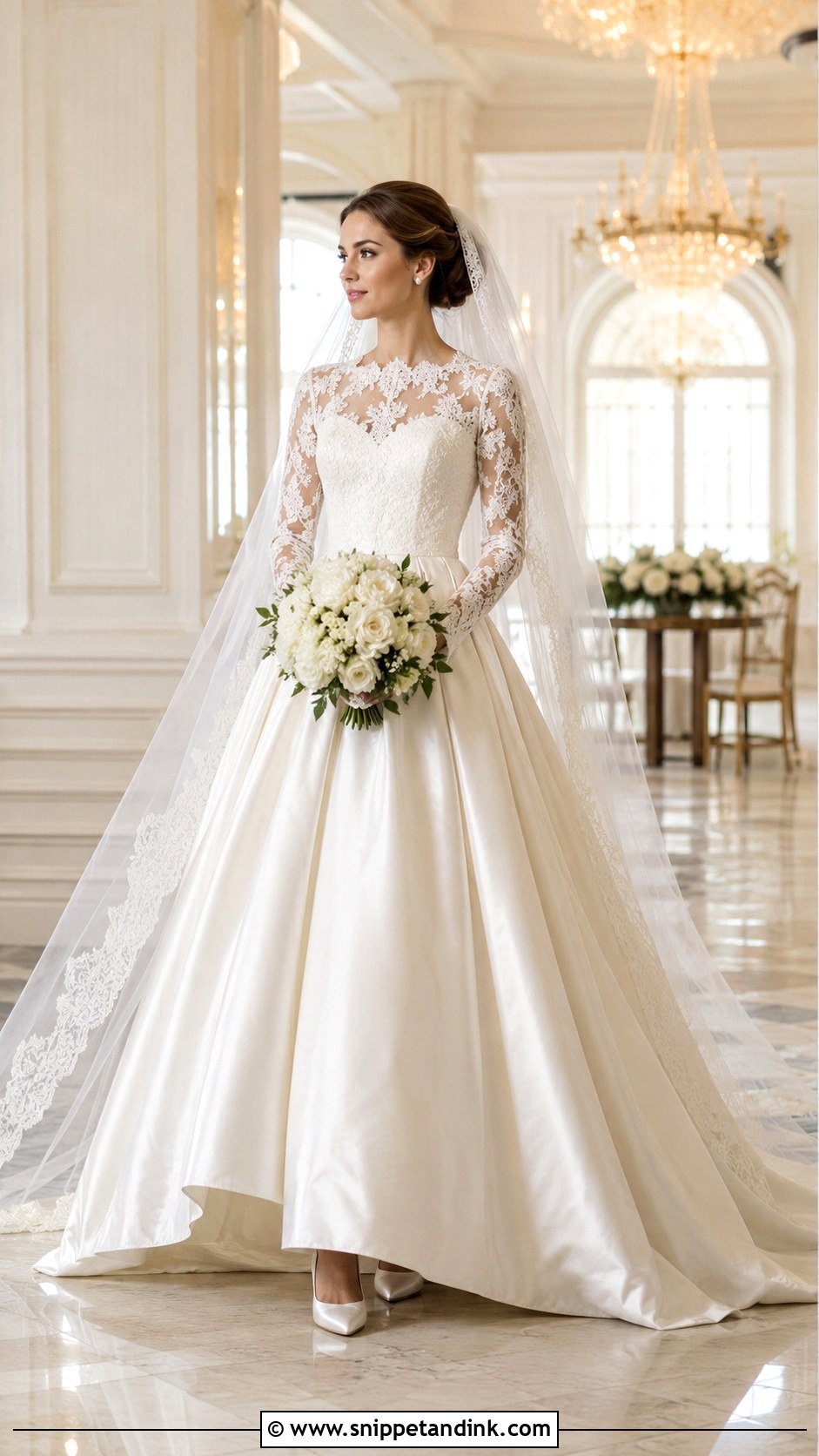
A vintage ball gown gets its shape from the bodice, not the skirt. Look for real structure, a basque waist, lace appliqué or satin with covered buttons, and a waist that stays put when you raise your arms. Very full skirts can swamp a petite frame, so I’d usually take a layer of tulle out rather than fight the proportion with taller shoes. A cathedral veil and a rounded bouquet balance the volume. Do plan the bathroom trip and the car ride; ball gowns need a helper and a back seat to themselves.
7. Cap Sleeve Wedding Dress
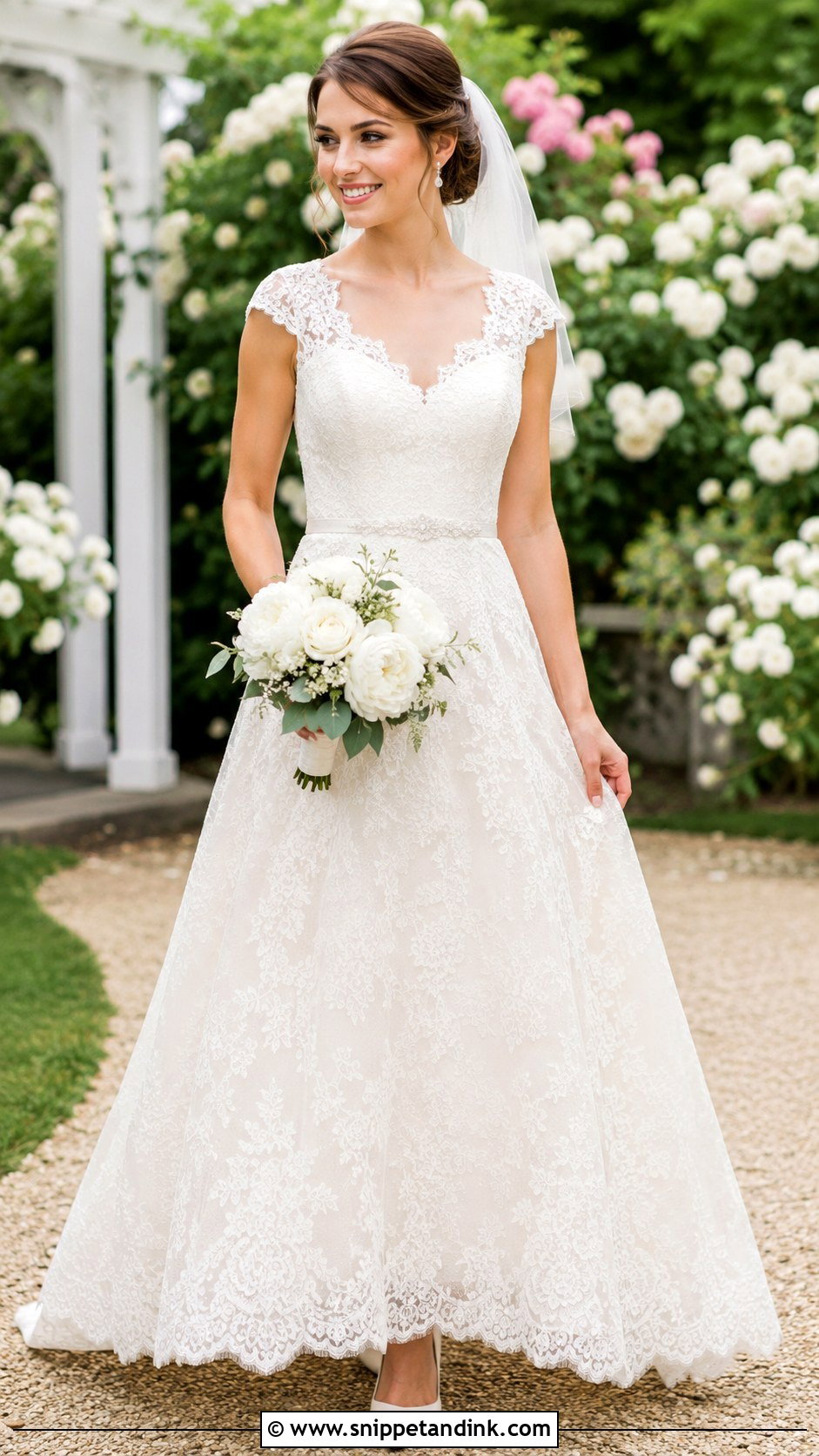
Cap sleeves cover the top of the shoulder and nothing else, which is why they read 1940s and 1950s rather than Victorian. The fit point is the sleeve edge: too tight and it bites into the upper arm in photos, too loose and it gapes when you wave. They suit tea length, plain satin and soft crepe equally. Pearl earrings, a waist-length veil and a thin satin belt or a slim beaded band are plenty. This is my go-to suggestion for a garden or courthouse bride who wants a little coverage without heat-trapping sleeves.
8. Drop Waist Wedding Dress
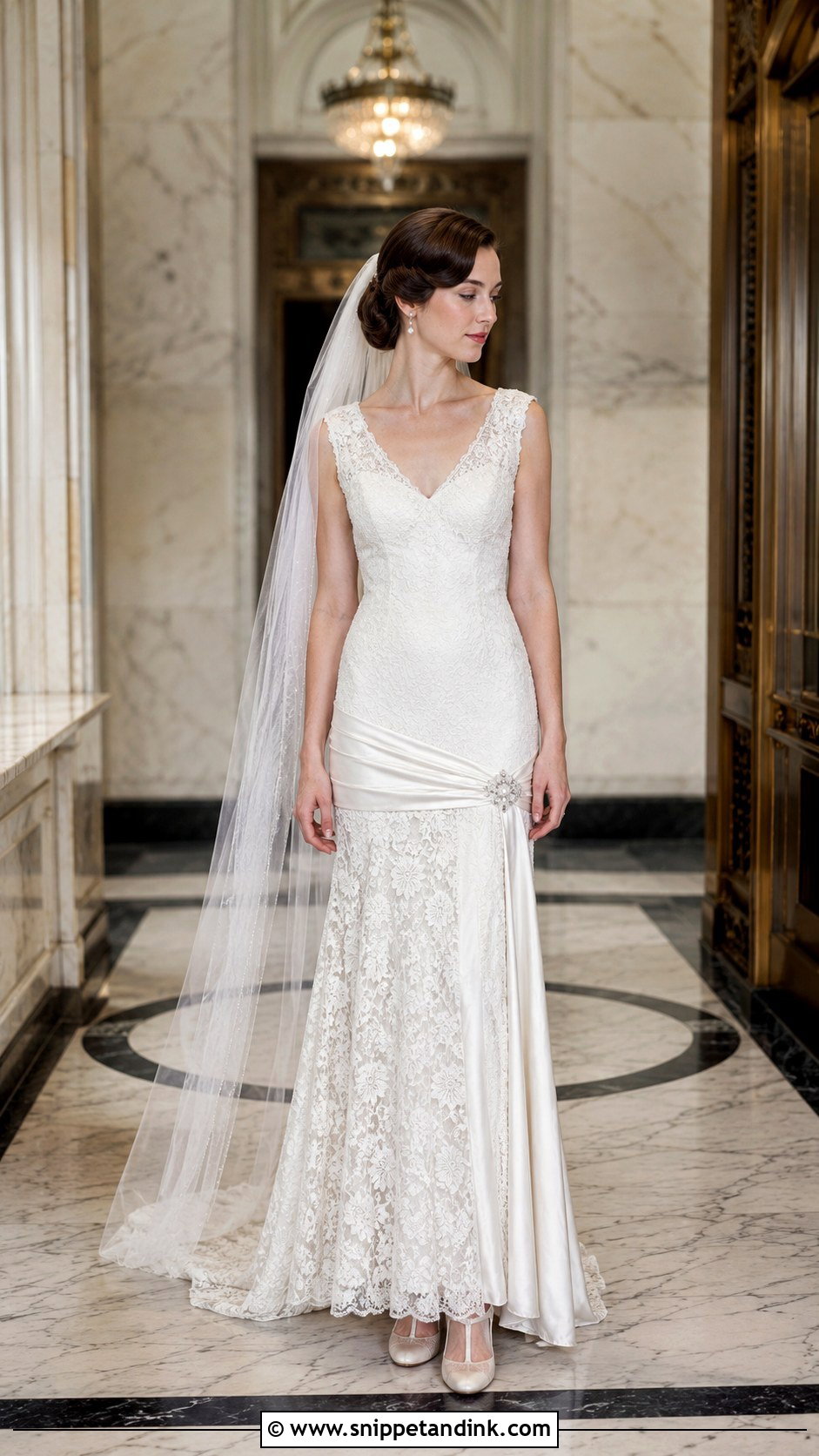
A drop waist wedding dress moves the waistline down to the hip, which lengthens the torso and borrows from the 1920s and early 1930s. Honestly, it’s the silhouette I see brides most often reject on the hanger and then love on. It needs a slightly flared skirt to balance the low seam, and soft fabric like lace, light tulle or satin, never anything stiff. Finger waves or a low chignon, a slim veil and period heels finish it. It works best in an Art Deco room, a historic hall or an evening party where the outline will be noticed.
9. Victorian Wedding Dress
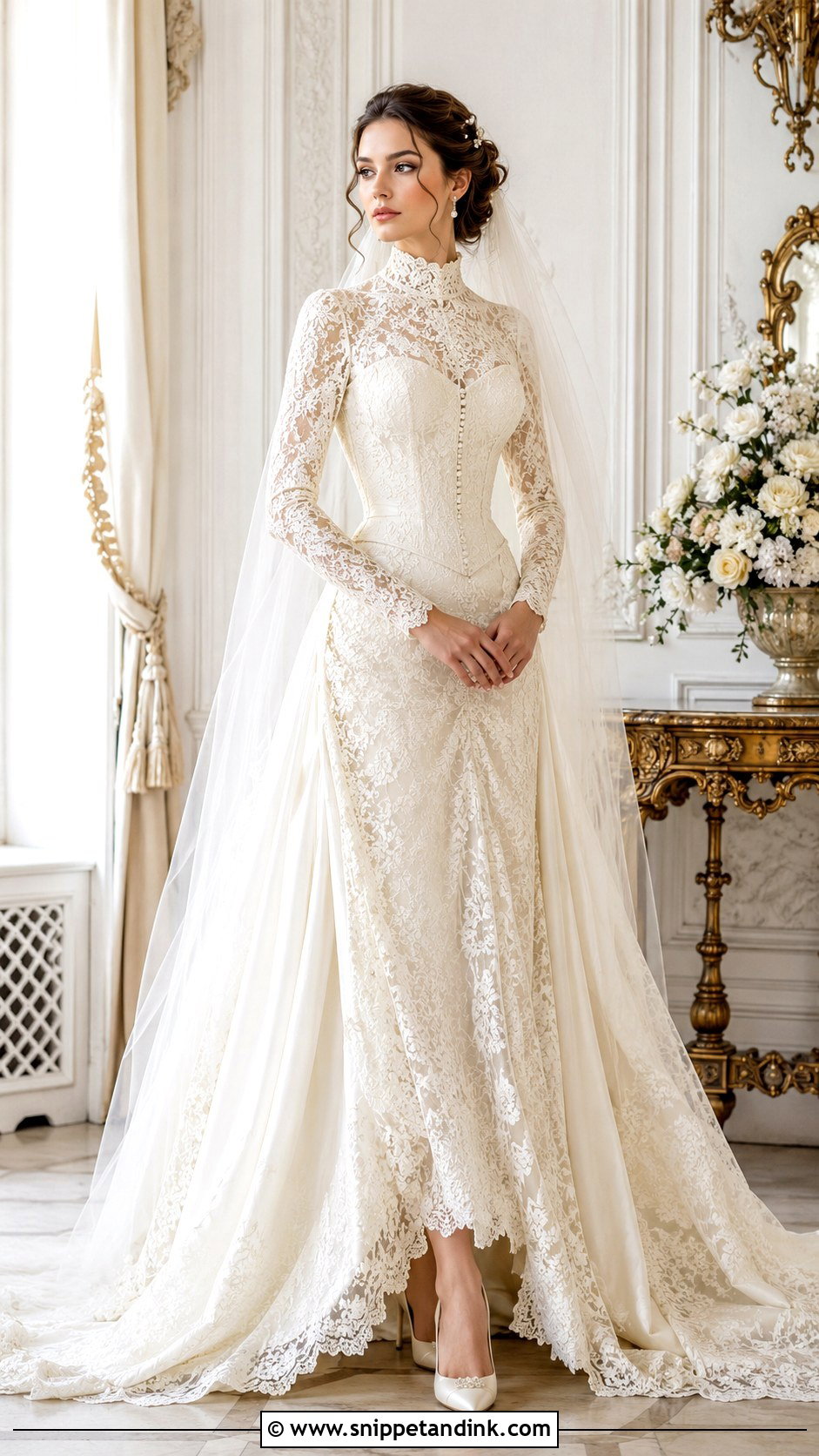
Victorian dressing means high necks, lace sleeves, corset-shaped bodices and covered buttons, and all of that can tip into a costume quickly. The fix is fabric weight. Lightweight lace, soft tulle and illusion panels let the shape read as historical while the dress still breathes. Ivory ankle boots or satin heels, pearl hair pins and a long veil suit a country house or a winter ceremony. Then pull back everywhere else: fresh makeup, minimal jewellery. I want guests to think of a period, not a drama series.
10. Edwardian Wedding Dress
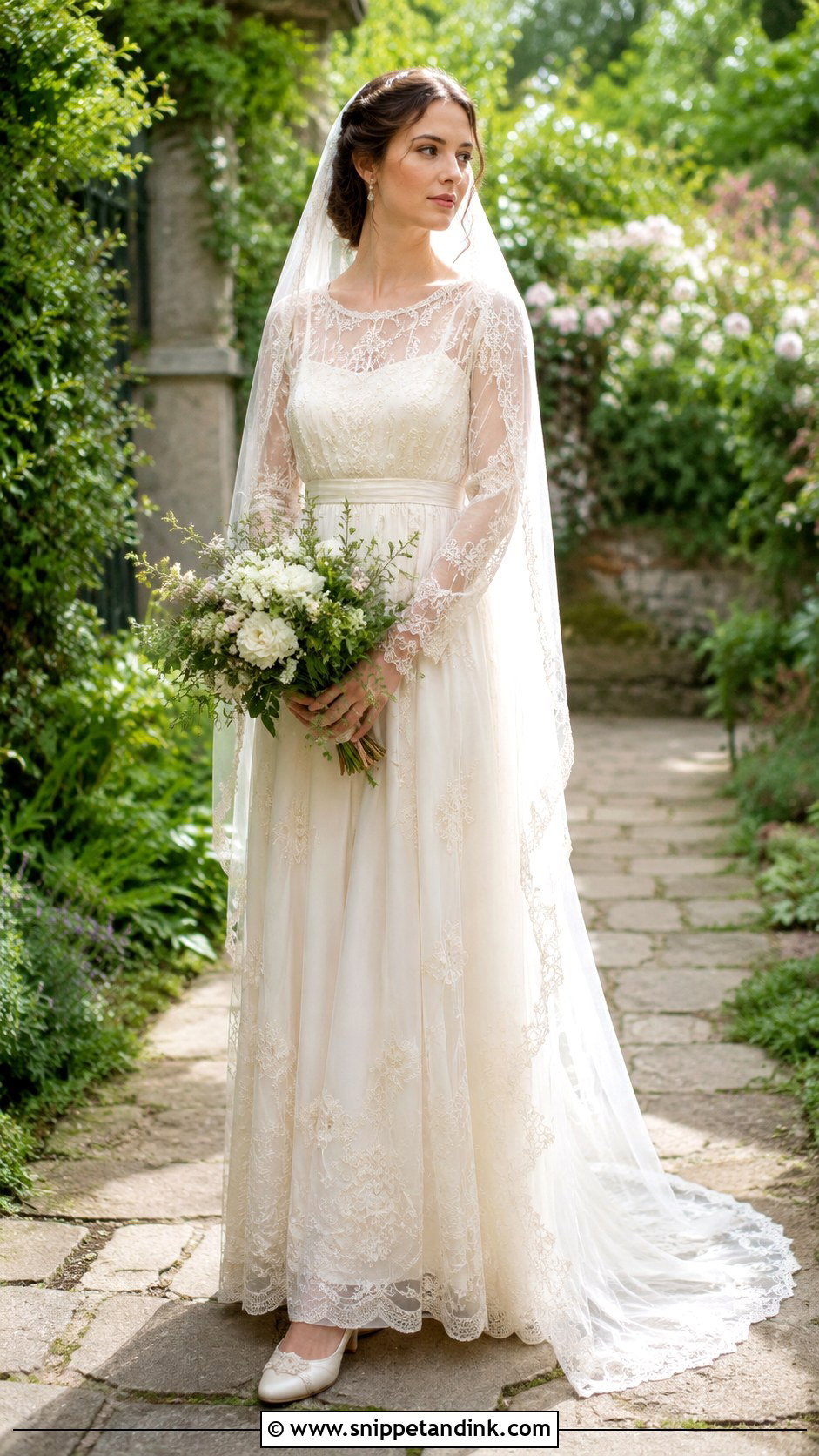
An Edwardian wedding dress is softer than its Victorian cousin. High lace necks remain, but the sleeves are airy, the waist may sit high or natural, and the skirt floats instead of standing out. Cotton lace, embroidered tulle and soft silk give the most convincing feel. Because it doesn’t depend on tight shaping, it fits a wide range of bodies, and a narrow ribbon is enough to mark the waist. Pair it with a loose updo and a lace-edged veil, ideally outdoors where the light shows through the sleeves.
11. 1950s Wedding Dress
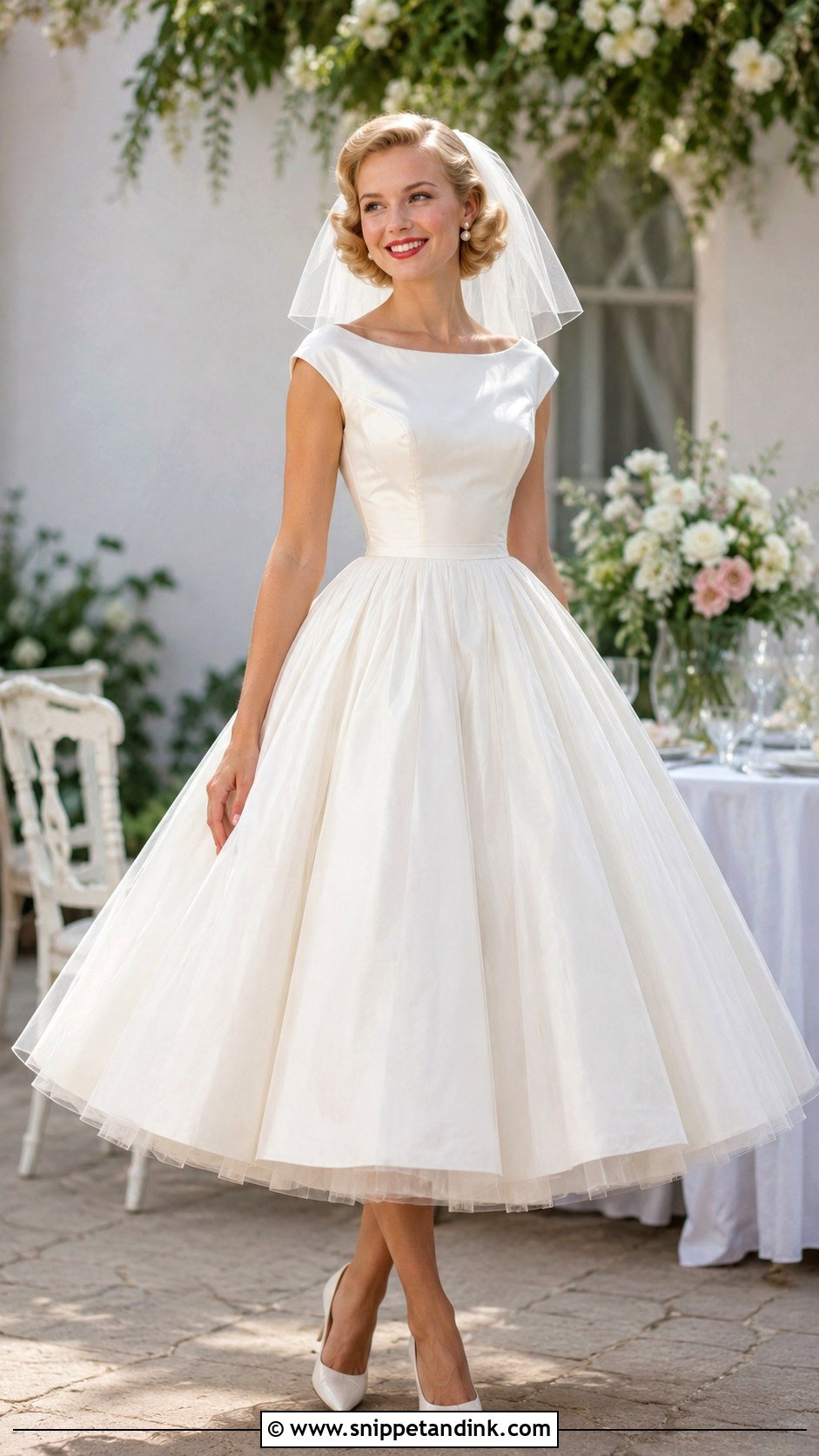
Fifties bridal is all bodice structure and skirt volume, tea length or floor length. Satin, tulle, organza and lace all work. The secret most brides miss is the petticoat: the same skirt looks completely different with a crinoline under it, so try both at your first fitting before you decide. If you want softness, choose a lighter tulle skirt and skip the hoop. Pointed pumps, pearl earrings, a short veil and a polished bun keep it cheerful, and a retro reception or a courthouse lunch is exactly where it shines.
12. 1970s Lace Wedding Dress
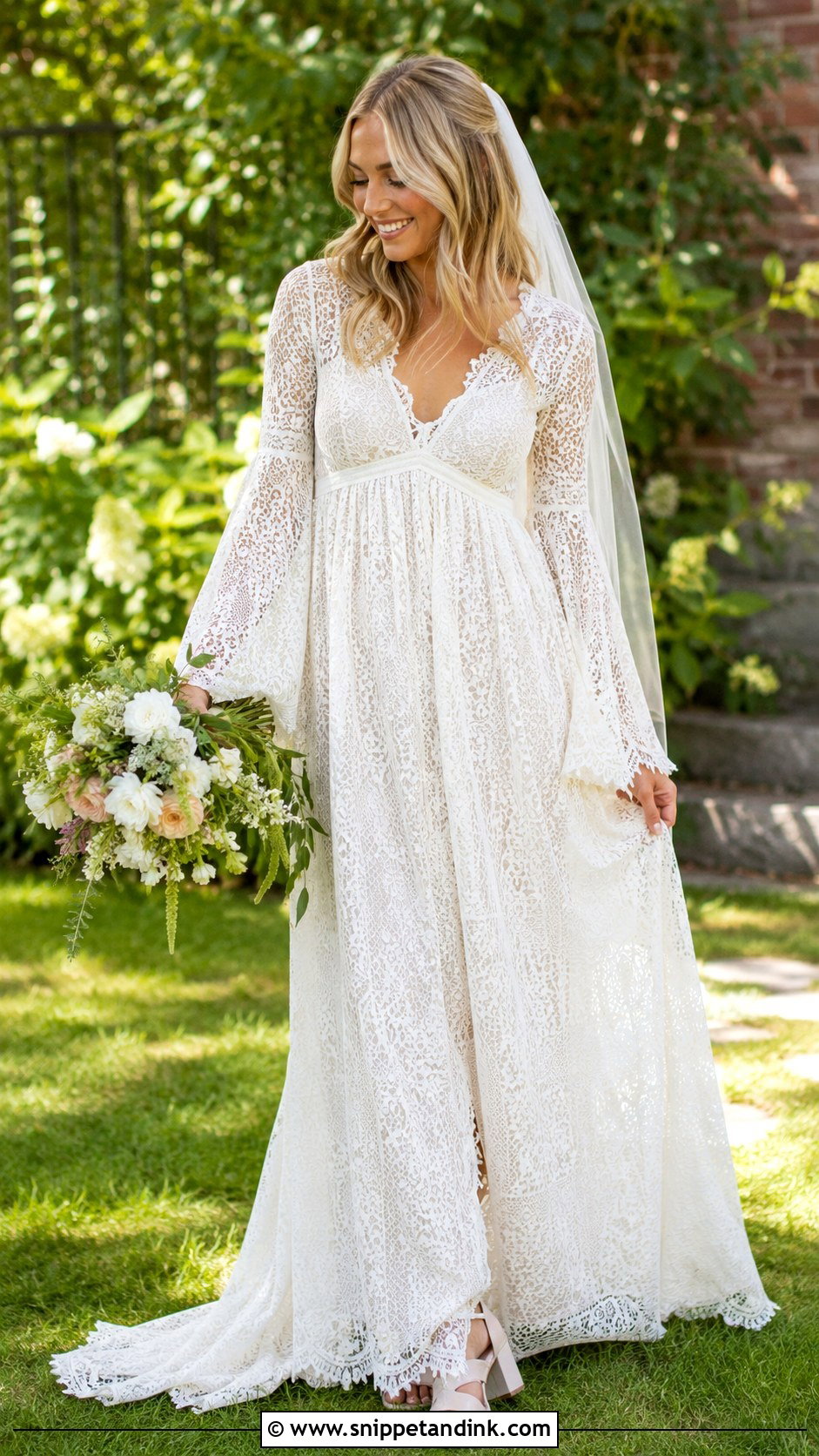
The seventies lace dress is the relaxed one: bell sleeves, crochet-style lace, empire waists and soft ruffles. Old originals often have tired elastic and fragile crochet, which is why I’d usually point a bride to a new version with proper lining. Bell sleeves drag through cake and dip into the bouquet, so try holding flowers in the mirror before you commit. Loose waves, block heels and gold or natural pearl jewellery complete it. Leave the headbands and fringed bags at home, because the lace already says the decade.
13. 1990s Minimal Wedding Dress
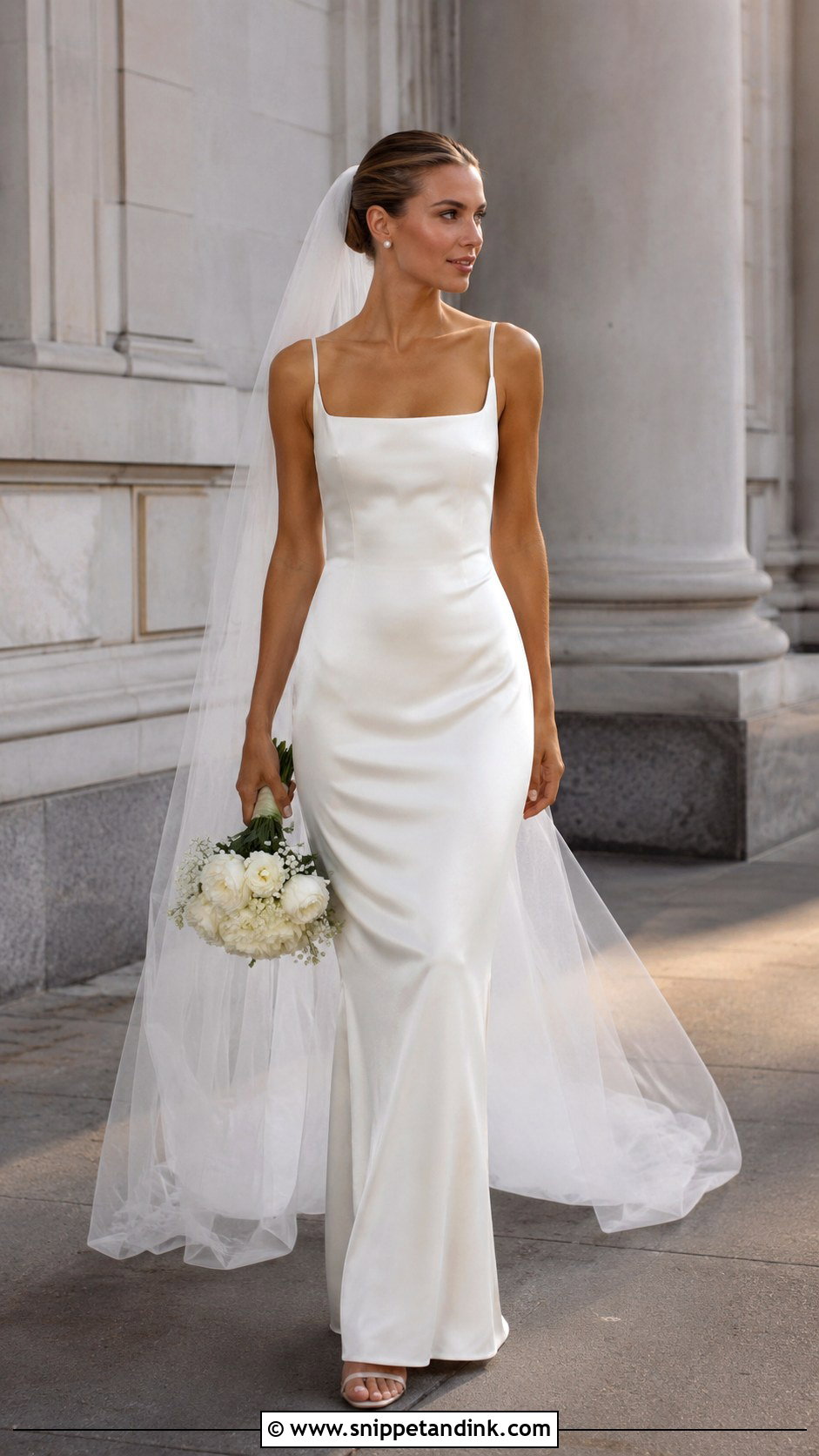
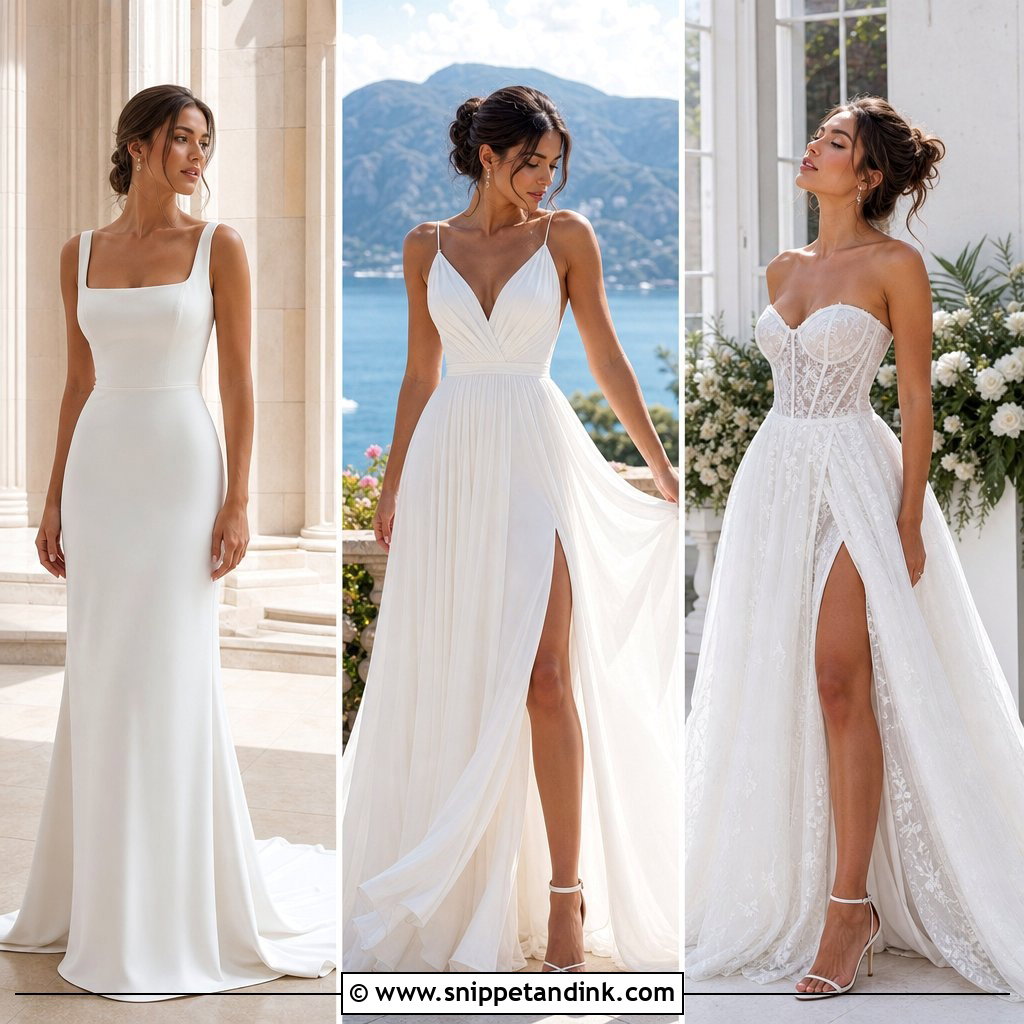
A 1990s minimal wedding dress takes its vintage feel from restraint rather than decoration. Square necks, thin straps, column shapes and silk satin or crepe are the vocabulary. With no lace to hide behind, the cut has to be exact, and I’d budget for alterations on the bust and hips. Sleek hair, pearl studs and a long veil keep it true to the era. Gloves or a small structured bag push it more toward fashion. It suits a gallery, a city registry or anyone who winces at the word frills.
14. Puff Sleeve Wedding Dress
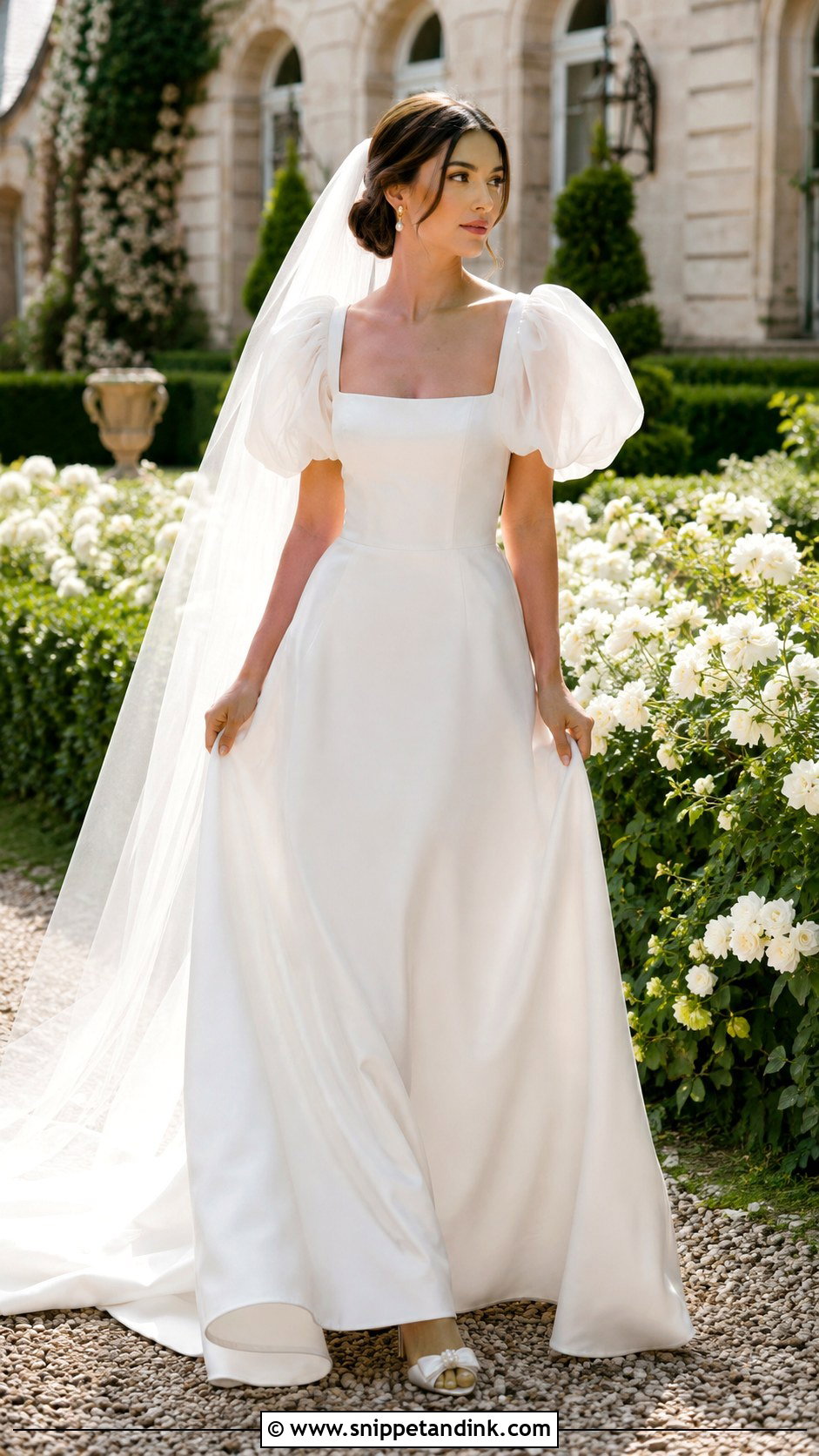
Puff sleeves get all the attention, so the rest of the dress has to be calm. The usual rule I give is proportion: big sleeves with a fitted bodice and a simple skirt, smaller puffs with a softer A-line. Organza holds a puff best and lace looks prettier but collapses sooner, especially in humid weather. Check that you can lift your arms to hug and throw a bouquet without the sleeve pulling the neckline. A low bun keeps hair off the shoulder seam, and a clean veil lets the sleeves stay the one statement.
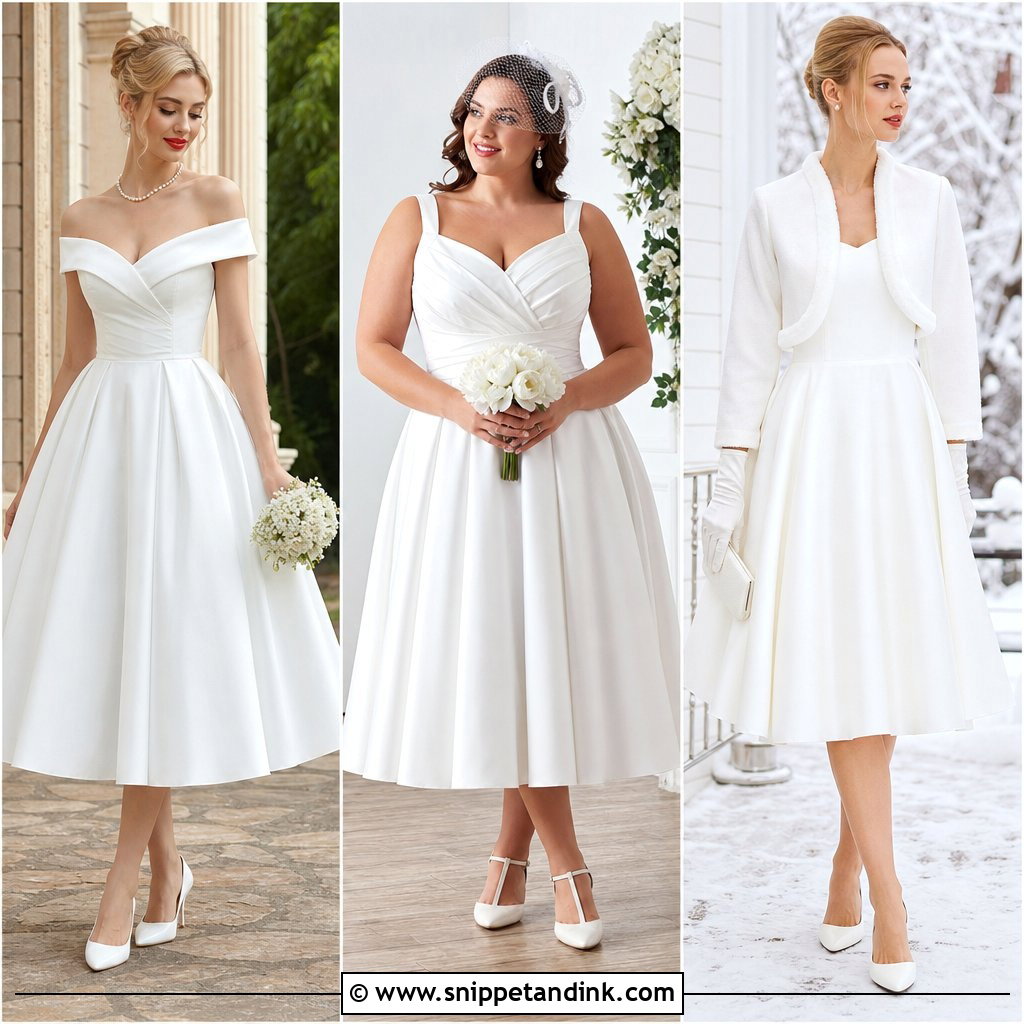
15. Basque Waist Wedding Dress
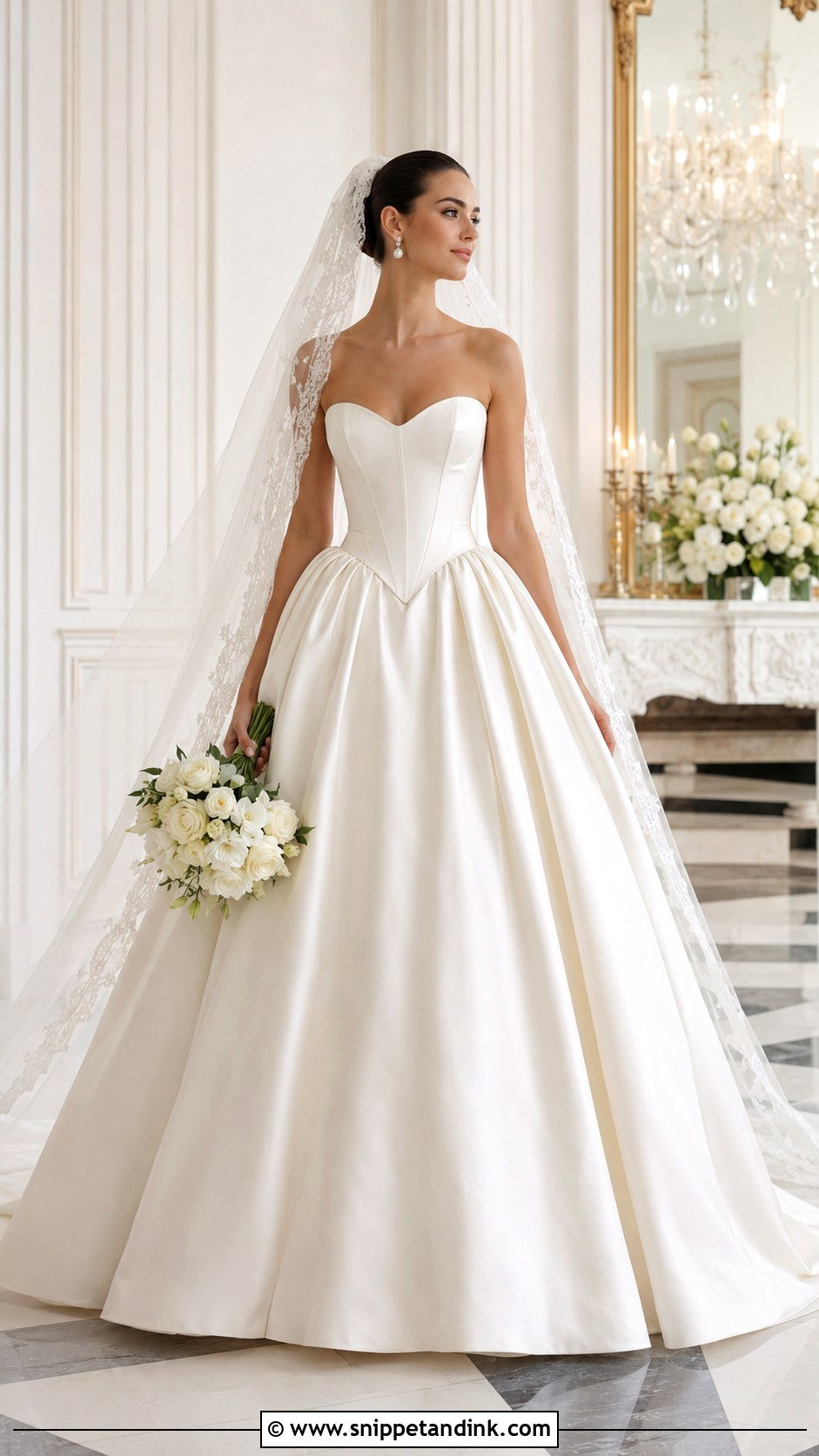
A basque waist dips into a V below the natural waistline, so it lengthens the torso and defines curves without a belt. It sits best on full skirts, lace bodices and satin ball gowns. Placement is everything: the point of the V should land where your hip starts to curve, and a few centimetres off makes it look like a fitting mistake. I’d keep the neckline clean so the waist does the talking, then add a cathedral veil and a traditional bouquet for a formal venue or a historic hall.
16. Lace Jacket Wedding Dress
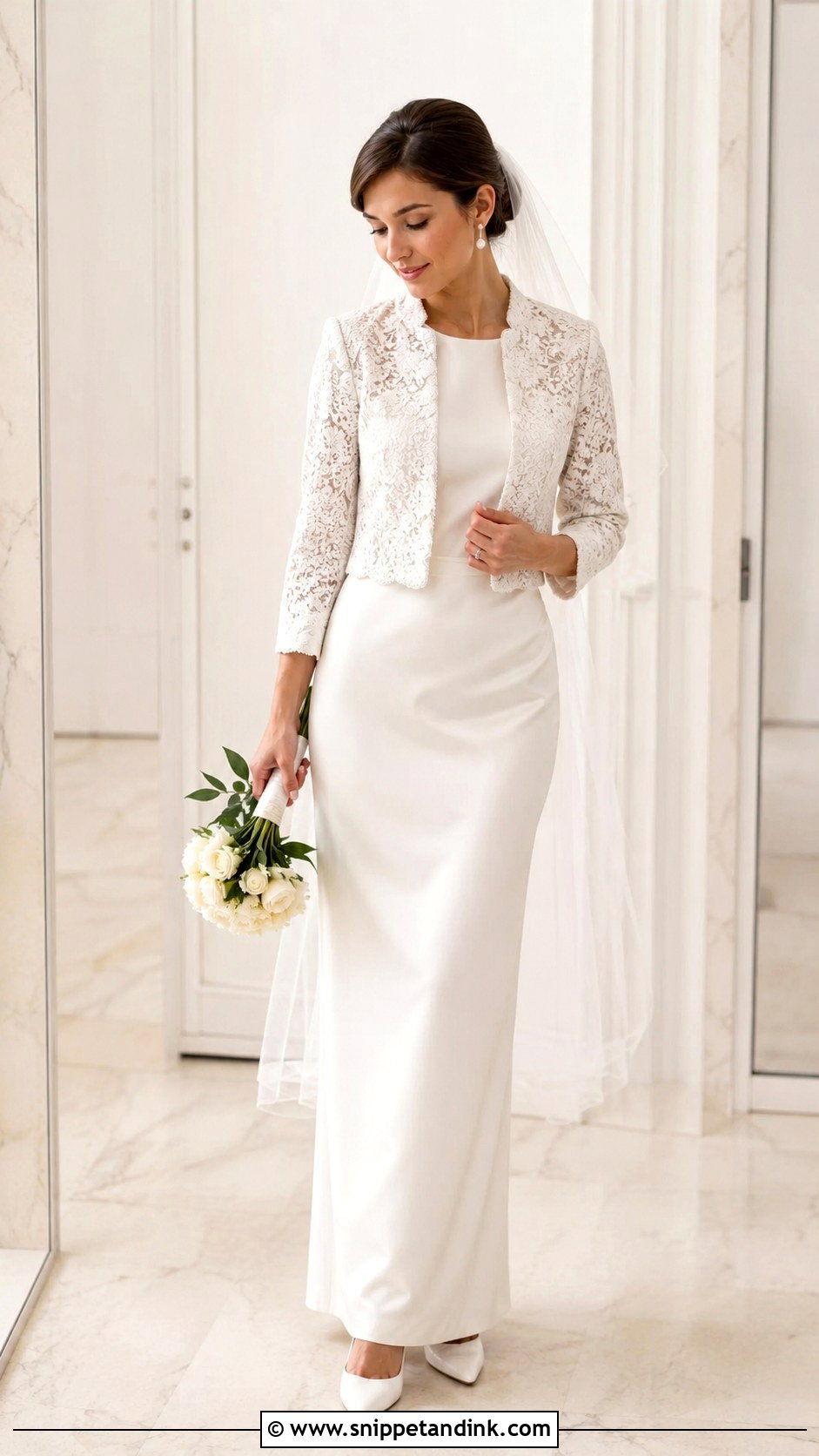
Two looks in one is the practical case for a lace jacket. Wear it for a church or civil ceremony that asks for covered shoulders, then take it off for dinner. Mid-century brides did this constantly. Choose a plain satin, crepe or slip gown, then a fitted topper or cropped jacket with buttons that a bridesmaid can undo in under a minute. I’d have the jacket and dress fitted together, because a jacket cut for a different gown will bunch at the waist. Pearl earrings, classic pumps and a soft veil are all it needs.
17. Short Vintage Wedding Dress
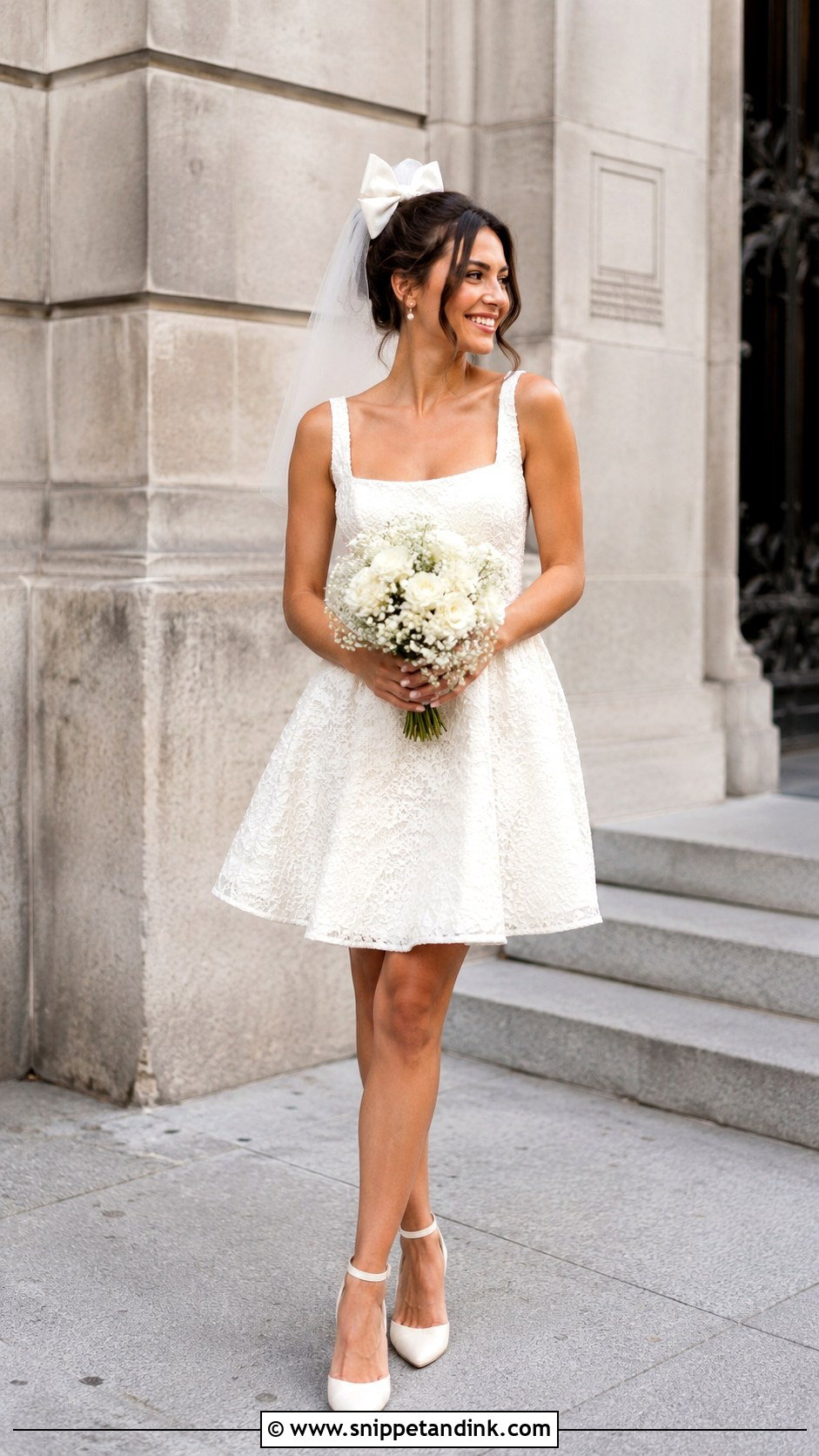
Short dresses feel cheeky and easy. The cut can borrow from a sixties mini A-line or a fifties knee-length skirt, and lace, satin, mikado and crepe all hold the shape. With the hem this high, shoes become half the outfit, so spend there and wear them in at home beforehand. A bow veil or a small headband keeps it bridal. I suggest these for courthouse elopements, city weddings and the reception change, though brides with a long, formal ceremony usually prefer something longer for the aisle.
18. Pearl Wedding Dress
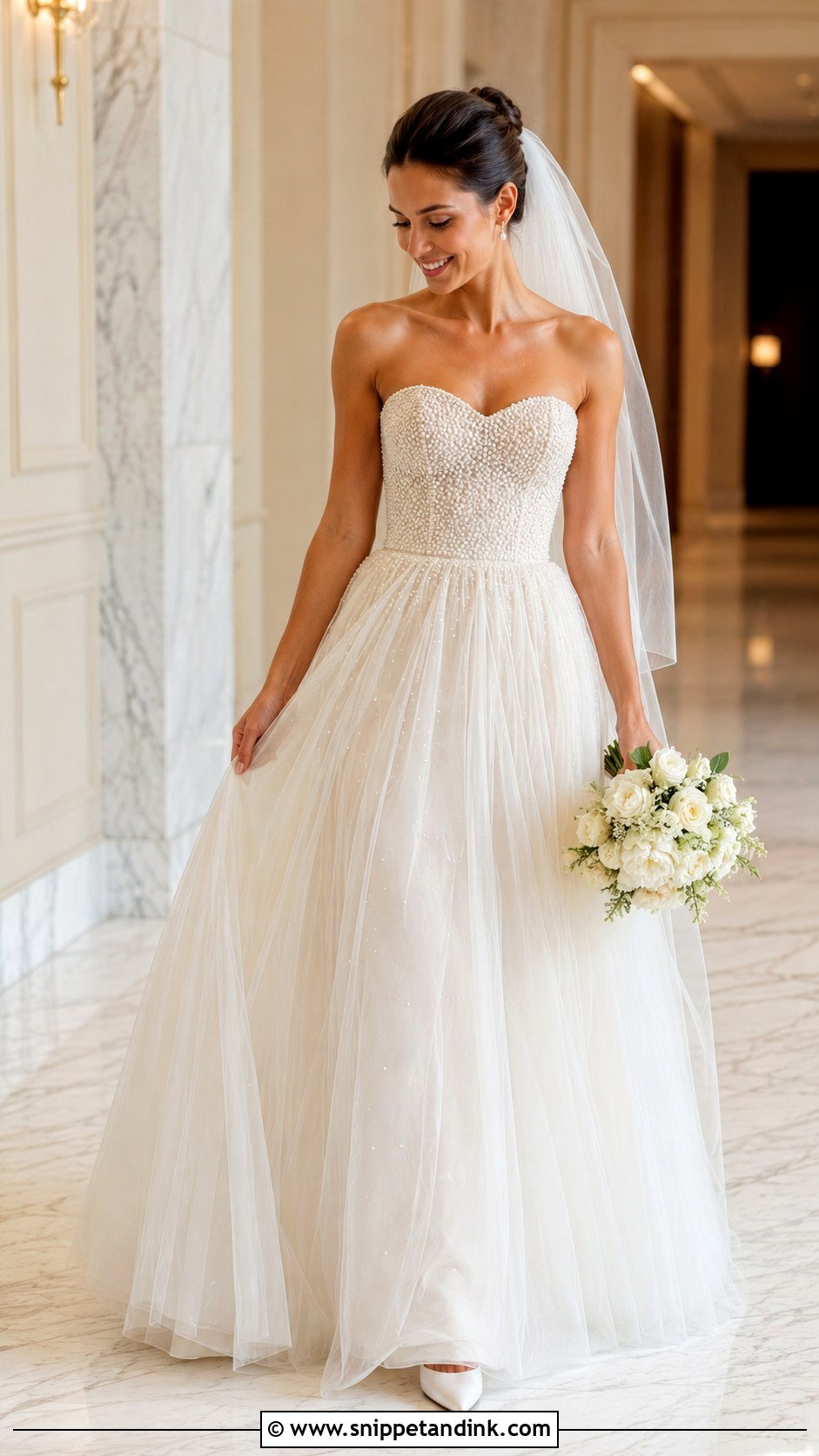
Pearls give a dress glow instead of glitter. They might be scattered, edging a neckline, trimming a sleeve or covering the whole bodice. Scattered pearls on tulle feel light; a fully pearled bodice is heavy and pulls on thin straps, so ask how it’s supported. If the gown is heavily pearled, I’d skip a necklace entirely and keep the hair smooth. Satin heels and a simple veil keep the look refined, and pearls placed in clean lines read modern even on a very traditional shape.
19. Off Shoulder Wedding Dress
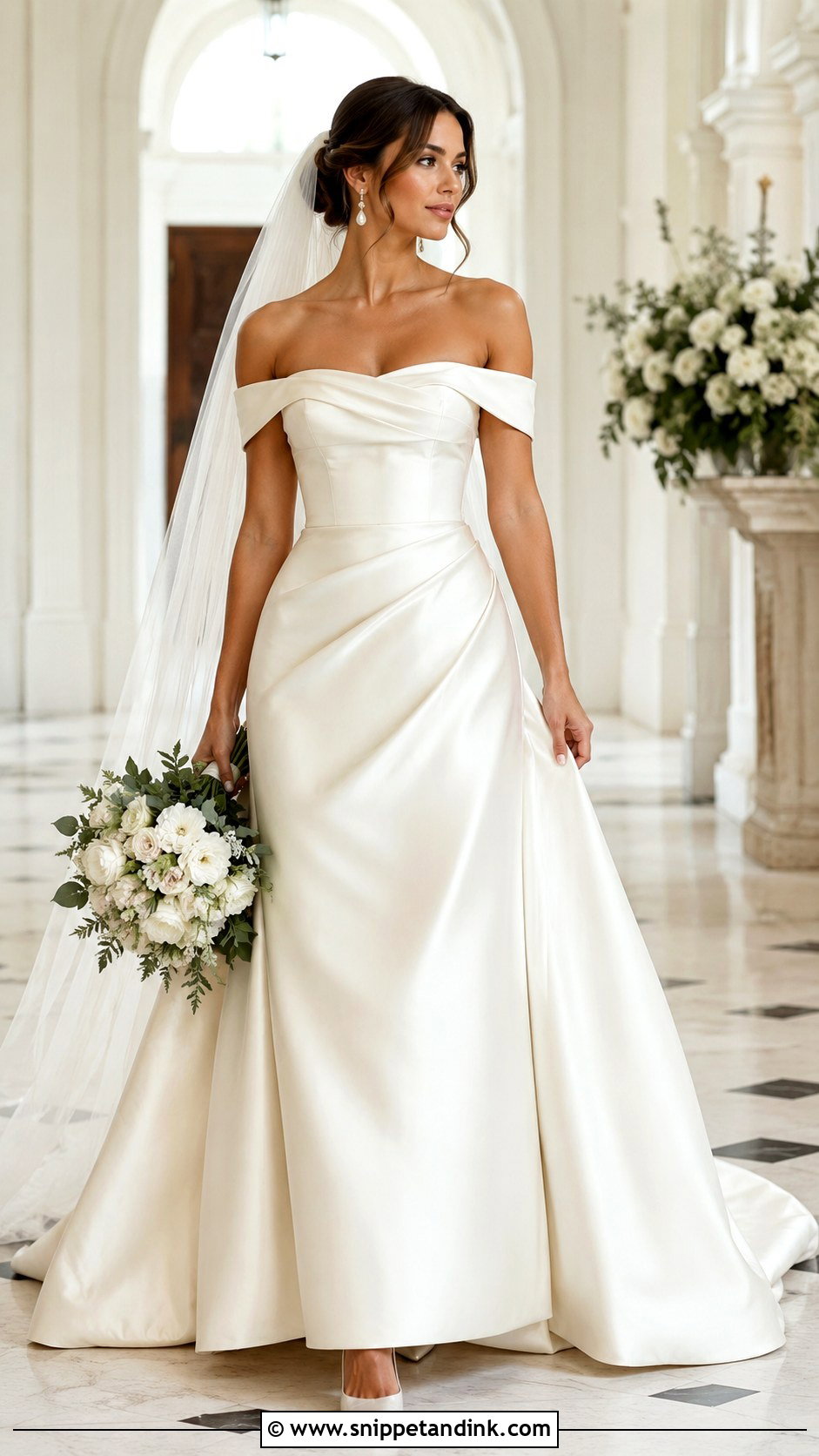
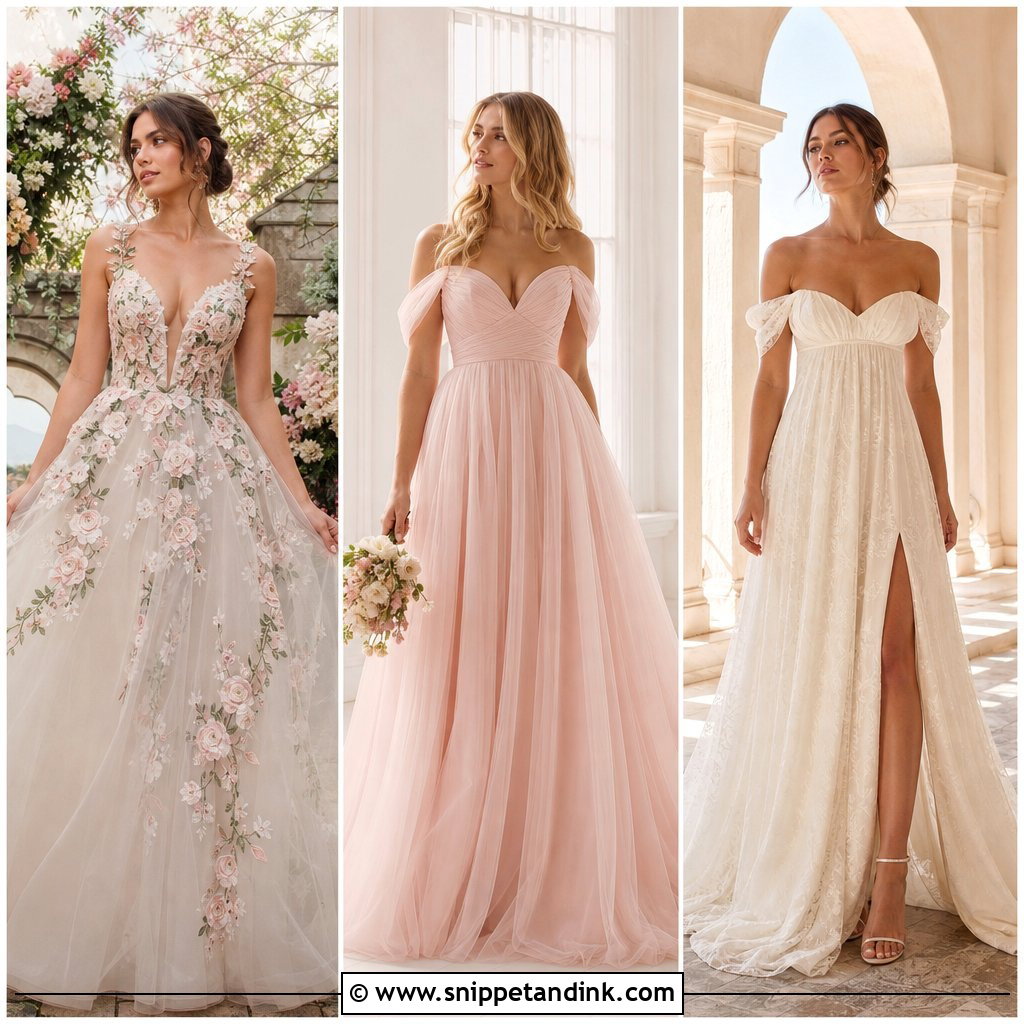
Off-shoulder necklines borrow from Old Hollywood and mid-century bridal, especially with a folded satin band or soft tulle draping. The real question is whether it stays up. A good one is anchored by a boned bodice, not by the sleeves, so test it by reaching both arms forward as if to hug. If the band slides, it needs tightening or a silicone grip. A smooth updo and drop earrings show off the shoulders. Lace and tulle read softer; structured satin or mikado reads more dramatic.

20. Square Neck Wedding Dress
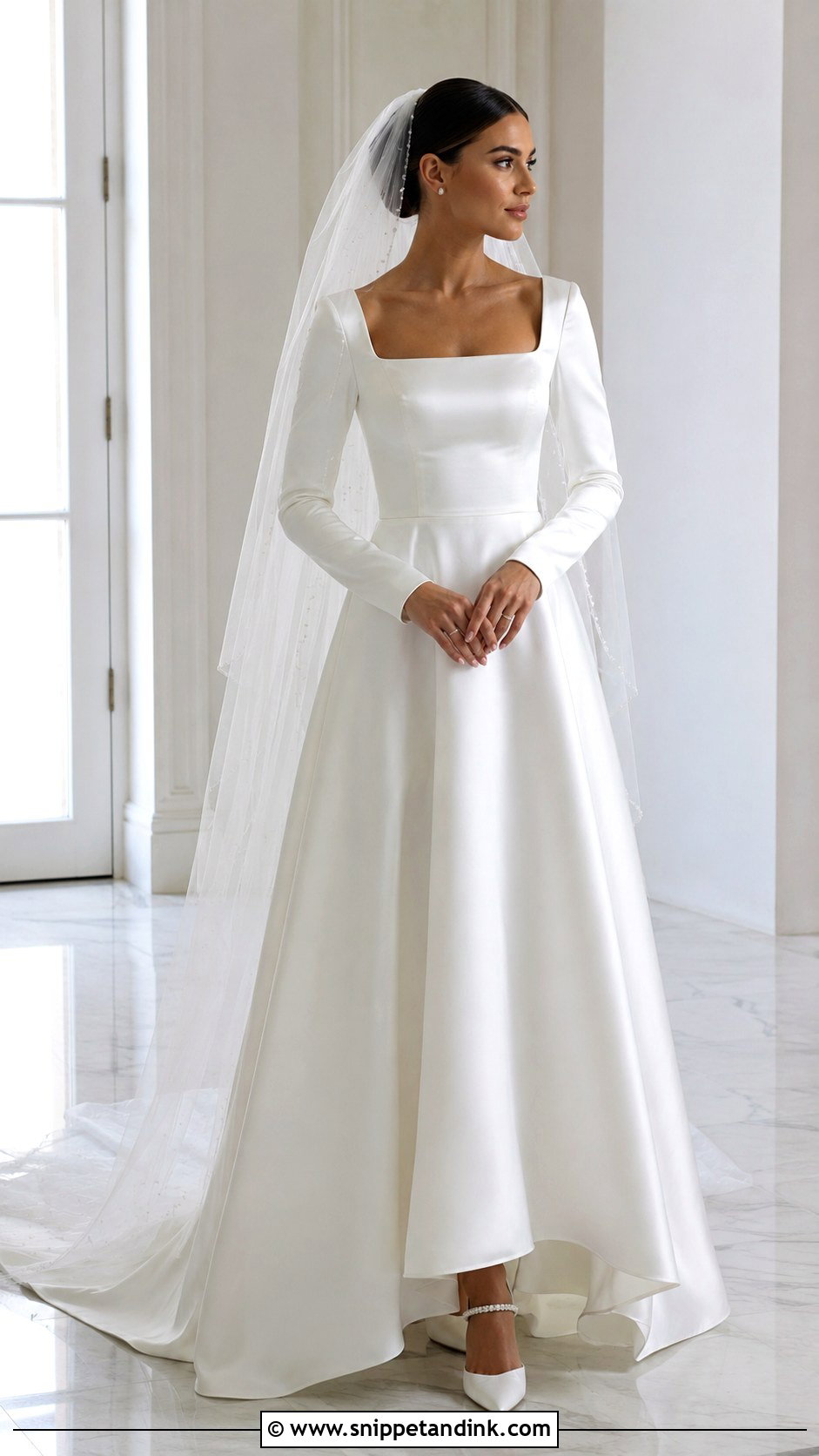
A square neck is quietly vintage and suits more figures than people assume. It can lean Renaissance, corseted or nineties minimal depending on the fabric: satin for clean lines, lace for romance, crepe for something softer. I watch the corners at fittings, because if the neckline is too wide the straps slide and the corners gape when you sit. It frames the collarbone well, so skip the necklace or wear a very fine chain, then add a fingertip veil and a neat bun.
21. Empire Waist Wedding Dress
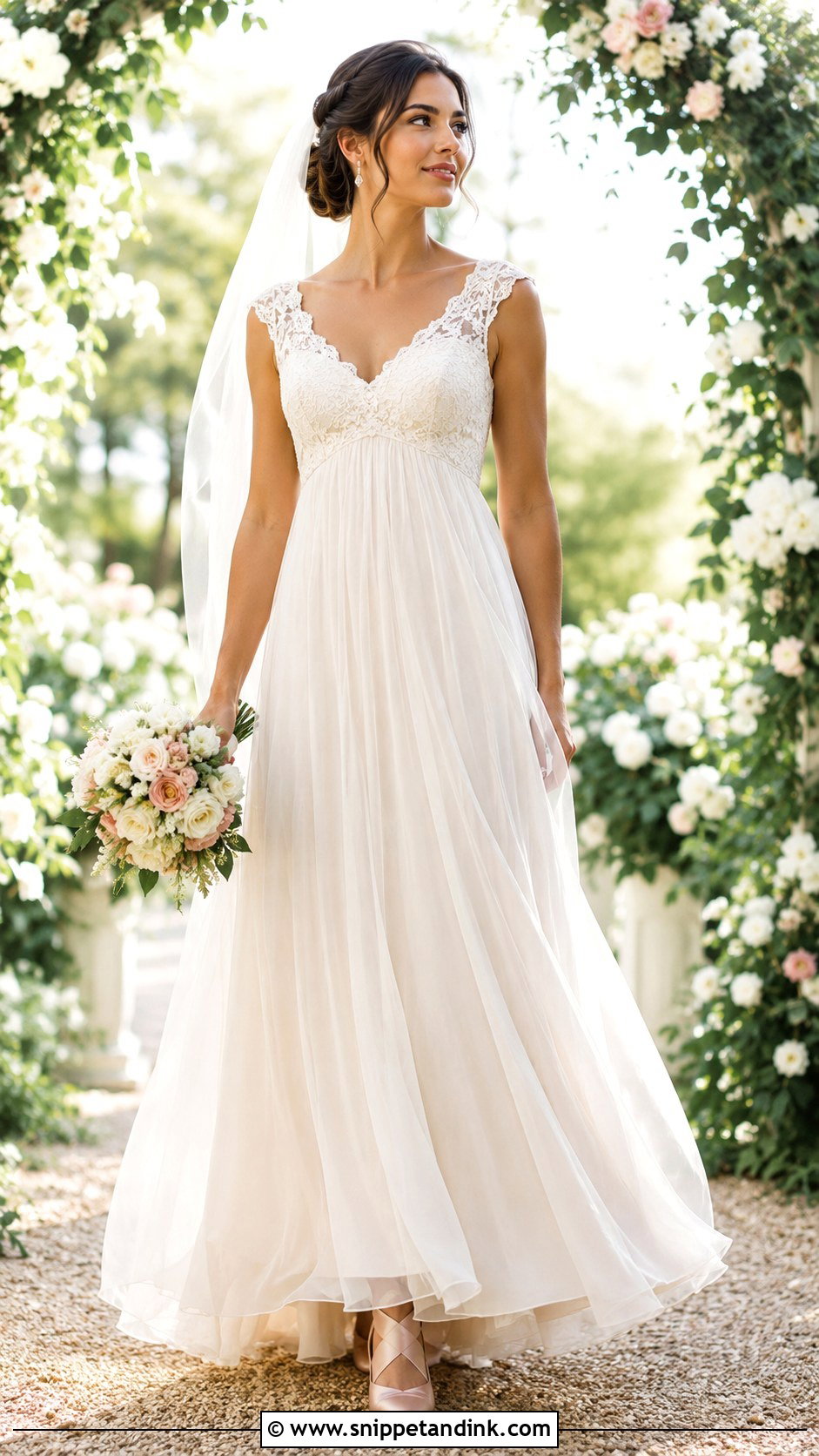
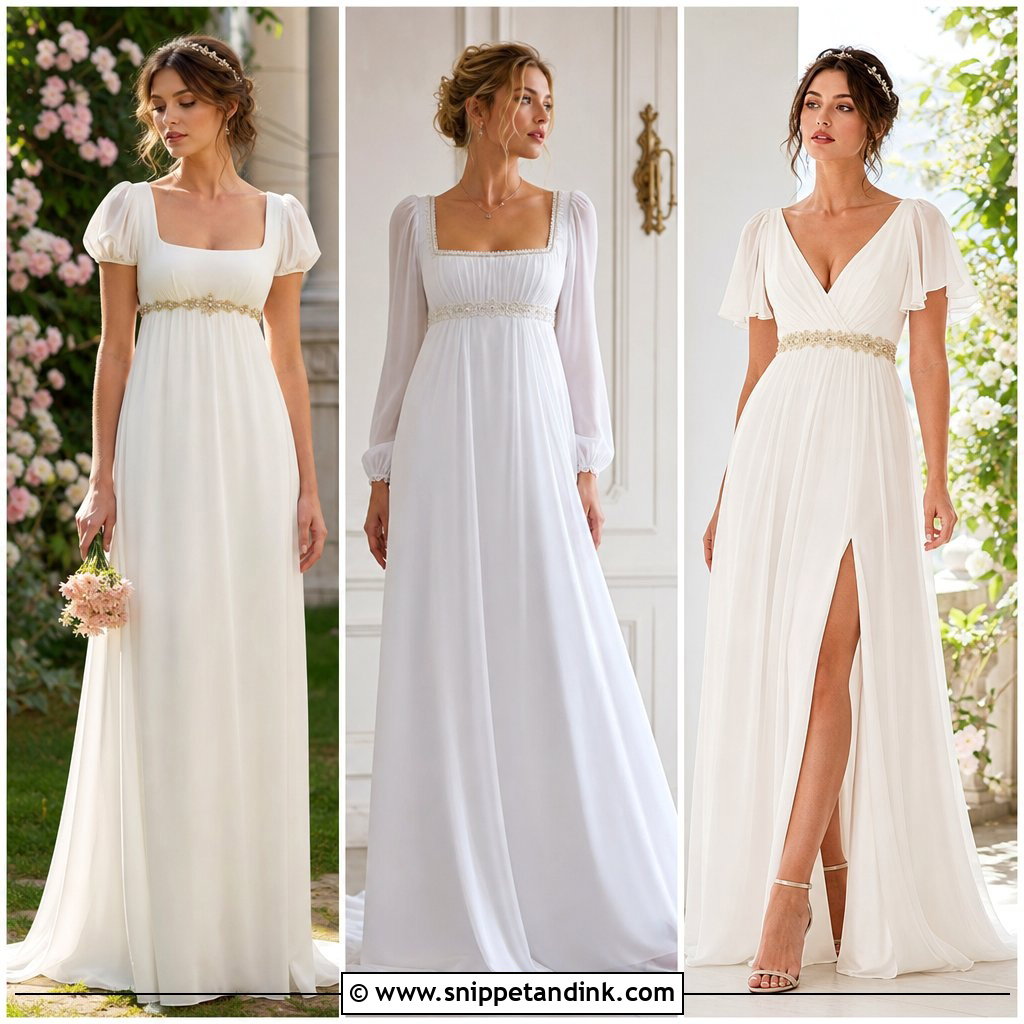
An empire waist sits just under the bust and lets the skirt fall loose, which is the outline of Regency and Edwardian fashion. Chiffon, silk, lace and soft tulle float best; stiffer fabrics tent out from the seam. It’s comfortable through a long meal and a good option for pregnant brides, though I’d book the final fitting as close to the date as the shop allows. Ballet flats, delicate earrings and loose waves or a low bun complete it, especially outdoors.
22. Corset Wedding Dress
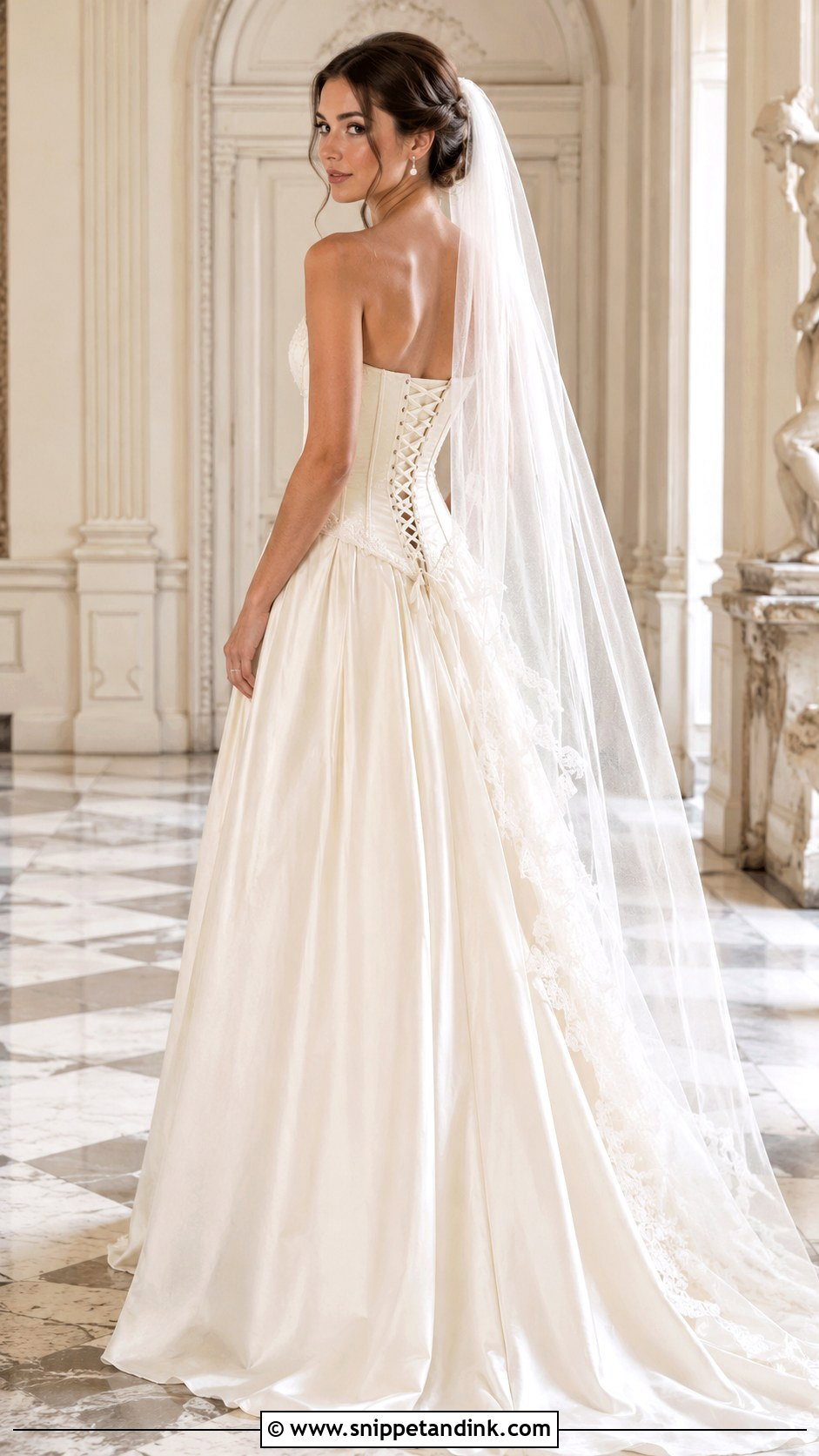
Corset bodices draw on Victorian and 1950s dressmaking: visible boning, lace-up backs, basque waists and sculpted seams. A well-made one supports you; a badly made one leaves boning marks and makes sitting through dinner a chore. Ask whether the bones are spiral steel or plastic, and sit down in it for five minutes at the fitting. Balance the fitted top with an A-line, ball gown or soft draped skirt. Pearl earrings and a long veil are enough. Pick this for posture and waist definition, not if you plan to dance hard all night.
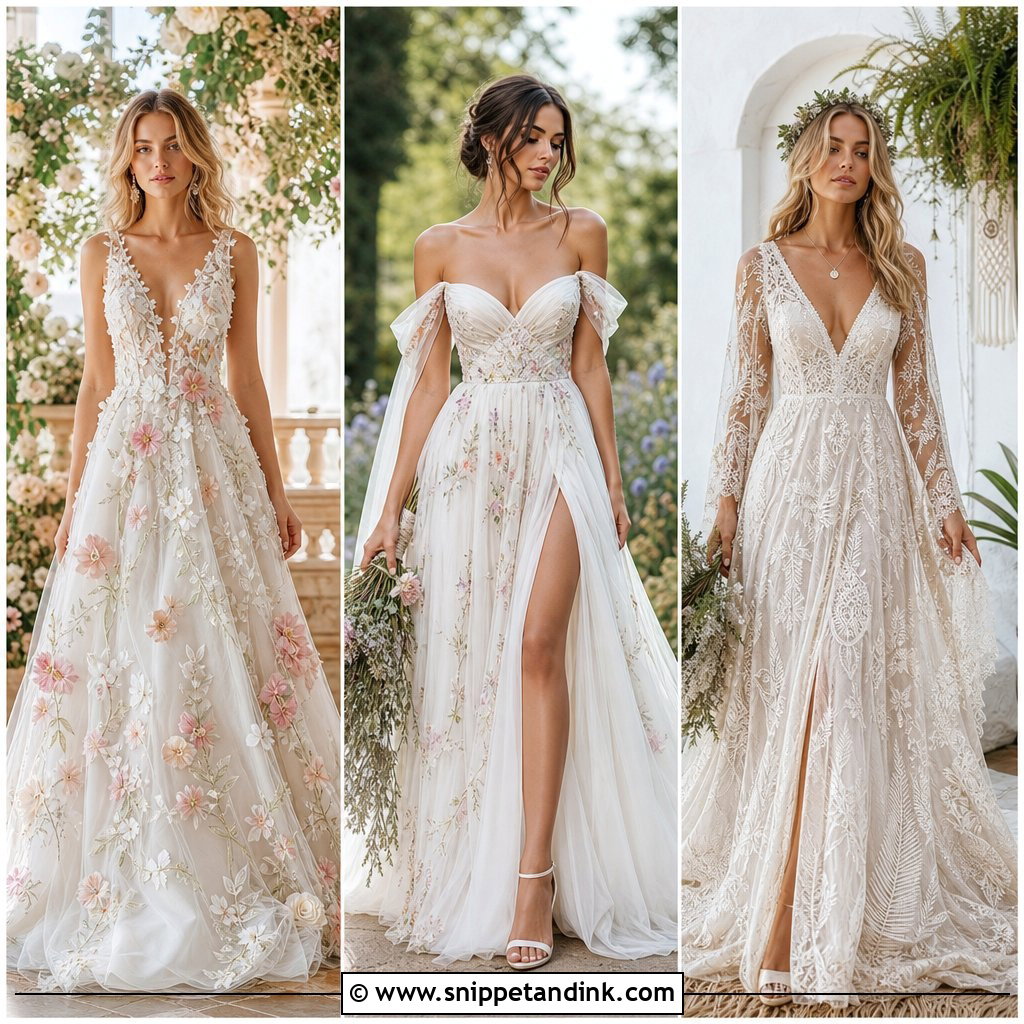
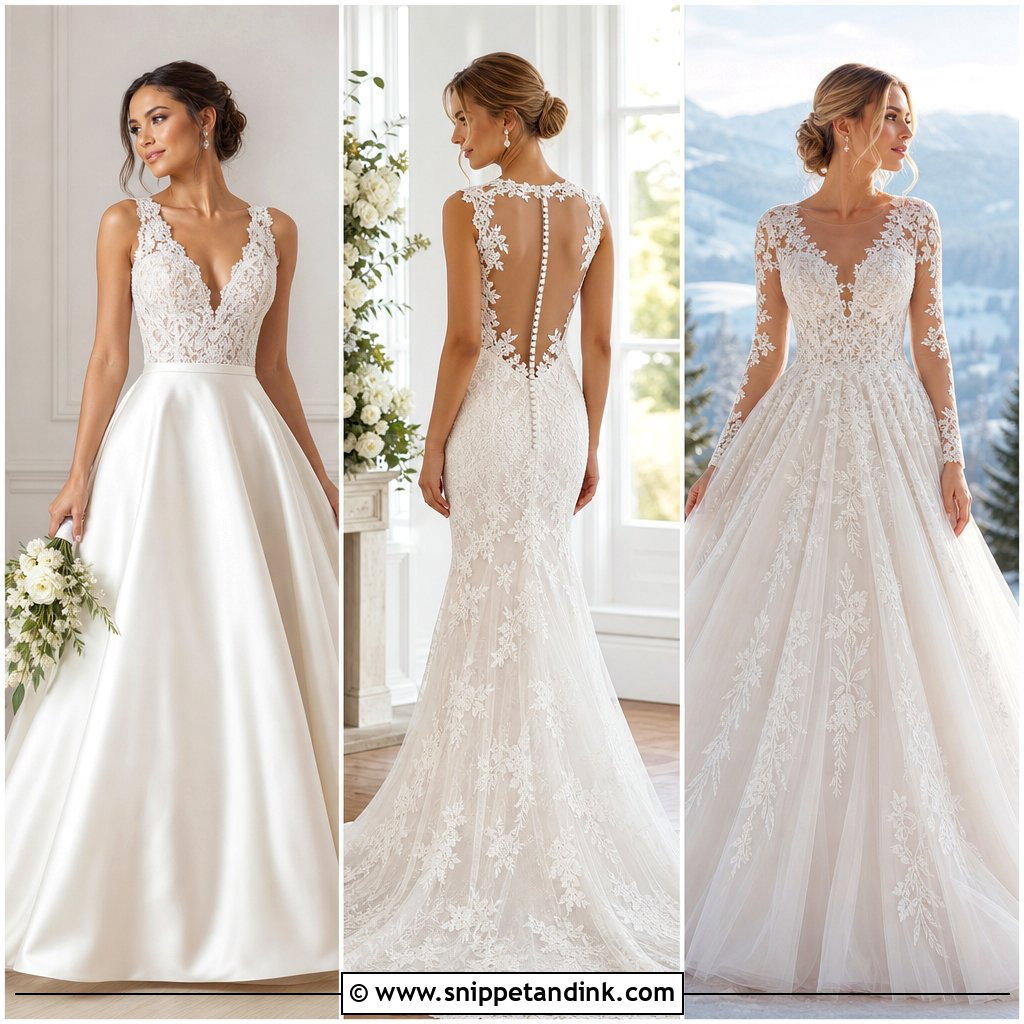
23. Floral Lace Wedding Dress
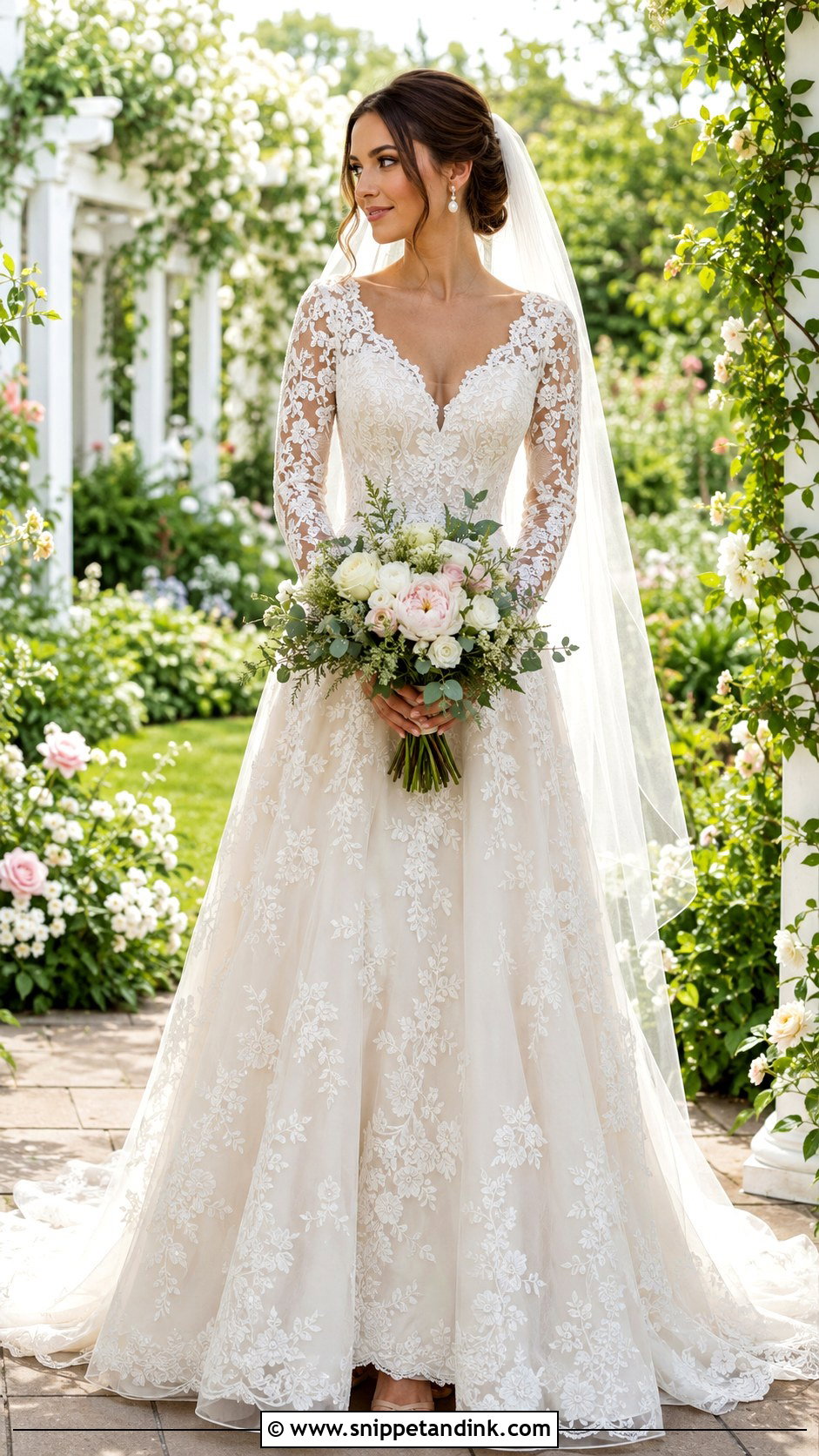
Floral lace lets you feel vintage without committing to one decade. The lace carries the romance and the cut can go modern, classic or boho. Bold lace motifs need plain everything else, while delicate lace can take a pearl hair pin or a satin belt. Check where the large motifs land on the bust and hips; a good dressmaker will place them deliberately rather than letting the pattern fall wherever it was cut. An A-line with long sleeves or a fit-and-flare suits a spring garden or an estate ceremony.
24. Button Back Wedding Dress
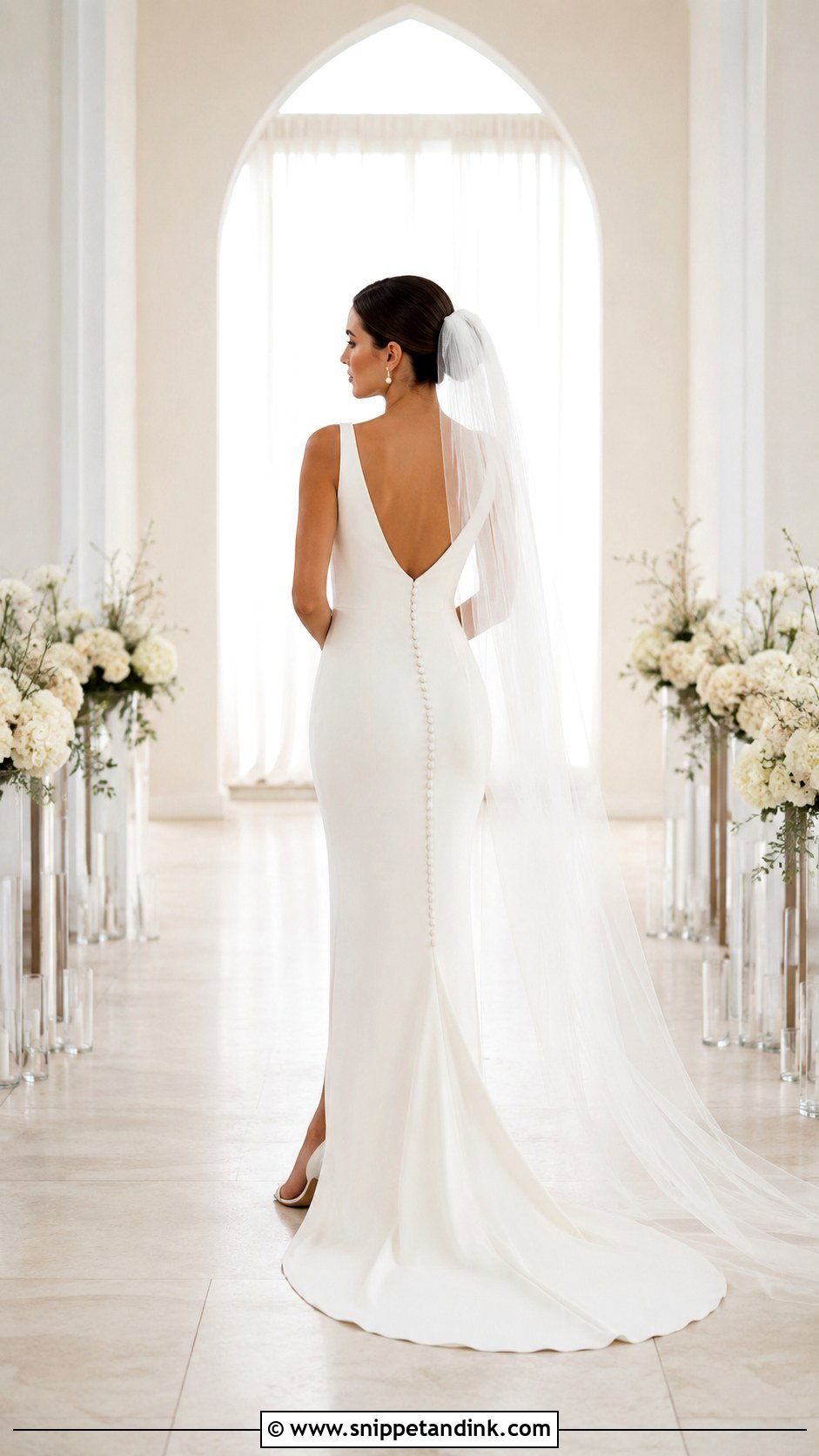
Covered buttons running down the back, sometimes into the train, are the detail everyone sees during the vows. They look right on satin, crepe, lace and mikado, on almost any silhouette. Most are decorative over a hidden zip, and I’d want it that way, because buttoning forty loops on the morning is a job nobody needs. Wear an updo or sweep your waves to one side so the line stays visible from the pews, and choose a veil sheer enough to show the buttons through it.
25. Tulle Wedding Dress
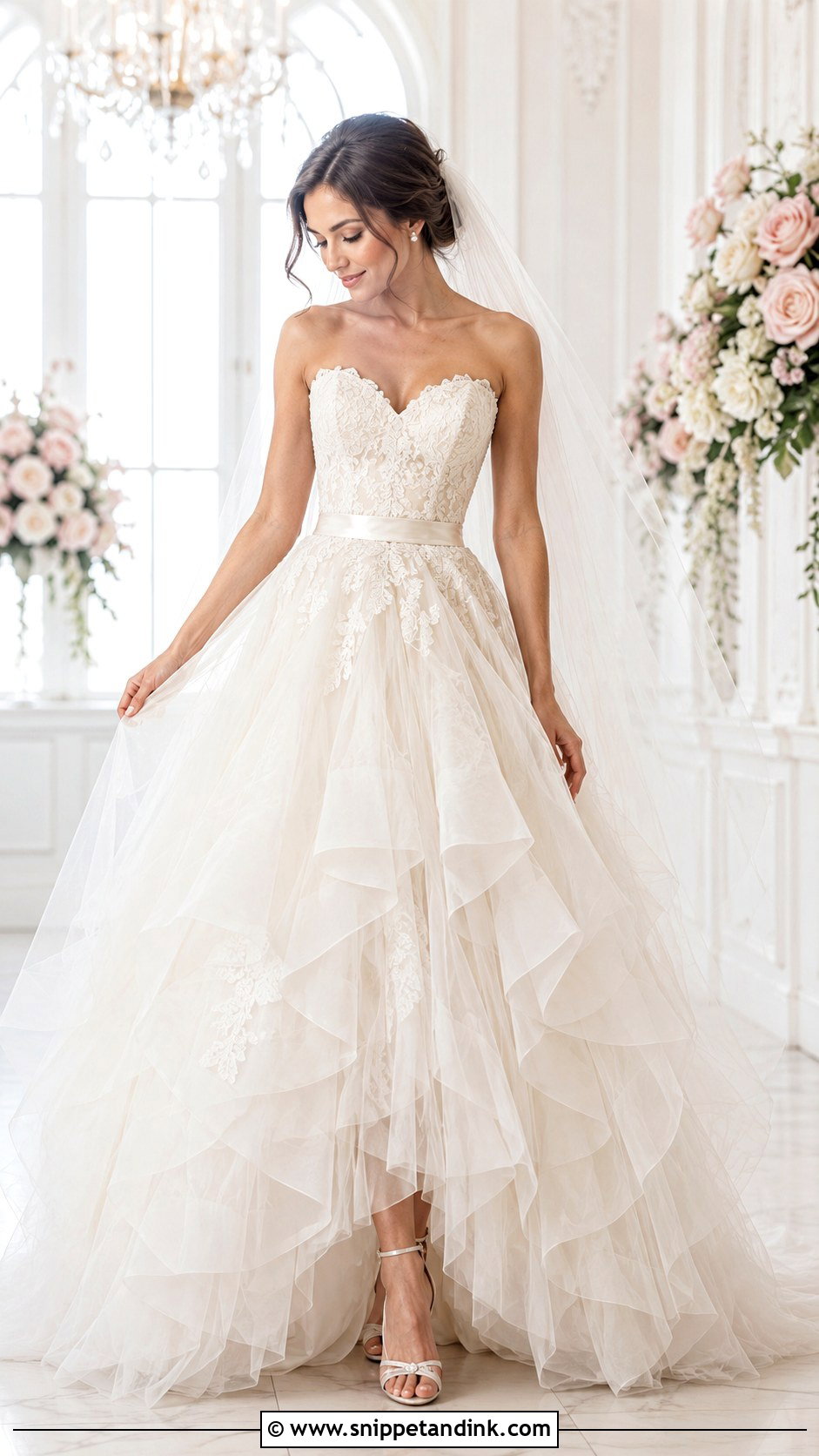
Tulle can look vintage or very modern, and the difference is mostly in finish. For the older feel, pick airy layers without glitter, a fitted bodice and some lace appliqué or a soft sweetheart neckline, the outline of a classic ballet costume. Tulle catches on rough brick, pins and bracelets, so check the venue walls and your jewellery clasps. A satin waistband adds definition. Pearl studs and a neat bun or loose waves keep it light for a garden or ballroom.
26. Sheath Wedding Dress
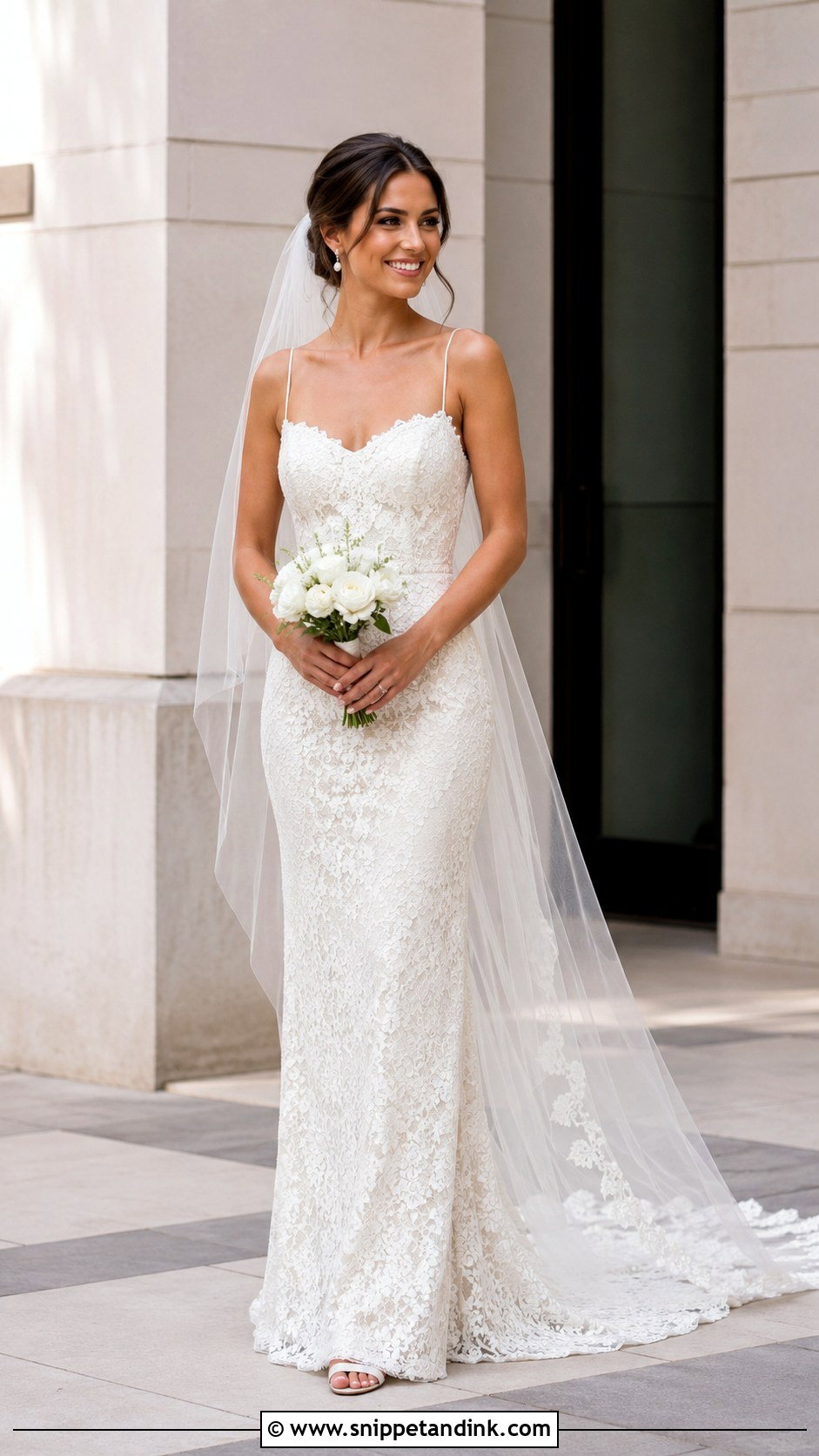
A sheath follows the body’s natural line without flaring, in lace, crepe, satin or silk. Lace reads old-world; satin points toward the 1930s or 1990s. Fit is unforgiving here: it should skim, never pull across the hips when you sit. I always ask brides to climb a step and walk fast in it, since a narrow skirt can restrict your stride. A small train or button back adds a bridal finish. It suits city venues, beaches and small weddings where you’ll be on your feet and moving between rooms.
27. Halter Neck Wedding Dress
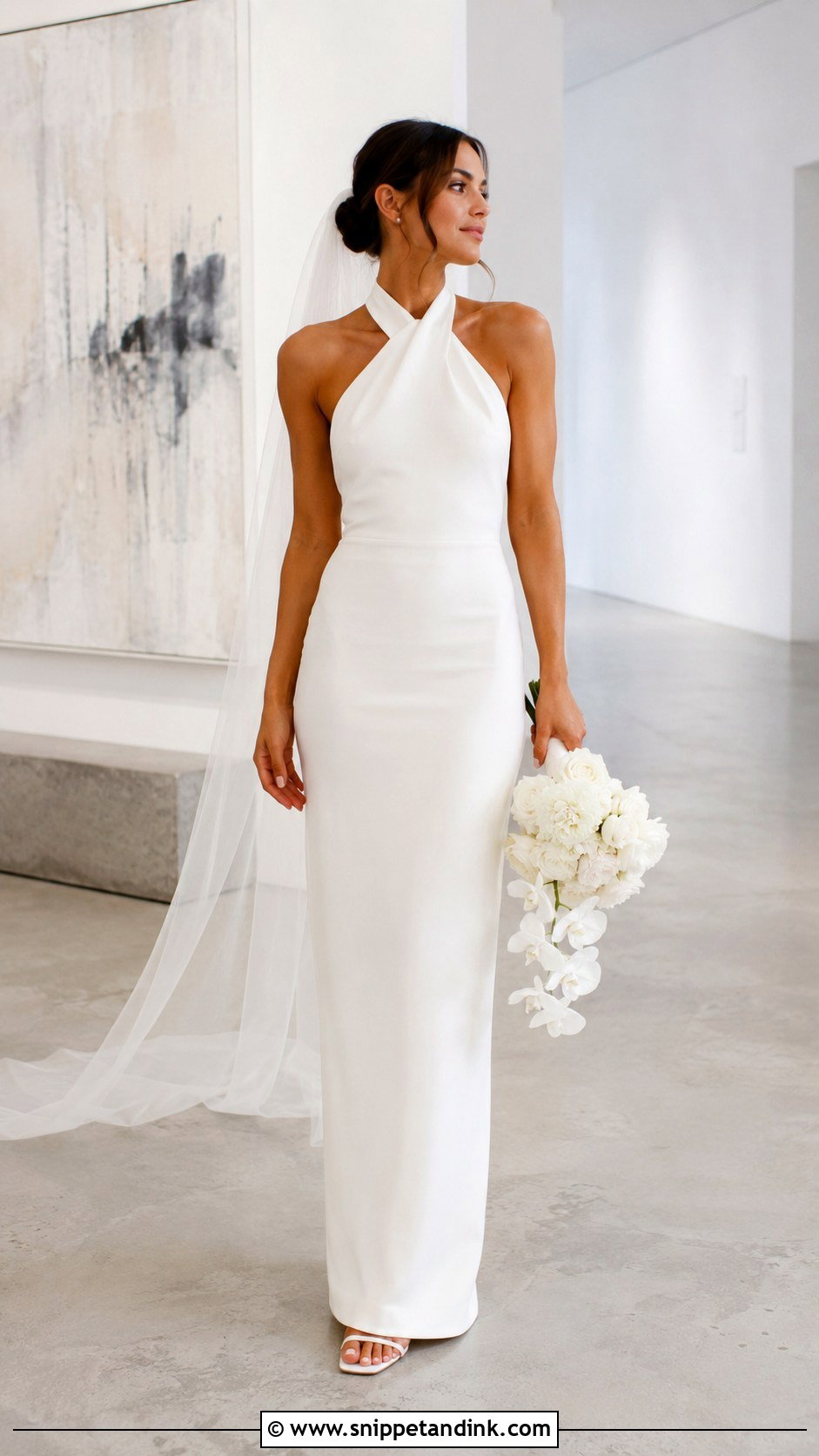
The high halter is a late 1990s and early 2000s shape, and in satin or crepe it looks almost archival. It’s the one I suggest to brides who want vintage without lace or ruffles. Strong shoulders and an open back suit it best. Because the strap sits at the back of the neck, a smooth bun keeps hair from tangling in the fastening, and you can skip a necklace entirely in favour of pearl studs or a bracelet. Rooftops, galleries and city receptions are where it looks right.
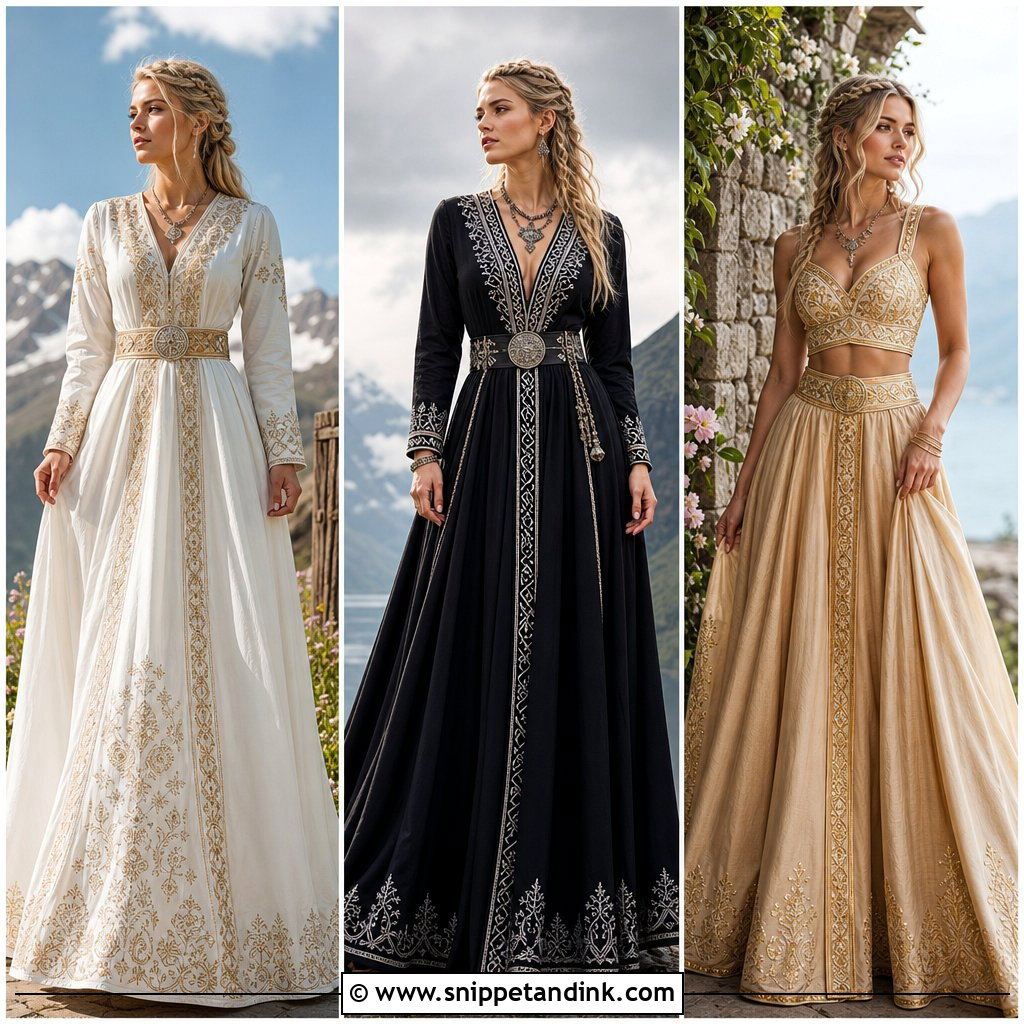
28. Embroidered Wedding Dress
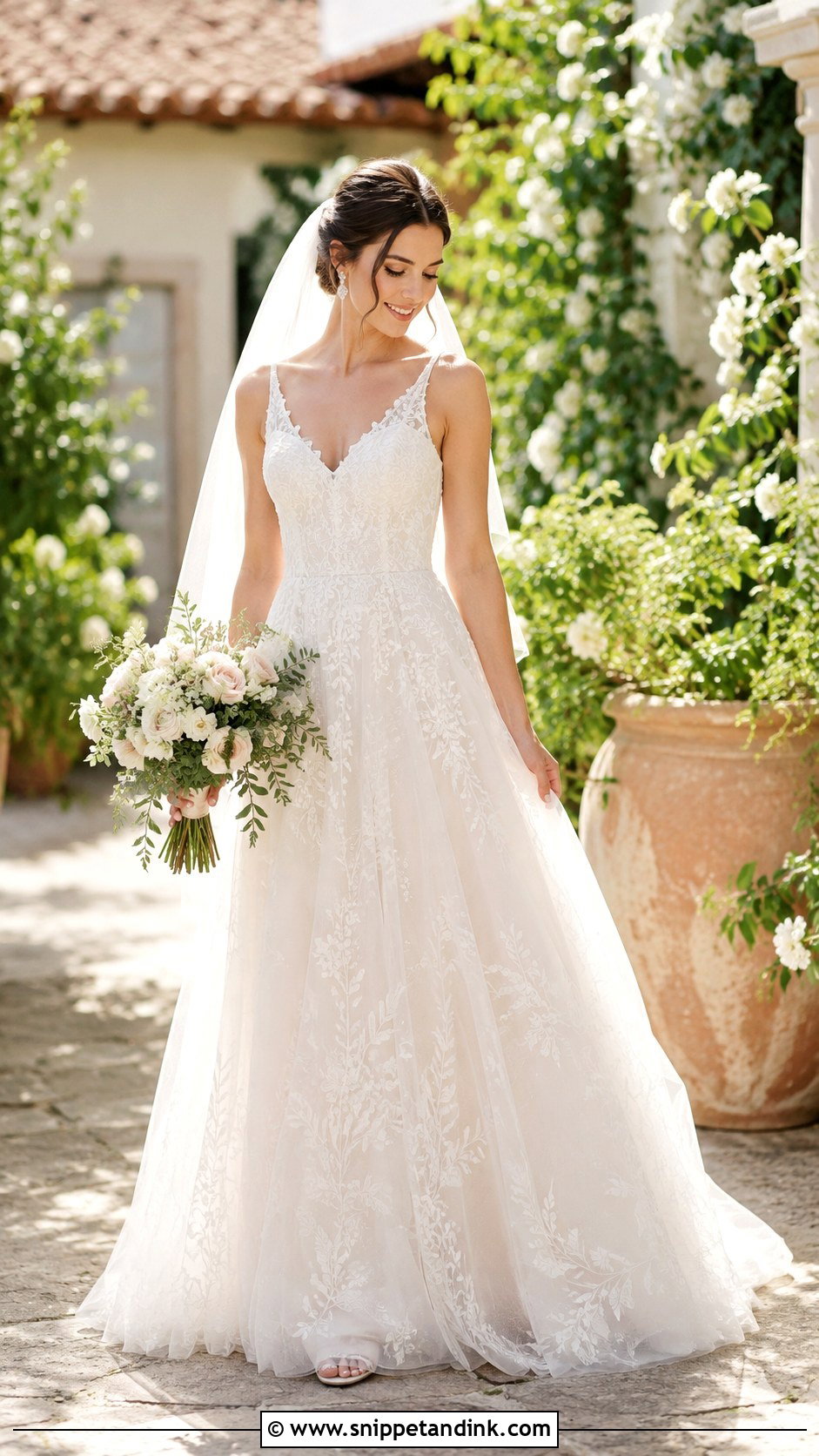
Embroidery gives a dress a handmade quality even when it is brand new: florals, vines, leaves, pearls or tonal threadwork that disappears into the fabric until you’re close. Tulle, organza, lace and sheer overlays carry it best. Busy embroidery needs a simple silhouette, or the eye doesn’t know where to land. Ask your photographer for a few close detail shots of the bodice, since that’s where the stitching earns its cost. Delicate earrings and a plain veil keep the focus on the work.
29. Court Train Wedding Dress
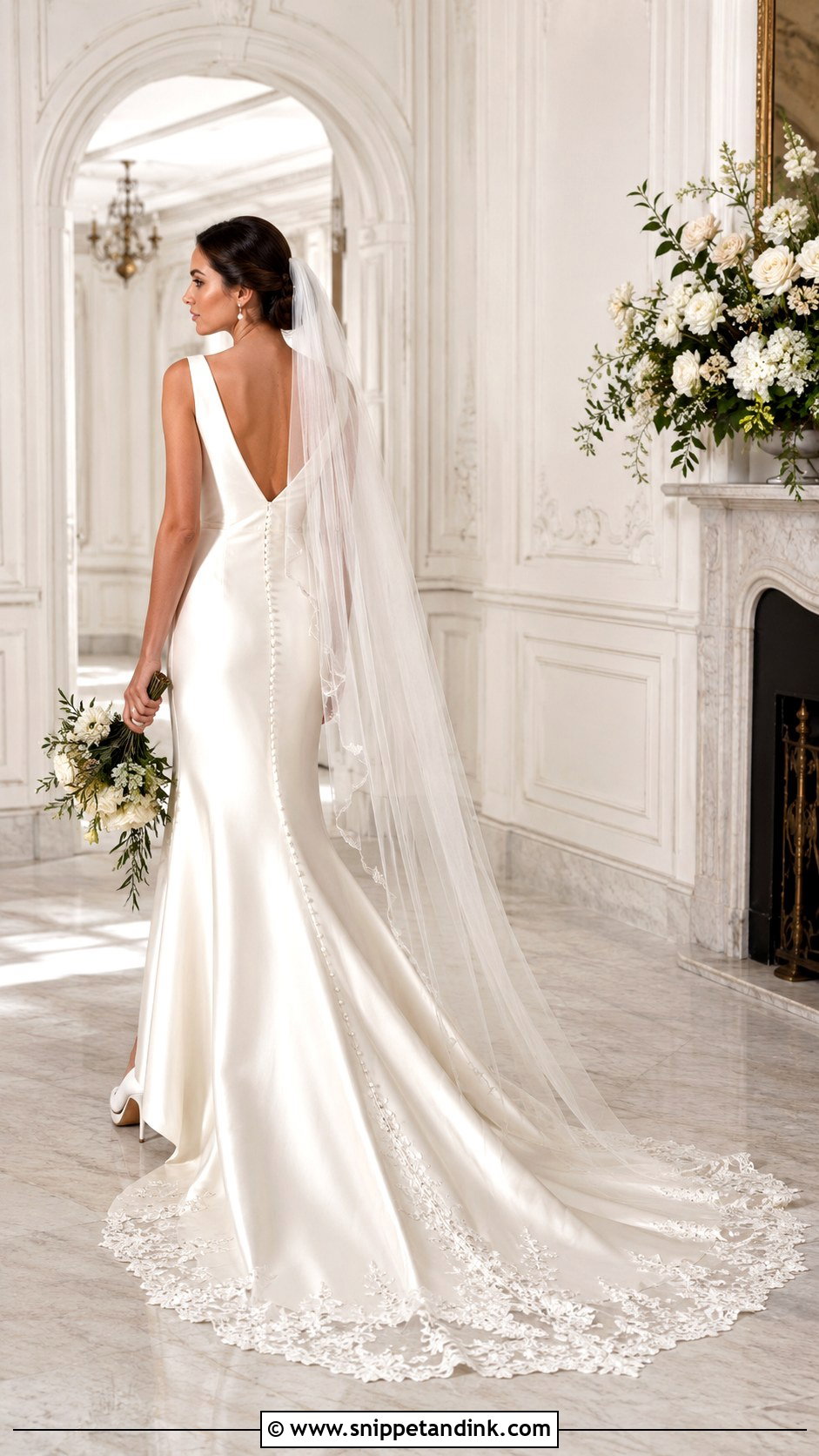
A court train extends only slightly behind the hem, so you get the trailing line without needing a bustle with twenty hooks. It sits nicely on satin, crepe, lace and A-line shapes, and a veil cut to the same length makes the back view feel deliberate. Covered buttons or a lace hem push it further toward vintage. I recommend it when a bride wants a formal aisle walk but plans to dance, climb stairs or walk across gravel without a helper behind them.
30. Champagne Wedding Dress
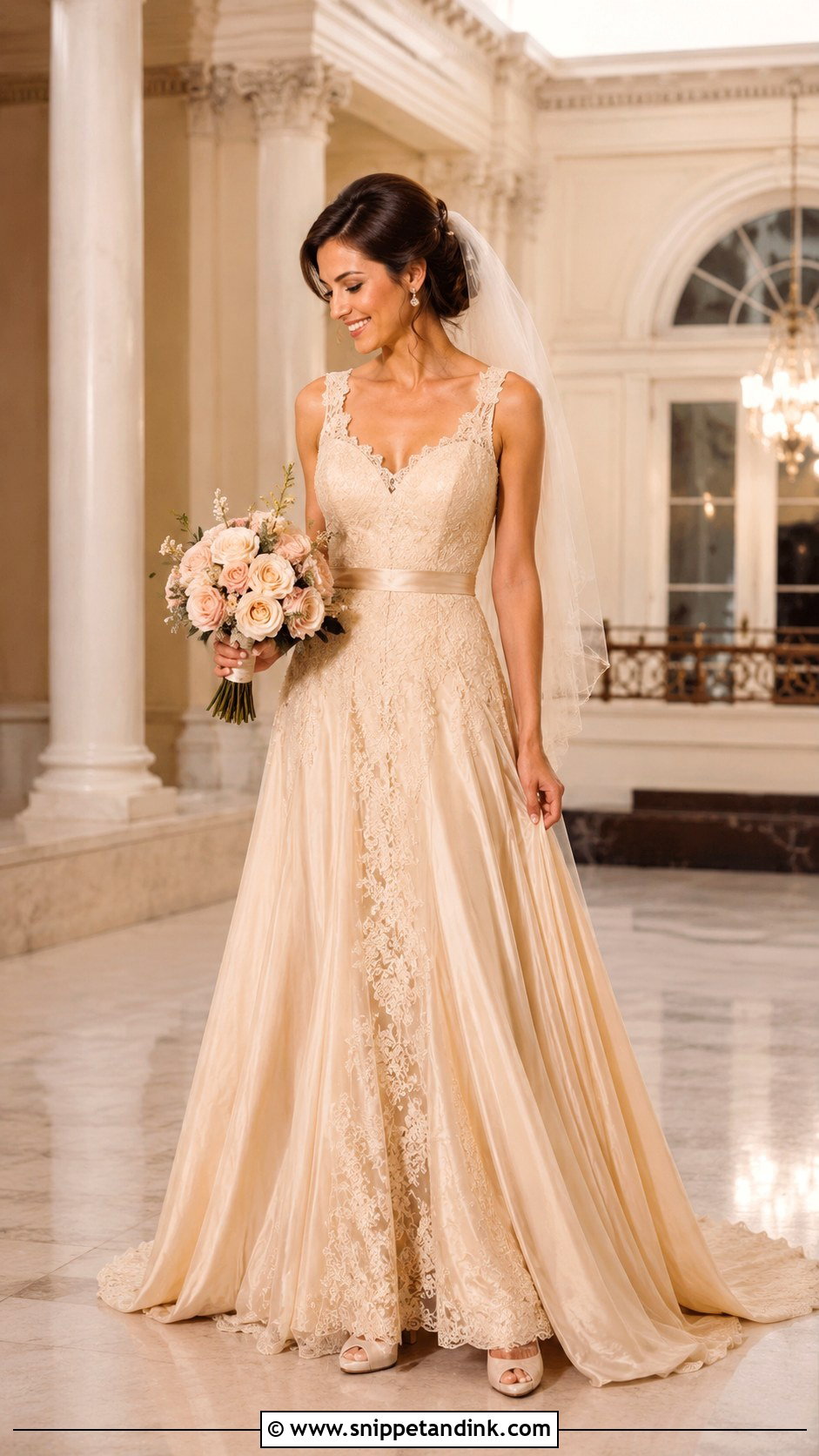
Champagne is the answer for brides who look washed out in bright white. Its warm undertone makes lace, satin and beading look richer, and it nods to aged heirloom gowns and 1920s evening wear. The shade varies enormously between designers, so always see a swatch in daylight next to your skin, not under shop lighting. Keep accessories ivory rather than gold to stop it reading as a party dress. It flatters a wide range of skin tones and sits well in autumn light, candlelit evenings and historic rooms.
Satin, Beading and Lace After the Wedding
Old-style fabrics need old-style care. Get the dress to a gown cleaner within a few weeks, because sugar from champagne and cake is invisible when fresh and turns brown over months. Point out every spill so they can treat it before cleaning.
At home, store it flat or folded with acid-free tissue in an acid-free box, never in a plastic bag, which traps moisture and can yellow satin. Heavily beaded 1920s styles should never hang; the weight of the beads stretches the shoulders over time. Refold lace dresses along different lines once a year so creases don’t set into permanent breaks. A cool, dark wardrobe shelf beats a loft or a garage, where heat and damp swing through the seasons.
If you plan to pass the gown on, keep any spare buttons, beads and lace offcuts from your alterations in a labelled envelope inside the box. A future seamstress will thank you.
Which Decade Is Calling You?
Every dress here borrows from a real moment in bridal history, from bias-cut satin to a nineties slip. What makes one feel right on you is fit, fabric and how little you need to add. Try at least two eras on before you decide, because brides are often surprised by which silhouette their body agrees with. A veil, a pair of pearl earrings, period shoes or a lace jacket can finish the look. Start with the outline you keep coming back to, then let a good fitter make it yours.
You'll Like These Ideas:



Leave a Reply