
A church ceremony asks more of bridal hair than most brides expect. It has to carry a veil, sometimes a long one, through a processional, a service that can run well over an hour, kneeling, standing and a lot of hugs on the steps afterwards, and then still be there for the reception. When I plan Christian bridal hairstyle ideas with a bride, the veil and the length of the service shape the choice as much as the photos she’s saved. Below are 25 styles I’d happily put under a veil, from polished updos to loose waves, with what each needs to hold up.
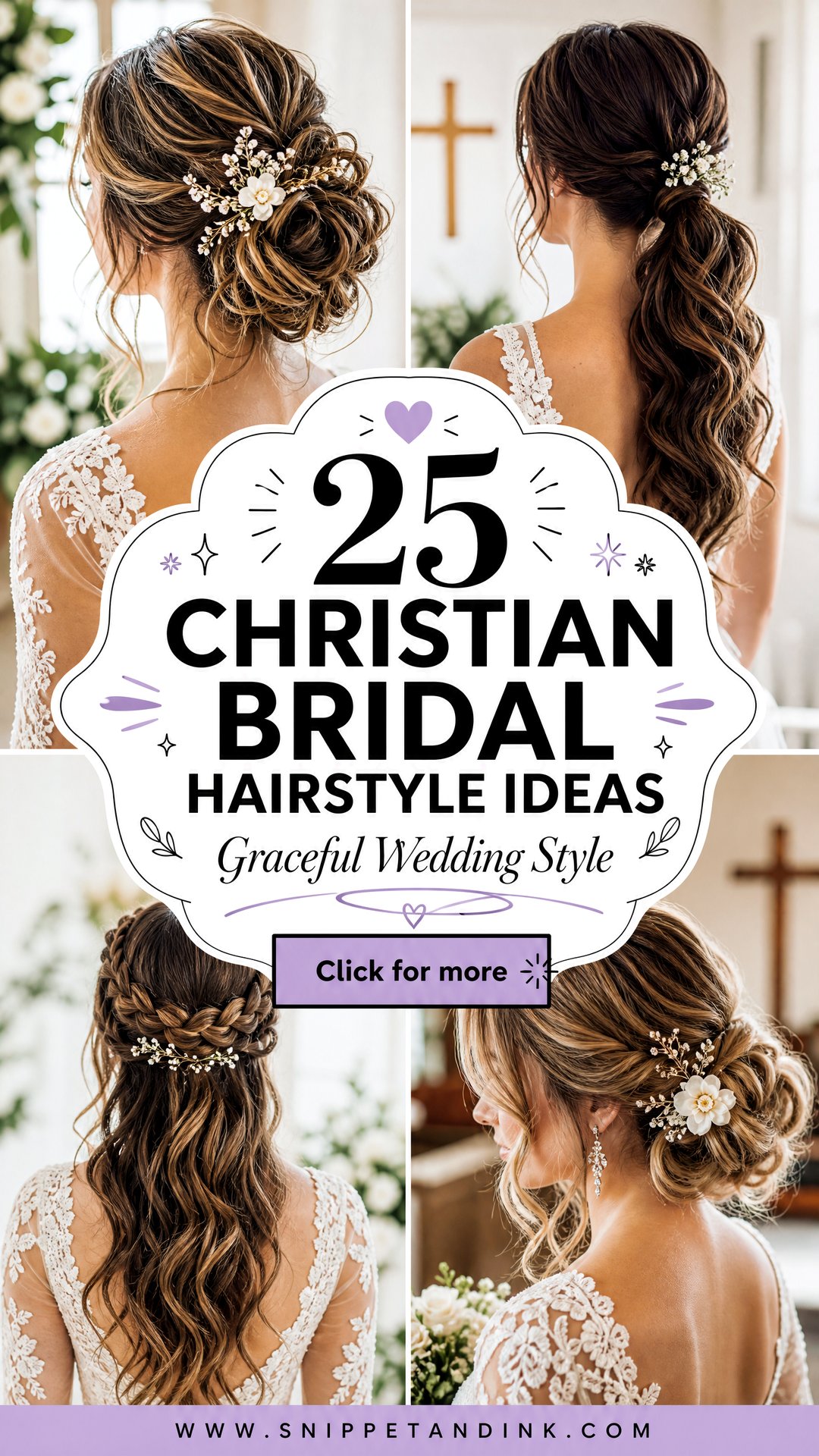
The Congregation Sees the Back of Your Head Most
During a church ceremony, most of your guests spend the service looking at your back. That’s why I design the back of a style first and the front second. A bun that looks neat face-on can show pins, a lumpy base or a gap where the veil comb sits when seen from the pews.
Long services also mean standing, sitting and sometimes kneeling, with your head bowed. A style that pulls heavily on one spot becomes uncomfortable after an hour, and a veil that’s attached too loosely will slip when you bow. I check comfort as well as hold at the trial.
Where the veil comb goes
- Low bun or chignon: the comb slides in just above the bun, angled down into it.
- Half-up: into the pinned or braided section, which I build firmer than usual.
- Hair down: into a small hidden braid or pinned base at the crown, otherwise it slides out.
- Blusher veil lifted at the altar: the comb sits higher on the crown so the front layer can be lifted back cleanly.
- Tiara: the tiara at the front, the veil just behind it, both pinned separately.
1. Classic Low Bun With Veil
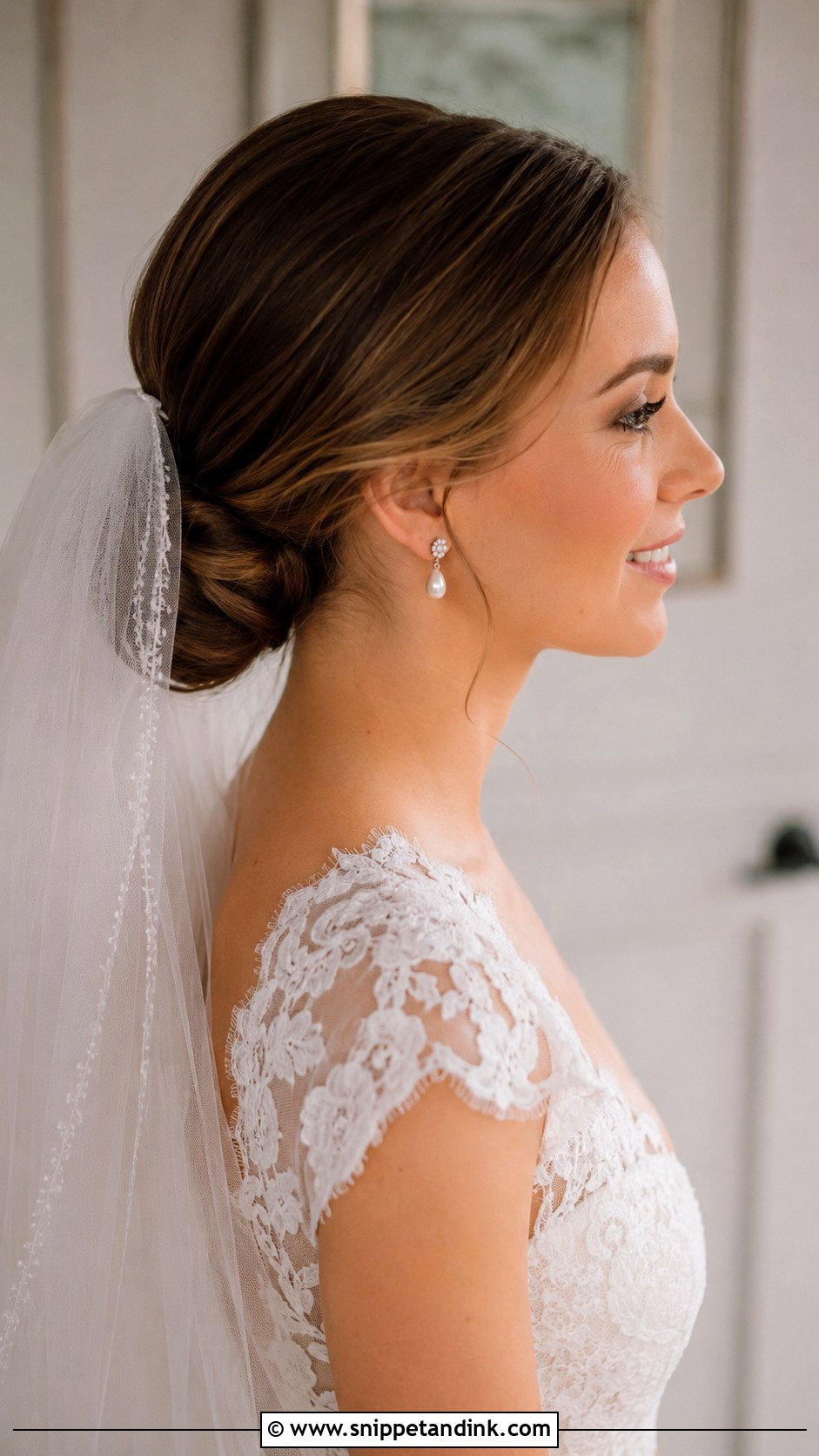
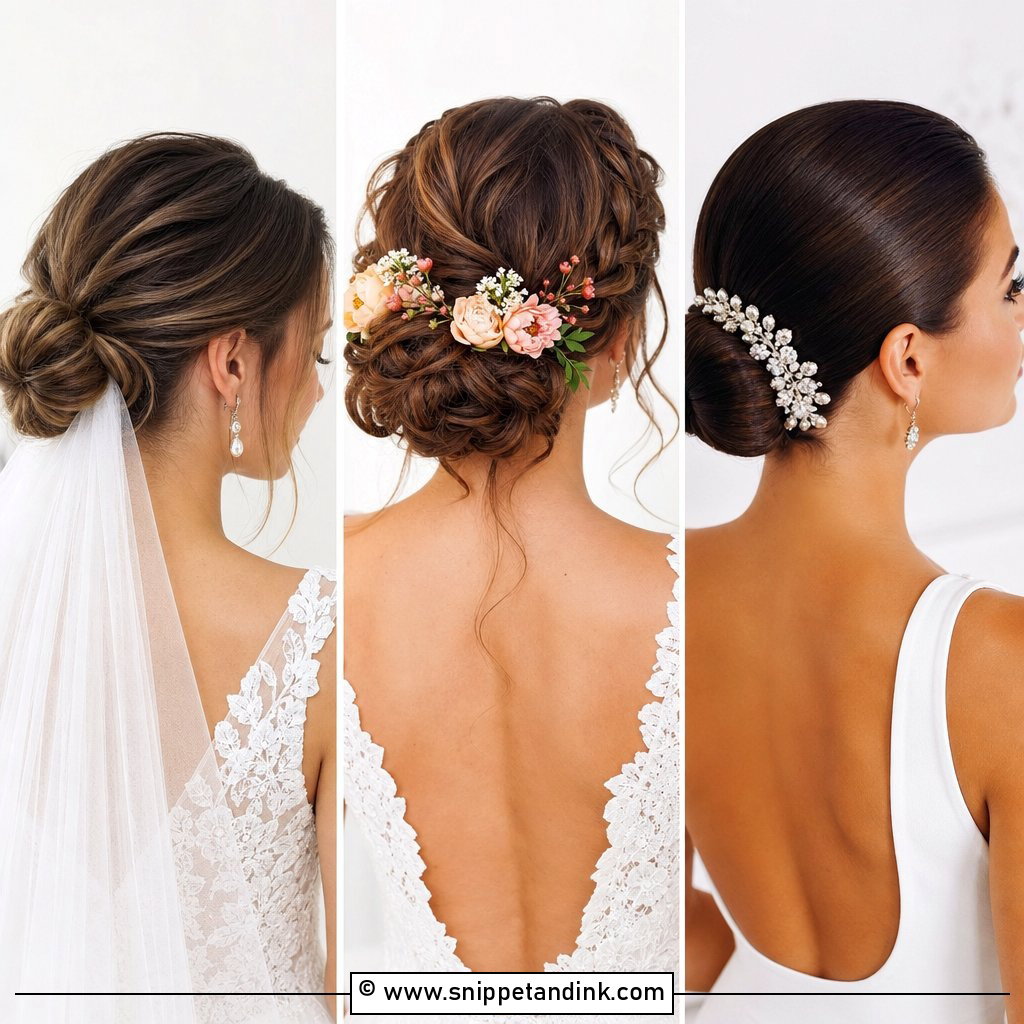
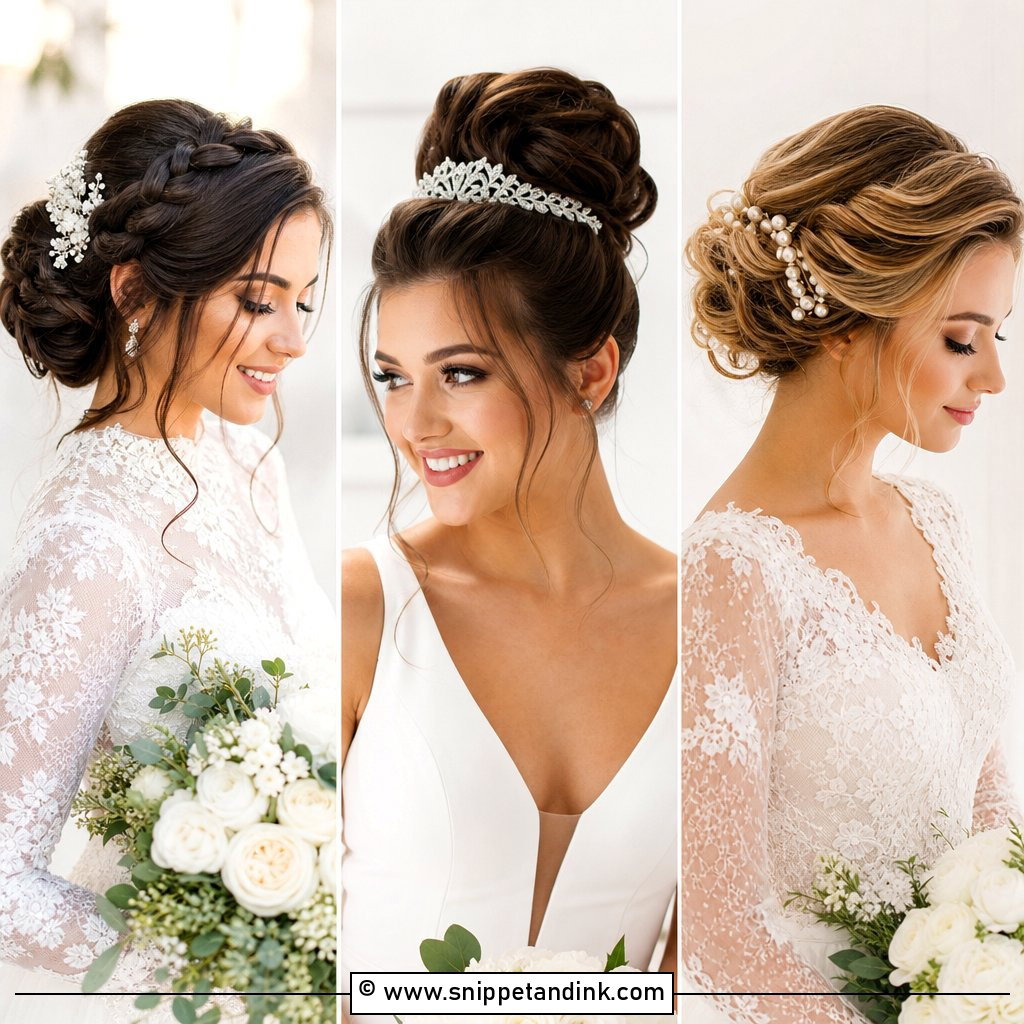
If a bride can’t decide, this is where I start. A low bun sits at the nape and gives the veil comb something solid to grip, whether it’s a short style or one of the fingertip and cathedral-length veils. For a cathedral veil, I build the bun tighter and anchor it with crossed pins, because a long veil pulls backward all through the service. Sleek suits a formal church; a few loose strands soften it. A jewelled pin or small flower cluster finishes it.
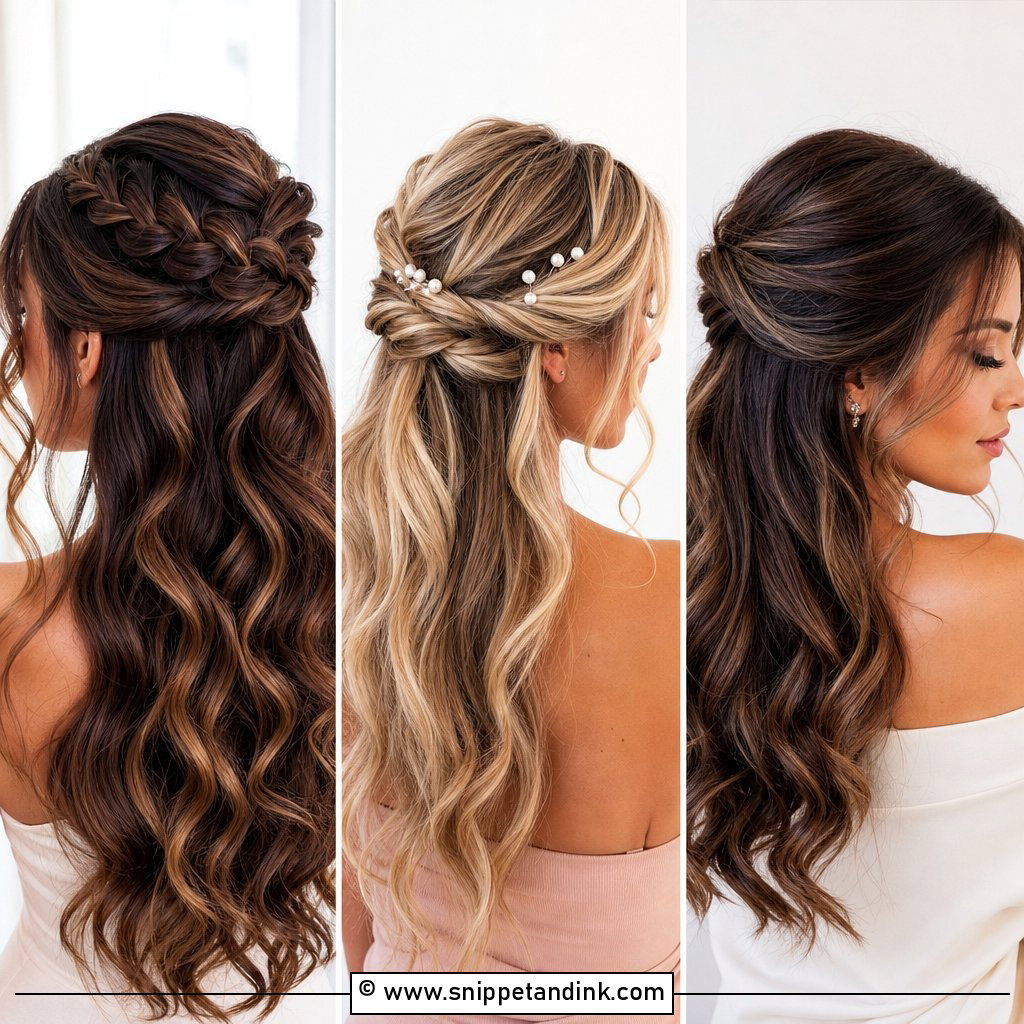
2. Half-Up Half-Down With Loose Curls
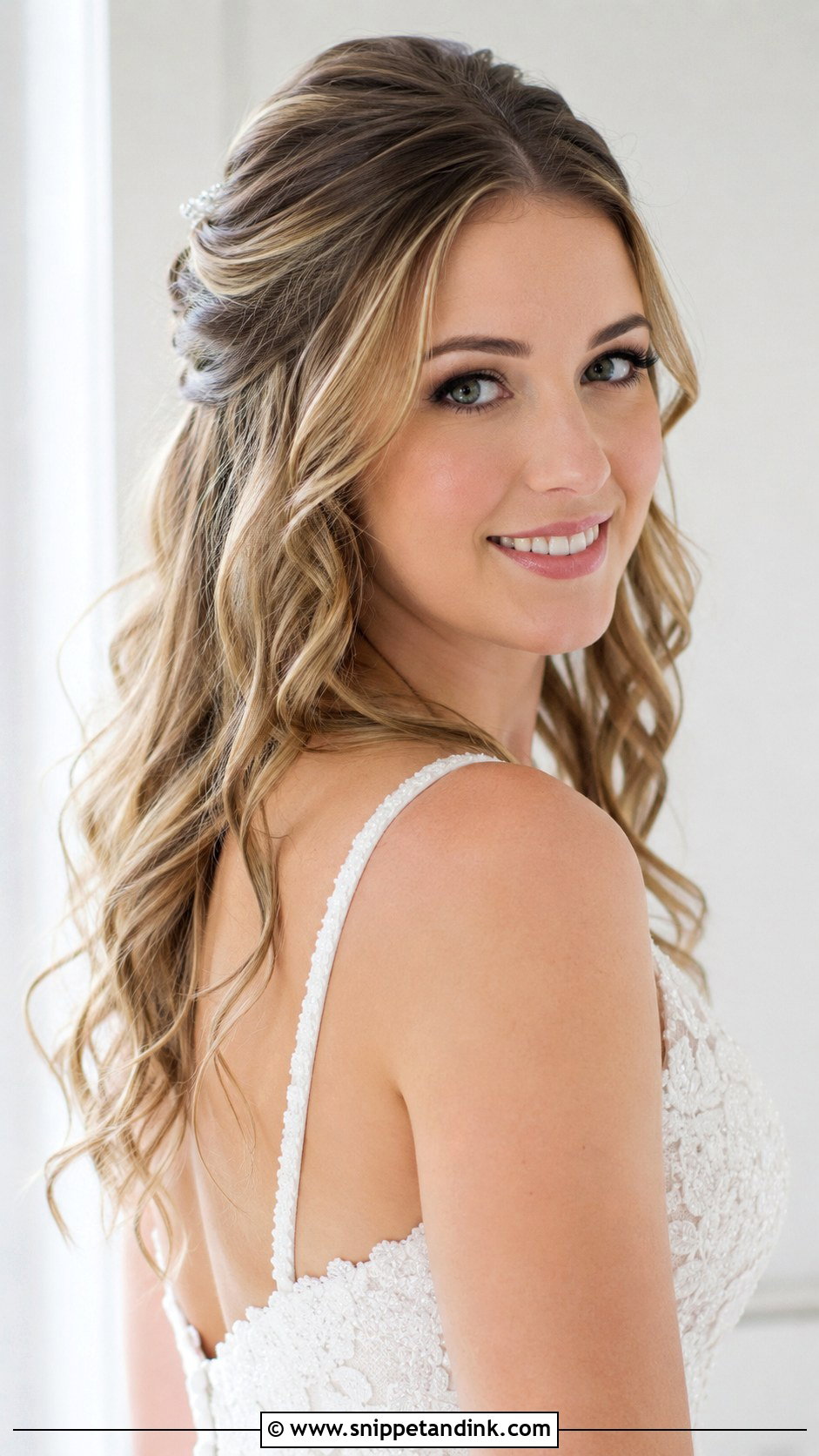
Half-up gives you curls on your shoulders and hair off your face. The pinned top section is also the natural place for the veil comb, so I make it a little firmer than it looks, often with a hidden backcombed base. Curls on the lower half will drop over the day, and I set them tighter than the final look for that reason. A barrette or twisted strands dress it up.
3. Romantic Side-Swept Curls
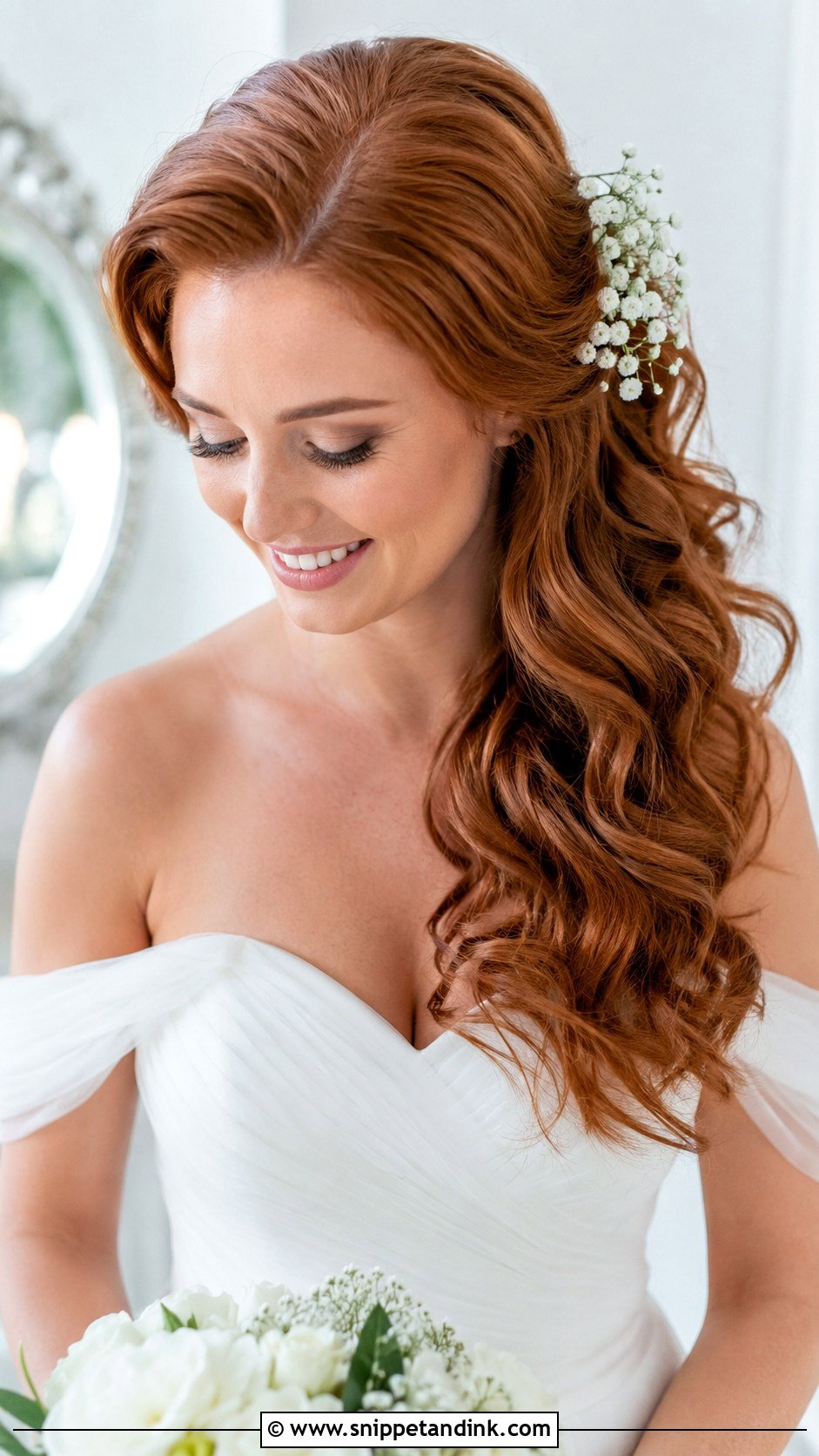
Sweeping curls to one side shows off a neckline and earrings on the open side. It’s especially good with strapless and off-shoulder gowns. The pinned side needs a strong anchor behind the ear, otherwise the weight of the curls pulls it loose by the reception. I pair it with a shorter veil, placed low, so the fabric and the curls don’t tangle. A clip or a few baby’s breath stems finish it.
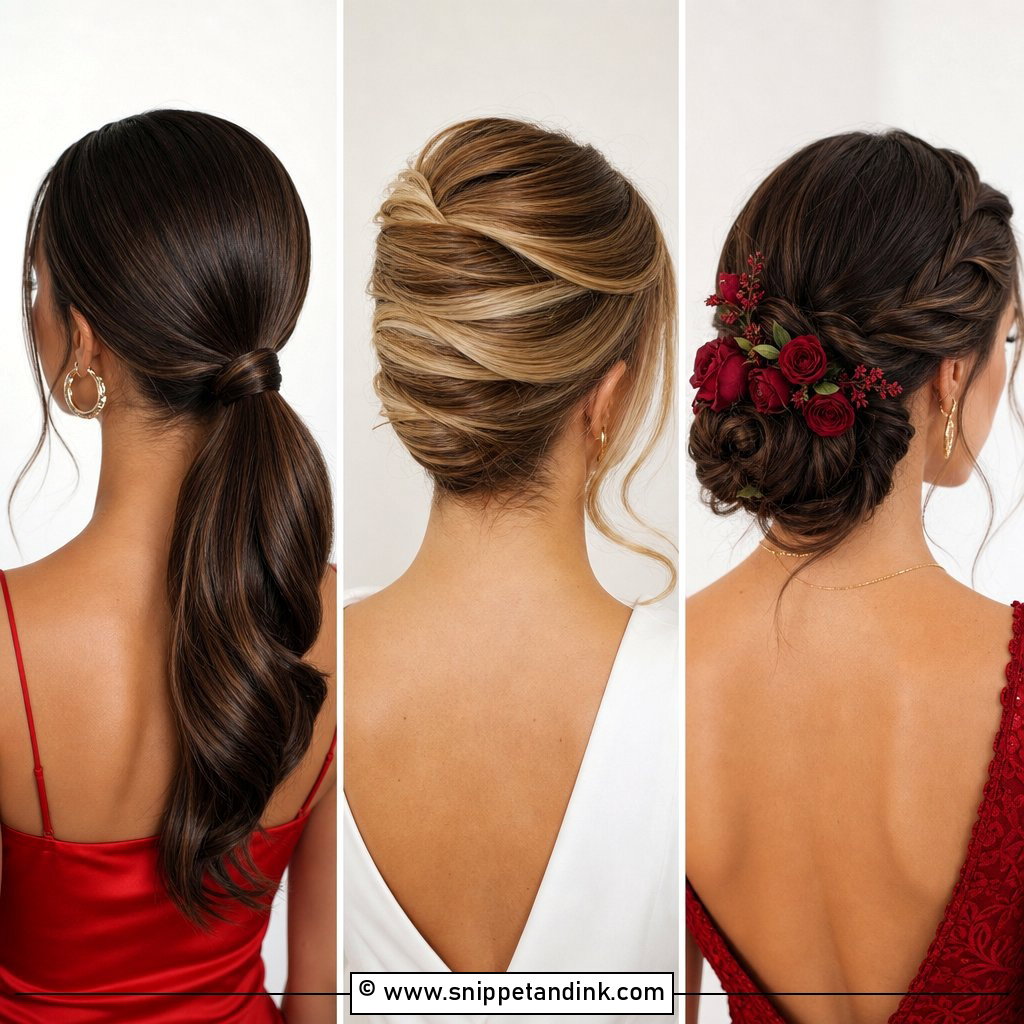
4. Sleek Low Chignon
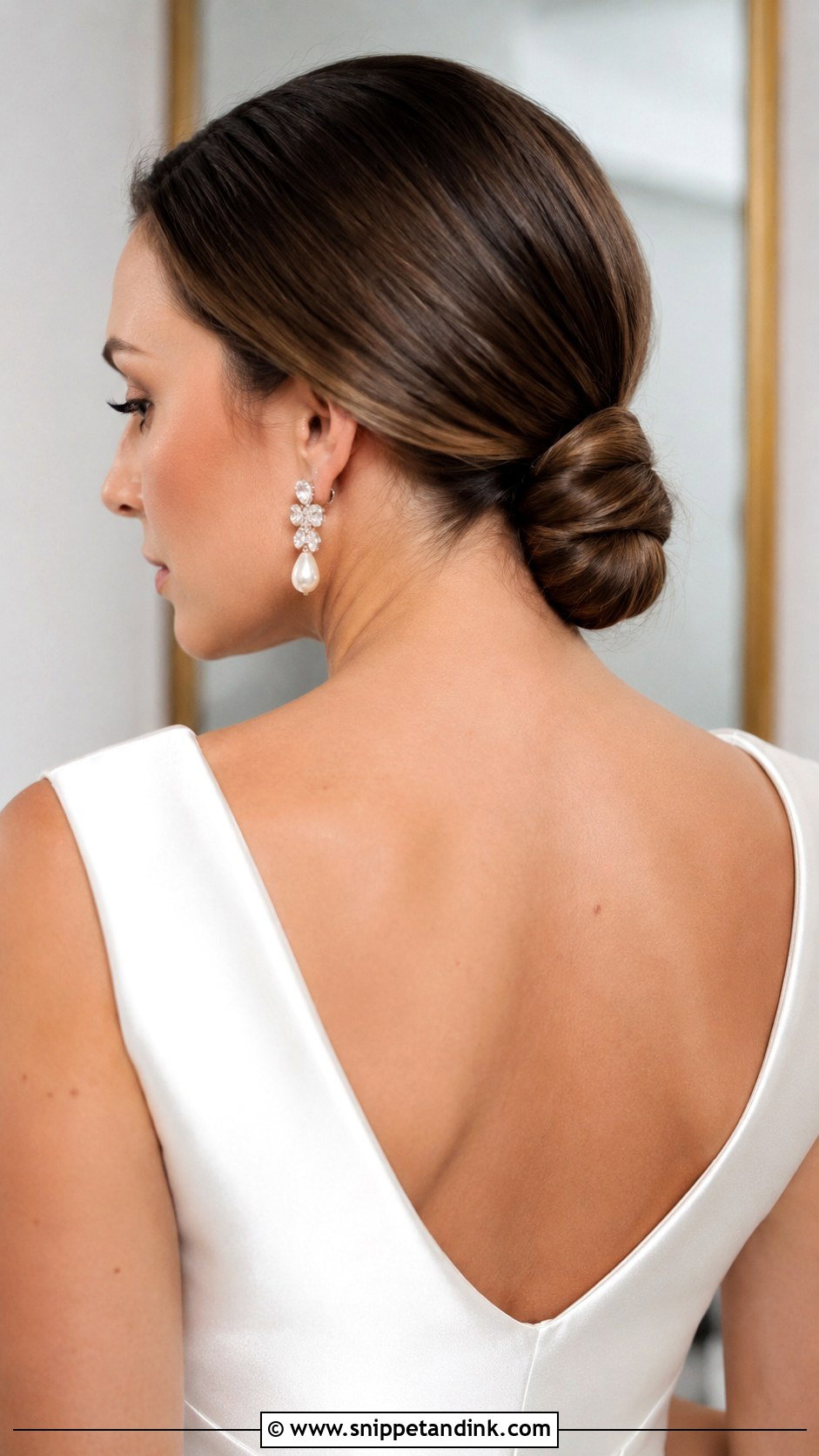
A sleek chignon is all about preparation. Every flyaway shows, so I blow-dry the hair smooth before I start, then twist and pin the knot with the pins hidden inside the roll. It holds a veil comb securely and keeps its shape all day. It suits satin gowns, statement earrings and a modern church. A thin braid or small hairpiece softens it if it feels severe.
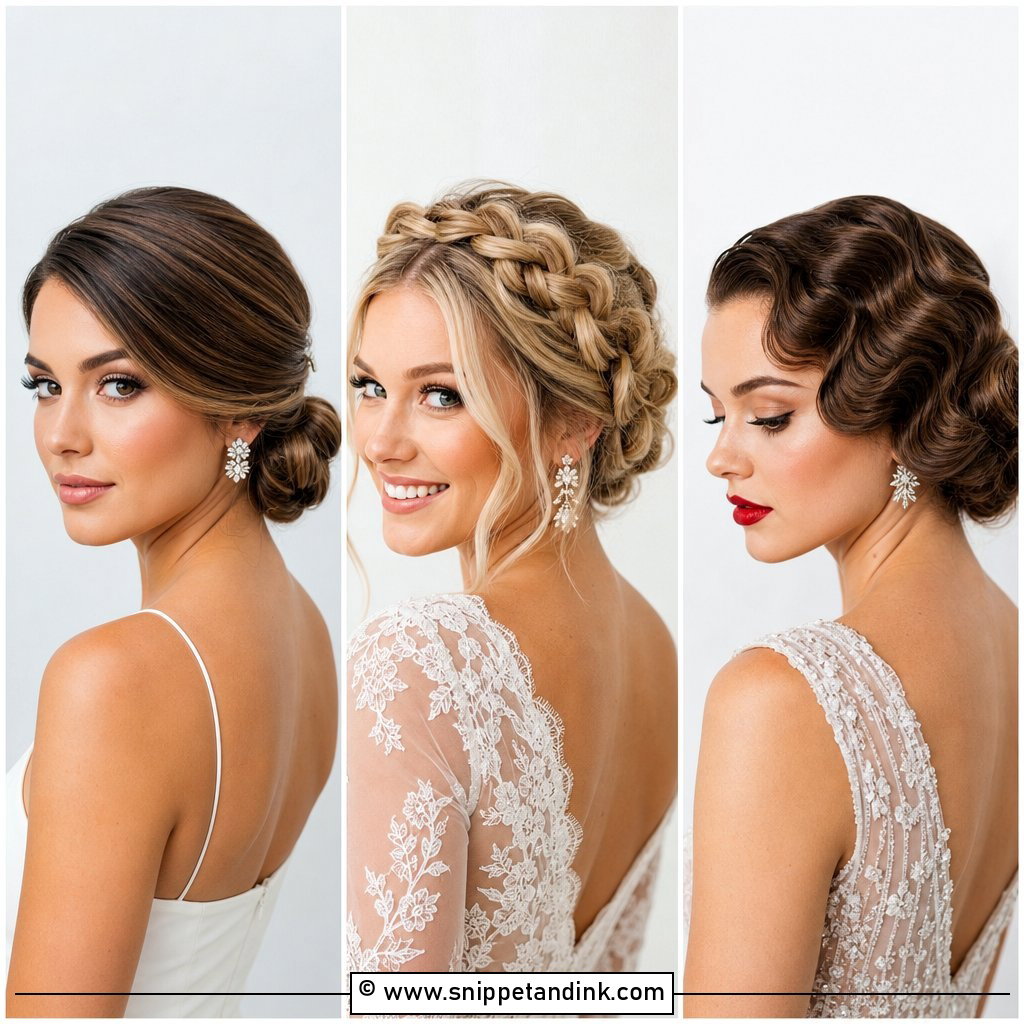
5. Braided Crown Updo
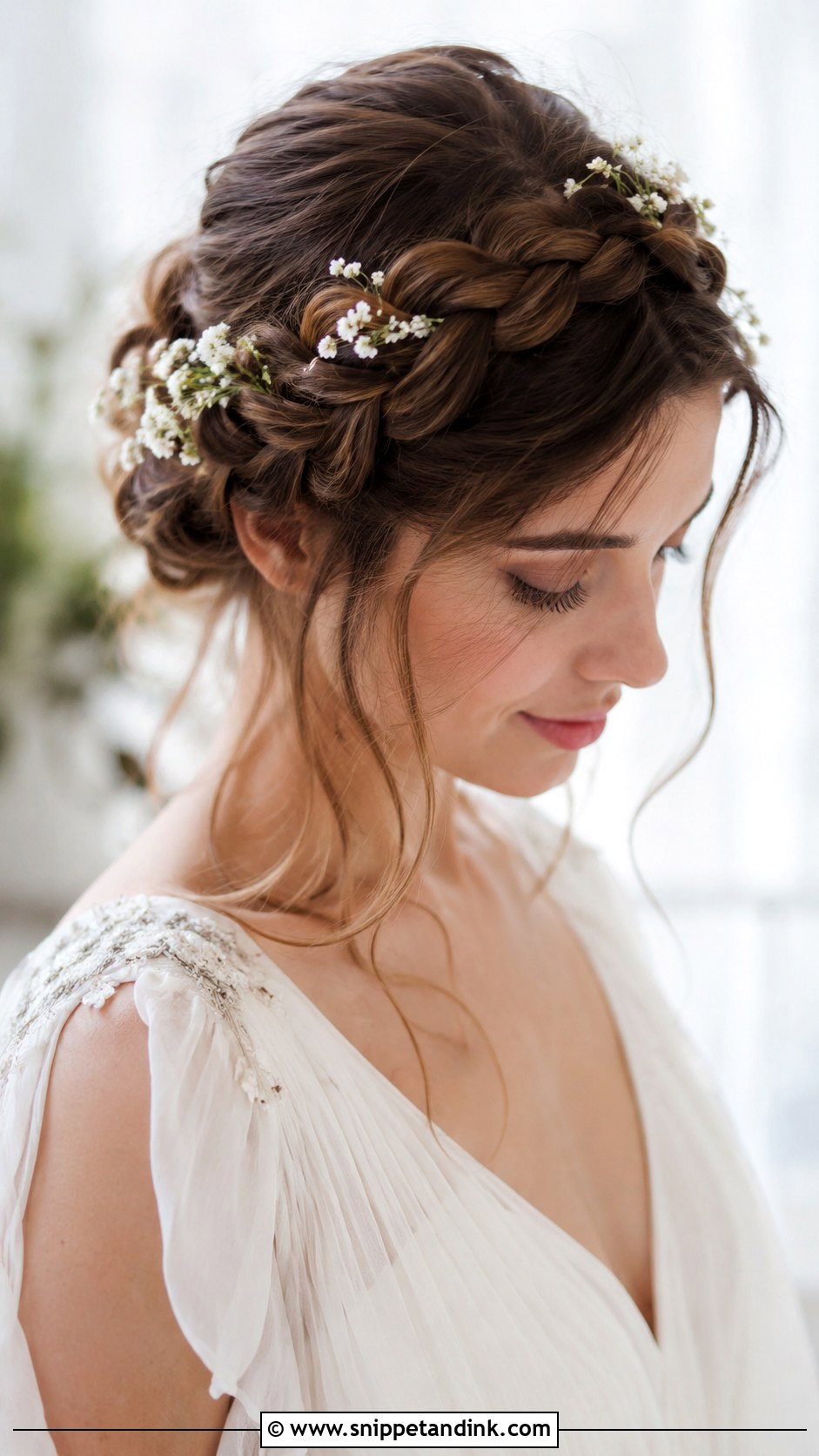
Braids wrapped around the crown make a halo that stays put through hours of hugging and dancing. I braid each side, pin it over the top and tuck the ends, then gently loosen the braid for width. Medium hair needs enough length to reach across; very short layers poke out, so I may add a hidden clip-in piece. A veil goes underneath at the back. A few flowers woven in suit a garden ceremony.
6. Soft Voluminous Bouffant
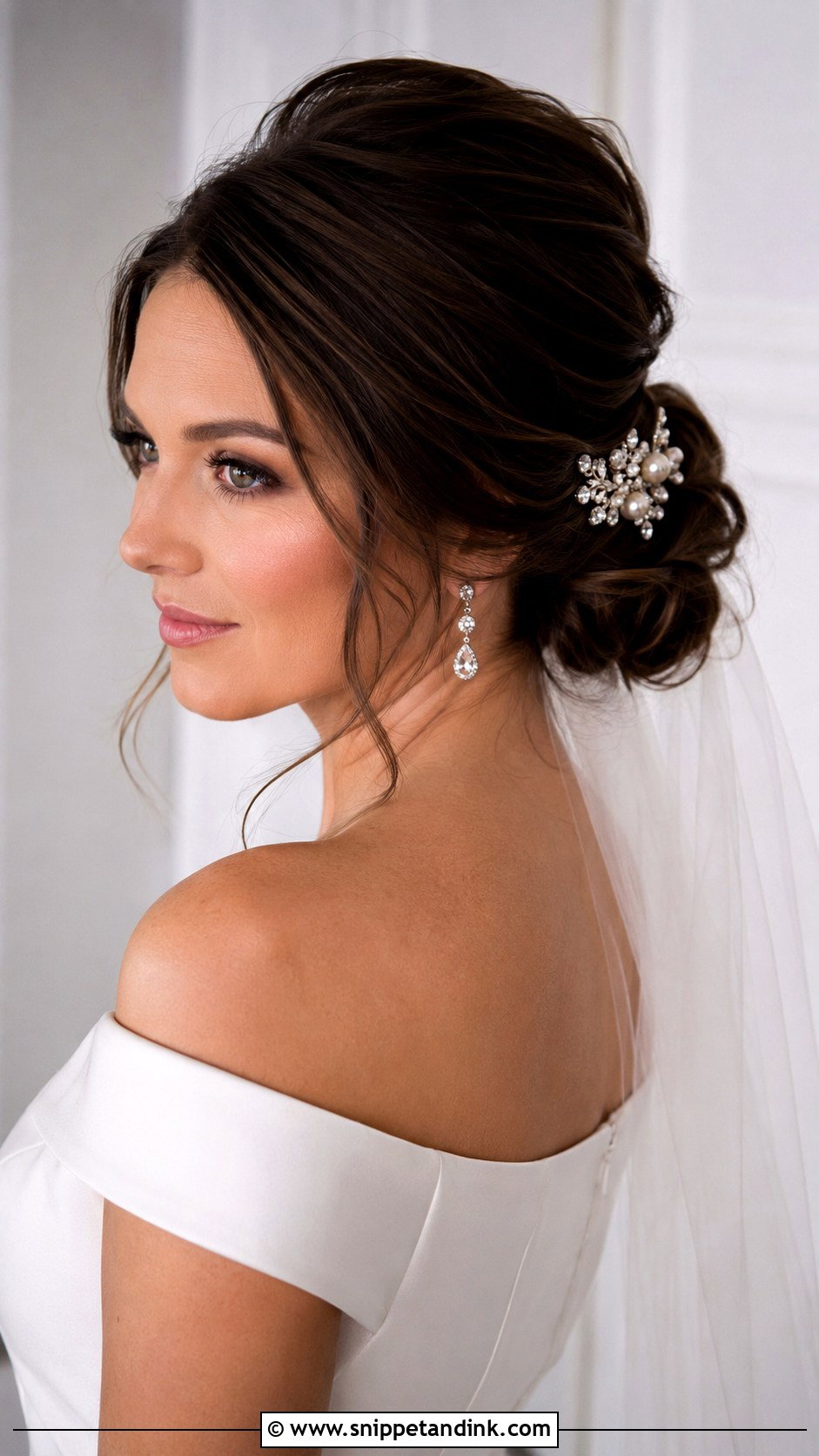
A bouffant adds height at the crown, which lengthens a round face and lifts the veil. The volume comes from backcombing the underneath layer and smoothing a clean top layer over it, so the teasing never shows. I’d be cautious with it on a long face, where more height can look exaggerated. With a half-up section or a low bun behind, plus a jewelled headband, it has a strong old-Hollywood feel.
7. Low Bun With Baby’s Breath
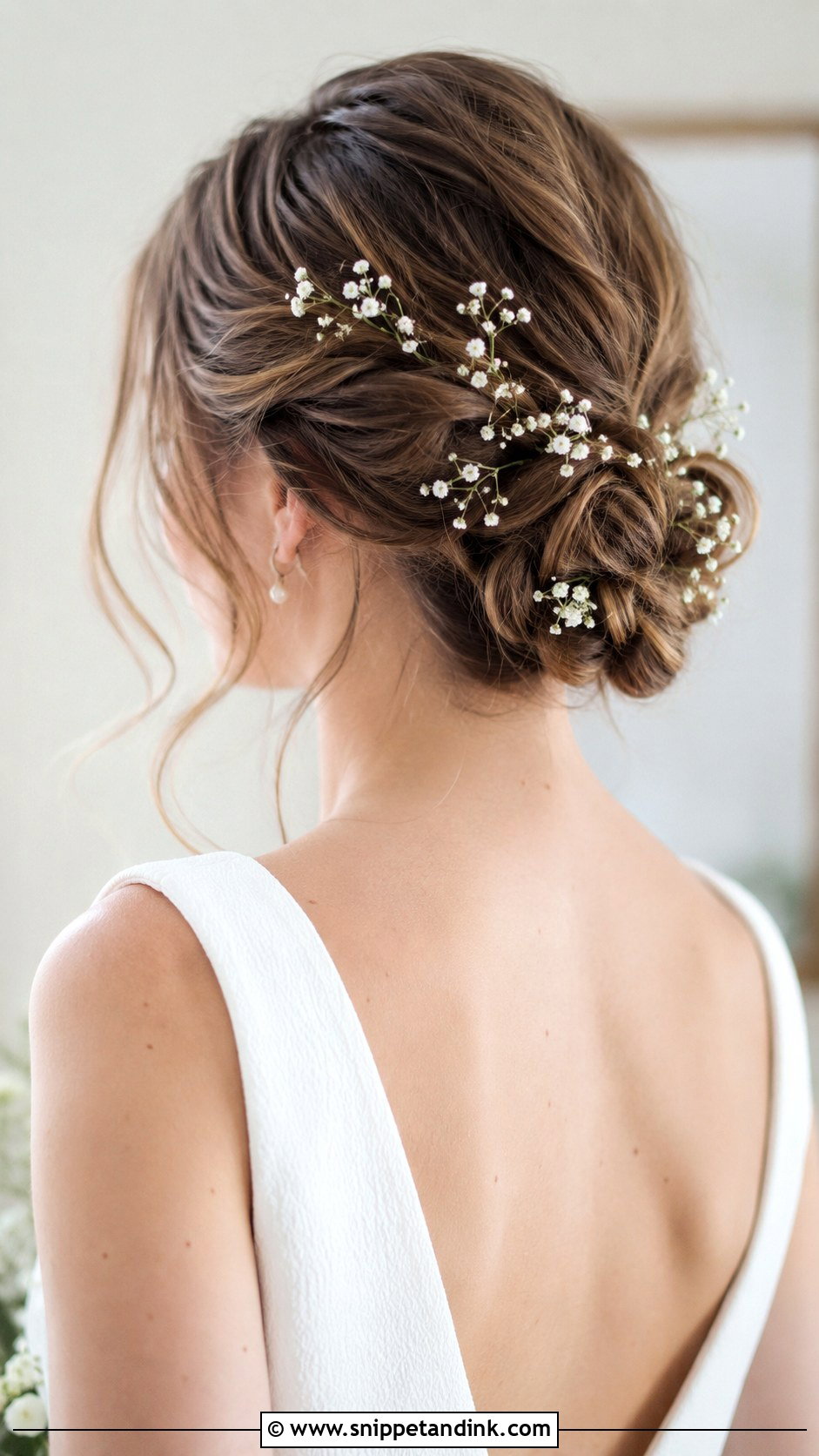
Baby’s breath is one of the hardiest flowers I put in hair. It holds up for hours out of water, unlike roses or gardenias, which bruise and brown. I wire small clusters and pin them into the low bun, either grouped on one side or scattered. It suits spring and summer church weddings and a simple veil. Ask your florist to keep a few spare stems for me.
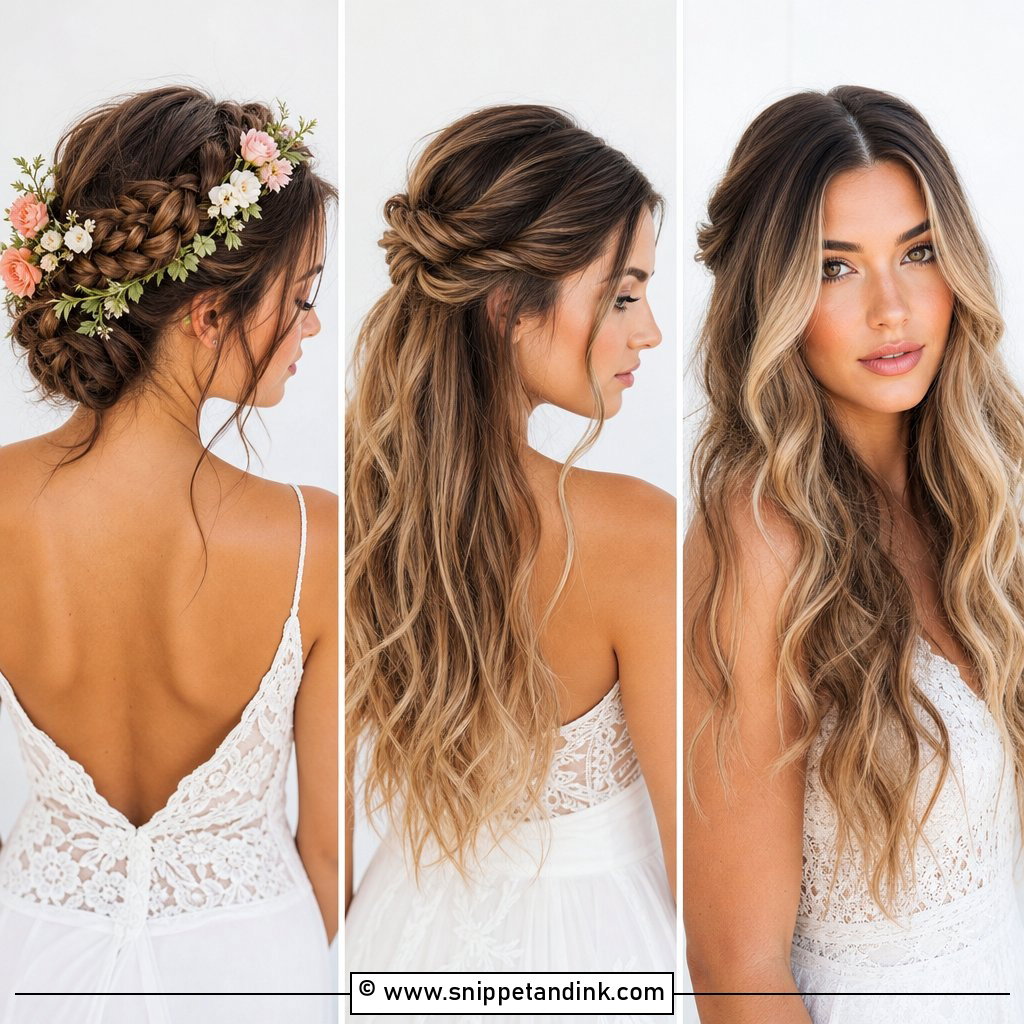
8. Cascading Loose Waves
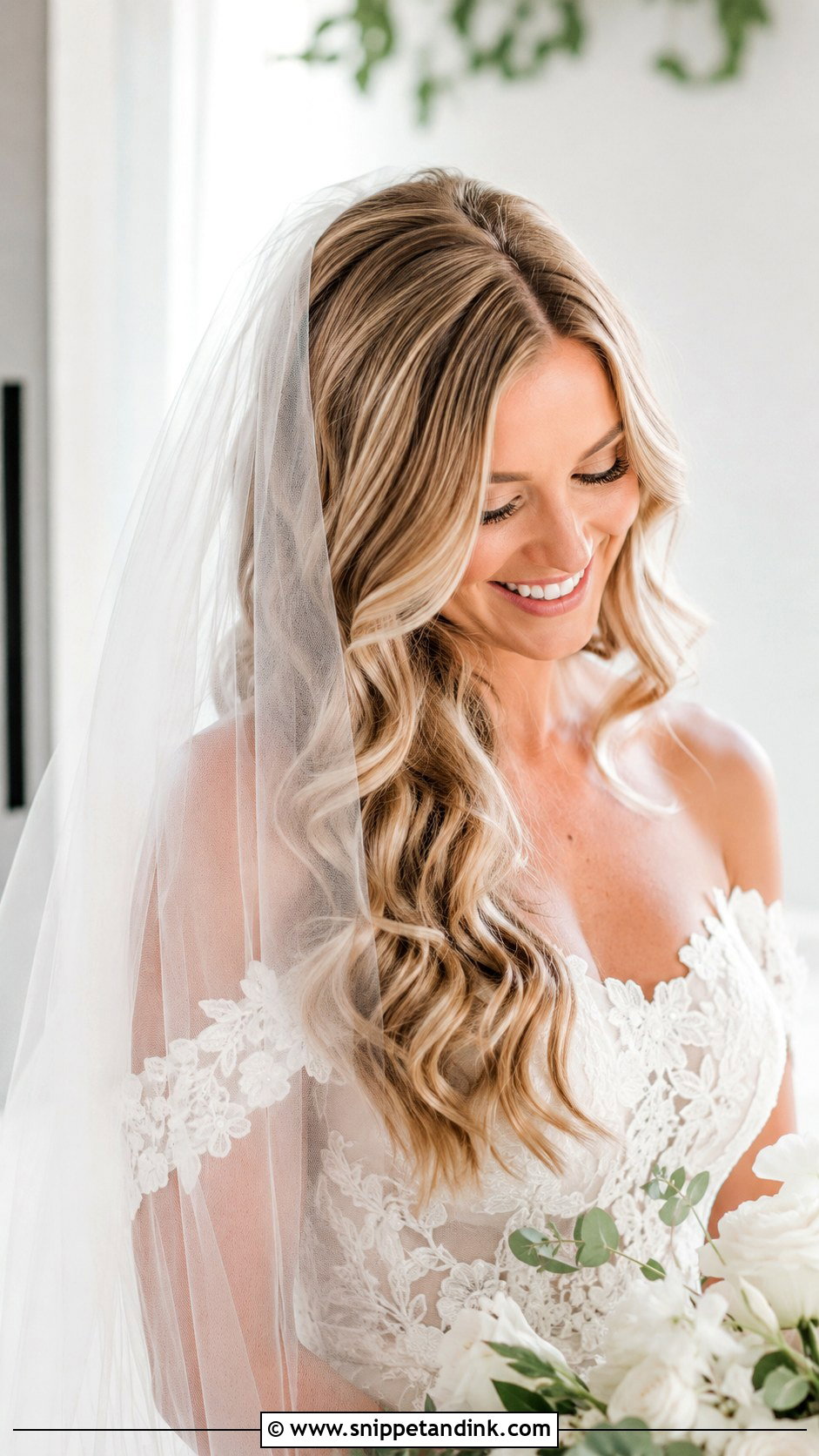
Loose waves are the hardest style to keep looking fresh all day, which brides rarely hear. Curls drop, especially in humid weather, and a veil lying over them flattens the crown. I curl the hair, pin each curl to cool so it sets, and brush them out just before the dress goes on. A thin headband or one side pinned back helps the veil sit without sliding. For long hair it shows off the length.
9. Side Braided Bun
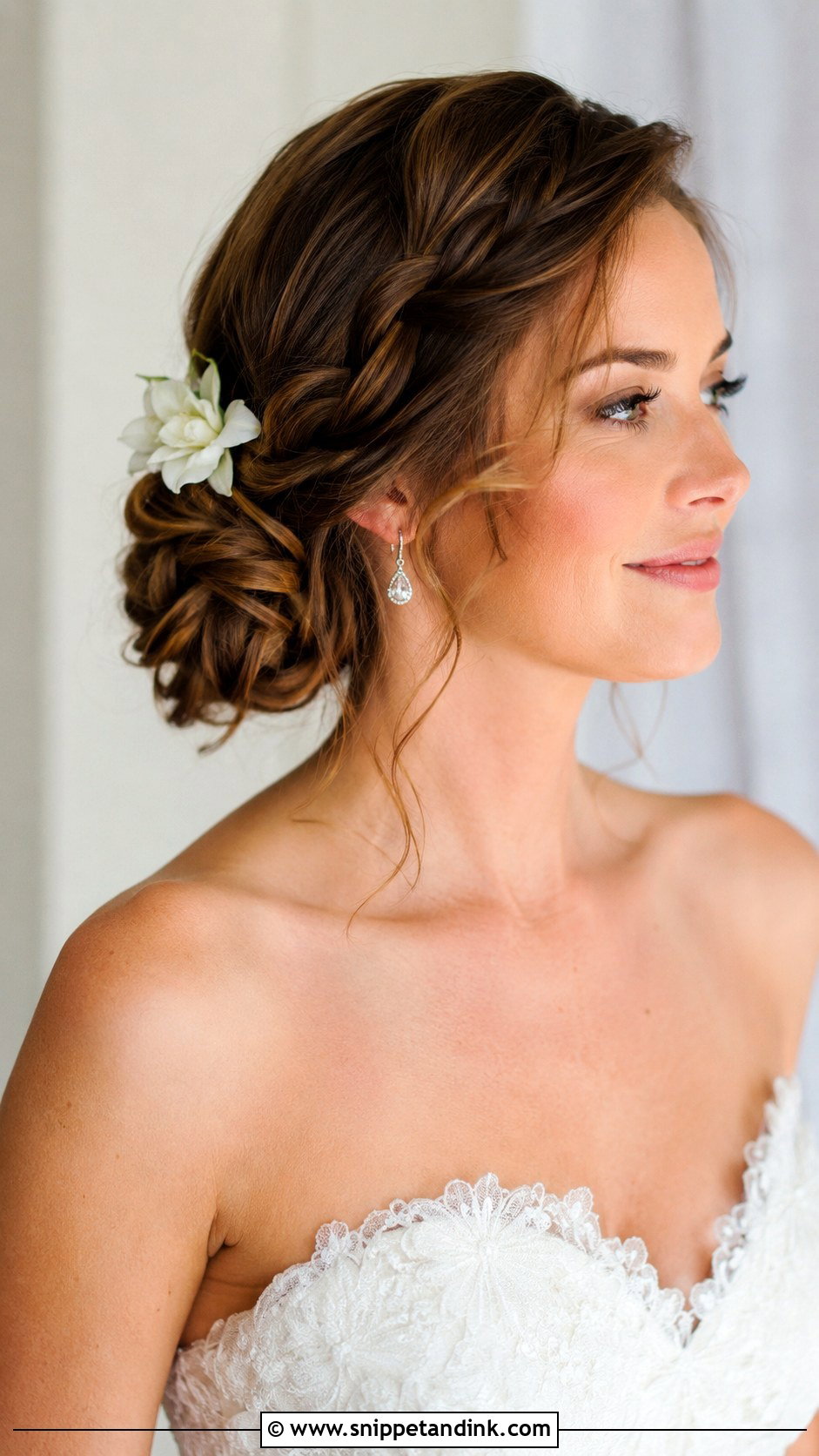
A side braided bun sits near the ear instead of at the centre, so the neckline on the other side stays open for jewellery. I braid loosely, coil it and pin it to a firm base, since a bun off-centre has less support than one at the nape. The veil goes just above or behind it. A small white flower finishes it, and it looks good from several angles in photos.
10. French Twist With Veil
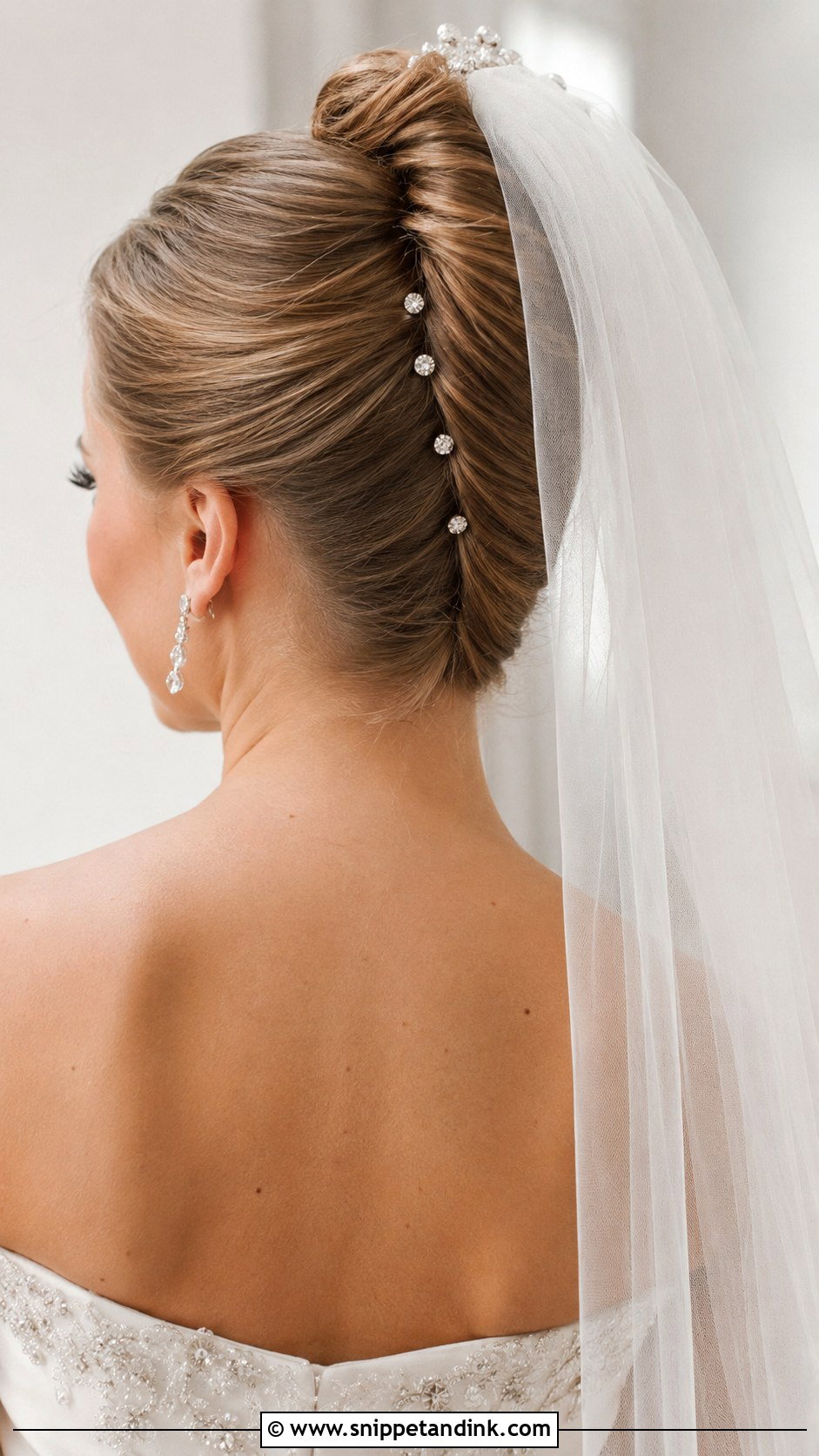
A French twist is gathered, twisted upward and tucked into a sleek, polished roll along the back of the head. I hold it with pins inserted along the seam, angled into the twist, which is why it holds for a full day. The top of the twist is the strongest point for the veil comb. It suits medium to long hair; very fine hair may need a little backcombing inside to give the roll some body. Leave a couple of tendrils out if sleek feels too strict.
11. Textured Boho Updo
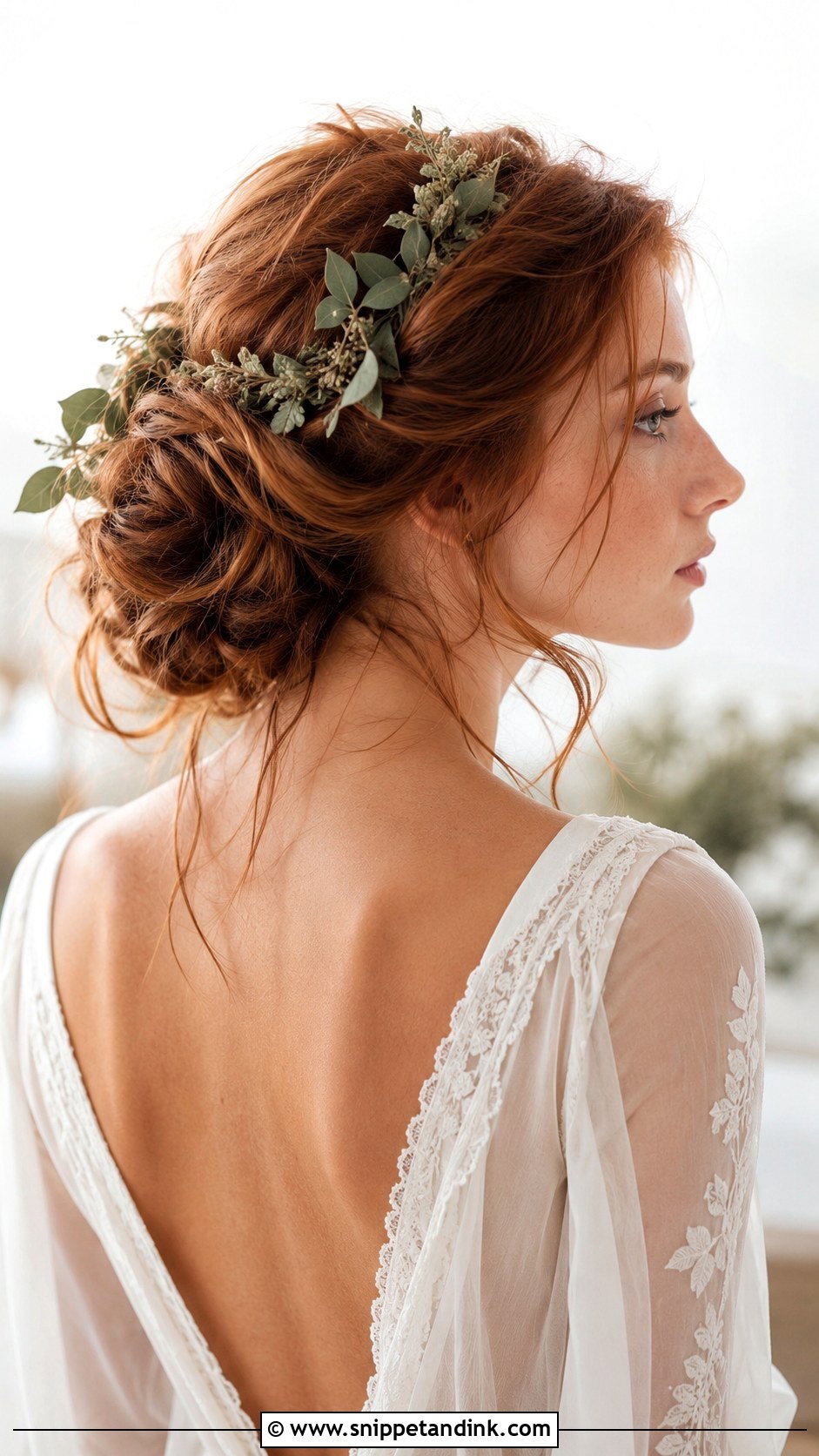
Boho updos look careless and take as much planning as a sleek one. The relaxed texture has to be built in with texture spray and loosely pinned sections, then pulled apart slightly, otherwise it just looks unfinished by the evening. Woven greenery suits a garden or outdoor ceremony. A flowing veil or flower crown works with it. It flatters medium to long hair.
12. Ringlet Bun With Floral Accents
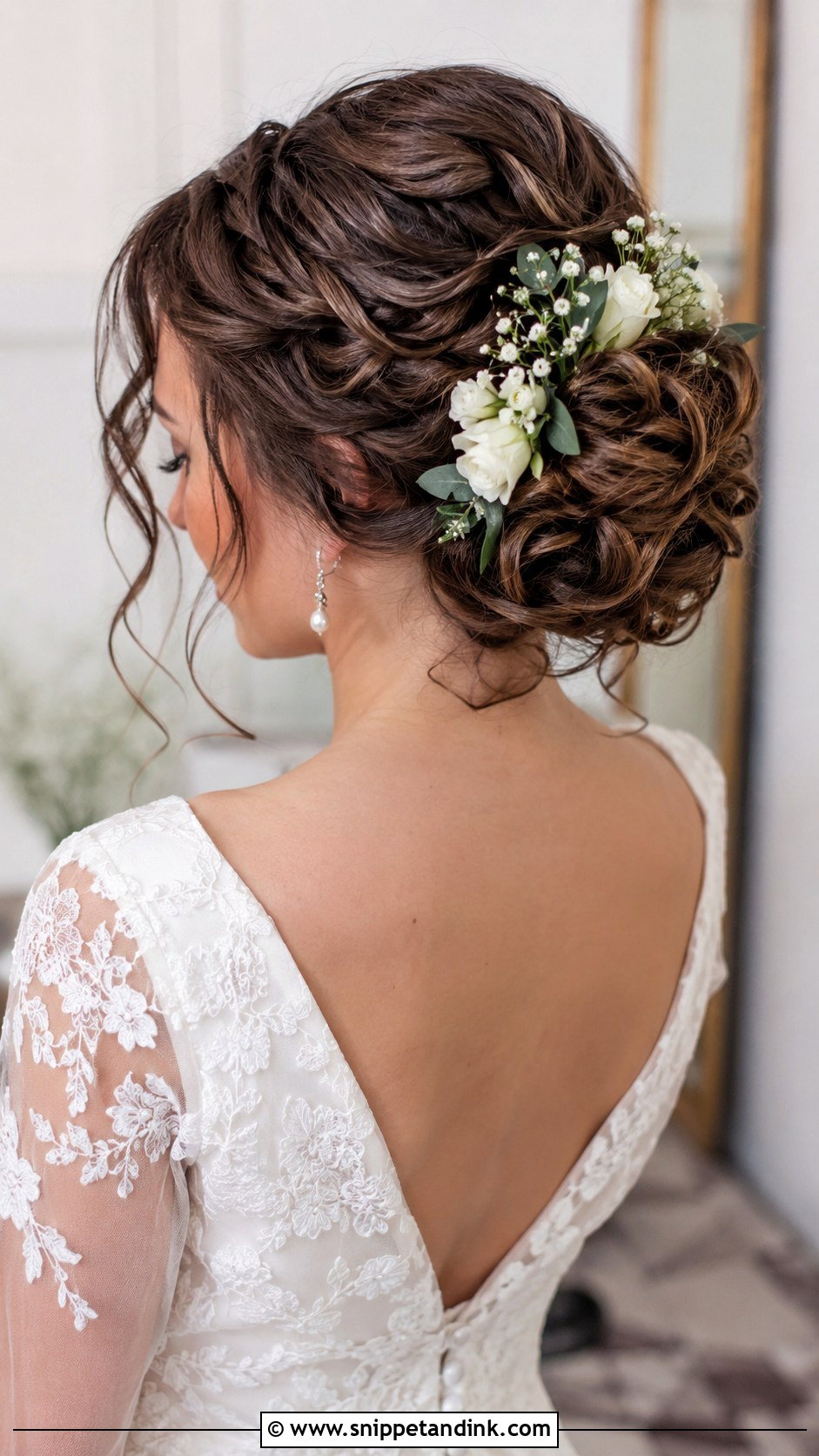
Naturally curly or wavy hair is the ideal starting point here, since ringlets already have the shape and hold. I define the curls rather than replacing them, then gather and pin them into a textured bun, leaving a few loose around the face. Pins go into the curl clusters, where they disappear. Flowers tucked between the ringlets add a garden touch. The veil comb grips well in the textured base.
13. Sleek Straight Hair Down
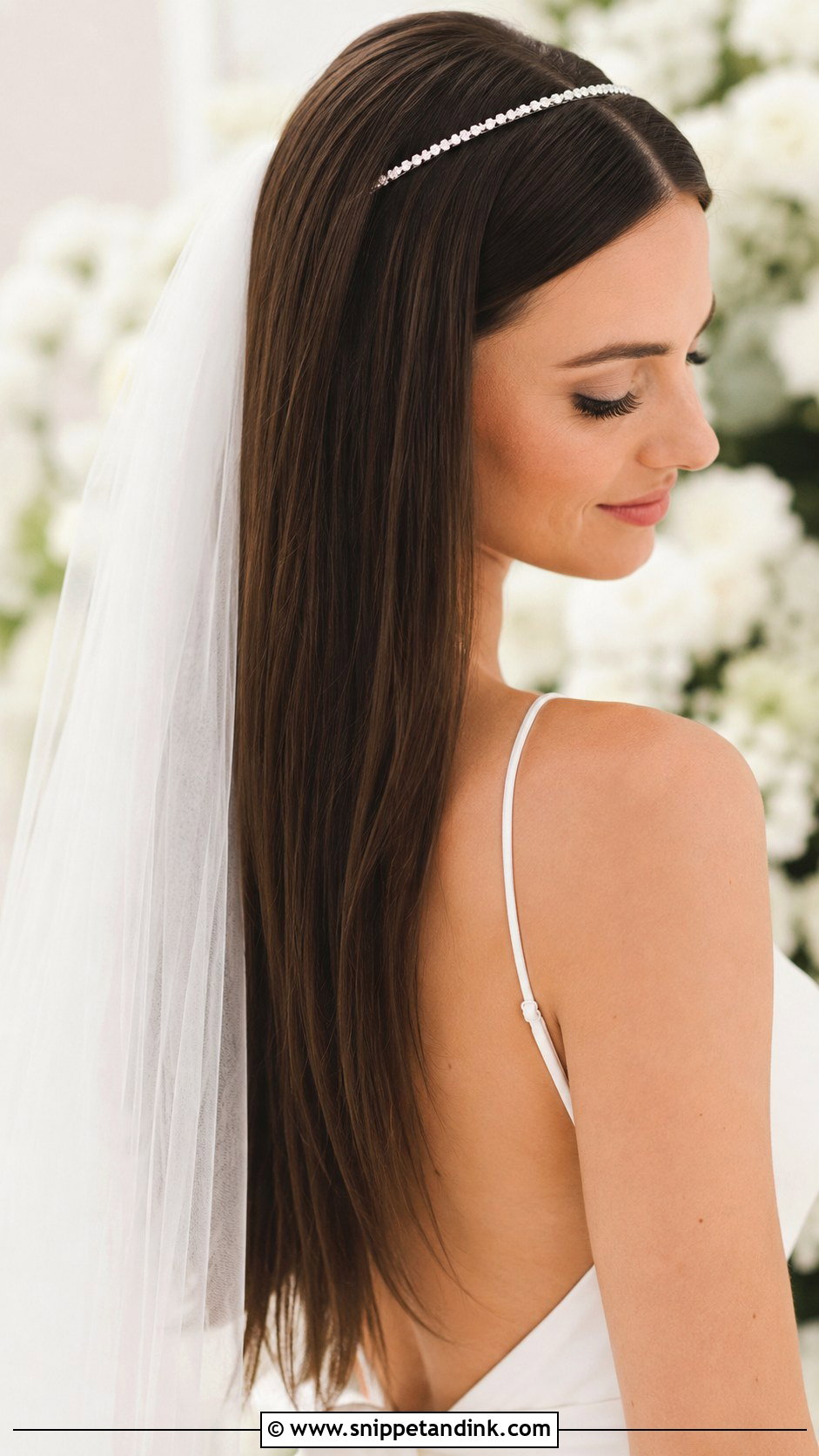
Sleek straight hair looks simple and is surprisingly demanding. Every kink and flyaway shows, and long straight hair tends to go flat and separate after a few hours, especially in a warm church. I smooth it with a round brush rather than flat-ironing it poker straight, which keeps a bit of movement. A centre part reads modern, a side part softer. Add a thin sparkly headband if you want some shine, and the veil will float over it neatly.
14. Twisted Halo Updo
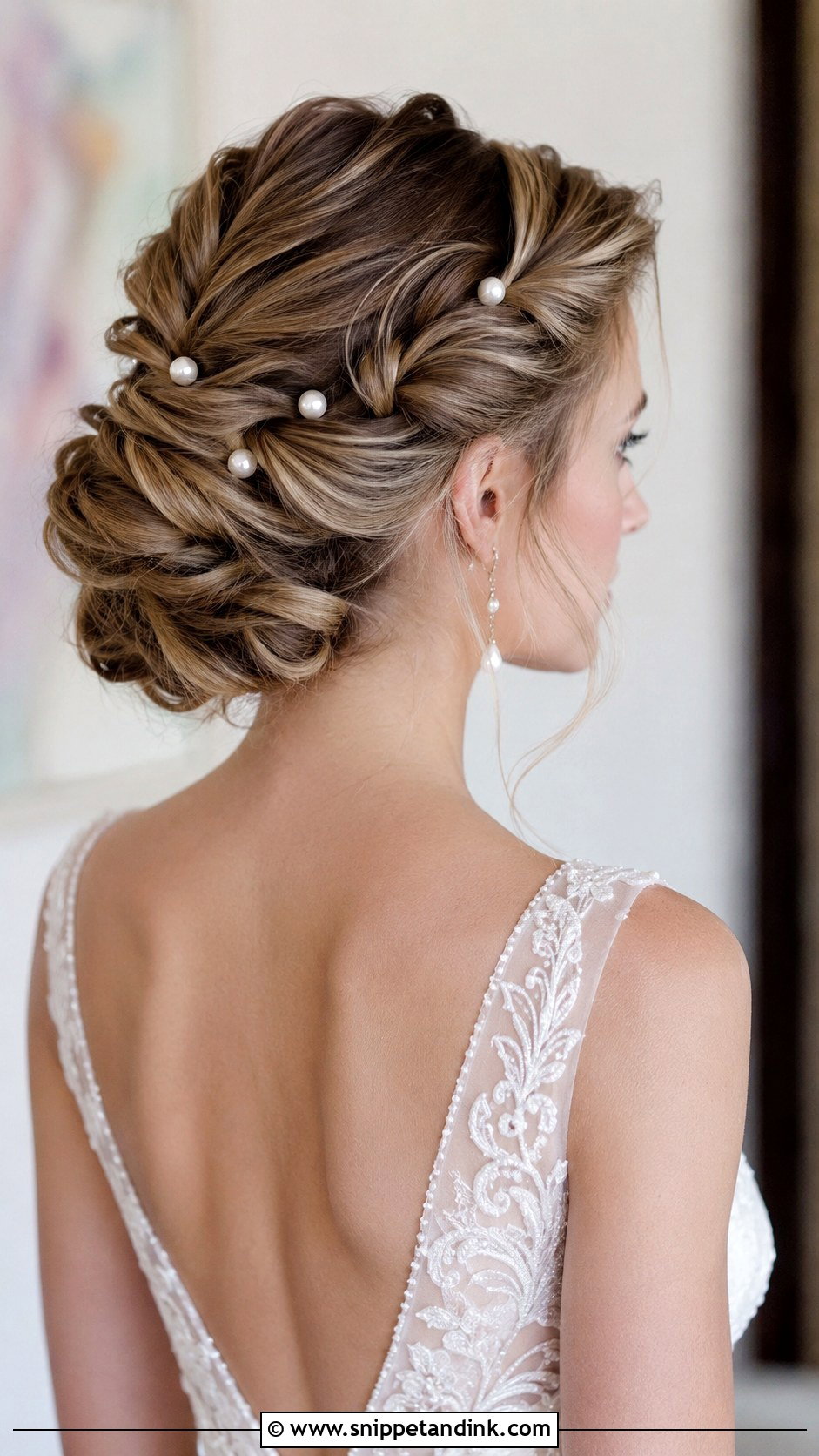
Unlike a braided crown, a twisted halo uses smooth rolled sections, so it looks polished rather than rustic. Each twist is pinned close to the head, which spreads the veil’s weight across several anchors instead of one. I’d add small pearl or crystal pins along the twist for detail. Soft strands around the face keep it from looking stiff in a traditional or modern church.
15. Low Ponytail With Curls
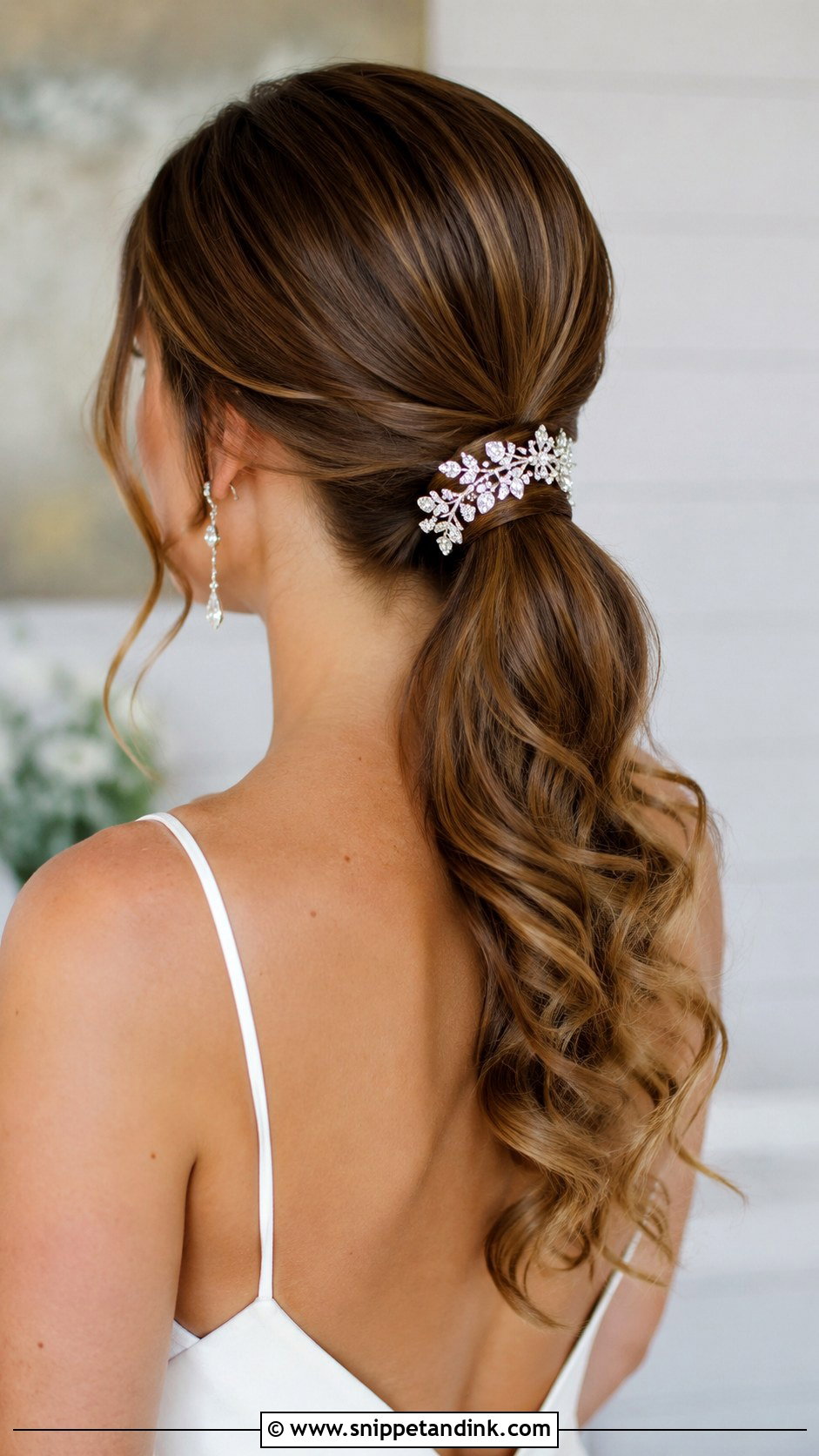
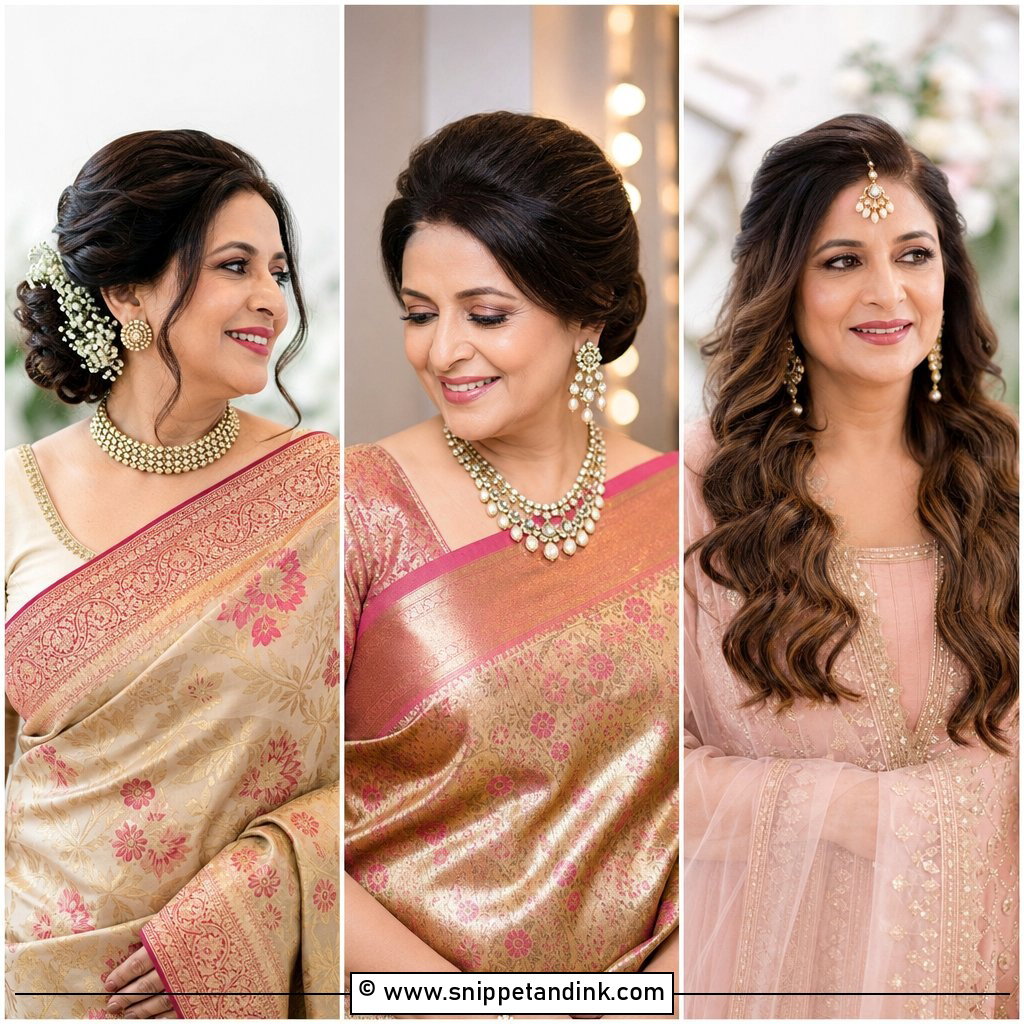
A low ponytail sounds casual, and in practice it’s one of the most comfortable bridal styles for a long day. I wrap a strand of hair around the base to hide the elastic and pin it underneath, then curl the length. The veil sits just above the tie. Long hair suits it best. A bow or jewelled clip at the base adds a little flair. Curled ends will relax over time, so I set them firmly.
16. Half-Up Braided Style
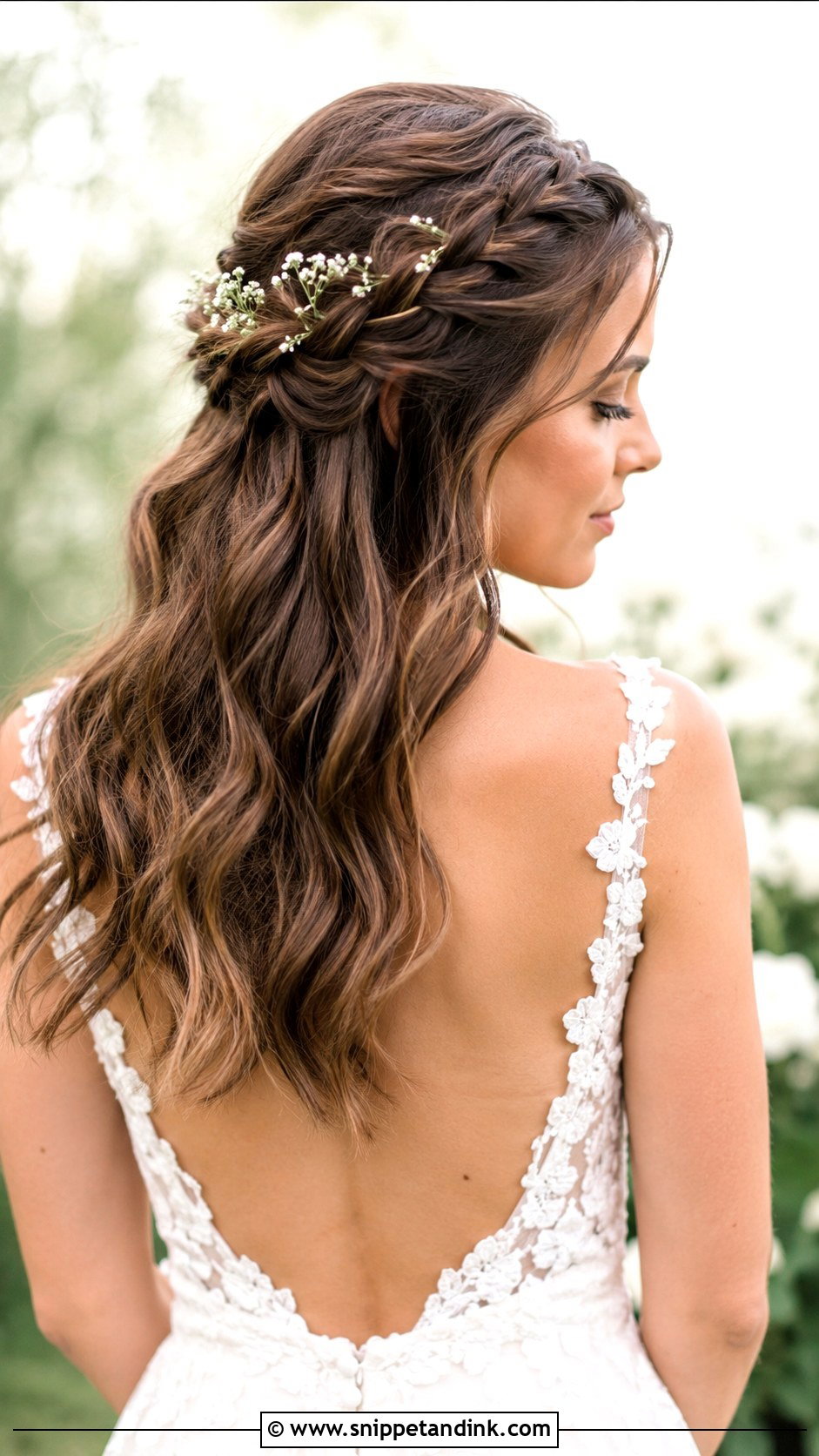
Braiding the top section gives a half-up style more grip, because the braid acts as a built-in anchor for the veil comb. One braid looks neat; several add detail. The rest of the hair falls in waves. Small flowers woven into the braid suit a garden ceremony, and it’s equally appropriate in a church. If your hair is very slippery, I’ll texturise it first so the braid doesn’t slide down.
17. Vintage Finger Waves
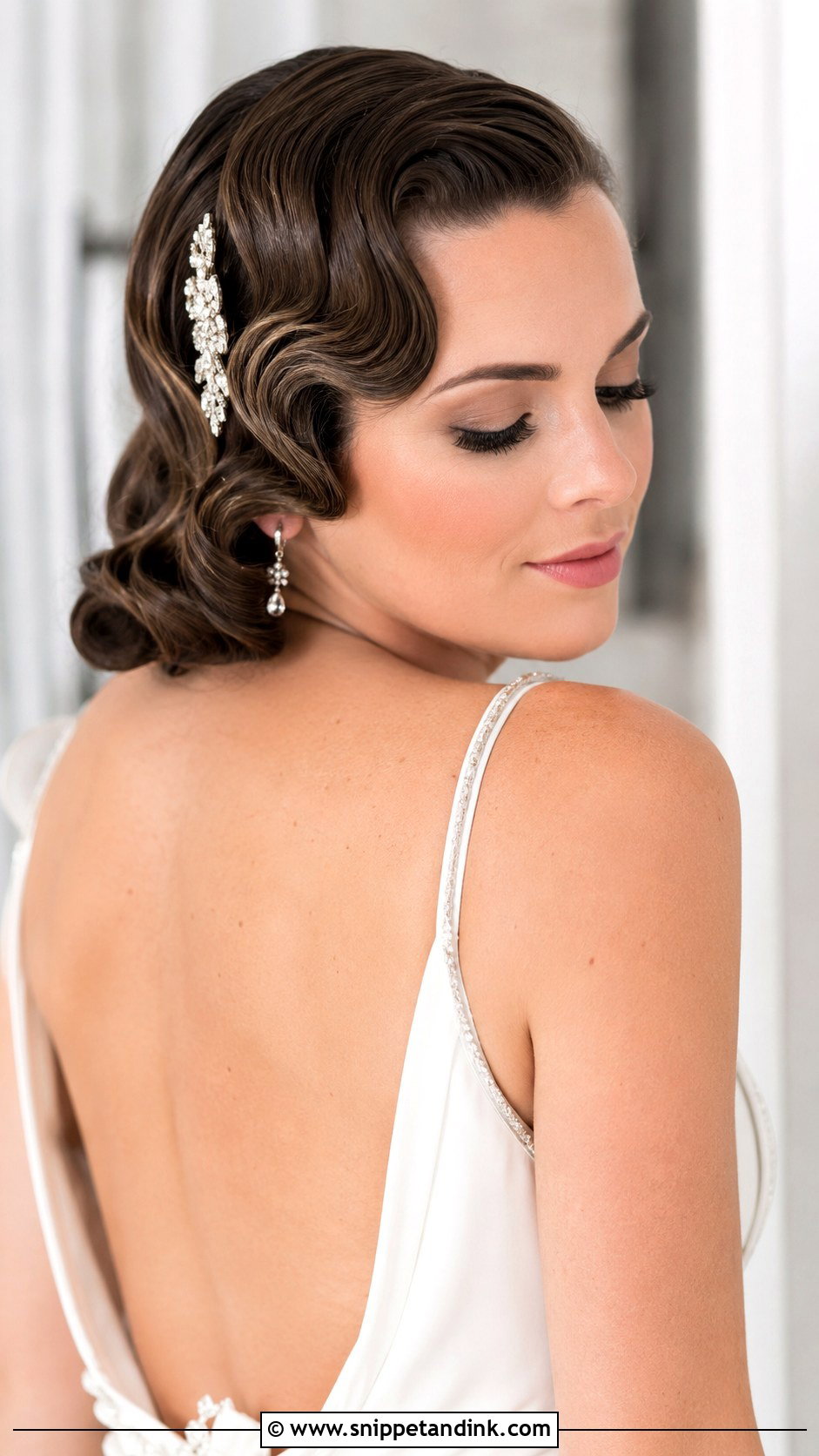
Finger waves are set close to the head with gel and pinch clips, then left to dry before the clips come out. It’s a vintage technique and it needs time and skill, so allow extra chair time. Short to medium hair suits them best. I often finish into a low bun at the back for brides with longer hair. A jewelled comb completes it, and they stand out from the usual curled styles.
18. Loose Updo With Face-Framing Tendrils
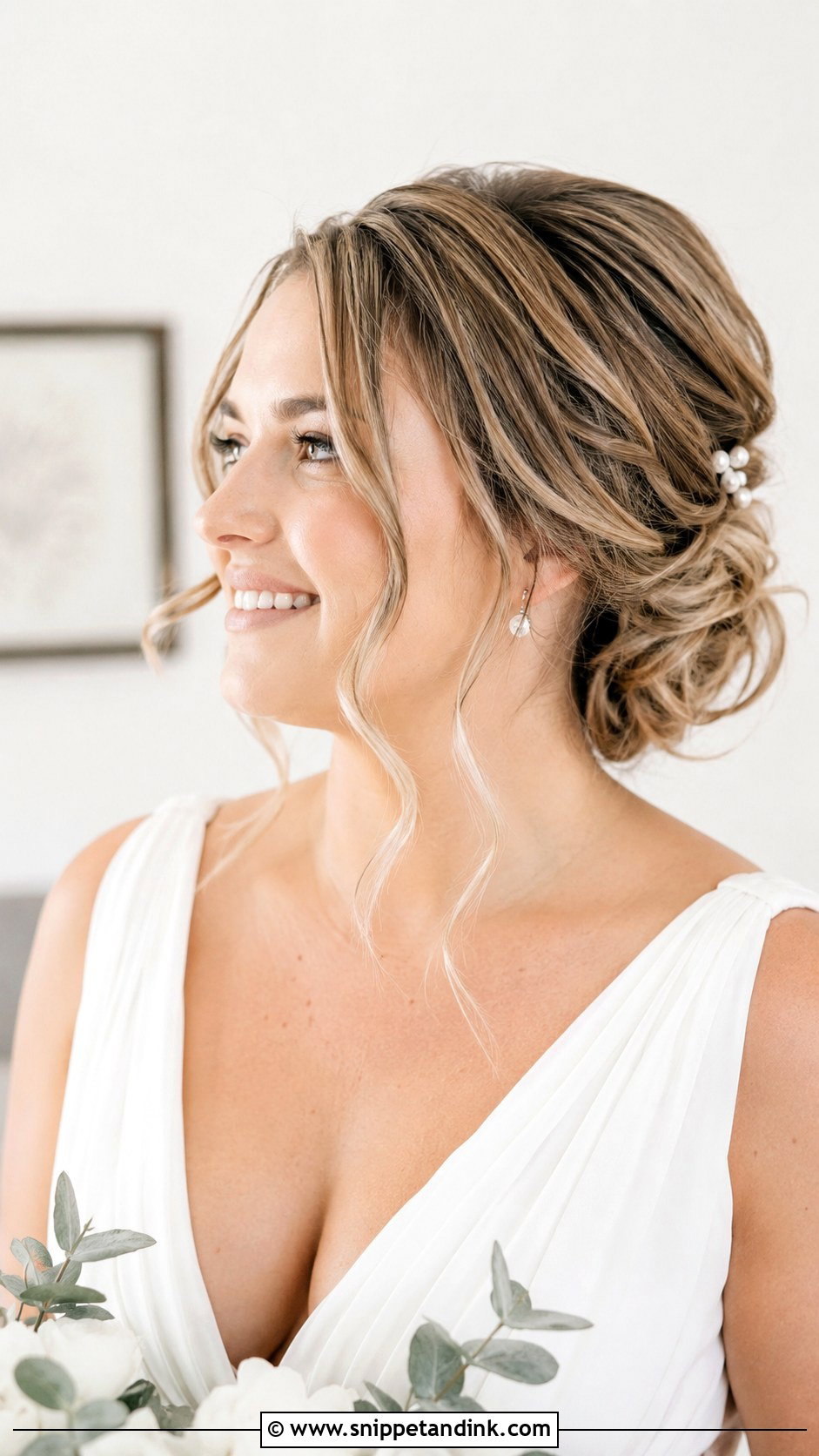
Loose updos rely on structure you can’t see. The hair is gathered, pinned securely at the base, then pulled into a relaxed shape, with tendrils left around the face. The tendrils soften the features but can frizz in humidity, so I curl them last and keep them few. It holds a veil gracefully and flatters most hair lengths. Small flowers or pearl pins add detail.
19. Dutch Braid Bun
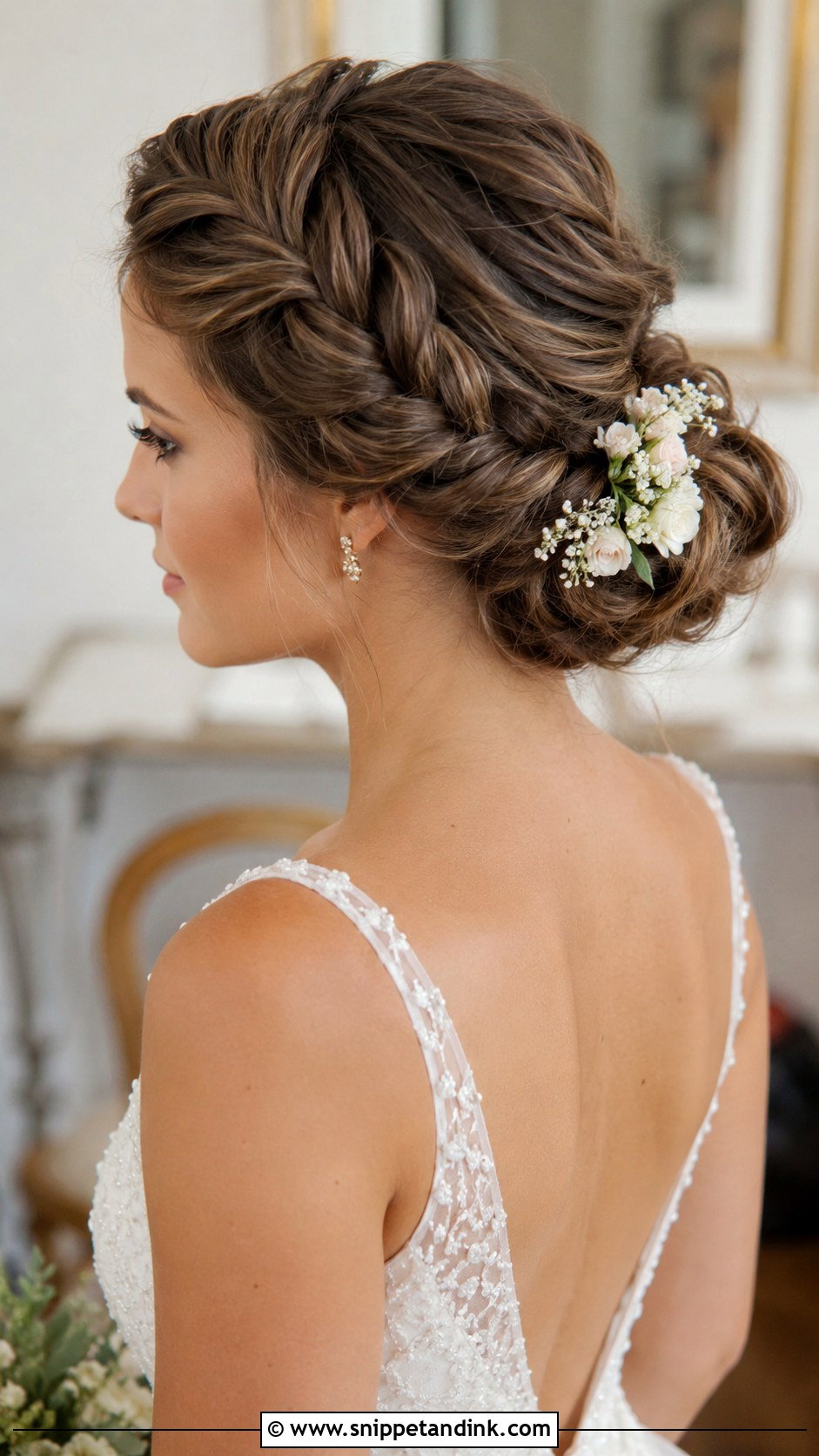
A Dutch braid is braided underhand, so it sits raised on top of the head rather than flat. Leading it back into a full bun gives texture and volume. I pull the braid edges out a little for width, which also hides the scalp on fine hair. It holds a veil securely through hours of celebration. Floral accents or sparkly pins along the braid add a final detail.
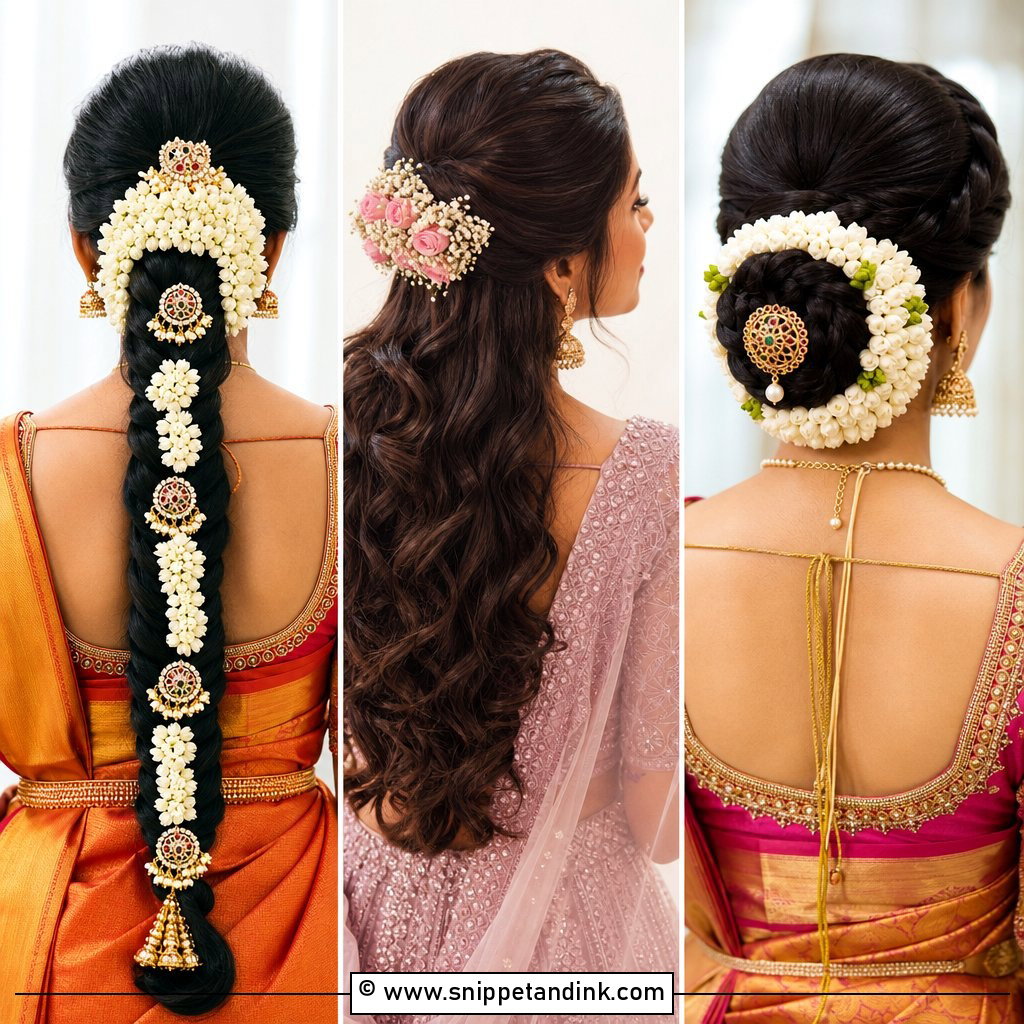
20. Side Chignon With Curls
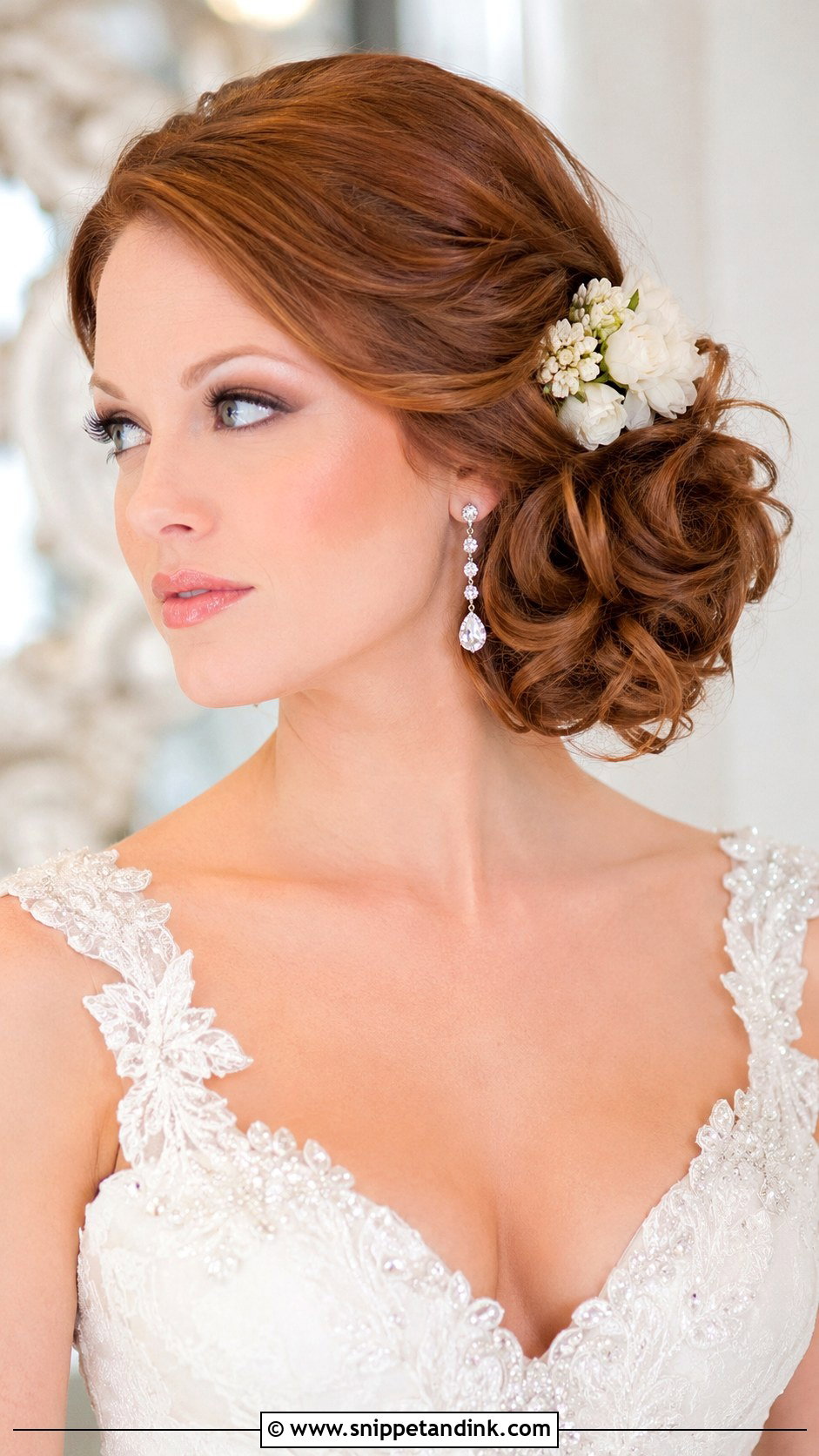
For a side chignon, the hair is side-parted, curled, rolled and pinned near one ear. It’s asymmetrical and glamorous, and it shows off a statement earring and an open neckline. The veil can sit above it or slightly to the side; I place it so it falls behind the shoulder rather than over the chignon. Medium to long hair suits it. Tuck in small flowers or jewelled pins for sparkle.
21. Flower Crown With Loose Waves
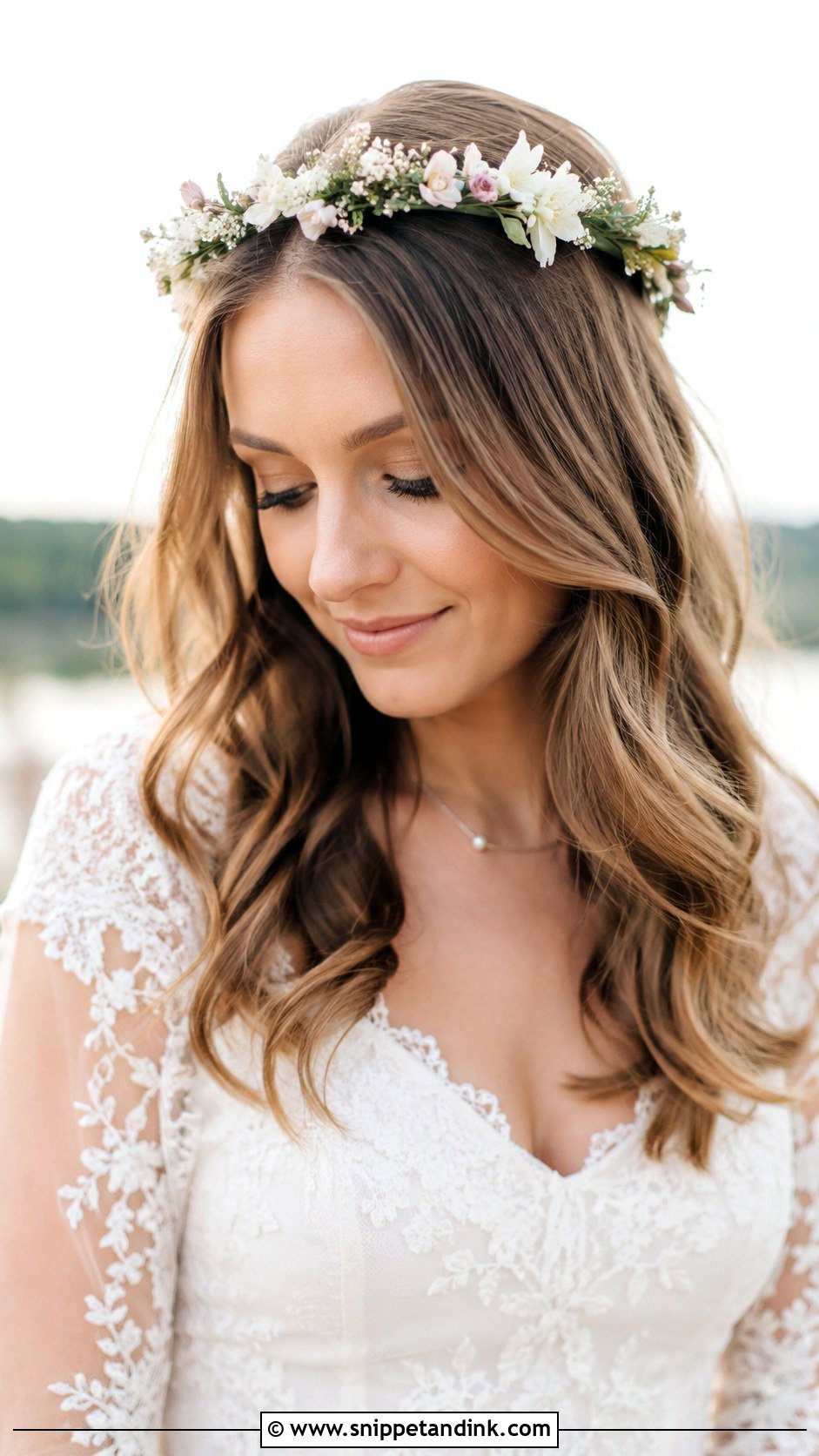
A flower crown with loose waves suits an outdoor church or a garden ceremony. Fresh flowers wilt in the heat, so I ask the florist for sturdy blooms on a wired base and keep the crown in the fridge until the last moment. Silk flowers last all day and won’t drop petals. Waves underneath add movement. A simple veil can sit behind the crown, or it can stand alone.
22. Polished High Bun
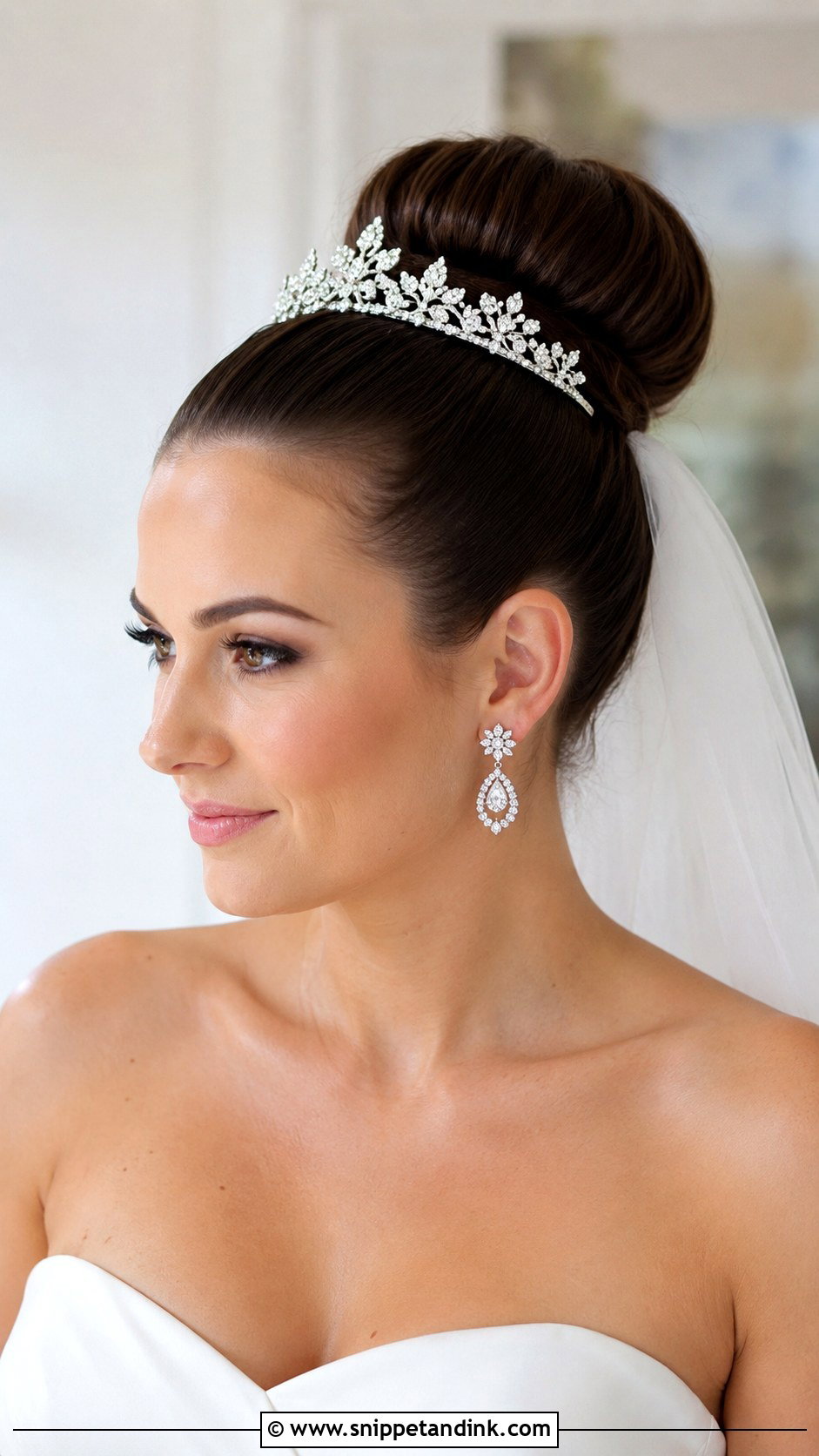
A high bun lengthens the neck and shows off earrings. It’s ballet-inspired and structured. The veil goes underneath the bun rather than on top, which changes how it falls, so test it at the trial. Pins hold best when crossed under the bun into a firm base. Keep it sleek or add a little texture. Jewelled pins or a small tiara suit a formal church ceremony.
23. Curly Hair Half-Up
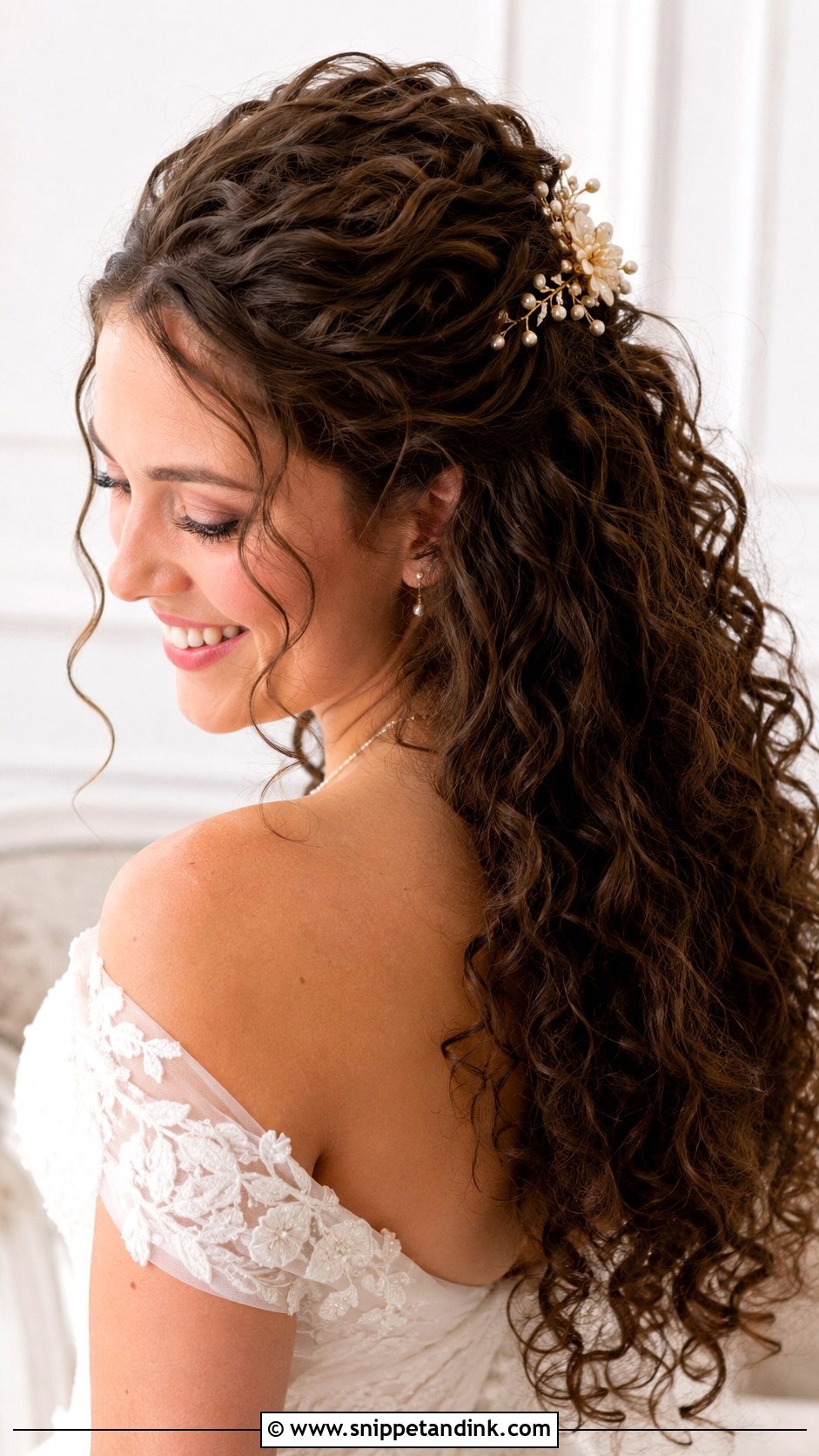
Natural curls deserve to be styled as they are, not straightened. For a half-up look, I gather the top section and pin it back, letting the rest fall. Tight coils shrink as they dry, so I factor that into how much hair I gather. Wash and set your curls the way you normally would; your curl pattern will behave more predictably. The veil goes into the pinned section. Fresh flowers or a decorative clip finish it.
24. Accessorized Low Bun With Tiara
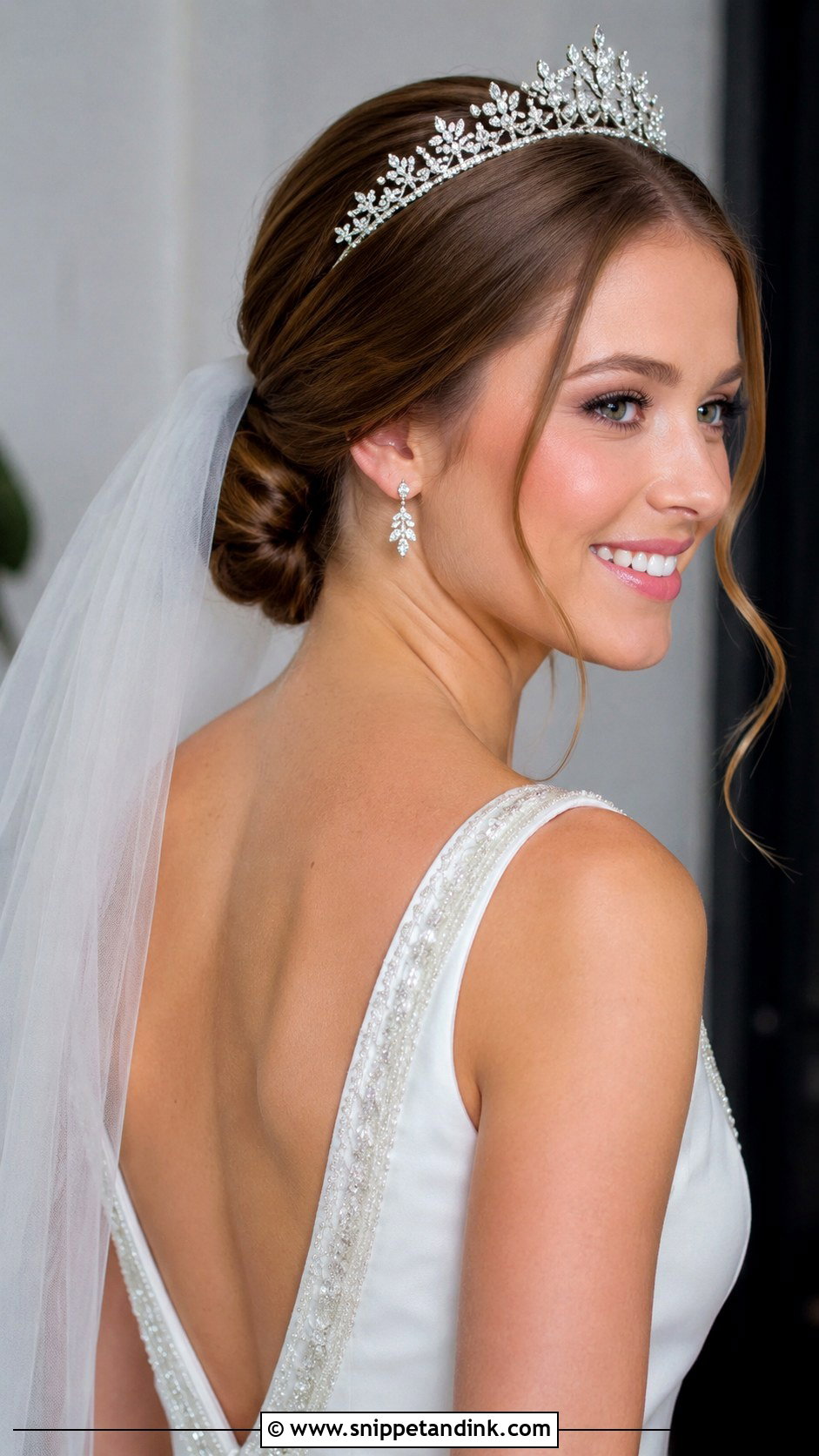
A low bun with a tiara gives a regal, princess-worthy bridal look. The tiara sits ahead of the veil, so I add a little volume at the crown to cushion it, then pin it through its loops. Without that, a tiara slides forward. It suits formal church weddings. A subtle crystal band or more ornate crown depends on taste. The low bun keeps everything secure.
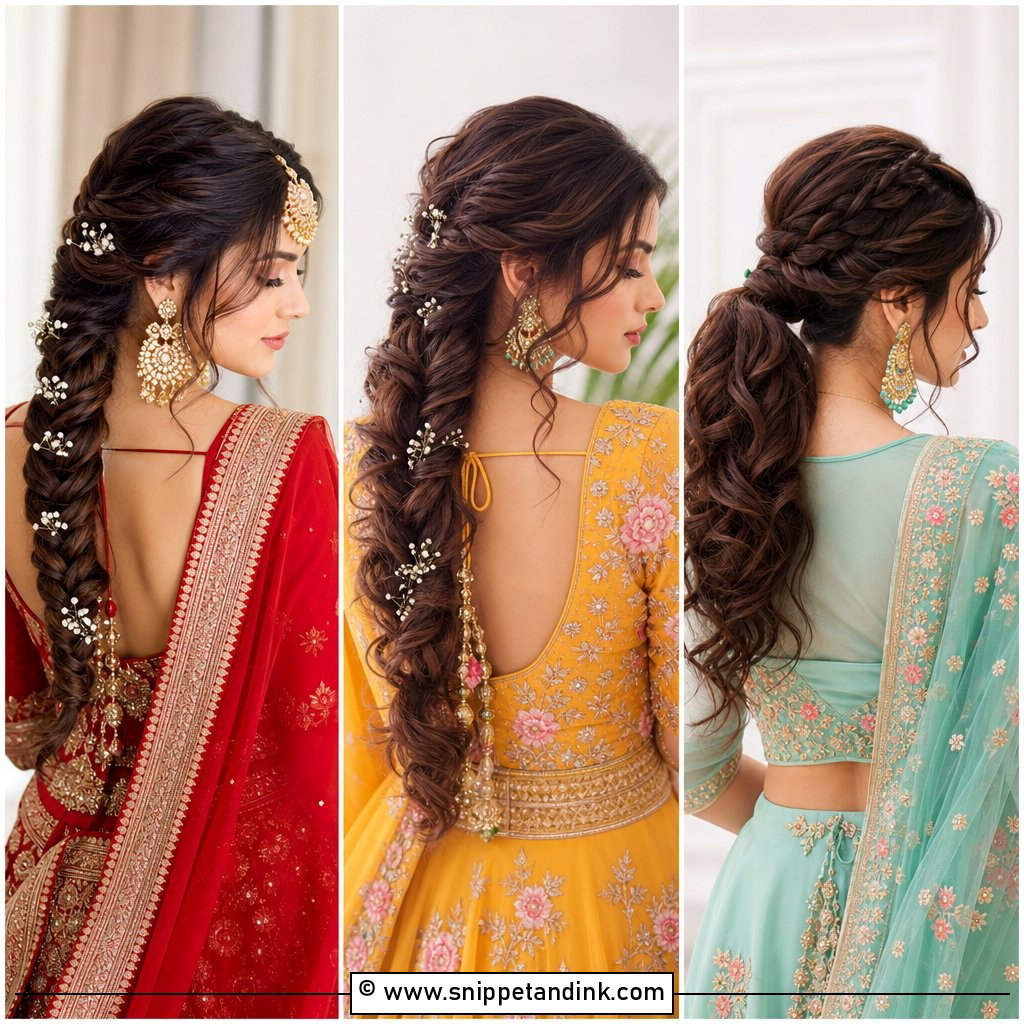
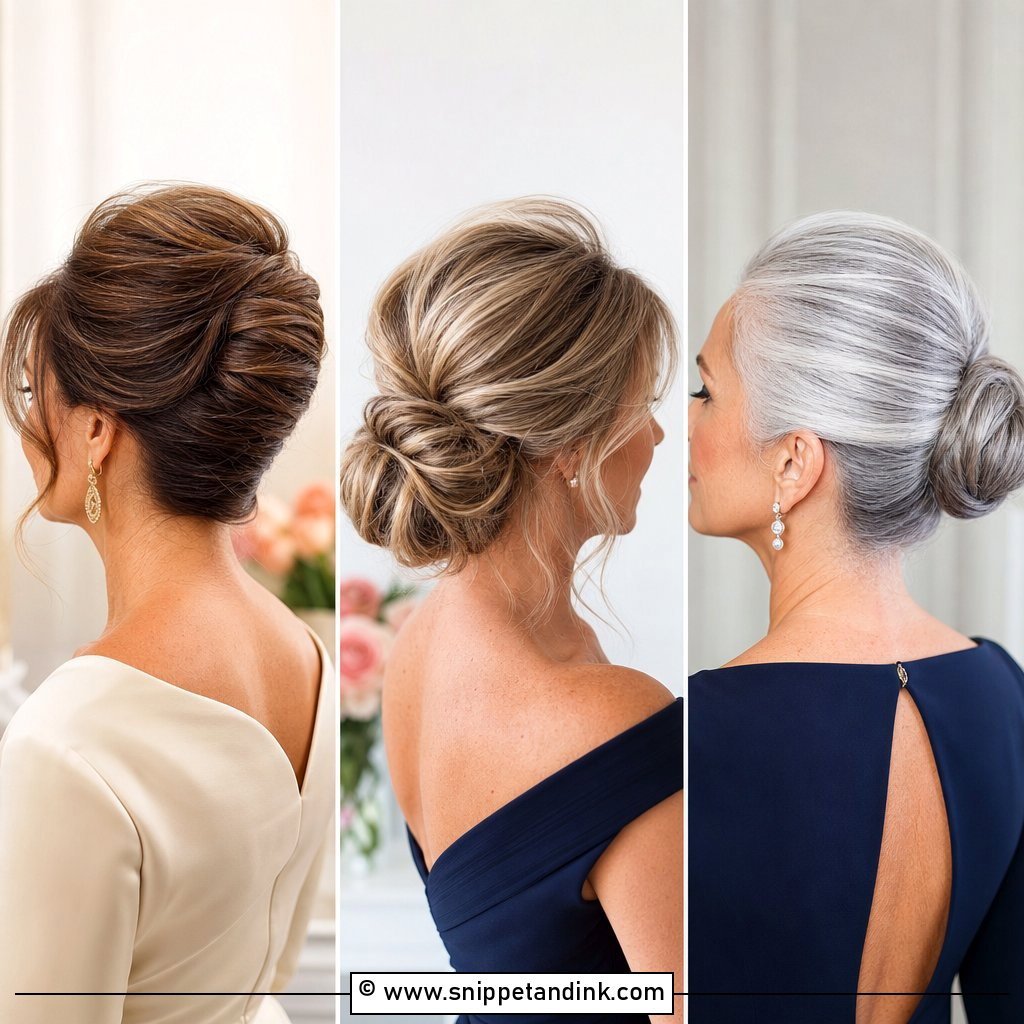
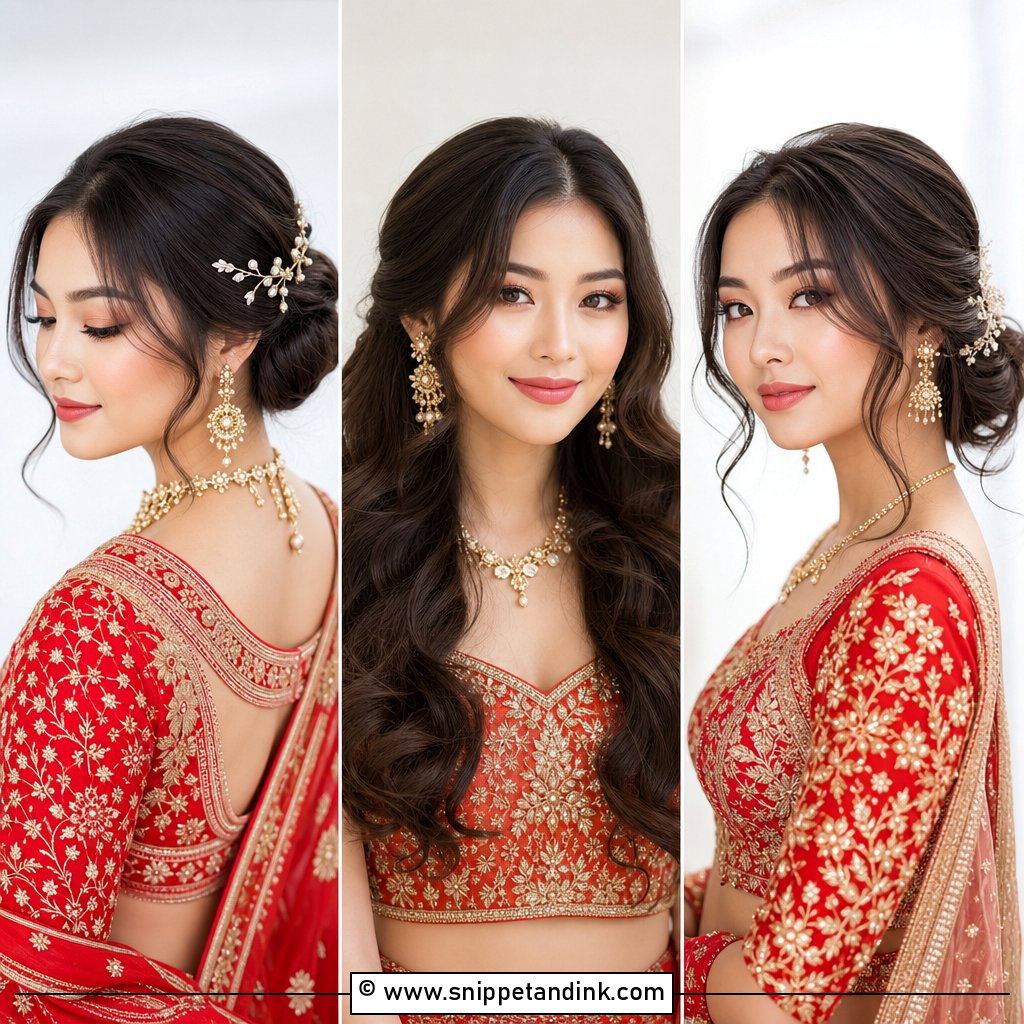
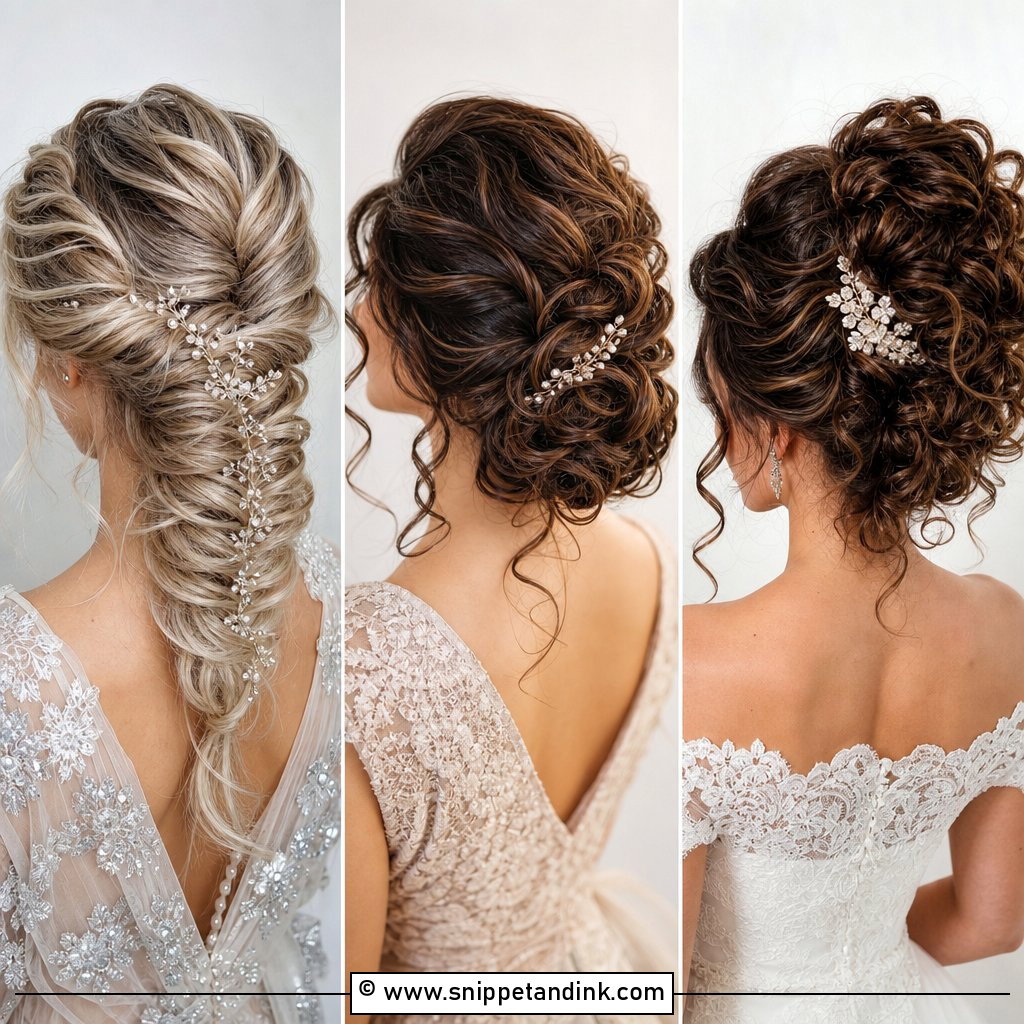
25. Pinned Back Soft Waves With Pearls
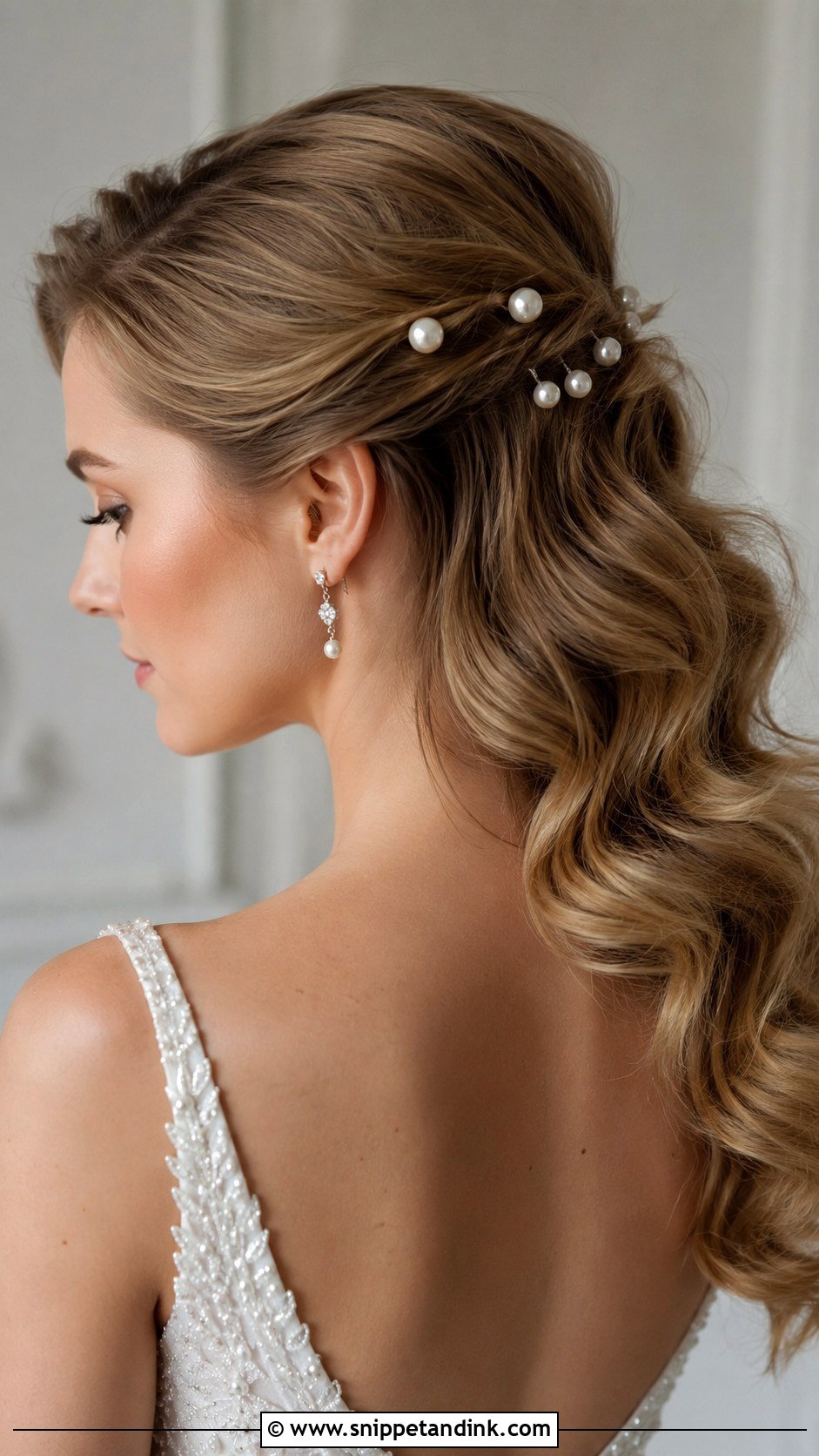
Waves pinned gently to one side with pearl pins keep the hair mostly down with a little structure. Pearls catch soft church light without glittering harshly in photos. I pin them in a cluster or scattered along the side, anchoring each with a bobby pin underneath so they don’t slip. It flatters most hair lengths and suits a veil.
Bring the Veil to Your Trial, Not Only Photos
The most useful thing a bride can bring to a trial is her actual veil. Photos show me the look; the veil shows me weight, length and how the fabric behaves. I’d book the trial a month or two before the wedding, once you know the dress and veil.
- Wear a top with a neckline close to your gown’s.
- Walk, turn your head and sit down, then stand again.
- If you’re wearing a blusher, practise lifting it back.
- Take photos from the back and sides, not only the front.
- Keep the style in for the rest of the day and note what drops or pinches.
From the Church Steps to the Last Dance
Hair changes over a long wedding day. Curls relax, humidity frizzes tendrils, and a veil taken off at the reception can leave a dent. I usually plan the change: some brides remove the veil after the first dance, which is a good time to loosen a style into something softer. Give a bridesmaid a small kit of bobby pins, a travel hairspray and a fine comb. With those, most fixes take a minute.
Your Gown, Your Veil and How Long the Service Runs
From classic low buns and chignons to loose waves and flower crowns, the right style comes down to your gown, your veil, your hair texture and how long your service runs. Polished or soft, any of these can work. Book a trial with your stylist, bring your veil to it, and expect to adjust. A style that’s comfortable from the aisle to the last dance is the one you’ll be glad you chose.
You'll Like These Ideas:


Leave a Reply