
Victorian style is less about one dress and more about a vocabulary: high necklines, corseted waists, long lace sleeves, pearl buttons, bustles and long trains, in satin, tulle, organza and brocade. When a bride brings me a Victorian mood board, my job is to work out which two or three of those details she actually loves, because a gown that uses all of them at once looks like a costume. A high-collar lace gown, a bustle back or a darker gothic look can each carry the era on their own. Historic venues, winter dates and garden ceremonies all suit this style. Here are thirty versions, with notes on how each one wears and what I’d look at before buying.
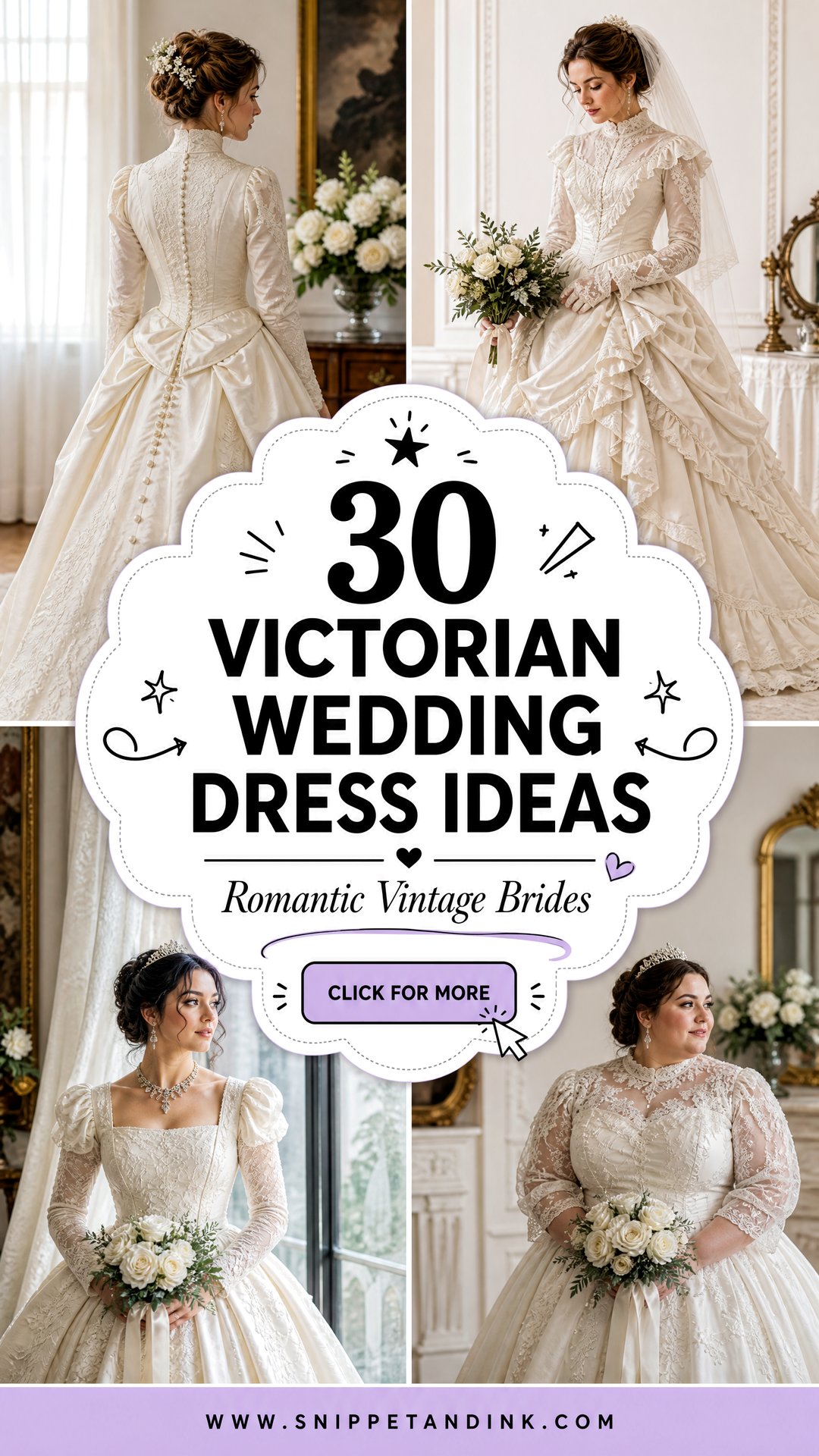
Living in a Corseted Bodice From Ceremony to Last Dance
Most Victorian-inspired gowns are built around a boned bodice, and how comfortable you are depends on how that structure is made. I always ask brides to sit, eat a little and climb stairs in the gown before the final fitting, because a bodice that’s fine standing can feel very different at dinner.
What to look for inside
- Flexible steel or spiral boning bends with your body; cheap plastic boning can warp and poke after a few hours of heat.
- A waist tape inside the bodice carries the skirt’s weight, so the bodice isn’t pulled down by it.
- A modesty panel behind a lace-up back stops skin showing through the laces.
- Lining in cotton or a breathable blend is far more comfortable than polyester against the skin for a long day.
On the day
A modern bridal corset shapes the waist; it shouldn’t stop you breathing deeply. Have whoever laces you leave a little room, then tighten slightly after the ceremony if it has eased. Laces relax as the fabric warms. Plan bathroom trips with a helper, and eat small amounts through the day rather than one large plate.
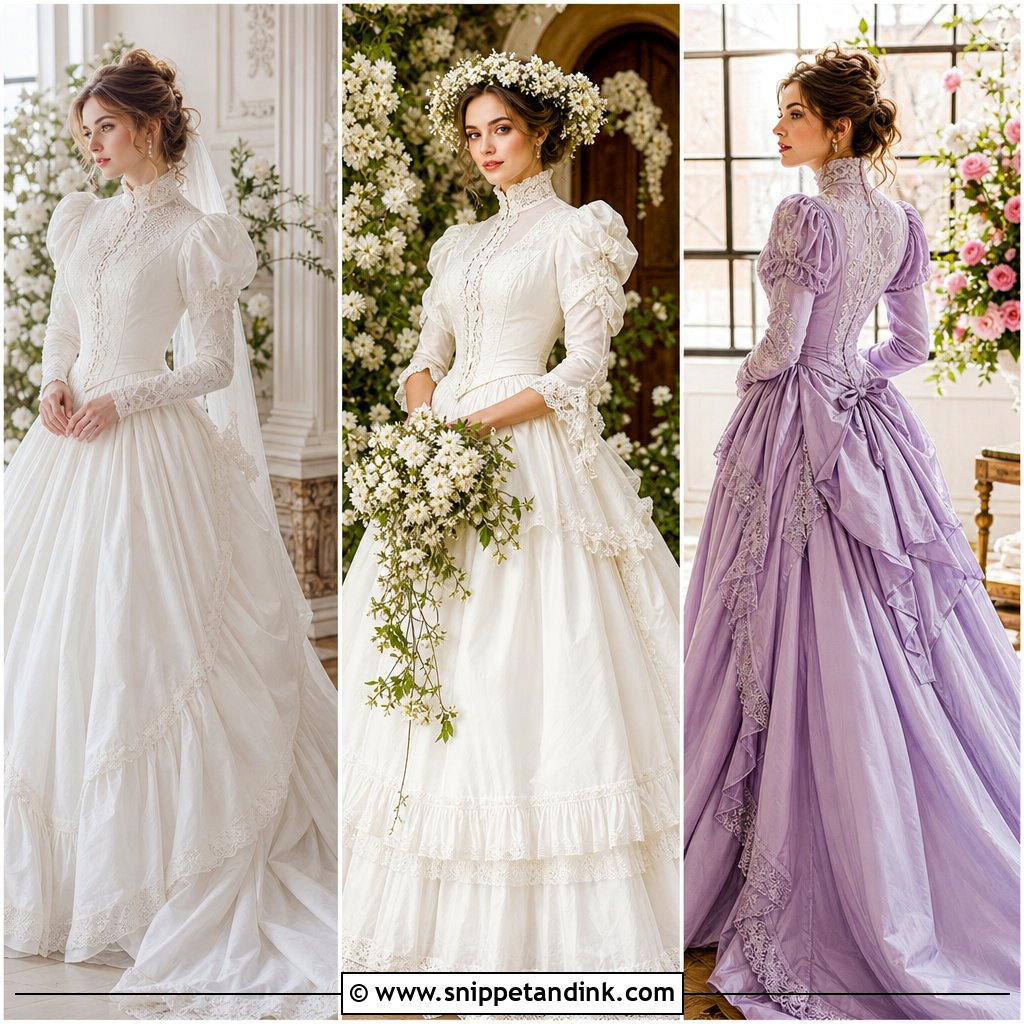
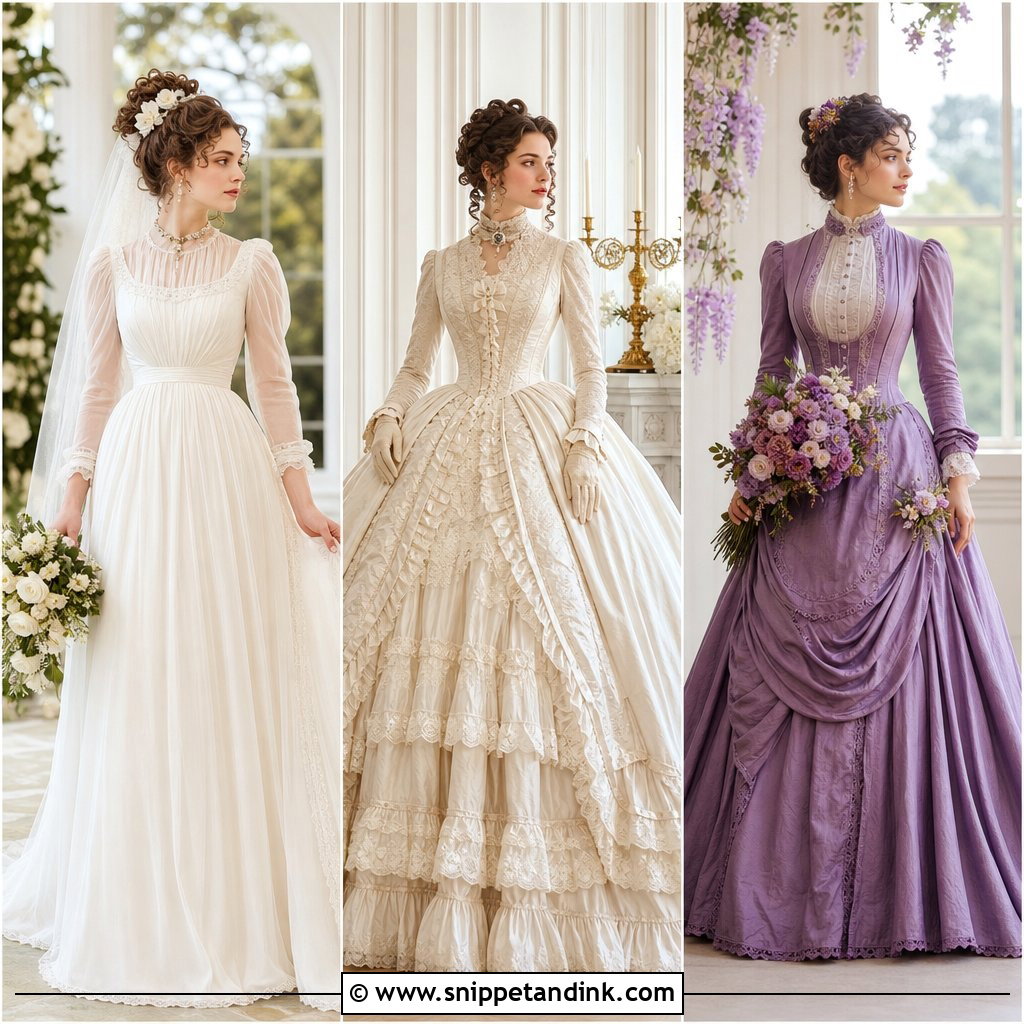
1. Victorian High Neck Lace Wedding Dress
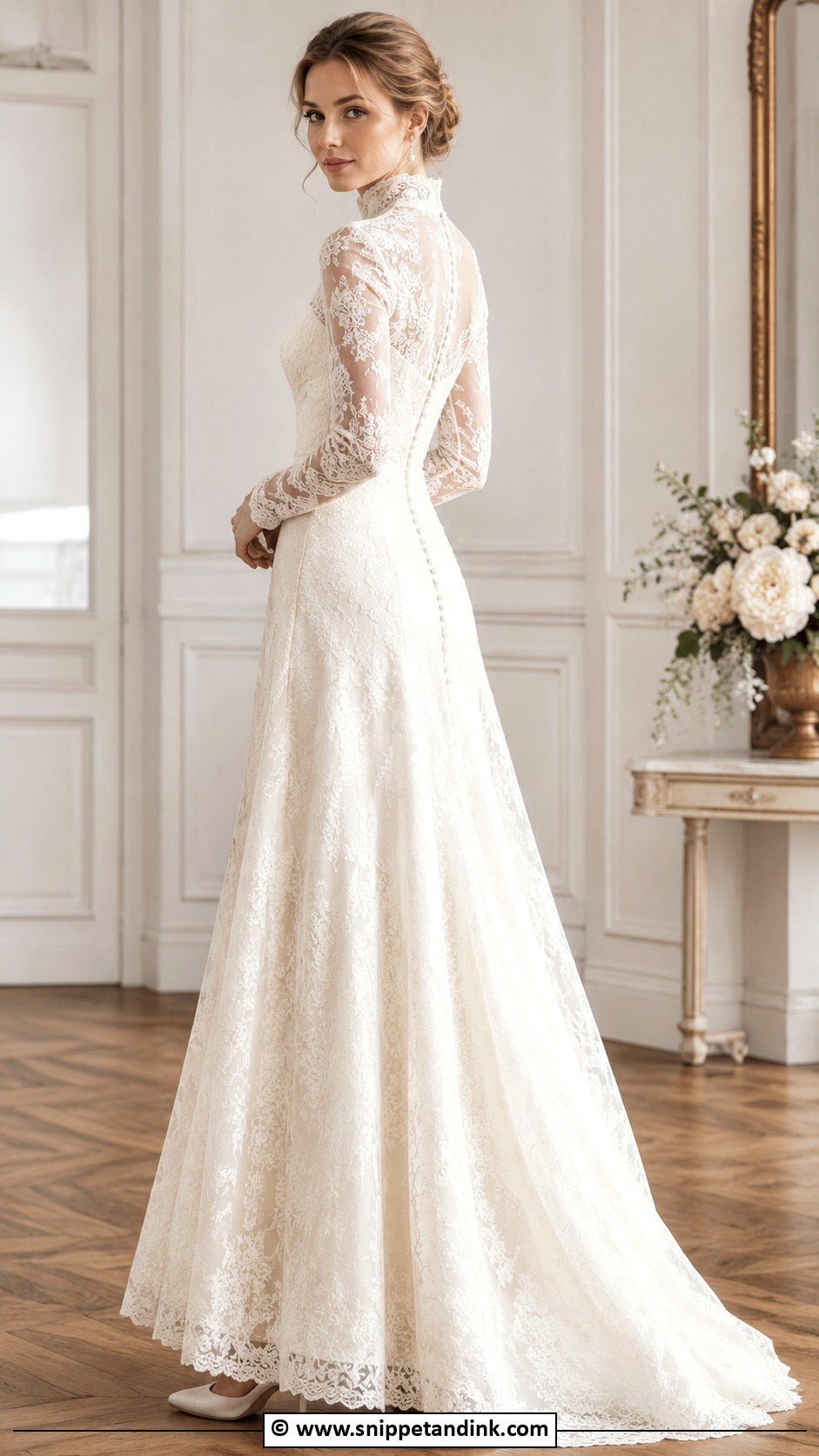
The high lace neck is the detail most people picture when they hear Victorian. It frames the face and gives full coverage, and lace keeps it from feeling severe. Fitted long sleeves, a buttoned back and an A-line or ball gown skirt balance the closed top. Ivory lace over a nude or soft white lining lets the pattern read clearly. The thing I check first is collar height: if it presses on the throat when you look down, you’ll feel it all day, so a quarter-inch adjustment is worth asking for. Pearl drops, a low bun and a lace-edged veil finish it.
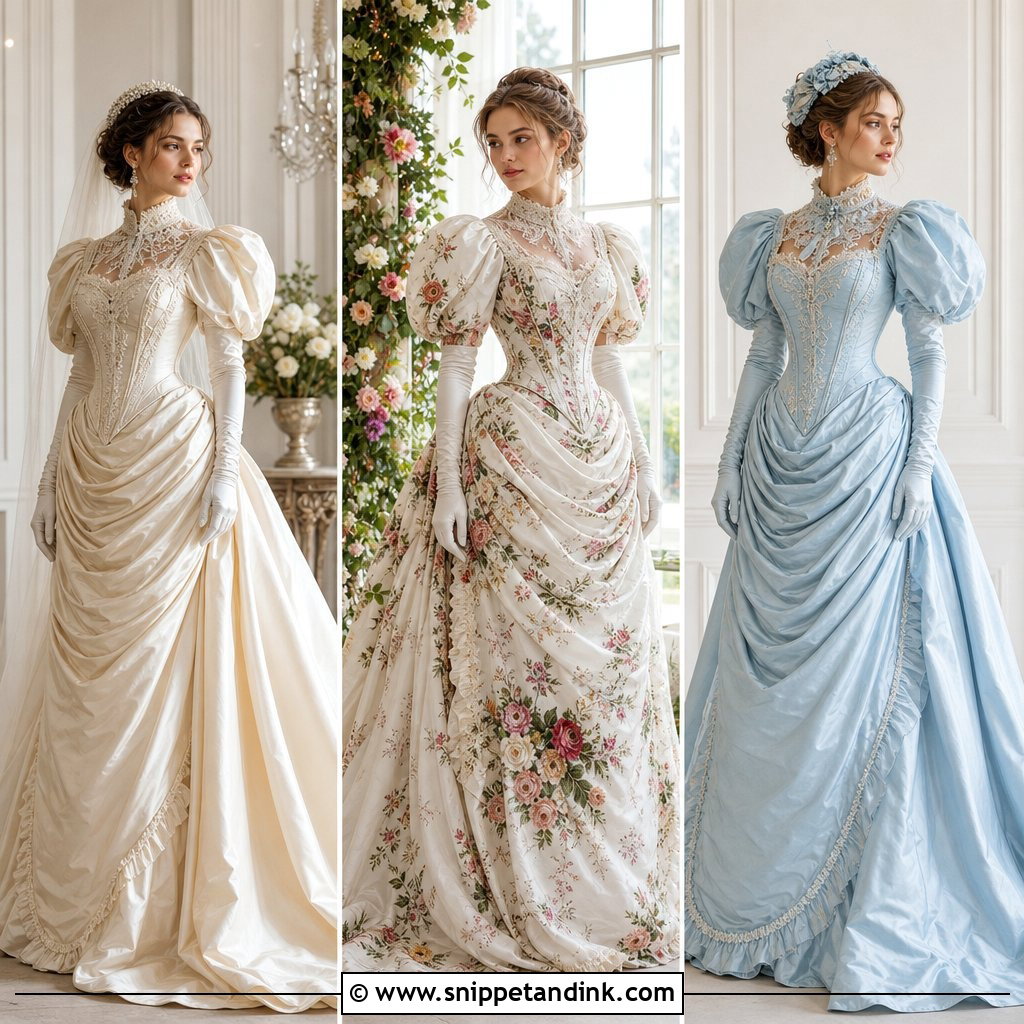
2. Victorian Corset Ball Gown Wedding Dress
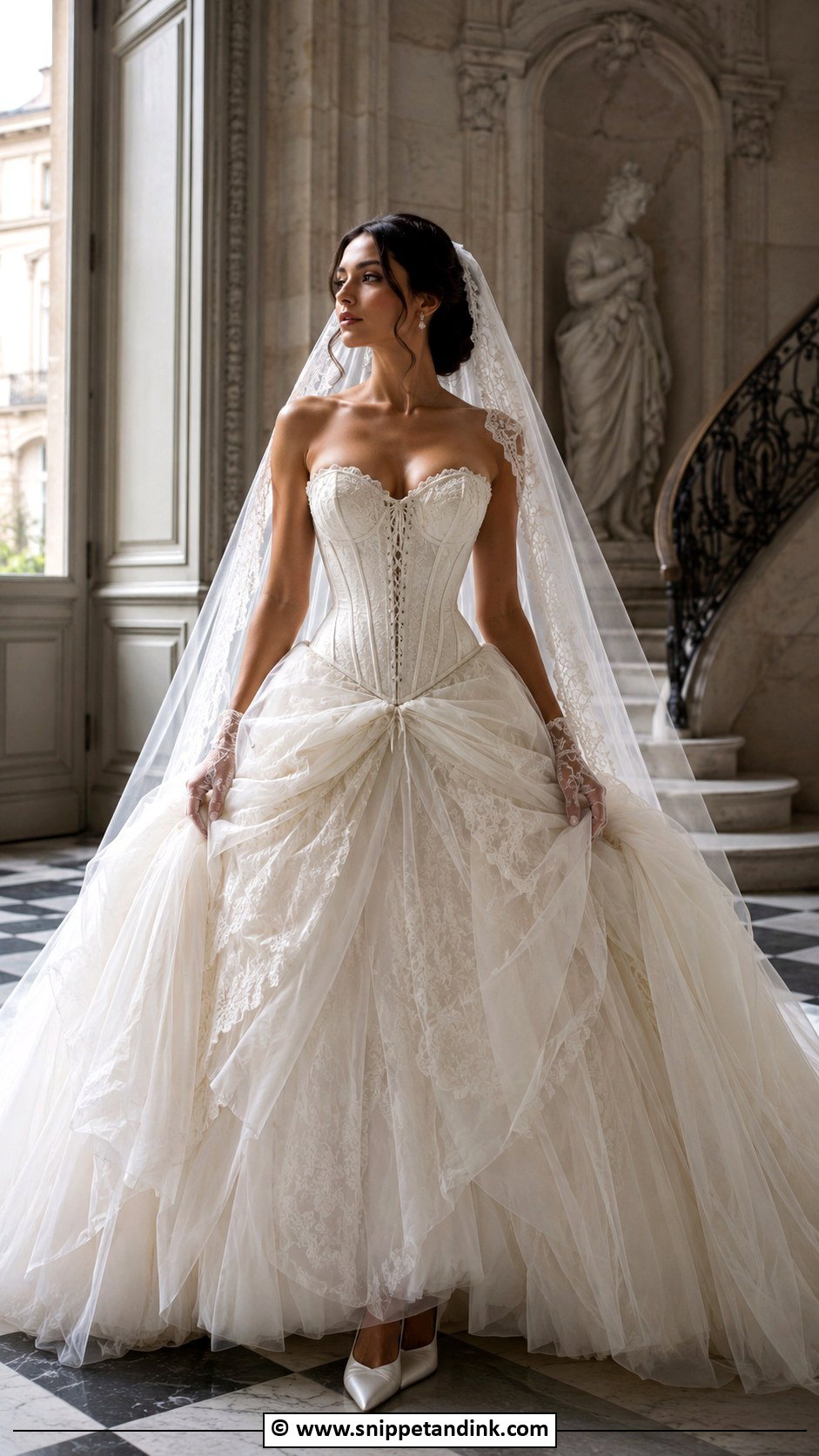
A corset ball gown is the full entrance: a boned bodice sets the waist, and the full skirt builds the hourglass. Look for a lace-up back, real boning and layered tulle or satin underneath. A sweetheart or soft scoop neckline modernises it. Lace-up backs have one great advantage: they adjust on the day if your weight shifts by a few pounds, which zip backs cannot. A cathedral veil, fine gloves and satin heels carry the regal mood, with jewellery kept simple.
3. Victorian Long Sleeve Satin Wedding Dress
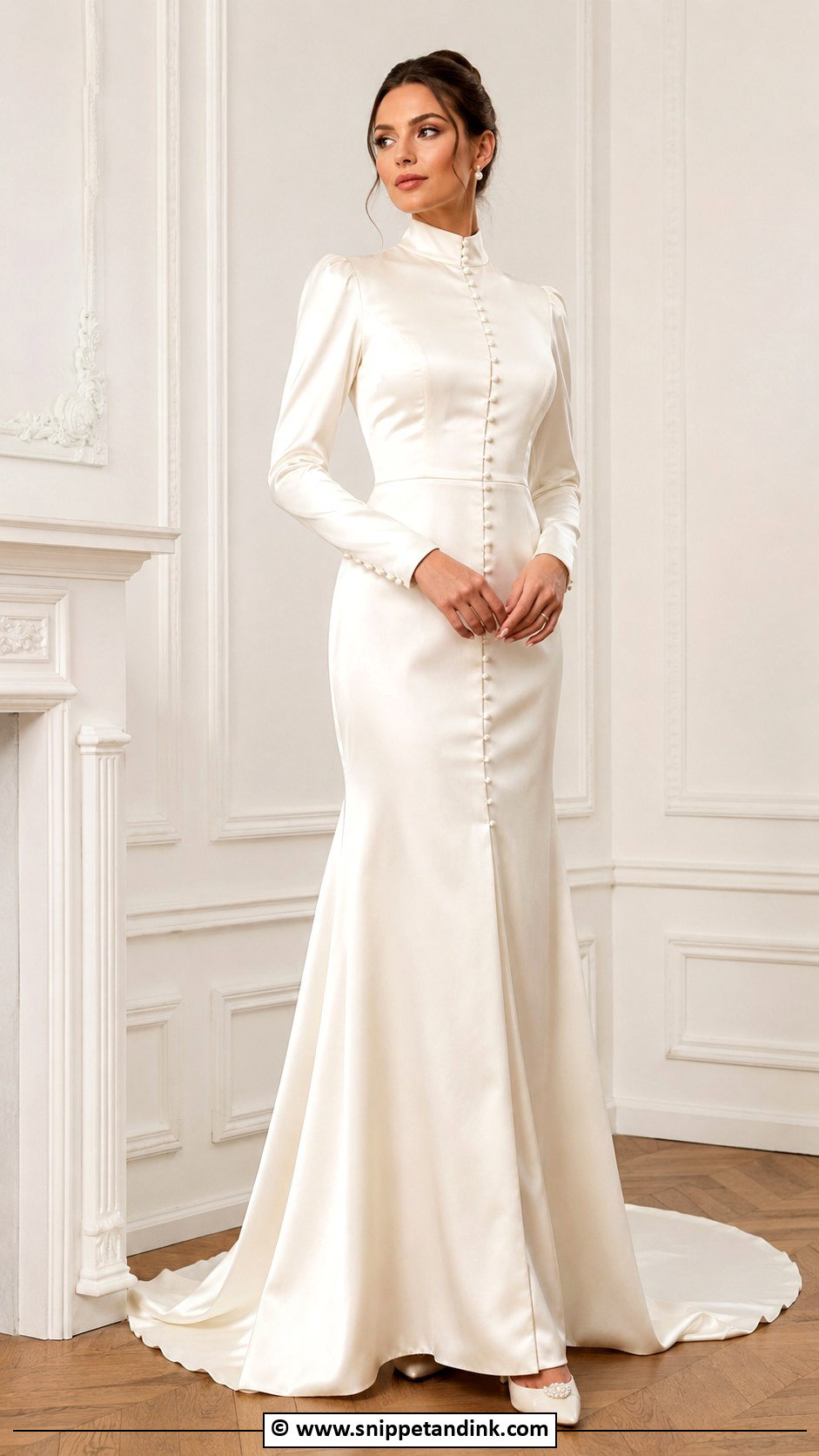
Smooth satin gives a Victorian long sleeve wedding dress a polished line with no lace at all. A high collar, a fitted bodice, long sleeves and covered buttons run cleanly from shoulder to hem. A small bustle or soft train nods to the era. Satin shows every wrinkle at the elbow, so ask for the sleeve to be cut with a little ease there; tight satin sleeves crease badly after the first hug. Pearls, a sleek chignon and pointed shoes are enough.
4. Victorian Lace Sleeve Wedding Dress
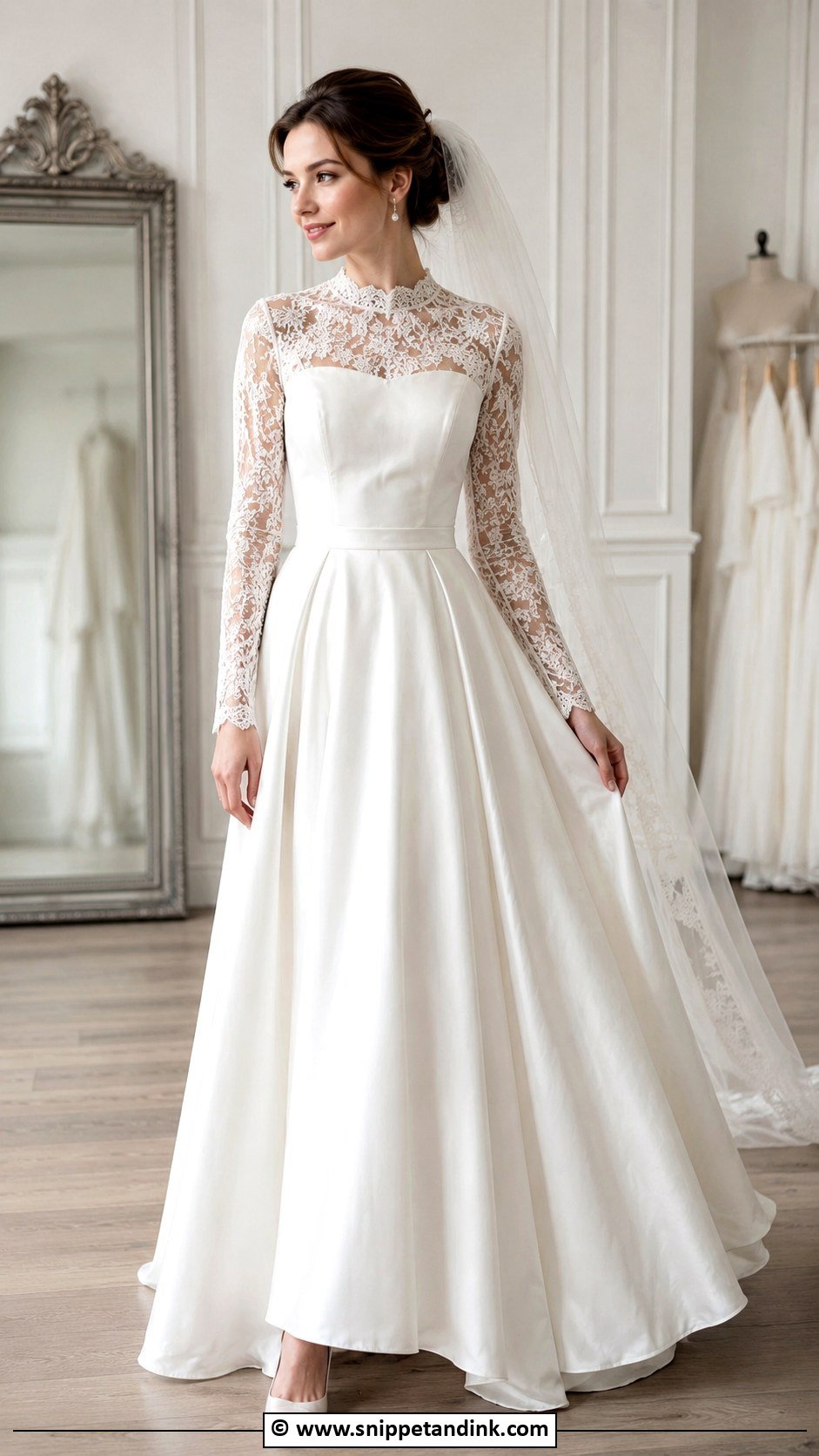
Sleeves carried a lot of the romance in Victorian fashion, and they still do. They can be sheer, fitted, bishop-shaped or slightly puffed at the shoulder. A plain crepe or satin body with lace sleeves gives you detail without a gown covered head to toe. Add a high neck or illusion collar for a stronger period feel. Lace sleeves need a little stretch or a button cuff, or you’ll struggle to get your hand through. Pearl studs, a soft veil and closed-toe heels.
5. Victorian Puff Sleeve Wedding Dress
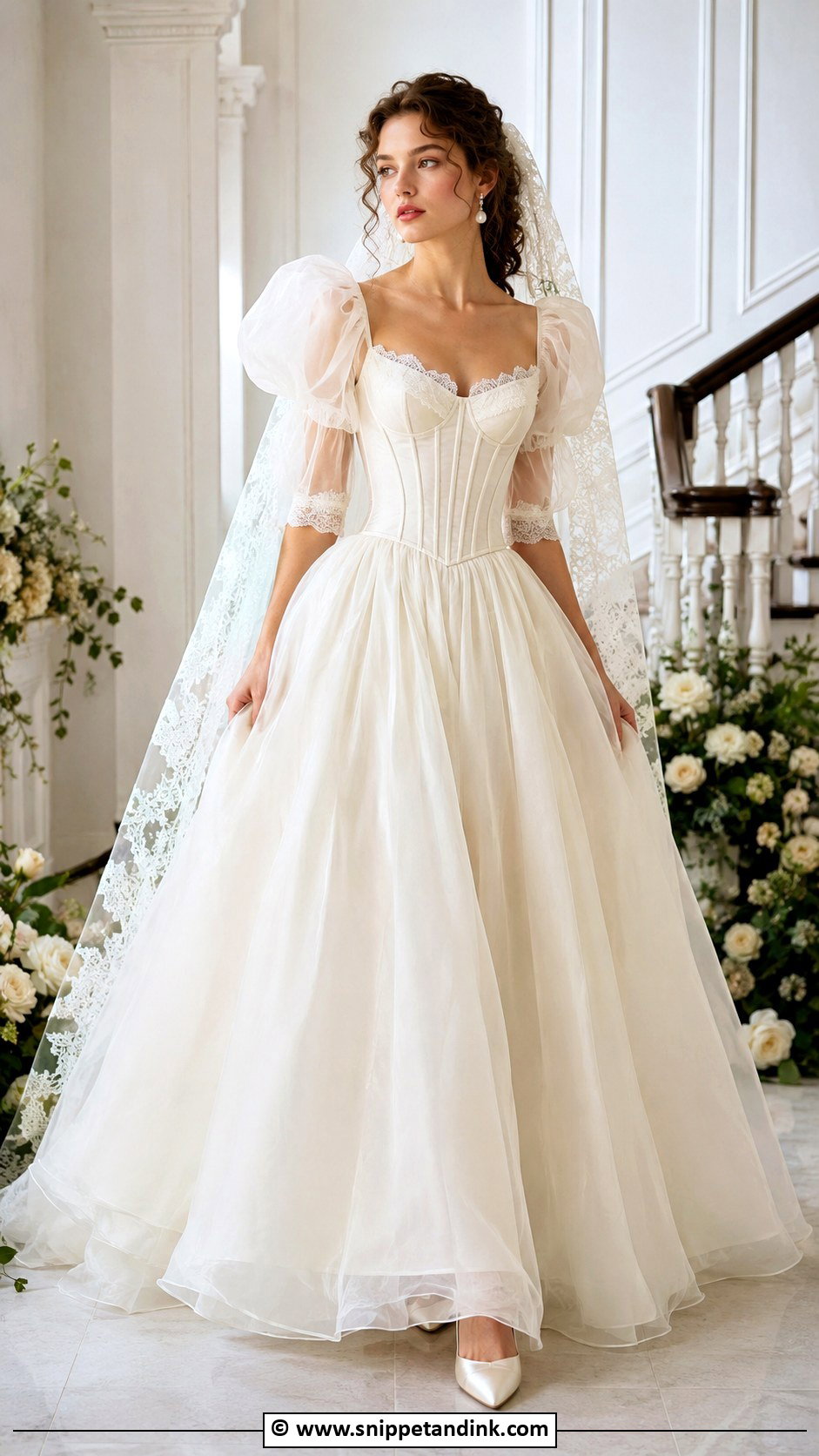
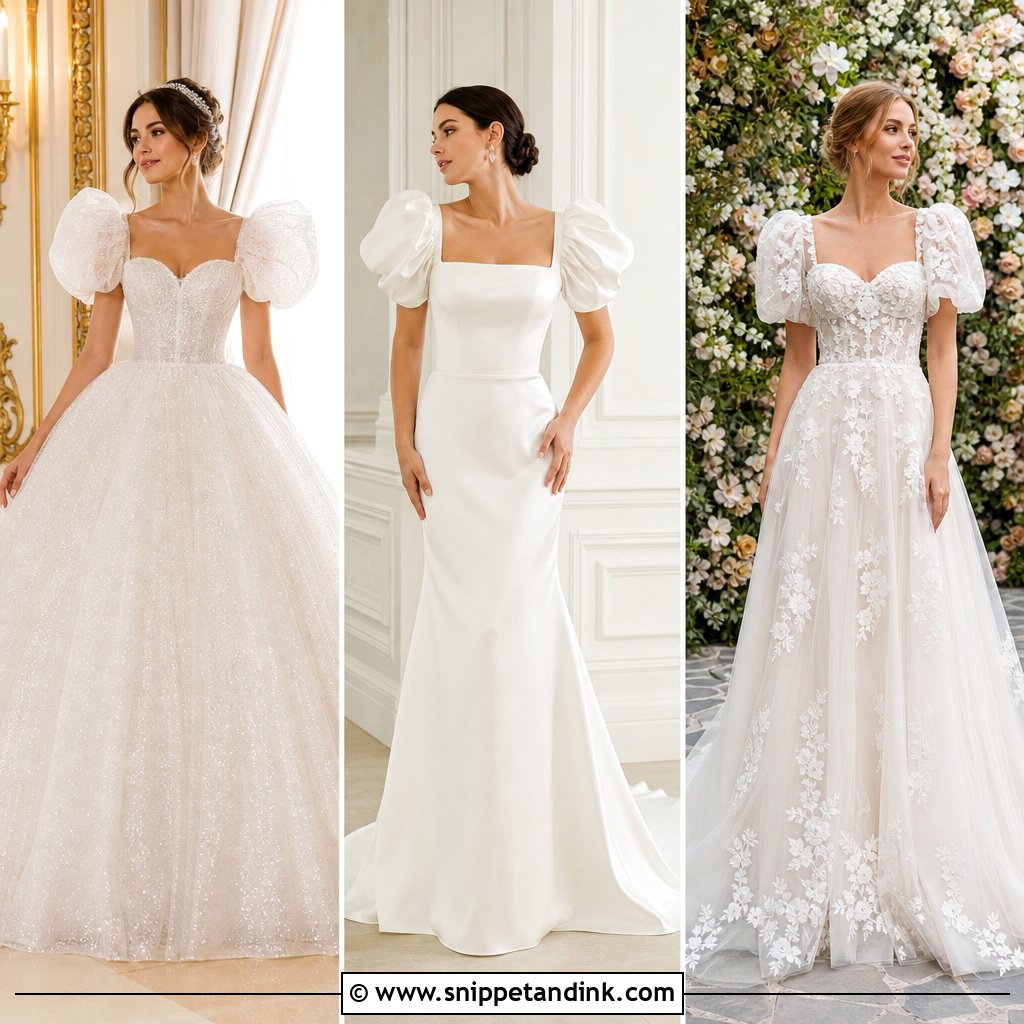
Puff sleeves bring drama without beading. They can be short and rounded, long with fullness at the shoulder, or sheer with a fitted cuff. Volume at the shoulder makes the waist look smaller by contrast, so a defined waist, a corset bodice or a basque point gives the best shape. Good puff sleeves have netting inside to hold their round; without it they collapse by mid-afternoon. A lace veil, vintage-style earrings and soft curls pinned back suit them.
6. Victorian Bustle Wedding Dress
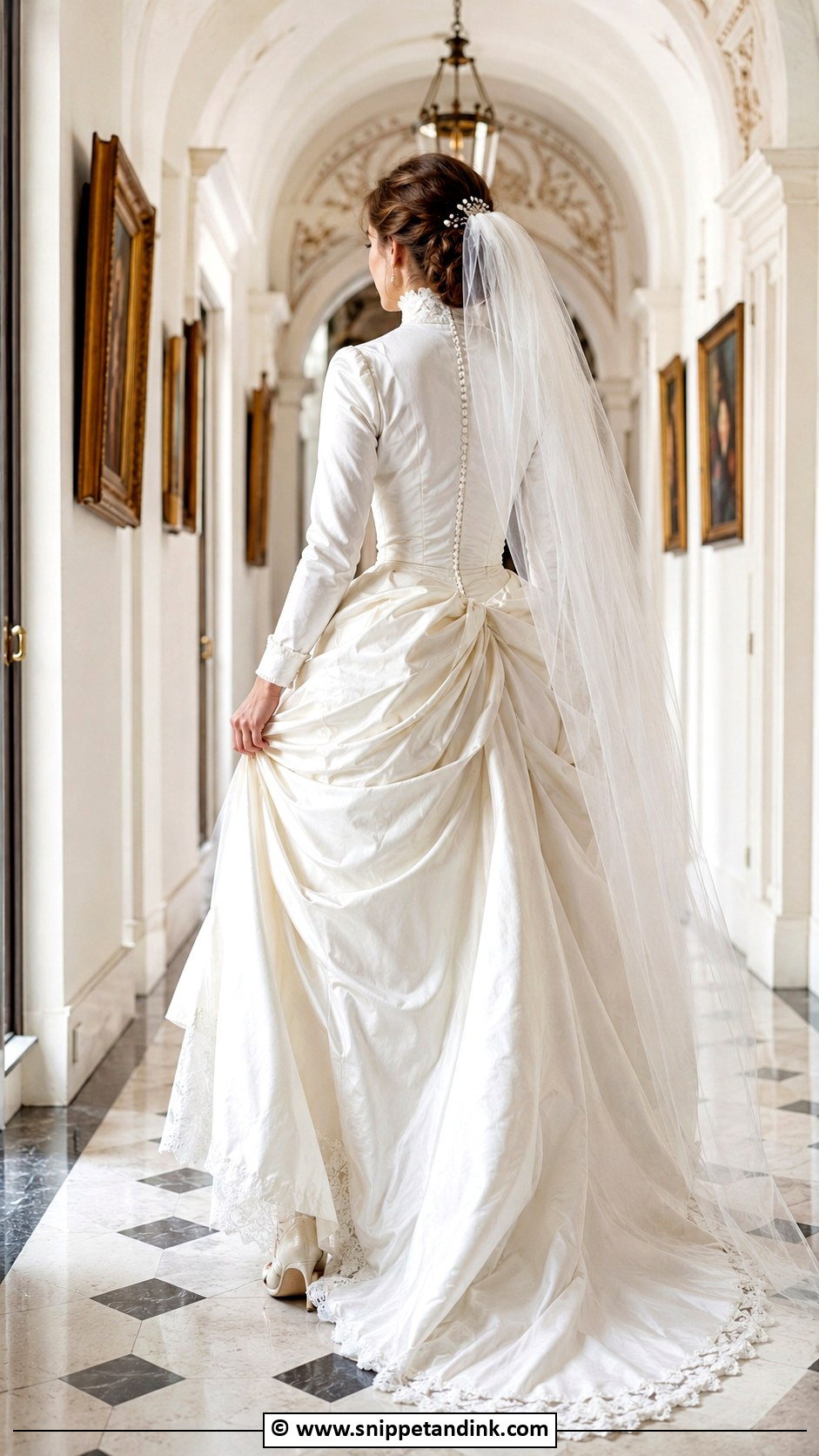
The bustle is all about the back. Volume or draping at the rear of the skirt gives movement as you walk, and modern versions keep it soft: gathered fabric, layered overskirts or a train that buttons up for dancing. Satin, taffeta and structured organza hold a bustle shape best; soft chiffon won’t. A fitted bodice balances the volume behind. A long veil, pearl hair pins and heeled pumps keep it sophisticated rather than theatrical.
7. Victorian A Line Wedding Dress
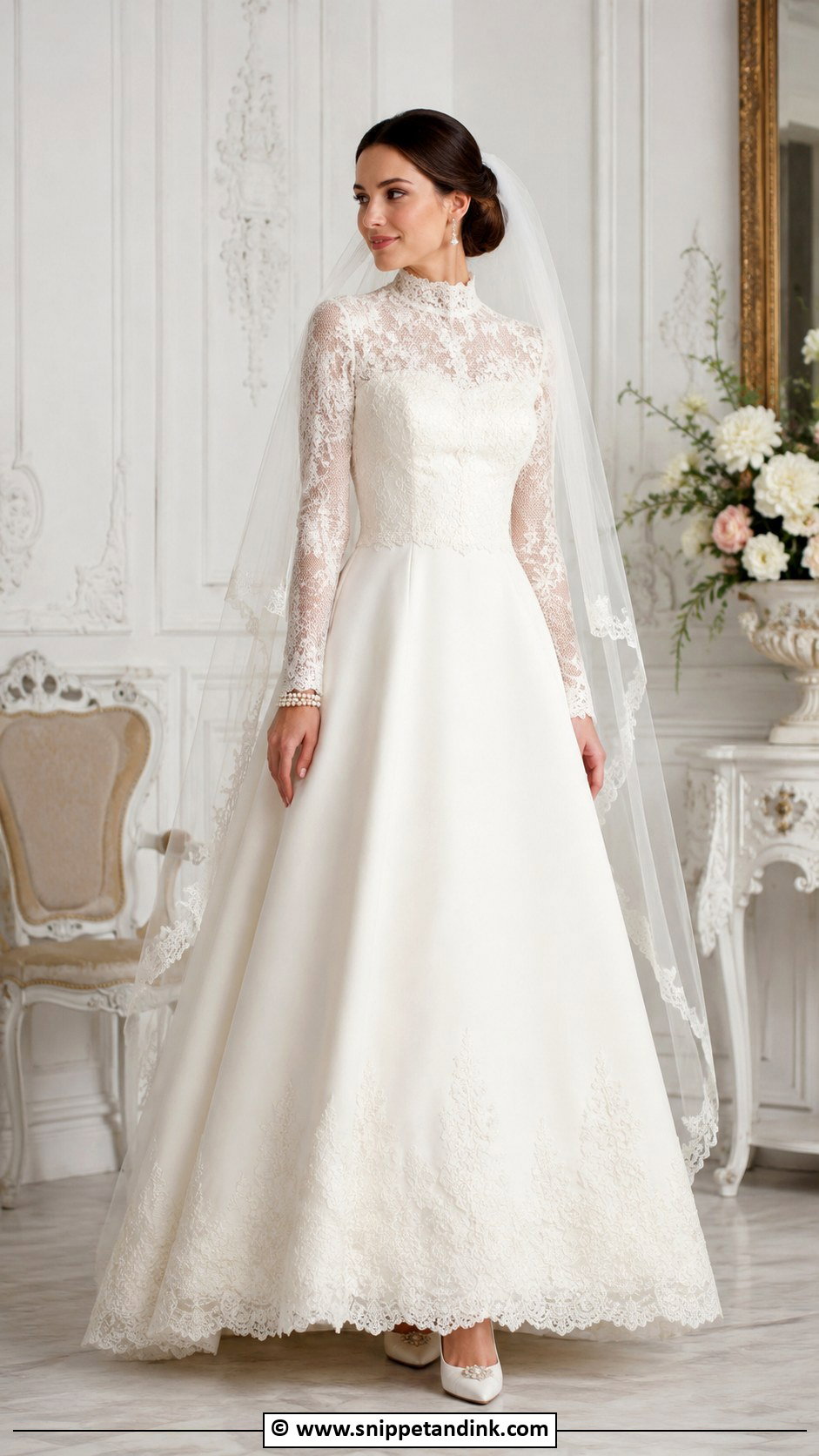
The A-line is the easiest Victorian-inspired gown to live in all day. A fitted bodice and gently widening skirt flatter most bodies and let you walk and dance freely. Add the era through one or two details: a high neckline, lace sleeves, covered buttons or a corset-style waist. A-lines also suit lighter fabrics, so you get the romance without the weight. A fingertip veil, a pearl bracelet and classic heels finish it.
8. Victorian Tulle Wedding Dress
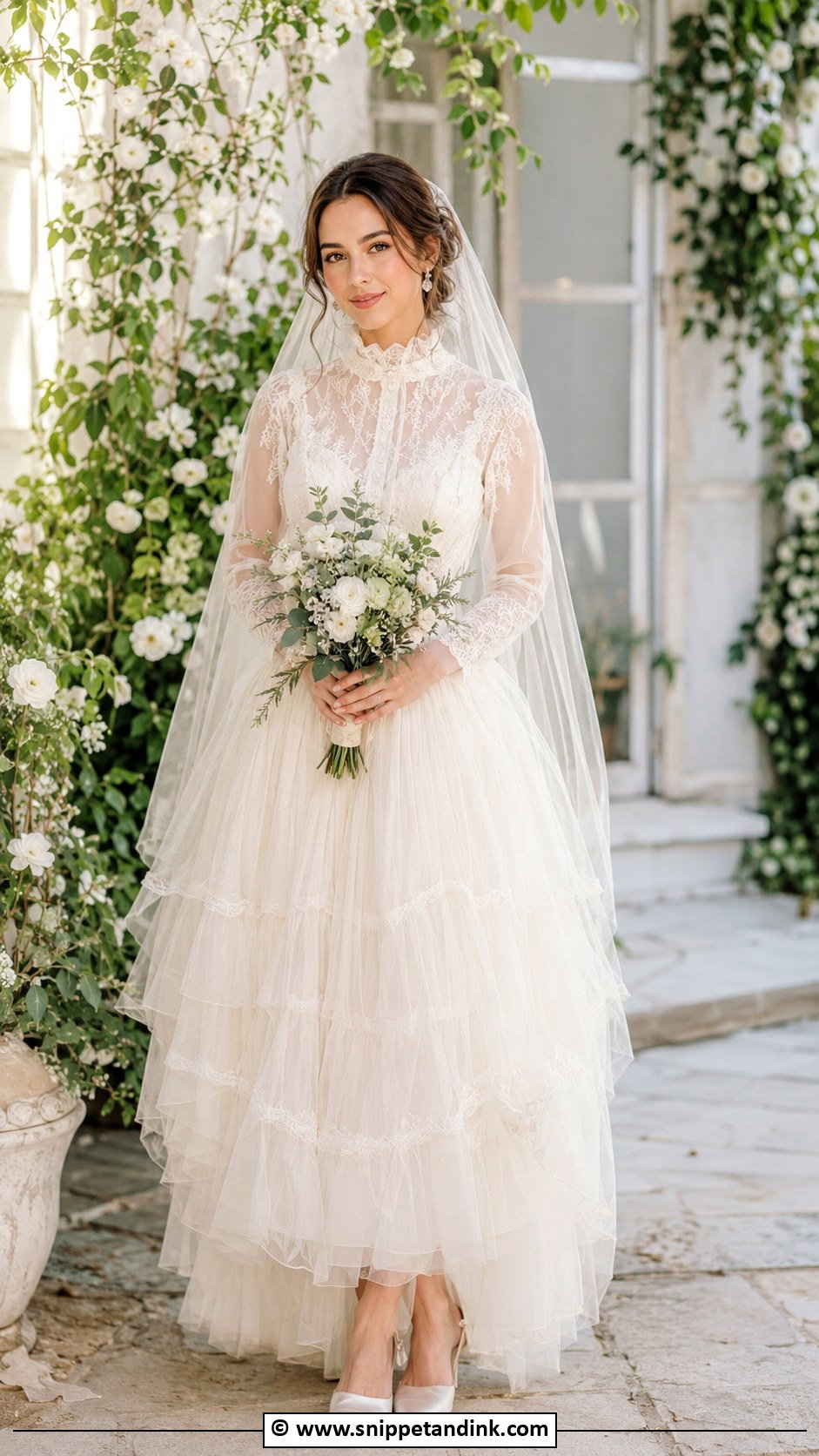
Tulle gives volume without the heaviness of satin or brocade. A high-neck lace bodice over a layered tulle skirt is a dreamy pairing with a clear Victorian link. Dotted tulle, embroidered tulle or sheer tulle sleeves add texture. Keep the bouquet simple so it doesn’t fight the layers. One practical point: tulle catches on rose bushes and rough brick, which historic gardens tend to have, so walk the route first. A delicate veil, pearl earrings and satin shoes suit estates and gardens.
9. Victorian Organza Wedding Dress
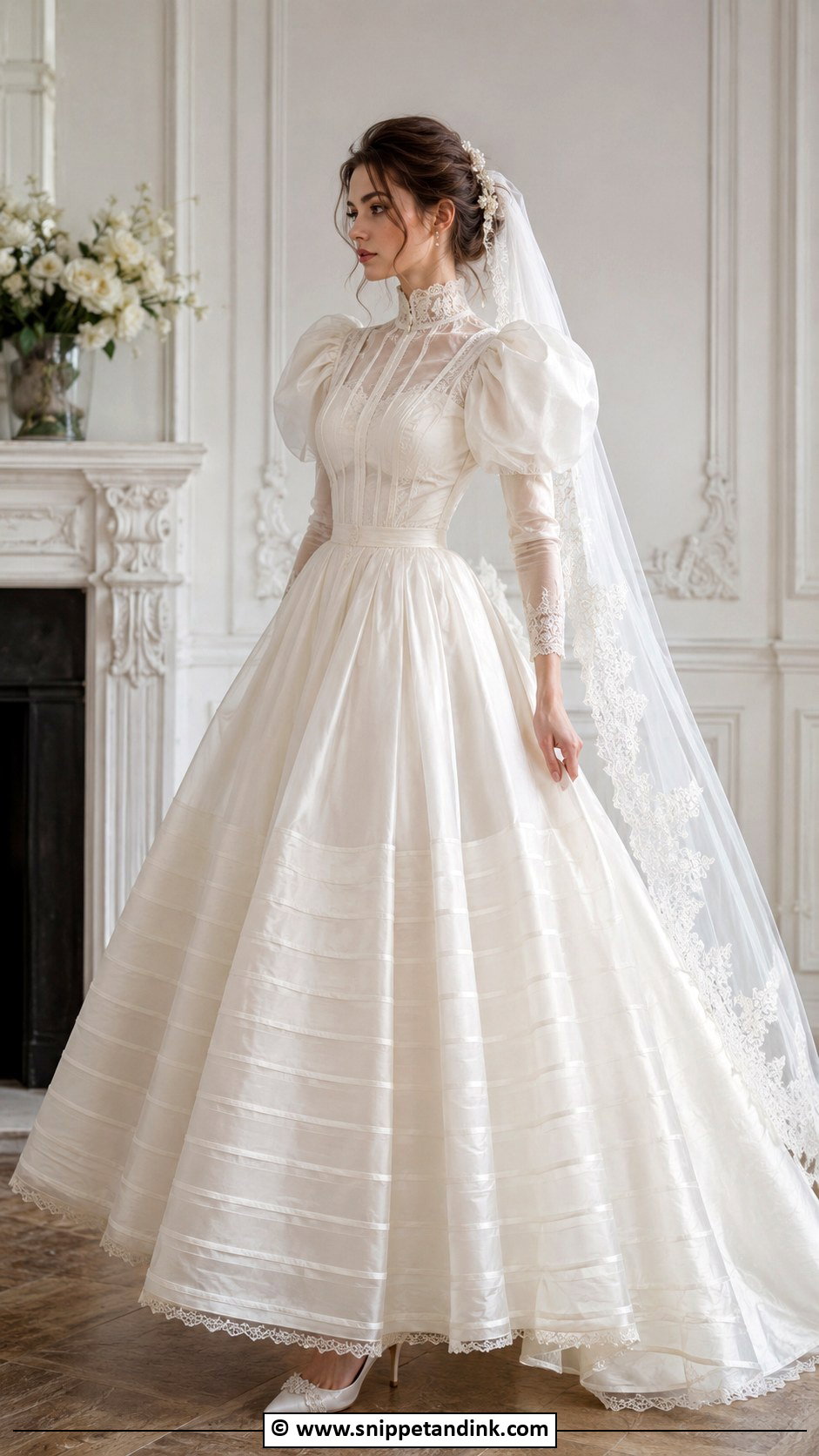
Organza is crisp but light, so it holds a sculpted shape without the weight. Puff sleeves, a high collar, a full skirt or a stiff overskirt all suit it, and its sheen reads especially well in natural light. Ivory feels vintage; bright white feels modern. Organza creases sharply, though, and those creases don’t fall out on their own, so plan for professional steaming close to the day. A lace-trim veil, pearl comb and pointed heels complete it.
10. Victorian Brocade Wedding Dress
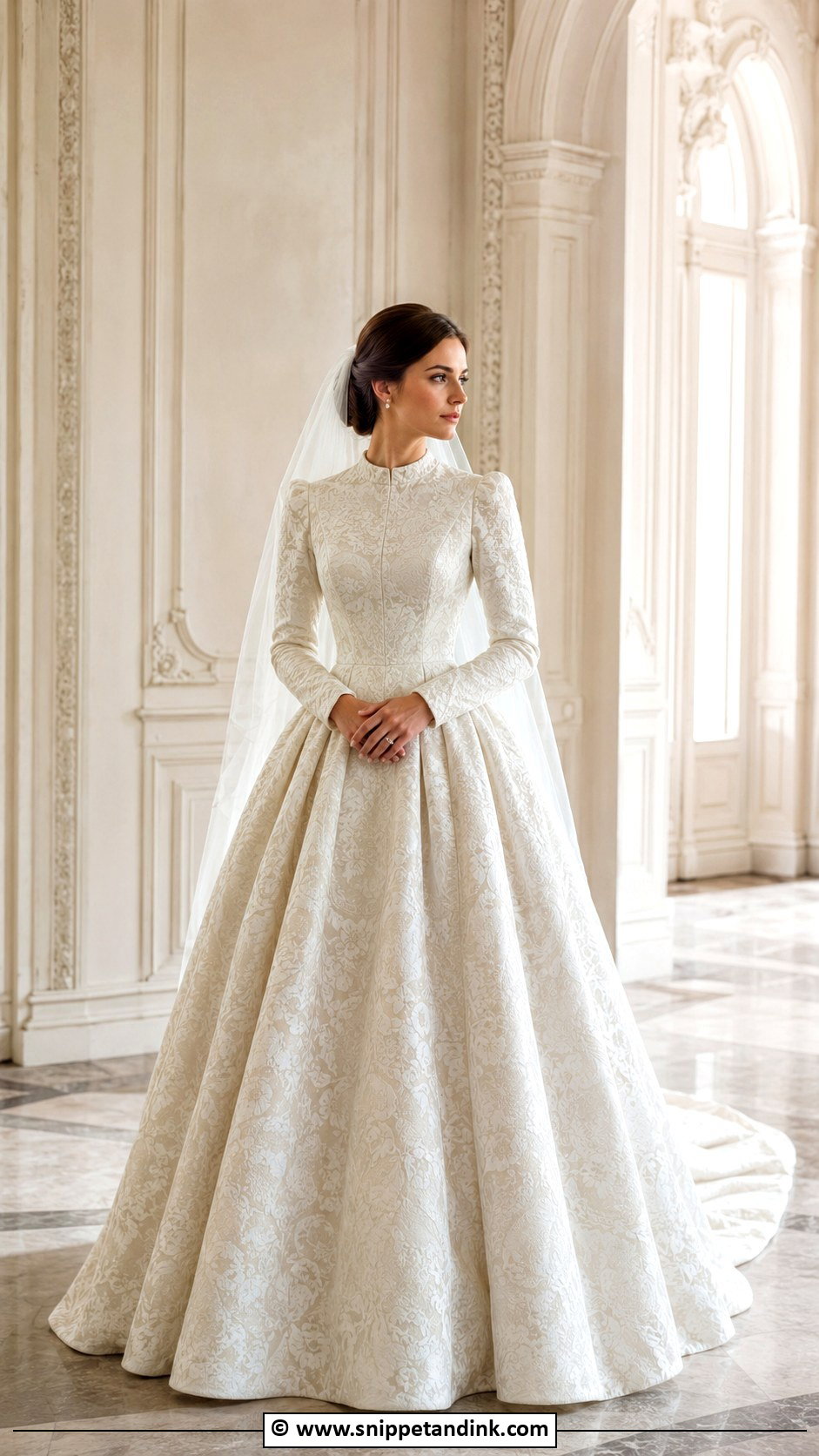
Brocade has the pattern woven into the fabric, so the gown has depth and texture without any beading. A fitted bodice, full skirt and long sleeves make it regal. For a softer look, choose a small floral pattern in ivory or champagne. Brocade is heavy and fairly stiff; it’s excellent for a cold month and a long stately walk, less so for a summer garden. Pearl studs, a simple veil and satin pumps are plenty for formal indoor and winter weddings.
11. Victorian Basque Waist Wedding Dress
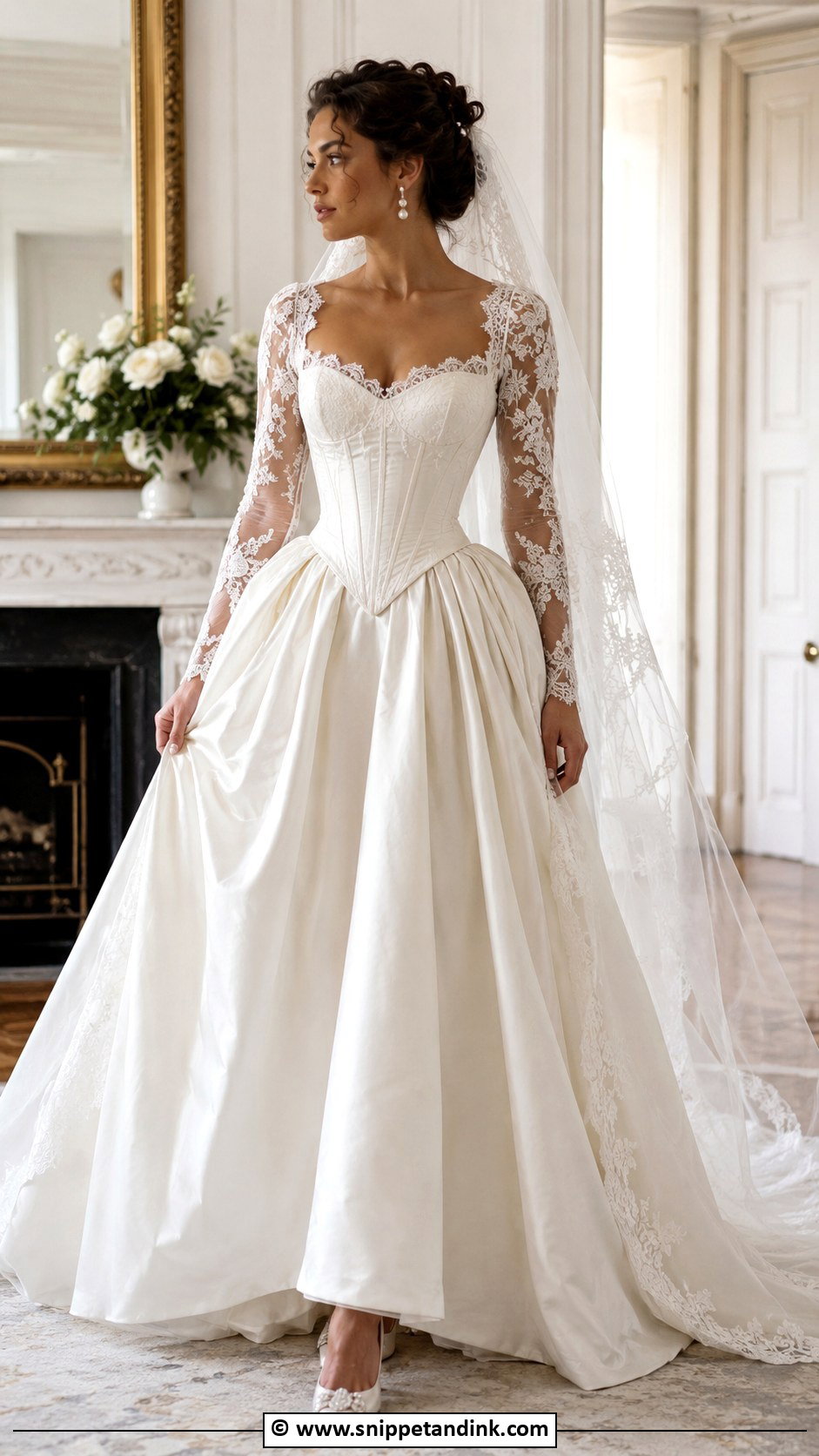
The basque waist dips into a point just below the natural waist, and that point lengthens the torso. With a corset bodice and a full skirt it gives a sculpted, romantic outline. Lace, satin or brocade set how ornate it feels. Long sleeves and a high neck lean historical; an illusion neckline keeps it modern. The point has to land at the right spot for your body, so it’s a measurement to fuss over at fittings. Long veil, pearl earrings, polished updo.
12. Victorian Illusion Neck Wedding Dress
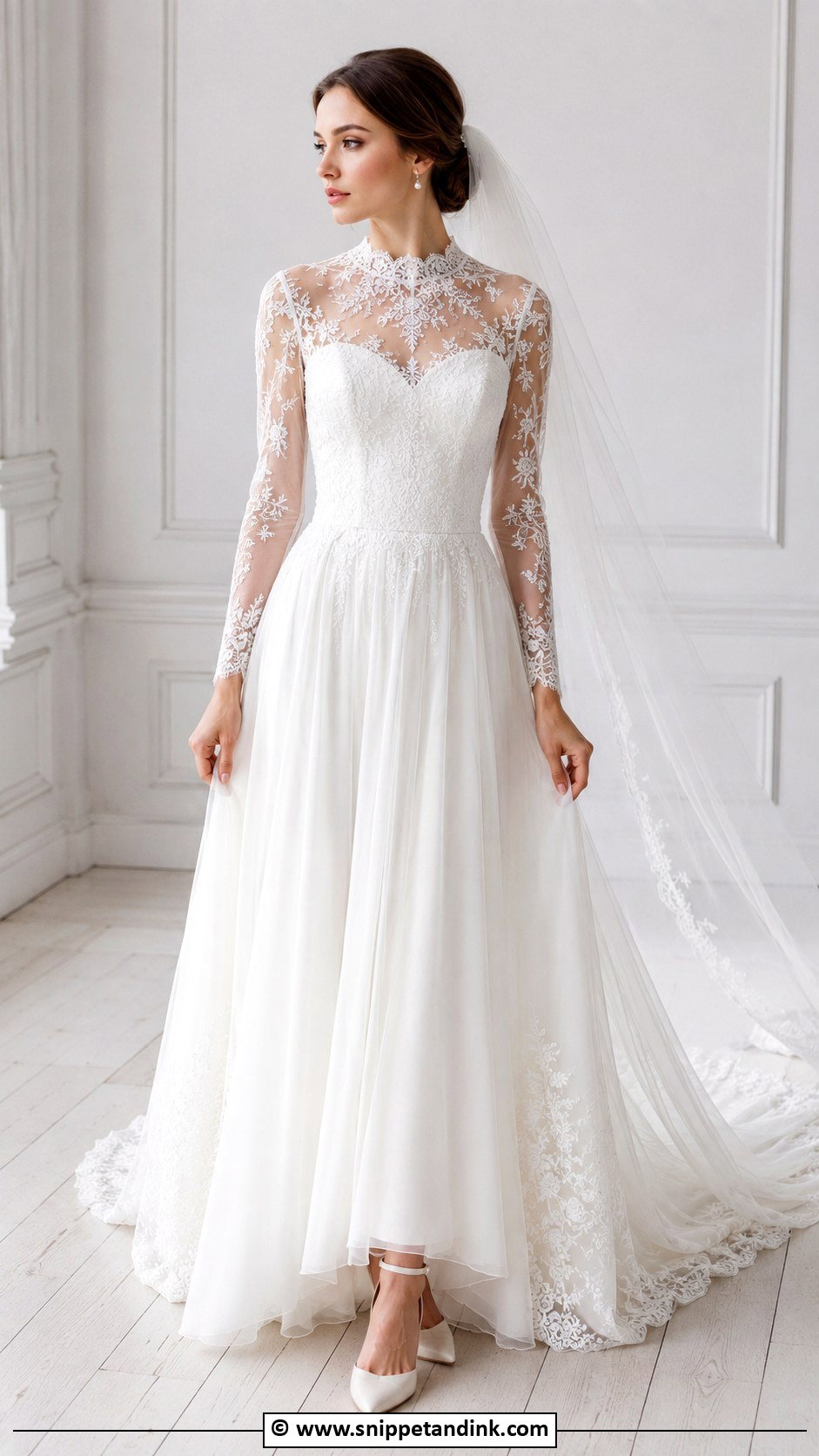
An illusion neckline gives you the line of a high collar with almost none of the weight. Sheer tulle or mesh embroidered with lace, pearls or floral appliqués makes the neckline look delicate rather than heavy. Pair it with long sleeves, a fitted bodice and a flowing skirt. The mesh should be a close match to your skin tone; a shade off shows clearly in flash photos. Simple earrings and a veil set below the crown keep the neckline visible.
13. Victorian Button Back Wedding Dress
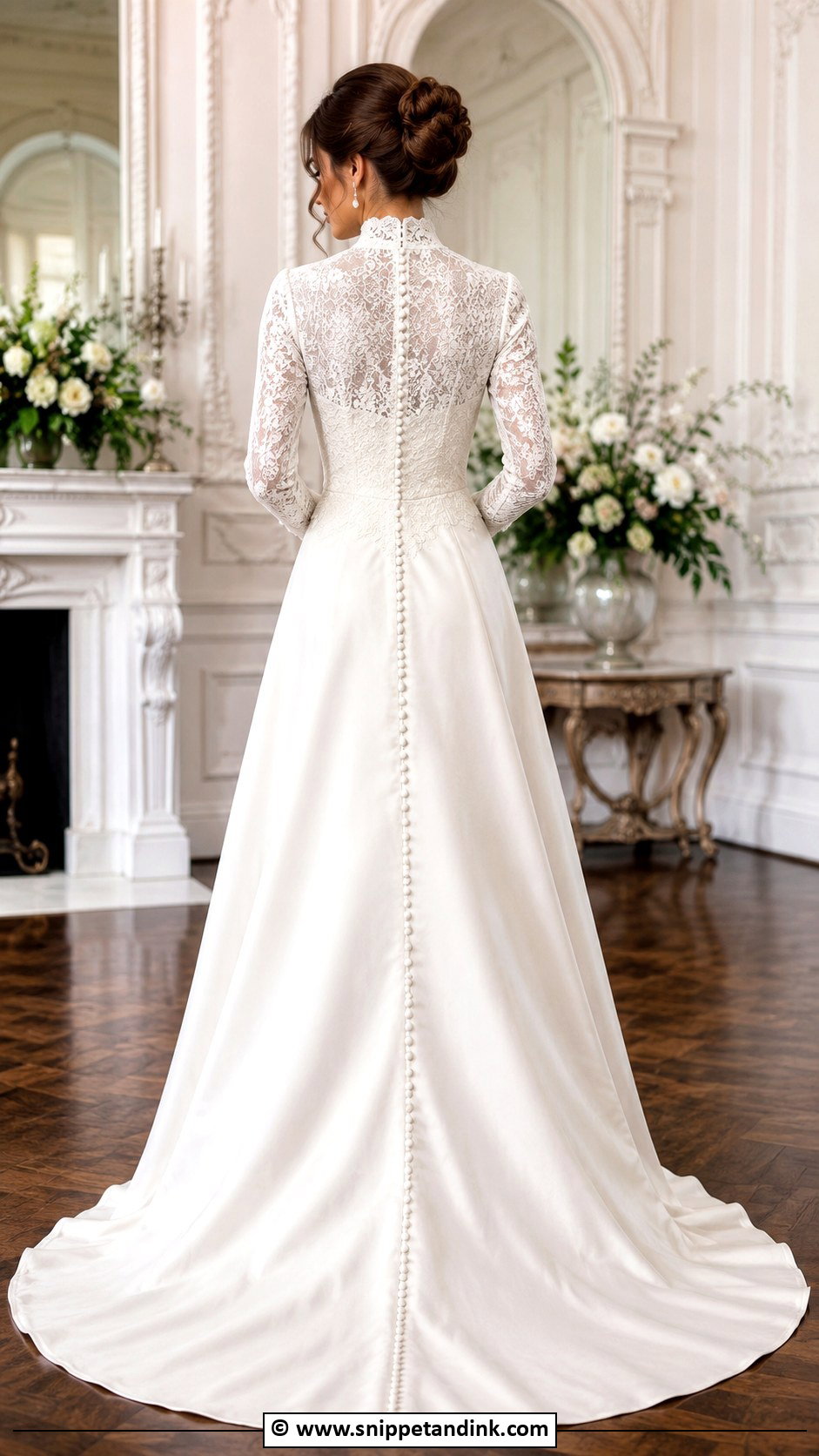
Tiny buttons down the back say Victorian at a glance. The front can stay simple while the back does the talking. Look for covered buttons from collar to waist, or all the way down the train. Real buttons take a long time to fasten, so most good gowns hide a zip underneath and keep the buttons decorative; ask which yours has, and allow time if they’re real. Lace sleeves, a fitted bodice and a soft A-line skirt. Wear your hair up so the back shows.
14. Victorian Ruffle Wedding Dress
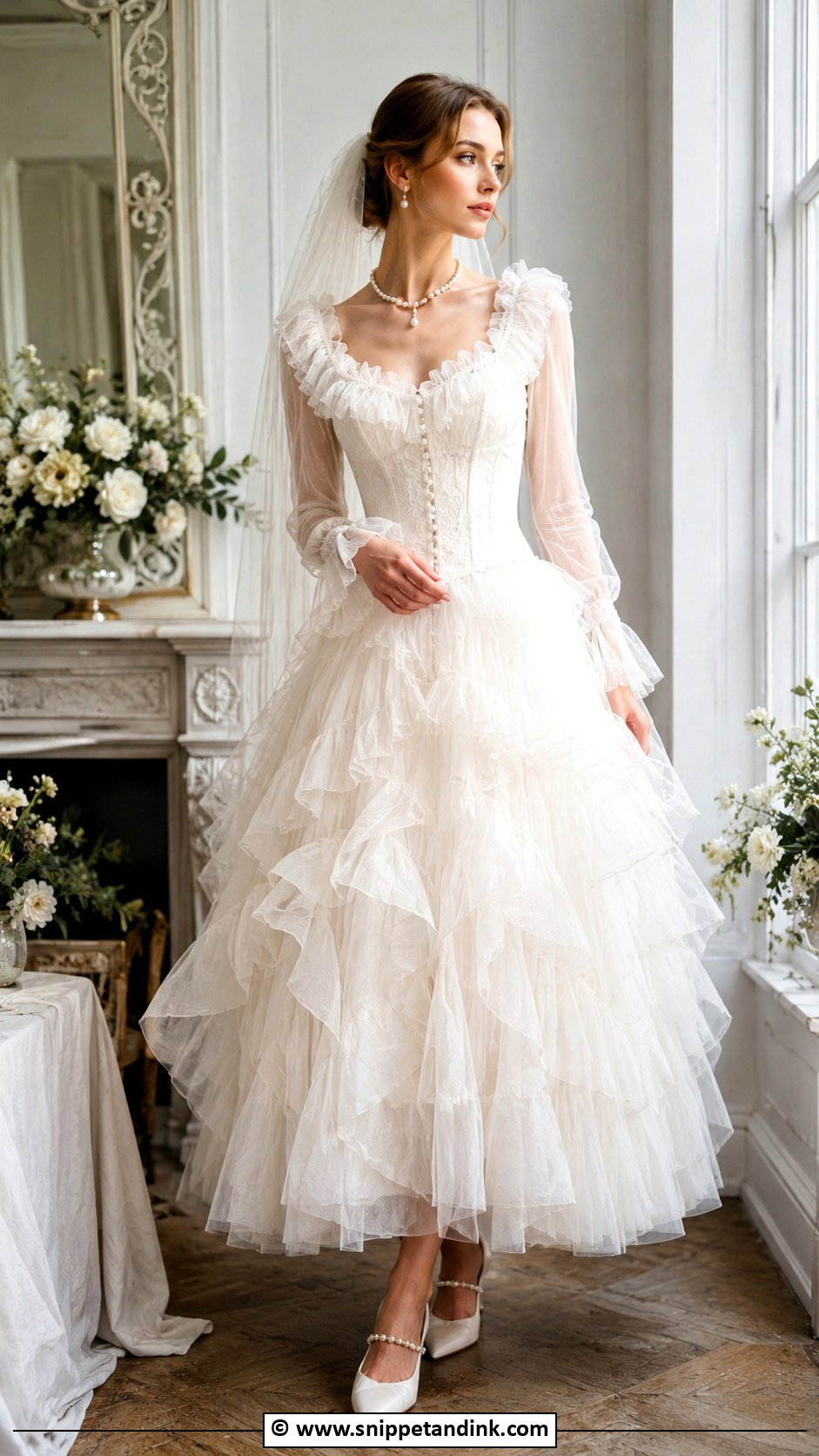
Ruffles add movement and texture, and the trick is restraint. A ruffled skirt wants a clean, fitted bodice; a ruffled collar wants a smoother skirt. Light fabrics like tulle, chiffon or organza keep ruffles airy instead of bulky. Many tiers of ruffles add width at the hip, which I’d avoid on a petite frame. Simple pearl accessories, a soft veil and elegant shoes finish it.
15. Victorian Sheer Sleeve Wedding Dress
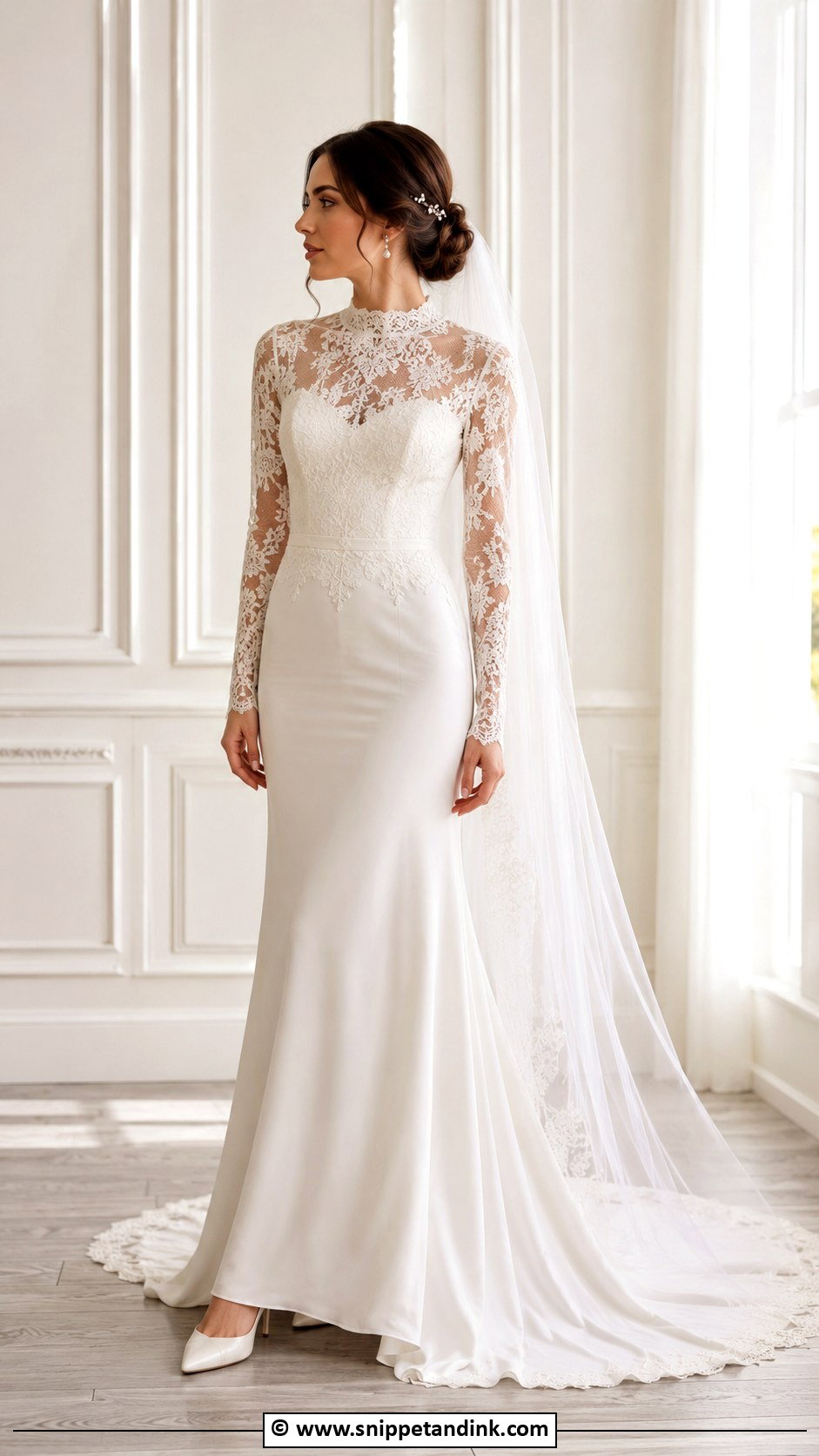
Sheer sleeves keep long sleeves light. Lace, tulle or organza give coverage while letting skin show through. They pair with a high neck, a corset bodice or a fitted waist. Floral embroidery or lace cuffs add a romantic finish. Sheer sleeves are also the most comfortable long sleeve in a warm venue, which makes them a smart choice for spring and early autumn. A low bun, pearl pins, a soft veil and closed-toe satin heels.
16. Victorian Tea Length Wedding Dress
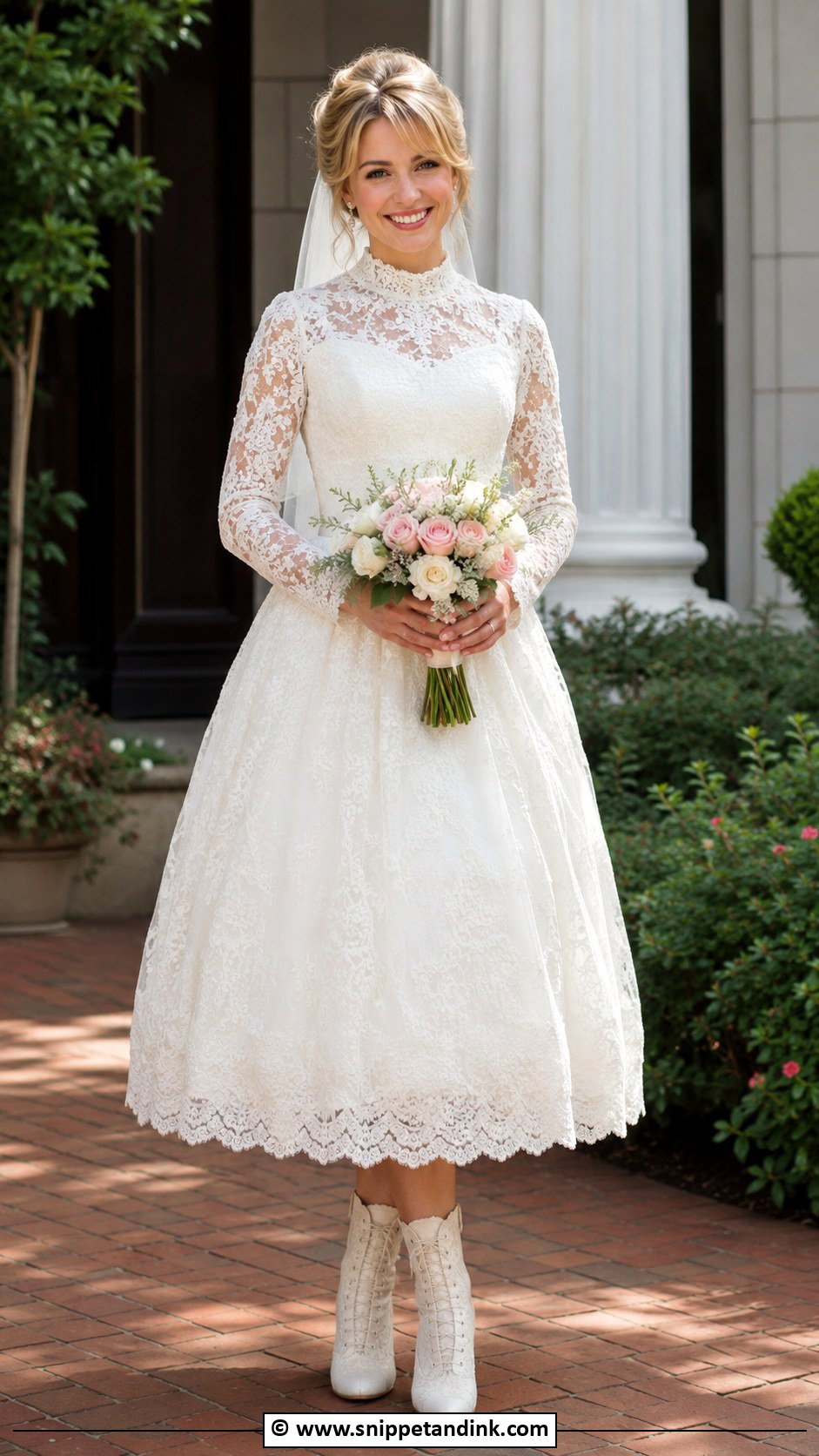
Tea length falls between knee and ankle, so you get Victorian detail without managing a floor-length hem. Keep the era with a high lace neckline, long sleeves, a corset bodice or a structured skirt. Lace-up bridal boots are the natural shoe here, and they show off at this length. A small veil, pearl earrings and a soft bouquet finish it. Courthouse and garden weddings suit it best.
17. Victorian Lace Overlay Wedding Dress
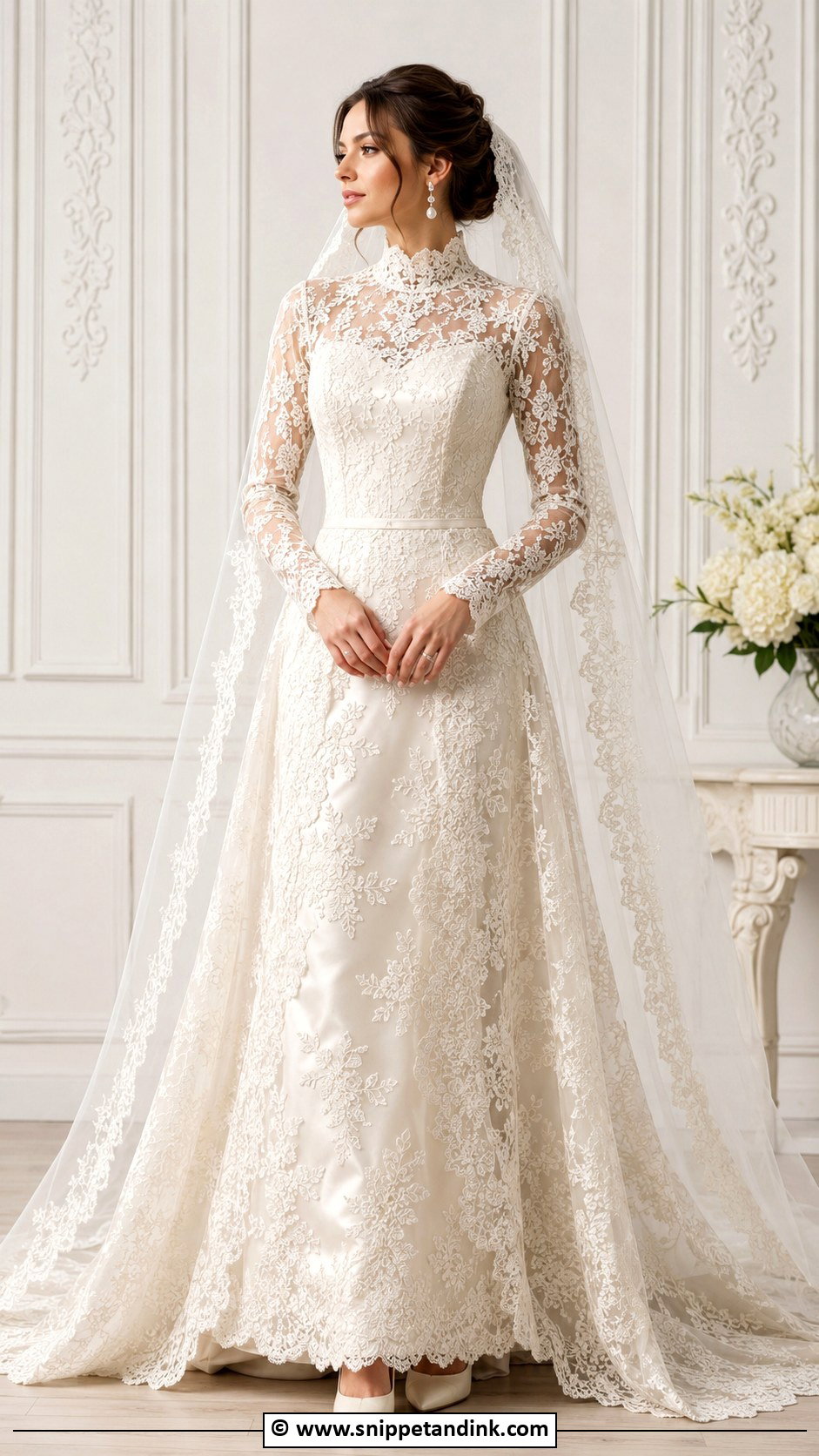
Lace layered over satin, crepe or tulle can turn a plain gown Victorian. A high neckline, long sleeves and a fitted waist make it feel more authentic. Floral, corded and fine Chantilly-style lace all work. Corded lace has a raised outline that reads well in photos from across a room; fine Chantilly needs close-ups to show. Pearl earrings, a lace-edged veil and ivory heels keep the accessories soft.
18. Victorian Square Neck Wedding Dress
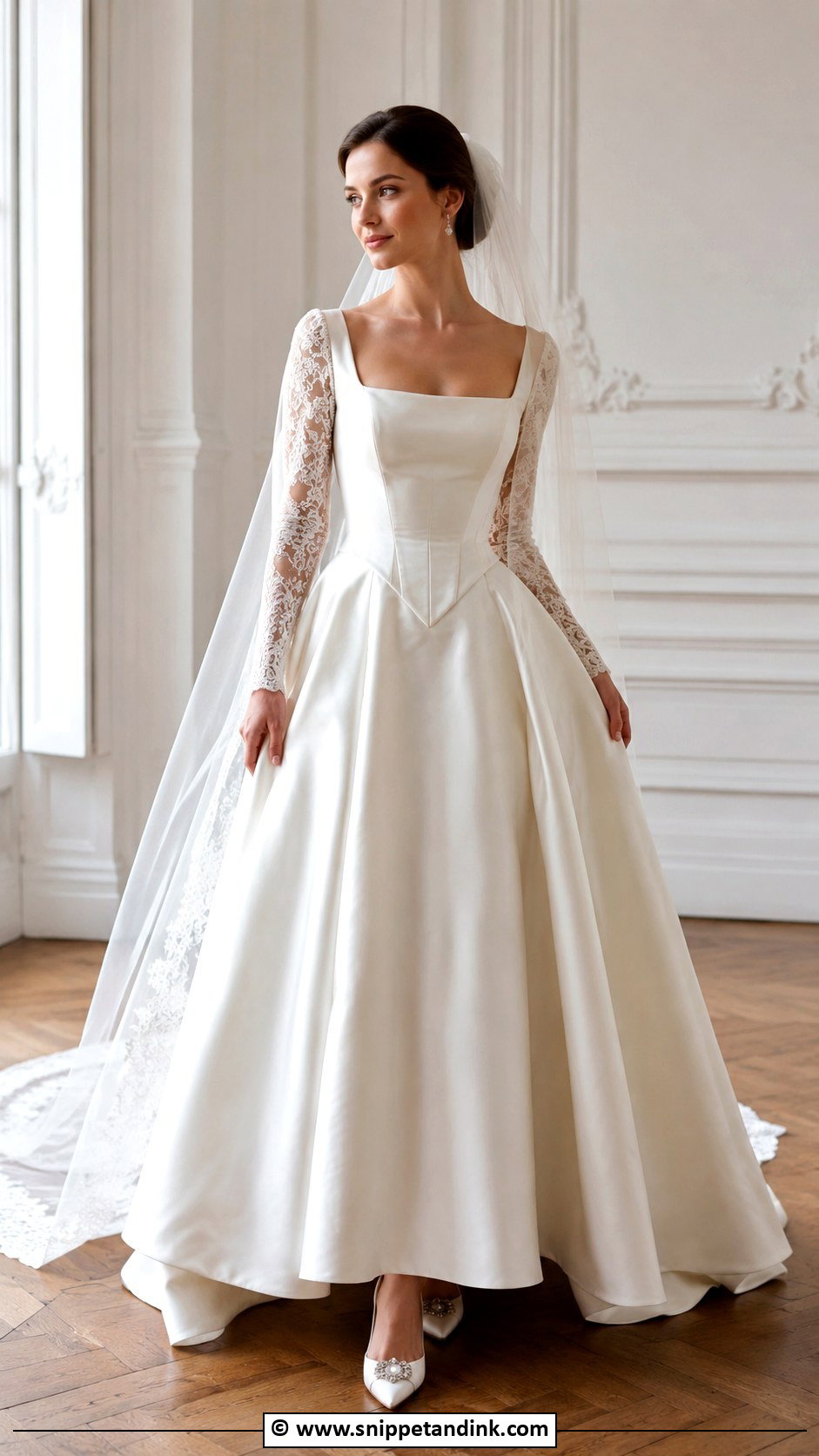
High necks are the obvious Victorian choice, but a square neckline is a clean, flattering alternative that still pairs with corset bodices, long sleeves and full skirts. Lace sleeves or a structured satin bodice keep the vintage feel strong. A basque waist or button back adds more period detail. The square neck frames the collarbone, so a pendant or pearl drop sits naturally inside it. A soft veil and bridal heels finish it.
19. Victorian Off Shoulder Wedding Dress
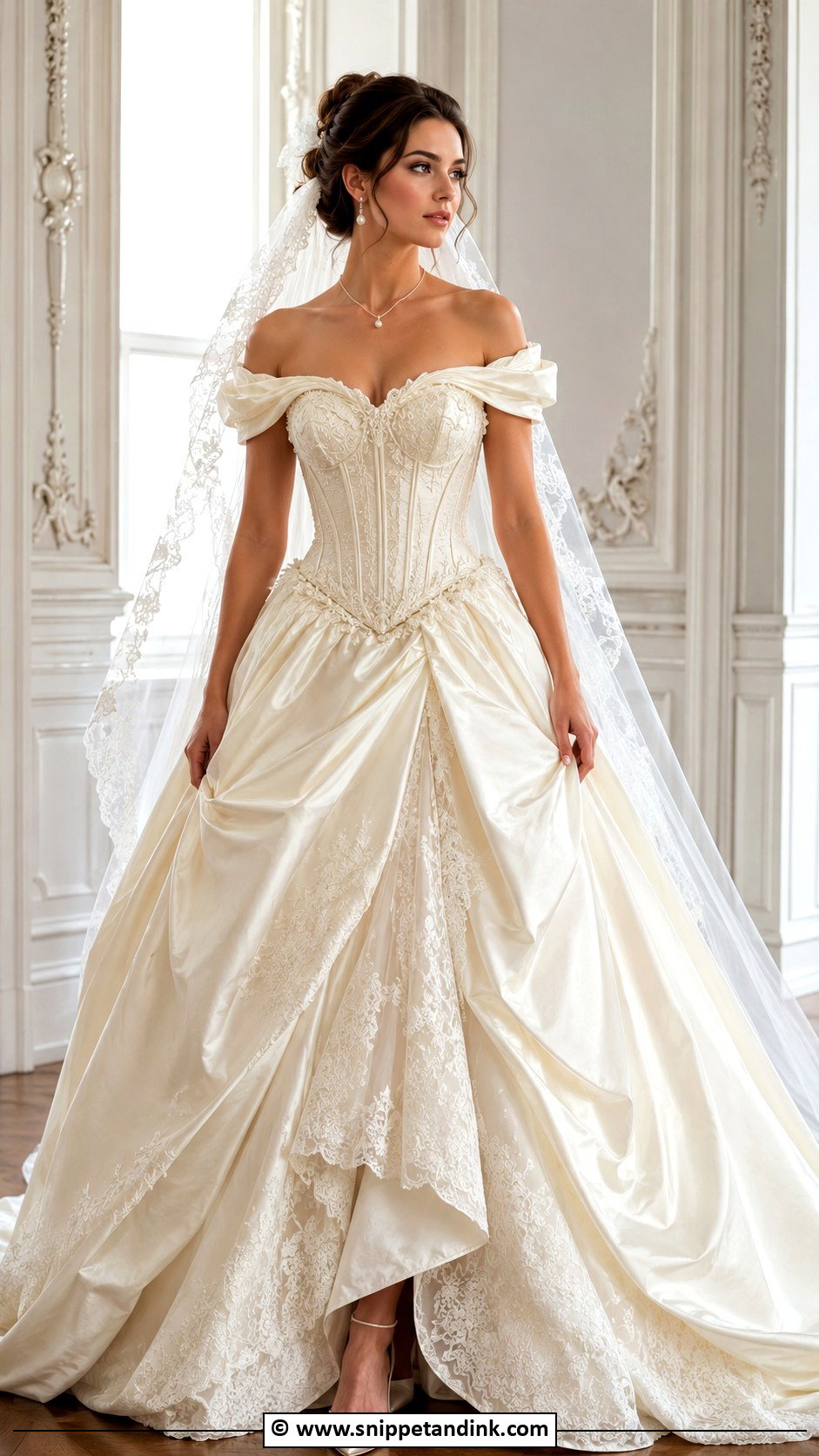
Off the shoulder with puff, lace or draped satin sleeves blends vintage romance with a softer neckline. A structured bodice and a full or A-line skirt keep it balanced, and a corset waist gives the period shape. Off-shoulder sleeves restrict how high you can lift your arms, so hug, dance and wave in the fitting room before you commit. A simple necklace, pearl earrings and a long veil worn behind the shoulders.
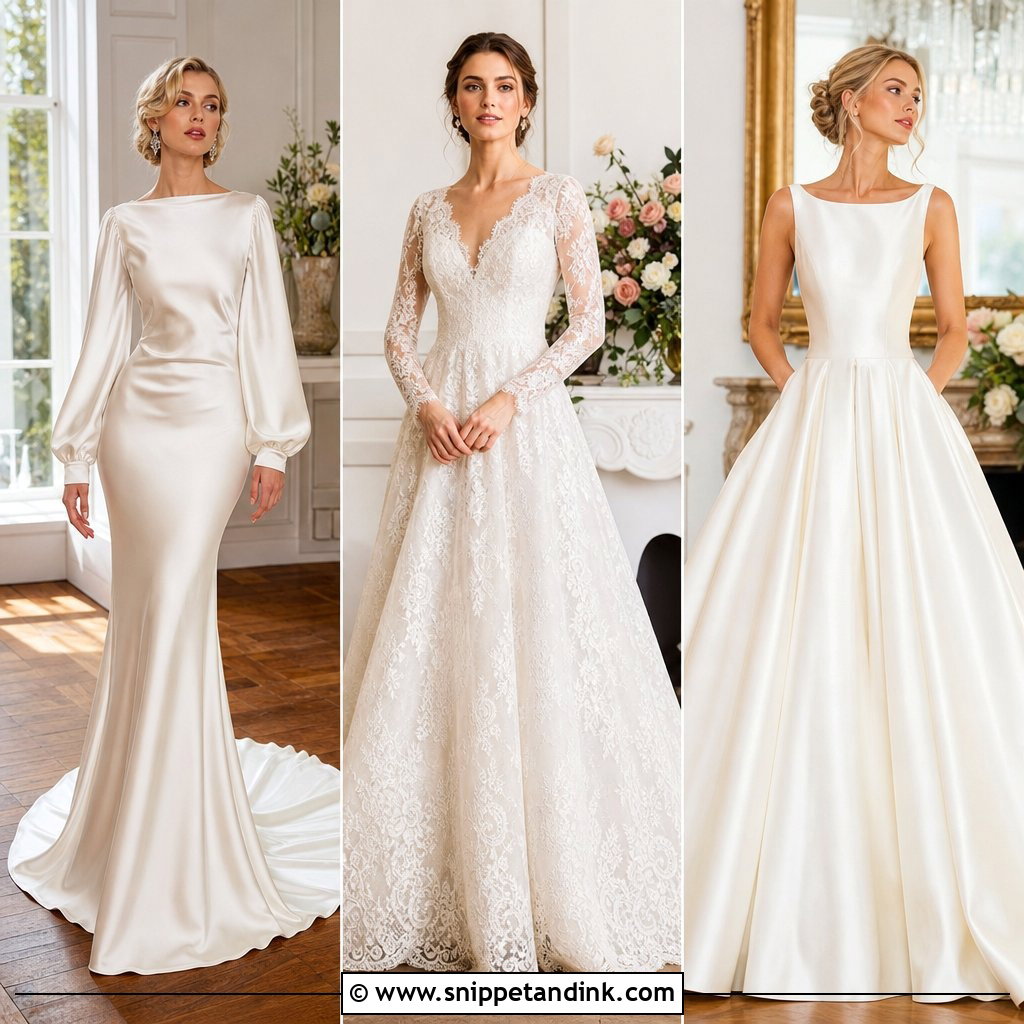
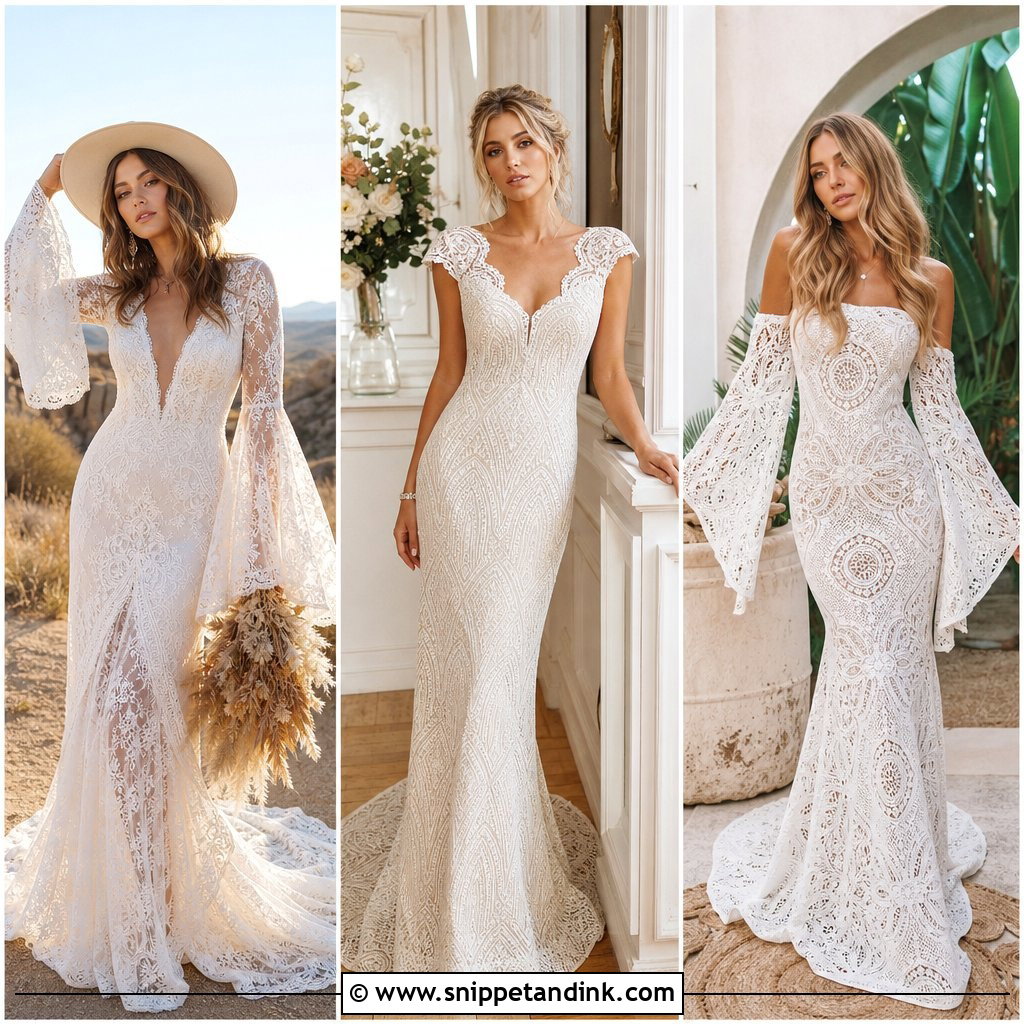
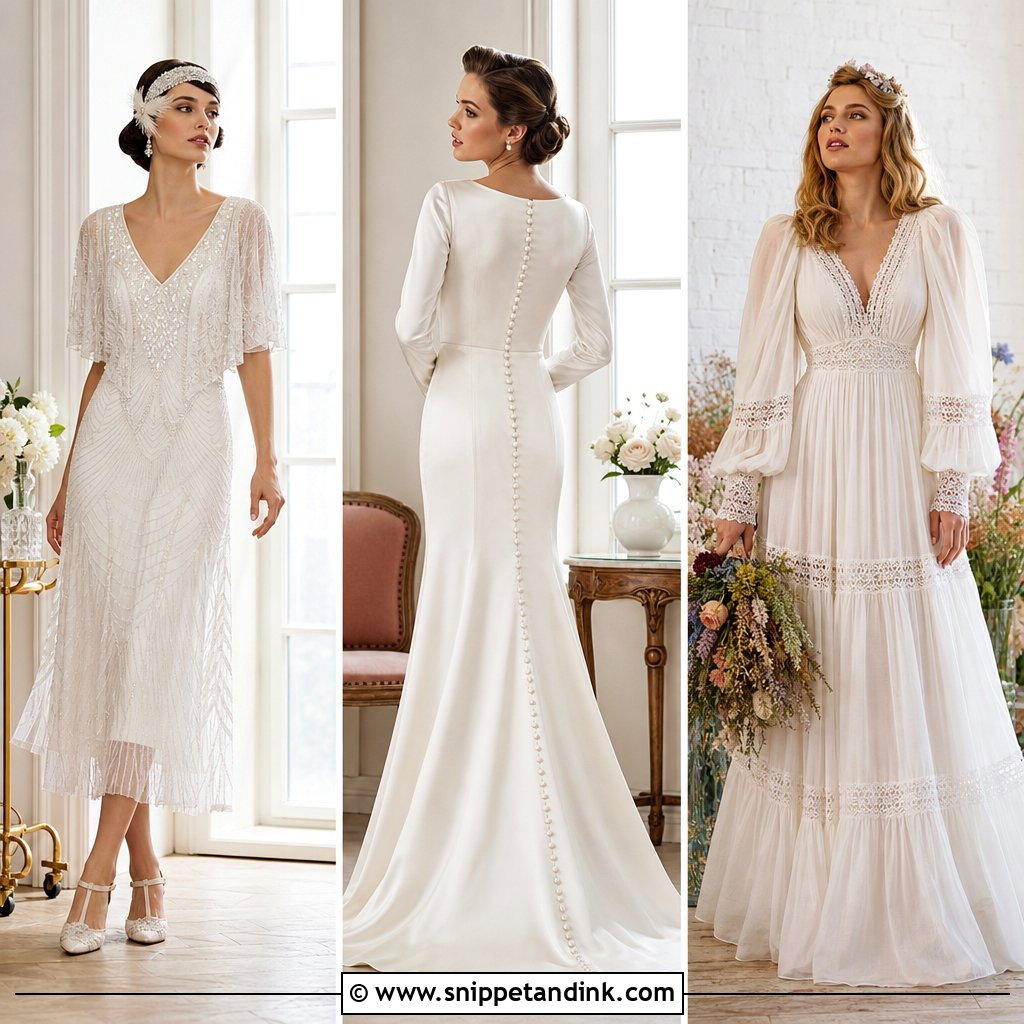
20. Victorian Embroidered Wedding Dress
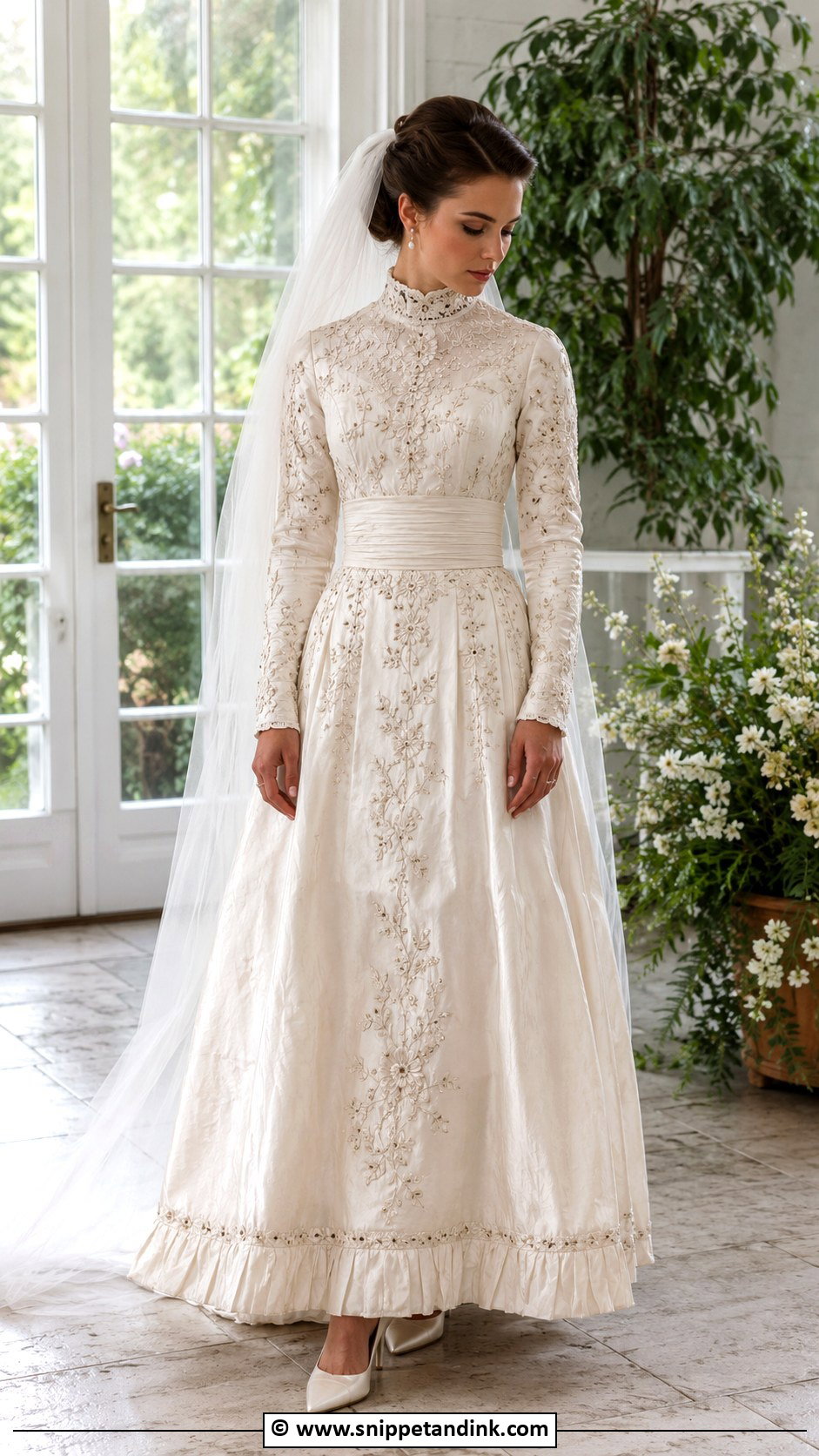
A Victorian embroidered wedding dress is about fine handwork across the bodice, sleeves, hem or train. Floral embroidery softens stiff shapes like corsets and high collars. Ivory thread gives subtle texture; light champagne thread adds contrast. Embroidery is the thing I’d look at closest in person, because machine work and hand work can look alike in pictures but feel completely different. A plain veil, pearl earrings and satin heels let the stitching lead.
21. Victorian Pearl Wedding Dress
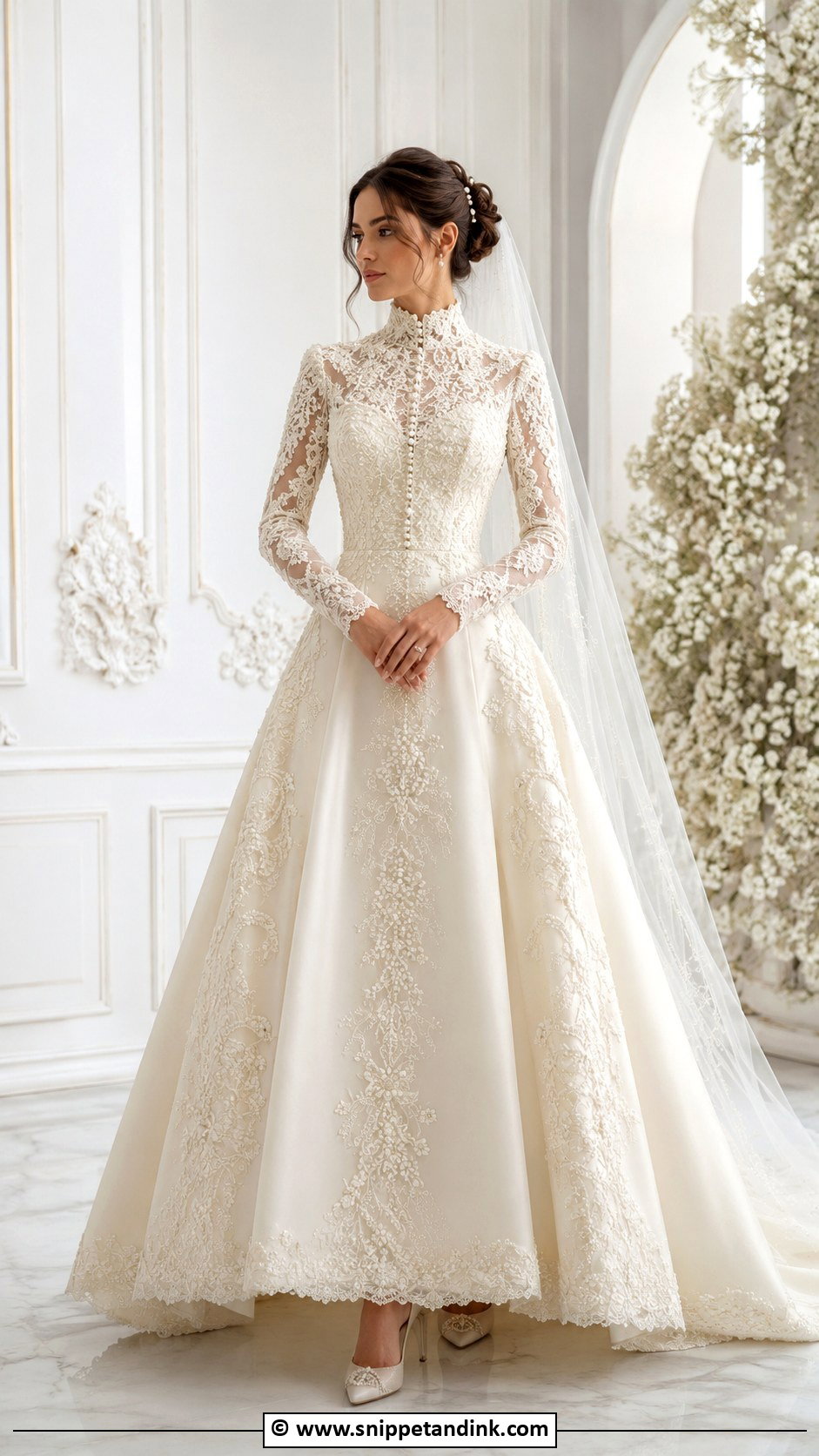
Pearls and the Victorian look go together naturally. Pearl buttons, pearl-beaded lace or tiny pearls along the neckline and cuffs suit a structured shape, such as an A-line, a corset ball gown or a high-neck long sleeve gown. Keep other jewellery minimal. A pearl-trimmed veil or pearl hair pins tie it together. Ask whether the pearls are sewn on individually; sewn pearls survive a day of hugs, glued ones don’t.
22. Victorian Cape Wedding Dress
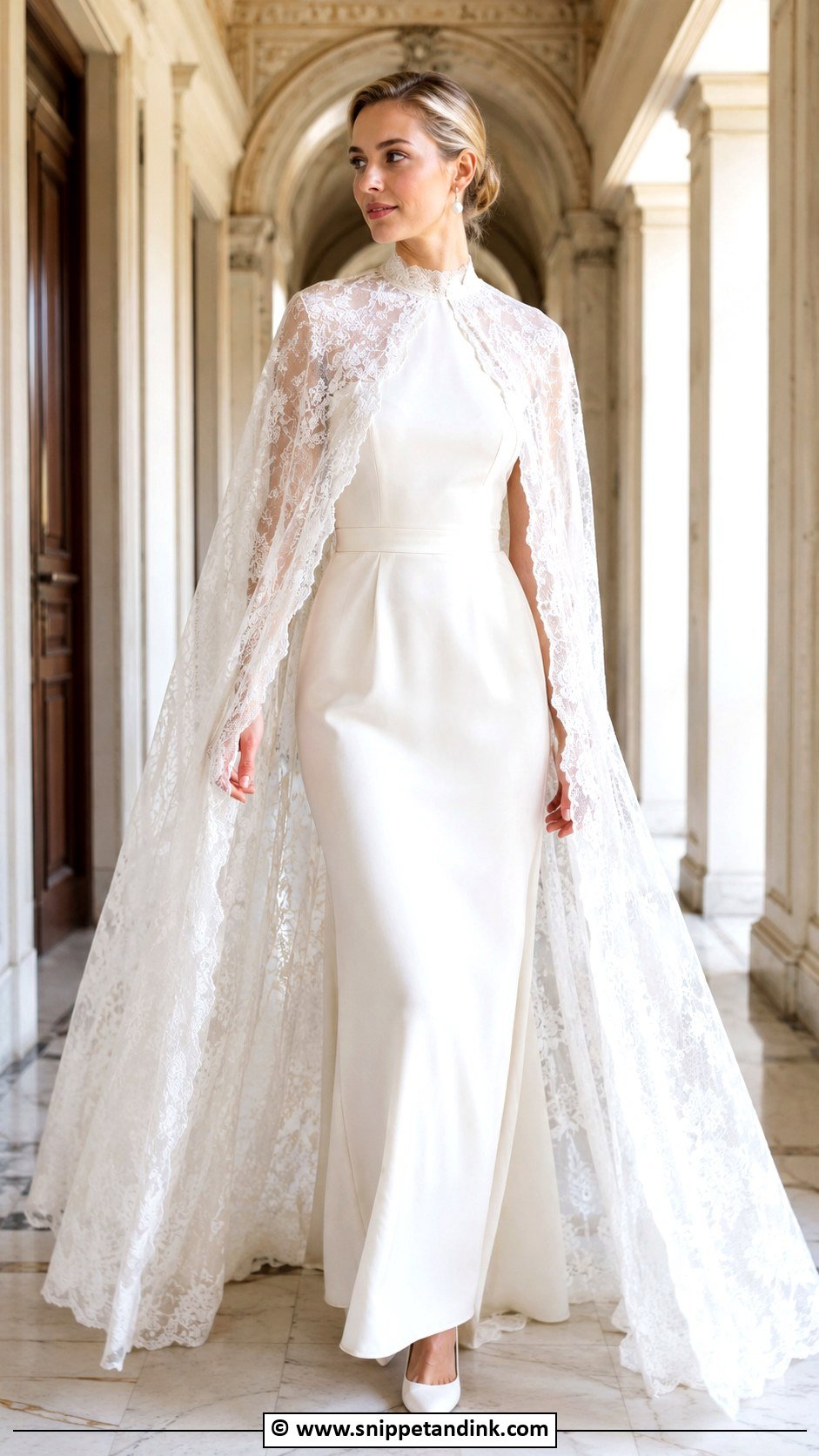
A cape gives coverage and drama without a heavy veil. Sheer lace, soft tulle or smooth satin all work depending on the formality. It sits well over a simple high-neck gown or a fitted corset dress. Floor length for a grand entrance; a short capelet for something lighter. Long capes need anchoring with hidden snaps at the shoulders, or they slide back every time you move your arms. Pearl earrings, a polished updo and classic heels.
23. Victorian High Collar Wedding Dress
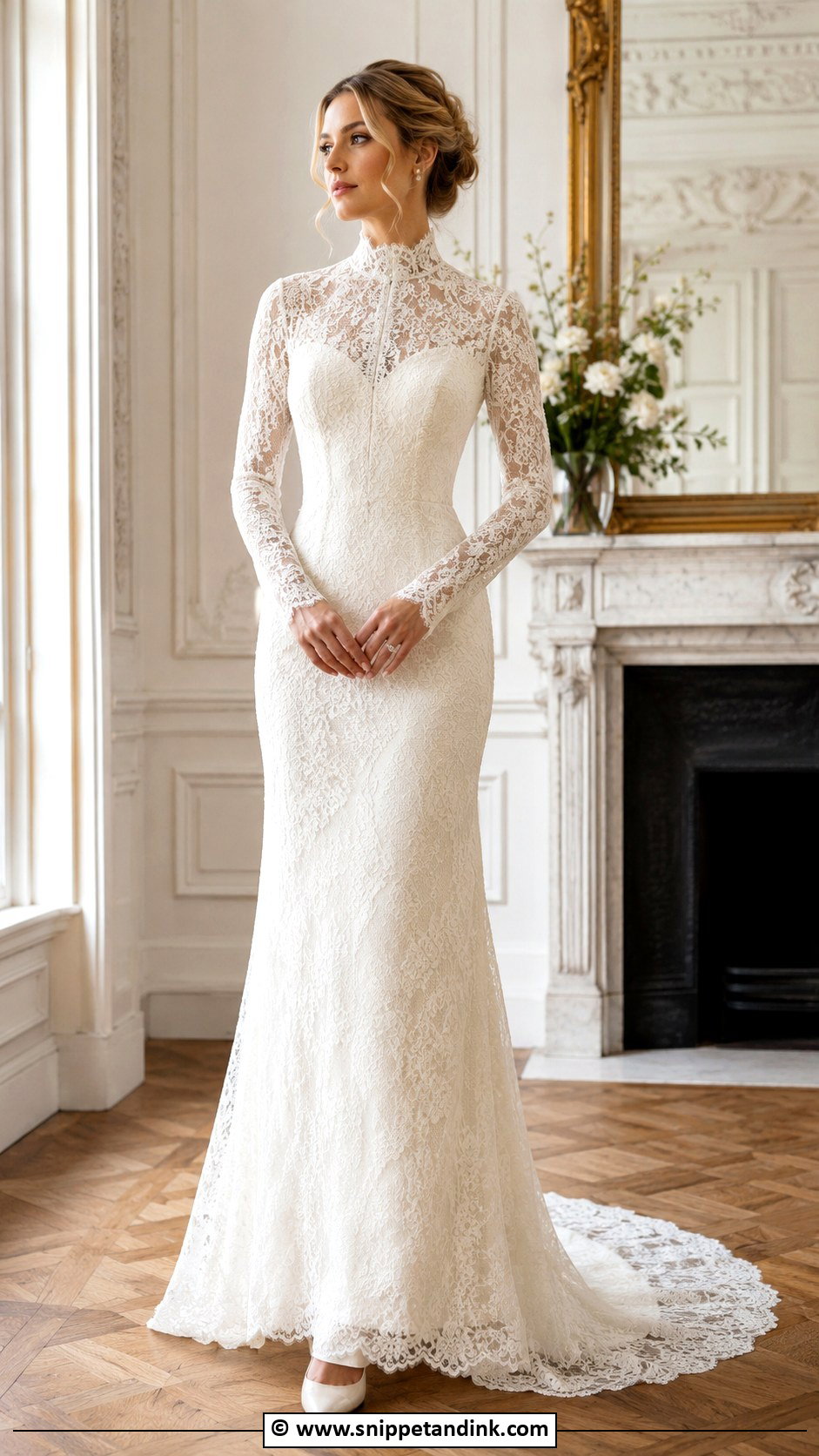
A Victorian high collar wedding dress has the strongest period identity on this list. The collar can be lace, satin, organza or illusion mesh, and it gives the gown a portrait-like quality. Balance it with a shaped waist and an easy skirt. Long sleeves, covered buttons and a soft train complete it. Wear your hair up. Pearl studs or small drops work; a necklace has nowhere to go.
24. Victorian Train Wedding Dress
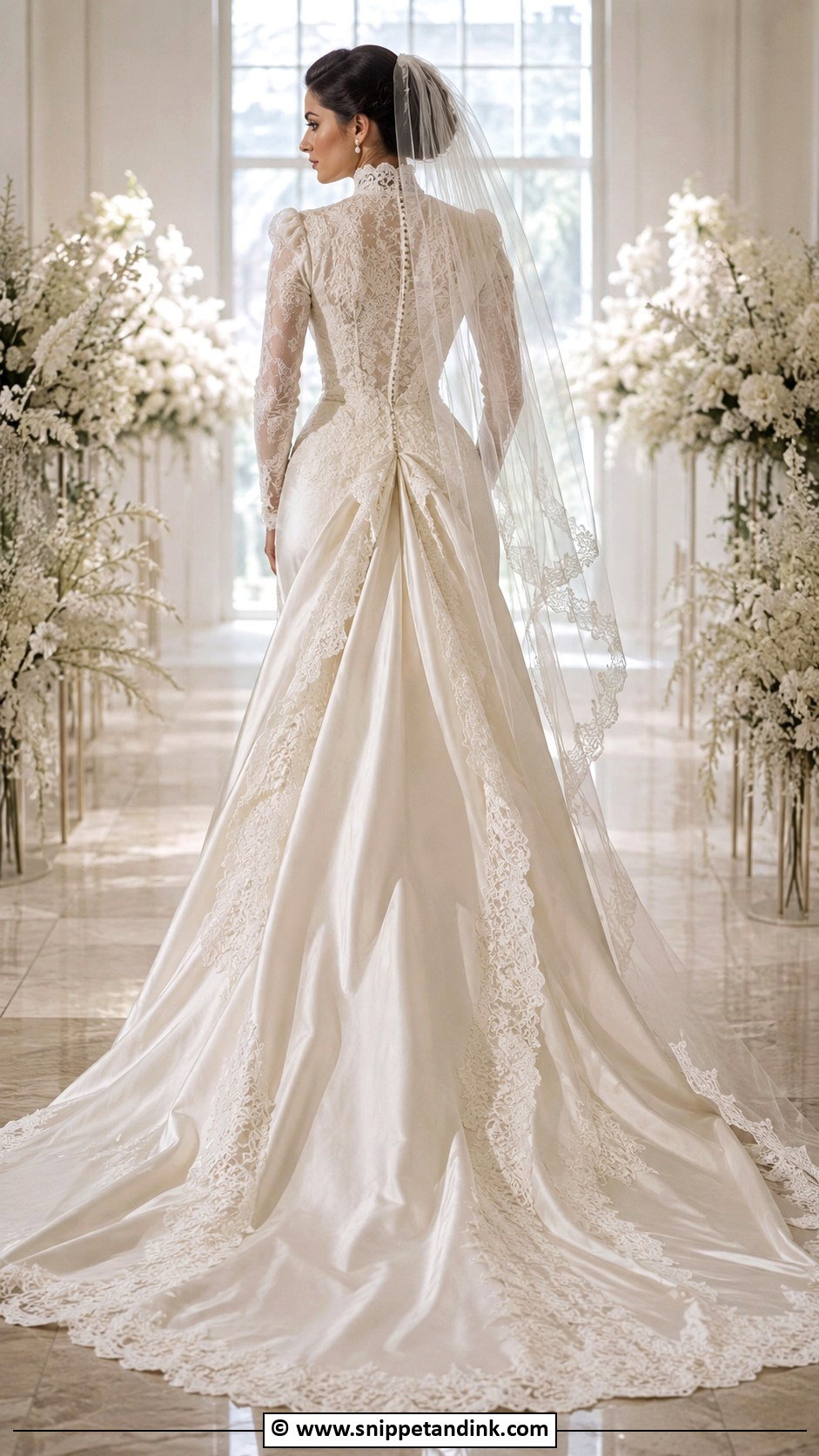
A long train in lace, satin, tulle or organza, perhaps with buttons, embroidery or scalloped edges, makes the aisle walk. Pair it with a fitted bodice and controlled skirt volume. Ask for a bustle so you can move after the ceremony, and have the seamstress show a bridesmaid how to fasten it; Victorian-style trains often use several hooks or ribbons. Choose a veil that complements the train, not one that hides it. Pearl earrings and classic heels.
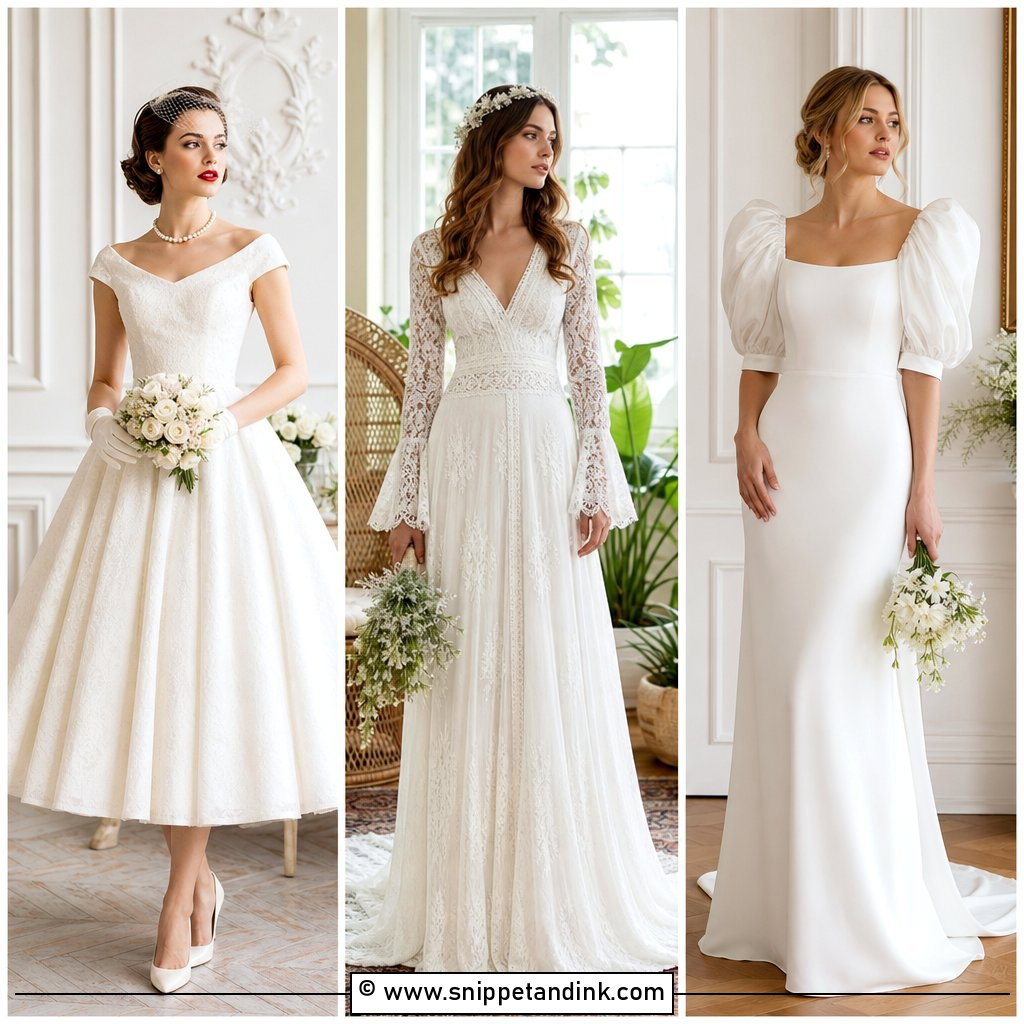
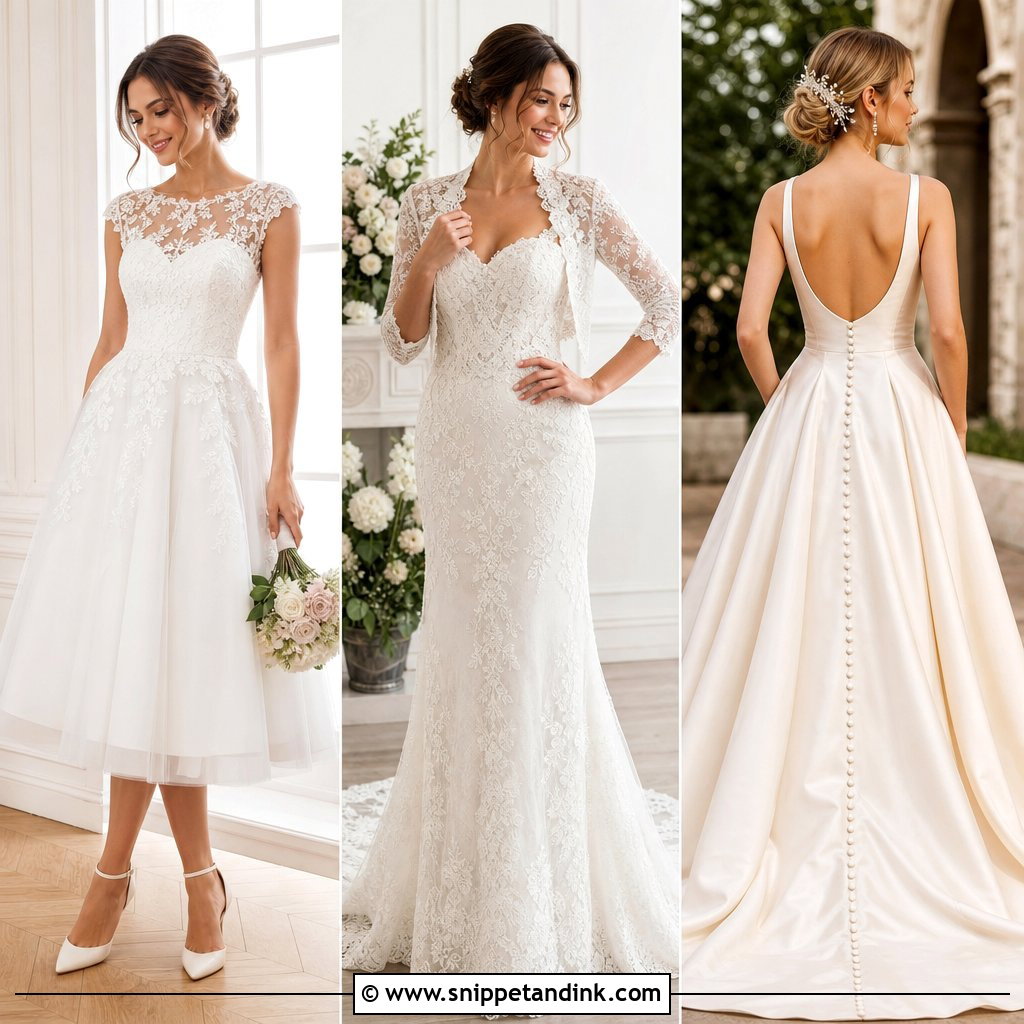


25. Victorian Modest Wedding Dress
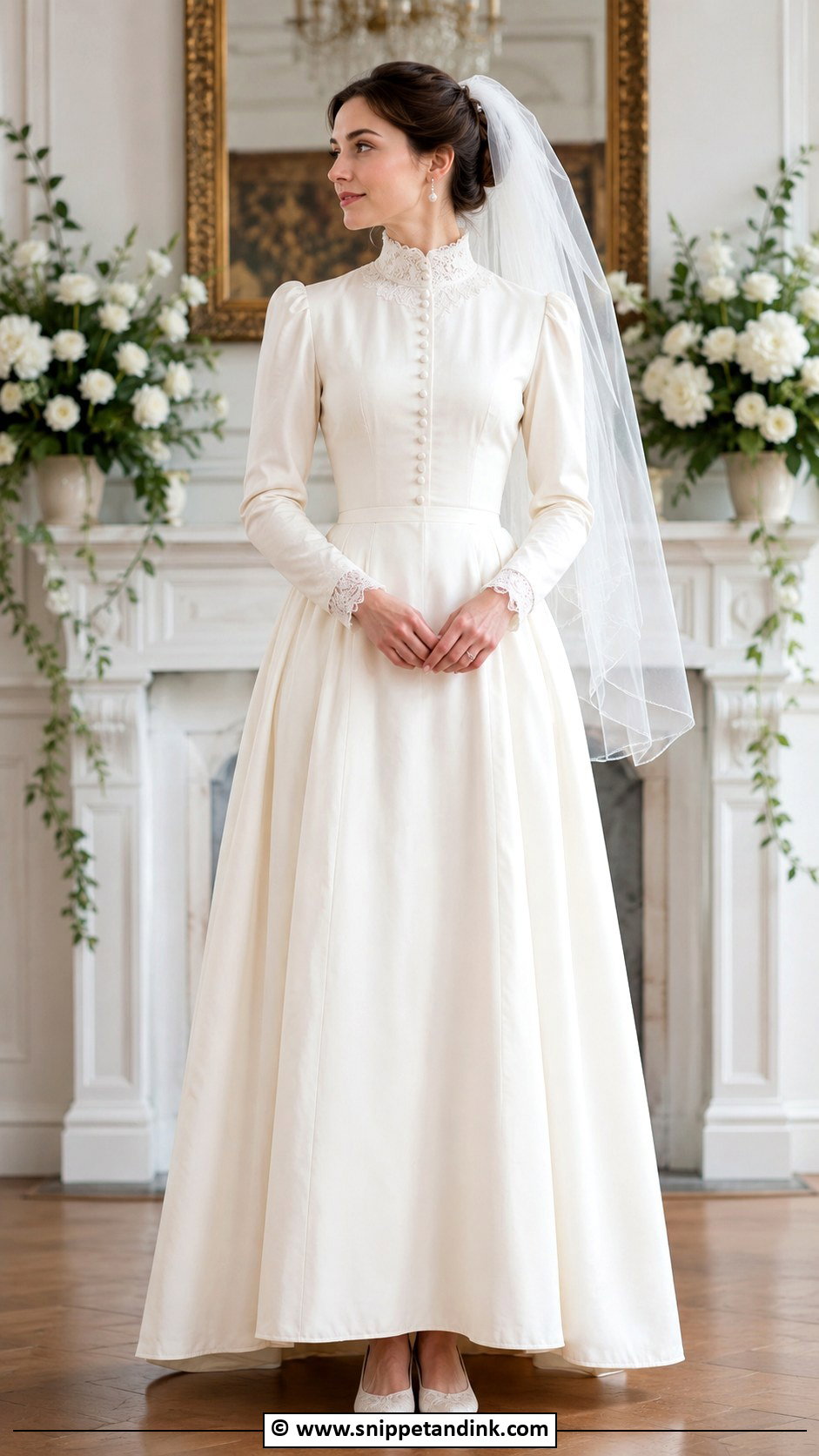
Coverage doesn’t mean plain. A high neckline, long sleeves, a lined bodice and a flowing skirt give a modest shape, and lace, satin or crepe suit it depending on how much structure you want. Tailoring is what keeps it from looking shapeless, so focus the budget there. Covered buttons, lace cuffs or a soft train add detail. Pearl earrings, a simple veil and closed-toe heels finish it.
26. Victorian Winter Wedding Dress
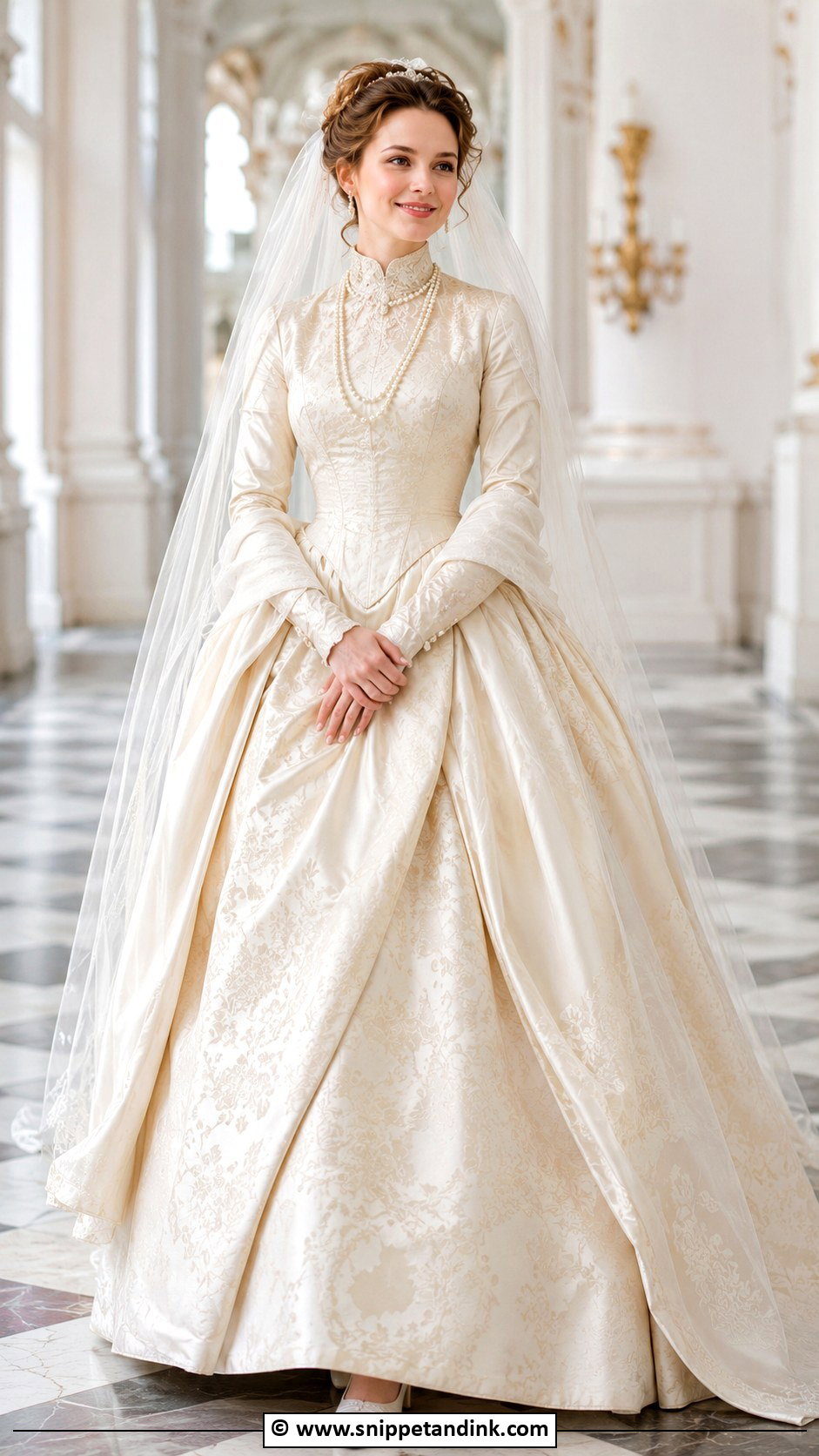
For a winter wedding, the Victorian look makes real sense: long sleeves, high collars, heavier satin, brocade and layered lace keep you warmer than almost any modern shape. Add a cape, a plush wrap or a lined overskirt for outdoor photos. Ivory, soft white or champagne give a cosy vintage feel. Closed-toe shoes matter more than you’d think on cold stone floors. Pearls and a long veil complete it for chilly portraits or grand interiors.
27. Victorian Garden Wedding Dress
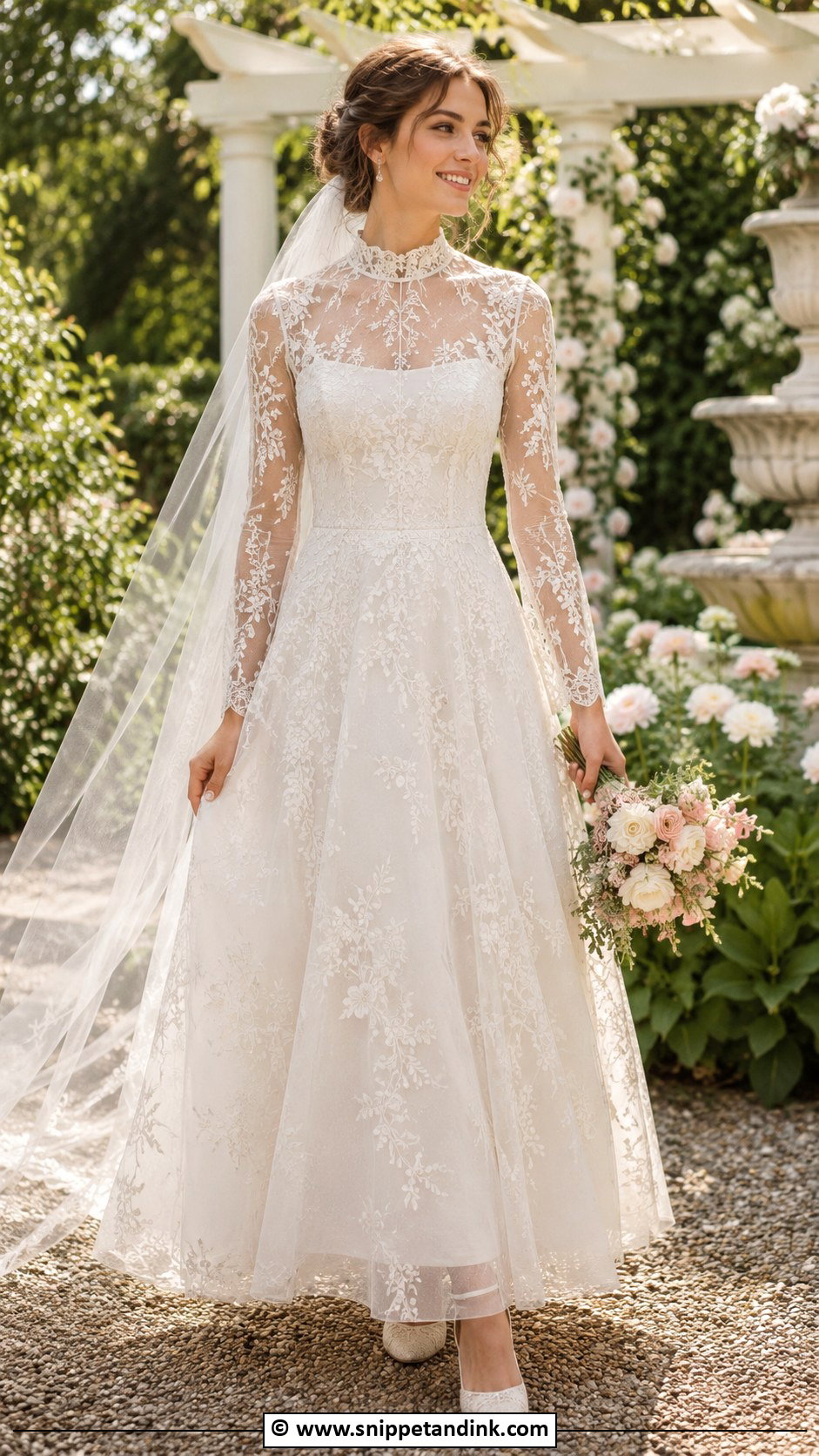
A garden version needs to be lighter. Choose lace, embroidered tulle or organza with floral detail, a high illusion neckline, sheer sleeves and an A-line skirt. Soft ivory or blush undertones look natural in daylight. Block heels stop you sinking into the lawn. Long hems pick up grass stains and pollen, so ask for the hem to just clear the ground. Pearl earrings, a loose updo and a delicate veil finish it.
28. Victorian Simple Wedding Dress
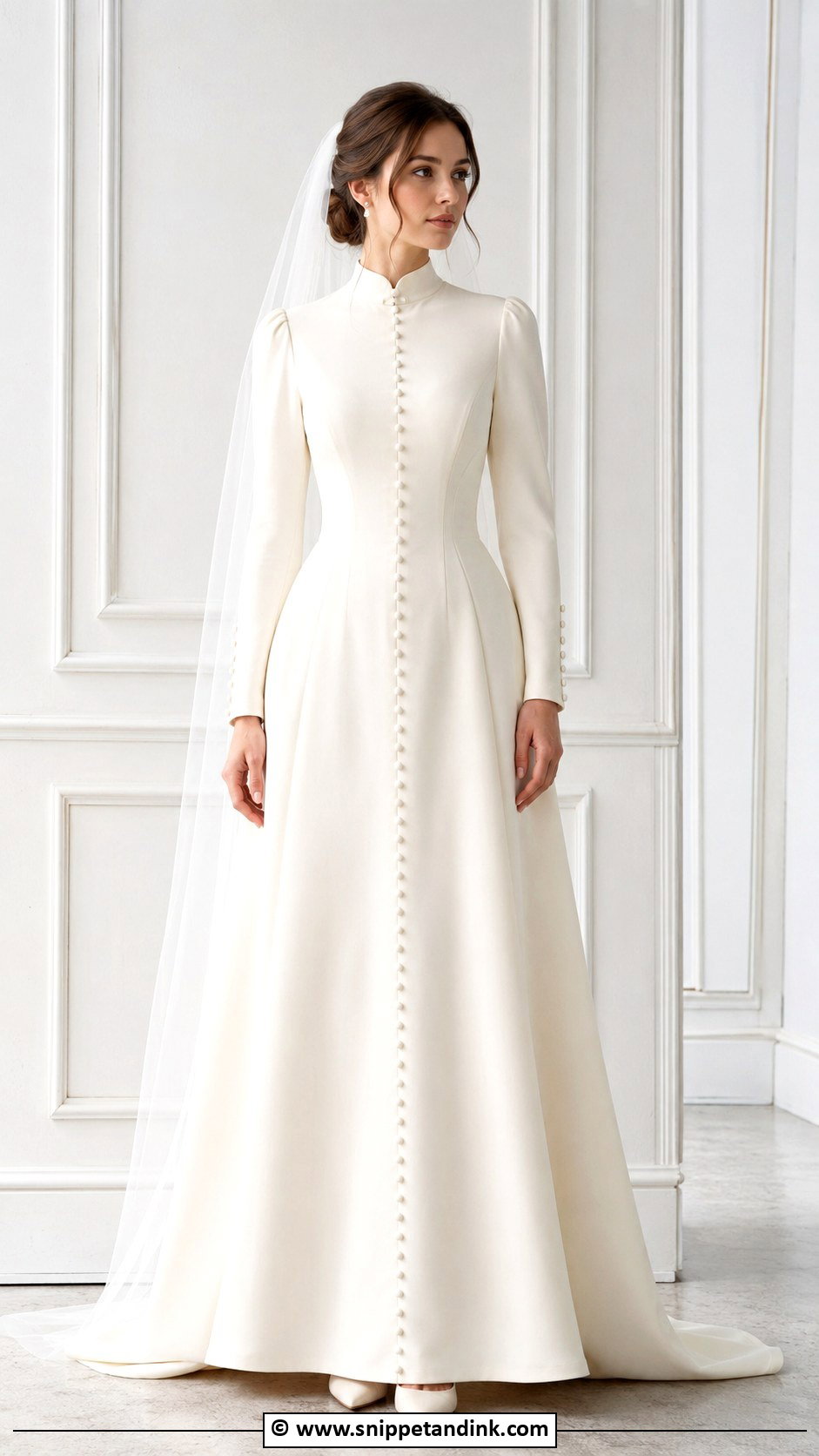
Victorian influence doesn’t need heavy lace. A satin or crepe gown with a high neck, long sleeves, covered buttons or a subtle corset seam carries the era quietly. A-line, sheath or softly fitted all work. With so little decoration, fit is everything, so I’d put more of the budget into alterations than into accessories. Pearl studs, a sleek veil and ivory shoes.
29. Victorian Plus Size Wedding Dress
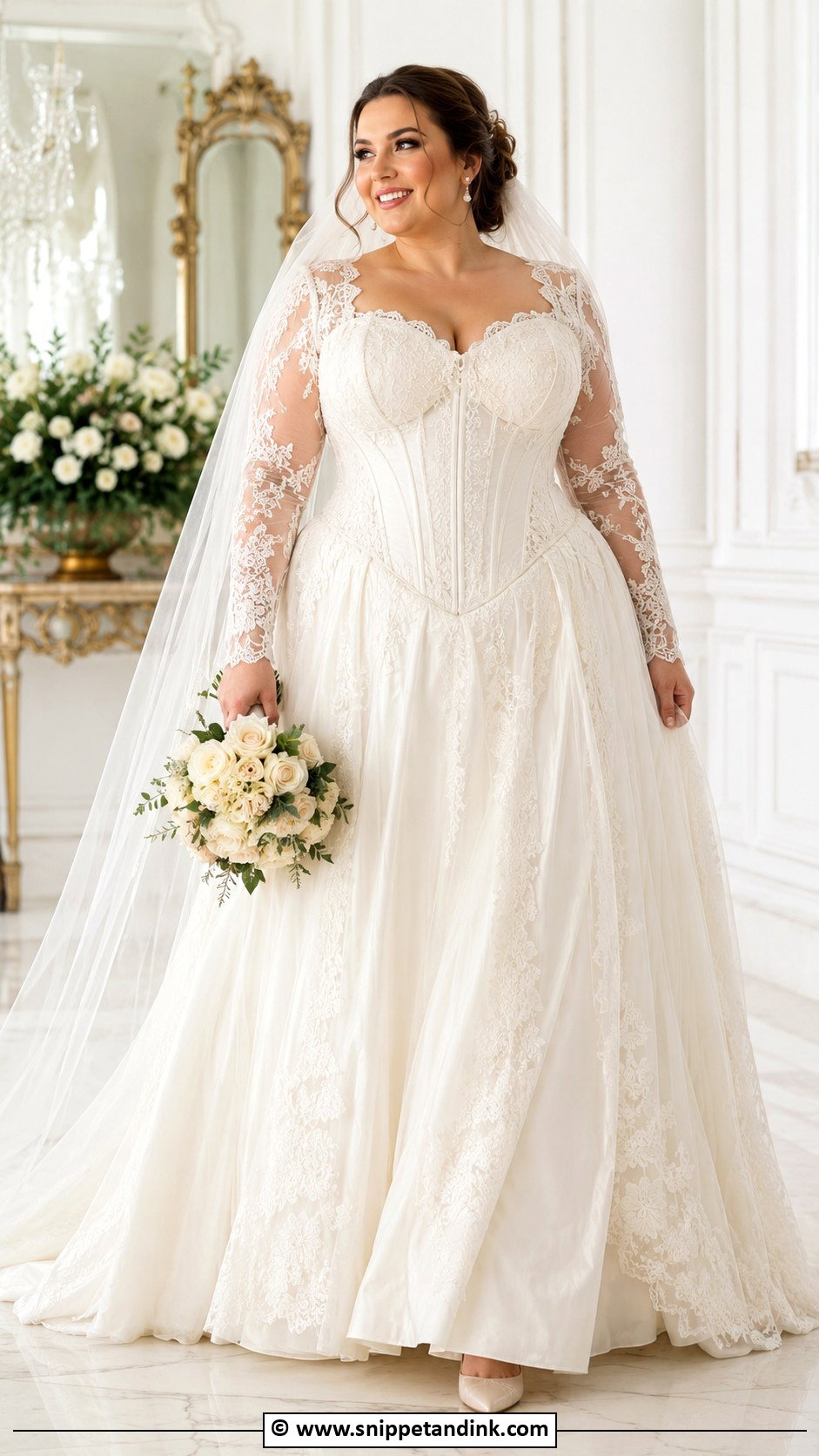
A Victorian plus size wedding dress leans on the same structure that made the era’s silhouettes work. Supportive corset-style bodices, shaped waist seams, comfortable sleeves and skirts that fall from the waist without clinging are what I’d look for. A-line and ball gown shapes are easy; a fitted gown needs strong tailoring. Satin, mikado, lined lace and structured tulle hold their shape. Check that the sleeves allow full arm movement, since tight period sleeves are a common complaint. A secure veil, pearl earrings and comfortable heels.
30. Victorian Gothic Wedding Dress
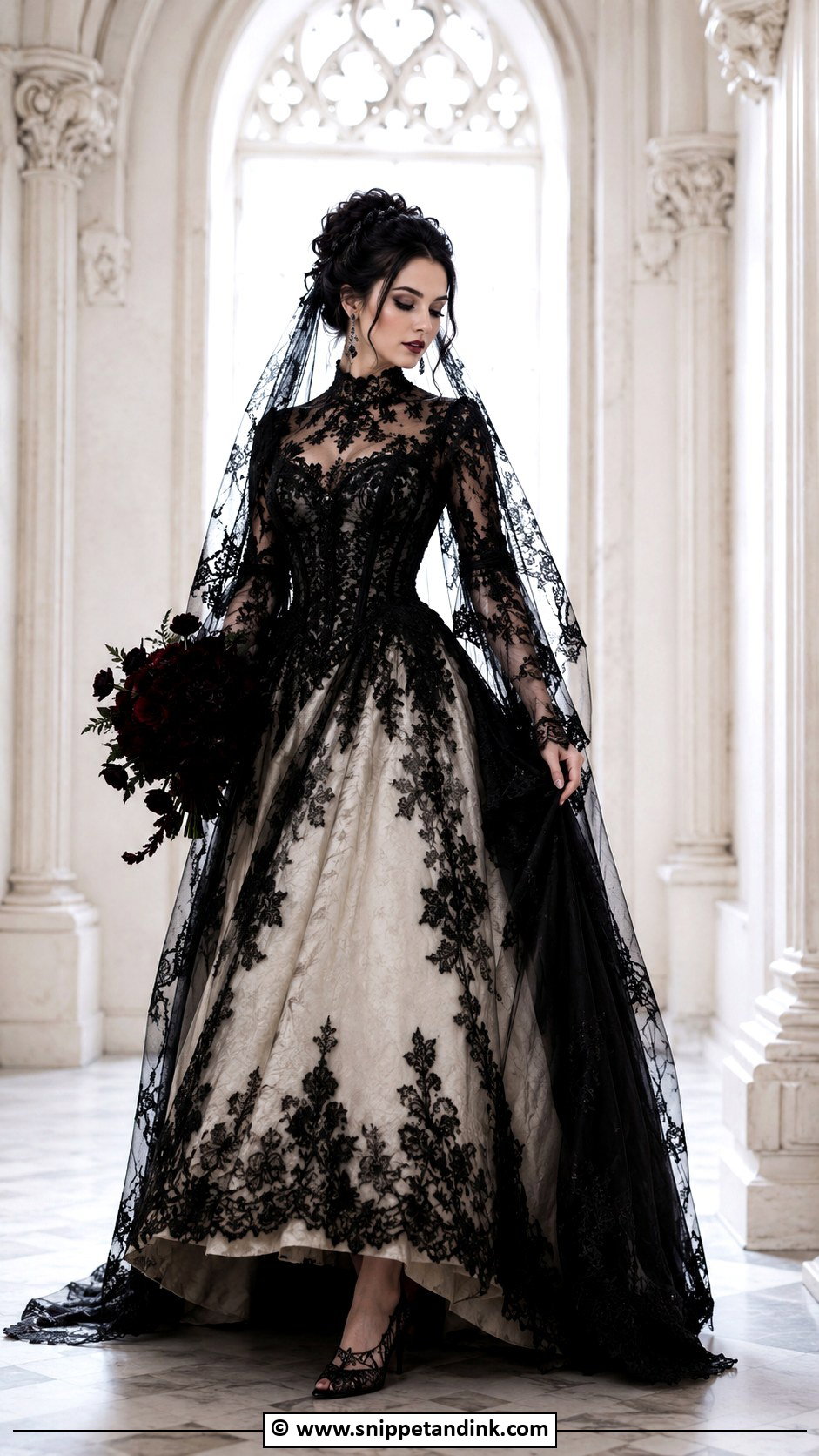
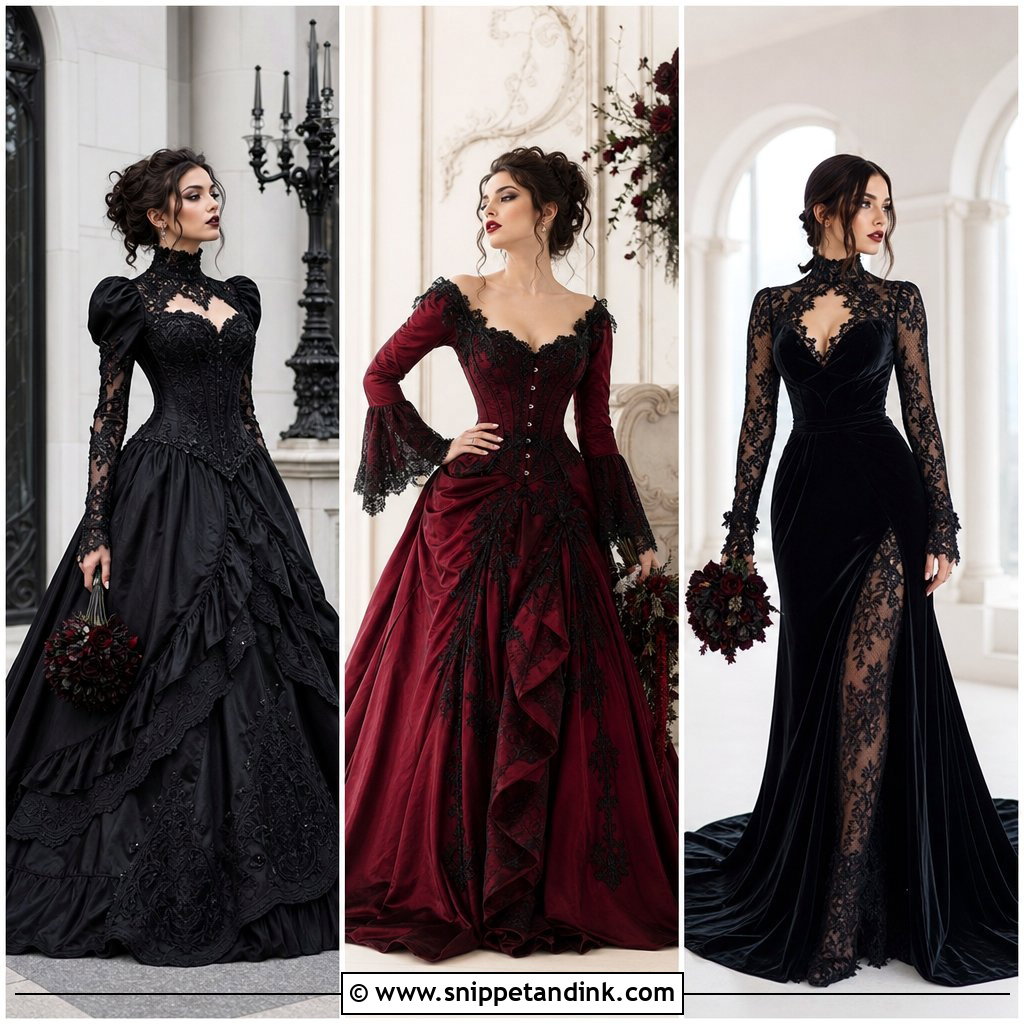
A Victorian gothic wedding dress leans into darker romance: black lace over ivory, deep champagne tones, dramatic sleeves, corset bodices, high collars or moody floral embroidery. Balance the drama with good tailoring. Black lace sleeves on an ivory gown are a bold but manageable first step. Black lace over a pale lining shows every bit of lint and every pin, so the dress needs care on the day. Vintage-style earrings, a lace veil and dark or ivory heels.
Is a Genuine 1800s Gown Worth the Risk?
Some brides want an actual nineteenth-century dress rather than a reproduction. It can be done, but go in with clear eyes. Silk from the later Victorian period was often weighted with metal salts to give it a heavier feel, and over time that treatment makes the fabric split along the folds, a condition known as shattering. Once it starts, it can’t be reversed.
Before buying, I’d check these things in good daylight:
- Gently flex a hidden fold. Any cracking sound or fine splits mean the silk won’t survive a full wedding day.
- Look for yellowing and brown spots, particularly at the underarms and waist seam.
- Measure carefully. Antique gowns were made for a corseted figure, and the waists are often far smaller than modern sizing suggests.
- Ask a specialist textile conservator, not a general seamstress, whether alterations are possible without weakening it.
Many brides end up with a middle path: a newly made gown in the Victorian style, with one antique piece added, such as old lace on the collar or a vintage pearl brooch. You get the history close to your face, and a dress strong enough to dance in.
Let One Victorian Detail Lead the Whole Gown
Vintage bridal style can feel romantic, modern and personal all at once. A high lace neckline, a corset bodice, a tulle skirt or a bustle train can each carry a Victorian mood on its own. Focus on fit, fabric, comfort and the two or three details that genuinely make you happy. Pearls, a veil or classic heels complete the look without tipping it into costume. With that balance, the era becomes something you can actually wear.
You'll Like These Ideas:






Leave a Reply