
Few accessories carry as much meaning as a gajra. These strings of flowers, most often jasmine, have dressed Indian hairstyles for generations, at weddings, Haldi and Mehendi, festivals and temple visits. As a stylist, I treat a gajra as part of the hairstyle rather than something added at the end, because fresh flowers have weight, they wilt in heat, and they need a secure base. The ideas below run from the classic South Indian bun to open hair and ponytails, with notes on how each one holds the flowers and what to watch for. Short, long, curly or sleek, there is a way to wear one.
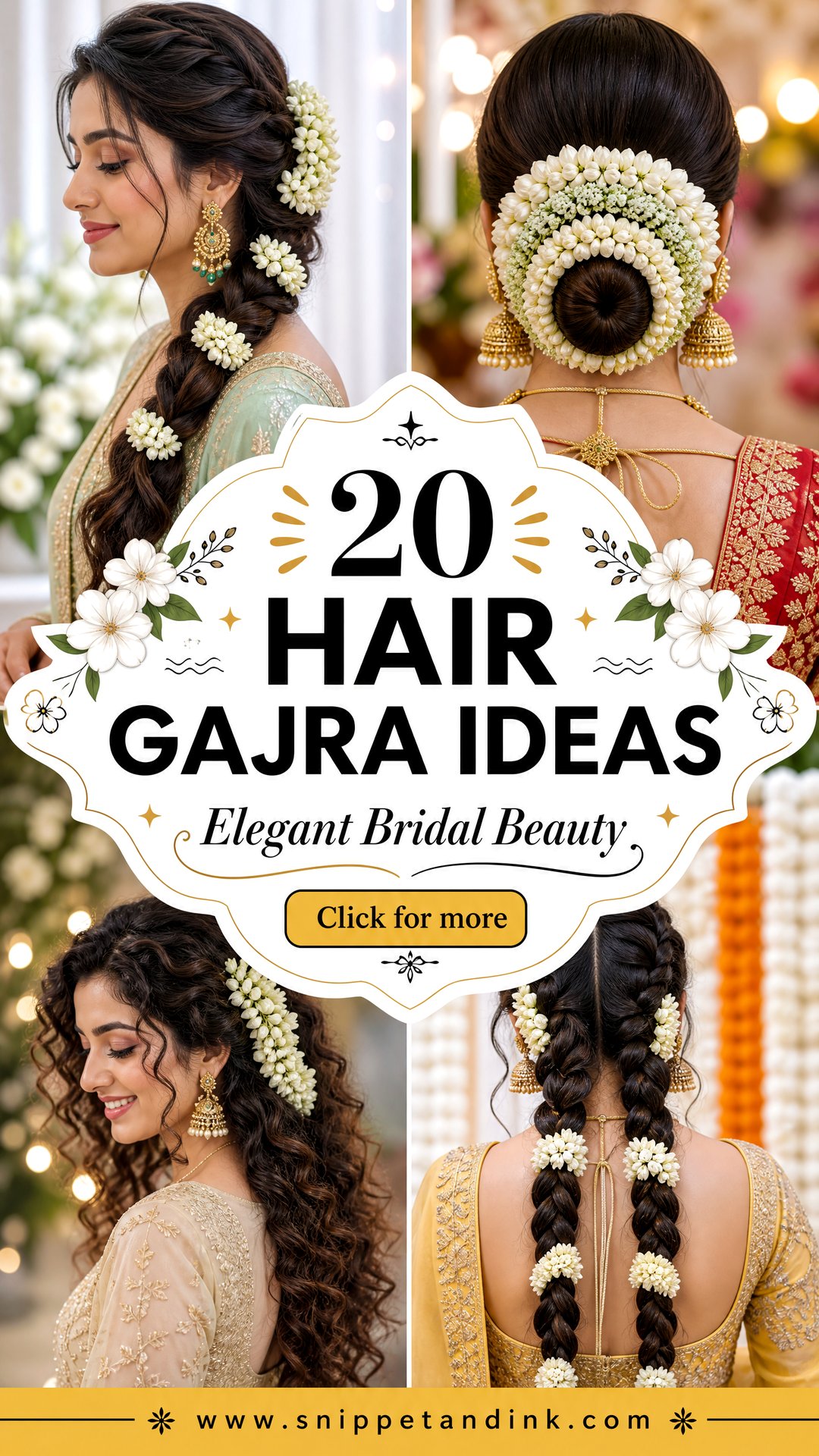
Fresh Jasmine Runs on Its Own Clock
The biggest gajra problem I see on the day has nothing to do with the hairstyle. It’s flowers bought too early, kept too warm, or already brown by the time the photographer arrives. Jasmine is happiest when you plan around how it behaves.
Buds versus open flowers
Gajras are usually strung from closed buds, which open and release their scent over several hours as they warm up. For an evening function, tight buds bought that morning are ideal. For a morning ceremony, buy the evening before and keep them cool overnight, so they open just as you’re getting ready.
Keeping them fresh
Wrap the strings loosely in a damp cotton or muslin cloth, place them in a closed container and keep them in the fridge, never the freezer. Take them out about half an hour before styling so they aren’t cold and wet against your hair. Handle them as little as possible; jasmine bruises and browns where fingers press it.
When artificial makes sense
For multi-day weddings, very hot outdoor venues, or anyone sensitive to strong floral scent, a good artificial gajra holds its shape all day and weighs less. Some brides wear fresh flowers for the main ceremony and switch to artificial for later functions.
1. Low Bun With Jasmine Gajra
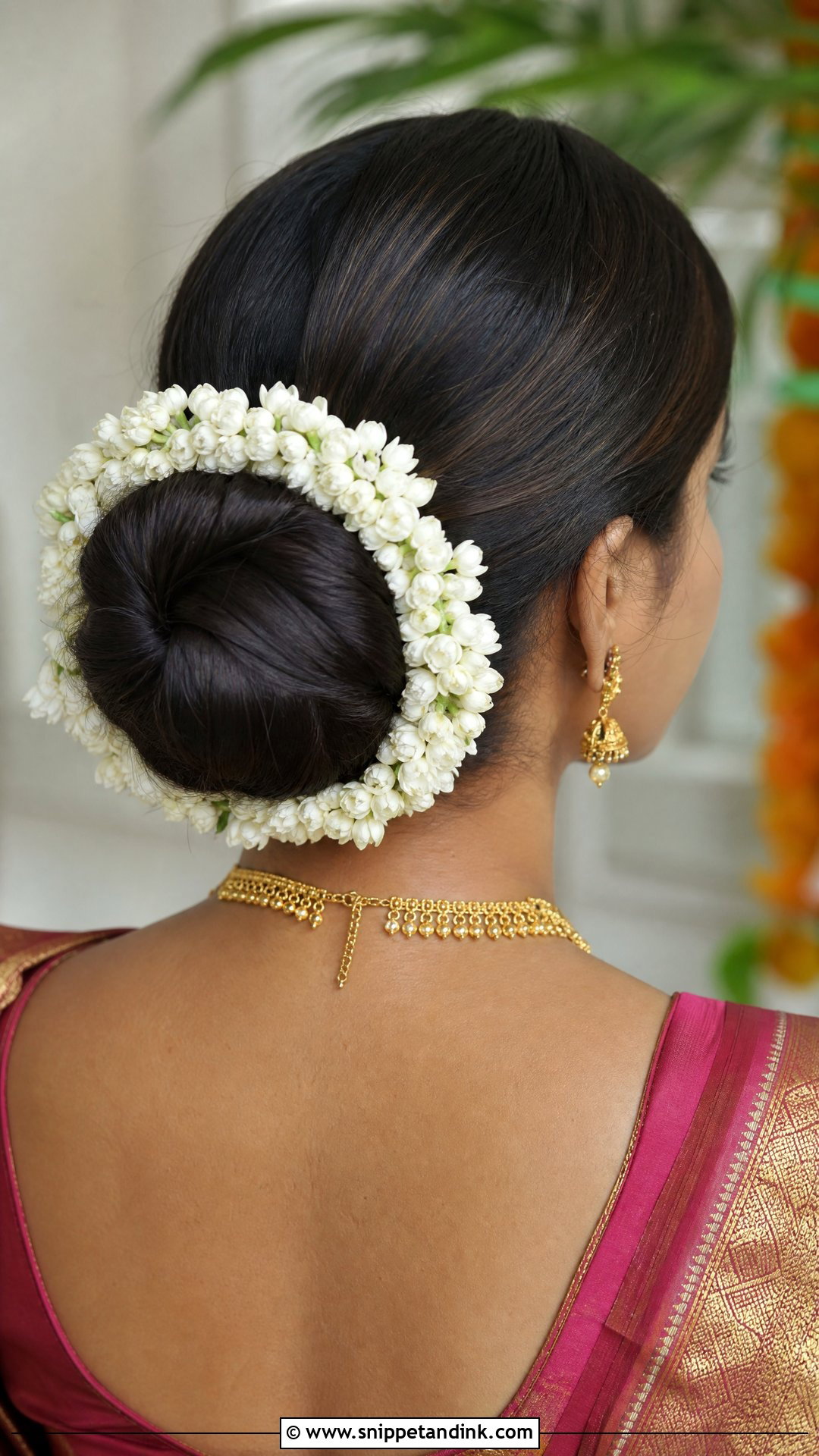
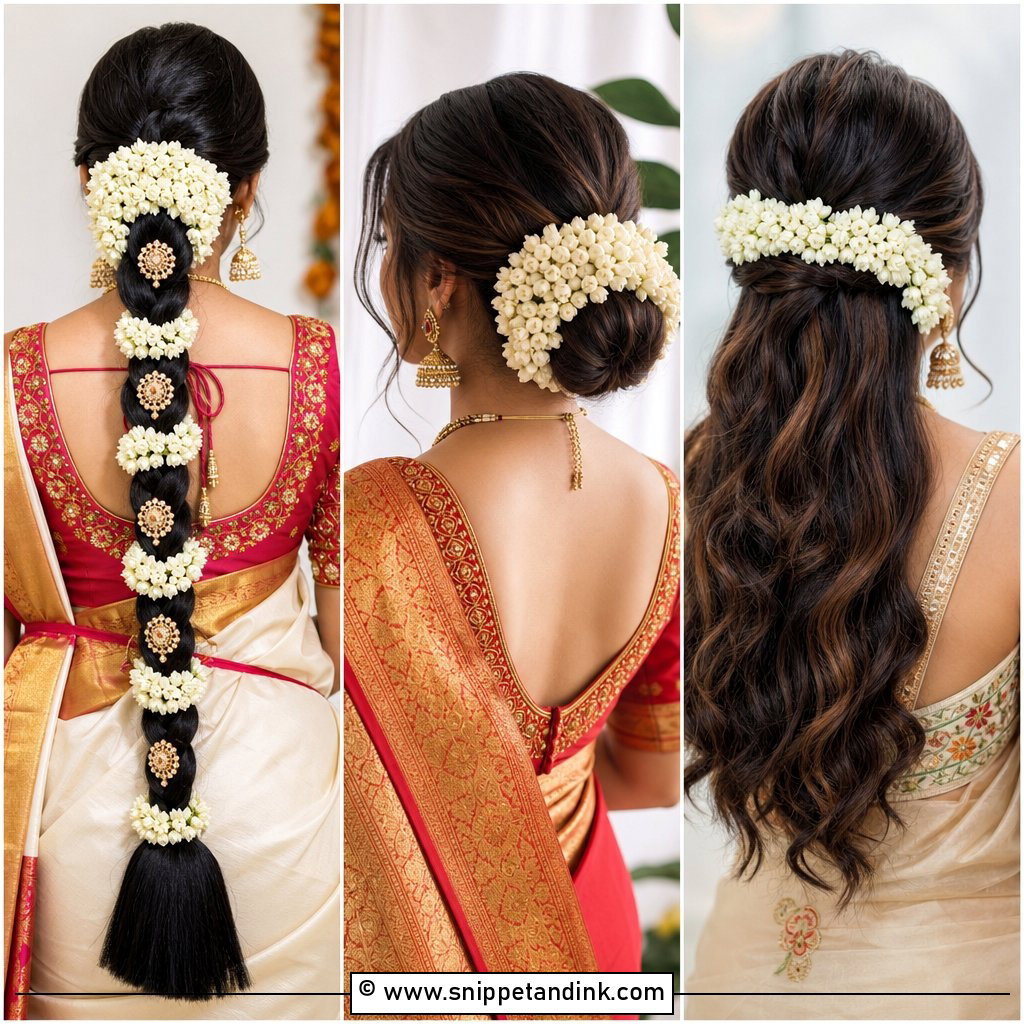
Gather the hair at the nape, twist it into a neat bun and circle it with white jasmine: few looks are more classic in South India. The low bun wrapped in jasmine gajra sits with silk sarees and heavy temple jewelry, and the fragrance carries through the whole day. White flowers against dark hair stand out clearly in photos. I always secure the bun on a tight base ponytail first, because a jasmine wrap adds more weight than people expect. A small gold hairpin or a maang tikka finishes it.
2. Long Braid Wrapped With Gajra
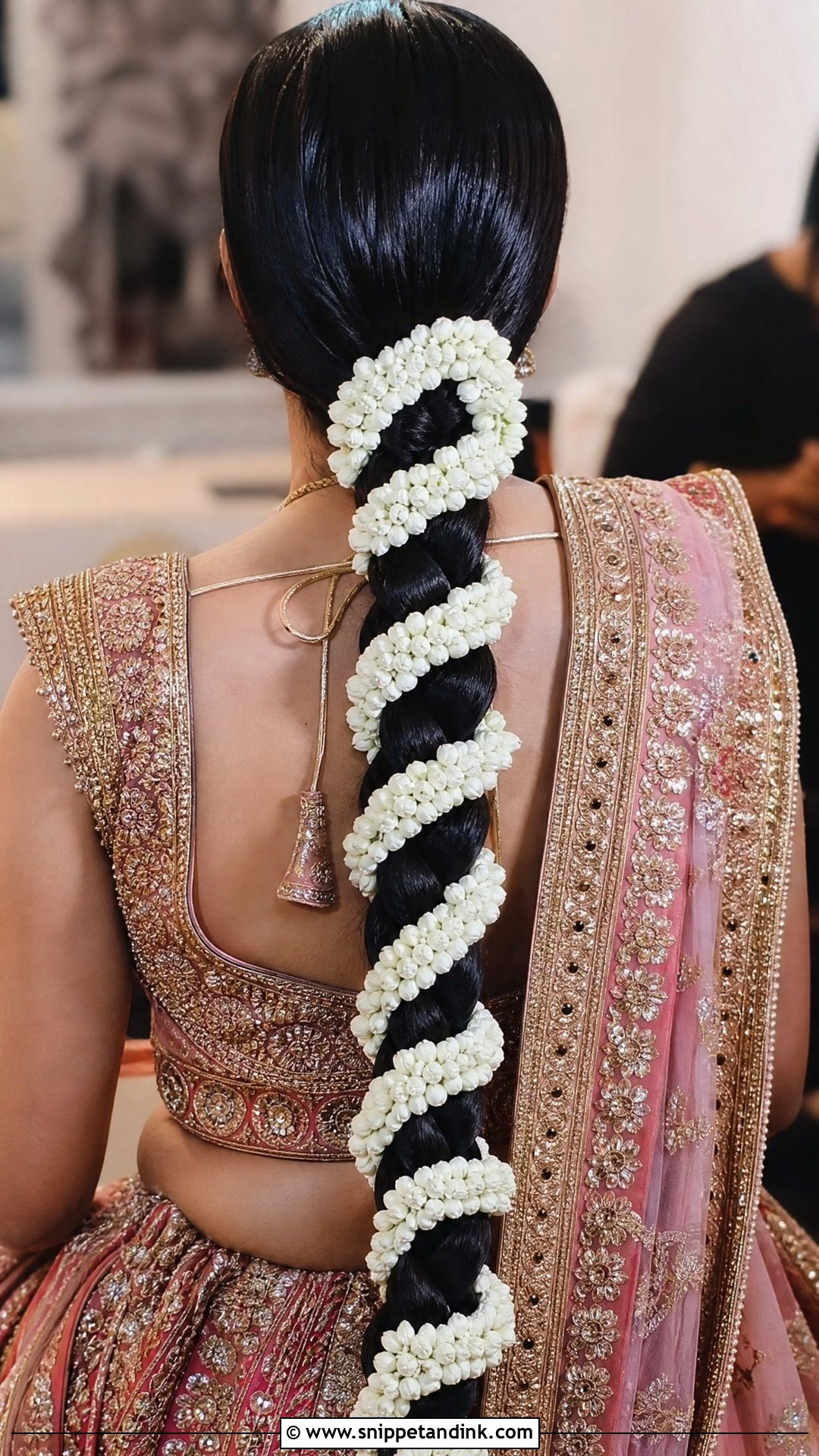
A single long braid with gajra is one of the most loved bridal styles. Braid the hair into a thick, neat plait, then wrap the gajra around the length or twine it along the braid in a spiral. It shows off long hair and moves as you walk. Jasmine, roses or mixed flowers all work. A long trailing string swings and can pull the braid apart at the top, so I pin the gajra into the braid every few inches, not just at the crown. Finish with a paranda or a flower at the tail.
3. Messy Bun With Gajra For Short Hair
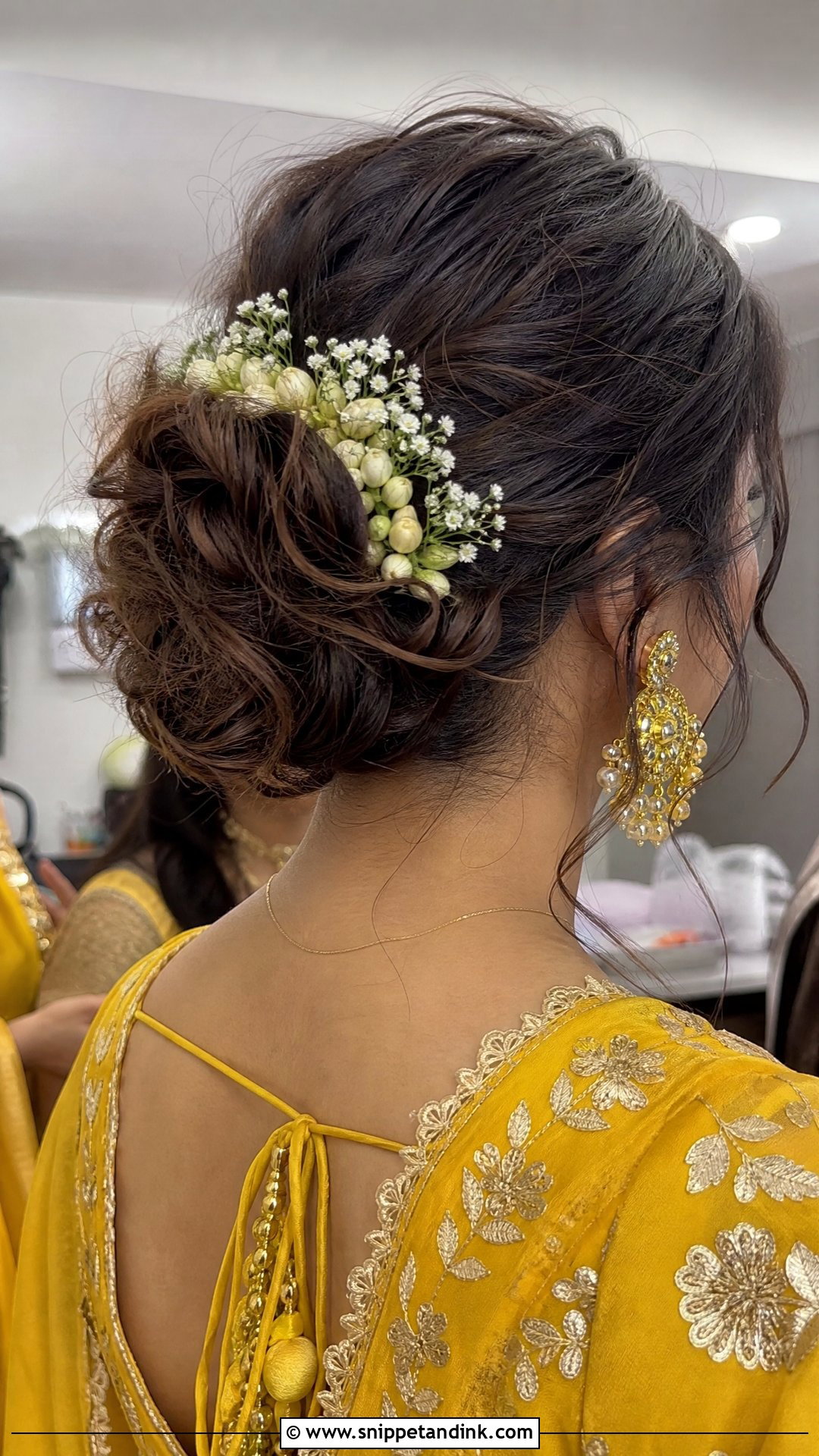
Short hair can still carry the tradition. Twist short strands into a loose bun, pin it, then wrap a gajra at the base: the flowers hide gaps and make the bun look fuller than the hair alone. It suits Haldi, Mehendi and casual festive days. Short hair has less to grip, so I put the gajra on a small padded base or hair donut, which gives the pins something solid to hold. Tiny sprigs of baby’s breath add a modern touch.
4. Half-Moon Gajra On Open Hair
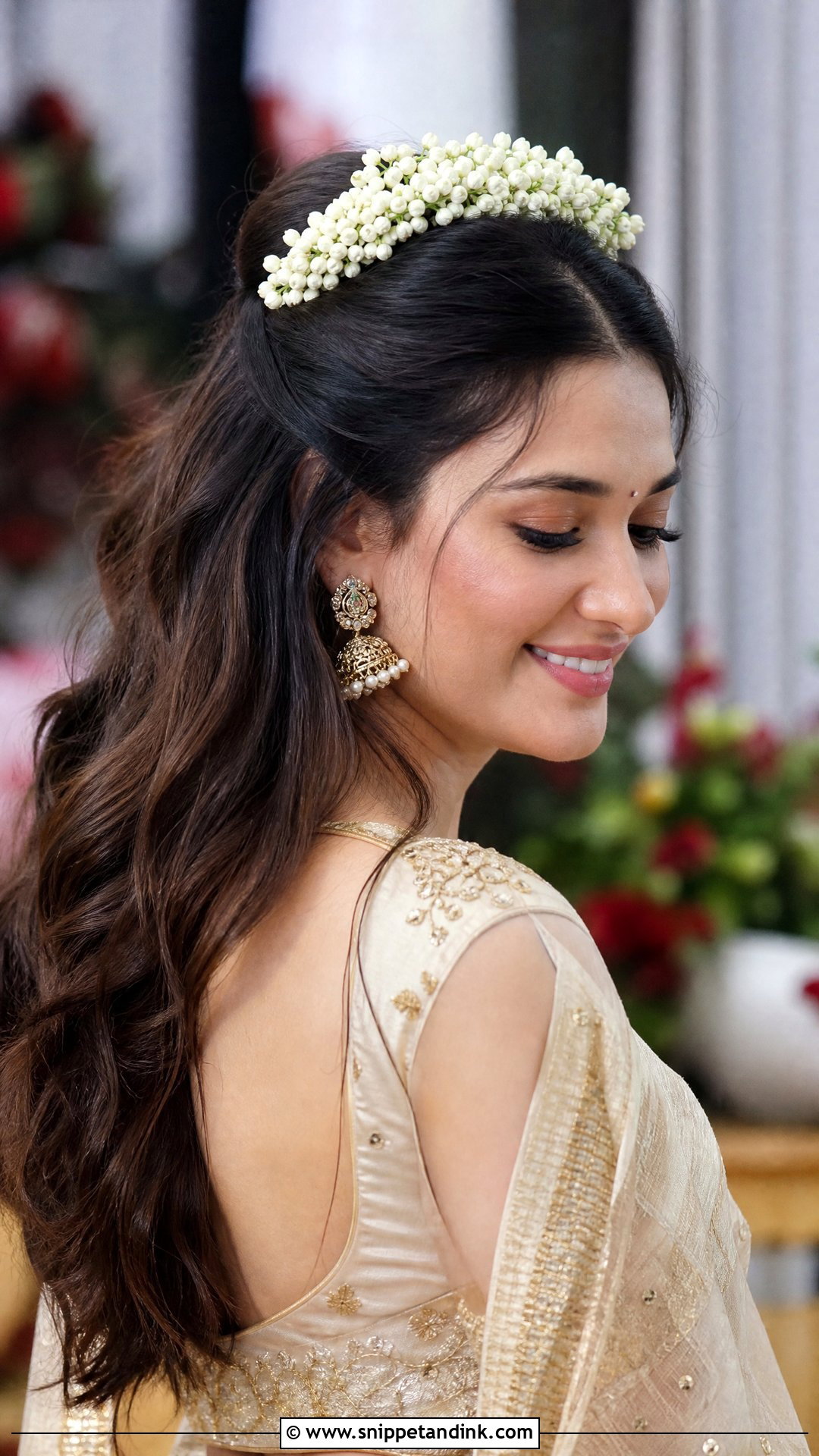
If you prefer hair down, a half-moon arrangement curves the gajra in a crescent across the back of the head and frames the crown like a halo. It sits well on loose waves or straight hair and suits engagements, receptions and festive evenings. One string is delicate; layering a few gives fullness. Open hair gives the flowers nothing to anchor to, so I pin a thin section from each side to the back first and fix the gajra across that join. Without it, the crescent slides down within an hour.
5. Fishtail Braid With Gajra
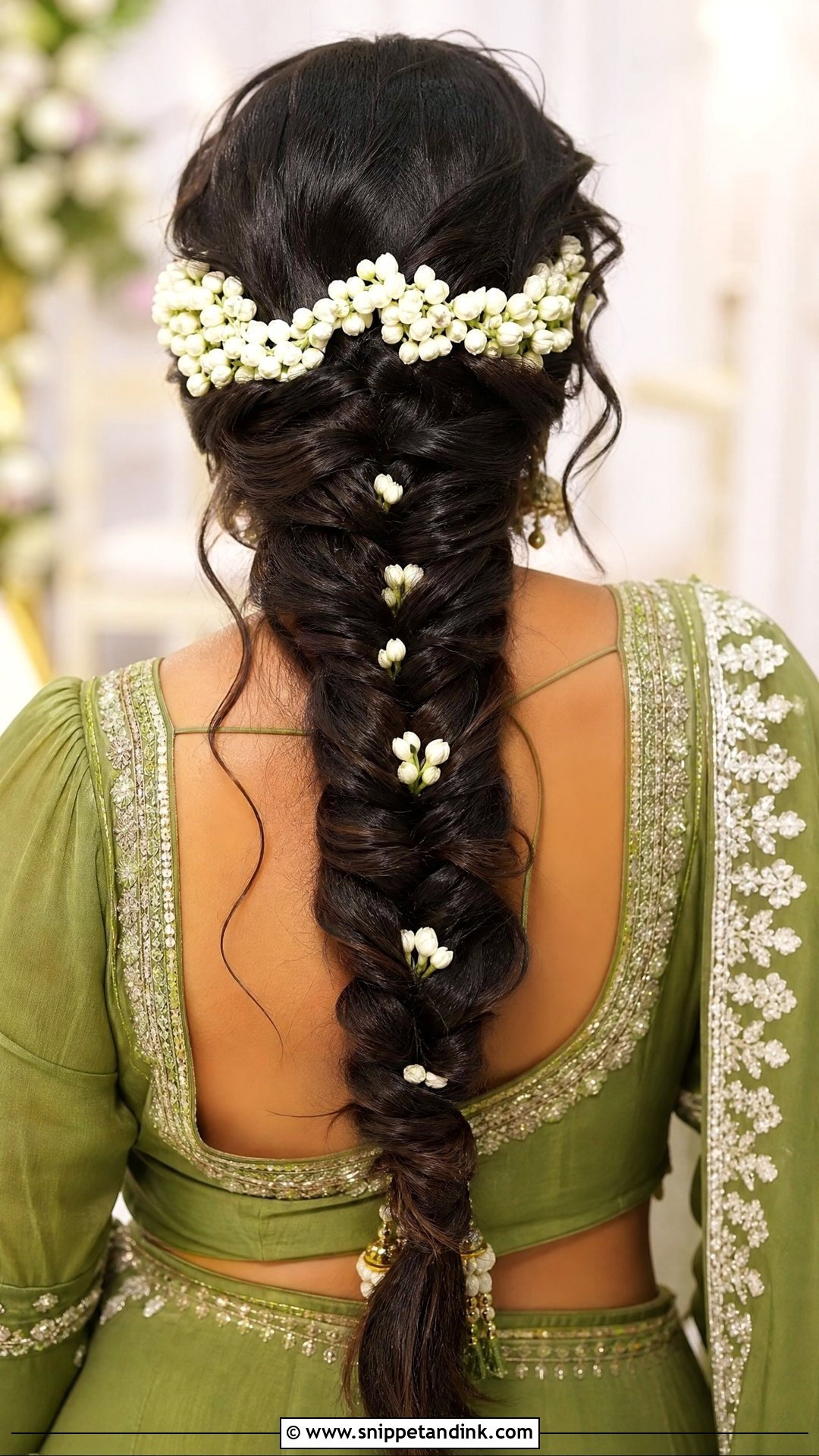
The woven fishtail already looks intricate, and a fishtail braid adorned with gajra adds flowers near the crown and along the length. Leave the braid slightly loose so the flowers can sit between the weaves. It suits Mehendi functions and outdoor celebrations, with jasmine for fragrance or colorful blooms for contrast. I tuck individual flowers rather than a full string into a fishtail, because a heavy string flattens its fine pattern.
6. Side Braid With Gajra
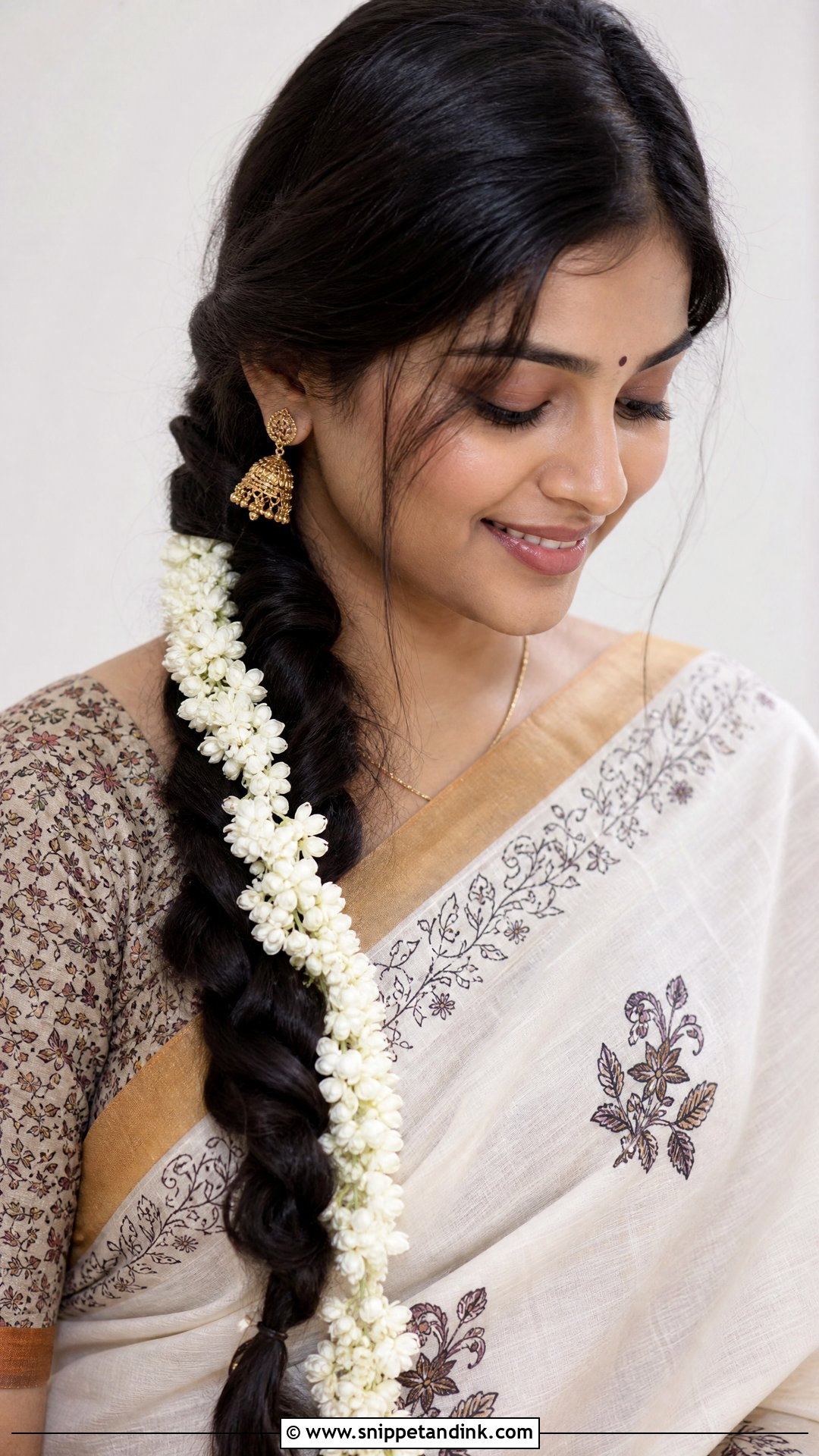
Draped over one shoulder, a side braid with gajra woven along its length goes well with ethnic outfits and candid photos. It’s comfortable for daytime functions like Haldi or a pooja. The flowers rest against your shoulder and neckline, so check that they won’t catch on heavy embroidery or a dupatta pin. Pair it with jhumkas and a simple bindi for a complete look.
7. Bridal Bun With Layered Gajra
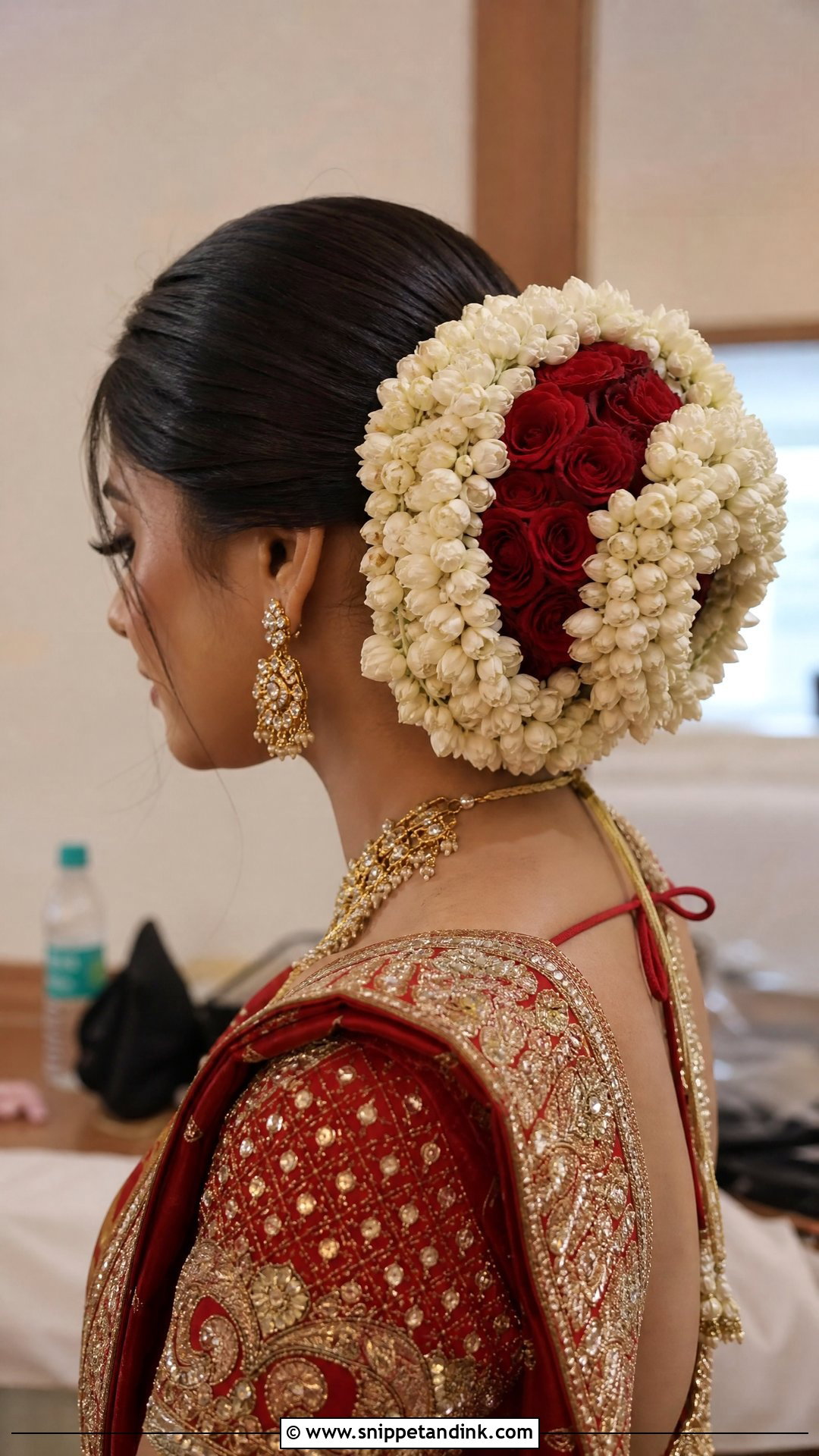
For maximum impact, a layered gajra bun is the grandest option here. Build a large, sleek bun and surround it with several rows of gajra for a full, regal crown. It belongs with heavy bridal sarees, statement jewelry, South Indian weddings and grand receptions. Jasmine mixed with roses or mogra adds richness. This style can get heavy, so I build the bun over a bun form and stitch or pin each row of flowers into it separately. Ask your flower supplier how many strings to order; it depends on the size of the bun.
8. Half Updo With Gajra
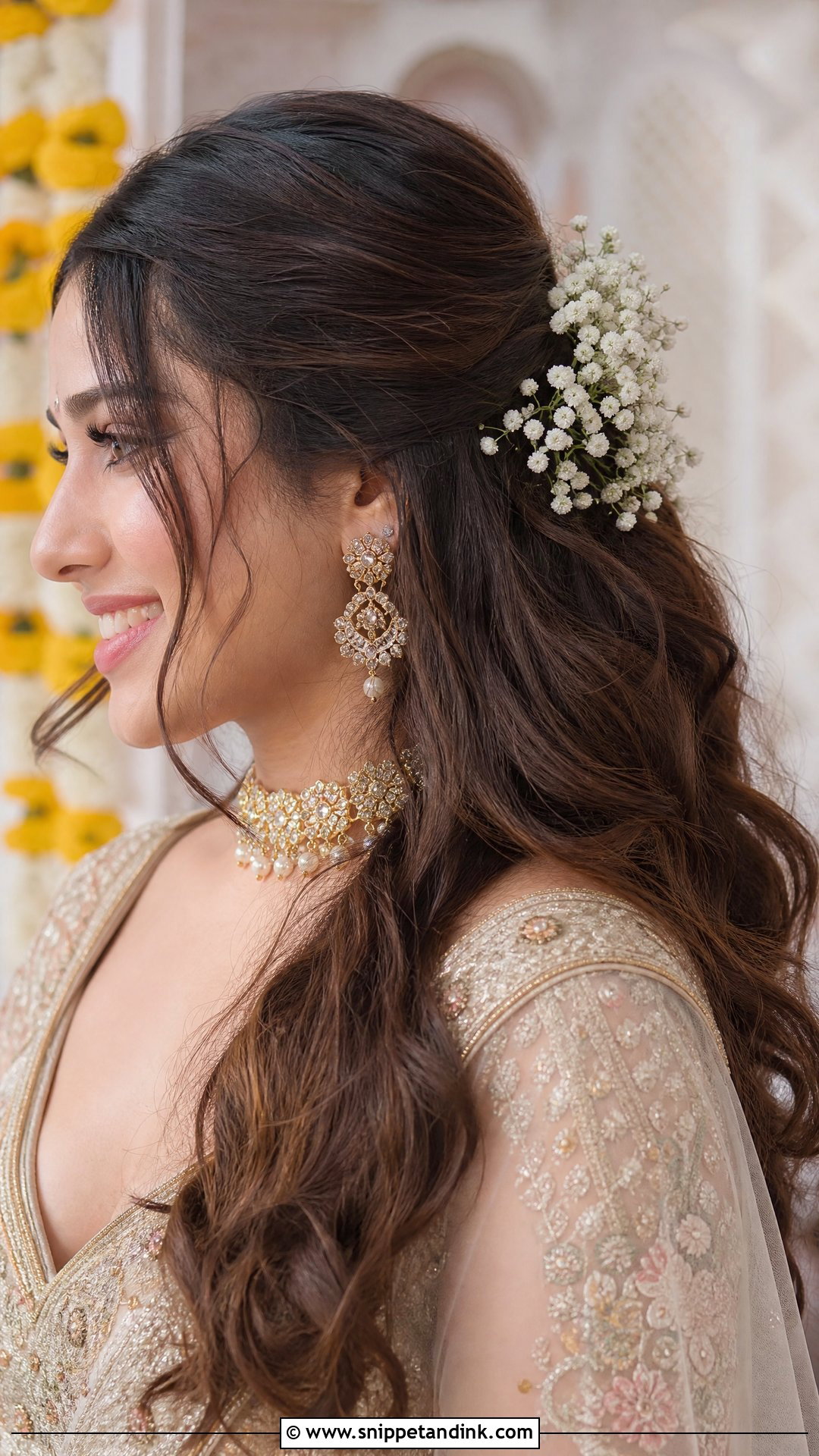
Pull the top section back and secure it, leaving the rest flowing, then tuck a gajra into the updo. It’s light, comfortable and works at most lengths for engagements, sangeets and festive parties. Curl the loose hair for extra polish. I fix the gajra just below the gathered section, not on top of it, so it covers the pins and doesn’t look perched.
9. Crown Braid With Gajra
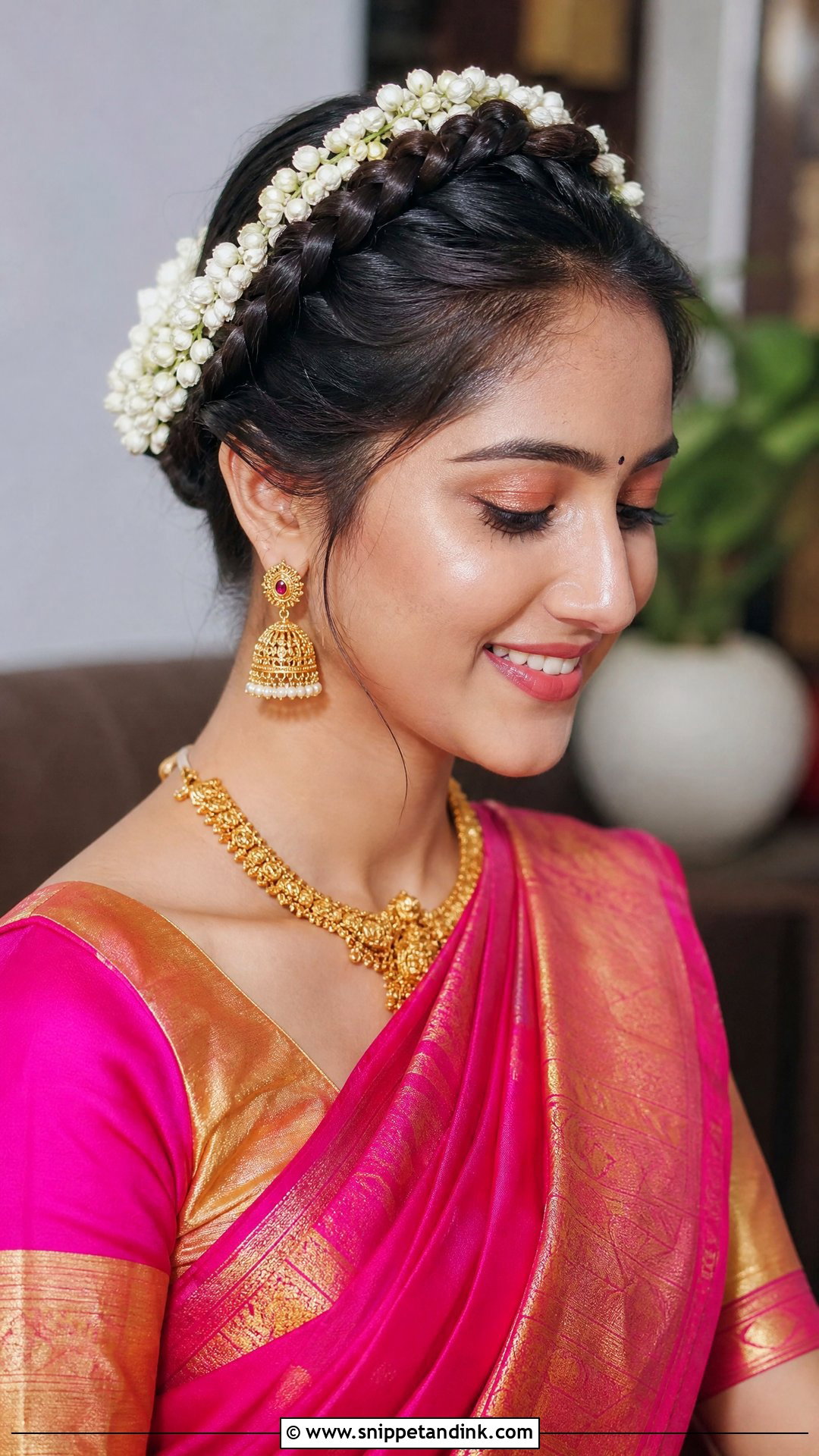
Braided around the top of the head like a halo with gajra woven through it, a crown braid draws the eye upward and frames the face. It suits brides, festival-goers and classical dancers, keeps hair off the face in warm weather and pairs with traditional jewelry and bright sarees. Dancers in particular need it secure, so I pin the braid at several points around the head before the flowers go in.
10. Deconstructed Gajra Hairstyle
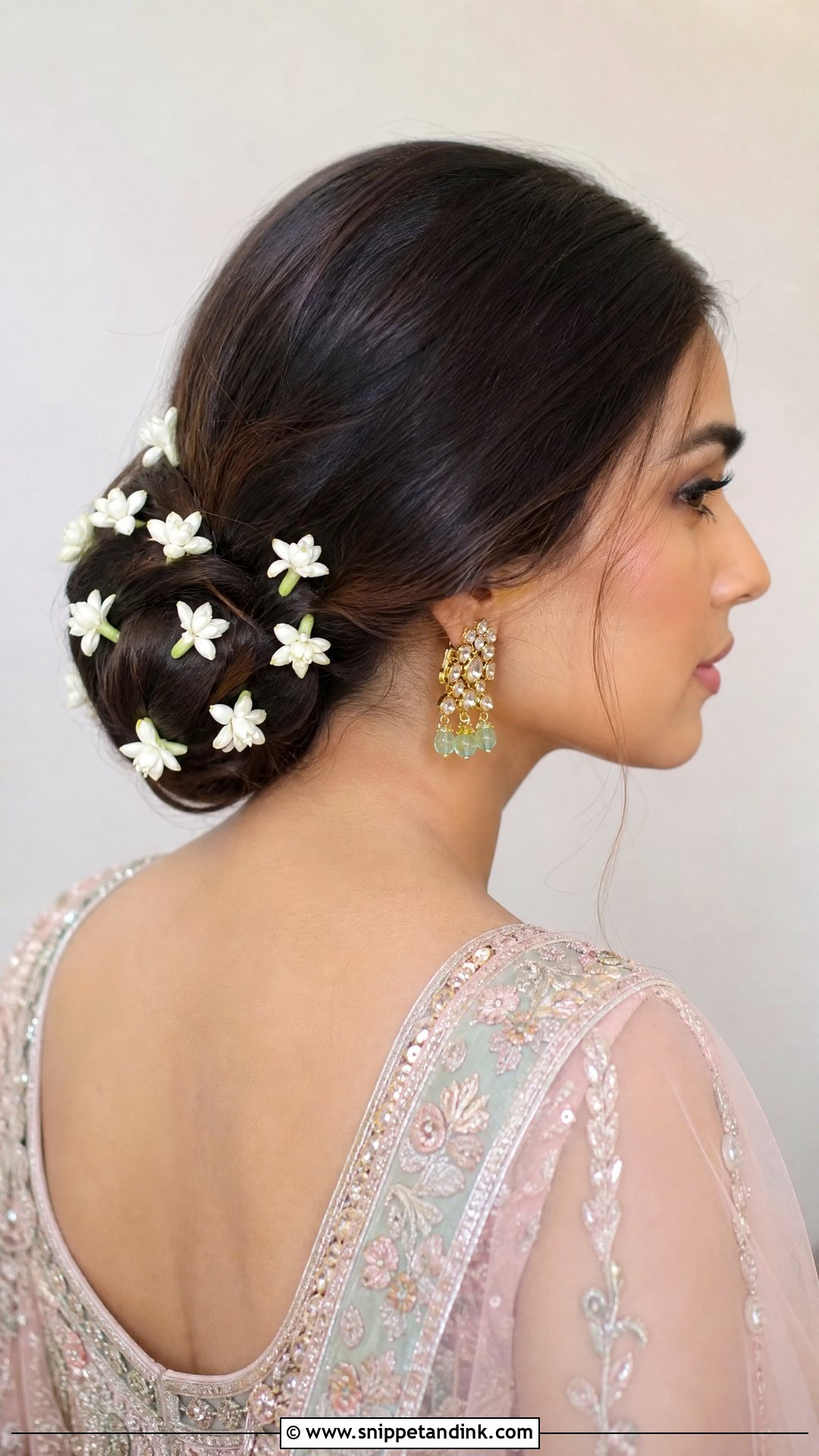
Instead of wrapping a whole string, separate the flowers and place them one by one in a pattern across a bun, braid or open hair. That’s the deconstructed approach, and it gives you full creative control: scattered softly or clustered densely. It suits brides who want a contemporary take on tradition. Practically, single flowers need their own pins; a thin U-pin threaded through the base of each bud holds them. Loose flowers also wilt faster than strung ones, so I’d do this close to the start of the event.
11. Donut Bun With Gajra
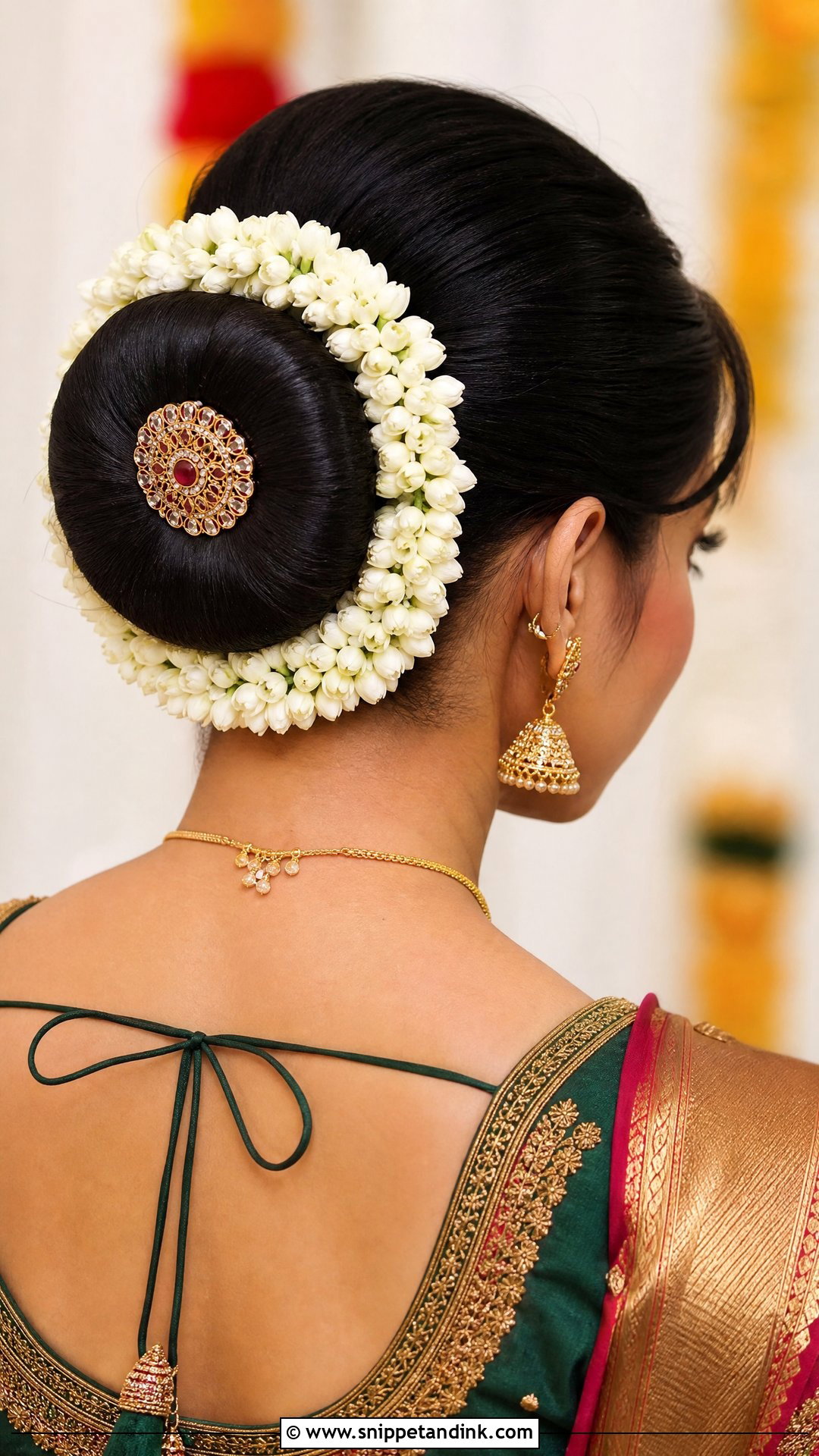
Rolled over a donut ring, the hair forms a smooth, even bun, and the gajra circles its edge like a floral border. This is the shape I suggest most for thinner hair, because the ring adds volume and gives the flowers a firm base to sit on. Choose a ring close to your hair color in case any shows. A decorative pin in the center finishes it for weddings, receptions and formal festive events.
12. Loose Waves With Gajra
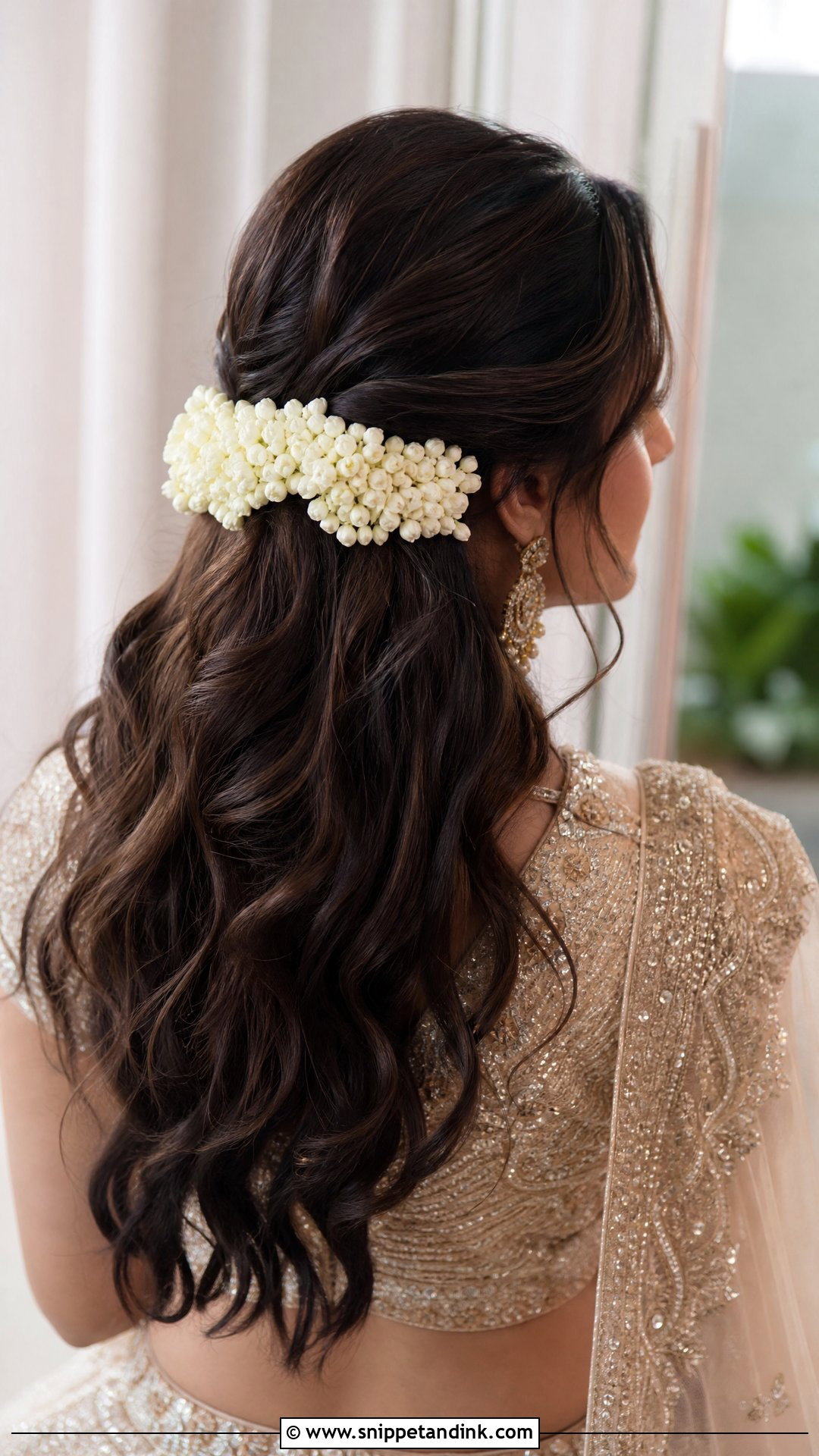
Curl the hair into gentle waves and pin a gajra to one side or across the back. It looks relaxed but still festive, and it suits receptions, sangeets and outdoor celebrations on long and medium hair. The flowers add an accent without competing with the texture. Waves relax as the evening goes on, so I pin the gajra into a small twisted section behind the ear rather than to the waves themselves.
13. Top Knot With Gajra
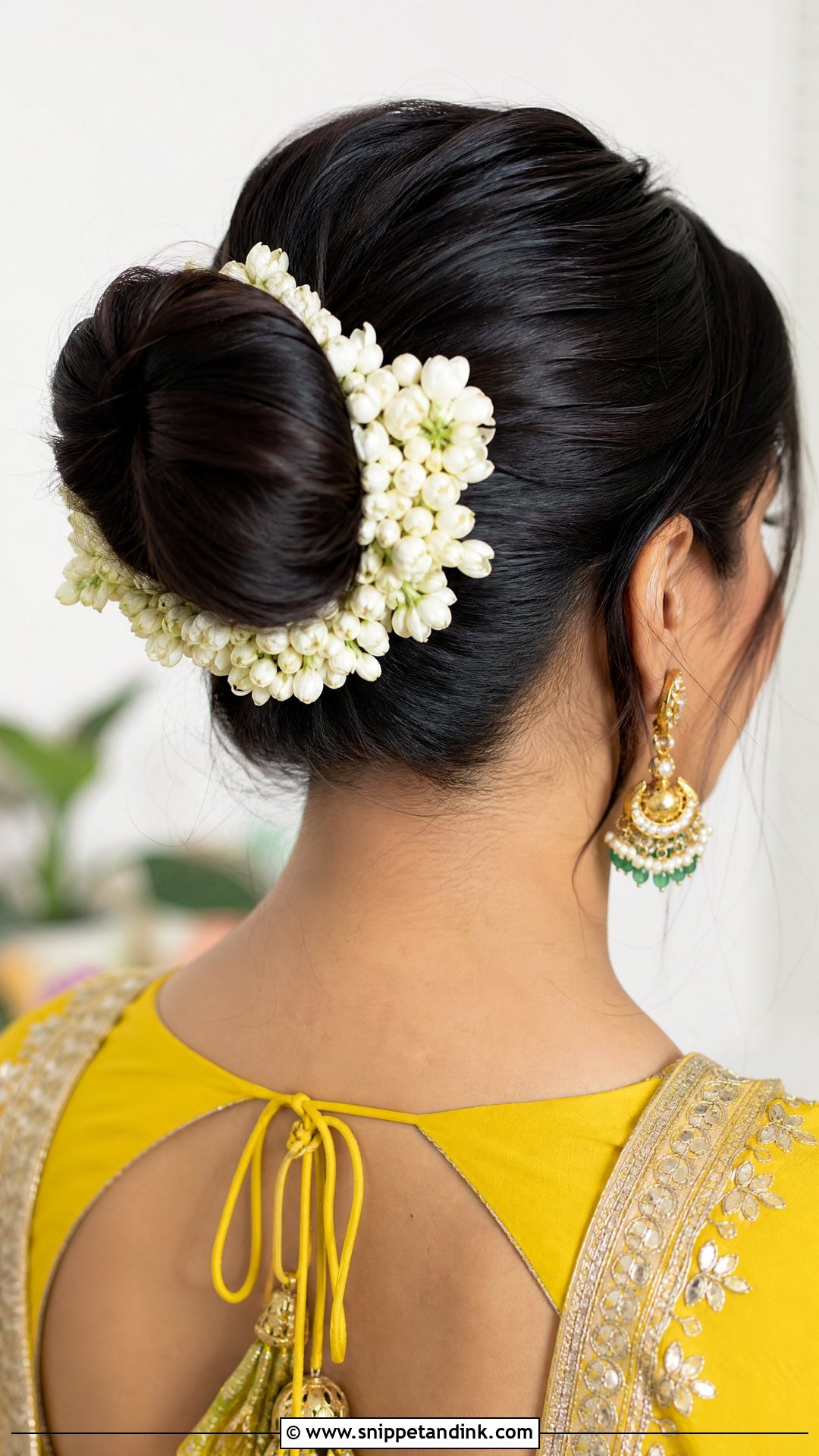
Gather the hair high on the crown, twist it into a knot and wrap the gajra around the base. The high knot keeps the neck cool for summer functions, Haldi, Mehendi and daytime celebrations, and it shows off your face and earrings. Small flowers keep it delicate; layered strings give fullness. Weight matters more up high: a heavy gajra on a top knot tips it backward, so keep it to one or two strings.
14. Maang Tikka And Gajra Combination
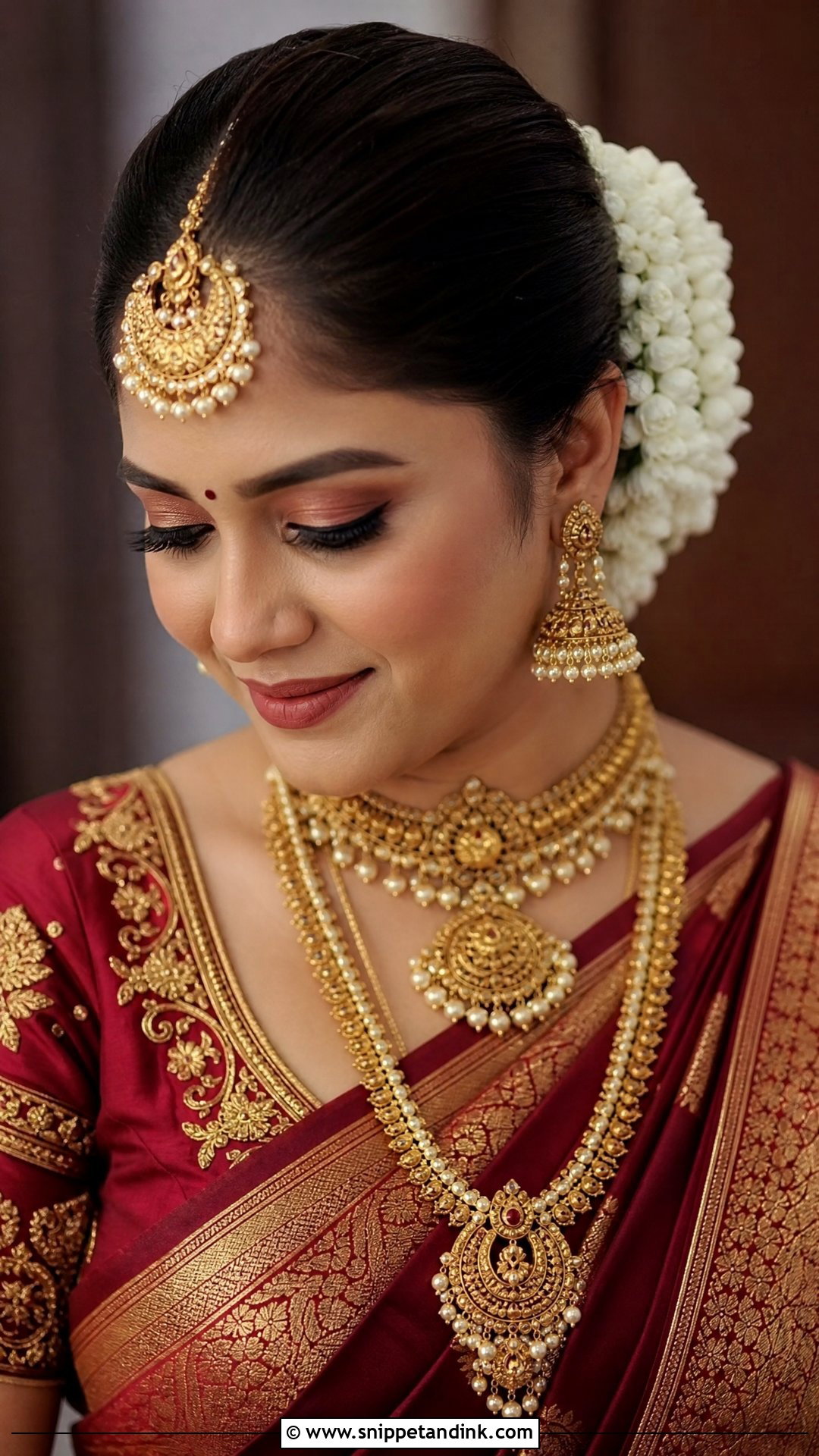
The maang tikka sits on your hairline while the gajra wraps around your bun or braid, and together they frame the face from forehead to nape. The flowers soften the metallic shine of the jewelry. It suits brides and festive guests in sarees and lehengas, with jasmine for fragrance or colored blooms to match your outfit. I set the tikka first and then position the gajra, so the tikka chain isn’t pulled off center by the flowers. The maang tikka and gajra duo works best for grand occasions.
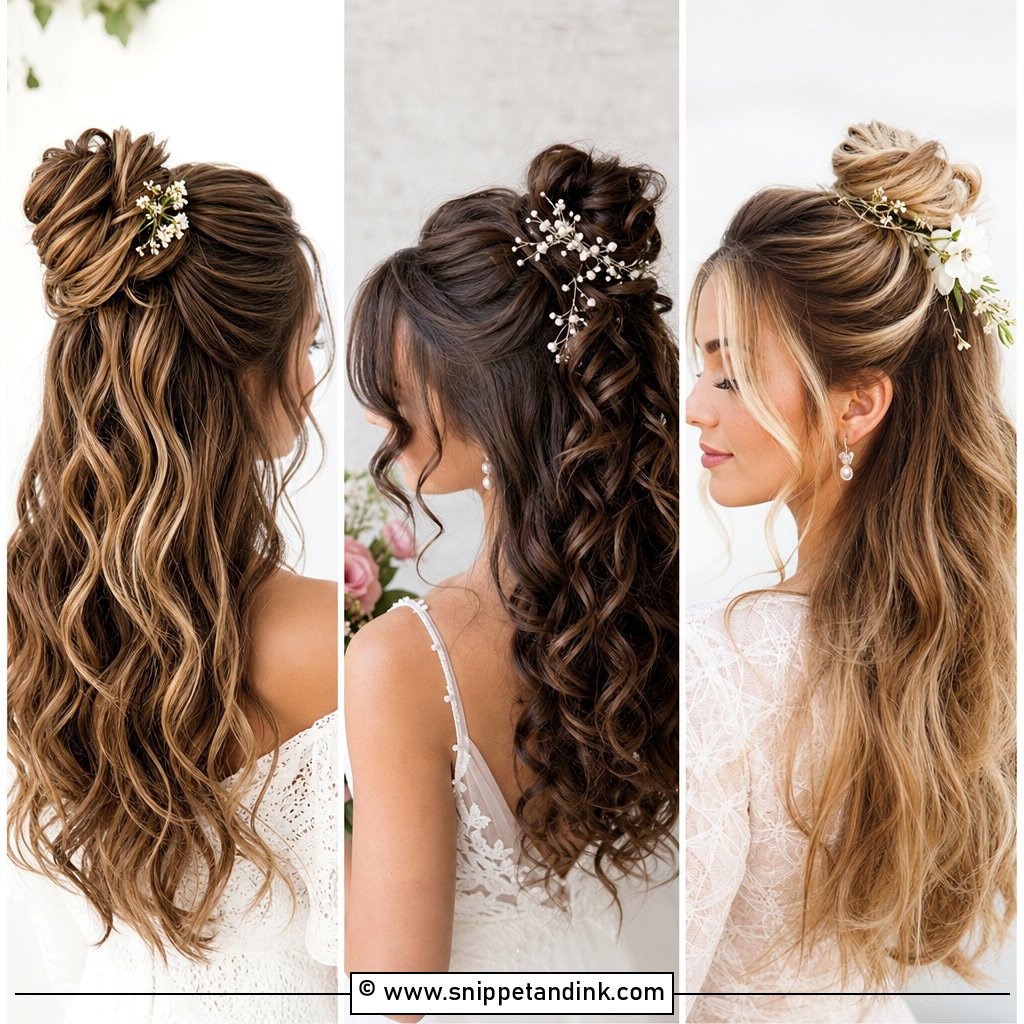
15. Braided Bun With Gajra
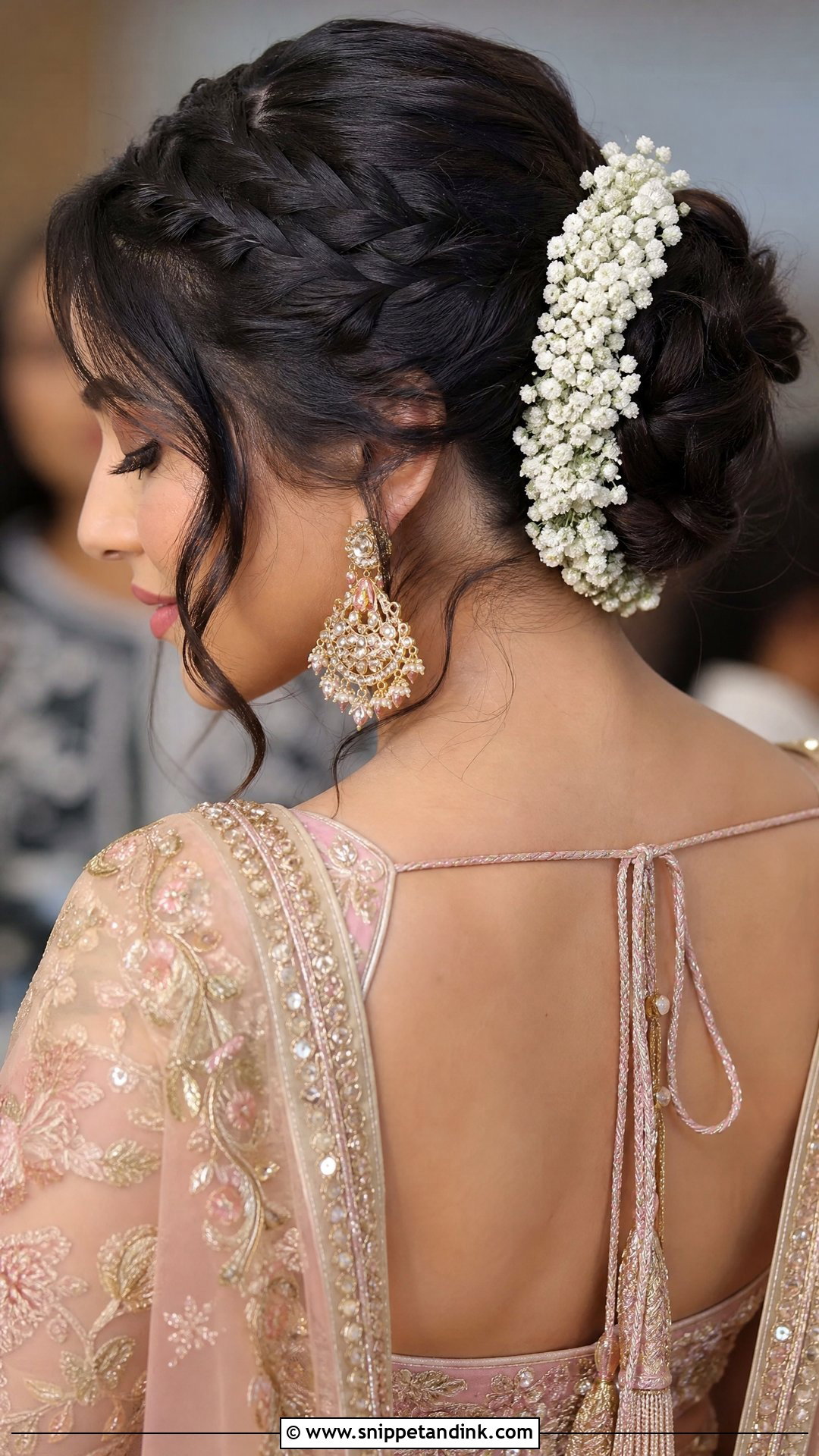
Braid sections of hair and coil them into a bun, then wrap a gajra around it. The braids add detail, and flowers sit snugly between the braided coils, which is why this one holds well through long celebrations. Pins grip braids far better than smooth hair, so the gajra stays put. A few loose tendrils frame the face. Good for weddings, receptions and cultural events.
16. Open Hair With Gajra Headband
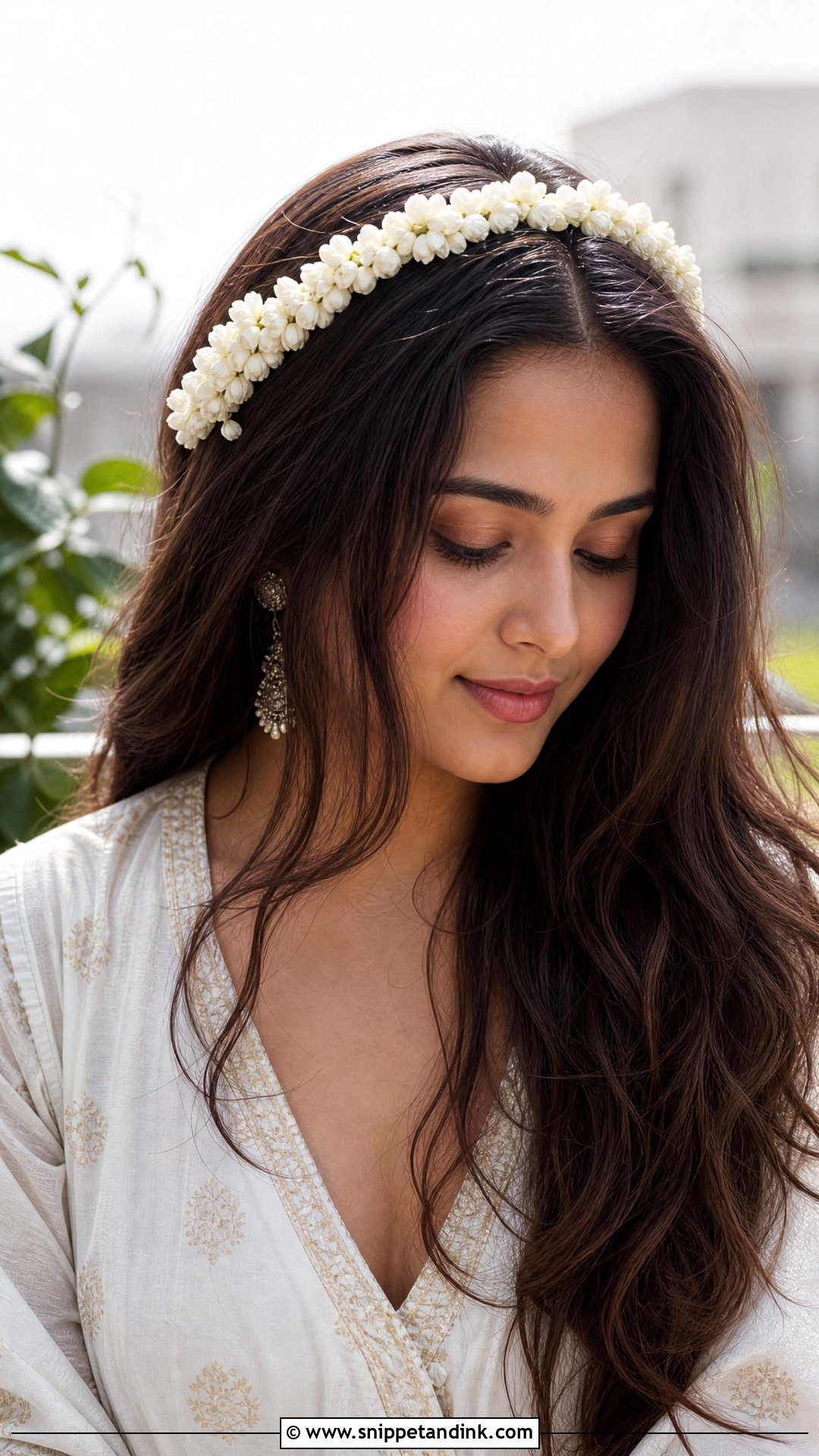
Placed along the hairline like a band, the gajra frames the face while the rest of the hair flows behind, straight or wavy. It’s a relaxed look for Mehendi functions, garden parties and casual festive days, with light ethnic outfits. Fresh flowers against the forehead can feel damp in heat, so I sit the band just behind the hairline and pin it from underneath at each temple. The gajra headband style mixes tradition with a carefree feel.
17. Floral Ponytail With Gajra
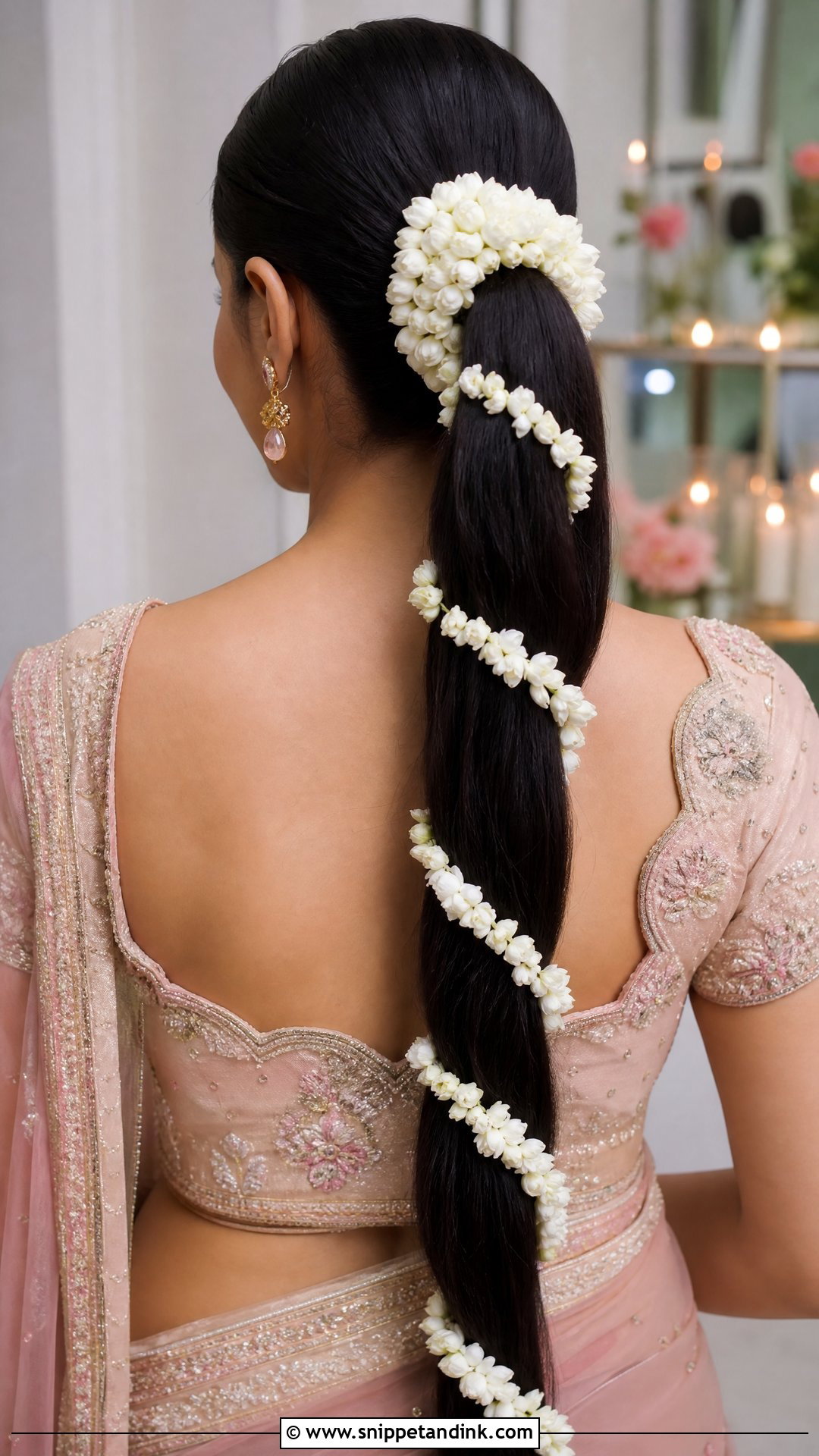
Tie the hair into a high or low ponytail and wrap the gajra around the base, or twine it down the length too. Sangeets, receptions and festive evenings suit it, and long hair especially. Curl the tail for movement. I hide the elastic with a strand of hair before adding the flowers; a gajra alone doesn’t fully cover a band, and the gap shows in photos.
18. Curly Hair With Gajra
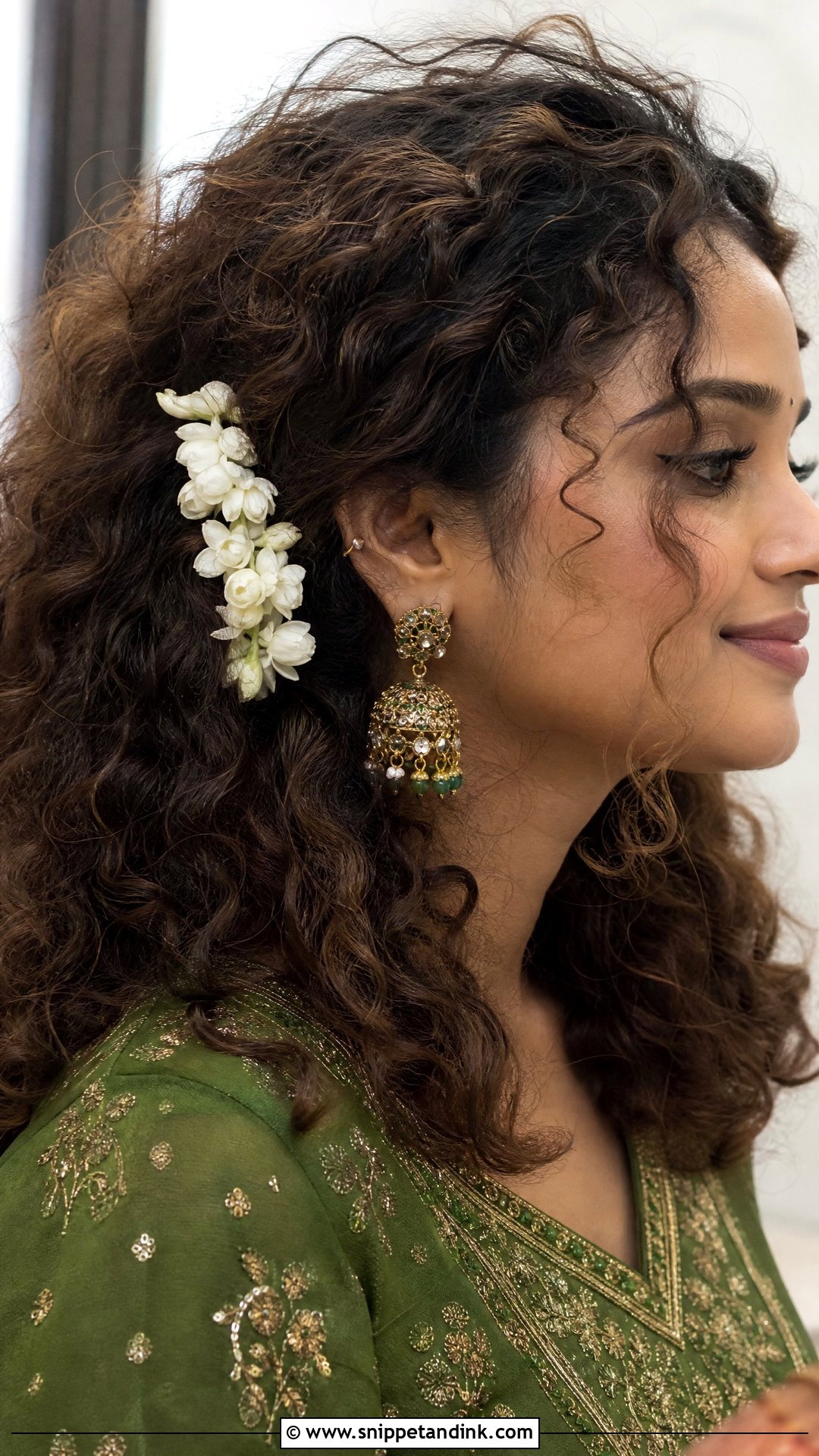
Rather than fight natural curls, embrace them and add a gajra to one side, near the ear or across the back. The flowers sit well with curly volume and add fragrance without flattening it. It’s a happy look for Haldi, Mehendi and lively celebrations. Pin with U-pins pushed into the curls at an angle; bobby pins tend to crush the curl pattern where they sit.
19. Double Braid With Gajra
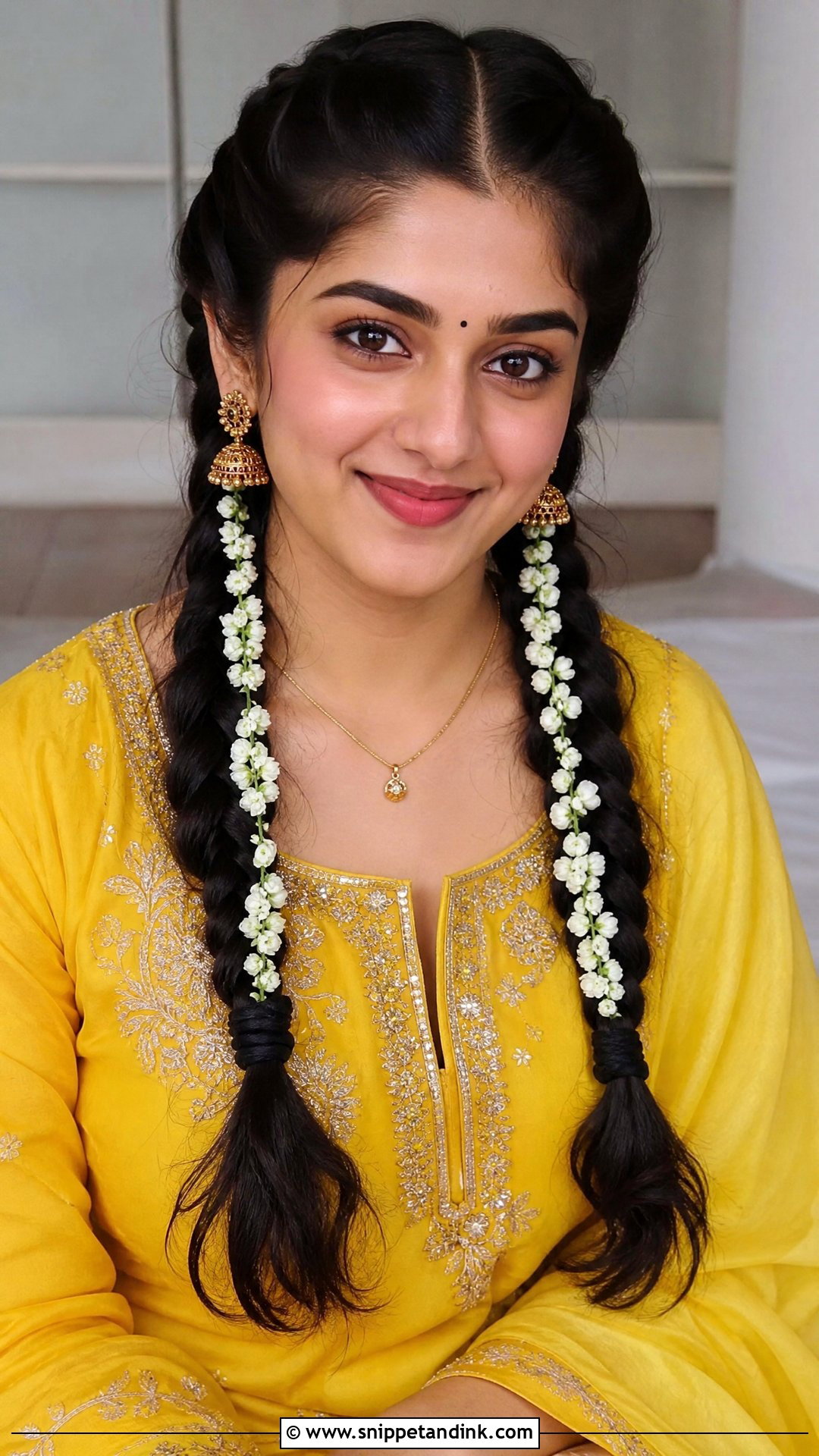
Part the hair down the middle, braid each side and weave gajra flowers along both braids. It’s symmetrical, youthful and suits younger women and daytime events like Haldi and Mehendi. Face-framing strands soften it. Measure both strings against each other before you pin them, because uneven flowers on matching braids are the first thing you notice in a photo.
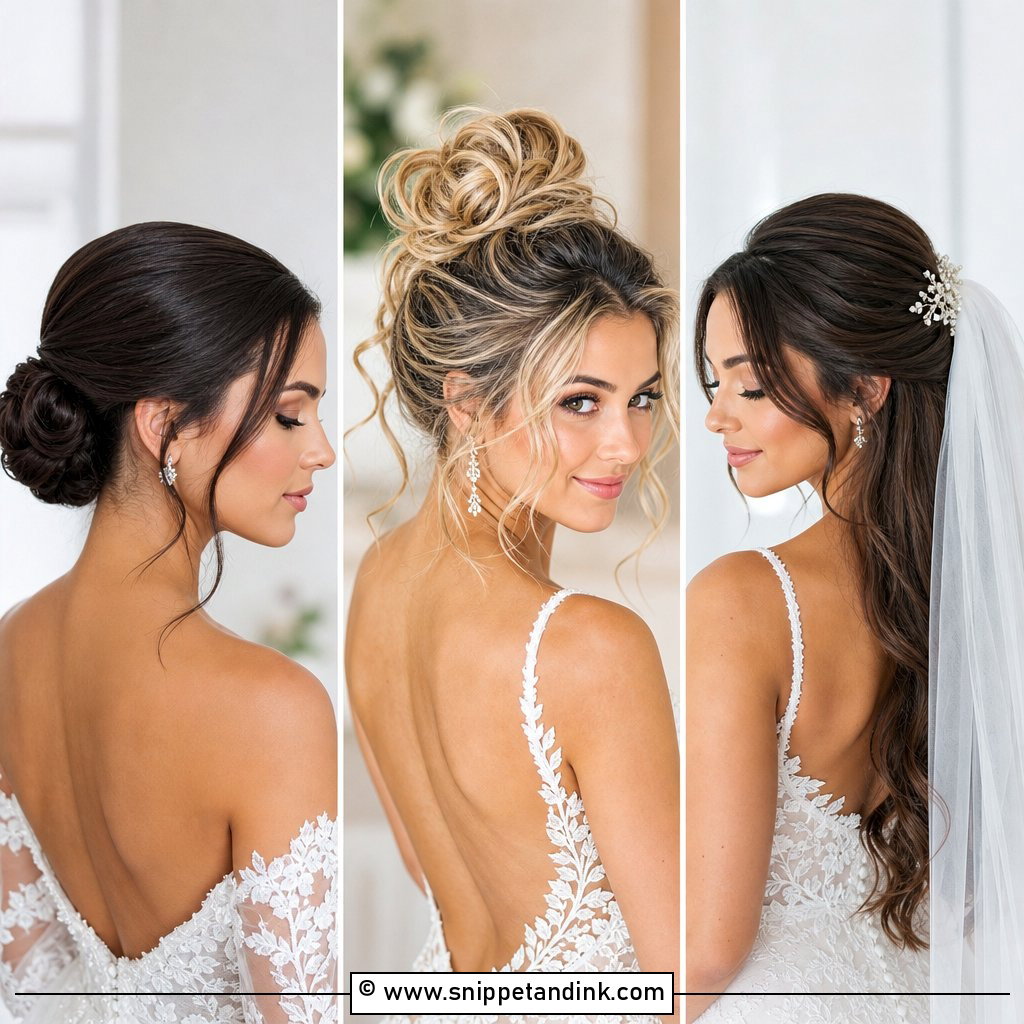
20. Rose And Jasmine Mixed Gajra Bun
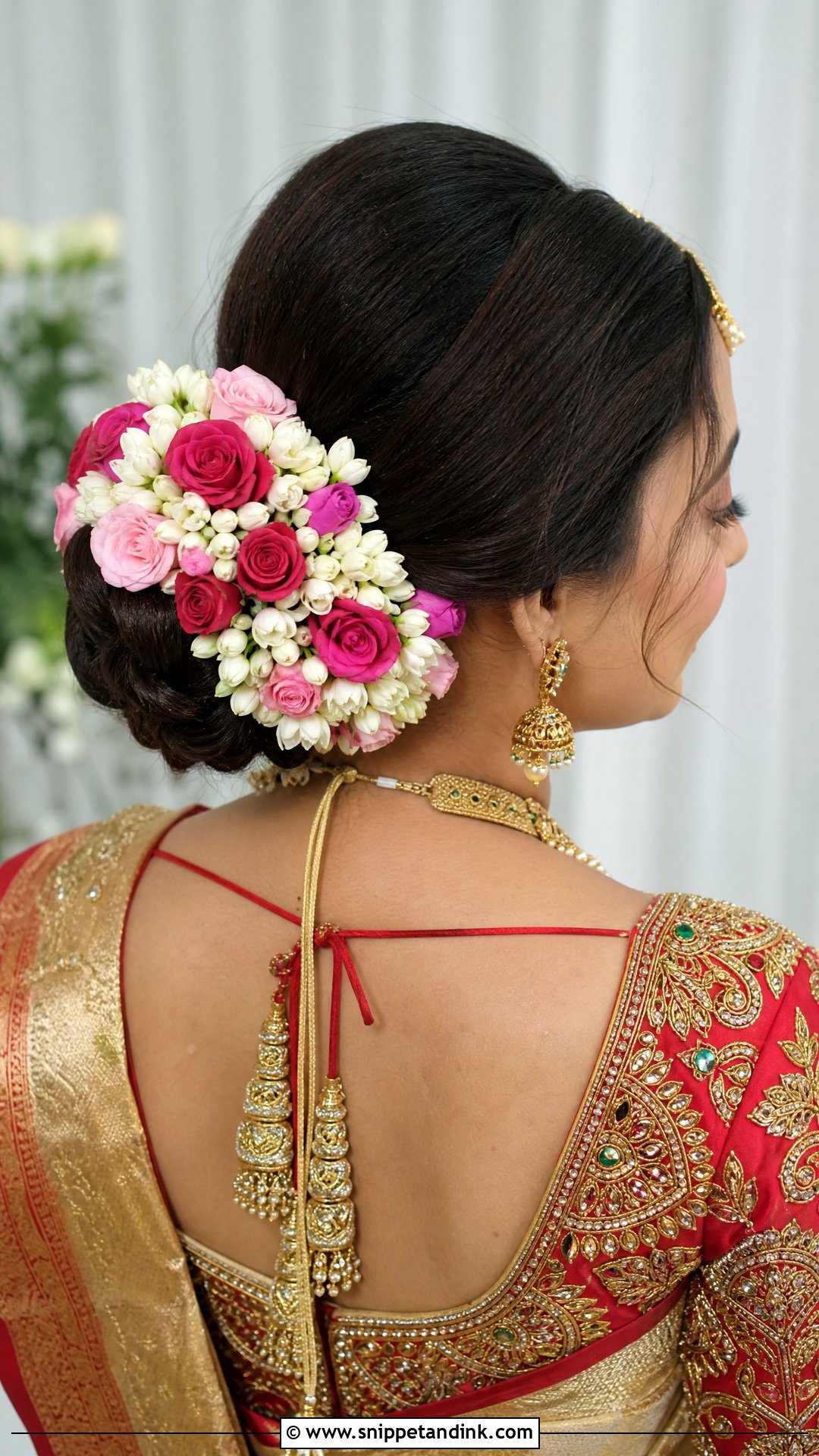
Roses and jasmine together make a colorful, rich bun: jasmine for fragrance, roses for color and fullness. Wrap the mixed gajra around a low or mid bun for a luxurious effect with heavy jewelry and traditional attire, and match the rose shade to your outfit. Roses are heavier and bruise easily, so I place them toward the bottom of the bun where they aren’t pressed by a dupatta, and use jasmine on top. It’s a vivid choice for brides and grand celebrations.
Pinning a Gajra So It Stays Through a Long Ceremony
A gajra that slides or sags halfway through the rituals is almost always a pinning problem, not a flower problem. This is how I secure one.
- Finish the hairstyle completely first. The gajra goes on last, onto a style that is already firm.
- Anchor the starting end with two crossed bobby pins pushed through the thread, not through the flowers.
- Every few inches, slide another pin through the thread and into the hair underneath, crossing them as you go.
- For layered bridal gajras, pin each row separately. Stacking rows on the first one makes the whole arrangement drag downward.
- Check the back in a hand mirror with your dupatta or veil on, because fabric resting on the flowers changes how they sit.
Keep a spare short string and a few pins with a family member. If a section browns or gets crushed during the day, it takes only a minute to swap, and nobody will see the change in the evening photos.
A String of Jasmine Changes the Whole Look
A gajra carries tradition and fragrance in every string, and there is a style for every hair type and occasion, from a classic jasmine bun to a flowing braid or open hair. It adds softness and meaning to bridal looks and festive ones alike. Next time you dress for a wedding, Haldi or celebration, try one of the looks above, plan your flowers a day ahead, and pin them properly. Fresh jasmine at the end of a long day is one of the best things about wearing traditional hair.
You'll Like These Ideas:


Leave a Reply