
A South Asian bridal look is built in layers, and the hair has to hold up a surprising amount of it. That’s the job of the joda, also spelled juda or jora. It anchors the maang tikka, takes the dupatta pins and carries the flowers through ceremonies that can run most of the day. Sleek and high, soft at the nape, braided, flowered or pearled, there’s a version for most face shapes and outfits. Below are twenty I’d happily do for a bride, from classic to modern, with notes on what each one needs underneath to stay put.
What Holds a Joda Up Under a Heavy Dupatta
Every bun below starts from the same foundation, and it’s what decides whether the joda is still in place at the vidaai. A bridal dupatta and maang tikka add real weight to the head, and both are pinned straight into the hair.
The base comes first
I start with a firm ponytail at the height the bun will sit, secured with an elastic rather than pins alone. The bun gets pinned to that base. Pins pushed into loose hair slide out; pins locked against an elastic stay.
Padding for fine or shoulder-length hair
Fine or shorter hair usually needs help to make a full joda. A donut, a mesh filler or color-matched clip-in hair packs out the shape, so the bun looks generous and the dupatta pins have something to grip. Mention extensions at your trial so they can be matched in daylight.
Where the dupatta pins go
Decide how the dupatta will sit before the bun is set. A high bun lifts it into a rounded shape at the crown, and a low bun lets it drape flat. The pins go into the hair around the bun, never into the flowers, which can’t take weight.
1. Classic High Bun Joda
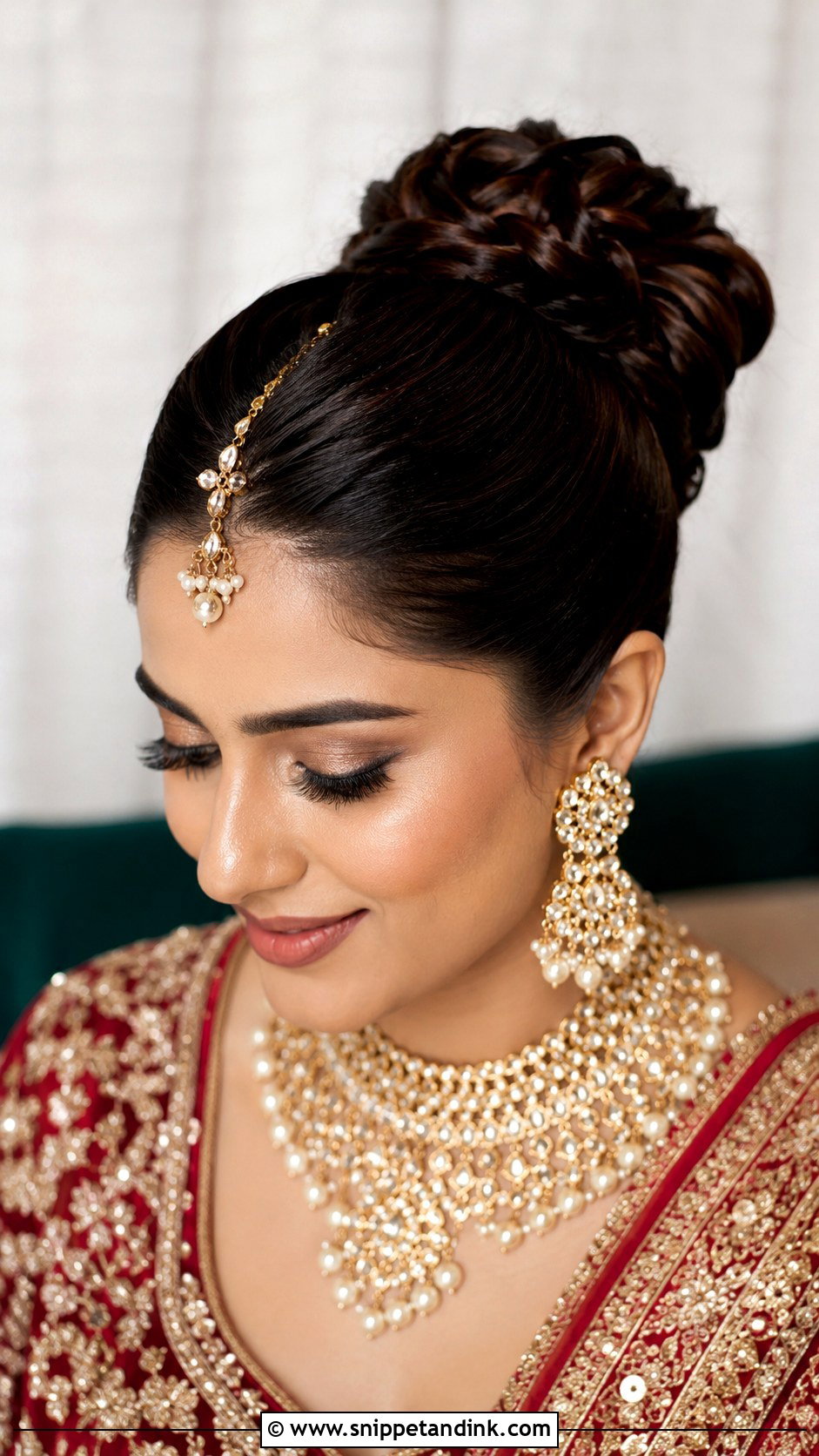
Set at the crown, this bun adds height and pulls every bit of attention to the face, earrings and tikka. It’s the one I reach for with heavy lehengas and statement necklaces, because nothing at the nape competes with the jewelry. The base is a tight ponytail secured with an elastic, and the bun is pinned to that base rather than to loose hair, which is why it stays smooth through hours of dancing. A thin gajra around it is optional. I’d think twice for a petite bride with a heavy dupatta pinned on top, since the height plus the fabric can look top-heavy and a mid-crown placement balances better.
2. Low Floral Bun Joda
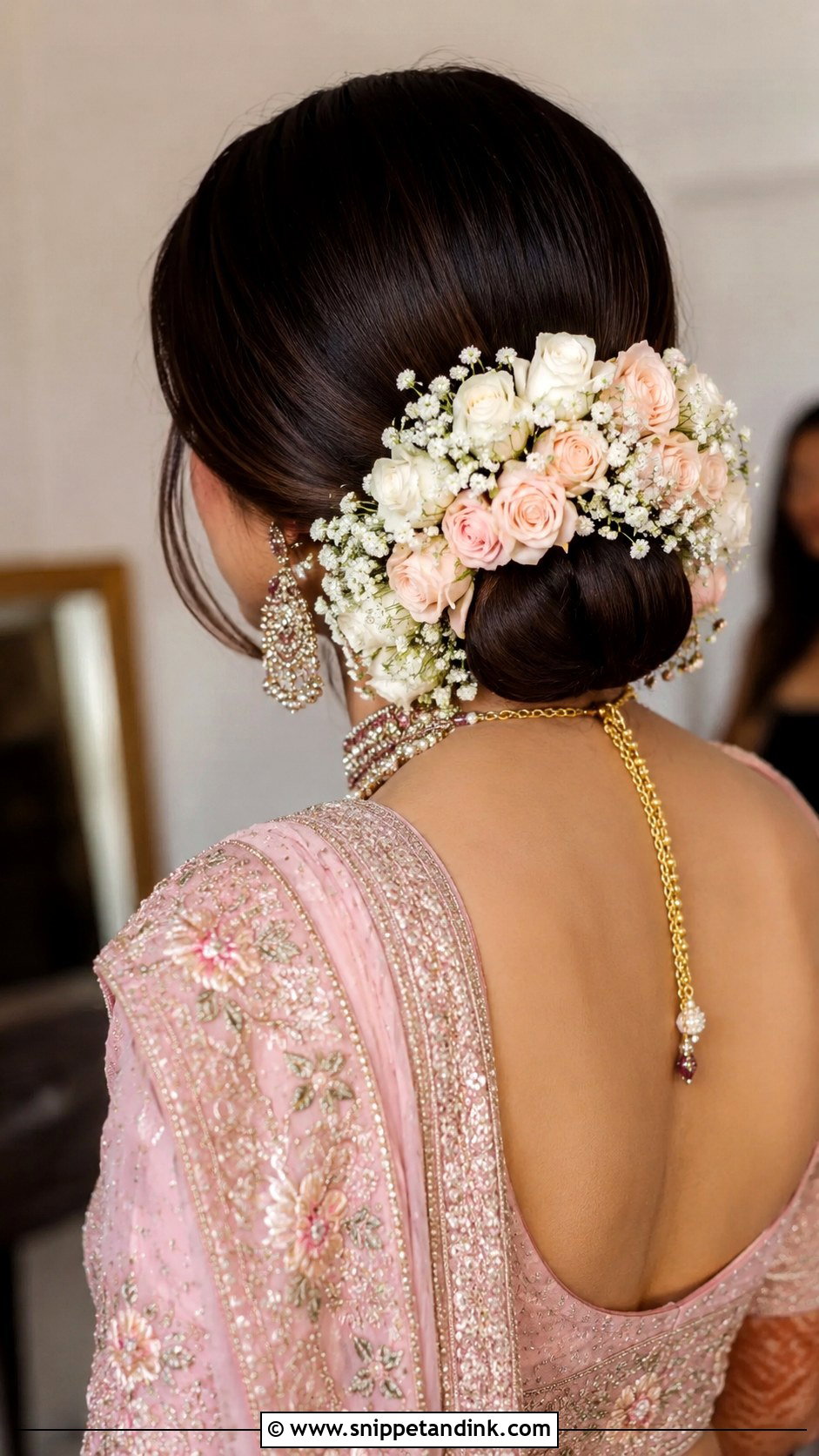
A low bun at the nape is gentle and quiet, and it suits daytime weddings, mehndi and pastel outfits. Jasmine, baby roses or small orchids tucked around it add color and scent. Low placement also sits comfortably under a heavy dupatta, because the fabric drapes over the crown instead of fighting a bun. My warning: a low bun takes the full weight of whatever’s pinned to it, and on slippery fine hair it can drag downward by evening. I anchor it with crossed bobby pins into the base and add a small filler inside so the flowers have something to grip. Delicate jhumkas and a light matha patti suit it.
3. Braided Crown Joda
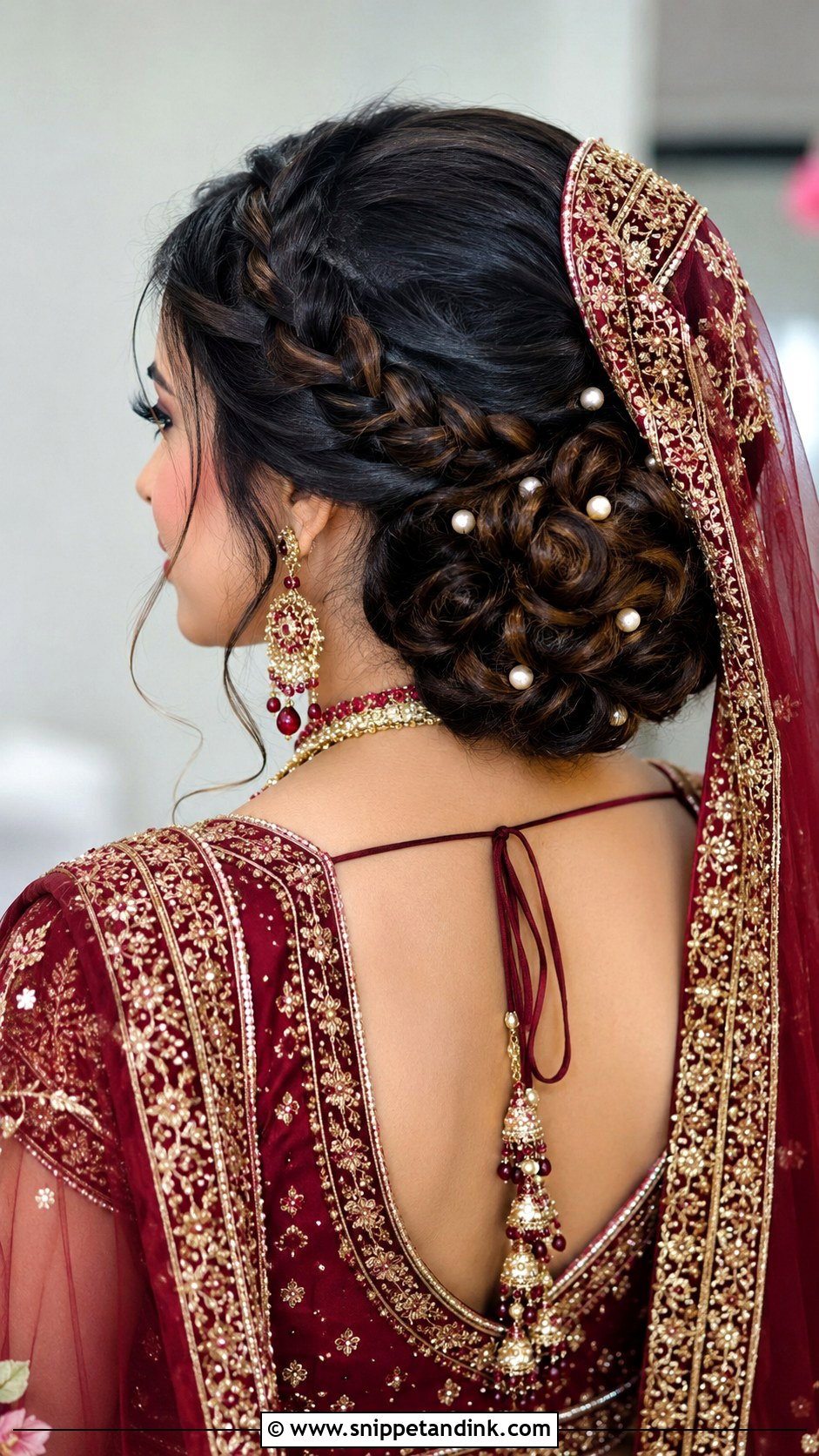
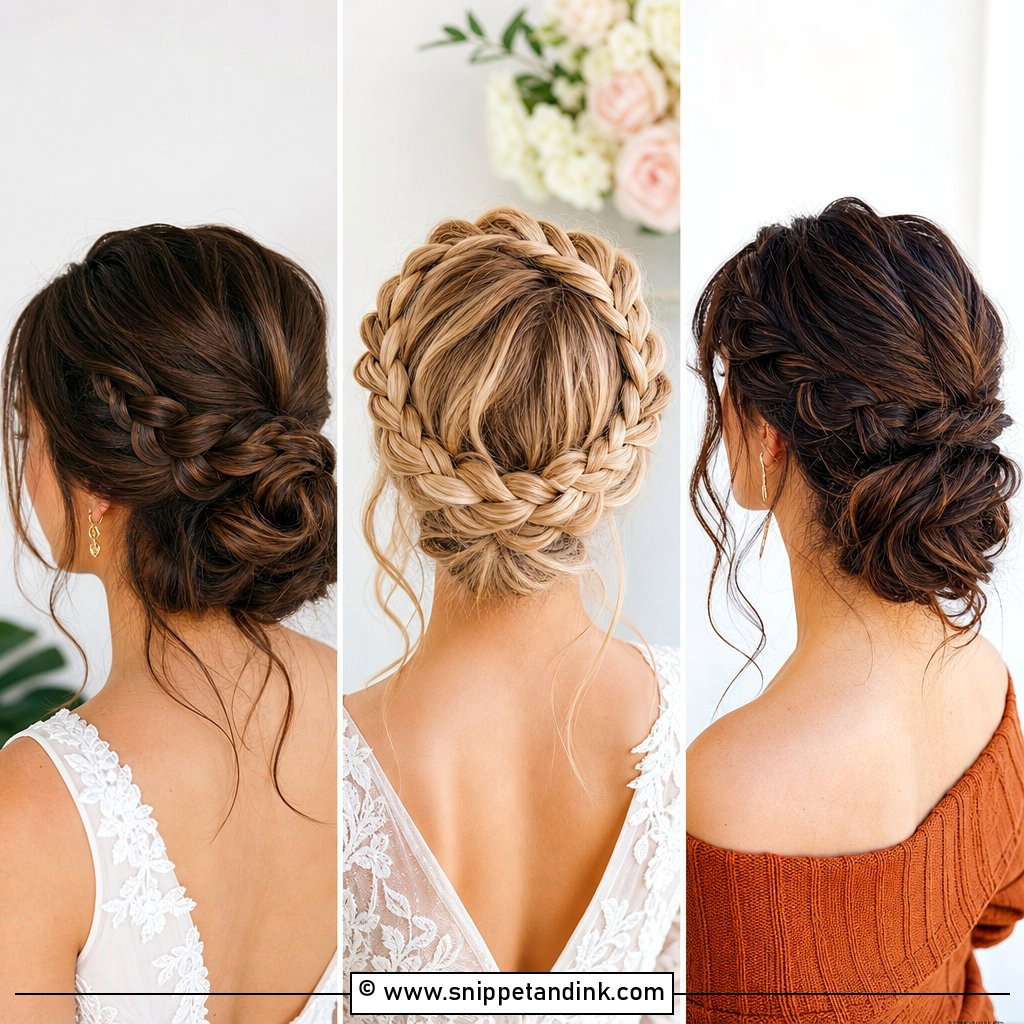
A braid wraps around your head like a halo and flows into a full bun at the back. The crown frames the face while the back stays full, and it handles veils, dupattas and embellished sarees well because the braid gives pins a firm surface to bite into. It also hides flyaways and new growth along the hairline. It does need length. On shoulder-length hair the braid won’t reach all the way around, and I’d add a matching clip-in braid rather than force it. Small pearls or tiny flowers in the bun finish it.
4. Side Swept Bun Joda
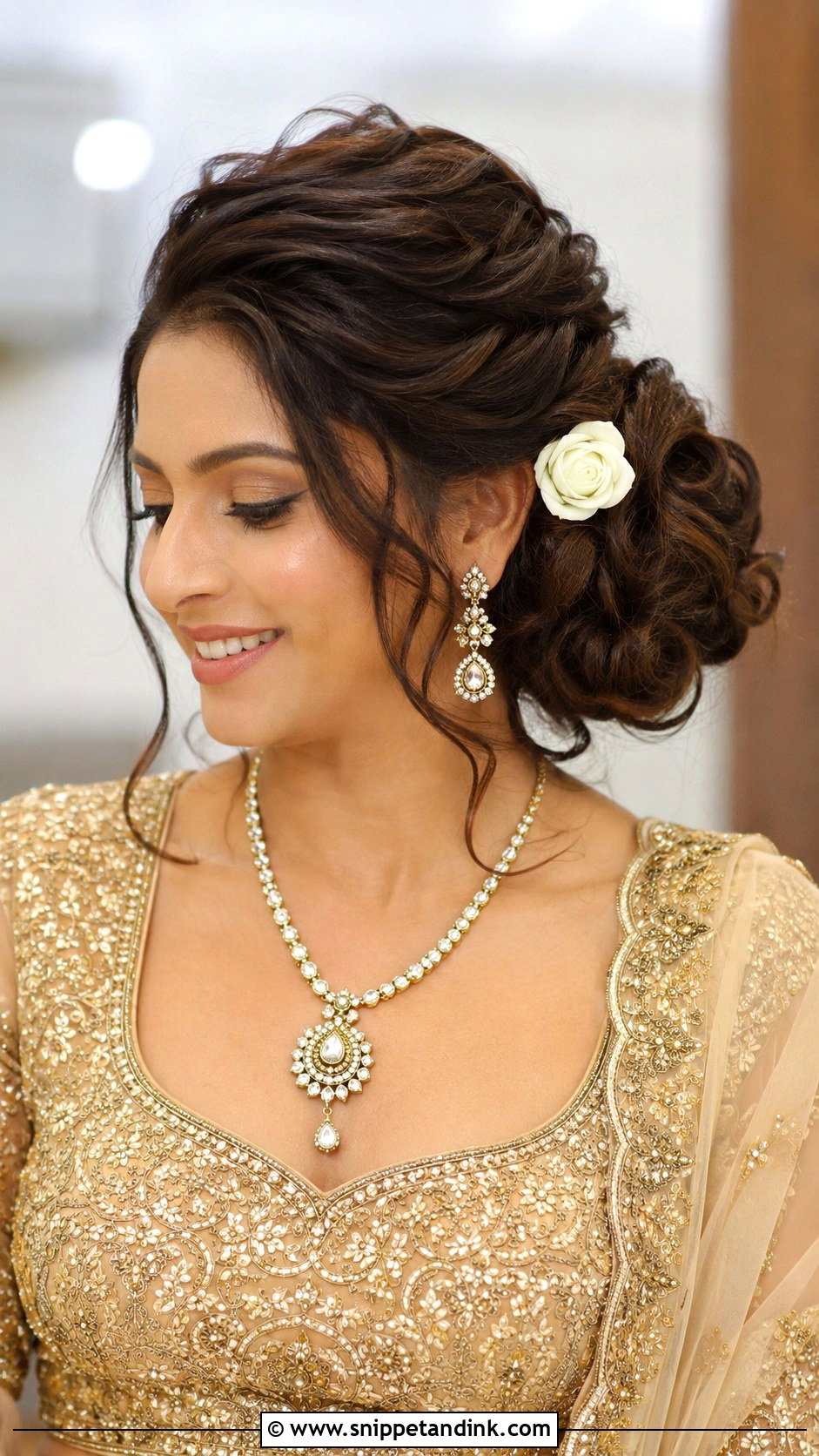
Moving all the hair to one side shows off the jawline and lets one earring sit in full view. I do this mostly for receptions and engagement parties, where it reads glamorous but relaxed. A smooth bouffant on top gives height while the sweep keeps it chic, and a single rose or a small cluster of blooms near the bun is enough decoration. Round and oval faces suit the asymmetry. Before committing, check which side your photographer will shoot most, since the bun disappears from the other side in profile shots.
5. Rose Embellished Bun Joda
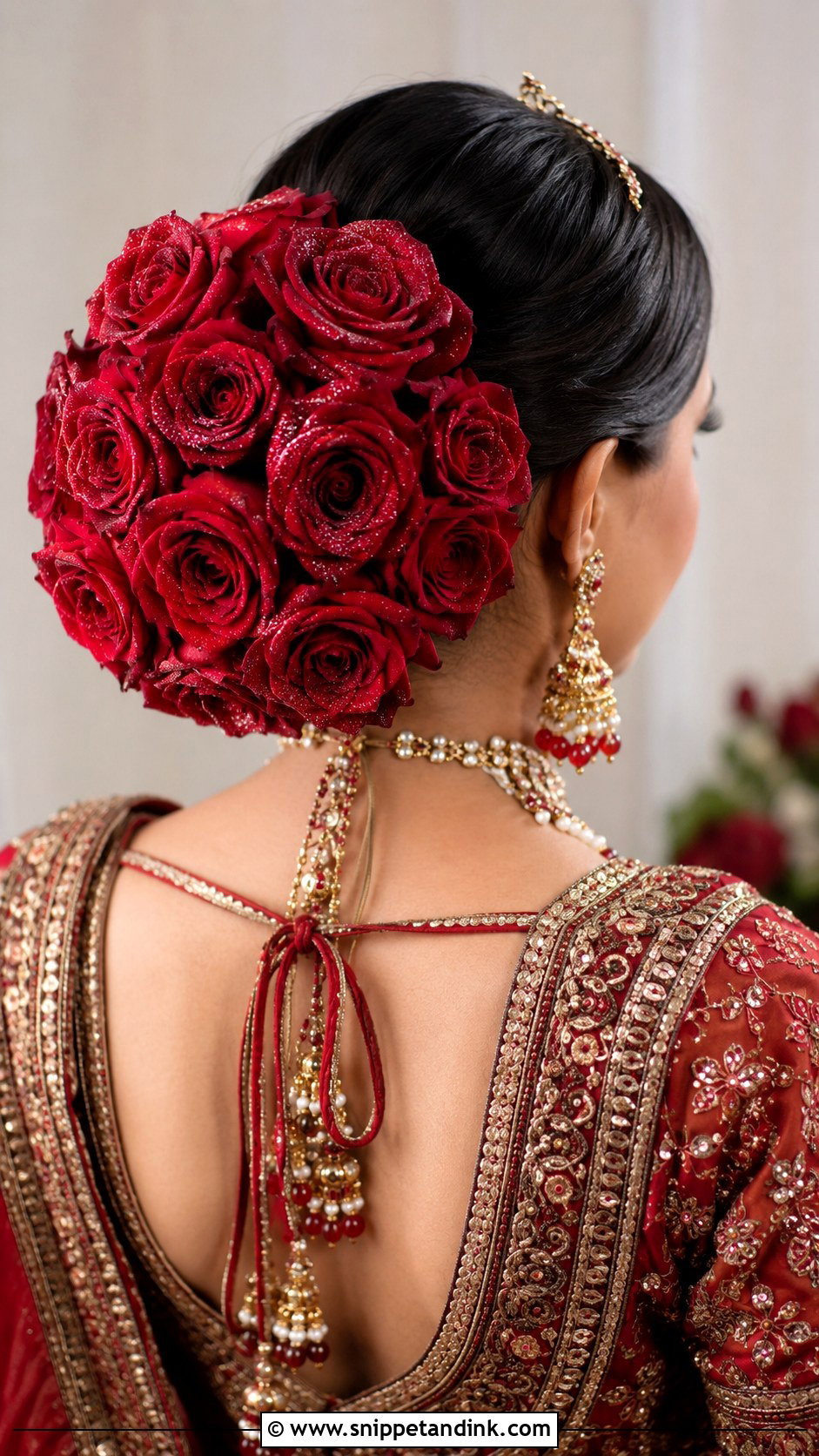
Roses wrapped around the whole knot give a rich, romantic finish, and red or blush ones belong with red and maroon lehengas for a classic dulhan look. You can use one large rose or many small ones tucked through. A light dusting of glitter makes the petals glow under lights, but I keep it very light, because heavy glitter sheds onto the dupatta and the groom’s sherwani. Roses are heavier than they look, so I pin each one through the stem into the bun’s base rather than just pushing it in. Done that way, it stays full through every photo and every emotional moment.
6. Jasmine Gajra Bun Joda
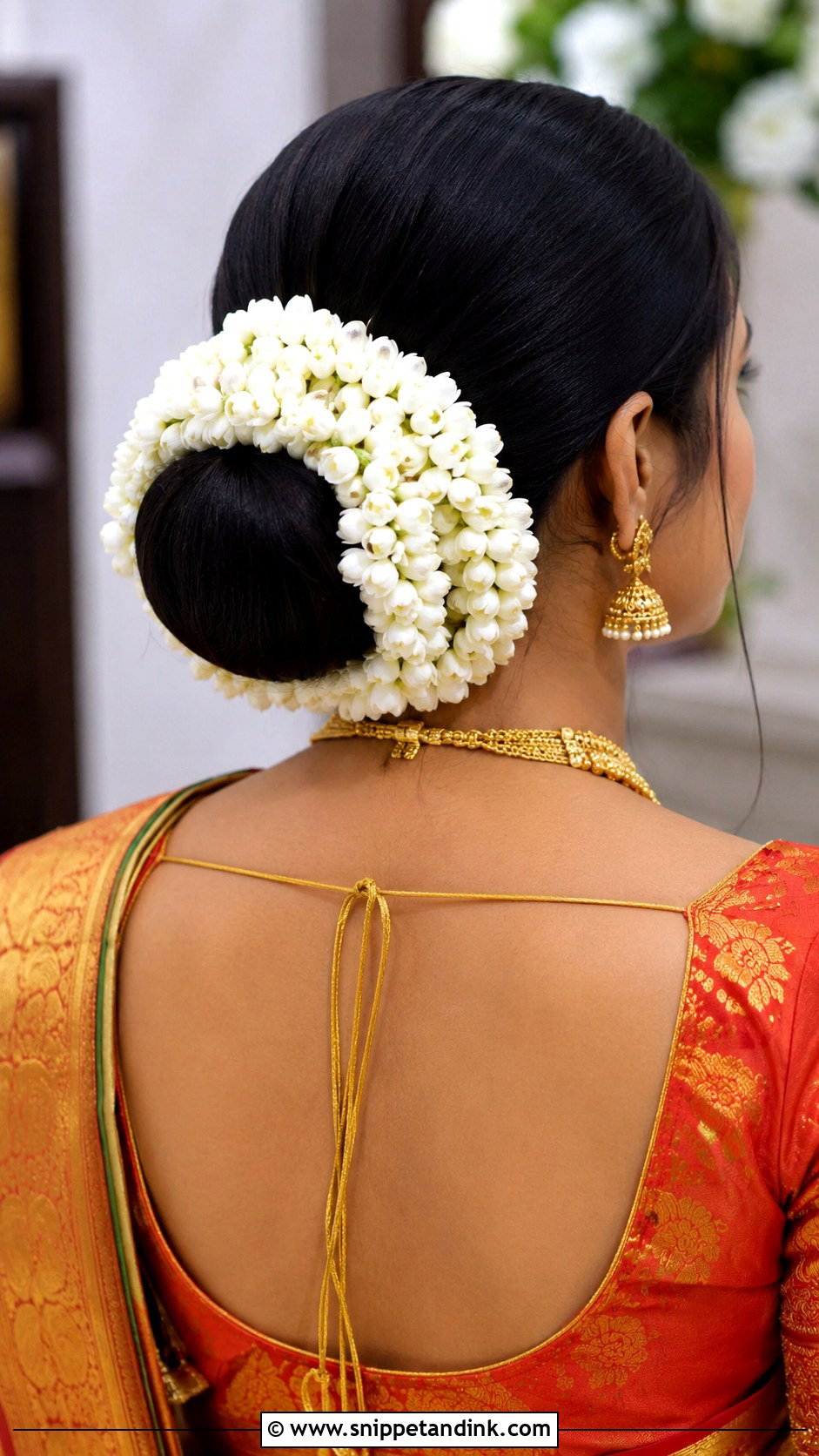
Strands of jasmine wrapped around a sleek bun are the signature of South Indian bridal hair, and they belong with Kanjeevaram sarees and temple jewelry. I usually keep the bun low and round, with cascading strands falling from it for movement. The scent lasts most of the day, but white jasmine browns as it opens, so I ask for gajra made with tight buds and kept wrapped in a damp cloth until the moment it goes on. Pinning it in two places, top and bottom, stops it sliding when you bow or turn. Heritage looks like this one don’t date.
7. Messy Textured Bun Joda
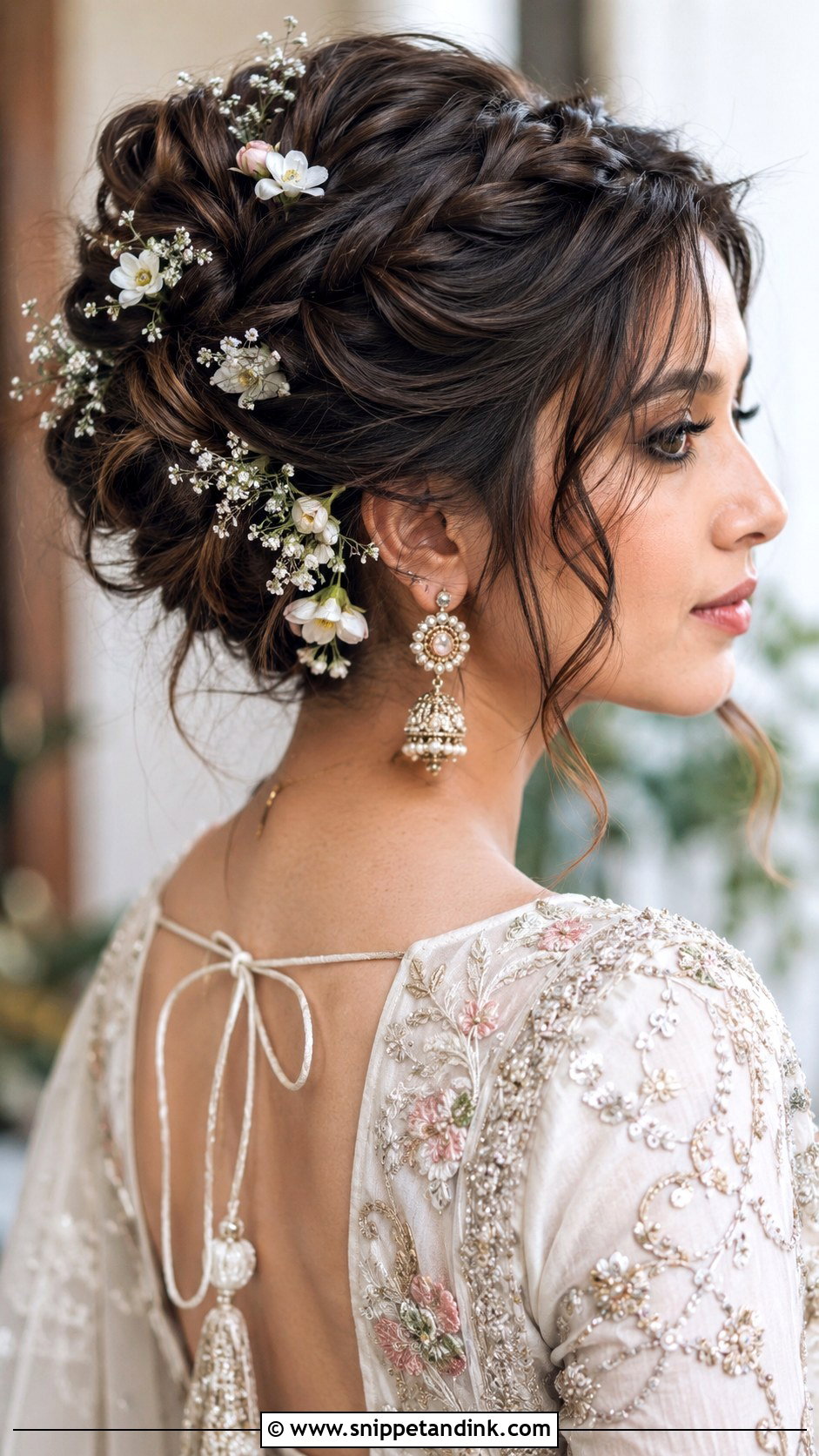
Not every bride wants it tight. This bun leaves soft strands around the face and a full, loose knot behind, and it suits outdoor weddings, beach functions and boho outfits. The messiness is planned, though. I curl and pin the whole thing securely first, then pull pieces loose, because a bun that’s genuinely loose won’t survive a dupatta or a long hug. Small flowers or pearl pins dress it up. Humid venues are its weak spot: the loose pieces frizz first, so I use a light holding spray and keep the face-framing strands fewer than you’d think.
8. Pearl Studded Bun Joda
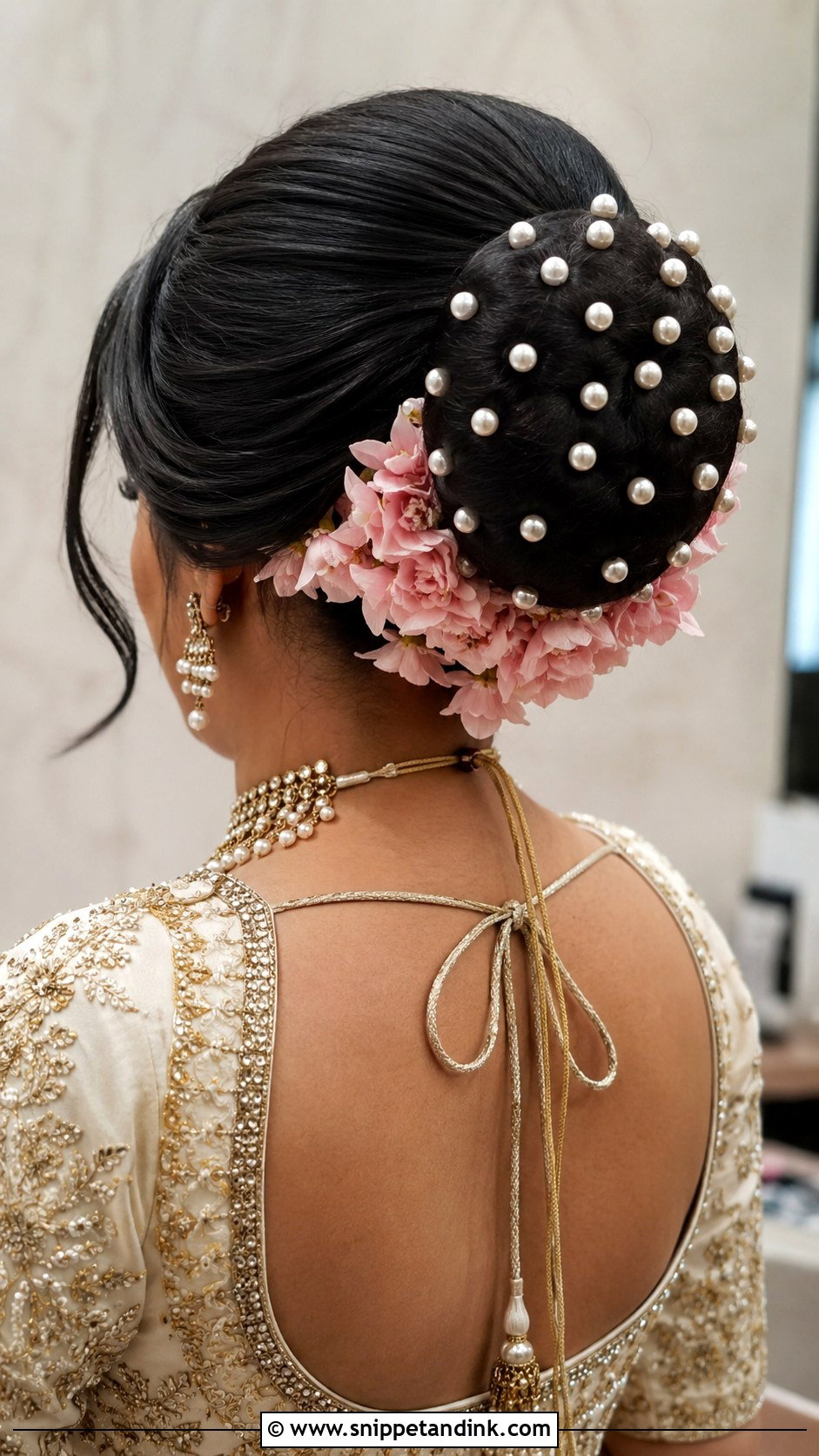
Pearls scattered through the knot give a soft glow without color, so this suits ivory, gold and pastel outfits. A few delicate flowers on the underside add a little life. The pearls catch light gently and never fight the jewelry, which makes the style easy for both day and evening. I use pearl pins with a slight bend or a spiral end, since straight decorative pins tend to work their way out as you move. Brides who want refinement rather than bold color tend to land here.
9. Baby’s Breath Bun Joda
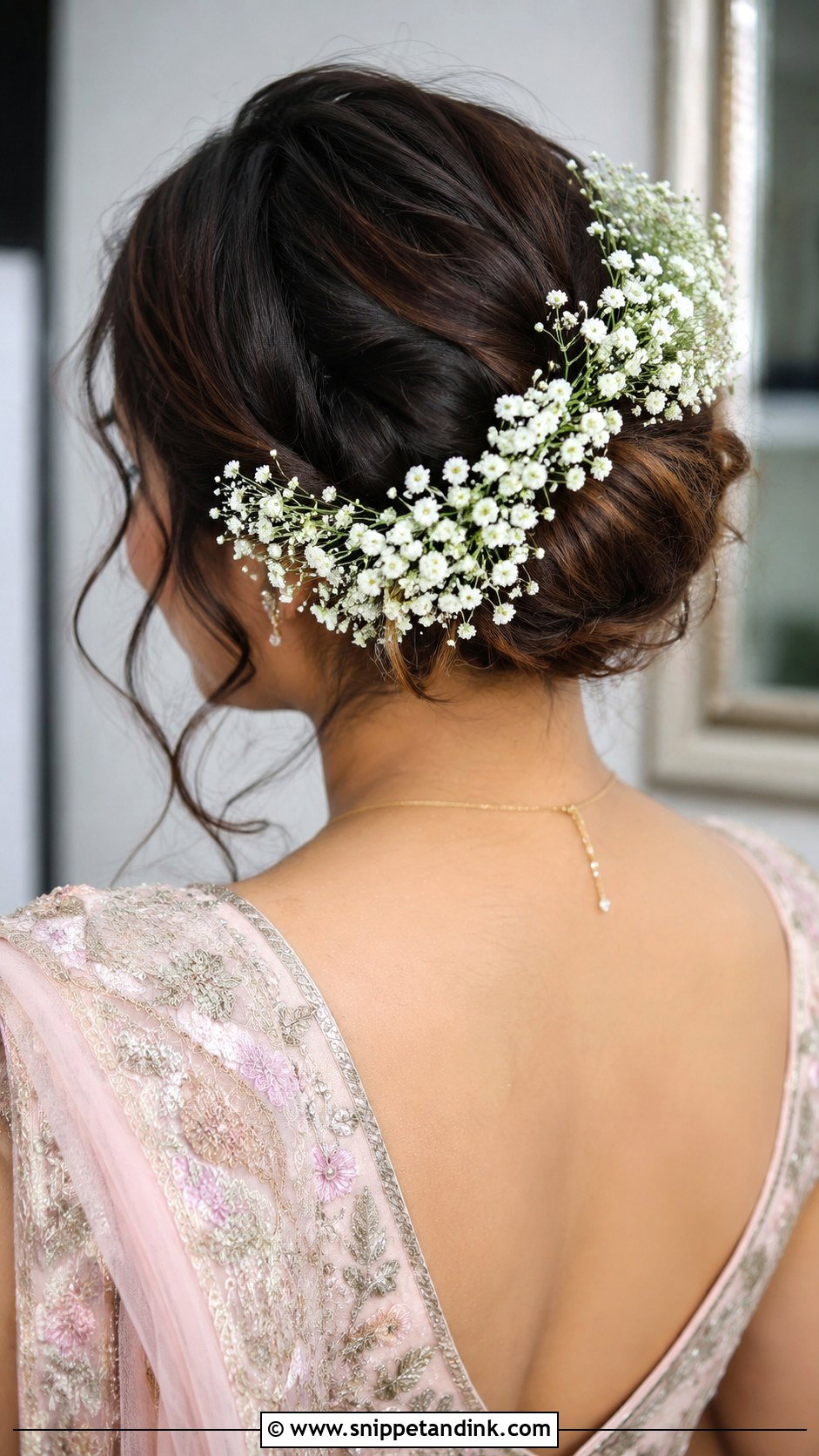
Baby’s breath surrounds the knot with tiny white blooms and makes the whole bun look airy in photos. It’s an easy match for pastel lehengas and minimal jewelry, adding fullness without weight or strong color. It also holds up better than most fresh flowers, since it barely wilts. The catch is the smell: up close some people find it unpleasant, and it can irritate sensitive skin, so I’d try a test sprig at the trial. Small clusters wired together sit more neatly than single stems pushed in one at a time.
10. Bouffant Bun Joda
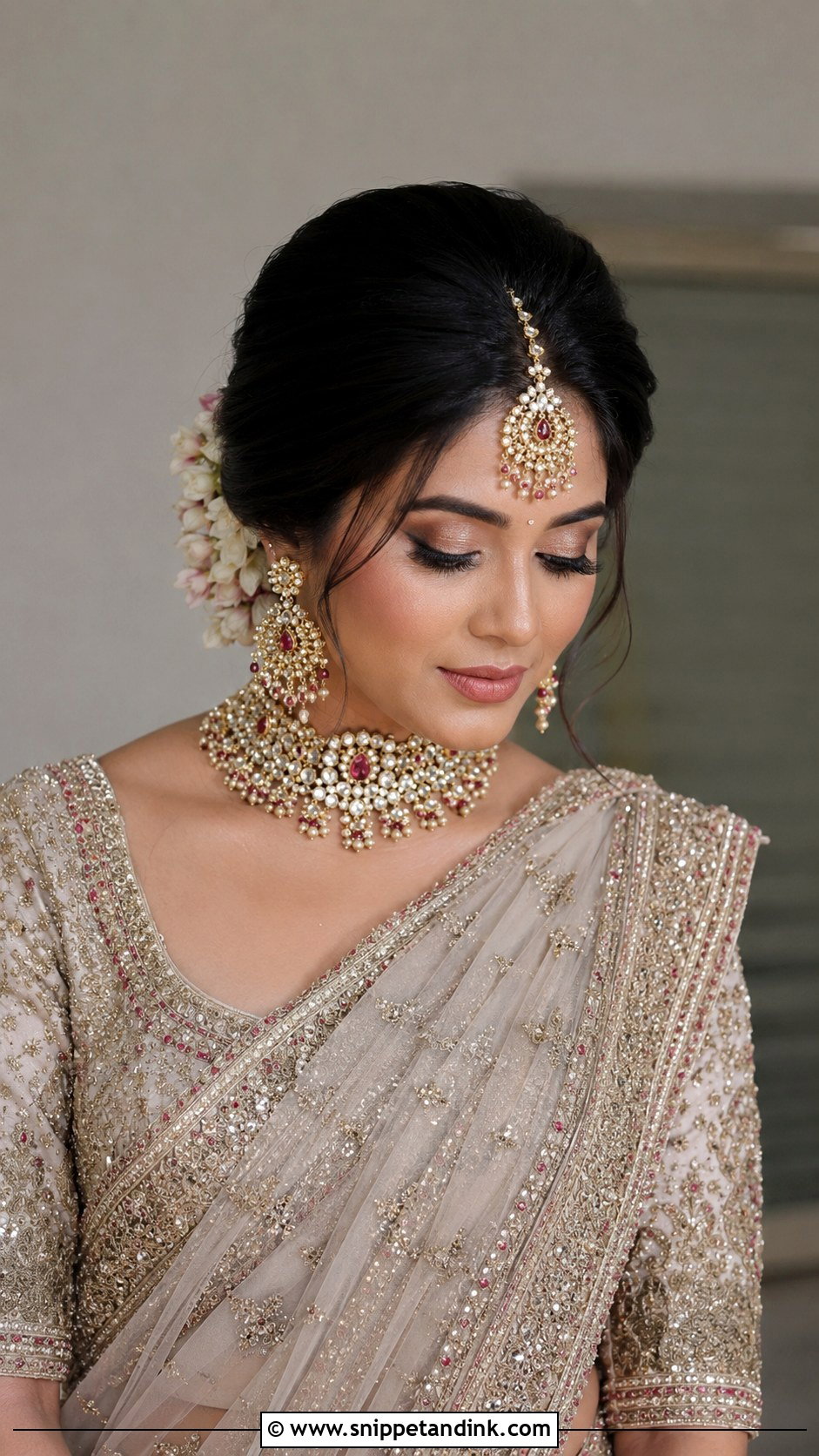
Lift at the crown changes the proportions of the face, and that’s what this joda is for. I tease the front section at the root, smooth the top layer over it and sweep everything into a sleek bun at the back. The height elongates a round face and balances heavy maang tikkas and statement earrings. One detail matters: the lift has to sit behind where the tikka chain runs, or the chain lifts off the forehead and the tikka tilts. Keep the bun sleek or add flowers for a grand entrance.
11. Twisted Rope Bun Joda
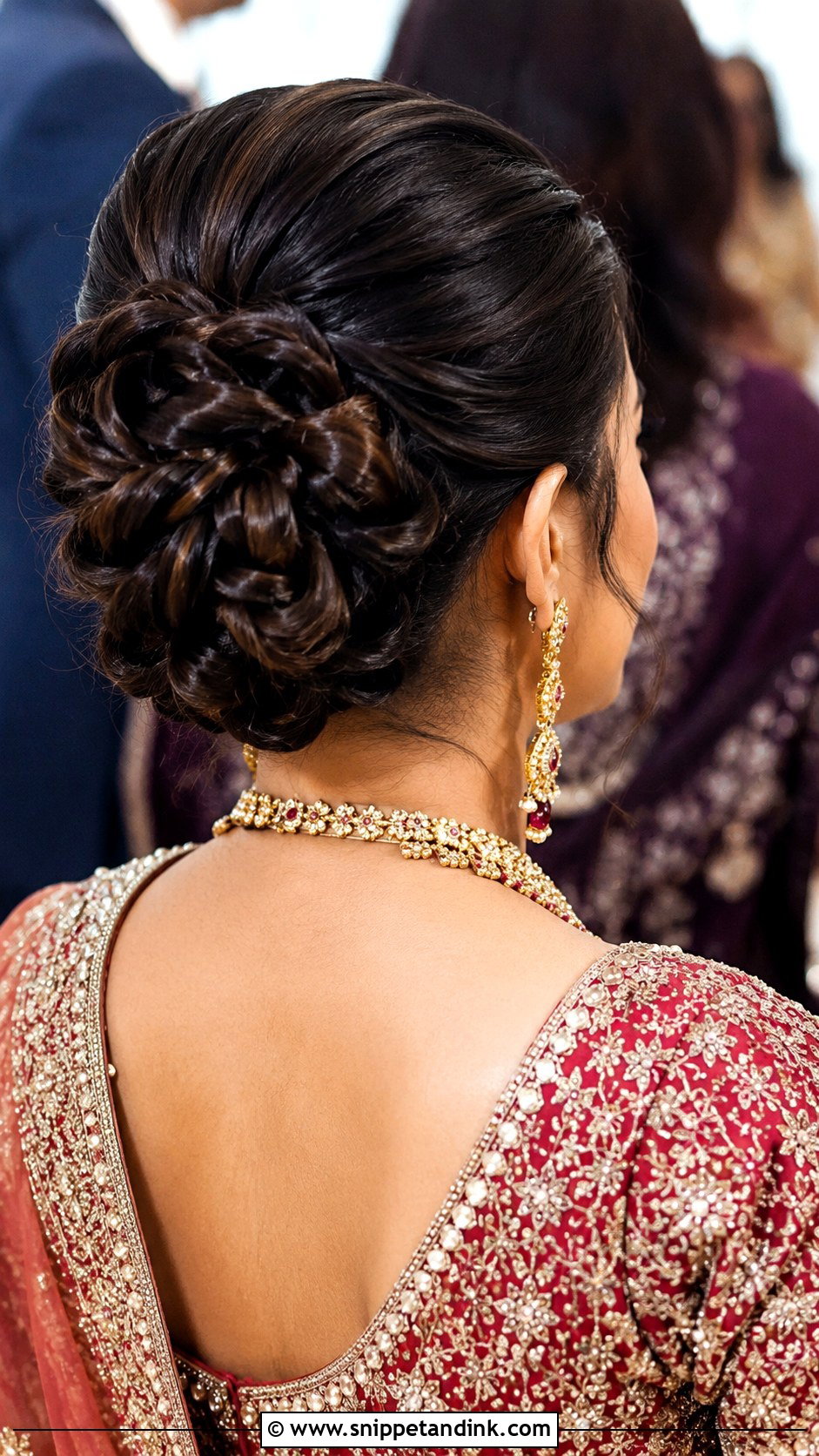
Rope twists coiled into a full bun look intricate without needing accessories. Sections are twisted in one direction, then wrapped around each other the opposite way so they lock, and that step is what stops them unravelling. Thick or long hair suits it best. Fine hair gives thin twists that look stringy, so there I’d add extensions inside. Simple pins or a few small flowers keep the focus on texture, and it sits as well with a reception gown as with a lehenga.
12. Fishtail Braided Bun Joda
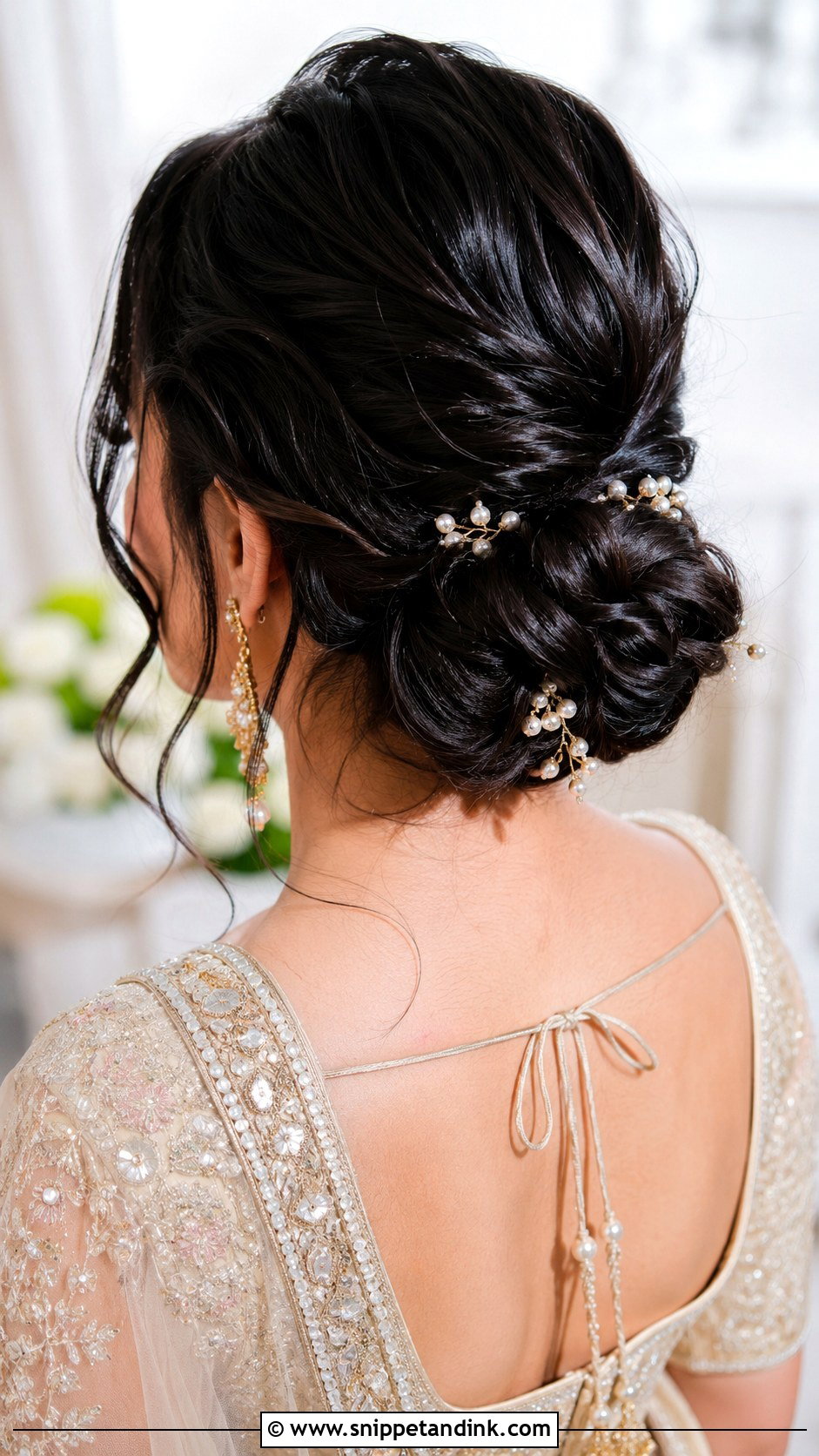
A fishtail braid wrapped into a soft knot gives fine crisscross texture that photographs as detail rather than bulk. It takes longer to plait than a regular braid, so I build extra chair time into the schedule. It suits brides who want something a little artistic, with a lehenga or a saree. A few loose face-framing strands soften it, and tiny pearls or flowers can sit along the braid. Once it’s pinned it stays comfortable all day, because the weight is spread around the bun instead of hanging from one point.
13. Donut Bun Joda
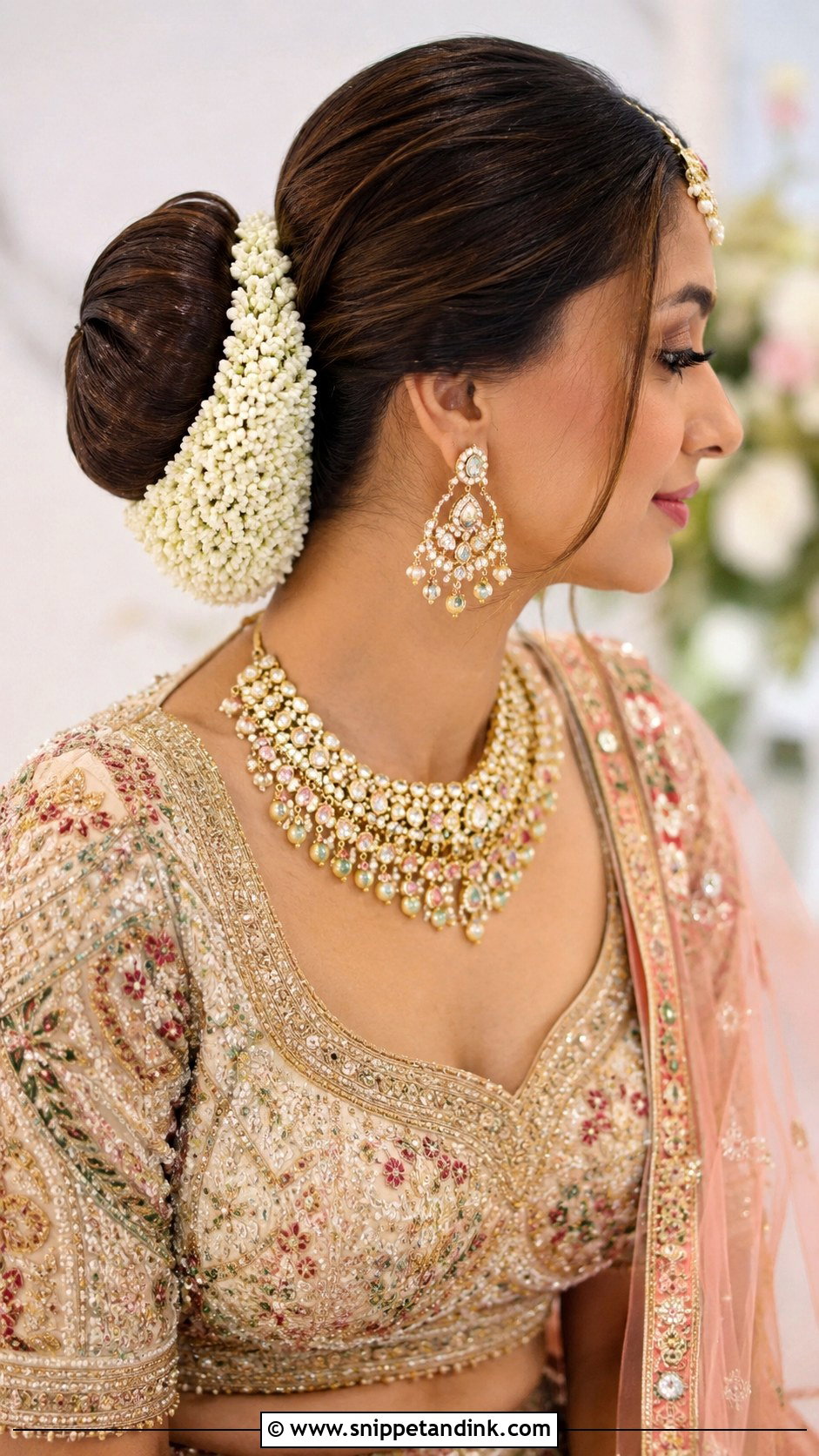
A donut form gives a smooth, round, full shape every time, and it’s my go-to for brides with thinner hair who want volume. I match the donut’s color to the hair, or wrap it in a thin layer of the bride’s own hair first, so no mesh shows through when the bun stretches. The clean shape pairs well with heavy jewelry and structured outfits, and a gajra around the base or pearl studs dress it up. It holds through long ceremonies and looks complete from every angle.
14. Maang Tikka Bun Joda
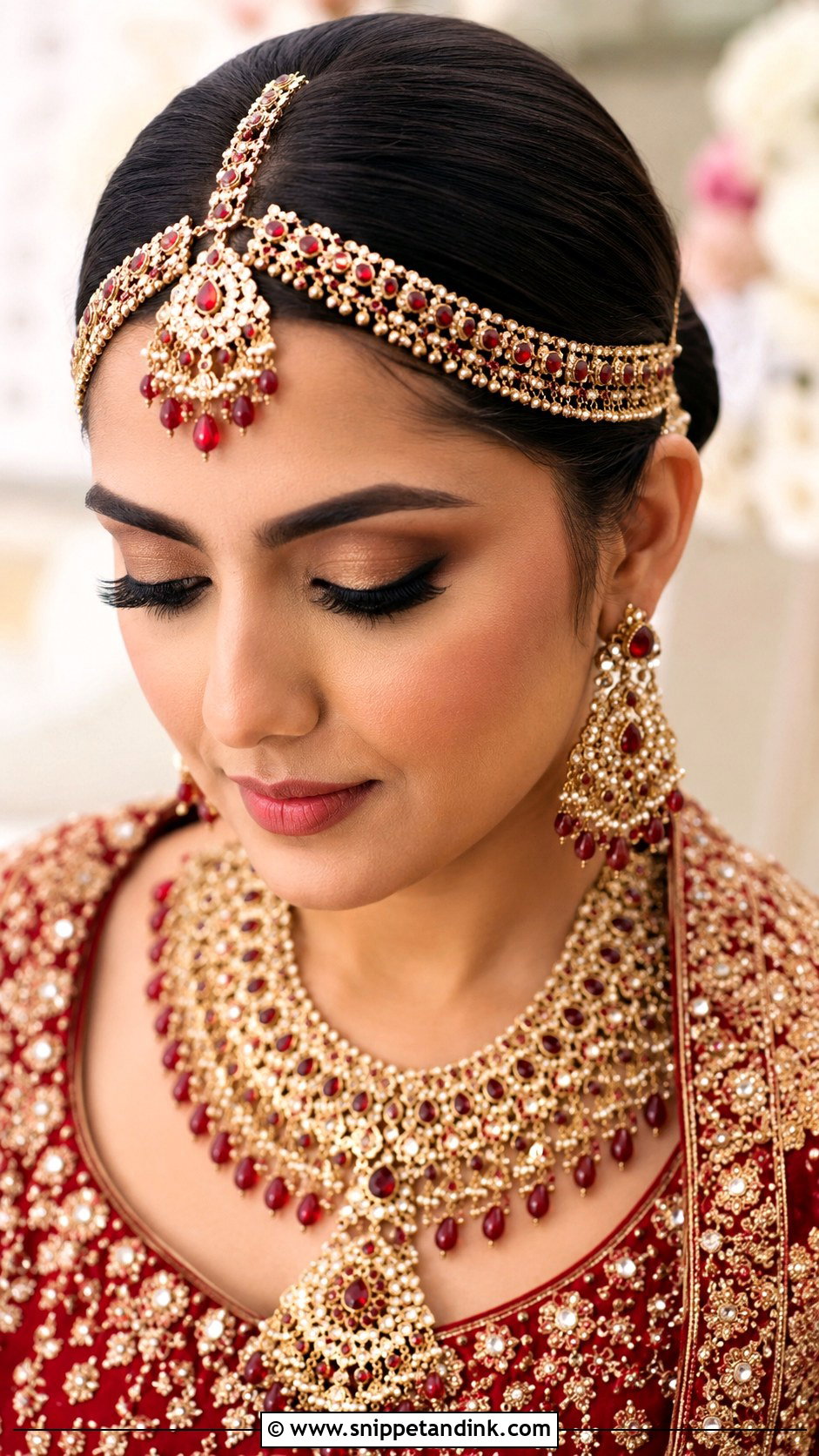
Sometimes the jewelry leads, and this sleek bun is built for that. Hair is smoothed back so your maang tikka and matha patti sit flat and visible. I place the tikka first and part around it, then pin the chain under the hair with a small hook so it doesn’t shift when you look down. The bun can be high or low to suit the outfit. Heavy heirloom pieces need a strong base, so I’d always do this at the trial with the actual tikka rather than a lighter stand-in.
15. Cascading Flower Bun Joda
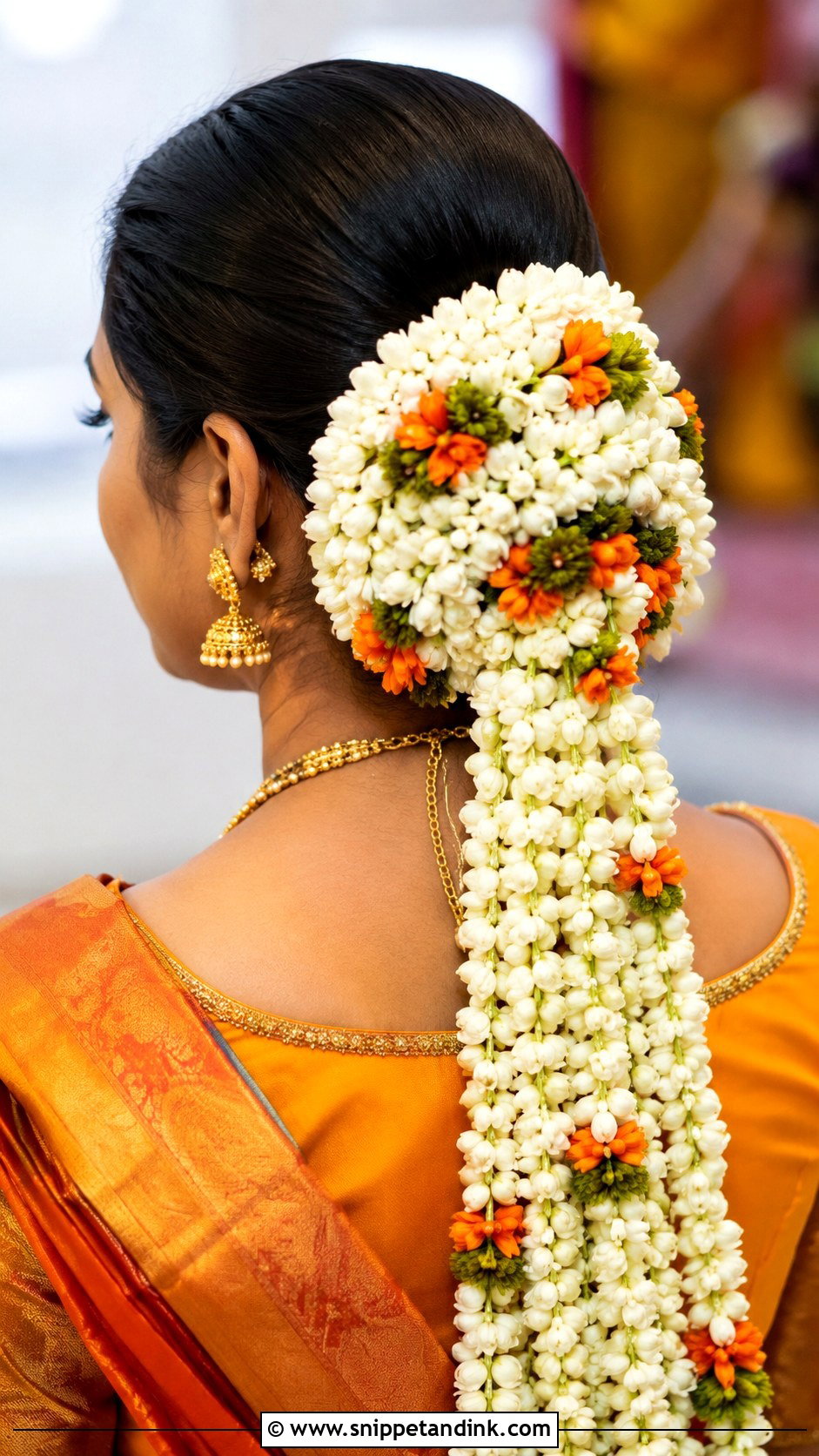
Long trails of flowers make the back of the head the focus. This joda drapes strands of jasmine or marigold down from the knot, so it’s as ornate behind as it is in front. It’s a favorite at South Indian weddings with silk sarees and bold gold sets, adding color, length and scent all day. Marigold is heavy and long strands pull, so I anchor the top of each one to a braided or tightly pinned base and keep the longest pieces around waist level, which stops them catching on chairs. Seen from behind, it’s the most elaborate bun on this list.
16. Sleek Wrapped Bun Joda
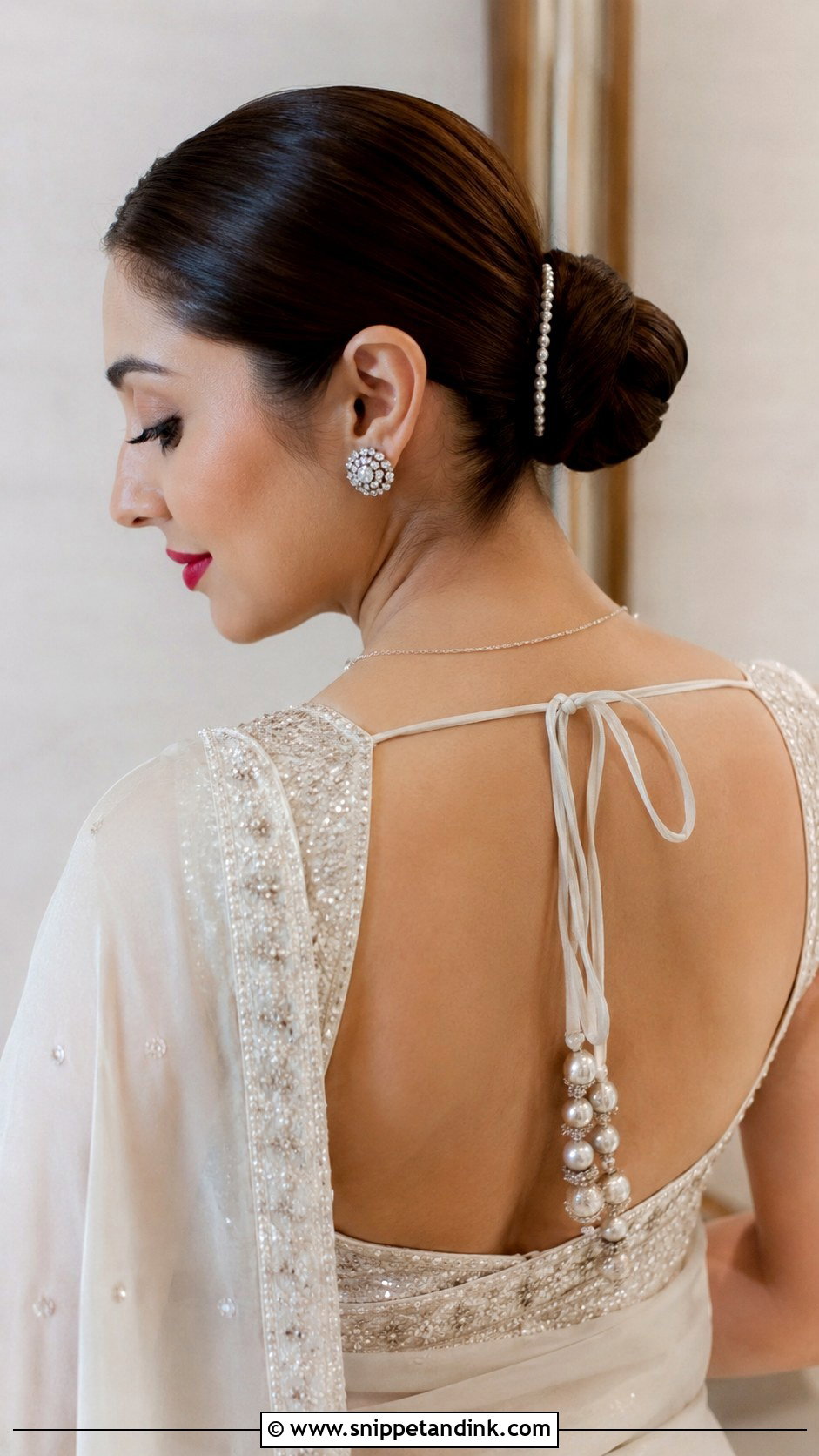
Clean lines and no flyaways: hair is pulled back firmly and wrapped into a glossy knot. It suits modern outfits, sarees and bold lips, and leaves the jewelry and makeup to lead, with a single flower or thin pearl pin as the only extra. Sleek looks simple and is unforgiving. Any bump at the hairline shows, so I smooth section by section with a firm brush and a little gel. Pulling very tight also gives some brides a headache by the fourth hour, so I set the elastic snug, not tight. Under wedding lights the gloss shows well.
17. Half Up Half Down Joda
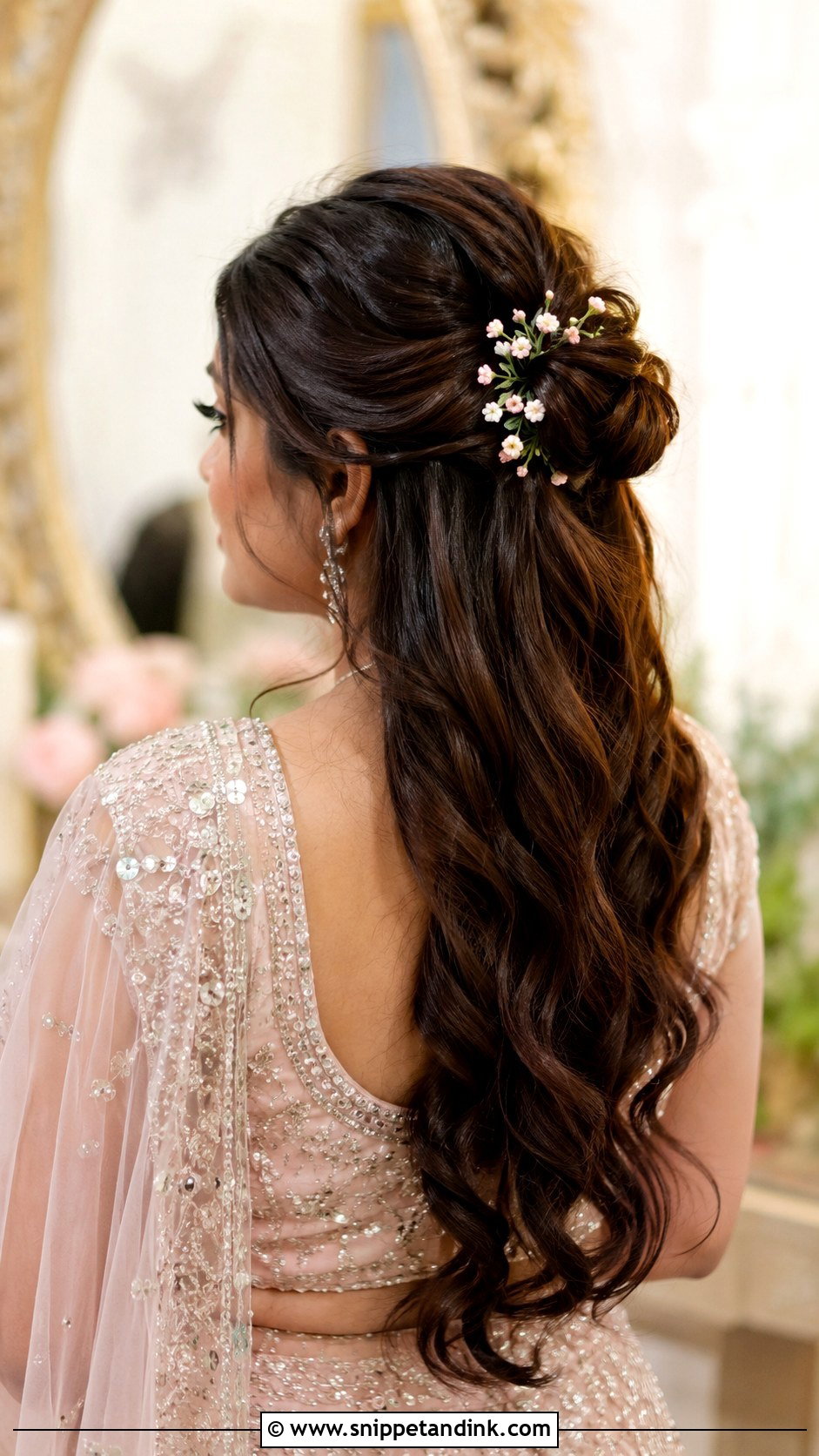
Not everything has to go up. The top section gathers into a small bun while soft waves flow below, giving the neatness of an updo with the movement of open hair. It suits brides who love length, lighter lehengas and reception outfits, and small flowers or pins where the sections meet hide the join. Honestly, I’d steer brides away from it for a full day under a heavy dupatta, because the waves get flattened and tangled beneath the fabric. As a reception change, though, it’s a welcome switch.
18. Vintage Brooch Bun Joda
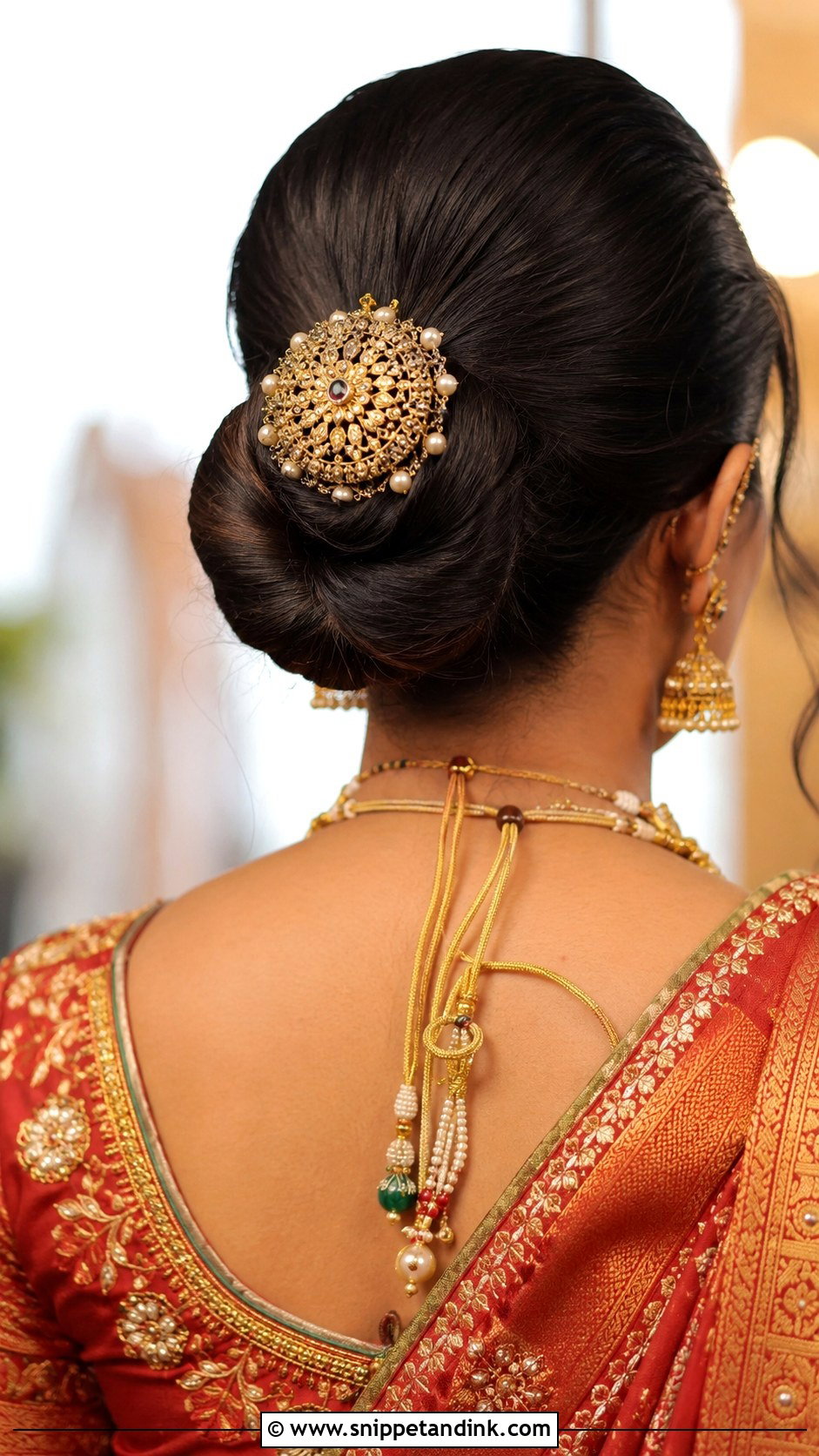
An heirloom brooch or gold hairpiece set into a smooth, full bun gives a family piece its own place in the wedding. The metal adds richness next to traditional outfits and heavy jewelry, and placed on the side or the center of the knot, it becomes the focal point while the bun stays simple. Brooches were made for fabric, not hair. I either push the pin through a small piece of felt and pin that into the bun, or ask a jeweler to fit a hair comb to the back. Old clasps can be weak, and nobody wants a grandmother’s brooch dropping on the dance floor.
19. Curly Volume Bun Joda
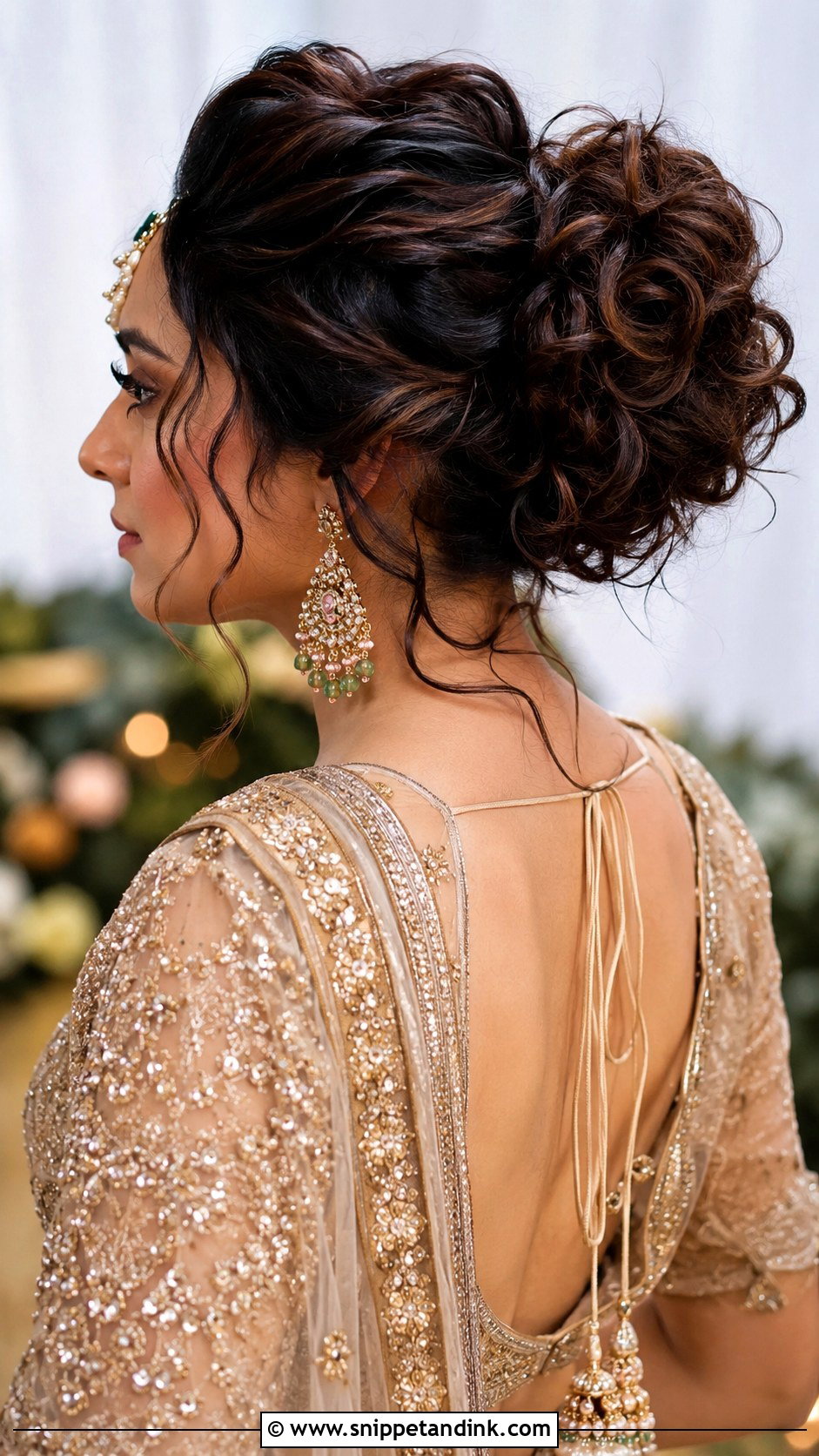
Natural curls or waves gathered into a soft, full bun keep their bounce instead of being straightened away. I work with the curl pattern: a leave-in and light gel on damp hair, then I gather it once it’s fully dry and never brush through it, because brushing turns curls into frizz. A few curly tendrils frame the face, and small flowers or pins dress it up. The volume reads rich in photos and pairs with modern or traditional outfits alike.
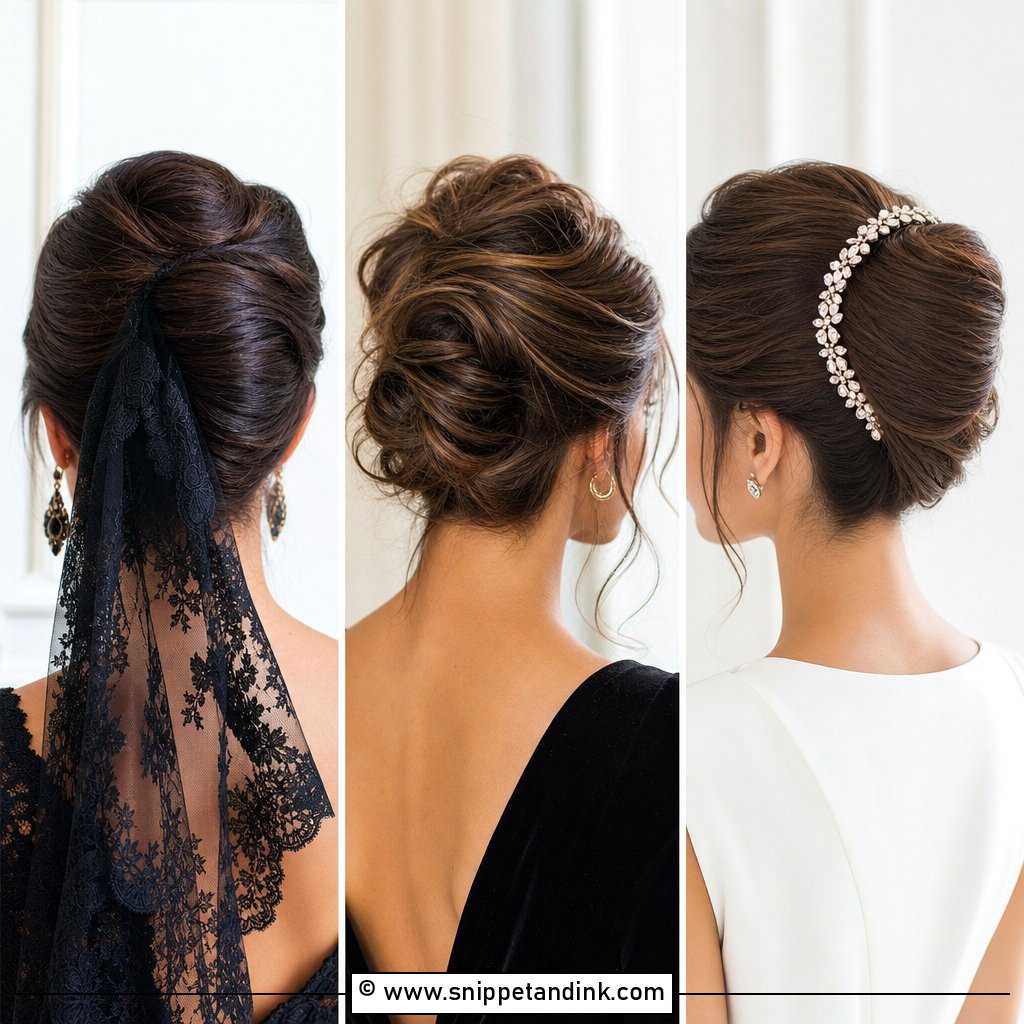
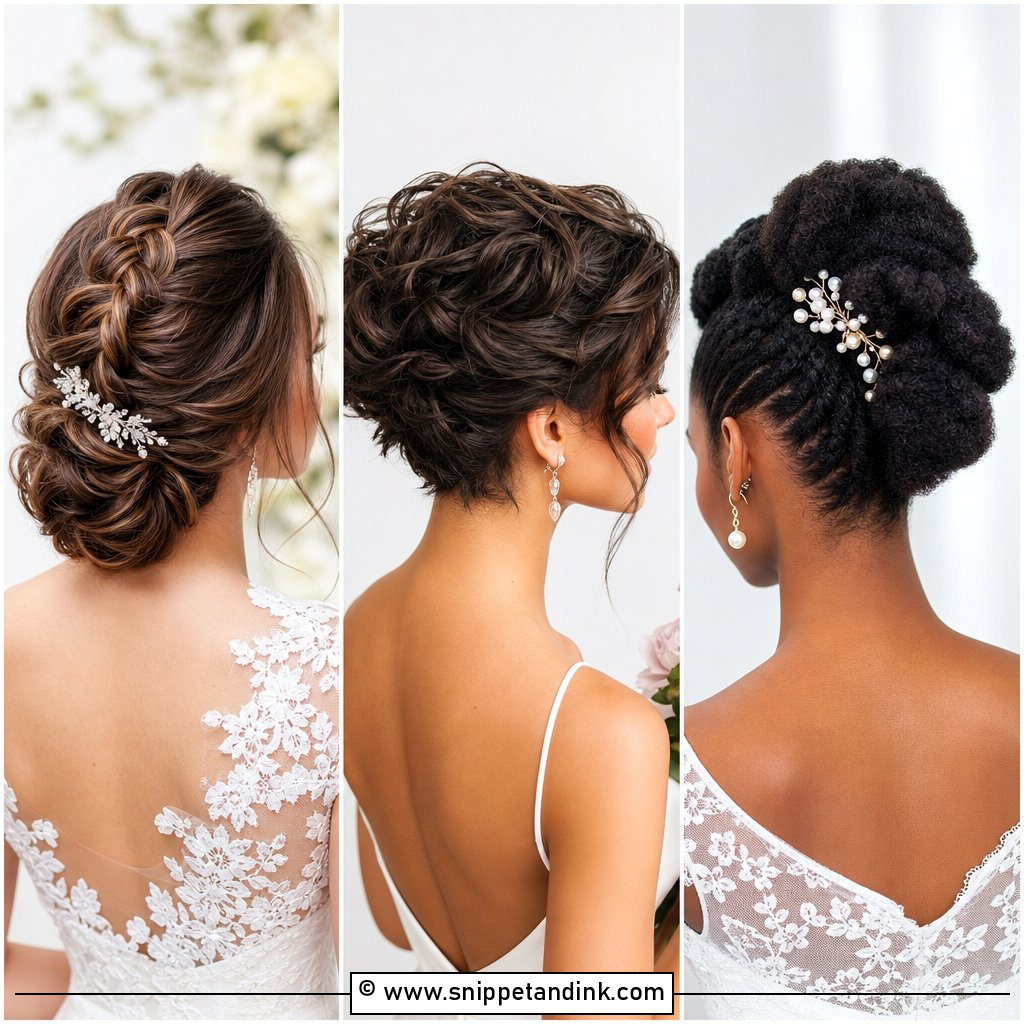
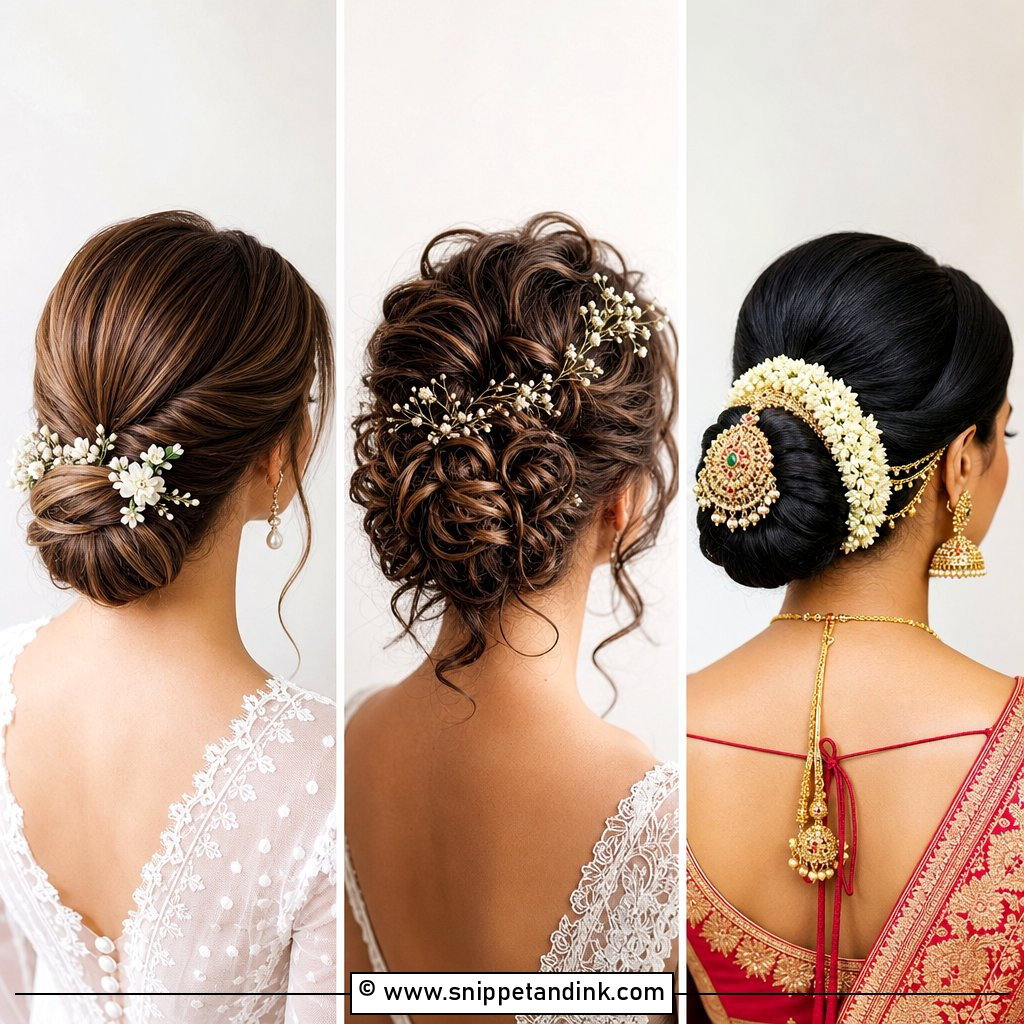
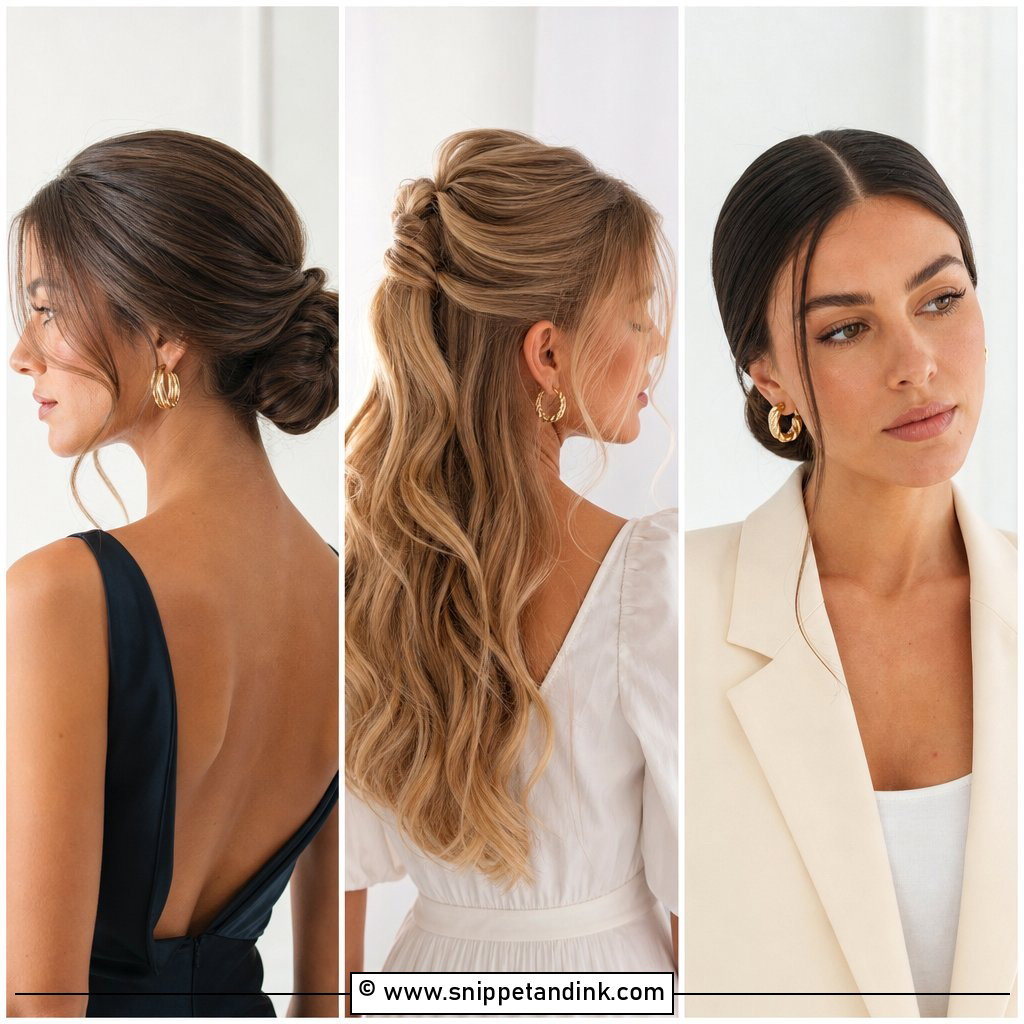
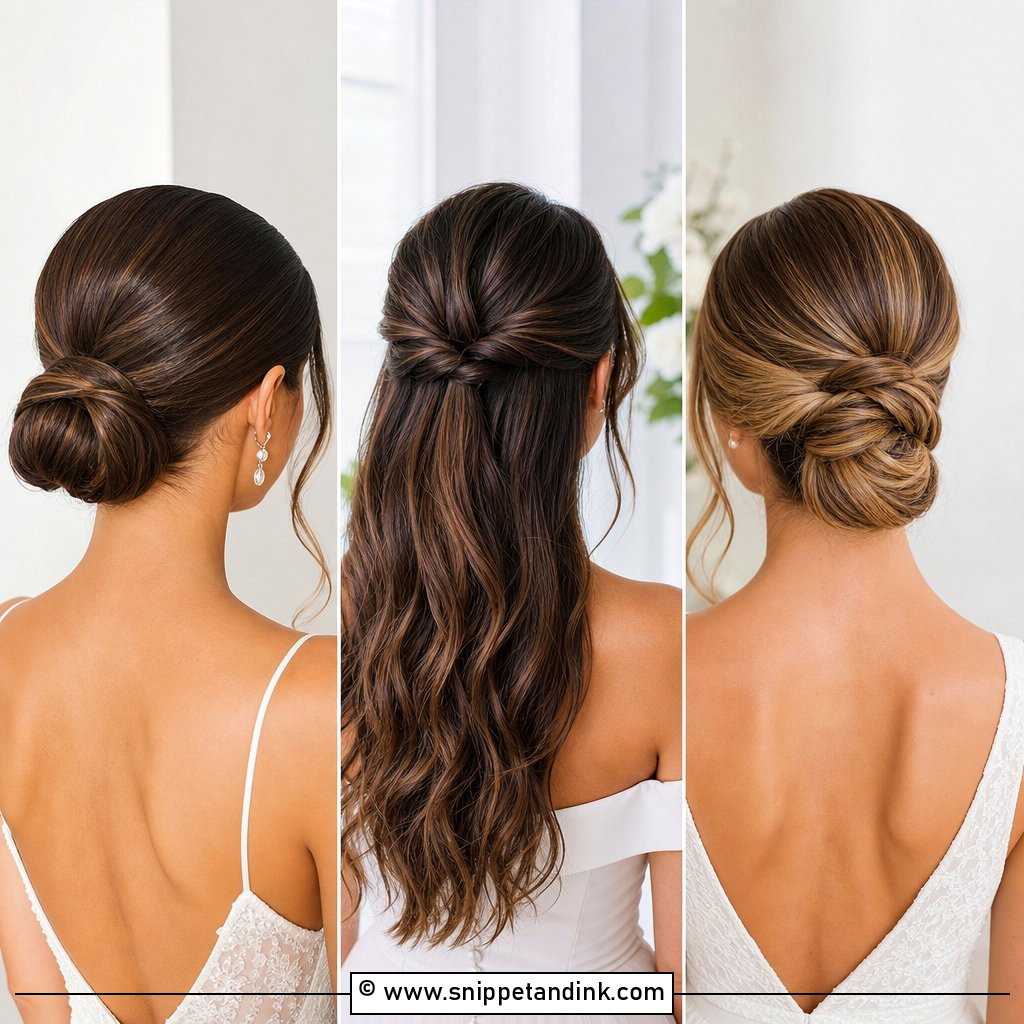
20. Floral Crown Bun Joda
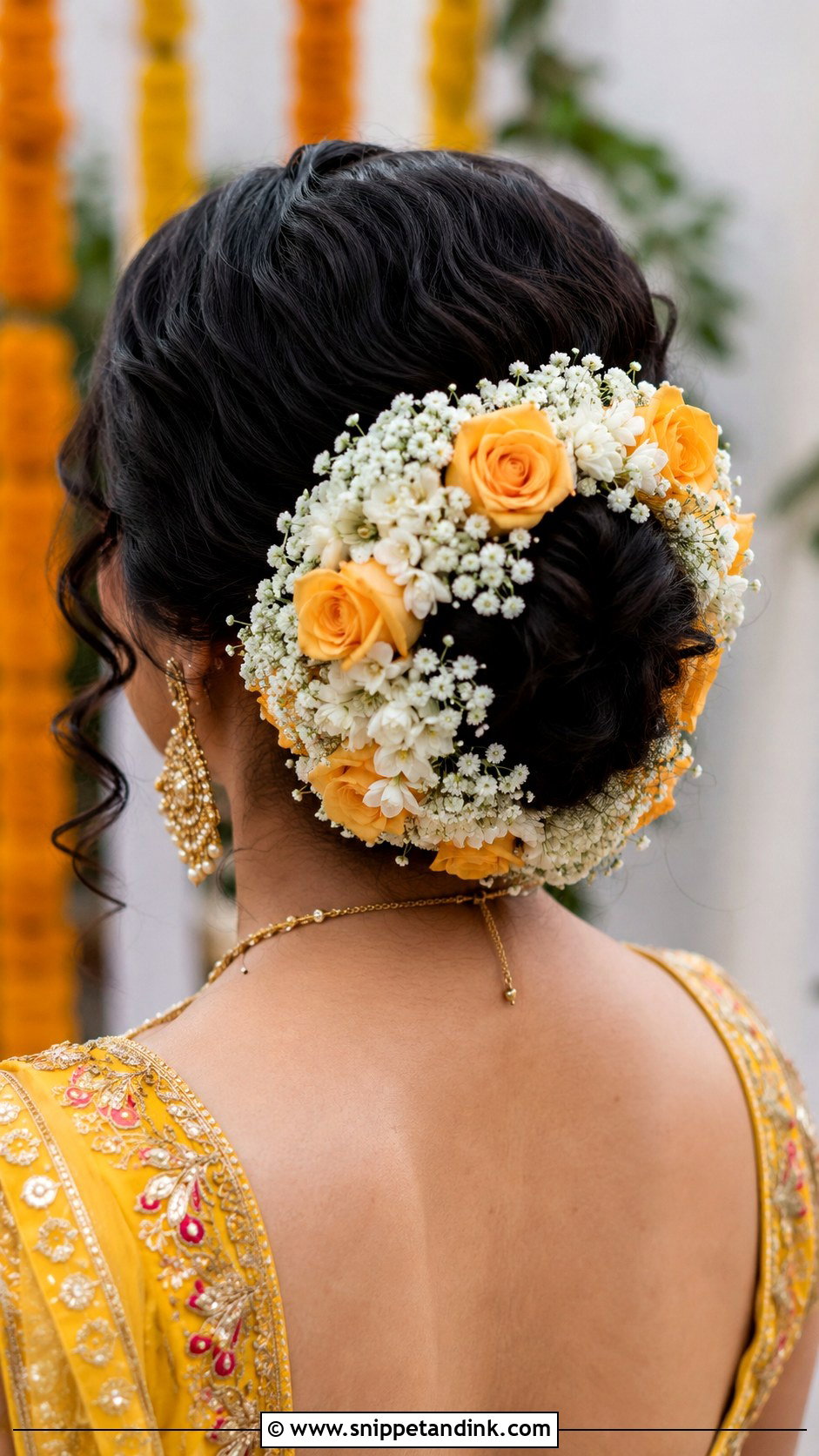
A full ring of fresh blooms circling the bun gives a festive, garden-bride feel. It suits bright lehengas and mehndi or haldi functions, and you can mix roses, jasmine and baby’s breath for variety. For haldi especially, use flowers you don’t mind losing. Turmeric paste stains petals and hair alike, so I keep that crown to cheaper, sturdier blooms and plan a hair wash afterwards. It’s the joda I’d choose for the most relaxed function of the week.
Gajra, Roses and Marigold From First Pin to Last Dance
Fresh flowers are part of what makes a joda bridal, and they’re also the part that changes most over a long day. A few habits keep them looking right into the evening.
- Order jasmine as tight buds and keep the strands wrapped in a damp cloth in the fridge until they’re needed. Fully open blooms look full in the morning and brown by night.
- Attach flowers last, after the dupatta and jewelry are set, so they aren’t crushed while those go on.
- Pin each strand at both ends. A gajra fixed at one point swings and slides the first time you bow.
- Ask for a spare strand or two for the evening. Swapping a tired gajra takes a few minutes and freshens the whole look for reception photos.
- If strong scents or pollen bother you, wear your flowers through the trial. A whole day with jasmine at the nape is a lot.
Undoing it at night
A bridal joda can hold dozens of pins. Take them out slowly, roughly in the reverse order they went in, before you touch a brush, and work oil or conditioner through any teased sections. Dragging a comb through a bun full of hidden pins is how brides lose hair at the end of the night.
Daytime Flowers, Evening Structure
The right joda depends on the function as much as the outfit. Sleek high buns show off jewelry, while soft knots trailing jasmine suit daytime and South Indian ceremonies. Think about your outfit, face shape and dupatta before you decide, and remember that one wedding can mean three or four hairstyles across the week. Daytime events lean toward soft, flowered buns; evening receptions carry structured shapes better. Pearls, a brooch or fresh blooms will make any of them yours. Book a trial with your real jewelry and dupatta, and you’ll know before the day that it will hold.
You'll Like These Ideas:


Leave a Reply