
Tucking hair behind the ears sounds like something you do without thinking at a desk. Done properly for a wedding, it’s a whole style: the face stays open for every photo, earrings get their moment, and the length still moves around the shoulders. It sits well with veils, strapless gowns, high necks and clean makeup. The difference between a casual tuck and a bridal one is in the build, with smooth roots, pins you can’t see and enough volume through the lengths that the head doesn’t look flat. Here are fifteen wedding hair behind ears looks, with the detail I’d talk through with a bride at her trial.
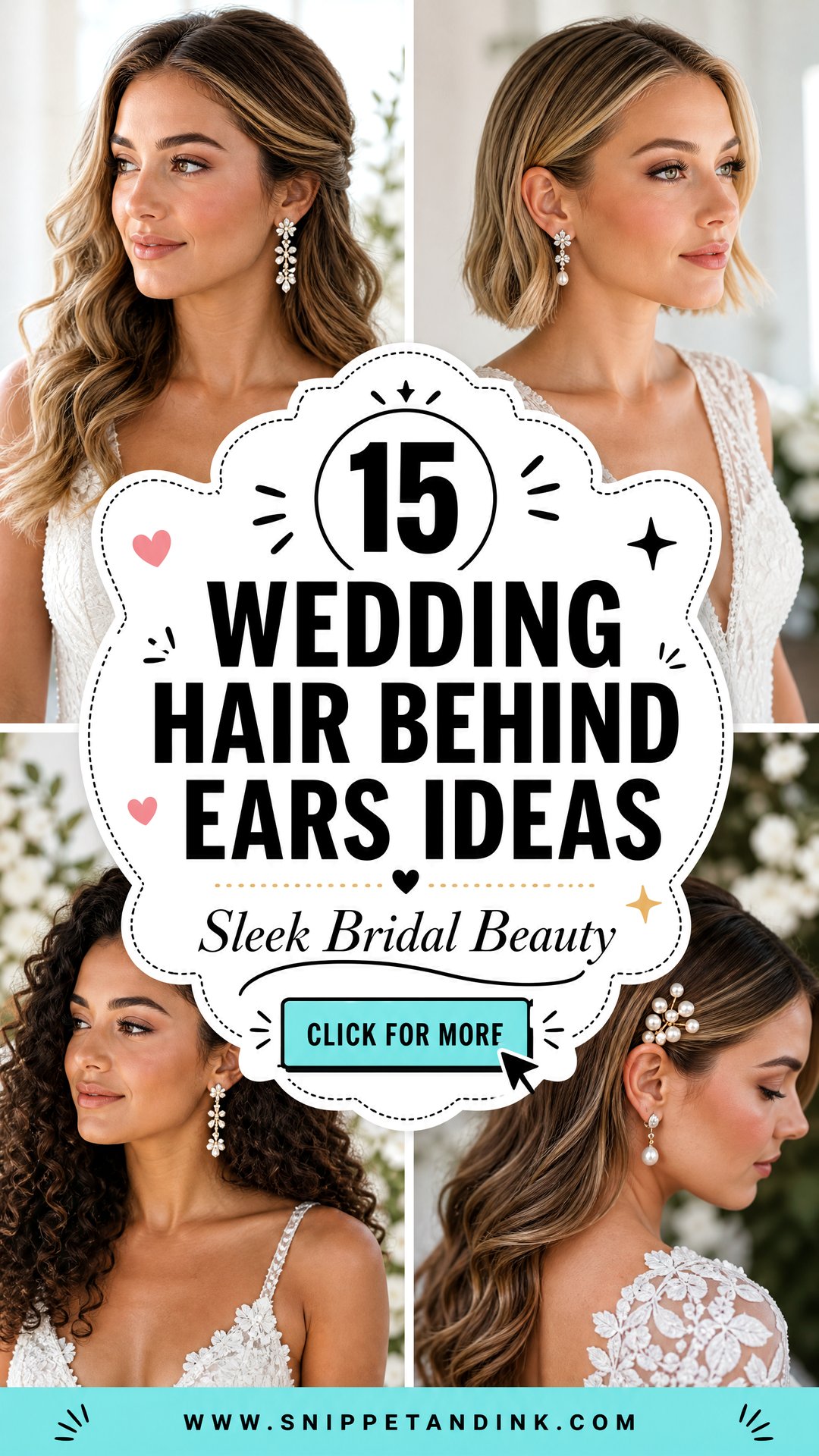
Ears That Stick Out, Glasses and Hearing Aids
These are the three things brides worry about most with this look, and none of them rules it out. They just change how I build it.
Prominent ears
A full tight tuck pushes ears forward and makes them look bigger. I tuck the hair behind the ear but let it rest over the top of it, so only the earlobe shows. You still get the open face and the earrings without the ear becoming the focus.
Glasses
Wear them at the trial. The arms sit exactly where the tucked hair goes, so the hair goes behind the ear first, the glasses on top, and any pins sit higher than the arms so nothing presses on them all day.
Hearing aids
Behind-the-ear devices need space and a little airflow, so I route the tucked hair around them rather than over them, with no pins touching the device. Tell your stylist in advance so the style is planned with it in place, not adjusted at the last minute.
1. Hollywood Waves Tucked Behind Ears
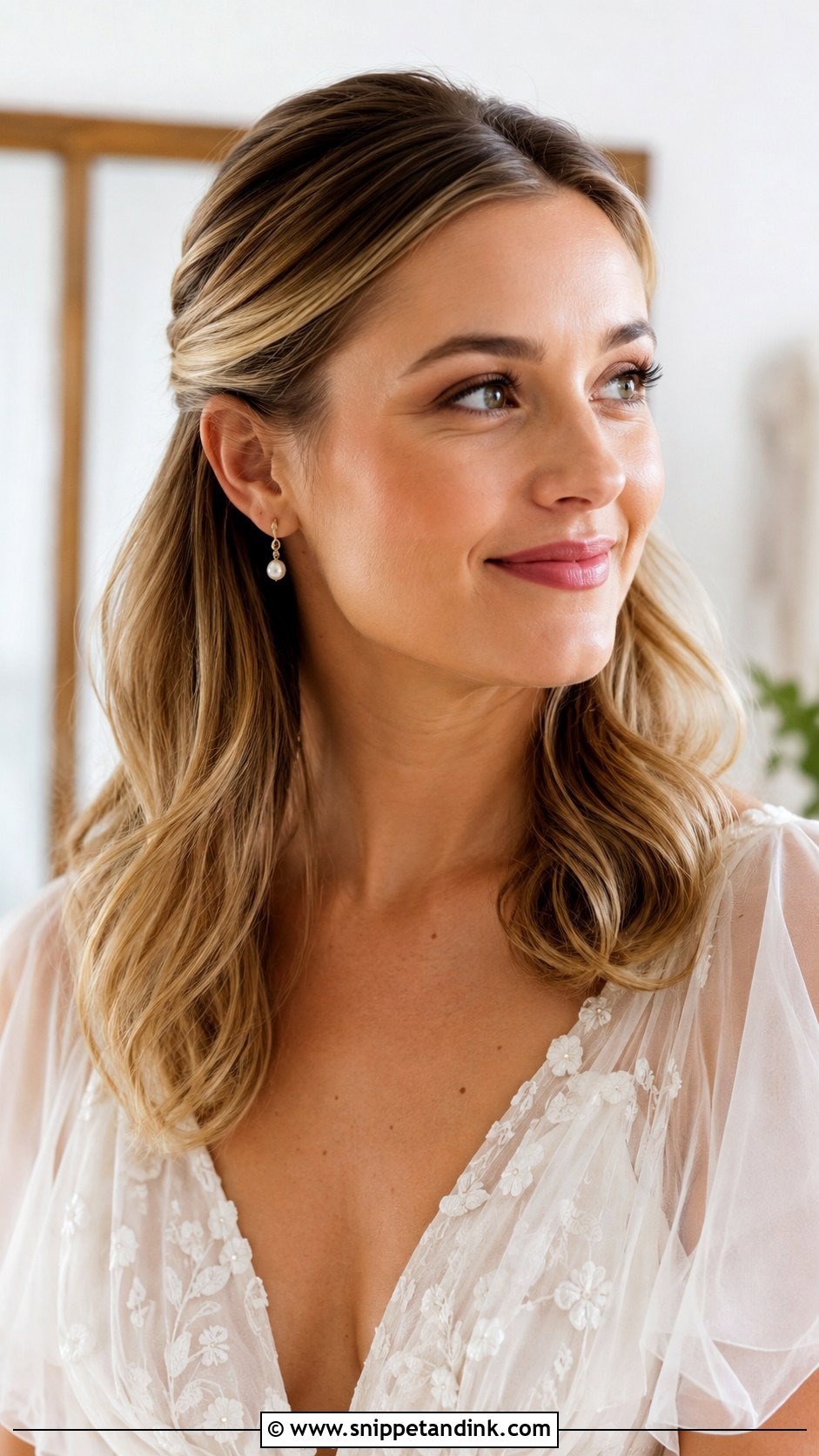
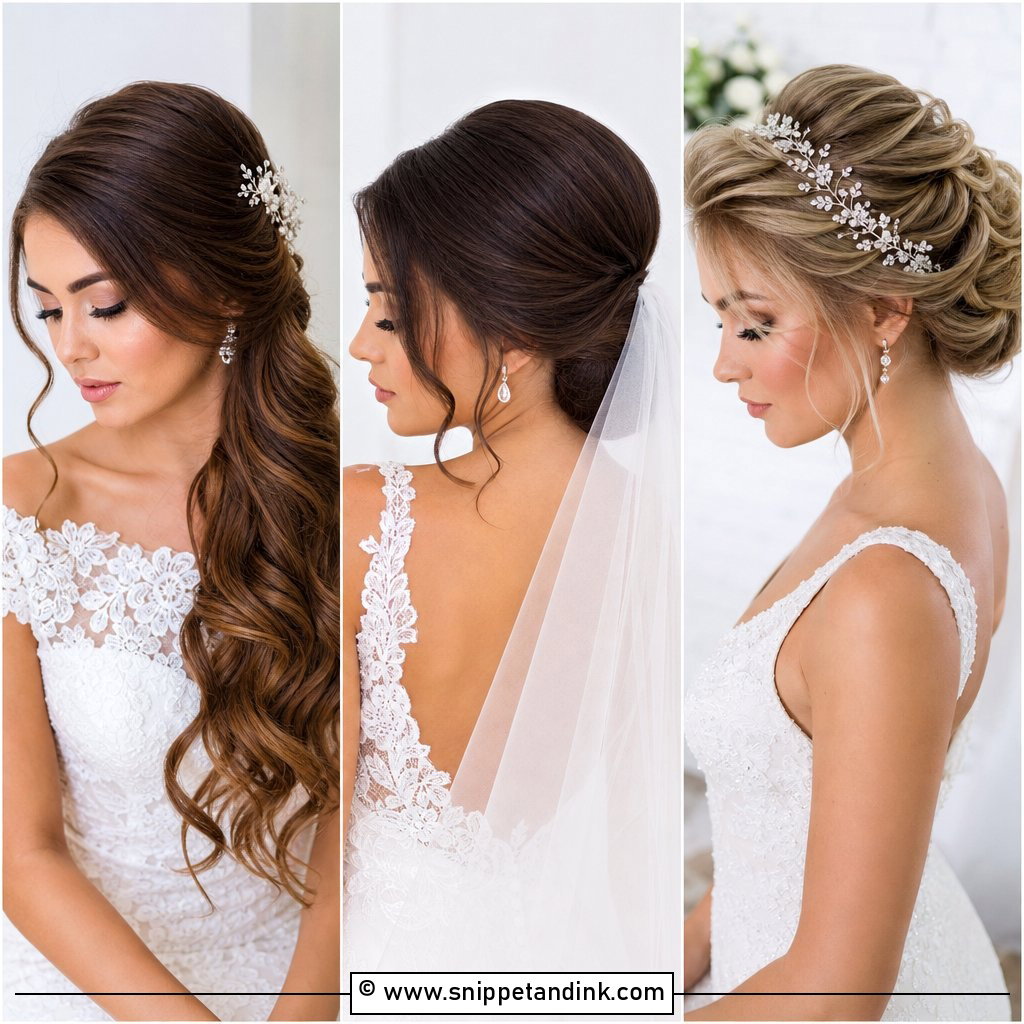
Old Hollywood glamour tends to hide half the face behind a big side wave. Pinning that wave back gives you Hollywood waves tucked behind ears, which feels cleaner and more current. I start the bend around the cheekbone or just below the ear, so the wave begins right where the tuck ends, then brush it into one glossy, sculpted shape. A center part looks sleek; a soft side part leans vintage. Both tucked sections are pinned invisibly from underneath. It’s made for statement earrings, satin and simple veils.
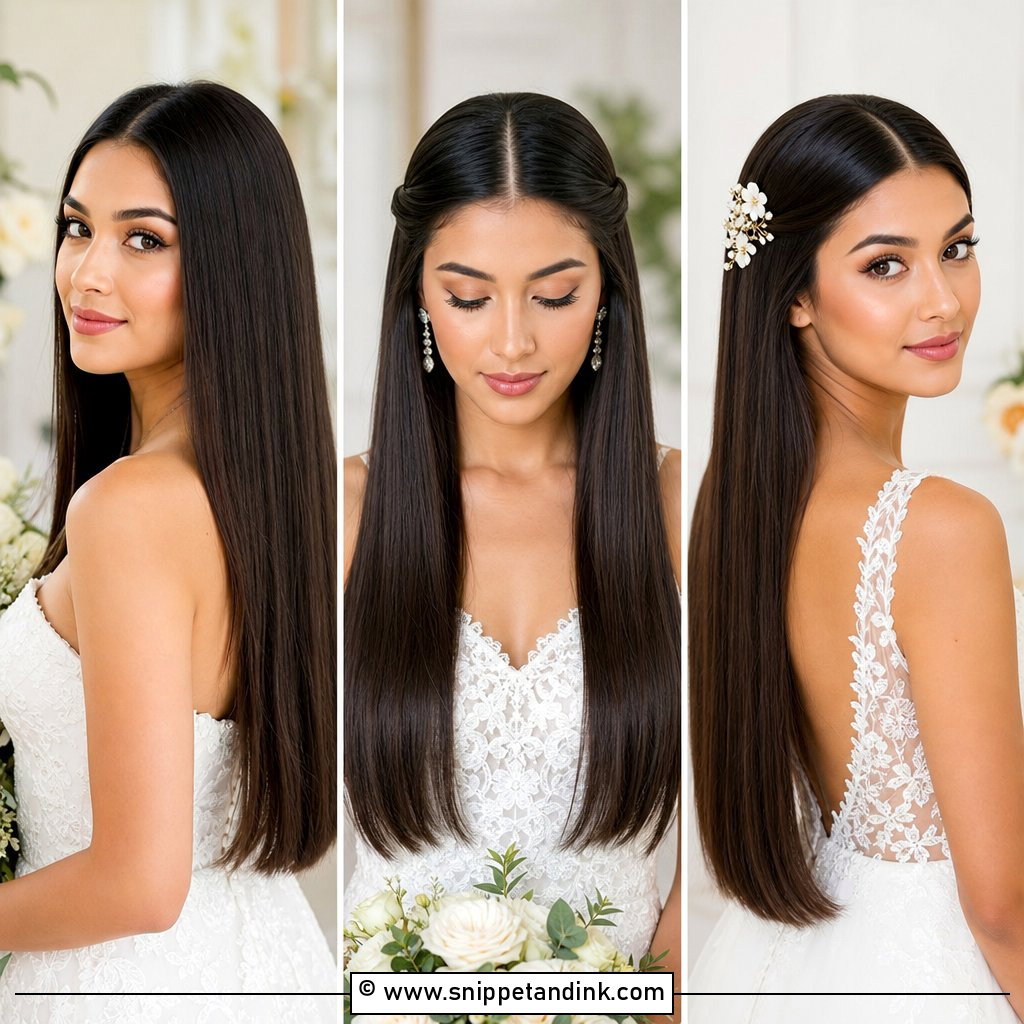
2. Sleek Straight Wedding Hair Behind Ears
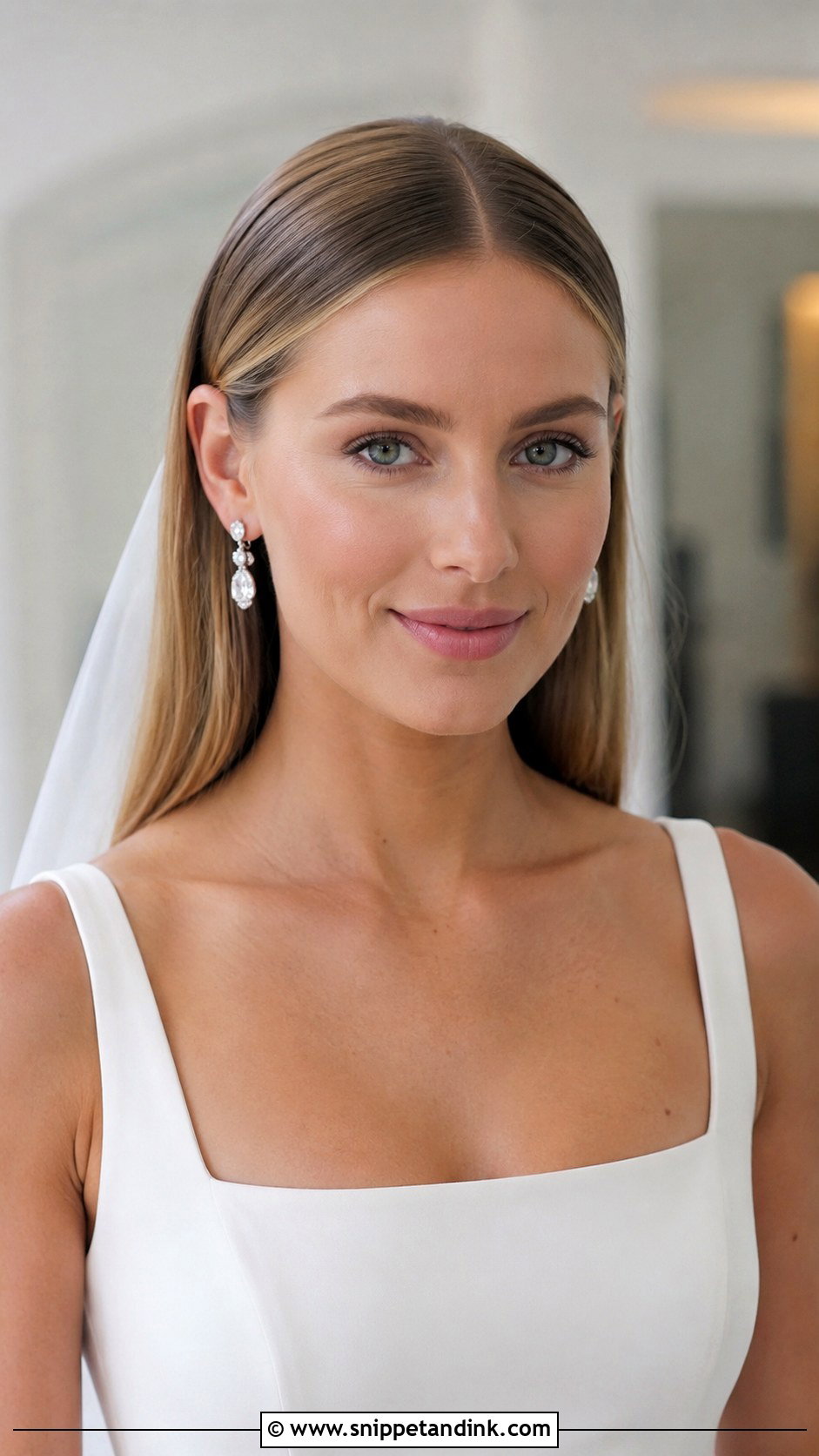
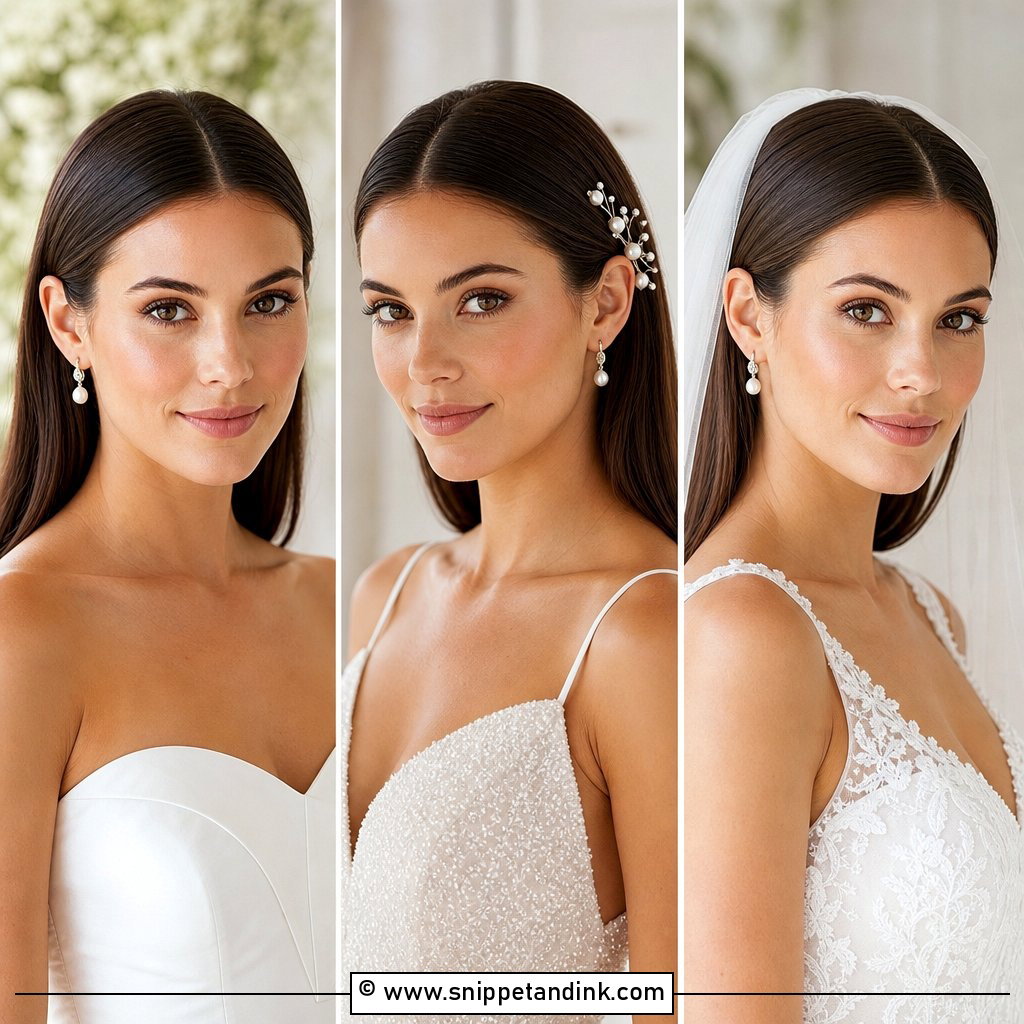
Glassy, straight hair with a sharp center part shows every flyaway, so the prep does all the work. I blow-dry with a heat protectant and a little smoothing cream, flat iron in thin sections, then mist light hold spray onto a brush, not the hair, before smoothing the tucked pieces back. That keeps them flat without the stiff look of spray applied directly. Fine hair can look thin when it’s this straight; a few hidden extensions add density without changing the shape. It pairs with strapless, square and high-neck gowns and bold earrings.
3. Loose Waves Tucked Behind Ears
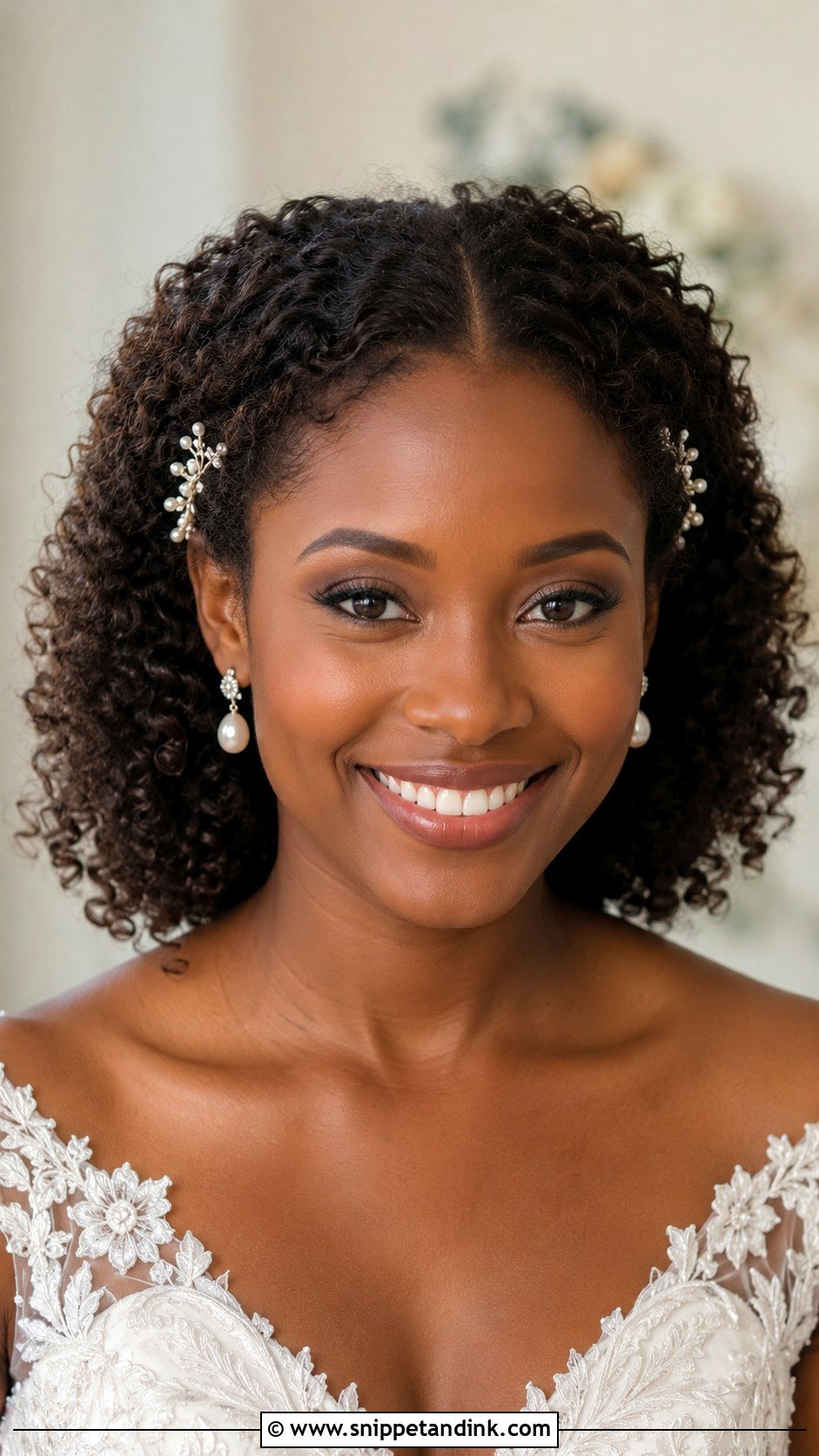
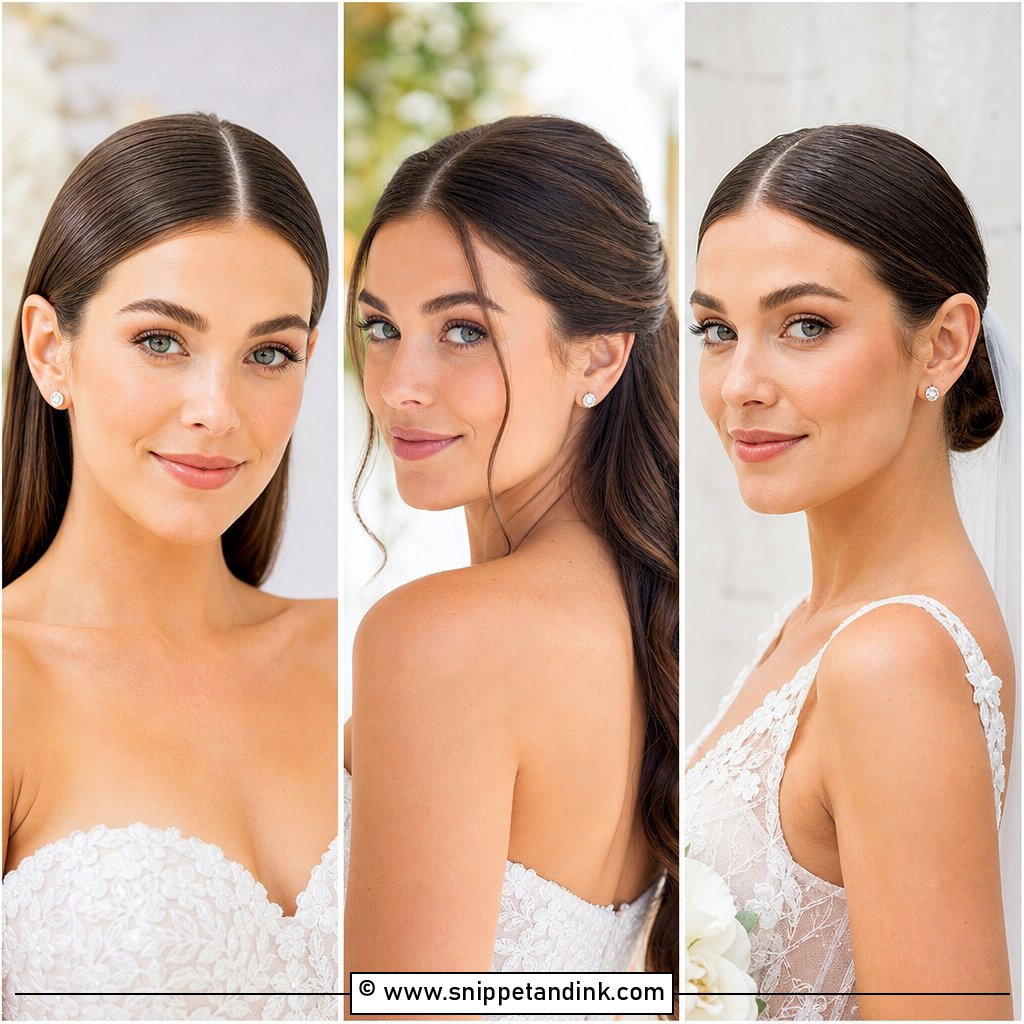
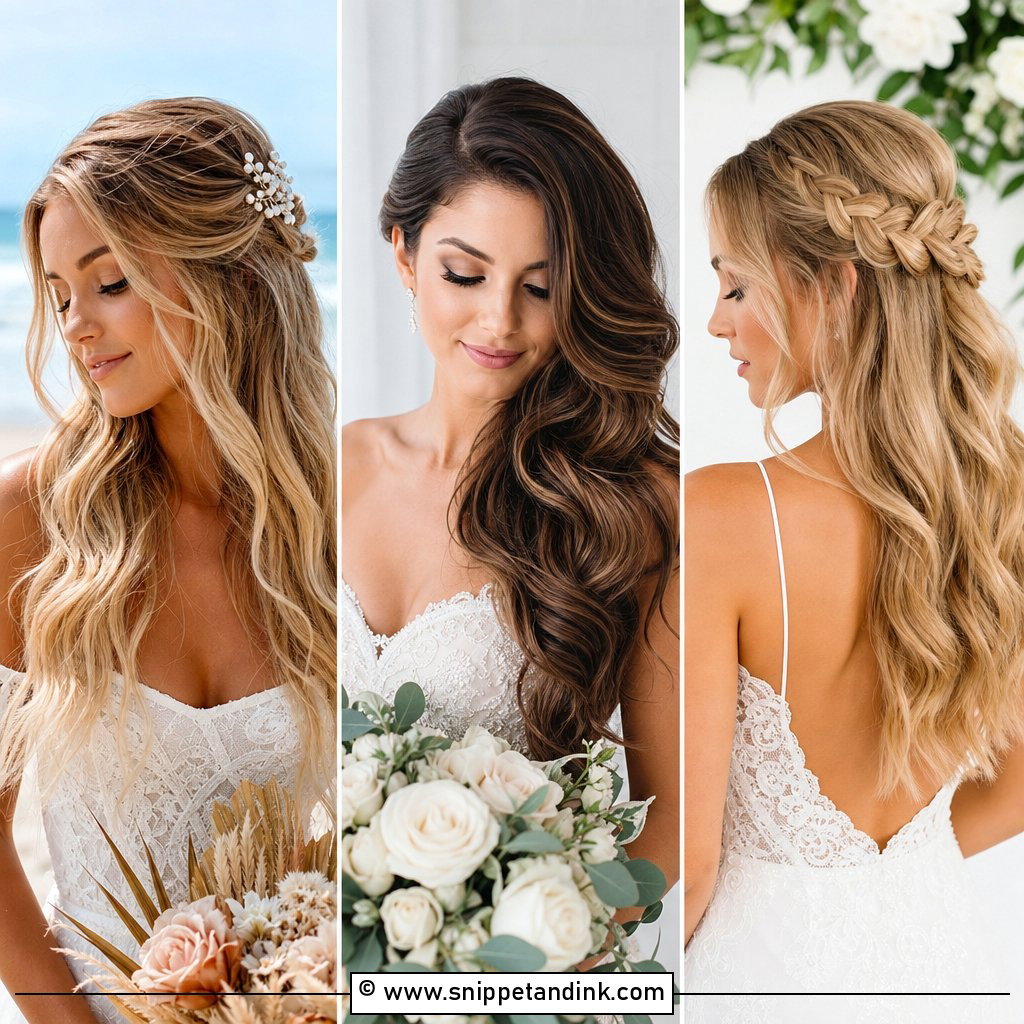
Airy, brushed-out waves with only the front smoothed back are the relaxed version of this look, suited to garden and beach weddings where a structured updo would feel severe. The face stays open while the length moves around the shoulders. What I watch for is the sides. Tucking hair tight behind the ears can make the head look narrow next to full waves, so I keep a little lift at the crown and don’t flatten the hair above the ear completely. Pearl pins, a veil and delicate earrings all suit it.
4. Side Part Wedding Hair Behind Ear
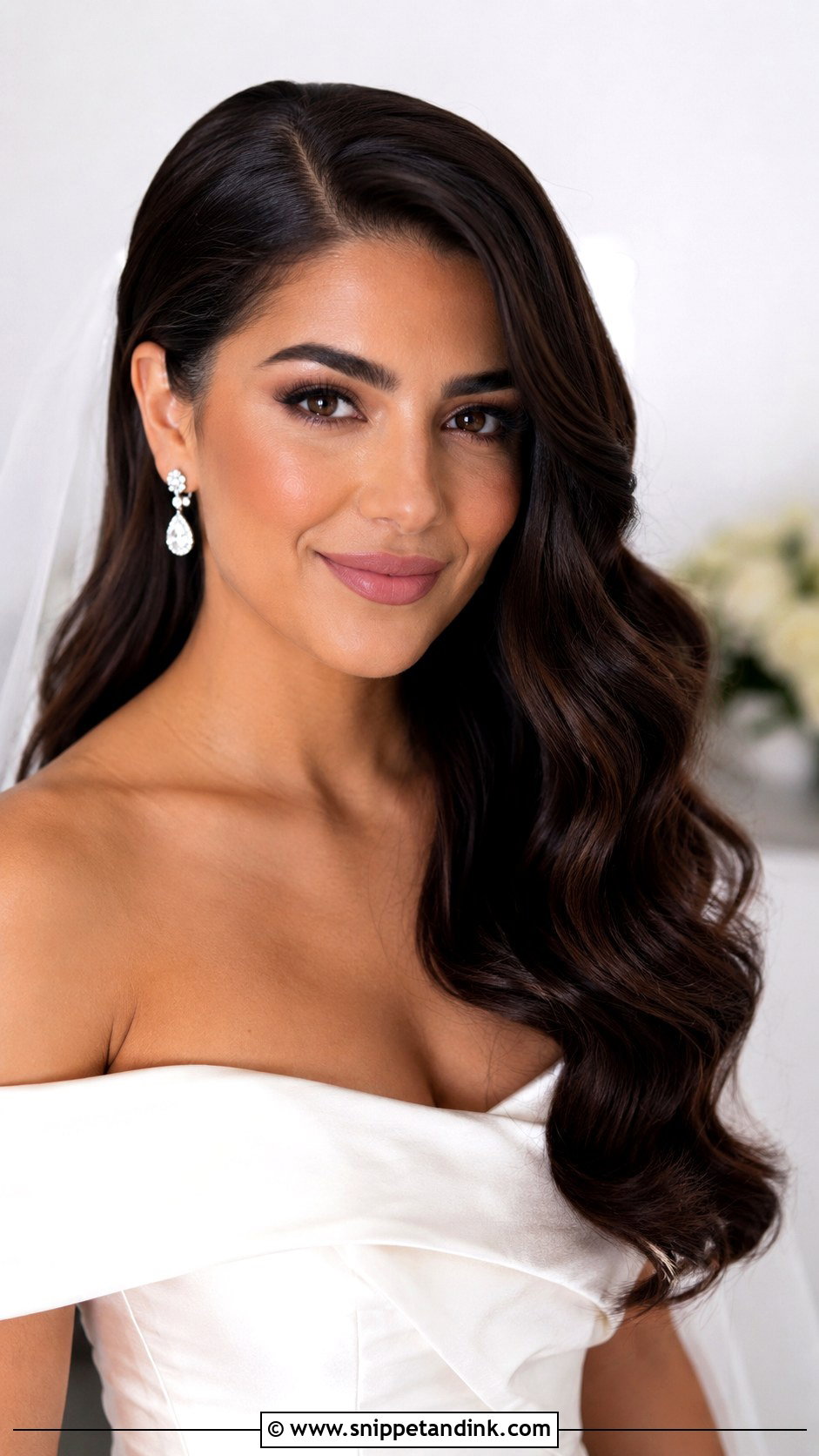
If a middle part feels too sharp on you, try a side part with just one ear showing. One side is tucked firmly behind the ear and the fuller side falls in polished waves or smooth curls, framing the face asymmetrically and making one earring the focal point. I secure the tucked side with crossed pins hidden under the top layer, or a tiny clear elastic joining a small section behind the ear to the hair beneath it. Off-the-shoulder and one-shoulder gowns go well with it, and it softens a strong jawline.
5. Half Up Wedding Hair Tucked Behind Ears
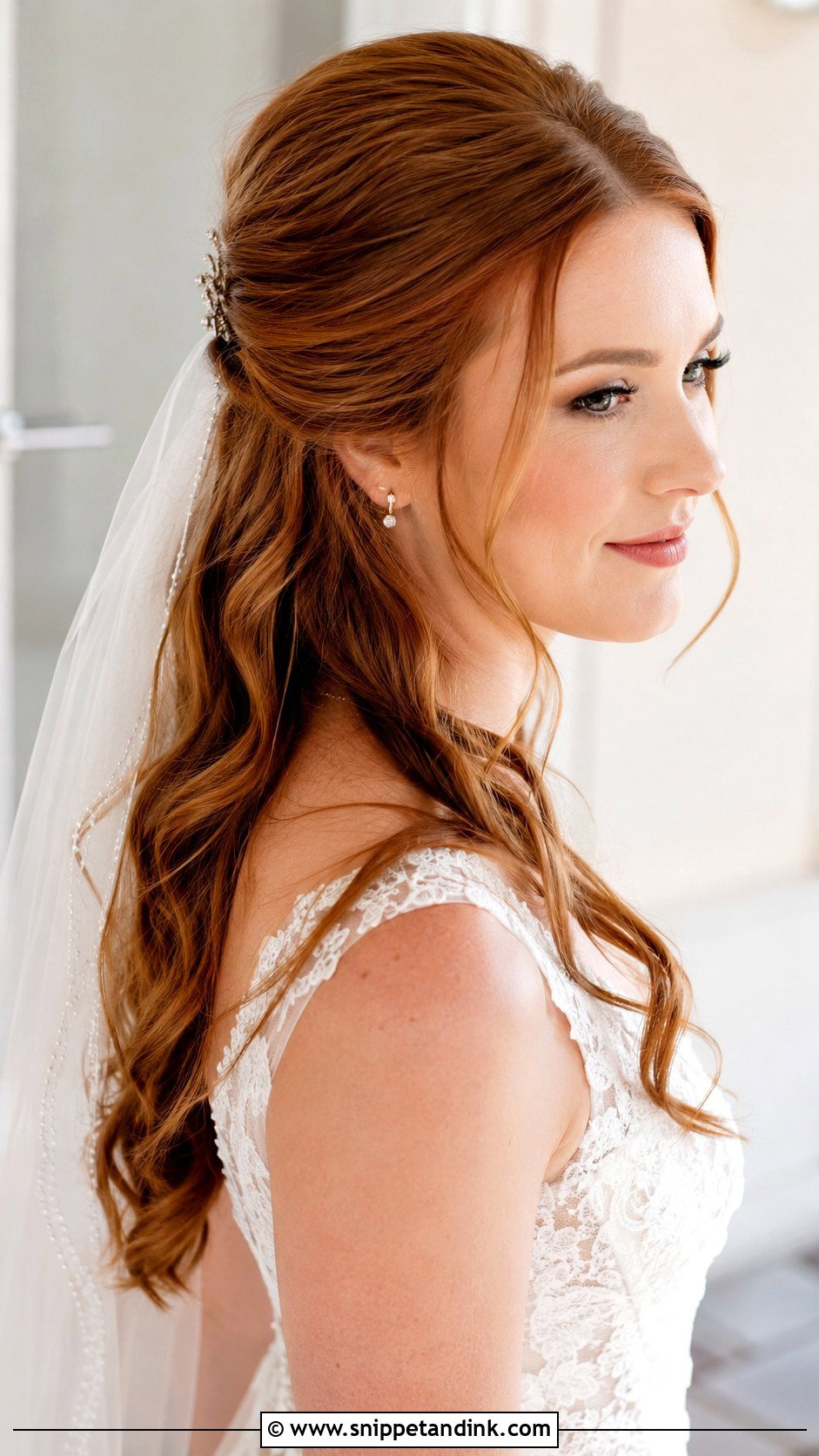
Hair that keeps slipping forward is the reason many brides end up here. With half up, the top sections are drawn back lightly and the front pieces smoothed behind the ears, so the tuck is locked by the half up section behind it rather than relying on pins alone. The lower hair can be loose waves, brushed curls or soft bends. You won’t be touching it all day, which is half the battle. Finish the back with a small comb, a pearl clip or the veil itself.
6. Low Bun Wedding Hair Behind Ears
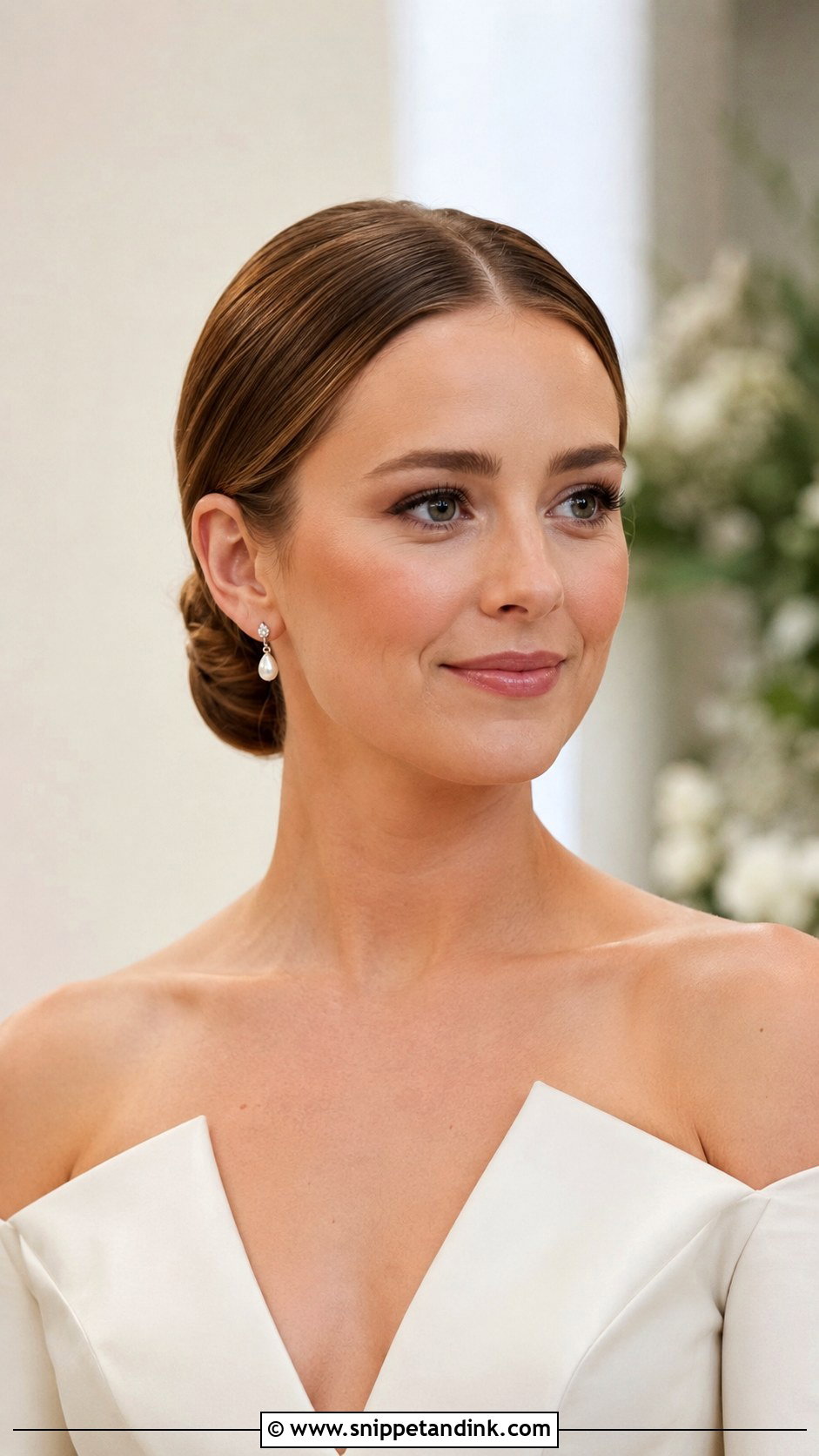
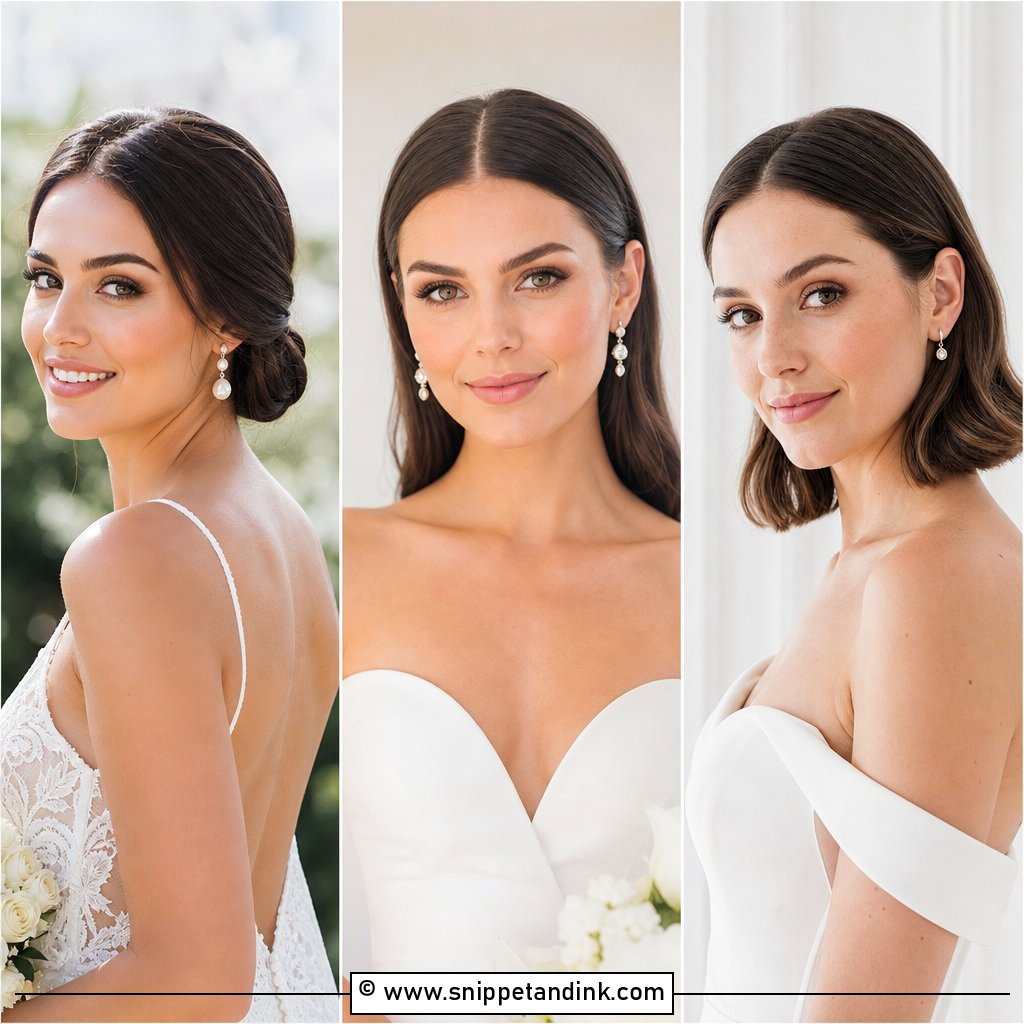
Here the face is completely open. The hair is parted in the center or softly to one side, smoothed behind the ears and gathered low at the nape, where the bun can be sleek, twisted, braided or textured. It’s the best anchor a veil can have and shows off earrings, collarbones and the neckline. I keep a few baby hairs soft at the hairline rather than gelling everything down, because a completely scraped-back hairline can look harsh in daylight. Firm pins and a flexible spray carry it through a long day.
7. Textured Low Chignon Behind Ears
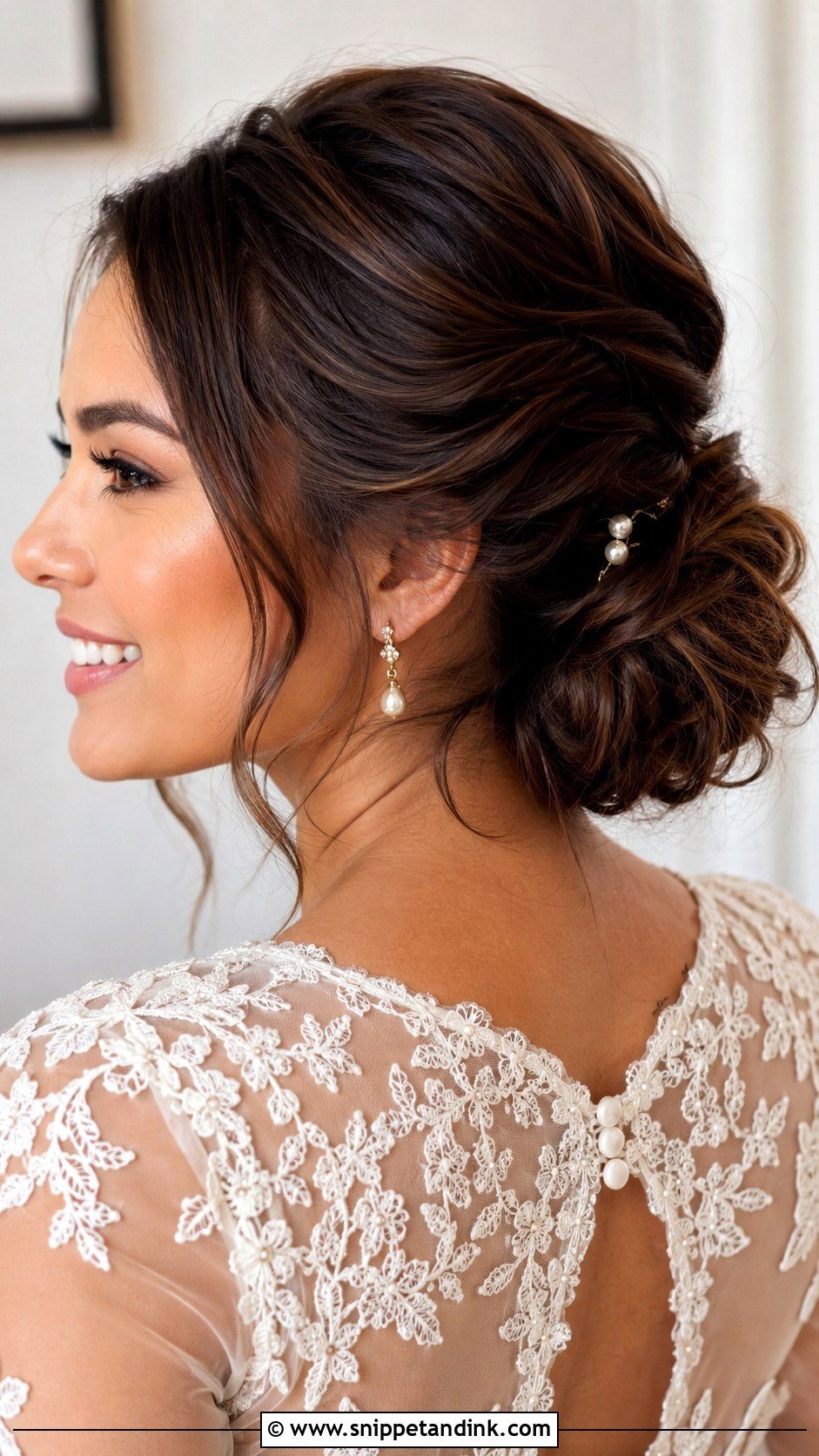
Softer than a sleek bun, a textured chignon keeps the ear tuck neat at the front and lets the back go loose and airy. Small twists, gentle volume and a few undone pieces at the nape do the shaping. The contrast between the smooth sides and the textured back is what makes it work, so I’d resist pulling any loose pieces out near the ears; they’d undo the clean frame. Lace gowns and outdoor weddings suit it, and a few pearl pins or a small floral comb finish the chignon.
8. Wedding Bob Tucked Behind Ears
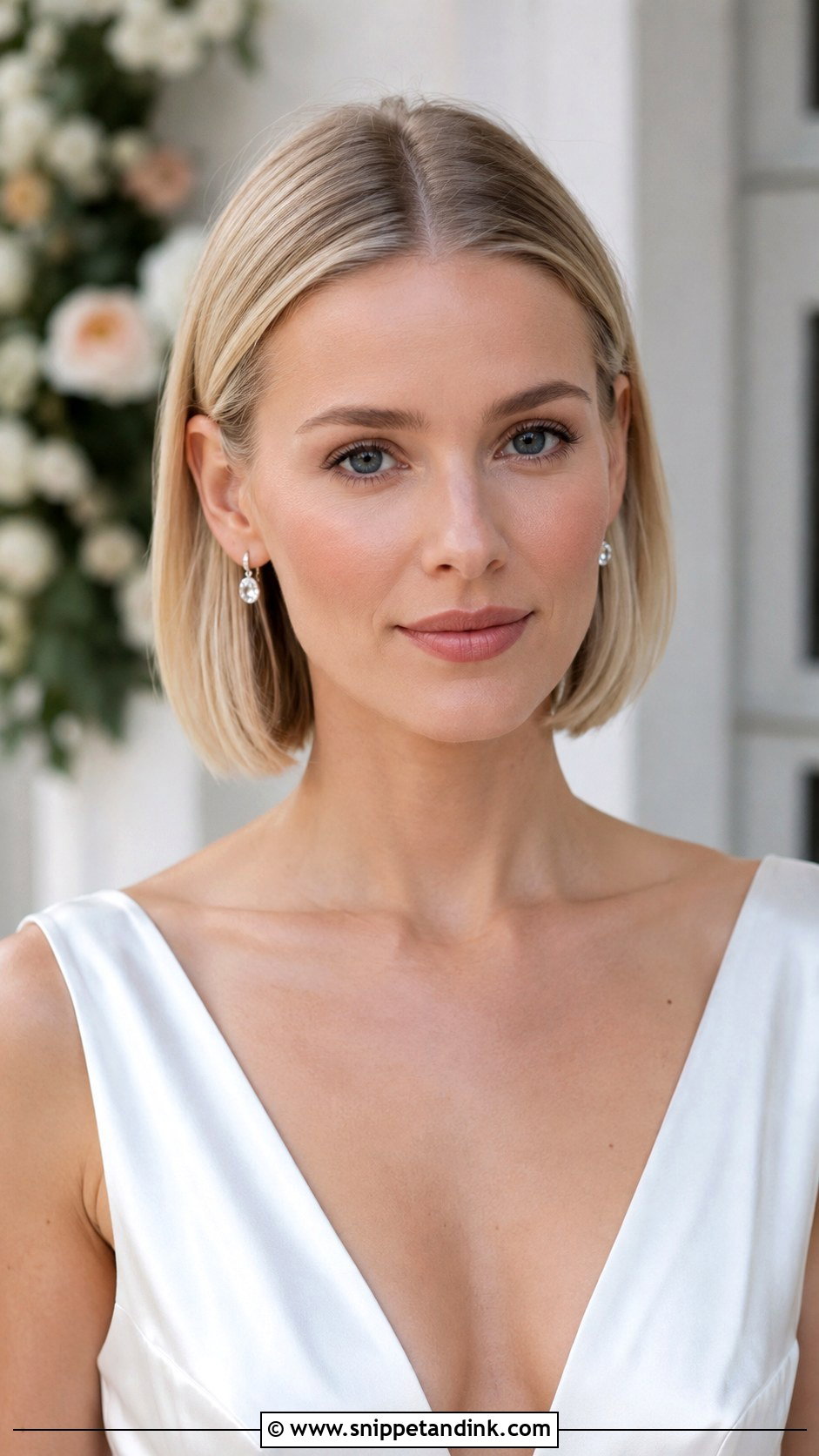
Short hair needs a reason to look styled rather than casual, and the tuck gives it one. Wedding bob tucked behind ears styles suit anything from chin to shoulder length, worn sleek, softly waved or turned under at the ends. Bob lengths often only just reach behind the ear, so I use a small amount of light pomade on the sides to give them grip, plus a shine spray if the cut is very smooth. Wavy bobs should stay soft and polished so the tuck reads as styled. Modern gowns, courthouse ceremonies and city weddings suit it.
9. Wedding Lob Tucked Behind Ears
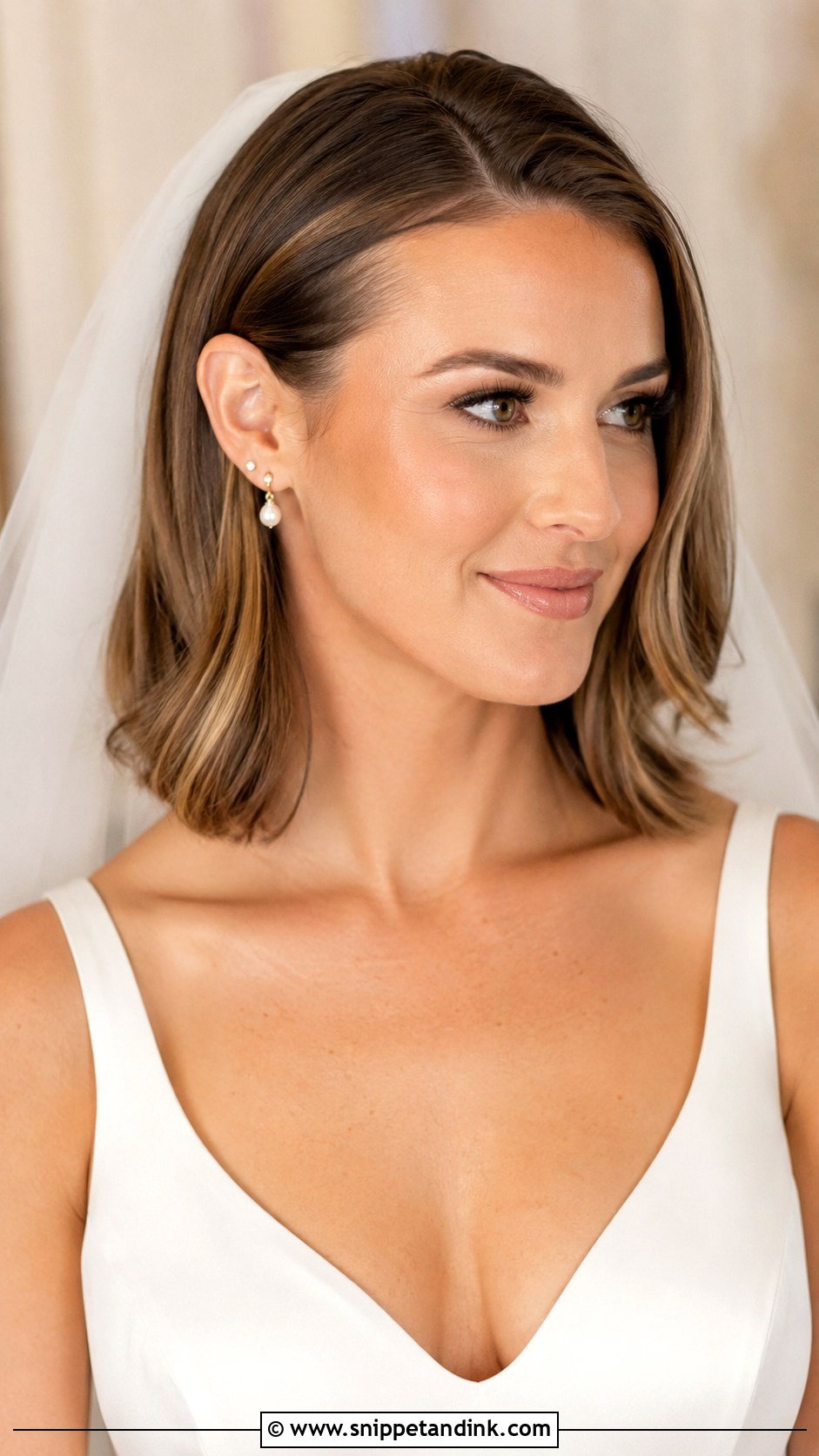
There’s just enough length in a lob for movement, and tucked back it stays fresh rather than formal. Wedding lob tucked behind ears looks can take soft waves, smooth bends or a sleek straight finish around the collarbone. The tuck gives the cut structure and stops it falling over your face during the vows. It’s the style I suggest to brides who don’t want an updo but need something that lasts a long day. A veil at the crown, a pearl barrette or a few metallic pins add the bridal detail.
10. Curly Wedding Hair Behind Ears
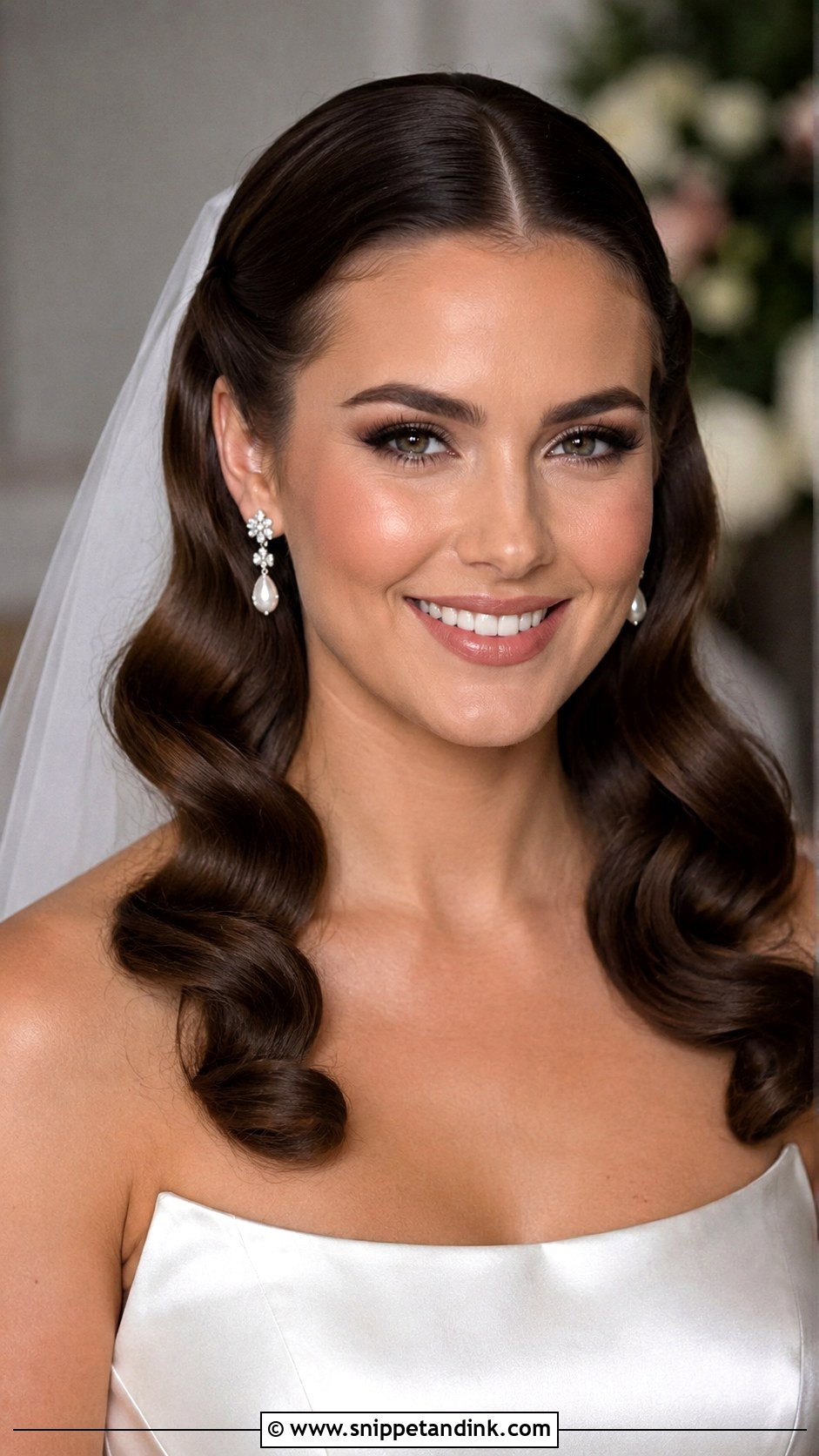
Curls can be tucked without losing their bounce, as long as nobody brushes them. I guide the front curls back with pins slid underneath the hair, so they hold the curl in place without flattening it, and leave the rest full. A side part adds volume; a center part balances the shape. Prep is about moisture: curl cream, a gel to set, then diffuse fully dry. Damp curls tucked behind the ears will frizz as they dry. Veils, floral pins and pearls all sit well in natural texture.
11. Short Wedding Hair Behind Ears
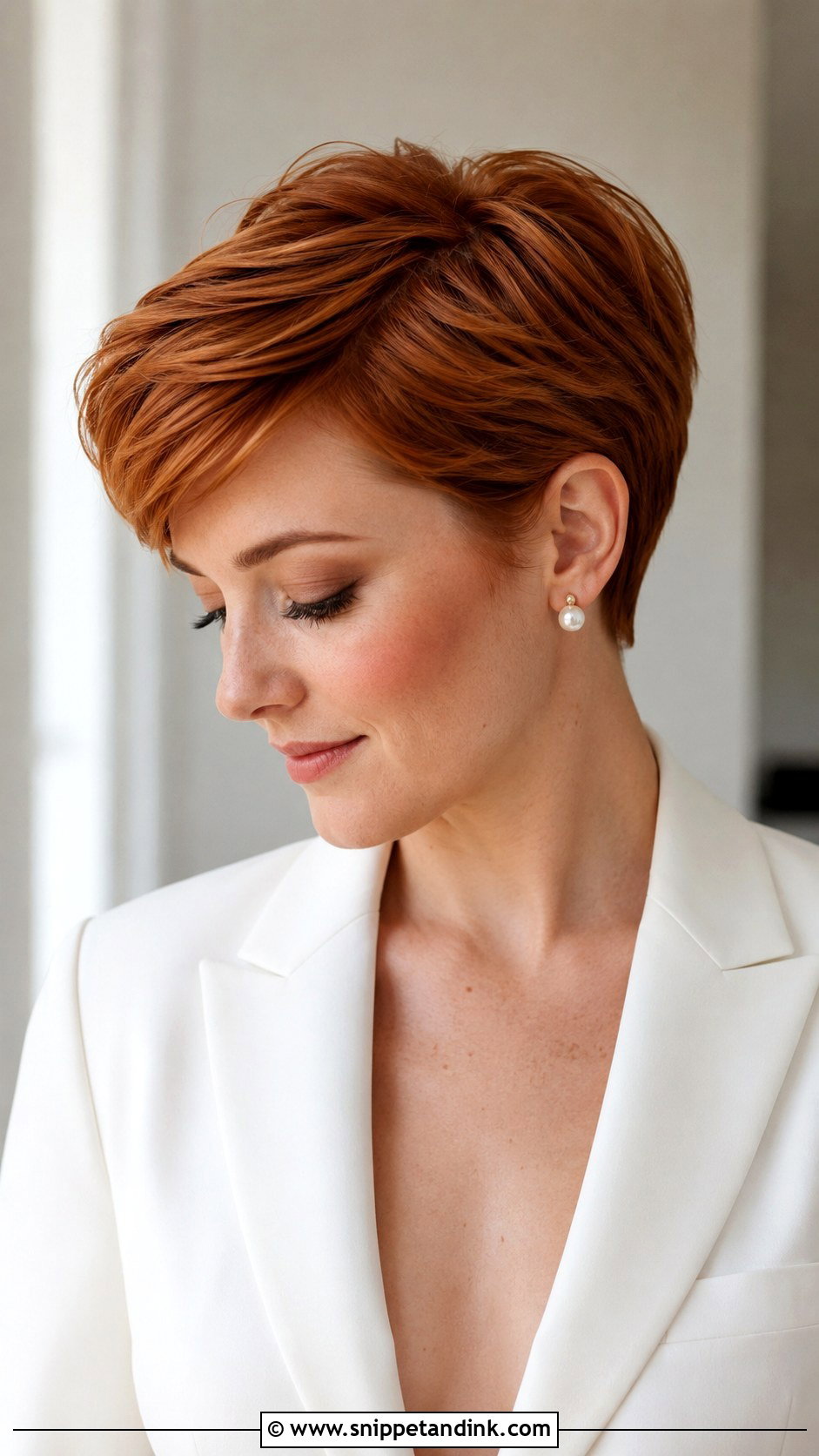
Very short cuts benefit most from a tuck. Short wedding hair behind ears works on a pixie, bixie or short crop when the sides are smoothed flat and the crown keeps some lift, which shows earrings and turns an everyday cut into something dressed. When the hair is too short to actually sit behind the ear, I work in a shaping cream or a touch of light wax and press it into place rather than pinning it. A headband, small comb or short veil adds the ceremony detail.
12. Wedding Hair Behind Ears With Veil
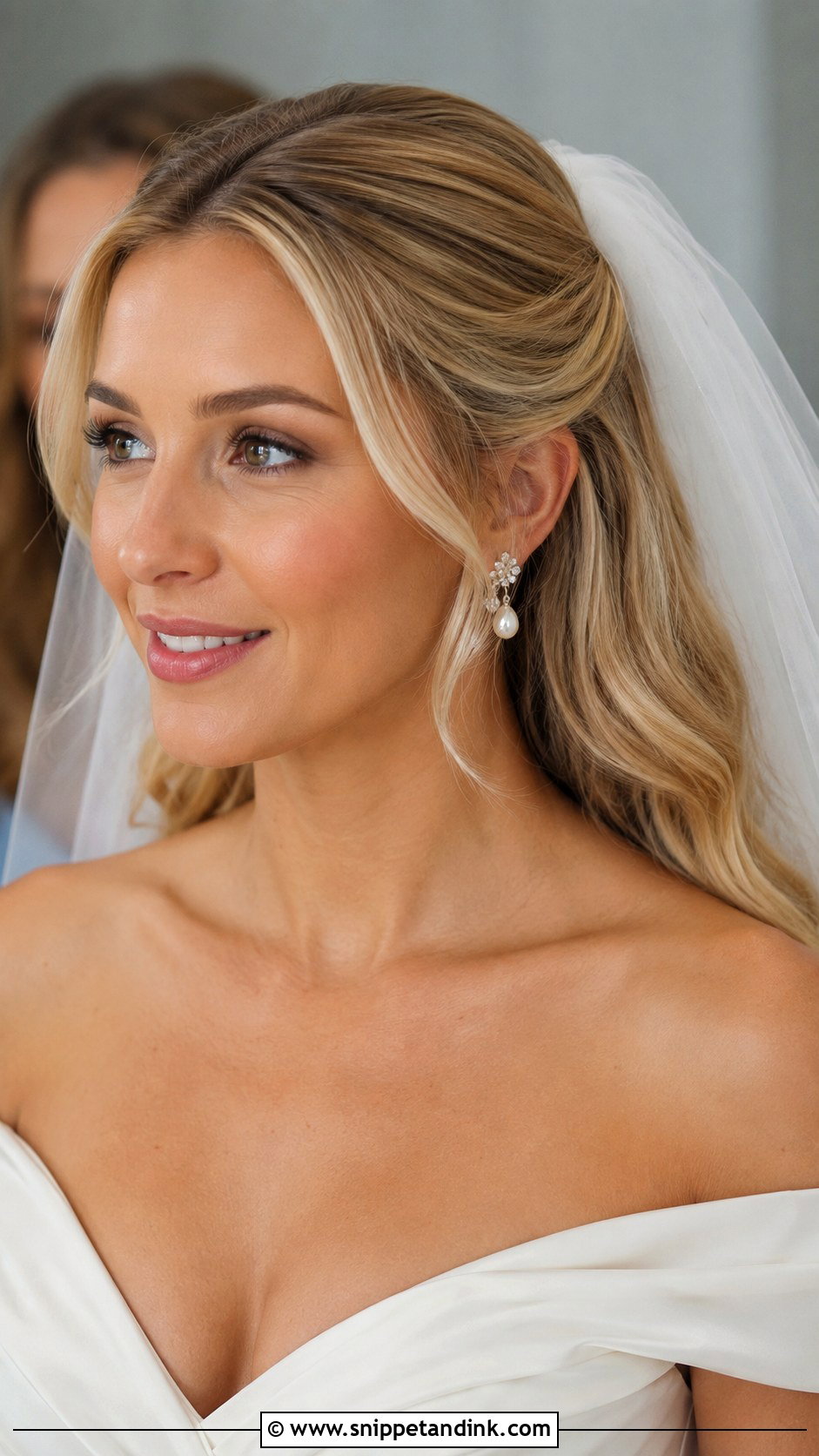
Tucked hair and a veil work well together, because the face stays visible while the veil gives the back its drama. Waves, buns, chignons, lobs and sleek straight hair all take one. The order matters most: I pin the tucked sections first, then place the veil, since pushing the comb in afterward can loosen the hair behind the ear. With hair down, the veil sits at the crown or under a small hidden pinned section; with a bun or chignon it anchors above or below the updo. Done in that order, the style holds from the aisle to the portraits.
13. Wedding Hair Behind Ears With Headband
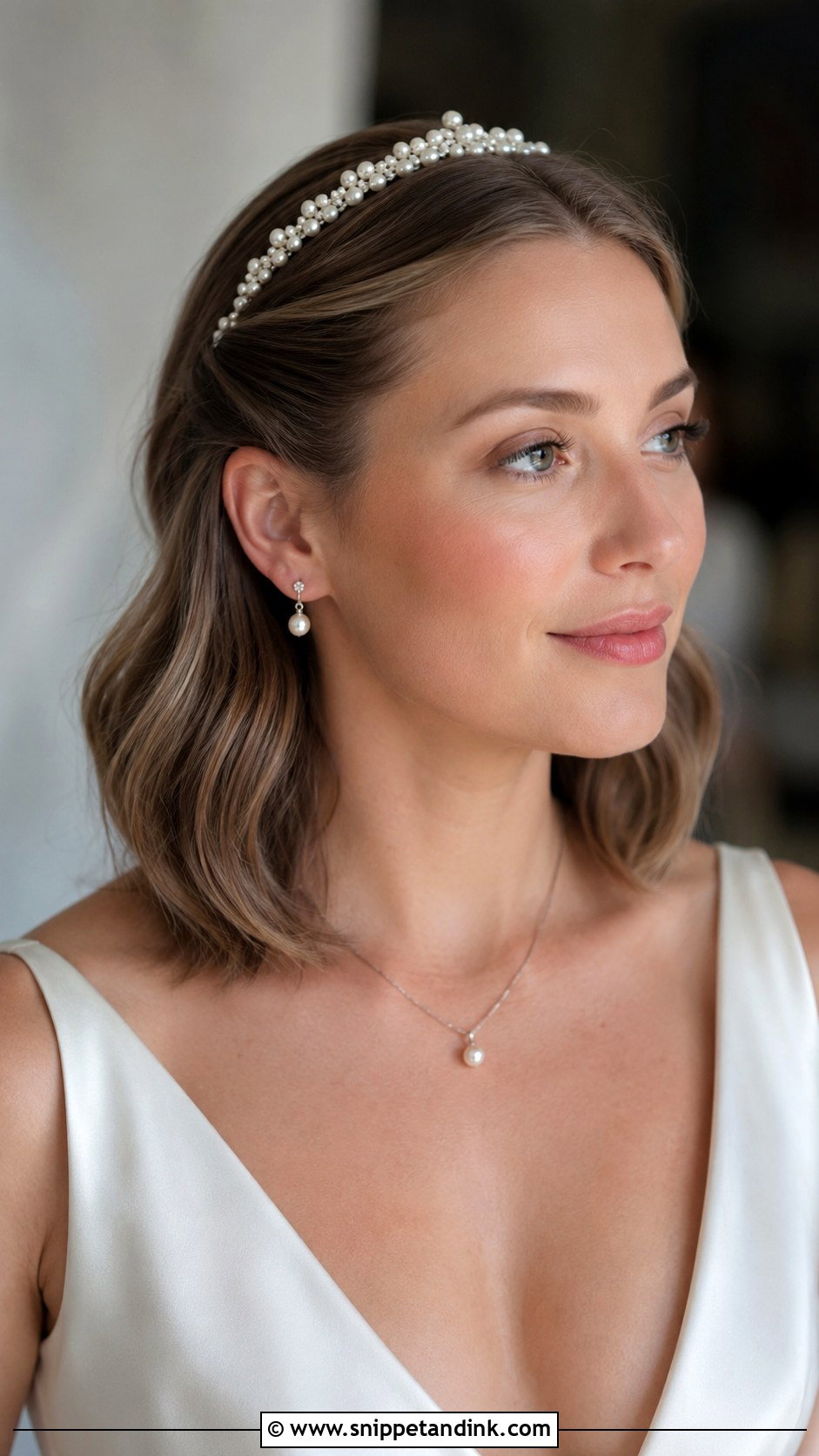
A headband takes some of the work off the pins, which is why I like it for fine hair. The hair is worn straight, waved or in a low bun, tucked behind the ears first, then the band goes on and holds the front sections down. Padded satin looks modern; pearl or crystal details look classic. Keep the crown smooth but not flat, so the band doesn’t sink into the head. Check where the band’s ends sit, too. If they press directly on top of the ear tuck, they’ll start to ache within a couple of hours.
14. Wedding Hair Behind Ears With Pearl Pins
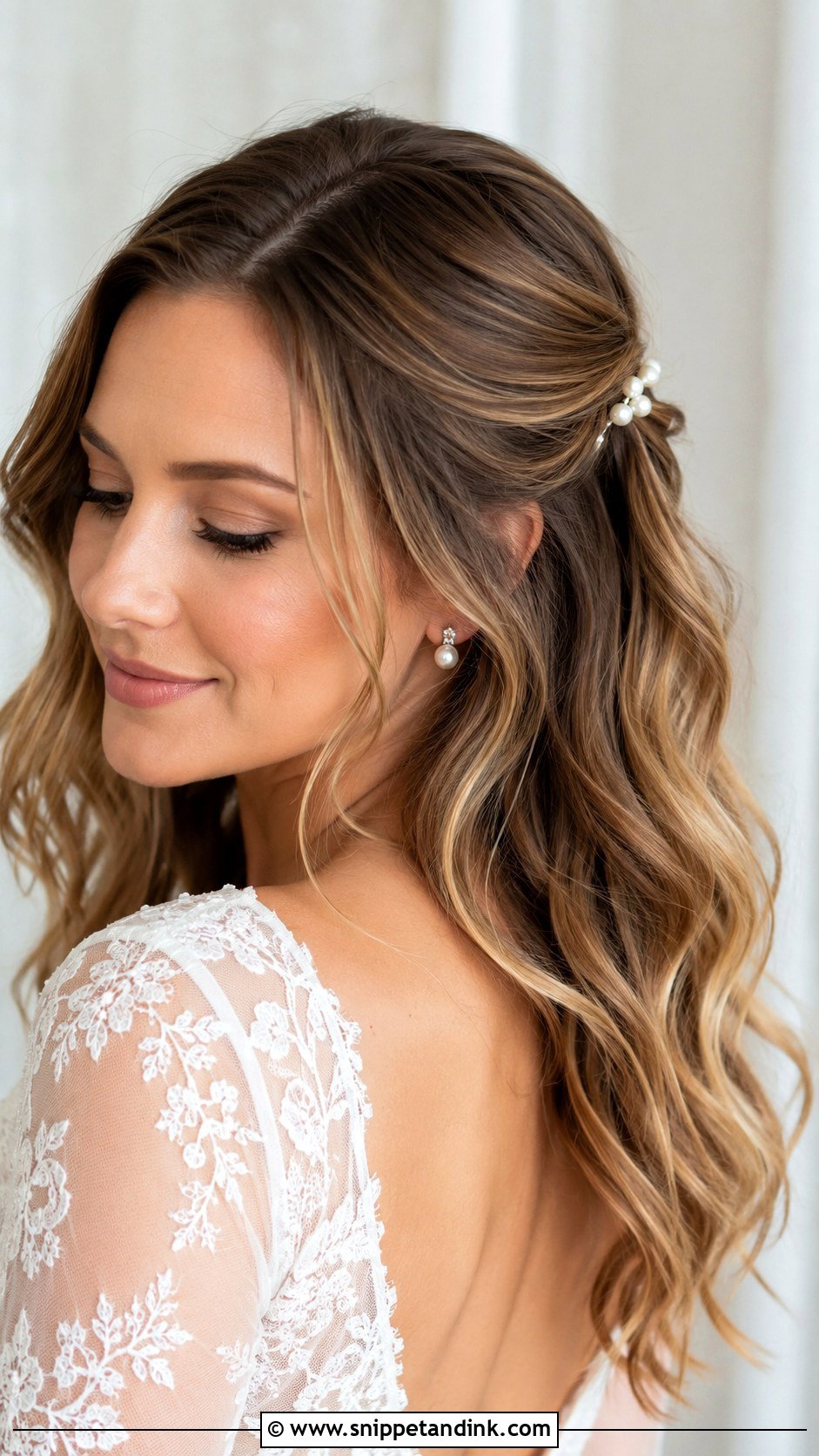
Pearl pins do double duty in a tucked style: they decorate and they hold. The hair can be waves, a lob, a low bun or a half up shape, secured behind the ears with hidden pins first, then finished with small pearls. I place them near the tucked section, just above the ear or around the back of a chignon, and stop at a handful; scattered heavily they lose their point. Simple gowns benefit most, and the side view during the vows shows them off.
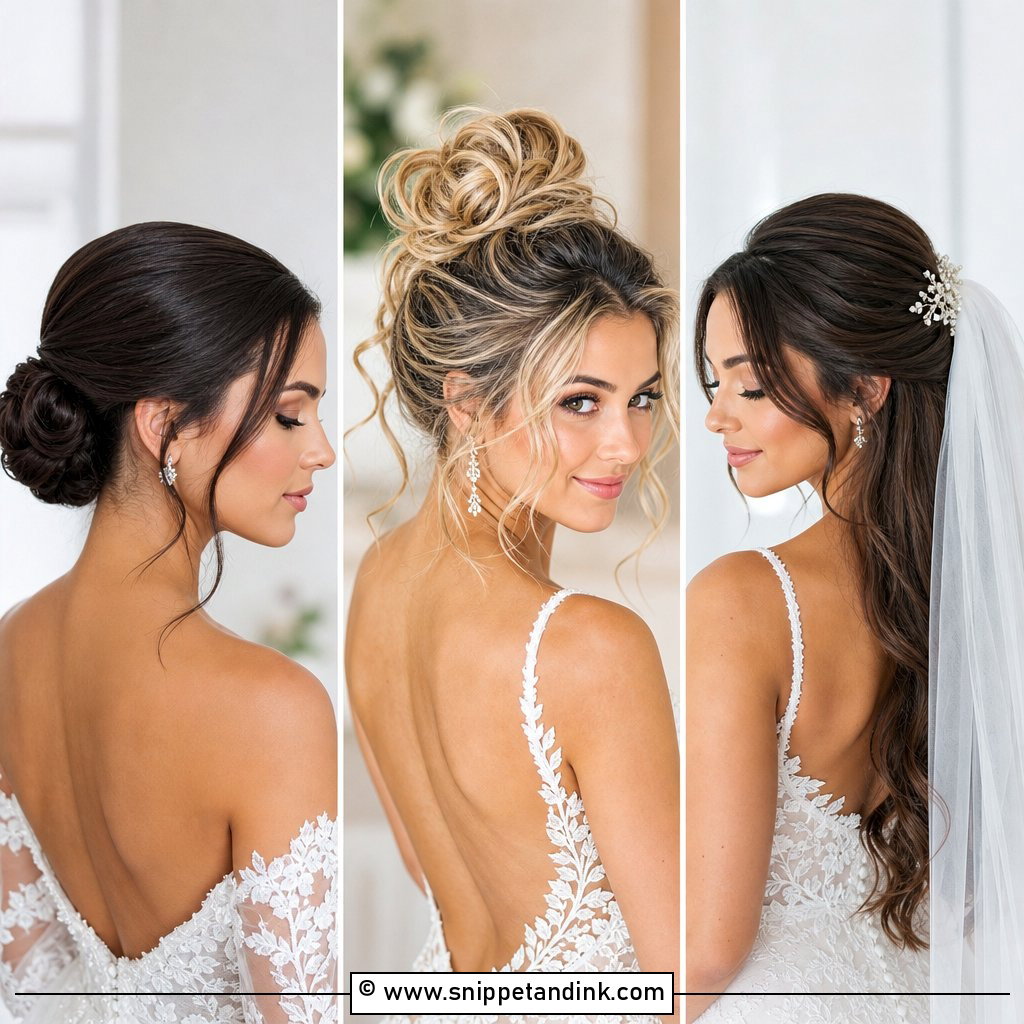
15. Wedding Hair Behind Ears With Statement Earrings
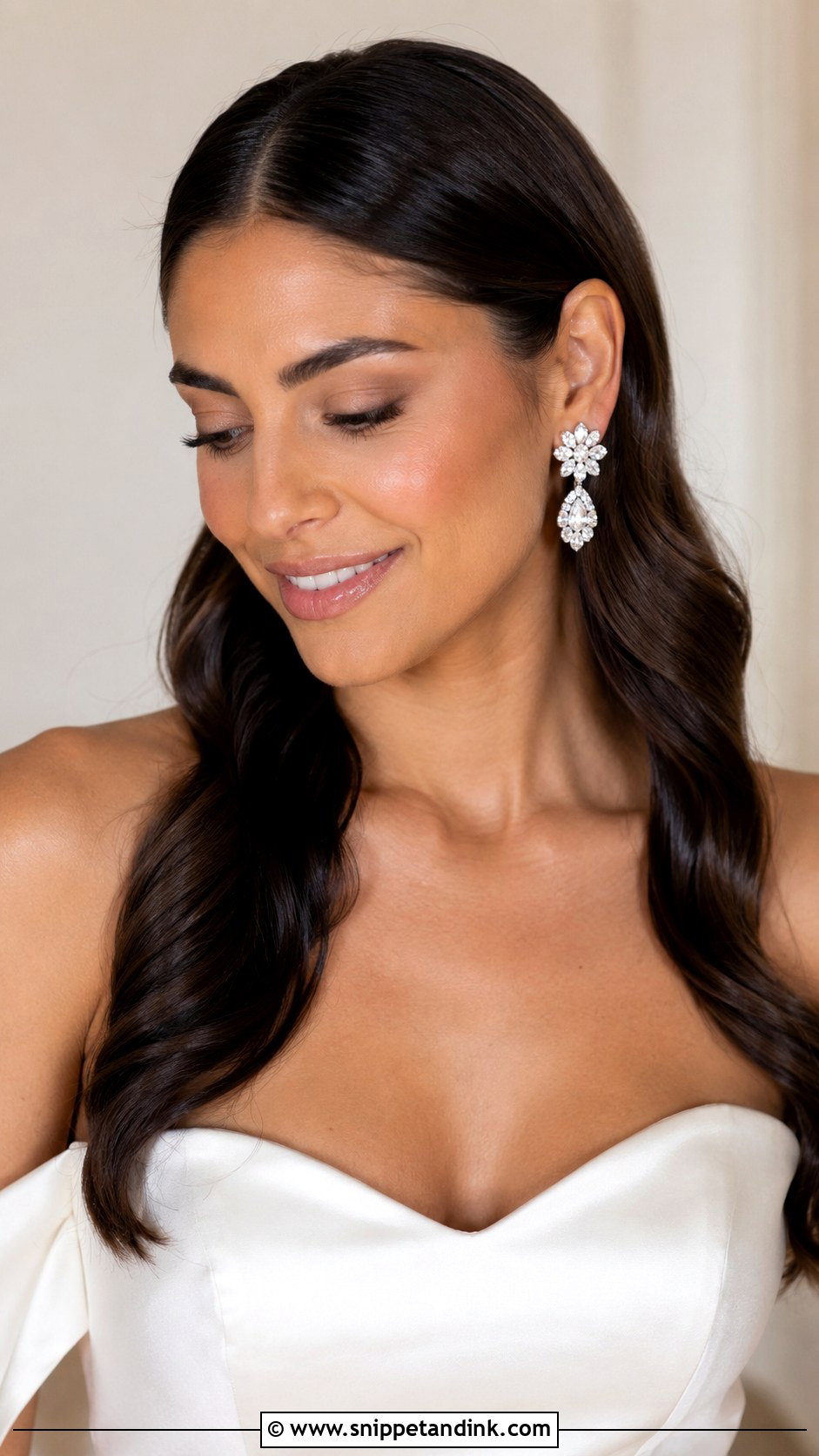
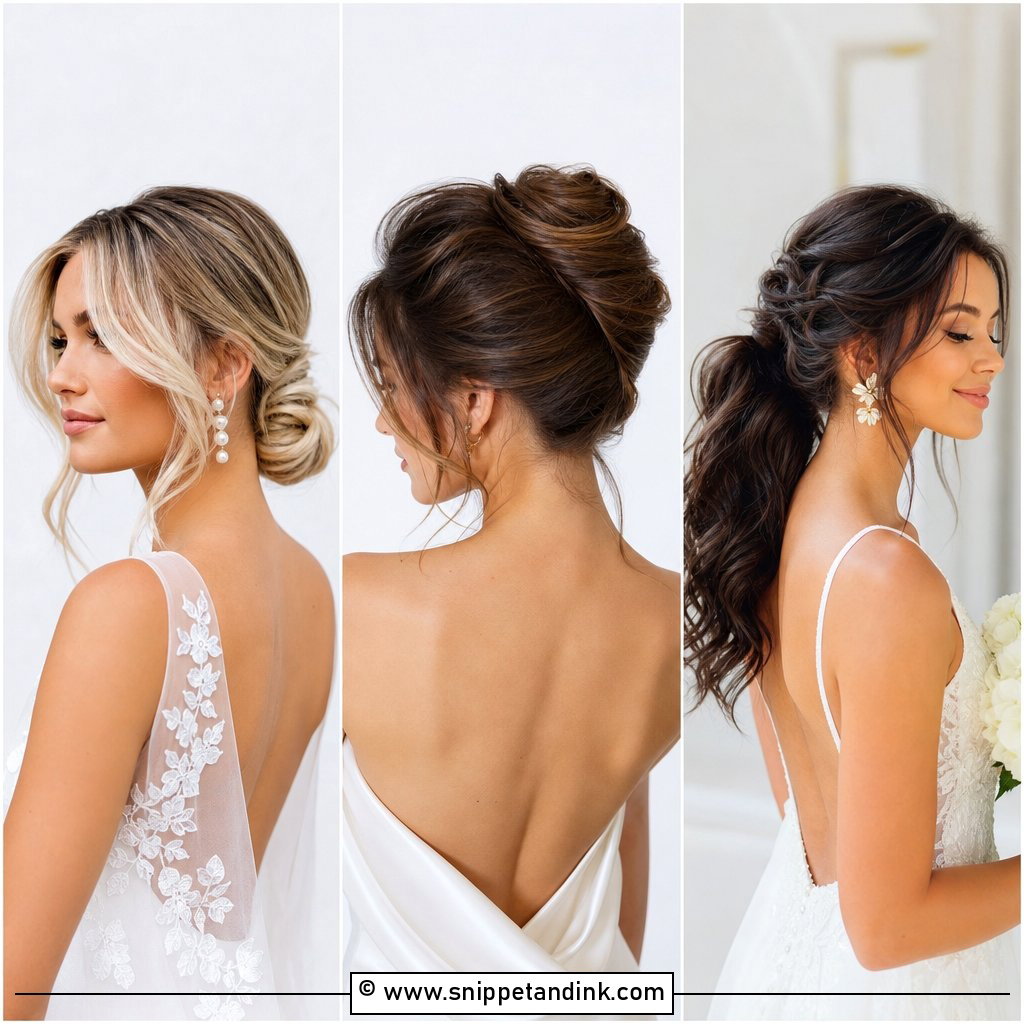
When the earrings are the main accessory, the hair’s job is to stay out of their way all day. Both sides are tucked securely, and the style can be sleek straight, glossy waves, a low bun or a soft chignon. Large earrings need smooth, balanced hair around them, or the face starts to look crowded. Also check the weight: heavy earrings swing and catch on loose waves, so with long hair down I tuck slightly higher and further back. Strapless, square and high-neck gowns all suit it.
Pinning a Tuck So It Stays Flat for Twelve Hours
A tuck slides forward for a predictable reason. Each time you turn your head, the hair is pushed toward the face, and a single pin laid on top of slippery hair has nothing to hold. This is how I build one that stays.
- Spray a little texture or dry shampoo into the hair just behind the ear, even on sleek styles. Clean, silky hair is what lets pins slide.
- Take a thin section behind the ear and twist it once toward the back of the head. This small twist becomes the anchor.
- Smooth the tucked front piece over the twist, then cross two pins in an X through both, with the ridged side of each pin facing the scalp.
- Lay the hair from above over the pins so nothing metal shows, and press it with a brush misted with hairspray.
If a tuck does work loose during the reception, don’t push the same pin back in. Pull it, re-twist the anchor section, and pin again at a fresh angle. That’s a two-minute fix in the bathroom mirror, and worth showing your maid of honor at the trial.
Open Face, Secure Sides, Shaped Lengths
A bridal ear tuck is a full style choice, not a quick push of the hair back. Hollywood waves, a sleek bun, a soft chignon, a modern bob or natural curls can all wear it, as long as the front is secure, the length has shape and the accessories have a reason to be there. At your trial, ask your stylist to show you exactly how the tucked sections are pinned, so you know what to fix if one slips. Built that way, it lasts from the first photo to the last dance.
You'll Like These Ideas:


Leave a Reply