
A single tuck behind the ear changes a style more than most brides expect. It opens the face, puts your earrings on show and keeps the front pieces out of your mouth during vows, kisses and a breezy photo walk. I use it on sleek buns, soft waves, bobs, ponytails, half-up styles and plain blowouts. Wedding hair tucked behind ears looks deliberate when it is done well; done carelessly, it looks like you pushed it back in the car. The difference is in hidden pins, a little grip at the root and a tuck that’s been set rather than simply placed.
The Pin Work That Stops a Tuck From Springing Loose
Hair tucked with fingers alone lasts about as long as the first hug. A tuck that survives a wedding is set, the same as a curl.
- I prep the front sections with a light texture spray or a touch of cream, so they have grip.
- The section is smoothed back and tucked, then a bobby pin goes in behind the ear, ridged side down, hidden under the hair that falls over it.
- On slippery or layered hair, a second pin crosses the first in an X.
- Finally, a light mist of spray over the tuck, and I press it with a flat hand for a few seconds.
If your hair is heavy and smooth, a tiny elastic at the back, linking the two tucked sections under the top layer, holds even better than pins.
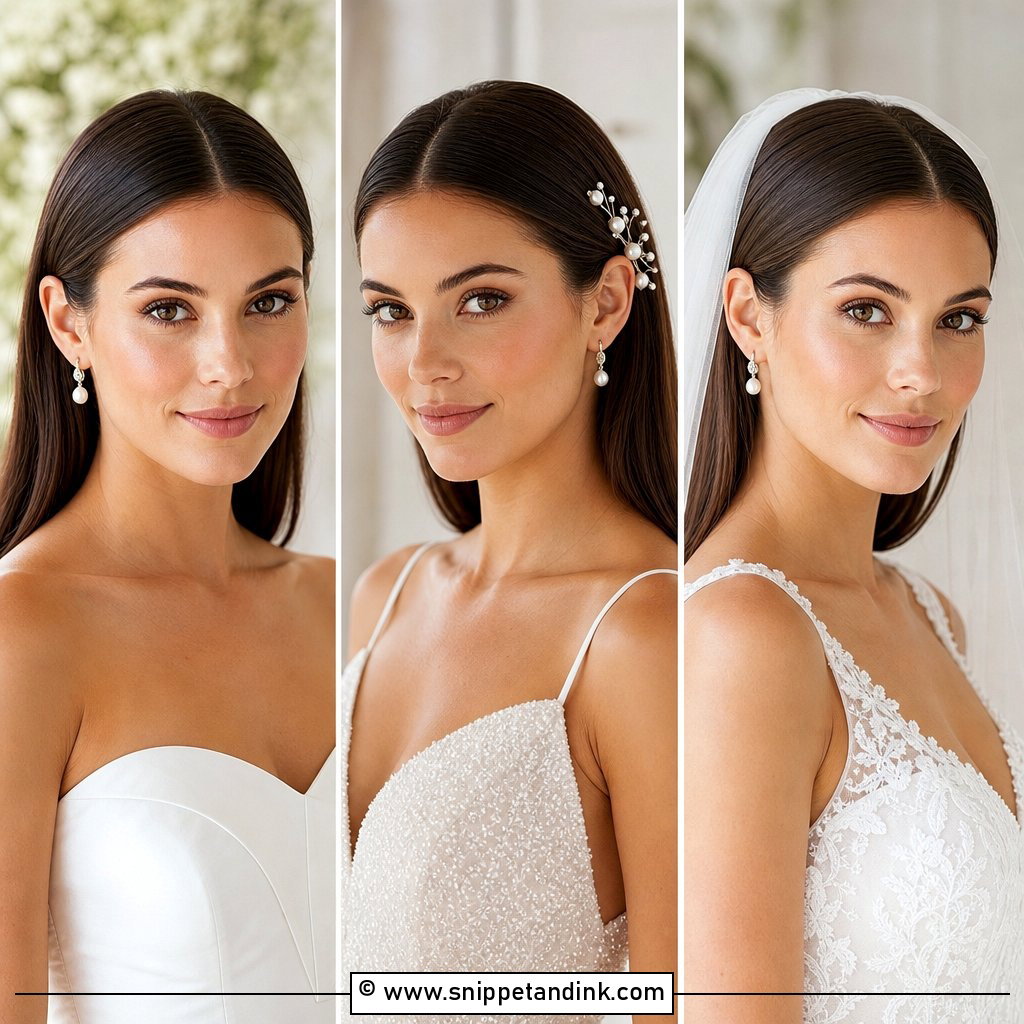
1. Wedding Hair Down Tucked Behind Ears
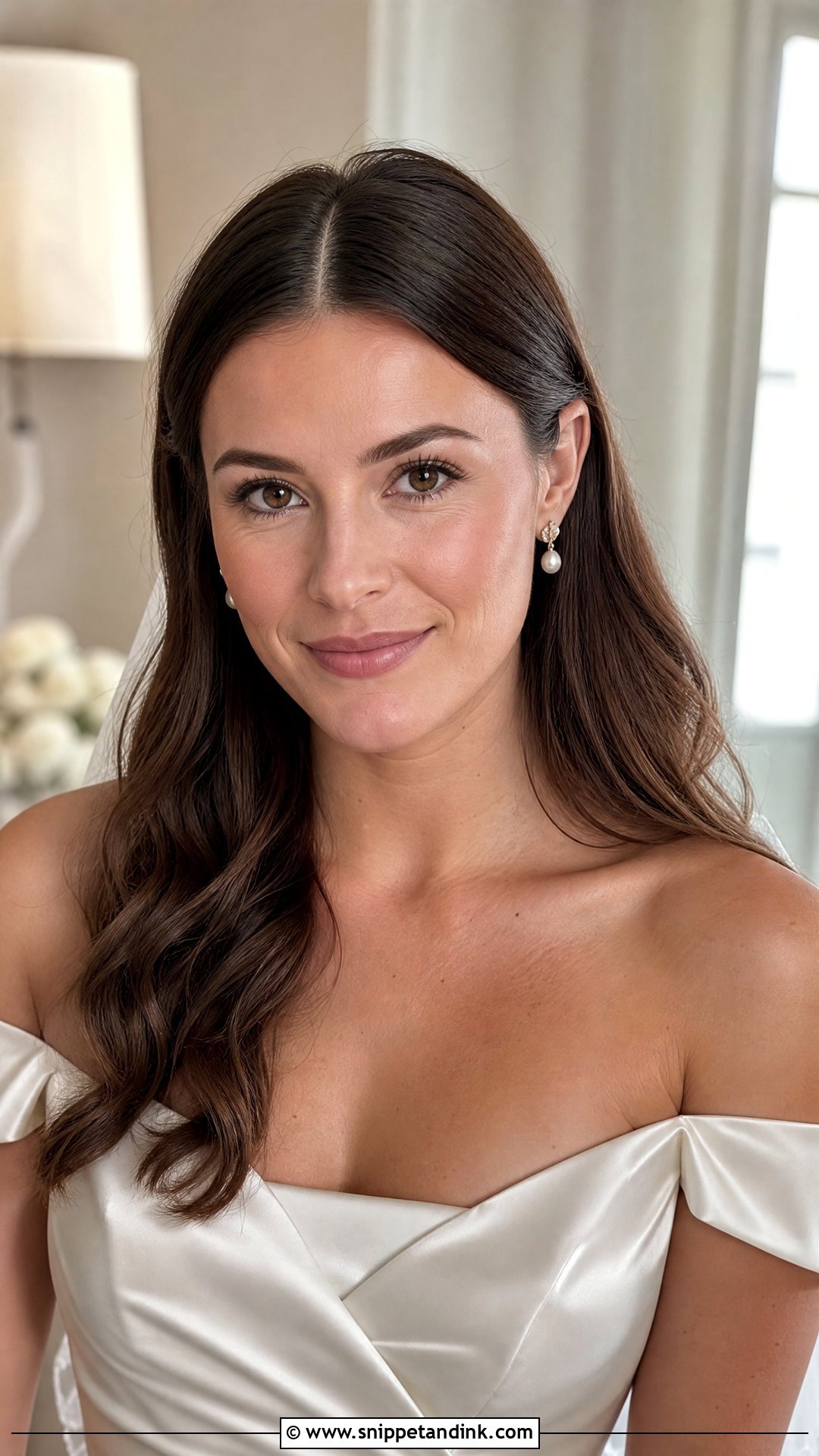
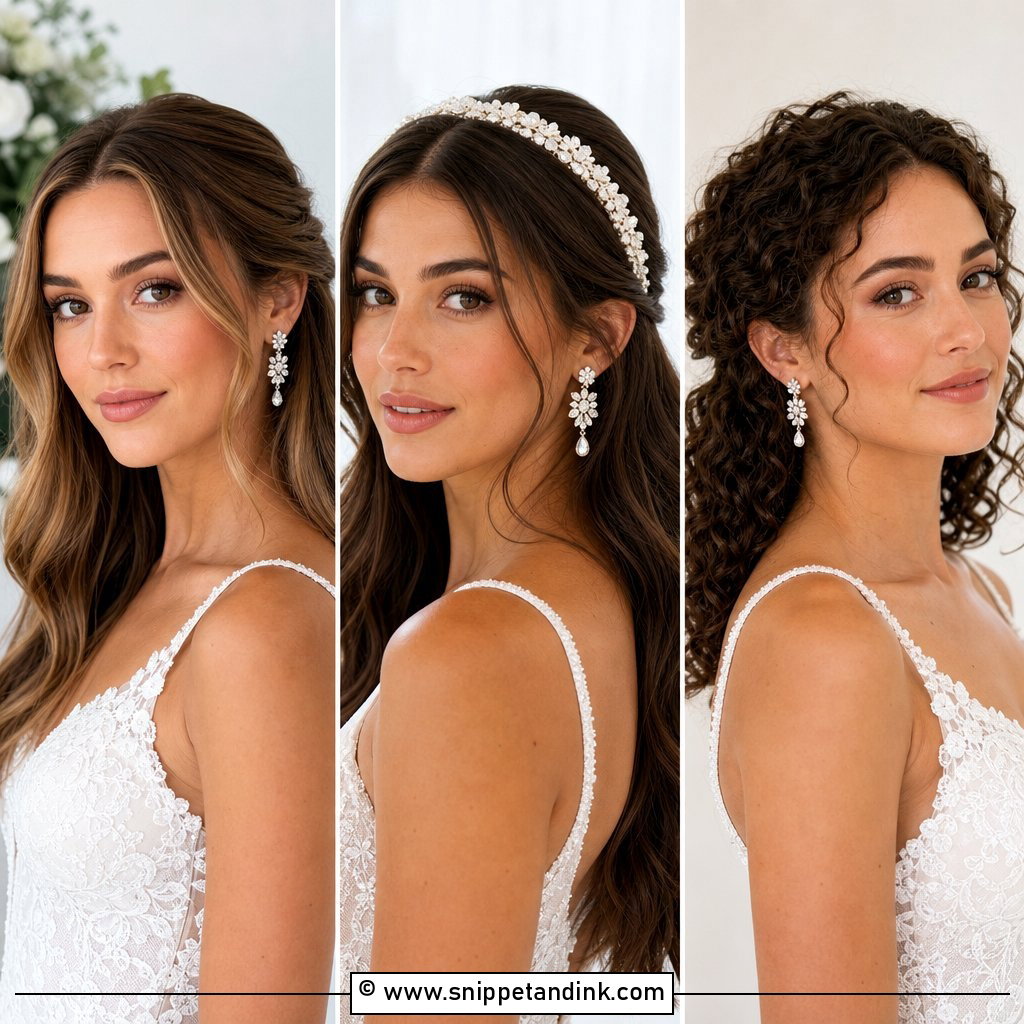
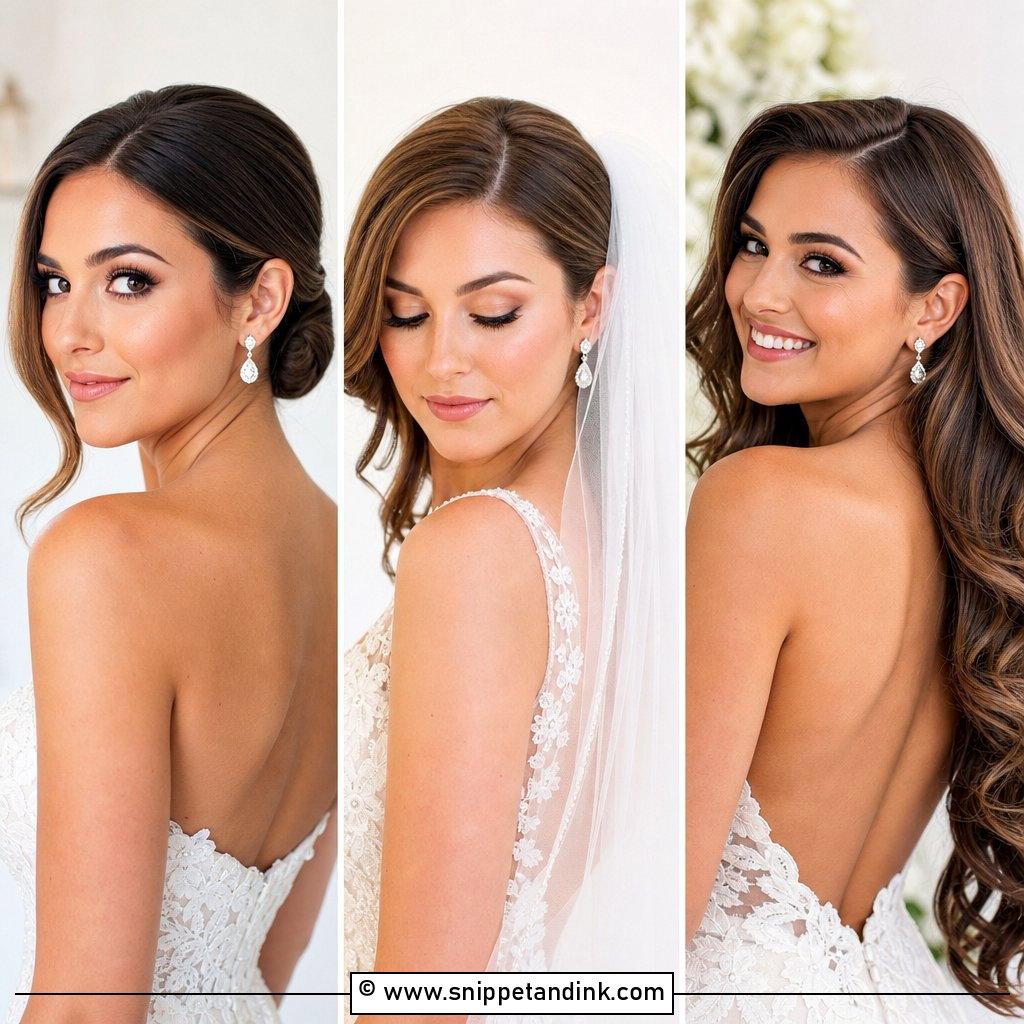
Leaving the lengths loose while the fronts go back is the simplest version, and the one that slips most often. I smooth the front sections, tuck them, then slide a bobby pin behind each ear, pointing down and hidden under the top layer, so the hair can’t spring forward. It suits medium to long hair with a centre part. Loose bends through the mid-lengths read relaxed; straighter hair reads cleaner. Your makeup and earrings get a lot more attention with this one, so plan both with that in mind.
2. Sleek Wedding Hair Tucked Behind Ears
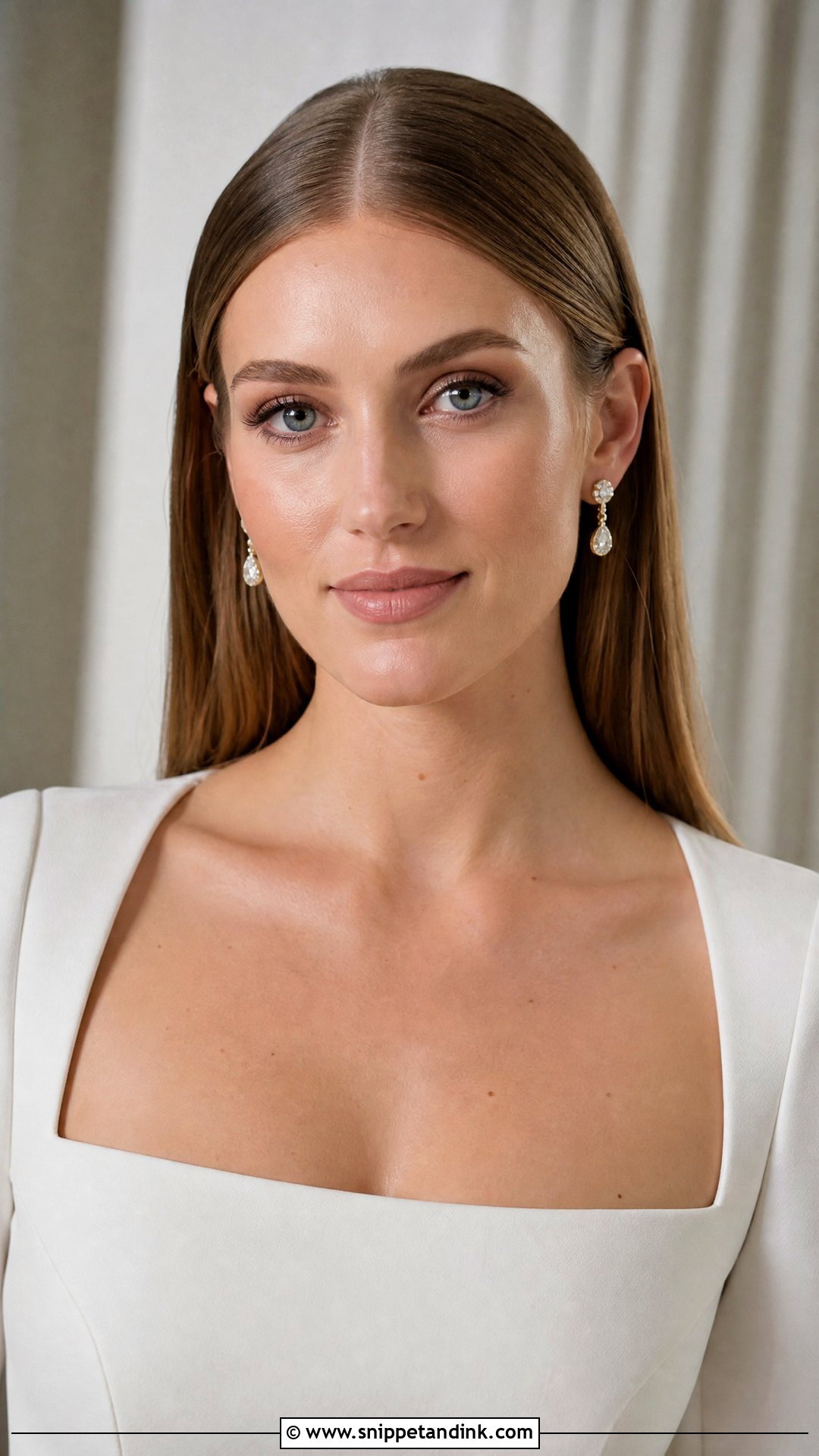
Sleek and tucked is a style that rewards good prep. The hair is parted in the centre, smoothed close to the head and tucked firmly before the lengths fall straight or softly curved. Minimal dresses, satin, high necklines and statement earrings all suit it. I blow-dry the roots flat first, then use a little smoothing cream and a flexible spray. For extra hold, I sometimes connect the two front pieces with a tiny clear elastic hidden under the back layers at the nape, so the tuck is anchored on both sides.
3. Hollywood Waves Tucked Behind Ears
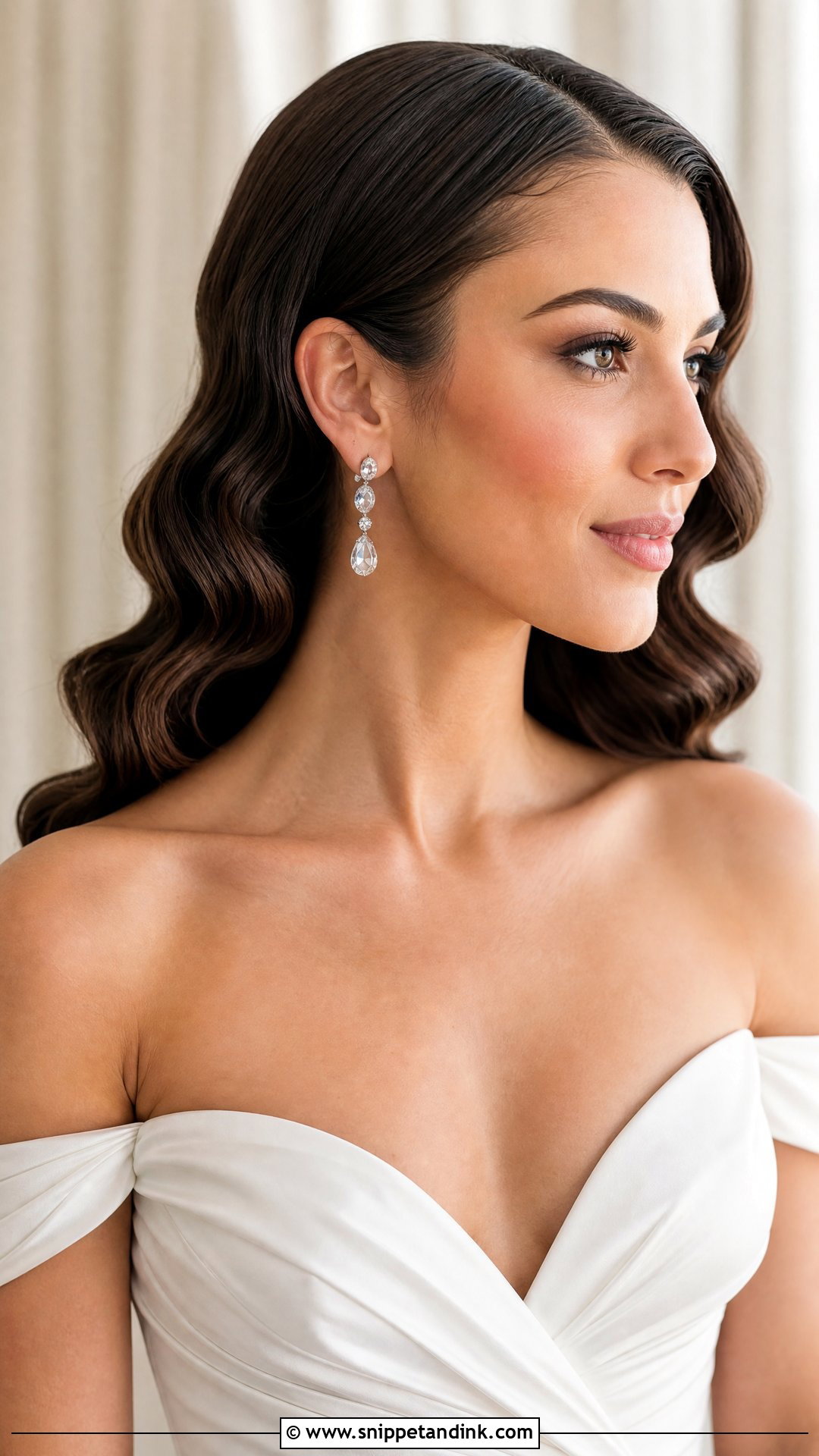
Full Hollywood waves can feel heavy around the face, and tucking the fronts back lightens them without losing the glamour. I start the waves below the ear and keep the roots smooth, which looks more current than waves from the scalp. It pairs with strapless and off-the-shoulder gowns, pearl earrings and vintage veils. Thick hair and a deep side part benefit most. I set the wave with clips and a firm spray, then tuck only once it’s cool, or the tuck will crush the first ridge.
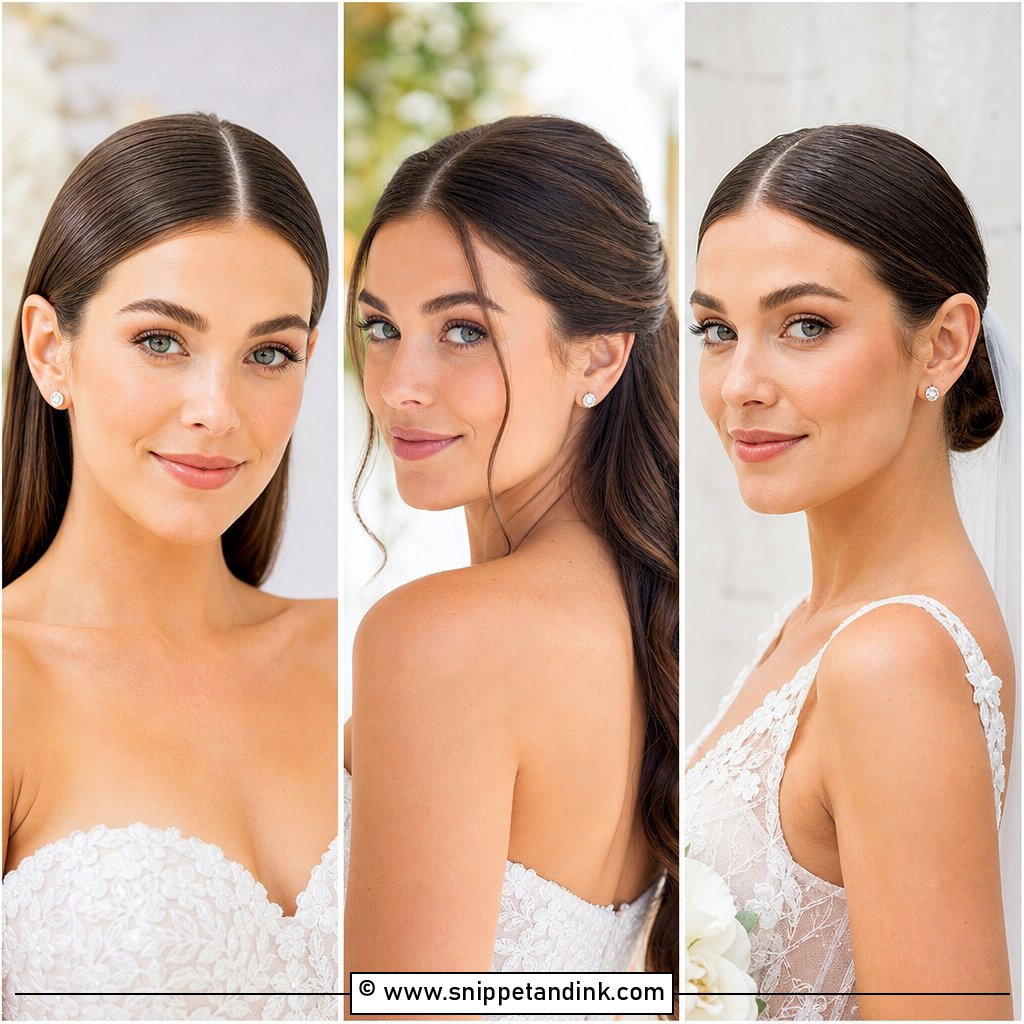
4. Half Up Wedding Hair Tucked Behind Ears
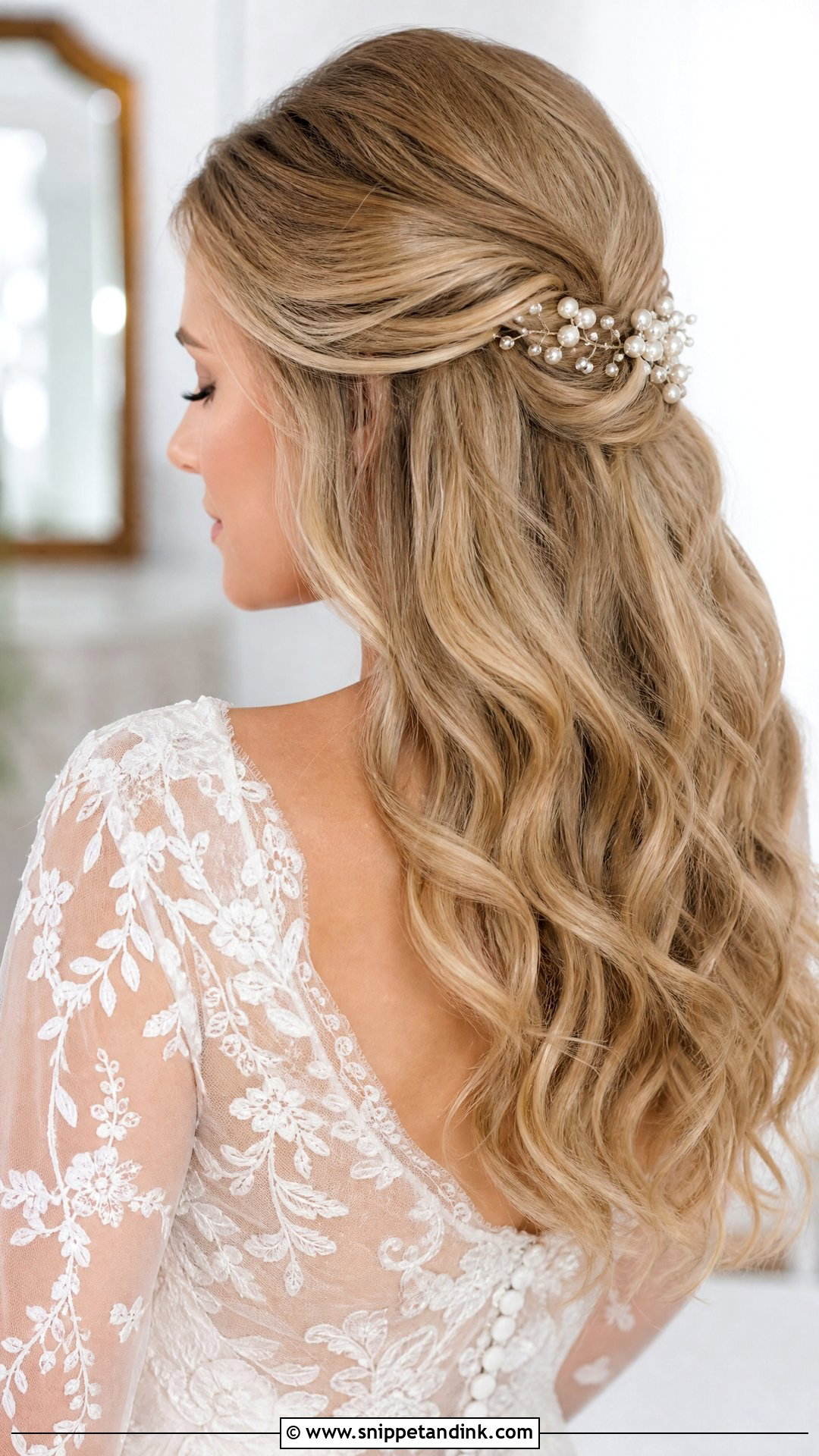
Halfway between down and updo, this one pulls the top section back softly while the sides tuck behind the ears for a neat, lifted shape. The length below can be curled, waved or blown out. Bridesmaids often get it because it’s romantic without looking formal. It gives height at the crown and still feels loose. A small comb, bow or pearl pins at the back add a bridal note. I pin the top section first, then tuck the sides into it, so they share an anchor.
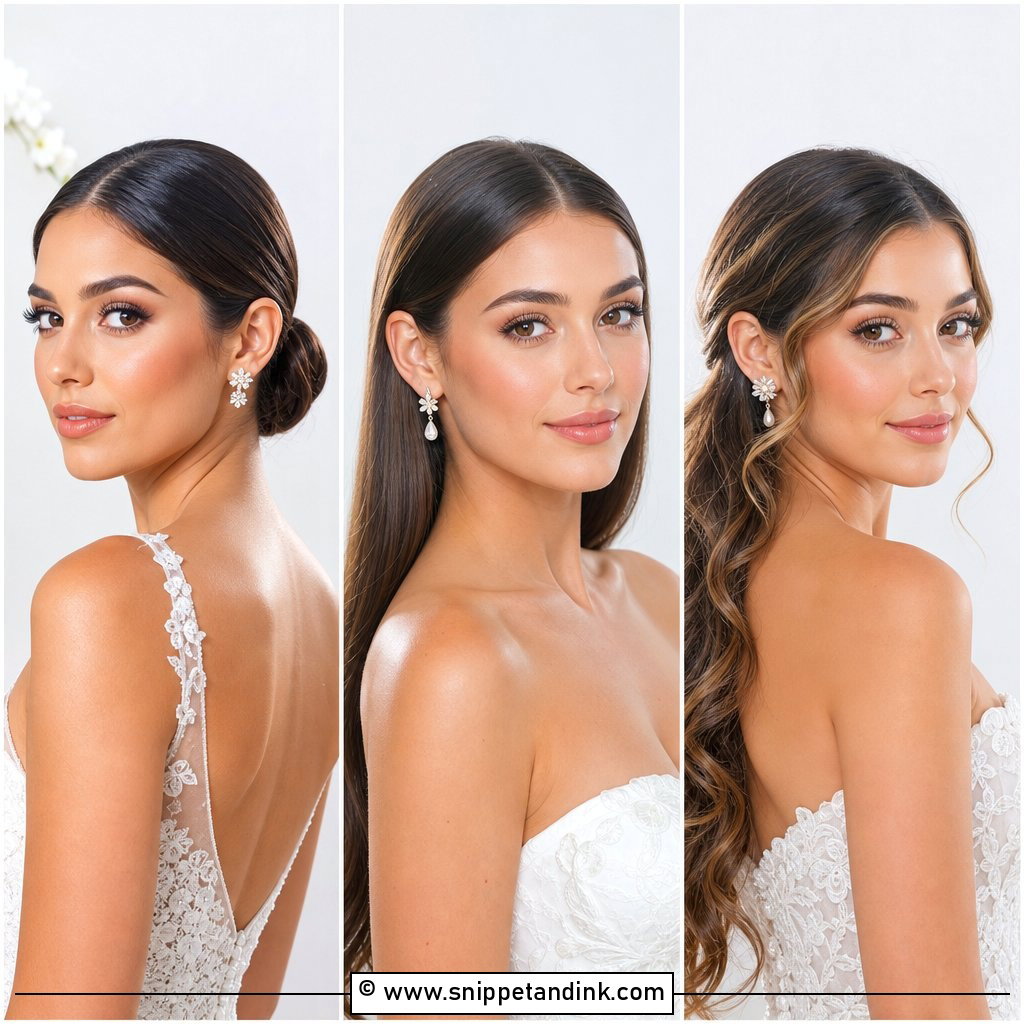
5. Low Bun Wedding Hair Tucked Behind Ears
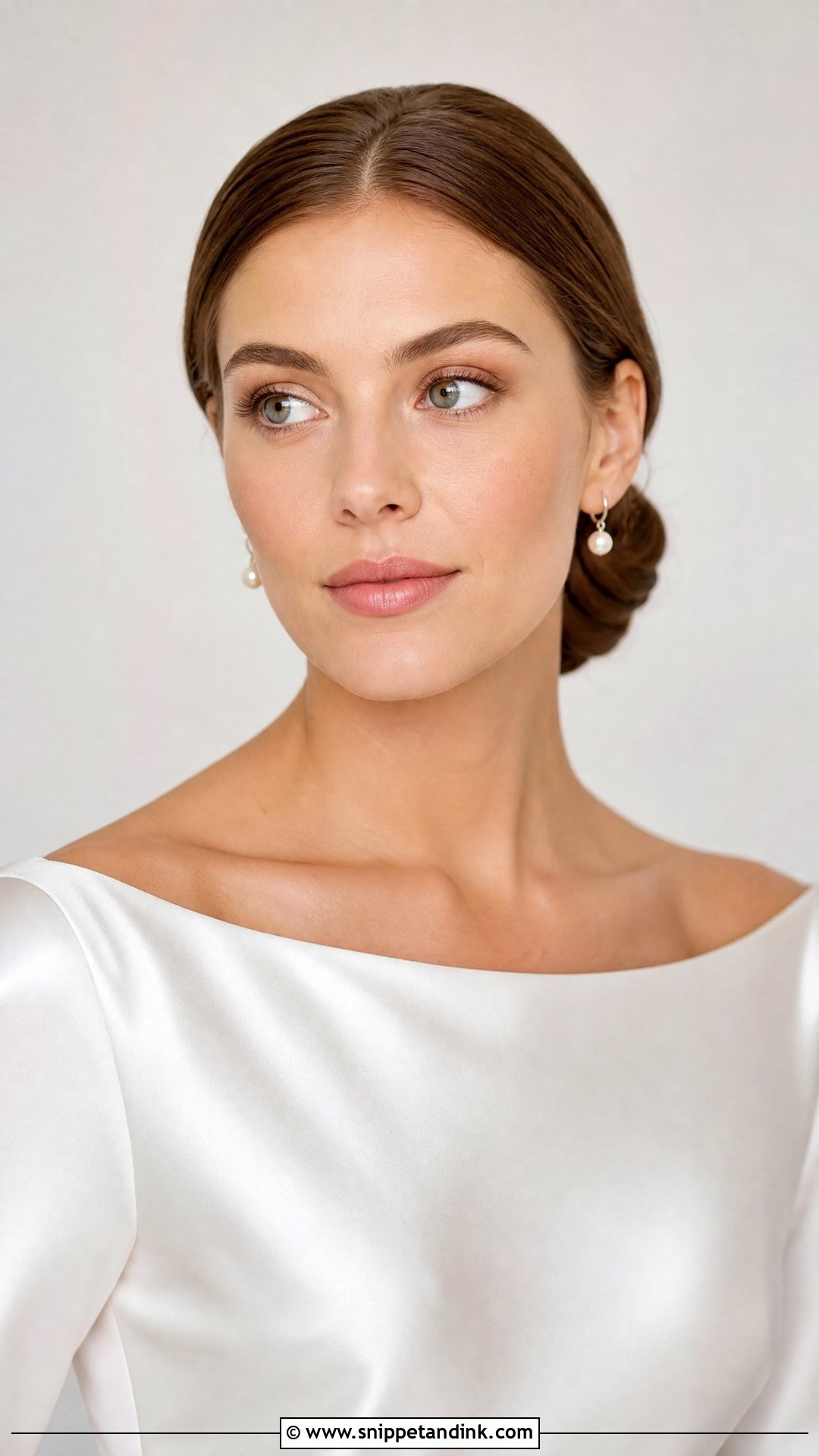
A low bun with tucked sides is one of the most dependable styles I do for long days. The hair is smoothed from a centre or side part, tucked, and gathered at the nape. The bun can be sleek, twisted or lightly textured to suit the dress. Veils sit well with it because the clean sides keep the face open. If a scraped-back look feels too severe, ask for a few tiny pieces near the sideburns rather than long face-framing strands, which tend to get caught in the veil.
6. Chignon Wedding Hair Tucked Behind Ears
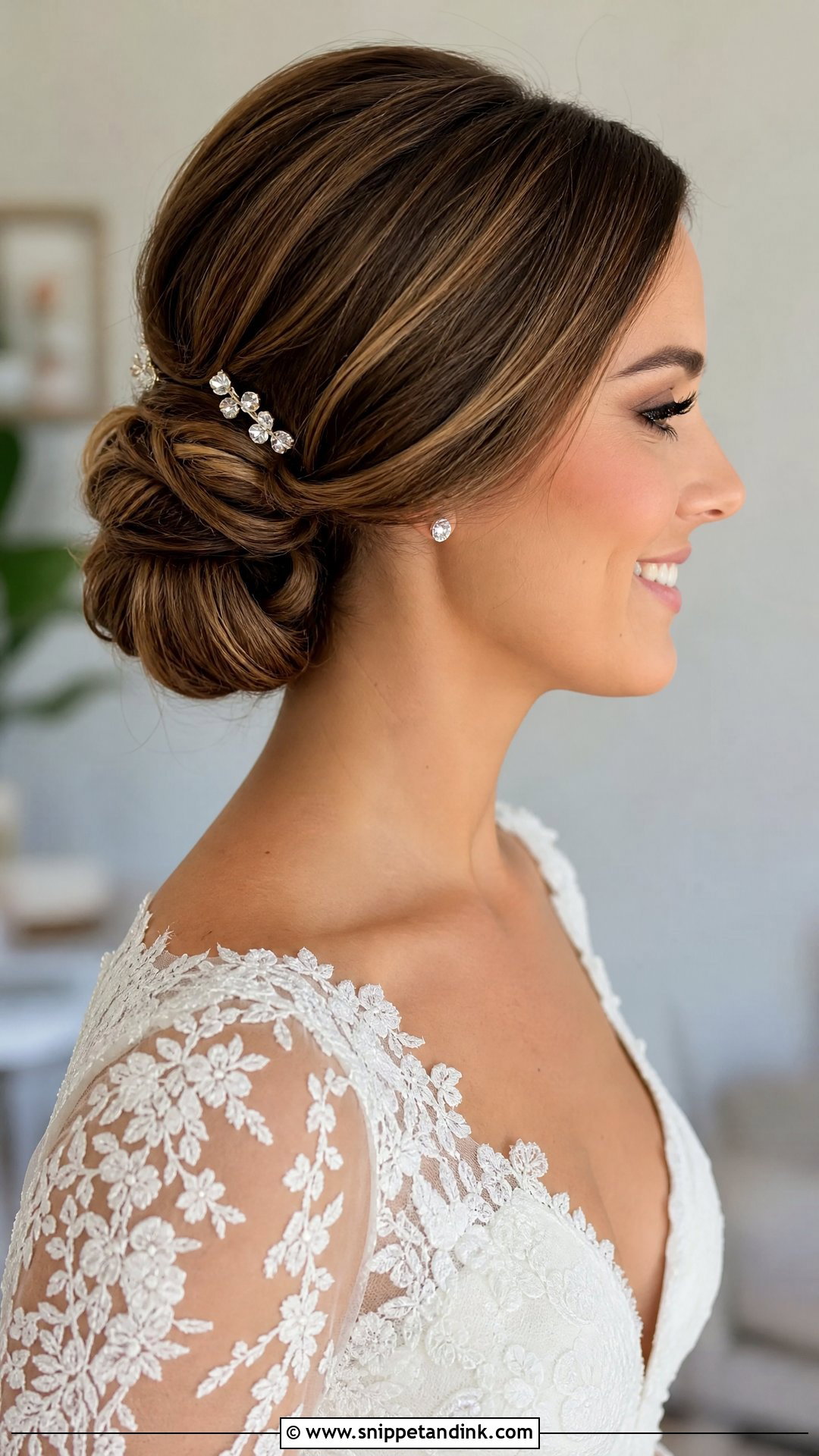
The chignon here keeps the front smooth and tucked and shapes the lower hair into a soft knot near the nape. It feels formal without being stiff, and suits church weddings, garden ceremonies and black tie. A middle part looks modern, a side part more traditional. It also leaves your stylist room to place a veil, comb or pins. I keep the sides controlled but leave texture in the bun itself, so the style doesn’t read like a ballet bun.
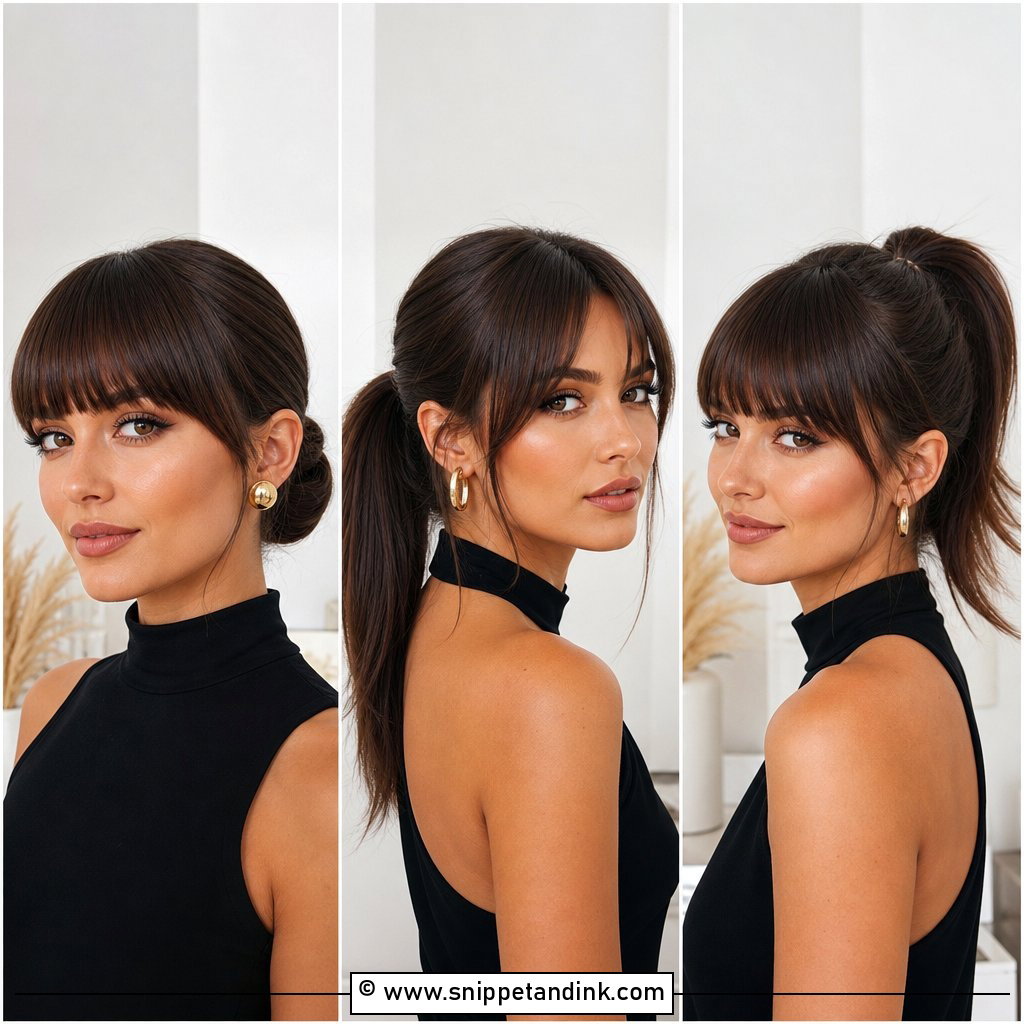
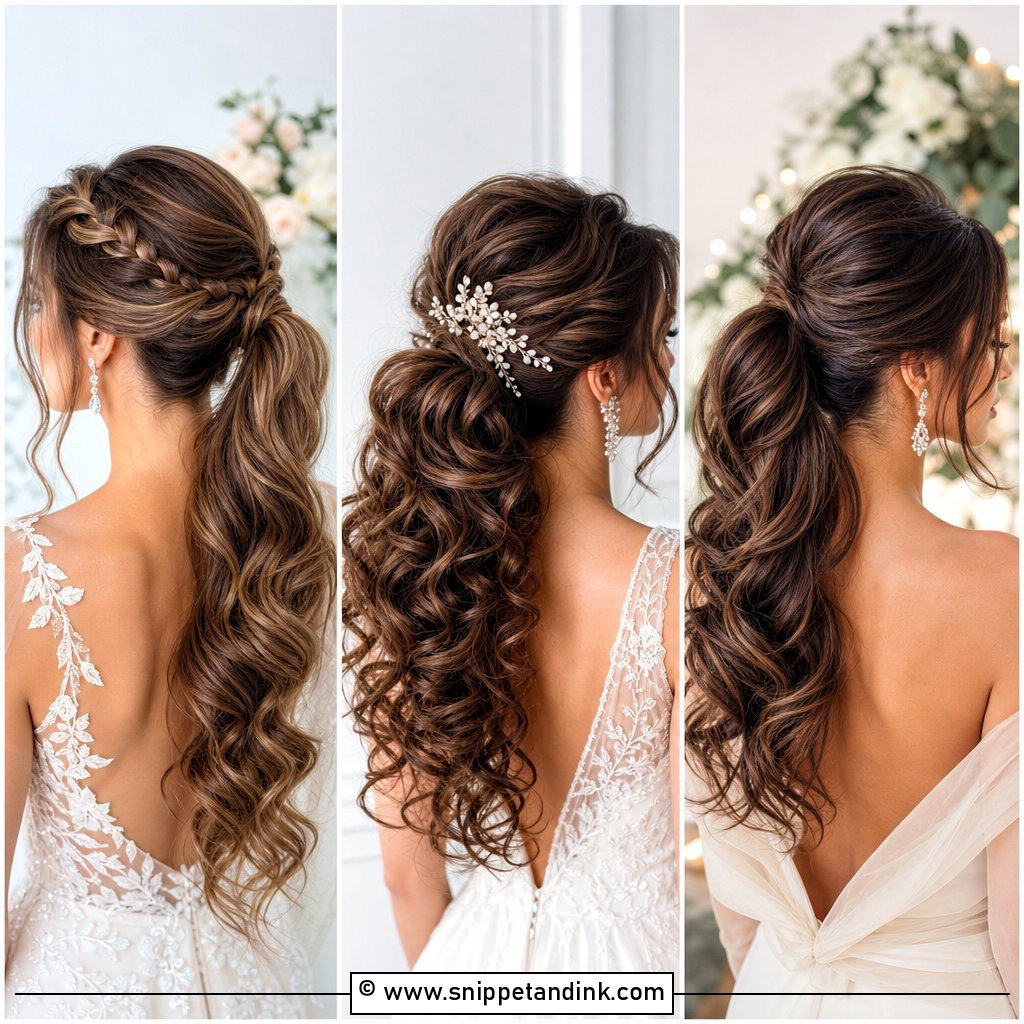
7. Wedding Ponytail Tucked Behind Ears
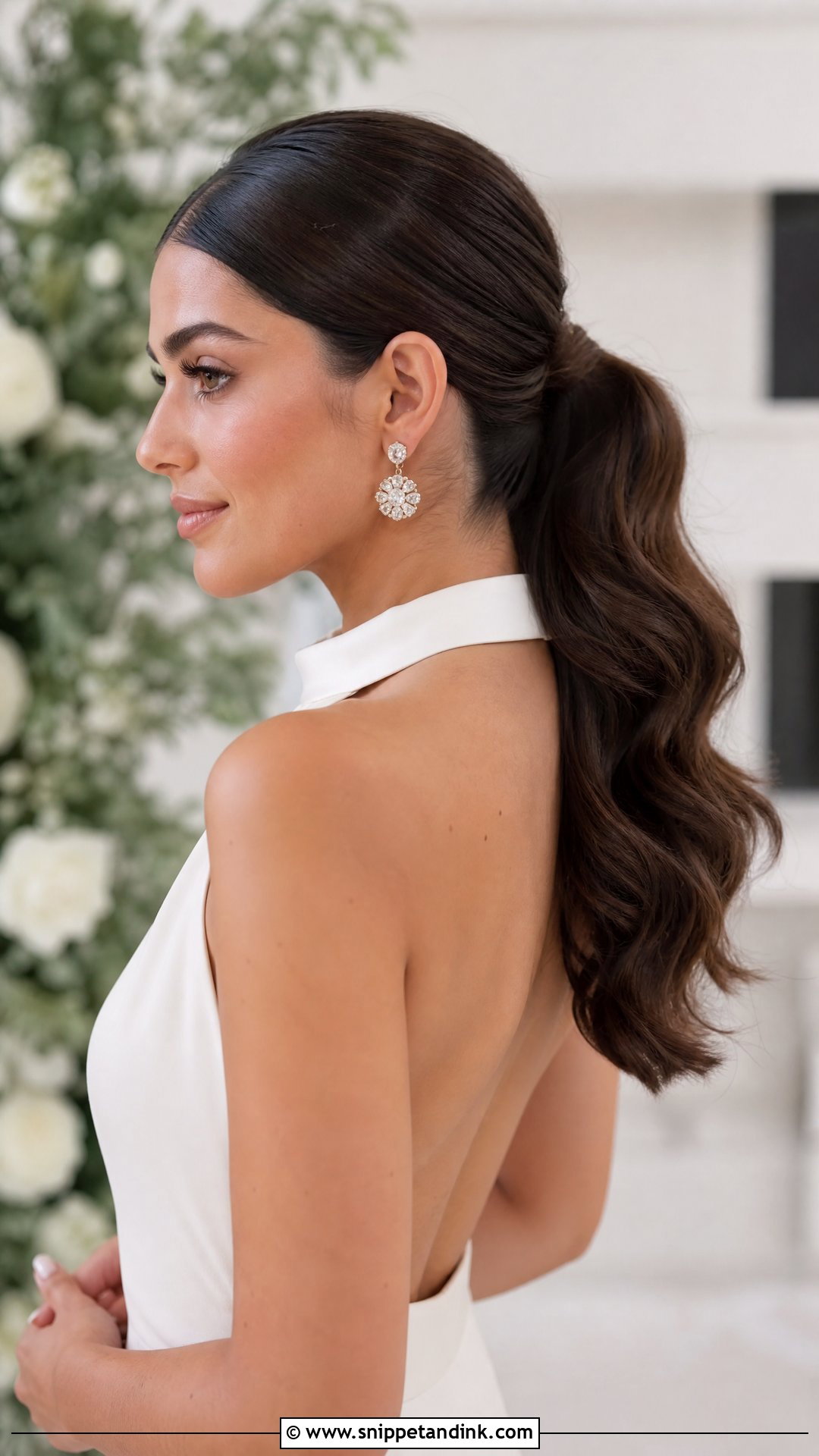
Tucking the fronts and pulling the rest into a low or mid-height ponytail gives a youthful, polished look. A wrapped base makes it bridal, and soft waves through the tail add movement. It holds well outdoors, since nothing is left to blow around, and shows off an open back. If your hair is fine, clip-in extensions underneath can fill out the tail. The tuck usually holds itself here, because the ponytail pulls the hair behind the ear anyway.
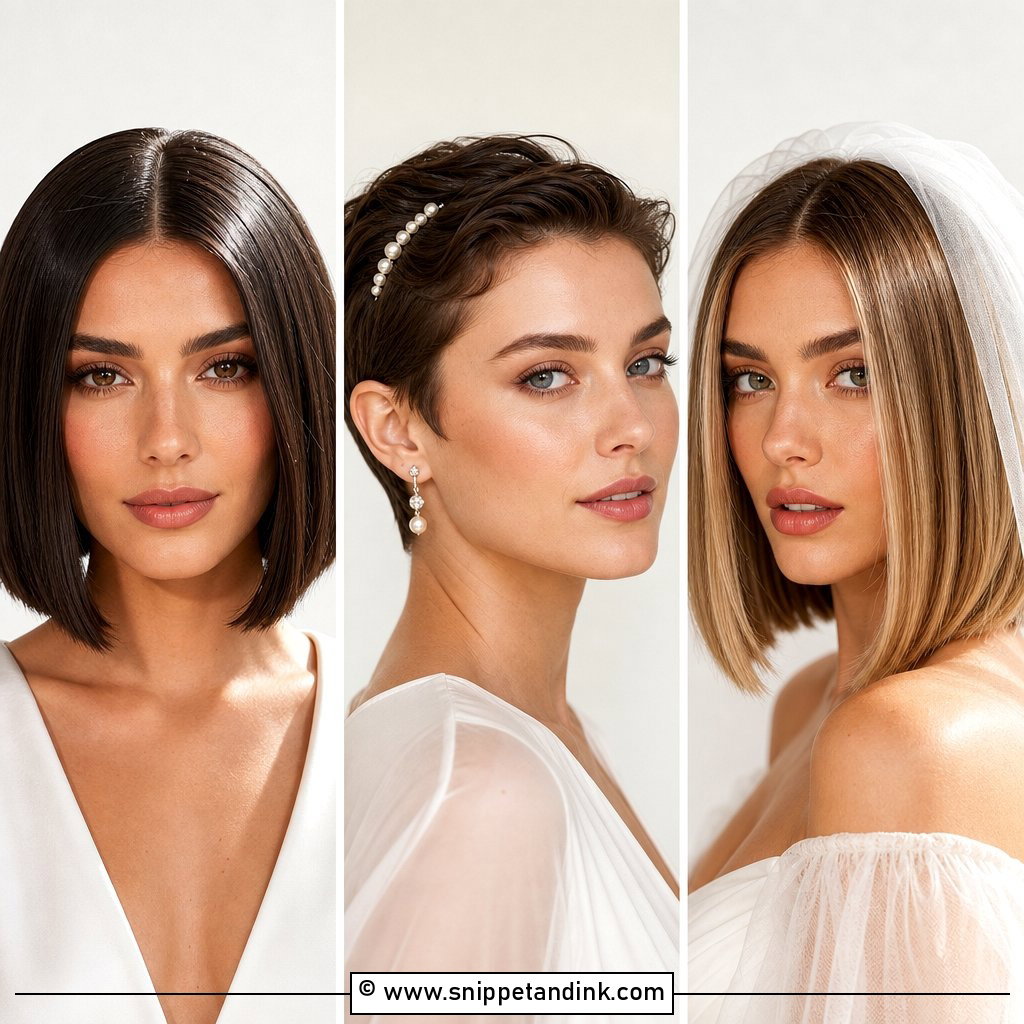
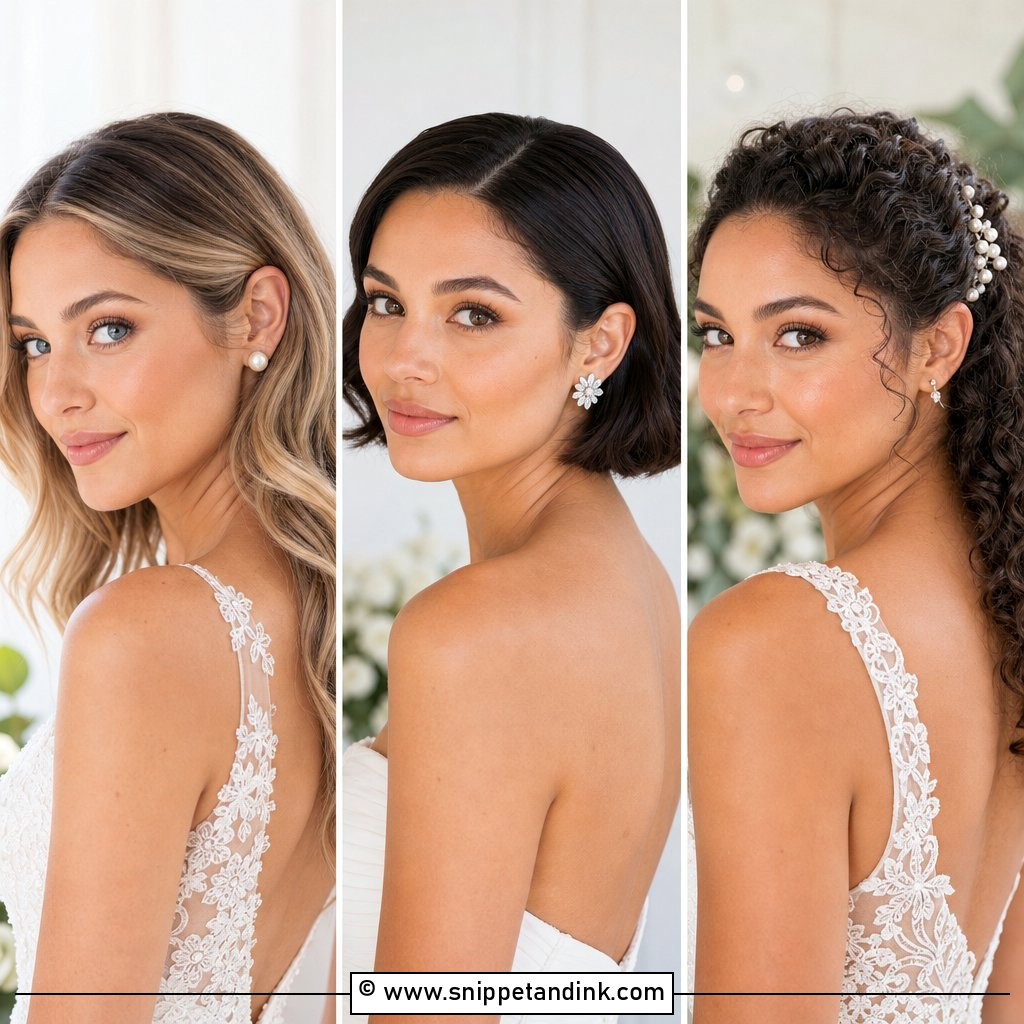
8. Wedding Bob Tucked Behind Ears
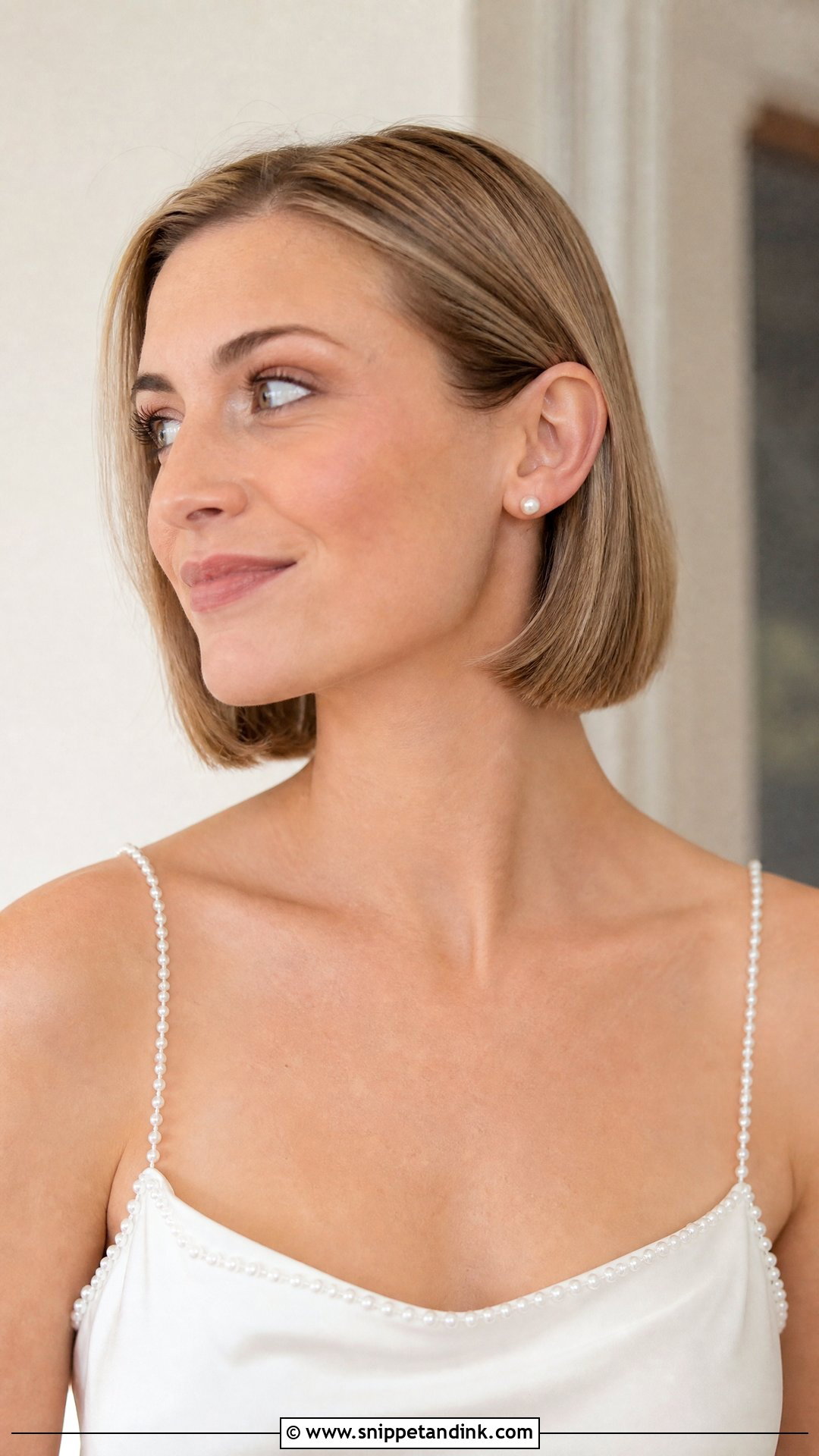
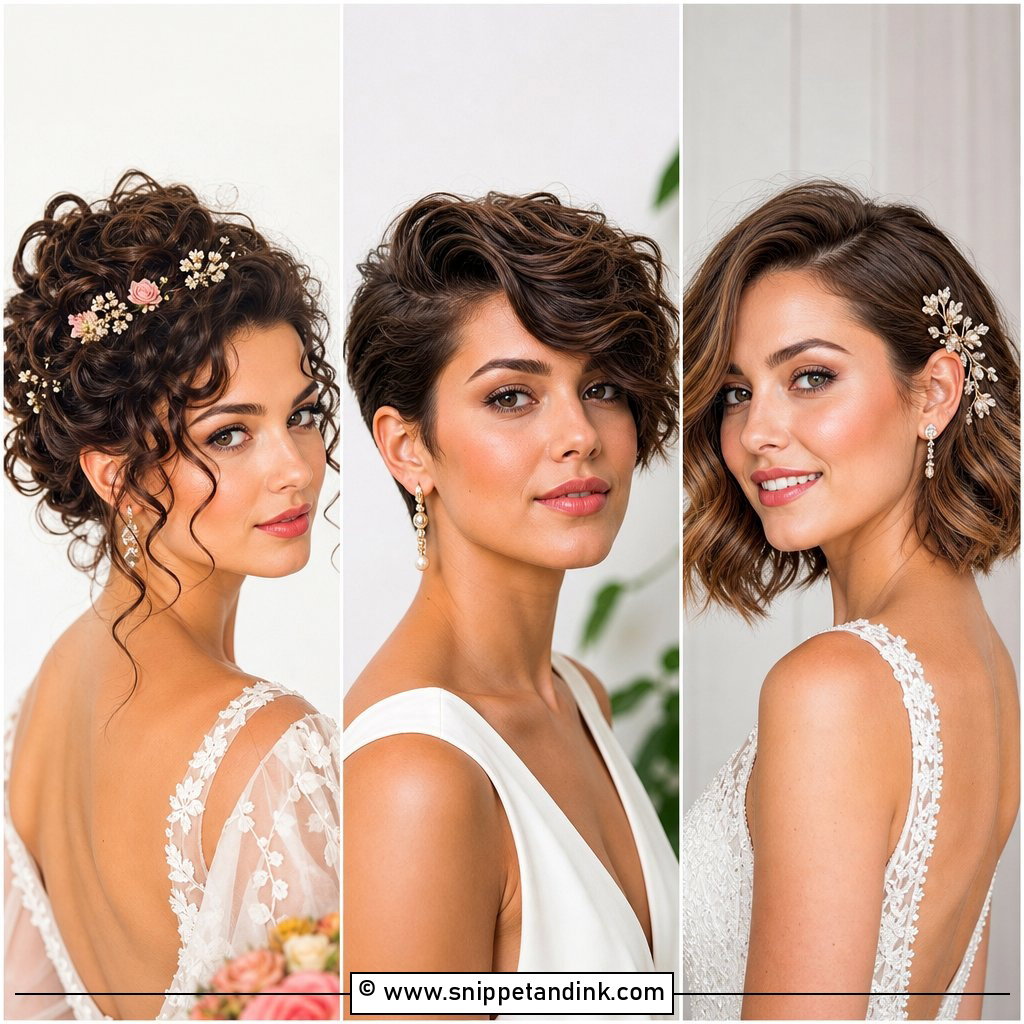
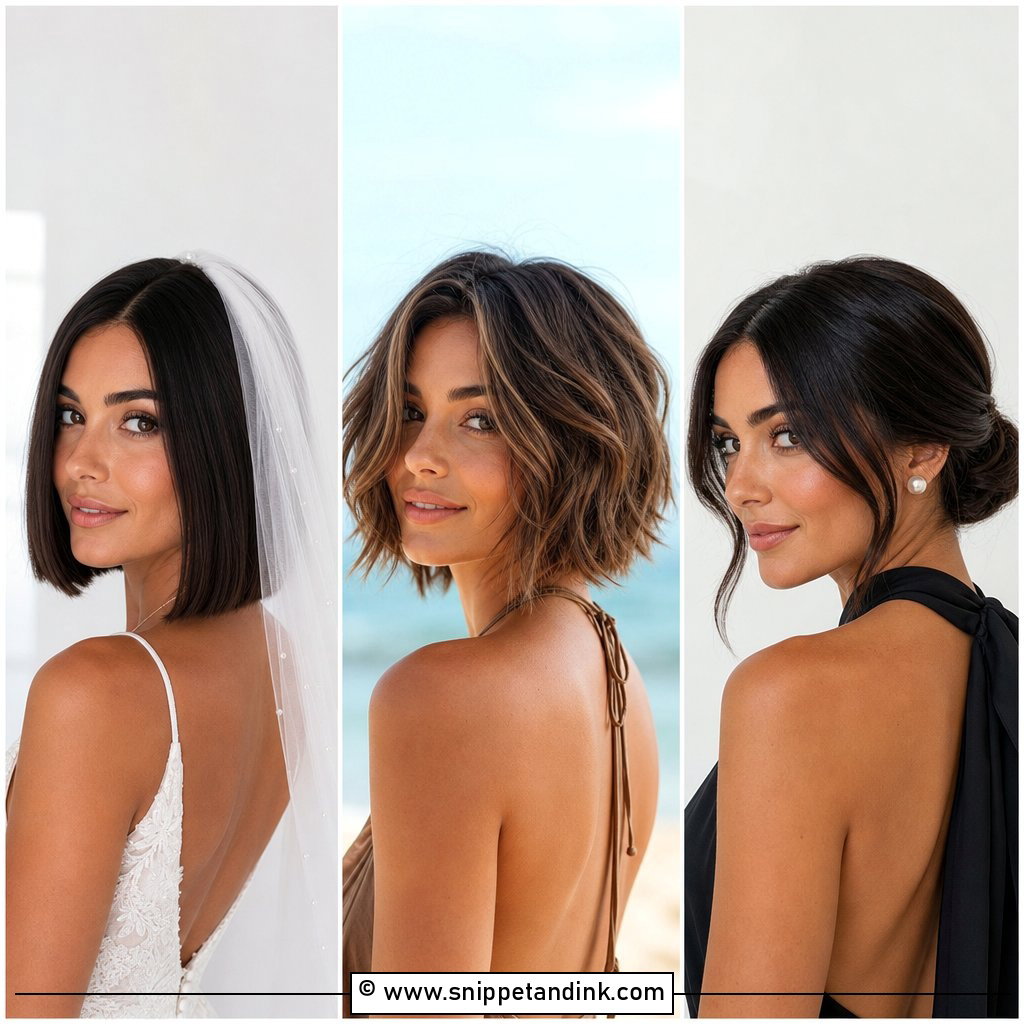
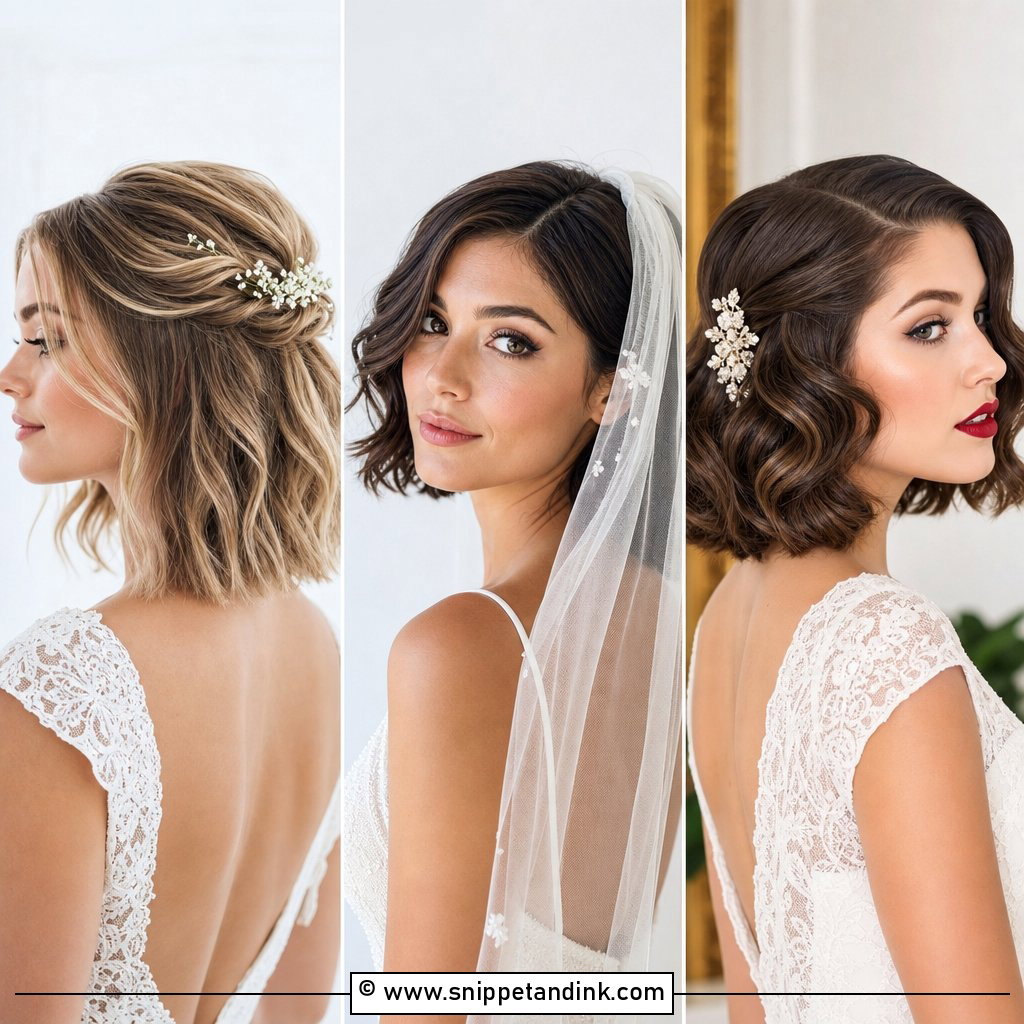
On a bob, the ear tuck does a lot of the styling work. It gives the cut a refined shape and makes it look dressed for a formal event. Sleek, softly waved or tucked under at the ends all work, on chin, jaw or collarbone length. I’d add pearl studs, drops or a tiny clip above one ear. Short hair springs out from behind the ear more easily than long hair, so I spray texture first and then use one discreet pin per side.
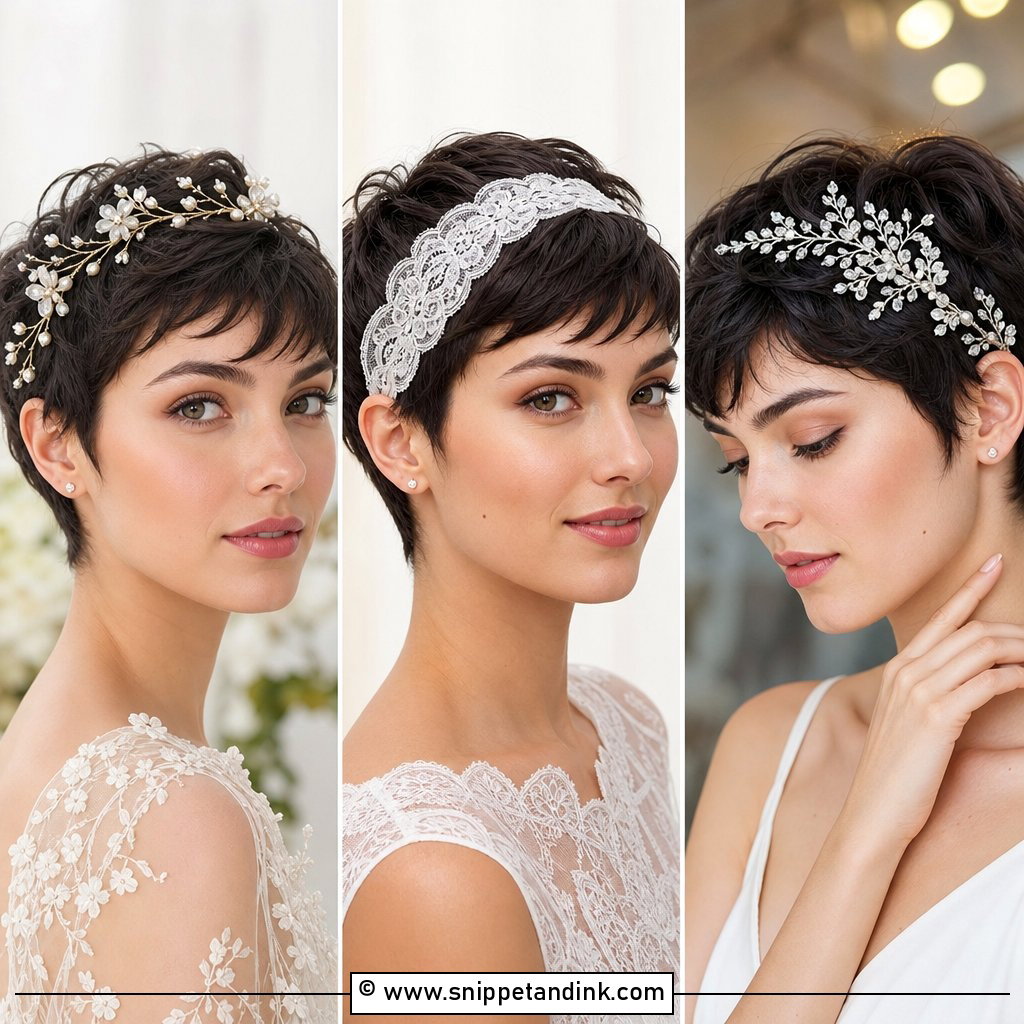
9. Short Wedding Hair Tucked Behind Ears
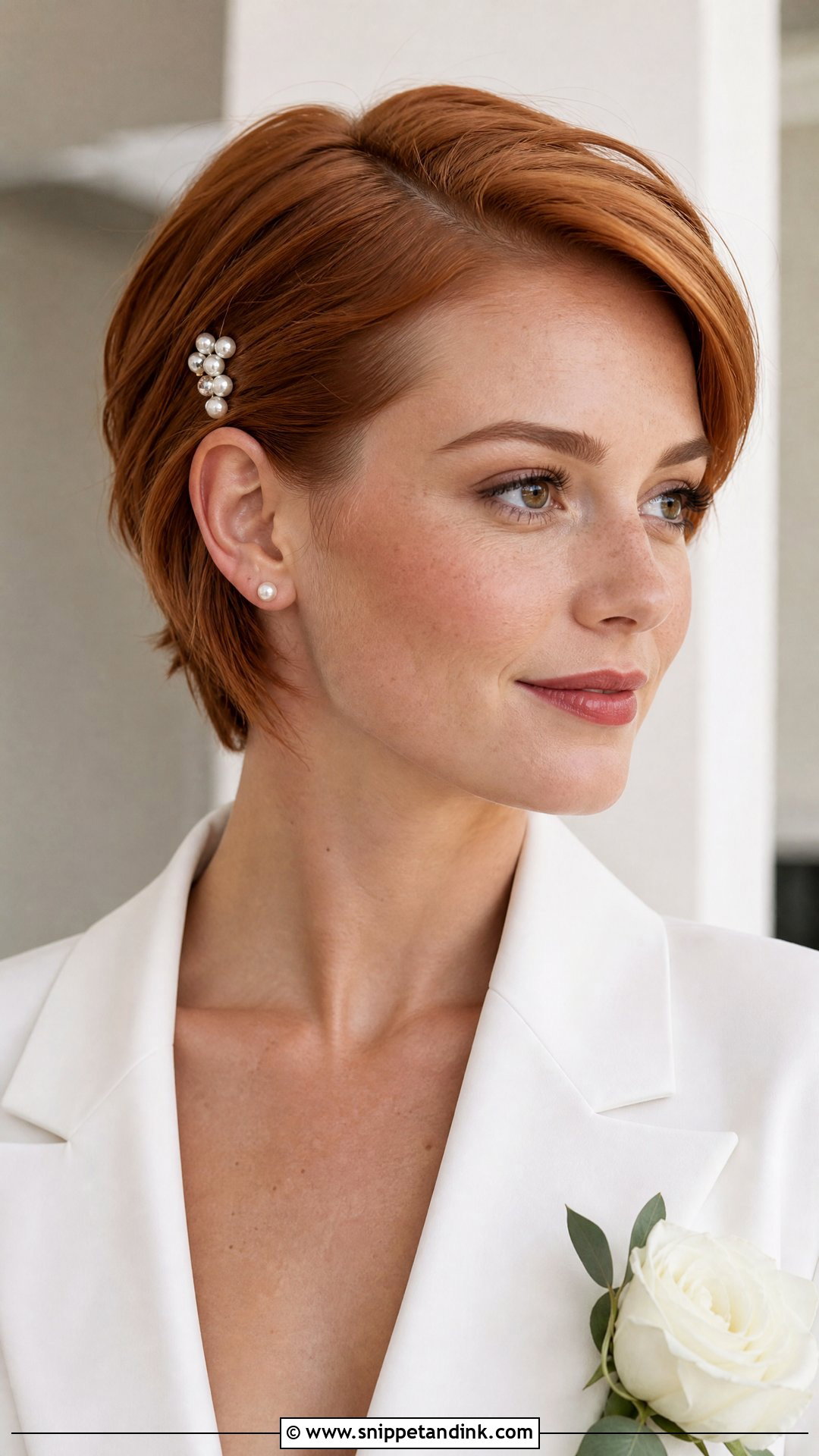
Pixies, bixies and cropped bobs all look sharper with a clean tuck, because it shows the cheekbones and earrings. Go sleek and glossy or a little tousled. A deep side part is dramatic; a middle part is minimal. You don’t need extensions or heavy accessories here. A small pearl clip, floral pin or crystal comb is enough. On very short crops, the hair may not physically reach behind the ear, so I smooth it back with a little pomade instead and let the shape do the work.
10. Curly Wedding Hair Tucked Behind Ears
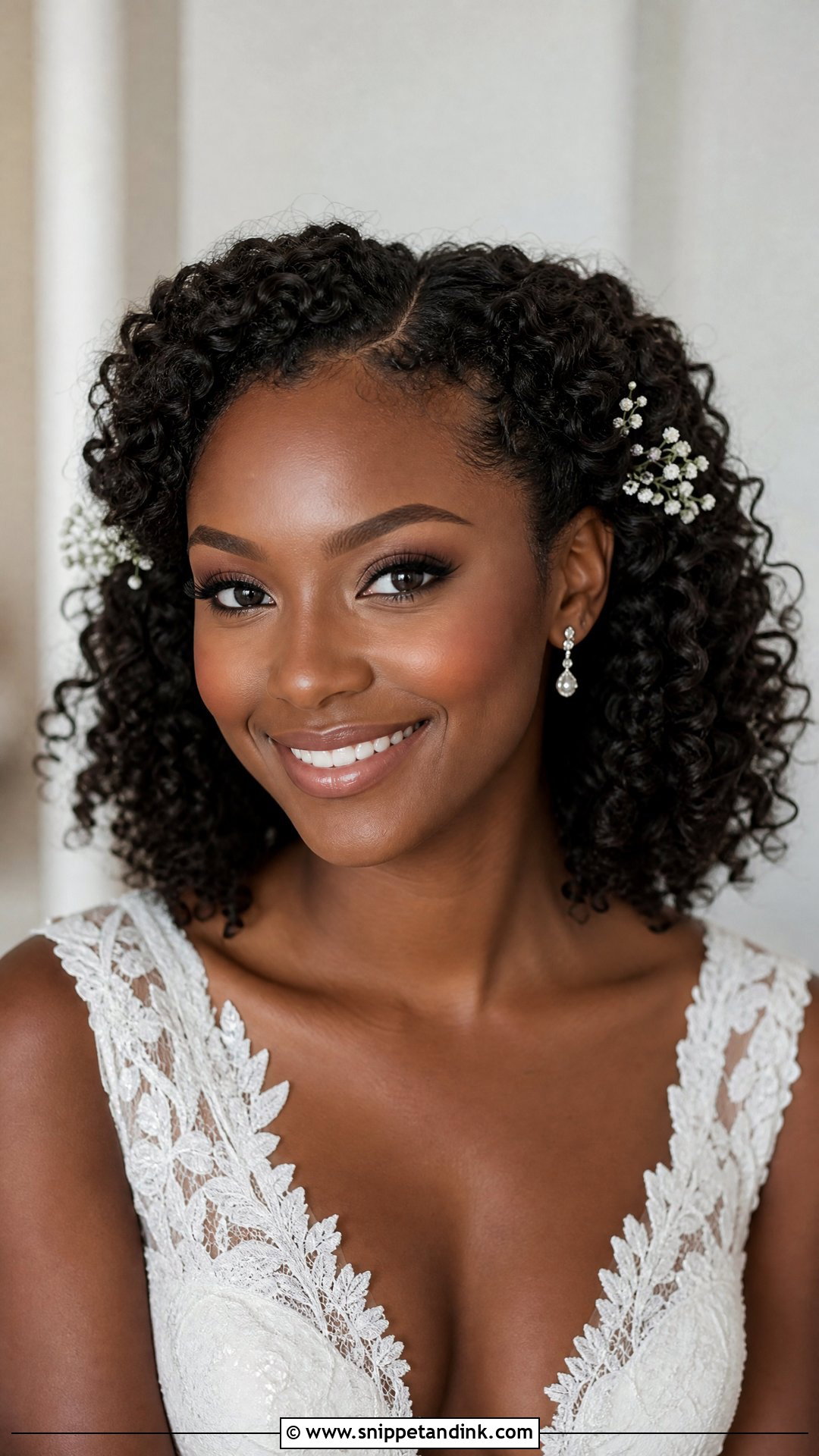
With curls, the tuck keeps the front controlled while the texture stays full everywhere else. They can be down, half up or gathered loosely at the back, with the sides pinned gently behind the ears. The mistake I see most is flattening the root to get the tuck, which leaves a flat band around the face. I’d rather diffuse for volume, use curl cream, and place U-pins carefully under the hair. Floral combs, vines and simple veils all suit it.
11. Wavy Wedding Hair Tucked Behind Ears
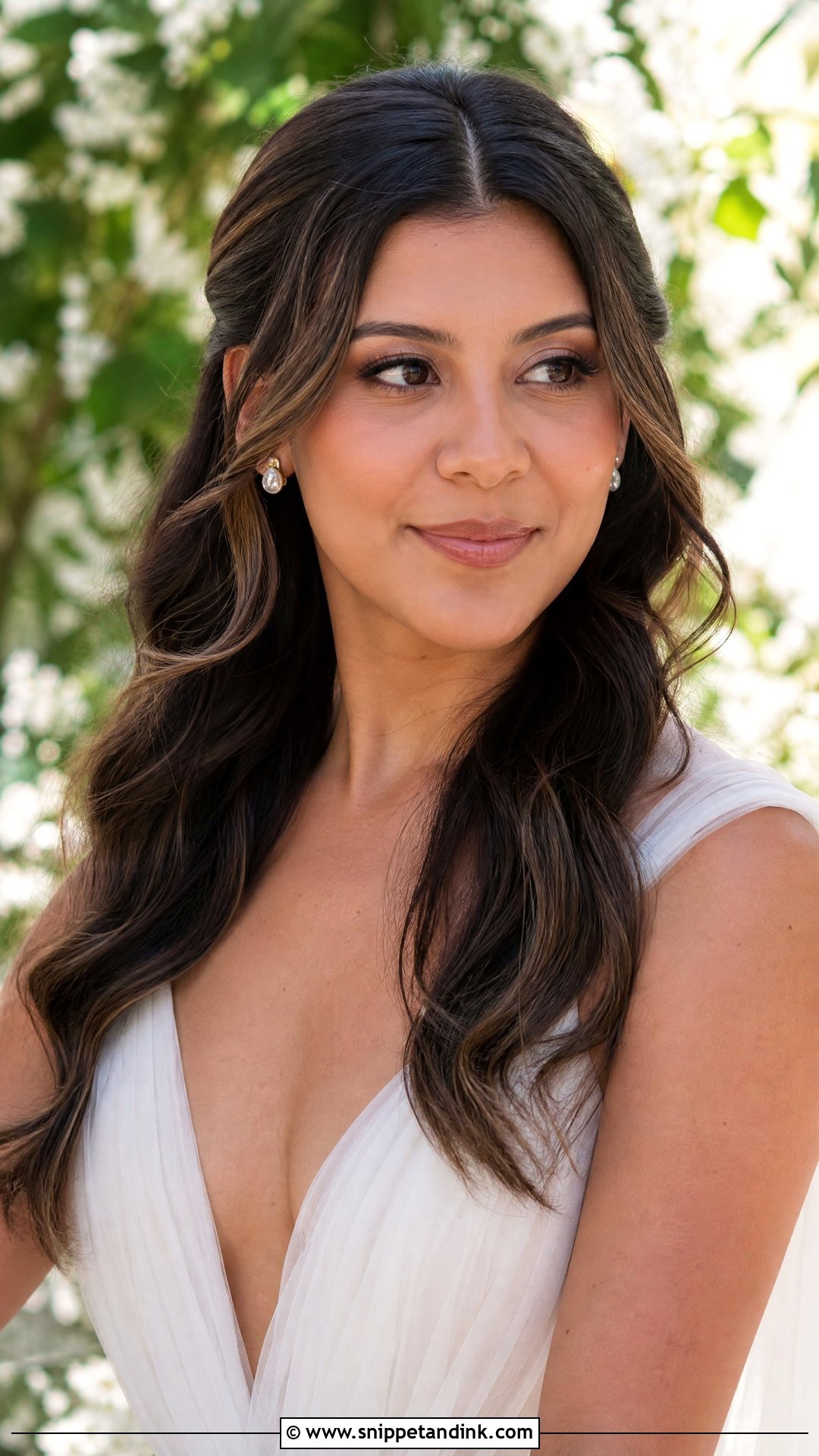
Loose waves can swamp a smaller face, and tucking the fronts back gives them structure. Wavy wedding hair tucked behind ears keeps the movement while showing your cheekbones. The waves can start at the cheekbones or just below the ears, depending on how polished you want it. Beach, backyard and garden weddings suit it, as do casual bridal outfits. Centre part for balance, side part for volume. Light texture spray keeps the waves soft, then I hide the pins behind the ear.
12. Straight Wedding Hair Tucked Behind Ears
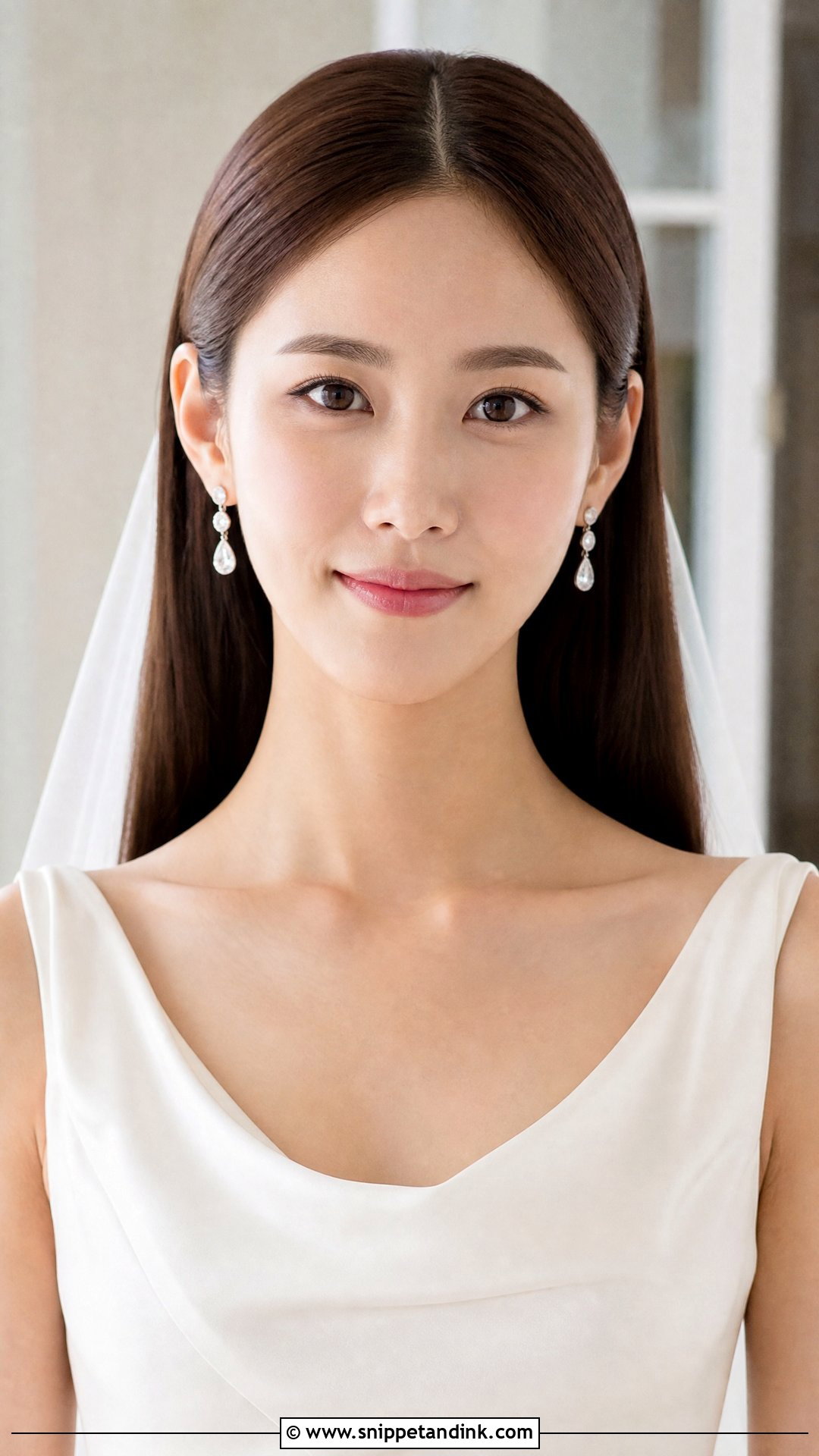
Glossy, straight and tucked has nothing to hide behind. It depends on a smooth finish, healthy shine and a precise part, so get the ends trimmed in the weeks before. Satin gowns, square necklines and big earrings pair well. The front sections are tucked and lightly pinned so they don’t fall forward in photos. Heat protectant and a shine spray are essential. If dead straight feels harsh, I bend the ends inward with the flat iron.
13. Side Part Wedding Hair Tucked Behind Ear
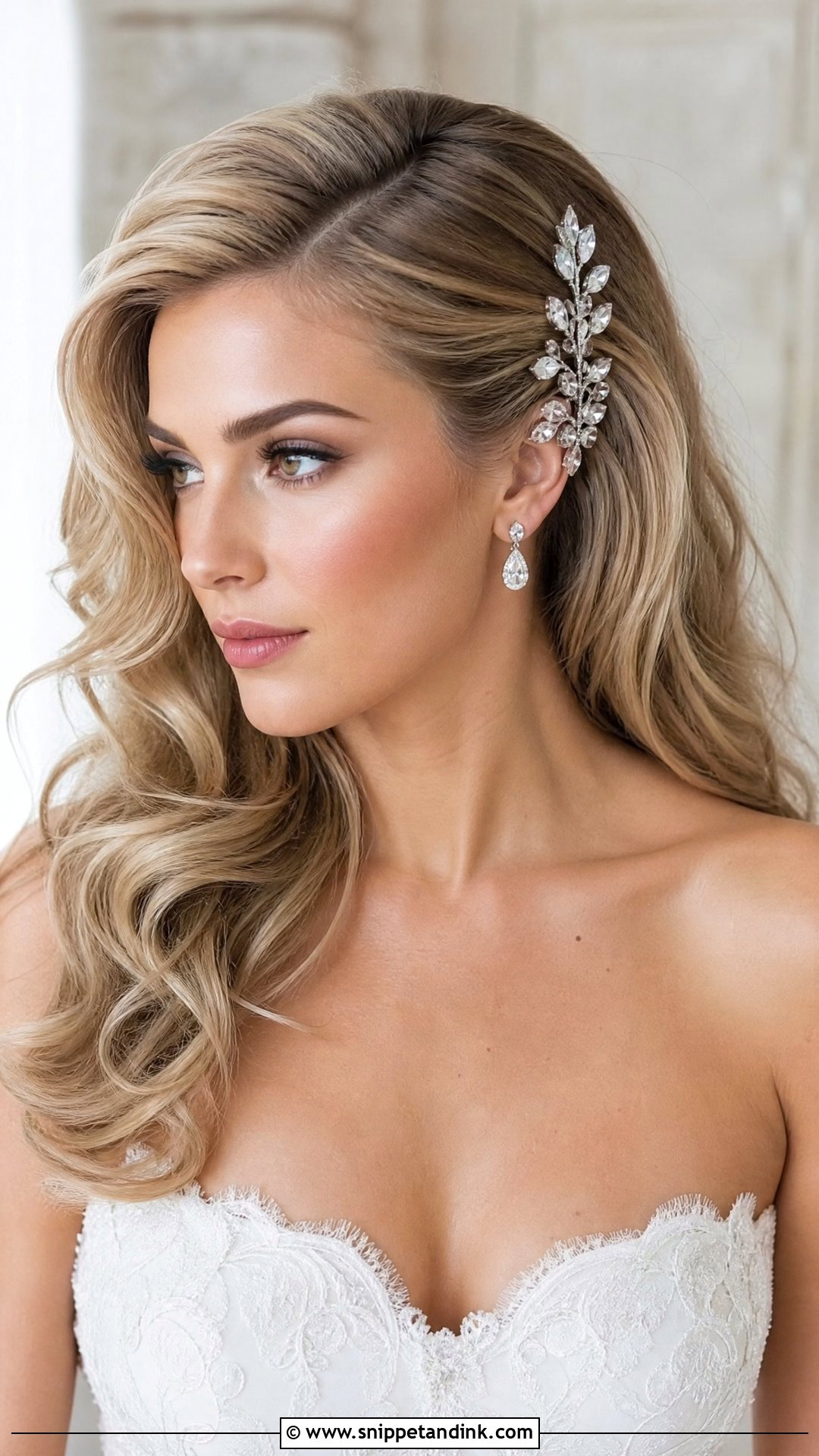
Asymmetry is the point of this one: one side is tucked neatly back while the fuller side falls in waves, curls or smooth layers. It’s romantic and still shows your face. A decorative comb above the tucked side works well. The deep part can make fine hair look fuller and adds drama without a complicated updo. I keep the tucked side sleek and pinned flat, then build volume through the opposite side so the shape stays balanced.
14. Center Part Wedding Hair Tucked Behind Ears
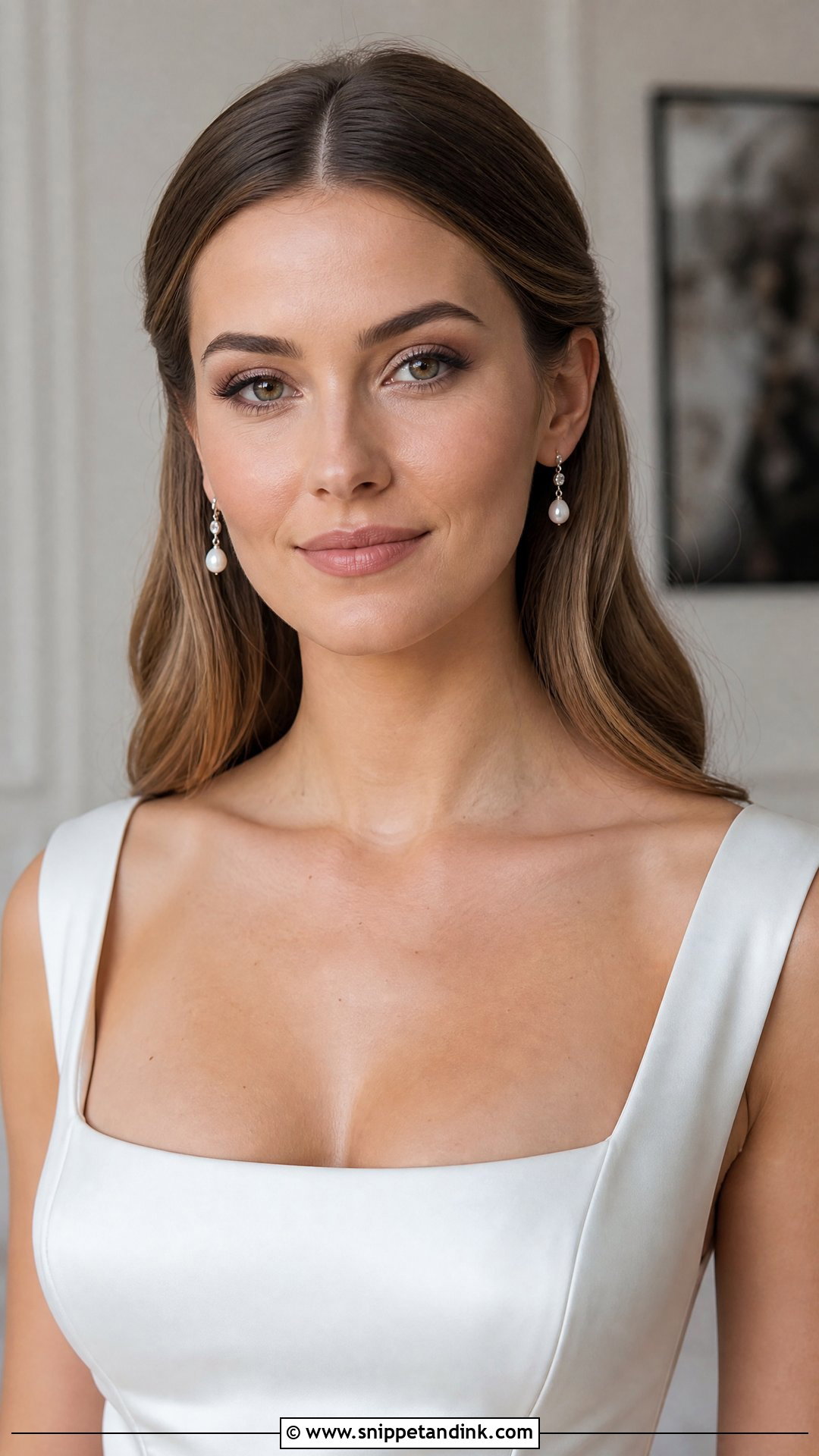
A centre part with both sides tucked is about as polished as bridal hair gets. The symmetry puts the focus on your face, earrings and neckline. It can be straight, waved, curled or gathered into a low bun. The catch is symmetry itself: if one side is even slightly puffier, it shows. I control the root near the part, check both sides in the mirror at once, and pin each tuck the same way. Glowing makeup and delicate jewelry suit it.
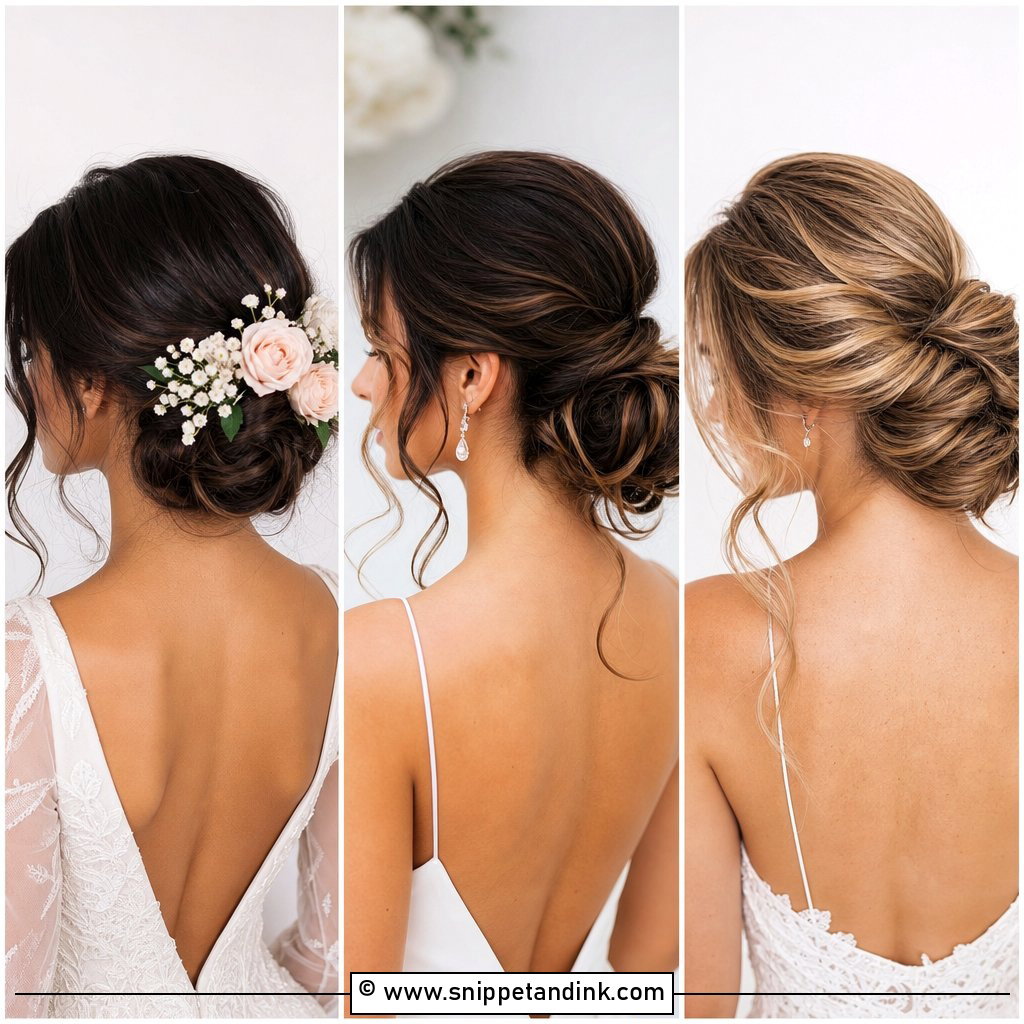
15. Bridal Blowout Tucked Behind Ears
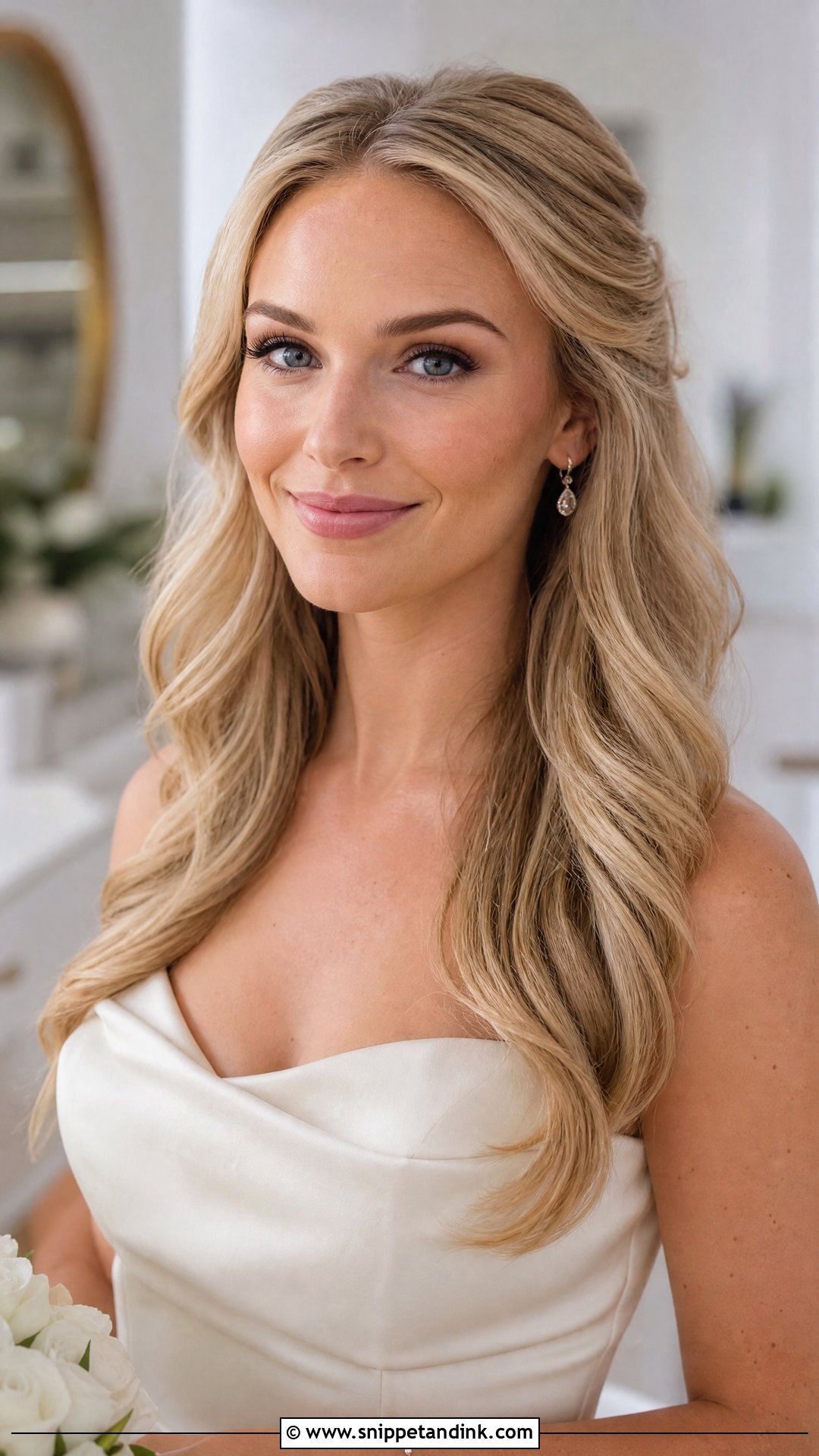
A good blowout has lift at the roots, smooth movement through the lengths and a soft curve at the ends. Tucking the fronts back keeps it tidy around the face for photos and windy moments outdoors, and that is what makes it bridal. Bridal blowout tucked behind ears is the request I get from brides who want to look more finished than everyday without looking overdone. Long layers, lobs and medium cuts suit it. I finish with a round brush and flexible spray, so the bounce holds without stiffness.
16. Wedding Hair With Veil Tucked Behind Ears
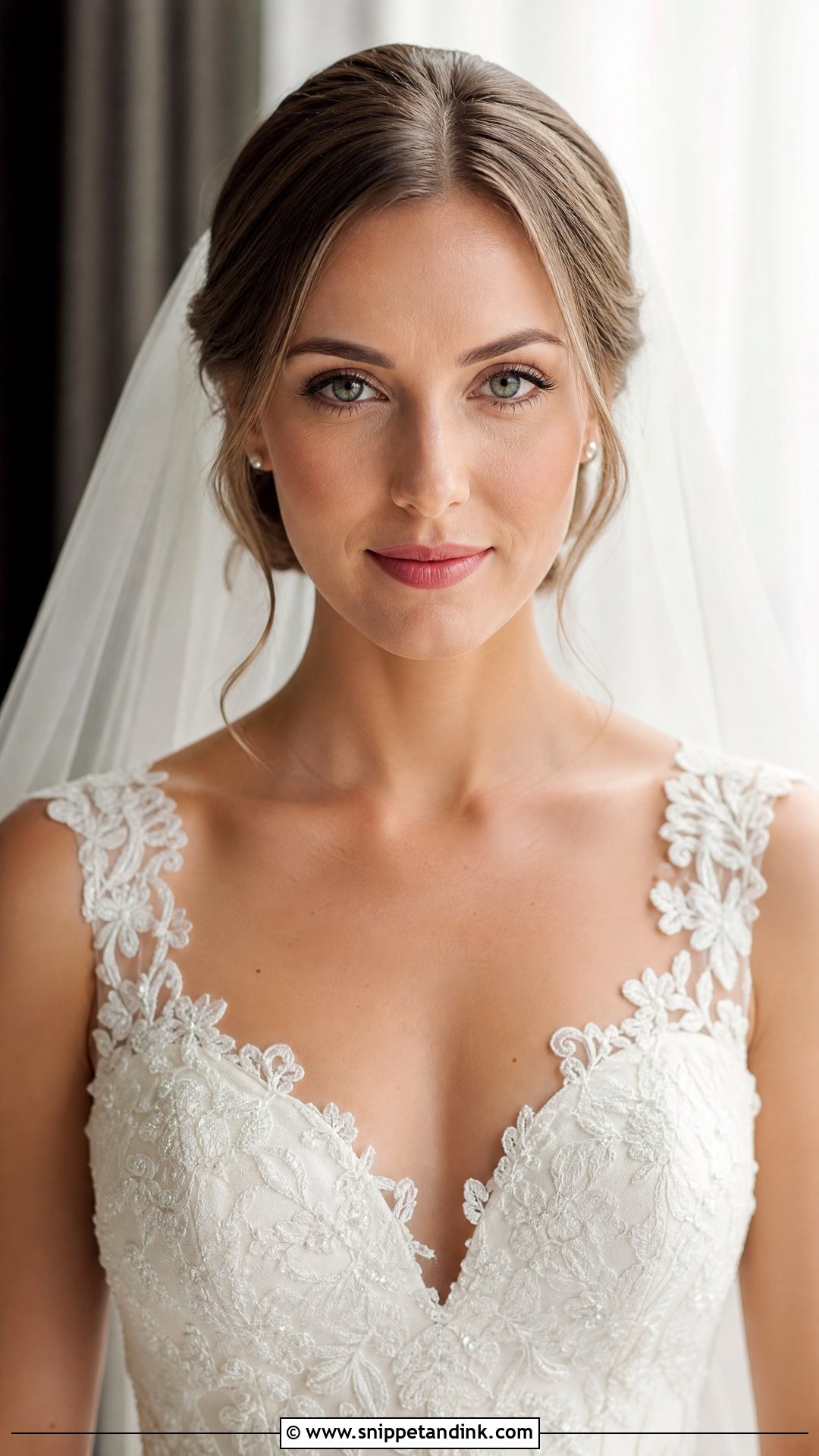
Tucked sides make a clean base for a veil, so loose strands don’t compete with the tulle around the face. It works with hair down, low buns, chignons and half-up styles, and the veil can sit at the crown, under a bun or above a twist. In ceremony photos, especially with the blusher pulled forward, the open sides keep your face clear. Bring the actual veil to your trial so your stylist can test placement and you can feel whether the comb sits comfortably.
17. Wedding Hair With Headband Tucked Behind Ears
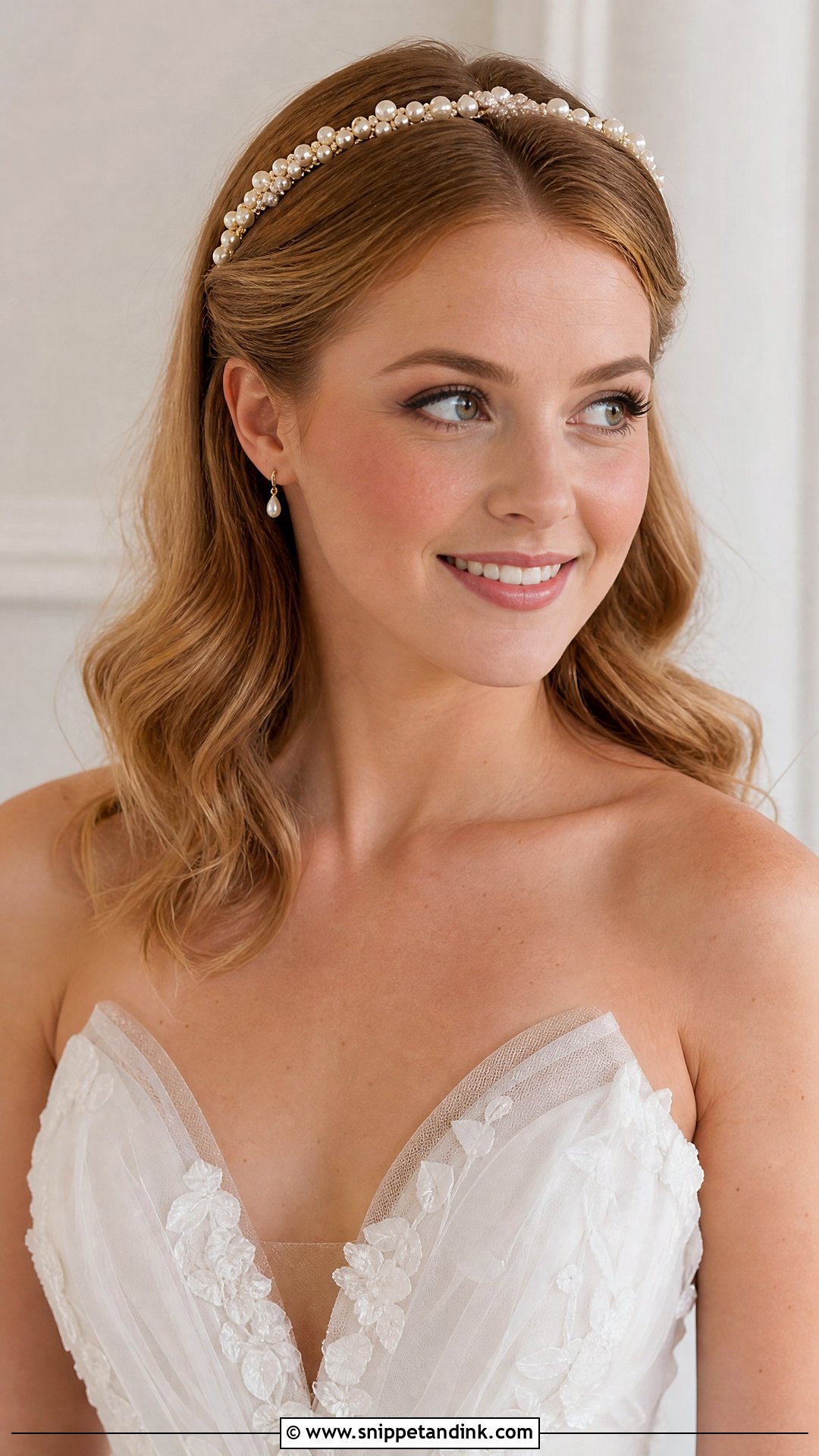
A headband over tucked sides is simple and easy to personalise. It suits pearl headbands, satin bands, crystal designs and thin metallic pieces. It’s especially useful for controlling shorter front layers, and some brides wear one instead of a veil. My advice: try the headband on for at least an hour before the wedding, since a band that presses behind the ears can give you a headache by evening. Keep the hair under the band smooth and leave movement in the ends.
18. Wedding Hair With Pearl Clip Tucked Behind Ear
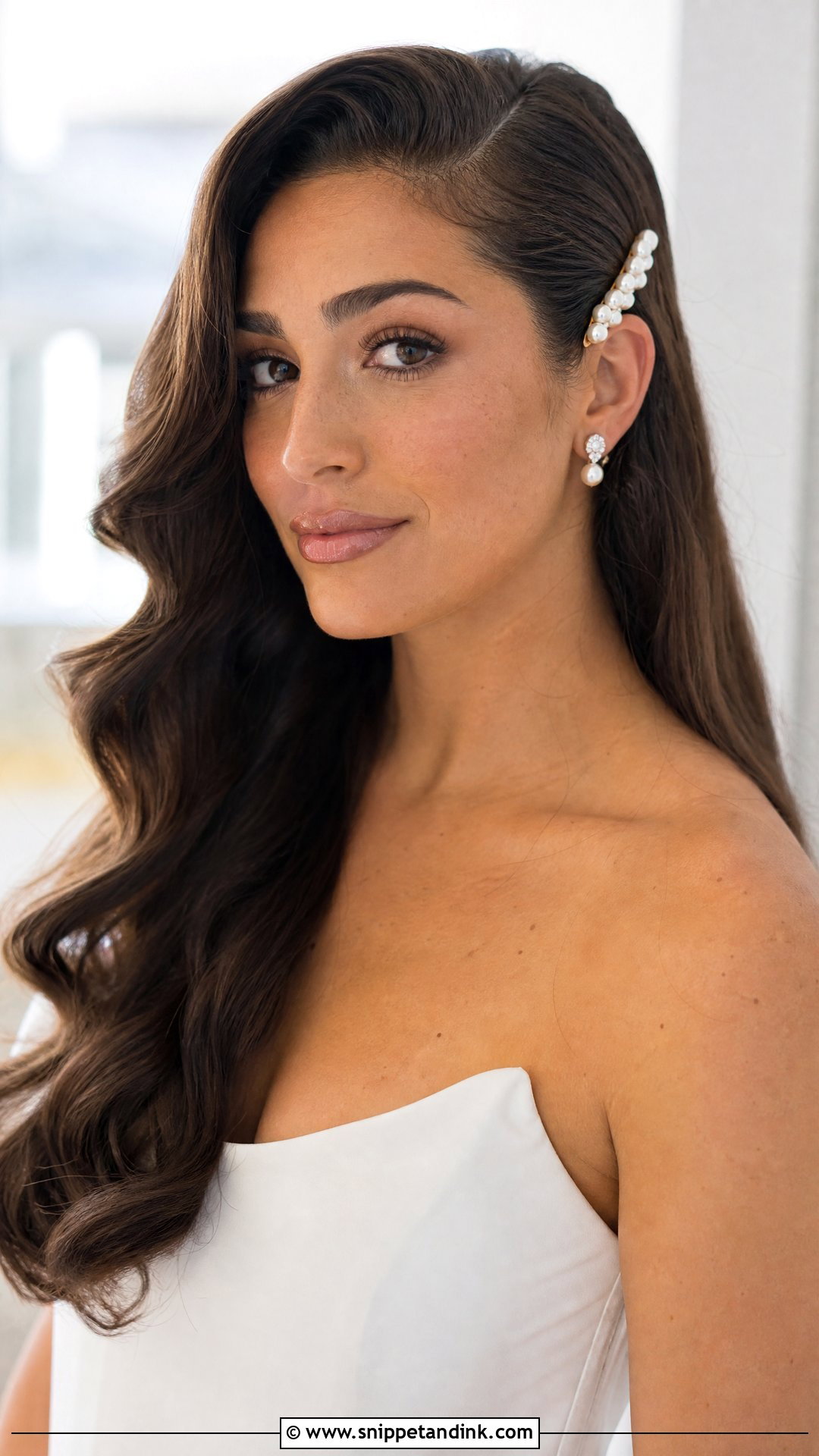
One tucked side held by a pearl clip adds a small bridal detail without busyness. The rest can be waved, curled or smooth. Bridesmaids, courthouse brides and guests often go this way. Placement matters more than people think: the clip should sit just above or behind the ear, not high on the temple, where it looks like a schoolgirl slide. A side part helps the decorated side look intended, and a little texture spray gives the clip something to grip.
19. Wedding Lob Tucked Behind Ears
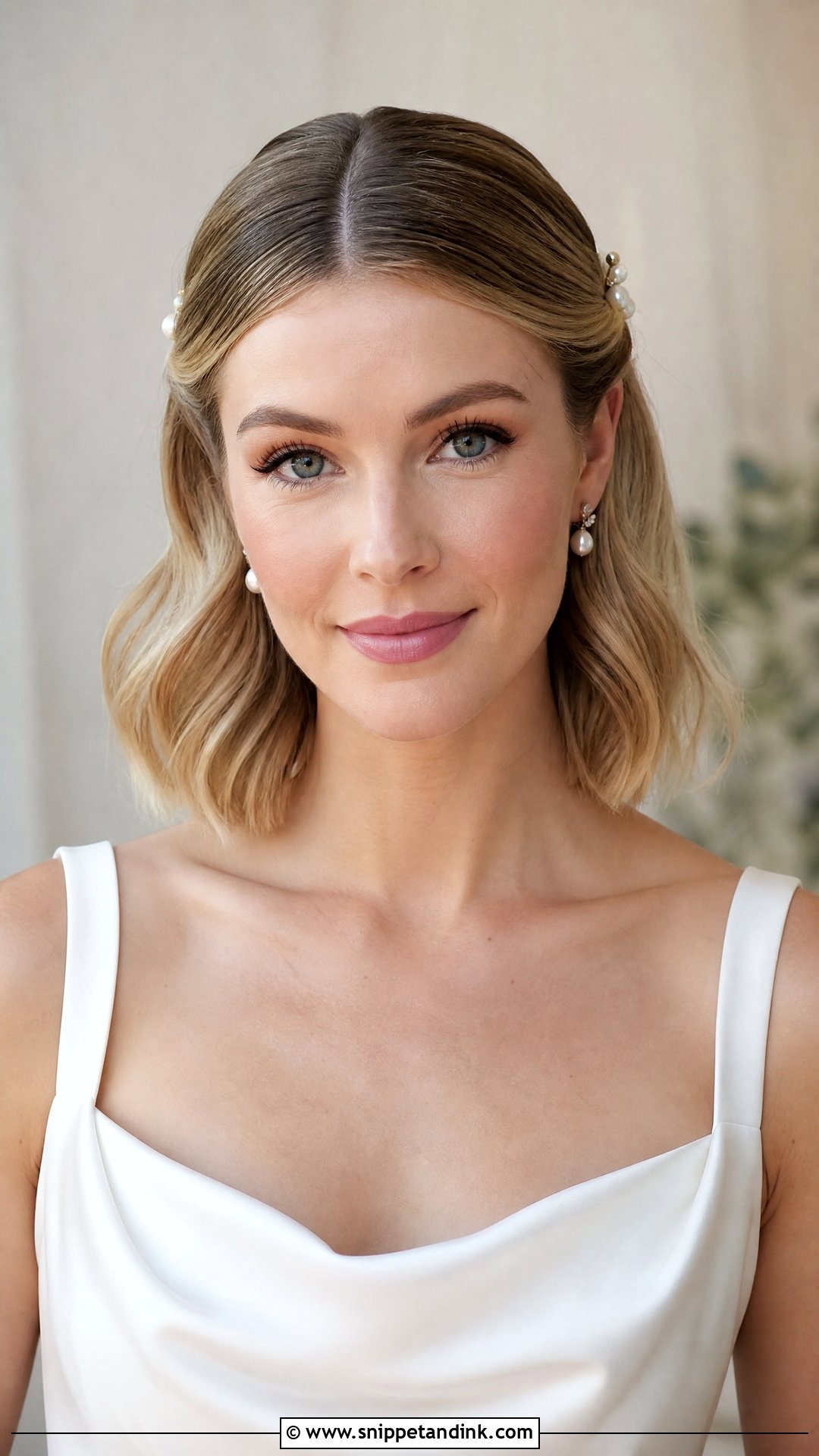
A lob falls around the collarbone, long enough for waves and short enough to feel light. Tucking the fronts back gives it a cleaner, more formal shape. Soft bends, glossy straight hair or brushed-out curls all suit it. It’s a good option if you want a fresh haircut before the wedding without going too short. I’d book that cut at least a few weeks before your trial, so the trial is done on the hair you’ll actually wear. A veil, pearl pins or statement earrings make the simple shape bridal.
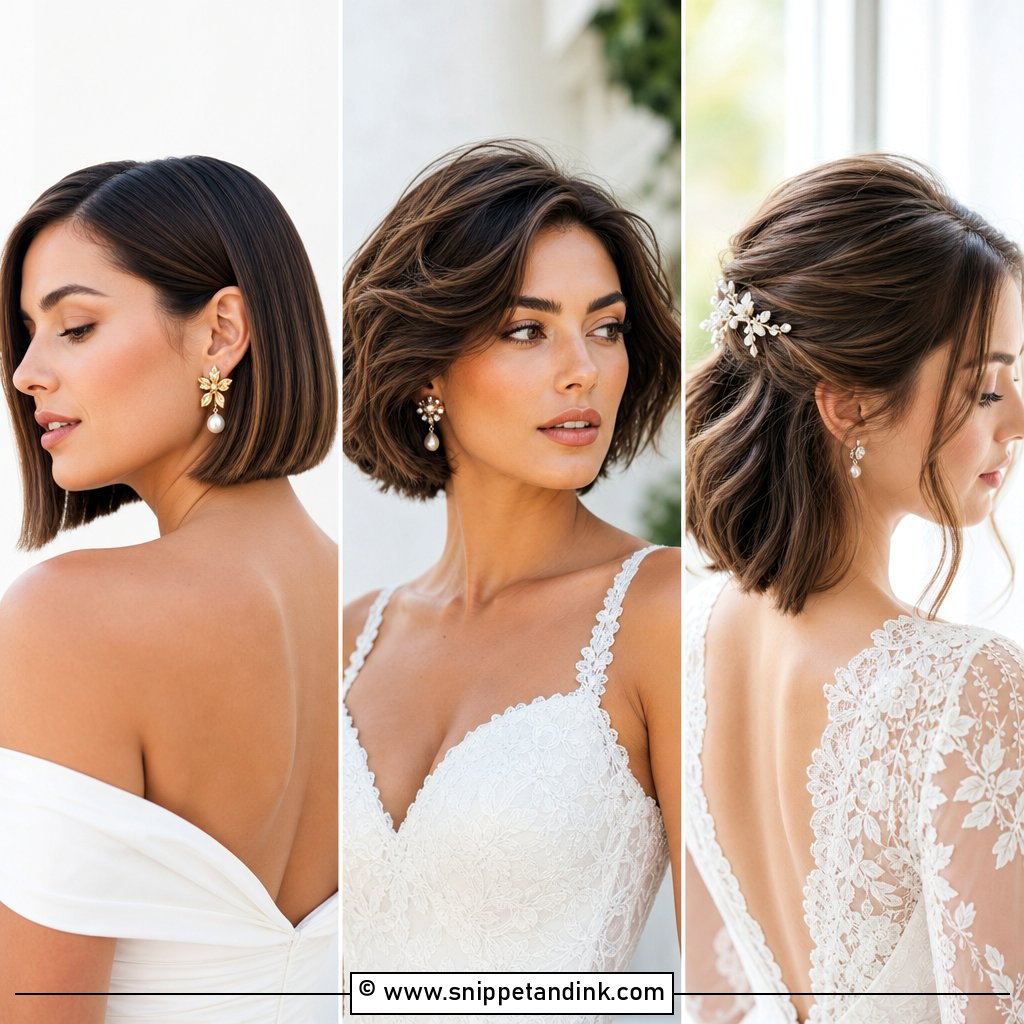
20. Wedding Hair With Earrings Tucked Behind Ears
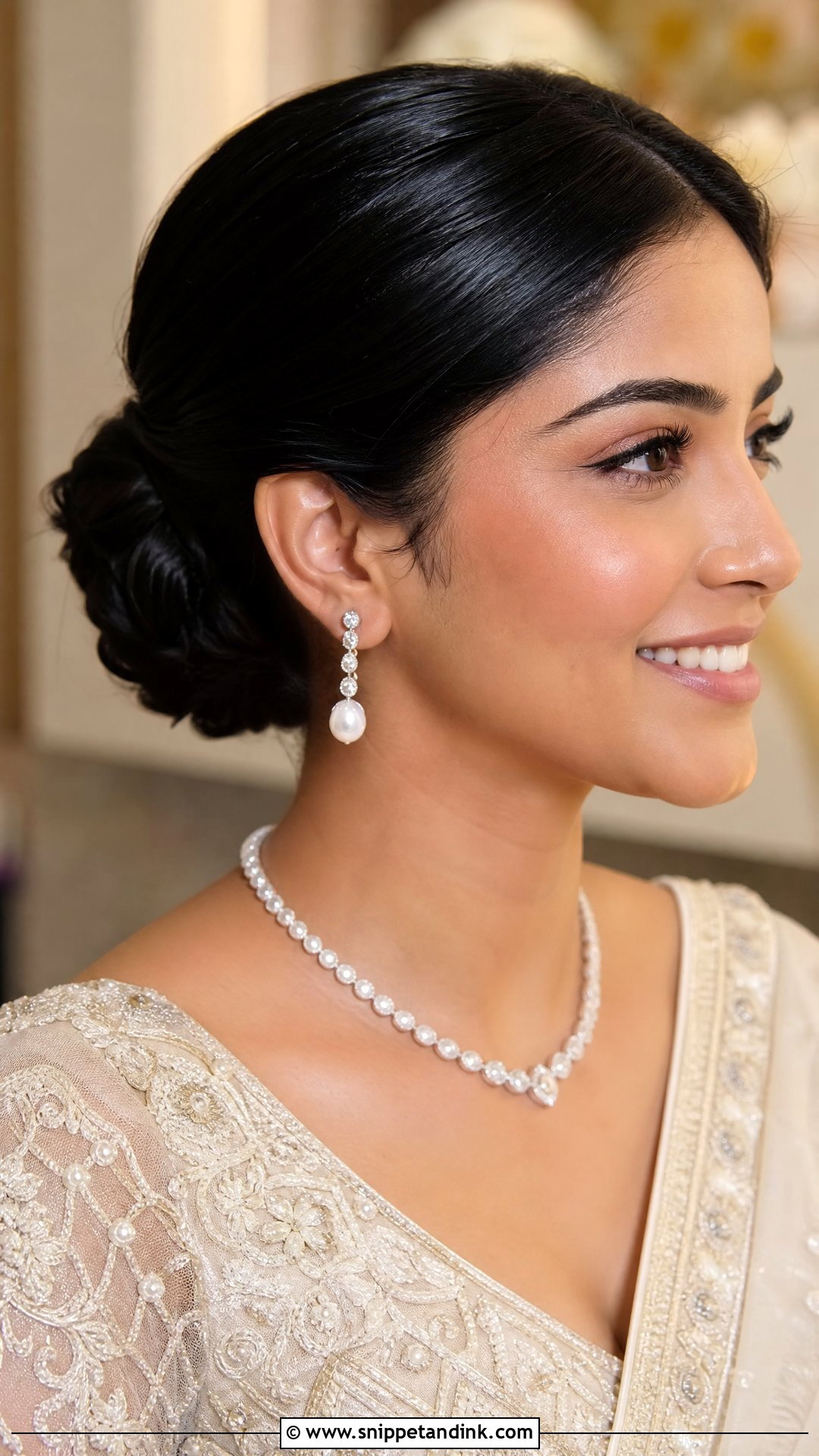
Sometimes the tuck exists purely for the earrings. Sleek, wavy, straight or a low bun all work, as long as the fronts stay back. Pearl drops, diamond studs, sculptural pieces and heirloom earrings all suit it, and it balances a detailed gown because hair stays clear of the neckline. My rule of thumb: bold earrings, smoother hair; delicate earrings, a little more texture, like soft waves or a loose chignon. Heavy earrings can also drag the earlobe forward, so check how they hang once your hair is tucked.
Ears That Stick Out, Glasses and Other Reasons to Rethink It
An ear tuck doesn’t suit everyone, and I’d rather say so at the trial than on the morning. If you’re self-conscious about your ears, tucking draws attention to them. A half tuck, with hair just grazing the top of the ear, gives a similar clean line without fully exposing it.
Glasses wearers need a plan too. The arms of the frames sit exactly where the tuck goes, and the two fight each other. I tuck the hair over the arms, not under them, and pin just behind. Hearing aids can be worked around the same way; mention them early so the style is built around them.
Your Ears and Jawline Are Now Part of the Makeup
With hair tucked, the camera sees the ear, the jaw and the side of the neck. Ask your makeup artist to blend foundation past the jawline and onto the neck, so there’s no line in profile shots. For an outdoor summer ceremony, put sunscreen on the tops of your ears too. They catch the sun first and turn pink before anything else.
Earrings deserve a test as well. Once nothing covers them, a backing that twists or a drop that hangs crooked is the first thing a close-up catches. I’d wear the pair for a full afternoon before the wedding, and swap to lighter hooks or add clear lobe supports if they pull the earlobe forward.
An Ear Tuck Is Small, but It Changes the Whole Frame
The ear tuck is a small move, and it changes the whole frame of the face. It makes loose hair look polished, gives updos a cleaner front view and puts accessories on show. Waves, sleek buns, bobs, ponytails and natural curls can all take it. The best version depends on your dress, your hair texture and your setting. At your trial, ask your stylist exactly how the tuck will be secured, then wear it for a while. If it springs loose during the trial, it will on the day too.
You'll Like These Ideas:


Leave a Reply